WO2014157580A1 - 管理装置、管理方法、端末装置、制御方法、及びプログラム - Google Patents
管理装置、管理方法、端末装置、制御方法、及びプログラム Download PDFInfo
- Publication number
- WO2014157580A1 WO2014157580A1 PCT/JP2014/059020 JP2014059020W WO2014157580A1 WO 2014157580 A1 WO2014157580 A1 WO 2014157580A1 JP 2014059020 W JP2014059020 W JP 2014059020W WO 2014157580 A1 WO2014157580 A1 WO 2014157580A1
- Authority
- WO
- WIPO (PCT)
- Prior art keywords
- information
- application
- terminal device
- reward
- customer
- Prior art date
- Legal status (The legal status is an assumption and is not a legal conclusion. Google has not performed a legal analysis and makes no representation as to the accuracy of the status listed.)
- Ceased
Links
Images
















Classifications
-
- G—PHYSICS
- G06—COMPUTING OR CALCULATING; COUNTING
- G06Q—INFORMATION AND COMMUNICATION TECHNOLOGY [ICT] SPECIALLY ADAPTED FOR ADMINISTRATIVE, COMMERCIAL, FINANCIAL, MANAGERIAL OR SUPERVISORY PURPOSES; SYSTEMS OR METHODS SPECIALLY ADAPTED FOR ADMINISTRATIVE, COMMERCIAL, FINANCIAL, MANAGERIAL OR SUPERVISORY PURPOSES, NOT OTHERWISE PROVIDED FOR
- G06Q30/00—Commerce
- G06Q30/02—Marketing; Price estimation or determination; Fundraising
Definitions
- the present invention relates to a management device, a management method, a terminal device, a control method, and a program.
- Installing applications on user terminals such as smartphones and enjoying the contents of those applications is performed.
- Such an application is registered so that it can be downloaded to, for example, a store site that sells the application or a dedicated site for each application. Then, the user can download a desired application from these sites and install it on his user terminal.
- an advertisement (banner) of an application that has not yet been installed is displayed on a display screen that is displayed while using the application installed on the user terminal, and the store site described above when the advertisement (banner) is selected. If the selected application is downloaded and installed on the user's terminal after that, the advertisement (banner) that triggered the download is displayed to the original application provider (advertiser) In contrast, there is a reward advertising system in which a reward is given to the user's own use of the original application (see, for example, Patent Document 1).
- the provision of a reward motivates customers to send customers between applications, and can lead to the promotion of sales of applications. Therefore, a system for sending customers between more convenient applications is desired.
- the present invention has been made in view of such circumstances, and provides a management device, a management method, a terminal device, a control method, and a program capable of improving the convenience of sending customers between applications.
- an aspect of the present invention provides an application management unit (221) that manages information related to a plurality of target applications to be managed, and any one of the plurality of target applications.
- a first information acquisition unit (241) that acquires first information transmitted from the terminal device in response to the application being executed by the terminal device when the application is executed by the terminal device (100); Receiving a request based on a first application executed by the terminal device among the plurality of target applications, and including information indicating at least one target application that has not acquired the first information from the terminal device.
- a management device comprising: a reward processing unit (245) that performs reward granting processing based on an executable state.
- the reward processing unit performs the reward granting process when the second application is executed by the terminal device or is in an executable state. It is characterized by.
- the reward processing unit is set to the second application that the second application is executed or is executable by the terminal device.
- the reward granting process is performed based on the fulfillment of the granted reward granting conditions.
- the second application acquires the first information. It is characterized by determining that it was executed by the terminal device.
- the application management unit manages information on a first period set for some or all of the plurality of target applications, and the second information At least one that has not acquired the first information from the terminal device by receiving a request based on the first application executed by the terminal device among the target applications for which the first period is set.
- the second information including information indicating the target application for which the first period of time is set is transmitted to the terminal device, and the reward processing unit transmits the second information, Of the target applications indicated by the second information transmitted from the second information notification unit, the second application is the first information. Characterized by the reward giving processing based on within the time period that the was to or executable state is executed by the terminal device.
- the reward processing unit is configured such that the second application is executed by the terminal device or is in an executable state within the first period.
- the reward granting process is performed.
- the reward processing unit is configured such that the second application is executed by the terminal device within the first period or is in an executable state.
- the reward granting process is performed based on the fact that the reward granting condition set in the second application is satisfied.
- the reward processing unit has a timing at which the first information acquisition unit acquires the first information corresponding to the second application within the first period. In some cases, it is determined that the second application is executed by the terminal device within the first period.
- the reward processing unit satisfies that the reward granting condition is satisfied based on the reward granting condition set for the second application being satisfied.
- the reward grant notification information shown is acquired from the second application executed by the terminal device or the server device corresponding to the second application, the reward grant processing based on the acquired reward grant notification information is performed. It is characterized by.
- the first information acquisition unit is associated with unique identification information associated with the terminal device and identification information of a target application that has transmitted the first information.
- a first information management unit that acquires the first information and manages management information that associates the unique identification information associated with the first information and the identification information of the target application, is provided.
- the management device includes an application user information acquisition unit that acquires user information of a target application, and the first information management unit adds the user information of the target application to the management information. It is characterized by being managed in association.
- the management device includes an application user information acquisition unit that acquires user information in a target application, and the reward processing unit satisfies a reward granting condition set in the second application. Based on the information, the reward grant information associated with the user information of the first application is transmitted to the first application executed by the terminal device or a server device corresponding to the first application.
- the management device acquires a customer information acquisition unit (243) that acquires customer information indicating customer transmission to the second application, and the customer information acquisition unit acquires the customer information.
- the management device acquires a customer information that indicates customer transmission to the second application, and the customer information acquired by the customer information acquisition unit.
- a customer information management unit that manages the customer information, and when the reward processing unit satisfies the reward granting condition set in the second application, the customer information corresponding to the second application is The reward granting process is performed on condition that the customer information management unit manages the reward.
- the customer information management unit associates the identification information of the second application with the unique identification information associated with the terminal device, and It is managed as a record.
- the customer information management unit manages the identification information of the second application as a record of the customer information in association with the identification information of the first application. It is characterized by that.
- the customer information acquisition unit includes, as the customer information, unique identification information associated with the terminal device, identification information of the first application, and the The customer information management unit acquires the unique identification information, the first application identification information, and the second application identification information associated with the customer information. It is characterized by being managed in association with the record of the customer information.
- the management device can install the second application based on identification information of the second application associated with the customer information acquired by the customer information acquisition unit.
- a screen information notification unit (244) for transmitting information for displaying a screen on the terminal device to the terminal device is provided.
- the reward processing unit does not overlap with the first period for a part or all of the target applications for which the first period is set.
- the reward granting process corresponding to the first period set in the second application has been performed in the terminal device, the reward corresponding to the another period It is characterized in that no grant processing is performed.
- the application management unit includes at least a second period that includes part or all of the first period and ends after the end of the first period.
- Information regarding a time limit is managed, and the reward processing unit performs the reward granting process based on the fact that the reward granting condition is satisfied within the second period.
- the application management unit includes at least a second period that includes part or all of the first period and ends after the end of the first period.
- the reward processing unit acquires reward grant notification information indicating that the reward granting condition is satisfied from the second application within the second period, the acquired The reward granting process based on the reward grant notification information is performed.
- a plurality of the reward granting conditions are provided corresponding to the second application, and the reward processing unit is configured to determine which of the plurality of reward granting conditions is The reward granting process is performed based on being satisfied within the second period.
- a plurality of the reward granting conditions are provided corresponding to the second application, and the reward processing unit is configured to determine which of the plurality of reward granting conditions is When the reward grant notification information is acquired from the second application within a second period based on being satisfied, the reward grant processing based on the acquired reward grant notification information is performed. .
- each of the plurality of reward granting conditions is a timing at which each of the plurality of achievement points set in the processing by the second application is reached, and the reward The reward in which the processing unit is associated with achievement point information indicating the achievement point reached from the plurality of achievement points from the second application based on the satisfaction of each of the plurality of reward granting conditions.
- each of the plurality of reward granting conditions is a timing at which each of the plurality of achievement points set in the processing by the second application is reached, and the reward The reward grant associated with arrival information indicating that the processing unit has reached one of the plurality of achievement points from the second application based on the satisfaction of each of the plurality of reward granting conditions.
- the notification information is acquired, and each time the information is acquired, the reward grant information corresponding to the number of times the reward grant notification information is acquired is sent to the first application executed by the terminal device or the server device corresponding to the first application. It is characterized by transmitting.
- each of the plurality of reward granting conditions is a timing at which each of the plurality of achievement points set in the processing by the second application is reached, and the reward The reward grant associated with arrival information indicating that the processing unit has reached one of the plurality of achievement points from the second application based on the satisfaction of each of the plurality of reward granting conditions.
- the notification information is acquired, and the reward granting information associated with the acquired arrival information is transmitted to the first application executed by the terminal device or a server device corresponding to the first application, To do.
- the terminal device is specified by unique identification information associated with the terminal device, and the unique identification information is the first of the plurality of target applications. It is acquired on the condition that the target application installed in the terminal device is started, and is stored in the terminal device so that it can be referred to from any target application executed by the terminal device. .
- the management device transmits the first information or the second information to the terminal device via a server device corresponding to the first application or a server device corresponding to the second application. And a transmission / reception unit (210) that directly communicates with the terminal device.
- the transmission / reception unit directly establishes a communication session with the first application or the second application via the corresponding server device. And communicating with the terminal device.
- One aspect of the present invention is an application management unit that manages information related to a first period set for a specific application that is a part or all of a plurality of target applications to be managed;
- the first information transmitted from the terminal device in response to the target application being executed by the terminal device The first information acquisition unit acquired from the terminal device in association with the unique identification information associated with the terminal device and the identification information of the executed target application, and the first information acquired by the first information acquisition unit
- the unique identification information associated with the information and the identification of the target application Receiving a request based on a first application executed by the terminal device among the specific applications with reference to a first information management unit that manages information in association with the application management unit and the first information management unit;
- the second information notifying unit that transmits to the terminal device second information including information indicating at least one specific application that has not acquired the first information from the terminal device, and the second information In response to the transmission, the second application identification information of the specific application indicated by the second information transmitted from the second information
- the unique identification information associated with the terminal device based on being executed or in an executable state and satisfying a reward granting condition set in the second application, and
- the reward grant notification information associated with the identification information of the second application is the second application or the second application executed by the terminal device. Is obtained from the server device corresponding to the second application, and based on the obtained reward grant notification information, the reward grant information associated with the user information of the first application associated with the unique identification information And a reward processing unit that transmits the first application executed by the terminal device to a server device corresponding to the first application.
- the management device is configured to display the first information, the second information, the customer information, information for displaying the installable screen on the terminal device, or the reward grant notification.
- a transmission / reception unit configured to communicate information with the terminal device or directly communicate with the terminal device via a server device corresponding to the first application or a server device corresponding to the second application; To do.
- the transmission / reception unit directly establishes a communication session with the first application or the second application via the corresponding server device. And communicating with the terminal device.
- One embodiment of the present invention is a management method in a management apparatus, the step of managing information on a plurality of target applications to be managed, and any one of the plurality of target applications is a terminal When executed by a device, the step of acquiring first information transmitted from the terminal device in response to the target application being executed by the terminal device; and executing by the terminal device among the plurality of target applications Transmitting second information including information indicating at least one target application that has not acquired the first information from the terminal device to the terminal device by receiving a request based on the made first application; , In response to transmitting the second information, the transmitted A reward granting process based on the fact that the second application of the target applications indicated by the second information is executed by the terminal device or is in an executable state. It is a management method to do.
- One embodiment of the present invention is a management method in a management apparatus, and relates to a first period set for a specific application that is a part or all of a plurality of target applications to be managed.
- the unique identification information and the identification information of the target application And at least one specific application that has not acquired the first information from the terminal device by receiving a request based on the first application executed by the terminal device among the specific applications.
- the second information including information indicating the second information to the terminal device, and the second of the specific applications indicated by the transmitted second information in response to transmitting the second information
- the identification information of the application In association with the identification information of the application, the identification information of the first application, and the unique identification information associated with the terminal device, as the customer information indicating the customer from the first application to the second application, Acquiring from the terminal device, and the acquired customer information Transmitting to the terminal device information for causing the terminal device to display a screen on which the second application can be installed based on the identification information of the second application associated with the second application, Corresponding to the terminal device based on being executed by the terminal device within the first period or being in an executable state and satisfying a reward granting condition set in the second application The attached unique identification information and the reward grant notification information associated with the identification information of the second application are acquired from the second application executed by the terminal device or a server device corresponding to the second application.
- the unique identification based on the acquired reward grant notification information Transmitting the reward granting information associated with the user information of the first application associated with the information to the first application executed by the terminal device or a server device corresponding to the first application. It is the management method characterized by this.
- a computer manages information related to a plurality of target applications to be managed, and any one of the plurality of target applications is executed by a terminal device Obtaining the first information transmitted from the terminal device in response to the target application being executed by the terminal device, and the first application executed by the terminal device among the plurality of target applications.
- a second information including information indicating at least one target application that has not acquired the first information from the terminal device by receiving a request based on the terminal device; and
- the transmitted second information Is a program for executing the steps of: the second application the reward giving processing on the basis that led to or executable state is executed by the terminal device of the target application to be.
- a computer manages information related to a first period set for a specific application that is a part or all of a plurality of target applications to be managed;
- the first information transmitted from the terminal device in response to the target application being executed by the terminal device,
- Identification information of the second application among the specific applications indicated by the transmitted second information in response to transmitting the second information to the terminal device Acquired from the terminal device as customer information indicating a customer from the first application to the second application in association with the identification information of the first application and the unique identification information associated with the terminal device. And associated with the acquired customer information. Transmitting to the terminal device information for causing the terminal device to display a screen on which the second application can be installed based on the identification information of the second application; and the second application is in the first period
- the terminal device is associated with the terminal device based on the fact that it has been executed by the terminal device or is in an executable state, and the reward granting condition set in the second application is satisfied.
- the unique identification information and the reward grant notification information associated with the identification information of the second application are acquired from the second application executed by the terminal device or the server device corresponding to the second application, Based on the acquired reward grant notification information, it is associated with the unique identification information.
- the reward granting information associated with the user information of the first application is transmitted to the first application executed by the terminal device or a server device corresponding to the first application. It is.
- an application management unit that manages information on a plurality of target applications to be managed, and when any one of the plurality of target applications is executed by the terminal device, A first information acquisition unit that acquires first information transmitted from the terminal device in response to the target application being executed by the terminal device; and a first information acquisition unit that is executed by the terminal device among the plurality of target applications.
- a second information notifying unit that transmits to the terminal device second information including information indicating at least one target application that has not acquired the first information from the terminal device by receiving a request based on one application. And in response to transmitting the second information, the second information notifying unit
- a reward processing unit that performs a reward granting process based on a second application of target applications indicated by the transmitted second information being executed by the terminal device. is there.
- a first information acquisition unit that acquires first information transmitted from the terminal device in response to the target application being executed by the terminal device; and a first information acquisition unit that is executed by the terminal device among the plurality of target applications.
- a reward processing unit that performs a reward granting process based on the second application of the target applications indicated by the second information transmitted from the unit being executed by the terminal device.
- the first information acquisition unit may be configured such that when any one of the plurality of target applications is executed by the terminal device, the terminal device The first information transmitted from the target application is acquired, and the reward processing unit performs a reward granting process based on acquiring the first information transmitted from the second application of the terminal device.
- an application management unit that manages information on a plurality of target applications to be managed, and when any one of the plurality of target applications is executed by the terminal device, A first information acquisition unit that acquires first information transmitted from the target application of the terminal device in response to the target application being executed by the terminal device; and the terminal device among the plurality of target applications.
- second information including information indicating at least one target application that has not acquired the first information from the terminal device is transmitted to the terminal device. 2
- a reward processing unit that performs reward grant processing based on obtaining the first information transmitted from the second application among the target applications indicated by the second information transmitted from the second information notification unit.
- a management device comprising:
- an application management unit that manages information on a plurality of target applications to be managed, and when any one of the plurality of target applications is executed by the terminal device, The first information transmitted from the terminal device in response to the execution of the target application by the terminal device, the unique identification information associated with the terminal device, and the identification of the target application that transmitted the first information
- a first information acquisition unit acquired in association with information; an application user information acquisition unit that acquires user information of a target application that has transmitted the first information; the unique identification information associated with the first information; The identification information of the target application that transmitted one information and the first information are transmitted.
- a first information management unit that associates and manages user information of the target application as management information, and receives a request based on a first application executed by the terminal device among the plurality of target applications, thereby the terminal device
- a second information notifying unit that transmits second information including information indicating at least one target application that has not acquired the first information to the terminal device, and in response to transmitting the second information
- the identification information of the second application among the target applications indicated by the second information transmitted from the second information notification unit, the unique identification information associated with the terminal device, and the identification of the first application From the first application to the second application with associated information
- a customer information acquisition unit that acquires customer information indicating customer transmission, a customer information management unit that manages the customer information acquired by the customer information acquisition unit, and the second application executed by the terminal device
- a reward is granted based on the management information managed by the first information management unit, provided that the customer information corresponding to the second application is managed by the customer information management unit.
- a reward processing unit that performs processing.
- an application management unit that manages information on a plurality of target applications to be managed, and when any one of the plurality of target applications is executed by the terminal device, The first information transmitted from the terminal device in response to the execution of the target application by the terminal device, the unique identification information associated with the terminal device, and the identification of the target application that transmitted the first information
- a first information acquisition unit acquired in association with information; an application user information acquisition unit that acquires user information of a target application that has transmitted the first information; the unique identification information associated with the first information; The identification information of the target application that transmitted one information and the first information are transmitted.
- a first information management unit that associates and manages user information of the target application as management information, and receives a request based on a first application executed by the terminal device among the plurality of target applications.
- a second information notification unit that transmits second information including information indicating at least one target application of the target applications to the terminal device; and the second information notification in response to the transmission of the second information.
- Customer information for acquiring customer information indicating customer delivery to the second application An acquisition unit, a customer information management unit that manages the customer information acquired by the customer information acquisition unit, and the second application when the second application is executed by the terminal device; A reward processing unit for performing reward granting processing based on the management information managed by the first information management unit on condition that customer information is managed by the customer information management unit. Is a management device.
- the reward processing unit is configured to obtain user information of the first application based on the management information managed by the first information management unit as the reward granting process.
- the associated reward granting information is transmitted to the first application executed by the terminal device or a server device corresponding to the first application.
- the reward processing unit may execute the second application executed by the terminal device and the reward granting condition set in the second application is satisfied.
- the reward granting process is performed on the condition that the customer information corresponding to the second application is managed by the customer information management unit.
- an application management unit that manages information on a plurality of target applications to be managed, and when any one of the plurality of target applications is executed by the terminal device, A first information acquisition unit that acquires first information transmitted from the terminal device in response to the target application being executed by the terminal device; and a first information acquisition unit that is executed by the terminal device among the plurality of target applications.
- One target application is extracted and the extracted target application
- a second information notifying unit that transmits second information including information indicating an application to the terminal device, and the second information notifying unit transmitted from the second information notifying unit in response to transmitting the second information.
- a reward processing unit that performs a reward granting process based on a second application of target applications indicated by two pieces of information being executed by the terminal device.
- one aspect of the present invention is characterized in that, in the management device, the first information is associated with identification information capable of identifying the target application in the terminal device.
- the management device includes a first information management unit that manages the first information acquired by the first information acquisition unit, and the second information notification unit includes the first information notification unit. Based on the first information managed by the information management unit, at least one target application that has not acquired the first information from the terminal device is extracted from the plurality of target applications, and the extracted target application 2nd information including the information which shows is transmitted with respect to the said terminal device, It is characterized by the above-mentioned.
- an application management unit that manages information on a plurality of target applications to be managed, and when any one of the plurality of target applications is executed by the terminal device, A first information acquisition unit that acquires first information transmitted from the terminal device in response to execution of the target application by the terminal device, and manages the first information acquired by the first information acquisition unit Based on the first information managed by the first information management unit by receiving a request based on the first application executed by the terminal device among the plurality of target applications. Information indicating at least one target application that has not acquired the first information from the terminal device. Indicated by the second information transmitted from the second information notification unit in response to the transmission of the second information. A reward processing unit that performs a reward granting process based on a second application of target applications executed by the terminal device.
- the second information notification unit may select the terminal from the plurality of target applications based on the first information managed by the first information management unit. At least one target application that has not acquired the first information from a device is extracted, and second information including information indicating the extracted target application is transmitted to the terminal device.
- an application management unit that manages information related to a first period set for some or all of a plurality of target applications to be managed, and among the plurality of target applications
- a first information acquisition unit that acquires the first information transmitted from the terminal device in response to the target application being executed by the terminal device;
- the terminal apparatus is a first application executed by the terminal apparatus, and receives the request based on the first application for which the first period is set.
- the target information in which at least one of the first periods for which the first information has not been acquired is set.
- a second information notification unit that transmits second information including information indicating an application to the terminal device, and the second information transmitted from the second information notification unit in response to the transmission of the second information.
- a reward processing unit that performs a reward granting process based on a second application of target applications indicated by information being executed by the terminal device within the first period. It is.
- the reward processing unit is indicated by the second information transmitted from the second information notification unit in response to the transmission of the second information. It is determined whether the second application of the applications has been executed by the terminal device within the first period, and it has been determined that the second application has been executed by the terminal apparatus within the first period In some cases, a reward giving process is performed.
- the object indicated by the second information transmitted from the second information notifying unit in response to the reward processing unit transmitting the second information It is determined whether the second application of the applications is executed by the terminal device within the first period, and it is determined that the second application is executed by the terminal device within the first period. And when the reward provision conditions set to the said 2nd application are satisfied, a reward provision process is characterized by the above-mentioned.
- the reward processing unit may receive the first information transmitted from the terminal device in response to the second application being executed by the terminal device.
- the first information acquisition unit acquires
- the acquired timing is set in the second application with reference to information on the first period set for the second application managed by the application management unit.
- the reward processing unit receives the first information transmitted from the terminal device in response to the second application being executed by the terminal device.
- the first information acquisition unit acquires
- the first application and the first application are referred to by referring to the information on the first period set for some or all of the plurality of target applications managed by the application management unit. If it is determined whether the first period is set for two applications, and it is determined that the first period is set, whether the acquired timing is within the first period Determining whether or not the second application has been executed by the terminal device within the first period. That.
- the management device acquires a customer information acquisition unit that acquires customer information indicating customer transmission from the first application to the second application, and the customer information acquisition unit acquires A customer information management unit that manages the customer information, and when the second application is executed by the terminal device within the first period, the reward processing unit On the condition that the customer information is associated with the customer information, and the customer information is associated with information indicating that the first period is set, Rewarding processing is performed.
- the customer information acquisition unit acquires the customer information in association with information indicating that the first period is set, and transmits the customer information.
- a customer information management unit manages the customer information acquired by the customer information acquisition unit and associated with information indicating that the first period is set.
- the customer information management unit associates information indicating that the first period set in the first application is set, and
- the customer information acquisition unit manages the customer information acquired.
- the second information notification unit receives the request based on the first application in which the first period is set, so that the first information is received from the terminal device.
- the second information including only information indicating a target application for which at least one first period for which no information has been acquired is set is transmitted to the terminal device.
- one aspect of the present invention relates to the first period set in the management apparatus, wherein the customer information management unit is set for some or all of a plurality of target applications managed by the application management unit. With reference to the information, it is determined whether or not the first period is set for the first application and the second application indicated by the customer information acquired by the customer information acquisition unit, When it is determined that the first period is set, the customer information is managed in association with information indicating that the first period is set.
- the management device acquires a customer information acquisition unit that acquires customer information indicating customer transmission from the first application to the second application, and the customer information acquisition unit acquires A customer information management unit that manages the customer information, and when the second application is executed by the terminal device within the first period, the reward processing unit The corresponding customer information is managed by the customer information management unit, and the first period is set for the second application and the first application indicated by the customer information. As a condition, a reward giving process is performed.
- the reward processing unit includes information on the first period set for some or all of the plurality of target applications managed by the application management unit. Referring to the second application and the first application, it is determined whether or not the first period is set.
- an application management unit that manages information related to a first period set for some or all of a plurality of target applications to be managed, and the plurality of target applications
- a first information acquisition unit that acquires the first information transmitted from the terminal device in response to the target application being executed by the terminal device;
- the first application executed by the terminal device among the target applications for which the first period is set, and receiving the request based on the first application for which the first period is set, thereby the application management Information relating to the first period managed by the department, and the first from the terminal device
- Second information including information indicating at least one target application for which information has not been acquired, a second information notifying unit that transmits the second information to the terminal device, and the second information being transmitted, Reward processing for performing reward grant processing based on the fact that the second application of the target applications indicated by the second information transmitted from the second information notification unit is executed by the terminal device within the first period.
- One aspect of the present invention includes an application management unit (221) that manages information related to a first period set for a plurality of specific applications among a plurality of target applications to be managed; and the plurality of targets When any one of the target applications is executed by the terminal device (100), the first information transmitted from the terminal device is acquired in response to the target application being executed by the terminal device.
- a second information notification unit (242) that transmits the second information, and a second application of the target applications indicated by the second information transmitted from the second information notification unit in response to the transmission of the second information If the first period is set for the second application, the reward is based on the fact that the second application has been executed by the terminal device or has become executable within the first period. If the first period is not set for the second application, the second application is executed by the terminal device or is in an executable state. And a reward processing unit (245) for performing the reward granting process.
- the second application when the reward processing unit has the first period set for the second application, the second application is the first application.
- a first reward giving process is performed as the reward giving process when the terminal device has been executed or is in an executable state within a period.
- the second application when the reward processing unit has the first period set for the second application, the second application is the first application. Based on having been executed by the terminal device within a period or being in an executable state, and that the reward granting condition set in the second application has been satisfied, It is characterized by a reward giving process.
- the second application when the reward processing unit does not set the first period for the second application, the second application is executed by the terminal device.
- a second reward granting process is performed as the reward granting process when executed or in an executable state.
- the second application when the reward processing unit does not set the first period for the second application, the second application is executed by the terminal device. Performing the second reward granting process as the reward granting process based on being executed or in an executable state and satisfying the reward granting conditions set in the second application.
- the reward processing unit satisfies the reward granting condition based on the satisfaction of the reward granting condition set in the second application.
- the reward granting process based on the obtained reward grant notification information is acquired when the reward grant notification information indicating the second grant executed by the terminal device or the server device corresponding to the second application is acquired. It is characterized by doing.
- the second application is the first application.
- the second reward granting process is performed when it is executed outside the period or when it becomes executable.
- the second application acquires the first information. It is characterized by determining that it was executed by the terminal device.
- the reward processing unit has a timing at which the first information acquisition unit acquires the first information corresponding to the second application within the first period. According to whether or not there is, it is determined whether the second application is executed by the terminal device within the first period or outside the first period.
- the application management unit may set a setting-side application that sets prohibition of posting based on the second information, and a posting based on the second information in the setting-side application
- the first posting prohibition information associated with the prohibited application to be set is managed, and the second information notification unit refers to the first posting prohibition information managed by the application management unit, If there is the first posting prohibition information in which the first application is set as the set-side application, the remaining information obtained by removing information indicating the setting-side application from the second information is stored in the terminal device. It transmits to it, It is characterized by the above-mentioned.
- the second information notification unit refers to the first posting prohibition information managed by the application management unit, and sets the first application.
- the remaining information obtained by removing the information indicating the set side application from the second information is transmitted to the terminal device.
- the application management unit manages second posting prohibition information in which a set-side application prohibited from posting based on the second information is registered
- the second information notification unit refers to the second posting prohibition information managed by the application management unit, and sets the set-side application and the first application indicated by the second posting prohibition information.
- the second information excluding information indicating the set-side application is transmitted to the terminal device.
- a first reward granted process performed by the management device as the reward grant process when the first period is set for the second application.
- a first reward information management unit (221) that manages information indicating a link destination of a posting location of information indicating one reward, each of the plurality of target applications, and when the first period is not set
- the second information notification unit includes information indicating a target application for which the first period is not set with the first application among the plurality of target applications.
- the second information associated with the information indicating the reward is transmitted to the terminal device, while the first period is set with the first application among the plurality of target applications.
- the second information associated with information indicating the link destination is transmitted to the terminal device as information indicating the target application.
- the management device acquires a customer information acquisition unit (243) that acquires customer information indicating customer transmission to the second application, and the customer information acquisition unit acquires the customer information.
- a customer information management unit (223) for managing customer information, and when the reward processing unit is executed by the terminal device or is in an executable state, the reward processing unit The reward granting process is executed on condition that the customer information corresponding to the second application is managed by the customer information management unit.
- the management device acquires a customer information that indicates customer transmission to the second application, and the customer information acquired by the customer information acquisition unit.
- a customer information management unit that manages the customer information, and when the reward processing unit satisfies the reward granting condition set in the second application, the customer information corresponding to the second application is The reward granting process is executed on the condition that it is managed by the customer information management unit.
- the customer information management unit associates the identification information of the second application with the unique identification information associated with the terminal device. It is managed as a record.
- the customer information management unit manages the identification information of the second application as a record of the customer information in association with the identification information of the first application. It is characterized by that.
- the customer information acquisition unit includes, as the customer information, unique identification information associated with the terminal device, identification information of the first application, and the Acquired in association with the identification information of the second application, and the customer information management unit acquires the unique identification information associated with the customer information, the identification information of the first application, and the identification information of the second application Are associated and managed as a record of the customer information.
- the management device can install the second application based on identification information of the second application associated with the customer information acquired by the customer information acquisition unit.
- a screen information notification unit (244) for transmitting information for displaying a screen on the terminal device to the terminal device is provided.
- the reward processing unit is configured to set another period that does not overlap with the first period for some or all of the plurality of specific applications. In the case where the reward granting process corresponding to the first period set in the second application has already been performed in the terminal device, the reward granting process corresponding to the different period is not performed.
- the reward processing unit performs the first reward granting as the reward granting process when the first period is set for the second application. If at least one of the process and the second reward granting process performed as the reward granting process when the first period is not set has been performed in the terminal device, the other reward granting process It is characterized by not doing.
- an application management unit that manages information related to a first period set for a plurality of specific applications among a plurality of target applications to be managed; and the plurality of target applications
- the first information transmitted from the terminal device in response to the target application being executed by the terminal device is associated with the terminal device.
- the first information acquisition unit acquired from the terminal device and the first information acquired by the first information acquisition unit in association with the identified unique identification information and the identification information of the executed target application.
- the terminal device By receiving a request based on a first application executed by the terminal device among the plurality of target applications with reference to the management unit, the application management unit, and the first information management unit, the terminal device A second information notifying unit that transmits to the terminal device second information including information indicating at least one target application that has not acquired the first information; and the second information notifying unit transmits the second information.
- the identification information of the second application among the target applications indicated by the second information transmitted from the second information notification unit, the identification information of the first application, and the terminal device The first application to the second application in association with the given unique identification information.
- a customer information acquisition unit that acquires from the terminal device as customer information indicating a customer, and the second application based on identification information of the second application associated with the customer information acquired by the customer information acquisition unit.
- a screen information notifying unit that transmits information for causing the terminal device to display a screen on which an application can be installed is displayed on the terminal device, and the first period for the second application selected by the terminal device.
- the second application has been executed by the terminal device within the first period or has become executable, and has been set in correspondence with the second application Based on the satisfaction of the reward granting condition, the unique identification information associated with the terminal device and the identification information of the second application
- the reward grant notification information associated with the information is acquired from the second application executed by the terminal device or the server device corresponding to the second application, based on the acquired reward grant notification information, Reward grant for transmitting reward grant information associated with user information of the first application associated with the unique identification information to the first application executed by the terminal device or a server device corresponding to the first application.
- the second application is executed by the terminal device or is executable
- a reward processing unit for performing the reward granting process based on A management apparatus characterized in that it comprises a.
- One embodiment of the present invention is a management method in a management apparatus, the step of managing information related to a first period set for a plurality of specific applications among a plurality of target applications to be managed. And when one of the plurality of target applications is executed by the terminal device, the first information transmitted from the terminal device in response to the execution of the target application by the terminal device And obtaining at least one target application that has not acquired the first information from the terminal device by receiving a request based on a first application executed by the terminal device among the plurality of target applications.
- One embodiment of the present invention is a management method in a management apparatus, the step of managing information related to a first period set for a plurality of specific applications among a plurality of target applications to be managed. And when one of the plurality of target applications is executed by the terminal device, the first information transmitted from the terminal device in response to the execution of the target application by the terminal device A step of acquiring from the terminal device in association with the unique identification information associated with the terminal device and the identification information of the executed target application, and the unique identification associated with the acquired first information. Managing information and the identification information of the target application in association with each other Receiving a request based on a first application executed by the terminal device among the plurality of target applications, and including information indicating at least one target application that has not acquired the first information from the terminal device.
- Two pieces of information are transmitted to the terminal device, and in response to the transmission of the second information, the identification information of the second application among the target applications indicated by the transmitted second information, the first Acquiring from the terminal device as customer information indicating a customer from the first application to the second application in association with the identification information of one application and the unique identification information associated with the terminal device;
- the second application associated with the acquired customer information Transmitting to the terminal device information for causing the terminal device to display a screen on which the second application can be installed based on the identification information of the application, and for the second application selected by the terminal device
- the reward grant notification information associated with the unique identification information associated with the terminal device and the identification information of the second application, From the second application executed by the terminal device or a server device corresponding to the second application
- a step of managing information related to a first period set for a plurality of specific applications among a plurality of target applications to be managed in the computer When any target application of the applications is executed by the terminal device, obtaining the first information transmitted from the terminal device in response to the target application being executed by the terminal device; Second information including information indicating at least one target application that has not acquired the first information from the terminal device by receiving a request based on a first application executed by the terminal device among a plurality of target applications.
- a step of managing information related to a first period set for a plurality of specific applications among a plurality of target applications to be managed in the computer When any target application of the applications is executed by the terminal device, the first information transmitted from the terminal device in response to the target application being executed by the terminal device corresponds to the terminal device.
- a step of acquiring from the terminal device in association with the attached unique identification information and the identification information of the executed target application, the unique identification information associated with the acquired first information, and the target application Managing the identification information in association with each other, and the plurality of objects By receiving a request based on a first application executed by the terminal device in the application, second information including information indicating at least one target application that has not acquired the first information from the terminal device
- identification information of the second application among the target applications indicated by the transmitted second information identification of the first application Information acquired from the terminal device as customer information indicating a customer from the first application to the second application in association with the unique identification information associated with the terminal device, and the acquired Identification information of the second application associated with the customer information Transmitting the information for causing the terminal device to display a screen on which the second application can be installed based on the terminal device, and the first application for the second application selected by the terminal device.
- the second application has been executed by the terminal device within the first period or has become executable, and the second application corresponds to the second application. Based on the fact that the set reward granting condition is satisfied, the unique granting information associated with the terminal device and the reward granting notification information associated with the identification information of the second application are sent by the terminal device.
- the reward application information associated with the user information of the first application associated with the unique identification information is the first application executed by the terminal device or the first When the reward application process to be transmitted to the server device corresponding to one application is performed and the first period is not set for the second application selected by the terminal device, the second application And a step of executing the reward granting process based on being executed by the terminal device or being in an executable state.
- One aspect of the present invention manages customer information indicating a customer from a target application as a customer source to a target application as a customer destination among a plurality of target applications, and based on the customer information,
- a terminal device (100) that can communicate with a management device that manages that a target application of a customer destination has been installed, and that the target application has been installed in one target application installed on the terminal device itself
- An installation notification unit (103) that transmits installation notification information indicating the information to the management device, and at least one target application of the plurality of target applications based on a first operation in the one target application
- a customer information notifying unit (106) for transmitting customer information indicating the target application selected based on the second operation to the management device.
- the management device manages information related to a first period set for a specific application that is a part or all of a plurality of target applications.
- the request unit requests the management device for information indicating at least one specific application among the specific applications based on a first operation in one specific application installed in the terminal device.
- the information indicating the one specific application is transmitted to the management device as the customer source information, and the customer information notification unit is acquired from the management device in response to a request from the request unit.
- the information indicating the specific application selected based on the second operation in the first period is associated with the customer source information indicating the one specific application as the customer destination information, and It transmits to the said management apparatus as customer information, It is characterized by the above-mentioned.
- the customer information notification unit transmits the customer information to the management device in association with the customer information.
- the customer information notification unit transmits the customer information to the management device in association with unique identification information corresponding to the terminal device.
- the installation notification unit associates the identification information of the one target application with the unique identification information corresponding to the terminal device, and manages the installation notification information. It transmits to an apparatus, It is characterized by the above-mentioned.
- the terminal device acquires the unique identification information when the one target application is a target application first installed in the terminal device among the plurality of target applications.
- the unique identification information acquisition unit determines whether the unique identification information is stored in the storage unit, and the unique identification information is stored in the storage unit.
- the unique identification information is acquired when it is determined that it is not stored.
- the terminal device when the terminal device satisfies a reward granting condition set for the one target application, the terminal device associates with the customer destination information indicating the target application and the unique identification information. And a reward grant notification unit (107) that transmits reward grant notification information to the management device.
- the terminal device includes an application user information notification unit (103) that transmits user information in the one target application in association with the unique identification information to the management device,
- the reward grant notification information is transmitted to the management device that transmits to the server device corresponding to the target application.
- the management device includes information on a first period set for a specific application that is a part or all of a plurality of target applications, and the first period. Managing at least information related to an end deadline of the second period that ends partly or entirely after the end of the first period, and in the terminal device, the reward grant notification unit includes the second period When the reward grant notification information notified from the reward grant notification unit is acquired, the reward grant notification information is sent to the management device that transmits reward grant information based on the acquired reward grant notification information. It is characterized by transmitting.
- a plurality of the reward granting conditions are provided, and the reward granting notification unit is based on each of the plurality of reward granting conditions being satisfied.
- Each of the reward grant notification information is transmitted to the management device.
- each of the plurality of reward granting conditions is a condition for reaching each of a plurality of achievement points set in advance in processing by the target application, and the reward Based on the fact that each of the plurality of reward granting conditions is satisfied, each of the reward granting notification information associated with achievement point information indicating the achieved achievement point among the plurality of achievement points is respectively provided. It transmits to the said management apparatus, It is characterized by the above-mentioned.
- each of the plurality of reward granting conditions is a condition for reaching each of a plurality of achievement points set in advance in processing by the target application
- the reward The grant notification unit is configured to change the reward grant notification information associated with arrival information indicating that one of the plurality of achievement points has been reached based on each of the plurality of reward granting conditions being satisfied. It transmits to a management apparatus, It is characterized by the above-mentioned.
- the terminal device corresponds to the installed target application, the installation notification information, the customer source information, information indicating the at least one target application, or the customer information.
- a transmission / reception unit (130) that communicates with the management device or directly communicates with the management device via the server device corresponding to the selected target application.
- the transmission / reception unit in the above terminal device, after the transmission / reception unit establishes a communication session with the installed target application or the selected target application via a corresponding server device Then, it communicates directly with the management apparatus.
- the function of the installation notification unit, the function of the request unit, and the function of the customer information notification unit are incorporated in each of the plurality of target applications. It is executed based on the software.
- customer information that indicates a customer from a target application that is a customer source to a target application that is a customer destination among a plurality of target applications is managed, based on the customer information
- a terminal device control method capable of communicating with a management device that manages that the target application of the customer's destination is installed, and the target application is installed in one target application installed in the terminal device.
- Information indicating at least one target application among the plurality of target applications based on a step of transmitting installation notification information indicating the fact to the management device and a first operation in the one target application.
- the one target Based on a second operation from among a step of transmitting customer source information indicating an application to the management device and a target application indicated by the information indicating the at least one target application acquired from the management device Transmitting destination information indicating the target application selected in this way to the management apparatus.
- customer information that indicates a customer from a target application that is a customer source to a target application that is a customer destination among a plurality of target applications is managed, based on the customer information
- the target application is installed in the computer provided in the terminal device capable of communicating with the management device that manages that the target application of the customer destination is installed.
- Information indicating at least one target application among the plurality of target applications based on a step of transmitting installation notification information indicating that to the management device and a first operation in the one target application
- customer information that indicates a customer from a target application that is a customer source to a target application that is a customer destination among a plurality of target applications is managed, based on the customer information
- the plurality of target applications At least one of them
- transmitting to the management device customer source information indicating the one target application, and the at least one acquired from the management device Transmitting the customer destination information indicating the target application selected based on the second operation from the target applications indicated by the information indicating the target application to the management device. It is a program.
- This mutual customer transfer system is based on an application (hereinafter referred to as “sender application”) that has not yet been installed on the user terminal from an original application that has already been installed and used on the user terminal (hereinafter also referred to as “customer application”).
- This is a system for sending customers between applications so as to install a customer application.
- the user information of the user registered for each application may be different, the user information is not consistent between applications, and transmission from the customer application to the customer application is performed at the same user terminal. It may not be easy to determine if a customer has been performed. Therefore, in the present embodiment, it is an object to provide a mutual customer sending system capable of mutual customer delivery even between applications that are the same user and managed by different user information. Even if they are different from each other, it is possible to easily carry out mutual customers between applications.
- the customer sending from the customer source application to the customer destination application means that the user who uses the customer source application sends the user to the customer destination application that has not been used yet. Sending customers to the destination app.
- mutual customer transmission indicates that each application can be a customer source and a customer destination, so that applications can send customers to each other. For example, when a customer is sent from a customer source application to a customer destination application, the customer destination application sends a customer to another customer destination application that is not yet installed on the user terminal. Can become a former app.
- a reward is given when the customer application is installed, there is a possibility that the customer application will not be used only for the purpose of reward acquisition. Therefore, in the present invention, a reward is given when the installed customer destination application reaches a predetermined result point. Furthermore, if a plurality of different result points are provided, a reward can be obtained for each achieved result point. By using such achievement achievement-type reward, it becomes possible to increase the use of the customer destination application.
- the reward (reward) given when the customer destination application is installed based on the customer source application is divided into a normal period and a specific period (hereinafter referred to as “campaign period”). Different reward processing.
- a campaign is a measure (an event having a specific period) that is implemented in order to increase mutual customers for a specific period between a plurality of applications.
- a reward is given when a customer destination application is installed in a normal period (that is, a period other than the campaign period), and in the campaign period.
- a normal period that is, a period other than the campaign period
- CP reward a reward that is performed during a campaign period
- CP rewards are mutual customers between specific applications participating in the campaign during the campaign period, whereas rewards are usually mutual between any applications that cover all of the applications that are compatible with the system. Become a customer.
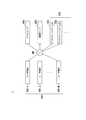
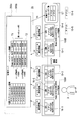
- FIG. 1 is an explanatory diagram for explaining the outline of the mutual customer sending system of the present embodiment.
- four types of applications “application A”, “application B”, “application C”, and “application D” are exemplified as applications corresponding to the mutual customer sending system of the present embodiment.
- “App A” is a customer-source application installed in the user terminal.
- “App B”, “App C”, and “App D” are applications that are not installed in the user terminal, and can be customer applications with respect to “App A” (customer application). is there.
- “App B” is in the campaign period with “App A”, and “App C” and “App D” are in the normal period that is not in the campaign period with “App A”. .
- the user terminal displays, on the display screen of the user terminal, a list LT of target applications that can be selected as a customer destination application for “application A” that is a customer source application.
- labels L1, L2, and L3 displaying the application names and reward contents of “application B”, “application C”, and “application D” are arranged as operators that can be selected as a customer destination application. It is displayed.
- the label L1 displays the application name of “application B”, information indicating that it is during the campaign period, and the link destination of the site on which the reward content by CP reward is posted.
- the label L2 displays the application name of “application C” and the reward contents by the normal reward.
- the application name of “application D” and the reward contents by the normal reward are displayed.
- the grant of points that can be used by the own user in the client application is displayed as the reward content.
- the achievement points that are the conditions for granting rewards in the game and the reward contents when the achievement points are achieved are managed on the application side. Therefore, it is posted on the linked site.
- the achievement point can be arbitrarily set on the application side, for example, the end of the tutorial in the game, the end of a predetermined stage in the game progress, or the acquisition of a predetermined point.
- a reward granting period that starts from the beginning or middle of the campaign period and ends after the end of the campaign period is set, and if the achievement point is achieved within this reward granting period, the reward by CP reward After the reward has been granted and the reward grant period has passed, no reward will be given by CP reward even if the achievement point is achieved.
- reward is given by CP reward every time achievement points are achieved. In this way, the end point of the reward grant period is set after the end point of the campaign period, so that the user who installs at the end of the campaign period considers the period until the achievement point is achieved. ing.
- unique identification information that is information that can be uniquely identified for each user terminal, and can identify the user terminal (the user who uses the user terminal can be identified).
- Management is performed using unique identification information (hereinafter referred to as “reward user ID”).
- the reward user ID and the user ID registered in each application are managed in association with each other.
- application user ID identification information for uniquely identifying an application.
- the customer destination application can become the customer source application.
- “App B” uses “App C” or “App D” that has not yet been sent as a customer destination application. It can be a customer-source application that sends customers to “application C” or “application D”.
- “App C” or “App D” is not in the campaign period with “App B”, it will be subject to normal reward, and if it is in the campaign period with “App B” Are subject to CP Rewards.
- a customer is sent from “App A” to “App C”, “App C” to which the customer has been sent is “App B” that has not yet been sent. It can be a customer-source application that sends customers to “App D”.
- a non-operating state (Not running), a normal operating state where some processing is being performed (Active), and a background state where some processing is being performed but not displayed on the screen (BackGround) and a suspended state (Suspended) where no processing is executed.
- activation of the target application refers to transition from a non-operating state (Not running), a suspended state (Suspended), or a suspended state (Suspended) to a normal operating state (Active).
- End of target application refers to transition from a normal operation state (Active) to a non-operation state (Not running), a suspended state (Suspended), or a suspended state (Suspended).
- starting the target application means that the target application can be operated by the user, for example, displayed on the forefront of the screen.
- the application installation includes not only newly introducing an application program that has not been introduced into the user terminal, but also updating (updating) the application program so as to correspond to the mutual customer system. That is, it includes downloading and updating an update program for supporting the mutual customer system for the application installed in the user terminal.
- FIG. 2 is a schematic configuration diagram showing an example of the configuration of the network system 1 according to the first embodiment of the present invention that realizes the mutual customer sending system.
- the network system 1 includes a plurality of user terminals 100-N (N is a positive integer; user terminal 100-1, user terminal 100-2,...), A management server 200, and a plurality of application servers 300 (application servers). 310, application server 320, etc. And application store 400, and these computer apparatuses are communicably connected via a network NW.
- NW network NW.
- the plurality of user terminals 100-N have the same configuration, the description of “-1”, “ ⁇ 2”, etc. will be omitted and described as the user terminal 100 unless otherwise distinguished.
- Application server 300 is a server device corresponding to an application that can be installed in user terminal 100.
- the application server 310 corresponding to the game A and the application server 320 corresponding to the game B are connected to the user terminal 100 via the network NW. Indicates that it is connected.
- the network system 1 includes not only the application server 310 and the application server 320 but also a plurality of application servers 300 corresponding to games that can be installed and played on the user terminal 100.
- the application installed in the user terminal 100 means that the application program is installed in the user terminal 100 so that the user terminal 100 performs processing related to the application (for example, game processing) based on the installed program. This is a so-called native application.
- the user terminal 100 transmits user information corresponding to the user who plays the game to the application server 300, or acquires information necessary for playing the game from the application server 300.
- the application store 400 is a server device that provides a store site (download service site) where an application that can be installed on the user terminal 100 can be downloaded.
- the user downloads and installs the purchased application to his / her user terminal 100 by connecting to the app store 400 via the network NW from his / her user terminal 100 and purchasing a desired application for a fee or free of charge. Can do.
- an advertisement of an application that has not yet been installed is displayed on a display screen that is displayed while using an application that is installed on the user terminal 100 or a display screen that is transitioned by a user operation.
- the advertisement Is directed to the store site described above, and when the selected application is downloaded and installed on the user terminal 100 to be executable or executed, the advertisement ( It is conceivable to provide a service in which a reward is granted for the user's own use of the original application on which the banner) is displayed.
- the management server 200 manages information related to the application corresponding to the mutual customer transfer system of the present embodiment and information related to normal reward or CP reward, and also manages customer information between applications by communicating with the user terminal 100. It is a management device that controls reward processing. Specifically, the management server 200 associates, for example, the application ID of the customer source application, the application ID of the customer destination application, and the reward user ID as customer information from the customer source application to the customer destination application. to manage.
- the user terminal 100 is a terminal device used by a user.
- a mobile phone, a smartphone, a tablet terminal, a personal computer, a game machine with a communication function, or the like is used.
- the user terminal 100 will be described as a smartphone.
- FIG. 3 is a schematic configuration diagram illustrating an example of the configuration of the user terminal 100 according to the present embodiment.
- the user terminal 100 includes an input unit 110, a display unit 120, a terminal communication unit 130, a terminal storage unit 140, and a terminal control unit 150.
- the input unit 110 is an input device that accepts a user instruction according to an operation from the user and generates input instruction information according to the instruction content.
- a keyboard, a button, a touch panel, a mouse, a microphone, or the like can be applied to the input unit 110.
- the display unit 120 is a display device that displays information such as images and characters.
- an LCD Liquid Crystal Display
- an organic EL Electro Luminescence
- the input unit 110 and the display unit 120 can be applied as a touch panel that is configured integrally and receives an operation input from a user.
- the terminal communication unit 130 communicates with the management server 200 or the application server 300 via the network NW.
- the terminal storage unit 140 is configured using a recording medium such as a random access memory (RAM), a read only memory (ROM), a flash ROM, and a hard disk drive (HDD), or a combination thereof.
- a control program for example, an OS (Operating System) for causing the terminal control unit 150 to perform a basic operation
- an installed application program various information, and the like are stored.
- the terminal control unit 150 includes an information processing device such as a CPU (Central Processing Unit) that functions as a control center of the user terminal 100, and controls each unit included in the user terminal 100.
- the terminal control unit 150 executes basic operation processing based on the OS stored in the terminal storage unit 140 and also executes processing based on an application program (game program).
- the terminal control unit 150 performs processing for executing functions of various applications (such as a web browser and an application that displays a store page of a store site provided by the app store 400) that can operate on the OS via the OS. Do.
- various applications such as a web browser and an application that displays a store page of a store site provided by the app store 400
- the network NW includes, for example, a mobile phone network, a PHS (Personal Handy-phone System) network, a VPN (Virtual Private Network) network, a dedicated communication network, a WAN (Wide Area Network), a LAN (Local Area Network), and a PSTN (Public Switched Telephone Network (Public Switched Telephone Network), etc., or a combination of these.
- a mobile phone network a PHS (Personal Handy-phone System) network, a VPN (Virtual Private Network) network, a dedicated communication network, a WAN (Wide Area Network), a LAN (Local Area Network), and a PSTN (Public Switched Telephone Network (Public Switched Telephone Network), etc., or a combination of these.
- FIG. 4 is an explanatory diagram illustrating an example of the configuration and processing of the mutual customer sending system in the network system 1 of the present embodiment.
- the customer source application 10 game A
- the customer source application 10 game A
- the customer source application 10 game A
- An example in which a reward (reward) is given to the user X in the customer source application 10 (game A) when the customer application 20 (game B) is installed and executed in the user terminal 100 will be described.
- the customer application 10 (game A) is not yet a customer at the time of installation, but will be referred to as the customer application 10 for convenience.
- the user terminal 100 includes an installed customer-source application 10 (game A) executed under the control of the terminal control unit 150, and a store 30 (store page on the store site) that is activated during the customer-transmission process. ) And a customer destination application 20 (game B) that is newly installed and executed.
- game A customer-source application 10
- store 30 store page on the store site
- customer destination application 20 game B
- the customer-source application 10 (game A) transmits a user ID corresponding to the user X who plays the game A to the application server 310 (game A), or sends information necessary for playing the game A to the application server 310 (game A). Or from game A).
- the customer destination application 20 (game B) is installed in the user terminal 100
- the customer destination application 20 (game B) assigns the user ID corresponding to the user X who plays the game B to the application server.
- 320 (game B) or information necessary during the game B play is acquired from the application server 320 (game B).
- SDK Software Development Kit
- the SDK 11 is composed of, for example, a collection of APIs (Application Programming Interface) for mediating each application corresponding to the mutual customer sending system installed in the user terminal 100 and the management server 200.
- the SDK 11A is incorporated in the customer application 10 (game A)
- the SDK 11B is incorporated in the customer application 20 (game B).
- Each of the SDK 11A and the SDK 11B has a configuration for executing a function corresponding to each of the customer source application 10 and the customer destination application 20, and a necessary function is executed according to each application.
- the application corresponding to the mutual customer system can be either the customer source application 10 or the customer destination application 20, and thus the SKD 11 having both the SDK 11A and the SDK 11B is incorporated.
- an application if an application is configured so that the above-described SDK 11 can be incorporated, the application becomes an application corresponding to the mutual customer sending system of the present embodiment.
- an application in which the above-described SDK 11 is preliminarily incorporated may be provided so as to be downloadable, or an SDK 11 that can be incorporated later into an installed application may be provided.
- an application corresponding only to the customer destination application 20 among the applications corresponding to the mutual customer sending system there may be an application corresponding only to the customer destination application 20 among the applications corresponding to the mutual customer sending system.
- only the SDK 11B may be incorporated, or the SDK 11A may be incorporated so that the SDK 11A does not function.
- it is not necessary to provide an application server corresponding to the application in the case of an application that supports only the customer destination application 20, it is not necessary to provide an application server corresponding to the application.
- an application that operates stand-alone on the user terminal 100 corresponds to the mutual customer sending system. Can be the target of an application.
- the applications corresponding to the mutual customer sending system there may be an application corresponding to the customer sending application 10 only.
- the SDK 11A may be incorporated, or the SDK 11B may be incorporated so that the SDK 11B does not function.
- an application that does not accept registration of a new user after the provision of service by the application is terminated may not have the function as the customer destination application 20.
- the configuration including the above-described SDK 11 (SDK 11A and SDK 11B in this figure) and the management server 200 is the main configuration of the mutual customer system according to the present embodiment (see reference numeral 500). To be described.
- the management server 200 communicates with the SDK 11 installed in the application corresponding to the mutual customer system 500 installed in the user terminal 100 to execute the mutual customer process.
- the management server 200 transmits information regarding the reward to the application server 310 (game A) corresponding to the customer source application 10 (game A). Thereby, the reward is given to the user X in the customer source application 10 (game A) from the application server 310 (game A).
- the management server 200 includes a communication unit 210, a management unit 220, a storage unit 230, and a control unit 240.
- the communication unit 210 communicates with the user terminal 100, the application server 310 (game A), or the application server 320 (game B) via the network NW.
- the management unit 220 causes the storage unit 230 to store information on applications corresponding to the mutual customer sending system 500, information on applications participating in the campaign, customer information between applications, information on normal rewards and CP rewards, and the like. to manage.
- the storage unit 230 stores various types of information under the control of the management unit 220 or the control unit 240.
- the control unit 240 controls transmission / reception of information related to mutual customer transmission processing with the user terminal 100 or the application server 310 (game A) and processing related to rewards.
- an application corresponding to the mutual customer sending system 500 to be managed by the management unit 220 is also referred to as a “target application”, and a specific application participating in a campaign among the target applications. Is also referred to as a “specific application”.
- the user terminal 100 has acquired the reward user ID of the user X, which is the unique identification information corresponding to the user terminal 100, and the acquired reward user ID is installed in the mutual customer sending system 500 installed in the user terminal 100. It is assumed that it is stored in a predetermined area (inter-application shared area) of the terminal storage unit 140 so that it can be referred to from the corresponding application.
- the SDK 11A incorporated in the customer source application 10 (game A) is installed with the customer source application (game A).
- Installation notification information indicating this is transmitted to the management server 200 (REQ11).
- the install notification information includes, for example, the application ID of the customer source application 10 (game A) and the reward user ID.
- the management server 200 When the management server 200 acquires the installation notification information transmitted from the user terminal 100 (SDK11A), the management server 200 transmits response information (notification result) indicating the acquisition to the user terminal 100 (SDK11A) ( RES11). In addition, the management server 200 manages the application ID of the customer-source application 10 (game A) included in the acquired installation notification information and the reward user ID in association with each other.
- the user terminal 100 (SDK 11 ⁇ / b> A) requests an application list (information indicating a target application that is a candidate for the customer destination application 20) of at least one target application of the target application corresponding to the mutual customer sending system 500. Request notification information is transmitted to the management server 200 (REQ12).
- the management server 200 acquires the list request notification information from the user terminal 100 (SDK11A)
- the management server 200 does not acquire the installation notification information from the user terminal 100 among the plurality of target applications to be managed (that is, An application list of at least one target application (which has never been installed in the user terminal 100) is transmitted to the user terminal 100 (SDK11A) (RES12).
- the management server 200 transmits information related to the campaign in association with the specific application participating in the campaign.
- the user terminal 100 (SDK 11A) acquires the application list from the management server 200
- the user terminal 100 (SDK 11A) displays a list LT of target applications based on the acquired application list on the display unit 120.
- the user terminal 100 (SDK 11A) starts from the customer source application 10 (game A).
- the customer information indicating that the customer is sent to the selected target application (here, the customer destination application 20 (game B)) is transmitted to the management server 200 (REQ13).
- the customer information includes, for example, an application ID of the customer application 10 (game A), an application ID of the customer application 20 (game B), and a reward user ID.
- the management server 200 acquires customer information from the user terminal 100 (SDK 11A), based on the acquired customer information, instruction information for guiding the customer application 20 (game B) to an installable screen (For example, instruction information for displaying the screen on the display unit 120 of the user terminal 100) is transmitted to the user terminal 100 (SDK11A) (RES13). Further, the management server 200 associates the application ID of the customer source application 10 (game A), the application ID of the customer destination application 20 (game B), and the reward user ID included in the acquired customer information. to manage.
- the store 30 is an application that displays a store page of a store site where the customer destination application 20 (game B) can be installed (downloadable). Start up.
- the store 30 acquires a store page in which the customer destination application 20 (game B) can be installed from the app store 400 and displays it on the display unit 120.
- the customer destination application 20 (game B) is downloaded and installed on the user terminal 100 by the operation of the user X
- the customer destination application 20 (game B) installed by the operation of the user X is subsequently started.
- the user terminal 100 (SDK 11B) transmits installation notification information indicating that the customer destination application 20 (game B) has been installed to the management server 200 (REQ14).
- the installation notification information includes, for example, the application ID of the customer destination application 20 (game B) and the reward user ID.
- the management server 200 When the management server 200 acquires the installation notification information transmitted from the user terminal 100 (SDK11B), the management server 200 transmits response information indicating the acquisition to the user terminal 100 (SDK11B) (RES14). In addition, the management server 200 determines that the customer destination application 20 (game B) uses the customer source application 10 (game A) in the user terminal 100 based on the acquired installation notification information and the managed customer information. ) Is determined to have been sent by the customer.
- the customer destination application 20 (game B) is a specific application and is in a campaign with the customer source application 10 (game A).
- the user terminal 100 (SDK11B) is based on the fact that the reward granting conditions set in advance corresponding to the campaign are satisfied (the achievement point has been reached). Transmits reward grant notification information (information indicating achievement point arrival) indicating that the reward grant condition is satisfied to the management server 200 (REQ15).
- the user terminal 100 (SDK 11B) sends the reward grant notification information (information indicating achievement point arrival) for the number of achievement points to the management server 200 based on the arrival at each achievement point. Send.
- the management server 200 acquires the reward grant notification information from the user terminal 100 (SDK11B), the management server 200 is reward grant information based on the acquired reward grant notification information, and the achievement point in the customer destination application 20 (game B) The reward granting information indicating that it has reached is sent to the application server 310 (game A) corresponding to the customer source application 10 (game A) (CP reward processing).
- the management server 200 transmits reward grant information based on the reward grant notification information for the number of reward points to the application server 310 (game A).
- the management server 200 transmits information indicating the achievement point arrival in the customer destination application 20 (game B) to the application server 310 (game A) corresponding to the customer source application 10 (game A).
- the link destination of the site where the reward content by CP reward is posted is displayed without displaying the reward content by CP reward on the display screen. This is because the management server 200 is not involved in the contents of the reward.
- the management server 200 displays the user terminal 100 (SDK11B).
- SDK11B the installation notification information indicating that the customer destination application 20 (game B) transmitted from is installed
- reward granting information indicating that the achievement point by the normal reward is reached is sent to the application server 310 (game A). To the other side (normal reward processing).
- the customer is sent from the customer source application 10 (game A) to the customer destination application 20 (game B).
- each information exchanged between the SDK 11A and the SDK 11B and the management server 200 is related directly or via any information by the reward user ID corresponding to the user terminal 100. Has been. Thereby, even if the application user ID is different between the customer source application 10 (game A) and the customer destination application 20 (game B), the mutual customer sending system 500 can Reward processing can be easily performed.
- FIG. 5 is a configuration diagram illustrating an example of a functional configuration of the mutual customer transmission process executed by the terminal control unit 150 based on the SDK 11 in the user terminal 100 according to the present embodiment.
- the functional configuration of the mutual customer process executed by the user terminal 100 (SDK 11) in the mutual customer system 500 will be described.
- the SDK 11 includes an initialization processing unit 101, a list request unit 104, a display control unit 105, a customer information notification unit 106, and a reward grant notification unit 107.
- the initialization processing unit 101 acquires information (for example, an application ID, an application user ID, etc.) related to the application as a process at the first activation.
- the initialization processing unit 101 includes a unique identification information acquisition unit 102 and an installation notification unit 103.
- the unique identification information acquisition unit 102 acquires unique user identification information that is uniquely set for each user terminal 100 and is a unique user identification information that can uniquely identify a user who uses the user terminal 100. .
- the unique identification information acquisition unit 102 generates a pseudo random number sequence, and uses the generated pseudo random number sequence to obtain a reward user ID corresponding to the user terminal 100 so as not to overlap with the reward user ID of another user terminal 100. Generate and get.
- the unique identification information acquisition unit 102 stores the acquired reward user ID in the inter-application sharing area of the terminal storage unit 140 so that it can be referred to from any target application installed in the user terminal 100.
- the unique identification information acquisition unit 102 acquires a reward user ID when the installed target application is a target application first installed in the user terminal 100 among the plurality of target applications. That is, when the reward user ID is not stored in the inter-application sharing area of the terminal storage unit 140, the reward user ID is acquired. The obtained reward user ID is also used in the target application installed thereafter.
- the installation notification unit 103 transmits installation notification information indicating that the target application installed in the user terminal 100 has been installed to the management server 200.
- the install notification information includes the application ID of the installed target application and the reward user ID corresponding to the user terminal 100. It should be noted that a case where the user downloads from the store site without installing the customer sending process by the mutual customer sending system 500 and the target application is installed, and a case where the user application is installed via the customer sending process by the mutual customer sending system 500 (simply In any case, the installation notification information is transmitted from the user terminal 100.
- the installation notification unit 103 transmits to the management server 200 installation notification information indicating that the specific application installed in the user terminal 100 has been installed. Become.
- the installation notification unit 103 may transmit installation notification information further including an application user ID in the installed target application of the user who installed the installed target application to the management server 200.
- the management server 200 that has acquired the installation notification information can manage the application user ID and the reward user ID in the installed target application in association with each other.
- the transmission timing of the application user ID may be included in other information instead of being included in the installation notification information.
- the process in which the installation notification unit 103 transmits the installation notification information to the management server 200 is the same for both the SDK 11A of the customer source application 10 and the SDK 11B of the customer destination application 20. Executed when each installed application starts.
- the list request unit 104 is a list request notification information requesting an application list of at least one target application (or a specific application) of a plurality of target applications based on a predetermined operation (first operation) in the customer source application 10. Is transmitted to the management server 200.
- the predetermined operation described above is a user operation on the input unit 110, for example, for acquiring the application list of the target application (or specific application) from the management server 200 in the customer source application 10.
- the list request notification information includes, for example, the application ID (customer information) of the customer application 10 (target application (or specific application)) and the reward user ID corresponding to the user terminal 100. included. Further, the list request unit 104 acquires the application list transmitted from the management server 200 based on the transmitted list request notification information.
- the list request unit 104 may transmit to the management server 200 list request notification information for requesting an application list of a target application including a specific application for which a campaign is set with the customer source application 10.
- list request notification information for requesting an application list of a target application that does not include the specific application may be transmitted to the management server 200.
- the list request unit 104 may transmit, to the management server 200, list request notification information for requesting an application list for only a specific application for which a campaign is set with the customer source application 10.
- the display control unit 105 causes the display unit 120 to display a list LT of target applications based on the application list acquired by the list request unit 104. For example, the display control unit 105 displays the target application list LT by overlapping or switching the display screen displayed on the display unit 120 by the customer source application 10.
- the customer information notification unit 106 transmits customer information indicating that the customer has been sent to the target application (or a specific application) selected from the customer application 10 to the management server 200.
- the target application (or specific application) selected from the customer source application 10 is a user operation (or a user operation (or specific application) included in the application list displayed on the display unit 120). It means any application selected based on the second operation).
- the above-mentioned customer information includes, for example, an application ID (customer information) of the customer application 10, a selected target application (or a specific application), that is, an application ID of the customer application 20, and this user.
- a reward user ID corresponding to the terminal 100 is included.
- the customer information notification unit 106 for example, The customer ID including the application ID (customer information) of the original application 10, the application ID of the selected specific application, that is, the customer application 20, and the reward user ID corresponding to the user terminal 100 is sent to the management server 200. To send.
- the reward grant notification unit 107 is a reward grant notification information indicating that the reward granting condition is satisfied based on the fact that the reward granting condition set in advance corresponding to the campaign is satisfied in the specific application during the campaign period. Is transmitted to the management server 200.
- the above-described reward grant notification information includes, for example, an application ID (customer destination information) of a specific application (customer destination application 20) during the campaign period, and a reward user ID corresponding to the user terminal 100. Is included.
- the initialization processing unit 101 (unique identification information acquisition unit 102, installation notification unit 103), list request unit 104, display control unit 105, and customer
- the information notification unit 106 corresponds to the functional configuration of the SDK 11A corresponding to the customer source application 10 (that is, the functional configuration of the customer source).
- the initialization processing unit 101 (unique identification information acquisition unit 102, installation notification unit 103) and the reward grant notification unit 107 include the functional configuration of the SDK 11B corresponding to the customer destination application 20 (that is, the customer destination).
- FIG. 6 is a configuration diagram illustrating an example of the configuration of the management server 200 according to the present embodiment.
- the management server 200 includes a communication unit 210, a management unit 220, a storage unit 230, and a control unit 240.
- the management unit 220, the storage unit, Each structure of 230 and the control part 240 is demonstrated in detail.
- the management unit 220 includes an application management unit 221, an installation information management unit 222, and a customer information management unit 223.
- the management unit 220 associates each piece of information to be managed and stores the information in the storage unit 230 for management.
- the application management unit 221 manages information (target application information) regarding a plurality of target applications corresponding to the mutual customer sending system 500.
- the application management unit 221 manages information related to a campaign having a campaign period (an example of a first period) set for a plurality of specific applications.
- the application management unit 221 associates and manages information indicating a campaign (such as a campaign name) and information related to the campaign (such as information indicating a campaign period and a link destination of information posting location indicating reward).
- the installation information management unit 222 Based on the installation notification information acquired from the user terminal 100, the installation information management unit 222 associates the reward user ID included in the installation notification information with the application ID of the installed target application and manages it as installation information. Note that the installation information management unit 222 may manage the reward user ID included in the installation notification information, the application ID of the target application, and the application user ID of the target application as installation information in association with each other.
- the customer information management unit 223 receives the reward user ID, the application ID of the customer application 10, and the application ID of the customer application 20 included in the customer information transmitted from the user terminal 100 and acquired by the management server 200. It is associated and managed as a record of customer information. Note that the customer information management unit 223 may further manage the customer information as a record of customer information associated with information indicating the campaign when a campaign is set for the customer application 10 and the customer application 20. .
- the storage unit 230 stores various information managed by the management unit 220 or the control unit 240.
- the storage unit 230 includes a target application information storage unit 231, a normal reward information storage unit 232, an inter-app filter storage unit 233, a campaign information storage unit 234, a campaign participation application information storage unit 235, and an installation information storage unit 236. And a customer information storage unit 237 and a reward establishment information storage unit 238.
- Various types of information may be stored in a format suitable for the use of the information, such as a database table format or a JSON (Java Script (registered trademark) Object Notation) format.
- the target application information storage unit 231 stores target application information related to the target application corresponding to the mutual customer sending system 500.
- FIG. 7 is a diagram illustrating an example of target application information stored in the target application information storage unit 231.
- the target application information includes an application ID (ApID), a notification destination URL (NoticeURL), a store URL (ApStoreURL), an application name (ApNAME) indicating the name of the target application, and an explanation about the target application.
- An application description (ApDOC) that is information
- an application icon image (ApICO) that is an icon image indicating the target application
- an application price ApPRICE
- the notification destination URL (NoticeURL) is the URL (Uniform Resource Locator) of the notification destination of the reward.
- the URL of the application server 300 corresponding to the target application is set.
- the store URL (ApStoreURL) is a URL of a page of a sales site (application store 400) where the target application can be downloaded.
- the application price (ApPRICE) is the selling price of the target application.
- the target application information is used in a target application list LT displayed on the user terminal 100, for example.
- the target application information is set in advance and stored in the target application information storage unit 231 before being available for download from the application store 400, and is managed by the application management unit 221.
- the normal reward information storage unit 232 stores information related to normal reward (normal reward information) for each target application.
- FIG. 8 is a diagram illustrating an example of normal reward information stored in the normal reward information storage unit 232.
- the normal reward information indicates an item ID (ItemID) for identifying an item given as a normal reward in the target application, an application ID (ApID) of the target application, a minimum price (min_price), and the name of the item.
- the reward item name (ItemName) is associated with the number of reward items (ItemNum) indicating the number of reward items given. In the minimum price (min_price), the price of the target application that is the target of normal reward is set.
- These normal reward information is used in a list LT of target applications displayed on the user terminal 100, for example.
- the normal reward information is set when the target application information is stored in the target application information storage unit 231, stored in the normal reward information storage unit 232, and managed by the application management unit 221.
- the inter-application filter storage unit 233 stores filter information (inter-app filter information) between applications for restricting target applications that can be sent to each other.
- filter information inter-app filter information
- the campaign information storage unit 234 stores information (campaign information) related to a campaign of a specific application participating in the campaign among the target applications.
- FIG. 9 is a diagram illustrating an example of campaign information stored in the campaign information storage unit 234.
- the campaign information includes campaign ID (CpID), campaign name (CpNAME), campaign start date / time (CpStartDATE), campaign end date / time (CpEndDATE), reward grant start date / time (RewardStartDATE), reward grant end date / time (RewardEndDATE) ).
- Campaign ID is identification information for identifying a campaign.
- the campaign name (CpNAME) indicates the name of the campaign.
- the campaign start date / time (CpStartDATE) and the campaign end date / time (CpEndDATE) respectively indicate the start date / time and end date / time of the campaign period.
- a CP reward qualification is obtained.
- a plurality of achievement points are set, and a user who starts using the customer destination application 20 during the campaign period defines how far the achievement point should be reached by starting reward granting.
- This is a reward grant period defined by the date and time (RewardStartDATE) and the reward grant end date and time (RewardEndDATE).
- RewardStartDATE the date and time
- RewardEndDATE the reward grant end date and time
- a reward granting period an example of the second period
- the same date and time are set for the campaign start date and time and the reward grant start date and time
- the reward grant end date and time is set one week after the campaign end date and time.
- These pieces of campaign information are set in advance before the campaign start date and time, stored in the campaign information storage unit 234, and managed by the application management unit 221.
- similar information is set as the campaign information in the application server 300 and the management server 200 corresponding to each specific application that executes the campaign.
- the structure which a reward provision period is not set separately from a campaign period may be sufficient, and the structure which a reward provision period is the same period as a campaign period may be sufficient.
- the campaign participation application information storage unit 235 stores information indicating a specific application that participates in the campaign set in the campaign information storage unit 234 (campaign participation application information).
- campaign participation application information information indicating a specific application that participates in the campaign set in the campaign information storage unit 234 (campaign participation application information).
- FIG. 10 is a diagram illustrating an example of campaign participation application information stored in the campaign participation application information storage unit 235.
- the campaign participation application information is associated with a campaign ID (CpID), an application ID (ApID) of a specific application participating in the campaign with this campaign ID, and a campaign page URL (CpPageURL).
- the campaign ID (CpID) corresponds to the campaign ID included in the campaign information stored in the campaign information storage unit 234.
- the campaign page URL is information indicating a page (website page) on which information on CP reward rewards given when the application is installed and used during the campaign period.
- This page also contains information about the application (description and price).
- the page and application server in the application server 310 (game A) corresponding to each application
- Each URL with a page in 320 may be set as a campaign page URL.
- a campaign dedicated site may be provided separately, and the same URL for the campaign dedicated site may be set for both the customer source application 10 (game A) and the customer destination application 20 (game B). . Further, this campaign dedicated site may be provided in the management server 200.
- the information related to the reward of the CP reward is set so as to be posted on the application server 300 or the page of the campaign dedicated site, and therefore does not need to be managed by the management server 200.
- the above-described campaign participation application information is set when the target application participates in the campaign as a specific application, stored in the campaign participation application information storage unit 235, and managed by the application management unit 221.
- the information included in the campaign information and the campaign participation application information is managed by the management server 200 as described above, and is similarly managed by the application server 300 corresponding to the specific application participating in the campaign.
- the user terminal 100 that has installed a specific application participating in the campaign can acquire campaign information of the application and information included in the campaign participation application information from the application server 300 corresponding to the specific application. .
- the installation information storage unit 236 stores installation information managed by the installation information management unit 222 based on the installation notification information transmitted from the user terminal 100 and acquired by the management server 200.
- FIG. 11 is a diagram illustrating an example of installation information stored in the installation information storage unit 236. For example, a reward user ID (RewardUID), an application ID (ApID), and an application user ID (ApUID) included in the acquired installation notification information are associated with the installation information.
- RewardUID reward user ID
- ApID application ID
- ApUID application user ID
- the installation notification information is transmitted, and the installation information based on the installation notification information acquired by the management server 200 is stored in the installation information storage unit 236. That is, the installation information storage unit 236 records installation information of all target applications installed in the user terminal 100. Therefore, even if the target application once installed is uninstalled and then installed again, the installation information of the target application is stored in the installation information storage unit 236, so that the management server 200 provides double compensation. Can be prevented.
- the customer information storage unit 237 stores (records) customer information managed by the customer information management unit 223 based on the customer information transmitted from the user terminal 100 and acquired by the management server 200.
- FIG. 12 is a diagram illustrating an example of customer information stored in the customer information storage unit 237.
- a reward management ID (RewardID)
- RewardUID reward user ID
- ApIDfrom a customer application ID
- ApIDto a customer application ID
- CpID campaign ID
- the reward management ID is a management ID that is issued in the order in which each customer information is acquired so that each customer information can be identified.
- the customer source application ID (ApIDfrom) is the application ID of the customer source application 10
- the customer destination application ID (ApIDto) is the application ID of the customer destination application 20.
- the application list does not include a target application that has already been installed in the user terminal 100 or a target application that has been installed (a target application that has been uninstalled thereafter), a target to be newly installed
- the customer information to the application is stored in the customer information storage unit 237. Note that even when customer information is stored in the customer information storage unit 237, the customer application 20 of the customer information is not necessarily downloaded and installed.
- the reward establishment information indicating whether or not the reward granting information has been notified to the application server 310 (game A) corresponding to is stored.
- this reward establishment information is stored in the installation information storage unit 236, for example, the installation information of the target application corresponding to the customer destination application ID of the customer information stored in the customer information storage unit 237.
- a new record (reward establishment information data for one piece) corresponding to the customer information is generated and stored in the reward establishment information storage unit 238.
- this reward establishment information is obtained, for example, when the reward grant notification information corresponding to the customer destination application ID of the customer information stored in the customer information storage unit 237 is acquired from the user terminal 100. A new record corresponding to the customer information is generated and stored in the reward establishment information storage unit 238.
- FIG. 13 is a diagram illustrating an example of the reward establishment information stored in the reward establishment information storage unit 238.
- a reward management ID (RewardID)
- a result point ID (RewardSpotID)
- an established state (RewardStatus)
- the reward management ID corresponds to the reward management ID included in the customer information stored in the customer information storage unit 237.
- the achievement point ID is identification information of the achievement point to which a reward is given in the customer destination application 20 set based on the reward granting condition.
- identification information indicating a result point (reward granting condition in the customer destination application 20) set in advance corresponding to the campaign is set in the result point ID (RewardSpotID).
- the result point (reward granting condition) is the customer application 20 “Null” is set as the result point ID.
- the result point (reward granting condition) is the same as in the case of normal reward. ) Is when the customer destination application 20 is installed and becomes executable, or when it is executed.
- the established state (RewardStatus) flag information indicating whether or not the reward grant information is notified to the application server 310 (game A) corresponding to the customer source application 10 (game A) is set. That is, when a new record is generated in association with the reward management ID corresponding to the customer information stored in the customer information storage unit 237, the flag “0” ( Not notified) is set. Thereafter, when the notification of the reward grant information to the application server 310 (game A) is completed, the established state (RewardStatus) is updated to the flag “1” (notified). Note that when a response to the notification of reward grant information from the application server 310 (game A) is acquired, the flag may be updated to “1” (notified).
- the control unit 240 includes an installation notification acquisition unit 241, a list notification unit 242, a customer information acquisition unit 243, an installation guidance instruction unit 244, a reward processing unit 245, and a timing unit 246.
- the installation notification acquisition unit 241 displays installation notification information indicating that the target application installed in the user terminal 100 specified by the reward user ID among the plurality of target applications is installed, in the target application (the SDK 11 of the target application). ) As described above, the install notification information includes, for example, the reward user ID corresponding to the user terminal 100 and the application ID of the target application. The installation notification information may further include an application user ID of the target application. Then, the installation notification acquisition unit 241 supplies the acquired installation notification information to the installation information management unit 222.
- the list notification unit 242 acquires the list request notification information transmitted from the customer source application 10 (SDK 11A of the customer source application 10) installed in the user terminal 100, based on the acquired list request notification information, Referring to the target application information storage unit 231 and the installation information storage unit 236, at least one target application (or specific application) that has not acquired installation notification information from the user terminal 100 (that is, is not installed in the user terminal 100) ) Application list is transmitted to the user terminal 100.
- the list notification unit 242 refers to the campaign information storage unit 234 or the campaign participation application information storage unit 235 and transmits information related to a campaign corresponding to one or more specific applications included in the application list.
- the list notification unit 242 includes information about the target application (application name, description, price, etc.), information about the reward contents of the normal reward, or information about the CP reward campaign (information indicating the campaign period and the reward corresponding to the campaign).
- the target application list LT based on the application list including the link destination of the posting location of the application generates application list page data that can be displayed on the user terminal 100 and transmits it to the user terminal 100.
- the list notification unit 242 generates and generates data of an application list page in which a list LT of the target application described in HTML (HyperText Markup Language) format that can be displayed by a browser function that can be executed by the SDK 11 is displayed. Information indicating the link destination of the selected page is transmitted to the user terminal 100.
- HTML HyperText Markup Language
- the customer information acquisition unit 243 is customer information from the customer source application 10 to the customer destination application 20, and includes a reward user ID, an application ID of the customer source application 10, and an application ID of the customer destination application 20.
- the customer information included is acquired from the user terminal 100. Then, the customer information acquisition unit 243 supplies the acquired customer information to the customer information management unit 223.
- the installation guidance instructing unit 244 provides instruction information for guiding the customer destination application 20 to an installable screen based on the application ID of the customer destination application 20 included in the customer information acquired by the customer information acquisition unit 243. It transmits to the terminal 100.
- the installation guidance instruction unit 244 transmits instruction information for starting the store 30 that is an application for displaying a store page of a store site where the customer destination application 20 can be installed (downloadable) to the user terminal 100.
- the reward processing unit 245 executes a first reward grant process (CP reward process) related to CP reward and a second reward grant process (normal reward process) related to normal reward.
- CP reward process a first reward grant process
- normal reward process a second reward grant process
- the reward processing unit 245 receives customer information from the customer source application 10 to the customer destination application 20 as a customer information storage unit 237. It is determined whether or not it is stored. Then, when the customer information is stored in the customer information storage unit 237 (that is, the customer information management unit 223 manages the customer information record for the customer application 20). If the customer destination application 20 is a target application sent from the customer source application 10 by the mutual customer sending system 500, the CP reward process or the normal reward process is executed. Here, the reward processing unit 245 rewards the application server 310 corresponding to the customer source application 10 so that the user is rewarded in the customer source application 10 in the CP reward process or the normal reward process.
- the installation notification information is transmitted to the management server 200 even when the target application is simply installed without going through the customer sending process by the mutual customer sending system 500. Therefore, on condition that the customer information record with respect to the customer destination application 20 is managed by the customer information management unit 223, the CP reward or the normal reward is simply given when the customer destination application 20 is installed. It becomes possible to prevent giving.
- the reward processing unit 245 determines that the customer destination application 20 has been installed within the campaign period, and sends the reward application unit 245 based on the satisfaction of the reward granting conditions set in advance corresponding to the campaign.
- the reward grant notification information is acquired from the customer application 20
- CP reward processing based on the acquired reward grant notification information is executed.
- the reward processing unit 245 executes normal reward processing when it is determined that the customer destination application 20 has been installed.
- the reward processing unit 245 sets the installation notification acquisition unit 241 to the customer destination application 20.
- the timing at which the corresponding installation notification information is acquired is within the campaign period, it is determined that the customer destination application 20 has been installed on the user terminal 100 within the campaign period.
- the reward processing unit 245 determines that the customer destination application 20 is installed in the user terminal 100 outside the campaign period even if the customer destination application 20 has a campaign set with the customer source application 10.
- the normal reward process is executed instead of the CP reward process.
- the reward processing unit 245 sends the customer associated with the reward user ID included in the acquired installation notification information based on the installation notification information acquired by the installation notification acquisition unit 241 from the customer destination application 20.
- the application user ID of the original application 10 is acquired with reference to the installation information storage unit 236. Then, the reward grant information including the application user ID is transmitted to the application server 310 corresponding to the customer source application 10.
- the reward processing unit 245 stores the application user ID of the customer source application 10 associated with the reward user ID included in the reward grant notification information acquired from the customer destination application 20 in the installation information storage unit 236. Get by reference. And based on the acquired reward grant notification information, the reward grant information including the application user ID is transmitted to the application server 310 corresponding to the customer source application 10. In addition, the reward processing unit 245 may further include the campaign ID, the achievement point ID, and the like included in the acquired reward grant notification information in the reward grant information described above, and transmit it to the application server 310 corresponding to the customer source application 10. Good.
- the reward processing unit 245 stores the installation information of the target application corresponding to the customer destination application ID of the customer information stored in the customer information storage unit 237 in the installation information storage unit 236. Sometimes, a new record of reward establishment information corresponding to the customer information is generated and stored in the reward establishment information storage unit 238. At this time, the reward processing unit 245 sets a flag “0” (unnotified) in the established state (RewardStatus) included in the reward established information.
- CP reward when the reward processing unit 245 acquires, from the user terminal 100, reward grant notification information corresponding to the customer destination application ID of the customer information stored in the customer information storage unit 237, for example. Then, a new record of reward establishment information corresponding to the customer information is generated and stored in the reward establishment information storage unit 238. At this time, the reward processing unit 245 sets a flag “0” (unnotified) in the established state (RewardStatus) included in the reward established information.
- the reward processing unit 245 displays the reward grant notification information corresponding to the customer destination application ID of the customer information stored in the customer information storage unit 237 as the campaign period corresponding to the customer information. If it is acquired from the user terminal 100, a new record of reward establishment information corresponding to the customer information is generated and stored in the reward establishment information storage unit 238.
- the reward processing unit 245 displays the reward grant notification information corresponding to the customer destination application ID of the customer information stored in the customer information storage unit 237 as the reward.
- the reward grant notification information is acquired from the customer destination application 20 within the grant period, a new record of reward establishment information corresponding to the customer information may be generated and stored in the reward establishment information storage unit 238.
- the reward processing unit 245 establishes the reward in response to the notification of reward grant information corresponding to the reward establishment information to the application server 310 (game A) in both the normal reward process and the CP reward process.
- the information establishment state (RewardStatus) is updated to flag “1” (notified).
- Time measuring unit 246 measures the time and acquires the current date and time.
- the timer 246 may acquire the current date and time via the network NW from a date and time information providing server (not shown) that provides current date and time data.
- the reward processing unit 245 determines whether or not the current date and time is within the campaign period or the reward granting period based on information indicating the current date and time counted by the timing unit 246.
- the various information storage units (231 to 238) stored and managed in the storage unit 230 indicate the data registration date and time when the record was generated and the date and time when a part of the generated record was updated.
- the data update date and time may be stored in each record.
- FIGS. 14 and 15 are flowcharts showing an example of the operation of the mutual customer processing according to the present embodiment.
- the processing shown in FIGS. 14 and 15 shows a detailed example of the outline processing flow described with reference to FIG.
- the management server 200 can install the customer destination application 20 (game B) from the processing executed by the SDK 11A (processing (1)) after the customer source application 10 (game A) shown in FIG. 4 is installed.
- a detailed example up to the process (process (6)) of transmitting the instruction information for guiding to a simple screen to the user terminal 100 will be described.
- the initialization processing unit 101 of the SDK 11A incorporated in the customer source application 10 (game A) executes only at the first activation.
- the application ID (ApID) of the customer source application 10, the application user ID (ApUID) of the user X registered in the customer source application 10, and the campaign ID (CpID) if a campaign is set Is acquired from the customer source application 10 (game A) (step SA11).
- the initialization processing unit 101 of the SDK 11A executes the initialization processing of the SDK 11A.
- the initialization processing unit 101 determines whether or not initialization processing has been completed in the initialization processing (step SA12). If it is determined that the initialization process has been completed (step SA12: YES), the initialization processing unit 101 ends without executing the subsequent initialization process, and proceeds to step SA17.
- the unique identification information acquisition unit 102 refers to the terminal storage unit 140 and determines whether or not the reward user ID has been acquired. (Step SA13). Whether or not the reward user ID has been acquired is determined by storing the reward user ID in the inter-application shared area of the terminal storage unit 140 so that it can be referred from any target application installed in the user terminal 100. It is judged by whether or not it is.
- step SA13 the unique identification information acquisition unit 102 of the SDK 11A reads the reward user ID from the terminal storage unit 140, and proceeds to step SA16.
- step SA13 when it is determined that the reward user ID has not been acquired (step SA13: NO), the unique identification information acquisition unit 102 obtains a reward user ID corresponding to the user terminal 100 (an ID unique in the mutual customer sending system 500). Generate and acquire (step SA14).
- the unique identification information acquisition unit 102 stores the acquired reward user ID in the inter-application shared area of the terminal storage unit 140 (step SA15).
- the installation notification unit 103 of the SDK 11A transmits installation notification information indicating that the customer source application 10 (game A) has been installed in the user terminal 100 to the management server 200 (REQ11, step SA16).
- the installation notification information includes a reward user ID (RewardUID) corresponding to the user terminal 100, an application ID (ApID) of the installed customer application 10 (game A), and this customer application 10 ( The application user ID (ApUID) of the user X registered in the game A) is included.
- the installation notification acquisition unit 241 of the management server 200 acquires the installation notification information transmitted from the user terminal 100 (SDK11A). Then, the installation notification acquisition unit 241 transmits response information (notification result) indicating that the installation notification information has been acquired to the user terminal 100 (SDK11A) (RES11). Further, the installation information management unit 222 of the management server 200 includes the reward user ID (RewardUID) included in the installation notification information acquired by the installation notification acquisition unit 241 and the application ID (ApID) of the customer source application 10 (game A). And the application user ID (ApUID) of the user X in the customer source application 10 (game A) are stored in the installation information storage unit 236 as installation information (step SE11).
- the initialization processing unit 101 of the SDK 11A acquires the response information (notification result) transmitted from the management server 200, the initialization processing unit 101 sets a flag indicating initialization and ends the initialization process (step SA17).
- the user X performs a predetermined operation on the input unit 110 for acquiring an application list of target applications that can be installed on the user terminal 100. Assume that an operation (first operation) is performed. Based on a predetermined operation (first operation) in the customer source application 10, the list request unit 104 of the SDK 11A reads out the reward user ID from the inter-application shared area of the terminal storage unit 140 (step SA23), List request notification information for requesting an application list of at least one target application of the target application (information of target applications that are candidates for the customer destination application 20) is transmitted to the management server 200 (REQ12, step SA24).
- the list request notification information includes a reward user ID (RewardUID) corresponding to the user terminal 100, an application ID (ApID) of the customer source application 10 (game A), and a campaign ID (CpID). . If no campaign is set for the customer source application 10 (game A), “null” is set for the campaign ID (CpID). Further, even if the campaign ID (CpID) is not included in the list request notification information, the application ID of the customer source application 10 (game A) is referred to by referring to the campaign participating application information storage unit 235 and the campaign information storage unit 234.
- the management server 200 acquires whether or not the customer source application 10 (game A) is carrying out a campaign, and if the campaign is being carried out, the corresponding campaign ID (CpID) is acquired in the management server 200. It is also possible.
- the list notification unit 242 of the management server 200 acquires the list request notification information transmitted from the user terminal 100 (SDK 11A of the customer source application 10)
- the list notification unit 242 receives an installation notification from the user terminal 100 based on the acquired list request notification information.
- At least one target application that has not acquired information (that is, is not installed in the user terminal 100) is extracted.
- the list notification unit 242 applies the application ID associated with the reward user ID (RewardUID) included in the acquired list request notification information in the installation information stored in the installation information storage unit 236 as a target.
- RewardUID reward user ID
- the list notification unit 242 is not installed in the user terminal 100 based on the application ID (ApID) and the campaign ID (CpID) of the customer source application 10 (game A) included in the list request notification information. Only a specific application for which a campaign is set with the customer application 10 (game A) may be extracted from the target applications. Note that there may be a case where a target application (specific application) that is not installed in the user terminal 100 does not exist and cannot be extracted.
- the filtering process for filtering the target application included in the application list transmitted from the list notification unit 242 to the user terminal 100 in response to the acquisition of the list request notification information is the condition stored in the inter-application filter storage unit 233 ( Based on the filter information). This filtering process will be described in the second embodiment.
- the list notification unit 242 generates application list page data for displaying the target application list LT based on the extracted application list of the target application on the user terminal 100 (step SE16), and the generated application list page Is transmitted to the user terminal 100 and redirected to the application list page (RES12, step SE17). If there is no target application (specific application) that is not installed in the user terminal 100, an application list page describing that the target application (specific application) does not exist is used instead of the target application list LT. Generate.
- the display control unit 105 of the SDK 11A displays the application list page on the display unit 120 by the browser function (step SA25). .
- the display control unit 105 causes the application list page to be displayed by overlapping the display screen of the customer source application 10 (game A) that has been displayed on the display unit 120 until then.
- a list LT of target applications that can be selected as the customer destination application 20 is displayed on the application list page on the display unit 120 of the user terminal 100.
- the customer information notifying unit 106 of the SDK 11A sends the customer application 10 (game A) sends customer information indicating that the customer has been sent to the selected target application (here, the customer destination application 20 (game B)) to the management server 200 (REQ13, step SA26).
- the application ID (ApID) of the customer source application 10 (game A) the application ID (ApID) of the customer destination application 20 (game B), and the reward user ID (RewardUID)
- And campaign ID CpID
- the campaign ID (CpID) can be acquired in the management server 200 based on the application ID (ApID) of the customer source application 10 (game A) without acquiring the campaign ID (CpID) from the user terminal 100.
- the display control unit 105 of the SDK 11A closes the application list page displayed on the display unit 120 in step SA25, and the customer source application 10 (game A). ) Display.
- the customer information acquisition unit 243 of the management server 200 acquires customer information from the user terminal 100 (SDK 11A). Then, the customer information management unit 223 includes the application ID (ApID) of the customer source application 10 (game A) included in the customer information acquired by the customer information acquisition unit 243 and the customer destination application 20 (game B). ), The customer ID (ApID), the reward user ID (RewardUID), and the campaign ID (CpID) are associated with each other and stored in the customer information storage unit 237 as a customer information record (step SE18).
- the installation guide instruction unit 244 of the management server 200 determines the customer destination application 20 based on the application ID of the customer destination application 20 (game B) included in the customer information acquired by the customer information acquisition unit 243. Instruction information for guiding to an installable screen is transmitted to the user terminal 100.
- the installation instructing instruction unit 244 transmits, to the user terminal 100, instruction information for starting the store 30, which is an application that displays a store page of a store site where the customer destination application 20 (game B) can be installed (downloadable). (Step SE19).
- the user terminal 100 acquires the instruction information for starting the store 30 from the management server 200, the user terminal 100 starts the store 30 and displays the store page of the store site where the customer destination application 20 (game B) can be installed (downloadable). It is displayed on the display unit 120 (step SC11).
- the user terminal 100 causes the display unit 120 to display the store page so as to overlap the display screen of the customer source application 10 (game A) that has been displayed on the display unit 120 until then.
- the management server 200 corresponds to the customer source application 10 (game A) from the processing executed by the SDK 11B after the customer destination application 20 (game B) shown in FIG. 4 is installed (the process (8)).
- a detailed example up to the process of transmitting reward grant information to the application server 310 (game A) (the process of (11)) will be described.
- the initialization processing unit 101 of the SDK 11B incorporated in the customer destination application 20 performs the processing executed only at the first activation, the application ID (ApID) of the customer destination application 20, and the customer
- the application user ID (ApUID) of the user X registered in the destination application 20 and the campaign ID (CpID) when the campaign is set are acquired from the customer destination application 20 (game B) (step SB11). ).
- the initialization processing unit 101 of the SDK 11B executes the initialization processing of the SDK 11B.
- the initialization processing unit 101 determines whether or not the initialization process has been completed (step SB12). If it is determined that the initialization process has been completed (step SB12: YES), the initialization process ends. If it is determined that the initialization process has not been completed (step SB12: NO), the process proceeds to the process of the unique identification information acquisition unit 102 of the SDK 11B. Here, since the reward user ID of the user terminal 100 has already been acquired, the process proceeds to the installation notification process in step SB16.
- the installation notification unit 103 of the SDK 11B transmits installation notification information indicating that the customer destination application 20 (game B) is installed in the user terminal 100 to the management server 200 (REQ14, step SB16).
- the installation notification information includes a reward user ID (RewardUID) corresponding to the user terminal 100, an application ID (ApID) of the installed customer destination application 20 (game B), and this customer destination application 20 ( The application user ID (ApUID) of the user X registered in the game B) is included.
- the installation notification acquisition unit 241 of the management server 200 acquires the installation notification information transmitted from the user terminal 100 (SDK 11B), similarly to the process of step SE11. Then, the installation notification acquisition unit 241 transmits response information (notification result) indicating that the installation notification information has been acquired to the user terminal 100 (SDK11B) (RES14). Further, the installation information management unit 222 of the management server 200 includes the reward user ID (RewardUID) included in the installation notification information acquired by the installation notification acquisition unit 241 and the application ID (ApID) of the customer destination application 20 (game B). And the application user ID (ApUID) of the user X in the customer destination application 20 (game B) are associated with each other and stored in the installation information storage unit 236 as installation information (step SE21). When acquiring the response information (notification result) from the management server 200, the user terminal 100 (SDK11B) sets a flag indicating that initialization has been completed and ends the initialization process (step SB17), as in the process of step SA22.
- the reward processing unit 245 transmits the customer destination application 20 (game B) from the customer source application 10 (game A). ) Is determined whether the customer information is stored in the customer information storage unit 237. Then, when the customer information is stored in the customer information storage unit 237 (that is, the customer information management unit 223 manages the customer information record for the customer application 20). If the customer destination application 20 is a target application sent from the customer source application 10 by the mutual customer sending system 500, the CP reward process or the normal reward process is executed. Here, in the process of step SE18, the target application sent from the customer sending application 10 by the customer sending application 500 by the mutual customer sending system 500 by recording the customer sending information stored in the customer sending information storage unit 237. It is determined that
- the reward processing unit 245 determines whether or not the installation notification acquisition unit 241 acquires the installation notification information corresponding to the customer destination application 20 (game B) within the campaign period (step SE22). .
- the reward processing unit 245 displays the campaign information storage unit 234. , It is determined whether or not the timing at which the installation notification information is acquired (the date and time measured by the timer 246 when the installation notification information is acquired) is within the campaign period of the campaign.
- step SE22 when it is determined that the timing at which the installation notification information is acquired is within the campaign period (step SE22: YES), the reward processing unit 245 rewards from the SDK 11B of the customer destination application 20 of the user terminal 100.
- the CP reward process is executed based on the acquisition notification information being acquired.
- step SE22 determines whether the timing at which the installation notification information is acquired is not within the campaign period (step SE22: NO). If it is determined in step SE22 that the timing at which the installation notification information is acquired is not within the campaign period (step SE22: NO), the reward processing unit 245 executes normal reward processing. Even when the customer application 20 (game B) is a target application for which no campaign is set with the customer application 10 (game A), the installation notification information is acquired in step SE22. It is determined that the timing is not within the campaign period (step SE22: NO), and the reward processing unit 245 executes normal reward processing.
- step SE22 when it is determined that the timing at which the installation notification information is acquired is not within the campaign period (step SE22: NO), the reward processing unit 245 causes the installation notification acquisition unit 241 to receive the installation notification information from the customer destination application 20. And the record of customer information for the customer destination application 20 is managed by the customer information management unit 223, and the result is associated with the reward management ID stored in the customer information.
- Reward establishment information having a spot ID (RewardSpotID) of “null” and an establishment state (RewardStatus) of flag “0” (not notified) is generated and stored in the reward establishment information storage unit 238 (step SE23).
- the reward processing unit 245 acquires the customer information corresponding to the reward management ID associated with the generated reward establishment information with reference to the customer information management unit 223. Then, the reward processing unit 245 sends the application user of the customer source application 10 (game A) to the application server 310 (game A) corresponding to the customer source application 10 (game A) included in the customer information. Reward grant information including ID (ApUID) (information indicating establishment of normal reward) is transmitted (step SE24).
- the application server 310 (game A) as a transmission destination is indicated by a notification destination URL (NoticeURL) corresponding to the application server 310 (game A) stored in the target application information storage unit 231.
- the reward processing unit 245 updates the establishment status (RewardStatus) of the reward establishment information corresponding to the transmitted reward grant information as the flag “1” (notified).
- step SF21 When the application server 310 (game A) receives from the management server 200 the reward granting information by normal reward (information indicating that the normal reward has been established) (step SF21), the application user ID (user X's application included in the reward granting information) A reward for a normal reward set in advance is given to the user ID) (step SF22).
- step SE22 when it is determined that the timing at which the installation notification information is acquired is within the campaign period (step SE22: YES), the reward processing unit 245 notifies the reward grant from the SDK 11B of the customer destination application 20 of the user terminal 100.
- the CP reward process is executed based on the acquisition of information.
- the user X plays the customer destination application 20 (game B) and advances the game (step SD11). Then, the customer destination application 20 (game B) determines whether or not a reward granting condition set in advance corresponding to the campaign is satisfied (whether or not the achievement point of the CP reward has been reached) (step SD12). ). Note that the processes in step SD11 and step SD12 are not executed by the SDK 11B but executed by the customer destination application 20 (game B).
- the customer destination application 20 (game B) notifies the SDK 11B of an achievement point ID (RewardSpotID) corresponding to the achieved achievement point.
- the reward grant notification unit 107 of the SDK 11B reads the reward user ID from the inter-application shared area of the terminal storage unit 140 (step SB31), the read reward user ID (RewardUID), and the customer destination application 20 (game B).
- the reward grant notification information (result point arrival notification) including the application ID (ApID), the campaign ID (CpID), and the result point ID (RewardSpotID) acquired from the customer destination application 20 (game B) to the management server 200. It transmits to (REQ15, step SB32).
- the process returns to steps SD11 and SD12, and each time the result point is reached, the customer destination application 20 (game B) receives the result point ID (RewardSpotID) corresponding to the reached result point. ) To the SDK 11B. Then, the reward grant notification unit 107 of the SDK 11B transmits reward grant notification information (result spot arrival notice) to the management server 200.
- the reward processing unit 245 of the management server 200 acquires the reward grant notification information (result point arrival notification) transmitted from the user terminal 100 (SDK11B), and the customer information record for the customer destination application 20 is recorded. Based on what is managed in the information management unit 223, the achievement point ID (RewardSpotID) included in the acquired reward grant notification information is set in association with the reward management ID corresponding to the customer information, and the establishment state ( Reward establishment information with RewardStatus) as flag “0” (not notified) is generated and stored in the reward establishment information storage unit 238 (step SE25).
- the achievement point ID RewardSpotID
- the establishment state Reward establishment information with RewardStatus
- the reward processing unit 245 acquires the customer information corresponding to the reward management ID associated with the generated reward establishment information with reference to the customer information management unit 223. Then, for the application server 310 (game A) corresponding to the customer source application 10 (game A) included in the customer information, the application user ID (ApUID) of the customer source application 10 (game A), the campaign Remuneration grant information (information indicating that CP reward has been established) including ID (CpID) and achievement point ID (RewardSpotID) is transmitted (step SE26).
- the reward processing unit 245 updates the establishment status (RewardStatus) of the reward establishment information corresponding to the transmitted reward grant information as the flag “1” (notified).
- the reward processing unit 245 acquires the reward corresponding to the customer information recorded in the customer information management unit 223 every time the reward grant notification information (result point arrival notification) is acquired.
- the reward establishment information with the flag “0” (not notified) of the establishment status (RewardStatus) is generated and stored in the reward establishment information storage unit 238.
- the reward process part 245 uses the application server 310 corresponding to the customer origination application 10 (game A) for the reward provision information (information which shows CP reward establishment) based on each reward provision notification information (result point arrival notification). To (Game A). Then, the establishment status (RewardStatus) of the reward establishment information corresponding to the transmitted reward grant information is updated as flag “1” (notified).
- the application server 310 (game A) receives the reward information by CP reward (information indicating establishment of CP reward) from the management server 200 (step SF31), the application user ID (user X's application included in the reward information) is received. A reward of CP reward set in advance corresponding to the campaign is given to the user ID) (step SF32).
- the management server 200 (an example of a management device) includes an application management unit 221, an installation notification acquisition unit 241, and a list notification unit 242. And a reward processing unit 245.
- the application management unit 221 has a campaign having a campaign period (an example of a first period) set for a plurality of specific applications among a plurality of target applications (applications corresponding to the present system) to be managed ( Manage an example of an event.
- the installation notification acquisition unit 241 indicates that the target application installed on the user terminal 100 (an example of a terminal device) specified by a reward user ID (an example of unique identification information) among a plurality of target applications has been installed.
- the list notification unit 242 receives installation notification information from the user terminal 100 based on a request from a target application (an example of a first application, the customer-source application 10) installed in the user terminal 100 among a plurality of target applications. An application list of at least one target application that has not been acquired is transmitted to the user terminal 100.
- the target application selected by the user terminal 100 from one or more target applications included in the application list notified by the list notification unit 242 is the customer source application 10. It is assumed that a campaign is set with (an example of the first application).
- the reward processing unit 245 determines that the customer destination application 20 (an example of the second application) has been installed within the campaign period, and satisfies the reward granting conditions set in advance corresponding to the campaign. CP reward processing based on the acquired reward grant notification information (first reward) when acquiring the reward grant notification information indicating that the reward grant condition is satisfied from the customer destination application 20 An example of a grant process) is executed. On the other hand, it is assumed that no campaign is set between the customer destination application 20 selected on the user terminal 100 and the customer source application 10. In this case, the reward processing unit 245 executes normal reward processing (an example of second reward granting processing) when it is determined that the customer destination application 20 has been installed.
- normal reward processing an example of second reward granting processing
- the list notification unit 242 of the management server 200 receives the user terminal based on a request from a specific application (an example of a first application, the customer-source application 10) installed in the user terminal 100 among a plurality of specific applications.
- the application list of at least one target application for which installation notification information has not been acquired from 100 may be transmitted to the user terminal 100.
- the reward processing unit 245 determines that the specific application (an example of the second application, the customer destination application 20) selected on the user terminal 100 from one or more specific applications included in the application list is installed within the campaign period.
- Reward grant notification information indicating that the reward granting condition is satisfied is acquired from the customer destination application 20 based on the determination and the reward granting condition set in advance corresponding to the campaign is satisfied. In this case, CP reward processing based on the acquired reward grant notification information may be executed.
- the management server 200 displays an application list including at least a specific application for which a campaign is set with the customer source application 10 in the user terminal 100. Can be sent to.
- the management server 200 may transmit to the user terminal 100 an application list of only specific applications for which a campaign is set with the customer source application 10.
- the management server 200 performs CP reward processing when a customer to the customer destination application 20 is established from the customer source application 10 to which a campaign is set.
- CP reward process unlike the normal reward process, a reward is granted based on the satisfaction of a reward provision condition set in advance corresponding to a campaign, so the customer destination application 20 is simply installed. In addition, the reward can be granted on condition that the customer destination application 20 is used.
- a plurality of target applications to be managed may execute only the CP reward process, or a plurality of target applications to be managed are normally used as a CP reward process. Both of the reward processing may be executed.
- the application list that the list notification unit 242 transmits to the user terminal 100 includes one or more specific applications.
- the application list that the list notification unit 242 transmits to the user terminal 100 includes one or a plurality of target applications. is there.
- the target application includes a specific application.
- the installation information when the target application is first installed is managed in the management server 200. It is possible to specify that it has been installed. Therefore, in this system, when this target application is installed again, it can be prevented from being subject to normal reward processing or CP reward processing.
- the user terminal 100 is a terminal device that can communicate with the management server 200 described above.
- the management server 200 described above has a campaign (an example of an event) having a campaign period (an example of a first period) set for a plurality of specific applications included in a plurality of target applications to be managed. Manage.
- the management server 200 is customer information from one specific application to another specific application notified from the user terminal 100 specified by the reward user ID (an example of unique identification information) during the campaign period, The customer information that associates the customer source information indicating one specific application, the customer destination information indicating the other specific application, and the reward user ID (an example of unique identification information) corresponding to the user terminal 100 is managed.
- the management server 200 is based on the fact that an application corresponding to the customer destination information based on the managed customer destination information is installed, and a reward granting condition set in advance corresponding to the event is satisfied.
- the reward grant information corresponding to the campaign is transmitted to the application corresponding to the customer source information.
- the user terminal 100 includes an installation notification unit 103, a list request unit 104, and a customer information notification unit 106.
- the installation notification unit 103 is installation notification information indicating that the specific application installed in the user terminal 100 (an example of the terminal device) is installed, and an application ID (an example of identification information) of the specific application and
- the installation notification information including the reward user ID of the user terminal 100 is transmitted to the management server 200.
- the list request unit 104 is list request notification information for requesting an application list of at least one specific application among a plurality of specific applications based on the first operation, and is operating with a specific application (customer application 10 List request notification information including the customer source information indicating the application ID and the reward user ID corresponding to the user terminal 100 is transmitted to the management server 200.
- the customer information notifying unit 106 is selected by the customer application information indicating the application ID of the specific application (an example of the customer application 10) that is operating based on the second operation during the campaign period.
- the customer information including the application ID of the specific application (an example of the customer application 20) and the customer information including the reward user ID corresponding to the user terminal 100 is transmitted to the management server 200.
- the user terminal 100 of this embodiment includes a reward grant notification unit 107.
- the reward grant notification unit 107 transmits the application ID of the specific application that satisfies the reward granting condition based on the satisfaction of the reward granting condition set in advance corresponding to the campaign.
- Remuneration grant notification information including customer information and a reward user ID corresponding to the user terminal 100 is transmitted to the management server 200.
- the user terminal 100 may be configured not to include the reward grant notification unit 107.
- the application server 300 is based on the fact that the reward grant condition set in advance corresponding to the campaign is satisfied, The reward grant notification information may be transmitted to the management server 200. The process in the case where the application server 300 transmits the reward grant notification information to the management server 200 will be described in (3) of the modification example described later.
- the management server 200 that manages campaigns set in a plurality of specific applications included in the target application corresponding to the mutual customer sending system 500, and the management server 200
- the user terminal 100 can communicate with another user application 100 so that another specific application (an example of the customer destination application 20) is installed from one specific application (an example of the customer source application 10).
- Customers can be sent to a specific application (an example of the customer destination application 20).
- user information registered in a plurality of applications installed in one user terminal 100 is used by using a reward user ID that can uniquely identify the user terminal 100.
- a reward user ID that can uniquely identify the user terminal 100.
- a reward is given by a normal reward or a CP reward, which is a motivation for a user who wants to obtain a reward to purchase a new application.
- a CP reward which is a motivation for a user who wants to obtain a reward to purchase a new application.
- the function of the installation notification unit 103, the function of the list request unit 104, the function of the customer information notification unit 106, and the function of the reward grant notification unit 107 are incorporated in each of the plurality of target applications. It is executed based on the SDK 11 (software).
- the SDK 11A incorporated in the customer source application 10 executes the function of the installation notification unit 103, the function of the list request unit 104, and the function of the customer information notification unit 106, and is incorporated in the customer destination application 20.
- the SDK 11 ⁇ / b> B thus executed executes the function of the installation notification unit 103 and the function of the reward grant notification unit 107.
- the SDK 11A and the SDK 11B each have the same function, and execute a corresponding function depending on whether it is incorporated in the customer application 10 or the customer application 20.
- the target application corresponding to the mutual customer sending system 500 of the present embodiment can be obtained. Therefore, for example, even in an existing application or an application to be developed in the future, if the application program is updated or slightly changed so that the SDK 11 can be incorporated, the application can be set as a target application corresponding to the mutual customer sending system 500. it can.
- the reward processing unit 245 of the management server 200 determines that the customer destination application 20 (an example of a second application) selected by the user terminal 100 from one or more target applications included in the application list is the customer source application 10. Even when a campaign (an example of an event) having a campaign period (an example of the first period) is set with (an example of the first application), the customer destination application 20 is outside the campaign period. When it is determined that it has been installed, a normal reward process (an example of a second reward grant process) is executed.
- a customer destination application 20 has a campaign set with the customer source application 10
- the customer destination application 20 is installed outside the campaign period of the campaign, it can be a normal reward.
- the CP reward is set. If it is a period, it can be a normal reward.
- the reward processing unit 245 of the management server 200 acquires the installation notification information corresponding to the customer destination application 20 (an example of the second application) in the installation notification acquisition unit 241 within the campaign period (first period)
- the customer destination application 20 is installed on the user terminal 100 (an example of a terminal device) during the campaign period.
- the management server 200 determines whether the timing at which the customer terminal application 20 is installed in the user terminal 100 is within the campaign period based on the acquisition timing of the installation notification information of the customer destination application 20 transmitted from the user terminal 100. Can be determined.
- the reward processing unit 245 of the management server 200 receives the customer information when the customer information for the customer application 20 from the customer application 10 (an example of the first application) is within the campaign period. You may make it determine with the application 20 having been installed in the user terminal 100 within the campaign period. That is, if the customer information is recorded within the campaign period, even if the acquisition timing of the installation notification information of the customer destination application 20 transmitted from the user terminal 100 is outside the campaign period, the user terminal 100 is notified within the campaign period. Consider it installed.
- the reward user ID (an example of unique identification information) is stored in the user terminal 100.
- the user terminal 100 acquires a reward user ID and acquires the reward
- a unique identification information acquisition unit 102 that stores a user ID in a terminal storage unit 140 (an example of a storage unit) so as to be referred to from any target application installed in the user terminal 100 is provided.
- the user terminal 100 automatically acquires the reward user ID when the target application is installed for the first time, and the acquired reward user ID is also common to the target application installed thereafter. Therefore, the reward user ID can be acquired and the system can be used without requiring the user to perform a special operation.
- the unique identification information acquisition unit 102 receives the reward user ID (an example of unique identification information) in the terminal storage unit 140 (storage unit).
- the reward user ID is acquired when it is determined that the reward user ID is not stored in the terminal storage unit 140.
- the user terminal 100 can acquire the reward user ID when the target application is installed and activated for the first time.
- the installation notification information includes a reward user ID (an example of unique identification information) associated with the user terminal 100 and an application ID (an example of identification information) of a target application that has transmitted the installation notification information.
- the installation notification unit 103 of the user terminal 100 (SDK 11) is installation notification information indicating that the installed target application is installed in the user terminal 100 (an example of the own terminal device), and the installed target application application
- the installation notification information including the ID and the reward user ID is transmitted to the management server 200.
- the installation information management unit 222 of the management server 200 associates and manages the reward user ID included in the installation notification information acquired from the user terminal 100 (SDK 11) and the application ID of the target application.
- the management server 200 can manage the application ID of the installed target application and the reward user ID associated with the user terminal 100 in association with each other. . Therefore, the management server 200 can specify the target application installed for each user terminal 100. Even when the target application is installed regardless of this system, the management server 200 manages the application ID of the installed target application and the reward user ID associated with the user terminal 100 in association with each other. Therefore, the management server 200 can identify the target application installed in the user terminal 100.
- the installation notification information may further include an application user ID (an example of user information) of the target application that has transmitted the installation notification information. That is, the installation notification acquisition unit 241 functions as an application user information acquisition unit. That is, the management server 200 includes an application user information acquisition unit that acquires an application user ID of a target application in association with a reward user ID (an example of unique identification information). For example, the installation notification unit 103 of the user terminal 100 (SDK 11) sends installation notification information further including an application user ID of the installed target application of the user who installed the installed target application to the management server 200. Send. The management server 200 acquires the application user ID included in the installation notification information.
- an application user ID an example of user information
- the timing for registering user information may differ depending on the target application, for example, when the user information is started for the first time, for example, when the tutorial is ended. Therefore, the management server 200 may acquire the application user ID (included in information other than the installation notification information from the user terminal 100 (SDK 11). You may make it acquire from the application server 300 corresponding to an object application.
- the installation information management unit 222 of the management server 200 associates and manages the reward user ID included in the installation notification information, the application ID of the target application (an example of identification information), and the application user ID of (in) the target application.
- the application user ID managed by the installation information management unit 222 may be included in the installation notification information acquired by the management server 200, or may be included in information other than the installation notification information. May be good.
- the management server 200 recognizes the application ID of the installed target application, the application user ID in the installed target application, and the reward associated with the user terminal 100.
- the user ID can be managed in association with it. That is, the management server 200 can manage the application user ID for each target application installed in the user terminal 100 in association with the reward user ID.
- the application management unit 221 of the management server 200 associates information indicating a campaign (an example of an event) with information related to the campaign, and stores the information in the campaign information storage unit 234 or the campaign participating application information storage unit 235 for management.
- the list notification unit 242 of the management server 200 refers to the above-described information managed by the application management unit 221 and transmits information on a campaign corresponding to one or more specific applications included in the application list.
- the user terminal 100 displays the target application list LT based on the application list acquired from the management server 200 on the display unit 120, the user terminal 100 includes information on the campaign (the campaign information) for the specific application for which the campaign is set. Name, description, campaign period, etc.) can be displayed in association with each other.
- the application management unit 221 of the management server 200 manages information including a link destination of a posting place of information indicating a CP reward (an example of reward) as information on a campaign (an example of an event).
- the list notification unit 242 of the management server 200 refers to the above-described information managed by the application management unit 221 and indicates the above-described link destination corresponding to one or more specific applications included in the application list as information related to the campaign. Send information.
- the user terminal 100 displays the target application list LT based on the application list acquired from the management server 200 on the display unit 120, the CP reward of the campaign is indicated to the specific application for which the campaign is set.
- Information indicating the link destination of the information posting location can be displayed in association with each other. Note that the place where the information indicating the CP reward is posted is used as a link destination in order to give flexibility to the posting method so that various correspondences can be made according to the campaign content and time.
- the application management unit 221 (an example of the first reward information management unit) of the management server 200 performs a CP reward (first reward of the first reward) set in advance corresponding to a campaign (an example of an event).
- Information indicating the link destination of the information posting location is stored in the campaign participation application information storage unit 235 for management.
- the application management part 221 (an example of a 2nd reward information management part) shows the preset normal reward provided by each of a some target application and a normal reward process (an example of a 2nd reward provision process).
- the normal reward information associated with the information is stored in the normal reward information storage unit 232 for management.
- the list notification unit of the management server 200 includes information indicating a normal reward for a target application for which no campaign is set with the customer-source application 10 (an example of the first application) among the plurality of target applications.
- An application list including information indicating a normal reward is transmitted to the user terminal 100 so as to be displayed in association with each other.
- the list notification unit displays the information indicating the above link destination in association with the target application for which a campaign is set with the customer source application 10 among the plurality of target applications. Then, an application list including information indicating the link destination is transmitted to the user terminal 100.
- the user terminal 100 displays the target application list LT based on the application list acquired from the management server 200 on the display unit 120, the user terminal 100 displays information indicating a normal reward for the target application for which no campaign is set.
- information indicating a link destination of a place where information indicating the CP reward (an example of reward) of the campaign can be displayed in association with the specific application in which the campaign is set.
- the customer information acquisition unit 243 of the management server 200 is customer information from a customer application 10 (an example of a first application) to a customer application 20 (an example of a second application), and is a reward user Customer information including an ID (an example of unique identification information), an application ID of the customer source application 10 (an example of identification information), and an application ID of the customer destination application 20 (an example of identification information) is acquired.
- the customer information acquisition unit 243 acquires the customer information
- the customer information management unit 223 of the management server 200 receives the reward user ID included in the acquired customer information, the application ID of the customer source application 10, and the The application ID of the customer application 20 is associated and stored in the customer information storage unit 237 as a record of customer information and managed.
- the customer information management unit 223 manages the customer information record for the customer destination application 20.
- the normal reward process or the CP reward process (an example of the reward grant process) is executed on the condition that the user is present.
- the mutual customer sending system 500 does not record customer customer information when the target application is installed regardless of this system, so that it can be prevented from being subject to normal reward and CP reward.
- the installation guidance instruction unit 244 of the management server 200 includes an application ID (an example of identification information) of the customer destination application 20 (an example of a second application) included in the customer information acquired by the customer information acquisition unit 243.
- the instruction information for guiding to the store page (screen) where the customer destination application 20 can be installed is transmitted to the user terminal 100.
- the user terminal 100 makes a special store page for the user that can install the selected target application. It can be displayed automatically without any operation.
- the reward grant notification information includes a reward user ID (an example of unique identification information) associated with the user terminal 100 and an application ID (an example of identification information) of the customer destination application 20 (an example of a second application). )It is included.
- the reward grant notification unit 107 of the user terminal 100 (SDK11) transmits reward grant notification information including the above-described information to the management server 200.
- the reward processing unit 245 of the management server 200 based on the reward grant notification information acquired from the customer destination application 20 installed in the user terminal 100, the customer source application 10 (of the first application) associated with the reward user ID.
- Remuneration grant information including an application user ID (an example of user information) is transmitted to the application server 310 (an example of a server device) corresponding to the customer source application 10.
- the management server 200 can specify the user terminal 100 and the customer destination application 20 that have transmitted the acquired reward grant notification information, and a user (user) who uses the customer source application 10 on the user terminal 100 X) Remuneration grant information including the application user ID in the customer source application 10 of the user (user X) is transmitted to the application server 310 corresponding to the customer source application 10 so that a reward is granted to X). Can do.
- the reward grant notification unit 107 of the user terminal 100 (SDK 11) further transmits reward grant notification information including a campaign ID (an example of identification information) of a campaign (an example of an event) to the management server 200.
- the management server 200 refers to the campaign information storage unit 234 or the campaign participation application information storage unit 235 and specifies the campaign set in the customer destination application 20 that has transmitted the acquired reward grant notification information.
- Information relating to the campaign for example, a reward grant period
- this campaign ID is included in the reward grant notification information.
- a plurality of campaigns having different campaign periods can be set for one target application.
- the reward given by CP reward in another campaign is again given to the user who is given the reward by CP reward in a certain campaign. It can be prevented from being granted.
- the customer destination application 20 to which a reward is granted by CP reward is not a target of another CP reward.
- a user who installed the customer destination application 20 during the campaign period of the campaign A is rewarded based on the arrival of the achievement point set in the campaign.
- a reward is given based on each arrival.
- the campaign period of the campaign B starts and the achievement point set in the campaign B is reached, no reward is given.
- the management server 200 does not manage customer information corresponding to the campaign B (customer information storage).
- the management server 200 updates the reward establishment information even if the reward grant notification information for the campaign B is acquired.
- the reward grant notification information can be treated as invalid. Therefore, it is possible to control to prevent the CP reward from being given a double reward.
- the reward processing unit 245 of the management server 200 uses the CP reward process (an example of the first reward grant process) and the normal reward process (the second reward application process) of the customer destination application 20 (an example of the second application) in the user terminal 100. In the case where at least one of the examples of the reward granting process has been executed, the other reward granting process is not executed.
- the establishment state included in the reward establishment information of the customer destination application 20 that has been subjected to the normal reward process or the CP reward process has already been updated to “1” (established). Therefore, even if the management server 200 acquires the reward grant notification information from the customer destination application 20 again, there is no reward establishment information that can be updated to “1” (established), and the reward grant notification information is not updated. Can be treated as invalid.
- the mutual customer sending system 500 can prevent the reward by the normal reward and the reward by the CP reward from being doubled for the same customer application 20. That is, the customer destination application 20 to which a reward is given by normal reward is not subject to CP reward. In addition, the customer destination application 20 to which a reward is given by CP reward is not normally eligible for reward.
- a reward granting period (second) that starts from the beginning or middle of the campaign period (an example of the first period) and ends after the end of the campaign period Is set as an example.
- the reward grant notification unit 107 of the user terminal 100 (SDK11) transmits reward grant notification information to the management server 200.
- the reward processing unit 245 of the management server 200 acquires the reward grant notification information from the customer destination application 20 (an example of the second application) installed in the user terminal 100 within the reward grant period.
- a CP reward process (an example of a reward grant process) based on the reward grant notification information is executed.
- the management server 200 can grant a CP reward (an example of a reward) when the reward grant notification information is acquired from the user terminal 100 within the reward grant period.
- the reward grant notification unit 107 of the user terminal 100 receives the reward grant notification information when the timing at which the reward grant condition is satisfied is the reward grant period (an example of the second period). You may transmit with respect to the management server 200.
- the reward processing unit 245 of the management server 200 acquires reward grant notification information from the customer destination application 20 (an example of a second application) when the timing at which the reward grant condition is satisfied is within the reward grant period.
- the CP reward process (an example of the reward grant process) based on the acquired reward grant notification information may be executed.
- the user terminal 100 transmits the reward grant notification information to the management server 200 only when the timing at which the reward grant condition is satisfied is the reward grant period. Therefore, the management server 200 is configured to acquire reward grant notification information from the user terminal 100 and receive a CP reward (an example of reward) when the reward granting condition is satisfied within the reward granting period. it can.
- a CP reward an example of reward
- a plurality of reward provision conditions set in advance corresponding to a campaign may be provided.
- the reward grant notification unit 107 of the user terminal 100 (SDK11) transmits reward grant notification information to the management server 200 based on the satisfaction of each of the plurality of reward granting conditions.
- the reward processing unit 245 of the management server 200 receives a reward grant notification from the customer destination application 20 (an example of the second application) installed in the user terminal 100 based on any of the plurality of reward granting conditions being satisfied.
- the CP reward process an example of the reward grant process
- the mutual customer sending system 500 can execute the corresponding CP reward process in response to the satisfaction of each of the plurality of reward granting conditions of the campaign set in the customer destination application 20.
- the user continues to use the customer destination application 20 in order to acquire as much as possible a plurality of rewards set in the campaign period (an example of the reward grant period). Therefore, the use of the customer destination application 20 can be increased.
- the management server 200 is rewarded at a timing when each of the plurality of reward granting conditions is satisfied (timing at which the management server 200 acquires the reward granting notification information).
- CP reward an example of reward
- Each of the plurality of reward granting conditions is, for example, a timing at which each of the plurality of achievement points set in advance in the processing by the customer destination application 20 (an example of the second application) is reached.
- the reward grant notification unit 107 of the user terminal 100 SDK11
- results point ID (results point information) indicating the reached result point among the plurality of result points.
- the reward process part 245 of the management server 200 is based on the satisfaction of each of several reward provision conditions,
- the achievement point ID which shows the achievement point which reached
- An application server that obtains reward grant notification information including (result spot information) and also provides reward grant information including the acquired result spot ID (result spot information) to the customer-source application 10 (an example of a first application) It transmits to 310 (an example of a server apparatus).
- the management server 200 gives the customer application 10 the result point ID indicating the result point reached in response to reaching each of the plurality of result points of the customer destination application 20 in the user terminal 100. It transmits to the corresponding application server 310. Thereby, the mutual customer sending system 500 responds to the arrival of each of the plurality of achievement points of the campaign set in the customer destination application 20, and the CP reward (reward of reward) corresponding to each of the achievement points reached.
- An example can be given.
- the reward grant notification unit 107 of the user terminal 100 includes arrival information indicating that one of the plurality of achievement points has been reached based on each of the plurality of reward granting conditions being satisfied.
- the reward grant notification information may be transmitted to the management server 200.
- the reward processing unit 245 of the management server 200 reaches one of the plurality of achievement points from the customer destination application 20 (an example of the second application) based on the satisfaction of each of the plurality of reward granting conditions.
- the reward grant information corresponding to the number of times the reward grant notification information is acquired corresponds to the customer source application 10 (an example of the first application) May be transmitted to the application server 310 (an example of a server device).
- the management server 200 does not include the achievement point ID in the reward granting information transmitted to the application server 310 corresponding to the customer source application 10 when reaching any one of the plurality of achievement points.
- Information indicating the number of acquisition times of information may be included. In this case, it is only necessary to negotiate in advance so that reward grant information including information indicating the number of times described above is exchanged between the application server 310 and the management server 200.
- the mutual customer sending system 500 includes information indicating the number of acquisition times of the reward grant notification information in the reward grant information instead of the result spot ID, the CP reward corresponding to each of the reached achievement points (an example of reward) Can be provided.
- the reward processing unit 245 of the management server 200 changes from the customer destination application 20 (an example of the second application) to any one of the plurality of achievement points based on the satisfaction of each of the plurality of reward granting conditions.
- An application server 310 (server device) that acquires reward grant notification information including arrival information indicating that it has arrived, and that corresponds to the customer source application 10 (an example of a first application) for reward grant information including the acquired arrival information For example).
- the management server 200 does not include the achievement point ID in the reward granting information transmitted to the application server 310 corresponding to the customer source application 10 when reaching any one of the plurality of achievement points.
- the arrival information indicating that the achievement point has been reached may be included.
- the reward grant information including the arrival information is simply exchanged between the application server 310 and the management server 200.
- the application server 310 may count the frequency
- the mutual customer sending system 500 does not need to know the setting contents of each reward granting condition, the total number of reward granting conditions, etc., and each time the reward granting condition is satisfied in the customer destination application 20 (in the result point)
- the result point ID, the information indicating the number of acquisition times of reward grant notification information, the arrival information, etc. are simply transmitted to the application server 310.
- the management server 200 manages information related to the target application corresponding to the mutual customer sending system 500, it is possible to prevent an application that does not correspond to this system from being a search target. Further, as a method for specifying an application installed in the user terminal 100, there is a method using a URL scheme. In this case, it is necessary to configure the URL scheme to be acquired from the management server 200. On the other hand, in this embodiment, installation information of the target application installed in the user terminal 100 is managed by the management server 200. Therefore, in this embodiment, the process at the time of producing
- the process of downloading and installing from the application store 400 (an example of a store site) for purchasing the customer destination application 20 and the process of starting the customer destination application 20 after the installation is completed are left to the user's operation. It is unclear what operation will be performed during that time. For example, a user who is guided to the application store 400 that purchases the customer destination application 20 may download another application. Even in such a case, in the mutual customer sending system 500, since the customer sending information from the customer sending application 10 to the customer sending application 20 is managed, the reward process is correctly performed based on the fact of the customer sending. be able to.
- a second embodiment of the present invention Since the configuration of the mutual customer sending system 500 of the present embodiment is the same as that of the first embodiment, a characteristic process in the present embodiment will be described.
- the present invention is not limited to this.
- a process (filtering process) of selecting a target application to be included in the application list based on a predetermined condition based on a condition (filter information) set in the inter-application filter storage unit 233 will be described.
- the inter-application filter storage unit 233 stores filter information (inter-app filter information) between applications for restricting target applications that can be sent to each other.
- the inter-app filter information for limiting the target applications that can be sent to each other is set as, for example, posting prohibition information that prohibits the target application selectable as the customer destination application 20 from being listed on the list LT.
- this inter-app filter information is valid for normal rewards, even if a campaign is set between the target application and the customer-source application 10 for which no campaign is set with the customer-source application 10. This is information for filtering a specific application that is not in the campaign period.
- FIG. 16 is a diagram illustrating an example of the inter-app filter information stored in the inter-app filter storage unit 233.
- a filter ID (FilterID), a blocked application ID (ApIDfrom), and a blocked application ID (ApIDto) are associated with the inter-app filter information.
- the filter ID (FilterID) is a management ID issued in the order in which each piece of filter information is set so that each piece of inter-app filter information can be identified.
- the inter-app filter storage unit 233 stores inter-app filter information that is a combination of a blocked application ID (application ID of the setting-side application) and a blocked application ID (application ID of the set-side application).
- the list notification unit 242 refers to the inter-application filter information stored in the inter-application filter storage unit 233, and sends a list of customers from the target application set in the blocked application ID (application ID of the setting side application).
- the target application set in the blocked application ID (the application ID of the set-side application) is excluded from the application list that can be selected as the customer destination application 20.
- the application ID of the customer source application 10 (game A) is set as the blocked application ID.
- the application ID of the customer destination application 20 (game B) may be set as the blocked application ID.
- the list notification unit 242 refers to the inter-application filter information stored in the inter-application filter storage unit 233, and starts from the target application set in the blocked application ID (application ID of the set-side application).
- the target application set in the application ID to be blocked may be excluded from the application list that can be selected as the customer application 20.
- the application ID of the target application is set to the blocked application ID (ApIDto), and the blocked application ID (ApIDfrom) is set to “ null ”.
- the target application is not listed in the target application list LT for customers from any target application.
- an existing application is carrying out mutual customers by normal rewards before participating in the mutual customer sending system 500, and only CP rewards are intended to participate in the system. Can respond.
- Information regarding the target application for which only the CP reward is to be participated without participating in the normal reward is stored in association with the application ID (ApID) of the target application in the target application information storage unit 231 that stores the target application information regarding the target application. You may make it make it.
- the application management unit 221 of the management server 200 includes the setting-side application that sets prohibition of listing in the target application list LT based on the application list, and the target application list LT of the setting-side application.
- the inter-app filter information (an example of the first post-prohibition information) that combines the set-side application that is prohibited from being posted on is stored in the inter-app filter storage unit 233 for management.
- the list notification unit 242 of the management server 200 refers to the inter-application filter information managed by the application management unit 221 and sets the customer source application 10 (an example of the first application) as a set-side application. If there is a campaign (an example of an event) between the setting-side application indicated by the inter-application filter information and the customer-source application 10, the setting side The application list of the target application excluding the application is transmitted to the user terminal 100.
- the relationship of the target application that you do not want to send customers to each other in the normal reward can be set in the management server 200. For example, if there is an application for which rating (age restriction) is set, a customer sending application 10 for which rating is not set to a customer destination application 20 for which rating is set Can be prevented.
- the list notification unit 242 of the management server 200 refers to the inter-app filter information managed by the application management unit 221, and there is inter-app filter information that sets the customer source application 10 as the setting side application. If a campaign is not set between the set-side application indicated by the first posting prohibition information and the customer-source application 10, the application list of the target application excluding the set-side application Is transmitted to the user terminal 100.
- the target applications set in the setting-side application and the set-side application of the inter-application filter information can be prohibited (blocked) from being listed in the application list (in both directions).
- the application management unit 221 of the management server 200 includes the inter-application filter information (second posting prohibition information) in which only the set-side application that is prohibited from being listed in the target application list LT based on the application list is registered. Is stored in the inter-app filter storage unit 233 for management. Then, the list notification unit 242 of the management server 200 refers to the inter-app filter information managed by the application management unit 221 and the set-side application indicated by the inter-app filter information is the customer-source application 10 (first application). When a campaign (an example of an event) is not set between the target application and the application list of the target application, the application list is transmitted to the user terminal 100. Information corresponding to the inter-application filter information may be stored in the target application information storage unit 231 and managed. That is, only the CP reward is allowed to participate in the target application in which information corresponding to the inter-app filter information is stored in the target application information storage unit 231.
- the inter-application filter information second posting prohibition information
- the communication unit 210 (transmission / reception unit) of the management server 200 includes at least one of installation notification information (an example of first information), an application list (an example of second information, for example, a plurality of target applications). Information indicating one target application), list request notification information, customer information (for example, customer source information or customer destination information), instruction information (an example of information for displaying an installable screen on the user terminal 100) ), Or an example in which reward grant notification information is directly communicated with the user terminal 100.
- the terminal communication unit 130 (transmission / reception unit) of the user terminal 100 directly communicates the installation notification information, application list, list request notification information, customer information, instruction information, or reward grant notification information with the management server 200. An example was explained.
- the communication unit 210 (transmission / reception unit) of the management server 200 includes the customer source application 10 (first application) or the customer destination application 20 (second application), and the application server 300 (server device) corresponding to each.
- the communication session may be established directly via the user terminal 100 and then directly communicated with the user terminal 100.
- the terminal communication unit 130 (transmission / reception unit) of the user terminal 100 includes the customer application 10 (installed target application) or the customer application 20 (selected target application), and the application server 300 corresponding to each. You may communicate with the management server 200 directly after establishing a communication session via (server apparatus).
- the installation notification information communicates directly with the management server 200 before establishing a communication session
- other information communicates directly with the management server 200 after establishing the communication session.
- the application that does not include the application server 320 corresponding to the customer destination application 20, that is, the application that operates stand-alone in the user terminal 100, as the customer destination application 20 that is the target of the normal reward is the target application.
- the user terminal 100 when transmitting installation notification information indicating that an application that operates in a stand-alone manner is installed, the user terminal 100 does not perform a process of establishing a communication session via the application server 300 (server device). It is possible to directly communicate with the management server 200.
- FIG. 17 is a flowchart for explaining the operation of the communication session establishment process.
- This communication session establishment process (communication session establishment process) is a case where the customer source application 10 or the customer destination application 20 is activated on the user terminal 100, and the SDK 11A and the SDK 11B communicate with the management server 200 for the first time.
- the initialization process described with reference to FIGS. 14 and 15 is performed.
- FIG. 17 shows a communication session establishment process performed in the initialization process shown in FIG.
- the communication session establishment process can be performed in the same manner as the initialization process shown in FIG. In FIG. 17, parts corresponding to the respective processes in FIG. Note that it is assumed that a communication session has already been established between the user terminal 100 and the application server 310.
- the initialization processing unit 101 of the SDK 11A acquires a one-time token.
- the requested one-time token acquisition request information is transmitted to the application server 310 (step SA21).
- the application server 310 acquires the one-time token acquisition request information from the user terminal 100 (SDK11A)
- the application server 310 transmits the one-time token generation request information based on the acquired one-time token acquisition request information to the management server 200 (step SF11). ).
- the management server 200 When acquiring the one-time token generation request information from the application server 310, the management server 200 generates a one-time token and transmits the generated one-time token to the application server 310 (step SE12).
- the application server 310 acquires the one-time token from the management server 200, the application server 310 transmits the acquired one-time token to the user terminal 100 (SDK11A) (step SF12).
- the initialization processing unit 101 of the SDK 11A acquires the one-time token from the application server 310, it transmits session establishment request information including the acquired one-time token to the management server 200 (step SA22).
- the management server 200 acquires the session establishment request information from the user terminal 100 (SDK11A)
- the one-time token included in the acquired session establishment request information is correct information (transmitted to the user terminal 100 (SDK11A)
- the token matches the one-time token a communication session is established and communication by the mutual customer sending system 500 is permitted (step SE13). Thereafter, the processing described with reference to FIG. 14 is performed. Note that if the one-time token included in the session establishment request information acquired from the user terminal 100 (SDK 11A) is not correct information, the management server 200 generates a communication error and communication by the mutual customer sending system 500 is not permitted.
- the management server 200 cannot acquire the session establishment request information from the user terminal 100 (SDK 11A), naturally, the communication by the mutual customer sending system 500 is not permitted. As described above, after the communication session is established, the communication in the network system 1 including the mutual customer system 500 can be improved by starting the communication by the mutual customer system 500.
- installation notification information (an example of first information), an application list (an example of second information, for example, information indicating at least one target application among a plurality of target applications), list request notification information, customer information (for example, , Customer source information or customer destination information), instruction information (an example of information for displaying an installable screen on the user terminal 100), or part of the reward grant notification information directly from the user terminal 100
- application server 300 server device
- customer application 10 first application
- customer application 20 second application
- the communication unit 210 (transmission / reception unit) of the management server 200 sends the installation notification information, application list, list request notification information, customer information, instruction information, or reward grant notification information to the customer source application 10 (first application). Or you may make it communicate with the user terminal 100 via the application server 300 (server apparatus) corresponding to the customer application 20 (2nd application), or communicate with the user terminal 100 directly.
- the communication unit 210 (transmission / reception unit) of the management server 200 sends the installation notification information, application list, list request notification information, customer information, instruction information, or reward grant notification information to the customer source application 10 (first application). Or you may communicate with the user terminal 100 via the application server 300 (server apparatus) corresponding to the customer's destination application 20 (2nd application).
- the terminal communication unit 130 (transmission / reception unit) of the user terminal 100 includes an application server 300 (server device) corresponding to the customer source application 10 (installed target application) or the customer destination application 20 (selected target application). ) To communicate with the management server 200.
- the mutual customer sending system 500 is the same as the customer sending process and reward as in the first embodiment and the second embodiment. Processing can be performed, and similar effects can be obtained.
- the application server 300 may transmit the application user ID to the management server 200 in association with the reward user ID in the communication session establishment process.
- the initialization processing unit 101 of the SDK 11A notifies the application server 300 of the reward user ID when transmitting the one-time token acquisition request information to the application server 300.
- the application server 300 transmits the reward user ID, application ID, and application user ID to the management server 200.
- the installation information management unit 222 of the management server 200 includes, as the application user ID (ApUID) corresponding to the installation information corresponding to the acquired reward user ID and application ID among the installation information stored in the installation information storage unit 236.
- the application user ID acquired from the application server 300 is stored. Thus, by transmitting the application user ID from the application server 300 instead of from the user terminal 100 (SDK11), it becomes unnecessary to manage the application user ID at the user terminal 100 (SDK11).
- the application server 300 transmits the application user ID to the management server 200 in association with the reward user ID in the communication session establishment process
- the communication is performed only after the user information is registered in the installed target application. Session establishment processing cannot be performed.
- the transmission of the installation notification information indicating that the target application installed in the user terminal 100 is installed to the management server 200 does not have to be directly related to the registration of the user information. Therefore, the user terminal 100 transmits installation notification information to the management server 200 regardless of whether user information is registered in the installed target application. Therefore, when the user terminal 100 transmits the installation notification information, it is transmitted before the communication session is established.
- the reward processing unit 245 has explained an example in which the CP reward processing is executed based on the fact that the reward grant notification information is acquired from the SDK 11B of the customer destination application 20 of the user terminal 100. It is not limited to.
- the CP reward process may be executed based on the acquisition of reward grant notification information from the application server 320 corresponding to the customer destination application 20.
- the reward grant notification information (result spot arrival notification) may include the application ID of the customer destination application 20, the application user ID, the campaign ID, and the result spot ID (RewardSpotID).
- the reward processing unit 245 of the management server 200 acquires reward grant notification information (result point arrival notification) transmitted from the application server 320.
- the reward processing unit 245 identifies installation information corresponding to the application ID and application user ID of the customer destination application 20 from the installation information stored in the installation information storage unit 236, and corresponds to the identified installation information. Reverse reward user ID. Then, the reward processing unit 245 responds to the customer information based on the reverse reward user ID and the fact that the customer information record for the customer application 20 is managed in the customer information management unit 223. In association with the reward management ID, the achievement point ID (RewardSpotID) included in the acquired reward grant notification information is set, and the reward establishment information with the establishment status (RewardStatus) set to the flag “0” (not notified) is generated, and the reward The establishment information storage unit 238 stores the information. The subsequent processing is the same as in the above embodiment. Thus, by transmitting the reward grant notification information (result point arrival notification) from the application server 320, it is possible to reduce the processing load on the user terminal 100 (SDK11B).
- the reward user ID is unique identification information (unique identification unique in the mutual customer sending system 500) that can uniquely identify the installed user terminal 100 when the target application is first installed.
- the example generated as information has been described, the present invention is not limited to this.
- the terminal identification number and telephone number for example, in the case of a smart phone
- the user terminal 100 (terminal device) owned by the user is replaced by a new one. Even if it is changed, etc., the mutual user system 500 is used while maintaining the state from the user terminal 100 before the change by moving the reward user ID to the user terminal 100 after the change through a predetermined procedure. Is possible.
- the process of displaying the application list page (target application list LT) in step SA25 and step SA26 in FIG. 14 and the process of transmitting customer information when a target application to be downloaded is selected from the application list are as follows:
- another application for example, a browser installed in the user terminal 100 that is not related to the process of the SDK 11 may be activated and executed.
- the browser is activated at the user terminal 100, and the application list page is displayed. It may be displayed.
- the customer destination application selected on the application list page is transmitted.
- the customer information including the application ID (ApID) of 20 (game B), the application ID (ApID) of the customer source application 10 (game A), and the reward user ID (RewardUID) is sent from the browser to the management server. 200 may be transmitted.
- the CP reward process may be executed based on the installation of the customer destination application 20 as in the normal reward process.
- the reward granting condition in the customer destination application 20 may be that the customer destination application 20 is installed in the user terminal 100.
- the management server 200 performs a reward granting process similar to a normal reward, and transmits reward reward information including a campaign ID to the application server 310, so that the CP corresponding to the normal reward is transmitted from the application server 310. Rewards will be rewarded.
- the process of steps SE23 to SE24 may be performed for both CP reward and normal reward.
- the game is described as an example of the target application corresponding to the mutual customer sending system 500.
- the target application is not limited to the game, and may be any application other than the game. .
- the storage unit 230 of the management server 200 may be provided in a server device different from the management server 200. Then, the management unit 220 or the control unit 240 of the management server 200 communicates with the storage unit 230 provided in a server device different from the management server 200 via the network NW, so that each unit included in the storage unit 230 stores. Each piece of information may be managed.
- the management server 200 and the application server 300 may be configured as a server device.
- a program for realizing the functions of the management unit 220, the control unit 240, or the SDK 11 described above is recorded on a computer-readable recording medium, and the program recorded on the recording medium is read by a computer system.
- the processing of each unit described above may be performed by executing.
- “loading and executing a program recorded on a recording medium into a computer system” includes installing the program in the computer system.
- the “computer system” here includes an OS and hardware such as peripheral devices. Further, the “computer system” may include a plurality of computer devices connected via a network including a communication line such as the Internet, WAN, LAN, and dedicated line.
- the “computer-readable recording medium” refers to a storage device such as a flexible medium, a magneto-optical disk, a portable medium such as a ROM or a CD-ROM, and a hard disk incorporated in a computer system.
- the recording medium storing the program may be a non-transitory recording medium such as a CD-ROM.
- the recording medium also includes a recording medium provided inside or outside that is accessible from the distribution server in order to distribute the program.
- the code of the program stored in the recording medium of the distribution server may be different from the code of the program that can be executed by the terminal device. That is, the format stored in the distribution server is not limited as long as it can be downloaded from the distribution server and installed in a form that can be executed by the terminal device.
- the program may be divided into a plurality of parts, downloaded at different timings, and combined in the terminal device, or the distribution server that distributes each of the divided programs may be different.
- the “computer-readable recording medium” holds a program for a certain period of time, such as a volatile memory (RAM) inside a computer system that becomes a server or a client when the program is transmitted via a network.
- the program may be for realizing a part of the functions described above.
- achieve the function mentioned above in combination with the program already recorded on the computer system what is called a difference file (difference program) may be sufficient.
- part or all of the above-described functions may be realized as an integrated circuit such as an LSI (Large Scale Integration).
- LSI Large Scale Integration
- Each function described above may be individually made into a processor, or a part or all of them may be integrated into a processor.
- the method of circuit integration is not limited to LSI, and may be realized by a dedicated circuit or a general-purpose processor. Further, in the case where an integrated circuit technology that replaces LSI appears due to progress in semiconductor technology, an integrated circuit based on the technology may be used.
- the management server 200 (an example of a management device) includes an application management unit 221, an installation notification acquisition unit 241 (an example of a first information acquisition unit), and a list notification unit. 242 (an example of a second information notification unit) and a reward processing unit 245.
- the application management unit 221 manages information regarding a plurality of target applications to be managed.
- the management target refers to a target managed as a target application corresponding to the mutual customer sending system 500, for example.
- the installation notification acquisition unit 241 (an example of the first information acquisition unit)
- the installation notification information (an example of first information) transmitted from the user terminal 100 in response to being executed by the user terminal 100 is acquired.
- the list notification unit 242 (an example of a second information notification unit) receives a request based on a target application (first application, customer-source application 10) executed by the user terminal 100 among a plurality of target applications.
- An application list (an example of second information) including information indicating at least one target application for which installation notification information has not been acquired from the terminal 100 is transmitted to the user terminal 100.
- the reward processing unit 245 selects a target application (an example of a second application, a customer application) among the target applications indicated by the application list transmitted from the list notification unit 242.
- a reward granting process is performed based on the fact that the previous application 20) has been executed by the user terminal 100 or has become executable.
- the execution of the target application by the user terminal 100 means that the target application is installed and activated in the user terminal 100, for example.
- that the target application is ready to be executed by the user terminal 100 means that the target application is installed in the user terminal 100, for example.
- the structure which a part of program which performs an object application in the user terminal 100 is installed in the user terminal 100, and apparatuses other than the user terminal 100 have the remaining part of the said program may be sufficient.
- the program that executes the target application installed in the user terminal 100 may be only a program that is at least necessary for starting execution of the target application.
- the remaining program is good also as a structure which the server apparatus (for example, application server 300) and other terminal apparatus (for example, other user terminal 100) which can communicate with the user terminal 100 have.
- a configuration in which an apparatus other than the user terminal 100 has the entire target application program executed by the user terminal 100 may be employed.
- a program that executes the target application is not installed in the user terminal 100, but a server device that can communicate with the user terminal 100 (for example, the application server 300) or another terminal device (for example, another user terminal 100). It is good also as a structure to have.
- the target application is executed by the user terminal 100 includes a case where the target application is executed in a server device connected to the user terminal 100 via a communication network according to an instruction from the user terminal 100. That is, the target application executed by the user terminal 100 may be a so-called cloud type or WEB type application.
- the fact that the target application is ready to be executed by the user terminal 100 means that, for example, registration (for example, user registration) that can be used with the server device that is the main body that executes the target application is performed. This means that the target application can be executed via the communication network in accordance with an instruction from.
- the first information described using the installation notification information as an example may be information transmitted from the user terminal 100 in response to the target application being executed by the user terminal 100, and is information indicating that the installation has been performed. It may be information indicating something other than being installed.
- the information indicating things other than being installed may be, for example, information indicating activation, information indicating execution, simple flag information, and the like. That is, the management server 200 only needs to be able to recognize the target application executed by the user terminal 100 based on the first information acquired in response to the target application being executed by the user terminal 100.
- the user terminal 100 receives the first information (install notification information in FIG. 14) when the target application is first started after being installed. ) Is transmitted to the management server 200, but is not limited to this.
- the user terminal 100 may transmit first information (for example, installation notification information) to the management server 200 every time the target application is activated.
- the second information described using the application list as an example includes any information indicating at least one target application for which installation notification information has not been acquired from the user terminal 100.
- the second information may be data of an application list page that can be displayed on the user terminal 100, or information indicating a link destination of the application list page (for example, redirect instruction information).
- information indicating a plurality of target applications may be displayed in a vertical (vertical) direction (so-called list display) or in a horizontal (horizontal) direction. Alternatively, they may be displayed in a grid (lattice) in the vertical and horizontal directions (so-called grid display).
- the second information may be data that simply includes information (for example, an application name, an application icon image, an application ID, etc.) indicating the target application so that the second information can be displayed on the user terminal 100.
- the second information indicates at least one target application for which installation notification information has been acquired from the user terminal 100, in addition to information indicating at least one target application for which installation notification information has not been acquired from the user terminal 100.
- Information may be included.
- the second information includes information indicating at least one target application for which installation notification information has not been acquired from the user terminal 100 and information indicating at least one target application for which installation notification information has been acquired from the user terminal 100. May be included.
- the management server 200 transmits information indicating the target application not installed in the user terminal 100 to the user terminal 100 by receiving a request based on the customer source application 10 executed by the user terminal 100.
- receiving a request based on the customer source application 10 executed by the user terminal 100 is, for example, an application of a target application that can be installed in the user terminal 100 in the customer source application 10 executed by the user terminal 100
- the management server 200 acquires the list request notification information transmitted from the user terminal 100 in response to the user X performing a predetermined operation for acquiring the list.
- the user terminal 100 may transmit the list request notification information to the management server 200 in response to, for example, activation of the customer source application 10 without any user operation. That is, receiving a request based on the customer source application 10 executed by the user terminal 100 acquires, for example, list request notification information transmitted from the user terminal 100 in response to the customer source application 10 being activated. It is good as well.
- the management server 200 performs the reward granting process based on the fact that the customer destination application 20 among the target applications not installed in the user terminal 100 has been executed by the user terminal 100 or has become executable. can do.
- the management server 200 is selected by the user X from among the target applications indicated by the information in the user terminal 100 in response to transmitting information indicating the target application not installed in the user terminal 100 to the user terminal 100.
- the customer destination application 20 has been executed by the user terminal 100 or has entered an executable state, it is determined that customer transfer from the customer source application 10 to the customer destination application 20 has been established, For example, a reward can be given to the user X who uses the user terminal 100.
- the reward processing unit 245 may perform the reward granting process when the customer destination application 20 (an example of the second application) is executed by the user terminal 100 or becomes executable. Good.
- the management server 200 receives the customer destination application 20 from the customer source application 10 when the customer destination application 20 has been executed by the user terminal 100 or has become executable (for example, installed). For example, it is determined that the customer has been sent to 20, and a reward can be given to the user X using the user terminal 100, for example.
- the reward processing unit 245 sends an installation notification from the user terminal 100 in response to installation and activation of the customer destination application 20 in the user terminal 100 (that is, in response to execution of the customer destination application 20).
- the reward processing unit 245 may determine that the customer destination application 20 has been executed by the user terminal 100 when the first information is acquired in addition to the installation notification information.
- the reward processing unit 245 displays information indicating that the customer destination application 20 is installed regardless of the first information, for example, a target application other than the customer source application 10 installed in the user terminal 100. Or when it is acquired by the function of the OS of the user terminal 100, it may be determined that the customer destination application 20 is ready to be executed by the user terminal 100.
- the management server 200 can determine that the customer destination application 20 has been executed by the user terminal 100 by acquiring the installation notification information of the customer destination application 20 transmitted from the user terminal 100.
- the reward processing unit 245 may make the above determination based on the installation notification information acquired by the installation notification acquisition unit 241 or the installation information managed by the installation information management unit 222, or the installation information management unit 222 may install the installation information. And the reward processing unit 245 may acquire the result of the determination.
- the reward processing unit 245 is set in the customer destination application 20 that the customer destination application 20 (an example of the second application) has been executed by the user terminal 100 or has become executable. Reward grant processing may be performed based on satisfaction of the reward grant condition. For example, when the customer destination application 20 is installed in the user terminal 100 and the reward granting conditions set in the customer destination application 20 are satisfied, the reward processing unit 245 sends the customer destination application 10 to the customer destination application. The reward granting process may be performed on the assumption that the customer to 20 has been established.
- the management server 200 is rewarded based on the satisfaction of the reward granting conditions set in the customer destination application 20, so that the customer destination application 20 is simply installed.
- the reward can be given on condition that the customer destination application 20 is used, not just executed (for example, simply activated).
- the application management unit 221 manages information related to a campaign period (an example of a first period) set for some or all of a plurality of target applications.
- the list notification unit 242 (an example of the second information notification unit) is a target application (an example of a terminal device) executed by the user terminal 100 (an example of a terminal device) among the target applications (that is, specific applications) for which the campaign period is set.
- the target application (specific application) in which at least one of the campaign periods has not been acquired from the user terminal 100 by receiving a request based on an example of the first application, the customer source application 10) is shown.
- An application list including information (an example of second information) is transmitted to the user terminal 100.
- the reward processing unit 245 selects a target application (an example of a second application, among the target applications indicated by the application list transmitted from the list notification unit 242).
- the reward application process is performed based on the fact that the customer destination application 20) is executed by the user terminal 100 during the campaign period or is in an executable state.
- the management server 200 when the campaign period is set in the customer source application 10 executed by the user terminal 100 (that is, when the customer source application 10 is a specific application), the customer source application By receiving the request based on 10, information indicating at least one target application that is not installed in the user terminal 100 among the target applications for which the campaign period is set can be transmitted to the user terminal 100.
- the management server 200 transmits, to the user terminal 100, information indicating at least one target application that is not installed in the user terminal 100 among the target applications for which a campaign period is set with the customer source application 10. You may send it.
- the management server 200 is in a state in which the customer destination application 20 out of information indicating at least one target application that is not installed in the user terminal 100 has been executed by the user terminal 100 during the campaign period or has become executable. Based on that, it can be determined that the customer has been established from the customer source application 10 to the customer destination application 20 within the campaign period, and for example, a reward can be given to the user X using the user terminal 100.
- the reward processing unit 245 makes the customer application 20 (an example of the second application) executed by the user terminal 100 within the campaign period (an example of the first period) or in an executable state. As a result, the reward granting process may be performed.
- the management server 200 transmits the message from the customer-source application 10 only when the customer-destination application 20 is executed by the user terminal 100 or becomes executable (for example, installed) within the campaign period. It can be determined that the customer to the customer application 20 has been established within the campaign period, and a reward can be given to the user X using the user terminal 100, for example.
- the reward processing unit 245 acquires the installation notification information (an example of the first information) corresponding to the customer destination application 20 (an example of the second application) by the installation notification acquisition unit 241 (an example of the first information acquisition unit). It is determined whether the customer destination application 20 is executed by the user terminal 100 within the campaign period or outside the campaign period, depending on whether or not the timing is within the campaign period (an example of the first period) Also good.
- the reward processing unit 245 acquires the installation notification information (an example of the first information) corresponding to the customer destination application 20 (an example of the second application) by the installation notification acquisition unit 241 (an example of the first information acquisition unit).
- the timing is within the campaign period (an example of the first period)
- the management server 200 determines whether the timing at which the customer destination application 20 is executed by the user terminal 100 is within the campaign period based on the acquisition timing of the installation notification information of the customer destination application 20 transmitted from the user terminal 100. It can be determined whether or not.
- the reward processing unit 245 is in a state in which the customer terminal application 20 (an example of the second application) has been executed by the user terminal 100 within the campaign period (an example of the first period) or can be executed.
- the reward granting process may be performed based on the fact that the reward granting conditions set in the customer destination application 20 are satisfied.
- the management server 200 is rewarded based on the satisfaction of the reward granting conditions set in the customer destination application 20, so that the customer destination application 20 is simply installed.
- the reward can be given on condition that the customer destination application 20 is used, not just executed (for example, simply activated).
- the application management unit 221 manages information related to a campaign period (an example of a first period) set for a plurality of specific applications among a plurality of target applications to be managed. And When one of the plurality of target applications is executed by the user terminal 100 (an example of a terminal device), the installation notification acquisition unit 241 (an example of the first information acquisition unit) The installation notification information (an example of first information) transmitted from the user terminal 100 in response to being executed by the user terminal 100 is acquired. In addition, the list notification unit 242 (an example of a second information notification unit) receives a request based on a target application (first application, customer-source application 10) executed by the user terminal 100 among a plurality of target applications.
- a target application first application, customer-source application
- an application list (an example of second information) including information indicating at least one target application for which installation notification information has not been acquired from the user terminal 100 is transmitted to the user terminal 100.
- the reward processing unit 245 selects a target application (an example of a second application, among the target applications indicated by the application list transmitted from the list notification unit 242).
- the customer application 20 (an example of the second application) is executed by the user terminal 100 within the campaign period or is executable. The reward granting process is performed based on the situation.
- the reward processing unit 245 applies the campaign period to the target application (an example of the second application, the customer destination application 20) selected from the target applications indicated by the application list transmitted from the list notification unit 242. Is not set, the reward granting process is performed based on the fact that the customer destination application 20 (an example of the second application) has been executed by the user terminal 100 or has become executable.
- the management server 200 when the campaign period is not set in the customer destination application 20, the management server 200 is in a state where the customer source application 10 is executed by the user terminal 100 or is executable regardless of the period. If the campaign period is set in the customer destination application 20, the customer source application 10 is within the campaign period.
- the reward granting process (for example, CP reward process) can be performed only when the user terminal 100 has executed or is in an executable state (for example, when installed).
- the reward grant process (for example, normal reward process) when the campaign period is not set in the customer destination application 20 and the reward grant process (for example, when the campaign period is set in the customer destination application 20)
- the conditions for granting the reward and the contents of the reward may be the same or different.
- the campaign period is set between the customer source application 10 and the customer destination application 20.
- the campaign period is not set for the dedicated application.
- the case where the campaign period is set in the customer destination application 20 may be the case where the campaign period is set for the customer destination application 20 regardless of the customer source.
- the mutual customer sending system 500 may be configured to perform only reward grant processing (for example, CP reward processing) when the campaign period is set in the customer destination application 20, or when the campaign period is not set. It is good also as a structure which performs only reward provision processing (for example, normal reward process), and it is good also as a structure which performs both reward provision processing.
- only reward grant processing for example, CP reward processing
- the reward processing unit 245 As a result of being executed by 100 or being in an executable state, normal reward processing (an example of second reward granting processing) is performed as the above-described reward granting processing.
- the management server 200 has simply been executed or can be executed by the customer destination application 20. It is possible to give a reward on the condition that the customer destination application 20 is used, not just (for example, a state where the customer application 20 is simply activated or not installed but activated). On the other hand, in the case of the normal reward process in which the campaign period is not set for the customer destination application 20, the management server 200 is merely installed or executed (for example, simply activated). Can be rewarded.
- the reward processing unit 245 determines whether the customer destination application 20 is in the case where the campaign period (an example of the first period) is set in the customer destination application 20 (an example of the second application). When it is executed outside the campaign period or becomes executable, the second reward giving process is performed.
- a reward may be given when the customer destination application 20 is executed by the user terminal 100 during the campaign period or becomes executable.
- the reward processing unit 245 determines that the customer destination application 20 If the terminal device is executed or is in an executable state, a CP reward process (an example of a first reward grant process) may be performed as the reward grant process described above.
- the customer destination application 20 has been executed by the user terminal 100 or has become executable, and the reward granting conditions set in the customer destination application 20 have been satisfied. You may give a reward based on it. That is, when the campaign period (an example of the first period) is not set for the customer destination application 20 (an example of the second application), the reward processing unit 245 Based on the fact that it has been executed by 100 or has entered an executable state, and the reward granting conditions set in the customer destination application 20 are satisfied, the normal reward process (second An example of the reward granting process).
- the user terminal 100 is a terminal device that can communicate with the above-described management server 200 (an example of a management device).
- the above-described management server 200 manages customer information indicating a customer from a target application serving as a customer source to a target application serving as a customer destination among a plurality of target applications. Based on this, it is managed that the target application of the customer destination has been installed. For example, the management server 200 transmits, as a customer information indicating a customer from a target application serving as a customer, to a target application serving as a customer, out of a plurality of target applications.
- the user terminal 100 includes an installation notification unit 103, a list request unit 104 (an example of a request unit), and a customer information notification unit 106.
- the installation notification unit 103 includes, in one target application installed in the user terminal 100 (an example of the own terminal device), installation notification information (an example of first information) indicating that the target application has been installed. Send to.
- the list request unit 104 manages information indicating at least one target application among the plurality of target applications based on a first operation in one target application (for example, the customer source application 10, the first application).
- the customer source information (for example, the application ID of the customer sender application 10) indicating the one target application is transmitted to the management server 200.
- the customer information notifying unit 106 includes customer information indicating the target application selected based on the second operation from the target applications indicated by the information indicating the at least one target application acquired from the management server 200. (For example, the application ID of the customer destination application 20 and the application ID of the second application) are transmitted to the management server 200.
- the customer information notification unit 106 transmits customer destination information indicating the target application selected based on the second operation to the management server 200 as customer information.
- the management server 200 that manages a plurality of specific applications included in the target application corresponding to the mutual customer system 500, and a user terminal that can communicate with the management server 200 100
- the other target application for example, the customer destination application 20
- the one target application for example, the customer source application 10
- Customers can be sent to the customer destination application 20). Therefore, according to the present embodiment, it is possible to improve customer convenience between applications.
- the customer sending information is information indicating customer sending from the customer source application 10 to the customer destination application 20.
- the customer information is a list notification unit 242 (second information notification) of the management server 200 by receiving a request based on the customer application 10 (an example of the first application) executed by the user terminal 100.
- This is information indicating the customer destination application 20 (an example of the second application) among the target applications indicated by the transmitted application list, in accordance with the application list (an example of the second information) transmitted by the component example).
- the application ID of the customer destination application 20 may be used as customer information.
- the application ID of the customer destination application 20 (an example of customer destination information) may be used as the customer information in association with the application ID of the customer source application 10 (an example of customer source information).
- the application ID of the customer destination application 20 may be used as customer information.
- the customer information notification unit 106 transmits the customer information to the management server 200 in association with a reward user ID (an example of unique identification information) corresponding to the user terminal 100 (an example of the own terminal device). May be. Thereby, the management server 200 can specify the user terminal 100 that has transmitted the customer information.
- a reward user ID an example of unique identification information
- the management server 200 can specify the user terminal 100 that has transmitted the customer information.
- the management server 200 may manage information related to a campaign period (an example of a first period) set for a specific application that is a part or all of a plurality of target applications. . That is, the campaign period may be set for all of the plurality of target applications, or the campaign period may be set for some of the plurality of target applications.
- the list request unit 104 (an example of a request unit) of the user terminal 100 (SDK11) is a first application in one specific application (for example, the customer source application 10) installed in the user terminal 100 (an example of the own terminal device).
- the customer source information indicating the one specific application (for example, the customer application 10 Application ID) may be transmitted to the management server 200.
- the customer information notifying unit 106 is selected based on the second operation during the campaign period from the specific applications indicated by the information indicating the at least one specific application acquired from the management server 200.
- Customer destination information indicating a specific application (for example, an application ID of the customer destination application 20) may be transmitted to the management server 200.
- the management server 200 and the user terminal 100 communicable with the management server 200 the user terminal 100 can change from one specific application (an example of the customer source application 10) to another specific application (an example of the customer destination application 20). ) Can be installed, customers can be sent to another specific application (an example of the customer destination application 20).
- the SDK 11 (in which the functions of the installation notification unit 103, the function of the list request unit 104 (an example of a request unit), and the function of the customer information notification unit 106 are incorporated in each of a plurality of target applications. Based on an example of software). For example, the SDK 11A incorporated in the customer source application 10 executes the function of the installation notification unit 103, the function of the list request unit 104, and the function of the customer information notification unit 106. The function of the reward grant notification unit 107 described above may be executed based on the SDK 11 incorporated in each of a plurality of target applications.
- the SDK 11B incorporated in the customer destination application 20 may execute the function of the installation notification unit 103 and the function of the reward grant notification unit 107.
- the SDK 11A and the SDK 11B each have the same function, and may execute a function corresponding to whether it is incorporated in the customer-source application 10 or the customer-destination application 20. .
- the target application corresponding to the mutual customer sending system 500 of the present embodiment can be obtained. Therefore, for example, even in an existing application or an application to be developed in the future, if the application program is updated or slightly changed so that the SDK 11 can be incorporated, the application can be set as a target application corresponding to the mutual customer sending system 500. it can.
- the reward grant notification unit 107 of the user terminal 100 (SDK 11) is set in the customer destination application 20 (an example of a target application or a specific application selected as a customer destination) indicated by the customer destination information.
- the customer destination information indicating the customer destination application 20 for example, the application ID of the customer destination application 20
- the reward user ID associated with the user terminal 100 unique identification information
- the reward grant notification information includes a reward user ID (an example of unique identification information) associated with the user terminal 100 and an application user ID (an example of user information) in the customer destination application 20 (an example of a second application). An example) may be associated. Then, the reward grant notification unit 107 of the user terminal 100 (SDK 11) displays the reward grant notification information in which the reward user ID associated with the user terminal 100 and the application user ID in the customer destination application 20 are associated with each other. May be sent to.
- a reward user ID an example of unique identification information
- an application user ID an example of user information in the customer destination application 20 (an example of a second application). An example
- SDK 11 displays the reward grant notification information in which the reward user ID associated with the user terminal 100 and the application user ID in the customer destination application 20 are associated with each other. May be sent to.
- the reward grant notification unit 107 may directly transmit the reward grant notification information described above to the management server 200, or the application server 300 (for example, the application server 320 corresponding to the customer destination application 20). It may be transmitted to the management server 200 indirectly via Further, the user terminal 100 may be configured not to include the reward grant notification unit 107. In this case, the application server 300 (for example, the application server 320 corresponding to the customer destination application 20) corresponds to the campaign in advance. When it is determined whether or not the set reward granting condition is satisfied and it is determined that the reward granting condition is satisfied, the reward granting notification information may be transmitted to the management server 200.
- the reward processing unit 245 of the management server 200 confirms that the reward granting condition is satisfied based on the reward granting condition set in the customer destination application 20 (an example of the second application) being satisfied.
- the reward grant notification information shown is acquired from the customer destination application 20 executed by the user terminal 100 or the application server 320 (an example of a server device) corresponding to the customer destination application 20, the acquired reward grant notification information Based on the reward granting process.
- the management server 200 can perform the reward granting process by acquiring the reward grant notification information. it can.
- the reward processing unit 245 of the management server 200 based on the fact that the reward granting condition set in the customer destination application 20 (an example of the second application) is satisfied, the application user ID ( Remuneration grant information associated with an example of user information of the first application is transmitted to the customer source application 10 executed by the user terminal 100 or the application server 310 corresponding to the customer source application 10 (an example of a server device).
- the management server 200 includes an application user information acquisition unit that acquires user information of the target application.
- the application user information acquisition unit acquires an application user ID (an example of user information of the first application) in the target application in association with a reward user ID (an example of unique identification information) corresponding to the user terminal 100.
- the installation notification acquisition unit 241 may function as an application user information acquisition unit. That is, the application user ID of the target application that has transmitted the installation notification information may be included in the installation notification information. As described above, the function of the application user information acquisition unit may be included in another function.
- the management server 200 provides the customer source application to the user (user X) who uses the user terminal 100.
- the reward in 10 can be given.
- the management server 200 for example, the customer application ID (ApIDto) included in the customer information stored in the customer information storage unit 237 and the target application stored in the target application information storage unit 231.
- the reward granting information may be transmitted to the application server 320 corresponding to the customer destination application 20 based on the notification destination URL (NoticeURL) included in the information.
- a reward grant process it is good also as a process in which both the reward in the customer origination application 10 and the reward in the customer destination application 20 are provided to a user, and the reward which can be shared and used in a some target application to a user It is good also as processing to be given.
- a reward that can be used in another application different from the target application, or a reward that can be used on a website may be given to the user.
- the management server 200 temporarily manages information related to a reward given to the user, and then a predetermined procedure is performed, thereby providing a reward that can be used by another application or a reward that can be used on a website.
- the managed reward information may be transmitted to a server device corresponding to another application or a server device corresponding to a website.
- the customer information acquisition unit 243 and the customer information management unit 223 of the management server 200 are provided.
- the customer information acquisition unit 243 acquires customer information indicating customer transmission to the customer application 20 (second application).
- the customer information management unit 223 manages the customer information acquired by the customer information acquisition unit 243.
- the reward processing unit 245 manages customer information corresponding to the customer destination application 20 with the customer information management unit 223. The above-mentioned reward granting process is performed on the condition that it is done.
- the mutual customer sending system 500 performs the reward giving process because there is customer sending information. If the target application is installed regardless of this system, it is possible to prevent the reward granting process from being performed because there is no record of customer information.
- the reward processing unit 245 of the management server 200 receives customer information corresponding to the customer destination application 20 in the customer information management unit 223 when the reward granting conditions set in the customer destination application 20 are satisfied. You may perform the above-mentioned reward provision process on the condition that it is managed.
- the mutual customer transfer system 500 when the customer destination application 20 is executed by the user terminal 100 and the reward granting conditions set in the customer destination application 20 are satisfied by this system, Therefore, if the target application is installed without relying on this system, there is no record of customer information, so that it is not possible to perform the reward granting process.
- the customer information acquisition unit 243 includes, as the customer information, the reward user ID associated with the user terminal 100 (an example of unique identification information), the application of the customer source application 10 (an example of the first application). Acquired in association with an ID (an example of identification information) and an application ID (an example of identification information) of the customer application 20 (an example of a second application).
- the customer information management unit 223 associates the reward user ID associated with the customer information, the application ID of the customer source application 10, and the application ID of the customer destination application 20 and manages them as a record of customer information. .
- the management server 200 can specify the user terminal 100 and the customer source application 10 to which the customer is sent to the customer destination application 20, the management server 200 can identify the user who uses the user terminal 100.
- a reward granting process in which a reward in the customer source application 10 is given can be performed.
- the customer information acquired by the customer information acquisition unit 243 includes the reward user ID associated with the user terminal 100, the application ID of the customer source application 10, and the application ID of the customer destination application 20.
- the customer information management unit 223 associates the reward user ID included in the customer information, the application ID of the customer source application 10, and the application ID of the customer destination application 20 and manages them as a record of customer information.
- the customer information includes at least the application ID of the customer application 20, and the customer information management unit 223 is associated with the application ID of the customer application 20 or the customer information.
- the reward user ID acquired as the information or the application ID of the customer source application 10 may be associated with the application ID of the customer destination application 20 and managed as a record of customer information.
- the customer information management unit 223 assigns the application ID (an example of identification information) of the customer application 20 (an example of the second application) to the reward user ID (an example of the unique identification information) associated with the user terminal 100. ) And may be managed as a record of customer information. Thereby, since the management server 200 can identify at least the user terminal 100 to which the customer is sent to the customer destination application 20, the user who uses the user terminal 100 may be a target for reward. it can. For example, in the case of granting a reward other than a reward in the customer source application 10, the application ID of the customer source application 10 may not be associated and managed as a record of customer information.
- the customer information management unit 223 uses the application ID (an example of identification information) of the customer application 20 (an example of the second application) and the application ID (identification of the customer application 10 (an example of the first application)). It may be managed as a record of customer information in association with an example of information.
- the management server 200 can identify the customer source application 10 when the customer is sent to the customer destination application 20, for example, a reward to which a reward in the customer source application 10 is given A grant process can be performed. For example, when a reward in the customer source application 10 is given to all users or specific users who are not related to the user terminal 100 to which the customer has been sent, the reward user ID is recorded as customer information. It is not necessary to manage it in association.
- the user terminal 100 (an example of a terminal device) is specified by a reward user ID (an example of unique identification information) associated with the user terminal 100.
- This reward user ID is acquired on condition that the target application installed in the user terminal 100 first among a plurality of target applications is activated, and can be referred to from any target application executed by the user terminal 100. Is stored in the user terminal 100.
- the user terminal 100 includes a unique identification information acquisition unit 102.
- the unique identification information acquisition unit 102 receives a reward user ID (specific identification information An example) is acquired, and the acquired reward user ID is stored in the terminal storage unit 140 (an example of a storage unit) so that it can be referred to from other target applications installed in the user terminal 100.
- the user terminal 100 automatically acquires the reward user ID when the target application is installed for the first time, and the acquired reward user ID is common to the target application installed thereafter. To be available. Therefore, the reward user ID can be acquired and the system can be used without requiring the user to perform a special operation.
- the unique identification information acquisition unit 102 determines whether or not a reward user ID (an example of unique identification information) is stored in the terminal storage unit 140 (an example of a storage unit). When it is determined that the ID is not stored in the terminal storage unit 140, the reward user ID is acquired. Thereby, the user terminal 100 can acquire the reward user ID when the target application is installed and activated for the first time.
- a reward user ID an example of unique identification information
- the unique identification information includes UDID (Unique Device Identifier), IMEI (International Mobile Equipment Identity) uniquely assigned to each user terminal 100, or An identification number such as IMSI (International Mobile Subscriber Identity) may be used. These identification numbers may be used after being hashed or encrypted. That is, any identification information that is generated or set inside or outside the mutual customer sending system 500 and is unique in the user terminal 100 may be used. Further, as the unique identification information, different information associated with each user terminal 100 as a function of the OS of the user terminal 100 and permitted to be used by each application (for example, an advertisement identifier (Advertising Identifier)) may be used.
- an advertisement identifier Advertising Identifier
- the unique identification information may not be stored in the user terminal 100.
- the installation notification unit 103 of the user terminal 100 includes an application ID (an example of identification information) of the target application installed in the user terminal 100 and a reward corresponding to the user terminal 100 (an example of the own terminal device).
- application ID an example of identification information
- reward corresponding to the user terminal 100 an example of the own terminal device.
- installation notification information an example of first information is transmitted to the management server 200.
- the installation notification acquisition unit 241 (an example of the first information acquisition unit) of the management server 200 includes a reward user ID associated with the user terminal 100 (an example of unique identification information) and installation notification information (an example of first information).
- the install notification information is acquired in association with the application ID (an example of the identification information) of the target application that has transmitted.
- the management server 200 includes an installation information management unit 222 (an example of a first information management unit).
- the installation information management unit 222 manages the reward user ID associated with the installation notification information and the installation information (an example of management information) associated with the application ID of the target application.
- the management server 200 corresponds to the application ID of the target application and the user terminal 100.
- the attached reward user ID can be managed in association with each other. Therefore, the management server 200 can specify a target application installed for each user terminal 100 (for example, installed and started).
- the installation notification information includes a reward application ID (an example of the unique identification information) associated with the user terminal 100 and the target application that has transmitted the installation notification information (an example of the first information). Both of the application IDs may be included, or one of them may be included. When one of the reward user ID and the application ID is included in the installation notification information, the other is associated with the one and transmitted from the user terminal 100 to the management server 200 as information other than the installation notification information. Also good. Further, as described above, the first information described using the installation notification information as an example may be simple flag information, for example. In this case, the reward user ID and the application ID may be associated with the flag information and transmitted from the user terminal 100 to the management server 200 as information other than the installation notification information.
- the management server 200 of the present embodiment includes an application user information acquisition unit that acquires user information of the target application.
- the application user information acquisition unit acquires an application user ID (an example of user information of the first application) in the target application in association with a reward user ID (an example of unique identification information) corresponding to the user terminal 100.
- the installation notification acquisition unit 241 may function as an application user information acquisition unit. That is, the application user ID of the target application that has transmitted the installation notification information may be included in the installation notification information. As described above, the function of the application user information acquisition unit may be included in another function.
- the user terminal 100 associates an application user ID (an example of user information in the target application) in the target application installed in the user terminal 100 with a reward user ID (an example of unique identification information) corresponding to the user terminal 100.
- An application user information notification unit that transmits to the management server 200 is provided.
- the installation notification unit 103 may function as an application user information notification unit. That is, the application user ID of the target application that has transmitted the installation notification information may be included in the installation notification information. As described above, the function of the application user information notification unit may be included in another function.
- the installation information management unit 222 (an example of the first information management unit) of the management server 200 adds an application user ID (user information of the user information) in the target application acquired by the application user information acquisition unit to the installation information (an example of management information). (Example) is associated and managed.
- the installation information management unit 222 sets the application user ID in the target application acquired by the application user information acquisition unit to the application ID of the target application associated with the installation information or the reward user ID corresponding to the user terminal 100. Manage in association.
- the management server 200 recognizes the application ID of the installed target application, the application user ID in the installed target application, and the reward associated with the user terminal 100.
- the user ID can be managed in association with it. That is, the management server 200 can manage the application user ID for each target application installed in the user terminal 100 in association with the reward user ID.
- the application management unit 221 (an example of the first reward information management unit) of the management server 200 sets a campaign period (an example of the first period) for the customer destination application 20 (an example of the second application).
- the application management part 221 (an example of a 2nd reward information management part) shows the preset normal reward provided by each of a some target application and a normal reward process (an example of a 2nd reward provision process).
- the normal reward information associated with the information is stored in the normal reward information storage unit 232 for management.
- the list notification unit of the management server 200 includes information indicating a normal reward for a target application for which no campaign is set with the customer-source application 10 (an example of the first application) among the plurality of target applications.
- An application list including information indicating a normal reward is transmitted to the user terminal 100 so as to be displayed in association with each other.
- the list notification unit displays the information indicating the above link destination in association with the target application for which a campaign is set with the customer source application 10 among the plurality of target applications. Then, an application list including information indicating the link destination is transmitted to the user terminal 100.
- the user terminal 100 displays the target application list LT based on the application list acquired from the management server 200 on the display unit 120, the user terminal 100 is given a normal reward to the target application for which the campaign period is not set.
- Information related to rewards is displayed, and information indicating a link destination of information related to rewards provided by a CP reward (an example of reward) of the campaign is displayed in association with a specific application in which the campaign is set. Can do.
- the installation guidance instruction unit 244 (an example of the screen information notification unit) of the management server 200 is a customer destination application 20 (an example of a second application) associated with the customer information acquired by the customer information acquisition unit 243.
- the application ID an example of identification information
- information for causing the user terminal 100 to display a screen on which the customer destination application 20 can be installed is transmitted to the user terminal 100.
- the information for causing the user terminal 100 to display a screen on which the customer destination application 20 can be installed is, for example, an application that displays a store page of a store site where the customer destination application 20 can be installed (downloadable).
- the instruction information for starting the store 30 is information including the URL (store URL) of the page of the sales site (application store 400) where the target application can be downloaded.
- the user terminal 100 when the customer destination application 20 sent from the customer source application 10 is selected, the user terminal 100 performs a special operation for the user on the store page where the selected customer destination application 20 can be installed. It can be displayed automatically without causing
- the reward processing unit 245 of the management server 200 performs CP reward processing (an example of reward granting process) corresponding to the campaign period set in the customer destination application 20 (an example of the second application) in the user terminal 100. Is already performed, the CP reward process (an example of reward granting process) corresponding to the above-mentioned different period is not performed.
- the reward given by CP reward in another campaign is again given to the user who is given the reward by CP reward in a certain campaign. It can be prevented from being granted.
- the customer destination application 20 to which a reward is granted by CP reward is not a target of another CP reward.
- the reward processing unit 245 of the management server 200 performs the reward granting process when the campaign period (an example of the first period) is set for the customer destination application 20 (an example of the second application). At least one of a CP reward process (an example of a first reward granting process) and a normal reward process (an example of a second reward granting process) performed as a reward granting process when a campaign period is not set is a user terminal. If it has already been implemented in 100, the other reward granting process is not performed.
- the establishment state included in the reward establishment information of the customer destination application 20 that has been subjected to the normal reward process or the CP reward process has already been updated to “1” (established). Therefore, even if the management server 200 acquires the reward grant notification information from the customer destination application 20 again, there is no reward establishment information that can be updated to “1” (established), and the reward grant notification information is not updated. Can be treated as invalid.
- the mutual customer sending system 500 can prevent the reward by the normal reward and the reward by the CP reward from being doubled for the same customer application 20. That is, the customer destination application 20 to which a reward is given by normal reward is not subject to CP reward. In addition, the customer destination application 20 to which a reward is given by CP reward is not normally eligible for reward.
- the application management unit 221 of the management server 200 includes information regarding a campaign period (an example of a first period) set for a specific application that is a part or all of the plurality of target applications, Information about at least the end date of the reward granting period (an example of the second period) that includes part or all of the campaign period and ends after the end of the campaign period is managed.
- a campaign period an example of a first period
- Information about at least the end date of the reward granting period (an example of the second period) that includes part or all of the campaign period and ends after the end of the campaign period is managed.
- the reward processing unit 245 performs the reward granting process based on the fact that the reward granting conditions set in the customer destination application 20 are satisfied within the reward granting period.
- the reward granting notification unit 107 of the user terminal 100 (SDK11) satisfies the reward granting condition when the reward granting condition set in the customer destination application 20 (an example of the second application) is satisfied.
- Remuneration grant notification information indicating this is transmitted to the management server 200.
- the reward process part 245 of the management server 200 acquires the reward grant notification information which shows that the reward grant conditions were satisfied from the customer destination application 20 (an example of a 2nd application) within the reward grant period, Reward grant processing (for example, CP reward processing) based on the acquired reward grant notification information is performed.
- Reward grant processing for example, CP reward processing
- the management server 200 can grant a reward when the reward grant notification information is acquired from the user terminal 100 within the reward grant period.
- a plurality of reward granting conditions may be provided corresponding to the customer destination application 20 (an example of a second application).
- the reward grant notification unit 107 of the user terminal 100 (SDK11) transmits reward grant notification information to the management server 200 based on the satisfaction of each of the plurality of reward granting conditions.
- the reward processing unit 245 of the management server 200 performs a reward granting process (for example, a normal reward process or a CP reward process) on the basis that any one of the plurality of reward granting conditions is satisfied.
- the mutual customer sending system 500 can perform the reward granting process in accordance with each of the plurality of reward granting conditions corresponding to the customer destination application 20 being satisfied.
- the user continues to use the customer destination application 20 in order to acquire as much as possible a plurality of rewards set in the campaign period (an example of the reward grant period). Therefore, the use of the customer destination application 20 can be increased.
- the reward processing unit 245 of the management server 200 satisfies any of the plurality of reward granting conditions.
- the reward grant notification information is acquired from the customer destination application 20 within the reward grant period (an example of the second period) based on the information provided, a reward grant process based on the acquired reward grant notification information (for example, CP Reward processing).
- the management server 200 acquires the timing at which each of the plurality of reward granting conditions is satisfied (the management server 200 acquires the reward grant notification information).
- the reward can be granted only when the timing is within the reward grant period.
- Each of the plurality of reward granting conditions is a timing at which each of the plurality of achievement points set in the processing by the customer destination application 20 (an example of the second application) is reached.
- the reward grant notification unit 107 of the user terminal 100 SDK11
- results point ID (results point information) indicating the reached result point among the plurality of result points.
- the reward process part 245 of the management server 200 is based on the satisfaction of each of several reward provision conditions,
- the achievement point ID which shows the achievement point which reached
- an application server 310 an example of a server device
- corresponding to the customer source application 10 is transmitted.
- the management server 200 gives the customer application 10 the result point ID indicating the result point reached in response to reaching each of the plurality of result points of the customer destination application 20 in the user terminal 100. It transmits to the corresponding application server 310. As a result, the mutual customer sending system 500 receives a reward corresponding to each of the achieved achievement points in response to the arrival of each of the plurality of achievement points set in the customer destination application 20. Can be.
- the reward grant notification unit 107 of the user terminal 100 associates arrival information indicating that one of the plurality of achievement points has been reached based on each of the plurality of reward granting conditions being satisfied.
- the received reward grant notification information may be transmitted to the management server 200.
- the reward processing unit 245 of the management server 200 reaches one of the plurality of achievement points from the customer destination application 20 (an example of the second application) based on the satisfaction of each of the plurality of reward granting conditions.
- the reward granting information corresponding to the number of times the reward grant notification information is acquired each time the reward grant notification information associated with the arrival information indicating that the arrival information has been acquired is executed by the user terminal 100.
- 10 an example of a first application
- an application server 310 an example of a server device
- the management server 200 grants a reward even if the achievement point ID is not associated with the reward granting information transmitted to the application server 310 corresponding to the customer source application 10 when reaching any one of the plurality of achievement points.
- Information indicating the number of times of notification information acquisition may be associated. In this case, it is only necessary to negotiate in advance so that reward grant information including information indicating the number of times described above is exchanged between the application server 310 and the management server 200.
- the mutual customer sending system 500 includes information indicating the number of acquisition times of reward grant notification information in the reward grant information instead of the result spot ID, a reward is given corresponding to each of the reached achievement points. Can be.
- the reward processing unit 245 of the management server 200 changes from the customer destination application 20 (an example of the second application) to any of a plurality of achievement points based on the satisfaction of each of the plurality of reward granting conditions. While acquiring the reward grant notification information associated with the arrival information indicating the arrival, the reward grant information associated with the acquired arrival information is sent to the customer source application 10 (first application) executed by the user terminal 100 Or an application server 310 (an example of a server device) corresponding to the customer-source application 10.
- the management server 200 does not associate the achievement point ID with the reward granting information transmitted to the application server 310 corresponding to the customer source application 10 when reaching any one of the plurality of achievement points. Reaching information indicating that the result point has been reached (for example, flag information simply indicating that the result point has been reached) may be associated. In this case, it is only necessary to arrange in advance that the reward grant information including the arrival information is simply exchanged between the application server 310 and the management server 200. And the application server 310 may count the frequency
- the application management unit 221 of the management server 200 includes a setting-side application that sets prohibition of posting based on an application list (an example of second information), and a target that is prohibited from posting based on the application list of the setting-side application.
- the list notification unit 242 (an example of the second information notification unit) of the management server 200 refers to the inter-application filter information managed by the application management unit 221 and refers to the customer source application 10 (an example of the first application).
- the remaining information obtained by removing the information indicating the application on the setting side from the application list is transmitted to the user terminal 100.
- the relationship of the target application that you do not want to send customers to each other in the normal reward can be set in the management server 200. For example, if there is an application for which rating (age restriction) is set, a customer sending application 10 for which rating is not set to a customer destination application 20 for which rating is set Can be prevented.
- the list notification unit 242 (an example of the second information notification unit) of the management server 200 refers to the inter-app filter information (an example of the first posting prohibition information) managed by the application management unit 221 and transmits the information. If there is inter-application filter information in which the customer application 10 is set as the setting-side application, the remaining information obtained by removing the information indicating the setting-side application from the application list is transmitted to the user terminal 100.
- the target applications set in the setting-side application and the set-side application of the inter-application filter information can be prohibited (blocked) from being listed in the application list (in both directions).
- the application management unit 221 of the management server 200 includes inter-app filter information (an example of second posting prohibition information) in which a set-side application prohibited from posting based on an application list (an example of second information) is registered.
- the list notification unit 242 (an example of the second information notification unit) of the management server 200 refers to the inter-application filter information managed by the application management unit 221, and the set-side application indicated by the inter-application filter information
- the campaign period an example of the first period
- the customer application 10 an example of the first application
- the management server 200 includes various information such as installation notification information, list request notification information, customer information, and reward grant notification information.
- related with the reward user ID corresponding to the user terminal 100 which transmitted these various information was demonstrated, it is not restricted to this.
- the established communication session may be associated with a reward user ID corresponding to the user terminal 100.
- various information transmitted in the established communication session may be associated with the reward user ID associated with the communication session without including the reward user ID in the various information.
- the method of associating these various types of information with the reward user ID is an example, and the management server 200 associates these various types of information with the reward user ID that identifies the user terminal 100 that has transmitted the various types of information.
- the method is not limited to the above method.
- the management server 200 (an example of a management device) includes an application management unit 221, an installation notification acquisition unit 241 (an example of a first information acquisition unit), and a list notification unit. 242 (an example of a second information notification unit) and a reward processing unit 245.
- the application management unit 221 manages information regarding a plurality of target applications to be managed.
- the management target refers to a target managed as a target application corresponding to the mutual customer sending system 500, for example.
- the installation notification acquisition unit 241 (an example of the first information acquisition unit)
- the installation notification information (an example of first information) transmitted from the user terminal 100 in response to being executed by the user terminal 100 is acquired.
- the list notification unit 242 (an example of a second information notification unit) receives a request based on a customer-source application 10 (an example of a first application) executed by the user terminal 100 among a plurality of target applications.
- An application list (an example of second information) including information indicating at least one target application for which installation notification information has not been acquired from 100 is transmitted to the user terminal 100.
- the reward processing unit 245 responds to the fact that the list notification unit 242 has transmitted the application list, and the customer destination application 20 (an example of the second application) among the target applications indicated by the application list transmitted from the list notification unit 242. ) Is executed by the user terminal 100 to perform reward grant processing.
- the execution of the target application by the user terminal 100 means that the target application is installed and activated in the user terminal 100, for example.
- the structure which a part of program which performs an object application in the user terminal 100 is installed in the user terminal 100, and apparatuses other than the user terminal 100 have the remaining part of the said program may be sufficient.
- the program that executes the target application installed in the user terminal 100 may be only a program that is at least necessary for starting execution of the target application.
- the remaining program is good also as a structure which the server apparatus (for example, application server 300) and other terminal apparatus (for example, other user terminal 100) which can communicate with the user terminal 100 have.
- a configuration in which an apparatus other than the user terminal 100 has the entire target application program executed by the user terminal 100 may be employed.
- a program that executes the target application is not installed in the user terminal 100, but a server device that can communicate with the user terminal 100 (for example, the application server 300) or another terminal device (for example, another user terminal 100). It is good also as a structure to have. That is, that the target application is executed by the user terminal 100 includes a case where the target application is executed in a server device connected to the user terminal 100 via a communication network according to an instruction from the user terminal 100. That is, the target application executed by the user terminal 100 may be a so-called cloud type or WEB type application.
- the management server 200 performs the reward granting process based on the fact that the customer destination application 20 among the target applications not installed in the user terminal 100 is executed by the user terminal 100. Therefore, the management server 200 can perform the reward granting process on the condition that the customer destination application 20 is executed not only by the customer destination application 20 being installed in the user terminal 100 but also by the user terminal 100. . Therefore, according to the mutual customer sending system 500 of the present embodiment, it is possible to prevent the situation where the customer destination application 20 is only installed due to the desire for remuneration and is not actually used without being activated. .
- the list notification unit 242 (an example of the second information notification unit) includes, for example, a target application (first application, customer-source application) executed by the user terminal 100 among a plurality of target applications. 10), by receiving the request based on 10), information that can identify at least one target application for which installation notification information (an example of the first information) has not been acquired from the user terminal 100 is set as second information (for example, an application list). It transmits with respect to the user terminal 100.
- a target application first application, customer-source application
- second information for example, an application list
- the second information described using the application list as an example includes any information indicating at least one target application for which installation notification information has not been acquired from the user terminal 100. Also good.
- the second information may be data of an application list page that can be displayed on the user terminal 100, or information indicating a link destination of the application list page (for example, redirect instruction information).
- information indicating a plurality of target applications may be displayed in a vertical (vertical) direction (so-called list display) or in a horizontal (horizontal) direction. Alternatively, they may be displayed in a grid (lattice) in the vertical and horizontal directions (so-called grid display).
- the second information may be data that simply includes information (for example, an application name, an application icon image, an application ID, etc.) indicating the target application so that the second information can be displayed on the user terminal 100.
- the second information indicates at least one target application for which installation notification information has been acquired from the user terminal 100, in addition to information indicating at least one target application for which installation notification information has not been acquired from the user terminal 100.
- Information may be included.
- the second information includes information indicating at least one target application for which installation notification information has not been acquired from the user terminal 100 and information indicating at least one target application for which installation notification information has been acquired from the user terminal 100. May be included. That is, it can be said that the second information is information that can identify at least one target application for which installation notification information (an example of the first information) has not been acquired from the user terminal 100.
- the management server 200 can specify the target application that has never been executed (has never been started) by the user terminal 100 on the user terminal 100. Therefore, the user terminal 100 can display the target application that has never been executed (has never been started) so that the user application can select it.
- the installation notification acquisition unit 241 (an example of the first information acquisition unit) of the management server 200 executes any one of a plurality of target applications by the user terminal 100 (an example of a terminal device).
- the installation notification information (an example of first information) transmitted from the target application of the user terminal 100 in response to the target application being executed by the user terminal 100 is acquired.
- the reward processing unit 245 in response to the list notification unit 242 transmitting the application list, the target application among the target applications indicated by the application list (an example of the second information) transmitted from the list notification unit 242
- the reward granting process is performed based on the fact that the installation notification information (an example of the first information) transmitted from (an example of the second application, customer application 20) is acquired.
- the installation notification information acquired by the management server 200 includes the target application that is executed in response to the target application corresponding to the installation notification information being executed (installed and activated) on the user terminal 100 (for example, It is transmitted from the SDK 11) incorporated in the executed target application.
- the management server 200 recognizes that the customer destination application 20 has been executed on the user terminal 100 by obtaining installation notification information transmitted from the customer destination application 20 (for example, SDK 11B) of the user terminal 100. To do.
- the management server 200 obtains the installation notification information transmitted from the target application executed on the user terminal 100, so that the target application is not only installed on the user terminal 100 but also executed. It is possible to grasp more reliably. Therefore, the management server 200 can perform the reward granting process on the condition that the customer destination application 20 is not only installed in the user terminal 100 but also executed.
- each of the plurality of target applications can be either a customer source or a customer destination, so that the target applications can send customers to each other. For example, when the target application is the customer destination application 20, the execution of the target application is the establishment of the customer, and the customer application 10 is rewarded based on the establishment of the customer.
- the target application is the customer source application 10 that sends customers to another customer destination application 20 that has not yet been installed in the user terminal 100
- the target application Reciprocal reward grant processing is possible as rewards are granted. Note that it is not necessary for all of the plurality of target applications to support mutual customers, and some target applications may support only one-way customers.
- the management server 200 has not acquired the installation notification information by acquiring the installation notification information of the target application executed on the user terminal 100.
- Information indicating at least one target application is transmitted to the user terminal 100.
- the management server 200 can transmit information indicating at least one target application that has not been executed on the user terminal 100 to the user terminal 100.
- the management server 200 can perform a reward granting process on the condition that the customer destination application 20 is executed not only on the customer terminal 100 but also on the user terminal 100. .
- the management server 200 sets a target application that has not acquired installation notification information from the user terminal 100 as a target application that has not been executed by the user terminal 100. Therefore, if the management server 200 is once executed by the user terminal 100 and acquires the installation notification information, the management server 200 can recognize it as an executed target application even if it is subsequently uninstalled. Can be excluded. Therefore, even if the same target application is repeatedly installed, executed (started), and uninstalled, for example, in the user terminal 100, the management server 200 can be prevented from being repeatedly rewarded.
- the management server 200 (an example of a management device) includes an application management unit 221 and an installation notification acquisition unit 241 (an example of a first information acquisition unit, an application user information acquisition unit).
- An installation information management unit 222 (an example of a first information management unit), a list notification unit 242 (an example of a second information notification unit), a customer information acquisition unit 243, and a customer information management unit 223.
- the management target refers to a target managed as a target application corresponding to the mutual customer sending system 500, for example.
- the application management unit 221 manages information regarding a plurality of target applications to be managed.
- the installation notification acquisition unit 241 (an example of the first information acquisition unit)
- the installation notification information (an example of first information) transmitted from the user terminal 100 in response to being executed by the user terminal 100 is acquired.
- the installation notification information is associated with a reward user ID (an example of unique identification information) associated with the user terminal 100 and an application ID (an example of identification information) of a target application that has transmitted the installation notification information.
- the installation notification acquisition unit 241 (an example of the application user information acquisition unit) acquires an application user ID (an example of user information of the target application) in the target application that transmitted the installation notification information.
- the installation information management unit 222 (an example of the first information management unit) includes a reward user ID associated with the installation notification information, an application ID of the target application that has transmitted the installation notification information, and an application in the target application that has transmitted the installation notification information.
- the user ID (an example of user information of the target application) is associated and managed as installation information (an example of management information).
- the list notification unit 242 (an example of a second information notification unit) receives a request based on a customer-source application 10 (an example of a first application) executed by the user terminal 100 among a plurality of target applications.
- An application list (an example of second information) including information indicating at least one target application for which installation notification information has not been acquired from 100 is transmitted to the user terminal 100.
- the customer information acquisition unit 243 responds to the transmission of the application list, and the application of the customer destination application 20 (an example of the second application) among the target applications indicated by the application list transmitted from the list notification unit 242.
- the customer information associated with the ID, the reward user ID associated with the user terminal 100, and the application ID of the customer source application 10 is acquired.
- This customer information is information indicating a customer from the customer source application 10 to the customer destination application 20.
- the customer information management unit 223 manages the customer information acquired by the customer information acquisition unit 243.
- a reward granting process is performed based on the installation information managed by the installation information management unit 222.
- the installation notification acquisition unit 241 may acquire the installation notification information including the application user ID in the target application that has transmitted the installation notification information. Further, the management server 200 may include an application user information acquisition unit that acquires the application user ID in the target application in association with the reward user ID corresponding to the user terminal 100, separately from the installation notification acquisition unit 241.
- the management server 200 sends a customer (a user X using the user terminal 100 to send a customer) from the customer source application 10 to the customer destination application 20. Assuming that (customer) is established, a reward granting process is performed.
- the management server 200 refers to the installation information managed by the installation information management unit 222 and causes the customer destination application 20 to be executed. A reward can be given to the user X in the customer source application 10. Therefore, even if the user information differs between the customer source application 10 and the customer destination application 20, the management server 200 causes the customer source application 10 that caused the customer destination application 20 to be executed.
- the user X can be specified, and a reward can be given to the user X in the customer source application 10.
- the management server 200 acquires installation notification information of the customer destination application 20 transmitted from the user terminal 100.
- the management server 200 determines whether or not the customer information corresponding to the customer destination application 20 is managed. Since the installation notification information is associated with the application ID of the customer destination application 20 and the reward user ID, the management server 200 recognizes the application ID and reward of the customer destination application 20 associated with the installation notification information. It is determined whether the customer information associated with the user ID is managed as customer information corresponding to the customer application 20.
- the management server 200 determines that the customer information corresponding to the customer destination application 20 is managed, the management server 200 refers to the managed installation information and refers to the customer information that is associated with the customer information.
- the reward granting process is performed by specifying the user X in the customer source application 10 based on the application user ID in the customer source application 10 associated with the ten application IDs and the reward user ID. Therefore, even if the management server 200 is a customer from the customer source application 10 to the customer destination application 20 whose user information is not compatible with each other, the customer destination application 20 is executed by the user terminal 100 and the customer When is established, a reward can be given to the user X in the customer source application 10 that has contributed to the customer.
- the list notification unit 242 may transmit an application list including only target applications for which installation notification information has not been acquired from the user terminal 100 to the user terminal 100, or acquire installation notification information from the user terminal 100.
- An application list including both the target application that has not been acquired and the target application whose installation notification information has been acquired may be transmitted to the user terminal 100.
- the list notification unit 242 simply sends the application list of the target application to the user terminal 100 regardless of whether the target application has not acquired installation notification information from the user terminal 100. May be transmitted.
- the list notification unit 242 (an example of the second information notification unit) receives a request based on the customer source application 10 (an example of the first application) executed by the user terminal 100 among the plurality of target applications.
- An application list (an example of second information) including information indicating at least one target application among the plurality of target applications may be transmitted to the user terminal 100.
- the management server 200 manages the installation information, when the target application selected from the application list is executed in the user terminal 100, the target application is executed by the user terminal 100 before. It can be determined whether or not there has been. Then, the management server 200 performs a reward granting process when determining that the target application has not been executed by the user terminal 100 before, and determines that the target application has been executed by the user terminal 100 before. In some cases, the reward granting process can be omitted.
- the reward processing unit 245 of the management server 200 performs an application user ID (an example of user information of the first application) in the customer-source application 10 based on management information managed by the installation information management unit 222 as a reward granting process.
- the customer source application 10 or the application server 310 executed by the user terminal 100 can give a reward in the customer source application 10 to the user X of the user terminal 100. Therefore, the management server 200 can give a reward to the user X in the customer source application 10 that has contributed to the customer.
- the reward processing unit 245 of the management server 200 executes the customer destination application 20 (an example of the second application) by the user terminal 100, and the reward granting conditions set in the customer destination application 20 are satisfied.
- the reward granting process is performed on condition that the customer information corresponding to the customer destination application 20 is managed by the customer information management unit 223.
- the fact that the customer destination application 20 is executed by the user terminal 100 and that the reward granting conditions set in the customer destination application 20 are satisfied is transmitted from the customer source application 10 to the customer destination application 20.
- the customer is established, and the reward granting process is performed.
- the management server 200 can give a reward on the condition that the customer destination application 20 is used, not just that the customer destination application 20 is executed (for example, simply activated).
- the management server 200 (an example of a management device) includes an application management unit 221, an installation notification acquisition unit 241 (an example of a first information acquisition unit), and a list notification unit. 242 (an example of a second information notification unit) and a reward processing unit 245.
- the application management unit 221 manages information regarding a plurality of target applications to be managed.
- the management target refers to a target managed as a target application corresponding to the mutual customer sending system 500, for example.
- the installation notification acquisition unit 241 (an example of the first information acquisition unit)
- the installation notification information (an example of first information) transmitted from the user terminal 100 in response to being executed by the user terminal 100 is acquired.
- the list notification unit 242 (an example of the second information notification unit) receives the request based on the customer-source application 10 (an example of the first application) executed by the user terminal 100 among the plurality of target applications, thereby receiving an installation notification.
- the list notification unit 242 transmits to the user terminal 100 an application list (an example of second information) including information indicating the extracted target application.
- the reward processing unit 245 responds to the fact that the list notification unit 242 has transmitted the application list, and the customer destination application 20 (an example of the second application) among the target applications indicated by the application list transmitted from the list notification unit 242. ) Is executed by the user terminal 100 to perform reward grant processing.
- the management server 200 acquires the installation notification information of the target application executed by the user terminal 100, thereby extracting at least one target application that has not acquired the installation notification information.
- the information shown is transmitted to the user terminal 100.
- the management server 200 can transmit information indicating at least one target application that has not been executed by the user terminal 100 to the user terminal 100.
- the management server 200 can perform the reward granting process on the condition that the customer destination application 20 is executed not only by the customer destination application 20 being installed in the user terminal 100 but also by the user terminal 100. .
- the management server 200 sets a target application that has not acquired installation notification information from the user terminal 100 as a target application that has not been executed by the user terminal 100. Therefore, if the management server 200 is once executed by the user terminal 100 and acquires the installation notification information, the management server 200 can recognize it as an executed target application even if it is subsequently uninstalled. Can be excluded. Therefore, even if the same target application is repeatedly installed, executed (started), and uninstalled, for example, in the user terminal 100, the management server 200 can be prevented from being repeatedly rewarded.
- the installation notification information (an example of first information) is associated with an application ID (an example of identification information) that can identify the target application executed on the user terminal 100. That is, the installation notification information can directly or indirectly identify the target application executed on the user terminal 100. If the associated application ID is included in the installation notification information, the management server 200 can directly identify the target application executed on the user terminal 100 from the acquired installation notification information. . If the associated application ID is not included in the installation notification information, the management server 200 can indirectly identify the target application executed on the user terminal 100 from the separately acquired application ID. . Thereby, the management server 200 can identify the target application executed on the user terminal 100.
- an application ID an example of identification information
- the management server 200 further includes an installation information management unit 222 (an example of a first information management unit).
- the installation information management unit 222 manages the installation notification information (an example of the first information) acquired by the installation notification acquisition unit 241 (an example of the first information acquisition unit).
- the list notification unit 242 (an example of the second information notification unit) does not acquire installation notification information from the user terminal 100 from among a plurality of target applications based on the installation notification information managed by the installation information management unit 222. At least one target application is extracted. Then, the list notification unit 242 transmits an application list (an example of second information) including information indicating the extracted target application to the user terminal 100.
- the management server 200 manages the installation notification information of the target application executed by the user terminal 100, thereby not acquiring the installation notification information (that is, not managing the installation notification information).
- the target application is extracted, and information indicating the extracted target application is transmitted to the user terminal 100.
- the management server 200 can transmit information indicating at least one target application that has not been executed on the user terminal 100 to the user terminal 100.
- the management server 200 can perform a reward granting process on the condition that the customer destination application 20 is executed not only on the customer terminal 100 but also on the user terminal 100. .
- the management server 200 sets a target application that has not acquired installation notification information from the user terminal 100 as a target application that has not been executed by the user terminal 100. Therefore, if the management server 200 is once executed by the user terminal 100 and acquires the installation notification information, the management server 200 can recognize it as an executed target application even if it is subsequently uninstalled. Can be excluded. Therefore, even if the same target application is repeatedly installed, executed (started), and uninstalled, for example, in the user terminal 100, the management server 200 can be prevented from being repeatedly rewarded.
- the management server 200 (an example of a management apparatus) includes an application management unit 221, an installation notification acquisition unit 241 (an example of a first information acquisition unit), and an installation information management.
- Unit 222 (an example of a first information management unit), a list notification unit 242 (an example of a second information notification unit), and a reward processing unit 245.
- the application management unit 221 manages information regarding a plurality of target applications to be managed.
- the management target refers to a target managed as a target application corresponding to the mutual customer sending system 500, for example.
- the installation notification acquisition unit 241 (an example of the first information acquisition unit)
- the installation notification information (an example of first information) transmitted from the user terminal 100 in response to being executed by the user terminal 100 is acquired.
- the installation information management unit 222 (an example of a first information management unit) manages the installation notification information acquired by the installation notification acquisition unit 241.
- the list notification unit 242 receives the request based on the customer-source application 10 (an example of the first application) executed by the user terminal 100 among the plurality of target applications, and thereby install information Based on the installation notification information managed by the management unit 222, an application list (an example of second information) including information indicating at least one target application for which installation notification information has not been acquired from the user terminal 100 is provided to the user terminal 100.
- an application list (an example of second information) including information indicating at least one target application for which installation notification information has not been acquired from the user terminal 100 is provided to the user terminal 100.
- the reward processing unit 245 responds to the fact that the list notification unit 242 has transmitted the application list, and the customer destination application 20 (an example of the second application) among the target applications indicated by the application list transmitted from the list notification unit 242. ) Is executed by the user terminal 100 to perform reward grant processing.
- the management server 200 manages the installation notification information of the target application executed on the user terminal 100, thereby not acquiring the installation notification information (that is, not managing the installation notification information).
- the information indicating the target application is transmitted to the user terminal 100.
- the management server 200 can transmit information indicating at least one target application that has not been executed on the user terminal 100 to the user terminal 100.
- the management server 200 can perform a reward granting process on the condition that the customer destination application 20 is executed not only on the customer terminal 100 but also on the user terminal 100. .
- the management server 200 has not executed the target application that has not acquired the installation notification information from the user terminal 100 (that is, does not manage the installation notification information) on the user terminal 100.
- the target application Therefore, if the management server 200 is once executed by the user terminal 100 and acquires the installation notification information, the management server 200 can recognize it as an executed target application even if it is subsequently uninstalled. Can be excluded. Therefore, even if the same target application is repeatedly installed, executed (started), and uninstalled, for example, in the user terminal 100, the management server 200 can be prevented from being repeatedly rewarded.
- the list notification unit 242 (an example of the second information notification unit) includes a plurality of items based on the installation notification information (an example of the first information) managed by the installation information management unit 222 (an example of the first information management unit). At least one target application for which installation notification information has not been acquired from the user terminal 100 is extracted from the target application, and an application list (an example of second information) including information indicating the extracted target application is extracted from the user terminal 100 is transmitted. Thereby, the management server 200 can transmit information indicating at least one target application that has not been executed on the user terminal 100 to the user terminal 100.
- the management server 200 (an example of a management device) includes an application management unit 221, an installation notification acquisition unit 241 (an example of a first information acquisition unit), and a list notification unit. 242 (an example of a second information notification unit) and a reward processing unit 245.
- the application management unit 221 manages information related to a campaign period (an example of a first period) set for some or all of a plurality of target applications to be managed.
- the installation notification acquisition unit 241 (an example of the first information acquisition unit)
- the installation notification information (an example of first information) transmitted from the user terminal 100 in response to being executed by the user terminal 100 is acquired.
- the list notification unit 242 (an example of a second information notification unit) is a customer-source application 10 (an example of a first application) executed by the user terminal 100 among target applications (that is, specific applications) for which a campaign period is set.
- target applications that is, specific applications
- the target application for which at least one campaign period for which installation notification information has not been acquired from the user terminal 100 has been set that is, the specified application period
- An application list (an example of second information) including information indicating (application) is transmitted to the user terminal 100.
- the reward processing unit 245 responds to the fact that the list notification unit 242 has transmitted the application list, and the customer application 20 of the target applications (that is, specific applications) indicated by the application list transmitted from the list notification unit 242. Based on the fact that (an example of the second application) is executed by the user terminal 100 within the campaign period, a reward granting process is performed.
- the management server 200 transmits information indicating the specific application for which the campaign period is set to the user terminal 100. Then, the management server 200 performs a reward granting process based on the fact that the customer destination application 20 among the specific applications for which the campaign period is set is executed by the user terminal 100 within the campaign period. That is, in the case of sending customers from the customer source application 10 participating in the same campaign to the customer destination application 20, a reward granting process is performed based on the fact that the customer destination application 20 is executed by the user terminal 100 during the campaign period. Is done. For this reason, the provision of rewards according to the campaign period is a motivation for sending customers between specific applications participating in the campaign.
- the number of customers can be increased. become able to. Therefore, according to the mutual customer sending system 500 of the present embodiment, it is possible to increase the mutual customers for a specific period, and it is possible to mutually promote the sales of applications. In other words, it is possible to mutually increase the number of users of the application. In other words, sending customers means increasing the number of users.
- the management server 200 performs a reward granting process based on the fact that the customer destination application 20 is executed by the user terminal 100 within the campaign period. Therefore, according to the mutual customer sending system 500 of the present embodiment, it is possible to prevent a situation in which the customer destination application 20 is only installed due to the desire for remuneration and is not actually used without being activated. .
- the reward processing unit 245 receives the application list transmitted from the list notification unit 242 in response to the list notification unit 242 (an example of the second information notification unit) transmitting the application list (an example of the second information). It is determined whether or not the customer destination application 20 (an example of the second application) among the target applications indicated by is executed by the user terminal 100 within the campaign period. And the reward process part 245 performs a reward provision process, when it determines with the customer's destination application 20 having been performed by the user terminal 100 within the campaign period.
- the management server 200 determines whether or not the customer destination application 20 has been executed by the user terminal 100 within the campaign period, so that it is executed on the condition that it has been executed by the user terminal 100 within the campaign period.
- a reward grant process can be performed.
- the reward processing unit 245 uses the application list transmitted from the list notification unit 242 in response to the list notification unit 242 (an example of the second information notification unit) transmitting the application list (an example of the second information). It is determined whether or not the customer destination application 20 (an example of the second application) of the target applications shown is executed by the user terminal 100 within the campaign period, and the customer destination application 20 is within the campaign period. The reward granting process may be performed when it is determined that the reward granting condition set in the customer destination application 20 is satisfied.
- the management server 200 determines whether or not the customer destination application 20 has been executed by the user terminal 100 within the campaign period, so that it is executed by the user terminal 100 within the campaign period, and the customer destination application
- the reward granting process can be performed on condition that the reward granting condition set to 20 is satisfied. Therefore, the management server 200 can give a reward on the condition that the customer destination application 20 is used, not just that the customer destination application 20 is executed within the campaign period (for example, simply activated). .
- the reward processing unit 245 determines whether or not the customer destination application 20 has been executed by the user terminal 100 within the campaign period, for example, as follows.
- the installation notification acquisition unit 241 receives installation notification information (one example of first information) transmitted from the user terminal 100 in response to execution of the customer destination application 20 (an example of the second application) by the user terminal 100.
- An example of the information acquisition unit is assumed to have acquired.
- the reward processing unit 245 first refers to information regarding the campaign period (an example of the first period) set for some or all of the plurality of target applications managed by the application management unit 221. It is determined whether a campaign period is set for the customer source application 10 (an example of the first application) and the customer destination application 20.
- the timing at which the installation notification information of the customer destination application 20 is acquired is the campaign period. It is determined whether or not the customer destination application 20 has been executed by the user terminal 100 within the campaign period.
- the customer source application 10 can be specified by the application ID of the customer source application 10 associated with the customer information corresponding to the customer destination application 20.
- the reward processing unit 245 refers to the campaign participation application information storage unit 235 and determines whether or not a campaign period is set for the customer destination application 20 and the customer source application 10.
- the timing at which the installation notification information of the customer destination application 20 is acquired is determined. Determine if it is within the campaign period. If the reward processing unit 245 determines that the timing at which the installation notification information is acquired is within the campaign period, the reward processing unit 245 determines that the customer destination application 20 has been executed by the user terminal 100 within the campaign period (FIG. 15). Step SE22: YES).
- the reward processing unit 245 determines that the customer destination application 20 has not been executed by the user terminal 100 within the campaign period (see FIG. 15 step SE22: NO).
- the reward processing unit 245 determines the timing at which the installation notification information of the customer destination application 20 is acquired as the campaign period. Therefore, it is determined that the customer destination application 20 has not been executed by the user terminal 100 within the campaign period (step SE22 in FIG. 15: NO).
- step SE22 of FIG. 15 the reward processing unit 245 first determines whether or not a campaign period is set for the customer destination application 20, and then the campaign period is set for the customer destination application 20. If it is determined that the campaign period is set for the customer-source application 10 and the customer-destination application 20, it may be determined. At this time, when the reward processing unit 245 determines that the campaign period is not set in the customer destination application 20, the timing at which the installation notification information of the customer destination application 20 is acquired is not within the campaign period. It may be determined that the customer destination application 20 has not been executed by the user terminal 100 within the campaign period.
- the management server 200 can perform a reward process depending on whether or not the customer destination application 20 is executed by the user terminal 100 within the campaign period.
- the management server 200 determines whether or not the customer destination application 20 has been executed by the user terminal 100 within the campaign period based solely on the campaign period set in the customer destination application 20. May be determined.
- the installation notification acquisition unit 241 (the example of the first information) transmitted from the user terminal 100 in response to the customer terminal application 20 (an example of the second application) being executed by the user terminal 100 is used. It is assumed that an example of the first information acquisition unit has acquired.
- the reward processing unit 245 refers to the information regarding the campaign period (an example of the first period) set for the customer destination application 20 managed by the application management unit 221, and By determining whether or not the timing at which the installation notification information is acquired is within the campaign period (an example of the first period) set in the customer destination application 20, the customer destination application 20 is within the campaign period. It may be determined whether or not it has been executed by the terminal 100.
- the timing at which the management server 200 acquires the installation notification information of the customer destination application 20 is simply set in the customer destination application 20. By determining whether or not it is within the campaign period, it is possible to determine whether or not the customer destination application 20 has been executed by the user terminal 100 within the campaign period.
- the management server 200 further includes a customer information acquisition unit 243 and a customer information management unit 223.
- the customer information acquisition unit 243 acquires customer information indicating customer transmission from the customer source application 10 (an example of a first application) to a customer destination application 20 (an example of a second application).
- the customer information management unit 223 manages the customer information acquired by the customer information acquisition unit 243.
- the reward processing unit 245 is customer information corresponding to the customer destination application 20 when the customer destination application 20 is executed by the user terminal 100 within the campaign period (an example of the first period), and the campaign period On the condition that customer information associated with information (for example, campaign ID) indicating that is set is managed by the customer information management unit 223.
- the management server 200 manages customer information associated with information (for example, campaign ID) indicating that a campaign period is set for customers between specific applications participating in the campaign.
- information for example, campaign ID
- the management server 200 associates information (for example, campaign ID) indicating that the campaign period is set when the customer terminal application 20 not participating in the campaign is executed by the user terminal 100. Since the customer information is not managed, it is possible not to be subject to CP reward (for example, subject to normal reward).
- the information indicating that the campaign period is set may be a campaign ID that can identify the campaign. However, if there is no need to identify the campaign (for example, only one type of campaign), at least Information that cannot identify a campaign may be used as long as it can be determined that the campaign period is set.
- the customer information acquisition unit 243 of the management server 200 sets customer information indicating customer traffic from the customer source application 10 to the customer destination application 20 in the campaign period (an example of the first period). It is acquired in association with information (for example, campaign ID) indicating that the user is present. Then, the customer information management unit 223 manages the customer information associated with the information (for example, campaign ID) acquired by the customer information acquisition unit 243 and indicating that the campaign period is set.
- the list request unit 104 of the SDK 11A of the customer source application 10 manages list request notification information for requesting an application list (information of a target application that is a candidate for the customer destination application 20). 200 is transmitted.
- the list request notification information includes the campaign ID.
- the list notification unit 242 of the management server 200 When acquiring the list request notification information, the list notification unit 242 of the management server 200 extracts information indicating at least one target application that has not acquired the installation notification information from the user terminal 100 based on the acquired list request notification information. Then, application list page data for displaying the extracted target application list LT on the user terminal 100 is generated (step SE16 in FIG. 14). Then, the list notification unit 242 transmits redirection instruction information corresponding to the generated application list page to the user terminal 100 to redirect to the application list page (step SE17 in FIG. 14).
- the application list page includes the application ID of the target application and the campaign ID of the target application that participates in the same campaign as the customer-source application 10.
- the SDK 11A of the customer source application 10 transmits customer information indicating customer traffic from the customer source application 10 to the customer destination application 20 to the management server 200 (step SA26 in FIG. 14).
- the customer information includes, for example, an application ID of the customer source application 10, an application ID of the customer destination application 20, a reward user ID, and a campaign ID.
- the customer information acquisition unit 243 of the management server 200 acquires the customer information transmitted from the user terminal 100 (SDK 11A). Then, the customer information management unit 223 includes the application ID of the customer source application 10, the application ID of the customer destination application 20, and the reward user ID included in the customer information acquired by the customer information acquisition unit 243. It is associated with the campaign ID and stored in the customer information storage unit 237 as a record of customer information (step SE18 in FIG. 14).
- the management server 200 uses the customer information indicating the customer from the customer source application 10 participating in the same campaign to the customer destination application 20 as information indicating that the campaign period is set (for example, , Campaign ID). Thereby, when the customer destination application 20 is executed by the user terminal 100 within the campaign period, the management server 200 can determine whether or not the customer application is between specific applications participating in the same campaign. If the customer is a customer between specific applications participating in the same campaign, it can be a subject of CP reward.
- the customer information indicating the customer from the customer source application 10 participating in the same campaign to the customer destination application 20 as information indicating that the campaign period is set (for example, , Campaign ID).
- the management server 200 can determine whether or not the customer application is between specific applications participating in the same campaign. If the customer is a customer between specific applications participating in the same campaign, it can be a subject of CP reward.
- step SE25 shown in FIG. 15 when the reward processing unit 245 of the management server 200 acquires reward grant notification information (result point arrival notification) transmitted from the user terminal 100 (SDK 11B of the customer destination application 20), Customer information corresponding to the customer application 20 and associated with information (for example, campaign ID) indicating that a campaign period is set is managed in the customer information management unit 223.
- the reward granting process (CP reward process) is performed on the condition that That is, in the reward processing unit 245, the customer information associated with the application ID, reward user ID, and campaign ID of the customer application 20 included in the acquired reward granting information is managed in the customer information management unit 223.
- the reward granting process (CP reward process) is performed on the condition that
- the customer information management unit 223 of the management server 200 indicates that a campaign period (an example of the first period) set in the customer source application 10 (an example of the first application) is set.
- the customer information acquired by the customer information acquisition unit 243 may be managed in association with (for example, campaign ID).
- the customer ID transmitted to the management server 200 by the customer information notifying unit 106 of the SDK 11A of the customer source application 10 includes the application ID of the customer source application 10 and the customer ID.
- the application ID of the customer destination application 20 and the reward user ID are included, and the campaign ID may not be included.
- the customer information management unit 223 acquires the customer information. Associating the application ID of the customer source application 10, the application ID of the customer destination application 20 and the reward user ID included in the customer information acquired by the unit 243 with the campaign ID set in the customer source application 10.
- the customer information may be stored in the customer information storage unit 237 as a record of customer information.
- the customer information management unit 223 uses the campaign ID set in the customer source application 10 as, for example, the campaign ID included in the list request notification information acquired by the list notification unit 242 in step SE15 in FIG. Hold and get.
- the customer information management unit 223 may acquire the campaign ID set in the customer source application 10 with reference to the campaign participation application information storage unit 235.
- the management server 200 does not acquire the information indicating that the campaign period is set (for example, campaign ID) from the user terminal 100 (SDK 11A) together with the customer information. Since the campaign ID of the original application 10 can be used, the campaign period is set for the customer information indicating the customer from the customer application 10 to the customer application 20 participating in the same campaign. It can be managed in association with information to be shown (for example, campaign ID). Thereby, when the customer destination application 20 is executed by the user terminal 100 within the campaign period, the management server 200 can determine whether or not the customer application is between specific applications participating in the same campaign. If the customer is a customer between specific applications participating in the same campaign, it can be a subject of CP reward.
- campaign ID the campaign period is set from the user terminal 100 (SDK 11A) together with the customer information. Since the campaign ID of the original application 10 can be used, the campaign period is set for the customer information indicating the customer from the customer application 10 to the customer application 20 participating in the same campaign. It can be managed in association with information to be shown (for example,
- the customer destination application 20 participating in the same campaign as the customer source application 10 is selected. It is essential. For example, in the case where all target applications participate in the same campaign, regardless of which target application is selected as the customer destination application 20, a transmission that participates in the same campaign as the customer source application 10 is performed. The customer application 20 is selected. In addition, when a part of a plurality of target applications participates in a campaign or when there are a plurality of campaigns, an application list transmitted from the management server 200 to the user terminal 100 is displayed in the same campaign as the customer source application 10. By making the application list of only the target applications participating in the customer destination application 20, the customer destination application 20 participating in the same campaign as the customer source application 10 is selected.
- the list notification unit 242 receives a request based on the customer source application 10 (an example of the first application) in which a campaign period (an example of the first period) is set.
- An application list (an example of second information) containing only information indicating a target application for which at least one campaign period for which installation notification information (an example of first information) has not been acquired from the user terminal 100 is set. You may transmit to.
- the customer destination application 20 participating in the same campaign as the customer source application 10 is selected, and the management server 200 selects the customer destination application 20 from the customer source application 10 participating in the same campaign. It is possible to manage customer information indicating customer traffic in association with information (for example, campaign ID) indicating that a campaign period is set.
- the customer information management unit 223 includes the application ID of the customer source application 10, the application ID of the customer destination application 20, and the reward user ID included in the customer information acquired by the customer information acquisition unit 243.
- the customer ID 20 may be associated with the campaign ID set in the customer application 20 and stored in the customer information storage unit 237 as a record of customer information. In this case, the customer information management unit 223 may acquire the campaign ID set in the customer application 20 with reference to the campaign participation application information storage unit 235.
- the management server 200 receives information (for example, campaign ID) indicating that the campaign period is set by the following processing when the customer is a customer between specific applications participating in the same campaign. It may be managed in association with customer information.
- information for example, campaign ID
- the customer information management unit 223 of the management server 200 refers to information related to a campaign period (an example of a first period) set for some or all of a plurality of target applications managed by the application management unit 221. Then, the campaign period is set in the customer source application 10 (an example of the first application) and the customer destination application 20 (an example of the second application) indicated by the customer information acquired by the customer information acquisition unit 243. It may be determined whether or not. If the customer information management unit 223 determines that the campaign period is set for the customer source application 10 and the customer destination application 20, information indicating that the campaign period is set (for example, , Campaign ID) may be associated to manage customer information.
- a campaign period an example of a first period
- the customer destination application 20 an example of the second application
- the customer ID transmitted to the management server 200 by the customer information notifying unit 106 of the SDK 11A of the customer source application 10 includes the application ID of the customer source application 10 and the customer ID.
- the application ID of the customer destination application 20 and the reward user ID are included, and the campaign ID may not be included.
- the customer information management unit 223 displays the customer information.
- the application ID of the customer source application 10 included, the application ID of the customer destination application 20, and the reward user ID may be associated with each other and stored in the customer information storage unit 237 as a record of customer information.
- the customer information management unit 223 refers to the campaign participation application information storage unit 235 and is indicated by the application ID of the customer application 10 and the application ID of the customer application 20 included in the customer information. It may be determined whether a campaign period is set for the customer source application 10 and the customer destination application 20.
- the customer information management unit 223 sets the application ID of the customer source application 10 included in the customer information.
- the customer information storage unit records the customer information by associating the application ID and reward user ID of the customer application 20 with the campaign ID set in the customer application 10 and the customer application 20. 237 to store. Note that the customer information management unit 223 sets “null” instead of the campaign ID when the same campaign ID is not set in the customer source application 10 and the customer destination application 20.
- the management server 200 manages information (campaign participation application information) indicating which target application is a specific application participating in the campaign, the management server 200 sets the campaign ID together with the customer information to the user terminal 100 ( Even if it is not acquired from the SDK 11A), it is possible to manage a customer ID associated with a customer ID between specific applications participating in the same campaign in association with a campaign ID. Thereby, when the customer destination application 20 is executed by the user terminal 100 within the campaign period, the management server 200 can determine whether or not the customer application is between specific applications participating in the same campaign. If the customer is a customer between specific applications participating in the same campaign, it can be a subject of CP reward.
- the management server 200 does not need to associate information indicating that the campaign period is set (for example, campaign ID) with the customer sending information. Then, when the customer destination application 20 is executed by the user terminal 100 within the campaign period, the management server 200 determines whether or not the customer application is a customer between specific applications participating in the campaign as follows. Good.
- the customer information acquisition unit 243 of the management server 200 acquires customer information indicating customer transmission from the customer source application 10 (an example of the first application) to the customer destination application 20 (an example of the second application). To do.
- the customer information management unit 223 manages the customer information acquired by the customer information acquisition unit 243.
- the reward processing unit 245 displays customer information corresponding to the customer destination application 20 as customer information.
- the reward granting process may be performed on the condition that the campaign period is set in the customer destination application 20 and the customer source application 10 that are managed by the management unit 223 and indicated by the customer information.
- the customer ID transmitted to the management server 200 by the customer information notifying unit 106 of the SDK 11A of the customer source application 10 includes the application ID of the customer source application 10 and the customer ID.
- the application ID of the customer destination application 20 and the reward user ID are included, and the campaign ID may not be included.
- the customer information management unit 223 acquires the customer information. Stored in the customer information storage unit 237 as a record of customer information by associating the application ID of the customer source application 10, the application ID of the customer destination application 20, and the reward user ID included in the customer information acquired by the unit 243 You may let them.
- the installation notification acquisition unit 241 acquires the installation notification information transmitted from the user terminal 100 in response to the customer destination application 20 being executed by the user terminal 100.
- the reward processing unit 245 refers to the campaign participation application information storage unit 235, and whether the campaign period is set between the customer destination application 20 and the customer source application 10 or not. Determine whether or not.
- the reward processing unit 245 determines that the campaign period is set for the customer source application 10 and the customer destination application 20, the timing at which the installation notification information of the customer destination application 20 is acquired is determined. Determine if it is within the campaign period.
- the reward processing unit 245 determines that the customer destination application 20 has been executed by the user terminal 100 within the campaign period (FIG. 15). Step SE22: YES). On the other hand, when it is determined that the timing at which the installation notification information is acquired is not within the campaign period, the reward processing unit 245 determines that the customer destination application 20 has not been executed by the user terminal 100 within the campaign period (see FIG. 15 step SE22: NO). When the campaign period is not set between the customer destination application 20 and the customer source application 10, the reward processing unit 245 determines the timing at which the installation notification information of the customer destination application 20 is acquired as the campaign period. Therefore, it is determined that the customer destination application 20 has not been executed by the user terminal 100 within the campaign period (step SE22 in FIG. 15: NO).
- step SE22 in FIG. 15: YES the reward processing unit 245 proceeds to step SE25 in FIG. Proceed with the process.
- step SE25 of FIG. 15 when the reward processing unit 245 acquires the reward grant notification information (result point arrival notification) transmitted from the user terminal 100 (SDK 11B of the customer destination application 20), the customer destination application 20 It is determined whether or not customer information corresponding to is managed by customer information management unit 223. For example, the reward processing unit 245 sends customer information associated with the application ID of the customer destination application 20 and the reward user ID included in the acquired reward granting information (that is, customer information corresponding to the customer destination application 20). ) Is managed by the customer information management unit 223.
- the reward processing unit 245 applies to some or all of the plurality of target applications managed by the application management unit 221. Whether the campaign period is set for the customer destination application 20 and the customer source application 10 with reference to information (for example, campaign participation application information) regarding the campaign period (an example of the first period) set It may be determined. Then, the reward processing unit 245 performs the reward granting process on the condition that the campaign period is set in the customer destination application 20 and the customer source application 10 indicated by the customer information corresponding to the customer destination application 20. (CP reward processing) may be performed.
- the reward processing unit 245 uses the same campaign for both the application ID of the customer destination application 20 and the application ID of the customer source application 10 in the campaign participation application information stored in the campaign participation application information storage unit 235. It is determined whether or not an ID is associated. When the reward processing unit 245 determines that the same campaign ID is associated with each of the application ID of the customer destination application 20 and the application ID of the customer source application 10, a reward granting process (CP reward process) )do. On the other hand, when the reward processing unit 245 determines that the same campaign ID is not associated with each of the application ID of the customer destination application 20 and the application ID of the customer source application 10, a reward granting process (CP reward process) ) Is not performed.
- CP reward process CP reward process
- the management server 200 can make the CP reward target when the customer application 20 that participates in the same campaign as the customer application 10 is executed by the user terminal 100 within the campaign period.
- the management server 200 can prevent the CP reward from being performed when the customer terminal application 20 that does not participate in the same campaign as the customer source application 10 is executed by the user terminal 100.
- the management server 200 extracts or determines a specific application that participates in a campaign from a plurality of target applications, but the present invention is not limited to this.
- the SDK 11A of the customer source application 10 of the user terminal 100 may extract or determine a specific application that participates in the campaign.
- the management server 200 (an example of a management device) includes an application management unit 221, an installation notification acquisition unit 241 (an example of a first information acquisition unit), and a list notification unit 242. (An example of a second information notification unit) and a reward processing unit 245 may be provided, and each unit may have the following functions.
- the application management unit 221 manages information related to a campaign period (an example of a first period) set for some or all of a plurality of target applications to be managed.
- the installation notification acquisition unit 241 (an example of the first information acquisition unit)
- the installation notification information (an example of first information) transmitted from the user terminal 100 in response to being executed by the user terminal 100 is acquired.
- the list notification unit 242 (an example of a second information notification unit) is a customer-source application 10 (an example of a first application) executed by the user terminal 100 among target applications (that is, specific applications) for which a campaign period is set. And, by receiving a request based on the client application 10 for which the campaign period is set, at least one of the information regarding the campaign period managed by the application management unit 221 and the installation notification information from the user terminal 100 has not been acquired.
- An application list (an example of second information) including information indicating the target application (that is, the specific application) is transmitted to the user terminal 100.
- the reward processing unit 245 responds to the fact that the list notification unit 242 has transmitted the application list, and the customer application 20 of the target applications (that is, specific applications) indicated by the application list transmitted from the list notification unit 242. Based on the fact that (an example of the second application) is executed by the user terminal 100 within the campaign period, a reward granting process is performed.
- the user terminal 100 (an example of a terminal device) that can communicate with the management server 200 includes an installation notification unit 103, a list request unit 104, and a display control unit 105, and each unit has the following functions. May be.
- the management server 200 manages information related to a campaign period (an example of a first period) set for some or all of a plurality of target applications to be managed.
- the installation notification unit 103 transmits installation notification information (an example of first information) of the target application installed in the user terminal 100 (an example of the own terminal device) to the management server 200.
- the list request unit 104 manages information indicating at least one target application among the plurality of target applications based on a first operation in one target application (for example, the customer source application 10, the first application).
- the customer source information (for example, the application ID of the customer sender application 10) indicating the one target application is transmitted to the management server 200.
- the list request unit 104 also includes an application list (an example of second information) including information indicating at least one target application for which the management server 200 has not acquired installation information notification information from the user terminal 100 in response to the request. And the information regarding the campaign period managed by the management server 200 is acquired from the management server 200.
- the display control unit 105 generates an application list (an example of presentation information) based on the application list (an example of the second information) acquired by the list request unit 104 and information related to the campaign period, and the generated application list (the presentation)
- a list LT an example of display information of target applications based on (an example of information) is displayed on the display unit 120.
- the management server 200 transmits the application list and the information related to the campaign period to the user terminal 100.
- the user terminal 100 acquires the application list transmitted from the management server 200 and information related to the campaign period, and displays the target application list LT based on the acquired application list and information related to the campaign period.
- the management server 200 can make the user terminal 100 distinguishable the specific application participating in the campaign among the target applications.
- the user terminal 100 can display a specific application participating in the campaign in a distinguishable manner or display with priority.
- the user terminal 100 can display only specific applications that participate in the campaign.
- the list notification unit 242 of the management server 200 acquires the list request notification information
- the list notification unit 242 does not acquire the installation notification information from the user terminal 100 based on the acquired list request notification information.
- Information indicating the target application is extracted, application list page data for displaying the extracted target application list LT on the user terminal 100 is generated (step SE16 in FIG. 14), and the redirect corresponding to the generated application list page is generated.
- the instruction information is transmitted to the user terminal 100 and redirected to the application list page (step SE17 in FIG. 14).
- the list notification unit 242 acquires the campaign participation application information stored in the campaign participation application information storage unit 235 and the installation notification information from the user terminal 100.
- An application list including information indicating at least one target application (that is, a specific application) that has not been transmitted is transmitted to the user terminal 100.
- the list notification unit 242 may transmit a part of the campaign participation application information stored in the campaign participation application information storage unit 235 to the user terminal 100, or may transmit all of the campaign participation application information.
- the campaign participation application information of only the special-priced application that participates in the same campaign as the customer source application 10 may be transmitted to the user terminal 100.
- the display control unit 105 causes the display unit 120 to display the target application list LT based on the generated application list. For example, in the target application list LT, the display control unit 105 displays information on only the specific application, displays information indicating that the campaign is in progress in association with the specific application, or gives priority to the specific application. Display it at the top.
- the display control unit 105 indicates that there is no specific application that can be selected as the customer destination application 20. Information may be displayed on the display unit 120.
- the target application installed in the user terminal 100 is installed when the user himself / herself accesses the app store 400 without the mutual customer system 500 or when the user application 100 is installed via the mutual customer system 500. There is a case.
- some target applications are compatible with the system by upgrading from an old version in which the SDK 11 is not installed to a version in which the SDK 11 is installed.
- a target application in which the SDK 11 is not incorporated will be referred to as an “old version target application”.
- the management server 200 Since the old version of the target application does not have a communication function with the management server 200, even if the old version of the target application is installed in the user terminal 100, the management server 200 cannot be notified of the installation. . Therefore, the management server 200 described above recognizes that the old version is not installed. That is, it can be said that the old version of the target application is the target application before being managed by the management server 200. Therefore, in the mutual customer sending system 500 according to the first and second embodiments, when the target application recommended to be installed is presented to the user, the target application of the old version is included in the list LT of target applications presented to the user. May be included.
- an embodiment of the mutual customer sending system 500a that presents the user with a list LT of target applications excluding the old version of the target application. Will be described.
- FIG. 18 is an explanatory diagram for explaining the outline of the mutual customer sending system 500a of the third embodiment.
- a network system 1a according to the present embodiment includes a management server 200a and a user terminal 100.
- the user terminal 100 installs the target application 10A (for example, game A) provided with the SDK 1011 corresponding to the mutual customer sending system 500a, and the old version of the target application 10B (for example, game C) that does not incorporate the SDK 1011.
- summary of the mutual customer-delivery system 500a of this embodiment is demonstrated with reference to FIG.
- the SDK 1011 incorporated in the target application 10A indicates that the target application 10A is installed in the user terminal 100 Notification information (game A) is transmitted.
- the management server 200a manages the installation information indicating that the target application 10A has been installed in the user terminal 100 based on the installation notification information acquired from the SDK 1011.
- the SDK 1011 of the target application 10A acquires from the management server 200a uninstalled information indicating the target application for which the management server 200a has not acquired installation notification information from the user terminal 100.
- the target application 10A corresponds to a customer application having the same function as the customer application 10 in the first and second embodiments.
- the SDK 1011 of the target application 10A is that the target application of the old version (for example, the target application 10B) installed in the user terminal 100 among the target applications indicated in the non-installed information acquired from the management server 200a is the user terminal It is detected whether or not it is installed in 100 (installation detection). That is, it can be said that the non-installed information indicates a candidate of an “old version target application” to be detected by the user terminal 100.
- the SDK 1011 detects whether or not the “old version of the target application” is installed in the user terminal 100 using, for example, a URL scheme. Details of the method using the URL scheme will be described later.
- the SDK 1011 of the target application 10A transmits installation notification information indicating that the old version of the target application 10B (game C) is installed to the management server 200a.
- the management server 200a manages the installation information indicating that the target application 10B is installed in the user terminal 100 based on the installation notification information (game C) acquired from the SDK 1011.
- the management server 200a may manage whether or not the target application installed in the user terminal 100 is an old version.
- the management server 200a When the management server 200a presents a target application recommended to be installed to the user, the management server 200a transmits an application list (not including the game C) excluding the target application 10B of the old version to the user terminal 100. . That is, the management server 200a, among a plurality of managed target applications, install information of the target application installed and activated on the user terminal 100, and the above-described old version target application installed on the user terminal 100. An application list of at least one target application that does not manage any of the installation information is generated. Then, the management server 200a transmits the generated application list to the user terminal 100.
- the user terminal 100 is a target application excluding the old version of the target application 10B installed in the user terminal 100 as a target application recommended for installation to the user.
- the list LT is displayed on the display unit 120.
- the mutual customer sending system 500a displays the list LT of target applications excluding the target application of the old version. It can be displayed on the display unit 120 and presented to the user.
- the configuration of the network system 1a according to the third embodiment of the present invention and the configuration of the user terminal 100 are the same as the configuration of the network system 1 in the first embodiment shown in FIG. 2 and the first configuration shown in FIG. Since it is the same as the structure of the user terminal 100 in embodiment, the description is abbreviate
- the management server 200a manages installation information based on installation notification information transmitted from the target application 10A installed in the user terminal 100 among a plurality of target applications to be managed. Furthermore, the management server 200a temporarily installs the old version of the target application transmitted from the target application 10A that has detected that the old version of the target application 10B is installed on the user terminal 100. Manage installation information based on notification information.
- FIG. 19 is a configuration diagram illustrating an example of a functional configuration executed based on the SDK 1011 of the user terminal 100 according to the present embodiment.
- the SDK 1011 includes an initialization processing unit 101, a list request unit 104, a display control unit 105, a customer information notification unit 106, a reward grant notification unit 107, a temporary installation notification unit 108, and a list acquisition.
- Unit 109 and an uninstalled information acquisition unit 111 is an initialization processing unit 101, a list request unit 104, a display control unit 105, a customer information notification unit 106, a reward grant notification unit 107, a temporary installation notification unit 108, and a list acquisition.
- Unit 109 and an uninstalled information acquisition unit 111 is an initialization processing unit 101, a list request unit 104, a display control unit 105, a customer information notification unit 106, a reward grant notification unit 107, a temporary installation notification unit 108, and a list acquisition.
- the initialization processing unit 101 includes a unique identification information acquisition unit 102 and an installation notification unit 103.
- the SDK 1011 in this embodiment is different from the first and second embodiments in that it includes a temporary installation notification unit 108, a list acquisition unit 109, and an uninstalled information acquisition unit 111.
- FIG. 19 the same components as those in FIG. 5 are denoted by the same reference numerals, and description thereof is omitted here.
- the non-installation information acquisition unit 111 includes non-installation information indicating a target application for which installation information corresponding to the user terminal 100 is not managed in the management server 200a (installation information management unit 222 described later) among a plurality of target applications. Obtained from the management server 200a. That is, the non-installed information indicates a target application for which installation notification information has not been acquired from the target application 10A (an example of the first application) installed in the user terminal 100 among a plurality of target applications. Note that when the installation information based on the temporary installation notification information is managed by the management server 200a, the non-installation information includes any of the installation notification information and the temporary installation notification information from the target application 10A among the plurality of target applications. Indicates a target application that has not been acquired.
- the non-installed information acquired by the non-installed information acquiring unit 111 includes the application ID (ApID) of the target application indicated in the non-installed information and the URL scheme corresponding to the target application.
- the URL scheme corresponding to the target application is stored in association with the application ID (ApID) in the target application information storage unit 231 of the management server 200a as shown in FIG.
- the temporary installation notification unit 108 detects an old version of the target application installed in the user terminal 100, and transmits the detected temporary installation notification information of the target application to the management server 200a.
- the temporary installation notification unit 108 selects an old version target application installed in the user terminal 100 for the target application indicated in the non-install information acquired by the non-install information acquisition unit 111. To detect. Then, the temporary installation notification information of the detected old version of the target application is transmitted to the management server 200a.
- the temporary installation notification information includes the reward user ID corresponding to the user terminal 100, but does not include the application ID of the target application of the old version.
- the temporary installation notification unit 108 uses the URL scheme acquired by the non-installed information acquisition unit 111 when detecting an old version target application installed in the user terminal 100. .
- the temporary installation notification unit 108 checks whether or not the URL scheme corresponding to the target application can be opened (used) using a predetermined method. If it is confirmed that the method can be opened as a result of using the method, it is detected that an old version of the target application corresponding to the URL scheme is installed in the user terminal 100. Then, the temporary installation notification unit 108 transmits temporary installation notification information corresponding to one or a plurality of old version target applications detected as being installed in the user terminal 100 to the management server 200a.
- the URL scheme calls an application or a specific function in the application, and is determined for each application. Therefore, the application installed in the user terminal 100 can be detected by using the URL scheme.
- the list acquisition unit 109 acquires an application list of the target application from the management server 200a when there is a target application whose installation information corresponding to the user terminal 100 is not managed in the management server 200a.
- the target application included in the application list is at least one target application whose installation information corresponding to the user terminal 100 is not managed in the management server 200a, and may be a part or all of the target application. For example, only target applications that satisfy a predetermined condition may be included.
- the application list is data of an application list page that displays a list LT of target applications recommended to be installed by the user on the user terminal 100. If there is no target application that recommends installation to the user (the target application could not be extracted), information notifying the user may be included in the data.
- FIG. 20 is a configuration diagram illustrating an example of the configuration of the management server 200a according to the present embodiment.
- the management server 200a includes a communication unit 210, a management unit 220, a storage unit 230, and a control unit 240a.
- the same components as those in FIG. 6 are denoted by the same reference numerals, and description thereof is omitted here.
- the control unit 240a includes an installation notification acquisition unit 241, a list notification unit 242, a customer information acquisition unit 243, an installation guidance instruction unit 244, a reward processing unit 245, a timing unit 246, and a temporary installation.
- a notification acquisition unit 247 and an uninstalled information notification unit 248 are provided. Note that the control unit 240a in this embodiment is different from the first and second embodiments in that it includes a temporary installation notification acquisition unit 247 and an uninstalled information notification unit 248.
- the data configuration of the target application information stored in the target application information storage unit 231 and the data configuration of the installation information stored in the installation information management unit 222 are the first and second embodiments. Unlike here, first, the data configuration of the target application information and the data configuration of the installation information in this embodiment will be described.
- FIG. 21 is a diagram illustrating an example of target application information stored in the target application information storage unit 231 according to the present embodiment.
- the target application information storage unit 231 stores target application information as illustrated in FIG.
- the target application information includes an application ID (ApID) of the target application, a notification destination URL (NoticeURL), a store URL (ApStoreURL), the URL scheme (ApURI) corresponding to the target application described above, and the target application.
- An application name (ApNAME) indicating a name, an application description (ApDOC) that is description information about the target application, an app icon image (ApICO) that is an icon image indicating the target application, and an app price (ApPRICE) are associated with each other It has been.
- This embodiment is different from the first and second embodiments in that the target application information includes a URL scheme (ApURI).
- FIG. 22 is a diagram illustrating an example of installation information stored in the installation information storage unit 236 according to the present embodiment.
- the installation information storage unit 236 stores installation information as shown in FIG.
- a reward user ID (RewardUID), an application ID (ApID), an application user ID (ApUID), and a notification type (Ttype) are associated.
- the reward user ID (RewardUID), application ID (ApID), and application user ID (ApUID) are information included in the acquired installation notification information and temporary installation notification information.
- the temporary installation notification information does not include the application user ID (ApUID). Therefore, the installation information corresponding to the target application of the old version As the ID (ApUID), “null” is set.
- This embodiment is different from the first and second embodiments in that the notification type (Ttype) is included in the target application information.
- the notification type (Ttype) includes the installation information stored based on the installation notification information by the installation notification unit 103 and the installation information stored based on the temporary installation notification information by the temporary installation notification unit 108. It is information to distinguish. That is, the notification type (Ttype) is information for distinguishing whether an application installed in the user terminal 100 is a target application including the SDK 1011 or an old version target application not including the SDK 1011.
- the installation information stored based on the installation notification information is shown, and when the notification type (Ttype) is “1”.
- the installation information stored based on the temporary installation notification information is shown.
- a reward user ID (RewardUID) “0964565”, an application ID (ApID) “001”, and an application user ID (ApUID) “5288” are notified.
- the type (Ttype) “0” is associated and stored as installation information.
- the installation information indicates that the application installed in the user terminal 100 is a target application including the SDK 1011.
- a reward user ID (RewardUID) “09634565”, an application ID (ApID) “002”, and an application user ID (ApUID) “null” are stored.
- the notification type (Ttype) “1” is associated and stored as installation information. In this case, since the notification type (Ttype) is “1”, the installation information indicates that the application installed in the user terminal 100 is an old version target application that does not include the SDK 1011.
- the non-installed information notification unit 248 transmits non-installed information to the SDK 1011.
- the non-installation information notification unit 248 transmits the non-installation information to the target application 10A installed in the user terminal 100 by referring to information managed by the application management unit 221 and the installation information management unit 222, for example.
- the non-installed information indicates a target application for which the installation notification acquisition unit 241 has not acquired installation notification information from the target application 10A installed in the user terminal 100 among a plurality of target applications.
- the information managed by the application management unit 221 and the installation information management unit 222 is target application information stored in the target application information storage unit 231 and installation information stored in the installation information storage unit 236. .
- the non-installed information notification unit 248 notifies the target application that is not included in the installation information stored in the installation information storage unit 236 from the target application information stored in the target application information storage unit 231. Extract regardless of type (Ttype). Then, the non-installed information notification unit 248 acquires, for example, the extracted application ID (ApID) of the target application and the URL scheme corresponding to the target application from the target application information storage unit 231, and acquires the acquired application ID (ApID). And non-installed information including the URL scheme are transmitted to the target application 10A installed in the user terminal 100.
- the temporary installation notification acquisition unit 247 acquires temporary installation notification information indicating that the previous version of the target application is installed from the target application 10A. .
- the temporary installation notification acquisition unit 247 for example, among the target applications indicated by the non-installation information transmitted by the non-installation information notification unit 248, the temporary installation notification information of the target application of the old version installed in the user terminal 100, Obtained from the target application 10A. Then, the temporary installation notification acquisition unit 247 supplies the acquired temporary installation notification information to the installation information management unit 222.
- the list notification unit 242 of the present embodiment is one of the target applications when there is a target application whose installation information corresponding to the user terminal 100 is not managed in the installation information management unit 222 among a plurality of target applications. A part or all (at least one target application) application list is transmitted to the user terminal 100. Other functions of the list notification unit 242 are the same as those of the list notification unit 242 of the first and second embodiments.
- the application management unit 221 according to the present embodiment manages information regarding a plurality of target applications to be managed.
- the installation information management unit 222 according to the present embodiment manages the installation information of the target application installed in the user terminal 100 based on the installation notification information and the temporary installation notification information acquired from the target application 10A.
- step SE11 the installation information management unit 222 of the management server 200a, the reward user ID (RewardUID) included in the installation notification information acquired by the installation notification acquisition unit 241, the application ID (ApID) of the target application 10A (game A), The application user ID (ApUID) of the user X in the target application 10A (game A) and the notification type (Ttype) are associated with each other and stored in the installation information storage unit 236 as installation information.
- the installation information management unit 222 stores the notification type (Ttype) in the installation information storage unit 236 as “0”.
- the non-install information acquisition unit 111 of the SDK 1011A generates non-install information request notification information for requesting non-install information corresponding to the reward user ID read from the inter-application shared area of the terminal storage unit 140 in step SA170.
- the generated non-install information request notification information includes a reward user ID.
- the non-installed information acquisition unit 111 transmits the generated non-installed information request notification information to the management server 200a (REQ11A, step SA171).
- the non-installed information notification unit 248 of the management server 200a extracts the non-installed target application based on the non-installed information request notification information transmitted from the SDK 1011A of the target application 10A (step SE111). Specifically, the non-installed information notification unit 248 is stored in the installation information storage unit 236 in association with the acquired reward user ID from the target application information stored in the target application information storage unit 231. Extract all non-installed target applications that are not in the installed information. Then, the non-installed information notification unit 248 acquires from the target application information storage unit 231 the application ID (ApID) and URL scheme corresponding to all the extracted target applications that have not been installed.
- ApID application ID
- URL scheme corresponding to all the extracted target applications that have not been installed.
- the non-install information notification unit 248 generates non-install information corresponding to all the extracted target applications including the application ID (ApID) and URL scheme corresponding to each target application. Next, the non-installation information notification unit 248 notifies the SDK 1011A of the generated non-installation information (RES11A, step SE112). In addition, when the non-installed target application is not extracted, the non-installed information notification unit 248 may notify information indicating that there is no non-installed target application as the non-installed information.
- the non-installation information acquisition unit 111 of the SDK 1011A acquires the non-installation information transmitted from the non-installation information notification unit 248 of the management server 200a (Step SA172).
- the temporary installation notification unit 108 of the SDK 1011A confirms the installation of the non-installed target application included in the acquired non-install information (step SA173). Specifically, the temporary installation notification unit 108 uses the URL scheme included in the non-installation information acquired by the non-installation information acquisition unit 111, and the target installed in the user terminal 100 among the target applications not installed. Detect applications. The fact that the target application is detected using the URL scheme in spite of the target application whose installation information is not managed by the management server 200a indicates that the old version of the target application is installed in the user terminal 100. . That is, the temporary installation notification unit 108 detects an old version target application installed in the user terminal 100.
- the temporary installation notification unit 108 detects a previous version of the target application installed in the user terminal 100 using a predetermined method as to whether or not the URL scheme corresponding to the target application can be opened.
- the temporary installation notification part 108 may utilize the function.
- the temporary installation notification unit 108 notifies the management server 200a of the result of the installation confirmation (step SA174). That is, the temporary installation notification unit 108 transmits temporary installation notification information indicating the old version of the target application detected to be installed in the user terminal 100 to the management server 200a (REQ11B). If there is no old version of the target application, the user terminal 100 may be notified of information indicating that the old version of the target application does not exist as temporary installation notification information. When the non-installation information acquired by the non-installation information acquisition unit 111 indicates that there is no target application that has not been installed, the temporary installation notification unit 108 does not transmit the temporary installation notification information to the management server 200a. You may do it.
- the temporary installation notification acquisition unit 247 of the management server 200a acquires the temporary installation notification information transmitted from the temporary installation notification unit 108 of the SDK 1011A (SE113). That is, the temporary installation notification acquisition unit 247, for example, among the target applications indicated by the non-install information transmitted by the non-install information notification unit 248, the temporary installation notification information of the target application of the old version installed in the user terminal 100. Is acquired from the SDK 1011A of the target application 10A. Then, the temporary installation notification acquisition unit 247 supplies the acquired temporary installation notification information to the installation information management unit 222.
- the installation information management unit 222 includes the reward user ID (RewardUID), the application ID (ApID) of the target application 10A (game A), and the target application 10A (game) included in the temporary installation notification information acquired by the temporary installation notification acquisition unit 247.
- the application user ID (ApUID) of user X in A) and the notification type (Ttype) are associated with each other and stored in the installation information storage unit 236 as installation information.
- the installation information management unit 222 sets the application user ID (ApUID) to “null”, sets the notification type (Ttype) to “1”, and stores it in the installation information storage unit 236.
- the temporary installation notification acquisition unit 247 transmits response information indicating that temporary installation notification information has been acquired to the SDK 1011A (RES11B).
- the temporary installation notification unit 108 acquires the response information transmitted from the management server 200a (step SA175).
- step SE15 and step SE16 the list notification unit 242 includes target applications whose installation information corresponding to the user terminal 100 is not managed by the installation information management unit 222 among the plurality of target applications. In this case, an application list of a part or all of the target application (at least one target application) is extracted. Then, the list notification unit 242 generates application list page data for displaying the target application list LT based on the extracted application list of the target application on the user terminal 100.
- the list notification unit 242 may include information informing the user of the fact in the data.
- the application list of the target application is transmitted to the user terminal 100, and the SDK 1011A of the target application 10A generates data for displaying the target application list LT on the user terminal 100 based on the acquired application list. May be.
- the management server 200a (an example of a management device) includes an application management unit 221, an installation notification acquisition unit 241, and a temporary installation notification acquisition unit. 247, an installation information management unit 222, and a list notification unit 242.
- the application management unit 221 manages information regarding a plurality of target applications to be managed.
- the installation notification acquisition unit 241 installs the target application 10A in the user terminal 100 from the target application 10A (an example of the first application) installed in the user terminal 100 (an example of the terminal device) among the plurality of target applications.
- the temporary installation notification acquisition unit 247 acquires temporary installation notification information indicating that the target application is installed from the target application 10A.
- the old version target application is one of a plurality of target applications, and is an application before being managed by the application management unit 221, and has a communication function with the management server 200a. I do not have it.
- the installation information management unit 222 manages the installation information of the target application installed in the user terminal 100 based on the installation notification information and the temporary installation notification information acquired from the target application 10A.
- the list notification unit 242 provides the user terminal 100 with an application list of at least one target application for which installation information corresponding to the user terminal 100 is not managed in the installation information management unit 222 among the plurality of target applications. Send.
- the list notification unit 242 can be regarded as transmitting to the user terminal 100 an application list of at least one target application for which neither installation notification information nor temporary installation notification information has been acquired from the target application 10A. .
- the management server 200a of the present embodiment does not include the old version of the target application. Can be transmitted to the user terminal 100. That is, for example, when an old version of a target application is installed, the management server 200a according to the present embodiment erroneously presents the target application with the old version already installed in the application list of the target application. This can be prevented. Therefore, when presenting a target application that is recommended for installation to the user, the management server 200a of the present embodiment displays an application list of target applications that the user has not used, regardless of the version of the target application. Can be sent to. As a result, when presenting a target application that is recommended for installation to the user, the user terminal 100 can be made to present a list LT of target applications that the user has not used.
- the management server 200a of the present embodiment targets uninstalled information indicating a target application for which installation information corresponding to the user terminal 100 is not managed in the installation information management unit 222 among a plurality of target applications.
- An uninstalled information notification unit 248 that transmits to the application 10A (an example of the first application) is provided. It can be said that this non-installed information indicates a candidate of an old version target application to be detected by the user terminal 100.
- the temporary installation notification acquisition unit 247 includes the temporary installation notification information of the target application of the old version installed in the user terminal 100 among the target applications indicated by the non-installation information transmitted by the non-installation information notification unit 248. Obtained from the target application 10A.
- the non-installation information notification unit 248 transmits non-installation information indicating a target application for which neither installation notification information nor temporary installation notification information has been acquired from the target application 10A among the plurality of target applications to the target application 10A. Can be seen as something to do.
- the management server 200a notifies the candidate of the old version target application to be detected in the user terminal 100 as uninstalled information, thereby clarifying the target of the old version target application to be detected in the user terminal 100. be able to.
- the target application 10A can reduce the processing time for extracting the old version of the target application compared to the case of extracting from all the target applications.
- the management server 200a of the present embodiment can manage an old version target application installed in the user terminal 100. As a result, the management server 200a of the present embodiment can transmit to the user terminal 100 an application list of target applications excluding the old version of the target application installed in the user terminal 100. As a result, when the target application that is recommended for installation is presented to the user, the user terminal 100 can be presented with a list LT of target applications excluding the target application of the previous version.
- the management server 200a of the present embodiment indicates a target application that has not acquired installation notification information from the target application 10A (an example of a first application) installed in the user terminal 100 among the plurality of target applications.
- An uninstalled information notification unit 248 that transmits uninstalled information to the target application 10A is provided. It can be said that this non-installed information indicates a candidate of an old version target application to be detected by the user terminal 100.
- the temporary installation notification acquisition unit 247 includes the temporary installation notification information of the target application of the old version installed in the user terminal 100 among the target applications indicated by the non-installation information transmitted by the non-installation information notification unit 248. Obtained from the target application 10A.
- the management server 200a notifies the candidate of the old version target application to be detected in the user terminal 100 as uninstalled information, thereby clarifying the target of the old version target application to be detected in the user terminal 100. be able to. As a result, it is possible to reduce the amount of processing for extracting this old version of the target application compared to the case of extracting from all the target applications. Further, the target application 10A can reduce the processing time for extracting the old version of the target application compared to the case of extracting from all the target applications. In addition, the management server 200a of the present embodiment can manage an old version target application installed in the user terminal 100.
- the management server 200a of the present embodiment can transmit to the user terminal 100 an application list of target applications excluding the old version of the target application installed in the user terminal 100.
- the user terminal 100 can be presented with a list LT of target applications excluding the target application of the previous version.
- the non-installation information notification unit 248 refers to information managed by the application management unit 221 and the installation information management unit 222, and thereby converts the non-installation information into the user terminal 100.
- the non-installed information indicates a target application for which install information corresponding to the user terminal 100 is not managed in the install information management unit 222 among a plurality of target applications.
- the management server 200a of the present embodiment acquires temporary installation notification information for an old version of the target application (an old version of the game different from the game C) from the target application 10A (an example of the first application).
- the installation information management unit 222 manages the target application that has transmitted the installation notification information or the temporary installation notification information in association with the user terminal 100 in which the target application is installed, and the non-installation information notification unit 248 Among the plurality of target applications, the non-installation information indicating the target application for which neither the installation notification information nor the temporary installation notification information is acquired from the target application 10A is used as the target application. It may be transmitted to 10A.
- the non-installed information notification unit 248 determines that all the target applications extracted by referring to information managed by the application management unit 221 that manages information related to a plurality of target applications to be managed, and the installation information management unit 222 By comparing with the target application in which the installation information corresponding to the user terminal 100 extracted by referring to the information to be managed is managed, the target application in which the installation information corresponding to the user terminal 100 is not managed is indicated. Installation information can be specified. It can be said that this non-installed information indicates a candidate of an old version target application to be detected by the user terminal 100.
- the user terminal 100 (an example of a terminal device) is a terminal device that can communicate with the management server 200a.
- the management server 200a includes installation notification information indicating that the target application installed in the user terminal 100 among a plurality of target applications to be managed is installed, and an old version target application (management target).
- the installation information of the target application installed in the user terminal 100 is managed based on the temporary installation notification information indicating that the target application) is installed in the user terminal 100.
- the user terminal 100 includes an installation notification unit 103, a temporary installation notification unit 108, a list acquisition unit 109, and a display control unit 105.
- the installation notification unit 103 transmits installation notification information of the target application installed in the own user terminal 100 to the management server 200a.
- the temporary installation notification unit 108 detects an old version of the target application installed in the user terminal 100 and transmits the detected temporary installation notification information of the target application to the management server 200a.
- the list acquisition unit 109 acquires from the management server 200a an application list of at least one target application whose installation information corresponding to the user terminal 100 is not managed in the management server 200a.
- the list acquisition unit 109 can be regarded as acquiring from the management server 200a an application list of at least one target application to which neither installation notification information nor temporary installation notification information has been transmitted.
- the display control unit 105 causes the display unit 120 to display the target application list LT based on the application list of the target application acquired by the list acquisition unit 109.
- the list acquisition unit 109 may acquire the target application list LT indicating data to be displayed based on the application list from the management server 200a.
- the list acquisition unit 109 can be understood as acquiring from the management server 200a an application list of at least one target application for which neither the installation notification information nor the temporary installation notification information has been transmitted from the own user terminal 100.
- the user terminal 100 of the present embodiment uses the application list of the target application excluding the old version of the target application. And a list LT of target applications based on the acquired application list can be presented to the user. Therefore, the user terminal 100 according to the present embodiment can transmit to the user terminal 100 an application list of target applications that the user has not used, regardless of the version of the target application. As a result, when presenting a target application that is recommended for installation to the user, the user terminal 100 can be made to present a list LT of target applications that the user has not used.
- the user terminal 100 acquires, from the management server 200a, non-installed information acquisition that indicates a target application whose installation information corresponding to the user terminal 100 is not managed in the management server 200a.
- Part 111 The non-installation information acquisition unit 111 acquires non-installation information indicating the target application for which neither the installation notification information nor the temporary installation notification information has been transmitted from the own user terminal 100 among the plurality of target applications from the management server 200a. Can be seen as something to do.
- the temporary installation notification unit 108 manages temporary installation notification information of an old version of the target application installed in the user terminal 100 among the target applications indicated by the non-install information acquired by the non-install information acquisition unit 111. It transmits to the server 200a.
- the target application 10A of the user terminal 100 extracts, for example, the old version of the target application installed in the user terminal 100 from the acquired non-installed information.
- the processing amount of extraction of the target application of the old version can be reduced.
- the user terminal 100 according to the present embodiment can reduce the processing time for extracting the target application of the old version compared to the case of extracting from all the target applications.
- the user terminal 100 acquires, from the management server 200a, non-installed information indicating a target application that has not transmitted installation notification information from the user terminal 100 among a plurality of target applications.
- An information acquisition unit 111 may be provided.
- the temporary installation notification unit 108 manages temporary installation notification information of an old version of the target application installed in the user terminal 100 among the target applications indicated by the non-install information acquired by the non-install information acquisition unit 111. It transmits to the server 200a.
- the target application 10A of the user terminal 100 according to the present embodiment extracts, for example, the old version of the target application installed in the user terminal 100 from the acquired non-installed information.
- the processing amount of extraction of the target application of the old version can be reduced.
- the user terminal 100 according to the present embodiment can reduce the processing time for extracting the target application of the old version compared to the case of extracting from all the target applications.
- the non-installed information acquisition unit 111 acquires a URL scheme corresponding to the target application indicated in the non-installed information included in the non-installed information. Then, the temporary installation notification unit 108 uses the URL scheme acquired by the non-installation information acquisition unit 111, and among the target applications indicated by the non-install information, the old version of the target application installed in the own user terminal 100 Is detected. Thereby, the user terminal 100 of this embodiment can detect the target application of an old version by the simple means of determining whether a URL scheme can be opened in the user terminal 100, for example.
- the application management unit 221 also sets the setting application on the side that sets prohibition of listing in the target application list LT based on the application list of the target application, and the target application of the setting application
- the inter-application filter information (first posting prohibition information) that combines the set-side application that is prohibited from posting on the list LT may be managed.
- the list notification unit 242 refers to the inter-application filter information (first posting prohibition information) managed by the application management unit 221, and between the applications that set the target application 10A as the set-side application.
- filter information first posting prohibition information
- the list notification unit 242 refers to the inter-application filter information (first posting prohibition information) managed by the application management unit 221 and sets the target application 10A as the setting-side application. If there is inter-app filter information, the application list of the target application excluding the set-side application may be transmitted to the user terminal 100.
- the application management unit 221 also manages the inter-app filter information (second posting prohibition information) in which only the set-side application that is prohibited from being listed in the application list is registered. Good.
- the list notification unit 242 refers to the inter-app filter information managed by the application management unit 221 and transmits the application list of the target application excluding the set-side application to the user terminal 100.
- the relationship of the target application that is not recommended can be set in the management server 200a. For example, if there is a target application for which rating (age restriction) is set, the target application for which rating is set may not be recommended from the target application 10A for which rating is not set. .
- the management server 200a of this embodiment includes a reward processing unit 245.
- the reward processing unit 245 has a predetermined reward granting condition in the customer destination application 20 (an example of a second application) of the first embodiment selected by the user terminal 100 from one or a plurality of target applications included in the application list.
- a reward granting process in which a predetermined reward is given in the target application 10A (an example of the first application) corresponding to the customer-source application 10 is executed.
- the target application that is recommended for installation is presented to the user in the mutual customer sending system 500a that gives a reward to the target application of the customer when the target application of the customer that the user has never used is installed.
- the application list of the target applications that have not been used by the user to whom the reward is given can be transmitted to the user terminal 100 by excluding the target application of the old version.
- the user terminal 100 can be made to present a list LT of target applications that the user has not used.
- the management server 200 a Can be prevented from being rewarded.
- the management server 200a of this embodiment includes a customer information acquisition unit 243 and a customer information management unit 223, and the reward processing unit 245 satisfies a predetermined reward granting condition.
- the reward granting process may be executed on condition that the customer information for the second application is managed by the customer information management unit 223.
- the customer information acquisition unit 243 acquires customer information for the second application from the target application 10A, and the customer information management unit 223 manages the customer information acquired by the customer information acquisition unit 243. It may be.
- the mutual customer sending system 500a can be made not to be a target of reward granting because there is no customer customer information record when the target application is installed without using this system.
- the predetermined reward granting condition may be when it is determined that the customer destination application 20 (an example of the second application) is installed in the user terminal 100. Further, the predetermined reward granting condition may be when it is determined that the customer destination application 20 is installed in the user terminal 100 and it is determined that a predetermined result is achieved in the customer destination application 20. As described above, the mutual customer sending system 500a can arbitrarily set the reward granting condition.
- the application management unit 221 may manage an event having a predetermined period set for a plurality of specific applications among a plurality of target applications.
- the predetermined reward granting condition is that the second application is a specific application, the second application is determined to be installed in the user terminal 100 within a predetermined period, and a predetermined result is achieved in the second application. It may be when it is determined that it has been done.
- the user terminal 100 of the present embodiment includes a reward grant notification unit 107.
- the reward grant notification unit 107 when it is determined that the predetermined reward grant condition is satisfied in the target application installed in the own user terminal 100, the reward grant notification information indicating that the predetermined reward grant condition is satisfied. Is transmitted to the management server 200a.
- the management server 200a determines that a predetermined reward granting condition in the target application selected by the user terminal 100 from one or a plurality of target applications included in the application list is satisfied, the management server 200a performs predetermined processing in the target application.
- the reward granting process in which the reward is granted is executed.
- the predetermined reward granting condition may be when it is determined that a predetermined result is achieved in the target application installed in the user terminal 100.
- a plurality of predetermined reward granting conditions are provided, and the reward granting notification unit 107 transmits reward granting notification information to the management server 200a based on the satisfaction of each of the plurality of reward granting conditions. May be.
- the user terminal 100 for example, when the old version of the target application is installed, the target application that has not been used by the user who is the target of reward granting excluding the old version of the target application
- the application list can be obtained and a list LT of target applications based on the application list can be presented to the user.
- the management server 200a sends the customer application 10 Can be prevented from being rewarded.
- the user terminal 100 when it is determined that the predetermined reward granting condition is satisfied, the user terminal 100 according to the present embodiment provides reward grant notification information indicating that the predetermined reward granting condition is satisfied to the management server 200a. Can be sent.
- a fourth embodiment of the present invention when an old version target application not incorporating SDK 11 is installed (updated), a list LT of target applications excluding the old version target application is presented to the user, Another embodiment different from the third embodiment will be described with respect to a method of excluding an old version target application from the application list of the target application. That is, in the third embodiment, when the management server 200a transmits to the user terminal 100 an application list for presenting a target application recommended for installation to the user, the old version installed in the user terminal 100 from the application list. Was excluded from the list.
- the present embodiment is a method in which the management server 200b (see FIG. 25) does not transmit to the user terminal 100 in advance non-installation information that is a candidate for an old version target application. That is, the user terminal 100 regards all target applications and old version target applications installed in the user terminal 100 as candidates for the old version target application without acquiring the non-installed information from the management server 200b.
- the temporary installation notification information of the target application of the old version is transmitted to the management server 200b.
- the target application 10A may be excluded.
- the target application that is not managed by the installation information management unit 222 is identified as an old version target application, as compared with the information managed by the installation information management unit 222.
- FIG. 24 is a configuration diagram illustrating an example of a functional configuration executed based on the SDK 2011 of the user terminal 100 according to the present embodiment.
- the SDK 2011 includes an initialization processing unit 101, a list request unit 104, a display control unit 105, a customer information notification unit 106, a reward grant notification unit 107, a temporary installation notification unit 108, and a list acquisition. Part 109.
- the initialization processing unit 101 includes a unique identification information acquisition unit 102 and an installation notification unit 103.
- the SDK 2011 of the present embodiment is different from the third embodiment in that the non-installed information acquisition unit 111 is not provided.
- FIG. 24 the same components as those in FIG. 19 are denoted by the same reference numerals, and description thereof is omitted here.
- the temporary installation notification unit 108 detects a target application and an old version of the target application among the applications installed in the user terminal 100. Then, the temporary installation notification unit 108 regards the detected temporary installation notification information of the target application as a candidate for the old version of the target application, and transmits the temporary installation notification information of the application to the management server 200b.
- FIG. 25 is a configuration diagram illustrating an example of the configuration of the management server 200b according to the present embodiment.
- the management server 200b includes a communication unit 210, a management unit 220, a storage unit 230, and a control unit 240b.
- the same components as those in FIG. 20 are denoted by the same reference numerals, and description thereof is omitted here.
- the control unit 240b of the present embodiment includes an installation notification acquisition unit 241, a list notification unit 242, a customer information acquisition unit 243, an installation guidance instruction unit 244, a reward processing unit 245, a timing unit 246, and a temporary installation.
- the control unit 240b of the present embodiment is different from the third embodiment in that the non-installed information notification unit 248 is not provided.
- the temporary installation notification acquisition unit 247 of the present embodiment installs temporary installation notification information excluding the target application managed by the application management unit 221 from the temporary installation notification information acquired from the temporary installation notification unit 108, for example.
- the information is supplied to the information management unit 222.
- the temporary installation notification acquisition unit 247 excludes the temporary installation from the temporary installation notification information acquired from the temporary installation notification unit 108, excluding the target application corresponding to the target application information stored in the target application information storage unit 231. Extract notification information. Then, the temporary installation notification acquisition unit 247 supplies the extracted temporary installation notification information to the installation information management unit 222.
- the process shown in FIG. 26 shows the process on the target application 10A side installed in the user terminal 100.
- step SE11 the installation information management unit 222 of the management server 200b, the reward user ID (RewardUID) included in the installation notification information acquired by the installation notification acquisition unit 241, the application ID (ApID) of the target application 10A (game A), And the application user ID (ApUID) of the user X in the target application 10A (game A) and the notification type (Ttype) are associated with each other and stored in the installation information storage unit 236 as installation information.
- the installation information management unit 222 stores the notification type (Ttype) in the installation information storage unit 236 as “0”.
- the SDK 2011A reads the reward user ID from the inter-application shared area of the terminal storage unit 140 (step SA170). Then, the temporary installation notification unit 108 confirms application installation in the user terminal 100 (step SA173a). In an example of specific processing, the temporary installation notification unit 108 detects a target application installed in the user terminal 100 and an old version target application using a URL scheme. For example, it is assumed that the user terminal 100 stores in advance URL scheme information in which the URL scheme of the target application and the application ID are associated with each other in the inter-application sharing area of the terminal storage unit 140. The temporary installation notification unit 108 uses a predetermined method to check whether the URL scheme corresponding to the target application existing in the URL scheme information associated with the application ID can be opened (used).
- the target application corresponding to the URL scheme or the target application of the old version is installed in the user terminal 100. That is, it is detected that a target application whose installation is managed by the management server 200b and a previous version of a target application whose management is not managed by the management server 200b are mixed. Become. That is, the temporary installation notification unit 108 detects the detected target application and the old version of the target application as candidates for the old version of the target application, and generates temporary installation notification information.
- the temporary installation notification unit 108 notifies the management server 200b of the result of the installation confirmation (Steps SA174a and REQ11C). That is, the temporary installation notification unit 108 transmits temporary installation notification information indicating candidates for the target application of the old version detected as being installed in the user terminal 100 to the management server 200b.
- the temporary installation notification acquisition unit 247 of the management server 200b acquires the temporary installation notification information transmitted from the temporary installation notification unit 108 (SE113a).
- the temporary installation notification information transmitted by the temporary installation notification unit 108 is a candidate for the old version of the target application, and the management that the installation is managed by the management server 200b and the installation is managed.
- the target application of the old version which is not managed by the server 200b is included. Therefore, the installation information management unit 222 removes the true old version of the target application from the temporary installation notification information acquired by the temporary installation notification acquisition unit 247, excluding the target application already stored in the installation information storage unit 236. Extract. In some cases, the true old version of the target application cannot be extracted.
- the installation information management unit 222 extracts the extracted version of the target application from the reward user ID (RewardUID) included in the temporary installation notification information, the application ID (ApID) of the target application 10B (game C), and the user in the target application 10B.
- the X application user ID (ApUID) and the notification type (Ttype) are associated with each other and stored in the installation information storage unit 236.
- the installation information management unit 222 sets the application user ID (ApUID) to “null”, sets the notification type (Ttype) to “1”, and stores it in the installation information storage unit 236.
- the temporary installation notification acquisition unit 247 transmits response information indicating that the temporary installation notification information has been acquired to the user terminal 100 (SDK 2011A) (RES11C).
- step SA175 The subsequent processing of step SA175 is the same as that of the third embodiment shown in FIG. Further, the processes after step SA24 (not shown after step SE15 and after step SA25) are the processes from step SA24 to step SA26, step SE15 to step SE19, and step SC11 shown in FIG. Since it is the same, the description is omitted here.
- the list notification unit 242 obtains at least one target application 10B (from which neither installation notification information nor temporary installation notification information has been acquired from the target application 10A (game A). The application list of game C) is extracted.
- the list notification unit 242 displays data of the application list page for displaying the target application list LT based on the extracted application list of the target application as the target application list LT recommended for installation on the user terminal 100 for the user. Generate. When there is no target application that recommends installation to the user (the target application could not be extracted), the list notification unit 242 includes information for notifying the user of that fact in the data. Also good.
- the temporary installation notification unit 108 of the user terminal 100 includes the application installed on the user terminal 100 and the target application of the old version (the management target and An example of a target application before becoming) is detected, and the temporary installation notification information of the detected target application is transmitted to the management server 200b as a candidate for the target application of the old version.
- the management server 200b does not transmit the non-installation information that is a candidate for the old version of the target application to the user terminal 100, as in the third embodiment. It is possible to extract a target application of an old version that is not managed from and add it as a management target.
- the target application installed in the user terminal 100 can be managed regardless of the version of the target application. Therefore, similarly to the third embodiment, the user terminal 100 of the present embodiment has never used the user regardless of the version of the target application when presenting the target application recommended for installation to the user. A list LT of target applications can be presented to the user.
- the temporary installation notification unit 108 may use the function. Further, if the application ID of the application can be acquired, the temporary installation notification unit 108 may transmit temporary installation notification information including the detected application ID of the application to the management server 200b. In addition, the temporary installation notification unit 108 transmits temporary installation notification information in which the application name of the detected application is replaced with the application ID to the management server 200b, and the management server 200b converts the application name into an application ID for registration. It may be.
- a fifth embodiment of the present invention when an old version target application that does not incorporate SDK 11 is installed (updated), a list LT of target applications excluding the old version target application is presented to the user.
- Another embodiment different from the third and fourth embodiments will be described.
- the management server 200a (200b) transmits to the user terminal 100 an application list for presenting a target application recommended for installation to the user, the application list is transferred from the application list to the user terminal 100. An installed version of the target application was excluded.
- the management server 200 transmits the old version of the target application to the user terminal 100 without excluding it from the application list of the target application. Then, the user terminal 100 excludes the old version of the target application from the application list. As a result, the user terminal 100 presents a list LT of target applications excluding the target application of the previous version to the user.
- FIG. 27 is a configuration diagram illustrating an example of a functional configuration executed based on the SDK 3011 of the user terminal 100 according to the present embodiment.
- the SDK 3011 includes an initialization processing unit 101, a list request unit 104, a display control unit 105, a customer information notification unit 106, a reward grant notification unit 107, a list acquisition unit 109, and a list generation unit. 112.
- the initialization processing unit 101 includes a unique identification information acquisition unit 102 and an installation notification unit 103.
- the SDK 3011 of this embodiment is different from the third embodiment in that the temporary installation notification unit 108 and the non-installed information acquisition unit 111 are not provided, and the list generation unit 112 is provided.
- the same components as those in FIG. 19 are denoted by the same reference numerals, and description thereof is omitted here.
- the list acquisition unit 109 of the present embodiment receives from the management server 200 an application list of at least one target application that has not transmitted installation notification information for which installation information corresponding to the user terminal 100 is not managed by the management server 200. get.
- the list acquisition unit 109 acquires a URL scheme corresponding to the target application included in the application list of the target application together with the application list of the target application.
- the list generation unit 112 generates a list LT of target applications excluding the target application of the previous version installed in the user terminal 100 among the target applications included in the application list of the target application acquired by the list acquisition unit 109. To do. Specifically, the list generation unit 112 uses the URL scheme acquired by the list acquisition unit 109 to identify an old version target application installed in the user terminal 100 among the target applications included in the application list. To do. The list generation unit 112 regenerates the application list of the target applications excluding the target application of the previous version installed in the user terminal 100 specified using the URL scheme among the target applications included in the application list.
- the configuration of the management server 200 of the present embodiment is the same as that of the management server 200 of the first embodiment shown in FIG. 6, and the description thereof is omitted here.
- the process shown in FIG. 28 shows the process on the target application 10A side installed in the user terminal 100. Further, it is assumed that the target application 10A incorporates an SDK 3011A similar to the above-described SDK 3011.
- step SA24a the list request unit 104 transmits list request notification information for requesting an application list of at least one target application of the plurality of target applications to the management server 200 (REQ12a).
- step SE16a the list notification unit 242 of the management server 200 generates an application list of the target application, and transmits the generated application list to the user terminal 100 (RES12a).
- the list notification unit 242 generates an application list of at least one target application for which installation information corresponding to the user terminal 100 is not managed.
- the list notification unit 242 may include a URL scheme corresponding to the target application in the application list. That is, the list notification unit 242 transmits the URL scheme corresponding to the target application included in the application list together with the application list to the user terminal 100, and the list acquisition unit 109 of the user terminal 100 displays the application list and the URL scheme. get.
- the list generation unit 112 of the SDK 3011A confirms the installation of the target application of the old version (Step SA241). Specifically, the list generation unit 112 uses the URL scheme included in the application list acquired by the list acquisition unit 109 to identify an old version target application installed in the user terminal 100 among the target applications. To do. That is, the list generation unit 112 detects an old version of the target application installed in the user terminal 100 among the target applications included in the application list. For example, the list generation unit 112 detects an old version target application installed in the user terminal 100 using a URL scheme included in the application list.
- the list generation unit 112 deletes the previous version of the target application from the application list of the target application (step SA242). That is, the list generation unit 112 generates an application list of target applications excluding the target application of the previous version installed in the user terminal 100 detected using the URL scheme among the target applications included in the application list. .
- the display control unit 105 of the SDK 3011A displays the target application list LT on the display unit 120 based on the application list of the target application generated by the list generation unit 112 (step SA25a).
- step SA26 (not shown after step SE17 and after step SA26) are the same as the processes at step SA26, step SE17 to step SE19, and step SC11 shown in FIG. Therefore, explanation is omitted here.
- the user terminal 100 (an example of a terminal device) is a terminal device that can communicate with the management server 200.
- the management server 200 is installed in the user terminal 100 based on installation notification information indicating that the target application installed in the user terminal 100 among the plurality of target applications to be managed is installed.
- the user terminal 100 includes an installation notification unit 103, an installation notification unit 103, a list acquisition unit 109, a list generation unit 112, and a display control unit 105.
- the installation notification unit 103 transmits installation notification information of the target application installed in the own user terminal 100 to the management server 200.
- the list acquisition unit 109 acquires from the management server 200 an application list of at least one target application whose installation information corresponding to the user terminal 100 is not managed in the management server 200.
- the list generation unit 112 includes an old version of a target application installed in the user terminal 100 among target applications included in the application list acquired by the list acquisition unit 109 (an example of a target application before being managed). Regenerate the application list excluding. Then, the display control unit 105 causes the display unit 120 to display the target application list LT based on the application list generated by the list generation unit 112.
- the user terminal 100 does not include the old version of the target application.
- a list LT of target applications based on the application list can be presented to the user. That is, similarly to the third and fourth embodiments, the user terminal 100 can present to the user a list LT of target applications that the user has not used, regardless of the version of the target application.
- the list acquisition unit 109 acquires the URL scheme corresponding to the target application included in the application list together with the application list. Then, the list generation unit 112 uses the URL scheme acquired by the list acquisition unit 109 to detect an old version of the target application installed in the user terminal 100 among the target applications included in the application list. Thereby, the user terminal 100 of this embodiment can detect the target application of an old version by the simple means of determining whether a URL scheme can be opened in the user terminal 100, for example.
- FIG. 29 is a diagram showing a display example of the target application list LT according to the present embodiment.
- the target application 10A game A
- the old version of the target application 10B game C
- the target application 10F game G
- the management server 200 manages installation information indicating that the target application 10A (game A) and the target application 10F (game G) are installed in the user terminal 100.
- the target application 10D (game E) and the target application 10E (game F) are examples of target applications that are not installed in the user terminal 100. That is, the management server 200 does not manage installation information of the target application 10B (game C), the target application 10D (game E), and the target application 10E (game F) corresponding to the user terminal 100.
- FIG. 29A shows a display example when the user terminal 100 generates a list LT of target applications indicated by the acquired application list.
- the target applications indicated by the application list are the target application 10B (game C), target application 10D (game E), and target application 10E (installation information corresponding to the user terminal 100 in the management server 200).
- Game F The target application list LT shown in FIG. 29A includes information (L10) indicating the target application 10B (game C), information (L20) indicating the target application 10D (game E), and the target application 10E (game).
- Information (L30) indicating F) is displayed as information indicating a target application that is not installed in the user terminal 100 (that is, a candidate for a target application to be a customer destination).
- the old version of the target application 10B (game C) is installed in the user terminal 100, but the management server 200 does not manage installation information of the target application 10B (game C) corresponding to the user terminal 100.
- Information indicating the target application 10B (game C) is also displayed on the user terminal 100 as a target application that has not been installed.
- FIG. 29B shows a display example when the user terminal 100 generates a list LT of target applications excluding target applications of the previous version from the target applications indicated by the acquired application list.
- the target application 10B (game C), the target application 10D (game E), and the target application 10E (game F) indicated by the application list are stored in the old list.
- information (L20) indicating the target application 10D (game E) and information (L30) indicating the target application 10E (game F) are stored in the user terminal 100. It is displayed as information indicating an uninstalled target application (that is, a candidate for a target application to be a customer destination).
- FIG. 29C shows a display example when the user terminal 100 generates a list LT of target applications that can distinguish an old version target application among the target applications indicated by the acquired application list.
- the list generation unit 112 of the user terminal 100 can distinguish the target application of the previous version installed in the user terminal 100 detected using the URL scheme from the target applications indicated by the application list.
- a list LT of target applications may be generated.
- the target application list LT shown in FIG. 29C includes information (L10) indicating the target application 10B (game C), information (L20) indicating the target application 10D (game E), and target application 10E (game).
- the user terminal 100 displays (L30), and information (L20) indicating the target application 10D (game E) and information (L30) indicating the target application 10E (game F) are respectively displayed on the user terminal 100.
- Information indicating that it has not been installed (here, “not installed”) is displayed on the user terminal 100 as information indicating a target application that has not been installed (that is, a target application candidate to be a customer destination). Therefore, the user terminal 100 generates a list LT of target applications in which the user can distinguish target applications whose previous versions are installed in the user terminal 100 among the target applications indicated by the acquired application list, and presents the list to the user. can do.
- information indicating that the old version is installed may be displayed in the information (L10) indicating the target application 10B (game C).
- the application list acquired from the management server 200 further includes information indicating at least one target application for which installation information is managed, target applications for which installation information is not managed, and targets for which installation information is managed. Differentiating information that can be distinguished from the application may be included. 29D, 29E, and 29F, at least one in which the installation information corresponding to the user terminal 100 is not managed in the management server 200 in the application list acquired by the user terminal 100 from the management server 200.
- Information indicating the target application, information indicating at least one target application for which installation information is managed, and distinguishing information for distinguishing between a target application for which installation information is not managed and a target application for which installation information is managed Is displayed, a display example of a list LT of target applications generated based on the application list is shown.
- FIG. 29D shows a display example when the user terminal 100 generates a list LT of target applications excluding target applications of the previous version from the target applications indicated by the acquired application list.
- the target application 10A game A
- the target application 10B game C
- the target application 10D game E
- the target application 10E game F
- the target application 10F game G
- the target application 10B game C in which the old version is installed is excluded. Accordingly, the target application list LT shown in FIG.
- 29D includes information (L20) indicating the target application 10D (game E), information (L30) indicating the target application 10E (game F), and target application 10A ( Information (L40) indicating the game A) and information (L50) indicating the target application 10F (game G) are displayed.
- information (L50) indicating the target application 10A (game A) and information (L50) indicating the target application 10F (game G) are respectively information indicating that it is installed in the user terminal 100 (here, "Installed" is displayed.
- the information (L20) indicating the target application 10D (game E) and the information (L30) indicating the target application 10E (game F) are not installed in the user terminal 100 (that is, the target application serving as a customer destination).
- Information the user terminal 100 generates information (here, “installed”) indicating that the user terminal 100 is installed on the user terminal 100 based on the distinction information included in the application list.
- the user terminal 100 can list the target applications whose installation information is managed among target applications indicated by the acquired application list at least LT that can be distinguished from the target applications whose installation information is not managed LT. Can be generated and presented to the user.
- FIG. 29E shows a display example when the user terminal 100 generates the target application list LT without removing the target application of the old version from the target applications indicated by the acquired application list.
- information (L10) indicating the target application 10B (game C) is further displayed with respect to the application list LT shown in FIG. 29D.
- information (L10) indicating the target application 10B (game C) includes information indicating that an old version of the target application 10B (game C) is installed (here, “old version installed”). Is displayed.
- the user terminal 100 can list the target applications whose installation information is managed among target applications indicated by the acquired application list at least LT that can be distinguished from the target applications whose installation information is not managed LT. Can be generated and presented to the user. Further, the user terminal 100 can present a list LT of target applications to the user so that the user can distinguish the target applications installed with the old version installed on the user terminal 100.
- the target application list LT shown in FIG. 29E information that can distinguish the target application in which the old version is installed may not be displayed.
- information in this case, “installed” indicating that it is installed in the user terminal 100 is displayed in the information (L 10) indicating the target application 10 B (game C). May be.
- the user terminal 100 can list the target applications whose installation information is managed among target applications indicated by the acquired application list at least LT that can be distinguished from the target applications whose installation information is not managed LT. Can be generated and presented to the user.
- information indicating the target application installed in the user terminal 100 indicates that it is installed in the user terminal 100.
- information indicating that the target application is not installed on the user terminal 100 is added to information indicating that the information is not installed on the user terminal 100 (for example, “Not installed”) may be displayed.
- the target application even if the target application is downloaded from the store site and installed in the user terminal 100, the target application cannot transmit installation notification information to the management server 200 unless it is activated (unless it is executed). . Therefore, the management server 200 recognizes that the target application that has not been activated is not installed in the user terminal 100, as in the case of the target application of the previous version. Therefore, for example, when presenting a target application that is recommended for installation to the user, the target application list LT to be presented to the user includes a target application that has been installed in the user terminal 100 but has never started. There is.
- FIG. 30 is an explanatory diagram for explaining the outline of the mutual customer sending system 500a of the present embodiment.
- the network system 1a shown in FIG. 30 includes a management server 200a and a user terminal 100, similarly to the configuration shown in FIG.
- the target application 10C for example, the game D
- the SDK 1011 corresponding to the mutual customer sending system 500a is installed in the user terminal 100.
- the configuration is different from that shown in FIG. In FIG. 30, the same reference numerals are given to portions corresponding to the respective portions in FIG. With reference to this FIG. 30, the outline
- the SDK 1011 incorporated in the target application 10A indicates an installation notification indicating that the target application 10A has been installed in the user terminal 100.
- Information (game A) is transmitted.
- the management server 200a manages the installation information indicating that the target application 10A has been installed in the user terminal 100 based on the installation notification information acquired from the SDK 1011.
- the SDK 1011 incorporated in the target application 10C does not transmit installation notification information to the management server 200. That is, since the management server 200a has not acquired the installation notification information indicating that the target application 10C has been installed on the user terminal 100, the management server 200a recognizes that the target application 10C has not been installed on the user terminal 100. .
- the SDK 1011 of the target application 10A acquires from the management server 200a uninstalled information indicating the target application for which the management server 200a has not acquired installation notification information from the user terminal 100.
- the target application 10A corresponds to a customer application having the same function as the customer application 10 in the first and second embodiments.
- the SDK 1011 of the target application 10A is a target application (for example, the target application 10C) that has been installed in the user terminal 100 but has not started among the target applications indicated by the non-install information acquired from the management server 200a. Then, it is detected (installation detection) whether or not the user terminal 100 is installed. That is, it can be said that the non-installed information indicates candidates of “target applications installed in the user terminal 100 but never started” that should be detected in the user terminal 100.
- the SDK 1011 detects, for example, whether a “target application installed in the user terminal 100 but never started” is installed in the user terminal 100 using a URL scheme.
- the SDK 1011 detects that the target application 10C is installed in the user terminal 100 as “a target application that has been installed in the user terminal 100 but never started” among the target applications indicated by the non-installation information. To do.
- the SDK 1011 of the target application 10A transmits installation notification information indicating that the target application 10C (game D) is installed to the management server 200a.
- the management server 200a manages the installation information indicating that the target application 10C is installed in the user terminal 100 based on the installation notification information (game D) acquired from the SDK 1011.
- the management server 200a may manage whether or not the target application installed in the user terminal 100 has been activated.
- the management server 200a transmits an application list (not including the game D) excluding the target application 10C to the user terminal 100 when presenting a target application recommended for installation to the user. That is, the management server 200a includes, among a plurality of managed target applications, installation information of a target application that has been installed and started on the user terminal 100, and a target application that has been installed on the user terminal 100 but has never started An application list of at least one target application that does not manage any of the installation information is generated. Then, the management server 200a transmits the generated application list to the user terminal 100. The user terminal 100 displays, on the display unit 120, a list LT of target applications excluding the target application 10C as target applications recommended for installation based on the above-described application list transmitted from the management server 200a.
- the mutual customer system 500a excludes the target application that has not been started.
- a list LT of target applications can be displayed on the display unit 120 and presented to the user.
- the “application” is a target application that does not transmit the installation notification information to the management server 200a, but has not been transmitted to the management server 200a. There is no difference. For this reason, both the target application installed in the user terminal 100 but never started and the target application of the old version are included in the target application indicated by the non-installation information. And the process which detects the target application which is installed in the user terminal 100 but has not started among the target applications indicated by this non-installed information is similar to the process of detecting the target application of the old version. For example, the detection process can be performed using a URL scheme.
- the old version of the target application when an old version of the target application is installed in the user terminal 100, the old version of the target application can be excluded from the non-installed information.
- the old version of the target application when an old version of the target application is installed in the user terminal 100 and there is a target application that has been installed in the user terminal 100 but never started, the old version of the target application is determined from the uninstalled information. Both the target application and the target application that has never been started can be excluded.
- the SDK 1011 includes an initialization processing unit 101, a list request unit 104, a display control unit 105, a customer information notification unit 106, a reward grant notification unit 107, a temporary installation notification unit 108, a list acquisition unit 109, And an uninstalled information acquisition unit 111.
- the temporary installation notification unit 108 detects a target application that has been installed in the user terminal 100 but has not started. Then, the temporary installation notification unit 108 transmits temporary installation notification information indicating that the detected target application is installed in the user terminal 100 to the management server 200a.
- the temporary installation notification unit 108 detects a target application that has been installed in the user terminal 100 but has never been started, for example, as in the process of detecting a target application of an old version, it is not installed. Detection is performed using the URL scheme acquired by the information acquisition unit 111.
- the temporary installation notification unit 108 displays the information indicating the installed target application. May be used to detect a target application that has been installed in the user terminal 100 but has not been activated, from among the target applications indicated by the non-install information acquired by the non-install information acquisition unit 111. Further, unlike the old version of the target application, the SDK 1011 is incorporated in the target application that has never been started. For this reason, the SDK 1011 has a function of detecting target applications installed in the user terminal 100, and the user terminal 100 selects the target application indicated by the non-installed information acquired by the non-installed information acquiring unit 111. A target application that has been installed but never started may be detected.
- the temporary installation notification acquisition unit 247 is activated when there is a target application that is installed in the user terminal 100 but has not been activated.
- Temporary installation notification information indicating that a target application having no name is installed in the user terminal 100 is acquired from the target application 10A.
- the temporary installation notification acquisition unit 247 among the target applications indicated by the non-installation information transmitted by the non-installation information notification unit 248, the temporary installation notification of the target application that has been installed in the user terminal 100 but has not started. Information is acquired from the target application 10A. Then, the temporary installation notification acquisition unit 247 supplies the acquired temporary installation notification information to the installation information management unit 222.
- the installation information management unit 222 stores the installation information of the target application installed in the user terminal 100 but never started in the installation information storage unit 236.
- the installation information stored in the installation information storage unit 236 is, for example, the installation information stored based on the temporary installation notification information, like the installation information of the target application of the old version shown in FIG. Ttype) is stored as “1”.
- the notification type (Ttype) of the target application installed in the user terminal 100 but never started is a notification type other than “0” and “1” so that it can be distinguished from the target application of the previous version. (For example, “2”).
- the process shown in FIG. 23 may be applied as the process according to the present embodiment.
- the temporary installation notification unit 108 of the SDK 1011A of the target application 10A uses the URL scheme included in the non-install information acquired by the non-install information acquisition unit 111, A target application installed in the user terminal 100 but never started is detected.
- the temporary installation notification unit 108 notifies the management server 200a of the result of the installation confirmation (Step SA174). That is, the temporary installation notification unit 108 sets the temporary installation notification information indicating the target application that has been installed in the user terminal 100 but has not been activated in the same manner as the temporary installation notification information indicating the target application of the previous version. It transmits to the management server 200a.
- information indicating that there is no target application that has not been activated may be notified as temporary installation notification information. .
- the management server 200a can manage the installation information of the target application that has been installed in the user terminal 100 but has not started (step SE113a).
- step SE15 and step SE16 the list notification unit 242 of the management server 200a includes at least one target application whose installation information corresponding to the user terminal 100 is not managed by the installation information management unit 222 among the plurality of target applications. An application list including information indicating is extracted. Then, the list notification unit 242 generates application list page data for displaying the target application list LT based on the extracted application list of the target application on the user terminal 100.
- the list notification unit 242 may include information informing the user of the fact in the data.
- the application list of the target application is transmitted to the user terminal 100, and the SDK 1011A of the target application 10A generates data for displaying the target application list LT on the user terminal 100 based on the acquired application list. May be.
- the management server 200a can transmit to the user terminal 100 the application list of the target applications excluding the target applications that have been installed in the user terminal 100 but have never started. Therefore, the user terminal 100 can present to the user a list LT of target applications excluding target applications that have been installed in the user terminal 100 but never started.
- both the old version target application and the target application that has not been started may be detected in the same manner and excluded from the application list.
- the SDK 2011 is different from the configuration of the SDK 1011 illustrated in FIG. 19 described in the above first example in that the SDK 2011 does not include the non-installed information acquisition unit 111.
- the management server 200b is different from the configuration of the management server 200a shown in FIG. 20 described in the first example described above in that the management server 200b does not include the non-installed information notification unit 248.
- the user terminal 100 does not acquire non-installed information from the management server 200b, and regards all target applications installed in the user terminal 100 as candidates for target applications that have not been started, and has started the target applications.
- the provisional installation notification information of the target application without the message may be transmitted to the management server 200b.
- the target application 10A may be excluded.
- the target application that is not managed by the installation information management unit 222 may be identified as a target application that has not been activated as compared with the information managed by the installation information management unit 222.
- the processing illustrated in FIG. 26 may be applied.
- the temporary installation notification unit 108 of the SDK 2011A of the target application 10A may detect the target application installed in the user terminal 100 using a URL scheme.
- the temporary installation notifying unit 108 may detect a target application that has been started among target applications installed in the user terminal 100 and may detect a target application that has not been started.
- the temporary installation notification unit 108 may transmit temporary installation notification information indicating the detected target application to the management server 200b.
- the management server 200a can manage the installation information of the target application that has been installed in the user terminal 100 but has not started. Further, the management server 200a can transmit to the user terminal 100 an application list of target applications excluding target applications that have been installed in the user terminal 100 but have never been started. Therefore, the user terminal 100 can present to the user a list LT of target applications excluding target applications that have been installed in the user terminal 100 but never started. In the second example, among the target applications installed in the user terminal 100, both the target application of the old version and the target application that has not started can be detected and excluded from the application list. Good.
- a functional configuration that is executed based on the SDK 3011 of the user terminal 100 shown in FIG. 27 may be applied to the configuration of the mutual customer sending system 500a of the present embodiment.
- the SDK 3011 has the configuration of the SDK 1011 illustrated in FIG. 19 described in the above first example in that the provisional installation notification unit 108 and the non-installed information acquisition unit 111 and the list generation unit 112 are provided.
- the list generation unit 112 excludes target applications that have been installed in the user terminal 100 but have not started from among target applications included in the application list of target applications acquired by the list acquisition unit 109. An application list may be generated.
- the management server 200 may transmit the target application installed in the user terminal 100 but never started to the user terminal 100 without removing it from the application list of the target application. Then, in the user terminal 100, an application list that is installed in the user terminal 100 but has not started yet is generated (regenerated) by excluding the application list acquired from the management server 200, and generated. A list LT of target applications based on the list may be presented to the user.
- the list generation unit 112 of the SDK 3011A of the target application 10A may confirm a target application that has been installed in the user terminal 100 but has not started.
- the list generation unit 112 uses a URL scheme included in the application list acquired by the list acquisition unit 109, and is a target application that has been installed in the user terminal 100 but has not started yet.
- An application may be specified. That is, the list generation unit 112 may detect a target application that has been installed in the user terminal 100 but has not been started, among target applications included in the application list.
- the list generation unit 112 may delete the target application that has been installed in the user terminal 100 but has not started yet, from the application list of the target application. That is, the list generation unit 112 uses the target application included in the application list, except for the target application that is detected by using the URL scheme and that is installed in the user terminal 100 but has not started. You may regenerate the list.
- step SA25a the display control unit 105 of the SDK 3011A may display the target application list LT on the display unit 120 based on the application list of the target application generated by the list generation unit 112.
- the user terminal 100 can present to the user a list LT of target applications excluding target applications that have been installed in the user terminal 100 but have never been started.
- both the target application of the old version and the target application that has not started can be detected and excluded from the application list. Good.
- the display example shown in FIG. 29 may be applied as a display example of the target application list LT in the present embodiment.
- the “old target application” is set as “the target application that has been installed but never started”, and the same can be applied. .
- the management server 200a (an example of a management device) includes an application management unit 221, an installation notification acquisition unit 241 (an example of a first information acquisition unit), and a temporary installation notification acquisition unit 247 ( An example of a third information acquisition unit), an installation information management unit 222, and a list notification unit 242 (an example of a second information notification unit).
- the application management unit 221 manages information regarding a plurality of target applications to be managed.
- the installation notification acquisition unit 241 includes installation notification information (first information) transmitted from the user terminal 100 in response to execution of the target application 10A (an example of the first application) among the plurality of target applications by the user terminal 100. Example).
- the temporary installation notification acquisition unit 247 receives, from the target application 10A, another application (for example, the old version of the target application 10B or the target application 10C) that is a target application other than the target application 10A among the plurality of target applications.
- Temporary installation notification information (an example of third information) indicating installation is acquired.
- the installation information management unit 222 (an example of the installation information management unit) sends any information to the user terminal 100 based on the installation notification information acquired by the installation notification acquisition unit 241 and the temporary installation notification information acquired by the temporary installation notification acquisition unit 247. Manages installation information indicating whether the target application has been installed.
- the list notification unit 242 includes at least one of the plurality of target applications whose installation information corresponding to the user terminal 100 is not managed by the installation information management unit 222.
- An application list (second information) including information indicating the target application is transmitted to the user terminal 100.
- the installation information corresponding to the user terminal 100 refers to installation notification information transmitted from the user terminal 100 in response to the target application being executed by the user terminal 100, for example.
- the management server 200a (an example of a management apparatus) includes at least an application management unit 221, an installation notification acquisition unit 241 (an example of a first information acquisition unit), and a temporary installation notification acquisition unit 247 (a third information acquisition unit). An example) and a list notification unit 242 (an example of a second information notification unit). Then, the list notification unit 242 displays information indicating at least one target application for which neither installation notification information (an example of first information) nor temporary installation notification information (an example of third information) has been acquired from the user terminal 100.
- the application list (second information) that is included may be transmitted to the user terminal 100.
- the management server 200a of this embodiment does not acquire the installation notification information when transmitting the application list indicating the target application for which the installation notification information corresponding to the user terminal 100 is not acquired to the user terminal 100.
- An application list of target applications excluding target applications installed in the user terminal 100 among the target applications can be transmitted to the user terminal 100. Therefore, according to the present embodiment, it is possible to present a list LT of appropriate target applications that are recommended for installation to the user.
- the plurality of target applications are provided so that they can be installed on the user terminal 100 before being managed by the application management unit 221 of the management server 200a, and the old applications that are targeted for management after the provision are provided.
- the version of the target application is included.
- another application that is a target application installed in the user terminal 100 is installed in the user terminal 100 before being managed by the application management unit 221 among a plurality of target applications, for example.
- the target application may be an older version.
- This old version of the target application (an example of another application) is a target application installed in the user terminal 100 among a plurality of target applications, and transmits installation notification information (an example of first information) to the management server 200.
- the function of transmitting the installation notification information to the management server 200 is, for example, the function of the SDK 1011 (2011, 3011).
- the target application of the old version is one in which, for example, SDK 1011 (2011, 3011) is not incorporated.
- the management server 200a of the present embodiment does not include the old version of the target application. Can be transmitted to the user terminal 100. Therefore, according to the present embodiment, a list LT of target applications that the user has not used can be presented to the user. That is, according to the present embodiment, it is possible to present a list LT of appropriate target applications that are recommended for installation to the user.
- the other application described above is a target application installed in the user terminal 100 among the plurality of target applications, and install notification information (an example of first information) is transmitted from the user terminal 100 to the management server 200a.
- the target application that has not been transmitted that is, the target application for which the installation notification acquisition unit 241 (an example of the first information acquisition unit) of the management server 200a has not acquired the installation notification information may be used.
- the management server 200a of the present embodiment is a target that has been installed but never started.
- An application list of target applications excluding applications can be transmitted to the user terminal 100. Therefore, according to the present embodiment, it is possible to present to the user a list LT of target applications excluding the installed target applications. That is, according to the present embodiment, it is possible to present a list LT of appropriate target applications that are recommended for installation to the user.
- the management server 200a among a plurality of target applications, non-installed information indicating target applications for which installation information (an example of first information) corresponding to the user terminal 100 is not managed by the installation information management unit 222
- An uninstalled information notification unit 248 (an example of a fourth information notification unit) that transmits (an example of the fourth information) to the user terminal 100 is provided. It can be said that this non-installed information indicates a candidate of an old version target application to be detected by the user terminal 100 or a target application candidate that has been installed but never started.
- the temporary installation notification acquisition unit 247 (an example of the third information acquisition unit) is the above-described application installed in the user terminal 100 among the target applications indicated by the non-install information transmitted by the non-install information notification unit 248.
- Temporary installation notification information (an example of third information) indicating an application is acquired from the target application 10A (an example of a first application).
- the non-installation information notification unit 248 is configured such that, among the plurality of target applications, the installation notification acquisition unit 241 (an example of the first information acquisition unit) receives the installation notification information (the first application) from the target application 10A (an example of the first application).
- the non-installed information (an example of the fourth information) indicating the target application for which an example of the information has not been acquired may be transmitted to the user terminal 100.
- non-installation information notification unit 248 sends, to the user terminal 100, non-installation information indicating a target application for which neither installation notification information nor temporary installation notification information has been acquired from the target application 10A among a plurality of target applications. You may send it.
- the management server 200a notifies the user terminal 100 of the old version target application candidates to be detected by the user terminal 100 or the target application candidates that have been installed but have not been started as non-installed information.
- 100 it is possible to clarify a target to be detected as a target application of an old version or a target application that has been installed but never started.
- the target application 10A shortens the processing time for extracting the target application of the old version or the target application that has been installed but never started compared to the case of extracting from all the target applications. Can do.
- the management server 200a of the present embodiment can manage an old version target application installed in the user terminal 100 or a target application that has been installed but never started.
- the management server 200a according to the present embodiment displays the application list of the target applications excluding the target application of the previous version installed in the user terminal 100 or the target application that has been installed but never started. 100 can be transmitted.
- a list LT of target applications excluding the target application of the previous version or the target application that has been installed but never started is displayed on the user terminal 100. Can be presented to the user.
- the non-installed information notification unit 248 (an example of the fourth information notification unit) of the management server 200a is managed by the information related to the plurality of target applications managed by the application management unit 221 and the installation information management unit 222. Based on the install information, non-install information (an example of fourth information) is transmitted to the user terminal 100.
- the non-installed information indicates a target application for which install information corresponding to the user terminal 100 is not managed in the install information management unit 222 among a plurality of target applications.
- the non-installed information notification unit 248 determines that all the target applications extracted by referring to the information managed by the application management unit 221 that manages information related to a plurality of target applications to be managed, and the installation information management unit 222 A target application for which installation information corresponding to the user terminal 100 is not managed is shown by comparing with a target application for which installation information corresponding to the user terminal 100 extracted by referring to the installation information to be managed is managed. It is possible to specify non-installed information. This non-installed information can be said to indicate a candidate for an old version of a target application to be detected by the user terminal 100 or a target application that has been installed but never started.
- the management server 200a is configured to start from the target application 10A (an example of the first application), an old version of the target application (an old version of the game different from the game C), or a target application that has been installed but has not started (game).
- the installation information management unit 222 installs the target application that transmitted the installation notification information or the temporary installation notification information, and the target application.
- the user terminal 100 may be associated and managed.
- the non-installation information notification unit 248 sends, to the target application 10A, non-installation information indicating the target application for which neither installation notification information nor temporary installation notification information has been acquired from the target application 10A among the plurality of target applications. May be transmitted.
- the user terminal 100 (an example of a terminal device) is a terminal device that can communicate with the management server 200a.
- the management server 200a installs information indicating that the target application has been installed in the user terminal 100 from the target applications installed in the user terminal 100 among the plurality of target applications to be managed (first). Information) and temporary installation notification information (an example of other installation notification information, an example of third information) indicating that another application, which is a target application other than the target application, is installed in the user terminal 100.
- installation information indicating which target application is installed in the user terminal 100 is managed.
- the user terminal 100 includes an installation notification unit 103, a temporary installation notification unit 108 (an example of another installation notification unit), a list acquisition unit 109 (an example of an acquisition unit), and a display control unit 105.
- the installation notification unit 103 transmits installation notification information of the target application installed in the user terminal 100 (an example of the own terminal device) to the management server 200a.
- the temporary installation notification unit 108 detects other applications installed in the user terminal 100 and transmits other installation notification information (for example, temporary installation notification information) of the detected other applications to the management server 200a.
- the other application includes both an old version of the target application installed in the user terminal 100 or a target application that has been installed but never started.
- the other installation notification information includes both temporary installation notification information of the target application of the previous version and temporary installation notification information of the target application that has been installed but never started.
- the list acquisition unit 109 includes an application list (an example of application notification information and an example of second information) that includes information indicating at least one target application whose installation information corresponding to the user terminal 100 is not managed in the management server 200a. Is acquired from the management server 200a. Then, the display control unit 105 causes the display unit 120 to display a target application list LT (an example of display information) based on the application list acquired by the list acquisition unit 109.
- the list acquisition unit 109 manages an application list including information indicating at least one target application for which neither installation notification information nor temporary installation notification information (an example of other installation notification information) has been transmitted from the user terminal 100. It can be understood as what is acquired from 200a.
- the user terminal 100 of the present embodiment can acquire an application list of target applications excluding a target application of an old version or a target application that has never been started, and can present a list LT of target applications based on the acquired application list to the user. Therefore, the user terminal 100 of this embodiment can transmit the application list of the target application that is not installed in the user terminal 100 to the user terminal 100 regardless of the version of the target application. As a result, a list LT of target applications that are not installed in the user terminal 100 can be presented to the user at the user terminal 100 when the target application recommended for installation is presented to the user. That is, according to the present embodiment, it is possible to present a list LT of appropriate target applications that are recommended for installation to the user.
- the user terminal 100 has not acquired from the management server 200a uninstalled information indicating a target application for which installation information corresponding to the user terminal 100 (an example of the own terminal device) is not managed in the management server 200a.
- An installation information acquisition unit 111 is provided.
- the temporary installation notification unit 108 includes other applications installed in the user terminal 100 among the target applications indicated by the non-installation information acquired by the non-installation information acquisition unit 111 (for example, a target application of an old version or an installed version). Provisional installation notification information of a target application that has not been started yet) is transmitted to the management server 200a.
- the user terminal 100 acquires, from the management server 200a, non-installed information indicating a target application that has not transmitted installation notification information from the user terminal 100 (an example of the own terminal device) among a plurality of target applications.
- the acquisition unit 111 may be provided.
- the non-installation information acquisition unit 111 also indicates non-installation information indicating a target application for which neither installation notification information nor temporary installation notification information (an example of other installation notification information) is transmitted from the user terminal 100 among the plurality of target applications. May be acquired from the management server 200a.
- the target application 10A of the user terminal 100 can, for example, select an old version target application installed in the user terminal 100 or a target application that has been installed but never started from the acquired non-installed information. Since extraction is performed, it is possible to reduce the amount of processing for extracting the target application of the old version or the target application that has been installed but never started, compared to the case of extracting from all the target applications. Further, the user terminal 100 according to the present embodiment compares the processing time for extracting this old version of the target application or the target application that has been installed but has not been activated from all target applications. Can be shortened.
- the temporary installation notification unit 108 uses the function of the user terminal 100 (an example of the own terminal device), and uses the user terminal 100 among the target applications indicated in the non-installed information. Other applications (for example, a target application of an old version or a target application that has been installed but never started) are detected.
- the function of the user terminal 100 is, for example, the function of the OS of the user terminal 100, and detects a target application installed in the user terminal 100 using a URL scheme corresponding to the target application. It is a function.
- the non-installed information acquisition unit 111 acquires the URL scheme corresponding to the target application indicated in the non-installed information included in the non-installed information from the management server 200a.
- the temporary installation notification unit 108 uses the URL scheme acquired by the non-installed information acquisition unit 111 by the OS function of the user terminal 100 to install it in the user terminal 100 among the target applications indicated in the non-installed information. Detect other applications.
- the user terminal 100 can, for example, determine whether the URL scheme can be opened in the user terminal 100 by a simple means, such as another application installed in the user terminal 100 (for example, the target application of the old version). Or a target application that has been installed but never started.
- a simple means such as another application installed in the user terminal 100 (for example, the target application of the old version). Or a target application that has been installed but never started.
- the function of the user terminal 100 is not limited to the function of detecting the target application installed in the user terminal 100 using the URL scheme.
- the temporary installation notification unit 108 acquires information indicating the target application installed.
- other applications installed in the user terminal 100 may be detected among the target applications indicated by the non-install information acquired by the non-install information acquisition unit 111.
- the temporary installation notification unit 108 (an example of the other installation notification unit) of the user terminal 100 does not acquire the non-installation information from the management server 200b, and obtains the temporary installation notification information (an example of the other installation notification information). You may transmit to the management server 200b.
- the temporary installation notifying unit 108 includes a target application installed in the user terminal 100 (an example of the own terminal device) and an old version target application (a target application installed in the own terminal device before being managed). Example) is detected. Then, the temporary installation notification unit 108 uses the detected temporary installation notification information of the target application as a candidate for another application (for example, a target application of an old version or a target application that has been installed but never started). Send to.
- the management server 200b stores the old version of the target application or the non-installed information that is a candidate of the target application that has been installed but has not been activated, as in the third embodiment, for example. Without transmission, it is possible to extract a target application of an old version or a target application that has been installed but never started from the applications installed in the user terminal 100 and add them as management targets.
- the application management unit 221 of the management server 200a (200b) prohibits the setting-side application that sets prohibition of posting based on the application list (an example of the second information) and the posting based on the application list of the setting-side application.
- the inter-app filter information (an example of the first posting prohibition information) that associates the set-side application to be managed is managed.
- the list notification unit 242 (an example of the second information notification unit) of the management server 200a (200b) refers to the inter-application filter information managed by the application management unit 221 and refers to the target application 10A (the first application). If there is inter-app filter information for which the example application is set to the set-side application, the remaining information obtained by removing the information indicating the setting-side application from the application list is transmitted to the user terminal 100.
- the list notification unit 242 (an example of the second information notification unit) refers to the inter-app filter information (an example of the first posting prohibition information) managed by the application management unit 221, and the target application 10 ⁇ / b> A (the first application information) If there is inter-app filter information in which one example of one application is set as the setting-side application, the remaining information obtained by removing information indicating the setting-side application from the application list is transmitted to the user terminal 100. May be.
- the relationship of the target application that is not recommended can be set in the management server 200a. For example, if there is a target application for which rating (age restriction) is set, the target application for which rating is set may not be recommended from the target application 10A for which rating is not set. .
- the management server 200a (200b) may include a reward processing unit 245.
- the reward processing unit 245 is predetermined in the customer destination application 20 (an example of the second application) described in the first embodiment among one or a plurality of target applications indicated by the application list (an example of the second information). If the reward granting conditions are satisfied, a reward granting process in which a reward is given to a user who uses the user terminal 100 may be performed.
- the customer destination application 20 described in the first embodiment is, for example, a target application selected on the user terminal 100 from one or a plurality of target applications indicated by an application list (an example of second information). is there.
- the target application that is recommended for installation is presented to the user in the mutual customer sending system 500a that gives a reward to the target application of the customer when the target application of the customer who has not been used by the user is installed.
- the application list excluding the target application of the old version or the target application that has been installed but never started can be transmitted to the user terminal 100.
- the management server 200a acquires the customer information indicating the customer sending to the customer destination application 20 (an example of the second application) described in the first embodiment.
- a customer information management unit 223 that manages the customer information acquired by the customer information acquisition unit 243.
- the customer information acquisition unit 243 may acquire customer information for the customer application 20 from the target application 10A, for example.
- the reward processing unit 245 manages customer information corresponding to the customer destination application 20 in the customer information management unit 223 when a predetermined reward granting condition set in the customer destination application 20 is satisfied. You may perform reward grant processing on the condition that it is.
- the mutual customer sending system 500a can be made not to be a target for reward granting because there is no record of customer sending information when the target application is installed regardless of this system.
- the case where the predetermined reward granting condition is satisfied is a case where the customer destination application 20 (an example of the second application) has been executed by the user terminal 100 or has become executable. Also good.
- the predetermined reward granting condition is satisfied, the customer destination application 20 is executed by the user terminal 100 or becomes executable, and a predetermined result is achieved in the customer destination application 20. It may be the case.
- the mutual customer sending system 500a can arbitrarily set the reward granting condition.
- the application management unit 221 of the management server 200a may manage information related to a predetermined period set for a plurality of specific applications among a plurality of target applications.
- the customer destination application 20 (an example of the second application) is a specific application, and the customer destination application 20 is received by the user terminal 100 within a predetermined period. It may be a case where it has been executed or has become executable.
- the customer destination application 20 is a specific application, and the customer destination application 20 is executed or executable by the user terminal 100 within a predetermined period. And a case where a predetermined result is achieved in the customer destination application 20 may be used. In this way, among a plurality of target applications, only a specific application that is executing a campaign can be targeted for reward.
- the user terminal 100 includes a reward grant notification unit 107.
- the reward grant notification unit 107 is a reward indicating that the predetermined reward granting condition is satisfied when the predetermined reward granting condition is satisfied in the target application installed in the user terminal 100 (an example of the own terminal device).
- the grant notification information is transmitted to the management server 200a (200b).
- the management server 200a (200b) satisfies a predetermined reward granting condition in a target application among one or a plurality of target applications indicated by an application list (an example of second information, an example of application notification information)
- a reward granting process in which a predetermined reward is given in the target application is performed.
- the target application among one or a plurality of target applications indicated by the application list is, for example, a list LT (display information) of target applications displayed on the user terminal 100 based on the application list.
- This is a target application selected from (Example).
- the user terminal 100 transmits reward grant notification information to the management server 200a (200b) when a predetermined reward granting condition is satisfied.
- the application list By installing and using the target application (for example, the customer destination application 20 in the first embodiment) selected from the above, a reward is given to the user (for example, the user X) who has used the application be able to.
- the case where the predetermined reward granting condition is satisfied may be a case where it is determined that a predetermined result has been achieved in the target application installed in the user terminal 100 (an example of the own terminal device). .
- a plurality of predetermined reward granting conditions are provided, and the reward granting notification unit 107 sends the reward granting notification information to the management server 200a (200b) based on the satisfaction of each of the plurality of reward granting conditions. You may transmit to.
- the user terminal 100 can, for example, list the target applications LT to be presented to the user based on the application list acquired from the management server 200 of the first embodiment LT. (For example, a screen displaying a list of information indicating the target application) may be generated.
- the user terminal 100 an example of a terminal device
- the management server 200 is installed in the user terminal 100 based on the installation notification information indicating that the target application installed in the user terminal 100 among the plurality of target applications to be managed is installed. Manage installation information for installed target applications.
- the installation notification information is an example of first information and is information transmitted from the user terminal 100 to the management server 200 in response to execution of the target application installed in the user terminal 100. It is not limited to this.
- the user terminal 100 includes an installation notification unit 103, an installation notification unit 103, a list acquisition unit 109 (an example of an acquisition unit), a list generation unit 112 (an example of a generation unit), and a display control unit 105. Yes.
- the installation notification unit 103 transmits installation notification information of the target application installed in the user terminal 100 (an example of the own terminal device) to the management server 200.
- the list acquisition unit 109 manages an application list (an example of application notification information and an example of second information) that includes information indicating at least one target application whose installation information corresponding to the user terminal 100 is not managed in the management server 200. Obtain from the server 200.
- the list generation unit 112 generates an application list (an example of presentation information) based on the application list acquired by the list acquisition unit 109.
- the display control unit 105 causes the display unit 120 to display a target application list LT (an example of display information) based on the application list (an example of presentation information) generated by the list generation unit 112.
- the user terminal 100 lists the target applications excluding the target application for which the management server 200 manages the installation information corresponding to the user terminal 100 (that is, the target application that has been executed by the user terminal 100).
- the LT can be generated and presented to the user.
- the list generation unit 112 (an example of a generation unit) of the user terminal 100 uses the function of the user terminal 100 to install the target application indicated by the application list acquired by the list acquisition unit 109 in the user terminal 100. It may be determined whether the target application is another target application (for example, an old version target application or a target application that has been installed but never started).
- the function of the user terminal 100 is, for example, the function of the OS of the user terminal 100, and detects a target application installed in the user terminal 100 using a URL scheme corresponding to the target application. It is a function.
- the function of the user terminal 100 is not limited to the function of detecting the target application installed in the user terminal 100 using the URL scheme. The user terminal 100 does not use the URL scheme.
- Target applications installed in the user terminal 100 may be acquired.
- Other target applications installed in the user terminal 100 include other versions of the target application installed in the user terminal 100 and started in addition to the target application of the previous version or the target application that has been installed but never started. Target applications may be included.
- the list generation unit 112 determines that the other target application described above (for example, the target application of the old version or the installed version has been started from the target applications indicated by the application list).
- An application list (an example of presentation information) excluding a target application that is not present may be regenerated. Thereby, the user terminal 100 can present a list LT of target applications excluding the target applications installed in the user terminal 100 to the user.
- the user terminal 100 stores the old version target application.
- a list LT of the excluded target applications can be presented to the user.
- the user terminal 100 does not start
- a list LT of target applications excluding target applications that have not been performed can be presented to the user.
- the list generation unit 112 (an example of a generation unit) of the user terminal 100 is installed in the user terminal 100 from among the target applications indicated by the application list based on the determination result using the function of the user terminal 100.
- An application list (an example of presentation information) in which the user can distinguish other target applications that have been installed (for example, target applications of an old version or target applications that have been installed but have not been started) may be generated again.
- the user terminal 100 selects a target application installed in the user terminal 100 among target applications (target applications whose installation information is managed by the management server 200) indicated by the application list acquired from the management server 200.
- a list LT of distinct target applications can be presented to the user.
- the user terminal 100 stores the old version target application.
- a list LT of distinct target applications can be presented to the user.
- the user terminal 100 can distinguish and present to the user information indicating a target application that is not installed in the user terminal 100 (that is, a target application candidate to be a customer destination).
- installation information is further managed in the management server 200.
- Information indicating at least one target application, and identification information that can distinguish between a target application for which installation information is not managed and a target application for which installation information is managed may be included. That is, in the application list (an example of the second information, an example of the application notification information) acquired by the list acquisition unit 109, the management server 200 manages installation information corresponding to the user terminal 100 (an example of the own terminal device).
- Information indicating at least one target application that is not installed, information indicating at least one target application whose installation information is managed, and a target application whose installation information is managed and a target application whose installation information is managed Possible distinction information may be included.
- the list generation unit 112 determines whether the target application for which the installation information included in the acquired application list is managed based on the distinction information included in the application list acquired by the list acquisition unit 109.
- at least an application list (an example of presentation information) that can be distinguished from a target application whose installation information is not managed may be generated again.
- the user terminal 100 has at least one target application whose installation information is not managed (for example, a target application that is not installed in the user terminal 100) and at least one target application whose installation information is managed (for example, A list LT of target applications that can be distinguished from target applications that have been installed and started on the user terminal 100 can be presented to the user.
- a target application that is not installed in the user terminal 100 for example, a target application that is not installed in the user terminal 100
- a list LT of target applications that can be distinguished from target applications that have been installed and started on the user terminal 100 can be presented to the user.
- the list generation unit 112 may select another target application installed in the user terminal 100 from the target applications indicated by the application list (for example, an old version of the target application or installed but never started).
- the target application for which the installation information is managed may be generated so as to be distinguishable from at least the target application for which the installation information is not managed.
- the user terminal 100 has at least one target application whose installation information is not managed when an old version of the target application is installed or there is a target application that has been installed but never started.
- the target application (that is, the target application that is not installed in the user terminal 100) excluding the target application of the old version or the target application that has been installed but never started, and at least one in which the installation information is managed
- the list generation unit 112 among the target applications indicated by the application list, other target applications installed in the user terminal 100 (for example, an old version target application or installed but never started).
- the target application whose installation information is managed may be generated so as to be distinguishable from at least the target application whose installation information is not managed.
- the user terminal 100 has at least one target application whose installation information is not managed when an old version target application is installed or there is a target application that has been installed but never started.
- the target application of the old version or the target application that has been installed but never started is distinguished from among them, and at least one target application whose installation information is managed (for example, installed and started on the user terminal 100)
- a list LT of target applications that can distinguish target applications can be presented to the user. Therefore, the user terminal 100 can present to the user information indicating a target application that is not installed in the user terminal 100 (that is, a target application candidate that is a customer destination).
- the target application of the old version or the target application that has been installed but never started, and at least one target application whose installation information is managed (for example, the target application that has been installed and started on the user terminal 100) Is not a target application that is not yet installed in the user terminal 100 (that is, a candidate for a target application to be a customer destination), and thus may not be presented separately.
- the list notification unit 242 (an example of the second information notification unit) of the management server 200a (200b) includes at least one target application for which installation information corresponding to the user terminal 100 is not managed by the installation information management unit 222.
- Information information including at least one target application for which installation information corresponding to the user terminal 100 is managed in the installation information management unit 222, a target application for which installation information is not managed, and a target application for which installation information is managed May be transmitted to the user terminal 100, including an application list (an example of the second information, an example of the application notification information).
- the application list (an example of the second information, an example of the application notification information) acquired by the list acquisition unit 109 (an example of the acquisition unit) of the user terminal 100 is included in the management server 200a (200b).
- distinction information that can distinguish the target application for which installation information is managed may be included.
- the user terminal 100 can be identified by the application list.
- the target application list LT can be presented to the user so that the user can distinguish (determine) target applications for which the management server 200a (200b) does not manage the installation information.
- the management server 200a (an example of a management device) includes an application management unit 221, an information acquisition unit, an installation information management unit 222 (installation information management unit), and a list notification unit. 242 (an example of a second information notification unit).
- the application management unit 221 manages information related to a plurality of target applications to be managed.
- the information acquisition unit acquires information indicating the target application installed in the user terminal 100 among the plurality of target applications from the user terminal 100.
- the information acquisition unit is configured to acquire information indicating an application installed in the user terminal 100 detected in the user terminal 100, and any detection method in the user terminal 100 may be used. .
- the detection method in the user terminal 100 may be a method for detecting information indicating an application installed in the user terminal 100 by an OS function of the user terminal 100, or an installation record of the target application installed in the user terminal 100.
- an execution record for example, a record by a resident application that records processing in the user terminal 100, a record using Cookie, or the like
- the information acquisition unit may be an installation notification acquisition unit 241 (an example of a first information acquisition unit) or a temporary installation notification acquisition unit 247 (an example of a third information acquisition unit). .
- the installation information management unit 222 displays installation information indicating which target application is installed in the user terminal 100 based on the information indicating the target application installed in the user terminal 100 acquired by the information acquisition unit. to manage. Based on the installation information managed by the installation information management unit 222, the list notification unit 242 includes at least one of the plurality of target applications whose installation information corresponding to the user terminal 100 is not managed by the installation information management unit 222. An application list including information indicating the target application (an example of the second information is transmitted to the user terminal 100.
- the management server 200a transmits to the user terminal 100 an application list indicating at least one target application that does not manage installation information corresponding to the user terminal 100, so that the target not installed in the user terminal 100 The application can be notified to the user terminal 100.
- a seventh embodiment of the present invention will be described.
- the management server 200 (200a, 200b) manages the installed target application in association with the reward user ID (RewardUID) associated with the user terminal 100. Therefore, even if it is the same user, if the user terminal 100 differs, it will be judged that it is another user.
- RewardUID reward user ID
- the user changes the model of the user terminal 100 in the above-described mutual customer sending system 500 (500a), although the target application used on the user terminal 100 before the model change is used, the model after the model change is changed.
- the user terminal 100 for example, it may be presented to the user as a target application to be rewarded.
- a target application to be rewarded.
- installation is recommended to the user.
- a target application that is not a target may be presented to the user as a target application for which installation is recommended.
- the target application that is not a target to be recommended for installation is excluded.
- An embodiment of a mutual customer sending system 500b that presents the user with a list LT of appropriate target applications will be described.
- FIG. 31 is an explanatory diagram illustrating an overview of the mutual customer sending system 500b according to the seventh embodiment.
- the network system 1b according to the present embodiment includes a management server 200c and a user terminal 100, as in the first to fifth embodiments.
- the user terminal 100A shows the user terminal 100 before the model change of the user X, and the target applications 10-1 to 10-3 (application 1 to application 3) are installed.
- the user terminal 100B indicates the user terminal 100 after the model change of the user X, and the target application 10-1 (application 1) and the target application 10-4 (application 4) are installed.
- an outline of the mutual customer sending system 500b of the present embodiment will be described as an example in which the user X changes the model from the user terminal 100A to the user terminal 100B.
- the installation notification information corresponding to each target application is sent to the management server 200c as shown in (1) to (3).
- the installation notification information includes, for example, a reward user ID (RewardUID), an application ID (ApID), and an application user ID (ApUID).
- the management server 200c acquires installation notification information corresponding to each target application and stores it as installation information.
- the installation information T1 corresponding to the user terminal 100A is stored in the management server 200c by (1) to (3).
- the user X changes the model from the user terminal 100A to the user terminal 100B.
- the installation notification information corresponding to each target application is sent to the management server 200c as shown in (4) and (5). Send.
- the installation information T2 corresponding to the user terminal 100B is stored in the management server 200c.
- the management server 200c determines that the application user ID (included in the installation information T2 corresponding to the user terminal 100B) ApUID) is searched for whether it is included in the installation information corresponding to the other user terminal 100, and the application user ID (ApUID) is included in the installation information corresponding to the other user terminal 100. And the user terminal 100 of the same user X is determined.
- the management server 200c determines that the user terminal 100A, the user terminal 100B, Are identified as the user terminal 100 of the same user X, and the reward user ID (RewardUID) “096345565” and “249757234” are associated with each other. Thereby, the installation information T1 and the installation information T2 are associated with each other. Then, the management server 200c generates an application list of target applications recommended to be installed to the user based on the associated installation information T1 and installation information T2, for example, as shown in (6). An application list of applications is transmitted to the user terminal 100B.
- the user terminal 100B displays the target application list LT.
- the management server 200c associates and manages reward user IDs (RewardUID) of different user terminals 100 based on the application user ID (ApUID).
- the configuration of the network system 1b according to the seventh embodiment of the present invention and the configuration of the user terminal 100 are the same as the configuration of the network system 1 in the first embodiment shown in FIG. 2 and the first configuration shown in FIG. Since it is the same as the structure of the user terminal 100 in embodiment, the description is abbreviate
- FIG. 32 is a configuration diagram illustrating an example of the configuration of the management server 200c according to the present embodiment.
- the management server 200 c includes a communication unit 210, a management unit 220, a storage unit 230, and a control unit 240 c.
- the same components as those in FIG. 6 are denoted by the same reference numerals, and description thereof is omitted here.
- FIG. 33 is a diagram showing an example of information stored in the installation information storage unit 236 according to the present embodiment, which is the same as the installation information shown in FIG.
- the installation information storage unit 236 stores installation information in which a reward user ID (RewardUID), an application ID (ApID), and an application user ID (ApUID) are associated with each other.
- the installation information T1 corresponds to the user terminal 100A before the model change
- the installation information T2 corresponds to the user terminal 100B after the model change.
- control unit 240 c includes an installation notification acquisition unit 241, a list notification unit 242, a customer information acquisition unit 243, an installation guidance instruction unit 244, a reward processing unit 245, a timing unit 246, and others.
- the control part 240c in this embodiment differs in the point provided with the other terminal information extraction part 249 from 1st and 2nd embodiment.
- the installation information management unit 222 of this embodiment includes a reward user ID (an example of unique identification information) that identifies the user terminal 100 in which the target application (an example of the first application) that has transmitted the installation notification information is installed, and the target.
- the application ID (an example of identification information) of the application is managed in association with each other, and the reward user ID and the association information are managed in association with each other.
- the association information is information for associating the user terminals 100 of the same user.
- the same application user ID is set in the same application of the same user. This application user ID is used.
- the installation information management unit 222 manages the reward user ID and the application user ID in the target application in association with each other.
- the installation notification information includes, for example, a reward user ID, an application ID of the target application, and an application user ID. Therefore, for example, the installation information management unit 222 stores the reward user ID, the application ID, and the application user ID in association with each other in the installation information storage unit 236 as shown in FIG. And the application user ID are managed in association with each other.
- the other terminal information extraction unit 249 makes an inquiry to the installation information management unit 222, through the association information associated with the reward user ID that identifies the user terminal 100 in which the target application that transmitted the installation notification information is installed. Then, another reward user ID associated with the reward user ID is extracted.
- the other terminal information extraction unit 249 uses an application user ID as an example of user information in the target application as association information as the first extraction method. Specifically, the other terminal information extraction unit 249 associates, in addition to the reward user ID, the application user ID in the target application associated with the reward user ID that identifies the user terminal 100 in which the target application is installed. The other rewarded user IDs are extracted.
- the association is performed. Only the application user ID may be used as information, but when uniqueness is not guaranteed, a set of the application ID and application user ID of the target application may be used as association information. That is, the other terminal information extraction unit 249 matches the set of the application ID and the application user ID corresponding to the target application installed in the user terminal 100 from the installation information stored in the installation information storage unit 236.
- the application user ID to be performed or a combination of the application ID and the application user ID is extracted, and another reward user ID (reward user ID other than the user terminal 100) associated with the extracted application user ID is extracted.
- the other terminal information extraction unit 249 uses, as association information, the application ID of the target application associated with the reward user ID that identifies the user terminal 100 in which the target application is installed, or the application ID and the application user ID. Use the pair.
- different user terminals 100 may not use the same application.
- the target application for example, the target application 10-4 that was not used on the old terminal (user terminal 100A) is used on the new terminal (user terminal 100B).
- the association using the application user ID of the target application is not possible. Therefore, the application user ID of another target application (for example, the target application 10-1) installed in the same user terminal 100 (user terminal 100B) is used. That is, the other terminal information extraction unit 249 uses, as the second extraction method, another target associated with the same reward user ID as the application user ID of the target application (for example, the target application 10-4) as association information.
- the application user ID of the application for example, the target application 10-1) may be used.
- the other terminal information extraction unit 249 selects other target applications associated with the same reward user ID as the application user ID of the target application from the installation information stored in the installation information storage unit 236.
- the application user ID is extracted.
- the other terminal information extraction unit 249 extracts an application user ID that matches the application user ID of the other target application extracted from the installation information stored in the installation information storage unit 236, and extracts the extracted application user.
- Other reward user IDs associated with the ID are extracted. Also in this example, not only the application ID but also a set of an application ID and an application user ID may be used.
- the other terminal information extraction unit 249 uses the application user ID of another target application associated with the same reward user ID as the application user ID of the target application as the association information. Alternatively, a combination of an application ID and an application user ID of another target application associated with the same reward user ID as the combination of the application ID and the application user ID of the target application is used. It should be noted that the other terminal information extraction unit 249 further extracts by the second extraction method when other reward user IDs (reward user IDs other than the own user terminal 100) cannot be extracted by the first extraction method. It may be. Moreover, you may make it stop by the 1st extraction method. In addition, when it stops by the 1st extraction method, the target application installed in the old terminal (user terminal 100A) is included in the list LT of target applications that the user presented to the user has not used. May be.
- the list notification unit 242 of the present embodiment is installed in the user terminal 100 in which the target application is installed and the other user terminal 100 specified by the other reward user ID extracted by the other terminal information extraction unit 249.
- An application list of at least one target application for which installation notification information has not been acquired from any of the target applications 10 is transmitted to the user terminal 100.
- the list notification unit 242 is not limited to the target application installed on the user terminal 100 after the model change (user terminal 100B), but also the target application installed on the user terminal 100 before the model change (user terminal 100A).
- the application list excluded from the target applications managed by the application management unit 221 is transmitted to the user terminal 100.
- the target application for example, target application 10-1) side installed in the user terminal 100 (user terminal 100B)
- the target application will be described as including the SDK 11 in the first and second embodiments.
- step SA24 when the list request unit 104 transmits list request notification information to the management server 200c (REQ12), in step SE115, the other terminal information extraction unit 249 of the management server 200c determines that the old terminal (user terminal 100A ) To extract the target application installed.
- the list request notification information includes at least an application ID of the target application and a reward user ID corresponding to the user terminal 100B.
- the other terminal information extraction unit 249 performs the above-described first extraction method.
- the target application installed in the user terminal 100A is extracted as follows.
- the other terminal information extraction unit 249 acquires a reward user ID (“249757234”) and an application ID (“001”) included in the list request notification information.
- a set of an application user ID (“5288”) and an application ID (“001”) corresponding to the application ID (“001”) associated with the reward user ID (“249757234”) is acquired.
- the other terminal information extraction unit 249 extracts installation information associated with another reward user ID including the set of the acquired application user ID (“5288”) and application ID (“001”).
- the other terminal information extraction unit 249 identifies the reward user ID (“096354565”) associated with the extracted installation information.
- the other terminal information extraction unit 249 may store the identified reward user ID (“096345565”) and the reward user ID (“249757234”) in the storage unit 230 as a pair of reward user IDs associated with each other. Good.
- the other terminal information extraction unit 249 extracts the target application corresponding to the application ID associated with the identified reward user ID (“096345565”) as the target application installed in the old terminal (user terminal 100A). For example, the other terminal information extraction unit 249 extracts the target applications 10-1 to 10-3 (application 1 to application 3) shown in FIG.
- the other terminal information extraction unit 249 combines the first extraction method and the second extraction method described above.
- the target application installed in the user terminal 100A is extracted as follows.
- the other terminal information extraction unit 249 acquires a reward user ID (“249757234”) and an application ID (“004”) included in the list request notification information.
- a set of an application user ID (“1922”) and an application ID (“004”) corresponding to the application ID (“004”) associated with the reward user ID (“249757234”) is acquired.
- the other terminal information extraction unit 249 extracts installation information associated with another reward user ID including the set of the acquired application user ID (“1922”) and application ID (“004”).
- the other terminal information extraction unit 249 selects the application user ID (“5288”) of the other target application (target application 10-1) from the installation information T2 associated with the reward user ID (“249757234”). A pair with the application ID (“001”) is acquired.
- the other terminal information extraction unit 249 extracts installation information associated with another reward user ID including a set of the acquired application user ID (“5288”) and application ID (“001”). .
- the other terminal information extraction unit 249 identifies the reward user ID (“096354565”) associated with the extracted installation information.
- the other terminal information extraction unit 249 extracts the target application corresponding to the application ID associated with the identified reward user ID (“096345565”) as the target application installed in the old terminal (user terminal 100A). For example, the other terminal information extraction unit 249 extracts the target applications 10-1 to 10-3 (application 1 to application 3) shown in FIG.
- the list notification unit 242 of the management server 200c performs a filtering process for the target application (step SE15b).
- the list notification unit 242 includes the user application 100 installed with the target application and the target application 10 installed in the other user terminal 100 identified by the other reward user ID extracted by the other terminal information extraction unit 249.
- An application list of at least one target application for which installation notification information has not been acquired from any of them is generated.
- the list notification unit 242 corresponds to the installation information T1 associated with the reward user ID (“09634565”) corresponding to the user terminal 100A among the target application information managed by the application management unit 221 and the user terminal 100B.
- the application list of the target application excluding the installation information T2 associated with the reward user ID (“249757234") to be generated is generated.
- the list notification unit 242 generates an application list of target applications indicating the target application 10-5 (application 5) and the target application 10-6 (application 6).
- step SE16 is the same as the processing at step SA25, the processing at step SA26, the processing at step SE16 to step SE19, and the processing at step SC11 shown in FIG.
- the management server 200c (an example of a management device) includes an application management unit 221, an installation notification acquisition unit 241, and an installation information management unit 222. And an other terminal information extraction unit 249 and a list notification unit 242.
- the application management unit 221 manages information regarding a plurality of target applications to be managed.
- the installation notification acquisition unit 241 indicates that the target application is installed from the target application 10-1 (an example of the first application) installed in the user terminal 100 (an example of the terminal device) among the plurality of target applications. Get installation notification information.
- the installation information management unit 222 associates a reward user ID (an example of unique identification information) that identifies the user terminal 100 in which the target application 10-1 that transmitted the installation notification information is installed with the application ID of the target application 10-1. And managing the reward user ID and the association information (for example, application user ID) in association with each other.
- the other terminal information extraction unit 249 makes an inquiry to the installation information management unit 222, thereby associating information associated with the reward user ID that identifies the user terminal 100 in which the target application 10-1 that transmitted the installation notification information is installed. Then, another reward user ID associated with the reward user ID is extracted.
- the list notification unit 242 includes the target application 10 installed in the user terminal 100 in which the target application 10-1 is installed and the other user terminal 100 specified by the other reward user ID extracted by the other terminal information extraction unit 249.
- the application list of at least one target application for example, the target application 10-5 (application 5), the target application 10-6 (application 6)) that has not acquired the installation notification information from any of the above is displayed on the user terminal 100. Send to.
- the management server 200c of this embodiment for example, when the model of the user terminal 100 is changed, the target application installed in the user terminal 100 (user terminal 100A) before the model change and the user after the model change.
- the target application installed in the terminal 100 (user terminal 100B) can be associated and managed. Therefore, for example, when the target application recommended to be installed is presented to the user after the model of the user terminal 100 is changed, the management server 200c causes the user to present a list LT of target applications that the user has not used. be able to. That is, the management server 200c is a target that is already installed in another user terminal 100 of the same user when the model of the user terminal 100 is changed or when the same user uses a plurality of user terminals 100. It is possible to suppress the application from being presented to the user as an application list of target applications that are recommended for installation by the user.
- the installation information management unit 222 also includes a reward user ID that identifies the user terminal 100 (an example of a terminal device) and an application ID (an example of identification information) of a target application (an example of a first application). ) And an application user ID (an example of user information) in the target application in association with each other. Then, the other terminal information extraction unit 249 uses the application user ID in the target application as the association information.
- the management server 200c of this embodiment uses the application user ID which is the information managed by the management server 200c, it is easier to use as a correlation information than when adding new information. Reward user IDs between different user terminals 100 can be associated.
- the other terminal information extraction part 249 is the user terminal 100 (an example of a terminal device) by which the target application (an example of a 1st application) was installed like the 1st extraction method mentioned above.
- the application user ID in the target application associated with the reward user ID (an example of the unique identification information) that identifies the user ID is extracted in addition to the reward user ID.
- the management server 200c of this embodiment can associate the reward user ID between the different user terminals 100 using application user ID.
- the other terminal information extraction part 249 is a reward user ID (an example of specific identification information) linked
- the application user ID in the other target application associated with is used.
- the management server 200c of this embodiment can extract other reward user IDs associated with the reward user ID using the application user ID in the target application as in the second extraction method described above. Even if it is not possible, the reward user ID between different user terminals 100 can be associated using the application user ID in another target application.
- the other terminal information extraction unit 249 identifies a user terminal 100 (an example of a terminal device) in which a target application (an example of a first application) is installed as association information.
- the application ID of the target application associated with (an example of unique identification information) and the application user ID in the target application are used. Accordingly, since both the application ID and the application user ID are used as the association information, the management server 200c of the present embodiment, for example, erroneously uses the same application user ID in different target applications. Therefore, it can be determined that the users are the same.
- the installation notification information includes a reward user ID (an example of unique identification information) that identifies the user terminal 100 (an example of a terminal device) and a target application (an example of a first application).
- An application ID an example of identification information
- the installation information management unit 222 manages the reward user ID that identifies the user terminal 100 acquired by the installation notification acquisition unit 241 and the application ID of the target application in association with each other.
- the management server 200c of this embodiment can manage the target application installed in the user terminal 100 based on the reward user ID and the application ID of the target application.
- the management server 200c of the present embodiment associates an application user ID (an example of the first application) with the reward user ID (an example of the unique identification information) that identifies the user terminal 100.
- the installation notification acquisition unit 241 may function as an application user information acquisition unit. That is, the application user ID of the target application that transmitted the installation notification information may be included in the installation notification information. As described above, the function of the application user information acquisition unit may be included in another function. Then, the installation information management unit 222 manages the application user ID in the target application acquired by the application user information acquisition unit in association with the reward user ID that identifies the user terminal 100.
- the management server 200c when the target application is installed in the user terminal 100, the management server 200c, the application ID of the installed target application, the application user ID in the installed target application, and the reward associated with the user terminal 100
- the user ID can be managed in association with it. That is, the management server 200c can manage the application user ID for each target application installed in the user terminal 100 in association with the reward user ID.
- the management server 200c of this embodiment includes a reward processing unit 245.
- This reward processing unit 245 satisfies a predetermined reward granting condition in the target applications 10-5 and 10-6 (an example of the second application) selected by the user terminal 100 from one or a plurality of target applications included in the application list. If it is determined that the target application 10-1 or 10-4 (an example of the first application) is given, a reward granting process for giving a predetermined reward is executed. Thereby, the management server 200c of the present embodiment can give a predetermined reward in the target applications 10-1 and 10-4 when it is determined that the predetermined reward granting condition is satisfied.
- the management server 200c of the present embodiment generates an application list of the target application that is a target of reward granting, and transmits the generated application list to the user terminal 100. That is, the management server 200c of the present embodiment excludes the target application that is not the target of reward granting when the model of the user terminal 100 is changed or when a plurality of user terminals 100 are used by the same user. Is transmitted to the user terminal 100. For this reason, the management server 200c of the present embodiment allows the target application to be rewarded even when the model of the user terminal 100 is changed or when a plurality of user terminals 100 are used by the same user. An appropriate application list can be presented to the user.
- the management server 200c of the present embodiment when the model of the user terminal 100 is changed, or when the same user uses a plurality of user terminals 100, the target application that is not the target of reward granting It can be suppressed that it is presented to the user as a target application.
- the installation information storage unit 236 associates the reward user ID (RewardUID) with the application ID (ApID), the reward user ID (RewardUID), and the application user ID (ApUID) in one data table.
- the installation information storage unit 236 has a first data table that associates a reward user ID (RewardUID) with an application ID (ApID), and second data that associates an application user ID (ApUID) with an application user ID (ApUID). It may be divided into a table. In this case, data serving as a primary key for associating the data tables with each other is associated with each data table. In the example shown in FIG.
- the installation information storage unit 236 stores a first data table and a second data table.
- the installation information storage unit 236 associates, for example, an installation ID (InstID) as a primary key, a reward user ID (RewardUID), an application ID (ApID), and a notification type (Ttype) as the first data table.
- an installation ID InstID
- RewardUID reward user ID
- ApID application ID
- Ttype notification type
- the installation information storage unit 236 stores an installation ID (InstID) as a primary key, an application ID (ApID), and an application user ID (ApUID) in association with each other as a second data table.
- the application user ID is used as the association information.
- the management server 200c may use, for example, a cooperation code (for example, an e-mail address) input by the user as the association information.
- the other terminal information extraction unit 249 can associate the reward user IDs between the different user terminals 100 by associating the reward user IDs that match the cooperation codes input by the user.
- an eighth embodiment of the present invention will be described.
- an outline of the mutual customer sending system 500c of the present embodiment will be described.
- one reward user ID is associated with one user terminal 100 and managed. Therefore, even if the user terminal 100 is the same, if the reward user ID is changed, it is determined that the user terminal 100 before the change and the user terminal 100 after the change are different user terminals 100.
- the reward user ID when the reward user ID is changed, for example, when the user is permitted to change the reward user ID and is changed by the user, or when the reward user ID is changed by the convenience or processing of the mutual customer sending system 500c. , Or the case where it is changed due to circumstances or processing other than the mutual customer sending system 500c.
- ID information when there is information (hereinafter referred to as ID information) that is mutually different information associated with each user terminal 100 as an OS function of the user terminal 100 and is permitted to be used by each application, This ID information can be used as a reward user ID.
- This ID information may be, for example, an advertising identifier.
- the reward user ID is changed when the user changes the ID information.
- a telephone number set in the user terminal 100 or an e-mail address used by the user in the user terminal 100 may be used. In that case, the used telephone number or e-mail address is used. Etc. are changed, the reward user ID is changed.
- the reward user ID is changed, in the above-described mutual customer sending system 500 (500a), for example, after the reward user ID is changed, it is used before the reward user ID is changed even though the user terminal 100 is the same.
- the target application that has been performed may be presented to the user as the target application that is the target of reward provision.
- a target application that is not a target for which installation is recommended for the user is a target application that is recommended for installation. May be presented to the user.
- FIG. 36 is an explanatory diagram illustrating an overview of the mutual customer sending system 500c of the present embodiment.
- the basic configuration of the network system 1c according to the present embodiment is the same as the configurations of the first to seventh embodiments, and includes a management server 200d and a user terminal 100.
- target applications 10-1 to 10-4 application 1 to application 4
- the target applications 10-1 to 10-3 illustrated in the area indicated by reference numeral 100M are installed and activated before the reward user ID is changed, and the installation notification information has been transmitted to the management server 200d. It shows that there is.
- the target application 10-4 (application 4) illustrated in the area indicated by reference numeral 100N is installed and activated after the reward user ID is changed, and indicates that the installation notification information is transmitted to the management server 200d.
- the target application 10-1 (application 1) illustrated in the area indicated by reference numeral 100N is activated after the target application 10-1 (application 1) installed before the change of the reward user ID is changed.
- the installation notification information is transmitted to the management server 200d.
- the target applications 10-2 and 10-3 (application 2 and application 3) installed before the change of the reward user ID have not been activated after the change of the reward user ID, for example, and manage the installation notification information It is assumed that it has not been transmitted to the server 200d.
- an example of a case where the user X changes the reward user ID in the user terminal 100 will be described as an overview of the mutual customer sending system 500c of the present embodiment.
- each target application 10-1 to 10-3 is installed and activated for the first time before the reward user ID is changed, each target application 10 is displayed as shown in (1) to (3).
- Installation notification information corresponding to -1 to 10-3 is transmitted to the management server 200d.
- the installation notification information transmitted in (1) to (3) includes, for example, a reward user ID (RewardUID) before change, an application ID (ApID), and an application user ID (ApUID). ing.
- the management server 200d acquires installation notification information corresponding to each of the target applications 10-1 to 10-3 and stores it as installation information.
- the installation information T10 corresponding to the reward user ID before the change is stored in the management server 200d by (1) to (3).
- the user X changes the reward user ID (RewardUID) on the user terminal 100.
- the user terminal 100 transmits the installation notification information corresponding to the target application 10-1 installed before the change to the management server 200d as shown in (4).
- the target application 10-1 is activated for the first time after the reward user ID (RewardUID) is changed
- the user terminal 100 transmits installation notification information corresponding to the target application 10-1 to the management server 200d.
- a process in which the target application installed before changing the reward user ID transmits the installation notification information after changing the reward user ID will be described later with reference to FIG.
- the target application 10-4 is installed in the user terminal 100 after the reward user ID (RewardUID) is changed, the user terminal 100, as shown in (5), when the target application 10-4 is first activated.
- the installation notification information corresponding to the target application 10-4 is transmitted to the management server 200d.
- the installation notification information transmitted in (4) and (5) includes, for example, the changed reward user ID (RewardUID), application ID (ApID), and application user ID (ApUID). .
- the management server 200d acquires installation notification information corresponding to the target application 10-1 and installation notification information corresponding to the target application 10-4, and stores them as installation information.
- the installation information T20 corresponding to the changed reward user ID (RewardUID) is stored in the management server 200d by (4) and (5).
- the management server 200d acquires the list request notification information transmitted from the target application 10-1 after the reward user ID of the user terminal 100 of the user X is changed, the installation information T20 corresponding to the changed reward user ID is obtained. It is searched whether the application user ID (ApUID) included in is included in the installation information corresponding to other reward user IDs. When the application user ID (ApUID) is included in the installation information corresponding to another reward user ID, the management server 200d uses the same user terminal 100 (the above-described user terminal 100) of the user X as the installation information. It is determined that the information is stored based on the installation notification information acquired from the user terminal 100) that transmitted the list request notification information.
- “5288” of the application user ID (ApUID) included in the installation information T20 corresponds to the installation information T10 corresponding to the other reward user ID (RewardUID) (that is, the reward user ID (RewardUID) before the change). It is included in the installation information T10). Therefore, the management server 200d determines that the installation information T10 and the installation information T20 including the same application user ID (ApUID) “5288” are the installation information in the same user terminal 100 of the user X, and the change is made. The previous reward user ID (RewardUID) “096345565” is associated with the changed reward user ID (RewardUID) “249757234”.
- the management server 200d based on the application user ID (ApUID), the reward user ID (RewardUID) before change and the reward user ID (RewardUID) after change in the same user terminal 100, Are managed as the reward user ID (RewardUID) of the same user terminal 100. Then, the management server 200d determines that the user terminal 100 corresponding to each of the reward user ID (RewardUID) before the change and the reward user ID (RewardUID) after the change is the same user terminal 100, and the user terminal An application list indicating at least one target application for which installation notification information has not been acquired from 100 is transmitted to the user terminal 100. Thereby, the user terminal 100 can present to the user X a list LT of appropriate target applications excluding target applications that are not targets recommended for installation by the user X (that is, target applications already installed in the user terminal 100). .
- the configuration of the network system 1c and the configuration of the user terminal 100 according to the present embodiment are the configuration of the network system 1 in the first embodiment shown in FIG. 2 and the configuration of the user terminal 100 in the first embodiment shown in FIG. Since it is the same as that of a structure, the description is abbreviate
- FIG. 37 is a configuration diagram illustrating an example of the configuration of the management server 200d according to the present embodiment. Details of the configuration of the management server 200d according to the present embodiment will be described with reference to FIG.
- the management server 200d includes a communication unit 210, a management unit 220, a storage unit 230, and a control unit 240d. In this figure, the same components as those in FIG. 32 are denoted by the same reference numerals, and description thereof is omitted here.
- the configuration of the management server 200d shown in FIG. 37 is different from the configuration of the management server 200c shown in FIG. 32 in that an information extraction unit 249a is provided instead of the other terminal information extraction unit 249.
- the configuration of the management server 200d may be the same as the configuration of the management server 200c shown in FIG. 32. Therefore, as the function of the information extraction unit 249a, Can be applied.
- the information extraction unit 249a like the other terminal information extraction unit 249 illustrated in FIG. 32, includes reward user IDs and association information (for example, target application) included in the installation information managed by the installation information management unit 222. Based on the user information), the reward user ID associated with the association information is extracted. Thereby, the information extraction part 249a of this embodiment extracts the reward user ID before a change in the user terminal 100 specified by the reward user ID after a change.
- association information for example, target application
- the other terminal information extraction unit 249 extracts the reward user ID before the model change and the reward user ID after the model change by extracting the reward user ID associated with the association information.
- the information extraction unit 249a extracts the reward user ID associated with the association information by the same function as the function of the other terminal information extraction unit 249, so that the same user terminal 100 A reward user ID before change and a reward user ID (RewardUID) after change are extracted.
- user information for example, application user ID
- the application user ID in the target application associated with the reward user ID that identifies the user terminal 100 in which the target application is installed is associated in addition to the reward user ID.
- Other reward user IDs may be extracted.
- the information extraction unit 249a may be the application user of the target application (for example, the target application 10-1) that has transmitted the installation notification information after the change of the reward user ID among the target applications installed before the change of the reward user ID.
- An ID may be used.
- the information extraction part 249a is the same by extracting the other reward user ID linked
- the reward user ID before the change of the user terminal 100 may be extracted.
- the target application installed in the user terminal 100 may include a target application (for example, the target application 10-4) that has not been installed before the reward user ID is changed.
- the reward user ID before the change cannot be extracted using the application user ID of the target application (for example, the target application 10-4). Therefore, as the above-described association information, as described as the second extraction method in the seventh embodiment, the association information is associated with the same reward user ID as the application user ID of the target application (for example, the target application 10-4).
- Application user IDs of other target applications for example, target application 10-1) may be used.
- the application user ID in the target application may be used as the above-described association information, or a combination of the application ID and application user ID of the target application may be used.
- the information extraction unit 249a according to the present embodiment further extracts the reward user ID before the model change and the reward user ID after the model change, similarly to the other terminal information extraction unit 249 according to the seventh embodiment. Also good.
- the list notification unit 242 of the present embodiment displays an application list indicating at least one target application that has not acquired installation notification information from the user terminal 100 corresponding to the reward user ID extracted by the information extraction unit 249a. Send to.
- the list notification unit 242 displays an application list indicating at least one target application for which installation notification information has not been acquired from the user terminal 100 corresponding to the reward user ID before change or the reward user ID after change. It transmits with respect to the user terminal 100 corresponding to reward user ID.
- the list notification unit 242 not only selects the target application installed after the change of the reward user ID in the user terminal 100 among the plurality of target applications managed by the application management unit 221, but also before the change of the reward user ID.
- An application list of at least one target application excluded including the installed target application is transmitted to the user terminal 100.
- the other terminal information extracting unit 249 uses the old terminal of the user X (the user terminal 100A before the model change).
- the information extraction unit 249a executes a process of extracting the target application installed before the reward user ID is changed in the user terminal 100 of the user X, instead of the process of extracting the target application installed in (1).
- step S115 executed by the information extraction unit 249a in the present embodiment is the same as the process executed by the other terminal information extraction unit 249 in the seventh embodiment, and associated information (for example, an application user) ID) is a process for extracting a reward user ID associated with ID.
- the information extraction unit 249a extracts the reward user ID before the change of the user terminal 100 according to the above-described first extraction method, and extracts the target application installed before the change of the reward user ID.
- the information extraction unit 249a may extract the reward user ID before the change of the user terminal 100 in accordance with the second extraction method, or the user terminal by combining the first extraction method and the second extraction method. 100 reward user IDs before change may be extracted.
- the installation notification information transmission process is performed, for example, in the initialization process described with reference to FIG. 14 in the first embodiment.
- the installation notification information of the target application is transmitted from the user terminal 100 to the management server 200 to be initialized.
- the process for transmitting the installation notification information is not performed from the next activation of the target application. Therefore, even if the reward user ID of the user terminal 100 is subsequently changed, the installation notification information cannot be transmitted from the user terminal 100 after the change in the process shown in FIG.
- the installation notification information is again transmitted from the user terminal 100 to the management server 200d even if the target application has already received the installation notification before the change. Process to send.
- FIG. 38 is a flowchart showing an example of the initialization process according to this embodiment.
- FIG. 38 shows another form of the initialization process (steps SA11 to SA17) shown in FIG. 14, and is the same as each process shown in FIG. 14 except for the process related to the initialization process. Omitted.
- ID information associated with each user terminal 100 as a function of the OS of the user terminal 100 is stored in the terminal storage unit 140, and this ID information is rewarded.
- the ID information may be set by the OS and stored in the terminal storage unit 140, for example, or may be set by the user according to an instruction from the OS after the OS is started and stored in the terminal storage unit 140. Also good.
- the user is allowed to change the ID information by the OS.
- the initialization processing unit 101 of the SDK 11A determines whether or not initialization processing has been completed in the initialization processing (step SA12). When it is determined that the initialization process has not been completed (step SA12: NO), the unique identification information acquisition unit 102 of the SDK 11A refers to the terminal storage unit 140 to determine whether or not the reward user ID has been acquired. (Step SA13).
- the unique identification information acquisition unit 102 When it is determined that the reward user ID has not been acquired (step SA13: NO), the unique identification information acquisition unit 102 generates and acquires a reward user ID corresponding to the user terminal 100.
- the unique identification information acquisition unit 102 refers to the terminal storage unit 140, and acquires ID information associated with the user terminal 100 as a function of the OS as a reward user ID (step SA14a). Then, the unique identification information acquisition unit 102 stores the ID information acquired as the reward user ID in the inter-application sharing area of the terminal storage unit 140 as the reward user ID (step SA15).
- step SA13 when it is determined that the reward user ID has been acquired (step SA13: YES), the unique identification information acquisition unit 102 reads the reward user ID from the terminal storage unit 140, and proceeds to step SA16.
- the installation notification unit 103 of the SDK 11A transmits installation notification information indicating that the customer source application 10 (game A) has been installed in the user terminal 100 to the management server 200d (step SA16).
- the installation notification information includes a reward user ID (RewardUID) corresponding to the user terminal 100, an application ID (ApID) of the installed customer application 10 (game A), and this customer application 10 ( The application user ID (ApUID) of the user X registered in the game A) is included.
- the installation notification acquisition unit 241 of the management server 200d acquires the installation notification information transmitted from the user terminal 100 (SDK 11A), and sends response information (notification result) indicating that the acquisition has been received to the user terminal 100 ( To the SDK 11A).
- the installation information management unit 222 of the management server 200d also includes a reward user ID (RewardUID) included in the installation notification information acquired by the installation notification acquisition unit 241 and an application ID (ApID) of the customer source application 10 (game A). And the application user ID (ApUID) of the user X in the customer source application 10 (game A) are stored in the installation information storage unit 236 as installation information (step SE11).
- the initialization processing unit 101 of the SDK 11A acquires the response information (notification result) transmitted from the management server 200d, the initialization processing unit 101 sets a flag indicating initialization and ends the initialization processing (step SA17).
- step SA12 when it is determined in step SA12 that the initialization processing has been completed (step SA12: YES), the unique identification information acquisition unit 102 stores the ID information and the reward user ID (RewardUID) stored in the terminal storage unit 140. To determine whether or not the ID information has been changed (step S121). When it is determined that the ID information stored in the terminal storage unit 140 matches the reward user ID (RewardUID) and the ID information has not been changed (step S121: NO), the initialization processing unit 101 End the initialization process.
- RewardUID reward user ID
- the unique identification information acquisition unit 102 when it is determined that the ID information stored in the terminal storage unit 140 does not match the reward user ID (RewardUID) and the ID information is changed (step S121: YES), the unique identification information acquisition unit 102 Then, the changed ID information is acquired as the reward user ID (step SA14a), and the acquired ID information is stored in the inter-application shared area of the terminal storage unit 140 as the changed reward user ID (step SA15).
- the unique identification information acquisition unit 102 may store the changed reward user ID instead of the changed reward user ID, You may memorize
- the installation notification unit 103 transmits installation notification information indicating that the customer source application 10 (game A) is installed in the user terminal 100 to the management server 200d (REQ11, step SA16).
- the installation notification information includes the changed reward user ID (RewardUID) corresponding to the user terminal 100, the application ID (ApID) of the installed customer application 10 (game A), and the customer source.
- the application user ID (ApUID) of the user X registered in the application 10 (game A) is included.
- the management server 200d acquires the installation notification information transmitted from the user terminal 100 after changing the reward user ID, the changed reward user ID (RewardUID) included in the acquired installation notification information, and the customer source application 10 (
- the application ID (ApID) of the game A) is associated with the application user ID (ApUID) of the user X in the customer source application 10 (game A), and installed as installation information (for example, installation information T20 shown in FIG. 36).
- the information is stored in the information storage unit 236 (step SE11).
- the user terminal 100 can transmit the installation notification information of the target application that has been installed before the change and has transmitted the installation notification information after the change. Therefore, when the reward user ID is changed in the user terminal 100, the management server 200d, based on the application user ID of the target application that transmitted the installation notification information before and after the change, before the change.
- the reward user ID and the changed reward user ID can be managed in association with each other.
- the unique identification information acquisition unit 102 is stored in the terminal storage unit 140.
- the ID information and the reward user ID (RewardUID) may be compared to perform processing based on the comparison result. For example, if the ID information stored in the terminal storage unit 140 and the reward user ID (RewardUID) do not match, the installation notification unit 103 sets the ID information as the reward user ID (RewardUID) and manages the installation notification information as a management server You may transmit to 200d.
- the user terminal 100 has acquired the reward user ID and the ID information before the change even though the ID information is changed. Is still stored in the terminal storage unit 140 as a reward user ID, the installation notification information with the changed ID information as the reward user ID can be transmitted to the management server 200d.
- the target application is started for the first time, by not storing the changed ID information as the reward user ID in the terminal storage unit 140, the target application that has been installed before the change and the installation notification information has been transmitted.
- the installation notification information of at least one target application can be transmitted after the change.
- the initialization processing unit 101 may perform control so that installation notification information is transmitted each time the target application installed in the user terminal 100 is activated.
- the management server 200d may acquire and manage the installation notification information before the change of the reward user ID and the installation notification information after the change of the reward user ID from the user terminal 100, respectively.
- the management server 200b (an example of a management device) includes an application management unit 221, an installation notification acquisition unit 241, an installation information management unit 222, and other terminal information extraction. Unit 249 and list notification unit 242.
- the management server 200c (an example of a management device) includes an application management unit 221, an installation notification acquisition unit 241, an installation information management unit 222, and an information extraction unit 249a.
- the application management unit 221 manages information regarding a plurality of target applications to be managed.
- the installation notification acquisition unit 241 receives the user terminal 100 in response to execution of the target application 10-1 (an example of the first application) of the plurality of target applications by the user terminal 100. Is acquired from the user terminal 100 by associating the installation notification information (an example of the first information) transmitted from and the reward user ID (an example of the unique identification information) associated with the user terminal 100.
Landscapes
- Business, Economics & Management (AREA)
- Engineering & Computer Science (AREA)
- Accounting & Taxation (AREA)
- Development Economics (AREA)
- Strategic Management (AREA)
- Finance (AREA)
- Game Theory and Decision Science (AREA)
- Entrepreneurship & Innovation (AREA)
- Economics (AREA)
- Marketing (AREA)
- Physics & Mathematics (AREA)
- General Business, Economics & Management (AREA)
- General Physics & Mathematics (AREA)
- Theoretical Computer Science (AREA)
- Management, Administration, Business Operations System, And Electronic Commerce (AREA)
Abstract
複数の対象アプリケーションに関する情報を管理する管理装置は、複数の対象アプリケーションのうちのいずれかの対象アプリケーションが端末装置により実行された場合、当該対象アプリケーションが端末装置により実行されたことに応じて端末装置から送信された第1情報を取得し、複数の対象アプリケーションのうち端末装置により実行された第1アプリケーションに基づく要求を受けることにより、端末装置から第1情報を取得していない少なくとも一の対象アプリケーションを示す情報を含む第2情報を端末装置に対して送信し、第2情報を送信したことに応じて、第2情報により示される対象アプリケーションのうちの第2アプリケーションが端末装置により実行されたこと又は実行可能な状態になったことに基づいて報酬付与処理をする。
Description
本発明は、管理装置、管理方法、端末装置、制御方法、及びプログラムに関する。
スマートフォン等のユーザ端末にアプリケーションをインストールして、そのアプリケーションのコンテンツを楽しむことが行われている。このようなアプリケーションは、例えば、アプリケーションを販売するストアサイトや各アプリケーションの専用サイトにダウンロード可能なように登録されている。そして、ユーザは、これらのサイトから所望のアプリケーションをダウンロードして自身のユーザ端末にインストールすることができる。
また、ユーザ端末にインストールされているアプリケーションの利用中に表示される表示画面に、まだインストールされていないアプリケーションの広告(バナー)を表示させ、その広告(バナー)が選択されると上述のストアサイトや専用サイトに誘導され、その後、選択されたアプリケーションがダウンロードされてユーザ端末にインストールされた場合、ダウンロードのきっかけとなった広告(バナー)が表示された元のアプリケーションの提供者(広告主)に対して、または元のアプリケーションのユーザ自身の利用に対して報酬が付与されるようなリワード広告システムがある(例えば、特許文献1参照)。
上述したようなリワード広告システムによれば、報酬の付与がアプリケーション間の送客の動機付けとなり、アプリケーションの販売の促進に繋げることが可能となる。そのため、より利便性の高いアプリケーション間で送客を行うシステムが望まれている。
本発明は、このような状況に鑑みてなされたもので、アプリケーション間の送客の利便性を向上させることができる管理装置、管理方法、端末装置、制御方法、及びプログラムを提供する。
以下では、本発明の理解を容易にするために添付図面の参照符号を便宜的に括弧書きにて付記するが、それにより本発明が図示の態様に限定されるものではない。
上述した課題を解決するために、本発明の一態様は、管理の対象となる複数の対象アプリケーションに関する情報を管理するアプリケーション管理部(221)と、前記複数の対象アプリケーションのうちのいずれかの対象アプリケーションが端末装置(100)により実行された場合、当該対象アプリケーションが前記端末装置により実行されたことに応じて前記端末装置から送信された第1情報を取得する第1情報取得部(241)と、前記複数の対象アプリケーションのうち前記端末装置により実行された第1アプリケーションに基づく要求を受けることにより、前記端末装置から前記第1情報を取得していない少なくとも一の対象アプリケーションを示す情報を含む第2情報を前記端末装置に対して送信する第2情報通知部(242)と、前記第2情報を送信したことに応じて、前記第2情報通知部から送信された前記第2情報により示される対象アプリケーションのうちの第2アプリケーションが前記端末装置により実行されたこと又は実行可能な状態になったことに基づいて報酬付与処理をするリワード処理部(245)と、を備えることを特徴とする管理装置(200)である。
また、本発明の一態様は、上記管理装置において、前記リワード処理部が、前記第2アプリケーションが前記端末装置により実行されたこと又は実行可能な状態になったことにより前記報酬付与処理をすることを特徴とする。
また、本発明の一態様は、上記管理装置において、前記リワード処理部が、前記第2アプリケーションが前記端末装置により実行されたこと又は実行可能な状態になったこと、且つ前記第2アプリケーションに設定された報酬付与条件が充足されたことに基づいて報酬付与処理をすることを特徴とする。
また、本発明の一態様は、上記管理装置において、前記リワード処理部が、前記第1情報取得部が前記第2アプリケーションに対応する前記第1情報を取得した場合に、前記第2アプリケーションが前記端末装置により実行されたと判定することを特徴とする。
また、本発明の一態様は、上記管理装置において、前記アプリケーション管理部が、前記複数の対象アプリケーションの一部または全部に対して設定された第1の期間に関する情報を管理し、前記第2情報通知部が、前記第1の期間が設定された対象アプリケーションのうち前記端末装置により実行された第1アプリケーションに基づく要求を受けることにより、前記端末装置から前記第1情報を取得していない少なくとも一の前記第1の期間が設定された対象アプリケーションを示す情報を含む前記第2情報を前記端末装置に対して送信し、前記リワード処理部が、前記第2情報を送信したことに応じて、前記第2情報通知部から送信された前記第2情報により示される対象アプリケーションのうちの前記第2アプリケーションが前記第1の期間内に前記端末装置により実行されたこと又は実行可能な状態になったことに基づいて報酬付与処理をすることを特徴とする。
また、本発明の一態様は、上記管理装置において、前記リワード処理部が、前記第2アプリケーションが前記第1の期間内に前記端末装置により実行されたこと又は実行可能な状態になったことにより前記報酬付与処理をすることを特徴とする。
また、本発明の一態様は、上記管理装置において、前記リワード処理部が、前記第2アプリケーションが前記第1の期間内に前記端末装置により実行されたこと又は実行可能な状態になったこと、且つ前記第2アプリケーションに設定された報酬付与条件が充足されたことに基づいて報酬付与処理をすることを特徴とする。
また、本発明の一態様は、上記管理装置において、前記リワード処理部が、前記第1情報取得部が前記第2アプリケーションに対応する前記第1情報を取得したタイミングが前記第1の期間内である場合に、前記第2アプリケーションが前記第1の期間内に前記端末装置により実行されたと判定することを特徴とする。
また、本発明の一態様は、上記管理装置において、前記リワード処理部が、前記第2アプリケーションに設定された報酬付与条件が充足されたことに基づいて、当該報酬付与条件が充足されたことを示す報酬付与通知情報を、前記端末装置により実行された前記第2アプリケーション又は前記第2アプリケーションに対応するサーバ装置から取得した場合に、当該取得した前記報酬付与通知情報に基づく報酬付与処理をすることを特徴とする。
また、本発明の一態様は、上記管理装置において、前記第1情報取得部が、前記端末装置に対応付けられた固有識別情報、及び前記第1情報を送信した対象アプリケーションの識別情報と関連付けて前記第1情報を取得し、前記第1情報に関連付けられた前記固有識別情報、及び前記対象アプリケーションの識別情報を関連付けた管理情報を管理する第1情報管理部、を備えることを特徴とする。
また、本発明の一態様は、上記管理装置が、対象アプリケーションのユーザ情報を取得するアプリユーザ情報取得部、を備え、前記第1情報管理部が、前記管理情報に前記対象アプリケーションのユーザ情報を関連付けて管理することを特徴とする。
また、本発明の一態様は、上記管理装置が、対象アプリケーションにおけるユーザ情報を取得するアプリユーザ情報取得部、を備え、前記リワード処理部が、前記第2アプリケーションに設定された報酬付与条件が充足されたことに基づいて、前記第1アプリケーションのユーザ情報が関連付けられた報酬付与情報を、前記端末装置により実行された前記第1アプリケーション又は前記第1アプリケーションに対応するサーバ装置に送信することを特徴とする。
また、本発明の一態様は、上記管理装置が、前記第2アプリケーションへの送客を示す送客情報を取得する送客情報取得部(243)と、前記送客情報取得部が取得した前記送客情報を管理する送客情報管理部(223)と、を備え、前記リワード処理部が、前記第2アプリケーションが前記端末装置により実行された又は実行可能な状態になった場合に、前記第2アプリケーションに対応する前記送客情報が前記送客情報管理部で管理されていることを条件として、前記報酬付与処理をすることを特徴とする。
また、本発明の一態様は、上記管理装置が、前記第2アプリケーションへの送客を示す送客情報を取得する送客情報取得部と、前記送客情報取得部が取得した前記送客情報を管理する送客情報管理部と、を備え、前記リワード処理部が、前記第2アプリケーションに設定された前記報酬付与条件が充足された場合に、前記第2アプリケーションに対応する前記送客情報が前記送客情報管理部で管理されていることを条件として、前記報酬付与処理をすることを特徴とする。
また、本発明の一態様は、上記管理装置において、前記送客情報管理部が、前記第2アプリケーションの識別情報を、前記端末装置に対応付けられた固有識別情報と関連付けて前記送客情報の記録として管理することを特徴とする。
また、本発明の一態様は、上記管理装置において、前記送客情報管理部が、前記第2アプリケーションの識別情報を、前記第1アプリケーションの識別情報と関連付けて前記送客情報の記録として管理することを特徴とする。
また、本発明の一態様は、上記管理装置において、前記送客情報取得部が、前記送客情報として、前記端末装置に対応付けられた固有識別情報、前記第1アプリケーションの識別情報、及び前記第2アプリケーションの識別情報と関連付けて取得し、前記送客情報管理部が、前記送客情報に関連付けられた前記固有識別情報、前記第1アプリケーションの識別情報、及び前記第2アプリケーションの識別情報を関連付けて前記送客情報の記録として管理することを特徴とする。
また、本発明の一態様は、上記管理装置が、前記送客情報取得部が取得した前記送客情報に関連付けられた前記第2アプリケーションの識別情報に基づいて、前記第2アプリケーションをインストール可能な画面を前記端末装置に表示させるための情報を、前記端末装置に送信する画面情報通知部(244)、を備えることを特徴とする。
また、本発明の一態様は、上記管理装置において、前記リワード処理部が、前記第1の期間が設定された対象アプリケーションのうちの一部又は全部に対して、前記第1の期間と重複しない別期間が設定された場合に、前記端末装置において前記第2アプリケーションに設定された前記第1の期間に対応した前記報酬付与処理を実施済みである場合には、前記別期間に対応した前記報酬付与処理をしないことを特徴とする。
また、本発明の一態様は、上記管理装置において、前記アプリケーション管理部が、前記第1の期間の一部または全部を含み前記第1の期間の最後より後に終了する第2の期間の少なくとも終了期限に関する情報を管理し、前記リワード処理部が、前記第2の期間内に前記報酬付与条件が充足されたことに基づいて前記報酬付与処理をすることを特徴とする。
また、本発明の一態様は、上記管理装置において、前記アプリケーション管理部が、前記第1の期間の一部または全部を含み前記第1の期間の最後より後に終了する第2の期間の少なくとも終了期限に関する情報を管理し、前記リワード処理部が、前記第2の期間内に前記第2アプリケーションから前記報酬付与条件が充足されたことを示す報酬付与通知情報を取得した場合に、当該取得した前記報酬付与通知情報に基づく前記報酬付与処理をすることを特徴とする。
また、本発明の一態様は、上記管理装置において、前記第2アプリケーションに対応して前記報酬付与条件は複数設けられており、前記リワード処理部が、前記複数の前記報酬付与条件のいずれかが前記第2の期間内に充足されたことに基づいて前記報酬付与処理をすることを特徴とする。
また、本発明の一態様は、上記管理装置において、前記第2アプリケーションに対応して前記報酬付与条件は複数設けられており、前記リワード処理部が、前記複数の前記報酬付与条件のいずれかが充足されたことに基づいて前記第2アプリケーションから第2の期間内に前記報酬付与通知情報を取得した場合に、当該取得した前記報酬付与通知情報に基づく前記報酬付与処理をすることを特徴とする。
また、本発明の一態様は、上記管理装置において、前記複数の前記報酬付与条件のそれぞれは、前記第2アプリケーションによる処理において設定された複数の成果地点のそれぞれに到達するタイミングであり、前記リワード処理部が、前記複数の前記報酬付与条件のそれぞれが充足されたことに基づいて、前記第2アプリケーションから前記複数の成果地点のうちの到達した成果地点を示す成果地点情報が関連付けられた前記報酬付与通知情報を取得するとともに、当該取得した前記成果地点情報が関連付けられた報酬付与情報を、前記端末装置により実行された前記第1アプリケーション又は前記第1アプリケーションに対応するサーバ装置に送信することを特徴とする。
また、本発明の一態様は、上記管理装置において、前記複数の前記報酬付与条件のそれぞれは、前記第2アプリケーションによる処理において設定された複数の成果地点のそれぞれに到達するタイミングであり、前記リワード処理部が、前記複数の前記報酬付与条件のそれぞれが充足されたことに基づいて、前記第2アプリケーションから前記複数の成果地点のいずれかに到達したことを示す到達情報が関連付けられた前記報酬付与通知情報を取得するとともに、当該取得する毎に前記報酬付与通知情報の取得回数に応じた報酬付与情報を、前記端末装置により実行された前記第1アプリケーション又は前記第1アプリケーションに対応するサーバ装置に送信することを特徴とする。
また、本発明の一態様は、上記管理装置において、前記複数の前記報酬付与条件のそれぞれは、前記第2アプリケーションによる処理において設定された複数の成果地点のそれぞれに到達するタイミングであり、前記リワード処理部が、前記複数の前記報酬付与条件のそれぞれが充足されたことに基づいて、前記第2アプリケーションから前記複数の成果地点のいずれかに到達したことを示す到達情報が関連付けられた前記報酬付与通知情報を取得するとともに、当該取得した前記到達情報が関連付けられた報酬付与情報を、前記端末装置により実行された前記第1アプリケーション又は前記第1アプリケーションに対応するサーバ装置に送信することを特徴とする。
また、本発明の一態様は、上記管理装置において、前記端末装置が、前記端末装置に対応付けられた固有識別情報で特定され、前記固有識別情報が、前記複数の対象アプリケーションのうちの最初に前記端末装置にインストールされた対象アプリケーションが起動したことを条件として取得され、前記端末装置により実行されたいずれの対象アプリケーションからも参照可能なように前記端末装置に記憶されていることを特徴とする。
また、本発明の一態様は、上記管理装置が、前記第1情報、又は第2情報を、前記第1アプリケーションに対応するサーバ装置又は前記第2アプリケーションに対応するサーバ装置を介して前記端末装置と通信、若しくは直接的に前記端末装置と通信する送受信部(210)、を備えることを特徴とする。
また、本発明の一態様は、上記管理装置において、前記送受信部が、前記第1アプリケーション又は前記第2アプリケーションと、それぞれに対応するサーバ装置を介して通信セッションを確立させた後で、直接的に前記端末装置と通信することを特徴とする。
また、本発明の一態様は、管理の対象となる複数の対象アプリケーションの一部または全部の対象アプリケーションである特定アプリケーションに対して設定された第1の期間に関する情報を管理するアプリケーション管理部と、前記複数の対象アプリケーションのうちのいずれかの対象アプリケーションが端末装置により実行された場合、当該対象アプリケーションが前記端末装置により実行されたことに応じて前記端末装置から送信された第1情報を、前記端末装置に対応付けられた固有識別情報、及び当該実行された対象アプリケーションの識別情報と関連付けて、前記端末装置から取得する第1情報取得部と、前記第1情報取得部が取得した前記第1情報に関連付けられた前記固有識別情報、及び前記対象アプリケーションの識別情報を関連付けて管理する第1情報管理部と、前記アプリケーション管理部及び前記第1情報管理部を参照して、前記特定アプリケーションのうち前記端末装置により実行された第1アプリケーションに基づく要求を受けることにより、前記端末装置から前記第1情報を取得していない少なくとも一の前記特定アプリケーションを示す情報を含む第2情報を前記端末装置に対して送信する第2情報通知部と、前記第2情報を送信したことに応じて、前記第2情報通知部から送信された前記第2情報により示される前記特定アプリケーションのうちの第2アプリケーションの識別情報、前記第1アプリケーションの識別情報、及び前記端末装置に対応付けられた前記固有識別情報と関連付けて、前記第1アプリケーションから前記第2アプリケーションへの送客を示す送客情報として前記端末装置から取得する送客情報取得部と、前記送客情報取得部が取得した前記送客情報に関連付けられた前記第2アプリケーションの識別情報に基づいて前記第2アプリケーションをインストール可能な画面を、前記端末装置に表示させるための情報を前記端末装置に送信する画面情報通知部と、前記第2アプリケーションが前記第1の期間内に前記端末装置により実行されたこと又は実行可能な状態になったこと、且つ前記第2アプリケーションに設定された報酬付与条件が充足されたことに基づいて、前記端末装置に対応付けられた前記固有識別情報、及び前記第2アプリケーションの識別情報が関連付けられた報酬付与通知情報を、前記端末装置により実行された前記第2アプリケーション又は前記第2アプリケーションに対応するサーバ装置から取得した場合に、当該取得した前記報酬付与通知情報に基づいて、前記固有識別情報に関連付けられた前記第1アプリケーションのユーザ情報が関連付けられた報酬付与情報を、前記端末装置により実行された前記第1アプリケーション又は前記第1アプリケーションに対応するサーバ装置に送信するリワード処理部と、を備えることを特徴とする管理装置である。
また、本発明の一態様は、上記管理装置が、前記第1情報、前記第2情報、前記送客情報、前記インストール可能な画面を前記端末装置に表示させるための情報、又は前記報酬付与通知情報を、前記第1アプリケーションに対応するサーバ装置又は前記第2アプリケーションに対応するサーバ装置を介して前記端末装置と通信、若しくは直接的に前記端末装置と通信する送受信部、を備えることを特徴とする。
また、本発明の一態様は、上記管理装置において、前記送受信部が、前記第1アプリケーション又は前記第2アプリケーションと、それぞれに対応するサーバ装置を介して通信セッションを確立させた後で、直接的に前記端末装置と通信することを特徴とする。
また、本発明の一態様は、管理装置における管理方法であって、管理の対象となる複数の対象アプリケーションに関する情報を管理するステップと、前記複数の対象アプリケーションのうちのいずれかの対象アプリケーションが端末装置により実行された場合、当該対象アプリケーションが前記端末装置により実行されたことに応じて前記端末装置から送信された第1情報を取得するステップと、前記複数の対象アプリケーションのうち前記端末装置により実行された第1アプリケーションに基づく要求を受けることにより、前記端末装置から前記第1情報を取得していない少なくとも一の対象アプリケーションを示す情報を含む第2情報を前記端末装置に対して送信するステップと、前記第2情報を送信したことに応じて、前記送信した前記第2情報により示される対象アプリケーションのうちの第2アプリケーションが前記端末装置により実行されたこと又は実行可能な状態になったことに基づいて報酬付与処理をするステップと、を含むことを特徴とする管理方法である。
また、本発明の一態様は、管理装置における管理方法であって、管理の対象となる複数の対象アプリケーションの一部または全部の対象アプリケーションである特定アプリケーションに対して設定された第1の期間に関する情報を管理するステップと、前記複数の対象アプリケーションのうちのいずれかの対象アプリケーションが端末装置により実行された場合、当該対象アプリケーションが前記端末装置により実行されたことに応じて前記端末装置から送信された第1情報を、前記端末装置に対応付けられた固有識別情報、及び当該実行された対象アプリケーションの識別情報と関連付けて、前記端末装置から取得するステップと、前記取得した前記第1情報に関連付けられた前記固有識別情報、及び前記対象アプリケーションの識別情報を関連付けて管理するステップと、前記特定アプリケーションのうち前記端末装置により実行された第1アプリケーションに基づく要求を受けることにより、前記端末装置から前記第1情報を取得していない少なくとも一の前記特定アプリケーションを示す情報を含む第2情報を前記端末装置に対して送信するステップと、前記第2情報を送信したことに応じて、前記送信した前記第2情報により示される前記特定アプリケーションのうちの第2アプリケーションの識別情報、前記第1アプリケーションの識別情報、及び前記端末装置に対応付けられた前記固有識別情報と関連付けて、前記第1アプリケーションから前記第2アプリケーションへの送客を示す送客情報として前記端末装置から取得するステップと、前記取得した前記送客情報に関連付けられた前記第2アプリケーションの識別情報に基づいて前記第2アプリケーションをインストール可能な画面を、前記端末装置に表示させるための情報を前記端末装置に送信するステップと、前記第2アプリケーションが前記第1の期間内に前記端末装置により実行されたこと又は実行可能な状態になったこと、且つ前記第2アプリケーションに設定された報酬付与条件が充足されたことに基づいて、前記端末装置に対応付けられた前記固有識別情報、及び前記第2アプリケーションの識別情報が関連付けられた報酬付与通知情報を、前記端末装置により実行された前記第2アプリケーション又は前記第2アプリケーションに対応するサーバ装置から取得した場合に、当該取得した前記報酬付与通知情報に基づいて、前記固有識別情報に関連付けられた前記第1アプリケーションのユーザ情報が関連付けられた報酬付与情報を、前記端末装置により実行された前記第1アプリケーション又は前記第1アプリケーションに対応するサーバ装置に送信するステップと、を含むことを特徴とする管理方法である。
また、本発明の一態様は、コンピュータに、管理の対象となる複数の対象アプリケーションに関する情報を管理するステップと、前記複数の対象アプリケーションのうちのいずれかの対象アプリケーションが端末装置により実行された場合、当該対象アプリケーションが前記端末装置により実行されたことに応じて前記端末装置から送信された第1情報を取得するステップと、前記複数の対象アプリケーションのうち前記端末装置により実行された第1アプリケーションに基づく要求を受けることにより、前記端末装置から前記第1情報を取得していない少なくとも一の対象アプリケーションを示す情報を含む第2情報を前記端末装置に対して送信するステップと、前記第2情報を送信したことに応じて、前記送信した前記第2情報により示される対象アプリケーションのうちの第2アプリケーションが前記端末装置により実行されたこと又は実行可能な状態になったことに基づいて報酬付与処理をするステップと、を実行させるためのプログラムである。
また、本発明の一態様は、コンピュータに、管理の対象となる複数の対象アプリケーションの一部または全部の対象アプリケーションである特定アプリケーションに対して設定された第1の期間に関する情報を管理するステップと、前記複数の対象アプリケーションのうちのいずれかの対象アプリケーションが端末装置により実行された場合、当該対象アプリケーションが前記端末装置により実行されたことに応じて前記端末装置から送信された第1情報を、前記端末装置に対応付けられた固有識別情報、及び当該実行された対象アプリケーションの識別情報と関連付けて、前記端末装置から取得するステップと、前記取得した前記第1情報に関連付けられた前記固有識別情報、及び前記対象アプリケーションの識別情報を関連付けて管理するステップと、前記特定アプリケーションのうち前記端末装置により実行された第1アプリケーションに基づく要求を受けることにより、前記端末装置から前記第1情報を取得していない少なくとも一の前記特定アプリケーションを示す情報を含む第2情報を前記端末装置に対して送信するステップと、前記第2情報を送信したことに応じて、前記送信した前記第2情報により示される前記特定アプリケーションのうちの第2アプリケーションの識別情報、前記第1アプリケーションの識別情報、及び前記端末装置に対応付けられた前記固有識別情報と関連付けて、前記第1アプリケーションから前記第2アプリケーションへの送客を示す送客情報として前記端末装置から取得するステップと、前記取得した前記送客情報に関連付けられた前記第2アプリケーションの識別情報に基づいて前記第2アプリケーションをインストール可能な画面を、前記端末装置に表示させるための情報を前記端末装置に送信するステップと、前記第2アプリケーションが前記第1の期間内に前記端末装置により実行されたこと又は実行可能な状態になったこと、且つ前記第2アプリケーションに設定された報酬付与条件が充足されたことに基づいて、前記端末装置に対応付けられた前記固有識別情報、及び前記第2アプリケーションの識別情報が関連付けられた報酬付与通知情報を、前記端末装置により実行された前記第2アプリケーション又は前記第2アプリケーションに対応するサーバ装置から取得した場合に、当該取得した前記報酬付与通知情報に基づいて、前記固有識別情報に関連付けられた前記第1アプリケーションのユーザ情報が関連付けられた報酬付与情報を、前記端末装置により実行された前記第1アプリケーション又は前記第1アプリケーションに対応するサーバ装置に送信するステップと、を実行させるためのプログラムである。
また、本発明の一態様は、管理の対象となる複数の対象アプリケーションに関する情報を管理するアプリケーション管理部と、前記複数の対象アプリケーションのうちのいずれかの対象アプリケーションが端末装置により実行された場合、当該対象アプリケーションが前記端末装置により実行されたことに応じて前記端末装置から送信された第1情報を取得する第1情報取得部と、前記複数の対象アプリケーションのうち前記端末装置により実行された第1アプリケーションに基づく要求を受けることにより、前記端末装置から前記第1情報を取得していない少なくとも一の対象アプリケーションを示す情報を含む第2情報を前記端末装置に対して送信する第2情報通知部と、前記第2情報を送信したことに応じて、前記第2情報通知部から送信された前記第2情報により示される対象アプリケーションのうちの第2アプリケーションが前記端末装置により実行されたことに基づいて報酬付与処理をするリワード処理部と、を備えることを特徴とする管理装置である。
また、本発明の一態様は、管理の対象となる複数の対象アプリケーションに関する情報を管理するアプリケーション管理部と、前記複数の対象アプリケーションのうちのいずれかの対象アプリケーションが端末装置により実行された場合、当該対象アプリケーションが前記端末装置により実行されたことに応じて前記端末装置から送信された第1情報を取得する第1情報取得部と、前記複数の対象アプリケーションのうち前記端末装置により実行された第1アプリケーションに基づく要求を受けることにより、前記端末装置から前記第1情報を取得していない少なくとも一の対象アプリケーションを特定可能な情報を第2情報として前記端末装置に対して送信する第2情報通知部と、前記第2情報を送信したことに応じて、前記第2情報通知部から送信された前記第2情報により示される対象アプリケーションのうちの第2アプリケーションが前記端末装置により実行されたことに基づいて報酬付与処理をするリワード処理部と、を備えることを特徴とする管理装置である。
また、本発明の一態様は、上記管理装置において、前記第1情報取得部が、前記複数の対象アプリケーションのうちのいずれかの対象アプリケーションが前記端末装置により実行された場合、前記端末装置の当該対象アプリケーションから送信された前記第1情報を取得し、前記リワード処理部は、前記端末装置の前記第2アプリケーションから送信された前記第1情報を取得したことに基づいて報酬付与処理をすることを特徴とする。
また、本発明の一態様は、管理の対象となる複数の対象アプリケーションに関する情報を管理するアプリケーション管理部と、前記複数の対象アプリケーションのうちのいずれかの対象アプリケーションが端末装置により実行された場合、当該対象アプリケーションが前記端末装置により実行されたことに応じて前記端末装置の当該対象アプリケーションから送信された第1情報を取得する第1情報取得部と、前記複数の対象アプリケーションのうち前記端末装置により実行された第1アプリケーションに基づく要求を受けることにより、前記端末装置から前記第1情報を取得していない少なくとも一の対象アプリケーションを示す情報を含む第2情報を前記端末装置に対して送信する第2情報通知部と、前記第2情報を送信したことに応じて、前記第2情報通知部から送信された前記第2情報により示される対象アプリケーションのうちの第2アプリケーションから送信された前記第1情報を取得したことに基づいて報酬付与処理をするリワード処理部と、を備えることを特徴とする管理装置である。
また、本発明の一態様は、管理の対象となる複数の対象アプリケーションに関する情報を管理するアプリケーション管理部と、前記複数の対象アプリケーションのうちのいずれかの対象アプリケーションが端末装置により実行された場合、当該対象アプリケーションが前記端末装置により実行されたことに応じて前記端末装置から送信された第1情報を、前記端末装置に対応付けられた固有識別情報及び前記第1情報を送信した対象アプリケーションの識別情報と関連付けて取得する第1情報取得部と、前記第1情報を送信した対象アプリケーションのユーザ情報を取得するアプリユーザ情報取得部と、前記第1情報に関連付けられた前記固有識別情報、前記第1情報を送信した対象アプリケーションの識別情報、及び前記第1情報を送信した対象アプリケーションのユーザ情報、を関連付けて管理情報として管理する第1情報管理部と、前記複数の対象アプリケーションのうち前記端末装置により実行された第1アプリケーションに基づく要求を受けることにより、前記端末装置から前記第1情報を取得していない少なくとも一の対象アプリケーションを示す情報を含む第2情報を前記端末装置に対して送信する第2情報通知部と、前記第2情報を送信したことに応じて、前記第2情報通知部から送信された前記第2情報により示される対象アプリケーションのうちの第2アプリケーションの識別情報、前記端末装置に対応付けられた前記固有識別情報、及び前記第1アプリケーションの識別情報が関連付けられた、前記第1アプリケーションから前記第2アプリケーションへの送客を示す送客情報を取得する送客情報取得部と、前記送客情報取得部が取得した前記送客情報を管理する送客情報管理部と、前記第2アプリケーションが前記端末装置により実行された場合に、前記第2アプリケーションに対応する前記送客情報が前記送客情報管理部で管理されていることを条件として、前記第1情報管理部が管理する前記管理情報に基づいて報酬付与処理をするリワード処理部と、を備えることを特徴とする管理装置である。
また、本発明の一態様は、管理の対象となる複数の対象アプリケーションに関する情報を管理するアプリケーション管理部と、前記複数の対象アプリケーションのうちのいずれかの対象アプリケーションが端末装置により実行された場合、当該対象アプリケーションが前記端末装置により実行されたことに応じて前記端末装置から送信された第1情報を、前記端末装置に対応付けられた固有識別情報及び前記第1情報を送信した対象アプリケーションの識別情報と関連付けて取得する第1情報取得部と、前記第1情報を送信した対象アプリケーションのユーザ情報を取得するアプリユーザ情報取得部と、前記第1情報に関連付けられた前記固有識別情報、前記第1情報を送信した対象アプリケーションの識別情報、及び前記第1情報を送信した対象アプリケーションのユーザ情報、を関連付けて管理情報として管理する第1情報管理部と、前記複数の対象アプリケーションのうち前記端末装置により実行された第1アプリケーションに基づく要求を受けることにより、前記複数の対象アプリケーションのうちの少なくとも一の対象アプリケーションを示す情報を含む第2情報を前記端末装置に対して送信する第2情報通知部と、前記第2情報を送信したことに応じて前記第2情報通知部から送信された前記第2情報により示される対象アプリケーションのうちの第2アプリケーションの識別情報、前記端末装置に対応付けられた前記固有識別情報、及び前記第1アプリケーションの識別情報が関連付けられた、前記第2アプリケーションへの送客を示す送客情報を取得する送客情報取得部と、前記送客情報取得部が取得した前記送客情報を管理する送客情報管理部と、前記第2アプリケーションが前記端末装置により実行された場合に、前記第2アプリケーションに対応する前記送客情報が前記送客情報管理部で管理されていることを条件として、前記第1情報管理部が管理する前記管理情報に基づいて報酬付与処理をするリワード処理部と、を備えることを特徴とする管理装置である。
また、本発明の一態様は、上記管理装置において、前記リワード処理部が、前記報酬付与処理として、前記第1情報管理部が管理する前記管理情報に基づいて、前記第1アプリケーションのユーザ情報が関連付けられた報酬付与情報を、前記端末装置により実行された前記第1アプリケーション又は前記第1アプリケーションに対応するサーバ装置に送信することを特徴とする。
また、本発明の一態様は、上記管理装置において、前記リワード処理部が、前記第2アプリケーションが前記端末装置により実行され、且つ前記第2アプリケーションに設定された報酬付与条件が充足された場合に、前記第2アプリケーションに対応する前記送客情報が前記送客情報管理部で管理されていることを条件として、前記報酬付与処理をすることを特徴とする。
また、本発明の一態様は、管理の対象となる複数の対象アプリケーションに関する情報を管理するアプリケーション管理部と、前記複数の対象アプリケーションのうちのいずれかの対象アプリケーションが端末装置により実行された場合、当該対象アプリケーションが前記端末装置により実行されたことに応じて前記端末装置から送信された第1情報を取得する第1情報取得部と、前記複数の対象アプリケーションのうち前記端末装置により実行された第1アプリケーションに基づく要求を受けることにより、前記第1情報取得部が取得した前記第1情報に基づいて、前記複数の対象アプリケーションの中から、前記端末装置から前記第1情報を取得していない少なくとも一の対象アプリケーションを抽出し、当該抽出した対象アプリケーションを示す情報を含む第2情報を前記端末装置に対して送信する第2情報通知部と、前記第2情報を送信したことに応じて、前記第2情報通知部から送信された前記第2情報により示される対象アプリケーションのうちの第2アプリケーションが前記端末装置により実行されたことに基づいて報酬付与処理をするリワード処理部と、を備えることを特徴とする管理装置である。
また、本発明の一態様は、上記管理装置において、前記第1情報が、前記端末装置において前記対象アプリケーションを識別可能な識別情報と関連付けられていることを特徴とする。
また、本発明の一態様は、上記管理装置が、前記第1情報取得部が取得した前記第1情報を管理する第1情報管理部、を備え、前記第2情報通知部が、前記第1情報管理部が管理する前記第1情報に基づいて、前記複数の対象アプリケーションの中から、前記端末装置から前記第1情報を取得していない少なくとも一の対象アプリケーションを抽出し、当該抽出した対象アプリケーションを示す情報を含む第2情報を前記端末装置に対して送信することを特徴とする。
また、本発明の一態様は、管理の対象となる複数の対象アプリケーションに関する情報を管理するアプリケーション管理部と、前記複数の対象アプリケーションのうちのいずれかの対象アプリケーションが端末装置により実行された場合、当該対象アプリケーションが前記端末装置により実行されたことに応じて前記端末装置から送信された第1情報を取得する第1情報取得部と、前記第1情報取得部が取得した前記第1情報を管理する第1情報管理部と、前記複数の対象アプリケーションのうち前記端末装置により実行された第1アプリケーションに基づく要求を受けることにより、前記第1情報管理部が管理する前記第1情報に基づいて、前記端末装置から前記第1情報を取得していない少なくとも一の対象アプリケーションを示す情報を含む第2情報を前記端末装置に対して送信する第2情報通知部と、前記第2情報を送信したことに応じて、前記第2情報通知部から送信された前記第2情報により示される対象アプリケーションのうちの第2アプリケーションが前記端末装置により実行されたことに基づいて報酬付与処理をするリワード処理部と、を備えることを特徴とする管理装置である。
また、本発明の一態様は、上記管理装置において、前記第2情報通知部が、前記第1情報管理部が管理する前記第1情報に基づいて、前記複数の対象アプリケーションの中から、前記端末装置から前記第1情報を取得していない少なくとも一の対象アプリケーションを抽出し、当該抽出した対象アプリケーションを示す情報を含む第2情報を前記端末装置に対して送信することを特徴とする。
また、本発明の一態様は、管理の対象となる複数の対象アプリケーションの一部または全部に対して設定された第1の期間に関する情報を管理するアプリケーション管理部と、前記複数の対象アプリケーションのうちのいずれかの対象アプリケーションが端末装置により実行された場合、当該対象アプリケーションが前記端末装置により実行されたことに応じて前記端末装置から送信された第1情報を取得する第1情報取得部と、前記第1の期間が設定された対象アプリケーションのうち前記端末装置により実行された第1アプリケーションであって、前記第1の期間が設定された第1アプリケーションに基づく要求を受けることにより、前記端末装置から前記第1情報を取得していない少なくとも一の前記第1の期間が設定された対象アプリケーションを示す情報を含む第2情報を前記端末装置に対して送信する第2情報通知部と、前記第2情報を送信したことに応じて、前記第2情報通知部から送信された前記第2情報により示される対象アプリケーションのうちの第2アプリケーションが前記第1の期間内に前記端末装置により実行されたことに基づいて報酬付与処理をするリワード処理部と、を備えることを特徴とする管理装置である。
また、本発明の一態様は、上記管理装置において、前記リワード処理部が、前記第2情報を送信したことに応じて、前記第2情報通知部から送信された前記第2情報により示される対象アプリケーションのうちの前記第2アプリケーションが前記第1の期間内に前記端末装置により実行されたか否かを判定し、前記第2アプリケーションが前記第1の期間内に前記端末装置により実行されたと判定した場合に、報酬付与処理をすることを特徴とする。
また、本発明の一態様は、上記管理装置において、前記リワード処理部が、前記第2情報を送信したことに応じて、前記第2情報通知部から送信された前記第2情報により示される対象アプリケーションのうちの前記第2アプリケーションが前記第1の期間内に前記端末装置により実行されたか否かを判定し、前記第2アプリケーションが前記第1の期間内に前記端末装置により実行されたと判定し、且つ前記第2アプリケーションに設定された報酬付与条件が充足された場合に、報酬付与処理をすることを特徴とする。
また、本発明の一態様は、上記管理装置において、前記リワード処理部が、前記第2アプリケーションが前記端末装置により実行されたことに応じて前記端末装置から送信された前記第1情報を前記1第情報取得部が取得した場合、前記アプリケーション管理部が管理する前記第2アプリケーションに対して設定された前記第1の期間に関する情報を参照して、当該取得したタイミングが前記第2アプリケーションに設定された前記第1の期間内であるか否かを判定することにより、前記第2アプリケーションが前記第1の期間内に前記端末装置により実行されたか否かを判定することを特徴とする。
また、本発明の一態様は、上記管理装置において、前記リワード処理部が、前記第2アプリケーションが前記端末装置により実行されたことに応じて前記端末装置から送信された前記第1情報を前記1第情報取得部が取得した場合、前記アプリケーション管理部が管理する複数の対象アプリケーションの一部または全部に対して設定された前記第1の期間に関する情報を参照して、前記第1アプリケーションと前記第2アプリケーションとに前記第1の期間が設定されているか否かを判定し、前記第1の期間が設定されていると判定した場合に、当該取得したタイミングが前記第1の期間内であるか否かを判定することにより、前記第2アプリケーションが前記第1の期間内に前記端末装置により実行されたか否かを判定することを特徴とする。
また、本発明の一態様は、上記管理装置が、前記第1アプリケーションから前記第2アプリケーションへの送客を示す送客情報を取得する送客情報取得部と、前記送客情報取得部が取得した前記送客情報を管理する送客情報管理部と、を備え、前記リワード処理部が、前記第2アプリケーションが前記第1の期間内に前記端末装置により実行された場合、前記第2アプリケーションに対応する前記送客情報であって、前記第1の期間が設定されていることを示す情報が関連付けられている前記送客情報が前記送客情報管理部で管理されていることを条件として、報酬付与処理をすることを特徴とする。
また、本発明の一態様は、上記管理装置において、前記送客情報取得部が、前記送客情報を、前記第1の期間が設定されていることを示す情報と関連付けて取得し、前記送客情報管理部が、前記送客情報取得部が取得した、前記第1の期間が設定されていることを示す情報が関連付けられた前記送客情報を管理することを特徴とする。
また、本発明の一態様は、上記管理装置において、前記送客情報管理部が、前記第1アプリケーションに設定されている前記第1の期間が設定されていることを示す情報を関連付けて、前記送客情報取得部が取得した前記送客情報を管理することを特徴とする。
また、本発明の一態様は、上記管理装置において、前記第2情報通知部が、前記第1の期間が設定された第1アプリケーションに基づく要求を受けることにより、前記端末装置から前記第1情報を取得していない少なくとも一の前記第1の期間が設定された対象アプリケーションを示す情報のみの前記第2情報を前記端末装置に対して送信することを特徴とする。
また、本発明の一態様は、上記管理装置において、前記送客情報管理部が、前記アプリケーション管理部が管理する複数の対象アプリケーションの一部または全部に対して設定された前記第1の期間に関する情報を参照して、前記送客情報取得部が取得した前記送客情報により示される前記第1アプリケーションと前記第2アプリケーションとに前記第1の期間が設定されているか否かを判定し、前記第1の期間が設定されていると判定した場合には、前記第1の期間が設定されていることを示す情報を関連付けて前記送客情報を管理することを特徴とする。
また、本発明の一態様は、上記管理装置が、前記第1アプリケーションから前記第2アプリケーションへの送客を示す送客情報を取得する送客情報取得部と、前記送客情報取得部が取得した前記送客情報を管理する送客情報管理部と、を備え、前記リワード処理部が、前記第2アプリケーションが前記第1の期間内に前記端末装置により実行された場合、前記第2アプリケーションに対応する前記送客情報が前記送客情報管理部で管理されており、且つ前記送客情報により示される前記第2アプリケーションと前記第1アプリケーションとに前記第1の期間が設定されていることを条件として、報酬付与処理をすることを特徴とする。
また、本発明の一態様は、上記管理装置において、前記リワード処理部が、前記アプリケーション管理部が管理する複数の対象アプリケーションの一部または全部に対して設定された前記第1の期間に関する情報を参照して、前記第2アプリケーションと前記第1アプリケーションとに前記第1の期間が設定されているか否かを判定することを特徴とする。
また、本発明の一態様は、管理の対象となる複数の対象アプリケーションの一部または全部に対して設定された第1の期間に関する情報を管理するアプリケーション管理部と、前記複数の対象アプリケーションのうちのいずれかの対象アプリケーションが端末装置により実行された場合、当該対象アプリケーションが前記端末装置により実行されたことに応じて前記端末装置から送信された第1情報を取得する第1情報取得部と、前記第1の期間が設定された対象アプリケーションのうち前記端末装置により実行された第1アプリケーションであって、前記第1の期間が設定された第1アプリケーションに基づく要求を受けることにより、前記アプリケーション管理部が管理する前記第1の期間に関する情報と、前記端末装置から前記第1情報を取得していない少なくとも一の対象アプリケーションを示す情報を含む第2情報と、を前記端末装置に対して送信する第2情報通知部と、前記第2情報を送信したことに応じて、前記第2情報通知部から送信された前記第2情報により示される対象アプリケーションのうちの第2アプリケーションが前記第1の期間内に前記端末装置により実行されたことに基づいて報酬付与処理をするリワード処理部と、を備えることを特徴とする管理装置である。
本発明の一態様は、管理の対象となる複数の対象アプリケーションのうちの複数の特定アプリケーションに対して設定された第1の期間に関する情報を管理するアプリケーション管理部(221)と、前記複数の対象アプリケーションのうちのいずれかの対象アプリケーションが端末装置(100)により実行された場合、当該対象アプリケーションが前記端末装置により実行されたことに応じて前記端末装置から送信された第1情報を取得する第1情報取得部(241)と、前記複数の対象アプリケーションのうち前記端末装置により実行された第1アプリケーションに基づく要求を受けることにより、前記端末装置から前記第1情報を取得していない少なくとも一の対象アプリケーションを示す情報を含む第2情報を前記端末装置に対して送信する第2情報通知部(242)と、前記第2情報を送信したことに応じて、前記第2情報通知部から送信された前記第2情報により示される対象アプリケーションのうちの第2アプリケーションに対して前記第1の期間が設定されている場合には、前記第2アプリケーションが前記第1の期間内に前記端末装置により実行されたこと又は実行可能な状態になったことに基づいて報酬付与処理をし、前記第2アプリケーションに対して前記第1の期間が設定されていない場合には、前記第2アプリケーションが前記端末装置により実行されたこと又は実行可能な状態になったことに基づいて前記報酬付与処理をするリワード処理部(245)と、を備えることを特徴とする管理装置(200)である。
また、本発明の一態様は、上記管理装置において、前記リワード処理部が、前記第2アプリケーションに対して前記第1の期間が設定されている場合には、前記第2アプリケーションが前記第1の期間内に前記端末装置により実行されたこと又は実行可能な状態になったことにより、前記報酬付与処理として第1の報酬付与処理をすることを特徴とする。
また、本発明の一態様は、上記管理装置において、前記リワード処理部が、前記第2アプリケーションに対して前記第1の期間が設定されている場合には、前記第2アプリケーションが前記第1の期間内に前記端末装置により実行されたこと又は実行可能な状態になったこと、且つ前記第2アプリケーションに設定された報酬付与条件が充足されたことに基づいて、前記報酬付与処理として第1の報酬付与処理をすることを特徴とする。
また、本発明の一態様は、上記管理装置において、前記リワード処理部が、前記第2アプリケーションに対して前記第1の期間が設定されていない場合には、前記第2アプリケーションが前記端末装置により実行されたこと又は実行可能な状態になったことにより、前記報酬付与処理として第2の報酬付与処理をすることを特徴とする。
また、本発明の一態様は、上記管理装置において、前記リワード処理部が、前記第2アプリケーションに対して前記第1の期間が設定されていない場合には、前記第2アプリケーションが前記端末装置により実行されたこと又は実行可能な状態になったこと、且つ前記第2アプリケーションに設定された報酬付与条件が充足されたことに基づいて、前記報酬付与処理として第2の報酬付与処理をすることを特徴とする。
また、本発明の一態様は、上記管理装置において、前記リワード処理部が、前記第2アプリケーションに設定された前記報酬付与条件が充足されたことに基づいて、前記報酬付与条件が充足されたことを示す報酬付与通知情報を、前記端末装置により実行された前記第2アプリケーション又は前記第2アプリケーションに対応するサーバ装置から取得した場合に、当該取得した前記報酬付与通知情報に基づく前記報酬付与処理をすることを特徴とする。
また、本発明の一態様は、上記管理装置において、前記リワード処理部が、前記第2アプリケーションに前記第1の期間が設定されている場合であっても、当該第2アプリケーションが前記第1の期間外に実行された又は実行可能な状態になったときは、前記第2の報酬付与処理をすることを特徴とする。
また、本発明の一態様は、上記管理装置において、前記リワード処理部が、前記第1情報取得部が前記第2アプリケーションに対応する前記第1情報を取得した場合に、前記第2アプリケーションが前記端末装置により実行されたと判定することを特徴とする。
また、本発明の一態様は、上記管理装置において、前記リワード処理部が、前記第1情報取得部が前記第2アプリケーションに対応する前記第1情報を取得したタイミングが前記第1の期間内であるか否かに応じて、前記第2アプリケーションが前記第1の期間内又は前記第1の期間外のいずれで前記端末装置により実行されたかを判定することを特徴とする。
また、本発明の一態様は、上記管理装置において、前記アプリケーション管理部が、前記第2情報に基づく掲載の禁止を設定する設定側アプリケーションと、当該設定側アプリケーションにおける前記第2情報に基づく掲載が禁止される被設定側アプリケーションとを関連付けた第1の掲載禁止情報を管理し、前記第2情報通知部が、前記アプリケーション管理部が管理している前記第1の掲載禁止情報を参照して、前記第1アプリケーションを前記被設定側アプリケーションに設定している前記第1の掲載禁止情報がある場合は、当該設定側アプリケーションを示す情報を前記第2情報から除いた残りの情報を前記端末装置に対して送信することを特徴とする。
また、本発明の一態様は、上記管理装置において、前記第2情報通知部が、前記アプリケーション管理部が管理している前記第1の掲載禁止情報を参照して、前記第1アプリケーションを前記設定側アプリケーションに設定している第1の掲載禁止情報がある場合は、当該被設定側アプリケーションを示す情報を前記第2情報から除いた残りの情報を、前記端末装置に対して送信することを特徴とする。
また、本発明の一態様は、上記管理装置において、前記アプリケーション管理部が、前記第2情報に基づく掲載が禁止される被設定側アプリケーションが登録された第2の掲載禁止情報を管理し、前記第2情報通知部が、前記アプリケーション管理部が管理している前記第2の掲載禁止情報を参照して、前記第2の掲載禁止情報により示される前記被設定側アプリケーションと前記第1アプリケーションとに対して前記第1の期間が設定されていないときは、当該被設定側アプリケーションを示す情報を除いた前記第2情報を、前記端末装置に対して送信することを特徴とする。
また、本発明の一態様は、上記管理装置が、前記第2アプリケーションに対して前記第1の期間が設定されている場合に前記報酬付与処理として行う第1の報酬付与処理により付与される第1の報酬を示す情報の掲載場所のリンク先を示す情報を管理する第1報酬情報管理部(221)と、前記複数の対象アプリケーションのそれぞれと、前記第1の期間が設定されていない場合に前記報酬付与処理として行う第2の報酬付与処理により付与される第2の報酬を示す情報とを対応付けた第2報酬情報を管理する第2報酬情報管理部(221)と、を備え、前記第2情報通知部が、前記複数の対象アプリケーションのうちの前記第1アプリケーションとの間で前記第1の期間が設定されていない対象アプリケーションを示す情報には、前記第2の報酬を示す情報が関連付けられた前記第2情報を前記端末装置に対して送信し、一方、前記複数の対象アプリケーションのうちの前記第1アプリケーションとの間で前記第1の期間が設定されている対象アプリケーションを示す情報には、前記リンク先を示す情報が関連付けられた前記第2情報を前記端末装置に対して送信することを特徴とする。
また、本発明の一態様は、上記管理装置が、前記第2アプリケーションへの送客を示す送客情報を取得する送客情報取得部(243)と、前記送客情報取得部が取得した前記送客情報を管理する送客情報管理部(223)と、を備え、前記リワード処理部が、前記第2アプリケーションが前記端末装置により実行されたこと又実行可能な状態になった場合に、前記第2アプリケーションに対応する前記送客情報が前記送客情報管理部で管理されていることを条件として、前記報酬付与処理を実行することを特徴とする。
また、本発明の一態様は、上記管理装置が、前記第2アプリケーションへの送客を示す送客情報を取得する送客情報取得部と、前記送客情報取得部が取得した前記送客情報を管理する送客情報管理部と、を備え、前記リワード処理部が、前記第2アプリケーションに設定された前記報酬付与条件が充足された場合に、前記第2アプリケーションに対応する前記送客情報が前記送客情報管理部で管理されていることを条件として、前記報酬付与処理を実行することを特徴とする。
また、本発明の一態様は、上記管理装置において、前記送客情報管理部は、前記第2アプリケーションの識別情報を、前記端末装置に対応付けられた固有識別情報と関連付けて前記送客情報の記録として管理することを特徴とする。
また、本発明の一態様は、上記管理装置において、前記送客情報管理部が、前記第2アプリケーションの識別情報を、前記第1アプリケーションの識別情報と関連付けて前記送客情報の記録として管理することを特徴とする。
また、本発明の一態様は、上記管理装置において、前記送客情報取得部が、前記送客情報として、前記端末装置に対応付けられた固有識別情報、前記第1アプリケーションの識別情報、及び前記第2アプリケーションの識別情報と関連付けて、取得し、前記送客情報管理部が、前記送客情報に関連付けられた前記固有識別情報、前記第1アプリケーションの識別情報、及び前記第2アプリケーションの識別情報を関連付けて前記送客情報の記録として管理することを特徴とする。
また、本発明の一態様は、上記管理装置が、前記送客情報取得部が取得した前記送客情報に関連付けられた前記第2アプリケーションの識別情報に基づいて、前記第2アプリケーションをインストール可能な画面を前記端末装置に表示させるための情報を、前記端末装置に送信する画面情報通知部(244)、を備えることを特徴とする。
また、本発明の一態様は、上記管理装置において、前記リワード処理部が、前記複数の特定アプリケーションのうちの一部又は全部に対して、前記第1の期間と重複しない別期間が設定された場合に、前記第2アプリケーションに設定された前記第1の期間に対応した前記報酬付与処理を前記端末装置において実施済みである場合には、前記別期間に対応した前記報酬付与処理をしないことを特徴とする。
また、本発明の一態様は、上記管理装置において、前記リワード処理部が、前記第2アプリケーションに対して前記第1の期間が設定されている場合に前記報酬付与処理として行う第1の報酬付与処理、及び前記第1の期間が設定されていない場合に前記報酬付与処理として行う第2の報酬付与処理のうちの少なくとも一方を前記端末装置において実施済みである場合には、他方の報酬付与処理をしないことを特徴とする。
また、本発明の一態様は、管理の対象となる複数の対象アプリケーションのうちの複数の特定アプリケーションに対して設定された第1の期間に関する情報を管理するアプリケーション管理部と、前記複数の対象アプリケーションのうちのいずれかの対象アプリケーションが端末装置により実行された場合、当該対象アプリケーションが前記端末装置により実行されたことに応じて前記端末装置から送信された第1情報を、前記端末装置に対応付けられた固有識別情報、及び当該実行された対象アプリケーションの識別情報と関連付けて、前記端末装置から取得する第1情報取得部と、前記第1情報取得部が取得した前記第1情報に関連付けられた前記固有識別情報、及び前記対象アプリケーションの識別情報を関連付けて管理する第1情報管理部と、前記アプリケーション管理部及び前記第1情報管理部を参照して、前記複数の対象アプリケーションのうち前記端末装置により実行された第1アプリケーションに基づく要求を受けることにより、前記端末装置から前記第1情報を取得していない少なくとも一の対象アプリケーションを示す情報を含む第2情報を前記端末装置に対して送信する第2情報通知部と、前記第2情報通知部が前記第2情報を送信したことに応じて、前記第2情報通知部から送信された前記第2情報により示される対象アプリケーションのうちの第2アプリケーションの識別情報、前記第1アプリケーションの識別情報、及び前記端末装置に対応付けられた前記固有識別情報と関連付けて、前記第1アプリケーションから前記第2アプリケーションへの送客を示す送客情報として前記端末装置から取得する送客情報取得部と、前記送客情報取得部が取得した前記送客情報に関連付けられた前記第2アプリケーションの識別情報に基づいて前記第2アプリケーションをインストール可能な画面を、前記端末装置に表示させるための情報を前記端末装置に送信する画面情報通知部と、前記端末装置で選択された前記第2アプリケーションに対して前記第1の期間が設定されている場合には、前記第2アプリケーションが前記第1の期間内に前記端末装置により実行されたこと又は実行可能な状態になったこと、且つ前記第2アプリケーションに対応して設定された報酬付与条件が充足されたことに基づいて、前記端末装置に対応付けられた前記固有識別情報、及び前記第2アプリケーションの識別情報が関連付けられた報酬付与通知情報を、前記端末装置により実行された前記第2アプリケーション又は前記第2アプリケーションに対応するサーバ装置から取得した場合に、当該取得した前記報酬付与通知情報に基づいて、前記固有識別情報に関連付けられた前記第1アプリケーションのユーザ情報が関連付けられた報酬付与情報を、前記端末装置により実行された前記第1アプリケーション又は前記第1アプリケーションに対応するサーバ装置に送信する報酬付与処理をし、前記端末装置で選択された前記第2アプリケーションに対して前記第1の期間が設定されていない場合には、前記第2アプリケーションが前記端末装置により実行されたこと又は実行可能な状態になったことに基づいて、前記報酬付与処理をするリワード処理部と、を備えることを特徴とする管理装置である。
また、本発明の一態様は、管理装置における管理方法であって、管理の対象となる複数の対象アプリケーションのうちの複数の特定アプリケーションに対して設定された第1の期間に関する情報を管理するステップと、前記複数の対象アプリケーションのうちのいずれかの対象アプリケーションが端末装置により実行された場合、当該対象アプリケーションが前記端末装置により実行されたことに応じて前記端末装置から送信された第1情報を取得するステップと、前記複数の対象アプリケーションのうち前記端末装置により実行された第1アプリケーションに基づく要求を受けることにより、前記端末装置から前記第1情報を取得していない少なくとも一の対象アプリケーションを示す情報を含む第2情報を前記端末装置に対して送信するステップと、前記第2情報を送信したことに応じて、前記送信した前記第2情報により示される対象アプリケーションのうちの第2アプリケーションに対して前記第1の期間が設定されている場合には、前記第2アプリケーションが前記第1の期間内に前記端末装置により実行されたこと又は実行可能な状態になったことに基づいて報酬付与処理をし、前記第2アプリケーションに対して前記第1の期間が設定されていない場合には、前記第2アプリケーションが前記端末装置により実行されたこと又は実行可能な状態になったことに基づいて前記報酬付与処理をするステップと、を含むことを特徴とする管理方法である。
また、本発明の一態様は、管理装置における管理方法であって、管理の対象となる複数の対象アプリケーションのうちの複数の特定アプリケーションに対して設定された第1の期間に関する情報を管理するステップと、前記複数の対象アプリケーションのうちのいずれかの対象アプリケーションが端末装置により実行された場合、当該対象アプリケーションが前記端末装置により実行されたことに応じて前記端末装置から送信された第1情報を、前記端末装置に対応付けられた固有識別情報、及び当該実行された対象アプリケーションの識別情報と関連付けて、前記端末装置から取得するステップと、前記取得した前記第1情報に関連付けられた前記固有識別情報、及び前記対象アプリケーションの識別情報を関連付けて管理するステップと、前記複数の対象アプリケーションのうち前記端末装置により実行された第1アプリケーションに基づく要求を受けることにより、前記端末装置から前記第1情報を取得していない少なくとも一の対象アプリケーションを示す情報を含む第2情報を前記端末装置に対して送信するステップと、前記第2情報を送信したことに応じて、前記送信した前記第2情報により示される対象アプリケーションのうちの第2アプリケーションの識別情報、前記第1アプリケーションの識別情報、及び前記端末装置に対応付けられた前記固有識別情報と関連付けて、前記第1アプリケーションから前記第2アプリケーションへの送客を示す送客情報として前記端末装置から取得するステップと、前記取得した前記送客情報に関連付けられた前記第2アプリケーションの識別情報に基づいて前記第2アプリケーションをインストール可能な画面を、前記端末装置に表示させるための情報を前記端末装置に送信するステップと、前記端末装置で選択された前記第2アプリケーションに対して前記第1の期間が設定されている場合には、前記第2アプリケーションが前記第1の期間内に前記端末装置により実行されたこと又は実行可能な状態になったこと、且つ前記第2アプリケーションに対応して設定された報酬付与条件が充足されたことに基づいて、前記端末装置に対応付けられた前記固有識別情報、及び前記第2アプリケーションの識別情報が関連付けられた報酬付与通知情報を、前記端末装置により実行された前記第2アプリケーション又は前記第2アプリケーションに対応するサーバ装置から取得した場合に、当該取得した前記報酬付与通知情報に基づいて、前記固有識別情報に関連付けられた前記第1アプリケーションのユーザ情報が関連付けられた報酬付与情報を、前記端末装置により実行された前記第1アプリケーション又は前記第1アプリケーションに対応するサーバ装置に送信する報酬付与処理をし、前記端末装置で選択された前記第2アプリケーションに対して前記第1の期間が設定されていない場合には、前記第2アプリケーションが前記端末装置により実行されたこと又は実行可能な状態になったことに基づいて、前記報酬付与処理をするステップと、を含むことを特徴とする管理方法である。
また、本発明の一態様は、コンピュータに、管理の対象となる複数の対象アプリケーションのうちの複数の特定アプリケーションに対して設定された第1の期間に関する情報を管理するステップと、前記複数の対象アプリケーションのうちのいずれかの対象アプリケーションが端末装置により実行された場合、当該対象アプリケーションが前記端末装置により実行されたことに応じて前記端末装置から送信された第1情報を取得するステップと、前記複数の対象アプリケーションのうち前記端末装置により実行された第1アプリケーションに基づく要求を受けることにより、前記端末装置から前記第1情報を取得していない少なくとも一の対象アプリケーションを示す情報を含む第2情報を前記端末装置に対して送信するステップと、前記第2情報を送信したことに応じて、前記送信した前記第2情報により示される対象アプリケーションのうちの第2アプリケーションに対して前記第1の期間が設定されている場合には、前記第2アプリケーションが前記第1の期間内に前記端末装置により実行されたこと又は実行可能な状態になったことに基づいて報酬付与処理をし、前記第2アプリケーションに対して前記第1の期間が設定されていない場合には、前記第2アプリケーションが前記端末装置により実行されたこと又は実行可能な状態になったことに基づいて前記報酬付与処理をするステップと、を実行させるためのプログラムである。
また、本発明の一態様は、コンピュータに、管理の対象となる複数の対象アプリケーションのうちの複数の特定アプリケーションに対して設定された第1の期間に関する情報を管理するステップと、前記複数の対象アプリケーションのうちのいずれかの対象アプリケーションが端末装置により実行された場合、当該対象アプリケーションが前記端末装置により実行されたことに応じて前記端末装置から送信された第1情報を、前記端末装置に対応付けられた固有識別情報、及び当該実行された対象アプリケーションの識別情報と関連付けて、前記端末装置から取得するステップと、前記取得した前記第1情報に関連付けられた前記固有識別情報、及び前記対象アプリケーションの識別情報を関連付けて管理するステップと、前記複数の対象アプリケーションのうち前記端末装置により実行された第1アプリケーションに基づく要求を受けることにより、前記端末装置から前記第1情報を取得していない少なくとも一の対象アプリケーションを示す情報を含む第2情報を前記端末装置に対して送信するステップと、前記第2情報を送信したことに応じて、前記送信した前記第2情報により示される対象アプリケーションのうちの第2アプリケーションの識別情報、前記第1アプリケーションの識別情報、及び前記端末装置に対応付けられた前記固有識別情報と関連付けて、前記第1アプリケーションから前記第2アプリケーションへの送客を示す送客情報として前記端末装置から取得するステップと、前記取得した前記送客情報に関連付けられた前記第2アプリケーションの識別情報に基づいて前記第2アプリケーションをインストール可能な画面を、前記端末装置に表示させるための情報を前記端末装置に送信するステップと、前記端末装置で選択された前記第2アプリケーションに対して前記第1の期間が設定されている場合には、前記第2アプリケーションが前記第1の期間内に前記端末装置により実行されたこと又は実行可能な状態になったこと、且つ前記第2アプリケーションに対応して設定された報酬付与条件が充足されたことに基づいて、前記端末装置に対応付けられた前記固有識別情報、及び前記第2アプリケーションの識別情報が関連付けられた報酬付与通知情報を、前記端末装置により実行された前記第2アプリケーション又は前記第2アプリケーションに対応するサーバ装置から取得した場合に、当該取得した前記報酬付与通知情報に基づいて、前記固有識別情報に関連付けられた前記第1アプリケーションのユーザ情報が関連付けられた報酬付与情報を、前記端末装置により実行された前記第1アプリケーション又は前記第1アプリケーションに対応するサーバ装置に送信する報酬付与処理をし、前記端末装置で選択された前記第2アプリケーションに対して前記第1の期間が設定されていない場合には、前記第2アプリケーションが前記端末装置により実行されたこと又は実行可能な状態になったことに基づいて、前記報酬付与処理をするステップと、を実行させるためのプログラムである。
本発明の一態様は、複数の対象アプリケーションのうち、送客元となる対象アプリケーションから送客先となる対象アプリケーションへの送客を示す送客情報を管理し、前記送客情報に基づいて前記送客先の対象アプリケーションがインストールされたことを管理する管理装置と通信可能な端末装置(100)であって、自端末装置にインストールされた一の対象アプリケーションにおいて、当該対象アプリケーションがインストールされたことを示すインストール通知情報を前記管理装置に対して送信するインストール通知部(103)と、前記一の対象アプリケーションにおける第1の操作に基づいて、前記複数の対象アプリケーションのうちの少なくとも一つの対象アプリケーションを示す情報を前記管理装置に対して要求する際に、前記一の対象アプリケーションを示す送客元情報を前記管理装置に対して送信する要求部(104)と、前記管理装置から取得した前記少なくとも一つの対象アプリケーションを示す情報により示される対象アプリケーションのうちから、第2の操作に基づいて選択された対象アプリケーションを示す送客先情報を、前記管理装置に対して送信する送客情報通知部(106)と、を備えることを特徴とする端末装置である。
また、本発明の一態様は、前記管理装置が、複数の対象アプリケーションの一部又は全部の対象アプリケーションである特定アプリケーションに対して設定された第1の期間に関する情報を管理し、上記端末装置において、前記要求部が、自端末装置にインストールされた一の特定アプリケーションにおける第1の操作に基づいて、前記特定アプリケーションのうちの少なくとも一つの特定アプリケーションを示す情報を前記管理装置に対して要求する際に、前記一の特定アプリケーションを示す情報を前記送客元情報として前記管理装置に対して送信し、前記送客情報通知部が、前記要求部からの要求に応じて前記管理装置から取得した前記少なくとも一つの特定アプリケーションを示す情報により示される特定アプリケーションのうちから、前記第1の期間において前記第2の操作に基づいて選択された特定アプリケーションを示す情報を、前記送客先情報として前記一の特定アプリケーションを示す前記送客元情報と関連付けて、前記送客情報として前記管理装置に対して送信することを特徴とする。
また、本発明の一態様は、上記端末装置において、前記送客情報通知部は、前記送客元情報と関連付けて、前記送客先情報を前記管理装置に対して送信することを特徴とする。
また、本発明の一態様は、上記端末装置において、前記送客情報通知部が、自端末装置に対応する固有識別情報と関連付けて、前記送客情報を前記管理装置に対して送信することを特徴とする。
また、本発明の一態様は、上記端末装置において、前記インストール通知部が、前記一の対象アプリケーションの識別情報、及び自端末装置に対応する固有識別情報と関連付けて、前記インストール通知情報を前記管理装置に対して送信することを特徴とする。
また、本発明の一態様は、上記端末装置が、前記一の対象アプリケーションが前記複数の対象アプリケーションのうちの最初に自端末装置にインストールされた対象アプリケーションである場合、前記固有識別情報を取得し、取得した前記固有識別情報を、自端末装置にインストールされる他の対象アプリケーションからも参照可能なように記憶部(140)に記憶させる固有識別情報取得部(102)、を備えることを特徴とする。
また、本発明の一態様は、上記端末装置において、前記固有識別情報取得部が、前記固有識別情報が前記記憶部に記憶されているか否かを判定し、前記固有識別情報が前記記憶部に記憶されていないと判定した場合に前記固有識別情報を取得することを特徴とする。
また、本発明の一態様は、上記端末装置が、前記一の対象アプリケーションに設定された報酬付与条件を充足した場合に、当該対象アプリケーションを示す前記送客先情報、及び前記固有識別情報と関連付けて、報酬付与通知情報を前記管理装置に対して送信する報酬付与通知部(107)と、を備えることを特徴とする。
また、本発明の一態様は、上記端末装置が、前記一の対象アプリケーションにおけるユーザ情報を前記固有識別情報と関連付けて前記管理装置に対して送信するアプリユーザ情報通知部(103)、を備え、前記報酬付与通知部が、前記報酬付与通知情報に関連付けられた前記固有識別情報に関連付けられている前記対象アプリケーションにおけるユーザ情報と関連付けて報酬付与情報を、前記端末装置にインストールされている前記対象アプリケーション又は前記対象アプリケーションに対応するサーバ装置に送信する前記管理装置に対して、前記報酬付与通知情報を送信することを特徴とする。
また、本発明の一態様は、前記管理装置が、複数の対象アプリケーションの一部又は全部の対象アプリケーションである特定アプリケーションに対して設定された第1の期間に関する情報と、前記第1の期間の一部または全部を含み前記第1の期間の最後より後に終了する第2の期間の少なくとも終了期限に関する情報とを管理し、上記端末装置において、前記報酬付与通知部が、前記第2の期間内に前記報酬付与通知部から通知された前記報酬付与通知情報を取得した場合に、当該取得した前記報酬付与通知情報に基づく報酬付与情報を送信する前記管理装置に対して、前記報酬付与通知情報を送信することを特徴とする。
また、本発明の一態様は、上記端末装置において、前記報酬付与条件は複数設けられており、前記報酬付与通知部が、前記複数の前記報酬付与条件のそれぞれが充足されたことに基づいて、前記報酬付与通知情報をそれぞれ前記管理装置に対して送信することを特徴とする。
また、本発明の一態様は、上記端末装置において、前記複数の前記報酬付与条件のそれぞれは、前記対象アプリケーションによる処理において予め設定された複数の成果地点のそれぞれに到達する条件であり、前記報酬付与通知部が、複数の前記報酬付与条件のそれぞれが充足されたことに基づいて、前記複数の成果地点のうちの到達した成果地点を示す成果地点情報が関連付けられた前記報酬付与通知情報をそれぞれ前記管理装置に対して送信することを特徴とする。
また、本発明の一態様は、上記端末装置において、前記複数の前記報酬付与条件のそれぞれは、前記対象アプリケーションによる処理において予め設定された複数の成果地点のそれぞれに到達する条件であり、前記報酬付与通知部が、前記複数の前記報酬付与条件のそれぞれが充足されたことに基づいて、前記複数の成果地点のいずれかに到達したことを示す到達情報が関連付けられた前記報酬付与通知情報を前記管理装置に対して送信することを特徴とする。
また、本発明の一態様は、上記端末装置が、前記インストール通知情報、前記送客元情報、前記少なくとも一つの対象アプリケーションを示す情報、又は前記送客情報を、前記インストールされた対象アプリケーションに対応するサーバ装置又は前記選択された対象アプリケーションに対応するサーバ装置を介して前記管理装置と通信、若しくは直接的に前記管理装置と通信する送受信部(130)、を備えることを特徴とする。
また、本発明の一態様は、上記端末装置において、前記送受信部が、前記インストールされた対象アプリケーション又は前記選択された対象アプリケーションと、それぞれに対応するサーバ装置を介して通信セッションを確立させた後で、直接的に前記管理装置と通信することを特徴とする。
また、本発明の一態様は、上記端末装置において、前記インストール通知部の機能と、前記要求部の機能と、前記送客情報通知部の機能とが、前記複数の対象アプリケーションのそれぞれに組み込まれたソフトウェアに基づいて実行されることを特徴とする。
また、本発明の一態様は、複数の対象アプリケーションのうち、送客元となる対象アプリケーションから送客先となる対象アプリケーションへの送客を示す送客情報を管理し、前記送客情報に基づいて前記送客先の対象アプリケーションがインストールされたことを管理する管理装置と通信可能な端末装置の制御方法であって、自端末装置にインストールされた一の対象アプリケーションにおいて、当該対象アプリケーションがインストールされたことを示すインストール通知情報を前記管理装置に対して送信するステップと、前記一の対象アプリケーションにおける第1の操作に基づいて、前記複数の対象アプリケーションのうちの少なくとも一つの対象アプリケーションを示す情報を前記管理装置に対して要求する際に、前記一の対象アプリケーションを示す送客元情報を前記管理装置に対して送信するステップと、前記管理装置から取得した前記少なくとも一つの対象アプリケーションを示す情報により示される対象アプリケーションのうちから、第2の操作に基づいて選択された対象アプリケーションを示す送客先情報を、前記管理装置に対して送信するステップと、を含むことを特徴とする制御方法である。
また、本発明の一態様は、複数の対象アプリケーションのうち、送客元となる対象アプリケーションから送客先となる対象アプリケーションへの送客を示す送客情報を管理し、前記送客情報に基づいて前記送客先の対象アプリケーションがインストールされたことを管理する管理装置と通信可能な端末装置が備えたコンピュータに、自端末装置にインストールされた一の対象アプリケーションにおいて、当該対象アプリケーションがインストールされたことを示すインストール通知情報を前記管理装置に対して送信するステップと、前記一の対象アプリケーションにおける第1の操作に基づいて、前記複数の対象アプリケーションのうちの少なくとも一つの対象アプリケーションを示す情報を前記管理装置に対して要求する際に、前記一の対象アプリケーションを示す送客元情報を前記管理装置に対して送信するステップと、前記管理装置から取得した前記少なくとも一つの対象アプリケーションを示す情報により示される対象アプリケーションのうちから、第2の操作に基づいて選択された対象アプリケーションを示す送客先情報を、前記管理装置に対して送信するステップと、を実行させるためのプログラムである。
また、本発明の一態様は、複数の対象アプリケーションのうち、送客元となる対象アプリケーションから送客先となる対象アプリケーションへの送客を示す送客情報を管理し、前記送客情報に基づいて前記送客先の対象アプリケーションがインストールされたことを管理する管理装置と通信可能な端末装置にインストールされるアプリケーションのプログラムに組み込まれるプログラムであって、コンピュータに、自端末装置にインストールされた一の対象アプリケーションにおいて、当該対象アプリケーションがインストールされたことを示すインストール通知情報を前記管理装置に対して送信するステップと、前記一の対象アプリケーションにおける第1の操作に基づいて、前記複数の対象アプリケーションのうちの少なくとも一つの対象アプリケーションを示す情報を前記管理装置に対して要求する際に、前記一の対象アプリケーションを示す送客元情報を前記管理装置に対して送信するステップと、前記管理装置から取得した前記少なくとも一つの対象アプリケーションを示す情報により示される対象アプリケーションのうちから、第2の操作に基づいて選択された対象アプリケーションを示す送客先情報を、前記管理装置に対して送信するステップと、を実行させるためのプログラムである。
以上説明したように、本発明によれば、アプリケーション間の送客の利便性を向上させることができる。
以下、本発明の一実施形態について、図面を参照して説明する。
<第1の実施形態>
<第1の実施形態>
〔相互送客システムの概要〕
まず、本実施形態による相互送客システムの概要を説明する。この相互送客システムは、ユーザ端末に既にインストールされて利用されている元のアプリケーション(以下、「送客元アプリ」とも称する)から、そのユーザ端末にまだインストールされていないアプリケーション(以下、「送客先アプリ」とも称する)をインストールさせるようにアプリケーション間で相互送客するシステムである。しかしながら、アプリケーション毎に登録されるユーザ自身のユーザ情報は異なる場合があるため、アプリケーション間でユーザ情報の整合がとれず、同一のユーザのユーザ端末において送客元アプリから送客先アプリへの送客が行われたか容易に判定できないことがある。そこで、本実施形態では、同一ユーザであって異なるユーザ情報で管理されているアプリケーション間である場合も、相互送客が可能な相互送客システムを提供することを目的とし、アプリケーション間でユーザ情報が異なる場合であっても容易にアプリケーション間の相互送客を行うことができるように構成する。
まず、本実施形態による相互送客システムの概要を説明する。この相互送客システムは、ユーザ端末に既にインストールされて利用されている元のアプリケーション(以下、「送客元アプリ」とも称する)から、そのユーザ端末にまだインストールされていないアプリケーション(以下、「送客先アプリ」とも称する)をインストールさせるようにアプリケーション間で相互送客するシステムである。しかしながら、アプリケーション毎に登録されるユーザ自身のユーザ情報は異なる場合があるため、アプリケーション間でユーザ情報の整合がとれず、同一のユーザのユーザ端末において送客元アプリから送客先アプリへの送客が行われたか容易に判定できないことがある。そこで、本実施形態では、同一ユーザであって異なるユーザ情報で管理されているアプリケーション間である場合も、相互送客が可能な相互送客システムを提供することを目的とし、アプリケーション間でユーザ情報が異なる場合であっても容易にアプリケーション間の相互送客を行うことができるように構成する。
ここで、送客元アプリから送客先アプリへの送客とは、送客元アプリを利用しているユーザがまだ利用していない送客先アプリを利用するように、当該ユーザを送客先アプリへ送客することをいう。また、相互送客とは、各アプリケーションがそれぞれ送客元と送客先とのいずれにもなりうるため、アプリケーション間で互いに送客を行うことができることを示している。例えば、送客元アプリから送客先アプリへの送客が行われた場合、この送客先アプリは、ユーザ端末にまだインストールされていない他の送客先アプリへの送客を行う送客元アプリになることができる。
また、送客先アプリがインストールされた場合に報酬が付与される相互送客システムでは、報酬獲得だけを目的として送客先アプリが利用されない可能性もある。そこで、本発明ではインストールされた送客先アプリが所定の成果地点に到達した場合に報酬が付与されるようにしている。さらに、異なる複数の成果地点を設けるようにすれば、達成した成果地点毎に報酬を得られるようにしている。このような成果達成型の報酬とすることで送客先アプリの利用を高めることが可能となる。
本実施形態では、送客元アプリに基づいて送客先アプリがインストールされた場合の報酬(リワード)の付与を、通常時期と特定の期間(以下、「キャンペーン期間」と称する)とのそれぞれで異なるリワード処理とする。なお、キャンペーンとは、複数のアプリケーションの間で、特定の期間だけ相互送客を高めるために実施する施策(特定の期間を有するイベント)のことである。
具体的には、本実施形態の相互送客システムは、通常時期(即ち、キャンペーン期間以外の時期)では、送客先アプリがインストールされたときに報酬(リワード)が付与され、キャンペーン期間では、送客先アプリにおける成果達成時に報酬(リワード)が付与されるようにした複数のアプリケーションどうしでの相互送客を可能にするシステムを提供する。以下、通常時期に行われるリワードを「通常リワード」と称し、キャンペーン期間に行われるリワード(キャンペーンリワード)を「CPリワード」と称する。
CPリワードは、キャンペーン期間にキャンペーンに参加する特定のアプリケーション間での相互送客であるのに対して、通常リワードは、同システムに対応するアプリケーションの全てを対象とする任意のアプリケーション間での相互送客となる。
図1は、本実施形態の相互送客システムの概要を説明する説明図である。この図では、本実施形態の相互送客システムに対応するアプリケーションとして、「アプリA」、「アプリB」、「アプリC」、及び「アプリD」の4種類のアプリケーションを例としている。「アプリA」は、ユーザ端末にインストールされている送客元アプリである。「アプリB」、「アプリC」、及び「アプリD」は、ユーザ端末にインストールされていないアプリケーションであって、「アプリA」(送客元アプリ)に対して送客先アプリとなり得るアプリケーションである。なお、「アプリB」は、「アプリA」との間でキャンペーン期間中にあり、「アプリC」及び「アプリD」は、「アプリA」との間でキャンペーン期間中ではない通常時期にある。
ユーザ端末は、送客元アプリである「アプリA」に対して送客先アプリとして選択可能な対象アプリケーションの一覧LTを、ユーザ端末の表示画面に表示する。ここでは、「アプリB」、「アプリC」、及び「アプリD」のそれぞれのアプリ名と報酬内容とが表示されたラベルL1、L2、L3が送客先アプリとして選択可能な操作子として並べて表示されている。ラベルL1には、「アプリB」のアプリ名、キャンペーン期間中であることを示す情報、及びCPリワードによる報酬内容が掲載されているサイトのリンク先が表示されている。ラベルL2には、「アプリC」のアプリ名、及び通常リワードによる報酬内容が表示されている。ラベルL3には、「アプリD」のアプリ名、及び通常リワードによる報酬内容が表示されている。
ここでは、通常リワードの場合、送客元アプリで自ユーザが利用可能なポイントの付与が報酬内容として表示されている。一方、CPリワードの場合には、例えば、ゲームにおいて報酬付与条件となる成果地点とその成果地点を達成したときの報酬内容(ポイントの付与やアイテムの付与等)は、アプリケーション側で管理しているため、リンク先のサイトに掲載するようにしている。なお、成果地点は、例えば、ゲームにおけるチュートリアルの終了、またはゲーム進行における所定のステージの終了や所定のポイントの獲得などアプリケーション側で任意に設定することができる。
送客先アプリとして「アプリC」または「アプリD」が選択された場合には、選択された「アプリC」または「アプリD」がインストールされて実行可能になったとき又は実行された(起動した)ときに送客元である「アプリA」に対する通常リワードによる報酬付与が行われる。一方、送客先アプリとして「アプリB」が選択された場合には、キャンペーン期間中に「アプリB」がユーザ端末にインストールされて実行可能になったことを条件として、「アプリB」が起動した後、そのキャンペーンに対応して予め設定された成果地点を達成(報酬付与条件を充足)した場合、送客元である「アプリA」に対するCPリワードによる報酬付与が行われる。なお、例えば、キャンペーン期間の最初又は途中から開始し、キャンペーン期間の最後より後に終了する報酬付与期間が設定されており、この報酬付与期間内に成果地点の達成がなされた場合にCPリワードによる報酬付与が行われ、報酬付与期間を過ぎた後では成果地点が達成されてもCPリワードによる報酬付与が行われない。成果地点が複数設定されている場合には、成果地点の達成毎にCPリワードによる報酬付与が行われる。このように報酬付与期間の終了時点をキャンペーン期間の終了時点より後に設定するようにして、キャンペーン期間の最後の方でインストールしたユーザに対して、成果地点に達成するまでの期間を考慮するようにしている。
また、ユーザ端末にインストールされた複数のアプリケーションのユーザが同一であっても、アプリケーション毎に登録されるユーザ情報(例えば、ユーザを一意に識別する識別情報であるユーザID)が異なる場合がある。そこで本実施形態の相互送客システムでは、ユーザ端末毎に一意に識別可能な情報である固有識別情報であって、ユーザ端末を特定可能な(当該ユーザ端末を利用しているユーザを特定可能な)固有識別情報(以下、「リワードユーザID」と称する)を用いて管理するようにした。これにより、アプリケーション間でユーザIDが異なる場合であっても、リワードユーザIDを用いてユーザ端末を特定することができ、容易にアプリケーション間の相互送客が可能となる。
さらに、本実施形態の相互送客システムでは、リワードユーザIDと各アプリケーションにおいて登録されたユーザID(以下、「アプリユーザID」と称する)とを関連付けて管理するようにした。これにより、アプリケーション間でユーザIDが異なる場合であっても、アプリケーション間のアプリユーザIDがリワードユーザIDを介して関連付けられるため、送客元アプリのユーザを容易に特定して報酬を付与することも可能である。なお、以下の記述において、アプリケーションを一意に識別する識別情報を「アプリID」と称する。
また、送客元アプリから送客先アプリへの送客が行われると、その送客先アプリは、送客元アプリになることができる。例えば、「アプリA」から「アプリB」への送客が行われると、「アプリB」は、まだ送客が行われていない「アプリC」又は「アプリD」を送客先アプリとして、「アプリC」又は「アプリD」への送客を行う送客元アプリとなることができる。このとき、「アプリC」又は「アプリD」は、「アプリB」との間でキャンペーン期間中にない場合には通常リワードの対象となり、「アプリB」との間でキャンペーン期間中にある場合にはCPリワードの対象となる。また、例えば「アプリA」から「アプリC」への送客が行われた場合も同様に、送客が行われた「アプリC」は、まだ送客が行われていない「アプリB」又は「アプリD」への送客を行う送客元アプリとなることができる。
なお、アプリケーションの状態の一例として、非動作状態(Not running)と、何らかの処理を実行している通常動作状態(Active)と、何らかの処理を実行しているが画面に非表示とするバックグラウンド状態(BackGround)と、いずれの処理も実行せずに中断しているサスペンド状態(Suspended)がある。ここで、「対象アプリケーションの起動」とは、非動作状態(Not running)、サスペンド状態(Suspended)、またはサスペンド状態(Suspended)から通常動作状態(Active)に移行することをいう。また、「対象アプリケーションの終了」とは、通常動作状態(Active)から、非動作状態(Not running)、サスペンド状態(Suspended)、またはサスペンド状態(Suspended)に移行することをいう。また、複数のアプリケーションが同時に通常動作状態に成り得る場合には、「対象アプリケーションの起動」とは、例えば、対象アプリケーションが画面の最前面に表示されるなどして、ユーザに対して操作可能な状態に移行することをいう。
また、アプリケーションのインストールとは、ユーザ端末に導入されていないアプリケーションのプログラムを新規に導入することだけでなく、相互送客システムに対応するようにアプリケーションのプログラムをアップデート(更新)することを含む。すなわち、ユーザ端末に搭載しているアプリケーションに対して、相互送客システムに対応するための更新プログラムをダウンロードして更新することを含む。
また、アプリケーションのインストールとは、ユーザ端末に導入されていないアプリケーションのプログラムを新規に導入することだけでなく、相互送客システムに対応するようにアプリケーションのプログラムをアップデート(更新)することを含む。すなわち、ユーザ端末に搭載しているアプリケーションに対して、相互送客システムに対応するための更新プログラムをダウンロードして更新することを含む。
〔ネットワークシステムの構成〕
図2は、相互送客システムを実現する本発明の第1の実施形態によるネットワークシステム1の構成の一例を示す概略構成図である。ネットワークシステム1は、複数のユーザ端末100-N(Nは正の整数。ユーザ端末100-1、ユーザ端末100-2、・・・)と、管理サーバ200と、複数のアプリサーバ300(アプリサーバ310、アプリサーバ320、・・・)と、アプリストア400とのコンピュータ装置を備えており、これらのコンピュータ装置はネットワークNWを介して通信可能に接続される。ここで、複数のユーザ端末100-Nは同様の構成であるので、特に区別しない場合には、「-1」、「-2」等の記載を省略してユーザ端末100として説明する。
図2は、相互送客システムを実現する本発明の第1の実施形態によるネットワークシステム1の構成の一例を示す概略構成図である。ネットワークシステム1は、複数のユーザ端末100-N(Nは正の整数。ユーザ端末100-1、ユーザ端末100-2、・・・)と、管理サーバ200と、複数のアプリサーバ300(アプリサーバ310、アプリサーバ320、・・・)と、アプリストア400とのコンピュータ装置を備えており、これらのコンピュータ装置はネットワークNWを介して通信可能に接続される。ここで、複数のユーザ端末100-Nは同様の構成であるので、特に区別しない場合には、「-1」、「-2」等の記載を省略してユーザ端末100として説明する。
アプリサーバ300は、ユーザ端末100にインストール可能なアプリケーションに対応するサーバ装置である。ここでは、ユーザ端末100にインストールされるアプリケーションがゲームである場合を例として、ゲームAに対応するアプリサーバ310と、ゲームBに対応するアプリサーバ320とが、ネットワークNWを介してユーザ端末100と接続されることを示している。なお、ネットワークシステム1には、アプリサーバ310及びアプリサーバ320に限らず、ユーザ端末100にインストールされてプレイすることができるゲームに対応して複数のアプリサーバ300が備えられる。ここで、ユーザ端末100にインストールされるアプリケーションとは、アプリケーションのプログラムがユーザ端末100にインストールされることにより、インストールされたプログラムに基づいてユーザ端末100がアプリケーションに関する処理(例えば、ゲームの処理)を行う、所謂ネイティブ型のアプリケーションである。ユーザ端末100は、ゲームをプレイするユーザに対応したユーザ情報をアプリサーバ300に送信したり、ゲームのプレイ中に必要な情報をアプリサーバ300から取得したりする。
アプリストア400は、ユーザ端末100にインストール可能なアプリケーションをダウンロード可能なストアサイト(ダウンロードサービスサイト)を提供するサーバ装置である。ユーザは、自身のユーザ端末100からネットワークNWを介してアプリストア400に接続して所望のアプリケーションを有料または無料で購入することにより、購入したアプリケーションを自身のユーザ端末100にダウンロードしてインストールすることができる。
ここで、アプリケーション(ゲーム)の提供者からすると、提供するアプリケーションをより多くのユーザに購入してもらえるように、購入の動機付けとなるようなサービスの提供が望まれる。
例えば、ユーザ端末100にインストールされているアプリケーションの利用中に表示される表示画面やユーザの操作により遷移した表示画面に、まだインストールされていないアプリケーションの広告(バナー)を表示させ、その広告(バナー)が選択されると上述のストアサイトに誘導され、その後、選択されたアプリケーションがダウンロードされてユーザ端末100にインストールされて実行可能になった又は実行された場合、ダウンロードのきっかけとなった広告(バナー)が表示された元のアプリケーションのユーザ自身の利用に対して報酬が付与されるようなサービスの提供が考えられる。この場合、元のアプリケーションで利用可能な報酬(例えば、ゲームで利用可能なアイテムやゲームポイント等)がユーザ自身に付与されるため、報酬を得たいユーザにとって新なアプリケーションを購入する動機付けとなる。これにより、アプリケーションの販売の促進に繋げることが可能となる。
例えば、ユーザ端末100にインストールされているアプリケーションの利用中に表示される表示画面やユーザの操作により遷移した表示画面に、まだインストールされていないアプリケーションの広告(バナー)を表示させ、その広告(バナー)が選択されると上述のストアサイトに誘導され、その後、選択されたアプリケーションがダウンロードされてユーザ端末100にインストールされて実行可能になった又は実行された場合、ダウンロードのきっかけとなった広告(バナー)が表示された元のアプリケーションのユーザ自身の利用に対して報酬が付与されるようなサービスの提供が考えられる。この場合、元のアプリケーションで利用可能な報酬(例えば、ゲームで利用可能なアイテムやゲームポイント等)がユーザ自身に付与されるため、報酬を得たいユーザにとって新なアプリケーションを購入する動機付けとなる。これにより、アプリケーションの販売の促進に繋げることが可能となる。
管理サーバ200は、本実施形態の相互送客システムに対応するアプリケーションに関する情報や通常リワードまたはCPリワードに関する情報を管理するとともに、ユーザ端末100と通信することにより、アプリケーション間の送客情報の管理やリワードの処理を制御する管理装置である。具体的には、管理サーバ200は、送客元アプリから送客先アプリに対する送客情報として、例えば、送客元アプリのアプリID、送客先アプリのアプリID、及びリワードユーザIDを関連付けて管理する。
ユーザ端末100は、ユーザによって使用される端末装置であり、例えば、携帯電話やスマートフォン、タブレット端末、パーソナルコンピュータ、通信機能付きゲーム機などが用いられる。ここでは、ユーザ端末100はスマートフォンであるとして説明する。
図3は、本実施形態によるユーザ端末100の構成の一例を示す概略構成図である。この図に示すように、ユーザ端末100は、入力部110と、表示部120と、端末通信部130と、端末記憶部140と、端末制御部150とを備えている。
入力部110は、ユーザからの操作に応じてユーザの指示を受付けて、指示内容に応じた入力指示情報を生成する入力デバイスである。入力部110には、例えば、キーボードやボタン、タッチパネル、マウス、マイクロホン等を適用できる。
表示部120は、画像や文字等の情報を表示する表示デバイスであり、例えば、LCD(Liquid Crystal Display)、有機EL(Electro Luminescence)ディスプレイ等を適用できる。入力部110と表示部120とは一体に構成されてユーザからの操作入力を受け付けるタッチパネルとして適用することもできる。
端末通信部130は、ネットワークNWを介して管理サーバ200またはアプリサーバ300と通信する。
端末記憶部140は、RAM(Random Access Memory)、ROM(Read Only Memory)、フラッシュROM、HDD(Hard Disk Drive)等の記録媒体またはこれらの組合せを用いて構成され、ユーザ端末100が備える各部を制御するためのプログラム(例えば、端末制御部150に基本動作を行わせるためのOS(Operating System))、インストールされたアプリケーションのプログラム、各種情報等を記憶する。
表示部120は、画像や文字等の情報を表示する表示デバイスであり、例えば、LCD(Liquid Crystal Display)、有機EL(Electro Luminescence)ディスプレイ等を適用できる。入力部110と表示部120とは一体に構成されてユーザからの操作入力を受け付けるタッチパネルとして適用することもできる。
端末通信部130は、ネットワークNWを介して管理サーバ200またはアプリサーバ300と通信する。
端末記憶部140は、RAM(Random Access Memory)、ROM(Read Only Memory)、フラッシュROM、HDD(Hard Disk Drive)等の記録媒体またはこれらの組合せを用いて構成され、ユーザ端末100が備える各部を制御するためのプログラム(例えば、端末制御部150に基本動作を行わせるためのOS(Operating System))、インストールされたアプリケーションのプログラム、各種情報等を記憶する。
端末制御部150は、ユーザ端末100の制御中枢として機能するCPU(Central Processing Unit)等の情報処理装置を備えており、ユーザ端末100が備える各部を制御する。例えば、端末制御部150は、端末記憶部140に記憶されているOSに基づく基本動作の処理を実行するとともに、アプリケーションのプログラム(ゲームのプログラム)に基づく処理を実行する。また、端末制御部150は、OS上で動作可能な各種のアプリケーション(Webブラウザや、アプリストア400が提供するストアサイトのストアページを表示させるアプリケーション等)の機能をOSを介して実行する処理を行う。
ネットワークNWは、例えば、携帯電話網、PHS(Personal Handy-phone System)網、VPN(Virtual Private Network)網、専用通信回線網、WAN(Wide Area Network)、LAN(Local Area Network)、PSTN(Public Switched Telephone Network;公衆交換電話網)など、またはこれらの組み合わせによって構成される情報通信ネットワークである。
〔相互送客システムの構成及び処理〕
次に、図4を参照して、相互送客システムの構成及び処理について説明する。
図4は、本実施形態のネットワークシステム1における相互送客システムの構成及び処理の一例を説明する説明図である。
ここでは、ユーザXが利用するユーザ端末100に送客元アプリ10(ゲームA)が既にインストールされており、送客元アプリ10(ゲームA)が実行されてユーザXの操作に基づいて、送客先アプリ20(ゲームB)がユーザ端末100にインストールされて実行された場合、送客元アプリ10(ゲームA)におけるユーザXに対して報酬(リワード)が付与される例を説明する。なお、送客元アプリ10(ゲームA)はインストールされた時点では、まだ送客元となっていないが、便宜上送客元アプリ10と称して説明する。
次に、図4を参照して、相互送客システムの構成及び処理について説明する。
図4は、本実施形態のネットワークシステム1における相互送客システムの構成及び処理の一例を説明する説明図である。
ここでは、ユーザXが利用するユーザ端末100に送客元アプリ10(ゲームA)が既にインストールされており、送客元アプリ10(ゲームA)が実行されてユーザXの操作に基づいて、送客先アプリ20(ゲームB)がユーザ端末100にインストールされて実行された場合、送客元アプリ10(ゲームA)におけるユーザXに対して報酬(リワード)が付与される例を説明する。なお、送客元アプリ10(ゲームA)はインストールされた時点では、まだ送客元となっていないが、便宜上送客元アプリ10と称して説明する。
この図では、ユーザ端末100には、端末制御部150の制御により実行されるインストールされた送客元アプリ10(ゲームA)と、送客処理中に起動されるストア30(ストアサイトのストアページを表示するアプリケーション)と、新にインストールされて実行される送客先アプリ20(ゲームB)とを模式的に示している。
送客元アプリ10(ゲームA)は、ゲームAをプレイするユーザXに対応したユーザIDをアプリサーバ310(ゲームA)に送信したり、ゲームAのプレイ中に必要な情報をアプリサーバ310(ゲームA)から取得したりする。同様に、送客先アプリ20(ゲームB)がユーザ端末100にインストールされた場合には、送客先アプリ20(ゲームB)は、ゲームBをプレイするユーザXに対応したユーザIDをアプリサーバ320(ゲームB)に送信したり、ゲームBのプレイ中に必要な情報をアプリサーバ320(ゲームB)から取得したりする。
また、本実施形態の相互送客システムに対応するアプリケーションには、相互送客処理用のソフトウェア(以下、SDK(Software Development Kit)11と称する)が組み込まれている。このSDK11は、例えば、ユーザ端末100にインストールされた相互送客システムに対応する各アプリケーションと管理サーバ200とを仲介するためのAPI(Application Programming Interface)の集合体で構成されている。この図では、送客元アプリ10(ゲームA)にはSDK11Aが組み込まれ、送客先アプリ20(ゲームB)にはSDK11Bが組み込まれている。SDK11AとSDK11Bとのそれぞれは、送客元アプリ10と送客先アプリ20とのそれぞれに対応する機能を実行する構成を備えており、各アプリケーションに応じて必要な機能が実行される。なお、相互送客システムに対応するアプリケーションは、送客元アプリ10と送客先アプリ20のどちらにもなり得るので、SDK11AとSDK11Bの両方の構成を備えたSKD11が組み込まれている。
つまり、上述のSDK11を組み込み可能なようにアプリケーションを構成すれば、当該アプリケーションは、本実施形態の相互送客システムに対応するアプリケーションとなる。なお、上述のSDK11が予め組み込まれているアプリケーションがダウンロード可能に提供されてもよいし、インストールされているアプリケーションに対して後から組込み可能なSDK11が提供されてもよい。
なお、相互送客システムに対応するアプリケーションの中には、送客先アプリ20にのみに対応するアプリケーションがあってもよい。その場合には、SDK11Bのみが組み込まれているようにしてもよいし、SDK11を組み込んでSDK11Aを機能させないようにしてもよい。また、送客先アプリ20にのみに対応するアプリケーションの場合は、アプリケーションに対応するアプリサーバを具備する必要がないため、例えばユーザ端末100においてスタンドアローンで動作するアプリケーションを相互送客システムに対応するアプリケーションの対象とすることができる。
また、相互送客システムに対応するアプリケーションの中には、送客元アプリ10にのみに対応するアプリケーションがあってもよい。その場合には、SDK11Aのみが組み込まれているようにしてもよいし、SDK11を組み込んでSDK11Bを機能させないようにしてもよい。例えば、アプリケーションによるサービスの提供が終了することが決まって新たなユーザの登録を受け付けないようなアプリケーションは、送客先アプリ20としての機能を具備しないようにしてもよい。
上述のSDK11(この図ではSDK11A、SDK11B)と管理サーバ200とを備えた構成が本実施形態の相互送客システムの主要な構成であり(符号500参照)、以下、相互送客システム500と符号を付して記述する。
管理サーバ200は、ユーザ端末100にインストールされた相互送客システム500に対応するアプリケーションに組み込まれたSDK11と通信することにより、相互送客処理を実行する。また、管理サーバ200は、送客元アプリ10(ゲームA)に対応するアプリサーバ310(ゲームA)に対してリワードに関する情報を送信する。これにより、アプリサーバ310(ゲームA)から送客元アプリ10(ゲームA)におけるユーザXに対して報酬が付与される。
この図に示すように管理サーバ200は、通信部210と、管理部220と、記憶部230と、制御部240と、を備えている。通信部210は、ネットワークNWを介してユーザ端末100、アプリサーバ310(ゲームA)、またはアプリサーバ320(ゲームB)と通信する。管理部220は、相互送客システム500に対応するアプリケーションに関する情報、キャンペーンに参加しているアプリケーションの情報、アプリケーション間の送客情報、通常リワード及びCPリワードに関する情報等を記憶部230に記憶させて管理する。記憶部230は、管理部220または制御部240の制御により各種情報を記憶する。制御部240は、ユーザ端末100またはアプリサーバ310(ゲームA)との相互送客処理に関する情報の授受の制御やリワードに関する処理の制御を行う。
なお、以下の記述において、管理部220の管理の対象となる相互送客システム500に対応するアプリケーションのことを「対象アプリケーション」とも称し、この対象アプリケーションのうちのキャンペーンに参加する特定のアプリケーションのことを「特定アプリケーション」とも称する。
なお、以下の記述において、管理部220の管理の対象となる相互送客システム500に対応するアプリケーションのことを「対象アプリケーション」とも称し、この対象アプリケーションのうちのキャンペーンに参加する特定のアプリケーションのことを「特定アプリケーション」とも称する。
続いて、相互送客処理の概略の流れについて説明する。
ここでは、相互送客システム500に対応する対象アプリケーションの情報が、管理サーバ200に予め管理されているものとする。また、ユーザ端末100は、このユーザ端末100に対応する固有識別情報であるユーザXのリワードユーザIDを取得済みで、取得したリワードユーザIDがこのユーザ端末100にインストールされる相互送客システム500に対応するアプリケーションから参照可能なように端末記憶部140の所定の領域(アプリ間共有エリア)に記憶されているものとする。
ここでは、相互送客システム500に対応する対象アプリケーションの情報が、管理サーバ200に予め管理されているものとする。また、ユーザ端末100は、このユーザ端末100に対応する固有識別情報であるユーザXのリワードユーザIDを取得済みで、取得したリワードユーザIDがこのユーザ端末100にインストールされる相互送客システム500に対応するアプリケーションから参照可能なように端末記憶部140の所定の領域(アプリ間共有エリア)に記憶されているものとする。
(1)ユーザ端末100に送客元アプリ10(ゲームA)がインストールされた場合、送客元アプリ10(ゲームA)に組み込まれているSDK11Aは、送客元アプリ(ゲームA)がインストールされたことを示すインストール通知情報を管理サーバ200に対して送信する(REQ11)。ここで、インストール通知情報には、例えば、送客元アプリ10(ゲームA)のアプリIDと、リワードユーザIDとが含まれる。
(2)管理サーバ200は、ユーザ端末100(SDK11A)から送信されたインストール通知情報を取得すると、取得したことを示す応答情報(通知結果)を、ユーザ端末100(SDK11A)に対して送信する(RES11)。また、管理サーバ200は、取得したインストール通知情報に含まれる送客元アプリ10(ゲームA)のアプリIDと、リワードユーザIDとを関連付けて管理する。
(3)ユーザ端末100(SDK11A)は、相互送客システム500に対応する対象アプリケーションの少なくとも一の対象アプリケーションのアプリケーションリスト(送客先アプリ20の候補となる対象アプリケーションを示す情報)を要求するリスト要求通知情報を管理サーバ200に対して送信する(REQ12)。
(4)管理サーバ200は、ユーザ端末100(SDK11A)からリスト要求通知情報を取得すると、管理の対象となる複数の対象アプリケーションのうちのユーザ端末100からインストール通知情報を取得していない(即ち、ユーザ端末100にインストールされたことがない)少なくとも一の対象アプリケーションのアプリケーションリストをユーザ端末100(SDK11A)に対して送信する(RES12)。このとき、管理サーバ200は、キャンペーンに参加している特定アプリケーションにはそのキャンペーンに関する情報を関連付けて送信する。
ユーザ端末100(SDK11A)は、管理サーバ200からアプリケーションリストを取得すると、取得したアプリケーションリストに基づく対象アプリケーションの一覧LTを表示部120に表示する。
ユーザ端末100(SDK11A)は、管理サーバ200からアプリケーションリストを取得すると、取得したアプリケーションリストに基づく対象アプリケーションの一覧LTを表示部120に表示する。
(5)表示部120に表示された対象アプリケーションの一覧LTの中からいずれかの対象アプリケーションがユーザXにより選択されると、ユーザ端末100(SDK11A)は、送客元アプリ10(ゲームA)から、選択された対象アプリケーション(ここでは、送客先アプリ20(ゲームB))へ送客されたことを示す送客情報を管理サーバ200に対して送信する(REQ13)。ここで、送客情報には、例えば、送客元アプリ10(ゲームA)のアプリIDと、送客先アプリ20(ゲームB)のアプリIDと、リワードユーザIDとが含まれる。
(6)管理サーバ200は、ユーザ端末100(SDK11A)から送客情報を取得すると、取得した送客情報に基づいて、送客先アプリ20(ゲームB)をインストール可能な画面に誘導する指示情報(例えば、当該画面をユーザ端末100の表示部120に表示させる指示情報)をユーザ端末100(SDK11A)に対して送信する(RES13)。また、管理サーバ200は、取得した送客情報に含まれる送客元アプリ10(ゲームA)のアプリIDと、送客先アプリ20(ゲームB)のアプリIDと、リワードユーザIDとを関連付けて管理する。
(7)ユーザ端末100は、管理サーバ200から上述の指示情報を取得すると、送客先アプリ20(ゲームB)をインストール可能(ダウンロード可能)なストアサイトのストアページを表示するアプリケーションであるストア30を起動させる。このストア30は、アプリストア400から、送客先アプリ20(ゲームB)をインストール可能なストアページを取得して表示部120に表示させる。ユーザXの操作により送客先アプリ20(ゲームB)がユーザ端末100にダウンロードされてインストールされた後、引き続きユーザXの操作によりインストールされた送客先アプリ20(ゲームB)が起動される。
(8)ユーザ端末100(SDK11B)は、送客先アプリ20(ゲームB)がインストールされたことを示すインストール通知情報を管理サーバ200に対して送信する(REQ14)。ここで、インストール通知情報には、例えば、送客先アプリ20(ゲームB)のアプリIDと、リワードユーザIDとが含まれる。
(9)管理サーバ200は、ユーザ端末100(SDK11B)から送信されたインストール通知情報を取得すると、取得したことを示す応答情報を、ユーザ端末100(SDK11B)に対して送信する(RES14)。また、管理サーバ200は、この取得したインストール通知情報と管理している送客情報とに基づいて、この送客先アプリ20(ゲームB)が、ユーザ端末100において送客元アプリ10(ゲームA)から送客されたものであると判定する。
(10)ここで、送客先アプリ20(ゲームB)が特定アプリケーションであって、送客元アプリ10(ゲームA)との間でキャンペーン中であるとする。この場合には、送客先アプリ20(ゲームB)において、キャンペーンに対応して予め設定された報酬付与条件が充足された(成果地点に到達した)ことに基づいて、ユーザ端末100(SDK11B)は、報酬付与条件が充足されたことを示す報酬付与通知情報(成果地点到達を示す情報)を管理サーバ200に対して送信する(REQ15)。成果地点が複数ある場合には、ユーザ端末100(SDK11B)は、各成果地点に到達したことに基づいてその数分の報酬付与通知情報(成果地点到達を示す情報)を管理サーバ200に対して送信する。
(11)管理サーバ200は、ユーザ端末100(SDK11B)から報酬付与通知情報を取得すると、取得した報酬付与通知情報に基づく報酬付与情報であって、送客先アプリ20(ゲームB)において成果地点に到達したことを示す報酬付与情報を、送客元アプリ10(ゲームA)に対応するアプリサーバ310(ゲームA)に対して送信する(CPリワードの処理)。成果地点が複数ある場合には、管理サーバ200は、その数分の報酬付与通知情報に基づく報酬付与情報をアプリサーバ310(ゲームA)に対して送信する。
ここで、管理サーバ200は、送客先アプリ20(ゲームB)での成果地点到達を示す情報を送客元アプリ10(ゲームA)に対応するアプリサーバ310(ゲームA)に対して送信することを仲介するだけであって、送客先アプリ20(ゲームB)での成果地点の設定内容、及びそれぞれの成果地点到達した場合に送客元アプリ10(ゲームA)に付与される報酬内容については関与しない。ユーザ端末100の表示画面に対象アプリケーションの一覧LTを表示する場合に、CPリワードによる報酬内容を表示画面に表示せずに、CPリワードによる報酬内容が掲載されているサイトのリンク先を表示しているのは、管理サーバ200が報酬内容について関与しないからである。
ここで、管理サーバ200は、送客先アプリ20(ゲームB)での成果地点到達を示す情報を送客元アプリ10(ゲームA)に対応するアプリサーバ310(ゲームA)に対して送信することを仲介するだけであって、送客先アプリ20(ゲームB)での成果地点の設定内容、及びそれぞれの成果地点到達した場合に送客元アプリ10(ゲームA)に付与される報酬内容については関与しない。ユーザ端末100の表示画面に対象アプリケーションの一覧LTを表示する場合に、CPリワードによる報酬内容を表示画面に表示せずに、CPリワードによる報酬内容が掲載されているサイトのリンク先を表示しているのは、管理サーバ200が報酬内容について関与しないからである。
なお、送客先アプリ20(ゲームB)が特定アプリケーションではない対象アプリケーションである場合(或いは、特定アプリケーションであってもキャンペーン期間外の場合)には、管理サーバ200は、ユーザ端末100(SDK11B)から送信された送客先アプリ20(ゲームB)がインストールされたことを示すインストール通知情報を取得すると、通常リワードによる成果地点に到達したことを示す報酬付与情報をアプリサーバ310(ゲームA)に対して送信する(通常リワードの処理)。
このような処理の流れにより、送客元アプリ10(ゲームA)から送客先アプリ20(ゲームB)に対して送客がなされる。ここで、相互送客システム500においては、SDK11A及びSDK11Bと管理サーバ200との間で授受される各情報が、ユーザ端末100に対応するリワードユーザIDにより、直接またはいずれかの情報を介して関連付けされている。これにより、相互送客システム500は、送客元アプリ10(ゲームA)と送客先アプリ20(ゲームB)とにおいてアプリユーザIDが異なる場合であっても、アプリケーション間の相互送客処理やリワード処理を容易に行うことができる。
次に、相互送客システム500が備えるSDK11(SDK11A及びSDK11B)と、管理サーバ200との各構成の詳細について説明する。
〔ユーザ端末100(SDK11)の機能構成〕
図5は、本実施形態によるユーザ端末100において、端末制御部150がSDK11に基づいて実行する相互送客処理の機能構成の一例を示す構成図である。この図5を参照して、相互送客システム500においてユーザ端末100(SDK11)が実行する相互送客処理の機能構成について説明する。
図5は、本実施形態によるユーザ端末100において、端末制御部150がSDK11に基づいて実行する相互送客処理の機能構成の一例を示す構成図である。この図5を参照して、相互送客システム500においてユーザ端末100(SDK11)が実行する相互送客処理の機能構成について説明する。
SDK11は、初期化処理部101と、リスト要求部104と、表示制御部105と、送客情報通知部106と、報酬付与通知部107とを備えている。
初期化処理部101は、SDK11の組み込み先のアプリケーションがユーザ端末100インストールされると、初回起動時の処理として、当該アプリケーションに関する情報(例えば、アプリID、アプリユーザID等)を取得する。また、初期化処理部101は、固有識別情報取得部102と、インストール通知部103とを備えている。
初期化処理部101は、SDK11の組み込み先のアプリケーションがユーザ端末100インストールされると、初回起動時の処理として、当該アプリケーションに関する情報(例えば、アプリID、アプリユーザID等)を取得する。また、初期化処理部101は、固有識別情報取得部102と、インストール通知部103とを備えている。
固有識別情報取得部102は、ユーザ端末100毎に固有に設定される固有識別情報であって、そのユーザ端末100を利用するユーザを一意に識別可能な固有識別情報であるリワードユーザIDを取得する。例えば、固有識別情報取得部102は、擬似乱数列を生成し、生成した擬似乱数列を用いて他のユーザ端末100のリワードユーザIDとは重複しないようにユーザ端末100に対応するリワードユーザIDを生成して取得する。また、固有識別情報取得部102は、取得したリワードユーザIDを、ユーザ端末100にインストールされたいずれの対象アプリケーションからも参照可能なように端末記憶部140のアプリ間共有エリアに記憶させる。
ここで、固有識別情報取得部102は、インストールされた対象アプリケーションが複数の対象アプリケーションのうちの最初にユーザ端末100にインストールされた対象アプリケーションである場合、リワードユーザIDを取得する。つまり、端末記憶部140のアプリ間共有エリアにリワードユーザIDが記憶されていない場合、リワードユーザIDを取得する。そして、この取得されたリワードユーザIDは、それ以降にインストールされた対象アプリケーションにおいても利用される。
ここで、固有識別情報取得部102は、インストールされた対象アプリケーションが複数の対象アプリケーションのうちの最初にユーザ端末100にインストールされた対象アプリケーションである場合、リワードユーザIDを取得する。つまり、端末記憶部140のアプリ間共有エリアにリワードユーザIDが記憶されていない場合、リワードユーザIDを取得する。そして、この取得されたリワードユーザIDは、それ以降にインストールされた対象アプリケーションにおいても利用される。
インストール通知部103は、ユーザ端末100にインストールされた対象アプリケーションの当該インストールされたことを示すインストール通知情報を管理サーバ200に対して送信する。ここで、上述のインストール通知情報には、当該インストールされた対象アプリケーションのアプリIDと、このユーザ端末100に対応するリワードユーザIDとが含まれる。なお、相互送客システム500による送客処理を介さずにユーザがストアサイトからダウンロードして対象アプリケーションがインストールされた場合と、相互送客システム500による送客処理を介してインストールされた場合(単に対象アプリケーションがインストールされた場合)とのいずれでも、ユーザ端末100からインストール通知情報が送信される。また、インストールされた対象アプリケーションが特定アプリケーションの場合、インストール通知部103は、ユーザ端末100にインストールされた特定アプリケーションの当該インストールされたことを示すインストール通知情報を管理サーバ200に対して送信することとなる。
また、インストール通知部103は、インストールされた対象アプリケーションをインストールしたユーザのインストールされた対象アプリケーションにおけるアプリユーザIDをさらに含めたインストール通知情報を管理サーバ200に対して送信してもよい。これにより、このインストール通知情報を取得した管理サーバ200は、インストールされた対象アプリケーションにおけるアプリユーザIDとリワードユーザIDとを関連付けて管理することができる。なお、アプリユーザIDの送信タイミングは、このインストール通知情報に含ませずに他の情報に含ませるようにしてもよい。
ここで、このインストール通知部103がインストール通知情報を管理サーバ200に対して送信する処理は、送客元アプリ10のSDK11Aであっても、送客先アプリ20のSDK11Bであっても同様に、それぞれのインストールされたアプリケーションが起動した場合に実行される。
リスト要求部104は、送客元アプリ10における所定の操作(第1の操作)に基づいて、複数の対象アプリケーションの少なくとも一の対象アプリケーション(或いは特定アプリケーション)のアプリケーションリストを要求するリスト要求通知情報を管理サーバ200に対して送信する。ここで、上述の所定の操作とは、送客元アプリ10において、対象アプリケーション(或いは特定アプリケーション)のアプリケーションリストを管理サーバ200から取得するための例えば入力部110に対するユーザの操作である。また、上述のリスト要求通知情報には、例えば、送客元アプリ10(対象アプリケーション(或いは特定アプリケーション))のアプリID(送客元情報)と、このユーザ端末100に対応するリワードユーザIDとが含まれる。
また、リスト要求部104は、送信したリスト要求通知情報に基づいて管理サーバ200から送信されたアプリケーションリストを取得する。
なお、リスト要求部104は、送客元アプリ10との間でキャンペーンが設定されている特定アプリケーションを含む対象アプリケーションのアプリケーションリストを要求するリスト要求通知情報を管理サーバ200に対して送信してもよいし、当該特定アプリケーションを含まない対象アプリケーションのアプリケーションリストを要求するリスト要求通知情報を管理サーバ200に対して送信してもよい。また、リスト要求部104は、送客元アプリ10との間でキャンペーンが設定されている特定アプリケーションのみのアプリケーションリストを要求するリスト要求通知情報を管理サーバ200に対して送信してもよい。
また、リスト要求部104は、送信したリスト要求通知情報に基づいて管理サーバ200から送信されたアプリケーションリストを取得する。
なお、リスト要求部104は、送客元アプリ10との間でキャンペーンが設定されている特定アプリケーションを含む対象アプリケーションのアプリケーションリストを要求するリスト要求通知情報を管理サーバ200に対して送信してもよいし、当該特定アプリケーションを含まない対象アプリケーションのアプリケーションリストを要求するリスト要求通知情報を管理サーバ200に対して送信してもよい。また、リスト要求部104は、送客元アプリ10との間でキャンペーンが設定されている特定アプリケーションのみのアプリケーションリストを要求するリスト要求通知情報を管理サーバ200に対して送信してもよい。
表示制御部105は、リスト要求部104が取得したアプリケーションリストに基づく対象アプリケーションの一覧LTを表示部120に表示させる。例えば、表示制御部105は、送客元アプリ10により表示部120に表示されていた表示画面に重ねたり切替えたりして対象アプリケーションの一覧LTを表示させる。
送客情報通知部106は、送客元アプリ10から選択された対象アプリケーション(或いは特定アプリケーション)へ送客されたことを示す送客情報を管理サーバ200に対して送信する。ここで、送客元アプリ10から選択された対象アプリケーション(或いは特定アプリケーション)とは、表示部120に表示されたアプリケーションリストに含まれる一または複数の対象アプリケーション(或いは特定アプリケーション)からユーザの操作(第2の操作)に基づいて選択されたいずれかのアプリケーションのことをいう。
また、上述の送客情報には、例えば、送客元アプリ10のアプリID(送客元情報)、選択された対象アプリケーション(或いは特定アプリケーション)即ち送客先アプリ20のアプリID、及びこのユーザ端末100に対応するリワードユーザIDが含まれる。
また、上述の送客情報には、例えば、送客元アプリ10のアプリID(送客元情報)、選択された対象アプリケーション(或いは特定アプリケーション)即ち送客先アプリ20のアプリID、及びこのユーザ端末100に対応するリワードユーザIDが含まれる。
例えば、キャンペーン期間に上述の第2の操作に基づいて、対象アプリケーションの一覧LTの中から当該キャンペーン期間中の特定アプリケーションが選択された場合には、送客情報通知部106は、例えば、送客元アプリ10のアプリID(送客元情報)、選択された特定アプリケーション即ち送客先アプリ20のアプリID、及びこのユーザ端末100に対応するリワードユーザIDを含む送客情報を管理サーバ200に対して送信する。
報酬付与通知部107は、キャンペーン期間中の特定アプリケーションにおいて、キャンペーンに対応して予め設定された報酬付与条件が充足されたことに基づいて、当該報酬付与条件を充足したことを示す報酬付与通知情報を管理サーバ200に対して送信する。ここで、上述の報酬付与通知情報には、例えば、当該キャンペーン期間中の特定アプリケーション(送客先アプリ20)のアプリID(送客先情報)と、このユーザ端末100に対応するリワードユーザIDとが含まれる。
なお、図5に示すSDK11に基づく機能構成のうち、例えば、初期化処理部101(固有識別情報取得部102、インストール通知部103)と、リスト要求部104と、表示制御部105と、送客情報通知部106とが、送客元アプリ10に対応するSDK11Aの機能構成(すなわち、送客元の機能構成)に対応する。また、例えば、初期化処理部101(固有識別情報取得部102、インストール通知部103)と、報酬付与通知部107とが、送客先アプリ20に対応するSDK11Bの機能構成(すなわち、送客先の機能構成)に対応する。
〔管理サーバ200の構成〕
次に、図6を参照して、管理サーバ200の構成の詳細について説明する。
図6は、本実施形態による管理サーバ200の構成の一例を示す構成図である。管理サーバ200は、図4を参照して説明したように、通信部210と、管理部220と、記憶部230と、制御部240とを備えており、ここでは、管理部220と、記憶部230と、制御部240とのそれぞれの構成について詳しく説明する。
次に、図6を参照して、管理サーバ200の構成の詳細について説明する。
図6は、本実施形態による管理サーバ200の構成の一例を示す構成図である。管理サーバ200は、図4を参照して説明したように、通信部210と、管理部220と、記憶部230と、制御部240とを備えており、ここでは、管理部220と、記憶部230と、制御部240とのそれぞれの構成について詳しく説明する。
管理部220は、アプリケーション管理部221と、インストール情報管理部222と、送客情報管理部223とを備えている。なお、管理部220は、管理する各情報を関連付けて記憶部230に記憶させて管理する。
アプリケーション管理部221は、相互送客システム500に対応する複数の対象アプリケーションに関する情報(対象アプリケーション情報)を管理する。また、アプリケーション管理部221は、複数の特定アプリケーションに対して設定されたキャンペーン期間(第1の期間の一例)を有するキャンペーンに関する情報を管理する。例えば、アプリケーション管理部221は、キャンペーンを示す情報(キャンペーンの名称等)とキャンペーンに関する情報(キャンペーン期間、報酬を示す情報の掲載場所のリンク先を示す情報等)とを関連付けて管理する。
インストール情報管理部222は、ユーザ端末100から取得したインストール通知情報に基づいて、インストール通知情報に含まれるリワードユーザIDと、インストールされた対象アプリケーションのアプリIDとを関連付けてインストール情報として管理する。
なお、インストール情報管理部222は、インストール通知情報に含まれるリワードユーザIDと、対象アプリケーションのアプリIDと、対象アプリケーションのアプリユーザIDとを関連付けてインストール情報として管理してもよい。
なお、インストール情報管理部222は、インストール通知情報に含まれるリワードユーザIDと、対象アプリケーションのアプリIDと、対象アプリケーションのアプリユーザIDとを関連付けてインストール情報として管理してもよい。
送客情報管理部223は、ユーザ端末100から送信されて管理サーバ200が取得した送客情報に含まれるリワードユーザID、送客元アプリ10のアプリID、及び送客先アプリ20のアプリIDを関連付けて送客情報の記録として管理する。
なお、送客情報管理部223は、送客元アプリ10と送客先アプリ20とにキャンペーンが設定されている場合、さらにキャンペーンを示す情報を関連付けた送客情報の記録として管理してもよい。
なお、送客情報管理部223は、送客元アプリ10と送客先アプリ20とにキャンペーンが設定されている場合、さらにキャンペーンを示す情報を関連付けた送客情報の記録として管理してもよい。
記憶部230は、管理部220または制御部240により管理される各種情報を記憶する。
記憶部230は、対象アプリ情報記憶部231と、通常リワード情報記憶部232と、アプリ間フィルタ記憶部233と、キャンペーン情報記憶部234と、キャンペーン参加アプリ情報記憶部235と、インストール情報記憶部236と、送客情報記憶部237と、リワード成立情報記憶部238とを備えている。なお、各種情報は、データベースのテーブル形式やJSON(JavaScript(登録商標)Object Notation)形式など、その情報の利用に適した形式で格納されていればよい。
記憶部230は、対象アプリ情報記憶部231と、通常リワード情報記憶部232と、アプリ間フィルタ記憶部233と、キャンペーン情報記憶部234と、キャンペーン参加アプリ情報記憶部235と、インストール情報記憶部236と、送客情報記憶部237と、リワード成立情報記憶部238とを備えている。なお、各種情報は、データベースのテーブル形式やJSON(JavaScript(登録商標)Object Notation)形式など、その情報の利用に適した形式で格納されていればよい。
対象アプリ情報記憶部231は、相互送客システム500に対応する対象アプリケーションに関する対象アプリケーション情報を記憶する。図7は、対象アプリ情報記憶部231に記憶される対象アプリケーション情報の一例を示す図である。対象アプリケーション情報には、対象アプリケーションのアプリID(ApID)と、通知先URL(NoticeURL)と、ストアURL(ApStoreURL)と、当該対象アプリケーションの名称を示すアプリ名称(ApNAME)と、当該対象アプリケーションに関する説明情報であるアプリ説明(ApDOC)と、当該対象アプリケーションを示すアイコン画像であるアプリアイコン画像(ApICO)と、アプリ価格(ApPRICE)とが関連付けられている。
通知先URL(NoticeURL)は、リワードの通知先のURL(Uniform Resource Locator)であって、例えば、当該対象アプリケーションに対応するアプリサーバ300のURLが設定される。ストアURL(ApStoreURL)は、当該対象アプリケーションをダウンロード可能な販売サイト(アプリストア400)のページのURLである。アプリ価格(ApPRICE)は、当該対象アプリケーションの販売価格である。これらの対象アプリケーション情報は、例えば、ユーザ端末100に表示される対象アプリケーションの一覧LTで利用される。
なお、これらの対象アプリケーション情報は、例えば、アプリストア400からダウンロード可能になる前に予め設定されて対象アプリ情報記憶部231に記憶され、アプリケーション管理部221によって管理される。
通知先URL(NoticeURL)は、リワードの通知先のURL(Uniform Resource Locator)であって、例えば、当該対象アプリケーションに対応するアプリサーバ300のURLが設定される。ストアURL(ApStoreURL)は、当該対象アプリケーションをダウンロード可能な販売サイト(アプリストア400)のページのURLである。アプリ価格(ApPRICE)は、当該対象アプリケーションの販売価格である。これらの対象アプリケーション情報は、例えば、ユーザ端末100に表示される対象アプリケーションの一覧LTで利用される。
なお、これらの対象アプリケーション情報は、例えば、アプリストア400からダウンロード可能になる前に予め設定されて対象アプリ情報記憶部231に記憶され、アプリケーション管理部221によって管理される。
通常リワード情報記憶部232は、対象アプリケーション毎の通常リワードに関する情報(通常リワード情報)を記憶する。図8は、通常リワード情報記憶部232に記憶される通常リワード情報の一例を示す図である。通常リワード情報には、対象アプリケーションで通常リワードとして付与されるアイテムを識別するアイテムID(ItemID)と、当該対象アプリケーションのアプリID(ApID)と、最低価格(min_price)と、当該アイテムの名称を示す報酬アイテム名称(ItemName)と、当該アイテムの報酬として付与される数を示す報酬アイテム数(ItemNum)とが関連付けられている。最低価格(min_price)には、通常リワードの対象となる対象アプリケーションの価格が設定される。これらの通常リワード情報は、例えば、ユーザ端末100に表示される対象アプリケーションの一覧LTで利用される。
なお、これらの通常リワード情報は、例えば、対象アプリケーション情報が対象アプリ情報記憶部231に記憶される際に設定されて通常リワード情報記憶部232に記憶され、アプリケーション管理部221によって管理される。
なお、これらの通常リワード情報は、例えば、対象アプリケーション情報が対象アプリ情報記憶部231に記憶される際に設定されて通常リワード情報記憶部232に記憶され、アプリケーション管理部221によって管理される。
アプリ間フィルタ記憶部233は、相互送客可能な対象アプリケーションを制限するためのアプリケーション間におけるフィルタ情報(アプリ間フィルタ情報)を記憶する。この相互送客可能な対象アプリケーションを制限する処理については、第2の実施形態において詳しく説明する。
キャンペーン情報記憶部234は、対象アプリケーションのうちのキャンペーンに参加する特定アプリケーションのキャンペーンに関する情報(キャンペーン情報)を記憶する。図9は、キャンペーン情報記憶部234に記憶されるキャンペーン情報の一例を示す図である。キャンペーン情報には、キャンペーンID(CpID)と、キャンペーン名(CpNAME)と、キャンペーン開始日時(CpStartDATE)と、キャンペーン終了日時(CpEndDATE)と、報酬付与開始日時(RewardStartDATE)と、報酬付与終了日時(RewardEndDATE)とが関連付けられている。
キャンペーンID(CpID)は、キャンペーンを識別する識別情報である。キャンペーン名(CpNAME)はキャンペーンの名前を示す。キャンペーン開始日時(CpStartDATE)及びキャンペーン終了日時(CpEndDATE)のそれぞれは、キャンペーン期間の開始日時及び終了日時をそれぞれ示している。ここで、キャンペーン開始日時とキャンペーン終了日時で規定されるキャンペーン期間に、送客先アプリ20がインストールされた場合に、CPリワード付与の資格が得られる。
また、CPリワードでは、例えば、複数の成果地点が設定され、キャンペーン期間中に送客先アプリ20の利用を開始したユーザが、いつまでに成果地点に到達すべきかを規定するのが、報酬付与開始日時(RewardStartDATE)と報酬付与終了日時(RewardEndDATE)で規定される報酬付与期間である。例えば、キャンペーン期間(第1の期間の一例)に対して、キャンペーン期間の開始又は途中から開始し、キャンペーン期間より後に終了する報酬付与期間(第2の期間の一例)が設定される。一例としては、キャンペーン開始日時と報酬付与開始日時は同日時が設定され、報酬付与終了日時はキャンペーン終了日時の一週間後に設定される。これらのキャンペーン情報は、キャンペーンの開始日時前に予め設定されてキャンペーン情報記憶部234に記憶され、アプリケーション管理部221によって管理される。また、これらのキャンペーン情報は、キャンペーンを実施する各特定アプリケーションに対応するアプリサーバ300と管理サーバ200とにおいて同様の情報が設定される。
なお、キャンペーン期間とは別に報酬付与期間が設定されない構成であってもよく、報酬付与期間がキャンペーン期間と同じ期間である構成であってもよい。
なお、キャンペーン期間とは別に報酬付与期間が設定されない構成であってもよく、報酬付与期間がキャンペーン期間と同じ期間である構成であってもよい。
キャンペーン参加アプリ情報記憶部235は、キャンペーン情報記憶部234に設定されたキャンペーンに参加する特定アプリケーションを示す情報(キャンペーン参加アプリ情報)を記憶する。ここで、アプリケーション間の相互送客に対するキャンペーンであるため、一つのキャンペーンには、少なくとも2つのアプリケーションが設定されることになる。図10は、キャンペーン参加アプリ情報記憶部235に記憶されるキャンペーン参加アプリ情報の一例を示す図である。キャンペーン参加アプリ情報には、キャンペーンID(CpID)と、このキャンペーンIDのキャンペーンに参加する特定アプリケーションのアプリID(ApID)と、キャンペーンページURL(CpPageURL)とが関連付けられている。キャンペーンID(CpID)は、キャンペーン情報記憶部234に記憶されるキャンペーン情報に含まれるキャンペーンIDと対応する。
キャンペーンページURL(CpPageURL)は、キャンペーン期間にそのアプリケーションをインストールして利用すると付与されるCPリワードの報酬に関する情報が掲載されたページ(ウェブサイトのページ)を示す情報である。また、このページには、アプリケーションに関する情報(説明や価格)なども掲載される。例えば、送客元アプリ10(ゲームA)と送客先アプリ20(ゲームB)とにキャンペーンが設定されている場合、それぞれのアプリケーションに対応するアプリサーバ310(ゲームA)内のページとアプリサーバ320(ゲームB)内のページとのそれぞれのURLがキャンペーンページURLとして設定されてもよい。また、キャンペーン専用サイトが別に設けられ、送客元アプリ10(ゲームA)と送客先アプリ20(ゲームB)とのいずれに対しても当該キャンペーン専用サイトに対する同一のURLが設定されてもよい。また、このキャンペーン専用サイトが管理サーバ200内に設けられてもよい。
このように、CPリワードの報酬に関する情報は、アプリサーバ300またはキャンペーン専用サイトのページなどに掲載されるように設定されるため、管理サーバ200が管理する必要がない。
上述のキャンペーン参加アプリ情報は、対象アプリケーションが特定アプリケーションとしてキャンペーンに参加する際に設定されてキャンペーン参加アプリ情報記憶部235に記憶され、アプリケーション管理部221によって管理される。
上述のキャンペーン参加アプリ情報は、対象アプリケーションが特定アプリケーションとしてキャンペーンに参加する際に設定されてキャンペーン参加アプリ情報記憶部235に記憶され、アプリケーション管理部221によって管理される。
なお、キャンペーン情報及びキャンペーン参加アプリ情報に含まれる情報は、上述したように管理サーバ200において管理されるとともに、キャンペーンに参加している特定アプリケーションに対応するアプリサーバ300においても同様に管理されている。また、当該キャンペーンに参加している特定アプリケーションをインストールしたユーザ端末100は、当該特定アプリケーションに対応するアプリサーバ300から、当該アプリケーションのキャンペーン情報及びキャンペーン参加アプリ情報に含まれる情報を取得することができる。
インストール情報記憶部236は、ユーザ端末100から送信されて管理サーバ200が取得したインストール通知情報に基づいてインストール情報管理部222が管理するインストール情報を記憶する。図11は、インストール情報記憶部236に記憶されるインストール情報の一例を示す図である。インストール情報には、例えば、取得したインストール通知情報に含まれるリワードユーザID(RewardUID)と、アプリID(ApID)と、アプリユーザID(ApUID)とが関連付けられている。
ここで、相互送客システム500による送客処理を介さず単に対象アプリケーションがインストールされた場合と、相互送客システム500による送客処理を介してインストールされた場合とのいずれでも、ユーザ端末100からインストール通知情報が送信され、管理サーバ200が取得したインストール通知情報に基づくインストール情報がインストール情報記憶部236に記憶される。即ち、インストール情報記憶部236には、ユーザ端末100にインストールされた全ての対象アプリケーションのインストール情報が記録される。よって、一旦インストールした対象アプリケーションをアンインストールした後に再びインストールしても、当該対象アプリケーションのインストール情報がインストール情報記憶部236に記憶されているので、管理サーバ200は、2重に報酬を付与することを防止できる。
送客情報記憶部237は、ユーザ端末100から送信されて管理サーバ200が取得した送客情報に基づいて送客情報管理部223が管理する送客情報を記憶(記録)する。図12は、送客情報記憶部237に記憶される送客情報の一例を示す図である。送客情報には、リワード管理ID(RewardID)と、リワードユーザID(RewardUID)と、送客元アプリID(ApIDfrom)と、送客先アプリID(ApIDto)と、キャンペーンID(CpID)とが関連付けられている。リワード管理ID(RewardID)は、送客情報毎に識別可能なように各送客情報を取得した順に発行される管理IDである。送客元アプリID(ApIDfrom)は、送客元アプリ10のアプリIDであり、送客先アプリID(ApIDto)は、送客先アプリ20のアプリIDである。このとき送客元アプリ10と送客先アプリ20とが、共に同じキャンペーンのキャンペーン期間中であれば、そのキャンペーンのキャンペーンIDが記憶され、キャンペーン期間でないときにはキャンペーンIDには「null」が設定される。
また、アプリケーションリストには、ユーザ端末100に既にインストールされている対象アプリケーションまたはインストールされていたことのある対象アプリケーション(その後にアンインストールされている対象アプリケーション)は含まれないため、新規にインストールする対象アプリケーションへの送客情報が送客情報記憶部237に記憶されることになる。 なお、この送客情報記憶部237に送客情報が記憶された場合であっても、その送客情報の送客先アプリ20が必ずしもダウンロードされてインストールされるとは限らない。
リワード成立情報記憶部238は、送客情報記憶部237が記憶する送客情報が示す送客処理によって通常リワード及びCPリワードの報酬付与条件が成立した場合に、送客元アプリ10(ゲームA)に対応するアプリサーバ310(ゲームA)に対して報酬付与情報を通知したか否かを示すリワード成立情報を記憶する。
通常リワードの場合、このリワード成立情報は、例えば、送客情報記憶部237に記憶された送客情報の送客先アプリIDに対応する対象アプリケーションのインストール情報がインストール情報記憶部236に記憶されたときに、その送客情報に対応する新たなレコード(一つ分のリワード成立情報のデータ)が生成されてリワード成立情報記憶部238に記憶される。
また、CPリワードの場合、このリワード成立情報は、例えば、送客情報記憶部237に記憶された送客情報の送客先アプリIDに対応する報酬付与通知情報をユーザ端末100から取得したときに、その送客情報に対応する新たなレコードが生成されてリワード成立情報記憶部238に記憶される。
図13は、リワード成立情報記憶部238に記憶されるリワード成立情報の一例を示す図である。リワード成立情報は、リワード管理ID(RewardID)と、成果地点ID(RewardSpotID)と、成立状態(RewardStatus)とが関連付けられている。リワード管理ID(RewardID)は、送客情報記憶部237が記憶する送客情報に含まれるリワード管理IDと対応する。
成果地点ID(RewardSpotID)は、報酬付与条件に基づいて設定される送客先アプリ20において報酬が付与される成果地点の識別情報である。
CPリワードの場合、成果地点ID(RewardSpotID)には、キャンペーンに対応して予め設定された成果地点(送客先アプリ20における報酬付与条件)を示す識別情報が設定される。成果地点が複数ある場合には、同一のリワード管理IDに複数の成果地点IDのそれぞれが関連付けられた複数分のレコードが生成されてリワード成立情報記憶部238に記憶される。
CPリワードの場合、成果地点ID(RewardSpotID)には、キャンペーンに対応して予め設定された成果地点(送客先アプリ20における報酬付与条件)を示す識別情報が設定される。成果地点が複数ある場合には、同一のリワード管理IDに複数の成果地点IDのそれぞれが関連付けられた複数分のレコードが生成されてリワード成立情報記憶部238に記憶される。
通常リワードの場合、即ち、送客情報記憶部237に記憶された送客情報に含まれるキャンペーンIDに「null」が設定されている場合、成果地点(報酬付与条件)は、送客先アプリ20がインストールされたときとなり、成果地点IDには、「null」が設定される。
なお、CPリワードの場合であっても、送客先アプリ20がインストールされたことを条件とした識別情報が成果地点IDに設定されれば、通常リワードの場合と同様に成果地点(報酬付与条件)は、送客先アプリ20がインストールされて実行可能になったとき、または実行されたときとなる。
なお、CPリワードの場合であっても、送客先アプリ20がインストールされたことを条件とした識別情報が成果地点IDに設定されれば、通常リワードの場合と同様に成果地点(報酬付与条件)は、送客先アプリ20がインストールされて実行可能になったとき、または実行されたときとなる。
成立状態(RewardStatus)は、送客元アプリ10(ゲームA)に対応するアプリサーバ310(ゲームA)に対して報酬付与情報を通知したか否かの状態を示すフラグ情報が設定される。すなわち、送客情報記憶部237に記憶された送客情報に対応するリワード管理IDに関連付けられて新たなレコードが生成される際に、成立状態(RewardStatus)には初期値としてフラグ「0」(未通知)が設定される。その後、アプリサーバ310(ゲームA)に対する報酬付与情報の通知が完了した場合に、成立状態(RewardStatus)にはフラグ「1」(通知済)に更新される。なお、アプリサーバ310(ゲームA)からの報酬付与情報の通知に対する応答を取得した場合に、フラグ「1」(通知済)に更新されるようにしてもよい。
次に図6に戻り、制御部240の構成について説明する。
制御部240は、インストール通知取得部241と、リスト通知部242と、送客情報取得部243と、インストール誘導指示部244と、リワード処理部245と、計時部246とを備えている。
制御部240は、インストール通知取得部241と、リスト通知部242と、送客情報取得部243と、インストール誘導指示部244と、リワード処理部245と、計時部246とを備えている。
インストール通知取得部241は、複数の対象アプリケーションのうちリワードユーザIDにより特定されるユーザ端末100にインストールされた対象アプリケーションの当該インストールされたことを示すインストール通知情報を当該対象アプリケーション(当該対象アプリケーションのSDK11)から取得する。このインストール通知情報には、前述したように、例えば、このユーザ端末100に対応するリワードユーザIDと当該対象アプリケーションのアプリIDとが含まれている。また、このインストール通知情報には、さらに当該対象アプリケーションのアプリユーザIDが含まれてもよい。そして、インストール通知取得部241は、取得したインストール通知情報を、インストール情報管理部222に供給する。
リスト通知部242は、ユーザ端末100にインストールされている送客元アプリ10(送客元アプリ10のSDK11A)から送信されたリスト要求通知情報を取得すると、取得したリスト要求通知情報に基づいて、対象アプリ情報記憶部231とインストール情報記憶部236を参照して、ユーザ端末100からインストール通知情報を取得していない(即ち、ユーザ端末100にインストールされていない)少なくとも一の対象アプリケーション(或いは特定アプリケーション)のアプリケーションリストをユーザ端末100に対して送信する。
また、リスト通知部242は、キャンペーン情報記憶部234またはキャンペーン参加アプリ情報記憶部235を参照して、アプリケーションリストに含まれる一または複数の特定アプリケーションに対応したキャンペーンに関する情報を送信する。
このとき、リスト通知部242は、対象アプリケーションに関する情報(アプリ名称、説明、価格等)、通常リワードの報酬内容に関する情報、またはCPリワードのキャンペーンに関する情報(キャンペーン期間やキャンペーンに対応する報酬を示す情報の掲載場所のリンク先等)を含むアプリケーションリストに基づく対象アプリケーションの一覧LTがユーザ端末100において表示可能なアプリ一覧ページのデータを生成してユーザ端末100に対して送信する。例えば、リスト通知部242は、SDK11が実行可能なブラウザ機能により表示可能なHTML(HyperText Markup Language)形式で記述された当該対象アプリケーションの一覧LTが表示されるアプリ一覧ページのデータを生成し、生成したページのリンク先を示す情報をユーザ端末100に対して送信する。
このとき、リスト通知部242は、対象アプリケーションに関する情報(アプリ名称、説明、価格等)、通常リワードの報酬内容に関する情報、またはCPリワードのキャンペーンに関する情報(キャンペーン期間やキャンペーンに対応する報酬を示す情報の掲載場所のリンク先等)を含むアプリケーションリストに基づく対象アプリケーションの一覧LTがユーザ端末100において表示可能なアプリ一覧ページのデータを生成してユーザ端末100に対して送信する。例えば、リスト通知部242は、SDK11が実行可能なブラウザ機能により表示可能なHTML(HyperText Markup Language)形式で記述された当該対象アプリケーションの一覧LTが表示されるアプリ一覧ページのデータを生成し、生成したページのリンク先を示す情報をユーザ端末100に対して送信する。
送客情報取得部243は、送客元アプリ10から送客先アプリ20に対する送客情報であって、リワードユーザID、送客元アプリ10のアプリID、及び送客先アプリ20のアプリIDを含む送客情報をユーザ端末100から取得する。そして、送客情報取得部243は、取得した送客情報を送客情報管理部223に供給する。
インストール誘導指示部244は、送客情報取得部243が取得した送客情報に含まれる送客先アプリ20のアプリIDに基づいて送客先アプリ20をインストール可能な画面に誘導する指示情報をユーザ端末100に送信する。例えば、インストール誘導指示部244は、送客先アプリ20をインストール可能(ダウンロード可能)なストアサイトのストアページを表示するアプリケーションであるストア30を起動させる指示情報をユーザ端末100に送信する。
リワード処理部245は、CPリワードに関する第1の報酬付与処理(CPリワード処理)と、通常リワードに関する第2の報酬付与処理(通常リワード処理)とを実行する。
リワード処理部245は、インストール通知取得部241が送客先アプリ20に対応するインストール通知情報を取得した場合、送客元アプリ10から送客先アプリ20に対する送客情報が送客情報記憶部237に記憶されているか否かを判定する。そして、リワード処理部245は、この送客情報が送客情報記憶部237に記憶されている場合には(即ち、送客先アプリ20に対する送客情報の記録が送客情報管理部223において管理されていることを条件として)、送客先アプリ20が相互送客システム500により送客元アプリ10から送客された対象アプリケーションであると判定し、CPリワード処理または通常リワード処理を実行する。ここで、リワード処理部245は、このCPリワード処理または通常リワード処理において、送客元アプリ10においてユーザに報酬が付与されるように、送客元アプリ10に対応するアプリサーバ310に対して報酬付与情報を送信する。前述したように、相互送客システム500による送客処理を介さず単に対象アプリケーションがインストールされた場合でも、インストール通知情報は管理サーバ200に対して送信される。そのため、送客先アプリ20に対する送客情報の記録が送客情報管理部223において管理されていることを条件することで、単に送客先アプリ20がインストールされた場合にCPリワードまたは通常リワードを付与することを防止することが可能となる。
送客先アプリ20が送客元アプリ10との間でキャンペーンが設定されているとする。この場合には、リワード処理部245は、送客先アプリ20がキャンペーン期間内にインストールされたと判定され、且つ当該キャンペーンに対応して予め設定された報酬付与条件が充足されたことに基づいて送客先アプリ20から報酬付与通知情報を取得したときに、当該取得した報酬付与通知情報に基づくCPリワード処理を実行する。一方、ユーザ端末100で選択された送客先アプリ20が送客元アプリ10との間でキャンペーンが設定されていないとする。この場合には、リワード処理部245は、送客先アプリ20がインストールされたと判定されたときに、通常リワード処理を実行する。
ここで、送客先アプリ20が送客元アプリ10との間でキャンペーンが設定されている特定アプリケーションである場合には、リワード処理部245は、インストール通知取得部241において送客先アプリ20に対応するインストール通知情報を取得したタイミングがキャンペーン期間内である場合に、送客先アプリ20がキャンペーン期間内にユーザ端末100にインストールされたと判定する。なお、リワード処理部245は、送客先アプリ20が送客元アプリ10との間でキャンペーンが設定されていたとしても、送客先アプリ20がキャンペーン期間外にユーザ端末100にインストールされた場合には、CPリワード処理ではなく通常リワード処理を実行する。
通常リワード処理では、リワード処理部245は、インストール通知取得部241が、送客先アプリ20から取得したインストール通知情報に基づいて、取得したインストール通知情報に含まれるリワードユーザIDに関連付けられた送客元アプリ10のアプリユーザIDを、インストール情報記憶部236を参照して取得する。そして当該アプリユーザID含む報酬付与情報を、送客元アプリ10に対応するアプリサーバ310に送信する。
CPリワード処理では、リワード処理部245は、送客先アプリ20から取得した報酬付与通知情報に含まれるリワードユーザIDに関連付けられた送客元アプリ10のアプリユーザIDを、インストール情報記憶部236を参照して取得する。そして、取得した報酬付与通知情報に基づいて当該アプリユーザID含む報酬付与情報を、送客元アプリ10に対応するアプリサーバ310に送信する。また、リワード処理部245は、取得した報酬付与通知情報に含まれるキャンペーンIDや成果地点ID等を上述の報酬付与情報にさらに含めて送客元アプリ10に対応するアプリサーバ310に送信してもよい。
また、リワード処理部245は、通常リワードの場合、送客情報記憶部237に記憶された送客情報の送客先アプリIDに対応する対象アプリケーションのインストール情報がインストール情報記憶部236に記憶されたときに、その送客情報に対応するリワード成立情報の新たなレコードを生成してリワード成立情報記憶部238に記憶させる。このとき、リワード処理部245は、リワード成立情報に含まれる成立状態(RewardStatus)にフラグ「0」(未通知)を設定する。
一方、CPリワードの場合、リワード処理部245は、例えば、送客情報記憶部237に記憶された送客情報の送客先アプリIDに対応する報酬付与通知情報をユーザ端末100から取得したときに、その送客情報に対応するリワード成立情報の新たなレコードを生成してリワード成立情報記憶部238に記憶させる。このとき、リワード処理部245は、リワード成立情報に含まれる成立状態(RewardStatus)にフラグ「0」(未通知)を設定する。
例えば、CPリワードの場合、リワード処理部245は、送客情報記憶部237に記憶された送客情報の送客先アプリIDに対応する報酬付与通知情報を、その送客情報に対応するキャンペーン期間内にユーザ端末100から取得した場合に、その送客情報に対応するリワード成立情報の新たなレコードを生成してリワード成立情報記憶部238に記憶させる。なお、キャンペーンに報酬付与期間が設定されているときには、リワード処理部245は、送客情報記憶部237に記憶された送客情報の送客先アプリIDに対応する報酬付与通知情報を、その報酬付与期間内に送客先アプリ20から報酬付与通知情報を取得した場合に、その送客情報に対応するリワード成立情報の新たなレコードを生成してリワード成立情報記憶部238に記憶させてもよい。
そして、リワード処理部245は、通常リワード処理およびCPリワード処理のいずれにおいても、リワード成立情報に対応する報酬付与情報の通知をアプリサーバ310(ゲームA)に送信したことに応じて、そのリワード成立情報の成立状態(RewardStatus)をフラグ「1」(通知済)に更新する。
計時部246は、時刻を計時して現在日時を取得する。なお、計時部246は、現在日時データを提供する日時情報提供サーバ(不図示)からネットワークNWを介して現在日時を取得してもよい。例えば、リワード処理部245は、計時部246が計時した現在日時を示す情報に基づいて、現在日時がキャンペーン期間内であるか否か、または報酬付与期間内であるか否かなどを判定する。なお、記憶部230に記憶して管理される各種情報記憶部(231~238)には、レコードが生成された日時を示すデータ登録日時と、生成されたレコードの一部を更新した日時を示すデータ更新日時を各レコードに記憶するようにしてもよい。例えば、インストール情報記憶部236で記憶するデータ登録日時には、計時部246が計時したユーザ端末100から取得したインストール情報を取得した日時が記録され、ユーザ端末100で当該インストール情報に対応したアプリケーションがインストールした日時を示すデータとなる。
〔相互送客処理の動作の詳細〕
次に、図14および図15を参照して、本実施形態による相互送客システム500の相互送客処理の動作の詳細について説明する。図14及び図15は、本実施形態による相互送客処理の動作の一例を示すフローチャートである。この図14及び図15に示す処理は、図4を参照して説明した概略処理の流れの詳細例を示すものである。
次に、図14および図15を参照して、本実施形態による相互送客システム500の相互送客処理の動作の詳細について説明する。図14及び図15は、本実施形態による相互送客処理の動作の一例を示すフローチャートである。この図14及び図15に示す処理は、図4を参照して説明した概略処理の流れの詳細例を示すものである。
まず、図14を参照して、ユーザ端末100にインストールされている送客元アプリ10(ゲームA)側の処理について説明する。すなわち、図4に示す送客元アプリ10(ゲームA)がインストールされた後にSDK11Aが実行する処理((1)の処理)から、管理サーバ200が送客先アプリ20(ゲームB)をインストール可能な画面に誘導する指示情報をユーザ端末100に送信する処理((6)の処理)までの詳細例を説明する。
ユーザ端末100に送客元アプリ10(ゲームA)がインストールされた場合、送客元アプリ10(ゲームA)に組み込まれているSDK11Aの初期化処理部101は、初回起動時のみに実行する処理として、送客元アプリ10のアプリID(ApID)と、送客元アプリ10において登録されたユーザXのアプリユーザID(ApUID)と、キャンペーンが設定されている場合にはキャンペーンID(CpID)とを、送客元アプリ10(ゲームA)から取得する(ステップSA11)。
次に、SDK11Aの初期化処理部101は、SDK11Aの初期化処理を実行する。まず、初期化処理部101は、初期化処理において、初期化処理済みであるか否かを判定する(ステップSA12)。初期化処理済みであると判定された場合(ステップSA12:YES)、初期化処理部101は、その後の初期化処理を実行しないで終了し、ステップSA17に処理を進める。一方、初期化処理済みでないと判定された場合(ステップSA12:NO)、固有識別情報取得部102は、端末記憶部140を参照して、リワードユーザIDが取得済みであるか否かを判定する(ステップSA13)。このリワードユーザIDが取得済みであるか否かを判定は、ユーザ端末100にインストールされたいずれの対象アプリケーションからも参照可能なように端末記憶部140のアプリ間共有エリアにリワードユーザIDが記憶されているか否かで判定される。
リワードユーザIDが取得済みであると判定された場合(ステップSA13:YES)、SDK11Aの固有識別情報取得部102は、端末記憶部140からリワードユーザIDを読み出し、ステップSA16に処理を進める。
一方、リワードユーザIDが取得済みでないと判定された場合(ステップSA13:NO)、固有識別情報取得部102は、ユーザ端末100に対応するリワードユーザID(相互送客システム500においてユニークなID)を生成して取得する(ステップSA14)。
次に、固有識別情報取得部102は、取得したリワードユーザIDを、端末記憶部140のアプリ間共有エリアに記憶させる(ステップSA15)。
続いて、SDK11Aのインストール通知部103は、送客元アプリ10(ゲームA)がユーザ端末100にインストールされたことを示すインストール通知情報を、管理サーバ200に対して送信する(REQ11、ステップSA16)。ここでインストール通知情報には、このユーザ端末100に対応するリワードユーザID(RewardUID)と、インストールされた送客元アプリ10(ゲームA)のアプリID(ApID)と、この送客元アプリ10(ゲームA)において登録されたユーザXのアプリユーザID(ApUID)とが含まれる。
次に、管理サーバ200のインストール通知取得部241は、ユーザ端末100(SDK11A)から送信されたインストール通知情報を取得する。そして、インストール通知取得部241は、インストール通知情報を取得したことを示す応答情報(通知結果)を、当該ユーザ端末100(SDK11A)に対して送信する(RES11)。また、管理サーバ200のインストール情報管理部222は、インストール通知取得部241が取得したインストール通知情報に含まれるリワードユーザID(RewardUID)と、送客元アプリ10(ゲームA)のアプリID(ApID)と、送客元アプリ10(ゲームA)におけるユーザXのアプリユーザID(ApUID)とを関連付けて、インストール情報としてインストール情報記憶部236に記憶させる(ステップSE11)。
SDK11Aの初期化処理部101は、管理サーバ200から送信された応答情報(通知結果)を取得すると、初期化済みを示すフラグを設定して初期化処理を終了する(ステップSA17)。
次に、ユーザ端末100において動作している送客元アプリ10(ゲームA)に対してユーザXが、ユーザ端末100にインストール可能な対象アプリケーションのアプリケーションリストを取得するための入力部110に対する所定の操作(第1の操作)を行ったとする。
この送客元アプリ10における所定の操作(第1の操作)に基づいて、SDK11Aのリスト要求部104は、端末記憶部140のアプリ間共有エリアからリワードユーザIDを読み出すとともに(ステップSA23)、複数の対象アプリケーションの少なくとも一の対象アプリケーションのアプリケーションリスト(送客先アプリ20の候補となる対象アプリケーションの情報)を要求するリスト要求通知情報を管理サーバ200に対して送信する(REQ12、ステップSA24)。
ここでリスト要求通知情報には、このユーザ端末100に対応するリワードユーザID(RewardUID)と、送客元アプリ10(ゲームA)のアプリID(ApID)と、キャンペーンID(CpID)とが含まれる。なお、送客元アプリ10(ゲームA)にキャンペーンが設定されていない場合にはキャンペーンID(CpID)には「null」が設定される。また、リスト要求通知情報にキャンペーンID(CpID)を含めなくても、キャンペーン参加アプリ情報記憶部235とキャンペーン情報記憶部234とを参照して、送客元アプリ10(ゲームA)のアプリID(ApID)に基づいて、送客元アプリ10(ゲームA)がキャンペーンを実施しているか否か、及びキャンペーンを実施している場合には対応するキャンペーンID(CpID)を管理サーバ200内で取得することも可能である。
この送客元アプリ10における所定の操作(第1の操作)に基づいて、SDK11Aのリスト要求部104は、端末記憶部140のアプリ間共有エリアからリワードユーザIDを読み出すとともに(ステップSA23)、複数の対象アプリケーションの少なくとも一の対象アプリケーションのアプリケーションリスト(送客先アプリ20の候補となる対象アプリケーションの情報)を要求するリスト要求通知情報を管理サーバ200に対して送信する(REQ12、ステップSA24)。
ここでリスト要求通知情報には、このユーザ端末100に対応するリワードユーザID(RewardUID)と、送客元アプリ10(ゲームA)のアプリID(ApID)と、キャンペーンID(CpID)とが含まれる。なお、送客元アプリ10(ゲームA)にキャンペーンが設定されていない場合にはキャンペーンID(CpID)には「null」が設定される。また、リスト要求通知情報にキャンペーンID(CpID)を含めなくても、キャンペーン参加アプリ情報記憶部235とキャンペーン情報記憶部234とを参照して、送客元アプリ10(ゲームA)のアプリID(ApID)に基づいて、送客元アプリ10(ゲームA)がキャンペーンを実施しているか否か、及びキャンペーンを実施している場合には対応するキャンペーンID(CpID)を管理サーバ200内で取得することも可能である。
管理サーバ200のリスト通知部242は、ユーザ端末100(送客元アプリ10のSDK11A)から送信されたリスト要求通知情報を取得すると、取得したリスト要求通知情報に基づいて、ユーザ端末100からインストール通知情報を取得していない(即ち、ユーザ端末100にインストールされていない)少なくとも一の対象アプリケーションを抽出する。具体的には、リスト通知部242は、インストール情報記憶部236に記憶されているインストール情報において、取得したリスト要求通知情報に含まれるリワードユーザID(RewardUID)に関連付けられているアプリIDを、対象アプリ情報記憶部231に管理されている対象アプリケーションのアプリIDから除くことにより(フィルタリング)、ユーザ端末100にインストールされていない少なくとも一の対象アプリケーションを抽出する(ステップSE15)。なお、リスト通知部242は、リスト要求通知情報に含まれる送客元アプリ10(ゲームA)のアプリID(ApID)と、キャンペーンID(CpID)とに基づいて、ユーザ端末100にインストールされていない対象アプリケーションの中から、さらに送客元アプリ10(ゲームA)との間でキャンペーンが設定されている特定アプリケーションのみを抽出してもよい。なお、ユーザ端末100にインストールされていない対象アプリケーション(特定アプリケーション)が存在せずに抽出できない場合があり得る。
なお、このリスト要求通知情報の取得に応じてリスト通知部242がユーザ端末100に対して送信するアプリケーションリストに含める対象アプリケーションをフィルタリングするフィルタ処理はアプリ間フィルタ記憶部233に記憶されている条件(フィルタ情報)に基づいて行うこともできる。このフィルタ処理については、第2の実施形態で説明する。
次に、リスト通知部242は、抽出した対象アプリケーションのアプリケーションリストに基づく対象アプリケーションの一覧LTをユーザ端末100において表示するためのアプリ一覧ページのデータを生成し(ステップSE16)、生成したアプリ一覧ページに対応したリダイレクト指示情報をユーザ端末100に対して送信し、アプリ一覧ページにリダイレクトさせる(RES12、ステップSE17)。なお、ユーザ端末100にインストールされていない対象アプリケーション(特定アプリケーション)が存在しなかった場合には、対象アプリケーションの一覧LTの替わりに対象アプリケーション(特定アプリケーション)が存在しない旨を記載したアプリ一覧ページを生成する。
ユーザ端末100(SDK11A)が、管理サーバ200からアプリ一覧ページに対応したリダイレクト指示情報を取得すると、SDK11Aの表示制御部105は、ブラウザ機能によりアプリ一覧ページを表示部120に表示させる(ステップSA25)。
ここで、表示制御部105は、それまで表示部120に表示させていた送客元アプリ10(ゲームA)の表示画面にオーバーラップさせて、このアプリ一覧ページを表示させる。これにより、ユーザ端末100の表示部120には、送客先アプリ20として選択可能な対象アプリケーションの一覧LTがアプリ一覧ページに表示される。
ここで、表示制御部105は、それまで表示部120に表示させていた送客元アプリ10(ゲームA)の表示画面にオーバーラップさせて、このアプリ一覧ページを表示させる。これにより、ユーザ端末100の表示部120には、送客先アプリ20として選択可能な対象アプリケーションの一覧LTがアプリ一覧ページに表示される。
ユーザ端末100の表示部120に表示された対象アプリケーションの一覧LTの中からいずれかの対象アプリケーションがユーザXにより選択されると、SDK11Aの送客情報通知部106は、送客元アプリ10(ゲームA)から、選択された対象アプリケーション(ここでは、送客先アプリ20(ゲームB))へ送客されたことを示す送客情報を管理サーバ200に対して送信する(REQ13、ステップSA26)。ここで、送客情報には、送客元アプリ10(ゲームA)のアプリID(ApID)と、送客先アプリ20(ゲームB)のアプリID(ApID)と、リワードユーザID(RewardUID)と、キャンペーンID(CpID)とが含まれる。なお、送客元アプリ10(ゲームA)と送客先アプリ20(ゲームB)とにキャンペーンが設定されていない場合にはキャンペーンID(CpID)には「null」が設定される。なお、キャンペーンID(CpID)をユーザ端末100から取得せずに、送客元アプリ10(ゲームA)のアプリID(ApID)に基づいて、管理サーバ200内で取得することも可能である。
なお、SDK11Aの表示制御部105は、送客先アプリ20(ゲームB)が選択されると、ステップSA25において表示部120に表示されたアプリ一覧ページを閉じて、送客元アプリ10(ゲームA)の表示画面に戻す。
なお、SDK11Aの表示制御部105は、送客先アプリ20(ゲームB)が選択されると、ステップSA25において表示部120に表示されたアプリ一覧ページを閉じて、送客元アプリ10(ゲームA)の表示画面に戻す。
管理サーバ200の送客情報取得部243は、ユーザ端末100(SDK11A)から送客情報を取得する。そして、送客情報管理部223は、送客情報取得部243が取得した送客情報に含まれる送客元アプリ10(ゲームA)のアプリID(ApID)と、送客先アプリ20(ゲームB)のアプリID(ApID)と、リワードユーザID(RewardUID)と、キャンペーンID(CpID)とを関連付けて送客情報の記録として送客情報記憶部237に記憶させる(ステップSE18)。
続いて、管理サーバ200のインストール誘導指示部244は、送客情報取得部243が取得した送客情報に含まれる送客先アプリ20(ゲームB)のアプリIDに基づいて送客先アプリ20をインストール可能な画面に誘導する指示情報をユーザ端末100に送信する。例えば、インストール誘導指示部244は、送客先アプリ20(ゲームB)をインストール可能(ダウンロード可能)なストアサイトのストアページを表示するアプリケーションであるストア30を起動させる指示情報をユーザ端末100に送信する(ステップSE19)。
ユーザ端末100は、管理サーバ200からストア30を起動させる指示情報を取得すると、ストア30を起動して、送客先アプリ20(ゲームB)をインストール可能(ダウンロード可能)なストアサイトのストアページを表示部120に表示させる(ステップSC11)。ここで、ユーザ端末100は、それまで表示部120に表示させていた送客元アプリ10(ゲームA)の表示画面にオーバーラップさせて、このストアページを表示部120に表示させる。
このストア30に表示されたストアページから、ユーザXの操作により送客先アプリ20(ゲームB)がユーザ端末100にダウンロードされてインストールされた後、引き続きユーザXの操作によりインストールされた送客先アプリ20(ゲームB)が起動する。
次に図15を参照して、ユーザ端末100にインストールされた送客先アプリ20(ゲームB)が起動した後の処理について説明する。すなわち、図4に示す送客先アプリ20(ゲームB)がインストールされた後にSDK11Bが実行する処理((8)の処理)から、管理サーバ200が送客元アプリ10(ゲームA)に対応するアプリサーバ310(ゲームA)に対して報酬付与情報を送信する処理((11)の処理)までの詳細例を説明する。なお、ユーザ端末100に送客先アプリ20(ゲームB)がインストールされた場合には、図14を参照して説明した、送客元アプリ10(ゲームA)がインストールされた場合の初回起動時の処理と初期化処理と同様の処理が行なわれる。
まず、送客先アプリ20(ゲームB)に組み込まれているSDK11Bの初期化処理部101は、初回起動時のみに実行する処理として、送客先アプリ20のアプリID(ApID)と、送客先アプリ20において登録されたユーザXのアプリユーザID(ApUID)と、キャンペーンが設定されている場合にはキャンペーンID(CpID)とを、送客先アプリ20(ゲームB)から取得する(ステップSB11)。
次に、SDK11Bの初期化処理部101は、SDK11Bの初期化処理を実行する。初期化処理部101は、初期化処理済みであるか否かを判定し(ステップSB12)、初期化処理済みであると判定された場合(ステップSB12:YES)には初期化処理を終了し、初期化処理済みでないと判定された場合(ステップSB12:NO)には、SDK11Bの固有識別情報取得部102の処理に進む。ここで、このユーザ端末100のリワードユーザIDは、既に取得済みであるため、続けてステップSB16のインストール通知の処理に進む。
SDK11Bのインストール通知部103は、送客先アプリ20(ゲームB)がユーザ端末100にインストールされたことを示すインストール通知情報を、管理サーバ200に対して送信する(REQ14、ステップSB16)。ここでインストール通知情報には、このユーザ端末100に対応するリワードユーザID(RewardUID)と、インストールされた送客先アプリ20(ゲームB)のアプリID(ApID)と、この送客先アプリ20(ゲームB)において登録されたユーザXのアプリユーザID(ApUID)とが含まれる。
次に、管理サーバ200のインストール通知取得部241は、ステップSE11の処理と同様に、ユーザ端末100(SDK11B)から送信されたインストール通知情報を取得する。そして、インストール通知取得部241は、インストール通知情報を取得したことを示す応答情報(通知結果)を、当該ユーザ端末100(SDK11B)に対して送信する(RES14)。また、管理サーバ200のインストール情報管理部222は、インストール通知取得部241が取得したインストール通知情報に含まれるリワードユーザID(RewardUID)と、送客先アプリ20(ゲームB)のアプリID(ApID)と送客先アプリ20(ゲームB)におけるユーザXのアプリユーザID(ApUID)とを関連付けて、インストール情報としてインストール情報記憶部236に記憶させる(ステップSE21)。
ユーザ端末100(SDK11B)は、管理サーバ200から応答情報(通知結果)を取得すると、ステップSA22の処理同様に、初期化済みを示すフラグを設定して初期化処理を終了する(ステップSB17)。
ユーザ端末100(SDK11B)は、管理サーバ200から応答情報(通知結果)を取得すると、ステップSA22の処理同様に、初期化済みを示すフラグを設定して初期化処理を終了する(ステップSB17)。
次に、インストール通知取得部241が送客先アプリ20に対応するインストール通知情報を取得したことにより、リワード処理部245は、送客元アプリ10(ゲームA)から送客先アプリ20(ゲームB)に対する送客情報が送客情報記憶部237に記憶されているか否かを判定する。そして、リワード処理部245は、この送客情報が送客情報記憶部237に記憶されている場合には(即ち、送客先アプリ20に対する送客情報の記録が送客情報管理部223において管理されていることを条件として)、送客先アプリ20が相互送客システム500により送客元アプリ10から送客された対象アプリケーションであると判定し、CPリワード処理または通常リワード処理を実行する。ここでは、ステップSE18の処理において、送客情報記憶部237に記憶された送客情報の記録により、送客先アプリ20が相互送客システム500により送客元アプリ10から送客された対象アプリケーションであると判定される。
続いて、リワード処理部245は、インストール通知取得部241において送客先アプリ20(ゲームB)に対応するインストール通知情報を取得したタイミングがキャンペーン期間内であるか否かを判定する(ステップSE22)。
例えば、送客先アプリ20(ゲームB)が送客元アプリ10(ゲームA)との間でキャンペーンが設定されている特定アプリケーションである場合には、リワード処理部245は、キャンペーン情報記憶部234を参照して、インストール通知情報を取得したタイミング(インストール通知情報を取得したときの計時部246が計時した日時)が、当該キャンペーンのキャンペーン期間内であるか否かを判定する。
このステップSE22において、インストール通知情報を取得したタイミングがキャンペーン期間内であると判定された場合(ステップSE22:YES)、リワード処理部245は、ユーザ端末100の送客先アプリ20のSDK11Bからから報酬付与通知情報を取得したことに基づいてCPリワード処理を実行する。
一方、このステップSE22において、インストール通知情報を取得したタイミングがキャンペーン期間内でないと判定された場合(ステップSE22:NO)、リワード処理部245は、通常リワード処理を実行する。なお、送客先アプリ20(ゲームB)が送客元アプリ10(ゲームA)との間でキャンペーンが設定されていない対象アプリケーションである場合にも、このステップSE22において、インストール通知情報を取得したタイミングがキャンペーン期間内でないと判定され(ステップSE22:NO)、リワード処理部245は、通常リワード処理を実行する。
まず、通常リワード処理の動作について説明する。ステップSE22において、インストール通知情報を取得したタイミングがキャンペーン期間内でないと判定された場合(ステップSE22:NO)、リワード処理部245は、インストール通知取得部241が送客先アプリ20からのインストール通知情報を取得し、且つ、送客先アプリ20に対する送客情報の記録が送客情報管理部223において管理されていることに基づいて、当該送客情報に記憶されたリワード管理IDに関連付けて、成果地点ID(RewardSpotID)を「null」とし、成立状態(RewardStatus)をフラグ「0」(未通知)とするリワード成立情報を生成し、リワード成立情報記憶部238に記憶させる(ステップSE23)。
次に、リワード処理部245は、生成したリワード成立情報に関連付けられたリワード管理IDに対応した送客情報を、送客情報管理部223を参照して取得する。そして、リワード処理部245は、その送客情報に含まれる送客元アプリ10(ゲームA)に対応するアプリサーバ310(ゲームA)に対して、送客元アプリ10(ゲームA)のアプリユーザID(ApUID)を含む報酬付与情報(通常リワード成立を示す情報)を送信する(ステップSE24)。なお、送信先となるアプリサーバ310(ゲームA)は、対象アプリ情報記憶部231に記憶されたアプリサーバ310(ゲームA)に対応する通知先URL(NoticeURL)で示される。
次に、リワード処理部245は、送信した報酬付与情報に対応したリワード成立情報の成立状態(RewardStatus)をフラグ「1」(通知済み)として更新する。
アプリサーバ310(ゲームA)は、管理サーバ200から通常リワードによる報酬付与情報(通常リワード成立を示す情報)を受信すると(ステップSF21)、当該報酬付与情報に含まれるアプリユーザID(ユーザXのアプリユーザID)に対して、予め設定された通常リワードの報酬を付与する(ステップSF22)。
次に、CPリワード処理の動作について説明する。ステップSE22において、インストール通知情報を取得したタイミングがキャンペーン期間内であると判定された場合(ステップSE22:YES)、リワード処理部245は、ユーザ端末100の送客先アプリ20のSDK11Bから報酬付与通知情報を取得したことに基づいてCPリワード処理を実行する。
ユーザ端末100においては、送客先アプリ20(ゲームB)をユーザXがプレイしてゲームを進行させる(ステップSD11)。そして、送客先アプリ20(ゲームB)は、キャンペーンに対応して予め設定された報酬付与条件を充足したか否か(CPリワードの成果地点に到達したか否か)を判定する(ステップSD12)。なお、このステップSD11及びステップSD12の処理は、SDK11Bが実行する処理ではなく送客先アプリ20(ゲームB)が実行する処理である。
送客先アプリ20(ゲームB)のゲームの進行に応じて、キャンペーンに対応して予め設定された報酬付与条件を充足した(CPリワードの成果地点に到達した)と判定されたとする(ステップSD12:YES)。
この場合、送客先アプリ20(ゲームB)は、到達した成果地点に対応した成果地点ID(RewardSpotID)をSDK11Bに通知する。通知を受けたSDK11Bの報酬付与通知部107は、端末記憶部140のアプリ間共有エリアからリワードユーザIDを読み出し(ステップSB31)、読み出したリワードユーザID(RewardUID)、送客先アプリ20(ゲームB)のアプリID(ApID)、キャンペーンID(CpID)、及び送客先アプリ20(ゲームB)から取得した成果地点ID(RewardSpotID)を含む報酬付与通知情報(成果地点到達通知)を管理サーバ200に対して送信する(REQ15、ステップSB32)。なお、成果地点が複数ある場合には、ステップSD11、SD12の処理に戻り、成果地点に到達する毎に、送客先アプリ20(ゲームB)は到達した成果地点に対応した成果地点ID(RewardSpotID)をSDK11Bに通知する。そして、SDK11Bの報酬付与通知部107は、報酬付与通知情報(成果地点到達通知)を管理サーバ200に対して送信する。
管理サーバ200のリワード処理部245は、ユーザ端末100(SDK11B)から送信された報酬付与通知情報(成果地点到達通知)を取得し、且つ、送客先アプリ20に対する送客情報の記録が送客情報管理部223において管理されていることに基づいて、当該送客情報に対応したリワード管理IDに関連付けて、取得した報酬付与通知情報に含まれる成果地点ID(RewardSpotID)を設定し、成立状態(RewardStatus)をフラグ「0」(未通知)とするリワード成立情報を生成し、リワード成立情報記憶部238に記憶させる(ステップSE25)。
次に、リワード処理部245は、生成したリワード成立情報に関連付けられたリワード管理IDに対応した送客情報を、送客情報管理部223を参照して取得する。そして、その送客情報に含まれる送客元アプリ10(ゲームA)に対応するアプリサーバ310(ゲームA)に対して、送客元アプリ10(ゲームA)のアプリユーザID(ApUID)、キャンペーンID(CpID)、及び成果地点ID(RewardSpotID)を含む報酬付与情報(CPリワード成立を示す情報)を送信する(ステップSE26)。
次に、リワード処理部245は、送信した報酬付与情報に対応したリワード成立情報の成立状態(RewardStatus)をフラグ「1」(通知済)として更新する。
なお、成果地点が複数ある場合には、リワード処理部245は、報酬付与通知情報(成果地点到達通知)を取得する毎に、送客情報管理部223に記録された送客情報に対応したリワード管理IDに関連付けて、成立状態(RewardStatus)のフラグ「0」(未通知)とするリワード成立情報を生成し、リワード成立情報記憶部238に記憶させる。そして、リワード処理部245は、それぞれの報酬付与通知情報(成果地点到達通知)に基づく報酬付与情報(CPリワード成立を示す情報)を、送客元アプリ10(ゲームA)に対応するアプリサーバ310(ゲームA)に送信する。そして、送信した報酬付与情報に対応したリワード成立情報の成立状態(RewardStatus)をフラグ「1」(通知済み)として更新する。
アプリサーバ310(ゲームA)は、管理サーバ200からCPリワードによる報酬付与情報(CPリワード成立を示す情報)を受信すると(ステップSF31)、当該報酬付与情報に含まれるアプリユーザID(ユーザXのアプリユーザID)に対して、キャンペーンに対応して予め設定されたCPリワードの報酬を付与する(ステップSF32)。
〔第1の実施形態のまとめ〕
(1)以上説明してきたように、本実施形態の相互送客システム500において、管理サーバ200(管理装置の一例)は、アプリケーション管理部221と、インストール通知取得部241と、リスト通知部242と、リワード処理部245と、を備えている。
アプリケーション管理部221は、管理の対象となる複数の対象アプリケーション(本システムに対応するアプリケーション)のうちの複数の特定アプリケーションに対して設定されたキャンペーン期間(第1の期間の一例)を有するキャンペーン(イベントの一例)を管理する。インストール通知取得部241は、複数の対象アプリケーションのうちリワードユーザID(固有識別情報の一例)で特定されるユーザ端末100(端末装置の一例)にインストールされた対象アプリケーションの当該インストールされたことを示すインストール通知情報を当該対象アプリケーションから取得する。リスト通知部242は、複数の対象アプリケーションのうちユーザ端末100にインストールされている対象アプリケーション(第1アプリケーションの一例、送客元アプリ10)からの要求に基づいて、ユーザ端末100からインストール通知情報を取得していない少なくとも一の対象アプリケーションのアプリケーションリストをユーザ端末100に対して送信する。
ここで、リスト通知部242が通知したアプリケーションリストに含まれる一または複数の対象アプリケーションからユーザ端末100で選択された対象アプリケーション(第2アプリケーションの一例、送客先アプリ20)が送客元アプリ10(第1アプリケーションの一例)との間でキャンペーンが設定されているとする。この場合には、リワード処理部245は、送客先アプリ20(第2アプリケーションの一例)がキャンペーン期間内にインストールされたと判定され、且つ当該キャンペーンに対応して予め設定された報酬付与条件が充足されたことに基づいて送客先アプリ20から当該報酬付与条件が充足されたことを示す報酬付与通知情報を取得したときに、当該取得した報酬付与通知情報に基づくCPリワード処理(第1の報酬付与処理の一例)を実行する。
一方、ユーザ端末100で選択された送客先アプリ20が送客元アプリ10との間でキャンペーンが設定されていないとする。この場合には、リワード処理部245は、送客先アプリ20がインストールされたと判定されたときに、通常リワード処理(第2の報酬付与処理の一例)を実行する。
(1)以上説明してきたように、本実施形態の相互送客システム500において、管理サーバ200(管理装置の一例)は、アプリケーション管理部221と、インストール通知取得部241と、リスト通知部242と、リワード処理部245と、を備えている。
アプリケーション管理部221は、管理の対象となる複数の対象アプリケーション(本システムに対応するアプリケーション)のうちの複数の特定アプリケーションに対して設定されたキャンペーン期間(第1の期間の一例)を有するキャンペーン(イベントの一例)を管理する。インストール通知取得部241は、複数の対象アプリケーションのうちリワードユーザID(固有識別情報の一例)で特定されるユーザ端末100(端末装置の一例)にインストールされた対象アプリケーションの当該インストールされたことを示すインストール通知情報を当該対象アプリケーションから取得する。リスト通知部242は、複数の対象アプリケーションのうちユーザ端末100にインストールされている対象アプリケーション(第1アプリケーションの一例、送客元アプリ10)からの要求に基づいて、ユーザ端末100からインストール通知情報を取得していない少なくとも一の対象アプリケーションのアプリケーションリストをユーザ端末100に対して送信する。
ここで、リスト通知部242が通知したアプリケーションリストに含まれる一または複数の対象アプリケーションからユーザ端末100で選択された対象アプリケーション(第2アプリケーションの一例、送客先アプリ20)が送客元アプリ10(第1アプリケーションの一例)との間でキャンペーンが設定されているとする。この場合には、リワード処理部245は、送客先アプリ20(第2アプリケーションの一例)がキャンペーン期間内にインストールされたと判定され、且つ当該キャンペーンに対応して予め設定された報酬付与条件が充足されたことに基づいて送客先アプリ20から当該報酬付与条件が充足されたことを示す報酬付与通知情報を取得したときに、当該取得した報酬付与通知情報に基づくCPリワード処理(第1の報酬付与処理の一例)を実行する。
一方、ユーザ端末100で選択された送客先アプリ20が送客元アプリ10との間でキャンペーンが設定されていないとする。この場合には、リワード処理部245は、送客先アプリ20がインストールされたと判定されたときに、通常リワード処理(第2の報酬付与処理の一例)を実行する。
なお、管理サーバ200のリスト通知部242は、複数の特定アプリケーションのうちユーザ端末100にインストールされている特定アプリケーション(第1アプリケーションの一例、送客元アプリ10)からの要求に基づいて、ユーザ端末100からインストール通知情報を取得していない少なくとも一の対象アプリケーションのアプリケーションリストをユーザ端末100に対して送信してもよい。
そして、リワード処理部245は、アプリケーションリストに含まれる一または複数の特定アプリケーションからユーザ端末100で選択された特定アプリケーション(第2アプリケーションの一例、送客先アプリ20)がキャンペーン期間内にインストールされたと判定され、且つ当該キャンペーンに対応して予め設定された報酬付与条件が充足されたことに基づいて、送客先アプリ20から当該報酬付与条件が充足されたことを示す報酬付与通知情報を取得した場合に、当該取得した報酬付与通知情報に基づくCPリワード処理を実行してもよい。
そして、リワード処理部245は、アプリケーションリストに含まれる一または複数の特定アプリケーションからユーザ端末100で選択された特定アプリケーション(第2アプリケーションの一例、送客先アプリ20)がキャンペーン期間内にインストールされたと判定され、且つ当該キャンペーンに対応して予め設定された報酬付与条件が充足されたことに基づいて、送客先アプリ20から当該報酬付与条件が充足されたことを示す報酬付与通知情報を取得した場合に、当該取得した報酬付与通知情報に基づくCPリワード処理を実行してもよい。
これにより、送客元アプリ10が特定アプリケーションである場合には、管理サーバ200は、この送客元アプリ10との間でキャンペーンが設定されている特定アプリケーションを少なくとも含むアプリケーションリストをユーザ端末100に対して送信することができる。なお、管理サーバ200は、送客元アプリ10との間でキャンペーンが設定されている特定アプリケーションのみのアプリケーションリストをユーザ端末100に対して送信してもよい。そして、管理サーバ200は、互いにキャンペーンが設定された送客元アプリ10から送客先アプリ20に対する送客が成立した場合にCPリワード処理する。このCPリワード処理では、通常リワード処理と異なり、キャンペーンに対応して予め設定された報酬付与条件が充足されたことに基づいて報酬が付与されることになるため、単に送客先アプリ20がインストールされただけではなく、送客先アプリ20の利用を条件に報酬を付与することができる。
つまり、本実施形態の相互送客システム500は、管理の対象となる複数の対象アプリケーションがCPリワード処理だけを実行するものでもよいし、管理の対象となる複数の対象アプリケーションがCPリワード処理と通常リワード処理の両方を実行するものでもよい。CPリワード処理だけを実行する相互送客システム500であれば、リスト通知部242がユーザ端末100に対して送信するアプリケーションリストに含まれるのは一または複数の特定アプリケーションである。一方、CPリワード処理と通常リワード処理の両方を実行する相互送客システム500であれば、リスト通知部242がユーザ端末100に対して送信するアプリケーションリストに含まれるのは一または複数の対象アプリケーションである。当該対象アプリケーションには特定アプリケーションも含まれる。
なお、相互送客システム500では、一度インストールされた対象アプリケーションがアンインストールされた後に、再びインストールされた場合には、管理サーバ200に当該対象アプリケーションの最初にインストールされたときのインストール情報が管理されていることによりインストールされたことがあることを特定することができる。そのため、本システムでは、この対象アプリケーションが再びインストールされた場合に、通常リワード処理またはCPリワード処理の対象とならないようにすることができる。
(2)本実施形態の相互送客システム500において、ユーザ端末100は、上述の管理サーバ200と通信可能な端末装置である。ここで、上述の管理サーバ200は、管理の対象となる複数の対象アプリケーションに含まれる複数の特定アプリケーションに対して設定されたキャンペーン期間(第1の期間の一例)を有するキャンペーン(イベントの一例)を管理する。また、管理サーバ200は、リワードユーザID(固有識別情報の一例)で特定されるユーザ端末100からキャンペーン期間に通知される、一の特定アプリケーションから他の特定アプリケーションに対する送客情報であって、当該一の特定アプリケーションを示す送客元情報、当該他の特定アプリケーションを示す送客先情報、及びユーザ端末100に対応するリワードユーザID(固有識別情報の一例)を関連付けた送客情報を管理する。また、管理サーバ200は、管理されている送客先情報に基づいた送客先情報に対応するアプリケーションがインストールされ、且つイベントに対応して予め設定された報酬付与条件が充足されたことに基づいて所定の報酬付与通知情報を受信した場合に送客元情報に対応するアプリケーションに対してキャンペーンに対応する報酬付与情報を送信する。
ユーザ端末100は、インストール通知部103と、リスト要求部104と、送客情報通知部106とを備えている。
インストール通知部103は、ユーザ端末100(自端末装置の一例)にインストールされた特定アプリケーションの当該インストールされたことを示すインストール通知情報であって、当該特定アプリケーションのアプリID(識別情報の一例)と、ユーザ端末100のリワードユーザIDとを含むインストール通知情報を管理サーバ200に対して送信する。リスト要求部104は、第1の操作に基づいて、複数の特定アプリケーションの少なくとも一の特定アプリケーションのアプリケーションリストを要求するリスト要求通知情報であって、動作している特定アプリケーション(送客元アプリ10の一例)のアプリIDを示す送客元情報と、ユーザ端末100に対応するリワードユーザIDとを含むリスト要求通知情報を管理サーバ200に対して送信する。送客情報通知部106は、キャンペーン期間に第2の操作に基づいて、動作している特定アプリケーション(送客元アプリ10の一例)のアプリIDを示す送客元情報、当該特定アプリケーションで選択された特定アプリケーション(送客先アプリ20の一例)のアプリIDを示す送客先情報、及びユーザ端末100に対応するリワードユーザIDを含む送客情報を管理サーバ200に対して送信する。
ユーザ端末100は、インストール通知部103と、リスト要求部104と、送客情報通知部106とを備えている。
インストール通知部103は、ユーザ端末100(自端末装置の一例)にインストールされた特定アプリケーションの当該インストールされたことを示すインストール通知情報であって、当該特定アプリケーションのアプリID(識別情報の一例)と、ユーザ端末100のリワードユーザIDとを含むインストール通知情報を管理サーバ200に対して送信する。リスト要求部104は、第1の操作に基づいて、複数の特定アプリケーションの少なくとも一の特定アプリケーションのアプリケーションリストを要求するリスト要求通知情報であって、動作している特定アプリケーション(送客元アプリ10の一例)のアプリIDを示す送客元情報と、ユーザ端末100に対応するリワードユーザIDとを含むリスト要求通知情報を管理サーバ200に対して送信する。送客情報通知部106は、キャンペーン期間に第2の操作に基づいて、動作している特定アプリケーション(送客元アプリ10の一例)のアプリIDを示す送客元情報、当該特定アプリケーションで選択された特定アプリケーション(送客先アプリ20の一例)のアプリIDを示す送客先情報、及びユーザ端末100に対応するリワードユーザIDを含む送客情報を管理サーバ200に対して送信する。
また、本実施形態のユーザ端末100は、報酬付与通知部107を備えている。例えば、上述したように、報酬付与通知部107は、キャンペーンに対応して予め設定された報酬付与条件が充足されたことに基づいて、当該報酬付与条件を充足した特定アプリケーションのアプリIDを示す送客先情報と、ユーザ端末100に対応するリワードユーザIDとを含む報酬付与通知情報を、管理サーバ200に対して送信する。なお、ユーザ端末100は、報酬付与通知部107を備えていない構成としてもよい、その場合、アプリサーバ300が、キャンペーンに対応して予め設定された報酬付与条件が充足されたことに基づいて、報酬付与通知情報を管理サーバ200に対して送信してもよい。このアプリサーバ300が報酬付与通知情報を管理サーバ200に対して送信する場合の処理については、後述の変形例の(3)にて説明する。
このように、本実施形態の相互送客システム500では、相互送客システム500に対応する対象アプリケーションに含まれる複数の特定アプリケーションに設定されたキャンペーンを管理する管理サーバ200と、この管理サーバ200と通信可能なユーザ端末100とにより、ユーザ端末100において、一の特定アプリケーション(送客元アプリ10の一例)から他の特定アプリケーション(送客先アプリ20の一例)がインストールされるように、他の特定アプリケーション(送客先アプリ20の一例)に対する送客を行うことができる。また、相互送客システム500では、ユーザ端末100を一意に識別可能なリワードユーザIDを用いることにより、一つのユーザ端末100にインストールされた複数のアプリケーションにおいて登録されたユーザ情報(アプリユーザIDの一例)が異なる場合であっても、アプリケーション間の相互送客処理やリワード処理を容易に行うことができる。さらに、相互送客システム500では、送客が成立した際に、通常リワードまたはCPリワードにより報酬が付与されるため、報酬を得たいユーザにとって新なアプリケーションを購入する動機付けとなる。これにより、アプリケーションの販売の促進に繋げることが可能となる。
したがって、本実施形態によれば、アプリケーション間の相互送客の利便性を向上させることができる。
したがって、本実施形態によれば、アプリケーション間の相互送客の利便性を向上させることができる。
(3)上述のインストール通知部103の機能と、リスト要求部104の機能と、送客情報通知部106の機能と、報酬付与通知部107の機能とが、複数の対象アプリケーションのそれぞれに組み込まれたSDK11(ソフトウェア)に基づいて実行される。例えば、送客元アプリ10に組み込まれたSDK11Aが、インストール通知部103の機能と、リスト要求部104の機能と、送客情報通知部106の機能とを実行し、送客先アプリ20に組み込まれたSDK11Bが、インストール通知部103の機能と、報酬付与通知部107の機能とを実行する。なお、SDK11AとSDK11Bとはそれぞれ同様の機能を有しており、送客元アプリ10に組み込まれているか、または送客先アプリ20に組み込まれているかに応じて対応する機能を実行する。
これにより、アプリケーションにSDK11を組み込むことにより、本実施形態の相互送客システム500に対応した対象アプリケーションとすることができる。よって、例えば、既存のアプリケーションやこれから開発するアプリケーションにおいても、SDK11を組み込み可能なようにアプリケーションのプログラムを更新または小変更すれば、当該アプリケーションを相互送客システム500に対応した対象アプリケーションとすることができる。
(4)管理サーバ200のリワード処理部245は、アプリケーションリストに含まれる一または複数の対象アプリケーションからユーザ端末100で選択された送客先アプリ20(第2アプリケーションの一例)が送客元アプリ10(第1アプリケーションの一例)との間でキャンペーン期間(第1の期間の一例)を有するキャンペーン(イベントの一例)が設定されている場合であっても、当該送客先アプリ20がキャンペーン期間外にインストールされたと判定されたときは、通常リワード処理(第2の報酬付与処理の一例)を実行する。
これによれば、送客先アプリ20が、送客元アプリ10との間でキャンペーンが設定されていても、当該キャンペーンのキャンペーン期間外にインストールされた場合には、通常リワードとすることができる。即ち、送客先アプリ20が、送客元アプリ10との間でキャンペーンが設定されている場合、送客先アプリ20がインストールされたタイミングが、キャンペーン期間内であればCPリワード、それ以外の期間であれば通常リワードとすることができる。
(5)管理サーバ200のリワード処理部245は、インストール通知取得部241において送客先アプリ20(第2アプリケーションの一例)に対応するインストール通知情報を取得したタイミングがキャンペーン期間内(第1の期間内の一例)である場合に、送客先アプリ20がキャンペーン期間内にユーザ端末100(端末装置の一例)にインストールされたと判定する。
これにより、管理サーバ200は、ユーザ端末100から送信された送客先アプリ20のインストール通知情報の取得タイミングにより、送客先アプリ20がユーザ端末100インストールされたタイミングがキャンペーン期間内であるか否かを判定することができる。
なお、管理サーバ200のリワード処理部245は、送客元アプリ10(第1アプリケーションの一例)から送客先アプリ20に対する送客情報を取得したタイミングがキャンペーン期間内である場合に、送客先アプリ20がキャンペーン期間内にユーザ端末100にインストールされたと判定するようにしてもよい。つまり、キャンペーン期間内に送客情報が記録されれば、ユーザ端末100から送信された送客先アプリ20のインストール通知情報の取得タイミングがキャンペーン期間外であってもキャンペーン期間内にユーザ端末100にインストールされたと見なすようにする。
(6)リワードユーザID(固有識別情報の一例)は、ユーザ端末100に記憶されている。ユーザ端末100は、インストールされた対象アプリケーションが複数の対象アプリケーションのうちの最初にユーザ端末100(自端末装置の一例)にインストールされた対象アプリケーションである場合、リワードユーザIDを取得し、取得したリワードユーザIDを、ユーザ端末100にインストールされたいずれの対象アプリケーションからも参照可能なように端末記憶部140(記憶部の一例)に記憶させる固有識別情報取得部102を備えている。
これにより、相互送客システム500によれば、ユーザ端末100が、初めて対象アプリケーションがインストールされたときに自動でリワードユーザIDを取得し、取得したリワードユーザIDをその後にインストールされる対象アプリケーションでも共通に利用可能とするため、ユーザに特別な操作をさせることなくリワードユーザIDが取得されて本システムを利用可能とすることができる。
(7)具体的には、固有識別情報取得部102は、インストールされた対象アプリケーションがユーザ端末100にインストールされたときに、リワードユーザID(固有識別情報の一例)が端末記憶部140(記憶部の一例)に記憶されているか否かを判定し、リワードユーザIDが端末記憶部140に記憶されていないと判定した場合にリワードユーザIDを取得する。
これにより、ユーザ端末100は、初めて対象アプリケーションがインストールされて起動したときにリワードユーザIDを取得することができる。
これにより、ユーザ端末100は、初めて対象アプリケーションがインストールされて起動したときにリワードユーザIDを取得することができる。
(8)インストール通知情報には、ユーザ端末100に対応付けられたリワードユーザID(固有識別情報の一例)、及び当該インストール通知情報を送信した対象アプリケーションのアプリID(識別情報の一例)が含まれている。
ユーザ端末100(SDK11)のインストール通知部103は、インストールされた対象アプリケーションがユーザ端末100(自端末装置の一例)にインストールされたことを示すインストール通知情報であって、インストールされた対象アプリケーションのアプリID、及びリワードユーザIDを含むインストール通知情報を管理サーバ200に対して送信する。
管理サーバ200のインストール情報管理部222は、ユーザ端末100(SDK11)から取得したインストール通知情報に含まれるリワードユーザID、及び対象アプリケーションのアプリIDを関連付けて管理する。
ユーザ端末100(SDK11)のインストール通知部103は、インストールされた対象アプリケーションがユーザ端末100(自端末装置の一例)にインストールされたことを示すインストール通知情報であって、インストールされた対象アプリケーションのアプリID、及びリワードユーザIDを含むインストール通知情報を管理サーバ200に対して送信する。
管理サーバ200のインストール情報管理部222は、ユーザ端末100(SDK11)から取得したインストール通知情報に含まれるリワードユーザID、及び対象アプリケーションのアプリIDを関連付けて管理する。
これにより、ユーザ端末100に対象アプリケーションがインストールされた場合、管理サーバ200は、インストールされた対象アプリケーションのアプリIDと、ユーザ端末100に対応付けられたリワードユーザIDとを関連付けて管理することができる。よって、管理サーバ200は、ユーザ端末100毎にインストールされている対象アプリケーションを特定することができる。
なお、本システムによらずに対象アプリケーションがインストールされた場合でも、管理サーバ200は、インストールされた対象アプリケーションのアプリIDと、ユーザ端末100に対応付けられたリワードユーザIDとを関連付けて管理しているので、管理サーバ200は、ユーザ端末100にインストールされている対象アプリケーションを特定することができる。
なお、本システムによらずに対象アプリケーションがインストールされた場合でも、管理サーバ200は、インストールされた対象アプリケーションのアプリIDと、ユーザ端末100に対応付けられたリワードユーザIDとを関連付けて管理しているので、管理サーバ200は、ユーザ端末100にインストールされている対象アプリケーションを特定することができる。
(9)インストール通知情報には、さらにインストール通知情報を送信した対象アプリケーションのアプリユーザID(ユーザ情報の一例)が含まれてもよい。つまり、インストール通知取得部241は、アプリユーザ情報取得部として機能する。すなわち、管理サーバ200は、リワードユーザID(固有識別情報の一例)と関連付けて対象アプリケーションのアプリユーザIDを取得するアプリユーザ情報取得部を備える。例えば、ユーザ端末100(SDK11)のインストール通知部103は、インストールされた対象アプリケーションをインストールしたユーザの当該インストールされた対象アプリケーションにおけるアプリユーザIDをさらに含めたインストール通知情報を、管理サーバ200に対して送信する。管理サーバ200は、インストール通知情報に含まれるアプリユーザIDを取得する。
また、対象アプリケーションによっては、ユーザ情報を登録するタイミングが、初めて起動したときだけでなく、例えばチュートリアルが終了したときなど、対象アプリケーションにより異なる場合がある。したがって、管理サーバ200は、アプリユーザID(を、インストール通知情報以外の情報に含ませてユーザ端末100(SDK11)から取得するようにしてもよい。また、管理サーバ200は、アプリユーザIDを、対象アプリケーションに対応したアプリサーバ300から取得するようにしてもよい。
管理サーバ200のインストール情報管理部222は、インストール通知情報に含まれるリワードユーザID、対象アプリケーションのアプリID(識別情報の一例)、及び対象アプリケーションの(における)アプリユーザIDを関連付けて管理する。ここで、インストール情報管理部222が管理するアプリユーザIDは、上述したように、管理サーバ200が取得したインストール通知情報に含まれていたものでもよいし、インストール通知情報以外の情報に含まれていたものでもよい。
また、対象アプリケーションによっては、ユーザ情報を登録するタイミングが、初めて起動したときだけでなく、例えばチュートリアルが終了したときなど、対象アプリケーションにより異なる場合がある。したがって、管理サーバ200は、アプリユーザID(を、インストール通知情報以外の情報に含ませてユーザ端末100(SDK11)から取得するようにしてもよい。また、管理サーバ200は、アプリユーザIDを、対象アプリケーションに対応したアプリサーバ300から取得するようにしてもよい。
管理サーバ200のインストール情報管理部222は、インストール通知情報に含まれるリワードユーザID、対象アプリケーションのアプリID(識別情報の一例)、及び対象アプリケーションの(における)アプリユーザIDを関連付けて管理する。ここで、インストール情報管理部222が管理するアプリユーザIDは、上述したように、管理サーバ200が取得したインストール通知情報に含まれていたものでもよいし、インストール通知情報以外の情報に含まれていたものでもよい。
これにより、ユーザ端末100に対象アプリケーションがインストールされた場合、管理サーバ200は、インストールされた対象アプリケーションのアプリIDと、インストールされた対象アプリケーションにおけるアプリユーザIDと、ユーザ端末100に対応付けられたリワードユーザIDとを関連付けて管理することができる。即ち、管理サーバ200は、ユーザ端末100にインストールされている対象アプリケーション毎のアプリユーザIDをリワードユーザIDに関連付けて管理することができる。
(10)管理サーバ200のアプリケーション管理部221は、キャンペーン(イベントの一例)を示す情報とキャンペーンに関する情報を関連付けて、キャンペーン情報記憶部234またはキャンペーン参加アプリ情報記憶部235に記憶させて管理する。
管理サーバ200のリスト通知部242は、アプリケーション管理部221が管理する上述の情報を参照して、アプリケーションリストに含まれる一または複数の特定アプリケーションに対応したキャンペーンに関する情報を送信する。
管理サーバ200のリスト通知部242は、アプリケーション管理部221が管理する上述の情報を参照して、アプリケーションリストに含まれる一または複数の特定アプリケーションに対応したキャンペーンに関する情報を送信する。
これにより、ユーザ端末100は、管理サーバ200から取得したアプリケーションリストに基づく対象アプリケーションの一覧LTを表示部120に表示する際に、キャンペーンが設定されている特定アプリケーションにはそのキャンペーンに関する情報(キャンペーンの名称や説明、キャンペーン期間等)を対応付けて表示することができる。
(11)管理サーバ200のアプリケーション管理部221は、キャンペーン(イベントの一例)に関する情報として、CPリワード(報酬の一例)を示す情報の掲載場所のリンク先を示す情報を含んで管理する。
管理サーバ200のリスト通知部242は、アプリケーション管理部221が管理する上述の情報を参照して、キャンペーンに関する情報として、アプリケーションリストに含まれる一または複数の特定アプリケーションに対応した上述のリンク先を示す情報を送信する。
管理サーバ200のリスト通知部242は、アプリケーション管理部221が管理する上述の情報を参照して、キャンペーンに関する情報として、アプリケーションリストに含まれる一または複数の特定アプリケーションに対応した上述のリンク先を示す情報を送信する。
これにより、ユーザ端末100は、管理サーバ200から取得したアプリケーションリストに基づく対象アプリケーションの一覧LTを表示部120に表示する際に、キャンペーンが設定されている特定アプリケーションにはそのキャンペーンのCPリワードを示す情報の掲載場所のリンク先を示す情報を対応付けて表示することができる。なお、CPリワードを示す情報の掲載場所をリンク先としているのは、キャンペーン内容や時期に応じた多様な対応が可能なように、その掲載方法に自由度を持たせるためである。
(12)具体的には、管理サーバ200のアプリケーション管理部221(第1報酬情報管理部の一例)は、キャンペーン(イベントの一例)に対応して予め設定されたCPリワード(第1の報酬の一例)を示す情報の掲載場所のリンク先を示す情報をキャンペーン参加アプリ情報記憶部235に記憶させて管理する。また、アプリケーション管理部221(第2報酬情報管理部の一例)は、複数の対象アプリケーションのそれぞれと通常リワード処理(第2の報酬付与処理の一例)により付与される予め設定された通常リワードを示す情報とを対応付けた通常リワード情報を通常リワード情報記憶部232に記憶させて管理する。
そして、管理サーバ200のリスト通知部は、複数の対象アプリケーションのうちの送客元アプリ10(第1アプリケーションの一例)との間でキャンペーンが設定されていない対象アプリケーションには通常リワードを示す情報が対応付けられて表示されるように、通常リワードを示す情報を含むアプリケーションリストを、ユーザ端末100に対して送信する。一方、リスト通知部は、複数の対象アプリケーションのうちの送客元アプリ10との間でキャンペーンが設定されている対象アプリケーションには上述のリンク先を示す情報が対応付けられて表示されるように、当該リンク先を示す情報を含むアプリケーションリストを、ユーザ端末100に対して送信する。
そして、管理サーバ200のリスト通知部は、複数の対象アプリケーションのうちの送客元アプリ10(第1アプリケーションの一例)との間でキャンペーンが設定されていない対象アプリケーションには通常リワードを示す情報が対応付けられて表示されるように、通常リワードを示す情報を含むアプリケーションリストを、ユーザ端末100に対して送信する。一方、リスト通知部は、複数の対象アプリケーションのうちの送客元アプリ10との間でキャンペーンが設定されている対象アプリケーションには上述のリンク先を示す情報が対応付けられて表示されるように、当該リンク先を示す情報を含むアプリケーションリストを、ユーザ端末100に対して送信する。
これにより、ユーザ端末100は、管理サーバ200から取得したアプリケーションリストに基づく対象アプリケーションの一覧LTを表示部120に表示する際に、キャンペーンが設定されていない対象アプリケーションには通常リワードを示す情報を表示し、キャンペーンが設定されている特定アプリケーションにはそのキャンペーンのCPリワード(報酬の一例)を示す情報の掲載場所のリンク先を示す情報を対応付けて表示することができる。
(13)管理サーバ200の送客情報取得部243は、送客元アプリ10(第1アプリケーションの一例)から送客先アプリ20(第2アプリケーションの一例)に対する送客情報であって、リワードユーザID(固有識別情報の一例)、送客元アプリ10のアプリID(識別情報の一例)、及び送客先アプリ20のアプリID(識別情報の一例)を含む送客情報を取得する。送客情報取得部243が送客情報を取得すると、管理サーバ200の送客情報管理部223は、当該取得した送客情報に含まれるリワードユーザID、送客元アプリ10のアプリID、及び送客先アプリ20のアプリIDを関連付けて送客情報の記録として送客情報記憶部237に記憶させて管理する。
そして、管理サーバ200のリワード処理部245は、送客先アプリ20から報酬付与通知情報を取得した場合に、送客先アプリ20に対する送客情報の記録が送客情報管理部223において管理されていることを条件として、通常リワード処理またはCPリワード処理(報酬付与処理の一例)を実行する。
そして、管理サーバ200のリワード処理部245は、送客先アプリ20から報酬付与通知情報を取得した場合に、送客先アプリ20に対する送客情報の記録が送客情報管理部223において管理されていることを条件として、通常リワード処理またはCPリワード処理(報酬付与処理の一例)を実行する。
これにより、相互送客システム500は、本システムによらずに対象アプリケーションがインストールされた場合には送客情報の記録がないため、通常リワード及びCPリワードの対象としないようにすることができる。
(14)管理サーバ200のインストール誘導指示部244は、送客情報取得部243が取得した送客情報に含まれる送客先アプリ20(第2アプリケーションの一例)のアプリID(識別情報の一例)に基づいて送客先アプリ20をインストール可能なストアページ(画面)に誘導する指示情報をユーザ端末100に送信する。
これにより、ユーザ端末100は、送客元アプリ10(第1アプリケーションの一例)から送客される対象アプリケーションが選択された場合に、選択された対象アプリケーションをインストール可能なストアページをユーザに特別な操作をさせることなく自動で表示することができる。
(15)報酬付与通知情報には、ユーザ端末100に対応付けられたリワードユーザID(固有識別情報の一例)、及び送客先アプリ20(第2アプリケーションの一例)のアプリID(識別情報の一例)が含まれている。
ユーザ端末100(SDK11)の報酬付与通知部107は、上述の各情報を含む報酬付与通知情報を管理サーバ200に対して送信する。
管理サーバ200のリワード処理部245は、ユーザ端末100にインストールされた送客先アプリ20から取得した報酬付与通知情報に基づいて、リワードユーザIDに関連付けられた送客元アプリ10(第1アプリケーションの一例)のアプリユーザID(ユーザ情報の一例)を含む報酬付与情報を、送客元アプリ10に対応するアプリサーバ310(サーバ装置の一例)に送信する。
ユーザ端末100(SDK11)の報酬付与通知部107は、上述の各情報を含む報酬付与通知情報を管理サーバ200に対して送信する。
管理サーバ200のリワード処理部245は、ユーザ端末100にインストールされた送客先アプリ20から取得した報酬付与通知情報に基づいて、リワードユーザIDに関連付けられた送客元アプリ10(第1アプリケーションの一例)のアプリユーザID(ユーザ情報の一例)を含む報酬付与情報を、送客元アプリ10に対応するアプリサーバ310(サーバ装置の一例)に送信する。
これにより、管理サーバ200は、取得した報酬付与通知情報を送信したユーザ端末100及び送客先アプリ20を特定することができるとともに、このユーザ端末100で送客元アプリ10を利用するユーザ(ユーザX)に対して報酬が付与されるように、このユーザ(ユーザX)の送客元アプリ10におけるアプリユーザIDを含む報酬付与情報を送客元アプリ10に対応するアプリサーバ310に送信することができる。
(16)ユーザ端末100(SDK11)の報酬付与通知部107は、さらにキャンペーン(イベントの一例)のキャンペーンID(識別情報の一例)を含めた報酬付与通知情報を管理サーバ200に対して送信する。
これにより、管理サーバ200は、キャンペーン情報記憶部234またはキャンペーン参加アプリ情報記憶部235を参照して、取得した報酬付与通知情報を送信した送客先アプリ20に設定されているキャンペーンを特定するとともに、キャンペーンに関する情報(例えば、報酬付与期間)を特定することができる。特に送客先アプリ20に複数のキャンペーンが設定されている場合にこのキャンペーンIDが報酬付与通知情報に含まれていることが有効である。例えば、一つの対象アプリケーションに対して、互いに異なるキャンペーン期間となる複数のキャンペーンを設定することができる。
(17)複数の特定アプリケーションに対して、キャンペーン期間(第1の期間の一例)と重複しない別期間のキャンペーン(イベントの一例)とが設定されたとする。このときには、管理サーバ200のリワード処理部245は、ユーザ端末100において送客先アプリ20(第2アプリケーションの一例)のキャンペーン期間(第1の期間の一例)のキャンペーン(イベント)に対応したCPリワード処理(報酬付与処理の一例)を実行済みである場合には、上述の別期間のキャンペーンに対応したCPリワード処理(報酬付与処理の一例)を実行しない。
これにより、相互送客システム500は、同じ送客先アプリ20に対するCPリワード処理において、あるキャンペーンでCPリワードによる報酬が付与されたユーザに対しては、別のキャンペーンでのCPリワードによる報酬が再度付与されないようにすることができる。即ち、CPリワードによる報酬付与が行われた送客先アプリ20は、別のCPリワードの対象とはならない。
例えば、送客先アプリ20をキャンペーンAのキャンペーン期間にインストールしたユーザには、そのキャンペーンで設定された成果地点の到達に基づいて報酬が付与される。複数設けられた成果地点のそれぞれに到達した場合は、それぞれの到達に基づいてそれぞれ報酬が付与される。しかし、その後の期間でキャンペーンAとは異なるキャンペーンBが開始されても。そのキャンペーンBで設定された成果地点に到達しても報酬は付与されない。
ここで、キャンペーンBのキャンペーン期間が始まり、キャンペーンBで設定された成果地点に到達した場合には、報酬付与通知情報がユーザ端末100から管理サーバ200に送信されてしまう。しかしながら、ユーザ端末100からキャンペーンBに対応する送客情報が管理サーバ200に対して送信されていないので、管理サーバ200は、キャンペーンBに対応する送客情報を管理していない(送客情報記憶部237に該当するレコードがない)ことになる。その結果、リワード成立情報記憶部238にもこのキャンペーンBに対応するリワード成立情報が管理されていないため、管理サーバ200は、キャンペーンBに対する報酬付与通知情報を取得しても、リワード成立情報を更新することができず、当該報酬付与通知情報を無効なものとして扱うことができる。したがって、CPリワードの2重報酬付与を防止する制御が可能になる。
ここで、キャンペーンBのキャンペーン期間が始まり、キャンペーンBで設定された成果地点に到達した場合には、報酬付与通知情報がユーザ端末100から管理サーバ200に送信されてしまう。しかしながら、ユーザ端末100からキャンペーンBに対応する送客情報が管理サーバ200に対して送信されていないので、管理サーバ200は、キャンペーンBに対応する送客情報を管理していない(送客情報記憶部237に該当するレコードがない)ことになる。その結果、リワード成立情報記憶部238にもこのキャンペーンBに対応するリワード成立情報が管理されていないため、管理サーバ200は、キャンペーンBに対する報酬付与通知情報を取得しても、リワード成立情報を更新することができず、当該報酬付与通知情報を無効なものとして扱うことができる。したがって、CPリワードの2重報酬付与を防止する制御が可能になる。
(18)管理サーバ200のリワード処理部245は、ユーザ端末100において送客先アプリ20(第2アプリケーションの一例)のCPリワード処理(第1の報酬付与処理の一例)及び通常リワード処理(第2の報酬付与処理の一例)の少なくとも一方を実行済みである場合には、他方の報酬付与処理を実行しない。
例えば、管理サーバ200は、通常リワード処理またはCPリワード処理が行われた送客先アプリ20のリワード成立情報に含まれる成立状態が既に「1」(成立)に更新されている。そのため、管理サーバ200は、この送客先アプリ20から再び報酬付与通知情報を取得しても、成立状態を「1」(成立)に更新可能なリワード成立情報がなく、当該報酬付与通知情報を無効なものとして扱うことができる。
これにより、相互送客システム500は、同じ送客先アプリ20に対して、通常リワードによる報酬と、CPリワードによる報酬とが2重に付与されないようにすることができる。即ち、通常リワードによる報酬付与が行われた送客先アプリ20は、CPリワードの対象とはならない。また、CPリワードによる報酬付与が行われた送客先アプリ20は、通常リワードの対象とはならない。
(19)上記実施形態では、キャンペーン(イベントの一例)に対して、キャンペーン期間(第1の期間の一例)の最初又は途中から開始し、キャンペーン期間の最後より後に終了する報酬付与期間(第2の期間の一例)が設定されている。ユーザ端末100(SDK11)の報酬付与通知部107は、報酬付与通知情報を管理サーバ200に対して送信する。そして、管理サーバ200のリワード処理部245は、報酬付与期間内にユーザ端末100にインストールされた送客先アプリ20(第2アプリケーションの一例)から報酬付与通知情報を取得した場合に、当該取得した報酬付与通知情報に基づくCPリワード処理(報酬付与処理の一例)を実行する。
これにより、相互送客システム500は、キャンペーン期間の最後の直前に送客先アプリ20がユーザ端末100にインストールされた場合であっても、CPリワードの報酬が付与される成果地点までの到達をユーザが試みる期間をユーザに与えることができる。また、管理サーバ200は、報酬付与期間内に、ユーザ端末100から報酬付与通知情報を取得した場合に、CPリワード(報酬の一例)が付与されるようにすることができる。
(20)なお、ユーザ端末100(SDK11)の報酬付与通知部107は、報酬付与条件が充足されたタイミングが報酬付与期間(第2の期間の一例)であった場合に、報酬付与通知情報を管理サーバ200に対して送信してもよい。そして、管理サーバ200のリワード処理部245は、報酬付与条件が充足されたタイミングが報酬付与期間内であった場合に、送客先アプリ20(第2アプリケーションの一例)から報酬付与通知情報を取得するとともに、当該取得した報酬付与通知情報に基づくCPリワード処理(報酬付与処理の一例)を実行してもよい。
この場合、ユーザ端末100は、報酬付与条件が充足されたタイミングが報酬付与期間である場合にのみ報酬付与通知情報を管理サーバ200に送信する。したがって、管理サーバ200は、報酬付与期間内に報酬付与条件が充足された場合に、ユーザ端末100から報酬付与通知情報を取得してCPリワード(報酬の一例)が付与されるようにすることができる。
(21)キャンペーン(イベントの一例)に対応して予め設定された報酬付与条件は複数設けられていてもよい。ユーザ端末100(SDK11)の報酬付与通知部107は、複数の報酬付与条件のそれぞれが充足されたことに基づいて、報酬付与通知情報をそれぞれ管理サーバ200に対して送信する。管理サーバ200のリワード処理部245は、複数の報酬付与条件のいずれかが充足されたことに基づいて、ユーザ端末100にインストールされた送客先アプリ20(第2アプリケーションの一例)から報酬付与通知情報を取得した場合に、当該取得した報酬付与通知情報に基づくCPリワード処理(報酬付与処理の一例)を実行する。
これにより、相互送客システム500は、送客先アプリ20に設定されたキャンペーンの複数の報酬付与条件のそれぞれが充足されたことに応じて、それぞれ対応するCPリワード処理を実行することができる。つまり、ユーザはキャンペーン期間(報酬付与期間の一例)に設定された複数の報酬をできるだけ多く獲得するために送客先アプリ20を継続して利用することになる。そのため送客先アプリ20の利用を高めることができる。
(22)管理サーバ200のリワード処理部245は、複数の報酬付与条件のいずれかが充足されたことに基づいて送客先アプリ20(第2アプリケーションの一例)から報酬付与通知情報を取得した場合に、取得したタイミングが報酬付与期間(第2の期間の一例)内であるとき報酬付与通知情報に基づくCPリワード処理(報酬付与処理の一例)を実行する。
つまり、管理サーバ200は、キャンペーンに複数の報酬付与条件が設定されている場合も、複数の報酬付与条件のそれぞれが充足されたタイミング(管理サーバ200が報酬付与通知情報を取得したタイミング)が報酬付与期間内である場合にのみCPリワード(報酬の一例)を付与することができる。
(23)複数の報酬付与条件のそれぞれは、例えば、送客先アプリ20(第2アプリケーションの一例)による処理において予め設定された複数の成果地点のそれぞれに到達するタイミングである。ユーザ端末100(SDK11)の報酬付与通知部107は、複数の報酬付与条件のそれぞれが充足されたことに基づいて、複数の成果地点のうちの到達した成果地点を示す成果地点ID(成果地点情報の一例)を含む報酬付与通知情報をそれぞれ管理サーバ200に対して送信する。そして、管理サーバ200のリワード処理部245は、複数の報酬付与条件のそれぞれが充足されたことに基づいて、送客先アプリ20から複数の成果地点のうちの到達した成果地点を示す成果地点ID(成果地点情報)を含む報酬付与通知情報を取得するとともに、当該取得した成果地点ID(成果地点情報)を含む報酬付与情報を送客元アプリ10(第1アプリケーションの一例)に対応するアプリサーバ310(サーバ装置の一例)に送信する。
つまり、管理サーバ200は、ユーザ端末100において、送客先アプリ20の複数の成果地点のそれぞれに到達したことに応じて、それぞれ到達した成果地点を示す成果地点IDを、送客元アプリ10に対応するアプリサーバ310に送信する。
これにより、相互送客システム500は、送客先アプリ20に設定されたキャンペーンの複数の成果地点のそれぞれが到達されたことに応じて、到達した成果地点のそれぞれに対応するCPリワード(報酬の一例)が付与されるようにすることができる。
これにより、相互送客システム500は、送客先アプリ20に設定されたキャンペーンの複数の成果地点のそれぞれが到達されたことに応じて、到達した成果地点のそれぞれに対応するCPリワード(報酬の一例)が付与されるようにすることができる。
(24)ユーザ端末100(SDK11)の報酬付与通知部107は、複数の報酬付与条件のそれぞれが充足されたことに基づいて、複数の成果地点のいずれかに到達したことを示す到達情報を含む報酬付与通知情報を管理サーバ200に対して送信してもよい。そして、管理サーバ200のリワード処理部245は、複数の報酬付与条件のそれぞれが充足されたことに基づいて、送客先アプリ20(第2アプリケーションの一例)から複数の成果地点のいずれかに到達したことを示す到達情報を含む報酬付与通知情報を取得するとともに、当該取得する毎に報酬付与通知情報の取得回数に応じた報酬付与情報を送客元アプリ10(第1アプリケーションの一例)に対応するアプリサーバ310(サーバ装置の一例)に送信してもよい。
つまり、管理サーバ200は、複数の成果地点のいずれかに到達したときに送客元アプリ10に対応するアプリサーバ310に送信する報酬付与情報には、成果地点IDを含めずとも、報酬付与通知情報の取得回数を示す情報(即ち、成果地点に到達した回数であって、何番目の成果地点であるかを示す情報)を含めてもよい。この場合、アプリサーバ310と管理サーバ200との間で、上述の回数を示す情報を含む報酬付与情報を授受するように予め取り決めてさえおけばよい。よって、相互送客システム500は、成果地点IDに代えて報酬付与通知情報の取得回数を示す情報を報酬付与情報に含めても、到達した成果地点のそれぞれに対応するCPリワード(報酬の一例)が付与されるようにすることができる。
(25)管理サーバ200のリワード処理部245は、複数の報酬付与条件のそれぞれが充足されたことに基づいて、送客先アプリ20(第2アプリケーションの一例)から複数の成果地点のいずれかに到達したことを示す到達情報を含む報酬付与通知情報を取得するとともに、当該取得した到達情報を含む報酬付与情報を送客元アプリ10(第1アプリケーションの一例)に対応するアプリサーバ310(サーバ装置の一例)に送信してもよい。
つまり、管理サーバ200は、複数の成果地点のいずれかに到達したときに送客元アプリ10に対応するアプリサーバ310に送信する報酬付与情報には、成果地点IDを含めずとも、いずれかの成果地点に到達したこと示す到達情報(例えば、単に成果地点に到達したことを示すフラグ情報)を含めてもよい。この場合、アプリサーバ310と管理サーバ200との間で、単に到達情報を含む報酬付与情報を授受するように予め取り決めてさえおけばよい。そして、アプリサーバ310が、到達情報の取得回数を計数して計数結果に応じた報酬を付与してもよい。よって、相互送客システム500は、成果地点IDに代えて単に到達情報を報酬付与情報に含めても、到達した成果地点のそれぞれに対応するCPリワード(報酬の一例)が付与されるようにすることができる。
このように、CPリワードによる報酬付与条件は複数設けることができる。ここで、相互送客システム500は、それぞれの報酬付与条件の設定内容や報酬付与条件の総数等を関知する必要がなく、送客先アプリ20において報酬付与条件が充足される毎(成果地点に到達する毎)に、成果地点ID、報酬付与通知情報の取得回数を示す情報、到達情報等をアプリサーバ310に送信するだけである。
なお、本実施形態では、相互送客システム500に対応する対象アプリケーションに関する情報を管理サーバ200が管理するため、本システムに対応しないアプリケーションまで検索対象となることを防止することができる。また、ユーザ端末100にインストールされているアプリケーションを特定する方法としてはURLスキームを利用する方法があるが、その場合、管理サーバ200からURLスキームを取得可能なように構成する必要がある。これに対し、本実施形態では、ユーザ端末100にインストールされている対象アプリケーションのインストール情報が管理サーバ200に管理される。そのため、本実施形態では、送客先アプリ20として選択する候補となるアプリケーションリストを生成する際の処理を容易に行うことができる。
また、送客先アプリ20を購入するアプリストア400(ストアサイトの一例)からダウンロードしてインストールする過程、およびインストール完了後に当該送客先アプリ20を起動する過程は、ユーザの操作に委ねられており、その間にどうような操作がされるか不明である。例えば、送客先アプリ20を購入するアプリストア400へ誘導されたユーザは、そのついでに、他のアプリケーションをダウンロードする可能性もあり得る。このような場合であっても、相互送客システム500では、送客元アプリ10から送客先アプリ20に対する送客情報を管理しているため、送客の事実に基づいて正しくリワード処理を行うことができる。
<第2の実施形態>
次に、本発明の第2の実施形態を説明する。本実施形態の相互送客システム500の構成は、第1の実施形態と同様であるので、本実施形態において特徴的な処理について説明する。第1の実施形態では、図14を参照して、ステップSE15の処理でインストール済みの対象アプリケーションを除いたアプリケーションリストまたは送客元アプリ10との間にキャンペーンが設定されている特定アプリケーションのアプリケーションリストとするフィルタ処理を説明したが、これに限られるものではない。本実施形態では、アプリ間フィルタ記憶部233に設定されている条件(フィルタ情報)に基づいて、アプリケーションリストに含める対象アプリケーションを所定の条件に基づいて選択する処理(フィルタリングする処理)について説明する。
次に、本発明の第2の実施形態を説明する。本実施形態の相互送客システム500の構成は、第1の実施形態と同様であるので、本実施形態において特徴的な処理について説明する。第1の実施形態では、図14を参照して、ステップSE15の処理でインストール済みの対象アプリケーションを除いたアプリケーションリストまたは送客元アプリ10との間にキャンペーンが設定されている特定アプリケーションのアプリケーションリストとするフィルタ処理を説明したが、これに限られるものではない。本実施形態では、アプリ間フィルタ記憶部233に設定されている条件(フィルタ情報)に基づいて、アプリケーションリストに含める対象アプリケーションを所定の条件に基づいて選択する処理(フィルタリングする処理)について説明する。
アプリ間フィルタ記憶部233は、相互送客可能な対象アプリケーションを制限するためのアプリケーション間におけるフィルタ情報(アプリ間フィルタ情報)を記憶する。この相互送客可能な対象アプリケーションを制限するためのアプリ間フィルタ情報は、例えば、送客先アプリ20として選択可能な対象アプリケーションの一覧LTへの掲載を禁止する掲載禁止情報として設定される。
なお、このアプリ間フィルタ情報は、通常リワードにおいて有効であり、送客元アプリ10との間でキャンペーンが設定されていない対象アプリケーション、送客元アプリ10との間でキャンペーンが設定されていてもキャンペーン期間中ではない特定アプリケーションに対してフィルタリングする情報である。
図16は、アプリ間フィルタ記憶部233に記憶されるアプリ間フィルタ情報の一例を示す図である。アプリ間フィルタ情報には、フィルタID(FilterID)と、ブロックするアプリID(ApIDfrom)と、ブロックされるアプリID(ApIDto)とが関連付けられている。フィルタID(FilterID)は、アプリ間フィルタ情報毎に識別可能なように各フィルタ情報が設定された順に発行される管理IDである。
ブロックするアプリID(ApIDfrom)には、対象アプリケーションの一覧LTへの掲載の禁止を設定する側の設定側アプリケーションのアプリIDが設定される。一方、ブロックされるアプリID(ApIDto)には、当該設定側アプリケーションの対象アプリケーションの一覧LTへの掲載が禁止される側の被設定側アプリケーションのアプリIDが設定される。つまり、アプリ間フィルタ記憶部233は、ブロックするアプリID(設定側アプリケーションのアプリID)とブロックされるアプリID(被設定側アプリケーションのアプリID)とを組みにしたアプリ間フィルタ情報を記憶する。
リスト通知部242は、アプリ間フィルタ記憶部233に記憶されているアプリ間フィルタ情報を参照して、ブロックするアプリID(設定側アプリケーションのアプリID)に設定されている対象アプリケーションからの送客の場合には、送客先アプリ20として選択可能なアプリケーションリストから、ブロックされるアプリID(被設定側アプリケーションのアプリID)に設定されている対象アプリケーションを除く。
例えば、送客元アプリ10(ゲームA)から送客先アプリ20(ゲームB)に対する送客を禁止したい場合には、ブロックするアプリIDに送客元アプリ10(ゲームA)のアプリIDを設定し、ブロックされるアプリIDに送客先アプリ20(ゲームB)のアプリIDを設定すればよい。
例えば、送客元アプリ10(ゲームA)から送客先アプリ20(ゲームB)に対する送客を禁止したい場合には、ブロックするアプリIDに送客元アプリ10(ゲームA)のアプリIDを設定し、ブロックされるアプリIDに送客先アプリ20(ゲームB)のアプリIDを設定すればよい。
なお、図16に示すアプリ間フィルタ情報におけるブロックするアプリID(設定側アプリケーションのアプリID)とブロックされるアプリID(被設定側アプリケーションのアプリID)とは双方向に掲載が禁止される関係としてもよい。即ち、リスト通知部242は、アプリ間フィルタ記憶部233に記憶されているアプリ間フィルタ情報を参照して、ブロックされるアプリID(被設定側アプリケーションのアプリID)に設定されている対象アプリケーションからの送客の場合には、送客先アプリ20として選択可能なアプリケーションリストから、ブロックするアプリID(設定側アプリケーションのアプリID)に設定されている対象アプリケーションを除いてもよい。
また、対象アプリケーションによって、通常リワードは参加せずにCPリワードのみ参加したい場合には、当該対象アプリケーションのアプリIDをブロックされるアプリID(ApIDto)に設定し、ブロックするアプリID(ApIDfrom)に「null」を設定する。これにより、キャンペーン期間外では、当該対象アプリケーションは、いずれの対象アプリケーションからの送客に対しても対象アプリケーションの一覧LTへ掲載されないようになる。例えば、既にあるアプリケーションが相互送客システム500に参加する前に、他のアプリケーションとの間で通常リワードによる相互送客を実施している場合であって、CPリワードのみ本システムに参加したいアプリケーションに対応することができる。なお、通常リワードは参加せずにCPリワードのみ参加したい対象アプリケーションに関する情報は、対象アプリケーションに関する対象アプリケーション情報を記憶する対象アプリ情報記憶部231にて、対象アプリケーションのアプリID(ApID)と関連付けて記憶させるようにしてもよい。
〔第2の実施形態のまとめ〕
以上説明したように、管理サーバ200のアプリケーション管理部221は、アプリケーションリストに基づく対象アプリケーションの一覧LTへの掲載の禁止を設定する側の設定側アプリケーションと、当該設定側アプリケーションの対象アプリケーションの一覧LTへの掲載が禁止される側の被設定側アプリケーションとを組みにしたアプリ間フィルタ情報(第1の掲載禁止情報の一例)をアプリ間フィルタ記憶部233に記憶させて管理する。
そして、管理サーバ200のリスト通知部242は、アプリケーション管理部221が管理しているアプリ間フィルタ情報を参照して、送客元アプリ10(第1アプリケーションの一例)を被設定側アプリケーションに設定しているアプリ間フィルタ情報がある場合であって、当該アプリ間フィルタ情報で示す設定側アプリケーションが送客元アプリ10との間でキャンペーン(イベントの一例)が設定されていないときは、当該設定側アプリケーションを除いた対象アプリケーションのアプリケーションリストを、ユーザ端末100に対して送信する。
以上説明したように、管理サーバ200のアプリケーション管理部221は、アプリケーションリストに基づく対象アプリケーションの一覧LTへの掲載の禁止を設定する側の設定側アプリケーションと、当該設定側アプリケーションの対象アプリケーションの一覧LTへの掲載が禁止される側の被設定側アプリケーションとを組みにしたアプリ間フィルタ情報(第1の掲載禁止情報の一例)をアプリ間フィルタ記憶部233に記憶させて管理する。
そして、管理サーバ200のリスト通知部242は、アプリケーション管理部221が管理しているアプリ間フィルタ情報を参照して、送客元アプリ10(第1アプリケーションの一例)を被設定側アプリケーションに設定しているアプリ間フィルタ情報がある場合であって、当該アプリ間フィルタ情報で示す設定側アプリケーションが送客元アプリ10との間でキャンペーン(イベントの一例)が設定されていないときは、当該設定側アプリケーションを除いた対象アプリケーションのアプリケーションリストを、ユーザ端末100に対して送信する。
これにより、相互送客システム500では、通常リワードにおいて相互送客させたくない対象アプリケーションの関係を管理サーバ200に設定することができる。例えば、対象アプリケーションの中でレイティング(年齢制限)が設定されているものがあれば、レイティングが設定されていない送客元アプリ10から、レイティングが設定されている送客先アプリ20への送客を行わせないようにすることができる。
また、管理サーバ200のリスト通知部242は、アプリケーション管理部221が管理しているアプリ間フィルタ情報を参照して、送客元アプリ10を設定側アプリケーションに設定しているアプリ間フィルタ情報がある場合であって、当該第1の掲載禁止情報で示す被設定側アプリケーションが送客元アプリ10との間でキャンペーンが設定されていないときは、当該被設定側アプリケーションを除いた対象アプリケーションのアプリケーションリストを、ユーザ端末100に対して送信する。
これにより、アプリ間フィルタ情報の設定側アプリケーションと被設定側アプリケーションとのそれぞれに設定された対象アプリケーションは、互いに(双方向に)アプリケーションリストへの掲載を禁止(ブロック)することができる。
また、管理サーバ200のアプリケーション管理部221は、アプリケーションリストに基づく対象アプリケーションの一覧LTへの掲載が禁止される側の被設定側アプリケーションのみが登録されたアプリ間フィルタ情報(第2の掲載禁止情報の一例)をアプリ間フィルタ記憶部233に記憶させて管理する。
そして、管理サーバ200のリスト通知部242は、アプリケーション管理部221が管理しているアプリ間フィルタ情報を参照して、アプリ間フィルタ情報で示す被設定側アプリケーションが送客元アプリ10(第1アプリケーションの一例)との間でキャンペーン(イベントの一例)が設定されていないときは、当該被設定側アプリケーションを除いた対象アプリケーションのアプリケーションリストを、ユーザ端末100に対して送信する。
また、アプリ間フィルタ情報に相当する情報は、対象アプリ情報記憶部231に記憶させて管理するようにしてもよい。つまり、対象アプリ情報記憶部231にアプリ間フィルタ情報に相当する情報が記憶された対象アプリケーションについては、CPリワードのみ参加させるようにする。
そして、管理サーバ200のリスト通知部242は、アプリケーション管理部221が管理しているアプリ間フィルタ情報を参照して、アプリ間フィルタ情報で示す被設定側アプリケーションが送客元アプリ10(第1アプリケーションの一例)との間でキャンペーン(イベントの一例)が設定されていないときは、当該被設定側アプリケーションを除いた対象アプリケーションのアプリケーションリストを、ユーザ端末100に対して送信する。
また、アプリ間フィルタ情報に相当する情報は、対象アプリ情報記憶部231に記憶させて管理するようにしてもよい。つまり、対象アプリ情報記憶部231にアプリ間フィルタ情報に相当する情報が記憶された対象アプリケーションについては、CPリワードのみ参加させるようにする。
これにより、キャンペーンのみ相互送客システム500に参加したいような対象アプリケーションの場合に、キャンペーン期間外では、いずれの対象アプリケーションからの送客に対しても対象アプリケーションの一覧LTへ掲載されないようにすることができる。
<第1及び第2の実施形態の変形例>
以上、この発明の実施形態について図面を参照して詳述してきたが、具体的な構成は上述の実施形態に限られるものではなく、この発明の要旨を逸脱しない範囲の設計等も含まれる。例えば、上述の第1の実施形態と第2の実施形態とにおいて説明した各機能は、任意に組み合わせることができる。
(1)上記実施形態では、管理サーバ200の通信部210(送受信部)は、インストール通知情報(第1情報の一例)、アプリケーションリスト(第2情報の一例、例えば複数の対象アプリケーションのうちの少なくとも一つの対象アプリケーションを示す情報)、リスト要求通知情報、送客情報(例えば、送客元情報又は送客先情報)、指示情報(インストール可能な画面をユーザ端末100に表示させるための情報の一例)、又は報酬付与通知情報を直接的にユーザ端末100と通信する例を説明した。同様にユーザ端末100の端末通信部130(送受信部)は、インストール通知情報、アプリケーションリスト、リスト要求通知情報、送客情報、指示情報、又は報酬付与通知情報を直接的に管理サーバ200と通信する例を説明した。
ここで、管理サーバ200の通信部210(送受信部)は、送客元アプリ10(第1アプリケーション)又は送客先アプリ20(第2アプリケーション)と、それぞれに対応するアプリサーバ300(サーバ装置)を介して通信セッションを確立させた後で、直接的にユーザ端末100と通信してもよい。同様にユーザ端末100の端末通信部130(送受信部)は、送客元アプリ10(インストールされた対象アプリケーション)又は送客先アプリ20(選択された対象アプリケーション)と、それぞれに対応するアプリサーバ300(サーバ装置)を介して通信セッションを確立させた後で、直接的に管理サーバ200と通信してもよい。
なお、ユーザ端末100から直接的に管理サーバ200と通信する場合に、必要に応じて通信セッションを確立させるようにしてもよい。つまり、通信セッションを確立させる前に直接的に管理サーバ200と通信する場合と、通信セッションを確立させた後に直接的に管理サーバ200と通信する場合との両方を含んでもよい。
例えば、インストール通知情報は、通信セッションを確立させる前に直接的に管理サーバ200と通信し、それ以外の情報については通信セッションを確立させた後に直接的に管理サーバ200と通信するようにしてもよい。このようにすることで、通常リワードの対象となる送客先アプリ20として、送客先アプリ20に対応するアプリサーバ320を具備しないアプリケーション、すなわちユーザ端末100においてスタンドアローンで動作するアプリケーションを対象アプリケーションとして扱うことが可能になる。つまり、スタンドアローンで動作するアプリケーションがインストールされたことを示すインストール通知情報を送信する際に、ユーザ端末100は、アプリサーバ300(サーバ装置)を介して通信セッションを確立させる処理を行わずに、直接的に管理サーバ200と通信することができる。
例えば、インストール通知情報は、通信セッションを確立させる前に直接的に管理サーバ200と通信し、それ以外の情報については通信セッションを確立させた後に直接的に管理サーバ200と通信するようにしてもよい。このようにすることで、通常リワードの対象となる送客先アプリ20として、送客先アプリ20に対応するアプリサーバ320を具備しないアプリケーション、すなわちユーザ端末100においてスタンドアローンで動作するアプリケーションを対象アプリケーションとして扱うことが可能になる。つまり、スタンドアローンで動作するアプリケーションがインストールされたことを示すインストール通知情報を送信する際に、ユーザ端末100は、アプリサーバ300(サーバ装置)を介して通信セッションを確立させる処理を行わずに、直接的に管理サーバ200と通信することができる。
図17は、通信セッションの確立処理の動作を説明するフローチャートである。この通信セッションの確立処理(通信セッション確立処理)は、送客元アプリ10または送客先アプリ20がユーザ端末100で起動され、SDK11AとSDK11Bが初めて管理サーバ200と通信を行う場合であって、例えば、図14及び図15を参照して説明した初期化処理の中で行われる。図17では、図14に示す初期化処理の中で行われる通信セッションの確立処理を示している。なお、この通信セッションの確立処理は、図15に示す初期化処理の中でも同様に行うことができる。図17において図14の各処理に対応する部分には同一の符号を付け、その説明を省略する。なお、ユーザ端末100とアプリサーバ310とは既に通信セッションが確立されている前提となる。
ステップSA12、SA13、SA14、SA15の処理においてリワードユーザIDの取得済となり、ステップSA16、SA17の処理においてインストール通知情報の通知済みとなると、SDK11Aの初期化処理部101は、ワンタイムトークンの取得を要求するワンタイムトークン取得要求情報をアプリサーバ310に対して送信する(ステップSA21)。アプリサーバ310は、ユーザ端末100(SDK11A)からワンタイムトークン取得要求情報を取得すると、取得したワンタイムトークン取得要求情報に基づくワンタイムトークン生成要求情報を管理サーバ200に対して送信する(ステップSF11)。管理サーバ200は、アプリサーバ310からワンタイムトークン生成要求情報を取得すると、ワンタイムトークンを生成し、生成したワンタイムトークンをアプリサーバ310に対して送信する(ステップSE12)。アプリサーバ310は、管理サーバ200からワンタイムトークンを取得すると、取得したワンタイムトークンをユーザ端末100(SDK11A)に対して送信する(ステップSF12)。SDK11Aの初期化処理部101は、アプリサーバ310からワンタイムトークンを取得すると、取得したワンタイムトークンを含んだセッション確立要求情報を管理サーバ200に対して送信する(ステップSA22)。管理サーバ200は、ユーザ端末100(SDK11A)からセッション確立要求情報を取得すると、取得したセッション確立要求情報に含まれるワンタイムトークンが正しい情報である場合(ユーザ端末100(SDK11A)に対して送信したワンタイムトークンと一致する場合)には、通信セッションを確立して、相互送客システム500による通信が許可される(ステップSE13)。以後、図14を参照して説明した処理が行われる。なお、管理サーバ200は、ユーザ端末100(SDK11A)から取得したセッション確立要求情報に含まれるワンタイムトークンが正しい情報でない場合には通信エラーとし、相互送客システム500による通信が許可されない。また、管理サーバ200がユーザ端末100(SDK11A)からセッション確立要求情報を取得できない場合には、当然、相互送客システム500による通信が許可されない。
このように、通信セッションを確立させた後で、相互送客システム500による通信を開始することで、相互送客システム500を含むネットワークシステム1内のセキュリティを向上させることができる。
このように、通信セッションを確立させた後で、相互送客システム500による通信を開始することで、相互送客システム500を含むネットワークシステム1内のセキュリティを向上させることができる。
なお、インストール通知情報(第1情報の一例)、アプリケーションリスト(第2情報の一例、例えば複数の対象アプリケーションのうちの少なくとも一つの対象アプリケーションを示す情報)、リスト要求通知情報、送客情報(例えば、送客元情報又は送客先情報)、指示情報(インストール可能な画面をユーザ端末100に表示させるための情報の一例)、又は報酬付与通知情報の一部は、ユーザ端末100から直接的に管理サーバ200と通信せずに、送客元アプリ10(第1アプリケーション)又は送客先アプリ20(第2アプリケーション)に対応するアプリサーバ300(サーバ装置)を介してユーザ端末100と通信してもよい。すなわち、管理サーバ200の通信部210(送受信部)は、インストール通知情報、アプリケーションリスト、リスト要求通知情報、送客情報、指示情報、又は報酬付与通知情報を送客元アプリ10(第1アプリケーション)又は送客先アプリ20(第2アプリケーション)に対応するアプリサーバ300(サーバ装置)を介してユーザ端末100と通信、若しくは直接的にユーザ端末100と通信するようにしてもよい。
さらに、管理サーバ200の通信部210(送受信部)は、インストール通知情報、アプリケーションリスト、リスト要求通知情報、送客情報、指示情報、又は報酬付与通知情報を送客元アプリ10(第1アプリケーション)又は送客先アプリ20(第2アプリケーション)に対応するアプリサーバ300(サーバ装置)を介してユーザ端末100と通信してもよい。同様にユーザ端末100の端末通信部130(送受信部)は、送客元アプリ10(インストールされた対象アプリケーション)又は送客先アプリ20(選択された対象アプリケーション)に対応するアプリサーバ300(サーバ装置)を介して管理サーバ200と通信してもよい。
このように、相互送客システム500は、アプリサーバ300を介してユーザ端末100と管理サーバ200とが通信しても、第1の実施形態及び第2の実施形態と同様の送客処理及びリワード処理を行うことができ、同様の効果を得ることができる。
このように、相互送客システム500は、アプリサーバ300を介してユーザ端末100と管理サーバ200とが通信しても、第1の実施形態及び第2の実施形態と同様の送客処理及びリワード処理を行うことができ、同様の効果を得ることができる。
(2)上記実施形態では、アプリユーザID(ApUID)をインストール通知情報などに含めて、ユーザ端末100(SDK11)から管理サーバ200送信される例を説明したが、これに限られるものではない。例えば、アプリサーバ300が、通信セッション確立処理でリワードユーザIDに関連付けて、アプリユーザIDを管理サーバ200に送信するようにしてもよい。具体的には、ステップSA21にて、SDK11Aの初期化処理部101が、ワンタイムトークン取得要求情報をアプリサーバ300に対して送信する際にリワードユーザIDをアプリサーバ300に通知する。さらに、アプリサーバ300は、リワードユーザID、アプリID及びアプリユーザIDを管理サーバ200に送信する。管理サーバ200のインストール情報管理部222は、インストール情報記憶部236に記憶されるインストール情報のうち、取得したリワードユーザIDとアプリIDとに対応したインストール情報に対応するアプリユーザID(ApUID)として、アプリサーバ300から取得したアプリユーザIDを記憶させる。このようにアプリユーザIDをユーザ端末100(SDK11)からでなく、アプリサーバ300から送信することで、ユーザ端末100(SDK11)にて、アプリユーザIDを管理することが不要になる。
上記のようにアプリサーバ300が通信セッション確立処理でリワードユーザIDに関連付けてアプリユーザIDを管理サーバ200に送信する場合には、インストールされた対象アプリケーションにおいてユーザ情報が登録された後でしか、通信セッション確立処理を行うことができない。しかしながら、ユーザ端末100にインストールされた対象アプリケーションの当該インストールされたことを示すインストール通知情報の管理サーバ200に対する送信は、ユーザ情報が登録されたことと直接関連させる必要がない。したがって、ユーザ端末100は、インストールされた対象アプリケーションにおいて、ユーザ情報が登録されているか否かに関わりなく、インストール通知情報を管理サーバ200に対して送信するようにしている。したがって、ユーザ端末100がインストール通知情報を送信する際には、通信セッションが確立される前に送信されることになる。
(3)上記実施形態では、リワード処理部245は、ユーザ端末100の送客先アプリ20のSDK11Bから報酬付与通知情報を取得したことに基づいてCPリワード処理を実行する例を説明したが、これに限られるものではない。例えば、送客先アプリ20に対応するアプリサーバ320から報酬付与通知情報を取得したことに基づいてCPリワード処理を実行してもよい。この場合、報酬付与通知情報(成果地点到達通知)には、送客先アプリ20のアプリIDとアプリユーザID、キャンペーンID、成果地点ID(RewardSpotID)を含めるようにすればよい。
例えば、管理サーバ200のリワード処理部245は、アプリサーバ320から送信された報酬付与通知情報(成果地点到達通知)を取得する。次に、リワード処理部245は、インストール情報記憶部236に記憶されるインストール情報から、送客先アプリ20のアプリIDとアプリユーザIDに対応したインストール情報を特定し、特定したインストール情報に対応したリワードユーザIDを逆引きする。そして、リワード処理部245は、逆引きしたリワードユーザIDと送客先アプリ20に対する送客情報の記録が送客情報管理部223において管理されていることに基づいて、当該送客情報に対応したリワード管理IDに関連付けて、取得した報酬付与通知情報に含まれる成果地点ID(RewardSpotID)を設定し、成立状態(RewardStatus)をフラグ「0」(未通知)とするリワード成立情報を生成し、リワード成立情報記憶部238に記憶させる。この後の処理は上記実施形態と同じである。このように、報酬付与通知情報(成果地点到達通知)をアプリサーバ320から送信することで、ユーザ端末100(SDK11B)の処理の負担を減らすことができる。
例えば、管理サーバ200のリワード処理部245は、アプリサーバ320から送信された報酬付与通知情報(成果地点到達通知)を取得する。次に、リワード処理部245は、インストール情報記憶部236に記憶されるインストール情報から、送客先アプリ20のアプリIDとアプリユーザIDに対応したインストール情報を特定し、特定したインストール情報に対応したリワードユーザIDを逆引きする。そして、リワード処理部245は、逆引きしたリワードユーザIDと送客先アプリ20に対する送客情報の記録が送客情報管理部223において管理されていることに基づいて、当該送客情報に対応したリワード管理IDに関連付けて、取得した報酬付与通知情報に含まれる成果地点ID(RewardSpotID)を設定し、成立状態(RewardStatus)をフラグ「0」(未通知)とするリワード成立情報を生成し、リワード成立情報記憶部238に記憶させる。この後の処理は上記実施形態と同じである。このように、報酬付与通知情報(成果地点到達通知)をアプリサーバ320から送信することで、ユーザ端末100(SDK11B)の処理の負担を減らすことができる。
(4)上記実施形態では、リワードユーザIDが、最初に対象アプリケーションがインストールされたときに、インストールされたユーザ端末100を一意に識別可能な固有識別情報(相互送客システム500においてユニークな固有識別情報)として生成される例を説明したが、これに限られるものではない。例えば、ユーザ端末100に固有に設定されている端末識別番号や電話番号(例えば、スマートフォンの場合)をリワードユーザIDとしてもよい。しかしながら、端末識別番号や電話番号等のような個人情報を利用せずに、本実施形態のようにリワードユーザIDを生成して利用する方がセキュリティ性を高めることができる。また、リワードユーザIDとして、端末識別番号や電話番号等を利用せずに、相互送客システム500においてユニークな固有識別情報を採用することで、ユーザが所有するユーザ端末100(端末装置)を買い替え等で変更する場合でも、所定の手続きを経てリワードユーザIDを変更後のユーザ端末100に移行することで、変更前のユーザ端末100からの状態を維持して相互送客システム500を利用することが可能となる。
また、図14のステップSA25及びステップSA26のアプリ一覧ページ(対象アプリケーションの一覧LT)を表示する処理と、アプリケーションリストからダウンロードする対象アプリケーションが選択されたときに送客情報を送信する処理とは、SDK11が実行する処理に代えて、SDK11の処理とは関係のないユーザ端末100にインストールされている他のアプリケーション(例えば、ブラウザ)が起動して実行されてもよい。例えば、管理サーバ200からユーザ端末100においてブラウザにリダイレクトされるようなアプリ一覧ページのデータを生成してユーザ端末100に送信することにより、ユーザ端末100においてブラウザが起動して、当該アプリ一覧ページが表示されるようにしてもよい。また、このアプリ一覧ページのデータにリスト要求通知情報に含まれる送客元アプリ10(ゲームA)のアプリID(ApID)を含めて送信することにより、アプリ一覧ページで選択された送客先アプリ20(ゲームB)のアプリID(ApID)と、送客元アプリ10(ゲームA)のアプリID(ApID)と、リワードユーザID(RewardUID)とを含む送客情報を、上述のブラウザから管理サーバ200に対して送信されるようにしてもよい。
また、CPリワード処理においても、通常リワード処理と同様に送客先アプリ20がインストールされたことに基づいて実行されるようにしてもよい。この場合、送客先アプリ20における報酬付与条件を、送客先アプリ20がユーザ端末100にインストールされたこととしてもよい。
また、キャンペーンを実施する全ての特定アプリケーションが、送客先アプリ20がインストールされたことが最初の成果地点とするならば、当該成果地点の達成に対応する報酬付与通知情報の送客先アプリ20からの送付を行わなくてもよい。この場合には、管理サーバ200が、通常リワードと同様な報酬付与処理を行い、アプリサーバ310に対してキャンペーンIDを含む報酬付与情報を送信することにより、アプリサーバ310から通常リワードに相当するCPリワードによる報酬が付与されるようになる。具体的には、図15のフローチャートにおけるステップSE22の判定処理を行わずに、CPリワードと通常リワードのどちらでも、ステップSE23~24の処理を行わせればよい。
また、キャンペーンを実施する全ての特定アプリケーションが、送客先アプリ20がインストールされたことが最初の成果地点とするならば、当該成果地点の達成に対応する報酬付与通知情報の送客先アプリ20からの送付を行わなくてもよい。この場合には、管理サーバ200が、通常リワードと同様な報酬付与処理を行い、アプリサーバ310に対してキャンペーンIDを含む報酬付与情報を送信することにより、アプリサーバ310から通常リワードに相当するCPリワードによる報酬が付与されるようになる。具体的には、図15のフローチャートにおけるステップSE22の判定処理を行わずに、CPリワードと通常リワードのどちらでも、ステップSE23~24の処理を行わせればよい。
(5)上記実施形態では、相互送客システム500に対応する対象アプリケーションとしてゲームを例に説明したが、この対象アプリケーションはゲームに限られるものではなく、ゲーム以外のいずれのアプリケーションであってもよい。
また、管理サーバ200の記憶部230は、管理サーバ200とは異なるサーバ装置に備えられてもよい。そして、管理サーバ200の管理部220または制御部240が管理サーバ200とは異なるサーバ装置に備えられた記憶部230に対してネットワークNWを介して通信することにより、記憶部230が備える各部が記憶する各情報を管理してもよい。
また、管理サーバ200とアプリサーバ300とが一体となったサーバ装置として構成されてもよい。
(6)上述の管理部220、制御部240、またはSDK11の機能を実現するためのプログラムをコンピュータ読み取り可能な記録媒体に記録して、この記録媒体に記録されたプログラムをコンピュータシステムに読み込ませ、実行することにより上述の各部の処理を行ってもよい。ここで、「記録媒体に記録されたプログラムをコンピュータシステムに読み込ませ、実行する」とは、コンピュータシステムにプログラムをインストールすることを含む。ここでいう「コンピュータシステム」とは、OSや周辺機器等のハードウェアを含むものとする。また、「コンピュータシステム」は、インターネットやWAN、LAN、専用回線等の通信回線を含むネットワークを介して接続された複数のコンピュータ装置を含んでもよい。また、「コンピュータ読み取り可能な記録媒体」とは、フレキシブルディスク、光磁気ディスク、ROM、CD-ROM等の可搬媒体、コンピュータシステムに内蔵されるハードディスク等の記憶装置のことをいう。このように、プログラムを記憶した記録媒体は、CD-ROM等の非一過性の記録媒体であってもよい。また、記録媒体には、当該プログラムを配信するために配信サーバからアクセス可能な内部または外部に設けられた記録媒体も含まれる。配信サーバの記録媒体に記憶されるプログラムのコードは、端末装置で実行可能な形式のプログラムのコードと異なるものでもよい。すなわち、配信サーバからダウンロードされて端末装置で実行可能な形でインストールができるものであれば、配信サーバで記憶される形式は問わない。なお、プログラムを複数に分割し、それぞれ異なるタイミングでダウンロードした後に端末装置で合体される構成や、分割されたプログラムのそれぞれを配信する配信サーバが異なっていてもよい。さらに「コンピュータ読み取り可能な記録媒体」とは、ネットワークを介してプログラムが送信された場合のサーバやクライアントとなるコンピュータシステム内部の揮発性メモリ(RAM)のように、一定時間プログラムを保持しているものも含むものとする。また、上記プログラムは、上述した機能の一部を実現するためのものであってもよい。さらに、上述した機能をコンピュータシステムにすでに記録されているプログラムとの組み合わせで実現できるもの、いわゆる差分ファイル(差分プログラム)であってもよい。
また、上述した機能の一部または全部を、LSI(Large Scale Integration)等の集積回路として実現してもよい。上述した各機能は個別にプロセッサ化してもよいし、一部、または全部を集積してプロセッサ化してもよい。また、集積回路化の手法はLSIに限らず専用回路、または汎用プロセッサで実現してもよい。また、半導体技術の進歩によりLSIに代替する集積回路化の技術が出現した場合、当該技術による集積回路を用いてもよい。
<第1及び第2の実施形態について:その1>
以上説明した第1及び第2の実施形態について、以下のように記載することができるが、以下の記載に限られるものではない。
以上説明した第1及び第2の実施形態について、以下のように記載することができるが、以下の記載に限られるものではない。
(1)本実施形態の相互送客システム500において、管理サーバ200(管理装置の一例)は、アプリケーション管理部221と、インストール通知取得部241(第1情報取得部の一例)と、リスト通知部242(第2情報通知部の一例)と、リワード処理部245と、を備えている。
アプリケーション管理部221は、管理の対象となる複数の対象アプリケーションに関する情報を管理する。ここで、管理の対象とは、例えば相互送客システム500に対応する対象アプリケーションとして管理する対象のことをいう。
インストール通知取得部241(第1情報取得部の一例)は、複数の対象アプリケーションのうちのいずれかの対象アプリケーションがユーザ端末100(端末装置の一例)により実行された場合、当該対象アプリケーションがユーザ端末100により実行されたことに応じてユーザ端末100から送信されたインストール通知情報(第1情報の一例)を取得する。
リスト通知部242(第2情報通知部の一例)は、複数の対象アプリケーションのうちユーザ端末100により実行された対象アプリケーション(第1アプリケーション、送客元アプリ10)に基づく要求を受けることにより、ユーザ端末100からインストール通知情報を取得していない少なくとも一の対象アプリケーションを示す情報を含むアプリケーションリスト(第2情報の一例)をユーザ端末100に対して送信する。
リワード処理部245は、リスト通知部242がアプリケーションリストを送信したことに応じて、リスト通知部242から送信されたアプリケーションリストにより示される対象アプリケーションのうちの対象アプリケーション(第2アプリケーションの一例、送客先アプリ20)がユーザ端末100により実行されたこと又は実行可能な状態になったことに基づいて報酬付与処理をする。
アプリケーション管理部221は、管理の対象となる複数の対象アプリケーションに関する情報を管理する。ここで、管理の対象とは、例えば相互送客システム500に対応する対象アプリケーションとして管理する対象のことをいう。
インストール通知取得部241(第1情報取得部の一例)は、複数の対象アプリケーションのうちのいずれかの対象アプリケーションがユーザ端末100(端末装置の一例)により実行された場合、当該対象アプリケーションがユーザ端末100により実行されたことに応じてユーザ端末100から送信されたインストール通知情報(第1情報の一例)を取得する。
リスト通知部242(第2情報通知部の一例)は、複数の対象アプリケーションのうちユーザ端末100により実行された対象アプリケーション(第1アプリケーション、送客元アプリ10)に基づく要求を受けることにより、ユーザ端末100からインストール通知情報を取得していない少なくとも一の対象アプリケーションを示す情報を含むアプリケーションリスト(第2情報の一例)をユーザ端末100に対して送信する。
リワード処理部245は、リスト通知部242がアプリケーションリストを送信したことに応じて、リスト通知部242から送信されたアプリケーションリストにより示される対象アプリケーションのうちの対象アプリケーション(第2アプリケーションの一例、送客先アプリ20)がユーザ端末100により実行されたこと又は実行可能な状態になったことに基づいて報酬付与処理をする。
ここで、対象アプリケーションがユーザ端末100により実行されたとは、例えば、対象アプリケーションがユーザ端末100にインストールされて起動したことをいう。また、対象アプリケーションがユーザ端末100により実行可能な状態になったとは、例えば、対象アプリケーションがユーザ端末100にインストールされたことをいう。
なお、ユーザ端末100に対象アプリケーションを実行するプログラムの一部がユーザ端末100にインストールされ、当該プログラムの残りの部分をユーザ端末100以外の装置が有する構成であってもよい。例えば、ユーザ端末100にインストールされる対象アプリケーションを実行するプログラムは、当該対象アプリケーションの実行を開始するために最低限必要なプログラムのみであってもよい。そして、残りのプログラムはユーザ端末100と通信可能なサーバ装置(例えば、アプリサーバ300)や他の端末装置(例えば、他のユーザ端末100)が有する構成としてもよい。
また、ユーザ端末100により実行される対象アプリケーションのプログラムの全部をユーザ端末100以外の装置が有する構成であってもよい。つまり、対象アプリケーションを実行するプログラムは、ユーザ端末100にはインストールされず、ユーザ端末100と通信可能なサーバ装置(例えば、アプリサーバ300)や他の端末装置(例えば、他のユーザ端末100)が有する構成としてもよい。すなわち、対象アプリケーションがユーザ端末100により実行されたとは、ユーザ端末100からの指示により、ユーザ端末100と通信網を介して接続されるサーバ装置において当該対象アプリケーションが実行された場合も含む。すなわち、ユーザ端末100により実行される対象アプリケーションは、所謂クラウド型やWEB型のアプリケーションであってもよい。この場合、対象アプリケーションがユーザ端末100により実行可能な状態になったとは、例えば、対象アプリケーションを実行する主体となるサーバ装置に対して利用可能な登録(例えば、ユーザ登録)を行い、ユーザ端末100からの指示により通信網を介して当該対象アプリケーションを実行可能な状態になったことをいう。
なお、ユーザ端末100に対象アプリケーションを実行するプログラムの一部がユーザ端末100にインストールされ、当該プログラムの残りの部分をユーザ端末100以外の装置が有する構成であってもよい。例えば、ユーザ端末100にインストールされる対象アプリケーションを実行するプログラムは、当該対象アプリケーションの実行を開始するために最低限必要なプログラムのみであってもよい。そして、残りのプログラムはユーザ端末100と通信可能なサーバ装置(例えば、アプリサーバ300)や他の端末装置(例えば、他のユーザ端末100)が有する構成としてもよい。
また、ユーザ端末100により実行される対象アプリケーションのプログラムの全部をユーザ端末100以外の装置が有する構成であってもよい。つまり、対象アプリケーションを実行するプログラムは、ユーザ端末100にはインストールされず、ユーザ端末100と通信可能なサーバ装置(例えば、アプリサーバ300)や他の端末装置(例えば、他のユーザ端末100)が有する構成としてもよい。すなわち、対象アプリケーションがユーザ端末100により実行されたとは、ユーザ端末100からの指示により、ユーザ端末100と通信網を介して接続されるサーバ装置において当該対象アプリケーションが実行された場合も含む。すなわち、ユーザ端末100により実行される対象アプリケーションは、所謂クラウド型やWEB型のアプリケーションであってもよい。この場合、対象アプリケーションがユーザ端末100により実行可能な状態になったとは、例えば、対象アプリケーションを実行する主体となるサーバ装置に対して利用可能な登録(例えば、ユーザ登録)を行い、ユーザ端末100からの指示により通信網を介して当該対象アプリケーションを実行可能な状態になったことをいう。
また、インストール通知情報を例として説明した第1情報は、対象アプリケーションがユーザ端末100により実行されたことに応じてユーザ端末100から送信された情報であればよく、インストールされたことを示す情報であってもよいし、インストールされたこと以外のことを示す情報であってもよい。インストールされたこと以外のことを示す情報とは、例えば、起動したことを示す情報、実行されたことを示す情報、単なるフラグ情報、等であってもよい。
つまり、管理サーバ200は、対象アプリケーションがユーザ端末100により実行されたことに応じて取得した上述の第1情報により、ユーザ端末100により実行された対象アプリケーションを認識できさえすればよい。
なお、上述の図14を参照して説明した相互送客処理の動作においては、ユーザ端末100は、対象アプリケーションがインストールされて最初に起動した際に、第1情報(図14では、インストール通知情報)を管理サーバ200に送信する例を説明したが、これに限られるものではない。例えば、ユーザ端末100は、対象アプリケーションが起動する毎に、第1情報(例えば、インストール通知情報)を管理サーバ200に送信してもよい。
つまり、管理サーバ200は、対象アプリケーションがユーザ端末100により実行されたことに応じて取得した上述の第1情報により、ユーザ端末100により実行された対象アプリケーションを認識できさえすればよい。
なお、上述の図14を参照して説明した相互送客処理の動作においては、ユーザ端末100は、対象アプリケーションがインストールされて最初に起動した際に、第1情報(図14では、インストール通知情報)を管理サーバ200に送信する例を説明したが、これに限られるものではない。例えば、ユーザ端末100は、対象アプリケーションが起動する毎に、第1情報(例えば、インストール通知情報)を管理サーバ200に送信してもよい。
また、アプリケーションリストを例として説明した第2情報は、ユーザ端末100からインストール通知情報を取得していない少なくとも一の対象アプリケーションを示す情報が含まれていれば、その情報の形態はいずれの形態であってもよい。例えば、第2情報は、ユーザ端末100で表示可能なアプリ一覧ページのデータであってもよいし、アプリ一覧ページのリンク先を示す情報(例えば、リダイレクト指示情報)であってもよい。なお、このアプリ一覧ページにおいては、複数の対象アプリケーションを示す情報が、上下方向(縦方向)の並びで表示(所謂リスト表示)されてもよいし、左右方向(横方向)の並びで表示されてもよいし、または、縦及び横方向に升目状(格子状)の並びで表示(所謂グリッド表示)されてもよい。また、第2情報は、ユーザ端末100で表示可能なように、対象アプリケーションを示す情報(例えば、アプリ名称、アプリアイコン画像、アプリID等)が単に含まれているデータであってもよい。
なお、第2情報には、ユーザ端末100からインストール通知情報を取得していない少なくとも一の対象アプリケーションを示す情報の他に、ユーザ端末100からインストール通知情報を取得済みの少なくとも一の対象アプリケーションを示す情報が含まれてもよい。この場合、第2情報には、ユーザ端末100からインストール通知情報を取得していない少なくとも一の対象アプリケーションを示す情報と、ユーザ端末100からインストール通知情報を取得済みの少なくとも一の対象アプリケーションを示す情報とを区別可能な情報が含まれてもよい。
なお、第2情報には、ユーザ端末100からインストール通知情報を取得していない少なくとも一の対象アプリケーションを示す情報の他に、ユーザ端末100からインストール通知情報を取得済みの少なくとも一の対象アプリケーションを示す情報が含まれてもよい。この場合、第2情報には、ユーザ端末100からインストール通知情報を取得していない少なくとも一の対象アプリケーションを示す情報と、ユーザ端末100からインストール通知情報を取得済みの少なくとも一の対象アプリケーションを示す情報とを区別可能な情報が含まれてもよい。
これにより、管理サーバ200は、ユーザ端末100により実行された送客元アプリ10に基づく要求を受けることにより、ユーザ端末100に未インストールの対象アプリケーションを示す情報をユーザ端末100に対して送信することができる。
ここで、ユーザ端末100により実行された送客元アプリ10に基づく要求を受けるとは、例えば、ユーザ端末100により実行された送客元アプリ10において、ユーザ端末100にインストール可能な対象アプリケーションのアプリケーションリストを取得するための所定の操作がユーザXにより行われたことに応じてユーザ端末100から送信されたリスト要求通知情報を管理サーバ200が取得することである。なお、ユーザ端末100は、ユーザの操作がなくとも、例えば送客元アプリ10が起動したことに応じてリスト要求通知情報を管理サーバ200に送信してもよい。すなわち、ユーザ端末100により実行された送客元アプリ10に基づく要求を受けるとは、例えば、送客元アプリ10が起動したことに応じてユーザ端末100から送信されたリスト要求通知情報を取得することとしてもよい。
ここで、ユーザ端末100により実行された送客元アプリ10に基づく要求を受けるとは、例えば、ユーザ端末100により実行された送客元アプリ10において、ユーザ端末100にインストール可能な対象アプリケーションのアプリケーションリストを取得するための所定の操作がユーザXにより行われたことに応じてユーザ端末100から送信されたリスト要求通知情報を管理サーバ200が取得することである。なお、ユーザ端末100は、ユーザの操作がなくとも、例えば送客元アプリ10が起動したことに応じてリスト要求通知情報を管理サーバ200に送信してもよい。すなわち、ユーザ端末100により実行された送客元アプリ10に基づく要求を受けるとは、例えば、送客元アプリ10が起動したことに応じてユーザ端末100から送信されたリスト要求通知情報を取得することとしてもよい。
また、管理サーバ200は、ユーザ端末100に未インストールの対象アプリケーションのうちの送客先アプリ20がユーザ端末100により実行されたこと又は実行可能な状態になったことに基づいて、報酬付与処理をすることができる。例えば、管理サーバ200は、ユーザ端末100に未インストールの対象アプリケーションを示す情報をユーザ端末100に送信することに応じて、ユーザ端末100において当該情報により示される対象アプリケーションのうちユーザXにより選択された送客先アプリ20がユーザ端末100により実行されたこと又は実行可能な状態になったことに基づいて、送客元アプリ10から送客先アプリ20への送客が成立したと判定して、例えばユーザ端末100を利用するユーザXに対して報酬を付与することができる。
(2)例えば、リワード処理部245は、送客先アプリ20(第2アプリケーションの一例)がユーザ端末100により実行されたこと又は実行可能な状態になったことにより上記報酬付与処理をしてもよい。
これにより、管理サーバ200は、送客先アプリ20がユーザ端末100により実行されたこと又は実行可能な状態になった(例えば、インストールされた)ことにより、送客元アプリ10から送客先アプリ20へ送客が成立したと判定して、例えばユーザ端末100利用するユーザXに対して報酬を付与することができる。
(3)リワード処理部245は、例えば、インストール通知取得部241(第1情報取得部の一例)が送客先アプリ20(第2アプリケーションの一例)に対応するインストール通知情報(第1情報の一例)を取得した場合に、送客先アプリ20がユーザ端末100により実行されたと判定してもよい。例えば、リワード処理部245は、ユーザ端末100に送客先アプリ20がインストールされて起動したことに応じて(すなわち、送客先アプリ20が実行されたことに応じて)ユーザ端末100からインストール通知情報を取得した場合に、送客先アプリ20がユーザ端末100により実行されたと判定してもよい。なお、リワード処理部245は、インストール通知情報に限らず第1情報を取得した場合に、送客先アプリ20がユーザ端末100により実行されたと判定してもよい。
また、リワード処理部245は、第1情報にかかわらず、送客先アプリ20がインストールされていることを示す情報を、例えば、ユーザ端末100にインストールされている送客元アプリ10以外の対象アプリケーションから、またはユーザ端末100のOSの機能により取得した場合に、送客先アプリ20がユーザ端末100により実行可能な状態になったと判定してもよい。
また、リワード処理部245は、第1情報にかかわらず、送客先アプリ20がインストールされていることを示す情報を、例えば、ユーザ端末100にインストールされている送客元アプリ10以外の対象アプリケーションから、またはユーザ端末100のOSの機能により取得した場合に、送客先アプリ20がユーザ端末100により実行可能な状態になったと判定してもよい。
これにより、管理サーバ200は、ユーザ端末100から送信された送客先アプリ20のインストール通知情報を取得することにより、送客先アプリ20がユーザ端末100により実行されたと判定することができる。なお、インストール通知取得部241が取得したインストール通知情報またはインストール情報管理部222が管理するインストール情報に基づいてリワード処理部245が上述の判定をしてもよいし、インストール情報管理部222がインストール情報に基づいて判定して、当該判定した結果をリワード処理部245が取得してもよい。
(4)リワード処理部245は、送客先アプリ20(第2アプリケーションの一例)がユーザ端末100により実行されたこと又は実行可能な状態になったこと、且つ送客先アプリ20に設定された報酬付与条件が充足されたことに基づいて報酬付与処理をしてもよい。例えば、リワード処理部245は、送客先アプリ20がユーザ端末100にインストールされ、且つ送客先アプリ20に設定された報酬付与条件が充足された場合、送客元アプリ10から送客先アプリ20への送客が成立したとして、上記報酬付与処理をしてもよい。
このように、管理サーバ200は、送客先アプリ20に設定された報酬付与条件が充足されたことに基づいて報酬が付与されることになるため、単に送客先アプリ20がインストールされただけ又は実行されただけ(例えば、単に起動しただけ)ではなく、送客先アプリ20の利用を条件に報酬を付与することができる。
(5)アプリケーション管理部221は、複数の対象アプリケーションの一部または全部に対して設定されたキャンペーン期間(第1の期間の一例)に関する情報を管理する。また、リスト通知部242(第2情報通知部の一例)は、上記キャンペーン期間が設定された対象アプリケーション(すなわち、特定アプリケーション)のうちユーザ端末100(端末装置の一例)により実行された対象アプリケーション(第1アプリケーションの一例、送客元アプリ10)に基づく要求を受けることにより、ユーザ端末100から上記キャンペーン期間を取得していない少なくとも一の上記キャンペーン期間が設定された対象アプリケーション(特定アプリケーション)を示す情報を含むアプリケーションリスト(第2情報の一例)をユーザ端末100に対して送信する。そして、リワード処理部245は、リスト通知部242がアプリケーションリストを送信したことに応じて、リスト通知部242から送信されたアプリケーションリストにより示される対象アプリケーションのうちの対象アプリケーション(第2アプリケーションの一例、送客先アプリ20)が上記キャンペーン期間内にユーザ端末100により実行されたこと又は実行可能な状態になったことに基づいて報酬付与処理をする。
これにより、管理サーバ200は、ユーザ端末100により実行された送客元アプリ10にキャンペーン期間が設定されている場合(すなわち、送客元アプリ10が特定アプリケーションである場合)、当該送客元アプリ10に基づく要求を受けることにより、キャンペーン期間が設定されている対象アプリケーションのうちのユーザ端末100に未インストールの少なくとも一の対象アプリケーションを示す情報をユーザ端末100に対して送信することができる。なお、管理サーバ200は、送客元アプリ10との間でキャンペーン期間が設定されている対象アプリケーションのうちのユーザ端末100に未インストールの少なくとも一の対象アプリケーションを示す情報をユーザ端末100に対して送信してもよい。
また、管理サーバ200は、ユーザ端末100に未インストールの少なくとも一の対象アプリケーションを示す情報うちの送客先アプリ20がキャンペーン期間内にユーザ端末100により実行されたこと又は実行可能な状態になったことに基づいて、送客元アプリ10から送客先アプリ20へ送客がキャンペーン期間内に成立したと判定して、例えばユーザ端末100利用するユーザXに対して報酬を付与することができる。
また、管理サーバ200は、ユーザ端末100に未インストールの少なくとも一の対象アプリケーションを示す情報うちの送客先アプリ20がキャンペーン期間内にユーザ端末100により実行されたこと又は実行可能な状態になったことに基づいて、送客元アプリ10から送客先アプリ20へ送客がキャンペーン期間内に成立したと判定して、例えばユーザ端末100利用するユーザXに対して報酬を付与することができる。
(6)例えば、リワード処理部245は、送客先アプリ20(第2アプリケーションの一例)がキャンペーン期間(第1の期間の一例)内にユーザ端末100により実行されたこと又は実行可能な状態になったことにより上記報酬付与処理をしてもよい。
これにより、管理サーバ200は、送客先アプリ20がキャンペーン期間内にユーザ端末100により実行された又は実行可能な状態になった(例えば、インストールされた)場合のみ、送客元アプリ10から送客先アプリ20への送客がキャンペーン期間内に成立したと判定して、例えばユーザ端末100利用するユーザXに対して報酬を付与することができる。
なお、リワード処理部245は、インストール通知取得部241(第1情報取得部の一例)が送客先アプリ20(第2アプリケーションの一例)に対応するインストール通知情報(第1情報の一例)を取得したタイミングがキャンペーン期間(第1の期間の一例)内であるか否かに応じて、送客先アプリ20がキャンペーン期間内又はキャンペーン期間外のいずれでユーザ端末100により実行されたかを判定してもよい。
例えば、リワード処理部245は、インストール通知取得部241(第1情報取得部の一例)が送客先アプリ20(第2アプリケーションの一例)に対応するインストール通知情報(第1情報の一例)を取得したタイミングがキャンペーン期間(第1の期間の一例)内である場合に、送客先アプリ20がキャンペーン期間内にユーザ端末100により実行されたと判定してもよい。
これにより、管理サーバ200は、ユーザ端末100から送信された送客先アプリ20のインストール通知情報の取得タイミングにより、送客先アプリ20がユーザ端末100により実行されたタイミングがキャンペーン期間内であるか否かを判定することができる。
(7)リワード処理部245は、送客先アプリ20(第2アプリケーションの一例)がキャンペーン期間(第1の期間の一例)内にユーザ端末100により実行されたこと又は実行可能な状態になったこと、且つ送客先アプリ20に設定された報酬付与条件が充足されたことに基づいて報酬付与処理をしてもよい。
このように、管理サーバ200は、送客先アプリ20に設定された報酬付与条件が充足されたことに基づいて報酬が付与されることになるため、単に送客先アプリ20がインストールされただけ又は実行されただけ(例えば、単に起動しただけ)ではなく、送客先アプリ20の利用を条件に報酬を付与することができる。
(8)例えば、アプリケーション管理部221は、管理の対象となる複数の対象アプリケーションのうちの複数の特定アプリケーションに対して設定されたキャンペーン期間(第1の期間の一例)に関する情報を管理しているとする。インストール通知取得部241(第1情報取得部の一例)は、複数の対象アプリケーションのうちのいずれかの対象アプリケーションがユーザ端末100(端末装置の一例)により実行された場合、当該対象アプリケーションがユーザ端末100により実行されたことに応じてユーザ端末100から送信されたインストール通知情報(第1情報の一例)を取得する。また、リスト通知部242(第2情報通知部の一例)は、複数の対象アプリケーションのうちユーザ端末100により実行された対象アプリケーション(第1アプリケーション、送客元アプリ10)に基づく要求を受けることにより、ユーザ端末100からインストール通知情報を取得していない少なくとも一の対象アプリケーションを示す情報を含むアプリケーションリスト(第2情報の一例)をユーザ端末100に対して送信する。
そして、リワード処理部245は、リスト通知部242がアプリケーションリストを送信したことに応じて、リスト通知部242から送信されたアプリケーションリストにより示される対象アプリケーションのうちの対象アプリケーション(第2アプリケーションの一例、送客先アプリ20)に対して上記キャンペーン期間が設定されている場合には、送客先アプリ20(第2アプリケーションの一例)が上記キャンペーン期間内にユーザ端末100により実行されたこと又は実行可能な状態になったことに基づいて報酬付与処理をする。
一方、リワード処理部245は、リスト通知部242から送信されたアプリケーションリストにより示される対象アプリケーションのうちから選択された対象アプリケーション(第2アプリケーションの一例、送客先アプリ20)に対して上記キャンペーン期間が設定されていない場合には、送客先アプリ20(第2アプリケーションの一例)がユーザ端末100により実行されたこと又は実行可能な状態になったことに基づいて報酬付与処理をする。
そして、リワード処理部245は、リスト通知部242がアプリケーションリストを送信したことに応じて、リスト通知部242から送信されたアプリケーションリストにより示される対象アプリケーションのうちの対象アプリケーション(第2アプリケーションの一例、送客先アプリ20)に対して上記キャンペーン期間が設定されている場合には、送客先アプリ20(第2アプリケーションの一例)が上記キャンペーン期間内にユーザ端末100により実行されたこと又は実行可能な状態になったことに基づいて報酬付与処理をする。
一方、リワード処理部245は、リスト通知部242から送信されたアプリケーションリストにより示される対象アプリケーションのうちから選択された対象アプリケーション(第2アプリケーションの一例、送客先アプリ20)に対して上記キャンペーン期間が設定されていない場合には、送客先アプリ20(第2アプリケーションの一例)がユーザ端末100により実行されたこと又は実行可能な状態になったことに基づいて報酬付与処理をする。
これにより、管理サーバ200は、送客先アプリ20にキャンペーン期間が設定されていない場合には、期間によらずに送客元アプリ10がユーザ端末100により実行された又は実行可能な状態となった場合(例えば、インストールされた場合)に報酬付与処理(例えば、通常リワード処理)を行い、送客先アプリ20にキャンペーン期間が設定されている場合には、送客元アプリ10がキャンペーン期間内にのみユーザ端末100により実行された又は実行可能な状態になった場合(例えば、インストールされた場合)に報酬付与処理(例えば、CPリワード処理)を行うことができる。
なお、送客先アプリ20にキャンペーン期間が設定されていない場合の報酬付与処理(例えば、通常リワード処理)と、送客先アプリ20にキャンペーン期間が設定されている場合の報酬付与処理(例えば、CPリワード処理)とにおける、報酬付与の条件や報酬の内容は同じであってもよいし異なってもよい。
また、送客先アプリ20にキャンペーン期間が設定されている場合とは、例えば、第1実施形態で説明したように、送客元アプリ10と送客先アプリ20との間でキャンペーン期間が設定されている場合があるが、これに限られるものではない。例えば、送客元の機能に特化した専用のアプリケーションから送客先アプリ20へ送客するような場合には、当該専用のアプリケーションはキャンペーン期間が設定されるものではない。この場合、送客先アプリ20にキャンペーン期間が設定されている場合とは、送客元とは関係なく、送客先アプリ20に対してキャンペーン期間が設定されている場合としてもよい。なお、送客元の機能に特化した専用のアプリケーションから送客先アプリ20へ送客する構成例については、第9の実施形態で説明する。
また、相互送客システム500は、送客先アプリ20にキャンペーン期間が設定されている場合の報酬付与処理(例えば、CPリワード処理)のみをする構成としてもよいし、キャンペーン期間が設定されない場合の報酬付与処理(例えば、通常リワード処理)のみをする構成としてもよいし、両方の報酬付与処理をする構成としてもよい。
(9)リワード処理部245は、送客先アプリ20(第2アプリケーションの一例)に対してキャンペーン期間(第1の期間の一例)が設定されている場合には、送客先アプリ20がキャンペーン期間内にユーザ端末100により実行されたこと又は実行可能な状態になったこと、且つ送客先アプリ20に設定された報酬付与条件が充足されたことに基づいて、上述の報酬付与処理としてCPリワード処理(第1の報酬付与処理の一例)をする。
一方、リワード処理部245は、送客先アプリ20(第2アプリケーションの一例)に対してキャンペーン期間(第1の期間の一例)が設定されていない場合には、送客先アプリ20がユーザ端末100により実行されたこと又は実行可能な状態になったことにより、上述の報酬付与処理として通常リワード処理(第2の報酬付与処理の一例)をする。
このように、管理サーバ200は、送客先アプリ20に対してキャンペーン期間が設定されている場合のCPリワード処理では、単に送客先アプリ20が実行されただけ又は実行可能な状態になっただけ(例えば、単に起動しただけ又はインストールされただけで起動していない状態)ではなく、送客先アプリ20の利用を条件に報酬を付与することができる。一方、管理サーバ200は、送客先アプリ20に対してキャンペーン期間が設定されていない通常リワード処理の場合には、送客先アプリ20がインストールされただけ又は実行されただけ(例えば、単に起動しただけ)で報酬を付与することができる。
(10)リワード処理部245は、送客先アプリ20(第2アプリケーションの一例)にキャンペーン期間(第1の期間の一例)が設定されている場合であっても、当該送客先アプリ20がキャンペーン期間外に実行された又は実行可能な状態になったときは、第2の報酬付与処理をする。
これによれば、送客先アプリ20にキャンペーン期間が設定されていても、当該キャンペーン期間外に実行された又は実行可能な状態になった場合には、通常リワードとすることができる。即ち、送客先アプリ20にキャンペーン期間が設定されている場合、送客先アプリ20が実行された又は実行可能な状態になったタイミングが、キャンペーン期間内であればCPリワード処理、それ以外の期間であれば通常リワード処理とすることができる。
なお、CPリワード処理において、送客先アプリ20がキャンペーン期間内にユーザ端末100により実行されたこと又は実行可能な状態になったことにより報酬を付与してもよい。すなわち、リワード処理部245は、送客先アプリ20(第2アプリケーションの一例)に対してキャンペーン期間(第1の期間の一例)が設定されている場合には、送客先アプリ20がキャンペーン期間内に前記端末装置により実行されたこと又は実行可能な状態になったことにより、上述の報酬付与処理としてCPリワード処理(第1の報酬付与処理の一例)をしてもよい。
また、通常リワード処理において、送客先アプリ20がユーザ端末100により実行されたこと又は実行可能な状態になったこと、且つ送客先アプリ20に設定された報酬付与条件が充足されたことに基づいて報酬を付与してもよい。
すなわち、リワード処理部245は、送客先アプリ20(第2アプリケーションの一例)に対してキャンペーン期間(第1の期間の一例)が設定されていない場合には、送客先アプリ20がユーザ端末100により実行されたこと又は実行可能な状態になったこと、且つ送客先アプリ20に設定された報酬付与条件が充足されたことに基づいて、上述の報酬付与処理として通常リワード処理(第2の報酬付与処理の一例)をしてもよい。
すなわち、リワード処理部245は、送客先アプリ20(第2アプリケーションの一例)に対してキャンペーン期間(第1の期間の一例)が設定されていない場合には、送客先アプリ20がユーザ端末100により実行されたこと又は実行可能な状態になったこと、且つ送客先アプリ20に設定された報酬付与条件が充足されたことに基づいて、上述の報酬付与処理として通常リワード処理(第2の報酬付与処理の一例)をしてもよい。
(11)本実施形態の相互送客システム500において、ユーザ端末100(端末装置の一例)は、上述の管理サーバ200(管理装置の一例)と通信可能な端末装置である。ここで、上述の管理サーバ200は、複数の対象アプリケーションのうち、送客元となる対象アプリケーションから送客先となる対象アプリケーションへの送客を示す送客情報を管理し、前記送客情報に基づいて前記送客先の対象アプリケーションがインストールされたことを管理する。例えば、管理サーバ200は、複数の対象アプリケーションのうち、送客元となる対象アプリケーションから送客先となる対象アプリケーションへの送客を示す送客情報として、送客元となる対象アプリケーションを示す送客元情報と送客先となる対象アプリケーションを示す送客先情報とを関連付けて管理する。
ユーザ端末100(SDK11)は、インストール通知部103と、リスト要求部104(要求部の一例)と、送客情報通知部106とを備えている。
インストール通知部103は、ユーザ端末100(自端末装置の一例)にインストールされた一の対象アプリケーションにおいて、当該対象アプリケーションがインストールされたことを示すインストール通知情報(第1情報の一例)を管理サーバ200に対して送信する。リスト要求部104は、一の対象アプリケーション(例えば、送客元アプリ10、第1アプリケーション)における第1の操作に基づいて、複数の対象アプリケーションのうちの少なくとも一つの対象アプリケーションを示す情報を管理サーバ200に対して要求する際に、当該一の対象アプリケーションを示す送客元情報(例えば、送客元アプリ10のアプリID)を管理サーバ200に対して送信する。送客情報通知部106は、管理サーバ200から取得した上記少なくとも一つの対象アプリケーションを示す情報により示される対象アプリケーションのうちから、第2の操作に基づいて選択された対象アプリケーションを示す送客先情報(例えば、送客先アプリ20のアプリID、第2アプリケーションのアプリID)を、管理サーバ200に対して送信する。例えば、送客情報通知部106は、第2の操作に基づいて選択された対象アプリケーションを示す送客先情報を、送客情報として、管理サーバ200に対して送信する。
ユーザ端末100(SDK11)は、インストール通知部103と、リスト要求部104(要求部の一例)と、送客情報通知部106とを備えている。
インストール通知部103は、ユーザ端末100(自端末装置の一例)にインストールされた一の対象アプリケーションにおいて、当該対象アプリケーションがインストールされたことを示すインストール通知情報(第1情報の一例)を管理サーバ200に対して送信する。リスト要求部104は、一の対象アプリケーション(例えば、送客元アプリ10、第1アプリケーション)における第1の操作に基づいて、複数の対象アプリケーションのうちの少なくとも一つの対象アプリケーションを示す情報を管理サーバ200に対して要求する際に、当該一の対象アプリケーションを示す送客元情報(例えば、送客元アプリ10のアプリID)を管理サーバ200に対して送信する。送客情報通知部106は、管理サーバ200から取得した上記少なくとも一つの対象アプリケーションを示す情報により示される対象アプリケーションのうちから、第2の操作に基づいて選択された対象アプリケーションを示す送客先情報(例えば、送客先アプリ20のアプリID、第2アプリケーションのアプリID)を、管理サーバ200に対して送信する。例えば、送客情報通知部106は、第2の操作に基づいて選択された対象アプリケーションを示す送客先情報を、送客情報として、管理サーバ200に対して送信する。
このように、本実施形態の相互送客システム500では、相互送客システム500に対応する対象アプリケーションに含まれる複数の特定アプリケーションを管理する管理サーバ200と、この管理サーバ200と通信可能なユーザ端末100とにより、ユーザ端末100において、一の対象アプリケーション(例えば、送客元アプリ10)から他の対象アプリケーション(例えば、送客先アプリ20)がインストールされるように、他の対象アプリケーション(例えば、送客先アプリ20)への送客を行うことができる。
したがって、本実施形態によれば、アプリケーション間の送客の利便性を向上させることができる。
したがって、本実施形態によれば、アプリケーション間の送客の利便性を向上させることができる。
ここで、送客情報とは、送客元アプリ10から送客先アプリ20への送客を示す情報である。典型的には、送客情報とは、ユーザ端末100により実行された送客元アプリ10(第1アプリケーションの一例)に基づく要求を受けることにより管理サーバ200のリスト通知部242(第2情報通知部の一例)が送信したアプリケーションリスト(第2情報の一例)に応じて、送信したアプリケーションリストにより示される対象アプリケーションのうちの送客先アプリ20(第2アプリケーションの一例)を示す情報である。例えば、送客先アプリ20のアプリIDを送客情報としてもよい。また、送客元アプリ10のアプリID(送客元情報の一例)と関連付けて、送客先アプリ20のアプリID(送客先情報の一例)を送客情報としてもよい。また、ユーザ端末100に対応するリワードユーザIDと関連付けて、送客先アプリ20のアプリIDを送客情報としてもよい。
例えば、送客情報通知部106は、ユーザ端末100(自端末装置の一例)に対応するリワードユーザID(固有識別情報の一例)と関連付けて、上記送客先情報を管理サーバ200に対して送信してもよい。
これにより、管理サーバ200は、送客情報を送信したユーザ端末100を特定することができる。
これにより、管理サーバ200は、送客情報を送信したユーザ端末100を特定することができる。
(12)また、管理サーバ200は、複数の対象アプリケーションの一部又は全部の対象アプリケーションである特定アプリケーションに対して設定されたキャンペーン期間(第1の期間の一例)に関する情報を管理してもよい。つまり、複数の対象アプリケーションの全てにキャンペーン期間が設定されてもよいし、複数の対象アプリケーションの一部にキャンペーン期間が設定されてもよい。
ユーザ端末100(SDK11)のリスト要求部104(要求部の一例)は、ユーザ端末100(自端末装置の一例)にインストールされた一の特定アプリケーション(例えば、送客元アプリ10)における第1の操作に基づいて、特定アプリケーションのうちの少なくとも一つの特定アプリケーションを示す情報を管理サーバ200に対して要求する際に、上記一の特定アプリケーションを示す送客元情報(例えば、送客元アプリ10のアプリID)を管理サーバ200に対して送信してもよい。また、送客情報通知部106は、管理サーバ200のうちから取得した上記少なくとも一つの特定アプリケーションを示す情報により示される特定アプリケーションのうちから、上記キャンペーン期間において第2の操作に基づいて選択された特定アプリケーションを示す送客先情報(例えば、送客先アプリ20のアプリID)を、管理サーバ200に対して送信してもよい。
ユーザ端末100(SDK11)のリスト要求部104(要求部の一例)は、ユーザ端末100(自端末装置の一例)にインストールされた一の特定アプリケーション(例えば、送客元アプリ10)における第1の操作に基づいて、特定アプリケーションのうちの少なくとも一つの特定アプリケーションを示す情報を管理サーバ200に対して要求する際に、上記一の特定アプリケーションを示す送客元情報(例えば、送客元アプリ10のアプリID)を管理サーバ200に対して送信してもよい。また、送客情報通知部106は、管理サーバ200のうちから取得した上記少なくとも一つの特定アプリケーションを示す情報により示される特定アプリケーションのうちから、上記キャンペーン期間において第2の操作に基づいて選択された特定アプリケーションを示す送客先情報(例えば、送客先アプリ20のアプリID)を、管理サーバ200に対して送信してもよい。
このように、本実施形態の相互送客システム500では、相互送客システム500に対応する対象アプリケーションの一部又は全部の対象アプリケーションである特定アプリケーションに対して設定されたキャンペーン期間に関する情報を管理する管理サーバ200と、この管理サーバ200と通信可能なユーザ端末100とにより、ユーザ端末100において、一の特定アプリケーション(送客元アプリ10の一例)から他の特定アプリケーション(送客先アプリ20の一例)がインストールされるように、他の特定アプリケーション(送客先アプリ20の一例)への送客を行うことができる。
(13)上述のインストール通知部103の機能と、リスト要求部104(要求部の一例)の機能と、送客情報通知部106の機能とが、複数の対象アプリケーションのそれぞれに組み込まれたSDK11(ソフトウェアの一例)に基づいて実行される。例えば、送客元アプリ10に組み込まれたSDK11Aが、インストール通知部103の機能と、リスト要求部104の機能と、送客情報通知部106の機能とを実行する。なお、上述の報酬付与通知部107の機能が複数の対象アプリケーションのそれぞれに組み込まれたSDK11に基づいて実行されてもよい。例えば、送客先アプリ20に組み込まれたSDK11Bが、インストール通知部103の機能と、報酬付与通知部107の機能とを実行してもよい。なお、SDK11AとSDK11Bとはそれぞれ同様の機能を有して、送客元アプリ10に組み込まれているか、または送客先アプリ20に組み込まれているかに応じて対応する機能を実行してもよい。
これにより、アプリケーションにSDK11を組み込むことにより、本実施形態の相互送客システム500に対応した対象アプリケーションとすることができる。よって、例えば、既存のアプリケーションやこれから開発するアプリケーションにおいても、SDK11を組み込み可能なようにアプリケーションのプログラムを更新または小変更すれば、当該アプリケーションを相互送客システム500に対応した対象アプリケーションとすることができる。
(14)ユーザ端末100(SDK11)の報酬付与通知部107は、上記送客先情報により示される送客先アプリ20(送客先として選択された対象アプリケーション又は特定アプリケーションの一例)に設定された報酬付与条件を充足した場合に、当該送客先アプリ20を示す送客先情報(例えば、送客先アプリ20のアプリID)、及びユーザ端末100に対応付けられたリワードユーザID(固有識別情報の一例)と関連付けて、上述の報酬付与通知情報を管理サーバ200に対して送信する。
なお、上記報酬付与通知情報には、ユーザ端末100に対応付けられたリワードユーザID(固有識別情報の一例)、及び送客先アプリ20(第2アプリケーションの一例)におけるアプリユーザID(ユーザ情報の一例)が関連付けられてもよい。そして、ユーザ端末100(SDK11)の報酬付与通知部107は、ユーザ端末100に対応付けられたリワードユーザID、及び送客先アプリ20におけるアプリユーザIDが関連付けられた報酬付与通知情報を管理サーバ200に対して送信してもよい。
なお、報酬付与通知部107は、上述の報酬付与通知情報を直接的に管理サーバ200に対して送信してもよいし、アプリサーバ300(例えば、送客先アプリ20に対応するアプリサーバ320)を介して間接的に管理サーバ200に対して送信してもよい。また、ユーザ端末100は、報酬付与通知部107を備えていない構成としてもよい、その場合、アプリサーバ300(例えば、送客先アプリ20に対応するアプリサーバ320)が、キャンペーンに対応して予め設定された報酬付与条件が充足されたか否かを判定し、報酬付与条件が充足されたと判定した場合、報酬付与通知情報を管理サーバ200に対して送信してもよい。
そして、管理サーバ200のリワード処理部245は、送客先アプリ20(第2アプリケーションの一例)に設定された報酬付与条件が充足されたことに基づいて、当該報酬付与条件が充足されたことを示す報酬付与通知情報を、ユーザ端末100により実行された送客先アプリ20又は送客先アプリ20に対応するアプリサーバ320(サーバ装置の一例)から取得した場合に、当該取得した報酬付与通知情報に基づく報酬付与処理をする。
このように、管理サーバ200は、ユーザ端末100において送客先アプリ20に設定された報酬付与条件が充足された場合には、報酬付与通知情報を取得することにより、報酬付与処理を行うことができる。
例えば、管理サーバ200のリワード処理部245は、送客先アプリ20(第2アプリケーションの一例)に設定された報酬付与条件が充足されたことに基づいて、送客元アプリ10におけるアプリユーザID(第1アプリケーションのユーザ情報の一例)が関連付けられた報酬付与情報を、ユーザ端末100により実行された送客元アプリ10又は送客元アプリ10に対応するアプリサーバ310(サーバ装置の一例)に送信する。
ここで、管理サーバ200は、対象アプリケーションのユーザ情報を取得するアプリユーザ情報取得部を備えている。例えば、アプリユーザ情報取得部は、ユーザ端末100に対応するリワードユーザID(固有識別情報の一例)と関連付けて対象アプリケーションにおけるアプリユーザID(第1アプリケーションのユーザ情報の一例)を取得する。なお、インストール通知取得部241を、アプリユーザ情報取得部として機能させるようにしてもよい。すなわち、インストール通知情報にインストール通知情報を送信した対象アプリケーションにおけるアプリユーザIDを含めるようにしてもよい。このように、アプリユーザ情報取得部の機能を他の機能に含ませるようにしてもよい。
ここで、管理サーバ200は、対象アプリケーションのユーザ情報を取得するアプリユーザ情報取得部を備えている。例えば、アプリユーザ情報取得部は、ユーザ端末100に対応するリワードユーザID(固有識別情報の一例)と関連付けて対象アプリケーションにおけるアプリユーザID(第1アプリケーションのユーザ情報の一例)を取得する。なお、インストール通知取得部241を、アプリユーザ情報取得部として機能させるようにしてもよい。すなわち、インストール通知情報にインストール通知情報を送信した対象アプリケーションにおけるアプリユーザIDを含めるようにしてもよい。このように、アプリユーザ情報取得部の機能を他の機能に含ませるようにしてもよい。
これにより、管理サーバ200は、ユーザ端末100において、送客先アプリ20に設定された報酬付与条件が充足された場合、ユーザ端末100を利用するユーザ(ユーザX)に対して、送客元アプリ10における報酬が付与されるようにすることができる。
なお、報酬付与処理として、送客元アプリ10における報酬がユーザに付与される処理の例を説明したが、送客元アプリ10に代えて送客先アプリ20における報酬がユーザに付与される処理としてもよい。この場合、管理サーバ200は、例えば、送客情報記憶部237に記憶されている送客情報に含まれる送客先アプリID(ApIDto)と、対象アプリ情報記憶部231に記憶されている対象アプリケーション情報に含まれる通知先URL(NoticeURL)とに基づいて、送客先アプリ20に対応するアプリサーバ320に報酬付与情報を送信してもよい。なお、報酬付与処理として、送客元アプリ10における報酬と送客先アプリ20における報酬との両方がユーザに付与される処理としてもよいし、複数の対象アプリケーションにおいて共通で利用できる報酬がユーザに付与される処理としてもよい。
また、報酬付与処理として、対象アプリケーションとは異なる他のアプリケーションで利用できる報酬、またはウェブサイトで利用できる報酬(例えば、通信網を介した通信により商品やサービスを売買するときに利用するできる通貨やポイント等)がユーザに付与される処理としてもよい。この場合、管理サーバ200は、例えば、ユーザに付与された報酬に関する情報を一旦管理し、その後所定の手続きが行われることで、他のアプリケーションで利用できる報酬、またはウェブサイトで利用できる報酬となるように、当該管理している報酬に関する情報を他のアプリケーションに対応するサーバ装置、またはウェブサイトに対応するサーバ装置に送信してもよい。
(15)管理サーバ200の送客情報取得部243と、送客情報管理部223と、を備えている。送客情報取得部243は、送客先アプリ20(第2アプリケーション)への送客を示す送客情報を取得する。送客情報管理部223は、送客情報取得部243が取得した送客情報を管理する。リワード処理部245は、送客先アプリ20がユーザ端末100により実行された又は実行可能な状態になった場合に、送客先アプリ20に対応する送客情報が送客情報管理部223で管理されていることを条件として、上述の報酬付与処理をする。
これにより、相互送客システム500は、本システムによって、送客先アプリ20がユーザ端末100により実行された又は実行可能な状態になった場合には、送客情報があるため報酬付与処理を行う対象とし、本システムによらずに対象アプリケーションがインストールされた場合には、送客情報の記録がないため報酬付与処理を行う対象としないようにすることができる。
また、管理サーバ200のリワード処理部245は、送客先アプリ20に設定された報酬付与条件が充足された場合に、送客先アプリ20に対応する送客情報が送客情報管理部223で管理されていることを条件として、上述の報酬付与処理をしてもよい。
これにより、相互送客システム500は、本システムによって、送客先アプリ20がユーザ端末100により実行されて送客先アプリ20に設定された報酬付与条件が充足された場合には、送客情報があるため報酬付与処理を行う対象とし、本システムによらずに対象アプリケーションがインストールされた場合には、送客情報の記録がないため報酬付与処理を行う対象としないようにすることができる。
例えば、送客情報取得部243は、上述の送客情報として、ユーザ端末100に対応付けられたリワードユーザID(固有識別情報の一例)、送客元アプリ10(第1アプリケーションの一例)のアプリID(識別情報の一例)、及び送客先アプリ20(第2アプリケーションの一例)のアプリID(識別情報の一例)と関連付けて取得する。そして、送客情報管理部223は、送客情報に関連付けられたリワードユーザID、送客元アプリ10のアプリID、及び送客先アプリ20のアプリIDを関連付けて送客情報の記録として管理する。
これにより、管理サーバ200は、送客先アプリ20への送客が行われたユーザ端末100と送客元アプリ10とを特定することができるので、当該ユーザ端末100を利用するユーザに対して送客元アプリ10における報酬が付与される報酬付与処理を行うことができる。
これにより、管理サーバ200は、送客先アプリ20への送客が行われたユーザ端末100と送客元アプリ10とを特定することができるので、当該ユーザ端末100を利用するユーザに対して送客元アプリ10における報酬が付与される報酬付与処理を行うことができる。
なお、送客情報取得部243が取得する送客情報には、ユーザ端末100に対応付けられたリワードユーザID、送客元アプリ10のアプリID、及び送客先アプリ20のアプリIDが含まれ、送客情報管理部223は、送客情報に含まれるリワードユーザID、送客元アプリ10のアプリID、及び送客先アプリ20のアプリIDを関連付けて送客情報の記録として管理してもよい。また、この送客情報には、送客先アプリ20のアプリIDが少なくとも含まれ、送客情報管理部223は、当該送客先アプリ20のアプリID、または当該送客情報に関連付けられて他の情報として取得したリワードユーザIDまたは送客元アプリ10のアプリIDを、当該送客先アプリ20のアプリIDに関連付けて送客情報の記録として管理してもよい。
なお、送客情報管理部223は、送客先アプリ20(第2アプリケーションの一例)のアプリID(識別情報の一例)を、ユーザ端末100に対応付けられたリワードユーザID(固有識別情報の一例)と関連付けて送客情報の記録として管理してもよい。
これにより、管理サーバ200は、送客先アプリ20への送客が行われたユーザ端末100を少なくとも特定することができるので、当該ユーザ端末100を利用するユーザを報酬の付与対象とすることができる。例えば、送客元アプリ10における報酬以外の報酬の付与の場合には、送客元アプリ10のアプリIDを送客情報の記録として関連付けて管理しなくともよい。
これにより、管理サーバ200は、送客先アプリ20への送客が行われたユーザ端末100を少なくとも特定することができるので、当該ユーザ端末100を利用するユーザを報酬の付与対象とすることができる。例えば、送客元アプリ10における報酬以外の報酬の付与の場合には、送客元アプリ10のアプリIDを送客情報の記録として関連付けて管理しなくともよい。
また、送客情報管理部223は、送客先アプリ20(第2アプリケーションの一例)のアプリID(識別情報の一例)を、送客元アプリ10(第1アプリケーションの一例)のアプリID(識別情報の一例)と関連付けて送客情報の記録として管理してもよい。
これにより、管理サーバ200は、送客先アプリ20への送客が行われたときの送客元アプリ10を特定することができるので、例えば、送客元アプリ10における報酬が付与される報酬付与処理を行うことができる。例えば、送客元アプリ10における報酬を、送客が行われたユーザ端末100に関わらない全てのユーザ又は特定のユーザに対して付与される場合には、リワードユーザIDを送客情報の記録として関連付けて管理しなくともよい。
これにより、管理サーバ200は、送客先アプリ20への送客が行われたときの送客元アプリ10を特定することができるので、例えば、送客元アプリ10における報酬が付与される報酬付与処理を行うことができる。例えば、送客元アプリ10における報酬を、送客が行われたユーザ端末100に関わらない全てのユーザ又は特定のユーザに対して付与される場合には、リワードユーザIDを送客情報の記録として関連付けて管理しなくともよい。
(16)ユーザ端末100(端末装置の一例)は、ユーザ端末100に対応付けられたリワードユーザID(固有識別情報の一例)で特定される。このリワードユーザIDは、複数の対象アプリケーションのうちの最初にユーザ端末100にインストールされた対象アプリケーションが起動したことを条件として取得され、ユーザ端末100により実行されたいずれの対象アプリケーションからも参照可能なようにユーザ端末100に記憶されている。
例えば、ユーザ端末100(SDK11)は、固有識別情報取得部102を備えている。固有識別情報取得部102は、ユーザ端末100にインストールされた一の対象アプリケーションが複数の対象アプリケーションのうちの最初にユーザ端末100にインストールされた対象アプリケーションである場合、リワードユーザID(固有識別情報の一例)を取得し、取得したリワードユーザIDを、ユーザ端末100にインストールされる他の対象アプリケーションからも参照可能なように端末記憶部140(記憶部の一例)に記憶させる。
これにより、相互送客システム500によれば、ユーザ端末100は、初めて対象アプリケーションがインストールされたときに自動でリワードユーザIDを取得し、取得したリワードユーザIDをその後にインストールされる対象アプリケーションでも共通に利用可能とする。そのため、ユーザに特別な操作をさせることなくリワードユーザIDが取得されて本システムを利用可能とすることができる。
(17)具体的には、固有識別情報取得部102は、リワードユーザID(固有識別情報の一例)が端末記憶部140(記憶部の一例)に記憶されているか否かを判定し、リワードユーザIDが端末記憶部140に記憶されていないと判定した場合にリワードユーザIDを取得する。
これにより、ユーザ端末100は、初めて対象アプリケーションがインストールされて起動したときにリワードユーザIDを取得することができる。
これにより、ユーザ端末100は、初めて対象アプリケーションがインストールされて起動したときにリワードユーザIDを取得することができる。
なお、固有識別情報としては、相互送客システム500aで独自に生成されたリワードユーザID以外にも、ユーザ端末100ごとに一意に割り振られるUDID(Unique Device Identifier)、IMEI(International Mobile Equipment Identity)またはIMSI(International Mobile Subscriber Identity)等の識別番号を利用してもよい。またこれら識別番号をハッシュ化又は暗号化して利用してもよい。つまり、相互送客システム500の内部もしくは外部において生成または設定され、ユーザ端末100で一意となる識別情報であればよい。また、固有識別情報として、ユーザ端末100のOSの機能としてユーザ端末100毎に対応付けられた互いに異なる情報であって、各アプリケーションによって使用することが許可されている情報(例えば、広告識別子(Advertising Identifier))を利用してもよい。また、固有識別情報として、ユーザ端末100毎に対応づけられたIDをユーザ端末100から取得することをせずに、ユーザ端末100から、例えば、画面解像度・幅、タイムゾーン時差等の100種類程度のパラメータを管理サーバ200が取得して、所定のアルゴリズムを用いて生成したIDを用いてもよい。この場合、固有識別情報をユーザ端末100に記憶しておかなくてもよい。
(18)ユーザ端末100(SDK11)のインストール通知部103は、ユーザ端末100にインストールされた対象アプリケーションのアプリID(識別情報の一例)、及びユーザ端末100(自端末装置の一例)に対応するリワードユーザID(固有識別情報の一例)と関連付けて、インストール通知情報(第1情報の一例)を管理サーバ200に対して送信する。
管理サーバ200のインストール通知取得部241(第1情報取得部の一例)は、ユーザ端末100に対応付けられたリワードユーザID(固有識別情報の一例)、及びインストール通知情報(第1情報の一例)を送信した対象アプリケーションのアプリID(識別情報の一例)と関連付けてンストール通知情報を取得する。また、管理サーバ200は、インストール情報管理部222(第1情報管理部の一例)を備えている。インストール情報管理部222は、インストール通知情報に関連付けられたリワードユーザID、及び上記対象アプリケーションのアプリIDを関連付けたインストール情報(管理情報の一例)を管理する。
これにより、ユーザ端末100に対象アプリケーションがインストールされて起動した場合(即ち、ユーザ端末100において対象アプリケーションが実行された場合)、管理サーバ200は、当該対象アプリケーションのアプリIDと、ユーザ端末100に対応付けられたリワードユーザIDとを関連付けて管理することができる。よって、管理サーバ200は、ユーザ端末100毎にインストールされている(例えば、インストールされて起動したことがある)対象アプリケーションを特定することができる。
なお、インストール通知情報(第1情報の一例)には、ユーザ端末100に対応付けられたリワードユーザID(固有識別情報の一例)、及びインストール通知情報(第1情報の一例)を送信した対象アプリケーションのアプリIDの両方が含まれていてもよいし、一方が含まれていてもよい。リワードユーザIDとアプリIDとのうちの一方がインストール通知情報に含まれている場合には、他方が当該一方に関連付けられてインストール通知情報以外の情報としてユーザ端末100から管理サーバ200に送信されてもよい。また、上述したようにインストール通知情報を例として説明した第1情報は、例えば単なるフラグ情報であってもよい。この場合には、リワードユーザIDとアプリIDとが当該フラグ情報に関連付けられてインストール通知情報以外の情報としてユーザ端末100から管理サーバ200に送信されてもよい。
(19)また、本実施形態の管理サーバ200は、対象アプリケーションのユーザ情報を取得するアプリユーザ情報取得部を備えている。例えば、アプリユーザ情報取得部は、ユーザ端末100に対応するリワードユーザID(固有識別情報の一例)と関連付けて対象アプリケーションにおけるアプリユーザID(第1アプリケーションのユーザ情報の一例)を取得する。なお、インストール通知取得部241を、アプリユーザ情報取得部として機能させるようにしてもよい。すなわち、インストール通知情報にインストール通知情報を送信した対象アプリケーションにおけるアプリユーザIDを含めるようにしてもよい。このように、アプリユーザ情報取得部の機能を他の機能に含ませるようにしてもよい。
ユーザ端末100(SDK11)は、ユーザ端末100にインストールされた対象アプリケーションにおけるアプリユーザID(対象アプリケーションにおけるユーザ情報の一例)をユーザ端末100に対応するリワードユーザID(固有識別情報の一例)と関連付けて管理サーバ200に対して送信するアプリユーザ情報通知部を備えている。なお、インストール通知部103を、アプリユーザ情報通知部として機能させるようにしてもよい。すなわち、インストール通知情報にインストール通知情報を送信した対象アプリケーションにおけるアプリユーザIDを含めるようにしてもよい。このように、アプリユーザ情報通知部の機能を他の機能に含ませるようにしてもよい。
そして、管理サーバ200のインストール情報管理部222(第1情報管理部の一例)は、インストール情報(管理情報の一例)に、アプリユーザ情報取得部が取得した対象アプリケーションにおけるアプリユーザID(ユーザ情報の一例)を関連付けて管理する。例えば、インストール情報管理部222は、アプリユーザ情報取得部が取得した対象アプリケーションにおけるアプリユーザIDを、インストール情報において関連付けられている、当該対象アプリケーションのアプリID又はユーザ端末100に対応するリワードユーザIDと関連付けて管理する。
これにより、ユーザ端末100に対象アプリケーションがインストールされた場合、管理サーバ200は、インストールされた対象アプリケーションのアプリIDと、インストールされた対象アプリケーションにおけるアプリユーザIDと、ユーザ端末100に対応付けられたリワードユーザIDとを関連付けて管理することができる。すなわち、管理サーバ200は、ユーザ端末100にインストールされている対象アプリケーション毎のアプリユーザIDをリワードユーザIDに関連付けて管理することができる。
(20)管理サーバ200のアプリケーション管理部221(第1報酬情報管理部の一例)は、送客先アプリ20(第2アプリケーションの一例)に対してキャンペーン期間(第1の期間の一例)が設定されている場合に報酬付与処理として行うCPリワード処理(第1の報酬付与処理の一例)により付与されるCPリワード(第1の報酬の一例)を示す情報の掲載場所のリンク先を示す情報をキャンペーン参加アプリ情報記憶部235に記憶させて管理する。また、アプリケーション管理部221(第2報酬情報管理部の一例)は、複数の対象アプリケーションのそれぞれと通常リワード処理(第2の報酬付与処理の一例)により付与される予め設定された通常リワードを示す情報とを対応付けた通常リワード情報を通常リワード情報記憶部232に記憶させて管理する。
そして、管理サーバ200のリスト通知部は、複数の対象アプリケーションのうちの送客元アプリ10(第1アプリケーションの一例)との間でキャンペーンが設定されていない対象アプリケーションには通常リワードを示す情報が対応付けられて表示されるように、通常リワードを示す情報を含むアプリケーションリストを、ユーザ端末100に対して送信する。一方、リスト通知部は、複数の対象アプリケーションのうちの送客元アプリ10との間でキャンペーンが設定されている対象アプリケーションには上述のリンク先を示す情報が対応付けられて表示されるように、当該リンク先を示す情報を含むアプリケーションリストを、ユーザ端末100に対して送信する。
そして、管理サーバ200のリスト通知部は、複数の対象アプリケーションのうちの送客元アプリ10(第1アプリケーションの一例)との間でキャンペーンが設定されていない対象アプリケーションには通常リワードを示す情報が対応付けられて表示されるように、通常リワードを示す情報を含むアプリケーションリストを、ユーザ端末100に対して送信する。一方、リスト通知部は、複数の対象アプリケーションのうちの送客元アプリ10との間でキャンペーンが設定されている対象アプリケーションには上述のリンク先を示す情報が対応付けられて表示されるように、当該リンク先を示す情報を含むアプリケーションリストを、ユーザ端末100に対して送信する。
これにより、ユーザ端末100は、管理サーバ200から取得したアプリケーションリストに基づく対象アプリケーションの一覧LTを表示部120に表示する際に、キャンペーン期間が設定されていない対象アプリケーションには通常リワードにより付与される報酬に関する情報を表示し、キャンペーンが設定されている特定アプリケーションにはそのキャンペーンのCPリワード(報酬の一例)により付与される報酬に関する情報の掲載場所のリンク先を示す情報を対応付けて表示することができる。
(21)管理サーバ200のインストール誘導指示部244(画面情報通知部の一例)は、送客情報取得部243が取得した送客情報に関連付けられた送客先アプリ20(第2アプリケーションの一例)のアプリID(識別情報の一例)に基づいて、送客先アプリ20をインストール可能な画面をユーザ端末100に表示させるための情報を、ユーザ端末100に送信する。ここで、送客先アプリ20をインストール可能な画面をユーザ端末100に表示させるための情報とは、例えば、送客先アプリ20をインストール可能(ダウンロード可能)なストアサイトのストアページを表示するアプリケーションであるストア30を起動させる指示情報であって、当該対象アプリケーションをダウンロード可能な販売サイト(アプリストア400)のページのURL(ストアURL)を含む情報である。
これにより、ユーザ端末100は、送客元アプリ10から送客される送客先アプリ20が選択された場合に、選択された送客先アプリ20をインストール可能なストアページをユーザに特別な操作をさせることなく自動で表示することができる。
(22)キャンペーン期間(第1の期間の一例)が設定された対象アプリケーション(即ち、複数の特定アプリケーション)のうちの一部又は全部に対して、このキャンペーン期間と重複しない別期間が設定されたとする。この場合には、管理サーバ200のリワード処理部245は、ユーザ端末100において送客先アプリ20(第2アプリケーションの一例)に設定されたキャンペーン期間に対応したCPリワード処理(報酬付与処理の一例)を実施済みである場合には、上述の別期間に対応したCPリワード処理(報酬付与処理の一例)をしない。
これにより、相互送客システム500は、同じ送客先アプリ20に対するCPリワード処理において、あるキャンペーンでCPリワードによる報酬が付与されたユーザに対しては、別のキャンペーンでのCPリワードによる報酬が再度付与されないようにすることができる。即ち、CPリワードによる報酬付与が行われた送客先アプリ20は、別のCPリワードの対象とはならない。
(23)管理サーバ200のリワード処理部245は、送客先アプリ20(第2アプリケーションの一例)に対してキャンペーン期間(第1の期間の一例)が設定されている場合に報酬付与処理として行うCPリワード処理(第1の報酬付与処理の一例)、及びキャンペーン期間が設定されていない場合に報酬付与処理として行う通常リワード処理(第2の報酬付与処理の一例)のうちの少なくとも一方をユーザ端末100において実施済みである場合には、他方の報酬付与処理をしない。
例えば、管理サーバ200は、通常リワード処理またはCPリワード処理が行われた送客先アプリ20のリワード成立情報に含まれる成立状態が既に「1」(成立)に更新されている。そのため、管理サーバ200は、この送客先アプリ20から再び報酬付与通知情報を取得しても、成立状態を「1」(成立)に更新可能なリワード成立情報がなく、当該報酬付与通知情報を無効なものとして扱うことができる。
これにより、相互送客システム500は、同じ送客先アプリ20に対して、通常リワードによる報酬と、CPリワードによる報酬とが2重に付与されないようにすることができる。即ち、通常リワードによる報酬付与が行われた送客先アプリ20は、CPリワードの対象とはならない。また、CPリワードによる報酬付与が行われた送客先アプリ20は、通常リワードの対象とはならない。
(24)管理サーバ200のアプリケーション管理部221は、複数の対象アプリケーションの一部又は全部の対象アプリケーションである特定アプリケーションに対して設定されたキャンペーン期間(第1の期間の一例)に関する情報と、当該キャンペーン期間の一部または全部を含みキャンペーン期間の最後より後に終了する報酬付与期間(第2の期間の一例)の少なくとも終了期限に関する情報とを管理している。
リワード処理部245は、報酬付与期間内に、送客先アプリ20に設定された報酬付与条件が充足されたことに基づいて報酬付与処理をする。
例えば、ユーザ端末100(SDK11)の報酬付与通知部107は、送客先アプリ20(第2アプリケーションの一例)に設定された報酬付与条件が充足された場合に、当該報酬付与条件が充足されたことを示す報酬付与通知情報を管理サーバ200に対して送信する。
そして、管理サーバ200のリワード処理部245は、報酬付与期間内に送客先アプリ20(第2アプリケーションの一例)から報酬付与条件が充足されたことを示す報酬付与通知情報を取得した場合に、当該取得した報酬付与通知情報に基づく報酬付与処理(例えば、CPリワード処理)をする。
これにより、相互送客システム500は、キャンペーン期間の最後の直前に送客先アプリ20がユーザ端末100にインストールされた場合であっても、CPリワードの報酬が付与される成果地点までの到達をユーザが試みる期間をユーザに与えることができる。また、管理サーバ200は、報酬付与期間内に、ユーザ端末100から報酬付与通知情報を取得した場合に、報酬が付与されるようにすることができる。
(25)送客先アプリ20(第2アプリケーションの一例)に対応して報酬付与条件は複数設けられていてもよい。ユーザ端末100(SDK11)の報酬付与通知部107は、複数の報酬付与条件のそれぞれが充足されたことに基づいて、報酬付与通知情報をそれぞれ管理サーバ200に対して送信する。管理サーバ200のリワード処理部245は、複数の報酬付与条件のいずれかが充足されたことに基づいて、報酬付与処理(例えば、通常リワード処理又はCPリワード処理)をする。
これにより、相互送客システム500は、送客先アプリ20対応する複数の報酬付与条件のそれぞれが充足されたことに応じて、報酬付与処理をすることができる。つまり、ユーザはキャンペーン期間(報酬付与期間の一例)に設定された複数の報酬をできるだけ多く獲得するために送客先アプリ20を継続して利用することになる。そのため送客先アプリ20の利用を高めることができる。
(26)送客先アプリ20(第2アプリケーションの一例)に対応して報酬付与条件は複数設けられている場合、管理サーバ200のリワード処理部245は、複数の報酬付与条件のいずれかが充足されたことに基づいて送客先アプリ20から報酬付与期間(第2の期間の一例)内に報酬付与通知情報を取得した場合に、取得した報酬付与通知情報に基づく報酬付与処理(例えば、CPリワード処理)をする。
これにより、管理サーバ200は、送客先アプリ20に複数の報酬付与条件が設定されている場合も、複数の報酬付与条件のそれぞれが充足されたタイミング(管理サーバ200が報酬付与通知情報を取得したタイミング)が報酬付与期間内である場合にのみ報酬を付与することができる。
(27)複数の報酬付与条件のそれぞれは、送客先アプリ20(第2アプリケーションの一例)による処理において設定された複数の成果地点のそれぞれに到達するタイミングである。ユーザ端末100(SDK11)の報酬付与通知部107は、複数の報酬付与条件のそれぞれが充足されたことに基づいて、複数の成果地点のうちの到達した成果地点を示す成果地点ID(成果地点情報の一例)が関連付けられた報酬付与通知情報をそれぞれ管理サーバ200に対して送信する。そして、管理サーバ200のリワード処理部245は、複数の報酬付与条件のそれぞれが充足されたことに基づいて、送客先アプリ20から複数の成果地点のうちの到達した成果地点を示す成果地点ID(成果地点情報)が関連付けられた報酬付与通知情報を取得するとともに、当該取得した成果地点ID(成果地点情報)が関連付けられた報酬付与情報を、ユーザ端末100により実行された送客元アプリ10(第1アプリケーションの一例)、又は送客元アプリ10に対応するアプリサーバ310(サーバ装置の一例)に送信する。
つまり、管理サーバ200は、ユーザ端末100において、送客先アプリ20の複数の成果地点のそれぞれに到達したことに応じて、それぞれ到達した成果地点を示す成果地点IDを、送客元アプリ10に対応するアプリサーバ310に送信する。
これにより、相互送客システム500は、送客先アプリ20に設定された複数の成果地点のそれぞれが到達されたことに応じて、到達した成果地点のそれぞれに対応して報酬が付与されるようにすることができる。
これにより、相互送客システム500は、送客先アプリ20に設定された複数の成果地点のそれぞれが到達されたことに応じて、到達した成果地点のそれぞれに対応して報酬が付与されるようにすることができる。
(28)ユーザ端末100(SDK11)の報酬付与通知部107は、複数の報酬付与条件のそれぞれが充足されたことに基づいて、複数の成果地点のいずれかに到達したことを示す到達情報が関連付けられた報酬付与通知情報を管理サーバ200に対して送信してもよい。そして、管理サーバ200のリワード処理部245は、複数の報酬付与条件のそれぞれが充足されたことに基づいて、送客先アプリ20(第2アプリケーションの一例)から複数の成果地点のいずれかに到達したことを示す到達情報が関連付けられた報酬付与通知情報を取得するとともに、当該取得する毎に報酬付与通知情報の取得回数に応じた報酬付与情報を、ユーザ端末100により実行された送客元アプリ10(第1アプリケーションの一例)、又は送客元アプリ10に対応するアプリサーバ310(サーバ装置の一例)に送信してもよい。
つまり、管理サーバ200は、複数の成果地点のいずれかに到達したときに送客元アプリ10に対応するアプリサーバ310に送信する報酬付与情報には、成果地点IDが関連付けられなくとも、報酬付与通知情報の取得回数を示す情報(即ち、成果地点に到達した回数であって、何番目の成果地点であるかを示す情報)が関連付けられてもよい。この場合、アプリサーバ310と管理サーバ200との間で、上述の回数を示す情報を含む報酬付与情報を授受するように予め取り決めてさえおけばよい。よって、相互送客システム500は、成果地点IDに代えて報酬付与通知情報の取得回数を示す情報を報酬付与情報に含めても、到達した成果地点のそれぞれに対応して報酬が付与されるようにすることができる。
(29)管理サーバ200のリワード処理部245は、複数の報酬付与条件のそれぞれが充足されたことに基づいて、送客先アプリ20(第2アプリケーションの一例)から複数の成果地点のいずれかに到達したことを示す到達情報が関連付けられた報酬付与通知情報を取得するとともに、当該取得した到達情報が関連付けられた報酬付与情報を、ユーザ端末100により実行された送客元アプリ10(第1アプリケーションの一例)、又は送客元アプリ10に対応するアプリサーバ310(サーバ装置の一例)に送信してもよい。
つまり、管理サーバ200は、複数の成果地点のいずれかに到達したときに送客元アプリ10に対応するアプリサーバ310に送信する報酬付与情報には、成果地点IDが関連付けられなくとも、いずれかの成果地点に到達したこと示す到達情報(例えば、単に成果地点に到達したことを示すフラグ情報)が関連付けられてもよい。この場合、アプリサーバ310と管理サーバ200との間で、単に到達情報を含む報酬付与情報を授受するように予め取り決めてさえおけばよい。そして、アプリサーバ310が、到達情報の取得回数を計数して計数結果に応じた報酬を付与してもよい。よって、相互送客システム500は、成果地点IDに代えて単に到達情報を報酬付与情報が関連付けられても、到達した成果地点のそれぞれに対応する報酬が付与されるようにすることができる。
(30)管理サーバ200のアプリケーション管理部221は、アプリケーションリスト(第2情報の一例)に基づく掲載の禁止を設定する設定側アプリケーションと、当該設定側アプリケーションのアプリケーションリストに基づく掲載が禁止される被設定側アプリケーションとを関連付けたアプリ間フィルタ情報(第1の掲載禁止情報の一例)を管理する。そして、管理サーバ200のリスト通知部242(第2情報通知部の一例)は、アプリケーション管理部221が管理しているアプリ間フィルタ情報を参照して、送客元アプリ10(第1アプリケーションの一例)を被設定側アプリケーションに設定しているアプリ間フィルタ情報がある場合は、当該設定側アプリケーションを示す情報をアプリケーションリストから除いた残りの情報を、ユーザ端末100に対して送信する。
これにより、相互送客システム500では、通常リワードにおいて相互送客させたくない対象アプリケーションの関係を管理サーバ200に設定することができる。例えば、対象アプリケーションの中でレイティング(年齢制限)が設定されているものがあれば、レイティングが設定されていない送客元アプリ10から、レイティングが設定されている送客先アプリ20への送客を行わせないようにすることができる。
また、管理サーバ200のリスト通知部242(第2情報通知部の一例)は、アプリケーション管理部221が管理しているアプリ間フィルタ情報(第1の掲載禁止情報の一例)を参照して、送客元アプリ10を設定側アプリケーションに設定しているアプリ間フィルタ情報がある場合は、当該被設定側アプリケーションを示す情報をアプリケーションリストから除いた残りの情報を、ユーザ端末100に対して送信する。
これにより、アプリ間フィルタ情報の設定側アプリケーションと被設定側アプリケーションとのそれぞれに設定された対象アプリケーションは、互いに(双方向に)アプリケーションリストへの掲載を禁止(ブロック)することができる。
また、管理サーバ200のアプリケーション管理部221は、アプリケーションリスト(第2情報の一例)に基づく掲載が禁止される被設定側アプリケーションが登録されたアプリ間フィルタ情報(第2の掲載禁止情報の一例)を管理する。
そして、管理サーバ200のリスト通知部242(第2情報通知部の一例)は、アプリケーション管理部221が管理しているアプリ間フィルタ情報を参照して、アプリ間フィルタ情報により示される被設定側アプリケーションと送客元アプリ10(第1アプリケーションの一例)とに対してキャンペーン期間(第1の期間の一例)が設定されていないときは、当該被設定側アプリケーションを示す情報をアプリケーションリストから除いた残りの情報を、ユーザ端末100に対して送信する。
そして、管理サーバ200のリスト通知部242(第2情報通知部の一例)は、アプリケーション管理部221が管理しているアプリ間フィルタ情報を参照して、アプリ間フィルタ情報により示される被設定側アプリケーションと送客元アプリ10(第1アプリケーションの一例)とに対してキャンペーン期間(第1の期間の一例)が設定されていないときは、当該被設定側アプリケーションを示す情報をアプリケーションリストから除いた残りの情報を、ユーザ端末100に対して送信する。
これにより、キャンペーンのみ相互送客システム500に参加したいような対象アプリケーションの場合に、キャンペーン期間外では、いずれの対象アプリケーションからの送客に対しても対象アプリケーションの一覧LTへ掲載されないようにすることができる。
(31)また、上記実施形態において、インストール通知情報、リスト要求通知情報、送客情報、報酬付与通知情報などの各種情報にリワードユーザIDが含まれることにより、管理サーバ200において、これらの各種情報が、これらの各種情報を送信したユーザ端末100に対応するリワードユーザIDと関連付けられる例を説明したが、これに限られるものではない。例えば、管理サーバ200とユーザ端末100との間で通信セッションが確立されている場合には、確立された通信セッションと当該ユーザ端末100に対応するリワードユーザIDとが関連付けられるようにしてもよい。これにより、各種情報にリワードユーザIDを含めなくても、確立された通信セッションにおいて送信された各種情報が、当該通信セッションに関連付けられているリワードユーザIDと関連付けられるようにしてもよい。
なお、これらの各種情報とリワードユーザIDとを関連付ける方法は一例であり、管理サーバ200において、これらの各種情報と、これらの各種情報を送信したユーザ端末100を特定するリワードユーザIDとが関連付けられれば、上記の方法に限られるものではない。
なお、これらの各種情報とリワードユーザIDとを関連付ける方法は一例であり、管理サーバ200において、これらの各種情報と、これらの各種情報を送信したユーザ端末100を特定するリワードユーザIDとが関連付けられれば、上記の方法に限られるものではない。
<第1及び第2の実施形態について:その2>
以上説明した第1及び第2の実施形態について、以下のように記載することもできるが、以下の記載に限られるものではない。
以上説明した第1及び第2の実施形態について、以下のように記載することもできるが、以下の記載に限られるものではない。
(1)本実施形態の相互送客システム500において、管理サーバ200(管理装置の一例)は、アプリケーション管理部221と、インストール通知取得部241(第1情報取得部の一例)と、リスト通知部242(第2情報通知部の一例)と、リワード処理部245と、を備えている。
アプリケーション管理部221は、管理の対象となる複数の対象アプリケーションに関する情報を管理する。ここで、管理の対象とは、例えば相互送客システム500に対応する対象アプリケーションとして管理する対象のことをいう。
インストール通知取得部241(第1情報取得部の一例)は、複数の対象アプリケーションのうちのいずれかの対象アプリケーションがユーザ端末100(端末装置の一例)により実行された場合、当該対象アプリケーションがユーザ端末100により実行されたことに応じてユーザ端末100から送信されたインストール通知情報(第1情報の一例)を取得する。
リスト通知部242(第2情報通知部の一例)は、複数の対象アプリケーションのうちユーザ端末100により実行された送客元アプリ10(第1アプリケーションの一例)に基づく要求を受けることにより、ユーザ端末100からインストール通知情報を取得していない少なくとも一の対象アプリケーションを示す情報を含むアプリケーションリスト(第2情報の一例)をユーザ端末100に対して送信する。
リワード処理部245は、リスト通知部242がアプリケーションリストを送信したことに応じて、リスト通知部242から送信されたアプリケーションリストにより示される対象アプリケーションのうちの送客先アプリ20(第2アプリケーションの一例)がユーザ端末100により実行されたことに基づいて報酬付与処理をする。
アプリケーション管理部221は、管理の対象となる複数の対象アプリケーションに関する情報を管理する。ここで、管理の対象とは、例えば相互送客システム500に対応する対象アプリケーションとして管理する対象のことをいう。
インストール通知取得部241(第1情報取得部の一例)は、複数の対象アプリケーションのうちのいずれかの対象アプリケーションがユーザ端末100(端末装置の一例)により実行された場合、当該対象アプリケーションがユーザ端末100により実行されたことに応じてユーザ端末100から送信されたインストール通知情報(第1情報の一例)を取得する。
リスト通知部242(第2情報通知部の一例)は、複数の対象アプリケーションのうちユーザ端末100により実行された送客元アプリ10(第1アプリケーションの一例)に基づく要求を受けることにより、ユーザ端末100からインストール通知情報を取得していない少なくとも一の対象アプリケーションを示す情報を含むアプリケーションリスト(第2情報の一例)をユーザ端末100に対して送信する。
リワード処理部245は、リスト通知部242がアプリケーションリストを送信したことに応じて、リスト通知部242から送信されたアプリケーションリストにより示される対象アプリケーションのうちの送客先アプリ20(第2アプリケーションの一例)がユーザ端末100により実行されたことに基づいて報酬付与処理をする。
ここで、対象アプリケーションがユーザ端末100により実行されたとは、例えば、対象アプリケーションがユーザ端末100にインストールされて起動したことをいう。
なお、ユーザ端末100に対象アプリケーションを実行するプログラムの一部がユーザ端末100にインストールされ、当該プログラムの残りの部分をユーザ端末100以外の装置が有する構成であってもよい。例えば、ユーザ端末100にインストールされる対象アプリケーションを実行するプログラムは、当該対象アプリケーションの実行を開始するために最低限必要なプログラムのみであってもよい。そして、残りのプログラムはユーザ端末100と通信可能なサーバ装置(例えば、アプリサーバ300)や他の端末装置(例えば、他のユーザ端末100)が有する構成としてもよい。
また、ユーザ端末100により実行される対象アプリケーションのプログラムの全部をユーザ端末100以外の装置が有する構成であってもよい。つまり、対象アプリケーションを実行するプログラムは、ユーザ端末100にはインストールされず、ユーザ端末100と通信可能なサーバ装置(例えば、アプリサーバ300)や他の端末装置(例えば、他のユーザ端末100)が有する構成としてもよい。すなわち、対象アプリケーションがユーザ端末100により実行されたとは、ユーザ端末100からの指示により、ユーザ端末100と通信網を介して接続されるサーバ装置において当該対象アプリケーションが実行された場合も含む。すなわち、ユーザ端末100により実行される対象アプリケーションは、所謂クラウド型やWEB型のアプリケーションであってもよい。
なお、ユーザ端末100に対象アプリケーションを実行するプログラムの一部がユーザ端末100にインストールされ、当該プログラムの残りの部分をユーザ端末100以外の装置が有する構成であってもよい。例えば、ユーザ端末100にインストールされる対象アプリケーションを実行するプログラムは、当該対象アプリケーションの実行を開始するために最低限必要なプログラムのみであってもよい。そして、残りのプログラムはユーザ端末100と通信可能なサーバ装置(例えば、アプリサーバ300)や他の端末装置(例えば、他のユーザ端末100)が有する構成としてもよい。
また、ユーザ端末100により実行される対象アプリケーションのプログラムの全部をユーザ端末100以外の装置が有する構成であってもよい。つまり、対象アプリケーションを実行するプログラムは、ユーザ端末100にはインストールされず、ユーザ端末100と通信可能なサーバ装置(例えば、アプリサーバ300)や他の端末装置(例えば、他のユーザ端末100)が有する構成としてもよい。すなわち、対象アプリケーションがユーザ端末100により実行されたとは、ユーザ端末100からの指示により、ユーザ端末100と通信網を介して接続されるサーバ装置において当該対象アプリケーションが実行された場合も含む。すなわち、ユーザ端末100により実行される対象アプリケーションは、所謂クラウド型やWEB型のアプリケーションであってもよい。
このように、管理サーバ200は、ユーザ端末100に未インストールの対象アプリケーションのうちの送客先アプリ20がユーザ端末100により実行されたことに基づいて報酬付与処理をする。よって、管理サーバ200は、単に送客先アプリ20がユーザ端末100にインストールされただけではなく、ユーザ端末100により送客先アプリ20が実行されたことを条件として報酬付与処理をすることができる。したがって、本実施形態の相互送客システム500によれば、報酬欲しさに送客先アプリ20がインストールだけされて、実際には起動もされずに利用されないといった状況にならないようにすることができる。
(2)上記管理サーバ200において、リスト通知部242(第2情報通知部の一例)は、例えば、複数の対象アプリケーションのうちユーザ端末100により実行された対象アプリケーション(第1アプリケーション、送客元アプリ10)に基づく要求を受けることにより、ユーザ端末100からインストール通知情報(第1情報の一例)を取得していない少なくとも一の対象アプリケーションを特定可能な情報を第2情報(例えば、アプリケーションリスト)としてユーザ端末100に対して送信する。
アプリケーションリストを例として説明した第2情報は、ユーザ端末100からインストール通知情報を取得していない少なくとも一の対象アプリケーションを示す情報が含まれていれば、その情報の形態はいずれの形態であってもよい。例えば、第2情報は、ユーザ端末100で表示可能なアプリ一覧ページのデータであってもよいし、アプリ一覧ページのリンク先を示す情報(例えば、リダイレクト指示情報)であってもよい。なお、このアプリ一覧ページにおいては、複数の対象アプリケーションを示す情報が、上下方向(縦方向)の並びで表示(所謂リスト表示)されてもよいし、左右方向(横方向)の並びで表示されてもよいし、または、縦及び横方向に升目状(格子状)の並びで表示(所謂グリッド表示)されてもよい。また、第2情報は、ユーザ端末100で表示可能なように、対象アプリケーションを示す情報(例えば、アプリ名称、アプリアイコン画像、アプリID等)が単に含まれているデータであってもよい。
なお、第2情報には、ユーザ端末100からインストール通知情報を取得していない少なくとも一の対象アプリケーションを示す情報の他に、ユーザ端末100からインストール通知情報を取得済みの少なくとも一の対象アプリケーションを示す情報が含まれてもよい。この場合、第2情報には、ユーザ端末100からインストール通知情報を取得していない少なくとも一の対象アプリケーションを示す情報と、ユーザ端末100からインストール通知情報を取得済みの少なくとも一の対象アプリケーションを示す情報とを区別可能な情報が含まれてもよい。
つまり、第2情報は、ユーザ端末100からインストール通知情報(第1情報の一例)を取得していない少なくとも一の対象アプリケーションを特定可能な情報ということができる。
なお、第2情報には、ユーザ端末100からインストール通知情報を取得していない少なくとも一の対象アプリケーションを示す情報の他に、ユーザ端末100からインストール通知情報を取得済みの少なくとも一の対象アプリケーションを示す情報が含まれてもよい。この場合、第2情報には、ユーザ端末100からインストール通知情報を取得していない少なくとも一の対象アプリケーションを示す情報と、ユーザ端末100からインストール通知情報を取得済みの少なくとも一の対象アプリケーションを示す情報とを区別可能な情報が含まれてもよい。
つまり、第2情報は、ユーザ端末100からインストール通知情報(第1情報の一例)を取得していない少なくとも一の対象アプリケーションを特定可能な情報ということができる。
これにより、管理サーバ200は、ユーザ端末100により実行されたことがない(起動したことがない)対象アプリケーションを、ユーザ端末100で特定できるようにすることができる。したがって、ユーザ端末100は、実行されたことがない(起動したことがない)対象アプリケーションを、ユーザに選択可能なように表示することができる。
(3)管理サーバ200のインストール通知取得部241(第1情報取得部の一例)は、複数の対象アプリケーションのうちのいずれかの対象アプリケーションがユーザ端末100(端末装置の一例)により実行された場合、当該対象アプリケーションがユーザ端末100により実行されたことに応じてユーザ端末100の当該対象アプリケーションから送信されたインストール通知情報(第1情報の一例)を取得する。また、リワード処理部245は、リスト通知部242がアプリケーションリストを送信したことに応じて、リスト通知部242から送信されたアプリケーションリスト(第2情報の一例)により示される対象アプリケーションのうちの対象アプリケーション(第2アプリケーションの一例、送客先アプリ20)から送信されたインストール通知情報(第1情報の一例)を取得したことに基づいて報酬付与処理をする。
つまり、管理サーバ200が取得するインストール通知情報は、当該インストール通知情報に対応する対象アプリケーションがユーザ端末100で実行された(インストールされて起動した)ことに応じて、実行された対象アプリケーション(例えば、実行された対象アプリケーションに組み込まれたSDK11)から送信される。例えば、管理サーバ200は、ユーザ端末100の送客先アプリ20(例えば、SDK11B)から送信されたインストール通知情報を取得することにより、送客先アプリ20がユーザ端末100で実行されたことを認識する。
このように、管理サーバ200は、ユーザ端末100で実行された対象アプリケーションから送信されたインストール通知情報を取得するため、当該対象アプリケーションがユーザ端末100にインストールされただけではなく実行されたことを、より確実に把握することができる。よって、管理サーバ200は、ユーザ端末100に送客先アプリ20がインストールされただけではなく実行されたことを条件として、報酬付与処理をすることができる。
また、管理サーバ200は、複数の対象アプリケーションのそれぞれに対して同様な制御を行うことができるため、複数の対象アプリケーション間の相互送客を管理することができ、相互性のある報酬付与処理が可能となる。つまり、複数の対象アプリケーションのそれぞれが、送客元と送客先とのいずれにもなりうるため、対象アプリケーション間で互いに送客を行うことができる。例えば、対象アプリケーションが、送客先アプリ20である場合には、当該対象アプリケーションが実行されたことが送客の成立となり、その送客の成立に基づいて送客元アプリ10において報酬が付与される。そして、当該対象アプリケーションが、ユーザ端末100にまだインストールされていない他の送客先アプリ20への送客を行う送客元アプリ10である場合は、送客の成立に基づいて当該対象アプリケーションにおいて報酬が付与されるというように、相互性のある報酬付与処理が可能となる。なお、複数の対象アプリケーションの全てが相互送客に対応している必要はなく、一部の対象アプリケーションが一方向の送客だけに対応していてもよい。
このように、本実施形態の相互送客システム500によれば、管理サーバ200は、ユーザ端末100で実行された対象アプリケーションのインストール通知情報を取得することにより、インストール通知情報を取得したことのない少なくとも一の対象アプリケーションを示す情報をユーザ端末100に送信する。これにより、管理サーバ200は、ユーザ端末100で実行されたことがない少なくとも一の対象アプリケーションを示す情報をユーザ端末100に送信することができる。また、管理サーバ200は、単に送客先アプリ20がユーザ端末100にインストールされただけではなく、ユーザ端末100で送客先アプリ20が実行されたことを条件として報酬付与処理をすることができる。
なお、上述したように、管理サーバ200は、ユーザ端末100からインストール通知情報を取得していない対象アプリケーションを、ユーザ端末100により実行されたことがない対象アプリケーションとする。そのため、管理サーバ200は、ユーザ端末100により一旦実行されてインストール通知情報を取得すればその後アンインストールされたとしても実行済みの対象アプリケーションとして認識することができ、実行されたことがない対象アプリケーションから除外することができる。よって、管理サーバ200は、例えばユーザ端末100において同一の対象アプリケーションのインストール、実行(起動)、及びアンインストールが繰り返し行われたとしても、繰り返し報酬付与処理の対象とならないようにすることができる。
<第1及び第2の実施形態について:その3>
以上説明した第1及び第2の実施形態について、以下のように記載することもできるが、以下の記載に限られるものではない。
以上説明した第1及び第2の実施形態について、以下のように記載することもできるが、以下の記載に限られるものではない。
(1)本実施形態の相互送客システム500において、管理サーバ200(管理装置の一例)は、アプリケーション管理部221と、インストール通知取得部241(第1情報取得部の一例、アプリユーザ情報取得部の一例)と、インストール情報管理部222(第1情報管理部の一例)と、リスト通知部242(第2情報通知部の一例)と、送客情報取得部243と、送客情報管理部223と、リワード処理部245と、を備えている。ここで、管理の対象とは、例えば相互送客システム500に対応する対象アプリケーションとして管理する対象のことをいう。
アプリケーション管理部221は、管理の対象となる複数の対象アプリケーションに関する情報を管理する。
インストール通知取得部241(第1情報取得部の一例)は、複数の対象アプリケーションのうちのいずれかの対象アプリケーションがユーザ端末100(端末装置の一例)により実行された場合、当該対象アプリケーションがユーザ端末100により実行されたことに応じてユーザ端末100から送信されたインストール通知情報(第1情報の一例)を取得する。なお、インストール通知情報には、ユーザ端末100に対応付けられたリワードユーザID(固有識別情報の一例)及びインストール通知情報を送信した対象アプリケーションのアプリID(識別情報の一例)と関連付けられている。
また、インストール通知取得部241(アプリユーザ情報取得部の一例)は、インストール通知情報を送信した対象アプリケーションにおけるアプリユーザID(対象アプリケーションのユーザ情報の一例)を取得する。
インストール情報管理部222(第1情報管理部の一例)は、インストール通知情報に関連付けられたリワードユーザID、インストール通知情報を送信した対象アプリケーションのアプリID、及びインストール通知情報を送信した対象アプリケーションにおけるアプリユーザID(対象アプリケーションのユーザ情報の一例)、を関連付けてインストール情報(管理情報の一例)として管理する。
リスト通知部242(第2情報通知部の一例)は、複数の対象アプリケーションのうちユーザ端末100により実行された送客元アプリ10(第1アプリケーションの一例)に基づく要求を受けることにより、ユーザ端末100からインストール通知情報を取得していない少なくとも一の対象アプリケーションを示す情報を含むアプリケーションリスト(第2情報の一例)をユーザ端末100に対して送信する。
送客情報取得部243は、アプリケーションリストを送信したことに応じて、リスト通知部242から送信されたアプリケーションリストにより示される対象アプリケーションのうちの送客先アプリ20(第2アプリケーションの一例)のアプリID、ユーザ端末100に対応付けられたリワードユーザID、及び送客元アプリ10のアプリIDが関連付けられた送客情報を取得する。この送客情報は、送客元アプリ10から送客先アプリ20への送客を示す情報である。
送客情報管理部223は、送客情報取得部243が取得した送客情報を管理する。
リワード処理部245は、送客先アプリ20がユーザ端末100により実行された場合に、送客先アプリ20に対応する送客情報が送客情報管理部223で管理されていることを条件として、インストール情報管理部222が管理するインストール情報に基づいて報酬付与処理をする。
アプリケーション管理部221は、管理の対象となる複数の対象アプリケーションに関する情報を管理する。
インストール通知取得部241(第1情報取得部の一例)は、複数の対象アプリケーションのうちのいずれかの対象アプリケーションがユーザ端末100(端末装置の一例)により実行された場合、当該対象アプリケーションがユーザ端末100により実行されたことに応じてユーザ端末100から送信されたインストール通知情報(第1情報の一例)を取得する。なお、インストール通知情報には、ユーザ端末100に対応付けられたリワードユーザID(固有識別情報の一例)及びインストール通知情報を送信した対象アプリケーションのアプリID(識別情報の一例)と関連付けられている。
また、インストール通知取得部241(アプリユーザ情報取得部の一例)は、インストール通知情報を送信した対象アプリケーションにおけるアプリユーザID(対象アプリケーションのユーザ情報の一例)を取得する。
インストール情報管理部222(第1情報管理部の一例)は、インストール通知情報に関連付けられたリワードユーザID、インストール通知情報を送信した対象アプリケーションのアプリID、及びインストール通知情報を送信した対象アプリケーションにおけるアプリユーザID(対象アプリケーションのユーザ情報の一例)、を関連付けてインストール情報(管理情報の一例)として管理する。
リスト通知部242(第2情報通知部の一例)は、複数の対象アプリケーションのうちユーザ端末100により実行された送客元アプリ10(第1アプリケーションの一例)に基づく要求を受けることにより、ユーザ端末100からインストール通知情報を取得していない少なくとも一の対象アプリケーションを示す情報を含むアプリケーションリスト(第2情報の一例)をユーザ端末100に対して送信する。
送客情報取得部243は、アプリケーションリストを送信したことに応じて、リスト通知部242から送信されたアプリケーションリストにより示される対象アプリケーションのうちの送客先アプリ20(第2アプリケーションの一例)のアプリID、ユーザ端末100に対応付けられたリワードユーザID、及び送客元アプリ10のアプリIDが関連付けられた送客情報を取得する。この送客情報は、送客元アプリ10から送客先アプリ20への送客を示す情報である。
送客情報管理部223は、送客情報取得部243が取得した送客情報を管理する。
リワード処理部245は、送客先アプリ20がユーザ端末100により実行された場合に、送客先アプリ20に対応する送客情報が送客情報管理部223で管理されていることを条件として、インストール情報管理部222が管理するインストール情報に基づいて報酬付与処理をする。
なお、インストール通知取得部241は、インストール通知情報を送信した対象アプリケーションにおけるアプリユーザIDが含まれるインストール通知情報を取得してもよい。また、管理サーバ200は、ユーザ端末100に対応するリワードユーザIDと関連付けて対象アプリケーションにおけるアプリユーザIDを取得するアプリユーザ情報取得部を、インストール通知取得部241とは別に備えてもよい。
このように、管理サーバ200は、送客先アプリ20がユーザ端末100により実行された場合、送客元アプリ10から送客先アプリ20への送客(ユーザ端末100を利用するユーザXの送客)が成立したとして、報酬付与処理をする。
これにより、管理サーバ200は、送客先アプリ20がユーザ端末100により実行された場合、インストール情報管理部222が管理するインストール情報を参照して、送客先アプリ20が実行される起因となった送客元アプリ10におけるユーザXに対して報酬が付与されるようにすることができる。よって、管理サーバ200は、送客元アプリ10と送客先アプリ20との間でユーザ情報が異なる場合であっても、送客先アプリ20が実行される起因となった送客元アプリ10におけるユーザXを特定し、送客元アプリ10におけるユーザXに対して報酬が付与されるようにすることができる。
これにより、管理サーバ200は、送客先アプリ20がユーザ端末100により実行された場合、インストール情報管理部222が管理するインストール情報を参照して、送客先アプリ20が実行される起因となった送客元アプリ10におけるユーザXに対して報酬が付与されるようにすることができる。よって、管理サーバ200は、送客元アプリ10と送客先アプリ20との間でユーザ情報が異なる場合であっても、送客先アプリ20が実行される起因となった送客元アプリ10におけるユーザXを特定し、送客元アプリ10におけるユーザXに対して報酬が付与されるようにすることができる。
具体的には、ユーザ端末100により送客先アプリ20が実行されると、管理サーバ200は、ユーザ端末100から送信された送客先アプリ20のインストール通知情報を取得する。管理サーバ200は、送客先アプリ20のインストール通知情報を取得すると、送客先アプリ20に対応する送客情報を管理しているか否かを判定する。インストール通知情報には、送客先アプリ20のアプリIDとリワードユーザIDとが関連付けられているため、管理サーバ200は、このインストール通知情報に関連付けられている送客先アプリ20のアプリIDとリワードユーザIDとが関連付けられている送客情報を、送客先アプリ20に対応する送客情報として管理しているか否かを判定する。管理サーバ200は、送客先アプリ20に対応する送客情報を管理していると判定した場合、管理しているインストール情報を参照して、当該送客情報に関連付けられている送客元アプリ10のアプリIDとリワードユーザIDとに関連付けられている送客元アプリ10におけるアプリユーザIDにより送客元アプリ10におけるユーザXを特定して報酬付与処理を行う。よって、管理サーバ200は、互いにユーザ情報に互換性がない送客元アプリ10から送客先アプリ20への送客であっても、送客先アプリ20がユーザ端末100により実行されて送客が成立した場合に、送客に寄与した送客元アプリ10におけるユーザXに対して報酬が付与されるようにすることができる。
なお、リスト通知部242は、ユーザ端末100からインストール通知情報を取得していない対象アプリケーションのみを含むアプリケーションリストをユーザ端末100に対して送信してもよいし、ユーザ端末100からインストール通知情報を取得していない対象アプリケーションとインストール通知情報を取得済みの対象アプリケーションとの両方を含むアプリケーションリストをユーザ端末100に対して送信してもよい。
(2)上記管理サーバ200において、リスト通知部242は、ユーザ端末100からインストール通知情報を取得していない対象アプリケーションであるか否かに関わらず、単に対象アプリケーションのアプリケーションリストをユーザ端末100に対して送信してもよい。
例えば、リスト通知部242(第2情報通知部の一例)は、複数の対象アプリケーションのうちユーザ端末100により実行された送客元アプリ10(第1アプリケーションの一例)に基づく要求を受けることにより、複数の対象アプリケーションのうちの少なくとも一の対象アプリケーションを示す情報を含むアプリケーションリスト(第2情報の一例)をユーザ端末100に対して送信してもよい。
例えば、リスト通知部242(第2情報通知部の一例)は、複数の対象アプリケーションのうちユーザ端末100により実行された送客元アプリ10(第1アプリケーションの一例)に基づく要求を受けることにより、複数の対象アプリケーションのうちの少なくとも一の対象アプリケーションを示す情報を含むアプリケーションリスト(第2情報の一例)をユーザ端末100に対して送信してもよい。
この場合も、管理サーバ200は、インストール情報を管理しているため、ユーザ端末100においてアプリケーションリストの中から選択された対象アプリケーションが実行された場合、当該対象アプリケーションが以前にユーザ端末100により実行されたことがあるか否かを判定することができる。そして、管理サーバ200は、当該対象アプリケーションが以前にユーザ端末100により実行されたことがないと判定した場合には報酬付与処理を行い、以前にユーザ端末100により実行されたことがあると判定した場合には報酬付与処理を行わなうようにすることができる。
(3)管理サーバ200のリワード処理部245は、報酬付与処理として、インストール情報管理部222が管理する管理情報に基づいて、送客元アプリ10におけるアプリユーザID(第1アプリケーションのユーザ情報の一例)が関連付けられた報酬付与情報を、ユーザ端末100により実行された送客元アプリ10又は送客元アプリ10に対応するアプリサーバ310(サーバ装置の一例)に送信する。
これにより、ユーザ端末100により実行された送客元アプリ10又はアプリサーバ310は、ユーザ端末100のユーザXに対して、送客元アプリ10における報酬を付与することができる。したがって、管理サーバ200は、送客に寄与した送客元アプリ10におけるユーザXに対して報酬が付与されるようにすることができる。
これにより、ユーザ端末100により実行された送客元アプリ10又はアプリサーバ310は、ユーザ端末100のユーザXに対して、送客元アプリ10における報酬を付与することができる。したがって、管理サーバ200は、送客に寄与した送客元アプリ10におけるユーザXに対して報酬が付与されるようにすることができる。
(4)管理サーバ200のリワード処理部245は、送客先アプリ20(第2アプリケーションの一例)がユーザ端末100により実行され、且つ送客先アプリ20に設定された報酬付与条件が充足された場合に、送客先アプリ20に対応する送客情報が送客情報管理部223で管理されていることを条件として、報酬付与処理をする。
この場合、送客先アプリ20がユーザ端末100により実行され、且つ送客先アプリ20に設定された報酬付与条件が充足されたことが、送客元アプリ10から送客先アプリ20への送客が成立したこととなり、報酬付与処理が行われる。
この場合、送客先アプリ20がユーザ端末100により実行され、且つ送客先アプリ20に設定された報酬付与条件が充足されたことが、送客元アプリ10から送客先アプリ20への送客が成立したこととなり、報酬付与処理が行われる。
このように、管理サーバ200は、単に送客先アプリ20が実行されただけ(例えば、単に起動しただけ)ではなく、送客先アプリ20の利用を条件に報酬を付与することができる。
<第1及び第2の実施形態について:その4>
以上説明した第1及び第2の実施形態について、以下のように記載することもできるが、以下の記載に限られるものではない。
以上説明した第1及び第2の実施形態について、以下のように記載することもできるが、以下の記載に限られるものではない。
(1)本実施形態の相互送客システム500において、管理サーバ200(管理装置の一例)は、アプリケーション管理部221と、インストール通知取得部241(第1情報取得部の一例)と、リスト通知部242(第2情報通知部の一例)と、リワード処理部245と、を備えている。
アプリケーション管理部221は、管理の対象となる複数の対象アプリケーションに関する情報を管理する。ここで、管理の対象とは、例えば相互送客システム500に対応する対象アプリケーションとして管理する対象のことをいう。
インストール通知取得部241(第1情報取得部の一例)は、複数の対象アプリケーションのうちのいずれかの対象アプリケーションがユーザ端末100(端末装置の一例)により実行された場合、当該対象アプリケーションがユーザ端末100により実行されたことに応じてユーザ端末100から送信されたインストール通知情報(第1情報の一例)を取得する。
リスト通知部242(第2情報通知部の一例)は、複数の対象アプリケーションのうちユーザ端末100により実行された送客元アプリ10(第1アプリケーションの一例)に基づく要求を受けることにより、インストール通知取得部241が取得したインストール通知情報に基づいて、複数の対象アプリケーションの中から、ユーザ端末100からインストール通知情報を取得していない少なくとも一の対象アプリケーションを抽出する。そして、リスト通知部242は、当該抽出した対象アプリケーションを示す情報を含むアプリケーションリスト(第2情報の一例)をユーザ端末100に対して送信する。
リワード処理部245は、リスト通知部242がアプリケーションリストを送信したことに応じて、リスト通知部242から送信されたアプリケーションリストにより示される対象アプリケーションのうちの送客先アプリ20(第2アプリケーションの一例)がユーザ端末100により実行されたことに基づいて報酬付与処理をする。
アプリケーション管理部221は、管理の対象となる複数の対象アプリケーションに関する情報を管理する。ここで、管理の対象とは、例えば相互送客システム500に対応する対象アプリケーションとして管理する対象のことをいう。
インストール通知取得部241(第1情報取得部の一例)は、複数の対象アプリケーションのうちのいずれかの対象アプリケーションがユーザ端末100(端末装置の一例)により実行された場合、当該対象アプリケーションがユーザ端末100により実行されたことに応じてユーザ端末100から送信されたインストール通知情報(第1情報の一例)を取得する。
リスト通知部242(第2情報通知部の一例)は、複数の対象アプリケーションのうちユーザ端末100により実行された送客元アプリ10(第1アプリケーションの一例)に基づく要求を受けることにより、インストール通知取得部241が取得したインストール通知情報に基づいて、複数の対象アプリケーションの中から、ユーザ端末100からインストール通知情報を取得していない少なくとも一の対象アプリケーションを抽出する。そして、リスト通知部242は、当該抽出した対象アプリケーションを示す情報を含むアプリケーションリスト(第2情報の一例)をユーザ端末100に対して送信する。
リワード処理部245は、リスト通知部242がアプリケーションリストを送信したことに応じて、リスト通知部242から送信されたアプリケーションリストにより示される対象アプリケーションのうちの送客先アプリ20(第2アプリケーションの一例)がユーザ端末100により実行されたことに基づいて報酬付与処理をする。
このように、管理サーバ200は、ユーザ端末100により実行された対象アプリケーションのインストール通知情報を取得することにより、インストール通知情報を取得していない少なくとも一の対象アプリケーションを抽出し、抽出した対象アプリケーションを示す情報をユーザ端末100に送信する。これにより、管理サーバ200は、ユーザ端末100により実行されたことがない少なくとも一の対象アプリケーションを示す情報をユーザ端末100に送信することができる。
また、管理サーバ200は、単に送客先アプリ20がユーザ端末100にインストールされただけではなく、ユーザ端末100により送客先アプリ20が実行されたことを条件として報酬付与処理をすることができる。
また、管理サーバ200は、単に送客先アプリ20がユーザ端末100にインストールされただけではなく、ユーザ端末100により送客先アプリ20が実行されたことを条件として報酬付与処理をすることができる。
なお、上述したように、管理サーバ200は、ユーザ端末100からインストール通知情報を取得していない対象アプリケーションを、ユーザ端末100により実行されたことがない対象アプリケーションとする。そのため、管理サーバ200は、ユーザ端末100により一旦実行されてインストール通知情報を取得すればその後アンインストールされたとしても実行済みの対象アプリケーションとして認識することができ、実行されたことがない対象アプリケーションから除外することができる。よって、管理サーバ200は、例えばユーザ端末100において同一の対象アプリケーションのインストール、実行(起動)、及びアンインストールが繰り返し行われたとしても、繰り返し報酬付与処理の対象とならないようにすることができる。
(2)インストール通知情報(第1情報の一例)は、ユーザ端末100において実行された対象アプリケーションを識別可能なアプリID(識別情報の一例)と関連付けられている。つまり、インストール通知情報はユーザ端末100において実行された対象アプリケーションを直接的または間接的に識別可能である。なお、関連付けられているアプリIDがインストール通知情報に含まれている場合には、管理サーバ200は、ユーザ端末100で実行された対象アプリケーションを、取得したインストール通知情報から直接的に識別可能である。また、関連付けられているアプリIDがインストール通知情報に含まれていない場合には、管理サーバ200は、ユーザ端末100で実行された対象アプリケーションを、別途取得したアプリIDから間接的に識別可能である。
これにより、管理サーバ200は、ユーザ端末100で実行された対象アプリケーションを識別することができる。
これにより、管理サーバ200は、ユーザ端末100で実行された対象アプリケーションを識別することができる。
(3)管理サーバ200は、インストール情報管理部222(第1情報管理部の一例)をさらに備えている。インストール情報管理部222は、インストール通知取得部241(第1情報取得部の一例)が取得したインストール通知情報(第1情報の一例)を管理する。リスト通知部242(第2情報通知部の一例)は、インストール情報管理部222が管理するインストール通知情報に基づいて、複数の対象アプリケーションの中から、ユーザ端末100からインストール通知情報を取得していない少なくとも一の対象アプリケーションを抽出する。そして、リスト通知部242は、当該抽出した対象アプリケーションを示す情報を含むアプリケーションリスト(第2情報の一例)をユーザ端末100に対して送信する。
このように、管理サーバ200は、ユーザ端末100により実行された対象アプリケーションのインストール通知情報を管理することにより、インストール通知情報を取得していない(すなわち、インストール通知情報を管理していない)少なくとも一の対象アプリケーションを抽出し、抽出した対象アプリケーションを示す情報をユーザ端末100に送信する。これにより、管理サーバ200は、ユーザ端末100で実行されたことがない少なくとも一の対象アプリケーションを示す情報をユーザ端末100に送信することができる。また、管理サーバ200は、単に送客先アプリ20がユーザ端末100にインストールされただけではなく、ユーザ端末100で送客先アプリ20が実行されたことを条件として報酬付与処理をすることができる。
なお、上述したように、管理サーバ200は、ユーザ端末100からインストール通知情報を取得していない対象アプリケーションを、ユーザ端末100により実行されたことがない対象アプリケーションとする。そのため、管理サーバ200は、ユーザ端末100により一旦実行されてインストール通知情報を取得すればその後アンインストールされたとしても実行済みの対象アプリケーションとして認識することができ、実行されたことがない対象アプリケーションから除外することができる。よって、管理サーバ200は、例えばユーザ端末100において同一の対象アプリケーションのインストール、実行(起動)、及びアンインストールが繰り返し行われたとしても、繰り返し報酬付与処理の対象とならないようにすることができる。
<第1及び第2の実施形態について:その5>
以上説明した第1及び第2の実施形態について、以下のように記載することもできるが、以下の記載に限られるものではない。
以上説明した第1及び第2の実施形態について、以下のように記載することもできるが、以下の記載に限られるものではない。
(1)本実施形態の相互送客システム500において、管理サーバ200(管理装置の一例)は、アプリケーション管理部221と、インストール通知取得部241(第1情報取得部の一例)と、インストール情報管理部222(第1情報管理部の一例)と、リスト通知部242(第2情報通知部の一例)と、リワード処理部245と、を備えている。
アプリケーション管理部221は、管理の対象となる複数の対象アプリケーションに関する情報を管理する。ここで、管理の対象とは、例えば相互送客システム500に対応する対象アプリケーションとして管理する対象のことをいう。
インストール通知取得部241(第1情報取得部の一例)は、複数の対象アプリケーションのうちのいずれかの対象アプリケーションがユーザ端末100(端末装置の一例)により実行された場合、当該対象アプリケーションがユーザ端末100により実行されたことに応じてユーザ端末100から送信されたインストール通知情報(第1情報の一例)を取得する。
インストール情報管理部222(第1情報管理部の一例)は、インストール通知取得部241が取得したインストール通知情報を管理する。
リスト通知部242(第2情報通知部の一例)は、複数の対象アプリケーションのうちユーザ端末100により実行された送客元アプリ10(第1アプリケーションの一例)に基づく要求を受けることにより、インストール情報管理部222が管理するインストール通知情報に基づいて、ユーザ端末100からインストール通知情報を取得していない少なくとも一の対象アプリケーションを示す情報を含むアプリケーションリスト(第2情報の一例)をユーザ端末100に対して送信する。
リワード処理部245は、リスト通知部242がアプリケーションリストを送信したことに応じて、リスト通知部242から送信されたアプリケーションリストにより示される対象アプリケーションのうちの送客先アプリ20(第2アプリケーションの一例)がユーザ端末100により実行されたことに基づいて報酬付与処理をする。
アプリケーション管理部221は、管理の対象となる複数の対象アプリケーションに関する情報を管理する。ここで、管理の対象とは、例えば相互送客システム500に対応する対象アプリケーションとして管理する対象のことをいう。
インストール通知取得部241(第1情報取得部の一例)は、複数の対象アプリケーションのうちのいずれかの対象アプリケーションがユーザ端末100(端末装置の一例)により実行された場合、当該対象アプリケーションがユーザ端末100により実行されたことに応じてユーザ端末100から送信されたインストール通知情報(第1情報の一例)を取得する。
インストール情報管理部222(第1情報管理部の一例)は、インストール通知取得部241が取得したインストール通知情報を管理する。
リスト通知部242(第2情報通知部の一例)は、複数の対象アプリケーションのうちユーザ端末100により実行された送客元アプリ10(第1アプリケーションの一例)に基づく要求を受けることにより、インストール情報管理部222が管理するインストール通知情報に基づいて、ユーザ端末100からインストール通知情報を取得していない少なくとも一の対象アプリケーションを示す情報を含むアプリケーションリスト(第2情報の一例)をユーザ端末100に対して送信する。
リワード処理部245は、リスト通知部242がアプリケーションリストを送信したことに応じて、リスト通知部242から送信されたアプリケーションリストにより示される対象アプリケーションのうちの送客先アプリ20(第2アプリケーションの一例)がユーザ端末100により実行されたことに基づいて報酬付与処理をする。
このように、管理サーバ200は、ユーザ端末100で実行された対象アプリケーションのインストール通知情報を管理することにより、インストール通知情報を取得していない(すなわち、インストール通知情報を管理していない)少なくとも一の対象アプリケーションを示す情報をユーザ端末100に送信する。これにより、管理サーバ200は、ユーザ端末100で実行されたことがない少なくとも一の対象アプリケーションを示す情報をユーザ端末100に送信することができる。また、管理サーバ200は、単に送客先アプリ20がユーザ端末100にインストールされただけではなく、ユーザ端末100で送客先アプリ20が実行されたことを条件として報酬付与処理をすることができる。
なお、上述したように、管理サーバ200は、ユーザ端末100からインストール通知情報を取得していない(すなわち、インストール通知情報を管理していない)対象アプリケーションを、ユーザ端末100で実行されたことがない対象アプリケーションとする。そのため、管理サーバ200は、ユーザ端末100により一旦実行されてインストール通知情報を取得すればその後アンインストールされたとしても実行済みの対象アプリケーションとして認識することができ、実行されたことがない対象アプリケーションから除外することができる。したがって、管理サーバ200は、例えばユーザ端末100において同一の対象アプリケーションのインストール、実行(起動)、及びアンインストールが繰り返し行われたとしても、繰り返し報酬付与処理の対象とならないようにすることができる。
(2)リスト通知部242(第2情報通知部の一例)は、インストール情報管理部222(第1情報管理部の一例)が管理するインストール通知情報(第1情報の一例)に基づいて、複数の対象アプリケーションの中から、ユーザ端末100からインストール通知情報を取得していない少なくとも一の対象アプリケーションを抽出し、当該抽出した対象アプリケーションを示す情報を含むアプリケーションリスト(第2情報の一例)をユーザ端末100に対して送信する。
これにより、管理サーバ200は、ユーザ端末100で実行されたことがない少なくとも一の対象アプリケーションを示す情報をユーザ端末100に送信することができる。
これにより、管理サーバ200は、ユーザ端末100で実行されたことがない少なくとも一の対象アプリケーションを示す情報をユーザ端末100に送信することができる。
<第1及び第2の実施形態について:その6>
以上説明した第1及び第2の実施形態について、以下のように記載することもできるが、以下の記載に限られるものではない。
以上説明した第1及び第2の実施形態について、以下のように記載することもできるが、以下の記載に限られるものではない。
(1)本実施形態の相互送客システム500において、管理サーバ200(管理装置の一例)は、アプリケーション管理部221と、インストール通知取得部241(第1情報取得部の一例)と、リスト通知部242(第2情報通知部の一例)と、リワード処理部245と、を備えている。
アプリケーション管理部221は、管理の対象となる複数の対象アプリケーションの一部または全部に対して設定されたキャンペーン期間(第1の期間の一例)に関する情報を管理する。
インストール通知取得部241(第1情報取得部の一例)は、複数の対象アプリケーションのうちのいずれかの対象アプリケーションがユーザ端末100(端末装置の一例)により実行された場合、当該対象アプリケーションがユーザ端末100により実行されたことに応じてユーザ端末100から送信されたインストール通知情報(第1情報の一例)を取得する。
リスト通知部242(第2情報通知部の一例)は、キャンペーン期間が設定された対象アプリケーション(すなわち、特定アプリケーション)のうちユーザ端末100により実行された送客元アプリ10(第1アプリケーションの一例)であって、キャンペーン期間が設定された送客元アプリ10に基づく要求を受けることにより、ユーザ端末100からインストール通知情報を取得していない少なくとも一のキャンペーン期間が設定された対象アプリケーション(すなわち、特定アプリケーション)を示す情報を含むアプリケーションリスト(第2情報の一例)をユーザ端末100に対して送信する。
リワード処理部245は、リスト通知部242がアプリケーションリストを送信したことに応じて、リスト通知部242から送信されたアプリケーションリストにより示される対象アプリケーション(すなわち、特定アプリケーション)のうちの送客先アプリ20(第2アプリケーションの一例)がキャンペーン期間内にユーザ端末100により実行されたことに基づいて報酬付与処理をする。
アプリケーション管理部221は、管理の対象となる複数の対象アプリケーションの一部または全部に対して設定されたキャンペーン期間(第1の期間の一例)に関する情報を管理する。
インストール通知取得部241(第1情報取得部の一例)は、複数の対象アプリケーションのうちのいずれかの対象アプリケーションがユーザ端末100(端末装置の一例)により実行された場合、当該対象アプリケーションがユーザ端末100により実行されたことに応じてユーザ端末100から送信されたインストール通知情報(第1情報の一例)を取得する。
リスト通知部242(第2情報通知部の一例)は、キャンペーン期間が設定された対象アプリケーション(すなわち、特定アプリケーション)のうちユーザ端末100により実行された送客元アプリ10(第1アプリケーションの一例)であって、キャンペーン期間が設定された送客元アプリ10に基づく要求を受けることにより、ユーザ端末100からインストール通知情報を取得していない少なくとも一のキャンペーン期間が設定された対象アプリケーション(すなわち、特定アプリケーション)を示す情報を含むアプリケーションリスト(第2情報の一例)をユーザ端末100に対して送信する。
リワード処理部245は、リスト通知部242がアプリケーションリストを送信したことに応じて、リスト通知部242から送信されたアプリケーションリストにより示される対象アプリケーション(すなわち、特定アプリケーション)のうちの送客先アプリ20(第2アプリケーションの一例)がキャンペーン期間内にユーザ端末100により実行されたことに基づいて報酬付与処理をする。
このように、管理サーバ200は、送客元アプリ10にキャンペーン期間が設定されている場合には、キャンペーン期間が設定されている特定アプリケーションを示す情報をユーザ端末100に対して送信する。そして、管理サーバ200は、キャンペーン期間が設定されている特定アプリケーションのうちの送客先アプリ20がキャンペーン期間内にユーザ端末100により実行されたことに基づいて報酬付与処理をする。
つまり、同じキャンペーンに参加している送客元アプリ10から送客先アプリ20への送客では、キャンペーン期間中に送客先アプリ20がユーザ端末100により実行されたことに基づいて報酬付与処理が行われる。そのため、キャンペーン期間による報酬の付与が、キャンペーンに参加する特定アプリケーションの間での送客の動機付けとなる。例えば、キャンペーン期間が設定されているときの報酬を、キャンペーン期間が設定されていないときの報酬と比較して報酬価値を高めるようにすれば、より送客数(利用者数)を増加させることができるようになる。従って、本実施形態の相互送客システム500によれば、特定の期間だけ相互送客を高めることができ、相互にアプリケーションの販売の促進に繋げることが可能となる。換言すれば、相互にアプリケーションの利用者数の増大に繋げることが可能となる。つまり、送客とは利用者数を増大させることである。
つまり、同じキャンペーンに参加している送客元アプリ10から送客先アプリ20への送客では、キャンペーン期間中に送客先アプリ20がユーザ端末100により実行されたことに基づいて報酬付与処理が行われる。そのため、キャンペーン期間による報酬の付与が、キャンペーンに参加する特定アプリケーションの間での送客の動機付けとなる。例えば、キャンペーン期間が設定されているときの報酬を、キャンペーン期間が設定されていないときの報酬と比較して報酬価値を高めるようにすれば、より送客数(利用者数)を増加させることができるようになる。従って、本実施形態の相互送客システム500によれば、特定の期間だけ相互送客を高めることができ、相互にアプリケーションの販売の促進に繋げることが可能となる。換言すれば、相互にアプリケーションの利用者数の増大に繋げることが可能となる。つまり、送客とは利用者数を増大させることである。
また、管理サーバ200は、送客先アプリ20がキャンペーン期間内にユーザ端末100により実行されたことに基づいて報酬付与処理をする。そのため、本実施形態の相互送客システム500によれば、報酬欲しさに送客先アプリ20がインストールだけされて、実際には起動もされずに利用されないといった状況にならないようにすることができる。
(2)リワード処理部245は、リスト通知部242(第2情報通知部の一例)がアプリケーションリスト(第2情報の一例)を送信したことに応じて、リスト通知部242から送信されたアプリケーションリストにより示される対象アプリケーションのうちの送客先アプリ20(第2アプリケーションの一例)がキャンペーン期間内にユーザ端末100により実行されたか否かを判定する。そして、リワード処理部245は、送客先アプリ20がキャンペーン期間内にユーザ端末100により実行されたと判定した場合に、報酬付与処理をする。
このように、管理サーバ200は、送客先アプリ20がキャンペーン期間内にユーザ端末100により実行されたか否かを判定することにより、キャンペーン期間内にユーザ端末100により実行されたことを条件として、報酬付与処理をすることができる。
なお、リワード処理部245は、リスト通知部242(第2情報通知部の一例)がアプリケーションリスト(第2情報の一例)を送信したことに応じて、リスト通知部242から送信されたアプリケーションリストにより示される対象アプリケーションのうちの送客先アプリ20(第2アプリケーションの一例)がキャンペーン期間内にユーザ端末100により実行されたか否かを判定し、送客先アプリ20がキャンペーン期間内にユーザ端末100により実行されたと判定し、且つ送客先アプリ20に設定された報酬付与条件が充足された場合に、報酬付与処理をしてもよい。
このように、管理サーバ200は、送客先アプリ20がキャンペーン期間内にユーザ端末100により実行されたか否かを判定することにより、キャンペーン期間内にユーザ端末100により実行され、且つ送客先アプリ20に設定された報酬付与条件が充足されたことを条件として、報酬付与処理をすることができる。よって、管理サーバ200は、単に送客先アプリ20がキャンペーン期間内に実行されただけ(例えば、単に起動しただけ)ではなく、送客先アプリ20の利用を条件に報酬を付与することができる。
(3)リワード処理部245は、送客先アプリ20がキャンペーン期間内にユーザ端末100により実行されたか否かを、例えば、以下のように判定する。
送客先アプリ20(第2アプリケーションの一例)がユーザ端末100により実行されたことに応じてユーザ端末100から送信されたインストール通知情報(第1情報の一例)をインストール通知取得部241(第1情報取得部の一例)が取得したとする。この場合、リワード処理部245は、まず、アプリケーション管理部221が管理する複数の対象アプリケーションの一部または全部に対して設定されたキャンペーン期間(第1の期間の一例)に関する情報を参照して、送客元アプリ10(第1アプリケーションの一例)と送客先アプリ20とにキャンペーン期間が設定されているか否かを判定する。そして、リワード処理部245は、送客元アプリ10と送客先アプリ20とにキャンペーン期間が設定されていると判定した場合に、送客先アプリ20のインストール通知情報を取得したタイミングがキャンペーン期間内であるか否かを判定することにより、送客先アプリ20がキャンペーン期間内にユーザ端末100により実行されたか否かを判定する。なお、送客元アプリ10は、送客先アプリ20に対応する送客情報に関連付けられている送客元アプリ10のアプリIDにより特定することができる。
送客先アプリ20(第2アプリケーションの一例)がユーザ端末100により実行されたことに応じてユーザ端末100から送信されたインストール通知情報(第1情報の一例)をインストール通知取得部241(第1情報取得部の一例)が取得したとする。この場合、リワード処理部245は、まず、アプリケーション管理部221が管理する複数の対象アプリケーションの一部または全部に対して設定されたキャンペーン期間(第1の期間の一例)に関する情報を参照して、送客元アプリ10(第1アプリケーションの一例)と送客先アプリ20とにキャンペーン期間が設定されているか否かを判定する。そして、リワード処理部245は、送客元アプリ10と送客先アプリ20とにキャンペーン期間が設定されていると判定した場合に、送客先アプリ20のインストール通知情報を取得したタイミングがキャンペーン期間内であるか否かを判定することにより、送客先アプリ20がキャンペーン期間内にユーザ端末100により実行されたか否かを判定する。なお、送客元アプリ10は、送客先アプリ20に対応する送客情報に関連付けられている送客元アプリ10のアプリIDにより特定することができる。
上記の判定処理は、図15のステップSE22の処理に対応する。例えば、リワード処理部245は、キャンペーン参加アプリ情報記憶部235を参照して、送客先アプリ20と送客元アプリ10とにキャンペーン期間が設定されているか否かを判定する。次に、リワード処理部245は、送客元アプリ10と送客先アプリ20とにキャンペーン期間が設定されていると判定した場合には、送客先アプリ20のインストール通知情報を取得したタイミングがキャンペーン期間内であるか否かを判定する。そして、リワード処理部245は、インストール通知情報を取得したタイミングがキャンペーン期間内であると判定した場合には、送客先アプリ20がキャンペーン期間内にユーザ端末100により実行されたと判定する(図15のステップSE22:YES)。一方、リワード処理部245は、インストール通知情報を取得したタイミングがキャンペーン期間内ではないと判定した場合には、送客先アプリ20がキャンペーン期間内にユーザ端末100により実行されなかったと判定する(図15のステップSE22:NO)。なお、リワード処理部245は、送客先アプリ20と送客元アプリ10との間にキャンペーン期間が設定されていない場合には、送客先アプリ20のインストール通知情報を取得したタイミングがキャンペーン期間内ではないため、送客先アプリ20がキャンペーン期間内にユーザ端末100により実行されなかったと判定する(図15のステップSE22:NO)。
なお、リワード処理部245は、図15のステップSE22において、まず、送客先アプリ20にキャンペーン期間が設定されているか否かを判定し、次に、送客先アプリ20にキャンペーン期間が設定されていると判定した場合に、送客元アプリ10と送客先アプリ20とにキャンペーン期間が設定されているか否かを判定してもよい。このとき、リワード処理部245は、送客先アプリ20にキャンペーン期間が設定されていないと判定した場合には、送客先アプリ20のインストール通知情報を取得したタイミングがキャンペーン期間内ではないため、送客先アプリ20がキャンペーン期間内にユーザ端末100により実行されなかったと判定してもよい。
これにより、管理サーバ200は、送客先アプリ20がキャンペーン期間内にユーザ端末100により実行されたか否かに応じて報酬処理を行うことができる。
なお、ステップSE22における判定処理において、管理サーバ200は、単に送客先アプリ20に設定されているキャンペーン期間に基づいて、送客先アプリ20がキャンペーン期間内にユーザ端末100により実行されたか否かを判定してもよい。
例えば、送客先アプリ20(第2アプリケーションの一例)がユーザ端末100により実行されたことに応じてユーザ端末100から送信されたインストール通知情報(第1情報の一例)をインストール通知取得部241(第1情報取得部の一例)が取得したとする。その場合、リワード処理部245は、アプリケーション管理部221が管理する送客先アプリ20に対して設定されたキャンペーン期間(第1の期間の一例)に関する情報を参照して、送客先アプリ20のインストール通知情報を取得したタイミングが送客先アプリ20に設定されたキャンペーン期間(第1の期間の一例)内であるか否かを判定することにより、送客先アプリ20がキャンペーン期間内にユーザ端末100により実行されたか否かを判定してもよい。
例えば、送客先アプリ20(第2アプリケーションの一例)がユーザ端末100により実行されたことに応じてユーザ端末100から送信されたインストール通知情報(第1情報の一例)をインストール通知取得部241(第1情報取得部の一例)が取得したとする。その場合、リワード処理部245は、アプリケーション管理部221が管理する送客先アプリ20に対して設定されたキャンペーン期間(第1の期間の一例)に関する情報を参照して、送客先アプリ20のインストール通知情報を取得したタイミングが送客先アプリ20に設定されたキャンペーン期間(第1の期間の一例)内であるか否かを判定することにより、送客先アプリ20がキャンペーン期間内にユーザ端末100により実行されたか否かを判定してもよい。
例えば、全ての対象アプリケーションに同一のキャンペーン期間が設定されるような場合、管理サーバ200は、送客先アプリ20のインストール通知情報を取得したタイミングが、単に送客先アプリ20に設定されているキャンペーン期間内であるか否かを判定することにより、送客先アプリ20がキャンペーン期間内にユーザ端末100により実行されたか否かを判定することができる。
(4)管理サーバ200は、送客情報取得部243と、送客情報管理部223と、をさらに備えている。送客情報取得部243は、送客元アプリ10(第1アプリケーションの一例)から送客先アプリ20(第2アプリケーションの一例)への送客を示す送客情報を取得する。送客情報管理部223は、送客情報取得部243が取得した送客情報を管理する。リワード処理部245は、送客先アプリ20がキャンペーン期間(第1の期間の一例)内にユーザ端末100により実行された場合、送客先アプリ20に対応する送客情報であって、キャンペーン期間が設定されていることを示す情報(例えば、キャンペーンID)が関連付けられている送客情報が送客情報管理部223で管理されていることを条件として、報酬付与処理をする。
このように、管理サーバ200は、キャンペーンに参加する特定アプリケーション間の送客では、キャンペーン期間が設定されていることを示す情報(例えば、キャンペーンID)が関連付けられている送客情報を管理するため、送客先アプリ20がキャンペーン期間内にユーザ端末100により実行された場合、CPリワードの対象とすることができる。なお、管理サーバ200は、キャンペーンに参加していない送客先アプリ20がユーザ端末100により実行された場合には、キャンペーン期間が設定されていることを示す情報(例えば、キャンペーンID)が関連付けられていない送客情報を管理しているため、CPリワードの対象としないようにすることができる(例えば、通常リワードの対象とする)。
なお、キャンペーン期間が設定されていることを示す情報は、キャンペーンを識別可能なキャンペーンIDとしてもよいが、キャンペーンを識別する必要が無い場合(例えば、1種類のキャンペーンのみの場合)には、少なくともキャンペーン期間が設定されていることが判別可能であればキャンペーンを識別できない情報であってもよい。
(4-1)管理サーバ200は、同一のキャンペーンに参加する特定アプリケーション間の送客である場合に、例えば以下の処理により、キャンペーン期間が設定されていることを示す情報(例えば、キャンペーンID)を送客情報に関連付けて管理する。
例えば、管理サーバ200の送客情報取得部243は、送客元アプリ10から送客先アプリ20への送客を示す送客情報を、キャンペーン期間(第1の期間の一例)が設定されていることを示す情報(例えば、キャンペーンID)と関連付けて取得する。そして、送客情報管理部223は、送客情報取得部243が取得した、キャンペーン期間が設定されていることを示す情報(例えば、キャンペーンID)が関連付けられた送客情報を管理する。
ここで、図14を参照して具体的な処理の例を説明する。例えば、図14のステップSA24において、送客元アプリ10のSDK11Aのリスト要求部104は、アプリケーションリスト(送客先アプリ20の候補となる対象アプリケーションの情報)を要求するリスト要求通知情報を管理サーバ200に対して送信する。このとき、送客元アプリ10がキャンペーンに参加する特定アプリケーションの場合、リスト要求通知情報にはキャンペーンIDが含まれる。
管理サーバ200のリスト通知部242は、リスト要求通知情報を取得すると、取得したリスト要求通知情報に基づいて、ユーザ端末100からインストール通知情報を取得していない少なくとも一の対象アプリケーションを示す情報を抽出し、抽出した対象アプリケーションの一覧LTをユーザ端末100において表示するためのアプリ一覧ページのデータを生成する(図14のステップSE16)。そして、リスト通知部242は、生成したアプリ一覧ページに対応したリダイレクト指示情報をユーザ端末100に対して送信し、アプリ一覧ページにリダイレクトさせる(図14のステップSE17)。なお、このアプリ一覧ページには、対象アプリケーションのアプリIDが含まれるとともに、送客元アプリ10と同一のキャンペーンに参加する対象アプリケーションのキャンペーンIDが含まれる。
ユーザ端末100に表示された対象アプリケーションの一覧LTの中から、送客元アプリ10と同一のキャンペーンに参加する送客先アプリ20がユーザXにより選択されると、送客元アプリ10のSDK11Aの送客情報通知部106は、送客元アプリ10から送客先アプリ20への送客を示す送客情報を管理サーバ200に対して送信する(図14のステップSA26)。ここで、送客情報には、例えば、送客元アプリ10のアプリIDと、送客先アプリ20のアプリIDと、リワードユーザIDと、キャンペーンIDとが含まれる。
次に、管理サーバ200の送客情報取得部243は、ユーザ端末100(SDK11A)から送信された送客情報を取得する。そして、送客情報管理部223は、送客情報取得部243が取得した送客情報に含まれる送客元アプリ10のアプリIDと、送客先アプリ20のアプリIDと、リワードユーザIDと、キャンペーンIDとを関連付けて送客情報の記録として送客情報記憶部237に記憶させる(図14のステップSE18)。
このように、管理サーバ200は、同一のキャンペーンに参加する送客元アプリ10から送客先アプリ20への送客を示す送客情報を、キャンペーン期間が設定されていることを示す情報(例えば、キャンペーンID)と関連付けて取得する。これにより、送客先アプリ20がキャンペーン期間内にユーザ端末100により実行された場合、管理サーバ200は、同一のキャンペーンに参加する特定アプリケーション間の送客であるか否かを判定することができ、同一のキャンペーンに参加する特定アプリケーション間の送客である場合には、CPリワードの対象とすることができる。
例えば、図15に示すステップSE25において、管理サーバ200のリワード処理部245は、ユーザ端末100(送客先アプリ20のSDK11B)から送信された報酬付与通知情報(成果地点到達通知)を取得すると、送客先アプリ20に対応する送客情報であって、キャンペーン期間が設定されていることを示す情報(例えば、キャンペーンID)が関連付けられている送客情報が送客情報管理部223において管理されていることを条件として、報酬付与処理(CPリワード処理)をする。すなわち、リワード処理部245は、取得した報酬付与情報に含まれる送客先アプリ20のアプリID、リワードユーザID、及びキャンペーンIDが関連付けられている送客情報が送客情報管理部223において管理されていることを条件として、報酬付与処理(CPリワード処理)をする。
(4-2)管理サーバ200は、同一のキャンペーンに参加する特定アプリケーション間の送客である場合に、以下の処理により、キャンペーン期間が設定されていることを示す情報(例えば、キャンペーンID)を送客情報に関連付けて管理してもよい。
例えば、管理サーバ200の送客情報管理部223は、送客元アプリ10(第1アプリケーションの一例)に設定されているキャンペーン期間(第1の期間の一例)が設定されていることを示す情報(例えば、キャンペーンID)を関連付けて、送客情報取得部243が取得した送客情報を管理してもよい。
具体的には、図14のステップSA26において、送客元アプリ10のSDK11Aの送客情報通知部106が管理サーバ200に対して送信する送客情報には、送客元アプリ10のアプリIDと、送客先アプリ20のアプリIDと、リワードユーザIDとが含まれ、キャンペーンIDが含まれなくてもよい。そして、図14のステップSE18において、管理サーバ200の送客情報取得部243が、ユーザ端末100(SDK11A)から送信された送客情報を取得すると、送客情報管理部223は、送客情報取得部243が取得した送客情報に含まれる送客元アプリ10のアプリID、送客先アプリ20のアプリID、及びリワードユーザIDと、送客元アプリ10に設定されているキャンペーンIDとを関連付けて送客情報の記録として送客情報記憶部237に記憶させてもよい。この場合、送客情報管理部223は、送客元アプリ10に設定されているキャンペーンIDを、例えば、図14のステップSE15においてリスト通知部242が取得したリスト要求通知情報に含まれるキャンペーンIDを保持しておいて取得する。なお、送客情報管理部223は、送客元アプリ10に設定されているキャンペーンIDを、キャンペーン参加アプリ情報記憶部235を参照して取得してもよい。
このように、管理サーバ200は、キャンペーン期間が設定されていることを示す情報(例えば、キャンペーンID)を、送客情報とともにユーザ端末100(SDK11A)から取得しなくとも、事前に取得した送客元アプリ10のキャンペーンIDとすることができるため、同一のキャンペーンに参加する送客元アプリ10から送客先アプリ20への送客を示す送客情報を、キャンペーン期間が設定されていることを示す情報(例えば、キャンペーンID)と関連付けて管理することができる。これにより、送客先アプリ20がキャンペーン期間内にユーザ端末100により実行された場合、管理サーバ200は、同一のキャンペーンに参加する特定アプリケーション間の送客であるか否かを判定することができ、同一のキャンペーンに参加する特定アプリケーション間の送客である場合には、CPリワードの対象とすることができる。
なお、このように、送客元アプリ10に設定されているキャンペーンIDを送客情報に関連付けて管理する方法では、送客元アプリ10と同一のキャンペーンに参加する送客先アプリ20が選択されることが必須となる。例えば、全ての対象アプリケーションが同一のキャンペーンに参加しているような場合には、いずれの対象アプリケーションが送客先アプリ20として選択されても、送客元アプリ10と同一のキャンペーンに参加する送客先アプリ20が選択されることになる。また、複数の対象アプリケーションの一部がキャンペーンに参加している場合や複数のキャンペーンがある場合には、管理サーバ200からユーザ端末100に送信するアプリケーションリストを、送客元アプリ10と同一のキャンペーンに参加する対象アプリケーションのみのアプリケーションリストとすることにより、送客元アプリ10と同一のキャンペーンに参加する送客先アプリ20が選択されることになる。
例えば、リスト通知部242(第2情報通知部の一例)は、キャンペーン期間(第1の期間の一例)が設定された送客元アプリ10(第1アプリケーションの一例)に基づく要求を受けることにより、ユーザ端末100からインストール通知情報(第1情報の一例)を取得していない少なくとも一のキャンペーン期間が設定された対象アプリケーションを示す情報のみのアプリケーションリスト(第2情報の一例)をユーザ端末100に対して送信してもよい。
これにより、送客元アプリ10と同一のキャンペーンに参加する送客先アプリ20が選択されることになり、管理サーバ200は、同一のキャンペーンに参加する送客元アプリ10から送客先アプリ20への送客を示す送客情報を、キャンペーン期間が設定されていることを示す情報(例えば、キャンペーンID)と関連付けて管理することができる。
なお、送客情報管理部223は、送客情報取得部243が取得した送客情報に含まれる送客元アプリ10のアプリID、送客先アプリ20のアプリID、及びリワードユーザIDと、送客先アプリ20に設定されているキャンペーンIDとを関連付けて送客情報の記録として送客情報記憶部237に記憶させてもよい。この場合、送客情報管理部223は、送客先アプリ20に設定されているキャンペーンIDを、キャンペーン参加アプリ情報記憶部235を参照して取得してもよい。
(4-3)管理サーバ200は、同一のキャンペーンに参加する特定アプリケーション間の送客である場合に、以下の処理により、キャンペーン期間が設定されていることを示す情報(例えば、キャンペーンID)を送客情報に関連付けて管理してもよい。
例えば、管理サーバ200の送客情報管理部223は、アプリケーション管理部221が管理する複数の対象アプリケーションの一部または全部に対して設定されたキャンペーン期間(第1の期間の一例)に関する情報を参照して、送客情報取得部243が取得した送客情報により示される送客元アプリ10(第1アプリケーションの一例)と送客先アプリ20(第2アプリケーションの一例)とにキャンペーン期間が設定されているか否かを判定してもよい。そして、送客情報管理部223は、送客元アプリ10と送客先アプリ20とにキャンペーン期間が設定されていると判定した場合には、キャンペーン期間が設定されていることを示す情報(例えば、キャンペーンID)を関連付けて送客情報を管理してもよい。
具体的には、図14のステップSA26において、送客元アプリ10のSDK11Aの送客情報通知部106が管理サーバ200に対して送信する送客情報には、送客元アプリ10のアプリIDと、送客先アプリ20のアプリIDと、リワードユーザIDとが含まれ、キャンペーンIDが含まれなくてもよい。そして、図14のステップSE18において、管理サーバ200の送客情報取得部243が、ユーザ端末100(SDK11A)から送信された送客情報を取得すると、送客情報管理部223は、送客情報に含まれる送客元アプリ10のアプリID、送客先アプリ20のアプリID、及びリワードユーザIDを関連付けて送客情報の記録として送客情報記憶部237に記憶させてもよい。また、送客情報管理部223は、キャンペーン参加アプリ情報記憶部235を参照して、この送客情報に含まれる送客元アプリ10のアプリIDと送客先アプリ20のアプリIDとにより示される送客元アプリ10と送客先アプリ20とに、キャンペーン期間が設定されているか否かを判定してもよい。
例えば、送客情報管理部223は、送客元アプリ10と送客先アプリ20とに同一のキャンペーンIDが設定されている場合には、送客情報に含まれる送客元アプリ10のアプリID、送客先アプリ20のアプリID、及びリワードユーザIDと、送客元アプリ10と送客先アプリ20とに設定されているキャンペーンIDとを関連付けて送客情報の記録として送客情報記憶部237に記憶させる。
なお、送客情報管理部223は、送客元アプリ10と送客先アプリ20とに同一のキャンペーンIDが設定されていない場合には、キャンペーンIDに代わりに「null」を設定する。
なお、送客情報管理部223は、送客元アプリ10と送客先アプリ20とに同一のキャンペーンIDが設定されていない場合には、キャンペーンIDに代わりに「null」を設定する。
このように、管理サーバ200は、いずれの対象アプリケーションがキャンペーンに参加する特定アプリケーションであるかを示す情報(キャンペーン参加アプリ情報)を管理しているため、送客情報とともにキャンペーンIDをユーザ端末100(SDK11A)から取得しなくとも、同一のキャンペーンに参加する特定アプリケーション間の送客による送客情報にはキャンペーンIDを関連付けて管理することができる。これにより、送客先アプリ20がキャンペーン期間内にユーザ端末100により実行された場合、管理サーバ200は、同一のキャンペーンに参加する特定アプリケーション間の送客であるか否かを判定することができ、同一のキャンペーンに参加する特定アプリケーション間の送客である場合には、CPリワードの対象とすることができる。
(5)本実施形態の相互送客システム500において、管理サーバ200は、キャンペーン期間が設定されていることを示す情報(例えば、キャンペーンID)を送客情報に関連付けなくてもよい。そして、管理サーバ200は、送客先アプリ20がキャンペーン期間内にユーザ端末100により実行された場合、キャンペーンに参加する特定アプリケーション間の送客であるか否かを以下のように判定してもよい。
例えば、管理サーバ200の送客情報取得部243は、送客元アプリ10(第1アプリケーションの一例)から送客先アプリ20(第2アプリケーションの一例)への送客を示す送客情報を取得する。また、送客情報管理部223は、送客情報取得部243が取得した送客情報を管理する。そして、リワード処理部245は、送客先アプリ20がキャンペーン期間(第1の期間の一例)内にユーザ端末100により実行された場合、送客先アプリ20に対応する送客情報が送客情報管理部223で管理されており、且つ送客情報により示される送客先アプリ20と送客元アプリ10とにキャンペーン期間が設定されていることを条件として、報酬付与処理をしてもよい。
具体的には、図14のステップSA26において、送客元アプリ10のSDK11Aの送客情報通知部106が管理サーバ200に対して送信する送客情報には、送客元アプリ10のアプリIDと、送客先アプリ20のアプリIDと、リワードユーザIDとが含まれ、キャンペーンIDが含まれなくてもよい。そして、図14のステップSE18において、管理サーバ200の送客情報取得部243が、ユーザ端末100(SDK11A)から送信された送客情報を取得すると、送客情報管理部223は、送客情報取得部243が取得した送客情報に含まれる送客元アプリ10のアプリID、送客先アプリ20のアプリID、及びリワードユーザIDを関連付けて送客情報の記録として送客情報記憶部237に記憶させてもよい。
また、送客先アプリ20がユーザ端末100により実行されたことに応じてユーザ端末100から送信されたインストール通知情報をインストール通知取得部241が取得したとする。この場合、図15のステップSE22において、リワード処理部245は、キャンペーン参加アプリ情報記憶部235を参照して、送客先アプリ20と送客元アプリ10との間にキャンペーン期間が設定されているか否かを判定する。次に、リワード処理部245は、送客元アプリ10と送客先アプリ20とにキャンペーン期間が設定されていると判定した場合には、送客先アプリ20のインストール通知情報を取得したタイミングがキャンペーン期間内であるか否かを判定する。そして、リワード処理部245は、インストール通知情報を取得したタイミングがキャンペーン期間内であると判定した場合には、送客先アプリ20がキャンペーン期間内にユーザ端末100により実行されたと判定する(図15のステップSE22:YES)。一方、リワード処理部245は、インストール通知情報を取得したタイミングがキャンペーン期間内ではないと判定した場合には、送客先アプリ20がキャンペーン期間内にユーザ端末100により実行されなかったと判定する(図15のステップSE22:NO)。なお、リワード処理部245は、送客先アプリ20と送客元アプリ10との間にキャンペーン期間が設定されていない場合には、送客先アプリ20のインストール通知情報を取得したタイミングがキャンペーン期間内ではないないため、送客先アプリ20がキャンペーン期間内にユーザ端末100により実行されなかったと判定する(図15のステップSE22:NO)。
リワード処理部245は、送客先アプリ20がキャンペーン期間(第1の期間の一例)内にユーザ端末100により実行されたと判定した場合(図15のステップSE22:YES)、図15のステップSE25に処理を進める。
そして、図15のステップSE25において、リワード処理部245は、ユーザ端末100(送客先アプリ20のSDK11B)から送信された報酬付与通知情報(成果地点到達通知)を取得すると、送客先アプリ20に対応する送客情報が送客情報管理部223において管理されているか否かを判定する。例えば、リワード処理部245は、取得した報酬付与情報に含まれる送客先アプリ20のアプリID及びリワードユーザIDが関連付けられている送客情報(すなわち、送客先アプリ20に対応する送客情報)が送客情報管理部223において管理されているか否かを判定する。
この判定により、送客先アプリ20に対応する送客情報が管理されていると判定された場合、リワード処理部245は、アプリケーション管理部221が管理する複数の対象アプリケーションの一部または全部に対して設定されたキャンペーン期間(第1の期間の一例)に関する情報(例えば、キャンペーン参加アプリ情報)を参照して、送客先アプリ20と送客元アプリ10とにキャンペーン期間が設定されているか否かを判定してもよい。そして、リワード処理部245は、送客先アプリ20に対応する送客情報により示される送客先アプリ20と送客元アプリ10とにキャンペーン期間が設定されていることを条件として、報酬付与処理(CPリワード処理)をしてもよい。
例えば、リワード処理部245は、キャンペーン参加アプリ情報記憶部235に記憶されているキャンペーン参加アプリ情報において、送客先アプリ20のアプリIDと送客元アプリ10のアプリIDとのそれぞれに同一のキャンペーンIDが関連付けられているか否かを判定する。そして、リワード処理部245は、送客先アプリ20のアプリIDと送客元アプリ10のアプリIDとのそれぞれに同一のキャンペーンIDが関連付けられていると判定した場合、報酬付与処理(CPリワード処理)をする。一方、リワード処理部245は、送客先アプリ20のアプリIDと送客元アプリ10のアプリIDとのそれぞれに同一のキャンペーンIDが関連付けられていないと判定した場合、報酬付与処理(CPリワード処理)を行わない。
これにより、管理サーバ200は、送客元アプリ10と同一のキャンペーンに参加する送客先アプリ20がキャンペーン期間内にユーザ端末100により実行された場合、CPリワードを行う対象とすることができる。また、管理サーバ200は、送客元アプリ10と同一のキャンペーンに参加していない送客先アプリ20がユーザ端末100により実行された場合、CPリワードを行う対象としないようにすることができる。
<第1及び第2の実施形態について:その7>
以上説明した第1及び第2の実施形態について、以下のように記載することもできるが、以下の記載に限られるものではない。
以上説明した第1及び第2の実施形態について、以下のように記載することもできるが、以下の記載に限られるものではない。
上記実施形態では、管理サーバ200が、複数の対象アプリケーションの中からキャンペーンに参加する特定アプリケーションを抽出又は判定したが、これに限られるものではない。例えば、ユーザ端末100の送客元アプリ10のSDK11Aが、キャンペーンに参加する特定アプリケーションを抽出又は判定してもよい。
例えば、本実施形態の相互送客システム500において、管理サーバ200(管理装置の一例)は、アプリケーション管理部221と、インストール通知取得部241(第1情報取得部の一例)と、リスト通知部242(第2情報通知部の一例)と、リワード処理部245と、を備え、各部が以下のような機能を有してもよい。
アプリケーション管理部221は、管理の対象となる複数の対象アプリケーションの一部または全部に対して設定されたキャンペーン期間(第1の期間の一例)に関する情報を管理する。
インストール通知取得部241(第1情報取得部の一例)は、複数の対象アプリケーションのうちのいずれかの対象アプリケーションがユーザ端末100(端末装置の一例)により実行された場合、当該対象アプリケーションがユーザ端末100により実行されたことに応じてユーザ端末100から送信されたインストール通知情報(第1情報の一例)を取得する。
リスト通知部242(第2情報通知部の一例)は、キャンペーン期間が設定された対象アプリケーション(すなわち、特定アプリケーション)のうちユーザ端末100により実行された送客元アプリ10(第1アプリケーションの一例)であって、キャンペーン期間が設定された送客元アプリ10に基づく要求を受けることにより、アプリケーション管理部221が管理するキャンペーン期間に関する情報と、ユーザ端末100からインストール通知情報を取得していない少なくとも一の対象アプリケーション(すなわち、特定アプリケーション)を示す情報を含むアプリケーションリスト(第2情報の一例)と、をユーザ端末100に対して送信する。
リワード処理部245は、リスト通知部242がアプリケーションリストを送信したことに応じて、リスト通知部242から送信されたアプリケーションリストにより示される対象アプリケーション(すなわち、特定アプリケーション)のうちの送客先アプリ20(第2アプリケーションの一例)がキャンペーン期間内にユーザ端末100により実行されたことに基づいて報酬付与処理をする。
アプリケーション管理部221は、管理の対象となる複数の対象アプリケーションの一部または全部に対して設定されたキャンペーン期間(第1の期間の一例)に関する情報を管理する。
インストール通知取得部241(第1情報取得部の一例)は、複数の対象アプリケーションのうちのいずれかの対象アプリケーションがユーザ端末100(端末装置の一例)により実行された場合、当該対象アプリケーションがユーザ端末100により実行されたことに応じてユーザ端末100から送信されたインストール通知情報(第1情報の一例)を取得する。
リスト通知部242(第2情報通知部の一例)は、キャンペーン期間が設定された対象アプリケーション(すなわち、特定アプリケーション)のうちユーザ端末100により実行された送客元アプリ10(第1アプリケーションの一例)であって、キャンペーン期間が設定された送客元アプリ10に基づく要求を受けることにより、アプリケーション管理部221が管理するキャンペーン期間に関する情報と、ユーザ端末100からインストール通知情報を取得していない少なくとも一の対象アプリケーション(すなわち、特定アプリケーション)を示す情報を含むアプリケーションリスト(第2情報の一例)と、をユーザ端末100に対して送信する。
リワード処理部245は、リスト通知部242がアプリケーションリストを送信したことに応じて、リスト通知部242から送信されたアプリケーションリストにより示される対象アプリケーション(すなわち、特定アプリケーション)のうちの送客先アプリ20(第2アプリケーションの一例)がキャンペーン期間内にユーザ端末100により実行されたことに基づいて報酬付与処理をする。
また、管理サーバ200と通信可能なユーザ端末100(端末装置の一例)は、インストール通知部103と、リスト要求部104と、表示制御部105と、を備え、各部が以下のような機能を有してもよい。なお、管理サーバ200は、管理の対象となる複数の対象アプリケーションの一部または全部に対して設定されたキャンペーン期間(第1の期間の一例)に関する情報を管理する。
インストール通知部103は、ユーザ端末100(自端末装置の一例)にインストールされた対象アプリケーションのインストール通知情報(第1情報の一例)を管理サーバ200に対して送信する。リスト要求部104は、一の対象アプリケーション(例えば、送客元アプリ10、第1アプリケーション)における第1の操作に基づいて、複数の対象アプリケーションのうちの少なくとも一つの対象アプリケーションを示す情報を管理サーバ200に対して要求する際に、当該一の対象アプリケーションを示す送客元情報(例えば、送客元アプリ10のアプリID)を管理サーバ200に対して送信する。また、リスト要求部104は、上記要求に応じて、管理サーバ200がユーザ端末100からインストール情報通知情報を取得していない少なくとも一の対象アプリケーションを示す情報を含むアプリケーションリスト(第2情報の一例)と、管理サーバ200が管理するキャンペーン期間に関する情報と、を管理サーバ200から取得する。
表示制御部105は、リスト要求部104が取得したアプリケーションリスト(第2情報の一例)と、キャンペーン期間に関する情報とに基づくアプリケーションリスト(提示情報の一例)を生成するとともに、生成したアプリケーションリスト(提示情報の一例)に基づく対象アプリケーションの一覧LT(表示情報の一例)を表示部120に表示させる。
インストール通知部103は、ユーザ端末100(自端末装置の一例)にインストールされた対象アプリケーションのインストール通知情報(第1情報の一例)を管理サーバ200に対して送信する。リスト要求部104は、一の対象アプリケーション(例えば、送客元アプリ10、第1アプリケーション)における第1の操作に基づいて、複数の対象アプリケーションのうちの少なくとも一つの対象アプリケーションを示す情報を管理サーバ200に対して要求する際に、当該一の対象アプリケーションを示す送客元情報(例えば、送客元アプリ10のアプリID)を管理サーバ200に対して送信する。また、リスト要求部104は、上記要求に応じて、管理サーバ200がユーザ端末100からインストール情報通知情報を取得していない少なくとも一の対象アプリケーションを示す情報を含むアプリケーションリスト(第2情報の一例)と、管理サーバ200が管理するキャンペーン期間に関する情報と、を管理サーバ200から取得する。
表示制御部105は、リスト要求部104が取得したアプリケーションリスト(第2情報の一例)と、キャンペーン期間に関する情報とに基づくアプリケーションリスト(提示情報の一例)を生成するとともに、生成したアプリケーションリスト(提示情報の一例)に基づく対象アプリケーションの一覧LT(表示情報の一例)を表示部120に表示させる。
このように、管理サーバ200は、アプリケーションリストとキャンペーン期間に関する情報とをユーザ端末100に送信する。また、ユーザ端末100は、管理サーバ200から送信されたアプリケーションリストとキャンペーン期間に関する情報とを取得し、取得したアプリケーションリストとキャンペーン期間に関する情報とに基づいて対象アプリケーションの一覧LTを表示する。これにより、管理サーバ200は、対象アプリケーションのうちのキャンペーンに参加する特定アプリケーションをユーザ端末100で区別可能にすることができる。ユーザ端末100は、キャンペーンに参加する特定アプリケーションを区別可能に表示することや優先して表示することができる。また、ユーザ端末100は、キャンペーンに参加する特定アプリケーションのみを表示することもできる。
ここで、図14を参照して具体的な処理の例を説明する。図14に示す処理では、管理サーバ200のリスト通知部242は、リスト要求通知情報を取得すると、取得したリスト要求通知情報に基づいて、ユーザ端末100からインストール通知情報を取得していない少なくとも一の対象アプリケーションを示す情報を抽出し、抽出した対象アプリケーションの一覧LTをユーザ端末100において表示するためのアプリ一覧ページのデータを生成し(図14のステップSE16)、生成したアプリ一覧ページに対応したリダイレクト指示情報をユーザ端末100に対して送信し、アプリ一覧ページにリダイレクトさせる(図14のステップSE17)。ここでは、これらのステップSE16及びステップSE17の処理に代えて、リスト通知部242は、キャンペーン参加アプリ情報記憶部235に記憶されているキャンペーン参加アプリ情報と、ユーザ端末100からインストール通知情報を取得していない少なくとも一の対象アプリケーション(すなわち、特定アプリケーション)を示す情報を含むアプリケーションリストと、をユーザ端末100に対して送信する。
なお、リスト通知部242は、キャンペーン参加アプリ情報記憶部235に記憶されているキャンペーン参加アプリ情報の一部をユーザ端末100に対して送信してもよいし、全部を送信してもよい。一部を送信する場合、例えば、送客元アプリ10と同一のキャンペーンに参加する特待アプリケーションのみのキャンペーン参加アプリ情報を、ユーザ端末100に対して送信してもよい。
次に、図14のステップSA25の処理に代えて、ユーザ端末100(SDK11A)のリスト要求部104は、管理サーバ200からキャンペーン参加アプリ情報とアプリケーションリストとを取得すると、取得したキャンペーン参加アプリ情報とアプリケーションリストとに基づいて、キャンペーンに参加する特定アプリケーションのみを抽出したアプリケーションリスト、又は特定アプリケーションを区別可能な対象アプリケーションのアプリケーションリストを生成する。そして、表示制御部105は、生成されたアプリケーションリストに基づいて、対象アプリケーションの一覧LTを表示部120に表示させる。例えば、表示制御部105は、対象アプリケーションの一覧LTにおいて、特定アプリケーションのみの情報を表示させたり、特定アプリケーションにキャンペーン期間中であることを示す情報を関連付けて表示させたり、特定アプリケーションを優先して上位に表示させたりする。
なお、管理サーバ200から取得した対象アプリケーションの中に、キャンペーンに参加する特定アプリケーションが含まれない場合には、表示制御部105は、送客先アプリ20として選択可能な特定アプリケーションが無いことを示す情報を表示部120に表示させてもよい。
なお、管理サーバ200から取得した対象アプリケーションの中に、キャンペーンに参加する特定アプリケーションが含まれない場合には、表示制御部105は、送客先アプリ20として選択可能な特定アプリケーションが無いことを示す情報を表示部120に表示させてもよい。
<第3の実施形態>
次に、本発明の第3の実施形態を説明する。まず、本実施形態の相互送客システム500aの概要について説明する。
一般に、ユーザ端末100にインストールされる対象アプリケーションには、相互送客システム500を介してインストールされる場合と、相互送客システム500を介さずにユーザ自身がアプリストア400にアクセスすることによってインストールされる場合とがある。ところで、対象アプリケーションの中には、SDK11が組み込まれていない旧バージョンからSDK11を組み込んだバージョンにバージョンアップをすることで同システムに対応するものがある。以下の説明において、SDK11が組み込まれていない対象アプリケーションのことを「旧バージョンの対象アプリケーション」と称して説明する。
旧バージョンの対象アプリケーションは、管理サーバ200との通信機能を有していないため、旧バージョンの対象アプリケーションがユーザ端末100にインストールされていても、管理サーバ200に対してインストールされた旨を通知できない。そのため、上述した管理サーバ200は、旧バージョンがインストールされていないものと認識することになる。つまり、旧バージョンの対象アプリケーションは、管理サーバ200で管理の対象となる前の対象アプリケーションであるとも言える。したがって、第1及び第2の実施形態における相互送客システム500では、ユーザに対してインストールを勧める対象アプリケーションを提示する場合に、ユーザに提示する対象アプリケーションの一覧LTに、旧バージョンの対象アプリケーションが含まれることがある。
次に、本発明の第3の実施形態を説明する。まず、本実施形態の相互送客システム500aの概要について説明する。
一般に、ユーザ端末100にインストールされる対象アプリケーションには、相互送客システム500を介してインストールされる場合と、相互送客システム500を介さずにユーザ自身がアプリストア400にアクセスすることによってインストールされる場合とがある。ところで、対象アプリケーションの中には、SDK11が組み込まれていない旧バージョンからSDK11を組み込んだバージョンにバージョンアップをすることで同システムに対応するものがある。以下の説明において、SDK11が組み込まれていない対象アプリケーションのことを「旧バージョンの対象アプリケーション」と称して説明する。
旧バージョンの対象アプリケーションは、管理サーバ200との通信機能を有していないため、旧バージョンの対象アプリケーションがユーザ端末100にインストールされていても、管理サーバ200に対してインストールされた旨を通知できない。そのため、上述した管理サーバ200は、旧バージョンがインストールされていないものと認識することになる。つまり、旧バージョンの対象アプリケーションは、管理サーバ200で管理の対象となる前の対象アプリケーションであるとも言える。したがって、第1及び第2の実施形態における相互送客システム500では、ユーザに対してインストールを勧める対象アプリケーションを提示する場合に、ユーザに提示する対象アプリケーションの一覧LTに、旧バージョンの対象アプリケーションが含まれることがある。
そこで、本実施形態では、旧バージョンの対象アプリケーションがユーザ端末100にインストールされている場合に、旧バージョンの対象アプリケーションを除外した対象アプリケーションの一覧LTをユーザに提示する相互送客システム500aの実施形態について説明する。
〔第3の実施形態による相互送客システムの概要〕
図18は、第3の実施形態の相互送客システム500aの概要を説明する説明図である。
この図において、本実施形態によるネットワークシステム1aは、管理サーバ200aと、ユーザ端末100とを備えている。
ここでは、ユーザ端末100が、相互送客システム500aに対応したSDK1011を備えている対象アプリケーション10A(例えばゲームA)と、SDK1011を組み込んでいない旧バージョンの対象アプリケーション10B(例えばゲームC)とをインストールしている場合を、図18を参照して、本実施形態の相互送客システム500aの概要について説明する。
図18は、第3の実施形態の相互送客システム500aの概要を説明する説明図である。
この図において、本実施形態によるネットワークシステム1aは、管理サーバ200aと、ユーザ端末100とを備えている。
ここでは、ユーザ端末100が、相互送客システム500aに対応したSDK1011を備えている対象アプリケーション10A(例えばゲームA)と、SDK1011を組み込んでいない旧バージョンの対象アプリケーション10B(例えばゲームC)とをインストールしている場合を、図18を参照して、本実施形態の相互送客システム500aの概要について説明する。
(1)対象アプリケーション10Aがユーザ端末100にインストールされ、ユーザXによって最初に起動した際に、対象アプリケーション10Aに組み込まれたSDK1011は、対象アプリケーション10Aがユーザ端末100にインストールされていることを示すインストール通知情報(ゲームA)を送信する。これにより、管理サーバ200aは、SDK1011から取得したインストール通知情報に基づいて、ユーザ端末100に対象アプリケーション10Aがインストールされたことを示すインストール情報を管理する。
(2)対象アプリケーション10AのSDK1011は、管理サーバ200aがユーザ端末100からインストール通知情報を取得していない対象アプリケーションを示す未インストール情報を管理サーバ200aから取得する。なお、ここでの、対象アプリケーション10Aは、第1及び第2の実施形態における送客元アプリ10と同様の機能を有する送客元アプリに対応する。
(3)対象アプリケーション10AのSDK1011は、管理サーバ200aから取得した未インストール情報に示される対象アプリケーションのうち、ユーザ端末100にインストールされている旧バージョンの対象アプリケーション(例えば対象アプリケーション10B)が、ユーザ端末100にインストールされているか否かを検出(インストール検出)する。つまり、未インストール情報は、ユーザ端末100において検出すべき「旧バージョンの対象アプリケーション」の候補を示すものと言える。SDK1011は、例えば、URLスキームを利用して「旧バージョンの対象アプリケーション」がユーザ端末100にインストールされているか否かを検出する。なお、URLスキームを利用する方法の詳細については後述する。
(4)対象アプリケーション10AのSDK1011は、旧バージョンの対象アプリケーション10B(ゲームC)がインストールされていることを示すインストール通知情報を管理サーバ200aに送信する。これにより、管理サーバ200aは、SDK1011から取得したインストール通知情報(ゲームC)に基づいてユーザ端末100に対象アプリケーション10Bがインストールされていることを示すインストール情報を管理する。なお、管理サーバ200aは、ユーザ端末100にインストールされている対象アプリケーションが旧バージョンか否かを含めて管理するようにしてもよい。
(5)管理サーバ200aは、ユーザに対してインストールを勧める対象アプリケーションを提示する場合に、旧バージョンの対象アプリケーション10Bを除いたアプリケーションリスト(ゲームCを含めない)をユーザ端末100に対して送信する。
すなわち、管理サーバ200aは、管理している複数の対象アプリケーションのうち、ユーザ端末100にインストールされて起動した対象アプリケーションのインストール情報と、ユーザ端末100にインストールされている上述の旧バージョンの対象アプリケーションのインストール情報とのいずれも管理していない少なくとも一の対象アプリケーションのアプリケーションリストを生成する。
そして、管理サーバ200aは、生成したアプリケーションリストをユーザ端末100に対して送信する。ユーザ端末100は、管理サーバ200aから送信された上述のアプリケーションリストに基づいて、ユーザに対してインストールを勧める対象アプリケーションとして、ユーザ端末100にインストールされている旧バージョンの対象アプリケーション10Bを除いた対象アプリケーションの一覧LTを表示部120に表示する。
すなわち、管理サーバ200aは、管理している複数の対象アプリケーションのうち、ユーザ端末100にインストールされて起動した対象アプリケーションのインストール情報と、ユーザ端末100にインストールされている上述の旧バージョンの対象アプリケーションのインストール情報とのいずれも管理していない少なくとも一の対象アプリケーションのアプリケーションリストを生成する。
そして、管理サーバ200aは、生成したアプリケーションリストをユーザ端末100に対して送信する。ユーザ端末100は、管理サーバ200aから送信された上述のアプリケーションリストに基づいて、ユーザに対してインストールを勧める対象アプリケーションとして、ユーザ端末100にインストールされている旧バージョンの対象アプリケーション10Bを除いた対象アプリケーションの一覧LTを表示部120に表示する。
このように、本実施形態による相互送客システム500aは、ユーザ端末100に旧バージョンの対象アプリケーションがインストールされている場合であっても、当該旧バージョンの対象アプリケーションを除いた対象アプリケーションの一覧LTを表示部120に表示させてユーザに提示することができる。
次に、本実施形態による相互送客システム500aについて、詳細に説明する。
なお、本発明の第3の実施形態によるネットワークシステム1aの構成、及びユーザ端末100の構成は、図2に示す第1の実施形態におけるネットワークシステム1の構成、及び、図3に示す第1の実施形態におけるユーザ端末100の構成と同様であるので、ここではその説明を省略する。
また、本実施形態による管理サーバ200aは、管理の対象となる複数の対象アプリケーションのうちユーザ端末100にインストールされた対象アプリケーション10Aから送信されたインストール通知情報に基づいてインストール情報を管理する。さらに、管理サーバ200aは、旧バージョンの対象アプリケーション10Bがユーザ端末100にインストールされていることを検出した対象アプリケーション10Aから送信された、当該旧バージョンの対象アプリケーションがインストールされていることを示す仮インストール通知情報に基づいてインストール情報を管理する。
なお、本発明の第3の実施形態によるネットワークシステム1aの構成、及びユーザ端末100の構成は、図2に示す第1の実施形態におけるネットワークシステム1の構成、及び、図3に示す第1の実施形態におけるユーザ端末100の構成と同様であるので、ここではその説明を省略する。
また、本実施形態による管理サーバ200aは、管理の対象となる複数の対象アプリケーションのうちユーザ端末100にインストールされた対象アプリケーション10Aから送信されたインストール通知情報に基づいてインストール情報を管理する。さらに、管理サーバ200aは、旧バージョンの対象アプリケーション10Bがユーザ端末100にインストールされていることを検出した対象アプリケーション10Aから送信された、当該旧バージョンの対象アプリケーションがインストールされていることを示す仮インストール通知情報に基づいてインストール情報を管理する。
〔第3の実施形態によるユーザ端末100(SDK1011)の機能構成〕
図19は、本実施形態によるユーザ端末100のSDK1011に基づいて実行する機能構成の一例を示す構成図である。
この図19を参照して、相互送客システム500aにおいてユーザ端末100(SDK1011)が実行する相互送客処理の機能構成について説明する。
この図において、SDK1011は、初期化処理部101と、リスト要求部104と、表示制御部105と、送客情報通知部106と、報酬付与通知部107と、仮インストール通知部108と、リスト取得部109と、未インストール情報取得部111とを備えている。また、初期化処理部101は、固有識別情報取得部102と、インストール通知部103とを備えている。
なお、本実施形態におけるSDK1011は、仮インストール通知部108と、リスト取得部109と、未インストール情報取得部111とを備えている点が、第1及び第2の実施形態と異なる。また、図19において、図5と同様の構成に同一の符号を付し、ここでは説明を省略する。
図19は、本実施形態によるユーザ端末100のSDK1011に基づいて実行する機能構成の一例を示す構成図である。
この図19を参照して、相互送客システム500aにおいてユーザ端末100(SDK1011)が実行する相互送客処理の機能構成について説明する。
この図において、SDK1011は、初期化処理部101と、リスト要求部104と、表示制御部105と、送客情報通知部106と、報酬付与通知部107と、仮インストール通知部108と、リスト取得部109と、未インストール情報取得部111とを備えている。また、初期化処理部101は、固有識別情報取得部102と、インストール通知部103とを備えている。
なお、本実施形態におけるSDK1011は、仮インストール通知部108と、リスト取得部109と、未インストール情報取得部111とを備えている点が、第1及び第2の実施形態と異なる。また、図19において、図5と同様の構成に同一の符号を付し、ここでは説明を省略する。
未インストール情報取得部111は、複数の対象アプリケーションのうち、管理サーバ200a(後述するインストール情報管理部222)においてユーザ端末100に対応するインストール情報が管理されていない対象アプリケーションを示す未インストール情報を、管理サーバ200aから取得する。すなわち、未インストール情報は、複数の対象アプリケーションのうち、ユーザ端末100にインストールされた対象アプリケーション10A(第1アプリケーションの一例)からインストール通知情報を取得していない対象アプリケーションを示す。
なお、仮インストール通知情報に基づいたインストール情報が管理サーバ200aで管理されている場合には、未インストール情報は、複数の対象アプリケーションのうち、対象アプリケーション10Aからインストール通知情報及び仮インストール通知情報のいずれも取得していない対象アプリケーションを示すものになる。
なお、未インストール情報取得部111が取得する未インストール情報には、未インストール情報に示される対象アプリケーションのアプリID(ApID)と、当該対象アプリケーションに対応するURLスキームとが含まれている。ここで、対象アプリケーションに対応するURLスキームは、後述する図21に示すように、例えば、管理サーバ200aの対象アプリ情報記憶部231にアプリID(ApID)と対応付けて記憶されている。
なお、仮インストール通知情報に基づいたインストール情報が管理サーバ200aで管理されている場合には、未インストール情報は、複数の対象アプリケーションのうち、対象アプリケーション10Aからインストール通知情報及び仮インストール通知情報のいずれも取得していない対象アプリケーションを示すものになる。
なお、未インストール情報取得部111が取得する未インストール情報には、未インストール情報に示される対象アプリケーションのアプリID(ApID)と、当該対象アプリケーションに対応するURLスキームとが含まれている。ここで、対象アプリケーションに対応するURLスキームは、後述する図21に示すように、例えば、管理サーバ200aの対象アプリ情報記憶部231にアプリID(ApID)と対応付けて記憶されている。
仮インストール通知部108は、ユーザ端末100にインストールされている旧バージョンの対象アプリケーションを検出し、検出した当該対象アプリケーションの仮インストール通知情報を管理サーバ200aに対して送信する。具体的な処理の一例として、仮インストール通知部108は、未インストール情報取得部111が取得した未インストール情報に示される対象アプリケーションを対象として、ユーザ端末100にインストールされている旧バージョンの対象アプリケーションを検出する。そして、検出された旧バージョンの対象アプリケーションの仮インストール通知情報を管理サーバ200aに対して送信する。なお、対象アプリケーションから旧バージョンの対象アプリケーションを検出する場合に、インストールされているか否かを示す情報以外の、例えばアプリユーザIDなどの内部情報を取得することができない。したがって、仮インストール通知情報には、このユーザ端末100に対応するリワードユーザIDは含まれるが、当該旧バージョンの対象アプリケーションのアプリIDは含まれない。
また、具体的な処理の一例として、仮インストール通知部108は、ユーザ端末100にインストールされている旧バージョンの対象アプリケーションを検出する場合に、未インストール情報取得部111が取得したURLスキームを利用する。仮インストール通知部108は、対象アプリケーションに対応するURLスキームがオープン(使用)可能か否かを所定のメソッドを利用して確認する。メッソッドの利用の結果でオープン可能と確認された場合に、当該URLスキームに対応した旧バージョンの対象アプリケーションがユーザ端末100にインストールされていると検出する。そして、仮インストール通知部108は、ユーザ端末100にインストールされていると検出した1または複数の旧バージョンの対象アプリケーションに対応した仮インストール通知情報を管理サーバ200aに送信する。
このように、URLスキームは、アプリケーションまたはアプリケーション内の特定の機能を呼び出すものであり、アプリケーション毎に定められている。そのため、URLスキームを利用することにより、ユーザ端末100にインストールされているアプリケーションの検出が可能となる。
このように、URLスキームは、アプリケーションまたはアプリケーション内の特定の機能を呼び出すものであり、アプリケーション毎に定められている。そのため、URLスキームを利用することにより、ユーザ端末100にインストールされているアプリケーションの検出が可能となる。
リスト取得部109は、管理サーバ200aにおいてユーザ端末100に対応するインストール情報が管理されていない対象アプリケーションがある場合に、当該対象アプリケーションのアプリケーションリストを管理サーバ200aから取得する。アプリケーションリストに含まれる対象アプリケーションは、管理サーバ200aにおいてユーザ端末100に対応するインストール情報が管理されていない少なくとも一の対象アプリケーションであって、一部でも又は全部でもよい。例えば、所定の条件に充足する対象アプリケーションだけが含まれるようにしてもよい。ここで、アプリケーションリストは、ユーザ端末100で、ユーザに対してインストールを勧める対象アプリケーションの一覧LTを表示するアプリ一覧ページのデータである。なお、ユーザに対してインストールを勧める対象アプリケーションが存在しない(対象アプリケーションを抽出できなかった)場合は、ユーザに対してその旨を通知する情報を当該データに含ませてもよい。
〔第3の実施形態による管理サーバ200aの構成〕
次に、図20を参照して、本実施形態による管理サーバ200aの構成の詳細について説明する。
図20は、本実施形態による管理サーバ200aの構成の一例を示す構成図である。管理サーバ200aは、通信部210と、管理部220と、記憶部230と、制御部240aとを備えている。なお、この図において、図6と同様の構成に同一の符号を付し、ここでは説明を省略する。
図20において、制御部240aは、インストール通知取得部241と、リスト通知部242と、送客情報取得部243と、インストール誘導指示部244と、リワード処理部245と、計時部246と、仮インストール通知取得部247と、未インストール情報通知部248とを備えている。
なお、本実施形態における制御部240aは、仮インストール通知取得部247と、未インストール情報通知部248とを備えている点が、第1及び第2の実施形態と異なる。
次に、図20を参照して、本実施形態による管理サーバ200aの構成の詳細について説明する。
図20は、本実施形態による管理サーバ200aの構成の一例を示す構成図である。管理サーバ200aは、通信部210と、管理部220と、記憶部230と、制御部240aとを備えている。なお、この図において、図6と同様の構成に同一の符号を付し、ここでは説明を省略する。
図20において、制御部240aは、インストール通知取得部241と、リスト通知部242と、送客情報取得部243と、インストール誘導指示部244と、リワード処理部245と、計時部246と、仮インストール通知取得部247と、未インストール情報通知部248とを備えている。
なお、本実施形態における制御部240aは、仮インストール通知取得部247と、未インストール情報通知部248とを備えている点が、第1及び第2の実施形態と異なる。
また、本実施形態において、対象アプリ情報記憶部231に記憶される対象アプリケーション情報のデータ構成と、インストール情報管理部222に記憶されるインストール情報のデータ構成とが、第1及び第2の実施形態とは異なり、ここでは、まず、この本実施形態における対象アプリケーション情報のデータ構成、及びインストール情報のデータ構成について説明する。
図21は、本実施形態による対象アプリ情報記憶部231に記憶される対象アプリケーション情報の一例を示す図である。
本実施形態による対象アプリ情報記憶部231は、図21に示すように、対象アプリケーション情報を記憶する。対象アプリケーション情報には、対象アプリケーションのアプリID(ApID)と、通知先URL(NoticeURL)と、ストアURL(ApStoreURL)と、上述した当該対象アプリケーションに対応するURLスキーム(ApURI)と、当該対象アプリケーションの名称を示すアプリ名称(ApNAME)と、当該対象アプリケーションに関する説明情報であるアプリ説明(ApDOC)と、当該対象アプリケーションを示すアイコン画像であるアプリアイコン画像(ApICO)と、アプリ価格(ApPRICE)とが関連付けられている。
本実施形態では、対象アプリケーション情報にURLスキーム(ApURI)が含まれる点が、第1及び第2の実施形態とは異なる。
本実施形態による対象アプリ情報記憶部231は、図21に示すように、対象アプリケーション情報を記憶する。対象アプリケーション情報には、対象アプリケーションのアプリID(ApID)と、通知先URL(NoticeURL)と、ストアURL(ApStoreURL)と、上述した当該対象アプリケーションに対応するURLスキーム(ApURI)と、当該対象アプリケーションの名称を示すアプリ名称(ApNAME)と、当該対象アプリケーションに関する説明情報であるアプリ説明(ApDOC)と、当該対象アプリケーションを示すアイコン画像であるアプリアイコン画像(ApICO)と、アプリ価格(ApPRICE)とが関連付けられている。
本実施形態では、対象アプリケーション情報にURLスキーム(ApURI)が含まれる点が、第1及び第2の実施形態とは異なる。
図22は、本実施形態によるインストール情報記憶部236に記憶されるインストール情報の一例を示す図である。
本実施形態によるインストール情報記憶部236は、図22に示すように、インストール情報を記憶する。インストール情報には、リワードユーザID(RewardUID)と、アプリID(ApID)と、アプリユーザID(ApUID)と、通知タイプ(Ttype)とが関連付けられている。なお、リワードユーザID(RewardUID)、アプリID(ApID)、及びアプリユーザID(ApUID)は、取得したインストール通知情報及び仮インストール通知情報に含まれる情報である。ただし、上述したように、旧バージョンの対象アプリケーションである場合に、仮インストール通知情報には、アプリユーザID(ApUID)が含まれないため、旧バージョンの対象アプリケーションに対応するインストール情報では、アプリユーザID(ApUID)は、「null」が設定される。
本実施形態では、対象アプリケーション情報に通知タイプ(Ttype)が含まれる点が、第1及び第2の実施形態とは異なる。
本実施形態によるインストール情報記憶部236は、図22に示すように、インストール情報を記憶する。インストール情報には、リワードユーザID(RewardUID)と、アプリID(ApID)と、アプリユーザID(ApUID)と、通知タイプ(Ttype)とが関連付けられている。なお、リワードユーザID(RewardUID)、アプリID(ApID)、及びアプリユーザID(ApUID)は、取得したインストール通知情報及び仮インストール通知情報に含まれる情報である。ただし、上述したように、旧バージョンの対象アプリケーションである場合に、仮インストール通知情報には、アプリユーザID(ApUID)が含まれないため、旧バージョンの対象アプリケーションに対応するインストール情報では、アプリユーザID(ApUID)は、「null」が設定される。
本実施形態では、対象アプリケーション情報に通知タイプ(Ttype)が含まれる点が、第1及び第2の実施形態とは異なる。
ここで、通知タイプ(Ttype)は、上述したインストール通知部103によるインストール通知情報に基づいて記憶されたインストール情報と、仮インストール通知部108による仮インストール通知情報に基づいて記憶されたインストール情報とを区別する情報である。すなわち、通知タイプ(Ttype)は、ユーザ端末100にインストールされているアプリケーションが、SDK1011を備える対象アプリケーションであるか、SDK1011を備えない旧バージョンの対象アプリケーションであるかを区別する情報である。
例えば、図22に示す例では、通知タイプ(Ttype)が「0」である場合に、インストール通知情報に基づいて記憶されたインストール情報を示し、通知タイプ(Ttype)が「1」である場合に、仮インストール通知情報に基づいて記憶されたインストール情報を示している。例えば、図22に示すインストール情報記憶部236には、リワードユーザID(RewardUID)の「09634565」と、アプリID(ApID)の「001」と、アプリユーザID(ApUID)の「5288」と、通知タイプ(Ttype)の「0」とが関連付けられてインストール情報として記憶されている。この場合、インストール情報は、通知タイプ(Ttype)が「0」であるので、ユーザ端末100にインストールされているアプリケーションが、SDK1011を備える対象アプリケーションであることを示している。また、例えば、図21に示すインストール情報記憶部236には、リワードユーザID(RewardUID)の「09634565」と、アプリID(ApID)の「002」と、アプリユーザID(ApUID)の「null」と、通知タイプ(Ttype)の「1」とが関連付けられてインストール情報として記憶されている。この場合、インストール情報は、通知タイプ(Ttype)が「1」であるので、ユーザ端末100にインストールされているアプリケーションが、SDK1011を備えない旧バージョンの対象アプリケーションであることを示している。
次に図20に戻り、制御部240の構成について説明する。
未インストール情報通知部248は、未インストール情報を、SDK1011に対して送信する。未インストール情報通知部248は、例えば、アプリケーション管理部221とインストール情報管理部222とが管理する情報を参照することにより、未インストール情報を、ユーザ端末100にインストールされた対象アプリケーション10Aに対して送信する。ここで、未インストール情報は、複数の対象アプリケーションのうちインストール通知取得部241がユーザ端末100にインストールされた対象アプリケーション10Aからインストール通知情報を取得していない対象アプリケーションを示す。また、アプリケーション管理部221とインストール情報管理部222とが管理する情報とは、対象アプリ情報記憶部231に記憶される対象アプリケーション情報、及びインストール情報記憶部236に記憶されるインストール情報のことである。
未インストール情報通知部248は、未インストール情報を、SDK1011に対して送信する。未インストール情報通知部248は、例えば、アプリケーション管理部221とインストール情報管理部222とが管理する情報を参照することにより、未インストール情報を、ユーザ端末100にインストールされた対象アプリケーション10Aに対して送信する。ここで、未インストール情報は、複数の対象アプリケーションのうちインストール通知取得部241がユーザ端末100にインストールされた対象アプリケーション10Aからインストール通知情報を取得していない対象アプリケーションを示す。また、アプリケーション管理部221とインストール情報管理部222とが管理する情報とは、対象アプリ情報記憶部231に記憶される対象アプリケーション情報、及びインストール情報記憶部236に記憶されるインストール情報のことである。
具体的には、未インストール情報通知部248は、対象アプリ情報記憶部231に記憶されている対象アプリケーション情報のうちから、インストール情報記憶部236に記憶されているインストール情報にない対象アプリケーションを、通知タイプ(Ttype)を問わずに抽出する。そして、未インストール情報通知部248は、例えば、抽出した対象アプリケーションのアプリID(ApID)と当該対象アプリケーションに対応するURLスキームとを対象アプリ情報記憶部231から取得し、取得したアプリID(ApID)とURLスキームとを含んだ未インストール情報をユーザ端末100にインストールされた対象アプリケーション10Aに対して送信する。
仮インストール通知取得部247は、旧バージョンの対象アプリケーションがユーザ端末100にインストールされている場合、当該旧バージョンの対象アプリケーションがインストールされていることを示す仮インストール通知情報を、対象アプリケーション10Aから取得する。仮インストール通知取得部247は、例えば、未インストール情報通知部248が送信した未インストール情報に示される対象アプリケーションのうち、ユーザ端末100にインストールされている旧バージョンの対象アプリケーションの仮インストール通知情報を、対象アプリケーション10Aから取得する。そして、仮インストール通知取得部247は、取得した仮インストール通知情報を、インストール情報管理部222に供給する。
なお、本実施形態のリスト通知部242は、複数の対象アプリケーションのうち、インストール情報管理部222においてユーザ端末100に対応するインストール情報が管理されていない対象アプリケーションがある場合に、当該対象アプリケーションの一部または全部(少なくとも一の対象アプリケーション)のアプリケーションリストを、ユーザ端末100に対して送信する。リスト通知部242のその他の機能は、第1及び第2の実施形態のリスト通知部242と同様である。
なお、本実施形態のアプリケーション管理部221は、管理の対象となる複数の対象アプリケーションに関する情報を管理する。また、本実施形態のインストール情報管理部222は、対象アプリケーション10Aから取得したインストール通知情報及び仮インストール通知情報に基づいて、ユーザ端末100にインストールされている対象アプリケーションのインストール情報を管理する。
なお、本実施形態のアプリケーション管理部221は、管理の対象となる複数の対象アプリケーションに関する情報を管理する。また、本実施形態のインストール情報管理部222は、対象アプリケーション10Aから取得したインストール通知情報及び仮インストール通知情報に基づいて、ユーザ端末100にインストールされている対象アプリケーションのインストール情報を管理する。
〔第3の実施形態による相互送客処理の動作の詳細〕
次に、本実施形態の相互送客システム500aの動作について説明する。
なお、本実施形態の相互送客システム500aの基本的な動作は、図14及び図15に示す第1の実施形態と同様であり、ここでは、図23を参照して、本実施形態の対象アプリケーションのアプリケーションリストを生成する処理を中心に、相互送客システム500aの動作について説明する。この図23に示す処理は、図18を参照して説明した概略処理の流れの詳細例を示すものである。
次に、本実施形態の相互送客システム500aの動作について説明する。
なお、本実施形態の相互送客システム500aの基本的な動作は、図14及び図15に示す第1の実施形態と同様であり、ここでは、図23を参照して、本実施形態の対象アプリケーションのアプリケーションリストを生成する処理を中心に、相互送客システム500aの動作について説明する。この図23に示す処理は、図18を参照して説明した概略処理の流れの詳細例を示すものである。
ここでは、図23を参照して、ユーザ端末100にインストールされている対象アプリケーション10A側の処理について説明する。また、対象アプリケーション10Aには、上述したSDK1011と同様のSDK1011Aが組み込まれているものとする。
図23において、ステップSA11からステップSA17の処理は、図14に示す第1の実施形態と同様であるので、ここではその説明を省略する。
ステップSE11において、管理サーバ200aのインストール情報管理部222は、インストール通知取得部241が取得したインストール通知情報に含まれるリワードユーザID(RewardUID)、対象アプリケーション10A(ゲームA)のアプリID(ApID)、及び対象アプリケーション10A(ゲームA)におけるユーザXのアプリユーザID(ApUID)と、通知タイプ(Ttype)とを関連付けて、インストール情報としてインストール情報記憶部236に記憶させる。なお、この場合、インストール情報管理部222は、通知タイプ(Ttype)を「0」として、インストール情報記憶部236に記憶させる。
ステップSE11において、管理サーバ200aのインストール情報管理部222は、インストール通知取得部241が取得したインストール通知情報に含まれるリワードユーザID(RewardUID)、対象アプリケーション10A(ゲームA)のアプリID(ApID)、及び対象アプリケーション10A(ゲームA)におけるユーザXのアプリユーザID(ApUID)と、通知タイプ(Ttype)とを関連付けて、インストール情報としてインストール情報記憶部236に記憶させる。なお、この場合、インストール情報管理部222は、通知タイプ(Ttype)を「0」として、インストール情報記憶部236に記憶させる。
次に、SDK1011Aの未インストール情報取得部111は、ステップSA170で端末記憶部140のアプリ間共有エリアから読み出したリワードユーザIDに対応する未インストール情報を要求する未インストール情報要求通知情報を生成する。生成した未インストール情報要求通知情報には、リワードユーザIDが含まれている。未インストール情報取得部111は、生成した未インストール情報要求通知情報を管理サーバ200aに対して送信する(REQ11A、ステップSA171)。
次に、管理サーバ200aの未インストール情報通知部248は、対象アプリケーション10AのSDK1011Aから送信された未インストール情報要求通知情報に基づいて、未インストールの対象アプリケーションを抽出する(ステップSE111)。具体的には、未インストール情報通知部248は、対象アプリ情報記憶部231に記憶されている対象アプリケーション情報のうちから、取得したリワードユーザIDに対応付けられてインストール情報記憶部236に記憶されているインストール情報にない未インストールの対象アプリケーションを全て抽出する。そして、未インストール情報通知部248は、抽出した全ての未インストールの対象アプリケーションに対応するアプリID(ApID)と、URLスキームとを対象アプリ情報記憶部231から取得する。未インストール情報通知部248は、抽出した全ての未インストールの対象アプリケーションに対応した未インストール情報を、各対象アプリケーションに対応するアプリID(ApID)とURLスキームを含めて生成する。
次に、未インストール情報通知部248は、SDK1011Aに対して、生成した未インストール情報を通知する(RES11A、ステップSE112)。なお、未インストール情報通知部248は、未インストールの対象アプリケーションが抽出されなかった場合には、未インストールの対象アプリケーションが存在しない旨の情報を、未インストール情報として通知するようにしてもよい。
次に、未インストール情報通知部248は、SDK1011Aに対して、生成した未インストール情報を通知する(RES11A、ステップSE112)。なお、未インストール情報通知部248は、未インストールの対象アプリケーションが抽出されなかった場合には、未インストールの対象アプリケーションが存在しない旨の情報を、未インストール情報として通知するようにしてもよい。
次に、SDK1011Aの未インストール情報取得部111は、管理サーバ200aの未インストール情報通知部248から送信された未インストール情報を取得する(ステップSA172)。
次に、SDK1011Aの仮インストール通知部108は、取得した未インストール情報に含まれる未インストールの対象アプリケーションのインストールを確認する(ステップSA173)。具体的には、仮インストール通知部108は、未インストール情報取得部111が取得した未インストール情報に含まれるURLスキームを用いて、未インストールの対象アプリケーションのうち、ユーザ端末100にインストールされている対象アプリケーションを検出する。管理サーバ200aでインストール情報が管理されていない対象アプリケーションにも関わらず、URLスキームを用いて対象アプリケーションが検出されたということは、旧バージョンの対象アプリケーションがユーザ端末100にインストールされていることを示す。すなわち、仮インストール通知部108は、ユーザ端末100にインストールされている旧バージョンの対象アプリケーションを検出する。
例えば、仮インストール通知部108は、対象アプリケーションに対応するURLスキームがオープン可能か否かを所定のメソッドを利用して、ユーザ端末100にインストールされている旧バージョンの対象アプリケーションを検出する。
なお、URLスキーム以外にインストールされているアプリケーションを検出可能な機能が具備されている場合には、仮インストール通知部108は、その機能を利用してもよい。
例えば、仮インストール通知部108は、対象アプリケーションに対応するURLスキームがオープン可能か否かを所定のメソッドを利用して、ユーザ端末100にインストールされている旧バージョンの対象アプリケーションを検出する。
なお、URLスキーム以外にインストールされているアプリケーションを検出可能な機能が具備されている場合には、仮インストール通知部108は、その機能を利用してもよい。
次に、仮インストール通知部108は、管理サーバ200aに対してインストール確認の結果を通知する(ステップSA174)。すなわち、仮インストール通知部108は、ユーザ端末100にインストールされていると検出した旧バージョンの対象アプリケーションを示す仮インストール通知情報を管理サーバ200aに対して送信する(REQ11B)。なお、ユーザ端末100に、旧バージョンの対象アプリケーションが存在しなかった場合には、仮インストール通知情報として旧バージョンの対象アプリケーションが存在しない旨の情報を通知するようにしてもよい。また、未インストール情報取得部111が取得した未インストール情報が未インストールの対象アプリケーションが存在しない旨を示す場合には、仮インストール通知部108は、仮インストール通知情報を管理サーバ200aに対して送信しないようにしてもよい。
次に、管理サーバ200aの仮インストール通知取得部247は、SDK1011Aの仮インストール通知部108から送信された仮インストール通知情報を取得する(SE113)。すなわち、仮インストール通知取得部247は、例えば、未インストール情報通知部248が送信した未インストール情報に示される対象アプリケーションのうち、ユーザ端末100にインストールされている旧バージョンの対象アプリケーションの仮インストール通知情報を、対象アプリケーション10AのSDK1011Aから取得する。そして、仮インストール通知取得部247は、取得した仮インストール通知情報をインストール情報管理部222に供給する。
インストール情報管理部222は、仮インストール通知取得部247が取得した仮インストール通知情報に含まれるリワードユーザID(RewardUID)、対象アプリケーション10A(ゲームA)のアプリID(ApID)、及び対象アプリケーション10A(ゲームA)におけるユーザXのアプリユーザID(ApUID)と、通知タイプ(Ttype)とを関連付けて、インストール情報としてインストール情報記憶部236に記憶させる。なお、この場合、インストール情報管理部222は、アプリユーザID(ApUID)を「null」に設定し、通知タイプ(Ttype)を「1」として、インストール情報記憶部236に記憶させる。
また、仮インストール通知取得部247は、仮インストール通知情報を取得したことを示す応答情報を、SDK1011Aに対して送信する(RES11B)。
また、仮インストール通知取得部247は、仮インストール通知情報を取得したことを示す応答情報を、SDK1011Aに対して送信する(RES11B)。
仮インストール通知部108は、管理サーバ200aから送信された応答情報を取得する(ステップSA175)。
続くステップSA24以降の処理(なお、ステップSE15以降、及びステップSA25以降は、図示を省略)は、図14に示すステップSA24からステップSA26、ステップSE15からステップSE19の処理、及びステップSC11の処理と同様であるので、ここでは説明を省略する。
なお、本実施形態では、ステップSE15及びステップSE16において、リスト通知部242は、複数の対象アプリケーションのうち、インストール情報管理部222においてユーザ端末100に対応するインストール情報が管理されていない対象アプリケーションがある場合に、当該対象アプリケーションの一部または全部(少なくとも一の対象アプリケーション)のアプリケーションリストを抽出する。そして、リスト通知部242は、抽出した対象アプリケーションのアプリケーションリストに基づく対象アプリケーションの一覧LTをユーザ端末100において表示するためのアプリ一覧ページのデータを生成する。なお、リスト通知部242は、一の対象アプリケーションも抽出できなかった場合には、ユーザに対してその旨を通知する情報を当該データに含めてもよい。なお、対象アプリケーションのアプリケーションリストをユーザ端末100に送信し、対象アプリケーション10AのSDK1011Aにおいて、取得したアプリケーションリストに基づいて、対象アプリケーションの一覧LTをユーザ端末100で表示するためのデータを生成するようにしてもよい。
なお、本実施形態では、ステップSE15及びステップSE16において、リスト通知部242は、複数の対象アプリケーションのうち、インストール情報管理部222においてユーザ端末100に対応するインストール情報が管理されていない対象アプリケーションがある場合に、当該対象アプリケーションの一部または全部(少なくとも一の対象アプリケーション)のアプリケーションリストを抽出する。そして、リスト通知部242は、抽出した対象アプリケーションのアプリケーションリストに基づく対象アプリケーションの一覧LTをユーザ端末100において表示するためのアプリ一覧ページのデータを生成する。なお、リスト通知部242は、一の対象アプリケーションも抽出できなかった場合には、ユーザに対してその旨を通知する情報を当該データに含めてもよい。なお、対象アプリケーションのアプリケーションリストをユーザ端末100に送信し、対象アプリケーション10AのSDK1011Aにおいて、取得したアプリケーションリストに基づいて、対象アプリケーションの一覧LTをユーザ端末100で表示するためのデータを生成するようにしてもよい。
〔第3の実施形態のまとめ〕
(1)以上説明してきたように、本実施形態の相互送客システム500aにおいて、管理サーバ200a(管理装置の一例)は、アプリケーション管理部221と、インストール通知取得部241と、仮インストール通知取得部247と、インストール情報管理部222と、リスト通知部242と、を備えている。
アプリケーション管理部221は、管理の対象となる複数の対象アプリケーションに関する情報を管理する。インストール通知取得部241は、複数の対象アプリケーションのうちユーザ端末100(端末装置の一例)にインストールされた対象アプリケーション10A(第1アプリケーションの一例)から、当該対象アプリケーション10Aがユーザ端末100にインストールされたことを示すインストール通知情報を取得する。仮インストール通知取得部247は、旧バージョンの対象アプリケーションがユーザ端末100にインストールされている場合、当該対象アプリケーションがインストールされていることを示す仮インストール通知情報を、対象アプリケーション10Aから取得する。ここで、旧バージョンの対象アプリケーションとは、複数の対象アプリケーションのうちのいずれかのアプリケーションであって、アプリケーション管理部221による管理の対象となる前のアプリケーションであり、管理サーバ200aとの通信機能を有していないものである。インストール情報管理部222は、対象アプリケーション10Aから取得したインストール通知情報及び仮インストール通知情報に基づいて、ユーザ端末100にインストールされている対象アプリケーションのインストール情報を管理する。そして、リスト通知部242は、複数の対象アプリケーションのうち、インストール情報管理部222においてユーザ端末100に対応するインストール情報が管理されていない少なくとも一の対象アプリケーションのアプリケーションリストを、ユーザ端末100に対して送信する。なお、リスト通知部242は、対象アプリケーション10Aからインストール通知情報及び仮インストール通知情報のいずれも取得していない少なくとも一の対象アプリケーションのアプリケーションリストをユーザ端末100に対して送信するものとして捉えることができる。
(1)以上説明してきたように、本実施形態の相互送客システム500aにおいて、管理サーバ200a(管理装置の一例)は、アプリケーション管理部221と、インストール通知取得部241と、仮インストール通知取得部247と、インストール情報管理部222と、リスト通知部242と、を備えている。
アプリケーション管理部221は、管理の対象となる複数の対象アプリケーションに関する情報を管理する。インストール通知取得部241は、複数の対象アプリケーションのうちユーザ端末100(端末装置の一例)にインストールされた対象アプリケーション10A(第1アプリケーションの一例)から、当該対象アプリケーション10Aがユーザ端末100にインストールされたことを示すインストール通知情報を取得する。仮インストール通知取得部247は、旧バージョンの対象アプリケーションがユーザ端末100にインストールされている場合、当該対象アプリケーションがインストールされていることを示す仮インストール通知情報を、対象アプリケーション10Aから取得する。ここで、旧バージョンの対象アプリケーションとは、複数の対象アプリケーションのうちのいずれかのアプリケーションであって、アプリケーション管理部221による管理の対象となる前のアプリケーションであり、管理サーバ200aとの通信機能を有していないものである。インストール情報管理部222は、対象アプリケーション10Aから取得したインストール通知情報及び仮インストール通知情報に基づいて、ユーザ端末100にインストールされている対象アプリケーションのインストール情報を管理する。そして、リスト通知部242は、複数の対象アプリケーションのうち、インストール情報管理部222においてユーザ端末100に対応するインストール情報が管理されていない少なくとも一の対象アプリケーションのアプリケーションリストを、ユーザ端末100に対して送信する。なお、リスト通知部242は、対象アプリケーション10Aからインストール通知情報及び仮インストール通知情報のいずれも取得していない少なくとも一の対象アプリケーションのアプリケーションリストをユーザ端末100に対して送信するものとして捉えることができる。
これにより、例えば、SDK1011を組み込んでいない旧バージョンの対象アプリケーションが、ユーザ端末100にインストールされている場合であっても、本実施形態の管理サーバ200aは、旧バージョンの対象アプリケーションを除いた対象アプリケーションのアプリケーションリストを、ユーザ端末100に対して送信することができる。すなわち、本実施形態の管理サーバ200aは、例えば、旧バージョンの対象アプリケーションがインストールされている場合に、対象アプリケーションのアプリケーションリストに既に旧バージョンがインストールされている対象アプリケーションが誤ってユーザに提示されることを防止することができる。そのため、本実施形態の管理サーバ200aは、ユーザに対してインストールを勧める対象アプリケーションを提示する場合に、対象アプリケーションのバージョンに関わらず、ユーザが利用したことのない対象アプリケーションのアプリケーションリストをユーザ端末100に対して送信することができる。その結果として、ユーザに対してインストールを勧める対象アプリケーションを提示する場合に、ユーザが利用したことのない対象アプリケーションの一覧LTをユーザ端末100においてユーザに提示させることができる。
(2)また、本実施形態の管理サーバ200aは、複数の対象アプリケーションのうち、インストール情報管理部222においてユーザ端末100に対応するインストール情報が管理されていない対象アプリケーションを示す未インストール情報を、対象アプリケーション10A(第1アプリケーションの一例)に対して送信する未インストール情報通知部248を備えている。この未インストール情報は、ユーザ端末100において検出すべき旧バージョンの対象アプリケーションの候補を示すものと言える。
そして、仮インストール通知取得部247は、未インストール情報通知部248が送信した未インストール情報に示される対象アプリケーションのうち、ユーザ端末100にインストールされている旧バージョンの対象アプリケーションの仮インストール通知情報を、対象アプリケーション10Aから取得する。なお、未インストール情報通知部248は、複数の対象アプリケーションのうち対象アプリケーション10Aからインストール通知情報及び仮インストール通知情報のいずれも取得していない対象アプリケーションを示す未インストール情報を対象アプリケーション10Aに対して送信するものとして捉えることができる。
これにより、管理サーバ200aは、ユーザ端末100において検出すべき旧バージョンの対象アプリケーションの候補を未インストール情報として通知することで、ユーザ端末100において旧バージョンの対象アプリケーションの検出すべき対象を明確にすることができる。その結果として、全対象アプリケーションのうちから抽出する場合に比べて、この旧バージョンの対象アプリケーションの抽出の処理量を低減することができる。また、対象アプリケーション10Aは、この旧バージョンの対象アプリケーションの抽出のための処理時間を、全対象アプリケーションのうちから抽出する場合に比べて短縮することができる。
また、本実施形態の管理サーバ200aは、ユーザ端末100にインストールされている旧バージョンの対象アプリケーションを管理することができる。その結果として、本実施形態の管理サーバ200aは、ユーザ端末100にインストールされている旧バージョンの対象アプリケーションを除いた対象アプリケーションのアプリケーションリストをユーザ端末100に対して送信することができる。その結果として、ユーザに対してインストールを勧める対象アプリケーションを提示する場合に、旧バージョンの対象アプリケーションを除いた対象アプリケーションの一覧LTをユーザ端末100においてユーザに提示させることができる。
そして、仮インストール通知取得部247は、未インストール情報通知部248が送信した未インストール情報に示される対象アプリケーションのうち、ユーザ端末100にインストールされている旧バージョンの対象アプリケーションの仮インストール通知情報を、対象アプリケーション10Aから取得する。なお、未インストール情報通知部248は、複数の対象アプリケーションのうち対象アプリケーション10Aからインストール通知情報及び仮インストール通知情報のいずれも取得していない対象アプリケーションを示す未インストール情報を対象アプリケーション10Aに対して送信するものとして捉えることができる。
これにより、管理サーバ200aは、ユーザ端末100において検出すべき旧バージョンの対象アプリケーションの候補を未インストール情報として通知することで、ユーザ端末100において旧バージョンの対象アプリケーションの検出すべき対象を明確にすることができる。その結果として、全対象アプリケーションのうちから抽出する場合に比べて、この旧バージョンの対象アプリケーションの抽出の処理量を低減することができる。また、対象アプリケーション10Aは、この旧バージョンの対象アプリケーションの抽出のための処理時間を、全対象アプリケーションのうちから抽出する場合に比べて短縮することができる。
また、本実施形態の管理サーバ200aは、ユーザ端末100にインストールされている旧バージョンの対象アプリケーションを管理することができる。その結果として、本実施形態の管理サーバ200aは、ユーザ端末100にインストールされている旧バージョンの対象アプリケーションを除いた対象アプリケーションのアプリケーションリストをユーザ端末100に対して送信することができる。その結果として、ユーザに対してインストールを勧める対象アプリケーションを提示する場合に、旧バージョンの対象アプリケーションを除いた対象アプリケーションの一覧LTをユーザ端末100においてユーザに提示させることができる。
(3)また、本実施形態の管理サーバ200aは、複数の対象アプリケーションのうちユーザ端末100にインストールされた対象アプリケーション10A(第1アプリケーションの一例)からインストール通知情報を取得していない対象アプリケーションを示す未インストール情報を、対象アプリケーション10Aに対して送信する未インストール情報通知部248を備えている。この未インストール情報は、ユーザ端末100において検出すべき旧バージョンの対象アプリケーションの候補を示すものと言える。
そして、仮インストール通知取得部247は、未インストール情報通知部248が送信した未インストール情報に示される対象アプリケーションのうち、ユーザ端末100にインストールされている旧バージョンの対象アプリケーションの仮インストール通知情報を、対象アプリケーション10Aから取得する。
これにより、管理サーバ200aは、ユーザ端末100において検出すべき旧バージョンの対象アプリケーションの候補を未インストール情報として通知することで、ユーザ端末100において旧バージョンの対象アプリケーションの検出すべき対象を明確にすることができる。その結果として、全対象アプリケーションのうちから抽出する場合に比べて、この旧バージョンの対象アプリケーションの抽出の処理量を低減することができる。また、対象アプリケーション10Aは、この旧バージョンの対象アプリケーションの抽出のための処理時間を、全対象アプリケーションのうちから抽出する場合に比べて短縮することができる。
また、本実施形態の管理サーバ200aは、ユーザ端末100にインストールされている旧バージョンの対象アプリケーションを管理することができる。その結果として、本実施形態の管理サーバ200aは、ユーザ端末100にインストールされている旧バージョンの対象アプリケーションを除いた対象アプリケーションのアプリケーションリストをユーザ端末100に対して送信することができる。その結果として、ユーザに対してインストールを勧める対象アプリケーションを提示する場合に、旧バージョンの対象アプリケーションを除いた対象アプリケーションの一覧LTをユーザ端末100においてユーザに提示させることができる。
そして、仮インストール通知取得部247は、未インストール情報通知部248が送信した未インストール情報に示される対象アプリケーションのうち、ユーザ端末100にインストールされている旧バージョンの対象アプリケーションの仮インストール通知情報を、対象アプリケーション10Aから取得する。
これにより、管理サーバ200aは、ユーザ端末100において検出すべき旧バージョンの対象アプリケーションの候補を未インストール情報として通知することで、ユーザ端末100において旧バージョンの対象アプリケーションの検出すべき対象を明確にすることができる。その結果として、全対象アプリケーションのうちから抽出する場合に比べて、この旧バージョンの対象アプリケーションの抽出の処理量を低減することができる。また、対象アプリケーション10Aは、この旧バージョンの対象アプリケーションの抽出のための処理時間を、全対象アプリケーションのうちから抽出する場合に比べて短縮することができる。
また、本実施形態の管理サーバ200aは、ユーザ端末100にインストールされている旧バージョンの対象アプリケーションを管理することができる。その結果として、本実施形態の管理サーバ200aは、ユーザ端末100にインストールされている旧バージョンの対象アプリケーションを除いた対象アプリケーションのアプリケーションリストをユーザ端末100に対して送信することができる。その結果として、ユーザに対してインストールを勧める対象アプリケーションを提示する場合に、旧バージョンの対象アプリケーションを除いた対象アプリケーションの一覧LTをユーザ端末100においてユーザに提示させることができる。
(4)また、本実施形態の管理サーバ200aでは、未インストール情報通知部248は、アプリケーション管理部221とインストール情報管理部222とが管理する情報を参照することにより、未インストール情報をユーザ端末100にインストールされた対象アプリケーション10Aに対して送信する。ここで、未インストール情報は、複数の対象アプリケーションのうち、インストール情報管理部222においてユーザ端末100に対応するインストール情報が管理されていない対象アプリケーションを示す。
なお、本実施形態の管理サーバ200aは、対象アプリケーション10A(第1アプリケーションの一例)から、旧バージョンの対象アプリケーション(ゲームCとは異なる旧バージョンのゲーム)に対する仮インストール通知情報を取得している場合には、インストール情報管理部222は、インストール通知情報または仮インストール通知情報を送信した対象アプリケーションと、当該対象アプリケーションがインストールされたユーザ端末100とを関連付けて管理し、未インストール情報通知部248は、複数の対象アプリケーションのうち対象アプリケーション10Aからインストール通知情報および仮インストール通知情報のうちいずれも取得していない対象アプリケーションを示す未インストール情報を、対象アプリケーション10Aに対して送信するようにしてもよい。
これにより、未インストール情報通知部248は、管理の対象となる複数の対象アプリケーションに関する情報を管理するアプリケーション管理部221が管理する情報を参照して抽出した全対象アプリケーションと、インストール情報管理部222が管理する情報を参照して抽出されるユーザ端末100に対応するインストール情報が管理されている対象アプリケーションとを比較することにより、ユーザ端末100に対応するインストール情報が管理されていない対象アプリケーションを示す未インストール情報を特定することが可能となる。この未インストール情報は、ユーザ端末100において検出すべき旧バージョンの対象アプリケーションの候補を示すものと言える。
なお、本実施形態の管理サーバ200aは、対象アプリケーション10A(第1アプリケーションの一例)から、旧バージョンの対象アプリケーション(ゲームCとは異なる旧バージョンのゲーム)に対する仮インストール通知情報を取得している場合には、インストール情報管理部222は、インストール通知情報または仮インストール通知情報を送信した対象アプリケーションと、当該対象アプリケーションがインストールされたユーザ端末100とを関連付けて管理し、未インストール情報通知部248は、複数の対象アプリケーションのうち対象アプリケーション10Aからインストール通知情報および仮インストール通知情報のうちいずれも取得していない対象アプリケーションを示す未インストール情報を、対象アプリケーション10Aに対して送信するようにしてもよい。
これにより、未インストール情報通知部248は、管理の対象となる複数の対象アプリケーションに関する情報を管理するアプリケーション管理部221が管理する情報を参照して抽出した全対象アプリケーションと、インストール情報管理部222が管理する情報を参照して抽出されるユーザ端末100に対応するインストール情報が管理されている対象アプリケーションとを比較することにより、ユーザ端末100に対応するインストール情報が管理されていない対象アプリケーションを示す未インストール情報を特定することが可能となる。この未インストール情報は、ユーザ端末100において検出すべき旧バージョンの対象アプリケーションの候補を示すものと言える。
(5)また、本実施形態の相互送客システム500aにおいて、ユーザ端末100(端末装置の一例)は、管理サーバ200aと通信可能な端末装置である。ここで、管理サーバ200aは、管理の対象となる複数の対象アプリケーションのうちユーザ端末100にインストールされた対象アプリケーションの当該インストールされたことを示すインストール通知情報と、旧バージョンの対象アプリケーション(管理の対象となる前の対象アプリケーションの一例)がユーザ端末100にインストールされていることを示す仮インストール通知情報とに基づいて、ユーザ端末100にインストールされている対象アプリケーションのインストール情報を管理する。ユーザ端末100は、インストール通知部103と、仮インストール通知部108と、リスト取得部109と、表示制御部105と、を備えている。
インストール通知部103は、自ユーザ端末100にインストールされた対象アプリケーションのインストール通知情報を管理サーバ200aに対して送信する。仮インストール通知部108は、自ユーザ端末100にインストールされている旧バージョンの対象アプリケーションを検出して、検出した当該対象アプリケーションの仮インストール通知情報を管理サーバ200aに対して送信する。リスト取得部109は、管理サーバ200aにおいてユーザ端末100に対応するインストール情報が管理されていない少なくとも一の対象アプリケーションのアプリケーションリストを管理サーバ200aから取得する。なお、リスト取得部109は、インストール通知情報及び仮インストール通知情報のいずれも送信していない少なくとも一の対象アプリケーションのアプリケーションリストを管理サーバ200aから取得するものとして捉えることができる。そして、表示制御部105は、リスト取得部109が取得した対象アプリケーションのアプリケーションリストに基づく対象アプリケーションの一覧LTを表示部120に表示させる。なお、リスト取得部109は、アプリケーションリストに基づいて表示するためのデータを示す対象アプリケーションの一覧LTを管理サーバ200aから取得してもよい。なお、リスト取得部109は、インストール通知情報及び仮インストール通知情報のいずれも自ユーザ端末100から送信していない少なくとも一の対象アプリケーションのアプリケーションリストを管理サーバ200aから取得するものとして捉えることができる。
インストール通知部103は、自ユーザ端末100にインストールされた対象アプリケーションのインストール通知情報を管理サーバ200aに対して送信する。仮インストール通知部108は、自ユーザ端末100にインストールされている旧バージョンの対象アプリケーションを検出して、検出した当該対象アプリケーションの仮インストール通知情報を管理サーバ200aに対して送信する。リスト取得部109は、管理サーバ200aにおいてユーザ端末100に対応するインストール情報が管理されていない少なくとも一の対象アプリケーションのアプリケーションリストを管理サーバ200aから取得する。なお、リスト取得部109は、インストール通知情報及び仮インストール通知情報のいずれも送信していない少なくとも一の対象アプリケーションのアプリケーションリストを管理サーバ200aから取得するものとして捉えることができる。そして、表示制御部105は、リスト取得部109が取得した対象アプリケーションのアプリケーションリストに基づく対象アプリケーションの一覧LTを表示部120に表示させる。なお、リスト取得部109は、アプリケーションリストに基づいて表示するためのデータを示す対象アプリケーションの一覧LTを管理サーバ200aから取得してもよい。なお、リスト取得部109は、インストール通知情報及び仮インストール通知情報のいずれも自ユーザ端末100から送信していない少なくとも一の対象アプリケーションのアプリケーションリストを管理サーバ200aから取得するものとして捉えることができる。
これにより、例えば、SDK1011を組み込んでいない旧バージョンの対象アプリケーションが、ユーザ端末100にインストールされている場合に、本実施形態のユーザ端末100は、旧バージョンの対象アプリケーションを除いた対象アプリケーションのアプリケーションリストを取得して、取得したアプリケーションリストに基づく対象アプリケーションの一覧LTをユーザに提示することができる。よって、本実施形態のユーザ端末100は、対象アプリケーションのバージョンに関わらず、ユーザが利用したことのない対象アプリケーションのアプリケーションリストをユーザ端末100に対して送信することができる。その結果として、ユーザに対してインストールを勧める対象アプリケーションを提示する場合に、ユーザが利用したことのない対象アプリケーションの一覧LTをユーザ端末100においてユーザに提示させることができる。
(6)また、本実施形態のユーザ端末100は、管理サーバ200aにおいてユーザ端末100に対応するインストール情報が管理されていない対象アプリケーションを示す未インストール情報を、管理サーバ200aから取得する未インストール情報取得部111、を備えている。なお、未インストール情報取得部111は、複数の対象アプリケーションのうちインストール通知情報および仮インストール通知情報のいずれも自ユーザ端末100から送信していない対象アプリケーションを示す未インストール情報を、管理サーバ200aから取得するものとして捉えることができる。
そして、仮インストール通知部108は、未インストール情報取得部111が取得した未インストール情報に示される対象アプリケーションのうち、自ユーザ端末100にインストールされている旧バージョンの対象アプリケーションの仮インストール通知情報を管理サーバ200aに対して送信する。
これにより、本実施形態のユーザ端末100の対象アプリケーション10Aは、例えば、取得した未インストール情報のうちから、ユーザ端末100にインストールされている旧バージョンの対象アプリケーションを抽出するので、全対象アプリケーションのうちから抽出する場合に比べて、この旧バージョンの対象アプリケーションの抽出の処理量を低減することができる。また、本実施形態のユーザ端末100は、この旧バージョンの対象アプリケーションの抽出のための処理時間を、全対象アプリケーションのうちから抽出する場合に比べて短縮することができる。
そして、仮インストール通知部108は、未インストール情報取得部111が取得した未インストール情報に示される対象アプリケーションのうち、自ユーザ端末100にインストールされている旧バージョンの対象アプリケーションの仮インストール通知情報を管理サーバ200aに対して送信する。
これにより、本実施形態のユーザ端末100の対象アプリケーション10Aは、例えば、取得した未インストール情報のうちから、ユーザ端末100にインストールされている旧バージョンの対象アプリケーションを抽出するので、全対象アプリケーションのうちから抽出する場合に比べて、この旧バージョンの対象アプリケーションの抽出の処理量を低減することができる。また、本実施形態のユーザ端末100は、この旧バージョンの対象アプリケーションの抽出のための処理時間を、全対象アプリケーションのうちから抽出する場合に比べて短縮することができる。
(7)また、本実施形態のユーザ端末100は、複数の対象アプリケーションのうちインストール通知情報を自ユーザ端末100から送信していない対象アプリケーションを示す未インストール情報を、管理サーバ200aから取得する未インストール情報取得部111、を備えていてもよい。そして、仮インストール通知部108は、未インストール情報取得部111が取得した未インストール情報に示される対象アプリケーションのうち、自ユーザ端末100にインストールされている旧バージョンの対象アプリケーションの仮インストール通知情報を管理サーバ200aに対して送信する。
これにより、本実施形態のユーザ端末100の対象アプリケーション10Aは、例えば、取得した未インストール情報のうちから、ユーザ端末100にインストールされている旧バージョンの対象アプリケーションを抽出するので、全対象アプリケーションのうちから抽出する場合に比べて、この旧バージョンの対象アプリケーションの抽出の処理量を低減することができる。また、本実施形態のユーザ端末100は、この旧バージョンの対象アプリケーションの抽出のための処理時間を、全対象アプリケーションのうちから抽出する場合に比べて短縮することができる。
これにより、本実施形態のユーザ端末100の対象アプリケーション10Aは、例えば、取得した未インストール情報のうちから、ユーザ端末100にインストールされている旧バージョンの対象アプリケーションを抽出するので、全対象アプリケーションのうちから抽出する場合に比べて、この旧バージョンの対象アプリケーションの抽出の処理量を低減することができる。また、本実施形態のユーザ端末100は、この旧バージョンの対象アプリケーションの抽出のための処理時間を、全対象アプリケーションのうちから抽出する場合に比べて短縮することができる。
(8)また、本実施形態では、未インストール情報取得部111は、未インストール情報に含まれる、未インストール情報に示される対象アプリケーションに対応するURLスキームを取得する。そして、仮インストール通知部108は、未インストール情報取得部111が取得したURLスキームを利用して、未インストール情報に示される対象アプリケーションのうち、自ユーザ端末100にインストールされている旧バージョンの対象アプリケーションを検出する。
これにより、本実施形態のユーザ端末100は、例えば、ユーザ端末100において、URLスキームがオープン可能か否かを判定するという簡易な手段により、旧バージョンの対象アプリケーションを検出することができる。
これにより、本実施形態のユーザ端末100は、例えば、ユーザ端末100において、URLスキームがオープン可能か否かを判定するという簡易な手段により、旧バージョンの対象アプリケーションを検出することができる。
(9)また、本実施形態では、アプリケーション管理部221は、対象アプリケーションのアプリケーションリストに基づく対象アプリケーションの一覧LTへの掲載の禁止を設定する側の設定側アプリケーションと、当該設定側アプリケーションの対象アプリケーションの一覧LTへの掲載が禁止される側の被設定側アプリケーションとを組みにしたアプリ間フィルタ情報(第1の掲載禁止情報)を管理してもよい。この場合、リスト通知部242は、アプリケーション管理部221が管理しているアプリ間フィルタ情報(第1の掲載禁止情報)を参照して、対象アプリケーション10Aを被設定側アプリケーションに設定しているアプリ間フィルタ情報(第1の掲載禁止情報)がある場合は、設定側アプリケーションを除いた対象アプリケーションのアプリケーションリストを、ユーザ端末100に対して送信する。
また、本実施形態では、リスト通知部242は、アプリケーション管理部221が管理しているアプリ間フィルタ情報(第1の掲載禁止情報)を参照して、対象アプリケーション10Aを設定側アプリケーションに設定しているアプリ間フィルタ情報がある場合は、被設定側アプリケーションを除いた対象アプリケーションのアプリケーションリストを、ユーザ端末100に対して送信してもよい。
また、本実施形態では、アプリケーション管理部221は、アプリケーションリストへの掲載が禁止される側の被設定側アプリケーションのみが登録されたアプリ間フィルタ情報(第2の掲載禁止情報)を管理してもよい。この場合、リスト通知部242は、アプリケーション管理部221が管理しているアプリ間フィルタ情報を参照して、被設定側アプリケーションを除いた対象アプリケーションのアプリケーションリストを、ユーザ端末100に対して送信する。
また、本実施形態では、リスト通知部242は、アプリケーション管理部221が管理しているアプリ間フィルタ情報(第1の掲載禁止情報)を参照して、対象アプリケーション10Aを設定側アプリケーションに設定しているアプリ間フィルタ情報がある場合は、被設定側アプリケーションを除いた対象アプリケーションのアプリケーションリストを、ユーザ端末100に対して送信してもよい。
また、本実施形態では、アプリケーション管理部221は、アプリケーションリストへの掲載が禁止される側の被設定側アプリケーションのみが登録されたアプリ間フィルタ情報(第2の掲載禁止情報)を管理してもよい。この場合、リスト通知部242は、アプリケーション管理部221が管理しているアプリ間フィルタ情報を参照して、被設定側アプリケーションを除いた対象アプリケーションのアプリケーションリストを、ユーザ端末100に対して送信する。
これにより、相互送客システム500aでは、ユーザに対してインストールを勧める対象アプリケーションを提示する場合に、勧めたくない対象アプリケーションの関係を管理サーバ200aに設定することができる。例えば、対象アプリケーションの中でレイティング(年齢制限)が設定されているものがあれば、レイティングが設定されていない対象アプリケーション10Aから、レイティングが設定されている対象アプリケーションを勧めないようにすることができる。
(10)また、本実施形態の管理サーバ200aは、リワード処理部245を備えている。リワード処理部245は、アプリケーションリストに含まれる一または複数の対象アプリケーションからユーザ端末100で選択された第1の実施形態の送客先アプリ20(第2アプリケーションの一例)における所定の報酬付与条件が充足されたと判定された場合に、送客元アプリ10に相当する対象アプリケーション10A(第1アプリケーションの一例)において所定の報酬が付与される報酬付与処理を実行する。
これにより、ユーザが利用したことのない送客先の対象アプリケーションをインストールすると送客元の対象アプリケーションに対して報酬を付与する相互送客システム500aにおいて、ユーザに対してインストールを勧める対象アプリケーションを提示する場合に、旧バージョンの対象アプリケーションを除外して、報酬付与の対象となるユーザが利用したことのない対象アプリケーションのアプリケーションリストをユーザ端末100に対して送信することができる。その結果として、ユーザに対してインストールを勧める対象アプリケーションを提示する場合に、ユーザが利用したことのない対象アプリケーションの一覧LTをユーザ端末100においてユーザに提示させることができる。また、対象アプリケーションの一覧LTに旧バージョンの対象アプリケーションが含まれてしまって、当該旧バージョンの対象アプリケーションが新バージョンの対象アプリケーションにアップデートされた場合に、管理サーバ200aが送客元アプリ10に対して報酬を付与されてしまうことを防止することができる。
これにより、ユーザが利用したことのない送客先の対象アプリケーションをインストールすると送客元の対象アプリケーションに対して報酬を付与する相互送客システム500aにおいて、ユーザに対してインストールを勧める対象アプリケーションを提示する場合に、旧バージョンの対象アプリケーションを除外して、報酬付与の対象となるユーザが利用したことのない対象アプリケーションのアプリケーションリストをユーザ端末100に対して送信することができる。その結果として、ユーザに対してインストールを勧める対象アプリケーションを提示する場合に、ユーザが利用したことのない対象アプリケーションの一覧LTをユーザ端末100においてユーザに提示させることができる。また、対象アプリケーションの一覧LTに旧バージョンの対象アプリケーションが含まれてしまって、当該旧バージョンの対象アプリケーションが新バージョンの対象アプリケーションにアップデートされた場合に、管理サーバ200aが送客元アプリ10に対して報酬を付与されてしまうことを防止することができる。
(11)さらに、本実施形態の管理サーバ200aは、送客情報取得部243と、送客情報管理部223と、を備えるようにして、リワード処理部245は、所定の報酬付与条件が充足されたと判定された場合に、第2アプリケーションに対する送客情報が送客情報管理部223で管理されていることを条件として、報酬付与処理を実行してもよい。ここで、送客情報取得部243が、対象アプリケーション10Aから第2アプリケーションに対する送客情報を取得し、送客情報管理部223が、送客情報取得部243が取得した送客情報を管理するようにしてもよい。
これにより、相互送客システム500aは、本システムによらずに対象アプリケーションがインストールされた場合には送客情報の記録がないため報酬付与の対象としないようにすることができる。
(12)また、所定の報酬付与条件は、送客先アプリ20(第2アプリケーションの一例)がユーザ端末100にインストールされたと判定されたときであってもよい。また、所定の報酬付与条件は、送客先アプリ20がユーザ端末100にインストールされたと判定され、且つ送客先アプリ20において所定の成果が達成されたと判定されたときであってもよい。
このように、相互送客システム500aは、報酬付与条件を任意に設定することができる。
(13)また、アプリケーション管理部221は、複数の対象アプリケーションのうちの複数の特定アプリケーションに対して設定された所定の期間を有するイベントを管理してもよい。この場合、所定の報酬付与条件とは、第2アプリケーションが特定アプリケーションであって、第2アプリケーションが所定の期間内にユーザ端末100にインストールされたと判定され、且つ第2アプリケーションにおいて所定の成果が達成されたと判定されたときであってもよい。
これにより、相互送客システム500aは、本システムによらずに対象アプリケーションがインストールされた場合には送客情報の記録がないため報酬付与の対象としないようにすることができる。
(12)また、所定の報酬付与条件は、送客先アプリ20(第2アプリケーションの一例)がユーザ端末100にインストールされたと判定されたときであってもよい。また、所定の報酬付与条件は、送客先アプリ20がユーザ端末100にインストールされたと判定され、且つ送客先アプリ20において所定の成果が達成されたと判定されたときであってもよい。
このように、相互送客システム500aは、報酬付与条件を任意に設定することができる。
(13)また、アプリケーション管理部221は、複数の対象アプリケーションのうちの複数の特定アプリケーションに対して設定された所定の期間を有するイベントを管理してもよい。この場合、所定の報酬付与条件とは、第2アプリケーションが特定アプリケーションであって、第2アプリケーションが所定の期間内にユーザ端末100にインストールされたと判定され、且つ第2アプリケーションにおいて所定の成果が達成されたと判定されたときであってもよい。
これにより、複数の対象アプリケーションのうちで、キャンペーンを実施している特定のアプリケーションだけを報酬付与の対象とすることができる。キャンペーンを実施している特定のアプリケーションのうちで、旧バージョンの特定のアプリケーションがユーザ端末100にインストールされている場合であっても、ユーザに対してインストールを勧める特定アプリケーションを提示する場合に、旧バージョンの対象アプリケーションを除外して、ユーザが利用したことのない特定アプリケーションのアプリケーションリストをユーザ端末100に対して送信することができる。その結果として、ユーザが利用したことのないキャンペーンを実施している対象アプリケーション(特定アプリケーション)の一覧をユーザ端末100においてユーザに提示させることができる。
(14)また、本実施形態のユーザ端末100は、報酬付与通知部107を備えている。報酬付与通知部107は、自ユーザ端末100にインストールされた対象アプリケーションにおいて所定の報酬付与条件が充足されたと判定された場合に、当該所定の報酬付与条件が充足されたことを示す報酬付与通知情報を管理サーバ200aに対して送信する。ここで、管理サーバ200aは、アプリケーションリストに含まれる一または複数の対象アプリケーションからユーザ端末100で選択された対象アプリケーションにおける所定の報酬付与条件が充足されたと判定された場合に、当該対象アプリケーションにおいて所定の報酬が付与される報酬付与処理を実行する。
なお、所定の報酬付与条件とは、自ユーザ端末100にインストールされた対象アプリケーションにおいて所定の成果が達成されたと判定されたときであってもよい。
また、所定の報酬付与条件は複数設けられており、報酬付与通知部107は、複数の報酬付与条件のそれぞれが充足されたことに基づいて、報酬付与通知情報をそれぞれ管理サーバ200aに対して送信してもよい。
これにより、本実施形態のユーザ端末100は、例えば、旧バージョンの対象アプリケーションがインストールされている場合に、旧バージョンの対象アプリケーションを除いた報酬付与の対象となるユーザが利用したことのない対象アプリケーションのアプリケーションリストを取得して、アプリケーションリストに基づく対象アプリケーションの一覧LTをユーザに提示することができる。あるいは、旧バージョンの対象アプリケーションを除いた報酬付与の対象となるユーザが利用したことのない対象アプリケーションのアプリケーションリストを取得して、アプリケーションリストに基づく対象アプリケーションの一覧LTをユーザに提示することができる。その結果として、対象アプリケーションの一覧LTに旧バージョンの対象アプリケーションが含まれてしまって、当該旧バージョンの対象アプリケーションが新バージョンの対象アプリケーションにアップデートされた場合に、管理サーバ200aが送客元アプリ10に対して報酬を付与されてしまうことを防止することができる。
また、本実施形態のユーザ端末100は、所定の報酬付与条件が充足されたと判定された場合に、当該所定の報酬付与条件が充足されたことを示す報酬付与通知情報を管理サーバ200aに対して送信することができる。
なお、所定の報酬付与条件とは、自ユーザ端末100にインストールされた対象アプリケーションにおいて所定の成果が達成されたと判定されたときであってもよい。
また、所定の報酬付与条件は複数設けられており、報酬付与通知部107は、複数の報酬付与条件のそれぞれが充足されたことに基づいて、報酬付与通知情報をそれぞれ管理サーバ200aに対して送信してもよい。
これにより、本実施形態のユーザ端末100は、例えば、旧バージョンの対象アプリケーションがインストールされている場合に、旧バージョンの対象アプリケーションを除いた報酬付与の対象となるユーザが利用したことのない対象アプリケーションのアプリケーションリストを取得して、アプリケーションリストに基づく対象アプリケーションの一覧LTをユーザに提示することができる。あるいは、旧バージョンの対象アプリケーションを除いた報酬付与の対象となるユーザが利用したことのない対象アプリケーションのアプリケーションリストを取得して、アプリケーションリストに基づく対象アプリケーションの一覧LTをユーザに提示することができる。その結果として、対象アプリケーションの一覧LTに旧バージョンの対象アプリケーションが含まれてしまって、当該旧バージョンの対象アプリケーションが新バージョンの対象アプリケーションにアップデートされた場合に、管理サーバ200aが送客元アプリ10に対して報酬を付与されてしまうことを防止することができる。
また、本実施形態のユーザ端末100は、所定の報酬付与条件が充足されたと判定された場合に、当該所定の報酬付与条件が充足されたことを示す報酬付与通知情報を管理サーバ200aに対して送信することができる。
<第4の実施形態>
次に、本発明の第4の実施形態を説明する。
本実施形態では、SDK11を組み込んでいない旧バージョンの対象アプリケーションがインストール(アップデート)されている場合に、旧バージョンの対象アプリケーションを除外した対象アプリケーションの一覧LTをユーザに提示する実施形態であって、対象アプリケーションのアプリケーションリストから旧バージョンの対象アプリケーションを除外する方法に関して、第3の実施形態とは異なる別の実施形態について説明する。すなわち、第3の実施形態では、管理サーバ200aがインストールを勧める対象アプリケーションをユーザに提示するためのアプリケーションリストをユーザ端末100に送信する際に、アプリケーションリストからユーザ端末100にインストールされている旧バージョンの対象アプリケーションをリストから除外した。そのため、事前にユーザ端末100に対して旧バージョンの対象アプリケーションの候補となる未インストール情報を送信し、候補の中からユーザ端末100にインストールされている旧バージョンの対象アプリケーションのインストール情報を取得するようにした。
一方、本実施形態は、管理サーバ200b(図25参照)が、事前にユーザ端末100に対して旧バージョンの対象アプリケーションの候補となる未インストール情報を送信しない方法である。すなわち、ユーザ端末100は、未インストール情報を管理サーバ200bから取得せずに、ユーザ端末100にインストールされている全ての対象アプリケーション及び旧バージョンの対象アプリケーションを旧バージョンの対象アプリケーションの候補とみなして、当該旧バージョンの対象アプリケーションの仮インストール通知情報を管理サーバ200bに送信する。なお、このとき対象アプリケーション10Aを除外してもよい。そして、管理サーバ200bでは、インストール情報管理部222が管理する情報と比較して、インストール情報管理部222が管理していない対象アプリケーションを旧バージョンの対象アプリケーションであると特定する。
次に、本発明の第4の実施形態を説明する。
本実施形態では、SDK11を組み込んでいない旧バージョンの対象アプリケーションがインストール(アップデート)されている場合に、旧バージョンの対象アプリケーションを除外した対象アプリケーションの一覧LTをユーザに提示する実施形態であって、対象アプリケーションのアプリケーションリストから旧バージョンの対象アプリケーションを除外する方法に関して、第3の実施形態とは異なる別の実施形態について説明する。すなわち、第3の実施形態では、管理サーバ200aがインストールを勧める対象アプリケーションをユーザに提示するためのアプリケーションリストをユーザ端末100に送信する際に、アプリケーションリストからユーザ端末100にインストールされている旧バージョンの対象アプリケーションをリストから除外した。そのため、事前にユーザ端末100に対して旧バージョンの対象アプリケーションの候補となる未インストール情報を送信し、候補の中からユーザ端末100にインストールされている旧バージョンの対象アプリケーションのインストール情報を取得するようにした。
一方、本実施形態は、管理サーバ200b(図25参照)が、事前にユーザ端末100に対して旧バージョンの対象アプリケーションの候補となる未インストール情報を送信しない方法である。すなわち、ユーザ端末100は、未インストール情報を管理サーバ200bから取得せずに、ユーザ端末100にインストールされている全ての対象アプリケーション及び旧バージョンの対象アプリケーションを旧バージョンの対象アプリケーションの候補とみなして、当該旧バージョンの対象アプリケーションの仮インストール通知情報を管理サーバ200bに送信する。なお、このとき対象アプリケーション10Aを除外してもよい。そして、管理サーバ200bでは、インストール情報管理部222が管理する情報と比較して、インストール情報管理部222が管理していない対象アプリケーションを旧バージョンの対象アプリケーションであると特定する。
〔第4の実施形態によるユーザ端末100(SDK2011)の機能構成〕
図24は、本実施形態によるユーザ端末100のSDK2011に基づいて実行する機能構成の一例を示す構成図である。
この図24を参照して、相互送客システム500aにおいてユーザ端末100(SDK2011)が実行する相互送客処理の機能構成について説明する。
この図において、SDK2011は、初期化処理部101と、リスト要求部104と、表示制御部105と、送客情報通知部106と、報酬付与通知部107と、仮インストール通知部108と、リスト取得部109と、を備えている。また、初期化処理部101は、固有識別情報取得部102と、インストール通知部103とを備えている。
本実施形態のSDK2011は、未インストール情報取得部111を備えていない点が、第3の実施形態と異なる。また、図24において、図19と同様の構成に同一の符号を付し、ここでは説明を省略する。
図24は、本実施形態によるユーザ端末100のSDK2011に基づいて実行する機能構成の一例を示す構成図である。
この図24を参照して、相互送客システム500aにおいてユーザ端末100(SDK2011)が実行する相互送客処理の機能構成について説明する。
この図において、SDK2011は、初期化処理部101と、リスト要求部104と、表示制御部105と、送客情報通知部106と、報酬付与通知部107と、仮インストール通知部108と、リスト取得部109と、を備えている。また、初期化処理部101は、固有識別情報取得部102と、インストール通知部103とを備えている。
本実施形態のSDK2011は、未インストール情報取得部111を備えていない点が、第3の実施形態と異なる。また、図24において、図19と同様の構成に同一の符号を付し、ここでは説明を省略する。
なお、本実施形態では、仮インストール通知部108は、ユーザ端末100にインストールされているアプリケーションのうち対象アプリケーション及び旧バージョンの対象アプリケーションを検出する。そして、仮インストール通知部108は、検出した当該対象アプリケーションの仮インストール通知情報を旧バージョンの対象アプリケーションの候補とみなして、当該アプリケーションの仮インストール通知情報を管理サーバ200bに送信する。
〔第4の実施形態による管理サーバ200bの構成〕
次に、図25を参照して、本実施形態による管理サーバ200bの構成について説明する。
図25は、本実施形態による管理サーバ200bの構成の一例を示す構成図である。管理サーバ200bは、通信部210と、管理部220と、記憶部230と、制御部240bとを備えている。なお、この図において、図20と同様の構成に同一の符号を付し、ここでは説明を省略する。
本実施形態の制御部240bは、インストール通知取得部241と、リスト通知部242と、送客情報取得部243と、インストール誘導指示部244と、リワード処理部245と、計時部246と、仮インストール通知取得部247と、を備えている。本実施形態の制御部240bは、未インストール情報通知部248を備えていない点が第3の実施形態と異なる。
次に、図25を参照して、本実施形態による管理サーバ200bの構成について説明する。
図25は、本実施形態による管理サーバ200bの構成の一例を示す構成図である。管理サーバ200bは、通信部210と、管理部220と、記憶部230と、制御部240bとを備えている。なお、この図において、図20と同様の構成に同一の符号を付し、ここでは説明を省略する。
本実施形態の制御部240bは、インストール通知取得部241と、リスト通知部242と、送客情報取得部243と、インストール誘導指示部244と、リワード処理部245と、計時部246と、仮インストール通知取得部247と、を備えている。本実施形態の制御部240bは、未インストール情報通知部248を備えていない点が第3の実施形態と異なる。
なお、本実施形態の仮インストール通知取得部247は、例えば、仮インストール通知部108から取得した仮インストール通知情報のうちから、アプリケーション管理部221が管理する対象アプリケーションを除いた仮インストール通知情報をインストール情報管理部222に供給する。すなわち、仮インストール通知取得部247は、仮インストール通知部108から取得した仮インストール通知情報のうちから、対象アプリ情報記憶部231に記憶されている対象アプリケーション情報に対応する対象アプリケーションを除いた仮インストール通知情報を抽出する。そして、仮インストール通知取得部247は、抽出した仮インストール通知情報をインストール情報管理部222に供給する。
〔第4の実施形態による相互送客処理の動作の詳細〕
次に、本実施形態の相互送客システム500aの動作について説明する。
なお、本実施形態の相互送客システム500aの基本的な動作は、図14及び図15に示す第1の実施形態と同様であり、ここでは、図26を参照して、本実施形態の対象アプリケーションのアプリケーションリストを生成する処理を中心に、相互送客システム500aの動作について説明する。
次に、本実施形態の相互送客システム500aの動作について説明する。
なお、本実施形態の相互送客システム500aの基本的な動作は、図14及び図15に示す第1の実施形態と同様であり、ここでは、図26を参照して、本実施形態の対象アプリケーションのアプリケーションリストを生成する処理を中心に、相互送客システム500aの動作について説明する。
なお、図26に示す処理は、ユーザ端末100にインストールされている対象アプリケーション10A側の処理を示している。
図26において、ステップSA11からステップSA17の処理は、図14に示す第1の実施形態と同様であるので、ここではその説明を省略する。なお、対象アプリケーション10Aには、上述したSDK2011と同様のSDK2011Aが組み込まれているものとする。
ステップSE11において、管理サーバ200bのインストール情報管理部222は、インストール通知取得部241が取得したインストール通知情報に含まれるリワードユーザID(RewardUID)、対象アプリケーション10A(ゲームA)のアプリID(ApID)、及び対象アプリケーション10A(ゲームA)におけるユーザXのアプリユーザID(ApUID)と、通知タイプ(Ttype)とを関連付けて、インストール情報としてインストール情報記憶部236に記憶させる。なお、この場合、インストール情報管理部222は、通知タイプ(Ttype)を「0」として、インストール情報記憶部236に記憶させる。
ステップSE11において、管理サーバ200bのインストール情報管理部222は、インストール通知取得部241が取得したインストール通知情報に含まれるリワードユーザID(RewardUID)、対象アプリケーション10A(ゲームA)のアプリID(ApID)、及び対象アプリケーション10A(ゲームA)におけるユーザXのアプリユーザID(ApUID)と、通知タイプ(Ttype)とを関連付けて、インストール情報としてインストール情報記憶部236に記憶させる。なお、この場合、インストール情報管理部222は、通知タイプ(Ttype)を「0」として、インストール情報記憶部236に記憶させる。
次に、SDK2011Aは、端末記憶部140のアプリ間共有エリアからリワードユーザIDを読み出す(ステップSA170)。そして、仮インストール通知部108は、ユーザ端末100におけるアプリケーションのインストールを確認する(ステップSA173a)。具体的な処理の一例では、仮インストール通知部108は、URLスキームを利用して、ユーザ端末100にインストールされている対象アプリケーションおよび旧バージョンの対象アプリケーションを検出する。例えば、ユーザ端末100は、端末記憶部140のアプリ間共有エリアに、対象アプリケーションのURLスキームとアプリIDとを関連付けたURLスキーム情報を予め記憶しているものとする。仮インストール通知部108は、アプリIDと関連付けたURLスキーム情報に存在する対象アプリケーションに対応するURLスキームがオープン(使用)可能か否かを所定のメソッドを利用して確認する。メッソッドの利用の結果でオープン可能と確認された場合に、当該URLスキームに対応した対象アプリケーションまたは旧バージョンの対象アプリケーションがユーザ端末100にインストールされていると特定する。つまり、インストールされていることが管理サーバ200bで管理されている対象アプリケーションと、インストールされていることが管理サーバ200bで管理されてない旧バージョンの対象アプリケーションが混在された状態で検出されることになる。すなわち、仮インストール通知部108は、検出した対象アプリケーションと旧バージョンの対象アプリケーションとを旧バージョンの対象アプリケーションの候補として検出し、その仮インストール通知情報を生成する。
次に、仮インストール通知部108は、インストール確認の結果を管理サーバ200bに対して通知する(ステップSA174a、REQ11C)。すなわち、仮インストール通知部108は、ユーザ端末100にインストールされていると検出した旧バージョンの対象アプリケーションの候補を示す仮インストール通知情報を管理サーバ200bに対して送信する。
次に、管理サーバ200bの仮インストール通知取得部247は、仮インストール通知部108から送信された仮インストール通知情報を取得する(SE113a)。
仮インストール通知部108が送信する仮インストール通知情報は、旧バージョンの対象アプリケーションの候補であって、インストールされていることが管理サーバ200bで管理されている対象アプリケーションと、インストールされていることが管理サーバ200bで管理されてない旧バージョンの対象アプリケーションとが含まれている。そのため、インストール情報管理部222は、仮インストール通知取得部247が取得した仮インストール通知情報のうち、既にインストール情報記憶部236に記憶されている対象アプリケーションを除いた、真の旧バージョンの対象アプリケーションを抽出する。なお、真の旧バージョンの対象アプリケーションが抽出できない場合もある。この場合、管理サーバ200bでインストールされていることが管理されていない旧バージョンの対象アプリケーションがユーザ端末100に存在しないことを示す。
インストール情報管理部222は、抽出した旧バージョンの対象アプリケーションを、仮インストール通知情報に含まれるリワードユーザID(RewardUID)、対象アプリケーション10B(ゲームC)のアプリID(ApID)、及び対象アプリケーション10BにおけるユーザXのアプリユーザID(ApUID)と、通知タイプ(Ttype)とを関連付けてインストール情報記憶部236に記憶させる。なお、この場合、インストール情報管理部222は、アプリユーザID(ApUID)を「null」に設定し、通知タイプ(Ttype)を「1」として、インストール情報記憶部236に記憶させる。
また、仮インストール通知取得部247は、仮インストール通知情報を取得したことを示す応答情報を、当該ユーザ端末100(SDK2011A)に対して送信する(RES11C)。
仮インストール通知部108が送信する仮インストール通知情報は、旧バージョンの対象アプリケーションの候補であって、インストールされていることが管理サーバ200bで管理されている対象アプリケーションと、インストールされていることが管理サーバ200bで管理されてない旧バージョンの対象アプリケーションとが含まれている。そのため、インストール情報管理部222は、仮インストール通知取得部247が取得した仮インストール通知情報のうち、既にインストール情報記憶部236に記憶されている対象アプリケーションを除いた、真の旧バージョンの対象アプリケーションを抽出する。なお、真の旧バージョンの対象アプリケーションが抽出できない場合もある。この場合、管理サーバ200bでインストールされていることが管理されていない旧バージョンの対象アプリケーションがユーザ端末100に存在しないことを示す。
インストール情報管理部222は、抽出した旧バージョンの対象アプリケーションを、仮インストール通知情報に含まれるリワードユーザID(RewardUID)、対象アプリケーション10B(ゲームC)のアプリID(ApID)、及び対象アプリケーション10BにおけるユーザXのアプリユーザID(ApUID)と、通知タイプ(Ttype)とを関連付けてインストール情報記憶部236に記憶させる。なお、この場合、インストール情報管理部222は、アプリユーザID(ApUID)を「null」に設定し、通知タイプ(Ttype)を「1」として、インストール情報記憶部236に記憶させる。
また、仮インストール通知取得部247は、仮インストール通知情報を取得したことを示す応答情報を、当該ユーザ端末100(SDK2011A)に対して送信する(RES11C)。
続くステップSA175の処理は、図23に示す第3の実施形態と同様であるので、ここでは説明を省略する。
また、ステップSA24以降の処理(なお、ステップSE15以降、及びステップSA25以降は、図示を省略)は、図14に示すステップSA24からステップSA26、ステップSE15からステップSE19の処理、及びステップSC11の処理と同様であるので、ここでは説明を省略する。
なお、本実施形態では、ステップSE15及びステップSE16において、リスト通知部242は、対象アプリケーション10A(ゲームA)からインストール通知情報及び仮インストール通知情報のいずれも取得していない少なくとも一の対象アプリケーション10B(ゲームC)のアプリケーションリストを抽出する。そして、リスト通知部242は、抽出した対象アプリケーションのアプリケーションリストに基づく対象アプリケーションの一覧LTをユーザ端末100においてユーザに対してインストールを勧める対象アプリケーションの一覧LTとして表示するためのアプリ一覧ページのデータを生成する。なお、リスト通知部242は、ユーザに対してインストールを勧める対象アプリケーションが存在しない(対象アプリケーションを抽出できなかった)場合には、ユーザに対してその旨を通知する情報を当該データに含ませてもよい。
また、ステップSA24以降の処理(なお、ステップSE15以降、及びステップSA25以降は、図示を省略)は、図14に示すステップSA24からステップSA26、ステップSE15からステップSE19の処理、及びステップSC11の処理と同様であるので、ここでは説明を省略する。
なお、本実施形態では、ステップSE15及びステップSE16において、リスト通知部242は、対象アプリケーション10A(ゲームA)からインストール通知情報及び仮インストール通知情報のいずれも取得していない少なくとも一の対象アプリケーション10B(ゲームC)のアプリケーションリストを抽出する。そして、リスト通知部242は、抽出した対象アプリケーションのアプリケーションリストに基づく対象アプリケーションの一覧LTをユーザ端末100においてユーザに対してインストールを勧める対象アプリケーションの一覧LTとして表示するためのアプリ一覧ページのデータを生成する。なお、リスト通知部242は、ユーザに対してインストールを勧める対象アプリケーションが存在しない(対象アプリケーションを抽出できなかった)場合には、ユーザに対してその旨を通知する情報を当該データに含ませてもよい。
〔第4の実施形態のまとめ〕
以上説明してきたように、本実施形態の相互送客システム500aにおいて、ユーザ端末100の仮インストール通知部108は、自ユーザ端末100にインストールされているアプリケーション及び旧バージョンの対象アプリケーション(管理の対象となる前の対象アプリケーションの一例)を検出して、検出した当該対象アプリケーションの仮インストール通知情報を、旧バージョンの対象アプリケーションの候補として管理サーバ200bに送信する。
これにより、管理サーバ200bが、第3の実施形態のように、ユーザ端末100に対して旧バージョンの対象アプリケーションの候補となる未インストール情報を送信することなく、旧バージョンの対象アプリケーションの候補のうちから管理されていない旧バージョンの対象アプリケーションを抽出して管理の対象として追加することができる。したがって、対象アプリケーションのバージョンに関わらず、自ユーザ端末100にインストールされている対象アプリケーションを管理することができる。よって、本実施形態のユーザ端末100は、第3の実施形態と同様に、ユーザに対してインストールを勧める対象アプリケーションを提示する場合に、対象アプリケーションのバージョンに関わらず、ユーザが利用したことのない対象アプリケーションの一覧LTをユーザに提示することができる。
以上説明してきたように、本実施形態の相互送客システム500aにおいて、ユーザ端末100の仮インストール通知部108は、自ユーザ端末100にインストールされているアプリケーション及び旧バージョンの対象アプリケーション(管理の対象となる前の対象アプリケーションの一例)を検出して、検出した当該対象アプリケーションの仮インストール通知情報を、旧バージョンの対象アプリケーションの候補として管理サーバ200bに送信する。
これにより、管理サーバ200bが、第3の実施形態のように、ユーザ端末100に対して旧バージョンの対象アプリケーションの候補となる未インストール情報を送信することなく、旧バージョンの対象アプリケーションの候補のうちから管理されていない旧バージョンの対象アプリケーションを抽出して管理の対象として追加することができる。したがって、対象アプリケーションのバージョンに関わらず、自ユーザ端末100にインストールされている対象アプリケーションを管理することができる。よって、本実施形態のユーザ端末100は、第3の実施形態と同様に、ユーザに対してインストールを勧める対象アプリケーションを提示する場合に、対象アプリケーションのバージョンに関わらず、ユーザが利用したことのない対象アプリケーションの一覧LTをユーザに提示することができる。
また、URLスキーム以外にインストールされているアプリケーションを検出可能な機能が具備されている場合には、仮インストール通知部108は、その機能を利用してもよい。また、仮インストール通知部108は、アプリケーションのアプリIDを取得可能な場合には、検出したアプリケーションのアプリIDを含む仮インストール通知情報を管理サーバ200bに送信してもよい。また、仮インストール通知部108は、検出したアプリケーションのアプリ名をアプリIDに代えた仮インストール通知情報を管理サーバ200bに送信し、管理サーバ200b側でアプリ名をアプリIDに変換して登録するようにしてもよい。
<第5の実施形態>
次に、本発明の第5の実施形態を説明する。
本実施形態では、SDK11を組み込んでいない旧バージョンの対象アプリケーションがインストール(アップデート)されている場合に、旧バージョンの対象アプリケーションを除外した対象アプリケーションの一覧LTをユーザに提示する実施形態であって、第3及び第4の実施形態とは異なる別の実施形態について説明する。すなわち、第3及び第4の実施形態では、管理サーバ200a(200b)がインストールを勧める対象アプリケーションをユーザに提示するためのアプリケーションリストをユーザ端末100に送信する際に、アプリケーションリストからユーザ端末100にインストールされている旧バージョンの対象アプリケーションを除外していた。
一方、本実施形態では、管理サーバ200は旧バージョンの対象アプリケーションを対象アプリケーションのアプリケーションリストから除外せずにユーザ端末100に送信する。そして、ユーザ端末100にて、アプリケーションリストから旧バージョンの対象アプリケーションを除外する。これにより、ユーザ端末100は、旧バージョンの対象アプリケーションを除外した対象アプリケーションの一覧LTをユーザに提示するようにする。
次に、本発明の第5の実施形態を説明する。
本実施形態では、SDK11を組み込んでいない旧バージョンの対象アプリケーションがインストール(アップデート)されている場合に、旧バージョンの対象アプリケーションを除外した対象アプリケーションの一覧LTをユーザに提示する実施形態であって、第3及び第4の実施形態とは異なる別の実施形態について説明する。すなわち、第3及び第4の実施形態では、管理サーバ200a(200b)がインストールを勧める対象アプリケーションをユーザに提示するためのアプリケーションリストをユーザ端末100に送信する際に、アプリケーションリストからユーザ端末100にインストールされている旧バージョンの対象アプリケーションを除外していた。
一方、本実施形態では、管理サーバ200は旧バージョンの対象アプリケーションを対象アプリケーションのアプリケーションリストから除外せずにユーザ端末100に送信する。そして、ユーザ端末100にて、アプリケーションリストから旧バージョンの対象アプリケーションを除外する。これにより、ユーザ端末100は、旧バージョンの対象アプリケーションを除外した対象アプリケーションの一覧LTをユーザに提示するようにする。
〔第5の実施形態によるユーザ端末100(SDK3011)の機能構成〕
図27は、本実施形態によるユーザ端末100のSDK3011に基づいて実行する機能構成の一例を示す構成図である。
この図27を参照して、相互送客システム500aにおいてユーザ端末100(SDK3011)が実行する相互送客処理の機能構成について説明する。
この図において、SDK3011は、初期化処理部101と、リスト要求部104と、表示制御部105と、送客情報通知部106と、報酬付与通知部107と、リスト取得部109と、リスト生成部112と、を備えている。また、初期化処理部101は、固有識別情報取得部102と、インストール通知部103とを備えている。
図27は、本実施形態によるユーザ端末100のSDK3011に基づいて実行する機能構成の一例を示す構成図である。
この図27を参照して、相互送客システム500aにおいてユーザ端末100(SDK3011)が実行する相互送客処理の機能構成について説明する。
この図において、SDK3011は、初期化処理部101と、リスト要求部104と、表示制御部105と、送客情報通知部106と、報酬付与通知部107と、リスト取得部109と、リスト生成部112と、を備えている。また、初期化処理部101は、固有識別情報取得部102と、インストール通知部103とを備えている。
本実施形態のSDK3011は、仮インストール通知部108と、未インストール情報取得部111と、を備えていない点と、リスト生成部112を備えている点が、第3の実施形態と異なる。また、図27において、図19と同様の構成に同一の符号を付し、ここでは説明を省略する。
なお、本実施形態のリスト取得部109は、管理サーバ200においてユーザ端末100に対応するインストール情報が管理されていないインストール通知情報を送信していない少なくとも一の対象アプリケーションのアプリケーションリストを管理サーバ200から取得する。また、リスト取得部109は、対象アプリケーションのアプリケーションリストとともに、対象アプリケーションのアプリケーションリストに含まれる対象アプリケーションに対応するURLスキームを取得する。
なお、本実施形態のリスト取得部109は、管理サーバ200においてユーザ端末100に対応するインストール情報が管理されていないインストール通知情報を送信していない少なくとも一の対象アプリケーションのアプリケーションリストを管理サーバ200から取得する。また、リスト取得部109は、対象アプリケーションのアプリケーションリストとともに、対象アプリケーションのアプリケーションリストに含まれる対象アプリケーションに対応するURLスキームを取得する。
リスト生成部112は、リスト取得部109が取得した対象アプリケーションのアプリケーションリストに含まれる対象アプリケーションのうち、自ユーザ端末100にインストールされている旧バージョンの対象アプリケーションを除いた対象アプリケーションの一覧LTを生成する。具体的には、リスト生成部112は、リスト取得部109が取得したURLスキームを利用して、アプリケーションリストに含まれる対象アプリケーションのうち、ユーザ端末100にインストールされている旧バージョンの対象アプリケーションを特定する。リスト生成部112は、アプリケーションリストに含まれる対象アプリケーションのうち、URLスキームを利用して特定したユーザ端末100にインストールされている旧バージョンの対象アプリケーションを除いた対象アプリケーションのアプリケーションリストを生成し直す。
また、本実施形態の管理サーバ200の構成は、図6に示す第1の実施形態の管理サーバ200と同様であり、ここではその説明を省略する。
〔第5の実施形態による相互送客処理の動作の詳細〕
次に、本実施形態の相互送客システム500aの動作について説明する。
なお、本実施形態の相互送客システム500aの基本的な動作は、図14及び図15に示す第1の実施形態と同様であり、ここでは、図28を参照して、本実施形態の対象アプリケーションのアプリケーションリストを生成する処理を中心に、相互送客システム500aの動作について説明する。
次に、本実施形態の相互送客システム500aの動作について説明する。
なお、本実施形態の相互送客システム500aの基本的な動作は、図14及び図15に示す第1の実施形態と同様であり、ここでは、図28を参照して、本実施形態の対象アプリケーションのアプリケーションリストを生成する処理を中心に、相互送客システム500aの動作について説明する。
なお、図28に示す処理は、ユーザ端末100にインストールされている対象アプリケーション10A側の処理を示している。また、対象アプリケーション10Aには、上述したSDK3011と同様のSDK3011Aが組み込まれているものとする。
図28において、ステップSA11からステップSA17の処理、ステップSA23の処理、ステップSE11の処理、及びステップSE15の処理は、図14に示す第1の実施形態と同様であるので、ここではその説明を省略する。
ステップSA24aにおいて、リスト要求部104は、複数の対象アプリケーションの少なくとも一の対象アプリケーションのアプリケーションリストを要求するリスト要求通知情報を管理サーバ200に対して送信する(REQ12a)。
また、ステップSE16aにおいて、管理サーバ200のリスト通知部242は、対象アプリケーションのアプリケーションリストを生成して、生成したアプリケーションリストをユーザ端末100に送信する(RES12a)。ここで、リスト通知部242は、ユーザ端末100に対応するインストール情報が管理されていない少なくとも一の対象アプリケーションのアプリケーションリストを生成する。なお、リスト通知部242は、アプリケーションリストに、対象アプリケーションに対応するURLスキームを含めてもよい。すなわち、リスト通知部242は、アプリケーションリストとともに、アプリケーションリストに含まれる対象アプリケーションに対応するURLスキームをユーザ端末100に対して送信し、ユーザ端末100のリスト取得部109が、アプリケーションリスト及びURLスキームを取得する。
ステップSA24aにおいて、リスト要求部104は、複数の対象アプリケーションの少なくとも一の対象アプリケーションのアプリケーションリストを要求するリスト要求通知情報を管理サーバ200に対して送信する(REQ12a)。
また、ステップSE16aにおいて、管理サーバ200のリスト通知部242は、対象アプリケーションのアプリケーションリストを生成して、生成したアプリケーションリストをユーザ端末100に送信する(RES12a)。ここで、リスト通知部242は、ユーザ端末100に対応するインストール情報が管理されていない少なくとも一の対象アプリケーションのアプリケーションリストを生成する。なお、リスト通知部242は、アプリケーションリストに、対象アプリケーションに対応するURLスキームを含めてもよい。すなわち、リスト通知部242は、アプリケーションリストとともに、アプリケーションリストに含まれる対象アプリケーションに対応するURLスキームをユーザ端末100に対して送信し、ユーザ端末100のリスト取得部109が、アプリケーションリスト及びURLスキームを取得する。
次に、SDK3011Aのリスト生成部112は、旧バージョンの対象アプリケーションのインストールを確認する(ステップSA241)。具体的には、リスト生成部112は、リスト取得部109が取得したアプリケーションリストに含まれるURLスキームを利用して、対象アプリケーションのうち、ユーザ端末100にインストールされている旧バージョンの対象アプリケーションを特定する。すなわち、リスト生成部112は、アプリケーションリストに含まれる対象アプリケーションのうち、ユーザ端末100にインストールされている旧バージョンの対象アプリケーションを検出する。
例えば、リスト生成部112は、アプリケーションリストに含まれるURLスキームを利用して、ユーザ端末100にインストールされている旧バージョンの対象アプリケーションを検出する。
例えば、リスト生成部112は、アプリケーションリストに含まれるURLスキームを利用して、ユーザ端末100にインストールされている旧バージョンの対象アプリケーションを検出する。
次に、リスト生成部112は、対象アプリケーションのアプリケーションリストから旧バージョンの対象アプリケーションを削除する(ステップSA242)。すなわち、リスト生成部112は、アプリケーションリストに含まれる対象アプリケーションのうち、URLスキームを利用して検出したユーザ端末100にインストールされている旧バージョンの対象アプリケーションを除いた対象アプリケーションのアプリケーションリストを生成する。
次に、SDK3011Aの表示制御部105は、リスト生成部112が生成した対象アプリケーションのアプリケーションリストに基づいて対象アプリケーションの一覧LTを表示部120に表示させる(ステップSA25a)。
また、ステップSA26以降の処理(なお、ステップSE17以降、及びステップSA26以降は、図示を省略)は、図14に示すステップSA26、ステップSE17からステップSE19の処理、及びステップSC11の処理と同様であるので、ここでは説明を省略する。
〔第5の実施形態のまとめ〕
以上説明してきたように、本実施形態の相互送客システム500aにおいて、ユーザ端末100(端末装置の一例)は、管理サーバ200と通信可能な端末装置である。ここで、管理サーバ200は、管理の対象となる複数の対象アプリケーションのうちユーザ端末100にインストールされた対象アプリケーションの当該インストールされたことを示すインストール通知情報に基づいて、ユーザ端末100にインストールされている対象アプリケーションのインストール情報を管理する。ユーザ端末100は、インストール通知部103と、インストール通知部103と、リスト取得部109と、リスト生成部112と、表示制御部105と、を備えている。インストール通知部103は、自ユーザ端末100にインストールされた対象アプリケーションのインストール通知情報を管理サーバ200に対して送信する。リスト取得部109は、管理サーバ200においてユーザ端末100に対応するインストール情報が管理されていない少なくとも一の対象アプリケーションのアプリケーションリストを管理サーバ200から取得する。リスト生成部112は、リスト取得部109が取得したアプリケーションリストに含まれる対象アプリケーションのうち、自ユーザ端末100にインストールされている旧バージョンの対象アプリケーション(管理の対象となる前の対象アプリケーションの一例)を除いたアプリケーションリストを生成し直す。そして、表示制御部105は、リスト生成部112が生成したアプリケーションリストに基づいて対象アプリケーションの一覧LTを表示部120に表示させる。
以上説明してきたように、本実施形態の相互送客システム500aにおいて、ユーザ端末100(端末装置の一例)は、管理サーバ200と通信可能な端末装置である。ここで、管理サーバ200は、管理の対象となる複数の対象アプリケーションのうちユーザ端末100にインストールされた対象アプリケーションの当該インストールされたことを示すインストール通知情報に基づいて、ユーザ端末100にインストールされている対象アプリケーションのインストール情報を管理する。ユーザ端末100は、インストール通知部103と、インストール通知部103と、リスト取得部109と、リスト生成部112と、表示制御部105と、を備えている。インストール通知部103は、自ユーザ端末100にインストールされた対象アプリケーションのインストール通知情報を管理サーバ200に対して送信する。リスト取得部109は、管理サーバ200においてユーザ端末100に対応するインストール情報が管理されていない少なくとも一の対象アプリケーションのアプリケーションリストを管理サーバ200から取得する。リスト生成部112は、リスト取得部109が取得したアプリケーションリストに含まれる対象アプリケーションのうち、自ユーザ端末100にインストールされている旧バージョンの対象アプリケーション(管理の対象となる前の対象アプリケーションの一例)を除いたアプリケーションリストを生成し直す。そして、表示制御部105は、リスト生成部112が生成したアプリケーションリストに基づいて対象アプリケーションの一覧LTを表示部120に表示させる。
これにより、例えば、SDK3011を組み込んでいない旧バージョンの対象アプリケーションが、ユーザ端末100にインストールされている場合であっても、本実施形態のユーザ端末100は、旧バージョンの対象アプリケーションを除いた対象アプリケーションのアプリケーションリストに基づいた対象アプリケーションの一覧LTをユーザに提示することができる。つまり、ユーザ端末100は、第3及び第4の実施形態と同様に、対象アプリケーションのバージョンに関わらず、ユーザが利用したことのない対象アプリケーションの一覧LTをユーザに提示することができる。
また、本実施形態では、リスト取得部109は、アプリケーションリストとともに、アプリケーションリストに含まれる対象アプリケーションに対応するURLスキームを取得する。そして、リスト生成部112は、リスト取得部109が取得したURLスキームを利用して、アプリケーションリストに含まれる対象アプリケーションのうち、自ユーザ端末100にインストールされている旧バージョンの対象アプリケーションを検出する。
これにより、本実施形態のユーザ端末100は、例えば、ユーザ端末100において、URLスキームがオープン可能か否かを判定するという簡易な手段により、旧バージョンの対象アプリケーションを検出することができる。
これにより、本実施形態のユーザ端末100は、例えば、ユーザ端末100において、URLスキームがオープン可能か否かを判定するという簡易な手段により、旧バージョンの対象アプリケーションを検出することができる。
〔対象アプリケーションの一覧の表示例〕
以下、図29を参照して、本実施形態の相互送客システム500aにおいて、ユーザ端末100が生成して表示部120に表示させる対象アプリケーションの一覧LTの表示例を説明する。図29は、本実施形態による対象アプリケーションの一覧LTの表示例を示す図である。
ここでは、ユーザ端末100には、送客元となる対象アプリケーション10A(ゲームA)、旧バージョンの対象アプリケーション10B(ゲームC)、及び対象アプリケーション10F(ゲームG)がインストールされているものとする。ここで、対象アプリケーション10A(ゲームA)及び対象アプリケーション10F(ゲームG)は、ユーザ端末100において起動したときに、それぞれインストール通知情報を管理サーバ200に送信済みであるとする。従って、管理サーバ200は、対象アプリケーション10A(ゲームA)及び対象アプリケーション10F(ゲームG)がユーザ端末100にインストールされていることを示すインストール情報を管理している。なお、対象アプリケーション10D(ゲームE)及び対象アプリケーション10E(ゲームF)は、ユーザ端末100にインストールされていない対象アプリケーションの例である。即ち、管理サーバ200は、ユーザ端末100に対応する、対象アプリケーション10B(ゲームC)、対象アプリケーション10D(ゲームE)、及び対象アプリケーション10E(ゲームF)のインストール情報を管理していない。
以下、図29を参照して、本実施形態の相互送客システム500aにおいて、ユーザ端末100が生成して表示部120に表示させる対象アプリケーションの一覧LTの表示例を説明する。図29は、本実施形態による対象アプリケーションの一覧LTの表示例を示す図である。
ここでは、ユーザ端末100には、送客元となる対象アプリケーション10A(ゲームA)、旧バージョンの対象アプリケーション10B(ゲームC)、及び対象アプリケーション10F(ゲームG)がインストールされているものとする。ここで、対象アプリケーション10A(ゲームA)及び対象アプリケーション10F(ゲームG)は、ユーザ端末100において起動したときに、それぞれインストール通知情報を管理サーバ200に送信済みであるとする。従って、管理サーバ200は、対象アプリケーション10A(ゲームA)及び対象アプリケーション10F(ゲームG)がユーザ端末100にインストールされていることを示すインストール情報を管理している。なお、対象アプリケーション10D(ゲームE)及び対象アプリケーション10E(ゲームF)は、ユーザ端末100にインストールされていない対象アプリケーションの例である。即ち、管理サーバ200は、ユーザ端末100に対応する、対象アプリケーション10B(ゲームC)、対象アプリケーション10D(ゲームE)、及び対象アプリケーション10E(ゲームF)のインストール情報を管理していない。
図29(a)、(b)、(c)は、ユーザ端末100が、管理サーバ200から取得したアプリケーションリストに、管理サーバ200においてユーザ端末100に対応するインストール情報が管理されていない少なくとも一の対象アプリケーションを示す情報が含まれ、ユーザ端末100に対応するインストール情報が管理されている対象アプリケーションを示す情報が含まれない場合に、当該アプリケーションリストに基づいて生成する対象アプリケーションの一覧LTの表示例を示している。
まず、図29(a)は、ユーザ端末100が、取得したアプリケーションリストにより示される対象アプリケーションの一覧LTを生成したときの表示例を示す。ここでは、アプリケーションリストにより示される対象アプリケーションは、管理サーバ200においてユーザ端末100に対応するインストール情報が管理されていない対象アプリケーション10B(ゲームC)、対象アプリケーション10D(ゲームE)、及び対象アプリケーション10E(ゲームF)である。この図29(a)に示す対象アプリケーションの一覧LTには、対象アプリケーション10B(ゲームC)を示す情報(L10)、対象アプリケーション10D(ゲームE)を示す情報(L20)、及び対象アプリケーション10E(ゲームF)を示す情報(L30)が、ユーザ端末100に未インストールの対象アプリケーション(即ち、送客先となる対象アプリケーションの候補)を示す情報として表示される。ここでは、対象アプリケーション10B(ゲームC)の旧バージョンがユーザ端末100にインストールされているが、管理サーバ200においてユーザ端末100に対応する対象アプリケーション10B(ゲームC)のインストール情報を管理していないため、対象アプリケーション10B(ゲームC)を示す情報もユーザ端末100に未インストールの対象アプリケーションとして表示される。
図29(b)は、ユーザ端末100が、取得したアプリケーションリストにより示される対象アプリケーションのうちから旧バージョンの対象アプリケーションを除いた対象アプリケーションの一覧LTを生成したときの表示例を示す。この図29(b)に示す対象アプリケーションの一覧LTには、アプリケーションリストにより示される対象アプリケーション10B(ゲームC)、対象アプリケーション10D(ゲームE)、及び対象アプリケーション10E(ゲームF)のうちから、旧バージョンがインストールされている対象アプリケーション10B(ゲームC)を除いて、対象アプリケーション10D(ゲームE)を示す情報(L20)及び対象アプリケーション10E(ゲームF)を示す情報(L30)が、ユーザ端末100に未インストールの対象アプリケーション(即ち、送客先となる対象アプリケーションの候補)を示す情報として表示される。
図29(c)は、ユーザ端末100が、取得したアプリケーションリストにより示される対象アプリケーションのうちの旧バージョンの対象アプリケーションを区別可能な対象アプリケーションの一覧LTを生成したときの表示例を示す。例えば、ユーザ端末100のリスト生成部112は、アプリケーションリストにより示される対象アプリケーションのうちから、URLスキームを利用して検出したユーザ端末100にインストールされている旧バージョンの対象アプリケーションをユーザが区別可能な対象アプリケーションの一覧LTを生成してもよい。この図29(c)に示す対象アプリケーションの一覧LTには、対象アプリケーション10B(ゲームC)を示す情報(L10)、対象アプリケーション10D(ゲームE)を示す情報(L20)、及び対象アプリケーション10E(ゲームF)を示す情報(L30)が表示されるとともに、対象アプリケーション10D(ゲームE)を示す情報(L20)及び対象アプリケーション10E(ゲームF)を示す情報(L30)には、それぞれ、ユーザ端末100にインストールされていないことを示す情報(ここでは「未インストール」)が、ユーザ端末100に未インストールの対象アプリケーション(即ち、送客先となる対象アプリケーションの候補)を示す情報として表示される。
よって、ユーザ端末100は、取得したアプリケーションリストにより示される対象アプリケーションのうち、ユーザ端末100に旧バージョンがインストールされている対象アプリケーションをユーザが区別可能な対象アプリケーションの一覧LTを生成してユーザに提示することができる。
なお、対象アプリケーション10B(ゲームC)を示す情報(L10)に、旧バージョンがインストールされていることを示す情報を表示するようにしてもよい。
よって、ユーザ端末100は、取得したアプリケーションリストにより示される対象アプリケーションのうち、ユーザ端末100に旧バージョンがインストールされている対象アプリケーションをユーザが区別可能な対象アプリケーションの一覧LTを生成してユーザに提示することができる。
なお、対象アプリケーション10B(ゲームC)を示す情報(L10)に、旧バージョンがインストールされていることを示す情報を表示するようにしてもよい。
また、管理サーバ200から取得するアプリケーションリストには、さらに、インストール情報が管理されている少なくとも一の対象アプリケーションを示す情報、及びインストール情報が管理されていない対象アプリケーションとインストール情報が管理されている対象アプリケーションとを区別可能な区別情報が含まれていてもよい。
図29(d)、(e)、(f)は、ユーザ端末100が、管理サーバ200から取得したアプリケーションリストに、管理サーバ200において、ユーザ端末100に対応するインストール情報が管理されていない少なくとも一の対象アプリケーションを示す情報、インストール情報が管理されている少なくとも一の対象アプリケーションを示す情報、及びインストール情報が管理されていない対象アプリケーションとインストール情報が管理されている対象アプリケーションとを区別可能な区別情報が含まれている場合に、当該アプリケーションリストに基づいて生成する対象アプリケーションの一覧LTの表示例を示している。
図29(d)、(e)、(f)は、ユーザ端末100が、管理サーバ200から取得したアプリケーションリストに、管理サーバ200において、ユーザ端末100に対応するインストール情報が管理されていない少なくとも一の対象アプリケーションを示す情報、インストール情報が管理されている少なくとも一の対象アプリケーションを示す情報、及びインストール情報が管理されていない対象アプリケーションとインストール情報が管理されている対象アプリケーションとを区別可能な区別情報が含まれている場合に、当該アプリケーションリストに基づいて生成する対象アプリケーションの一覧LTの表示例を示している。
図29(d)は、ユーザ端末100が、取得したアプリケーションリストにより示される対象アプリケーションのうちから旧バージョンの対象アプリケーションを除いた対象アプリケーションの一覧LTを生成したときの表示例を示す。ここでは、アプリケーションリストにより示される対象アプリケーション10A(ゲームA)、対象アプリケーション10B(ゲームC)、対象アプリケーション10D(ゲームE)、対象アプリケーション10E(ゲームF)、及び対象アプリケーション10F(ゲームG)のうちから、旧バージョンがインストールされている対象アプリケーション10B(ゲームC)が除かれる。従って、この図29(d)に示す対象アプリケーションの一覧LTには、対象アプリケーション10D(ゲームE)を示す情報(L20)、対象アプリケーション10E(ゲームF)を示す情報(L30)、対象アプリケーション10A(ゲームA)を示す情報(L40)、及び対象アプリケーション10F(ゲームG)を示す情報(L50)が表示される。また、対象アプリケーション10A(ゲームA)を示す情報(L40)、及び対象アプリケーション10F(ゲームG)を示す情報(L50)には、それぞれ、ユーザ端末100にインストールされていることを示す情報(ここでは「インストール済」)が表示される。つまり、対象アプリケーション10D(ゲームE)を示す情報(L20)及び対象アプリケーション10E(ゲームF)を示す情報(L30)が、ユーザ端末100に未インストールの対象アプリケーション(即ち、送客先となる対象アプリケーションの候補)を示す情報であることを示している。ここで、ユーザ端末100は、このユーザ端末100にインストールされていることを示す情報(ここでは「インストール済」)を、アプリケーションリストに含まれる区別情報に基づいて生成する。
これにより、ユーザ端末100は、取得したアプリケーションリストにより示される対象アプリケーションのうち、インストール情報が管理されている対象アプリケーションが、少なくともインストール情報が管理されていない対象アプリケーションと区別可能な対象アプリケーションの一覧LTを生成してユーザに提示することができる。
これにより、ユーザ端末100は、取得したアプリケーションリストにより示される対象アプリケーションのうち、インストール情報が管理されている対象アプリケーションが、少なくともインストール情報が管理されていない対象アプリケーションと区別可能な対象アプリケーションの一覧LTを生成してユーザに提示することができる。
図29(e)は、ユーザ端末100が、取得したアプリケーションリストにより示される対象アプリケーションのうちから旧バージョンの対象アプリケーションを除かずに対象アプリケーションの一覧LTを生成したときの表示例を示す。この図29(e)に示す対象アプリケーションの一覧LTでは、図29(d)に示すアプリケーションの一覧LTに対して、対象アプリケーション10B(ゲームC)を示す情報(L10)がさらに表示される点が異なる。また、対象アプリケーション10B(ゲームC)を示す情報(L10)には、当該対象アプリケーション10B(ゲームC)の旧バージョンがインストールされていることを示す情報(ここでは、「旧バージョンインストール済」)が表示される。
これにより、ユーザ端末100は、取得したアプリケーションリストにより示される対象アプリケーションのうち、インストール情報が管理されている対象アプリケーションが、少なくともインストール情報が管理されていない対象アプリケーションと区別可能な対象アプリケーションの一覧LTを生成してユーザに提示することができる。また、ユーザ端末100は、ユーザ端末100にインストールされている旧バージョンがインストールされている対象アプリケーションをユーザが区別可能なように対象アプリケーションの一覧LTをユーザに提示することができる。
これにより、ユーザ端末100は、取得したアプリケーションリストにより示される対象アプリケーションのうち、インストール情報が管理されている対象アプリケーションが、少なくともインストール情報が管理されていない対象アプリケーションと区別可能な対象アプリケーションの一覧LTを生成してユーザに提示することができる。また、ユーザ端末100は、ユーザ端末100にインストールされている旧バージョンがインストールされている対象アプリケーションをユーザが区別可能なように対象アプリケーションの一覧LTをユーザに提示することができる。
なお、図29(e)に示す対象アプリケーションの一覧LTにおいて、旧バージョンがインストールされている対象アプリケーションを区別可能な情報を表示しなくともよい。例えば、図29(f)に示すように、対象アプリケーション10B(ゲームC)を示す情報(L10)には、ユーザ端末100にインストールされていることを示す情報(ここでは「インストール済」)が表示されてもよい。
これにより、ユーザ端末100は、取得したアプリケーションリストにより示される対象アプリケーションのうち、インストール情報が管理されている対象アプリケーションが、少なくともインストール情報が管理されていない対象アプリケーションと区別可能な対象アプリケーションの一覧LTを生成してユーザに提示することができる。
これにより、ユーザ端末100は、取得したアプリケーションリストにより示される対象アプリケーションのうち、インストール情報が管理されている対象アプリケーションが、少なくともインストール情報が管理されていない対象アプリケーションと区別可能な対象アプリケーションの一覧LTを生成してユーザに提示することができる。
なお、図29(d)、(e)、(f)に示す対象アプリケーションの一覧LTにおいて、ユーザ端末100にインストールされている対象アプリケーションを示す情報に、ユーザ端末100にインストールされていることを示す情報(ここでは「インストール済」)が表示されることに代えて又は加えて、ユーザ端末100にインストールされていない対象アプリケーションを示す情報に、ユーザ端末100にインストールされていないことを示す情報(例えば「未インストール」)が表示されるようにしてもよい。
<第6の実施形態>
次に、本発明の第6の実施形態を説明する。第3、第4、及び第5の実施形態では、SDK11が組み込まれていない旧バージョンの対象アプリケーションがユーザ端末100にインストールされている場合に、このインストールされている旧バージョンの対象アプリケーションを除外した対象アプリケーションの一覧LTをユーザに提示する形態について説明した。本実施形態では、ユーザ端末100にインストールされた対象アプリケーションのうち起動したことのない対象アプリケーションがある場合、この起動したことのない対象アプリケーションを除外した対象アプリケーションの一覧LTをユーザに提示する形態について説明する。
次に、本発明の第6の実施形態を説明する。第3、第4、及び第5の実施形態では、SDK11が組み込まれていない旧バージョンの対象アプリケーションがユーザ端末100にインストールされている場合に、このインストールされている旧バージョンの対象アプリケーションを除外した対象アプリケーションの一覧LTをユーザに提示する形態について説明した。本実施形態では、ユーザ端末100にインストールされた対象アプリケーションのうち起動したことのない対象アプリケーションがある場合、この起動したことのない対象アプリケーションを除外した対象アプリケーションの一覧LTをユーザに提示する形態について説明する。
例えば、対象アプリケーションをストアサイトからダウンロードしてユーザ端末100にインストールしても、その対象アプリケーションは、起動しなければ(実行されなければ)管理サーバ200に対してインストール通知情報を送信することができない。そのため、管理サーバ200は、旧バージョンの対象アプリケーションの場合と同様に、この起動したことのない対象アプリケーションはユーザ端末100にインストールされていないものと認識することになる。したがって、例えば、ユーザに対してインストールを勧める対象アプリケーションを提示する場合に、ユーザに提示する対象アプリケーションの一覧LTに、ユーザ端末100にインストールされているが起動したことのない対象アプリケーションが含まれることがある。
そこで、本実施形態では、第3、第4、及び第5の実施形態において説明した旧バージョンの対象アプリケーションを除外する場合と同様の処理を用いて、ユーザ端末100にインストールされた対象アプリケーションのうち起動したことのない対象アプリケーションを除外した対象アプリケーションの一覧LTをユーザに提示する形態について説明する。
〔第6の実施形態による相互送客システムの概要〕
図30は、本実施形態の相互送客システム500aの概要を説明する説明図である。
この図30に示すネットワークシステム1aは、図18に示す構成と同様に、管理サーバ200aと、ユーザ端末100とを備えている。ここでは、ユーザ端末100に、旧バージョンの対象アプリケーション10B(例えばゲームC)に代えて、相互送客システム500aに対応したSDK1011を備えている対象アプリケーション10C(例えばゲームD)がインストールされている点が、図18に示す構成と異なる。なお、この図30において、図18の各部に対応する部分には同一の符号を付けている。
この図30を参照して、本実施形態の相互送客システム500aの概要を説明する。
図30は、本実施形態の相互送客システム500aの概要を説明する説明図である。
この図30に示すネットワークシステム1aは、図18に示す構成と同様に、管理サーバ200aと、ユーザ端末100とを備えている。ここでは、ユーザ端末100に、旧バージョンの対象アプリケーション10B(例えばゲームC)に代えて、相互送客システム500aに対応したSDK1011を備えている対象アプリケーション10C(例えばゲームD)がインストールされている点が、図18に示す構成と異なる。なお、この図30において、図18の各部に対応する部分には同一の符号を付けている。
この図30を参照して、本実施形態の相互送客システム500aの概要を説明する。
(1)対象アプリケーション10Aがユーザ端末100にインストールされ、ユーザXによって最初に起動した際に、対象アプリケーション10Aに組み込まれたSDK1011は、対象アプリケーション10Aがユーザ端末100にインストールされたことを示すインストール通知情報(ゲームA)を送信する。これにより、管理サーバ200aは、SDK1011から取得したインストール通知情報に基づいて、ユーザ端末100に対象アプリケーション10Aがインストールされたことを示すインストール情報を管理する。
一方、対象アプリケーション10Cはユーザ端末100にインストールされているが起動したことがないため、対象アプリケーション10Cに組み込まれたSDK1011は、インストール通知情報を管理サーバ200へ送信していない。つまり、管理サーバ200aは、対象アプリケーション10Cがユーザ端末100にインストールされたことを示すインストール通知情報を取得していないため、対象アプリケーション10Cがユーザ端末100にはインストールされていないものと認識している。
(2)対象アプリケーション10AのSDK1011は、管理サーバ200aがユーザ端末100からインストール通知情報を取得していない対象アプリケーションを示す未インストール情報を管理サーバ200aから取得する。なお、この対象アプリケーション10Aは、第1及び第2の実施形態における送客元アプリ10と同様の機能を有する送客元アプリに対応する。
(3)対象アプリケーション10AのSDK1011は、管理サーバ200aから取得した未インストール情報により示される対象アプリケーションのうち、ユーザ端末100にインストールされているが起動したことがない対象アプリケーション(例えば対象アプリケーション10C)が、ユーザ端末100にインストールされているか否かを検出(インストール検出)する。つまり、未インストール情報は、ユーザ端末100において検出すべき「ユーザ端末100にインストールされているが起動したことがない対象アプリケーション」の候補を示すものと言える。SDK1011は、例えば、URLスキームを利用して「ユーザ端末100にインストールされているが起動したことがない対象アプリケーション」がユーザ端末100にインストールされているか否かを検出する。ここでは、SDK1011は、未インストール情報により示される対象アプリケーションのうち「ユーザ端末100にインストールされているが起動したことがない対象アプリケーション」として、対象アプリケーション10Cがユーザ端末100にインストールされていると検出する。
(4)対象アプリケーション10AのSDK1011は、対象アプリケーション10C(ゲームD)がインストールされていることを示すインストール通知情報を管理サーバ200aに送信する。これにより、管理サーバ200aは、SDK1011から取得したインストール通知情報(ゲームD)に基づいて、ユーザ端末100に対象アプリケーション10Cがインストールされていることを示すインストール情報を管理する。なお、管理サーバ200aは、ユーザ端末100にインストールされている対象アプリケーションが起動したことがあるか否かを含めて管理するようにしてもよい。
(5)管理サーバ200aは、ユーザに対してインストールを勧める対象アプリケーションを提示する場合に、対象アプリケーション10Cを除いたアプリケーションリスト(ゲームDを含めない)をユーザ端末100に対して送信する。
すなわち、管理サーバ200aは、管理している複数の対象アプリケーションのうち、ユーザ端末100にインストールされて起動した対象アプリケーションのインストール情報と、ユーザ端末100にインストールされているが起動したことがない対象アプリケーションのインストール情報とのいずれも管理していない少なくとも一の対象アプリケーションのアプリケーションリストを生成する。
そして、管理サーバ200aは、生成したアプリケーションリストをユーザ端末100に対して送信する。ユーザ端末100は、管理サーバ200aから送信された上述のアプリケーションリストに基づいて、ユーザに対してインストールを勧める対象アプリケーションとして、対象アプリケーション10Cを除いた対象アプリケーションの一覧LTを表示部120に表示する。
すなわち、管理サーバ200aは、管理している複数の対象アプリケーションのうち、ユーザ端末100にインストールされて起動した対象アプリケーションのインストール情報と、ユーザ端末100にインストールされているが起動したことがない対象アプリケーションのインストール情報とのいずれも管理していない少なくとも一の対象アプリケーションのアプリケーションリストを生成する。
そして、管理サーバ200aは、生成したアプリケーションリストをユーザ端末100に対して送信する。ユーザ端末100は、管理サーバ200aから送信された上述のアプリケーションリストに基づいて、ユーザに対してインストールを勧める対象アプリケーションとして、対象アプリケーション10Cを除いた対象アプリケーションの一覧LTを表示部120に表示する。
このように、本実施形態による相互送客システム500aは、ユーザ端末100にインストールされているが起動したことのない対象アプリケーションがある場合であっても、当該起動したことのない対象アプリケーションを除いた対象アプリケーションの一覧LTを表示部120に表示させてユーザに提示することができる。
なお、「ユーザ端末100にインストールされているが起動したことのない対象アプリケーション」と、第3、第4、及び第5の実施形態において説明した「ユーザ端末100にインストールされている旧バージョンの対象アプリケーション」とは、管理サーバ200aに対してインストール通知情報を送信していない理由が異なるが、ユーザ端末100にインストールされているにもかかわらずインストール通知情報を送信していない対象アプリケーションであることには違いがない。そのため、ユーザ端末100にインストールされているが起動したことのない対象アプリケーションと、旧バージョンの対象アプリケーションとは、いずれも未インストール情報により示される対象アプリケーションに含まれる。そして、この未インストール情報により示される対象アプリケーションのうちから、ユーザ端末100にインストールされているが起動したことのない対象アプリケーションを検出する処理は、旧バージョンの対象アプリケーションを検出する処理と同様に、例えばURLスキームを利用して検出する処理とすることができる。
したがって、本実施形態においても、ユーザ端末100に旧バージョンの対象アプリケーションがインストールされている場合には、未インストール情報のうちから旧バージョンの対象アプリケーションを除外することができる。また、ユーザ端末100に旧バージョンの対象アプリケーションがインストールされており、且つユーザ端末100にインストールされているが起動したことのない対象アプリケーションもある場合には、未インストール情報のうちから、旧バージョンの対象アプリケーションと起動したことのない対象アプリケーションのいずれも除外することができる。
次に、本実施形態の構成及び処理を詳しく説明する。
本実施形態の構成及び処理は、上記第3、第4、及び第5の実施形態で説明したそれぞれの構成及び処理を適用することができる。
以下に、上記第3、第4、及び第5の実施形態で説明したそれぞれの構成及び処理を適用した本実施形態の構成及び処理を、第1例~第3例として説明する。
本実施形態の構成及び処理は、上記第3、第4、及び第5の実施形態で説明したそれぞれの構成及び処理を適用することができる。
以下に、上記第3、第4、及び第5の実施形態で説明したそれぞれの構成及び処理を適用した本実施形態の構成及び処理を、第1例~第3例として説明する。
〔第6の実施形態の構成及び処理の第1例〕
本実施形態の構成及び処理として、例えば、図19から図23を参照して説明した第3の実施形態の構成及び処理を適用することができる。
本実施形態の構成及び処理として、例えば、図19から図23を参照して説明した第3の実施形態の構成及び処理を適用することができる。
本実施形態のユーザ端末100のSDK1011に基づいて実行する機能構成として、図19に示す機能構成を適用してもよい。SDK1011は、初期化処理部101と、リスト要求部104と、表示制御部105と、送客情報通知部106と、報酬付与通知部107と、仮インストール通知部108と、リスト取得部109と、未インストール情報取得部111とを備えている。本実施形態では、この図19に示すSDK1011の機能構成において、仮インストール通知部108が、ユーザ端末100にインストールされているが起動したことのない対象アプリケーションを検出する。そして、仮インストール通知部108は、検出した当該対象アプリケーションがユーザ端末100にインストールされていることを示す仮インストール通知情報を管理サーバ200aに対して送信する。
具体的には、仮インストール通知部108は、ユーザ端末100にインストールされているが起動したことのない対象アプリケーションを検出する場合、例えば、旧バージョンの対象アプリケーションを検出する処理と同様に、未インストール情報取得部111が取得したURLスキームを利用して検出する。
なお、URLスキームを利用せずに、OSの機能によりユーザ端末100にインストール済みの対象アプリケーションを示す情報を取得可能な場合には、仮インストール通知部108は、このインストール済みの対象アプリケーションを示す情報を用いることにより、未インストール情報取得部111が取得した未インストール情報により示される対象アプリケーションのうちから、ユーザ端末100にインストールされているが起動したことのない対象アプリケーションを検出してもよい。
また、旧バージョンの対象アプリケーションとは違って、この起動したことのない対象アプリケーションにはSDK1011が組み込まれている。そのため、SDK1011が、ユーザ端末100にインストールされている対象アプリケーションどうしを検出する機能を具備して、未インストール情報取得部111が取得した未インストール情報により示される対象アプリケーションのうちから、ユーザ端末100にインストールされているが起動したことのない対象アプリケーションを検出してもよい。
また、旧バージョンの対象アプリケーションとは違って、この起動したことのない対象アプリケーションにはSDK1011が組み込まれている。そのため、SDK1011が、ユーザ端末100にインストールされている対象アプリケーションどうしを検出する機能を具備して、未インストール情報取得部111が取得した未インストール情報により示される対象アプリケーションのうちから、ユーザ端末100にインストールされているが起動したことのない対象アプリケーションを検出してもよい。
また、本実施形態では、図20に示す管理サーバ200aの構成において、仮インストール通知取得部247は、ユーザ端末100にインストールされているが起動したことのない対象アプリケーションがある場合、当該起動したことのない対象アプリケーションがユーザ端末100にインストールされていることを示す仮インストール通知情報を、対象アプリケーション10Aから取得する。例えば、仮インストール通知取得部247は、未インストール情報通知部248が送信した未インストール情報により示される対象アプリケーションのうち、ユーザ端末100にインストールされているが起動したことのない対象アプリケーションの仮インストール通知情報を、対象アプリケーション10Aから取得する。そして、仮インストール通知取得部247は、取得した仮インストール通知情報を、インストール情報管理部222に供給する。
インストール情報管理部222は、仮インストール通知取得部247が取得した仮インストール通知情報に基づいて、ユーザ端末100にインストールされているが起動したことのない対象アプリケーションのインストール情報をインストール情報記憶部236に記憶させる。インストール情報記憶部236に記憶されるインストール情報は、例えば、図22に示す旧バージョンの対象アプリケーションのインストール情報と同様に、仮インストール通知情報に基づいて記憶されたインストール情報であるため、通知タイプ(Ttype)が「1」として記憶される。なお、このユーザ端末100にインストールされているが起動したことのない対象アプリケーションの通知タイプ(Ttype)は、旧バージョンの対象アプリケーションとも区別可能なように、「0」及び「1」以外の通知タイプ(例えば「2」)としてもよい。
また、本実施形態による処理として、例えば図23に示す処理を適用してもよい。
例えば、ステップSA173の処理において、対象アプリケーション10AのSDK1011Aの仮インストール通知部108が、未インストール情報取得部111が取得した未インストール情報に含まれるURLスキームを用いて、未インストールの対象アプリケーションのうち、ユーザ端末100にインストールされているが起動したことのない対象アプリケーションを検出する。そして、仮インストール通知部108は、管理サーバ200aに対してインストール確認の結果を通知する(ステップSA174)。すなわち、仮インストール通知部108は、ユーザ端末100にインストールされているが起動したことがないと検出した対象アプリケーションを示す仮インストール通知情報を、旧バージョンの対象アプリケーションを示す仮インストール通知情報と同様に管理サーバ200aに対して送信する。なお、ユーザ端末100に、起動したことのない対象アプリケーションが存在しなかった場合には、仮インストール通知情報として、起動したことのない対象アプリケーションが存在しない旨の情報を通知するようにしてもよい。
例えば、ステップSA173の処理において、対象アプリケーション10AのSDK1011Aの仮インストール通知部108が、未インストール情報取得部111が取得した未インストール情報に含まれるURLスキームを用いて、未インストールの対象アプリケーションのうち、ユーザ端末100にインストールされているが起動したことのない対象アプリケーションを検出する。そして、仮インストール通知部108は、管理サーバ200aに対してインストール確認の結果を通知する(ステップSA174)。すなわち、仮インストール通知部108は、ユーザ端末100にインストールされているが起動したことがないと検出した対象アプリケーションを示す仮インストール通知情報を、旧バージョンの対象アプリケーションを示す仮インストール通知情報と同様に管理サーバ200aに対して送信する。なお、ユーザ端末100に、起動したことのない対象アプリケーションが存在しなかった場合には、仮インストール通知情報として、起動したことのない対象アプリケーションが存在しない旨の情報を通知するようにしてもよい。
これにより、管理サーバ200aは、ユーザ端末100にインストールされているが起動したことのない対象アプリケーションのインストール情報を管理する(ステップSE113a)ことができる。
続くステップSA24以降の処理(なお、ステップSE15以降、及びステップSA25以降は、図示を省略)は、図23を参照して説明したように、図14に示すステップSA24からステップSA26、ステップSE15からステップSE19の処理、及びステップSC11の処理と同様であるので、ここでは説明を省略する。
例えば、ステップSE15及びステップSE16において、管理サーバ200aのリスト通知部242は、複数の対象アプリケーションのうち、インストール情報管理部222においてユーザ端末100に対応するインストール情報が管理されていない少なくとも一の対象アプリケーションを示す情報を含むアプリケーションリストを抽出する。そして、リスト通知部242は、抽出した対象アプリケーションのアプリケーションリストに基づく対象アプリケーションの一覧LTをユーザ端末100において表示するためのアプリ一覧ページのデータを生成する。なお、リスト通知部242は、一の対象アプリケーションも抽出できなかった場合には、ユーザに対してその旨を通知する情報を当該データに含めてもよい。なお、対象アプリケーションのアプリケーションリストをユーザ端末100に送信し、対象アプリケーション10AのSDK1011Aにおいて、取得したアプリケーションリストに基づいて、対象アプリケーションの一覧LTをユーザ端末100で表示するためのデータを生成するようにしてもよい。
例えば、ステップSE15及びステップSE16において、管理サーバ200aのリスト通知部242は、複数の対象アプリケーションのうち、インストール情報管理部222においてユーザ端末100に対応するインストール情報が管理されていない少なくとも一の対象アプリケーションを示す情報を含むアプリケーションリストを抽出する。そして、リスト通知部242は、抽出した対象アプリケーションのアプリケーションリストに基づく対象アプリケーションの一覧LTをユーザ端末100において表示するためのアプリ一覧ページのデータを生成する。なお、リスト通知部242は、一の対象アプリケーションも抽出できなかった場合には、ユーザに対してその旨を通知する情報を当該データに含めてもよい。なお、対象アプリケーションのアプリケーションリストをユーザ端末100に送信し、対象アプリケーション10AのSDK1011Aにおいて、取得したアプリケーションリストに基づいて、対象アプリケーションの一覧LTをユーザ端末100で表示するためのデータを生成するようにしてもよい。
これにより、管理サーバ200aは、ユーザ端末100にインストールされているが起動したことのない対象アプリケーションを除いた対象アプリケーションのアプリケーションリストを、ユーザ端末100に対して送信することができる。よって、ユーザ端末100は、ユーザ端末100にインストールされているが起動したことのない対象アプリケーションを除いた対象アプリケーションの一覧LTをユーザに提示することができる。
なお、ユーザ端末100にインストールされている対象アプリケーションのうち、旧バージョンの対象アプリケーションと起動したことない対象アプリケーションとのいずれも同様に検出してアプリケーションリストから除外してもよい。
〔第6の実施形態の構成及び処理の第2例〕
本実施形態の構成及び処理として、例えば、図24から図26を参照して説明した第4の実施形態の構成及び処理を適用してもよい。
本実施形態の構成及び処理として、例えば、図24から図26を参照して説明した第4の実施形態の構成及び処理を適用してもよい。
例えば、本実施形態の相互送客システム500aの構成において、図24に示すユーザ端末100のSDK2011に基づいて実行する機能構成と図25に示す管理サーバ200bの構成とを適用してもよい。
SDK2011は、未インストール情報取得部111を備えていない点が、上述の第1例において説明した図19に示すSDK1011の構成と異なる。また、管理サーバ200bは、未インストール情報通知部248を備えていない点が、上述の第1例において説明した図20に示す管理サーバ200aの構成と異なる。
SDK2011は、未インストール情報取得部111を備えていない点が、上述の第1例において説明した図19に示すSDK1011の構成と異なる。また、管理サーバ200bは、未インストール情報通知部248を備えていない点が、上述の第1例において説明した図20に示す管理サーバ200aの構成と異なる。
すなわち、ユーザ端末100は、未インストール情報を管理サーバ200bから取得せずに、ユーザ端末100にインストールされている全ての対象アプリケーションを起動したことのない対象アプリケーションの候補とみなして、当該起動したことのない対象アプリケーションの仮インストール通知情報を管理サーバ200bに送信してもよい。なお、このとき対象アプリケーション10Aを除外してもよい。そして、管理サーバ200bでは、インストール情報管理部222が管理する情報と比較して、インストール情報管理部222が管理していない対象アプリケーションを起動したことのない対象アプリケーションであると特定してもよい。
また、本実施形態による処理として、図26に示す処理を適用してもよい。
例えば、ステップSA173aにおいて、対象アプリケーション10AのSDK2011Aの仮インストール通知部108は、URLスキームを利用して、ユーザ端末100にインストールされている対象アプリケーションを検出してもよい。ここでは、仮インストール通知部108は、ユーザ端末100にインストールされている対象アプリケーションのうち、起動したことのある対象アプリケーションを検出するとともに、起動したことない対象アプリケーションを検出してもよい。そして、ステップSA174aにおいて、仮インストール通知部108は、検出した対象アプリケーションを示す仮インストール通知情報を管理サーバ200bに対して送信してもよい。
例えば、ステップSA173aにおいて、対象アプリケーション10AのSDK2011Aの仮インストール通知部108は、URLスキームを利用して、ユーザ端末100にインストールされている対象アプリケーションを検出してもよい。ここでは、仮インストール通知部108は、ユーザ端末100にインストールされている対象アプリケーションのうち、起動したことのある対象アプリケーションを検出するとともに、起動したことない対象アプリケーションを検出してもよい。そして、ステップSA174aにおいて、仮インストール通知部108は、検出した対象アプリケーションを示す仮インストール通知情報を管理サーバ200bに対して送信してもよい。
これにより、上述した第1例と同様に、管理サーバ200aは、ユーザ端末100にインストールされているが起動したことのない対象アプリケーションのインストール情報を管理することができる。また、管理サーバ200aは、ユーザ端末100にインストールされているが起動したことのない対象アプリケーションを除いた対象アプリケーションのアプリケーションリストを、ユーザ端末100に対して送信することができる。よって、ユーザ端末100は、ユーザ端末100にインストールされているが起動したことのない対象アプリケーションを除いた対象アプリケーションの一覧LTをユーザに提示することができる。
なお、この第2例においても、ユーザ端末100にインストールされている対象アプリケーションのうち、旧バージョンの対象アプリケーションと起動したことない対象アプリケーションとのいずれも同様に検出してアプリケーションリストから除外してもよい。
なお、この第2例においても、ユーザ端末100にインストールされている対象アプリケーションのうち、旧バージョンの対象アプリケーションと起動したことない対象アプリケーションとのいずれも同様に検出してアプリケーションリストから除外してもよい。
〔第6の実施形態の構成及び処理の第3例〕
本実施形態の構成及び処理として、例えば、図27及び図28を参照して説明した第5の実施形態の構成及び処理を適用してもよい。
本実施形態の構成及び処理として、例えば、図27及び図28を参照して説明した第5の実施形態の構成及び処理を適用してもよい。
例えば、本実施形態の相互送客システム500aの構成において、図27に示すユーザ端末100のSDK3011に基づいて実行する機能構成を適用してもよい。SDK3011は、仮インストール通知部108と、未インストール情報取得部111と、を備えていない点、及びリスト生成部112を備えた点が上述の第1例において説明した図19に示すSDK1011の構成と異なる。本実施形態では、リスト生成部112は、リスト取得部109が取得した対象アプリケーションのアプリケーションリストに含まれる対象アプリケーションのうち、ユーザ端末100にインストールされているが起動したことのない対象アプリケーションを除いたアプリケーションリストを生成してもよい。
すなわち、本実施形態では、管理サーバ200は、ユーザ端末100にインストールされているが起動したことのない対象アプリケーションを対象アプリケーションのアプリケーションリストから除外せずにユーザ端末100に送信してもよい。そして、ユーザ端末100において、ユーザ端末100にインストールされているが起動したことのない対象アプリケーションを、管理サーバ200から取得したアプリケーションリストから除外したアプリケーションリストを生成して(生成し直して)、生成したアプリケーションにリストに基づく対象アプリケーションの一覧LTをユーザに提示してもよい。
また、本実施形態による処理として、図28に示す処理を適用してもよい。
例えば、ステップSA241において、対象アプリケーション10AのSDK3011Aのリスト生成部112は、ユーザ端末100にインストールされているが起動したことのない対象アプリケーションを確認してもよい。具体的には、リスト生成部112は、リスト取得部109が取得したアプリケーションリストに含まれるURLスキームを利用して、対象アプリケーションのうち、ユーザ端末100にインストールされているが起動したことのない対象アプリケーションを特定してもよい。すなわち、リスト生成部112は、アプリケーションリストに含まれる対象アプリケーションのうち、ユーザ端末100にインストールされているが起動したことのない対象アプリケーションを検出してもよい。
例えば、ステップSA241において、対象アプリケーション10AのSDK3011Aのリスト生成部112は、ユーザ端末100にインストールされているが起動したことのない対象アプリケーションを確認してもよい。具体的には、リスト生成部112は、リスト取得部109が取得したアプリケーションリストに含まれるURLスキームを利用して、対象アプリケーションのうち、ユーザ端末100にインストールされているが起動したことのない対象アプリケーションを特定してもよい。すなわち、リスト生成部112は、アプリケーションリストに含まれる対象アプリケーションのうち、ユーザ端末100にインストールされているが起動したことのない対象アプリケーションを検出してもよい。
そして、ステップSA242において、リスト生成部112は、対象アプリケーションのアプリケーションリストから、ユーザ端末100にインストールされているが起動したことのない対象アプリケーションを削除してもよい。すなわち、リスト生成部112は、アプリケーションリストに含まれる対象アプリケーションのうち、URLスキームを利用して検出した、ユーザ端末100にインストールされているが起動したことのない対象アプリケーションを除いた対象アプリケーションのアプリケーションリストを生成し直してもよい。
また、ステップSA25aにおいて、SDK3011Aの表示制御部105は、リスト生成部112が生成した対象アプリケーションのアプリケーションリストに基づいて対象アプリケーションの一覧LTを表示部120に表示してもよい。
これにより、ユーザ端末100は、ユーザ端末100にインストールされているが起動したことのない対象アプリケーションを除いた対象アプリケーションの一覧LTをユーザに提示することができる。
なお、この第3例においても、ユーザ端末100にインストールされている対象アプリケーションのうち、旧バージョンの対象アプリケーションと起動したことない対象アプリケーションとのいずれも同様に検出してアプリケーションリストから除外してもよい。
なお、この第3例においても、ユーザ端末100にインストールされている対象アプリケーションのうち、旧バージョンの対象アプリケーションと起動したことない対象アプリケーションとのいずれも同様に検出してアプリケーションリストから除外してもよい。
なお、本実施形態における対象アプリケーションの一覧LTの表示例として、図29に示す表示例を適用してもよい。例えば、図29に示す対象アプリケーションの一覧LTの表示例において、「旧バージョンの対象アプリケーション」を「インストールされているが起動したことがない対象アプリケーション」とすることで、同様に適用することができる。
〔第3~第6の実施形態について〕
以上説明した第3~第6の実施形態について、以下のように記載することができるが、以下の記載に限られるものではない。
以上説明した第3~第6の実施形態について、以下のように記載することができるが、以下の記載に限られるものではない。
(1)相互送客システム500aにおいて、管理サーバ200a(管理装置の一例)は、アプリケーション管理部221と、インストール通知取得部241(第1情報取得部の一例)と、仮インストール通知取得部247(第3情報取得部の一例)と、インストール情報管理部222と、リスト通知部242(第2情報通知部の一例)と、を備えている。
アプリケーション管理部221は、管理の対象となる複数の対象アプリケーションに関する情報を管理する。インストール通知取得部241は、複数の対象アプリケーションのうちの対象アプリケーション10A(第1アプリケーションの一例)がユーザ端末100により実行されたことに応じてユーザ端末100から送信されたインストール通知情報(第1情報の一例)を取得する。仮インストール通知取得部247は、対象アプリケーション10Aから、複数の対象アプリケーションのうち対象アプリケーション10A以外の対象アプリケーションである他アプリケーション(例えば、旧バージョンの対象アプリケーション10B、又は対象アプリケーション10C)がユーザ端末100にインストールされていることを示す仮インストール通知情報(第3情報の一例)を取得する。インストール情報管理部222(インストール情報管理部の一例)は、インストール通知取得部241が取得したインストール通知情報及び仮インストール通知取得部247が取得した仮インストール通知情報に基づいて、ユーザ端末100にいずれの対象アプリケーションがインストールされたかを示すインストール情報を管理する。そして、リスト通知部242は、インストール情報管理部222が管理するインストール情報に基づいて、複数の対象アプリケーションのうち、インストール情報管理部222においてユーザ端末100に対応するインストール情報が管理されていない少なくとも一の対象アプリケーションを示す情報を含むアプリケーションリスト(第2情報)を、ユーザ端末100に対して送信する。ここで、ユーザ端末100に対応するインストール情報とは、例えば、対象アプリケーションがユーザ端末100により実行されたことに応じてユーザ端末100から送信されたインストール通知情報のことをいう。
アプリケーション管理部221は、管理の対象となる複数の対象アプリケーションに関する情報を管理する。インストール通知取得部241は、複数の対象アプリケーションのうちの対象アプリケーション10A(第1アプリケーションの一例)がユーザ端末100により実行されたことに応じてユーザ端末100から送信されたインストール通知情報(第1情報の一例)を取得する。仮インストール通知取得部247は、対象アプリケーション10Aから、複数の対象アプリケーションのうち対象アプリケーション10A以外の対象アプリケーションである他アプリケーション(例えば、旧バージョンの対象アプリケーション10B、又は対象アプリケーション10C)がユーザ端末100にインストールされていることを示す仮インストール通知情報(第3情報の一例)を取得する。インストール情報管理部222(インストール情報管理部の一例)は、インストール通知取得部241が取得したインストール通知情報及び仮インストール通知取得部247が取得した仮インストール通知情報に基づいて、ユーザ端末100にいずれの対象アプリケーションがインストールされたかを示すインストール情報を管理する。そして、リスト通知部242は、インストール情報管理部222が管理するインストール情報に基づいて、複数の対象アプリケーションのうち、インストール情報管理部222においてユーザ端末100に対応するインストール情報が管理されていない少なくとも一の対象アプリケーションを示す情報を含むアプリケーションリスト(第2情報)を、ユーザ端末100に対して送信する。ここで、ユーザ端末100に対応するインストール情報とは、例えば、対象アプリケーションがユーザ端末100により実行されたことに応じてユーザ端末100から送信されたインストール通知情報のことをいう。
なお、管理サーバ200a(管理装置の一例)は、少なくとも、アプリケーション管理部221と、インストール通知取得部241(第1情報取得部の一例)と、仮インストール通知取得部247(第3情報取得部の一例)と、リスト通知部242(第2情報通知部の一例)と、を備えてもよい。そして、リスト通知部242は、ユーザ端末100からインストール通知情報(第1情報の一例)及び仮インストール通知情報(第3情報の一例)のいずれも取得していない少なくとも一の対象アプリケーションを示す情報を含むアプリケーションリスト(第2情報)を、ユーザ端末100に対して送信してもよい。
これにより、本実施形態の管理サーバ200aは、ユーザ端末100に対応するインストール通知情報を取得していない対象アプリケーションを示すアプリケーションリストをユーザ端末100に送信する際に、インストール通知情報を取得していない対象アプリケーションのうちユーザ端末100にインストールされている対象アプリケーションを除いた対象アプリケーションのアプリケーションリストをユーザ端末100に対して送信することができる。よって、本実施形態によれば、ユーザに対してインストールを勧める適切な対象アプリケーションの一覧LTを提示することができる。
(2)ここで、複数の対象アプリケーションには、管理サーバ200aのアプリケーション管理部221による管理の対象となる以前にユーザ端末100にインストール可能に提供され、当該提供後に当該管理の対象となった旧バージョンの対象アプリケーションが含まれる。
そして、対象アプリケーション10A以外にユーザ端末100にインストールされている対象アプリケーションである他アプリケーションは、例えば、複数の対象アプリケーションのうち、アプリケーション管理部221による管理の対象となる以前にユーザ端末100にインストールされた旧バージョンの対象アプリケーションであってもよい。
この旧バージョンの対象アプリケーション(他アプリケーションの一例)は、複数の対象アプリケーションのうちのユーザ端末100にインストールされた対象アプリケーションであって、インストール通知情報(第1情報の一例)を管理サーバ200に送信する機能を具備しない対象アプリケーションである。なお、インストール通知情報を管理サーバ200に送信する機能とは、例えば、SDK1011(2011、3011)の機能である。つまり、この旧バージョンの対象アプリケーションは、例えばSDK1011(2011、3011)が組み込まれていないものである。
そして、対象アプリケーション10A以外にユーザ端末100にインストールされている対象アプリケーションである他アプリケーションは、例えば、複数の対象アプリケーションのうち、アプリケーション管理部221による管理の対象となる以前にユーザ端末100にインストールされた旧バージョンの対象アプリケーションであってもよい。
この旧バージョンの対象アプリケーション(他アプリケーションの一例)は、複数の対象アプリケーションのうちのユーザ端末100にインストールされた対象アプリケーションであって、インストール通知情報(第1情報の一例)を管理サーバ200に送信する機能を具備しない対象アプリケーションである。なお、インストール通知情報を管理サーバ200に送信する機能とは、例えば、SDK1011(2011、3011)の機能である。つまり、この旧バージョンの対象アプリケーションは、例えばSDK1011(2011、3011)が組み込まれていないものである。
これにより、例えば、SDK1011を組み込んでいない旧バージョンの対象アプリケーションが、ユーザ端末100にインストールされている場合であっても、本実施形態の管理サーバ200aは、旧バージョンの対象アプリケーションを除いた対象アプリケーションのアプリケーションリストを、ユーザ端末100に対して送信することができる。よって、本実施形態によれば、ユーザが利用したことのない対象アプリケーションの一覧LTをユーザに提示することができる。すなわち、本実施形態によれば、ユーザに対してインストールを勧める適切な対象アプリケーションの一覧LTを提示することができる。
(3)なお、上述の他アプリケーションは、複数の対象アプリケーションのうちのユーザ端末100にインストールされた対象アプリケーションであって、ユーザ端末100からインストール通知情報(第1情報の一例)を管理サーバ200aに送信していない対象アプリケーション、即ち、インストール通知情報を管理サーバ200aのインストール通知取得部241(第1情報取得部の一例)が取得していない対象アプリケーションであってもよい。
これにより、例えば、ユーザ端末100にインストールされているが起動したことがない対象アプリケーションがある場合であっても、本実施形態の管理サーバ200aは、このインストールされているが起動したことがない対象アプリケーションを除いた対象アプリケーションのアプリケーションリストをユーザ端末100に対して送信することができる。よって、本実施形態によれば、インストール済みの対象アプリケーションを除いた対象アプリケーションの一覧LTをユーザに提示することができる。すなわち、本実施形態によれば、ユーザに対してインストールを勧める適切な対象アプリケーションの一覧LTを提示することができる。
(4)また、管理サーバ200aは、複数の対象アプリケーションのうち、インストール情報管理部222においてユーザ端末100に対応するインストール情報(第1情報の一例)が管理されていない対象アプリケーションを示す未インストール情報(第4情報の一例)を、ユーザ端末100に対して送信する未インストール情報通知部248(第4情報通知部の一例)を備えている。この未インストール情報は、ユーザ端末100において検出すべき旧バージョンの対象アプリケーションの候補、又はインストールされているが起動したことがない対象アプリケーションの候補を示すものと言える。
そして、仮インストール通知取得部247(第3情報取得部の一例)は、未インストール情報通知部248が送信した未インストール情報により示される対象アプリケーションのうち、ユーザ端末100にインストールされている上述の他アプリケーションを示す仮インストール通知情報(第3情報の一例)を、対象アプリケーション10A(第1アプリケーションの一例)から取得する。
そして、仮インストール通知取得部247(第3情報取得部の一例)は、未インストール情報通知部248が送信した未インストール情報により示される対象アプリケーションのうち、ユーザ端末100にインストールされている上述の他アプリケーションを示す仮インストール通知情報(第3情報の一例)を、対象アプリケーション10A(第1アプリケーションの一例)から取得する。
なお、未インストール情報通知部248は、複数の対象アプリケーションのうち、インストール通知取得部241(第1情報取得部の一例)が、対象アプリケーション10A(第1アプリケーションの一例)からインストール通知情報(第1情報の一例)を取得していない対象アプリケーションを示す未インストール情報(第4情報の一例)を、ユーザ端末100に対して送信してもよい。
また、未インストール情報通知部248は、複数の対象アプリケーションのうち対象アプリケーション10Aからインストール通知情報及び仮インストール通知情報のいずれも取得していない対象アプリケーションを示す未インストール情報を、ユーザ端末100に対して送信してもよい。
これにより、管理サーバ200aは、ユーザ端末100において検出すべき旧バージョンの対象アプリケーションの候補、又はインストールされているが起動したことがない対象アプリケーションの候補を未インストール情報として通知することで、ユーザ端末100において旧バージョンの対象アプリケーション又はインストールされているが起動したことがない対象アプリケーションとして検出すべき対象を明確にすることができる。その結果として、全対象アプリケーションのうちから抽出する場合に比べて、この旧バージョンの対象アプリケーション又はインストールされているが起動したことがない対象アプリケーションの抽出の処理量を低減することができる。また、対象アプリケーション10Aは、この旧バージョンの対象アプリケーション又はインストールされているが起動したことがない対象アプリケーションの抽出のための処理時間を、全対象アプリケーションのうちから抽出する場合に比べて短縮することができる。
また、本実施形態の管理サーバ200aは、ユーザ端末100にインストールされている旧バージョンの対象アプリケーション又はインストールされているが起動したことがない対象アプリケーションを管理することができる。その結果として、本実施形態の管理サーバ200aは、ユーザ端末100にインストールされている旧バージョンの対象アプリケーション又はインストールされているが起動したことがない対象アプリケーションを除いた対象アプリケーションのアプリケーションリストをユーザ端末100に対して送信することができる。その結果として、ユーザに対してインストールを勧める対象アプリケーションを提示する場合に、旧バージョンの対象アプリケーション又はインストールされているが起動したことがない対象アプリケーションを除いた対象アプリケーションの一覧LTをユーザ端末100においてユーザに提示することができる。
また、本実施形態の管理サーバ200aは、ユーザ端末100にインストールされている旧バージョンの対象アプリケーション又はインストールされているが起動したことがない対象アプリケーションを管理することができる。その結果として、本実施形態の管理サーバ200aは、ユーザ端末100にインストールされている旧バージョンの対象アプリケーション又はインストールされているが起動したことがない対象アプリケーションを除いた対象アプリケーションのアプリケーションリストをユーザ端末100に対して送信することができる。その結果として、ユーザに対してインストールを勧める対象アプリケーションを提示する場合に、旧バージョンの対象アプリケーション又はインストールされているが起動したことがない対象アプリケーションを除いた対象アプリケーションの一覧LTをユーザ端末100においてユーザに提示することができる。
(5)また、管理サーバ200aの未インストール情報通知部248(第4情報通知部の一例)は、アプリケーション管理部221が管理する前記複数の対象アプリケーションに関する情報とインストール情報管理部222とが管理するインストール情報とに基づいて、未インストール情報(第4情報の一例)を、ユーザ端末100に対して送信する。ここで、未インストール情報は、複数の対象アプリケーションのうち、インストール情報管理部222においてユーザ端末100に対応するインストール情報が管理されていない対象アプリケーションを示す。
これにより、未インストール情報通知部248は、管理の対象となる複数の対象アプリケーションに関する情報を管理するアプリケーション管理部221が管理する情報を参照して抽出した全対象アプリケーションと、インストール情報管理部222が管理するインストール情報を参照して抽出されるユーザ端末100に対応するインストール情報が管理されている対象アプリケーションとを比較することにより、ユーザ端末100に対応するインストール情報が管理されていない対象アプリケーションを示す未インストール情報を特定することが可能となる。この未インストール情報は、ユーザ端末100において検出すべき旧バージョンの対象アプリケーションの候補又はインストールされているが起動したことがない対象アプリケーションを示すものと言える。
なお、管理サーバ200aは、対象アプリケーション10A(第1アプリケーションの一例)から、旧バージョンの対象アプリケーション(ゲームCとは異なる旧バージョンのゲーム)又はインストールされているが起動したことがない対象アプリケーション(ゲームDとは異なる対象アプリケーション)に対する仮インストール通知情報を取得している場合には、インストール情報管理部222は、インストール通知情報または仮インストール通知情報を送信した対象アプリケーションと、当該対象アプリケーションがインストールされたユーザ端末100と、を関連付けて管理してもよい。そして、未インストール情報通知部248は、複数の対象アプリケーションのうち対象アプリケーション10Aからインストール通知情報および仮インストール通知情報のうちいずれも取得していない対象アプリケーションを示す未インストール情報を、対象アプリケーション10Aに対して送信するようにしてもよい。
(6)また、相互送客システム500aにおいて、ユーザ端末100(端末装置の一例)は、管理サーバ200aと通信可能な端末装置である。ここで、管理サーバ200aは、管理の対象となる複数の対象アプリケーションのうちユーザ端末100にインストールされた対象アプリケーションから、当該対象アプリケーションがユーザ端末100にインストールされたことを示すインストール通知情報(第1情報の一例)と、当該対象アプリケーション以外の対象アプリケーションである他アプリケーションがユーザ端末100にインストールされていることを示す仮インストール通知情報(他インストール通知情報の一例、第3情報の一例)とに基づいて、ユーザ端末100にいずれの対象アプリケーションがインストールされたかを示すインストール情報を管理する。
ユーザ端末100は、インストール通知部103と、仮インストール通知部108(他インストール通知部の一例)と、リスト取得部109(取得部の一例)と、表示制御部105と、を備えている。インストール通知部103は、ユーザ端末100(自端末装置の一例)にインストールされた対象アプリケーションのインストール通知情報を管理サーバ200aに対して送信する。仮インストール通知部108は、ユーザ端末100にインストールされている他アプリケーションを検出して、検出した他アプリケーションの他インストール通知情報(例えば、仮インストール通知情報)を管理サーバ200aに対して送信する。ここで、他アプリケーションとは、ユーザ端末100にインストールされている旧バージョンの対象アプリケーション又はインストールされているが起動したことがない対象アプリケーションとのいずれも含まれる。また、他インストール通知情報とは、旧バージョンの対象アプリケーションの仮インストール通知情報と、インストールされているが起動したことがない対象アプリケーションの仮インストール通知情報とのいずれも含まれる。そして、リスト取得部109は、管理サーバ200aにおいてユーザ端末100に対応するインストール情報が管理されていない少なくとも一の対象アプリケーションを示す情報を含むアプリケーションリスト(アプリケーション通知情報の一例、第2情報の一例)を管理サーバ200aから取得する。そして、表示制御部105は、リスト取得部109が取得したアプリケーションリストに基づく対象アプリケーションの一覧LT(表示情報の一例)を表示部120に表示させる。
ユーザ端末100は、インストール通知部103と、仮インストール通知部108(他インストール通知部の一例)と、リスト取得部109(取得部の一例)と、表示制御部105と、を備えている。インストール通知部103は、ユーザ端末100(自端末装置の一例)にインストールされた対象アプリケーションのインストール通知情報を管理サーバ200aに対して送信する。仮インストール通知部108は、ユーザ端末100にインストールされている他アプリケーションを検出して、検出した他アプリケーションの他インストール通知情報(例えば、仮インストール通知情報)を管理サーバ200aに対して送信する。ここで、他アプリケーションとは、ユーザ端末100にインストールされている旧バージョンの対象アプリケーション又はインストールされているが起動したことがない対象アプリケーションとのいずれも含まれる。また、他インストール通知情報とは、旧バージョンの対象アプリケーションの仮インストール通知情報と、インストールされているが起動したことがない対象アプリケーションの仮インストール通知情報とのいずれも含まれる。そして、リスト取得部109は、管理サーバ200aにおいてユーザ端末100に対応するインストール情報が管理されていない少なくとも一の対象アプリケーションを示す情報を含むアプリケーションリスト(アプリケーション通知情報の一例、第2情報の一例)を管理サーバ200aから取得する。そして、表示制御部105は、リスト取得部109が取得したアプリケーションリストに基づく対象アプリケーションの一覧LT(表示情報の一例)を表示部120に表示させる。
なお、リスト取得部109は、インストール通知情報及び仮インストール通知情報(他インストール通知情報の一例)のいずれもユーザ端末100から送信していない少なくとも一の対象アプリケーションを示す情報を含むアプリケーションリストを管理サーバ200aから取得するものとして捉えることができる。
これにより、例えば、旧バージョンの対象アプリケーションがユーザ端末100にインストールされている場合、または、ユーザ端末100にインストールされているが起動したことがない対象アプリケーションがある場合、本実施形態のユーザ端末100は、旧バージョンの対象アプリケーション又は起動したことがない対象アプリケーションを除いた対象アプリケーションのアプリケーションリストを取得して、取得したアプリケーションリストに基づく対象アプリケーションの一覧LTをユーザに提示することができる。よって、本実施形態のユーザ端末100は、対象アプリケーションのバージョンに関わらず、ユーザ端末100にインストールされていない対象アプリケーションのアプリケーションリストをユーザ端末100に対して送信することができる。その結果として、ユーザに対してインストールを勧める対象アプリケーションを提示する場合にユーザ端末100にインストールされていない対象アプリケーションの一覧LTをユーザ端末100においてユーザに提示することができる。すなわち、本実施形態によれば、ユーザに対してインストールを勧める適切な対象アプリケーションの一覧LTを提示することができる。
(7)また、ユーザ端末100は、管理サーバ200aにおいてユーザ端末100(自端末装置の一例)に対応するインストール情報が管理されていない対象アプリケーションを示す未インストール情報を、管理サーバ200aから取得する未インストール情報取得部111、を備えている。
そして、仮インストール通知部108は、未インストール情報取得部111が取得した未インストール情報に示される対象アプリケーションのうち、ユーザ端末100にインストールされている他アプリケーション(例えば、旧バージョンの対象アプリケーション又はインストールされているが起動したことがない対象アプリケーション)の仮インストール通知情報を管理サーバ200aに対して送信する。
そして、仮インストール通知部108は、未インストール情報取得部111が取得した未インストール情報に示される対象アプリケーションのうち、ユーザ端末100にインストールされている他アプリケーション(例えば、旧バージョンの対象アプリケーション又はインストールされているが起動したことがない対象アプリケーション)の仮インストール通知情報を管理サーバ200aに対して送信する。
なお、ユーザ端末100は、複数の対象アプリケーションのうちインストール通知情報をユーザ端末100(自端末装置の一例)から送信していない対象アプリケーションを示す未インストール情報を、管理サーバ200aから取得する未インストール情報取得部111を備えていてもよい。
また、未インストール情報取得部111は、複数の対象アプリケーションのうちインストール通知情報および仮インストール通知情報(他インストール通知情報の一例)のいずれもユーザ端末100から送信していない対象アプリケーションを示す未インストール情報を、管理サーバ200aから取得してもよい。
これにより、ユーザ端末100の対象アプリケーション10Aは、例えば、取得した未インストール情報のうちから、ユーザ端末100にインストールされている旧バージョンの対象アプリケーション又はインストールされているが起動したことがない対象アプリケーションを抽出するので、全対象アプリケーションのうちから抽出する場合に比べて、この旧バージョンの対象アプリケーション又はインストールされているが起動したことがない対象アプリケーションの抽出の処理量を低減することができる。また、本実施形態のユーザ端末100は、この旧バージョンの対象アプリケーション又はインストールされているが起動したことがない対象アプリケーションの抽出のための処理時間を、全対象アプリケーションのうちから抽出する場合に比べて短縮することができる。
(8)仮インストール通知部108(他インストール通知部の一例)は、ユーザ端末100(自端末装置の一例)が具備する機能を用いて、未インストール情報に示される対象アプリケーションのうち、ユーザ端末100にインストールされている他アプリケーション(例えば、旧バージョンの対象アプリケーション又はインストールされているが起動したことがない対象アプリケーション)を検出する。
ここで、ユーザ端末100が具備する機能とは、例えば、ユーザ端末100のOSの機能であって、対象アプリケーションに対応するURLスキームを利用してユーザ端末100にインストールされている対象アプリケーションを検出する機能である。例えば、未インストール情報取得部111は、未インストール情報に含まれる、未インストール情報に示される対象アプリケーションに対応するURLスキームを管理サーバ200aから取得する。そして、仮インストール通知部108は、ユーザ端末100のOSの機能により、未インストール情報取得部111が取得したURLスキームを利用して、未インストール情報に示される対象アプリケーションのうち、ユーザ端末100にインストールされている他アプリケーションを検出する。
これにより、ユーザ端末100は、例えば、ユーザ端末100において、URLスキームがオープン可能か否かを判定するという簡易な手段により、ユーザ端末100にインストールされている他アプリケーション(例えば、旧バージョンの対象アプリケーション又はインストールされているが起動したことがない対象アプリケーション)を検出することができる。
なお、ユーザ端末100が具備する機能とは、URLスキームを利用してユーザ端末100にインストールされている対象アプリケーションを検出する機能に限られるものではない。例えば、URLスキームを用いずに、OSがユーザ端末100にインストール済みの対象アプリケーションを示す情報を取得可能な場合には、仮インストール通知部108は、このインストール済みの対象アプリケーションを示す情報を取得することにより、未インストール情報取得部111が取得した未インストール情報により示される対象アプリケーションのうち、ユーザ端末100にインストールされている他アプリケーションを検出してもよい。
(9)また、ユーザ端末100の仮インストール通知部108(他インストール通知部の一例)は、未インストール情報を管理サーバ200bから取得せずに、仮インストール通知情報(他インストール通知情報の一例)を管理サーバ200bに送信してもよい。
例えば、仮インストール通知部108は、ユーザ端末100(自端末装置の一例)にインストールされている対象アプリケーション及び旧バージョンの対象アプリケーション(管理の対象となる以前に自端末装置にインストールされた対象アプリケーションの一例)を検出する。そして、仮インストール通知部108は、検出した対象アプリケーションの仮インストール通知情報を、他アプリケーション(例えば、旧バージョンの対象アプリケーション又はインストールされているが起動したことがない対象アプリケーション)の候補として管理サーバ200bに送信する。
例えば、仮インストール通知部108は、ユーザ端末100(自端末装置の一例)にインストールされている対象アプリケーション及び旧バージョンの対象アプリケーション(管理の対象となる以前に自端末装置にインストールされた対象アプリケーションの一例)を検出する。そして、仮インストール通知部108は、検出した対象アプリケーションの仮インストール通知情報を、他アプリケーション(例えば、旧バージョンの対象アプリケーション又はインストールされているが起動したことがない対象アプリケーション)の候補として管理サーバ200bに送信する。
これにより、管理サーバ200bは、例えば第3の実施形態のように、ユーザ端末100に対して旧バージョンの対象アプリケーション又はインストールされているが起動したことがない対象アプリケーションの候補となる未インストール情報を送信することなく、ユーザ端末100にインストールされているアプリケーションのうちから、旧バージョンの対象アプリケーション又はインストールされているが起動したことがない対象アプリケーションを抽出して管理の対象として追加することができる。
(10)管理サーバ200a(200b)のアプリケーション管理部221は、アプリケーションリスト(第2情報の一例)に基づく掲載の禁止を設定する設定側アプリケーションと、当該設定側アプリケーションのアプリケーションリストに基づく掲載が禁止される被設定側アプリケーションとを関連付けたアプリ間フィルタ情報(第1の掲載禁止情報の一例)を管理する。そして、管理サーバ200a(200b)のリスト通知部242(第2情報通知部の一例)は、アプリケーション管理部221が管理しているアプリ間フィルタ情報を参照して、対象アプリケーション10A(第1アプリケーションの一例)を被設定側アプリケーションに設定しているアプリ間フィルタ情報がある場合は、当該設定側アプリケーションを示す情報をアプリケーションリストから除いた残りの情報を、ユーザ端末100に対して送信する。
また、リスト通知部242(第2情報通知部の一例)は、アプリケーション管理部221が管理しているアプリ間フィルタ情報(第1の掲載禁止情報の一例)を参照して、対象アプリケーション10A(第1アプリケーションの一例)を設定側アプリケーションに設定しているアプリ間フィルタ情報がある場合は、当該被設定側アプリケーションを示す情報をアプリケーションリストから除いた残りの情報を、ユーザ端末100に対して送信してもよい。
これにより、相互送客システム500aでは、ユーザに対してインストールを勧める対象アプリケーションを提示する場合に、勧めたくない対象アプリケーションの関係を管理サーバ200aに設定することができる。例えば、対象アプリケーションの中でレイティング(年齢制限)が設定されているものがあれば、レイティングが設定されていない対象アプリケーション10Aから、レイティングが設定されている対象アプリケーションを勧めないようにすることができる。
(11)また、管理サーバ200a(200b)は、リワード処理部245を備えていてもよい。そして、リワード処理部245は、アプリケーションリスト(第2情報の一例)により示される一または複数の対象アプリケーションのうちの第1実施形態で説明した送客先アプリ20(第2アプリケーションの一例)において所定の報酬付与条件が充足された場合に、ユーザ端末100を利用するユーザに対して報酬が付与される報酬付与処理をしてもよい。ここで、第1実施形態で説明した送客先アプリ20は、例えば、アプリケーションリスト(第2情報の一例)により示される一または複数の対象アプリケーションのうちからユーザ端末100で選択された対象アプリケーションである。
これにより、ユーザが利用したことのない送客先の対象アプリケーションをインストールすると送客元の対象アプリケーションに対して報酬を付与する相互送客システム500aにおいて、ユーザに対してインストールを勧める対象アプリケーションを提示する場合に、旧バージョンの対象アプリケーション又はインストールされているが起動したことがない対象アプリケーションを除外したアプリケーションリストをユーザ端末100に対して送信することができる。
(12)さらに、管理サーバ200a(200b)は、第1実施形態で説明した送客先アプリ20(第2アプリケーションの一例)への送客を示す送客情報を取得する送客情報取得部243と、送客情報取得部243が取得した送客情報を管理する送客情報管理部223と、を備えてもよい。ここで、送客情報取得部243は、例えば、対象アプリケーション10Aから送客先アプリ20に対する送客情報を取得してもよい。そして、リワード処理部245は、送客先アプリ20に設定された所定の報酬付与条件が充足された場合に、送客先アプリ20に対応する送客情報が送客情報管理部223で管理されていることを条件として、報酬付与処理をしてもよい。
これにより、相互送客システム500aは、本システムによらずに対象アプリケーションがインストールされた場合には、送客情報の記録がないため報酬付与の対象としないようにすることができる。
これにより、相互送客システム500aは、本システムによらずに対象アプリケーションがインストールされた場合には、送客情報の記録がないため報酬付与の対象としないようにすることができる。
ここで、所定の報酬付与条件が充足された場合とは、送客先アプリ20(第2アプリケーションの一例)がユーザ端末100により実行された又は実行可能な状態になった場合のことであってもよい。また、所定の報酬付与条件が充足された場合とは、送客先アプリ20がユーザ端末100により実行された又は実行可能な状態になり、且つ送客先アプリ20おいて所定の成果が達成された場合のことであってもよい。このように、相互送客システム500aは、報酬付与条件を任意に設定することができる。
また、管理サーバ200a(200b)のアプリケーション管理部221は、複数の対象アプリケーションのうちの複数の特定アプリケーションに対して設定された所定の期間に関する情報を管理してもよい。この場合、所定の報酬付与条件が充足された場合とは、送客先アプリ20(第2アプリケーションの一例)が特定アプリケーションであって、送客先アプリ20が所定の期間内にユーザ端末100により実行された又は実行可能な状態になった場合のことであってもよい。また、所定の報酬付与条件が充足された場合とは、送客先アプリ20が特定アプリケーションであって、送客先アプリ20が所定の期間内にユーザ端末100により実行された又は実行可能な状態になり、且つ送客先アプリ20において所定の成果が達成された場合のことであってもよい。このように、複数の対象アプリケーションのうちで、キャンペーンを実施している特定のアプリケーションだけを報酬付与の対象とすることができる。
(13)また、ユーザ端末100は、報酬付与通知部107を備えている。報酬付与通知部107は、ユーザ端末100(自端末装置の一例)にインストールされた対象アプリケーションにおいて所定の報酬付与条件が充足された場合に、当該所定の報酬付与条件が充足されたことを示す報酬付与通知情報を管理サーバ200a(200b)に対して送信する。ここで、管理サーバ200a(200b)は、アプリケーションリスト(第2情報の一例、アプリケーション通知情報の一例)により示される一または複数の対象アプリケーションうちの対象アプリケーションにおける所定の報酬付与条件が充足された場合に、当該対象アプリケーションにおいて所定の報酬が付与される報酬付与処理をする。
なお、アプリケーションリスト(アプリケーション通知情報の一例)により示される一または複数の対象アプリケーションうちの対象アプリケーションとは、例えば、ユーザ端末100において、アプリケーションリストに基づいて表示される対象アプリケーションの一覧LT(表示情報の一例)のうちから選択された対象アプリケーションのことをいう。
このように、相互送客システム500aにおいて、ユーザ端末100は、所定の報酬付与条件が充足された場合に、報酬付与通知情報を管理サーバ200a(200b)に対して送信するので、例えば、アプリケーションリストから選択された対象アプリケーション(例えば、第1実施形態における送客先アプリ20)をインストールして利用したことにより、当該利用したユーザ(例えば、ユーザX)に対して報酬が付与されるようにすることができる。
なお、所定の報酬付与条件が充足された場合とは、ユーザ端末100(自端末装置の一例)にインストールされた対象アプリケーションにおいて所定の成果が達成されたと判定された場合のことであってもよい。
また、所定の報酬付与条件は複数設けられており、報酬付与通知部107は、複数の報酬付与条件のそれぞれが充足されたことに基づいて、報酬付与通知情報をそれぞれ管理サーバ200a(200b)に対して送信してもよい。
(14)また、第5の実施形態で説明したように、ユーザ端末100は、例えば、第1の実施形態の管理サーバ200から取得したアプリケーションリストに基づいて、ユーザに提示する対象アプリケーションの一覧LT(例えば、対象アプリケーションを示す情報を一覧表示する画面)を生成してもよい。
例えば、相互送客システム500aにおいて、ユーザ端末100(端末装置の一例)は、管理サーバ200と通信可能な端末装置である。ここで、管理サーバ200は、例えば、管理の対象となる複数の対象アプリケーションのうちユーザ端末100にインストールされた対象アプリケーションの当該インストールされたことを示すインストール通知情報に基づいて、ユーザ端末100にインストールされている対象アプリケーションのインストール情報を管理する。なお、このインストール通知情報は、第1の情報の一例であって、ユーザ端末100にインストールされた対象アプリケーションが実行されたことに応じてユーザ端末100から管理サーバ200に送信される情報であればこれに限られない。
ユーザ端末100は、インストール通知部103と、インストール通知部103と、リスト取得部109(取得部の一例)と、リスト生成部112(生成部の一例)と、表示制御部105と、を備えている。インストール通知部103は、ユーザ端末100(自端末装置の一例)にインストールされた対象アプリケーションのインストール通知情報を管理サーバ200に対して送信する。リスト取得部109は、管理サーバ200においてユーザ端末100に対応するインストール情報が管理されていない少なくとも一の対象アプリケーションを示す情報を含むアプリケーションリスト(アプリケーション通知情報の一例、第2情報の一例)を管理サーバ200から取得する。リスト生成部112は、リスト取得部109が取得したアプリケーションリストに基づくアプリケーションリスト(提示情報の一例)を生成する。そして、表示制御部105は、リスト生成部112が生成したアプリケーションリスト(提示情報の一例)に基づく対象アプリケーションの一覧LT(表示情報の一例)を表示部120に表示させる。
これにより、ユーザ端末100は、管理サーバ200がユーザ端末100に対応するインストール情報を管理している対象アプリケーション(即ち、ユーザ端末100により実行されたことがある対象アプリケーション)を除いた対象アプリケーションの一覧LTを生成してユーザに提示することができる。
例えば、相互送客システム500aにおいて、ユーザ端末100(端末装置の一例)は、管理サーバ200と通信可能な端末装置である。ここで、管理サーバ200は、例えば、管理の対象となる複数の対象アプリケーションのうちユーザ端末100にインストールされた対象アプリケーションの当該インストールされたことを示すインストール通知情報に基づいて、ユーザ端末100にインストールされている対象アプリケーションのインストール情報を管理する。なお、このインストール通知情報は、第1の情報の一例であって、ユーザ端末100にインストールされた対象アプリケーションが実行されたことに応じてユーザ端末100から管理サーバ200に送信される情報であればこれに限られない。
ユーザ端末100は、インストール通知部103と、インストール通知部103と、リスト取得部109(取得部の一例)と、リスト生成部112(生成部の一例)と、表示制御部105と、を備えている。インストール通知部103は、ユーザ端末100(自端末装置の一例)にインストールされた対象アプリケーションのインストール通知情報を管理サーバ200に対して送信する。リスト取得部109は、管理サーバ200においてユーザ端末100に対応するインストール情報が管理されていない少なくとも一の対象アプリケーションを示す情報を含むアプリケーションリスト(アプリケーション通知情報の一例、第2情報の一例)を管理サーバ200から取得する。リスト生成部112は、リスト取得部109が取得したアプリケーションリストに基づくアプリケーションリスト(提示情報の一例)を生成する。そして、表示制御部105は、リスト生成部112が生成したアプリケーションリスト(提示情報の一例)に基づく対象アプリケーションの一覧LT(表示情報の一例)を表示部120に表示させる。
これにより、ユーザ端末100は、管理サーバ200がユーザ端末100に対応するインストール情報を管理している対象アプリケーション(即ち、ユーザ端末100により実行されたことがある対象アプリケーション)を除いた対象アプリケーションの一覧LTを生成してユーザに提示することができる。
また、ユーザ端末100のリスト生成部112(生成部の一例)は、ユーザ端末100が具備する機能を用いて、リスト取得部109が取得したアプリケーションリストにより示される対象アプリケーションがユーザ端末100にインストールされている他の対象アプリケーション(例えば、旧バージョンの対象アプリケーション又はインストールされているが起動したことがない対象アプリケーション)であるか否かを判定してもよい。
ここで、ユーザ端末100が具備する機能とは、例えば、ユーザ端末100のOSの機能であって、対象アプリケーションに対応するURLスキームを利用してユーザ端末100にインストールされている対象アプリケーションを検出する機能である。なお、ユーザ端末100が具備する機能とは、URLスキームを利用してユーザ端末100にインストールされている対象アプリケーションを検出する機能に限られるものではなく、ユーザ端末100は、URLスキームを用いずに、ユーザ端末100にインストール済みの対象アプリケーションを示す情報を取得してもよい。なお、ユーザ端末100にインストールされている他の対象アプリケーションには、旧バージョンの対象アプリケーション又はインストールされているが起動したことがない対象アプリケーションの他に、ユーザ端末100にインストールされて起動済みの他の対象アプリケーションが含まれてもよい。
そして、リスト生成部112は、判定した結果に基づいて、アプリケーションリストにより示される対象アプリケーションのうちから、上述の他の対象アプリケーション(例えば、旧バージョンの対象アプリケーション又はインストールされているが起動したことがない対象アプリケーション)を除いたアプリケーションリスト(提示情報の一例)を生成し直してもよい。
これにより、ユーザ端末100は、ユーザ端末100にインストールされている対象アプリケーションを除いた対象アプリケーションの一覧LTをユーザに提示することができる。例えば、旧バージョンの対象アプリケーション(即ち、管理サーバ200がインストール情報を管理していない対象アプリケーション)がユーザ端末100にインストールされている場合であっても、ユーザ端末100は、旧バージョンの対象アプリケーションを除いた対象アプリケーションの一覧LTをユーザに提示することができる。また、ユーザ端末100にインストールされているが起動したことがない対象アプリケーション(即ち、管理サーバ200がインストール情報を管理していない対象アプリケーション)がある場合であっても、ユーザ端末100は、この起動したことがない対象アプリケーションを除いた対象アプリケーションの一覧LTをユーザに提示することができる。
ここで、ユーザ端末100が具備する機能とは、例えば、ユーザ端末100のOSの機能であって、対象アプリケーションに対応するURLスキームを利用してユーザ端末100にインストールされている対象アプリケーションを検出する機能である。なお、ユーザ端末100が具備する機能とは、URLスキームを利用してユーザ端末100にインストールされている対象アプリケーションを検出する機能に限られるものではなく、ユーザ端末100は、URLスキームを用いずに、ユーザ端末100にインストール済みの対象アプリケーションを示す情報を取得してもよい。なお、ユーザ端末100にインストールされている他の対象アプリケーションには、旧バージョンの対象アプリケーション又はインストールされているが起動したことがない対象アプリケーションの他に、ユーザ端末100にインストールされて起動済みの他の対象アプリケーションが含まれてもよい。
そして、リスト生成部112は、判定した結果に基づいて、アプリケーションリストにより示される対象アプリケーションのうちから、上述の他の対象アプリケーション(例えば、旧バージョンの対象アプリケーション又はインストールされているが起動したことがない対象アプリケーション)を除いたアプリケーションリスト(提示情報の一例)を生成し直してもよい。
これにより、ユーザ端末100は、ユーザ端末100にインストールされている対象アプリケーションを除いた対象アプリケーションの一覧LTをユーザに提示することができる。例えば、旧バージョンの対象アプリケーション(即ち、管理サーバ200がインストール情報を管理していない対象アプリケーション)がユーザ端末100にインストールされている場合であっても、ユーザ端末100は、旧バージョンの対象アプリケーションを除いた対象アプリケーションの一覧LTをユーザに提示することができる。また、ユーザ端末100にインストールされているが起動したことがない対象アプリケーション(即ち、管理サーバ200がインストール情報を管理していない対象アプリケーション)がある場合であっても、ユーザ端末100は、この起動したことがない対象アプリケーションを除いた対象アプリケーションの一覧LTをユーザに提示することができる。
また、ユーザ端末100のリスト生成部112(生成部の一例)は、ユーザ端末100が具備する機能を用いて判定した結果に基づいて、アプリケーションリストにより示される対象アプリケーションのうちからユーザ端末100にインストールされている他の対象アプリケーション(例えば、旧バージョンの対象アプリケーション又はインストールされているが起動したことがない対象アプリケーション)をユーザが区別可能なアプリケーションリスト(提示情報の一例)を生成し直してもよい。
これにより、ユーザ端末100は、管理サーバ200から取得したアプリケーションリストにより示される対象アプリケーション(管理サーバ200でインストール情報が管理されている対象アプリケーション)のうち、ユーザ端末100にインストールされている対象アプリケーションを区別可能な対象アプリケーションの一覧LTをユーザに提示することができる。例えば、旧バージョンの対象アプリケーション(即ち、管理サーバ200がインストール情報を管理していない対象アプリケーション)がユーザ端末100にインストールされている場合であっても、ユーザ端末100は、旧バージョンの対象アプリケーションを区別可能な対象アプリケーションの一覧LTをユーザに提示することができる。また、ユーザ端末100にインストールされているが起動したことがない対象アプリケーション(即ち、管理サーバ200がインストール情報を管理していない対象アプリケーション)がある場合であっても、この起動したことがない対象アプリケーションを区別可能な対象アプリケーションの一覧LTをユーザに提示することができる。よって、ユーザ端末100は、ユーザ端末100に未インストールの対象アプリケーション(即ち、送客先となる対象アプリケーションの候補)を示す情報を、区別してユーザに提示することができる。
これにより、ユーザ端末100は、管理サーバ200から取得したアプリケーションリストにより示される対象アプリケーション(管理サーバ200でインストール情報が管理されている対象アプリケーション)のうち、ユーザ端末100にインストールされている対象アプリケーションを区別可能な対象アプリケーションの一覧LTをユーザに提示することができる。例えば、旧バージョンの対象アプリケーション(即ち、管理サーバ200がインストール情報を管理していない対象アプリケーション)がユーザ端末100にインストールされている場合であっても、ユーザ端末100は、旧バージョンの対象アプリケーションを区別可能な対象アプリケーションの一覧LTをユーザに提示することができる。また、ユーザ端末100にインストールされているが起動したことがない対象アプリケーション(即ち、管理サーバ200がインストール情報を管理していない対象アプリケーション)がある場合であっても、この起動したことがない対象アプリケーションを区別可能な対象アプリケーションの一覧LTをユーザに提示することができる。よって、ユーザ端末100は、ユーザ端末100に未インストールの対象アプリケーション(即ち、送客先となる対象アプリケーションの候補)を示す情報を、区別してユーザに提示することができる。
(15)また、ユーザ端末100のリスト取得部109(取得部の一例)が取得したアプリケーションリスト(第2情報の一例、アプリケーション通知情報の一例)には、さらに管理サーバ200においてインストール情報が管理されている少なくとも一の対象アプリケーションを示す情報、及びインストール情報が管理されていない対象アプリケーションとインストール情報が管理されている対象アプリケーションとを区別可能な区別情報が含まれていてもよい。
即ち、リスト取得部109が取得したアプリケーションリスト(第2情報の一例、アプリケーション通知情報の一例)には、管理サーバ200において、ユーザ端末100(自端末装置の一例)に対応するインストール情報が管理されていない少なくとも一の対象アプリケーションを示す情報、インストール情報が管理されている少なくとも一の対象アプリケーションを示す情報、及びインストール情報が管理されていない対象アプリケーションとインストール情報が管理されている対象アプリケーションとを区別可能な区別情報が含まれていてもよい。
そして、リスト生成部112(生成部の一例)は、リスト取得部109が取得したアプリケーションリストに含まれる区別情報に基づいて、取得したアプリケーションリストに含まれる、インストール情報が管理されている対象アプリケーションが、少なくともインストール情報が管理されていない対象アプリケーションと区別可能なアプリケーションリスト(提示情報の一例)を生成し直してもよい。
これにより、ユーザ端末100は、インストール情報が管理されていない少なくとも一の対象アプリケーション(例えば、ユーザ端末100にインストールされていない対象アプリケーション)と、インストール情報が管理されている少なくとも一の対象アプリケーション(例えば、ユーザ端末100にインストールされて起動済みの対象アプリケーション)とを区別可能な対象アプリケーションの一覧LTをユーザに提示することができる。
即ち、リスト取得部109が取得したアプリケーションリスト(第2情報の一例、アプリケーション通知情報の一例)には、管理サーバ200において、ユーザ端末100(自端末装置の一例)に対応するインストール情報が管理されていない少なくとも一の対象アプリケーションを示す情報、インストール情報が管理されている少なくとも一の対象アプリケーションを示す情報、及びインストール情報が管理されていない対象アプリケーションとインストール情報が管理されている対象アプリケーションとを区別可能な区別情報が含まれていてもよい。
そして、リスト生成部112(生成部の一例)は、リスト取得部109が取得したアプリケーションリストに含まれる区別情報に基づいて、取得したアプリケーションリストに含まれる、インストール情報が管理されている対象アプリケーションが、少なくともインストール情報が管理されていない対象アプリケーションと区別可能なアプリケーションリスト(提示情報の一例)を生成し直してもよい。
これにより、ユーザ端末100は、インストール情報が管理されていない少なくとも一の対象アプリケーション(例えば、ユーザ端末100にインストールされていない対象アプリケーション)と、インストール情報が管理されている少なくとも一の対象アプリケーション(例えば、ユーザ端末100にインストールされて起動済みの対象アプリケーション)とを区別可能な対象アプリケーションの一覧LTをユーザに提示することができる。
例えば、リスト生成部112は、アプリケーションリストにより示される対象アプリケーションのうちから、ユーザ端末100にインストールされている他の対象アプリケーション(例えば、旧バージョンの対象アプリケーション又はインストールされているが起動したことがない対象アプリケーション)を除いたアプリケーションリストを生成する際に、インストール情報が管理されている対象アプリケーションが、少なくともインストール情報が管理されていない対象アプリケーションと区別可能なように生成してもよい。
これにより、ユーザ端末100は、旧バージョンの対象アプリケーションがインストールされている場合又はインストールされているが起動したことがない対象アプリケーションがある場合に、インストール情報が管理されていない少なくとも一の対象アプリケーションのうちから旧バージョンの対象アプリケーション又はインストールされているが起動したことがない対象アプリケーションを除いた対象アプリケーション(即ち、ユーザ端末100にインストールされていない対象アプリケーション)と、インストール情報が管理されている少なくとも一の対象アプリケーション(例えば、ユーザ端末100にインストールされて起動済みの対象アプリケーション)と、を区別可能な対象アプリケーションの一覧LTをユーザに提示することができる。よって、ユーザ端末100は、ユーザ端末100に未インストールの対象アプリケーション(即ち、送客先となる対象アプリケーションの候補)を示す情報を、ユーザに提示することができる。
これにより、ユーザ端末100は、旧バージョンの対象アプリケーションがインストールされている場合又はインストールされているが起動したことがない対象アプリケーションがある場合に、インストール情報が管理されていない少なくとも一の対象アプリケーションのうちから旧バージョンの対象アプリケーション又はインストールされているが起動したことがない対象アプリケーションを除いた対象アプリケーション(即ち、ユーザ端末100にインストールされていない対象アプリケーション)と、インストール情報が管理されている少なくとも一の対象アプリケーション(例えば、ユーザ端末100にインストールされて起動済みの対象アプリケーション)と、を区別可能な対象アプリケーションの一覧LTをユーザに提示することができる。よって、ユーザ端末100は、ユーザ端末100に未インストールの対象アプリケーション(即ち、送客先となる対象アプリケーションの候補)を示す情報を、ユーザに提示することができる。
また、リスト生成部112は、アプリケーションリストにより示される対象アプリケーションのうちから、ユーザ端末100にインストールされている他の対象アプリケーション(例えば、旧バージョンの対象アプリケーション又はインストールされているが起動したことがない対象アプリケーション)を区別可能なアプリケーションリストを生成する際に、インストール情報が管理されている対象アプリケーションが、少なくともインストール情報が管理されていない対象アプリケーションと区別可能なように生成してもよい。
これにより、ユーザ端末100は、旧バージョンの対象アプリケーションがインストールされている場合又はインストールされているが起動したことがない対象アプリケーションがある場合に、インストール情報が管理されていない少なくとも一の対象アプリケーションのうちから旧バージョンの対象アプリケーション又はインストールされているが起動したことがない対象アプリケーションを区別、且つ、インストール情報が管理されている少なくとも一の対象アプリケーション(例えば、ユーザ端末100にインストールされて起動済みの対象アプリケーション)を区別可能な対象アプリケーションの一覧LTをユーザに提示することができる。よって、ユーザ端末100は、ユーザ端末100に未インストールの対象アプリケーション(即ち、送客先となる対象アプリケーションの候補)を示す情報を、ユーザに提示することができる。
なお、旧バージョンの対象アプリケーション又はインストールされているが起動したことがない対象アプリケーションと、インストール情報が管理されている少なくとも一の対象アプリケーション(例えば、ユーザ端末100にインストールされて起動済みの対象アプリケーション)とは、いずれもユーザ端末100に未インストールの対象アプリケーション(即ち、送客先となる対象アプリケーションの候補)ではないため、互いを区別して提示しなくてもよい。
これにより、ユーザ端末100は、旧バージョンの対象アプリケーションがインストールされている場合又はインストールされているが起動したことがない対象アプリケーションがある場合に、インストール情報が管理されていない少なくとも一の対象アプリケーションのうちから旧バージョンの対象アプリケーション又はインストールされているが起動したことがない対象アプリケーションを区別、且つ、インストール情報が管理されている少なくとも一の対象アプリケーション(例えば、ユーザ端末100にインストールされて起動済みの対象アプリケーション)を区別可能な対象アプリケーションの一覧LTをユーザに提示することができる。よって、ユーザ端末100は、ユーザ端末100に未インストールの対象アプリケーション(即ち、送客先となる対象アプリケーションの候補)を示す情報を、ユーザに提示することができる。
なお、旧バージョンの対象アプリケーション又はインストールされているが起動したことがない対象アプリケーションと、インストール情報が管理されている少なくとも一の対象アプリケーション(例えば、ユーザ端末100にインストールされて起動済みの対象アプリケーション)とは、いずれもユーザ端末100に未インストールの対象アプリケーション(即ち、送客先となる対象アプリケーションの候補)ではないため、互いを区別して提示しなくてもよい。
なお、管理サーバ200a(200b)のリスト通知部242(第2情報通知部の一例)は、インストール情報管理部222においてユーザ端末100に対応するインストール情報が管理されていない少なくとも一の対象アプリケーションを含む情報、インストール情報管理部222においてユーザ端末100に対応するインストール情報が管理されている少なくとも一の対象アプリケーションを含む情報、及びインストール情報が管理されていない対象アプリケーションとインストール情報が管理されている対象アプリケーションとを区別可能な区別情報を含むアプリケーションリスト(第2情報の一例、アプリケーション通知情報の一例)を、ユーザ端末100に対して送信してもよい。
即ち、ユーザ端末100のリスト取得部109(取得部の一例)が取得したアプリケーションリスト(第2情報の一例、アプリケーション通知情報の一例)には、管理サーバ200a(200b)において、ユーザ端末100(自端末装置の一例)に対応するインストール情報が管理されていない少なくとも一の対象アプリケーションを示す情報、インストール情報が管理されている少なくとも一の対象アプリケーションを示す情報、及びインストール情報が管理されていない対象アプリケーションとインストール情報が管理されている対象アプリケーションとを区別可能な区別情報が含まれていてもよい。
このように、管理サーバ200a(200b)がユーザ端末100に対応するインストール情報を管理しているか否かを区別可能な区別情報をユーザ端末100に送信することにより、ユーザ端末100は、アプリケーションリストにより示される対象アプリケーションのうち管理サーバ200a(200b)がインストール情報を管理していない対象アプリケーションをユーザが区別(判別)できるように、対象アプリケーションの一覧LTをユーザに提示することができる。
(16)なお、相互送客システム500aにおいて、管理サーバ200a(管理装置の一例)は、アプリケーション管理部221と、情報取得部と、インストール情報管理部222(インストール情報管理部)と、リスト通知部242(第2情報通知部の一例)と、を備えた構成としてもよい。
この構成において、アプリケーション管理部221は、管理の対象となる複数の対象アプリケーションに関する情報を管理する。
情報取得部は、複数の対象アプリケーションのうちユーザ端末100にインストールされた対象アプリケーションを示す情報をユーザ端末100から取得する。ここで、情報取得部は、ユーザ端末100において検出された、ユーザ端末100にインストールされたアプリケーションを示す情報を取得する構成であり、ユーザ端末100における検出方法はどのような方法であってもよい。例えば、ユーザ端末100における検出方法は、ユーザ端末100のOSの機能によりユーザ端末100にインストールされたアプリケーションを示す情報を検出する方法としてもよいし、ユーザ端末100にインストールされた対象アプリケーションのインストール記録や実行記録(例えば、ユーザ端末100における処理を記録する常駐アプリケーションによる記録、Cookieを用いた記録等)がある場合、その記録に基づいて検出する方法としてもよい。また、なお、情報取得部は、インストール通知取得部241(第1情報取得部の一例)であってもよいし、仮インストール通知取得部247(第3情報取得部の一例)であってもよい。
また、インストール情報管理部222は、上述の情報取得部が取得したユーザ端末100にインストールされた対象アプリケーションを示す情報に基づいて、ユーザ端末100にいずれの対象アプリケーションがインストールされたかを示すインストール情報を管理する。そして、リスト通知部242は、インストール情報管理部222が管理するインストール情報に基づいて、複数の対象アプリケーションのうち、インストール情報管理部222においてユーザ端末100に対応するインストール情報が管理されていない少なくとも一の対象アプリケーションを示す情報を含むアプリケーションリスト(第2情報の一例を、ユーザ端末100に対して送信する。
この構成において、アプリケーション管理部221は、管理の対象となる複数の対象アプリケーションに関する情報を管理する。
情報取得部は、複数の対象アプリケーションのうちユーザ端末100にインストールされた対象アプリケーションを示す情報をユーザ端末100から取得する。ここで、情報取得部は、ユーザ端末100において検出された、ユーザ端末100にインストールされたアプリケーションを示す情報を取得する構成であり、ユーザ端末100における検出方法はどのような方法であってもよい。例えば、ユーザ端末100における検出方法は、ユーザ端末100のOSの機能によりユーザ端末100にインストールされたアプリケーションを示す情報を検出する方法としてもよいし、ユーザ端末100にインストールされた対象アプリケーションのインストール記録や実行記録(例えば、ユーザ端末100における処理を記録する常駐アプリケーションによる記録、Cookieを用いた記録等)がある場合、その記録に基づいて検出する方法としてもよい。また、なお、情報取得部は、インストール通知取得部241(第1情報取得部の一例)であってもよいし、仮インストール通知取得部247(第3情報取得部の一例)であってもよい。
また、インストール情報管理部222は、上述の情報取得部が取得したユーザ端末100にインストールされた対象アプリケーションを示す情報に基づいて、ユーザ端末100にいずれの対象アプリケーションがインストールされたかを示すインストール情報を管理する。そして、リスト通知部242は、インストール情報管理部222が管理するインストール情報に基づいて、複数の対象アプリケーションのうち、インストール情報管理部222においてユーザ端末100に対応するインストール情報が管理されていない少なくとも一の対象アプリケーションを示す情報を含むアプリケーションリスト(第2情報の一例を、ユーザ端末100に対して送信する。
このように、管理サーバ200aは、ユーザ端末100に対応するインストール情報を管理していない少なくとも一の対象アプリケーションを示すアプリケーションリストをユーザ端末100に送信することで、ユーザ端末100にインストールされていない対象アプリケーションをユーザ端末100に通知することができる。
<第7の実施形態>
次に、本発明の第7の実施形態を説明する。まず、本実施形態の相互送客システム500bの概要について説明する。
上述した相互送客システム500(500a)では、管理サーバ200(200a、200b)は、ユーザ端末100と対応付けられたリワードユーザID(RewardUID)と関連付けてインストール済みの対象アプリケーションを管理している。そのため、同一のユーザであってもユーザ端末100が異なれば別ユーザであると判断されてしまう。例えば、ユーザがユーザ端末100を機種変更した場合、上述した相互送客システム500(500a)では、機種変更前のユーザ端末100で利用していた対象アプリケーションであるにも関わらず、機種変更後のユーザ端末100において、例えば、報酬付与の対象となる対象アプリケーションとしてユーザに提示されてしまうことがある。このように、上述した相互送客システム500(500a)では、ユーザ端末100を機種変更した場合や、同一のユーザで複数のユーザ端末100を使用している場合に、ユーザに対してインストールを勧める対象でない対象アプリケーションが、インストールを勧める対象となる対象アプリケーションとしてユーザに提示されてしまうことがある。
次に、本発明の第7の実施形態を説明する。まず、本実施形態の相互送客システム500bの概要について説明する。
上述した相互送客システム500(500a)では、管理サーバ200(200a、200b)は、ユーザ端末100と対応付けられたリワードユーザID(RewardUID)と関連付けてインストール済みの対象アプリケーションを管理している。そのため、同一のユーザであってもユーザ端末100が異なれば別ユーザであると判断されてしまう。例えば、ユーザがユーザ端末100を機種変更した場合、上述した相互送客システム500(500a)では、機種変更前のユーザ端末100で利用していた対象アプリケーションであるにも関わらず、機種変更後のユーザ端末100において、例えば、報酬付与の対象となる対象アプリケーションとしてユーザに提示されてしまうことがある。このように、上述した相互送客システム500(500a)では、ユーザ端末100を機種変更した場合や、同一のユーザで複数のユーザ端末100を使用している場合に、ユーザに対してインストールを勧める対象でない対象アプリケーションが、インストールを勧める対象となる対象アプリケーションとしてユーザに提示されてしまうことがある。
そこで、本実施形態では、ユーザ端末100を機種変更した場合や、同一のユーザで複数のユーザ端末100を使用している場合であっても、ユーザに対してインストールを勧める対象でない対象アプリケーションを除外した適切な対象アプリケーションの一覧LTをユーザに提示する相互送客システム500bの実施形態について説明する。
〔第7の実施形態による相互送客システムの概要〕
図31は、第7の実施形態の相互送客システム500bの概要を説明する説明図である。
この図において、本実施形態によるネットワークシステム1bは、第1~第5の実施形態と同様に、管理サーバ200cと、ユーザ端末100とを備えている。なお、この図において、ユーザ端末100Aは、ユーザXの機種変更前のユーザ端末100を示し、対象アプリケーション10-1~10-3(アプリ1~アプリ3)をインストールしている。また、ユーザ端末100Bは、ユーザXの機種変更後のユーザ端末100を示し、対象アプリケーション10-1(アプリ1)及び対象アプリケーション10-4(アプリ4)をインストールしている。なお、ユーザ端末100A及びユーザ端末100Bにインストールされていない対象アプリケーションを対象アプリケーション10-5(アプリ5)及び対象アプリケーション10-6(アプリ6)として説明する。なお、特に区別しない場合には、「-1」、「-2」等の記載を省略して対象アプリケーション10として説明する。
また、この図において、管理サーバ200cは、相互送客システム500bの対象アプリケーション情報として、「アプリ1(ApID=001)」~「アプリ6(ApID=006)」を記憶しているものとする。
ここでは、図31を参照して、ユーザXが、ユーザ端末100Aからユーザ端末100Bに機種変更した場合の一例で、本実施形態の相互送客システム500bの概要について説明する。
図31は、第7の実施形態の相互送客システム500bの概要を説明する説明図である。
この図において、本実施形態によるネットワークシステム1bは、第1~第5の実施形態と同様に、管理サーバ200cと、ユーザ端末100とを備えている。なお、この図において、ユーザ端末100Aは、ユーザXの機種変更前のユーザ端末100を示し、対象アプリケーション10-1~10-3(アプリ1~アプリ3)をインストールしている。また、ユーザ端末100Bは、ユーザXの機種変更後のユーザ端末100を示し、対象アプリケーション10-1(アプリ1)及び対象アプリケーション10-4(アプリ4)をインストールしている。なお、ユーザ端末100A及びユーザ端末100Bにインストールされていない対象アプリケーションを対象アプリケーション10-5(アプリ5)及び対象アプリケーション10-6(アプリ6)として説明する。なお、特に区別しない場合には、「-1」、「-2」等の記載を省略して対象アプリケーション10として説明する。
また、この図において、管理サーバ200cは、相互送客システム500bの対象アプリケーション情報として、「アプリ1(ApID=001)」~「アプリ6(ApID=006)」を記憶しているものとする。
ここでは、図31を参照して、ユーザXが、ユーザ端末100Aからユーザ端末100Bに機種変更した場合の一例で、本実施形態の相互送客システム500bの概要について説明する。
まず、機種変更前のユーザ端末100Aは、各対象アプリケーションをインストールして最初に起動する際に、(1)~(3)で示すように各対象アプリケーションに対応するインストール通知情報を管理サーバ200cに対して送信する。なお、インストール通知情報には、例えば、リワードユーザID(RewardUID)と、アプリID(ApID)と、アプリユーザID(ApUID)とが含まれている。
管理サーバ200cは、各対象アプリケーションに対応するインストール通知情報を取得して、インストール情報として記憶する。ここでは、(1)~(3)により、ユーザ端末100Aに対応するインストール情報T1が管理サーバ200cに記憶される。
管理サーバ200cは、各対象アプリケーションに対応するインストール通知情報を取得して、インストール情報として記憶する。ここでは、(1)~(3)により、ユーザ端末100Aに対応するインストール情報T1が管理サーバ200cに記憶される。
次に、ユーザXがユーザ端末100Aからユーザ端末100Bに機種変更したとする。機種変更後のユーザ端末100Bは、各対象アプリケーションをインストールして最初に起動する際に、(4)、(5)で示すように各対象アプリケーションに対応するインストール通知情報を管理サーバ200cに対して送信する。これにより、ユーザ端末100Bに対応するインストール情報T2が管理サーバ200cに記憶される。
例えば、管理サーバ200cがユーザ端末100Bにインストールされた対象アプリケーション10-1からリスト要求通知情報を取得した場合に、管理サーバ200cは、ユーザ端末100Bに対応するインストール情報T2に含まれるアプリユーザID(ApUID)が、他のユーザ端末100に対応するインストール情報に含まれていないかを検索し、他のユーザ端末100に対応するインストール情報に、当該アプリユーザID(ApUID)が含まれている場合に、同一のユーザXのユーザ端末100であると判定する。ここでは、インストール情報T2に含まれるアプリユーザID(ApUID)の「5288」が、ユーザ端末100Aに対応するインストール情報T1に含まれているので、管理サーバ200cは、ユーザ端末100Aとユーザ端末100Bとが、同一のユーザXのユーザ端末100と判定し、リワードユーザID(RewardUID)の「09634565」と「24957234」とを関連付ける。これにより、インストール情報T1とインストール情報T2とが対応付けられる。そして、管理サーバ200cは、対応付けたインストール情報T1とインストール情報T2とに基づいて、例えば、(6)で示すようにユーザに対してインストールを勧める対象アプリケーションのアプリケーションリストを生成し、生成した対象アプリケーションのアプリケーションリストをユーザ端末100Bに対して送信する。この例では、対象アプリケーション情報として記憶されている対象アプリケーションのうち、「アプリ5(ApID=005)」及び「アプリ6(ApID=006)」がインストール情報T1又はインストール情報T2に含まれていないので、管理サーバ200cは、「アプリ5(ApID=005)」及び「アプリ6(ApID=006)」を示す対象アプリケーションのアプリケーションリストをユーザ端末100Bに対して送信する。
その結果、ユーザ端末100Bは、対象アプリケーションの一覧LTを表示する。
このように、本実施形態では、管理サーバ200cは、アプリユーザID(ApUID)に基づいて、異なるユーザ端末100のリワードユーザID(RewardUID)を関連付けて管理する。
その結果、ユーザ端末100Bは、対象アプリケーションの一覧LTを表示する。
このように、本実施形態では、管理サーバ200cは、アプリユーザID(ApUID)に基づいて、異なるユーザ端末100のリワードユーザID(RewardUID)を関連付けて管理する。
次に、本実施形態による相互送客システム500bについて、詳細に説明する。
なお、本発明の第7の実施形態によるネットワークシステム1bの構成、及びユーザ端末100の構成は、図2に示す第1の実施形態におけるネットワークシステム1の構成、及び、図3に示す第1の実施形態におけるユーザ端末100の構成と同様であるので、ここではその説明を省略する。また、本実施形態のユーザ端末100(SDK11)の機能構成は、図5に示す第1の実施形態と同様であるので、ここではその説明を省略する。
なお、本発明の第7の実施形態によるネットワークシステム1bの構成、及びユーザ端末100の構成は、図2に示す第1の実施形態におけるネットワークシステム1の構成、及び、図3に示す第1の実施形態におけるユーザ端末100の構成と同様であるので、ここではその説明を省略する。また、本実施形態のユーザ端末100(SDK11)の機能構成は、図5に示す第1の実施形態と同様であるので、ここではその説明を省略する。
〔第7の実施形態による管理サーバ200cの構成〕
次に、図32を参照して、本実施形態による管理サーバ200cの構成の詳細について説明する。
図32は、本実施形態による管理サーバ200cの構成の一例を示す構成図である。管理サーバ200cは、図4を参照して説明したように、通信部210と、管理部220と、記憶部230と、制御部240cとを備えている。なお、この図において、図6と同様の構成に同一の符号を付し、ここでは説明を省略する。
次に、図32を参照して、本実施形態による管理サーバ200cの構成の詳細について説明する。
図32は、本実施形態による管理サーバ200cの構成の一例を示す構成図である。管理サーバ200cは、図4を参照して説明したように、通信部210と、管理部220と、記憶部230と、制御部240cとを備えている。なお、この図において、図6と同様の構成に同一の符号を付し、ここでは説明を省略する。
ここで、図33を参照して、インストール情報記憶部236が記憶するインストール情報について説明する。
図33は、本実施形態によるインストール情報記憶部236に記憶される情報の一例を示す図であって、図31に示したインストール情報と同じものである。
この図において、インストール情報記憶部236は、リワードユーザID(RewardUID)と、アプリID(ApID)と、アプリユーザID(ApUID)とを関連付けたインストール情報を記憶している。また、インストール情報T1は、機種変更前のユーザ端末100Aに対応し、インストール情報T2は、機種変更後のユーザ端末100Bに対応している。
図33は、本実施形態によるインストール情報記憶部236に記憶される情報の一例を示す図であって、図31に示したインストール情報と同じものである。
この図において、インストール情報記憶部236は、リワードユーザID(RewardUID)と、アプリID(ApID)と、アプリユーザID(ApUID)とを関連付けたインストール情報を記憶している。また、インストール情報T1は、機種変更前のユーザ端末100Aに対応し、インストール情報T2は、機種変更後のユーザ端末100Bに対応している。
図32に戻り、制御部240cは、インストール通知取得部241と、リスト通知部242と、送客情報取得部243と、インストール誘導指示部244と、リワード処理部245と、計時部246と、他端末情報抽出部249とを備えている。
なお、本実施形態における制御部240cは、他端末情報抽出部249を備えている点が、第1及び第2の実施形態と異なる。
なお、本実施形態における制御部240cは、他端末情報抽出部249を備えている点が、第1及び第2の実施形態と異なる。
なお、本実施形態のインストール情報管理部222は、インストール通知情報を送信した対象アプリケーション(第1アプリケーションの一例)がインストールされたユーザ端末100を特定するリワードユーザID(固有識別情報の一例)と対象アプリケーションのアプリID(識別情報の一例)とを関連付けて管理するとともに、当該リワードユーザIDと関連付け情報とを関連付けて管理する。ここで、関連付け情報とは、同一のユーザのユーザ端末100を関連付けるための情報である。ここでは、互いに異なるユーザ端末100(ユーザ端末100A、ユーザ端末100B)であっても同一のユーザの同一のアプリケーションでは、同一のアプリユーザIDが設定されることを利用して、関連付け情報として、例えば、このアプリユーザIDを使用する。本実施形態では、インストール情報管理部222は、リワードユーザIDと対象アプリケーションにおけるアプリユーザIDとを関連付けて管理する。
また、インストール通知情報には、例えば、リワードユーザIDと、対象アプリケーションのアプリID及びアプリユーザIDとが含まれる。そのため、インストール情報管理部222は、例えば、図33に示すようにインストール情報記憶部236に、リワードユーザIDと、アプリIDと、アプリユーザIDとを関連付けて記憶させ、リワードユーザIDと、アプリIDと、アプリユーザIDとを関連付けて管理する。
また、インストール通知情報には、例えば、リワードユーザIDと、対象アプリケーションのアプリID及びアプリユーザIDとが含まれる。そのため、インストール情報管理部222は、例えば、図33に示すようにインストール情報記憶部236に、リワードユーザIDと、アプリIDと、アプリユーザIDとを関連付けて記憶させ、リワードユーザIDと、アプリIDと、アプリユーザIDとを関連付けて管理する。
他端末情報抽出部249は、インストール情報管理部222を照会することにより、インストール通知情報を送信した対象アプリケーションがインストールされたユーザ端末100を特定するリワードユーザIDに関連付けられている関連付け情報を介して、当該リワードユーザIDに関連付けられる他のリワードユーザIDを抽出する。
上述したように、互いに異なるユーザ端末100(ユーザ端末100A、ユーザ端末100B)の両方にインストールされている同一のアプリケーションでは、互いに同一のアプリユーザIDが設定されることを利用して、異なるリワードユーザIDを関連付けることができる。そこで、他端末情報抽出部249は、第1の抽出方法として、関連付け情報として対象アプリケーションにおけるユーザ情報の一例としてアプリユーザIDを利用する。
具体的には、他端末情報抽出部249は、対象アプリケーションがインストールされたユーザ端末100を特定するリワードユーザIDに関連付けられている対象アプリケーションにおけるアプリユーザIDが、当該リワードユーザIDの他に関連付けられている他のリワードユーザIDを抽出する。なお、相互送客システム500bに対応する複数の対象アプリケーションの間で、アプリユーザIDが互いに一意性があって、ある対象アプリケーションのアプリユーザIDが他の対象アプリケーションで使用されない保証があれば、関連付け情報としてアプリユーザIDだけを利用してもよいが、一意性が保証されない場合には、関連付け情報として、対象アプリケーションのアプリIDとアプリユーザIDとの組を利用すればよい。すなわち、他端末情報抽出部249は、インストール情報記憶部236に記憶されているインストール情報のうちから、ユーザ端末100にインストールされている対象アプリケーションに対応するアプリIDとアプリユーザIDとの組と一致するアプリユーザID、またはアプリIDとアプリユーザIDとの組を抽出し、抽出したアプリユーザIDに関連付けられている他のリワードユーザID(自ユーザ端末100以外のリワードユーザID)を抽出する。
このように、他端末情報抽出部249は、関連付け情報として、対象アプリケーションがインストールされたユーザ端末100を特定するリワードユーザIDに関連付けられている対象アプリケーションのアプリID、またはアプリIDとアプリユーザIDとの組を利用する。
具体的には、他端末情報抽出部249は、対象アプリケーションがインストールされたユーザ端末100を特定するリワードユーザIDに関連付けられている対象アプリケーションにおけるアプリユーザIDが、当該リワードユーザIDの他に関連付けられている他のリワードユーザIDを抽出する。なお、相互送客システム500bに対応する複数の対象アプリケーションの間で、アプリユーザIDが互いに一意性があって、ある対象アプリケーションのアプリユーザIDが他の対象アプリケーションで使用されない保証があれば、関連付け情報としてアプリユーザIDだけを利用してもよいが、一意性が保証されない場合には、関連付け情報として、対象アプリケーションのアプリIDとアプリユーザIDとの組を利用すればよい。すなわち、他端末情報抽出部249は、インストール情報記憶部236に記憶されているインストール情報のうちから、ユーザ端末100にインストールされている対象アプリケーションに対応するアプリIDとアプリユーザIDとの組と一致するアプリユーザID、またはアプリIDとアプリユーザIDとの組を抽出し、抽出したアプリユーザIDに関連付けられている他のリワードユーザID(自ユーザ端末100以外のリワードユーザID)を抽出する。
このように、他端末情報抽出部249は、関連付け情報として、対象アプリケーションがインストールされたユーザ端末100を特定するリワードユーザIDに関連付けられている対象アプリケーションのアプリID、またはアプリIDとアプリユーザIDとの組を利用する。
ところで、互いに異なるユーザ端末100(ユーザ端末100A、ユーザ端末100B)で、同一のアプリケーションを利用していない場合がある。例えば、旧端末(ユーザ端末100A)で利用していなかった対象アプリケーション(例えば、対象アプリケーション10-4)を、新端末(ユーザ端末100B)で利用している場合である。この場合には、当該対象アプリケーションのアプリユーザIDを利用した関連付けができない。そこで、同一のユーザ端末100(ユーザ端末100B)にインストールされている他の対象アプリケーション(例えば、対象アプリケーション10-1)のアプリユーザIDを利用するようにする。すなわち、他端末情報抽出部249は、第2の抽出方法として、関連付け情報として、対象アプリケーション(例えば、対象アプリケーション10-4)のアプリユーザIDと同一のリワードユーザIDに関連付けられている他の対象アプリケーション(例えば、対象アプリケーション10-1)のアプリユーザIDを利用するようにしてもよい。具体的には、他端末情報抽出部249は、インストール情報記憶部236に記憶されているインストール情報のうちから、対象アプリケーションのアプリユーザIDと同一のリワードユーザIDに関連付けられている他の対象アプリケーションのアプリユーザIDを抽出する。さらに、他端末情報抽出部249は、インストール情報記憶部236に記憶されているインストール情報のうちから、抽出した他の対象アプリケーションのアプリユーザIDと一致するアプリユーザIDを抽出し、抽出したアプリユーザIDに関連付けられている他のリワードユーザID(自ユーザ端末100以外のリワードユーザID)を抽出する。この例でも、アプリIDだけではなく、アプリIDとアプリユーザIDとの組を用いてもよい。
このように、他端末情報抽出部249は、関連付け情報として、対象アプリケーションのアプリユーザIDと同一のリワードユーザIDに関連付けられている他の対象アプリケーションのアプリユーザIDを利用する。または、対象アプリケーションのアプリIDとアプリユーザIDとの組と同一のリワードユーザIDに関連付けられている他の対象アプリケーションのアプリIDとアプリユーザIDとの組を利用する。
なお、他端末情報抽出部249は、第1の抽出方法により他のリワードユーザID(自ユーザ端末100以外のリワードユーザID)が抽出できなかった場合に、さらに第2の抽出方法により抽出するようにしてもよい。また、第1の抽出方法までに留めるようにしてもよい。なお、第1の抽出方法までに留める場合には、ユーザに提示したユーザが利用したことのない対象アプリケーションの一覧LTの中に、旧端末(ユーザ端末100A)にインストールされていた対象アプリケーションが含まれる場合がある。
このように、他端末情報抽出部249は、関連付け情報として、対象アプリケーションのアプリユーザIDと同一のリワードユーザIDに関連付けられている他の対象アプリケーションのアプリユーザIDを利用する。または、対象アプリケーションのアプリIDとアプリユーザIDとの組と同一のリワードユーザIDに関連付けられている他の対象アプリケーションのアプリIDとアプリユーザIDとの組を利用する。
なお、他端末情報抽出部249は、第1の抽出方法により他のリワードユーザID(自ユーザ端末100以外のリワードユーザID)が抽出できなかった場合に、さらに第2の抽出方法により抽出するようにしてもよい。また、第1の抽出方法までに留めるようにしてもよい。なお、第1の抽出方法までに留める場合には、ユーザに提示したユーザが利用したことのない対象アプリケーションの一覧LTの中に、旧端末(ユーザ端末100A)にインストールされていた対象アプリケーションが含まれる場合がある。
なお、本実施形態のリスト通知部242は、対象アプリケーションがインストールされたユーザ端末100、及び他端末情報抽出部249が抽出した他のリワードユーザIDにより特定される他のユーザ端末100にインストールされた対象アプリケーション10のうちのいずれからもインストール通知情報を取得していない少なくとも一の対象アプリケーションのアプリケーションリストを、ユーザ端末100に対して送信する。すなわち、リスト通知部242は、機種変更後のユーザ端末100(ユーザ端末100B)にインストールされている対象アプリケーションだけでなく、機種変更前のユーザ端末100(ユーザ端末100A)にインストールされていた対象アプリケーションを含めて、アプリケーション管理部221が管理する対象アプリケーションから除外したアプリケーションリストをユーザ端末100に対して送信する。
〔第7の実施形態による相互送客処理の動作の詳細〕
次に、本実施形態の相互送客システム500bの動作について説明する。
なお、本実施形態の相互送客システム500bの基本的な動作は、図14及び図15に示す第1の実施形態と同様であり、ここでは、図34を参照して、本実施形態の対象アプリケーションのアプリケーションリストを生成する処理を中心に、相互送客システム500bの動作について説明する。なお、ここで説明する例は、図31と同様の状態を前提にして説明する。また、ここで説明する例は、インストール情報記憶部236に記憶されているインストール情報は、図32に示す状態であることを前提に説明する。
次に、本実施形態の相互送客システム500bの動作について説明する。
なお、本実施形態の相互送客システム500bの基本的な動作は、図14及び図15に示す第1の実施形態と同様であり、ここでは、図34を参照して、本実施形態の対象アプリケーションのアプリケーションリストを生成する処理を中心に、相互送客システム500bの動作について説明する。なお、ここで説明する例は、図31と同様の状態を前提にして説明する。また、ここで説明する例は、インストール情報記憶部236に記憶されているインストール情報は、図32に示す状態であることを前提に説明する。
なお、ここでは、図34を参照して、ユーザ端末100(ユーザ端末100B)にインストールされている対象アプリケーション(例えば、対象アプリケーション10-1)側の処理について説明する。また、図34に示す処理において、対象アプリケーションは、第1及び第2の実施形態におけるSDK11を備えているものとして説明する。
図34において、ステップSA11からステップSA24の処理、及びステップSE11の処理は、図14に示す第1の実施形態と同様であるので、ここではその説明を省略する。
ステップSA24において、リスト要求部104が、リスト要求通知情報を管理サーバ200cに対して送信する(REQ12)と、ステップSE115において、管理サーバ200cの他端末情報抽出部249は、旧端末(ユーザ端末100A)にインストールされていた対象アプリケーションを抽出する。なお、リスト要求通知情報には、少なくとも対象アプリケーションのアプリIDと、このユーザ端末100Bに対応するリワードユーザIDとが含まれる。
ステップSA24において、リスト要求部104が、リスト要求通知情報を管理サーバ200cに対して送信する(REQ12)と、ステップSE115において、管理サーバ200cの他端末情報抽出部249は、旧端末(ユーザ端末100A)にインストールされていた対象アプリケーションを抽出する。なお、リスト要求通知情報には、少なくとも対象アプリケーションのアプリIDと、このユーザ端末100Bに対応するリワードユーザIDとが含まれる。
例えば、管理サーバ200cが図31に示すユーザ端末100Bにインストールされた対象アプリケーション10-1からリスト要求通知情報を取得した場合は、上述した第1の抽出方法にしたがって、他端末情報抽出部249は、以下のように、ユーザ端末100Aにインストールされていた対象アプリケーションを抽出する。
他端末情報抽出部249は、リスト要求通知情報に含まれるリワードユーザID(「24957234」)とアプリID(「001」)を取得する。次に、リワードユーザID(「24957234」)に関連付けられたアプリID(「001」)に対応するアプリユーザID(「5288」)とアプリID(「001」)との組を取得する。他端末情報抽出部249は、取得したアプリユーザID(「5288」)とアプリID(「001」)との組が含まれる他のリワードユーザIDに関連付けられているインストール情報を抽出する。
他端末情報抽出部249は、抽出したインストール情報に関連付けられているリワードユーザID(「09634565」)を特定する。なお、他端末情報抽出部249は、特定されたリワードユーザID(「09634565」)と、リワードユーザID(「24957234」)とを関連付けたリワードユーザIDの組として、記憶部230に記憶させてもよい。
他端末情報抽出部249は、リスト要求通知情報に含まれるリワードユーザID(「24957234」)とアプリID(「001」)を取得する。次に、リワードユーザID(「24957234」)に関連付けられたアプリID(「001」)に対応するアプリユーザID(「5288」)とアプリID(「001」)との組を取得する。他端末情報抽出部249は、取得したアプリユーザID(「5288」)とアプリID(「001」)との組が含まれる他のリワードユーザIDに関連付けられているインストール情報を抽出する。
他端末情報抽出部249は、抽出したインストール情報に関連付けられているリワードユーザID(「09634565」)を特定する。なお、他端末情報抽出部249は、特定されたリワードユーザID(「09634565」)と、リワードユーザID(「24957234」)とを関連付けたリワードユーザIDの組として、記憶部230に記憶させてもよい。
他端末情報抽出部249は、特定されたリワードユーザID(「09634565」)に関連付けられているアプリIDに対応する対象アプリケーションを旧端末(ユーザ端末100A)にインストールされていた対象アプリケーションとして抽出する。例えば、他端末情報抽出部249は、図31に示す対象アプリケーション10-1~10-3(アプリ1~アプリ3)を抽出する。
また、例えば、ユーザXが図31に示す対象アプリケーション10-4からリスト要求通知情報を取得した場合は、上述した第1の抽出方法と第2の抽出方法を組み合わせて他端末情報抽出部249は、以下のように、ユーザ端末100Aにインストールされていた対象アプリケーションを抽出する。
他端末情報抽出部249は、リスト要求通知情報に含まれるリワードユーザID(「24957234」)とアプリID(「004」)を取得する。次に、リワードユーザID(「24957234」)に関連付けられたアプリID(「004」)に対応するアプリユーザID(「1922」)とアプリID(「004」)との組を取得する。他端末情報抽出部249は、取得したアプリユーザID(「1922」)とアプリID(「004」)との組が含まれる他のリワードユーザIDに関連付けられているインストール情報を抽出する。この場合、他にアプリユーザID(「1922」)が含まれるインストール情報が存在しない。したがって、他端末情報抽出部249は、リワードユーザID(「24957234」)に関連付けられたインストール情報T2のうちから、他の対象アプリケーション(対象アプリケーション10-1)のアプリユーザID(「5288」)とアプリID(「001」)との組を取得する。
他端末情報抽出部249は、リスト要求通知情報に含まれるリワードユーザID(「24957234」)とアプリID(「004」)を取得する。次に、リワードユーザID(「24957234」)に関連付けられたアプリID(「004」)に対応するアプリユーザID(「1922」)とアプリID(「004」)との組を取得する。他端末情報抽出部249は、取得したアプリユーザID(「1922」)とアプリID(「004」)との組が含まれる他のリワードユーザIDに関連付けられているインストール情報を抽出する。この場合、他にアプリユーザID(「1922」)が含まれるインストール情報が存在しない。したがって、他端末情報抽出部249は、リワードユーザID(「24957234」)に関連付けられたインストール情報T2のうちから、他の対象アプリケーション(対象アプリケーション10-1)のアプリユーザID(「5288」)とアプリID(「001」)との組を取得する。
次に、他端末情報抽出部249は、取得したアプリユーザID(「5288」)とアプリID(「001」)との組が含まれる他のリワードユーザIDに関連付けられているインストール情報を抽出する。他端末情報抽出部249は、抽出したインストール情報に関連付けられているリワードユーザID(「09634565」)を特定する。
他端末情報抽出部249は、特定されたリワードユーザID(「09634565」)に関連付けられているアプリIDに対応する対象アプリケーションを旧端末(ユーザ端末100A)にインストールされていた対象アプリケーションとして抽出する。例えば、他端末情報抽出部249は、図31に示す対象アプリケーション10-1~10-3(アプリ1~アプリ3)を抽出する。
他端末情報抽出部249は、特定されたリワードユーザID(「09634565」)に関連付けられているアプリIDに対応する対象アプリケーションを旧端末(ユーザ端末100A)にインストールされていた対象アプリケーションとして抽出する。例えば、他端末情報抽出部249は、図31に示す対象アプリケーション10-1~10-3(アプリ1~アプリ3)を抽出する。
次に、管理サーバ200cのリスト通知部242は、対象アプリケーションのフィルタリング処理を行う(ステップSE15b)。リスト通知部242は、対象アプリケーションがインストールされたユーザ端末100、及び他端末情報抽出部249が抽出した他のリワードユーザIDにより特定される他のユーザ端末100にインストールされた対象アプリケーション10のうちのいずれからもインストール通知情報を取得していない少なくとも一の対象アプリケーションのアプリケーションリストを生成する。すなわち、リスト通知部242は、アプリケーション管理部221が管理する対象アプリケーション情報のうちから、ユーザ端末100Aに対応するリワードユーザID(「09634565」)に関連付けられたインストール情報T1と、ユーザ端末100Bに対応するリワードユーザID(「24957234」)に関連付けられたインストール情報T2とを除いた対象アプリケーションのアプリケーションリストを生成する。例えば、図31に示す例では、リスト通知部242は、対象アプリケーション10-5(アプリ5)及び対象アプリケーション10-6(アプリ6)を示す対象アプリケーションのアプリケーションリストを生成する。
続くステップSE16以降の処理は、図14に示すステップSA25の処理、ステップSA26の処理、ステップSE16からステップSE19の処理、及びステップSC11の処理と同様であるので、ここでは説明を省略する。
〔第7の実施形態のまとめ〕
(1)以上説明してきたように、本実施形態の相互送客システム500bにおいて、管理サーバ200c(管理装置の一例)は、アプリケーション管理部221と、インストール通知取得部241と、インストール情報管理部222と、他端末情報抽出部249と、リスト通知部242と、を備えている。アプリケーション管理部221は、管理の対象となる複数の対象アプリケーションに関する情報を管理する。インストール通知取得部241は、複数の対象アプリケーションのうちユーザ端末100(端末装置の一例)にインストールされた対象アプリケーション10-1(第1アプリケーションの一例)から、当該対象アプリケーションがインストールされたことを示すインストール通知情報を取得する。インストール情報管理部222は、インストール通知情報を送信した対象アプリケーション10-1がインストールされたユーザ端末100を特定するリワードユーザID(固有識別情報の一例)と対象アプリケーション10-1のアプリIDとを関連付けて管理するとともに、当該リワードユーザIDと関連付け情報(例えば、アプリユーザID)とを関連付けて管理する。他端末情報抽出部249は、インストール情報管理部222を照会することにより、インストール通知情報を送信した対象アプリケーション10-1がインストールされたユーザ端末100を特定するリワードユーザIDに関連付けられている関連付け情報を介して、当該リワードユーザIDに関連付けられる他のリワードユーザIDを抽出する。リスト通知部242は、対象アプリケーション10-1がインストールされたユーザ端末100、及び他端末情報抽出部249が抽出した他のリワードユーザIDにより特定される他のユーザ端末100にインストールされた対象アプリケーション10のうちのいずれからもインストール通知情報を取得していない少なくとも一の対象アプリケーション(例えば、対象アプリケーション10-5(アプリ5)、対象アプリケーション10-6(アプリ6))のアプリケーションリストを、ユーザ端末100に対して送信する。
(1)以上説明してきたように、本実施形態の相互送客システム500bにおいて、管理サーバ200c(管理装置の一例)は、アプリケーション管理部221と、インストール通知取得部241と、インストール情報管理部222と、他端末情報抽出部249と、リスト通知部242と、を備えている。アプリケーション管理部221は、管理の対象となる複数の対象アプリケーションに関する情報を管理する。インストール通知取得部241は、複数の対象アプリケーションのうちユーザ端末100(端末装置の一例)にインストールされた対象アプリケーション10-1(第1アプリケーションの一例)から、当該対象アプリケーションがインストールされたことを示すインストール通知情報を取得する。インストール情報管理部222は、インストール通知情報を送信した対象アプリケーション10-1がインストールされたユーザ端末100を特定するリワードユーザID(固有識別情報の一例)と対象アプリケーション10-1のアプリIDとを関連付けて管理するとともに、当該リワードユーザIDと関連付け情報(例えば、アプリユーザID)とを関連付けて管理する。他端末情報抽出部249は、インストール情報管理部222を照会することにより、インストール通知情報を送信した対象アプリケーション10-1がインストールされたユーザ端末100を特定するリワードユーザIDに関連付けられている関連付け情報を介して、当該リワードユーザIDに関連付けられる他のリワードユーザIDを抽出する。リスト通知部242は、対象アプリケーション10-1がインストールされたユーザ端末100、及び他端末情報抽出部249が抽出した他のリワードユーザIDにより特定される他のユーザ端末100にインストールされた対象アプリケーション10のうちのいずれからもインストール通知情報を取得していない少なくとも一の対象アプリケーション(例えば、対象アプリケーション10-5(アプリ5)、対象アプリケーション10-6(アプリ6))のアプリケーションリストを、ユーザ端末100に対して送信する。
これにより、本実施形態の管理サーバ200cは、例えば、ユーザ端末100を機種変更した場合に、機種変更前のユーザ端末100(ユーザ端末100A)にインストールされている対象アプリケーションと、機種変更後のユーザ端末100(ユーザ端末100B)にインストールされている対象アプリケーションとを関連付けて管理することができる。そのため、管理サーバ200cは、例えば、ユーザ端末100を機種変更した後に、ユーザに対してインストールを勧める対象アプリケーションを提示する場合に、ユーザが利用したことのない対象アプリケーションの一覧LTをユーザに提示させることができる。すなわち、管理サーバ200cは、ユーザ端末100を機種変更した場合や、同一のユーザで複数のユーザ端末100を使用している場合に、同一のユーザの他のユーザ端末100において既にインストールされている対象アプリケーションを、ユーザに対してインストールを勧める対象アプリケーションのアプリケーションリストとして当該ユーザに提示されてしまうことを抑制することができる。
(2)また、本実施形態では、インストール情報管理部222は、ユーザ端末100(端末装置の一例)を特定するリワードユーザIDと対象アプリケーション(第1アプリケーションの一例)のアプリID(識別情報の一例)と対象アプリケーションにおけるアプリユーザID(ユーザ情報の一例)とを関連付けて管理する。そして、他端末情報抽出部249は、関連付け情報として、対象アプリケーションにおけるアプリユーザIDを利用する。
これにより、本実施形態の管理サーバ200cは、管理サーバ200cが管理している情報であるアプリユーザIDを利用するので、関連付け情報として、新たな情報を追加する場合に比べて、簡易な手段により異なるユーザ端末100間のリワードユーザIDを関連付けることができる。
これにより、本実施形態の管理サーバ200cは、管理サーバ200cが管理している情報であるアプリユーザIDを利用するので、関連付け情報として、新たな情報を追加する場合に比べて、簡易な手段により異なるユーザ端末100間のリワードユーザIDを関連付けることができる。
(3)また、本実施形態では、他端末情報抽出部249は、上述した第1の抽出方法のように対象アプリケーション(第1アプリケーションの一例)がインストールされたユーザ端末100(端末装置の一例)を特定するリワードユーザID(固有識別情報の一例)に関連付けられている対象アプリケーションにおけるアプリユーザIDが、当該リワードユーザIDの他に関連付けられている他のリワードユーザIDを抽出する。
これにより、本実施形態の管理サーバ200cは、アプリユーザIDを利用して、異なるユーザ端末100間のリワードユーザIDを関連付けることができる。
これにより、本実施形態の管理サーバ200cは、アプリユーザIDを利用して、異なるユーザ端末100間のリワードユーザIDを関連付けることができる。
(4)また、本実施形態では、他端末情報抽出部249は、関連付け情報として、対象アプリケーション(第1アプリケーションの一例)におけるアプリユーザIDに関連付けられているリワードユーザID(固有識別情報の一例)に関連付けられている他の対象アプリケーションにおけるアプリユーザIDを利用する。
これにより、本実施形態の管理サーバ200cは、上述した第2の抽出方法のように対象アプリケーションにおけるアプリユーザIDを利用して、当該リワードユーザIDに関連付けられる他のリワードユーザIDを抽出することができなかった場合であっても、他の対象アプリケーションにおけるアプリユーザIDを利用して、異なるユーザ端末100間のリワードユーザIDを関連付けることができる。
これにより、本実施形態の管理サーバ200cは、上述した第2の抽出方法のように対象アプリケーションにおけるアプリユーザIDを利用して、当該リワードユーザIDに関連付けられる他のリワードユーザIDを抽出することができなかった場合であっても、他の対象アプリケーションにおけるアプリユーザIDを利用して、異なるユーザ端末100間のリワードユーザIDを関連付けることができる。
(5)また、本実施形態では、他端末情報抽出部249は、関連付け情報として、対象アプリケーション(第1アプリケーションの一例)がインストールされたユーザ端末100(端末装置の一例)を特定するリワードユーザID(固有識別情報の一例)に関連付けられている対象アプリケーションのアプリIDと、対象アプリケーションにおけるアプリユーザIDとを利用する。
これにより、関連付け情報として、アプリIDとアプリユーザIDとの両方を利用するので、本実施形態の管理サーバ200cは、例えば、異なる対象アプリケーションにおいて同一のアプリユーザIDが使用されている場合に、誤って同一のユーザであると判定することを防止することができる。
これにより、関連付け情報として、アプリIDとアプリユーザIDとの両方を利用するので、本実施形態の管理サーバ200cは、例えば、異なる対象アプリケーションにおいて同一のアプリユーザIDが使用されている場合に、誤って同一のユーザであると判定することを防止することができる。
(6)また、本実施形態では、インストール通知情報には、ユーザ端末100(端末装置の一例)を特定するリワードユーザID(固有識別情報の一例)、及び対象アプリケーション(第1アプリケーションの一例)のアプリID(識別情報の一例)が含まれる。そして、インストール情報管理部222は、インストール通知取得部241が取得したユーザ端末100を特定するリワードユーザIDと対象アプリケーションのアプリIDとを関連付けて管理する。
これにより、本実施形態の管理サーバ200cは、ユーザ端末100にインストールされた対象アプリケーションをリワードユーザIDと対象アプリケーションのアプリIDとに基づいて管理することができる。
これにより、本実施形態の管理サーバ200cは、ユーザ端末100にインストールされた対象アプリケーションをリワードユーザIDと対象アプリケーションのアプリIDとに基づいて管理することができる。
(7)また、本実施形態の管理サーバ200cは、ユーザ端末100を特定するリワードユーザID(固有識別情報の一例)と関連付けて対象アプリケーション(第1アプリケーションの一例)のアプリユーザID(ユーザ情報の一例)を取得するアプリユーザ情報取得部を備える。なお、インストール通知取得部241を、アプリユーザ情報取得部として機能させるようにしてもよい。すなわち、インストール通知情報にインストール通知情報を送信した対象アプリケーションのアプリユーザIDを含めるようにしてもよい。このように、アプリユーザ情報取得部の機能を他の機能に含ませるようにしてもよい。そして、インストール情報管理部222は、アプリユーザ情報取得部が取得した対象アプリケーションにおけるアプリユーザIDを、ユーザ端末100を特定するリワードユーザIDと関連付けて管理する。
これにより、ユーザ端末100に対象アプリケーションがインストールされた場合、管理サーバ200cは、インストールされた対象アプリケーションのアプリIDと、インストールされた対象アプリケーションにおけるアプリユーザIDと、ユーザ端末100に対応付けられたリワードユーザIDとを関連付けて管理することができる。すなわち、管理サーバ200cは、ユーザ端末100にインストールされている対象アプリケーション毎のアプリユーザIDをリワードユーザIDに関連付けて管理することができる。
これにより、ユーザ端末100に対象アプリケーションがインストールされた場合、管理サーバ200cは、インストールされた対象アプリケーションのアプリIDと、インストールされた対象アプリケーションにおけるアプリユーザIDと、ユーザ端末100に対応付けられたリワードユーザIDとを関連付けて管理することができる。すなわち、管理サーバ200cは、ユーザ端末100にインストールされている対象アプリケーション毎のアプリユーザIDをリワードユーザIDに関連付けて管理することができる。
(8)また、本実施形態の管理サーバ200cは、リワード処理部245を備えている。このリワード処理部245は、アプリケーションリストに含まれる一または複数の対象アプリケーションからユーザ端末100で選択された対象アプリケーション10-5や10-6(第2アプリケーションの一例)における所定の報酬付与条件が充足されたと判定された場合に、対象アプリケーション10-1や10-4(第1アプリケーションの一例)において所定の報酬が付与される報酬付与処理を実行する。
これにより、本実施形態の管理サーバ200cは、所定の報酬付与条件が充足されたと判定された場合に、対象アプリケーション10-1や10-4において所定の報酬を付与することができる。ここで、本実施形態の管理サーバ200cは、報酬付与の対象となる対象アプリケーションのアプリケーションリストを生成して、生成したアプリケーションリストをユーザ端末100に対して送信する。すなわち、本実施形態の管理サーバ200cは、ユーザ端末100を機種変更した場合や、同一のユーザで複数のユーザ端末100を使用している場合に、報酬付与の対象でない対象アプリケーションを除外したアプリケーションリストを、ユーザ端末100に対して送信する。そのため、本実施形態の管理サーバ200cは、ユーザ端末100を機種変更した場合や、同一のユーザで複数のユーザ端末100を使用している場合であっても、報酬付与の対象となる対象アプリケーションの適切なアプリケーションリストをユーザに提示させることができる。よって、本実施形態の管理サーバ200cは、ユーザ端末100を機種変更した場合や、同一のユーザで複数のユーザ端末100を使用している場合に、報酬付与の対象でない対象アプリケーションが、報酬付与の対象となる対象アプリケーションとしてユーザに提示されてしまうことを抑制することができる。
これにより、本実施形態の管理サーバ200cは、所定の報酬付与条件が充足されたと判定された場合に、対象アプリケーション10-1や10-4において所定の報酬を付与することができる。ここで、本実施形態の管理サーバ200cは、報酬付与の対象となる対象アプリケーションのアプリケーションリストを生成して、生成したアプリケーションリストをユーザ端末100に対して送信する。すなわち、本実施形態の管理サーバ200cは、ユーザ端末100を機種変更した場合や、同一のユーザで複数のユーザ端末100を使用している場合に、報酬付与の対象でない対象アプリケーションを除外したアプリケーションリストを、ユーザ端末100に対して送信する。そのため、本実施形態の管理サーバ200cは、ユーザ端末100を機種変更した場合や、同一のユーザで複数のユーザ端末100を使用している場合であっても、報酬付与の対象となる対象アプリケーションの適切なアプリケーションリストをユーザに提示させることができる。よって、本実施形態の管理サーバ200cは、ユーザ端末100を機種変更した場合や、同一のユーザで複数のユーザ端末100を使用している場合に、報酬付与の対象でない対象アプリケーションが、報酬付与の対象となる対象アプリケーションとしてユーザに提示されてしまうことを抑制することができる。
なお、本実施形態では、インストール情報記憶部236は、リワードユーザID(RewardUID)とアプリID(ApID)との関連付けと、リワードユーザID(RewardUID)とアプリユーザID(ApUID)とをひとつのデータテーブルとして構成したが、図35に示すように、2つのデータテーブルに分けて構成してもよい。すなわち、インストール情報記憶部236は、リワードユーザID(RewardUID)とアプリID(ApID)との関連付ける第1のデータテーブルと、アプリユーザID(ApUID)とアプリユーザID(ApUID)を関連付ける第2のデータテーブルとに分けて構成してもよい。この場合には、互いのデータテーブルを関連付ける主キーとなるデータをそれぞれのデータテーブルに対応付けるようにする。
図35に示す例では、インストール情報記憶部236は、第1のデータテーブルと、第2のデータテーブルとを記憶している。インストール情報記憶部236は、第1データテーブルとして、例えば、主キーとしてのインストールID(InstID)と、リワードユーザID(RewardUID)と、アプリID(ApID)と、通知タイプ(Ttype)とを関連付けて記憶する。また、インストール情報記憶部236は、第2のデータテーブルとして、主キーとしてのインストールID(InstID)と、アプリID(ApID)と、アプリユーザID(ApUID)とを関連付けて記憶する。
図35に示す例では、インストール情報記憶部236は、第1のデータテーブルと、第2のデータテーブルとを記憶している。インストール情報記憶部236は、第1データテーブルとして、例えば、主キーとしてのインストールID(InstID)と、リワードユーザID(RewardUID)と、アプリID(ApID)と、通知タイプ(Ttype)とを関連付けて記憶する。また、インストール情報記憶部236は、第2のデータテーブルとして、主キーとしてのインストールID(InstID)と、アプリID(ApID)と、アプリユーザID(ApUID)とを関連付けて記憶する。
また、上述した本実施形態では、関連付け情報として、アプリユーザIDとを利用する場合について説明したが、これに限定されるものではない。管理サーバ200cは、関連付け情報として、例えば、ユーザによって入力された連携コード(例えば、メールアドレスなど)を利用してもよい。この場合、他端末情報抽出部249は、ユーザによって入力された連携コードが一致するリワードユーザIDを関連付けることで、異なるユーザ端末100間のリワードユーザIDを関連付けることができる。
<第8の実施形態>
次に、本発明の第8の実施形態を説明する。まず、本実施形態の相互送客システム500cの概要について説明する。
上述した相互送客システム500(500a)では、一つのユーザ端末100に一つのリワードユーザIDを対応付けて管理している。そのため、同一のユーザ端末100であってもリワードユーザIDに変更が生じた場合には、変更前のユーザ端末100と変更後のユーザ端末100とが異なるユーザ端末100であると判断されてしまう。
次に、本発明の第8の実施形態を説明する。まず、本実施形態の相互送客システム500cの概要について説明する。
上述した相互送客システム500(500a)では、一つのユーザ端末100に一つのリワードユーザIDを対応付けて管理している。そのため、同一のユーザ端末100であってもリワードユーザIDに変更が生じた場合には、変更前のユーザ端末100と変更後のユーザ端末100とが異なるユーザ端末100であると判断されてしまう。
ここで、リワードユーザIDに変更が生じた場合とは、例えば、リワードユーザIDの変更がユーザに許可されていてユーザにより変更された場合、相互送客システム500cの都合や処理により変更された場合、または相互送客システム500c以外の都合や処理により変更された場合等のことをいう。
例えば、ユーザ端末100のOSの機能としてユーザ端末100毎に対応付けられた互いに異なる情報であって、各アプリケーションによって使用することが許可されている情報(以下、ID情報と称する)がある場合、このID情報をリワードユーザIDとして利用することができる。このID情報は、例えば、広告識別子(Advertising Identifier)であってもよい。
例えば、ユーザ端末100のOSの機能としてユーザ端末100毎に対応付けられた互いに異なる情報であって、各アプリケーションによって使用することが許可されている情報(以下、ID情報と称する)がある場合、このID情報をリワードユーザIDとして利用することができる。このID情報は、例えば、広告識別子(Advertising Identifier)であってもよい。
ここで、このID情報の変更がユーザに許可されている場合、当該ID情報をユーザが変更するとリワードユーザIDが変更されることになる。なお、リワードユーザIDとして、ユーザ端末100に設定されている電話番号やユーザがユーザ端末100において利用しているメールアドレス等を利用してもよく、その場合、利用している電話番号やメールアドレス等が変更された場合、リワードユーザIDが変更されることになる。
リワードユーザIDが変更された場合、上述した相互送客システム500(500a)では、同一のユーザ端末100であるにも関わらず、例えば、リワードユーザIDの変更後に、リワードユーザIDの変更前に利用していた対象アプリケーションが、報酬付与の対象となる対象アプリケーションとしてユーザに提示されてしまうことがある。このように、上述した相互送客システム500(500a)では、ユーザ端末100においてリワードユーザIDが変更された場合、ユーザに対してインストールを勧める対象でない対象アプリケーションが、インストールを勧める対象となる対象アプリケーションとしてユーザに提示されてしまうことがある。
そこで、本実施形態では、同一のユーザ端末100においてリワードユーザIDが変更された場合であっても、ユーザに対してインストールを勧める対象でない対象アプリケーションを除外した適切な対象アプリケーションの一覧LTをユーザに提示する相互送客システム500cの実施形態について説明する。
〔第8の実施形態による相互送客システムの概要〕
図36は、本実施形態の相互送客システム500cの概要を説明する説明図である。
この図において、本実施形態によるネットワークシステム1cの基本的な構成は、第1~第7の実施形態の構成と同様であり、管理サーバ200dと、ユーザ端末100とを備えている。この図では、ユーザ端末100には、リワードユーザIDの変更前又は変更後に対象アプリケーション10-1~10-4(アプリ1~アプリ4)がインストールされたことを示している。符号100Mに示す領域に図示した対象アプリケーション10-1~10-3(アプリ1~アプリ3)は、リワードユーザIDの変更前にインストールされて起動し、インストール通知情報を管理サーバ200dに送信済みであることを示している。一方、符号100Nに示す領域に図示した対象アプリケーション10-4(アプリ4)は、リワードユーザIDの変更後にインストールされて起動し、インストール通知情報を管理サーバ200dに送信したことを示している。また、符号100Nに示す領域に図示した対象アプリケーション10-1(アプリ1)は、リワードユーザIDの変更前にインストールされた対象アプリケーション10-1(アプリ1)がリワードユーザIDの変更後に起動して、インストール通知情報を管理サーバ200dに送信したことを便宜的に表している。なお、リワードユーザIDの変更前にインストールされた対象アプリケーション10-2、10-3(アプリ2、アプリ3)は、例えばリワードユーザIDの変更後に一度も起動しておらず、インストール通知情報を管理サーバ200dに送信していないものとする。
図36は、本実施形態の相互送客システム500cの概要を説明する説明図である。
この図において、本実施形態によるネットワークシステム1cの基本的な構成は、第1~第7の実施形態の構成と同様であり、管理サーバ200dと、ユーザ端末100とを備えている。この図では、ユーザ端末100には、リワードユーザIDの変更前又は変更後に対象アプリケーション10-1~10-4(アプリ1~アプリ4)がインストールされたことを示している。符号100Mに示す領域に図示した対象アプリケーション10-1~10-3(アプリ1~アプリ3)は、リワードユーザIDの変更前にインストールされて起動し、インストール通知情報を管理サーバ200dに送信済みであることを示している。一方、符号100Nに示す領域に図示した対象アプリケーション10-4(アプリ4)は、リワードユーザIDの変更後にインストールされて起動し、インストール通知情報を管理サーバ200dに送信したことを示している。また、符号100Nに示す領域に図示した対象アプリケーション10-1(アプリ1)は、リワードユーザIDの変更前にインストールされた対象アプリケーション10-1(アプリ1)がリワードユーザIDの変更後に起動して、インストール通知情報を管理サーバ200dに送信したことを便宜的に表している。なお、リワードユーザIDの変更前にインストールされた対象アプリケーション10-2、10-3(アプリ2、アプリ3)は、例えばリワードユーザIDの変更後に一度も起動しておらず、インストール通知情報を管理サーバ200dに送信していないものとする。
なお、リワードユーザIDの変更前及び変更後のいずれもユーザ端末100にインストールされたことがない対象アプリケーションを対象アプリケーション10-5(アプリ5)及び対象アプリケーション10-6(アプリ6)として説明する。なお、特に区別しない場合には、「-1」、「-2」等の記載を省略して対象アプリケーション10として説明する。
また、この図において、管理サーバ200dは、相互送客システム500cの対象アプリケーション情報として、「アプリ1(ApID=001)」~「アプリ6(ApID=006)」を記憶しているものとする。
ここでは、図36を参照して、ユーザXが、ユーザ端末100においてリワードユーザIDを変更した場合を一例として、本実施形態の相互送客システム500cの概要について説明する。
また、この図において、管理サーバ200dは、相互送客システム500cの対象アプリケーション情報として、「アプリ1(ApID=001)」~「アプリ6(ApID=006)」を記憶しているものとする。
ここでは、図36を参照して、ユーザXが、ユーザ端末100においてリワードユーザIDを変更した場合を一例として、本実施形態の相互送客システム500cの概要について説明する。
まず、ユーザ端末100は、リワードユーザIDの変更前に各対象アプリケーション10-1~10-3がインストールされて最初に起動する際に、(1)~(3)に示すように各対象アプリケーション10-1~10-3に対応するインストール通知情報を管理サーバ200dに対して送信する。なお、この(1)~(3)で送信されるインストール通知情報には、例えば、変更前のリワードユーザID(RewardUID)と、アプリID(ApID)と、アプリユーザID(ApUID)とが含まれている。
管理サーバ200dは、各対象アプリケーション10-1~10-3に対応するインストール通知情報を取得して、インストール情報として記憶する。ここでは、(1)~(3)により、変更前のリワードユーザIDに対応するインストール情報T10が管理サーバ200dに記憶される。
次に、ユーザXがユーザ端末100において、リワードユーザID(RewardUID)を変更したとする。そして、リワードユーザID(RewardUID)の変更後に、ユーザ端末100は、(4)に示すように変更前にインストール済みの対象アプリケーション10-1に対応するンストール通知情報を管理サーバ200dに対して送信する。例えば、リワードユーザID(RewardUID)の変更後に対象アプリケーション10-1が初めて起動したときに、ユーザ端末100は、対象アプリケーション10-1に対応するインストール通知情報を管理サーバ200dに対して送信する。なお、リワードユーザIDの変更前にインストールされた対象アプリケーションがリワードユーザIDの変更後にインストール通知情報を送信する処理については、図38を参照して後述する。
また、リワードユーザID(RewardUID)の変更後にユーザ端末100に対象アプリケーション10-4がインストールされると、ユーザ端末100は、対象アプリケーション10-4が最初に起動する際に、(5)に示すように対象アプリケーション10-4に対応するインストール通知情報を管理サーバ200dに対して送信する。
この(4)、(5)で送信されるインストール通知情報には、例えば、変更後のリワードユーザID(RewardUID)と、アプリID(ApID)と、アプリユーザID(ApUID)とが含まれている。
また、リワードユーザID(RewardUID)の変更後にユーザ端末100に対象アプリケーション10-4がインストールされると、ユーザ端末100は、対象アプリケーション10-4が最初に起動する際に、(5)に示すように対象アプリケーション10-4に対応するインストール通知情報を管理サーバ200dに対して送信する。
この(4)、(5)で送信されるインストール通知情報には、例えば、変更後のリワードユーザID(RewardUID)と、アプリID(ApID)と、アプリユーザID(ApUID)とが含まれている。
管理サーバ200dは、対象アプリケーション10-1に対応するインストール通知情報及び対象アプリケーション10-4に対応するインストール通知情報を取得して、インストール情報として記憶する。ここでは、(4)、(5)により、変更後のリワードユーザID(RewardUID)に対応するインストール情報T20が管理サーバ200dに記憶される。
例えば、管理サーバ200dは、ユーザXのユーザ端末100のリワードユーザIDの変更後に対象アプリケーション10-1から送信されたリスト要求通知情報を取得した場合、変更後のリワードユーザIDに対応するインストール情報T20に含まれるアプリユーザID(ApUID)が、他のリワードユーザIDに対応するインストール情報に含まれていないかを検索する。そして、管理サーバ200dは、当該アプリユーザID(ApUID)が他のリワードユーザIDに対応するインストール情報に含まれている場合には、当該インストール情報を、ユーザXの同一のユーザ端末100(上述のリスト要求通知情報を送信したユーザ端末100)から取得したインストール通知情報により記憶したものであると判定する。
ここでは、インストール情報T20に含まれるアプリユーザID(ApUID)の「5288」が、他のリワードユーザID(RewardUID)に対応するインストール情報T10(すなわち、変更前のリワードユーザID(RewardUID)に対応するインストール情報T10)に含まれている。そのため、管理サーバ200dは、同一のアプリユーザID(ApUID)の「5288」が含まれるインストール情報T10とインストール情報T20とが、ユーザXの同一のユーザ端末100におけるインストール情報であると判定し、変更前のリワードユーザID(RewardUID)の「09634565」と、変更後のリワードユーザID(RewardUID)の「24957234」とを関連付ける。
これにより、管理サーバ200dは、インストール情報T10とインストール情報T20とを対応付ける。そして、管理サーバ200dは、対応付けたインストール情報T10とインストール情報T20とに基づいてユーザに対してインストールを勧める対象アプリケーションのアプリケーションリストを生成し、例えば(6)に示すように、生成した対象アプリケーションのアプリケーションリストをユーザ端末100に対して送信する。この例では、対象アプリケーション情報として記憶されている対象アプリケーションのうち、「アプリ5(ApID=005)」及び「アプリ6(ApID=006)」がインストール情報T10又はインストール情報T20に含まれていないので、管理サーバ200dは、「アプリ5(ApID=005)」及び「アプリ6(ApID=006)」を示す対象アプリケーションのアプリケーションリストをユーザ端末100に対して送信する。
その結果、ユーザ端末100は、対象アプリケーションの一覧LTを表示する。
その結果、ユーザ端末100は、対象アプリケーションの一覧LTを表示する。
このように、本実施形態では、管理サーバ200dは、アプリユーザID(ApUID)に基づいて、同一のユーザ端末100における変更前のリワードユーザID(RewardUID)と変更後のリワードユーザID(RewardUID)とを関連付けて、同一のユーザ端末100のリワードユーザID(RewardUID)として管理する。そして、管理サーバ200dは、変更前のリワードユーザID(RewardUID)と変更後のリワードユーザID(RewardUID)とのそれぞれに対応するユーザ端末100を同一のユーザ端末100であると判定し、当該ユーザ端末100からインストール通知情報を取得していない少なくとも一の対象アプリケーションを示すアプリケーションリストをユーザ端末100に対して送信する。
これにより、ユーザ端末100は、ユーザXにインストールを勧める対象でない対象アプリケーション(すなわち、ユーザ端末100にインストール済みの対象アプリケーション)を除外した適切な対象アプリケーションの一覧LTをユーザXに提示することができる。
これにより、ユーザ端末100は、ユーザXにインストールを勧める対象でない対象アプリケーション(すなわち、ユーザ端末100にインストール済みの対象アプリケーション)を除外した適切な対象アプリケーションの一覧LTをユーザXに提示することができる。
次に、本実施形態による相互送客システム500cについて、詳細に説明する。
本実施形態によるネットワークシステム1cの構成、及びユーザ端末100の構成は、図2に示す第1の実施形態におけるネットワークシステム1の構成、及び、図3に示す第1の実施形態におけるユーザ端末100の構成と同様であるので、ここではその説明を省略する。また、本実施形態のユーザ端末100(SDK11)の機能構成は、図5に示す第1の実施形態と同様であるので、ここではその説明を省略する。
本実施形態によるネットワークシステム1cの構成、及びユーザ端末100の構成は、図2に示す第1の実施形態におけるネットワークシステム1の構成、及び、図3に示す第1の実施形態におけるユーザ端末100の構成と同様であるので、ここではその説明を省略する。また、本実施形態のユーザ端末100(SDK11)の機能構成は、図5に示す第1の実施形態と同様であるので、ここではその説明を省略する。
なお、図36を参照して説明したようにアプリユーザID(ApUID)に基づいて変更前と変更後の2種類のリワードユーザID(RewardUID)を関連付けて管理する本実施形態の方法は、上述の第7の実施形態で説明した、アプリユーザID(ApUID)に基づいて機種変更前のリワードユーザID(RewardUID)と機種変更後のリワードユーザID(RewardUID)とを関連付けて管理する方法と同様の方法である。
従って、本実施形態による相互送客システム500cの構成は、第7の実施形態による相互送客システム500bの構成と同様の構成としてもよい。すなわち、相互送客システム500cが備える管理サーバ200dの構成は、図32に示す第7の実施形態による管理サーバ200cの構成と同様の構成としてもよい。
従って、本実施形態による相互送客システム500cの構成は、第7の実施形態による相互送客システム500bの構成と同様の構成としてもよい。すなわち、相互送客システム500cが備える管理サーバ200dの構成は、図32に示す第7の実施形態による管理サーバ200cの構成と同様の構成としてもよい。
〔第8の実施形態による相互送客システム500cの構成〕
図37は、本実施形態による管理サーバ200dの構成の一例を示す構成図である。この図37を参照して、本実施形態による管理サーバ200dの構成の詳細について説明する。
管理サーバ200dは、通信部210と、管理部220と、記憶部230と、制御部240dとを備えている。なお、この図において、図32と同様の構成に同一の符号を付し、ここでは説明を省略する。この図37に示す管理サーバ200dの構成は、図32に示す管理サーバ200cの構成に対して、他端末情報抽出部249に代えて情報抽出部249aを備えている点が異なる。ここで、上述したように管理サーバ200dの構成は、図32に示す管理サーバ200cの構成と同様の構成としてもよいため、情報抽出部249aが有する機能として、他端末情報抽出部249が有する機能を適用することができる。
図37は、本実施形態による管理サーバ200dの構成の一例を示す構成図である。この図37を参照して、本実施形態による管理サーバ200dの構成の詳細について説明する。
管理サーバ200dは、通信部210と、管理部220と、記憶部230と、制御部240dとを備えている。なお、この図において、図32と同様の構成に同一の符号を付し、ここでは説明を省略する。この図37に示す管理サーバ200dの構成は、図32に示す管理サーバ200cの構成に対して、他端末情報抽出部249に代えて情報抽出部249aを備えている点が異なる。ここで、上述したように管理サーバ200dの構成は、図32に示す管理サーバ200cの構成と同様の構成としてもよいため、情報抽出部249aが有する機能として、他端末情報抽出部249が有する機能を適用することができる。
例えば、本実施形態による情報抽出部249aは、図32に示す他端末情報抽出部249と同様に、インストール情報管理部222が管理するインストール情報に含まれるリワードユーザID及び関連付け情報(例えば、対象アプリケーションにおけるユーザ情報)に基づいて、当該関連付け情報に関連付けられたリワードユーザIDを抽出する。これにより、本実施形態の情報抽出部249aは、変更後のリワードユーザIDにより特定されるユーザ端末100における変更前のリワードユーザIDを抽出する。
つまり、第7の実施形態では他端末情報抽出部249が、関連付け情報に関連付けられたリワードユーザIDを抽出することにより、機種変更前のリワードユーザIDと機種変更後のリワードユーザIDとを抽出した。これに対して本実施形態では情報抽出部249aが、他端末情報抽出部249が有する機能と同様の機能により、関連付け情報に関連付けられたリワードユーザIDを抽出することにより、同一のユーザ端末100における変更前のリワードユーザIDと変更後のリワードユーザID(RewardUID)とを抽出する。
上述の関連付け情報としては、第7の実施形態で第1の抽出方法として説明したように、対象アプリケーションにおけるユーザ情報(例えば、アプリユーザID)を利用してもよい。
具体的には、情報抽出部249aは、対象アプリケーションがインストールされたユーザ端末100を特定するリワードユーザIDに関連付けられている対象アプリケーションにおけるアプリユーザIDが、当該リワードユーザIDの他に関連付けられている他のリワードユーザIDを抽出してもよい。
例えば、情報抽出部249aは、リワードユーザIDの変更前にインストールされた対象アプリケーションのうち、リワードユーザIDの変更後にもインストール通知情報を送信した対象アプリケーション(例えば、対象アプリケーション10-1)のアプリユーザIDを利用してもよい。そして、情報抽出部249aは、変更後のリワードユーザIDに関連付けられているアプリユーザIDが、当該変更後のリワードユーザIDの他に関連付けられている他のリワードユーザIDを抽出することにより、同一のユーザ端末100の変更前のリワードユーザIDを抽出してもよい。
具体的には、情報抽出部249aは、対象アプリケーションがインストールされたユーザ端末100を特定するリワードユーザIDに関連付けられている対象アプリケーションにおけるアプリユーザIDが、当該リワードユーザIDの他に関連付けられている他のリワードユーザIDを抽出してもよい。
例えば、情報抽出部249aは、リワードユーザIDの変更前にインストールされた対象アプリケーションのうち、リワードユーザIDの変更後にもインストール通知情報を送信した対象アプリケーション(例えば、対象アプリケーション10-1)のアプリユーザIDを利用してもよい。そして、情報抽出部249aは、変更後のリワードユーザIDに関連付けられているアプリユーザIDが、当該変更後のリワードユーザIDの他に関連付けられている他のリワードユーザIDを抽出することにより、同一のユーザ端末100の変更前のリワードユーザIDを抽出してもよい。
なお、ユーザ端末100にインストールされた対象アプリケーションには、リワードユーザIDの変更前にはインストールされていない対象アプリケーション(例えば、対象アプリケーション10-4)が含まれる場合がある。この場合には、この対象アプリケーション(例えば、対象アプリケーション10-4)のアプリユーザIDを利用して、変更前のリワードユーザIDを抽出することができない。そのため、上述の関連付け情報として、第7の実施形態で第2の抽出方法として説明したように、対象アプリケーション(例えば、対象アプリケーション10-4)のアプリユーザIDと同一のリワードユーザIDに関連付けられている他の対象アプリケーション(例えば、対象アプリケーション10-1)のアプリユーザIDを利用するようにしてもよい。
なお、上述の関連付け情報として、対象アプリケーションにおけるアプリユーザIDのみを利用してもよいし、対象アプリケーションのアプリIDとアプリユーザIDとの組を利用してもよい。
なお、本実施形態による情報抽出部249aは、、第7の実施形態による他端末情報抽出部249と同様に、機種変更前のリワードユーザIDと機種変更後のリワードユーザIDとをさらに抽出してもよい。
また、本実施形態のリスト通知部242は、情報抽出部249aが抽出したリワードユーザIDに対応するユーザ端末100からインストール通知情報を取得していない少なくとも一の対象アプリケーションを示すアプリケーションリストをユーザ端末100に対して送信する。例えば、リスト通知部242は、変更前のリワードユーザID又は変更後のリワードユーザIDに対応するユーザ端末100からインストール通知情報を取得していない少なくとも一の対象アプリケーションを示すアプリケーションリストを、変更後のリワードユーザIDに対応するユーザ端末100に対して送信する。すなわち、リスト通知部242は、アプリケーション管理部221が管理する複数の対象アプリケーションのうちから、ユーザ端末100において、リワードユーザIDの変更後にインストールされた対象アプリケーションだけでなく、リワードユーザIDの変更前にインストールされた対象アプリケーションを含めて除外した少なくとも一の対象アプリケーションのアプリケーションリストをユーザ端末100に対して送信する。
〔第8の実施形態による相互送客処理の動作の詳細〕
本実施形態の相互送客システム500cの基本的な動作は、図14及び図15に示す第1の実施形態と同様であり、ここでは、本実施形態の対象アプリケーションのアプリケーションリストを生成する処理の動作について説明する。
本実施形態の相互送客システム500cの基本的な動作は、図14及び図15に示す第1の実施形態と同様であり、ここでは、本実施形態の対象アプリケーションのアプリケーションリストを生成する処理の動作について説明する。
本実施形態の相互送客システム500cにおいてアプリケーションリストを生成する処理の動作では、図34に示すステップSE115の処理において、他端末情報抽出部249がユーザXの旧端末(機種変更前のユーザ端末100A)にインストールされた対象アプリケーションを抽出する処理に代えて、情報抽出部249aが、ユーザXのユーザ端末100においてリワードユーザIDの変更前にインストールされた対象アプリケーションを抽出する処理を実行する。
なお、本実施形態において情報抽出部249aが実行するステップS115の具体的な処理は、第7の実施形態において他端末情報抽出部249が実行する処理と同様であり、関連付け情報(例えば、アプリユーザID)に関連付けられたリワードユーザIDを抽出する処理である。
例えば、情報抽出部249aは、上述の第1の抽出方法にしたがってユーザ端末100の変更前のリワードユーザIDを抽出して、リワードユーザIDの変更前にインストールされた対象アプリケーションを抽出する。なお、情報抽出部249aは、第2の抽出方法にしたがってユーザ端末100の変更前のリワードユーザIDを抽出してもよいし、第1の抽出方法と第2の抽出方法とを組み合わせてユーザ端末100の変更前のリワードユーザIDを抽出してもよい。
例えば、情報抽出部249aは、上述の第1の抽出方法にしたがってユーザ端末100の変更前のリワードユーザIDを抽出して、リワードユーザIDの変更前にインストールされた対象アプリケーションを抽出する。なお、情報抽出部249aは、第2の抽出方法にしたがってユーザ端末100の変更前のリワードユーザIDを抽出してもよいし、第1の抽出方法と第2の抽出方法とを組み合わせてユーザ端末100の変更前のリワードユーザIDを抽出してもよい。
〔第8の実施形態によるインストール通知情報の送信処理の例〕
次に、本実施形態において、ユーザ端末100においてリワードユーザIDの変更前にインストールされている対象アプリケーションのインストール通知情報を、リワードユーザIDの変更後に管理サーバ200dに送信する処理について説明する。
次に、本実施形態において、ユーザ端末100においてリワードユーザIDの変更前にインストールされている対象アプリケーションのインストール通知情報を、リワードユーザIDの変更後に管理サーバ200dに送信する処理について説明する。
インストール通知情報の送信処理は、例えば、第1の実施形態において図14を参照して説明した初期化処理において行われる。この図14に示す初期化処理では、対象アプリケーションがユーザ端末100にインストールされて起動した際に、当該対象アプリケーションのインストール通知情報をユーザ端末100から管理サーバ200に送信して初期化済みとなると、当該対象アプリケーションの次の起動からは、インストール通知情報を送信する処理が行われない。そのため、その後にユーザ端末100のリワードユーザIDが変更されても、図14に示す処理では、変更後にユーザ端末100からインストール通知情報を送信することができない。
そこで、本実施形態では、ユーザ端末100のリワードユーザIDが変更された場合には、変更前にインストール通知を送信済みの対象アプリケーションであっても再度インストール通知情報をユーザ端末100から管理サーバ200dに送信する処理を行う。
図38は、本実施形態による初期化処理の一例を示すフローチャートである。この図38は、図14に示す初期化処理(ステップSA11~SA17)の他の形態を示しており、初期化処理に関連する処理以外は図14に示す各処理と同様であり、その図示を省略している。
この図38に示す初期化処理では、ユーザ端末100のOSの機能としてユーザ端末100毎に対応付けられた互いに異なるID情報が、端末記憶部140に記憶されているものとし、このID情報をリワードユーザIDとして利用する場合を例として説明する。なお、このID情報は、例えば、OSにより設定されて端末記憶部140に記憶されていてもよいし、OSの起動後に当該OSの指示にしたがってユーザにより設定されて端末記憶部140に記憶されてもよい。また、OSにより、このID情報の変更がユーザに許可されているものとする。
以下、図38を参照して、リワードユーザIDが変更された場合、初期化処理において、再度インストール通知情報を管理サーバ200dに送信する処理の動作を説明する。なお、この図38において、図14の各処理に対応する処理には同じ符号を付しており、その説明を適宜省略する。
SDK11Aの初期化処理部101は、初期化処理において、初期化処理済みであるか否かを判定する(ステップSA12)。初期化処理済みでないと判定された場合(ステップSA12:NO)、SDK11Aの固有識別情報取得部102は、端末記憶部140を参照して、リワードユーザIDが取得済みであるか否かを判定する(ステップSA13)。
リワードユーザIDが取得済みでないと判定された場合(ステップSA13:NO)、固有識別情報取得部102は、ユーザ端末100に対応するリワードユーザIDを生成して取得する。ここでは、固有識別情報取得部102は、端末記憶部140を参照して、OSの機能としてユーザ端末100に対応付けられたID情報をリワードユーザIDとして取得する(ステップSA14a)。そして、固有識別情報取得部102は、リワードユーザIDとして取得したID情報を、リワードユーザIDとして端末記憶部140のアプリ間共有エリアに記憶させる(ステップSA15)。
一方、リワードユーザIDが取得済みであると判定された場合(ステップSA13:YES)、固有識別情報取得部102は、端末記憶部140からリワードユーザIDを読み出し、ステップSA16に処理を進める。
続いて、SDK11Aのインストール通知部103は、送客元アプリ10(ゲームA)がユーザ端末100にインストールされたことを示すインストール通知情報を、管理サーバ200dに対して送信する(ステップSA16)。ここでインストール通知情報には、このユーザ端末100に対応するリワードユーザID(RewardUID)と、インストールされた送客元アプリ10(ゲームA)のアプリID(ApID)と、この送客元アプリ10(ゲームA)において登録されたユーザXのアプリユーザID(ApUID)とが含まれる。
次に、管理サーバ200dのインストール通知取得部241は、ユーザ端末100(SDK11A)から送信されたインストール通知情報を取得し、当該取得したことを示す応答情報(通知結果)を、当該ユーザ端末100(SDK11A)に対して送信する。また、管理サーバ200dのインストール情報管理部222は、インストール通知取得部241が取得したインストール通知情報に含まれるリワードユーザID(RewardUID)と、送客元アプリ10(ゲームA)のアプリID(ApID)と、送客元アプリ10(ゲームA)におけるユーザXのアプリユーザID(ApUID)とを関連付けて、インストール情報としてインストール情報記憶部236に記憶させる(ステップSE11)。
SDK11Aの初期化処理部101は、管理サーバ200dから送信された応答情報(通知結果)を取得すると、初期化済みを示すフラグを設定して初期化処理を終了する(ステップSA17)。
一方、ステップSA12において初期化処理済みであると判定された場合(ステップSA12:YES)、固有識別情報取得部102は、端末記憶部140に記憶されているID情報とリワードユーザID(RewardUID)とを比較することにより、ID情報が変更されたか否かを判定する(ステップS121)。端末記憶部140に記憶されているID情報とリワードユーザID(RewardUID)とが一致することによりID情報が変更されていないと判定された場合(ステップS121:NO)、初期化処理部101は、初期化処理を終了する。
一方、端末記憶部140に記憶されているID情報とリワードユーザID(RewardUID)とが一致しないことによりID情報が変更されたと判定された場合(ステップS121:YES)、固有識別情報取得部102は、この変更後のID情報をリワードユーザIDとして取得し(ステップSA14a)、取得したID情報を変更後のリワードユーザIDとして、端末記憶部140のアプリ間共有エリアに記憶させる(ステップSA15)。なお、固有識別情報取得部102は、この変更後のリワードユーザIDを端末記憶部140に記憶させる場合、変更前のリワードユーザIDに代えて変更後のリワードユーザIDを記憶させてもよいし、変更前のリワードユーザIDを残して変更後のリワードユーザIDを区別可能なように記憶させてもよい。
そして、インストール通知部103は、送客元アプリ10(ゲームA)がユーザ端末100にインストールされたことを示すインストール通知情報を、管理サーバ200dに対して送信する(REQ11、ステップSA16)。ここでインストール通知情報には、このユーザ端末100に対応する変更後のリワードユーザID(RewardUID)と、インストールされた送客元アプリ10(ゲームA)のアプリID(ApID)と、この送客元アプリ10(ゲームA)において登録されたユーザXのアプリユーザID(ApUID)とが含まれる。
管理サーバ200dは、リワードユーザIDの変更後にユーザ端末100から送信されたインストール通知情報を取得し、取得したインストール通知情報に含まれる変更後のリワードユーザID(RewardUID)と、送客元アプリ10(ゲームA)のアプリID(ApID)と、送客元アプリ10(ゲームA)におけるユーザXのアプリユーザID(ApUID)とを関連付けて、インストール情報(例えば、図36に示すインストール情報T20)としてインストール情報記憶部236に記憶させる(ステップSE11)。
これにより、ユーザ端末100は、リワードユーザIDが変更された場合、変更前にインストールされてインストール通知情報を送信済みの対象アプリケーションのインストール通知情報を、当該変更後に送信することができる。よって、管理サーバ200dは、ユーザ端末100においてリワードユーザIDが変更された場合、この変更前と変更後とのそれぞれでインストール通知情報を送信した対象アプリケーションのアプリユーザIDにに基づいて、変更前のリワードユーザIDと変更後のリワードユーザIDとを関連付けて管理することができる。
なお、ユーザ端末100にインストールされた対象アプリケーションが初めて起動した際に、ステップSA13においてリワードユーザIDが取得済みであると判定された場合、固有識別情報取得部102は、端末記憶部140に記憶されているID情報とリワードユーザID(RewardUID)とを比較して、比較結果に基づいた処理をしてもよい。例えば、インストール通知部103は、端末記憶部140に記憶されているID情報とリワードユーザID(RewardUID)とが一致しない場合には当該ID情報をリワードユーザID(RewardUID)としてインストール通知情報を管理サーバ200dに送信してもよい。
これにより、ユーザ端末100は、ユーザ端末100にインストールされた対象アプリケーションが初めて起動した際に、リワードユーザIDが取得済みであって、ID情報が変更されているにも関わらず変更前のID情報が未だリワードユーザIDとして端末記憶部140に記憶されている場合であっても、変更後のID情報をリワードユーザIDとしたインストール通知情報を管理サーバ200dに送信することができる。また、対象アプリケーションが初めて起動した際には、変更後のID情報をリワードユーザIDとして端末記憶部140に記憶させないようにすることにより、変更前にインストールされてインストール通知情報を送信済みの対象アプリケーションのうちの少なくとも一つの対象アプリケーションのインストール通知情報を変更後に送信することができる。
なお、初期化処理部101は、ユーザ端末100にインストールされた対象アプリケーションが起動する際に、インストール通知情報を毎回送信するように制御してもよい。この場合、管理サーバ200dは、ユーザ端末100からリワードユーザIDの変更前のたインストール通知情報と、リワードユーザIDの変更後のインストール通知情報とをそれぞれ取得して管理してもよい。
<第7及び第8の実施形態について>
以上説明した第7及び第8の実施形態について、以下のように記載することができるが、以下の記載に限られるものではない。
以上説明した第7及び第8の実施形態について、以下のように記載することができるが、以下の記載に限られるものではない。
(1)第7実施形態の相互送客システム500bにおいて、管理サーバ200b(管理装置の一例)は、アプリケーション管理部221と、インストール通知取得部241と、インストール情報管理部222と、他端末情報抽出部249と、リスト通知部242と、を備えている。また、第8実施形態の相互送客システム500cにおいて、管理サーバ200c(管理装置の一例)は、アプリケーション管理部221と、インストール通知取得部241と、インストール情報管理部222と、情報抽出部249aと、リスト通知部242と、を備えている。上述したように、情報抽出部249aが有する機能は、他端末情報抽出部249が有する機能と同様とすることができるため、第8の実施形態の管理サーバ200dの構成は、第7実施形態の管理サーバ200cの構成と同様の構成としてもよい。以下では、管理サーバ200dの構成を例に、管理サーバ200cと管理サーバ200dとのいずれも包含する構成として記述する。
アプリケーション管理部221は、管理の対象となる複数の対象アプリケーションに関する情報を管理する。インストール通知取得部241(第1情報取得部の一例)は、複数の対象アプリケーションのうちの対象アプリケーション10-1(第1アプリケーションの一例)がユーザ端末100により実行されたことに応じてユーザ端末100から送信されたインストール通知情報(第1情報の一例)と、ユーザ端末100に対応付けられたリワードユーザID(固有識別情報の一例)とを関連付けて、ユーザ端末100から取得する。インストール情報管理部222(情報管理部の一例)は、インストール通知取得部241が取得したユーザ端末100に対応付けられたリワードユーザIDと関連付け情報とを関連付けて管理する。情報抽出部249a(抽出部の一例)は、インストール情報管理部222が管理するリワードユーザID及び関連付け情報に基づいて、当該関連付け情報に関連付けられたリワードユーザIDを抽出する。リスト通知部242(第2情報通知部の一例)は、情報抽出部249aが抽出したリワードユーザIDに対応するユーザ端末100からインストール通知情報を取得していない少なくとも一の対象アプリケーション(例えば、対象アプリケーション10-5(アプリ5)、対象アプリケーション10-6(アプリ6))を示す情報を含むアプリケーションリスト(第2情報の一例)を、対象アプリケーション10-1が実行されたユーザ端末100に対して送信する。
アプリケーション管理部221は、管理の対象となる複数の対象アプリケーションに関する情報を管理する。インストール通知取得部241(第1情報取得部の一例)は、複数の対象アプリケーションのうちの対象アプリケーション10-1(第1アプリケーションの一例)がユーザ端末100により実行されたことに応じてユーザ端末100から送信されたインストール通知情報(第1情報の一例)と、ユーザ端末100に対応付けられたリワードユーザID(固有識別情報の一例)とを関連付けて、ユーザ端末100から取得する。インストール情報管理部222(情報管理部の一例)は、インストール通知取得部241が取得したユーザ端末100に対応付けられたリワードユーザIDと関連付け情報とを関連付けて管理する。情報抽出部249a(抽出部の一例)は、インストール情報管理部222が管理するリワードユーザID及び関連付け情報に基づいて、当該関連付け情報に関連付けられたリワードユーザIDを抽出する。リスト通知部242(第2情報通知部の一例)は、情報抽出部249aが抽出したリワードユーザIDに対応するユーザ端末100からインストール通知情報を取得していない少なくとも一の対象アプリケーション(例えば、対象アプリケーション10-5(アプリ5)、対象アプリケーション10-6(アプリ6))を示す情報を含むアプリケーションリスト(第2情報の一例)を、対象アプリケーション10-1が実行されたユーザ端末100に対して送信する。
例えば、管理サーバ200dの情報抽出部249a(抽出部の一例)は、関連付け情報に関連付けられた複数のリワードユーザID(固有識別情報の一例)を抽出する。リスト通知部242(第2情報通知部の一例)は、情報抽出部249aが抽出した複数のリワードユーザIDのそれぞれに対応するユーザ端末100からインストール通知情報(第1情報の一例)を取得していない少なくとも一の対象アプリケーション(例えば、対象アプリケーション10-5(アプリ5)、対象アプリケーション10-6(アプリ6))を示す情報を含むアプリケーションリスト(第2情報の一例)を、対象アプリケーション10-1が実行されたユーザ端末100に対して送信する。
これにより、本実施形態の管理サーバ200d(200c)は、複数のリワードユーザIDを関連付けて管理することができる。なお、関連付け情報に関連付けられているリワードユーザIDは、複数であるとは限られるものではなく1つの場合もある。
これにより、本実施形態の管理サーバ200d(200c)は、複数のリワードユーザIDを関連付けて管理することができる。なお、関連付け情報に関連付けられているリワードユーザIDは、複数であるとは限られるものではなく1つの場合もある。
具体的には、管理サーバ200dの情報抽出部249a(抽出部の一例)は、関連付け情報に関連付けられた複数のリワードユーザID(固有識別情報の一例)として、対象アプリケーション10-1(第1アプリケーション)が実行されたユーザ端末100に対応付けられたリワードユーザIDである第1固有識別情報と、対象アプリケーション10-1が実行されたユーザ端末100にこの第1固有識別情報が対応付けられる以前に対応付けられた第2固有識別情報とを抽出してもよい。
そして、リスト通知部242(第2情報通知部の一例)は、情報抽出部249aが抽出した第1固有識別情報又は第2固有識別情報に対応するユーザ端末100からインストール通知情報(第1情報の一例)を取得していない少なくとも一の対象アプリケーション(例えば、対象アプリケーション10-5(アプリ5)、対象アプリケーション10-6(アプリ6))を示す情報を含むアプリケーションリスト(第2情報の一例)を、第1固有識別情報に対応するユーザ端末100に対して送信してもよい。
そして、リスト通知部242(第2情報通知部の一例)は、情報抽出部249aが抽出した第1固有識別情報又は第2固有識別情報に対応するユーザ端末100からインストール通知情報(第1情報の一例)を取得していない少なくとも一の対象アプリケーション(例えば、対象アプリケーション10-5(アプリ5)、対象アプリケーション10-6(アプリ6))を示す情報を含むアプリケーションリスト(第2情報の一例)を、第1固有識別情報に対応するユーザ端末100に対して送信してもよい。
これにより、管理サーバ200d(200c)は、例えば、ユーザ端末100のリワードユーザIDを変更した場合に、リワードユーザIDの変更前にユーザ端末100にインストールされて起動した(実行された)対象アプリケーションと、リワードユーザIDの変更後にユーザ端末100にインストールされて起動した(実行された)対象アプリケーションとを関連付けて管理することができる。そのため、管理サーバ200d(200c)は、例えば、ユーザ端末100のリワードユーザIDを変更した後に、ユーザに対してインストールを勧める対象アプリケーションを提示する場合に、ユーザが利用したことのない対象アプリケーションの一覧LTをユーザに提示させることができる。すなわち、管理サーバ200d(200c)は、ユーザ端末100のリワードユーザIDを変更した場合に、リワードユーザIDの変更前にユーザ端末100にインストールされて起動した(実行された)対象アプリケーションを、ユーザに対してインストールを勧める対象アプリケーションの対象アプリケーションの一覧LTとして当該ユーザに提示されてしまうことを抑制することができる。したがって、本実施形態によれば、ユーザに対してインストールを勧める適切な対象アプリケーションの一覧LTを提示することができる。
(2)また、管理サーバ200dの情報抽出部249a(抽出部の一例)は、関連付け情報に関連付けられた複数のリワードユーザID(固有識別情報の一例)として、対象アプリケーション10-1(第1アプリケーション)が実行されたユーザ端末100に対応付けられたリワードユーザIDである第1固有識別情報と、第1固有識別情報に対応するユーザ端末100とは異なる他のユーザ端末100に対応付けられたリワードユーザIDである第2固有識別情報とを抽出してもよい。
そして、リスト通知部242(第2情報通知部の一例)は、情報抽出部249aが抽出した第1固有識別情報に対応するユーザ端末100、及び第2固有識別情報に対応するユーザ端末100のうちのいずれからもインストール通知情報(第1情報の一例)を取得していない少なくとも一の対象アプリケーション(例えば、対象アプリケーション10-5(アプリ5)、対象アプリケーション10-6(アプリ6))を示す情報を含むアプリケーションリスト(第2情報の一例)を、第1固有識別情報に対応するユーザ端末100に対して送信してもよい。
そして、リスト通知部242(第2情報通知部の一例)は、情報抽出部249aが抽出した第1固有識別情報に対応するユーザ端末100、及び第2固有識別情報に対応するユーザ端末100のうちのいずれからもインストール通知情報(第1情報の一例)を取得していない少なくとも一の対象アプリケーション(例えば、対象アプリケーション10-5(アプリ5)、対象アプリケーション10-6(アプリ6))を示す情報を含むアプリケーションリスト(第2情報の一例)を、第1固有識別情報に対応するユーザ端末100に対して送信してもよい。
これにより、管理サーバ200d(200c)は、例えば、ユーザ端末100を機種変更した場合に、機種変更前のユーザ端末100(ユーザ端末100A)にインストールされて起動した(実行された)対象アプリケーションと、機種変更後のユーザ端末100(ユーザ端末100Bにインストールされて起動した(実行された)対象アプリケーションとを関連付けて管理することができる。そのため、管理サーバ200d(200c)は、例えば、ユーザ端末100を機種変更した後に、ユーザに対してインストールを勧める対象アプリケーションを提示する場合に、ユーザが利用したことのない対象アプリケーションの一覧LTをユーザに提示させることができる。すなわち、管理サーバ200d(200c)は、ユーザ端末100を機種変更した場合や、同一のユーザで複数のユーザ端末100を使用している場合に、同一のユーザの他のユーザ端末100において既にインストールされている対象アプリケーションを、ユーザに対してインストールを勧める対象アプリケーションのアプリケーションリストとして当該ユーザに提示されてしまうことを抑制することができる。
(3)インストール情報管理部222(情報管理部の一例)は、ユーザ端末100に対応付けられたリワードユーザID(固有識別情報の一例)と、対象アプリケーション(第1アプリケーションの一例)におけるアプリユーザID(ユーザ情報の一例)とを関連付けて管理する。そして、情報抽出部249a(抽出部の一例)は、関連付け情報として、対象アプリケーションにおけるアプリユーザIDを利用してもよい。
これにより、管理サーバ200d(200c)は、管理サーバ200d(200c)が管理している情報であるアプリユーザIDを利用するので、関連付け情報として、新たな情報を追加する場合に比べて、簡易な手段により複数のリワードユーザIDを関連付けることができる。
これにより、管理サーバ200d(200c)は、管理サーバ200d(200c)が管理している情報であるアプリユーザIDを利用するので、関連付け情報として、新たな情報を追加する場合に比べて、簡易な手段により複数のリワードユーザIDを関連付けることができる。
例えば、情報抽出部249a(抽出部の一例)は、上述した第1の抽出方法のように対象アプリケーション(第1アプリケーションの一例)がインストールされたユーザ端末100に対応するリワードユーザIDに関連付けられている対象アプリケーションにおけるアプリユーザIDが、当該リワードユーザIDの他に関連付けられている他のリワードユーザIDを抽出する。
これにより、管理サーバ200d(200c)は、アプリユーザIDを利用して、同一のユーザ端末100における変更前と変更後のリワードユーザID、又は、異なるユーザ端末100間のリワードユーザIDを関連付けることができる。
これにより、管理サーバ200d(200c)は、アプリユーザIDを利用して、同一のユーザ端末100における変更前と変更後のリワードユーザID、又は、異なるユーザ端末100間のリワードユーザIDを関連付けることができる。
(4)また、情報抽出部249a(抽出部の一例)は、関連付け情報として、対象アプリケーション(第1アプリケーションの一例)におけるアプリユーザID(ユーザ情報の一例)に関連付けられているリワードユーザID(固有識別情報の一例)に関連付けられている他の対象アプリケーションにおけるアプリユーザIDを利用してもよい。
これにより、管理サーバ200d(200c)は、上述した第2の抽出方法のように対象アプリケーションにおけるアプリユーザIDを利用して、当該リワードユーザIDに関連付けられる他のリワードユーザIDを抽出することができなかった場合であっても、他の対象アプリケーションにおけるアプリユーザIDを利用して、同一のユーザ端末100における変更前と変更後のリワードユーザID、又は、異なるユーザ端末100間のリワードユーザIDを関連付けることができる。
(5)また、情報抽出部249a(抽出部の一例)は、関連付け情報として、対象アプリケーション(第1アプリケーションの一例)が実行されたユーザ端末100に対応付けられたリワードユーザID(固有識別情報の一例)に関連付けられている対象アプリケーションのアプリID(第1アプリケーションを識別する識別情報の一例)と、当該対象アプリケーションにおけるアプリユーザID(ユーザ情報の一例)とを利用してもよい。
これにより、関連付け情報として、アプリIDとアプリユーザIDとの両方を利用するので、管理サーバ200d(200c)は、例えば、ある対象アプリケーションにおける第1のユーザのアプリユーザIDと同一のアプリユーザIDが、第1のユーザとは異なる第2のユーザの他の対象アプリケーションにおけるアプリユーザIDとして使用されている場合に、誤って同一のユーザであると判定することを防止することができる。
(6)また、対象アプリケーション(第1アプリケーションの一例)におけるアプリユーザID(ユーザ情報の一例)は、ユーザ端末100により実行された対象アプリケーションを利用するユーザを識別する情報である。管理サーバ200dは、例えば、ユーザ端末100に対応付けられたリワードユーザID(固有識別情報の一例)と関連付けて対象アプリケーション(第1アプリケーションの一例)におけるアプリユーザID(ユーザ情報の一例)を取得するアプリユーザ情報取得部を備えてもよい。なお、インストール通知取得部241を、アプリユーザ情報取得部として機能させるようにしてもよい。すなわち、インストール通知情報にインストール通知情報を送信した対象アプリケーションのアプリユーザIDを含めるようにしてもよい。このように、アプリユーザ情報取得部の機能を他の機能に含ませるようにしてもよい。
そして、インストール情報管理部222は、アプリユーザ情報取得部が取得した対象アプリケーションにおけるアプリユーザIDを、ユーザ端末100に対応付けられたリワードユーザIDと関連付けて管理してもよい。
そして、インストール情報管理部222は、アプリユーザ情報取得部が取得した対象アプリケーションにおけるアプリユーザIDを、ユーザ端末100に対応付けられたリワードユーザIDと関連付けて管理してもよい。
これにより、ユーザ端末100により対象アプリケーションが実行された場合、管理サーバ200d(200c)は、実行された対象アプリケーションのアプリIDと、実行された対象アプリケーションにおけるアプリユーザIDと、ユーザ端末100に対応付けられたリワードユーザIDとを関連付けて管理することができる。すなわち、管理サーバ200d(200c)は、ユーザ端末100により実行された対象アプリケーション毎のアプリユーザIDをリワードユーザIDに関連付けて管理することができる。
なお、関連付け情報としてユーザ情報を利用する場合に、アプリユーザIDを利用するのは一例であって、これに限られるものではない。例えば、関連付け情報として利用するユーザ情報は、対象アプリケーションにおけるユーザを識別可能な情報であればよく、ユーザ名、ユーザのニックネームやハンドルネーム(別名)、又はユーザ画像等としてもよい。
(7)また、管理サーバ200dのインストール通知取得部241(第1情報取得部の一例)は、対象アプリケーション(第1アプリケーションの一例)のアプリID(識別情報の一例)をユーザ端末100に対応付けられたリワードユーザID(固有識別情報の一例)と関連付けて取得してもよい。そして、インストール情報管理部222(情報管理部の一例)は、インストール通知取得部241が取得した対象アプリケーションのアプリIDを、ユーザ端末100に対応付けられたリワードユーザIDと関連付けて管理する。
これにより、管理サーバ200d(200c)は、いずれの対象アプリケーションがユーザ端末100により実行されたかを、リワードユーザIDと対象アプリケーションのアプリIDとに基づいて管理することができる。
これにより、管理サーバ200d(200c)は、いずれの対象アプリケーションがユーザ端末100により実行されたかを、リワードユーザIDと対象アプリケーションのアプリIDとに基づいて管理することができる。
(8)また、管理サーバ200dは、リワード処理部245を備えている。このリワード処理部245は、アプリケーションリスト(第2情報の一例)により示される一または複数の対象アプリケーションうちの対象アプリケーション10-5や10-6(第2アプリケーションの一例)における所定の報酬付与条件が充足された場合に、ユーザ端末100を利用するユーザ(例えばユーザX)に対して報酬が付与される報酬付与処理をする。ここで、対象アプリケーション10-5や10-6(第2アプリケーションの一例)は、例えば、アプリケーションリストにより示される一または複数の対象アプリケーションうちからユーザ端末100で選択された対象アプリケーションである。
これにより、管理サーバ200d(200c)は、所定の報酬付与条件が充足されたと判定された場合に、対象アプリケーション10-1や10-4において所定の報酬を付与することができる。
これにより、管理サーバ200d(200c)は、所定の報酬付与条件が充足されたと判定された場合に、対象アプリケーション10-1や10-4において所定の報酬を付与することができる。
<第9の実施形態>
次に、本発明の第9の実施形態を説明する。上記第1の実施形態では、ユーザ端末100にインストールされている対象アプリケーションにSDK11(SDK11A)が組み込まれている送客元アプリ10から、ユーザ端末100にインストールされていない送客先アプリ20へ送客する送客処理の例を説明した。本実施形態では、送客元アプリ10に代えて、送客元の機能に特化した専用のアプリケーションから送客先アプリ20へ送客する送客処理の例を説明する。
次に、本発明の第9の実施形態を説明する。上記第1の実施形態では、ユーザ端末100にインストールされている対象アプリケーションにSDK11(SDK11A)が組み込まれている送客元アプリ10から、ユーザ端末100にインストールされていない送客先アプリ20へ送客する送客処理の例を説明した。本実施形態では、送客元アプリ10に代えて、送客元の機能に特化した専用のアプリケーションから送客先アプリ20へ送客する送客処理の例を説明する。
〔第9の実施形態による相互送客システムの概要〕
図39は、本実施形態の相互送客システム500dの概要を説明する説明図である。本実施形態によるネットワークシステム1dは、第1の実施形態と同様に、管理サーバ200と、ユーザ端末100とを備えている。この図39において、図4の各部と対応する部分には同一の符号を付け、その説明を省略する。
図39は、本実施形態の相互送客システム500dの概要を説明する説明図である。本実施形態によるネットワークシステム1dは、第1の実施形態と同様に、管理サーバ200と、ユーザ端末100とを備えている。この図39において、図4の各部と対応する部分には同一の符号を付け、その説明を省略する。
この図39に示す相互送客システム500dは、送客元アプリ10を、送客先アプリ20への送客の機能を有した専用のアプリケーション(以下、「専用アプリ60」とも称する)に代えた点が、図4に示す相互送客システム500に対して異なる。この専用アプリ60は、例えば、アプリストア400からユーザ端末100に対してインストール可能(ダウンロード可能)なように提供される。この図では、ユーザ端末100には専用アプリ60がインストールされており、専用アプリ60から、送客先アプリ20への送客が行われる例を示している。
専用アプリ60には、例えば第1の実施形態において説明したSDK11Aの機能が含まれている。このように、ユーザ端末100にインストールされている専用アプリ60が、SDK11Aの機能を備えていることにより、相互送客システム500dでは、送客元アプリ10から送客先アプリ20に対する送客処理と同様に、専用アプリ60から送客先アプリ20に対する送客処理を行うことができる。
なお、ここでは、送客元が専用アプリ60であるため、送客元における報酬ではなく送客先アプリ20(ゲームB)における報酬がユーザXに対して付与される例としている。管理サーバ200は、(11A)に示すように送客先アプリ20(ゲームB)に対応するアプリサーバ320に報酬付与情報を送信する。
例えば、送客先アプリ20(ゲームB)がキャンペーン中ではない通常時期であれば、管理サーバ200は、送客先アプリ20(ゲームB)がユーザ端末100にインストールされたと判定されたことにより、送客先アプリ20(ゲームB)に対応するアプリサーバ320に報酬付与情報を送信する。また、送客先アプリ20(ゲームB)がキャンペーン中であれば、管理サーバ200は、例えば、ユーザ端末100にインストールされた送客先アプリ20(ゲームB)において報酬付与条件が充足されたことを示す報酬付与通知情報を取得した場合に送客先アプリ20(ゲームB)に対応するアプリサーバ320に報酬付与情報を送信する。
なお、送客先アプリ20(ゲームB)がキャンペーン中であるとは、送客先アプリ20が送客元(ここでは、専用アプリ60)との間で同一のキャンペーンに参加していてそのキャンペーン中であるとしてもよいし、送客先アプリ20が単独でキャンぺーンに参加していてそのキャンペーン中であるとしてもよい。
〔第9の実施形態のユーザ端末100(専用アプリ60)の機能構成〕
図40は、本実施形態によるユーザ端末100において、専用アプリ60に基づいて端末制御部150が実行する送客処理の機能構成の一例を示す構成図である。
専用アプリ60は、初期化処理部101と、リスト要求部104と、表示制御部105と、送客情報通知部106とを備えている。ここで、専用アプリ60は、図5に示すSDK11の機能構成のうち少なくとも送客元としての機能構成(例えば、SDK11Aの機能構成)のみを備えていればよいので、送客先の機能構成として特有な報酬付与通知部107を備えなくともよい。
なお、専用アプリ60は、SDK11Aが組み込まれている構成としてもよい。
図40は、本実施形態によるユーザ端末100において、専用アプリ60に基づいて端末制御部150が実行する送客処理の機能構成の一例を示す構成図である。
専用アプリ60は、初期化処理部101と、リスト要求部104と、表示制御部105と、送客情報通知部106とを備えている。ここで、専用アプリ60は、図5に示すSDK11の機能構成のうち少なくとも送客元としての機能構成(例えば、SDK11Aの機能構成)のみを備えていればよいので、送客先の機能構成として特有な報酬付与通知部107を備えなくともよい。
なお、専用アプリ60は、SDK11Aが組み込まれている構成としてもよい。
この構成により、専用アプリ60は、SDK11Aが組み込まれている送客元アプリ10と同様に、対象アプリケーションの一覧LTから選択された送客先アプリ20に対する送客情報を管理サーバ200に対して送信する処理を行うことができる。
また、専用アプリ60は送客先のアプリケーションになることはない。そのため、ユーザ端末100に専用アプリ60がインストールされているか否かを管理サーバ200が管理しなくてもよい。よって、専用アプリ60は、インストール通知情報を管理サーバ200に送信しなくともよいため、図40に示すインストール通知部103を備えていない構成としてもよい。
〔第9の実施形態の相互送客処理の動作例〕
次に、本実施形態による相互送客システム500dによる送客処理の動作を説明する。相互送客システム500dによる送客処理は、送客元アプリ10の処理を専用アプリ60が行うことにより、図14を参照して説明した第1の実施形態による送客処理と同様の処理とすることができる。
次に、本実施形態による相互送客システム500dによる送客処理の動作を説明する。相互送客システム500dによる送客処理は、送客元アプリ10の処理を専用アプリ60が行うことにより、図14を参照して説明した第1の実施形態による送客処理と同様の処理とすることができる。
なお、相互送客システム500dによる送客処理は、第1の実施形態による送客処理と部分的に異なる処理を行うようにしてもよい。例えば、上述したように、専用アプリ60が送客元となるため、専用アプリ60がインストールされているか否かを管理サーバ200が管理しない処理としてもよい。
図41は、本実施形態による送客処理の動作の一例を示すフローチャートである。この図41に示す例では、図14に示す送客元アプリ10が実行する処理を、送客元アプリ10に代えて専用アプリ60が実行する例であって、ユーザ端末100に専用アプリ60がインストールされているか否かを管理サーバ200が管理しない例である。この図41において、図14に示す各処理に対応する部分には同じ符号を付けており、その説明を適宜省略する。
ユーザ端末100に専用アプリ60がインストールされて起動すると、専用アプリ60の初期化処理部101は、初期化処理を実行する。この図に示す初期化処理は、リワードユーザIDを取得する処理であり、インストール通知情報を管理サーバ200に送信する処理は行われない。例えば、専用アプリ60の固有識別情報取得部102は、初期化処理において、端末記憶部140を参照して、リワードユーザIDが取得済みであるか否かを判定する(ステップSA13)。そして、固有識別情報取得部102は、リワードユーザIDが取得済みでない場合には、リワードユーザIDを生成して取得し(ステップSA14)、端末記憶部140のアプリ間共有エリアに記憶させ(ステップSA15)、初期化処理を終了する。
すなわち、専用アプリ60がインストールされる以前に、いずれかの対象アプリケーションがインストールされている場合には、その対象アプリケーションがインストールされたときに取得されたリワードユーザIDが相互送客システム500dにおいて用いられる。一方、専用アプリ60がインストールされる以前に、いずれの対象アプリケーションもインストールされていない場合には、専用アプリ60がインストールされて起動したときに、相互送客システム500dにおいて用いられるリワードユーザIDが取得される。
上述の初期化処理以降の処理は、図14を参照して説明した処理と同様であり、送客先アプリ20へ送客する送客情報が専用アプリ60から管理サーバ200に対して送信される。よって、本実施形態による相互送客システム500dでは、専用アプリ60が送客元となることにより、第1の実施形態と同様に、送客先アプリ20に対する送客情報の記録を管理サーバ200が管理することができる。
なお、本実施形態では、送客元が専用アプリ60であるため、例えば送客元における報酬を付与することがない場合には、送客元を特定しなくてもよい。そのため、本実施形態では、送客情報には、送客元を識別するための専用アプリ60のアプリIDが含まれなくてもよく、少なくとも送客先アプリ20(ゲームB)のアプリID(ApID)と、リワードユーザID(RewardUID)とが含まれればよい。
以上説明したように、本実施形態の相互送客システム500dは、専用アプリ60を送客元として、専用アプリ60から送客先アプリ20に対する送客処理を行うことにより、第1の実施形態で説明した相互送客システム500と同様に、送客先アプリ20へ送客することができる。なお、専用アプリ60から送客先アプリ20に対する送客処理の場合には、送客先アプリ20は送客元ともなり得るが、専用アプリ60は送客先になることはない。従って、専用アプリ60に関しては、送客先アプリ20への一方向の送客処理となる。
なお、本実施形態による専用アプリ60を送客元とする構成は、上記第2~第9の実施形態にも適用することができる。
例えば、第2の実施形態において、ユーザ端末100にインストールされている専用アプリ60からの要求に基づいて、管理サーバ200は、ユーザ端末100に送信するアプリケーションリストに含める対象アプリケーションを所定の条件に基づいて選択する処理(フィルタリングする処理)を行ってもよい。
例えば、第2の実施形態において、ユーザ端末100にインストールされている専用アプリ60からの要求に基づいて、管理サーバ200は、ユーザ端末100に送信するアプリケーションリストに含める対象アプリケーションを所定の条件に基づいて選択する処理(フィルタリングする処理)を行ってもよい。
また、第3~第5の実施形態において、図18に示す対象アプリケーション10Aを、送客元の機能に特化した専用のアプリケーションとしてもよい。また、第6の実施形態において、図30に示す対象アプリケーション10Aを、送客元の機能に特化した専用のアプリケーションとしてもよい。例えば、上述の専用のアプリケーションは、専用アプリ60と同様に少なくとも送客元としての機能構成のみを備えた構成としてもよい。そのため、上述の専用のアプリケーションは、例えば、図19に示すSDK1011の機能構成のうち送客先の機能構成として特有な報酬付与通知部107を除いた構成としてもよい。また、上述の専用のアプリケーションは、例えば、図24に示すSDK2011の機能構成のうち送客先の機能構成として特有な報酬付与通知部107を除いた構成としてもよい。また、上述の専用のアプリケーションは、例えば、図27に示すSDK3011の機能構成のうち送客先の機能構成として特有な報酬付与通知部107を除いた構成としてもよい。なお、上述の専用のアプリケーションは、専用アプリ60と同様にインストール通知部103を除いた構成としてもよい。
また、第7及び第8の実施形態において、ユーザ端末100に専用アプリ60がインストールされてもよい。
例えば、第7の実施形態において、機種変更後のユーザ端末100Bにインストールされた専用アプリ60からの要求に基づいて、管理サーバ200cは、機種変更後のユーザ端末100Bと機種変更前のユーザ端末100Aとのいずれからもインストール通知情報を取得していない少なくとも一の対象アプリケーションを示すアプリケーションリストをユーザ端末100Bに送信してもよい。この場合、管理サーバ200cは、例えば上述の第7の実施形態において説明した第2の抽出方法にしたがって、機種変更後のユーザ端末100Bと機種変更前のユーザ端末100Aとの両方にインストールされたいずれかの対象アプリケーションにおけるアプリユーザIDを利用して、機種変更後のユーザ端末100BのリワードユーザIDと機種変更前のユーザ端末100AのリワードユーザIDとを関連付けてもよい。
また、第8の実施形態において、ユーザ端末100に対応するリワードユーザIDが変更された場合、ユーザ端末100にインストールされた専用アプリ60からの要求に基づいて、管理サーバ200dは、リワードユーザIDの変更後とリワードユーザIDの変更前とのいずれからもインストール通知情報を取得していない少なくとも一の対象アプリケーションを示すアプリケーションリストをユーザ端末100に送信してもよい。この場合、管理サーバ200dは、例えば上述の第8の実施形態において説明した第2の抽出方法にしたがって、リワードユーザIDの変更後とリワードユーザIDの変更前との両方にインストール通知情報を送信したいずれかの対象アプリケーションにおけるアプリユーザIDを利用して、変更後のリワードユーザIDと変更前のリワードユーザIDとを関連付けてもよい。
例えば、第7の実施形態において、機種変更後のユーザ端末100Bにインストールされた専用アプリ60からの要求に基づいて、管理サーバ200cは、機種変更後のユーザ端末100Bと機種変更前のユーザ端末100Aとのいずれからもインストール通知情報を取得していない少なくとも一の対象アプリケーションを示すアプリケーションリストをユーザ端末100Bに送信してもよい。この場合、管理サーバ200cは、例えば上述の第7の実施形態において説明した第2の抽出方法にしたがって、機種変更後のユーザ端末100Bと機種変更前のユーザ端末100Aとの両方にインストールされたいずれかの対象アプリケーションにおけるアプリユーザIDを利用して、機種変更後のユーザ端末100BのリワードユーザIDと機種変更前のユーザ端末100AのリワードユーザIDとを関連付けてもよい。
また、第8の実施形態において、ユーザ端末100に対応するリワードユーザIDが変更された場合、ユーザ端末100にインストールされた専用アプリ60からの要求に基づいて、管理サーバ200dは、リワードユーザIDの変更後とリワードユーザIDの変更前とのいずれからもインストール通知情報を取得していない少なくとも一の対象アプリケーションを示すアプリケーションリストをユーザ端末100に送信してもよい。この場合、管理サーバ200dは、例えば上述の第8の実施形態において説明した第2の抽出方法にしたがって、リワードユーザIDの変更後とリワードユーザIDの変更前との両方にインストール通知情報を送信したいずれかの対象アプリケーションにおけるアプリユーザIDを利用して、変更後のリワードユーザIDと変更前のリワードユーザIDとを関連付けてもよい。
<第1~第9の実施形態の変形例>
以上、この発明の実施形態について図面を参照して詳述してきたが、具体的な構成は上述の実施形態に限られるものではなく、この発明の要旨を逸脱しない範囲の設計等も含まれる。例えば、上述の第1~第9の実施形態において説明した各機能は、任意に組み合わせることができる。なお、以下の記載において、管理サーバ200、200a、200b、200c、200dを、特に区別しない場合には、単に「管理サーバ200」として記載する。
(1)上記実施形態では、管理サーバ200の通信部210(送受信部の一例)は、インストール通知情報(第1情報の一例)、アプリケーションリスト(第2情報の一例、アプリケーション通知情報の一例)、リスト要求通知情報、送客情報(例えば、送客元情報又は送客先情報)、指示情報(インストール可能な画面をユーザ端末100に表示させるための情報の一例)、又は報酬付与通知情報を直接的にユーザ端末100と通信する例を説明した。同様にユーザ端末100の端末通信部130(送受信部)は、インストール通知情報、アプリケーションリスト、リスト要求通知情報、送客情報、指示情報、又は報酬付与通知情報を直接的に管理サーバ200と通信する例を説明した。
ここで、管理サーバ200の通信部210(送受信部)は、送客元アプリ10(第1アプリケーションの一例)又は送客先アプリ20(第2アプリケーションの一例)と、それぞれに対応するアプリサーバ300(サーバ装置の一例)を介して通信セッションを確立させた後で、直接的にユーザ端末100と通信してもよい。同様にユーザ端末100の端末通信部130(送受信部)は、送客元アプリ10(インストールされた対象アプリケーション)又は送客先アプリ20(選択された対象アプリケーション)と、それぞれに対応するアプリサーバ300を介して通信セッションを確立させた後で、直接的に管理サーバ200と通信してもよい。
なお、ユーザ端末100から直接的に管理サーバ200と通信する場合に、必要に応じて通信セッションを確立させるようにしてもよい。つまり、通信セッションを確立させる前に直接的に管理サーバ200と通信する場合と、通信セッションを確立させた後に直接的に管理サーバ200と通信する場合との両方を含んでもよい。
例えば、インストール通知情報は、通信セッションを確立させる前に直接的に管理サーバ200と通信し、それ以外の情報については通信セッションを確立させた後に直接的に管理サーバ200と通信するようにしてもよい。このようにすることで、通常リワードの対象となる送客先アプリ20として、送客先アプリ20に対応するアプリサーバ320を具備しないアプリケーション、すなわちユーザ端末100においてスタンドアローンで動作するアプリケーションを対象アプリケーションとして扱うことが可能になる。つまり、スタンドアローンで動作するアプリケーションがインストールされたことを示すインストール通知情報を送信する際に、ユーザ端末100は、アプリサーバ300を介して通信セッションを確立させる処理を行わずに、直接的に管理サーバ200と通信することができる。
例えば、インストール通知情報は、通信セッションを確立させる前に直接的に管理サーバ200と通信し、それ以外の情報については通信セッションを確立させた後に直接的に管理サーバ200と通信するようにしてもよい。このようにすることで、通常リワードの対象となる送客先アプリ20として、送客先アプリ20に対応するアプリサーバ320を具備しないアプリケーション、すなわちユーザ端末100においてスタンドアローンで動作するアプリケーションを対象アプリケーションとして扱うことが可能になる。つまり、スタンドアローンで動作するアプリケーションがインストールされたことを示すインストール通知情報を送信する際に、ユーザ端末100は、アプリサーバ300を介して通信セッションを確立させる処理を行わずに、直接的に管理サーバ200と通信することができる。
図17は、通信セッションの確立処理の動作を説明するフローチャートである。この通信セッションの確立処理(通信セッション確立処理)は、送客元アプリ10または送客先アプリ20がユーザ端末100で起動され、SDK11AとSDK11Bが初めて管理サーバ200と通信を行う場合であって、例えば、図14及び図15を参照して説明した初期化処理の中で行われる。図17では、図14に示す初期化処理の中で行われる通信セッションの確立処理を示している。なお、この通信セッションの確立処理は、図15に示す初期化処理の中でも同様に行うことができる。図17において図14の各処理に対応する部分には同一の符号を付け、その説明を省略する。なお、ユーザ端末100とアプリサーバ310とは既に通信セッションが確立されている前提となる。
ステップSA12、SA13、SA14、SA15の処理においてリワードユーザIDの取得済となり、ステップSA16、SA17の処理においてインストール通知情報の通知済みとなると、SDK11Aの初期化処理部101は、ワンタイムトークンの取得を要求するワンタイムトークン取得要求情報をアプリサーバ310に対して送信する(ステップSA21)。アプリサーバ310は、ユーザ端末100(SDK11A)からワンタイムトークン取得要求情報を取得すると、取得したワンタイムトークン取得要求情報に基づくワンタイムトークン生成要求情報を管理サーバ200に対して送信する(ステップSF11)。管理サーバ200は、アプリサーバ310からワンタイムトークン生成要求情報を取得すると、ワンタイムトークンを生成し、生成したワンタイムトークンをアプリサーバ310に対して送信する(ステップSE12)。アプリサーバ310は、管理サーバ200からワンタイムトークンを取得すると、取得したワンタイムトークンをユーザ端末100(SDK11A)に対して送信する(ステップSF12)。SDK11Aの初期化処理部101は、アプリサーバ310からワンタイムトークンを取得すると、取得したワンタイムトークンを含んだセッション確立要求情報を管理サーバ200に対して送信する(ステップSA22)。管理サーバ200は、ユーザ端末100(SDK11A)からセッション確立要求情報を取得すると、取得したセッション確立要求情報に含まれるワンタイムトークンが正しい情報である場合(ユーザ端末100(SDK11A)に対して送信したワンタイムトークンと一致する場合)には、通信セッションを確立して、相互送客システム500による通信が許可される(ステップSE13)。以後、図14を参照して説明した処理が行われる。なお、管理サーバ200は、ユーザ端末100(SDK11A)から取得したセッション確立要求情報に含まれるワンタイムトークンが正しい情報でない場合には通信エラーとし、相互送客システム500による通信が許可されない。また、管理サーバ200がユーザ端末100(SDK11A)からセッション確立要求情報を取得できない場合には、当然、相互送客システム500による通信が許可されない。
このように、通信セッションを確立させた後で、相互送客システム500による通信を開始することで、相互送客システム500を含むネットワークシステム1内のセキュリティを向上させることができる。
このように、通信セッションを確立させた後で、相互送客システム500による通信を開始することで、相互送客システム500を含むネットワークシステム1内のセキュリティを向上させることができる。
なお、インストール通知情報(第1情報の一例)、アプリケーションリスト(第2情報の一例、アプリケーション通知情報の一例)、リスト要求通知情報、送客情報(例えば、送客元情報又は送客先情報)、指示情報(インストール可能な画面をユーザ端末100に表示させるための情報の一例)、又は報酬付与通知情報の一部は、ユーザ端末100から直接的に管理サーバ200と通信せずに、送客元アプリ10(第1アプリケーションの一例)又は送客先アプリ20(第2アプリケーションの一例)に対応するアプリサーバ300(サーバ装置の一例)を介してユーザ端末100と通信してもよい。すなわち、管理サーバ200の通信部210(送受信部)は、インストール通知情報、アプリケーションリスト、リスト要求通知情報、送客情報、指示情報、又は報酬付与通知情報を送客元アプリ10又は送客先アプリ20に対応するアプリサーバ300を介してユーザ端末100と通信、若しくは直接的にユーザ端末100と通信するようにしてもよい。
さらに、管理サーバ200の通信部210(送受信部の一例)は、インストール通知情報、アプリケーションリスト、リスト要求通知情報、送客情報、指示情報、又は報酬付与通知情報を送客元アプリ10又は送客先アプリ20に対応するアプリサーバ300を介してユーザ端末100と通信してもよい。同様にユーザ端末100の端末通信部130(送受信部)は、送客元アプリ10(インストールされた対象アプリケーション)又は送客先アプリ20(選択された対象アプリケーション)に対応するアプリサーバ300を介して管理サーバ200と通信してもよい。
このように、相互送客システム500は、アプリサーバ300を介してユーザ端末100と管理サーバ200とが通信しても、第1の実施形態及び第2の実施形態と同様の送客処理及びリワード処理を行うことができ、同様の効果を得ることができる。
このように、相互送客システム500は、アプリサーバ300を介してユーザ端末100と管理サーバ200とが通信しても、第1の実施形態及び第2の実施形態と同様の送客処理及びリワード処理を行うことができ、同様の効果を得ることができる。
(2)上記実施形態では、アプリユーザID(ApUID)をインストール通知情報などに含めて、ユーザ端末100(SDK11)から管理サーバ200送信される例を説明したが、これに限られるものではない。例えば、アプリサーバ300が、通信セッション確立処理でリワードユーザIDに関連付けて、アプリユーザIDを管理サーバ200に送信するようにしてもよい。具体的には、ステップSA21にて、SDK11Aの初期化処理部101が、ワンタイムトークン取得要求情報をアプリサーバ300に対して送信する際にリワードユーザIDをアプリサーバ300に通知する。さらに、アプリサーバ300は、リワードユーザID、アプリID及びアプリユーザIDを管理サーバ200に送信する。管理サーバ200のインストール情報管理部222は、インストール情報記憶部236に記憶されるインストール情報のうち、取得したリワードユーザIDとアプリIDとに対応したインストール情報に対応するアプリユーザID(ApUID)として、アプリサーバ300から取得したアプリユーザIDを記憶させる。このようにアプリユーザIDをユーザ端末100(SDK11)からでなく、アプリサーバ300から送信することで、ユーザ端末100(SDK11)にて、アプリユーザIDを管理することが不要になる。
上記のようにアプリサーバ300が通信セッション確立処理でリワードユーザIDに関連付けてアプリユーザIDを管理サーバ200に送信する場合には、インストールされた対象アプリケーションにおいてユーザ情報が登録された後でしか、通信セッション確立処理を行うことができない。しかしながら、ユーザ端末100にインストールされた対象アプリケーションの当該インストールされたことを示すインストール通知情報の管理サーバ200に対する送信は、ユーザ情報が登録されたことと直接関連させる必要がない。したがって、ユーザ端末100は、インストールされた対象アプリケーションにおいて、ユーザ情報が登録されているか否かに関わりなく、インストール通知情報を管理サーバ200に対して送信するようにしている。したがって、ユーザ端末100がインストール通知情報を送信する際には、通信セッションが確立される前に送信されることになる。
(3)上記実施形態では、リワード処理部245は、ユーザ端末100の送客先アプリ20のSDK11Bから報酬付与通知情報を取得したことに基づいてCPリワード処理を実行する例を説明したが、これに限られるものではない。例えば、送客先アプリ20に対応するアプリサーバ320から報酬付与通知情報を取得したことに基づいてCPリワード処理を実行してもよい。この場合、報酬付与通知情報(成果地点到達通知)には、送客先アプリ20のアプリIDとアプリユーザID、キャンペーンID、成果地点ID(RewardSpotID)を含めるようにすればよい。
例えば、管理サーバ200のリワード処理部245は、アプリサーバ320から送信された報酬付与通知情報(成果地点到達通知)を取得する。次に、リワード処理部245は、インストール情報記憶部236に記憶されるインストール情報から、送客先アプリ20のアプリIDとアプリユーザIDに対応したインストール情報を特定し、特定したインストール情報に対応したリワードユーザIDを逆引きする。そして、リワード処理部245は、逆引きしたリワードユーザIDと送客先アプリ20に対する送客情報の記録が送客情報管理部223において管理されていることに基づいて、当該送客情報に対応したリワード管理IDに関連付けて、取得した報酬付与通知情報に含まれる成果地点ID(RewardSpotID)を設定し、成立状態(RewardStatus)をフラグ「0」(未通知)とするリワード成立情報を生成し、リワード成立情報記憶部238に記憶させる。この後の処理は上記実施形態と同じである。このように、報酬付与通知情報(成果地点到達通知)をアプリサーバ320から送信することで、ユーザ端末100(SDK11B)の処理の負担を減らすことができる。
例えば、管理サーバ200のリワード処理部245は、アプリサーバ320から送信された報酬付与通知情報(成果地点到達通知)を取得する。次に、リワード処理部245は、インストール情報記憶部236に記憶されるインストール情報から、送客先アプリ20のアプリIDとアプリユーザIDに対応したインストール情報を特定し、特定したインストール情報に対応したリワードユーザIDを逆引きする。そして、リワード処理部245は、逆引きしたリワードユーザIDと送客先アプリ20に対する送客情報の記録が送客情報管理部223において管理されていることに基づいて、当該送客情報に対応したリワード管理IDに関連付けて、取得した報酬付与通知情報に含まれる成果地点ID(RewardSpotID)を設定し、成立状態(RewardStatus)をフラグ「0」(未通知)とするリワード成立情報を生成し、リワード成立情報記憶部238に記憶させる。この後の処理は上記実施形態と同じである。このように、報酬付与通知情報(成果地点到達通知)をアプリサーバ320から送信することで、ユーザ端末100(SDK11B)の処理の負担を減らすことができる。
(4)上記実施形態では、リワードユーザIDが、最初に対象アプリケーションがインストールされたときに、インストールされたユーザ端末100を一意に識別可能な固有識別情報(相互送客システム500においてユニークな固有識別情報)として生成される例を説明したが、これに限られるものではない。例えば、ユーザ端末100に固有に設定されている端末識別番号や電話番号(例えば、スマートフォンの場合)をリワードユーザIDとしてもよい。しかしながら、端末識別番号や電話番号等のような個人情報を利用せずに、本実施形態のようにリワードユーザIDを生成して利用する方がセキュリティ性を高めることができる。また、リワードユーザIDとして、端末識別番号や電話番号等を利用せずに、相互送客システム500においてユニークな固有識別情報を採用することで、ユーザが所有するユーザ端末100(端末装置の一例)を買い替え等で変更する場合でも、所定の手続きを経てリワードユーザIDを変更後のユーザ端末100に移行することで、変更前のユーザ端末100からの状態を維持して相互送客システム500を利用することが可能となる。
また、図14のステップSA25のアプリ一覧ページを表示する処理と、アプリケーションリストからダウンロードする対象アプリケーションが選択されたときに送客情報を送信する処理とは、SDK11が実行する処理に代えて、SDK11の処理とは関係のないユーザ端末100にインストールされている他のアプリケーション(例えば、ブラウザ)が起動して実行されてもよい。例えば、管理サーバ200からユーザ端末100においてブラウザにリダイレクトされるようなアプリ一覧ページのデータを生成してユーザ端末100に送信することにより、ユーザ端末100においてブラウザが起動して、当該アプリ一覧ページが表示されるようにしてもよい。また、このアプリ一覧ページのデータにリスト要求通知情報に含まれる送客元アプリ10(ゲームA)のアプリID(ApID)を含めて送信することにより、アプリ一覧ページで選択された送客先アプリ20(ゲームB)のアプリID(ApID)と、送客元アプリ10(ゲームA)のアプリID(ApID)と、リワードユーザID(RewardUID)とを含む送客情報を、上述のブラウザから管理サーバ200に対して送信されるようにしてもよい。
また、CPリワード処理においても、通常リワード処理と同様に送客先アプリ20がインストールされたことに基づいて実行されるようにしてもよい。この場合、送客先アプリ20における報酬付与条件を、送客先アプリ20がユーザ端末100にインストールされたこととしてもよい。
また、キャンペーンを実施する全ての特定アプリケーションが、送客先アプリ20がインストールされたことが最初の成果地点とするならば、当該成果地点の達成に対応する報酬付与通知情報の送客先アプリ20からの送付を行わなくてもよい。この場合には、管理サーバ200が、通常リワードと同様な報酬付与処理を行い、アプリサーバ310に対してキャンペーンIDを含む報酬付与情報を送信することにより、アプリサーバ310から通常リワードに相当するCPリワードによる報酬が付与されるようになる。具体的には、図15のフローチャートにおけるステップSE22の判定処理を行わずに、CPリワードと通常リワードのどちらでも、ステップSE23~24の処理を行わせればよい。
また、キャンペーンを実施する全ての特定アプリケーションが、送客先アプリ20がインストールされたことが最初の成果地点とするならば、当該成果地点の達成に対応する報酬付与通知情報の送客先アプリ20からの送付を行わなくてもよい。この場合には、管理サーバ200が、通常リワードと同様な報酬付与処理を行い、アプリサーバ310に対してキャンペーンIDを含む報酬付与情報を送信することにより、アプリサーバ310から通常リワードに相当するCPリワードによる報酬が付与されるようになる。具体的には、図15のフローチャートにおけるステップSE22の判定処理を行わずに、CPリワードと通常リワードのどちらでも、ステップSE23~24の処理を行わせればよい。
(5)上記実施形態では、相互送客システム500に対応する対象アプリケーションとしてゲームを例に説明したが、この対象アプリケーションはゲームに限られるものではなく、ゲーム以外のいずれのアプリケーションであってもよい。
また、管理サーバ200の記憶部230は、管理サーバ200とは異なるサーバ装置に備えられてもよい。そして、管理サーバ200の管理部220または制御部240が管理サーバ200とは異なるサーバ装置に備えられた記憶部230に対してネットワークNWを介して通信することにより、記憶部230が備える各部が記憶する各情報を管理してもよい。
また、管理サーバ200とアプリサーバ300とが一体となったサーバ装置として構成されてもよい。
また、上記実施形態において、SDK1011(2011、3011)は、リスト要求部104とリスト取得部109とを異なる構成として備える場合について説明したが、リスト要求部104がリスト取得部109を含み、リスト要求部104がリスト取得部109として機能する構成としてもよい。また、SDK1011(2011、3011)は、インストール通知部103と仮インストール通知部108とを異なる構成として備える場合について説明したが、インストール通知部103が仮インストール通知部108を含み、インストール通知部103が仮インストール通知部108としてする構成としてもよい。
また、上記第3及び第4の実施形態において、SDK1011Aの未インストール情報取得部111が、リワードユーザIDを含む未インストール情報要求通知情報を管理サーバ200aに対して送信する場合について説明したが、これに限定されるものではない。例えば、未インストール情報取得部111が、リワードユーザIDを含まずに、対象アプリケーションのアプリIDを含む未インストール情報要求通知情報を管理サーバ200に対して送信してもよい。この場合、管理サーバ200の未インストール情報通知部248は、対象アプリ情報記憶部231に記憶されている対象アプリケーション情報のうち、対象アプリケーションのアプリID以外の全ての対象アプリケーションを抽出し、抽出した対象アプリケーションに対応するアプリID(ApID)と、URLスキーム(ApURI)とを未インストール情報として、ユーザ端末100に送信してもよい。
(6)上述の管理部220、制御部240(240a、240b、240c、240d)、SDK11(1011、2011、3011)、または専用アプリ60の機能を実現するためのプログラムをコンピュータ読み取り可能な記録媒体に記録して、この記録媒体に記録されたプログラムをコンピュータシステムに読み込ませ、実行することにより上述の各部の処理を行ってもよい。ここで、「記録媒体に記録されたプログラムをコンピュータシステムに読み込ませ、実行する」とは、コンピュータシステムにプログラムをインストールすることを含む。ここでいう「コンピュータシステム」とは、OSや周辺機器等のハードウェアを含むものとする。また、「コンピュータシステム」は、インターネットやWAN、LAN、専用回線等の通信回線を含むネットワークを介して接続された複数のコンピュータ装置を含んでもよい。また、「コンピュータ読み取り可能な記録媒体」とは、フレキシブルディスク、光磁気ディスク、ROM、CD-ROM等の可搬媒体、コンピュータシステムに内蔵されるハードディスク等の記憶装置のことをいう。このように、プログラムを記憶した記録媒体は、CD-ROM等の非一過性の記録媒体であってもよい。また、記録媒体には、当該プログラムを配信するために配信サーバからアクセス可能な内部または外部に設けられた記録媒体も含まれる。配信サーバの記録媒体に記憶されるプログラムのコードは、端末装置で実行可能な形式のプログラムのコードと異なるものでもよい。すなわち、配信サーバからダウンロードされて端末装置で実行可能な形でインストールができるものであれば、配信サーバで記憶される形式は問わない。なお、プログラムを複数に分割し、それぞれ異なるタイミングでダウンロードした後に端末装置で合体される構成や、分割されたプログラムのそれぞれを配信する配信サーバが異なっていてもよい。さらに「コンピュータ読み取り可能な記録媒体」とは、ネットワークを介してプログラムが送信された場合のサーバやクライアントとなるコンピュータシステム内部の揮発性メモリ(RAM)のように、一定時間プログラムを保持しているものも含むものとする。また、上記プログラムは、上述した機能の一部を実現するためのものであってもよい。さらに、上述した機能をコンピュータシステムにすでに記録されているプログラムとの組み合わせで実現できるもの、いわゆる差分ファイル(差分プログラム)であってもよい。
また、上述した機能の一部または全部を、LSI(Large Scale Integration)等の集積回路として実現してもよい。上述した各機能は個別にプロセッサ化してもよいし、一部、または全部を集積してプロセッサ化してもよい。また、集積回路化の手法はLSIに限らず専用回路、または汎用プロセッサで実現してもよい。また、半導体技術の進歩によりLSIに代替する集積回路化の技術が出現した場合、当該技術による集積回路を用いてもよい。
1、1a、1b、1c、1d ネットワークシステム、10 送客元アプリ、10A、10B、10C、10-1、10-2、10-3、10-4、10-5、10-6 対象アプリケーション、11、11A、11B、1011、1011A、2011、2011A、3011、3011A SDK、20 送客先アプリ、30 ストア、60 専用アプリケーション、100 ユーザ端末、101 初期化処理部、102 固有識別情報取得部、103 インストール通知部、104 リスト要求部、105 表示制御部、106 送客情報通知部、107 報酬付与通知部、108 仮インストール通知部、109 リスト取得部、110 入力部、111 未インストール情報取得部、120 表示部、130 端末通信部、140 端末記憶部、150 端末制御部、200、200a、200b、200c、200d 管理サーバ、210 通信部、220 管理部、221 アプリケーション管理部、222 インストール情報管理部、223 送客情報管理部、230 記憶部、231 対象アプリ情報記憶部、232 通常リワード情報記憶部、233 アプリ間フィルタ記憶部、234 キャンペーン情報記憶部、235 キャンペーン参加アプリ情報記憶部、236 インストール情報記憶部、237 送客情報記憶部、238 リワード成立情報記憶部、240、240a、240b、240c、240d 制御部、241 インストール通知取得部、242 リスト通知部、243 送客情報取得部、244 インストール誘導指示部、245リワード処理部、246 計時部、247 仮インストール通知取得部、248 未インストール情報通知部、249 他端末情報抽出部、249a 情報抽出部、300 アプリサーバ、310 アプリサーバ(ゲームA)、320 アプリサーバ(ゲームB)、400 アプリストア、500、500a、500b、500c、500d 相互送客システム
Claims (107)
- 管理の対象となる複数の対象アプリケーションに関する情報を管理するアプリケーション管理部と、
前記複数の対象アプリケーションのうちのいずれかの対象アプリケーションが端末装置により実行された場合、当該対象アプリケーションが前記端末装置により実行されたことに応じて前記端末装置から送信された第1情報を取得する第1情報取得部と、
前記複数の対象アプリケーションのうち前記端末装置により実行された第1アプリケーションに基づく要求を受けることにより、前記端末装置から前記第1情報を取得していない少なくとも一の対象アプリケーションを示す情報を含む第2情報を前記端末装置に対して送信する第2情報通知部と、
前記第2情報を送信したことに応じて、前記第2情報通知部から送信された前記第2情報により示される対象アプリケーションのうちの第2アプリケーションが前記端末装置により実行されたこと又は実行可能な状態になったことに基づいて報酬付与処理をするリワード処理部と、
を備えることを特徴とする管理装置。 - 前記リワード処理部は、
前記第2アプリケーションが前記端末装置により実行されたこと又は実行可能な状態になったことにより前記報酬付与処理をする
ことを特徴とする請求項1に記載の管理装置。 - 前記リワード処理部は、
前記第2アプリケーションが前記端末装置により実行されたこと又は実行可能な状態になったこと、且つ前記第2アプリケーションに設定された報酬付与条件が充足されたことに基づいて報酬付与処理をする
ことを特徴とする請求項1に記載の管理装置。 - 前記リワード処理部は、
前記第1情報取得部が前記第2アプリケーションに対応する前記第1情報を取得した場合に、前記第2アプリケーションが前記端末装置により実行されたと判定する
ことを特徴とする請求項1から3の何れか一項に記載の管理装置。 - 前記アプリケーション管理部は、
前記複数の対象アプリケーションの一部または全部に対して設定された第1の期間に関する情報を管理し、
前記第2情報通知部は、
前記第1の期間が設定された対象アプリケーションのうち前記端末装置により実行された第1アプリケーションに基づく要求を受けることにより、前記端末装置から前記第1情報を取得していない少なくとも一の前記第1の期間が設定された対象アプリケーションを示す情報を含む前記第2情報を前記端末装置に対して送信し、
前記リワード処理部は、
前記第2情報を送信したことに応じて、前記第2情報通知部から送信された前記第2情報により示される対象アプリケーションのうちの前記第2アプリケーションが前記第1の期間内に前記端末装置により実行されたこと又は実行可能な状態になったことに基づいて報酬付与処理をする
ことを特徴とする請求項1に記載の管理装置。 - 前記リワード処理部は、
前記第2アプリケーションが前記第1の期間内に前記端末装置により実行されたこと又は実行可能な状態になったことにより前記報酬付与処理をする
ことを特徴とする請求項5に記載の管理装置。 - 前記リワード処理部は、
前記第2アプリケーションが前記第1の期間内に前記端末装置により実行されたこと又は実行可能な状態になったこと、且つ前記第2アプリケーションに設定された報酬付与条件が充足されたことに基づいて報酬付与処理をする
ことを特徴とする請求項5に記載の管理装置。 - 前記リワード処理部は、
前記第1情報取得部が前記第2アプリケーションに対応する前記第1情報を取得したタイミングが前記第1の期間内である場合に、前記第2アプリケーションが前記第1の期間内に前記端末装置により実行されたと判定する
ことを特徴とする請求項5から7の何れか一項に記載の管理装置。 - 前記リワード処理部は、
前記第2アプリケーションに設定された報酬付与条件が充足されたことに基づいて、当該報酬付与条件が充足されたことを示す報酬付与通知情報を、前記端末装置により実行された前記第2アプリケーション又は前記第2アプリケーションに対応するサーバ装置から取得した場合に、当該取得した前記報酬付与通知情報に基づく報酬付与処理をする
ことを特徴とする請求項3または7に記載の管理装置。 - 前記第1情報取得部は、
前記端末装置に対応付けられた固有識別情報、及び前記第1情報を送信した対象アプリケーションの識別情報と関連付けて前記第1情報を取得し、
前記第1情報に関連付けられた前記固有識別情報、及び前記対象アプリケーションの識別情報を関連付けた管理情報を管理する第1情報管理部、
を備えることを特徴とする請求項1から9の何れか一項に記載の管理装置。 - 対象アプリケーションのユーザ情報を取得するアプリユーザ情報取得部、
を備え、
前記第1情報管理部は、前記管理情報に前記対象アプリケーションのユーザ情報を関連付けて管理する
ことを特徴とする請求項10に記載の管理装置。 - 対象アプリケーションにおけるユーザ情報を取得するアプリユーザ情報取得部、
を備え、
前記リワード処理部は、
前記第2アプリケーションに設定された報酬付与条件が充足されたことに基づいて、前記第1アプリケーションのユーザ情報が関連付けられた報酬付与情報を、前記端末装置により実行された前記第1アプリケーション又は前記第1アプリケーションに対応するサーバ装置に送信する
ことを特徴とする請求項1から11の何れか一項に記載の管理装置。 - 前記第2アプリケーションへの送客を示す送客情報を取得する送客情報取得部と、
前記送客情報取得部が取得した前記送客情報を管理する送客情報管理部と、
を備え、
前記リワード処理部は、
前記第2アプリケーションが前記端末装置により実行された又は実行可能な状態になった場合に、前記第2アプリケーションに対応する前記送客情報が前記送客情報管理部で管理されていることを条件として、前記報酬付与処理をする
ことを特徴とする請求項1から12の何れか一項に記載の管理装置。 - 前記第2アプリケーションへの送客を示す送客情報を取得する送客情報取得部と、
前記送客情報取得部が取得した前記送客情報を管理する送客情報管理部と、
を備え、
前記リワード処理部は、
前記第2アプリケーションに設定された前記報酬付与条件が充足された場合に、前記第2アプリケーションに対応する前記送客情報が前記送客情報管理部で管理されていることを条件として、前記報酬付与処理をする
ことを特徴とする請求項3または7に記載の管理装置。 - 前記送客情報管理部は、
前記第2アプリケーションの識別情報を、前記端末装置に対応付けられた固有識別情報と関連付けて前記送客情報の記録として管理する
ことを特徴とする請求項13または14に記載の管理装置。 - 前記送客情報管理部は、
前記第2アプリケーションの識別情報を、前記第1アプリケーションの識別情報と関連付けて前記送客情報の記録として管理する
ことを特徴とする請求項13から15の何れか一項に記載の管理装置。 - 前記送客情報取得部は、
前記送客情報として、前記端末装置に対応付けられた固有識別情報、前記第1アプリケーションの識別情報、及び前記第2アプリケーションの識別情報と関連付けて取得し、
前記送客情報管理部は、
前記送客情報に関連付けられた前記固有識別情報、前記第1アプリケーションの識別情報、及び前記第2アプリケーションの識別情報を関連付けて前記送客情報の記録として管理する
ことを特徴とする請求項13から16の何れか一項に記載の管理装置。 - 前記送客情報取得部が取得した前記送客情報に関連付けられた前記第2アプリケーションの識別情報に基づいて、前記第2アプリケーションをインストール可能な画面を前記端末装置に表示させるための情報を、前記端末装置に送信する画面情報通知部、
を備えることを特徴とする請求項17に記載の管理装置。 - 前記リワード処理部は、
前記第1の期間が設定された対象アプリケーションのうちの一部又は全部に対して、前記第1の期間と重複しない別期間が設定された場合に、前記端末装置において前記第2アプリケーションに設定された前記第1の期間に対応した前記報酬付与処理を実施済みである場合には、前記別期間に対応した前記報酬付与処理をしない
ことを特徴とする請求項5から8の何れか一項に記載の管理装置。 - 前記アプリケーション管理部は、
前記第1の期間の一部または全部を含み前記第1の期間の最後より後に終了する第2の期間の少なくとも終了期限に関する情報を管理し、
前記リワード処理部は、
前記第2の期間内に前記報酬付与条件が充足されたことに基づいて前記報酬付与処理をする
ことを特徴とする請求項7に記載の管理装置。 - 前記アプリケーション管理部は、
前記第1の期間の一部または全部を含み前記第1の期間の最後より後に終了する第2の期間の少なくとも終了期限に関する情報を管理し、
前記リワード処理部は、
前記第2の期間内に前記第2アプリケーションから前記報酬付与条件が充足されたことを示す報酬付与通知情報を取得した場合に、当該取得した前記報酬付与通知情報に基づく前記報酬付与処理をする
ことを特徴とする請求項7または20に記載の管理装置。 - 前記第2アプリケーションに対応して前記報酬付与条件は複数設けられており、
前記リワード処理部は、
前記複数の前記報酬付与条件のいずれかが前記第2の期間内に充足されたことに基づいて前記報酬付与処理をする
ことを特徴とする請求項20に記載の管理装置。 - 前記第2アプリケーションに対応して前記報酬付与条件は複数設けられており、
前記リワード処理部は、
前記複数の前記報酬付与条件のいずれかが充足されたことに基づいて前記第2アプリケーションから第2の期間内に前記報酬付与通知情報を取得した場合に、当該取得した前記報酬付与通知情報に基づく前記報酬付与処理をする
ことを特徴とする請求項21に記載の管理装置。 - 前記複数の前記報酬付与条件のそれぞれは、前記第2アプリケーションによる処理において設定された複数の成果地点のそれぞれに到達するタイミングであり、
前記リワード処理部は、
前記複数の前記報酬付与条件のそれぞれが充足されたことに基づいて、前記第2アプリケーションから前記複数の成果地点のうちの到達した成果地点を示す成果地点情報が関連付けられた前記報酬付与通知情報を取得するとともに、当該取得した前記成果地点情報が関連付けられた報酬付与情報を、前記端末装置により実行された前記第1アプリケーション又は前記第1アプリケーションに対応するサーバ装置に送信する
ことを特徴とする請求項23に記載の管理装置。 - 前記複数の前記報酬付与条件のそれぞれは、前記第2アプリケーションによる処理において設定された複数の成果地点のそれぞれに到達するタイミングであり、
前記リワード処理部は、
前記複数の前記報酬付与条件のそれぞれが充足されたことに基づいて、前記第2アプリケーションから前記複数の成果地点のいずれかに到達したことを示す到達情報が関連付けられた前記報酬付与通知情報を取得するとともに、当該取得する毎に前記報酬付与通知情報の取得回数に応じた報酬付与情報を、前記端末装置により実行された前記第1アプリケーション又は前記第1アプリケーションに対応するサーバ装置に送信する
ことを特徴とする請求項23に記載の管理装置。 - 前記複数の前記報酬付与条件のそれぞれは、前記第2アプリケーションによる処理において設定された複数の成果地点のそれぞれに到達するタイミングであり、
前記リワード処理部は、
前記複数の前記報酬付与条件のそれぞれが充足されたことに基づいて、前記第2アプリケーションから前記複数の成果地点のいずれかに到達したことを示す到達情報が関連付けられた前記報酬付与通知情報を取得するとともに、当該取得した前記到達情報が関連付けられた報酬付与情報を、前記端末装置により実行された前記第1アプリケーション又は前記第1アプリケーションに対応するサーバ装置に送信する
ことを特徴とする請求項23に記載の管理装置。 - 前記端末装置は、前記端末装置に対応付けられた固有識別情報で特定され、
前記固有識別情報は、前記複数の対象アプリケーションのうちの最初に前記端末装置にインストールされた対象アプリケーションが起動したことを条件として取得され、前記端末装置により実行されたいずれの対象アプリケーションからも参照可能なように前記端末装置に記憶されている
ことを特徴とする請求項1から26の何れか一項に記載の管理装置。 - 前記第1情報、又は第2情報を、前記第1アプリケーションに対応するサーバ装置又は前記第2アプリケーションに対応するサーバ装置を介して前記端末装置と通信、若しくは直接的に前記端末装置と通信する送受信部、
を備えることを特徴とする請求項1から27の何れか一項に記載の管理装置。 - 前記送受信部は、前記第1アプリケーション又は前記第2アプリケーションと、それぞれに対応するサーバ装置を介して通信セッションを確立させた後で、直接的に前記端末装置と通信する
ことを特徴とする請求項28に記載の管理装置。 - 管理の対象となる複数の対象アプリケーションの一部または全部の対象アプリケーションである特定アプリケーションに対して設定された第1の期間に関する情報を管理するアプリケーション管理部と、
前記複数の対象アプリケーションのうちのいずれかの対象アプリケーションが端末装置により実行された場合、当該対象アプリケーションが前記端末装置により実行されたことに応じて前記端末装置から送信された第1情報を、前記端末装置に対応付けられた固有識別情報、及び当該実行された対象アプリケーションの識別情報と関連付けて、前記端末装置から取得する第1情報取得部と、
前記第1情報取得部が取得した前記第1情報に関連付けられた前記固有識別情報、及び前記対象アプリケーションの識別情報を関連付けて管理する第1情報管理部と、
前記アプリケーション管理部及び前記第1情報管理部を参照して、前記特定アプリケーションのうち前記端末装置により実行された第1アプリケーションに基づく要求を受けることにより、前記端末装置から前記第1情報を取得していない少なくとも一の前記特定アプリケーションを示す情報を含む第2情報を前記端末装置に対して送信する第2情報通知部と、
前記第2情報を送信したことに応じて、前記第2情報通知部から送信された前記第2情報により示される前記特定アプリケーションのうちの第2アプリケーションの識別情報、前記第1アプリケーションの識別情報、及び前記端末装置に対応付けられた前記固有識別情報と関連付けて、前記第1アプリケーションから前記第2アプリケーションへの送客を示す送客情報として前記端末装置から取得する送客情報取得部と、
前記送客情報取得部が取得した前記送客情報に関連付けられた前記第2アプリケーションの識別情報に基づいて前記第2アプリケーションをインストール可能な画面を、前記端末装置に表示させるための情報を前記端末装置に送信する画面情報通知部と、
前記第2アプリケーションが前記第1の期間内に前記端末装置により実行されたこと又は実行可能な状態になったこと、且つ前記第2アプリケーションに設定された報酬付与条件が充足されたことに基づいて、前記端末装置に対応付けられた前記固有識別情報、及び前記第2アプリケーションの識別情報が関連付けられた報酬付与通知情報を、前記端末装置により実行された前記第2アプリケーション又は前記第2アプリケーションに対応するサーバ装置から取得した場合に、当該取得した前記報酬付与通知情報に基づいて、前記固有識別情報に関連付けられた前記第1アプリケーションのユーザ情報が関連付けられた報酬付与情報を、前記端末装置により実行された前記第1アプリケーション又は前記第1アプリケーションに対応するサーバ装置に送信するリワード処理部と、
を備えることを特徴とする管理装置。 - 前記第1情報、前記第2情報、前記送客情報、前記インストール可能な画面を前記端末装置に表示させるための情報、又は前記報酬付与通知情報を、前記第1アプリケーションに対応するサーバ装置又は前記第2アプリケーションに対応するサーバ装置を介して前記端末装置と通信、若しくは直接的に前記端末装置と通信する送受信部、
を備えることを特徴とする請求項30に記載の管理装置。 - 前記送受信部は、前記第1アプリケーション又は前記第2アプリケーションと、それぞれに対応するサーバ装置を介して通信セッションを確立させた後で、直接的に前記端末装置と通信する
ことを特徴とする請求項31に記載の管理装置。 - 管理装置における管理方法であって、
管理の対象となる複数の対象アプリケーションに関する情報を管理するステップと、
前記複数の対象アプリケーションのうちのいずれかの対象アプリケーションが端末装置により実行された場合、当該対象アプリケーションが前記端末装置により実行されたことに応じて前記端末装置から送信された第1情報を取得するステップと、
前記複数の対象アプリケーションのうち前記端末装置により実行された第1アプリケーションに基づく要求を受けることにより、前記端末装置から前記第1情報を取得していない少なくとも一の対象アプリケーションを示す情報を含む第2情報を前記端末装置に対して送信するステップと、
前記第2情報を送信したことに応じて、前記送信した前記第2情報により示される対象アプリケーションのうちの第2アプリケーションが前記端末装置により実行されたこと又は実行可能な状態になったことに基づいて報酬付与処理をするステップと、
を含むことを特徴とする管理方法。 - 管理装置における管理方法であって、
管理の対象となる複数の対象アプリケーションの一部または全部の対象アプリケーションである特定アプリケーションに対して設定された第1の期間に関する情報を管理するステップと、
前記複数の対象アプリケーションのうちのいずれかの対象アプリケーションが端末装置により実行された場合、当該対象アプリケーションが前記端末装置により実行されたことに応じて前記端末装置から送信された第1情報を、前記端末装置に対応付けられた固有識別情報、及び当該実行された対象アプリケーションの識別情報と関連付けて、前記端末装置から取得するステップと、
前記取得した前記第1情報に関連付けられた前記固有識別情報、及び前記対象アプリケーションの識別情報を関連付けて管理するステップと、
前記特定アプリケーションのうち前記端末装置により実行された第1アプリケーションに基づく要求を受けることにより、前記端末装置から前記第1情報を取得していない少なくとも一の前記特定アプリケーションを示す情報を含む第2情報を前記端末装置に対して送信するステップと、
前記第2情報を送信したことに応じて、前記送信した前記第2情報により示される前記特定アプリケーションのうちの第2アプリケーションの識別情報、前記第1アプリケーションの識別情報、及び前記端末装置に対応付けられた前記固有識別情報と関連付けて、前記第1アプリケーションから前記第2アプリケーションへの送客を示す送客情報として前記端末装置から取得するステップと、
前記取得した前記送客情報に関連付けられた前記第2アプリケーションの識別情報に基づいて前記第2アプリケーションをインストール可能な画面を、前記端末装置に表示させるための情報を前記端末装置に送信するステップと、
前記第2アプリケーションが前記第1の期間内に前記端末装置により実行されたこと又は実行可能な状態になったこと、且つ前記第2アプリケーションに設定された報酬付与条件が充足されたことに基づいて、前記端末装置に対応付けられた前記固有識別情報、及び前記第2アプリケーションの識別情報が関連付けられた報酬付与通知情報を、前記端末装置により実行された前記第2アプリケーション又は前記第2アプリケーションに対応するサーバ装置から取得した場合に、当該取得した前記報酬付与通知情報に基づいて、前記固有識別情報に関連付けられた前記第1アプリケーションのユーザ情報が関連付けられた報酬付与情報を、前記端末装置により実行された前記第1アプリケーション又は前記第1アプリケーションに対応するサーバ装置に送信するステップと、
を含むことを特徴とする管理方法。 - コンピュータに、
管理の対象となる複数の対象アプリケーションに関する情報を管理するステップと、
前記複数の対象アプリケーションのうちのいずれかの対象アプリケーションが端末装置により実行された場合、当該対象アプリケーションが前記端末装置により実行されたことに応じて前記端末装置から送信された第1情報を取得するステップと、
前記複数の対象アプリケーションのうち前記端末装置により実行された第1アプリケーションに基づく要求を受けることにより、前記端末装置から前記第1情報を取得していない少なくとも一の対象アプリケーションを示す情報を含む第2情報を前記端末装置に対して送信するステップと、
前記第2情報を送信したことに応じて、前記送信した前記第2情報により示される対象アプリケーションのうちの第2アプリケーションが前記端末装置により実行されたこと又は実行可能な状態になったことに基づいて報酬付与処理をするステップと、
を実行させるためのプログラム。 - コンピュータに、
管理の対象となる複数の対象アプリケーションの一部または全部の対象アプリケーションである特定アプリケーションに対して設定された第1の期間に関する情報を管理するステップと、
前記複数の対象アプリケーションのうちのいずれかの対象アプリケーションが端末装置により実行された場合、当該対象アプリケーションが前記端末装置により実行されたことに応じて前記端末装置から送信された第1情報を、前記端末装置に対応付けられた固有識別情報、及び当該実行された対象アプリケーションの識別情報と関連付けて、前記端末装置から取得するステップと、
前記取得した前記第1情報に関連付けられた前記固有識別情報、及び前記対象アプリケーションの識別情報を関連付けて管理するステップと、
前記特定アプリケーションのうち前記端末装置により実行された第1アプリケーションに基づく要求を受けることにより、前記端末装置から前記第1情報を取得していない少なくとも一の前記特定アプリケーションを示す情報を含む第2情報を前記端末装置に対して送信するステップと、
前記第2情報を送信したことに応じて、前記送信した前記第2情報により示される前記特定アプリケーションのうちの第2アプリケーションの識別情報、前記第1アプリケーションの識別情報、及び前記端末装置に対応付けられた前記固有識別情報と関連付けて、前記第1アプリケーションから前記第2アプリケーションへの送客を示す送客情報として前記端末装置から取得するステップと、
前記取得した前記送客情報に関連付けられた前記第2アプリケーションの識別情報に基づいて前記第2アプリケーションをインストール可能な画面を、前記端末装置に表示させるための情報を前記端末装置に送信するステップと、
前記第2アプリケーションが前記第1の期間内に前記端末装置により実行されたこと又は実行可能な状態になったこと、且つ前記第2アプリケーションに設定された報酬付与条件が充足されたことに基づいて、前記端末装置に対応付けられた前記固有識別情報、及び前記第2アプリケーションの識別情報が関連付けられた報酬付与通知情報を、前記端末装置により実行された前記第2アプリケーション又は前記第2アプリケーションに対応するサーバ装置から取得した場合に、当該取得した前記報酬付与通知情報に基づいて、前記固有識別情報に関連付けられた前記第1アプリケーションのユーザ情報が関連付けられた報酬付与情報を、前記端末装置により実行された前記第1アプリケーション又は前記第1アプリケーションに対応するサーバ装置に送信するステップと、
を実行させるためのプログラム。 - 管理の対象となる複数の対象アプリケーションに関する情報を管理するアプリケーション管理部と、
前記複数の対象アプリケーションのうちのいずれかの対象アプリケーションが端末装置により実行された場合、当該対象アプリケーションが前記端末装置により実行されたことに応じて前記端末装置から送信された第1情報を取得する第1情報取得部と、
前記複数の対象アプリケーションのうち前記端末装置により実行された第1アプリケーションに基づく要求を受けることにより、前記端末装置から前記第1情報を取得していない少なくとも一の対象アプリケーションを示す情報を含む第2情報を前記端末装置に対して送信する第2情報通知部と、
前記第2情報を送信したことに応じて、前記第2情報通知部から送信された前記第2情報により示される対象アプリケーションのうちの第2アプリケーションが前記端末装置により実行されたことに基づいて報酬付与処理をするリワード処理部と、
を備えることを特徴とする管理装置。 - 管理の対象となる複数の対象アプリケーションに関する情報を管理するアプリケーション管理部と、
前記複数の対象アプリケーションのうちのいずれかの対象アプリケーションが端末装置により実行された場合、当該対象アプリケーションが前記端末装置により実行されたことに応じて前記端末装置から送信された第1情報を取得する第1情報取得部と、
前記複数の対象アプリケーションのうち前記端末装置により実行された第1アプリケーションに基づく要求を受けることにより、前記端末装置から前記第1情報を取得していない少なくとも一の対象アプリケーションを特定可能な情報を第2情報として前記端末装置に対して送信する第2情報通知部と、
前記第2情報を送信したことに応じて、前記第2情報通知部から送信された前記第2情報により示される対象アプリケーションのうちの第2アプリケーションが前記端末装置により実行されたことに基づいて報酬付与処理をするリワード処理部と、
を備えることを特徴とする管理装置。 - 前記第1情報取得部は、
前記複数の対象アプリケーションのうちのいずれかの対象アプリケーションが前記端末装置により実行された場合、前記端末装置の当該対象アプリケーションから送信された前記第1情報を取得し、
前記リワード処理部は、
前記端末装置の前記第2アプリケーションから送信された前記第1情報を取得したことに基づいて報酬付与処理をする
ことを特徴とする請求項38に記載の管理装置。 - 管理の対象となる複数の対象アプリケーションに関する情報を管理するアプリケーション管理部と、
前記複数の対象アプリケーションのうちのいずれかの対象アプリケーションが端末装置により実行された場合、当該対象アプリケーションが前記端末装置により実行されたことに応じて前記端末装置の当該対象アプリケーションから送信された第1情報を取得する第1情報取得部と、
前記複数の対象アプリケーションのうち前記端末装置により実行された第1アプリケーションに基づく要求を受けることにより、前記端末装置から前記第1情報を取得していない少なくとも一の対象アプリケーションを示す情報を含む第2情報を前記端末装置に対して送信する第2情報通知部と、
前記第2情報を送信したことに応じて、前記第2情報通知部から送信された前記第2情報により示される対象アプリケーションのうちの第2アプリケーションから送信された前記第1情報を取得したことに基づいて報酬付与処理をするリワード処理部と、
を備えることを特徴とする管理装置。 - 管理の対象となる複数の対象アプリケーションに関する情報を管理するアプリケーション管理部と、
前記複数の対象アプリケーションのうちのいずれかの対象アプリケーションが端末装置により実行された場合、当該対象アプリケーションが前記端末装置により実行されたことに応じて前記端末装置から送信された第1情報を、前記端末装置に対応付けられた固有識別情報及び前記第1情報を送信した対象アプリケーションの識別情報と関連付けて取得する第1情報取得部と、
前記第1情報を送信した対象アプリケーションのユーザ情報を取得するアプリユーザ情報取得部と、
前記第1情報に関連付けられた前記固有識別情報、前記第1情報を送信した対象アプリケーションの識別情報、及び前記第1情報を送信した対象アプリケーションのユーザ情報、を関連付けて管理情報として管理する第1情報管理部と、
前記複数の対象アプリケーションのうち前記端末装置により実行された第1アプリケーションに基づく要求を受けることにより、前記端末装置から前記第1情報を取得していない少なくとも一の対象アプリケーションを示す情報を含む第2情報を前記端末装置に対して送信する第2情報通知部と、
前記第2情報を送信したことに応じて、前記第2情報通知部から送信された前記第2情報により示される対象アプリケーションのうちの第2アプリケーションの識別情報、前記端末装置に対応付けられた前記固有識別情報、及び前記第1アプリケーションの識別情報が関連付けられた、前記第1アプリケーションから前記第2アプリケーションへの送客を示す送客情報を取得する送客情報取得部と、
前記送客情報取得部が取得した前記送客情報を管理する送客情報管理部と、
前記第2アプリケーションが前記端末装置により実行された場合に、前記第2アプリケーションに対応する前記送客情報が前記送客情報管理部で管理されていることを条件として、前記第1情報管理部が管理する前記管理情報に基づいて報酬付与処理をするリワード処理部と、
を備えることを特徴とする管理装置。 - 管理の対象となる複数の対象アプリケーションに関する情報を管理するアプリケーション管理部と、
前記複数の対象アプリケーションのうちのいずれかの対象アプリケーションが端末装置により実行された場合、当該対象アプリケーションが前記端末装置により実行されたことに応じて前記端末装置から送信された第1情報を、前記端末装置に対応付けられた固有識別情報及び前記第1情報を送信した対象アプリケーションの識別情報と関連付けて取得する第1情報取得部と、
前記第1情報を送信した対象アプリケーションのユーザ情報を取得するアプリユーザ情報取得部と、
前記第1情報に関連付けられた前記固有識別情報、前記第1情報を送信した対象アプリケーションの識別情報、及び前記第1情報を送信した対象アプリケーションのユーザ情報、を関連付けて管理情報として管理する第1情報管理部と、
前記複数の対象アプリケーションのうち前記端末装置により実行された第1アプリケーションに基づく要求を受けることにより、前記複数の対象アプリケーションのうちの少なくとも一の対象アプリケーションを示す情報を含む第2情報を前記端末装置に対して送信する第2情報通知部と、
前記第2情報を送信したことに応じて前記第2情報通知部から送信された前記第2情報により示される対象アプリケーションのうちの第2アプリケーションの識別情報、前記端末装置に対応付けられた前記固有識別情報、及び前記第1アプリケーションの識別情報が関連付けられた、前記第2アプリケーションへの送客を示す送客情報を取得する送客情報取得部と、
前記送客情報取得部が取得した前記送客情報を管理する送客情報管理部と、
前記第2アプリケーションが前記端末装置により実行された場合に、前記第2アプリケーションに対応する前記送客情報が前記送客情報管理部で管理されていることを条件として、前記第1情報管理部が管理する前記管理情報に基づいて報酬付与処理をするリワード処理部と、
を備えることを特徴とする管理装置。 - 前記リワード処理部は、
前記報酬付与処理として、前記第1情報管理部が管理する前記管理情報に基づいて、前記第1アプリケーションのユーザ情報が関連付けられた報酬付与情報を、前記端末装置により実行された前記第1アプリケーション又は前記第1アプリケーションに対応するサーバ装置に送信する
ことを特徴とする請求項41または42に記載の管理装置。 - 前記リワード処理部は、
前記第2アプリケーションが前記端末装置により実行され、且つ前記第2アプリケーションに設定された報酬付与条件が充足された場合に、前記第2アプリケーションに対応する前記送客情報が前記送客情報管理部で管理されていることを条件として、前記報酬付与処理をする
ことを特徴とする請求項41から43のいずれか一項に記載の管理装置。 - 管理の対象となる複数の対象アプリケーションに関する情報を管理するアプリケーション管理部と、
前記複数の対象アプリケーションのうちのいずれかの対象アプリケーションが端末装置により実行された場合、当該対象アプリケーションが前記端末装置により実行されたことに応じて前記端末装置から送信された第1情報を取得する第1情報取得部と、
前記複数の対象アプリケーションのうち前記端末装置により実行された第1アプリケーションに基づく要求を受けることにより、前記第1情報取得部が取得した前記第1情報に基づいて、前記複数の対象アプリケーションの中から、前記端末装置から前記第1情報を取得していない少なくとも一の対象アプリケーションを抽出し、当該抽出した対象アプリケーションを示す情報を含む第2情報を前記端末装置に対して送信する第2情報通知部と、
前記第2情報を送信したことに応じて、前記第2情報通知部から送信された前記第2情報により示される対象アプリケーションのうちの第2アプリケーションが前記端末装置により実行されたことに基づいて報酬付与処理をするリワード処理部と、
を備えることを特徴とする管理装置。 - 前記第1情報は、前記端末装置において前記対象アプリケーションを識別可能な識別情報と関連付けられている
ことを特徴とする請求項45に記載の管理装置。 - 前記第1情報取得部が取得した前記第1情報を管理する第1情報管理部、
を備え、
前記第2情報通知部は、
前記第1情報管理部が管理する前記第1情報に基づいて、前記複数の対象アプリケーションの中から、前記端末装置から前記第1情報を取得していない少なくとも一の対象アプリケーションを抽出し、当該抽出した対象アプリケーションを示す情報を含む第2情報を前記端末装置に対して送信する
ことを特徴とする請求項45または46に記載の管理装置。 - 管理の対象となる複数の対象アプリケーションに関する情報を管理するアプリケーション管理部と、
前記複数の対象アプリケーションのうちのいずれかの対象アプリケーションが端末装置により実行された場合、当該対象アプリケーションが前記端末装置により実行されたことに応じて前記端末装置から送信された第1情報を取得する第1情報取得部と、
前記第1情報取得部が取得した前記第1情報を管理する第1情報管理部と、
前記複数の対象アプリケーションのうち前記端末装置により実行された第1アプリケーションに基づく要求を受けることにより、前記第1情報管理部が管理する前記第1情報に基づいて、前記端末装置から前記第1情報を取得していない少なくとも一の対象アプリケーションを示す情報を含む第2情報を前記端末装置に対して送信する第2情報通知部と、
前記第2情報を送信したことに応じて、前記第2情報通知部から送信された前記第2情報により示される対象アプリケーションのうちの第2アプリケーションが前記端末装置により実行されたことに基づいて報酬付与処理をするリワード処理部と、
を備えることを特徴とする管理装置。 - 前記第2情報通知部は、
前記第1情報管理部が管理する前記第1情報に基づいて、前記複数の対象アプリケーションの中から、前記端末装置から前記第1情報を取得していない少なくとも一の対象アプリケーションを抽出し、当該抽出した対象アプリケーションを示す情報を含む第2情報を前記端末装置に対して送信する
ことを特徴とする請求項48に記載の管理装置。 - 管理の対象となる複数の対象アプリケーションの一部または全部に対して設定された第1の期間に関する情報を管理するアプリケーション管理部と、
前記複数の対象アプリケーションのうちのいずれかの対象アプリケーションが端末装置により実行された場合、当該対象アプリケーションが前記端末装置により実行されたことに応じて前記端末装置から送信された第1情報を取得する第1情報取得部と、
前記第1の期間が設定された対象アプリケーションのうち前記端末装置により実行された第1アプリケーションであって、前記第1の期間が設定された第1アプリケーションに基づく要求を受けることにより、前記端末装置から前記第1情報を取得していない少なくとも一の前記第1の期間が設定された対象アプリケーションを示す情報を含む第2情報を前記端末装置に対して送信する第2情報通知部と、
前記第2情報を送信したことに応じて、前記第2情報通知部から送信された前記第2情報により示される対象アプリケーションのうちの第2アプリケーションが前記第1の期間内に前記端末装置により実行されたことに基づいて報酬付与処理をするリワード処理部と、
を備えることを特徴とする管理装置。 - 前記リワード処理部は、
前記第2情報を送信したことに応じて、前記第2情報通知部から送信された前記第2情報により示される対象アプリケーションのうちの前記第2アプリケーションが前記第1の期間内に前記端末装置により実行されたか否かを判定し、前記第2アプリケーションが前記第1の期間内に前記端末装置により実行されたと判定した場合に、報酬付与処理をする
ことを特徴とする請求項50に記載の管理装置。 - 前記リワード処理部は、
前記第2情報を送信したことに応じて、前記第2情報通知部から送信された前記第2情報により示される対象アプリケーションのうちの前記第2アプリケーションが前記第1の期間内に前記端末装置により実行されたか否かを判定し、前記第2アプリケーションが前記第1の期間内に前記端末装置により実行されたと判定し、且つ前記第2アプリケーションに設定された報酬付与条件が充足された場合に、報酬付与処理をする
ことを特徴とする請求項50に記載の管理装置。 - 前記リワード処理部は、
前記第2アプリケーションが前記端末装置により実行されたことに応じて前記端末装置から送信された前記第1情報を前記1第情報取得部が取得した場合、前記アプリケーション管理部が管理する前記第2アプリケーションに対して設定された前記第1の期間に関する情報を参照して、当該取得したタイミングが前記第2アプリケーションに設定された前記第1の期間内であるか否かを判定することにより、前記第2アプリケーションが前記第1の期間内に前記端末装置により実行されたか否かを判定する
ことを特徴とする請求項50から52のいずれか一項に記載の管理装置。 - 前記リワード処理部は、
前記第2アプリケーションが前記端末装置により実行されたことに応じて前記端末装置から送信された前記第1情報を前記1第情報取得部が取得した場合、前記アプリケーション管理部が管理する複数の対象アプリケーションの一部または全部に対して設定された前記第1の期間に関する情報を参照して、前記第1アプリケーションと前記第2アプリケーションとに前記第1の期間が設定されているか否かを判定し、前記第1の期間が設定されていると判定した場合に、当該取得したタイミングが前記第1の期間内であるか否かを判定することにより、前記第2アプリケーションが前記第1の期間内に前記端末装置により実行されたか否かを判定する
ことを特徴とする請求項50から52のいずれか一項に記載の管理装置。 - 前記第1アプリケーションから前記第2アプリケーションへの送客を示す送客情報を取得する送客情報取得部と、
前記送客情報取得部が取得した前記送客情報を管理する送客情報管理部と、
を備え、
前記リワード処理部は、
前記第2アプリケーションが前記第1の期間内に前記端末装置により実行された場合、前記第2アプリケーションに対応する前記送客情報であって、前記第1の期間が設定されていることを示す情報が関連付けられている前記送客情報が前記送客情報管理部で管理されていることを条件として、報酬付与処理をする
ことを特徴とする請求項50から54のいずれか一項に記載の管理装置。 - 前記送客情報取得部は、
前記送客情報を、前記第1の期間が設定されていることを示す情報と関連付けて取得し、
前記送客情報管理部は、
前記送客情報取得部が取得した、前記第1の期間が設定されていることを示す情報が関連付けられた前記送客情報を管理する
ことを特徴とする請求項55に記載の管理装置。 - 前記送客情報管理部は、
前記第1アプリケーションに設定されている前記第1の期間が設定されていることを示す情報を関連付けて、前記送客情報取得部が取得した前記送客情報を管理する
ことを特徴とする請求項55に記載の管理装置。 - 前記第2情報通知部は、
前記第1の期間が設定された第1アプリケーションに基づく要求を受けることにより、前記端末装置から前記第1情報を取得していない少なくとも一の前記第1の期間が設定された対象アプリケーションを示す情報のみの前記第2情報を前記端末装置に対して送信する
ことを特徴とする請求項57に記載の管理装置。 - 前記送客情報管理部は、
前記アプリケーション管理部が管理する複数の対象アプリケーションの一部または全部に対して設定された前記第1の期間に関する情報を参照して、前記送客情報取得部が取得した前記送客情報により示される前記第1アプリケーションと前記第2アプリケーションとに前記第1の期間が設定されているか否かを判定し、前記第1の期間が設定されていると判定した場合には、前記第1の期間が設定されていることを示す情報を関連付けて前記送客情報を管理する
ことを特徴とする請求項55に記載の管理装置。 - 前記第1アプリケーションから前記第2アプリケーションへの送客を示す送客情報を取得する送客情報取得部と、
前記送客情報取得部が取得した前記送客情報を管理する送客情報管理部と、
を備え、
前記リワード処理部は、
前記第2アプリケーションが前記第1の期間内に前記端末装置により実行された場合、前記第2アプリケーションに対応する前記送客情報が前記送客情報管理部で管理されており、且つ前記送客情報により示される前記第2アプリケーションと前記第1アプリケーションとに前記第1の期間が設定されていることを条件として、報酬付与処理をする
ことを特徴とする請求項50から54のいずれか一項に記載の管理装置。 - 前記リワード処理部は、
前記アプリケーション管理部が管理する複数の対象アプリケーションの一部または全部に対して設定された前記第1の期間に関する情報を参照して、前記第2アプリケーションと前記第1アプリケーションとに前記第1の期間が設定されているか否かを判定する
ことを特徴とする請求項60に記載の管理装置。 - 管理の対象となる複数の対象アプリケーションの一部または全部に対して設定された第1の期間に関する情報を管理するアプリケーション管理部と、
前記複数の対象アプリケーションのうちのいずれかの対象アプリケーションが端末装置により実行された場合、当該対象アプリケーションが前記端末装置により実行されたことに応じて前記端末装置から送信された第1情報を取得する第1情報取得部と、
前記第1の期間が設定された対象アプリケーションのうち前記端末装置により実行された第1アプリケーションであって、前記第1の期間が設定された第1アプリケーションに基づく要求を受けることにより、前記アプリケーション管理部が管理する前記第1の期間に関する情報と、前記端末装置から前記第1情報を取得していない少なくとも一の対象アプリケーションを示す情報を含む第2情報と、を前記端末装置に対して送信する第2情報通知部と、
前記第2情報を送信したことに応じて、前記第2情報通知部から送信された前記第2情報により示される対象アプリケーションのうちの第2アプリケーションが前記第1の期間内に前記端末装置により実行されたことに基づいて報酬付与処理をするリワード処理部と、
を備えることを特徴とする管理装置。 - 管理の対象となる複数の対象アプリケーションのうちの複数の特定アプリケーションに対して設定された第1の期間に関する情報を管理するアプリケーション管理部と、
前記複数の対象アプリケーションのうちのいずれかの対象アプリケーションが端末装置により実行された場合、当該対象アプリケーションが前記端末装置により実行されたことに応じて前記端末装置から送信された第1情報を取得する第1情報取得部と、
前記複数の対象アプリケーションのうち前記端末装置により実行された第1アプリケーションに基づく要求を受けることにより、前記端末装置から前記第1情報を取得していない少なくとも一の対象アプリケーションを示す情報を含む第2情報を前記端末装置に対して送信する第2情報通知部と、
前記第2情報を送信したことに応じて、前記第2情報通知部から送信された前記第2情報により示される対象アプリケーションのうちの第2アプリケーションに対して前記第1の期間が設定されている場合には、前記第2アプリケーションが前記第1の期間内に前記端末装置により実行されたこと又は実行可能な状態になったことに基づいて報酬付与処理をし、前記第2アプリケーションに対して前記第1の期間が設定されていない場合には、前記第2アプリケーションが前記端末装置により実行されたこと又は実行可能な状態になったことに基づいて前記報酬付与処理をするリワード処理部と、
を備えることを特徴とする管理装置。 - 前記リワード処理部は、
前記第2アプリケーションに対して前記第1の期間が設定されている場合には、前記第2アプリケーションが前記第1の期間内に前記端末装置により実行されたこと又は実行可能な状態になったことにより、前記報酬付与処理として第1の報酬付与処理をする
ことを特徴とする請求項63に記載の管理装置。 - 前記リワード処理部は、
前記第2アプリケーションに対して前記第1の期間が設定されている場合には、前記第2アプリケーションが前記第1の期間内に前記端末装置により実行されたこと又は実行可能な状態になったこと、且つ前記第2アプリケーションに設定された報酬付与条件が充足されたことに基づいて、前記報酬付与処理として第1の報酬付与処理をする
ことを特徴とする請求項63に記載の管理装置。 - 前記リワード処理部は、
前記第2アプリケーションに対して前記第1の期間が設定されていない場合には、前記第2アプリケーションが前記端末装置により実行されたこと又は実行可能な状態になったことにより、前記報酬付与処理として第2の報酬付与処理をする
ことを特徴とする請求項63から65の何れか1項に記載の管理装置。 - 前記リワード処理部は、
前記第2アプリケーションに対して前記第1の期間が設定されていない場合には、前記第2アプリケーションが前記端末装置により実行されたこと又は実行可能な状態になったこと、且つ前記第2アプリケーションに設定された報酬付与条件が充足されたことに基づいて、前記報酬付与処理として第2の報酬付与処理をする
ことを特徴とする請求項63から65の何れか1項に記載の管理装置。 - 前記リワード処理部は、
前記第2アプリケーションに設定された前記報酬付与条件が充足されたことに基づいて、前記報酬付与条件が充足されたことを示す報酬付与通知情報を、前記端末装置により実行された前記第2アプリケーション又は前記第2アプリケーションに対応するサーバ装置から取得した場合に、当該取得した前記報酬付与通知情報に基づく前記報酬付与処理をする
ことを特徴とする請求項65または67に記載の管理装置。 - 前記リワード処理部は、
前記第2アプリケーションに前記第1の期間が設定されている場合であっても、当該第2アプリケーションが前記第1の期間外に実行された又は実行可能な状態になったときは、前記第2の報酬付与処理をする
ことを特徴とする請求項66または67に記載の管理装置。 - 前記リワード処理部は、
前記第1情報取得部が前記第2アプリケーションに対応する前記第1情報を取得した場合に、前記第2アプリケーションが前記端末装置により実行されたと判定する
ことを特徴とする請求項63から69の何れか一項に記載の管理装置。 - 前記リワード処理部は、
前記第1情報取得部が前記第2アプリケーションに対応する前記第1情報を取得したタイミングが前記第1の期間内であるか否かに応じて、前記第2アプリケーションが前記第1の期間内又は前記第1の期間外のいずれで前記端末装置により実行されたかを判定する
ことを特徴とする請求項63から70の何れか一項に記載の管理装置。 - 前記アプリケーション管理部は、
前記第2情報に基づく掲載の禁止を設定する設定側アプリケーションと、当該設定側アプリケーションにおける前記第2情報に基づく掲載が禁止される被設定側アプリケーションとを関連付けた第1の掲載禁止情報を管理し、
前記第2情報通知部は、
前記アプリケーション管理部が管理している前記第1の掲載禁止情報を参照して、前記第1アプリケーションを前記被設定側アプリケーションに設定している前記第1の掲載禁止情報がある場合は、当該設定側アプリケーションを示す情報を前記第2情報から除いた残りの情報を前記端末装置に対して送信する
ことを特徴とする請求項63から71の何れか一項に記載の管理装置。 - 前記第2情報通知部は、
前記アプリケーション管理部が管理している前記第1の掲載禁止情報を参照して、前記第1アプリケーションを前記設定側アプリケーションに設定している第1の掲載禁止情報がある場合は、当該被設定側アプリケーションを示す情報を前記第2情報から除いた残りの情報を、前記端末装置に対して送信する
ことを特徴とする請求項72に記載の管理装置。 - 前記アプリケーション管理部は、
前記第2情報に基づく掲載が禁止される被設定側アプリケーションが登録された第2の掲載禁止情報を管理し、
前記第2情報通知部は、
前記アプリケーション管理部が管理している前記第2の掲載禁止情報を参照して、前記第2の掲載禁止情報により示される前記被設定側アプリケーションと前記第1アプリケーションとに対して前記第1の期間が設定されていないときは、当該被設定側アプリケーションを示す情報を除いた前記第2情報を、前記端末装置に対して送信する
ことを特徴とする請求項63から73の何れか一項に記載の管理装置。 - 前記第2アプリケーションに対して前記第1の期間が設定されている場合に前記報酬付与処理として行う第1の報酬付与処理により付与される第1の報酬を示す情報の掲載場所のリンク先を示す情報を管理する第1報酬情報管理部と、
前記複数の対象アプリケーションのそれぞれと、前記第1の期間が設定されていない場合に前記報酬付与処理として行う第2の報酬付与処理により付与される第2の報酬を示す情報とを対応付けた第2報酬情報を管理する第2報酬情報管理部と、
を備え、
前記第2情報通知部は、
前記複数の対象アプリケーションのうちの前記第1アプリケーションとの間で前記第1の期間が設定されていない対象アプリケーションを示す情報には、前記第2の報酬を示す情報が関連付けられた前記第2情報を前記端末装置に対して送信し、一方、前記複数の対象アプリケーションのうちの前記第1アプリケーションとの間で前記第1の期間が設定されている対象アプリケーションを示す情報には、前記リンク先を示す情報が関連付けられた前記第2情報を前記端末装置に対して送信する
ことを特徴とする請求項63から74の何れか一項に記載の管理装置。 - 前記第2アプリケーションへの送客を示す送客情報を取得する送客情報取得部と、
前記送客情報取得部が取得した前記送客情報を管理する送客情報管理部と、
を備え、
前記リワード処理部は、
前記第2アプリケーションが前記端末装置により実行されたこと又実行可能な状態になった場合に、前記第2アプリケーションに対応する前記送客情報が前記送客情報管理部で管理されていることを条件として、前記報酬付与処理を実行する
ことを特徴とする請求項63から75の何れか一項に記載の管理装置。 - 前記第2アプリケーションへの送客を示す送客情報を取得する送客情報取得部と、
前記送客情報取得部が取得した前記送客情報を管理する送客情報管理部と、
を備え、
前記リワード処理部は、
前記第2アプリケーションに設定された前記報酬付与条件が充足された場合に、前記第2アプリケーションに対応する前記送客情報が前記送客情報管理部で管理されていることを条件として、前記報酬付与処理を実行する
ことを特徴とする請求項65または67に記載の管理装置。 - 前記送客情報管理部は、
前記第2アプリケーションの識別情報を、前記端末装置に対応付けられた固有識別情報と関連付けて前記送客情報の記録として管理する
ことを特徴とする請求項76または77に記載の管理装置。 - 前記送客情報管理部は、
前記第2アプリケーションの識別情報を、前記第1アプリケーションの識別情報と関連付けて前記送客情報の記録として管理する
ことを特徴とする請求項76から78の何れか一項に記載の管理装置。 - 前記送客情報取得部は、
前記送客情報として、前記端末装置に対応付けられた固有識別情報、前記第1アプリケーションの識別情報、及び前記第2アプリケーションの識別情報と関連付けて、取得し、
前記送客情報管理部は、
前記送客情報に関連付けられた前記固有識別情報、前記第1アプリケーションの識別情報、及び前記第2アプリケーションの識別情報を関連付けて前記送客情報の記録として管理する
ことを特徴とする請求項76から79の何れか一項に記載の管理装置。 - 前記送客情報取得部が取得した前記送客情報に関連付けられた前記第2アプリケーションの識別情報に基づいて、前記第2アプリケーションをインストール可能な画面を前記端末装置に表示させるための情報を、前記端末装置に送信する画面情報通知部、
を備えることを特徴とする請求項80に記載の管理装置。 - 前記リワード処理部は、
前記複数の特定アプリケーションのうちの一部又は全部に対して、前記第1の期間と重複しない別期間が設定された場合に、前記第2アプリケーションに設定された前記第1の期間に対応した前記報酬付与処理を前記端末装置において実施済みである場合には、前記別期間に対応した前記報酬付与処理をしない
ことを特徴とする請求項63から81の何れか一項に記載の管理装置。 - 前記リワード処理部は、
前記第2アプリケーションに対して前記第1の期間が設定されている場合に前記報酬付与処理として行う第1の報酬付与処理、及び前記第1の期間が設定されていない場合に前記報酬付与処理として行う第2の報酬付与処理のうちの少なくとも一方を前記端末装置において実施済みである場合には、他方の報酬付与処理をしない
ことを特徴とする請求項63から82の何れか一項に記載の管理装置。 - 管理の対象となる複数の対象アプリケーションのうちの複数の特定アプリケーションに対して設定された第1の期間に関する情報を管理するアプリケーション管理部と、
前記複数の対象アプリケーションのうちのいずれかの対象アプリケーションが端末装置により実行された場合、当該対象アプリケーションが前記端末装置により実行されたことに応じて前記端末装置から送信された第1情報を、前記端末装置に対応付けられた固有識別情報、及び当該実行された対象アプリケーションの識別情報と関連付けて、前記端末装置から取得する第1情報取得部と、
前記第1情報取得部が取得した前記第1情報に関連付けられた前記固有識別情報、及び前記対象アプリケーションの識別情報を関連付けて管理する第1情報管理部と、
前記アプリケーション管理部及び前記第1情報管理部を参照して、前記複数の対象アプリケーションのうち前記端末装置により実行された第1アプリケーションに基づく要求を受けることにより、前記端末装置から前記第1情報を取得していない少なくとも一の対象アプリケーションを示す情報を含む第2情報を前記端末装置に対して送信する第2情報通知部と、
前記第2情報通知部が前記第2情報を送信したことに応じて、前記第2情報通知部から送信された前記第2情報により示される対象アプリケーションのうちの第2アプリケーションの識別情報、前記第1アプリケーションの識別情報、及び前記端末装置に対応付けられた前記固有識別情報と関連付けて、前記第1アプリケーションから前記第2アプリケーションへの送客を示す送客情報として前記端末装置から取得する送客情報取得部と、
前記送客情報取得部が取得した前記送客情報に関連付けられた前記第2アプリケーションの識別情報に基づいて前記第2アプリケーションをインストール可能な画面を、前記端末装置に表示させるための情報を前記端末装置に送信する画面情報通知部と、
前記端末装置で選択された前記第2アプリケーションに対して前記第1の期間が設定されている場合には、前記第2アプリケーションが前記第1の期間内に前記端末装置により実行されたこと又は実行可能な状態になったこと、且つ前記第2アプリケーションに対応して設定された報酬付与条件が充足されたことに基づいて、前記端末装置に対応付けられた前記固有識別情報、及び前記第2アプリケーションの識別情報が関連付けられた報酬付与通知情報を、前記端末装置により実行された前記第2アプリケーション又は前記第2アプリケーションに対応するサーバ装置から取得した場合に、当該取得した前記報酬付与通知情報に基づいて、前記固有識別情報に関連付けられた前記第1アプリケーションのユーザ情報が関連付けられた報酬付与情報を、前記端末装置により実行された前記第1アプリケーション又は前記第1アプリケーションに対応するサーバ装置に送信する報酬付与処理をし、前記端末装置で選択された前記第2アプリケーションに対して前記第1の期間が設定されていない場合には、前記第2アプリケーションが前記端末装置により実行されたこと又は実行可能な状態になったことに基づいて、前記報酬付与処理をするリワード処理部と、
を備えることを特徴とする管理装置。 - 管理装置における管理方法であって、
管理の対象となる複数の対象アプリケーションのうちの複数の特定アプリケーションに対して設定された第1の期間に関する情報を管理するステップと、
前記複数の対象アプリケーションのうちのいずれかの対象アプリケーションが端末装置により実行された場合、当該対象アプリケーションが前記端末装置により実行されたことに応じて前記端末装置から送信された第1情報を取得するステップと、
前記複数の対象アプリケーションのうち前記端末装置により実行された第1アプリケーションに基づく要求を受けることにより、前記端末装置から前記第1情報を取得していない少なくとも一の対象アプリケーションを示す情報を含む第2情報を前記端末装置に対して送信するステップと、
前記第2情報を送信したことに応じて、前記送信した前記第2情報により示される対象アプリケーションのうちの第2アプリケーションに対して前記第1の期間が設定されている場合には、前記第2アプリケーションが前記第1の期間内に前記端末装置により実行されたこと又は実行可能な状態になったことに基づいて報酬付与処理をし、前記第2アプリケーションに対して前記第1の期間が設定されていない場合には、前記第2アプリケーションが前記端末装置により実行されたこと又は実行可能な状態になったことに基づいて前記報酬付与処理をするステップと、
を含むことを特徴とする管理方法。 - 管理装置における管理方法であって、
管理の対象となる複数の対象アプリケーションのうちの複数の特定アプリケーションに対して設定された第1の期間に関する情報を管理するステップと、
前記複数の対象アプリケーションのうちのいずれかの対象アプリケーションが端末装置により実行された場合、当該対象アプリケーションが前記端末装置により実行されたことに応じて前記端末装置から送信された第1情報を、前記端末装置に対応付けられた固有識別情報、及び当該実行された対象アプリケーションの識別情報と関連付けて、前記端末装置から取得するステップと、
前記取得した前記第1情報に関連付けられた前記固有識別情報、及び前記対象アプリケーションの識別情報を関連付けて管理するステップと、
前記複数の対象アプリケーションのうち前記端末装置により実行された第1アプリケーションに基づく要求を受けることにより、前記端末装置から前記第1情報を取得していない少なくとも一の対象アプリケーションを示す情報を含む第2情報を前記端末装置に対して送信するステップと、
前記第2情報を送信したことに応じて、前記送信した前記第2情報により示される対象アプリケーションのうちの第2アプリケーションの識別情報、前記第1アプリケーションの識別情報、及び前記端末装置に対応付けられた前記固有識別情報と関連付けて、前記第1アプリケーションから前記第2アプリケーションへの送客を示す送客情報として前記端末装置から取得するステップと、
前記取得した前記送客情報に関連付けられた前記第2アプリケーションの識別情報に基づいて前記第2アプリケーションをインストール可能な画面を、前記端末装置に表示させるための情報を前記端末装置に送信するステップと、
前記端末装置で選択された前記第2アプリケーションに対して前記第1の期間が設定されている場合には、前記第2アプリケーションが前記第1の期間内に前記端末装置により実行されたこと又は実行可能な状態になったこと、且つ前記第2アプリケーションに対応して設定された報酬付与条件が充足されたことに基づいて、前記端末装置に対応付けられた前記固有識別情報、及び前記第2アプリケーションの識別情報が関連付けられた報酬付与通知情報を、前記端末装置により実行された前記第2アプリケーション又は前記第2アプリケーションに対応するサーバ装置から取得した場合に、当該取得した前記報酬付与通知情報に基づいて、前記固有識別情報に関連付けられた前記第1アプリケーションのユーザ情報が関連付けられた報酬付与情報を、前記端末装置により実行された前記第1アプリケーション又は前記第1アプリケーションに対応するサーバ装置に送信する報酬付与処理をし、前記端末装置で選択された前記第2アプリケーションに対して前記第1の期間が設定されていない場合には、前記第2アプリケーションが前記端末装置により実行されたこと又は実行可能な状態になったことに基づいて、前記報酬付与処理をするステップと、
を含むことを特徴とする管理方法。 - コンピュータに、
管理の対象となる複数の対象アプリケーションのうちの複数の特定アプリケーションに対して設定された第1の期間に関する情報を管理するステップと、
前記複数の対象アプリケーションのうちのいずれかの対象アプリケーションが端末装置により実行された場合、当該対象アプリケーションが前記端末装置により実行されたことに応じて前記端末装置から送信された第1情報を取得するステップと、
前記複数の対象アプリケーションのうち前記端末装置により実行された第1アプリケーションに基づく要求を受けることにより、前記端末装置から前記第1情報を取得していない少なくとも一の対象アプリケーションを示す情報を含む第2情報を前記端末装置に対して送信するステップと、
前記第2情報を送信したことに応じて、前記送信した前記第2情報により示される対象アプリケーションのうちの第2アプリケーションに対して前記第1の期間が設定されている場合には、前記第2アプリケーションが前記第1の期間内に前記端末装置により実行されたこと又は実行可能な状態になったことに基づいて報酬付与処理をし、前記第2アプリケーションに対して前記第1の期間が設定されていない場合には、前記第2アプリケーションが前記端末装置により実行されたこと又は実行可能な状態になったことに基づいて前記報酬付与処理をするステップと、
を実行させるためのプログラム。 - コンピュータに、
管理の対象となる複数の対象アプリケーションのうちの複数の特定アプリケーションに対して設定された第1の期間に関する情報を管理するステップと、
前記複数の対象アプリケーションのうちのいずれかの対象アプリケーションが端末装置により実行された場合、当該対象アプリケーションが前記端末装置により実行されたことに応じて前記端末装置から送信された第1情報を、前記端末装置に対応付けられた固有識別情報、及び当該実行された対象アプリケーションの識別情報と関連付けて、前記端末装置から取得するステップと、
前記取得した前記第1情報に関連付けられた前記固有識別情報、及び前記対象アプリケーションの識別情報を関連付けて管理するステップと、
前記複数の対象アプリケーションのうち前記端末装置により実行された第1アプリケーションに基づく要求を受けることにより、前記端末装置から前記第1情報を取得していない少なくとも一の対象アプリケーションを示す情報を含む第2情報を前記端末装置に対して送信するステップと、
前記第2情報を送信したことに応じて、前記送信した前記第2情報により示される対象アプリケーションのうちの第2アプリケーションの識別情報、前記第1アプリケーションの識別情報、及び前記端末装置に対応付けられた前記固有識別情報と関連付けて、前記第1アプリケーションから前記第2アプリケーションへの送客を示す送客情報として前記端末装置から取得するステップと、
前記取得した前記送客情報に関連付けられた前記第2アプリケーションの識別情報に基づいて前記第2アプリケーションをインストール可能な画面を、前記端末装置に表示させるための情報を前記端末装置に送信するステップと、
前記端末装置で選択された前記第2アプリケーションに対して前記第1の期間が設定されている場合には、前記第2アプリケーションが前記第1の期間内に前記端末装置により実行されたこと又は実行可能な状態になったこと、且つ前記第2アプリケーションに対応して設定された報酬付与条件が充足されたことに基づいて、前記端末装置に対応付けられた前記固有識別情報、及び前記第2アプリケーションの識別情報が関連付けられた報酬付与通知情報を、前記端末装置により実行された前記第2アプリケーション又は前記第2アプリケーションに対応するサーバ装置から取得した場合に、当該取得した前記報酬付与通知情報に基づいて、前記固有識別情報に関連付けられた前記第1アプリケーションのユーザ情報が関連付けられた報酬付与情報を、前記端末装置により実行された前記第1アプリケーション又は前記第1アプリケーションに対応するサーバ装置に送信する報酬付与処理をし、前記端末装置で選択された前記第2アプリケーションに対して前記第1の期間が設定されていない場合には、前記第2アプリケーションが前記端末装置により実行されたこと又は実行可能な状態になったことに基づいて、前記報酬付与処理をするステップと、
を実行させるためのプログラム。 - 複数の対象アプリケーションのうち、送客元となる対象アプリケーションから送客先となる対象アプリケーションへの送客を示す送客情報を管理し、前記送客情報に基づいて前記送客先の対象アプリケーションがインストールされたことを管理する管理装置と通信可能な端末装置であって、
自端末装置にインストールされた一の対象アプリケーションにおいて、当該対象アプリケーションがインストールされたことを示すインストール通知情報を前記管理装置に対して送信するインストール通知部と、
前記一の対象アプリケーションにおける第1の操作に基づいて、前記複数の対象アプリケーションのうちの少なくとも一つの対象アプリケーションを示す情報を前記管理装置に対して要求する際に、前記一の対象アプリケーションを示す送客元情報を前記管理装置に対して送信する要求部と、
前記管理装置から取得した前記少なくとも一つの対象アプリケーションを示す情報により示される対象アプリケーションのうちから、第2の操作に基づいて選択された対象アプリケーションを示す送客先情報を、前記管理装置に対して送信する送客情報通知部と、
を備えることを特徴とする端末装置。 - 前記管理装置は、複数の対象アプリケーションの一部又は全部の対象アプリケーションである特定アプリケーションに対して設定された第1の期間に関する情報を管理し、
前記要求部は、
自端末装置にインストールされた一の特定アプリケーションにおける第1の操作に基づいて、前記特定アプリケーションのうちの少なくとも一つの特定アプリケーションを示す情報を前記管理装置に対して要求する際に、前記一の特定アプリケーションを示す情報を前記送客元情報として前記管理装置に対して送信し、
前記送客情報通知部は、
前記要求部からの要求に応じて前記管理装置から取得した前記少なくとも一つの特定アプリケーションを示す情報により示される特定アプリケーションのうちから、前記第1の期間において前記第2の操作に基づいて選択された特定アプリケーションを示す情報を、前記送客先情報として前記管理装置に対して送信する
ことを特徴とする請求項89に記載の端末装置。 - 前記送客情報通知部は、
前記送客元情報と関連付けて、前記送客先情報を前記管理装置に対して送信する
ことを特徴とする請求項89または90に記載の端末装置。 - 前記送客情報通知部は、
自端末装置に対応する固有識別情報と関連付けて、前記送客情報を前記管理装置に対して送信する
ことを特徴とする請求項89から91の何れか一項に記載の端末装置。 - 前記インストール通知部は、
前記一の対象アプリケーションの識別情報、及び自端末装置に対応する固有識別情報と関連付けて、前記インストール通知情報を前記管理装置に対して送信する
ことを特徴とする請求項89から92の何れか一項に記載の端末装置。 - 前記一の対象アプリケーションが前記複数の対象アプリケーションのうちの最初に自端末装置にインストールされた対象アプリケーションである場合、前記固有識別情報を取得し、取得した前記固有識別情報を、自端末装置にインストールされる他の対象アプリケーションからも参照可能なように記憶部に記憶させる固有識別情報取得部、
を備えることを特徴とする請求項92または93に記載の端末装置。 - 前記固有識別情報取得部は、
前記固有識別情報が前記記憶部に記憶されているか否かを判定し、前記固有識別情報が前記記憶部に記憶されていないと判定した場合に前記固有識別情報を取得する
ことを特徴とする請求項94に記載の端末装置。 - 前記一の対象アプリケーションに設定された報酬付与条件を充足した場合に、当該対象アプリケーションを示す前記送客先情報、及び前記固有識別情報と関連付けて、報酬付与通知情報を前記管理装置に対して送信する報酬付与通知部と、
を備えることを特徴とする請求項92から95の何れか一項に記載の端末装置。 - 前記一の対象アプリケーションにおけるユーザ情報を前記固有識別情報と関連付けて前記管理装置に対して送信するアプリユーザ情報通知部、
を備え、
前記報酬付与通知部は、
前記報酬付与通知情報に関連付けられた前記固有識別情報に関連付けられている前記対象アプリケーションにおけるユーザ情報と関連付けて報酬付与情報を、前記端末装置にインストールされている前記対象アプリケーション又は前記対象アプリケーションに対応するサーバ装置に送信する前記管理装置に対して、前記報酬付与通知情報を送信する
ことを特徴とする請求項96に記載の端末装置。 - 前記管理装置は、複数の対象アプリケーションの一部又は全部の対象アプリケーションである特定アプリケーションに対して設定された第1の期間に関する情報と、前記第1の期間の一部または全部を含み前記第1の期間の最後より後に終了する第2の期間の少なくとも終了期限に関する情報とを管理し、
前記報酬付与通知部は、
前記第2の期間内に前記報酬付与通知部から通知された前記報酬付与通知情報を取得した場合に、当該取得した前記報酬付与通知情報に基づく報酬付与情報を送信する前記管理装置に対して、前記報酬付与通知情報を送信する
ことを特徴とする請求項96または97に記載の端末装置。 - 前記報酬付与条件は複数設けられており、
前記報酬付与通知部は、
前記複数の前記報酬付与条件のそれぞれが充足されたことに基づいて、前記報酬付与通知情報をそれぞれ前記管理装置に対して送信する
ことを特徴とする請求項96から98の何れか一項に記載の端末装置。 - 前記複数の前記報酬付与条件のそれぞれは、前記対象アプリケーションによる処理において予め設定された複数の成果地点のそれぞれに到達する条件であり、
前記報酬付与通知部は、
複数の前記報酬付与条件のそれぞれが充足されたことに基づいて、前記複数の成果地点のうちの到達した成果地点を示す成果地点情報が関連付けられた前記報酬付与通知情報をそれぞれ前記管理装置に対して送信する
ことを特徴とする請求項99に記載の端末装置。 - 前記複数の前記報酬付与条件のそれぞれは、前記対象アプリケーションによる処理において予め設定された複数の成果地点のそれぞれに到達する条件であり、
前記報酬付与通知部は、
前記複数の前記報酬付与条件のそれぞれが充足されたことに基づいて、前記複数の成果地点のいずれかに到達したことを示す到達情報が関連付けられた前記報酬付与通知情報を前記管理装置に対して送信する
ことを特徴とする請求項99または100に記載の端末装置。 - 前記インストール通知情報、前記送客元情報、前記少なくとも一つの対象アプリケーションを示す情報、又は前記送客情報を、前記インストールされた対象アプリケーションに対応するサーバ装置又は前記選択された対象アプリケーションに対応するサーバ装置を介して前記管理装置と通信、若しくは直接的に前記管理装置と通信する送受信部、
を備えることを特徴とする請求項89から101の何れか一項に記載の端末装置。 - 前記送受信部は、前記インストールされた対象アプリケーション又は前記選択された対象アプリケーションと、それぞれに対応するサーバ装置を介して通信セッションを確立させた後で、直接的に前記管理装置と通信する
ことを特徴とする請求項102に記載の端末装置。 - 前記インストール通知部の機能と、前記要求部の機能と、前記送客情報通知部の機能とが、前記複数の対象アプリケーションのそれぞれに組み込まれたソフトウェアに基づいて実行される
ことを特徴とする請求項89から103の何れか一項に記載の端末装置。 - 複数の対象アプリケーションのうち、送客元となる対象アプリケーションから送客先となる対象アプリケーションへの送客を示す送客情報を管理し、前記送客情報に基づいて前記送客先の対象アプリケーションがインストールされたことを管理する管理装置と通信可能な端末装置の制御方法であって、
自端末装置にインストールされた一の対象アプリケーションにおいて、当該対象アプリケーションがインストールされたことを示すインストール通知情報を前記管理装置に対して送信するステップと、
前記一の対象アプリケーションにおける第1の操作に基づいて、前記複数の対象アプリケーションのうちの少なくとも一つの対象アプリケーションを示す情報を前記管理装置に対して要求する際に、前記一の対象アプリケーションを示す送客元情報を前記管理装置に対して送信するステップと、
前記管理装置から取得した前記少なくとも一つの対象アプリケーションを示す情報により示される対象アプリケーションのうちから、第2の操作に基づいて選択された対象アプリケーションを示す送客先情報を、前記管理装置に対して送信するステップと、
を含むことを特徴とする制御方法。 - 複数の対象アプリケーションのうち、送客元となる対象アプリケーションから送客先となる対象アプリケーションへの送客を示す送客情報を管理し、前記送客情報に基づいて前記送客先の対象アプリケーションがインストールされたことを管理する管理装置と通信可能な端末装置が備えたコンピュータに、
自端末装置にインストールされた一の対象アプリケーションにおいて、当該対象アプリケーションがインストールされたことを示すインストール通知情報を前記管理装置に対して送信するステップと、
前記一の対象アプリケーションにおける第1の操作に基づいて、前記複数の対象アプリケーションのうちの少なくとも一つの対象アプリケーションを示す情報を前記管理装置に対して要求する際に、前記一の対象アプリケーションを示す送客元情報を前記管理装置に対して送信するステップと、
前記管理装置から取得した前記少なくとも一つの対象アプリケーションを示す情報により示される対象アプリケーションのうちから、第2の操作に基づいて選択された対象アプリケーションを示す送客先情報を、前記管理装置に対して送信するステップと、
を実行させるためのプログラム。 - 複数の対象アプリケーションのうち、送客元となる対象アプリケーションから送客先となる対象アプリケーションへの送客を示す送客情報を管理し、前記送客情報に基づいて前記送客先の対象アプリケーションがインストールされたことを管理する管理装置と通信可能な端末装置にインストールされるアプリケーションのプログラムに組み込まれるプログラムであって、
コンピュータに、
自端末装置にインストールされた一の対象アプリケーションにおいて、当該対象アプリケーションがインストールされたことを示すインストール通知情報を前記管理装置に対して送信するステップと、
前記一の対象アプリケーションにおける第1の操作に基づいて、前記複数の対象アプリケーションのうちの少なくとも一つの対象アプリケーションを示す情報を前記管理装置に対して要求する際に、前記一の対象アプリケーションを示す送客元情報を前記管理装置に対して送信するステップと、
前記管理装置から取得した前記少なくとも一つの対象アプリケーションを示す情報により示される対象アプリケーションのうちから、第2の操作に基づいて選択された対象アプリケーションを示す送客先情報を、前記管理装置に対して送信するステップと、
を実行させるためのプログラム。
Priority Applications (2)
| Application Number | Priority Date | Filing Date | Title |
|---|---|---|---|
| KR1020157025180A KR101782512B1 (ko) | 2013-03-28 | 2014-03-27 | 관리 장치, 관리 방법, 단말 장치, 제어 방법 및 프로그램 |
| US14/861,037 US11475472B2 (en) | 2013-03-28 | 2015-09-22 | Management device, management method, terminal device, control method, and program |
Applications Claiming Priority (16)
| Application Number | Priority Date | Filing Date | Title |
|---|---|---|---|
| JP2013070546 | 2013-03-28 | ||
| JP2013-070548 | 2013-03-28 | ||
| JP2013-070547 | 2013-03-28 | ||
| JP2013070548 | 2013-03-28 | ||
| JP2013070547 | 2013-03-28 | ||
| JP2013-070546 | 2013-03-28 | ||
| JP2013-137169 | 2013-06-28 | ||
| JP2013137169 | 2013-06-28 | ||
| JP2013236854A JP6260857B2 (ja) | 2013-03-28 | 2013-11-15 | 管理装置、管理方法、及びプログラム |
| JP2013-236853 | 2013-11-15 | ||
| JP2013236855A JP5840667B2 (ja) | 2013-03-28 | 2013-11-15 | 管理装置、端末装置、及びプログラム |
| JP2013236853 | 2013-11-15 | ||
| JP2013-236854 | 2013-11-15 | ||
| JP2013-236855 | 2013-11-15 | ||
| JP2014-060594 | 2014-03-24 | ||
| JP2014060594A JP5840715B2 (ja) | 2013-03-28 | 2014-03-24 | 管理装置、端末装置、及びプログラム |
Related Child Applications (1)
| Application Number | Title | Priority Date | Filing Date |
|---|---|---|---|
| US14/861,037 Continuation-In-Part US11475472B2 (en) | 2013-03-28 | 2015-09-22 | Management device, management method, terminal device, control method, and program |
Publications (1)
| Publication Number | Publication Date |
|---|---|
| WO2014157580A1 true WO2014157580A1 (ja) | 2014-10-02 |
Family
ID=51624536
Family Applications (1)
| Application Number | Title | Priority Date | Filing Date |
|---|---|---|---|
| PCT/JP2014/059020 Ceased WO2014157580A1 (ja) | 2013-03-28 | 2014-03-27 | 管理装置、管理方法、端末装置、制御方法、及びプログラム |
Country Status (1)
| Country | Link |
|---|---|
| WO (1) | WO2014157580A1 (ja) |
Citations (5)
| Publication number | Priority date | Publication date | Assignee | Title |
|---|---|---|---|---|
| JP2002239237A (ja) * | 2001-02-20 | 2002-08-27 | Namco Ltd | ゲームシステム及びゲーム報酬分配プログラム |
| JP2005129042A (ja) * | 2003-09-30 | 2005-05-19 | Fujitsu Social Science Laboratory Ltd | コンピュータシステム管理のプログラム,コンピュータシステム管理装置,コンピュータ及びコンピュータシステムの管理方法 |
| JP2006011592A (ja) * | 2004-06-23 | 2006-01-12 | Sony Corp | 情報処理装置および情報処理方法、プログラム、並びに記録媒体 |
| JP2007066187A (ja) * | 2005-09-01 | 2007-03-15 | Sekisui House Ltd | 住宅販売促進システム及び住宅販売促進方法 |
| JP5107455B1 (ja) * | 2011-10-03 | 2012-12-26 | 株式会社ファンコミュニケーションズ | ネットワーク広告管理システム及びネットワーク広告管理システム用プログラム |
-
2014
- 2014-03-27 WO PCT/JP2014/059020 patent/WO2014157580A1/ja not_active Ceased
Patent Citations (5)
| Publication number | Priority date | Publication date | Assignee | Title |
|---|---|---|---|---|
| JP2002239237A (ja) * | 2001-02-20 | 2002-08-27 | Namco Ltd | ゲームシステム及びゲーム報酬分配プログラム |
| JP2005129042A (ja) * | 2003-09-30 | 2005-05-19 | Fujitsu Social Science Laboratory Ltd | コンピュータシステム管理のプログラム,コンピュータシステム管理装置,コンピュータ及びコンピュータシステムの管理方法 |
| JP2006011592A (ja) * | 2004-06-23 | 2006-01-12 | Sony Corp | 情報処理装置および情報処理方法、プログラム、並びに記録媒体 |
| JP2007066187A (ja) * | 2005-09-01 | 2007-03-15 | Sekisui House Ltd | 住宅販売促進システム及び住宅販売促進方法 |
| JP5107455B1 (ja) * | 2011-10-03 | 2012-12-26 | 株式会社ファンコミュニケーションズ | ネットワーク広告管理システム及びネットワーク広告管理システム用プログラム |
Similar Documents
| Publication | Publication Date | Title |
|---|---|---|
| KR102210722B1 (ko) | 관리 장치, 관리 방법, 단말 장치, 제어 방법 및 기록 매체 | |
| WO2014208147A1 (ja) | 管理装置、管理方法、端末装置、制御方法、及びプログラム | |
| JP6497534B2 (ja) | 報酬付与方法、ユーザ端末、報酬付与プログラム、及びサーバ | |
| KR101782512B1 (ko) | 관리 장치, 관리 방법, 단말 장치, 제어 방법 및 프로그램 | |
| JP5651219B1 (ja) | 端末装置、制御方法、及びプログラム | |
| JP5658320B2 (ja) | 端末装置、制御方法、及びプログラム | |
| JP5840715B2 (ja) | 管理装置、端末装置、及びプログラム | |
| JP6403148B2 (ja) | 端末装置、制御方法、及びプログラム | |
| JP6403149B2 (ja) | 管理装置、管理方法、プログラム、及び管理システム | |
| JP6402400B2 (ja) | 管理装置、管理方法、プログラム、及び管理システム | |
| JP6446745B2 (ja) | 端末装置、及びプログラム | |
| JP6343764B2 (ja) | 端末装置、制御方法、及びプログラム | |
| WO2014208238A1 (ja) | 管理装置、管理方法、端末装置、制御方法、及びプログラム | |
| JP5658323B2 (ja) | 管理装置、管理方法、及びプログラム | |
| WO2014157580A1 (ja) | 管理装置、管理方法、端末装置、制御方法、及びプログラム | |
| WO2014155831A1 (ja) | 管理装置、管理方法、端末装置、制御方法及びプログラム | |
| JP5651218B1 (ja) | 管理装置、管理方法、及びプログラム | |
| WO2015022791A1 (ja) | 管理装置、管理方法、端末装置、制御方法、及びプログラム | |
| JP5658322B2 (ja) | 端末装置、制御方法、及びプログラム | |
| JP5658324B2 (ja) | 端末装置、制御方法、及びプログラム | |
| JP5658319B2 (ja) | 管理装置、管理方法、及びプログラム | |
| JP2015011544A (ja) | 管理装置、管理方法、及びプログラム |
Legal Events
| Date | Code | Title | Description |
|---|---|---|---|
| 121 | Ep: the epo has been informed by wipo that ep was designated in this application |
Ref document number: 14772932 Country of ref document: EP Kind code of ref document: A1 |
|
| ENP | Entry into the national phase |
Ref document number: 20157025180 Country of ref document: KR Kind code of ref document: A |
|
| NENP | Non-entry into the national phase |
Ref country code: DE |
|
| 122 | Ep: pct application non-entry in european phase |
Ref document number: 14772932 Country of ref document: EP Kind code of ref document: A1 |