WO2014156908A1 - 検知エリアを監視する装置、方法、及びシステム - Google Patents
検知エリアを監視する装置、方法、及びシステム Download PDFInfo
- Publication number
- WO2014156908A1 WO2014156908A1 PCT/JP2014/057620 JP2014057620W WO2014156908A1 WO 2014156908 A1 WO2014156908 A1 WO 2014156908A1 JP 2014057620 W JP2014057620 W JP 2014057620W WO 2014156908 A1 WO2014156908 A1 WO 2014156908A1
- Authority
- WO
- WIPO (PCT)
- Prior art keywords
- moving
- determined
- determination
- monitoring
- moving object
- Prior art date
- Legal status (The legal status is an assumption and is not a legal conclusion. Google has not performed a legal analysis and makes no representation as to the accuracy of the status listed.)
- Ceased
Links
Images


Classifications
-
- G—PHYSICS
- G01—MEASURING; TESTING
- G01S—RADIO DIRECTION-FINDING; RADIO NAVIGATION; DETERMINING DISTANCE OR VELOCITY BY USE OF RADIO WAVES; LOCATING OR PRESENCE-DETECTING BY USE OF THE REFLECTION OR RERADIATION OF RADIO WAVES; ANALOGOUS ARRANGEMENTS USING OTHER WAVES
- G01S17/00—Systems using the reflection or reradiation of electromagnetic waves other than radio waves, e.g. lidar systems
- G01S17/02—Systems using the reflection of electromagnetic waves other than radio waves
- G01S17/06—Systems determining position data of a target
- G01S17/42—Simultaneous measurement of distance and other co-ordinates
-
- G—PHYSICS
- G01—MEASURING; TESTING
- G01S—RADIO DIRECTION-FINDING; RADIO NAVIGATION; DETERMINING DISTANCE OR VELOCITY BY USE OF RADIO WAVES; LOCATING OR PRESENCE-DETECTING BY USE OF THE REFLECTION OR RERADIATION OF RADIO WAVES; ANALOGOUS ARRANGEMENTS USING OTHER WAVES
- G01S17/00—Systems using the reflection or reradiation of electromagnetic waves other than radio waves, e.g. lidar systems
- G01S17/88—Lidar systems specially adapted for specific applications
-
- H—ELECTRICITY
- H04—ELECTRIC COMMUNICATION TECHNIQUE
- H04N—PICTORIAL COMMUNICATION, e.g. TELEVISION
- H04N7/00—Television systems
- H04N7/18—Closed-circuit television [CCTV] systems, i.e. systems in which the video signal is not broadcast
- H04N7/188—Capturing isolated or intermittent images triggered by the occurrence of a predetermined event, e.g. an object reaching a predetermined position
-
- G—PHYSICS
- G01—MEASURING; TESTING
- G01V—GEOPHYSICS; GRAVITATIONAL MEASUREMENTS; DETECTING MASSES OR OBJECTS; TAGS
- G01V8/00—Prospecting or detecting by optical means
- G01V8/10—Detecting, e.g. by using light barriers
-
- G—PHYSICS
- G08—SIGNALLING
- G08B—SIGNALLING SYSTEMS, e.g. PERSONAL CALLING SYSTEMS; ORDER TELEGRAPHS; ALARM SYSTEMS
- G08B13/00—Burglar, theft or intruder alarms
- G08B13/18—Actuation by interference with heat, light, or radiation of shorter wavelength; Actuation by intruding sources of heat, light, or radiation of shorter wavelength
- G08B13/189—Actuation by interference with heat, light, or radiation of shorter wavelength; Actuation by intruding sources of heat, light, or radiation of shorter wavelength using passive radiation detection systems
- G08B13/194—Actuation by interference with heat, light, or radiation of shorter wavelength; Actuation by intruding sources of heat, light, or radiation of shorter wavelength using passive radiation detection systems using image scanning and comparing systems
- G08B13/196—Actuation by interference with heat, light, or radiation of shorter wavelength; Actuation by intruding sources of heat, light, or radiation of shorter wavelength using passive radiation detection systems using image scanning and comparing systems using television cameras
- G08B13/19602—Image analysis to detect motion of the intruder, e.g. by frame subtraction
Definitions
- the present invention relates to an apparatus, a method, and a system for monitoring a detection area. To do.
- Patent Document 1 a system described in Patent Document 1 is known as a method for detecting the intrusion of a moving body into a detection area.
- this system the movement state of an object is detected, while an object that has not moved is detected as an intrusion of a moving object without being a detection target.
- a method of detecting the intrusion of a moving body by identifying a moving body that matches a predetermined moving condition as in Patent Document 2 has been proposed.
- object detection in the case of a method for detecting an object in the detection area regardless of whether it is a stationary body or a moving body (hereinafter referred to as object detection for convenience), it can be detected that the object is present. It was impossible to detect whether an object entered or exited, that is, whether the object newly entered the detection area or originally existed in the detection area.
- moving object detection in the case of a method for detecting an object that satisfies a predetermined moving condition (hereinafter referred to as “moving object detection” for the sake of convenience), it is possible to detect the entry / exit of an object in the detection area.
- An object that does not meet the movement condition such as a detected object, an object suddenly appearing in the detection area, or an object left behind, is excluded from the detection target.
- the moving body detection it is not possible to detect a moving body that exhibits a behavior different from the assumption such as not meeting a preset movement condition.
- the present invention has been made in view of the above circumstances, and an object of the present invention is to provide a monitoring device that can detect an object other than a moving object to be detected that exists in a detection area without deteriorating monitoring performance. To provide a monitoring system.
- the object detection unit that detects the presence of an object in the detection area, and (a) the detection object moves in the detection area under a predetermined movement condition.
- a determination means for determining each of the determined object as a “moving object”, and (b) determining an object that has not been determined as a “moving object” as a “non-moving object” among the detected objects;
- an output means for outputting the determination result of (b), and the determination means starts the determination of (b) on the condition that the determination of (a) has been performed.
- the monitoring device does not perform object detection processing when a moving object is not detected. For this reason, it is possible to monitor the moving object by detecting the moving object in the same manner as in the past for the object detected in the detection area by performing the determination of (a), and the moving object is detected. If not, since the determination of (b) is not started, the processing load is not simply doubled even in a configuration capable of executing both the moving object detection and the object detection.
- each determination described above has the following effects.
- an original function of detecting a moving body that enters and exits the detection area can be realized.
- an object that does not match the movement condition can be set as a monitoring target. This makes it possible to monitor objects with different movement conditions that cannot be achieved by combining conventional moving object detection and object detection, monitoring objects that have stopped after entering the detection area, monitoring object leaving in the detection area, etc. It is also possible to monitor an object other than the moving object that is the original detection target.
- an object that is not determined as a “moving object” even after the determination processing time required for determining as a “moving object” is determined as “other than a moving object”.
- the monitoring device does not perform a process of determining that the object is not a moving object, but determines that an object that has not been determined to be a moving object is other than a moving object. That is, the monitoring device does not need to perform a special process to determine that it is not a moving object. Therefore, an increase in processing load can be suppressed.
- the determination means periodically performs the determination of (b) even when the determination of (a) is not performed.
- the determination means By periodically detecting an object in the detection area, it is possible to detect an intrusion of an object even when there is no moving body, thereby preventing a decrease in monitoring performance.
- object detection since object detection is not performed continuously, that is, object detection is not always performed, it is possible to prevent an increase in processing load.
- the area sensor is configured with a so-called laser rangefinder, it is possible to detect an object that does not involve detection of a moving object, such as an object that has entered from a position lower than the installation position or an object that has been thrown into the detection area. Monitoring performance can be improved.
- the determination unit (c) sets a monitoring range including the vicinity of an object determined as “moving object”, and an object newly determined as “other than a moving object” is detected in the monitoring range. In this case, it is determined that the object has been left behind. Thereby, it is possible to detect the object leaving that could not be detected by the conventional moving body detection.
- the object leaving is assumed to be performed by a moving object. That is, even if the entire detection area is not monitored, it is considered that the object leaving can be detected by monitoring the vicinity of the moving body. Therefore, by setting a monitoring range, it is possible to detect object leaving. In this case, it is only necessary to monitor the vicinity of the object, so there is no need to monitor an irrelevant place (such as a place away from the moving object in the detection area), compared to the case where all objects in the detection area are monitored. The processing load can be reduced.
- the determination means determines (d) “moving body stop” when (d) the object determined as “moving body” is subsequently determined as “other than the moving body”, and (e) determines “moving body stop”.
- An object determined as a “moving object” after the determination is made as a “removing object”, (f) “non-moving object” in the vicinity of the position where the object determined as a “removing object” resumes moving It may be further determined to determine “object leaving” when there is an object for which the state determined as “exceeds a predetermined leaving reference time”.
- the determination means further performs the determination of (g) “moving body staying” when the state determined as “moving body stop” exceeds a predetermined staying reference time.
- the object for which the above determinations (a), (d), and (e) have been performed the object for which the above determinations (a), (d), and (g) have been performed, and the above (a) , (D), (e), and (g) can be determined as the same object.
- the conventional moving body detection if it is not a moving body, it is excluded from detection. Therefore, when the moving body stops and moves again, two moving bodies are detected. In that case, since the amount of data to be managed increases, the processing circuit may be increased in size. Therefore, when the above determinations (a), (d), (e), (g), etc. are made, the amount of data increases unnecessarily by managing these objects as the same object. Is suppressed, and an increase in the size of the processing circuit can be prevented. In addition, before the determination of (d) is performed, the determination of (b) is also performed.
- the determination result by the determination means is output in an identifiable manner.
- the determination result by the determination means is output in an identifiable manner.
- a practically useful monitoring device can be realized, such as being able to take measures at an early stage.
- the monitoring system it is possible to track a moving body that matches the moving condition, and image an object based on the determination result output from the monitoring device.
- the mobile body that is the original monitoring target it is possible to monitor other objects existing in the detection area.
- an object that has a behavior different from that of the “moving object” that is the monitoring target that is, an object that is supposed to take some action in the detection area can be set as the monitoring target. Can be improved.
- the processing load does not increase unnecessarily.
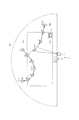
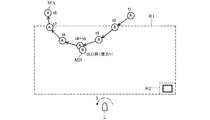
- FIG. 1 is a diagram schematically illustrating a detection area to be monitored by a monitoring device and a monitoring system according to an embodiment
- FIG. 2 is a diagram schematically illustrating the configuration of the monitoring device and the monitoring system.
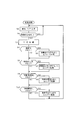
- FIG. 3 is a diagram showing a flow of monitoring processing executed by the monitoring device;
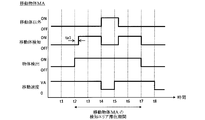
- FIG. 4 is a diagram illustrating a determination state for the moving object MA.
- FIG. 5 is a diagram showing a determination state for the moving object MB
- FIG. 6 is a diagram illustrating an example of a situation in which it is determined that the mobile object is staying.
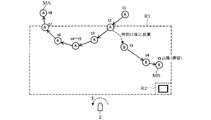
- FIG. 7 is a diagram illustrating an example of a situation where it is determined that an object has been left behind.
- a monitoring system 1 to which the control method of the present embodiment is applied includes an area sensor device 2 (corresponding to a monitoring device), a camera device 3 (corresponding to an imaging device), and a monitor device 4.
- the area sensor device 2 scans the scanning area R0 in the direction of the arrow S shown in FIG. 1 to detect an object, and a detection area R1 to be monitored is set in the scanning area R0. .
- a detection area R1 to be monitored is set in the scanning area R0.
- a range excluding the exclusion area R2 corresponding to the fixed object K that is permanently installed in the detection area R1 is set.
- a plurality of exclusion areas R2 may be set.
- the area sensor device 2 includes a control unit 10, a storage unit 11, an output unit 12, a laser scanning unit 13, an object detection unit 14, a determination unit 15, and the like.
- the control unit 10 is constituted by a microcomputer having a CPU, ROM, RAM, and the like (not shown), and controls the laser scanning unit 13 and the like by executing a computer program stored in the storage unit 11 and the like.
- the object detection unit 14 and the determination unit 15 are realized by software by a computer program executed by the control unit 10.
- the storage unit 11 includes a memory device (not shown) or a recording device such as an HDD, and stores various pieces of information such as a computer program and distance measurement information such as a distance to an object detected in the detection area R1. .
- the output unit 12 outputs position information about the object detected by the object detection unit 14, position information such as a scanning angle, and a determination result described later by the determination unit 15.
- the laser scanning unit 13 includes a laser irradiation unit 13a, a mirror 13b that reflects the laser beam emitted from the laser irradiation unit 13a toward the scanning area R0 and receives light reflected by an object in the scanning area R0.
- a motor 13c that rotates and drives the mirror 13b with an angular resolution and a scanning cycle, and a laser light receiving unit 13d that receives reflected light.
- the laser light emitted from the laser irradiation unit 13a is reflected by an object existing in the scanning area R0 (in the case of FIG. 2, for example, the moving object MA or MB), and then received by the laser light receiving unit 13d. It is detected as a detection point indicating presence.
- the configuration of the laser scanning unit 13 shown in FIG. 2 is an example, and other configurations such as a configuration for driving the laser irradiation unit 13a itself (that is, a configuration not using the mirror 13b at the time of irradiation) are possible. Good.
- the object detection unit 14 associates whether the detection point is due to the same object based on distance measurement information including at least the distance to the detection point and the scanning angle when the detection point is detected by the laser scanning unit 13. An object is detected by a known method such as. Note that the object detection unit 14 merely performs “detection” of an object, and does not perform conventional “object detection” in which an identification number or the like is assigned to the object for management.
- the determination unit 15 performs the following determinations (a) to (g).
- A Among the objects detected by the object detection unit 14, an object that has moved in the detection area R1 under a predetermined movement condition is determined as a “moving object”.
- the movement condition a case where the movement vector of the object exceeds a predetermined determination value, a case where the size of the object is equal to or greater than a predetermined value, or the like is set.
- a plurality of objects may be determined as “moving objects”, and a plurality of movement conditions may be set.
- (B) Among the objects detected by the object detection unit 14, an object that has not been determined as a “moving object” is determined as “other than a moving object”. More precisely, the determination unit 15 is determined as a “moving object” even if it exceeds the determination processing time (ta1 shown in FIG. 4 and the like described later) required to determine that it is a “moving object” in (a). The object that does not exist is determined as “other than a moving object”. For this reason, the time until it is determined as “other than a moving object” (ta2 shown in FIG. 5 described later) is always longer than the determination processing time. The determination of (b) is started on the condition that the determination of (a) described above has been performed.
- (C) A monitoring range including the vicinity of the object determined as “moving object” is set, and when an object newly determined as “other than moving object” is detected in the monitoring range, it is determined as “object leaving”. To do.
- the determination means includes the object for which the determinations (a), (d), and (e) are performed, the object for which the determinations (a), (d), and (g) are performed, and the above The objects subjected to the determinations (a), (d), (e), and (g) are determined to be the same object. Of course, the determination of (b) is also performed before the determination of (d).
- the camera device 3 includes an imaging camera 20 and a movable base 21.
- the imaging camera 20 is configured to be able to track and image an object determined to be a “moving body” in the detection area R1 based on distance measurement information output from the area sensor device 2 and the like.
- the camera device 3 can magnify the object to an extent that can be identified by, for example, a monitor, and can capture the entire detection area R1 at a wide angle. For example, if the object is a person, it means that the face can be recognized, and if the object is a vehicle, it means that the vehicle type, license plate, driver's face, etc. can be recognized. . In this way, tracking the change in the position of the object and changing the direction of the imaging camera 20 and enlarging and imaging the object correspond to tracking.
- the monitor device 4 displays an image captured by the camera device 3.
- the monitor device 4 is provided in a security room (not shown), for example, and is monitored by a supervisor such as a security guard.
- the area sensor device 2 repeatedly executes the monitoring process shown in FIG. 3 at regular intervals.
- symbol S shows the step of a process.
- the area sensor device 2 scans the detection area R1 (S1), and detects an object in the detection area R1. Subsequently, it is determined whether or not a moving body has been detected (S2), that is, the determination of (a) described above is performed, and if no moving body is detected (S2: NO), the process proceeds to step S1. And repeat the scan.
- the area sensor device 2 detects a moving body (S2: YES)
- the area sensor device 2 executes a determination process (S3). In this determination process, the determinations (b) to (g) described above are performed.
- FIG. 1 it is assumed that the moving object MA and the moving object MB enter the scanning area R0.
- t1 to t8 attached to the moving object MA indicate time, and the position of the moving object MA at each time is schematically shown.
- the monitoring process is repeatedly executed even between the times t1 and t2.
- processing for the moving object MA and the moving object MB shown in FIG. 1 will be described individually.
- the moving object MB three patterns of “other than moving object”, “moving object stay”, and “object leaving” will be described.
- the moving speed VA is calculated.
- the area sensor device 2 has no object determined as “moving object” in the monitoring process shown in FIG. 3 (S4: NO).
- There are no objects determined as “other than moving objects” S6: NO
- no objects determined as “moving object retention” S8: NO
- no objects determined as “object leaving”. S10: NO
- the process proceeds to step S1 to start the next scan.
- the area sensor device 2 detects the object (moving object MA), and as shown in FIG. The object detection is turned on. Then, in the monitoring process performed after time t2, the moving object detection is turned on because it is determined as “moving object” by the determination of (a) described above in the determination process of step S3. At this time, the time ta1 from the time t2 until the moving body detection is turned on corresponds to the above-described determination processing time.
- This determination processing time is the time required until it can be confirmed that the object is moving, and corresponds to, for example, several scanning times.
- the area sensor device 2 outputs the presence of the “moving body” because there is an object determined as the “moving body” (S4: YES) in the monitoring process shown in FIG. And the moving body is tracked by the camera device 3 (S5). Thereby, an object (moving object MA) that has entered the detection area R1 can be monitored. At this time, there is no object determined to be “other than the moving body” (S6: NO), no object is determined to be “moving body retention” (S8: NO), and it is determined as “object leaving”. Since there is no object (S10: NO), the process proceeds to step S1 to start the next scanning.
- the moving object MA is stopped between the times t4 and t5.
- the area sensor device 2 determines that the moving object MA is not a “moving object” because the moving object MA has stopped, and determines that the moving object MA is not a “moving object”. It is determined that the object is an object other than a moving object. For this reason, as shown in FIG. 4, at the time t4, the moving body detection is turned off, and other than the moving body is turned on. Then, in the monitoring process shown in FIG.
- the moving object MA stops during time t4 to t5 and then resumes moving at time t5. For this reason, in the monitoring process shown in FIG. 5, since it is determined again as a “moving body” (S4: YES), the presence of the “moving body” is output and the moving body is tracked by the camera device 3 ( S5). In this case, as shown in FIG. 4, when the determination processing time has elapsed from time t5, the moving body detection is turned on, and other than the moving body is turned off.
- the moving object MA is determined to be a “removable body” by performing the above-described determination (e) in step S3 of the monitoring process performed after time t5. That is, the moving object MA is determined to be the same object because the determination (a) described above, the determination (d) described above, and the determination (e) described above are performed. In other words, the area sensor device 2 prevents the same object from being erroneously determined as a different object by determining that it is a “removable body”. Since this moving object MA has left the detection area R1 at time t7, as shown in FIG. 4, object detection, moving object detection, and other than the moving object are turned off. Note that the moving speed of the moving object MA can be calculated because it does not go out of the scanning area R0.
- the moving object MB is assumed to be an object that has been thrown into the detection area R1 after time t2 or has entered from outside the detection range of the area sensor device 2 (for example, a person who has come across the floor and has stood up in the detection area R1). As shown in FIG. 1, the state is detected after time t3. In this case, as shown in FIG. 5, since the moving object MB does not exist at the time t1, the object detection is OFF, while the monitoring process shown in FIG. 5 is repeated, and the moving object MB is an object. The object detection is ON at the time t3 specified as being present.
- this moving object MB is stopped between times t3 and t4.
- “moving” "Body” is not determined.
- the moving object MB is not determined as a “moving object” even if the determination processing time elapses after it is detected as an object. For this reason, the moving object MB is determined as “other than the moving object” by the determination in (b) described above. Therefore, as shown in FIG. 5, when ta2 has elapsed from time t3, all but the moving body are ON.
- the area sensor device 2 outputs the presence of “non-moving body” and “moving” since it is determined that there is “non-moving body” in the monitoring process shown in FIG. 3 (S6: YES).
- An object determined as “other than a body” that is, the moving object MB
- S7 An object determined as “other than a body” (that is, the moving object MB) is imaged by the camera device 3 (S7).
- S7 As a result, it is possible to start monitoring an object that has suddenly appeared in the detection area R1 like the moving object MB and that has not been a monitoring target because it is not a “moving object” at an early stage after detection. .
- this moving object MB Since this moving object MB has started to move at time t4, it is determined as “moving object” when the determination processing time has elapsed from time t4, and the moving object detection is turned on as shown in FIG. Other than the moving body is OFF. In this case, in the monitoring process shown in FIG. 3, since there is an object determined as “moving body” (S4: YES), the presence of the “moving body” is output and the camera device 3 tracks (S5). . Thereby, the moving object MB is continuously monitored.
- FIG. 6 illustrates a situation where the moving object MB dumped from the moving object MA after time t2 stays in the detection area R1.
- the area sensor device 2 determines that the moving object MB is a “moving body” and takes an image with the camera device 3 (in the monitoring process of FIG. 3).
- Step S4 YES and S5).
- the area sensor device 2 determines that the moving object MB is “non-moving body” because the moving object MB is stopped, and since it has not moved thereafter, in other words, the state determined as “moving body stopped” is in advance. Since the predetermined residence reference time is exceeded, it is determined as “moving body residence” in step S3 of the monitoring process shown in FIG. In addition, what is necessary is just to set residence reference time suitably according to the moving body etc. to assume.
- the area sensor device 2 outputs an occurrence of “moving body stay” and an object determined to be “moving body stay” since there is an object determined to be “moving body stay” (S8: YES). Is imaged by the camera device 3 (S9). Thereby, after entering the detection area R1, it is possible to monitor an object that remains on the spot. That is, since it is stopped, it is not determined as a “moving body”, and an object that has been excluded from the target can be monitored.
- FIG. 7 exemplifies a situation in which the moving object MA that has been stopped between the times t4 and t5 moves with the moving object MB left behind.
- the moving object MB does not actually move, but will be described as a “moving object” for convenience.
- the moving object MA continues to move from the time t2 when it entered the detection area R1 (determined as “moving body”), and stops during the time t4 to t5 (“moving” The movement is resumed at time t5 (determined as “removable body”).
- the moving object MB is detected in the vicinity of the moving object MA after time t5 when the moving object MA resumes moving.
- the area sensor device 2 determines that the moving object MB is “other than a moving body” and takes an image with the camera device 3 (step S6 of the monitoring process in FIG. 3: YES, And S7). Since the moving object MB continues to stay in place after time t5, it can be said that the moving object MB does not move even after the leaving reference time has elapsed. In addition, what is necessary is just to set the leaving reference time suitably.
- the area sensor device 2 is in a state where it is determined as “non-moving object” in the vicinity of the position where the object (moving object MA) determined to be “removable object” has resumed movement. Since there is an object (moving object MB) that exceeds a predetermined leaving reference time, it is determined to be “object leaving” (determination (f) described above).
- the area sensor device 2 outputs an occurrence of “object leaving” and an object determined to be “object leaving” because there is an object determined to be “object leaving” (S10: YES). Is imaged by the camera device 3 (S11). Thereby, the object (namely, moving object MB) which the moving object MA left behind can be made into the monitoring object.
- the “object leaving” includes not only an object that has been intentionally left behind, but also an object that has been inadvertently left behind.
- the area sensor device 2 does not manage all the objects existing in the detection area R1, but determines whether the object is a “moving object” or “other than a moving object”, thereby detecting the detection area R1. Monitoring.
- the area sensor device 2 detects an object existing in the detection area R1 and performs the moving object detection on the object detected in the detection area R1 by performing the determination of (a) described above.
- an object determined to be other than a moving body can be set as a monitoring target.
- the area sensor device 2 starts the determination for object detection triggered by the detection of the moving body. That is, when the moving body is not detected, the determination of (b) is not started. Even when both moving object detection and object detection are performed, the processing load is not simply doubled.
- the area sensor device 2 detects a moving body
- the area sensor device 2 determines “other than the moving body” to monitor an object that does not meet the moving condition and has not been detected in the past as “other than the moving body”. It becomes possible to target. For this reason, even if it is a case where the function similar to the conventional object detection is added to the monitoring apparatus for detecting a moving body, the processing load does not increase significantly. Therefore, the number of detections per unit time does not decrease and the monitoring performance does not decrease. In this case, since the processing load does not increase significantly, the processing circuit does not increase in performance or size.
- the original function of detecting a moving body that enters and exits the detection area R1 can be first realized. Further, by performing the determination of (b), it is possible to set an object that is not subject to the detection of the moving body in the past without matching the moving condition for determining the moving body. Further, by performing the determination of (d), it is possible to set an object that has not been a target of moving body detection since it is not a moving body as a monitoring target. In addition, by performing the determination of (e), it can be understood that the object determined as the “removable object” was originally “moving object”, and the single object is erroneously recognized as two objects. And the increase in the amount of data and load due to two objects being processed.
- the area sensor device 2 can monitor objects with different movement conditions that cannot be achieved by combining conventional moving body detection and object detection, monitor objects that have stopped after entering the detection area, It is also possible to monitor an object other than a moving body that is an original detection target, such as monitoring of object leaving.
- the area sensor device 2 determines that an object that has not been determined as a “moving object” is “other than a moving object” even if the determination processing time required for determining it as a “moving object” is exceeded. In this case, since it is conventionally determined whether or not the object is a moving body, the monitoring device may simply determine “other than the moving body” if it is not “moving body”. That is, since it is not necessary to perform a special process to determine “other than a moving object”, it is possible to suppress an increase in the processing load.
- the area sensor device 2 includes the object for which the determinations (a), (d), and (e) described above are performed, the object for which the determinations (a), (d), and (g) are performed, or ( The objects for which a), (d), (e), and (g) have been determined are determined to be the same object.
- a practically useful area sensor device 2 can be realized, such as being able to take early measures such as checking whether the object is a suspicious object.
- the monitoring system 1 is determined as an object determined as “non-moving object”, an object determined as “moving object retention”, or “object leaving”. Since the captured object is imaged and displayed on the monitor device 4, in addition to the mobile object that is the original monitoring target, other objects existing in the detection area R1 can be monitored. In this case, since the object to be imaged is an object that exhibits a behavior different from that of the “moving object” that is the monitoring target, that is, an object that is supposed to take some action in the detection area R1, the monitoring performance Can be improved. In addition, since not all objects existing in the detection area R1 are monitored, the processing load is not increased unnecessarily. Of course, an object determined as a “moving object” is also a tracking target.
- each object can be identified even when there are a plurality of objects, and the quality of crime prevention and monitoring services can be improved.
- the present invention is not limited to the one exemplified in the embodiment, and can be modified or expanded as follows, for example.
- the configuration of outputting (notifying) when “moving body” or “other than moving body” is exemplified, but it may be configured to output in a different manner for each determination result. For example, if the monitor device 4 is provided, if the object is a “moving object”, the object is displayed in blue, for example. If it is “other than a moving object”, the object is displayed in yellow, for example, If there is, it is conceivable to output the determination result in an identifiable manner, for example, indicating the object in red.
- the output destination of the determination result may be a large-capacity storage device that can store measurement result data, captured images, and the like for a certain period.
- the configuration in which all the determinations (a) to (g) described above are performed is shown. However, only the determination is made as to whether the object is a “moving object” or “other than a moving object”.
- a configuration that is, a configuration in which the determinations of (a) and (b) are performed
- the determination of (a), (b), and (c) may be performed, and in that case, which determination result “moving object”, “other than moving object”, or “object leaving” was obtained. May be output so as to be identifiable.
- the determination result is output in the case of “moving object”, “other than moving object”, “moving object stay”, and “object leaving”, but each of the above (a) to (g) You may comprise so that all the determination results of determination may be output. Of course, you may output them so that identification is possible.
- a monitoring range that includes the vicinity of an object that has been determined as a “moving object,” and an object that has been newly determined to be “other than a moving object” is detected within that monitoring range, Good. That is, a range for monitoring the existence state of an object is set in the vicinity of the moving body, and when a new object other than the moving body is detected in the monitoring range after the moving body is moved, for example, You may decide to leave. As a result, the object leaving can be detected and the vicinity of the object only needs to be monitored, so there is no need to monitor an irrelevant place (such as a place away from the moving body in the detection area). The processing load can be reduced compared to the case of monitoring all objects in the detection area. In this case, if the monitoring range is set so as to include the trajectory of the moving body, “object leaving” can be detected more reliably.
- the determination of (b) is performed on the condition that the determination of (a) is performed.
- the intrusion detection of the object of (b) is periodically performed. May be.
- the area sensor device 2 is configured by a laser rangefinder as in the embodiment, it is accompanied by detection of a moving body such as an object that has entered from a position lower than its installation position or an object that has been thrown into a detection area. Even an object that is not present can be detected, and the monitoring performance can be improved.
- all objects determined as “moving objects”, objects determined as “non-moving objects”, objects determined as “moving object retention”, and objects determined as “object leaving” are all imaged. However, it may be configured to capture an image only when any one determination result is obtained. Further, an object that is determined as “moving body stop” or an object that is determined as “removable body” may be captured.
- a configuration in which an object is detected by a so-called laser distance meter is illustrated, but the object may be detected by an imaging camera or the like.
- a laser rangefinder for example, a position at a certain height from the ground is scanned horizontally. For example, there is a possibility that an object that has been dumped on the ground may not be detected. This is because an imaging means can detect an object present in the detection area R1 regardless of the height at which it is installed. You may make it detect a mobile body and an object according to the change of the measurement data in a detection area. That is, the previous measurement data obtained when the detection area is scanned may be compared with the current measurement data, and detection may be started when a change occurs.
- 1 is a monitoring system
- 2 is an area sensor device (monitoring device)
- 3 is a camera device (imaging device)
- 4 is a monitor device
- 14 is an object detection unit (object detection unit)
- 15 is a determination unit (determination unit).
- R1 indicates a detection area.
Landscapes
- Physics & Mathematics (AREA)
- Engineering & Computer Science (AREA)
- Electromagnetism (AREA)
- General Physics & Mathematics (AREA)
- Computer Networks & Wireless Communication (AREA)
- Radar, Positioning & Navigation (AREA)
- Remote Sensing (AREA)
- Signal Processing (AREA)
- Multimedia (AREA)
- Geophysics And Detection Of Objects (AREA)
- Burglar Alarm Systems (AREA)
- Optical Radar Systems And Details Thereof (AREA)
- Image Analysis (AREA)
Abstract
監視システム(1)は監視装置(2)を備える。この監視装置は、物体の存在を検出する物体検出手段と、(a):検知エリア内を予め定められている移動条件で移動した物体を「移動体」と判定し、(b):検出した物体のうち「移動体」と判定されなかった物体を「移動体以外」と判定する判定手段とを備える。判定手段において、物体が移動体であると判定されたときに、検出した物体のうち「移動体」と判定されなかった物体を「移動体以外」と判定するための処理が開始される。これらの判定結果が検知エリアの状況を示す情報として出力される。
Description
本発明は、検知エリアを監視する装置、方法、及びシステムに関する。
する。
する。
近年、所望の検知エリア(又は監視エリア)における移動体等の挙動やそのエリア内の状況を監視するニーズは非常に高まっている。従来、この監視を担うシステムとしては種々の形態のものが知られている。
例えば検知エリアへの移動体の侵入を検知する方法として、特許文献1に記載のシステムが知られている。このシステムの場合、物体の移動状況を検出する一方、移動していない物体は検知対象とせずに移動体の侵入を検知する。また、特許文献2のように予め定められている移動条件に合致する移動体を識別することで移動体の侵入を検知する方法などが提案されている。
しかしながら、検知エリア内の物体を静止体であるか移動体であるかを問わずに検知する方法(以下、便宜的に物体検知と称する)の場合、物体が存在していることは検知できるものの、物体の出入り、すなわち、その物体が新たに検知エリアに侵入してきたものであるのか、もともと検知エリアに存在していたものであるのかを検出することができなかった。
一方、所定の移動条件を満たす物体を検知する方法(以下、便宜的に移動体検知と称する)の場合、検知エリアにおける物体の出入りを検出することはできるものの、例えば検知エリアに侵入した後に静止した物体や検知エリア内に突然出現した物体、あるいは置去りにされた物体など移動条件に合致しない物体は、検知対象から外されてしまう。このため、移動体検知では、予め設定した移動条件に合致しないなど想定と異なる挙動を示す移動体は検知することができなかった。
かといって、単に物体検知と移動体検知とを組み合わせた場合には、常に検出された物体ごとに位置の記憶や侵入物であるのかの判定を行う必要があること、また、移動体であるかの判定および同一の移動体であるかの判定などの処理を並行して行う必要があることから、処理の負荷が増加するという問題が発生する。そして、処理の負荷の増大は処理時間の増加を招くことから、単位時間当たりの検出回数が低下して、監視性能の低下を招くことになる。
本発明は上記事情に鑑みてなされたものであり、その目的は、監視性能の低下を招くことなく、検知エリアに存在する検知対象の移動体以外の物体についても検知することができる監視装置、監視システムを提供することにある。
本発明の一態様に係る監視装置によれば、検知エリア内の物体の存在を検出する物体検出手段と、検出した物体に対して(a)検知エリア内を予め定められている移動条件で移動した物体を「移動体」と判定する、(b)検出した物体のうち「移動体」と判定されなかった物体を「移動体以外」と判定する、の各判定を行う判定手段と、判定手段による判定結果を出力する出力手段と、を備え、判定手段は、(a)の判定を行ったことを条件として(b)の判定を開始する。
つまり、監視装置は、移動体が検知されていない場合には、物体検知の処理を行わない。このため、(a)の判定を行うことにより検知エリア内で検出した物体に対して従来と同様に移動体検知にて移動体を監視対象とすることが可能であるとともに、移動体が検知されていない場合には(b)の判定を開始しないので、移動体検知と物体検知の双方を実行可能な構成であっても、処理の負荷が単純に倍増するということはない。
また、移動体を検知した場合には「移動体以外」を判定することにより、移動条件に合致せずに従来では検知対象でなかった物体も「移動体以外」として監視対象とすることが可能となる。このため、移動体を検知するための監視装置に従来の物体検知と同様の機能を付加した場合であっても、処理の負荷が大幅に増加することはない。したがって、単位時間当たりの検出回数が低下することがなく、監視性能の低下を招くことがない。この場合、処理の負荷が大幅に増加することもないので、処理回路の高性能化や大型化など招くこともない。
また、上記した各判定は、それぞれ以下のような効果を奏する。(a)の判定を行うことにより、検知エリアに出入りする移動体を検知するという本来の機能を実現することができる。また、(b)の判定を行うことにより、移動条件に合致しない物体を監視対象とすることができる。これにより、従来の移動体検知と物体検知とを組み合わせただけではできなかった移動条件が異なる物体の監視、検知エリアに侵入後に停止した物体の監視、検知エリア内での物体置去りの監視など、本来の検知対象である移動体以外の物体についても監視することができる。
例えば、上記した(b)の判定を行う際、「移動体」と判定するのに要する判定処理時間を超えても「移動体」と判定されなかった物体を「移動体以外」と判定する。
移動体を検知する場合、物体が移動体であるか否かの判定は従来から行われている。そして、監視装置は、移動体でないことを判定する処理を行うのではなく、移動体と判定されなかった物体を移動体以外と判定する。つまり、監視装置は、移動体以外と判定するために特別な処理を行う必要がない。したがって、処理の負荷が増加することを抑制できる。
移動体を検知する場合、物体が移動体であるか否かの判定は従来から行われている。そして、監視装置は、移動体でないことを判定する処理を行うのではなく、移動体と判定されなかった物体を移動体以外と判定する。つまり、監視装置は、移動体以外と判定するために特別な処理を行う必要がない。したがって、処理の負荷が増加することを抑制できる。
さらに、例えば、判定手段は、前記(a)の判定が行われていない場合であっても、前記(b)の判定を定期的に行う。定期的に検知エリア内の物体検知を行うことにより、移動体が存在しない場合であっても物体の侵入検知を可能とすることで監視性能の低下を防止できる。また、連続して物体検知を行うわけではないので、つまり物体検知を常時行うわけではないので、処理の負荷が増加することを防止することができる。また、例えばエリアセンサを所謂レーザ距離計で構成した場合において設置位置よりも低い位置から侵入した物体や、検知エリアに投げ込まれた物体等、移動体の検知を伴わない物体の検知も可能となり、監視性能を向上させることができる。
別の例として、判定手段は、(c)「移動体」と判定した物体の近傍を含む監視範囲を設定し、その監視範囲において新たに「移動体以外」と判定された物体が検知された場合に「物体置去り」と判定する。これにより、従来の移動体検知では検知できなかった物体置去りを検知することができる。
この場合、物体置去りは、移動体により行われると想定される。つまり、検知エリア全体を監視しなくても、移動体の近傍を監視すれば、物体置去りを検知することが可能であると考えられる。そこで、監視範囲を設定することにより、物体置去りを検知することができるようになる。この場合、物体の近傍を監視すればよいので、無関係な場所(検知エリアにおいて移動体から離れている場所等)を監視する必要がなく、検知エリア内の全ての物体を監視する場合に比べて処理の負荷を低減することができる。
さらに、判定手段は、(d)「移動体」と判定された物体がその後「移動体以外」と判定された場合に「移動体停止」と判定する、(e)「移動体停止」と判定された後に「移動体」と判定された物体を「再移動体」と判定する、(f)「再移動体」と判定された物体が移動を再開した位置の近傍において、「移動体以外」と判定された状態が予め定められている置去基準時間を超える物体が存在する場合に「物体置去り」と判定する、という判定をさらに行うようにしてもよい。
この場合、(d)の判定を行うことにより、移動体でないことから従来では移動体検知の対象外となっていた物体を監視対象とすることができる。また、(e)の判定を行うことにより、「再移動体」として判定された物体が元々は「移動体」であったことを把握できるので、1つの物体を2つの物体であると誤認識するおそれや、2つの物体を処理対象としてしまいデータ量や負荷が増加することなどを防止できる。また、(f)の判定を行うことにより、単に物体検知と移動体検知とを組み合わせただけでは対応できなかった検知エリア内での物体置去りに対応することができる。
さらに、判定手段は、(g)「移動体停止」と判定された状態が予め定められている滞留基準時間を超えた場合に「移動体滞留」と判定する、の判定をさらに行う。これにより、検知エリアに侵入後に停止して移動体ではなくなったことにより従来では検知対象外となっていた物体を監視対象とすることもできる。
さらに、上記した(a)、(d)、(e)の判定が行われた物体、上記した(a)、(d)、(g)の判定が行われた物体、および上記した(a)、(d)、(e)、(g)の判定が行われた物体を、それぞれ同一の物体と判定することもできる。
従来の移動体検知の場合、移動体でなければ検知対象外となるため、移動体が停止して再び移動した場合等には、2つの移動体が検知されることになる。その場合、管理すべきデータ量が増加することから、処理回路の大型化などを招くおそれがある。そのため、上記した(a)、(d)、(e)、(g)等の判定が行われた場合にはそれらの物体を同一物体として管理することで、データ量が不必要に増加することが抑制され、処理回路の大型化を防止することができる。なお、(d)の判定が行われる前には、(b)の判定も行われることになる。
従来の移動体検知の場合、移動体でなければ検知対象外となるため、移動体が停止して再び移動した場合等には、2つの移動体が検知されることになる。その場合、管理すべきデータ量が増加することから、処理回路の大型化などを招くおそれがある。そのため、上記した(a)、(d)、(e)、(g)等の判定が行われた場合にはそれらの物体を同一物体として管理することで、データ量が不必要に増加することが抑制され、処理回路の大型化を防止することができる。なお、(d)の判定が行われる前には、(b)の判定も行われることになる。
さらに、好適には、判定手段による判定結果を識別可能に出力することである。これにより、どのような物体が検知エリアR1内に存在しているのかを容易に把握することができるとともに、例えば「物体置去り」が出力された場合には不審物かどうかを確認する等の対応を早期に取ることができるようになるなど、実用上有益な監視装置を実現することができる。
また、本発明の別の態様に係る監視システムでは、移動条件に合致する移動体を追尾可能であるとともに、監視装置から出力される判定結果に基づいて物体を撮像する。これにより、本来の監視対象である移動体に加えて、検知エリア内に存在する他の物体の監視が可能となる。この場合、監視対象である「移動体」とは異なる挙動を示した物体、すなわち、検知エリア内において何らかの対応を取る必要があると推測される物体を監視対象とすることができるので、監視性能を向上させることができる。また、検知エリア内に存在している全ての物体を監視するわけではないので、不必要に処理の負荷が増加することもない。
添付図面において:
図1は、一実施形態による監視装置および監視システムが監視対象とする検知エリアを模式的に示す図、
図2は、監視装置および監視システムの構成を模式的に示す図
図3は、監視装置が実行する監視処理の流れを示す図、
図4は、移動物体MAに対する判定状態を示す図、
図5は、移動物体MBに対する判定状態を示す図、
図6は、移動体滞留と判定される状況の一例を示す図、
図7は、物体置去りと判定される状況の一例を示す図、である。
以下、本発明の一実施形態について、図1から図7を参照しながら説明する。
図1に示すように、本実施形態の制御方法を適用する監視システム1は、エリアセンサ装置2(監視装置に相当する)、カメラ装置3(撮像装置に相当する)、およびモニタ装置4から構成されている。エリアセンサ装置2は、走査エリアR0内を図1に示す矢印Sの方向に走査して物体の検出を行っており、その走査エリアR0内に、監視対象である検知エリアR1が設定されている。この検知エリアR1は、検知エリアR1内に恒常的に設置されている固定物Kに対応する除外エリアR2を除く範囲が設定されている。なお、除外エリアR2は複数設定されていてもよい。
図1に示すように、本実施形態の制御方法を適用する監視システム1は、エリアセンサ装置2(監視装置に相当する)、カメラ装置3(撮像装置に相当する)、およびモニタ装置4から構成されている。エリアセンサ装置2は、走査エリアR0内を図1に示す矢印Sの方向に走査して物体の検出を行っており、その走査エリアR0内に、監視対象である検知エリアR1が設定されている。この検知エリアR1は、検知エリアR1内に恒常的に設置されている固定物Kに対応する除外エリアR2を除く範囲が設定されている。なお、除外エリアR2は複数設定されていてもよい。
エリアセンサ装置2は、図2に示すように、制御部10、記憶部11、出力部12、レーザ走査部13、物体検出部14および判定部15などを備えている。制御部10は、図示しないCPUやROMおよびRAMなどを有するマイクロコンピュータにより構成されており、記憶部11などに記憶されているコンピュータプログラムを実行することによりレーザ走査部13などを制御する。なお、本実施形態では、物体検出部14および判定部15は、制御部10により実行されるコンピュータプログラムによりソフトウェア的に実現されている。
記憶部11は、図示しないメモリ素子あるいはHDD等の記録装置などにより構成されており、コンピュータプログラムなどの各種の情報や、検知エリアR1内で検出した物体までの距離などの測距情報を記憶する。出力部12は、物体検出部14により検出した物体に関する位置や走査角度等の位置情報や、判定部15による後述する判定結果の出力などを行う。
レーザ走査部13は、レーザ照射部13a、レーザ照射部13aから照射されたレーザ光を走査エリアR0に向かって反射するとともに走査エリアR0内の物体で反射した光を受光するミラー13b、予め定められている角度分解能および走査周期にてミラー13bを回転駆動するモータ13c、反射光を受光するレーザ受光部13dを備えている。レーザ照射部13aから照射されたレーザ光は、走査エリアR0内に存在する物体(図2の場合、例えば移動物体MAやMB)で反射した後、レーザ受光部13dにて受光され、何らかの物体の存在を示す検出点として検出される。なお、この図2に示しているレーザ走査部13の構成は一例であり、レーザ照射部13a自体を駆動する構成(つまり、照射時にはミラー13bを利用しない構成)等、他の構成であってもよい。
物体検出部14は、レーザ走査部13にて検出点を検出した際の検出点までの距離と走査角度とを少なくとも含む測距情報に基づいて、検出点が同一物体によるものであるかを関連付ける等の周知の手法にて物体を検出する。なお、この物体検出部14は、あくまでも物体の「検出」を行っているのであり、物体に識別番号等を付与して管理するような従来の「物体検知」を行っているわけではない。
判定部15は、詳細は後述するが、以下の(a)~(g)の判定を行っている。
(a)物体検出部14で検出された物体のうち、検知エリアR1内を予め定められている移動条件で移動した物体を「移動体」と判定する。この場合、移動条件としては、物体の移動ベクトルが所定の判定値を超えた場合や、物体の大きさが所定値以上である場合等が設定されている。なお、複数の物体が「移動体」として判定されることもあるし、複数の移動条件が設定されていることもある。
(a)物体検出部14で検出された物体のうち、検知エリアR1内を予め定められている移動条件で移動した物体を「移動体」と判定する。この場合、移動条件としては、物体の移動ベクトルが所定の判定値を超えた場合や、物体の大きさが所定値以上である場合等が設定されている。なお、複数の物体が「移動体」として判定されることもあるし、複数の移動条件が設定されていることもある。
(b)物体検出部14で検出された物体のうち、「移動体」と判定されなかった物体を「移動体以外」と判定する。より厳密には、判定部15は、(a)において「移動体」であると判定するのに要する判定処理時間(後述する図4等に示すta1)を超えても「移動体」と判定されなかった物体を「移動体以外」と判定する。このため、「移動体以外」であると判定されるまでの時間(後述する図5に示すta2)は、必ず判定処理時間よりも長くなっている。なお、この(b)の判定は、上記した(a)の判定が行われたことを条件として開始される。
(c)「移動体」と判定した物体の近傍を含む監視範囲を設定し、その監視範囲において新たに「移動体以外」と判定された物体が検知された場合に「物体置去り」と判定する。
(d)「移動体」と判定された物体がその後に「移動体以外」と判定された場合に、「移動体停止」と判定する。この場合、所定の範囲内で最も近くに位置していた「移動体」を、「移動体停止」と判定する物体とする。
(e)「移動体停止」と判定された後に「移動体」と判定された物体を「再移動体」と判定する。
(f)「再移動体」と判定された物体が移動を再開した位置の近傍において、「移動体以外」と判定された状態が予め定められている置去基準時間を超える物体が存在する場合に「物体置去り」と判定する。
(g)「移動体停止」と判定された状態が予め定められている滞留基準時間を超えた場合に「移動体滞留」と判定する。
これらの判定は、検知エリア内の物体の存在情報(物体に関する情報であって、その物体が「移動体」、「移動体以外」、「移動体停止」、「移動体滞留」、「再移動体」のいずれであるかを示す情報)の変化を判定しているとも言える。
また、判定手段は、上記した(a)、(d)、(e)の判定が行われた物体、上記した(a)、(d)、(g)の判定が行われた物体、および上記した(a)、(d)、(e)、(g)の判定が行われた物体を、同一の物体と判定する。なお、(d)の判定の前には(b)の判定も勿論行われている。
カメラ装置3は、撮像カメラ20および可動式架台21を備えている。この撮像カメラ20は、エリアセンサ装置2から出力される測距情報などに基づいて、検知エリアR1内で「移動体」であると判定された物体を追尾して撮像可能に構成されている。また、カメラ装置3は、物体を追尾する際にその物体を例えば監視者が識別可能な程度まで拡大して撮像可能であるとともに、検知エリアR1の全域を広角で撮像可能となっている。なお、識別可能な程度とは、例えば物体が人であれば顔を認識できる程度、物体が車両であればその車種やナンバープレートあるいは運転者の顔などを認識できる程度のことを意味して
いる。このように、物体の位置の変化に追従させて撮像カメラ20の向きを変化させるとともにその物体を拡大して撮像することが、追尾に相当する。
いる。このように、物体の位置の変化に追従させて撮像カメラ20の向きを変化させるとともにその物体を拡大して撮像することが、追尾に相当する。
モニタ装置4は、カメラ装置3にて撮像した画像を表示する。このモニタ装置4は、例えば図示しない警備室等に設けられており、警備員などの監視者によってモニタされている。
次に、上記した構成の作用について説明する。
エリアセンサ装置2は、図3に示す監視処理を一定時間毎に繰り返して実行している。なお、図3の監視処理の説明に置いて、符号Sは処理のステップを示す。
この監視処理が開始されると、エリアセンサ装置2は、検知エリアR1を走査し(S1)、検知エリアR1内の物体を検出する。続いて、移動体を検知したか否かを判定し(S2)、つまり、上記した(a)の判定を行い、移動体を検知していない場合には(S2:NO)、ステップS1に移行して走査を繰り返す。一方、エリアセンサ装置2は、移動体を検知した場合には(S2:YES)、判定処理を実行する(S3)。この判定処理では、上記した(b)~(g)の判定が行われている。
エリアセンサ装置2は、図3に示す監視処理を一定時間毎に繰り返して実行している。なお、図3の監視処理の説明に置いて、符号Sは処理のステップを示す。
この監視処理が開始されると、エリアセンサ装置2は、検知エリアR1を走査し(S1)、検知エリアR1内の物体を検出する。続いて、移動体を検知したか否かを判定し(S2)、つまり、上記した(a)の判定を行い、移動体を検知していない場合には(S2:NO)、ステップS1に移行して走査を繰り返す。一方、エリアセンサ装置2は、移動体を検知した場合には(S2:YES)、判定処理を実行する(S3)。この判定処理では、上記した(b)~(g)の判定が行われている。
ここで、例えば図1に示すように、走査エリアR0内に移動物体MAと移動物体MBとが侵入する状態を想定する。この図1では、移動物体MAに付されているt1~t8は時刻を示しており、各時刻における移動物体MAの位置が模式的に示されている。ただし、時刻t1~t2間等においても、監視処理は繰り返し実行されている。以下、説明の簡略化のために、図1に示す移動物体MAと移動物体MBとに対する処理を個別に説明する。
なお、移動物体MBについては、「移動体以外」、「移動体滞留」、「物体置去り」の3パターンについて説明する。
なお、移動物体MBについては、「移動体以外」、「移動体滞留」、「物体置去り」の3パターンについて説明する。
<移動物体MAに対する処理>
時刻t1では、移動物体MAは、走査エリアR0内に存在するものの検知エリアR1の外に存在している。このため、エリアセンサ装置2は、ステップS3における判定処理では、未だ物体を検出していないことになる。そのため、図4に示すように、時刻t1では物体を検出したか否かの状態を示す「物体検出」がOFFになっている。この「物体検出」は、物体が検出されている状態でONになり、物体が検出されない状態でOFFになることで、物体の検出状態を示している。なお、図4に示す「移動体検知」は上記した(a)の判定により移動体が検知されている状態でONになるものであり、「移動体以外」は、上記した(b)の判定により「移動体以外」が検知されている状態でONになるものである。
時刻t1では、移動物体MAは、走査エリアR0内に存在するものの検知エリアR1の外に存在している。このため、エリアセンサ装置2は、ステップS3における判定処理では、未だ物体を検出していないことになる。そのため、図4に示すように、時刻t1では物体を検出したか否かの状態を示す「物体検出」がOFFになっている。この「物体検出」は、物体が検出されている状態でONになり、物体が検出されない状態でOFFになることで、物体の検出状態を示している。なお、図4に示す「移動体検知」は上記した(a)の判定により移動体が検知されている状態でONになるものであり、「移動体以外」は、上記した(b)の判定により「移動体以外」が検知されている状態でONになるものである。
なお、図4の場合、時刻t1では移動物体MAが走査エリアR0内に存在しているので、その移動速度VAは算出されている。
この時刻t1のように、検知エリアR1内に物体が存在しない場合には、エリアセンサ装置2は、図3に示す監視処理において、「移動体」と判定された物体が無く(S4:NO)、「移動体以外」と判定された物体が無く(S6:NO)、「移動体滞留」と判定された物体が無く(S8:NO)、「物体置去り」と判定された物体が無いことから(S10:NO)、ステップS1に移行して次の走査を開始する。
この時刻t1のように、検知エリアR1内に物体が存在しない場合には、エリアセンサ装置2は、図3に示す監視処理において、「移動体」と判定された物体が無く(S4:NO)、「移動体以外」と判定された物体が無く(S6:NO)、「移動体滞留」と判定された物体が無く(S8:NO)、「物体置去り」と判定された物体が無いことから(S10:NO)、ステップS1に移行して次の走査を開始する。
これに対して、図1に示すように時刻t2にて移動物体MAが検知エリアR1内に侵入すると、エリアセンサ装置2は、物体(移動物体MA)を検出したことから、図4に示すように物体検出がONになる。そして、時刻t2後に行われた監視処理において、ステップS3の判定処理で上記した(a)の判定により「移動体」と判定されたことから、移動体検知がONされる。このとき、時刻t2から移動体検知がONされるまでの時間ta1が、上記した判定処理時間に相当する。この判定処理時間は、物体が移動していることを確認できるまでに要する時間であり、例えば数回分の走査時間に相当する。
このとき、エリアセンサ装置2は、図3に示す監視処理において、「移動体」と判定された物体があることから(S4:YES)、「移動体」の存在を出力する(例えば、監視者に報知する)とともに、その移動体をカメラ装置3で追尾する(S5)。これにより、検知エリアR1に侵入した物体(移動物体MA)を監視することができる。なお、この時点では、「移動体以外」と判定された物体が無く(S6:NO)、「移動体滞留」と判定された物体が無く(S8:NO)、「物体置去り」と判定された物体が無いことから(S10:NO)、ステップS1に移行して次の走査を開始する。
さて、図1に示すように、移動物体MAは、時刻t4~t5の間で停止している。この場合、エリアセンサ装置2は、ステップS3の判定処理において、移動物体MAが停止したことから「移動体」ではないと判定するとともに、その移動物体MAを「移動体」ではないと判定された物体すなわち「移動体以外」と判定する。このため、図4に示すように、時刻t4において、移動体検知がOFFになるとともに、移動体以外がONになる。そして、図5に示す監視処理において、「移動体以外」と判定された物体があると判定されたことから(S6:YES)、「移動体以外」の存在を出力するとともに、「移動体以外」と判定された物体をカメラ装置3にて撮像する(S7)。これにより、検知エリアR1に侵入後に停止したような「移動体」ではない物体を監視することができるようになる。
この移動物体MAは、図1に示すように、時刻t4~t5の間停止した後、時刻t5において移動を再開する。このため、図5に示す監視処理において、「移動体」と再度判定されることから(S4:YES)、「移動体」の存在を出力するとともに、その移動体をカメラ装置3で追尾する(S5)。この場合、図4に示すように、時刻t5から判定処理時間が経過した時点で移動体検知がONになるとともに、移動体以外がOFFになる。
また、移動物体MAは、時刻t5以降に実施された監視処理のステップS3において、上記した(e)の判定が行われて「再移動体」であると判定されることになる。つまり、この移動物体MAは、上記した(a)の判定、上記した(d)の判定、および上記した(e)の判定が行われていることから、同一物体であると判定される。換言すると、エリアセンサ装置2は、「再移動体」であることを判定することにより、同一の物体が異なる物体であると誤判定されることを防止している。
この移動物体MAは、時刻t7において検知エリアR1から外に出たため、図4に示すように、物体検出、移動体検知、移動体以外がそれぞれOFFになる。なお、走査エリアR0からは出ていないため、移動物体MAの移動速度は算出可能である。
この移動物体MAは、時刻t7において検知エリアR1から外に出たため、図4に示すように、物体検出、移動体検知、移動体以外がそれぞれOFFになる。なお、走査エリアR0からは出ていないため、移動物体MAの移動速度は算出可能である。
<移動物体MBに対する処理その1:「移動体以外」の判定>
移動物体MBは、時刻t2後に検知エリアR1内に投げ込まれたり、エリアセンサ装置2の検知範囲外から侵入したりした物体(例えば床を這ってきて検知エリアR1内で立ち上がった人等)が想定されており、図1に示すように、時刻t3以降に検出された状態となっている。この場合、図5に示すように、時刻t1の時点では移動物体MBが存在していないので物体検出はOFFとなっている一方、図5に示す監視処理が繰り返され、移動物体MBが物体であると特定された時刻t3の時点で、物体検出がONになっている。
移動物体MBは、時刻t2後に検知エリアR1内に投げ込まれたり、エリアセンサ装置2の検知範囲外から侵入したりした物体(例えば床を這ってきて検知エリアR1内で立ち上がった人等)が想定されており、図1に示すように、時刻t3以降に検出された状態となっている。この場合、図5に示すように、時刻t1の時点では移動物体MBが存在していないので物体検出はOFFとなっている一方、図5に示す監視処理が繰り返され、移動物体MBが物体であると特定された時刻t3の時点で、物体検出がONになっている。
この移動物体MBは、図1に示すように時刻t3~t4の間は停止しており、物体であると判定された時刻t3以降(ただし時刻t4より前)に実行された監視処理では「移動体」と判定されることがない。換言すると、移動物体MBは、物体と検出されてから判定処理時間が経過しても、「移動体」と判定されることがない。このため、移動物体MBは、上記した(b)の判定により「移動体以外」と判定されることになる。そのため、図5に示すように、時刻t3からta2が経過した時点で、移動体以外がONになっている。
この場合、エリアセンサ装置2は、図3に示す監視処理において、「移動体以外」があると判定されたことから(S6:YES)、「移動体以外」の存在を出力するとともに、「移動体以外」と判定された物体(つまり、移動物体MB)をカメラ装置3にて撮像する(S7)。これにより、移動物体MBのように検知エリアR1内に突然出現し、且つ、「移動体」ではないため従来は監視対象にならなかった物体を、検出後の早期に監視を開始することができる。
この移動物体MBは、時刻t4において移動を開始しているため、時刻t4から判定処理時間が経過した時点で「移動体」と判定され、図5に示すように、移動体検知がONになり、移動体以外がOFFになっている。この場合、図3に示す監視処理において、「移動体」と判定された物体があることから(S4:YES)、「移動体」の存在を出力するとともに、カメラ装置3で追尾する(S5)。これにより、移動物体MBが継続して監視されることになる。
<移動物体MBに対する処理その2:「移動体滞留」の判定>
次に、「移動体滞留」の判定について、図6を参照しながら説明する。
図6は、時刻t2後に移動物体MAから投棄された移動物体MBが検知エリアR1に滞留する状況を例示している。この場合、エリアセンサ装置2は、時刻t2後の移動物体MBを検出した時点で、移動物体MBが「移動体」であると判定し、カメラ装置3にて撮像する(図3の監視処理のステップS4:YES、且つ、S5)。
次に、「移動体滞留」の判定について、図6を参照しながら説明する。
図6は、時刻t2後に移動物体MAから投棄された移動物体MBが検知エリアR1に滞留する状況を例示している。この場合、エリアセンサ装置2は、時刻t2後の移動物体MBを検出した時点で、移動物体MBが「移動体」であると判定し、カメラ装置3にて撮像する(図3の監視処理のステップS4:YES、且つ、S5)。
さて、移動物体MBは、時刻t5まで移動を継続した後、時刻t5以降はその場に停止し続けたとする。このとき、エリアセンサ装置2は、移動物体MBが停止したことから「移動体以外」と判定するとともに、その後移動しなかったことから、換言すると、「移動体停止」と判定された状態が予め定められている滞留基準時間を超えことから、図5に示す監視処理のステップS3において「移動体滞留」と判定する。なお、滞留基準時間は、想定する移動体などに応じて適宜設定すればよい。
そして、エリアセンサ装置2は、「移動体滞留」と判定された物体があることから(S8:YES)、「移動体滞留」の発生を出力するとともに、「移動体滞留」と判定された物体をカメラ装置3にて撮像する(S9)。これにより、検知エリアR1に侵入後、その場に滞留し続けている物体を監視対象とすることができる。つまり、停止していることから「移動体」とは判定されず従来であれば対象外となっていた物体を、監視することができるようになる。
<移動物体MBに対する処理その3:「物体置去り」の判定>
次に、「移動体置去り」の判定について、図7を参照しながら説明する。
図7は、時刻t4~t5の間に停止していた移動物体MAが、その場に移動物体MBを置き去りにして移動した状況を例示している。なお、図7の例では移動物体MBが実際には移動することはないものの、便宜的に「移動物体」と称して説明する。
次に、「移動体置去り」の判定について、図7を参照しながら説明する。
図7は、時刻t4~t5の間に停止していた移動物体MAが、その場に移動物体MBを置き去りにして移動した状況を例示している。なお、図7の例では移動物体MBが実際には移動することはないものの、便宜的に「移動物体」と称して説明する。
図7の状況では、移動物体MAは、検知エリアR1に侵入した時刻t2の時点から移動し続けており(「移動体」と判定されており)、時刻t4~t5の間停止し(「移動体停止」と判定され)、時刻t5において移動を再開している(「再移動体」と判定される)。
一方、移動物体MBは、移動物体MAが移動を再開した時刻t5後において、移動物体MAの近傍に検出されることになる。この場合、エリアセンサ装置2は、移動物体MBが移動していないことから、「移動体以外」であると判定し、カメラ装置3にて撮像する(図3の監視処理のステップS6:YES、且つ、S7)。この移動物体MBは、時刻t5以降は継続してその場に留まり続けることから、置去基準時間が経過した後も移動することがないと言える。なお、置去基準時間は、適宜設定すればよい。
つまり、図7の状況では、エリアセンサ装置2は、「再移動体」と判定された物体(移動物体MA)が移動を再開した位置の近傍において、「移動体以外」と判定された状態が予め定められている置去基準時間を超える物体(移動物体MB)が存在することから、「物体置去り」であると判定することになる(上記した(f)の判定)。そして、エリアセンサ装置2は、「物体置去り」と判定された物体があることから(S10:YES)、「物体置去り」の発生を出力するとともに、「物体置去り」と判定された物体をカメラ装置3にて撮像する(S11)。これにより、移動物体MAが置き去りにした物体(つまり、移動物体MB)を監視対象とすることができる。なお、「物体置去り」には、意図的に置き去りにされた物体だけでなく、不注意で置き忘れた物体も含まれる。
このように、エリアセンサ装置2は、検知エリアR1内に存在する物体を全て管理するのではなく、「移動体」であるのか「移動体以外」であるのかを判定することにより、検知エリアR1の監視を行っている。
以上説明した本実施形態によれば、次のような効果を奏する。
エリアセンサ装置2は、検知エリアR1内に存在する物体を検出し、上記した(a)の判定を行うことにより、検知エリアR1内で検出した物体に対して移動体検知を行うとともに、上記した(b)の判定を行うことにより、移動体以外と判定される物体を監視対象にすることができる。このとき、エリアセンサ装置2は、移動体を検知したことをトリガーとして物体検知のための判定を開始するので、つまり、移動体が検知されていない場合には(b)の判定を開始しないので、移動体検知と物体検知の双方を行う場合であっても処理の負荷が単純に倍増するようなことはない。
エリアセンサ装置2は、検知エリアR1内に存在する物体を検出し、上記した(a)の判定を行うことにより、検知エリアR1内で検出した物体に対して移動体検知を行うとともに、上記した(b)の判定を行うことにより、移動体以外と判定される物体を監視対象にすることができる。このとき、エリアセンサ装置2は、移動体を検知したことをトリガーとして物体検知のための判定を開始するので、つまり、移動体が検知されていない場合には(b)の判定を開始しないので、移動体検知と物体検知の双方を行う場合であっても処理の負荷が単純に倍増するようなことはない。
また、エリアセンサ装置2は、移動体を検知した場合には「移動体以外」を判定することにより、移動条件に合致せずに従来では検知対象でなかった物体も「移動体以外」として監視対象とすることが可能となる。このため、移動体を検知するための監視装置に従来の物体検知と同様の機能を付加した場合であっても、処理の負荷が大幅に増加することはない。したがって、単位時間当たりの検出回数が低下することがなく、監視性能の低下を招くことがない。この場合、処理の負荷が大幅に増加することもないので、処理回路の高性能化や大型化など招くこともない。
この場合、上記した(a)の判定を行うことにより、検知エリアR1に出入りする移動体を検知するという本来の機能をまず実現することができる。また、(b)の判定を行うことにより、移動体と判定するための移動条件に合致せずに従来では移動体検知の対象外となっていた物体を監視対象とすることができる。また、(d)の判定を行うことにより、移動体でないことから従来では移動体検知の対象外となっていた物体を監視対象とすることができる。また、(e)の判定を行うことにより、「再移動体」として判定された物体が元々は「移動体」であったことを把握でき、単一の物体を2つの物体であると誤認識するおそれや、2つの物体が処理対象となってデータ量や負荷が増加することなどを防止できる。また、(f)の判定を行うことにより、単に物体検知と移動体検知とを組み合わせただけでは対応できなかった検知エリアR1内での物体置去りに対応することができる。また、(g)の判定を行うことにより、検知エリアR1に侵入後に停止して移動体ではなくなったことにより従来では検知対象外となっていた物体を監視対象とすることができる。
これらにより、エリアセンサ装置2は、従来の移動体検知と物体検知とを組み合わせただけではできなかった移動条件が異なる物体の監視、検知エリアに侵入後に停止した物体の監視、検知エリア内での物体置去りの監視など、本来の検知対象である移動体以外の物体についても監視することができるようになる。
エリアセンサ装置2は、「移動体」と判定するのに要する判定処理時間を超えても「移動体」と判定されなかった物体を「移動体以外」と判定する。この場合、物体が移動体であるか否かの判定は従来から行われているため、監視装置は、単純に「移動体」でなければ「移動体以外」と判定すればよい。つまり、「移動体以外」と判定するために特別な処理を行う必要がないので、処理の負荷が増加することを抑制できる。
エリアセンサ装置2は、上記した(a)、(d)、(e)の判定が行われた物体、上記した(a)、(d)、(g)の判定が行われた物体、または(a)、(d)、(e)、(g)の判定が行われた物体を、それぞれ同一の物体と判定する。これにより、検知エリアR1内で移動体が停止して再び移動した場合等であっても、1つの物体を2つの移動体と誤検知することがなくなるとともに、管理すべきデータ量が増加することを防止できる。
したがって、監視精度を向上させることができるとともに、処理回路の大型化などを招くことがない。
したがって、監視精度を向上させることができるとともに、処理回路の大型化などを招くことがない。
上記した各判定の判定結果を出力するので、どのような物体が検知エリアR1内に存在しているのかを容易に把握することができるとともに、例えば「物体置去り」が出力された場合には不審物かどうかを確認する等の対応を早期に取ることができるようになるなど、実用上有益なエリアセンサ装置2を実現することができる。
監視システム1は、エリアセンサ装置2から出力される判定結果に基づいて、「移動体以外」と判定された物体、「移動体滞留」と判定された物体、または「物体置去り」と判定された物体を撮像してモニタ装置4に表示するので、本来の監視対象である移動体に加えて、検知エリアR1内に存在する他の物体を監視することができる。この場合、撮像されるのは監視対象である「移動体」とは異なる挙動を示した物体、すなわち、検知エリアR1内において何らかの対応を取る必要があると推測される物体であるので、監視性能を向上させることができる。また、検知エリアR1内に存在している全ての物体を監視するわけではないので、処理の負荷を不必要に増加させることもない。なお、当然ながら、「移動体」と判定された物体も追尾対象である。
また、このような監視システム1やエリアセンサ装置2を用いることにより、複数の物体が存在する場合であっても各物体を識別でき、防犯や監視サービスの質を向上させることができる。また、例えば出入り口を監視して来場者の人数をカウントする等の用途にも対応することができる。
(その他の実施形態)
本発明は、一実施形態にて例示したものに限定されることなく、例えば以下のように変形あるいは拡張することができる。
一実施形態では「移動体」や「移動体以外」が存在する場合に出力(報知)する構成を例示したが、判定結果ごとに異なる態様にて出力する構成としてもよい。例えば、モニタ装置4を備えているのであれば、「移動体」であればその物体を例えば青色で示し、「移動体以外」であればその物体を例えば黄色で示し、「物体置去り」であればその物体を例えば赤色で示すなど、判定結果を識別可能な態様にて出力することが考えられる。
本発明は、一実施形態にて例示したものに限定されることなく、例えば以下のように変形あるいは拡張することができる。
一実施形態では「移動体」や「移動体以外」が存在する場合に出力(報知)する構成を例示したが、判定結果ごとに異なる態様にて出力する構成としてもよい。例えば、モニタ装置4を備えているのであれば、「移動体」であればその物体を例えば青色で示し、「移動体以外」であればその物体を例えば黄色で示し、「物体置去り」であればその物体を例えば赤色で示すなど、判定結果を識別可能な態様にて出力することが考えられる。
この場合、モニタ装置4を設けない場合には、例えば音声出力の音やメッセージ内容を判定結果ごとに異ならせることなどが考えられる。また、判定結果の出力先を、測定結果のデータや撮像した画像等を一定期間保存可能な大容量の記憶装置等としてもよい。
一実施形態では説明の簡略化のため上記した(a)~(g)の各判定を全て行う構成を示したが、「移動体」であるのか「移動体以外」であるのかだけを判定する構成(つまり、(a)および(b)の判定を行う構成)としてもよく、その場合、「移動体」であるのか「移動体以外」であるのかを識別可能に出力すればよい。また、(a)、(b)、(c)の判定を行う構成としてもよく、その場合、「移動体」、「移動体以外」、「物体置去り」のいずれの判定結果が得られたかを識別可能に出力すればよい。また、各判定を組み合わせる、(c)または(f)の一方の判定により物体置去りを検知する構成としてもよい。
一実施形態では「移動体」、「移動体以外」、「移動体滞留」、「物体置去り」の場合に判定結果を出力する構成としたが、上記した(a)~(g)の各判定の判定結果を全て出力するように構成してもよい。勿論、それらを識別可能に出力してもよい。
「移動体」と判定した物体の近傍を含む監視範囲を設定し、その監視範囲において新たに「移動体以外」と判定された物体が検知された場合に「物体置去り」と判定してもよい。つまり、移動体の近傍に物体の存在状態を監視するための範囲を設定しておき、その監視範囲において例えば移動体の移動後に新たに「移動体以外」の物体が検知されたとき、物体置去りと判定してもよい。これにより、物体置去りを検知することができるようになるとともに、物体の近傍を監視すればよいので、無関係な場所(検知エリアにおいて移動体から離れている場所等)を監視する必要がなく、検知エリア内の全ての物体を監視する
場合に比べて処理の負荷を低減することができる。この場合、移動体が移動した軌跡を含むように監視範囲を設定すれば、より確実に「物体置去り」を検知することができる。
場合に比べて処理の負荷を低減することができる。この場合、移動体が移動した軌跡を含むように監視範囲を設定すれば、より確実に「物体置去り」を検知することができる。
一実施形態では(a)の判定が行われたことを条件として(b)の判定を行ったが、移動体が存在しない場合であっても(b)の物体の侵入検知を定期的に行ってもよい。この場合、物体検知を可能とすることで監視性能の低下を防止できるとともに、連続した物体検知を行うわけではないので、処理の負荷を軽減することができる。また、エリアセンサ装置2を一実施形態のようにレーザ距離計で構成する場合、その設置位置よりも低い位置から侵入した物体や検知エリアに投げ込まれた物体等のように移動体の検知を伴わない物体をも検出することができ、監視性能を向上させることができる。
上記した(f)の判定では「移動体以外」と判定された状態が予め定められている置去基準時間を超える物体が存在する場合に「物体置去り」と判定したが、時間条件を設定せずに、置去基準時間を超えない物体がその後「移動体滞留」と判定された場合等、移動体の近傍において存在状態が変化した物体(特に、移動体の移動後に存在状態が変化した物体)を「物体置去り」と判定してもよい。このように、存在情報の変化に基づいて物体を監視することで、監視性能を向上させることができる。この場合、上記した監視範囲を設定してもよい。
一実施形態では「移動体」と判定された物体、「移動体以外」と判定された物体、「移動体滞留」と判定された物体、および「物体置去り」と判定された物体を全て撮像する構成を示したが、いずれか1つの判定結果が得られた場合のみ撮像する構成としてもよい。
また、「移動体停止」と判定された物体や「再移動体」と判定された物体を撮像する構成としてもよい。
また、「移動体停止」と判定された物体や「再移動体」と判定された物体を撮像する構成としてもよい。
一実施形態ではいわゆるレーザ距離計にて物体を検出する構成を例示したが、物体の検出は、撮像カメラ等で行ってもよい。これは、レーザ距離計の場合、例えば地面からある高さの位置を水平に走査するものであるので、例えば地面に投棄されたような物体を検知できない可能性が考えられる一方、撮像カメラ等の撮像手段であれば、設置される高さによらず、検知エリアR1内に存在する物体を検出することができるためである。
検知エリア内の測定データの変化に応じて移動体や物体の検知を行うようにしてもよい。つまり、検知エリア内を走査した際に得られた前回の測定データと今回の測定データとを比較し、変化が生じた際に検知を開始するようにしてもよい。
検知エリア内の測定データの変化に応じて移動体や物体の検知を行うようにしてもよい。つまり、検知エリア内を走査した際に得られた前回の測定データと今回の測定データとを比較し、変化が生じた際に検知を開始するようにしてもよい。
図面中、1は監視システム、2はエリアセンサ装置(監視装置)、3はカメラ装置(撮像装置)、4はモニタ装置、14は物体検出部(物体検出手段)、15は判定部(判定手段)、R1は検知エリアを示す。
Claims (10)
- 検知エリア内の物体の存在を検出する物体検出手段と、
(a)前記検知エリア内を予め定められている移動条件で移動した物体を「移動体」と判定する処理、及び、(b)検出した物体のうち「移動体」と判定されなかった物体を「移動体以外」と判定する処理を行う判定手段と、
前記判定手段による判定結果を出力する出力手段と、
を備え、
前記判定手段は、前記(a)の判定によって前記物体が移動体であることが判定されたときに、前記(b)の判定を開始することを特徴とする監視装置。 - 前記判定手段は、前記(b)の判定を行う際、「移動体」と判定するのに要する判定処理時間を超えても「移動体」と判定されなかった物体を「移動体以外」と判定することを特徴とする請求項1記載の監視装置。
- 前記判定手段は、前記(a)の判定が行われていない場合であっても、前記(b)の判定を定期的に行うことを特徴とする請求項1または2記載の監視装置。
- 前記判定手段は、(c)「移動体」と判定した物体の近傍を含む監視範囲を設定し、その監視範囲において新たに「移動体以外」と判定された物体が検知された場合に「物体置去り」と判定する処理を行うことを特徴とする請求項1から3のいずれか一項記載の監視装置。
- 前記判定手段はさらに、
(d)「移動体」と判定された物体がその後「移動体以外」と判定された場合に「移動体停止」と判定する処理と、
(e)「移動体停止」と判定された後に「移動体」と判定された物体を「再移動体」と判定する処理と、
(f)「再移動体」と判定された物体が移動を再開した位置の近傍において、「移動体以外」と判定された状態が予め定められている置去基準時間を超える物体が存在する場合に「物体置去り」と判定する処理を行う
ことを特徴とする請求項1から4のいずれか一項記載の監視装置。 - 前記判定手段はさらに、
(g)「移動体停止」と判定された状態が予め定められている滞留基準時間を超えた場合に「移動体滞留」と判定する処理を行う
ことを特徴とする請求項5記載の監視装置。 - 前記判定手段は、前記(a)、(d)、(e)の判定処理が行われた物体、前記(a)、(d)、(g)の判定処理が行われた物体、または前記(a)、(d)、(e)、(g)の判定処理が行われた物体を、それぞれ同一の物体と判定して管理することを特徴とする請求項6記載の監視装置。
- 前記出力手段は、前記判定手段の判定結果を識別可能に出力することを特徴とする請求項1から7のいずれか一項記載の監視装置。
- 請求項1から8のいずれか一項記載の監視装置と、
前記監視装置により「移動体」であると判定された物体を追尾して撮像可能な可動式の撮像装置と、前記撮像装置の撮像結果を表示するモニタ装置と、を備え、前記撮像装置は、前記監視装置から出力される判定結果に基づいて、「移動体以外」と判定された物体を撮像することを特徴とする検知エリアを監視するシステム。 - 検知エリア内の物体の存在を検出し、
前記検知エリア内を予め定められている移動条件で移動した物体を「移動体」と判定する処理を行い、
前記判定によって前記物体が移動体であることが判定されたときに、前記検出した物体のうち「移動体」と判定されなかった物体を「移動体以外」と判定するための処理を行い、
前記判定処理の結果を出力する、
ことを特徴とする検知エリアを監視する方法。
Applications Claiming Priority (2)
| Application Number | Priority Date | Filing Date | Title |
|---|---|---|---|
| JP2013-070904 | 2013-03-29 | ||
| JP2013070904A JP6140504B2 (ja) | 2013-03-29 | 2013-03-29 | 監視装置、監視システム |
Publications (1)
| Publication Number | Publication Date |
|---|---|
| WO2014156908A1 true WO2014156908A1 (ja) | 2014-10-02 |
Family
ID=51623887
Family Applications (1)
| Application Number | Title | Priority Date | Filing Date |
|---|---|---|---|
| PCT/JP2014/057620 Ceased WO2014156908A1 (ja) | 2013-03-29 | 2014-03-19 | 検知エリアを監視する装置、方法、及びシステム |
Country Status (2)
| Country | Link |
|---|---|
| JP (1) | JP6140504B2 (ja) |
| WO (1) | WO2014156908A1 (ja) |
Cited By (1)
| Publication number | Priority date | Publication date | Assignee | Title |
|---|---|---|---|---|
| EP3474543A1 (en) * | 2017-10-20 | 2019-04-24 | Canon Kabushiki Kaisha | Setting apparatus and control method thereof |
Families Citing this family (1)
| Publication number | Priority date | Publication date | Assignee | Title |
|---|---|---|---|---|
| CN109975887A (zh) * | 2017-12-28 | 2019-07-05 | 北京元正数据科技有限公司 | 一种移动物体流量的监测方法及装置 |
Citations (4)
| Publication number | Priority date | Publication date | Assignee | Title |
|---|---|---|---|---|
| JPH06180749A (ja) * | 1992-12-14 | 1994-06-28 | Toyota Motor Corp | 路上物体監視装置 |
| JPH11187384A (ja) * | 1997-12-22 | 1999-07-09 | Amenitekkusu:Kk | 軌跡センサ |
| JP2009253449A (ja) * | 2008-04-02 | 2009-10-29 | Canon Inc | 監視装置及び監視方法 |
| JP2010187124A (ja) * | 2009-02-10 | 2010-08-26 | Panasonic Corp | 監視カメラシステム、映像記録装置及び映像記録方法 |
Family Cites Families (1)
| Publication number | Priority date | Publication date | Assignee | Title |
|---|---|---|---|---|
| JP5354767B2 (ja) * | 2007-10-17 | 2013-11-27 | 株式会社日立国際電気 | 物体検知装置 |
-
2013
- 2013-03-29 JP JP2013070904A patent/JP6140504B2/ja active Active
-
2014
- 2014-03-19 WO PCT/JP2014/057620 patent/WO2014156908A1/ja not_active Ceased
Patent Citations (4)
| Publication number | Priority date | Publication date | Assignee | Title |
|---|---|---|---|---|
| JPH06180749A (ja) * | 1992-12-14 | 1994-06-28 | Toyota Motor Corp | 路上物体監視装置 |
| JPH11187384A (ja) * | 1997-12-22 | 1999-07-09 | Amenitekkusu:Kk | 軌跡センサ |
| JP2009253449A (ja) * | 2008-04-02 | 2009-10-29 | Canon Inc | 監視装置及び監視方法 |
| JP2010187124A (ja) * | 2009-02-10 | 2010-08-26 | Panasonic Corp | 監視カメラシステム、映像記録装置及び映像記録方法 |
Cited By (2)
| Publication number | Priority date | Publication date | Assignee | Title |
|---|---|---|---|---|
| EP3474543A1 (en) * | 2017-10-20 | 2019-04-24 | Canon Kabushiki Kaisha | Setting apparatus and control method thereof |
| US10924657B2 (en) | 2017-10-20 | 2021-02-16 | Canon Kabushiki Kaisha | Setting apparatus and control method thereof |
Also Published As
| Publication number | Publication date |
|---|---|
| JP2014194372A (ja) | 2014-10-09 |
| JP6140504B2 (ja) | 2017-05-31 |
Similar Documents
| Publication | Publication Date | Title |
|---|---|---|
| US10026284B2 (en) | Apparatus and method of monitoring moving objects | |
| JP6100581B2 (ja) | 監視装置 | |
| US9905096B2 (en) | Apparatus and method of monitoring moving objects | |
| JP6302302B2 (ja) | カメラ制御装置 | |
| JP4984575B2 (ja) | 画像処理による侵入者検知装置 | |
| JP4558696B2 (ja) | 動物体自動追尾装置 | |
| JP6140504B2 (ja) | 監視装置、監視システム | |
| JP6769293B2 (ja) | 監視装置 | |
| JP6174872B2 (ja) | 監視装置の制御方法 | |
| JP6174871B2 (ja) | 監視装置の制御方法 | |
| JP2020021110A (ja) | 警報システム、警報制御装置及び警報方法 | |
| JP6182332B2 (ja) | 監視装置の制御方法 | |
| JP5061843B2 (ja) | 侵入者検知装置 | |
| JP6182331B2 (ja) | 監視装置の制御方法 | |
| JP7022642B2 (ja) | 監視装置 | |
| JP2013025534A (ja) | セキュリティシステムの適性診断装置 | |
| KR101356846B1 (ko) | 감시 카메라의 사건 우선도 부여 방법 및 시스템 |
Legal Events
| Date | Code | Title | Description |
|---|---|---|---|
| 121 | Ep: the epo has been informed by wipo that ep was designated in this application |
Ref document number: 14774564 Country of ref document: EP Kind code of ref document: A1 |
|
| NENP | Non-entry into the national phase |
Ref country code: DE |
|
| 122 | Ep: pct application non-entry in european phase |
Ref document number: 14774564 Country of ref document: EP Kind code of ref document: A1 |