WO2014136146A1 - 情報処理装置、情報処理方法及びプログラム - Google Patents
情報処理装置、情報処理方法及びプログラム Download PDFInfo
- Publication number
- WO2014136146A1 WO2014136146A1 PCT/JP2013/001500 JP2013001500W WO2014136146A1 WO 2014136146 A1 WO2014136146 A1 WO 2014136146A1 JP 2013001500 W JP2013001500 W JP 2013001500W WO 2014136146 A1 WO2014136146 A1 WO 2014136146A1
- Authority
- WO
- WIPO (PCT)
- Prior art keywords
- information
- user
- notification information
- page
- service
- Prior art date
- Legal status (The legal status is an assumption and is not a legal conclusion. Google has not performed a legal analysis and makes no representation as to the accuracy of the status listed.)
- Ceased
Links
Images






Classifications
-
- G—PHYSICS
- G06—COMPUTING OR CALCULATING; COUNTING
- G06Q—INFORMATION AND COMMUNICATION TECHNOLOGY [ICT] SPECIALLY ADAPTED FOR ADMINISTRATIVE, COMMERCIAL, FINANCIAL, MANAGERIAL OR SUPERVISORY PURPOSES; SYSTEMS OR METHODS SPECIALLY ADAPTED FOR ADMINISTRATIVE, COMMERCIAL, FINANCIAL, MANAGERIAL OR SUPERVISORY PURPOSES, NOT OTHERWISE PROVIDED FOR
- G06Q10/00—Administration; Management
- G06Q10/40—Business processes related to social networking or social networking services
-
- G—PHYSICS
- G06—COMPUTING OR CALCULATING; COUNTING
- G06Q—INFORMATION AND COMMUNICATION TECHNOLOGY [ICT] SPECIALLY ADAPTED FOR ADMINISTRATIVE, COMMERCIAL, FINANCIAL, MANAGERIAL OR SUPERVISORY PURPOSES; SYSTEMS OR METHODS SPECIALLY ADAPTED FOR ADMINISTRATIVE, COMMERCIAL, FINANCIAL, MANAGERIAL OR SUPERVISORY PURPOSES, NOT OTHERWISE PROVIDED FOR
- G06Q30/00—Commerce
- G06Q30/02—Marketing; Price estimation or determination; Fundraising
- G06Q30/0241—Advertisements
- G06Q30/0251—Targeted advertisements
- G06Q30/0255—Targeted advertisements based on user history
Definitions
- the present invention relates to an information processing apparatus capable of controlling cooperation processing between a plurality of services on the Internet, and an information processing method and program in the information processing apparatus.
- SNS Social Networking Service
- Some of these services have a function of accepting some action from another user for a user who has an account for the service and displaying information notifying the user of that action. For example, in SNS, another user's comment on the content posted by a certain user is displayed, or information indicating the intention of another user such as being able to like or support the content is displayed (like! Or nice! function). Also in a blog service (a service that provides a blog creation function), comments posted by other users are displayed on a diary published by a certain user.
- Patent Document 1 listed below discloses a system in which an SNS and a blog are linked to display information registered in the SNS on the blog, or information registered in the blog is displayed on the SNS.
- the user can know the notification information regarding the actions of other users on the SNS on the blog without browsing the SNS, and conversely, from the other users on the SNS without browsing the blog. You can know notification information such as comments.
- the user can obtain the information by browsing any one of the service pages, so that the mobility between services may be reduced. There is sex.
- an object of the present invention is to provide an information processing apparatus, an information processing method, and a program capable of improving the user's mobility among a plurality of services on the Internet.
- an information processing apparatus includes a storage unit and a control unit.
- storage part memorize
- the control unit displays first notification information for notifying the user of the existence of the action on a first page of the user in the first service based on the stored action information. Display in a manner.
- the control unit also sends second notification information including a link to the first service to notify the user of the existence of the action on the second page of the user in the second service.
- the second display mode is different from the first display mode.
- the information processing apparatus displays the notification information displayed in the first service with a link to the first service in the second service, with a display form different from that of the first service.
- the user can be interested in the notification information and can be guided to the first service.
- the excursion between the first service and the second service is improved.
- the first service and the second service can be any kind of service such as SNS, blog service, mini-blog service, auction service, Q & A service, word-of-mouth site service (service that allows review posting), and the like.
- the first service and the second service may be the same type of service or different types of services.
- An action is, for example, an operation performed by another user on content posted by a user to indicate a willingness to post a comment, like or support the content (like or nice! Button press) , Request transmission for newly connecting with a user on the SNS, setting operation for displaying (following) the content of a certain user on the timeline of his / her SNS page, request transmission for that, etc. Not limited to.
- the first notification information may have a link to detailed information regarding the action.
- the control unit displays the second notification information corresponding to the first notification information.
- the second page may be controlled so as not to occur.
- the information processing apparatus can prevent the user from feeling annoyed by browsing the same information by both the first service and the second service.
- the control unit includes first detailed information having a first detail level in the first notification information, and a second detail level smaller than the first detail level in the second notification information. And the second detailed information including the link to the first detailed information may be included.
- the information processing apparatus can reduce the level of detail of the second notification information, so that a user interested in the information can be guided to the first detailed information of the first service, and the notification information is the second level. It is possible to avoid obstructing the work of the user who is using this service. For example, in the first detailed information, information on articles and comments posted by the user, other users who performed an action on the information, contents of the action, and the like are displayed. On the other hand, in the second detailed information, only the fact of the action is displayed with a link to information indicating the subject (information indicating another user) and contents.
- the control unit controls the first page to display a plurality of first notification information indicating the presence of a predetermined number of actions in a first order, and a plurality of the plurality of notifications indicating the presence of the predetermined number of actions.
- the second page may be controlled so that the second notification information is displayed in a second order different from the first order.
- the information processing apparatus can prevent the notification information regarding the same action from being browsed by the user on both the first page and the second page as much as possible.
- the storage unit may store average stay time information obtained by averaging the time during which the user stays by accessing the second page for a predetermined access time.
- the control unit based on the average stay time information, the second notification information when the predetermined percentage of the average stay time has elapsed since the user accessed the second page.
- the second page may be controlled to be displayed on the screen.
- the information processing apparatus displays the second notification information at a timing when the user is likely to leave after accessing the second page, thereby reducing the staying time of the user in the second service (the browsing operation is performed).
- the user can be smoothly guided to the first service without being disturbed.
- the control unit When the second page is accessed while the first page is being accessed, the control unit is configured to output a predetermined number of first notification information items from among the plurality of first notification information displayed on the first page.
- the second page may be controlled such that a predetermined number of second notification information corresponding to one notification information is not displayed on the second page.
- the information processing apparatus regards the predetermined number of notification information displayed on the first page as read by the user, By not displaying the predetermined number of information on the page, it is possible to prevent the user from browsing the same information many times as much as possible.
- the predetermined number is, for example, 3, 5, 10 or the like, but is not limited thereto.
- the first notification information and the second notification information may include a plurality of different types of notification information for each of a plurality of different actions.
- the storage unit may store importance information indicating importance for each of the different types of actions.
- the control unit is configured to display the notification information having the importance level equal to or higher than a predetermined value among the plurality of first notification information based on the importance level information as the second notification information. Two pages may be controlled.
- the information processing apparatus causes the second page to display information of high importance among the notification information displayed on the first page, thereby displaying the notification information on the user who is using the second service.
- the information to be notified can be notified and the user can be guided to the first service while preventing the user from getting in the way.
- the storage unit may store access history information indicating access histories of a plurality of other users to the first page.
- the control unit controls the first page so as to display information for notifying the actions of the plurality of other users as the first notification information.
- the control unit Based on the access history information, the control unit The second page is controlled so that information notifying the actions of other users having an access frequency equal to or higher than a predetermined value to the first page among the other users is displayed as the second notification information. May be.
- the information processing apparatus displays only the notification information of the action by the user who is highly interested in the user among other users on the second page, and the display of the notification information is currently using the second service. It is possible to guide the user to the first service while preventing the user from being disturbed as much as possible.
- the information processing apparatus causes the user to be guided to the first service by causing only the notification information related to such other user's actions to be displayed on the second page, and promotes the connection with the other user. Can do.
- An information processing method stores action information indicating an action from another user for a user who has an account for both the first service and the second service on the Internet, the storage Based on the action information that has been displayed, the first notification information for notifying the user of the existence of the action is displayed in the first display mode on the first page of the user in the first service, and Second notification information including a link to the first service that notifies the user of the existence of the action on the second page of the user in the second service is displayed in the first display mode. Display in a different second display mode.
- a program causes an information processing apparatus to execute a storage step, a first display step, and a second display step.
- the storing step stores action information indicating an action from another user for a user who has an account in both the first service and the second service on the Internet.
- first notification information for notifying the user of the existence of the action is displayed on the first page of the user in the first service. 1 is displayed.
- second notification information including a link to the first service is sent to the second page of the user in the second service to notify the user of the existence of the action.
- the second display mode is different from the first display mode.
- FIG. 1 is a diagram showing a network configuration of a system according to the present embodiment.
- this system includes a notification server 100, an SNS server 200, a blog server 300, and a plurality of user terminals 400 on the Internet 50.
- the SNS server 200 provides SNS to the user terminal 400. Specifically, the SNS server 200 displays a page of the user in the SNS via a browser included in the user terminal 400 in response to a request from the user terminal 400 of the user who has an account in the SNS. In addition, the SNS server 200 accepts the user's post and displays it on the page, accepts an action from another user for the user, and displays notification information notifying the existence of the action on the page.
- the blog server 300 provides a blog service to the user terminal 400. Specifically, the blog server 300 displays the user's page in the blog service via the browser in response to a request from the user terminal 400 of a user who has an account for the blog service. On this page, a user interface for the user of the user terminal 400 to create and update a blog, a function to search and browse blogs of other users, and the like are provided.
- the notification server 100 is connected to the SNS server 200 and the blog server 300 via the Internet 50, and includes a notification information storage unit 110 and an API (Application Program Interface) 120.
- the notification server 100 receives from the SNS server 200 information (hereinafter referred to as action information) regarding an action from another user (for example, user B) for a certain user (for example, user A) via the API 120. Then, the notification server 100 creates notification information for notifying the existence of the action based on the action information and stores the notification information in the notification information storage unit 110.
- the notification server 100 transmits the notification information to the SNS server 200 and the blog server 300 in response to the request received from the SNS server 200 or the blog server 300 via the API 120, and displays the notification information on the page of the user A in the SNS and blog. Display.
- the notification server 100 receives already-read information indicating that the notification information has been browsed from the SNS server 200 and the blog server 300 via the API 120 and stores the read information in the notification information storage unit 110.
- the read information is used when notification information is transmitted to the SNS server 200 or the blog server 300. Details of these processes will be described later.
- the action is, for example, an operation (likes or nice!) For indicating the intention that another user performs a comment posting operation on a content posted by a certain user and likes (supports) the content.
- Button press For indicating the intention that another user performs a comment posting operation on a content posted by a certain user and likes (supports) the content.
- Button press For indicating the intention that another user performs a comment posting operation on a content posted by a certain user and likes (supports) the content.
- Button press a request transmission operation (friend request) for newly connecting with a user on the SNS
- a setting operation for displaying (following) a user's content on the timeline of his / her SNS page, or for that purpose
- the request transmission operation is not limited to these.
- the user terminal 400 can be any information processing apparatus that has a browser and can be connected to the Internet 50, such as a desktop PC (Personal Computer), a notebook PC, a tablet PC, a smartphone, and a mobile phone. Although only two user terminals 400A and 400B are shown in the figure, the number of user terminals 400 may actually be three or more.
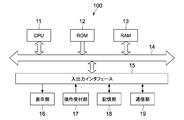
- FIG. 2 is a diagram illustrating a hardware configuration of the notification server 100.
- the notification server 100 includes a CPU (Central Processing Unit) 11, a ROM (Read Only Memory) 12, a RAM (Random Access Memory) 13, an input / output interface 15, and a bus 14 for connecting them together. Is provided.
- a CPU Central Processing Unit
- ROM Read Only Memory
- RAM Random Access Memory
- the CPU 11 appropriately accesses the RAM 13 or the like as necessary, and comprehensively controls each block of the notification server 100 while performing various arithmetic processes.
- the ROM 12 is a non-volatile memory in which an OS to be executed by the CPU 11, firmware such as programs and various parameters are fixedly stored.
- the RAM 13 is used as a work area for the CPU 11 and temporarily holds the OS, various applications being executed, and various data being processed.
- a display unit 16 an operation receiving unit 17, a storage unit 18, a communication unit 19 and the like are connected to the input / output interface 15.
- the display unit 16 is a display device using, for example, an LCD (Liquid Crystal Display), an OELD (Organic ElectroLuminescence Display), a CRT (Cathode Ray Tube), or the like.
- LCD Liquid Crystal Display
- OELD Organic ElectroLuminescence Display
- CRT Cathode Ray Tube
- the operation receiving unit 17 is, for example, a pointing device such as a mouse, a keyboard, a touch panel, and other input devices.
- the operation reception unit 17 is a touch panel
- the touch panel can be integrated with the display unit 16.
- the storage unit 18 is, for example, a nonvolatile memory such as an HDD (Hard Disk Drive), a flash memory (SSD; Solid State Drive), or other solid-state memory.
- the storage unit 18 stores the OS, various applications, and various data.
- the storage unit 18 functions as the notification information storage unit 110 and stores a notification information database to be described later.
- the storage unit 18 also stores a program for controlling the storage process and the transmission / reception process of the notification information.
- the communication unit 19 is a NIC or the like for connecting to the Internet 50, and performs communication processing between the SNS server 200 and the blog server 300.
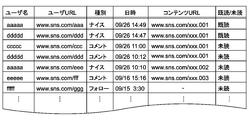
- FIG. 3 is a diagram showing a specific example of the notification information database stored in the notification server 100.
- the notification information database includes the user name of the user who performed the action, the URL of the user's page in the SNS, the action type and date, the URL of the content of the action target, and the read / unread Data indicating each distinction is stored.
- User name, user URL, action type / date and time, and content URL information are used when the notification server 100 creates notification information.
- the notification information request is received from the SNS server 200 or the blog server 300, the notification information is deleted so that the notification information that has already been browsed on one server is not displayed on the other server. To be used.
- the notification information in the database is updated each time action information is received from the SNS server 200 so that the latest predetermined number is always stored.
- the read / unread information is updated every time the read information is received from the SNS server 200 or the blog server 300.
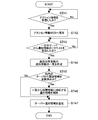
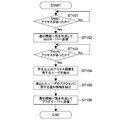
- FIG. 4 is a flowchart showing an operation flow when the notification server 100 according to the present embodiment causes the SNS server 200 or the blog server 300 to display notification information. This operation is executed by cooperation of the CPU 11 and the communication unit 19 of the notification server 100 and a program (software). In the following description, for the sake of convenience, the CPU 11 is an operation subject.
- the CPU 11 first determines whether or not action information indicating an action of another user for a certain user has been received from the SNS server 200 (step 41).
- the CPU 11 stores the received action information in the notification information database (step 42).
- the CPU 11 determines whether a notification information request has been received from one of the SNS server 200 and the blog server 300 (step 43).
- the CPU 11 When the notification information request is received (Yes), the CPU 11 creates a list of the latest predetermined number (for example, 30) of notification information using the notification information stored in the notification information storage unit 110 (step 44). ).
- the CPU 11 determines whether or not the read information of the notification information has been received from the other server that is not the request source of the notification information (step 45).
- the notification information corresponding to the read information is deleted from the list of the notification information (step 46).
- the CPU 11 transmits the list from which the notification information corresponding to the read information is deleted to the request source server for display (step 47).
- the created list is transmitted to the request source server for display (step 47).
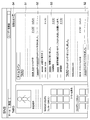
- FIG. 5 is a diagram illustrating an example of an SNS home page displayed on the display unit of the user terminal 400 by the SNS server 200 according to the present embodiment.
- a timeline of a user who has an account in the SNS (for example, a user name: TARO) is displayed.
- the content posted by the user (articles, photos, etc.) and the activity of the user (comments, shares, etc.) are displayed in chronological order from the latest.
- information indicating actions performed by other users with respect to the user contents and activities is also displayed.
- the other users aaaaa and ddddd
- the other user ccccc
- a message 52 indicating that this has occurred is displayed.
- comments 53 posted by other users aaaaa, bbbbb, ccccc) for the latest tweets are also displayed.
- FIG. 6 is a view showing a display example of the notification information list screen when the user presses the link 54.
- the notification information list 61 a plurality of notification information 62 for notifying actions performed by other users is displayed in a list.
- the number of notification information 62 is, for example, 30, but is not limited thereto.
- Each notification information 62 includes the name of the user who is the subject of the action, the content subject to the action (post, share, comment, photo, etc.), information about the type of action, and information about the date and time of the action.
- a link 63 relating to the details is provided in the text indicating the user name of the action subject, and when the link 63 is clicked (or touched), the list screen is switched to a user page corresponding to the user name in the SNS. .
- a link 64 relating to the details is also provided in the text indicating the content that is the action target, and when the link is clicked (or touched), the list screen is displayed on the timeline shown in FIG. , And switch to the position where the content is posted.
- FIG. 7 is a view showing a display example of the notification information list on the top page of the blog service.
- a notification information list 71 from SNS is displayed on the top page of the blog service.
- the figure shows a display example in a case where read information from the SNS is not received when a request for notification information is received from the blog server 300 to the notification server 100.
- the content of the notification information 72 displayed in this case is the same as the notification information in the SNS shown in FIG. That is, the notification information 72 includes information related to the action subject's user name, action target content, action type, and action date and time.
- the action subject is provided with a link 73, and the action subject content is provided with a link 74.
- FIG. 8 is a diagram showing an example of the notification information list displayed on the top page of the blog service in this case.
- the first two pieces of notification information (notification information related to “nice” from other users (aaaaa and ddddd)) is related to the action subject.
- the link 63 or the link 64 related to the action target content is clicked, the fact is transmitted as read information from the SNS server 200 to the notification server 100.
- the notification server 100 upon receiving the notification information request from the blog server 300, deletes the two notification information from the list created by the notification server 100. It transmits to the blog server 300. Therefore, in this case, as can be seen from a comparison between FIG. 7 and FIG. 8, in the notification information list 71 of the blog service, notification information regarding “nice” of the other users (aaaaa and ddddd) is not displayed.
- the process when the read information is received from the blog server 300 at the time when the notification information request is sent from the SNS server 200 to the notification server 100 is the same.
- the notification server 100 when the notification server 100 displays the notification information in the SNS also in the blog service, the notification server 100 is already read in one service (the link destination to the detailed information is accessed from there). The notification information can be controlled not to be displayed in the other service. Thereby, the notification server 100 can improve the user's mobility between the SNS and the blog service, and prevent the user from feeling annoyed by browsing the same information on both services. it can.
- the notification server 100 controls the notification information display mode in both services not to be the same by not displaying the notification information that has been read in one service in the other service. It was. However, in this embodiment, the notification server 100 changes the display mode of the notification information in both services by changing the level of detail of the notification information displayed between the two services.
- FIG. 9 is a diagram showing a display example of notification information on the top page of the blog service of the present embodiment.
- the notification information list similar to that of the first embodiment is displayed on the SNS home page of the present embodiment.
- the top page of the blog service of this embodiment as shown in FIG. 9, as notification information list 71, text information 91 for notifying actions by other users in a simplified manner and detailed information on the actions are displayed.
- a link 92 is displayed.
- the text information 91 includes, for example, information indicating that a specific action has been performed on the user's content, and does not display the subject or date / time of the action. Further, the text itself does not include a link related to the content to be acted on, and instead, a link 92 to detailed information is prepared.
- the notification server 100 when there is a request for notification information from the SNS server 200, the notification server 100 creates and transmits a notification information list as shown in FIG.
- the notification information for the SNS server 200 is generated and transmitted as shown in FIG.
- the notification information list as shown in FIG. 7 is transmitted.
- the notification server 100 can guide the user from the blog service to the SNS by changing the level of detail of the notification information displayed in the SNS and the blog service, and the notification information is the blog. It is possible to avoid as much as possible an obstacle for the user who is working on the service.
- the notification server 100 is configured to change the display order of the notification information list displayed in the SNS and the blog service.
- FIG. 10 is a diagram showing a display example of notification information on the top page of the blog service of the present embodiment.
- the same notification information list as in the first and second embodiments is displayed on the SNS home page of the present embodiment.
- a notification information list 71 whose display order is reversed from the notification information list displayed on the SNS home page is displayed.
- the notification information list 61 on the SNS home page is configured such that the latest notification information is displayed at the top of the most recent predetermined number (for example, 30) of notification information.
- the notification information list 71 on the top page is configured such that the latest notification information is displayed at the bottom.
- the notification server 100 when there is a request for notification information from the SNS server 200, the notification server 100 creates and transmits a notification information list as shown in FIG.
- a notification information list as shown in FIG. 10 when there is a request for notification information from the blog server 300, a notification information list as shown in FIG. 10 in which the display order of the notification information list for the SNS server 200 is reversed is created and transmitted.
- the notification server 100 allows the user to view notification information regarding the same action on both pages by changing the display order of the notification information displayed in the SNS and the blog service. Can be prevented as much as possible. This is because the user is generally considered to view the notification information displayed at the top first.
- the notification server 100 is configured to change the display timing of the notification information displayed in the SNS and the blog service.
- FIG. 11 is a flowchart showing an operation flow of the notification server 100 in the present embodiment. This figure explains the notification information display process in the blog service, and the notification information display process in the SNS is the same as in each of the embodiments described above.
- the CPU 11 of the notification server 100 determines whether or not there is an access from the user terminal 400 to the blog server 300 (the blog service top page) (step 111).
- the blog server 300 accesses the API 120 of the notification server 100 for a notification information request. Therefore, the notification server 100 determines whether or not the API 120 is accessed. The presence or absence of access to 300 can be determined.
- information for example, an IP address or the like for specifying the access source user terminal 400 is also transmitted to the notification server 100.
- the CPU 11 starts measuring the staying time at the blog service by the user of the user terminal 400 by starting a timer from that point (step 112).
- the CPU 11 determines whether or not the staying time has passed a predetermined ratio of the average staying time in the blog service of the user terminal 400 that is the access source (step 113).
- the average stay time is calculated in advance by the notification server 100 and stored in the storage unit 18 by analyzing the access history of the user terminal 400 to the blog service in a predetermined period (for example, one week, one month, etc.). Therefore, the notification server 100 periodically receives the access history information from the blog server 300. However, the blog server 300 may calculate the average stay time within a predetermined period and notify the notification server 100 of it.
- the predetermined ratio is 90%, for example.
- the CPU 11 When it is determined that the predetermined time of the average stay time has elapsed (Yes), the CPU 11 creates a notification information list similar to that transmitted to the SNS server 200 and transmits it to the blog server 300. Are displayed (step 114). Therefore, for example, when the average stay time is 10 minutes, the notification information list is displayed when 9 minutes have elapsed since the access to the blog server 300.
- the notification server 100 displays the notification information list at a timing when the user is likely to leave after accessing the blog service, thereby reducing the staying time of the user in the blog service (the browsing operation is performed). The user can be smoothly guided to the SNS without being disturbed.
- the notification server 100 when the SNS and the blog service are accessed simultaneously by the user, the notification server 100 is configured to vary the number of notification information displayed between the SNS and the blog service.
- FIG. 12 is a flowchart showing an operation flow of the notification server 100 in the present embodiment.
- the CPU 11 of the notification server 100 first determines whether or not the SNS server 200 is accessed from the user terminal 400 (step 121).
- the CPU 11 creates a notification information list similar to that displayed in the SNS in each of the above-described embodiments, and transmits it to the SNS server 200 (step 122).
- the notification server 100 determines whether or not the blog server 300 is accessed from the user terminal 400 while the access from the user terminal 400 to the SNS server 200 is continued (step 123).
- the notification server 100 deletes a predetermined number (for example, 3, 5, 10, etc.) from the list of notification information transmitted to the SNS server 200.
- the created list is created and transmitted to the blog server 300 (step 124).
- the notification server 100 regards the predetermined number of notification information displayed in the SNS as read by the user, and the blog service Then, by not displaying the predetermined number of information, it is possible to prevent the user from browsing the same information many times as much as possible.
- the notification server 100 uses different types of notification information to be displayed for the SNS and the blog service.
- FIG. 13 is a flowchart showing an operation flow of the notification server 100 in the present embodiment.
- FIG. 14 is a diagram showing a display example of notification information on the top page of the blog service of this embodiment.
- the CPU 11 of the notification server 100 first determines whether or not the SNS server 200 has been accessed from the user terminal 400 (step 131).
- the CPU 11 creates a notification information list similar to that displayed in the SNS in each of the above-described embodiments and transmits it to the SNS server 200 (step 132).
- the CPU 11 determines whether or not the blog server 300 is accessed from the user terminal 400 (step 133).
- the CPU 11 extracts only the notification information related to the action having the predetermined importance or higher from the notification information list transmitted to the SNS server 200 (step 134).
- the importance level may be set in advance by the notification server 100 or may be set by the user.
- Information regarding the importance is stored in the storage unit 18 of the notification server 100. In this embodiment, for example, “follow” that creates a new user connection among actions such as “nice”, “comment”, and “follow” is regarded as an important action, and a high importance is set for it. It shall be.
- the notification server 100 creates a list of notification information related only to the extracted actions with high importance, and transmits it to the blog server 300 (step 135).
- the notification server 100 displays only high importance information among the notification information displayed in the SNS in the blog service, so that the notification information can be displayed while the user is working in the blog service. It is possible to notify the information to be notified and to guide the user to the SNS while preventing as much as possible.
- the notification server 100 is configured to change the subject of the action that is the basis of the displayed notification information between the SNS and the blog service.
- FIG. 15 is a flowchart showing an operation flow of the notification server 100 in the present embodiment.
- the CPU 11 of the notification server 100 first determines whether or not the SNS server 200 is accessed from the user terminal 400 (step 151).
- the CPU 11 creates a notification information list similar to that displayed in the SNS in each of the above-described embodiments and transmits it to the SNS server 200 (step 152).
- the notification server 100 determines whether or not the user terminal 400 has accessed the blog server 300 (step 153).
- the CPU 11 extracts other users who have a predetermined or higher access frequency for the user's page in the SNS from the notification information list transmitted to the SNS server 200. (Step 154).
- the access frequency is calculated for each user by the notification server 100 based on an access history periodically transmitted from the SNS server 200 to the notification server 100, for example. However, the access frequency may be calculated by the SNS server 200 and periodically transmitted to the notification server 100.
- the predetermined or higher access frequency is, for example, one or more accesses in several days, but is not limited thereto.
- the CPU 11 extracts only the notification information relating to the extracted user action from the notification information list (step 155).
- the CPU 11 creates a list of the extracted notification information and transmits it to the blog server 300 (step 156).
- the notification server 100 displays the notification information by displaying only the notification information of the action by the user who is highly interested in the action target user among the other users in the blog service.
- the user can be guided to the SNS while preventing the user who is working on the blog service from being disturbed as much as possible.
- the notification server 100 can guide the user to the SNS by displaying only the notification information regarding such other user's actions on the blog service, and can promote the connection with the other user.
- notification information in the SNS is displayed also on the page of the blog service
- present invention is not limited to the processing between these two services.
- notification information regarding action information between different SNSs or between different blog services may be displayed.
- the present invention is also applicable to display processing of notification information between services other than SNS and blog.
- examples of other services include all types of services such as an auction service, a Q & A service, and a word-of-mouth site service (a service that allows posting of reviews).
- the action that becomes the basis of the notification information is not limited to “Nice”, “Comment”, “Follow”, etc. described in the above embodiments.
- comments posted on auction sites, EC service sites, Q & A services, reviews, evaluations (for example, by the number of stars), and the like are also included in the action.
- notification information regarding actions of other users in the SNS is displayed on the page of the blog service.
- the present invention is also applicable to a case where notification information regarding an action of another user in the blog service (for example, a comment or a share for a blog post) is displayed on the SNS page.
- the first to seventh embodiments described above can be executed in any combination as long as no contradiction occurs.
Landscapes
- Business, Economics & Management (AREA)
- Engineering & Computer Science (AREA)
- Strategic Management (AREA)
- Physics & Mathematics (AREA)
- General Physics & Mathematics (AREA)
- Finance (AREA)
- Theoretical Computer Science (AREA)
- Development Economics (AREA)
- Economics (AREA)
- Marketing (AREA)
- Accounting & Taxation (AREA)
- General Business, Economics & Management (AREA)
- Entrepreneurship & Innovation (AREA)
- Game Theory and Decision Science (AREA)
- Human Resources & Organizations (AREA)
- Operations Research (AREA)
- Quality & Reliability (AREA)
- Tourism & Hospitality (AREA)
- Information Transfer Between Computers (AREA)
- Management, Administration, Business Operations System, And Electronic Commerce (AREA)
Abstract
情報処理装置は、記憶部と制御部とを有する。上記記憶部は、インターネット上の第1のサービス及び第2のサービスの双方にアカウントを有するユーザに対する他のユーザからのアクションを示すアクション情報を記憶する。上記制御部は、上記記憶されたアクション情報を基に、上記第1のサービスにおける上記ユーザの第1のページに、上記アクションの存在を上記ユーザへ通知する第1の通知情報を第1の表示態様で表示させる。また制御部は、上記第2のサービスにおける上記ユーザの第2のページに、上記アクションの存在を上記ユーザへ通知する、上記第1のサービスへのリンクを含む第2の通知情報を、上記第1の表示態様とは異なる第2の表示態様で表示させる。
Description
本発明は、インターネット上における複数のサービス間の連携処理を制御可能な情報処理装置、当該情報処理装置における情報処理方法及びプログラムに関する。
現在、インターネット上では様々なサービスが提供されており、一人のユーザが複数のサービスにアカウントを有している場合もある。例えば、あるSNS(Social Networking Service)を利用しているユーザが、ブログサービスを利用して自身のブログを作成している場合もある。
また、これらのサービスの中には、そのサービスにアカウントを有するユーザに対する他のユーザからの何らかのアクションを受け付け、それをユーザに通知する情報を表示する機能を有するものもある。例えばSNSにおいては、あるユーザが投稿したコンテンツに対する他のユーザのコメントが表示されたり、当該コンテンツが好き、支持できるといった他のユーザの意思を示す情報が表示されたりする(いいね!またはナイス!機能)。また、ブログサービス(ブログ作成機能を提供するサービス)でも、あるユーザが公開した日記に対して他のユーザが投稿したコメントが表示される。
ところで、このように他のユーザからアクションがあった場合には、アクションの対象ユーザは、当該アクションの内容をなるべく早く知りたいと思うのが自然である。下記特許文献1には、SNSとブログを連携させて、SNSに登録されている情報をブログ上に表示させたり、ブログに登録された情報をSNSに表示させたりするシステムが開示されている。これによりユーザは、SNSを閲覧しなくてもブログ上でSNSでの他のユーザのアクションに関する通知情報を知ることができ、また逆にブログを閲覧しなくてもSNS上で他のユーザからのコメント等の通知情報を知ることができる。
しかしながら、単に同一の通知情報が複数のサービスで表示される場合、ユーザはどれか1つのサービスのページを閲覧すれば当該情報を得られることになるため、サービス間の回遊性が下がってしまう可能性がある。
以上のような事情に鑑み、本発明の目的は、インターネット上の複数のサービス間でユーザの回遊性を向上させることができる情報処理装置、情報処理方法及びプログラムを提供することにある。
上述の課題を解決するため、本発明の一形態に係る情報処理装置は、記憶部と制御部とを有する。上記記憶部は、インターネット上の第1のサービス及び第2のサービスの双方にアカウントを有するユーザに対する他のユーザからのアクションを示すアクション情報を記憶する。上記制御部は、上記記憶されたアクション情報を基に、上記第1のサービスにおける上記ユーザの第1のページに、上記アクションの存在を上記ユーザへ通知する第1の通知情報を第1の表示態様で表示させる。また制御部は、上記第2のサービスにおける上記ユーザの第2のページに、上記アクションの存在を上記ユーザへ通知する、上記第1のサービスへのリンクを含む第2の通知情報を、上記第1の表示態様とは異なる第2の表示態様で表示させる。
これにより情報処理装置は、第1のサービスにおいて表示される通知情報を、第2のサービスにおいて、第1のサービスとは表示形態を異ならせて第1のサービスへのリンク付きで表示することで、ユーザの通知情報に対する興味を引き、第1のサービスへ誘導することができる。これにより第1のサービスと第2のサービスとの間の回遊性が向上する。
ここで第1のサービス及び第2のサービスは、例えばSNS、ブログサービス、ミニブログサービス、オークションサービス、Q&Aサービス、口コミサイトサービス(レビューの投稿が可能なサービス)等、あらゆる種類のサービスで有りうる。また第1のサービスと第2のサービスは同種のサービスであってもよいし、異種のサービスであってもよい。またアクションとは、例えばあるユーザが投稿したコンテンツに対して他のユーザが行う、コメントの投稿、当該コンテンツが好き、支持できるといった意思を示すための操作(いいね!またはナイス!ボタンの押下)、SNS上であるユーザと新たに繋がるためのリクエスト送信、あるユーザのコンテンツを自身のSNSページのタイムライン上で表示させる(フォローする)ための設定操作またはそのためのリクエスト送信等をいうが、これらに限られない。
ここで第1のサービス及び第2のサービスは、例えばSNS、ブログサービス、ミニブログサービス、オークションサービス、Q&Aサービス、口コミサイトサービス(レビューの投稿が可能なサービス)等、あらゆる種類のサービスで有りうる。また第1のサービスと第2のサービスは同種のサービスであってもよいし、異種のサービスであってもよい。またアクションとは、例えばあるユーザが投稿したコンテンツに対して他のユーザが行う、コメントの投稿、当該コンテンツが好き、支持できるといった意思を示すための操作(いいね!またはナイス!ボタンの押下)、SNS上であるユーザと新たに繋がるためのリクエスト送信、あるユーザのコンテンツを自身のSNSページのタイムライン上で表示させる(フォローする)ための設定操作またはそのためのリクエスト送信等をいうが、これらに限られない。
上記第1の通知情報は上記アクションに関する詳細情報へのリンクを有してもよい。この場合上記制御部は、上記第1のページで上記第1の通知情報から上記詳細情報へのアクセスが検出された場合に、当該第1の通知情報に対応する上記第2の通知情報が表示されないように上記第2のページを制御してもよい。
これにより情報処理装置は、ユーザが同一の情報を第1のサービスと第2のサービスの双方で閲覧することで煩わしさを感じるのを防ぐことができる。
上記制御部は、上記第1の通知情報に第1の詳細度を有する第1の詳細情報を含ませ、上記第2の通知情報に、上記第1の詳細度よりも小さい第2の詳細度を有し、上記第1の詳細情報へのリンクを含む第2の詳細情報を含ませてもよい。
これにより情報処理装置は、第2の通知情報の詳細度を小さくすることで、それに興味のあるユーザが第1のサービスの第1の詳細情報へ誘導することができるとともに、通知情報が第2のサービスを利用中のユーザの作業の邪魔になるのを回避することができる。例えば、第1の詳細情報には、ユーザが投稿した記事やコメントの情報及びそれに対してアクションを行った他のユーザ及び当該アクションの内容等が表示される。一方、第2の詳細情報には、上記アクションの事実のみが、その主体(他のユーザを示す情報)や内容を示す情報へのリンク付きで表示される。
上記制御部は、所定数のアクションの存在を示す複数の第1の通知情報を第1の順序で表示するように上記第1のページを制御し、上記所定数のアクションの存在を示す複数の第2の通知情報を上記第1の順序とは異なる第2の順序で表示するように上記第2のページを制御してもよい。
これにより情報処理装置は、第1のページと第2のページの双方で、同じアクションに関する通知情報がユーザに閲覧されてしまうのを極力防ぐことができる。
上記記憶部は、上記ユーザが上記第2のページにアクセスして滞在する時間を所定アクセス分平均した平均滞在時間情報を記憶してもよい。この場合上記制御部は、上記平均滞在時間情報を基に、上記第2の通知情報を、上記ユーザが上記第2のページにアクセスしてから上記平均滞在時間の所定割合の時間が経過したときに表示させるように上記第2のページを制御してもよい。
これにより情報処理装置は、ユーザが第2のページにアクセスしてから離脱しそうなタイミングで第2の通知情報を表示させることで、ユーザの第2のサービスにおける滞在時間を減らさせる(閲覧動作を邪魔する)ことなく、ユーザを第1のサービスにスムースに誘導することができる。
上記制御部は、上記第1のページがアクセスされている間に上記第2のページがアクセスされた場合、上記第1のページで表示された複数の第1の通知情報のうち所定数の第1の通知情報に対応する所定数の第2の通知情報が、上記第2のページで表示されないように上記第2のページを制御してもよい。
これにより情報処理装置は、第1のページと第2のページとが同時にアクセスされた場合には、第1のページに表示された所定数の通知情報はユーザによって既読とみなし、第2のページではそれら所定数の情報を表示させないことで、ユーザが同じ情報を何度も閲覧してしまうことを極力防ぐことができる。ここで所定数とは例えば3個、5個、10個等であるが、これらに限られない。
上記第1の通知情報及び上記第2の通知情報は、複数の異なるアクション毎に、種類の異なる複数の通知情報を有してもよい。この場合上記記憶部は、上記種類の異なるアクション毎の重要度を示す重要度情報を記憶してもよい。またこの場合上記制御部は、上記重要度情報を基に、上記複数の第1の通知情報のうち、所定以上の重要度を有する通知情報を上記第2の通知情報として表示するように上記第2のページを制御してもよい。
これにより情報処理装置は、第2のページには第1のページに表示された通知情報のうち重要度の高い情報を表示させることで、通知情報の表示が第2のサービスを利用中のユーザの邪魔になるのを極力防ぎながら、通知すべき情報を通知し、第1のサービスへユーザを誘導することができる。
上記記憶部は、上記第1のページへの複数の他のユーザのアクセス履歴を示すアクセス履歴情報を記憶してもよい。この場合上記制御部は、上記複数の他のユーザのアクションを通知する情報を上記第1の通知情報として表示するように上記第1のページを制御し、上記アクセス履歴情報を基に、上記複数の他のユーザのうち、上記第1のページへの所定値以上のアクセス頻度を有する他のユーザのアクションを通知する情報を上記第2の通知情報として表示するように上記第2のページを制御してもよい。
これにより情報処理装置は、第2のページには、他のユーザのうち、ユーザに関心の高いユーザによるアクションの通知情報のみを表示させることで、通知情報の表示が第2のサービスを利用中のユーザの邪魔になるのを極力防ぎながら、第1のサービスへユーザを誘導することができる。
例えば、SNSにおいて他のユーザのページに表示される友達(またはフォロー)推薦領域を介して第1のページを何度も閲覧している他のユーザは、ユーザと友達になることまたはユーザをフォローすることに興味がある可能性が高い。したがって情報処理装置は、そのような他のユーザのアクションに関する通知情報のみを第2のページに表示させることで、ユーザを第1のサービスに誘導させ、上記他のユーザとの繋がりを促進させることができる。
本発明の他の形態に係る情報処理方法は、インターネット上の第1のサービス及び第2のサービスの双方にアカウントを有するユーザに対する他のユーザからのアクションを示すアクション情報を記憶すること、上記記憶されたアクション情報を基に、上記第1のサービスにおける上記ユーザの第1のページに、上記アクションの存在を上記ユーザへ通知する第1の通知情報を第1の表示態様で表示させること、及び、上記第2のサービスにおける上記ユーザの第2のページに、上記アクションの存在を上記ユーザへ通知する、上記第1のサービスへのリンクを含む第2の通知情報を、上記第1の表示態様とは異なる第2の表示態様で表示させることを含む。
本発明のまた別の形態に係るプログラムは、情報処理装置に、記憶ステップと、第1の表示ステップと、第2の表示ステップとを実行させる。上記記憶ステップは、インターネット上の第1のサービス及び第2のサービスの双方にアカウントを有するユーザに対する他のユーザからのアクションを示すアクション情報を記憶する。上記第1の表示ステップは、上記記憶されたアクション情報を基に、上記第1のサービスにおける上記ユーザの第1のページに、上記アクションの存在を上記ユーザへ通知する第1の通知情報を第1の表示態様で表示させる。上記第2の表示ステップは、上記第2のサービスにおける上記ユーザの第2のページに、上記アクションの存在を上記ユーザへ通知する、上記第1のサービスへのリンクを含む第2の通知情報を、上記第1の表示態様とは異なる第2の表示態様で表示させる。
以上のように、本発明によれば、インターネット上の複数のサービス間でユーザの回遊性を向上させることができる。
以下、本発明に係る実施形態を、図面を参照しながら説明する。
<第1の実施形態>
まず、本発明の第1の実施形態を説明する。
まず、本発明の第1の実施形態を説明する。
[システムのネットワーク構成]
図1は、本実施形態に係るシステムのネットワーク構成を示した図である。
図1は、本実施形態に係るシステムのネットワーク構成を示した図である。
同図に示すように、このシステムは、インターネット50上の通知サーバ100、SNSサーバ200、ブログサーバ300及び複数のユーザ端末400を有する。
SNSサーバ200は、ユーザ端末400に対してSNSを提供する。具体的には、SNSサーバ200は、当該SNSにアカウントを有するユーザのユーザ端末400の要求に応じて、当該ユーザ端末400が有するブラウザを介して、当該SNSにおける当該ユーザのページを表示させる。またSNSサーバ200は、当該ユーザの投稿を受け付けて当該ページに表示させたり、当該ユーザに対する他のユーザからのアクションを受け付け、当該アクションの存在を通知する通知情報を当該ページに表示させたりする。
ブログサーバ300は、ユーザ端末400に対してブログサービスを提供する。具体的には、ブログサーバ300は、当該ブログサービスにアカウントを有するユーザのユーザ端末400の要求に応じて、上記ブラウザを介して、当該ブログサービスにおける当該ユーザのページを表示させる。当該ページでは、ユーザ端末400のユーザがブログを作成及び更新するためのユーザインタフェースや、他のユーザのブログを検索及び閲覧できる機能等が提供される。
通知サーバ100は、上記SNSサーバ200及びブログサーバ300とインターネット50を介して接続されており、通知情報記憶部110及びAPI(Application Program Interface)120を有する。通知サーバ100は、SNSサーバ200から、あるユーザ(例えばユーザA)に対する他のユーザ(例えばユーザB)からのアクションに関する情報(以下、アクション情報)を、API120を介して受信する。そして通知サーバ100は、当該アクション情報を基に、上記アクションの存在を通知するための通知情報を作成して通知情報記憶部110に記憶する。そして通知サーバ100は、SNSサーバ200またはブログサーバ300からAPI120を介して受信したリクエストに応じて、当該通知情報をSNSサーバ200及びブログサーバ300へ送信して、SNS及びブログにおけるユーザAのページに表示させる。
また通知サーバ100は、上記SNSサーバ200及びブログサーバ300から、上記API120を介して、上記通知情報が閲覧されたことを示す既読情報を受信し、上記通知情報記憶部110に記憶する。当該既読情報は、通知情報がSNSサーバ200またはブログサーバ300へ送信される際に利用される。これらの処理の詳細については後述する。
ここでアクションとは、例えば、あるユーザが投稿したコンテンツに対して他のユーザが行う、コメントの投稿操作、当該コンテンツが好き(支持できる)といった意思を示すための操作(いいね!またはナイス!ボタンの押下)、SNS上であるユーザと新たに繋がるためのリクエスト送信操作(友達リクエスト)、あるユーザのコンテンツを自身のSNSページのタイムライン上で表示させる(フォローする)ための設定操作またはそのためのリクエスト送信操作等をいうが、これらに限られない。
ユーザ端末400は、例えばデスクトップPC(Personal Computer)、ノートブックPC、タブレットPC、スマートフォン、携帯電話機等、ブラウザを有しインターネット50に接続可能なあらゆる情報処理装置であり得る。同図では、ユーザ端末400Aとユーザ端末400Bの2台のみが示されているが、実際にはユーザ端末400の数は3台以上で有り得る。
[通知サーバのハードウェア構成]
図2は、上記通知サーバ100のハードウェア構成を示した図である。同図に示すように、通知サーバ100は、CPU(Central Processing Unit)11、ROM(Read Only Memory)12、RAM(Random Access Memory)13、入出力インタフェース15、及び、これらを互いに接続するバス14を備える。
図2は、上記通知サーバ100のハードウェア構成を示した図である。同図に示すように、通知サーバ100は、CPU(Central Processing Unit)11、ROM(Read Only Memory)12、RAM(Random Access Memory)13、入出力インタフェース15、及び、これらを互いに接続するバス14を備える。
CPU11は、必要に応じてRAM13等に適宜アクセスし、各種演算処理を行いながら通知サーバ100の各ブロック全体を統括的に制御する。ROM12は、CPU11に実行させるOS、プログラムや各種パラメータなどのファームウェアが固定的に記憶されている不揮発性のメモリである。RAM13は、CPU11の作業用領域等として用いられ、OS、実行中の各種アプリケーション、処理中の各種データを一時的に保持する。
入出力インタフェース15には、表示部16、操作受付部17、記憶部18、通信部19等が接続される。
表示部16は、例えばLCD(Liquid Crystal Display)、OELD(Organic ElectroLuminescence Display)、CRT(Cathode Ray Tube)等を用いた表示デバイスである。
操作受付部17は、例えばマウス等のポインティングデバイス、キーボード、タッチパネル、その他の入力装置である。操作受付部17がタッチパネルである場合、そのタッチパネルは表示部16と一体となり得る。
記憶部18は、例えばHDD(Hard Disk Drive)や、フラッシュメモリ(SSD;Solid State Drive)、その他の固体メモリ等の不揮発性メモリである。当該記憶部18には、上記OSや各種アプリケーション、各種データが記憶される。特に本実施形態において、記憶部18は、上記通知情報記憶部110として機能し、後述する通知情報データベースを記憶している。また記憶部18には、上記通知情報の記憶処理及び送受信処理を制御するプログラムも記憶される。
通信部19は、インターネット50に接続するためのNIC等であり、SNSサーバ200及びブログサーバ300との間の通信処理を担う。
[SNSサーバ及びブログサーバのハードウェア構成]
上記SNSサーバ200及びブログサーバ300のハードウェア構成も、上記通知サーバ100のハードウェア構成と同様であるため、詳細な説明を省略する。
上記SNSサーバ200及びブログサーバ300のハードウェア構成も、上記通知サーバ100のハードウェア構成と同様であるため、詳細な説明を省略する。
[通知サーバのデータベース構成]
図3は、上記通知サーバ100に記憶される通知情報データベースの具体例を示した図である。
図3は、上記通知サーバ100に記憶される通知情報データベースの具体例を示した図である。
同図に示すように、通知情報データベースには、アクションを行ったユーザのユーザ名、上記SNSにおける当該ユーザのページのURL、アクションの種別及び日時、アクション対象のコンテンツのURL、既読/未読の区別をそれぞれ示すデータが記憶されている。
ユーザ名、ユーザURL、アクション種別/日時、コンテンツURLの各情報は、通知サーバ100が通知情報を作成する際に利用される。既読/未読情報は、SNSサーバ200またはブログサーバ300から通知情報のリクエストを受信した際に、一方のサーバで既に閲覧された通知情報が他方のサーバで表示されないように、当該通知情報を削除するために利用される。
当該データベース内の通知情報は、常に最新の所定数が記憶されるように、SNSサーバ200からアクション情報を受信する度に更新される。また既読/未読情報は、SNSサーバ200またはブログサーバ300から既読情報を受信する度に更新される。
[通知サーバの動作]
次に、以上のように構成された通知サーバ100の動作について説明する。
次に、以上のように構成された通知サーバ100の動作について説明する。
図4は、本実施形態における通知サーバ100が、SNSサーバ200またはブログサーバ300に通知情報を表示させる際の動作の流れを示したフローチャートである。当該動作は、通知サーバ100の上記CPU11や通信部19等のハードウェアと、プログラム(ソフトウェア)との協働により実行される。以下の説明では、便宜上、CPU11を動作主体とする。
同図に示すように、CPU11はまず、あるユーザに対する他のユーザのアクションを示すアクション情報をSNSサーバ200から受信したか否かを判断する(ステップ41)。
アクション情報を受信した場合(Yes)、CPU11は、当該受信したアクション情報を上記通知情報データベースに保存する(ステップ42)。
続いてCPU11は、SNSサーバ200及びブログサーバ300の一方から、通知情報のリクエストを受信したか否かを判断する(ステップ43)。
通知情報のリクエストを受信した場合(Yes)、CPU11は、通知情報記憶部110に記憶された通知情報を用いて、直近の所定数(例えば30個)の通知情報の一覧を作成する(ステップ44)。
続いてCPU11は、通知情報のリクエスト元ではない、他方のサーバから、通知情報の既読情報を受信済みか否かを判断する(ステップ45)。
既読情報を受信済みの場合(Yes)、上記通知情報の一覧から、既読情報に対応する通知情報を削除する(ステップ46)。
そしてCPU11は、上記既読情報に対応する通知情報を削除した一覧を、上記リクエスト元のサーバへ送信して表示させる(ステップ47)。
既読情報を受信していない場合(ステップ45のNo)には、作成した一覧をリクエスト元のサーバへ送信して表示させる(ステップ47)。
図5は、本実施形態におけるSNSサーバ200によってユーザ端末400の表示部に表示されるSNSのホームページの例を示した図である。
同図に示すように、SNSのホームページ上では、当該SNSにアカウントを有するユーザ(例えばユーザ名:TARO)のタイムラインが表示される。当該タイムラインには、当該ユーザが投稿したコンテンツ(記事や写真等)や、当該ユーザのアクティビティ(コメントやシェア等)が、最新のものから時系列順に表示される。
また、当該タイムライン上では、上記ユーザのコンテンツやアクティビティに対して他のユーザが行ったアクションを示す情報も表示される。例えば、ユーザ(TARO)の最新のつぶやきに対しては、他のユーザ(aaaaaとddddd)が"ナイス"し、その1つ前のつぶやきに対しては、他のユーザ(ccccc)が"ナイス"したことを示すメッセージ52がそれぞれ表示される。また、上記最新のつぶやきに対して他のユーザ(aaaaa、bbbbb、ccccc)がそれぞれ投稿したコメント53も表示される。
さらに、上記ホームページ上には、上記アクションに関する通知情報の一覧へのリンク54も表示される。図6は、ユーザが当該リンク54を押下した場合の通知情報一覧画面の表示例を示した図である。
同図に示すように、通知情報一覧61では、他のユーザが行ったアクションを通知する複数の通知情報62が一覧表示される。通知情報62の数は例えば30件であるが、これに限られない。
各通知情報62は、アクションの主体であるユーザ名、アクションの対象となったコンテンツ(投稿、シェア、コメント、写真等)、アクションの種別に関する情報、及びアクションの日時に関する情報を含む。アクション主体のユーザ名を示すテキストにはその詳細に関するリンク63が設けられ、当該リンク63がクリック(またはタッチ)されると、上記一覧画面が、SNSにおける当該ユーザ名に対応するユーザのページに切り替わる。またアクション対象となったコンテンツを示すテキストにもその詳細に関するリンク64が設けられており、当該リンクがクリック(またはタッチ)されると、上記一覧画面が、上記図5で示したタイムライン上の、上記コンテンツが掲載された位置に切り替わる。
図7は、ブログサービスのトップページにおける通知情報一覧の表示例を示した図である。
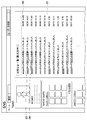
同図に示すように、ブログサービスのトップページでは、ブログ作成に関する各種情報に加えて、SNSからの通知情報一覧71が表示される。同図は、ブログサーバ300から通知サーバ100に通知情報のリクエストがあった時点でSNSからの既読情報が受信されていない場合の表示例を示している。この場合に表示される通知情報72の内容は、上記図6で示したSNSにおける通知情報と同様である。すなわち、通知情報72は、アクション主体のユーザ名、アクション対象のコンテンツ、アクション種別及びアクション日時に関する情報を含み、アクション主体についてはリンク73が設けられ、アクション対象コンテンツについてはリンク74が設けられる。
一方、ブログサーバ300から通知サーバ100に通知情報のリクエストがあった時点で、SNSからの既読情報が受信されている場合には、その既読情報に対応する通知情報は、通知サーバ100の送信前に一覧から削除される。図8は、この場合におけるブログサービスのトップページに表示される通知情報一覧の例を示した図である。
同図に示すように、例えば、図6で示した通知情報のうち、先頭の2つの通知情報(他のユーザ(aaaaa及びddddd)からの"ナイス"に関する通知情報)に設定されたアクション主体に関するリンク63またはアクション対象コンテンツに関するリンク64がクリックされると、その事実が既読情報としてSNSサーバ200から通知サーバ100へ送信される。
その場合、通知サーバ100は、ブログサーバ300から通知情報のリクエストを受信すると、上記2つの通知情報を、通知サーバ100が作成した一覧上から削除した上で
ブログサーバ300へ送信する。したがってこの場合には、図7と図8とを比較すると分かるとおり、ブログサービスの通知情報一覧71において、上記他のユーザ(aaaaa及びddddd)の"ナイス"に関する通知情報は表示されない。
ブログサーバ300へ送信する。したがってこの場合には、図7と図8とを比較すると分かるとおり、ブログサービスの通知情報一覧71において、上記他のユーザ(aaaaa及びddddd)の"ナイス"に関する通知情報は表示されない。
図示しないが、SNSサーバ200から通知サーバ100へ通知情報のリクエストがあった時点で、ブログサーバ300から既読情報が受信されている場合の処理も同様となる。
このように、本実施形態において通知サーバ100は、SNSにおける通知情報をブログサービスにおいても表示させる際に、一方のサービスにおいて既読とされた(そこから詳細情報へのリンク先へアクセスされた)通知情報を、他方のサービスでは表示させないように制御することができる。これにより通知サーバ100は、SNS及びブログサービス間でのユーザの回遊性を向上させることができると共に、ユーザが同一の情報を双方のサービス上で閲覧することで煩わしさを感じるのを防ぐことができる。
<第2の実施形態>
次に、本発明の第2の実施形態を説明する。本実施形態及びこれ以降の実施形態においては、上記第1の実施形態と同様の構成及び機能を有する点については説明を省略し、第1実施形態と異なる点について説明する。
次に、本発明の第2の実施形態を説明する。本実施形態及びこれ以降の実施形態においては、上記第1の実施形態と同様の構成及び機能を有する点については説明を省略し、第1実施形態と異なる点について説明する。
上述の第1の実施形態では、通知サーバ100は、一方のサービスで既読とされた通知情報を他方のサービスで表示させないことで、両サービスにおける通知情報の表示態様が同一とならないよう制御していた。しかし本実施形態では、通知サーバ100は、両サービス間で表示される通知情報の詳細度を異ならせることで両サービスにおける通知情報の表示態様を異ならせている。
図9は、本実施形態のブログサービスのトップページにおける通知情報の表示例を示した図である。
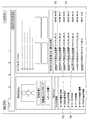
本実施形態のSNSのホームページには、上記第1の実施形態と同様の通知情報一覧が表示される。一方、本実施形態のブログサービスのトップページには、図9に示すように、通知情報一覧71として、他のユーザによるアクションを簡略化して通知するテキスト情報91と、そのアクションの詳細情報へのリンク92とが表示される。
テキスト情報91には、例えば、単にユーザのコンテンツに対して特定のアクションがあった旨の情報が含まれ、アクションの主体や日時は表示されない。また当該テキスト自体にはアクション対象のコンテンツに関するリンク等は含まれず、その代わりに、詳細情報へのリンク92が用意されている。
詳細情報へのリンク92がクリック(またはタッチ)されると、上記第1の実施形態の図7で示したのと同様の通知情報が表示される。
この場合通知サーバ100は、SNSサーバ200から通知情報のリクエストがあった際には、上記図7で示したような通知情報一覧を作成して送信する。一方、ブログサーバ300から通知情報のリクエストがあった際には、SNSサーバ200用の通知情報を簡略化した図9に示すような通知情報を作成して送信し、上記詳細情報のリンク92についてリクエストがあった際には、上記図7で示したような通知情報一覧を送信する。
このように本実施形態では、通知サーバ100は、SNSとブログサービスにおいて表示される通知情報の詳細度を異ならせることで、ユーザをブログサービスからSNSへ誘導することができるとともに、通知情報がブログサービス上で作業中のユーザの邪魔になるのを極力回避することができる。
<第3の実施形態>
次に、本発明の第3の実施形態を説明する。
次に、本発明の第3の実施形態を説明する。
本実施形態では、通知サーバ100は、SNSとブログサービスにおいて表示される通知情報一覧の表示順を異ならせることとしている。
図10は、本実施形態のブログサービスのトップページにおける通知情報の表示例を示した図である。
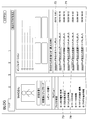
本実施形態のSNSのホームページには、上記第1及び第2の実施形態と同様の通知情報一覧が表示される。一方、本実施形態のブログサービスのトップページには、図10に示すように、SNSのホームページに表示される通知情報一覧とはその表示順が逆とされた通知情報一覧71が表示される。
すなわち、SNSのホームページにおける通知情報一覧61は、直近の所定数(例えば30件)の通知情報のうち、最新の通知情報ほど上部に表示されるように構成されるが、それとは逆に、ブログのトップページにおける通知情報一覧71は、最新の通知情報ほど下部に表示されるように構成される。
この場合通知サーバ100は、SNSサーバ200から通知情報のリクエストがあった際には、上記図7で示したような通知情報一覧を作成して送信する。一方、ブログサーバ300から通知情報のリクエストがあった際には、SNSサーバ200用の通知情報一覧の表示順を逆にした図10に示すような通知情報一覧を作成して送信する。
このように本実施形態では、通知サーバ100は、SNSとブログサービスにおいて表示される通知情報の表示順序を異ならせることで、双方のページで、同じアクションに関する通知情報がユーザに閲覧されてしまうのを極力防ぐことができる。これは、通常、ユーザは、上部に表示される通知情報ほど先に閲覧すると考えられるためである。
<第4の実施形態>
次に、本発明の第4の実施形態を説明する。
次に、本発明の第4の実施形態を説明する。
本実施形態では、通知サーバ100は、SNSとブログサービスにおいて表示される通知情報の表示タイミングを異ならせることとしている。
図11は、本実施形態における通知サーバ100の動作の流れを示したフローチャートである。同図は、ブログサービスにおける通知情報の表示処理を説明するものであり、SNSにおける通知情報の表示処理は、上述の各実施形態と同様である。
同図に示すように、通知サーバ100のCPU11は、ユーザ端末400からブログサーバ300(ブログサービスのトップページ)へアクセスがあったか否かを判断する(ステップ111)。ユーザ端末400からブログサーバ300へアクセスがあった際には、ブログサーバ300は通知情報リクエストのために通知サーバ100のAPI120へアクセスするため、通知サーバ100は当該API120へのアクセスの有無によりブログサーバ300へのアクセスの有無を判断することができる。またこの際、アクセス元のユーザ端末400を特定するための情報(例えばIPアドレス等)も通知サーバ100に送信される。
ブログサービスへアクセスがあったと判断した場合(Yes)、CPU11は、その時点からタイマーを起動することで、ユーザ端末400のユーザによるブログサービスでの滞在時間の計測を開始する(ステップ112)。
続いてCPU11は、上記滞在時間が、上記アクセス元のユーザ端末400の、ブログサービスにおける平均滞在時間の所定割合を経過したか否かを判断する(ステップ113)。当該平均滞在時間は、所定期間(例えば1週間、1ヶ月等)における上記ユーザ端末400のブログサービスへのアクセス履歴の解析により、通知サーバ100によって予め算出され、記憶部18に保存される。そのため、通知サーバ100は、ブログサーバ300から上記アクセス履歴情報を定期的に受信する。しかし、ブログサーバ300が所定期間内の平均滞在時間を算出し、それを通知サーバ100へ通知しても構わない。また上記所定割合とは、例えば9割等である。
滞在時間が平均滞在時間の所定割合を経過したと判断した場合(Yes)、CPU11は、上記SNSサーバ200へ送信されるのと同様の通知情報一覧を作成し、それをブログサーバ300へ送信して表示させる(ステップ114)。したがって例えば平均滞在時間が10分の場合、ブログサーバ300へのアクセスから9分が経過した場合に通知情報一覧が表示されることになる。
このように本実施形態では、通知サーバ100は、ユーザがブログサービスにアクセスしてから離脱しそうなタイミングで通知情報一覧を表示させることで、ユーザのブログサービスにおける滞在時間を減らさせる(閲覧動作を邪魔する)ことなく、ユーザをSNSにスムースに誘導することができる。
<第5の実施形態>
次に、本発明の第5の実施形態を説明する。
次に、本発明の第5の実施形態を説明する。
本実施形態では、通知サーバ100は、ユーザからSNSとブログサービスとが同時にアクセスされている場合に、SNSとブログサービスとで表示される通知情報の数を異ならせることとしている。
図12は、本実施形態における通知サーバ100の動作の流れを示したフローチャートである。
同図に示すように、通知サーバ100のCPU11はまず、ユーザ端末400からSNSサーバ200にアクセスがあったか否かを判断する(ステップ121)。
SNSサーバ200にアクセスがあったと判断した場合、CPU11は、上述の各実施形態でSNSにおいて表示されたのと同様の通知情報一覧を作成してSNSサーバ200へ送信する(ステップ122)。
続いて通知サーバ100は、ユーザ端末400からSNSサーバ200へのアクセス継続中に、ユーザ端末400からブログサーバ300にもアクセスがあったか否かを判断する(ステップ123)。
ブログサーバ300にもアクセスがあった場合(Yes)、通知サーバ100は、上記SNSサーバ200へ送信した通知情報一覧から、その先頭の所定数(例えば3件、5件、10件等)を削除した一覧を作成し、ブログサーバ300へ送信する(ステップ124)。
このように本実施形態では、通知サーバ100は、SNSサーバ200とブログサーバ300とが同時にアクセスされた場合には、SNSにおいて表示された所定数の通知情報はユーザによって既読とみなし、ブログサービスではそれら所定数の情報を表示させないことで、ユーザが同じ情報を何度も閲覧してしまうことを極力防ぐことができる。
<第6の実施形態>
次に、本発明の第6の実施形態を説明する。
次に、本発明の第6の実施形態を説明する。
本実施形態では、通知サーバ100は、SNSとブログサービスとで、表示される通知情報の種別を異ならせることとしている。
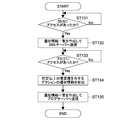
図13は、本実施形態における通知サーバ100の動作の流れを示したフローチャートである。また図14は、本実施形態のブログサービスのトップページにおける通知情報の表示例を示した図である。
図13に示すように、通知サーバ100のCPU11はまず、ユーザ端末400からSNSサーバ200にアクセスがあったか否かを判断する(ステップ131)。
SNSサーバ200にアクセスがあったと判断した場合、CPU11は、上述の各実施形態でSNSにおいて表示されたのと同様の通知情報一覧を作成してSNSサーバ200へ送信する(ステップ132)。
続いてCPU11は、ユーザ端末400からブログサーバ300にアクセスがあったか否かを判断する(ステップ133)。
ブログサーバ300にアクセスがあったと判断した場合(Yes)、CPU11は、上記SNSサーバ200へ送信した通知情報一覧から、所定以上の重要度を有するアクションに関する通知情報のみを抽出する(ステップ134)。当該重要度は、予め通知サーバ100によって設定されていてもよいし、ユーザによって設定されてもよい。当該重要度に関する情報は、通知サーバ100の記憶部18に記憶されている。本実施形態では、例えば"ナイス"、"コメント"、"フォロー"等のアクションのうち、新たなユーザの繋がりを生み出す"フォロー"が重要なアクションとみなされ、それに対して高い重要度が設定されているものとする。
そして通知サーバ100は、上記抽出した重要度が高いアクションのみに関する通知情報の一覧を作成し、ブログサーバ300へ送信する(ステップ135)。
図14に示すように、本実施形態では、SNSで表示される通知情報のうち、他のユーザからのフォローに関する通知情報72のみがリストアップされて表示されている。
このように本実施形態では、通知サーバ100は、ブログサービスにおいてはSNSにおいて表示された通知情報のうち重要度の高い情報のみを表示させることで、通知情報の表示がブログサービスで作業中にユーザの邪魔になるのを極力防ぎながら、通知すべき情報を通知し、SNSへユーザを誘導することができる。
<第7の実施形態>
次に、本発明の第7の実施形態を説明する。
次に、本発明の第7の実施形態を説明する。
本実施形態では、通知サーバ100は、SNSとブログサービスとで、表示される通知情報の元になるアクションの主体を異ならせることとしている。
図15は、本実施形態における通知サーバ100の動作の流れを示したフローチャートである。
同図に示すように、通知サーバ100のCPU11はまず、ユーザ端末400からSNSサーバ200にアクセスがあったか否かを判断する(ステップ151)。
SNSサーバ200にアクセスがあったと判断した場合、CPU11は、上述の各実施形態でSNSにおいて表示されたのと同様の通知情報一覧を作成してSNSサーバ200へ送信する(ステップ152)。
続いて通知サーバ100は、ユーザ端末400からブログサーバ300にアクセスがあったか否かを判断する(ステップ153)。
ブログサーバ300にアクセスがあったと判断した場合(Yes)、CPU11は、上記SNSサーバ200へ送信した通知情報一覧から、SNSにおけるユーザのページに対して所定以上のアクセス頻度を有する他のユーザを抽出する(ステップ154)。当該アクセス頻度は、SNSサーバ200から例えば定期的に通知サーバ100へ送信されるアクセス履歴を元に、通知サーバ100によってユーザ毎に算出される。しかし、当該アクセス頻度は、SNSサーバ200によって算出されて通知サーバ100へ定期的に送信されてもよい。ここで所定以上のアクセス頻度とは、例えば数日に1アクセス以上等であるが、これに限られない。
続いてCPU11は、上記通知情報一覧から、上記抽出したユーザのアクションに関する通知情報のみを抽出する(ステップ155)。
そしてCPU11は、抽出した通知情報の一覧を作成してブログサーバ300へ送信する(ステップ156)。
このように本実施形態では、通知サーバ100は、ブログサービスにおいては、他のユーザのうち、アクション対象のユーザに関心の高いユーザによるアクションの通知情報のみを表示させることで、通知情報の表示がブログサービスで作業中のユーザの邪魔になるのを極力防ぎながら、SNSへユーザを誘導することができる。
例えば、SNSにおいて他のユーザのページに表示される友達(またはフォロー)推薦領域を介して、アクション対象ユーザのページを何度も閲覧している他のユーザは、ユーザと友達になることまたはユーザをフォローすることに興味がある可能性が高い。したがって通知サーバ100は、そのような他のユーザのアクションに関する通知情報のみをブログサービスで表示させることで、ユーザをSNSへ誘導させ、上記他のユーザとの繋がりを促進させることができる。
[変形例]
本発明は上述の実施形態にのみ限定されるものではなく、本開示の要旨を逸脱しない範囲内において種々変更され得る。
本発明は上述の実施形態にのみ限定されるものではなく、本開示の要旨を逸脱しない範囲内において種々変更され得る。
上述の各実施形態では、SNSにおける通知情報がブログサービスのページにも表示される例が示されたが、本発明はこの両サービス間の処理に限られない。例えば、異なるSNS間または異なるブログサービス間でのアクション情報に関する通知情報が表示されてもよい。
また本発明は、SNS及びブログ以外のサービス間における通知情報の表示処理にも適用可能である。その他のサービスとしては、例えばオークションサービス、Q&Aサービス、口コミサイトサービス(レビューの投稿が可能なサービス)等、あらゆる種類のサービスが挙げられる。
またその場合、通知情報の元になるアクションも、上述の各実施形態で説明した"ナイス"、"コメント"、"フォロー"等に限られない。例えばオークションサイト、ECサービスサイト、Q&Aサービス等において投稿されたコメント、レビュー、評価(例えば星の数による)等もアクションに含まれる。
また上述の各実施形態では、SNSにおける他のユーザのアクションに関する通知情報がブログサービスのページにおいて表示される例が示された。しかし、本発明は、逆にブログサービスにおける他のユーザのアクション(例えばブログの投稿に対するコメントやシェア等)に関する通知情報がSNSのページにおいて表示される場合にも適用可能である。
上述の第1~第7の各実施形態は、矛盾が生じない限り如何様にも組み合わされて実行され得る。
11…CPU
13…RAM
18…記憶部
19…通信部
50…インターネット
54、63、64、73、74、92…リンク
61…通知情報一覧
62…通知情報
71…通知情報一覧
72…通知情報
100…通知サーバ
110…通知情報記憶部
120…API
200…SNSサーバ
300…ブログサーバ
400(400A,400B)…ユーザ端末
13…RAM
18…記憶部
19…通信部
50…インターネット
54、63、64、73、74、92…リンク
61…通知情報一覧
62…通知情報
71…通知情報一覧
72…通知情報
100…通知サーバ
110…通知情報記憶部
120…API
200…SNSサーバ
300…ブログサーバ
400(400A,400B)…ユーザ端末
Claims (10)
- インターネット上の第1のサービス及び第2のサービスの双方にアカウントを有するユーザに対する他のユーザからのアクションを示すアクション情報を記憶する記憶部と、
前記記憶されたアクション情報を基に、前記第1のサービスにおける前記ユーザの第1のページに、前記アクションの存在を前記ユーザへ通知する第1の通知情報を第1の表示態様で表示させ、前記第2のサービスにおける前記ユーザの第2のページに、前記アクションの存在を前記ユーザへ通知する、前記第1のサービスへのリンクを含む第2の通知情報を、前記第1の表示態様とは異なる第2の表示態様で表示させる制御部と
を具備する情報処理装置。 - 請求項1に記載の情報処理装置であって、
前記第1の通知情報は前記アクションに関する詳細情報へのリンクを有し、
前記制御部は、前記第1のページで前記第1の通知情報から前記詳細情報へのアクセスが検出された場合に、当該第1の通知情報に対応する前記第2の通知情報が表示されないように前記第2のページを制御する
情報処理装置。 - 請求項1に記載の情報処理装置であって、
前記制御部は、前記第1の通知情報に第1の詳細度を有する第1の詳細情報を含ませ、前記第2の通知情報に、前記第1の詳細度よりも小さい第2の詳細度を有し、前記第1の詳細情報へのリンクを含む第2の詳細情報を含ませる
情報処理装置。 - 請求項1に記載の情報処理装置であって、
前記制御部は、所定数のアクションの存在を示す複数の第1の通知情報を第1の順序で表示するように前記第1のページを制御し、前記所定数のアクションの存在を示す複数の第2の通知情報を前記第1の順序とは異なる第2の順序で表示するように前記第2のページを制御する
情報処理装置。 - 請求項1に記載の情報処理装置であって、
前記記憶部は、前記ユーザが前記第2のページにアクセスして滞在する時間を所定アクセス分平均した平均滞在時間情報を記憶し、
前記制御部は、前記平均滞在時間情報を基に、前記第2の通知情報を、前記ユーザが前記第2のページにアクセスしてから前記平均滞在時間の所定割合の時間が経過したときに表示させるように前記第2のページを制御する
情報処理装置。 - 請求項1に記載の情報処理装置であって、
前記制御部は、前記第1のページがアクセスされている間に前記第2のページがアクセスされた場合、前記第1のページで表示された複数の第1の通知情報のうち所定数の第1の通知情報に対応する所定数の第2の通知情報が、前記第2のページで表示されないように前記第2のページを制御する
情報処理装置。 - 請求項1に記載の情報処理装置であって、
前記第1の通知情報及び前記第2の通知情報は、複数の異なるアクション毎に、種類の異なる複数の通知情報を有し、
前記記憶部は、前記種類の異なるアクション毎の重要度を示す重要度情報を記憶し、
前記制御部は、前記重要度情報を基に、前記複数の第1の通知情報のうち、所定以上の重要度を有する通知情報を前記第2の通知情報として表示するように前記第2のページを制御する
情報処理装置。 - 請求項1に記載の情報処理装置であって、
前記記憶部は、前記第1のページへの複数の他のユーザのアクセス履歴を示すアクセス履歴情報を記憶し、
前記制御部は、前記複数の他のユーザのアクションを通知する情報を前記第1の通知情報として表示するように前記第1のページを制御し、前記アクセス履歴情報を基に、前記複数の他のユーザのうち、前記第1のページへの所定値以上のアクセス頻度を有する他のユーザのアクションを通知する情報を前記第2の通知情報として表示するように前記第2のページを制御する
情報処理装置。 - インターネット上の第1のサービス及び第2のサービスの双方にアカウントを有するユーザに対する他のユーザからのアクションを示すアクション情報を記憶し、
前記記憶されたアクション情報を基に、前記第1のサービスにおける前記ユーザの第1のページに、前記アクションの存在を前記ユーザへ通知する第1の通知情報を第1の表示態様で表示させ、
前記第2のサービスにおける前記ユーザの第2のページに、前記アクションの存在を前記ユーザへ通知する、前記第1のサービスへのリンクを含む第2の通知情報を、前記第1の表示態様とは異なる第2の表示態様で表示させる
情報処理方法。 - 情報処理装置に、
インターネット上の第1のサービス及び第2のサービスの双方にアカウントを有するユーザに対する他のユーザからのアクションを示すアクション情報を記憶するステップと、
前記記憶されたアクション情報を基に、前記第1のサービスにおける前記ユーザの第1のページに、前記アクションの存在を前記ユーザへ通知する第1の通知情報を第1の表示態様で表示させるステップと、
前記第2のサービスにおける前記ユーザの第2のページに、前記アクションの存在を前記ユーザへ通知する、前記第1のサービスへのリンクを含む第2の通知情報を、前記第1の表示態様とは異なる第2の表示態様で表示させるステップと
を実行させるプログラム。
Priority Applications (2)
| Application Number | Priority Date | Filing Date | Title |
|---|---|---|---|
| JP2013528441A JP5431622B1 (ja) | 2013-03-08 | 2013-03-08 | 情報処理装置、情報処理方法及びプログラム |
| PCT/JP2013/001500 WO2014136146A1 (ja) | 2013-03-08 | 2013-03-08 | 情報処理装置、情報処理方法及びプログラム |
Applications Claiming Priority (1)
| Application Number | Priority Date | Filing Date | Title |
|---|---|---|---|
| PCT/JP2013/001500 WO2014136146A1 (ja) | 2013-03-08 | 2013-03-08 | 情報処理装置、情報処理方法及びプログラム |
Publications (1)
| Publication Number | Publication Date |
|---|---|
| WO2014136146A1 true WO2014136146A1 (ja) | 2014-09-12 |
Family
ID=50396557
Family Applications (1)
| Application Number | Title | Priority Date | Filing Date |
|---|---|---|---|
| PCT/JP2013/001500 Ceased WO2014136146A1 (ja) | 2013-03-08 | 2013-03-08 | 情報処理装置、情報処理方法及びプログラム |
Country Status (2)
| Country | Link |
|---|---|
| JP (1) | JP5431622B1 (ja) |
| WO (1) | WO2014136146A1 (ja) |
Cited By (1)
| Publication number | Priority date | Publication date | Assignee | Title |
|---|---|---|---|---|
| JP2019135658A (ja) * | 2019-03-18 | 2019-08-15 | 富士ゼロックス株式会社 | プログラム |
Families Citing this family (1)
| Publication number | Priority date | Publication date | Assignee | Title |
|---|---|---|---|---|
| JP6028123B1 (ja) * | 2016-02-19 | 2016-11-16 | 株式会社サマデイ | ポートフォリオ作成システム |
Citations (2)
| Publication number | Priority date | Publication date | Assignee | Title |
|---|---|---|---|---|
| JP2009230725A (ja) * | 2008-03-25 | 2009-10-08 | Fujitsu Ltd | 連携システム、チャットサーバ、プログラム及び連携方法 |
| JP2013003771A (ja) * | 2011-06-15 | 2013-01-07 | Hideki Tomita | Webサーバ、オヒロメシステム、プログラム、及び記録媒体 |
-
2013
- 2013-03-08 WO PCT/JP2013/001500 patent/WO2014136146A1/ja not_active Ceased
- 2013-03-08 JP JP2013528441A patent/JP5431622B1/ja active Active
Patent Citations (2)
| Publication number | Priority date | Publication date | Assignee | Title |
|---|---|---|---|---|
| JP2009230725A (ja) * | 2008-03-25 | 2009-10-08 | Fujitsu Ltd | 連携システム、チャットサーバ、プログラム及び連携方法 |
| JP2013003771A (ja) * | 2011-06-15 | 2013-01-07 | Hideki Tomita | Webサーバ、オヒロメシステム、プログラム、及び記録媒体 |
Non-Patent Citations (1)
| Title |
|---|
| "Triple A Android Apuri", LINUX100%, vol. 17, 1 May 2012 (2012-05-01), pages 75 * |
Cited By (1)
| Publication number | Priority date | Publication date | Assignee | Title |
|---|---|---|---|---|
| JP2019135658A (ja) * | 2019-03-18 | 2019-08-15 | 富士ゼロックス株式会社 | プログラム |
Also Published As
| Publication number | Publication date |
|---|---|
| JPWO2014136146A1 (ja) | 2017-02-09 |
| JP5431622B1 (ja) | 2014-03-05 |
Similar Documents
| Publication | Publication Date | Title |
|---|---|---|
| US12135758B2 (en) | Event listening integration in a collaborative electronic information system | |
| US10375186B2 (en) | Frequent sites based on browsing patterns | |
| TWI577207B (zh) | 在電子訊息中對內容提交連結作為附件 | |
| CN106170814B (zh) | 用于将用户与社交数据匹配的系统和方法 | |
| CN102893259A (zh) | 嵌入式搜索栏 | |
| US10198512B2 (en) | Search relevance using past searchers' reputation | |
| JP5431622B1 (ja) | 情報処理装置、情報処理方法及びプログラム | |
| JP5734332B2 (ja) | 広告情報提供装置 | |
| JP2021002076A (ja) | 情報処理装置、情報処理方法及びプログラム | |
| US20140164138A1 (en) | Managing advertising associated with dynamically-expanding content | |
| KR102335731B1 (ko) | 정보처리장치, 정보처리방법 및 프로그램 | |
| JP6177819B2 (ja) | 情報処理装置、情報処理方法及びプログラム | |
| US10721321B2 (en) | Data maintenance using pipeline | |
| JP7056639B2 (ja) | 情報処理装置、情報処理方法及びプログラム | |
| US20200372434A1 (en) | Systems and methods for interacting with a client device | |
| JP6349001B2 (ja) | 情報処理装置、情報処理方法及びプログラム | |
| JP5755824B1 (ja) | 情報処理装置、情報処理方法及びプログラム | |
| US9992254B2 (en) | Method and system of providing a web feed in a uniform resource identifier | |
| JP6152151B2 (ja) | 情報提供装置、情報提供方法及び情報提供プログラム | |
| US11025570B2 (en) | Dynamic and secure real-time notifications in messages | |
| JP2014167825A (ja) | 情報提供装置、情報提供方法、情報提供プログラム及びネットワークシステム | |
| US20190163808A1 (en) | Reducing electronic resource consumption using search data |
Legal Events
| Date | Code | Title | Description |
|---|---|---|---|
| ENP | Entry into the national phase |
Ref document number: 2013528441 Country of ref document: JP Kind code of ref document: A |
|
| 121 | Ep: the epo has been informed by wipo that ep was designated in this application |
Ref document number: 13877397 Country of ref document: EP Kind code of ref document: A1 |
|
| NENP | Non-entry into the national phase |
Ref country code: DE |
|
| 122 | Ep: pct application non-entry in european phase |
Ref document number: 13877397 Country of ref document: EP Kind code of ref document: A1 |