WO2014132709A1 - 携帯端末、決済受付端末、及び決済用サーバ - Google Patents
携帯端末、決済受付端末、及び決済用サーバ Download PDFInfo
- Publication number
- WO2014132709A1 WO2014132709A1 PCT/JP2014/051400 JP2014051400W WO2014132709A1 WO 2014132709 A1 WO2014132709 A1 WO 2014132709A1 JP 2014051400 W JP2014051400 W JP 2014051400W WO 2014132709 A1 WO2014132709 A1 WO 2014132709A1
- Authority
- WO
- WIPO (PCT)
- Prior art keywords
- terminal
- payment
- settlement
- information
- unit
- Prior art date
- Legal status (The legal status is an assumption and is not a legal conclusion. Google has not performed a legal analysis and makes no representation as to the accuracy of the status listed.)
- Ceased
Links
Images



Classifications
-
- G—PHYSICS
- G07—CHECKING-DEVICES
- G07G—REGISTERING THE RECEIPT OF CASH, VALUABLES, OR TOKENS
- G07G1/00—Cash registers
- G07G1/0036—Checkout procedures
- G07G1/0045—Checkout procedures with a code reader for reading of an identifying code of the article to be registered, e.g. barcode reader or radio-frequency identity [RFID] reader
- G07G1/0081—Checkout procedures with a code reader for reading of an identifying code of the article to be registered, e.g. barcode reader or radio-frequency identity [RFID] reader the reader being a portable scanner or data reader
Definitions
- the present invention relates to a mobile terminal having an electronic payment function, a payment accepting terminal for receiving an electronic payment by the mobile terminal, and a payment server for executing an electronic payment process.
- the portable terminal is installed in a store, a station, or the like, and can perform electronic payment via contactless communication such as a cash register terminal that accepts electronic payment and a POS (Point-Of-Sale) terminal via contactless communication.
- the portable terminal stores electronic payment information for performing the electronic payment, and performs electronic payment by exchanging the electronic payment information with the payment receiving terminal.
- Patent Documents 1 and 2 are disclosed as inventions for exchanging information stored in an IC card or the like.
- Patent Document 1 describes an invention that enables a service providing application in an IC card to be used by a plurality of business operators.
- Patent Document 2 describes an invention for authenticating stored value card data between a user and a central processor.
- Japanese Patent Publication Japanese Unexamined Patent Application Publication No. 2004-102784” (published on April 02, 2004) Japanese Patent Publication “Japanese Patent Laid-Open No. 2010-182320 (Released on August 19, 2010)”
- the present invention has been made in view of the above-mentioned problems, and the object thereof is to receive electronic payment based on the other person's portable terminal together with electronic payment based on the own portable terminal without receiving the other person's portable terminal. It is to provide a portable terminal that can be collectively implemented with its own portable terminal.
- Another object of the present invention is to provide a portable terminal that does not require the terminal to be handed over to another person for electronic payment of the terminal, and that the electronic payment of the terminal can be prevented from being performed unlimitedly by another person. And so on.
- a portable terminal is a portable terminal including an electronic payment unit that performs electronic payment by transmitting payment information of the terminal itself to the payment receiving terminal that receives the electronic payment via non-contact communication.
- a storage unit that stores payment information of the terminal itself and a receiving unit that receives payment information of another terminal from the other terminal and stores the information in the storage unit are provided.
- the electronic settlement means further performs electronic settlement by transmitting settlement information of the other terminal stored in the storage unit to the settlement acceptance terminal via the non-contact communication. It is said.
- a mobile terminal is a payment accepting terminal that accepts electronic payment by receiving payment information from a mobile terminal via non-contact communication.
- a mobile terminal is connected to the payment acceptance terminal so as to be communicable by transmitting the payment information of the terminal to the payment acceptance terminal that accepts electronic payment via non-contact communication.
- a mobile unit that performs electronic payment of its own terminal at a payment server, a storage unit that stores information for payment of its own terminal, and a self-terminal stored in the storage unit Transmitting means for transmitting the payment information to another terminal which is a portable terminal other than the own terminal, and the transmission means sends the condition information indicating the use condition of the payment information of the own terminal to the payment server. It is characterized by transmitting to.
- a mobile terminal is connected to the payment acceptance terminal so as to be communicable by transmitting the payment information of the terminal to the payment acceptance terminal that accepts electronic payment via non-contact communication.
- Receiving means for receiving the information and condition information indicating the use conditions of the payment information of the other terminal from the other terminal and storing the information in the storage unit, and the electronic payment means further includes: The payment information of the other terminal and the condition information stored in the storage unit are transmitted to the payment accepting terminal via the contactless communication.
- a payment acceptance terminal is a payment acceptance terminal that accepts electronic payment in a payment server connected to be communicable by receiving payment information from a mobile terminal via non-contact communication.
- a receiving unit that receives the payment information and condition information indicating a use condition of the payment information from the mobile terminal via the contactless communication, and the reception And means for transmitting the settlement information and condition information received by the means to the settlement server.
- a settlement server is a settlement server that performs electronic settlement based on settlement information received from a mobile terminal, and in order to solve the above problems, the settlement information and the settlement server Within the range of the usage conditions indicated by the condition information received by the receiving means, the receiving means for receiving the condition information indicating the use condition of the information from the portable terminal, and the electronic payment based on the payment information received by the receiving means And an electronic settlement means for performing the above.
- the electronic payment of the own terminal and the electronic payment of the other terminal can be performed collectively by the own terminal, and there is an effect that it is not necessary to receive the other terminal.
- the number of operations for electronic payment is reduced as compared with a case where payment information is received, electronic payment is performed based on the received payment information, and this is repeated a plurality of times. Therefore, there is an effect that convenience is improved.
- the mobile terminal does not need to directly transmit the condition information to the settlement server via a communication network.
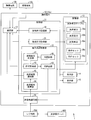
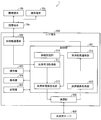
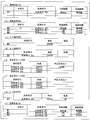
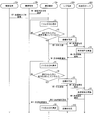
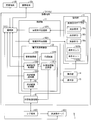
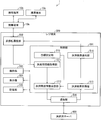
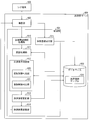
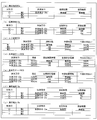
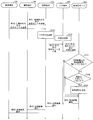
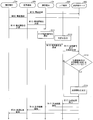
- FIG. 1 is a diagram showing a schematic configuration of an electronic settlement system according to an embodiment of the present invention. It is a functional block diagram which shows schematic structure of the portable terminal in the said electronic payment system. It is a functional block diagram which shows schematic structure of the cash register terminal in the said electronic payment system. It is a figure which shows the information transmitted / received by the said electronic payment system in a table format. It is a sequence diagram which shows the flow of the process performed with the said electronic payment system. It is a sequence diagram which shows the flow of the process performed in the electronic payment system which concerns on another embodiment of this invention. It is a functional block diagram which shows schematic structure of the portable terminal in the electronic payment system which concerns on another embodiment of this invention.
- Embodiment 1 Hereinafter, an embodiment of the present invention will be described in detail with reference to FIGS.
- FIG. 1 is a diagram showing a schematic configuration of an electronic payment system 1 according to the present embodiment.
- the electronic payment system 1 includes portable terminals 10a to 10c, a cash register terminal (payment acceptance terminal) 500, and a payment server 600.
- the mobile terminals 10a to 10c are portable information processing devices having functions of electronic settlement and a non-contact IC card, and are typically mobile phones, smartphones, tablet PCs, and the like.
- the mobile terminals 10a to 10c store payment IDs 30a to 30c, respectively, as payment information for the terminal to perform electronic payment. Since each of the mobile terminals 10a to 10c has a common function, in the following, when any one of the mobile terminals 10a to 10c is designated without distinction, it is simply referred to as the mobile terminal 10. Similarly, the settlement IDs 30a to 30c are simply referred to as settlement ID 30.
- FIG. 1 shows a situation in which the mobile terminals 10b and 10c lend their own terminal settlement IDs 30b and 30c to the mobile terminal 10a.
- the mobile terminal 10 according to the present embodiment has a function of lending the settlement ID 30 stored in the mobile terminal 10 to another mobile terminal. Further, the mobile terminal 10 has a function of borrowing the settlement ID 30 of another mobile terminal. Therefore, according to the mobile terminal 10 of the present embodiment, by exchanging the payment IDs 30 with each other, it is possible to perform the electronic payment for the other person or to perform the electronic payment for itself. As a result, user convenience is improved. In addition, it is not necessary to give his / her own mobile terminal 10 to another person or to receive his / her own mobile terminal 10.
- the mobile terminal 10a holds the settlement IDs 30b and 30c of other terminals in its own terminal in addition to the settlement ID 30a of its own terminal, as shown in FIG. Then, the mobile terminal 10a can collectively perform electronic payments at the cashier terminal 500 using the three payment IDs 30a to 30c. Note that the electronic payment processing between the cashier terminal 500 and the payment server 600 can be realized by existing technology.
- the electronic payment system 1 may include an automatic ticket gate installed at a station instead of the cash register terminal 500 installed at a store or the like.
- the electronic payment system 1 is assumed to be a server-type electronic money payment system, but the present invention can also be applied to a prepaid electronic money payment system that does not include the payment server 600.
- FIG. 2 is a functional block diagram showing a schematic configuration of the mobile terminal 10 (10a) according to the present embodiment.
- FIG. 2 also shows the mobile terminal 10b, the mobile terminal 10c, the cash register terminal 500, and the settlement server 600 in addition to the mobile terminal 10 (10a).
- the mobile terminal 10 includes a control unit 11, a communication unit 12, a storage unit 13, an operation unit 14, a display unit 15, and a non-contact communication unit 16. Furthermore, although not shown, the portable terminal 10 includes various components that are normally provided in a portable terminal such as a smartphone, such as an audio input unit, an audio output unit, a broadcast wave reception unit, and a GPS (Global Positioning System) reception unit. You may have.
- a portable terminal such as a smartphone
- GPS Global Positioning System
- the control unit 11 controls the entire mobile terminal 10 and can be configured by, for example, a CPU (Central Processing Unit).
- the control unit 11 controls each of the communication unit 12, the storage unit 13, the operation unit 14, the display unit 15, and the non-contact communication unit 16. The detailed configuration of the control unit 11 will be described later.
- the communication unit 12 is a communication interface for the mobile terminal 10 (10a) to communicate with other mobile terminals 10b and 10c via a communication network.
- Examples of the communication interface include IrDA, wireless LAN, and Bluetooth (registered trademark).
- the storage unit 13 is configured by a non-volatile storage device such as a flash memory, and particularly stores a settlement ID table 60.
- the settlement ID table 60 includes at least a settlement ID 30a as the settlement ID of the mobile terminal 10 (10a).
- the storage unit 13 is an area configured by a volatile storage device such as a RAM (Random Access Memory) as a work area for temporarily storing data in the process of executing various programs by the control unit 11. You may have.
- the operation unit 14 receives an operation of the user of the mobile terminal 10 and is typically a physical key, a keyboard, a touch panel, or the like.
- the display unit 15 includes a flat display panel such as a liquid crystal panel or an organic EL panel, and displays information processed by the mobile terminal 10, images, and the like.
- the display unit 15 may be configured to serve as the operation unit 14 as a touch panel.
- the non-contact communication unit 16 is a communication interface for the mobile terminal 10 to communicate with the cash register terminal 500. For example, when the mobile terminal 10 is placed on the reader / writer of the cash register terminal 500, the non-contact communication unit 16 transmits / receives various data to / from the cash register terminal 500 by NFC (Near Field Communication).
- NFC Near Field Communication
- the control unit 11 includes an own terminal ID transmission unit (transmission unit) 20, another terminal ID acquisition unit (reception unit) 21, and an electronic payment control unit (electronic payment unit) 22.
- the own terminal ID transmission unit 20 reads the payment ID 30 a of the own terminal from the payment ID table 60 and transmits it to another portable terminal via the communication unit 12.
- the own terminal ID transmission unit 20 has a function of transmitting information indicating a condition for using the payment ID 30a (hereinafter referred to as a condition set 35) to another mobile terminal. You may have. Details of the condition set (condition information) 35 will be described later.
- the own terminal ID transmission unit 20 further receives designation of the type of electronic payment service, an account, and the like via the operation unit 14, reads the settlement ID 30 corresponding to the designation from the storage unit 13, and receives other portable information. You may have the function to transmit to a terminal.
- the other terminal ID acquisition unit 21 receives the settlement ID 30 of another portable terminal via the communication unit 12 and stores it in the settlement ID table 60.
- the other terminal ID acquisition unit 21 receives a condition set 35 indicating a condition for using the settlement ID 30 from the other portable terminal, in addition to the settlement ID 30 of the other portable terminal.
- a function of storing in the settlement ID table 60 may be provided.
- the mobile terminal 10 a receives the settlement IDs 30 b and 30 c and the corresponding condition sets 35 b and 35 c from the mobile terminals 10 b and 10 c in advance and stores them in the settlement ID table 60.
- the condition set 35 is information for restricting the right to use the payment ID 30 when the mobile terminal 10 lends the payment ID 30 to another mobile terminal.
- the mobile terminal 10 can restrict the settlement activity of the loan-destination user by transmitting the condition set 35 together with the settlement ID 30. Thereby, it is possible to prevent the settlement ID 30 from being misused or misused.
- the conditions indicated by the condition set 35 are a usage count limitation and a usage amount limitation. That is, when the usage count of the settlement ID 30 has reached the above usage count limit, or when the usage amount of the settlement ID 30 has reached the above usage amount limit, the mobile terminal 10 The settlement ID 30 is invalidated.
- condition set 35 are not limited to the above-mentioned usage frequency limit and the above-mentioned usage amount limit, and may be, for example, a condition that limits the time, store, area, product, etc. in which the settlement ID 30 can be used. .
- the electronic payment control unit 22 controls processing for the mobile terminal 10 to perform electronic payment with the cash register terminal 500.
- the electronic settlement control unit 22 includes at least an ID selection unit 40 and an ID transmission unit 43. Furthermore, as illustrated, the electronic payment control unit 22 may include a use condition determination unit 41, a permission acquisition unit 42, a payment result acquisition unit 44, and a payment result notification unit 45.
- the ID selection unit 40 selects one or more IDs among the settlement IDs 30a to 30c based on the user's operation received by the operation unit 14. For example, when the settlement ID 30b is selected via the operation unit 14, the ID selection unit 40 notifies the use condition determination unit 41 that the settlement ID 30b has been selected.
- the use condition determining unit 41 reads the condition set 35 (for example, the condition set 35b) corresponding to the selected settlement ID 30 (for example, the settlement ID 30b) from the storage unit 13, and the restriction indicated by the condition set 35 is satisfied at present. It is determined whether or not it has been done. If the restriction is not satisfied, the use condition determination unit 41 sets the selected settlement ID 30 to be invalid. For example, the use condition determining unit 41 determines whether or not the current use count of the settlement ID 30b has reached the number limit indicated by the condition set 35b. Further, it is determined whether or not the current usage amount of the settlement ID 30b has reached the amount limit indicated by the condition set 35b.
- the use condition determination unit 41 sets the settlement ID 30b to invalid. On the other hand, when the settlement ID 30b satisfies the number of times limit and the amount limit, the use condition determination unit 41 notifies the permission acquisition unit 42 and / or the ID transmission unit 43 of the determination result.
- the permission acquisition unit 42 obtains permission to use the settlement ID 30.
- the processing content of the permission acquisition unit 42 will be described in detail separately in another embodiment.
- the ID transmission unit 43 is executed when the user of the mobile terminal 10 performs payment at the cash register terminal 500, and transmits the selected settlement ID 30 to the cash register terminal 500 via the non-contact communication unit 16. .
- the payment result acquisition unit 44 is executed after the payment processing by the cashier terminal 500 and the payment server 600 is completed, and shows an electronic payment result by the selected payment ID 30 via the non-contact communication unit 16.
- Information (hereinafter referred to as payment result information) is acquired from the cashier terminal 500.
- the settlement result notification unit 45 transmits the settlement result information to the mobile terminals 10b and 10c via the communication unit 12. At this time, the settlement result notifying unit 45 may update the condition set 35 of the selected settlement ID 30 based on the settlement result information. For example, when a settlement is performed, the settlement result notifying unit 45 decreases the number of times limit of the condition set 35 by 1, and reduces the amount of money paid by the amount limit of the condition set 35.
- FIG. 3 is a functional block diagram showing a schematic configuration of the cash register terminal 500 according to the present embodiment.
- the mobile terminals 10a to 10c and the settlement server 600 are shown together.
- the cash register terminal 500 includes at least a control unit 501, a non-contact communication unit 502, an operation unit 503, a display unit 504, a storage unit 505, and a communication unit 506. It is.
- the functions of the operation unit 503 and the display unit 504 are the same as the functions of the operation unit 14 and the display unit 15 of the mobile terminal 10 shown in FIG.
- the control unit 501 controls the entire cashier terminal 500 and can be configured by, for example, a CPU.
- the control unit 501 controls each of the non-contact communication unit 502, the operation unit 503, the display unit 504, the storage unit 505, and the communication unit 506.
- the detailed configuration of the control unit 501 will be described later.
- the non-contact communication unit 502 is a communication interface for the cashier terminal 500 to communicate with a communication terminal such as the mobile terminal 10, and has a communication function by NFC, for example.
- the storage unit 505 is configured by a nonvolatile storage device, and stores settlement information, amount information, and the like. Further, the storage unit 505 may have an area configured by a volatile storage device such as a RAM as a work area for temporarily storing data in the course of execution of various programs by the control unit 501. Good.
- a volatile storage device such as a RAM as a work area for temporarily storing data in the course of execution of various programs by the control unit 501. Good.
- the communication unit 506 is a communication interface for the cashier terminal 500 to communicate with the settlement server 600 via a communication network.
- Examples of the communication interface include Ethernet (registered trademark).
- the control unit 501 includes a money amount setting unit 510, a settlement ID acquisition unit (reception unit) 511, a settlement information transmission unit (transmission unit) 512, a settlement result acquisition unit 513, and a settlement result notification unit 514.
- the money amount setting unit 510 sets an amount for electronic payment based on a user operation accepted by the operation unit 503. For example, the price of a product, a food and drink fee, etc. are set as the amount of money.
- the set amount is transmitted to the payment information transmitting unit 512.
- the settlement ID acquisition unit 511 acquires the settlement ID 30 transmitted from the mobile terminal 10 (the mobile terminal 10a in FIG. 3) via the non-contact communication unit 502.
- the acquired settlement ID 30 is transmitted to the settlement information transmission unit 512.
- the payment information transmitting unit 512 transmits the set amount and the acquired payment ID 30 to the payment server 600 through the communication unit 506 in association with each other. Thereafter, settlement processing is performed by the settlement server 600.
- the settlement result acquisition unit 513 acquires settlement result information indicating the result of the settlement process by the settlement server 600 from the settlement server 600 via the communication unit 506.
- the settlement result information is information indicating that “1000 yen” has been subtracted from the balance of the settlement ID 30, for example.
- the settlement result information is transmitted to the settlement result notification unit 514.
- the settlement result notification unit 514 sends the settlement result to the mobile terminal 10 (the mobile terminal 10a in FIG. 3) corresponding to the settlement ID 30 acquired by the settlement ID acquisition unit 511 via the non-contact communication unit 502. Information is transmitted.
- FIG. 4 is a diagram showing information transmitted and received in the electronic settlement system 1 in a table format.
- FIG. 5 is a sequence diagram showing an example of the flow of processing executed in the electronic payment system 1.
- the users B and C lend the settlement ID 30 of their own terminal to the user A. That is, the own terminal ID transmission unit 20 of the portable terminals 10b and 10c transmits the payment IDs 30b and 30c of the own terminal and the corresponding condition sets 35b and 35c to the portable terminal 10a, respectively (M1 and M2). As a result, part or all of the right for electronic payment is transferred from the mobile terminals 10b and 10c to the mobile terminal 10a. As a result, the settlement ID table 60 of the mobile terminal 10a is updated from (a) in FIG. 4 to (b) in FIG. As shown in the figure, the usage conditions indicated by the condition sets 35b and 35c are both a “one-time” number limit and a “2,500 yen” amount limit.
- the user A moves to the cash register terminal 500 to perform payment, and pays 1000 yen for three IDs to a user who operates the cash register terminal 500 (hereinafter referred to as “clerk”). Tell.
- the store clerk operates the cash register terminal 500 to set the payment ID 30 so that “1000 yen” can be paid.
- the money amount setting unit 510 of the cashier terminal 500 sets “1000 yen” as the money amount to be deducted from the balance of the settlement ID 30 as shown in FIG. 4C (S3).
- the user A operates the mobile terminal 10a and selects the first ID for electronic payment.
- the ID selection unit 40 of the mobile terminal 10a effectively sets one settlement ID 30 to be used for electronic settlement among the settlement ID 30a of its own terminal and the settlement IDs 30b and 30c of other terminals (S1). ).
- the settlement ID 30 a of the terminal itself is selected by the ID selection unit 40 as the first settlement ID 30.
- the use condition determining unit 41 determines whether or not the condition indicated by the condition set 35 associated with the selected settlement ID 30 is satisfied (S2). This time, the settlement ID 30a is selected in S1.
- the settlement ID 30a is an ID possessed by the user A, and the function can be used without limitation. Accordingly, there is no condition set 35 associated with the settlement ID 30a. For this reason, this time is determined as Yes in S2.
- the ID transmission unit 43 transmits the selected settlement ID 30 (that is, settlement ID 30a) to the cashier terminal 500 (M3).
- the data of the cashier terminal 500 is updated from (c) of FIG. 4 to (d) of FIG.
- the cashier terminal 500 requests the payment server 600 for payment processing as follows (M4). That is, the payment information transmitting unit 512 of the cashier terminal 500 associates “1000 yen” set in S3 with the received payment ID 30a, and transmits it to the payment server 600.
- the payment server 600 performs a payment process (S4).
- the settlement server 600 deducts “1000 yen” from the balance of the settlement ID 30a.
- the settlement process becomes an error and is not performed.
- a charge of 3000 yen or a usage limit is set in advance for the settlement IDs 30a to 30c (see (e) of FIG. 4). Therefore, the current payment process is successful, and the payment information in the payment server 600 is updated from (e) in FIG. 4 to (f) in FIG.
- the payment server 600 transmits to the cashier terminal 500 payment result information including at least information indicating that the payment process has been successful or information indicating that the payment process has ended (hereinafter referred to as error information). (M5, (g) of FIG. 4). Further, the settlement result notifying unit 514 of the cashier terminal 500 transmits the settlement result information acquired from the settlement server 600 to the mobile terminal 10a (M6).
- the settlement result notification unit 45 of the mobile terminal 10a determines whether or not to notify the settlement result to the other mobile terminal 10 based on the transmitted settlement result information. Since the settlement ID 30a of the own terminal is used this time, the settlement result is not notified to the other mobile terminals 10b and 10c.
- the cashier terminal 500 is again set in a state in which payment of “1000 yen” is possible using the settlement ID 30 based on the operation of the store clerk (S7).
- the ID selection unit 40 selects the settlement ID 30b received from another terminal as the second ID.
- the use condition determining unit 41 determines whether or not the condition indicated by the condition set 35b corresponding to the selected settlement ID 30b is satisfied (S6). It is assumed that the condition set 35b is an amount limit indicating that “up to 2500 yen” can be used, and a number limit indicating that “only once” can be used. This time, the payment is “1000 yen” and is the first payment using the payment ID 30b, and thus is within the limits of the amount limit and the number of times limit. Therefore, it determines with Yes in S6.
- the mobile terminal 10a performs electronic payment through communication with the cashier terminal 500.
- Electronic payment is performed in the same manner as the case described above with the payment ID 30a. That is, the mobile terminal 10a transmits the payment ID 30b to the cash register terminal 500 (M7), and the cash register terminal 500 requests the payment server 600 for payment processing (M8).
- the settlement server 600 performs a settlement process (S8), and transmits settlement result information of the settlement process to the cashier terminal 500 (M90).
- the cashier terminal 500 transmits the payment result information to the mobile terminal 10a (M10).
- the settlement result notification unit 45 of the mobile terminal 10a determines whether or not to notify the settlement result to the other mobile terminals 10 based on the received settlement result information. Since the settlement ID 30b of another mobile terminal is used for electronic settlement this time, the settlement result is notified to the mobile terminal 10b (M11).
- the settlement result notifying unit 45 also executes a process of updating the condition set 35b. This time, an electronic settlement of “1000 yen” was carried out using the settlement ID 30b. Therefore, the settlement result notifying unit 45 sets “1500 yen”, which is the remaining amount obtained by subtracting “1000 yen” from “2500 yen” that is the amount limit of the condition set 35b, as the updated amount limit.
- the settlement server 600 when the balance of the settlement ID 30b is less than “1000 yen”, the settlement process is not performed as described above. In this case, since the payment result information includes at least error information indicating that the payment process has failed, the payment result notification unit 45 detects error information from the payment result information and does not update the condition set 35b. .
- Embodiment 2 >>
- another embodiment of the present invention will be described in detail with reference to FIG.
- symbol is attached
- the cashier terminal 500 and the settlement server 600 have a conventional configuration. Accordingly, the cashier terminal 500 is not configured to receive a plurality of settlement IDs 30 simultaneously. For this reason, the user (user A) of the portable terminal 10a needs to select and send the payment IDs 30 one by one to the cashier terminal 500 as shown in the process of FIG. It seems to be annoying.
- the electronic payment system 1 includes a cash register terminal (payment acceptance terminal) 1500 having a function of receiving a plurality of payment IDs 30 from the mobile terminal 10 at a time. Therefore, the mobile terminal 10a can transmit all the settlement IDs 30a to 30c to the cashier terminal 1500 at the same time and perform electronic settlement using each ID. For this reason, the trouble of the user A is reduced and an electronic payment can be performed easily.
- a cash register terminal payment acceptance terminal 1500 having a function of receiving a plurality of payment IDs 30 from the mobile terminal 10 at a time. Therefore, the mobile terminal 10a can transmit all the settlement IDs 30a to 30c to the cashier terminal 1500 at the same time and perform electronic settlement using each ID. For this reason, the trouble of the user A is reduced and an electronic payment can be performed easily.
- FIG. 6 is a sequence diagram illustrating an example of a flow of processing executed in the electronic payment system 1.
- the situation of the users A to C of the mobile terminals 10a to 10c is the same situation as FIG. 5, that is, the situation where the user A represents the food and beverage charges on behalf of the restaurant.
- the users B and C lend the user terminal ID to the user A. (M31, M32).
- user A tells the store clerk that “pay 1000 yen at a time with three IDs”.
- the cashier terminal 1500 receives the operation of the store clerk and is set in a state in which payment of “1000 yen” is possible using the three settlement IDs 30 (S33).
- ID selection unit 40 of the mobile terminal 10a selects all the settlement IDs 30a to 30c and sets them to be valid (S31).
- the use condition determining unit 41 refers to the condition set 35 corresponding to the selected settlement IDs 30a to 30c, and determines whether or not all ID conditions are satisfied (S32). That is, it is determined whether or not the condition sets 35b and 35c corresponding to the settlement IDs 30b and 30c of the other terminals are satisfied.
- the mobile terminal 10a transmits the payment IDs 30a to 30c to the cash register terminal 1500 (M33).
- the cashier terminal 1500 requests the payment server 600 for payment processing.
- the settlement server 600 may have a conventional configuration.
- the cashier terminal 1500 associates one of the received payment IDs 30a to 30c (for example, the payment ID 30a) with the set amount of “1000 yen” to the payment server 600. Transmit (M34).
- the cashier terminal 1500 receives a settlement result notification (M35).
- the cashier terminal 1500 associates the second settlement ID 30 (for example, settlement ID 30b) with the set amount “1000 yen” and transmits it to the settlement server 600 (M36). . Thereafter, the same payment process using the payment ID 30b is performed between the cashier terminal 1500 and the payment server 600 (S35, M37). Also, for the third settlement ID 30 (for example, settlement ID 30b), the same settlement processing as when using the above two settlement IDs 30 between the cashier terminal 1500 and the settlement server 600. (M38, S36, M39). In this manner, the cashier terminal 1500 sequentially transmits the payment IDs 30a to 30c received from the mobile terminal 10a to the payment server 600 one by one.
- the second settlement ID 30 for example, settlement ID 30b
- M36 settlement ID 30b
- the cashier terminal 1500 transmits the payment result information to the mobile terminal 10a (M40).
- the settlement result notification unit 45 of the mobile terminal 10a notifies the settlement result to each of the mobile terminals 10b and 10c based on the settlement result information (M41, M42).
- the mobile terminal 10a can perform electronic payment at once using the payment IDs 30a to 30c including the borrowed payment IDs 30b and 30c.
- Embodiment 3 >> Hereinafter, still another embodiment of the present invention will be described.
- symbol is attached
- the mobile terminal 10 includes the permission acquisition unit 42 illustrated in FIG.
- the permission acquisition unit 42 obtains permission to use the settlement ID 30 selected by the ID selection unit 40 from the lending source mobile terminal 10.
- the permission acquisition unit 42 communicates with the mobile terminal 10b that is the lending source of the settlement ID 30b via the communication unit 12. And the permission acquisition part 42 requests
- the permission acquisition unit 42 sets the settlement ID 30b to be valid.
- the ID transmitting unit 43 can use the payment ID 30b that is set to be valid in electronic payment.
- the permission acquisition unit 42 sets the settlement ID 30b to invalid.
- the ID transmission unit 43 cannot use electronic payment for the payment ID 30b set to invalid.
- the final confirmation for using the settlement IDs 30b and 30c can be performed on the lending source mobile terminals 10b and 10c.
- the payment IDs 30b and 30c can be prevented from being misused or misused, and unintended electronic payments can be prevented from being implemented for the users of the lending source mobile terminals 10b and 10c. .
- Embodiment 4 >> Hereinafter, still another embodiment of the present invention will be described in detail with reference to FIGS. In addition, about the member similar to embodiment mentioned above, the same code
- the electronic payment system 1 includes mobile terminals 10a to 10c, a cash register terminal 500, and a payment server 600.
- FIG. 7 is a functional block diagram showing a schematic configuration of the mobile terminal 10 (10a) according to the present embodiment.
- FIG. 7 also shows the mobile terminal 10b, the mobile terminal 10c, the cash register terminal 500, and the settlement server 600 in addition to the mobile terminal 10 (10a).
- the mobile terminal 10 includes a control unit 11, a communication unit 1012, a storage unit 13, an operation unit 14, a display unit 15, and a non-contact communication unit 16. Furthermore, the mobile terminal 10 may include various components that are typically provided in a mobile terminal such as a smartphone, similarly to the mobile terminal 10 illustrated in FIG. 2.
- the communication unit 1012 of this embodiment is different from the communication unit 12 shown in FIG. 2 in that the mobile terminal 10 (10a) further communicates with the settlement server 600 via the communication network, and the other configurations are the same. It is.
- the control unit 11 includes a local terminal ID transmission unit (transmission unit) 1020, another terminal ID acquisition unit (reception unit) 1021, and an electronic payment control unit 22.
- the own terminal ID transmission unit 1020 has a condition set (representing a condition for using the payment ID 30a in addition to the payment ID 30a of the own terminal, as compared to the own terminal ID transmission unit 20 shown in FIG. (Condition information) 1035 is different in that it has a function of transmitting to another portable terminal, and the other configurations are the same.
- the other terminal ID acquisition unit 1021 of the present embodiment indicates a condition for using the settlement ID 30 in addition to the settlement ID 30 of another mobile terminal, as compared to the other terminal ID acquisition unit 21 illustrated in FIG.
- the configuration is different except that the condition set 1035 is received from another portable terminal and associated with the settlement ID 30 and stored in the settlement ID table 60.
- condition set 1035 of this embodiment will be described.
- the condition set 1035 of the present embodiment is different from the condition set 35 shown in FIG. 2 in that it is later referred to by the settlement server 600, and the other configurations are the same.
- the server 600 invalidates the settlement ID 30.
- the electronic payment control unit 22 of this embodiment includes at least an ID selection unit 1040 and a payment information transmission unit 1043. Furthermore, as illustrated, the electronic payment control unit 22 may include a pre-registration unit 1041, a final confirmation processing unit 1042, a payment result acquisition unit 44, and a payment result notification unit 1045.
- the ID selection unit 1040 determines that the payment ID 30 b is selected when the payment ID 30 b is selected via the operation unit 14. The difference is that notification is sent to the confirmation processing unit 1042 and / or the settlement information transmitting unit 1043, and the other configurations are the same.
- the pre-registration unit 1041 communicates with the settlement server 600 via the communication unit 1012, and registers the condition set 1035 in the settlement server 600 in advance.
- the processing content of the pre-registration unit 1041 will be described in detail separately in another embodiment.
- the final confirmation processing unit 1042 obtains permission to use the settlement ID 30.
- the processing content of the final confirmation processing unit 1042 will also be described in detail in another embodiment separately.
- the payment information transmitting unit 1043 is executed when the user of the mobile terminal 10 performs payment at the cash register terminal 500, and the one or more payment IDs 30 selected via the non-contact communication unit 16. And the corresponding condition set 1035 is transmitted to the cashier terminal 500. For example, when the settlement ID 30 b is selected by the ID selection unit 1040, the settlement information transmission unit 1043 reads the condition set 1035 b corresponding to the settlement ID 30 b from the settlement ID table 60 and transmits it to the cash register terminal 500.
- the settlement result notification unit 1045 of this embodiment differs from the settlement result notification unit 45 shown in FIG. 2 in that the condition set 1035 of the selected settlement ID 30 is updated based on the settlement result information.
- the configuration is the same.
- FIG. 8 is a functional block diagram showing a schematic configuration of the cash register terminal 500 according to the present embodiment.
- the mobile terminals 10a to 10c and the settlement server 600 are shown together.
- the cash register terminal 500 includes at least a control unit 501, a non-contact communication unit 502, an operation unit 503, a display unit 504, a storage unit 505, and a communication unit 506. It is.
- control unit 501 As illustrated in FIG. 8, the control unit 501 according to the present embodiment is replaced with a settlement ID acquisition unit 511, a settlement information transmission unit 512, and a settlement result notification unit 514, as compared with the control unit 501 illustrated in FIG. 3.
- the payment information acquisition unit (reception unit) 1511, the payment related information transmission unit (transmission unit) 1512, and the payment result notification unit 1514 are different, and the other configurations are the same.
- the payment information acquisition unit 1511 acquires one or more payment IDs 30 and the corresponding condition set 1035 transmitted from the mobile terminal 10 (in FIG. 8, the mobile terminal 10a) via the non-contact communication unit 502.
- the acquired settlement ID 30 is transmitted to the settlement related information transmission unit 1512.
- the settlement related information transmission unit 1512 transmits settlement related information for requesting settlement processing to the settlement server 600 to the settlement server 600 via the communication unit 506.
- the payment related information includes at least one set of three pieces of information including the payment ID 30 acquired from the mobile terminal 10, the condition set 1035 corresponding to the payment ID 30, and the amount set by the amount setting unit 510. . Thereafter, the settlement server 600 performs settlement processing based on the transmitted settlement related information. Therefore, the condition set 1035 need not be transmitted directly from the mobile terminal 10 to the settlement server 600 via the communication network.
- the settlement result notification unit 1514 transmits the settlement result information to the mobile terminal 10 (in FIG. 8, the mobile terminal 10a) via the non-contact communication unit 502.
- FIG. 9 is a functional block diagram showing a schematic configuration of the settlement server 600 according to the present embodiment.
- a cash register terminal 500 is also shown.
- the settlement server 600 is configured to include a control unit 601, a communication unit 602, and a database 603.
- the control unit 601 controls the entire settlement server 600 and can be configured by, for example, a CPU or the like.
- the control unit 601 controls each of the communication unit 602 and the database 603. The detailed configuration of the control unit 601 will be described later.
- the communication unit 602 is a communication interface for the settlement server 600 to communicate with the cash register terminal 500 via the communication network. Examples of the communication interface include Ethernet (registered trademark).
- the communication unit 602 may be configured to be able to communicate with the communication unit 1012 of the mobile terminal 10.
- the database 603 stores various data used when the control unit 601 executes processing.
- the database 603 is usually configured by a nonvolatile storage device.
- the database 603 particularly stores a settlement information table 630.
- the settlement information table 630 is a table that stores various types of information for electronic settlement, and includes at least settlement ID 30 and information (hereinafter referred to as a balance) indicating the current balance or usage limit of the settlement ID 30. Is included.
- the control unit 601 includes at least a settlement related information acquisition unit (reception unit) 610, an authentication processing unit 611, a settlement condition determination unit (electronic settlement unit) 612, a settlement information update unit (electronic settlement unit) 613, and a settlement result transmission unit. 614. Further, as illustrated, the control unit 601 may include a pre-registration reception unit (reception unit) 615.
- the payment related information acquisition unit 610 acquires the payment related information from the cashier terminal 500 via the communication unit 602.
- the payment related information includes at least one set of three pieces of information of the payment ID 30, the condition set 1035, and the amount.
- the authentication processing unit 611 refers to the payment information table 630 and performs an authentication process for the acquired payment ID 30. Specifically, the authentication processing unit 611, when the acquired payment ID 30 is included in the payment information table 630, the payment ID 30 is a regular ID for using the electronic payment service provided by the payment server 600. It is determined that In the case of a regular ID, the authentication processing unit 611 transmits information indicating that the authentication processing has been successful to the settlement condition determination unit 612. On the other hand, when the acquired settlement ID 30 does not exist in the settlement information table 630, error information indicating that the settlement process has ended in error is transmitted to the settlement result transmission unit 614.
- the settlement condition determination unit 612 determines whether or not the condition indicated by the acquired condition set 1035 is currently satisfied when the authentication process for the settlement ID 30 is successful.
- the settlement condition determination unit 612 further includes a number limit determination unit 620 and an amount limit determination unit 621.
- the number limit determination unit 620 determines the number of times of use of the settlement ID 30 among the above conditions indicated by the condition set 1035. Specifically, the number limit determination unit 620 determines whether the total number of uses including the current use of the settlement ID 30 has reached the number limit indicated by the condition set 1035.
- the amount limit determination unit 621 determines the amount limit for use of the settlement ID 30 among the above conditions indicated by the condition set 1035. Specifically, the money amount limit determination unit 621 determines whether or not the total use amount including the current use of the settlement ID 30 has reached the amount limit indicated by the condition set 1035.
- the settlement condition determination unit 612 transmits error information to the settlement result transmission unit 614.
- the settlement condition determination unit 612 transmits information indicating that the condition determination has been successful to the settlement information update unit 613.
- the settlement condition determination unit 612 may use, for example, a usage time limit as a condition in addition to the use frequency limit and the usage amount limit.
- a predetermined time that is, a time limit
- the settlement condition determination unit 612 compares the predetermined time with the current time. If the current time has already passed the predetermined time, the settlement condition determination unit 612 transmits error information to the settlement result transmission unit 614.
- the settlement information update unit 613 updates the settlement information table 630 based on the settlement ID 30 and the amount when the condition determination is successful. Specifically, the payment information update unit 613 reduces the amount from the balance of the payment ID 30 in the payment information table 630. Then, the payment information update unit 613 transmits information indicating that the payment process is successful to the payment result transmission unit 614. However, when the balance of the settlement ID 30 is less than the above amount, the settlement information table 630 is not updated. In this case, the payment information update unit 613 transmits error information to the payment result transmission unit 614.
- the payment result transmission unit 614 When the payment process is successful, the payment result transmission unit 614 generates payment result information including at least information indicating that the payment process is successful via the communication unit 602, and transmits the payment result information to the cash register terminal 500.
- the payment result transmission unit 614 when error information is transmitted from the authentication processing unit 611, the payment condition determination unit 612, or the payment information update unit 613, the payment result transmission unit 614 generates payment result information including at least the error information, It transmits to the cash register terminal 500.
- the pre-registration reception unit 615 receives pre-registration of the condition set 1035 from the pre-registration unit 1041 of the mobile terminal 10 via the communication unit 602.
- the processing content of the pre-registration reception unit 615 will be described in detail in another embodiment separately as in the pre-registration unit 1041.
- the settlement server 600 starts the settlement process for the next set after the settlement process for one set of the settlement ID 30, the condition set 1035, and the amount is completed.
- the payment processing for all the pairs is completed, there is a possibility that both a pair for which the payment processing has been successful and a pair in which an error has occurred in the payment processing have occurred. That is, in the payment information table 630, the balance remaining updated in the group in which the payment processing was successful and the balance not updated in the group in which the error occurred are mixed, and the consistency of the payment information table 630 may be impaired. There is sex.
- the payment information update unit 613 may be configured to update the payment information only when no error has occurred for all the sets acquired by the payment related information acquisition unit 610. In this case, the payment information update unit 613 does not update the payment information when an error occurs in one of the sets acquired from the cashier terminal 500. Then, the settlement result transmission unit 614 transmits settlement result information including error information to the cashier terminal 500.
- the payment information table 630 is updated at a time when the payment processing for all the payment IDs 30 is successful. Therefore, it is possible to guarantee data consistency in the settlement process.
- ⁇ Modification 2> if at least one of the plurality of settlement IDs 30 to be settled is insufficient, the settlement process results in an error.
- the settlement result transmission unit 614 transmits settlement result information including error information to the mobile terminal 10a via the cash register terminal 500.
- the user of the mobile terminal 10a requests the lending user to deposit money into the insufficient account, or deposits the insufficient amount into the account of the settlement ID 30a that the user has. Or Then, the user communicates with the cashier terminal 500 again and restarts the payment process.
- the user may feel annoyed with the series of operations described above.
- the settlement server 600 uses an account of another settlement ID 30 (for example, the settlement ID 30c) when the balance of the settlement ID 30 (for example, the settlement ID 30b) to be processed is insufficient.
- it may have a function of changing the price of the shortage. According to said structure, a user's effort when an error generate
- the settlement server 600 requests the user's mobile terminal 10 that is the subject of reimbursement for permission for the user to reimburse and pay for another user, and performs reimbursement when the permission is obtained. It may be configured to.
- FIG. 10 is a diagram showing information transmitted and received in the electronic settlement system 1 in a table format.
- FIG. 11 is a sequence diagram illustrating an example of a flow of processing executed in the electronic payment system 1.
- the users B and C lend the settlement ID 30 of their own terminal to the user A. That is, the own terminal ID transmission unit 1020 of the mobile terminals 10b and 10c transmits the own terminal settlement IDs 30b and 30c and the corresponding condition sets 1035b and 35c to the mobile terminal 10a (M101 and M102). As a result, part or all of the right for electronic payment is transferred from the mobile terminals 10b and 10c to the mobile terminal 10a. As a result, the settlement ID table 60 of the mobile terminal 10a is updated from (a) in FIG. 10 to (b) in FIG.
- the usage conditions indicated by the condition sets 1035b and 35c are an amount limit indicating that “up to 2500 yen” can be used and a frequency limit indicating that “only once” can be used.
- the settlement ID 30a is an ID possessed by the user A, and the function can be used “unlimited”, and therefore it is assumed that there is no condition set 1035 associated with the settlement ID 30a.
- the user A moves to the cashier terminal 500 for settlement, and pays 500 yen at a time for three users with three IDs to the user who operates the cashier terminal 500 (hereinafter referred to as “clerk”). ".
- the store clerk operates the cashier terminal 500 to set a state in which payment of “500 yen” is possible with the three settlement IDs 30.
- the money amount setting unit 510 of the cashier terminal 500 sets “500 yen” as the money amount to be reduced from the balance of the three settlement IDs 30 to be received later (S102).
- the user A operates the mobile terminal 10a to select three IDs used for electronic payment (S101). That is, the ID selection unit 1040 of the mobile terminal 10a selects the settlement IDs 30a to 30c, and each ID is set as a valid ID as shown in FIG.
- the settlement information transmitting unit 1043 transmits the selected settlement IDs 30a to 30c and the condition sets 1035b and 35c to the cash register terminal 500 (M103).
- the cash register terminal 500 acquires the data shown in FIG. As illustrated, since the condition set 1035 corresponding to the settlement ID 30a has not been transmitted, the number of times limit and the amount limit of the settlement ID 30a are set to “unlimited”.
- the cashier terminal 500 requests the payment server 600 for payment processing (M104).
- the payment related information acquisition unit 610 of the payment server 600 receives the first payment related information including the received payment ID 30a and the set amount “500 yen” as the cashier terminal 500. Receive from. Subsequently, the payment related information acquisition unit 610 receives the second payment related information including the payment ID 30b, the condition set 1035b, and “500 yen” from the cashier terminal 500. Subsequently, the payment related information acquisition unit 610 receives the third payment related information including the payment ID 30 c, the condition set 1035 c, and “500 yen” from the cashier terminal 500.
- the settlement server 600 performs an authentication process for the settlement IDs 30a to 30c.
- the settlement server 600 as shown in FIG. 10 (d), “count limit information” and “amount limit information” of the condition sets 30b and 30c corresponding to the settlement IDs 30a to 30c.
- the amount for “current payment” is stored in the settlement information table 630.
- the settlement server 600 determines the condition sets 1035b and 35c. Specifically, the number limit determination unit 620 determines whether or not the number of times limit indicated by the condition sets 1035b and 35c remains one or more times, and the amount limit determination unit 621 determines the amount limit indicated by the condition sets 1035b and 35c. It is determined whether or not the amount is not less than the amount for the current payment (S103). This time, “2500 yen” that is the amount limit of the condition sets 1035b and 35c is equal to or more than “500 yen” that is the amount set in the cashier terminal 500. Further, the number of times of the condition sets 1035b and 35c is “one time”. Accordingly, since this time is within the range of the amount limit and the number of times limit, it is determined Yes in S103.
- the settlement information update unit 613 determines whether or not the balance of the settlement IDs 30a to 30c is insufficient (S104). If the balance of any of the settlement IDs 30a to 30c is less than “500 yen”, which is the amount for the current payment, the settlement process results in an error.
- payment IDs 30a to 30c are each prepaid with 5000 yen (or a usage limit is set) (see (d) of FIG. 10). Accordingly, since the remaining amount “5000 yen” is “500 yen” or more this time, it is determined Yes in S104.
- the settlement information update unit 613 updates the settlement information (S105). That is, the settlement information update unit 613 deducts “500 yen” from “5000 yen” which is the balance of the settlement IDs 30a to 30c. As a result, the settlement information table 630 is updated from (d) of FIG. 10 to (e) of FIG.
- the payment result transmission unit 614 generates information indicating that the payment process is successful or payment result information including at least error information, and transmits the payment result information to the cashier terminal 500 (M105). Since the payment process is successful this time, information indicating that the payment process is successful is transmitted to the cashier terminal 500. Subsequently, the settlement result notifying unit 1514 of the cashier terminal 500 transmits the settlement result information acquired from the settlement server 600 to the mobile terminal 10a (M106).
- the settlement result notification unit 1045 of the mobile terminal 10a notifies the settlement result to the other mobile terminals 10b and 10c based on the transmitted settlement result information (M107, M108).
- the settlement result notifying unit 1045 also executes processing for updating the condition set 1035.
- electronic settlement of “500 yen” was performed using the settlement IDs 30b and 30c.
- the settlement result notifying unit 1045 sets “2000 yen”, which is a difference obtained by subtracting “500 yen” from “2500 yen” that is the amount limit of the condition sets 1035b and 1035c, as each amount limit after the update.
- the number limit “1 time” is decreased to “0 times”.
- the settlement ID table 60 of the mobile terminal 10a is updated from (b) in FIG. 10 to (f) in FIG.
- the payment server 600 when the authentication process fails, when the balance of the payment IDs 30b and 30c is less than “500 yen” and / or when it is determined that the condition is not satisfied, As you can see, payment processing is not implemented.
- the payment result information includes error information indicating that the payment process has failed.
- the settlement result notifying unit 1045 does not update the condition sets 1035b and 1035c when detecting error information from the settlement result information.
- Embodiment 5 >>
- another embodiment of the present invention will be described in detail with reference to FIGS. 12 and 13.
- symbol is attached
- condition sets 1035b and 1035c of the lending source portable terminals 10b and 10c are transmitted to the lending destination portable terminal 10a together with the settlement IDs 30b and 30c, and then settled via the cash register terminal 500. To the server 600.
- the mobile terminals 10b and 10c can restrict the rights of other terminals using the condition sets 1035b and 1035c, the rights cannot be revoked or changed after the condition sets 1035b and 1035c are transmitted.
- the amount limitation of the condition sets 1035b and 1035c is only for limiting the settlement action of the mobile terminal 10a. Therefore, it is not guaranteed that the settlement IDs 30b and 30c can be used up to the upper limit of the amount limit. For this reason, the mobile terminal 10a depends on the current balance of the lent settlement IDs 30b and 30c, and cannot continue to maintain the right for electronic settlement.
- condition sets 1035b and 1035c are transmitted and received, the amount of data transmitted and received between the mobile terminals 10a, 10b and 10c, the cash register terminal 500, and the settlement server 600 is transmitted and received only for the settlement ID 30. It will be slightly larger than Further, since the existing cash register terminal (POS (Point of Sale) terminal) does not have a function of receiving the condition set 1035, the cash register terminal 500 needs to have the function. However, it is not necessary to refer to the condition set 1035 for apparatuses other than the settlement server 600. That is, the condition set 1035 does not need to be transmitted to the mobile terminal 10a and the cash register terminal 500, and may be transmitted only to the settlement server 600.
- POS Point of Sale
- the mobile terminal 10 includes the pre-registration unit 1041 shown in FIG. 7 as an essential configuration.
- the settlement server 600 includes a pre-registration reception unit 615 shown in FIG. 9 as an essential configuration.
- the pre-registration unit 1041 registers the condition set 1035 in advance with the payment server 600 (hereinafter referred to as pre-registration) through communication with the payment server 600. Specifically, the pre-registration unit 1041 determines the payment ID 30 of the terminal itself, the condition set 1035 indicating the conditions for using the payment ID 30, and the portable terminal 10 (or the loan) of the borrower of the payment ID 30. Identification information for identifying the previous settlement ID 30) is transmitted to the settlement server 600.
- the pre-registration reception unit 615 receives the pre-registration by the mobile terminal 10. Specifically, when the received settlement ID 30 is a regular ID, the pre-registration reception unit 615 stores the received settlement ID 30, condition set 1035, and identification information in the database 603 in association with each other. Thereby, the advance registration in the settlement server 600 is completed. Then, the condition set 1035 acquired by pre-registration is referred to by the settlement condition determination unit 612 during the settlement process, as in the above-described embodiment. As a result, the payment condition determination unit 612 can reliably determine whether the electronic payment corresponding to the payment ID 30 is within the usage condition range indicated by the condition set 1035.
- the pre-registration by the pre-registration unit 1041 may be executed when the own terminal ID transmission unit 1020 rents the payment ID 30 of the own terminal to another terminal, or the payment ID 30 is lent to the other terminal. It may be performed in advance in the stage before the operation. In the latter case, the settlement server 600 further has a function of accepting pre-registration for the second and subsequent times, that is, updating of pre-registration at an arbitrary timing after the pre-registration is accepted once until the settlement processing is completed. You may have. Thereby, the user of the portable terminals 10b and 10c that performed the pre-registration can cancel or change the condition sets 1035b and 1035c once registered.
- the pre-registration receiving unit 615 may be configured to deduct from the balance of the settlement ID 30 by the amount limit of the received condition set 1035 when the pre-registration is received. Thereby, the portable terminal 10a can maintain the right for electronic payment, without being influenced by the present balance of the lent settlement IDs 30b and 30c.
- the pre-registration unit 1041 and the pre-registration reception unit 615 unnecessary exchanges between the devices regarding the condition set 1035 are omitted. For this reason, the data amount transmitted / received between each apparatus is reduced. Further, since the condition sets 1035b and 1035c do not need to be transmitted to the cashier terminal 500, the cashier terminal 500 only needs to have an existing function that accepts only the settlement ID 30.
- the mobile terminal 10a is configured to obtain pre-registered payment IDs 30b and 30c from the payment server 600 instead of directly receiving the payment IDs 30b and 30c from the mobile terminals 10b and 10c. Also good. That is, transfer of rights for electronic payment is performed via the payment server 600. Thereby, the mobile terminal 10a can borrow the right of electronic payment indirectly, without using direct communication with the mobile terminals 10b and 10c.
- FIG. 12 is a diagram showing information transmitted and received in the electronic settlement system 1 in a table format.
- FIG. 13 is a sequence diagram showing an example of the flow of processing executed in the electronic payment system 1.
- the situation of the users A to C of the mobile terminals 10a to 10c is the same situation as that of the first embodiment, that is, the situation where the user A represents the food and beverage charges at the restaurant.
- the payment server 600 holds the information shown in FIG. 12A as the payment information table 630. That is, the balances of “5000 yen”, “6000 yen”, and “7000 yen” are set in the settlement IDs 30a, 30b, and 30c, respectively.
- a right number for uniquely identifying each payment ID 30 is given. As illustrated, right numbers 1000, 2000, and 3000 are assigned to the settlement IDs 30a, 30b, and 30c, respectively.
- the pre-registration unit 1041 of the mobile terminal 10b (10c) uses the payment ID 30b (30c) of the own terminal, the condition set 1035b (1035c), and the identification information for identifying the loaned mobile terminal 10a for payment. It transmits to the server 600 (M111, M112).
- Each of the condition sets 1035b and 1035c is an amount limit indicating that “2500 yen” can be used, and a frequency limit indicating that “only once” can be used.
- the settlement information table 630 of the settlement server 600 is updated from (a) in FIG. 12 to (b) in FIG. In (b) of FIG. 12, right numbers 2001 and 3001 are registered as pre-registration of settlement IDs 30b and 30c, respectively.
- the balance of rights number 2000 and 3000 also changes. That is, the balance of the right number 2000 is reduced by the amount limit of the right number 2001 to “3500 yen”. Similarly, the balance of the right number 3000 is reduced by the amount limit of the right number 3001 to “4500 yen”.
- the balance of the payment information table 630 is also changed when pre-registration is performed. That is, “2500 yen”, which is the amount limit for settlement IDs 30b and 30c, is transferred to settlement ID 30a.
- the mobile terminal 10a can maintain the right for electronic payment regardless of the current balance of the rented (assigned) payment IDs 30b and 30c.
- the settlement IDs 30b and 30c are referred to as transfer source IDs
- the settlement ID 30a is referred to as a transfer destination ID.
- the mobile terminals 10b and 10c transmit right information for electronic payment to the mobile terminal 10a.
- M113, M114 the settlement ID table 60 of the mobile terminal 10a is updated as shown in FIG.
- the right information includes at least right numbers 2001 and 3001. However, the right information may further include settlement IDs 30b and 30c and condition sets 1035b and 1035c, as shown in FIG.
- pre-registration may be executed with the transmission of the rights information of M113 and M114 as a trigger.
- the user A tells the store clerk that “pay 500 yen at a time with three IDs”.
- the cashier terminal 500 receives the operation of the store clerk and is set in a state in which payment of “500 yen” is possible using the three settlement IDs 30 (S112).
- the mobile terminal 10a selects the right number 1000 of the terminal itself and the right numbers 2001 and 3001 received from other terminals (S111), and transmits them to the cash register terminal 500 (M115).
- the cash register terminal 500 holds the information shown in FIG.
- the cashier terminal 500 transmits the three right numbers and the amount (current payment) to the settlement server 600 (M116).
- the settlement information table 630 of the settlement server 600 is updated from (b) in FIG. 12 to (e) in FIG. In (e) of FIG. 12, “500 yen” is entered as “current payment” by the rights numbers 1000, 2001, and 3001, respectively.
- the settlement condition determination unit 612 of the settlement server 600 determines whether or not the number limit and the amount limit are satisfied, similarly to FIG. 11 (S113). This time, the acquired amount “500 yen” is less than the amount limit “2500 yen”. Further, since the number limit is also “one time” or more, it is determined Yes in S113. In the illustrated example, the balance is transferred at the time of prior registration. For this reason, the determination of the balance made in FIG. 11 is unnecessary.
- the settlement information update unit 613 updates the settlement information (S114). That is, the payment information update unit 613 reduces “500 yen” from the balance of the payment IDs 30a to 30c, respectively, and reduces the number limit by one time. As a result, the settlement information table 630 of the settlement server 600 is updated from (e) in FIG. 12 to (f) in FIG.
- the payment server 600 notifies the cashier terminal 500 and the mobile terminals 10a to 10c of the current payment result (M117 to M120).
- the mobile terminal 10 a that has received the notification that the number limit is “0” deletes the information regarding the settlement IDs 30 b and 30 c from the settlement ID table 60.
- the mobile terminal 10 includes the final confirmation processing unit 1042 illustrated in FIG. 7 as an essential configuration.
- the final confirmation processing unit 1042 obtains permission to use the settlement ID 30 from the portable terminal 10 that is the lending source of the settlement ID 30 selected by the ID selection unit 1040.
- the final confirmation processing unit 1042 pays the payment with the settlement ID 30b to the mobile terminal 10b that is the lending source of the settlement ID 30b via the communication unit 1012. Request permission to pay.
- the final confirmation processing unit 1042 sets the settlement ID 30b to be valid. Then, the payment information transmitting unit 1043 can transmit the payment ID 30 b that is set to be valid to the cashier terminal 500.
- the final confirmation processing unit 1042 sets the settlement ID 30b invalid. Note that the payment information transmitting unit 1043 cannot transmit the payment ID 30 b set to invalid to the cashier terminal 500.
- the final confirmation for using the settlement ID 30 can be performed on the portable terminal 10 that is the lending source of the settlement ID 30. Thereby, it is possible to prevent the payment ID 30 from being misused or misused, and to prevent the electronic payment not intended by the user of the lending source mobile terminal 10 from being implemented.
- the communication for the final confirmation processing unit 1042 to request permission from the other mobile terminal 10 may be direct communication via Bluetooth (registered trademark) or the Internet, or the settlement server 600. Indirect communication via a network may be used.
- the final confirmation processing unit 1042 requests the use permission of the settlement ID 30 to the portable terminal 10 that is the lending source of the settlement ID 30.
- the battery of the lending source mobile terminal 10 will run out.
- the lending-source mobile terminal 10 cannot transmit information indicating use permission or non-use permission to the lending-destination mobile terminal 10.
- the information indicating use permission or non-use permission may be registered in advance in the settlement server 600 by the pre-registration unit 1041 according to the above-described embodiment.
- the final confirmation processing unit 1042 makes a request for permission to use the settlement ID 30 to the settlement server 600.
- the user of the mobile terminal 10 that is the lending source of the settlement ID 30 can cancel the right that has been lent to the other mobile terminal 10 and the use permission of the settlement ID 30 for the settlement ID 30 is used for the settlement in advance. It can be registered in the server 600.
- Control blocks (in particular, the control unit 11, the control unit 501, and the control unit 601) of the mobile terminal 10, the cash register terminal 500, and the settlement server 600 are logic circuits (hardware) formed in an integrated circuit (IC chip) or the like. ) Or by software using a CPU (Central Processing Unit).
- IC chip integrated circuit
- CPU Central Processing Unit
- the mobile terminal 10, the cash register terminal 500, and the settlement server 600 can read a program command, which is software that realizes each function, and the computer (or CPU) can read the program and various data. It includes a recorded ROM (Read Only Memory) or a storage device (these are referred to as “recording media”), a RAM (Random Access Memory) for expanding the program, and the like. And the objective of this invention is achieved when a computer (or CPU) reads the said program from the said recording medium and runs it.
- a “non-temporary tangible medium” such as a tape, a disk, a card, a semiconductor memory, a programmable logic circuit, or the like can be used.
- the program may be supplied to the computer via an arbitrary transmission medium (such as a communication network or a broadcast wave) that can transmit the program.
- a transmission medium such as a communication network or a broadcast wave
- the present invention can also be realized in the form of a data signal embedded in a carrier wave in which the program is embodied by electronic transmission.
- the payment information of the own terminal stored in the storage unit is transmitted to the payment accepting terminal via non-contact communication. Based electronic payments can be made. Furthermore, by receiving the payment information of the other terminal from the other terminal in advance and storing it in the storage unit, and transmitting the stored payment information of the other terminal to the payment acceptance terminal via non-contact communication The electronic payment based on the payment information of other terminals can be performed. Accordingly, the electronic payment of the own terminal and the electronic payment of the other terminal can be performed collectively by the own terminal, and there is no need to receive the other terminal.
- the mobile terminal according to aspect 2 of the present invention is the mobile terminal according to aspect 1, wherein the receiving means further receives, from the other terminal, condition information of the other terminal indicating use conditions of the payment information of the other terminal.
- the electronic payment means refers to the condition information of the other terminal, determines whether the payment information of the other terminal is usable, and based on the determination result, Preferably, the payment information is transmitted to the payment acceptance terminal. In this case, since the payment information of other terminals that do not satisfy the use conditions is not used, misuse and misuse of electronic payments of other terminals can be prevented.
- the electronic payment unit transmits a request for permission to use the payment information for the other terminal to the other terminal, and the other terminal It is preferable to transmit the payment information of the other terminal to the payment receiving terminal when the permission is received from. In this case, since the payment information of other terminals for which permission has not been obtained is not used, misuse and misuse of electronic payments of other terminals can be prevented.
- the portable terminal according to aspect 4 of the present invention preferably includes a transmission unit that transmits the payment information of the terminal stored in the storage unit to another terminal in any of the aspects 1 to 3. .
- the electronic payment of the own terminal can be performed by another terminal.
- a mobile terminal is a mobile terminal including an electronic payment unit that performs electronic payment by transmitting information for payment of the terminal itself to the payment accepting terminal that receives electronic payment via non-contact communication. Then, the storage unit for storing the payment information of the own terminal and the payment information of the own terminal stored in the storage unit are transmitted to the other terminal so that the other terminal performs electronic payment of the own terminal. Transmitting means.
- the electronic payment of the own terminal can be performed by the other terminal, and convenience is improved.
- a plurality of payment information is continuously received from the mobile terminal, and an electronic payment based on each of the received plurality of payment information is performed.
- an electronic payment based on each of the received plurality of payment information is performed.
- the mobile terminal control method includes a mobile terminal including an electronic payment step of performing electronic payment by transmitting the payment information of the terminal via contactless communication to a payment receiving terminal that accepts electronic payment.
- a terminal control method comprising: a receiving step of receiving payment information of another terminal from the other terminal and storing the information together with payment information of the own terminal in a storage unit; Electronic settlement is performed by transmitting settlement information of the other terminal stored in the storage unit to the settlement acceptance terminal via the non-contact communication.
- a mobile terminal control method includes a mobile terminal provided with an electronic payment unit that performs electronic payment by transmitting payment information of the terminal itself to the payment receiving terminal that receives the electronic payment via non-contact communication.
- a terminal control method includes a transmission step of transmitting the payment information of the terminal stored in the storage unit to the other terminal in order to cause the other terminal to perform electronic payment of the terminal. According to said method, there can exist an effect similar to the said aspect 5.
- a method for controlling a payment accepting terminal is a method for controlling a payment accepting terminal that accepts electronic payment by receiving payment information from a portable terminal via non-contact communication.
- the payment information of the terminal itself is transmitted to the other terminal.
- the payment information of the terminal is transmitted from the other terminal to the payment reception terminal via non-contact communication, and is transmitted from the payment reception terminal to the payment server.
- the condition information of the own terminal is transmitted to the settlement server.
- the electronic payment based on the payment information of the terminal itself can be performed by the payment server within the range of use conditions indicated by the condition information of the terminal. Therefore, it is possible to prevent the electronic payment of the terminal itself from being performed by an unlimited number of others.
- condition information of the own terminal may be created in advance and stored in the storage unit, or may be created immediately before being transmitted to the settlement server.
- condition information of the own terminal may be transmitted directly to the settlement server via a known communication network, or via the other terminal and the settlement accepting terminal in the same manner as the settlement information of the own terminal. Then, it may be transmitted indirectly to the settlement server.
- the mobile terminal according to aspect 11 of the present invention is the mobile terminal according to aspect 10, in which the transmitting means transmits the condition information of the own terminal via the communication network before transmitting the payment information of the own terminal to the other terminal. It is preferable to transmit to the server for use in advance. In this case, the payment server can reliably determine whether the electronic payment of the terminal using the other terminal is within the range of use conditions indicated by the condition information of the terminal.
- the payment information of the terminal stored in the storage unit is transmitted to the payment acceptance terminal via non-contact communication.
- the payment information of the terminal itself is transmitted from the payment reception terminal to the payment server, and the electronic payment of the terminal itself can be performed at the payment server.
- the payment information of the other terminal stored in the storage unit is transmitted to the payment acceptance terminal via non-contact communication.
- the payment information of the other terminal is transmitted from the payment acceptance terminal to the payment server, and the electronic payment of the other terminal can be performed by the payment server. Therefore, using the own terminal, the electronic payment of the own terminal and the electronic payment of the other terminal can be collectively performed by the payment server, and it is not necessary to receive the other terminal for the electronic payment of the other terminal.
- condition information of the other terminal stored in the storage unit is transmitted to the settlement acceptance terminal via non-contact communication.
- the condition information of the other terminal is transmitted from the payment accepting terminal to the payment server, and the electronic payment based on the payment information of the other terminal is performed within the range of use conditions indicated by the condition information of the other terminal. Can be done at the server. Therefore, it is possible to prevent the electronic payment of the other terminal from being performed without limitation using the terminal other than the own terminal, that is, the other terminal.
- the condition information of the other terminal can be transmitted from the other terminal to the settlement server via the own terminal and the settlement acceptance terminal, the other terminal receives the condition information of the other terminal via the communication network. There is no need to send directly to the server.
- the payment information and the condition information received from the mobile terminal are transmitted to the payment server.
- the electronic payment based on the payment information can be performed by the payment server within the range of use conditions indicated by the condition information. Therefore, the portable terminal need not directly transmit the condition information to the settlement server via a communication network.
- the settlement information and the condition information are received from the terminal, and the electronic settlement based on the settlement information is performed within the range of use conditions indicated by the condition information. .
- the condition information is preferably received simultaneously with or before the payment information is received.
- the condition information and the payment information may be received through different communication paths.
- the mobile terminal control method is configured to be communicably connected to the payment accepting terminal by transmitting the payment information of the terminal itself to the payment accepting terminal accepting electronic payment via non-contact communication.
- the method further includes a transmission step, wherein the transmission step further transmits condition information indicating a use condition of the payment information of the terminal itself to the payment server. According to said method, there can exist an effect similar to the said aspect 10.
- the mobile terminal control method is connected to the payment acceptance terminal so as to be communicable by transmitting the payment information of the terminal itself to the payment acceptance terminal for accepting electronic payment via non-contact communication.
- a method for controlling a portable terminal including an electronic payment step in which electronic payment is performed by a payment server, wherein the payment information of another terminal that is a portable terminal other than the own terminal and the payment information of the other terminal are used. Receiving a condition information indicating a condition from the other terminal and storing the information in a storage unit storing the payment information of the terminal itself. The electronic payment step is further stored in the storage unit. The payment information of the other terminal and the condition information thus transmitted are transmitted to the payment acceptance terminal via the contactless communication. According to said method, there can exist an effect similar to the said aspect 12. FIG.
- the settlement accepting terminal control method is a settlement accepting terminal that accepts electronic settlement in a settlement server that is communicably connected by receiving settlement information from a mobile terminal via non-contact communication.
- a payment server control method is a payment server control method that performs electronic payment based on payment information received from a mobile terminal, and uses the payment information and the payment information. Within the range of usage conditions indicated by the condition information received by the receiving means, the receiving step of receiving condition information indicating conditions from the portable terminal and the electronic payment based on the payment information received in the receiving step. And an electronic payment step to be performed. According to said method, there can exist an effect similar to the said aspect 14. FIG.
- Each of the portable terminals of the first to fifth aspects and the tenth to twelfth aspects of the present invention may be realized by a computer.
- each means provided in the portable terminal includes the computer.
- a portable terminal control program that realizes the portable terminal by a computer by operating as a computer and a computer-readable recording medium that records the portable terminal control program also fall within the scope of the present invention.
- the settlement acceptance terminal of the above aspect 6 and the aspect 13 of the present invention may be realized by a computer.
- the settlement acceptance terminal is operated by causing the computer to operate as each means included in the settlement acceptance terminal.
- Also included in the scope of the present invention are a control program for a payment acceptance terminal that realizes the above in a computer and a computer-readable recording medium on which the control program is recorded.
- the settlement server according to the fourteenth aspect of the present invention may be realized by a computer.
- the settlement server is operated by a computer by causing the computer to operate as each means included in the settlement server.
- a control program for the settlement acceptance terminal to be realized and a computer-readable recording medium on which the control program is recorded also fall within the scope of the present invention.
- the present invention can be applied to a mobile terminal having a function of performing electronic payment.
- a smartphone a tablet PC, a mobile phone, a digital camera, a game machine, an electronic dictionary, an electronic book reader, a PDA (Personal Digital Assistant), and the like. It can be suitably applied to.
Landscapes
- Physics & Mathematics (AREA)
- General Physics & Mathematics (AREA)
- Cash Registers Or Receiving Machines (AREA)
- Financial Or Insurance-Related Operations Such As Payment And Settlement (AREA)
Abstract
携帯端末(10a)は、他者の携帯端末(10b)から他者の決済用ID(30b)を受信して、自身の決済用ID(30a)と共に記憶する。電子決済時に、自身の決済用ID(30a)と他者の決済用ID(30b)とをレジ端末500に送信する。或いは、携帯端末(10b)は、自端末の決済用ID(30b)を、他端末(10a)に送信し、自端末の電子決済の使用条件を示す条件セットを、決済用サーバ(600)に送信する。
Description
本発明は、電子決済機能を備えた携帯端末と、該携帯端末による電子決済を受け付ける決済受付端末と、電子決済処理を実施する決済用サーバとに関する。
近年、電子決済及び非接触ICカードの機能を有する、携帯電話機、スマートフォン等の携帯端末が知られている。当該携帯端末は、店舗、駅などに設置され、電子決済を受け付けるレジ端末、POS(Point-Of-Sale)端末等の決済受付端末と非接触通信を介して電子決済を行うことができる。具体的には、上記携帯端末は、上記電子決済を行うための電子決済情報を記憶しており、当該電子決済情報を上記決済受付端末とやり取りすることにより、電子決済を行っている。
ここで、ICカード等に記憶されている情報をやり取りする発明として、特許文献1、2に係る発明が開示されている。特許文献1には、ICカード内のサービス提供アプリケーションを複数の事業者に対して利用可能とする発明について記載されている。特許文献2には、ユーザと中央プロセッサとの間で、記憶値カードデータを認証する発明について記載されている。
例えば、知人から買い物を依頼された場合、当該知人から代金を予め受け取ることが多い。また、飲食店にて複数人で飲食した場合、幹事は、自分以外の人から代金を受け取り、受け取った代金と自身の代金とをまとめて、飲食代として支払うことが多い。
しかしながら、これらのことを、携帯端末の電子決済機能を利用して行おうとすると、上記知人や上記幹事以外の人から携帯端末を受け取る必要がある。この場合、上記知人や上記幹事以外の人は、決済が完了するまで、自身の携帯端末を利用することができず、利便性が損なわれることになる。さらに、個人情報を記憶している自身の携帯端末を他者に譲渡することは、プライバシー及びセキュリティの観点からも問題がある。すなわち、自身の携帯端末から個人情報が漏洩する虞があると共に、自身の携帯端末を用いた電子決済が無制限に行われる虞がある。
本発明は上記の問題点に鑑みなされたものであって、その目的は、他者の携帯端末を受け取ることなく、他者の携帯端末に基づく電子決済を、自身の携帯端末に基づく電子決済と共に、自身の携帯端末にてまとめて実施できる携帯端末などを提供することにある。
また、本発明の他の目的は、自端末の電子決済のために自端末を他者に渡す必要がなく、かつ、自端末の電子決済が他者によって無制限に行われることを防止できる携帯端末などを提供することにある。
本発明の一態様に係る携帯端末は、電子決済を受け付ける決済受付端末に自端末の決済用情報を非接触通信を介して送信することにより電子決済を実施する電子決済手段を備えた携帯端末であって、上記課題を解決するために、自端末の決済用情報を記憶する記憶部と、他端末の決済用情報を、当該他端末から受信して上記記憶部に記憶する受信手段とを備えており、上記電子決済手段は、さらに、上記記憶部に記憶された上記他端末の決済用情報を上記非接触通信を介して上記決済受付端末に送信することにより電子決済を実施することを特徴としている。
本発明の別の態様に係る携帯端末は、携帯端末から決済用情報を非接触通信を介して受信することにより、電子決済を受け付ける決済受付端末であって、上記課題を解決するために、上記携帯端末から複数の決済用情報を連続して受信する受信手段と、上記受信手段が連続して受信した複数の決済用情報のそれぞれを、対応する決済用サーバに送信することにより、当該決済用情報に基づく電子決済を実施する送信手段とを備えることを特徴としている。
本発明のさらに別の態様に係る携帯端末は、電子決済を受け付ける決済受付端末に自端末の決済用情報を非接触通信を介して送信することにより、上記決済受付端末と通信可能に接続された決済用サーバにて自端末の電子決済が行われる携帯端末であって、上記課題を解決するために、自端末の決済用情報を記憶する記憶部と、上記記憶部に記憶された自端末の決済用情報を、自端末以外の携帯端末である他端末に送信する送信手段とを備えており、該送信手段は、自端末の決済用情報の使用条件を示す条件情報を、上記決済用サーバに送信することを特徴としている。
本発明のさらに別の態様に係る携帯端末は、電子決済を受け付ける決済受付端末に自端末の決済用情報を非接触通信を介して送信することにより、上記決済受付端末と通信可能に接続された決済用サーバにて電子決済が行われる携帯端末であって、上記課題を解決するために、自端末の決済用情報を記憶する記憶部と、自端末以外の携帯端末である他端末の決済用情報と、当該他端末の決済用情報の使用条件を示す条件情報とを、上記他端末から受信して上記記憶部に記憶する受信手段とを備えており、上記電子決済手段は、さらに、上記記憶部に記憶された上記他端末の決済用情報および上記条件情報を、上記非接触通信を介して上記決済受付端末に送信することを特徴としている。
本発明のさらに別の態様に係る決済受付端末は、通信可能に接続された決済用サーバにおける電子決済を、携帯端末から決済用情報を非接触通信を介して受信することにより受け付ける決済受付端末であって、上記課題を解決するために、上記携帯端末から、上記決済用情報と、当該決済用情報の使用条件を示す条件情報とを上記非接触通信を介して受信する受信手段と、上記受信手段が受信した決済用情報及び条件情報を上記決済用サーバに送信する送信手段とを備えることを特徴としている。
本発明の他の態様に係る決済用サーバは、携帯端末から受信した決済用情報に基づき電子決済を行う決済用サーバであって、上記課題を解決するために、決済用情報と、当該決済用情報の使用条件を示す条件情報とを上記携帯端末から受信する受信手段と、上記受信手段が受信した決済用情報に基づく電子決済を、上記受信手段が受信した条件情報が示す使用条件の範囲内で行う電子決済手段とを備えることを特徴としている。
本発明の一態様によれば、自端末の電子決済及び他端末の電子決済を、自端末にてまとめて実施することができ、他端末の受取りが不要となる効果を奏する。
本発明の別の態様によれば、決済用情報を受信し、受信した決済用情報に基づく電子決済を実施し、これを複数回繰り返す場合に比べて、電子決済のための操作の回数が減るので、利便性が向上する効果を奏する。
本発明のさらに別の態様によれば、自端末の電子決済のために自端末を他者に渡す必要がなくなるという効果を奏する。さらに、自端末の電子決済が、他者によって無制限に行われることを防止できるという効果を奏する。
本発明のさらに別の態様によれば、他端末の電子決済のために他端末を受け取る必要がないという効果を奏する。さらに、他端末の電子決済が、自端末、すなわち他端末以外の携帯端末を用いて、無制限に行われることを防止できるという効果を奏する。また、他端末の条件情報を他端末が通信ネットワークを介して上記決済用サーバに直接送信する必要がないという効果を奏する。
本発明のさらに別の態様によれば、携帯端末は、上記条件情報を通信ネットワークを介して上記決済用サーバに直接送信する必要がなくなるという効果を奏する。
本発明の他の態様によれば、決済用情報に基づく電子決済が無制限に行われることを防止できるという効果を奏する。
≪実施形態1≫
以下、本発明の一実施形態について、図1~図5に基づいて詳細に説明する。
以下、本発明の一実施形態について、図1~図5に基づいて詳細に説明する。
[電子決済システム1の構成]
図1は、本実施形態に係る電子決済システム1の概略構成を示す図である。図示のように、電子決済システム1は、携帯端末10a~10c、レジ端末(決済受付端末)500、及び決済用サーバ600を含んでいる。
図1は、本実施形態に係る電子決済システム1の概略構成を示す図である。図示のように、電子決済システム1は、携帯端末10a~10c、レジ端末(決済受付端末)500、及び決済用サーバ600を含んでいる。
携帯端末10a~10cは、電子決済および非接触ICカードの機能を備えた携帯型の情報処理装置であり、典型的には、携帯電話、スマートフォン、タブレットPCなどである。携帯端末10a~10cは、自端末が電子決済を行うための決済用情報として、それぞれ、決済用ID30a~30cを記憶している。なお、各携帯端末10a~10cは、共通の機能を備えているため、以下では、携帯端末10a~10cのいずれかを区別せずに指定するとき、単に携帯端末10と称する。同様に、決済用ID30a~30cについても、単に、決済用ID30と称する。
図1の(a)は、携帯端末10b、10cが、携帯端末10aに対して、自端末の決済用ID30b、30cを貸与する状況を示している。このように、本実施形態の携帯端末10は、自端末が記憶している決済用ID30を他の携帯端末に対して貸与する機能を有する。さらに、携帯端末10は、他の携帯端末の決済用ID30を借り受ける機能も有する。従って、本実施形態の携帯端末10によれば、互いの決済用ID30をやり取りすることにより、他者の電子決済を代行したり、自らの電子決済を代行させたりすることができる。その結果、ユーザの利便性が向上する。また、自身の携帯端末10を他者に渡したり、他者の携帯端末10を自身が受け取ったりする必要がない。
決済用ID30b、30cを借り受けた結果、携帯端末10aは、図1の(b)に示すように、自端末の決済用ID30aに加え、他端末の決済用ID30b、30cを自端末に保持する。そして、携帯端末10aは3つの決済用ID30a~30cを用いて、レジ端末500において電子決済をまとめて実施することができる。なお、レジ端末500と決済用サーバ600との間の電子決済処理は、既存の技術にて実現可能である。
なお、電子決済システム1は、店舗等に設置されるレジ端末500の代わりに、駅に設置される自動改札機等を含んでいてもよい。また、電子決済システム1はサーバ型の電子マネー決済システムを想定しているが、決済用サーバ600を含まないプリペイド型の電子マネー決済システムに対しても、本発明は適用可能である。
[携帯端末10の構成]
図2は、本実施形態に係る携帯端末10(10a)の概略構成を示す機能ブロック図である。なお、図2は、携帯端末10(10a)の他に、携帯端末10b、携帯端末10c、レジ端末500、及び決済用サーバ600についても併せて示している。
図2は、本実施形態に係る携帯端末10(10a)の概略構成を示す機能ブロック図である。なお、図2は、携帯端末10(10a)の他に、携帯端末10b、携帯端末10c、レジ端末500、及び決済用サーバ600についても併せて示している。
図2に示すように、本実施形態に係る携帯端末10は、制御部11、通信部12、記憶部13、操作部14、表示部15、及び非接触通信部16を備える構成である。さらに、携帯端末10は、図示しないが、音声入力部、音声出力部、放送波受信部、GPS(Global Positioning System)用受信部など、スマートフォン等の携帯端末が標準的に備えている各種部品を備えていてもよい。
制御部11は、携帯端末10の全体を統括して制御するものであり、例えばCPU(Central Processing Unit)等で構成することができる。制御部11は、通信部12、記憶部13、操作部14、表示部15、及び非接触通信部16のそれぞれを制御する。なお、制御部11の詳細な構成については後述する。
通信部12は、携帯端末10(10a)が通信ネットワークを介して他の携帯端末10b、10cと通信を行うための通信インタフェースである。上記通信インタフェースの例としては、IrDA、無線LAN、Bluetooth(登録商標)などが挙げられる。
記憶部13は、フラッシュメモリなどの不揮発性の記憶装置によって構成され、特に、決済用IDテーブル60を記憶する。決済用IDテーブル60は、少なくとも、携帯端末10(10a)の決済用IDとして、決済用ID30aを含有している。また、記憶部13は、制御部11が各種プログラムを実行する過程でデータを一時的に保持するための作業領域として、RAM(Random Access Memory)などの揮発性の記憶装置によって構成される領域を有していてもよい。
操作部14は、携帯端末10のユーザの操作を受け付けるものであり、典型的には、物理キー、キーボード、タッチパネルなどである。
表示部15は、液晶パネル、有機ELパネルなどのフラットディスプレイパネルからなり、携帯端末10によって処理される情報、画像などを表示するものである。なお、表示部15は、タッチパネルとして操作部14を兼ねる構成であってもよい。
非接触通信部16は、携帯端末10がレジ端末500と通信を行うための通信インタフェースである。例えば、携帯端末10がレジ端末500のリーダ/ライタに載置されたとき、非接触通信部16は、NFC(Near Field Communication、非接触通信)により、レジ端末500と各種データを送受信する。
次に、制御部11の構成について詳細に説明する。制御部11は、自端末ID送信部(送信手段)20、他端末ID取得部(受信手段)21、及び電子決済制御部(電子決済手段)22を備えている。
自端末ID送信部20は、決済用IDテーブル60から自端末の決済用ID30aを読み出し、通信部12を介して他の携帯端末に送信するものである。なお、自端末ID送信部20は、決済用ID30aに加えて、決済用ID30aを使用するための条件を示す情報(以下、条件セット35と称する)を他の携帯端末に対して送信する機能を具備していてもよい。条件セット(条件情報)35の詳細については後述する。なお、自端末ID送信部20は、さらに、操作部14を介して、電子決済サービスの種類、口座などの指定を受け付け、当該指定に対応する決済用ID30を記憶部13から読み出して他の携帯端末に送信する機能を具備していてもよい。
他端末ID取得部21は、通信部12を介して他の携帯端末の決済用ID30を受信し、決済用IDテーブル60に格納するものである。なお、他端末ID取得部21は、他の携帯端末の決済用ID30に加えて、当該決済用ID30を使用するための条件を示す条件セット35を他の携帯端末から受信し、当該決済用ID30と対応付けて、決済用IDテーブル60に格納する機能を具備していてもよい。本実施形態では、図2に示す通り、携帯端末10aは、予め、携帯端末10b、10cから、決済用ID30b、30c及び対応する条件セット35b、35cをそれぞれ受信し、決済用IDテーブル60に格納しているものとする。
ここで、条件セット35について説明する。条件セット35は、携帯端末10が他の携帯端末に決済用ID30を貸与する際に、当該決済用ID30を使用するための権利を制限するための情報である。携帯端末10は、決済用ID30と併せて条件セット35を送信することにより、貸与先のユーザの決済行為を制限することができる。これにより、決済用ID30が誤用されたり、悪用されたりすることを防ぐことができる。
本実施形態では、条件セット35が示す条件は、使用回数制限及び使用金額制限であることを想定している。すなわち、現在までの決済用ID30の使用回数が、上記使用回数制限に達している場合、あるいは、決済用ID30の現在までの利用額が、上記使用金額制限に達している場合、携帯端末10は、決済用ID30を無効とする。
なお、条件セット35が示す条件は、上記使用回数制限及び上記使用金額制限に限られず、例えば、決済用ID30が利用可能な時間、店舗、地域、または商品等を制限する条件であってもよい。
電子決済制御部22は、携帯端末10がレジ端末500との間で電子決済を実施するための処理を制御するものである。電子決済制御部22は、少なくとも、ID選択部40及びID送信部43を備えている。さらに、図示のとおり、電子決済制御部22は、使用条件判定部41、許可取得部42、決済結果取得部44、及び決済結果通知部45を備える構成であってもよい。
ID選択部40は、操作部14にて受け付けるユーザの操作に基づき、決済用ID30a~30cのうち、1つ以上のIDを選択する。例えば、操作部14を介して、決済用ID30bが選択された場合、ID選択部40は、決済用ID30bが選択されたことを使用条件判定部41に通知する。
使用条件判定部41は、選択された決済用ID30(例えば、決済用ID30b)に対応する条件セット35(例えば、条件セット35b)を記憶部13から読み出し、条件セット35が示す制限が現状で満たされているか否かを判定するものである。上記制限から外れている場合、使用条件判定部41は、選択された決済用ID30を無効に設定する。例えば、使用条件判定部41は、決済用ID30bの現在の使用回数が、条件セット35bが示す回数制限に達しているか否かを判定する。また、決済用ID30bの現在の利用額が、条件セット35bが示す金額制限に達しているか否かを判定する。回数制限に達している場合、あるいは、金額制限に達している場合、使用条件判定部41は、決済用ID30bを無効に設定する。一方、決済用ID30bが回数制限及び金額制限を満たしている場合、使用条件判定部41は、判定結果を許可取得部42及び/又はID送信部43に通知する。
許可取得部42は、決済用ID30の使用許可を得るものである。許可取得部42の処理内容は、別途、他の実施形態で詳説する。
ID送信部43は、携帯端末10のユーザがレジ端末500において精算を行う際に実行されるものであり、非接触通信部16を介して、選択された決済用ID30をレジ端末500に送信する。
決済結果取得部44は、レジ端末500及び決済用サーバ600による決済処理が終わった後に実行されるものであり、非接触通信部16を介して、選択された決済用ID30による電子決済結果を示す情報(以下、決済結果情報と称する)をレジ端末500から取得する。
決済結果通知部45は、通信部12を介して、上記決済結果情報を携帯端末10b、10cに送信する。このとき、決済結果通知部45は、上記決済結果情報に基づき、選択された決済用ID30の条件セット35を更新してもよい。例えば、決済結果通知部45は、決済が実施された場合に、条件セット35の回数制限を1つ減少させ、条件セット35の金額制限から、支払われた金額分だけ減額する。
[レジ端末500の構成]
図3は、本実施形態に係るレジ端末500の概略構成を示す機能ブロック図である。なお、図3では、レジ端末500の他に、携帯端末10a~10c、及び決済用サーバ600を併せて示している。
図3は、本実施形態に係るレジ端末500の概略構成を示す機能ブロック図である。なお、図3では、レジ端末500の他に、携帯端末10a~10c、及び決済用サーバ600を併せて示している。
図3に示すように、本実施形態に係るレジ端末500は、少なくとも、制御部501、非接触通信部502、操作部503、表示部504、記憶部505、及び通信部506を備えている構成である。なお、操作部503及び表示部504の機能は、図2に示す携帯端末10の操作部14及び表示部15の機能と同様であるので、その説明を省略する。
制御部501は、レジ端末500の全体を統括して制御するものであり、例えばCPU等で構成することができる。制御部501は、非接触通信部502、操作部503、表示部504、記憶部505、及び通信部506のそれぞれを制御する。制御部501の詳細な構成については後述する。
非接触通信部502は、レジ端末500が携帯端末10などの通信端末と通信を行うための通信インタフェースであり、例えば、NFCによる通信機能を有している。
記憶部505は、不揮発性の記憶装置によって構成され、決済用情報、金額情報等を記憶するものである。また、記憶部505は、制御部501が各種プログラムを実行する過程でデータを一時的に保持するための作業領域として、RAMなどの揮発性の記憶装置によって構成される領域を有していてもよい。
通信部506は、レジ端末500が通信ネットワークを介して決済用サーバ600と通信を行うための通信インタフェースである。上記通信インタフェースの例としては、Ethernet(登録商標)などが挙げられる。
次に、制御部501の構成について詳細に説明する。制御部501は、金額設定部510、決済用ID取得部(受信手段)511、決済用情報送信部(送信手段)512、決済結果取得部513、及び決済結果通知部514を備えている。
金額設定部510は、操作部503にて受け付けるユーザの操作に基づき、電子決済のための金額を設定する。例えば、商品の価格、飲食代などが金額として設定される。設定された金額は、決済用情報送信部512に送信される。
決済用ID取得部511は、非接触通信部502を介して、携帯端末10(図3では、携帯端末10a)から送信された決済用ID30を取得する。取得された決済用ID30は、決済用情報送信部512に送信される。
決済用情報送信部512は、通信部506を介して、設定された金額と取得された決済用ID30とを対応づけて、決済用サーバ600に送信する。その後、決済用サーバ600によって決済処理が実施される。
決済結果取得部513は、通信部506を介して、決済用サーバ600による決済処理の結果を示す決済結果情報を決済用サーバ600から取得するものである。決済結果情報は、例えば、決済用ID30の残高から「1000円」を差し引いたことを示す情報である。上記決済結果情報は、決済結果通知部514に送信される。
決済結果通知部514は、非接触通信部502を介して、決済用ID取得部511により取得された決済用ID30に対応する携帯端末10(図3では、携帯端末10a)に対し、上記決済結果情報を送信するものである。
[電子決済システム1の処理の流れ]
図4及び図5を参照して、電子決済システム1における処理の流れについて説明する。図4は、電子決済システム1において送受信される情報を表形式で示す図である。図5は、電子決済システム1において実行される処理の流れの一例を示すシーケンス図である。
図4及び図5を参照して、電子決済システム1における処理の流れについて説明する。図4は、電子決済システム1において送受信される情報を表形式で示す図である。図5は、電子決済システム1において実行される処理の流れの一例を示すシーケンス図である。
図4および図5の例では、携帯端末10aを所持するユーザA、携帯端末10bを所持するユーザB、及び携帯端末10cを所持するユーザCの3人が飲食店において飲食代を支払う場合に、ユーザAが1人で代表して支払うような状況を想定している。
まず、ユーザB、Cは、自端末の決済用ID30をユーザAに貸与する。すなわち、携帯端末10b、10cの自端末ID送信部20は、それぞれ、自端末の決済用ID30b、30c及び対応する条件セット35b、35cを、携帯端末10aに送信する(M1及びM2)。これにより、電子決済を行うための権利の一部または全てが、携帯端末10b、10cから携帯端末10aへと移行される。その結果、携帯端末10aの決済用IDテーブル60は、図4の(a)から図4の(b)へと更新される。図示の通り、条件セット35b、35cが示す使用条件は、いずれも、「1回」の回数制限、及び、「2500円」の金額制限である。
ここで、ユーザAは、精算を行うためにレジ端末500へと移動し、レジ端末500を操作するユーザ(以下、「店員」と称する)に対し、「3つのIDで1000円ずつ支払う」旨を告げる。店員はこの依頼を受け、レジ端末500を操作し、決済用ID30で「1000円」の支払いが可能な状態に設定する。ここでは、レジ端末500の金額設定部510は、図4の(c)に示す通り、決済用ID30の残高から減額するための金額として「1000円」を設定する(S3)。
一方、ユーザAは、携帯端末10aを操作し、電子決済のための1つ目のIDを選択する。ここでは、携帯端末10aのID選択部40は、自端末の決済用ID30a、他端末の決済用ID30b、30cのうち、電子決済に使用するための1つの決済用ID30を有効に設定する(S1)。以下では、図4の(b)に示す通り、1つ目の決済用ID30として、自端末の決済用ID30aがID選択部40により選択されたものと想定する。
続いて、使用条件判定部41は、選択された決済用ID30に対応付けられている条件セット35が示す条件を満たしているか否かを判定する(S2)。今回はS1において決済用ID30aが選択されている。ここで、決済用ID30aは、ユーザA自身が所持しているIDであり、その機能を無制限に利用することができる。従って、決済用ID30aに対応付けられた条件セット35は存在しない。このため、今回はS2においてYesと判定される。
S2においてYesと判定された場合、ID送信部43は、選択された決済用ID30(すなわち、決済用ID30a)をレジ端末500に送信する(M3)。このとき、レジ端末500のデータは、図4の(c)から図4の(d)へと更新される。
レジ端末500は、決済用サーバ600に対して、以下のように決済処理を依頼する(M4)。すなわち、レジ端末500の決済用情報送信部512が、S3において設定された「1000円」と、受信した決済用ID30aとを対応付けて、決済用サーバ600に送信する。
そして、決済用サーバ600は、決済処理を実施する(S4)。決済処理では、決済用サーバ600は、決済用ID30aの残高から「1000円」を減額する。ただし、決済用ID30aの残額が「1000円」に満たない場合、決済処理はエラーとなり、実施されない。ここで、決済用ID30a~30cには、予め、3000円のチャージ、あるいは利用限度額が設定されているものと想定する(図4の(e)参照)。このため、今回の決済処理は成功し、決済用サーバ600における決済情報は、図4の(e)から図4の(f)へと更新される。
続いて、決済用サーバ600は、決済処理が成功したことを示す情報、あるいは、エラーに終わったことを示す情報(以下、エラー情報と称する)を少なくとも含む決済結果情報をレジ端末500に送信する(M5、図4の(g))。また、レジ端末500の決済結果通知部514は、決済用サーバ600から取得した上記決済結果情報を携帯端末10aに送信する(M6)。
携帯端末10aの決済結果通知部45は、送信された上記決済結果情報に基づき、他の携帯端末10に対して決済結果を通知するか否かを判断する。今回は、自端末の決済用ID30aが使用されたため、他の携帯端末10b、10cへの決済結果の通知はなされない。
以上をもって、1つ目のID(決済用ID30a)を用いた電子決済は終了する。
次に、レジ端末500は、店員の操作に基づき、再び、決済用ID30を用いて「1000円」の支払いが可能な状態に設定される(S7)。
そして、ユーザAは、電子決済のための2つ目のIDを選択する(S5)。以下、ID選択部40は、2つ目のIDとして、他端末から受信した決済用ID30bを選択したものと想定する。
続いて、使用条件判定部41は、選択された決済用ID30bに対応する条件セット35bが示す条件を満たしているか否かを判定する(S6)。条件セット35bは、「2500円」まで使用できることを示す金額制限、及び、「1回」のみ使用できることを示す回数制限であるものとする。今回は、「1000円」の支払いであって、決済用ID30bを利用した初めての決済であるため、上記金額制限及び上記回数制限の範囲内である。従って、S6においてYesと判定される。
そして、携帯端末10aは、レジ端末500との通信を介して電子決済を実施する。電子決済は、決済用ID30aによる上述したケースと同様になされる。すなわち、携帯端末10aは、決済用ID30bをレジ端末500に送信し(M7)、レジ端末500は、決済用サーバ600に決済処理を依頼する(M8)。決済用サーバ600は、決済処理を実施し(S8)、当該決済処理の決済結果情報をレジ端末500に送信する(M90)。レジ端末500は、上記決済結果情報を携帯端末10aに送信する(M10)。
そして、携帯端末10aの決済結果通知部45は、受信した上記決済結果情報に基づき、他の携帯端末10に対して決済結果を通知するか否かを判断する。今回は、他の携帯端末の決済用ID30bが電子決済に使用されたため、携帯端末10bへの決済結果の通知がなされる(M11)。
このとき、決済結果通知部45は、条件セット35bを更新する処理も併せて実行する。今回は、決済用ID30bを用いて「1000円」の電子決済が実施された。従って、決済結果通知部45は、条件セット35bの金額制限である「2500円」から「1000円」を減額した残額である「1500円」を更新後の金額制限とする。
また、回数制限である「1回」を減少させ、「0回」とする。このとき、決済用ID30bの回数制限は「0回」となったため、以降、携帯端末10aにおいて、決済用ID30bは使用不可能となる。その結果、携帯端末10aの決済用IDテーブル60は、図4の(h)に示すように更新される。
なお、決済用サーバ600において、決済用ID30bの残高が「1000円」に満たない場合、上述の通り、決済処理は実施されない。この場合、上記決済結果情報には、決済処理が失敗したことを示すエラー情報が少なくとも含まれるため、決済結果通知部45は、上記決済結果情報からエラー情報を検出し、条件セット35bを更新しない。
以上をもって、2つ目のID(決済用ID30b)を用いた電子決済は終了する。
以下、3つ目のIDである決済用ID30cを用いた電子決済が実施される(S9以降)。決済用ID30cのケースは、決済用ID30a、30bのケースと同様にして実施されるため、説明を省略する。
≪実施形態2≫
以下、本発明の別の実施形態について、図6に基づいて詳細に説明する。なお、上述した実施形態と同様の部材に関しては、同じ符号を付し、その説明を省略する。
以下、本発明の別の実施形態について、図6に基づいて詳細に説明する。なお、上述した実施形態と同様の部材に関しては、同じ符号を付し、その説明を省略する。
上述した実施形態に係るレジ端末500及び決済用サーバ600は、従来の構成である。従って、レジ端末500は、複数の決済用ID30を同時に受信する構成にはなっていない。このため、携帯端末10aのユーザ(ユーザA)は、図5の処理に示す通り、決済用ID30を1つずつ選択してレジ端末500に送信する必要があり、顧客側及び店員側の双方が煩わしさを感じると考えられる。
そこで、本実施形態に係る電子決済システム1は、複数の決済用ID30を携帯端末10から一度に受信する機能を具備したレジ端末(決済受付端末)1500を含んでいる。このため、携帯端末10aは、決済用ID30a~30cを全て同時にレジ端末1500に送信し、各IDによる電子決済を実施することができる。このため、ユーザAの手間は軽減され、手軽に電子決済を実施することができる。
[電子決済システム1の処理の流れ]
図6を参照して、電子決済システム1における処理の流れについて説明する。図6は、電子決済システム1において実行される処理の流れの一例を示すシーケンス図である。携帯端末10a~10cのユーザA~Cの状況は、図5と同じ状況、すなわち、飲食店においてユーザAが代表して飲食代を精算する状況である。
図6を参照して、電子決済システム1における処理の流れについて説明する。図6は、電子決済システム1において実行される処理の流れの一例を示すシーケンス図である。携帯端末10a~10cのユーザA~Cの状況は、図5と同じ状況、すなわち、飲食店においてユーザAが代表して飲食代を精算する状況である。
まず、上述のように、ユーザB、Cは、自端末のIDをユーザAに貸与する。(M31、M32)。
一方、ユーザAは、「3つのIDで1000円ずつ一度に支払う」旨を店員に告げる。レジ端末1500は、店員の操作を受け付け、3つの決済用ID30を用いて「1000円」の支払いが可能な状態に設定される(S33)。
次に、ユーザAは、全てのIDを選択する。すなわち、携帯端末10aのID選択部40は、決済用ID30a~30cを全て選択し、有効に設定する(S31)。
そして、使用条件判定部41は、選択された決済用ID30a~30cに対応する条件セット35を参照し、全てのIDの条件が満たされているか否かを判定する(S32)。すなわち、他端末の決済用ID30b、30cに対応する条件セット35b、35cが満たされているか否かを判定する。選択された全ての決済用ID30の条件が満たされている場合(S32においてYes)、携帯端末10aは、レジ端末1500に対して、決済用ID30a~30cを送信する(M33)。
そして、レジ端末1500は、決済用サーバ600に決済処理を依頼する。なお、決済用サーバ600は、レジ端末1500とは異なり、従来の構成であってもよい。このため、レジ端末1500は、受信した決済用ID30a~30cのうちの1つ(例えば、決済用ID30a)と、設定された金額である「1000円」とを対応付けて、決済用サーバ600に送信する(M34)。決済用サーバ600による決済処理が完了すると(S34)、レジ端末1500は、決済結果の通知を受け取る(M35)。
続いて、レジ端末1500は、2つ目の決済用ID30(例えば、決済用ID30b)と、設定された金額である「1000円」とを対応付けて、決済用サーバ600に送信する(M36)。その後、レジ端末1500と決済用サーバ600との間で、決済用ID30bを用いた同様の決済処理がなされる(S35、M37)。また、3つ目の決済用ID30(例えば、決済用ID30b)に対しても、レジ端末1500と決済用サーバ600との間で、上述した2つの決済用ID30を用いたときと同様の決済処理がなされる(M38、S36、M39)。このように、レジ端末1500は、順次、携帯端末10aから受信した決済用ID30a~30cを決済用サーバ600に1つずつ送信する。
決済用ID30a~30cを用いた決済処理が全て完了すると、レジ端末1500は、決済結果情報を携帯端末10aに送信する(M40)。最後に、携帯端末10aの決済結果通知部45は、上記決済結果情報に基づき、各携帯端末10b、10cに対して決済結果を通知する(M41、M42)。
このように、本実施形態に係るレジ端末1500によれば、携帯端末10aは、借用した決済用ID30b、30cを含む決済用ID30a~30cを用いて、一度に電子決済を行うことができる。
≪実施形態3≫
以下、本発明のさらに別の実施形態について説明する。なお、上述した実施形態と同様の部材に関しては、同じ符号を付し、その説明を省略する。
以下、本発明のさらに別の実施形態について説明する。なお、上述した実施形態と同様の部材に関しては、同じ符号を付し、その説明を省略する。
本実施形態に係る携帯端末10は、図2に示す許可取得部42を必須の構成として備えている。許可取得部42は、貸与元の携帯端末10から、ID選択部40において選択された決済用ID30の使用許可を得るものである。
例えば、ID選択部40において決済用ID30bが選択された場合、許可取得部42は、通信部12を介して、決済用ID30bの貸与元である携帯端末10bと通信を行う。そして、許可取得部42は、携帯端末10bに対し、決済用ID30bで代金を支払うための使用許可を要求する。
このとき、携帯端末10bから使用許可が得られた場合、許可取得部42は、決済用ID30bを有効に設定する。ID送信部43は、有効に設定された決済用ID30bについては、電子決済で使用することができるようになっている。
一方、携帯端末10bから使用不許可の指示がなされた場合(あるいは、携帯端末10bから一定時間応答が得られなかった場合)、許可取得部42は、当該決済用ID30bを無効に設定する。ID送信部43は、無効に設定された決済用ID30bについては、電子決済で使用することができないようになっている。
以上の通り、本実施形態に係る許可取得部42によれば、貸与元の携帯端末10b、10cに対して、決済用ID30b、30cを使用するための最終確認を行うことができる。これにより、決済用ID30b、30cが誤用されたり、悪用されたりすることを防ぐことができ、貸与元の携帯端末10b、10cのユーザにとって、意図しない電子決済が実施されることを防ぐことができる。
≪実施形態4≫
以下、本発明のさらに別の実施形態について、図7~図11に基づいて詳細に説明する。なお、上述した実施形態と同様の部材に関しては、同じ符号を付し、その説明を省略する。
以下、本発明のさらに別の実施形態について、図7~図11に基づいて詳細に説明する。なお、上述した実施形態と同様の部材に関しては、同じ符号を付し、その説明を省略する。
[電子決済システム1の構成]
本実施形態に係る電子決済システム1は、携帯端末10a~10c、レジ端末500、及び決済用サーバ600を含んでいる。
本実施形態に係る電子決済システム1は、携帯端末10a~10c、レジ端末500、及び決済用サーバ600を含んでいる。
[携帯端末10の構成]
図7は、本実施形態に係る携帯端末10(10a)の概略構成を示す機能ブロック図である。なお、図7は、携帯端末10(10a)の他に、携帯端末10b、携帯端末10c、レジ端末500、及び決済用サーバ600についても併せて示している。
図7は、本実施形態に係る携帯端末10(10a)の概略構成を示す機能ブロック図である。なお、図7は、携帯端末10(10a)の他に、携帯端末10b、携帯端末10c、レジ端末500、及び決済用サーバ600についても併せて示している。
図7に示すように、本実施形態に係る携帯端末10は、制御部11、通信部1012、記憶部13、操作部14、表示部15、及び非接触通信部16を備える構成である。さらに、携帯端末10は、図2に示す携帯端末10と同様に、スマートフォン等の携帯端末が標準的に備えている各種部品を備えていてもよい。
本実施形態の通信部1012は、図2に示す通信部12に比べて、携帯端末10(10a)が通信ネットワークを介して決済用サーバ600と通信をさらに行う点が異なり、その他の構成は同様である。
次に、制御部11の構成について詳細に説明する。制御部11は、自端末ID送信部(送信手段)1020、他端末ID取得部(受信手段)1021、及び電子決済制御部22を備えている。
本実施形態の自端末ID送信部1020は、図2に示す自端末ID送信部20に比べて、自端末の決済用ID30aに加えて、決済用ID30aを使用するための条件を示す条件セット(条件情報)1035を他の携帯端末に対して送信する機能を具備している点が異なり、その他の構成は同様である。
本実施形態の他端末ID取得部1021は、図2に示す他端末ID取得部21に比べて、他の携帯端末の決済用ID30に加えて、当該決済用ID30を使用するための条件を示す条件セット1035を他の携帯端末から受信し、当該決済用ID30と対応付けて、決済用IDテーブル60に格納する機能を具備している点が異なり、その他の構成は同様である。
ここで、本実施形態の条件セット1035について説明する。本実施形態の条件セット1035は、図2に示す条件セット35に比べて、後に決済用サーバ600により参照されるものである点が異なり、その他の構成は同様である。
本実施形態では、現在までの決済用ID30の使用回数が、上記使用回数制限に達している場合、あるいは、決済用ID30の現在までの利用額が、上記使用金額制限に達している場合、決済用サーバ600は、当該決済用ID30を無効とする。
本実施形態の電子決済制御部22は、少なくとも、ID選択部1040及び決済用情報送信部1043を備えている。さらに、図示のとおり、電子決済制御部22は、事前登録部1041、最終確認処理部1042、決済結果取得部44、及び決済結果通知部1045を備える構成であってもよい。
本実施形態のID選択部1040は、図2に示すID選択部40に比べて、例えば、操作部14を介して、決済用ID30bが選択された場合、決済用ID30bが選択されたことを最終確認処理部1042及び/又は決済用情報送信部1043に通知する点が異なり、その他の構成は同様である。
事前登録部1041は、通信部1012を介して、決済用サーバ600と通信を行い、予め条件セット1035を決済用サーバ600に登録しておくものである。事前登録部1041の処理内容は、別途、他の実施形態で詳説する。
最終確認処理部1042は、決済用ID30の使用許可を得るものである。最終確認処理部1042の処理内容についても、別途、他の実施形態で詳説する。
決済用情報送信部1043は、携帯端末10のユーザがレジ端末500において精算を行う際に実行されるものであって、非接触通信部16を介して、選択された1つ以上の決済用ID30及び対応する条件セット1035をレジ端末500に送信する。例えば、ID選択部1040において決済用ID30bが選択された場合、決済用情報送信部1043は、決済用IDテーブル60から、決済用ID30bに対応する条件セット1035bを読み出し、レジ端末500に送信する。
本実施形態の決済結果通知部1045は、図2に示す決済結果通知部45に比べて、上記決済結果情報に基づき、選択された決済用ID30の条件セット1035を更新する点が異なり、その他の構成は同様である。
[レジ端末500の構成]
図8は、本実施形態に係るレジ端末500の概略構成を示す機能ブロック図である。なお、図8では、レジ端末500の他に、携帯端末10a~10c、及び決済用サーバ600を併せて示している。
図8は、本実施形態に係るレジ端末500の概略構成を示す機能ブロック図である。なお、図8では、レジ端末500の他に、携帯端末10a~10c、及び決済用サーバ600を併せて示している。
図8に示すように、本実施形態に係るレジ端末500は、少なくとも、制御部501、非接触通信部502、操作部503、表示部504、記憶部505、及び通信部506を備えている構成である。
次に、制御部501の構成について詳細に説明する。図8に示すように、本実施形態に係る制御部501は、図3に示す制御部501に比べて、決済用ID取得部511、決済用情報送信部512、及び決済結果通知部514に代えて、決済用情報取得部(受信手段)1511、決済関連情報送信部(送信手段)1512、及び決済結果通知部1514を備える点が異なり、その他の構成は同様である。
決済用情報取得部1511は、非接触通信部502を介して、携帯端末10(図8では、携帯端末10a)から送信された1つ以上の決済用ID30及び対応する条件セット1035を取得する。取得された決済用ID30は、決済関連情報送信部1512に送信される。
決済関連情報送信部1512は、通信部506を介して、決済用サーバ600に決済処理を依頼するための決済関連情報を決済用サーバ600に送信するものである。決済関連情報には、携帯端末10から取得した決済用ID30、当該決済用ID30に対応する条件セット1035、及び、金額設定部510により設定された金額の3つの情報の組が少なくとも1組含まれる。その後、決済用サーバ600により、送信された決済関連情報に基づき決済処理が実施される。従って、条件セット1035が携帯端末10から通信ネットワークを介して決済用サーバ600に直接送信される必要がない。
決済結果通知部1514は、非接触通信部502を介して、携帯端末10(図8では、携帯端末10a)に対し、上記決済結果情報を送信するものである。
[決済用サーバ600の構成]
図9は、本実施形態に係る決済用サーバ600の概略構成を示す機能ブロック図である。なお、図9では、決済用サーバ600の他に、レジ端末500を併せて示している。
図9は、本実施形態に係る決済用サーバ600の概略構成を示す機能ブロック図である。なお、図9では、決済用サーバ600の他に、レジ端末500を併せて示している。
図9に示すように、本実施形態に係る決済用サーバ600は、制御部601、通信部602、及びデータベース603を備える構成である。
制御部601は、決済用サーバ600の全体を統括して制御するものであり、例えばCPU等で構成することができる。制御部601は、通信部602及びデータベース603のそれぞれを制御する。なお、制御部601の詳細な構成については後述する。
通信部602は、決済用サーバ600が通信ネットワークを介してレジ端末500と通信を行うための通信インタフェースである。上記通信インタフェースの例としては、Ethernet(登録商標)などが挙げられる。また、通信部602は、携帯端末10の通信部1012と通信が可能なように構成されていてもよい。
データベース603は、制御部601が処理を実行する際に用いられる各種データを格納するものである。なお、データベース603は、通常、不揮発性の記憶装置によって構成されている。データベース603は、特に、決済情報テーブル630を記憶している。決済情報テーブル630は、電子決済のための各種情報を記憶するテーブルであり、少なくとも、決済用ID30と、当該決済用ID30の現在の残高もしくは利用限度額を示す情報(以下、残金と称する)とが含まれる。
次に、制御部601の構成について詳細に説明する。制御部601は、少なくとも、決済関連情報取得部(受信手段)610、認証処理部611、決済条件判定部(電子決済手段)612、決済情報更新部(電子決済手段)613、及び決済結果送信部614を備える構成である。さらに、図示のとおり、制御部601は、事前登録受付部(受信手段)615を備える構成であってもよい。
決済関連情報取得部610は、レジ端末500から、通信部602を介して、上記決済関連情報を取得するものである。上述の通り、決済関連情報には、決済用ID30、条件セット1035、及び金額の3つの情報の組が少なくとも1組含まれる。
認証処理部611は、決済情報テーブル630を参照し、取得された決済用ID30の認証処理を実施するものである。詳細には、認証処理部611は、取得された決済用ID30が決済情報テーブル630に含まれる場合、当該決済用ID30が、決済用サーバ600が提供する電子決済サービスを利用するための正規のIDであると判定する。正規のIDである場合、認証処理部611は、認証処理が成功したことを示す情報を決済条件判定部612に送信する。一方、取得された決済用ID30が決済情報テーブル630に存在しなかった場合、決済処理がエラーに終わったことを示すエラー情報を決済結果送信部614に送信する。
決済条件判定部612は、決済用ID30の認証処理が成功した場合、取得された条件セット1035が示す条件が、現状で満たされているか否かを判定するものである。決済条件判定部612は、さらに、回数制限判定部620及び金額制限判定部621を備えている。
回数制限判定部620は、条件セット1035が示す上記条件のうち、決済用ID30の使用回数制限について判定するものである。詳細には、回数制限判定部620は、決済用ID30の今回の使用を含む総使用回数が、条件セット1035が示す回数制限に達しているか否かを判定する。
金額制限判定部621は、条件セット1035が示す上記条件のうち、決済用ID30の利用金額制限について判定するものである。詳細には、金額制限判定部621は、決済用ID30の今回の利用を含む総利用額が、条件セット1035が示す金額制限に達しているか否かを判定する。
上記回数制限に達している場合、あるいは、上記金額制限に達している場合、決済条件判定部612は、エラー情報を決済結果送信部614に送信する。一方、決済用ID30が回数制限及び金額制限を満たしている場合、決済条件判定部612は、条件の判定が成功したことを示す情報を決済情報更新部613に送信する。なお、決済条件判定部612は、上記使用回数制限及び上記利用金額制限の他にも、例えば、利用時間制限などを条件としてもよい。この場合、条件セット1035には予め所定の時間(すなわち、タイムリミット)が設定されており、決済条件判定部612は、当該所定の時間と現在時刻とを比較する。そして、現在時刻が所定の時間を既に経過している場合、決済条件判定部612は、決済結果送信部614にエラー情報を送信する。
決済情報更新部613は、条件の判定が成功した場合、決済用ID30及び金額に基づいて決済情報テーブル630を更新する。詳細には、決済情報更新部613は、決済情報テーブル630の上記決済用ID30の残金から、上記金額を減額する。そして、決済情報更新部613は、決済処理が成功したことを示す情報を決済結果送信部614に送信する。ただし、決済用ID30の残金が上記金額に満たない場合、決済情報テーブル630の更新は実施されない。この場合、決済情報更新部613は、エラー情報を決済結果送信部614に送信する。
決済結果送信部614は、決済処理が成功した場合、通信部602を介して、決済処理が成功したことを示す情報を少なくとも含む決済結果情報を生成して、レジ端末500に送信する。あるいは、認証処理部611、決済条件判定部612、または決済情報更新部613から、エラー情報が送信された場合、決済結果送信部614は、当該エラー情報を少なくとも含む決済結果情報を生成して、レジ端末500に送信する。
事前登録受付部615は、通信部602を介して、携帯端末10の事前登録部1041から、条件セット1035の事前登録を受け付けるものである。事前登録受付部615の処理内容は、事前登録部1041と同様に、別途、他の実施形態で詳説する。
<変形例1>
上述の構成では、決済用サーバ600は、決済用ID30、条件セット1035、及び金額の1つの組に対する決済処理が完了した後、次の組に対する決済処理を開始する。この場合、全ての組に対する決済処理が完了した後、決済処理が成功した組と、決済処理においてエラーが発生した組との両方が生じている可能性がある。つまり、決済情報テーブル630には、決済処理が成功した組において更新された残金と、エラーが発生した組において更新されない残金とが混在することになり、決済情報テーブル630の一貫性が損なわれる可能性がある。
上述の構成では、決済用サーバ600は、決済用ID30、条件セット1035、及び金額の1つの組に対する決済処理が完了した後、次の組に対する決済処理を開始する。この場合、全ての組に対する決済処理が完了した後、決済処理が成功した組と、決済処理においてエラーが発生した組との両方が生じている可能性がある。つまり、決済情報テーブル630には、決済処理が成功した組において更新された残金と、エラーが発生した組において更新されない残金とが混在することになり、決済情報テーブル630の一貫性が損なわれる可能性がある。
そこで、決済情報更新部613は、決済関連情報取得部610によって取得された全ての組についてエラーが生じなかった場合にのみ、決済情報を更新するように構成されていてもよい。この場合、決済情報更新部613は、レジ端末500から取得した組のうち1つの組にでもエラーが生じた場合、決済情報を更新しない。そして、決済結果送信部614は、エラー情報が含まれる決済結果情報をレジ端末500に送信する。上記の構成によれば、決済情報テーブル630は、全ての決済用ID30についての決済処理が成功した時点で一度に更新される。よって、決済処理におけるデータの一貫性を保証できる。
<変形例2>
上述した変形例では、決済処理の対象となる複数の決済用ID30のうち、1つでも残金が不足していた場合、決済処理はエラーとなる。このとき、決済結果送信部614は、エラー情報が含まれる決済結果情報を、レジ端末500を介して携帯端末10aに送信する。エラー情報の通知を受けた携帯端末10aのユーザは、貸与元のユーザに対して、不足分の口座への入金を依頼したり、自身が有する決済用ID30aの口座へと、不足分を入金したりする。そして、ユーザは、再度、レジ端末500と通信を行い、決済処理を再開する。しかしながら、上述した一連の作業に対し、ユーザが煩わしさを覚える可能性が懸念される。
上述した変形例では、決済処理の対象となる複数の決済用ID30のうち、1つでも残金が不足していた場合、決済処理はエラーとなる。このとき、決済結果送信部614は、エラー情報が含まれる決済結果情報を、レジ端末500を介して携帯端末10aに送信する。エラー情報の通知を受けた携帯端末10aのユーザは、貸与元のユーザに対して、不足分の口座への入金を依頼したり、自身が有する決済用ID30aの口座へと、不足分を入金したりする。そして、ユーザは、再度、レジ端末500と通信を行い、決済処理を再開する。しかしながら、上述した一連の作業に対し、ユーザが煩わしさを覚える可能性が懸念される。
そこで、決済用サーバ600は、決済処理の対象となる決済用ID30(例えば、決済用ID30b)の残金が不足していた場合、他の決済用ID30(例えば、決済用ID30c)の口座を利用して、不足分の代金を立て替える機能を具備していてもよい。上記の構成によれば、エラーが発生した場合のユーザの手間が大幅に軽減される。
なお、決済用サーバ600は、立て替えの主体となるユーザの携帯端末10に対し、当該ユーザが他のユーザの代金を立て替えて支払うための許可を要求し、許可を得た時点で、立て替えを実施するように構成されていてもよい。
[電子決済システム1の処理の流れ]
図10及び図11を参照して、電子決済システム1における処理の流れについて説明する。図10は、電子決済システム1において送受信される情報を表形式で示す図である。図11は、電子決済システム1において実行される処理の流れの一例を示すシーケンス図である。
図10及び図11を参照して、電子決済システム1における処理の流れについて説明する。図10は、電子決済システム1において送受信される情報を表形式で示す図である。図11は、電子決済システム1において実行される処理の流れの一例を示すシーケンス図である。
図10及び図11の例では、携帯端末10aを所持するユーザA、携帯端末10bを所持するユーザB、及び携帯端末10cを所持するユーザCの3人が飲食店において飲食代を支払う場合に、ユーザAが1人で代表して支払うような状況を想定している。
まず、ユーザB、Cは、自端末の決済用ID30をユーザAに貸与する。すなわち、携帯端末10b、10cの自端末ID送信部1020は、それぞれ、自端末の決済用ID30b、30c及び対応する条件セット1035b、35cを、携帯端末10aに送信する(M101及びM102)。これにより、電子決済を行うための権利の一部または全てが、携帯端末10b、10cから携帯端末10aへと移行される。その結果、携帯端末10aの決済用IDテーブル60は、図10の(a)から図10の(b)へと更新される。図示の通り、条件セット1035b、35cが示す使用条件は、いずれも、「2500円」まで使用できることを示す金額制限、及び、「1回」のみ使用できることを示す回数制限であるものとする。なお、決済用ID30aはユーザA自身が所持しているIDであり、その機能を「無制限」に利用することができるため、決済用ID30aに対応付けられた条件セット1035は存在しないものとする。
ここで、ユーザAは、精算を行うためにレジ端末500へと移動し、レジ端末500を操作するユーザ(以下、「店員」と称する)に対し、「3つのIDで500円ずつ一度に支払う」旨を告げる。店員はこの依頼を受け、レジ端末500を操作し、3つの決済用ID30で「500円」の支払いが可能な状態に設定する。ここでは、レジ端末500の金額設定部510は、後に受け付ける3つの決済用ID30の残金から減額するための金額として「500円」を設定する(S102)。
一方、ユーザAは、携帯端末10aを操作し、電子決済に用いる3つのIDを選択する(S101)。すなわち、携帯端末10aのID選択部1040は、決済用ID30a~30cを選択し、図10の(b)に示す通り、各IDは有効IDとして設定される。
続いて、決済用情報送信部1043は、選択された決済用ID30a~30c並びに条件セット1035b、35cをレジ端末500に送信する(M103)。レジ端末500は、図10の(c)に示すデータを取得する。図示の通り、決済用ID30aに対応する条件セット1035は送信されなかったため、決済用ID30aの回数制限及び金額制限は「無制限」と設定されている。
そして、レジ端末500は、決済用サーバ600に対し決済処理を依頼する(M104)。
具体的には、まず、決済用サーバ600の決済関連情報取得部610は、受信した決済用ID30a、及び、設定された金額である「500円」を含む第1の決済関連情報をレジ端末500から受信する。続いて、決済関連情報取得部610は、決済用ID30b、条件セット1035b、及び「500円」を含む第2の決済関連情報をレジ端末500から受信する。続いて、決済関連情報取得部610は、決済用ID30c、条件セット1035c、及び「500円」を含む第3の決済関連情報をレジ端末500から受信する。
そして、決済用サーバ600は、決済用ID30a~30cの認証処理を実施する。決済用サーバ600は、認証処理が成功した場合、図10の(d)に示すように、決済用ID30a~30cに対応する、条件セット30b、30cの「回数制限情報」、「金額制限情報」、及び、「今回の支払い」のための金額を決済情報テーブル630に格納する。
続いて、決済用サーバ600は、条件セット1035b、35cの判定を実施する。詳細には、回数制限判定部620は、条件セット1035b、35cが示す回数制限が1回以上残っているか否かを判定し、金額制限判定部621は、条件セット1035b、35cが示す金額制限が今回の支払いのための金額以上であるか否かを判定する(S103)。今回は、条件セット1035b、35cの金額制限である「2500円」は、レジ端末500において設定された金額である「500円」以上である。また、条件セット1035b、35cの回数制限は「1回」である。従って、今回は、上記金額制限及び上記回数制限の範囲内であるため、S103においてYesと判定される。
続いて、決済情報更新部613は、決済用ID30a~30cの残金が不足しているか否かを判定する(S104)。決済用ID30a~30cのいずれかの残金が、今回の支払いのための金額である「500円」に満たない場合、決済処理はエラーとなる。ここで、決済用ID30a~30cには、予め、5000円がそれぞれ入金(あるいは、利用限度額が設定)されているものと想定する(図10の(d)参照)。従って、今回は、残金である「5000円」は、「500円」以上であるため、S104においてYesと判定される。
そして、決済情報更新部613は、決済情報を更新する(S105)。すなわち、決済情報更新部613は、決済用ID30a~30cの残金である「5000円」から、それぞれ「500円」を減額する。その結果、決済情報テーブル630は、図10の(d)から図10の(e)へと更新される。
続いて、決済結果送信部614は、決済処理が成功したことを示す情報、あるいは、エラー情報を少なくとも含む決済結果情報を生成して、レジ端末500に送信する(M105)。今回は、決済処理が成功した為、決済処理が成功したことを示す情報がレジ端末500に送信される。続いて、レジ端末500の決済結果通知部1514は、決済用サーバ600から取得した上記決済結果情報を携帯端末10aに送信する(M106)。
携帯端末10aの決済結果通知部1045は、送信された上記決済結果情報に基づき、他の携帯端末10b、10cに対して決済結果を通知する(M107、M108)。
このとき、決済結果通知部1045は、条件セット1035を更新する処理も併せて実行する。今回は、決済用ID30b、30cを用いて「500円」の電子決済が実施された。従って、決済結果通知部1045は、条件セット1035b、1035cの金額制限である「2500円」から「500円」を減額した差額である「2000円」を更新後の各金額制限とする。同様に、回数制限である「1回」をそれぞれ減少させ、「0回」とする。その結果、携帯端末10aの決済用IDテーブル60は、図10の(b)から図10の(f)へと更新される。
ここで、決済用ID30b、30cの回数制限は「0回」となったため、以降、携帯端末10aにおいて、決済用ID30b、30cは使用不可能となる。従って、決済用IDテーブル60から決済用ID30b、30cに関する情報が削除され、図10の(f)から図10の(g)へと更新される。
なお、決済用サーバ600において、認証処理が失敗した場合、決済用ID30b、30cの残金が「500円」に満たない場合、及び/又は、条件が満たされていないと判定された場合、上述の通り、決済処理は実施されない。この場合、上記決済結果情報には、決済処理が失敗したことを示すエラー情報が含まれる。決済結果通知部1045は、上記決済結果情報からエラー情報を検出したとき、条件セット1035b、1035cを更新しない。
≪実施形態5≫
以下、本発明の他の実施形態について、図12及び図13に基づいて詳細に説明する。なお、上述した実施形態と同様の部材に関しては、同じ符号を付し、その説明を省略する。
以下、本発明の他の実施形態について、図12及び図13に基づいて詳細に説明する。なお、上述した実施形態と同様の部材に関しては、同じ符号を付し、その説明を省略する。
上述した実施形態では、貸与元の携帯端末10b、10cの条件セット1035b、1035cは、決済用ID30b、30cと共に、貸与先の携帯端末10aへと送信された後、レジ端末500を介して、決済用サーバ600へと渡った。
しかしながら、携帯端末10b、10cは、条件セット1035b、1035cにより他端末の権利を制限できるものの、条件セット1035b、1035cを送信した後は、当該権利を取り消したり、変更したりすることができない。
また、条件セット1035b、1035cの金額制限は、あくまでも、携帯端末10aの決済行為を制限するためのものである。従って、決済用ID30b、30cを金額制限の上限まで利用できることが保証されているわけではない。このため、携帯端末10aは、貸与された決済用ID30b、30cの現在の残金に左右されてしまい、電子決済のための権利を維持し続けることができない。
さらに、条件セット1035b、1035cを送受信することにより、携帯端末10a、10b、10c、レジ端末500、並びに決済用サーバ600の各装置間で送受信されるデータ量は、決済用ID30のみを送受信する場合と比較して多少大きくなってしまう。また、既存のレジ端末(POS(Point of Sale)端末)は条件セット1035を受信する機能を備えていないため、レジ端末500は当該機能を備えている必要があった。しかし、決済用サーバ600以外の装置については、条件セット1035を参照する必要はない。すなわち、条件セット1035は、携帯端末10a及びレジ端末500に対して送信される必要はなく、決済用サーバ600のみに送信されれば足りる。
そこで、本実施形態に係る携帯端末10は、図7に示す事前登録部1041を必須の構成として備えている。同様に、決済用サーバ600は、図9に示す事前登録受付部615を必須の構成として備えている。
事前登録部1041は、決済用サーバ600との通信を介して、予め条件セット1035を決済用サーバ600に登録(以下、事前登録と称する)しておくものである。詳細には、事前登録部1041は、自端末の決済用ID30、当該決済用ID30を使用するための条件を示す条件セット1035、及び、当該決済用ID30の貸与先の携帯端末10(または、貸与先の決済用ID30)を識別するための識別情報を決済用サーバ600に送信する。
また、事前登録受付部615は、携帯端末10による上記事前登録を受け付けるものである。詳細には、事前登録受付部615は、受信した決済用ID30が正規のIDである場合、受信した決済用ID30、条件セット1035、及び識別情報を対応付けてデータベース603に格納する。これにより、決済用サーバ600における事前登録は完了する。そして、事前登録によって取得された条件セット1035は、上述した実施形態と同様に、決済処理時に決済条件判定部612によって参照される。その結果、決済条件判定部612は、決済用ID30に対応する電子決済が、条件セット1035が示す使用条件の範囲内であるかを確実に判定することができる。
ここで、事前登録部1041による上記事前登録は、自端末ID送信部1020が自端末の決済用ID30を他端末に貸与する際に実行されてもよいし、当該決済用ID30を他端末に貸与する前の段階において、予め実行されていてもよい。後者の場合、さらに、決済用サーバ600は、一度、事前登録を受け付けた後、決済処理が完了するまでの任意のタイミングで、2度目以降の事前登録、すなわち、事前登録の更新を受け付ける機能を備えていてもよい。これにより、事前登録を行った携帯端末10b、10cのユーザは、一度登録した条件セット1035b、1035cを取り消したり、変更したりすることができる。
また、事前登録受付部615は、事前登録を受け付けた時点で、受信した条件セット1035の金額制限だけ、決済用ID30の残金から減額する構成であってもよい。これにより、携帯端末10aは、貸与された決済用ID30b、30cの現在の残金に左右されることなく、電子決済のための権利を維持することができる。
また、事前登録部1041及び事前登録受付部615によれば、条件セット1035に関する各装置間の不必要なやり取りが省略される。このため、各装置間で送受信されるデータ量が削減される。また、条件セット1035b、1035cは、レジ端末500に対して送信される必要がないため、レジ端末500は、決済用ID30のみを受け付ける既存の機能のみを備えていればよい。
また、携帯端末10aは、携帯端末10b、10cから決済用ID30b、30cを直接的に受信する代わりに、予め事前登録された決済用ID30b、30cを、決済用サーバ600から取得する構成であってもよい。すなわち、電子決済のための権利の移行は、決済用サーバ600を介して行われることになる。これにより、携帯端末10aは、携帯端末10b、10cとの直接的な通信によらずとも、電子決済の権利を間接的に借り受けることができる。
[電子決済システム1の処理の流れ]
図12及び図13を参照して、本実施形態に係る電子決済システム1における処理の流れについて説明する。図12は、上記電子決済システム1において送受信される情報を表形式で示す図である。図13は、上記電子決済システム1において実行される処理の流れの一例を示すシーケンス図である。携帯端末10a~10cのユーザA~Cの状況は、実施形態1と同じ状況、すなわち、飲食店においてユーザAが代表して飲食代を精算する状況である。
図12及び図13を参照して、本実施形態に係る電子決済システム1における処理の流れについて説明する。図12は、上記電子決済システム1において送受信される情報を表形式で示す図である。図13は、上記電子決済システム1において実行される処理の流れの一例を示すシーケンス図である。携帯端末10a~10cのユーザA~Cの状況は、実施形態1と同じ状況、すなわち、飲食店においてユーザAが代表して飲食代を精算する状況である。
前提として、決済用サーバ600は、図12の(a)に示す情報を決済情報テーブル630として保持しているものとする。すなわち、決済用ID30a、30b、30cには、それぞれ、「5000円」、「6000円」、「7000円」の残金が設定されている。なお、以下の説明では、各決済用ID30に対して、一意に識別するための権利番号が付与されているものとする。図示の通り、決済用ID30a、30b、30cに対して、それぞれ、権利番号1000、2000、3000が付与されている。
まず、ユーザB、Cは、事前登録を実施する。すなわち、携帯端末10b(10c)の事前登録部1041は、自端末の決済用ID30b(30c)、条件セット1035b(1035c)、及び貸与先の携帯端末10aを識別するための識別情報を、決済用サーバ600に送信する(M111、M112)。条件セット1035b、1035cは、いずれも、「2500円」まで使用できることを示す金額制限、及び、「1回」のみ使用できることを示す回数制限であるものとする。
その結果、決済用サーバ600の決済情報テーブル630は、図12の(a)から図12の(b)へと更新される。図12の(b)では、決済用ID30b、30cの事前登録として、それぞれ、権利番号2001、3001が登録されている。
このとき、権利番号2000、3000の残金も変化する。すなわち、権利番号2000の残金は、権利番号2001の金額制限だけ減額され、「3500円」となる。同様に、権利番号3000の残金は、権利番号3001の金額制限だけ減額され、「4500円」となる。
以上の通り、図示の例では、事前登録を行った時点で、決済情報テーブル630の残金についても変更される。すなわち、決済用ID30b、30cの金額制限である「2500円」が、決済用ID30aに対して譲渡される。これにより、携帯端末10aは、貸与(譲渡)された決済用ID30b、30cの現在の残金に左右されず、電子決済のための権利を維持することができる。以下、決済用ID30b、30cを譲渡元ID、決済用ID30aを譲渡先IDと称する。
次に、携帯端末10b、10cは、電子決済のための権利情報を携帯端末10aに送信する。(M113、M114)。その結果、携帯端末10aの決済用IDテーブル60は、図12の(c)に示す通り更新される。上記権利情報は、少なくとも、権利番号2001、3001を含んでいる。ただし、上記権利情報は、図12の(c)に示すように、決済用ID30b、30c、条件セット1035b、1035cをさらに含んでいてもよい。
なお、上述した事前登録は、M113及びM114の権利情報の送信をトリガとして実行されるようになっていてもよい。
一方、ユーザAは、「3つのIDで500円ずつ一度に支払う」旨を店員に告げる。レジ端末500は、店員の操作を受け付け、3つの決済用ID30を用いて「500円」の支払いが可能な状態に設定される(S112)。
そして、携帯端末10aは、自端末の権利番号1000、並びに、他端末から受信した権利番号2001、3001を選択し(S111)、レジ端末500に送信する(M115)。その結果、レジ端末500は、図12の(d)に示す情報を保持する。そして、レジ端末500は、上記の3つの権利番号及び金額(今回の支払い)を決済用サーバ600に送信する(M116)。その結果、決済用サーバ600の決済情報テーブル630は、図12の(b)から図12の(e)へと更新される。図12の(e)では、権利番号1000、2001、3001による「今回の支払い」として、それぞれ「500円」が入力されている。
続いて、決済用サーバ600の決済条件判定部612は、図11と同様に、回数制限及び金額制限を満たしているか否かを判定する(S113)。今回は、取得した金額である「500円」は、金額制限である「2500円」以下である。また、回数制限も「1回」以上であるため、S113においてYesと判定される。なお、図示の例では、事前登録の時点で残金が移行している。このため、図11においてなされた残金の判定は不要である。
S113においてYesと判定された場合、決済情報更新部613は、決済情報を更新する(S114)。すなわち、決済情報更新部613は、決済用ID30a~30cの残金からそれぞれ「500円」を減額し、回数制限を1回分だけ減らす。その結果、決済用サーバ600の決済情報テーブル630は、図12の(e)から図12の(f)へと更新される。
ここで、権利番号2001、3001の回数制限は「0回」となったため、権利番号2001、3001に関する情報は消滅し、図12の(g)に示すように更新される。なお、権利番号2001、3001の金額制限である「2000円」は、譲渡元IDである決済用ID30b、30cの権利番号2000、3000にそれぞれ返金される(図12の(g)参照)。
その後、決済用サーバ600は、レジ端末500、携帯端末10a~10cに対し、今回の決済結果を通知する(M117~M120)。また、回数制限が「0回」となった通知を受けた携帯端末10aは、決済用ID30b、30cに関する情報を決済用IDテーブル60から消去する。
≪実施形態6≫
以下、本発明の他の実施形態について説明する。なお、上述した実施形態と同様の部材に関しては、同じ符号を付し、その説明を省略する。
以下、本発明の他の実施形態について説明する。なお、上述した実施形態と同様の部材に関しては、同じ符号を付し、その説明を省略する。
本実施形態に係る携帯端末10は、図7に示す最終確認処理部1042を必須の構成として備えている。最終確認処理部1042は、ID選択部1040において選択された決済用ID30の貸与元の携帯端末10から、当該決済用ID30の使用許可を得るものである。
例えば、ID選択部1040において決済用ID30bが選択された場合、最終確認処理部1042は、通信部1012を介して、決済用ID30bの貸与元である携帯端末10bに対し、決済用ID30bで代金を支払うための使用許可を要求する。
携帯端末10bから使用許可が得られた場合、最終確認処理部1042は、決済用ID30bを有効に設定する。そして、決済用情報送信部1043は、有効に設定された決済用ID30bをレジ端末500に送信することができる。
一方、携帯端末10bから使用不許可の指示が送信された場合、あるいは、使用許可の要求をしたにも関わらず、一定時間、携帯端末10bからの応答が得られなかった場合、最終確認処理部1042は、当該決済用ID30bを無効に設定する。なお、決済用情報送信部1043は、無効に設定された決済用ID30bについては、レジ端末500に送信できないようになっている。
以上の通り、本実施形態に係る最終確認処理部1042によれば、決済用ID30の貸与元の携帯端末10に対して、当該決済用ID30を使用するための最終確認を行うことができる。これにより、決済用ID30が誤用されたり、悪用されたりすることを防ぐことができ、貸与元の携帯端末10のユーザが意図していない電子決済が実施されることを防ぐことができる。
なお、最終確認処理部1042が他の携帯端末10に対して許可を要求するための通信は、Bluetooth(登録商標)、インターネット経由などによる直接的な通信であってもよいし、決済用サーバ600を介した間接的な通信であってもよい。
<変形例>
上述の通り、最終確認処理部1042は、決済用ID30の貸与元の携帯端末10に対して、当該決済用ID30の使用許可を要求するものであった。しかしながら、不運にもそのタイミングで、貸与元の携帯端末10の電池が尽きてしまうというような事態が生じる可能性がある。この場合、貸与元の携帯端末10は、使用許可または使用不許可を示す情報を貸与先の携帯端末10に対して送信することができないといった問題がある。
上述の通り、最終確認処理部1042は、決済用ID30の貸与元の携帯端末10に対して、当該決済用ID30の使用許可を要求するものであった。しかしながら、不運にもそのタイミングで、貸与元の携帯端末10の電池が尽きてしまうというような事態が生じる可能性がある。この場合、貸与元の携帯端末10は、使用許可または使用不許可を示す情報を貸与先の携帯端末10に対して送信することができないといった問題がある。
そこで、使用許可または使用不許可を示す上記情報は、上述した実施形態に係る事前登録部1041によって、予め決済用サーバ600に登録されていてもよい。この場合、最終確認処理部1042は、決済用ID30の使用許可の要求を決済用サーバ600に対して行う。
上記の構成によれば、決済用ID30の貸与元の携帯端末10のユーザは、他の携帯端末10に一旦貸与した権利を取り消すことができる上、自身の決済用ID30の使用許可を予め決済用サーバ600に登録しておくことができる。
≪ソフトウェアによる実現例≫
携帯端末10、レジ端末500、及び決済用サーバ600の制御ブロック(特に、制御部11、制御部501、及び制御部601)は、集積回路(ICチップ)等に形成された論理回路(ハードウェア)によって実現してもよいし、CPU(Central Processing Unit)を用いてソフトウェアによって実現してもよい。
携帯端末10、レジ端末500、及び決済用サーバ600の制御ブロック(特に、制御部11、制御部501、及び制御部601)は、集積回路(ICチップ)等に形成された論理回路(ハードウェア)によって実現してもよいし、CPU(Central Processing Unit)を用いてソフトウェアによって実現してもよい。
後者の場合、携帯端末10、レジ端末500、及び決済用サーバ600は、各機能を実現するソフトウェアであるプログラムの命令を実行するCPU、上記プログラム及び各種データがコンピュータ(またはCPU)で読み取り可能に記録されたROM(Read Only Memory)または記憶装置(これらを「記録媒体」と称する)、上記プログラムを展開するRAM(Random Access Memory)などを備えている。そして、コンピュータ(またはCPU)が上記プログラムを上記記録媒体から読み取って実行することにより、本発明の目的が達成される。上記記録媒体としては、「一時的でない有形の媒体」、例えば、テープ、ディスク、カード、半導体メモリ、プログラマブルな論理回路などを用いることができる。また、上記プログラムは、該プログラムを伝送可能な任意の伝送媒体(通信ネットワークや放送波等)を介して上記コンピュータに供給されてもよい。なお、本発明は、上記プログラムが電子的な伝送によって具現化された、搬送波に埋め込まれたデータ信号の形態でも実現され得る。
〔まとめ〕
本発明の態様1に係る携帯端末の構成によると、記憶部に記憶された自端末の決済用情報を非接触通信を介して上記決済受付端末に送信することにより、自端末の決済用情報に基づく電子決済を行うことができる。さらに、他端末の決済用情報を当該他端末から予め受信して記憶部に記憶しておき、記憶された他端末の決済用情報を非接触通信を介して上記決済受付端末に送信することにより、他端末の決済用情報に基づく電子決済を行うことができる。従って、自端末の電子決済及び他端末の電子決済を、自端末にてまとめて実施することができ、他端末を受け取る必要がない。
本発明の態様1に係る携帯端末の構成によると、記憶部に記憶された自端末の決済用情報を非接触通信を介して上記決済受付端末に送信することにより、自端末の決済用情報に基づく電子決済を行うことができる。さらに、他端末の決済用情報を当該他端末から予め受信して記憶部に記憶しておき、記憶された他端末の決済用情報を非接触通信を介して上記決済受付端末に送信することにより、他端末の決済用情報に基づく電子決済を行うことができる。従って、自端末の電子決済及び他端末の電子決済を、自端末にてまとめて実施することができ、他端末を受け取る必要がない。
本発明の態様2に係る携帯端末は、上記態様1において、上記受信手段は、さらに、上記他端末の決済用情報の使用条件を示す他端末の条件情報を、当該他端末から受信して上記記憶部に記憶しており、上記電子決済手段は、上記他端末の条件情報を参照して、当該他端末の決済用情報が使用可能かを判定し、該判定結果に基づいて当該他端末の決済用情報を上記決済受付端末に送信することが好ましい。この場合、使用条件を満たしていない他端末の決済用情報は利用されないので、他端末の電子決済の誤用及び悪用などを防止することができる。
本発明の態様3に係る携帯端末は、上記態様1または上記態様2において、上記電子決済手段は、上記他端末の決済用情報の使用許可の要求を、当該他端末に送信し、当該他端末から許可を受信した場合に、当該他端末の決済用情報を上記決済受付端末に送信することが好ましい。この場合、許可が得られていない他端末の決済用情報が利用されないので、他端末の電子決済の誤用及び悪用などを防止することができる。
本発明の態様4に係る携帯端末は、上記態様1から上記態様3までの何れかにおいて、上記記憶部に記憶された自端末の決済用情報を他端末に送信する送信手段を備えることが好ましい。この場合、自端末の電子決済を他端末に行わせることができる。
本発明の態様5に係る携帯端末は、電子決済を受け付ける決済受付端末に自端末の決済用情報を非接触通信を介して送信することにより電子決済を実施する電子決済手段を備えた携帯端末であって、自端末の決済用情報を記憶する記憶部と、自端末の電子決済を他端末に行わせるために、上記記憶部に記憶された自端末の決済用情報を上記他端末に送信する送信手段とを備えている。
上記の構成によると、自端末の決済用情報を他端末に送信することにより、自端末の電子決済を他端末にて行うことができ、利便性が向上する。
本発明の態様6に係る決済受付端末の構成によると、携帯端末から複数の決済用情報を連続して受信し、受信した複数の決済用情報のそれぞれに基づく電子決済を実施するので、決済用情報を受信し、受信した決済用情報に基づく電子決済を実施し、これを複数回繰り返す場合に比べて、電子決済のための操作の回数が減るので、利便性が向上する。
本発明の態様7に係る携帯端末の制御方法は、電子決済を受け付ける決済受付端末に自端末の決済用情報を非接触通信を介して送信することにより電子決済を実施する電子決済ステップを含む携帯端末の制御方法であって、他端末の決済用情報を、当該他端末から受信して、自端末の決済用情報と共に記憶部に記憶する受信ステップを含んでおり、上記電子決済ステップは、さらに、上記記憶部に記憶された上記他端末の決済用情報を上記非接触通信を介して上記決済受付端末に送信することにより電子決済を実施している。上記の方法によると、上記態様1と同様の作用効果を奏することができる。
本発明の態様8に係る携帯端末制御方法は、電子決済を受け付ける決済受付端末に自端末の決済用情報を非接触通信を介して送信することにより電子決済を実施する電子決済手段を備えた携帯端末の制御方法であって、自端末の電子決済を他端末に行わせるために、記憶部に記憶された自端末の決済用情報を上記他端末に送信する送信ステップを含んでいる。上記の方法によると、上記態様5と同様の作用効果を奏することができる。
本発明の態様9に係る決済受付端末の制御方法は、携帯端末から決済用情報を非接触通信を介して受信することにより、電子決済を受け付ける決済受付端末の制御方法であって、上記携帯端末から複数の決済用情報を連続して受信する受信ステップと、上記受信ステップにて連続して受信した複数の決済用情報のそれぞれを、対応する決済用サーバに送信することにより、当該決済用情報に基づく電子決済を実施する送信ステップとを含んでいる。上記の方法によると、上記態様6と同様の作用効果を奏することができる。
本発明の態様10に係る携帯端末の構成によると、自端末の決済用情報が他端末に送信される。これにより、自端末の決済用情報が上記他端末から非接触通信を介して決済受付端末に送信され、該決済受付端末から決済用サーバに送信されて、自端末の電子決済が上記決済用サーバにて行われることができる。従って、自端末の電子決済のために自端末を他者に渡す必要がなくなり、自端末のユーザの利便性が向上する。さらに、自端末の条件情報が上記決済用サーバに送信される。これにより、自端末の決済用情報に基づく電子決済が、自端末の条件情報が示す使用条件の範囲内で上記決済用サーバにて行われることができる。従って、自端末の電子決済が、他者によって無制限に行われることを防止することができる。
なお、自端末の条件情報は、予め作成して記憶部に記憶しておいてもよいし、上記決済用サーバに送信する直前に作成してもよい。また、自端末の条件情報は、周知の通信ネットワークを介して、上記決済用サーバに直接送信されてもよいし、自端末の決済用情報と同様に、上記他端末および上記決済受付端末を介して、上記決済用サーバに間接的に送信されてもよい。
本発明の態様11に係る携帯端末は、上記態様10において、上記送信手段は、自端末の決済用情報を上記他端末に送信する以前に、自端末の条件情報を通信ネットワークを介して上記決済用サーバに予め送信しておくことが好ましい。この場合、他端末を利用した自端末の電子決済が、自端末の条件情報が示す使用条件の範囲内であるかを上記決済用サーバが確実に判定することができる。
本発明の態様12に係る携帯端末の構成によると、記憶部に記憶された自端末の決済用情報が非接触通信を介して上記決済受付端末に送信される。これにより、自端末の決済用情報が上記決済受付端末から決済用サーバに送信されて、自端末の電子決済が上記決済用サーバにて行われることができる。
さらに、記憶部に記憶された他端末の決済用情報が非接触通信を介して上記決済受付端末に送信される。これにより、他端末の決済用情報が上記決済受付端末から決済用サーバに送信されて、他端末の電子決済が上記決済用サーバにて行われることができる。従って、自端末を用いて、自端末の電子決済及び他端末の電子決済を上記決済用サーバにてまとめて行わせることができ、他端末の電子決済のために他端末を受け取る必要がない。
さらに、記憶部に記憶された他端末の条件情報が非接触通信を介して上記決済受付端末に送信される。これにより、他端末の条件情報が上記決済受付端末から決済用サーバに送信されて、他端末の決済用情報に基づく電子決済が、他端末の条件情報が示す使用条件の範囲内で上記決済用サーバにて行われることができる。従って、他端末の電子決済が、自端末、すなわち他端末以外の端末を用いて、無制限に行われることを防止することができる。また、他端末の条件情報が、他端末から自端末および上記決済受付端末を介して上記決済用サーバに送信することができるので、他端末の条件情報を他端末が通信ネットワークを介して上記決済用サーバに直接送信する必要がない。
本発明の態様13に係る決済受付端末の構成によると、携帯端末から受信された決済用情報及び条件情報が決済用サーバに送信される。これにより、上記決済用情報に基づく電子決済が、上記条件情報が示す使用条件の範囲内で上記決済用サーバにて行われることができる。従って、上記携帯端末は、上記条件情報を通信ネットワークを介して上記決済用サーバに直接送信する必要がなくなる。
本発明の態様14に係る決済用サーバの構成によると、端末から決済用情報及び条件情報が受信され、当該決済用情報に基づく電子決済が、当該条件情報が示す使用条件の範囲内で行われる。これにより、決済用情報に基づく電子決済が無制限に行われることを防止することができる。なお、上記条件情報は、上記決済用情報を受信すると同時にまたはそれ以前に受信することが好ましい。また、上記条件情報及び上記決済用情報は、別々の通信経路で受信してもよい。
本発明の態様15に係る携帯端末の制御方法は、電子決済を受け付ける決済受付端末に自端末の決済用情報を非接触通信を介して送信することにより、上記決済受付端末と通信可能に接続された決済用サーバにて自端末の電子決済が行われる携帯端末の制御方法であって、記憶部に記憶された自端末の決済用情報を、自端末以外の携帯端末である他端末に送信する送信ステップを含んでおり、該送信ステップは、さらに、自端末の決済用情報の使用条件を示す条件情報を、上記決済用サーバに送信する方法である。上記の方法によると、上記態様10と同様の作用効果を奏することができる。
本発明の態様16に係る携帯端末の制御方法は、電子決済を受け付ける決済受付端末に自端末の決済用情報を非接触通信を介して送信することにより、上記決済受付端末と通信可能に接続された決済用サーバにて電子決済が行われる電子決済ステップを含む携帯端末の制御方法であって、自端末以外の携帯端末である他端末の決済用情報と、当該他端末の決済用情報の使用条件を示す条件情報とを、上記他端末から受信して、自端末の決済用情報を記憶する記憶部に記憶する受信ステップを含んでおり、上記電子決済ステップは、さらに、上記記憶部に記憶された上記他端末の決済用情報および上記条件情報を、上記非接触通信を介して上記決済受付端末に送信する方法である。上記の方法によると、上記態様12と同様の作用効果を奏することができる。
本発明の態様17に係る決済受付端末の制御方法は、通信可能に接続された決済用サーバにおける電子決済を、携帯端末から決済用情報を非接触通信を介して受信することにより受け付ける決済受付端末の制御方法であって、上記携帯端末から、上記決済用情報と、当該決済用情報の使用条件を示す条件情報とを上記非接触通信を介して受信する受信ステップと、上記受信ステップにて受信された決済用情報及び条件情報を上記決済用サーバに送信する送信ステップとを含む方法である。上記の方法によると、上記態様13と同様の作用効果を奏することができる。
本発明の態様18に係る決済用サーバの制御方法は、携帯端末から受信した決済用情報に基づき電子決済を行う決済用サーバの制御方法であって、決済用情報と、当該決済用情報の使用条件を示す条件情報とを上記携帯端末から受信する受信ステップと、上記受信ステップにて受信された決済用情報に基づく電子決済を、上記受信手段が受信した条件情報が示す使用条件の範囲内で行う電子決済ステップとを含む方法である。上記の方法によると、上記態様14と同様の作用効果を奏することができる。
本発明の上記態様1から上記態様5までと上記態様10から上記態様12までとのそれぞれの携帯端末は、コンピュータによって実現してもよく、この場合には、コンピュータを上記携帯端末が備える各手段として動作させることにより上記携帯端末をコンピュータにて実現させる携帯端末の制御プログラム、及びそれを記録したコンピュータ読み取り可能な記録媒体も、本発明の範疇に入る。
また、本発明の上記態様6および上記態様13の決済受付端末は、コンピュータによって実現してもよく、この場合には、コンピュータを上記決済受付端末が備える各手段として動作させることにより上記決済受付端末をコンピュータにて実現させる決済受付端末の制御プログラム、及びそれを記録したコンピュータ読み取り可能な記録媒体も、本発明の範疇に入る。
また、本発明の上記態様14の決済用サーバは、コンピュータによって実現してもよく、この場合には、コンピュータを上記決済用サーバが備える各手段として動作させることにより上記決済用サーバをコンピュータにて実現させる決済受付端末の制御プログラム、及びそれを記録したコンピュータ読み取り可能な記録媒体も、本発明の範疇に入る。
本発明は上述した各実施形態に限定されるものではなく、請求項に示した範囲で種々の変更が可能であり、異なる実施形態にそれぞれ開示された技術的手段を適宜組み合わせて得られる実施形態についても本発明の技術的範囲に含まれる。さらに、各実施形態にそれぞれ開示された技術的手段を組み合わせることにより、新しい技術的特徴を形成することができる。
本発明は、電子決済を行う機能を備えた携帯端末に適用可能であり、特に、スマートフォン、タブレットPC、携帯電話、デジタルカメラ、ゲーム機、電子辞書、電子書籍リーダ、PDA(Personal Digital Assistant)などに好適に適用することができる。
1 電子決済システム
10(10a、10b、10c) 携帯端末
13 記憶部
16 非接触通信部
20、1020 自端末ID送信部(送信手段)
21、1021 他端末ID取得部(受信手段)
22 電子決済制御部(電子決済手段)
30(30a、30b、30c) 決済用ID
35(35b、35c) 条件セット(条件情報)
40 ID選択部
41 使用条件判定部
42 許可取得部
43 ID送信部
44 決済結果取得部
45 決済結果通知部
60 決済用IDテーブル
500、1500 レジ端末(決済受付端末)
502 非接触通信部
510 金額設定部
511 決済用ID取得部(受信手段)
512 決済用情報送信部(送信手段)
513 決済結果取得部
514 決済結果通知部
600 決済用サーバ
602 通信部
610 決済関連情報取得部(受信手段)
612 決済条件判定部(電子決済手段)
613 決済情報更新部(電子決済手段)
615 事前登録受付部(受信手段)
630 決済情報テーブル
1012 通信部
1035(1035b、1035c) 条件セット(条件情報)
1511 決済用情報取得部(受信手段)
1512 決済関連情報送信部(送信手段)
10(10a、10b、10c) 携帯端末
13 記憶部
16 非接触通信部
20、1020 自端末ID送信部(送信手段)
21、1021 他端末ID取得部(受信手段)
22 電子決済制御部(電子決済手段)
30(30a、30b、30c) 決済用ID
35(35b、35c) 条件セット(条件情報)
40 ID選択部
41 使用条件判定部
42 許可取得部
43 ID送信部
44 決済結果取得部
45 決済結果通知部
60 決済用IDテーブル
500、1500 レジ端末(決済受付端末)
502 非接触通信部
510 金額設定部
511 決済用ID取得部(受信手段)
512 決済用情報送信部(送信手段)
513 決済結果取得部
514 決済結果通知部
600 決済用サーバ
602 通信部
610 決済関連情報取得部(受信手段)
612 決済条件判定部(電子決済手段)
613 決済情報更新部(電子決済手段)
615 事前登録受付部(受信手段)
630 決済情報テーブル
1012 通信部
1035(1035b、1035c) 条件セット(条件情報)
1511 決済用情報取得部(受信手段)
1512 決済関連情報送信部(送信手段)
Claims (10)
- 電子決済を受け付ける決済受付端末に自端末の決済用情報を非接触通信を介して送信することにより電子決済を実施する電子決済手段を備えた携帯端末であって、
自端末の決済用情報を記憶する記憶部と、
他端末の決済用情報を、当該他端末から受信して上記記憶部に記憶する受信手段とを備えており、
上記電子決済手段は、さらに、上記記憶部に記憶された上記他端末の決済用情報を上記非接触通信を介して上記決済受付端末に送信することにより上記他端末の電子決済を実施することを特徴とする携帯端末。 - 上記受信手段は、さらに、上記他端末の決済用情報の使用条件を示す他端末の条件情報を、当該他端末から受信して上記記憶部に記憶しており、
上記電子決済手段は、上記他端末の条件情報を参照して、当該他端末の決済用情報が使用可能かを判定し、該判定結果に基づいて当該他端末の決済用情報を上記決済受付端末に送信することを特徴とする請求項1に記載の携帯端末。 - 上記電子決済手段は、上記他端末の決済用情報の使用許可の要求を、当該他端末に送信し、当該他端末から許可を受信した場合に、当該他端末の決済用情報を上記決済受付端末に送信することを特徴とする請求項1または2に記載の携帯端末。
- 上記記憶部に記憶された自端末の決済用情報を他端末に送信する送信手段を備えることを特徴とする請求項1から3までの何れか1項に記載の携帯端末。
- 携帯端末から決済用情報を非接触通信を介して受信することにより、電子決済を受け付ける決済受付端末であって、
上記携帯端末から複数の決済用情報を連続して受信する受信手段と、
上記受信手段が連続して受信した複数の決済用情報のそれぞれを、対応する決済用サーバに送信することにより、当該決済用情報に基づく電子決済を実施する送信手段とを備えることを特徴とする決済受付端末。 - 電子決済を受け付ける決済受付端末に自端末の決済用情報を非接触通信を介して送信することにより、上記決済受付端末と通信可能に接続された決済用サーバにて自端末の電子決済が行われる携帯端末であって、
自端末の決済用情報を記憶する記憶部と、
上記記憶部に記憶された自端末の決済用情報を、自端末以外の携帯端末である他端末に送信する送信手段とを備えており、
該送信手段は、さらに、自端末の決済用情報の使用条件を示す条件情報を、上記決済用サーバに送信することを特徴とする携帯端末。 - 上記送信手段は、自端末の決済用情報を上記他端末に送信する以前に、自端末の条件情報を通信ネットワークを介して上記決済用サーバに予め送信しておくことを特徴とする請求項6に記載の携帯端末。
- 電子決済を受け付ける決済受付端末に自端末の決済用情報を非接触通信を介して送信することにより、上記決済受付端末と通信可能に接続された決済用サーバにて電子決済が行われる電子決済手段を備えた携帯端末であって、
自端末の決済用情報を記憶する記憶部と、
自端末以外の携帯端末である他端末の決済用情報と、当該他端末の決済用情報の使用条件を示す条件情報とを、上記他端末から受信して上記記憶部に記憶する受信手段とを備えており、
上記電子決済手段は、さらに、上記記憶部に記憶された上記他端末の決済用情報および上記条件情報を、上記非接触通信を介して上記決済受付端末に送信することを特徴とする携帯端末。 - 通信可能に接続された決済用サーバにおける電子決済を、携帯端末から決済用情報を非接触通信を介して受信することにより受け付ける決済受付端末であって、
上記携帯端末から、上記決済用情報と、当該決済用情報の使用条件を示す条件情報とを上記非接触通信を介して受信する受信手段と、
上記受信手段が受信した決済用情報及び条件情報を上記決済用サーバに送信する送信手段とを備えることを特徴とする決済受付端末。 - 携帯端末から受信した決済用情報に基づき電子決済を行う決済用サーバであって、
決済用情報と、当該決済用情報の使用条件を示す条件情報とを上記携帯端末から受信する受信手段と、
上記受信手段が受信した決済用情報に基づく電子決済を、上記受信手段が受信した条件情報が示す使用条件の範囲内で行う電子決済手段とを備えることを特徴とする決済用サーバ。
Applications Claiming Priority (4)
| Application Number | Priority Date | Filing Date | Title |
|---|---|---|---|
| JP2013039822A JP2014167753A (ja) | 2013-02-28 | 2013-02-28 | 携帯端末、決済受付端末、及び決済用サーバ |
| JP2013-039819 | 2013-02-28 | ||
| JP2013-039822 | 2013-02-28 | ||
| JP2013039819A JP2014167751A (ja) | 2013-02-28 | 2013-02-28 | 携帯端末及び決済受付端末 |
Publications (1)
| Publication Number | Publication Date |
|---|---|
| WO2014132709A1 true WO2014132709A1 (ja) | 2014-09-04 |
Family
ID=51427983
Family Applications (1)
| Application Number | Title | Priority Date | Filing Date |
|---|---|---|---|
| PCT/JP2014/051400 Ceased WO2014132709A1 (ja) | 2013-02-28 | 2014-01-23 | 携帯端末、決済受付端末、及び決済用サーバ |
Country Status (1)
| Country | Link |
|---|---|
| WO (1) | WO2014132709A1 (ja) |
Citations (4)
| Publication number | Priority date | Publication date | Assignee | Title |
|---|---|---|---|---|
| JP2002183628A (ja) * | 2000-12-13 | 2002-06-28 | Kddi Corp | 共同電子決済サーバの制御方法及び制御プログラムを記録した記録媒体 |
| WO2003038698A1 (en) * | 2001-10-31 | 2003-05-08 | Mitsubishi Denki Kabushiki Kaisha | Portable terminal and pos terminal |
| JP2004280318A (ja) * | 2003-03-14 | 2004-10-07 | Hitachi Ltd | 割り前勘定決済方法 |
| JP2009230312A (ja) * | 2008-03-21 | 2009-10-08 | Hitachi Software Eng Co Ltd | クレジットカード決済システムおよび方法 |
-
2014
- 2014-01-23 WO PCT/JP2014/051400 patent/WO2014132709A1/ja not_active Ceased
Patent Citations (4)
| Publication number | Priority date | Publication date | Assignee | Title |
|---|---|---|---|---|
| JP2002183628A (ja) * | 2000-12-13 | 2002-06-28 | Kddi Corp | 共同電子決済サーバの制御方法及び制御プログラムを記録した記録媒体 |
| WO2003038698A1 (en) * | 2001-10-31 | 2003-05-08 | Mitsubishi Denki Kabushiki Kaisha | Portable terminal and pos terminal |
| JP2004280318A (ja) * | 2003-03-14 | 2004-10-07 | Hitachi Ltd | 割り前勘定決済方法 |
| JP2009230312A (ja) * | 2008-03-21 | 2009-10-08 | Hitachi Software Eng Co Ltd | クレジットカード決済システムおよび方法 |
Similar Documents
| Publication | Publication Date | Title |
|---|---|---|
| US12248611B2 (en) | Unlinking applications from accounts | |
| US8016192B2 (en) | User-configurable priority list for mobile device electronic payment applications | |
| US10275757B2 (en) | Travel account | |
| US9400877B2 (en) | Server device and service provision method | |
| US20140040133A1 (en) | Temporarily granting payment authority | |
| KR101330670B1 (ko) | 결제 방법 및 그를 위한 결제 서버 | |
| JP2009205196A (ja) | 通信情報処理端末 | |
| JP2018005844A (ja) | 決済制御システム | |
| JP2017111668A (ja) | 管理装置、決済システム、端末装置及びプログラム | |
| JP7306770B2 (ja) | プログラム、情報処理方法、端末 | |
| CN108351990A (zh) | 用于分配物理货币的方法和系统 | |
| US20150254743A1 (en) | System and method for arranging the sale, service, delivery and/or transportation of recreational marijuana | |
| WO2014103487A1 (ja) | 決済管理装置、情報処理装置、決済管理方法、および決済管理システム | |
| JP2021026709A (ja) | 特典管理装置、端末装置、コンピュータプログラム及び特典管理方法 | |
| JP7306771B2 (ja) | プログラム、情報処理方法、端末 | |
| WO2019108304A1 (en) | System and method for registering payment account details on an electronic wallet for subsequent use | |
| WO2014132709A1 (ja) | 携帯端末、決済受付端末、及び決済用サーバ | |
| JP2014167751A (ja) | 携帯端末及び決済受付端末 | |
| JP2014167753A (ja) | 携帯端末、決済受付端末、及び決済用サーバ | |
| JP2014167754A (ja) | 携帯端末、決済受付端末及び制御プログラム | |
| JP2006323685A (ja) | 遊技用電子マネーシステム、および、サービス提供用サーバ | |
| KR20140141209A (ko) | Rf 카드를 이용한 결제 방법 및 결제 서버 | |
| JP2006320581A (ja) | 遊技用電子マネーシステム、および、サービス提供用サーバ |
Legal Events
| Date | Code | Title | Description |
|---|---|---|---|
| 121 | Ep: the epo has been informed by wipo that ep was designated in this application |
Ref document number: 14757341 Country of ref document: EP Kind code of ref document: A1 |
|
| NENP | Non-entry into the national phase |
Ref country code: DE |
|
| 122 | Ep: pct application non-entry in european phase |
Ref document number: 14757341 Country of ref document: EP Kind code of ref document: A1 |