WO2014091638A1 - 文字認識装置、文字認識方法、及びプログラム - Google Patents
文字認識装置、文字認識方法、及びプログラム Download PDFInfo
- Publication number
- WO2014091638A1 WO2014091638A1 PCT/JP2013/003817 JP2013003817W WO2014091638A1 WO 2014091638 A1 WO2014091638 A1 WO 2014091638A1 JP 2013003817 W JP2013003817 W JP 2013003817W WO 2014091638 A1 WO2014091638 A1 WO 2014091638A1
- Authority
- WO
- WIPO (PCT)
- Prior art keywords
- character
- contour
- frequency component
- discrimination target
- constituting
- Prior art date
- Legal status (The legal status is an assumption and is not a legal conclusion. Google has not performed a legal analysis and makes no representation as to the accuracy of the status listed.)
- Ceased
Links
Images







Classifications
-
- G—PHYSICS
- G06—COMPUTING OR CALCULATING; COUNTING
- G06V—IMAGE OR VIDEO RECOGNITION OR UNDERSTANDING
- G06V30/00—Character recognition; Recognising digital ink; Document-oriented image-based pattern recognition
- G06V30/10—Character recognition
- G06V30/14—Image acquisition
- G06V30/148—Segmentation of character regions
-
- G—PHYSICS
- G06—COMPUTING OR CALCULATING; COUNTING
- G06V—IMAGE OR VIDEO RECOGNITION OR UNDERSTANDING
- G06V30/00—Character recognition; Recognising digital ink; Document-oriented image-based pattern recognition
- G06V30/10—Character recognition
Definitions
- the present invention relates to a character recognition device, a character recognition method, and a program.
- a character identification device for recognizing characters in an image
- a pattern matching method for comparing an image of a reference character and an image of a character to be identified, a power spectrum obtained by performing two-dimensional discrete Fourier transform on character partial data
- a character recognition technique for recognizing using a feature amount such as a line segment direction of a character outline is known.
- Patent Document 1 proposes a technique in which an input type image to be recognized is collated with a type dictionary pattern in a type dictionary memory, and a recognition target character in an image is recognized from the collation result.
- Patent Document 2 a power spectrum is extracted by performing two-dimensional discrete Fourier transform on character partial data included in image data, and the power spectrum of the character to be identified is compared with the power spectrum of the teacher character.
- a technique for recognizing identification target characters in an image has been proposed.
- Patent Document 3 a character segment identification direction (upper right, lower right, horizontal, or vertical) is used as a feature amount to recognize a character to be identified in an image.
- Technology has been proposed.
- JP-A-10-116320 Japanese Patent Laid-Open No. 08-212303 Japanese Patent Laid-Open No. 01-231188
- FIGS. 15A to 15F are conceptual diagrams showing comparative examples of reference characters (white characters on a black background) and identification target characters (black characters on a white background) used in pattern matching.
- a line having substantially the same thickness is used for the identification target character “9” shown in FIGS. 15B and 15C in contrast to the reference character “9” shown in FIG. Since the configuration is the same, it is recognized correctly.
- the identification target character “9” shown in FIG. 15E uses a thick line, the character “8” shown in FIG. It may be recognized as close.
- FIG. 15F and the like the dot configuration is far from that of the reference character shown in FIG.
- Patent Document 2 since the closest image is selected by comparing the power spectra, there is not much difference from the pattern matching in which the images are compared as they are, and there is the same problem as the pattern matching. In addition, there is a problem that additional processing is required in addition to the comparison using the power spectrum, and the number of character types to be recognized is extremely reduced. For this reason, there is also a problem that the comparison processing for recognition is slowed down.
- Patent Document 3 is effective when the character structure is simple, such as when the number of strokes is small, or when the number of reference characters is small. However, it is effective when the number of strokes is complex and the number of reference characters is large. There was a problem that it was not possible to perform proper character recognition.
- the present invention provides a character recognition device capable of recognizing characters with high accuracy in a short time even if the size and design of the characters are changed without increasing the size of the storage device for character recognition, It is an object to provide a character recognition method and program.
- the character recognition device includes a reference character holding unit that holds a frequency component of a contour that constitutes a reference character, a contour extraction unit that extracts a contour that constitutes a discrimination target character included in an image, and the contour extraction unit.
- a frequency analysis unit that analyzes a frequency component of the extracted contour; a frequency component of a contour that constitutes the discrimination target character analyzed by the frequency analysis unit; and the reference character that is held in the reference character holding unit
- a recognition unit that recognizes a discrimination target character included in the image based on the comparison result.
- the character recognition method of the present invention includes a step of holding a frequency component of a contour constituting a reference character, a step of extracting a contour constituting a discrimination target character included in an image, and analyzing the frequency component of the extracted contour Comparing the frequency component of the contour constituting the discrimination target character with the frequency component of the contour constituting the reference character, and recognizing the discrimination target character included in the image based on the comparison result
- the character recognition method characterized by including these.
- the program of the present invention is extracted by a reference character holding function for holding a frequency component of a contour constituting a reference character, a contour extraction function for extracting a contour constituting a discrimination target character included in an image, and the contour extraction function.
- a frequency analysis function for analyzing the frequency component of the contour, a frequency component of the contour constituting the discrimination target character analyzed by the frequency analysis function and a frequency component of the contour constituting the reference character
- a character can be recognized with high accuracy in a short time even if the size and design of the character are changed without increasing the size of the storage device for character recognition.
- FIG. 1 it is a conceptual diagram for demonstrating the difference value by the difference in the typeface of a reference
- FIG. 1 it is a figure which shows an example of the difference value by the difference in the typeface of a reference character and a discrimination
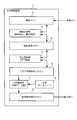
- FIG. 1 is a block diagram showing a configuration of a character recognition device 1 according to an embodiment of the present invention.
- a character recognition device 1 includes an image memory 2, an image processing unit 3, a contour coordinate memory 4, an orthogonal transformation unit 5, a character frequency component memory 6, a comparison search unit 7, a character database 8, and a recognition result storage memory 9. It has.
- the image memory 2 holds image data including characters input from an external device (not shown).
- the image data corresponds to, for example, image data captured by a digital camera, image data read by a scanner, or image data captured from a screen.
- the image processing unit 3 performs image processing for character recognition on the image data held in the image memory 2. More specifically, the image processing unit 3 performs image processing such as extraction or binarization of characters included in image data, or traces the contour extracted as an image and stores the coordinate value in another memory ( Processing such as writing into the contour coordinate memory 4) or inverting the inside of the contour is performed. Normally, the image processing unit 3 also performs processing of character string extraction and character extraction. However, since such processing is not directly related to the technique of the present invention, in order to simplify the description, I will omit it.
- the contour coordinate memory 4 holds the contour coordinates traced by the image processing unit 3.
- the number of coordinates to be held may be fixed, and the number of dots to hold the coordinates is determined according to the length of the contour line. Details of the data structure of the contour coordinate memory 4 will be described later.
- the orthogonal transform unit 5 refers to the contour coordinate memory 4 and converts the contour coordinates into frequency components by performing FFT (Fast Fourier Transform) processing for each of the X axis and the Y axis.
- FFT Fast Fourier Transform
- the FFT technique is used as a method for converting the time axis data into the frequency axis data.
- the present invention is not limited to this, and other techniques may be used.
- the 1-character frequency component memory 6 stores the frequency component that has been subjected to FFT conversion, that is, 1-character frequency component (frequency component for one stroke).
- 1-character frequency component frequency component for one stroke.
- the above-described processing from the image memory 2 to the one-character frequency component memory 6 is repeated as many times as necessary (the number of strokes). For this reason, the one-character frequency component memory 6 is provided with an area for holding a plurality of one-character frequency components (a plurality of stroke frequency components). Details of the data structure of the one-character frequency component memory 6 will be described later.
- the comparison search unit 7 compares the frequency component of the discrimination target character held in the one-character frequency component memory 6 with the frequency component of the reference character held in the character database 8, and the degree of difference between the discrimination target character and the reference character The difference value indicating is calculated. Further, the comparison search unit 7 determines that the reference character stored in the character database 8 and the character to be stored stored in the one-character frequency component memory 6 are different in size from each other. The function of matching the size of the reference character in the character database 8 is obtained by rewriting the value (frequency component of the discrimination target character) by a constant multiple. Since the frequency component value becomes smaller as the vibration becomes higher, it may be configured such that the characteristic of the character is emphasized by multiplying in advance by a coefficient corresponding to the order.
- the character database 8 stores frequency components of a plurality of reference characters to be compared. However, not all frequency components but data of frequency components necessary and sufficient for comparing the characteristics of characters are stored. In the present embodiment, the character database 8 holds five-step frequency components from a non-vibration component and primary to quaternary vibration components. However, if the data structure of the character database 8 is determined to be necessary and sufficient, another data structure may be used to hold higher-order data.
- you want to compare the entire character area, such as Japanese characters you can use the primary to fifth order that does not include the vibration-free component, or simply omit the vibration-free component from the first to fourth order.
- the capacity of the character database 8 can be saved. As described above, when the coefficient corresponding to the order is multiplied, all the data in the character database 8 are pre-multiplied with the coefficient corresponding to the common order.
- the comparison search unit 7 calculates a difference value between the frequency component of each reference character (plurality) in the character database 8 and the frequency component of the discrimination target character held in the one-character frequency component memory 6, and the difference value and the corresponding reference character Are stored in the recognition result storage memory 9.
- An external device (not shown) refers to the recognition result storage memory 9 and receives a recognition result of characters included in the image.
- the image memory 2, contour coordinate memory 4, character frequency component memory 6, character database 8, and recognition result storage memory 9 are each a rewritable nonvolatile memory such as a flash memory or an external storage device such as a hard disk. There may be.
- FIG. 2 is a conceptual diagram showing a data configuration of the contour coordinate memory 4 according to the present embodiment.
- the contour coordinate memory 4 can store 512 sets of coordinate values in each of the x coordinate and the y coordinate. If the outline of the character exceeds 512 dots, for example, if it is 3000 dots, sampling is performed at intervals of about 6 dots. On the other hand, when the outline of the character is less than 512 dots, 2n pieces that do not exceed the number of dots are stored at regular intervals, and the number is analyzed as one round of outline.
- 512 sets of coordinate values are stored in each of the x-coordinate and the y-coordinate.
- the present invention is not limited to this, and other than 512 sets may be used.
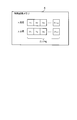
- FIG. 3 is a conceptual diagram showing the data structure of the one character frequency component memory 6 and the character database 8 according to this embodiment.
- the outline of the character is decomposed into data of the real part 20 and the imaginary part 21 of the n-order vibration component as one-direction elements.
- a non-vibration component to a fourth-order vibration component are used.
- the real part and the imaginary part of the no-vibration component to the fourth-order vibration component in the horizontal direction 22 are filled as one vibration element.
- the nth image is similarly filled.
- the 1-character frequency component memory 6 stores the first to n-th image data 25 obtained for one character.
- the character database 8 stores a plurality of pieces of character data 26 with a set of the first to nth images as one character.
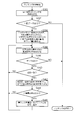
- FIG. 4 is a flowchart for explaining the operation of the character recognition apparatus 1 according to the present embodiment.
- the image processing unit 3 reads image data including a character stored in the image memory 2, and executes a contour extraction process for extracting the contour of the character by calculation with an adjacent image (step S10).
- the image processing unit 3 searches the uppermost leftmost character constituent pixel (starting point) in the extracted contour (step S12) and determines whether there is a corresponding pixel (step S14). ). If there is a character component pixel on the leftmost and uppermost part of the contour (YES in step S14), the image processing unit 3 checks the length of the contour while tracing the contour clockwise (step S16). ).
- the image processing unit 3 divides by the number of sets in the contour coordinate memory 4 to obtain a sample interval (step S18), and traces the contour clockwise, and the coordinate value of the x coordinate of the pixel for each sample interval, the y coordinate Are stored in the contour coordinate memory 4 (step S20).
- the contour is traced clockwise.
- the present invention is not limited to this and may be counterclockwise.
- the orthogonal transform unit 5 reads the coordinate value of the x coordinate and the coordinate value of the y coordinate stored in the contour coordinate memory 4, and performs an FFT operation on the horizontal (x) coordinate sequence (step S22).
- the orthogonal transform unit 5 stores the non-vibration component to the quaternary vibration component obtained by the FFT operation in the one-character frequency component memory 6 as the horizontal component of the one-stroke data (step S24).
- the image processing unit 3 traces the outline clockwise in the original image, and inverts the internal dots (step S26).
- step S10 the process returns to step S10, and the above-described processing, that is, the contour extraction, the search for the start point, the coordinate value of the x coordinate of the pixel constituting the contour, the contour coordinate of the coordinate value of the y coordinate for one character to be discriminated.
- the storage in the memory 4, the FFT operation, and the storage of the non-vibration component to the fourth vibration component in the one-character frequency component memory 6 are repeatedly executed.
- the comparison search unit 7 stores the frequency component of each reference character in the character database 8 and the one character frequency component memory 6.
- a difference value with respect to the frequency component of the stored discrimination target character is calculated, and a matching process for searching for a character having the smallest difference value is executed (step S28). Then, the processing for one discrimination target character is terminated.
- the above-described process may be repeated.
- the above-described processing is not repeated for each character, but the above steps S10 to S26 are repeated for a plurality of discrimination target characters included in the image, and each frequency component of the plurality of discrimination target characters is changed to one character frequency component. It may be stored in the memory 6 and thereafter the matching process in step S28 may be executed on the frequency components of a plurality of characters to be discriminated.
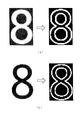
- FIGS. 5A and 5B are conceptual diagrams for explaining the contour extraction process (step S10) in the image processing unit 3 according to the present embodiment.
- it is important to trace the outline of a character. Therefore, it is possible to eliminate the need for image processing-like outline extraction by dynamically configuring the presence / absence of a dot.
- description will be made including image processing for performing contour extraction for the purpose of clarifying the explanation.
- binarization and character color unification are performed on the character to be determined.
- the white character on the black background shown in FIG. 5 (a) and the black character on the white background shown in FIG. 5 (b) are both binarized and unified with the character color so that the outline is white, Convert the part to be black.
- the reference character is a white character in black and the discrimination target character is a black character on white.
- the present invention is not limited to this, and the reference character is a black character on a white background and the discrimination target character is a white character in black. Also good.
- binarization and character color unification are performed in the contour extraction process, the character itself and the background are not limited to white or black, and may be other colors or multicolors.
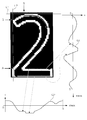
- FIG. 6 is a conceptual diagram for explaining the contour coordinate acquisition processing (steps S12 to S20) in the image processing unit 3 according to the present embodiment.
- the starting point of the contour is the leftmost dot (starting point S) on the top horizontal line L1 indicating the upper end of the character.
- Another method is to select the uppermost dot on the leftmost vertical line L2 indicating the left edge of the character.
- the starting point depends on the design of the upper protrusion amount.
- S becomes A or B it tends to be unclear.
- a method of determining the starting point S is conceivable and basically arbitrary, but a place that is not easily influenced by the character design may be selected.
- the image processing unit 3 traces the contour clockwise from the point S and stores the coordinates in the contour coordinate memory 4.
- graphs G1 and G2 having one cycle in which both the X coordinate and the Y coordinate start with S, end with S, and have the same value at the start and end are created.
- These graphs G1 and G2 are considered to be a superposition of a plurality of sine waves, and the height (amplitude) and phase of a waveform having a frequency twice or three times by FFT (Fast Fourier Transform) in the orthogonal transformation unit 5 are shown.
- FFT Fast Fourier Transform
- FIG. 7 is a conceptual diagram illustrating an example of conversion from a coordinate sequence to a frequency component in the orthogonal transform unit 5 according to the present embodiment.
- the vibration is converted into a non-vibration component and primary to 255th-order vibration components.
- the no-vibration component and the primary to quaternary vibration components are stored in the contour coordinate memory 4 as data for one fraction.
- FIG. 8 is a conceptual diagram showing an example of conversion to a frequency component in the orthogonal transform unit 5 according to the present embodiment.
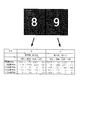
- FIG. 8 shows an example of the result of converting the contour of the character “8” and the contour of the character “9” into frequency components.
- the amplitude and the phase difference with the primary vibration component may be calculated and stored. In this case, instead of increasing the calculation amount, there is a convenience that comparison is possible even when the start point S is deviated as described above (A and B in FIG. 6) or when the image is greatly inclined. Since the character “8” includes two circles inside and the character “9” also includes one circle above, the character “8” is composed of three strokes and two strokes, respectively.
- Both the horizontal (x coordinate) direction and the vertical (y coordinate) direction are composed of five real parts and five imaginary parts of a non-vibration component, a primary vibration component to a fourth-order vibration component, Since the imaginary part is always 0, this data may be omitted when the character database 8 is created. If there are multiple image components including nested parts such as two circles inside the character “8”, the nested process can be disassembled by performing the process described below.
- FIGS. 9A to 9G are conceptual diagrams showing a conversion example when there are a plurality of strokes according to the present embodiment.
- FIGS. 9A to 9G illustrate the character “ ⁇ ” as an example. In order to clarify the outline and the others, the character portion is hatched with diagonal lines, but it is actually black.
- the contour is extracted, as shown in FIG. 9 (a)
- the bar protruding upward is used as a starting point S1
- the coordinates following the contour OL1 indicated by the bold line in the diagram as shown in FIG. 9 (b) are traced. Is obtained (first image).
- FIG. 9C After processing the contour OL1, when the inside of the contour line of the image is inverted, an image shown in FIG. 9C is obtained.
- the inner nesting structure appears on the table, and two elements emerge.
- the start point S2 is searched and the contour OL2 is traced as shown in FIG. 9 (e)
- the coordinates following the contour OL2 indicated by the bold line in the figure are obtained. Obtained (second stroke).
- the inside is inverted, the result is erased, and the image shown in FIG. 9F is obtained.
- the contour OL3 having the start point S3 as the point shown in FIG. 9G can be traced, and the coordinates traced by the contour OL3 indicated by the bold line in the figure are obtained (third image). .
- all white (no element is found) is entered, so the process ends. As a result, a total of three frequency component data is obtained.
- FIG. 10 is a flowchart for explaining the matching process (step S28) by the comparison search unit 7 according to the present embodiment.
- the comparison / search unit 7 initializes the minimum value storage register (step S30).
- the minimum value storage register when matching the discrimination target character and the reference character, the minimum value of the difference value indicating the difference between the two, and the character code of the reference character having the minimum difference value Is a register for storing.
- the minimum difference value and the character code of the reference character most similar to the discrimination target character are obtained in the minimum value storage register.
- the comparison / search unit 7 determines whether or not the single-character data of the determination target character is stored in the one-character frequency component memory 6 (step S32). If one-stroke data is stored (YES in step S32), the comparison search unit 7 uses the frequency component of the discrimination target character stored in the one-character frequency component memory 6 as the discrimination target character. Is rewritten by executing constant multiplication (proportional calculation) with the ratio between the size of the reference character and the size of the reference character stored in the character database 8 (step S34). As a result, the difference in character size can be ignored. In the present embodiment, the flow of the calculation processing is always performed in step S34 so that the sizes of the discrimination target character and the reference character are uniform. A step of comparing the sizes and a step of determining whether or not the two sizes are different may be added, and if both sizes are different, the calculation process in step S34 may be executed.
- the comparison / search unit 7 refers to the reference character in the character database 8 (step S36), and determines whether there is data of the reference character (step S38). If there is a reference character (eg, “0”) (YES in step S38), it is determined whether or not the number of strokes of the reference character matches the number of strokes of the determination target character (step S40). If the number of strokes does not match (NO in step S40), the comparison / search unit 7 returns to step S36 without matching because it is a different character, and refers to the next reference character. Thereafter, the comparison search unit 7 repeats steps S36 to S40 until there is no reference character in the character database 8 or until a reference character having the same number of strokes as the character to be determined is found.
- a reference character eg, “0”
- the comparison search unit 7 calculates the difference between each real part of the character to be discriminated, the imaginary part and each real part of the reference character, and the imaginary part. By calculating the sum of the values, a difference value between the discrimination target character and the reference character is calculated (step S42). The details of the difference value calculation method will be described later.
- the comparison search unit 7 determines whether or not the calculated difference value is smaller than the minimum value held in the minimum value storage register (step S44). In the first case, since the minimum value storage register is initialized, the calculated difference value becomes the minimum value.
- the comparison search unit 7 stores the calculated difference value and the character code of the corresponding reference character. Correct (step S46). On the other hand, if the calculated difference value is not smaller than the minimum value held in the minimum value storage register (NO in step S44), it means that there is a reference character that resembles the discrimination target character. Without rewriting the minimum difference value and the character code of the minimum value storage register, the process returns to step S36, and the above-described processing is repeated with reference to the next reference character.
- the minimum value storage register of the comparison search unit 7 finally holds the minimum difference value and the character code of the corresponding reference character.
- the minimum difference value means that it is the least different, i.e., most similar to the discrimination target character. Therefore, the character most similar to the discrimination target character is determined.
- FIG. 11 and 12 are conceptual diagrams showing an example of conversion into frequency components of a reference character (white character on a black background) and a discrimination target character (black character on a white background) in the present embodiment.
- FIG. 11 shows frequency components of “8” and “9” that are reference characters (white characters on a black background) and “8” and “9” that are identification target characters (black characters on a white background). From the top, a non-vibration component, a primary vibration component, a secondary vibration component, a tertiary vibration component, and a quaternary vibration component are shown, respectively.
- the characters “8” and “9” both have a shape that is a variation of “0” and appear to be similar.
- the characteristic appears in the values of the secondary vibration component and the tertiary vibration component in the lateral direction (x coordinate).
- the real part of the secondary vibration component is a small value
- the imaginary part of the tertiary vibration component is a relatively large negative value. It is the value of.
- both the real part and the imaginary part of the secondary vibration component have large negative values
- the real part of the tertiary vibration component has a large positive value.
- RX n represents the horizontal n-th real part of the reference character (the value stored in the character database 8 and the white character on the black background), and the character to be discriminated (the character stored in the one-character frequency component memory 6 indicates the black character on the white background).
- the symbols representing the respective components are values that are already multiplied by constants when weights are added to emphasize the features.
- the calculation is completed with only the addition and subtraction with respect to the 20 values and the absolute value, so even if this is repeatedly calculated for the number of characters, The required processing time is very short.
- the simple number of calculations is 42104.
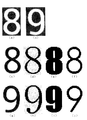
- FIGS. 13A to 13J are conceptual diagrams for explaining a difference value due to a difference in typeface between a reference character and a discrimination target character in the present embodiment.
- FIGS. 13A and 13B show Gothic “8” and “9” which are reference characters (white characters on a black background).
- FIGS. 13C to 13F show “8” as a discrimination target (black characters on a white background) in the order of Gothic, Mincho, IMPACT, and Century-Gothic typefaces. Show.
- FIGS. 13G to 13J show “9” as a discrimination target (black characters on a white background) in the order of Gothic, Mincho, IMPACT, and Century-Gothic. ing.
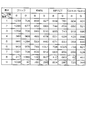
- FIG. 14 is a diagram illustrating an example of a difference value due to a difference in typeface between a reference character and a discrimination target character in the present embodiment.
- FIG. 14 shows a difference value H between the reference characters “1” to “9” and the discrimination target characters “8” and “9” in each typeface.
- the typefaces of the reference characters “1” to “9” are one type of Gothic type shown in FIGS.
- the reference character “0” should be included, but is omitted here.
- the difference value H is the smallest among the corresponding reference characters “8” and [9 ”surrounded by a dotted circle.
- the reference character image data is only one type, “8” and “9” can be correctly identified for four typefaces whose shapes change drastically. Can be confirmed.
- the size of the character the design can be obtained by resolving the shaking state during the round of the outline of the character into frequency components and comparing the frequency components to identify and recognize the characters. Even if is changed, characters can be recognized with high accuracy in a short time. Furthermore, since the data to be compared at the time of identification is relatively small, it is possible to recognize characters with high accuracy in a short time without increasing the size of the storage device for character recognition.
- the size of the characters when comparing the frequency component of the contour of the discrimination target character and the frequency component of the contour of the reference character, if the size of the character image is different, the frequency of the contour constituting the discrimination target character Since the component is multiplied by the ratio of both sizes, the size of the characters can be adjusted by multiplying the constants only once, the amount of calculation can be greatly reduced, and the characters can be reduced in a short time. Can be recognized.
- a difference value indicating the degree of difference between the discrimination target character and the reference character is calculated based on the difference between the frequency component of the discrimination target character contour and the frequency component of the reference character outline.
- the reference character having the smallest difference value is recognized as the discrimination target character, the amount of calculation can be greatly reduced, and the character can be recognized in a short time.
- the frequency component in the specific frequency range is compared, so the data amount is reduced. And the amount of calculation can be greatly reduced, and characters can be recognized in a short time.
- the processed contour is erased by inverting the inside of the extracted contour, and the remaining partial image is contoured. Since the extraction is repeated until there are no more images, it is possible to deal with characters such as a case of a plurality of parts or a nested structure.
- the character recognition device 1 is not limited to a mobile phone / smartphone, for example, but other devices (for example, game machines, tablet PCs (Personal Computers), notebook PCs, PDAs (Personal Data Assistants: portable information terminals) ) And the like.
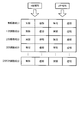
- FIG. 16 is a configuration diagram of Supplementary Note 1. The correspondence between FIG. 16 and FIG. 1 will be described.
- the reference character holding unit 31 shown in FIG. 16 corresponds to the character database 8 in FIG. 1
- the contour extraction unit 32 in FIG. 16 corresponds to the image processing unit 3 in FIG.
- the frequency analysis unit 33 in FIG. 16 corresponds to the orthogonal transform unit 5 in FIG. 1
- the recognition unit 34 in FIG. 16 corresponds to the comparison search unit 7 in FIG.
- the invention described in Appendix 1 is A reference character holding unit 31 for holding a frequency component of a contour constituting the reference character; A contour extracting unit 32 that extracts a contour constituting a discrimination target character included in the image; A frequency analysis unit 33 for analyzing a frequency component of the contour extracted by the contour extraction unit 32; The frequency component of the contour that constitutes the discrimination target character analyzed by the frequency analysis unit 33 is compared with the frequency component of the contour that constitutes the reference character held in the reference character holding unit 31, A character recognition device 30 comprising: a recognition unit 34 that recognizes a discrimination target character included in the image based on a comparison result.
- the recognizing unit constitutes the discrimination target character when the size of the character image is different when comparing the frequency component of the contour constituting the discrimination target character and the frequency component of the contour constituting the reference character.
- the character recognition device according to appendix 1, wherein a frequency component of a contour is multiplied by a ratio of both sizes.
- the recognition unit shows a difference between the discrimination target character and the reference character based on a difference between a contour frequency component constituting the discrimination target character and a contour frequency component constituting the reference character.
- the character recognition apparatus according to appendix 1 or 2, wherein a character is calculated and a reference character having the smallest difference value is recognized as the discrimination target character.
- the frequency analysis unit analyzes the frequency component of the contour that constitutes the reference character and the frequency component of the contour that constitutes the discrimination target character, limited to a specific frequency range, and the recognition unit analyzes the reference character.
- the frequency component of the specific frequency range is compared with the frequency component of the specific frequency range when comparing the frequency component of the contour that constitutes the frequency component of the contour that constitutes the discrimination target character. It is a character recognition device.
- the said frequency analysis part is a character recognition apparatus of Additional remark 4 characterized by limiting to a low-order frequency component as said specific frequency range.
- the contour extraction unit erases the processed contour by inverting the inside of the extracted contour every time the contour constituting the discrimination target character is extracted, and extracts the contour from the remaining partial image.
- This is a character discrimination device according to any one of appendices 1 to 5, which is repeated until no image is left.
- a reference character holding function for holding a frequency component of a contour constituting a reference character in a computer, a contour extraction function for extracting a contour constituting a discrimination target character included in an image, and a contour frequency component extracted by the contour extraction function
- the frequency analysis function for analyzing the frequency, the frequency component of the contour that constitutes the discrimination target character analyzed by the frequency analysis function is compared with the frequency component of the contour that constitutes the reference character, and based on the comparison result,
- a program for executing a recognition function for recognizing a discrimination target character included in the image.
Landscapes
- Engineering & Computer Science (AREA)
- Computer Vision & Pattern Recognition (AREA)
- Physics & Mathematics (AREA)
- General Physics & Mathematics (AREA)
- Multimedia (AREA)
- Theoretical Computer Science (AREA)
- Character Discrimination (AREA)
Abstract
【課題】文字認識のために記憶装置を大型化することなく、文字の大きさ、デザインが変更されても、短時間で、かつ高精度に文字を認識する。 【解決手段】文字認識装置20は、基準文字を構成する輪郭の周波数成分を保持する基準文字保持部21と、画像に含まれる判別対象文字を構成する輪郭を抽出する輪郭抽出部22と、輪郭抽出部22によって抽出された輪郭の周波数成分を解析する周波数解析部23と、周波数解析部23によって解析された判別対象文字を構成する輪郭の周波数成分と、基準文字保持部21に保持されている基準文字を構成する輪郭の周波数成分とを比較し、該比較結果に基づいて、画像に含まれる判別対象文字を認識する認識部24とを備えている。
Description
本発明は、文字認識装置、文字認識方法、及びプログラムに関する。
画像内の文字を認識する文字識別装置としては、基準文字の画像と識別対象文字の画像とを比較するパターンマッチング方法や、文字部分データに2次元離散的フーリエ変換を施して得られるパワースペクトル、あるいは文字の輪郭線の線分方向などの特徴量などを用いて認識する文字認識技術が知られている。
例えば、特許文献1には、認識対象の入力活字イメージと活字辞書メモリの活字辞書パターンとの照合を行い、その照合結果から画像内の識別対象文字の認識を行う技術が提案されている。
また、特許文献2には、画像データに含まれている文字部分データに2次元離散的フーリエ変換を施してパワースペクトルを抽出し、識別対象文字のパワースペクトルと教師文字のパワースペクトルとを比較することで、画像内の識別対象文字を認識する技術が提案されている。
また、特許文献3には、画像データに含まれている文字の輪郭線の線分方向(右上り、右下り、水平あるいは垂直)を特徴量として用いて、画像内の識別対象文字を認識する技術が提案されている。
上述した特許文献1などによるパターンマッチングによる文字認識方法には、以下のような問題がある。図15(a)~(f)は、パターンマッチングで用いられる、基準文字(黒地に白文字)と識別対象文字(白地に黒文字)との比較例を示す概念図である。図15(a)に示す基準文字「9」のに対して、例えば、図15(b)、(c)に示す識別対象文字「9」には、ほぼ同じ太さの線が用いられ、ドット構成も同様であるので正しく認識される。これに対して、同じ数字「9」でも、図15(e)に示す識別対象文字「9」には、太い線が用いられているため、むしろ図15(d)に示す文字「8」に近いと認識されてしまう場合もある。また、図15(f)などは、図15(a)に示す基準文字と比べ、ドット構成がかけ離れているため、全く違う文字に認識されることになる。
さらに、パターンマッチングでは、画像データそのものを比較対象とするため、例えば、図15(a)では、152ドット×277ドット=42104ドットのデータを比較することになる。これは、基準文字のデータを保持するためにも容量の大きな記憶装置が必要となるとともに、比較に要する時間も長くなるという欠点となる。
また、パターンマッチングでは、予め保持した基準文字の文字サイズに識別対象文字の文字サイズを合わせこむ必要があった。このため、画像の拡大・縮小を行う際に、輪郭線を滑らかにする処理が必要となり、画像加工の処理に時間を要し、画像メモリも大量に必要となる欠点があった。特に、ストロークアナリシスの場合には、細線化する画像処理に時間がかかるだけでなく、線のトポロジー分析にも時間がかかる。また、文字は、そのデザインによって線の太さに違いがあり、細字と太字では、基準とする文字と一致する部分よりも不一致である部分が大きくなる。このため、識別のためのノイズが大きくなり、不正確になりやすいという欠点があった。
また、特許文献2では、パワースペクトルを比較することで一番近い画像を選択するようにしているため、画像をそのまま比較するパターンマッチングと大して違いがなく、パターンマッチングと同様の問題がある。また、パワースペクトルによる比較とは別に付加的な処理が必要となり、認識対象の文字種は極端に少なくなってしまうという問題がある。また、このため、認識のための比較処理も動作が遅くなってしまう問題もある。
また、特許文献3では、画数が少ないなど文字の構成が単純な場合や、基準文字が少ない場合などには有効であるが、画数が多く複雑な文字や、基準文字が多い場合には、有効な文字認識を行うことができないという問題があった。
そこで本発明は、文字認識のために記憶装置を大型化することなく、文字の大きさ、デザインが変更されても、短時間で、かつ高精度に文字を認識することができる文字認識装置、文字認識方法、及びプログラムを提供することを目的とする。
本発明の文字認識装置は、基準文字を構成する輪郭の周波数成分を保持する基準文字保持部と、画像に含まれる判別対象文字を構成する輪郭を抽出する輪郭抽出部と、前記輪郭抽出部によって抽出された輪郭の周波数成分を解析する周波数解析部と、前記周波数解析部によって解析された、前記判別対象文字を構成する輪郭の周波数成分と、前記基準文字保持部に保持されている前記基準文字を構成する輪郭の周波数成分とを比較し、該比較結果に基づいて、前記画像に含まれる判別対象文字を認識する認識部とを備えることを特徴とする文字認識装置である。
本発明の文字認識方法は、基準文字を構成する輪郭の周波数成分を保持するステップと、画像に含まれる判別対象文字を構成する輪郭を抽出するステップと、前記抽出された輪郭の周波数成分を解析するステップと、前記判別対象文字を構成する輪郭の周波数成分と前記基準文字を構成する輪郭の周波数成分とを比較し、該比較結果に基づいて、前記画像に含まれる判別対象文字を認識するステップとを含むことを特徴とする文字認識方法である。
本発明のプログラムは、コンピュータに、基準文字を構成する輪郭の周波数成分を保持する基準文字保持機能、画像に含まれる判別対象文字を構成する輪郭を抽出する輪郭抽出機能、前記輪郭抽出機能によって抽出された輪郭の周波数成分を解析する周波数解析機能、前記周波数解析機能によって解析された、前記判別対象文字を構成する輪郭の周波数成分と前記基準文字を構成する輪郭の周波数成分とを比較し、該比較結果に基づいて、前記画像に含まれる判別対象文字を認識する認識機能を実行させることを特徴とするプログラムである。
この発明によれば、文字認識のために記憶装置を大型化することなく、文字の大きさ、デザインが変更されても、短時間で、かつ高精度に文字を認識することができる。
以下、本発明の実施の形態を、図面を参照して説明する。
図1は、本発明の実施形態による文字認識装置1の構成を示すブロック図である。図において、文字認識装置1は、画像メモリ2、画像処理部3、輪郭座標メモリ4、直交変換部5、1文字周波数成分メモリ6、比較検索部7、文字データベース8、及び認識結果格納メモリ9を備えている。画像メモリ2は、図示しない外部装置から入力される、文字を含む画像データを保持する。画像データとしては、例えば、デジタルカメラなどによって撮影された画像データや、スキャナで読み込んだ画像データ、あるいは、画面をキャプチャした画像データなどが相当する。
画像処理部3は、画像メモリ2に保持されている画像データに対して文字認識のための画像処理を行う。より具体的には、画像処理部3は、画像データに含まれる文字の輪郭の抽出や、2値化といった画像処理や、あるいは、画像として抽出した輪郭を辿ってその座標値を別のメモリ(輪郭座標メモリ4)に書き込んだり、輪郭の内部を反転させたりするといった処理を行う。通常、画像処理部3は、文字列の切り出しや、各文字の切り出しという処理も行うが、そのような処理は、本発明の技術と直接関係が無いので、説明を簡潔にするために、ここでは省略する。
輪郭座標メモリ4は、画像処理部3によって辿られた輪郭座標を保持する。保持する座標数は、固定でよく、輪郭線の長さに応じて、何ドットごとに座標を保持するかが決められる。なお、輪郭座標メモリ4のデータ構成の詳細について後述する。直交変換部5は、輪郭座標メモリ4を参照し、輪郭座標をX軸、Y軸ごとにFFT(高速フーリエ変換)処理して周波数成分に変換する。なお、本実施形態では、時間軸データを周波数軸データに変換する方法として、FFT技術を用いているが、これに限らず、他の技術を用いてもよい。1文字周波数成分メモリ6は、FFT変換された周波数成分、すなわち1文字周波数成分(1画分の周波数成分)を格納する。上述した画像メモリ2から1文字周波数成分メモリ6までの処理は、必要に応じて複数の輪郭の数(複数の画数分)だけ繰り返される。このため、1文字周波数成分メモリ6には、複数の1文字周波数成分(複数の画数の周波数成分)を保持する領域が用意されている。なお、1文字周波数成分メモリ6のデータ構成の詳細については後述する。
比較検索部7は、1文字周波数成分メモリ6が保持する判別対象文字の周波数成分と、文字データベース8が保持する基準文字の周波数成分とを比較して、判別対象文字と基準文字との相違程度を示す相違値を算出する。また、比較検索部7は、それに先立って文字データベース8に格納されている基準文字と1文字周波数成分メモリ6に格納されている判別対象文字との大きさが違う場合、1文字周波数成分メモリ6の値(判別対象文字の周波数成分)を定数倍して書き戻すことで、文字データベース8の基準文字の大きさに合わせる機能を持つ。なお、周波数成分値は、高次の振動ほど小さくなるので、予め次数に応じた係数を乗算しておき、文字が有する特徴を強調するような構成にしてもよい。
文字データベース8は、比較対象となる複数の基準文字の周波数成分を格納している。但し、全ての周波数成分ではなく、文字同士の特徴を比較するために必要十分な周波数成分のデータを格納している。本実施形態では、文字データベース8は、無振動成分、及び、1次~4次振動の成分までの5段階の周波数成分を保持している。但し、文字データベース8のデータ構成は、必要十分と判断すれば、より高次のデータを保持するよう他のデータ構成にしても構わない。
例えば、「=」や「÷」などは、1画目の横棒や、点を、その位置も含めて比較することができるので、無振動成分を含めることが有効である。これに対して、日本語の文字など、必ず1文字領域全体を比較するならば、無振動成分を含まない1次~5次にしたり、単純に無振動成分を省略して1次~4次にしたりして、文字データベース8の容量を節約することも可能である。前述したように、次数に応じた係数を乗算しておく場合には、文字データベース8の全てのデータに対して、共通の次数に応じた係数を予め乗算しておく。
比較検索部7は、文字データベース8の各基準文字(複数)の周波数成分と1文字周波数成分メモリ6が保持する判別対象文字の周波数成分との相違値を計算し、その相違値と該当基準文字の文字コードとを認識結果格納メモリ9に格納する。図示しない外部装置は、該認識結果格納メモリ9を参照し、画像に含まれている文字の認識結果を受け取る。
なお、上記画像メモリ2、輪郭座標メモリ4、1文字周波数成分メモリ6、文字データベース8、認識結果格納メモリ9は、それぞれフラッシュメモリ等の書き換え可能な不揮発性メモリや、ハードディスクなどの外部記憶装置であってもよい。
図2は、本実施形態による輪郭座標メモリ4のデータ構成を示す概念図である。輪郭座標メモリ4は、例えば、図2に示すように、x座標、y座標のそれぞれに512組の座標値を格納することができる。仮に文字の輪郭が512ドットを超える場合、例えば3000ドットならば、約6ドットおきにサンプリングする。一方、文字の輪郭が512ドットに満たない場合には、ドット数を超えない2n個を一定間隔で格納し、その数を1周分の輪郭として分析する。なお、本実施形態では、x座標、y座標のそれぞれに512組の座標値を格納するようにしたが、これに限定されることなく、512組以外としてもよい。
図3は、本実施形態による1文字周波数成分メモリ6、及び文字データベース8のデータ構成を示す概念図である。図3に示すように、直交変換部5によって直交変換が行なわれると、文字の輪郭は、1方向要素としてn次振動成分の実部20と虚部21のデータに分解される。本実施形態では、無振動成分~4次振動成分までを用いる。まず、横方向(x座標)を変換すると、1振動要素として、横方向22の無振動成分~4次振動成分の実部と虚部が埋められる。その後、縦方向(y座標)を変換すると、縦方向23の無振動成分~4次振動成分の実部と虚部が埋められ、第1画のデータ24が揃う。さらに、1文字が線で囲まれた入れ子構造になっていたり、複数のパーツで構成されたりしている場合には、同様にして第n画まで埋められる。1文字周波数成分メモリ6には、1文字に対して得られた上記第1画~第n画のデータ25が格納される。そして、文字データベース8には、第1画~第n画までの組を1文字として、複数の文字データ26が格納される。
なお、判別対象が少ない場合(例えば、「0」~「9」、及び計算記号「+」、「-」、「×」、「÷」、「=」の場合)、「-」と「=」の上の棒や、小数点「.」と「÷」の上の点は、それぞれ周波数成分が異なるため、第1画目で違いを識別することができる。したがって、「=」を2画分、「÷」を3画分保持する必要はない。このような場合、1文字周波数成分メモリ6には、第1画のデータだけを格納するようにしてもよい。
次に、本実施形態の動作について説明する。
図4は、本実施形態による文字認識装置1の動作を説明するためのフローチャートである。まず、画像処理部3は、画像メモリ2に格納されている文字を含む画像データを読み込み、隣接画像との演算で、文字の輪郭を抽出する輪郭抽出処理を実行する(ステップS10)。次に、画像処理部3は、抽出した輪郭において、最も上部で一番左側の文字構成画素(開始点)を検索し(ステップS12)、該当する画素があるか否かを判別する(ステップS14)。そして、輪郭において、最も上部で一番左側に文字構成画素があった場合には(ステップS14のYES)、画像処理部3は、右回りに輪郭を辿りながら輪郭の長さを調べる(ステップS16)。次に、画像処理部3は、輪郭座標メモリ4の組数で除算し、サンプル間隔を求め(ステップS18)、右回りに輪郭を辿りながらサンプル間隔ごとに画素のx座標の座標値、y座標の座標値を輪郭座標メモリ4に格納する(ステップS20)。なお、本実施形態では、右回りに輪郭を辿るようにしたが、これに限らず、左回りでもよい。
図4は、本実施形態による文字認識装置1の動作を説明するためのフローチャートである。まず、画像処理部3は、画像メモリ2に格納されている文字を含む画像データを読み込み、隣接画像との演算で、文字の輪郭を抽出する輪郭抽出処理を実行する(ステップS10)。次に、画像処理部3は、抽出した輪郭において、最も上部で一番左側の文字構成画素(開始点)を検索し(ステップS12)、該当する画素があるか否かを判別する(ステップS14)。そして、輪郭において、最も上部で一番左側に文字構成画素があった場合には(ステップS14のYES)、画像処理部3は、右回りに輪郭を辿りながら輪郭の長さを調べる(ステップS16)。次に、画像処理部3は、輪郭座標メモリ4の組数で除算し、サンプル間隔を求め(ステップS18)、右回りに輪郭を辿りながらサンプル間隔ごとに画素のx座標の座標値、y座標の座標値を輪郭座標メモリ4に格納する(ステップS20)。なお、本実施形態では、右回りに輪郭を辿るようにしたが、これに限らず、左回りでもよい。
次に、直交変換部5は、輪郭座標メモリ4に格納されている画素のx座標の座標値、y座標の座標値を読み込み、横(x)座標列をFFT演算する(ステップS22)。次に、直交変換部5は、FFT演算によって得られる無振動成分~4次振動成分を1画データの横方向の成分として、1文字周波数成分メモリ6に格納する(ステップS24)。次に、画像処理部3は、元画像の右回りに輪郭を辿り、内部のドットを反転する(ステップS26)。その後、ステップS10に戻り、上述した処理、すなわち、1つの判別対象文字に対して、輪郭抽出、開始点の検索、輪郭を構成する画素のx座標の座標値、y座標の座標値の輪郭座標メモリ4への格納、FFT演算、無振動成分~4次振動成分の1文字周波数成分メモリ6への格納を繰り返し実行する。そして、最も上部で一番左側に文字構成画素(開始点)がなくなると(ステップS14のNO)、比較検索部7は、文字データベース8の各基準文字の周波数成分と1文字周波数成分メモリ6に格納された判別対象文字の周波数成分との相違値を計算し、その相違値が最も小さい文字を検索するマッチング処理を実行する(ステップS28)。そして、1つの判別対象文字に対する当該処理を終了する。
他の判別対象文字を認識するには、上述した処理を繰り返せばよい。なお、1文字ずつ上述した処理を繰り返すのではなく、画像に含まれる複数の判別対象文字に対して、上記ステップS10~S26を繰り返し、複数の判別対象文字の各々の周波数成分を1文字周波数成分メモリ6に格納しておき、その後、複数の判別対象文字の周波数成分に対して、上記ステップS28のマッチング処理を実行するようにしてもよい。
図5(a)、(b)は、本実施形態による画像処理部3での輪郭抽出処理(ステップS10)を説明するための概念図である。本実施形態では、文字の輪郭を辿ることが重要であるので、ドットのありなしの判断を動的に構成することで、画像処理的な輪郭抽出を不要にすることができる。但し、ここでは、説明の明確化の目的も兼ねて輪郭抽出を行う画像処理を含めて説明する。画像処理部3では、判別対象文字に対する2値化と文字色の統一化とが行われる。図5(a)に示す黒地に白文字も、図5(b)に示す白地に黒文字も、2値化と文字色の統一化を行うことで、どうちらもその輪郭を白とし、他の部分を黒となるように変換する。このように処理することで、輪郭を辿るには、白いドットを辿る処理として容易に実現することができる。なお、本実施形態では、基準文字を黒字に白文字、判別対象文字を白地に黒文字としているが、これに限定されることなく、基準文字を白地に黒文字、判別対象文字を黒字に白文字としてもよい。また、輪郭抽出処理において、2値化と文字色の統一化を行うので、文字自体や背景も、白色や黒色に限定されず、他の色であっても多色であってもよい。
図6は、本実施形態による画像処理部3での輪郭座標取得処理(ステップS12~S20)を説明するための概念図である。図6に示すように、輪郭の開始点は、文字の上端を示す、一番上の水平ラインL1にある左端のドット(開始点S)としている。他の方法として、文字の左端を示す、一番左の垂直ラインL2にある上端のドットという選択もあるが、例えば、図に示す文字「2」の場合、上部の突き出し量のデザインによって開始点SがAになったりBになったりと不明確になりやすい。この他にも開始点Sの決め方は考えられ、基本的に任意であるが、文字のデザインに左右されにくい場所を選べばよい。
画像処理部3は、S点から右回りに輪郭を辿り、その座標を輪郭座標メモリ4に格納していく。格納された数値をグラフ化すると、X座標、Y座標ともにSから始まりSで終わり、開始と終了とで値が同一となる1つの周期のグラフG1、G2が作成される。このグラフG1、G2は、複数の正弦波の重ね合わせと考えられ、直交変換部5でのFFT(高速フーリエ変換)によって2倍、3倍の周波数を有する波形の高さ(振幅)と位相とに分解することができる。
図7は、本実施形態による直交変換部5での座標列から周波数成分への変換例を示す概念図である。上述した図6に示すグラフG1、G2で示される、x軸側の波形の高さ(振幅)と位相と、y軸側の波形の高さ(振幅)と位相とを、FFT処理によって、図7に示すように、無振動成分と1次振動成分~255次振動成分に変換する。なお、高さ=大きさ=√(実部2+虚部2)で表され、位相=成す角=tan-1(実部÷虚部)で表される。そのうち、無振動成分と1次振動成分~4次振動成分とが、輪郭座標メモリ4に1画分のデータとして格納される。
図8は、本実施形態による直交変換部5での周波数成分への変換例を示す概念図である。図8には、文字「8」の輪郭と文字「9」の輪郭を、周波数成分へ変換した結果の例を示している。なお、図8においては実部、及び虚部の計算までで留めているが、さらに振幅、及び1次振動成分との位相差を計算して格納してもよい。この場合、計算量が増える代わりに、上述したように開始点Sがずれた場合(図6のA、B)や、画像が大きく傾いている場合でも比較が可能になるという利便性が生ずる。文字「8」は、その内部に2つの丸、文字「9」も上部に1つの丸を含むので、それぞれ3画、2画で構成される。但し、「1」~「9」を候補文字として、その中から選択する例を想定とすると、1画分で十分に識別することが可能である。横(x座標)方向も、縦(y座標)方向も、無振動成分、1次振動成分~4次振動成分の5つの実部と5つの虚部で構成されるが、無振動成分は、虚部が必ず0であるので、文字データベース8を作成するときには、このデータを省略してもよい。もし、文字「8」の内部の2つの丸など、入れ子になった部分を含めて複数画の構成要素がある場合には、次に説明する処理を行うことで入れ子を分解して処理できる。
図9(a)~(g)は、本実施形態による、複数の字画がある場合の変換例を示す概念図である。図9(a)~(g)には、文字「φ」を例に説明している。なお、輪郭線とそれ以外とを明確にするために、文字部分を斜線でハッチングしているが、実際には黒一色である。まず、輪郭を抽出すると、図9(a)に示すように、上に突き出た棒を開始点S1として、図9(b)に示すように、図中の太線で示す輪郭OL1を辿った座標が得られる(第1画目)。この輪郭OL1について処理した後、画像の輪郭線の内部を反転すると、図9(c)に示す画像が得られる。内部の入れ子構造が表に出て、2つの要素が浮かび上がる。ここで、再び、図9(d)に示すように、開始点S2を探し、図9(e)に示すように、輪郭OL2を辿ると、図中の太線で示す輪郭OL2を辿った座標が得られる(第2画目)。この内部を反転すると、それが消去される結果となって、図9(f)に示す画像が得られる。ここで輪郭を抽出すると、図9(g)で示す点を開始点S3とした輪郭OL3を辿ることができ、図中の太線で示す輪郭OL3を辿った座標が得られる(第3画目)。その内部を反転すると、全て白い(何も要素が見つからない)状態になるので処理を終了する。この結果、合計3画の周波数成分データが得られる。
図10は、本実施形態による比較検索部7によるマッチング処理(ステップS28)を説明するためのフローチャートである。まず、比較検索部7は、最小値記憶レジスタを初期化する(ステップS30)。なお、該最小値記憶レジスタとは、判別対象文字と基準文字とをマッチングする際に、双方の相違程度を示す相違値の最小値と、該相違値が最小であった基準文字の文字コードとを格納するレジスタである。本実施形態では、以下で説明するように、判別対象文字と複数の基準文字とを順次比較していく過程で、最小の相違値が見つかる度に最小値記憶レジスタのデータを更新することで、最終的に、最小値記憶レジスタに最小の相違値と判別対象文字に最も似ている基準文字の文字コードとが得られるようになっている。
次に、比較検索部7は、1文字周波数成分メモリ6に判別対象文字の1画データが格納されているか否かを判別する(ステップS32)。そして、1画データが格納されている場合には(ステップS32のYES)、比較検索部7は、1文字周波数成分メモリ6に格納されている、判別対象文字の周波数成分を、該判別対象文字の大きさと文字データベース8に格納されている基準文字の大きさとの比率で定数乗算(比例計算)を実行して書き換える(ステップS34)。これにより、文字の大きさの違いを無視することができる。なお、本実施形態では、常に、ステップS34にて、判別対象文字と基準文字との大きさを揃えるべく演算処理するフローとなっているが、これに限らず、判別対象文字と基準文字との大きさを比較するステップと、双方の大きさが異なるか否かを判別するステップとを加え、双方の大きさが異なる場合に、ステップS34による演算処理を実行するようにしてもよい。
次に、比較検索部7は、文字データベース8内の基準文字を参照し(ステップS36)、基準文字のデータがあるか否かを判別する(ステップS38)。そして、基準文字(例えば、「0」)がある場合には(ステップS38のYES)、その基準文字の画数と判別対象文字の画数とが一致するか否かを判別する(ステップS40)。そして、双方の画数が一致しない場合には(ステップS40のNO)、比較検索部7は、異なる文字であるのでマッチングすることなく、ステップS36に戻り、次の基準文字を参照する。その後、比較検索部7は、文字データベース8内の基準文字がなくなるまで、あるいは、判別対象文字と画数が一致する基準文字が見つかるまで、ステップS36~S40を繰り返す。
そして、双方の画数が一致した場合には、比較検索部7は、判別対象文字の各実部、虚部と基準文字の各実部、虚部との差分を算出し、全ての差分の絶対値の総和を算出することで、判別対象文字と基準文字との相違値を算出する(ステップS42)。なお、相違値の算出方法の詳細については後述する。次に、比較検索部7は、算出した相違値が、最小値記憶レジスタに保持されている最小値より小さいか否かを判別する(ステップS44)。初回の場合、最小値記憶レジスタは、初期化されているので、上記算出した相違値が最小値となる。
比較検索部7は、算出した相違値が、最小値記憶レジスタに保持されている最小値より小さい場合には(ステップS44のYES)、算出した相違値と該当基準文字の文字コードとを記憶し直す(ステップS46)。一方、算出した相違値が、最小値記憶レジスタに保持されている最小値より小さくない場合には(ステップS44のNO)、判別対象文字により相似する基準文字があったということを意味するので、最小値記憶レジスタの最小の相違値と文字コードとを書き換えることなく、ステップS36に戻り、次の基準文字を参照して、上述した処理を繰り返す。
そして、全ての基準文字とのマッチング処理を完了すると(ステップS38のNO)、当該マッチング処理を終了する。
このように、上述したマッチング処理を実行することによって、最終的に、比較検索部7の最小値記憶レジスタには、最小の相違値と該当基準文字の文字コードとが保持されることになる。最小の相違値とは、判別対象文字と最も相違しない、すなわち最も似ているということを意味する。ゆえに、判別対象文字に最も似ている文字を確定したことになる。
図11、及び図12は、本実施形態において、基準文字(黒地に白文字)と判別対象文字(白地に黒文字)との周波数成分への変換例を示す概念図である。図11には、基準文字(黒地に白文字)である「8」、「9」と判別対象文字(白地に黒文字)である「8」、「9」との周波数成分を示している。それぞれ上から無振動成分、1次振動成分、2次振動成分、3次振動成分、及び4次振動成分が示されている。図形的には、文字「8」と「9」は、両方とも「0」を変形した形状を有しており、似ているように思われる。
しかしながら、周波数成分に分解すると、図12に強調して示すように、横方向(x座標)の2次振動成分と3次振動成分の値に特徴が現れている。文字「8」同士、または文字「9」同士を比べると、文字「8」の場合には、2次振動成分の実数部が小さい値となり、3次振動成分の虚部が負の比較的大き目の値となっている。一方、文字「9」の場合には、2次振動成分の実部、虚部とも負の大きな値となっており、3次振動成分の実部が正の大きい値となっている。
これは、文字「9」の場合には、下半分で輪郭が内部に回り込むため、横方向に大きな揺れが出ているためであり、文字「8」の場合には、それが無く、中央部付近に右側と左側で2回、小さなくびれがあるという特徴が出ている。そのため、各成分の差の絶対値を総和すると、同じ文字同士は値が小さく、違う文字では値が大きくなる。これを相違値Hとする。基準文字(文字データベース8に収める値で黒地に白文字の方)の横方向のn次の実部をRXn、判別対象文字(1文字周波数成分メモリ6に収められた値で白地に黒文字の方)をrxn、同虚部をIXnとixn、縦方向をそれぞれRYn、ryn、IYn、iynとすると、相違値Hは、次式(1)のようになる。

なお、数式(1)の表現を簡素にするため、ここでの各成分を現す記号については、特徴を強調するために重みを付ける場合、それぞれに既に定数が乗算された値であるとする。このように、本実施形態では、基準文字と判別対象文字とを比較する場合に、20個の値に対する加減算と絶対値だけで演算が済んでしまうため、これを文字数分繰り返し計算したとしても、必要な処理時間は非常に短くて済む。例えば、前述したパターンマッチングでは、152ドット×277ドット=42104ドットのデータを比較する場合、単純な演算回数は42104回となる。これに対して、本実施形態では、無振動成分、1次振動成分~4次振動成分の5つの成分に対して、x座標で2回の減算と、y座標で2回の減算と、それぞれの4回の絶対値演算と、それら絶対値の4回の加算とを行うとすると(数式(1)参照)、5×(2+2)×4+4=80となる。ゆえに、本実施形態は、パターンマッチングに比べ、42104/100=421.04倍となる。つまり、本本実施形態では、画像のパターン比較を行う方法と比べ、特別なハードウェアなしで、数百倍程度の動作速度が得られる。
図13(a)~(j)は、本実施形態において、基準文字と判別対象文字との書体の違いによる相違値を説明するための概念図である。図13(a)、(b)には、基準文字(黒地に白文字)であるゴシック体の「8」、「9」を示している。また、図13(c)~(f)には、判別対象(白地に黒文字)である「8」を、順番に、ゴシック体、明朝体、IMPACT、Century-Gothic(センチュリゴシック)の書体で示している。また、図13(g)~(j)には、判別対象(白地に黒文字)である「9」を、順番に、ゴシック、明朝体、IMPACT、Century-Gothic(センチュリゴシック)の書体で示している。
図14は、本実施形態において、基準文字と判別対象文字との書体の違いによる相違値の一例を示す図である。図14には、それぞれの書体において、基準文字「1」~「9」と、判別対象文字「8」、「9」との相違値Hを示している。なお、基準文字「1」~「9」の書体は、図13(a)、(b)に示すゴシック体の1種類である。また、本来であれば、基準文字「0」を含めるべきであるが、ここでは省略している。図14に示すように、相違値Hは、点線の丸で囲んでいる、該当する基準文字「8」、[9」で最も小さくなっている。本実施形態によれば、基準となる文字画像データ(フォントの種類)は、1種類であるにもかかわらず、形状が激しく変わる4つの書体に対して正しく「8」と「9」を識別できていることが確認できる。
上述した実施形態によれば、文字の輪郭線が一周する間の揺れ具合を周波数成分に分解し、その周波数成分を比較することによって文字の識別・認識を行うことで、文字の大きさ、デザインが変更されても、短時間で、かつ高精度に文字を認識することができる。さらに、識別時に比較するデータが比較的少なくなるので、文字認識のために記憶装置を大型化することなく、短時間で、かつ高精度に文字を認識することができる。
また、本実施形態によれば、判別対象文字の輪郭の周波数成分と基準文字の輪郭の周波数成分とを比較する際、文字画像の大きさが異なる場合に、判別対象文字を構成する輪郭の周波数成分に双方の大きさの比率を乗算するようにしたので、一度だけ定数を乗算するだけで文字の大きさを合わせることができ、演算量を大幅に削減することができ、短時間で文字を認識することができる。
また、本実施形態によれば、判別対象文字の輪郭の周波数成分と、前記基準文字の輪郭の周波数成分との差分に基づいて、判別対象文字と基準文字との相違程度を示す相違値を算出し、該相違値が最も小さい基準文字を、判別対象文字として認識するようにしたので、演算量を大幅に削減することができ、短時間で文字を認識することができる。
また、本実施形態によれば、基準文字の輪郭の周波数成分と判別対象文字の輪郭の周波数成分とを比較する際、特定の周波数範囲の周波数成分を比較するようにしたので、データ量を削減することができるとともに、演算量を大幅に削減することができ、短時間で文字を認識することができる。
また、本実施形態によれば、判別対象文字を構成する輪郭を抽出する度に、抽出された輪郭の内部を反転処理することで処理済みの輪郭を消去し、残った部分画像に対して輪郭抽出することを、画像がなくなるまで繰り返すようにしたので、複数のパーツで構成されている場合や、入れ子構造になっている場合などの文字にも対応することができる。
なお、本実施形態の文字認識装置1は、例えば、携帯電話・スマートフォンに限らず、他の装置(例えば、ゲーム機、タブレットPC(Personal Computer)、ノートPC、PDA(Personal Data Assistants:携帯情報端末)等にも幅広く適用可能である。
この出願は、2012年12月12日に出願された日本出願特願2012-271641号を基礎とする優先権を主張し、その開示を全てここに取り込む。
以下、本発明の特徴を付記する。
上記の実施形態の一部又は全部は、以下の付記のようにも記載されうるが、以下には限られない。
(付記1)
図16は、付記1の構成図である。なお、図16と図1との対応について説明する。図16に示す基準文字保持部31は、図1の文字データベース8に相当し、図16の輪郭抽出部32は、図1の画像処理部3に相当する。また、図16の周波数解析部33は、図1の直交変換部5に相当し、図16の認識部34は、図1の比較検索部7に相当する。
上記の実施形態の一部又は全部は、以下の付記のようにも記載されうるが、以下には限られない。
(付記1)
図16は、付記1の構成図である。なお、図16と図1との対応について説明する。図16に示す基準文字保持部31は、図1の文字データベース8に相当し、図16の輪郭抽出部32は、図1の画像処理部3に相当する。また、図16の周波数解析部33は、図1の直交変換部5に相当し、図16の認識部34は、図1の比較検索部7に相当する。
この図に示すように、付記1記載の発明は、
基準文字を構成する輪郭の周波数成分を保持する基準文字保持部31と、
画像に含まれる判別対象文字を構成する輪郭を抽出する輪郭抽出部32と、
前記輪郭抽出部32によって抽出された輪郭の周波数成分を解析する周波数解析部33と、
前記周波数解析部33によって解析された、前記判別対象文字を構成する輪郭の周波数成分と、前記基準文字保持部31に保持されている前記基準文字を構成する輪郭の周波数成分とを比較し、該比較結果に基づいて、前記画像に含まれる判別対象文字を認識する認識部34と
を備えることを特徴とする文字認識装置30である。
基準文字を構成する輪郭の周波数成分を保持する基準文字保持部31と、
画像に含まれる判別対象文字を構成する輪郭を抽出する輪郭抽出部32と、
前記輪郭抽出部32によって抽出された輪郭の周波数成分を解析する周波数解析部33と、
前記周波数解析部33によって解析された、前記判別対象文字を構成する輪郭の周波数成分と、前記基準文字保持部31に保持されている前記基準文字を構成する輪郭の周波数成分とを比較し、該比較結果に基づいて、前記画像に含まれる判別対象文字を認識する認識部34と
を備えることを特徴とする文字認識装置30である。
(付記2)
前記認識部は、前記判別対象文字を構成する輪郭の周波数成分と前記基準文字を構成する輪郭の周波数成分とを比較する際、文字画像の大きさが異なる場合に、前記判別対象文字を構成する輪郭の周波数成分に双方の大きさの比率を乗算することを特徴とする付記1に記載の文字認識装置である。
前記認識部は、前記判別対象文字を構成する輪郭の周波数成分と前記基準文字を構成する輪郭の周波数成分とを比較する際、文字画像の大きさが異なる場合に、前記判別対象文字を構成する輪郭の周波数成分に双方の大きさの比率を乗算することを特徴とする付記1に記載の文字認識装置である。
(付記3)
前記認識部は、前記判別対象文字を構成する輪郭の周波数成分と、前記基準文字を構成する輪郭の周波数成分との差分に基づいて、前記判別対象文字と前記基準文字との相違程度を示す相違値を算出し、該相違値が最も小さい基準文字を、前記判別対象文字として認識することを特徴とする付記1または2に記載の文字認識装置である。
前記認識部は、前記判別対象文字を構成する輪郭の周波数成分と、前記基準文字を構成する輪郭の周波数成分との差分に基づいて、前記判別対象文字と前記基準文字との相違程度を示す相違値を算出し、該相違値が最も小さい基準文字を、前記判別対象文字として認識することを特徴とする付記1または2に記載の文字認識装置である。
(付記4)
前記周波数解析部は、前記基準文字を構成する輪郭の周波数成分と前記判別対象文字を構成する輪郭の周波数成分として、特定の周波数範囲に限定して解析し、前記認識部は、前記基準文字を構成する輪郭の周波数成分と前記判別対象文字を構成する輪郭の周波数成分とを比較する際、前記特定の周波数範囲の周波数成分を比較することを特徴とする付記1から3のいずれかに記載の文字認識装置である。
前記周波数解析部は、前記基準文字を構成する輪郭の周波数成分と前記判別対象文字を構成する輪郭の周波数成分として、特定の周波数範囲に限定して解析し、前記認識部は、前記基準文字を構成する輪郭の周波数成分と前記判別対象文字を構成する輪郭の周波数成分とを比較する際、前記特定の周波数範囲の周波数成分を比較することを特徴とする付記1から3のいずれかに記載の文字認識装置である。
(付記5)
前記周波数解析部は、前記特定の周波数範囲として、低次周波数成分に限定して解析することを特徴とする付記4に記載の文字認識装置である。
前記周波数解析部は、前記特定の周波数範囲として、低次周波数成分に限定して解析することを特徴とする付記4に記載の文字認識装置である。
(付記6)
前記輪郭抽出部は、前記判別対象文字を構成する輪郭を抽出する度に、抽出された輪郭の内部を反転処理することで処理済みの輪郭を消去し、残った部分画像に対して輪郭抽出することを、画像がなくなるまで繰り返すことを特徴とする付記1から5のいずれかに記載の文字判別装置である。
前記輪郭抽出部は、前記判別対象文字を構成する輪郭を抽出する度に、抽出された輪郭の内部を反転処理することで処理済みの輪郭を消去し、残った部分画像に対して輪郭抽出することを、画像がなくなるまで繰り返すことを特徴とする付記1から5のいずれかに記載の文字判別装置である。
(付記7)
基準文字を構成する輪郭の周波数成分を保持するステップと、画像に含まれる判別対象文字を構成する輪郭を抽出するステップと、前記抽出された輪郭の周波数成分を解析するステップと、前記判別対象文字を構成する輪郭の周波数成分と前記基準文字を構成する輪郭の周波数成分とを比較し、該比較結果に基づいて、前記画像に含まれる判別対象文字を認識するステップとを含むことを特徴とする文字認識方法である。
基準文字を構成する輪郭の周波数成分を保持するステップと、画像に含まれる判別対象文字を構成する輪郭を抽出するステップと、前記抽出された輪郭の周波数成分を解析するステップと、前記判別対象文字を構成する輪郭の周波数成分と前記基準文字を構成する輪郭の周波数成分とを比較し、該比較結果に基づいて、前記画像に含まれる判別対象文字を認識するステップとを含むことを特徴とする文字認識方法である。
(付記8)
コンピュータに、基準文字を構成する輪郭の周波数成分を保持する基準文字保持機能、画像に含まれる判別対象文字を構成する輪郭を抽出する輪郭抽出機能、前記輪郭抽出機能によって抽出された輪郭の周波数成分を解析する周波数解析機能、前記周波数解析機能によって解析された、前記判別対象文字を構成する輪郭の周波数成分と前記基準文字を構成する輪郭の周波数成分とを比較し、該比較結果に基づいて、前記画像に含まれる判別対象文字を認識する認識機能を実行させることを特徴とするプログラムである。
コンピュータに、基準文字を構成する輪郭の周波数成分を保持する基準文字保持機能、画像に含まれる判別対象文字を構成する輪郭を抽出する輪郭抽出機能、前記輪郭抽出機能によって抽出された輪郭の周波数成分を解析する周波数解析機能、前記周波数解析機能によって解析された、前記判別対象文字を構成する輪郭の周波数成分と前記基準文字を構成する輪郭の周波数成分とを比較し、該比較結果に基づいて、前記画像に含まれる判別対象文字を認識する認識機能を実行させることを特徴とするプログラムである。
1 文字認識装置
2 画像メモリ
3 画像処理部
4 輪郭座標メモリ
5 直交変換部
6 1文字周波数成分メモリ
7 比較検索部
8 文字データベース
9 認識結果格納メモリ
2 画像メモリ
3 画像処理部
4 輪郭座標メモリ
5 直交変換部
6 1文字周波数成分メモリ
7 比較検索部
8 文字データベース
9 認識結果格納メモリ
Claims (8)
- 基準文字を構成する輪郭の周波数成分を保持する基準文字保持部と、
画像に含まれる判別対象文字を構成する輪郭を抽出する輪郭抽出部と、
前記輪郭抽出部によって抽出された輪郭の周波数成分を解析する周波数解析部と、
前記周波数解析部によって解析された、前記判別対象文字を構成する輪郭の周波数成分と、前記基準文字保持部に保持されている前記基準文字を構成する輪郭の周波数成分とを比較し、該比較結果に基づいて、前記画像に含まれる判別対象文字を認識する認識部と
を備えることを特徴とする文字認識装置。 - 前記認識部は、前記判別対象文字を構成する輪郭の周波数成分と前記基準文字を構成する輪郭の周波数成分とを比較する際、文字画像の大きさが異なる場合に、前記判別対象文字を構成する輪郭の周波数成分に双方の大きさの比率を乗算する
ことを特徴とする請求項1に記載の文字認識装置。 - 前記認識部は、前記判別対象文字を構成する輪郭の周波数成分と、前記基準文字を構成する輪郭の周波数成分との差分に基づいて、前記判別対象文字と前記基準文字との相違程度を示す相違値を算出し、該相違値が最も小さい基準文字を、前記判別対象文字として認識する
ことを特徴とする請求項1または2に記載の文字認識装置。 - 前記周波数解析部は、前記基準文字を構成する輪郭の周波数成分と前記判別対象文字を構成する輪郭の周波数成分として、特定の周波数範囲に限定して解析し、
前記認識部は、前記基準文字を構成する輪郭の周波数成分と前記判別対象文字を構成する輪郭の周波数成分とを比較する際、前記特定の周波数範囲の周波数成分を比較する
ことを特徴とする請求項1から3のいずれかに記載の文字認識装置。 - 前記周波数解析部は、前記特定の周波数範囲として、低次周波数成分に限定して解析することを特徴とする請求項4に記載の文字認識装置。
- 前記輪郭抽出部は、前記判別対象文字を構成する輪郭を抽出する度に、抽出された輪郭の内部を反転処理することで処理済みの輪郭を消去し、残った部分画像に対して輪郭抽出することを、画像がなくなるまで繰り返すことを特徴とする請求項1から5のいずれかに記載の文字判別装置。
- 基準文字を構成する輪郭の周波数成分を保持するステップと、
画像に含まれる判別対象文字を構成する輪郭を抽出するステップと、
前記抽出された輪郭の周波数成分を解析するステップと、
前記判別対象文字を構成する輪郭の周波数成分と前記基準文字を構成する輪郭の周波数成分とを比較し、該比較結果に基づいて、前記画像に含まれる判別対象文字を認識するステップと
を含むことを特徴とする文字認識方法。 - コンピュータに、
基準文字を構成する輪郭の周波数成分を保持する基準文字保持機能、
画像に含まれる判別対象文字を構成する輪郭を抽出する輪郭抽出機能、
前記輪郭抽出機能によって抽出された輪郭の周波数成分を解析する周波数解析機能、
前記周波数解析機能によって解析された、前記判別対象文字を構成する輪郭の周波数成分と前記基準文字を構成する輪郭の周波数成分とを比較し、該比較結果に基づいて、前記画像に含まれる判別対象文字を認識する認識機能
を実行させることを特徴とするプログラム。
Applications Claiming Priority (2)
| Application Number | Priority Date | Filing Date | Title |
|---|---|---|---|
| JP2012-271641 | 2012-12-12 | ||
| JP2012271641 | 2012-12-12 |
Publications (1)
| Publication Number | Publication Date |
|---|---|
| WO2014091638A1 true WO2014091638A1 (ja) | 2014-06-19 |
Family
ID=50933953
Family Applications (1)
| Application Number | Title | Priority Date | Filing Date |
|---|---|---|---|
| PCT/JP2013/003817 Ceased WO2014091638A1 (ja) | 2012-12-12 | 2013-06-19 | 文字認識装置、文字認識方法、及びプログラム |
Country Status (1)
| Country | Link |
|---|---|
| WO (1) | WO2014091638A1 (ja) |
Citations (5)
| Publication number | Priority date | Publication date | Assignee | Title |
|---|---|---|---|---|
| JPH06187453A (ja) * | 1992-12-16 | 1994-07-08 | Sumitomo Cement Co Ltd | 光学的パターン認識分類装置 |
| JPH06274695A (ja) * | 1993-03-18 | 1994-09-30 | Ricoh Co Ltd | 文字認識方法 |
| JPH07230553A (ja) * | 1994-02-18 | 1995-08-29 | Casio Comput Co Ltd | 図形描画方法 |
| JPH08212303A (ja) * | 1995-02-07 | 1996-08-20 | San'eisha Mfg Co Ltd | 文字識別装置 |
| JP2008181422A (ja) * | 2007-01-25 | 2008-08-07 | Fujitsu Ten Ltd | 画像認識装置、画像認識方法、車両制御装置および車両制御方法 |
-
2013
- 2013-06-19 WO PCT/JP2013/003817 patent/WO2014091638A1/ja not_active Ceased
Patent Citations (5)
| Publication number | Priority date | Publication date | Assignee | Title |
|---|---|---|---|---|
| JPH06187453A (ja) * | 1992-12-16 | 1994-07-08 | Sumitomo Cement Co Ltd | 光学的パターン認識分類装置 |
| JPH06274695A (ja) * | 1993-03-18 | 1994-09-30 | Ricoh Co Ltd | 文字認識方法 |
| JPH07230553A (ja) * | 1994-02-18 | 1995-08-29 | Casio Comput Co Ltd | 図形描画方法 |
| JPH08212303A (ja) * | 1995-02-07 | 1996-08-20 | San'eisha Mfg Co Ltd | 文字識別装置 |
| JP2008181422A (ja) * | 2007-01-25 | 2008-08-07 | Fujitsu Ten Ltd | 画像認識装置、画像認識方法、車両制御装置および車両制御方法 |
Similar Documents
| Publication | Publication Date | Title |
|---|---|---|
| KR102326395B1 (ko) | 다수의 객체 입력을 인식하기 위한 시스템 및 그 방법 및 제품 | |
| KR101354663B1 (ko) | 수기 기호 인지 방법 및 장치 | |
| US20240096123A1 (en) | Methods and apparatus for testing multiple fields for machine vision | |
| KR102771326B1 (ko) | 필기에서의 수학 검출 | |
| CN110738203A (zh) | 字段结构化输出方法、装置及计算机可读存储介质 | |
| US11475593B2 (en) | Methods and apparatus for processing image data for machine vision | |
| CN114365075A (zh) | 用于选择图形对象的方法和对应装置 | |
| CN111832396A (zh) | 文档布局的解析方法、装置、电子设备和存储介质 | |
| KR102694644B1 (ko) | 텍스트 라인 추출 | |
| CN118522019B (zh) | 文本识别方法、电子设备以及存储介质 | |
| EP3491580B1 (en) | System and method for beautifying superimposed digital ink | |
| KR20220067387A (ko) | 이미지의 레이아웃 분석 방법 및 시스템 | |
| US9189693B2 (en) | Information processing apparatus and information processing method | |
| JPWO2016117564A1 (ja) | プログラム、情報記憶媒体及び認識装置 | |
| JP2018518755A (ja) | 重畳手書き入力認識技術のためのシステム及び方法 | |
| JP4817297B2 (ja) | 文字検索装置 | |
| Sepahvand et al. | A new learning-based spatiotemporal descriptor for online symbol recognition | |
| KR20210137808A (ko) | 단어 추출 장치 및 방법 | |
| CN117935352A (zh) | 手势识别方法、电子设备和计算机可读存储介质 | |
| CN118230339A (zh) | 一种文本识别方法、装置及电子设备 | |
| Nasien et al. | New feature vector from freeman chain code for handwritten roman character recognition | |
| JP5867227B2 (ja) | 文字認識用学習データ生成装置、文字認識装置、およびプログラム | |
| KR100204618B1 (ko) | 문자 또는 도형의 인식 방법 및 시스템 | |
| JPH07271917A (ja) | 手書き文字認識辞書作成方法および装置 | |
| WO2006090404A1 (en) | System, method, and apparatus for accomodating variability in chunking the sub-word units of online handwriting |
Legal Events
| Date | Code | Title | Description |
|---|---|---|---|
| 121 | Ep: the epo has been informed by wipo that ep was designated in this application |
Ref document number: 13862000 Country of ref document: EP Kind code of ref document: A1 |
|
| NENP | Non-entry into the national phase |
Ref country code: DE |
|
| 122 | Ep: pct application non-entry in european phase |
Ref document number: 13862000 Country of ref document: EP Kind code of ref document: A1 |
|
| NENP | Non-entry into the national phase |
Ref country code: JP |