WO2014077409A1 - スニチニブの副作用軽減剤 - Google Patents
スニチニブの副作用軽減剤 Download PDFInfo
- Publication number
- WO2014077409A1 WO2014077409A1 PCT/JP2013/081210 JP2013081210W WO2014077409A1 WO 2014077409 A1 WO2014077409 A1 WO 2014077409A1 JP 2013081210 W JP2013081210 W JP 2013081210W WO 2014077409 A1 WO2014077409 A1 WO 2014077409A1
- Authority
- WO
- WIPO (PCT)
- Prior art keywords
- sunitinib
- derivatives
- vitamin
- salt
- side effect
- Prior art date
- Legal status (The legal status is an assumption and is not a legal conclusion. Google has not performed a legal analysis and makes no representation as to the accuracy of the status listed.)
- Ceased
Links
Images


























Classifications
-
- A—HUMAN NECESSITIES
- A61—MEDICAL OR VETERINARY SCIENCE; HYGIENE
- A61K—PREPARATIONS FOR MEDICAL, DENTAL OR TOILETRY PURPOSES
- A61K31/00—Medicinal preparations containing organic active ingredients
- A61K31/185—Acids; Anhydrides, halides or salts thereof, e.g. sulfur acids, imidic, hydrazonic or hydroximic acids
- A61K31/19—Carboxylic acids, e.g. valproic acid
- A61K31/195—Carboxylic acids, e.g. valproic acid having an amino group
- A61K31/197—Carboxylic acids, e.g. valproic acid having an amino group the amino and the carboxyl groups being attached to the same acyclic carbon chain, e.g. gamma-aminobutyric acid [GABA], beta-alanine, epsilon-aminocaproic acid or pantothenic acid
- A61K31/198—Alpha-amino acids, e.g. alanine or edetic acid [EDTA]
-
- A—HUMAN NECESSITIES
- A61—MEDICAL OR VETERINARY SCIENCE; HYGIENE
- A61K—PREPARATIONS FOR MEDICAL, DENTAL OR TOILETRY PURPOSES
- A61K31/00—Medicinal preparations containing organic active ingredients
- A61K31/045—Hydroxy compounds, e.g. alcohols; Salts thereof, e.g. alcoholates
- A61K31/07—Retinol compounds, e.g. vitamin A
-
- A—HUMAN NECESSITIES
- A61—MEDICAL OR VETERINARY SCIENCE; HYGIENE
- A61K—PREPARATIONS FOR MEDICAL, DENTAL OR TOILETRY PURPOSES
- A61K31/00—Medicinal preparations containing organic active ingredients
- A61K31/075—Ethers or acetals
- A61K31/085—Ethers or acetals having an ether linkage to aromatic ring nuclear carbon
-
- A—HUMAN NECESSITIES
- A61—MEDICAL OR VETERINARY SCIENCE; HYGIENE
- A61K—PREPARATIONS FOR MEDICAL, DENTAL OR TOILETRY PURPOSES
- A61K31/00—Medicinal preparations containing organic active ingredients
- A61K31/33—Heterocyclic compounds
- A61K31/335—Heterocyclic compounds having oxygen as the only ring hetero atom, e.g. fungichromin
- A61K31/35—Heterocyclic compounds having oxygen as the only ring hetero atom, e.g. fungichromin having six-membered rings with one oxygen as the only ring hetero atom
- A61K31/352—Heterocyclic compounds having oxygen as the only ring hetero atom, e.g. fungichromin having six-membered rings with one oxygen as the only ring hetero atom condensed with carbocyclic rings, e.g. methantheline
- A61K31/353—3,4-Dihydrobenzopyrans, e.g. chroman, catechin
-
- A—HUMAN NECESSITIES
- A61—MEDICAL OR VETERINARY SCIENCE; HYGIENE
- A61K—PREPARATIONS FOR MEDICAL, DENTAL OR TOILETRY PURPOSES
- A61K31/00—Medicinal preparations containing organic active ingredients
- A61K31/33—Heterocyclic compounds
- A61K31/335—Heterocyclic compounds having oxygen as the only ring hetero atom, e.g. fungichromin
- A61K31/35—Heterocyclic compounds having oxygen as the only ring hetero atom, e.g. fungichromin having six-membered rings with one oxygen as the only ring hetero atom
- A61K31/352—Heterocyclic compounds having oxygen as the only ring hetero atom, e.g. fungichromin having six-membered rings with one oxygen as the only ring hetero atom condensed with carbocyclic rings, e.g. methantheline
- A61K31/353—3,4-Dihydrobenzopyrans, e.g. chroman, catechin
- A61K31/355—Tocopherols, e.g. vitamin E
-
- A—HUMAN NECESSITIES
- A61—MEDICAL OR VETERINARY SCIENCE; HYGIENE
- A61K—PREPARATIONS FOR MEDICAL, DENTAL OR TOILETRY PURPOSES
- A61K31/00—Medicinal preparations containing organic active ingredients
- A61K31/33—Heterocyclic compounds
- A61K31/335—Heterocyclic compounds having oxygen as the only ring hetero atom, e.g. fungichromin
- A61K31/365—Lactones
- A61K31/375—Ascorbic acid, i.e. vitamin C; Salts thereof
-
- A—HUMAN NECESSITIES
- A61—MEDICAL OR VETERINARY SCIENCE; HYGIENE
- A61K—PREPARATIONS FOR MEDICAL, DENTAL OR TOILETRY PURPOSES
- A61K31/00—Medicinal preparations containing organic active ingredients
- A61K31/33—Heterocyclic compounds
- A61K31/395—Heterocyclic compounds having nitrogen as a ring hetero atom, e.g. guanethidine or rifamycins
- A61K31/40—Heterocyclic compounds having nitrogen as a ring hetero atom, e.g. guanethidine or rifamycins having five-membered rings with one nitrogen as the only ring hetero atom, e.g. sulpiride, succinimide, tolmetin, buflomedil
- A61K31/403—Heterocyclic compounds having nitrogen as a ring hetero atom, e.g. guanethidine or rifamycins having five-membered rings with one nitrogen as the only ring hetero atom, e.g. sulpiride, succinimide, tolmetin, buflomedil condensed with carbocyclic rings, e.g. carbazole
- A61K31/404—Indoles, e.g. pindolol
-
- A—HUMAN NECESSITIES
- A61—MEDICAL OR VETERINARY SCIENCE; HYGIENE
- A61K—PREPARATIONS FOR MEDICAL, DENTAL OR TOILETRY PURPOSES
- A61K31/00—Medicinal preparations containing organic active ingredients
- A61K31/33—Heterocyclic compounds
- A61K31/395—Heterocyclic compounds having nitrogen as a ring hetero atom, e.g. guanethidine or rifamycins
- A61K31/495—Heterocyclic compounds having nitrogen as a ring hetero atom, e.g. guanethidine or rifamycins having six-membered rings with two or more nitrogen atoms as the only ring heteroatoms, e.g. piperazine or tetrazines
- A61K31/505—Pyrimidines; Hydrogenated pyrimidines, e.g. trimethoprim
- A61K31/519—Pyrimidines; Hydrogenated pyrimidines, e.g. trimethoprim ortho- or peri-condensed with heterocyclic rings
- A61K31/525—Isoalloxazines, e.g. riboflavins, vitamin B2
-
- A—HUMAN NECESSITIES
- A61—MEDICAL OR VETERINARY SCIENCE; HYGIENE
- A61K—PREPARATIONS FOR MEDICAL, DENTAL OR TOILETRY PURPOSES
- A61K45/00—Medicinal preparations containing active ingredients not provided for in groups A61K31/00 - A61K41/00
-
- A—HUMAN NECESSITIES
- A61—MEDICAL OR VETERINARY SCIENCE; HYGIENE
- A61P—SPECIFIC THERAPEUTIC ACTIVITY OF CHEMICAL COMPOUNDS OR MEDICINAL PREPARATIONS
- A61P35/00—Antineoplastic agents
-
- A—HUMAN NECESSITIES
- A61—MEDICAL OR VETERINARY SCIENCE; HYGIENE
- A61P—SPECIFIC THERAPEUTIC ACTIVITY OF CHEMICAL COMPOUNDS OR MEDICINAL PREPARATIONS
- A61P39/00—General protective or antinoxious agents
-
- A—HUMAN NECESSITIES
- A61—MEDICAL OR VETERINARY SCIENCE; HYGIENE
- A61P—SPECIFIC THERAPEUTIC ACTIVITY OF CHEMICAL COMPOUNDS OR MEDICINAL PREPARATIONS
- A61P39/00—General protective or antinoxious agents
- A61P39/06—Free radical scavengers or antioxidants
Definitions
- the present invention relates to an anticancer agent sunitinib side effect reducing agent and a sunitinib-containing anticancer agent with reduced side effects.
- Sunitinib is a platelet-derived growth factor receptor (PDGFR- ⁇ and PDGFR- ⁇ ), vascular endothelial growth factor receptor (VEGFR-1, VEGFR-2 and VEGFR-3), stem cell factor receptor (KIT), fms-like tyrosine
- PDGFR- ⁇ and PDGFR- ⁇ vascular endothelial growth factor receptor
- VEGFR-1, VEGFR-2 and VEGFR-3 stem cell factor receptor
- KIT stem cell factor receptor
- fms-like tyrosine By inhibiting the multiple receptor tyrosine kinase (RTK) activities of kinase 3 (FLT3), colony stimulating factor-1 receptor (CSR-1R) and glial cell-derived neurotrophic factor receptor (RET), various solids
- RTK multiple receptor tyrosine kinase
- FLT3 kinase 3
- CSR-1R colony stimulating factor-1 receptor
- RET glial cell-derived neurotrophic factor receptor
- GIST gastrointestinal stromal tumor
- renal cell carcinoma As cancers to be treated with sunitinib, gastrointestinal stromal tumor (GIST), renal cell carcinoma, and pancreatic neuroendocrine tumor are recognized.
- advanced renal cell carcinoma is regarded as the first line according to treatment guidelines, and its effectiveness is extremely high and widely used.
- an object of the present invention is to provide means for reducing the side effects of sunitinib.
- PHKG1 / 2 phosphorylase kinase 1 and phosphorylase kinase 2 (PHKG1 / 2) in which sunitinib has inhibitory activity.
- PHKG1 / 2 is a kinase that catalyzes glycogen metabolism, so when sunitinib was administered to mice and glycogen metabolism was examined, suppression of glycogen metabolism by sunitinib administration led to strong oxidative stress. As a result, it was found that hepatotoxicity, cardiotoxicity, thrombocytopenia and hypothyroidism occur.
- the present invention provides the following [1] to [28].
- Antioxidants include vitamin E or derivatives thereof, vitamin C or derivatives thereof, vitamin A or derivatives thereof, vitamin B 2 or derivatives thereof, cysteine or derivatives thereof, glutathione, polyphenols, carotenes, butylhydroxyanisole and The side effect reducing agent according to [1], which is at least one selected from dibutylhydroxytoluene.
- An anticancer agent comprising a combination of sunitinib or a salt thereof and an antioxidant.
- Antioxidants include vitamin E or derivatives thereof, vitamin C or derivatives thereof, vitamin A or derivatives thereof, vitamin B 2 or derivatives thereof, cysteine or derivatives thereof, glutathione, polyphenols, carotenes, butylhydroxyanisole and The anticancer agent according to [4], which is at least one selected from dibutylhydroxytoluene.
- Antioxidants include vitamin E or derivatives thereof, vitamin C or derivatives thereof, vitamin A or derivatives thereof, vitamin B 2 or derivatives thereof, cysteine or derivatives thereof, glutathione, polyphenols, carotenes, butylhydroxyanisole and The combination according to [11], which is one or more selected from dibutylhydroxytoluene.
- the combination according to [13], wherein the side effect of sunitinib or a salt thereof is one or more selected from thyroid function decline, thrombocytopenia, left ventricular ejection fraction decline, and liver marker elevation.
- Antioxidants include vitamin E or derivatives thereof, vitamin C or derivatives thereof, vitamin A or derivatives thereof, vitamin B 2 or derivatives thereof, cysteine or derivatives thereof, glutathione, polyphenols, carotenes, butylhydroxyanisole, and The use according to [15], which is one or more selected from dibutylhydroxytoluene.
- the use according to [15] or [16], wherein the side effect of sunitinib or a salt thereof is one or more selected from thyroid function decline, thrombocytopenia, left ventricular ejection fraction decline, and liver marker elevation.
- [18] Use of sunitinib or a salt thereof and an antioxidant for the production of an anticancer agent.
- Antioxidants include vitamin E or derivatives thereof, vitamin C or derivatives thereof, vitamin A or derivatives thereof, vitamin B 2 or derivatives thereof, cysteine or derivatives thereof, glutathione, polyphenols, carotenes, butylhydroxyanisole and The use according to [18], which is one or more selected from dibutylhydroxytoluene.
- the anticancer agent is an anticancer agent with reduced side effects of sunitinib or a salt thereof.
- sunitinib or a salt thereof is one or more selected from thyroid function decline, thrombocytopenia, left ventricular ejection fraction decline, and liver marker elevation.
- a method for reducing side effects of sunitinib or a salt thereof which comprises administering an effective amount of an antioxidant.
- Antioxidants include vitamin E or a derivative thereof, vitamin C or a derivative thereof, vitamin A or a derivative thereof, vitamin B 2 or a derivative thereof, cysteine or a derivative thereof, glutathione, polyphenols, carotenes, butylhydroxyanisole, and [21] The method according to [21], which is one or more selected from dibutylhydroxytoluene.
- sunitinib or a salt thereof is one or more selected from thyroid function decline, thrombocytopenia, left ventricular ejection fraction decline, and liver marker elevation.
- a method for treating cancer comprising administering an effective amount of sunitinib or a salt thereof and an antioxidant.
- Antioxidants include vitamin E or derivatives thereof, vitamin C or derivatives thereof, vitamin A or derivatives thereof, vitamin B 2 or derivatives thereof, cysteine or derivatives thereof, glutathione, polyphenols, carotenes, butylhydroxyanisole and [25] The treatment method according to [25], which is one or more selected from dibutylhydroxytoluene.
- the side effect of sunitinib or a salt thereof is one or more selected from thyroid function reduction, thrombocytopenia, left ventricular ejection fraction reduction, and liver marker elevation.
- sunitinib and an antioxidant are used in combination, side effects of sunitinib, such as decreased thyroid function, thrombocytopenia, decreased left ventricular ejection fraction, increased liver marker, etc., can be reduced. Further, since the antitumor effect of sunitinib is not reduced by the combined use of the antioxidant, the combined use of sunitinib and the antioxidant is useful as an anticancer agent with reduced side effects. Furthermore, administration of sunitinib had side effects, and it was unavoidable to reduce the dose or discontinue administration, resulting in long-term sunitinib for patients who were unable to obtain the original excellent antitumor effect of sunitinib. It is possible to continue therapy. In such patients, the original excellent antitumor effect of sunitinib can be expected.
- FIG. 1 A comparison of sunitinib and sorafenib kinase occupancy profiles is shown. Occupancy of each kinase was assessed based on the mean plasma non-binding concentration of each drug and the Kd value of each kinase.
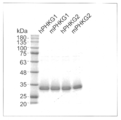
- Figure 2 shows SDS-PAGE analysis of recombinant proteins containing human or mouse PHKG1 / 2 kinase domains. This confirmed the purity of the protein obtained. Bands were stained with Coomassie Brilliant Blue. Shown are kinase inhibition profiles for human and mouse PHKG1 against sunitinib, N-decethylsunitinib and sorafenib.
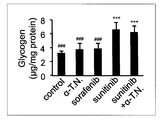
- FIG. 5 shows that ALT is elevated in sunitinib-treated mice. Shows that liver glycogen content is increased in sunitinib-treated mice.
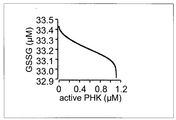
- concentration by a computer is shown.
- FIG. 5 shows the knockdown effect of shPHKG2 adenovirus on the expression of PHKG2 mRNA in the liver.
- Fig. 6 shows the knockdown effect of shPHKG2 adenovirus on the expression of liver PHKG2 protein.
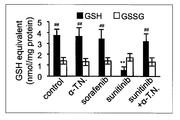
- FIG. 5 shows that the ratio of GSH to GSSG was maintained at regulatory levels in sunitinib and ⁇ -tocopherol nicotinate combination mice.
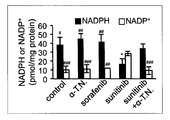
- Figure 5 shows that the ratio of NADH to NADP + was maintained at regulatory levels in sunitinib and ⁇ -tocopherol nicotinate combination mice.
- FIG. 6 shows the results of adjusting the values in sunitinib-treated mice combined with ⁇ -tocopherol nicotinate by reducing high ALT levels associated with sunitinib treatment.
- the ratio of GSH to GSSG in the heart is reduced in sunitinib-treated mice, while ⁇ -tocopherol nicotinate combination shows that both ratios were maintained at regulatory levels.
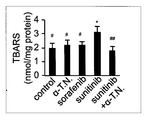
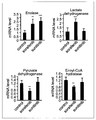
- the content of TBARS in the heart increased in sunitinib-treated mice, while the regulatory level was maintained with alpha tocopherol nicotinate. It shows that the mRNA expression level of the enzyme involved in energy metabolism was changed to sunitinib and sorafenib treatment.
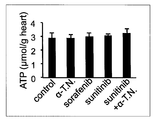
- the amount of ATP in the heart shows that there was no change with sunitinib and sorafenib treatment.
- the serum concentration of troponin T (an index of cardiac dysfunction) increased in sunitinib-treated mice, while the regulatory level was maintained by the combined use of ⁇ -tocopherol nicotinate.
- the ratio of GSH to GSSG is reduced in platelets of sunitinib-treated mice, while ⁇ -tocopherol nicotinate combination shows that both ratios were maintained at regulatory levels.
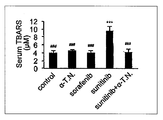
- TBSRS content is elevated in platelets of sunitinib-treated mice, while ⁇ -tocopherol nicotinate combined maintains both regulatory levels.
- Annexin V on the cell surface is elevated in platelets of sunitinib-treated mice, while alpha-tocopherol nicotinate combination maintained both regulatory levels.
- Circulating platelet half-life is reduced in sunitinib-treated mice, while alpha-tocopherol nicotinate combined maintains half-life at regulatory levels.
- the ratio of NADPH to NADP + was reduced in the thyroid of sunitinib-treated mice, while the combination of ⁇ -tocopherol nicotinate showed that both ratios were maintained at regulatory levels.
- the ratio of GSH to GSSG was reduced in the thyroid of sunitinib-treated mice, while the combination of ⁇ -tocopherol nicotinate showed that both ratios were maintained at regulatory levels.
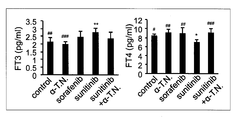
- the TBSRS content of the thyroid increased in the platelets of sunitinib-treated mice, while the regulatory level was maintained with ⁇ -tocopherol nicotinate. Serum FT4 concentrations were only slightly reduced in sunitinib-treated mice, indicating that FT3 values remained unaffected.
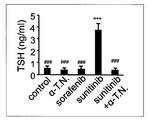
- Serum TSH levels were reduced in sunitinib-treated mice, while ⁇ -tocopherol nicotinate combined maintained regulatory levels.
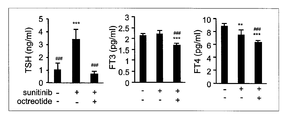
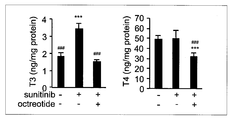
- the sunitinib-mediated increase in TSH levels was suppressed by the combination of octreotide, indicating that serum ST3 and ST4 levels were significantly reduced. It shows that the combined use of octreotide also greatly reduced the thyroid T3 and T4 levels.
- the effect of an antioxidant on the platelet count increased by sunitinib administration is shown.
- the effect of the antioxidant with respect to TSH raised by sunitinib administration is shown.
- the effect of the antioxidant with respect to troponin T raised by sunitinib administration is shown.
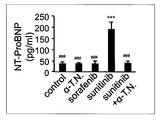
- the effect of the antioxidant with respect to NT-proBNP raised by sunitinib administration is shown.
- the effect of the antioxidant with respect to ALT which rose by sunitinib administration is shown.
- the change of the lung cancer tumor volume in combined use of sunitinib and tocopherol nicotinate is shown.
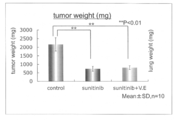
- the change of the lung cancer tumor weight in combined use of sunitinib and tocopherol nicotinate is shown.
- the change of the lung weight in combined use of sunitinib and tocopherol nicotinate is shown.
- sunitinib is an anticancer agent having direct antitumor activity and tumor angiogenesis inhibitory action against solid cancer by inhibiting a plurality of receptor kinase activities.
- Sunitinib has the chemical name N- [2- (diethylamino) ethyl] -5-[(Z)-(5-fluoro-2-oxo-1,2-dihydro-3H-indole-3-ylidene) methyl] -2 , 4-dimethyl-1H-pyrrole-3-carboxamide.
- the salt of sunitinib is not limited as long as it is a pharmaceutically acceptable salt, but an acid addition salt is preferable, and malate is particularly preferable.
- the cancer that can be treated by administration of sunitinib may be solid cancer, but renal cell carcinoma (RCC), gastrointestinal stromal tumor (GIST), and pancreatic neuroendocrine tumor (pNET) are preferable.
- RCC renal cell carcinoma
- GIST gastrointestinal stromal tumor
- pNET pancreatic neuroendocrine tumor
- the active ingredient of the side effect reducing agent of sunitinib or a salt thereof of the present invention is an antioxidant, but an antioxidant involved in the redox system in the living body is preferable, and it can be administered to humans safely.
- the antioxidant which has is more preferable.
- antioxidants that can be used include vitamin E or derivatives thereof, vitamin C or derivatives thereof, vitamin A or derivatives thereof, vitamin B 2 or derivatives thereof, cysteine or derivatives thereof, glutathione, polyphenols, carotenes, butyl One or more selected from hydroxyanisole and dibutylhydroxytoluene are preferred.
- vitamin E examples include tocopherol acetate and tocopherol nicotinate.
- vitamin C ascorbic acid
- ascorbic acid fatty acid esters such as ascorbyl palmitate
- ascorbic acid inorganic acid esters such as ascorbic acid phosphate, ascorbic acid calcium salts, ascorbic acid ester salts such as sodium ascorbic acid phosphate, etc.
- Vitamin A includes retinol, retinal, retinoic acid and their dehydro forms.
- Examples of vitamin A derivatives include tretinoin.
- vitamin B 2 (riboflavin) derivatives examples include riboflavin butyrate.
- cysteine derivatives include carbocysteine, methylcysteine, ethylcysteine, acetylcysteine, and the like.
- polyphenols include catechins, anthocyanins, tannins, rutins, isoflavones, chlorogenic acids, ellagic acids, lignans, curcumins, coumarins, and sesamin.
- vitamin E or its derivatives are preferred.
- antioxidants showed the side effect reducing effect of sunitinib or its salt. That is, the cause of the high side effect frequency of sunitinib or a salt thereof has never been known.
- the inventors have studied that glycogen metabolism is suppressed by administration of sunitinib, resulting in hepatotoxicity, cardiotoxicity, thrombocytopenia, hypothyroidism, It was found that glycogen metabolism is increased by administration, and side effects caused by sunitinib can be suppressed. It was also found that the antitumor effect of sunitinib is not affected by the combined use of antioxidants.
- the side effect reducing agent of this invention should just contain the antioxidant, and can be set as the composition suitable for various dosage forms. Moreover, it can also mix
- kits An anticancer agent and an antioxidant-containing composition containing sunitinib or a salt thereof can be used as a kit.
- each composition constituting the kit can be made into various known preparation forms.
- each composition is stored in various commonly used containers according to the preparation form, It can be set as the kit for cancer treatment in the containing mammal.
- anticancer agents containing sunitinib or a salt thereof are commercially available in oral dosage forms, a composition containing an antioxidant or a composition containing sunitinib or a salt thereof and an antioxidant is orally administered.
- a dosage form is preferred.
- an antioxidant or a combination of sunitinib or a salt thereof and an antioxidant, if necessary, an excipient, a binder, a disintegrant, a lubricant, a colorant, a taste mask -After adding a flavoring agent etc., a tablet, a coated tablet, a granule, a powder, a capsule etc. can be manufactured by a conventional method.
- excipient examples include lactose, sucrose, D-mannitol, glucose, starch, calcium carbonate, kaolin, microcrystalline cellulose, and anhydrous silicic acid.
- binder examples include water, ethanol, 1-propanol, 2-propanol, simple syrup, glucose solution, ⁇ -starch solution, gelatin solution, D-mannitol, carboxymethylcellulose, hydroxypropylcellulose, hydroxypropyl starch, methylcellulose, ethylcellulose, Shellac, calcium phosphate, polyvinylpyrrolidone and the like can be mentioned.
- Examples of the disintegrant include dry starch, sodium alginate, agar powder, sodium hydrogen carbonate, calcium carbonate, sodium lauryl sulfate, stearic acid monoglyceride, and lactose.
- Examples of the lubricant include purified talc, sodium stearate, magnesium stearate, borax, and polyethylene glycol.
- Examples of the colorant include titanium oxide and iron oxide.
- Examples of the flavoring / flavoring agent include sucrose, orange peel, citric acid, tartaric acid and the like.
- the dosage of the antioxidant varies depending on the kind of the antioxidant.
- the daily dosage per adult is about 0.1 mg to 10 g, preferably about 5 mg to 5 g.
- the amount of vitamin E is preferably 7.0 to 800 mg per day.
- the amount of vitamin C is preferably 50 to 2000 mg per day.
- the amount of retinol is preferably 0.1 to 30 mg per day.
- the amount of vitamin B 2 is preferably 1 to 120 mg per day.
- cysteine or a derivative thereof the amount of cysteine is preferably 10 to 1000 mg per day.
- glutathione 10 to 1000 mg per day is preferable.
- polyphenols 10 mg to 5 g per day is preferable.
- sunitinib or a salt thereof is a commonly used dose.
- 50 mg / day of sunitinib is orally administered for 4 weeks daily, and then withdrawn for 2 weeks. . Repeat this as one course.
- 37.5 mg of sunitinib per adult can be orally administered once a day, and the dose can be increased to 50 mg once a day.
- the antioxidant may be administered during the sunitinib administration period, may be simultaneously with the administration of sunitinib, or may be administered orally once to 3 times a day regardless of the administration interval of sunitinib.
- a composition containing an antioxidant and sunitinib or a salt thereof is used, it is administered simultaneously.
- DMEM fetal bovine serum
- PCSM penicillin streptomycin
- 293FT cells were cultured at Tesque, Kyoto, Japan.
- HEK293 cells were cultured in DMEM medium supplemented with 10% FBS and 1% PCSM.
- Primary hepatocytes were isolated, seeded onto collagen-coated plates, and cultured in William E medium (Sigma Aldrich, Carlsbad, CA, USA) supplemented with 10% FBS, 2 mM L-glutamine and 1% PCSM.
- IC 50 value In the measurement of IC 50 value, a prescribed concentration of drug was added to the reaction mixture. The ATP concentration was fitted to a standard model, and the IC 50 value was measured based on Powell's nonlinear least square method with the same load factor. The assay was performed using Engineer® software (Micromath, St. Louis, MO).
- Model simulation Based on previous studies (PLoS compatational biology 7: e1002272 (2011) and Biochimica et biophysica acta 1673: 149-159 (2004)), a solution including glycogen metabolism was used to simulate the relationship between phosphorylase kinase activity and GSH levels in the liver.
- a cell biology markup language (SBML) model was constructed using Cell Designer 4.2, including the sugar pathway and the pentose phosphate pathway.
- Initial values of kinetic parameters not included in previous studies were obtained from the Sabio-RK database.
- Kinetic parameter values were measured using COPASI software by fitting the model to intrahepatic GSH / GSSG levels and NADPH / NADP + levels at steady state. Using the determined parameters, sensitivity analysis was performed using COPASI.
- mice 6-week-old C57BL6 / J mice (male) were purchased from Japan SLC (Shizuoka, Japan) and sunitinib (0.167 mg / g diet; estimated 26.7 mg / kg / day) or sorafenib (0.129 mg / g diet) for 14 days MIF diet (Oriental Yeast Industry, Tokyo, Japan) containing an estimated 20.6 mg / kg / day). The drug dose was adjusted so that the plasma drug concentration in mice was maintained at the same level as in patients.
- mice were fed a diet containing both ⁇ -tocopherol nicotinate (0.189 mg / g diet; estimated 30 mg / kg / day) and sunitinib for 14 days.
- BSO was administered intraperitoneally (6 mmol / kg at 1 and 11 hours)
- sunitinib was administered orally (8 mg / kg at 0 hours, and 6 mg / kg at 6, 12 and 18 hours).
- the mice were killed and the organs and cells of interest were assayed.
- Serum ALT concentration was measured using L type WAKO GPT J2 kit (Wako) and Dimension Xpand analyzer (Siemens, Berlin, Germany) according to the protocol.
- L type WAKO GPT J2 kit Wi-Fi Protected Access (Wako)
- Dimension Xpand analyzer Siemens, Berlin, Germany
- the excised tissue specimen was homogenized in 6% metaphosphoric acid (Wako) and centrifuged at 15,000 rpm for 5 minutes at 40 ° C., and the glutathione concentration in the tissue was measured. The supernatant was divided into two aliquots, one of which was used for the assay of total glutathione concentration, and for the other, 2-vinylpyridine (Nacalai Tesque) was added to mask the GSH.
- the electrical resistance method was used to measure the platelet count.
- TSH concentration was measured according to the protocol.
- FT3, FT4, total T3, and total T4 concentrations were measured using ARCHITECT analyzer i 1000SR (Abbott Japan) using the corresponding kits.
- Sunitinib m / z 399.48-283.1; N-decethylsunitinib: m / z 371.27-283.1; sorafenib: m / z 465.35-252.1; metoprolol: m / z 268.23-116.03 were used as internal standards.
- the plasma sample was deproteinized with 4 volumes of acetonitrile (Nacalai Tesque), and the supernatant was used for the assay.
- Virus production and propagation were performed according to the protocol. Crude adenovirus was purified by cesium chloride density gradient ultracentrifugation. The titer of purified virus was measured using the Adeno-X TM Rapid Titer Kit (Clontech), after which 1 ⁇ 10 9 ifu adenovirus was injected intravenously into mice. Mice died 72 hours after adenovirus administration and related tissues and cells were assayed.
- RNA isoplus reagent TaKaRa, Shiga, Japan
- ReverTra Ace Toyobo Engineering, Osaka, Japan
- SYBR® GreenER TM qPCR SuperMix Universal Eco Real-Time PCR system
- Eco Real-Time PCR system Illumina, San Diego, CA
- mice PHKG2 5′-GCA CCA GAG ATC CTT AAA T-3 ′ (SEQ ID NO: 3) and 5′-TAG CAT CAG GAT TTG GCG C-3 ′ (SEQ ID NO: 4);
- ⁇ -actin 5′-CCG GAA GGA AAA CTG ACA GC-3 ′ (SEQ ID NO: 5) and 5′-GTG GTG GTG AAG CTG TAG CC-3 ′ (SEQ ID NO: 6).
- Example 1 (Inhibition of off-target PHKG1 / 2 by sunitinib) Based on the speculation that differences in the incidence and severity of side effects induced by sunitinib and sorafenib are related to preferential inhibition of off-target kinases by sunitinib, a comprehensive comparison of the kinase occupancy profiles of the two drugs ( FIG. 1A).
- PHKG1 serine / threonine kinase 17a
- PHKG2 phosphorylase kinase gamma 1 (muscle)
- PHKG2 phosphorylase kinase gamma 2
- BMP2K BMP2-induced kinase
- PHKG1 and PHKG2 The distribution pattern of PHKG1 and PHKG2 is tissue specific, the former is expressed in skeletal muscle, heart and thyroid, while the latter is expressed in liver and testis (Molecular genetics and metabolism 92: 234-242 (2007)).
- Sunitinib is thought to affect glucose metabolism homeostasis, which is important for the normal physiology of all tissues and organs, by inhibiting both isomers.
- mutations in the PHKG2 gene form the basis for type IV glycogen storage disease (GSD), which can cause cirrhosis (Clinics in endocrinology and metabolism 5: 579-598 (1976)).
- Rats with a gsd / gsd mutation in PHKG2 show a marked decrease in liver glycogen phosphorylase activity and develop symptoms similar to those associated with type IV GSD (The Biochemical journal 188: 99-106 (1980)). . Therefore, in this study we focused on PHKG1 / 2.
- a recombinant protein consisting of human and mouse PHKG1 / 2 kinase domains fused at the N-terminus with His-tag was obtained using the mammalian cell expression system (FIG. 1B), and its in vitro kinase activity was determined by sunitinib and its Analysis was performed with or without the active metabolite N-desethylsunitinib.
- Example 2 (Sunitinib suppresses hepatic glycogen metabolism through PHKG2 inhibition and causes oxidative stress in the liver) Considering the results of Example 1, the mechanism of sunitinib-related toxicity was investigated in vivo using a mouse model. C57BL / 6 mice (6 weeks old, male) were given sunitinib or sorafenib for 14 days, and the plasma concentration of each drug was measured by liquid chromatography tandem mass spectrometry. The content of sunitinib or sorafenib in the mouse chow was adjusted so that the plasma concentrations were the respective clinical concentrations (sunitinib: 40-70 ng / mL, sorafenib: 2500-5000 ng / mL).
- sunitinib may suppress glycogen metabolism through inhibition of PHKG2, which is an isoform of the catalytic subunit of phosphorylase kinase expressed in the liver. Therefore, in order to further investigate the mechanism of hepatotoxicity caused by sunitinib, we analyzed the effects of sunitinib on glycolysis and pentose phosphate pathway. Using metabolic pathway diagrams, the effect of PHKG2 inhibition on metabolic homeostasis was estimated by a computational model approach. The model was constructed by combining the previous model with various kinetic parameter values determined by fitting the model to experimental data obtained from drug-untreated mice.
- the NADPH / NADP + ratio is related to the redox balance in cells because NADPH is required to reduce GSSG to GSH, so the amounts of GSSG and GSH in the liver were also measured.
- sunitinib decreased GSH while increasing GSSG, and the ratio of GSH to GSSG in the liver of sunitinib-treated mice was 90% lower than in control mice and sorafenib-treated mice (FIG. 2G).
- Example 3 (Oxidative stress induced by sunitinib increases the sensitivity of hepatocytes to sunitinib) Since oxidative stress is well known to exacerbate liver injury, the above results suggest that continuous oral administration of sunitinib enhances the hepatotoxicity of the drug. This hypothesis was verified by examining the effects of short-term administration of sunitinib after intraperitoneal administration of buthionine sulfoximine (BSO) to mice to deplete liver GSH (FIG. 3A). As a result, serum ALT levels increased significantly in the BSO + sunitinib group, but not in the BSO alone group (Fig. 3B), supporting the increased sensitivity of the liver to sunitinib due to oxidative stress in the liver.
- BSO buthionine sulfoximine
- Example 4 (Oxidative stress induced by sunitinib is involved in cardiotoxicity) Clinical problems associated with sunitinib treatment include related heart disease. Nevertheless, the onset of reduced left ventricular ejection fraction is relatively rare. In the heart, the PHKG1 isoform was expressed and, like PHKG2, was shown to be inhibited by sunitinib and its metabolites (FIG. 1). Therefore, it was speculated that sunitinib induces oxidative stress in heart tissue as well as liver. This is because when either sunitinib or sorafenib was administered to mice for 14 days, cardiac glycogen accumulation was significantly higher in sunitinib-treated mice than in control mice, but not in sorafenib-treated mice.
- FIG. 4A A significant decrease in cardiac glucose-6-phosphate levels was also observed in response to sunitinib, but not sorafenib (FIG. 4B).
- FIG. 4B we examined whether oxidative stress was generated in heart tissue exposed to sunitinib.
- the administration of sunitinib significantly decreased the NADPH / NADP + ratio and the GSH / GSSG ratio compared to control mice, while the TBARS amount increased significantly, but was not observed with sorafenib administration (FIGS. 4C-E).
- the heart consumes large amounts of ATP.
- ATP is normally supplied through an oxidative phosphorylation pathway in which acetyl-CoA is synthesized during ⁇ -oxidation of fatty acids.
- ATP is generated through glycolysis from recent research in spontaneously hypertensive rats (SHR), and at that time, the expression of two components, enolase and lactate dehydrogenase, is increased, and enoyl-CoA is involved in the ⁇ -oxidation pathway. It was shown to be accompanied by reduced expression of pyruvate dehydrogenase involved in hydrolatanase and TCA cycle. These changes in the desired pathway of energy metabolism are thought to protect the heart tissue from the excessive amount of ROS produced when ATP production proceeds via oxidative phosphorylation under hypertensive conditions.
- Example 5 The cause of the decrease in platelet count is due to oxidative stress induced by sunitinib.
- Phosphorylase kinase of either the catalytic subunit PHKG1 or PHKG2 is ubiquitously expressed in mammalian organs (Molecular genetics and metabolism 92: 234-242 (2007)).
- sunitinib induces oxidative stress by inhibiting phospholyase and suppressing glycogen metabolism.
- the clinical dose limiting toxicity of sunitinib is determined by platelet count reduction and side effects in treated patients (Non-Patent Document 4). Therefore, the next experiment focused on the relationship between sunitinib-induced platelet count reduction and oxidative stress.
- glycogen in platelets in the liver and heart of mice fed with sunitinib or sorafenib for 14 days was measured.
- glycogen accumulation was observed, but in the control group and sorafenib administration group, glycogen accumulation was not observed (FIG. 5A).
- sunitinib significantly reduced the NADPH / NADP + and GSH / GSSG ratios and increased TBARS (FIGS. 5B-D).
- oxidative stress increases the phagocytosis of cells by macrophages by allowing calcium ions to flow into cytosole, up-regulating phospholipid scrambling activity, and presenting phosphatidylserine (PS) on the cell membrane surface.
- PS phosphatidylserine
- platelets were collected from control mice, sunitinib, and sorafenib-treated mice, and annexin V, which is known to selectively bind to PS, was fluorescently labeled to confirm the binding between the annexin V and platelets. Similar to the findings described above, platelets collected from sunitinib-treated mice bound higher amounts of Annexin V than platelets collected from control and sorafenib-treated mice (FIG. 5E). However, the amount of annexin V bound to platelets collected from mice administered with a combination of ⁇ -tocopherol nicotinate and sunitinib maintained a control amount (FIG. 5E).
- Example 6 Oletidative stress caused by sunitinib causes thyroid dysfunction. It has been reported that thyroid dysfunction and hyperthyroid stimulating hormoneemia are side effects often seen in patients who have received sunitinib treatment (Non-patent Document 5). Therefore, we investigated whether thyroid dysfunction was caused by oxidative stress induced by sunitinib. Similar to liver, heart and platelets, glycogen was significantly accumulated in the thyroid of mice fed sunitinib for 14 days, but this was not observed in control mice or mice fed sorafenib (FIG. 6A). ). A significant decrease in the NADPH / NADP + ratio or GSH / GSSG ratio and a significant increase in TBARS were only seen in sunitinib-treated mice (FIGS.
- Thyroid hormone is produced in the thyroid follicle by the catalytic action of thyroid peroxidase (TPO), which requires oxygen peroxide (Molecular and cellular endocrinology 343: 32-44 (2011)).
- TPO thyroid peroxidase
- Carbon peroxide is produced by dual oxidase 2, an enzyme that NADPH functions as a coenzyme and expressed in follicular epithelial cells (Molecular and cellular endocrinology 343: 32-44 (2011)). Therefore, treatment with sunitinib seems to suppress the production of thyroid hormone by reducing the amount of NADPH in the thyroid gland.
- Serum thyroid hormone levels are known to be tightly controlled by thyroid hormone feedback (The Journal of physiology 195: 29-37 (1968)), and the above observations are for patients with latent hypothyroidism Reminiscent of symptoms seen in Latent hypothyroidism shows a persistently high TSH signal to ensure sufficient amounts of FT3 and FT4 when the function of the thyroid gland that produces thyroid hormone decreases (Lancet 379: 1142-1154 (2012) ).
- octreotide known to reduce TSH secreted by the pituitary gland and inhibit feedback action
- was given to mice fed with kinase inhibitors. was administered.
- the serum FT3 and FT4 values were significantly lower than the control values, similar to T3 and T4 in the thyroid gland. This is consistent with the conclusion that sunitinib suppresses thyroid hormone synthesis (FIGS. 6G-H).
- Example 7 (Sunitinib induces glycogen accumulation and oxidative stress generation in patients.)
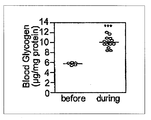
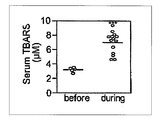
- the effect of sunitinib on glycogen metabolism and the ability of the drug to induce oxidative stress were evaluated by measuring changes in blood glycogen and serum TBARS.
- blood glycogen levels and serum TBARS levels of mice fed with sunitinib or sorafenib for 14 days and mice in the control group were measured.
- Significant increases in blood glycogen levels and serum TBARS levels were observed only in the sunitinib-administered group (FIGS. 7A-B).
- the combination of sunitinib and ⁇ -tocopherol nicotinate decreased the amount of serum TBARS (FIG. 7B).
- Example 8 The effects of antioxidants on serum TBARS (thiobarbituric acid-reactive substance), platelet count, TSH (thyroid hormone), troponin T, NT-proBNP and ALT, which are increased by sunitinib administration, were examined by the aforementioned mouse experiments. . The results are shown in FIGS. 8A to 8F. As shown in FIGS. 8A-8F, all antioxidants significantly reduced the oxidative stress markers that were elevated by sunitinib administration. Of these, the effect of tocopherol nicotinate was most excellent.
- the dosage (oral administration) of various oxidizing agents is as follows. Vitamin A: 192.9 mg / kg / day. Riboflavin butyrate: 5.1 mg / kg / day.
- Ascorbic acid 77.1 mg / kg / day. Nicotinic acid ⁇ -tocopherol: 25.7 mg / kg / day. ⁇ -Tocopherol acetate: 12.9 mg / kg / day. Cysteine: 20.6 mg / kg / day. Glutathione: 12.9 mg / kg / day. Carbocysteine: 64.3 mg / kg / day. Methylcysteine: 12.9 mg / kg / day. Ethylcysteine: 12.9 mg / kg / day. Acetylcysteine: 1470 mg / kg / day.
- Example 9 Tumor-bearing mice were prepared by subcutaneous administration of 1 ⁇ 10 6 Lewis lung cancer cells, and sunitinib (26.7 mg / kg / day) alone or sunitinib (26.7 mg / kg / day) and tocopherol nicotinate (30 mg / kg / day) day) was administered for 2 weeks. The antitumor effect was observed after 2 weeks. The results are shown in FIGS. 9A to 9C. FIG. 9 shows that the antitumor effect of sunitinib is not affected by administration of tocopherol nicotinate (antioxidant).
Landscapes
- Health & Medical Sciences (AREA)
- Chemical & Material Sciences (AREA)
- Life Sciences & Earth Sciences (AREA)
- Veterinary Medicine (AREA)
- Medicinal Chemistry (AREA)
- Pharmacology & Pharmacy (AREA)
- Animal Behavior & Ethology (AREA)
- General Health & Medical Sciences (AREA)
- Public Health (AREA)
- Epidemiology (AREA)
- Chemical Kinetics & Catalysis (AREA)
- General Chemical & Material Sciences (AREA)
- Nuclear Medicine, Radiotherapy & Molecular Imaging (AREA)
- Organic Chemistry (AREA)
- Toxicology (AREA)
- Biochemistry (AREA)
- Pharmaceuticals Containing Other Organic And Inorganic Compounds (AREA)
Abstract
本発明は、スニチニブと抗酸化剤を併用することにより、スニチニブの副作用を軽減する方法に関する。スニチニブの副作用の発生が、血中グリコーゲンと酸化ストレスの上昇に起因することを解明し、当該副作用が抗酸化剤の併用により軽減することを見出した。
Description
本発明は、抗がん剤スニチニブの副作用軽減剤及び副作用が軽減されたスニチニブ含有抗がん剤に関する。
スニチニブは、血小板由来増殖因子受容体(PDGFR-α及びPDGFR-β)、血管内皮増殖因子受容体(VEGFR-1、VEGFR-2及びVEGFR-3)、幹細胞因子受容体(KIT)、fms様チロシンキナーゼ3(FLT3)、コロニー刺激因子-1受容体(CSR-1R)及びグリア細胞由来神経栄養因子受容体(RET)の複数の受容体チロシンキナーゼ(RTK)活性を阻害することにより、種々の固形癌に対する直接的な抗腫瘍活性と腫瘍血管新生阻害作用の双方を有する抗がん剤である(非特許文献1~3)。スニチニブの治療対象癌としては、消化管間質腫瘍(GIST)、腎細胞癌、膵神経内分泌腫瘍が認められている。このうち、進行性腎細胞癌については、治療ガイドラインにより、ファーストラインとされており、その有効性は極めて高く、広く使用されている。
Expert opinion on therapeutic targets 10:867-876(2006)
Expert opinion on drug metabolism & toxicology 6:1005-1015(2010)
Angiogenesis 13:1-14(2010)
Investigational new drugs 30:179-180(2012)
Journal of clinical oncology:official journal of the American Society of Clinical Oncology 24:25-35(2006)
The oncologist 16 Suppl 2:32-44(2011)
Anti-cancer drugs 20:893-900(2009)
しかしながら、スニチニブの使用に伴って発生する副作用は多く、その頻度は進行性腎細胞癌、肝細胞癌に対する治療薬であるソラフェニブに比べて高く、重症度も高い。その副作用としては、甲状腺機能低下、左室駆出率低下、血小板数減少、肝マーカー上昇等が挙げられ、その他好中球減少、リンパ球数減少、リパーゼ増加、アミラーゼ増加、下痢、悪心、嘔吐、食欲不振、手足症候群等も挙げられる。これらの副作用の出現により所定の投与量や投与回数を続けることができず、投与量の減量、休薬が必要になることがある(非特許文献4~7)。そうすると、スニチニブが本来有する治療効果が得られないことがあった。
従って、本発明の課題は、スニチニブの副作用を軽減する手段を提供することにある。
従って、本発明の課題は、スニチニブの副作用を軽減する手段を提供することにある。
そこで、本発明者は、スニチニブの作用点である受容体チロシンキナーゼと副作用との関係について種々検討した結果、スニチニブが阻害活性を有するホスホリラーゼキナーゼ1及びホスホリラーゼキナーゼ2(PHKG1/2)に到達した。PHKG1/2は、グリコーゲン代謝を触媒とするキナーゼであることから、マウスにスニチニブを投与してグリコーゲン代謝を検討したところ、スニチニブの投与によるグリコーゲン代謝の抑制が、強い酸化ストレスの誘導に繋がり、その結果として肝毒性、心毒性、血小板減少、甲状腺機能低下を生じさせることを見出した。かかる知見に基づき、スニチニブ投与マウスに抗酸化剤を投与したところ、これらのスニチニブ特有の副作用が顕著に軽減できることを見出した。さらに、スニチニブと抗酸化剤の併用によっては、スニチニブの抗腫瘍効果は低下せず、抗酸化剤の投与がスニチニブの副作用軽減剤として有用であることを見出し、本発明を完成するに至った。
すなわち、本発明は、以下の〔1〕~〔28〕を提供するものである。
〔1〕抗酸化剤を有効成分とするスニチニブ又はその塩の副作用軽減剤。
〔2〕抗酸化剤が、ビタミンE又はその誘導体、ビタミンC又はその誘導体、ビタミンA又はその誘導体、ビタミンB2又はその誘導体、システイン又はその誘導体、グルタチオン、ポリフェノール類、カロテン類、ブチルヒドロキシアニソール及びジブチルヒドロキシトルエンから選ばれる1種以上である〔1〕記載の副作用軽減剤。
〔3〕スニチニブ又はその塩の副作用が、甲状腺機能低下、血小板減少、左室駆出率低下、及び肝マーカー上昇から選ばれる1種以上である〔1〕又は〔2〕記載の副作用軽減剤。
〔4〕スニチニブ又はその塩と抗酸化剤を組み合わせてなる抗がん剤。
〔5〕抗酸化剤が、ビタミンE又はその誘導体、ビタミンC又はその誘導体、ビタミンA又はその誘導体、ビタミンB2又はその誘導体、システイン又はその誘導体、グルタチオン、ポリフェノール類、カロテン類、ブチルヒドロキシアニソール及びジブチルヒドロキシトルエンから選ばれる1種以上である〔4〕記載の抗がん剤。
〔6〕スニチニブ又はその塩の副作用が軽減された抗がん剤である〔4〕又は〔5〕記載の抗がん剤。
〔7〕スニチニブ又はその塩の副作用が、甲状腺機能低下、血小板減少、左室駆出率低下、及び肝マーカー上昇から選ばれる1種以上である〔6〕記載の抗がん剤。
〔8〕スニチニブ又はその塩の副作用を軽減するために使用する抗酸化剤。
〔9〕ビタミンE又はその誘導体、ビタミンC又はその誘導体、ビタミンA又はその誘導体、ビタミンB2又はその誘導体、システイン又はその誘導体、グルタチオン、ポリフェノール類、カロテン類、ブチルヒドロキシアニソール及びジブチルヒドロキシトルエンから選ばれる1種以上である〔8〕記載の抗酸化剤。
〔10〕スニチニブ又はその塩の副作用が、甲状腺機能低下、血小板減少、左室駆出率低下、及び肝マーカー上昇から選ばれる1種以上である〔8〕又は〔9〕記載の抗酸化剤。
〔11〕がんの治療に使用するためのスニチニブ又はその塩と抗酸化剤の組み合わせ。
〔12〕抗酸化剤が、ビタミンE又はその誘導体、ビタミンC又はその誘導体、ビタミンA又はその誘導体、ビタミンB2又はその誘導体、システイン又はその誘導体、グルタチオン、ポリフェノール類、カロテン類、ブチルヒドロキシアニソール及びジブチルヒドロキシトルエンから選ばれる1種以上である〔11〕記載の組み合わせ。
〔13〕スニチニブ又はその塩の副作用が軽減されたがんの治療のために使用する〔11〕又は〔12〕記載の組み合わせ。
〔14〕スニチニブ又はその塩の副作用が、甲状腺機能低下、血小板減少、左室駆出率低下、及び肝マーカー上昇から選ばれる1種以上である〔13〕記載の組み合わせ。
〔15〕スニチニブの副作用軽減剤製造のための抗酸化剤の使用。
〔16〕抗酸化剤が、ビタミンE又はその誘導体、ビタミンC又はその誘導体、ビタミンA又はその誘導体、ビタミンB2又はその誘導体、システイン又はその誘導体、グルタチオン、ポリフェノール類、カロテン類、ブチルヒドロキシアニソール及びジブチルヒドロキシトルエンから選ばれる1種以上である〔15〕記載の使用。
〔17〕スニチニブ又はその塩の副作用が、甲状腺機能低下、血小板減少、左室駆出率低下、及び肝マーカー上昇から選ばれる1種以上である〔15〕又は〔16〕記載の使用。
〔18〕抗がん剤製造のためのスニチニブ又はその塩及び抗酸化剤の使用。
〔19〕抗酸化剤が、ビタミンE又はその誘導体、ビタミンC又はその誘導体、ビタミンA又はその誘導体、ビタミンB2又はその誘導体、システイン又はその誘導体、グルタチオン、ポリフェノール類、カロテン類、ブチルヒドロキシアニソール及びジブチルヒドロキシトルエンから選ばれる1種以上である〔18〕記載の使用。
〔20〕抗がん剤が、スニチニブ又はその塩の副作用が軽減された抗がん剤である〔18〕又は〔19〕記載の使用。
〔21〕スニチニブ又はその塩の副作用が、甲状腺機能低下、血小板減少、左室駆出率低下、及び肝マーカー上昇から選ばれる1種以上である〔20〕記載の使用。
〔22〕抗酸化剤の有効量を投与することを特徴とするスニチニブ又はその塩の副作用軽減方法。
〔23〕抗酸化剤が、ビタミンE又はその誘導体、ビタミンC又はその誘導体、ビタミンA又はその誘導体、ビタミンB2又はその誘導体、システイン又はその誘導体、グルタチオン、ポリフェノール類、カロテン類、ブチルヒドロキシアニソール及びジブチルヒドロキシトルエンから選ばれる1種以上である〔21〕記載の方法。
〔24〕スニチニブ又はその塩の副作用が、甲状腺機能低下、血小板減少、左室駆出率低下、及び肝マーカー上昇から選ばれる1種以上である〔22〕又は〔23〕記載の方法。
〔25〕スニチニブ又はその塩及び抗酸化剤を有効量投与することを特徴とするがんの治療方法。
〔26〕抗酸化剤が、ビタミンE又はその誘導体、ビタミンC又はその誘導体、ビタミンA又はその誘導体、ビタミンB2又はその誘導体、システイン又はその誘導体、グルタチオン、ポリフェノール類、カロテン類、ブチルヒドロキシアニソール及びジブチルヒドロキシトルエンから選ばれる1種以上である〔25〕記載の治療方法。
〔27〕スニチニブ又はその塩の副作用が軽減されたがんの治療方法である〔25〕又は〔26〕記載の治療方法。
〔28〕スニチニブ又はその塩の副作用が、甲状腺機能低下、血小板減少、左室駆出率低下、及び肝マーカー上昇から選ばれる1種以上である〔27〕記載の治療方法。
〔1〕抗酸化剤を有効成分とするスニチニブ又はその塩の副作用軽減剤。
〔2〕抗酸化剤が、ビタミンE又はその誘導体、ビタミンC又はその誘導体、ビタミンA又はその誘導体、ビタミンB2又はその誘導体、システイン又はその誘導体、グルタチオン、ポリフェノール類、カロテン類、ブチルヒドロキシアニソール及びジブチルヒドロキシトルエンから選ばれる1種以上である〔1〕記載の副作用軽減剤。
〔3〕スニチニブ又はその塩の副作用が、甲状腺機能低下、血小板減少、左室駆出率低下、及び肝マーカー上昇から選ばれる1種以上である〔1〕又は〔2〕記載の副作用軽減剤。
〔4〕スニチニブ又はその塩と抗酸化剤を組み合わせてなる抗がん剤。
〔5〕抗酸化剤が、ビタミンE又はその誘導体、ビタミンC又はその誘導体、ビタミンA又はその誘導体、ビタミンB2又はその誘導体、システイン又はその誘導体、グルタチオン、ポリフェノール類、カロテン類、ブチルヒドロキシアニソール及びジブチルヒドロキシトルエンから選ばれる1種以上である〔4〕記載の抗がん剤。
〔6〕スニチニブ又はその塩の副作用が軽減された抗がん剤である〔4〕又は〔5〕記載の抗がん剤。
〔7〕スニチニブ又はその塩の副作用が、甲状腺機能低下、血小板減少、左室駆出率低下、及び肝マーカー上昇から選ばれる1種以上である〔6〕記載の抗がん剤。
〔8〕スニチニブ又はその塩の副作用を軽減するために使用する抗酸化剤。
〔9〕ビタミンE又はその誘導体、ビタミンC又はその誘導体、ビタミンA又はその誘導体、ビタミンB2又はその誘導体、システイン又はその誘導体、グルタチオン、ポリフェノール類、カロテン類、ブチルヒドロキシアニソール及びジブチルヒドロキシトルエンから選ばれる1種以上である〔8〕記載の抗酸化剤。
〔10〕スニチニブ又はその塩の副作用が、甲状腺機能低下、血小板減少、左室駆出率低下、及び肝マーカー上昇から選ばれる1種以上である〔8〕又は〔9〕記載の抗酸化剤。
〔11〕がんの治療に使用するためのスニチニブ又はその塩と抗酸化剤の組み合わせ。
〔12〕抗酸化剤が、ビタミンE又はその誘導体、ビタミンC又はその誘導体、ビタミンA又はその誘導体、ビタミンB2又はその誘導体、システイン又はその誘導体、グルタチオン、ポリフェノール類、カロテン類、ブチルヒドロキシアニソール及びジブチルヒドロキシトルエンから選ばれる1種以上である〔11〕記載の組み合わせ。
〔13〕スニチニブ又はその塩の副作用が軽減されたがんの治療のために使用する〔11〕又は〔12〕記載の組み合わせ。
〔14〕スニチニブ又はその塩の副作用が、甲状腺機能低下、血小板減少、左室駆出率低下、及び肝マーカー上昇から選ばれる1種以上である〔13〕記載の組み合わせ。
〔15〕スニチニブの副作用軽減剤製造のための抗酸化剤の使用。
〔16〕抗酸化剤が、ビタミンE又はその誘導体、ビタミンC又はその誘導体、ビタミンA又はその誘導体、ビタミンB2又はその誘導体、システイン又はその誘導体、グルタチオン、ポリフェノール類、カロテン類、ブチルヒドロキシアニソール及びジブチルヒドロキシトルエンから選ばれる1種以上である〔15〕記載の使用。
〔17〕スニチニブ又はその塩の副作用が、甲状腺機能低下、血小板減少、左室駆出率低下、及び肝マーカー上昇から選ばれる1種以上である〔15〕又は〔16〕記載の使用。
〔18〕抗がん剤製造のためのスニチニブ又はその塩及び抗酸化剤の使用。
〔19〕抗酸化剤が、ビタミンE又はその誘導体、ビタミンC又はその誘導体、ビタミンA又はその誘導体、ビタミンB2又はその誘導体、システイン又はその誘導体、グルタチオン、ポリフェノール類、カロテン類、ブチルヒドロキシアニソール及びジブチルヒドロキシトルエンから選ばれる1種以上である〔18〕記載の使用。
〔20〕抗がん剤が、スニチニブ又はその塩の副作用が軽減された抗がん剤である〔18〕又は〔19〕記載の使用。
〔21〕スニチニブ又はその塩の副作用が、甲状腺機能低下、血小板減少、左室駆出率低下、及び肝マーカー上昇から選ばれる1種以上である〔20〕記載の使用。
〔22〕抗酸化剤の有効量を投与することを特徴とするスニチニブ又はその塩の副作用軽減方法。
〔23〕抗酸化剤が、ビタミンE又はその誘導体、ビタミンC又はその誘導体、ビタミンA又はその誘導体、ビタミンB2又はその誘導体、システイン又はその誘導体、グルタチオン、ポリフェノール類、カロテン類、ブチルヒドロキシアニソール及びジブチルヒドロキシトルエンから選ばれる1種以上である〔21〕記載の方法。
〔24〕スニチニブ又はその塩の副作用が、甲状腺機能低下、血小板減少、左室駆出率低下、及び肝マーカー上昇から選ばれる1種以上である〔22〕又は〔23〕記載の方法。
〔25〕スニチニブ又はその塩及び抗酸化剤を有効量投与することを特徴とするがんの治療方法。
〔26〕抗酸化剤が、ビタミンE又はその誘導体、ビタミンC又はその誘導体、ビタミンA又はその誘導体、ビタミンB2又はその誘導体、システイン又はその誘導体、グルタチオン、ポリフェノール類、カロテン類、ブチルヒドロキシアニソール及びジブチルヒドロキシトルエンから選ばれる1種以上である〔25〕記載の治療方法。
〔27〕スニチニブ又はその塩の副作用が軽減されたがんの治療方法である〔25〕又は〔26〕記載の治療方法。
〔28〕スニチニブ又はその塩の副作用が、甲状腺機能低下、血小板減少、左室駆出率低下、及び肝マーカー上昇から選ばれる1種以上である〔27〕記載の治療方法。
スニチニブと抗酸化剤を併用すれば、スニチニブの副作用、例えば甲状腺機能低下、血小板減少、左室駆出率低下、肝マーカー上昇等を軽減することができる。また、抗酸化剤の併用によって、スニチニブの抗腫瘍効果は低下しないことから、スニチニブと抗酸化剤との併用は、副作用が軽減した抗がん剤として有用である。さらに、スニチニブの投与で副作用が発現し、投与量の軽減や投与中止をせざるを得ず、結果としてスニチニブ本来の優れた抗腫瘍効果を得ることができなかった患者に対して、長期間スニチニブ療法を継続することが可能になる。このような患者においては、スニチニブ本来の優れた抗腫瘍効果が期待できる。
本発明の副作用軽減の対象となる薬物は、スニチニブ又はその塩である。スニチニブは、前述のとおり、複数の受容体キナーゼ活性を阻害することにより、固形癌に対する直接的な抗腫瘍活性と腫瘍血管新生阻害作用を有する抗がん剤である。
スニチニブは、化学名N-[2-(ジエチルアミノ)エチル]-5-[(Z)-(5-フルオロ-2-オキソ-1,2-ジヒドロ-3H-インドール-3-イリデン)メチル]-2,4-ジメチル-1H-ピロール-3-カルボキサミドである。スニチニブの塩としては、薬学的に許容される塩であれば限定されないが、酸付加塩が好ましく、特にリンゴ酸塩が好ましい。
スニチニブ投与により治療できる癌としては、固形癌であればよいが、腎細胞癌(RCC)、消化管間質腫瘍(GIST)、膵神経内分泌腫瘍(pNET)が好ましい。
本発明のスニチニブ又はその塩の副作用軽減剤の有効成分は、抗酸化剤であるが、生体内の酸化還元系に関与する抗酸化剤が好ましく、ヒトに対して投与することができる安全性を有する抗酸化剤がより好ましい。用いることができる抗酸化剤としては、例えばビタミンE又はその誘導体、ビタミンC又はその誘導体、ビタミンA又はその誘導体、ビタミンB2又はその誘導体、システイン又はその誘導体、グルタチオン、ポリフェノール類、カロテン類、ブチルヒドロキシアニソール及びジブチルヒドロキシトルエンから選ばれる1種以上が好ましい。
ビタミンE(α-トコフェロール)の誘導体としては、酢酸トコフェロール、ニコチン酸トコフェロール等が挙げられる。ビタミンC(アスコルビン酸)の誘導体としては、アスコルビン酸パルミテート等のアスコルビン酸脂肪酸エステル、アスコルビン酸リン酸エステル等のアスコルビン酸無機酸エステル、アスコルビン酸リン酸カルシウム、アスコルビン酸リン酸ナトリウム等のアスコルビン酸エステル塩等が挙げられる。ビタミンAには、レチノール、レチナール、レチノイン酸及びこれらのデヒドロ体が含まれる。ビタミンAの誘導体としてはトレチノイン等が挙げられる。ビタミンB2(リボフラビン)の誘導体としては、酪酸リボフラビンが挙げられる。システインの誘導体としては、カルボシステイン、メチルシステイン、エチルシステイン、アセチルシステイン等が挙げられる。ポリフェノール類としては、カテキン類、アントシアニン、タンニン、ルチン、イソフラボン、クロロゲン酸、エラグ酸、リグナン、クルクミン、クマリン、セサミン等が挙げられる。
これらの抗酸化剤のうち、ビタミンE又はその誘導体、ビタミンC又はその誘導体、ビタミンA又はその誘導体、ビタミンB2又はその誘導体、システイン又はその誘導体及びグルタチオンから選ばれる1種以上がより好ましく、特にビタミンE又はその誘導体が好ましい。
これらの抗酸化剤が、スニチニブ又はその塩の副作用軽減作用を示すことは、全く予想外であった。すなわち、スニチニブ又はその塩の副作用頻度が高い原因は、従来全く知られていなかった。後記の実施例に示すように、本発明者の検討により、スニチニブの投与によりグリコーゲン代謝が抑制され、その結果、肝毒性、心毒性、血小板減少、甲状腺機能低下が生じること、さらに抗酸化剤の投与によりグリコーゲン代謝が上昇し、スニチニブにより生じる副作用が抑制できることを見出したのである。また、抗酸化剤の併用によってスニチニブの抗腫瘍効果は影響を受けないことも見出した。
本発明の副作用軽減剤は、抗酸化剤を含有していればよく、種々の投与形態に適した組成物とすることができる。また、スニチニブ又はその塩を含有する抗がん剤中に配合して新たな抗がん剤とすることもできる。すなわち、本発明において、スニチニブ又はその塩と抗酸化剤とを組み合わせて投与すれば、スニチニブ又はその塩の抗腫瘍効果が発揮され、かつスニチニブの副作用が軽減されるのであり、これらは同一の組成物(製剤)中に含有してもよく、別個の組成物(製剤)として投与してもよい。また、別個の組成物の場合、両者は投与形態が相違していてもよい(例えば、経口投与と注射)。
スニチニブ又はその塩を含有する抗がん剤と抗酸化剤含有組成物はキットとすることもできる。該キットでは、これを構成する各組成物は公知の各種の製剤形態とすることができ、一般に各々の組成物は、その製剤形態に応じて、通常用いられる各種の容器に収納され、ヒトを含むホ乳動物における癌治療用キットとすることができる。
スニチニブ又はその塩を含有する抗がん剤と抗酸化剤含有組成物はキットとすることもできる。該キットでは、これを構成する各組成物は公知の各種の製剤形態とすることができ、一般に各々の組成物は、その製剤形態に応じて、通常用いられる各種の容器に収納され、ヒトを含むホ乳動物における癌治療用キットとすることができる。
スニチニブ又はその塩を含有する抗がん剤は、経口投与形態で市販されているため、抗酸化剤を含有する組成物、あるいはスニチニブ又はその塩と抗酸化剤とを含有する組成物は、経口投与形態とするのが好ましい。
経口投与用組成物を調製する場合は、抗酸化剤、あるいはスニチニブ又はその塩及び抗酸化剤の組み合わせに賦形剤、必要に応じて、結合剤、崩壊剤、滑沢剤、着色剤、矯味・矯臭剤等を加えた後、常法により錠剤、被覆錠剤、顆粒剤、散剤、カプセル剤等を製造することができる。
賦形剤としては、乳糖、白糖、D-マンニトール、ブドウ糖、デンプン、炭酸カルシウム、カオリン、微結晶セルロース、無水ケイ酸等が挙げられる。
結合剤としては、水、エタノール、1-プロパノール、2-プロパノール、単シロップ、ブドウ糖液、α-デンプン液、ゼラチン液、D-マンニトール、カルボキシメチルセルロース、ヒドロキシプロピルセルロース、ヒドロキシプロピルスターチ、メチルセルロース、エチルセルロース、シェラック、リン酸カルシウム、ポリビニルピロリドン等が挙げられる。
崩壊剤としては、乾燥デンプン、アルギン酸ナトリウム、カンテン末、炭酸水素ナトリウム、炭酸カルシウム、ラウリル硫酸ナトリウム、ステアリン酸モノグリセリド、乳糖等が挙げられる。
滑沢剤としては、精製タルク、ステアリン酸塩ナトリウム、ステアリン酸マグネシウム、ホウ砂、ポリエチレングリコール等が挙げられる。
着色剤としては、酸化チタン、酸化鉄等が挙げられる。
矯味・矯臭剤としては白糖、橙皮、クエン酸、酒石酸等が挙げられる。
結合剤としては、水、エタノール、1-プロパノール、2-プロパノール、単シロップ、ブドウ糖液、α-デンプン液、ゼラチン液、D-マンニトール、カルボキシメチルセルロース、ヒドロキシプロピルセルロース、ヒドロキシプロピルスターチ、メチルセルロース、エチルセルロース、シェラック、リン酸カルシウム、ポリビニルピロリドン等が挙げられる。
崩壊剤としては、乾燥デンプン、アルギン酸ナトリウム、カンテン末、炭酸水素ナトリウム、炭酸カルシウム、ラウリル硫酸ナトリウム、ステアリン酸モノグリセリド、乳糖等が挙げられる。
滑沢剤としては、精製タルク、ステアリン酸塩ナトリウム、ステアリン酸マグネシウム、ホウ砂、ポリエチレングリコール等が挙げられる。
着色剤としては、酸化チタン、酸化鉄等が挙げられる。
矯味・矯臭剤としては白糖、橙皮、クエン酸、酒石酸等が挙げられる。
抗酸化剤の投与量は、抗酸化剤の種類により異なるが、例えば経口投与の場合、成人あたり1日投与量として0.1mg~10g程度であり、5mg~5g程度が好ましい。より具体的には、ビタミンE又はその誘導体の場合には、ビタミンE量として1日あたり7.0~800mgが好ましい。ビタミンC又はその誘導体の場合には、ビタミンC量として1日あたり50~2000mgが好ましい。ビタミンA又はその誘導体の場合には、レチノール量として1日あたり0.1~30mgが好ましい。ビタミンB2又はその誘導体の場合には、ビタミンB2量として1日あたり1~120mgが好ましい。システイン又はその誘導体の場合には、システイン量として1日あたり10~1000mgが好ましい。グルタチオンの場合には、1日あたり10~1000mgが好ましい。ポリフェノール類の場合には、1日あたり10mg~5gが好ましい。
スニチニブ又はその塩の投与量は、通常用いられる量であり、成人あたり腎細胞癌又は消化管間質腫瘍の場合にはスニチニブとして1日50mgを4週間連日経口投与し、その後2週間休薬する。これを1コースとして繰り返す。膵神経内分泌腫瘍の場合、成人あたりスニチニブとして1日1回37.5mgを経口投与し、1日1回50mgまで増量できる。
また、抗酸化剤の投与は、スニチニブ投与期間中行えばよく、スニチニブの投与と同時であってもよく、スニチニブの投与間隔と無関係に1日1~3回を連日経口投与してもよい。抗酸化剤とスニチニブ又はその塩とを含有する組成物とする場合は、同時投与になる。
次に実施例を挙げて本発明を更に詳細に説明する。
A.試験材料及び試験方法
(1)占有率の算出:
ヒト・キナーゼに対するスニチニブとソラフェニブ占有率を、ヒト・キナーゼのために様々なキナーゼ阻害剤のKd値のハイスループットな測定を含む以前の報告Nature biotechnology 26:127-132(2008)に基づき算出した。
臨床条件下、定常状態における、遊離したこれらの薬剤の平均血中濃度は、添付文書(日本語)の情報から得た。
占有率は、ミカエリス-メンテン式を利用して算出した。
(1)占有率の算出:
ヒト・キナーゼに対するスニチニブとソラフェニブ占有率を、ヒト・キナーゼのために様々なキナーゼ阻害剤のKd値のハイスループットな測定を含む以前の報告Nature biotechnology 26:127-132(2008)に基づき算出した。
臨床条件下、定常状態における、遊離したこれらの薬剤の平均血中濃度は、添付文書(日本語)の情報から得た。
占有率は、ミカエリス-メンテン式を利用して算出した。
(2)細胞培養:
10% ウシ胎児血清(FBS、Biowest社、Nuaille、フランス)、2mM L-グルタミン(ナカライテスク社)及び1% ペニシリン・ストレプトマイシン(PCSM、Life Technologies社、カールズバッド、CA、米国)を添加したDMEM(ナカライテスク社、京都、日本)で293FT細胞を培養した。
10% FBS及び1% PCSMを添加したDMEM培地でHEK293細胞を培養した。
初代肝細胞を単離し、コラーゲン被覆プレート上へ播種し、10% FBS、2mM L-グルタミン及び1% PCSMを添加したWilliam E培地(シグマアルドリッチ、カールズバッド、CA、米国)で培養した。
10% ウシ胎児血清(FBS、Biowest社、Nuaille、フランス)、2mM L-グルタミン(ナカライテスク社)及び1% ペニシリン・ストレプトマイシン(PCSM、Life Technologies社、カールズバッド、CA、米国)を添加したDMEM(ナカライテスク社、京都、日本)で293FT細胞を培養した。
10% FBS及び1% PCSMを添加したDMEM培地でHEK293細胞を培養した。
初代肝細胞を単離し、コラーゲン被覆プレート上へ播種し、10% FBS、2mM L-グルタミン及び1% PCSMを添加したWilliam E培地(シグマアルドリッチ、カールズバッド、CA、米国)で培養した。
(3)組換え型PHKG1/2キナーゼドメインの調製:
ヒト及びマウスのPHKG1及びPHKG2をコードする遺伝子を、N末端においてHis-タグと融合させ、pcDNA3.3ベクター(Life Technologies社)にサブクローニングし、更にLipofectamine 2000(Life Technologies社)を使用して293FT細胞にトランスフェクションした。
トランスフェクションの48時間後、1% Nonidet P-40を含むリン酸緩衝食塩水(pH 8.0)、並びにプロテアーゼインヒビターカクテル(Roche社、インディアナポリス、IN)からなる溶解バッファー中で細胞を溶解させた。
Profinity(TM) IMAC Ni-Charged Resin(BioRad社、東京、日本)を使用して組換えタンパク質を精製した。
ヒト及びマウスのPHKG1及びPHKG2をコードする遺伝子を、N末端においてHis-タグと融合させ、pcDNA3.3ベクター(Life Technologies社)にサブクローニングし、更にLipofectamine 2000(Life Technologies社)を使用して293FT細胞にトランスフェクションした。
トランスフェクションの48時間後、1% Nonidet P-40を含むリン酸緩衝食塩水(pH 8.0)、並びにプロテアーゼインヒビターカクテル(Roche社、インディアナポリス、IN)からなる溶解バッファー中で細胞を溶解させた。
Profinity(TM) IMAC Ni-Charged Resin(BioRad社、東京、日本)を使用して組換えタンパク質を精製した。
(4)in vitroキナーゼアッセイ:
100ngの組換えタンパク質を、10g カゼイン(Wako社、大阪、日本)、2M ATPを含むキナーゼバッファー(20mM HEPES、10mM MgCl2、3mM MnCl2及び0.1mg ウシ血清アルブミン/ml(pH7.6))、及び10M メルカプトエタノール(Sigma-Aldrich社)中、37℃で30分間インキュベートし、PHKG1/2のキナーゼ活性を測定した。
Kinase-Glo Plus発光キナーゼアッセイ(Promega社、マディソン、WI)を使用して残余のATP濃度を測定した。
IC50値の測定においては、規定の濃度の薬剤を反応混合液中に添加した。
ATP濃度を標準モデルにフィットさせ、同一の荷重係数により、パウエルの非線形最小二乗法に基づきIC50値を測定した。
Scientist(登録商標)ソフトウェア(Micromath社、セントルイス、MO)を使用してアッセイを実施した。
100ngの組換えタンパク質を、10g カゼイン(Wako社、大阪、日本)、2M ATPを含むキナーゼバッファー(20mM HEPES、10mM MgCl2、3mM MnCl2及び0.1mg ウシ血清アルブミン/ml(pH7.6))、及び10M メルカプトエタノール(Sigma-Aldrich社)中、37℃で30分間インキュベートし、PHKG1/2のキナーゼ活性を測定した。
Kinase-Glo Plus発光キナーゼアッセイ(Promega社、マディソン、WI)を使用して残余のATP濃度を測定した。
IC50値の測定においては、規定の濃度の薬剤を反応混合液中に添加した。
ATP濃度を標準モデルにフィットさせ、同一の荷重係数により、パウエルの非線形最小二乗法に基づきIC50値を測定した。
Scientist(登録商標)ソフトウェア(Micromath社、セントルイス、MO)を使用してアッセイを実施した。
(5)モデルシミュレーション:
肝臓におけるホスホリラーゼキナーゼ活性とGSHレベルと関係をシミュレーションするために、先行研究(PLoS compatational biology 7:e1002272(2011)及びBiochimica et biophysica acta 1673:149-159(2004))に基づき、グリコーゲン代謝を含む解糖経路とペントースリン酸経路を含める形で、Cell Designer 4.2を使用し、システムバイオロジーマークアップ言語(systems biology markup language、SBML)モデルを構築した。
先行研究に含まれない動態パラメータの初期値は、Sabio-RKデータベースから得た。
動態パラメータ値は、COPASIソフトウェアを使用し、定常状態において、上記モデルを肝臓内GSH/GSSGレベルと及びNADPH/NADP+レベルにフィットさせることにより測定した。
決定したパラメータを使用し、COPASIを使用して感度解析を行なった。
肝臓におけるホスホリラーゼキナーゼ活性とGSHレベルと関係をシミュレーションするために、先行研究(PLoS compatational biology 7:e1002272(2011)及びBiochimica et biophysica acta 1673:149-159(2004))に基づき、グリコーゲン代謝を含む解糖経路とペントースリン酸経路を含める形で、Cell Designer 4.2を使用し、システムバイオロジーマークアップ言語(systems biology markup language、SBML)モデルを構築した。
先行研究に含まれない動態パラメータの初期値は、Sabio-RKデータベースから得た。
動態パラメータ値は、COPASIソフトウェアを使用し、定常状態において、上記モデルを肝臓内GSH/GSSGレベルと及びNADPH/NADP+レベルにフィットさせることにより測定した。
決定したパラメータを使用し、COPASIを使用して感度解析を行なった。
(6)動物と薬剤投与:
6週齢のC57BL6/Jマウス(雄)を日本SLC社(静岡、日本)から購入し、14日間スニチニブ(0.167mg/g食餌;推定26.7mg/kg/day)又はソラフェニブ(0.129mg/g食餌;推定20.6mg/kg/日)を含有するMIFダイエット(オリエンタル酵母工業、東京、日本)を摂取させた。
マウスでの血漿中薬物濃度が、患者における場合と同等のレベルに維持されるように、薬剤の投与量を調整した。
抗酸化剤の併用によるレスキュー効果を評価するため、14日間、ニコチン酸α-トコフェロール(0.189mg/g食餌;推定30mg/kg/day)とスニチニブの両方を含む食餌をマウスに摂取させた。
スニチニブの肝毒性における、酸化ストレスの貢献度を評価するため、BSOを腹膜内投与し(1及び11時間にて、6mmol/kg)、スニチニブを経口投与した(0時間にて8mg/kg、並びに6、12及び18時間にて6mg/kg)。
36時間後にマウスをと殺し、臓器及び対象となる細胞をアッセイした。
(7)臨床試験値及び代謝産物の測定:
LタイプWAKO GPT J2キット(Wako社)及びDimension Xpandアナライザ(Siemens社、ベルリン、ドイツ)を使用し、プロトコルに従い血清ALT濃度を測定した。
組織中のグリコーゲン及びグルコース-6-リン酸レベルと、NADPH/NADP+比を測定するため、切除した組織標本を、それぞれ、グリコーゲンアッセイキット(Bio Vision社、サンフランシスコ、CA)、グルコース-6-リン酸アッセイキット(Bio Vision社)又はNADP+/NADPH定量化キット(Bio Vision社)に付属の抽出バッファー中でホモジナイズし、40℃で5分間、15,000rpmで遠心分離した。
添付のプロトコルに従い、これらのキットにより上清をアッセイした。
切除した組織標本を、6%メタリン酸(Wako社)中にホモジナイズし、40℃で5分間、15,000rpmで遠心分離して得たサンプルを用い、組織中のグルタチオン濃度を測定した。
上清を2つのアリコートに分け、その1つを全グルタチオン濃度のアッセイに用い、他方については、2-ビニルピリジン(ナカライテスク社)を添加してGSHをマスクした。
全グルタチオン及びGSSG濃度を、25%トリエタノールアミン(ナカライテスク社)、6mM 5,5'-ジチオビス-(2-ニトロ安息香酸)(ナカライテスク社)、0.3mM NADPH(Wako社)及び5ユニットのグルタチオンレダクターゼ(シグマアルドリッチ)/mlの存在下、405nmの吸光度により測定した。
SRL社(東京、日本)において、電気化学発光(electrochemiluminescence)イムノアッセイを使用し、トロポニンT濃度を測定した。
NT-proBNP ELISAキット(USCNライフサイエンス社)を使用し、プロトコルに従い、NT-proBNP濃度を測定した。
三菱化学メディエンス社(東京、日本)において、電気抵抗法を使用し、血小板数を測定した。
ローデントTSHアッセイキット(Endocrine Technologies社)を使用し、プロトコルに従い、TSH濃度を測定した。
FT3、FT4、全T3及び全T4濃度を、各々対応するキットを用い、ARCHITECTアナライザi 1000SR(Abbott Japan社)を使用し、測定した。
6週齢のC57BL6/Jマウス(雄)を日本SLC社(静岡、日本)から購入し、14日間スニチニブ(0.167mg/g食餌;推定26.7mg/kg/day)又はソラフェニブ(0.129mg/g食餌;推定20.6mg/kg/日)を含有するMIFダイエット(オリエンタル酵母工業、東京、日本)を摂取させた。
マウスでの血漿中薬物濃度が、患者における場合と同等のレベルに維持されるように、薬剤の投与量を調整した。
抗酸化剤の併用によるレスキュー効果を評価するため、14日間、ニコチン酸α-トコフェロール(0.189mg/g食餌;推定30mg/kg/day)とスニチニブの両方を含む食餌をマウスに摂取させた。
スニチニブの肝毒性における、酸化ストレスの貢献度を評価するため、BSOを腹膜内投与し(1及び11時間にて、6mmol/kg)、スニチニブを経口投与した(0時間にて8mg/kg、並びに6、12及び18時間にて6mg/kg)。
36時間後にマウスをと殺し、臓器及び対象となる細胞をアッセイした。
(7)臨床試験値及び代謝産物の測定:
LタイプWAKO GPT J2キット(Wako社)及びDimension Xpandアナライザ(Siemens社、ベルリン、ドイツ)を使用し、プロトコルに従い血清ALT濃度を測定した。
組織中のグリコーゲン及びグルコース-6-リン酸レベルと、NADPH/NADP+比を測定するため、切除した組織標本を、それぞれ、グリコーゲンアッセイキット(Bio Vision社、サンフランシスコ、CA)、グルコース-6-リン酸アッセイキット(Bio Vision社)又はNADP+/NADPH定量化キット(Bio Vision社)に付属の抽出バッファー中でホモジナイズし、40℃で5分間、15,000rpmで遠心分離した。
添付のプロトコルに従い、これらのキットにより上清をアッセイした。
切除した組織標本を、6%メタリン酸(Wako社)中にホモジナイズし、40℃で5分間、15,000rpmで遠心分離して得たサンプルを用い、組織中のグルタチオン濃度を測定した。
上清を2つのアリコートに分け、その1つを全グルタチオン濃度のアッセイに用い、他方については、2-ビニルピリジン(ナカライテスク社)を添加してGSHをマスクした。
全グルタチオン及びGSSG濃度を、25%トリエタノールアミン(ナカライテスク社)、6mM 5,5'-ジチオビス-(2-ニトロ安息香酸)(ナカライテスク社)、0.3mM NADPH(Wako社)及び5ユニットのグルタチオンレダクターゼ(シグマアルドリッチ)/mlの存在下、405nmの吸光度により測定した。
SRL社(東京、日本)において、電気化学発光(electrochemiluminescence)イムノアッセイを使用し、トロポニンT濃度を測定した。
NT-proBNP ELISAキット(USCNライフサイエンス社)を使用し、プロトコルに従い、NT-proBNP濃度を測定した。
三菱化学メディエンス社(東京、日本)において、電気抵抗法を使用し、血小板数を測定した。
ローデントTSHアッセイキット(Endocrine Technologies社)を使用し、プロトコルに従い、TSH濃度を測定した。
FT3、FT4、全T3及び全T4濃度を、各々対応するキットを用い、ARCHITECTアナライザi 1000SR(Abbott Japan社)を使用し、測定した。
(8)薬物濃度の定量化:
タンデム型質量アッセイ(Acquity UPLC (RTM)-Quattro Premier XEシステム、Waters社、ミルフォード、MA)を連結した液体クロマトグラフィー(Acquity UPLC BEH shield RP18 1.7m及び2.1×100mmのカラム(Waters社)を装備する装置)を使用し、血漿中の薬物濃度を測定した。
全てのデータを、MassLynx version 4.1ソフトウェア及びQuanLynxプログラム(Waters社)を使用して取得し、処理した。
陽性エレクトロスプレーイオン化及び複数反応モニター方式を用い、質量転移(親イオンから子イオン)を検出した。スニチニブ:m/z 399.48-283.1;N-デセチルスニチニブ:m/z 371.27-283.1;ソラフェニブ:m/z 465.35-252.1;メトプロロール:m/z 268.23-116.03を、内標準として用いた。
血漿サンプルを4倍量のアセトニトリル(ナカライテスク社)で除タンパクし、上清をアッセイに用いた。
タンデム型質量アッセイ(Acquity UPLC (RTM)-Quattro Premier XEシステム、Waters社、ミルフォード、MA)を連結した液体クロマトグラフィー(Acquity UPLC BEH shield RP18 1.7m及び2.1×100mmのカラム(Waters社)を装備する装置)を使用し、血漿中の薬物濃度を測定した。
全てのデータを、MassLynx version 4.1ソフトウェア及びQuanLynxプログラム(Waters社)を使用して取得し、処理した。
陽性エレクトロスプレーイオン化及び複数反応モニター方式を用い、質量転移(親イオンから子イオン)を検出した。スニチニブ:m/z 399.48-283.1;N-デセチルスニチニブ:m/z 371.27-283.1;ソラフェニブ:m/z 465.35-252.1;メトプロロール:m/z 268.23-116.03を、内標準として用いた。
血漿サンプルを4倍量のアセトニトリル(ナカライテスク社)で除タンパクし、上清をアッセイに用いた。
(9)In vivoノックダウン実験:
BLOCK-iT RNAi Designer(Invitrogen社)を使用し、マウスPHKG2を阻害するshRNA配列:5'-GCC TTA AGC AGT CAC CGT TTA-3'(配列番号1)をデザインした。ループ配列(5'-TTC AAG AGA-3'(配列番号2))を含むこの二本鎖shRNAを、RNAi Ready pSIRENベクター(Clontech社)にサブクローニングし、最終的にpAdeno-Xベクター(Clontech社)にサブクローニングした。更にPacIで切断し、HEK293細胞にトランスフェクションし、shRNAsをコードするアデノウイルスを産生した。
ウイルスの産生及び増殖は、プロトコルに従い行った。
塩化セシウム密度勾配超遠心を行い、粗アデノウイルスを純化した。
純化したウイルスの力価をAdeno-XTM Rapid Titer Kit(Clontech)を使用して測定し、その後、1×10⁹ifuのアデノウイルスをマウスの静脈内に注射した。アデノウイルス投与の72時間後にマウスが死亡し、関連する組織及び細胞をアッセイした。
BLOCK-iT RNAi Designer(Invitrogen社)を使用し、マウスPHKG2を阻害するshRNA配列:5'-GCC TTA AGC AGT CAC CGT TTA-3'(配列番号1)をデザインした。ループ配列(5'-TTC AAG AGA-3'(配列番号2))を含むこの二本鎖shRNAを、RNAi Ready pSIRENベクター(Clontech社)にサブクローニングし、最終的にpAdeno-Xベクター(Clontech社)にサブクローニングした。更にPacIで切断し、HEK293細胞にトランスフェクションし、shRNAsをコードするアデノウイルスを産生した。
ウイルスの産生及び増殖は、プロトコルに従い行った。
塩化セシウム密度勾配超遠心を行い、粗アデノウイルスを純化した。
純化したウイルスの力価をAdeno-XTM Rapid Titer Kit(Clontech)を使用して測定し、その後、1×10⁹ifuのアデノウイルスをマウスの静脈内に注射した。アデノウイルス投与の72時間後にマウスが死亡し、関連する組織及び細胞をアッセイした。
(10)リアルタイムPCRによるmRNA発現の定量化:
RNA isoplus試薬(TaKaRa社、滋賀、日本)を使用し、マウス肝臓から全RNAを抽出した。
ReverTra Ace(東洋紡エンジニアリング社、大阪、日本)による逆転写、並びにSYBR(登録商標)GreenER(商標)qPCR SuperMix Universal(Life Technologies社)、Eco Real-Time PCRシステム(Illumina社、サンディエゴ、CA)及び提供されたソフトウェアによるリアルタイム定量的PCRにより、mRNA発現レベルを測定した。
以下のプライマーを使用した。
マウスPHKG2用:5'-GCA CCA GAG ATC CTT AAA T-3'(配列番号3)及び5'-TAG CAT CAG GAT TTG GCG C-3'(配列番号4);
β-アクチン用:5'-CCG GAA GGA AAA CTG ACA GC-3'(配列番号5)及び5'-GTG GTG GTG AAG CTG TAG CC-3'(配列番号6)。
RNA isoplus試薬(TaKaRa社、滋賀、日本)を使用し、マウス肝臓から全RNAを抽出した。
ReverTra Ace(東洋紡エンジニアリング社、大阪、日本)による逆転写、並びにSYBR(登録商標)GreenER(商標)qPCR SuperMix Universal(Life Technologies社)、Eco Real-Time PCRシステム(Illumina社、サンディエゴ、CA)及び提供されたソフトウェアによるリアルタイム定量的PCRにより、mRNA発現レベルを測定した。
以下のプライマーを使用した。
マウスPHKG2用:5'-GCA CCA GAG ATC CTT AAA T-3'(配列番号3)及び5'-TAG CAT CAG GAT TTG GCG C-3'(配列番号4);
β-アクチン用:5'-CCG GAA GGA AAA CTG ACA GC-3'(配列番号5)及び5'-GTG GTG GTG AAG CTG TAG CC-3'(配列番号6)。
(11)臨床観察検査:
スニチニブでの治療予定の進行RCC患者を、観察検査の対象とした。
書面でのインフォームドコンセントを各患者から得、所定の時点において血液サンプルを採取した。
薬剤に対する副作用に関する情報を、患者のファイルから得た。
スニチニブでの治療予定の進行RCC患者を、観察検査の対象とした。
書面でのインフォームドコンセントを各患者から得、所定の時点において血液サンプルを採取した。
薬剤に対する副作用に関する情報を、患者のファイルから得た。
(12)統計解析:
全てのデータは、少なくとも5つの独立した試験の平均±SDとして表す。
統計解析は、適宜スチューデントt検定、分散アッセイ(ANOVA)+Tukey-Kramer posthoc試験又は共分散アッセイ(ANCOVA)を使用して行った。
全てのデータは、少なくとも5つの独立した試験の平均±SDとして表す。
統計解析は、適宜スチューデントt検定、分散アッセイ(ANOVA)+Tukey-Kramer posthoc試験又は共分散アッセイ(ANCOVA)を使用して行った。
(13)研究の承認:
全ての動物実験の手順は、東京大学大学院医学研究科の動物実験委員会の承認を得て行った。
ヒト検体を使用した実験は、東京大学大学院医学研究科の倫理委員会の承認を得た研究プロトコルに従い行った。
全ての動物実験の手順は、東京大学大学院医学研究科の動物実験委員会の承認を得て行った。
ヒト検体を使用した実験は、東京大学大学院医学研究科の倫理委員会の承認を得た研究プロトコルに従い行った。
実施例1
(スニチニブによるPHKG1/2のオフ・ターゲット阻害)
スニチニブ及びソラフェニブにより誘導される副作用の発現率及び重症度の相違は、スニチニブによるオフ・ターゲットキナーゼの優先的な阻害に関するという推測に基づき、2つの薬物のキナーゼ占有率プロファイルを包括的に比較した(図1A)。各キナーゼの占有率は、各薬剤の再投与後の定常状態に達した後、非結合スニチニブ及びソラフェニブの平均血漿濃度(Journal of Oncology pharmacy practice:official publication of the International Society of Oncology Pharmacy Practitioners 13:5-15(2007)及びInvesti gational new drugs (2011))と、報告されているKd値(Nature biotechnology 26:127-132(2008))に基づき、算出した。候補キナーゼとして、セリン/トレオニンキナーゼ17a(STK17A)、ホスホリラーゼキナーゼガンマ1(筋肉)(PHKG1)、ホスホリラーゼキナーゼガンマ2(精巣)(PHKG2)、及びBMP2誘導キナーゼ(BMP2K)が特定された。PHKG1及びPHKG2は、ホスホリラーゼキナーゼの2つの異性体の触媒サブユニットであり、グリコーゲンホスホリラーゼ、グリコーゲン代謝における律速酵素の活性化を調製することは知られている(Molecular genetics and metabolism 92:234-242(2007))。PHKG1及びPHKG2の分布パターンは、組織特異的であり、前者は、骨格筋、心臓及び甲状腺に発現するが、後者は肝臓及び精巣に発現する(Molecular genetics and metabolism 92:234-242(2007))。スニチニブは、両方の異性体を阻害することによって、全組織及び器官の正常な生理機能にとって重要な糖代謝ホメオスタシスに影響を及ぼすと考えられる。更に、PHKG2遺伝子の変異が、肝硬変をきたす可能性があるIV型糖原病(GSD)の根拠をなすことが証明された(Clinics in endocrinology and metabolism 5:579-598(1976))。PHKG2中にgsd/gsd変異を有するラットは、肝臓グリコーゲンホスホリラーゼ活性の顕著な低下を示し、IV型GSDが関連する症状と似た症状を発症する(The Biochemical journal 188:99-106(1980))。従って、今回の研究において、我々は、PHKG1/2に焦点を当てた。N末端でHis-tagで融合したヒト及びマウスのPHKG1/2キナーゼドメインからなる組み換えタンパク質を、哺乳動物の細胞発現システムを用いて得て(図1B)、そのインビトロのキナーゼ活性を、スニチニブとその活性代謝物N-デスエチルスニチニブの有無で分析した。いずれの化合物もヒト及びマウスのPHKG1/2キナーゼ活性を阻害したのに対し、ソラフェニブは、いずれの酵素にも影響を及ぼさなかった(図1C-D)。しかも、スニチニブに対して得られたIC50値は、ヒトPHKG1/2で前回報告されたKd値に匹敵した(Nature biotechnology 26:127-132(2008))。
(スニチニブによるPHKG1/2のオフ・ターゲット阻害)
スニチニブ及びソラフェニブにより誘導される副作用の発現率及び重症度の相違は、スニチニブによるオフ・ターゲットキナーゼの優先的な阻害に関するという推測に基づき、2つの薬物のキナーゼ占有率プロファイルを包括的に比較した(図1A)。各キナーゼの占有率は、各薬剤の再投与後の定常状態に達した後、非結合スニチニブ及びソラフェニブの平均血漿濃度(Journal of Oncology pharmacy practice:official publication of the International Society of Oncology Pharmacy Practitioners 13:5-15(2007)及びInvesti gational new drugs (2011))と、報告されているKd値(Nature biotechnology 26:127-132(2008))に基づき、算出した。候補キナーゼとして、セリン/トレオニンキナーゼ17a(STK17A)、ホスホリラーゼキナーゼガンマ1(筋肉)(PHKG1)、ホスホリラーゼキナーゼガンマ2(精巣)(PHKG2)、及びBMP2誘導キナーゼ(BMP2K)が特定された。PHKG1及びPHKG2は、ホスホリラーゼキナーゼの2つの異性体の触媒サブユニットであり、グリコーゲンホスホリラーゼ、グリコーゲン代謝における律速酵素の活性化を調製することは知られている(Molecular genetics and metabolism 92:234-242(2007))。PHKG1及びPHKG2の分布パターンは、組織特異的であり、前者は、骨格筋、心臓及び甲状腺に発現するが、後者は肝臓及び精巣に発現する(Molecular genetics and metabolism 92:234-242(2007))。スニチニブは、両方の異性体を阻害することによって、全組織及び器官の正常な生理機能にとって重要な糖代謝ホメオスタシスに影響を及ぼすと考えられる。更に、PHKG2遺伝子の変異が、肝硬変をきたす可能性があるIV型糖原病(GSD)の根拠をなすことが証明された(Clinics in endocrinology and metabolism 5:579-598(1976))。PHKG2中にgsd/gsd変異を有するラットは、肝臓グリコーゲンホスホリラーゼ活性の顕著な低下を示し、IV型GSDが関連する症状と似た症状を発症する(The Biochemical journal 188:99-106(1980))。従って、今回の研究において、我々は、PHKG1/2に焦点を当てた。N末端でHis-tagで融合したヒト及びマウスのPHKG1/2キナーゼドメインからなる組み換えタンパク質を、哺乳動物の細胞発現システムを用いて得て(図1B)、そのインビトロのキナーゼ活性を、スニチニブとその活性代謝物N-デスエチルスニチニブの有無で分析した。いずれの化合物もヒト及びマウスのPHKG1/2キナーゼ活性を阻害したのに対し、ソラフェニブは、いずれの酵素にも影響を及ぼさなかった(図1C-D)。しかも、スニチニブに対して得られたIC50値は、ヒトPHKG1/2で前回報告されたKd値に匹敵した(Nature biotechnology 26:127-132(2008))。
実施例2
(スニチニブは、PHKG2阻害を介して肝臓内グリコーゲン代謝を抑制し、肝臓内に酸化ストレスを引き起こす)
実施例1の結果を考慮し、スニチニブ関連毒性のメカニズムを、in vivoでマウスモデルを用いて調べた。C57BL/6マウス(6週齢、雄)にスニチニブ又はソラフェニブを14日間与え、各薬剤の血漿中濃度を液体クロマトグラフィー・タンデム質量分析法で測定した。マウス固形飼料中のスニチニブ又はソラフェニブの含有量は、血漿中濃度がそれぞれの臨床濃度(スニチニブ:40-70 ng/mL、ソラフェニブ: 2500-5000 ng/mL)となるように調整した。その後、ソラフェニブよりスニチニブ使用に伴う発現頻度が高い肝毒性について調べた。スニチニブを投与されたマウスでは、肝酵素アラニンアミノトランスフェラーゼ(ALT)の血清中濃度が有意に上昇したが、ソラフェニブを投与されたマウスへの影響はわずかであった(図2A)。同時に、スニチニブを投与されたマウスでは、肝臓内グリコーゲン量が1.5倍増加したが、ソラフェニブを投与されたマウスでは増加が認められなかった(図2B)。
(スニチニブは、PHKG2阻害を介して肝臓内グリコーゲン代謝を抑制し、肝臓内に酸化ストレスを引き起こす)
実施例1の結果を考慮し、スニチニブ関連毒性のメカニズムを、in vivoでマウスモデルを用いて調べた。C57BL/6マウス(6週齢、雄)にスニチニブ又はソラフェニブを14日間与え、各薬剤の血漿中濃度を液体クロマトグラフィー・タンデム質量分析法で測定した。マウス固形飼料中のスニチニブ又はソラフェニブの含有量は、血漿中濃度がそれぞれの臨床濃度(スニチニブ:40-70 ng/mL、ソラフェニブ: 2500-5000 ng/mL)となるように調整した。その後、ソラフェニブよりスニチニブ使用に伴う発現頻度が高い肝毒性について調べた。スニチニブを投与されたマウスでは、肝酵素アラニンアミノトランスフェラーゼ(ALT)の血清中濃度が有意に上昇したが、ソラフェニブを投与されたマウスへの影響はわずかであった(図2A)。同時に、スニチニブを投与されたマウスでは、肝臓内グリコーゲン量が1.5倍増加したが、ソラフェニブを投与されたマウスでは増加が認められなかった(図2B)。
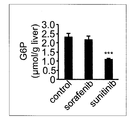
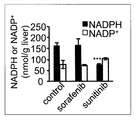
この結果は、スニチニブが、肝臓で発現しているホスホリラーゼキナーゼの触媒サブユニットのアイソフォームであるPHKG2阻害を介して、グリコーゲン代謝を抑制している可能性を示した。そこで、スニチニブによる肝毒性のメカニズムをさらに調べるため、スニチニブの解糖系及びペントースリン酸経路への影響を分析した。代謝経路図を使用し、計算モデルアプローチにより、PHKG2阻害が代謝ホメオスタシスに与える影響を推定した。モデルは、薬剤非処理マウスから得られた実験データにモデルを合わせることで決定された種々の動態パラメータの値と以前のモデルを組み合わせて構築した。初期状態から定常状態までの経時変化のシミュレーションにより、活性型ホスホリラーゼキナーゼ濃度と酸化型グルタチオン(GSSG)の濃度に負の相関性があることが示された(図2C)。種々の濃度の還元型グルタチオン(GSH)への動態パラメータの感受性分析により、ホスホリラーゼキナーゼ活性を決定する反応の高感受性が示された(図2Dのre4及びre57)。これらの結果は、多くの生理的プロセスにより産生される活性酸素種(ROS)の除去がスニチニブ投与により抑制されることを示した。具体的には、シミュレーションによると、グリコーゲン代謝が抑制されると、グルコース-6-リン酸と平衡状態にあるグルコース-1-リン酸が減少する。これらの結果は、薬剤処理動物の肝臓におけるグルコース-6-リン酸量を測定することで実験的に確認されており、スニチニブ投与マウスでは、ソラフェニブ投与マウスに比べて肝臓内グルコース-6-リン酸量が50%低下していた(図2E)。グルコース-6-リン酸は、ペントースリン酸経路の最初にも位置している。該経路は、哺乳類細胞では、還元型ニコチンアミドアデニンジヌクレオチドリン酸(NADPH)を酸化型(NADP+)から産生する唯一の経路である。従って、予想されたように、NADPHのNADP+に対する比は、スニチニブ投与マウスで有意に低下していた(図2F)。さらに、NADPH/NADP+比は、GSSGをGSHに還元するのにNADPHが必要であることから、細胞内の酸化還元バランスに関係しているので、GSSG及びGSHの肝臓内量も測定した。その結果、スニチニブはGSHを減少させる一方GSSGを上昇させ、スニチニブ投与マウスの肝臓におけるGSHのGSSGに対する比は、コントロールマウスやソラフェニブ投与マウスに比べ90%低かった(図2G)。これらの結果は、スニチニブによる肝臓内グリコーゲン代謝の抑制とそれに続く酸化ストレスの生成に合致するものであった。この結論は、チオバルビツール酸反応性物質(TBARS)の肝臓内量の測定によって裏付けられ、過酸化脂質量が増えていることがわかった(図2H)。
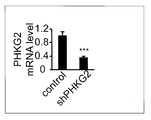
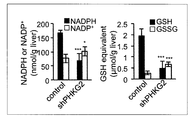
スニチニブにより誘導される酸化還元バランスの破壊がPHKG2阻害により介されるものであることを確かめるため、静脈内投与されたアデノウィルスが肝臓に選択的に感染し蓄積することが知られていることを利用し、PHKG2を標的とする(shPHKG2)低分子ヘアピン型RNA(shRNA)をコードするアデノウィルスを用いてin vivoの遺伝子発現抑制実験を行った。実際に、shPHKG2処理マウスでは、PHKG2の肝臓内mRNA量は、ネガティブコントロールshRNAアデノウィルス(shNeg)で処理したマウスの30%未満であった(図2I)。これらの結果は、PHKG2タンパク質の免疫ブロット分析でも確認された(図2J)。また、shPHKG2処理マウスの肝臓では、グリコーゲン量の有意な上昇及びグルコース-6-リン酸量の有意な減少(図2K)とともに、NADPH/NADP+比及びGSH/GSSH比の有意な減少が認められた(図2L)。shPHKG2処理マウスへのスニチニブ投与の影響は、大部分が付加的なものではなかった(図2M)。これらの結果より、スニチニブ治療に伴い生成される酸化ストレスはPHKG2阻害によるものと示された。
実施例3
(スニチニブにより誘導される酸化ストレスは肝細胞のスニチニブへの感受性を増大させる)
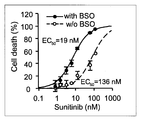
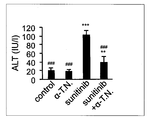
酸化ストレスは肝傷害を悪化させることがよく知られているので、上記結果によりスニチニブの持続的経口投与は薬剤の肝毒性を増強することが示唆された。この仮説を、マウスにブチオニンスルホキシミン(BSO)を腹腔内投与して肝臓のGSHを枯渇させ(図3A)、その後、スニチニブの短期投与の影響を調べて検証した。その結果、血清ALT濃度は、BSO+スニチニブ投与グループで有意に上昇したが、BSO単独投与グループでは上昇せず(図3B)、肝臓における酸化ストレスによりスニチニブに対する肝臓の感受性が増大することを支持していた。同様に、初代培養マウス肝細胞で実施した細胞毒性アッセイでは、BSOを培地に添加した場合、スニチニブのEC50が136 nMから19 nMに減少し(図3C)、酸化ストレスを受けた肝細胞のスニチニブ毒性に対する感受性増大に一致する結果となった。これらの結果は、スニチニブの肝毒性が抗酸化剤の併用で軽減される可能性を示唆していた。そこで、スニチニブ投与マウスにおける、α-トコフェロールニコチン酸エステルからなるビタミンE製剤の影響を調べた。実際、α-トコフェロールニコチン酸エステルの併用により、肝臓のGSH/GSSG比及びNADPH/NADP+比はコントロールレベルに回復した(図3D-E)。これらの知見は、抗酸化剤がROS除去の際のGSH消費を抑制し、GSSGからGSHを再生するためにNADPH消費が必要になるのを防ぐというモデルを支持するものである。さらに、スニチニブと抗酸化剤を同時投与されたマウスでは、血清ALT濃度がほぼコントロールレベルで維持されており(図3F)、スニチニブによるPHKG2阻害を介して誘導される酸化ストレスがスニチニブ(マルチキナーゼ阻害剤)の肝毒性を亢進するが、この反応は抗酸化剤の併用投与で有意に相殺され得ることを示唆している。
(スニチニブにより誘導される酸化ストレスは肝細胞のスニチニブへの感受性を増大させる)
酸化ストレスは肝傷害を悪化させることがよく知られているので、上記結果によりスニチニブの持続的経口投与は薬剤の肝毒性を増強することが示唆された。この仮説を、マウスにブチオニンスルホキシミン(BSO)を腹腔内投与して肝臓のGSHを枯渇させ(図3A)、その後、スニチニブの短期投与の影響を調べて検証した。その結果、血清ALT濃度は、BSO+スニチニブ投与グループで有意に上昇したが、BSO単独投与グループでは上昇せず(図3B)、肝臓における酸化ストレスによりスニチニブに対する肝臓の感受性が増大することを支持していた。同様に、初代培養マウス肝細胞で実施した細胞毒性アッセイでは、BSOを培地に添加した場合、スニチニブのEC50が136 nMから19 nMに減少し(図3C)、酸化ストレスを受けた肝細胞のスニチニブ毒性に対する感受性増大に一致する結果となった。これらの結果は、スニチニブの肝毒性が抗酸化剤の併用で軽減される可能性を示唆していた。そこで、スニチニブ投与マウスにおける、α-トコフェロールニコチン酸エステルからなるビタミンE製剤の影響を調べた。実際、α-トコフェロールニコチン酸エステルの併用により、肝臓のGSH/GSSG比及びNADPH/NADP+比はコントロールレベルに回復した(図3D-E)。これらの知見は、抗酸化剤がROS除去の際のGSH消費を抑制し、GSSGからGSHを再生するためにNADPH消費が必要になるのを防ぐというモデルを支持するものである。さらに、スニチニブと抗酸化剤を同時投与されたマウスでは、血清ALT濃度がほぼコントロールレベルで維持されており(図3F)、スニチニブによるPHKG2阻害を介して誘導される酸化ストレスがスニチニブ(マルチキナーゼ阻害剤)の肝毒性を亢進するが、この反応は抗酸化剤の併用投与で有意に相殺され得ることを示唆している。
実施例4
(スニチニブにより誘導される酸化ストレスは心毒性に関与している)
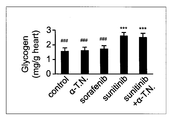
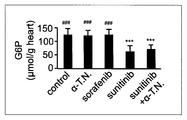
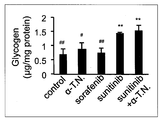
スニチニブ治療に関する臨床的問題として、関連心疾患も挙げられる。とはいえ、左室駆出率低下の発症は比較的珍しい。心臓では、PHKG1アイソフォームが発現しており、PHKG2同様、スニチニブ及びその代謝物により阻害されることが示された(図1)。従って、肝臓と同様、スニチニブが心組織でも酸化ストレスを誘導することが推測された。この点は、スニチニブ又はソラフェニブのいずれかをマウスに14日間投与したところ、心臓のグリコーゲンの蓄積が、コントロールマウスに比べてスニチニブ投与マウスで有意に高かったが、ソラフェニブ投与マウスでは高くなかったことで確かめられた(図4A)。心臓のグルコース-6-リン酸量の有意な低下も、スニチニブへの応答として認められたが、ソラフェニブの場合には認められなかった(図4B)。次に、スニチニブに暴露された心組織で酸化ストレスが生成するかを調べた。スニチニブ投与により、コントロールマウスに比べ、NADPH/NADP+比及びGSH/GSSG比が有意に低下する一方、TBARS量は優位に上昇したが、ソラフェニブ投与では認められなかった(図4C-E)。
血液循環を維持するにあたり、心臓は大量のATPを消費する。ATPは通常、脂肪酸のβ酸化の間にアセチルCoAが合成される酸化的リン酸化経路を通じて供給される。一方、高血圧自然発症ラット(SHR)の最近の研究から、ATPが解糖系を通じて生成され、その際、2種の構成酵素、エノラーゼと乳酸デヒドロゲナーゼの発現上昇及び、β酸化経路に関与するエノイルCoAヒドロラタナーゼ及びTCA回路に関与するピルビン酸デヒドロゲナーゼの発現低下を伴うことが示された。エネルギー代謝の望ましい経路におけるこれらの変化は、高血圧状況下でATP産生が酸化的リン酸化を介して進む場合に生成される過剰量のROSから心組織を守ると考えられる。高血圧の発症は、スニチニブやソラフェニブといった、VEGFRを主要標的とするVEGFシグナル阻害剤を投与された患者に共通の副作用であることから、スニチニブ投与マウス及びソラフェニブ投与マウスのエネルギー代謝経路を調べた。ソラフェニブ投与は、エノラーゼ及び乳酸デヒドロゲナーゼ発現を増加させ、エノイルCoAヒドロゲナーゼ及びピルビン酸デヒドロゲナーゼの発現を低下させ(図4F)、SHRで観察された変化と合致していた。しかし、スニチニブ投与グループでは、エノイルCoAヒドロゲナーゼ、ピルビン酸デヒドロゲナーゼ及び乳酸デヒドロゲナーゼの発現には影響がない一方、エノラーゼの発現は大いに増加していた(図4F)。スニチニブまたはソラフェニブに応答したATP量の変化は認められなかった(図4G)。従って、これらの結果は、スニチニブによるグルコース-6-リン酸の供給抑制が、エノラーゼの発現の増加にも関わらず、解糖系の上方制御を妨げることを示しており、スニチニブ投与状況下では、ATP産生が脂肪酸のβ酸化に依存することを示唆していた。加えて、スニチニブ投与マウスの心組織でGSH/GSSG比が低下すると、ROSの除去が妨げられる。これらのメカニズムは双方とも、スニチニブの心毒性を説明できるものである。これらの関与は、血清サンプルの分析により支持された。当該分析では、心臓におけるスニチニブ誘導酸化ストレスと心毒性の関係性を調べた。その結果、心筋細胞傷害の血清バイオマーカーであるトロポニンTと駆出率低下の血清バイオマーカーであるNT-proBNPの血清濃度は、スニチニブ投与マウスでは有意に上昇したが、ソラフェニブ投与マウスでは上昇しなかった(図4H-I)。さらに、抗酸化剤α-トコフェロールニコチン酸エステルの併用投与は、トロポニンTとNT-proBNPの濃度上昇を完全に抑制しており(図4H-I)、心臓におけるスニチニブ誘導酸化ストレスが、スニチニブが介する心毒性の発症に主要な役割を果たしているという更なる証拠となっている。
(スニチニブにより誘導される酸化ストレスは心毒性に関与している)
スニチニブ治療に関する臨床的問題として、関連心疾患も挙げられる。とはいえ、左室駆出率低下の発症は比較的珍しい。心臓では、PHKG1アイソフォームが発現しており、PHKG2同様、スニチニブ及びその代謝物により阻害されることが示された(図1)。従って、肝臓と同様、スニチニブが心組織でも酸化ストレスを誘導することが推測された。この点は、スニチニブ又はソラフェニブのいずれかをマウスに14日間投与したところ、心臓のグリコーゲンの蓄積が、コントロールマウスに比べてスニチニブ投与マウスで有意に高かったが、ソラフェニブ投与マウスでは高くなかったことで確かめられた(図4A)。心臓のグルコース-6-リン酸量の有意な低下も、スニチニブへの応答として認められたが、ソラフェニブの場合には認められなかった(図4B)。次に、スニチニブに暴露された心組織で酸化ストレスが生成するかを調べた。スニチニブ投与により、コントロールマウスに比べ、NADPH/NADP+比及びGSH/GSSG比が有意に低下する一方、TBARS量は優位に上昇したが、ソラフェニブ投与では認められなかった(図4C-E)。
血液循環を維持するにあたり、心臓は大量のATPを消費する。ATPは通常、脂肪酸のβ酸化の間にアセチルCoAが合成される酸化的リン酸化経路を通じて供給される。一方、高血圧自然発症ラット(SHR)の最近の研究から、ATPが解糖系を通じて生成され、その際、2種の構成酵素、エノラーゼと乳酸デヒドロゲナーゼの発現上昇及び、β酸化経路に関与するエノイルCoAヒドロラタナーゼ及びTCA回路に関与するピルビン酸デヒドロゲナーゼの発現低下を伴うことが示された。エネルギー代謝の望ましい経路におけるこれらの変化は、高血圧状況下でATP産生が酸化的リン酸化を介して進む場合に生成される過剰量のROSから心組織を守ると考えられる。高血圧の発症は、スニチニブやソラフェニブといった、VEGFRを主要標的とするVEGFシグナル阻害剤を投与された患者に共通の副作用であることから、スニチニブ投与マウス及びソラフェニブ投与マウスのエネルギー代謝経路を調べた。ソラフェニブ投与は、エノラーゼ及び乳酸デヒドロゲナーゼ発現を増加させ、エノイルCoAヒドロゲナーゼ及びピルビン酸デヒドロゲナーゼの発現を低下させ(図4F)、SHRで観察された変化と合致していた。しかし、スニチニブ投与グループでは、エノイルCoAヒドロゲナーゼ、ピルビン酸デヒドロゲナーゼ及び乳酸デヒドロゲナーゼの発現には影響がない一方、エノラーゼの発現は大いに増加していた(図4F)。スニチニブまたはソラフェニブに応答したATP量の変化は認められなかった(図4G)。従って、これらの結果は、スニチニブによるグルコース-6-リン酸の供給抑制が、エノラーゼの発現の増加にも関わらず、解糖系の上方制御を妨げることを示しており、スニチニブ投与状況下では、ATP産生が脂肪酸のβ酸化に依存することを示唆していた。加えて、スニチニブ投与マウスの心組織でGSH/GSSG比が低下すると、ROSの除去が妨げられる。これらのメカニズムは双方とも、スニチニブの心毒性を説明できるものである。これらの関与は、血清サンプルの分析により支持された。当該分析では、心臓におけるスニチニブ誘導酸化ストレスと心毒性の関係性を調べた。その結果、心筋細胞傷害の血清バイオマーカーであるトロポニンTと駆出率低下の血清バイオマーカーであるNT-proBNPの血清濃度は、スニチニブ投与マウスでは有意に上昇したが、ソラフェニブ投与マウスでは上昇しなかった(図4H-I)。さらに、抗酸化剤α-トコフェロールニコチン酸エステルの併用投与は、トロポニンTとNT-proBNPの濃度上昇を完全に抑制しており(図4H-I)、心臓におけるスニチニブ誘導酸化ストレスが、スニチニブが介する心毒性の発症に主要な役割を果たしているという更なる証拠となっている。
実施例5
(血小板数減少の原因は、スニチニブにより誘導された酸化ストレスによる。)
触媒サブユニットであるPHKG1あるいはPHKG2のどちらかのホスホリラーゼキナーゼは、哺乳類器官において偏在的に発現する(Molecular genetics and metabolism 92:234-242(2007))。肝臓及び心臓において、スニチニブはホスホリアーゼを阻害し、グリコーゲン代謝を抑制することで、酸化ストレスを誘導する。しかしながら、スニチニブの臨床用量規制毒性は、治療患者における、血小板数減少と副作用によって決定される(非特許文献4)。そのため、次の実験では、スニチニブによって誘導される血小板数減少と酸化ストレスの関係性に焦点を当てた。スニチニブあるいはソラフェニブを14日間給餌したマウスの肝臓や心臓における血小板中のグリコーゲン量を測定した。スニチニブ投与群においてはグリコーゲンの蓄積がみられたが、コントロール群やソラフェニブ投与群においては、グリコーゲンの蓄積はみられなかった(図5A)。さらに、スニチニブは、NADPH/NADP+比とGSH/GSSG比を有意に低下させ、TBARSを増加させた(図5B-D)。
血小板において、酸化ストレスは、シトソール中にカルシウムイオンを流入させ、リン脂質スクランブラーゼ活性を上方制御して、細胞膜表面にホスファチジルセリン(PS)を提示させることにより、マクロファージによる細胞の貪食作用を増大させ、それらを循環から除去する。よって、コントロールマウス、スニチニブ、ソラフェニブ投与マウスから血小板を採取し、選択的にPSと結合することで知られるアネキシンVを蛍光標識して、そのアネキシンVと血小板の結合を確認した。上述した所見と同様、スニチニブ投与マウスから採取した血小板は、コントロールマウスやソラフェニブ投与マウスから採取した血小板よりも、より高量のアネキシンVと結合した(図5E)。しかしながら、ニコチン酸α-トコフェロールとスニチニブの併用投与マウスから採取した血小板と結合したアネキシンVの量は、コントロール量を維持した(図5E)。DyLight 48でタグ付けされた抗GPIbβマウスモノクローナル抗体の点滴投与により循環血小板がin vivoにおいて標識された、パルス-チェイス実験において、スニチニブ投与により、標識血小板の24時間における排出量が有意に減少したことが分かった。一方、コントロールマウスやソラフェニブ投与マウスにおいては、これは起こらなかった(図5F)。さらに、ニコチン酸α-トコフェロールとの併用投与は、循環血小板の半減期をコントロール値に回復させた(図5F)。これは、スニチニブが、細胞膜表面のPS提示を引き起こし、循環中の血小板の半減期を低下させることを示唆する。さらに、RAW264.7マクロファージによるin vitro実験において、スニチニブ投与マウスから採取された血小板の貪食作用を向上させた(図5G)。これは、スニチニブ給餌マウスの血小板数の有意な低下やニコチン酸α-トコフェロールとスニチニブの併用投与マウスにおける血小板の回復によって支持される(図5H)。概して、これらのデータは、スニチニブ投与マウスにおいて、キナーゼ阻害によって生成した酸化ストレスにより誘導された細胞表面のPS提示の増大により、循環血小板の半減期が短くなることを示唆した。
(血小板数減少の原因は、スニチニブにより誘導された酸化ストレスによる。)
触媒サブユニットであるPHKG1あるいはPHKG2のどちらかのホスホリラーゼキナーゼは、哺乳類器官において偏在的に発現する(Molecular genetics and metabolism 92:234-242(2007))。肝臓及び心臓において、スニチニブはホスホリアーゼを阻害し、グリコーゲン代謝を抑制することで、酸化ストレスを誘導する。しかしながら、スニチニブの臨床用量規制毒性は、治療患者における、血小板数減少と副作用によって決定される(非特許文献4)。そのため、次の実験では、スニチニブによって誘導される血小板数減少と酸化ストレスの関係性に焦点を当てた。スニチニブあるいはソラフェニブを14日間給餌したマウスの肝臓や心臓における血小板中のグリコーゲン量を測定した。スニチニブ投与群においてはグリコーゲンの蓄積がみられたが、コントロール群やソラフェニブ投与群においては、グリコーゲンの蓄積はみられなかった(図5A)。さらに、スニチニブは、NADPH/NADP+比とGSH/GSSG比を有意に低下させ、TBARSを増加させた(図5B-D)。
血小板において、酸化ストレスは、シトソール中にカルシウムイオンを流入させ、リン脂質スクランブラーゼ活性を上方制御して、細胞膜表面にホスファチジルセリン(PS)を提示させることにより、マクロファージによる細胞の貪食作用を増大させ、それらを循環から除去する。よって、コントロールマウス、スニチニブ、ソラフェニブ投与マウスから血小板を採取し、選択的にPSと結合することで知られるアネキシンVを蛍光標識して、そのアネキシンVと血小板の結合を確認した。上述した所見と同様、スニチニブ投与マウスから採取した血小板は、コントロールマウスやソラフェニブ投与マウスから採取した血小板よりも、より高量のアネキシンVと結合した(図5E)。しかしながら、ニコチン酸α-トコフェロールとスニチニブの併用投与マウスから採取した血小板と結合したアネキシンVの量は、コントロール量を維持した(図5E)。DyLight 48でタグ付けされた抗GPIbβマウスモノクローナル抗体の点滴投与により循環血小板がin vivoにおいて標識された、パルス-チェイス実験において、スニチニブ投与により、標識血小板の24時間における排出量が有意に減少したことが分かった。一方、コントロールマウスやソラフェニブ投与マウスにおいては、これは起こらなかった(図5F)。さらに、ニコチン酸α-トコフェロールとの併用投与は、循環血小板の半減期をコントロール値に回復させた(図5F)。これは、スニチニブが、細胞膜表面のPS提示を引き起こし、循環中の血小板の半減期を低下させることを示唆する。さらに、RAW264.7マクロファージによるin vitro実験において、スニチニブ投与マウスから採取された血小板の貪食作用を向上させた(図5G)。これは、スニチニブ給餌マウスの血小板数の有意な低下やニコチン酸α-トコフェロールとスニチニブの併用投与マウスにおける血小板の回復によって支持される(図5H)。概して、これらのデータは、スニチニブ投与マウスにおいて、キナーゼ阻害によって生成した酸化ストレスにより誘導された細胞表面のPS提示の増大により、循環血小板の半減期が短くなることを示唆した。
実施例6
(スニチニブによる酸化ストレスは、甲状腺機能障害を引き起こす。)
甲状腺機能障害や高甲状腺刺激ホルモン血症は、スニチニブ治療を受けた患者によく見られる副作用であることが報告されている(非特許文献5)。そのため、甲状腺機能障害は、スニチニブにより誘発された酸化ストレスが原因であるかどうかを調べた。肝臓、心臓および血小板においてと同様に、14日間スニチニブを給餌したマウスの甲状腺において、グリコーゲンが有意に蓄積されたが、コントロールマウスやソラフェニブを給餌したマウスにおいては、これは観察されなかった(図6A)。
NADPH/NADP+比やGSH/GSSG比の有意な低下や、TBARSの有意な増加は、スニチニブ投与マウスにおいてのみ見られた(図6B-D)。それゆえ、スニチニブは甲状腺においても酸化ストレスを誘導することが分かった。
甲状腺ホルモンは、過酸化酸素を必要とする甲状腺ペルオキシダーゼ(TPO)の触媒作用により甲状腺濾胞で生成される(Molecular and cellular endocrinology 343:32-44(2011))。過酸化炭素は、NADPHがコエンザイムとして機能し、濾胞上皮細胞中に発現した酵素であるデュアルオキシダーゼ2によって生成される(Molecular and cellular endocrinology 343:32-44(2011))。そのため、スニチニブによる治療により甲状腺のNADPH量を低下することで、甲状腺ホルモンの生成を抑制すると思われる。しかし、トリヨードチロニン(T3)とチロキシン(T4)の血清中の濃度を測定したところ、コントロール群やソラフェニブ投与群と比較して、スニチニブ投与群において、フリーT4(FT4)が僅かに減少した。一方、フリーT3(FT3)量については、治療効果はないか、僅かに増加した(図6E)。反対に、血清中の甲状腺刺激ホルモン(TSH)値は、コントロール群やソラフェニブ投与群と比較して、スニチニブ投与群において、有意に高く(図6F)、スニチニブとニコチン酸αトコフェロールの併用群においては、その効果は再現されなかった(図6F)。血清中の甲状腺ホルモン量は、甲状腺ホルモンのフィードバックによって堅く制御されることで知られており(The Journal of physiology 195:29-37(1968))、上記観察は、潜在性甲状腺機能低下症の患者にみられる症状を連想させる。潜在性甲状腺機能低下症は、甲状腺ホルモンを生成する甲状腺の機能が低下すると、FT3やFT4の十分量を確保するために、持続的に高いTSHシグナルを示す(Lancet 379:1142-1154(2012))。スニチニブ投与の場合も同様の現象が起こるかどうかを調べるために、キナーゼ阻害剤を給餌したマウスに、オクトレオチド(脳下垂体により分泌されるTSHを減少させ、フィードバック作用を阻害することで知られる)を投与した。このマウスにおいて、血清中FT3やFT4値は、甲状腺中のT3やT4と同様に、コントロール値を大きく下回った。これは、スニチニブが甲状腺ホルモン合成を抑制するという結論と一致している(図6G-H)。
(スニチニブによる酸化ストレスは、甲状腺機能障害を引き起こす。)
甲状腺機能障害や高甲状腺刺激ホルモン血症は、スニチニブ治療を受けた患者によく見られる副作用であることが報告されている(非特許文献5)。そのため、甲状腺機能障害は、スニチニブにより誘発された酸化ストレスが原因であるかどうかを調べた。肝臓、心臓および血小板においてと同様に、14日間スニチニブを給餌したマウスの甲状腺において、グリコーゲンが有意に蓄積されたが、コントロールマウスやソラフェニブを給餌したマウスにおいては、これは観察されなかった(図6A)。
NADPH/NADP+比やGSH/GSSG比の有意な低下や、TBARSの有意な増加は、スニチニブ投与マウスにおいてのみ見られた(図6B-D)。それゆえ、スニチニブは甲状腺においても酸化ストレスを誘導することが分かった。
甲状腺ホルモンは、過酸化酸素を必要とする甲状腺ペルオキシダーゼ(TPO)の触媒作用により甲状腺濾胞で生成される(Molecular and cellular endocrinology 343:32-44(2011))。過酸化炭素は、NADPHがコエンザイムとして機能し、濾胞上皮細胞中に発現した酵素であるデュアルオキシダーゼ2によって生成される(Molecular and cellular endocrinology 343:32-44(2011))。そのため、スニチニブによる治療により甲状腺のNADPH量を低下することで、甲状腺ホルモンの生成を抑制すると思われる。しかし、トリヨードチロニン(T3)とチロキシン(T4)の血清中の濃度を測定したところ、コントロール群やソラフェニブ投与群と比較して、スニチニブ投与群において、フリーT4(FT4)が僅かに減少した。一方、フリーT3(FT3)量については、治療効果はないか、僅かに増加した(図6E)。反対に、血清中の甲状腺刺激ホルモン(TSH)値は、コントロール群やソラフェニブ投与群と比較して、スニチニブ投与群において、有意に高く(図6F)、スニチニブとニコチン酸αトコフェロールの併用群においては、その効果は再現されなかった(図6F)。血清中の甲状腺ホルモン量は、甲状腺ホルモンのフィードバックによって堅く制御されることで知られており(The Journal of physiology 195:29-37(1968))、上記観察は、潜在性甲状腺機能低下症の患者にみられる症状を連想させる。潜在性甲状腺機能低下症は、甲状腺ホルモンを生成する甲状腺の機能が低下すると、FT3やFT4の十分量を確保するために、持続的に高いTSHシグナルを示す(Lancet 379:1142-1154(2012))。スニチニブ投与の場合も同様の現象が起こるかどうかを調べるために、キナーゼ阻害剤を給餌したマウスに、オクトレオチド(脳下垂体により分泌されるTSHを減少させ、フィードバック作用を阻害することで知られる)を投与した。このマウスにおいて、血清中FT3やFT4値は、甲状腺中のT3やT4と同様に、コントロール値を大きく下回った。これは、スニチニブが甲状腺ホルモン合成を抑制するという結論と一致している(図6G-H)。
実施例7
(スニチニブは、グリコーゲン蓄積と患者の酸化ストレス生成を誘導する。)
スニチニブのグリコーゲン代謝における効果と、その医薬の酸化ストレス誘導力は、血中グリコーゲンと血清中TBARSにおける変化を測定することによって評価された。これらの結果を、上述のマウスにおける所見と比較すると、スニチニブかソラフェニブを14日間給餌したマウスと、コントロール群のマウスの血中グリコーゲン値と血清TBARS値を測定した。血中グリコーゲン量と血清中TBARS量の有意な増加は、スニチニブ投与群においてのみ観察された(図7A-B)。スニチニブとニコチン酸α-トコフェロールの併用によって、血清中TBARS量は低下した(図7B)。これらの結果は、スニチニブ投与に関連する酸化ストレスが、血中および血清マーカーによってモニターすることが可能であることを示している。これらの結果に基づき、スニチニブ投与患者において、酸化ストレスが生じ、グリコーゲン蓄積が起こるかについて、臨床試験が行われた。腎細胞がん(RCC)の進行あるいは再発に対する標準治療として、スニチニブを投与した患者5人に本研究に参加してもらった。5人全員において、スニチニブ投与による治療法は、酸化ストレス生成と並行して、血中グリコーゲン量の増加を引き起こし、血清TBARSの増加も伴った(図7C-E)。これらの結果は、マウスモデルと同様に、臨床使用患者においても、スニチニブは臨床上グリコーゲン蓄積と酸化ストレスを誘導することを示している。さらに、患者5人全員において、重篤な血小板減少症を発現し、血小板数の減少に先立って、グリコーゲン蓄積と酸化ストレスが生成された(図7F)。
(スニチニブは、グリコーゲン蓄積と患者の酸化ストレス生成を誘導する。)
スニチニブのグリコーゲン代謝における効果と、その医薬の酸化ストレス誘導力は、血中グリコーゲンと血清中TBARSにおける変化を測定することによって評価された。これらの結果を、上述のマウスにおける所見と比較すると、スニチニブかソラフェニブを14日間給餌したマウスと、コントロール群のマウスの血中グリコーゲン値と血清TBARS値を測定した。血中グリコーゲン量と血清中TBARS量の有意な増加は、スニチニブ投与群においてのみ観察された(図7A-B)。スニチニブとニコチン酸α-トコフェロールの併用によって、血清中TBARS量は低下した(図7B)。これらの結果は、スニチニブ投与に関連する酸化ストレスが、血中および血清マーカーによってモニターすることが可能であることを示している。これらの結果に基づき、スニチニブ投与患者において、酸化ストレスが生じ、グリコーゲン蓄積が起こるかについて、臨床試験が行われた。腎細胞がん(RCC)の進行あるいは再発に対する標準治療として、スニチニブを投与した患者5人に本研究に参加してもらった。5人全員において、スニチニブ投与による治療法は、酸化ストレス生成と並行して、血中グリコーゲン量の増加を引き起こし、血清TBARSの増加も伴った(図7C-E)。これらの結果は、マウスモデルと同様に、臨床使用患者においても、スニチニブは臨床上グリコーゲン蓄積と酸化ストレスを誘導することを示している。さらに、患者5人全員において、重篤な血小板減少症を発現し、血小板数の減少に先立って、グリコーゲン蓄積と酸化ストレスが生成された(図7F)。
実施例8
スニチニブ投与により増加する血清中TBARS(チオバルビツール酸反応性物質)、血小板数、TSH(甲状腺ホルモン)、トロポニンT、NT-proBNP及びALTに対する抗酸化剤の効果を前述のマウスの実験により検討した。その結果を図8A~図8Fに示す。図8A~図8Fに示すように、全ての抗酸化剤が、スニチニブ投与により上昇した酸化ストレスマーカーを有意に低下させた。このうち、ニコチン酸トコフェロールの効果は最も優れていた。ここで、各種酸化剤の投与量(経口投与)は、次のとおりである。ビタミンA:192.9mg/kg/day。酪酸リボフラビン:5.1mg/kg/day。アスコルビン酸:77.1mg/kg/day。ニコチン酸α-トコフェロール:25.7mg/kg/day。酢酸α-トコフェロール:12.9mg/kg/day。システイン:20.6mg/kg/day。グルタチオン:12.9mg/kg/day。カルボシステイン:64.3mg/kg/day。メチルシステイン:12.9mg/kg/day。エチルシステイン:12.9mg/kg/day。アセチルシステイン:1470mg/kg/day。
スニチニブ投与により増加する血清中TBARS(チオバルビツール酸反応性物質)、血小板数、TSH(甲状腺ホルモン)、トロポニンT、NT-proBNP及びALTに対する抗酸化剤の効果を前述のマウスの実験により検討した。その結果を図8A~図8Fに示す。図8A~図8Fに示すように、全ての抗酸化剤が、スニチニブ投与により上昇した酸化ストレスマーカーを有意に低下させた。このうち、ニコチン酸トコフェロールの効果は最も優れていた。ここで、各種酸化剤の投与量(経口投与)は、次のとおりである。ビタミンA:192.9mg/kg/day。酪酸リボフラビン:5.1mg/kg/day。アスコルビン酸:77.1mg/kg/day。ニコチン酸α-トコフェロール:25.7mg/kg/day。酢酸α-トコフェロール:12.9mg/kg/day。システイン:20.6mg/kg/day。グルタチオン:12.9mg/kg/day。カルボシステイン:64.3mg/kg/day。メチルシステイン:12.9mg/kg/day。エチルシステイン:12.9mg/kg/day。アセチルシステイン:1470mg/kg/day。
実施例9
1×10⁶ルイス肺がん細胞を皮下投与し担がんマウスを作成し、スニチニブ(26.7mg/kg/day)単独又はスニチニブ(26.7mg/kg/day)及びニコチン酸トコフェロール(30mg/kg/day)を2週間投与した。2週間後に抗腫瘍効果を観察した。
その結果を図9A~図9Cに示す。図9より、ニコチン酸トコフェロール(抗酸化剤)投与によりスニチニブの抗腫瘍効果は何ら影響を受けないことがわかる。
1×10⁶ルイス肺がん細胞を皮下投与し担がんマウスを作成し、スニチニブ(26.7mg/kg/day)単独又はスニチニブ(26.7mg/kg/day)及びニコチン酸トコフェロール(30mg/kg/day)を2週間投与した。2週間後に抗腫瘍効果を観察した。
その結果を図9A~図9Cに示す。図9より、ニコチン酸トコフェロール(抗酸化剤)投与によりスニチニブの抗腫瘍効果は何ら影響を受けないことがわかる。
Claims (28)
- 抗酸化剤を有効成分とするスニチニブ又はその塩の副作用軽減剤。
- 抗酸化剤が、ビタミンE又はその誘導体、ビタミンC又はその誘導体、ビタミンA又はその誘導体、ビタミンB2又はその誘導体、システイン又はその誘導体、グルタチオン、ポリフェノール類、カロテン類、ブチルヒドロキシアニソール及びジブチルヒドロキシトルエンから選ばれる1種以上である請求項1記載の副作用軽減剤。
- スニチニブ又はその塩の副作用が、甲状腺機能低下、血小板減少、左室駆出率低下、及び肝マーカー上昇から選ばれる1種以上である請求項1又は2記載の副作用軽減剤。
- スニチニブ又はその塩と抗酸化剤を組み合わせてなる抗がん剤。
- 抗酸化剤が、ビタミンE又はその誘導体、ビタミンC又はその誘導体、ビタミンA又はその誘導体、ビタミンB2又はその誘導体、システイン又はその誘導体、グルタチオン、ポリフェノール類、カロテン類、ブチルヒドロキシアニソール及びジブチルヒドロキシトルエンから選ばれる1種以上である請求項4記載の抗がん剤。
- スニチニブ又はその塩の副作用が軽減された抗がん剤である請求項4又は5記載の抗がん剤。
- スニチニブ又はその塩の副作用が、甲状腺機能低下、血小板減少、左室駆出率低下、及び肝マーカー上昇から選ばれる1種以上である請求項6記載の抗がん剤。
- スニチニブ又はその塩の副作用を軽減するために使用する抗酸化剤。
- ビタミンE又はその誘導体、ビタミンC又はその誘導体、ビタミンA又はその誘導体、ビタミンB2又はその誘導体、システイン又はその誘導体、グルタチオン、ポリフェノール類、カロテン類、ブチルヒドロキシアニソール及びジブチルヒドロキシトルエンから選ばれる1種以上である請求項8記載の抗酸化剤。
- スニチニブ又はその塩の副作用が、甲状腺機能低下、血小板減少、左室駆出率低下、及び肝マーカー上昇から選ばれる1種以上である請求項8又は9記載の抗酸化剤。
- がんの治療に使用するためのスニチニブ又はその塩と抗酸化剤の組み合わせ。
- 抗酸化剤が、ビタミンE又はその誘導体、ビタミンC又はその誘導体、ビタミンA又はその誘導体、ビタミンB2又はその誘導体、システイン又はその誘導体、グルタチオン、ポリフェノール類、カロテン類、ブチルヒドロキシアニソール及びジブチルヒドロキシトルエンから選ばれる1種以上である請求項11記載の組み合わせ。
- スニチニブ又はその塩の副作用が軽減されたがんの治療のために使用する請求項11又は12記載の組み合わせ。
- スニチニブ又はその塩の副作用が、甲状腺機能低下、血小板減少、左室駆出率低下、及び肝マーカー上昇から選ばれる1種以上である請求項13記載の組み合わせ。
- スニチニブの副作用軽減剤製造のための抗酸化剤の使用。
- 抗酸化剤が、ビタミンE又はその誘導体、ビタミンC又はその誘導体、ビタミンA又はその誘導体、ビタミンB2又はその誘導体、システイン又はその誘導体、グルタチオン、ポリフェノール類、カロテン類、ブチルヒドロキシアニソール及びジブチルヒドロキシトルエンから選ばれる1種以上である請求項15記載の使用。
- スニチニブ又はその塩の副作用が、甲状腺機能低下、血小板減少、左室駆出率低下、及び肝マーカー上昇から選ばれる1種以上である請求項15又は16記載の使用。
- 抗がん剤製造のためのスニチニブ又はその塩及び抗酸化剤の使用。
- 抗酸化剤が、ビタミンE又はその誘導体、ビタミンC又はその誘導体、ビタミンA又はその誘導体、ビタミンB2又はその誘導体、システイン又はその誘導体、グルタチオン、ポリフェノール類、カロテン類、ブチルヒドロキシアニソール及びジブチルヒドロキシトルエンから選ばれる1種以上である請求項18記載の使用。
- 抗がん剤が、スニチニブ又はその塩の副作用が軽減された抗がん剤である請求項18又は19記載の使用。
- スニチニブ又はその塩の副作用が、甲状腺機能低下、血小板減少、左室駆出率低下、及び肝マーカー上昇から選ばれる1種以上である請求項20記載の使用。
- 抗酸化剤の有効量を投与することを特徴とするスニチニブ又はその塩の副作用軽減方法。
- 抗酸化剤が、ビタミンE又はその誘導体、ビタミンC又はその誘導体、ビタミンA又はその誘導体、ビタミンB2又はその誘導体、システイン又はその誘導体、グルタチオン、ポリフェノール類、カロテン類、ブチルヒドロキシアニソール及びジブチルヒドロキシトルエンから選ばれる1種以上である請求項21記載の方法。
- スニチニブ又はその塩の副作用が、甲状腺機能低下、血小板減少、左室駆出率低下、及び肝マーカー上昇から選ばれる1種以上である請求項22又は23記載の方法。
- スニチニブ又はその塩及び抗酸化剤を有効量投与することを特徴とするがんの治療方法。
- 抗酸化剤が、ビタミンE又はその誘導体、ビタミンC又はその誘導体、ビタミンA又はその誘導体、ビタミンB2又はその誘導体、システイン又はその誘導体、グルタチオン、ポリフェノール類、カロテン類、ブチルヒドロキシアニソール及びジブチルヒドロキシトルエンから選ばれる1種以上である請求項25記載の治療方法。
- スニチニブ又はその塩の副作用が軽減されたがんの治療方法である請求項25又は26記載の治療方法。
- スニチニブ又はその塩の副作用が、甲状腺機能低下、血小板減少、左室駆出率低下、及び肝マーカー上昇から選ばれる1種以上である請求項27記載の治療方法。
Applications Claiming Priority (2)
| Application Number | Priority Date | Filing Date | Title |
|---|---|---|---|
| US201261727902P | 2012-11-19 | 2012-11-19 | |
| US61/727,902 | 2012-11-19 |
Publications (1)
| Publication Number | Publication Date |
|---|---|
| WO2014077409A1 true WO2014077409A1 (ja) | 2014-05-22 |
Family
ID=50731316
Family Applications (1)
| Application Number | Title | Priority Date | Filing Date |
|---|---|---|---|
| PCT/JP2013/081210 Ceased WO2014077409A1 (ja) | 2012-11-19 | 2013-11-19 | スニチニブの副作用軽減剤 |
Country Status (1)
| Country | Link |
|---|---|
| WO (1) | WO2014077409A1 (ja) |
Cited By (4)
| Publication number | Priority date | Publication date | Assignee | Title |
|---|---|---|---|---|
| JP2016102673A (ja) * | 2014-11-27 | 2016-06-02 | 国立大学法人秋田大学 | 複数種類の抗がん剤の血中濃度の連続測定方法 |
| JP2019504100A (ja) * | 2016-02-04 | 2019-02-14 | ステム セル セラノスティクス,インコーポレイテッド | 化学療法による心毒性を阻止するための医薬組成物および方法 |
| CN111789952A (zh) * | 2020-05-21 | 2020-10-20 | 上海市第六人民医院 | 一种治疗肾透明细胞癌的药物组合物及其应用 |
| CN115060819A (zh) * | 2022-06-08 | 2022-09-16 | 重庆大学附属肿瘤医院 | 基于hplc-ms/ms单峰法同时测定人血浆中sun及su12662的方法 |
Citations (1)
| Publication number | Priority date | Publication date | Assignee | Title |
|---|---|---|---|---|
| JP2012001479A (ja) * | 2010-06-16 | 2012-01-05 | Ishikawa Prefecture | 水溶性ビタミンe含有物より成る生体防御剤 |
-
2013
- 2013-11-19 WO PCT/JP2013/081210 patent/WO2014077409A1/ja not_active Ceased
Patent Citations (1)
| Publication number | Priority date | Publication date | Assignee | Title |
|---|---|---|---|---|
| JP2012001479A (ja) * | 2010-06-16 | 2012-01-05 | Ishikawa Prefecture | 水溶性ビタミンe含有物より成る生体防御剤 |
Non-Patent Citations (5)
| Title |
|---|
| HARUKI KUME ET AL: "TOKYO DAIGAKU KANREN SHISETSU NI OKERU SORAFENIB SUNITINIB NO YUGAI JISHO NO KENTO", THE JOURNAL OF THE JAPAN SOCIETY FOR CANCER THERAPY, vol. 45, no. 2, 21 September 2010 (2010-09-21), pages 364 * |
| HARUKI KUME: "JINSAIBO GAN BUNSHI HYOTEKIYAKU O CHUSHIN NI", JAPANESE JOURNAL OF UROLOGICAL SURGERY, vol. 23, 15 March 2010 (2010-03-15), pages 403 - 405 * |
| MASAYOSHI NAGATA ET AL: "TOKYO DAIGAKU KANREN SHISETSU NI OKERU SORAFENIB SUNITINIB NO SHIAO KEIKEN", JAPANESE JOURNAL OF UROLOGICAL SURGERY, vol. 24, 15 April 2011 (2011-04-15), pages 507 * |
| TAKAHIRO AMEMIYA ET AL: "SINITINIB NI YORU FUKUSAYO HATSUGEN KIKI NO KAISEKI", JAPANESE SOCIETY OF PHARAMACEUTICAL HEALTH CARE AND SCIENCE NENKAI KOEN YOSHISHU, vol. 23, 28 August 2013 (2013-08-28), pages 232 * |
| TAKASHI SHIMOYAMA ET AL: "KOGANZAI NO FIKUSAYO TO TAISAKU", RINSHO TO KENKYU, vol. 58, no. 8, 1981, pages 24 - 31 * |
Cited By (9)
| Publication number | Priority date | Publication date | Assignee | Title |
|---|---|---|---|---|
| JP2016102673A (ja) * | 2014-11-27 | 2016-06-02 | 国立大学法人秋田大学 | 複数種類の抗がん剤の血中濃度の連続測定方法 |
| JP2019504100A (ja) * | 2016-02-04 | 2019-02-14 | ステム セル セラノスティクス,インコーポレイテッド | 化学療法による心毒性を阻止するための医薬組成物および方法 |
| US11166936B2 (en) | 2016-02-04 | 2021-11-09 | Auransa Inc. | Pharmaceutical compositions and methods for countering chemotherapy induced cardiotoxicity |
| JP2022017518A (ja) * | 2016-02-04 | 2022-01-25 | エスシーティー ツー エルエルシー | 化学療法による心毒性を阻止するための医薬組成物および方法 |
| JP7058396B2 (ja) | 2016-02-04 | 2022-04-22 | エスシーティー ツー エルエルシー | 化学療法による心毒性を阻止するための医薬組成物および方法 |
| US11786503B2 (en) | 2016-02-04 | 2023-10-17 | Auransa Inc. | Pharmaceutical compositions and methods for countering chemotherapy induced cardiotoxicity |
| CN111789952A (zh) * | 2020-05-21 | 2020-10-20 | 上海市第六人民医院 | 一种治疗肾透明细胞癌的药物组合物及其应用 |
| CN115060819A (zh) * | 2022-06-08 | 2022-09-16 | 重庆大学附属肿瘤医院 | 基于hplc-ms/ms单峰法同时测定人血浆中sun及su12662的方法 |
| CN115060819B (zh) * | 2022-06-08 | 2023-09-01 | 重庆大学附属肿瘤医院 | 基于hplc-ms/ms单峰法同时测定人血浆中sun及su12662的方法 |
Similar Documents
| Publication | Publication Date | Title |
|---|---|---|
| Wang et al. | Targeting glutaminolysis: new perspectives to understand cancer development and novel strategies for potential target therapies | |
| Liu et al. | An overview: the diversified role of mitochondria in cancer metabolism | |
| Peleli et al. | Cardiovascular phenotype of mice lacking 3-mercaptopyruvate sulfurtransferase | |
| Qiu et al. | Asiatic acid alleviates ischemic myocardial injury in mice by modulating mitophagy-and glycophagy-based energy metabolism | |
| Schibalski et al. | The role of polyamine metabolism in cellular function and physiology | |
| Shi et al. | Targeting KRAS: from metabolic regulation to cancer treatment | |
| Yoo et al. | Glutamine reliance in cell metabolism | |
| Fletcher et al. | Nicotinamide riboside kinases display redundancy in mediating nicotinamide mononucleotide and nicotinamide riboside metabolism in skeletal muscle cells | |
| Guo et al. | Mitochondria as multifaceted regulators of ferroptosis | |
| Adachi et al. | l-Alanine activates hepatic AMP-activated protein kinase and modulates systemic glucose metabolism | |
| Samanta et al. | Metabolic adaptation of cancer and immune cells mediated by hypoxia-inducible factors | |
| Lee et al. | Folate cycle enzyme MTHFD1L confers metabolic advantages in hepatocellular carcinoma | |
| Johnson et al. | Underlying mechanisms for sterol-induced ubiquitination and ER-associated degradation of HMG CoA reductase | |
| Ru et al. | Iron homeostasis and ferroptosis in muscle diseases and disorders: mechanisms and therapeutic prospects | |
| Hoshikawa et al. | Generation of oxidative stress contributes to the development of pulmonary hypertension induced by hypoxia | |
| Shi et al. | Cisplatin enhances NK cells immunotherapy efficacy to suppress HCC progression via altering the androgen receptor (AR)-ULBP2 signals | |
| Lu et al. | Citrate induces apoptotic cell death: a promising way to treat gastric carcinoma? | |
| Zhao et al. | Targeting BCAA metabolism to potentiate metformin’s therapeutic efficacy in the treatment of diabetes in mice | |
| US20130064815A1 (en) | Inducing apoptosis in quiescent cells | |
| Pan et al. | Metabolic regulation in mitochondria and drug resistance | |
| Zeng et al. | Htd2 deficiency-associated suppression of α-lipoic acid production provokes mitochondrial dysfunction and insulin resistance in adipocytes | |
| Sridharan et al. | The prolyl hydroxylase oxygen-sensing pathway is cytoprotective and allows maintenance of mitochondrial membrane potential during metabolic inhibition | |
| Ren et al. | Exploring nicotinamide adenine dinucleotide precursors across biosynthesis pathways: Unraveling their role in the ovary | |
| JP2022534863A (ja) | 骨格筋の疾患を治療/予防するための還元型ニコチンアミドリボシド | |
| Kim et al. | Enhanced activation of NAD (P) H: quinone oxidoreductase 1 attenuates spontaneous hypertension by improvement of endothelial nitric oxide synthase coupling via tumor suppressor kinase liver kinase B1/adenosine 5′-monophosphate-activated protein kinase-mediated guanosine 5′-triphosphate cyclohydrolase 1 preservation |
Legal Events
| Date | Code | Title | Description |
|---|---|---|---|
| 121 | Ep: the epo has been informed by wipo that ep was designated in this application |
Ref document number: 13854824 Country of ref document: EP Kind code of ref document: A1 |
|
| NENP | Non-entry into the national phase |
Ref country code: DE |
|
| 122 | Ep: pct application non-entry in european phase |
Ref document number: 13854824 Country of ref document: EP Kind code of ref document: A1 |
|
| NENP | Non-entry into the national phase |
Ref country code: JP |