WO2014068959A1 - 光通信システムにおける光受信装置、光子検出器の制御方法および装置、並びに光子検出器の暗計数評価方法 - Google Patents
光通信システムにおける光受信装置、光子検出器の制御方法および装置、並びに光子検出器の暗計数評価方法 Download PDFInfo
- Publication number
- WO2014068959A1 WO2014068959A1 PCT/JP2013/006397 JP2013006397W WO2014068959A1 WO 2014068959 A1 WO2014068959 A1 WO 2014068959A1 JP 2013006397 W JP2013006397 W JP 2013006397W WO 2014068959 A1 WO2014068959 A1 WO 2014068959A1
- Authority
- WO
- WIPO (PCT)
- Prior art keywords
- photon
- photon detector
- transmission
- optical
- dark count
- Prior art date
- Legal status (The legal status is an assumption and is not a legal conclusion. Google has not performed a legal analysis and makes no representation as to the accuracy of the status listed.)
- Ceased
Links
Images


Classifications
-
- H—ELECTRICITY
- H04—ELECTRIC COMMUNICATION TECHNIQUE
- H04L—TRANSMISSION OF DIGITAL INFORMATION, e.g. TELEGRAPHIC COMMUNICATION
- H04L9/00—Cryptographic mechanisms or cryptographic arrangements for secret or secure communications; Network security protocols
- H04L9/08—Key distribution or management, e.g. generation, sharing or updating, of cryptographic keys or passwords
- H04L9/0816—Key establishment, i.e. cryptographic processes or cryptographic protocols whereby a shared secret becomes available to two or more parties, for subsequent use
- H04L9/0852—Quantum cryptography
-
- H—ELECTRICITY
- H04—ELECTRIC COMMUNICATION TECHNIQUE
- H04B—TRANSMISSION
- H04B10/00—Transmission systems employing electromagnetic waves other than radio-waves, e.g. infrared, visible or ultraviolet light, or employing corpuscular radiation, e.g. quantum communication
- H04B10/70—Photonic quantum communication
Definitions
- the present invention relates to an optical receiver in an optical communication system using photons as a communication medium, and more particularly to a photon detector dark count evaluation method and a photon detector control method and apparatus based on dark count probability.
- QKD quantum key distribution
- a “single photon” (or “pseudo single photon” in which normal laser light is extremely attenuated) containing only one photon in one pulse is used as a communication medium.
- a photon detector capable of detecting a single photon is used instead of a photodetector as used.
- an avalanche photodiode (APD) to which a bias exceeding a breakdown voltage is applied, or a superconducting element cooled to several K is generally used.
- Non-Patent Document 3 Various schemes have been proposed for QKD, but a scheme using two or four photon detectors is common (for example, see Non-Patent Document 3).
- a scheme using two or four photon detectors is common (for example, see Non-Patent Document 3).
- the main parameters indicating the characteristics of the photon detector include quantum efficiency and dark count probability.
- the quantum efficiency is the probability (photon detection probability) that a detection signal is correctly output when a photon detector receives a pulse including one photon.
- the dark count probability is a probability that a detection signal is output despite the absence of photons, and indicates the magnitude of noise. Typical values are a quantum efficiency of about 10% and a dark count probability of about 10 ⁇ 5 .
- the reception operation mode 1 in which the encryption key is generated as usual, and the dark count probability by temporarily blocking the incident light to the photon detector.
- An adjustment mode 2 for evaluating / adjusting is prepared, and these are periodically switched to execute dark count evaluation 3 of the photon detector.
- about 5% of the total operation time is assigned to this adjustment mode, and the reception operation during that time is stopped, so that the key generation speed of QKD is lowered.
- an object of the present invention is to provide an optical receiver, a photon detector control method and apparatus, and a photon detector dark count evaluation method that enable dark count evaluation while executing a photon detector reception operation. There is.
- An optical receiver includes an extraction unit that selectively extracts an output of a photon detector with respect to a transmission optical pulse having substantially zero light intensity included in a transmission optical pulse train, and the number of photon detections indicated by the extracted output. And dark count evaluation means for evaluating the dark count of the photon detector based on the above.
- the method for controlling a photon detector according to the present invention selectively extracts an output of the photon detector with respect to a transmission light pulse having substantially zero light intensity included in a transmission light pulse train, and detects the photon detected by the extracted output.
- the characteristic parameter of the photon detector is controlled based on the number of times.
- the control device for a photon detector comprises an extraction means for selectively extracting an output of the photon detector with respect to a transmission light pulse having substantially zero light intensity included in the transmission light pulse train, and the extracted output is Control means for controlling a characteristic parameter of the photon detector based on the number of photon detections indicated.
- the output of the photon detector is selectively extracted with respect to a transmission light pulse of substantially zero light intensity included in the transmission light pulse train, and the extracted output indicates The dark count of the photon detector is evaluated based on the number of photon detections.
- the dark count is evaluated while executing the reception operation of the photon detector by evaluating the dark count by using the transmission light pulse of substantially zero light intensity included in the transmission light pulse train. Is possible.
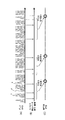
- FIG. 1 is a time chart showing a dark count evaluation method in which an adjustment mode is set.
- FIG. 2 is a time chart for explaining the outline of the present invention.
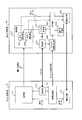
- FIG. 3 is a block diagram showing the configuration of the transmitter and receiver of the optical communication system according to an embodiment of the present invention.
- FIG. 4 is a time chart for explaining the dark count evaluation method of the optical communication system according to the present embodiment.
- the timing of substantially zero light intensity (average photon number 0) included in the transmission light pulse train among the detection data obtained by detecting the transmission light pulse train with the photon detector is performed using detection data (hereinafter referred to as Z pulse for convenience). Specifically, the ratio of the number of photon detections by the photon detector to the number of transmitted Z pulses is evaluated as the dark count probability. Thus, dark count evaluation can be performed while the photon detector remains in the operating mode, and system operation need not be interrupted for adjustment.
- a dark count evaluation method according to an embodiment of the present invention will be described in detail by taking a QKD system employing a decoy method including a Z pulse as an example.
- an optical communication system includes an encryption key transmitting side (Alice) transmitter 10 and an encryption key receiving side (Bob) receiver 20. Connected by optical fiber.
- the transmitter 10 and the receiver 20 communicate with each other through a quantum communication path 30 and classical communication paths 31 to 33 described later.
- the transmitter 10 includes a transmission unit 101 that performs quantum communication, a synchronization unit 102 that performs clock synchronization with the reception side, a transmission control unit 103 that notifies the decoy transmission control and reception side of Z-pulse transmission information, and a receiver 20.
- a key extraction unit 104 that generates an encryption key by transmitting a part of data to each other.
- the transmitter 101 is also provided with a laser light source, a phase modulator, and the like that generate optical pulses, but the description thereof is omitted because it is not directly related to the operation of the present invention.
- the receiver 20 controls the bias voltage of the receiving unit 201 having a plurality of photon detectors (here PD1 and PD2), the synchronizing unit 202 for clock synchronization with the transmitting side, and the photon detectors PD1 and PD2, respectively.
- a key extraction unit 207 that generates an encryption key.
- the receiving unit 201 is also provided with a phase modulator, a 2-input 2-output interferometer (for example, a Mach-Zehnder interferometer), and the like. Omitted.
- control unit 204 the Z pulse information detection unit 205, and the dark count evaluation unit 206 can also realize equivalent functions by a computer that executes a program stored in a memory (not shown).
- the transmission unit 101 of the transmitter 10 transmits photon pulses, which are intensity-modulated based on the decoy method, to the receiver 20 through the quantum communication path 30 in accordance with the transmission data from the transmission control unit 103.
- the transmission control unit 103 notifies the receiver 20 of transmission information of a Z pulse having a light intensity of 0 in the transmitted photon pulse.
- the quantum communication path 30 is a communication path having a predetermined wavelength for transmitting a photon pulse composed of a single photon or a pseudo single photon.
- the clock signal and the Z pulse transmission information may be a classical communication path with a normal intensity optical pulse.
- the quantum communication path 30 and the classical communication path may be wavelength-multiplexed on one optical fiber.
- a classical communication path that transmits bidirectionally between the key extraction unit 104 and the key extraction unit 207 may be used, and an Internet line or the like is typical.
- the photon detectors PD1 and PD2 of the receiving unit 201 detect the photon pulse that has reached through the quantum communication path 30, and output the detected data to the key extracting unit 207 according to the control of the control unit 204.
- the bias controller 203 applies a bias voltage to the photon detectors PD1 and PD2 in synchronization with the photon pulse arrival timing, and drives the photon detectors PD1 and PD2, respectively. Therefore, the data output from the photon detectors PD1 and PD2 indicates the presence or absence of a photon pulse that has reached through the quantum communication path 30, and also indicates the presence or absence of a dark output at the timing of a Z pulse with a light intensity of zero.
- the Z pulse information detection unit 205 detects the Z pulse transmission information received from the transmitter 10 through the classical communication path, and outputs it to the control unit 204.
- the control unit 204 extracts output data for the Z pulse from the output data of the photon detectors PD1 and PD2 in accordance with the Z pulse transmission information, and outputs the output data to the dark count evaluation unit 206.
- the dark count evaluation unit 206 calculates the probability of dark output of each photon detector based on the Z pulse transmission information and the output data for the Z pulse. Since the intensity of the Z pulse is zero, the detection probability when receiving the Z pulse corresponds to the dark count probability of the photon detector.
- the bias controller 203 determines a bias voltage to be applied to each photon detector based on the dark count probability, and adjusts the characteristics of the photon detectors PD1 and PD2.
- the optical pulses having the average number of photons s, d, and z are represented as S, D, and Z pulses, respectively.
- most of the transmission pulses are S pulses, and a D pulse or a Z pulse is randomly mixed in part to detect eavesdropping.
- the S pulse is 90%
- the D pulse is 6%
- the Z pulse is about 4% (see Non-Patent Document 3).
- Each pulse of S, D, and Z is transmitted at random, but after detection by the receiver 20, which pulse is the S, D, and Z pulse is notified.
- the QKD system As shown in FIGS. 4B and 4C, the QKD system according to the present embodiment always operates in the key generation mode by performing the dark count evaluation of the photon detector using a plurality of Z pulses. Can do.
- the dark count evaluation operation according to this embodiment will be described below.
- the control unit 204 selectively extracts the Z pulse detection data (dark output) from the output data of the photon detectors PD1 and PD2, and the dark count evaluation unit The data is sequentially stored in 206.
- the bias control unit 203 can determine the bias voltage to be applied to the photon detectors PD1 and PD2, and adjust the dark count probabilities in parallel. In this way, the dark count probabilities of the plurality of photon detectors can be made uniform, and the security of the encryption key can be improved. In this embodiment, since it is not necessary to prepare a photon detector adjustment mode in the QKD system, it is possible to avoid a decrease in key generation speed and an eavesdropping attack.
- the present invention is not limited to this, and an arbitrary number of photon detectors PD1 and PD2 are provided. It can be applied to the receiving unit of a photon detector.
- the present invention can be similarly applied to a receiving unit having a two-input four-output asymmetric Mach-Zehnder interferometer and four photon detectors as shown in Non-Patent Document 3.
- the QKD system using the decoy method has been described.
- the present invention is not limited to the decoy method and can be applied to all methods including transmission of an optical pulse with zero intensity.
- the dark count probability of the photon detector can be evaluated and adjusted without using the adjustment mode, so that it is possible to avoid a decrease in key generation speed and an eavesdropping attack due to the introduction of the adjustment mode.
- Appendix 6 A method of controlling a photon detector in an optical receiver, Selectively extracting the output of the photon detector for a transmission light pulse of substantially zero light intensity contained in the transmission light pulse train; Controlling a characteristic parameter of the photon detector based on the number of photon detections indicated by the extracted output; A method for controlling a photon detector.
- Appendix 7 The method of controlling a photon detector according to appendix 6, wherein the transmission light pulses having zero light intensity are distributed in advance in the transmission light pulse train on the transmission side.
- Appendix 8) 8. The method of controlling a photon detector according to appendix 6 or 7, wherein the characteristic parameter of each photon detector is adjusted so as to make the dark count probability of the plurality of photon detectors uniform.
- a control device for a photon detector in an optical receiver Extraction means for selectively extracting the output of the photon detector with respect to a transmission light pulse of substantially zero light intensity included in the transmission light pulse train; Control means for controlling a characteristic parameter of the photon detector based on the number of photon detections indicated by the extracted output; A control device for a photon detector.
- the control device for a photon detector according to appendix 9 or 10, wherein the control means adjusts the characteristic parameter of each photon detector so as to equalize the dark count probability of the plurality of photon detectors.
- Appendix 12 A method for evaluating a dark count of a photon detector in an optical communication system, Selectively extracting the output of the photon detector with respect to a transmission light pulse of zero light intensity included in the transmission light pulse train; Evaluating a dark count of the photon detector based on the number of photon detections indicated by the extracted output; A dark count evaluation method for a photon detector. (Appendix 13) 13.
- the photon detector dark count evaluation method according to appendix 12, wherein the transmission light pulses having zero light intensity are distributed in advance in the transmission light pulse train on the transmission side.
- An optical communication system comprising an optical transmitter for transmitting a transmission optical pulse and an optical receiver for receiving the transmission optical pulse,
- the optical transmitter has transmission means for transmitting a transmission optical pulse train including a transmission optical pulse having substantially zero light intensity;
- the receiver is Photon detection means for detecting the transmitted light pulse;
- Extraction means for selectively extracting the output of the photon detection means for transmission light pulses of substantially zero light intensity contained in the transmission light pulse train; Dark count evaluation means for evaluating the dark count of the photon detection means based on the number of photon detections indicated by the extracted output; Having An optical communication system.
- the photon detection means has a plurality of photon detectors, and the control means adjusts the characteristic parameter of each photon detector so as to equalize the dark count probability of the plurality of photon detectors. 18.
- An optical communication system according to item 17.
- (Appendix 19) 19. The optical communication system according to any one of appendices 14 to 18, wherein the transmission light pulse is a photon pulse composed of a single photon or a pseudo single photon.
- (Appendix 20) A program that causes a computer to function to control a photon detector in an optical receiver, A function of selectively extracting the output of the photon detector with respect to a transmission light pulse of substantially zero light intensity included in the transmission light pulse train; A function of controlling a characteristic parameter of the photon detector based on the number of photon detections indicated by the extracted output; Is realized by the computer.
- the present invention can be applied to a general optical receiver having a photon detector, and can be applied to, for example, characteristic adjustment of a photon detector of a quantum key distribution system.
Landscapes
- Engineering & Computer Science (AREA)
- Physics & Mathematics (AREA)
- Electromagnetism (AREA)
- Computer Networks & Wireless Communication (AREA)
- Signal Processing (AREA)
- Theoretical Computer Science (AREA)
- Computer Security & Cryptography (AREA)
- Optics & Photonics (AREA)
- Optical Communication System (AREA)
Abstract
Description
本発明による光子検出器の制御方法は、送信光パルス列に含まれる実質的に光強度ゼロの送信光パルスに対する前記光子検出器の出力を選択的に抽出し、前記抽出された出力が示す光子検出回数に基づいて前記光子検出器の特性パラメータを制御する、ことを特徴とする。
本発明による光子検出器の制御装置は、送信光パルス列に含まれる実質的に光強度ゼロの送信光パルスに対する前記光子検出器の出力を選択的に抽出する抽出手段と、前記抽出された出力が示す光子検出回数に基づいて前記光子検出器の特性パラメータを制御する制御手段と、を有することを特徴とする。
本発明による光子検出器の暗計数評価方法は、送信光パルス列に含まれる実質的に光強度ゼロの送信光パルスに対する前記光子検出器の出力を選択的に抽出し、前記抽出された出力が示す光子検出回数に基づいて前記光子検出器の暗計数を評価する、ことを特徴とする。
図3に示すように、本発明の一実施形態による光通信システムは、暗号鍵を送信する側(Alice)の送信機10と暗号鍵を受信する側(Bob)の受信機20とが光ファイバにより接続されている。送信機10と受信機20とは、後述する量子通信路30および古典通信路31~33により通信を行うものとする。
送信機10の送信部101は、送信制御部103からの送信データに従って、デコイ法に基づいて強度変調された光子パルスを量子通信路30を通して受信機20へ送信する。これと並行して、送信制御部103は送信された光子パルスにおける光強度0のZパルスの送信情報を受信機20へ通知する。ここで量子通信路30は、単一光子あるいは疑似単一光子からなる光子パルスを伝送する所定波長の通信路である。クロック信号やZパルス送信情報は通常強度の光パルスによる古典通信路でよい。なお、量子通信路30と古典通信路とは1本の光ファイバに波長多重されてもよい。また、鍵抽出部104と鍵抽出部207との間は双方向に伝送する古典通信路であればよく、インターネット回線などが代表的である。
図4(A)に示すように、一般に、デコイ法では3種類の光強度が用いられ、1パルス中に含まれる平均光子数をここではそれぞれs、d、zとする。平均光子数sの光パルスは信号(signal)光として用い、ここから得た情報を量子暗号鍵の生成に利用する。伝送距離50km程度の典型的なQKDシステムではs=~0.5である。平均光子数dおよびzの光パルスは盗聴を検知するための囮(decoy)パルスとして用い、典型的にはd=~0.2、z=0である。以下、平均光子数s、d、zの光パルスをそれぞれS、D、Zパルスと表す。デコイ法を用いたQKDシステムでは、送信パルスのほとんどをSパルスとし、一部にDパルスやZパルスをランダムに混入させて盗聴を検知する。典型的には送信パルスのうち、Sパルスが90%、Dパルスが6%、Zパルスが4%程度である(非特許文献3参照)。なお、S、D、Zの各パルスはランダムに送信されるが、受信機20での検出後にはどのパルスがS、D、Zパルスであったかが通知される。
暗計数確率=(Zパルスの検出数N)/(送信されたZパルス数)。
この暗計数確率に基づいて、バイアス制御部203は光子検出器PD1およびPD2に印加するバイアス電圧を決定し、それらの暗計数確率を並列に調整することができる。こうして複数の光子検出器の暗計数確率を均一にすることが可能となり、暗号鍵の安全性を向上させることができる。本実施形態では、QKDシステムに光子検出器の調整モードを用意する必要がないため、鍵生成速度の低下や盗聴攻撃を回避することが可能となる。
上述した実施形態では、受信部201に2個の光子検出器PD1、PD2が設けられている例を示したが、本発明はこれに限定されるものではなく、任意の個数の光子検出器の受信部に適用可能である。たとえば非特許文献3に示すような2入力4出力の非対称マッハツェンダ(Mach-Zehnder)干渉計と4個の光子検出器を有する受信部であっても同様に適用可能である。
上述した実施形態の一部あるいは全部は、以下の付記のようにも記載されうるが、これらに限定されるものではない。
(付記1)
光子検出器を有する光受信装置であって、
送信光パルス列に含まれる実質的に光強度ゼロの送信光パルスに対する前記光子検出器の出力を選択的に抽出する抽出手段と、
前記抽出された出力が示す光子検出回数に基づいて前記光子検出器の暗計数を評価する暗計数評価手段と、
を有することを特徴とする光受信装置。
(付記2)
前記抽出手段は、前記送信光パルスの送信側から、前記光強度ゼロの送信光パルスの前記送信光パルス列における分散配置情報を受信することを特徴とする付記1に記載の光受信装置。
(付記3)
前記送信光パルス列は、光強度ゼロを含む複数の光強度レベルを有することを特徴とする付記1または2に記載の光受信装置。
(付記4)
前記評価された暗計数に基づいて前記光子検出器の特性を制御する制御手段を更に有することを特徴とする付記1-3のいずれか1項に記載の光受信装置。
(付記5)
前記制御手段は複数の光子検出器の暗計数確率を均一化するように各光子検出器の特性パラメータを調整することを特徴とする付記4に記載の光受信装置。
(付記6)
光受信機における光子検出器の制御方法であって、
送信光パルス列に含まれる実質的に光強度ゼロの送信光パルスに対する前記光子検出器の出力を選択的に抽出し、
前記抽出された出力が示す光子検出回数に基づいて前記光子検出器の特性パラメータを制御する、
ことを特徴とする光子検出器の制御方法。
(付記7)
前記光強度ゼロの送信光パルスは送信側において前記送信光パルス列に予め分散配置されていることを特徴とする付記6に記載の光子検出器の制御方法。
(付記8)
複数の光子検出器の暗計数確率を均一化するように各光子検出器の特性パラメータを調整することを特徴とする付記6または7に記載の光子検出器の制御方法。
(付記9)
光受信機における光子検出器の制御装置であって、
送信光パルス列に含まれる実質的に光強度ゼロの送信光パルスに対する前記光子検出器の出力を選択的に抽出する抽出手段と、
前記抽出された出力が示す光子検出回数に基づいて前記光子検出器の特性パラメータを制御する制御手段と、
ことを特徴とする光子検出器の制御装置。
(付記10)
前記光強度ゼロの送信光パルスは送信側において前記送信光パルス列に予め分散配置されていることを特徴とする付記9に記載の光子検出器の制御装置。
(付記11)
前記制御手段は複数の光子検出器の暗計数確率を均一化するように各光子検出器の特性パラメータを調整することを特徴とする付記9または10記載の光子検出器の制御装置。
(付記12)
光通信システムにおける光子検出器の暗計数評価方法であって、
送信光パルス列に含まれる光強度ゼロの送信光パルスに対する前記光子検出器の出力を選択的に抽出し、
前記抽出された出力が示す光子検出回数に基づいて前記光子検出器の暗計数を評価する、
ことを特徴とする光子検出器の暗計数評価方法。
(付記13)
前記光強度ゼロの送信光パルスは送信側において前記送信光パルス列に予め分散配置されていることを特徴とする付記12に記載の光子検出器の暗計数評価方法。
(付記14)
送信光パルスを送信する光送信機と前記送信光パルスを受信する光受信機とからなる光通信システムであって、
前記光送信機が、実質的に光強度ゼロの送信光パルスを含む送信光パルス列を送信する送信手段を有し、
前記受信機が、
前記送信光パルスを検出する光子検出手段と、
前記送信光パルス列に含まれる実質的に光強度ゼロの送信光パルスに対する前記光子検出手段の出力を選択的に抽出する抽出手段と、
前記抽出された出力が示す光子検出回数に基づいて前記光子検出手段の暗計数を評価する暗計数評価手段と、
を有する、
ことを特徴とする光通信システム。
(付記15)
前記抽出手段は、前記送信機から前記光強度ゼロの送信光パルスの前記送信光パルス列における分散配置情報を受信することを特徴とする付記14に記載の光通信システム。
(付記16)
前記送信光パルス列は、光強度ゼロを含む複数の光強度レベルを有することを特徴とする付記14または15に記載の光通信システム。
(付記17)
前記受信機は前記評価された暗計数に基づいて前記光子検出手段の特性を制御する制御手段を更に有することを特徴とする付記14-16のいずれか1項に記載の光通信システム。
(付記18)
前記光子検出手段は複数の光子検出器を有し、前記制御手段が前記複数の光子検出器の暗計数確率を均一化するように各光子検出器の特性パラメータを調整することを特徴とする付記17に記載の光通信システム。
(付記19)
前記送信光パルスは単一光子あるいは疑似単一光子からなる光子パルスであることを特徴とする付記14-18のいずれか1項に記載の光通信システム。
(付記20)
光受信機における光子検出器を制御するようにコンピュータを機能させるプログラムであって、
送信光パルス列に含まれる実質的に光強度ゼロの送信光パルスに対する前記光子検出器の出力を選択的に抽出する機能と、
前記抽出された出力が示す光子検出回数に基づいて前記光子検出器の特性パラメータを制御する機能と、
を前記コンピュータで実現することを特徴とするプログラム。
20 受信機
30 量子通信路
101 送信部
102 同期部
103 送信制御部
104 鍵抽出部
201 受信部
202 同期部
203 バイアス制御部
204 制御部
205 Zパルス情報検出部
206 暗計数評価部
207 鍵抽出部
PD1、PD2 光子検出器
Claims (10)
- 光子検出器を有する光受信装置であって、
送信光パルス列に含まれる実質的に光強度ゼロの送信光パルスに対する前記光子検出器の出力を選択的に抽出する抽出手段と、
前記抽出された出力が示す光子検出回数に基づいて前記光子検出器の暗計数を評価する暗計数評価手段と、
を有することを特徴とする光受信装置。 - 前記抽出手段は、前記送信光パルスの送信側から、前記光強度ゼロの送信光パルスの前記送信光パルス列における分散配置情報を受信することを特徴とする請求項1に記載の光受信装置。
- 前記送信光パルス列は、光強度ゼロを含む複数の光強度レベルを有することを特徴とする請求項1または2に記載の光受信装置。
- 前記評価された暗計数に基づいて前記光子検出器の特性を制御する制御手段を更に有することを特徴とする請求項1-3のいずれか1項に記載の光受信装置。
- 前記制御手段は複数の光子検出器の暗計数確率を均一化するように各光子検出器の特性パラメータを調整することを特徴とする請求項4に記載の光受信装置。
- 光受信機における光子検出器の制御方法であって、
送信光パルス列に含まれる実質的に光強度ゼロの送信光パルスに対する前記光子検出器の出力を選択的に抽出し、
前記抽出された出力が示す光子検出回数に基づいて前記光子検出器の特性パラメータを制御する、
ことを特徴とする光子検出器の制御方法。 - 光受信機における光子検出器の制御装置であって、
送信光パルス列に含まれる実質的に光強度ゼロの送信光パルスに対する前記光子検出器の出力を選択的に抽出する抽出手段と、
前記抽出された出力が示す光子検出回数に基づいて前記光子検出器の特性パラメータを制御する制御手段と、
を有することを特徴とする光子検出器の制御装置。 - 光通信システムにおける光子検出器の暗計数評価方法であって、
送信光パルス列に含まれる実質的に光強度ゼロの送信光パルスに対する前記光子検出器の出力を選択的に抽出し、
前記抽出された出力が示す光子検出回数に基づいて前記光子検出器の暗計数を評価する、
ことを特徴とする光子検出器の暗計数評価方法。 - 送信光パルスを送信する光送信機と前記送信光パルスを受信する光受信機とからなる光通信システムであって、
前記光送信機が、実質的に光強度ゼロの送信光パルスを含む送信光パルス列を送信する送信手段を有し、
前記受信機が、
前記送信光パルスを検出する光子検出手段と、
前記送信光パルス列に含まれる実質的に光強度ゼロの送信光パルスに対する前記光子検出手段の出力を選択的に抽出する抽出手段と、
前記抽出された出力が示す光子検出回数に基づいて前記光子検出手段の暗計数を評価する暗計数評価手段と、
を有する、
ことを特徴とする光通信システム。 - 光受信機における光子検出器を制御するようにコンピュータを機能させるプログラムであって、
送信光パルス列に含まれる実質的に光強度ゼロの送信光パルスに対する前記光子検出器の出力を選択的に抽出する機能と、
前記抽出された出力が示す光子検出回数に基づいて前記光子検出器の特性パラメータを制御する機能と、
を前記コンピュータで実現することを特徴とするプログラム。
Priority Applications (2)
| Application Number | Priority Date | Filing Date | Title |
|---|---|---|---|
| JP2014544310A JPWO2014068959A1 (ja) | 2012-11-01 | 2013-10-29 | 光通信システムにおける光受信装置、光子検出器の制御方法および装置、並びに光子検出器の暗計数評価方法 |
| US14/439,043 US9584319B2 (en) | 2012-11-01 | 2013-10-29 | Optical receiving device in optical communication system, control method and device of photon detector, and dark count evaluation method of photon detector |
Applications Claiming Priority (2)
| Application Number | Priority Date | Filing Date | Title |
|---|---|---|---|
| JP2012241488 | 2012-11-01 | ||
| JP2012-241488 | 2012-11-01 |
Publications (1)
| Publication Number | Publication Date |
|---|---|
| WO2014068959A1 true WO2014068959A1 (ja) | 2014-05-08 |
Family
ID=50626907
Family Applications (1)
| Application Number | Title | Priority Date | Filing Date |
|---|---|---|---|
| PCT/JP2013/006397 Ceased WO2014068959A1 (ja) | 2012-11-01 | 2013-10-29 | 光通信システムにおける光受信装置、光子検出器の制御方法および装置、並びに光子検出器の暗計数評価方法 |
Country Status (3)
| Country | Link |
|---|---|
| US (1) | US9584319B2 (ja) |
| JP (1) | JPWO2014068959A1 (ja) |
| WO (1) | WO2014068959A1 (ja) |
Cited By (4)
| Publication number | Priority date | Publication date | Assignee | Title |
|---|---|---|---|---|
| CN105391548A (zh) * | 2015-11-26 | 2016-03-09 | 成都信息工程大学 | 基于节点信任的量子信任评估方法 |
| JP2017166969A (ja) * | 2016-03-16 | 2017-09-21 | 日本電気株式会社 | 光受信装置および光受信方法 |
| CN114631049A (zh) * | 2019-10-17 | 2022-06-14 | 有线电视实验室公司 | 无源光网络中的量子密钥分发和管理 |
| WO2025224887A1 (ja) * | 2024-04-24 | 2025-10-30 | 日本電気株式会社 | 送信機、受信機、量子鍵配送システム、方法及びプログラム |
Families Citing this family (7)
| Publication number | Priority date | Publication date | Assignee | Title |
|---|---|---|---|---|
| JP6165638B2 (ja) * | 2014-01-08 | 2017-07-19 | 株式会社東芝 | 量子通信装置、量子通信方法及びプログラム |
| CN107689829A (zh) * | 2016-08-04 | 2018-02-13 | 安徽问天量子科技股份有限公司 | 单光子探测器探测致盲攻击的监测装置与方法 |
| EP3512158B1 (en) * | 2016-09-09 | 2021-08-18 | Nec Corporation | Transmitting device, receiving device, quantum key distribution method, and quantum key distribution program for quantum key distribution system |
| JP7075065B2 (ja) * | 2018-03-19 | 2022-05-25 | 日本電気株式会社 | 光子検出器の駆動タイミング調整方法、装置および光通信システム |
| CN111510283B (zh) * | 2019-01-31 | 2021-04-23 | 北京中创为南京量子通信技术有限公司 | 一种用于量子密钥生成系统的实时位同步修正方法 |
| CN111510208B (zh) * | 2019-01-31 | 2021-04-23 | 北京中创为南京量子通信技术有限公司 | 一种用于量子密钥生成系统的实时位同步修正方法 |
| CN112636821B (zh) * | 2020-12-18 | 2022-04-01 | 南京先进激光技术研究院 | 水下无线光通信光信道仿真方法及仿真系统 |
Citations (3)
| Publication number | Priority date | Publication date | Assignee | Title |
|---|---|---|---|---|
| JP2009509367A (ja) * | 2005-09-19 | 2009-03-05 | ザ チャイニーズ ユニバーシティー オブ ホンコン | Wdmリンク上の量子鍵配布システムおよび方法 |
| JP2009509366A (ja) * | 2005-09-19 | 2009-03-05 | ザ チャイニーズ ユニバーシティー オブ ホンコン | 波長ルーティングを用いたマルチユーザのwdmネットワーク上での量子鍵配布方法およびシステム |
| JP2013013068A (ja) * | 2011-05-19 | 2013-01-17 | Toshiba Corp | 通信システム及び方法 |
Family Cites Families (1)
| Publication number | Priority date | Publication date | Assignee | Title |
|---|---|---|---|---|
| US7580524B2 (en) * | 2002-03-11 | 2009-08-25 | Universite De Geneve | Method and apparatus for synchronizing the emitter and the receiver in an autocompensating quantum cryptography system |
-
2013
- 2013-10-29 WO PCT/JP2013/006397 patent/WO2014068959A1/ja not_active Ceased
- 2013-10-29 JP JP2014544310A patent/JPWO2014068959A1/ja active Pending
- 2013-10-29 US US14/439,043 patent/US9584319B2/en active Active
Patent Citations (3)
| Publication number | Priority date | Publication date | Assignee | Title |
|---|---|---|---|---|
| JP2009509367A (ja) * | 2005-09-19 | 2009-03-05 | ザ チャイニーズ ユニバーシティー オブ ホンコン | Wdmリンク上の量子鍵配布システムおよび方法 |
| JP2009509366A (ja) * | 2005-09-19 | 2009-03-05 | ザ チャイニーズ ユニバーシティー オブ ホンコン | 波長ルーティングを用いたマルチユーザのwdmネットワーク上での量子鍵配布方法およびシステム |
| JP2013013068A (ja) * | 2011-05-19 | 2013-01-17 | Toshiba Corp | 通信システム及び方法 |
Cited By (4)
| Publication number | Priority date | Publication date | Assignee | Title |
|---|---|---|---|---|
| CN105391548A (zh) * | 2015-11-26 | 2016-03-09 | 成都信息工程大学 | 基于节点信任的量子信任评估方法 |
| JP2017166969A (ja) * | 2016-03-16 | 2017-09-21 | 日本電気株式会社 | 光受信装置および光受信方法 |
| CN114631049A (zh) * | 2019-10-17 | 2022-06-14 | 有线电视实验室公司 | 无源光网络中的量子密钥分发和管理 |
| WO2025224887A1 (ja) * | 2024-04-24 | 2025-10-30 | 日本電気株式会社 | 送信機、受信機、量子鍵配送システム、方法及びプログラム |
Also Published As
| Publication number | Publication date |
|---|---|
| JPWO2014068959A1 (ja) | 2016-09-08 |
| US20150304106A1 (en) | 2015-10-22 |
| US9584319B2 (en) | 2017-02-28 |
Similar Documents
| Publication | Publication Date | Title |
|---|---|---|
| WO2014068959A1 (ja) | 光通信システムにおける光受信装置、光子検出器の制御方法および装置、並びに光子検出器の暗計数評価方法 | |
| JP4888630B2 (ja) | 通信システムおよびその監視制御方法 | |
| US8949300B2 (en) | Circuit and method for controlling quality of random numbers | |
| US8433070B2 (en) | Systems and methods for stabilization of interferometers for quantum key distribution | |
| JP6303034B2 (ja) | 通信システムおよび方法 | |
| US9401766B2 (en) | Quantum communication network | |
| Choi et al. | Field trial of a quantum secured 10 Gb/s DWDM transmission system over a single installed fiber | |
| US8295485B2 (en) | Quantum communication system | |
| EP2670642B1 (en) | Quantum key distribution | |
| JP4662040B2 (ja) | 通信システムおよびその同期制御方法 | |
| JP2019102954A (ja) | 単一光子検出装置及び量子鍵配送用受信装置 | |
| Hughes et al. | Secure communications using quantum cryptography | |
| Jiang et al. | High-speed quantum key distribution using dead-time compensated detector arrays | |
| JP6658102B2 (ja) | 量子鍵配送システム及び時間同期方法 | |
| JP6257042B2 (ja) | 量子鍵配送システムおよび量子鍵配送方法 | |
| Simmons et al. | Strategies for implementing a single-detector polarization-encoded quantum key distribution receiver | |
| JP6672918B2 (ja) | 光受信装置および光受信方法 | |
| Choi et al. | First quantum secured 10-Gb/s DWDM transmission over the same installed fibre | |
| KR102885360B1 (ko) | 양자 암호 통신 해킹 방지 방법, 장치 및 시스템 | |
| Jogenfors et al. | Hacking energy-time entanglement-based systems with classical light | |
| da Silva et al. | Proof-of-principle demonstration of measurement device independent QKD using polarization qubits | |
| CN120200740A (zh) | 用于使用光子偏振的校正来分发量子密钥的系统 | |
| Weinfurter | Principles of quantum cryptography/quantum key distribution (QKD) using attenuated light pulses | |
| Dima et al. | Quantum Encrypted Data Transfers in GRID |
Legal Events
| Date | Code | Title | Description |
|---|---|---|---|
| 121 | Ep: the epo has been informed by wipo that ep was designated in this application |
Ref document number: 13852131 Country of ref document: EP Kind code of ref document: A1 |
|
| ENP | Entry into the national phase |
Ref document number: 2014544310 Country of ref document: JP Kind code of ref document: A |
|
| WWE | Wipo information: entry into national phase |
Ref document number: 14439043 Country of ref document: US |
|
| NENP | Non-entry into the national phase |
Ref country code: DE |
|
| 122 | Ep: pct application non-entry in european phase |
Ref document number: 13852131 Country of ref document: EP Kind code of ref document: A1 |