WO2014049998A1 - 情報検索システム、情報検索方法およびプログラム - Google Patents
情報検索システム、情報検索方法およびプログラム Download PDFInfo
- Publication number
- WO2014049998A1 WO2014049998A1 PCT/JP2013/005401 JP2013005401W WO2014049998A1 WO 2014049998 A1 WO2014049998 A1 WO 2014049998A1 JP 2013005401 W JP2013005401 W JP 2013005401W WO 2014049998 A1 WO2014049998 A1 WO 2014049998A1
- Authority
- WO
- WIPO (PCT)
- Prior art keywords
- language model
- result
- speech recognition
- matching data
- updated
- Prior art date
- Legal status (The legal status is an assumption and is not a legal conclusion. Google has not performed a legal analysis and makes no representation as to the accuracy of the status listed.)
- Ceased
Links
Images






Classifications
-
- G—PHYSICS
- G06—COMPUTING OR CALCULATING; COUNTING
- G06F—ELECTRIC DIGITAL DATA PROCESSING
- G06F16/00—Information retrieval; Database structures therefor; File system structures therefor
- G06F16/60—Information retrieval; Database structures therefor; File system structures therefor of audio data
- G06F16/68—Retrieval characterised by using metadata, e.g. metadata not derived from the content or metadata generated manually
- G06F16/683—Retrieval characterised by using metadata, e.g. metadata not derived from the content or metadata generated manually using metadata automatically derived from the content
-
- G—PHYSICS
- G06—COMPUTING OR CALCULATING; COUNTING
- G06F—ELECTRIC DIGITAL DATA PROCESSING
- G06F16/00—Information retrieval; Database structures therefor; File system structures therefor
- G06F16/90—Details of database functions independent of the retrieved data types
- G06F16/903—Querying
- G06F16/9032—Query formulation
- G06F16/90332—Natural language query formulation or dialogue systems
-
- G—PHYSICS
- G06—COMPUTING OR CALCULATING; COUNTING
- G06F—ELECTRIC DIGITAL DATA PROCESSING
- G06F16/00—Information retrieval; Database structures therefor; File system structures therefor
- G06F16/90—Details of database functions independent of the retrieved data types
- G06F16/903—Querying
- G06F16/90335—Query processing
- G06F16/90344—Query processing by using string matching techniques
-
- G—PHYSICS
- G06—COMPUTING OR CALCULATING; COUNTING
- G06F—ELECTRIC DIGITAL DATA PROCESSING
- G06F16/00—Information retrieval; Database structures therefor; File system structures therefor
- G06F16/90—Details of database functions independent of the retrieved data types
- G06F16/95—Retrieval from the web
- G06F16/953—Querying, e.g. by the use of web search engines
- G06F16/9535—Search customisation based on user profiles and personalisation
-
- G—PHYSICS
- G10—MUSICAL INSTRUMENTS; ACOUSTICS
- G10L—SPEECH ANALYSIS TECHNIQUES OR SPEECH SYNTHESIS; SPEECH RECOGNITION; SPEECH OR VOICE PROCESSING TECHNIQUES; SPEECH OR AUDIO CODING OR DECODING
- G10L15/00—Speech recognition
- G10L15/08—Speech classification or search
- G10L15/18—Speech classification or search using natural language modelling
- G10L15/183—Speech classification or search using natural language modelling using context dependencies, e.g. language models
Definitions
- the present invention relates to an information search system, an information search method, and a program, and more particularly to an information search system, an information search method, and a program for searching for data related to speech.
- Patent Document 1 An example of a technique for retrieving data related to voice is described in Patent Document 1.
- the search device described in Patent Literature 1 calculates the similarity between texts of an input query and a speech recognition result using the reliability of speech recognition, and uses the speech recognition result having a high similarity as a search result. Output.
- the speech recognition result includes misrecognition.
- This search apparatus uses the reliability of the speech recognition result and excludes the speech recognition result having a low reliability from the search result, thereby reducing the probability of outputting an erroneous recognition result as the search result.
- Patent Document 1 has a problem that data related to speech cannot be accurately retrieved when a word that is difficult to appear as a speech recognition result is a query.
- An object of the present invention is to provide an information search system, an information search method, and a program capable of accurately searching data related to speech even when a word that is difficult to appear as a recognition result is a query. Is to provide.
- the present invention refers to a calculation unit that calculates a language model for query, which is a language model of an input word or word set, and a storage unit that stores a result of speech recognition of speech data using the speech recognition language model.
- Extraction means for extracting a result having high similarity to the query language model from the result as matching data; and first updating means for updating the speech recognition language model using the matching data;
- Second update means for updating the result stored in the storage means using the updated speech recognition language model, and the extraction means includes the query language model from the updated result.
- This is an information search system that extracts a result having a high similarity and outputs a search result that is data corresponding to the extracted result.
- the present invention calculates a query language model that is a language model of an input word or word set, and refers to a storage unit that stores a result of speech recognition of speech data using a speech recognition language model, and the result From the above, a result having a high similarity with the query language model is extracted as matching data, the speech recognition language model is updated using the matching data, and the updated speech recognition language model is used.
- An information search for updating a result stored in the storage unit, extracting a result having a high similarity to the query language model from the updated result, and outputting a search result that is data corresponding to the extracted result Is the method.
- the present invention refers to a step of calculating a query language model that is a language model of an input word or word set, and a storage means that stores a result of speech recognition of speech data using a speech recognition language model, Extracting a result having high similarity with the query language model from the results as matching data, updating the speech recognition language model using the matching data, and updated speech recognition A step of updating the result stored in the storage unit using a language model, and extracting a result having a high similarity with the query language model from the updated result, and data corresponding to the extracted result A program for causing a computer to execute a step of outputting a certain search result.
- FIG. 1 is a hardware configuration diagram of an information search system 1 according to the first embodiment of the present invention.
- an information retrieval system 1 includes a CPU 10, a memory 12, a hard disk drive (HDD) 14, a communication interface (IF) 16 that performs data communication via a network (not shown), a display device 18 such as a display, and the like.
- the input device 20 includes a pointing device such as a keyboard and a mouse. These components are connected to each other through the bus 22 and input / output data to / from each other.
- the hardware configuration of the information search system 1 is not limited to this configuration and can be changed as appropriate.
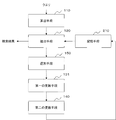
- FIG. 2 is a block diagram showing the configuration of the information search system according to the first embodiment of the present invention.
- the information search system includes a calculation unit 110, an extraction unit 120, a first update unit 130, a second update unit 140, and a storage unit 210. Have.
- the storage unit 210 stores a result of speech recognition of speech data using a speech recognition language model (hereinafter referred to as speech recognition result).
- the language model for speech recognition is a model that defines restrictions on a word string to be recognized when a speech signal is recognized as a word string.
- the storage unit 210 stores the result of voice recognition of one voice data file in the form of one text file.
- the storage unit 210 stores at least one speech recognition result (text file).
- the calculation means 110 calculates a query language model based on the input query.
- the query is a word or a set of words to be searched.
- the calculation unit 110 calculates a query language model according to Equation 1.
- the query language model is a unigram probability value p (w
- Q is a query word set
- is the number of words in Q
- w is a word
- ⁇ Q is a parameter of a query language model.
- N (w, Q) is a function that is the number of w included in Q when w is a word included in Q, and is 0 when w is not included in Q.
- the extraction unit 120 calculates the similarity between the query language model calculated by the calculation unit 110 and each speech recognition result (each text file) stored in the storage unit 210, and the speech recognition result (highly similar) ( (Text file) is extracted as matching data.
- the extraction unit 120 calculates the KL (Cullback liber) distance between the query language model and the speech recognition result language model as the similarity according to Equation 2.
- the KL distance is an index representing a difference between two language models that are probability distributions.
- the similarity between the two language models increases as the KL distance value decreases.
- ⁇ D ) is a KL distance
- ⁇ D ) is a language model of each speech recognition result D stored in the storage unit 210.
- the extraction unit 120 calculates the language model p (w
- ⁇ C ) is a language model of the entire set C of the speech recognition results stored in the storage unit 210.
- is the number of words in the speech recognition result D
- ⁇ is a unigram probability value of the speech recognition result D and a smoothing parameter of p (w
- ⁇ is given in advance.
- the extraction unit 120 calculates p (w
- the extracting unit 120 extracts, for example, a speech recognition result in which the calculated KL distance is less than or equal to a predetermined threshold value.
- the extraction unit 120 may extract a predetermined number of speech recognition results in order of increasing KL distance.
- the first updating unit 130 updates the speech recognition language model using the matching data extracted by the extraction unit 120 and having a high similarity with the query language model.
- the first updating unit 130 updates the speech recognition language model using, for example, Equation 5.
- ⁇ ASR ) is a speech recognition language model before being updated
- ⁇ ′ ASR ) is a speech recognition language model after being updated
- ⁇ CF ) is a language model of the set CF of matching data.
- ⁇ is a parameter for updating, and is given in advance, for example.
- the second updating unit 140 updates the speech recognition result stored in the storage unit 210 using the speech recognition language model updated by the first updating unit 130. For example, the second update unit 140 recognizes the voice data that is the original data of the voice recognition result again using the updated speech recognition language model, thereby recognizing the voice recognition stored in the storage unit 210. Update the result.
- the second update unit 140 may update the result by the following method.
- the storage unit 210 stores a speech graph of speech data using the speech recognition language model before being updated, and a word graph corresponding to the speech recognition result.
- the word graph may be stored in a storage unit different from the storage unit 210.
- the second update unit 140 updates the speech recognition result stored in the storage unit 210 by rescoring the language probability for the word graph using the updated speech recognition language model.
- the extraction unit 120 calculates the similarity between the query language model calculated by the calculation unit 110 and the updated speech recognition result stored in the storage unit 210, and the speech recognition result having a high similarity is converted into the matching data. Extract as
- the extracting unit 120 outputs at least a part of the data corresponding to the extracted speech recognition result as the search result.
- the condition for outputting the search result is, for example, that the update of the speech recognition language model, the update of the result stored in the storage unit 210 and the extraction of the matching data are performed a predetermined number of times.
- the condition for outputting the search result may be that the speech recognition result extracted from the updated speech recognition result is the same as the speech recognition result extracted from the speech recognition result before being updated. . That is, the extracted speech recognition result is no longer changed.
- the data corresponding to the voice recognition result may be the voice recognition result itself. Further, the data corresponding to the speech recognition result may be speech data that is the original data of the speech recognition result.
- calculation unit 110 the extraction unit 120, the first update unit 130, and the second update unit 140 are not limited to the above-described examples, and can be changed as appropriate.
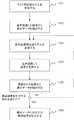
- FIG. 3 is a flowchart showing an example of the operation of the first embodiment.
- the calculation means 110 calculates a query language model based on the input query.
- the extraction unit 120 calculates the similarity between the query language model calculated by the calculation unit 110 and the speech recognition result stored in the storage unit 210, and adapts the speech recognition result having a high similarity. Extract as data.
- the first updating unit 130 updates the speech recognition language model using the matching data extracted by the extracting unit 120.
- the second updating unit 140 updates the speech recognition result stored in the storage unit 210 using the updated speech recognition language model.
- the extracting unit 120 calculates the similarity between the query language model calculated by the calculating unit 110 and the updated speech recognition result stored in the storage unit 210, and the speech recognition result having a high similarity.
- the process returns to step 103.
- the extraction unit 120 outputs at least a part of the search result corresponding to the extracted speech recognition result in step 106.
- the speech recognition language model is updated with the speech recognition result having a high similarity to the word set input as the query. Furthermore, the speech recognition result stored in the storage unit 210 is updated with the updated speech recognition language model. Therefore, the information retrieval system according to the present embodiment can appropriately give the probability value in the speech recognition language model and the reliability in the speech recognition result to the words included in the query. As a result, when a word that is difficult to appear as a recognition result is a query, data related to speech can be searched with high accuracy.
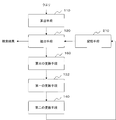
- FIG. 4 is a block diagram showing a configuration of an information search system according to the second embodiment of the present invention.
- the information search system according to the second embodiment includes a sorting unit 150 in addition to the components of the first embodiment.
- the information search system according to the present embodiment includes a first update unit 131 instead of the first update unit 130 of the first embodiment. Since the components other than the sorting unit 150 and the first updating unit 131 are the same as those in the first embodiment, description thereof is omitted.
- the sorting unit 150 sorts the matching data based on the similarity between the matching data. Specifically, the screening unit 150 excludes from the matching data matching data having a low similarity to other matching data.
- the sorting unit 150 sorts the matching data as follows.
- the selection unit 150 calculates the language model p (w
- ⁇ CF ) is an N-gram probability value. N is, for example, 1 or 2.
- the selection unit 150 calculates the language model p (w
- is the number of words of the matching data F, and ⁇ is a smoothing parameter of p (w
- the sorting unit 150 calculates KL ( ⁇ CF
- the sorting unit 150 may sort the matching data as follows.
- the selection unit 150 calculates the respective language models by Equation 6 for the matching data F1 and F2 included in the matching data set CF.
- the language model of F1 is P (w
- the language model of F2 is P (w
- the sorting unit 150 calculates SKL ( ⁇ F1 , ⁇ F2 ), which is the similarity between F1 and F2, by Equation 7.
- the selection unit 150 performs bottom-up clustering based on SKL ( ⁇ F1 , ⁇ F2 ).
- Bottom-up clustering is a method of collecting two pieces of data that are close to each other until the number of clusters specified in a hierarchical order is reached.
- the sorting unit 150 excludes data included in clusters other than the main cluster from the matching data.
- the main cluster is, for example, a cluster having the maximum number of matching data belonging to the cluster.
- the main cluster may be a cluster up to a specified number in descending order of the number of matching data belonging to the cluster.
- the first update unit 131 updates the speech recognition language model using the matching data selected by the selection unit 150. Since the method for updating the model is the same as that of the first updating unit 130, the description thereof is omitted.
- FIG. 5 is a flowchart showing an example of the operation of the second embodiment. Steps 101 and 102 are the same as those in the first embodiment, and thus the description thereof is omitted.
- the sorting unit 150 sorts the matching data.
- the first updating means 131 updates the speech recognition result using the selected matching data. Steps 104 to 106 are the same as those in the first embodiment, and thus the description thereof is omitted.
- the information search system excludes the matching data having a low similarity with other matching data from the matching data. Therefore, this information search system can exclude inappropriate matching data erroneously included in matching data based on the similarity between the matching data, taking into consideration the words that are not included in the query word set. . Therefore, this information retrieval system is more robust against voice recognition errors.
- FIG. 6 is a block diagram showing a configuration of an information search system according to the third embodiment of the present invention.
- the information search system includes a third update unit 160 in addition to the components of the first embodiment. Further, the first updating unit 132 is provided instead of the first updating unit 130 of the first embodiment. The components other than the third update unit 160 and the first update unit 132 are the same as those in the first embodiment, and thus the description thereof is omitted.
- the third update unit 160 updates the query language model using the matching data extracted by the extraction unit 120.
- the third update unit 160 updates the query language model according to Equation 8.
- ⁇ Q ) is a query language model before being updated.
- ⁇ ′ Q ) is a language model for query after being updated.
- ⁇ CF ) is a language model of the set CF of matching data
- ⁇ is a smoothing parameter of p (w
- the first updating unit 132 updates the speech recognition language model according to Equation 9 using the query language model updated by the third updating unit 160.
- Equation 9 p (w
- Non-Patent Document 1 CC. Zhai, “Statistical Language Models for Information Retrieval A Critical Review Found”, Trends Inf. Retr., Now Publishers Inc., 2008, 2, 137-213
- the technique described in Non-Patent Document 1 is an example of a search technique for a text document.
- the information search system according to the present invention uses data related to speech as a search target.
- the information search system according to the present invention updates the speech recognition language model and the speech recognition result with the updated query language model. That is, the information search system according to the present invention uses the property that the speech recognition result changes depending on the language model used for speech recognition.
- FIG. 7 is a flowchart showing an example of the operation of the third embodiment. Steps 101 and 102 are the same as those in the first embodiment, and thus the description thereof is omitted.
- the third update unit 160 updates the query language model using the matching data extracted by the extraction unit 120.
- the first updating unit 132 updates the speech recognition language model using the query language model updated by the third updating unit 160.
- Steps 104 to 106 are the same as those in the first embodiment, and thus the description thereof is omitted.
- the information search system can search voice-related data with high accuracy.
- the query language model is updated based on the matching data.
- the speech recognition language model is also updated by the updated query language model. This is because the query language model and the speech recognition language model are updated in a consistent state.
- FIG. FIG. 8 is a block diagram showing a configuration of an information search system according to the fourth embodiment of the present invention.
- This embodiment is a combination of the configuration of the second embodiment and the configuration of the third embodiment.
- Each component is the same as the component in the first to third embodiments, and thus the description thereof is omitted.
- FIG. 9 is a flowchart showing an example of the operation of the fourth embodiment. Since the operations in steps 101 to 108 are the same as the corresponding steps in the first to third embodiments, the description thereof will be omitted.
- data related to voice can be searched with high accuracy.
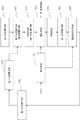
- FIG. 10 is a block diagram illustrating a configuration of an information search system according to a modification of the fourth embodiment.
- the information search system includes a second storage unit 220, a third storage unit 230, and a fourth storage unit 240 in addition to the components of the fourth embodiment.
- the second storage means 220 stores audio data to be searched.
- the second updating unit 140 is a unit that performs voice recognition.
- the second updating unit 140 recognizes at least a part of the voice data stored in the second storage unit 220 using the speech recognition language model stored in the speech recognition language model storage unit 230. Further, the second updating unit 140 stores the result of the voice recognition in the storage unit (first storage unit) 210.
- the third storage unit 230 stores a language model for speech recognition.
- the fourth storage unit 240 stores a query language model.
- the calculating unit 110 stores the calculated query language model in the fourth storage unit 240.
- the third updating unit updates the query language model stored in the fourth storage unit 240.
- the first updating unit updates the speech recognition language model stored in the third storage unit 230 based on the updated query language model stored in the fourth storage unit 240.
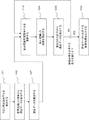
- FIG. 11 is a flowchart showing an example of the operation of the modification.
- the second update unit 140 recognizes at least a part of the voice data stored in the second storage unit 220 using the speech recognition language model stored in the third storage unit 230. To do. Further, in step 109, the second update unit 140 stores the speech recognition result in the first storage unit 210. Since the operations in steps 101 to 108 are the same as the corresponding steps in the first to fourth embodiments, the description thereof will be omitted. Note that step 101 may operate before step 109.
- Appendix 1 Referring to a calculation means for calculating a query language model that is a language model of an input word or word set, and a storage means for storing a result of speech recognition of speech data using the speech recognition language model, the result
- the extraction means for extracting results having high similarity to the query language model as matching data, the first updating means for updating the speech recognition language model using the matching data, and updated Second extraction means for updating a result stored in the storage means using a speech recognition language model, and the extraction means has a similarity to the query language model from the updated result.
- An information search system that extracts high results and outputs search results that are data corresponding to the extracted results.
- FIG. 12 is a block diagram showing the configuration of the information retrieval system.
- the information search system according to claim 1, further comprising: a selecting unit that selects matching data based on a similarity between matching data in the set of matching data, wherein the first updating unit includes the selected matching data.
- An information retrieval system that updates the language model for speech recognition using.
- appendix 3 The information search system according to appendix 1 or 2, further comprising: a third updating unit that updates the query language model using the matching data, wherein the first updating unit includes, instead of the matching data, An information search system that updates the speech recognition language model using the updated query language model.
- a query language model which is a language model of an input word or word set, is calculated, and the query is stored based on the result by referring to a storage unit that stores the result of speech recognition of speech data using the speech recognition language model.
- a result having a high similarity to the language model for use is extracted as matching data, the language model for speech recognition is updated using the matching data, and the storage model is updated using the language model for voice recognition updated.
- An information search method that updates a stored result, extracts a result having a high similarity to the query language model from the updated result, and outputs a search result that is data corresponding to the extracted result.
- appendix 8 The information search method according to appendix 7, wherein in the set of matching data, the matching data is selected based on the similarity between matching data, and the speech recognition language model is updated using the selected matching data. retrieval method.
- the present invention can be used in applications such as a voice search system that can search voice data in which conversations and utterances are recorded, a portion that is highly related to a specified word or word set.
Landscapes
- Engineering & Computer Science (AREA)
- Theoretical Computer Science (AREA)
- Databases & Information Systems (AREA)
- Physics & Mathematics (AREA)
- General Physics & Mathematics (AREA)
- General Engineering & Computer Science (AREA)
- Data Mining & Analysis (AREA)
- Computational Linguistics (AREA)
- Library & Information Science (AREA)
- Mathematical Physics (AREA)
- Multimedia (AREA)
- Artificial Intelligence (AREA)
- Information Retrieval, Db Structures And Fs Structures Therefor (AREA)
Description
本発明の目的は、上記課題を解決し、認識結果としてあらわれにくい単語がクエリとなった場合にも、音声に関するデータを精度よく検索することが出来る、情報検索システム、情報検索方法、およびプログラムを提供することである。
図1は、本発明の第1の実施形態に係る情報検索システム1のハードウェア構成図である。図1に示すように、情報検索システム1は、CPU10、メモリ12、ハードディスクドライブ(HDD)14、図示しないネットワークを介してデータの通信を行う通信インタフェース(IF)16、ディスプレイ等の表示装置18およびキーボードやマウス等のポインティングデバイスを含む入力装置20を有する。これらの構成要素は、バス22を通して互いに接続されており、互いにデータの入出力を行う。なお、情報検索システム1のハードウェア構成は、この構成に制限されず、適宜変更することができる。



次に、抽出手段120は、例えば、算出したKL距離があらかじめ定めた閾値より小さい、または閾値以下である、音声認識結果を抽出する。あるいは、抽出手段120は、KL距離が近い順にあらかじめ定めた個数の、音声認識結果を抽出してもよい。

図4は、本発明の第2の実施の形態による情報検索システムの構成を示すブロック図である。


図6は、本発明の第3の実施の形態による情報検索システムの構成を示すブロック図である。


非特許文献1に記載されている技術は、テキスト文書に対する検索技術の一例である。本発明における情報検索システムは、音声に関するデータを検索の対象としている。本発明における情報検索システムは、更新したクエリ用言語モデルによって、音声認識用言語モデルおよび音声認識結果を更新している。つまり、本発明における情報検索システムは、音声認識結果が音声認識に用いる言語モデルに依存して変化する性質を、利用している。
図8は、本発明の第4の実施の形態による情報検索システムの構成を示すブロック図である。本実施の形態は、第2の実施の形態の構成と第3の実施の形態の構成とを、組み合わせたものである。各構成要素は、第1の実施の形態~第3の実施の形態の構成要素と同様であるため、説明を省略する。
図10は、第4の実施の形態の変形例による情報検索システムの構成を示すブロック図である。
入力された単語または単語集合の言語モデルであるクエリ用言語モデルを算出する算出手段と、音声認識用言語モデルを用いて音声データを音声認識した結果を記憶する記憶手段を参照して、前記結果から、前記クエリ用言語モデルとの類似度が高い結果を、適合データとして抽出する抽出手段と、前記適合データを用いて前記音声認識用言語モデルを更新する第一の更新手段と、更新された音声認識用言語モデルを用いて、前記記憶手段に記憶された結果を更新する第二の更新手段とを有し、前記抽出手段は、更新された結果から前記クエリ用言語モデルとの類似度が高い結果を抽出し、抽出された結果に対応するデータである検索結果を出力する情報検索システム。
付記1に記載の情報検索システムにおいて、前記適合データの集合において、適合データ間の類似度に基づいて適合データを選別する選別手段を有し、前記第一の更新手段は、選別された適合データを用いて前記音声認識用言語モデルを更新する情報検索システム。
付記1または2に記載の情報検索システムにおいて、前記適合データを用いて前記クエリ用言語モデルを更新する第三の更新手段を有し、前記第一の更新手段は、前記適合データの代わりに、更新されたクエリ用言語モデルを用いて、前記音声認識用言語モデルを更新する情報検索システム。
付記1乃至3のいずれかに記載の情報検索システムにおいて、前記抽出手段は、更新された結果から抽出された結果が、更新される前の結果から抽出された結果と同じであった場合に、検索結果を出力する情報検索システム。
付記1乃至4のいずれかに記載の情報検索システムにおいて、前記第二の更新手段は、更新された音声認識用言語モデルを用いて前記音声データを音声認識することで、前記結果を更新する情報検索システム。
付記1乃至4のいずれかに記載の情報検索システムにおいて、前記第二の更新手段は、更新された音声認識用言語モデルを用いて、前記音声データを音声認識した結果に対応する単語グラフの言語確率をリスコアすることで、前記結果を更新する情報検索システム。
入力された単語または単語集合の言語モデルであるクエリ言語モデルを算出し、音声認識用言語モデルを用いて音声データを音声認識した結果を記憶した記憶手段を参照して、前記結果から、前記クエリ用言語モデルとの類似度が高い結果を、適合データとして抽出し、前記適合データを用いて前記音声認識用言語モデルを更新し、更新された音声認識用言語モデルを用いて、前記記憶手段に記憶された結果を更新し、更新された結果から、前記クエリ言語モデルとの類似度が高い結果を抽出し、抽出された結果に対応するデータである検索結果を出力する、情報検索方法。
付記7に記載の情報検索方法において、前記適合データの集合において、適合データ間の類似度に基づいて適合データを選別し、選別された適合データを用いて前記音声認識用言語モデルを更新する情報検索方法。
入力された単語または単語集合の言語モデルであるクエリ言語モデルを算出するステップと、音声認識用言語モデルを用いて音声データを音声認識した結果を記憶した記憶手段を参照して、前記結果から、前記クエリ用言語モデルとの類似度が高い結果を、適合データとして抽出するステップと、前記適合データを用いて前記音声認識用言語モデルを更新するステップと、更新された音声認識用言語モデルを用いて、前記記憶手段に記憶された結果を更新するステップと、更新された結果から、前記クエリ言語モデルとの類似度が高い結果を抽出し、抽出された結果に対応するデータである検索結果を出力するステップと、をコンピュータに実行させるプログラム。
付記9に記載のプログラムにおいて、前記適合データの集合において、適合データ間の類似度に基づいて適合データを選別するステップと、選別された適合データを用いて前記音声認識用言語モデルを更新するステップと、をコンピュータに実行させるプログラム。
10 CPU
12 メモリ
14 HDD
16 通信IF
18 表示装置
20 入力装置
22 バス
110 算出手段
120 抽出手段
130、131、132 第一の更新手段
140 第二の更新手段
150 選別手段
160 第三の更新手段
210 記憶手段(第一の記憶手段)
220 第二の記憶手段
230 第三の記憶手段
240 第四の記憶手段
Claims (10)
- 入力された単語または単語集合の言語モデルであるクエリ用言語モデルを算出する算出手段と、
音声認識用言語モデルを用いて音声データを音声認識した結果を記憶する記憶手段を参照して、前記結果から、前記クエリ用言語モデルとの類似度が高い結果を、適合データとして抽出する抽出手段と、
前記適合データを用いて前記音声認識用言語モデルを更新する第一の更新手段と、
更新された音声認識用言語モデルを用いて、前記記憶手段に記憶された結果を更新する第二の更新手段と、を有し、
前記抽出手段は、更新された結果から前記クエリ用言語モデルとの類似度が高い結果を抽出し、抽出された結果に対応するデータである検索結果を出力する情報検索システム。 - 前記適合データの集合において、適合データ間の類似度に基づいて適合データを選別する選別手段を有し、
前記第一の更新手段は、選別された適合データを用いて前記音声認識用言語モデルを更新する、請求項1に記載の情報検索システム。 - 前記適合データを用いて前記クエリ用言語モデルを更新する第三の更新手段を有し、
前記第一の更新手段は、前記適合データの代わりに、更新されたクエリ用言語モデルを用いて、前記音声認識用言語モデルを更新する、請求項1または2に記載の情報検索システム。 - 前記抽出手段は、更新された結果から抽出された結果が、更新される前の結果から抽出された結果と同じであった場合に、検索結果を出力する、請求項1乃至3のいずれかに記載の情報検索システム。
- 前記第二の更新手段は、更新された音声認識用言語モデルを用いて前記音声データを音声認識することで、前記結果を更新する、請求項1乃至4のいずれかに記載の情報検索システム。
- 前記第二の更新手段は、更新された音声認識用言語モデルを用いて、前記音声データを音声認識した結果に対応する単語グラフの言語確率をリスコアすることで、前記結果を更新する、請求項1乃至4のいずれかに記載の情報検索システム。
- 入力された単語または単語集合の言語モデルであるクエリ言語モデルを算出し、
音声認識用言語モデルを用いて音声データを音声認識した結果を記憶した記憶手段を参照して、前記結果から、前記クエリ用言語モデルとの類似度が高い結果を、適合データとして抽出し、
前記適合データを用いて前記音声認識用言語モデルを更新し、
更新された音声認識用言語モデルを用いて、前記記憶手段に記憶された結果を更新し、
更新された結果から、前記クエリ言語モデルとの類似度が高い結果を抽出し、抽出された結果に対応するデータである検索結果を出力する情報検索方法。 - 前記適合データの集合において、適合データ間の類似度に基づいて適合データを選別し、
選別された適合データを用いて前記音声認識用言語モデルを更新する、請求項7に記載の情報検索方法。 - 入力された単語または単語集合の言語モデルであるクエリ言語モデルを算出するステップと、
音声認識用言語モデルを用いて音声データを音声認識した結果を記憶した記憶手段を参照して、前記結果から、前記クエリ用言語モデルとの類似度が高い結果を、適合データとして抽出するステップと、
前記適合データを用いて前記音声認識用言語モデルを更新するステップと、
更新された音声認識用言語モデルを用いて、前記記憶手段に記憶された結果を更新するステップと、
更新された結果から、前記クエリ言語モデルとの類似度が高い結果を抽出し、抽出された結果に対応するデータである検索結果を出力するステップと、をコンピュータに実行させるプログラム。 - 前記適合データの集合において、適合データ間の類似度に基づいて適合データを選別するステップと、
選別された適合データを用いて前記音声認識用言語モデルを更新するステップと、をコンピュータに実行させる請求項9に記載のプログラム。
Priority Applications (2)
| Application Number | Priority Date | Filing Date | Title |
|---|---|---|---|
| JP2014538143A JPWO2014049998A1 (ja) | 2012-09-27 | 2013-09-12 | 情報検索システム、情報検索方法およびプログラム |
| US14/429,801 US20150234937A1 (en) | 2012-09-27 | 2013-09-12 | Information retrieval system, information retrieval method and computer-readable medium |
Applications Claiming Priority (2)
| Application Number | Priority Date | Filing Date | Title |
|---|---|---|---|
| JP2012214952 | 2012-09-27 | ||
| JP2012-214952 | 2012-09-27 |
Publications (1)
| Publication Number | Publication Date |
|---|---|
| WO2014049998A1 true WO2014049998A1 (ja) | 2014-04-03 |
Family
ID=50387444
Family Applications (1)
| Application Number | Title | Priority Date | Filing Date |
|---|---|---|---|
| PCT/JP2013/005401 Ceased WO2014049998A1 (ja) | 2012-09-27 | 2013-09-12 | 情報検索システム、情報検索方法およびプログラム |
Country Status (3)
| Country | Link |
|---|---|
| US (1) | US20150234937A1 (ja) |
| JP (1) | JPWO2014049998A1 (ja) |
| WO (1) | WO2014049998A1 (ja) |
Families Citing this family (2)
| Publication number | Priority date | Publication date | Assignee | Title |
|---|---|---|---|---|
| US20170229124A1 (en) * | 2016-02-05 | 2017-08-10 | Google Inc. | Re-recognizing speech with external data sources |
| US10909180B2 (en) * | 2019-01-11 | 2021-02-02 | International Business Machines Corporation | Dynamic query processing and document retrieval |
Citations (4)
| Publication number | Priority date | Publication date | Assignee | Title |
|---|---|---|---|---|
| JP2003036093A (ja) * | 2001-07-23 | 2003-02-07 | Japan Science & Technology Corp | 音声入力検索システム |
| JP2003271629A (ja) * | 2002-03-18 | 2003-09-26 | National Institute Of Advanced Industrial & Technology | 音声入力によるテキスト検索方法およびその装置 |
| JP2004348552A (ja) * | 2003-05-23 | 2004-12-09 | Nippon Telegr & Teleph Corp <Ntt> | 音声文書検索装置および方法およびプログラム |
| JP2008097082A (ja) * | 2006-10-06 | 2008-04-24 | Mitsubishi Electric Corp | 音声対話装置 |
Family Cites Families (12)
| Publication number | Priority date | Publication date | Assignee | Title |
|---|---|---|---|---|
| JP2002149187A (ja) * | 2000-11-07 | 2002-05-24 | Sony Corp | 音声認識装置および音声認識方法、並びに記録媒体 |
| MY141150A (en) * | 2001-11-02 | 2010-03-15 | Panasonic Corp | Channel selecting apparatus utilizing speech recognition, and controling method thereof |
| US10635723B2 (en) * | 2004-02-15 | 2020-04-28 | Google Llc | Search engines and systems with handheld document data capture devices |
| US10509915B2 (en) * | 2004-04-01 | 2019-12-17 | Google Llc | Establishing an interactive environment for rendered documents |
| US9811728B2 (en) * | 2004-04-12 | 2017-11-07 | Google Inc. | Adding value to a rendered document |
| US8352264B2 (en) * | 2008-03-19 | 2013-01-08 | Canyon IP Holdings, LLC | Corrective feedback loop for automated speech recognition |
| US20100138852A1 (en) * | 2007-05-17 | 2010-06-03 | Alan Hirsch | System and method for the presentation of interactive advertising quizzes |
| US7945847B2 (en) * | 2007-06-26 | 2011-05-17 | International Business Machines Corporation | Recasting search engine results as a motion picture with audio |
| KR20100067174A (ko) * | 2008-12-11 | 2010-06-21 | 한국전자통신연구원 | 음성 인식을 이용한 메타데이터 검색기, 검색 방법, iptv 수신 장치 |
| US8463799B2 (en) * | 2011-06-29 | 2013-06-11 | International Business Machines Corporation | System and method for consolidating search engine results |
| KR20140028174A (ko) * | 2012-07-13 | 2014-03-10 | 삼성전자주식회사 | 음성 인식 방법 및 이를 적용한 전자 장치 |
| US9558748B2 (en) * | 2012-09-07 | 2017-01-31 | Carnegie Mellon University | Methods for hybrid GPU/CPU data processing |
-
2013
- 2013-09-12 US US14/429,801 patent/US20150234937A1/en not_active Abandoned
- 2013-09-12 WO PCT/JP2013/005401 patent/WO2014049998A1/ja not_active Ceased
- 2013-09-12 JP JP2014538143A patent/JPWO2014049998A1/ja active Pending
Patent Citations (4)
| Publication number | Priority date | Publication date | Assignee | Title |
|---|---|---|---|---|
| JP2003036093A (ja) * | 2001-07-23 | 2003-02-07 | Japan Science & Technology Corp | 音声入力検索システム |
| JP2003271629A (ja) * | 2002-03-18 | 2003-09-26 | National Institute Of Advanced Industrial & Technology | 音声入力によるテキスト検索方法およびその装置 |
| JP2004348552A (ja) * | 2003-05-23 | 2004-12-09 | Nippon Telegr & Teleph Corp <Ntt> | 音声文書検索装置および方法およびプログラム |
| JP2008097082A (ja) * | 2006-10-06 | 2008-04-24 | Mitsubishi Electric Corp | 音声対話装置 |
Also Published As
| Publication number | Publication date |
|---|---|
| JPWO2014049998A1 (ja) | 2016-08-22 |
| US20150234937A1 (en) | 2015-08-20 |
Similar Documents
| Publication | Publication Date | Title |
|---|---|---|
| JP5257071B2 (ja) | 類似度計算装置及び情報検索装置 | |
| CN103544955B (zh) | 识别语音的方法及其电子装置 | |
| JP4571822B2 (ja) | テキストおよび音声の分類のための言語モデルの判別トレーニング | |
| JP5599662B2 (ja) | 統計的な方法を用いて漢字を自国語の発音列に変換するシステムおよび方法 | |
| US9697819B2 (en) | Method for building a speech feature library, and method, apparatus, device, and computer readable storage media for speech synthesis | |
| CN104969288B (zh) | 基于话音记录日志提供话音识别系统的方法和系统 | |
| TW202020691A (zh) | 特徵詞的確定方法、裝置和伺服器 | |
| CN112241631A (zh) | 文本语义识别方法、装置、电子设备及存储介质 | |
| CN112784009B (zh) | 一种主题词挖掘方法、装置、电子设备及存储介质 | |
| CN108231066B (zh) | 语音识别系统及其方法与词汇建立方法 | |
| CN103514230B (zh) | 一种用于根据语料序列训练语言模型的方法与设备 | |
| KR20120011010A (ko) | 수기 인식 방법 및 장치 | |
| CN103678684A (zh) | 一种基于导航信息检索的中文分词方法 | |
| CN113204667B (zh) | 音频标注模型的训练与音频标注的方法、装置 | |
| CN110334209A (zh) | 文本分类方法、装置、介质及电子设备 | |
| US20190095525A1 (en) | Extraction of expression for natural language processing | |
| WO2012158572A2 (en) | Exploiting query click logs for domain detection in spoken language understanding | |
| CN111540363B (zh) | 关键词模型及解码网络构建方法、检测方法及相关设备 | |
| CN112735432B (zh) | 音频识别的方法、装置、电子设备及存储介质 | |
| EP4354428B1 (en) | Method for determining content associated with voice signal | |
| JP5252596B2 (ja) | 文字認識装置、文字認識方法及びプログラム | |
| WO2014049998A1 (ja) | 情報検索システム、情報検索方法およびプログラム | |
| US9336197B2 (en) | Language recognition based on vocabulary lists | |
| KR102928433B1 (ko) | 음성인식모델 성능 평가 방법 및 그 장치 | |
| WO2014114117A1 (en) | Language recognition based on vocabulary lists |
Legal Events
| Date | Code | Title | Description |
|---|---|---|---|
| 121 | Ep: the epo has been informed by wipo that ep was designated in this application |
Ref document number: 13842201 Country of ref document: EP Kind code of ref document: A1 |
|
| ENP | Entry into the national phase |
Ref document number: 2014538143 Country of ref document: JP Kind code of ref document: A |
|
| WWE | Wipo information: entry into national phase |
Ref document number: 14429801 Country of ref document: US |
|
| NENP | Non-entry into the national phase |
Ref country code: DE |
|
| 122 | Ep: pct application non-entry in european phase |
Ref document number: 13842201 Country of ref document: EP Kind code of ref document: A1 |