WO2014030768A1 - Phthalocyanine pigment and pigment dispersion, ink and color filter resist composition containing same - Google Patents
Phthalocyanine pigment and pigment dispersion, ink and color filter resist composition containing same Download PDFInfo
- Publication number
- WO2014030768A1 WO2014030768A1 PCT/JP2013/072932 JP2013072932W WO2014030768A1 WO 2014030768 A1 WO2014030768 A1 WO 2014030768A1 JP 2013072932 W JP2013072932 W JP 2013072932W WO 2014030768 A1 WO2014030768 A1 WO 2014030768A1
- Authority
- WO
- WIPO (PCT)
- Prior art keywords
- compound
- group
- general formula
- phthalocyanine pigment
- pigment
- Prior art date
- Legal status (The legal status is an assumption and is not a legal conclusion. Google has not performed a legal analysis and makes no representation as to the accuracy of the status listed.)
- Ceased
Links
- 0 CN(C(c1c2cccc1)=N1)C2=NC(c2c3cccc2)=NC3=Nc([n]2[S+]Cl)c(cccc3)c3c2N=C2c3ccccc3C1=*2 Chemical compound CN(C(c1c2cccc1)=N1)C2=NC(c2c3cccc2)=NC3=Nc([n]2[S+]Cl)c(cccc3)c3c2N=C2c3ccccc3C1=*2 0.000 description 1
Classifications
-
- C—CHEMISTRY; METALLURGY
- C09—DYES; PAINTS; POLISHES; NATURAL RESINS; ADHESIVES; COMPOSITIONS NOT OTHERWISE PROVIDED FOR; APPLICATIONS OF MATERIALS NOT OTHERWISE PROVIDED FOR
- C09B—ORGANIC DYES OR CLOSELY-RELATED COMPOUNDS FOR PRODUCING DYES, e.g. PIGMENTS; MORDANTS; LAKES
- C09B47/00—Porphines; Azaporphines
- C09B47/04—Phthalocyanines abbreviation: Pc
-
- C—CHEMISTRY; METALLURGY
- C09—DYES; PAINTS; POLISHES; NATURAL RESINS; ADHESIVES; COMPOSITIONS NOT OTHERWISE PROVIDED FOR; APPLICATIONS OF MATERIALS NOT OTHERWISE PROVIDED FOR
- C09B—ORGANIC DYES OR CLOSELY-RELATED COMPOUNDS FOR PRODUCING DYES, e.g. PIGMENTS; MORDANTS; LAKES
- C09B47/00—Porphines; Azaporphines
- C09B47/04—Phthalocyanines abbreviation: Pc
- C09B47/08—Preparation from other phthalocyanine compounds, e.g. cobaltphthalocyanineamine complex
-
- C—CHEMISTRY; METALLURGY
- C09—DYES; PAINTS; POLISHES; NATURAL RESINS; ADHESIVES; COMPOSITIONS NOT OTHERWISE PROVIDED FOR; APPLICATIONS OF MATERIALS NOT OTHERWISE PROVIDED FOR
- C09B—ORGANIC DYES OR CLOSELY-RELATED COMPOUNDS FOR PRODUCING DYES, e.g. PIGMENTS; MORDANTS; LAKES
- C09B47/00—Porphines; Azaporphines
- C09B47/04—Phthalocyanines abbreviation: Pc
- C09B47/30—Metal-free phthalocyanines
-
- C—CHEMISTRY; METALLURGY
- C09—DYES; PAINTS; POLISHES; NATURAL RESINS; ADHESIVES; COMPOSITIONS NOT OTHERWISE PROVIDED FOR; APPLICATIONS OF MATERIALS NOT OTHERWISE PROVIDED FOR
- C09B—ORGANIC DYES OR CLOSELY-RELATED COMPOUNDS FOR PRODUCING DYES, e.g. PIGMENTS; MORDANTS; LAKES
- C09B69/00—Dyes not provided for by a single group of this subclass
- C09B69/10—Polymeric dyes; Reaction products of dyes with monomers or with macromolecular compounds
- C09B69/108—Polymeric dyes; Reaction products of dyes with monomers or with macromolecular compounds containing a phthalocyanine dye
-
- C—CHEMISTRY; METALLURGY
- C09—DYES; PAINTS; POLISHES; NATURAL RESINS; ADHESIVES; COMPOSITIONS NOT OTHERWISE PROVIDED FOR; APPLICATIONS OF MATERIALS NOT OTHERWISE PROVIDED FOR
- C09D—COATING COMPOSITIONS, e.g. PAINTS, VARNISHES OR LACQUERS; FILLING PASTES; CHEMICAL PAINT OR INK REMOVERS; INKS; CORRECTING FLUIDS; WOODSTAINS; PASTES OR SOLIDS FOR COLOURING OR PRINTING; USE OF MATERIALS THEREFOR
- C09D11/00—Inks
- C09D11/02—Printing inks
- C09D11/03—Printing inks characterised by features other than the chemical nature of the binder
- C09D11/037—Printing inks characterised by features other than the chemical nature of the binder characterised by the pigment
-
- C—CHEMISTRY; METALLURGY
- C09—DYES; PAINTS; POLISHES; NATURAL RESINS; ADHESIVES; COMPOSITIONS NOT OTHERWISE PROVIDED FOR; APPLICATIONS OF MATERIALS NOT OTHERWISE PROVIDED FOR
- C09D—COATING COMPOSITIONS, e.g. PAINTS, VARNISHES OR LACQUERS; FILLING PASTES; CHEMICAL PAINT OR INK REMOVERS; INKS; CORRECTING FLUIDS; WOODSTAINS; PASTES OR SOLIDS FOR COLOURING OR PRINTING; USE OF MATERIALS THEREFOR
- C09D11/00—Inks
- C09D11/30—Inkjet printing inks
- C09D11/32—Inkjet printing inks characterised by colouring agents
- C09D11/322—Pigment inks
-
- G—PHYSICS
- G03—PHOTOGRAPHY; CINEMATOGRAPHY; ANALOGOUS TECHNIQUES USING WAVES OTHER THAN OPTICAL WAVES; ELECTROGRAPHY; HOLOGRAPHY
- G03F—PHOTOMECHANICAL PRODUCTION OF TEXTURED OR PATTERNED SURFACES, e.g. FOR PRINTING, FOR PROCESSING OF SEMICONDUCTOR DEVICES; MATERIALS THEREFOR; ORIGINALS THEREFOR; APPARATUS SPECIALLY ADAPTED THEREFOR
- G03F7/00—Photomechanical, e.g. photolithographic, production of textured or patterned surfaces, e.g. printing surfaces; Materials therefor, e.g. comprising photoresists; Apparatus specially adapted therefor
- G03F7/0005—Production of optical devices or components in so far as characterised by the lithographic processes or materials used therefor
- G03F7/0007—Filters, e.g. additive colour filters; Components for display devices
-
- G—PHYSICS
- G02—OPTICS
- G02B—OPTICAL ELEMENTS, SYSTEMS OR APPARATUS
- G02B5/00—Optical elements other than lenses
- G02B5/20—Filters
- G02B5/22—Absorbing filters
- G02B5/223—Absorbing filters containing organic substances, e.g. dyes, inks or pigments
Definitions
- the present invention relates to a phthalocyanine pigment, and a pigment dispersion, an ink and a color filter resist composition containing that phthalocyanine pigment used in the production processes of paint, ink jet ink, color filters, plastic moldings and the like.
- Known examples of conventional color filter production methods include a dyeing method, printing method, ink jet method and photoresist method.
- the photoresist method has recently come to be the mainstream of color filter production methods since it is able to facilitate control and reproducibility of spectral characteristics and enable higher definition patterning due to its high resolution.
- a phthalocyanine-based pigment is typically used as a cyan-based colorant (see Patent Literature 1 and 2).
- Phthalocyanine-based pigments are characterized by being inexpensive and having lightfastness , and are used in a wide range of fields. However, phthalocyanine-based pigments have low color development property, and in fields requiring high levels of color development property such as color filters, examples have been disclosed that use phthalocyanine dye in order to improve on this (see Patent Literature 3 and 4) .
- the present invention provides solution for the above-mentioned problems. Namely, the present invention provides a phthalocyanine pigment having superior color development property, and a pigment dispersion, an ink and a color filter resist composition containing that phthalocyanine pigment.
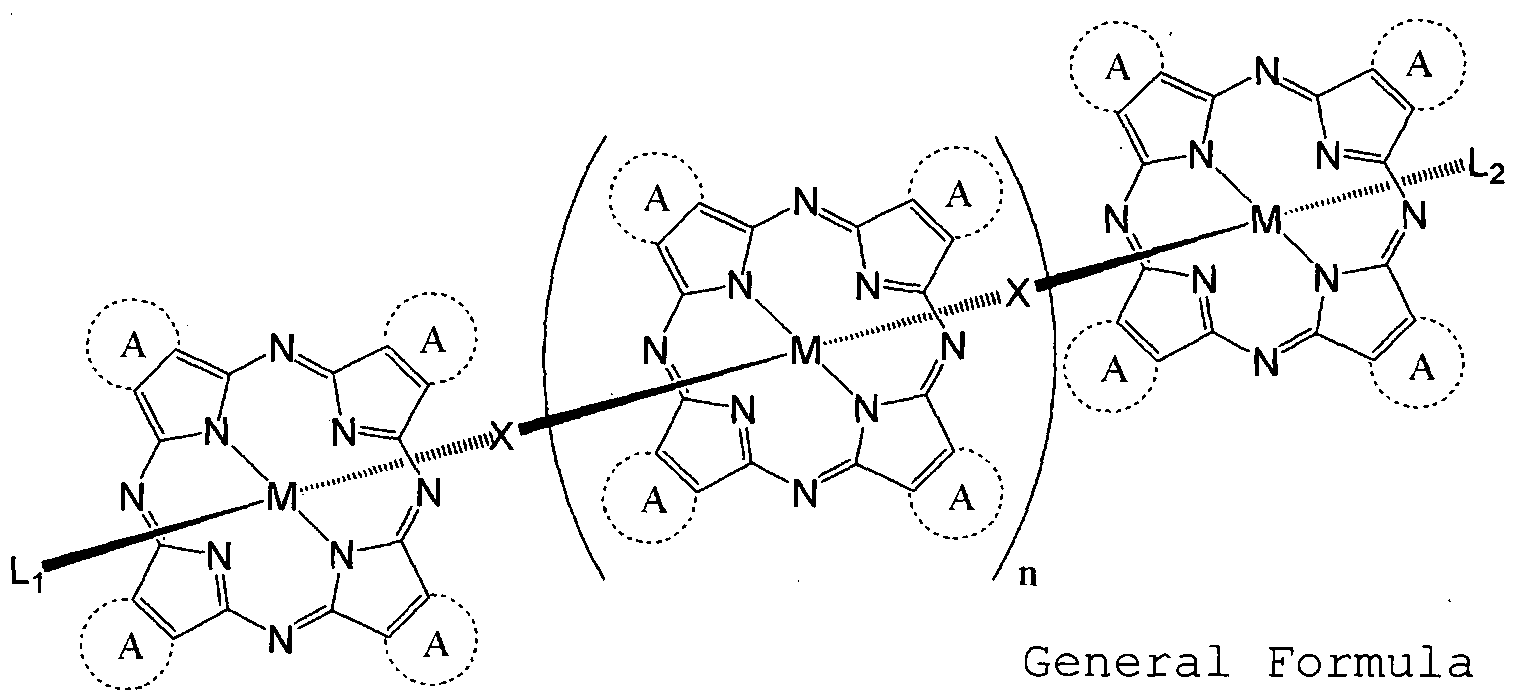
- a first invention relates to a phthalocyanine pigment having a. structure represented by general formula (1) indicated below.
- a second invention relates to a pigment dispersion comprising a dispersion medium and the phthalocyanine pigment represented by general formula (1) indicated below.
- a third invention relates to an ink containing the above-mentioned pigment dispersion.
- a fourth invention relates to a color filter resist composition containing the above-mentioned phthalocyanine pigment.
- X represents ' -0-CH 2 - 1 -CH 2 -0-
- R 1 represents a monocyclic or polycyclic cyclic hydrocarbon group or -CR 2 R 3 -,
- R 3 represent alkyl group
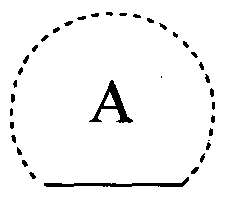
- A each independently represent a substituted or unsubstituted aryl ring or a heterocycle containing one or two nitrogen atoms
- Li and L 2 each independently represent a halogen atom, hydroxyl group, -0-CH 2 -R-CH 2 -OR 8 , -0-CH 2 -R 5 -OR 9 or -OR 10 ,
- R 4 and R 5 represent a monocyclic or polycyclic cyclic hydrocarbon group or -CR 6 R 7 -,
- R 6 and R 7 represent alkyl group
- R 8 to R 10 each independently represent a hydrogen atom, methyl group or trimethylsilyl group
- n an integer of 1 or more.
- a phthalocyanine pigment having superior color development property and a pigment dispersion, an ink and a color filter resist composition containing the phthalocyanine pigment, can be provided.
- a phthalocyanine pigment having a structure represented by general formula (1) indicated below has superior color development property.
- the inventors of the present invention also found that a pigment dispersion having superior color development property, an ink and a color filter resist composition can be obtained by containing the phthalocyanine pigment, thereby leading to completion of the present invention.
- X represents -0-CH 2 -R 1 -CH 2 -0-
- R 1 represents a monocyclic or polycyclic cyclic hydrocarbon group or -CR 2 R 3 -,
- R 2 and R 3 represent alkyl group
- a and ( A j each independently represent a substituted or unsubstituted aryl ring or a heterocycle containing one or two nitrogen atoms,
- M represents a metal atom selected from the group consisting of Si, Ge and Sn,
- Li and L 2 each independently represent a halogen atom, hydroxyl group, -0-CH 2 -R 4 -CH 2 -OR 8 , -0-CH 2 -R 5 -OR 9 or -OR 10 ,
- R 4 and R 5 represent a monocyclic or polycyclic cyclic hydrocarbon group or -CR 6 R 7 -,
- R 6 and R 7 represent alkyl group
- R 8 to R 10 each independently represent a hydrogen atom, methyl group or trimethylsilyl group
- n an integer of 1 or more.
- a pigment in the present invention refers to a coloring material having low solubility in organic solvents such as styrene, toluene, methyl ethyl ketone, ethyl acetate, acetone, methanol and N, N-dimethylformamide (DMF) , water, mixtures thereof and the like.
- “Low solubility” in the present invention refers to having solubility in organic solvents, water and mixtures thereof of less than 0.1% by mass .
- R 1 monocyclic cyclic hydrocarbon group represented by R 1 in general formula (1)
- examples thereof include a cyclobutylene group, cyclopentylene group, cyclohexylene group, cycloheptylene group, cyclooctylene group and the like.
- polycyclic cyclic hydrocarbon group represented by R 1 in general formula (1) there are no particular limitations on the polycyclic cyclic hydrocarbon group represented by R 1 in general formula (1) , and examples thereof include a norbornanediyl group, norbornenediyl group, adamantanediyl group and the like .
- alkyl groups represented by R 2 and R 3 in general formula (1) there are no particular limitations on the alkyl groups represented by R 2 and R 3 in general formula (1) , and examples thereof include a methyl group, ethyl group, n-propyl group, iso-propyl group, n-butyl group, sec-butyl group, tert-butyl group, octyl group, dodecyl group and nonadecyl group .
- R 1 is preferably a monocyclic or polycyclic cyclic hydrocarbon group, more preferably a polycyclic cyclic hydrocarbon group, and even more preferably a norbornanediyl group, norbornenediyl group or adamantanediyl group.
- a ⁇ in general formula (1) include a benzene ring and naphthyl ring.
- rings may have substituents provided they do not affect color development property.
- substituents include alkyl groups in the manner of a methyl group, propyl group or tert-butyl group, alkoxy groups in the manner of a methoxy group, ethoxy group, propoxy group, butoxy group or hexyloxy group, a nitro group, and a halogen atom in the manner of a chlorine atom. From the viewpoint of synthesis, these s ⁇ bstituents are not limited to being regular, but rather may also be various isomers. These isomers do not have a significant effect on color development property.
- pyridine ring in general formula (1) include a pyridine ring, pyrazine ring, pyrrolidine ring, piperidine ring, azepane ring and azocane ring.
- a substituted or unsubstituted benzene ring, pyridine ring or pyrazine ring is preferable, a substituted or unsubstituted benzene ring is more preferable, and a benzene ring having a tert-butyl group is even more preferable.
- M in general formula (1) represents any metal atom selected from the group consisting of Si, Ge and Sn, and from the viewpoint of color development property, the metal atom is preferably Si.
- halogen atoms represented by Li and L2 in general formula (1) include chlorine atoms, bromine atoms and iodine atoms .
- monocyclic cyclic hydrocarbon groups represented by R 4 and R 5 in general formula (1) examples thereof include cycloalkylene groups.
- examples of these cycloalkylene groups include cyclobutylene groups, cyclopentylene groups, cyclohexylene groups, cycloheptylene groups and cyclooctylene groups.
- polycyclic cyclic hydrocarbon groups represented by R 4 and R 5 in general formula (1) examples thereof include norbornanediyl groups, norbornenediyl groups and adamantanediyl groups.
- alkyl groups represented by R 6 and R 7 in general formula (1) there are no particular limitations on alkyl groups represented by R 6 and R 7 in general formula (1) , and examples thereof include methyl groups, ethyl groups, n-propyl groups, iso-propyl groups, n-butyl groups, sec-butyl groups, tert-butyl groups, octyl groups, dodecyl groups and nonadecyl groups .
- n represents an integer of 1 or more.
- n is 0, function as a pigment having strong lightfastness is not adequately demonstrated as a result of having high solubility in solvents in the manner of toluene and ethanol.
- n is preferably from 1 to 10
- n is more preferably from 2 to 10 since it becomes theoretically difficult to release active oxygen.
- the phthalocyanine pigment having a structure represented by general formula (1) according to the present invention can be synthesized by referring to known methods described in, for example, Die Makromolekulare Chemie , 175, 714-728 (1974), Polymer Journal, 27, 11, 1079-1084 (1995), and Angew. Chem. Int. Ed., 37, 8, 1092-1094 (1998).
- the phthalocyanine pigment of the present invention can be easily obtained by condensing a biaxial metal phthalocyanine (A) and a dialcohol compound (B) .
- Z in the above-mentioned biaxial metal phthalocyanine (A) include halogen atoms such as a chlorine atom and hydroxyl groups.
- the biaxial metal phthalocyanine (A) was synthesized with reference to, for example, the Journal of the American Chemical Society, 105, 1539-1550 (1983) . Namely, synthesis was carried out by stirring a 1 , 3-diiminoisoindoline derivative synthesized from a phthalonitrile derivative and a metal halide compound under conditions of heating at 200°C or higher in a high boiling point solvent.
- this condensation step can also be carried out in the absence of a solvent, it is preferably carried out in the presence of a solvent.
- a solvent there are no particular limitations on the solvent provided it does not participate in the reaction, and examples thereof include toluene, xylene, monochlorobenzene, dichlorobenzene, pyridine and quinoline .
- the amount of the above-mentioned reaction solvent used is preferably within the range of 0.1 times to 1000 times (based on mass), and more preferably 1.0 times to 150 times (based on mass) , of the biaxial metal phthalocyanine.
- the reaction temperature of the condensation step is preferably within the range of -80°C to 250°C -and more preferably within the range of -20°C to 150°C. The reaction is normally completed within 10 hours.
- the reaction may be made to proceed rapidly by adding a base as necessary.
- bases used in the condensation step include metal alkoxides in the manner of potassium tert-butoxide, sodium tert-butoxide, sodium methoxide or sodium ethoxide.; organic bases in the manner of piperidine, pyridine, 2-methylpyridine, diethylamine, triethylamine, isopropylethylamine, potassium acetate or
- DBU 1, 8-diazabicyclo [5.4.0] undeca-7-ene
- organic bases in the manner of n-butyl lithium or tert- butyl magnesium chloride
- inorganic bases in the manner of sodium borohydride, sodium metal, sodium hydride or sodium carbonate.
- Preferable examples include potassium tert-butoxide, sodium hydride, sodium methoxide, sodium ethoxide and piperidine, while more preferable examples include sodium hydride and piperidine because of their low cost and handling ease.
- the amount of the above-mentioned base (such as sodium hydride) used is preferably 1.0 equivalent to 100 equivalents, more preferably 1.5 equivalents to 20 equivalents, and even more preferably 5.0 equivalents to 10 equivalents based on a single hydroxyl group of the dialcohol compound (B) .
- dialcohol compound (B) examples include 2, 2-dimethyl-l , 3-propanediol, 2-ethyl-2-methyl-l, 3-propanediol,
- bulky cyclic compounds like 1, 4-cyclohexane dimethanol, 1 , 2-cyclohexane dimethanol, 5-norbornene-2 , 3-dimethanol or 1 , 3-adamantane dimethanol are preferable since they have superior color development property, and color development property in the case of using that having a structure having polycyclic cyclic hydrocarbon group in the manner of
- 5-norbornene-2 , 3-dimethanol or 1 , 3-adamantane dimethanol is particularly preferable.
- the amount of the dialcohol compound (B) used is preferably 0.1 equivalents to 10 equivalents, more preferably 0.5 equivalents to 5 equivalents, and even more preferably 0.8 equivalents to 1.5 equivalents, based on the biaxial metal phthalocyanine (A) .
- the solid is filtered and the residue is washed with a nonpolar solvent in the manner of n-hexane, n-heptane or toluene, followed by washing with a polar solvent in the manner of an alcohol and then washing with ion exchange water and the like to obtain the phthalocyanine pigment having a structure represented by general formula (1) .
- washing can also be carried out with a Soxhlet extractor and the like using a heated solvent in the manner of dichloromethane, chloroform, toluene, xylene or N, -dimethylformamide .
- the phthalocyanine pigment having a structure represented by general formula (1) of the present invention may be used alone or two or more types may be used in combination corresponding to the application in which it is used in order to adjust color tone and the like. Moreover, it can also be used in combination with two or more types of known pigments or dyes.
- phthalocyanine pigment of the present invention include, but are not limited to, compounds (1) to (27) indicated below.
- n represents the mixture of an integer of 1 to 10
- t-Bu represents a tert-butyl group.
- the pigment dispersion of the present invention is characterized by containing a dispersion medium and the phthalocyanine pigment of the present invention.
- a dispersion medium as referred to in the present invention refers to water, an organic solvent or a mixture thereof.
- the pigment dispersion of the present invention is obtained by dispersing the above-mentioned phthalocyanine pigment having a structure represented by general formula (1) in a dispersion medium.
- An example of a specific method thereof is indicated below. Namely, a pigment liquid dispersion is produced by adequately blending the above-mentioned phthalocyanine pigment having a structure represented by general formula (1) into a dispersion medium, in which a resin has been dissolved as necessary, by stirring and the like.
- pigment can be finely dispersed into fine particles to obtain a pigment dispersion by applying mechanical shearing force to a pigment liquid dispersion with a disperser in the manner of a ball mill, paint shaker, dissolver, attritor, sand mill, high-speed mill or high-pressure disperser.
- the content of the phthalocyanine pigment in the pigment dispersion is preferably 1.0 part by mass to 100 parts by mass, more preferably 2.0 parts by mass to 80 parts by mass, and particularly preferably 3.0 parts by mass to 70 parts by mass based on 100 parts by mass of the dispersion medium. If the content of the phthalocyanine pigment is within the above-mentioned ranges, increases in viscosity and decreases in pigment dispersibility can be prevented, and favorable tinting strength can be demonstrated.
- the pigment dispersion can be dispersed in water using an emulsifier .
- emulsifiers include cationic surfactants, anionic surfactants and nonionic surfactants.
- cationic surfactants include dodecyl ammonium chloride, dodecyl ammonium bromide, dodecyl trimethyl ammonium bromide, dodecyl pyridinium chloride, dodecyl pyridinium bromide and hexadecyl trimethyl ammonium bromide.
- anionic surfactants include fatty acid soaps such as sodium stearate or sodium dodecanoate, sodium dodecyl sulfate, sodium dodecyl benzene sulfate and sodium lauryl sulfate.
- nonionic surfactants include polyoxyethylene dodecyl ether, polyoxyethylene hexadecyl ether, polyoxyethylene nonylphenyl ether, polyoxyethylene lauryl ether, polyoxyethylene sorbitan monooleate ether and monodecanoyl sucrose.
- alcohols in the manner of methyl alcohol, ethyl alcohol, denatured ethyl alcohol, isopropyl alcohol, n-butyl alcohol, isobutyl alcohol, tert-butyl alcohol, sec-butyl alcohol, tert-amyl alcohol, 3-pentanol, octyl alcohol, benzyl alcohol and cyclohexanol; glycols in the manner of methyl cellosolve, ethyl cellosolve, diethylene glycol and diethylene glycol monobutyl ether; ketones in the manner of acetone, methyl ethyl ketone and methyl isobutyl ketone; esters in the manner of ethyl acetate, butyl acetate, ethyl propionate and cellosolve acetate; hydrocarbon-based solvents in the manner of hexane, octane, petroleum ether, cyclohexane, benzene
- a polymerizable monomer can also be used for the organic solvent.
- the polymerizable monomer is an addition polymerizable or condensation polymerizable monomer, and is preferably an addition polymerizable monomer. Specific examples thereof include:
- styrene-based monomers in the manner of styrene, o-methylstyrene, m-methylstyrene, p-methylstyrene , o-ethylstyrene, m-ethylstyrene and p-ethylstyrene ; acrylate-based monomers in the manner of methyl acrylate, ethyl acrylate, propyl acrylate, butyl acrylate, octyl acrylate, dodecyl acrylate, stearyl acrylate, behenyl acrylate, 2-ethylhexyl acrylate, dimethylaminoethyl acrylate, diethylaminoethyl acrylate, acrylonitrile and acrylic acid amide; methacrylate-based monomers in the manner of methyl methacrylate, ethyl methacrylate, propyl methacrylate
- styrene or a styrene-based monomer among the above-mentioned polymerizable monomers is used preferably either alone or by mixing with other polymerizable monomers.
- Styrene is particularly preferable based on its handling ease.
- a resin may also be further added to the above-mentioned pigment dispersion.
- Specific examples thereof include: polystyrene resins, styrene copolymers, polyacrylic acid resins, polymethacrylic acid resins, polyacrylic acid ester resins, polymethacrylic acid ester resins, acrylic acid-based copolymers, methacrylic acid-based copolymers, polyester resins, polyvinyl ether resins, polyvinyl methyl ether resins, polyvinyl alcohol resins, polyvinyl butyral resins, polyurethane resins and polypeptide resins.
- These resins can be used alone or two or more types can be used by mixing.
- colorants can be used in combination provided they do not inhibit dispersibility.
- colorants that can be used in combination include: C.I. Solvent Blue 14, 24, 25, 26, 34, 37, 38, 39, 42, 43, 44, 45, 48, 52, 53, 55, 59, 67 and 70; and, C.I. Solvent Red 8, 27, 35, 36, 37, 38, 39, 40, 49, 58, 60, 65, 69, 81, 83:1, 86, 89, 91, 92, 97, 99, 100, 109, 118, 119, 122, 127 and 218.
- the ink of the present invention is characterized by containing the pigment dispersion of the present invention.
- the phthalocyanine pigment having a structure represented by general formula (1) has superior color development property and lightfastness , and is preferable for use in ink colorant applications.
- the ink of the present invention at least contains the above-mentioned dispersion medium and the phthalocyanine pigment having a structure represented by general formula (1) -
- constituent components other than those described above are respectively determined corresponding to the application in which the ink of the present invention is used, and additives can be added within a range that does not impair properties in the various applications in which the ink is used.
- the ink of the present invention can be preferably used as inkjet ink as well as printing ink, paint and writing instrument ink.
- the ink of the present invention can be particularly preferably used as an ink for color filter resist applications to be subsequently described .
- the ink of the present invention can be produced, for example, in the manner described below.
- a pigment liquid dispersion is produced by adding the above-mentioned phthalocyanine pigment having a structure represented by general formula (1) to a dispersion medium containing another colorant, emulsifier or resin and the like as necessary, followed by adequately blending into the medium.
- the pigment can be finely dispersed into fine particles to obtain an ink by applying mechanical shearing force to a pigment liquid dispersion with a disperser in the manner of a ball mill, paint shaker, dissolver, attritor, ' sand mill, high-speed mill or high-pressure disperser.
- the above-mentioned "dispersion medium” refers to water, an organic solvent or a mixture thereof.
- the type of organic solvent is determined corresponding to the target application of the colorant, and although there are no particular limitations thereon, examples thereof include alcohols in the manner of methanol, ethanol, denatured ethanol, isopropanol, n-butanol, isobutanol, tert-butanol , sec-butanol, 2-methyl-2-butanol , 3-pentanol, octanol, benzyl alcohol and cyclohexanol; glycols in the manner of methyl cellosolve, ethyl cellosolve, diethylene glycol and diethylene glycol monobutyl ether; ketones in the manner of acetone, methyl ethyl ketone and methyl isobutyl ketone; esters in the manner of ethyl acetate, butyl acetate, ethyl propionate and
- a polymerizable monomer can also be used as an organic solvent able to be used in the ink of the present invention.
- the polymerizable monomer is an addition polymerizable or condensation polymerizable monomer, and is preferably an addition polymerizable monomer. Examples of such polymerizable monomers include:
- styrene-based monomers in the manner of styrene, a-methylstyrene, a-ethylstyrene, o-methylstyrene, m-methylstyrene, p-methylstyrene, o-ethylstyrene, m-ethylstyrene and p-ethylstyrene; acrylate-based monomers in the manner of methyl acrylate, ethyl acrylate, propyl acrylate, butyl acrylate, octyl acrylate, dodecyl acrylate, stearyl acrylate, behenyl acrylate, 2-ethylhexyl acrylate, dimethylaminoethyl acrylate, diethylaminoethyl acrylate, acrylonitrile and acrylic acid amide; methacrylate-based monomers in the manner of methyl me
- phthalocyanine pigment having a structure represented by general formula (1) is used as colorant that composes the ink of the present invention
- other colorants can also be used in combination as necessary provided they do not impair the solubility or dispersibility of the phthalocyanine pigment in the dispersion medium.
- colorants tha.t can be used in combination include C.I. Solvent Blue 14, 24, 25, 26, 34, 37, 38, 39, 42, 43, 44, 45, 48, 52, 53, 55, 59, 67 and 70; and, C.I. Solvent Red 8, 27, 35, 36, 37, 38, 39, 40, 49, 58, 60, 65, 69, 81, 83:1, 86, 89, 91, 92, 97, 99, 100, 109, 118, 119, 122, 127 and 218, colorants able to be used in combination in the present invention are not limited thereto .
- the content of the phthalocyanine pigment of the present invention is preferably 1.0 part by mass to 30 parts by mass, more preferably 2.0 parts by mass to 20 parts by mass, and even more preferably 3.0 parts by mass to 15 parts by mass based on 100 parts by mass of the dispersion medium. If the content of the phthalocyanine pigment is within the above-mentioned ranges, adequate tinting strength is obtained while also demonstrating favorable colorant dispersibility.
- an emulsifier can be added in order to obtain favorable dispersion stability of the phthalocyanine pigment of the present invention and colorant used in combination therewith, as necessary.
- emulsifiers include cationic surfactants, anionic surfactants and nonionic surfactants.
- Examples of cationic surfactants in the above-mentioned emulsifier include dodecyl ammonium chloride, dodecyl ammonium bromide, dodecyl trimethyl ammonium bromide, dodecyl pyridinium chloride, dodecyl pyridinium bromide and hexadecyl trimethyl ammonium bromide.
- anionic surfactants in the above-mentioned emulsifier include fatty acid soaps in the manner of sodium stearate and sodium dodecanoate, sodium dodecyl sulfate, sodium dodecyl benzene sulfate and sodium lauryl sulfate.
- nonionic surfactants in the above-mentioned emulsifier include polyoxyethylene dodecyl ether, polyoxyethylene hexadecyl ether, polyoxyethylene nonylphenyl ether, polyoxyethylene lauryl ether, polyoxyethylene sorbitan monooleate ether and monodecanoyl sucrose .
- a resin can also be further added to the ink of the present invention.
- the type of resin able to be added to the ink of the present invention is determined corresponding to the target application, and although there are no particular limitations thereon, examples include polystyrene resins, styrene copolymers, polyacrylic acid resins, polymethacrylic acid resins, polyacrylate resins, polymethacrylate resins, acrylic acid-based copolymers, methacrylic acid-based copolymers, polyester resins, polyvinyl ether resins, polyvinyl methyl ether resins, polyvinyl alcohol resins, polyvinyl butyral resins, polyurethane resins and polypeptide resins. These resins can be used alone or two or more types can be used in combination as necessary.
- the ink of the present invention is able to provide an ink having superior color development property and lightfastness as a result of being composed by containing the phthalocyanine pigment of the present invention.
- the phthalocyanine pigment having a structure represented by general formula (1) of the present invention has superior color development property, it can be preferably used in a color filter resist composition.
- the color filter resist composition of the present invention contains at least one of a binder resin and polymerizable monomer, and the phthalocyanine pigment having a structure represented by general formula (1) .
- the color filter resist composition of the present invention can be produced, for example, in the manner indicated below .
- the color filter resist composition of the present invention can be obtained by stably dissolving or finely dispersing by applying mechanical shearing force with a disperser .
- Binder resin able to be used in the color filter resist composition of the present invention is that which allows one of a light irradiated portion or light shielding portion to be able to be dissolved by an organic solvent, aqueous alkaline solution, water or commercially available developer and the like in an exposure step during pixel formation.
- the binder resin preferably has a composition that enables development with water or an aqueous alkaline solution.
- a typical known example of the above-mentioned binder resin is that which is obtained by copolymerizing a hydrophilic polymerizable monomer and a lipophilic polymerizable monomer at a suitable mixing ratio using a known technique.
- hydrophilic polymerizable monomers include acrylic acid, methacrylic acid, N- (2-hydroxyethyl) acrylamide, N-vinylpyrrolidone and polymerizable monomers having an ammonium salt.
- examples of lipophilic polymerizable monomers include acrylic acid esters, methacrylic acid esters, vinyl acetate, styrene and N-vinylcarbazole .
- binder resins can be used as a negative resist, namely a type of resist in which only a light shielding portion is removed by development as a result of the solubility in developer being lowered due to exposure to light.
- the binder resin may be used in combination with a radical polymerizable monomer having an ethylenic unsaturated group, cationic polymerizable monomer having an oxirane ring or oxetane ring, radical generator, acid generator or base generator .
- a combination of a binder resin having a group that is cleaved by light or acid and an acid generator that generates acid when exposed to light can also be used.
- This type of binder resin can be used as a positive resist, namely a type of resist in which only an exposed portion is removed by development as a result of the solubility in developer being improved due to exposure to light.
- An example of a binder resin having a group that is cleaved by light is a resin having a quinone diazide group that forms a carboxyl group.
- binder resins having a group that is cleaved by acid include tert-butyl carbonic acid esters and tetrahydropyranyl ethers of polyhydroxystyrene .
- the polymerizable monomer that is addition-polymerized by exposure to light can be composed by comprising a photopolymerizable monomer having one or more ethylenic unsaturated double bonds.
- the photopolymerizable monomer include compounds having at least one addition-polymerizable ethylenic unsaturated group in a molecule thereof, and a boiling point at normal pressure of 100°C or higher.
- Examples thereof include monofunctional acrylates such as polyethylene glycol monoacrylate, polyethylene glycol monomethacrylate, polypropylene glycol monoacrylate, polypropylene glycol monomethacrylate, phenoxyethyl acrylate or phenoxyethyl methacrylate; polyfunctional acrylates and methacrylates in the manner of polyethylene glycol diacrylate, polyethylene glycol dimethacrylate, polypropylene glycol diacrylate, polypropylene glycol dimethacrylate, trimethylolethane triacrylate, trimethylolethane trimethacrylate, trimethylolpropane triacrylate, trimethylolpropane trimethacrylate, trimethylolpropane diacrylate, trimethylolpropane dimethacrylate, neopentylglycol diacrylate, neopentylglycol dimethacrylate, pentaerythritol tetraacrylate, pentaerythritol t
- urethane acrylates include urethane acrylates, polyester acrylates, and reaction products of epoxy resin and acrylic acid or methacrylic acid in the form of polyfunctional epoxy acrylates and epoxy methacrylates.
- trimethylolpropane triacrylate trimethylolpropane trimethacrylate, pentaerythritol tetraacrylate, pentaerythritol tetramethacrylate, dipentaerythritol hexaacrylate, dipentaerythritol hexamethacrylate, dipentaerythritol pentaacrylate and dipentaerythritol pentamethacrylate can be used preferably.
- the above-mentioned photopolymerizable monomers may be used alone or two or more types may be used in combination as necessary.
- the content of the above-mentioned photopolymerizable monomer is preferably 5% by mass to 50% by mass and more preferably 10% by mass to 40% by mass of the mass (total solid content) of the resist composition of the present invention. If the above-mentioned content is less than 5% by mass, sensitivity to light exposure and pixel strength may decrease, while if the content exceeds 50% by mass, adhesiveness of the resist composition tends to be excessive .
- the color filter resist composition of the present invention is a negative resist composition as previously described
- the color filter resist composition may also contain a photopolymerization initiator.
- the photopolymerization initiator include bicynal polyketoaldonyl compounds, oc-carbonyl compounds, acyoin ethers, multi-branched quinone compounds, combinations of triallyl imidazole dimers and p-aminophenyl ketones and trioxadiazole compounds, and is preferably 2-benzyl-2-dimethylamino-l- ( 4-morpholinophenyl ) butanone
- the above-mentioned photopolymerization initiator is not required in the case of using an electron beam during pixel formation with the above-mentioned resist composition.
- a photoacid generator can also be added as necessary.
- the photoacid generator include, but are not limited to, conventionally known photoacid generators consisting of salts of anions and onium ions in the manner of sulfonium, iodinium, selenonium, ammonium and phosphonium ions .
- sulfonium ions examples include triphenyl sulfonium, tri-p-tolylsulfonium, tri-o-tolylsulfonium, tris ( -methoxyphenyl ) sulfonium, 1-naphthyldiphenyl sulfonium, diphenyl phenacyl sulfonium, phenyl methylbenzyl sulfonium, 4-hydroxyphenyl methylbenzyl sulfonium, dimethyl phenacyl sulfonium and phenacyl tetrahydrothiophenium ions.
- iodinium ions examples include diphenyl iodinium, di-p-tolyl iodinium, bis ( 4-dodecylphenyl ) iodinium, bis ( 4-methoxyphenyl ) iodinium and (4-octyloxyphenyl) phenyl iodinium ions.
- selenonium ions examples include triaryl selenonium (triphenyl selenonium, tri-p-tolyl selenonium, tri-o-tolyl selenonium, tris (4-methoxyphenyl) selenonium, 1-naphthyl diphenyl selenonium, tris ( 4-fluorophenyl) selenonium, tri-l-naphthyl selenonium and tri-2-naphthyl selenonium) ions.
- triaryl selenonium triphenyl selenonium, tri-p-tolyl selenonium, tri-o-tolyl selenonium, tris (4-methoxyphenyl) selenonium, 1-naphthyl diphenyl selenonium, tris ( 4-fluorophenyl) selenonium, tri-l-naphthyl selen
- ammonium ions examples include tetramethyl ammonium, ethyl trimethyl ammonium, diethyl dimethyl ammonium, triethyl methyl ammonium, tetraethyl ammonium, trimethyl-n-propyl ammonium, trimethyl isopropyl ammonium, trimethyl-n-butyl ammonium and trimethyl isobutyl ammonium ions .
- Examples of the above-mentioned phosphonium ions include tetraphenyl phosphonium, tetra-p-tolyl phosphonium, tetrakis ( 2-methoxyphenyl ) phosphonium, triphenyl benzyl phosphonium, triphenyl phenacyl phosphonium, triphenyl methyl phosphonium, triethyl benzyl phosphonium and tetraethyl phosphonium ions.
- anions include, but are not limited to, perhalogenic acid ions in the manner of CIO 4 - and Br0 4 ⁇ , halogenated sulfonate ions in the manner of FSC>3 ⁇ and CISO 3 " , sulfate ions in the manner of CH 3 S0 4 _ , CF 3 SO 4 " and HS0 4 ⁇ , carbonate ions in the manner of HC0 3 " and CH 3 CO 3 " , aluminate ions in the manner of AICI 4 " and AIF 4 " , hexafluorobismuthate ions, carboxylate ions in the manner of CH 3 COCf, CF 3 COO ⁇ , C 6 H 5 COO " , CH 3 C 6 H 4 COO " , C 6 F 5 COO ⁇ and CF 3 C 6 H 4 COO ⁇ , aryl borate ions in the manner of B(C 6 H 5 ) 4 ⁇ and CH3
- Examples of dispersion media for dissolving or dispersing the color filter resist composition of the present invention include water, organic solvent and mixtures thereof.
- organic solvents examples include cyclohexanone, ethyl cellosolve acetate, butyl cellosolve acetate, l-methoxy-2-propyl acetate, diethylene glycol dimethyl ether, ethyl benzene, 1, 2, 4-trichlorobenzene, ethylene glycol diethyl ether, xylene, ethyl cellosolve, methyl-n-amyl ketone, propylene glycol monomethyl ether, toluene, methyl ethyl ketone, ethyl acetate, methanol, ethanol, xsopropanol, butanol, methyl isobutyl ketone and petroleum-based solvents .
- the dispersion medium used in the color filter resist composition of the present invention may be the same as or different from the above-mentioned dispersion media provided it does not impair the dispersibility of the above-mentioned phthalocyanine pigment having a structure represented by general formula (1).
- the color filter resist composition of the present invention is preferably used for pixels that compose at least one color among the plurality of pixel colors (e.g., red, green and blue) .
- a filter can be obtained in which elongation of chroma and lightness is favorable and which has favorable color tone.
- the color filter resist composition can also be further used in combination with other dyes in color mixing applications in order to obtain desired spectral characteristics.
- dyes able to be used in combination with the color filter resist composition include C.I. Solvent Blue 14, 24, 25, 26, 34, 37, 38, 39, 42, 43, 44, 45, 48, 52, 53, 55, 59, 67 and 70; and, C.I. Solvent Red 8, 27, 35, 36, 37, 38, 39, 40, 49, 58, 60, 65, 69, 81, 83:1, 86, 89, 91, 92, 97, 99, 100, 109, 118, 119, 122, 127 and 218.
- the content of the phthalocyanine pigment of the present invention is preferably 1.0% by mass to 100.0% by mass, more preferably 3.0% by mass to 70.0% by mass, and even more preferably 5.0% by mass to 50.0% by mass based on 100.0% by mass of the mass (total solid content) of the color filter resist composition of the present invention.
- an ultraviolet absorber and/or a silane coupling agent for the purpose of improving adhesiveness with a glass substrate during filter production, may also be added to the color filter resist composition of the present invention .
- a media disperser in the manner of a rotary shear homogenizer, ball mill, sand mill or attritor, or a high-pressure counter collision type disperser, can be used preferably.
- the color filter resist composition of the present invention is able to provide a color filter resist composition having superior color development property and lightfastness .
- Silane tetrachloride (1.8 parts) was dropped into a liquid dispersion of 1, 3-diiminoisoindoline (1.0 part) in quinoline (10 parts) in a nitrogen atmosphere while being careful of generation of heat. Following completion of dropping, the temperature was raised to 230°C followed by stirring for 5 hours. Following completion of the reaction, the reaction mixture was cooled to room temperature and the resulting solid was filtered under reduced pressure. The resulting solid was then dispersed in N, N-dimethylformamide (DMF) followed by raising the temperature to 80°C. Filtering is performed while still hot to obtain a biaxial phthalocyanine in the form of dichlorosilyl phthalocyanine (yield: 70%).
- DMF N, N-dimethylformamide
- the resulting Compound (1) was placed in a filter paper thimble and subjected to Soxhlet extraction to obtain a compound in which the number of repeating units n of the above-mentioned Compound (1) is 0 ((l)-0), a compound in which the number of repeating units n is 1 ((1)-1), and a compound in which the number of repeating units n is 2 ( (l)-2) from the extract.
- compounds in which the number of repeating units n is 3 or more ((l)-n) were obtained from the residue remaining in the filter paper thimble following Soxhlet extraction.
- FT-IR spectra were subsequently measured directly with powder using the Spectrum One FT-IR Spectrometer manufactured by PerkinElmer Inc.
- the resulting Compound (8) was subjected to Soxhlet extraction using the same method as the above-mentioned Production Example 1 of Compound 1, and a compound in which the number of repeating units n of the above-mentioned Compound (8) is 0 ((8)-0), a compound in which the number of repeating units n is 1 ((8)-l), and a compound in which the number of repeating units n is 2 ( (8) -2) were obtained from the extract.
- compounds in which the number of repeating units n is 3 or more ((8)-n) were obtained from the residue remaining in the filter paper thimble following Soxhlet extraction.
- the ratio of [ (8) -1] : [ (8) -2] : [ (8) -n] was 1:4:95.
- the resulting Compound (11) was subjected to Soxhlet extraction using the same method as the above-mentioned Production Example 1 of Compound 1, and a compound in which the number of repeating units n of the above-mentioned Compound (11) is 0 ( (11) -0) , a compound in which the number of repeating units n is 1 ( (11) -1) , and a compound in which the number of repeating units n is 2 ( (11) -2) were obtained from the extract.
- compounds in which the number of repeating units n is 3 or more ((ll)-n) were obtained from the residue remaining in the filter paper thimble following Soxhlet extraction.
- a by-product of Compound ' (1) in the form of a phthalocyanine compound was obtained from the extract of Production Example 2 by removing the solvent under reduced pressure (yield: 10%). Furthermore, since this by-product of Compound (1) is not a pigment, but rather a liposoluble dye that is soluble in an organic solvent in the manner of chloroform, toluene or DMF, the high lightfastness characteristic of pigment was not obtained.
- the resulting Compound (25) was subjected to Soxhlet extraction using the same method as the above-mentioned Production Example 1 of Compound 1, and a compound in which the number of repeating units n of the above-mentioned Compound (25) is 0 ( (25) -0) , a compound in which the number of repeating units n is 1 ( (25) -1) , and a compound in which the number of repeating units n is 2 ( (25) -2) were obtained from the extract.
- compounds in which the number of repeating units n is 3 or more ((25)-n) were obtained from the residue remaining in the filter paper thimble following Soxhlet extraction.
- the ratio of [ (25) -1] : [ (25) -2] : [ (25) -n] was 1:4:85.
- the resulting Compound (26) was subjected to Soxhlet extraction using the same method as the above-mentioned Production Example 1 of Compound 1, and a compound in which the number of repeating units n of the above-mentioned Compound (26) is 0 ( (26) -0) , a compound in which the number of repeating units n is 1 ( (26) -1) , and a compound in which the number of repeating units n is 2 ( (26) -2) were obtained from the extract.
- compounds in which the number of repeating units n is 3 or more ((26)-n) were obtained from the residue remaining in the filter paper thimble following Soxhlet extraction.
- the ratio of [ (26) -1] : [ (26) -2] : [ (26) -n] was 1:2:83.
- the resulting Compound (27) was subjected to Soxhlet extraction using the same method as the above-mentioned Production Example 1 of Compound 1, and a compound in which the number of repeating units n of the above-mentioned Compound (27) is 0 ( (27) -0) , a compound in which the number of repeating units n is 1 ( (27) -1) , and a compound in which the number of repeating units n is 2 ( (27) -2) were obtained from the extract.
- compounds in which the number of repeating units n is 3 or more ((27)-n) were obtained from the residue remaining in the filter paper thimble following Soxhlet extraction.
- the ratio of [ (27) -1] : [ (27) -2] : [ (27) -n] was 1:4:90.
- (27) consisted of 2820 cm “1 , 2920 cm “1 and 1060 cm -1 .
- Pigment Dispersions (2) and (3) were obtained by producing pigment dispersions in the same manner as Example 1 with the exception of changing the ethyl acetate used in Example 1 to toluene and methyl ethyl ketone, respectively.
- Pigment Dispersion (5) was obtained using the same procedure as Example 4 with the exception of changing the styrene used in Example 4 to cyclohexanone .
- Pigment Dispersions (6) to (8) were obtained using the same procedure as Example 4 with the exception of using Compound (1), the purified product of Compound (1) and Compound (8), respectively, instead of using Compound (11) used in Example 4.
- Pigment Dispersions (10) and (11) were obtained using the same procedure as Example 4 with the exception of using a mixture of ethyl acetate and toluene (60 parts/60 parts) and a mixture of styrene and xylene (60 parts/60 parts), respectively, instead of the styrene used in Example 4.
- Pigment Dispersions (12) to (14) were obtained using the same procedure as Example 4 with the exception of using Compound (25), Compound (26) and Compound (27), respectively, instead of Compound (11) used in Example 4. [0056]
- Pigment Dispersions (15) to (17) were obtained using the same procedure as Examples 1 to 3, respectively, with the exception of using C.I. Pigment Blue 15:3 (Cyanine Blue A-22, Dainichi Seika Color & Chemicals Mfg., Co., Ltd.) instead of Compound (11) used in Examples 1 to 3.
- C.I. Pigment Blue 15:3 Cyanine Blue A-22, Dainichi Seika Color & Chemicals Mfg., Co., Ltd.
- Pigment Dispersion (18) was obtained using the same procedure as Example 4 with the exception of using C.I. Pigment Blue 15:3 (Cyanine Blue A-22, Dainichi Seika Color & Chemicals Mfg., Co., Ltd.) instead of Compound (11) used in Example 4.
- C.I. Pigment Blue 15:3 Cyanine Blue A-22, Dainichi Seika Color & Chemicals Mfg., Co., Ltd.
- Pigment Dispersion (19) was obtained using the same procedure as Example 5 with the exception of using C.I. Pigment Blue 15:3 (Cyanine Blue A-22, Dainichi Seika Color & Chemicals Mfg., Co., Ltd.) instead of Compound (11) used in Example 5.
- C.I. Pigment Blue 15:3 Cyanine Blue A-22, Dainichi Seika Color & Chemicals Mfg., Co., Ltd.
- Pigment Dispersion (20) was obtained using the same procedure as Example 4 with the exception of using C.I. Pigment Blue 15:4 (Cyanine Blue 4933GN-EP, Dainichi Seika Color & Chemicals Mfg . , Co., Ltd.) instead of Compound (11) used in Example .
- C.I. Pigment Blue 15:4 Cyanine Blue 4933GN-EP, Dainichi Seika Color & Chemicals Mfg . , Co., Ltd.
- Pigment Dispersions (21) and (22) were obtained using the same procedures as Examples 9 and 10, respectively, with the exception of using C.I. Pigment Blue 15:3 (Cyanine Blue A-22, Dainichi Seika Color & Chemicals Mfg., Co., Ltd.) instead of Compound (11) used in Examples 9 and 10.
- C.I. Pigment Blue 15:3 Cyanine Blue A-22, Dainichi Seika Color & Chemicals Mfg., Co., Ltd.
- Pigment Dispersions (1) to (22) were spin-coated onto glass substrates followed by drying for 3 minutes at 90°C to prepare coated film samples. Color development property was measured in the manner described below.
- color development property becomes poor when Q band intensity observed at an absorption wavelength of 600 nm to 700 nm decreases. Consequently, the ratio of Q band intensity to Soret band intensity observed over a range of 200 nm to 300 nm serves as a parameter for representing color development property. Therefore, color development property was defined in the manner indicated below.
- A Q band intensity/Soret band intensity of 1.80 or more
- B Q band intensity/Soret band intensity of 1.30 to less than 1.80
- inks (pigment dispersions) containing the phthalocyanine pigment having a structure represented by general formula (1) were determined to have superior color development property in comparison with the comparative examples.
- Color Filter Resist Composition (1) was spin-coated onto a glass substrate followed by drying for 3 minutes at 90°C and exposing the entire surface to light to produce Color Filter (1) by post-curing at 180°C.
- Color Filters (2), (3) and (4) were respectively obtained using the same procedure as the production example of Example 15 with the exception of changing Compound (11) used in Example 15 to Compound (1), Purified Product of Compound (1) and Compound (8), respectively. [0067]
- Comparative Color Filter (1) was obtained using the same procedure as Example 15 with the exception of changing Compound (11) used in Example 15 to C.I. Pigment Blue 15:3
- Color development property was evaluated by measuring the UV spectra of the resulting color filters (UV-3600, UV-VIS-NIR Spectrophotometer, Shimadzu Corp.).
- color development property becomes poor when Q band intensity observed at an absorption wavelength of 600 nm to 700 nm decreases. Consequently, the ratio of Q band intensity to Soret band intensity observed over a range of 200 nm to 300 nm (Q/B) serves as a parameter for representing color development property. Therefore, color development property was defined in the manner indicated below.
- ⁇ Q band intensity/Soret band intensity of 1.80 or more
- B Q band intensity/Soret band intensity of 1.30 to less than 1.80
Landscapes
- Chemical & Material Sciences (AREA)
- Organic Chemistry (AREA)
- Wood Science & Technology (AREA)
- Life Sciences & Earth Sciences (AREA)
- Engineering & Computer Science (AREA)
- Materials Engineering (AREA)
- Physics & Mathematics (AREA)
- General Physics & Mathematics (AREA)
- General Chemical & Material Sciences (AREA)
- Chemical Kinetics & Catalysis (AREA)
- Optics & Photonics (AREA)
- Optical Filters (AREA)
- Inks, Pencil-Leads, Or Crayons (AREA)
- Materials For Photolithography (AREA)
- Pigments, Carbon Blacks, Or Wood Stains (AREA)
Description



Claims



Priority Applications (4)
| Application Number | Priority Date | Filing Date | Title |
|---|---|---|---|
| DE112013004114.6T DE112013004114T5 (en) | 2012-08-22 | 2013-08-21 | PHTHALOCYANINE PIGMENT AND PIGMENT DISPERSION, INK AND COLOR FILTER RESISTANT COMPOSITION CONTAINING THEREOF |
| CN201380043585.9A CN104583336A (en) | 2012-08-22 | 2013-08-21 | Phthalocyanine pigment, pigment dispersion containing phthalocyanine pigment, ink, and resist composition for color filter |
| KR20157006509A KR20150043461A (en) | 2012-08-22 | 2013-08-21 | Phthalocyanine pigment and pigment dispersion, ink and color filter resist composition containing same |
| US14/407,646 US20150125792A1 (en) | 2012-08-22 | 2013-08-21 | Phthalocyanine pigment and pigment dispersion, ink and color filter resist composition containing same |
Applications Claiming Priority (2)
| Application Number | Priority Date | Filing Date | Title |
|---|---|---|---|
| JP2012183475 | 2012-08-22 | ||
| JP2012-183475 | 2012-08-22 |
Publications (1)
| Publication Number | Publication Date |
|---|---|
| WO2014030768A1 true WO2014030768A1 (en) | 2014-02-27 |
Family
ID=50150067
Family Applications (1)
| Application Number | Title | Priority Date | Filing Date |
|---|---|---|---|
| PCT/JP2013/072932 Ceased WO2014030768A1 (en) | 2012-08-22 | 2013-08-21 | Phthalocyanine pigment and pigment dispersion, ink and color filter resist composition containing same |
Country Status (6)
| Country | Link |
|---|---|
| US (1) | US20150125792A1 (en) |
| JP (1) | JP6184248B2 (en) |
| KR (1) | KR20150043461A (en) |
| CN (1) | CN104583336A (en) |
| DE (1) | DE112013004114T5 (en) |
| WO (1) | WO2014030768A1 (en) |
Citations (7)
| Publication number | Priority date | Publication date | Assignee | Title |
|---|---|---|---|---|
| JPH01145194A (en) * | 1987-12-01 | 1989-06-07 | Toyo Ink Mfg Co Ltd | Optical recording medium |
| JPH0321493A (en) * | 1989-06-19 | 1991-01-30 | Mitsui Petrochem Ind Ltd | Optical recording medium |
| DE4242676A1 (en) * | 1992-12-17 | 1994-06-23 | Basf Ag | New polymeric porphyrin compounds useful in electrical and optical uses |
| JPH06251417A (en) * | 1993-02-26 | 1994-09-09 | Toyo Ink Mfg Co Ltd | Optical recording medium |
| JP2009162793A (en) * | 2007-12-28 | 2009-07-23 | Konica Minolta Business Technologies Inc | Cyan toner |
| JP2011089016A (en) * | 2009-10-22 | 2011-05-06 | Toyo Ink Mfg Co Ltd | Green colored composition, color filter and color display device |
| JP2011157478A (en) * | 2010-02-01 | 2011-08-18 | Toyo Ink Sc Holdings Co Ltd | Coloring composition, photosensitive coloring composition for color filter, color filter and color display device |
Family Cites Families (4)
| Publication number | Priority date | Publication date | Assignee | Title |
|---|---|---|---|---|
| US5437929A (en) * | 1994-01-19 | 1995-08-01 | Edison Polymer Innovation Corp. | Germanium phthalocyanine films |
| US8092964B2 (en) * | 2007-09-19 | 2012-01-10 | Konica Minolta Business Technologies, Inc. | Toner |
| JP5228949B2 (en) * | 2009-01-30 | 2013-07-03 | コニカミノルタビジネステクノロジーズ株式会社 | Toner and toner production method |
| US8927185B2 (en) * | 2012-08-22 | 2015-01-06 | Canon Kabushiki Kaisha | Toner and toner production method |
-
2013
- 2013-08-21 WO PCT/JP2013/072932 patent/WO2014030768A1/en not_active Ceased
- 2013-08-21 JP JP2013171519A patent/JP6184248B2/en not_active Expired - Fee Related
- 2013-08-21 US US14/407,646 patent/US20150125792A1/en not_active Abandoned
- 2013-08-21 DE DE112013004114.6T patent/DE112013004114T5/en not_active Ceased
- 2013-08-21 KR KR20157006509A patent/KR20150043461A/en not_active Ceased
- 2013-08-21 CN CN201380043585.9A patent/CN104583336A/en active Pending
Patent Citations (7)
| Publication number | Priority date | Publication date | Assignee | Title |
|---|---|---|---|---|
| JPH01145194A (en) * | 1987-12-01 | 1989-06-07 | Toyo Ink Mfg Co Ltd | Optical recording medium |
| JPH0321493A (en) * | 1989-06-19 | 1991-01-30 | Mitsui Petrochem Ind Ltd | Optical recording medium |
| DE4242676A1 (en) * | 1992-12-17 | 1994-06-23 | Basf Ag | New polymeric porphyrin compounds useful in electrical and optical uses |
| JPH06251417A (en) * | 1993-02-26 | 1994-09-09 | Toyo Ink Mfg Co Ltd | Optical recording medium |
| JP2009162793A (en) * | 2007-12-28 | 2009-07-23 | Konica Minolta Business Technologies Inc | Cyan toner |
| JP2011089016A (en) * | 2009-10-22 | 2011-05-06 | Toyo Ink Mfg Co Ltd | Green colored composition, color filter and color display device |
| JP2011157478A (en) * | 2010-02-01 | 2011-08-18 | Toyo Ink Sc Holdings Co Ltd | Coloring composition, photosensitive coloring composition for color filter, color filter and color display device |
Also Published As
| Publication number | Publication date |
|---|---|
| CN104583336A (en) | 2015-04-29 |
| JP6184248B2 (en) | 2017-08-23 |
| DE112013004114T5 (en) | 2015-05-07 |
| KR20150043461A (en) | 2015-04-22 |
| US20150125792A1 (en) | 2015-05-07 |
| JP2014058665A (en) | 2014-04-03 |
Similar Documents
| Publication | Publication Date | Title |
|---|---|---|
| KR101361679B1 (en) | Xanthene dye compounds, colored resin composition comprising the same for color filter and color filter using the same | |
| JP4592239B2 (en) | Color filter composition and color filter | |
| KR101361680B1 (en) | Triarylmethane dye compounds, colored resin composition comprising the same for color filter and color filter using the same | |
| JP5631008B2 (en) | Transparent colorants and colorant compositions and their use | |
| JP4668912B2 (en) | Pigment | |
| JP6032992B2 (en) | Pigment dispersion, color filter resist composition and ink composition using the pigment dispersion | |
| EP2707436B1 (en) | Pigment dispersion, ink composition including pigment dispersion, and color filter yellow resist composition including pigment dispersion | |
| JP7226074B2 (en) | Coloring composition for color filter and color filter | |
| JP2007204658A (en) | Coloring composition | |
| KR20190034820A (en) | Composite pigment and red pigment composition for color filter comprising the same | |
| JP6658963B2 (en) | Photocurable composition, pigment dispersion, and color filter | |
| WO2014030768A1 (en) | Phthalocyanine pigment and pigment dispersion, ink and color filter resist composition containing same | |
| EP3845607B1 (en) | Pigment dispersion, resist composition for color filters using said pigment dispersion, and ink composition | |
| EP2764056B1 (en) | Water-insoluble coloring matter compound, ink using the water-insoluble coloring matter compound, thermal transfer recording sheet and resist composition for color filter | |
| KR101748396B1 (en) | Composite pigment and red pigment composition for color filter comprising the same | |
| KR101597603B1 (en) | Dye-hybridized pigment derivatives, pigment dispersion composition, photo-sensitive color composition, and color filte | |
| KR101785603B1 (en) | polymer additives and pigment dispersion composition containing the same | |
| JP6141145B2 (en) | DYE COMPOUND, INK CONTAINING THE DYE COMPOUND, COLOR FILTER RESIST COMPOSITION, AND THERMAL TRANSFER RECORDING INK SHEET | |
| CN105579531B (en) | Dye composition, ink and colour filter anti-corrosion agent composition | |
| KR101638767B1 (en) | Pigment additives, method of manufacturing the same and pigment dispersion compositions containing the same | |
| US20120208114A1 (en) | Pigment composition containing pyrimidines and derivatives thereof |
Legal Events
| Date | Code | Title | Description |
|---|---|---|---|
| 121 | Ep: the epo has been informed by wipo that ep was designated in this application |
Ref document number: 13830597 Country of ref document: EP Kind code of ref document: A1 |
|
| WWE | Wipo information: entry into national phase |
Ref document number: 14407646 Country of ref document: US |
|
| WWE | Wipo information: entry into national phase |
Ref document number: 1120130041146 Country of ref document: DE Ref document number: 112013004114 Country of ref document: DE |
|
| ENP | Entry into the national phase |
Ref document number: 20157006509 Country of ref document: KR Kind code of ref document: A |
|
| 122 | Ep: pct application non-entry in european phase |
Ref document number: 13830597 Country of ref document: EP Kind code of ref document: A1 |