WO2014030218A1 - 凝集剤、遷移金属分離方法、遷移金属分離装置 - Google Patents
凝集剤、遷移金属分離方法、遷移金属分離装置 Download PDFInfo
- Publication number
- WO2014030218A1 WO2014030218A1 PCT/JP2012/071124 JP2012071124W WO2014030218A1 WO 2014030218 A1 WO2014030218 A1 WO 2014030218A1 JP 2012071124 W JP2012071124 W JP 2012071124W WO 2014030218 A1 WO2014030218 A1 WO 2014030218A1
- Authority
- WO
- WIPO (PCT)
- Prior art keywords
- transition metal
- aqueous solution
- polymer
- amino group
- dicarboxylic acid
- Prior art date
- Legal status (The legal status is an assumption and is not a legal conclusion. Google has not performed a legal analysis and makes no representation as to the accuracy of the status listed.)
- Ceased
Links
Images



Classifications
-
- C—CHEMISTRY; METALLURGY
- C22—METALLURGY; FERROUS OR NON-FERROUS ALLOYS; TREATMENT OF ALLOYS OR NON-FERROUS METALS
- C22B—PRODUCTION AND REFINING OF METALS; PRETREATMENT OF RAW MATERIALS
- C22B59/00—Obtaining rare earth metals
-
- C—CHEMISTRY; METALLURGY
- C02—TREATMENT OF WATER, WASTE WATER, SEWAGE, OR SLUDGE
- C02F—TREATMENT OF WATER, WASTE WATER, SEWAGE, OR SLUDGE
- C02F1/00—Treatment of water, waste water, or sewage
- C02F1/52—Treatment of water, waste water, or sewage by flocculation or precipitation of suspended impurities
- C02F1/54—Treatment of water, waste water, or sewage by flocculation or precipitation of suspended impurities using organic material
- C02F1/56—Macromolecular compounds
-
- C—CHEMISTRY; METALLURGY
- C02—TREATMENT OF WATER, WASTE WATER, SEWAGE, OR SLUDGE
- C02F—TREATMENT OF WATER, WASTE WATER, SEWAGE, OR SLUDGE
- C02F2101/00—Nature of the contaminant
- C02F2101/10—Inorganic compounds
- C02F2101/20—Heavy metals or heavy metal compounds
-
- C—CHEMISTRY; METALLURGY
- C02—TREATMENT OF WATER, WASTE WATER, SEWAGE, OR SLUDGE
- C02F—TREATMENT OF WATER, WASTE WATER, SEWAGE, OR SLUDGE
- C02F2209/00—Controlling or monitoring parameters in water treatment
- C02F2209/06—Controlling or monitoring parameters in water treatment pH
-
- Y—GENERAL TAGGING OF NEW TECHNOLOGICAL DEVELOPMENTS; GENERAL TAGGING OF CROSS-SECTIONAL TECHNOLOGIES SPANNING OVER SEVERAL SECTIONS OF THE IPC; TECHNICAL SUBJECTS COVERED BY FORMER USPC CROSS-REFERENCE ART COLLECTIONS [XRACs] AND DIGESTS
- Y02—TECHNOLOGIES OR APPLICATIONS FOR MITIGATION OR ADAPTATION AGAINST CLIMATE CHANGE
- Y02P—CLIMATE CHANGE MITIGATION TECHNOLOGIES IN THE PRODUCTION OR PROCESSING OF GOODS
- Y02P10/00—Technologies related to metal processing
- Y02P10/20—Recycling
Definitions
- the present invention relates to a flocculant, a transition metal separation method, and a transition metal separation apparatus.
- Nd neodymium
- Dy dysprosium
- Ce cerium
- Eu europium
- Tb terbium
- Patent Document 1 discloses a flocculant having a polymer having an amino group and a water-soluble polymer having an acidic group.
- An object of the present invention is to improve the separation rate of a specific transition metal.
- the present invention provides a flocculant that makes transition metal ions an agglomerate by coordination bond, and has a polymer having an amino group and a dicarboxylic acid or a dicarboxylic acid salt. .
- transition metal separation method of aggregating and separating a specific transition metal ion from an aqueous solution in which a plurality of types of transition metal ions are mixed, after adding a polymer having an amino group to the aqueous solution, a dicarboxylic acid or dicarboxylic acid
- the method includes a first step of forming an aggregate by adding an acid salt, and a second step of separating the aggregate and a dissolved component from the aqueous solution.
- a first tank containing an aqueous solution of a polymer having an amino group, and a dicarboxylic acid
- a second tank containing an aqueous solution of a dicarboxylate, an aqueous solution of a polymer having an amino group introduced from the first tank through a pipe, and an inlet from the second tank through the pipe
- a mixing tank that forms an aggregate by mixing an aqueous solution of a dicarboxylic acid or dicarboxylic acid salt and an aqueous solution in which the plural types of transition metal ions are mixed, and an aqueous solution in which the plural types of transition metal ions are mixed
- a separation mechanism for separating the agglomerates and dissolved components.
- the separation rate of a specific transition metal can be improved.
- Nd a rare earth having a large ionic radius
- Dy a rare earth having a small ionic radius
- both Nd and Dy are in the form of trivalent ions. Therefore, in the present invention, both Nd ions and Dy ions mean trivalent ions.
- a base such as sodium hydroxide to convert the carboxyl group into a carboxylate.
- a base such as sodium hydroxide to be added is added in the number of moles necessary to convert the carboxyl group into a carboxylate. If too much is added, the ionic bond between the polymers having amino groups is broken, so adjustment is made so as not to add too much.
- the formed agglomerates have a structure in which dicarboxylic acid is crosslinked between polymers having amino groups.
- Dy ions are mainly trapped in the gap formed by crosslinking. Since Nd ions are larger than Dy ions, they hardly enter this gap. Therefore, it is hardly taken into the aggregate. However, as shown in FIG. 2, since there is a possibility of trapping between the two polymers having crosslinked amino groups, some of them are incorporated into the aggregate. However, since the trap of Nd ions is intermolecular, the probability of occurrence is lower than that of Dy ions trapped within the molecule. Therefore, Dy ions having a small ion size are mainly trapped in the aggregate.
- the technique of recovering a specific transition metal ion from an aqueous solution in which a plurality of types of transition metal ions are dissolved selectively selects a plurality of dissolved metal ions having a small ion size. Has the property of being incorporated into agglomerates.
- dicarboxylic acid In order to form an aggregate by crosslinking, at least two carboxyl groups are required, so dicarboxylic acid is used. Of the dicarboxylic acids, adipic acid is preferred. Adipic acid has a straight chain hydrocarbon between two carboxyl groups constituting dicarboxylic acid, and has 4 carbon atoms. When the straight-chain carbon number increases, the gap for trapping Nd ions also becomes smaller, so the selectivity of trapping Dy ions decreases. Moreover, when the number of carbon atoms in the straight chain is reduced, Dy ions are not allowed to enter the gap and the recovery rate due to aggregation is lowered. In general, when the number of carbon atoms is 1 to 8, Dy ions are preferentially trapped, but if the number is larger than that, Nd ions are also trapped in a considerable proportion, resulting in a decrease in Dy selectivity.
- the number of linear carbon atoms between the carboxyl groups is 2 to 6. In order to further improve the selectivity, it is more preferable that the linear carbon number between the carboxyl groups is 3 to 5.
- the linear carbon number depending on the size of the metal ion to be recovered.
- the direct contact between the carboxyl groups of the dicarboxylic acid is the same as in the case where Nd ions and Dy ions are mixed.
- the chain preferably has 3 to 5 carbon atoms.
- the amount of polymer having amino groups is determined by the number of metal ions to be recovered. Specifically, when recovering a specific metal from an aqueous solution containing a plurality of transition metal ions, a polymer having an amino group is added so that almost twice as many amino groups as the number of metal ions to be recovered are added. Most preferably, it is added. In the case of this ratio, it is presumed that one of the amino groups coordinates with the metal ion, and the other forms an ionic bond with the dicarboxylic acid. Further, in order to increase the recovery rate, it is added so that more amino groups are present. This increases the metal ions to which the amino group is coordinated, thus increasing the recovery rate. However, since ions other than the targeted metal ions are also coordinated and trapped, the separation rate tends to decrease.
- the addition ratio of the dicarboxylic acid added after the addition of the polymer having an amino group is preferably 1/2 to 1/10 of the number of amino groups of the polymer having an amino group, when estimated by the number of carboxyl groups. If it is added more than this, the number of amino groups bonded to the metal ions to be recovered decreases, and the recovery rate tends to decrease. Further, if the amount is less than this, the agglomeration does not occur sufficiently and a part is dissolved in an aqueous solution in which a plurality of transition metal ions are mixed, so that the recovery rate tends to decrease.
- the fact that aggregation occurs means that an ammonium salt structure of a carboxylic acid is formed between the amino group and carboxyl group of different molecules, so that the pH value of an aqueous solution containing a plurality of transition metal ions is extremely low.
- the ammonium salt structure of the carboxylic acid cannot be stably present.
- hydrochloric acid is added to an aqueous solution in which a plurality of transition metal ions are mixed to make the pH acidic to 1 or less, the dicarboxylic acid becomes a carboxyl group in the carboxylate.
- the amino group of a polymer having an amino group becomes an amine hydrochloride structure.
- the cross-linking due to the ionic bond between the molecules is broken, and the aggregate is dissolved in the aqueous solution in which a plurality of transition metal ions are mixed.
- sodium hydroxide is added to an aqueous solution in which a plurality of transition metal ions are mixed to make the pH basic 13 or more
- the dicarboxylic acid becomes a sodium salt structure of a carboxylic acid carboxylic acid.
- the amino group of the polymer having an amino group forming an ammonium salt structure returns to the amino group.
- the cross-links due to intermolecular ionic bonds are broken, and the aggregates are dissolved in an aqueous solution in which a plurality of transition metal ions are mixed.
- the amino group of the polymer having an amino group is weakly basic, the carboxyl group of the dicarboxylic acid is weakly acidic, and both form an ionic bond and also have a buffering action.
- the pH of the aqueous solution in which ions are mixed does not change greatly. Therefore, by adjusting the pH of the aqueous solution containing a plurality of transition metal ions to some extent before aggregation, a stable aggregate can be formed, and a high separation rate and recovery rate can be maintained.
- the pH of the aqueous solution containing a plurality of transition metal ions is preferably 3 to 7. Since the ratio of the amino group of the polymer having an amino group added during aggregation and the carboxyl group of the dicarboxylic acid is larger in the amino group, the pH is slightly shifted to basic by adding these. Therefore, considering this phenomenon, the optimum pH is 3 to 7 which is slightly more acidic than neutral.
- cross-linking if a polymer having three or more carboxyl groups, such as polyacrylic acid, is used, a structure with many cross-linked parts is formed in an instant, and an aggregate is immediately formed. Therefore, since the carboxyl group of polyacrylic acid aggregates before encountering the amino group of the polymer having an amino group, it does not spread over the entire aqueous solution in which transition metal ions are mixed. However, by using a dicarboxylic acid capable of forming at most two cross-linked portions, instantaneous excessive cross-linking can be suppressed. In addition, since a gap between molecules that fits the size of the metal ions is formed, only specific metal ions can be selectively trapped from an aqueous solution in which different rare earths are mixed.
- Step of collecting aggregates Aggregates generated in the above steps are innumerable small lumps and drift in an aqueous solution in which a plurality of transition metal ions are mixed. Moreover, it is also slightly sticky. So collect them in one lump. Collecting in one lump eliminates the need to collect aggregates through filter paper or mesh. When filter paper or mesh is used, aggregates adhere to the filter paper, but this is sticky and difficult to collect. Therefore, by collecting the aqueous solution mixed with a plurality of transition metal ions with suction or the like, the aggregate is easily collected by making it into one lump by centrifugation and moving it to the corner of the container.
- the method of adding inorganic salts such as sodium chloride. This is performed in conjunction with the above-described centrifugation or freezing / thawing method.
- sodium chloride By adding sodium chloride, a certain salting-out effect is exerted, and the aggregates easily become one lump.
- sodium sulfate, sodium nitrate, potassium chloride, potassium sulfate, potassium nitrate and the like can be mentioned.
- A Aggregate dissolution
- an inorganic strong acid is added. Specifically, hydrochloric acid or nitric acid is preferable. Since these vaporize when heated, it is preferable to add too much because it is easy to remove from the agglomeration system.
- sulfuric acid has a divalent sulfate ion, when it encounters a polymer having an amino group, it forms an agglomerate like dicarboxylic acid. Since this process is intended to remove the flocculant, sulfuric acid is not used.
- alkali metal hydroxides such as sodium hydroxide, potassium hydroxide and lithium hydroxide are preferable because they are inexpensive and easily available.
- the transition metal hydroxide into one by centrifugation or the like. Except for the aqueous solution in the settling tube, only the aggregates mainly composed of hydroxide remain.
- the aqueous solution contains a strong base, a polymer having an amino group, and a dicarboxylate. Therefore, this operation almost removes the polymer having an amino group as a flocculant and the dicarboxylic acid.
- (A) and (b) are agglomerate dissolution and reagglomeration steps. By repeating this multiple times, the polymer having amino groups and the dicarboxylic acid are almost removed from the agglomerate, and the transition metal has high purity.
- the hydroxide can be obtained.
- an aqueous solution of a polymer having an amino group, which is an aggregating agent component, and subsequently dicarboxylic acid or dicarboxylic acid salt are added to form an aggregate.
- the separation rate of dysprosium is improved by repeating the steps (i) to (iv).
- Flocculant to be used Polymer having amino group
- Polyethyleneimine is preferred as the polymer having an amino group in that the amino group ratio is the largest in the same molecular weight.
- types having a linear amino group such as polyvinylamine and polyallylamine are preferable because they are relatively inexpensive and easily dissolved in water.
- Chitosan has low solubility in water, but it is obtained by hydrolyzing chitin, which is the main component of the exoskeleton of organisms such as crab shells, shrimp exoskeletons, beetles and cockroaches. It has the feature that environmental load is small.
- Polylysine and polyarginine are derived from amino acids and have low toxicity.
- the amino group of the polymer having amino groups has as many amino groups as possible per unit volume.
- a structure having as many amino groups as possible is preferable as the repeating basic unit is smaller or in the repeating basic unit.
- polyethyleneimine is efficient among polymers having amino groups because the repeating basic unit is C 2 H 4 N and the molecular weight is as small as about 43.
- some structures of polyallylamine are mentioned.
- Compound 1 has a repeating basic unit molecular weight of about 72, and Compound 2 is a different repeating unit, with about 72 on one side and about 100 on the other. Since polymers having other amino groups have a pyrrole skeleton, a sulfonyl moiety, etc., the molecular weight of the repeating basic unit is around 150 to 300, so compounds 1 and 2 are preferred among polyethyleneimine and polyallylamine. .
- polymers having general-purpose amino groups such as polyethyleneimine and polyallylamine have a viscosity of 1,000 mPa ⁇ s or more at 20 ° C. even in a 10% by weight aqueous solution when the average molecular weight exceeds 100,000.
- a device having a small discharge amount per unit time such as a dispenser is used.
- the average molecular weight of the polymer having an amino group is preferably 100,000 or less.
- the average molecular weight of the polymer having an amino group is more preferably 25,000 or less.
- a molecular weight as low as possible is desired, but at least two amino groups are required to cause aggregation.
- the smallest molecular weight is ethylenediamine, and the molecular weight is 60.
- Oxalic acid can also be considered as a polymer having a repeating basic unit of CH 2 NH 2 . Therefore, the lower limit of the molecular weight is 60.
- Dicarboxylic acid has two carboxyl groups in the molecule. Between the carboxyl groups of the dicarboxylic acid, there are a linear alkyl chain, a branched alkyl chain, a cycloalkane chain, an aromatic ring and the like. Among these, in the case of a linear alkyl chain, the number of carbon atoms is preferably 1-8.
- the dicarboxylic acid By selecting a dicarboxylic acid during this period, the smaller ion size can be selectively trapped in the aggregate. This is presumed to be due to the size of the gap formed in the aggregate as shown in FIG. 1 suitable for trapping small transition metal ions.
- the gap increases and the selectivity due to size decreases.
- the gap is too narrow and the transition metal ion trap becomes narrow, so it is estimated that the selectivity is lowered.
- it is effective to use a dicarboxylic acid having 3 to 5 carbon atoms.
- a dicarboxylic acid having 1 to 8 carbon atoms in the main chain is preferred. This is also presumed that the size of the gap in the agglomerate is suitable when a dicarboxylic acid having 1 to 8 carbon atoms is used.
- Acids used, bases can be used to dissolve aggregates. However, when a weak acid with low acidity is used, a large amount of acid is required to dissolve the aggregate, and therefore, a strong acid is preferred as the acid to be used. In addition, when an acid having a carboxyl group or a sulfonic acid group is used as in the case of the water-soluble polymer having an acidic group, these affect the aggregation, so that acids having these substituents are not suitable. Rather, preferred strong acids are inorganic strong acids such as hydrochloric acid, sulfuric acid, and nitric acid.
- the base used for aggregate formation can be a normal base. However, if a weak acid is used as in the case of an acid, a buffering action is exhibited, so a strong base is used. Specifically, inorganic bases such as sodium hydroxide and potassium hydroxide are suitable. In addition, you may re-aggregate by adding only the polymer which has an amino group as a base.
- (G) Aggregate heating step By heating the aggregate in the air, the used aggregating agent is thermally decomposed, and finally Dy 2 O 3 is obtained.
- this When this is reused as a magnet or a motor, it can be used as a magnet for an HDD motor, a hybrid vehicle motor, etc. after being reduced to Dy.
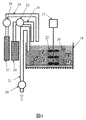
- an aqueous solution containing Nd and Dy ions inside the mixing tank 19 is introduced into the mixing tank through the pipe 21 by the pump 20. Thereafter, the aqueous solution in the mixing tank is continuously stirred until an aggregate is formed by an overhead stirrer 23 equipped with a stirring blade 22.
- an aqueous solution of a polymer having an amino group is introduced into the mixing tank 19 from the first tank 24 through the pipe 26 using the pump 25.
- an aqueous solution of dicarboxylic acid or dicarboxylic acid salt is introduced into the mixing tank through the pipe 29.
- an aggregate 30 composed of the dicarboxylic acid or dicarboxylic acid salt and the polymer having an amino group is formed in the mixing tank. Stirring is stopped after aggregate formation. Subsequently, the overhead stirrer is lifted from the mixing tank, and a centrifugal separation operation is performed using the mixing tank as a settling tube.
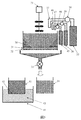
- the aggregate 30 collects at the lower end of the mixing tank. Thereafter, when the shutter 31 is opened, the liquid (dissolved component) other than the aggregate is discharged from the mixing tank through the filter 32. Aggregates are damped by the filter and are not discharged from the mixing tank. After the liquid component in the mixing tank is discharged, the shutter is closed.
- a separation mechanism for separating the agglomerate from the dissolved component either a shutter and a filter or a centrifugal separator may be used.
- the discharged dissolved matter enters the lower recovery tank 34 through the valve 33.
- Dy ions are mainly trapped in the aggregate, but Nd ions are mainly trapped in the recovery tank.
- the aqueous hydrochloric acid solution is dropped onto the aggregate in the mixing tank through the pipe 37. Thereby, the aggregate is dissolved.
- the overhead stirrer blade that has been lifted is placed in a mixing tank and stirred so that the aggregates are easily dissolved.
- hydrochloric acid is used here, nitric acid of the same strong acid may be used. In the case of sulfuric acid, the solubility of some transition metals decreases, so it is preferable to use hydrochloric acid or nitric acid if possible.
- the overhead stirrer is lifted from the mixing tank, and a centrifugal separation operation is performed using the mixing tank as a settling tube.
- the aggregate 30 collects at the lower end of the mixing tank.
- the shutter 31 is opened, the liquid (dissolved component) other than the aggregate is discharged from the mixing tank through the filter 32. Aggregates are damped by the filter and are not discharged from the mixing tank. After the liquid component in the mixing tank is discharged, the shutter is closed.
- the collection tank 34 instead of the collection tank 34, another collection tank 41 is installed under the valve 33.
- a polymer having an amino group and a dicarboxylic acid or dicarboxylic acid salt, which are components of the flocculant, are recovered. Since sodium hydroxide is used as a strong base in the above operation, the dicarboxylic acid or dicarboxylic acid salt is a sodium salt.
- the polymer having amino groups and the dicarboxylic acid or dicarboxylate recovered here can be separated into a polymer having an amino group and dicarboxylic acid or dicarboxylate by dialysis or the like. Again, it can be used as a flocculant for the separation and recovery of transition metals.
- a dialysis membrane 42 is provided on the bottom surface of the recovery tank 41, and a container 44 containing water 43 is installed under the recovery tank so that the dialysis membrane touches.
- dicarboxylic acid, sodium hydroxide, and the like move toward water, and the polymer having an amino group remains in the recovery tank.
- the polymer having amino groups and water remain in the recovery tank. It can be used again for aggregation.
- the aqueous solution of hydrochloric acid is dropped onto the agglomerates in the mixing tank through the piping by a pump from the third tank, the aqueous solution of sodium hydroxide is added to form transition metal hydroxides.
- the polymer having an amino group and the dicarboxylic acid or dicarboxylic acid salt, which are components of the flocculant are separated, and a transition metal hydroxide containing almost no flocculant component is obtained.
- a polymer aqueous solution having an amino group is introduced into the mixing tank through a pipe from the first tank by a pump, and subsequently dicarboxylic acid or dicarboxylic acid salt through the pipe by a pump from the second tank.
- the dysprosium oxide thus obtained becomes dysprosium oxide by baking in the presence of oxygen. After this is reduced and converted to dysprosium, it can be used in products such as magnets.
- the stirrer blade of the overhead stirrer, the mixing tank, and the fourth tank containing the aqueous solution of acid and the pipe are easily corroded when the material is metal because the inner wall is in contact with the acid. This is particularly noticeable when hydrochloric acid is used as the acid. Therefore, it is preferable to prevent the acid from coming into direct contact by coating the inner walls of these members with an organic resin film.
- a thermoplastic resin such as polycarbonate resin or acrylic resin
- a solvent such as acetone or 2-butanone
- a liquid (paint) obtained by dissolving a general-purpose epoxy resin and a curing agent such as phenol resin or diamine in an organic solvent is applied to the inner wall and then heated, whereby the solvent volatilizes and the resins are thermally cured. It is possible to produce a film.
- the mixing tank is made of a metal such as SUS or aluminum
- a resin composed of a combination of an epoxy resin and a curing agent such as a phenol resin or diamine is preferable because of high adhesion to the metal. It is also suitable when the mixing tank, tank, piping, etc. are made of resin with high acid resistance.
- the aggregate when collecting the aggregate, the aggregate may stick to the inner wall of the mixing tank or the filter surface, which may hinder the recovery. Therefore, it is desirable to keep the surface energy low on the surface on which these aggregates may stick.
- the contact angle with water is preferably 90 ° or more. This is because when the aggregate is formed, it contains a considerable amount of water, and therefore, the aggregate is difficult to adhere to a surface where water can be easily repelled.
- a material having high compatibility and high water repellency for example, a silicone compound having a siloxane skeleton in the molecule or a fluorine compound containing a large number of fluorine atoms in the molecule, such as a resin covering the inner wall. This can be achieved by mixing with the paint.
- the compounds we added to the above resins are the following compounds 3 to 13, which are 2 to 5 to the resin in the paint.
- the contact angle with water of the film formed by adding% by weight is as high as 100 ° or more, and the adhesion amount of aggregates is very small compared to the surface with a contact angle of about 90 °. There wasn't.
- the fluorine-containing chain of these compounds is called a perfluoropolyether chain, and the average molecular weight of the perfluoropolyether chain is preferably 1500 to 3000 in any compound.
- the average molecular weight of the perfluoropolyether chains of compounds 1 to 11 is preferably 1500 to 3000.
- a higher contact angle is preferable because adhesion of aggregates is suppressed, but there is no particular limitation as long as the contact angle with water on the surface of the resin film is 90 ° or more without using compounds 1 to 11.
- NdCl 3 neodymium chloride
- DyCl 3 dysprosium chloride
- the filtrate and the washing liquid mainly contain Nd ions.
- the aggregate contains mainly Dy ions.
- the aggregates were dissolved in hydrochloric acid, and the Nd and Dy ratios were measured by the Inducutively-Coupled-Plasma method (inductively coupled plasma method), which were about 30 wt% and about 98 wt%, respectively. Further, when the dissolved content was examined, Nd was about 3500 ppm and Dy was about 100 ppm. From the above, by agglomeration, about 98% by weight of Dy ions and about 30% by weight of Nd ions are incorporated into the aggregates of rare earths in the solution.
- the separation rate of Dy ions is expressed as the sum of Dy ions incorporated into aggregates / Dy ions incorporated into aggregates and Nd ions, the separation rate is 76.6%.
- a 20% by weight aqueous sodium hydroxide solution is added dropwise while stirring the solution. Aggregates are then formed and then dissolved. When the dripping is further continued, aggregates are deposited again. This is a dysprosium hydroxide as the main component. When precipitation of the aggregate is almost completed, the shutter of the mixing tank is opened and the solution is discharged.
- the solution discharged here is collected in a collection tank whose bottom is a dialysis membrane.
- the collection tank is installed so that the dialysis membrane is in contact with a container containing water. Change the water every hour while stirring the water in the container. Thus, after 10 hours, adipic acid and sodium hydroxide are almost eliminated from the dialysis membrane, and only compound 1 remains in a concentrated form. This is collected, adjusted in concentration, and returned to the first tank. The recovered compound 1 is used again during aggregation.
- the aqueous solution of Compound 1 is added again from the first tank, and the aqueous solution of adipic acid is added from the second tank to cause aggregation by adding the flocculant for the second time.
- the separation rate of Dy ions was 91.4%.
- the separation rate of Dy ions was 99.1%.
- the recovery rate of Dy ions was 92%. This was roasted, converted into dysprosium oxide, and reduced to obtain dysprosium.
- Neodymium chloride used in Example 1 (NdCl 3), chloride dysprosium a (DyCl 3) in place of the aqueous solution prepared by dissolving in water, an aqueous solution of cerium chloride (CeCl 3), terbium chloride (TbCl 3) was dissolved in water To prepare. At that time, the concentration of Ce and Tb is adjusted to be 5000 ppm.
- Example 2 Using this aqueous solution, the same aggregation experiment as in Example 1 was performed, and the ratio of Ce and Tb in the aggregate was measured to be about 30% by weight and about 98% by weight, respectively. Further, when the dissolved content was examined, Ce was about 3500 ppm and Tb was about 100 ppm. From the above, agglomeration once takes in about 98% by weight of Tb ions and about 30% by weight of Ce ions among the rare earths in the solution. The separation rate of Tb ions is 76.6%.
- the separation rate of Tb ions was 91%.
- the Tb ion separation rate was 99%.
- the recovery rate of Tb ions was 90%. This was roasted, converted into terbium oxide, and reduced to obtain terbium.
- the dicarboxylic acid used for aggregation is a linear hydrocarbon chain, and the hydrocarbon chain preferably has 1 to 8 carbon atoms, and more preferably 3 to 5 carbon atoms.
- Piping 30 ... Agglomerates 31 ... Shutter 32 ... Filter 33... Valve 34 ... Recovery tank 35 ... Third tank 36 ... Pump 37 ... Piping 38 ... Fourth tank 39 ... Pump 40 ... Piping 41 ... Recovery tank 42 ... dialysis membrane 43 ... water 44 ... container 45 ... Fifth tank 46 ... Pump 47 ... Piping
Landscapes
- Chemical & Material Sciences (AREA)
- Engineering & Computer Science (AREA)
- Environmental & Geological Engineering (AREA)
- Organic Chemistry (AREA)
- Life Sciences & Earth Sciences (AREA)
- Mechanical Engineering (AREA)
- Manufacturing & Machinery (AREA)
- Materials Engineering (AREA)
- Geology (AREA)
- Metallurgy (AREA)
- General Life Sciences & Earth Sciences (AREA)
- Hydrology & Water Resources (AREA)
- Water Supply & Treatment (AREA)
- Separation Of Suspended Particles By Flocculating Agents (AREA)
- Separation Using Semi-Permeable Membranes (AREA)
- Manufacture And Refinement Of Metals (AREA)
Description
本発明は、凝集剤、遷移金属分離方法、遷移金属分離装置に関する。
世の中の多くの機器には複数の遷移金属が混合されて形成される種々のデバイスが搭載されている。その中には非常に希少、貴重な金属も有る。そこでそれらのみを分離し、回収する技術開発が近年活発に進められてきている。
近年回収の検討がなされているものは磁石からのネオジム(Nd)、ディスプロシウム(Dy)である。これらを含んでいる磁石は磁気記録装置、或いはハイブリット車両等のモーター等に多く使われていており、保磁力を高めるため、或いは耐熱性を高めるためNd、或いはDyが添加されている。これ以外にも蛍光管の蛍光体として用いられている部材として、セリウム(Ce)、ユウロピウム(Eu)、テルビウム(Tb)も希少のため、回収が検討されている。
特許文献1には、アミノ基を有する高分子と、酸性基を有する水溶性高分子とを有する凝集剤が開示されている。
しかし、上記特許文献の方法のように、先にアミノ基を有する高分子の水溶液を添加した後、酸性基を有する高分子を添加すると、多数のアミノ基を有するアミノ基を有する高分子と、多数の酸性基を有する酸性基を有する高分子が瞬時に遭遇するので、添加した付近のみで瞬時に不溶の凝集物を形成し、容器全体に酸性基を有する高分子が広がれなくなる。つまり、容器の一部に存在する特定の遷移金属しか凝集物を形成できないという課題がある。
本発明の目的は、特定の遷移金属の分離率を向上させることにある。
上記目的を達成するために、本発明は、遷移金属イオンを配位結合により凝集物とする凝集剤において、アミノ基を有する高分子と、ジカルボン酸又はジカルボン酸塩とを有することを特徴とする。
また、複数種の遷移金属イオンが混在している水溶液から特定の遷移金属イオンを凝集させて分離する遷移金属分離方法において、前記水溶液にアミノ基を有する高分子を加えた後に、ジカルボン酸又はジカルボン酸塩を加えて凝集物を形成する第1工程と、前記水溶液から前記凝集物と溶解分とを分離する第2工程とを備えることを特徴とする。
また、複数種の遷移金属イオンが混在している水溶液から特定の遷移金属イオンを凝集させて分離する遷移金属分離装置において、アミノ基を有する高分子の水溶液を含む第1のタンクと、ジカルボン酸又はジカルボン酸塩の水溶液を含む第2のタンクと、前記第1のタンクから配管を通って投入されるアミノ基を有する高分子の水溶液と、前記第2のタンクから配管を通って投入されるジカルボン酸又はジカルボン酸塩の水溶液と、前記複数種の遷移金属イオンが混在している水溶液とを混合して凝集物を形成する混合槽と、前記複数種の遷移金属イオンが混在している水溶液から前記凝集物と溶解分とを分離する分離機構とを備えることを特徴とする。
本発明によれば、特定の遷移金属の分離率を向上させることができる。
以下、図面等を用いて、本発明の実施形態について説明する。ここでは、複数の遷移金属が混合している水溶液として、NdとDyが混合している水溶液を用いて説明する。また、大きなイオン半径の希土類をNd小さなイオン半径の希土類をDyとして説明する。これはこの2種類が多くの各種モータに用いられる磁石合金に含有しているためである。これ以外に例えば蛍光体で用いられるランタン(La)、セリウム(Ce)、ユウロピウム(Eu)、テルビウム(Tb)等でも同様の原理である。
(1)基本方法、原理
本発明のNdイオン、Dyイオンが混合している水溶液中からのDy回収の方法について、図1を用いて説明する。ここで各イオンの平均直径は、Ndイオンが2.32Å、Dyイオンが2.06Åと見積もられる。
本発明のNdイオン、Dyイオンが混合している水溶液中からのDy回収の方法について、図1を用いて説明する。ここで各イオンの平均直径は、Ndイオンが2.32Å、Dyイオンが2.06Åと見積もられる。
なお、磁石合金を酸で溶解した場合、Nd、Dyとも3価のイオンの形になるため、本発明でもNdイオン、Dyイオンはどちらも3価のイオンを意味している。
(i)凝集工程
複数の遷移金属イオンが混在している水溶液(ここではNdイオン1とDyイオン2の混合液であり、Ndイオン1とDyイオン2は数分子の水3が水和している)を撹拌中、この水溶液に水溶性のアミノ基を有する高分子4の水溶液を添加する。すると、アミノ基5の一部が遷移金属に配位結合する。次に、ジカルボン酸6の水溶液を添加する。すると、金属と配位していないアミノ基がジカルボン酸のカルボキシル基7とイオン結合してカルボン酸アンモニウム塩8を形成する。異なるアミノ基を有する高分子同士がジカルボン酸を介して分子間で架橋するので、水に不溶の凝集物9を形成する。この時、凝集物には特定の金属イオンが優先的にトラップする。この理由は後述する。
複数の遷移金属イオンが混在している水溶液(ここではNdイオン1とDyイオン2の混合液であり、Ndイオン1とDyイオン2は数分子の水3が水和している)を撹拌中、この水溶液に水溶性のアミノ基を有する高分子4の水溶液を添加する。すると、アミノ基5の一部が遷移金属に配位結合する。次に、ジカルボン酸6の水溶液を添加する。すると、金属と配位していないアミノ基がジカルボン酸のカルボキシル基7とイオン結合してカルボン酸アンモニウム塩8を形成する。異なるアミノ基を有する高分子同士がジカルボン酸を介して分子間で架橋するので、水に不溶の凝集物9を形成する。この時、凝集物には特定の金属イオンが優先的にトラップする。この理由は後述する。
ここで、ジカルボン酸が水に溶解しにくい時は、水酸化ナトリウム等の塩基を加えてカルボキシル基をカルボン酸塩に変換することにより水に溶解しやすくなる。ただ、加える水酸化ナトリウム等の塩基はカルボキシル基をカルボン酸塩に変換するのに必要なモル数添加する。加えすぎるとアミノ基を有する高分子同士のイオン結合が切れてしまうので加えすぎないよう調整する。
形成した凝集物はアミノ基を有する高分子の間にジカルボン酸が架橋した構造になっている。架橋することにより形成される隙間には主にDyイオンがトラップされる。NdイオンはDyイオンより大きいのでこの隙間にはほとんど入れない。そのため凝集物中にはほとんど取り込まれない。ただし、図2に示すように、2組の架橋されたアミノ基を有する高分子の間でトラップされる可能性があるので、若干は凝集物中に取り込まれる。ただし、このNdイオンのトラップは分子間であるため、分子内でトラップされるDyイオンに比べると起こる確率は低い。そのため、凝集物にはイオンサイズの小さなDyイオンが主にトラップされる。
即ち、本発明で複数種の遷移金属イオンが溶解している水溶液から、特定の遷移金属イオンを回収するという技術は、溶解している複数種の金属イオンのうちイオンサイズが小さなものを選択的に凝集物中に取り込む性質があることを利用している。
架橋により凝集物を形成するためには、カルボキシル基が少なくとも2つ必要であるためジカルボン酸を用いる。ジカルボン酸の中でもアジピン酸が好ましい。アジピン酸はジカルボン酸を構成する2つのカルボキシル基の間に直鎖の炭化水素を有し、その炭素数は4個である。直鎖の炭素数が大きくなると、Ndイオンもトラップできる隙間になるので、Dyイオンのトラップの選択性が低下する。また直鎖の炭素数が小さくなると、Dyイオンも隙間に入れなくなり凝集による回収率が低下する。概ね炭素数が1~8個の場合はDyイオンを優先してトラップするがそれ以上大きくなるとNdイオンもかなりの割合トラップするようになり、結果的にDyの選択性が低下する。
なお、選択性をより高めるにはカルボキシル基間の直鎖の炭素数が2~6個にするのが好ましい。更に選択性を向上させるにはカルボキシル基間の直鎖の炭素数が3~5個にするのがより好ましい。
以上より、直鎖の炭素数は回収する金属イオンのサイズによって代える必要がある。例えばCeイオン(平均直径は2.5Å)とTbイオン(平均直径は2.08Å)が混在している水溶液の場合もNdイオンとDyイオンの混在している場合と同様ジカルボン酸のカルボキシル基間の直鎖の炭素数は3~5個が好適である。しかし、Ndイオン(平均直径は2.32Å)とFeイオン(三価の場合、平均直径は1.1Å)が混在している水溶液の場合、ジカルボン酸のカルボキシル基間の直鎖の炭素数を5~7個にすることで、Ndイオンが選択的にトラップされる。Feイオンは架橋で形成される隙間が広すぎてほとんどトラップされず、水溶液中に残る。こうして複数の遷移金属の混在している水溶液から特定の金属だけを選択的に回収することが可能になる。
アミノ基を有する高分子の添加量は回収する金属イオンの数で決まってくる。具体的には複数の遷移金属イオンの混在している水溶液から特定の金属を回収する際、回収する金属イオンの数のほぼ2倍量のアミノ基が加えられるようにアミノ基を有する高分子を添加するのが最も好適である。この比率の場合、アミノ基のうち1個が金属イオンと配位し、もう1個がジカルボン酸とイオン結合を形成するためと推定される。また回収率を高めるにはアミノ基がより多くなるように加える。これによりアミノ基が配位する金属イオンが増えるので回収率が高まる。但し狙った金属イオン以外のイオンも配位結合してトラップされるので分離率は低下する傾向がある。
アミノ基を有する高分子を添加した後に加えられるジカルボン酸の添加比率は、カルボキシル基数で見積ると、アミノ基を有する高分子のアミノ基数の1/2~1/10が好適である。これ以上添加すると回収する金属イオンと結合するアミノ基数が減るので回収率が低下する傾向がある。またこれ以上少なくすると、十分凝集せず、一部は複数の遷移金属イオンの混在している水溶液中に溶解するので、回収率が低下する傾向がある。
凝集が生じるということは、異なる複数の分子のアミノ基とカルボキシル基の間でカルボン酸のアンモニウム塩構造を形成することであるから、複数の遷移金属イオンの混在している水溶液のpH が極端に酸性、塩基性の場合、カルボン酸のアンモニウム塩構造が安定に存在できなくなってしまう。例えば複数の遷移金属イオンの混在している水溶液に塩酸を加えてpHが1以下の酸性にした場合、ジカルボン酸はカルボン酸塩がカルボキシル基になってしまう。
またアミノ基を有する高分子のアミノ基はアミンの塩酸塩構造になってしまう。こうして分子間のイオン結合による架橋が切断してしまうので凝集物は複数の遷移金属イオンの混在している水溶液中に溶解してしまう。一方複数の遷移金属イオンの混在している水溶液に水酸化ナトリウムを加えてpHが13以上の塩基性にした場合、ジカルボン酸はカルボン酸カルボン酸のナトリウム塩構造になってしまう。またアンモニウム塩構造を形成しているアミノ基を有する高分子のアミノ基はアミノ基に戻ってしまう。こうしてpHが1以下の場合と同様、分子間のイオン結合による架橋が切断してしまうので凝集物は複数の遷移金属イオンの混在している水溶液中に溶解してしまう。
アミノ基を有する高分子のアミノ基は弱塩基性で、ジカルボン酸のカルボキシル基は弱酸性であり、両者がイオン結合を形成しつつ、緩衝作用も示すので、これらを加えることで複数の遷移金属イオンの混在している水溶液のpHが大きく変化することは無い。そこで、複数の遷移金属イオンの混在している水溶液のpHを凝集前にある程度調整しておくことにより安定な凝集物を形成でき、高い分離率、及び回収率を維持することが可能となる。
具体的には複数の遷移金属イオンの混在している水溶液のpHは3~7が好適である。凝集の際加えられるアミノ基を有する高分子のアミノ基、及びジカルボン酸のカルボキシル基の比率はアミノ基の方が大きいので、これらを加えることによりpHは若干塩基性にシフトする。そこで、この現象を考慮して、適正なpHは中性より若干酸性のpH3~7が理想値となる。
架橋の際、仮にカルボキシル基が3個以上の高分子、例えばポリアクリル酸を用いると、架橋部分の多い構造が一瞬にして形成され、即座に凝集物が形成される。そのため、ポリアクリル酸のカルボキシル基がアミノ基を有する高分子のアミノ基に遭遇する前に凝集してしまうため、遷移金属イオンの混在している水溶液全体に広がらない。しかし、架橋部分を最大でも2個しか形成できないジカルボン酸を使うことにより、瞬時の過剰な架橋が抑制できる。しかも金属イオンのサイズにフィットする分子間の隙間を形成するため、異なる希土類の混在した水溶液から、特定の金属イオンだけを選択的にトラップすることが可能となる。
(ii)凝集物を集める工程
上記工程で生じた凝集物は無数の小さな塊となって複数の遷移金属イオンの混在している水溶液中に漂っている。しかも、若干粘着性もある。そこで、これらを1つの塊に集める。1つの塊に集めることにより、ろ紙やメッシュを通して凝集物を回収する必要が無くなる。
ろ紙やメッシュを用いると、凝集物が付着するが、これは粘着性があるので回収しにくい。そこで、遠心分離により1つの塊にして、容器の隅に寄せ、複数の遷移金属イオンの混在している水溶液を吸引等で除去することにより、凝集物の回収が容易になる。
上記工程で生じた凝集物は無数の小さな塊となって複数の遷移金属イオンの混在している水溶液中に漂っている。しかも、若干粘着性もある。そこで、これらを1つの塊に集める。1つの塊に集めることにより、ろ紙やメッシュを通して凝集物を回収する必要が無くなる。
ろ紙やメッシュを用いると、凝集物が付着するが、これは粘着性があるので回収しにくい。そこで、遠心分離により1つの塊にして、容器の隅に寄せ、複数の遷移金属イオンの混在している水溶液を吸引等で除去することにより、凝集物の回収が容易になる。
1つの塊に集める方法としては、まず遠心分離による方法が挙げられる。これにより、凝集物は1つの塊となり、遠沈管の壁に付着する。遠沈管を傾けることにより、複数の遷移金属イオンの混在している水溶液を吸引で除去することが容易になる。
他の方法として、凝集後の液を冷凍し、その後解凍する操作が挙げられる。液が冷凍する過程で、液自体が冷却され、凝集物の水に対する親和性が低下し、細かな凝集が集合し大きな凝集物の塊となっていく。その後、解凍すると大きな塊となった凝集物は撹拌等の振動を与えない限りその形状を維持する。
また凝集物を大きな塊にさせやすくするため、塩化ナトリウム等の無機塩を添加する方法も挙げられる。これは上記の遠心分離、或いは冷凍・解凍の方法に付随して行うものである。塩化ナトリウムを加えることにより、ある種の塩析の作用が発揮され、凝集物が1つの塊となりやすくなる。
塩化ナトリウム以外には硫酸ナトリウム、硝酸ナトリウム、塩化カリウム、硫酸カリウム、硝酸カリウム等が挙げられる。
塩化ナトリウム以外には硫酸ナトリウム、硝酸ナトリウム、塩化カリウム、硫酸カリウム、硝酸カリウム等が挙げられる。
(iii)凝集物溶解、再凝集工程
凝集物の中には分離回収された金属イオン(この場合は主にDyイオン)と凝集剤であるアミノ基を有する高分子とジカルボン酸とがイオン結合した状態のものが混在している。そこで、金属イオンのみを回収するため、凝集物溶解、及び再凝集を行う。
凝集物の中には分離回収された金属イオン(この場合は主にDyイオン)と凝集剤であるアミノ基を有する高分子とジカルボン酸とがイオン結合した状態のものが混在している。そこで、金属イオンのみを回収するため、凝集物溶解、及び再凝集を行う。
(a)凝集物溶解
凝集物を溶解するため、無機の強酸を加える。具体的には塩酸か硝酸が好ましい。これらは加熱すると気化するので、加えすぎても凝集の系外に除くのが容易であるため好ましい。硫酸は硫酸イオンが2価なので、ジカルボン酸と同様、アミノ基を有する高分子に遭遇すると凝集物を形成する。本工程は凝集剤を除くのが目的なので硫酸は用いない。
凝集物を溶解するため、無機の強酸を加える。具体的には塩酸か硝酸が好ましい。これらは加熱すると気化するので、加えすぎても凝集の系外に除くのが容易であるため好ましい。硫酸は硫酸イオンが2価なので、ジカルボン酸と同様、アミノ基を有する高分子に遭遇すると凝集物を形成する。本工程は凝集剤を除くのが目的なので硫酸は用いない。
(b)再凝集
強酸を加えることにより凝集物を溶解すると、pHは2以下になる。この液を撹拌中、無機の強塩基の水溶液を少しずつ加える。するとpHが3付近になると凝集物が析出する。更強塩基の水溶液を加え続ける。するとpHが10以上になると凝集物が溶解する。更に強塩基の水溶液を加え続けると固体が析出する。これは遷移金属の水酸化物、具体的には主に水酸化ディスプロシウムである。これが完全に析出するまで強塩基の水溶液を加え続ける。
強酸を加えることにより凝集物を溶解すると、pHは2以下になる。この液を撹拌中、無機の強塩基の水溶液を少しずつ加える。するとpHが3付近になると凝集物が析出する。更強塩基の水溶液を加え続ける。するとpHが10以上になると凝集物が溶解する。更に強塩基の水溶液を加え続けると固体が析出する。これは遷移金属の水酸化物、具体的には主に水酸化ディスプロシウムである。これが完全に析出するまで強塩基の水溶液を加え続ける。
ここではディスプロシウムなので、pHが10以上になると水酸化物として析出してくるが、その他の希土類金属、例えばNd、TbなどもpHは9~11程度の弱塩基性になると水酸化物として析出するようになる。しかし金属イオンが鉄や銅等はpHが4~5程度でも水酸化物として析出するようになる。このpH領域は凝集剤も析出し始めている。しかし、凝集物はpHが10以上になると溶解するので、最終的に遷移金属の水酸化物のみが析出した状態になる。
強塩基としては、安価で入手が容易なので水酸化ナトリウム、水酸化カリウム、水酸化リチウム等のアルカリ金属水酸化物が好ましい。
次に遠心分離等によって遷移金属の水酸化物を1つに集める。沈殿管中の水溶液を除き水酸化物が主成分の凝集物だけ残す。ここで水溶液中には強塩基、及びアミノ基を有する高分子とジカルボン酸塩が含まれている。よってこの操作で凝集剤であるアミノ基を有する高分子とジカルボン酸をほぼ除去する。
(a)と(b)が凝集物溶解、及び再凝集の工程であり、これを複数回繰り返すことにより、凝集物からアミノ基を有する高分子とジカルボン酸をほとんど除去し、純度の高い遷移金属の水酸化物を得ることができる。
(iv)凝集剤添加前工程
上記(iii)工程により得られた遷移金属の水酸化物に強酸を加えて、水酸化物を溶解する。溶解後はおおよそpHが1前後まで変化する。この後pHを約3~7程度まで強塩基添加により変化させると若干濁りが生じる。これは僅かに残った凝集剤成分である。これが生じた段階で強塩基添加を終了する。
上記(iii)工程により得られた遷移金属の水酸化物に強酸を加えて、水酸化物を溶解する。溶解後はおおよそpHが1前後まで変化する。この後pHを約3~7程度まで強塩基添加により変化させると若干濁りが生じる。これは僅かに残った凝集剤成分である。これが生じた段階で強塩基添加を終了する。
この後、凝集剤成分であるアミノ基を有する高分子の水溶液、引き続きジカルボン酸、或いはジカルボン酸塩を添加し、凝集物を形成させる。以上、(i)~(iv)の工程を繰り返すことにより、ディスプロシウムの分離率が向上する。
(2)用いる凝集剤
(i)アミノ基を有する高分子
アミノ基を有する高分子としては同じ分子量中でアミノ基の割合が最も大きくなる点でポリエチレンイミンが好適である。またポリビニルアミン、ポリアリルアミンといった直鎖にアミノ基を有するタイプも比較的安価で水に溶解しやすいので好適である。キトサンは水に対する溶解性は低いが、かにの甲羅やえびの外骨格、カブトムシやゴキブリといった生物の外骨格の主成分であるキチンを加水分解することで得られるので、原料が生物由来という点で環境負荷が小さい特徴を持つ。ポリリシン、ポリアルギニンはアミノ酸由来で毒性も低い特徴がある。
(i)アミノ基を有する高分子
アミノ基を有する高分子としては同じ分子量中でアミノ基の割合が最も大きくなる点でポリエチレンイミンが好適である。またポリビニルアミン、ポリアリルアミンといった直鎖にアミノ基を有するタイプも比較的安価で水に溶解しやすいので好適である。キトサンは水に対する溶解性は低いが、かにの甲羅やえびの外骨格、カブトムシやゴキブリといった生物の外骨格の主成分であるキチンを加水分解することで得られるので、原料が生物由来という点で環境負荷が小さい特徴を持つ。ポリリシン、ポリアルギニンはアミノ酸由来で毒性も低い特徴がある。
アミノ基を有する高分子のアミノ基は単位体積あたりなるべく多くのアミノ基を有する方が効率的である。具体的には、繰り返し基本単位が小さいほど、或いは繰り返し基本単位中になるべく多くのアミノ基を有する構造が好ましい。例えばポリエチレンイミンは、繰り返し基本単位がC2H4N、分子量は約43と小さいのでアミノ基を有する高分子の中では効率的である。またこれ以外ではポリアリルアミンのうちの幾つかの構造が挙げられる。
例えば、下記化合物である。

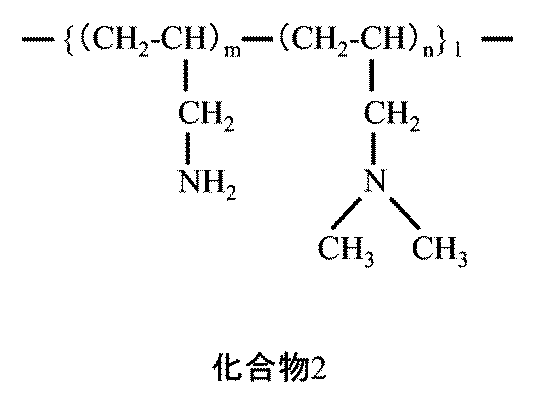
化合物1は繰り返し基本単位の分子量が約72であり、化合物2は異なる繰り返し単位であるが、片方は約72、もう一方が約100である。これ以外のアミノ基を有する高分子はピロール骨格やスルホニル部位等を有しているので、繰り返し基本単位の分子量は150~300前後もあるので、ポリエチレンイミンやポリアリルアミンのうち化合物1、2は好ましい。
アミノ基を有する高分子は平均分子量が大きくなると水溶液にしてもその粘度が高く、投入量管理、排水への投入操作の際扱いが難しくなる。具遺体的にはポリエチレンイミンやポリアリルアミンといった汎用のアミノ基を有する高分子は平均分子量が100,000を超えると、20℃では10重量%の水溶液にしても粘度は1,000mPa・s以上になる。粘度が1,000mPa・s以上になると、ディスペンサ等の単位時間当たりの吐出量の小さい装置を使用することになる。また、仮に高粘度の液を大量に送れる装置を用いたとしても、高粘度の液を送る際のエネルギーは膨大であり、実用的では無い。そこで大量の液を吐出できるよう、できれば粘度はこれより下げたい。そこでアミノ基を有する高分子の平均分子量は100,000以下が好ましい。
一方、平均分子量が大きい場合、凝集の際に、溶解分に残しておきたい金属種も一緒に凝集物に取り込まれる傾向がある。この傾向は平均分子量が25,000を超えると顕著になる。そのためアミノ基を有する高分子の平均分子量は25,000以下であることがより望ましい。
なお、凝集の際の凝集物へ極力取り込まれないようにするためにはなるべく低分子量のものが望まれるが、凝集を起こすには最低限、アミノ基が2個以上必要である。アミノ基を2個以上有する化合物で分子量が最も小さいのはエチレンジアミンであり、分子量は60である。シュウ酸は繰り返し基本単位がCH2NH2の高分子として考えることもできる。よって分子量の下限は60となる。
(ii)ジカルボン酸
ジカルボン酸は分子内に2個のカルボキシル基を有している。ジカルボン酸のカルボキシル基間は直鎖のアルキル鎖、分岐のアルキル鎖、シクロアルカン鎖、芳香環等がある。このうち直鎖のアルキル鎖の場合は、炭素数が1~8個が好適である。この間のジカルボン酸を選ぶことにより、イオンのサイズの小さな方を凝集物中に選択的にトラップすることが可能となる。これは図1に示すように凝集物内に形成される隙間のサイズが小さなサイズの遷移金属イオンをトラップするのに好適なサイズのためと推定される。
ジカルボン酸は分子内に2個のカルボキシル基を有している。ジカルボン酸のカルボキシル基間は直鎖のアルキル鎖、分岐のアルキル鎖、シクロアルカン鎖、芳香環等がある。このうち直鎖のアルキル鎖の場合は、炭素数が1~8個が好適である。この間のジカルボン酸を選ぶことにより、イオンのサイズの小さな方を凝集物中に選択的にトラップすることが可能となる。これは図1に示すように凝集物内に形成される隙間のサイズが小さなサイズの遷移金属イオンをトラップするのに好適なサイズのためと推定される。
炭素数が8個より大きくなると、隙間が大きくなるのでサイズによる選択性が低下する。また炭素数が0の場合は隙間が狭すぎて遷移金属イオンのトラップには狭くなってしまうため、選択性が下がったものと推定される。なお、選択性をより高めたい場合は、炭素数が3~5のジカルボン酸を用いることが効果的である。
分岐のアルキル鎖の場合は主鎖の炭素数が1~8個のジカルボン酸が好適である。これも凝集物内の隙間のサイズが炭素数が1~8個のジカルボン酸を使った場合にサイズが好適になるためと推定される。
シクロアルカン鎖の場合、カルボキシル基間の炭素数が1~8の場合が好適であり、これも上記アルキル鎖の場合と同じ理由と考えられる。
芳香環の場合もカルボキシル基間の炭素数が1~8の場合が好適であり、これも上記アルキル鎖の場合と同じ理由と考えられる。
なお、ジカルボン酸うち水溶性が低い場合は酸性基の一部をアンモニウム塩構造、或いはナトリウム塩構造、カリウム塩構造にすることで水に対する溶解性を向上させることが可能である。一部をアンモニウム塩構造、或いはナトリウム塩構造、カリウム塩構造とした後、添加することでアミノ基を有する高分子と効率良くイオン結合を形成することが可能である。
(3)用いる酸、塩基
(i)酸
凝集物の溶解に用いる酸は通常の酸が使える。但し、酸性度の低い弱酸を用いた場合、凝集物の溶解には大量の酸が必要になるので、用いる酸は強酸が好適である。また酸性基を有する水溶性高分子と同様にカルボキシル基、スルホン酸基を有する酸を用いると、これらが凝集に影響を与えるので、これらの置換基を有する酸は好適では無い。むしろ用いる酸として好適なのは無機の強酸、例えば塩酸、硫酸、硝酸が好適である。
(i)酸
凝集物の溶解に用いる酸は通常の酸が使える。但し、酸性度の低い弱酸を用いた場合、凝集物の溶解には大量の酸が必要になるので、用いる酸は強酸が好適である。また酸性基を有する水溶性高分子と同様にカルボキシル基、スルホン酸基を有する酸を用いると、これらが凝集に影響を与えるので、これらの置換基を有する酸は好適では無い。むしろ用いる酸として好適なのは無機の強酸、例えば塩酸、硫酸、硝酸が好適である。
(ii)塩基
凝集物形成に用いる塩基は通常の塩基が使える。但し、酸の場合と同様弱酸を用いると緩衝作用が発現するので、強塩基を用いる。具体的には無機の塩基、例えば水酸化ナトリウム、水酸化カリウムが好適である。なお、塩基としてアミノ基を有する高分子のみを加えて再凝集させても良い。
凝集物形成に用いる塩基は通常の塩基が使える。但し、酸の場合と同様弱酸を用いると緩衝作用が発現するので、強塩基を用いる。具体的には無機の塩基、例えば水酸化ナトリウム、水酸化カリウムが好適である。なお、塩基としてアミノ基を有する高分子のみを加えて再凝集させても良い。
(4)分離率、回収率向上のためのスキーム
本発明の凝集剤を用いて異なる遷移金属イオンとしてNdイオン、Dyイオンが混合している水溶液中からのDyを優先的に凝集物中に取り込むことでDyの回収率を向上させる方法について、図3を用いて説明する。
本発明の凝集剤を用いて異なる遷移金属イオンとしてNdイオン、Dyイオンが混合している水溶液中からのDyを優先的に凝集物中に取り込むことでDyの回収率を向上させる方法について、図3を用いて説明する。
(a)攪拌工程
初めに図3の(a)に示すようにNdイオン、Dyイオンが混合している水溶液10をシャッター付きフィルタ11が下部に設けられた遠沈管としても機能する容器12に投入する。撹拌機構13を稼働させ、容器内の水溶液を撹拌する。この状態でアミノ基を有する高分子4の水溶液を加え、次にジカルボン酸6の水溶液を加える。
初めに図3の(a)に示すようにNdイオン、Dyイオンが混合している水溶液10をシャッター付きフィルタ11が下部に設けられた遠沈管としても機能する容器12に投入する。撹拌機構13を稼働させ、容器内の水溶液を撹拌する。この状態でアミノ基を有する高分子4の水溶液を加え、次にジカルボン酸6の水溶液を加える。
(b)凝集工程
すると、容器内に凝集物9が形成される。
すると、容器内に凝集物9が形成される。
(c)遠心分離工程
次に遠心分離を行うことにより凝集物は容器の下部の端部に集まる。容器底のシャッター付きフィルタのシャッターを開放することで溶解分14が容器の外に排出され(c)のような状態となる。ここに酸の水溶液15を滴下する。
次に遠心分離を行うことにより凝集物は容器の下部の端部に集まる。容器底のシャッター付きフィルタのシャッターを開放することで溶解分14が容器の外に排出され(c)のような状態となる。ここに酸の水溶液15を滴下する。
(d)(e)凝集物の溶解・凝集工程
凝集物に酸の水溶液15を滴下すると、凝集物が溶解する。次に(d)に示すように塩基の水溶液16をpHが10以上になるよう加えると、主にDyの水酸化物17が形成される。この後、遠心分離を行い希土類の水酸化物を端部に集める。シャッター11を開け溶液成分を除くことにより希土類金属の水酸化物が得られる。
工程(d)(e)を繰り返し行うことにより、凝集物から凝集剤をほぼ除くことが可能となる。
凝集物に酸の水溶液15を滴下すると、凝集物が溶解する。次に(d)に示すように塩基の水溶液16をpHが10以上になるよう加えると、主にDyの水酸化物17が形成される。この後、遠心分離を行い希土類の水酸化物を端部に集める。シャッター11を開け溶液成分を除くことにより希土類金属の水酸化物が得られる。
工程(d)(e)を繰り返し行うことにより、凝集物から凝集剤をほぼ除くことが可能となる。
(f)最終水洗工程
Dyイオンが所望の比率まで高まったら、精製水18を使って水酸化物を水洗する。
Dyイオンが所望の比率まで高まったら、精製水18を使って水酸化物を水洗する。
(g)凝集物加熱工程
凝集物を大気中で加熱することにより、用いた凝集剤が熱分解し、最終的にDy2O3が得られる。なお、これを磁石、モータとして再利用する場合は、これを還元しDyとした後、HDD用モータ、ハイブリット車のモータ等の磁石として用いることが可能となる。
凝集物を大気中で加熱することにより、用いた凝集剤が熱分解し、最終的にDy2O3が得られる。なお、これを磁石、モータとして再利用する場合は、これを還元しDyとした後、HDD用モータ、ハイブリット車のモータ等の磁石として用いることが可能となる。
(5)装置の発明の形態1
次に、遷移金属を分離・回収に用いる装置について図4、5を用いて説明する。
なお、ここでは遷移金属イオンとしてNd、Dyの混合されている水溶液からDyを選択的に凝集し、回収する方法を記述する。この溶液の4に示す装置に投入前のpHは6.0である。
次に、遷移金属を分離・回収に用いる装置について図4、5を用いて説明する。
なお、ここでは遷移金属イオンとしてNd、Dyの混合されている水溶液からDyを選択的に凝集し、回収する方法を記述する。この溶液の4に示す装置に投入前のpHは6.0である。
まず図4を使って説明する。初めに混合槽19内部にNd、及びDyのイオンが含まれている水溶液をポンプ20により、配管21を通って混合槽に投入する。この後撹拌羽根22を装着したオーバーヘッドスターラー23によって混合槽中の水溶液は凝集物が形成するまで攪拌され続ける。
次に第1のタンク24からポンプ25を用いて、配管26を通ってアミノ基を有する高分子の水溶液が混合槽19に投入される。
次に第2のタンク27からポンプ28を用いて、配管29を通ってジカルボン酸、或いはジカルボン酸塩の水溶液を混合槽に投入する。
すると混合槽内でジカルボン酸又はジカルボン酸塩とアミノ基を有する高分子とからなる凝集物30が形成される。凝集物形成後、撹拌を停止する。
続いて、混合槽からオーバーヘッドスターラーを引き上げ、混合槽を沈殿管とする遠心分離操作を行う。
次に第2のタンク27からポンプ28を用いて、配管29を通ってジカルボン酸、或いはジカルボン酸塩の水溶液を混合槽に投入する。
すると混合槽内でジカルボン酸又はジカルボン酸塩とアミノ基を有する高分子とからなる凝集物30が形成される。凝集物形成後、撹拌を停止する。
続いて、混合槽からオーバーヘッドスターラーを引き上げ、混合槽を沈殿管とする遠心分離操作を行う。
ここからは図5を用いて説明する。遠心分離を行うと、凝集物30は混合槽の下部の端部に集まる。この後、シャッター31を開くと、フィルタ32を通って混合槽から凝集物以外の液体(溶解分)が排出される。凝集物はフィルタでせき止められるため、混合槽からは排出されない。混合槽の液体成分が排出された後、シャッターを閉じる。凝集物と溶解分とを分離する分離機構としては、シャッターとフィルタで分離するものでも、遠心分離するものでもどちらでもよい。
排出された溶解分はバルブ33を通って下部の回収槽34に入る。凝集物には主にDyイオンがトラップされるが、回収槽には主にNdイオンがトラップされる。
次に第3のタンク35からポンプ36を用いて、配管37を通って塩酸の水溶液を混合槽の凝集物に降りかける。これにより凝集物が溶解する。ここでは、引き上げておいたオーバーヘッドスターラーの羽根を混合槽に入れ、凝集物が溶解しやすいよう、撹拌する。
なお、ここでは塩酸を用いているが、同じ強酸の硝酸でもかまわない。硫酸の場合は一部の遷移金属の溶解性が低下するので、できれば、塩酸か硝酸を用いるのが好適である。
次に第3のタンク35からポンプ36を用いて、配管37を通って塩酸の水溶液を混合槽の凝集物に降りかける。これにより凝集物が溶解する。ここでは、引き上げておいたオーバーヘッドスターラーの羽根を混合槽に入れ、凝集物が溶解しやすいよう、撹拌する。
なお、ここでは塩酸を用いているが、同じ強酸の硝酸でもかまわない。硫酸の場合は一部の遷移金属の溶解性が低下するので、できれば、塩酸か硝酸を用いるのが好適である。
次に第4のタンク38からポンプ39を用いて、配管40を通って水酸化ナトリウム水溶液を混合槽に投入すると、溶液が一度凝集するが、更に水酸化ナトリウム水溶液を加えることにより凝集物が溶解する。更に水酸化ナトリウム水溶液を加えると、新たに凝集物30が生じる。これは遷移金属の水酸化物である。ここでは水酸化ナトリウムを用いているが、水酸化カリウム、水酸化リチウム等のアルカリ金属水酸化物であればここでは使用可能である。
この状態で、混合槽からオーバーヘッドスターラーを引き上げ、混合槽を沈殿管とする遠心分離操作を行う。遠心分離を行うと、凝集物30は混合槽の下部の端部に集まる。この後、シャッター31を開くと、フィルタ32を通って混合槽から凝集物以外の液体(溶解分)が排出される。凝集物はフィルタでせき止められるため、混合槽からは排出されない。混合槽の液体成分が排出された後、シャッターを閉じる。
ここで回収槽34の代わりにバルブ33の下部には別の回収槽41を設置する。これには凝集剤の成分であるアミノ基を有する高分子、及びジカルボン酸、或いはジカルボン酸塩が回収される。上記操作で強塩基として水酸化ナトリウムを用いているので、ここでジカルボン酸、或いはジカルボン酸塩はナトリウム塩になっている。
ここで回収されたアミノ基を有する高分子、及びジカルボン酸、或いはジカルボン酸塩は、透析等でアミノ基を有する高分子と、ジカルボン酸或いはジカルボン酸塩に分離可能なので、ここで分離した両者は、再度凝集剤として遷移金属の分離回収に用いることができる。回収槽41の底面に透析膜42を設け、回収槽の下に、透析膜が触れるように水43を入れた容器44を設置する。これにより水の方にジカルボン酸、水酸化ナトリウム等が移動し、アミノ基を有する高分子は回収槽内に残る。水43を数回取りかえることにより、回収槽中にはアミノ基を有する高分子と水が残る。これを再度凝集で用いることは可能である。
上記第3のタンクからポンプにより、配管を通って塩酸の水溶液を混合槽の凝集物に降りかけて凝集物を溶解させる工程から、水酸化ナトリウム水溶液を加えて、遷移金属の水酸化物を形成する工程を数回繰り返す。これにより凝集剤の成分であるアミノ基を有する高分子、及びジカルボン酸、或いはジカルボン酸塩が分離され、凝集剤成分のほとんど混入していない遷移金属の水酸化物が得られる。
なお、一連の工程が終了後、混合槽内部を洗浄するため、第5のタンク45からポンプ46により、配管47を通って精製水を投入する機構も設けておくことが好ましい。
次に第1のタンクからポンプにより、配管を通ってアミノ基を有する高分子の水溶液を混合槽に投入し、引き続き第2のタンクからポンプにより、配管を通ってジカルボン酸、或いはジカルボン酸塩の水溶液を混合槽に投入して凝集物を形成する工程から、凝集剤成分のほとんど混入していない遷移金属の水酸化物が得られる工程までを数回繰り返すことにより、所望の遷移金属の水酸化物の純度が向上したものが得られる。ここではNdイオンとDyイオンの混在した水溶液を用いたので、Ndイオンに比べてイオンサイズの小さいDyイオンが凝集物中に選択的にトラップされ、数回の凝集剤による凝集工程を繰り返すことにより、高純度でDyの水酸化物、即ち高純度の水酸化ディスプロシウムが得られる。
こうして得られた酸化ディスプロシウムは酸素存在下で焙焼することにより酸化ディスプロシウムとなる。これを還元し、ディスプロシウムに変換した後、磁石等の製品に用いることが可能となる。
ところで、オーバーヘッドスターラーの撹拌羽根、混合槽、及び酸の水溶液の入っている第4のタンク、配管は内壁が酸に触れるので材質が金属の場合は腐食しやすい。特に酸として塩酸を用いた場合は顕著である。そこで、これら部材の内壁には有機の樹脂皮膜をコートすることにより、直接酸が接触することを防ぐことが好ましい。具体的には、ポリカーボネート樹脂、アクリル樹脂等の熱可塑性樹脂をアセトン、2-ブタノン等の溶媒に溶解し、この液(塗料)を塗布後乾燥し、溶媒を揮発させることで製する。
それ以外では、例えば汎用のエポキシ樹脂とフェノール樹脂或いはジアミン等の硬化剤を有機溶媒に溶解した液(塗料)を内壁に塗布後、加熱することにより、溶媒が揮発し、樹脂同士が熱硬化することにより皮膜を製することが可能である。混合槽がSUS、アルミ等の金属の場合はエポキシ樹脂とフェノール樹脂或いはジアミン等の硬化剤の組み合わせからなる樹脂が金属との密着性が高いので好適である。混合槽、タンク、配管等が耐酸性の高い樹脂製の場合も好適である。
更に凝集物を回収する際、混合槽の内壁や、フィルタ表面に凝集物がこびりつき、回収に支障をきたす場合がある。そこで、これら凝集物がこびりつく可能性のある表面は表面エネルギーを低くしておくことが望ましい。具体的には水との接触角が90°以上が好適である。これは凝集物が形成する際、水分をかなり含有しているので、水を弾きやすい表面であれば凝集物も付着しにくくなるためである。これを達成するため、例えば分子中にシロキサン骨格を有するシリコーン化合物、或いは分子中にフッ素原子を多く含有するフッ素系化合物等、内壁を被覆する樹脂に対する相溶性が高く、且つ撥水性の高い材料を塗料に混合することで達成することが可能となる。
ところで、我々が上記樹脂(ポリカーボネート樹脂、アクリル樹脂エポキシ樹脂とフェノール樹脂或いはジアミン等を硬化した樹脂)に添加した化合物は下記化合物3~13であり、これらを塗料中の樹脂に対して2~5重量%添加して製膜した膜の水との接触角は皆100°以上と高く、接触角が90°程度の表面に比べて凝集物の付着量は極めて少なく、目視ではほとんど付着が見られなかった。




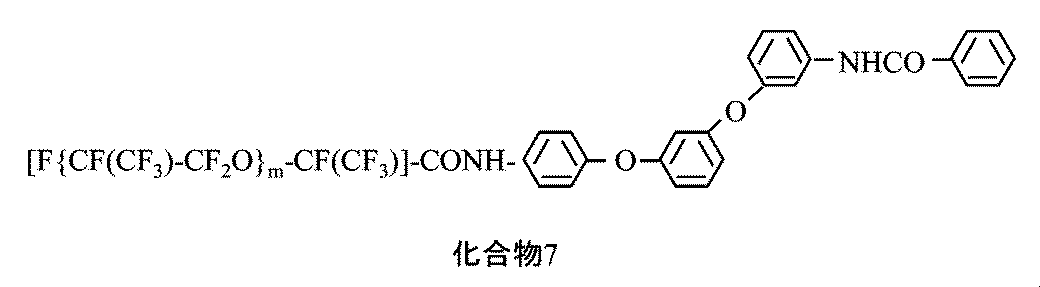
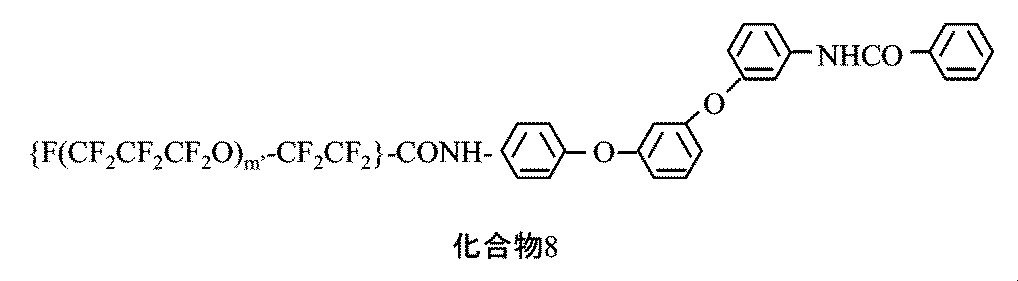




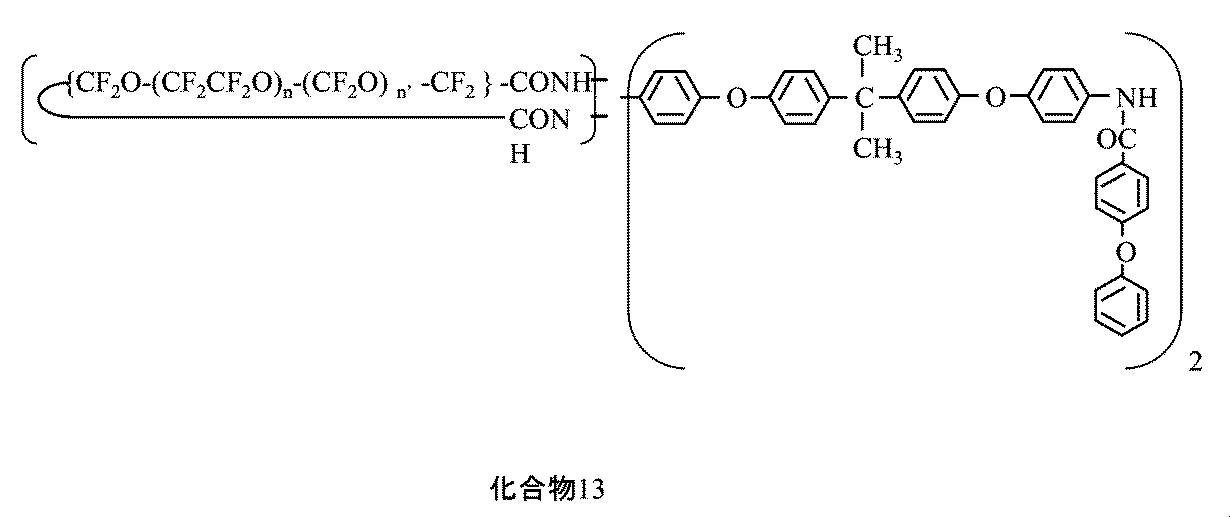
これら化合物の含フッ素鎖はパーフルオロポリエーテル鎖と呼ばれ、いずれの化合物でもパーフルオロポリエーテル鎖の平均分子量は1500~3000が好適であった。これより平均分子量が小さい場合は撥水性が低く、また平均分子量が大きい場合は樹脂に対する相溶性が低く、塗料を静置すると次第に溶媒と分離し、底に溜まるようになる。そのため化合物1~11のパーフルオロポリエーテル鎖の平均分子量は1500~3000が好適である。
接触角が高いほど凝集物の付着は抑制されるので好ましいが、化合物1~11を使わなくとも樹脂膜表面の水との接触角が90°以上になるものであれば特に限定は無い。
本発明の実施例を以下に示す。
初めにネオジム(Nd)、ディスプロシウム(Dy)の混在した水溶液からDyを分離回収する検討を示す。Nd、Dyとも3価で水和水がNd、及びDyイオン1個に対して8個の場合、イオンの直径はNdが2.24Å、Dyが2.06Åである。そのため、主に凝集物に取り込まれるのはイオンの直径の小さなDyの方である。
塩化ネオジム(NdCl3)、塩化ディスプロシウム(DyCl3)を水に溶解した水溶液を調製する。その際、Nd、Dyの濃度がどちらも5000ppmとなるよう調整する。溶液の比重が1.0と近似した場合、Nd、Dyのモル濃度はそれぞれ34.66mmol/l、及び30.77mmol/lとなる。
この水溶液100g(希土類金属イオン数は6.54mmol)を図4、5に示す装置の混合槽に入れ撹拌中、第1のタンクからアミノ基を有する水溶性の高分子として化合物1の10重量%水溶液を9.418g(繰り返し単位数は13.1mmol)を添加する。更に第2のタンクからジカルボン酸の水溶液としてアジピン酸の10重量%水溶液を0.955g(繰り返し単位数は1.31mmol)を添加する。
アジピン酸水溶液添加後、白い凝集物が発生する。ろ液、及び洗浄液、凝集物を分析したところ、ろ液、及び洗浄液には主にNdイオンが含まれている。一方、凝集物には主にDyイオンが含まれている。凝集物を塩酸で溶解し、Inducutively Coupled Plasma法(誘導結合プラズマ法)によりNd、Dyの比率を測定すると、それぞれ約30重量%、約98重量%であった。また溶解分を調べると、Ndが約3500ppm、Dyが約100ppmであった。以上より、一度の凝集により、溶液中の希土類のうちDyイオンを約98重量%、Ndイオンを約30重量%凝集物内に取り込むことになる。
Dyイオンの分離率を、凝集物に取り込まれたDyイオン/凝集物に取り込まれたDyイオンとNdイオンの和で表すと、その分離率は、76.6%となる。
ここから凝集物の溶解、及び再凝集の工程を記述する。まず1000rpmで15分間遠心分離を行い、凝集物を混合槽の底面の端部に集める。その後混合槽の底面のシャッターを開き、溶液分を混合槽から排出する。シャッターを閉めた後、凝集物に18重量%の塩酸水溶液を滴下すると、凝集物が次第に溶解する。凝集物が完全に溶解した時点で滴下を終了する。
次にこの液を撹拌しつつ、20重量%の水酸化ナトリウム水溶液を滴下する。すると、凝集物が形成し、その後溶解する。更に滴下を続けると再び凝集物が析出する。これは主成分がディスプロシウムの水酸化物である。凝集物がの析出がほぼ終了したら、混合槽のシャッターを開け、溶液分を排出する。
上記18重量%の塩酸水溶液を滴下する工程から混合槽のシャッターを開け、溶液分を排出する工程までを数回繰り返す。
これにより、凝集剤成分である化合物1、及びアジピン酸がほとんど除去される。ここまでが凝集剤を加える凝集工程の1回分である。
これにより、凝集剤成分である化合物1、及びアジピン酸がほとんど除去される。ここまでが凝集剤を加える凝集工程の1回分である。
なお、ここで排出した溶液分は底面が透析膜になっている回収槽に集められる。回収槽は水を入れた容器に、透析膜が接するように設置する。容器内の水を撹拌しながら、1時間ごとに水を交換する。こうして10時間後、透析膜中からアジピン酸や水酸化ナトリウムがほとんど抜け、化合物1のみが濃縮された形で残る。これを回収し、濃度を調整して、第1のタンクに戻す。回収された化合物1は再度凝集時に用いる。
次に2度目の凝集剤を加える凝集工程に移る前の工程(凝集前工程)を記述する。凝集物に18重量%の塩酸水溶液を凝集物が完全に溶解するまで加える。更に撹拌中20重量%の水酸化ナトリウム水溶液を滴下し、凝集物が生成し始めたら、滴下を中止する。ここまでが凝集前工程である。
この後、再び第1のタンクから化合物1の水溶液、第2のタンクからアジピン酸の水溶液を加えて2度目の凝集剤添加による凝集を行わせる。
2度目の凝集を行うとDyイオンの分離率は91.4%となった。4度目の凝集を行うとDyイオンの分離率は99.1%となった。またDyイオンの回収率は92%であった。これを焙焼し酸化ディスプロシウムに変換し、還元することによりディスプロシウムを得た。
以上より、NdイオンとDyイオンの混在している溶液からDyを選択的に分離・回収することが可能となった。
次にセリウム(Ce)、テルビウム(Tb)の混在する水溶液から、Tbを分離回収する検討を記す。Ce、Tbとも3価で水和水がCe、及びTbイオン1個に対して8個の場合、イオンの直径はCeが2.28Å、Tbが2.08Åである。そのため、主に凝集物に取り込まれるのはイオンの直径の小さなTbの方である。
実施例1で用いた塩化ネオジム(NdCl3)、塩化ディスプロシウム(DyCl3)を水に溶解した水溶液の代わりに、塩化セリウム(CeCl3)、塩化テルビウム(TbCl3)を水に溶解した水溶液を調製する。その際、Ce、Tbの濃度がどちらも5000ppmとなるよう調整する。
この水溶液を用いて実施例1と同様の凝集実験を行い、凝集物中のCe、Tbの比率を測定すると、それぞれ約30重量%、約98重量%であった。また溶解分を調べると、Ceが約3500ppm、Tbが約100ppmであった。以上より、一度の凝集により、溶液中の希土類のうちTbイオンを約98重量%、Ceイオンを約30重量%凝集物内に取り込むことになる。
Tbイオンの分離率は、76.6%となる。
Tbイオンの分離率は、76.6%となる。
2度目の凝集を行うとTbイオンの分離率は91%となった。4度目の凝集を行うとTbイオンの分離率は99%となった。またTbイオンの回収率は90%であった。これを焙焼し酸化テルビウムに変換し、還元することによりテルビウムを得た。
以上より、CeイオンとTbイオンの混在している溶液からTbを選択的に分離・回収することが可能となった。
ジカルボン酸としてアジピン酸以外のカルボキシル基間が直鎖の炭化水素鎖であるジカルボン酸を用いる以外は実施例1と同様にして、1回凝集後のNdイオン、Dyイオンの凝集物へのトラップ率を調べた。結果を図6に示す。
炭化水素鎖の炭素数が0~10個のジカルボン酸を用いたところ、炭素数1~8のジカルボン酸を用いた場合にNdトラップ率が低く、且つDyトラップ率が高いことが判った。特に炭素数3~5のジカルボン酸を用いた場合にNdトラップ率がかなり低くなり、且つDyトラップ率が特に高いことが判った。
以上より凝集に用いるジカルボン酸は直鎖の炭化水素鎖で且つ、炭化水素鎖の炭素数が1~8個が好ましく、炭素数が3~5個が更に好ましいことが判った。
1…Ndイオン
2…Dyイオン
3…水
4…アミノ基を有する高分子
5…アミノ基
6…ジカルボン酸
7…カルボキシル基
8…カルボン酸アンモニウム塩
9…凝集物
10…Ndイオン、Dyイオンが混合している水溶液
11…シャッター付きフィルタ
12…容器
13…撹拌機構
14…溶解分
15…酸の水溶液
16…塩基の水溶液
17…Dyの水酸化物
18…精製水
19…混合槽
20…ポンプ
21…配管
22…撹拌羽根
23…オーバーヘッドスターラー
24…第1のタンク
25…ポンプ
26…配管
27…第2のタンク
28…ポンプ
29…配管
30…凝集物
31…シャッター
32…フィルタ
33…バルブ
34…回収槽
35…第3のタンク
36…ポンプ
37…配管
38…第4のタンク
39…ポンプ
40…配管
41…回収槽
42…透析膜
43…水
44…容器
45…第5のタンク
46…ポンプ
47…配管
2…Dyイオン
3…水
4…アミノ基を有する高分子
5…アミノ基
6…ジカルボン酸
7…カルボキシル基
8…カルボン酸アンモニウム塩
9…凝集物
10…Ndイオン、Dyイオンが混合している水溶液
11…シャッター付きフィルタ
12…容器
13…撹拌機構
14…溶解分
15…酸の水溶液
16…塩基の水溶液
17…Dyの水酸化物
18…精製水
19…混合槽
20…ポンプ
21…配管
22…撹拌羽根
23…オーバーヘッドスターラー
24…第1のタンク
25…ポンプ
26…配管
27…第2のタンク
28…ポンプ
29…配管
30…凝集物
31…シャッター
32…フィルタ
33…バルブ
34…回収槽
35…第3のタンク
36…ポンプ
37…配管
38…第4のタンク
39…ポンプ
40…配管
41…回収槽
42…透析膜
43…水
44…容器
45…第5のタンク
46…ポンプ
47…配管
Claims (15)
- 遷移金属イオンを配位結合により凝集物とする凝集剤において、
アミノ基を有する高分子と、
ジカルボン酸又はジカルボン酸塩とを有することを特徴とする凝集剤。 - 請求項1において、前記ジカルボン酸を構成する2つのカルボキシル基間の構造又は前記ジカルボン酸塩を構成する2つのカルボン酸塩間の構造が、直鎖又は分岐の炭化水素鎖或いは環状炭化水素を有し、前記炭化水素鎖又は環状炭化水素の炭素数が1~8であることを特徴とする凝集剤。
- 請求項1において、前記ジカルボン酸塩を構成する2つのカルボン酸塩間の構造が、ベンゼン環であることを特徴とする凝集剤。
- 請求項1において、前記ジカルボン酸がアジピン酸であることを特徴とする凝集剤。
- 請求項1において、前記ジカルボン酸塩がアジピン酸塩であることを特徴とする凝集剤。
- 複数種の遷移金属イオンが混在している水溶液から特定の遷移金属イオンを凝集させて分離する遷移金属分離方法において、
前記水溶液にアミノ基を有する高分子を加えた後に、ジカルボン酸又はジカルボン酸塩を加えて凝集物を形成する第1工程と、
前記水溶液から前記凝集物と溶解分とを分離する第2工程とを備えることを特徴とする遷移金属分離方法。 - 請求項6において、前記アミノ基を有する高分子のアミノ基の数をB、前記ジカルボン酸中のカルボキシル基の数又は前記ジカルボン酸塩中のカルボン酸塩の数をAとするときに、A:B=1:3~10であることを特徴とする遷移金属分離方法。
- 請求項6において、前記水溶液にアミノ基を有する高分子を加える前に、前記水溶液のpHを3~7に制御することを特徴とする遷移金属分離方法。
- 請求項6において、前記第1工程と前記第2工程とを複数回繰り返すことを特徴とする遷移金属分離方法。
- 請求項6において、前記第2工程により分離した前記凝集物に酸を加えて溶解する第3工程と、
塩基を加えて水に難溶の遷移金属の水酸化物を析出させる第4工程と、
前記水酸化物を遠心分離する第5工程とを備えることを特徴とする遷移金属分離方法。 - 請求項10において、前記第1工程から前記第5工程を複数回繰り返すことを特徴とする遷移金属分離方法。
- 請求項10において、前記酸が塩酸であり、前記塩基が水酸化ナトリウムであることを特徴とする遷移金属分離方法。
- 請求項10において、前記第5工程により分離した前記溶解分から透析によりアミノ基を有する高分子を回収する第6工程と、
前記第6工程により回収した前記アミノ基を有する高分子を前記水溶液に加える第7工程とを備えることを特徴とする遷移金属分離方法。 - 複数種の遷移金属イオンが混在している水溶液から特定の遷移金属イオンを凝集させて分離する遷移金属分離装置において、
アミノ基を有する高分子の水溶液を含む第1のタンクと、
ジカルボン酸又はジカルボン酸塩の水溶液を含む第2のタンクと、
前記第1のタンクから配管を通って投入されるアミノ基を有する高分子の水溶液と、前記第2のタンクから配管を通って投入されるジカルボン酸又はジカルボン酸塩の水溶液と、前記複数種の遷移金属イオンが混在している水溶液とを混合して凝集物を形成する混合槽と、
前記複数種の遷移金属イオンが混在している水溶液から前記凝集物と溶解分とを分離する分離機構とを備えることを特徴とする遷移金属分離装置。 - 請求項14において、前記溶解分が溜められる回収槽と、前記回収槽に設けられ前記溶解分から前記アミノ基を有する高分子の水溶液を分離する透析膜とを備えることを特徴とする遷移金属分離装置。
Priority Applications (2)
| Application Number | Priority Date | Filing Date | Title |
|---|---|---|---|
| JP2014531416A JP5887411B2 (ja) | 2012-08-22 | 2012-08-22 | 遷移金属分離方法、遷移金属分離装置 |
| PCT/JP2012/071124 WO2014030218A1 (ja) | 2012-08-22 | 2012-08-22 | 凝集剤、遷移金属分離方法、遷移金属分離装置 |
Applications Claiming Priority (1)
| Application Number | Priority Date | Filing Date | Title |
|---|---|---|---|
| PCT/JP2012/071124 WO2014030218A1 (ja) | 2012-08-22 | 2012-08-22 | 凝集剤、遷移金属分離方法、遷移金属分離装置 |
Publications (1)
| Publication Number | Publication Date |
|---|---|
| WO2014030218A1 true WO2014030218A1 (ja) | 2014-02-27 |
Family
ID=50149554
Family Applications (1)
| Application Number | Title | Priority Date | Filing Date |
|---|---|---|---|
| PCT/JP2012/071124 Ceased WO2014030218A1 (ja) | 2012-08-22 | 2012-08-22 | 凝集剤、遷移金属分離方法、遷移金属分離装置 |
Country Status (2)
| Country | Link |
|---|---|
| JP (1) | JP5887411B2 (ja) |
| WO (1) | WO2014030218A1 (ja) |
Citations (3)
| Publication number | Priority date | Publication date | Assignee | Title |
|---|---|---|---|---|
| JP2011088047A (ja) * | 2009-10-21 | 2011-05-06 | Nippon Filcon Co Ltd | 高分子固定型金属吸着材およびその製造方法 |
| JP2011132573A (ja) * | 2009-12-25 | 2011-07-07 | Hitachi Ltd | 金属回収用薬剤,金属回収方法および金属回収用薬剤を用いた金属分離回収装置 |
| JP2012030139A (ja) * | 2010-07-28 | 2012-02-16 | Hitachi Ltd | 希土類金属凝集剤 |
-
2012
- 2012-08-22 WO PCT/JP2012/071124 patent/WO2014030218A1/ja not_active Ceased
- 2012-08-22 JP JP2014531416A patent/JP5887411B2/ja not_active Expired - Fee Related
Patent Citations (3)
| Publication number | Priority date | Publication date | Assignee | Title |
|---|---|---|---|---|
| JP2011088047A (ja) * | 2009-10-21 | 2011-05-06 | Nippon Filcon Co Ltd | 高分子固定型金属吸着材およびその製造方法 |
| JP2011132573A (ja) * | 2009-12-25 | 2011-07-07 | Hitachi Ltd | 金属回収用薬剤,金属回収方法および金属回収用薬剤を用いた金属分離回収装置 |
| JP2012030139A (ja) * | 2010-07-28 | 2012-02-16 | Hitachi Ltd | 希土類金属凝集剤 |
Also Published As
| Publication number | Publication date |
|---|---|
| JPWO2014030218A1 (ja) | 2016-07-28 |
| JP5887411B2 (ja) | 2016-03-16 |
Similar Documents
| Publication | Publication Date | Title |
|---|---|---|
| CN103827328B (zh) | 稀土元素的分离回收方法及稀土元素的分离回收装置 | |
| JP5352256B2 (ja) | 排水浄化用凝集剤、並びにこれを用いた排水浄化方法及び排水浄化装置 | |
| CN104010770B (zh) | 研磨材料再生方法及再生研磨材料 | |
| JP5478240B2 (ja) | 金属回収方法および金属分離回収装置 | |
| CN103443305B (zh) | 重稀土元素的回收方法 | |
| JP5213925B2 (ja) | 希土類金属凝集剤 | |
| KR102918938B1 (ko) | 나노입자를 사용하는 액체 용액으로부터 리튬을 회수하기 위한 방법 및 조성물 | |
| WO2014021119A1 (ja) | 希土類元素の分離回収方法及び分離回収装置 | |
| CN108585339A (zh) | 一种含铬废水处理和铬回收方法 | |
| JP5677345B2 (ja) | 希土類分離回収方法およびこれを用いた装置 | |
| JP5887411B2 (ja) | 遷移金属分離方法、遷移金属分離装置 | |
| CN203229572U (zh) | 一种退锡废液回收锡和循环配制新退锡水的系统 | |
| JP6260617B2 (ja) | ダイヤモンド砥粒の回収方法 | |
| CN107879388A (zh) | 一种利用颗粒稳定的泡沫快速净化水中重金属离子的方法 | |
| CN108893604A (zh) | 一种用于强酸性电解质溶液体系中锂的萃取方法 | |
| JP5452677B2 (ja) | 浄水装置 | |
| JPWO2016079996A1 (ja) | 電気化学素子用バインダー組成物の製造方法 | |
| WO2014034296A1 (ja) | 希土類分離法及び希土類分離装置 | |
| JP2012180581A (ja) | インジウム回収方法 | |
| CA3105133C (en) | Methods and compositions for recovery of lithium from liquid solutions with nanoparticles | |
| CN115926831A (zh) | 一种基于温度调控的含油萃取液中悬浮纳微颗粒分离方法 | |
| CN104321466A (zh) | 镀锌金属部件表面的硝酸活性处理溶液的再生方法及使用该方法的再生处理装置 | |
| CN110330049A (zh) | 生产氧化铽和氧化镝的方法 | |
| JP2015039727A (ja) | 酸化セリウム系研磨材の再生方法 | |
| JPWO2016185857A1 (ja) | 樹脂分散体、微粒子、及びそれらの製造方法 |
Legal Events
| Date | Code | Title | Description |
|---|---|---|---|
| 121 | Ep: the epo has been informed by wipo that ep was designated in this application |
Ref document number: 12883263 Country of ref document: EP Kind code of ref document: A1 |
|
| ENP | Entry into the national phase |
Ref document number: 2014531416 Country of ref document: JP Kind code of ref document: A |
|
| NENP | Non-entry into the national phase |
Ref country code: DE |
|
| 122 | Ep: pct application non-entry in european phase |
Ref document number: 12883263 Country of ref document: EP Kind code of ref document: A1 |