WO2014027833A1 - 투명 전도성 막 코팅 조성물, 투명 전도성 막 및 투명 전도성 막의 제조 방법 - Google Patents
투명 전도성 막 코팅 조성물, 투명 전도성 막 및 투명 전도성 막의 제조 방법 Download PDFInfo
- Publication number
- WO2014027833A1 WO2014027833A1 PCT/KR2013/007312 KR2013007312W WO2014027833A1 WO 2014027833 A1 WO2014027833 A1 WO 2014027833A1 KR 2013007312 W KR2013007312 W KR 2013007312W WO 2014027833 A1 WO2014027833 A1 WO 2014027833A1
- Authority
- WO
- WIPO (PCT)
- Prior art keywords
- transparent conductive
- conductive film
- coating composition
- graphene
- film coating
- Prior art date
- Legal status (The legal status is an assumption and is not a legal conclusion. Google has not performed a legal analysis and makes no representation as to the accuracy of the status listed.)
- Ceased
Links
Images
Classifications
-
- C—CHEMISTRY; METALLURGY
- C09—DYES; PAINTS; POLISHES; NATURAL RESINS; ADHESIVES; COMPOSITIONS NOT OTHERWISE PROVIDED FOR; APPLICATIONS OF MATERIALS NOT OTHERWISE PROVIDED FOR
- C09D—COATING COMPOSITIONS, e.g. PAINTS, VARNISHES OR LACQUERS; FILLING PASTES; CHEMICAL PAINT OR INK REMOVERS; INKS; CORRECTING FLUIDS; WOODSTAINS; PASTES OR SOLIDS FOR COLOURING OR PRINTING; USE OF MATERIALS THEREFOR
- C09D5/00—Coating compositions, e.g. paints, varnishes or lacquers, characterised by their physical nature or the effects produced; Filling pastes
- C09D5/24—Electrically-conducting paints
-
- H—ELECTRICITY
- H01—ELECTRIC ELEMENTS
- H01B—CABLES; CONDUCTORS; INSULATORS; SELECTION OF MATERIALS FOR THEIR CONDUCTIVE, INSULATING OR DIELECTRIC PROPERTIES
- H01B1/00—Conductors or conductive bodies characterised by the conductive materials; Selection of materials as conductors
- H01B1/20—Conductive material dispersed in non-conductive organic material
- H01B1/24—Conductive material dispersed in non-conductive organic material the conductive material comprising carbon-silicon compounds, carbon or silicon
-
- C—CHEMISTRY; METALLURGY
- C09—DYES; PAINTS; POLISHES; NATURAL RESINS; ADHESIVES; COMPOSITIONS NOT OTHERWISE PROVIDED FOR; APPLICATIONS OF MATERIALS NOT OTHERWISE PROVIDED FOR
- C09D—COATING COMPOSITIONS, e.g. PAINTS, VARNISHES OR LACQUERS; FILLING PASTES; CHEMICAL PAINT OR INK REMOVERS; INKS; CORRECTING FLUIDS; WOODSTAINS; PASTES OR SOLIDS FOR COLOURING OR PRINTING; USE OF MATERIALS THEREFOR
- C09D7/00—Features of coating compositions, not provided for in group C09D5/00; Processes for incorporating ingredients in coating compositions
- C09D7/40—Additives
- C09D7/60—Additives non-macromolecular
- C09D7/61—Additives non-macromolecular inorganic
- C09D7/62—Additives non-macromolecular inorganic modified by treatment with other compounds
-
- C—CHEMISTRY; METALLURGY
- C08—ORGANIC MACROMOLECULAR COMPOUNDS; THEIR PREPARATION OR CHEMICAL WORKING-UP; COMPOSITIONS BASED THEREON
- C08K—Use of inorganic or non-macromolecular organic substances as compounding ingredients
- C08K9/00—Use of pretreated ingredients
- C08K9/04—Ingredients treated with organic substances
Definitions
- the present invention relates to a transparent conductive film coating composition, a transparent conductive film and a method for preparing the same, more specifically, a transparent conductive material including a graphene oxide, a surface treatment agent for selectively removing only epoxide groups on the graphene surface, and a polar solvent.
- a transparent conductive material including a graphene oxide, a surface treatment agent for selectively removing only epoxide groups on the graphene surface, and a polar solvent.
- ITO indium tin oxide
- ZnO zinc oxide
- ATO antimony tin oxide
- the transparent conductive film may be manufactured by a dry method or a wet method
- the transparent conductive film prepared by the wet method has excellent electric shielding and antistatic effects, although its electrical conductivity and permeability are lower than those of the dry method.
- a method of manufacturing a graphene-based transparent conductive film through the wet method a method of obtaining a transparent conductive film by reducing graphene oxide to graphene by mainly coating graphene oxide ink on a substrate and immersing it in hydrazine vapor or high temperature
- hydrazine vapors are harmful to the human body, and afterwards, at a temperature of 400 ° C. or higher, they may exhibit a conductivity of 10 8 ⁇ / ⁇ or less, which is possible at an antistatic level. Removes all the epoxide, hydroxyl and carboxyl groups from the fin surface, leaving only pure graphene, but excessively damaging the graphene surface in the reduction process to lower the conductivity There is this.
- the Republic of Korea Patent Publication No. 2011-0110067 uses a method of reducing or reacting electricity with high efficiency by using HI or HCl vapor as a reducing agent containing a halogen element. Although it discloses a method of expressing conductivity, there is a difficulty in proceeding with reduction of the strong acid vapor harmful to the human body.
- the present invention provides a transparent conductive film coating composition that is environmentally friendly, shorter reaction time, capable of firing at a relatively low temperature while showing a high transmittance and excellent conductivity compared to the conventional wet method. It aims to do it.
- the present invention also aims to provide a method for producing a transparent conductive film using the coating composition and a transparent conductive film prepared therefrom.
- the present invention to achieve the above object
- It provides a transparent conductive film coating composition comprising a.
- the transparent conductive film coating composition may further include an amine compound.
- the present invention also provides a method for producing a transparent conductive film, characterized in that the coating and baking the transparent conductive film coating composition on a substrate.
- the present invention also provides a transparent conductive film prepared by coating and firing the coating composition according to the above method.
- the present invention has excellent dispersibility and is not toxic.
- a surface treatment agent that treats only epoxide groups, and optionally using amine additives
- the graphene oxide composition is coated on a desired substrate and then lower in temperature than conventional methods. It can be reduced by applying various firing methods in.
- a transparent conductive film having high permeability and low resistance can be obtained by reducing the surface damage of graphene itself, which is safer than the conventional method using hydrazine vapor, and thus can be widely used for electromagnetic shielding or antistatic. have.
- the conductive film can be easily obtained in one step by selectively removing the epoxide group from the graphene surface.
- XPS X-ray photoelectron spectroscopy
- the transparent conductive film coating composition of the present invention is 1) graphene oxide; 2) a surface treatment agent for selectively removing only the epoxy group on the graphene surface; And 3) a polar solvent.
- the transparent conductive film coating composition of the present invention may further comprise an amine compound.
- the present invention uses graphene oxide as the conductive material.
- known graphene oxide may be used, including commercially available graphene oxide, and is preferably added in an amount of 0.01 to 0.5% by weight based on the total weight of the composition. .
- the graphene oxide may be added to the composition of the present invention in the form of a powder or in the form of a dispersion, and the solvent used in the dispersion may be a polar solvent such as water or an organic polar solvent.
- a polar solvent such as water or an organic polar solvent.
- alcohol solvents or amide solvents are preferred, especially when used with surface treatment agents. It is assumed that the solvents accelerate the pyrolysis behavior of the epoxide group.
- the surface treatment agent serves to selectively remove only epoxide groups on the graphene surface.
- the surface treatment agent uses one or more compounds selected from the group consisting of amino acids, monosaccharides, and antioxidants.
- amino acid surface treatment agents that can be used in the present invention include glycine, glutamine, glutamine, glutamic acid, aspartic acid, lysine, histidine, arginine, arginine.
- Serine, Threonine, Asparagine, Asparagine, Cysteine, Proline, Alanine, Valine, Isoleucine, Leucine, Leucine, Methionine , Tyrosine (Throsine) is preferably at least one selected from the group consisting of.
- the monosaccharide surface treatment agent that can be used in the present invention is glycoaldehyde (Glycoaldehyde), glyceraldehyde (Glyeraldehye), dihydroxyacetone (Dihydroxyacetone), threose (therose), erythrose (erythrose), erythrulose ), Ribose, arabinose, xylose, fructose, fructose, glucose, galactose and mannose are one or more selected from the group consisting of desirable.
- the antioxidant surface treatment agent that can be used in the present invention is hydroxy quinone (Hydroxyquinone), catechol (Catechol), ascorbic acid (ascorbic acid), xylitol (xylitol), sorbitol (Sorbitol), Arbitol (Arbitol), etc. It is preferable that it is 1 or more types chosen from the group which consists of.
- the graphene surface treatment agent is preferably 0.5 to 20 times, more preferably 1 to 10 times the amount of graphene oxide added by weight.
- the addition amount of the graphene surface treatment agent 20 of the graphene oxide addition amount If more than doubled, rather, the surface treatment agent may precipitate during the added heat treatment, leaving contaminants on the substrate.
- the transparent conductive film coating composition of the present invention comprises a polar solvent.
- the polar solvent usable in the present invention includes water or a polar organic solvent, and a mixed solvent of water and a polar organic solvent is preferable. More preferably, polar solvents of alcohols, glycols and amides may be used as the polar organic solvent.
- the polar organic solvent of the present invention includes alcohols such as methanol, ethanol, isopropanol, butanol, isobutanol, hexanol and the like;
- alcohols such as methanol, ethanol, isopropanol, butanol, isobutanol, hexanol and the like;
- glycols ethylene glycol, diethylene glycol, triethylene glycol, tetraethylene glycol, ethylene glycol mono methyl ether, ethylene glycol monoethyl ether, ethylene glycol monobutyl ether, propylene glycol monomethyl ether, diethylene glycol methyl ether, diethylene Glycol ethyl ether, diethylene glycol butyl ether, dipropylene glycol methyl ether, glycerol and the like;
- a polar solvent one or more combinations of terpinol, n-methylpyrrolidone, gamma butyrolactone, di
- the polar solvent is included in the remaining amount excluding the components 1) and 2) described above with respect to the whole composition, and more preferably 5 to 50% by weight of the polar organic solvent. % Is good.
- the polar organic solvent is added less than 5% by weight, there is a phenomenon that the coating is not coated and agglomerates when heat is applied to the substrate.
- the amount of the organic solvent exceeds 50% by weight, the solubility of the surface treating agent dissolved in water is affected. There may be a problem of re-deposition.
- composition of the present invention may further include an amine-based compound capable of improving the conductivity by helping to ensure coating property and effective removal of epoxide groups.
- amine additives usable in the present invention diamines such as ethylenediamine and DCC (N, N'-Dicyclohexylcarbodiimide) or triamines such as diethylaminopropylamine and diethylene triamine can be used.
- the additive is preferably 0.1 to 10 times the amount of graphene oxide added, and more preferably 0.5 to 5 times by weight.
- the amount of the additive is more than 10 times, the pH of the coating composition is rapidly increased while re-precipitating the added amino acids or monosaccharides, so that excellent conductivity cannot be obtained.
- the method for producing a transparent conductive film coating composition of the present invention may be prepared by mixing the components of 1) to 3), optionally 4, together and stirring for 5 to 60 minutes.
- the temperature is preferably maintained at room temperature to 60 ° C., and when it exceeds 60 ° C., all hydroxyl groups or carboxyl groups on the graphene surface may be removed to damage the graphene surface.
- the present invention also provides a method for producing a transparent conductive film using the coating composition.
- the transparent conductive film coating composition may be coated on a substrate and baked according to a conventional method in the art to prepare a transparent conductive film.
- any coating method commonly used in the art may be used without limitation, but preferably, spin coating or slit coating method may be used.
- a known method may be applied to the firing method in the present invention.
- a hot plate or hot air, preferably nitrogen is circulated for 1 to 120 minutes at 120 to 350 ° C. Firing in a drying furnace;
- MIR medium-infrared
- the graphene oxide reacts at a high temperature with the amino acid graphene surface treatment agent in a state in which the composition in the solution state is coated on a desired substrate, thereby selectively reducing only the epoxide group on the surface thereof.
- Graphene oxide is uniformly stacked on the surface of the substrate to about 1 to 10 layers to show the conductivity. That is, amine groups and hydroxyl groups of amino acids, monosaccharides and antioxidants induce ring-opening reactions of epoxide groups on the graphene surface, and epoxides whose bond strength with graphene is weakened by the highly polar carboxyl groups are dropped from the surface. Will go through.
- the present invention also provides a transparent conductive film prepared according to the above method.
- the transparent conductive film prepared by using the composition and method of the present invention exhibits excellent transmittance and excellent conductivity of 10 3 to 10 8 ⁇ / ⁇ , it is applied to various substrates to provide electromagnetic shielding (EMI), antistatic (ESD) It can be applied for the purpose.
- EMI electromagnetic shielding
- ESD antistatic
- the present invention unlike the use of toxic materials such as hydrazine or post-treatment at a high temperature of 400 ° C. or higher for the reduction of conventional graphene oxide inks, the present invention is excellent in dispersibility and non-toxic. After coating a graphene oxide composition containing a graphene surface treatment agent on a desired substrate and applying various firing methods at a lower temperature than conventional methods, a transparent conductive film having a higher reduction efficiency, higher permeability and lower resistance than conventional hydrazine reduction can be obtained.
- a commercially available two-dimensional plate-shaped graphene oxide (Angstron, USA, 5.0 g of N002-PS (0.5 wt% hydrate) was added 20 g of ultrapure water and 3 g of glycine (5.0 wt% hydrate) as a graphene surface treatment agent) The mixture was stirred for 30 minutes at 1,000 rpm, and 16 g of ethanol was added thereto to further prepare a coating composition after stirring.
- Dispersibility was adjusted in ultrapure water so that the total amount of the coating composition was 100 g, and then coated on a glass substrate or a plastic substrate, and the coated specimen was dried for 10 minutes on a 200 ° C. hot plate to prepare a coating film.
- Dispersibility was adjusted in ultrapure water so that the total amount of the coating composition was 100 g, and then coated on a glass substrate or a plastic substrate, and the coated specimen was dried for 10 minutes on a 200 ° C. hot plate to prepare a coating film.
- a coating composition and a coating film were prepared in the same manner as in Example 1 except that the ethanol content was changed to 20 g of ultrapure water 16g ethanol.
- a coating composition and a coating film were prepared in the same manner as in Example 1 except that glutamine was used as a graphene surface treatment agent.
- a coating composition and a coating film were prepared in the same manner as in Example 1 except that L-lysine was used as the graphene surface treatment agent.
- a coating composition and a coating film were prepared in the same manner as in Example 1 except for using L-arginine as a graphene surface treatment agent.
- a coating composition and a coating film were prepared in the same manner as in Example 1 except that L-serine was used as a graphene surface treatment agent.
- a coating composition and a coating film were prepared in the same manner as in Example 1 except that L-alanine was used as a graphene surface treatment agent.
- a coating composition and a coating film were prepared in the same manner as in Example 1 except that L-valine was used as a graphene surface treatment agent.
- a coating composition and a coating film were prepared in the same manner as in Example 1 except that L-methionine was used as the graphene surface treatment agent.
- a coating composition and a coating film were prepared in the same manner as in Example 1 except that L-cysteine was used as a graphene surface treatment agent.
- a coating composition and a coating film were prepared in the same manner as in Example 1 except that glucose was used as the graphene surface treatment agent.
- a coating composition and a coating film were prepared in the same manner as in Example 1, except that ascorbic acid was used as a graphene surface treatment agent.
- the coated specimen was dried for 10 minutes in a 200 °C drying furnace to prepare a coating film.
- the transparent conductive film coating composition prepared in Example 1 was coated on a glass substrate or plastic, and then dried for several minutes with a mid-infrared (MIR, litzen, MS 3054 H) lamp to prepare a coating film.
- MIR mid-infrared
- the transparent conductive film coating composition prepared in Example 1 was coated on a glass substrate or plastic, and then dried for several minutes with a pulsed light (Nova Centrix) to prepare a coating film.
- a commercially available two-dimensional plate-type graphene oxide (Nongstron, USA, N002-PS (0.5 wt% hydrate)) was added to 20 g of ultrapure water and dispersed for 10 minutes using an ultrasonic sprayer. 17.5 g of ethanol was added thereto, followed by mixing at 1,000 rpm for 10 minutes to prepare a coating composition.
- the glass substrate was immersed in a solution of sulfuric acid / fruit tree 10: 1 to undergo surface modification and then coated thereon.
- the coated specimen was dried in a 200 ° C. drying furnace for 10 minutes to sufficiently remove water and solvent, and then the hydrated vapor at about 80 ° C. was sufficiently touched on the graphene oxide-coated specimen for 10 minutes to reduce graphene. Prepared.
- the coated specimen was dried for 10 minutes on a 200 °C hot plate to prepare a coating film.
- Sheet resistance The surface area term per unit area was measured by a sheet resistance meter.
- Transmittance Visible light transmittance was measured using a spectrophotometer in the wavelength range of 400 nm to 800 nm.
- Adhesion was evaluated according to ASTM D3359.
- the membrane prepared using the composition according to the present invention was confirmed to be superior to Comparative Examples 1 and 2 in all aspects, such as sheet resistance, permeability, adhesion, coating uniformity and dispersion stability.
- Example 3 when the content of alcohol is increased, it was confirmed that a better conductivity can be obtained compared to Example 1.
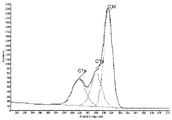
- Example 1 The surfaces of the coating films prepared according to Example 1 and Comparative Example 1 were analyzed by X-ray photoelectron spectroscopy, and the results are shown in FIG. 1.
- the conventional graphene oxide has a wide peak from 285.0 eV to 289.0 eV, whereas the coating film prepared according to the present invention shows a strong CC binding peak at 284.5 eV, and at 285.7 eV and 288.2 eV, respectively.
- Weak hydroxyl group peaks and weak carboxyl group peaks were observed, whereas no peak near 289.1 eV, representing an epoxide group, was found, indicating that most of the epoxide groups were removed.
- the graphene oxide surface treatment agent according to the present invention plays a decisive role in forming the conductive film by effectively removing only the epoxide group.
- the present invention has excellent dispersibility and is not toxic.
- a surface treatment agent that treats only epoxide groups, and optionally using amine additives
- the graphene oxide composition is coated on a desired substrate and then lower in temperature than conventional methods. It can be reduced by applying various firing methods in.
- a transparent conductive film having high permeability and low resistance can be obtained by reducing the surface damage of graphene itself, which is safer than the conventional method using hydrazine vapor, and thus can be widely used for electromagnetic shielding or antistatic. have.
- the conductive film can be easily obtained in one step by selectively removing the epoxide group from the graphene surface.
Landscapes
- Chemical & Material Sciences (AREA)
- Life Sciences & Earth Sciences (AREA)
- Engineering & Computer Science (AREA)
- Materials Engineering (AREA)
- Wood Science & Technology (AREA)
- Organic Chemistry (AREA)
- Physics & Mathematics (AREA)
- Dispersion Chemistry (AREA)
- Spectroscopy & Molecular Physics (AREA)
- Inorganic Chemistry (AREA)
- Paints Or Removers (AREA)
- Manufacturing Of Electric Cables (AREA)
Abstract
본 발명은 투명 전도성 막 코팅 조성물, 투명 전도성 막 및 이의 제조방법에 관한 것으로, 더욱 상세하게는 그래핀 옥사이드, 그래핀 표면의 에폭사이드기 만을 선택적으로 제거하는 표면처리제로, 및 극성용매를 포함하는 투명 전도성 막 코팅 조성물, 이를 이용하여 투명 전도성 막을 제조하는 방법 및 이로부터 제조된 투명 전도성 막에 관한 것이다. 본 발명의 코팅 조성물을 사용하면 전도성이 우수한 막을 얻을 수 있으므로, 상기 조성물 및 이를 이용하여 제조된 투명 전도성 막은 전자파 차폐 및 정전기 방지 등의 용도로 사용될 수 있다.
Description
본 발명은 투명 전도성 막 코팅 조성물, 투명 전도성 막 및 이의 제조방법에 관한 것으로, 더욱 상세하게는 그래핀 옥사이드, 그래핀 표면의 에폭사이드기 만을 선택적으로 제거하는 표면처리제 및 극성 용매를 포함하는 투명 전도성 막 코팅 조성물, 이를 이용하여 투명 전도성 막을 제조하는 방법 및 이로부터 제조된 투명 전도성 막에 관한 것이다.
투명 전도성 막 제조를 위해서는 산화인듐주석(ITO) 및 아연산화물(ZnO), 안티몬 주석 산화물(ATO) 등의 금속 산화물이 많이 이용되어 왔다. 금속 산화물을 이용한 투명 전도성 막은 고압에서 물리적 증착을 통해서 제조되어 왔지만, 이렇게 제조된 투명 전도성 막은 제조비용이 비싸고, 대전방지 및 전자파 차폐제로써 유연기판에 제조될 경우 용액 공정을 통해 코팅을 하는 공정에 비해 활용도가 떨어지는 단점이 있다. 또한 구부릴 수 있는 유연기판에서는 금속 산화물이 깨지면서 전도도가 변하여 활용이 제한적이다.
최근에는 이러한 투명 전도성 막의 대체제로써 탄소나노튜브, 그래핀 및 전도성 고분자 등을 이용한 습식 또는 건식방법을 통해 투명 전도성 막을 제조하는 방법이 개발되고 있다.
투명 전도성 막은 건식방법 또는 습식방법으로 제조되기도 하지만, 습식방법으로 제조된 투명 전도성 막은 건식방법에 비해 전기전도도 및 투과도는 떨어지지만 전자파 차폐 및 정전기방지 등의 효과가 우수하다.
상기 습식방법을 통한 그래핀 기반 투명 전도성막의 제조법으로는 주로 그래핀 옥사이드 잉크를 기판에 코팅한 후 하이드라진(Hydrazine) 증기 또는 고온에서 침지시켜 그래핀 옥사이드를 그래핀으로 환원하여 투명 전도성 막을 얻는 방법이 많이 사용되어 왔다. 하지만, 하이드라진 증기는 인체에 유해하고, 추후에 400℃ 이상의 온도에서 후처리를 진행하여야 정전기 방지 수준이 가능한 108 Ω/□ 이하의 전도도를 나타낼 수 있으며, 이러한 기존의 환원제를 사용하는 방법은 그래핀 표면의 에폭사이드(Epoxide) 그룹, 하이드록실(Hydroxyl) 그룹, 카르복실(Carboxyl) 그룹 등을 모두 제거하여 순수한 그래핀만을 남게 하지만 환원과정에서 과도하게 그래핀 표면을 손상시켜 오히려 전도도를 낮추는 문제점이 있다.
이러한 습식방법의 환원을 이용해 보다 효율적인 그래핀 기반 투명 전도성 막의 제조를 위해 대한민국 특허공개 제 2011-0110067호에서는 할로겐 원소가 포함된 환원제인 HI 또는 HCl 증기를 사용하는 방법으로 높은 효율의 환원 반응 및 전기전도도를 나타낼 수 있는 방법을 개시하고 있으나, 인체에 유해한 강산의 증기로 환원을 진행해야 하는 어려움이 있다.
상기와 같은 문제점을 해결하기 위해, 본 발명은 기존의 습식방법에 비해 친환경적이고, 반응시간이 짧고, 비교적 낮은 온도에서 소성이 가능하면서도 높은 투과도 및 우수한 전도도를 나타낼 수 있는 투명 전도성 막 코팅 조성물을 제공하는 것을 목적으로 한다.
본 발명은 또한 상기 코팅 조성물을 이용하여 투명 전도성 막을 제조하는 방법 및 이로부터 제조된 투명 전도성 막을 제공하는 것을 목적으로 한다.
상기 목적을 달성하기 위해 본 발명은
1) 그래핀 옥사이드;
2) 그래핀 표면의 에폭사이드기 만을 선택적으로 제거하는 표면처리제; 및
3) 극성 용매
를 포함하는 것을 특징으로 하는 투명 전도성 막 코팅 조성물을 제공한다.
상기 투명 전도성 막 코팅 조성물은 아민계 화합물을 더욱 포함할 수 있다.
본 발명은 또한 상기 투명 전도성 막 코팅 조성물을 기판에 코팅하고 소성하는 것을 특징으로 하는 투명 전도성 막의 제조방법을 제공한다.
본 발명은 또한 상기 코팅 조성물을 상기 방법에 따라 코팅 및 소성하여 제조되는 투명 전도성 막을 제공한다.
기존의 그래핀 옥사이드 코팅 조성물의 환원을 위해 하이드라진 등의 유독한 물질을 사용하거나 400℃ 이상의 높은 온도에서의 후처리가 필요하였던 것과 달리, 본 발명은 분산성이 우수하면서도 유독하지 않은 그래핀 표면의 에폭사이드기 만을 처리하는 표면처리제를 사용하여 그래핀 옥사이드 표면의 에폭사이드 그룹을 그래핀 표면에서 제거하고, 선택적으로 아민류 첨가제를 사용함으로써, 그래핀 옥사이드 조성물을 원하는 기판에 코팅 후 기존 방법보다 낮은 온도에서 다양한 소성방법을 적용하여 환원시킬 수 있다.
따라서, 본 발명에 따르면, 기존의 하이드라진 증기를 이용한 방법보다 안전하고 그래핀 자체의 표면 손상을 줄임으로써, 투과도가 높고 저항이 낮은 투명 전도성 막을 얻을 수 있으므로, 전자파 차폐 또는 정전기 방지 등에 광범위하게 사용될 수 있다.
또한, 그래핀 옥사이드 잉크를 먼저 코팅한 뒤에 하이드라진 또는 강산의 증기를 가하는 복잡한 공정 대신 그래핀 표면에서 에폭사이드기를 선택적으로 제거하여 한번의 공정으로 쉽게 전도성막을 얻을 수 있는 장점이 있다.
도 1은 본 발명에 따라 형성된 그래핀 코팅막의 표면을 X선 광전자 분광법(XPS)을 이용하여 분석한 결과이다.
본 발명의 투명 전도성 막 코팅 조성물은 1) 그래핀 옥사이드; 2) 그래핀 표면의 에폭사이기 만을 선택적으로 제거하는 표면처리제; 및 3) 극성 용매를 포함하는 것을 특징으로 한다. 본 발명의 투명 전도성 막 코팅 조성물은 아민계 화합물을 더우 포함할 수 있다.
이하 각 성분들에 대하여 설명한다.
1) 그래핀 옥사이드
본 발명은 도전성 물질로서 그래핀 옥사이드를 사용한다.
본 발명의 투명 전도성 막 코팅 조성물에 있어서, 상기 그래핀 옥사이드는 시판되는 그래핀 옥사이드를 포함하여 공지의 그래핀 옥사이드가 사용될 수 있으며, 전체 조성물 중량에 대하여 0.01 내지 0.5 중량%로 첨가되는 것이 바람직하다.
상기 그래핀 옥사이드가 0.01 중량% 미만으로 첨가될 경우, 표면에 환원된 그래핀 옥사이드 막을 고르게 형성 할 수 없어 원하는 전도도를 얻을 수 없으며, 상기 함량이 0.5 중량%를 초과할 경우, 코팅성 및 투명도가 급격히 저하되어 투명 전도성 막으로서의 기능을 상실하게 된다. 상기 그래핀 옥사이드는 분말의 형태 또는 분산액의 형태로 본 발명의 조성물에 첨가 가능하며, 상기 분산액에 사용되는 용매는 물 또는 유기극성용매와 같은 극성 용매가 사용될 수 있다. 바람직하기로는 알콜류의 용매 또는 아마이드류 용매가 좋으며, 특히 표면처리제와 함께 쓰일 경우 높은 전도도를 나타낸다. 이것은 상기 용매류들로 인하여 에폭사이드 그룹의 열분해 거동이 가속화되는 것으로 추정된다.
2) 표면처리제
본 발명은 표면처리제는 그라핀 표면의 에폭사이드기 만을 선택적으로 제거하는 작용을 한다. 일예로 상기 표면처리제는 아미노산, 단당류 및 항산화제로 이루어진 군에서 선택된 1종 이상의 화합물을 사용한다.
구체적으로, 본 발명에서 사용가능한 아미노산 표면처리제로는 글리신(glycine), 글루타민(Glutamine), 글루타민산(Glutamic acid), 아스파르트산(Aspartic acid), 리신(Lysine), 히스티딘(Histidine), 아르기닌(Arginine), 세린(Serine), 트레오닌(Threonine), 아스파라긴(Asparagine), 시스테인(Cysteine), 프롤린(Proline), 알라닌(Alanine), 발린(Valine), 이소류신(Isoleucine), 류신(Leucine), 메티오닌(Methionine), 티로신(Throsine) 등으로 이루어진 군에서 선택되는 1종 이상인 것이 바람직하다.
또한 본 발명에서 사용가능한 상기 단당류 표면처리제로는 글리코알데히드(Glycoaldehyde), 글리세르알데히드(Glyeraldehye), 디하이드록시아세톤(Dihydroxyacetone), 트레오스(therose), 에리트로스(erythrose), 에리트루로스(erythrulose), 리보스(ribose), 아라비노스(arabinose), 자일로스(xylose), 프럭토스(fructose), 글루코스(glucose), 갈락토스(galactose) 및 만노스(mannose) 등으로 이루어진 군에서 선택되는 1종 이상인 것이 바람직하다.
또한 본 발명에서 사용가능한 항산화 표면처리제로는 하이드록시 퀴논(Hydroxyquinone), 카테콜(Catechol), 아스코르빈산(ascorbic acid), 자일리톨(xylitol), 소비톨(Sorbitol), 아르비톨 (Arbitol) 등으로 이루어진 군에서 선택되는 1종 이상인 것이 바람직하다.
본 발명의 투명 전도성 막 코팅 조성물에 있어서, 상기 그래핀 표면처리제는 중량기준으로 그래핀 옥사이드 첨가량의 0.5 내지 20배인 것이 바람직하고, 1 내지 10배인 것이 더욱 바람직하다.
상기 그래핀 표면처리제가 그래핀 옥사이드 첨가량의 0.5배 미만으로 첨가될 경우, 그라핀 표면의 에폭사이드의 제거가 너무 적어 환원력을 기대할 수 없으며, 상기 그래핀 표면처리제의 첨가량이 그래핀 옥사이드 첨가량의 20배를 초과할 경우, 오히려 첨가된 열처리시 표면처리제가 석출되면서 기판에 오염물을 남길 수 있다.
3) 극성 용매
본 발명의 투명 전도성 막 코팅 조성물은 극성 용매를 포함한다.
본 발명에서 사용가능한 극성 용매로는 물 또는 극성유기용매를 들 수 있으며, 물과 극성유기용매의 혼합용매가 바람직하다. 더욱 바람직하게는 상기 극성유기용매로서 알코올류, 글리콜류 및 아미드류의 극성용매가 사용될 수 있다.
보다 구체적으로, 본 발명의 극성유기용매로는 알콜류로써 메탄올, 에탄올, 이소프로판올, 부탄올, 이소부탄올, 헥산올 등; 글리콜류로써 에틸렌글리콜, 디에틸렌글리콜, 트리에틸렌글리콜, 테트라에틸렌 글리콜, 에틸렌글리콜 모노 메틸에테르, 에틸렌글리콜 모노에틸에테르, 에틸렌글리콜 모노부틸에테르, 프로필렌글리콜 모노메틸에테르, 디에틸렌글리콜 메틸에테르, 디에틸렌글리콜 에틸에테르, 디에틸렌글리콜 부틸에테르, 디프로필렌글리콜 메틸에테르, 글리세롤 등; 또는 극성용매로써 테르핀올, n-메틸피롤리돈, 감마부티로락톤, 디메틸설폭사이드, 프로필렌카보네이트, 에틸렌카보네이트, 디메틸포름아미드, 모노메틸포름아마이드, 포름아마이드 등의 1종 이상의 조합을 사용할 수 있다.
본 발명의 투명 전도성 막 코팅 조성물에 있어서, 상기 극성 용매는 전체 조성물에 대하여 상기 기재한 1), 및 2) 성분을 제외한 잔량으로 포함되며, 더욱 바람직하게는 극성유기용매의 함량이 5 내지 50 중량%가 좋다. 상기 극성유기용매가 5 중량% 미만으로 첨가될 경우 코팅이 되지 않고 기판에 열을 가할 경우 응집되는 현상이 있으며, 상기 첨가량이 50 중량%를 초과할 경우 물에 녹아져 있는 표면처리제의 용해도에 영향을 미쳐 재석출시키는 문제가 있을 수 있다.
4) 아민계 화합물
본 발명의 조성물은 코팅성 확보, 및 에폭사이드 그룹의 효과적인 제거를 도와 전도도를 개선시킬 수 있는 아민계 화합물을 더욱 포함할 수 있다.
본 발명에서 사용가능한 아민류 첨가제로는 에틸렌디아민, DCC(N,N'-Dicyclohexylcarbodiimide) 등의 디아민류 또는 디에틸아미노프로필아민, 디에틸렌 트리아민 등의 트리아민류를 사용할 수 있다.
본 발명의 투명 전도성 막 코팅 조성물에 있어서, 상기 첨가제는 중량기준으로 그래핀 옥사이드 첨가량의 0.1 내지 10배인 것이 바람직하고, 0.5 내지 5배인 것이 더욱 바람직하다.
상기 첨가제의 첨가량이 10배를 초과할 경우 코팅 조성물의 pH가 급격히 상승하면서 첨가된 아미노산 또는 단당류를 재석출시켜 우수한 전도도를 얻을 수 없다.
본 발명의 투명 전도성 막 코팅 조성물을 제조하는 방법은 상기 1) 내지 3)의 성분, 선택적으로 4의 성분을 같이 혼합하고 5 내지 60분간 교반하여 제조될 수 있다. 교반시 온도는 상온 내지 60℃로 유지시키는 것이 좋으며, 60℃를 초과할 경우 그라핀 표면의 하이드록실 그룹, 또는 카르복실 그룹까지 모두 제거되어 그라핀 표면이 손상될 우려가 있다.
본 발명은 또한 상기 코팅 조성물을 이용하여 투명 전도성 막을 제조하는 방법을 제공한다.
본 발명에서는 상기 투명 전도성 막 코팅 조성물을 당분야의 통상의 방법에 따라 기판에 코팅하고 소성하여 투명 전도성 막을 제조할 수 있다.
본 발명에서 사용가능한 코팅방법으로는 당분야에서 통상적으로 사용하는 코팅방법이라면 제한 없이 사용될 수 있지만, 바람직하게는 스핀 코팅 또는 슬릿 코팅방법을 사용할 수 있다.
본 발명에서 소성방법으로는 공지의 방법이 적용될 수 있음은 물론이며, 바람직하기로는 1) 120 내지 350℃에서 1 내지 120분 동안 핫플레이트(hot plate) 또는 뜨거운 공기, 바람직하게는 질소가 순환하는 건조로에서 소성하는 방법; 또는 2) 120 내지 500℃에서 1 내지 120분 동안 코팅된 기판 표면에 에너지를 조사하는 방법을 사용할 수 있다.
표면에 에너지를 높게 조사할 수 있는 방법으로는 파장대가 2 내지 6 ㎛인 중적외선(MIR) 램프 소성, 적외선 전파장대인 IR 램프 소성, 높은 에너지 빛을 0.0001 내지 0.01초 동안 순간적으로 가하는 동작을 여러 번 실행하는 펄스드 라이트(Pulsed light)에 의한 소성을 들 수 있다.
본 발명에 따른 투명 전도성 막 제조방법에 따르면, 용액 상태의 조성물이 원하는 기판에 코팅된 상태에서 그래핀 옥사이드가 아미노산 그래핀 표면처리제와 고온에서 반응하여 표면의 에폭사이드 그룹만이 선택적으로 제거되면서 환원된 그래핀 옥사이드가 기판의 표면에 균일하게 1 내지 10 층 정도로 쌓이면서 전도도를 나타내게 된다. 즉, 아미노산, 단당류 및 항산화제의 아민기 및 하이드록실기는 그라핀 표면의 에폭사이드 그룹의 개환반응을 유도하며, 극성이 우수한 카르복실기에 의해서 그래핀과의 결합력이 약해진 에폭사이드가 표면에서 떨어지는 과정을 거치게 된다.
이러한 결과로, 그래핀과 그래핀 사이의 접촉 저항이 감소되어 전체적인 저항치가 감소되는 효과를 얻을 수 있다.
본 발명은 또한 상기 방법에 따라 제조된 투명 전도성 막을 제공한다.
본 발명의 조성물 및 방법을 이용하여 제조된 투명 전도성 막은 우수한 투과율 및 103 내지 108 Ω/□의 우수한 전도도를 나타내므로, 각종 기판에 도포되어 전자파차폐 (EMI), 정전기방지 (ESD) 등의 용도로 응용될 수 있다.
본 발명에 따르면, 기존의 그래핀 옥사이드 잉크의 환원을 위해 하이드라진 등의 유독한 물질을 사용하거나 400℃ 이상의 높은 온도에서의 후처리가 필요하였던 것과 달리, 본 발명은 분산성이 우수하면서도 유독하지 않은 그래핀 표면처리제가 포함된 그래핀 옥사이드 조성물을 원하는 기판에 코팅 후 기존 방법보다 낮은 온도에서 다양한 소성방법을 적용하여 기존의 하이드라진 환원보다 환원효율 및 투과도가 높고 저항이 낮은 투명 전도성 막을 얻을 수 있다.
이하, 본 발명의 이해를 돕기 위하여 바람직한 실시예를 제시하나, 하기 실시예는 본 발명을 예시하는 것일 뿐 본 발명의 범위가 하기 실시예에 한정되는 것은 아니다.
실시예 1
시판되고 있는 2차원 판상의 그래핀 옥사이드(미국 옹스트론(Angstron) 사, N002-PS(0.5 중량% 수화물) 5.0g 을 초순수 20g 및 그래핀 표면처리제로서 글리신(5.0중량% 수화물) 3g을 첨가하여 1,000 rpm에서 30분간 교반하였다. 여기에 에탄올 16g 을 첨가하여 추가로 교반 후 코팅 조성물을 제조하였다.
제조된 코팅 조성물에 대하여 총 100 g이 되도록 초순수로 분산성 조절 후, 유리기판 또는 플라스틱 기판에 코팅하고, 코팅된 시편을 200℃ 핫플레이트에서 10분간 건조하여 코팅막을 제조하였다.
실시예 2
시판되고 있는 2차원 판상의 그래핀 옥사이드(미국 옹스트론(Angstron) 사, N002-PS(0.5 중량% 수화물)을 증발기(Evaporator)를 이용하여 DMF(디메틸 포름아마이드)로 치환하여 물을 완전히 제거하여 0.5 중량% 용매 분산물로 제조하였다.
이러한 용매 분산된 그래핀 옥사이드 5.0g 을 DMF(디메틸 포름아마이드) 20g 및 그래핀 표면처리제로서 아스코르빈산 0.13g을 첨가하여 1,000 rpm에서 30분간 교반하였다. 여기에 에탄올 16g 을 첨가하여 추가로 교반 후 코팅 조성물을 제조하였다.
제조된 코팅 조성물에 대하여 총 100 g이 되도록 초순수로 분산성 조절 후, 유리기판 또는 플라스틱 기판에 코팅하고, 코팅된 시편을 200℃ 핫플레이트에서 10분간 건조하여 코팅막을 제조하였다.
실시예 3
조성물 중 초순수 16g 에탄올 20g으로 에탄올 함량을 변경한 것을 제외하고 상기 실시예1과 동일한 방법으로 코팅 조성물 및 코팅막을 제조하였다.
실시예 4
그래핀 표면처리제로서 글루타민을 사용하는 것을 제외하고는 상기 실시예 1과 동일한 방법으로 코팅 조성물 및 코팅막을 제조하였다.
실시예 5
그래핀 표면처리제로서 L-리신을 사용하는 것을 제외하고는 상기 실시예 1과 동일한 방법으로 코팅 조성물 및 코팅막을 제조하였다.
실시예 6
그래핀 표면처리제로서 L-아르기닌을 사용하는 것을 제외하고는 상기 실시예 1과 동일한 방법으로 코팅 조성물 및 코팅막을 제조하였다.
실시예 7
그래핀 표면처리제로서 L-세린을 사용하는 것을 제외하고는 상기 실시예 1과 동일한 방법으로 코팅 조성물 및 코팅막을 제조하였다.
실시예 8
그래핀 표면처리제로서 L-알라닌을 사용하는 것을 제외하고는 상기 실시예 1과 동일한 방법으로 코팅 조성물 및 코팅막을 제조하였다.
실시예 9
그래핀 표면처리제로서 L-발린을 사용하는 것을 제외하고는 상기 실시예 1과 동일한 방법으로 코팅 조성물 및 코팅막을 제조하였다.
실시예 10
그래핀 표면처리제로서 L-메티오닌을 사용하는 것을 제외하고는 상기 실시예 1과 동일한 방법으로 코팅 조성물 및 코팅막을 제조하였다.
실시예 11
그래핀 표면처리제로서 L-시스테인을 사용하는 것을 제외하고는 상기 실시예 1과 동일한 방법으로 코팅 조성물 및 코팅막을 제조하였다.
실시예 12
그래핀 표면처리제로서 글루코스를 사용하는 것을 제외하고는 상기 실시예 1과 동일한 방법으로 코팅 조성물 및 코팅막을 제조하였다.
실시예 13
그래핀 표면처리제로서 아스코르빈산을 사용하는 것을 제외하고는 상기 실시예 1과 동일한 방법으로 코팅 조성물 및 코팅막을 제조하였다.
실시예 14
시판되고 있는 2차원 판상의 그래핀 옥사이드(미국 옹스트론사, N002-PS(0.5 중량% 수화물) 5.0 g을 초순수 19 g에 넣고, 초음파 분사기를 이용하여 10분간 분산시켰다. 이러한 그래핀 옥사이드 분산용매에 그래핀 표면처리제로서 글리신 0.125 g 및 첨가제로서 DCC(N,N'-Dicyclohexylcarbodiimide) 0.025 g을 첨가하여 60℃, 1000 rpm에서 30분 동안 교반하였다. 여기에 에탄올 15 g을 첨가하여 1000 rpm에서 10분간 혼합하여 코팅 조성물을 제조하였다.
제조된 코팅 조성물에 대하여 총 100 g이 되도록 초순수로 분산성 조절 후, 유리기판 또는 플라스틱 기판에 일정한 두께가 되도록 코팅하고, 코팅된 시편을 200℃ 건조로에서 10분간 건조하여 코팅막을 제조하였다.
실시예 15
실시예 1에서 제조된 투명 전도성 막 코팅 조성물을 유리기판 또는 플라스틱에 코팅 후 중적외선(MIR, 리트젠 사, MS 3054 H) 램프로 수분간 건조하여 코팅막을 제조하였다.
실시예 16
실시예 1에서 제조된 투명 전도성 막 코팅 조성물을 유리기판 또는 플라스틱에 코팅 후 펄스드 라이트(Pulsed light, 노바 센트릭스 사)로 수분간 건조하여 코팅막을 제조하였다.
비교예 1
시판되고 있는 2차원 판상의 그래핀 옥사이드(미국 옹스트론사, N002-PS(0.5 중량% 수화물) 5.0 g을 초순수 20 g에 넣고, 초음파 분사기를 이용하여 10분간 분산시켰다. 이러한 그래핀 옥사이드 분산용매에 에탄올 17.5 g을 첨가하여 1,000 rpm에서 10분간 혼합하여 코팅 조성물을 제조하였다.
제조된 코팅 조성물은 코팅성이 매우 좋지 않으므로 유리기판을 황산/과수 10 대 1의 용액에 침지시켜 표면 개질을 진행 한 후 그 위에 코팅을 진행하였다.
코팅된 시편을 200℃ 건조로에서 10분간 건조하여 물과 용매를 충분히 제거 한 뒤에 약 80℃의 하이드라진 증기를 그래핀 옥사이드가 코팅된 시편 위에 10분간 충분히 닿게 하여 그래핀을 환원시키는 공정을 거쳐 코팅막을 제조하였다.
비교예 2
시판되고 있는 2차원 판상의 그래핀 옥사이드(미국 옹스트론사, N002-PS(0.5 중량% 수화물) 5.0 g을 초순수 1,000 g에 넣고, 초음파 분사기를 이용하여 10분간 분산시켰다. 이러한 그래핀 옥사이드 분산용매에 L-시스테인 0.125 g을 첨가하여 80℃, 1,000 rpm에서 120분간 균일하게 온도를 가하면서 교반하였다. 시간이 지나면서 L-시스테인에 의해 환원된 그래핀 입자가 형성되기 시작하고 원심분리 및 물로 세정공정을 거친 뒤 0.02 g의 그래핀 분말를 얻었다.
이러한 그래핀 분말를 디메틸 포름아마이드 및 에탄올 혼합용매에 1 중량% 첨가하고 초음파 분산을 실시하여 최종적으로 그래핀 잉크를 얻었다.
이러한 그래핀 잉크를 유리기판 또는 플라스틱 기판에 일정한 두께가 되도록 코팅 후, 코팅된 시편을 200℃ 핫플레이트에서 10분간 건조하여 코팅막을 제조하였다.
시험예 1
상기 실시예 1 내지 14 및 비교예 1 및 2에 따른 코팅 조성물이 코팅된 시편의 물성 및 성능 평가를 하기와 같이 수행하였으며, 그 결과를 하기 표 1에 기재하였다.
1) 면저항: 면저항 측정기를 통해 단위면적당 표면적항을 측정하였다.
2) 투과도: 400 nm 내지 800 nm 파장 영역에서 분광광도계를 이용하여 가시광 투과도를 측정하였다.
3) 접착력: ASTM D3359에 따라 테이프 접착력 평가를 실시하였다.
4) 코팅 균일성: 육안으로 관찰하여 평가하였다.
5) 보관안정성: 제조된 코팅 조성물을 상온(25℃)에서 24시간 동안 보관하면서 입자의 침강을 육안 관찰하였다.
표 1
| 내산화성 | 접착력(%) | 코팅균일성 | 분산안정성 | ||
| 면저항(Ω/□) | 투과도(%) | ||||
| 실시예 1 | 10E5.3 | 92 | 100% | 양호 | 양호 |
| 실시예 2 | 10E4.5 | 91 | 100% | 양호 | 양호 |
| 실시예 3 | 10E5.1 | 90 | 100% | 양호 | 양호 |
| 실시예 4 | 10E5.2 | 91 | 100% | 양호 | 양호 |
| 실시예 5 | 10E5.3 | 91 | 100% | 양호 | 양호 |
| 실시예 6 | 10E5.4 | 92 | 100% | 양호 | 양호 |
| 실시예 7 | 10E5.5 | 90 | 100% | 양호 | 양호 |
| 실시예 8 | 10E5.2 | 91 | 100% | 양호 | 양호 |
| 실시예 9 | 10E5.3 | 92 | 100% | 양호 | 양호 |
| 실시예 10 | 10E5.5 | 92 | 100% | 양호 | 양호 |
| 실시예 11 | 10E5.4 | 91 | 100% | 양호 | 양호 |
| 실시예 12 | 10E6.2 | 92 | 100% | 양호 | 양호 |
| 실시예 13 | 10E4.8 | 88 | 100% | 양호 | 양호 |
| 실시예 14 | 10E5.3 | 92 | 100% | 양호 | 양호 |
| 실시예 15 | 10E5.2 | 91 | 100% | 양호 | 양호 |
| 실시예 16 | 10E4.5 | 90 | 100% | 양호 | 양호 |
| 비교예 1 | 10E8.5 | 98 | 90% | 불균일 | 양호 |
| 비교예 2 | 10E11.2 | 90 | 100% | 불균일 | 침전 |
상기 표 1에 나타난 바와 같이, 본 발명에 따른 조성물을 이용하여 제조된 막은 면저항, 투과도, 접착력, 코팅균일성 및 분산 안정성 등 모든 면에서 비교예 1 및 2에 비하여 우수함을 확인할 수 있었다.
또한, 초순수 대신 용매를 이용한 코팅액의 경우도 마찬가지로 전도도 및 코팅성에서 양호한 결과를 보이고 있어, 용매의 활용이 가능함을 확인하였다. 또한 실시예 3에서는 알콜의 함량을 높인 경우 실시예 1과 비교하여 좀 더 양호한 전도도를 얻을 수 있음을 확인하였다.
그러나, 동일한 농도의 그래핀 옥사이드를 하이드라진 증기로 환원하는 비교예 1의 경우에는 전도도가 10E8.5로 전자파 차폐 및 정전기방지용 투명 전도성 막으로 적용하기에는 무리가 있었으며, 아미노산으로 미리 표면처리를 실시한 그래핀 입자를 재분산하여 잉크를 재조하는 복잡한 공정을 거친 비교예 2의 조성물의 경우 분산안정성 및 코팅성 및 면저항 등이 좋지 않음을 확인하였다.
시험예 2
상기 실시예 1 및 비교예 1에 따라 제조된 코팅막의 표면을 X선 광전자 분광법으로 분석하였으며, 그 결과를 도 1에 나타내었다.
도 1에 나타난 바와 같이, 통상의 그래핀 옥사이드는 285.0 eV에서 289.0 eV 까지 피크가 넓게 나타나는 반면, 본 발명에 따라 제조된 코팅막에서는 284.5 eV에서 강한 C-C 결합 피크가 나타나고, 285.7 eV 및 288.2 eV에서 각각 약한 하이드록실 그룹 피크 및 약한 카르복실 그룹 피크가 나타난 반면, 엑폭사이드 그룹을 나타내는 289.1 eV 부근의 피크는 전혀 나타나지 않아 대부분의 에폭사이드 그룹이 제거된 것을 확인하였다.
이러한 결과로 볼 때, 본 발명에 따른 그래핀 옥사이드 표면처리제는 에폭사이드 그룹만을 효과적으로 제거함으로써 전도성막 형성에 결정적인 역할을 함을 알 수 있다.
기존의 그래핀 옥사이드 코팅 조성물의 환원을 위해 하이드라진 등의 유독한 물질을 사용하거나 400℃ 이상의 높은 온도에서의 후처리가 필요하였던 것과 달리, 본 발명은 분산성이 우수하면서도 유독하지 않은 그래핀 표면의 에폭사이드기 만을 처리하는 표면처리제를 사용하여 그래핀 옥사이드 표면의 에폭사이드 그룹을 그래핀 표면에서 제거하고, 선택적으로 아민류 첨가제를 사용함으로써, 그래핀 옥사이드 조성물을 원하는 기판에 코팅 후 기존 방법보다 낮은 온도에서 다양한 소성방법을 적용하여 환원시킬 수 있다.
따라서, 본 발명에 따르면, 기존의 하이드라진 증기를 이용한 방법보다 안전하고 그래핀 자체의 표면 손상을 줄임으로써, 투과도가 높고 저항이 낮은 투명 전도성 막을 얻을 수 있으므로, 전자파 차폐 또는 정전기 방지 등에 광범위하게 사용될 수 있다.
또한, 그래핀 옥사이드 잉크를 먼저 코팅한 뒤에 하이드라진 또는 강산의 증기를 가하는 복잡한 공정 대신 그래핀 표면에서 에폭사이드기를 선택적으로 제거하여 한번의 공정으로 쉽게 전도성막을 얻을 수 있는 장점이 있다.
Claims (15)
1) 그래핀 옥사이드;
2) 그래핀 표면의 에폭사이드기 만을 선택적으로 제거하는 표면처리제; 및
3) 극성 용매
를 포함하는 것을 특징으로 하는 투명 전도성 막 코팅 조성물.
제1항에 있어서,
1) 그래핀 옥사이드 0.01 내지 0.5 중량%;
2) 중량기준으로 상기 그래핀 옥사이드 첨가량의 0.5 내지 20배의 그래핀 표면처리제; 및
3) 잔량의 용매
를 포함하는 것을 특징으로 하는 투명 전도성 막 코팅 조성물.
제1항에 있어서,
상기 2)의 표면처리제는 아미노산, 단당류 및 항산화제로 이루어진 군에서 선택된 1종 이상의 화합물인 것을 특징으로 하는 투명 전도성 막 코팅 조성물.
제3항에 있어서,
상기 그래핀 표면처리제로서의 아미노산이 글리신(glycine), 글루타민(Glutamine), 글루타민산(Glutamic acid), 아스파르트산(Aspartic acid), 리신(Lysine), 히스티딘(Histidine), 아르기닌(Arginine), 세린(Serine), 트레오닌(Threonine), 아스파라긴(Asparagine), 시스테인(Cysteine), 프롤린(Proline), 알라닌(Alanine), 발린(Valine), 이소류신(Isoleucine), 류신(Leucine), 메티오닌(Methionine) 및 티로신(Throsine)으로 이루어진 군에서 선택되는 1종 이상의 것임을 특징으로 하는 투명 전도성 막 코팅 조성물.
제3항에 있어서,
상기 그래핀 표면처리제로서의 단당류가 글리코알데히드(Glycoaldehyde), 글리세르알데히드(Glyeraldehye), 디하이드록시아세톤(Dihydroxyacetone), 트레오스(therose), 에리트로스(erythrose), 에리트루로스(erythrulose), 리보스(ribose), 아라비노스(arabinose), 자일로스(xylose), 프럭토스(fructose), 글루코스(glucose), 갈락토스(galactose), 만노스(mannose) 및 하이드록시 퀴논(Hydroxyquinone)으로 이루어진 군에서 선택되는 1종 이상의 것임을 특징으로 하는 투명 전도성 막 코팅 조성물.
제3항에 있어서,
상기 그래핀 표면처리제로서의 항산화제가 하이드록시 퀴논(Hydroxyquinone), 카테콜(Catechol), 아스코르빈산(ascorbic acid), 자일리톨(xylitol), 소비톨(Sorbitol) 및 아르비톨 (Arbitol)로 이루어진 군에서 선택되는 1종 이상의 것임을 특징으로 하는 투명 전도성 막 코팅 조성물.
제1항에 있어서,
아민류 화합물을 더욱 포함하는 특징으로 하는 투명 전도성 막 코팅 조성물.
제1항에 있어서,
상기 아민류 첨가제가 디아민류 또는 트리아민류인 것을 특징으로 하는 투명 전도성 막 코팅 조성물.
제1항에 있어서,
상기 극성 용매가 물 및 극성유기용매의 혼합물로 이루어진 것을 특징으로 하는 투명 전도성 막 코팅 조성물.
제9항에 있어서,
상기 극성유기용매가 전체 조성물의 5 내지 50 중량%인 것을 특징으로 하는 투명 전도성 막 코팅 조성물.
제1항의 투명 전도성 막 코팅 조성물을 기판에 코팅하고 소성하는 것을 특징으로 하는 투명 전도성 막의 제조방법.
제10항에 있어서,
상기 소성이 하기 방법에 따라 수행되는 것을 특징으로 하는 투명 전도성 막의 제조방법:
1) 120 내지 350℃에서 1 내지 120분 동안 핫플레이트(hot plate) 또는 건조로에서 소성하는 방법; 또는
2) 120 내지 500℃에서 1 내지 120분 동안 코팅된 기판 표면에 에너지를 전달하는 방법.
제11항에 있어서,
상기 표면에 에너지를 전달하는 방법이 중적외선(MIR) 램프 소성, 적외선(IR) 램프 소성 또는 펄스드 라이트(Pulsed light) 소성인 것을 특징으로 하는 투명 전도성 막의 제조방법.
제1항의 조성물을 제11항의 방법에 따라 코팅 및 소성하여 제조되는 것을 특징으로 하는 투명 전도성 막.
제12항에 있어서,
103 내지 108 Ω/□의 전도도를 갖는 것을 특징으로 하는 투명 전도성 막.
Applications Claiming Priority (2)
| Application Number | Priority Date | Filing Date | Title |
|---|---|---|---|
| KR1020120090082A KR20140023730A (ko) | 2012-08-17 | 2012-08-17 | 투명 전도성 막 코팅 조성물, 투명 전도성 막 및 투명 전도성 막의 제조 방법 |
| KR10-2012-0090082 | 2012-08-17 |
Publications (1)
| Publication Number | Publication Date |
|---|---|
| WO2014027833A1 true WO2014027833A1 (ko) | 2014-02-20 |
Family
ID=50101323
Family Applications (1)
| Application Number | Title | Priority Date | Filing Date |
|---|---|---|---|
| PCT/KR2013/007312 Ceased WO2014027833A1 (ko) | 2012-08-17 | 2013-08-14 | 투명 전도성 막 코팅 조성물, 투명 전도성 막 및 투명 전도성 막의 제조 방법 |
Country Status (2)
| Country | Link |
|---|---|
| KR (1) | KR20140023730A (ko) |
| WO (1) | WO2014027833A1 (ko) |
Cited By (6)
| Publication number | Priority date | Publication date | Assignee | Title |
|---|---|---|---|---|
| CN105062473A (zh) * | 2015-07-17 | 2015-11-18 | 山西大同大学 | 一种发荧光的功能性氧化石墨烯的制备方法 |
| CN107604367A (zh) * | 2017-08-25 | 2018-01-19 | 华东理工大学 | 一种氨基酸‑氧化石墨烯复合缓蚀剂及其应用 |
| CN107686990A (zh) * | 2017-08-25 | 2018-02-13 | 华东理工大学 | 一种氨基酸‑二硫化钼复合缓蚀剂及其应用 |
| CN112694770A (zh) * | 2019-10-07 | 2021-04-23 | 三星显示有限公司 | 涂覆组合物和用于制造显示装置的方法 |
| CN114410223A (zh) * | 2020-10-28 | 2022-04-29 | 中国科学院理化技术研究所 | 一种石墨烯电磁屏蔽涂料及其制备方法 |
| CN118879167A (zh) * | 2024-09-29 | 2024-11-01 | 湖南省德谦新材料有限公司 | 一种用于热浸锌海上光伏支架的涂料及其制备工艺 |
Citations (2)
| Publication number | Priority date | Publication date | Assignee | Title |
|---|---|---|---|---|
| US20110052813A1 (en) * | 2008-01-03 | 2011-03-03 | Peter Ho | Functionalised graphene oxide |
| KR20110110067A (ko) * | 2010-03-29 | 2011-10-06 | 성균관대학교산학협력단 | 할로겐 원소가 포함된 환원제를 포함하는 그래핀옥사이드 환원제, 이에 의한 환원그래핀옥사이드의 제조방법 및 제조된 환원그래핀옥사이드의 용도 |
-
2012
- 2012-08-17 KR KR1020120090082A patent/KR20140023730A/ko not_active Ceased
-
2013
- 2013-08-14 WO PCT/KR2013/007312 patent/WO2014027833A1/ko not_active Ceased
Patent Citations (2)
| Publication number | Priority date | Publication date | Assignee | Title |
|---|---|---|---|---|
| US20110052813A1 (en) * | 2008-01-03 | 2011-03-03 | Peter Ho | Functionalised graphene oxide |
| KR20110110067A (ko) * | 2010-03-29 | 2011-10-06 | 성균관대학교산학협력단 | 할로겐 원소가 포함된 환원제를 포함하는 그래핀옥사이드 환원제, 이에 의한 환원그래핀옥사이드의 제조방법 및 제조된 환원그래핀옥사이드의 용도 |
Non-Patent Citations (3)
| Title |
|---|
| BOSE, S. ET AL.: "Dual role of glycine as a chemical functionalizer and a reducing agent in the preparation of graphene: an environmentally friendly method.", JOURNAL OF MATERIALS CHEMISTRY, vol. 22, 2012, pages 9696 - 9703 * |
| ZHANG, J. ET AL.: "Reduction of graphene oxide via L-ascorbic acid.", CHEMICAL COMMUNICATIONS, vol. 46, no. 7, 2010, pages 1112 - 1114 * |
| ZHU, C. ET AL.: "Reducing sugar: New Functional Molecules for the Green Synthesis of Graphene Nanosheets.", ACS NANO, vol. 4, no. 4, 2010, pages 2429 - 2437 * |
Cited By (9)
| Publication number | Priority date | Publication date | Assignee | Title |
|---|---|---|---|---|
| CN105062473A (zh) * | 2015-07-17 | 2015-11-18 | 山西大同大学 | 一种发荧光的功能性氧化石墨烯的制备方法 |
| CN107604367A (zh) * | 2017-08-25 | 2018-01-19 | 华东理工大学 | 一种氨基酸‑氧化石墨烯复合缓蚀剂及其应用 |
| CN107686990A (zh) * | 2017-08-25 | 2018-02-13 | 华东理工大学 | 一种氨基酸‑二硫化钼复合缓蚀剂及其应用 |
| CN112694770A (zh) * | 2019-10-07 | 2021-04-23 | 三星显示有限公司 | 涂覆组合物和用于制造显示装置的方法 |
| CN112694770B (zh) * | 2019-10-07 | 2024-04-05 | 三星显示有限公司 | 涂覆组合物和用于制造显示装置的方法 |
| US12225809B2 (en) | 2019-10-07 | 2025-02-11 | Samsung Display Co., Ltd. | Coating composition including functionalized graphene oxide, method for forming stacked structure using the same and method for manufacturing display device using the same |
| CN114410223A (zh) * | 2020-10-28 | 2022-04-29 | 中国科学院理化技术研究所 | 一种石墨烯电磁屏蔽涂料及其制备方法 |
| CN114410223B (zh) * | 2020-10-28 | 2023-02-03 | 中国科学院理化技术研究所 | 一种石墨烯电磁屏蔽涂料及其制备方法 |
| CN118879167A (zh) * | 2024-09-29 | 2024-11-01 | 湖南省德谦新材料有限公司 | 一种用于热浸锌海上光伏支架的涂料及其制备工艺 |
Also Published As
| Publication number | Publication date |
|---|---|
| KR20140023730A (ko) | 2014-02-27 |
Similar Documents
| Publication | Publication Date | Title |
|---|---|---|
| WO2014027833A1 (ko) | 투명 전도성 막 코팅 조성물, 투명 전도성 막 및 투명 전도성 막의 제조 방법 | |
| JP6870351B2 (ja) | 導電性組成物及びその用途 | |
| KR102023374B1 (ko) | 인쇄용 구리 페이스트 조성물 및 이를 이용한 금속패턴의 형성방법 | |
| KR101307303B1 (ko) | 투명 도전성 박막과 그 제조 방법 | |
| US20130207294A1 (en) | Conductive Paint Composition and Method for Manufacturing Conductive Film Using the Same | |
| CN1175610A (zh) | 抗划伤导电涂料 | |
| CN105670394A (zh) | 包含官能化的石墨烯片的涂料以及用其涂覆的物品 | |
| WO2023013834A1 (ko) | 방열 도료 조성물, 이의 제조방법, 이로부터 형성된 방열 코팅막 및 이를 포함하는 히트씽크 | |
| WO2007089114A1 (en) | Basic solution washable antistatic composition and polymer products manufactured by using the same | |
| WO2012064102A2 (ko) | 그래핀 피복 강판 및 이의 제조 방법 | |
| WO2013137654A1 (ko) | 금속-판상의 그라핀 분말 및 이를 포함하는 전자파 차폐용 코팅 조성물 | |
| US20150228371A1 (en) | Method for producing electrically conductive thin film, and electrically conductive thin film produced by said method | |
| KR20110131180A (ko) | 반도전성 산화인듐 층의 제조 방법, 상기 방법에 의해 제조된 산화인듐 층 및 그의 용도 | |
| WO2013100502A1 (ko) | Mccl용 절연 접착제 조성물, 이를 이용한 도장 금속판 및 그 제조방법 | |
| WO2011013927A2 (ko) | 저온소성용 열경화성 전극 페이스트 | |
| JPH02503660A (ja) | 導電性ポリマー薄層の製造方法 | |
| CN109867786B (zh) | 黑色聚酰亚胺薄膜及其制备方法和应用 | |
| CN116675983B (zh) | 一种全有机聚醚酰亚胺-芴聚酯共混储能复合材料的制备方法及应用 | |
| CN116120685B (zh) | 一种聚乙烯醇复合材料及其制备方法 | |
| CN117343418A (zh) | 一种耐老化石墨烯复合hdpe防水卷材及其制备方法 | |
| CN1101415C (zh) | 超低热膨胀系数的聚酰亚胺/粘土纳米复合膜的制备方法 | |
| KR20060078766A (ko) | 대전방지 폴리에스테르 필름의 제조방법 | |
| JP2025041806A (ja) | アミド化合物を含有する組成物 | |
| KR20140145300A (ko) | 고내구성 투명전도성 코팅액 조성물, 그 제조방법 및 상기 조성물을 이용하여 제조된 투명전도성 필름 | |
| WO2017191931A1 (ko) | 과불소화산 처리된 전도성 고분자 박막의 제조방법 및 이의 용도 |
Legal Events
| Date | Code | Title | Description |
|---|---|---|---|
| 121 | Ep: the epo has been informed by wipo that ep was designated in this application |
Ref document number: 13829608 Country of ref document: EP Kind code of ref document: A1 |
|
| NENP | Non-entry into the national phase |
Ref country code: DE |
|
| 122 | Ep: pct application non-entry in european phase |
Ref document number: 13829608 Country of ref document: EP Kind code of ref document: A1 |