WO2014010742A1 - モノガラクトシルジアシルグリセロール又はその薬学的に許容し得る塩を有効成分として含む医薬組成物又は食品組成物 - Google Patents
モノガラクトシルジアシルグリセロール又はその薬学的に許容し得る塩を有効成分として含む医薬組成物又は食品組成物 Download PDFInfo
- Publication number
- WO2014010742A1 WO2014010742A1 PCT/JP2013/069220 JP2013069220W WO2014010742A1 WO 2014010742 A1 WO2014010742 A1 WO 2014010742A1 JP 2013069220 W JP2013069220 W JP 2013069220W WO 2014010742 A1 WO2014010742 A1 WO 2014010742A1
- Authority
- WO
- WIPO (PCT)
- Prior art keywords
- gem
- mgdg
- dna polymerase
- combination
- administered
- Prior art date
- Legal status (The legal status is an assumption and is not a legal conclusion. Google has not performed a legal analysis and makes no representation as to the accuracy of the status listed.)
- Ceased
Links
Images





Classifications
-
- A—HUMAN NECESSITIES
- A61—MEDICAL OR VETERINARY SCIENCE; HYGIENE
- A61K—PREPARATIONS FOR MEDICAL, DENTAL OR TOILETRY PURPOSES
- A61K31/00—Medicinal preparations containing organic active ingredients
- A61K31/70—Carbohydrates; Sugars; Derivatives thereof
- A61K31/7042—Compounds having saccharide radicals and heterocyclic rings
- A61K31/7052—Compounds having saccharide radicals and heterocyclic rings having nitrogen as a ring hetero atom, e.g. nucleosides, nucleotides
- A61K31/706—Compounds having saccharide radicals and heterocyclic rings having nitrogen as a ring hetero atom, e.g. nucleosides, nucleotides containing six-membered rings with nitrogen as a ring hetero atom
- A61K31/7064—Compounds having saccharide radicals and heterocyclic rings having nitrogen as a ring hetero atom, e.g. nucleosides, nucleotides containing six-membered rings with nitrogen as a ring hetero atom containing condensed or non-condensed pyrimidines
- A61K31/7068—Compounds having saccharide radicals and heterocyclic rings having nitrogen as a ring hetero atom, e.g. nucleosides, nucleotides containing six-membered rings with nitrogen as a ring hetero atom containing condensed or non-condensed pyrimidines having oxo groups directly attached to the pyrimidine ring, e.g. cytidine, cytidylic acid
-
- A—HUMAN NECESSITIES
- A23—FOODS OR FOODSTUFFS; TREATMENT THEREOF, NOT COVERED BY OTHER CLASSES
- A23L—FOODS, FOODSTUFFS OR NON-ALCOHOLIC BEVERAGES, NOT OTHERWISE PROVIDED FOR; PREPARATION OR TREATMENT THEREOF
- A23L33/00—Modifying nutritive qualities of foods; Dietetic products; Preparation or treatment thereof
- A23L33/10—Modifying nutritive qualities of foods; Dietetic products; Preparation or treatment thereof using additives
-
- A—HUMAN NECESSITIES
- A61—MEDICAL OR VETERINARY SCIENCE; HYGIENE
- A61K—PREPARATIONS FOR MEDICAL, DENTAL OR TOILETRY PURPOSES
- A61K31/00—Medicinal preparations containing organic active ingredients
- A61K31/70—Carbohydrates; Sugars; Derivatives thereof
- A61K31/7028—Compounds having saccharide radicals attached to non-saccharide compounds by glycosidic linkages
- A61K31/7032—Compounds having saccharide radicals attached to non-saccharide compounds by glycosidic linkages attached to a polyol, i.e. compounds having two or more free or esterified hydroxy groups, including the hydroxy group involved in the glycosidic linkage, e.g. monoglucosyldiacylglycerides, lactobionic acid, gangliosides
-
- A—HUMAN NECESSITIES
- A61—MEDICAL OR VETERINARY SCIENCE; HYGIENE
- A61P—SPECIFIC THERAPEUTIC ACTIVITY OF CHEMICAL COMPOUNDS OR MEDICINAL PREPARATIONS
- A61P1/00—Drugs for disorders of the alimentary tract or the digestive system
-
- A—HUMAN NECESSITIES
- A61—MEDICAL OR VETERINARY SCIENCE; HYGIENE
- A61P—SPECIFIC THERAPEUTIC ACTIVITY OF CHEMICAL COMPOUNDS OR MEDICINAL PREPARATIONS
- A61P1/00—Drugs for disorders of the alimentary tract or the digestive system
- A61P1/04—Drugs for disorders of the alimentary tract or the digestive system for ulcers, gastritis or reflux esophagitis, e.g. antacids, inhibitors of acid secretion, mucosal protectants
-
- A—HUMAN NECESSITIES
- A61—MEDICAL OR VETERINARY SCIENCE; HYGIENE
- A61P—SPECIFIC THERAPEUTIC ACTIVITY OF CHEMICAL COMPOUNDS OR MEDICINAL PREPARATIONS
- A61P1/00—Drugs for disorders of the alimentary tract or the digestive system
- A61P1/18—Drugs for disorders of the alimentary tract or the digestive system for pancreatic disorders, e.g. pancreatic enzymes
-
- A—HUMAN NECESSITIES
- A61—MEDICAL OR VETERINARY SCIENCE; HYGIENE
- A61P—SPECIFIC THERAPEUTIC ACTIVITY OF CHEMICAL COMPOUNDS OR MEDICINAL PREPARATIONS
- A61P35/00—Antineoplastic agents
-
- A—HUMAN NECESSITIES
- A61—MEDICAL OR VETERINARY SCIENCE; HYGIENE
- A61P—SPECIFIC THERAPEUTIC ACTIVITY OF CHEMICAL COMPOUNDS OR MEDICINAL PREPARATIONS
- A61P43/00—Drugs for specific purposes, not provided for in groups A61P1/00-A61P41/00
-
- A—HUMAN NECESSITIES
- A23—FOODS OR FOODSTUFFS; TREATMENT THEREOF, NOT COVERED BY OTHER CLASSES
- A23V—INDEXING SCHEME RELATING TO FOODS, FOODSTUFFS OR NON-ALCOHOLIC BEVERAGES AND LACTIC OR PROPIONIC ACID BACTERIA USED IN FOODSTUFFS OR FOOD PREPARATION
- A23V2002/00—Food compositions, function of food ingredients or processes for food or foodstuffs
Definitions
- the present invention is intended to be administered in combination with gemcitabine (GEM), which is an antitumor agent, phosphorylated GEM, which is a DNA polymerase inhibitor having an antitumor effect, and radiation therapy having an antitumor effect.
- GEM gemcitabine
- phosphorylated GEM which is a DNA polymerase inhibitor having an antitumor effect
- radiation therapy having an antitumor effect.
- a pharmaceutical composition or food composition comprising monogalactosyldiacylglycerol (MGDG) as an active ingredient, which is characterized.
- MGDG chloroplast thylakoid membrane of higher plants contains major glyceroglycolipids such as MGDG, digalactosyl diacylglycerol (DGDG), and sulfoquinovosyl diacylglycerol (SQDG). Moreover, it is known that glyceroglycolipid is contained in vegetables, fruits and fruits. One of the present inventors, in vegetables has been confirmed that it contains a large amount of MGDG in spinach (Spinacia oleracea L.) (Non-Patent Document 1). In addition, one of the present inventors has confirmed that glycolipids containing MGDG have cancer cell growth inhibitory activity (Patent Document 1).
- GEM The cytidine analog GEM (2 ′, 2′-difluorodeoxycytidine) is widely used in the treatment of various cancers. GEM is also a standard therapeutic agent for pancreatic cancer. However, the survival rate after 1 year of patients with pancreatic cancer is only 18% (Non-patent Document 2), and the effect of using GEM alone is limited.
- Combination administration of anticancer drugs The combined administration treatment of an anticancer agent or the combination treatment of an anticancer agent and radiation therapy for improving the low survival rate described above improves the therapeutic effect by eliminating the limit of a large amount of single anticancer agent used. It has been reported that the killing effect of tumor cells is significantly increased by combining therapeutic agents or treatment methods for specific cancers.
- DNA polymerase Eukaryotic DNA synthesizing enzymes (DNA polymerases) are ⁇ , ⁇ , ⁇ , ⁇ , ⁇ , ⁇ , ⁇ , ⁇ , ⁇ , ⁇ , ⁇ , ⁇ , ⁇ , ⁇ , ⁇ , ⁇ , ⁇ , ⁇ , ⁇ , ⁇ , ⁇ , ⁇ , ⁇ , ⁇ , ⁇ , ⁇ , ⁇ , ⁇ , ⁇ , ⁇ , ⁇ , TdT (terminal deoxynucleotidyl transferase). ) And Rev1 15 molecular species are known. These DNA polymerases are involved in cell proliferation, division, differentiation and the like. For example, ⁇ type is responsible for DNA replication, ⁇ type, ⁇ type and TdT are responsible for repair and recombination, ⁇ and ⁇ types are both responsible for replication and repair, and ⁇ to ⁇ are responsible for repair.
- Non-patent Document 3 a DNA replication type DNA polymerase ⁇ , ⁇ , ⁇ inhibitor has a human-derived cancer cell growth inhibitory activity.
- Non-patent Document 4 a DNA repair / recombinant DNA polymerase ⁇ inhibitory activity and anti-inflammatory activity of mouse ears induced by TPA, and TNF- ⁇ production of macrophages stimulated by inflammation with LPS. It has been reported that the inhibitory activity has a positive correlation (see Non-Patent Document 4).
- DNA polymerase inhibitor A DNA polymerase inhibitor that inhibits the enzyme activity of DNA polymerase, for example, exhibits cancer cell growth inhibitory activity against cancer, exhibits inhibitory activity against HIV-derived reverse transcriptase against AIDS, and also against immune diseases It is known to exhibit immunosuppressive activity that suppresses the production of specific antibodies against antigens. It has been reported that glycolipids having DNA polymerase inhibitory activity are useful as anticancer agents, HIV-derived reverse transcriptase inhibitors, and immunosuppressive agents (see Patent Document 2). Currently, dideoxy TTP (ddTTP), N-methylmaleimide, butylphenyl-dGTP, and the like are known as DNA polymerase inhibitors. In addition, sulfoquinovosyl acylglycerides, which are plant-derived glycolipids, have been found to have a DNA polymerase inhibitory effect (see Patent Document 2).
- the present invention provides a new anticancer agent, a new cancer treatment method by a combination of anticancer agents, a new cancer treatment method by a combination of a new anticancer agent and radiation therapy, a new DNA polymerase inhibitor, and an apoptosis inducer.
- a new anticancer agent a new cancer treatment method by a combination of anticancer agents
- a new cancer treatment method by a combination of a new anticancer agent and radiation therapy a new DNA polymerase inhibitor
- an apoptosis inducer was a problem to be solved.
- the present inventors have confirmed that MGDG administered in combination with GEM and MGDG administered in combination with radiation therapy have cancer cell growth inhibitory activity and antitumor activity. Furthermore, the present invention was completed by confirming that MGDG administered in combination with phosphorylated GEM has DNA polymerase enzyme activity inhibition.
- the present invention is as follows. 1.
- GEM gemcitabine
- phosphorylated GEM which is a DNA polymerase inhibitor having an antitumor effect
- radiotherapy having an antitumor effect
- a pharmaceutical composition or food composition comprising monogalactosyldiacylglycerol (MGDG) or a pharmaceutically acceptable salt thereof as an active ingredient.
- MGDG monogalactosyldiacylglycerol
- the antitumor agent according to item 1 comprising MGDG or a pharmaceutically acceptable salt thereof as an active ingredient, which is administered in combination with GEM.
- 3. The antitumor agent according to item 2, wherein the MGDG is administered before GEM administration. 4).
- the antitumor agent for treating pancreatic cancer according to item 1 above which comprises MGDG or a pharmaceutically acceptable salt thereof as an active ingredient, wherein the antitumor agent is administered in combination with radiation therapy.
- a method for treating cancer comprising administering a salt obtained. 9.
- 10. 10 The method for treating cancer according to item 9, wherein the MGDG is administered before GEM administration.
- 11. 11 The cancer treatment method according to any one of items 8 to 10, wherein the treatment method is pancreatic cancer or colorectal cancer treatment method.
- the pharmaceutical composition or food composition containing MGDG of the present invention or a pharmaceutically acceptable salt thereof as an active ingredient has cancer cell growth inhibitory activity, DNA polymerase enzyme activity inhibition, and / or antitumor activity.
- More details are as follows. It was confirmed that an antitumor agent containing MGDG administered in combination with the GEM of the present invention as an active ingredient has cancer cell growth inhibitory activity and antitumor activity. It was confirmed that a DNA polymerase inhibitor containing MGDG administered in combination with the phosphorylated GEM of the present invention as an active ingredient has DNA polymerase enzyme activity inhibition. It was confirmed that an antitumor agent for treating pancreatic cancer containing MGDG administered in combination with the radiotherapy of the present invention as an active ingredient has antitumor activity.
- a method for purifying a glycolipid fraction highly containing MGDG. Confirmation of DNA polymerase enzyme activity inhibitory effect by phosphorylated GEM. The DNA polymerase enzyme activity when no compound was included was taken as 100%. Data are shown as mean ⁇ standard error from three independent experiments. Confirmation of DNA polymerase enzyme activity inhibitory effect of MGDG in combination with phosphorylated GEM. Data are shown as mean ⁇ standard error from three independent experiments. Confirmation of cancer cell proliferation inhibitory activity of MGDG by combined use with GEM. Data are shown as mean ⁇ standard error from three independent experiments. Confirmation of apoptosis induction in cancer cells of MGDG by combined use with GEM.
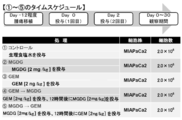
- Time schedule of MGDG administration and irradiation Tumor growth curve of each mouse after irradiation. Tumor of each mouse 1 month after irradiation. Time schedule of MGDG administration and GEM administration. Tumor growth curve of each mouse after MGDG administration and GEM administration.
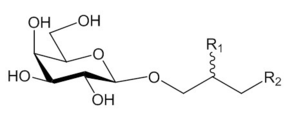
- R 1 ⁇ R 2 are independently of one another fatty acid, preferably a saturated fatty acid or a mono- or polyunsaturated fatty acids having 14 to 22 carbon atoms.
- saturated fatty acids include myristic acid, palmitic acid, stearic acid and the like
- unsaturated fatty acids include palmitooleic acid, oleic acid, linoleic acid, linolenic acid ( ⁇ 3), dihomogamma linolenic acid, octadecatetraene
- examples thereof include acid, arachidonic acid, eicosapentaenoic acid, docosapentaenoic acid, and docosahexaenoic acid.
- the types of constituent fatty acids at the 1st and 2nd positions of the glycerol skeleton in each glycolipid are not particularly limited. In diacylglycerol type glycolipids, both fatty acids are the same, but are different. It may be a thing.
- the “pharmaceutically acceptable salt of MGDG” of the present invention includes hydrohalates such as hydrofluoric acid salts and hydrochlorides, inorganic acid salts such as sulfates and nitrates, alkalis such as sodium salts and potassium salts.
- hydrohalates such as hydrofluoric acid salts and hydrochlorides
- inorganic acid salts such as sulfates and nitrates
- alkalis such as sodium salts and potassium salts.
- examples include metal salts, sulfonates, organic acid salts, and amino acid salts
- preferable examples include hydrochlorides, sulfates, nitrates, sodium salts, and potassium salts.
- MGDG extraction method The details of the method for extracting MGDG can be referred to the method described in WO2005 / 027937.
- the following MGDG extraction method is an example and is not particularly limited.
- it can be extracted and purified from spinach by the following method.
- the extract is filtered and then concentrated under reduced pressure to obtain an oily extract of spinach.
- the extract was dissolved in a 70% ethanol solution (a solution having a volume ratio of ethanol and water of 70:30, the same shall apply hereinafter), and then the glycolipid fraction was purified by reverse phase chromatography to obtain the first of the present invention.
- a glycolipid-containing composition is obtained.
- the above extract is dissolved in a 70% ethanol solution, it is injected into 500 g of hydrophobic chromatography resin (Diaion HP-20, manufactured by Mitsubishi Chemical Corporation), and then the unadsorbed material is washed and eluted with 70% ethanol.
- Fraction I water-soluble fraction
- fraction II eluted with 95% ethanol
- glycolipid fraction ie, a glycolipid-containing composition containing MGDG, DGDG, SQDG
- fraction III eluted with chloroform ⁇
- MGDG is extracted from the fraction II (a glycolipid-containing composition containing MGDG, DGDG, and SQDG) by chromatography or the like.
- the phosphorylated GEM of the present invention includes a monophosphorylated substance (GEM-MP), a diphosphorylated substance (GEM-DP), and a triphosphorylated substance (GEM-TP).
- the phosphorylated GEM can be synthesized by phosphorylating a commercially available GEM by a known method.
- the pharmaceutical composition or food composition of the present invention is used in combination with any of GEM that is an antitumor agent, phosphorylated GEM that is a DNA polymerase inhibitor having an antitumor effect, and radiotherapy that has an antitumor effect MGDG or a pharmaceutically acceptable salt thereof, characterized by being administered, is contained as an active ingredient.
- the pharmaceutical composition or food composition of the present invention has useful physiological activities such as a DNA polymerase enzyme activity inhibitory effect, a cancer cell growth inhibitory activity, and an antitumor activity.
- the DNA polymerase inhibitor can also be used for supplements, functional foods, health foods, health supplements, foods for specified health use, nutritional functional foods, and the like.
- it can be suitably used for functional foods, and can be used, for example, as functional foods having an anticancer effect or a cancer prevention effect.
- the pharmaceutical composition or food composition of the present invention has a DNA polymerase enzyme activity inhibitory effect, it can be used for medicines (pharmaceutical compositions) other than antitumor agents, and edible compositions other than functional foods ( It can also be used as a food or food additive), and can be used for the purpose of preventing or treating the onset and progression of AIDS in addition to cancer, as well as immunosuppressive effects during organ transplantation. It can be used as a therapeutic agent, antiviral agent, immunosuppressant, apoptosis inducer and the like.
- composition of antitumor agent or DNA polymerase inhibitor containing MDGD of the present invention as an active ingredient is further purified as necessary after extraction of the MGDG, or as a pharmaceutical composition together with a conventional pharmaceutical preparation carrier. It can be administered to humans.
- the dosage form of the pharmaceutical composition is not particularly limited and may be appropriately selected as necessary. Examples thereof include oral preparations such as tablets, capsules, granules, fine granules and powders, and parenteral preparations such as injections and suppositories. In general, for adults, it is appropriate to take 20 mg to 600 mg or less per day as glycolipid weight in several divided doses.
- oral preparations such as tablets, capsules, granules, fine granules, and powders are produced according to a conventional method using, for example, starch, lactose, sucrose, mannitol, carboxymethylcellulose, corn starch, inorganic salts, and the like.
- the blending amount of MGDG in these preparations is not particularly limited and can be appropriately designed.
- a binder, a disintegrant, a surfactant, a lubricant, a fluidity promoter, a corrigent, a colorant, a fragrance, and the like can be appropriately used. .
- parenteral preparation In order to achieve the desired effect of the present invention as a parenteral preparation, it varies depending on the age, body weight, and degree of disease of the patient, but is usually 1 to 60 mg / day as a weight of glycolipid in adults, intravenous drip infusion Subcutaneous injection and intramuscular injection are suitable.
- This parenteral preparation is produced according to a conventional method, and generally used as a diluent is distilled water for injection, physiological saline, aqueous glucose solution, vegetable oil for injection, sesame oil, peanut oil, soybean oil, corn oil, propylene glycol, etc. it can. Furthermore, you may add a disinfectant, antiseptic
- this parenteral preparation can be frozen after filling into a vial or the like, the water can be removed by ordinary freeze-drying treatment, and the liquid preparation can be re-prepared from the freeze-dried product immediately before use.
- the blending amount of MDGD in these preparations is not particularly limited and can be arbitrarily set.
- parenteral agents include liquid preparations for external use, coating agents such as ointments, suppositories for rectal administration, etc., and these are also produced according to conventional methods.
- composition of a DNA polymerase inhibitor containing phosphorylated GEM as an active ingredient The DNA polymerase inhibitor comprising the phosphorylated GEM of the present invention as an active ingredient can be administered to animals and humans after phosphorylation as it is or as a pharmaceutical composition together with a conventional pharmaceutical preparation carrier.
- the dosage form of the pharmaceutical composition is not particularly limited and may be appropriately selected as necessary. The dosage is usually 10 to 2500 mg per day for an adult.
- GEM usage / capacity The general administration method of GEM is as follows. (1) non-small cell lung cancer, pancreatic cancer, biliary tract cancer, urothelial cancer, cancer chemotherapy later exacerbated ovarian cancer, for adults the over one 1000 mg / m 2 to 30 minutes as a GEM intravenous drip infusion, Administration once a week for 3 consecutive weeks, withdrawal from the 4th week. Repeat this administration as a course. The dose may be reduced according to the patient's condition. (2) Inoperable or recurrent breast cancer In general, for adults, 1250 mg / m 2 of GEM is given as an intravenous infusion over 30 minutes, once a week for 2 consecutive weeks, and 3 weeks after withdrawal. . Repeat this administration as a course. The dose may be reduced according to the patient's condition.
- the radiotherapy of the present invention means a method known per se and can be performed according to protocols known to those skilled in the art.
- X-ray is the main radiation source, but other radiation therapy includes charged particle beam such as proton beam and carbon ion beam, iridium, iodine, cesium or cobalt irradiation used for brachytherapy.
- radiation therapy may be used for whole body irradiation (acute leukemia, malignant lymphoma), in principle, it is preferable to irradiate locally the tumor itself and the area of surrounding microinvasion.
- the time required for radiation therapy is 2-3 minutes a day, and the dose is often divided into 5 to 5 times a week for a total of 25 to 30 times (about 5 to 6 weeks).
- the applied carcinoma of the antitumor agent comprising MGDG or a pharmaceutically acceptable salt thereof administered in combination with the GEM of the present invention as an active ingredient is not particularly limited, but is preferably pancreatic cancer, colon cancer, Preferred is pancreatic cancer.
- the combined administration method of this antitumor agent and GEM is not specifically limited.
- An antitumor agent containing MGDG is administered to a patient orally or parenterally before, during or after the administration period of GEM described above.
- MGDG is administered several days, one day or hours before GEM administration.
- MGDG Metal for treating cancer using MGDG administered in combination with GEM
- a method for treating cancer using MGDG administered in combination with GEM is also targeted.
- the combined administration method is not particularly limited, and MGDG is orally or parenterally administered to a patient either before, during, or after the above-described GEM administration period.
- MGDG is administered several days, one day or hours before GEM administration.
- DNA polymerase inhibitor containing as an active ingredient MGDG administered in combination with phosphorylated GEM exhibits inhibition of enzyme activities of DNA polymerases ⁇ , ⁇ , ⁇ , and ⁇ .
- DNA polymerase which is an enzyme that synthesizes DNA
- a DNA polymerase inhibitor inhibits DNA synthesis and stops cell growth in cancer cells and tumor tissues. Therefore, DNA polymerase inhibitors are considered to be antitumor agents. That is, a DNA polymerase inhibitor containing as an active ingredient MGDG administered in combination with the phosphorylated GEM of the present invention is also an antitumor agent.
- the present invention is also directed to a method for treating cancer using MGDG having DNA polymerase inhibitory activity administered in combination with phosphorylated GEM.
- the combined administration method is not particularly limited, and MGDG is orally or parenterally administered to the patient either before, during or after the phosphorylated GEM administration period, similarly to the GEM described above.
- MGDG is administered several days, one day before, or several hours before administration of phosphorylated GEM.
- the DNA polymerase inhibitor containing the phosphorylated GEM (including GEM) of the present invention as an active ingredient is not only inhibiting the enzyme activity of DNA polymerase ⁇ , ⁇ , ⁇ , ⁇ , but also DNA polymerase ⁇ , ⁇ , ⁇ , ⁇ , ⁇ , ⁇ also inhibits enzyme activity. Furthermore, the DNA polymerase enzyme activity inhibitory effect strength is in the order of GEM-TP, GEM-DP, and GEM-MP. Similarly to the above, the DNA polymerase inhibitor containing the phosphorylated GEM of the present invention as an active ingredient is also an antitumor agent.
- the present invention is also directed to a method for treating cancer using phosphorylated GEM having DNA polymerase inhibitory activity.
- the method for treating cancer using phosphorylated GEM is not particularly limited, and can be carried out with reference to the above-mentioned GEM usage and capacity.
- Antineoplastic agent for the treatment of pancreatic cancer containing MGDG administered in combination with radiation therapy as an active ingredient The combined treatment method of anti-tumor agent for treating pancreatic cancer and radiotherapy comprising MGDG or a pharmaceutically acceptable salt thereof administered in combination with the radiotherapy of the present invention as an active ingredient is not particularly limited and is described above.
- An antitumor agent for treating pancreatic cancer containing MGDG as an active ingredient is administered to a patient orally or parenterally before, during or after the radiation therapy period.
- MGDG pancreatic cancer using MGDG administered in combination with radiation therapy
- a method for treating pancreatic cancer using MGDG administered in combination with radiation therapy is also targeted.
- the combined administration method is not particularly limited, and MGDG is orally or parenterally administered to pancreatic cancer patients either before, during or after the radiotherapy period described above.
- apoptosis inducer containing MGDG administered in combination with GEM as an active ingredient The apoptosis-inducing agent containing MGDG or a pharmaceutically acceptable salt thereof, which is administered in combination with the GEM of the present invention (including phosphorylated GEM), or an pharmaceutically acceptable salt thereof, as compared with GEM alone, MGDG alone, In particular, it induces apoptosis of cancer cells very strongly.
- GEM material
- Dried spinach was purchased from Kodama Foods.
- Calf thymus DNA was purchased from Sigma Aldrich.
- dATP 2'-deoxynucleotide-5'-triphosphates
- dCTP 2'-deoxynucleotide-5'-triphosphates
- dGTP 2'-deoxynucleotide-5'-triphosphates
- dGTP 2'-deoxynucleotide-5'-triphosphates
- Radionucleotide [ 3 H] -dTTP 43 Ci / mmol
- Other reagents were purchased from Nacalai Tesque.
- N 4 -benzoylgemcitabine is produced by selective phosphorylation with phosphoryl chloride in triethyl phosphate and phosphorylation using phosphorimidazolidate method ⁇ Reference: Bull. Chem. Soc. Jpn. 42 (1969), p3505-3508 ⁇ .
- GEM-MP, GEM-DP and GEM-TP were each obtained by treatment with the corresponding N 4 -benzoates in 1M NH 4 OH for 1 day at room temperature.
- the purity of GEM-MP, GEM-DP and GEM-TP was confirmed to be 99%, 96% and 98% by HPLC analysis, respectively.
- the eluted fraction was purified by Sep-Pak C 18 (Waters Corp., Tokyo, Japan) column chromatography using methanol. Finally, the fraction containing MGDG was evaporated and dried to obtain dry MGDG. It was confirmed that the purity of the MGDG was about 98%.
- DNA polymerase assay A DNA polymerase having high activity derived from a mammal was purified according to the method described in the document “J. Nat. Prod. 75 (2012) p135-141”.
- the standard DNA polymerase substrate solution for DNA polymerase ⁇ and ⁇ is in accordance with the method described in the literature “Biochim. Biophys. Acta 1308 (1996) p256-262” and “Biochim. Biophys. Acta 1336 (1997) p509-521”. Produced. Standard DNA polymerase substrate solutions for DNA polymerases ⁇ and ⁇ are described in the literature “Eur. J. Biochem. 267 (2000) p200-206” and “Jpn. J. Cancer Res. 89 (1998) p1154-1159”.
- DNA polymerases ⁇ , ⁇ and ⁇ were prepared by the same method as DNA polymerase ⁇ .
- DNA polymerase ⁇ was prepared by the same method as DNA polymerase ⁇ .
- activated DNA eg, bovine deoxyribonuclease I-treated calf thymus DNA
- 4 dNTPs including [ 3 H] -dTTP
- MGDG was dissolved in various concentrations of DMSO and sonicated for 30 seconds.
- MGDG-enzyme solution An amount of 8 ⁇ L each of this mixed solution (MGDG-enzyme solution) was added to 20 ⁇ L of GEM-DNA polymerase reaction solution (including DNA template primer substrate and nucleotide substrate), and incubated at 37 ° C. for 60 minutes. The activity without inhibitor was set to 100%, and the relative activity with each inhibitor concentration was measured. One unit of DNA polymerase activity is at 37 ° C. for 60 minutes and under normal reaction conditions ⁇ Reference: Biochim. Biophys. Acta 1308 (1996) p256-262, Biochim. Biophys. Acta 1336 (1997) p509-521 ⁇ . 1 nmol dNTP (particularly dTTP) was set as the amount of enzyme incorporated into the synthetic DNA template primer by catalysis.
- Human pancreatic cancer cell lines BxPC-3, MIAPaCa2 and PANC-1 were obtained from the American Type Culture Collection. These cells were cultured in RPMI1640 medium (containing 10% FBS, penicillin (100 units / mL), streptomycin (100 ⁇ g / mL) and 1.6 mg / mL NaHCO 3 ). The cytotoxicity of GEM, phosphorylated GEM and MGDG was measured by adding solutions containing various concentrations of these compounds to cells seeded in 96-well microtiter plates ( ⁇ 1 ⁇ 10 3 cells / well).
- MTT ⁇ 3- (4,5-dimethylthiazol-2-yl) -2,5-diphenyl tetrazolium bromide ⁇ solution is final after culturing at 37 ° C for 72-96 hours in a humid environment of 5% CO2 / 95% air After adding to a concentration of 0.6 mg / mL and discarding the medium, the cells were lysed with DMSO. Absorbance of each well of the (A 540) was measured by a microplate reader.
- Apoptosis induction was evaluated by DNA fragment assay using a known kit, APO-Direct TM Assay Staining kit (BD Bioscience Pharmingen).
- APO-Direct TM Assay is a method in which fragmented DNA of cells undergoing apoptosis is labeled with FITC-dUTP and further measured by fluorescence flow cytometry.
- MIAPaCa2 treated with GEM 50 nM
- MIAPaCa2 treated with MGDG 70 ⁇ M
- MIAPaCa2 treated with both GEM-MGDG were used.
- the treated cells were treated with trypsin and further washed with PBS.
- the washed cells were fixed with 1% paraformaldehyde for 15 minutes and then with 70% ethanol at ⁇ 20 ° C. overnight.
- the fixed cells were mixed and stained with a DNA labeling solution containing conjugated FITC for 30 minutes.
- the stained cells were resuspended in PBS, and cytometry data was obtained using CellQuest software (Becton-Dickinson).
- the stained cells in all cells were measured as apoptosis-inducing cells using CellQuest software.
- DNA polymerase molecular species There are 15 types of mammalian DNA polymerase molecular species, which are classified into four families, A-, B-, X-, and Y-, based on amino acid sequence homology and functional similarity.
- a DNA replication type calf DNA polymerase ⁇ (B-family DNA polymerase) representing each DNA polymerase family, human DNA polymerase ⁇ (A-family DNA polymerase) responsible for mitochondrial DNA synthesis, DNA repair type Human DNA polymerase ⁇ (Y-family DNA polymerase) and DNA repair / recombinant rat DNA polymerase ⁇ (X-family DNA polymerase) were used. As shown in FIG.
- GEM-TP was confirmed to most potently inhibit mammalian DNA polymerase enzyme activity. On the other hand, GEM was confirmed not to inhibit DNA polymerase enzyme activity. It was also confirmed that the DNA polymerase enzyme activity inhibition strength was in the order of GEM-TP, GEM-DP, and GEM-MP. The enzyme activity inhibition of DNA polymerases ⁇ and ⁇ of GEM-TP was higher than that of DNA polymerases ⁇ and ⁇ .
- Table 1 show 50% inhibitory concentrations (IC 50 values) of GEM-TP for 11 mammalian DNA polymerases.
- GEM-TP not only inhibits enzyme activities of DNA polymerases ⁇ , ⁇ , ⁇ , and ⁇ , but also inhibits enzyme activities of DNA polymerases ⁇ , ⁇ , ⁇ , ⁇ , and ⁇ . Furthermore, it was confirmed that GEM-TP has about four times the enzyme activity inhibitory effect on the B family DNA polymerase compared to the enzyme activity inhibitory effect on the X and Y family DNA polymerases. From the above, it was confirmed that phosphorylated GEM, particularly GEM-TP, more strongly inhibits the enzyme activity of DNA replication type DNA polymerases such as DNA polymerase ⁇ , ⁇ , and ⁇ . Thereby, the DNA polymerase inhibitor containing phosphorylated GEM as an active ingredient has an excellent DNA polymerase enzyme activity inhibitory effect.
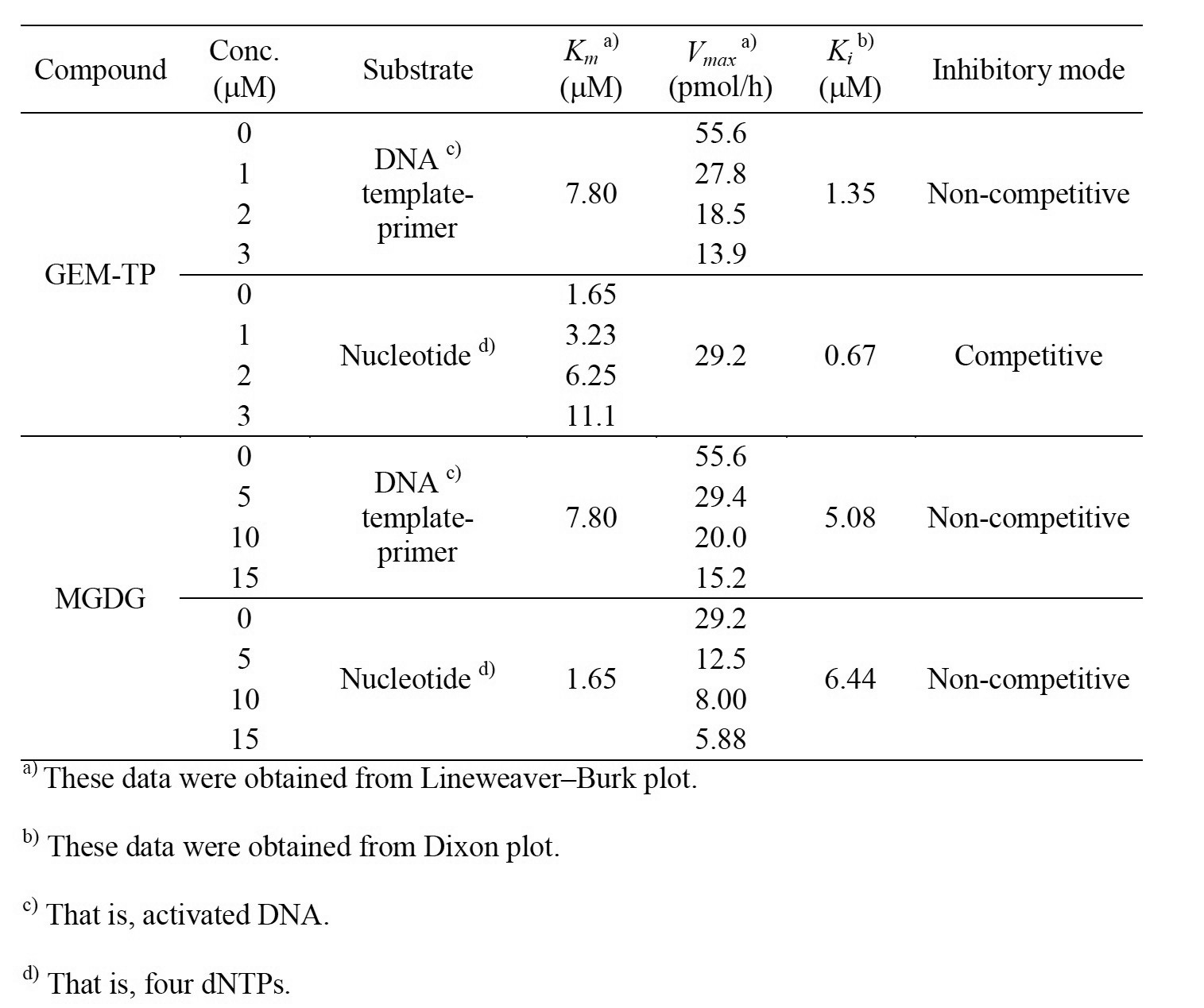
- the Ki value for the nucleotide substrate was about twice as low as the Ki value for the DNA template primer substrate.
- GEM-TP showed a stronger affinity for the binding site of the nucleotide substrate than the binding site of the DNA template primer substrate of DNA polymerase ⁇ .
- the enzyme activity inhibitory effect of MGDG's DNA polymerase ⁇ was non-competitive inhibition for both the DNA template primer substrate and the nucleotide substrate.
- MGDG showed about 1.3 times stronger affinity for the binding site of the DNA template primer substrate of DNA polymerase ⁇ than the binding site of the nucleotide substrate.
- GEM-TP which is a dCTP analog, competes with dCTP and acts on the binding site of the nucleotide substrate of DNA polymerase ⁇ , while MGDG binds to other sites of DNA polymerase ⁇ .
- the enzyme activity inhibitory effect of DNA polymerases ⁇ and ⁇ by the combined use of MGDG and GEM-TP is about 3 times and about 2 times the enzyme activity inhibitory effect of DNA polymerases ⁇ and ⁇ by MGDG alone and GEM-TP alone, respectively. Doubled.
- the enzyme activity inhibitory effect of DNA polymerase ⁇ and ⁇ by the combined use of MGDG and GEM-TP is a synergistic effect due to the fact that MGDG and GEM-TP have different DNA polymerase enzyme activity inhibition mechanisms, respectively.
- MGDG in combination with phosphorylated GEM has a very excellent DNA polymerase enzyme activity inhibitory effect.
- the DNA polymerase inhibitor containing MGDG administered together with phosphorylated GEM as an active ingredient has an excellent DNA polymerase enzyme activity inhibitory effect.
- FIG. 5B shows the relative activity ratio of GEM alone, the relative activity ratio of MGDG alone, and the relative activity ratio of the combined use of MGDG and GEM, where half of the IC 50 toxicity for each cell by GEM is 1.
- MGDG was administered prior to GEM administration to show extremely high pancreatic cancer cell toxicity.
- the cancer cell growth inhibitory activity by the combined use of MGDG and GEM exhibits an effect that is at least four times greater than the cancer cell growth inhibitory activity of MGDG alone and GEM alone.
- an antitumor agent comprising MGDG administered in combination with GEM as an active ingredient has excellent cancer cell proliferation inhibitory activity.
- MIAPaCa2 cells a human pancreatic cancer cell line
- MIAPaCa2 cells a human pancreatic cancer cell line
- apoptotic cells were measured using APO-Direct TM Assay Staining kit and flow cytometry. . Note that the ratio of untreated MIAPaCa2 cells to apoptotic cells was 1. As shown in FIG.
- the mouse used was a 4-week-old BALB / cAJcl-nu / nu nude mouse at the time of delivery.
- the X-ray irradiation apparatus used was an MBR-1505R2 (Hitachi Medical) X-ray irradiation apparatus.
- Matrigel containing MIAPaCa2 was prepared by mixing human pancreatic cancer cells MIAPaCa2 in Matrigel to 2 ⁇ 10 6 cells / 100 mL. Matrigel 100 ⁇ L containing MIAPaCa2 was injected into the base of the foot of the nude mouse, and the course was observed until the tumor became about 10 mm in size.
- an antitumor agent for treating pancreatic cancer containing MGDG administered in combination with radiotherapy as an active ingredient has an excellent antipancreatic tumor activity effect.
- the mouse used was a 4-week-old BALB / cAJcl-nu / nu nude mouse at the time of delivery.
- Matrigel containing MIAPaCa2 was prepared by mixing human pancreatic cancer cells MIAPaCa2 in Matrigel to 2 ⁇ 10 6 cells / 100 mL. Matrigel 100 ⁇ L containing MIAPaCa2 was injected into the base of the foot of the nude mouse, and the course was observed until the tumor became about 10 mm in size.
- MGDG 100 ⁇ L dissolved in PBS (MGDG to be administered is 2 mg / kg) and GEM 100 ⁇ L dissolved in PBS (2 ng / kg to be administered GEM) were 10 mm in size according to the time schedule shown in FIG. Nude mice were administered twice on the tumor site.
- a pharmaceutical composition or food composition containing novel MGDG as an active ingredient can be provided.
Landscapes
- Health & Medical Sciences (AREA)
- Life Sciences & Earth Sciences (AREA)
- Chemical & Material Sciences (AREA)
- Animal Behavior & Ethology (AREA)
- Veterinary Medicine (AREA)
- Public Health (AREA)
- Medicinal Chemistry (AREA)
- General Health & Medical Sciences (AREA)
- Pharmacology & Pharmacy (AREA)
- Nuclear Medicine, Radiotherapy & Molecular Imaging (AREA)
- Organic Chemistry (AREA)
- General Chemical & Material Sciences (AREA)
- Chemical Kinetics & Catalysis (AREA)
- Engineering & Computer Science (AREA)
- Bioinformatics & Cheminformatics (AREA)
- Epidemiology (AREA)
- Molecular Biology (AREA)
- Mycology (AREA)
- Nutrition Science (AREA)
- Food Science & Technology (AREA)
- Polymers & Plastics (AREA)
- Pharmaceuticals Containing Other Organic And Inorganic Compounds (AREA)
- Coloring Foods And Improving Nutritive Qualities (AREA)
Abstract
新たな抗癌剤、抗癌剤の組み合わせによる新たな癌の治療方法及び新たな抗癌剤と放射線療法の組み合わせによる新たな癌の治療方法、並びに新たなDNAポリメラーゼ阻害剤を提供することを解決すべき課題とした。 GEMと組み合わせて併用投与されるMGDG、放射線療法と組み合わせて投与されるMGDGが癌細胞増殖抑制活性及び抗腫瘍活性を有することを確認し、さらに、リン酸化GEMと組み合わせて併用投与されるMGDGがDNAポリメラーゼ酵素活性阻害を有することを確認して、本発明を完成した。
Description
本発明は、抗腫瘍剤であるゲムシタビン(GEM)と、抗腫瘍効果を有するDNAポリメラーゼ阻害剤であるリン酸化GEMと、抗腫瘍効果を有する放射線療法とのいずれかと組み合わせて併用投与されることを特徴とする、モノガラクトシルジアシルグリセロール(MGDG)を有効成分として含む医薬組成物又は食品組成物。
なお、本出願は、参照によりここに援用されるところの、日本国特許出願の特願2012-157018からの優先権を請求する。
なお、本出願は、参照によりここに援用されるところの、日本国特許出願の特願2012-157018からの優先権を請求する。
(MGDG)
高等植物の葉緑体のチラコイド膜は、MGDG、ジガラクトシルジアシルグリセロール(DGDG)、スルホキノボシルジアシルグリセロール(SQDG)等の主要なグリセロ糖脂質を含んでいる。また、グリセロ糖脂質は、野菜、果実及び果物に含まれていることが知られている。本発明者らの1人は、野菜の中ではホウレン草(Spinacia oleracea L.)に多量のMGDGが含まれていることを確認している(非特許文献1)。
また、本発明者らの1人は、MGDGを含む糖脂質には癌細胞増殖抑制活性を有することを確認している(特許文献1)。
高等植物の葉緑体のチラコイド膜は、MGDG、ジガラクトシルジアシルグリセロール(DGDG)、スルホキノボシルジアシルグリセロール(SQDG)等の主要なグリセロ糖脂質を含んでいる。また、グリセロ糖脂質は、野菜、果実及び果物に含まれていることが知られている。本発明者らの1人は、野菜の中ではホウレン草(Spinacia oleracea L.)に多量のMGDGが含まれていることを確認している(非特許文献1)。
また、本発明者らの1人は、MGDGを含む糖脂質には癌細胞増殖抑制活性を有することを確認している(特許文献1)。
(GEM)
シチジンアナログであるGEM(2',2'-ジフルオロデオキシシチジン)は、様々な癌の治療に広く使用されている。また、GEMは、膵臓癌の標準的な治療剤である。しかし、膵臓癌患者の1年後の生存率はわずか18%であり(非特許文献2)、GEMの単独での使用効果には限界がある。
シチジンアナログであるGEM(2',2'-ジフルオロデオキシシチジン)は、様々な癌の治療に広く使用されている。また、GEMは、膵臓癌の標準的な治療剤である。しかし、膵臓癌患者の1年後の生存率はわずか18%であり(非特許文献2)、GEMの単独での使用効果には限界がある。
(抗癌剤の併用投与)
上記の低い生存率の改善のための抗癌剤の併用投与治療又は抗癌剤と放射線療法の組み合わせた併用治療は、単独抗癌剤の多量使用の限界を解消して、治療効果を上げるものである。特定の癌の治療剤又は治療法を組合せることにより、腫瘍細胞の死滅効果が大幅に上昇することが報告されている。
上記の低い生存率の改善のための抗癌剤の併用投与治療又は抗癌剤と放射線療法の組み合わせた併用治療は、単独抗癌剤の多量使用の限界を解消して、治療効果を上げるものである。特定の癌の治療剤又は治療法を組合せることにより、腫瘍細胞の死滅効果が大幅に上昇することが報告されている。
以上により、新たな抗癌剤の組み合わせによる癌の治療方法及び新たな抗癌剤と放射線療法の組み合わせによる癌の治療方法の開発が望まれている。
(DNAポリメラーゼ)
真核生物のDNA合成酵素(DNAポリメラーゼ)は、これまでα、β、γ、δ、ε、ζ、η、θ、ι、κ、λ、μ、σ、TdT(ターミナル・デオキシヌクレオチジル・トランスフェラーゼ)及びRev1の15種類の分子種が知られている。
これらのDNAポリメラーゼは、細胞の増殖、分裂、分化等に関与している。例えば、α型はDNA複製、β型、λ型及びTdTは修復と組換え、δ型及びε型は複製と修復の双方、ζ~κ型は修復を担っている。
真核生物のDNA合成酵素(DNAポリメラーゼ)は、これまでα、β、γ、δ、ε、ζ、η、θ、ι、κ、λ、μ、σ、TdT(ターミナル・デオキシヌクレオチジル・トランスフェラーゼ)及びRev1の15種類の分子種が知られている。
これらのDNAポリメラーゼは、細胞の増殖、分裂、分化等に関与している。例えば、α型はDNA複製、β型、λ型及びTdTは修復と組換え、δ型及びε型は複製と修復の双方、ζ~κ型は修復を担っている。
(DNAポリメラーゼ酵素活性阻害を有する化合物)
本発明者らの1人は、DNA複製型のDNAポリメラーゼα、δ、ε阻害剤には、ヒト由来癌細胞増殖抑制活性があることを報告している(参照:非特許文献3)。
また、本発明者らの1人は、DNA修復・組換え型のDNAポリメラーゼλ阻害活性と起炎剤TPAで誘導したマウス耳抗炎症活性やLPSで炎症刺激を与えたマクロファージのTNF-α産生抑制活性には正の相関があることを報告している(参照:非特許文献4)。
本発明者らの1人は、DNA複製型のDNAポリメラーゼα、δ、ε阻害剤には、ヒト由来癌細胞増殖抑制活性があることを報告している(参照:非特許文献3)。
また、本発明者らの1人は、DNA修復・組換え型のDNAポリメラーゼλ阻害活性と起炎剤TPAで誘導したマウス耳抗炎症活性やLPSで炎症刺激を与えたマクロファージのTNF-α産生抑制活性には正の相関があることを報告している(参照:非特許文献4)。
(DNAポリメラーゼ阻害剤)
DNAポリメラーゼの酵素活性を阻害するDNAポリメラーゼ阻害剤は、例えば、癌に対して癌細胞の増殖抑制活性を示し、エイズに対してHIV由来逆転写酵素に対する阻害活性を示し、また、免疫疾患に対して抗原に対する特異的抗体産生を抑制する免疫抑制活性を示すことが知られている。
DNAポリメラーゼ阻害活性を有する糖脂質が、制癌剤、HIV由来逆転写酵素阻害剤、免疫抑制剤として有用であることが報告されている(参照:特許文献2)。
現在、DNAポリメラーゼ阻害剤として、ジデオキシTTP(ddTTP)、N-メチルマレイミド、ブチルフェニル-dGTPなどが知られている。また植物由来の糖脂質であるスルホキノボシルアシルグリセリドにもDNAポリメラーゼ阻害作用が見出されている(参照:特許文献2)。
DNAポリメラーゼの酵素活性を阻害するDNAポリメラーゼ阻害剤は、例えば、癌に対して癌細胞の増殖抑制活性を示し、エイズに対してHIV由来逆転写酵素に対する阻害活性を示し、また、免疫疾患に対して抗原に対する特異的抗体産生を抑制する免疫抑制活性を示すことが知られている。
DNAポリメラーゼ阻害活性を有する糖脂質が、制癌剤、HIV由来逆転写酵素阻害剤、免疫抑制剤として有用であることが報告されている(参照:特許文献2)。
現在、DNAポリメラーゼ阻害剤として、ジデオキシTTP(ddTTP)、N-メチルマレイミド、ブチルフェニル-dGTPなどが知られている。また植物由来の糖脂質であるスルホキノボシルアシルグリセリドにもDNAポリメラーゼ阻害作用が見出されている(参照:特許文献2)。
以上により、DNAポリメラーゼ阻害活性を有する化合物は、癌、エイズ等のウイルス疾患、免疫疾患の予防・治療に期待されているので、新たなDNAポリメラーゼ阻害剤の開発が望まれている。
I. Kuriyama et al (2005) J. Nutr. Biochem. 16 594-601
M.J. Moore et al (2007) J. Clin. Oncol. 25 1960-1966
Y. Mizushina (2009) Biosci. Biotechnol. Biochem. 73, 1239-1251
Y. Mizushina (2011) 日本栄養・食糧学会誌. 64, 377-384
本発明は、新たな抗癌剤、抗癌剤の組み合わせによる新たな癌の治療方法及び新たな抗癌剤と放射線療法の組み合わせによる新たな癌の治療方法、新たなDNAポリメラーゼ阻害剤、並びにアポトーシス誘導剤を提供することを解決すべき課題とした。
本発明者らは、上記の課題を解決するために、GEMと組み合わせて併用投与されるMGDG、放射線療法と組み合わせて投与されるMGDGが癌細胞増殖抑制活性及び抗腫瘍活性を有することを確認し、さらに、リン酸化GEMと組み合わせて併用投与されるMGDGがDNAポリメラーゼ酵素活性阻害を有することを確認して、本発明を完成した。
すなわち、本発明は以下の通りである。
1.抗腫瘍剤であるゲムシタビン(GEM)と、抗腫瘍効果を有するDNAポリメラーゼ阻害剤であるリン酸化GEMと、抗腫瘍効果を有する放射線療法とのいずれかと組み合わせて併用投与されることを特徴とする、モノガラクトシルジアシルグリセロール(MGDG)又はその薬学的に許容し得る塩を有効成分として含む医薬組成物又は食品組成物。
2.GEMと組み合わせて併用投与されることを特徴とする、MGDG又はその薬学的に許容し得る塩を有効成分として含む前項1に記載の抗腫瘍剤。
3.前記MGDGは、GEM投与前に、投与されることを特徴とする前項2に記載の抗腫瘍剤。
4.前記抗腫瘍剤は、膵臓癌又は大腸癌治療用抗腫瘍剤である前項2又は3に記載の抗腫瘍剤。
5.リン酸化GEM又はGEMと組み合わせて併用投与されることを特徴とする、MGDG又はその薬学的に許容し得る塩を有効成分として含む前項1に記載のDNAポリメラーゼ阻害剤。
6.GEM又はリン酸化GEMと組み合わせて併用投与されることを特徴とする、MGDG又はその薬学的に許容し得る塩を有効成分として含む前項1に記載のアポトーシス誘導剤。
7.放射線療法と組み合わせて投与されることを特徴とする、MGDG又はその薬学的に許容し得る塩を有効成分として含む前項1に記載の膵臓癌治療用抗腫瘍剤。
8.抗腫瘍剤であるGEM投与と、抗腫瘍効果を有するDNAポリメラーゼ阻害剤であるリン酸化GEM投与と、抗腫瘍効果を有する放射線療法とのいずれか1以上と組み合わせてMGDG又はその薬学的に許容し得る塩を投与することを特徴とする、癌の治療方法。
9.GEMとMGDG又はその薬学的に許容し得る塩を併用投与することを特徴とする前項8に記載の癌の治療方法。
10.前記MGDGは、GEM投与前に、投与されることを特徴とする前項9に記載の癌の治療方法。
11.前記治療方法は、膵臓癌又は大腸癌治療方法であることを特徴とする前項8~10のいずれか1に記載の癌の治療方法。
1.抗腫瘍剤であるゲムシタビン(GEM)と、抗腫瘍効果を有するDNAポリメラーゼ阻害剤であるリン酸化GEMと、抗腫瘍効果を有する放射線療法とのいずれかと組み合わせて併用投与されることを特徴とする、モノガラクトシルジアシルグリセロール(MGDG)又はその薬学的に許容し得る塩を有効成分として含む医薬組成物又は食品組成物。
2.GEMと組み合わせて併用投与されることを特徴とする、MGDG又はその薬学的に許容し得る塩を有効成分として含む前項1に記載の抗腫瘍剤。
3.前記MGDGは、GEM投与前に、投与されることを特徴とする前項2に記載の抗腫瘍剤。
4.前記抗腫瘍剤は、膵臓癌又は大腸癌治療用抗腫瘍剤である前項2又は3に記載の抗腫瘍剤。
5.リン酸化GEM又はGEMと組み合わせて併用投与されることを特徴とする、MGDG又はその薬学的に許容し得る塩を有効成分として含む前項1に記載のDNAポリメラーゼ阻害剤。
6.GEM又はリン酸化GEMと組み合わせて併用投与されることを特徴とする、MGDG又はその薬学的に許容し得る塩を有効成分として含む前項1に記載のアポトーシス誘導剤。
7.放射線療法と組み合わせて投与されることを特徴とする、MGDG又はその薬学的に許容し得る塩を有効成分として含む前項1に記載の膵臓癌治療用抗腫瘍剤。
8.抗腫瘍剤であるGEM投与と、抗腫瘍効果を有するDNAポリメラーゼ阻害剤であるリン酸化GEM投与と、抗腫瘍効果を有する放射線療法とのいずれか1以上と組み合わせてMGDG又はその薬学的に許容し得る塩を投与することを特徴とする、癌の治療方法。
9.GEMとMGDG又はその薬学的に許容し得る塩を併用投与することを特徴とする前項8に記載の癌の治療方法。
10.前記MGDGは、GEM投与前に、投与されることを特徴とする前項9に記載の癌の治療方法。
11.前記治療方法は、膵臓癌又は大腸癌治療方法であることを特徴とする前項8~10のいずれか1に記載の癌の治療方法。
本発明のMGDG又はその薬学的に許容し得る塩を有効成分として含む医薬組成物又は食品組成物は、癌細胞増殖抑制活性、DNAポリメラーゼ酵素活性阻害、及び/又は抗腫瘍活性を有することを確認した。より詳しくは、以下の通りである。
本発明のGEMと組み合わせて併用投与されるMGDGを有効成分として含む抗腫瘍剤は、癌細胞増殖抑制活性及び抗腫瘍活性を有することを確認した。
本発明のリン酸化GEMと組み合わせて併用投与されるMGDGを有効成分として含むDNAポリメラーゼ阻害剤は、DNAポリメラーゼ酵素活性阻害を有することを確認した。
本発明の放射線療法と組み合わせて投与されるMGDGを有効成分として含む膵臓癌治療用抗腫瘍剤は、抗腫瘍活性を有することを確認した。
本発明のGEMと組み合わせて併用投与されるMGDGを有効成分として含む抗腫瘍剤は、癌細胞増殖抑制活性及び抗腫瘍活性を有することを確認した。
本発明のリン酸化GEMと組み合わせて併用投与されるMGDGを有効成分として含むDNAポリメラーゼ阻害剤は、DNAポリメラーゼ酵素活性阻害を有することを確認した。
本発明の放射線療法と組み合わせて投与されるMGDGを有効成分として含む膵臓癌治療用抗腫瘍剤は、抗腫瘍活性を有することを確認した。
(MGDG)
MGDGの化学構造を図1に記載する。図中、R1~R2は互いに独立した脂肪酸であり、好ましくは炭素数14~22の飽和脂肪酸または一価もしくは多価の不飽和脂肪酸である。飽和脂肪酸としては、ミリスチン酸、パルミチン酸、ステアリン酸等を例示でき、不飽和脂肪酸としては、パルミトオレイン酸、オレイン酸、リノール酸、リノレン酸(ω3)、ジホモガンマリノレン酸、オクタデカテトラエン酸、アラキドン酸、エイコサペンタエン酸、ドコサペンタエン酸、ドコサヘキサエン酸等を例示できる。なお、各糖脂質におけるグリセロール骨格の1位と2位の構成脂肪酸の種類は特に限定されるものではなく、ジアシルグルセロールタイプの糖脂質においては、両脂肪酸は同じものであっても、異なるものであってもよい。
MGDGの化学構造を図1に記載する。図中、R1~R2は互いに独立した脂肪酸であり、好ましくは炭素数14~22の飽和脂肪酸または一価もしくは多価の不飽和脂肪酸である。飽和脂肪酸としては、ミリスチン酸、パルミチン酸、ステアリン酸等を例示でき、不飽和脂肪酸としては、パルミトオレイン酸、オレイン酸、リノール酸、リノレン酸(ω3)、ジホモガンマリノレン酸、オクタデカテトラエン酸、アラキドン酸、エイコサペンタエン酸、ドコサペンタエン酸、ドコサヘキサエン酸等を例示できる。なお、各糖脂質におけるグリセロール骨格の1位と2位の構成脂肪酸の種類は特に限定されるものではなく、ジアシルグルセロールタイプの糖脂質においては、両脂肪酸は同じものであっても、異なるものであってもよい。
(MGDGの薬学的に許容し得る塩)
本発明の「MGDGの薬学的に許容し得る塩」は、フッ化水素酸塩、塩酸塩などのハロゲン化水素酸塩、硫酸塩、硝酸塩などの無機酸塩、ナトリウム塩、カリウム塩などのアルカリ金属塩、スルホン酸塩、有機酸塩、およびアミノ酸塩が挙げられ、好適には塩酸塩、硫酸塩、硝酸塩、ナトリウム塩、カリウム塩を挙げることができる。
本発明の「MGDGの薬学的に許容し得る塩」は、フッ化水素酸塩、塩酸塩などのハロゲン化水素酸塩、硫酸塩、硝酸塩などの無機酸塩、ナトリウム塩、カリウム塩などのアルカリ金属塩、スルホン酸塩、有機酸塩、およびアミノ酸塩が挙げられ、好適には塩酸塩、硫酸塩、硝酸塩、ナトリウム塩、カリウム塩を挙げることができる。
(MGDGの抽出方法)
MGDGの抽出方法の詳細は、WO2005/027937に記載の方法を参照することができる。
また、下記のMGDGの抽出方法は、一例であり特に限定されない。
例えば、以下の方法によりホウレン草から抽出・精製することができる。まず、原料には市販のホウレン草を使用し、図2に示すように、その乾燥物100gを細断した後、水溶性成分をできるだけ除去するために、60℃の温水1Lで2回洗浄する。次に、濾紙を使用して濾過後、水分を除去し、得られた固形物(残渣)に1Lのエタノールを加え、撹拌しながら60℃で還流抽出を2回行う。抽出液は濾過後、減圧下で濃縮を行うことで、ホウレン草のオイル状抽出物が得られる。
前記抽出物を70%エタノール溶液(エタノールと水の体積比が70:30の溶液。以下同様。)に溶解した後、逆相クロマトグラフィーにより糖脂質画分を精製し、本発明の第1の糖脂質含有組成物を得る。上記抽出物を70%エタノール溶液に溶解した後、これを疎水クロマトグラフィー用樹脂500g(ダイヤイオンHP-20、三菱化学社製)に注入し、その後、70%エタノールで未吸着物質を洗浄・溶出した画分I(水溶性画分)、95%エタノールで溶出される画分II(糖脂質画分すなわちMGDG、DGDG、SQDGを含む糖脂質含有組成物)、クロロホルムで溶出される画分III{クロロフィル(葉緑素)を含む色素画分}の3つに分画する。
最後に、クロマトグラフィー等により上記画分II(MGDG、DGDG、SQDGを含む糖脂質含有組成物)からMGDGを抽出する。
MGDGの抽出方法の詳細は、WO2005/027937に記載の方法を参照することができる。
また、下記のMGDGの抽出方法は、一例であり特に限定されない。
例えば、以下の方法によりホウレン草から抽出・精製することができる。まず、原料には市販のホウレン草を使用し、図2に示すように、その乾燥物100gを細断した後、水溶性成分をできるだけ除去するために、60℃の温水1Lで2回洗浄する。次に、濾紙を使用して濾過後、水分を除去し、得られた固形物(残渣)に1Lのエタノールを加え、撹拌しながら60℃で還流抽出を2回行う。抽出液は濾過後、減圧下で濃縮を行うことで、ホウレン草のオイル状抽出物が得られる。
前記抽出物を70%エタノール溶液(エタノールと水の体積比が70:30の溶液。以下同様。)に溶解した後、逆相クロマトグラフィーにより糖脂質画分を精製し、本発明の第1の糖脂質含有組成物を得る。上記抽出物を70%エタノール溶液に溶解した後、これを疎水クロマトグラフィー用樹脂500g(ダイヤイオンHP-20、三菱化学社製)に注入し、その後、70%エタノールで未吸着物質を洗浄・溶出した画分I(水溶性画分)、95%エタノールで溶出される画分II(糖脂質画分すなわちMGDG、DGDG、SQDGを含む糖脂質含有組成物)、クロロホルムで溶出される画分III{クロロフィル(葉緑素)を含む色素画分}の3つに分画する。
最後に、クロマトグラフィー等により上記画分II(MGDG、DGDG、SQDGを含む糖脂質含有組成物)からMGDGを抽出する。
(リン酸化GEM)
本発明のリン酸化GEMとは、一リン酸化体(GEM-MP)、二リン酸化体(GEM-DP)、三リン酸化体(GEM-TP)を含む。なお、リン酸化GEMは、公知の方法により、市販のGEMをリン酸化することにより合成することができる。
本発明のリン酸化GEMとは、一リン酸化体(GEM-MP)、二リン酸化体(GEM-DP)、三リン酸化体(GEM-TP)を含む。なお、リン酸化GEMは、公知の方法により、市販のGEMをリン酸化することにより合成することができる。
(本発明の医薬組成物又は食品組成物)
本発明の医薬組成物又は食品組成物は、抗腫瘍剤であるGEMと、抗腫瘍効果を有するDNAポリメラーゼ阻害剤であるリン酸化GEMと、抗腫瘍効果を有する放射線療法とのいずれかと組み合わせて併用投与されることを特徴とする、MGDG又はその薬学的に許容し得る塩を有効成分として含む。
本発明の医薬組成物又は食品組成物は、DNAポリメラーゼ酵素活性阻害効果、癌細胞増殖抑制活性、抗腫瘍活性といった有用な生理活性を有することから、DNAポリメラーゼ阻害剤、抗腫瘍剤(抗癌剤、制癌剤)として利用可能であり、さらに、サプリメント、機能性食品、健康食品、健康補助食品、特定保健用食品、栄養機能食品等にも利用可能である。特に機能性食品に好適に用いることができ、例えば抗癌作用又は癌予防効果をもつ機能性食品として利用可能である。
さらに、本発明の医薬組成物又は食品組成物は、DNAポリメラーゼ酵素活性阻害効果を有することから、抗腫瘍剤以外の医薬(医薬用組成物)への利用、機能性食品以外の食用組成物(食品または食品添加物)としての利用も可能であり、癌のほかエイズの発症、進行を予防する作用あるいは治療効果、また臓器移植時等の免疫抑制作用をねらいとして利用することができ、とりわけエイズ治療剤、抗ウイルス剤、免疫抑制剤、アポトーシス誘導剤等として利用可能である。
本発明の医薬組成物又は食品組成物は、抗腫瘍剤であるGEMと、抗腫瘍効果を有するDNAポリメラーゼ阻害剤であるリン酸化GEMと、抗腫瘍効果を有する放射線療法とのいずれかと組み合わせて併用投与されることを特徴とする、MGDG又はその薬学的に許容し得る塩を有効成分として含む。
本発明の医薬組成物又は食品組成物は、DNAポリメラーゼ酵素活性阻害効果、癌細胞増殖抑制活性、抗腫瘍活性といった有用な生理活性を有することから、DNAポリメラーゼ阻害剤、抗腫瘍剤(抗癌剤、制癌剤)として利用可能であり、さらに、サプリメント、機能性食品、健康食品、健康補助食品、特定保健用食品、栄養機能食品等にも利用可能である。特に機能性食品に好適に用いることができ、例えば抗癌作用又は癌予防効果をもつ機能性食品として利用可能である。
さらに、本発明の医薬組成物又は食品組成物は、DNAポリメラーゼ酵素活性阻害効果を有することから、抗腫瘍剤以外の医薬(医薬用組成物)への利用、機能性食品以外の食用組成物(食品または食品添加物)としての利用も可能であり、癌のほかエイズの発症、進行を予防する作用あるいは治療効果、また臓器移植時等の免疫抑制作用をねらいとして利用することができ、とりわけエイズ治療剤、抗ウイルス剤、免疫抑制剤、アポトーシス誘導剤等として利用可能である。
(本発明のMDGDを有効成分とする抗腫瘍剤又はDNAポリメラーゼ阻害剤の組成)
本発明のMDGDを有効成分とする抗腫瘍剤又はDNAポリメラーゼ阻害剤は、抽出したMGDGを必要に応じてさらに精製した後、そのまま、あるいは慣用の医薬製剤担体とともに医薬用組成物となし、動物およびヒトに投与することができる。医薬用組成物の剤形としては特に制限されるものではなく必要に応じて適宜選択すればよい。例えば、錠剤、カプセル剤、顆粒剤、細粒剤、散剤等の経口剤、注射剤、坐剤等の非経口剤が挙げられる。投与量は、通常、成人で糖脂質の重量として1日当たり20mg~600mg以下を数回に分けて服用するのが適当である。
本発明のMDGDを有効成分とする抗腫瘍剤又はDNAポリメラーゼ阻害剤は、抽出したMGDGを必要に応じてさらに精製した後、そのまま、あるいは慣用の医薬製剤担体とともに医薬用組成物となし、動物およびヒトに投与することができる。医薬用組成物の剤形としては特に制限されるものではなく必要に応じて適宜選択すればよい。例えば、錠剤、カプセル剤、顆粒剤、細粒剤、散剤等の経口剤、注射剤、坐剤等の非経口剤が挙げられる。投与量は、通常、成人で糖脂質の重量として1日当たり20mg~600mg以下を数回に分けて服用するのが適当である。
本発明において錠剤、カプセル剤、顆粒剤、細粒剤、散剤としての経口剤は、例えば、デンプン、乳糖、白糖、マンニット、カルボキシメチルセルロース、コーンスターチ、無機塩類等を用いて常法に従って製造される。これらの製剤中のMGDGの配合量は特に限定されるものではなく適宜設計できる。この種の製剤には、MGDG含有組成物の他に、結合剤、崩壊剤、界面活性剤、滑沢剤、流動性促進剤、矯味剤、着色剤、香料等を適宜に使用することができる。
非経口剤として本発明の所望の効果を発現するには、患者の年齢、体重、疾患の程度により異なるが、通常、成人で糖脂質の重量として1日当たり1~60mgの静注、点滴静注、皮下注射、筋肉注射が適当である。この非経口投与剤は常法に従って製造され、希釈剤として一般に注射用蒸留水、生理食塩水、ブドウ糖水溶液、注射用植物油、ゴマ油、ラッカセイ油、大豆油、トウモロコシ油、プロピレングリコール等を用いることができる。さらに必要に応じて、殺菌剤、防腐剤、安定剤を加えてもよい。また、この非経口剤は安定性の点から、バイアル等に充填後冷凍し、通常の凍結乾燥処理により水分を除き、使用直前に凍結乾燥物から液剤を再調製することもできる。さらに必要に応じて、等張化剤、安定剤、防腐剤、無痛化剤を加えてもよい。これら製剤中のMDGDの配合量は特に限定されるものではなく任意に設定できる。その他の非経口剤の例として、外用液剤、軟膏等の塗布剤、直腸内投与のための坐剤等が挙げられ、これらも常法に従って製造される。
(リン酸化GEMを有効成分として含むDNAポリメラーゼ阻害剤の組成)
本発明のリン酸化GEMを有効成分とするDNAポリメラーゼ阻害剤は、リン酸化した後に、これをそのまま、あるいは慣用の医薬製剤担体とともに医薬用組成物となし、動物およびヒトに投与することができる。医薬用組成物の剤形としては特に制限されるものではなく必要に応じて適宜選択すればよい。投与量は、通常、成人1日当たり10mg~2500mgを点滴静注する。
本発明のリン酸化GEMを有効成分とするDNAポリメラーゼ阻害剤は、リン酸化した後に、これをそのまま、あるいは慣用の医薬製剤担体とともに医薬用組成物となし、動物およびヒトに投与することができる。医薬用組成物の剤形としては特に制限されるものではなく必要に応じて適宜選択すればよい。投与量は、通常、成人1日当たり10mg~2500mgを点滴静注する。
(GEMの用法・容量)
GEMの一般的な投与方法は、以下の通りである。
(1)非小細胞肺癌、膵癌、胆道癌、尿路上皮癌、がん化学療法後に増悪した卵巣癌
通常、成人にはGEMとして1回1000mg/m2を30分かけて点滴静注し、週1回投与を3週連続し、4週目は休薬する。これを1コースとして投与を繰り返す。なお、患者の状態により適宜減量する。
(2)手術不能又は再発乳癌の場合
通常、成人にはGEMとして1回1250mg/m2を30分かけて点滴静注し、週1回投与を2週連続し、3週目は休薬する。これを1コースとして投与を繰り返す。なお、患者の状態により適宜減量する。
GEMの一般的な投与方法は、以下の通りである。
(1)非小細胞肺癌、膵癌、胆道癌、尿路上皮癌、がん化学療法後に増悪した卵巣癌
通常、成人にはGEMとして1回1000mg/m2を30分かけて点滴静注し、週1回投与を3週連続し、4週目は休薬する。これを1コースとして投与を繰り返す。なお、患者の状態により適宜減量する。
(2)手術不能又は再発乳癌の場合
通常、成人にはGEMとして1回1250mg/m2を30分かけて点滴静注し、週1回投与を2週連続し、3週目は休薬する。これを1コースとして投与を繰り返す。なお、患者の状態により適宜減量する。
(放射線療法)
本発明の放射線療法とは、自体公知の方法を意味し、当業者に知られているプロトコルに従って実施することができる。X線が主たる線源であるが、その他にも陽子線や炭素イオン線等の荷電粒子線、小線源治療に用いられるイリジウム、ヨード、セシウム、又はコバルト照射などが前記の放射線療法に含まれる。
放射線療法は、全身照射(急性白血病、悪性リンパ腫)に用いられることもあるが、原則的には腫瘍そのものと、周囲の微小浸潤の範囲の局所的に照射するのが好ましい。一般的には、放射線療法に要する時間は1日2~3分で、週5回、合計25~30回(約5~6週間)に分割して照射することが多い。
本発明の放射線療法とは、自体公知の方法を意味し、当業者に知られているプロトコルに従って実施することができる。X線が主たる線源であるが、その他にも陽子線や炭素イオン線等の荷電粒子線、小線源治療に用いられるイリジウム、ヨード、セシウム、又はコバルト照射などが前記の放射線療法に含まれる。
放射線療法は、全身照射(急性白血病、悪性リンパ腫)に用いられることもあるが、原則的には腫瘍そのものと、周囲の微小浸潤の範囲の局所的に照射するのが好ましい。一般的には、放射線療法に要する時間は1日2~3分で、週5回、合計25~30回(約5~6週間)に分割して照射することが多い。
(GEMと組み合わせて併用投与されるMGDGを有効成分として含む抗腫瘍剤)
本発明のGEMと組み合わせて併用投与されるMGDG又はその薬学的に許容し得る塩を有効成分として含む抗腫瘍剤の適用癌腫は特に限定されないが、好ましくは、膵臓癌、大腸癌であり、さらに好ましくは膵臓癌である。
また、該抗腫瘍剤とGEMの併用投与方法は、特に限定されない。上記記載したGEMの投与期間前、中、後のいずれの間に、MGDGを含む抗腫瘍剤を経口又は非経口により患者に投与する。好ましくは、MGDGは、GEM投与前の数日、1日前、又は数時間前に、投与されることが好ましい。
本発明のGEMと組み合わせて併用投与されるMGDG又はその薬学的に許容し得る塩を有効成分として含む抗腫瘍剤の適用癌腫は特に限定されないが、好ましくは、膵臓癌、大腸癌であり、さらに好ましくは膵臓癌である。
また、該抗腫瘍剤とGEMの併用投与方法は、特に限定されない。上記記載したGEMの投与期間前、中、後のいずれの間に、MGDGを含む抗腫瘍剤を経口又は非経口により患者に投与する。好ましくは、MGDGは、GEM投与前の数日、1日前、又は数時間前に、投与されることが好ましい。
(GEMと組み合わせて併用投与されるMGDGを用いた癌の治療方法)
本発明では、GEMと組み合わせて併用投与されるMGDGを用いた癌の治療方法も対象とする。併用投与方法は、特に限定されず、上記記載したGEMの投与期間前、中、後のいずれの間に、MGDGを経口又は非経口により患者に投与する。好ましくは、MGDGは、GEM投与前の数日、1日前、又は数時間前に、投与されることが好ましい。
本発明では、GEMと組み合わせて併用投与されるMGDGを用いた癌の治療方法も対象とする。併用投与方法は、特に限定されず、上記記載したGEMの投与期間前、中、後のいずれの間に、MGDGを経口又は非経口により患者に投与する。好ましくは、MGDGは、GEM投与前の数日、1日前、又は数時間前に、投与されることが好ましい。
(リン酸化GEMと組み合わせて併用投与されるMGDGを有効成分として含むDNAポリメラーゼ阻害剤)
本発明のリン酸化GEMと組み合わせて併用投与されるMGDG又はその薬学的に許容し得る塩を有効成分として含むDNAポリメラーゼ阻害剤は、DNAポリメラーゼα、β、γ、κの酵素活性阻害を示す。
なお、DNAを合成する酵素であるDNAポリメラーゼは、DNA合成を伴う細胞増殖が活発な癌細胞や腫瘍組織では発現量が多く高活性である。よって、DNAポリメラーゼ阻害剤は、DNA合成を阻害して、癌細胞や腫瘍組織における細胞増殖を停止させる。従って、DNAポリメラーゼ阻害剤は抗腫瘍剤になると考えられる。すなわち、本発明のリン酸化GEMと組み合わせて併用投与されるMGDGを有効成分として含むDNAポリメラーゼ阻害剤は、抗腫瘍剤でもある。
本発明のリン酸化GEMと組み合わせて併用投与されるMGDG又はその薬学的に許容し得る塩を有効成分として含むDNAポリメラーゼ阻害剤は、DNAポリメラーゼα、β、γ、κの酵素活性阻害を示す。
なお、DNAを合成する酵素であるDNAポリメラーゼは、DNA合成を伴う細胞増殖が活発な癌細胞や腫瘍組織では発現量が多く高活性である。よって、DNAポリメラーゼ阻害剤は、DNA合成を阻害して、癌細胞や腫瘍組織における細胞増殖を停止させる。従って、DNAポリメラーゼ阻害剤は抗腫瘍剤になると考えられる。すなわち、本発明のリン酸化GEMと組み合わせて併用投与されるMGDGを有効成分として含むDNAポリメラーゼ阻害剤は、抗腫瘍剤でもある。
(リン酸化GEMと組み合わせて併用投与されるMGDGを用いた癌の治療方法)
本発明では、リン酸化GEMと組み合わせて併用投与されるDNAポリメラーゼ阻害活性を有するMGDGを用いた癌の治療方法も対象とする。併用投与方法は、特に限定されず、上記記載したGEMと同様に、リン酸化GEM投与期間前、中、後のいずれの間に、MGDGを経口又は非経口により患者に投与する。好ましくは、MGDGは、リン酸化GEM投与前の数日、1日前、又は数時間前に、投与されることが好ましい。
本発明では、リン酸化GEMと組み合わせて併用投与されるDNAポリメラーゼ阻害活性を有するMGDGを用いた癌の治療方法も対象とする。併用投与方法は、特に限定されず、上記記載したGEMと同様に、リン酸化GEM投与期間前、中、後のいずれの間に、MGDGを経口又は非経口により患者に投与する。好ましくは、MGDGは、リン酸化GEM投与前の数日、1日前、又は数時間前に、投与されることが好ましい。
(リン酸化GEMを有効成分として含むDNAポリメラーゼ阻害剤)
本発明のリン酸化GEM(GEMも含む)を有効成分として含むDNAポリメラーゼ阻害剤は、DNAポリメラーゼα、β、γ、κの酵素活性阻害だけでなく、DNAポリメラーゼδ、ε、λ、μ、η、ιの酵素活性阻害も有する。さらに、DNAポリメラーゼ酵素活性阻害効果強度は、GEM-TP、GEM-DP、GEM-MPの順である。
また、前記同様に、本発明のリン酸化GEMを有効成分として含むDNAポリメラーゼ阻害剤は、抗腫瘍剤でもある。
本発明のリン酸化GEM(GEMも含む)を有効成分として含むDNAポリメラーゼ阻害剤は、DNAポリメラーゼα、β、γ、κの酵素活性阻害だけでなく、DNAポリメラーゼδ、ε、λ、μ、η、ιの酵素活性阻害も有する。さらに、DNAポリメラーゼ酵素活性阻害効果強度は、GEM-TP、GEM-DP、GEM-MPの順である。
また、前記同様に、本発明のリン酸化GEMを有効成分として含むDNAポリメラーゼ阻害剤は、抗腫瘍剤でもある。
(リン酸化GEMを用いた癌の治療方法)
本発明では、DNAポリメラーゼ阻害活性を有するリン酸化GEMを用いた癌の治療方法も対象とする。リン酸化GEMを用いた癌の治療方法は、特に限定されず、上記記載したGEMの用法・容量を参考にして実施できる。
本発明では、DNAポリメラーゼ阻害活性を有するリン酸化GEMを用いた癌の治療方法も対象とする。リン酸化GEMを用いた癌の治療方法は、特に限定されず、上記記載したGEMの用法・容量を参考にして実施できる。
(放射線療法と組み合わせて投与されるMGDGを有効成分として含む膵臓癌治療用抗腫瘍剤)
本発明の放射線療法と組み合わせて投与されるMGDG又はその薬学的に許容し得る塩を有効成分として含む膵臓癌治療用抗腫瘍剤と放射線療法の併用治療方法は、特に限定されず、上記記載した放射線療法期間前、中、後のいずれの間に、MGDGを有効成分として含む膵臓癌治療用抗腫瘍剤を経口又は非経口により患者に投与する。
本発明の放射線療法と組み合わせて投与されるMGDG又はその薬学的に許容し得る塩を有効成分として含む膵臓癌治療用抗腫瘍剤と放射線療法の併用治療方法は、特に限定されず、上記記載した放射線療法期間前、中、後のいずれの間に、MGDGを有効成分として含む膵臓癌治療用抗腫瘍剤を経口又は非経口により患者に投与する。
(放射線療法と組み合わせて併用投与されるMGDGを用いた膵臓癌の治療方法)
本発明では、放射線療法と組み合わせて併用投与されるMGDGを用いた膵臓癌の治療方法も対象とする。併用投与方法は、特に限定されず、上記記載した放射線療法の期間前、中、後のいずれの間に、MGDGを経口又は非経口により膵臓癌患者に投与する。
本発明では、放射線療法と組み合わせて併用投与されるMGDGを用いた膵臓癌の治療方法も対象とする。併用投与方法は、特に限定されず、上記記載した放射線療法の期間前、中、後のいずれの間に、MGDGを経口又は非経口により膵臓癌患者に投与する。
(GEMと組み合わせて併用投与されるMGDGを有効成分として含むアポトーシス誘導剤)
本発明のGEM(リン酸化GEMも含む)と組み合わせて併用投与されるMGDG又はその薬学的に許容し得る塩を有効成分として含むアポトーシス誘導剤は、GEM単独、MGDG単独と比較して、細胞、特に癌細胞のアポトーシスを非常に強く誘導する。
本発明のGEM(リン酸化GEMも含む)と組み合わせて併用投与されるMGDG又はその薬学的に許容し得る塩を有効成分として含むアポトーシス誘導剤は、GEM単独、MGDG単独と比較して、細胞、特に癌細胞のアポトーシスを非常に強く誘導する。
以下、実施例を挙げて本発明を説明するが、本発明は該実施例により何ら限定されるものではない。
リン酸化GEMによるDNAポリメラーゼ酵素活性阻害効果の確認、リン酸化GEMとの併用によるMGDGのDNAポリメラーゼ酵素活性阻害効果の確認、並びにGEMとの併用によるMGDGの癌細胞増殖抑制活性の確認を本実施例で行った。詳細は、以下の通りである。
(材料)
GEMは、日本イーライリリーから購入した。乾燥ホウレン草は、こだま食品株式会社から購入した。仔ウシ胸腺DNAは、Sigma Aldrichから購入した。4つの2'-デオキシヌクレオチド-5'-三リン酸であるdATP、dCTP、dGTP及びdTTPは、GE Healthcare Life Sciencesから購入した。放射性ヌクレオチド[3H]-dTTP (43 Ci/mmol)は、MP Biomedicals LLCから購入した。その他の試薬は、ナカライテスクから購入した。
GEMは、日本イーライリリーから購入した。乾燥ホウレン草は、こだま食品株式会社から購入した。仔ウシ胸腺DNAは、Sigma Aldrichから購入した。4つの2'-デオキシヌクレオチド-5'-三リン酸であるdATP、dCTP、dGTP及びdTTPは、GE Healthcare Life Sciencesから購入した。放射性ヌクレオチド[3H]-dTTP (43 Ci/mmol)は、MP Biomedicals LLCから購入した。その他の試薬は、ナカライテスクから購入した。
(リン酸化GEMの化学合成)
N4-benzoylgemcitabineは、リン酸トリエチル中の塩化ホスホリルによる選択的リン酸化、さらにphosphorimidazolidate method{参照:Bull. Chem. Soc. Jpn. 42 (1969), p3505-3508}を用いたリン酸化により、N4-benzoylgemcitabine 5'-diphosphate及びN4-benzoylgemcitabine 5'-triphosphateに変換した。GEM-MP、GEM-DP及びGEM-TPは、それぞれ、1日間室温で、1M NH4OH中の対応するN4-benzoatesで処理することにより得た。
最後に、 GEM-MP、GEM-DP及びGEM-TPの純度は、それぞれ、HPLC分析により、99%、96%及び98%であることを確認した。
N4-benzoylgemcitabineは、リン酸トリエチル中の塩化ホスホリルによる選択的リン酸化、さらにphosphorimidazolidate method{参照:Bull. Chem. Soc. Jpn. 42 (1969), p3505-3508}を用いたリン酸化により、N4-benzoylgemcitabine 5'-diphosphate及びN4-benzoylgemcitabine 5'-triphosphateに変換した。GEM-MP、GEM-DP及びGEM-TPは、それぞれ、1日間室温で、1M NH4OH中の対応するN4-benzoatesで処理することにより得た。
最後に、 GEM-MP、GEM-DP及びGEM-TPの純度は、それぞれ、HPLC分析により、99%、96%及び98%であることを確認した。
(ホウレン草よりMGDGの抽出)
乾燥ホウレン草をエタノールで抽出して、エタノール溶液を得た。該溶液は、70%エタノールで希釈し、そしてDiaion HP-20(Sigma-Aldrich)カラムクロマトグラフィーに通した。該カラムから溶出した95%エタノール(v/v)溶液を蒸発させて乾燥させた。乾燥物をクロロホルムに再溶解し、さらにシリカゲル(PSQ60B, Fuji Silysia)カラムクロマトグラフィーに通した。該カラムクロマトグラフィーは、クロロホルム/酢酸エチル(1/1、v/v)で洗浄し、さらに、酢酸エチルで溶出した。溶出した画分は、メタノールを用いたSep-Pak C18(Waters Corp., Tokyo, Japan)カラムクロマトグラフィーで精製した。
最後に、MGDGを含む画分を蒸発させて乾燥させて、乾燥MGDGを得た。なお、該MGDGの純度が約98%であることを確認した。
乾燥ホウレン草をエタノールで抽出して、エタノール溶液を得た。該溶液は、70%エタノールで希釈し、そしてDiaion HP-20(Sigma-Aldrich)カラムクロマトグラフィーに通した。該カラムから溶出した95%エタノール(v/v)溶液を蒸発させて乾燥させた。乾燥物をクロロホルムに再溶解し、さらにシリカゲル(PSQ60B, Fuji Silysia)カラムクロマトグラフィーに通した。該カラムクロマトグラフィーは、クロロホルム/酢酸エチル(1/1、v/v)で洗浄し、さらに、酢酸エチルで溶出した。溶出した画分は、メタノールを用いたSep-Pak C18(Waters Corp., Tokyo, Japan)カラムクロマトグラフィーで精製した。
最後に、MGDGを含む画分を蒸発させて乾燥させて、乾燥MGDGを得た。なお、該MGDGの純度が約98%であることを確認した。
(DNAポリメラーゼアッセイ)
哺乳類由来の高活性を有するDNAポリメラーゼは、文献「J. Nat. Prod. 75 (2012) p135-141」に記載の方法に準じて精製した。DNAポリメラーゼα、βに対する標準DNAポリメラーゼ基質溶液は、文献「Biochim. Biophys. Acta 1308 (1996) p256-262」及び「Biochim. Biophys. Acta 1336 (1997) p509-521」に記載の方法に準じて作製した。DNAポリメラーゼγ、δに対する標準DNAポリメラーゼ基質溶液は、文献「Eur. J. Biochem. 267 (2000) p200-206」及び「Jpn. J. Cancer Res. 89 (1998) p1154-1159」に記載の方法に準じて作製した。DNAポリメラーゼη、ι及びκは、DNAポリメラーゼαと同じ方法により作製した。DNAポリメラーゼλは、DNAポリメラーゼβと同じ方法により作製した。
DNAポリメラーゼ反応に関し、活性化DNA(例えば、ウシデオキシリボヌクレアーゼI処理済仔ウシ胸腺DNA)及び4つのdNTPs([3H]-dTTPを含む)は、それぞれ、DNA鋳型プライマー基質及びヌクレオチド基質に使用した。
MGDGは、様々な濃度のDMSOで溶解し、そして、30秒間超音波処理した。超音波処理後の4μLサンプルを、pH7.5の50mM Tris-HCl{1mMジチオスレイトール、50%グリセロール(by vol)及び1mM EDTAを含む}中の各酵素(0.05units)と混合し、0℃、10分間保存した。GEM又はリン酸化GEMは、様々な濃度のリン酸緩衝生理食塩水(PBS)で溶解した。そして、MGDG溶液4μLをDNAポリメラーゼ酵素液16μLと混合し、0℃、10分間保存した。本混合液(MGDG-酵素液)の各8μL量を、20μLのGEM-DNAポリメラーゼ反応液(DNA鋳型プライマー基質及びヌクレオチド基質を含む)に添加し、37℃、60分間保温した。
阻害物質を含まない活性を100%に設定し、各阻害物質濃度による相対的な活性を測定した。DNAポリメラーゼ活性の1単位は、37℃、60分間及び通常の反応条件下{参照文献:Biochim. Biophys. Acta 1308 (1996) p256-262、Biochim. Biophys. Acta 1336 (1997) p509-521}において、1nmol dNTP(特に、dTTP)が合成DNA鋳型プライマーに触媒作用により取り込まれる酵素の量として設定した。
哺乳類由来の高活性を有するDNAポリメラーゼは、文献「J. Nat. Prod. 75 (2012) p135-141」に記載の方法に準じて精製した。DNAポリメラーゼα、βに対する標準DNAポリメラーゼ基質溶液は、文献「Biochim. Biophys. Acta 1308 (1996) p256-262」及び「Biochim. Biophys. Acta 1336 (1997) p509-521」に記載の方法に準じて作製した。DNAポリメラーゼγ、δに対する標準DNAポリメラーゼ基質溶液は、文献「Eur. J. Biochem. 267 (2000) p200-206」及び「Jpn. J. Cancer Res. 89 (1998) p1154-1159」に記載の方法に準じて作製した。DNAポリメラーゼη、ι及びκは、DNAポリメラーゼαと同じ方法により作製した。DNAポリメラーゼλは、DNAポリメラーゼβと同じ方法により作製した。
DNAポリメラーゼ反応に関し、活性化DNA(例えば、ウシデオキシリボヌクレアーゼI処理済仔ウシ胸腺DNA)及び4つのdNTPs([3H]-dTTPを含む)は、それぞれ、DNA鋳型プライマー基質及びヌクレオチド基質に使用した。
MGDGは、様々な濃度のDMSOで溶解し、そして、30秒間超音波処理した。超音波処理後の4μLサンプルを、pH7.5の50mM Tris-HCl{1mMジチオスレイトール、50%グリセロール(by vol)及び1mM EDTAを含む}中の各酵素(0.05units)と混合し、0℃、10分間保存した。GEM又はリン酸化GEMは、様々な濃度のリン酸緩衝生理食塩水(PBS)で溶解した。そして、MGDG溶液4μLをDNAポリメラーゼ酵素液16μLと混合し、0℃、10分間保存した。本混合液(MGDG-酵素液)の各8μL量を、20μLのGEM-DNAポリメラーゼ反応液(DNA鋳型プライマー基質及びヌクレオチド基質を含む)に添加し、37℃、60分間保温した。
阻害物質を含まない活性を100%に設定し、各阻害物質濃度による相対的な活性を測定した。DNAポリメラーゼ活性の1単位は、37℃、60分間及び通常の反応条件下{参照文献:Biochim. Biophys. Acta 1308 (1996) p256-262、Biochim. Biophys. Acta 1336 (1997) p509-521}において、1nmol dNTP(特に、dTTP)が合成DNA鋳型プライマーに触媒作用により取り込まれる酵素の量として設定した。
(細胞培養及び細胞生存率アッセイ)
ヒト膵臓癌細胞系であるBxPC-3、MIAPaCa2及びPANC-1は、American Type Culture Collectionから得た。これらの細胞は、RPMI1640培地{10% FBS、penicillin (100 units/mL)、streptomycin (100μg/mL)及び1.6mg/mL NaHCO3を含む}で培養した。GEM、リン酸化GEM及びMGDGの細胞毒性は、96穴マイクロタイタープレートに播種した細胞(~1×10³細胞/穴)に様々な濃度のこれらの化合物を含む溶液を添加することにより測定した。5%CO2/95%airの湿潤環境下で37℃、72~96時間培養後において、MTT{3-(4,5-dimethylthiazol-2-yl)-2,5-diphenyl tetrazolium bromide}溶液を最終濃度0.6mg/mLまで添加し、さらに該培地を破棄した後に、DMSOで該細胞を溶解した。各穴の吸光度(A540)をマイクロプレートリーダーにより測定した。
ヒト膵臓癌細胞系であるBxPC-3、MIAPaCa2及びPANC-1は、American Type Culture Collectionから得た。これらの細胞は、RPMI1640培地{10% FBS、penicillin (100 units/mL)、streptomycin (100μg/mL)及び1.6mg/mL NaHCO3を含む}で培養した。GEM、リン酸化GEM及びMGDGの細胞毒性は、96穴マイクロタイタープレートに播種した細胞(~1×10³細胞/穴)に様々な濃度のこれらの化合物を含む溶液を添加することにより測定した。5%CO2/95%airの湿潤環境下で37℃、72~96時間培養後において、MTT{3-(4,5-dimethylthiazol-2-yl)-2,5-diphenyl tetrazolium bromide}溶液を最終濃度0.6mg/mLまで添加し、さらに該培地を破棄した後に、DMSOで該細胞を溶解した。各穴の吸光度(A540)をマイクロプレートリーダーにより測定した。
(アポトーシスを起こした細胞アッセイ)
アポトーシス誘導は、公知のキットであるAPO-DirectTM Assay Staining kit (BD Bioscience Pharmingen)を使用してDNAフラグメントアッセイにより評価した。APO-DirectTM Assayは、アポトーシスを起こしている細胞の断片化DNAをFITC-dUTPにより標識し、さらに蛍光フローサイトメトリーで測定する方法である。
本実施例では、24時間、GEM(50nM)で処理したMIAPaCa2、MGDG(70μM)で処理したMIAPaCa2及びGEM-MGDGの両方で処理したMIAPaCa2を使用した。該処理済各細胞は、トリプシン処理を行い、さらにPBSで洗浄した。該洗浄済各細胞は、15分間の1%パラホルムアルデヒド、さらに、一晩の-20℃での70%エタノールによる固定処理を行った。該固定化した各細胞は、30分間、共役FITCを含むDNAラベリング溶液に混合して染色した。該染色した各細胞はPBSで再懸濁させ、さらにCellQuest ソフトウエア(Becton-Dickinson)によりサイトメトリーデータを得た。なお、CellQuest ソフトウエアを使用して、全細胞中の染色されたものをアポトーシス誘導細胞として測定した。
アポトーシス誘導は、公知のキットであるAPO-DirectTM Assay Staining kit (BD Bioscience Pharmingen)を使用してDNAフラグメントアッセイにより評価した。APO-DirectTM Assayは、アポトーシスを起こしている細胞の断片化DNAをFITC-dUTPにより標識し、さらに蛍光フローサイトメトリーで測定する方法である。
本実施例では、24時間、GEM(50nM)で処理したMIAPaCa2、MGDG(70μM)で処理したMIAPaCa2及びGEM-MGDGの両方で処理したMIAPaCa2を使用した。該処理済各細胞は、トリプシン処理を行い、さらにPBSで洗浄した。該洗浄済各細胞は、15分間の1%パラホルムアルデヒド、さらに、一晩の-20℃での70%エタノールによる固定処理を行った。該固定化した各細胞は、30分間、共役FITCを含むDNAラベリング溶液に混合して染色した。該染色した各細胞はPBSで再懸濁させ、さらにCellQuest ソフトウエア(Becton-Dickinson)によりサイトメトリーデータを得た。なお、CellQuest ソフトウエアを使用して、全細胞中の染色されたものをアポトーシス誘導細胞として測定した。
(リン酸化GEMによるDNAポリメラーゼ酵素活性阻害効果の確認)
哺乳類のDNAポリメラーゼ分子種は15種類が存在しており、アミノ酸配列の相同性や機能の類似性からA-、B-、X-、Y-の4つのファミリーに分類されている。本実施例では、各DNAポリメラーゼファミリーを代表してDNA複製型の子牛DNAポリメラーゼα(B-ファミリーDNAポリメラーゼ)、ミトコンドリアDNA合成を担うヒトDNAポリメラーゼγ(A-ファミリーDNAポリメラーゼ)、DNA修復型のヒトDNAポリメラーゼκ(Y-ファミリーDNAポリメラーゼ)、DNA修復・組換え型のラットDNAポリメラーゼβ(X-ファミリーDNAポリメラーゼ)を用いた。
図3に示すように、GEM-TPは、哺乳類のDNAポリメラーゼ酵素活性を最も強力に阻害することを確認した。一方、GEMは、DNAポリメラーゼ酵素活性を阻害しないことを確認した。DNAポリメラーゼ酵素活性阻害強度は、GEM-TP、GEM-DP、GEM-MPの順であることも確認した。GEM-TPのDNAポリメラーゼα及びγの酵素活性阻害は、DNAポリメラーゼβ及びκの酵素活性阻害よりも高かった。
下記表1の結果は、GEM-TPの哺乳類の11種類のDNAポリメラーゼに対する50%阻害濃度(IC50値)を示す。GEM-TPは、DNAポリメラーゼα、β、γ、κの酵素活性阻害だけでなく、DNAポリメラーゼδ、ε、λ、μ、η、ιの酵素活性阻害も有する。さらに、GEM-TPは、X及びYファミリーのDNAポリメラーゼに対する酵素活性阻害効果と比較して、BファミリーのDNAポリメラーゼに対する酵素活性阻害効果は約4倍であることを確認した。
以上により、リン酸化GEM、特にGEM-TPは、DNAポリメラーゼα、δ、εのようなDNA複製型のDNAポリメラーゼの酵素活性をより強力に阻害することを確認した。これにより、リン酸化GEMを有効成分として含むDNAポリメラーゼ阻害剤は、優れたDNAポリメラーゼ酵素活性阻害効果を有する。
哺乳類のDNAポリメラーゼ分子種は15種類が存在しており、アミノ酸配列の相同性や機能の類似性からA-、B-、X-、Y-の4つのファミリーに分類されている。本実施例では、各DNAポリメラーゼファミリーを代表してDNA複製型の子牛DNAポリメラーゼα(B-ファミリーDNAポリメラーゼ)、ミトコンドリアDNA合成を担うヒトDNAポリメラーゼγ(A-ファミリーDNAポリメラーゼ)、DNA修復型のヒトDNAポリメラーゼκ(Y-ファミリーDNAポリメラーゼ)、DNA修復・組換え型のラットDNAポリメラーゼβ(X-ファミリーDNAポリメラーゼ)を用いた。
図3に示すように、GEM-TPは、哺乳類のDNAポリメラーゼ酵素活性を最も強力に阻害することを確認した。一方、GEMは、DNAポリメラーゼ酵素活性を阻害しないことを確認した。DNAポリメラーゼ酵素活性阻害強度は、GEM-TP、GEM-DP、GEM-MPの順であることも確認した。GEM-TPのDNAポリメラーゼα及びγの酵素活性阻害は、DNAポリメラーゼβ及びκの酵素活性阻害よりも高かった。
下記表1の結果は、GEM-TPの哺乳類の11種類のDNAポリメラーゼに対する50%阻害濃度(IC50値)を示す。GEM-TPは、DNAポリメラーゼα、β、γ、κの酵素活性阻害だけでなく、DNAポリメラーゼδ、ε、λ、μ、η、ιの酵素活性阻害も有する。さらに、GEM-TPは、X及びYファミリーのDNAポリメラーゼに対する酵素活性阻害効果と比較して、BファミリーのDNAポリメラーゼに対する酵素活性阻害効果は約4倍であることを確認した。
以上により、リン酸化GEM、特にGEM-TPは、DNAポリメラーゼα、δ、εのようなDNA複製型のDNAポリメラーゼの酵素活性をより強力に阻害することを確認した。これにより、リン酸化GEMを有効成分として含むDNAポリメラーゼ阻害剤は、優れたDNAポリメラーゼ酵素活性阻害効果を有する。

(GEM-TPによるDNAポリメラーゼαの阻害機構の確認)
GEM-TPによる選択的DNAポリメラーゼの酵素活性阻害(特に、DNAポリメラーゼα、δ、εのようなDNA複製型の強力なDNAポリメラーゼの酵素活性阻害)のメカニズムを確認した。同様に、MGDGのDNAポリメラーゼの酵素活性阻害に対する阻害メカニズムも確認した。詳細は、以下の通りである。なお、活性化DNA及び4つのdNTPsは、それぞれ、酵素活性阻害の動態解析のために、DNA鋳型プライマー基質及びヌクレオチド基質に使用した。
下記表2で示したデータは逆数プロットで示している。GEM-TPのDNAポリメラーゼαの酵素活性阻害効果は、DNA鋳型プライマー基質に対しては非拮抗阻害であることを確認した。なぜなら、Km値は7.80μMで一定であるが、一方、Vmax値はGEM-TP濃度上昇と共に減少している。また、GEM-TPのDNAポリメラーゼαの酵素活性阻害効果は、ヌクレオチド基質に対しては拮抗阻害であることを確認した。なぜなら、Vmax値は29.2pmol/hで一定であるが、Km値はGEM-TP濃度上昇と共に上昇している。Dixonプロットから得られたKi値は、DNA鋳型プライマー基質では1.35μMであり、ヌクレオチド基質では0.67μMであった。すなわち、ヌクレオチド基質に対するKi値は、DNA鋳型プライマー基質に対するKi値と比較して、約2倍低いことを確認した。これにより、GEM-TPは、DNAポリメラーゼαのDNA鋳型プライマー基質の結合部位よりもヌクレオチド基質の結合部位に対して強い親和性を示した。
MGDGのDNAポリメラーゼαの酵素活性阻害効果は、DNA鋳型プライマー基質及びヌクレオチド基質の両方に対しては非拮抗阻害であることを確認した。また、MGDGは、ヌクレオチド基質の結合部位よりもDNAポリメラーゼαのDNA鋳型プライマー基質の結合部位に対して約1.3倍の強い親和性を示した。
以上により、dCTPアナログであるGEM-TPは、dCTPと競合して、DNAポリメラーゼαのヌクレオチド基質の結合部位と作用し、一方、MGDGはDNAポリメラーゼαの他の部位に結合することを見出した。
GEM-TPによる選択的DNAポリメラーゼの酵素活性阻害(特に、DNAポリメラーゼα、δ、εのようなDNA複製型の強力なDNAポリメラーゼの酵素活性阻害)のメカニズムを確認した。同様に、MGDGのDNAポリメラーゼの酵素活性阻害に対する阻害メカニズムも確認した。詳細は、以下の通りである。なお、活性化DNA及び4つのdNTPsは、それぞれ、酵素活性阻害の動態解析のために、DNA鋳型プライマー基質及びヌクレオチド基質に使用した。
下記表2で示したデータは逆数プロットで示している。GEM-TPのDNAポリメラーゼαの酵素活性阻害効果は、DNA鋳型プライマー基質に対しては非拮抗阻害であることを確認した。なぜなら、Km値は7.80μMで一定であるが、一方、Vmax値はGEM-TP濃度上昇と共に減少している。また、GEM-TPのDNAポリメラーゼαの酵素活性阻害効果は、ヌクレオチド基質に対しては拮抗阻害であることを確認した。なぜなら、Vmax値は29.2pmol/hで一定であるが、Km値はGEM-TP濃度上昇と共に上昇している。Dixonプロットから得られたKi値は、DNA鋳型プライマー基質では1.35μMであり、ヌクレオチド基質では0.67μMであった。すなわち、ヌクレオチド基質に対するKi値は、DNA鋳型プライマー基質に対するKi値と比較して、約2倍低いことを確認した。これにより、GEM-TPは、DNAポリメラーゼαのDNA鋳型プライマー基質の結合部位よりもヌクレオチド基質の結合部位に対して強い親和性を示した。
MGDGのDNAポリメラーゼαの酵素活性阻害効果は、DNA鋳型プライマー基質及びヌクレオチド基質の両方に対しては非拮抗阻害であることを確認した。また、MGDGは、ヌクレオチド基質の結合部位よりもDNAポリメラーゼαのDNA鋳型プライマー基質の結合部位に対して約1.3倍の強い親和性を示した。
以上により、dCTPアナログであるGEM-TPは、dCTPと競合して、DNAポリメラーゼαのヌクレオチド基質の結合部位と作用し、一方、MGDGはDNAポリメラーゼαの他の部位に結合することを見出した。
(リン酸化GEMとの併用によるMGDGのDNAポリメラーゼ酵素活性阻害効果の確認)
上記により、GEM-TPによるDNAポリメラーゼαの阻害機構は、MGDGによるDNAポリメラーゼαの阻害機構とは異なることを確認した。そこで、GEMとの併用によるMGDGのDNAポリメラーゼ酵素活性阻害効果は、リン酸化GEM単独又はMGDG単独のDNAポリメラーゼ酵素活性阻害効果と比較して、高いことを確認した。詳細は、以下の通りである。
MGDG及びGEM-TPを含む溶液は、DNAポリメラーゼ酵素液及びDNA鋳型プライマー基質とヌクレオチド基質を含む標準DNAポリメラーゼ反応液と、それぞれ0℃、10分間前保温し、その後両者を混合して37℃、60分間保温してから、各DNAポリメラーゼの酵素活性を測定した。GEM-TP及びMGDGの濃度は、それぞれ、各DNAポリメラーゼに対してIC50の半分及び20μMとした。
GEM-TPによる各哺乳類のDNAポリメラーゼの酵素活性阻害効果であるIC50の半分を、DNAポリメラーゼ相対活性割合の1として、MGDG単独の相対活性割合、並びにMGDG及びGEM-TP併用の相対活性割合を図4に示す。
MGDG及びGEM-TP併用によるDNAポリメラーゼα、γの酵素活性阻害効果は、MGDG単独及びGEM-TP単独によるDNAポリメラーゼα、γの酵素活性阻害効果と比較して、それぞれ、約3倍及び約2倍となった。これらの結果は、MGDG及びGEM-TP併用によるDNAポリメラーゼα、γの酵素活性阻害効果は、MGDG及びGEM-TPがそれぞれ異なるDNAポリメラーゼ酵素活性阻害機構を有することによる相乗効果であることを確認した。
以上により、リン酸化GEMとの併用によるMGDGは、非常に優れたDNAポリメラーゼ酵素活性阻害効果を有することを確認した。これにより、リン酸化GEMと併用投与されるMGDGを有効成分として含むDNAポリメラーゼ阻害剤は、優れたDNAポリメラーゼ酵素活性阻害効果を有する。
上記により、GEM-TPによるDNAポリメラーゼαの阻害機構は、MGDGによるDNAポリメラーゼαの阻害機構とは異なることを確認した。そこで、GEMとの併用によるMGDGのDNAポリメラーゼ酵素活性阻害効果は、リン酸化GEM単独又はMGDG単独のDNAポリメラーゼ酵素活性阻害効果と比較して、高いことを確認した。詳細は、以下の通りである。
MGDG及びGEM-TPを含む溶液は、DNAポリメラーゼ酵素液及びDNA鋳型プライマー基質とヌクレオチド基質を含む標準DNAポリメラーゼ反応液と、それぞれ0℃、10分間前保温し、その後両者を混合して37℃、60分間保温してから、各DNAポリメラーゼの酵素活性を測定した。GEM-TP及びMGDGの濃度は、それぞれ、各DNAポリメラーゼに対してIC50の半分及び20μMとした。
GEM-TPによる各哺乳類のDNAポリメラーゼの酵素活性阻害効果であるIC50の半分を、DNAポリメラーゼ相対活性割合の1として、MGDG単独の相対活性割合、並びにMGDG及びGEM-TP併用の相対活性割合を図4に示す。
MGDG及びGEM-TP併用によるDNAポリメラーゼα、γの酵素活性阻害効果は、MGDG単独及びGEM-TP単独によるDNAポリメラーゼα、γの酵素活性阻害効果と比較して、それぞれ、約3倍及び約2倍となった。これらの結果は、MGDG及びGEM-TP併用によるDNAポリメラーゼα、γの酵素活性阻害効果は、MGDG及びGEM-TPがそれぞれ異なるDNAポリメラーゼ酵素活性阻害機構を有することによる相乗効果であることを確認した。
以上により、リン酸化GEMとの併用によるMGDGは、非常に優れたDNAポリメラーゼ酵素活性阻害効果を有することを確認した。これにより、リン酸化GEMと併用投与されるMGDGを有効成分として含むDNAポリメラーゼ阻害剤は、優れたDNAポリメラーゼ酵素活性阻害効果を有する。
(GEMとの併用によるMGDGの癌細胞増殖抑制活性の確認)
GEMとの併用によるMGDGの癌細胞増殖抑制活性の確認を行った。詳細は、以下の通りである。
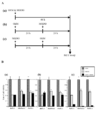
3種類のヒト膵臓癌細胞系であるBxPC-3 cells、MIAPaCa2 cells及びPANC-1 cellsは、図5Aに示す通りのGEM及びMGDGの投与スケジュールに従って処理し、さらに24時間培養し、最後にMTTアッセイにより細胞毒性を測定した。GEM及びMGDGの濃度は、それぞれ、LD50の半分及び20μMにした。
GEMによる各細胞に対する毒性のIC50の半分を、1として、GEM単独の相対活性割合、MGDG単独の相対活性割合、並びにMGDG及びGEM併用の相対活性割合を図5Bに示す。
図5B(c)の結果から明らかなように、MGDGを、GEM投与前に、投与することにより、非常に高い膵臓癌細胞の毒性を示すことを確認した。MGDG及びGEM併用による癌細胞増殖抑制活性は、MGDG単独及びGEM単独による癌細胞増殖抑制活性と比較して、少なくとも4倍以上の効果を示すことを見出した。
以上により、GEMと組み合わせて併用投与されるMGDGを有効成分として含む抗腫瘍剤は、優れた癌細胞増殖抑制活性を有する。
GEMとの併用によるMGDGの癌細胞増殖抑制活性の確認を行った。詳細は、以下の通りである。
3種類のヒト膵臓癌細胞系であるBxPC-3 cells、MIAPaCa2 cells及びPANC-1 cellsは、図5Aに示す通りのGEM及びMGDGの投与スケジュールに従って処理し、さらに24時間培養し、最後にMTTアッセイにより細胞毒性を測定した。GEM及びMGDGの濃度は、それぞれ、LD50の半分及び20μMにした。
GEMによる各細胞に対する毒性のIC50の半分を、1として、GEM単独の相対活性割合、MGDG単独の相対活性割合、並びにMGDG及びGEM併用の相対活性割合を図5Bに示す。
図5B(c)の結果から明らかなように、MGDGを、GEM投与前に、投与することにより、非常に高い膵臓癌細胞の毒性を示すことを確認した。MGDG及びGEM併用による癌細胞増殖抑制活性は、MGDG単独及びGEM単独による癌細胞増殖抑制活性と比較して、少なくとも4倍以上の効果を示すことを見出した。
以上により、GEMと組み合わせて併用投与されるMGDGを有効成分として含む抗腫瘍剤は、優れた癌細胞増殖抑制活性を有する。
(GEMとの併用によるMGDGの癌細胞アポトーシス誘導の確認)
GEMとの併用によるMGDGの癌細胞増殖抑制は、アポトーシス誘導しているかどうかをヒト膵臓癌細胞系であるMIAPaCa2 cellsを用いて確認した。詳細は、以下の通りである。
MIAPaCa2 cellsは、70μM MGDGで処理し、続いて処理12時間後50nM GEMで処理して、さらに処理12時間後に、アポトーシスの細胞をAPO-DirectTM Assay Staining kit及びフローサイトメトリーを使用して測定した。なお、未処理のMIAPaCa2 cellsのアポトーシス細胞の割合を1とした。
図6に示すように、MGDG及びGEM併用投与によるアポトーシス細胞数の割合は、MGDG単独及びGEM単独によるアポトーシス細胞数の割合と比較して、少なくとも3倍以上のアポトーシスを誘導していることを確認した。
以上により、MGDG及びGEM併用投与は、癌細胞のアポトーシスを非常に強く誘導していることを見出した。
GEMとの併用によるMGDGの癌細胞増殖抑制は、アポトーシス誘導しているかどうかをヒト膵臓癌細胞系であるMIAPaCa2 cellsを用いて確認した。詳細は、以下の通りである。
MIAPaCa2 cellsは、70μM MGDGで処理し、続いて処理12時間後50nM GEMで処理して、さらに処理12時間後に、アポトーシスの細胞をAPO-DirectTM Assay Staining kit及びフローサイトメトリーを使用して測定した。なお、未処理のMIAPaCa2 cellsのアポトーシス細胞の割合を1とした。
図6に示すように、MGDG及びGEM併用投与によるアポトーシス細胞数の割合は、MGDG単独及びGEM単独によるアポトーシス細胞数の割合と比較して、少なくとも3倍以上のアポトーシスを誘導していることを確認した。
以上により、MGDG及びGEM併用投与は、癌細胞のアポトーシスを非常に強く誘導していることを見出した。
(放射線照射との併用によるMGDGの抗腫瘍活性の確認)
放射線照射との併用によるMGDGの抗腫瘍活性の確認を、ヒト膵臓癌細胞を移植したマウスを用いて確認した。詳細は、以下の通りである。
放射線照射との併用によるMGDGの抗腫瘍活性の確認を、ヒト膵臓癌細胞を移植したマウスを用いて確認した。詳細は、以下の通りである。
(材料)
使用したマウスは、搬入時4週齢のBALB/cAJcl-nu/nuヌードマウスを使用した。
使用したX線照射装置は、MBR-1505R2(日立メディコ)X線照射装置を使用した。
使用したマウスは、搬入時4週齢のBALB/cAJcl-nu/nuヌードマウスを使用した。
使用したX線照射装置は、MBR-1505R2(日立メディコ)X線照射装置を使用した。
(ヒト膵臓癌細胞を移植したマウスの準備)
ヒト膵臓癌細胞であるMIAPaCa2を2×10⁶cells/100mLになるようにMatrigel中に混合して、MIAPaCa2を含むMatrigelを作製した。
前記MIAPaCa2を含むMatrigel 100μLを、前記ヌードマウスの足の付け根に注入して、腫瘍が10mm大程度になるまで経過観測した。
ヒト膵臓癌細胞であるMIAPaCa2を2×10⁶cells/100mLになるようにMatrigel中に混合して、MIAPaCa2を含むMatrigelを作製した。
前記MIAPaCa2を含むMatrigel 100μLを、前記ヌードマウスの足の付け根に注入して、腫瘍が10mm大程度になるまで経過観測した。
(放射線照射との併用によるMGDGの投与方法)
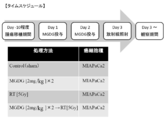
PBSに溶かしたMGDG100μL(投与するMGDGは2mg/kg)を、図7に記載のタイムスケジュールに沿って、腫瘍が10mm大程度になったヌードマウスの腫瘍局所に2回投与した。さらに、2回目投与から24時間後に、該マウスの腫瘍部以外を鉛でカバーして、腫瘍部にのみ5Gy(0.7Gy/min, 150kV)照射して、経過観測した。
PBSに溶かしたMGDG100μL(投与するMGDGは2mg/kg)を、図7に記載のタイムスケジュールに沿って、腫瘍が10mm大程度になったヌードマウスの腫瘍局所に2回投与した。さらに、2回目投与から24時間後に、該マウスの腫瘍部以外を鉛でカバーして、腫瘍部にのみ5Gy(0.7Gy/min, 150kV)照射して、経過観測した。
(放射線照射との併用によるMGDGの抗腫瘍活性の確認結果)
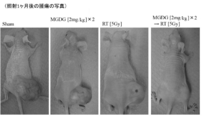
放射線照射後の各マウスの腫瘍増殖曲線及び放射線照射後1月の各マウスの腫瘍の写真を、それぞれ、図8及び図9に示す。
図8に示す腫瘍増殖曲線結果から明らかなように、放射線照射との併用によるMGDGの抗腫瘍活性効果は、MGDG単独及び放射線照射単独の抗腫瘍活性効果と比較して、約2.5倍の効果があることを確認した。また、図9に示す各マウスの腫瘍の写真から明らかなように、放射線照射との併用によるMGDGの投与されたマウスの腫瘍の大きさは、他のマウスと比較して、非常に小さいことを確認した。
以上により、放射線照射との併用によるMGDGの投与は、優れた抗膵臓腫瘍活性効果を示す。よって、放射線療法と組み合わせて投与されるMGDGを有効成分として含む膵臓癌治療用抗腫瘍剤は優れた抗膵臓腫瘍活性効果を有する。
放射線照射後の各マウスの腫瘍増殖曲線及び放射線照射後1月の各マウスの腫瘍の写真を、それぞれ、図8及び図9に示す。
図8に示す腫瘍増殖曲線結果から明らかなように、放射線照射との併用によるMGDGの抗腫瘍活性効果は、MGDG単独及び放射線照射単独の抗腫瘍活性効果と比較して、約2.5倍の効果があることを確認した。また、図9に示す各マウスの腫瘍の写真から明らかなように、放射線照射との併用によるMGDGの投与されたマウスの腫瘍の大きさは、他のマウスと比較して、非常に小さいことを確認した。
以上により、放射線照射との併用によるMGDGの投与は、優れた抗膵臓腫瘍活性効果を示す。よって、放射線療法と組み合わせて投与されるMGDGを有効成分として含む膵臓癌治療用抗腫瘍剤は優れた抗膵臓腫瘍活性効果を有する。
(GEMとの併用によるMGDGの抗腫瘍活性の確認)
GEMとの併用によるMGDGの抗腫瘍活性の確認を、ヒト膵臓癌細胞を移植したマウスを用いて確認した。詳細は、以下の通りである。
GEMとの併用によるMGDGの抗腫瘍活性の確認を、ヒト膵臓癌細胞を移植したマウスを用いて確認した。詳細は、以下の通りである。
(材料)
使用したマウスは、搬入時4週齢のBALB/cAJcl-nu/nuヌードマウスを使用した。
使用したマウスは、搬入時4週齢のBALB/cAJcl-nu/nuヌードマウスを使用した。
(ヒト膵臓癌細胞を移植したマウスの準備)
ヒト膵臓癌細胞であるMIAPaCa2を2×10⁶cells/100mLになるようにMatrigel中に混合して、MIAPaCa2を含むMatrigelを作製した。
前記MIAPaCa2を含むMatrigel 100μLを、前記ヌードマウスの足の付け根に注入して、腫瘍が10mm大程度になるまで経過観測した。
ヒト膵臓癌細胞であるMIAPaCa2を2×10⁶cells/100mLになるようにMatrigel中に混合して、MIAPaCa2を含むMatrigelを作製した。
前記MIAPaCa2を含むMatrigel 100μLを、前記ヌードマウスの足の付け根に注入して、腫瘍が10mm大程度になるまで経過観測した。
(GEMとの併用によるMGDGの投与方法)
PBSに溶かしたMGDG100μL(投与するMGDGは2mg/kg)及びPBSに溶かしたGEM100μL(投与するGEMは2ng/kg)を、図10に記載のタイムスケジュールに沿って、腫瘍が10mm大程度になったヌードマウスの腫瘍局所に2回投与した。
PBSに溶かしたMGDG100μL(投与するMGDGは2mg/kg)及びPBSに溶かしたGEM100μL(投与するGEMは2ng/kg)を、図10に記載のタイムスケジュールに沿って、腫瘍が10mm大程度になったヌードマウスの腫瘍局所に2回投与した。
(GEMとの併用によるMGDGの抗腫瘍活性の確認結果)
GEM及びMGDGの併用投与後の各マウスの腫瘍増殖曲線を図11に示す。
図11に示す腫瘍増殖曲線結果から明らかなように、GEMとの併用によるMGDGの抗腫瘍活性効果(特に、MGDG投与した後にGEMを投与した場合)は、MGDG単独及び放射線照射単独の抗腫瘍活性効果と比較して、約6倍以上の効果があることを確認した。
以上により、GEMとの併用によるMGDGの投与は、優れた抗膵臓腫瘍活性効果を示す。よって、GEMと組み合わせて投与されるMGDGを有効成分として含む膵臓癌治療用抗腫瘍剤は優れた抗膵臓腫瘍活性効果を有する。
GEM及びMGDGの併用投与後の各マウスの腫瘍増殖曲線を図11に示す。
図11に示す腫瘍増殖曲線結果から明らかなように、GEMとの併用によるMGDGの抗腫瘍活性効果(特に、MGDG投与した後にGEMを投与した場合)は、MGDG単独及び放射線照射単独の抗腫瘍活性効果と比較して、約6倍以上の効果があることを確認した。
以上により、GEMとの併用によるMGDGの投与は、優れた抗膵臓腫瘍活性効果を示す。よって、GEMと組み合わせて投与されるMGDGを有効成分として含む膵臓癌治療用抗腫瘍剤は優れた抗膵臓腫瘍活性効果を有する。
新規なMGDGを有効成分として含む医薬組成物又は食品組成物を提供することができる。
Claims (11)
- 抗腫瘍剤であるゲムシタビン(GEM)と、抗腫瘍効果を有するDNAポリメラーゼ阻害剤であるリン酸化GEMと、抗腫瘍効果を有する放射線療法とのいずれかと組み合わせて併用投与されることを特徴とする、モノガラクトシルジアシルグリセロール(MGDG)又はその薬学的に許容し得る塩を有効成分として含む医薬組成物又は食品組成物。
- GEMと組み合わせて併用投与されることを特徴とする、MGDG又はその薬学的に許容し得る塩を有効成分として含む請求項1に記載の抗腫瘍剤。
- 前記MGDGは、GEM投与前に、投与されることを特徴とする請求項2に記載の抗腫瘍剤。
- 前記抗腫瘍剤は、膵臓癌又は大腸癌治療用抗腫瘍剤である請求項2又は3に記載の抗腫瘍剤。
- リン酸化GEM又はGEMと組み合わせて併用投与されることを特徴とする、MGDG又はその薬学的に許容し得る塩を有効成分として含む請求項1に記載のDNAポリメラーゼ阻害剤。
- GEM又はリン酸化GEMと組み合わせて併用投与されることを特徴とする、MGDG又はその薬学的に許容し得る塩を有効成分として含む請求項1に記載のアポトーシス誘導剤。
- 放射線療法と組み合わせて投与されることを特徴とする、MGDG又はその薬学的に許容し得る塩を有効成分として含む請求項1に記載の膵臓癌治療用抗腫瘍剤。
- 抗腫瘍剤であるGEM投与と、抗腫瘍効果を有するDNAポリメラーゼ阻害剤であるリン酸化GEM投与と、抗腫瘍効果を有する放射線療法とのいずれか1以上と組み合わせてMGDG又はその薬学的に許容し得る塩を投与することを特徴とする、癌の治療方法。
- GEMとMGDG又はその薬学的に許容し得る塩を併用投与することを特徴とする請求項8に記載の癌の治療方法。
- 前記MGDGは、GEM投与前に、投与されることを特徴とする請求項9に記載の癌の治療方法。
- 前記治療方法は、膵臓癌又は大腸癌治療方法であることを特徴とする請求項8~10のいずれか1に記載の癌の治療方法。
Priority Applications (1)
| Application Number | Priority Date | Filing Date | Title |
|---|---|---|---|
| JP2014524901A JPWO2014010742A1 (ja) | 2012-07-13 | 2013-07-12 | モノガラクトシルジアシルグリセロール又はその薬学的に許容し得る塩を有効成分として含む医薬組成物又は食品組成物 |
Applications Claiming Priority (2)
| Application Number | Priority Date | Filing Date | Title |
|---|---|---|---|
| JP2012-157018 | 2012-07-13 | ||
| JP2012157018 | 2012-07-13 |
Publications (1)
| Publication Number | Publication Date |
|---|---|
| WO2014010742A1 true WO2014010742A1 (ja) | 2014-01-16 |
Family
ID=49916180
Family Applications (1)
| Application Number | Title | Priority Date | Filing Date |
|---|---|---|---|
| PCT/JP2013/069220 Ceased WO2014010742A1 (ja) | 2012-07-13 | 2013-07-12 | モノガラクトシルジアシルグリセロール又はその薬学的に許容し得る塩を有効成分として含む医薬組成物又は食品組成物 |
Country Status (2)
| Country | Link |
|---|---|
| JP (1) | JPWO2014010742A1 (ja) |
| WO (1) | WO2014010742A1 (ja) |
Citations (2)
| Publication number | Priority date | Publication date | Assignee | Title |
|---|---|---|---|---|
| JP2006508184A (ja) * | 2002-11-06 | 2006-03-09 | サイクラセル・リミテッド | Cdk阻害剤及びゲムシタビンを含む医薬組成物 |
| JP2011513370A (ja) * | 2008-03-07 | 2011-04-28 | ファルマ・マール・ソシエダード・アノニマ | 改善された抗腫瘍治療法 |
-
2013
- 2013-07-12 JP JP2014524901A patent/JPWO2014010742A1/ja active Pending
- 2013-07-12 WO PCT/JP2013/069220 patent/WO2014010742A1/ja not_active Ceased
Patent Citations (2)
| Publication number | Priority date | Publication date | Assignee | Title |
|---|---|---|---|---|
| JP2006508184A (ja) * | 2002-11-06 | 2006-03-09 | サイクラセル・リミテッド | Cdk阻害剤及びゲムシタビンを含む医薬組成物 |
| JP2011513370A (ja) * | 2008-03-07 | 2011-04-28 | ファルマ・マール・ソシエダード・アノニマ | 改善された抗腫瘍治療法 |
Non-Patent Citations (3)
| Title |
|---|
| AKIRA YOKOYAMA: "The 12th Japan Society of Clinical Oncology. V. New anticancer drug, EBM, developed in 1990s and the Future Prospects. Current Status and Future Directions of Gemcitabine in the Treatment of Non-Small Cell Lung Cancer and Pancreatic Cancer", JAPANESE JOURNAL OF CANCER AND CHEMOTHERAPY, vol. 27, no. 8, 31 July 2000 (2000-07-31), pages 1294 - 1300 * |
| CHIKAKO MURAKAMI ET AL.: "Effects of glycolipids from spinach on mammalian DNA polymerases", BIOCHEMICAL PHARMACOLOGY, vol. 65, 2003, pages 259 - 267 * |
| YUKIYA MATSUI ET AL.: "Horenso Yurai Toshishitsu MGDG(monogalactosyl diacylglycerol) to Hoshasen Shosha no Heiyo ni yoru Daichogan Saibo ni Taisuru Zoshoku Yokusei Kassei", JAPAN SOCIETY FOR BIOSCIENCE, BIOTECHNOLOGY, AND AGROCHEMISTRY KANSAI SHIBU KOENKAI KOEN YOSHISHU, vol. 2009, 30 October 2009 (2009-10-30), pages 176 * |
Also Published As
| Publication number | Publication date |
|---|---|
| JPWO2014010742A1 (ja) | 2016-06-23 |
Similar Documents
| Publication | Publication Date | Title |
|---|---|---|
| Chung et al. | Anticancer activity of subfractions containing pure compounds of Chaga mushroom (Inonotus obliquus) extract in human cancer cells and in Balbc/c mice bearing Sarcoma-180 cells | |
| JP5283659B2 (ja) | フィチン酸又はその誘導体とのメチル供与体の塩又は錯塩、及びその合成法 | |
| US20090215713A1 (en) | Use of atp for the manufacture of a medicament for the prevention and treatment of oxidative stress and related conditions | |
| JP5890043B2 (ja) | 抗癌活性を有する2−デオキシ単糖の新規なアセテート | |
| He et al. | The role of HK2 in tumorigenesis and development: potential for targeted therapy with natural products | |
| EP3146967B1 (en) | Use of an isoquinoline alkaloid derivative for preparing drug capable of promoting ampk activity | |
| Akasaka et al. | Monogalactosyl diacylglycerol, a replicative DNA polymerase inhibitor, from spinach enhances the anti-cell proliferation effect of gemcitabine in human pancreatic cancer cells | |
| EP3384929B1 (en) | Method for using small molecule compounds to induce human tumor cells to be directly reprogrammed into non-oncogenic cells | |
| WO2012177100A2 (en) | Composition comprising phosphatidylcholine as an active ingredient for attenuating toxicity of anticancer agent | |
| EP1402894A1 (en) | Cancerous metastasis inhibitors containing carbacyclic phosphatidic acid derivatives | |
| US11273135B2 (en) | Methods for using stabilized sulforaphene | |
| Song et al. | Myricetin exhibit selective anti-lymphoma activity by targeting BTK and is effective via oral administration in vivo | |
| US9707222B2 (en) | Isoquinoline alkaloid derivative for activating AMP-dependent protein kinase | |
| Baghli et al. | Targeting the Mitochondrial-Stem Cell Connection in Cancer Treatment: A Hybrid Orthomolecular Protocol | |
| JP4744297B2 (ja) | 糖脂質含有組成物、その用途およびその製造方法 | |
| WO2014010742A1 (ja) | モノガラクトシルジアシルグリセロール又はその薬学的に許容し得る塩を有効成分として含む医薬組成物又は食品組成物 | |
| CN102335180B (zh) | 乌苏烷类化合物在制备抗肿瘤药物中的应用 | |
| Hong et al. | Formulation, stability, and antitumor activity of 1-β-D-arabinofuranosylcytosine conjugate of thioether phospholipid | |
| Ito et al. | Antitumor effect of 6-phenyl-7 (6H)-isoselenazolo [4, 3-d] pyrimidone on the growth of Ehrlich ascites tumor | |
| US20220168319A1 (en) | COMBINED USE OF A-NOR-5alpha ANDROSTANE COMPOUND DRUG AND ANTICANCER DRUG | |
| JPH06199696A (ja) | 制癌・抗癌剤 | |
| US20230381083A1 (en) | Phytic Acid Ester Derivative | |
| JP2018008898A (ja) | 抗癌剤、放射線増感剤および食品組成物 | |
| CN104619325A (zh) | 治疗肿瘤的组合药物及其应用 | |
| JP2011037730A (ja) | Dna合成酵素阻害剤 |
Legal Events
| Date | Code | Title | Description |
|---|---|---|---|
| 121 | Ep: the epo has been informed by wipo that ep was designated in this application |
Ref document number: 13816849 Country of ref document: EP Kind code of ref document: A1 |
|
| DPE1 | Request for preliminary examination filed after expiration of 19th month from priority date (pct application filed from 20040101) | ||
| ENP | Entry into the national phase |
Ref document number: 2014524901 Country of ref document: JP Kind code of ref document: A |
|
| NENP | Non-entry into the national phase |
Ref country code: DE |
|
| 122 | Ep: pct application non-entry in european phase |
Ref document number: 13816849 Country of ref document: EP Kind code of ref document: A1 |