WO2014010444A1 - コンテンツ送信装置、コンテンツ再生装置、コンテンツ配信システム、コンテンツ送信装置の制御方法、コンテンツ再生装置の制御方法、データ構造、制御プログラムおよび記録媒体 - Google Patents
コンテンツ送信装置、コンテンツ再生装置、コンテンツ配信システム、コンテンツ送信装置の制御方法、コンテンツ再生装置の制御方法、データ構造、制御プログラムおよび記録媒体 Download PDFInfo
- Publication number
- WO2014010444A1 WO2014010444A1 PCT/JP2013/067983 JP2013067983W WO2014010444A1 WO 2014010444 A1 WO2014010444 A1 WO 2014010444A1 JP 2013067983 W JP2013067983 W JP 2013067983W WO 2014010444 A1 WO2014010444 A1 WO 2014010444A1
- Authority
- WO
- WIPO (PCT)
- Prior art keywords
- content
- segment
- content transmission
- request
- acquisition
- Prior art date
- Legal status (The legal status is an assumption and is not a legal conclusion. Google has not performed a legal analysis and makes no representation as to the accuracy of the status listed.)
- Ceased
Links
Images





Classifications
-
- H—ELECTRICITY
- H04—ELECTRIC COMMUNICATION TECHNIQUE
- H04N—PICTORIAL COMMUNICATION, e.g. TELEVISION
- H04N21/00—Selective content distribution, e.g. interactive television or video on demand [VOD]
- H04N21/40—Client devices specifically adapted for the reception of or interaction with content, e.g. set-top-box [STB]; Operations thereof
- H04N21/45—Management operations performed by the client for facilitating the reception of or the interaction with the content or administrating data related to the end-user or to the client device itself, e.g. learning user preferences for recommending movies, resolving scheduling conflicts
- H04N21/462—Content or additional data management e.g. creating a master electronic programme guide from data received from the Internet and a Head-end or controlling the complexity of a video stream by scaling the resolution or bit-rate based on the client capabilities
- H04N21/4622—Retrieving content or additional data from different sources, e.g. from a broadcast channel and the Internet
-
- H—ELECTRICITY
- H04—ELECTRIC COMMUNICATION TECHNIQUE
- H04N—PICTORIAL COMMUNICATION, e.g. TELEVISION
- H04N21/00—Selective content distribution, e.g. interactive television or video on demand [VOD]
- H04N21/20—Servers specifically adapted for the distribution of content, e.g. VOD servers; Operations thereof
- H04N21/23—Processing of content or additional data; Elementary server operations; Server middleware
- H04N21/238—Interfacing the downstream path of the transmission network, e.g. adapting the transmission rate of a video stream to network bandwidth; Processing of multiplex streams
- H04N21/2387—Stream processing in response to a playback request from an end-user, e.g. for trick-play
-
- H—ELECTRICITY
- H04—ELECTRIC COMMUNICATION TECHNIQUE
- H04N—PICTORIAL COMMUNICATION, e.g. TELEVISION
- H04N21/00—Selective content distribution, e.g. interactive television or video on demand [VOD]
- H04N21/20—Servers specifically adapted for the distribution of content, e.g. VOD servers; Operations thereof
- H04N21/23—Processing of content or additional data; Elementary server operations; Server middleware
- H04N21/24—Monitoring of processes or resources, e.g. monitoring of server load, available bandwidth, upstream requests
- H04N21/2402—Monitoring of the downstream path of the transmission network, e.g. bandwidth available
-
- H—ELECTRICITY
- H04—ELECTRIC COMMUNICATION TECHNIQUE
- H04N—PICTORIAL COMMUNICATION, e.g. TELEVISION
- H04N21/00—Selective content distribution, e.g. interactive television or video on demand [VOD]
- H04N21/20—Servers specifically adapted for the distribution of content, e.g. VOD servers; Operations thereof
- H04N21/23—Processing of content or additional data; Elementary server operations; Server middleware
- H04N21/24—Monitoring of processes or resources, e.g. monitoring of server load, available bandwidth, upstream requests
- H04N21/2405—Monitoring of the internal components or processes of the server, e.g. server load
-
- H—ELECTRICITY
- H04—ELECTRIC COMMUNICATION TECHNIQUE
- H04N—PICTORIAL COMMUNICATION, e.g. TELEVISION
- H04N21/00—Selective content distribution, e.g. interactive television or video on demand [VOD]
- H04N21/60—Network structure or processes for video distribution between server and client or between remote clients; Control signalling between clients, server and network components; Transmission of management data between server and client, e.g. sending from server to client commands for recording incoming content stream; Communication details between server and client
- H04N21/63—Control signaling related to video distribution between client, server and network components; Network processes for video distribution between server and clients or between remote clients, e.g. transmitting basic layer and enhancement layers over different transmission paths, setting up a peer-to-peer communication via Internet between remote STB's; Communication protocols; Addressing
- H04N21/633—Control signals issued by server directed to the network components or client
- H04N21/6332—Control signals issued by server directed to the network components or client directed to client
-
- H—ELECTRICITY
- H04—ELECTRIC COMMUNICATION TECHNIQUE
- H04N—PICTORIAL COMMUNICATION, e.g. TELEVISION
- H04N21/00—Selective content distribution, e.g. interactive television or video on demand [VOD]
- H04N21/80—Generation or processing of content or additional data by content creator independently of the distribution process; Content per se
- H04N21/83—Generation or processing of protective or descriptive data associated with content; Content structuring
- H04N21/845—Structuring of content, e.g. decomposing content into time segments
- H04N21/8456—Structuring of content, e.g. decomposing content into time segments by decomposing the content in the time domain, e.g. in time segments
-
- H—ELECTRICITY
- H04—ELECTRIC COMMUNICATION TECHNIQUE
- H04N—PICTORIAL COMMUNICATION, e.g. TELEVISION
- H04N21/00—Selective content distribution, e.g. interactive television or video on demand [VOD]
- H04N21/80—Generation or processing of content or additional data by content creator independently of the distribution process; Content per se
- H04N21/85—Assembly of content; Generation of multimedia applications
- H04N21/858—Linking data to content, e.g. by linking an URL to a video object, by creating a hotspot
- H04N21/8586—Linking data to content, e.g. by linking an URL to a video object, by creating a hotspot by using a URL
Definitions
- the present invention relates to a content transmission apparatus that transmits content, a content reproduction apparatus that acquires and reproduces content, a content distribution system, a control method for the content transmission apparatus, a control method for the content reproduction apparatus, a data structure, a control program, and a recording medium. It is.
- VOD Video On Demand
- data is transmitted and received between a server (content providing apparatus) and a client (content reproducing apparatus) using HTTP (HyperText Transfer Protocol).
- MPEG Motion Picture Experts Group
- MPEG-DASH Dynamic Adaptive Streaming over HTTP
- content is time-divided into a plurality of segments and transmitted in segment units.
- Each segment is composed of one or a plurality of fragments.
- the content is composed of one or a plurality of periods, and one period includes one or a plurality of segments.
- a plurality of representations having different quality types are prepared for one content. For example, a plurality of segment data encoded at different bit rates for each segment is prepared. Accordingly, a client that receives and reproduces content can execute adaptive streaming by changing the bit rate of the requested content (segment) in accordance with the reception status of the content.
- content having the same content and quality type may be provided by a plurality of servers.
- the client can switch the content acquisition source in accordance with the content reception status or the like.
- the first server 101 and the second server 102 are connected via a network to a segment storage device 106 that stores segment data that is a content data body, and MPD data that is content management information ( It is assumed that segment data and MPD data are respectively acquired from the MPD storage device 105 that stores the details).
- the client 103 can switch the content request destination to the first server 101 or the second server 102 in accordance with the content reception status or the like.
- the first server 101 and the second server 102 may locally hold segment data and MPD data, respectively.
- MPD Media Presentation Description
- MPD is content metadata and describes content management information in XML format.
- MPD is information used by the client when acquiring / reproducing content.
- FIG. 15 is a diagram illustrating a description example of MPD.
- the MPD 200 describes acquisition destination information 201 indicating a content acquisition destination. More specifically, in the example illustrated in FIG. 15, the URL of the server is described as the acquisition destination information 201.
- URLs of two servers cdn1 and cdn2 are described, and the client can select a content acquisition destination by referring to the MPD 200 as described above.
- high-quality segment information 202 indicating a high-quality segment and low-quality segment information 203 indicating a low-quality segment are described as segments included in a certain period (from reproduction time 0 seconds to 600 seconds).
- the high quality segment information 202 describes the ID and bit rate of the high quality representation included in the period.
- the length and URL of each segment included in the period are described. The same applies to the low quality segment information 203.
- the period is composed of 60 segments from the first segment to the 60th segment.
- FIG. 16 is a diagram illustrating an example of an operation sequence in the case of switching servers based on content reception status.
- FIG. 17 is a diagram illustrating an example of an HTTP message when a server is switched based on a content reception status.
- the first server 101 and the second server 102 obtain the segment data and MPD data from the segment storage device 106 and the MPD storage device 105, respectively, and the client 103 determines the request destination of the content. It is possible to switch to the first server (cdn1) 101 or the second server (cdn2) 102. Further, it is assumed that the MPD 200 shown in FIG. 15 is associated with the content.
- the client 103 refers to the MPD 200 and transmits a request message 301 for requesting transmission of the Nth segment to the first server 101.
- the first server 101 transmits a response message 302 including the data body of the Nth segment to the client 103 as a response to the request message 301.
- the client 103 searches for an alternative server with reference to the MPD 200 (process 304).
- the client 103 refers to the MPD 200 and sends a request message 305 for requesting the second server 102 to transmit the next (N + 1) th segment. 2 to the server 102.
- the second server 102 transmits a response message 306 including the data body of the (N + 1) th segment to the client 103.
- FIG. 18 is a diagram illustrating an example of an operation sequence when the quality type of content to be acquired is switched based on the content reception status.
- FIG. 19 is a diagram illustrating an example of an HTTP message when the quality type of content acquired based on the content reception status is switched.
- the MPD 200 illustrated in FIG. 15 is associated with the content, and the client 103 receives a high-quality Representation (rep1) or a low-quality Representation (rep2) from the first server (cdn1) 101 depending on the reception status. ).
- the client 103 refers to the MPD 200 and transmits a request message 311 for requesting transmission of the Nth segment of the high quality representation to the first server 101.
- the first server 101 transmits a response message 312 including the data body of the Nth segment of high quality representation to the client 103.
- the client 103 when the client 103 detects the deterioration of the reception status when receiving the Nth segment of the high quality representation (process 313), the client 103 searches for an alternative representation with reference to the MPD 200 (process 314).
- the client 103 since the low-quality representation (rep2) is described as an alternative representation in the MPD 200, the client 103 refers to the MPD 200 and requests the first server 101 to transmit the (N + 1) th segment of the low-quality representation.
- Request message 315 is transmitted to the first server 101.
- the first server 101 transmits a response message 316 including the data body of the (N + 1) th segment of low quality representation to the client 103.
- FIG. 20 is a diagram illustrating an example of an operation sequence when server switching is realized by updating the MPD.
- FIG. 21 is a diagram illustrating MPD before MPD update, and
- FIG. 22 is a diagram illustrating MPD after MPD update.
- the first server 101 when requests concentrate and become a high load state, the first server 101 describes the URL of the second server 102 in the MPD, updates the MPD, and prompts the client 103 to switch to the second server 102. Shall.
- the client 103 confirms whether the MPD is updated at a predetermined interval (every 60 seconds).
- the client 103 performs confirmation (polling) of the presence or absence of MPD update to the first server 101 in parallel with the content acquisition processing based on the MPD shown in FIG. ).
- the first server 101 since the first server 101 has not updated the MPD, the first server 101 notifies the client 103 that there is no MPD update (process 402).
- the first server 101 since requests concentrated on the first server 101 and the load became high, the first server 101 generates the MPD shown in FIG. 22 in which the URL of the second server 102 is described, and updates the MPD ( Process 403).
- the client 103 confirms whether or not the MPD is updated with respect to the first server 101 at the next update confirmation timing (process 404). At this time, since the MPD has been updated, the first server 101 transmits the updated MPD to the client 103 (process 405). Then, the client 103 refers to the updated MPD and changes the content acquisition destination to the second server 102.
- the client 103 does not immediately switch to the second server 102, but a delay occurs according to the MPD update confirmation interval. Further, when the MPD update confirmation interval is shortened, the processing of the client 103 and the first server 101 increases, and even when there is no MPD update, exchange of data (for example, HTTP messages) accompanying polling is possible. Since it occurs frequently, there is a problem that the network bandwidth is compressed.
- the present invention has been made in view of the above-described problems, and its object is to provide a content transmission device, a content reproduction device, a content distribution system, a content transmission device control method, and a content that execute adaptive streaming in real time.
- a control method a data structure, a control program, and a recording medium of a playback device.
- the content transmission device is a content transmission device that transmits content composed of a plurality of segments to the content reproduction device for each segment, and each segment from the content reproduction device.
- a transmission unit that transmits a response including the segment to the content reproduction device, a processing amount measurement unit that measures a processing amount of the content transmission device, and a measurement amount measurement unit that measures Information generation means for generating acquisition destination switching instruction information for instructing to switch the content acquisition destination to another content transmission apparatus when the most recent processing amount is a predetermined value or more, and the transmission means includes the above
- the information generation means generates acquisition destination switching instruction information
- Is characterized by transmitting an acquisition destination switching instruction information is information generating means generates.
- a content transmission device control method is a content transmission device control method for transmitting content composed of a plurality of segments to a content reproduction device for each segment in order to solve the above-described problem.
- the transmission step includes the information generation step.
- When generating the acquisition destination switching instruction information it has, together with the segment, is characterized by transmitting an acquisition destination switching instruction information generated in the information generating step.
- the content transmission apparatus when the processing amount of the content transmission apparatus is a predetermined value or more (that is, in a high load state), the content transmission apparatus transmits the content to the content reproduction apparatus when the segment is acquired. Can be switched to another content transmission apparatus. Therefore, when the content transmission device is in a high load state, the content reproduction device can know the cause of the deterioration of the segment reception status in real time. Therefore, the content transmission apparatus has an effect that the content reproduction apparatus can execute optimum adaptive streaming in real time.
- the information generation unit adds the acquisition destination switching instruction information to a header portion of the segment.
- the information generation unit adds the acquisition destination switching instruction information to a header of the response.
- the information generation unit may change the content acquisition destination according to the processing amount when the latest processing amount measured by the processing amount measurement unit is a predetermined value or more. It is preferable to generate acquisition destination switching instruction information for instructing timing for switching to the content transmission apparatus.
- the content transmission device instructs the content playback device to switch to another content transmission device according to the processing amount of the device itself (that is, according to the level of the high load state). can do. For example, when the content transmission device is in a high load state but the degree is low (when the urgency is low), the content transmission device sends the content playback device to the next segment or at the next period. You may instruct
- the content transmission device when the content transmission device is in a high load state and the degree is high (the urgency is high), the content transmission device interrupts the current request to the content reproduction device and immediately other content transmission devices May be instructed to switch to In this way, the content transmission device can cause the content reproduction device to execute more optimal adaptive streaming in real time according to the processing amount of the device itself.
- a content transmission apparatus is a content transmission apparatus that transmits content composed of a plurality of segments to a content reproduction apparatus for each segment in order to solve the above-described problem.
- a transmission unit that transmits a response including the segment to the content reproduction device, a processing amount measurement unit that measures the processing amount of the content transmission device, and the processing amount measurement unit
- Information processing means for generating load state information indicating that the content transmission device is in a high load state when the processing amount measured by the information transmission device is greater than or equal to a predetermined value, the transmission means, together with the segment, the information The most recent load state information generated by the generation means is transmitted.
- a content transmission device control method is a content transmission device control method for transmitting content composed of a plurality of segments to a content reproduction device for each segment in order to solve the above-described problem.
- a transmission step of transmitting a response including the segment to the content reproduction device, and a processing amount measurement step of measuring the processing amount of the content transmission device As a response to the request for transmission of each segment from the content reproduction device, a transmission step of transmitting a response including the segment to the content reproduction device, and a processing amount measurement step of measuring the processing amount of the content transmission device;
- An information generating step for generating load state information indicating that the content transmitting device is in a high load state when the processing amount measured in the processing amount measuring step is a predetermined value or more, wherein the transmitting step includes Along with the segment, the information generation step It is characterized by transmitting the last load status information.
- the content transmission apparatus when the processing amount of the content transmission apparatus is greater than or equal to a predetermined value (that is, when the content reproduction apparatus is in a high load state), the content transmission apparatus automatically It can be notified that the device is in a high load state. Therefore, when the content transmission device is in a high load state, the content reproduction device can know the cause of the deterioration of the segment reception status in real time. Upon receiving the notification, the content reproduction device can switch the content acquisition destination to another content transmission device. Therefore, the content transmission apparatus has an effect that the content reproduction apparatus can execute optimum adaptive streaming in real time.
- a predetermined value that is, when the content reproduction apparatus is in a high load state
- the information generation unit adds the load state information to a header portion of the segment.
- the information generation unit adds the load state information to a header of the response.
- the information generation unit determines whether the content transmission device has a high load state according to the processing amount. It is preferable to generate load state information indicating the degree.
- the content transmission device notifies the content reproduction device of the degree of the high load state of the own device according to the processing amount of the own device (that is, according to the degree of the high load state). can do. For example, when the content transmission device is in a high-load state but notifies that the degree is low (when it is notified that the urgency is low), the content reproduction device starts from the time of acquiring the next segment or the next period. May be switched to another content transmitting apparatus from the time of acquisition of the segment included in the. On the other hand, when the content transmission device is in a high load state and notifies that the degree is high (when notification is high urgency), the content playback device interrupts the current request and immediately transmits another content. You may make it switch to an apparatus. In this way, the content transmission device notifies the degree of the high load state of the device itself, so that the content reproduction device can execute more optimal adaptive streaming in real time.
- the content playback apparatus is a content playback apparatus that acquires and plays back content composed of a plurality of segments from a content transmission device for each segment in order to solve the above-described problem.
- An acquisition unit that transmits a request for transmitting each segment to the device and acquires a response including the segment as a response to the request.
- the acquisition destination switching instruction information for instructing switching to another content transmission apparatus is acquired, the request is transmitted to another content transmission apparatus.
- a method for controlling a content reproduction apparatus is a method for controlling a content reproduction apparatus that acquires and reproduces content composed of a plurality of segments from a content transmission apparatus for each segment in order to solve the above-described problem. And transmitting a request for requesting the transmission of each segment to the content transmission device, and obtaining a response including the segment as a response to the request, the obtaining step including the segment, When the acquisition destination switching instruction information for instructing to switch the content acquisition destination to another content transmission apparatus is acquired, the request is transmitted to the other content transmission apparatus.
- the content reproduction device can switch the content acquisition destination to another content transmission device based on an instruction from the content transmission device when a segment is acquired from the content transmission device.
- the content transmission device when the content transmission device is in a high load state, it is conceivable that the reception status of the segment of the content reproduction device deteriorates. Therefore, the content reproduction device can execute optimum adaptive streaming in real time by switching the acquisition source to another content transmission device different from the content transmission device based on the instruction of the content transmission device. Play.
- the acquisition unit may transmit the request to another content transmission apparatus when the acquisition destination switching instruction information is added to a header portion of the segment. preferable.
- the acquisition unit preferably transmits the request to another content transmission device when the acquisition destination switching instruction information is added to a header of the response.
- the acquisition unit instructs the timing to switch the content acquisition destination to another content transmission apparatus when the acquisition source switching instruction information indicates other content transmission at the instructed timing.
- the request is sent to the device.
- the content reproduction device can switch the content acquisition destination to another content transmission device at the instructed timing based on the instruction from the content transmission device. For example, when the content transmission device is in a high load state but the degree is low (when the urgency is low), the content transmission device sends the content playback device to the next segment or at the next period. You may instruct
- the content transmission device when the content transmission device is in a high load state and the degree is high (the urgency is high), the content transmission device interrupts the current request to the content reproduction device and immediately other content transmission devices May be instructed to switch to In this way, the content reproduction device can execute more optimal adaptive streaming in real time according to the processing amount of the content transmission device based on the instruction of the content transmission device.
- the content playback apparatus is a content playback apparatus that acquires and plays back content composed of a plurality of segments from a content transmission device for each segment in order to solve the above-described problem.
- An acquisition unit that transmits a request for transmission of each segment to the device and acquires a response including the segment as a response to the request, and the acquisition unit includes the segment and the content transmission device When load state information indicating a load state is acquired, the request is transmitted to another content transmission device.
- a method for controlling a content reproduction apparatus is a method for controlling a content reproduction apparatus that acquires and reproduces content composed of a plurality of segments from a content transmission apparatus for each segment in order to solve the above-described problem. And transmitting a request for requesting the transmission of each segment to the content transmission device, and obtaining a response including the segment as a response to the request, the obtaining step including the segment, When the load state information indicating that the content transmission device is in a high load state is acquired, the request is transmitted to another content transmission device.
- the content reproduction device can know whether or not the content transmission device is in a high load state when acquiring a segment from the content transmission device.
- the content transmission device when the content transmission device is in a high load state, it is conceivable that the reception status of the segment of the content reproduction device deteriorates. Therefore, the content reproduction device can execute optimum adaptive streaming in real time by switching the acquisition source to another content transmission device different from the content transmission device based on the presence / absence of notification from the content transmission device. There is an effect.
- the acquisition unit transmits the request to another content transmission apparatus when the load status information is added to a header portion of the segment.
- the acquisition unit transmits the request to another content transmission apparatus when the load status information is added to a header of the response.
- the acquisition unit transmits the content to another content transmission device at a predetermined timing according to the level. It is preferable to send the request to the server.
- the content reproduction device can know the degree of the high load state of the content transmission device at the time of segment acquisition from the content transmission device. For example, when the content transmission device is in a high load state but the degree is low (when urgency is low), the content reproduction device starts from the time of acquiring the next segment or the time of acquiring the segment included in the next period. Alternatively, it may be switched to another content transmission device. On the other hand, when the content transmission device is in a high load state and the degree is high (the urgency is high), the content reproduction device may interrupt the current request and immediately switch to another content transmission device. . In this way, the content reproduction apparatus can execute more optimal adaptive streaming in real time according to the degree of the high load state of the content transmission apparatus.
- the content distribution system preferably includes the content transmission device and the content reproduction device.
- the content distribution system has the same effects as the content transmission device and the content reproduction device.
- a data structure of a plurality of segments constituting content acquired by the content reproduction device from the content transmission device, and acquisition instructing the header portion of the segment to switch the content acquisition destination to another content transmission device A segment data structure including destination switching instruction information or load state information indicating that the content transmission device is in a high load state is also included in the scope of the present invention.
- the content playback device is a response to a request for requesting transmission of each segment constituting the content to the content transmission device, the data structure of the response including the segment acquired by the content playback device,
- the response header includes acquisition destination switching instruction information for instructing to switch the content acquisition destination to another content transmission apparatus, or load state information indicating that the content transmission apparatus is in a high load state.
- the response data structure is also included in the scope of the present invention.
- the content transmission device and the content reproduction device may be realized by a computer.
- the content transmission device is operated by causing the computer to operate as each unit of the content transmission device and the content reproduction device.
- a control program for realizing the content reproduction apparatus on a computer and a computer-readable recording medium on which the program is recorded also fall within the scope of the present invention.
- the content transmission device includes, as a response to a request for requesting transmission of each segment from the content reproduction device, a transmission unit that transmits a response including the segment to the content reproduction device,
- a transmission unit that transmits a response including the segment to the content reproduction device
- the method for controlling a content transmission device includes a transmission step of transmitting a response including the segment to the content reproduction device as a response to a request for requesting transmission of each segment from the content reproduction device;
- a processing amount measurement step for measuring the processing amount of the content transmission device, and an instruction to switch the content acquisition source to another content transmission device when the most recent processing amount measured in the processing amount measurement step is equal to or greater than a predetermined value
- An information generation step for generating acquisition destination switching instruction information to be generated, and when the transmission step generates the acquisition destination switching instruction information in the information generation step, the acquisition generated in the information generation step together with the segment The destination switching instruction information is transmitted.
- the content transmission device has an effect that the content reproduction device can execute optimum adaptive streaming in real time.
- the content transmission device includes a transmission unit that transmits a response including the segment to the content reproduction device as a response to the request for transmission of each segment from the content reproduction device, and the content transmission device.
- a processing amount measuring means for measuring the amount of processing, and information generation for generating load state information indicating that the content transmission device is in a high load state when the processing amount measured by the processing amount measuring means is equal to or greater than a predetermined value
- the transmission means transmits the latest load state information generated by the information generation means together with the segment.
- the method for controlling a content transmission device includes a transmission step of transmitting a response including the segment to the content reproduction device as a response to a request for requesting transmission of each segment from the content reproduction device; A processing amount measurement step for measuring a processing amount of the content transmission device; and load state information indicating that the content transmission device is in a high load state when the processing amount measured in the processing amount measurement step is equal to or greater than a predetermined value.
- An information generating step for generating, and the transmitting step transmits the latest load state information generated in the information generating step together with the segment.
- the content transmission device has an effect that the content reproduction device can execute optimum adaptive streaming in real time.
- the content reproduction apparatus includes an acquisition unit that transmits a request for requesting transmission of each segment to the content transmission apparatus, and acquires a response including the segment as a response to the request.
- the acquisition unit acquires the acquisition destination switching instruction information instructing switching of the content acquisition destination to another content transmission apparatus together with the segment, the acquisition unit transmits the request to the other content transmission apparatus.
- the content playback apparatus control method includes an acquisition step of transmitting a request for requesting transmission of each segment to the content transmission apparatus and acquiring a response including the segment as a response to the request. And the acquisition step transmits the request to the other content transmission apparatus when acquiring the acquisition destination switching instruction information instructing to switch the content acquisition destination to another content transmission apparatus together with the segment. .
- the content reproduction device can execute optimum adaptive streaming in real time by switching the acquisition source to another content transmission device different from the content transmission device based on the instruction of the content transmission device. Play.
- the content reproduction apparatus includes an acquisition unit that transmits a request for requesting transmission of each segment to the content transmission apparatus, and acquires a response including the segment as a response to the request.
- the acquisition unit transmits the request to another content transmission device when acquiring the load state information indicating that the content transmission device is in a high load state together with the segment.
- the content playback apparatus control method includes an acquisition step of transmitting a request for requesting transmission of each segment to the content transmission apparatus and acquiring a response including the segment as a response to the request.
- the acquisition step when the load state information indicating that the content transmission device is in a high load state is acquired together with the segment, the request is transmitted to another content transmission device.
- the content reproduction device can execute optimum adaptive streaming in real time by switching the acquisition source to another content transmission device different from the content transmission device based on the presence / absence of notification from the content transmission device. There is an effect.
- FIG. 1 is a block diagram illustrating an example of a configuration of a content distribution system.
- FIG. It is a figure which shows an example of the principal part structure of the server and client which are contained in the said content delivery system. It is a flowchart which shows an example of the content transmission process of the said server. It is a flowchart which shows an example of the content acquisition process of the said client. It is a figure which shows an example of the operation
- FIGS. 1 to 13 An embodiment of the present invention will be described with reference to FIGS. 1 to 13 as follows. First, an outline of the content distribution system of the present embodiment will be described based on FIG.
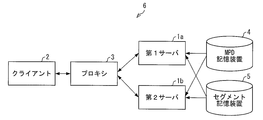
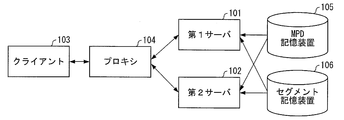
- FIG. 2 is a diagram showing an outline of the content distribution system 6 according to the present embodiment.
- the content distribution system 6 includes a first server 1a, a second server 1b, a client 2, a proxy 3, an MPD storage device 4, and a segment storage device 5.
- the client 2 connects to the first server 1a and the second server 1b via the proxy 3.
- the first server 1a and the second server 1b are connected to the MPD storage device 4 and the segment storage device 5, respectively.
- Each device is connected by an arbitrary network of wired communication or wireless communication.
- the first server 1a and the second server 1b are collectively referred to as the server 1.
- the configuration of the content distribution system 6 is not limited to the example shown in FIG.
- the content distribution system 6 may include three or more servers 1, and may include two or more clients 2.
- the content distribution system 6 may include two or more proxies 3.
- the content distribution system 6 may not include the proxy 3, and in this case, the client 2 is directly connected to the server 1.
- HTTP which is widely used as a hypertext transfer protocol
- the content distributed by the server 1 is video content, and the content is segmented ISOBFF data. That is, in the present embodiment, the content distribution system 6 distributes content based on the above-described MPEG-DASH standard.
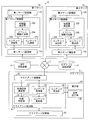
- FIG. 1 is a diagram illustrating an example of a main configuration of the first server 1 a, the second server 1 b, and the client 2.
- the proxy 3 is omitted in FIG.
- the server 1 is a content transmission device that receives a request message (request) requesting transmission of content from the client 2 and transmits a response message (response) to the received request message. Specifically, when a request for requesting transmission of content management information (MPD) is received from the client 2, a response including the MPD of the content is transmitted to the client 2. When a request for requesting transmission of a segment constituting the content is received from the client 2, a response including the segment is transmitted to the client 2.
- MPD content management information
- the server 1 acquires MPD data and segment data from the MPD storage device 4 and the segment storage device 5 on the network 7, but the present invention is not limited to this.
- each server 1 may hold MPD data and segment data locally.
- the first server 1a includes a first server control unit 11a, a first server storage unit 12a, and a first server communication unit 13a.
- the first server control unit 11a includes a content acquisition unit 21a, a content transmission unit 22a, a processing amount measurement unit 23a, and an event information addition unit 24a as functional blocks.
- the second server 1b has the same configuration as the first server 1a, and includes a second server control unit 11b, a second server storage unit 12b, and a second server communication unit 13b.
- the second server control unit 11b includes a content acquisition unit 21b, a content transmission unit 22b, a processing amount measurement unit 23b, and an event information addition unit 24b as functional blocks.
- the first server control unit 11a and the second server control unit 11b, the first server storage unit 12a and the second server storage unit 12b, and the first server communication unit 13a and the second server communication unit 13b are collectively referred to.
- the content acquisition units 21a and 21b, the content transmission units 22a and 22b, the processing amount measurement units 23a and 23b, and the event information addition units 24a and 24b are collectively referred to as a content acquisition unit 21, a content transmission unit (transmission means). 22, a processing amount measuring unit (processing amount measuring unit) 23 and an event information adding unit (information generating unit) 24.
- the server communication unit 13 communicates with other devices such as the client 2, the MPD storage device 4, and the segment storage device 5 by wireless communication means or wired communication means, and exchanges data according to instructions from the server control unit 11. Is.
- the server control unit 11 performs various operations by executing a program read from the server storage unit 12 to a temporary storage unit (not shown), and comprehensively controls each unit included in the server 1. is there.
- Each function block (21 to 24) of the server control unit 11 includes a program stored in a storage device realized by a CPU (central processing unit), such as a ROM (read only memory), and a random access memory (RAM). This can be realized by reading out and executing the temporary storage unit realized in the above.
- a CPU central processing unit
- ROM read only memory
- RAM random access memory
- the content acquisition unit 21 acquires MPD data from the MPD storage device 4 or segment data from the segment storage device 5 based on an instruction from the content transmission unit 22.
- the content acquisition unit 21 outputs the acquired MPD data to the content transmission unit 22.
- the content acquisition unit 21 outputs the acquired segment data to the event information addition unit 24.
- the content acquisition unit 21 may acquire MPD data and / or segment data in advance regardless of whether there is an instruction from the content transmission unit 22.
- the content acquisition unit 21 stores the MPD data and segment data acquired in advance in the server storage unit 12, and MPD data and segment data from the server storage unit 12 based on an instruction from the content transmission unit 22. Is read.
- the content transmission unit 22 When the content transmission unit 22 receives a request from the client 2, the content transmission unit 22 transmits a response to the request to the client 2. Specifically, when a request for requesting transmission of content management information (MPD) is received from the client 2, the content acquisition unit 21 is instructed to acquire the MPD of the content, and the MPD data is acquired from the content acquisition unit 21. Then, a response including the acquired MPD data is transmitted to the client 2. Further, when a request for transmission of a segment constituting the content is received from the client 2, the content acquisition unit 21 is instructed to acquire the segment, and when the segment data is acquired from the event information addition unit 24, the segment data Is sent to the client 2.
- MPD content management information
- the processing amount measuring unit 23 measures the processing amount of the server 1.
- the processing amount measuring unit 23 may measure an actual processing amount (absolute value) or a relative processing amount (CPU usage rate, etc.). Alternatively, the processing amount measurement unit 23 may use the number of requests from the client as the processing amount.
- the processing amount measuring unit 23 notifies the event information adding unit 24 of the measured processing amount.
- the event information adding unit 24 adds the event information to the segment data acquired from the content acquisition unit 21 and outputs it to the content transmission unit 22 when the processing amount notified from the processing amount measurement unit 23 is equal to or greater than a predetermined value. On the other hand, when the processing amount notified from the processing amount measurement unit 23 is less than the predetermined value, the event information addition unit 24 outputs the segment data acquired from the content acquisition unit 21 to the content transmission unit 22 as it is.
- the event information adding unit 24 may add the event information to the segment data in the box format defined by ISO / IEC 14496-12 (ISOBFF) in the segment data body ( For example, event information may be added (inserted) to the header portion of the segment data), and event information may be added to the HTTP header of the HTTP response message that transmits the segment data body.
- ISO / IEC 14496-12 ISO / IEC 14496-12
- the event information added by the event information adding unit 24 may be server switching instruction information (acquisition destination switching instruction information) that causes the client 2 to (forcibly) switch the server from which the content is acquired, or simply It may be load state information indicating the processing amount of the server 1.
- the event information may include alternative server information indicating an alternative server in addition to the server switching instruction information or the load state information.
- the event information adding unit 24 may generate the content of the server switching instruction information according to the processing amount notified from the processing amount measuring unit 23. For example, it is assumed that the processing amount equal to or greater than a predetermined value is divided into three ranges of high load state A, high load state B, and high load state C (high load state A> high load state B> high load state C). ). In this case, if the processing amount is a high load state A, the event information adding unit 24 interrupts the current request, generates server switching instruction information for instructing switching of the server 1 immediately, and the processing amount is high. If it is in state B, server switching instruction information for instructing switching of server 1 is generated from the request for the next segment. If the processing amount is high load state C, switching of server 1 is instructed from the request for the next period. Server switching instruction information to be generated may be generated.
- the event information adding unit 24 When the event information adding unit 24 generates the load state information as the event information, if the processing amount is the high load state A, the event information adding unit 24 generates the load state information indicating the high load state A, and the processing amount is the high load state. If B, the load state information indicating the high load state B may be generated, and if the processing amount is the high load state C, the load state information indicating the high load state C may be generated.
- the server storage unit 12 stores programs, data, and the like that the server control unit 11 refers to.
- the MPD data and segment data acquired by the content acquisition unit 21 may be stored.
- the client 2 is a content reproduction device that reproduces content acquired from another device such as the server 1 or content stored in the own device.
- the client 2 is, for example, a digital television, a recorder, an STB (Set Top Box), a PC, a mobile phone, a game machine, a PDA (Personal Digital Assistant), a digital camera, a digital video, or the like.
- the client 2 includes a client control unit 41, a client storage unit 42, a client communication unit 43, a display unit 44, and an audio output unit 45.
- the client 2 may include members such as an operation unit and a voice input unit, but the members are not shown because they are not related to the feature points of the invention.
- the client communication unit 43 communicates with other devices such as the server 1 and the proxy 3 by wireless communication means or wired communication means, and exchanges data in accordance with instructions from the client control unit 41.
- the display unit 44 displays an image according to an instruction from the client control unit 41.
- the display unit 44 only needs to display an image in accordance with an instruction from the client control unit 41.
- an LCD liquid crystal display
- an organic EL display organic EL display
- a plasma display or the like can be applied.
- the audio output unit 45 receives an electrical signal from the client control unit 41, converts the received electrical signal into sound, and outputs the sound to the outside of the client 2.
- the audio output unit 45 is a so-called speaker.
- the client control unit 41 performs various operations by executing a program read from the client storage unit 42 to a temporary storage unit (not shown), and comprehensively controls each unit included in the client 2. is there.
- the client control unit 41 includes a content acquisition unit (acquisition means) 51, a reception status measurement unit 52, a content analysis unit 53, a switching determination unit 54, and a content reproduction unit 55 as functional blocks.
- the CPU reads a program stored in a storage device realized by a ROM or the like to a temporary storage unit realized by a RAM or the like and executes the program. Can be realized.
- the content acquisition unit 51 transmits a request to the server 1 via the client communication unit 43, and acquires content (an MPD associated with the content and a segment constituting the content) from the server 1.
- the content acquisition unit 51 issues a request for requesting transmission of management information (MPD) of the content. Send to server 1. Then, the content acquisition unit 51 receives the MPD data of the content as a response to the request. The content acquisition unit 51 refers to the received MPD data, and transmits a request to the server 1 for requesting transmission of a segment constituting the content. The content acquisition unit 51 acquires the segment data of the content as a response to the request. The content acquisition unit 51 outputs the acquired segment data to the content analysis unit 53 and the content reproduction unit 55.
- MPD management information
- the reception status measurement unit 52 measures the reception status of data received by the client communication unit 43.
- the reception status measurement unit 52 notifies the switching determination unit 54 of the measured reception status.
- the content analysis unit 53 When the content analysis unit 53 acquires segment data from the content acquisition unit 51, the content analysis unit 53 analyzes the acquired segment data, and extracts event information added to the segment data when event information is added to the segment data. is there. The content analysis unit 53 outputs the extracted event information to the switching determination unit 54.
- the switching determination unit 54 determines whether or not the reception status is good. When it is determined that the reception status is not good, the switching determination unit 54 further determines whether or not event information has been received from the content analysis unit 53. When the event determination information is not received, the switching determination unit 54 determines that the cause of the deterioration of the reception state is a lack of network bandwidth, and acquires a lower quality segment from the content acquisition unit 51. Instruct. On the other hand, when the event information is received, the switching determination unit 54 determines that the reception status has deteriorated because the server 1 is in a high load state, and changes the server 1 that is the content acquisition destination to the content acquisition unit 51. To instruct.
- the switching determination unit 54 instructs the content acquisition unit 51 to change the content acquisition destination to the server 1 indicated by the alternative server information.
- the switching determination unit 54 causes the content acquisition unit 51 to change the server 1 from which the content is acquired, and at what timing to change the server 1. You may decide freely. For example, even when the load determination information (event information) is received, the switching determination unit 54 may not instruct the content acquisition unit 51 to change the server 1 from which the content is acquired. . In addition, when the switching determination unit 54 generates a random value and receives the load state information, the switch 1 determines whether the content acquisition unit 51 receives the server 1 from which the content is acquired only when the generated random value is a predetermined value. May be instructed to change. Further, when receiving the load state information indicating the high load state C, the switching determination unit 54 may instruct the content acquisition unit 51 to interrupt the current request and immediately switch the server. .
- the switching determination unit 54 instructs the content acquisition unit 51 to change the server 1 from which the content is acquired, depending on whether or not event information is added to the segment data regardless of the reception status. May be.
- the content playback unit 55 refers to the MPD data and plays back the content based on the acquired segment data.
- the client storage unit 42 stores programs, data, and the like referred to by the client control unit 41, and may store MPD data, segment data, and the like acquired by the content acquisition unit 51, for example.
- FIG. 3 is a flowchart illustrating an example of content transmission processing of the server 1.
- the server 1 waits for a request to be transmitted from the client 2 (S1, S4).
- the content transmission unit 22 receives a request for requesting transmission of content management information (MPD) from the client 2 (YES in S1), the content transmission unit 22 sends the received request to the content acquisition unit 21.
- the MPD associated with the content indicated by is instructed to be acquired.
- the content acquisition unit 21 Upon receipt of the instruction from the content transmission unit 22, the content acquisition unit 21 acquires MPD data from the MPD storage device 4 via the server communication unit 13 (S2). The content acquisition unit 21 outputs the acquired MPD data to the content transmission unit 22. Then, the content transmission unit 22 transmits a response including the MPD data acquired from the content acquisition unit 21 to the client 2 (S3).
- the content transmission unit 22 when the content transmission unit 22 receives a request for transmitting a segment from the client 2 (YES in S4), the content transmission unit 22 acquires the segment indicated by the received request from the content acquisition unit 21. To instruct.
- the content acquisition unit 21 that has received an instruction from the content transmission unit 22 acquires segment data from the segment storage device 5 via the server communication unit 13 (S5).
- the content acquisition unit 21 outputs the acquired segment data to the event information addition unit 24.
- the event information adding unit 24 determines whether or not the processing amount notified from the processing amount measuring unit 23 is a predetermined value or more (S6). When the processing amount is equal to or greater than the predetermined value (YES in S6), the event information adding unit 24 adds event information to the acquired segment data and outputs the event information to the content transmitting unit 22, and the content transmitting unit 22 includes the event information adding unit.
- the response including the segment data to which the event information is added, acquired from 24, is transmitted to the client 2 (S7).
- the event information adding unit 24 outputs the acquired segment data as it is to the content transmitting unit 22, and the content transmitting unit 22 acquires from the event information adding unit 24. A response including the segment data thus transmitted is transmitted to the client 2 (S8).
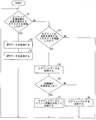
- FIG. 4 is a flowchart showing an example of content acquisition processing of the client 2.
- the client 2 first transmits a request to the first server 1a and switches to the second server 1b when switching the server 1.
- the content acquisition unit 51 transmits a request for requesting transmission of content management information (MPD) to the first server 1a (S11). And the content acquisition part 51 receives the response with respect to this request, and acquires MPD data contained in a response (S12).
- MPD content management information
- the content acquisition unit 51 refers to the received MPD data, and transmits a request for requesting transmission of a segment constituting the content to the first server 1a (S13). And the content acquisition part 51 receives the response with respect to this request, and acquires the segment data contained in a response (S14).
- the switching determination unit 54 determines whether or not event information has been received from the content analysis unit 53, that is, event information is included in the segment data. Whether or not is added is determined (S16). When event information is added to the segment data (YES in S16), the switching determination unit 54 instructs the content acquisition unit 51 to change the server 1 from which the content is acquired to the second server 1b. . Upon receiving the instruction, the content acquisition unit 51 transmits a request for transmission of the next segment to the second server 1b (S17).
- the switching determination unit 54 determines whether or not the reception status is good based on the reception status notified from the reception status measurement unit 52. (S18). If the reception status is good (YES in S18), the content acquisition unit 51 transmits a request for transmission of the next segment to the first server 1a (S19). On the other hand, when the reception status is not good (NO in S18), the switching determination unit 54 instructs the content acquisition unit 51 to acquire a lower quality segment. Upon receiving the instruction, the content acquisition unit 51 transmits a request for requesting transmission of a low quality segment, which is the next segment, to the first server 1a (S20).
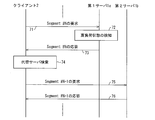
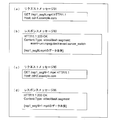
- FIG. 5 is a diagram showing an example of an operation sequence when event information is added to the segment data body in a box format defined by ISOBFF, and switching to an alternative server is performed based on the event information.
- FIG. 6 is a diagram illustrating an example of an HTTP message when event information is added to the segment data body in a box format defined by ISOBFF, and switching to an alternative server is performed based on the event information.
- the first server 1a since the requests are concentrated on the first server 1a while the client 2 is acquiring content from the first server 1a, the first server 1a is in a high load state, and the client 2 is transferred from the first server 1a to the second server 1b. Indicates the case of switching.
- the content acquisition unit 51 of the client 2 refers to the MPD data and transmits a request message 71 for requesting transmission of the Nth segment to the first server 1a.
- the event information adding unit 24a detects that the first server 1a is in a high load state based on the processing amount measured by the processing amount measuring unit 23a (processing 72).
- the event information adding unit 24a adds event information to the segment data acquired by the content acquisition unit 21a from the segment storage device 5 in a box format defined by ISOBFF, and outputs the event information to the content transmission unit 22a.
- the content transmission unit 22a transmits a response message 73 including the data body of the Nth segment to which the event information is added to the client 2.
- the content analysis unit 53 analyzes the segment data.
- the content analysis unit 53 analyzes the segment data and detects event information, the content analysis unit 53 extracts the event information and outputs it to the switching determination unit 54. Since the switching determination unit 54 has received the event information, the switching determination unit 54 refers to the MPD data and executes a search for an alternative server different from the first server 1a (process 74).
- the switching determination unit 54 determines the alternative server as the second server 1b and sets the content acquisition destination to the content acquisition unit 51 as the second server. Instruct to change to 1b.
- the content acquisition unit 51 Upon receipt of the instruction, the content acquisition unit 51 refers to the MPD data and transmits a request message 75 for requesting the second server 1b to transmit the (N + 1) th segment to the second server 1a. Then, the content transmission unit 22b of the second server 1b transmits a response message 76 including the data body of the (N + 1) th segment to the client 2 as a response to the request message 75.
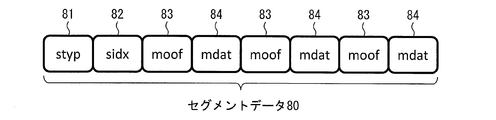
- FIG. 7 is a diagram showing a data structure of conventional segment data.
- the conventional segment data 80 includes one styp (Segment Box) 81, one sidx (Segment Box) 82, and moof (Movie Fragment Box) 83 and mdat (Media Box). It is composed of one or more sets of 84.
- Styp81 is information indicating the segment type and / or version information.
- the sidx 82 is information related to random access points in the segment.
- the moof 83 and the mdat 84 are information regarding the fragments constituting the segment.
- FIG. 8 is a diagram showing a data structure of segment data to which event information is added.
- the segment data 85 to which the event information is added includes one sswi (Server Switching Box) 86 in addition to the conventional configuration.
- Sswi86 is event information including server switching instruction information or load state information.
- the sswi 86 is disposed immediately after the styp 81, but may be disposed immediately after the sidx 82, immediately before or after the moof 83 and mdat 84 corresponding to the time when the event occurs.
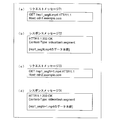
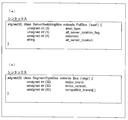
- FIG. 9A is a diagram illustrating an example of the syntax of sswi86
- FIG. 9B is a diagram illustrating an example of the syntax of styp81
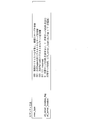
- FIG. 10 is a diagram illustrating an example of semantics of sswi86.
- sswi86 defines “exec_type”, “alt_server_location_flag”, “reserved”, and “alt_server_location”.
- Executec_type is a 3-bit flag and is server switching instruction information or load state information.
- Alt_server_location_flag is a 1-bit flag and indicates the presence or absence of alternative server information.
- Alt_server_location describes a character string such as the URL of the alternative server. That is, “alt_server_location_flag” and “alt_server_location” are alternative server information.
- “exec_type” is server switching instruction information
- the value of “exec_type” is “000 (binary notation)”
- the current request is interrupted and the server is immediately 1 indicates that switching of 1 is instructed.
- the value is “001”, it indicates that the server 1 is instructed to be switched from the next segment request.
- the value is '010', it indicates that the server 1 is instructed to be switched from the request for the next period.
- server switching may be instructed or a high load state may be notified by describing 'sswi' as one of compatible brands in the compatible_brands field of styp81.
- event information is added to the segment data body, event information is not lost on the way, even if it passes through a proxy that ignores the HTTP header etc. You can be notified.
- MPEG-DASH a plurality of representations having different quality types are prepared for one content, but event information is not necessarily added to all representations. Therefore, when there is a possibility of adding event information to the segment data body, the presence of the event information may be notified in advance by MPD.
- FIG. 23 is a diagram showing a description example of MPD including notification of the presence of event information.
- an EventInfo element indicating the presence of event information is described in the Representation element.
- the EventInfo element includes a schemeIdUri attribute for identifying the event list, and a value attribute for identifying the content of the event added to the segment data body.
- value “1”
- event information indicating a server switching instruction is present in the representation.
- the value of value and the content of the event may be newly defined in the event list.
- EventInfo element is described in the Representation having a bit rate of 1024 kbps, there is a possibility that event information indicating a server switching instruction may be added.
- EventInfo element is not described in the Representation having a bit rate of 512 kbps, it indicates that there is no possibility of adding event information indicating a server switching instruction.
- FIG. 11 is a diagram illustrating an example of an operation sequence when event information is described in an HTTP header of an HTTP response message that transmits a segment data body, and switching to an alternative server is performed based on the event information.
- FIG. 12 is a diagram illustrating an example of an HTTP message when event information is described in an HTTP header of an HTTP response message that transmits a segment data body, and switching to an alternative server is performed based on the event information.
- the first server 1a since the requests are concentrated on the first server 1a while the client 2 is acquiring content from the first server 1a, the first server 1a is in a high load state, and the client 2 is transferred from the first server 1a to the second server 1b. Indicates the case of switching.
- the content acquisition unit 51 of the client 2 refers to the MPD data and transmits a request message 91 for requesting transmission of the Nth segment to the first server 1a.
- the event information adding unit 24a detects that the first server 1a is in a high load state based on the processing amount measured by the processing amount measuring unit 23a (processing 92).
- the event information adding unit 24a instructs the content transmitting unit 22a to describe the event information in the HTTP header of the HTTP response message for transmitting the segment data body acquired by the content acquiring unit 21a from the segment storage device 5.
- the content transmission unit 22a adds event information as a MIME type (media type) parameter to the Content-Type header of the HTTP response message that transmits the segment body.
- the content transmission unit 22 a transmits, as a response to the request message 71, a response message 93 including the data body of the Nth segment and event information added to the HTTP header to the client 2.
- the content analysis unit 53 analyzes the response message 93.
- the content analysis unit 53 analyzes the response message 93 and detects event information from the HTTP header, the content analysis unit 53 extracts the event information and outputs it to the switching determination unit 54. Since the switching determination unit 54 has received the event information, the switching determination unit 54 refers to the MPD data and executes a search for an alternative server different from the first server 1a (process 94).
- the switching determination unit 54 determines the alternative server as the second server 1b and sets the content acquisition destination to the content acquisition unit 51 as the second server. Instruct to change to 1b.
- the content acquisition unit 51 Upon receiving the instruction, the content acquisition unit 51 refers to the MPD data, and transmits a request message 95 for requesting the second server 1b to transmit the (N + 1) th segment to the second server 1a. Then, the content transmission unit 22b of the second server 1b transmits a response message 96 including the data body of the (N + 1) th segment to the client 2 as a response to the request message 95.
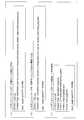
- a response message 97 shown in FIG. 13 in which the URL of the alternative server is added to the HTTP header may be transmitted.
- a response message 98 shown in FIG. 13 in which the server switching timing is added to the header may be transmitted.
- immediate is described in the “exec” value, it indicates that the server is switched immediately, and when “next_period” is described, it indicates that the server is switched from the next period.
- response message 93 a response message 99 shown in FIG. 13 in which event information is described using an HTTP extension header may be transmitted.
- each block of the server 1 and the client 2 may be configured by hardware logic, or may be realized by software using a CPU as follows. .
- the server 1 and the client 2 have a CPU (central processing unit) that executes instructions of a control program that realizes each function, a ROM (read only memory) that stores the program, and a RAM (random access memory that expands the program). ),
- a storage device such as a memory for storing the program and various data.
- An object of the present invention is a recording medium in which program codes (execution format program, intermediate code program, source program) of control programs for the server 1 and the client 2 which are software for realizing the functions described above are recorded so as to be readable by a computer. Can also be achieved by reading the program code recorded on the recording medium and executing it by the computer (or CPU or MPU).
- Examples of the recording medium include tapes such as magnetic tapes and cassette tapes, magnetic disks such as floppy (registered trademark) disks / hard disks, and disks including optical disks such as CD-ROM / MO / MD / DVD / CD-R.
- Card system such as IC card, IC card (including memory card) / optical card, or semiconductor memory system such as mask ROM / EPROM / EEPROM (registered trademark) / flash ROM.
- the server 1 and the client 2 may be configured to be connectable to a communication network, and the program code may be supplied via the communication network.
- the communication network is not particularly limited.
- the Internet intranet, extranet, LAN, ISDN, VAN, CATV communication network, virtual private network, telephone line network, mobile communication network, satellite communication. A net or the like is available.
- the transmission medium constituting the communication network is not particularly limited.
- infrared rays such as IrDA and remote control, Bluetooth ( (Registered trademark), 802.11 wireless, HDR, mobile phone network, satellite line, terrestrial digital network, and the like can also be used.
- the present invention can also be realized in the form of a computer data signal embedded in a carrier wave in which the program code is embodied by electronic transmission.
- the present invention can be used for a content transmission apparatus that transmits MPEG-DASH standard content and a content reproduction apparatus that acquires and reproduces the content.
- processing amount measuring unit processing amount measuring means
- Event information adding unit information generating means
- Content acquisition unit acquisition means
- reception status measurement unit content analysis unit
- switching determination unit switching determination unit 55 content reproduction unit
Landscapes
- Engineering & Computer Science (AREA)
- Multimedia (AREA)
- Signal Processing (AREA)
- Databases & Information Systems (AREA)
- General Engineering & Computer Science (AREA)
- Information Transfer Between Computers (AREA)
- Two-Way Televisions, Distribution Of Moving Picture Or The Like (AREA)
Abstract
Description
図2は、本実施形態に係るコンテンツ配信システム6の概要を示す図である。図2に示すように、コンテンツ配信システム6は、第1サーバ1a、第2サーバ1b、クライアント2、プロキシ3、MPD記憶装置4およびセグメント記憶装置5を含む。
次に、図1に基づいて、第1サーバ1a、第2サーバ1bおよびクライアント2の要部構成について説明する。図1は、第1サーバ1a、第2サーバ1bおよびクライアント2の要部構成の一例を示す図である。なお、説明の便宜のため、図1では、プロキシ3を省略している。
サーバ1は、クライアント2からコンテンツの送信を要求する要求メッセージ(リクエスト)を受信して、受信した要求メッセージに対する応答メッセージ(レスポンス)を送信するコンテンツ送信装置である。具体的には、クライアント2からコンテンツ管理情報(MPD)の送信を要求するリクエストを受信すると、当該コンテンツのMPDを含むレスポンスをクライアント2に送信する。また、クライアント2からコンテンツを構成するセグメントの送信を要求するリクエストを受信すると、当該セグメントを含むレスポンスをクライアント2に送信する。
クライアント2は、サーバ1等の他の装置から取得したコンテンツ、または、自装置に格納しているコンテンツを再生するコンテンツ再生装置である。クライアント2は、例えば、デジタルテレビ、レコーダ、STB(Set Top Box)、PC、携帯電話機、ゲーム機、PDA(Personal Digital Assistant)、デジタルカメラ、デジタルビデオ等である。
次に、図3に基づいて、サーバ1のコンテンツ送信処理について説明する。図3は、サーバ1のコンテンツ送信処理の一例を示すフローチャートである。
次に、図4に基づいて、クライアント2のコンテンツ取得処理について説明する。図4は、クライアント2のコンテンツ取得処理の一例を示すフローチャートである。ここでは、クライアント2が、まず、第1サーバ1aにリクエストを送信し、サーバ1を切り替える場合は第2サーバ1bに切り替えるものとする。
次に、イベント情報をセグメントデータ本体にISOBFFで規定されるbox形式で付加し、そのイベント情報に基づいて、代替サーバへ切り替える具体的な実施例を図5および図6に基づいて説明する。図5は、イベント情報をセグメントデータ本体にISOBFFで規定されるbox形式で付加し、そのイベント情報に基づいて、代替サーバへ切り替える場合の動作シーケンスの一例を示す図である。また、図6は、イベント情報をセグメントデータ本体にISOBFFで規定されるbox形式で付加し、そのイベント情報に基づいて、代替サーバへ切り替える場合のHTTPメッセージの一例を示す図である。
ここで、イベント情報がISOBFFで規定されるbox形式で付加されたセグメントデータのデータ構造について説明する。
次に、セグメントデータ本体を送信するHTTPレスポンスメッセージのHTTPヘッダにイベント情報を記述し、そのイベント情報に基づいて、代替サーバへ切り替える具体的な実施例を図11および図12に基づいて説明する。図11は、セグメントデータ本体を送信するHTTPレスポンスメッセージのHTTPヘッダにイベント情報を記述し、そのイベント情報に基づいて、代替サーバへ切り替える場合の動作シーケンスの一例を示す図である。また、図12は、セグメントデータ本体を送信するHTTPレスポンスメッセージのHTTPヘッダにイベント情報を記述し、そのイベント情報に基づいて、代替サーバへ切り替える場合のHTTPメッセージの一例を示す図である。
本発明は上述した実施形態に限定されるものではなく、請求項に示した範囲で種々の変更が可能である。すなわち、請求項に示した範囲で適宜変更した技術的手段を組み合わせて得られる実施形態についても本発明の技術的範囲に含まれる。
2 クライアント
3 プロキシ
4 MPD記憶装置
5 セグメント記憶装置
6 コンテンツ配信システム
21 コンテンツ取得部
22 コンテンツ送信部(送信手段)
23 処理量測定部(処理量測定手段)
24 イベント情報付加部(情報生成手段)
51 コンテンツ取得部(取得手段)
52 受信状況測定部
53 コンテンツ解析部
54 切替判定部
55 コンテンツ再生部
Claims (26)
- 複数のセグメントから構成されるコンテンツをセグメント毎にコンテンツ再生装置に送信するコンテンツ送信装置であって、
上記コンテンツ再生装置からの各セグメントの送信を要求するリクエストに対する応答として、当該セグメントを含むレスポンスを当該コンテンツ再生装置に送信する送信手段と、
上記コンテンツ送信装置の処理量を測定する処理量測定手段と、
上記処理量測定手段が測定した直近の処理量が所定値以上の場合、コンテンツの取得先を他のコンテンツ送信装置に切り替えることを指示する取得先切替指示情報を生成する情報生成手段と、を備え、
上記送信手段は、上記情報生成手段が取得先切替指示情報を生成した場合、上記セグメントと共に、上記情報生成手段が生成した取得先切替指示情報を送信することを特徴とするコンテンツ送信装置。 - 上記情報生成手段は、上記取得先切替指示情報を、上記セグメントのヘッダ部分に付加することを特徴とする請求項1に記載のコンテンツ送信装置。
- 上記情報生成手段は、上記取得先切替指示情報を、上記レスポンスのヘッダに付加することを特徴とする請求項1に記載のコンテンツ送信装置。
- 上記情報生成手段は、上記処理量測定手段が測定した直近の処理量が所定値以上の場合、当該処理量に応じて、コンテンツの取得先を他のコンテンツ送信装置に切り替えるタイミングを指示する取得先切替指示情報を生成することを特徴とする請求項1~3の何れか1項に記載のコンテンツ送信装置。
- 複数のセグメントから構成されるコンテンツをセグメント毎にコンテンツ再生装置に送信するコンテンツ送信装置であって、
上記コンテンツ再生装置からの各セグメントの送信を要求するリクエストに対する応答として、当該セグメントを含むレスポンスを当該コンテンツ再生装置に送信する送信手段と、
上記コンテンツ送信装置の処理量を測定する処理量測定手段と、
上記処理量測定手段が測定した処理量が所定値以上の場合、上記コンテンツ送信装置が高負荷状態であることを示す負荷状態情報を生成する情報生成手段と、を備え、
上記送信手段は、上記セグメントと共に、上記情報生成手段が生成した直近の負荷状態情報を送信することを特徴とするコンテンツ送信装置。 - 上記情報生成手段は、上記負荷状態情報を、上記セグメントのヘッダ部分に付加することを特徴とする請求項5に記載のコンテンツ送信装置。
- 上記情報生成手段は、上記負荷状態情報を、上記レスポンスのヘッダに付加することを特徴とする請求項5に記載のコンテンツ送信装置。
- 上記情報生成手段は、上記処理量測定手段が測定した処理量が所定値以上の場合、当該処理量に応じて、上記コンテンツ送信装置の高負荷状態の程度を示す負荷状態情報を生成することを特徴とする請求項5~7の何れか1項に記載のコンテンツ送信装置。
- 複数のセグメントから構成されるコンテンツをセグメント毎にコンテンツ送信装置から取得して再生するコンテンツ再生装置であって、
上記コンテンツ送信装置に対して各セグメントの送信を要求するリクエストを送信し、当該リクエストに対する応答として、当該セグメントを含むレスポンスを取得する取得手段を備え、
上記取得手段は、上記セグメントと共に、コンテンツの取得先を他のコンテンツ送信装置に切り替えることを指示する取得先切替指示情報を取得した場合、上記リクエストを他のコンテンツ送信装置に対して送信することを特徴とするコンテンツ再生装置。 - 上記取得手段は、上記取得先切替指示情報が上記セグメントのヘッダ部分に付加されている場合、上記リクエストを他のコンテンツ送信装置に対して送信することを特徴とする請求項9に記載のコンテンツ再生装置。
- 上記取得手段は、上記取得先切替指示情報が上記レスポンスのヘッダに付加されている場合、上記リクエストを他のコンテンツ送信装置に対して送信することを特徴とする請求項9に記載のコンテンツ再生装置。
- 上記取得手段は、上記取得先切替指示情報がコンテンツの取得先を他のコンテンツ送信装置に切り替えるタイミングを指示する場合、指示されたタイミングで他のコンテンツ送信装置に対して上記リクエストを送信することを特徴とする請求項9~11の何れか1項に記載のコンテンツ再生装置。
- 複数のセグメントから構成されるコンテンツをセグメント毎にコンテンツ送信装置から取得して再生するコンテンツ再生装置であって、
上記コンテンツ送信装置に対して各セグメントの送信を要求するリクエストを送信し、当該リクエストに対する応答として、当該セグメントを含むレスポンスを取得する取得手段を備え、
上記取得手段は、上記セグメントと共に、上記コンテンツ送信装置が高負荷状態であることを示す負荷状態情報を取得した場合、上記リクエストを他のコンテンツ送信装置に対して送信することを特徴とするコンテンツ再生装置。 - 上記取得手段は、上記負荷状態情報が上記セグメントのヘッダ部分に付加されている場合、上記リクエストを他のコンテンツ送信装置に対して送信することを特徴とする請求項13に記載のコンテンツ再生装置。
- 上記取得手段は、上記負荷状態情報が上記レスポンスのヘッダに付加されている場合、上記リクエストを他のコンテンツ送信装置に対して送信することを特徴とする請求項13に記載のコンテンツ再生装置。
- 上記取得手段は、上記負荷状態情報が上記コンテンツ送信装置の高負荷状態の程度を示す場合、その程度に応じた所定のタイミングで他のコンテンツ送信装置に対して上記リクエストを送信することを特徴とする請求項13~15の何れか1項に記載のコンテンツ再生装置。
- 請求項1~8の何れか1項に記載のコンテンツ送信装置と、
請求項9~16の何れか1項に記載のコンテンツ再生装置とを含むコンテンツ配信システム。 - 複数のセグメントから構成されるコンテンツをセグメント毎にコンテンツ再生装置に送信するコンテンツ送信装置の制御方法であって、
上記コンテンツ再生装置からの各セグメントの送信を要求するリクエストに対する応答として、当該セグメントを含むレスポンスを当該コンテンツ再生装置に送信する送信ステップと、
上記コンテンツ送信装置の処理量を測定する処理量測定ステップと、
上記処理量測定ステップにおいて測定された直近の処理量が所定値以上の場合、コンテンツの取得先を他のコンテンツ送信装置に切り替えることを指示する取得先切替指示情報を生成する情報生成ステップと、を含み、
上記送信ステップは、上記情報生成ステップにおいて取得先切替指示情報を生成した場合、上記セグメントと共に、当該情報生成ステップにおいて生成された取得先切替指示情報を送信することを特徴とするコンテンツ送信装置の制御方法。 - 複数のセグメントから構成されるコンテンツをセグメント毎にコンテンツ再生装置に送信するコンテンツ送信装置の制御方法であって、
上記コンテンツ再生装置からの各セグメントの送信を要求するリクエストに対する応答として、当該セグメントを含むレスポンスを当該コンテンツ再生装置に送信する送信ステップと、
上記コンテンツ送信装置の処理量を測定する処理量測定ステップと、
上記処理量測定ステップにおいて測定された処理量が所定値以上の場合、上記コンテンツ送信装置が高負荷状態であることを示す負荷状態情報を生成する情報生成ステップと、を含み、
上記送信ステップは、上記セグメントと共に、上記情報生成ステップにおいて生成された直近の負荷状態情報を送信することを特徴とするコンテンツ送信装置の制御方法。 - 複数のセグメントから構成されるコンテンツをセグメント毎にコンテンツ送信装置から取得して再生するコンテンツ再生装置の制御方法であって、
上記コンテンツ送信装置に対して各セグメントの送信を要求するリクエストを送信し、当該リクエストに対する応答として、当該セグメントを含むレスポンスを取得する取得ステップを含み、
上記取得ステップは、上記セグメントと共に、コンテンツの取得先を他のコンテンツ送信装置に切り替えることを指示する取得先切替指示情報を取得した場合、上記リクエストを他のコンテンツ送信装置に対して送信することを特徴とするコンテンツ再生装置の制御方法。 - 複数のセグメントから構成されるコンテンツをセグメント毎にコンテンツ送信装置から取得して再生するコンテンツ再生装置の制御方法であって、
上記コンテンツ送信装置に対して各セグメントの送信を要求するリクエストを送信し、当該リクエストに対する応答として、当該セグメントを含むレスポンスを取得する取得ステップを含み、
上記取得ステップは、上記セグメントと共に、上記コンテンツ送信装置が高負荷状態であることを示す負荷状態情報を取得した場合、上記リクエストを他のコンテンツ送信装置に対して送信することを特徴とするコンテンツ再生装置の制御方法。 - コンテンツ再生装置がコンテンツ送信装置から取得するコンテンツを構成する複数のセグメントのデータ構造であって、
上記セグメントのヘッダ部分に、コンテンツの取得先を他のコンテンツ送信装置に切り替えることを指示する取得先切替指示情報、または、上記コンテンツ送信装置が高負荷状態であることを示す負荷状態情報を含むことを特徴とするセグメントのデータ構造。 - コンテンツ再生装置がコンテンツ送信装置に対してコンテンツを構成する各セグメントの送信を要求するリクエストに対する応答である、当該コンテンツ再生装置が取得した、当該セグメントを含むレスポンスのデータ構造であって、
上記レスポンスのヘッダに、コンテンツの取得先を他のコンテンツ送信装置に切り替えることを指示する取得先切替指示情報、または、上記コンテンツ送信装置が高負荷状態であることを示す負荷状態情報を含むことを特徴とするレスポンスのデータ構造。 - 請求項1~8の何れか1項に記載のコンテンツ送信装置を動作させるための制御プログラムであって、コンピュータを上記各手段として機能させるための制御プログラム。
- 請求項9~16の何れか1項に記載のコンテンツ再生装置を動作させるための制御プログラムであって、コンピュータを上記各手段として機能させるための制御プログラム。
- 請求項24および25の少なくとも1項に記載の制御プログラムを記録したコンピュータ読み取り可能な記録媒体。
Priority Applications (3)
| Application Number | Priority Date | Filing Date | Title |
|---|---|---|---|
| CN201380035385.9A CN104429090A (zh) | 2012-07-10 | 2013-07-01 | 内容发送装置、内容再生装置、内容分发系统、内容发送装置的控制方法、内容再生装置的控制方法、数据结构、控制程序以及记录介质 |
| JP2014524738A JPWO2014010444A1 (ja) | 2012-07-10 | 2013-07-01 | コンテンツ送信装置、コンテンツ再生装置、コンテンツ配信システム、コンテンツ送信装置の制御方法、コンテンツ再生装置の制御方法、データ構造、制御プログラムおよび記録媒体 |
| US14/413,068 US20150172762A1 (en) | 2012-07-10 | 2013-07-01 | Content transmission device, content playback device, content delivery system, control method for content transmission device, control method for content playback device, data structure, control program, and recording medium |
Applications Claiming Priority (4)
| Application Number | Priority Date | Filing Date | Title |
|---|---|---|---|
| JP2012-155076 | 2012-07-10 | ||
| JP2012155076 | 2012-07-10 | ||
| JP2012-224169 | 2012-10-09 | ||
| JP2012224169 | 2012-10-09 |
Publications (1)
| Publication Number | Publication Date |
|---|---|
| WO2014010444A1 true WO2014010444A1 (ja) | 2014-01-16 |
Family
ID=49915908
Family Applications (1)
| Application Number | Title | Priority Date | Filing Date |
|---|---|---|---|
| PCT/JP2013/067983 Ceased WO2014010444A1 (ja) | 2012-07-10 | 2013-07-01 | コンテンツ送信装置、コンテンツ再生装置、コンテンツ配信システム、コンテンツ送信装置の制御方法、コンテンツ再生装置の制御方法、データ構造、制御プログラムおよび記録媒体 |
Country Status (4)
| Country | Link |
|---|---|
| US (1) | US20150172762A1 (ja) |
| JP (1) | JPWO2014010444A1 (ja) |
| CN (1) | CN104429090A (ja) |
| WO (1) | WO2014010444A1 (ja) |
Cited By (2)
| Publication number | Priority date | Publication date | Assignee | Title |
|---|---|---|---|---|
| GB2558086A (en) * | 2014-03-25 | 2018-07-04 | Canon Kk | Methods, devices, and computer programs for improving streaming of partitioned timed media data |
| JP2020080460A (ja) * | 2018-11-12 | 2020-05-28 | 日本電信電話株式会社 | システム制御装置、システム制御方法、及びプログラム |
Families Citing this family (4)
| Publication number | Priority date | Publication date | Assignee | Title |
|---|---|---|---|---|
| CN106464985B (zh) * | 2015-04-30 | 2019-04-12 | 华为技术有限公司 | 一种媒体流传输方法及装置 |
| RU2728534C2 (ru) * | 2016-02-12 | 2020-07-30 | Сони Корпорейшн | Устройство обработки информации и способ обработки информации |
| CN108668179B (zh) * | 2017-03-27 | 2021-05-14 | 华为技术有限公司 | 媒体索引文件的传输方法及相关设备 |
| US10587669B2 (en) * | 2017-12-20 | 2020-03-10 | Facebook, Inc. | Visual quality metrics |
Citations (4)
| Publication number | Priority date | Publication date | Assignee | Title |
|---|---|---|---|---|
| JPH11187340A (ja) * | 1997-12-22 | 1999-07-09 | Hitachi Ltd | 分散型ストリーム処理システム |
| JP2006113735A (ja) * | 2004-10-13 | 2006-04-27 | Nippon Hoso Kyokai <Nhk> | 配信システム、配信サーバ、受信端末、配信プログラム、及び取得プログラム |
| JP2009260569A (ja) * | 2008-04-15 | 2009-11-05 | Canon Inc | データ配信システム及びデータ配信方法 |
| WO2012011490A1 (ja) * | 2010-07-20 | 2012-01-26 | シャープ株式会社 | コンテンツ取得装置、コンテンツ送信装置、コンテンツ送受信システム、データ構造、制御方法、制御プログラム、及び記録媒体 |
Family Cites Families (4)
| Publication number | Priority date | Publication date | Assignee | Title |
|---|---|---|---|---|
| US8874775B2 (en) * | 2008-10-15 | 2014-10-28 | Aster Risk Management Llc | Balancing a distributed system by replacing overloaded servers |
| US8589996B2 (en) * | 2011-03-16 | 2013-11-19 | Azuki Systems, Inc. | Method and system for federated over-the-top content delivery |
| KR20120119790A (ko) * | 2011-04-22 | 2012-10-31 | 삼성전자주식회사 | 미디어 데이터 전송 방법 및 장치와 미디어 데이터 수신 방법 및 장치 |
| CN102291447B (zh) * | 2011-08-05 | 2016-04-06 | 中国电信股份有限公司 | 内容分发网络负载调度方法和系统 |
-
2013
- 2013-07-01 US US14/413,068 patent/US20150172762A1/en not_active Abandoned
- 2013-07-01 JP JP2014524738A patent/JPWO2014010444A1/ja active Pending
- 2013-07-01 CN CN201380035385.9A patent/CN104429090A/zh active Pending
- 2013-07-01 WO PCT/JP2013/067983 patent/WO2014010444A1/ja not_active Ceased
Patent Citations (4)
| Publication number | Priority date | Publication date | Assignee | Title |
|---|---|---|---|---|
| JPH11187340A (ja) * | 1997-12-22 | 1999-07-09 | Hitachi Ltd | 分散型ストリーム処理システム |
| JP2006113735A (ja) * | 2004-10-13 | 2006-04-27 | Nippon Hoso Kyokai <Nhk> | 配信システム、配信サーバ、受信端末、配信プログラム、及び取得プログラム |
| JP2009260569A (ja) * | 2008-04-15 | 2009-11-05 | Canon Inc | データ配信システム及びデータ配信方法 |
| WO2012011490A1 (ja) * | 2010-07-20 | 2012-01-26 | シャープ株式会社 | コンテンツ取得装置、コンテンツ送信装置、コンテンツ送受信システム、データ構造、制御方法、制御プログラム、及び記録媒体 |
Cited By (5)
| Publication number | Priority date | Publication date | Assignee | Title |
|---|---|---|---|---|
| GB2558086A (en) * | 2014-03-25 | 2018-07-04 | Canon Kk | Methods, devices, and computer programs for improving streaming of partitioned timed media data |
| GB2558086B (en) * | 2014-03-25 | 2019-02-20 | Canon Kk | Methods, devices, and computer programs for improving streaming of partitioned timed media data |
| US10862943B2 (en) | 2014-03-25 | 2020-12-08 | Canon Kabushiki Kaisha | Methods, devices, and computer programs for improving streaming of partitioned timed media data |
| JP2020080460A (ja) * | 2018-11-12 | 2020-05-28 | 日本電信電話株式会社 | システム制御装置、システム制御方法、及びプログラム |
| US11463745B2 (en) | 2018-11-12 | 2022-10-04 | Nippon Telegraph And Telephone Corporation | System control apparatus, system control method and program |
Also Published As
| Publication number | Publication date |
|---|---|
| US20150172762A1 (en) | 2015-06-18 |
| CN104429090A (zh) | 2015-03-18 |
| JPWO2014010444A1 (ja) | 2016-06-23 |
Similar Documents
| Publication | Publication Date | Title |
|---|---|---|
| US11962835B2 (en) | Synchronizing internet (over the top) video streams for simultaneous feedback | |
| US11537562B2 (en) | Auxiliary manifest file to provide timed metadata | |
| KR102547539B1 (ko) | 실시간 적응적 비트레이트 트랜스코딩 및 트랜스코딩된 미디어의 송신을 위한 시스템들 및 방법들 | |
| US10009659B2 (en) | System and method for hybrid push-based streaming | |
| CN104937583B (zh) | 一种对媒体内容进行自适应的方法和装置 | |
| EP2646936B1 (en) | Real-time or near real-time streaming | |
| CN102308547B (zh) | 通过非流化协议流化多媒体数据的方法 | |
| US8850054B2 (en) | Hypertext transfer protocol live streaming | |
| US9344517B2 (en) | Downloading and adaptive streaming of multimedia content to a device with cache assist | |
| JP2018186524A (ja) | コンテンツ送信装置およびコンテンツ再生装置 | |
| US20180027264A1 (en) | Selective media playing method and apparatus according to live streaming and recorded streaming | |
| US20130198342A1 (en) | Media format negotiation mechanism delivering client device media capabilities to a server | |
| TW201618517A (zh) | 藉由媒體播放器裝置在媒體串流中伺服器端通信期控制 | |
| CN103650523A (zh) | 发送装置、发送装置的控制方法、控制程序以及记录介质 | |
| WO2014010444A1 (ja) | コンテンツ送信装置、コンテンツ再生装置、コンテンツ配信システム、コンテンツ送信装置の制御方法、コンテンツ再生装置の制御方法、データ構造、制御プログラムおよび記録媒体 | |
| CN101651826A (zh) | 发送和接收媒体的方法、装置以及系统 | |
| WO2021143360A1 (zh) | 资源传输方法及计算机设备 | |
| KR20170141677A (ko) | 수신 장치, 송신 장치 및 데이터 처리 방법 | |
| JP2014017741A (ja) | コンテンツ送信装置、コンテンツ再生装置、コンテンツ配信システム、コンテンツ送信装置の制御方法、コンテンツ再生装置の制御方法、制御プログラムおよび記録媒体 | |
| CN115136609A (zh) | 远程元素解析的基于客户端的存储 | |
| JPWO2014010445A1 (ja) | コンテンツ送信装置、コンテンツ再生装置、コンテンツ配信システム、コンテンツ送信装置の制御方法、コンテンツ再生装置の制御方法、データ構造、制御プログラムおよび記録媒体 | |
| WO2011123821A1 (en) | Real-time or near real-time streaming | |
| KR20170141676A (ko) | 수신 장치, 송신 장치 및 데이터 처리 방법 | |
| JP2006285586A (ja) | コンテンツ配信システム、コンテンツ配信装置、コンテンツ配信プログラムおよびコンピュータプログラム | |
| CN112887755A (zh) | 用于播放视频的方法和装置 |
Legal Events
| Date | Code | Title | Description |
|---|---|---|---|
| 121 | Ep: the epo has been informed by wipo that ep was designated in this application |
Ref document number: 13816085 Country of ref document: EP Kind code of ref document: A1 |
|
| ENP | Entry into the national phase |
Ref document number: 2014524738 Country of ref document: JP Kind code of ref document: A |
|
| WWE | Wipo information: entry into national phase |
Ref document number: 14413068 Country of ref document: US |
|
| NENP | Non-entry into the national phase |
Ref country code: DE |
|
| 122 | Ep: pct application non-entry in european phase |
Ref document number: 13816085 Country of ref document: EP Kind code of ref document: A1 |