WO2013176263A1 - 類似画像検索システム - Google Patents
類似画像検索システム Download PDFInfo
- Publication number
- WO2013176263A1 WO2013176263A1 PCT/JP2013/064508 JP2013064508W WO2013176263A1 WO 2013176263 A1 WO2013176263 A1 WO 2013176263A1 JP 2013064508 W JP2013064508 W JP 2013064508W WO 2013176263 A1 WO2013176263 A1 WO 2013176263A1
- Authority
- WO
- WIPO (PCT)
- Prior art keywords
- face
- search
- image
- unit
- angle
- Prior art date
- Legal status (The legal status is an assumption and is not a legal conclusion. Google has not performed a legal analysis and makes no representation as to the accuracy of the status listed.)
- Ceased
Links
Images







Classifications
-
- G—PHYSICS
- G06—COMPUTING OR CALCULATING; COUNTING
- G06F—ELECTRIC DIGITAL DATA PROCESSING
- G06F16/00—Information retrieval; Database structures therefor; File system structures therefor
- G06F16/50—Information retrieval; Database structures therefor; File system structures therefor of still image data
- G06F16/58—Retrieval characterised by using metadata, e.g. metadata not derived from the content or metadata generated manually
- G06F16/583—Retrieval characterised by using metadata, e.g. metadata not derived from the content or metadata generated manually using metadata automatically derived from the content
- G06F16/5854—Retrieval characterised by using metadata, e.g. metadata not derived from the content or metadata generated manually using metadata automatically derived from the content using shape and object relationship
-
- G—PHYSICS
- G06—COMPUTING OR CALCULATING; COUNTING
- G06V—IMAGE OR VIDEO RECOGNITION OR UNDERSTANDING
- G06V40/00—Recognition of biometric, human-related or animal-related patterns in image or video data
- G06V40/10—Human or animal bodies, e.g. vehicle occupants or pedestrians; Body parts, e.g. hands
- G06V40/16—Human faces, e.g. facial parts, sketches or expressions
-
- G—PHYSICS
- G06—COMPUTING OR CALCULATING; COUNTING
- G06F—ELECTRIC DIGITAL DATA PROCESSING
- G06F16/00—Information retrieval; Database structures therefor; File system structures therefor
- G06F16/50—Information retrieval; Database structures therefor; File system structures therefor of still image data
- G06F16/58—Retrieval characterised by using metadata, e.g. metadata not derived from the content or metadata generated manually
- G06F16/583—Retrieval characterised by using metadata, e.g. metadata not derived from the content or metadata generated manually using metadata automatically derived from the content
- G06F16/5838—Retrieval characterised by using metadata, e.g. metadata not derived from the content or metadata generated manually using metadata automatically derived from the content using colour
-
- G—PHYSICS
- G06—COMPUTING OR CALCULATING; COUNTING
- G06T—IMAGE DATA PROCESSING OR GENERATION, IN GENERAL
- G06T7/00—Image analysis
- G06T7/70—Determining position or orientation of objects or cameras
-
- G—PHYSICS
- G06—COMPUTING OR CALCULATING; COUNTING
- G06V—IMAGE OR VIDEO RECOGNITION OR UNDERSTANDING
- G06V40/00—Recognition of biometric, human-related or animal-related patterns in image or video data
- G06V40/10—Human or animal bodies, e.g. vehicle occupants or pedestrians; Body parts, e.g. hands
- G06V40/16—Human faces, e.g. facial parts, sketches or expressions
- G06V40/161—Detection; Localisation; Normalisation
-
- G—PHYSICS
- G06—COMPUTING OR CALCULATING; COUNTING
- G06V—IMAGE OR VIDEO RECOGNITION OR UNDERSTANDING
- G06V40/00—Recognition of biometric, human-related or animal-related patterns in image or video data
- G06V40/10—Human or animal bodies, e.g. vehicle occupants or pedestrians; Body parts, e.g. hands
- G06V40/16—Human faces, e.g. facial parts, sketches or expressions
- G06V40/168—Feature extraction; Face representation
-
- G—PHYSICS
- G06—COMPUTING OR CALCULATING; COUNTING
- G06V—IMAGE OR VIDEO RECOGNITION OR UNDERSTANDING
- G06V40/00—Recognition of biometric, human-related or animal-related patterns in image or video data
- G06V40/10—Human or animal bodies, e.g. vehicle occupants or pedestrians; Body parts, e.g. hands
- G06V40/16—Human faces, e.g. facial parts, sketches or expressions
- G06V40/172—Classification, e.g. identification
-
- G—PHYSICS
- G06—COMPUTING OR CALCULATING; COUNTING
- G06T—IMAGE DATA PROCESSING OR GENERATION, IN GENERAL
- G06T2207/00—Indexing scheme for image analysis or image enhancement
- G06T2207/30—Subject of image; Context of image processing
- G06T2207/30196—Human being; Person
- G06T2207/30201—Face
Definitions
- the present invention relates to a video surveillance system, and more particularly to a similar image search system that searches for an image using image feature amounts.
- video surveillance systems have been installed for facilities such as hotels, buildings, convenience stores, financial institutions, dams and roads where many unspecified people visit to prevent crimes and prevent accidents.
- a person or the like to be monitored is photographed by an imaging device such as a camera, and the photographed video is transmitted to a monitoring center such as a management office or a security room. It monitors and calls attention or records a video depending on the purpose and necessity.
- HDD Hard Disk Drive
- a random access medium represented by a hard disk drive is increasingly used as a recording medium from a conventional video tape medium.
- the capacity of such recording media has been increasing. Due to the increase in capacity of recording media, the amount of video that can be recorded has increased dramatically, enabling more multipoint recording and longer recording. On the other hand, an increase in the burden of visually checking recorded images is becoming a problem.
- video surveillance systems having a search function for finding a desired video more easily are becoming widespread.
- more advanced search functions that automatically detect the occurrence of specific events in video in real time using image recognition technology, record them together with video, and search for those events after the fact.
- a system equipped with is emerging.
- One of the typical systems is a similar face image search system having a similar face image search function.
- the similar face image search function makes it possible to search for the appearance of a person in the monitoring video as an event, and further search for the appearance of a specific individual designated by the user using the face image feature amount. It is a function to do.
- FIG. 1 is a diagram showing an example of a configuration of a conventional video surveillance system having a similar face image search function.
- the “video surveillance system having a similar face image search function” is referred to as a “similar image search system”.
- the system in FIG. 1 is configured such that an imaging device 101, a recording device 102, a search device 103, and a terminal device 104 are connected to a network 150 and can communicate with each other.
- the network 150 is a communication line such as a dedicated line for connecting data to each other and performing data communication, an intranet, the Internet, or a wireless local area network (LAN).
- LAN wireless local area network
- the imaging apparatus 101 is a network camera or surveillance camera that outputs image data obtained by performing video processing such as white balance to an image captured by a CCD (Charge Coupled Device) or CMOS (Complementary Metal Oxide Semiconductor) element to the network 150.
- the recording apparatus 102 records image data input via the network 150 on a recording medium such as an HDD, and outputs the image data recorded on the recording medium to the network 150 in response to a request from an external apparatus.
- a device such as a network digital recorder.
- the search device 103 detects a face in the image data input via the network 150, records information related to the face on a recording medium such as an HDD, and records the recording medium in response to a request from an external device.
- the terminal device 104 displays image data and search results input via the network 150 on a monitor such as a liquid crystal display or a CRT (Cathode Ray Tube), and includes a keyboard and a mouse. It is a device such as a desktop PC that provides an operation interface for performing a person search execution operation.
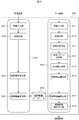
- FIG. 2 is a diagram illustrating an example of the configuration of the conventional search device 103.
- the search device 103 includes a face registration processing group 221, a face search processing group 222, and a face feature amount database 205.
- the face registration processing group 221 includes an image input unit 201, a face detection unit 202, a face feature amount calculation unit 203, and a face feature amount recording unit 204.
- the face search processing group 222 includes an image input unit 211, a face detection unit 212, a face feature amount calculation unit 213, a face feature amount search unit 214, and a search result output unit 215.
- the image input unit 201 performs reception processing of monitoring image data input from the imaging device 101 or the recording device 102.
- the monitoring image data that is, the image data of the search target image is input constantly or separately during a time period in which an instruction or setting has been made.
- the image input unit 201 outputs the input image data to the face detection unit 202.
- the face detection unit 202 performs face detection on the image data input from the image input unit 201 and performs processing to output a face detection result.
- the face detection result is the presence / absence information of the face in the image.
- Face detection is performed by an image recognition technique such as a method of searching in an image using facial characteristics such as the arrangement of main components of the face such as the eyes, nose, mouth, etc. Any method may be used in this example.
- the face image is an image cut out from the image data from the image input unit 201 into a rectangular shape including the face, and has a fixed aspect ratio, and the background other than the face is preferably filled with a predetermined color.
- the face detection unit 202 outputs the face detection result to the face feature amount calculation unit 203.
- the face feature amount calculation unit 203 performs a face feature amount calculation process using the face image included in the face detection result input from the face detection unit 202, and performs a process of outputting the calculated face feature amount.
- the face feature amount is a vector, for example, the frequency distribution of each contour or edge pattern of the subdivided face, the size and shape of the main components of the face such as eyes, nose and mouth, and their arrangement Relationship, hair and skin color distribution, combinations thereof, and the like. Any kind of feature amount or number of components may be used.
- the method disclosed in Patent Document 3 or Non-Patent Document 1 is used for the face feature amount calculation processing.
- the face feature amount calculation unit 203 repeats the process according to the number of detected face detection results.
- the face feature amount calculation unit 203 outputs the calculated face feature amount to the face feature amount recording unit 204 together with the face detection result.
- the face feature amount recording unit 204 performs processing for writing the image data, the face detection result, and the face feature amount input from the face feature amount calculating unit 203 into the face feature amount database 205. This processing unit repeats the process according to the number of detected face detection results.
- the image input unit 211 receives the search key image data input from the terminal device 104.
- the image input unit 211 inputs search key image data when there is a search request based on a user's search instruction operation on the terminal device 104.
- the image input unit 211 outputs the input image data to the face detection unit 212.
- the face detection unit 212 performs face detection on the image data input from the image input unit 211.
- the face detection result and calculation method calculated by the face detection unit 212 are the presence / absence information of the face in the image, similar to the face detection result calculated by the face detection unit 202.
- the face detection unit 212 outputs the calculated face detection result to the face feature amount calculation unit 213 together with the image data.
- the face feature amount calculation unit 213 uses the face image included in the face detection result input from the face detection unit 212 to perform face feature amount calculation processing in the same manner as the face feature amount calculation unit 203, and calculates the calculated face Output feature values.
- the face feature quantity calculation unit 213 outputs the calculated face feature quantity to the face feature quantity search unit 214 together with the image data and the face detection result.
- the face feature amount search unit 214 collates the face feature amount input from the face feature amount calculation unit 213 with the face feature amount database 205, lists faces with high face similarity, and outputs them as search results.
- the face similarity is a numerical value indicating the closeness between face feature amounts. For example, when the Euclidean distance in a multi-dimensional face feature amount space is used as the face similarity, it means that the similarity is smaller as the similarity value is smaller (closer to 0). "High degree.”
- the face feature amount search unit 214 outputs the search result to the search result output unit 215. This search result includes the facial feature amount, similarity, image data, and the like of the found face.
- the search result output unit 215 outputs the search result input from the face feature amount search unit 214 to the terminal device 104.
- Patent Document 1 and Patent Document 2 also describe the technique related to the facial feature amount calculation processing.
- JP 2009-43065 A Japanese Patent No. 4653606 Japanese Patent No. 2012-221148 Japanese Patent No. 2008-217220
- the above-mentioned similar face image search function is very convenient for searching for a person video of a specific individual from a vast number of videos recorded in a recording device or the like.
- the image feature amount to be used is influenced by the apparent face angle such as the difference in shooting angle and the orientation of the face at each time. There is a spread in the distribution of quantities, and the distribution is biased. As a result, the output search results tend to be biased. That is, when the face image reflected in the front is used as the search key image, the recorded images found as the search results are also many in the front face image. Similarly, when the face image reflected obliquely is used as the search key image, the recorded images are found as the search results.
- a similar image search system of the present invention includes a first image input means for inputting a search target image, and a first face detection means for detecting a first face from the input search target image.
- a face feature amount calculating means for calculating the detected feature value of the first face, a database recording means for recording the calculated face feature amount, and a second image input for inputting a key image for search
- a second face detecting means for detecting the second face from the input key image, a face angle calculating means for calculating the face angle of the detected second face, and the calculated face angle.
- the first feature is that search result integration means for integrating a plurality of searched search results is provided.
- the similar image search system of the present invention includes a first image input means for inputting a search target image, and a first face detection for detecting a first face from the input search target image.
- Means, first face angle calculation means for calculating the detected face angle of the first face, first face feature value calculation means for calculating the detected feature value of the first face, and calculation Recording destination database determining means for determining a recording destination database based on the determined face angle, database recording means for recording the calculated first face feature quantity in the determined recording destination database, and a key image for search are input Second image input means for performing detection, second face detection means for detecting a second face from the input key image, face angle calculation means for calculating the face angle of the detected second face, and calculation Putter by synthesized face angle
- the face feature quantity calculating means and the search destination database determining means are executed a plurality of times, and the face feature quantity search means for performing a search from the database using the calculated face feature quantities as a query;
- a second feature is that a search result integrating means for integrating the individual search results is provided.
- the face angle calculation unit stores a face angle feature amount calculation unit for an input face and a face angle feature amount for a face at a known angle together with face angle information.
- a third feature of the present invention is that a database and a face angle search means for searching from the database using the face angle feature value obtained by the face angle feature value calculation means as a query are provided.
- the composite pattern determination means uses the probability of the calculation result of the face angle calculation means, and the face angle having the probability after the second candidate. It is a fourth feature of the present invention to use also.
- An example of the structure of the conventional similar face image search system An example of the structure of the conventional search device.
- the flow of the face search process in 2nd Embodiment. The structure of the system provided with the similar face image search function in 3rd Embodiment including this invention. Flow of face registration processing in the third embodiment.
- FIG. 3 shows an example of a device configuration of the similar face image search system according to the first embodiment of the present invention.
- the system in FIG. 3 is configured in such a manner that an imaging device 101, a recording device 102, a search device 303, and a terminal device 104 are connected to a network 150 and can communicate with each other.
- 3 is different from the apparatus configuration in FIG. 1 in that a search device 303 is provided instead of the search device 103.
- the search device 303 is a device including the similar image search device in the similar image search system of the present invention.
- the search device 303 detects a face in the image data input via the network 150, records information related to the face on a recording medium such as an HDD, and records the recording medium in response to a request from an external device.
- a device such as a server PC that retrieves information related to the face recorded in, and outputs the retrieval result to the network 150.
- the search device 303 and the terminal device 104 are assumed as the external device, but any other device that can communicate with the search device 303 via the network 150 or directly connected via another interface is used. Including.
- FIG. 4 shows an example of the configuration of the search device 303 in the first embodiment of the present invention.
- the search device 303 includes a face registration processing group 221, a face search processing group 422, and a face feature amount database 205.
- the face search processing group 422 includes an image input unit 211, a face detection unit 212, a face angle calculation unit 411, a composite pattern determination unit 412, a composite face generation unit 413, a face feature amount calculation unit 213, and a face feature amount recording unit 214. And a search result integrated output unit 415.
- the processing of the face registration processing group 221 is as described in FIG.
- the processing of the face search processing group 422 is the same as the processing of the face search processing group 222 of FIG. 2 except that a face angle calculation unit 411, a composite pattern determination unit 412 and a composite face generation unit 413 are added. is there.
- the face angle calculation unit 411 calculates a face angle using at least one face detection result input from the face detection unit 212, and outputs the face angle calculation result.
- the face angle calculation result here includes at least one set of the face angle of the input face (that is, each angle in the horizontal direction, the vertical direction, and the rotation direction) and its probability. Is done.
- the inside of the face angle calculation unit 411 of this example includes a face angle feature value calculation unit 416, a face angle feature value database 417, and a face angle feature value search unit 418.
- the face angle feature quantity database 417 stores face angles of face angle feature quantities that are obtained in advance for various angles of various faces.
- the face angle feature amount calculation unit 416 first calculates a feature amount necessary for face angle calculation from the face image included in the input face detection result.
- the feature amount calculated here is, for example, the relative position of the eyes and mouth with respect to the center of gravity of the face, the distance between the eyes, the distance between the eyes and the mouth (hereinafter referred to as “face orientation” "Is described as”) ".
- face orientation the distance between the eyes
- Is described as the distance between the eyes and the mouth
- the face angle feature value search unit 418 collates the face angle feature value calculated by the face angle feature value calculation unit 416 with the face angle feature value database 417 and determines several face angles having nearby feature values.
- the distance between the feature quantity and the feature quantity of the input image that is, the similarity, is determined as the likelihood of the face angle.
- the face angle feature value search unit 418 outputs the face angle and the probability degree together with the input face image data and the like to the composite pattern determination unit 412 as a face angle calculation result.
- the number of face angles included in the output may be a predetermined number, but it may be limited to a plurality of feature angles within a distance obtained by multiplying the shortest distance from the feature quantity of the input image by a predetermined number.
- the face angle calculation unit 411 may obtain a numerical value directly representing the face angle by using a Joint Haar-like feature amount or the like without using the face angle feature amount database 417. If the face detection unit 212 has a corresponding Haar-like discriminator, the value may be used, and the face angle calculation unit 411 itself may be built in the face detection unit 212.
- the synthesis pattern determination unit 412 determines a synthesis pattern for generating a synthesis face using the face angle calculation result input from the face angle calculation unit 411 so that a plurality of predetermined synthesis target face angles are obtained.
- This synthesis pattern is a set of a synthesis target face angle and a deformation model necessary for synthesis.
- the deformation model is a model for performing a viewpoint conversion in a three-dimensional space on a two-dimensional image in a pseudo manner, and a set of deformation vectors (movement vectors of a target pixel on a face image by changing a face angle). It is represented by a body (two-dimensional array). The number of combinations of the pre-combination face angle and the combination destination face angle is obtained and held in advance by machine learning or the like for the deformation model.
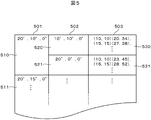
- FIG. 5 shows an example in which a deformed model and a synthesized face angle table are stored in a table format.
- the left column 501 is a set of columns storing pre-combination face angles.
- the column 510 stores data indicating that the pre-combination face angle is 20 degrees horizontal, 10 degrees vertical, and 0 degrees rotation.
- a column 511 below the table indicates that the pre-combination face angle is 20 degrees horizontally, 15 degrees vertically, and 0 degrees rotated.
- a center column 502 is a set of columns for storing the synthesis target face angle.
- the column 520 stores data indicating that the synthesis target face angle is 10 degrees horizontal, 10 degrees vertical, and 0 degrees rotation.
- the column 521 stores data indicating that the synthesis target face angle is 20 degrees horizontal, 0 degrees vertical, and 0 degrees rotation.
- two pre-combination face angles are stored for one pre-combination face angle.
- the right column 503 is a set of columns for storing deformation models.
- a column 530 stores a set of deformation vectors. The example of FIG.
- a column 531 shows an example of a set of vectors that transforms a face at 20 degrees horizontal, 10 degrees vertical, and 0 degrees rotation into a face of 10 degrees horizontal, 10 degrees vertical, and 0 degrees rotation.
- a column 531 shows an example of a set of vectors that transforms a face at 20 degrees horizontal, 10 degrees vertical, and 0 degrees rotation into a face at 20 degrees horizontal, 0 degrees vertical, and 0 degrees rotation.
- the columns belonging to the column 502 and the columns belonging to the column 503 correspond one-to-one in the same row.
- the combined pattern determination unit 412 reads all the combined patterns that are a set of the combined face angle and the deformation model, with the face angle included in the input face angle calculation result as an argument. However, the composite pattern determination unit 412 repeats this process the same number of times as the number of cases included in the face angle calculation result input from the face angle calculation unit 411, and converts these composite patterns into the face from the face angle calculation unit 411. The result is added to the angle calculation result and output to the composite face generation unit 413.
- the composite face generation unit 413 generates a composite face image according to the composite pattern input from the composite pattern determination unit 412.
- the generation of the composite face is achieved by moving the pixels of the original face image according to the deformation vector included in the deformation model.
- This synthetic face generation unit 413 repeats this process the same number of times as the number of inputted synthetic patterns.
- the composite face generation unit 413 adds the one or more composite face images generated in this way to the information from the composite pattern determination unit 412 and outputs the information to the face feature amount calculation unit 213.
- the face feature amount calculation unit 213 calculates face feature amounts from one or more combined face images and original face images input from the combined face generation unit 413.
- the face feature amount and the calculation method calculated by the face feature amount calculation unit 213 are the same as those of the face feature amount calculation unit 203. Two or more composite face images may be used without using the original face image.
- the face feature amount calculation unit 213 repeats this process for the number of input faces.
- the face feature amount calculation unit 213 outputs the two or more face feature amounts thus calculated to the face feature amount search unit 214.
- the face feature value search unit 214 searches the face feature value database 205 using the plurality of face feature values input from the face feature value calculation unit 213 as queries. That is, one of the input face feature values is collated with the face feature value database 205 to extract faces having high face similarity, and a list sorted in the order of similarity is output as a search result.
- This face similarity is the same as the face similarity described with reference to FIG.
- This search result includes a face feature amount read from the face feature amount database 205, its image data, and the like in addition to the similarity. This process is repeated the same number of times as the number of input facial feature values.
- the face feature amount search unit 214 outputs the calculated one or more search results to the search result integrated output unit 415.
- the search result integrated output unit 415 integrates two or more search results input from the face feature amount search unit 214 and outputs the integrated search results to the terminal device 104.
- the search result integration output unit 415 performs integration of search results by merging individual search results into one and merging them in descending order of similarity of face images.
- the processing in the search device 303 is mainly composed of two processing sequences of “face registration processing” and “face search processing”.
- the face registration processing is a processing sequence performed in the processing unit group 221 in FIG. 4, and the face search processing is a processing sequence performed in the processing group 422 in FIG.
- the face registration process and the face search process operate asynchronously while sharing the face feature amount database 205.
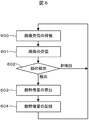
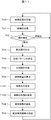
- FIG. 6 shows the flow of face registration processing performed by the search device 303.
- This face registration process includes communication between the imaging device 101 or the recording device 102 and the search device 303.
- the search device 303 performs face registration processing with the arrival of a monitoring image from the imaging device 101 or the recording device 102 as a trigger.
- the image input unit 201 waits for an incoming monitor image (image reception standby). For example, the image input unit 201 periodically accesses a stream input buffer or the like and checks whether a monitoring image has been input. If the image input unit 201 detects the input of the monitoring image, the image input unit 201 proceeds to the process of step 601.
- the image input unit 201 receives received data from the imaging device 101 or the recording device 102.
- the received data includes attribute information data such as a shooting time and a shooting device number in addition to the image data, and the image input unit 201 decodes the compressed image to obtain image data if necessary.
- the face detection unit 202 performs face detection on the received image data by a known method. When at least one face is detected, the process of step 603 is executed, and when it is not detected, the process returns to step 600.
- the face feature amount calculation unit 203 calculates a face feature amount for each face image included in the face detection result in step 602.
- step 604 the face feature amount recording unit 204 records the face feature amount in the feature amount database 205 together with the image data and the face detection result. At this time, the attribute information data received in step 601 may also be recorded. After the recording is completed, the process returns to step 600.
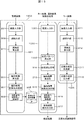
- FIG. 7 shows the flow of face search processing performed by the search device 303.
- the face search process includes communication between the terminal device 104 and the search device 303.
- the search device 303 performs a face search process using a search request from the terminal device 104, that is, an incoming key image as a trigger.
- the image input unit 211 is on standby until a key image is received from the terminal device 104 (key image reception standby). That is, the image input unit 211 detects whether a key image is input from the terminal device 104. If the image input unit 211 detects the input of the key image, the image input unit 211 proceeds to the process of step 701. If no key image input is detected, the process of step 700 is executed again after a predetermined time has elapsed.
- the image input unit 211 of the search device receives received data such as a key image from the terminal device 104.
- the received data includes, in addition to the image data, search refinement parameter data such as an image shooting time and a shooting device number desired to be a search range.
- the face detection unit 212 performs face detection on the received image data. If at least one face is detected, the process of step 703 is executed. If not, the fact that no face is detected is transmitted to the terminal device 104, and the process returns to step 700.
- the face angle calculation unit 411 performs face angle calculation on the face image included in the face detection result in step 702.
- the composite pattern determination unit 412 determines a composite pattern using the face angle calculation result in step 703.
- step 705 the composite face generation unit 513 generates a composite face according to the composite pattern determined in step 704.
- the face feature quantity calculation unit 213 calculates a face feature quantity for the synthesized face image synthesized in step 705.
- step 707 the face feature amount search unit 214 performs a similarity search on the face feature amount database 205 using the face feature amount calculated in step 706.
- step 708 the search result integration output unit 415 integrates a plurality of search results input by repeating steps 705 to 707.
- step 709 the search result integrated output unit 415 outputs the integrated search result to the terminal device 104. After the transmission is completed, the process returns to Step 700.
- FIG. 8 schematically shows a facial feature value calculation method that is cited from Patent Document 1 and that also uses the facial feature value calculation unit 203 of this example.
- this calculation method first, multi-resolution of an input image is performed. For example, Gaussian blurring and pixel thinning are alternately applied a plurality of times to an input image (in this example, a face image from the face detection unit 202) to obtain a low-resolution image group 402a also called a Gaussian pyramid. This is to make the feature quantity less susceptible to the resolution of the input image. Since the face image in this example is a face region that is cut out in an arbitrary size, it is adjusted to a predetermined size by enlargement or reduction before the multi-resolution. Next, region division is applied to the image group 402a to obtain the image group 402b. The area divided here is common between images of different resolutions.
- each divided area is further divided into small blocks of 3 ⁇ 3 pixels, an edge pattern of each pixel value of the small block is obtained, and the number of appearing edge patterns is counted.
- Dozens of predetermined patterns 402c are prepared as the edge pattern, and the frequency 402d is the number of times that the edge pattern most closely matches the small block.
- the thus calculated thousands-dimensional vector having all frequencies 402d of all small blocks of the image group 402b as elements is the original feature amount.
- the original feature value is multiplied by a predetermined matrix (preferably a sparse matrix) to reduce the dimension and used as the feature value.
- the matrix is obtained by a technique such as PCA (main factor analysis) or LDA (linear discriminant analysis).
- the search for the number of combined patterns determined by the combined pattern determination unit 412 is repeated internally.
- the second embodiment described below improves the problem of the number of searches by assigning facial feature amounts according to face angles and registering them in a database.
- the configuration of the similar face image search system in the second embodiment including the present invention is the same as that in the first embodiment except that a search device 803 is provided instead of the search device 303.
- FIG. 9 shows an example of the configuration of the search device 803 in the second embodiment.
- the search device 803 includes a face registration processing group 921, a face search processing group 922, and a face feature database group 905 classified by face angle.
- the face registration processing group 921 includes an image input unit 201, a face detection unit 202, a face angle calculation unit 911, a face feature amount calculation unit 203, a face feature amount recording destination determination unit 901, and a face angle-specific face feature amount recording unit 902. Composed.
- the face search processing group 922 includes an image input unit 211, a face detection unit 212, a face angle calculation unit 912, a composite pattern determination unit 913, a composite face generation unit 914, a face feature amount calculation unit 213, and a face feature amount search destination determination. 915, a face angle-specific face feature value search unit 916, and a search result integrated output unit 917.
- the image input unit 201 and the face detection unit 202 are the same as those in FIG. 2 or FIG. However, in the present embodiment, the face detection unit 202 outputs the detected face detection result to the face angle calculation unit 911 together with the image data.
- the face angle calculation unit 911 calculates the face angle using the face detection result input from the face detection unit 202.
- the face angle calculation result includes at least one or more sets of the face angle of the input face (that is, each angle in the horizontal direction, the vertical direction, and the rotation direction) and the degree of likelihood. .
- the face angle calculation unit 911 may be the same as the face angle calculation unit 411 of the first embodiment. However, since the face angle calculation unit 911 operates as frequently as the number of faces included in the input image, it is preferable that the processing amount is small.
- the face angle is not necessarily a three-dimensional amount, and output values of four or more discriminators may be used as they are.
- the face feature amount calculation unit 203 calculates a face feature amount using the face image included in the face angle detection result input from the face angle calculation unit 911.
- the face feature value here is the same as the face feature value described with reference to FIGS.
- the face feature amount calculation unit 203 outputs the calculated face feature amount to the face feature amount recording destination determination unit 901 together with the image data, the face detection result, and the face angle calculation result.
- the face feature amount recording destination determination unit 901 uses the face angle calculation result input together with the face feature amount from the face feature amount calculation unit 203 to determine a recording destination in the face angle-specific face feature amount database group 905. In this processing unit, this process is repeated according to the number of detected face detection results (for example, the same number as the number of detected face detection results).
- the face feature amount recording destination determination unit 901 outputs the recording destination information determined here to the face feature amount recording unit 902 by face angle together with the image data, the face detection result, the face angle calculation result, and the face feature amount.
- a face feature value recording unit 902 for each face angle based on the recording destination information input from the face feature value recording destination determination unit 901, displays image data, face detection results, face angle calculation results, and face feature values for each face angle.
- the processing is repeated according to (for example, the same number as the number of detected face detection results).
- the face feature database group 905 for each face angle is a database in which the face feature database 205 is separated and separated for each face angle.
- the face detection unit 212 outputs the calculated face detection result to the face angle calculation unit 912 together with the image data.
- the face angle calculation unit 912 calculates a face angle using the face detection result input from the face detection unit 212, and outputs the face angle calculation result.
- the contents and calculation method of the face angle calculation result calculated here are the same as those of the face angle calculation unit 911. Therefore, the face angle calculation unit 912 has the same configuration as the face angle calculation unit 911 and performs the same operation.
- the face angle calculation unit 912 includes a face angle feature amount calculation unit, a face angle feature amount database, and a face angle feature amount search unit.
- the face angle feature amount database also includes information similar to the face angle calculation unit 911. Stored in advance. Then, the face angle calculation unit 912 outputs the calculated face angle calculation result to the composite pattern determination unit 913 together with the image data and the face detection result.
- the number of cases included in the output may be a predetermined number, may output all candidates that fall within the range with a certain degree of similarity as a threshold, or a combination of both. Further, the similarity here is different from the similarity described in the description of the face feature amount search unit 214 in the feature amount space to be applied, but the calculation method is the same.
- the composite pattern determination unit 913 determines a composite pattern for generating a composite face using the face angle calculation result input from the face angle calculation unit 912.
- the composite pattern determined by the composite pattern determining unit 913 is the same as the content described in the composite pattern determining unit 412 of FIG. Further, the embodiment in which the deformation model and the synthesis target face angle are stored may be the same as in FIG. However, the device that stores the deformation model and the synthesis destination face angle in advance is not the face feature amount database 205 but the face feature value database group 905 for each face angle.
- the composite pattern determination unit 913 repeats this process the same number of times as the number of cases included in the face angle calculation result input from the face angle calculation unit 912. Then, the composite pattern determination unit 913 outputs the composite pattern determined here to the composite face generation unit 914 together with the image data, the face detection result, and the face angle calculation result.
- the composite face generation unit 914 generates a composite face image (see FIG. 4) according to the composite pattern input from the composite pattern determination unit 913.
- the combined face generation unit 914 outputs the generated one or more combined face images to the face feature amount calculation unit 213 together with the image data, the face detection result, and the face angle calculation result.
- the processing of the face feature amount calculation unit 213 is as described with reference to FIG. However, the face feature amount calculation unit 213 outputs the calculated one or more face feature amounts to the face feature amount search destination determination unit 915.
- the face feature amount search destination determination unit 915 determines a search destination in the face angle-specific face feature amount database group 905 using the face angle calculation result input together with the face feature amount from the face feature amount calculation unit 213. In this processing unit, the processing is repeated according to the number of times (for example, the same number as the number of input facial feature values).
- the face feature amount search destination determination unit 915 outputs the search destination information determined here to the face feature value search unit 916 according to face angle together with the image data, the face detection result, the face angle calculation result, and the face feature amount.
- the face feature value search unit 916 for each face angle collates one or more face feature values input from the face feature value search destination determination unit 915 with the face feature value database in the face feature value database group 905 for each face angle. Then, the faces with high face similarity are listed, and one or more search results are output to the search result integrated output unit 917.
- the search destination in the face feature value database group 905 by face angle is based on the recording destination information input from the face feature value recording destination determination unit 901.
- the similarity is a numerical value indicating the closeness between the facial feature quantities, for example, using the Euclidean distance in a multi-dimensional facial feature quantity space.
- the search result includes a facial feature amount, similarity, image data, and the like. In this processing unit, the processing is repeated according to the number of times (for example, the same number as the number of input facial feature values).
- the search result integrated output unit 917 integrates one or more search results input from the face angle-specific face feature value search unit 916 and outputs the integrated search results to the terminal device 104.
- the search result integration output unit 917 performs search result integration by merging in descending order of similarity using the similarity of face images included in individual search results.
- the face registration processing group 921 and the face search processing group 922 represent processing sequences of face registration processing and face search processing, respectively, as in FIG. The face registration process and the face search process will be described later.
- the processing in the search device 803 is mainly composed of two processing sequences of “face registration processing” and “face search processing”.
- the face registration processing is a processing sequence performed in the processing unit group 921 in FIG. 9, and the face search processing is a processing sequence performed in the processing group 922 in FIG.
- the face registration process and the face search process are configured independently with the face feature database group 905 classified by face angle, and can be executed asynchronously.
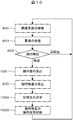
- FIG. 10 An example of the flow of face registration processing in the second embodiment including the present invention will be described with reference to FIG.
- steps denoted by the same reference numerals as those in FIG. 6 have the same processing contents as those in the first embodiment.
- the face registration process in FIG. 10 is performed by a process including communication between the imaging apparatus 101 and the search apparatus 803 or between the recording apparatus 102 and the search apparatus 803.
- the search device 803 performs face registration processing with the arrival of a monitoring image from the imaging device 101 or the recording device 102 as a trigger. If at least one face is detected in step 602, the processing in step 1001 is executed.
- step 1001 the face angle calculation unit 911 of the search device 803 performs face angle calculation on the face image included in the face detection result in step 602. For simplicity, this step and steps 603, 1002, and 1003 are repeated the same number of times as the number of faces detected in step 602, although not shown repeatedly.
- the face feature amount calculation unit 203 of the search device 803 calculates a face feature amount for the face image included in the face detection result in step 602.
- the face feature amount recording destination determining unit 901 of the search device 803 determines a recording destination database in the face feature database group 905 for each face angle according to the face angle obtained in step 1001.
- step 1003 the facial feature data by face angle recording unit 902 of the search device 803 stores the calculated face feature data together with the image data and the face detection result in a recording database in the face feature data database group 905 by face angle. Record. At that time, the attribute information data input in step 601 may also be recorded. After the recording is completed, the process returns to step 600.
- the face search process is performed by a process including communication between the terminal device 104 and the search device 803.
- the search device 803 performs a face search process using a search request from the terminal device 104, that is, an incoming key image as a trigger.
- steps denoted by the same reference numerals as those in FIG. 7 have the same processing contents as in the first embodiment. Therefore, the description of the processing of Step 700 to Step 706 and Step 708 to Step 709 is omitted.
- step 706 is performed after step 706.
- step 708 is performed.
- the face angle calculation unit 912 operates instead of the face angle calculation unit 411
- the synthesis pattern unit 913 operates instead of the synthesis pattern unit 412
- the synthetic face generation unit 013 operates instead of the synthetic face generation unit 413. .
- step 1101 the face feature amount search destination determination unit 915 of the search device 803 determines a search destination database in the face feature database group 905 for each face angle according to the face angle obtained in step 703.
- step 1002 the face feature value search unit 916 according to face angle of the search device 803 performs a similarity search on the search destination database obtained in step 1001 using the calculated face feature value.
- the present step 705, step 706, and step 707 are repeatedly executed for the number of synthesis patterns determined in step 704.
- step 708 as in FIG. 7, the search result integration output unit 415 of the search device 803 integrates a plurality of search results input by repeating steps 705, 706, 1001, and 1002.
- step 709 the search result integrated output unit 415 of the search device 803 outputs the integrated search result to the terminal device 104. After the transmission is completed, the process returns to Step 700.
- the similar image search system of the second embodiment described above it is effective in improving the search accuracy for monitoring images in which a face is often photographed at various angles, and is reliable. High search can be realized. Further, since the face feature amount is recorded in the database by specifying the recording destination at the time of recording, and the search destination in the database is specified at the time of searching, the search range can be set narrow. It can be shortened.
- FIG. 12 is a diagram showing an example of the configuration of a similar face image search system according to the third embodiment including the present invention.
- the third embodiment is different from the first embodiment in that a search device 1203 is provided instead of the search device 303 and a terminal device 1204 is provided instead of the terminal device 104.
- FIG. 13 shows the configuration of the search device 1203 in the third embodiment.
- the search device 1203 includes a face registration processing group 921, a face search processing group 1322, a front face image synthesis processing group 1323, and a face feature database group 905 classified by face angle.
- the face search processing group 1322 includes an image input unit 1301, a composite pattern determination unit 1302, a composite face generation unit 914, a face feature amount calculation unit 213, a face feature amount search destination determination unit 915, a face feature value search unit 916 by face angle, And a search result integrated output unit 917.
- the processing of the face registration processing group 921 has already been described with reference to FIG.
- the front face image synthesis processing group 1323 includes an image input unit 211, a face detection unit 212, a face angle calculation unit 912, a front synthetic face generation unit 1311, and a front synthetic face output unit 1312.
- the image input unit 1301 receives the search key image data input from the terminal device 1204.
- the received data includes selection result information and face detection results in addition to search key image data.
- the image input unit 1301 receives the received data when there is a search request based on a user's search instruction operation on the terminal device 1204.
- the received image data, selection result information, and face detection result are output to the composite pattern determination unit 1302.
- the composite pattern determination unit 1302 determines a composite pattern for generating a composite face using the selection result information input from the image input unit 1301.
- the method of determining the composite pattern in the composite pattern determining unit 1302 is the same as that of the composite pattern determining unit 412.
- the pre-combination face angle used here is a face angle included in the selection result information.
- the composite pattern determination unit 1302 outputs the composite pattern determined here to the composite face generation unit 914 together with the image data, the face detection result, and the face angle calculation result.
- the synthesized face generation unit 914 generates a synthesized face image according to the synthesized pattern input from the synthesized pattern determination unit 1302, and generates one or more generated synthesized face images as image data, a face detection result, and a face angle calculation result. At the same time, it is output to the face feature quantity calculation unit 213.
- the operations of the composite face generation unit 914, the face feature amount calculation unit 213, the face feature amount search destination determination unit 915, the face feature amount search unit 916 by face angle, and the search result integrated output unit 917 are as described in FIG. is there.
- the search result integration output unit 917 performs the integration of the search results by merging in descending order of similarity using the similarity of the face images included in the individual search results.
- the face angle calculation unit 912 outputs the calculated face angle calculation result to the front composite face generation unit 1311 together with the image data and the face detection result.
- the front composite face generation unit 1311 generates a front composite face based on the face angle calculation result input from the face angle calculation unit 912. Synthetic face generation is performed only for patterns in which the synthesis target face angle is a front face, that is, a horizontal 0 degree, a vertical 0 degree, and a 0 degree rotation among synthetic patterns obtained by comparing the face angle calculation result with FIG. And is performed in the same manner as the synthetic face generation unit 914. In this processing unit, the processing is repeated for up to four face angles in the order of probability with the face angles included in the input face angle calculation result.
- the front synthetic face generation unit 1311 outputs the one or more synthetic face images generated here to the front synthetic face output unit 1312 together with the image data, the face detection result, and the face angle calculation result.
- the front synthetic face output unit 1312 outputs one or more front synthetic faces, face detection results, and face angle calculation results input from the front synthetic face generation unit 1311 to the terminal device 1204.
- FIG. 14 is a diagram showing an example of a screen displayed on the terminal device 1204 according to the third embodiment of the present invention.
- the screen displayed on the terminal device 1204 includes a reproduction image display area 1400, an image reproduction operation area 1410, a search key image designation area 1420, a search refinement parameter designation area 1430, a search execution area 1440, and a search result display.
- the area 1450 is configured.
- a reproduced image display area 1400 is an area in which images input from the imaging apparatus 101 or the recording apparatus 102 to the terminal apparatus 1204 via the network 150 are continuously displayed as a moving image.
- a moving image 1401 in which the input image is displayed as a continuous moving image is displayed.
- the image playback operation area 1410 is an area in which button graphics for switching between the imaging apparatus 101 and the recording apparatus 102 that are input sources of video and for performing playback operations on images recorded on the recording apparatus 102 are arranged.
- Each button (button figure) arranged in this area is assigned a unique reproduction operation type. For example, operation types of “rewind”, “reverse reproduction”, “reproduction stop”, “forward reproduction”, and “fast forward” are assigned from the left button.
- the search key image designation area 1420 is an area for designating and displaying the search key image. This area includes a search key image 1421, a designation button 1422, a composition button 1423, selection candidate image buttons 1424 to 1427, and the like.
- the search key image 1421 is a place where the search key image is displayed. In the initial state, the search key image is not specified, so that no image is displayed. Alternatively, in the initial state, a separately prepared image indicating an undesignated state may be displayed, or a description indicating that it has not been designated may be made.
- the designation button 1422 is a button for designating an image displayed in the moving image 1401 as a search key image when the user performs a GUI operation and appropriately presses the button.
- the composition button 1423 is a button for instructing the face image composition for the search key image when pressed.
- Selection candidate image buttons 1424 to 1427 are places where the composite face image is displayed. The user selects a composite face image that seems to have been synthesized most directly from the above, performs a GUI operation, and presses it down.
- the search refinement parameter designation area 1430 is an area for designating the type and value (range) of the refinement parameter at the time of search.
- This area includes imaging device designation check boxes 1431, 1432, 1433, and 1434, time designation check boxes 1435 and 1436, time designation columns 1437 and 1438, and the like.
- Imaging device designation check boxes 1431, 1432, 1433, and 1434 are buttons for designating imaging devices to be searched at the time of searching. When the user presses this button, a check mark indicating that the button has been selected is displayed. When this mark is pressed again, it is hidden, and display and non-display are switched each time the mark is pressed.
- the time designation check boxes 1435 and 1436 are buttons for designating an imaging time range to be searched at the time of search. As for the display mode, this button is the same as other check boxes.
- the start time is given to the time range.
- the start time is not given to the time range. That is, when the start time cannot be given, it means that the search target range is the image of the oldest time recorded in the recording device.
- the time designation check box 1436 is selected, the end time is given to the time range.
- the end time is not given to the time range. That is, when the end time is not given, it means that the image up to the latest time recorded in the recording device is set as the search target range.
- both the time specification check box 1435 and the time specification check box 1436 are selected, it means that the specified start time to end time are set as the search target range.
- the time designation fields 1437 and 1438 are input fields for designating the above-described start time and end time values. That is, in the example of FIG. 14, the start time is 2009/06/26 15:30:20 and the end time is 2009/07/13 12:30:20.
- the search execution area 1440 is an area for instructing search execution. This area includes a search button 1441.
- the search button 1441 is a button for instructing execution of a similar person search using the search key image 1421. If a parameter is specified in the search refinement parameter specification area 1430, execution is instructed including its contents.
- the search result display area 1450 is an area for displaying a search result. Search results are displayed by displaying a list of search result images. In the initial state, nothing is displayed in the search result display area. In the search result display area 1450 in FIG. 14, “Camera 1, Camera 2, and Camera 4 images from June 26, 2009 at 15:30:20 to July 13, 2009 at 12:30:20 are displayed. An example in which “similar image search” is performed on the search target is shown.
- the search result images 1451 to 1457 are displayed in order of similarity to the search key image, for example, from the uppermost left to the right and then from the lower second left to the right. In this example, the search result image 1451 at the leftmost position in the uppermost stage has the highest similarity to the search key image 1421, and the search result image 1457 has the lowest similarity. .
- a cue playback button 1458 and a search key image designation button 1459 are provided in the vicinity of the search result image 1456.
- the cue playback button is a button for instructing start of continuous video playback starting from the search result image.
- the search key image designation button is a button for designating a search result image as a search key image.
- a search key image designation button 1459 is pressed, a search result image 1456 is displayed on 1421 as a search key image. Thereby, a re-search using the search result image can be performed.
- the operation related to the present invention is a search key image designation operation that starts when the video designation button 1422 is pressed among the operations on the screen.
- 15A, 15B, and 15C are enlarged views of the search key image designation area 1420.
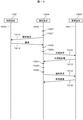
- FIG. FIG. 16 is a diagram showing an example of a communication sequence in the search key image designation operation according to the present invention.
- FIG. 16 shows a time-series order in which the time elapses from the top to the bottom of the page (however, the time does not match the vertical length).
- the communication operation of the recording device 102 (or the imaging device 101) is displayed on the sequence 1600
- the communication operation of the terminal device 1204 is displayed on the sequence 1602
- the communication operation of the search device 1203 is displayed on the sequence 1601.
- Timings 1620 to 1626 represent operation timings in time series. Further, communications 1610 to 1615 indicate main communications between the devices. Communications 1610 and 1611 are in a request-response relationship. The same applies to communications 1612 and 1613 and communications 1614 and 1615. Note that the communication indicated by the communication 1610 to 1615 is a conceptual example, and does not indicate a detailed aspect of the communication.
- FIG. 15A is an example of a screen before designating a search key image in the search key image designation area 1420 (timing 1620). Since the search key image is not specified, the search key image 1421 is not displayed. The same applies to the selection candidate image buttons 1424 to 1427.
- FIG. 15A when the user presses the designation button 1422 at the time of the timing 1621, the screen of the terminal device 1204 is switched to the screen of FIG. 15B. That is, when the designation button 1422 is pressed by a user operation, the terminal device 1204 outputs (transmits) a communication 1610 for requesting an image to the recording device 102.
- Communication 1610 is a search key image request communication.
- the recording device 102 receives the communication 1610
- the recording device 102 outputs (distributes) the communication 1611 to the terminal device 1204.
- This communication 1611 is communication including a search key image distributed in response to a request.
- the terminal device 1204 displays the search key image included in the communication 1611 on the screen at the time of the timing 1622.
- FIG. 15B is an example of a screen after the designation button 1422 is pressed.
- the search key image 1421 displays an image currently displayed on the moving image 1401.
- the screen of the terminal device 1204 is switched to the screen of FIG. 15C. That is, when the synthesis button 1423 is pressed by a user operation, the terminal device 1204 outputs (transmits) a communication 1612 for a synthesis request to the search device 1203.
- Communication 1612 is a compositing request communication.
- the communication 1612 includes a search key image acquired through the communication 1611.
- the search device 1203 When receiving the communication 1612, the search device 1203 outputs (distributes) the communication 1613 to the terminal device 1204.
- This communication 1613 is communication including one or more synthesized face images, face detection results, and face angle calculation results distributed in response to a request.
- the terminal device 1204 When the terminal device 1204 receives the communication 1613, the terminal device 1204 displays the search key image included in the communication 1613 on the screen at the time of the timing 1624.
- FIG. 15C is an example of a screen after the composition button 1423 is pressed.
- Each of the selection candidate image buttons 1424 to 1427 displays a face image.
- the face image displayed on the selection candidate image button is a face image generated by synthesis.
- the user selects and presses any one of the selection candidate image buttons 1424 to 1427 at time 1625.
- the button to be selected here is a button that displays a face image that seems to be the most directly face among the displayed composite face images. In this example, the user presses the selection candidate image button 1425.
- the terminal device 1204 outputs (transmits) a communication 1614 for a search request to the search device 1203 when the composite button 1423 is pressed by a user operation.
- Communication 1614 is a search request communication.
- the communication 1614 includes information on the user selection result in FIG. 15C, the search key image acquired in communication 1611 and 1613, and the face detection result.
- the search device 1203 performs a search based on the search key image included in the received communication 1614 and outputs (distributes) the search result as the communication 1615.
- the terminal device 1204 receives the communication 1615 and displays the search result in the search result display area 1450. This completes a series of operations related to this area.
- the face feature amount is recorded in the database by specifying the recording destination at the time of recording, and the search in the database is performed at the time of the search. Since the destination is designated, the search range can be set narrow, so that the search time can be shortened compared to the first embodiment.
- the face angle calculation can be determined interactively with the search user, and the operability is improved. In addition, since the face angle calculation can be easily and quickly changed according to the situation, the search condition can be changed, so that a more reliable search can be realized.
- the imaging device, the recording device, the search device, and the terminal device are shown as a single unit for simplification of description, but these are for the network. Multiple units can be connected.
- the recording device and the search device are shown as separate devices for ease of explanation, but the configuration may be implemented on the same device. .
- the search device and the terminal device may be mounted on a single device.
- the similar image search for the face is shown, but it can be applied to the similar image search for not only the face but also other objects such as a vehicle. .
- CCTV Compact-Circuit Television ⁇ ⁇ ⁇ ⁇ ⁇
- face authentication system Face authentication system
- criminal database etc.
- TV program production system personal electronic album, and other systems that handle video images of people and vehicles.
Landscapes
- Engineering & Computer Science (AREA)
- Theoretical Computer Science (AREA)
- General Physics & Mathematics (AREA)
- Physics & Mathematics (AREA)
- Oral & Maxillofacial Surgery (AREA)
- Health & Medical Sciences (AREA)
- Human Computer Interaction (AREA)
- Multimedia (AREA)
- General Health & Medical Sciences (AREA)
- Computer Vision & Pattern Recognition (AREA)
- Library & Information Science (AREA)
- Data Mining & Analysis (AREA)
- Databases & Information Systems (AREA)
- General Engineering & Computer Science (AREA)
- Information Retrieval, Db Structures And Fs Structures Therefor (AREA)
- Processing Or Creating Images (AREA)
- Image Processing (AREA)
- Image Analysis (AREA)
Description
類似顔画像検索機能とは、監視映像中への人物の出現をイベントとして検索可能とし、さらには、該イベントの内、ユーザが指定した特定個人の登場を、顔の画像特徴量を用いて検索する機能である。
ネットワーク150は、各装置を相互に接続し、データ通信を行う専用線やイントラネット、インターネット、無線LAN(Local Area Network)等の通信線である。
撮像装置101は、CCD(Charge Coupled Device)やCMOS(Complementary Met al Oxide Semiconductor)素子等で撮像した画像にホワイトバランス等の映像処理を施した画像データを、ネットワーク150へ出力するネットワークカメラや監視カメラ等の装置である。
録画装置102は、ネットワーク150を介して入力された画像データをHDD等の記録媒体に記録し、また、外部装置からの要求に応じて、記録媒体に記録された画像データをネットワーク150へ出力するネットワークデジタルレコーダ等の装置である。
検索装置103は、ネットワーク150を介して入力された画像データ中の顔を検出し、その顔に関わる情報をHDD等の記録媒体に記録し、また、外部装置からの要求に応じて、記録媒体に記録された顔に関わる情報を検索し、検索結果をネットワーク150へ出力するサーバやPC(Personal Computer)等の装置である。
端末装置104は、ネットワーク150を介して入力された画像データや検索結果を、液晶ディスプレイやCRT(Cathode Ray Tube)等のモニタに画面表示し、キーボードやマウス等を備え、録画画像の再生操作や人物検索の実行操作を行う操作インタフェースを提供するデスクトップPC等の装置である。
顔登録処理グループ221は、画像入力部201、顔検出部202、顔特徴量算出部203、及び顔特徴量記録部204によって構成される。また、顔検索処理グループ222は、画像入力部211、顔検出部212、顔特徴量算出部213、顔特徴量検索部214、及び検索結果出力部215によって構成される。
顔特徴量算出処理には、例えば、特許文献3や非特許文献1に開示された方法等を用いる。顔特徴量算出部203は、入力された顔検出結果の検出数に応じて処理を繰返す。顔特徴量算出部203は、算出した顔特徴量を、顔検出結果と共に、顔特徴量記録部204に出力する。
本処理部は、入力された顔検出結果の検出数に応じて処理を繰返す。
顔検出部212は、算出した顔検出結果を、画像データと共に、顔特徴量算出部213に出力する。
即ち、正面に映った顔画像を検索キー画像にした場合、検索結果として見付かる録画画像も正面顔画像が多く、同様に斜めに映った顔画像を検索キー画像にした場合、検索結果として見付かる録画画像も近傍角度の斜め顔画像が多い。言い換えると、正面顔画像を検索キー画像にすると、同一人物であっても斜め顔画像を探し損ねる可能性が高く、逆も同様であるということである。また、逆に、本当は他人である人物を誤ってキー画像の人物本人であると判定してしまうこともあり、検索精度、即ち、検索結果に含まれる本人の割合も低いものとなってしまう。
類似顔画像検索システムにおける人物と撮像装置の関係は、ドアの開閉等に使われる一般的な顔認証システムにおけるそれと異なり、人物に撮像装置を意識させない関係である。従って、撮像される顔は、より多様な角度である場合が多く、前記課題の解消は欠かせない。
本発明は、このような状況に鑑みてなされたものであり、上述の課題を解決し、より高精度な類似画像検索システムを提供することを目的とする。
図3に、本発明の第1の実施形態における類似顔画像検索システムの装置構成の一例が示される。図3のシステムは、ネットワーク150に、撮像装置101、録画装置102、検索装置303、及び端末装置104が接続され、互いに通信可能な状態で構成される。図3の装置構成において、図1の装置構成と異なる点は、検索装置103の替りに、検索装置303を設けたことである。
検索装置303は、顔登録処理グループ221、顔検索処理グループ422、及び、顔特徴量データベース205によって構成される。また、顔検索処理グループ422は、画像入力部211、顔検出部212、顔角度算出部411、合成パターン決定部412、合成顔生成部413、顔特徴量算出部213、顔特徴量記録部214、及び検索結果統合出力部415によって構成される。
また、顔検索処理グループ422の処理は、顔角度算出部411、合成パターン決定部412及び合成顔生成部413が追加されたことを除けば、図2の顔検索処理グループ222の処理と同じである。
本例の顔角度算出部411の内部は、顔角度特徴量算出部416と顔角度特徴量データベース417、顔角度特徴量検索部418によって構成される。顔角度特徴量データベース417には、多様な顔の多様な角度に対して予め求めておいた、顔角度特徴量の顔角度が、予め格納されている。
次に、顔角度特徴量検索部418は、顔角度特徴量算出部416が算出した顔角度特徴量を、顔角度特徴量データベース417と照合して、近傍の特徴量を持つ顔角度を数個探し出し、その特徴量と入力画像の特徴量との距離即ち類似度を、その顔角度の確からしさ度とする。そして、顔角度特徴量検索部418は、顔角度と、確からしさ度を、入力された顔画像データ等と共に、顔角度算出結果として、合成パターン決定部412に出力する。なお、出力が含む顔角度の個数は、予め決めた数でも良いが、入力画像の特徴量との最短距離を所定数倍した距離の内にある複数の特徴量の顔角度に絞ると良い。
なお、顔角度算出部411は、顔角度特徴量データベース417に拠らずに、Joint Haar-like特徴量等を用いて、顔角度を直接表す数値を得ても良い。また、顔検出部212が対応するHaar-like識別器を有していれば、その値を流用してよく、顔角度算出部411自体を顔検出部212に内蔵しても良い。
顔特徴量検索部214は、算出した1つ以上の検索結果を、検索結果統合出力部415に出力する。
検索装置303における処理は、主として「顔登録処理」と「顔検索処理」の2つの処理シーケンスにて構成される。顔登録処理は、図4の処理部グループ221にて実施される処理シーケンスであり、顔検索処理は、図4の処理グループ422にて実施される処理シーケンスである。顔登録処理と顔検索処理は、顔特徴量データベース205を共有しつつ、非同期に動作する。
ステップ600では、画像入力部201が、監視画像の着信を待機する(画像受信待機)。例えば、画像入力部201は、定期的にストリーム入力バッファ等にアクセスし、監視画像が入力されたか否かを検査する。そして、画像入力部201は、監視画像の入力を検出した場合には、ステップ601の処理に進む。
次に、ステップ602では、顔検出部202が、受信された画像データに対して公知の方法で顔検出を行う。顔が少なくとも1つ以上検出された場合には、ステップ603の処理を実行し、検出されなかった場合には、ステップ600の処理に戻る。
ステップ603では、顔特徴量算出部203が、ステップ602の顔検出結果に含まれる顔画像夫々に対して、顔特徴量を算出する。
ステップ604では、顔特徴量記録部204が、顔特徴量を、画像データや顔検出結果と共に特徴量データベース205に記録する。この際、ステップ601にて受信した属性情報データも併せて記録するようにしても良い。記録の完了後、ステップ600の処理に戻る。
ステップ700では、画像入力部211が、端末装置104からキー画像を受信するまで待機している(キー画像受信待機)。即ち、画像入力部211は、端末装置104からキー画像が入力されたか否かを検出する。そして、画像入力部211は、キー画像の入力を検出した場合には、ステップ701の処理に進む。また、キー画像の入力を検出しなかった場合には、再度ステップ700の処理を所定時間経過後に実行する。
次に、ステップ702では、顔検出部212が、受信された画像データに対して顔検出を行う。顔が少なくとも1つ以上検出された場合には、ステップ703の処理を実行し、検出されなかった場合には、顔が検出されなかった旨を端末装置104に送信し、ステップ700の処理に戻る。
ステップ703では、顔角度算出部411が、ステップ702の顔検出結果に含まれる顔画像に対して、顔角度算出を行う。
ステップ704では、合成パターン決定部412が、ステップ703の顔角度算出結果を用いて、合成パターンを決定する。
ステップ706では、顔特徴量算出部213が、ステップ705で合成された合成顔画像に対する顔特徴量を算出する。
ステップ707では、顔特徴量検索部214が、ステップ706で算出された顔特徴量を用いて、顔特徴量データベース205に対して、類似検索を行う。
ステップ709では、検索結果統合出力部415が、統合した検索結果を、端末装置104に出力する。送信の完了後、ステップ700の処理に戻る。
次に、画像群402aに領域分割を適用し、画像群402bを得る。ここで分割された領域は、異なる解像度の画像間で共通である。
以下に説明する第2の実施形態は、顔角度に応じて顔特徴量を振り分けてデータベースに登録することで、検索回数の問題を改善したものである。本発明を含む第2の実施形態における類似顔画像検索システムの構成は、検索装置303に代えて検索装置803を備えた点を除き、第1の実施形態と同じである。
検索装置803は、顔登録処理グループ921、顔検索処理グループ922、及び、顔角度別顔特徴量データベース群905によって構成される。顔登録処理グループ921は、画像入力部201、顔検出部202、顔角度算出部911、顔特徴量算出部203、顔特徴量記録先決定部901、及び顔角度別顔特徴量記録部902によって構成される。また、顔検索処理グループ922は、画像入力部211、顔検出部212、顔角度算出部912、合成パターン決定部913、合成顔生成部914、顔特徴量算出部213、顔特徴量検索先決定部915、顔角度別顔特徴量検索部916、検索結果統合出力部917によって構成される。
ただし、本実施例では、顔検出部212は、算出した顔検出結果を、画像データと共に、顔角度算出部912に出力する。
合成顔生成部914は、生成した1つ以上の合成顔画像を、画像データ、顔検出結果、及び顔角度算出結果と共に顔特徴量算出部213に出力する。
顔特徴量検索先決定部915は、顔特徴量算出部213から顔特徴量と共に入力された顔角度算出結果を用いて、顔角度別顔特徴量データベース群905内における検索先を決定する。本処理部では、に応じて(例えば、入力された顔特徴量の数と同数回)、処理を繰返す。顔特徴量検索先決定部915は、ここで決定した検索先情報を、画像データ、顔検出結果、顔角度算出結果、及び顔特徴量と共に、顔角度別顔特徴量検索部916に出力する。
検索結果統合出力部917は、検索結果の統合を、個々の検索結果に含まれる顔画像の類似度を用い、類似度の高い順にマージすることで実施する。
顔登録処理グループ921と顔検索処理グループ922は、それぞれ、図4と同様に、顔登録処理と顔検索処理の処理シーケンスを表す。顔登録処理と顔検索処理については後述する。
検索装置803における処理は、主として「顔登録処理」と「顔検索処理」の2つの処理シーケンスにて構成される。顔登録処理は、図9の処理部グループ921にて実施される処理シーケンスであり、顔検索処理は、図9の処理グループ922にて実施される処理シーケンスである。顔登録処理と顔検索処理は、顔角度別顔特徴量データベース群905を挟んで独立に構成され、非同期に実施可能である。
次のステップ603では、検索装置803の顔特徴量算出部203が、ステップ602の顔検出結果に含まれる顔画像に対して、顔特徴量を算出する。
次のステップ1002では、検索装置803の顔特徴量記録先決定部901が、ステップ1001にて求めた顔角度に従い、顔角度別顔特徴量データベース群905内の記録先データベースを決定する。
そしてステップ1003では、検索装置803の顔角度別顔特徴量記録部902が、算出した顔特徴量を、画像データ及び顔検出結果と共に、顔角度別顔特徴量データベース群905内の記録先データベースに記録する。その際、ステップ601において入力された属性情報データも併せて記録するようにしても良い。記録の完了後、ステップ600の処理に戻る。
ただし、ステップ706の処理後は、ステップ1101の処理を実施する。また、ステップ1102の処理後に、ステップ708の処理を実施する。さらに、顔角度算出部411の替りに顔角度算出部912が動作し、合成パターン部412の替りに合成パターン部913が動作し、合成顔生成部413の替りに合成顔生成部013が動作する。
次に、ステップ1002では、検索装置803の顔角度別顔特徴量検索部916は、算出した顔特徴量を用いて、ステップ1001にて求めた検索先データベースに対して、類似検索を行う。なお、説明を簡単にするため、繰り返しの図示はしないが、本ステップ705、ステップ706、及びステップ707は、ステップ704において決定された合成パターン数回、繰返し実行する。
ステップ709では、検索装置803の検索結果統合出力部415が、統合した検索結果を、端末装置104に出力する。
送信の完了後、ステップ700の処理に戻る。
図12は、本発明を含む第3の実施形態における類似顔画像検索システムの構成の一例を示す図である。第3の実施形態は、検索装置303の替りに検索装置1203を設け、及び端末装置104の替りに端末装置1204を設けた点で、第1の実施形態と異なる。
合成顔生成部914、顔特徴量算出部213、顔特徴量検索先決定部915、顔角度別顔特徴量検索部916、及び検索結果統合出力部917の動作は、図9で説明したとおりである。なお、検索結果統合出力部917は、検索結果の統合を、個々の検索結果に含まれる顔画像の類似度を用い、類似度の高い順にマージすることで実施する。
正面合成顔出力部1312は、正面合成顔生成部1311から入力された1つ以上の正面合成顔、顔検出結果、及び顔角度算出結果を、端末装置1204に出力する。
図14において、端末装置1204に表示される画面は、再生画像表示領域1400、画像再生操作領域1410、検索キー画像指定領域1420、検索絞込パラメータ指定領域1430、検索実行領域1440、及び検索結果表示領域1450によって構成される。
画像再生操作領域1410は、映像の入力元である撮像装置101と録画装置102の切り替えや、録画装置102に記録された画像を再生操作するボタン図形を配置した領域である。本領域に配置した各ボタン(ボタン図形)には、それぞれ固有の再生の操作種類が割当てられている。例えば、左のボタンから、「巻戻し」、「逆再生」、「再生停止」、「順再生」、「早送り」の操作種類が割当てられている。ユーザがGUI操作を行って各ボタンを適宜押下することにより、動画1401がボタン図形に割当てられた機能が動作する。
検索キー画像1421は、検索キー画像を表示する場所である。初期状態においては、検索キー画像は未指定であるので、画像表示はされていない状態となる。若しくは、初期状態において、別途用意した未指定状態を示す画像を表示するようにするか、または、未指定である旨の表記をするようにしても良い。
合成ボタン1423は、押下時に検索キー画像に対して顔画像合成を指示するボタンである。
選択候補画像ボタン1424~1427は、合成顔画像を表示する場所である。ユーザは、この中から最も真正面に合成されたと思われる合成顔画像を選んで、GUI操作を行って押下する。
検索ボタン1441は、検索キー画像1421による類似人物検索実行を指示するボタンである。検索絞込パラメータ指定領域1430にてパラメータが指定されている場合には、その内容も含めて実行を指示する。
図14における検索結果表示領域1450には、「カメラ1、カメラ2、カメラ4の2009年6月26日15時30分20秒から2009年7月13日12時30分20秒までの画像を検索対象に、類似画像検索」を実施した例を示している。検索結果画像1451~1457は、例えば、最上段左から右へ、次に下側の2段目左から右へと検索キー画像に対する類似度順に表示する。本例においては、一番上段で、一番左側の位置にある検索結果画像1451が検索キー画像1421に対し最も類似度が高く、検索結果画像1457が最も類似度が低いということを示している。
頭出し再生ボタンは、検索結果画像を先頭とした連続動画再生開始を指示するボタンである。例えば、頭出し再生ボタン1458を押下すると動画1401が検索結果画像1456に切り替わる。検索キー画像指定ボタンは、検索結果画像を検索キー画像に指定するボタンである。例えば、検索キー画像指定ボタン1459を押下すると、検索結果画像1456が、検索キー画像として1421に表示される。これにより、検索結果画像を使っての再検索が実施できる。
図15A、図15B、及び図15Cは、検索キー画像指定領域1420を拡大表示したものである。図16は、本発明に関わる検索キー画像指定操作における通信シーケンスの一例を示す図である。
図16では、紙面上から下に時刻が経過する(ただし、時間は上下の長さとは一致していない)時系列の順番を示している。録画装置102(または、撮像装置101)の通信動作をシーケンス1600上に表示し、端末装置1204の通信動作をシーケンス1602上に表示し、検索装置1203の通信動作をシーケンス1601上に表示する。また、タイミング1620~1626は、それぞれ時系列上での動作タイミングを表している。さらに、通信1610~1615は、各装置間の主な通信を示す。通信1610と1611はリクエストとレスポンスの関係にある。通信1612と1613、通信1614と1615も同様である。なお、通信1610~1615で示した通信は概念的な一例を示し、通信の細かい態様を示したものではない。
即ち、端末装置1204は、ユーザの操作により指定ボタン1422が押下されると、画像要求のための通信1610を録画装置102に出力(送信)する。通信1610は、検索キー画像要求の通信である。録画装置102は、通信1610を受信すると、通信1611を端末装置1204に出力(配信)する。この通信1611は、要求に応じて配信された検索キー画像を含む通信である。端末装置1204は、通信1610を受信すると、タイミング1622の時刻に画面に、通信1611に含まれた検索キー画像を表示する。
端末装置1204は、通信1613を受信すると、タイミング1624の時刻に画面に、通信1613に含まれた検索キー画像を表示する。
以上で、本領域に関連する一連の操作が終了する。
また、上述の第1~第3の実施例においては、説明を容易にするため、録画装置と検索装置を別個の装置として示したが、同一の装置上に実装される構成であっても良い。また、同様に、検索装置と端末装置も、単一の装置上に実装される構成であっても良い。
また、第3の実施例においては、説明の簡略化のため、正面顔を選ぶ操作を提示・選択を各1回で完了する例を示したが、提示・選択を数回繰り返すようにしても良い。
また、上述の第1~第3の実施例においては、顔を対象とする類似画像検索を示したが、顔だけでなく、車両等の他のオブジェクトを対象とした類似画像検索にも適用できる。
803:検索装置、901:顔特徴量記録先決定部、 902:顔角度別顔特徴量記録部、 905:顔角度別顔特徴量データベース群、 911,912:顔角度算出部、 913:合成パターン決定部、 914:合成顔生成部、 915:顔特徴量検索先決定部、 916:顔角度別顔特徴量検索部、917:検索結果統合出力部、
1203:検索装置、 1204:端末装置、 1400:再生画像表示領域、 1401:動画、 1410:画像再生操作領域、 1420:検索キー画像指定領域、 1421:検索キー画像、 1422:指定ボタン、 1423:合成ボタン、 1424~1427:選択候補画像ボタン、 1430:検索絞込パラメータ指定領域、 1431、1432、1433、1434:撮像装置指定チェックボックス、 1435、1436:時刻指定チェックボックス、 1437、1438:時刻指定欄、 1440:検索実行領域、 1450:検索結果表示領域。
Claims (4)
- 検索対象画像を入力する第1の画像入力手段と、入力された検索対象画像から第1の顔を検出する第1の顔検出手段と、検出された第1の顔の特徴量を算出する顔特徴量算出手段と、算出された顔特徴量を記録するデータベース記録手段と、
検索のためのキー画像を入力する第2の画像入力手段と、入力されたキー画像から第2の顔を検出する第2の顔検出手段と、検出された第2の顔の顔角度を算出する顔角度算出手段と、算出された顔角度によって合成パターンを決定する合成パターン決定手段と、決定された合成パターンに応じて合成顔画像を生成する合成顔生成手段と、生成された合成顔画像を用いて第2の顔の特徴量を算出する第2の顔特徴量算出手段と、
前記決定された前記合成パターンの数に応じて、前記合成顔生成手段と前記顔特徴量算出手段を繰り返し、算出された複数個の顔特徴量をクエリとして、データベースから検索を行う顔特徴量検索手段と、検索された複数個の検索結果を統合する検索結果統合手段と、を設けたことを特徴とする類似画像検索システム。 - 検索対象画像を入力する第1の画像入力手段と、入力された検索対象画像から第1の顔を検出する第1の顔検出手段と、検出された第1の顔の顔角度を算出する第1の顔角度算出手段と、前記検出された第1の顔の特徴量を算出する第1の顔特徴量算出手段と、算出された顔角度によって記録先データベースを決定する記録先データベース決定手段と、算出された第1の顔特徴量を決定された記録先データベースに記録するデータベース記録手段と、
検索のためのキー画像を入力する第2の画像入力手段と、入力されたキー画像から第2の顔を検出する第2の顔検出手段と、検出された第2の顔の顔角度を算出する顔角度算出手段と、算出された顔角度によって合成パターンを決定する合成パターン決定手段と、決定された合成パターンに応じて合成顔画像を生成する合成顔生成手段と、生成された合成顔画像を用いて第2の顔の特徴量を算出する第2の顔特徴量算出手段と、
前記算出された前記顔角度によって検索先データベースを決定する検索先データベース決定手段と、前記決定された前記合成パターンの数に応じて、前記合成顔生成手段と前記第2の顔特徴量算出手段と前記検索先データベース決定手段を複数回実施し、算出された複数個の顔特徴量をクエリとして、前記データベースから検索を行う顔特徴量検索手段と、検索された複数個の検索結果を統合する検索結果統合手段と、を設けたことを特徴とする類似画像検索システム。 - 前記顔角度算出手段は、入力顔に対する顔角度特徴量算出手段と、既知角度の顔に対する顔角度特徴量が顔角度情報とともに予め格納されているデータベースと、前記顔角度特徴量算出手段で求めた顔角度特徴量をクエリとして、前記データベースから検索を行う顔角度検索手段と、を設けたことを特徴とする請求項2記載の類似画像検索システム。
- 前記合成パターン決定手段は、前記顔角度算出手段の算出結果の確からしさを使い、その第2候補以降の確からしさを有する顔角度も用いることを特徴とする請求項2記載の類似画像検索システム。
Priority Applications (2)
| Application Number | Priority Date | Filing Date | Title |
|---|---|---|---|
| JP2014516868A JP5768265B2 (ja) | 2012-05-24 | 2013-05-24 | 類似画像検索システム |
| US14/402,721 US9135273B2 (en) | 2012-05-24 | 2013-05-24 | Similar image search system |
Applications Claiming Priority (2)
| Application Number | Priority Date | Filing Date | Title |
|---|---|---|---|
| JP2012-118152 | 2012-05-24 | ||
| JP2012118152 | 2012-05-24 |
Publications (1)
| Publication Number | Publication Date |
|---|---|
| WO2013176263A1 true WO2013176263A1 (ja) | 2013-11-28 |
Family
ID=49623943
Family Applications (1)
| Application Number | Title | Priority Date | Filing Date |
|---|---|---|---|
| PCT/JP2013/064508 Ceased WO2013176263A1 (ja) | 2012-05-24 | 2013-05-24 | 類似画像検索システム |
Country Status (3)
| Country | Link |
|---|---|
| US (1) | US9135273B2 (ja) |
| JP (1) | JP5768265B2 (ja) |
| WO (1) | WO2013176263A1 (ja) |
Cited By (2)
| Publication number | Priority date | Publication date | Assignee | Title |
|---|---|---|---|---|
| JP2015219879A (ja) * | 2014-05-21 | 2015-12-07 | キヤノン株式会社 | 画像認識システム、画像認識方法およびプログラム |
| WO2024142399A1 (ja) | 2022-12-28 | 2024-07-04 | 日本電気株式会社 | 情報処理装置、情報処理システム、情報処理方法、及び、記録媒体 |
Families Citing this family (5)
| Publication number | Priority date | Publication date | Assignee | Title |
|---|---|---|---|---|
| JP6190887B2 (ja) * | 2013-10-02 | 2017-08-30 | 株式会社日立製作所 | 画像検索システムおよび情報記録媒体 |
| JP6410450B2 (ja) * | 2014-03-31 | 2018-10-24 | キヤノン株式会社 | オブジェクト識別装置、オブジェクト識別方法及びプログラム |
| US10795928B2 (en) * | 2015-04-08 | 2020-10-06 | Hitachi, Ltd. | Image search apparatus, system, and method |
| US10657365B2 (en) | 2015-09-14 | 2020-05-19 | Hitachi Kokusai Electric Inc. | Specific person detection system and specific person detection method |
| US11200445B2 (en) | 2020-01-22 | 2021-12-14 | Home Depot Product Authority, Llc | Determining visually similar products |
Citations (3)
| Publication number | Priority date | Publication date | Assignee | Title |
|---|---|---|---|---|
| JP2004094491A (ja) * | 2002-08-30 | 2004-03-25 | Nec Corp | 顔向き推定装置および顔向き推定方法ならびに顔向き推定プログラム |
| JP2007316809A (ja) * | 2006-05-24 | 2007-12-06 | Fujifilm Corp | 顔照合装置および方法並びにプログラム |
| JP2012048550A (ja) * | 2010-08-27 | 2012-03-08 | Hitachi Kokusai Electric Inc | 人物検知システム |
Family Cites Families (6)
| Publication number | Priority date | Publication date | Assignee | Title |
|---|---|---|---|---|
| KR100816602B1 (ko) * | 2003-02-13 | 2008-03-24 | 닛본 덴끼 가부시끼가이샤 | 사칭 검출 장치 및 사칭 검출 방법 |
| JP4653606B2 (ja) | 2005-05-23 | 2011-03-16 | 株式会社東芝 | 画像認識装置、方法およびプログラム |
| JP4874836B2 (ja) | 2007-03-01 | 2012-02-15 | 株式会社日立製作所 | 画像検索方法及び画像検索システム |
| JP5244345B2 (ja) | 2007-08-09 | 2013-07-24 | パナソニック株式会社 | 顔認証装置 |
| JP5176572B2 (ja) * | 2008-02-05 | 2013-04-03 | ソニー株式会社 | 画像処理装置および方法、並びにプログラム |
| JP5665125B2 (ja) | 2011-04-07 | 2015-02-04 | 株式会社日立製作所 | 画像処理方法、及び、画像処理システム |
-
2013
- 2013-05-24 JP JP2014516868A patent/JP5768265B2/ja not_active Expired - Fee Related
- 2013-05-24 WO PCT/JP2013/064508 patent/WO2013176263A1/ja not_active Ceased
- 2013-05-24 US US14/402,721 patent/US9135273B2/en not_active Expired - Fee Related
Patent Citations (3)
| Publication number | Priority date | Publication date | Assignee | Title |
|---|---|---|---|---|
| JP2004094491A (ja) * | 2002-08-30 | 2004-03-25 | Nec Corp | 顔向き推定装置および顔向き推定方法ならびに顔向き推定プログラム |
| JP2007316809A (ja) * | 2006-05-24 | 2007-12-06 | Fujifilm Corp | 顔照合装置および方法並びにプログラム |
| JP2012048550A (ja) * | 2010-08-27 | 2012-03-08 | Hitachi Kokusai Electric Inc | 人物検知システム |
Cited By (3)
| Publication number | Priority date | Publication date | Assignee | Title |
|---|---|---|---|---|
| JP2015219879A (ja) * | 2014-05-21 | 2015-12-07 | キヤノン株式会社 | 画像認識システム、画像認識方法およびプログラム |
| WO2024142399A1 (ja) | 2022-12-28 | 2024-07-04 | 日本電気株式会社 | 情報処理装置、情報処理システム、情報処理方法、及び、記録媒体 |
| EP4645215A1 (en) | 2022-12-28 | 2025-11-05 | NEC Corporation | Information processing device, information processing system, information processing method, and recording medium |
Also Published As
| Publication number | Publication date |
|---|---|
| JPWO2013176263A1 (ja) | 2016-01-14 |
| JP5768265B2 (ja) | 2015-08-26 |
| US20150112970A1 (en) | 2015-04-23 |
| US9135273B2 (en) | 2015-09-15 |
Similar Documents
| Publication | Publication Date | Title |
|---|---|---|
| JP5768265B2 (ja) | 類似画像検索システム | |
| JP4541316B2 (ja) | 映像監視検索システム | |
| US10827133B2 (en) | Communication terminal, image management apparatus, image processing system, method for controlling display, and computer program product | |
| US20220301317A1 (en) | Method and device for constructing object motion trajectory, and computer storage medium | |
| JP5863400B2 (ja) | 類似画像検索システム | |
| US7203693B2 (en) | Instantly indexed databases for multimedia content analysis and retrieval | |
| JP5227911B2 (ja) | 監視映像検索装置及び監視システム | |
| JP5730518B2 (ja) | 特定人物検知システムおよび特定人物検知方法 | |
| US20020175997A1 (en) | Surveillance recording device and method | |
| US20090201314A1 (en) | Image display apparatus, image display method, program, and record medium | |
| WO2017212813A1 (ja) | 画像検索装置、画像検索システム及び画像検索方法 | |
| US20040249848A1 (en) | Method and apparatus for intelligent and automatic alert management using multimedia database system | |
| JP6203188B2 (ja) | 類似画像検索装置 | |
| CN116193049A (zh) | 视频处理方法、装置、计算机设备和存储介质 | |
| US20250104380A1 (en) | Methods and systems for processing video image metadata | |
| JP5826513B2 (ja) | 類似画像検索システム | |
| US10783365B2 (en) | Image processing device and image processing system | |
| US20190005133A1 (en) | Method, apparatus and arrangement for summarizing and browsing video content | |
| JP3473864B2 (ja) | ビデオ情報検索方法 | |
| KR20120050660A (ko) | 얼굴 인식 기반의 얼굴 검색 시스템 및 그 방법 | |
| JP2006301995A (ja) | 人物検索装置及び人物検索方法 | |
| JP5351445B2 (ja) | 画像検索システム | |
| Chandrasekaran et al. | FAQIVS: Face Query-based Interactive Video Synopsis | |
| JP2021103810A (ja) | 映像要約装置、映像要約システム、映像要約方法、およびプログラム | |
| Bamond et al. | Application of an event-sensor to situational awareness |
Legal Events
| Date | Code | Title | Description |
|---|---|---|---|
| 121 | Ep: the epo has been informed by wipo that ep was designated in this application |
Ref document number: 13793367 Country of ref document: EP Kind code of ref document: A1 |
|
| ENP | Entry into the national phase |
Ref document number: 2014516868 Country of ref document: JP Kind code of ref document: A |
|
| WWE | Wipo information: entry into national phase |
Ref document number: 14402721 Country of ref document: US |
|
| NENP | Non-entry into the national phase |
Ref country code: DE |
|
| 122 | Ep: pct application non-entry in european phase |
Ref document number: 13793367 Country of ref document: EP Kind code of ref document: A1 |