WO2012165606A1 - N-置換ラクタム化合物の製造方法 - Google Patents
N-置換ラクタム化合物の製造方法 Download PDFInfo
- Publication number
- WO2012165606A1 WO2012165606A1 PCT/JP2012/064247 JP2012064247W WO2012165606A1 WO 2012165606 A1 WO2012165606 A1 WO 2012165606A1 JP 2012064247 W JP2012064247 W JP 2012064247W WO 2012165606 A1 WO2012165606 A1 WO 2012165606A1
- Authority
- WO
- WIPO (PCT)
- Prior art keywords
- group
- compound
- substituent
- formula
- mmol
- Prior art date
- Legal status (The legal status is an assumption and is not a legal conclusion. Google has not performed a legal analysis and makes no representation as to the accuracy of the status listed.)
- Ceased
Links
Classifications
-
- C—CHEMISTRY; METALLURGY
- C07—ORGANIC CHEMISTRY
- C07D—HETEROCYCLIC COMPOUNDS
- C07D209/00—Heterocyclic compounds containing five-membered rings, condensed with other rings, with one nitrogen atom as the only ring hetero atom
- C07D209/02—Heterocyclic compounds containing five-membered rings, condensed with other rings, with one nitrogen atom as the only ring hetero atom condensed with one carbocyclic ring
- C07D209/52—Heterocyclic compounds containing five-membered rings, condensed with other rings, with one nitrogen atom as the only ring hetero atom condensed with one carbocyclic ring condensed with a ring other than six-membered
-
- C—CHEMISTRY; METALLURGY
- C07—ORGANIC CHEMISTRY
- C07D—HETEROCYCLIC COMPOUNDS
- C07D209/00—Heterocyclic compounds containing five-membered rings, condensed with other rings, with one nitrogen atom as the only ring hetero atom
- C07D209/02—Heterocyclic compounds containing five-membered rings, condensed with other rings, with one nitrogen atom as the only ring hetero atom condensed with one carbocyclic ring
- C07D209/44—Iso-indoles; Hydrogenated iso-indoles
- C07D209/46—Iso-indoles; Hydrogenated iso-indoles with an oxygen atom in position 1
-
- C—CHEMISTRY; METALLURGY
- C07—ORGANIC CHEMISTRY
- C07D—HETEROCYCLIC COMPOUNDS
- C07D471/00—Heterocyclic compounds containing nitrogen atoms as the only ring hetero atoms in the condensed system, at least one ring being a six-membered ring with one nitrogen atom, not provided for by groups C07D451/00 - C07D463/00
- C07D471/02—Heterocyclic compounds containing nitrogen atoms as the only ring hetero atoms in the condensed system, at least one ring being a six-membered ring with one nitrogen atom, not provided for by groups C07D451/00 - C07D463/00 in which the condensed system contains two hetero rings
- C07D471/04—Ortho-condensed systems
-
- C—CHEMISTRY; METALLURGY
- C07—ORGANIC CHEMISTRY
- C07D—HETEROCYCLIC COMPOUNDS
- C07D491/00—Heterocyclic compounds containing in the condensed ring system both one or more rings having oxygen atoms as the only ring hetero atoms and one or more rings having nitrogen atoms as the only ring hetero atoms, not provided for by groups C07D451/00 - C07D459/00, C07D463/00, C07D477/00 or C07D489/00
- C07D491/02—Heterocyclic compounds containing in the condensed ring system both one or more rings having oxygen atoms as the only ring hetero atoms and one or more rings having nitrogen atoms as the only ring hetero atoms, not provided for by groups C07D451/00 - C07D459/00, C07D463/00, C07D477/00 or C07D489/00 in which the condensed system contains two hetero rings
- C07D491/04—Ortho-condensed systems
- C07D491/044—Ortho-condensed systems with only one oxygen atom as ring hetero atom in the oxygen-containing ring
- C07D491/048—Ortho-condensed systems with only one oxygen atom as ring hetero atom in the oxygen-containing ring the oxygen-containing ring being five-membered
-
- C—CHEMISTRY; METALLURGY
- C07—ORGANIC CHEMISTRY
- C07D—HETEROCYCLIC COMPOUNDS
- C07D491/00—Heterocyclic compounds containing in the condensed ring system both one or more rings having oxygen atoms as the only ring hetero atoms and one or more rings having nitrogen atoms as the only ring hetero atoms, not provided for by groups C07D451/00 - C07D459/00, C07D463/00, C07D477/00 or C07D489/00
- C07D491/02—Heterocyclic compounds containing in the condensed ring system both one or more rings having oxygen atoms as the only ring hetero atoms and one or more rings having nitrogen atoms as the only ring hetero atoms, not provided for by groups C07D451/00 - C07D459/00, C07D463/00, C07D477/00 or C07D489/00 in which the condensed system contains two hetero rings
- C07D491/04—Ortho-condensed systems
- C07D491/056—Ortho-condensed systems with two or more oxygen atoms as ring hetero atoms in the oxygen-containing ring
Definitions
- the present invention relates to a method for producing an N-substituted lactam compound.
- R 1 has an aralkyl group which may have a substituent, an alkenyl group which may have a substituent, an alkynyl group which may have a substituent, and a substituent. represents also heterocyclic group optionally having an aromatic hydrocarbon group or a substituted group, R a represents a methylene group which may have a substituent, R b is substituted Represents a divalent alicyclic hydrocarbon group which may be substituted or a divalent heterocyclic group which may have a substituent; R c represents a methylene group which may have a substituent; Or 2 and n represents 0, 1, 2 or 3.
- the present invention relates to formula (1) [Wherein, R a represents a methylene group which may have a substituent, and R b has a divalent alicyclic hydrocarbon group or a substituent which may have a substituent. represents may also be a divalent heterocyclic group, R c represents a methylene group which may have a substituent, m represents 1 or 2, n represents 0, 1, 2 or 3. ]
- a compound represented by formula (3) having a step of reacting with an amine compound (amine compound (2)) in the presence of water.
- R 1 , R a , R b , R c , m and n are as defined above.
- the manufacturing method of the N-substituted lactam compound (N-substituted lactam compound (3)) shown by these is provided.
- Examples of the divalent alicyclic hydrocarbon group represented by R b include a cycloalkanediyl group, a cycloalkenediyl group, and a cycloalkynediyl group.
- cycloalkanediyl group examples include a cyclopropanediyl group (cyclopropane-1,1-diyl group, cyclopropane-1,2-diyl group), a cyclobutanediyl group (cyclobutane-1,1-diyl group, cyclobutane- 1,2-diyl group, etc.), cyclopentanediyl group (cyclopentane-1,1-diyl group, cyclopentane-1,2-diyl group, etc.), cyclohexanediyl group (cyclohexane-1,1-diyl group, cyclohexane) -1,2-diyl group, etc.), cycloheptanediyl group (cycloheptane-1,1-diyl group, cycloheptane-1,2-diyl group, etc.), cyclooct
- cycloalkenediyl group examples include a cyclobutenediyl group (2-cyclobutene-1,1-diyl group, 1-cyclobutene-1,2-diyl group, 2-cyclobutene-1,2-diyl group, etc.), cyclopentene, and the like.
- Diyl group (2-cyclopentene-1,1-diyl group, 1-cyclopentene-1,2-diyl group, etc.), cyclohexene diyl group (2-cyclohexene-1,1-diyl group, 1-cyclohexene-1,2- Diyl group, etc.), cycloheptene diyl group (2-cycloheptene-1,1-diyl group, 1-cycloheptene-1,2-diyl group, etc.), cyclooctene diyl group (2-cyclooctene-1,1-diyl) Group, 1-cyclooctene-1,2-diyl group, etc.), cyclononenediyl group (2-cyclononene-1,1-diyl group, 1-cyclononene- And 2-diyl group), a cycloalkyl decene-diyl (2-cyclodecene-1,1-diyl group,
- Examples of the cycloalkynediyl group include a cyclooctynediyl group (2-cyclooctyne-1,1-diyl group, 3-cycloheptin-1,2-diyl group, etc.), a cyclononinediyl group (2-cyclononine-1). , 1-diyl group, 3-cyclononine-1,2-diyl group, etc.), cyclodecine diyl group (2-cyclodecyne-1,1-diyl group, 3-cyclodecyne-1,2-diyl group, etc.), etc. C 8 -C 10 cycloalkynediyl is mentioned.
- Examples of the divalent heterocyclic group represented by R b include a monocyclic or bicyclic aromatic or non-aromatic group containing 1 to 3 heteroatoms selected from a nitrogen atom, an oxygen atom and a sulfur atom.
- the bivalent heterocyclic group of these is mentioned. Specific examples include pyrrole diyl group, thiophene diyl group, frangiyl group, pyrazole diyl group, imidazole diyl group, oxazole diyl group, isoxazole diyl group, oxadiazole diyl group, triazole diyl group, thiadiazole diyl group, isothiazole.
- 5-membered aromatic heterocyclic group such as diyl group; 6-membered aromatic heterocyclic ring such as pyridinediyl group, pyridazinediyl group, pyrimidinediyl group, pyrazinediyl group; pyrrolidinediyl group, pyrrolinediyl group, imidazolinediyl group, pyrazolidine 5-membered non-aromatic heterocyclic group such as diyl group, pyrazolinediyl group, oxazolidinediyl group, thiazolidinediyl group; pyrandiyl group, piperidinediyl group, tetrahydropyridinediyl group, dihydropyridinediyl group, piperazinediyl group, morpholine 6-membered non-aromatic heterocyclic group such as yl group and thiomorpholine diyl group; indole diyl group, isoind
- Examples of the aralkyl group represented by R 1 include a C 7 to C 12 aralkyl group, and specific examples thereof include a benzyl group, a phenylethyl group, and naphthylmethyl.
- Examples of the alkenyl group represented by R 1 include a C 2 to C 10 alkenyl group. Specifically, a vinyl group, an allyl group, a butenyl group, a pentenyl group, a hexenyl group, a heptenyl group, an octenyl group, Nonenyl group, decenyl group, etc. are mentioned.
- Examples of the alkynyl group represented by R 1 include a C 2 to C 10 alkynyl group, specifically, an ethynyl group, a propargyl group, a butynyl group, a pentynyl group, a hexynyl group, a heptynyl group, an octynyl group, Noninyl group, decynyl group, etc. are mentioned.
- Examples of the aromatic hydrocarbon group represented by R 1 include a C 6 to C 10 aryl group, and specific examples thereof include a phenyl group and a naphthyl group.
- heterocyclic group represented by R 1 examples include, for example, a monocyclic or bicyclic aromatic group containing 1 to 3 heteroatoms independently selected from a nitrogen atom, an oxygen atom, and a sulfur atom, or a non-cyclic group.
- Aromatic heterocyclic groups and the like can be mentioned. Specific examples include 5-membered aromatic complex such as pyrrolyl, thienyl, furyl, pyrazolyl, imidazolyl, thiazolyl, isothiazolyl, oxazolyl, isoxazolyl, oxadiazolyl, triazolyl, tetrazolyl, thiadiazolyl, etc.
- Ring group 6-membered aromatic heterocycle such as pyridyl group, pyridazinyl group, pyrimidinyl group, pyrazinyl group; pyrrolidinyl group, pyrrolinyl group, imidazolidinyl group, imidazolinyl group, pyrazolidinyl group, pyrazolinyl group, oxazolidinyl group, thiazolidinyl group, isothiazolyl group, etc.
- 6-membered aromatic heterocycle such as pyridyl group, pyridazinyl group, pyrimidinyl group, pyrazinyl group; pyrrolidinyl group, pyrrolinyl group, imidazolidinyl group, imidazolinyl group, pyrazolidinyl group, pyrazolinyl group, oxazolidinyl group, thiazolidinyl group, isothiazolyl group, etc.
- 5-membered non-aromatic heterocyclic group 6-membered non-aromatic heterocyclic group such as pyranyl group, piperidyl group, tetrahydropyridyl group, dihydropyridyl group, piperazinyl group, morpholinyl group, thiomorpholinyl group; indolyl group, isoin Bicyclic aromatic heterocycles such as ryl, benzothiophenyl, isobenzothiophenyl, benzofuranyl, isobenzofuranyl, indazolyl, benzimidazolyl, imidazolpyridyl, benzothiazolyl, quinolyl, and isoquinolyl A group; bicyclic non-aromatic heterocyclic groups such as indolinyl group, isoindolinyl group, thiochromanyl group, chromanyl group and the like.
- Examples of the substituent that the methylene group, divalent alicyclic hydrocarbon group, divalent heterocyclic group, aralkyl group, aromatic hydrocarbon group and heterocyclic group may have include a halogen atom (fluorine Atom, chlorine atom, bromine atom, iodine atom), alkoxy group, cycloalkoxy group, nitro group, cyano group, alkyl group, cycloalkyl group, aryl group (the aryl group has an alkyl group, halogen atom, nitro) Or may be substituted one or more.
- halogen atom fluorine Atom, chlorine atom, bromine atom, iodine atom
- alkoxy group alkoxy group
- cycloalkoxy group nitro group
- cyano group alkyl group
- aryl group the aryl group has an alkyl group, halogen atom, nitro
- Or may be substituted one or more.
- alkenyl group and alkynyl group may have include, for example, a halogen atom (fluorine atom, chlorine atom, bromine atom, iodine atom), alkoxy group, nitro group, cyano group, aryl group
- the aryl group may have an alkyl group, a halogen atom, or nitro), and may be substituted by one or more.
- alkoxy group include linear or branched C 1 -C 10 alkoxy groups, and specifically include a methoxy group, an ethoxy group, a propoxy group, an isopropoxy group, a butoxy group, and sec-butoxy.
- cycloalkoxy group examples include a C 4 to C 10 cycloalkoxy group, and specifically include a cyclobutyloxy group, a cyclopentyloxy group, a cyclohexyloxy group, a cycloheptyloxy group, a cyclooctyloxy group, and a cyclononyloxy group.
- alkyl group examples include linear or branched C 1 -C 10 alkyl groups, and specifically include methyl group, ethyl group, propyl group, isopropyl group, butyl group, sec-butyl group, tert- Examples thereof include a butyl group, a pentyl group, a hexyl group, a heptyl group, an octyl group, a nonyl group, and a decyl group.
- a methyl group, an ethyl group, an isopropyl group, a sec-butyl group, a tert-butyl group, etc. are mentioned.
- Examples of the cycloalkyl group include a C 4 to C 10 cycloalkyl group, and specific examples include a cyclobutyl group, a cyclopentyl group, a cyclohexyl group, a cycloheptyl group, a cyclooctyl group, a cyclononyl group, and a cyclodecyl group.
- Examples of the aryl group include a C 6 to C 10 aryl group, and specific examples include a phenyl group and a naphthyl group.
- R 1 is preferably an aralkyl group which may have a substituent or an alkenyl group which may have a substituent, more preferably a benzyl group or a substituent which may have a substituent.
- R a is preferably a methylene group.
- m is preferably 1.
- R b is preferably a divalent cycloalkanediyl group which may have a substituent or a monocyclic divalent heterocyclic group which may have a substituent, and more preferably, A divalent cycloalkanediyl group which may have a substituent, particularly preferably a divalent C 3 to C 6 cycloalkanediyl group which may have a substituent.
- R c is preferably a methylene group.
- n is preferably 0 or 1, more preferably 0.
- Examples of the lactone compound (1) include ⁇ -lactone compounds, ⁇ -lactone compounds, and ⁇ -lactone compounds, and preferably ⁇ -lactone compounds.
- lactone compound (1) examples include compounds represented by the following formulas (1-1) to (1-12).
- the lactone compound (1) may be an optically active substance.
- a particularly preferred lactone compound (1) is a lactone compound (1) in which R a is a methylene group, R b is a divalent cycloalkanediyl group which may have a substituent, m is 1 and n is 0. is there.
- the lactone compound (1) represented by the following formula (1 ′) is preferable.
- R d represents an alkanediyl group having 1 to 4 carbon atoms which may have a substituent.
- the lactone compound (1) represented by the formula (1 ′) is represented by the formulas (1-1) to (1-6) and (1-9). ) Are applicable.
- Examples of the amine compound (2) include allylamine, aniline, chloroaniline, dichloroaniline, trichloroaniline, fluoroaniline, methoxyaniline, dimethoxyaniline, nitroaniline, dinitroaniline, aminofuran, aminopyrrole, aminothiophene, aminopyran, amino Pyridine, benzylamine, chlorobenzylamine, dichlorobenzylamine, trichlorobenzylamine, fluorobenzylamine, methoxybenzylamine, dimethoxybenzylamine, nitrobenzylamine, dinitrobenzylamine, chlorobenzylamine, dichlorobenzylamine, trichlorobenzylamine, fluoro Benzylamine, methylbenzylamine, ethylbenzylamine, methoxybenzylamine, dimethoxybenzene Jiruamin, aminomethyl benzonitrile, phenylethyl amine and naphthyl
- N-substituted lactam compound (3) examples include compounds represented by the following formulas (3-1) to (3-48).
- the N-substituted lactam compound (3) may be an optically active substance.
- the N-substituted lactam compound (3) is produced by a step of reacting the lactone compound (1) and the amine compound (2) in the presence of water.
- the lactone compound (1) is a commercially available compound or can be easily prepared from a commercially available compound. For example, it can be prepared according to US2009 / 163722.
- the amount of the amine compound (2) to be used is 0.8 to 10 mol, preferably 1 to 6 mol, more preferably 1.1 to 4 mol, and still more preferably 1. mol per 1 mol of the lactone compound (1). It is in the range of 7 to 3 mol.
- the amount of water used in this step is preferably in the range of 3 to 500 mol, more preferably 4 to 210 mol, per 1 mol of the lactone compound (1).
- This step is a reaction in the presence of water and is usually a reaction using water as a solvent, but it can also be performed in a mixed solvent of water and an organic solvent.
- organic solvent examples include aliphatic hydrocarbons (hexane, heptane, cyclohexane, etc.), aromatic hydrocarbons (benzene, toluene, xylene, ethylbenzene, chlorobenzene, dichlorobenzene, etc.), halogenated hydrocarbons (dichloromethane, dichloroethane, Chloroform, chlorobutane, etc.), ether (tetrahydrofuran, dioxane, dimethoxyethane, diethylene glycol dimethyl ether, methyl tert-butyl ether, diethyl ether, etc.), alcohol (methanol, ethanol, 1-propanol, 2-propanol, 1-butanol, 2-methyl- 2-propanol, etc.), nitriles (acetonitrile, propionitrile, etc.), and mixtures of two or more thereof.
- aliphatic hydrocarbons hexane,
- Preferred organic solvents include methanol and ethanol.
- the amount of the organic solvent used is, for example, in the range of 0 to 100 parts by weight, preferably 0.1 to 20 parts by weight, more preferably 0.1 to 2 parts by weight with respect to 1 part by weight of the lactone compound (1). is there.
- an additive examples include inorganic acids (hydrogen chloride, hydrogen bromide, hydrofluoric acid, sulfuric acid, nitric acid, phosphoric acid, boric acid, etc.), organic acids (formic acid, acetic acid, citric acid, oxalic acid, methanesulfone).
- the reaction temperature is, for example, in the range of 100 to 300 ° C, preferably 130 to 210 ° C, more preferably 160 to 210 ° C.
- This step is also preferably performed under pressurized conditions.
- the pressure under the pressurizing condition is, for example, in the range of 0.1 to 5 MPa, preferably 0.5 to 2 MPa.
- the N-substituted lactam compound (3) can be isolated by subjecting the mixture obtained by the reaction to post-treatment.
- the mixture is further mixed with water and an organic solvent that can be separated to separate the liquid, so that excess amine compound (2), additive, and these are hydrolyzed.
- the decomposed component can be distributed to the aqueous layer, while the N-substituted lactam compound (3) can be distributed to the organic layer.
- the acid layer is acidified by adding an acid, or the aqueous layer at the time of the liquid separation operation is acidified by mixing an acidic aqueous solution with the reaction mixture.
- An amount of the amine compound (2) can be efficiently distributed to the aqueous layer.
- a preferable range of the pH of the aqueous layer is 1 to 7, and a more preferable range is 4 to 6.
- organic solvents that can be separated from water include aliphatic hydrocarbons (hexane, heptane, cyclohexane, etc.), aromatic hydrocarbons (benzene, toluene, xylene, ethylbenzene, chlorobenzene, dichlorobenzene, etc.), and halogenated hydrocarbons.
- the organic layer obtained by liquid separation may be further subjected to water washing, inorganic salt water washing, basic water washing, acid water washing, or the like. Water washing, inorganic salt washing, basic water washing, acidic water washing, etc. may be repeated.
- the solution containing the N-substituted lactam compound (3) thus obtained may be used as it is as a chemical raw material, a pharmaceutical intermediate for producing agricultural chemicals, or the like, or by N-substituted lactam compound (3) by solvent concentration or the like.
- the isolated N-substituted lactam compound (3) may be used as a chemical raw material, an intermediate for the production of medical and agrochemicals, and the like.
- the N-substituted lactam compound (3) may be further purified by methods such as column chromatography and recrystallization.
- Example 1 Synthesis of (1R, 5S) -3-benzyl-6,6-dimethyl-3-azabicyclo [3.1.0] hexan-2-one (Compound A) (1R, 5S) -6 in a 200 mL autoclave , 6-dimethyl-3-oxabicyclo [3.1.0] hexane-2-one (Compound B) 19.3g (118.6mmol) in toluene solution 19.3g and benzylamine 25.7g (239.7mmol) ) And 64.8 g (3.6 mol) of water were added and mixed, and then heated to 180 ° C. under a pressure of 0.9 MPa.
- Example 3 Synthesis of Compound A A 1000 mL autoclave was charged with 64.77 g of a toluene solution containing 50.0 g (396.3 mmol) of Compound B, 84.9 g (792.7 mmol) of benzylamine, and 214 g (11.9 mol) of water and mixed. Then, it was heated to 195 ° C. under a pressure of 1.6 MPa.
- Example 11 Synthesis of Compound A 14.71 g of a toluene solution containing 11.36 g (90.1 mmol) of Compound B in a 200 mL autoclave, 19.3 g (180 mmol) of benzylamine, 16.2 g (899 mmol) of water, and 22.7 g of methanol After charging and mixing, the mixture was heated to 160 ° C. under a pressure of 1.0 MPa. The mixture was stirred at the same temperature for 21 hours to obtain a reaction mixture containing 17.5 g (81.3 mmol, 90.3% yield) of Compound A. The yield was determined by analyzing the reaction mixture under the same HPLC conditions as in Example 1.
- Example 12 Synthesis of Compound A 9.81 g of a toluene solution containing 7.57 g (60.0 mmol) of Compound B in a 200 mL autoclave, 12.85 g (120 mmol) of benzylamine, 10.84 g (600 mmol) of water, and 15.1 g of methanol. After charging and mixing, the mixture was heated to 170 ° C. under a pressure of 1.2 MPa. The mixture was stirred at the same temperature for 15 hours to obtain a reaction mixture containing 12.1 g (56.2 mmol, yield 93.5%) of compound A. The yield was determined by analyzing the reaction mixture under the same HPLC conditions as in Example 1.
- Example 13 Synthesis of Compound A
- Compound B In a 200 mL autoclave, 5.05 g (39.6 mmol, content 99.0%) of Compound B, 8.49 g (79.3 mmol) of benzylamine, 17.96 g (997 mmol) of water, and 10.03 g of methanol were added. After charging and mixing, the mixture was heated to 165 ° C. under a pressure of 0.9 MPa. The mixture was stirred at the same temperature for 12 hours to obtain a reaction mixture containing 8.39 g (39.0 mmol, yield 98.5%) of Compound A. Thereafter, 3.99 g of 35% hydrochloric acid was added to adjust the pH to 5, followed by extraction twice with 15 g of toluene.
- Example 14 Synthesis of Compound A 14.69 g of toluene solution containing 11.34 g (90.0 mmol) of Compound B in a 200 mL autoclave, 16.39 g (153 mmol) of benzylamine, 16.2 g (900 mmol) of water and 22.78 g of methanol After charging and mixing, the mixture was heated to 170 ° C. under a pressure of 1.2 MPa. The mixture was stirred at the same temperature for 15 hours to obtain a reaction mixture containing 17.96 g (83.4 mmol, yield 92.8%) of Compound B. The yield was determined by analyzing the reaction mixture under the same HPLC conditions as in Example 1.
- Example 15 Synthesis of Compound A After charging and mixing 9.80 g of a toluene solution containing 7.57 g (60.0 mmol) of Compound B, 32.1 g (300 mmol) of benzylamine and 10.8 g (600 mol) of water in a 200 mL autoclave. And heated to 170 ° C. under a pressure of 0.6 MPa. The mixture was stirred at the same temperature for 15 hours to obtain a reaction mixture containing 11.8 g (54.9 mmol, yield 91.5%) of compound A. The yield was determined by analyzing the reaction mixture under the same HPLC conditions as in Example 1.
- Example 16 Synthesis of Compound A 14.69 g of a toluene solution containing 11.34 g (89.9 mmol) of Compound B in a 200 ml autoclave, 19.26 g (179.8 mmol) of benzylamine, 16.25 g (899 mmol) of water, and methanol 22. 71 g and p-toluenesulfonic acid monohydrate 3.51 g (18.0 mmol) were charged and mixed, and then heated to 170 ° C. under a pressure of 1.2 MPa. The mixture was stirred at the same temperature for 15 hours, and the obtained reaction mixture was quantitatively analyzed under the same HPLC conditions as in Example 1. The yield of compound A based on compound B was 95.4%.
- Example 17 Synthesis of Compound A 4.90 g of a toluene solution containing 3.78 g (30.0 mmol) of Compound B in a 100 ml autoclave, 3.54 g (33.0 mmol) of benzylamine, 5.5 g (305 mmol) of water, and ⁇ -alumina 0.38 g (3.00 mmol) was charged, mixed and heated to 170 ° C. in an autoclave. The mixture was stirred at the same temperature for 15 hours, and water was added to the resulting reaction mixture. After stirring, the mixture was separated, and the organic layer and the aqueous layer were quantitatively analyzed under the same HPLC conditions as in Example 1. The yield of compound A based on compound B was 89.9%.
- Example 18 Synthesis of Compound A
- a 1000 mL autoclave was charged with 64.77 g of a toluene solution containing 50.0 g (396.3 mmol) of Compound B, 84.9 g (792.7 mmol) of benzylamine and 214 g (11.9 mol) of water and mixed. Then, it was heated to 210 ° C. under a pressure of 2.0 MPa. The mixture was stirred at the same temperature for 10 hours to obtain a reaction mixture containing 81.90 g (380.4 mmol, yield 96.0%) of Compound A. The yield was determined by analyzing under the same HPLC conditions as in Example 1.
- Example 19 Synthesis of (1R, 5S) -3-allyl-6,6-dimethyl-3-azabicyclo [3.1.0] hexane-2-one
- Compound B 5.0 g (39.6 mmol) and allylamine in a 100 ml autoclave 4.53 g (79.3 mmol) and 21.4 g (1.19 mol) of water were charged and mixed, and then heated to 175 ° C. under pressure. The mixture was stirred at the same temperature for 15 hours, and the obtained reaction mixture was quantitatively analyzed under the same HPLC conditions as in Example 1. The yield based on compound B was 100%.
- an N-substituted lactam compound of the formula (1) useful as a chemical raw material, a production intermediate for medical and agricultural chemicals, and the like can be produced in high yield.
Landscapes
- Chemical & Material Sciences (AREA)
- Organic Chemistry (AREA)
- Other In-Based Heterocyclic Compounds (AREA)
- Hydrogenated Pyridines (AREA)
- Pyrrole Compounds (AREA)
- Plural Heterocyclic Compounds (AREA)
- Organic Low-Molecular-Weight Compounds And Preparation Thereof (AREA)
Abstract
ラクトン化合物(1)と、H2N-R1で示されるアミン化合物(2)とを、水の存在下で反応させる工程を有するN-置換ラクタム化合物(3)の製造方法により、N-置換ラクタム化合物(3)を高収率で製造できる。 [式中、Raは置換基を有していてもよいメチレン基を表し、Rbは置換基を有していてもよい2価の脂環式炭化水素基又は置換基を有していてもよい2価の複素環基を表し、Rcは置換基を有していてもよいメチレン基を表し、mは1又は2を表し、nは0、1、2又は3を表す。]
Description
本発明は、N−置換ラクタム化合物の製造方法に関する。
式(3)
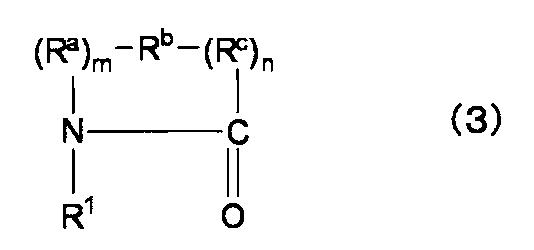 [式中、R1は置換基を有していてもよいアラルキル基、置換基を有していてもよいアルケニル基、置換基を有していてもよいアルキニル基、置換基を有していてもよい芳香族炭化水素基又は置換基を有していてもよい複素環基を表し、Raは置換基を有していてもよいメチレン基を表し、Rbは置換基を有していてもよい2価の脂環式炭化水素基又は置換基を有していてもよい2価の複素環基を表し、Rcは置換基を有していてもよいメチレン基を表し、mは1又は2を表し、nは0、1、2又は3を表す。]
で示されるN−置換ラクタム化合物は、化学原料、医農薬の製造中間体等として有用である(例えば、US2009/281331を参照。)。
N−置換ラクタム化合物の製造方法として、例えば、Tetrahedron,Vol.60(2004)p.4567−4578には、γ−ブチロラクトンとベンジルアミンとを220℃に加熱することにより溶媒の非存在下で反応させ、N−ベンジル−ピロリジン−2−オンを得る方法が記載されている。また、J.Org.Chem.,Vol.73(2008)p.8627−8630には、1,4−ジオキサン中、1−n−ブチル−3−メチルインダゾリウムテトラフルオロボレートの存在下、γ−ブチロラクトンとベンジルアミンとを、マイクロ波で220℃に加熱することにより反応させ、N−ベンジル−ピロリジン−2−オンを得る方法が記載されている。
前者の方法では、N−置換ラクタム化合物の収率は必ずしも満足できるものではなく、また、後者の方法では、マイクロ波を発生させる特殊な反応設備が必要である。
そこで、特殊な設備を要することなく、高収率でN−置換ラクタム化合物を製造できる新たな方法が求められる。
で示されるN−置換ラクタム化合物は、化学原料、医農薬の製造中間体等として有用である(例えば、US2009/281331を参照。)。
N−置換ラクタム化合物の製造方法として、例えば、Tetrahedron,Vol.60(2004)p.4567−4578には、γ−ブチロラクトンとベンジルアミンとを220℃に加熱することにより溶媒の非存在下で反応させ、N−ベンジル−ピロリジン−2−オンを得る方法が記載されている。また、J.Org.Chem.,Vol.73(2008)p.8627−8630には、1,4−ジオキサン中、1−n−ブチル−3−メチルインダゾリウムテトラフルオロボレートの存在下、γ−ブチロラクトンとベンジルアミンとを、マイクロ波で220℃に加熱することにより反応させ、N−ベンジル−ピロリジン−2−オンを得る方法が記載されている。
前者の方法では、N−置換ラクタム化合物の収率は必ずしも満足できるものではなく、また、後者の方法では、マイクロ波を発生させる特殊な反応設備が必要である。
そこで、特殊な設備を要することなく、高収率でN−置換ラクタム化合物を製造できる新たな方法が求められる。
本発明は、式(1)
 [式中、Raは置換基を有していてもよいメチレン基を表し、Rbは置換基を有していてもよい2価の脂環式炭化水素基又は置換基を有していてもよい2価の複素環基を表し、Rcは置換基を有していてもよいメチレン基を表し、mは1又は2を表し、nは0、1、2又は3を表す。]
で示されるラクトン化合物(ラクトン化合物(1))と、式(2)
 [式中、R1は置換基を有していてもよいアラルキル基、置換基を有していてもよいアルケニル基、置換基を有していてもよいアルキニル基、置換基を有していてもよい芳香族炭化水素基又は置換基を有していてもよい複素環基を表す。]
で示されるアミン化合物(アミン化合物(2))とを、水の存在下で反応させる工程を有する式(3)
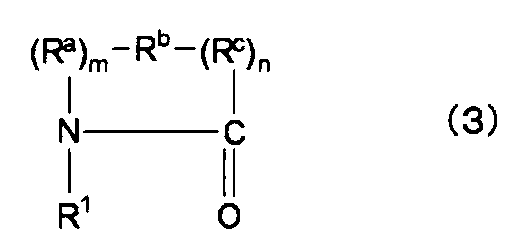 [式中、R1、Ra、Rb、Rc、m及びnはそれぞれ上記で定義した通りである。]
で示されるN−置換ラクタム化合物(N−置換ラクタム化合物(3))の製造方法を提供する。
で示されるラクトン化合物(ラクトン化合物(1))と、式(2)
で示されるアミン化合物(アミン化合物(2))とを、水の存在下で反応させる工程を有する式(3)
で示されるN−置換ラクタム化合物(N−置換ラクタム化合物(3))の製造方法を提供する。
以下、本発明を詳細に説明する。
Rbで表される2価の脂環式炭化水素基としては、例えば、シクロアルカンジイル基、シクロアルケンジイル基、シクロアルキンジイル基が挙げられる。
シクロアルカンジイル基としては、例えば、シクロプロパンジイル基(シクロプロパン−1,1−ジイル基、シクロプロパン−1,2−ジイル基)、シクロブタンジイル基(シクロブタン−1,1−ジイル基、シクロブタン−1,2−ジイル基等)、シクロペンタンジイル基(シクロペンタン−1,1−ジイル基、シクロペンタン−1,2−ジイル基等)、シクロヘキサンジイル基(シクロヘキサン−1,1−ジイル基、シクロヘキサン−1,2−ジイル基等)、シクロヘプタンジイル基(シクロヘプタン−1,1−ジイル基、シクロヘプタン−1,2−ジイル基等)、シクロオクタンジイル基(シクロオクタン−1,1−ジイル基、シクロオクタン−1,2−ジイル基等)、シクロノナンジイル基(シクロノナン−1,1−ジイル基、シクロノナン−1,2−ジイル基等)、シクロデカンジイル基(シクロデカン−1,1−ジイル基、シクロデカン−1,2−ジイル基等)等のC3~C10シクロアルカンジイル基が挙げられる。
シクロアルケンジイル基としては、例えば、シクロブテンジイル基(2−シクロブテン−1,1−ジイル基、1−シクロブテン−1,2−ジイル基、2−シクロブテン−1,2−ジイル基等)、シクロペンテンジイル基(2−シクロペンテン−1,1−ジイル基、1−シクロペンテン−1,2−ジイル基等)、シクロヘキセンジイル基(2−シクロヘキセン−1,1−ジイル基、1−シクロヘキセン−1,2−ジイル基等)、シクロヘプテンジイル基(2−シクロヘプテン−1,1−ジイル基、1−シクロヘプテン−1,2−ジイル基等)、シクロオクテンジイル基(2−シクロオクテン−1,1−ジイル基、1−シクロオクテン−1,2−ジイル基等)、シクロノネンジイル基(2−シクロノネン−1,1−ジイル基、1−シクロノネン−1,2−ジイル基等)、シクロデセンジイル基(2−シクロデセン−1,1−ジイル基、1−シクロデセン−1,2−ジイル基等)等のC4~C10シクロアルケンジイル基が挙げられる。
シクロアルキンジイル基としては、例えば、シクロオクチンジイル基(2−シクロオクチン−1,1−ジイル基、3−シクロヘプチン−1,2−ジイル基等)、シクロノニンジイル基(2−シクロノニン−1,1−ジイル基、3−シクロノニン−1,2−ジイル基等)、シクロデシンジイル基(2−シクロデシン−1,1−ジイル基、3−シクロデシン−1,2−ジイル基等)等のC8~C10シクロアルキンジイルが挙げられる。
Rbで表される2価の複素環基としては、例えば、窒素原子、酸素原子及び硫黄原子から選ばれる1~3個のヘテロ原子を含む単環若しくは二環式の芳香族又は非芳香族の2価の複素環基が挙げられる。具体例としては、ピロールジイル基、チオフェンジイル基、フランジイル基、ピラゾールジイル基、イミダゾールジイル基、オキサゾールジイル基、イソキサゾールジイル基、オキサジアゾールジイル基、トリアゾールジイル基、チアジアゾールジイル基、イソチアゾールジイル基等の5員芳香族複素環基;ピリジンジイル基、ピリダジンジイル基、ピリミジンジイル基、ピラジンジイル基等の6員芳香族複素環;ピロリジンジイル基、ピロリンジイル基、イミダゾリンジイル基、ピラゾリジンジイル基、ピラゾリンジイル基、オキサゾリジンジイル基、チアゾリジンジイル基等の5員非芳香族複素環基;ピランジイル基、ピペリジンジイル基、テトラヒドロピリジンジイル基、ジヒドロピリジンジイル基、ピペラジンジイル基、モルホリンジイル基、チオモルホリンジイル基等の6員非芳香族複素環基;インドールジイル基、イソインドールジイル基、ベンゾチオフェンジイル基、イソベンゾチオフェンジイル基、ベンゾフランジイル基、イソベンゾフランジイル基、インダゾールジイル基、ベンゾイミダゾールジイル基、イミダゾピリジンジイル基、ベンゾチアゾールジイル基、キノリンジイル基、イソキノリンジイル基等の二環式芳香族複素環基;インドリンジイル基、イソインドリンジイル基、チオクロマンジイル基、クロマンジイル基等の二環式非芳香族複素環基が挙げられる。
R1で表されるアラルキル基としては、例えば、C7~C12のアラルキル基が挙げられ、具体的にはベンジル基、フェニルエチル基、ナフチルメチル等が挙げられる。
R1で表されるアルケニル基としては、例えば、C2~C10のアルケニル基が挙げられ、具体的にはビニル基、アリル基、ブテニル基、ペンテニル基、ヘキセニル基、ヘプテニル基、オクテニル基、ノネニル基、デセニル基等が挙げられる。
R1で表されるアルキニル基としては、例えば、C2~C10のアルキニル基が挙げられ、具体的にはエチニル基、プロパルギル基、ブチニル基、ペンチニル基、ヘキシニル基、ヘプチニル基、オクチニル基、ノニニル基、デシニル基等が挙げられる。
R1で表される芳香族炭化水素基としては、例えば、C6~C10のアリール基が挙げられ、具体的にはでフェニル基、ナフチル基等が挙げられる。
R1で表される複素環基としては、例えば、窒素原子、酸素原子及び硫黄原子から独立して選択される1~3個のヘテロ原子を含有する単環若しくは二環式の芳香族又は非芳香族の複素環基等が挙げられる。具体例としては、ピロリル基、チエニル基、フリル基、ピラゾリル基、イミダゾリル基、チアゾリル基、イソチアゾリル基、オキサゾリル基、イソキサゾリル基、オキサジアゾリル基、トリアゾリル基、テトラゾリル基、チアジアゾリル基等の5員芳香族複素環基;ピリジル基、ピリダジニル基、ピリミジニル基、ピラジニル基等の6員芳香族複素環;ピロリジニル基、ピロリニル基、イミダゾリジニル基、イミダゾリニル基、ピラゾリジニル基、ピラゾリニル基、オキサゾリジニル基、チアゾリジニル基、イソチアゾリル基等の5員非芳香族複素環基;ピラニル基、ピペリジル基、テトラヒドロピリジル基、ジヒドロピリジル基、ピペラジニル基、モルホリニル基、チオモルホリニル基等の6員非芳香族複素環基;インドリル基、イソインドリル基、ベンゾチオフェニル基、イソベンゾチオフェニル基、ベンゾフラニル基、イソベンゾフラニル基、インダゾリル基、ベンゾイミダゾリル基、イミダゾピリジル基、ベンゾチアゾリル基、キノリル基、イソキノリル基等の二環式芳香族複素環基;インドリニル基、イソインドリニル基、チオクロマニル基、クロマニル基等の二環式非芳香族複素環基が挙げられる。
メチレン基、2価の脂環式炭化水素基、2価の複素環基、アラルキル基、芳香族炭化水素基及び複素環基が有していてもよい置換基としては、例えば、ハロゲン原子(フッ素原子、塩素原子、臭素原子、ヨウ素原子)、アルコキシ基、シクロアルコキシ基、ニトロ基、シアノ基、アルキル基、シクロアルキル基、アリール基(該アリール基はアルキル基、ハロゲン原子、ニトロを有していてもよい)が挙げられ、1又は複数置換することができる。また、アルケニル基及びアルキニル基が有していてもよい置換基としては、例えば、ハロゲン原子(フッ素原子、塩素原子、臭素原子、ヨウ素原子)、アルコキシ基、ニトロ基、シアノ基、アリール基(該アリール基はアルキル基、ハロゲン原子、ニトロを有していてもよい)が挙げられ、1又は複数置換することができる。
ここで、アルコキシ基としては、例えば、直鎖又は分岐鎖のC1~C10アルコキシ基が挙げられ、具体的にはメトキシ基、エトキシ基、プロポキシ基、イソプロポキシ基、ブトキシ基、sec−ブトキシ基、tert−ブトキシ基、ペンチルオキシ基、ヘキシルオキシ基、ヘプチルオキシ基、オクチルオキシ基、ノニルオキシ基、デシルオキシ基等が挙げられる。
シクロアルコキシ基としては、例えば、C4~C10シクロアルコキシ基が挙げられ、具体的にはシクロブチルオキシ基、シクロペンチルオキシ基、シクロヘキシルオキシ基、シクロヘプチルオキシ基、シクロオクチルオキシ基、シクロノニルオキシ基、シクロデシルオキシ基等が挙げられる。
アルキル基としては、例えば、直鎖又は分岐鎖のC1~C10アルキル基が挙げられ、具体的にはメチル基、エチル基、プロピル基、イソプロピル基、ブチル基、sec−ブチル基、tert−ブチル基、ペンチル基、ヘキシル基、ヘプチル基、オクチル基、ノニル基、デシル基等が挙げられる。好ましくは、メチル基、エチル基、イソプロピル基、sec−ブチル基、tert−ブチル基等が挙げられる。
シクロアルキル基としては、例えば、C4~C10シクロアルキル基が挙げられ、具体的にはシクロブチル基、シクロペンチル基、シクロヘキシル基、シクロヘプチル基、シクロオクチル基、シクロノニル基、シクロデシル基等が挙げられる。
アリール基としては、例えば、C6~C10アリール基が挙げられ、具体的にはフェニル基、ナフチル基等が挙げられる。
R1は、好ましくは、置換基を有していてもよいアラルキル基又は置換基を有していてもよいアルケニル基であり、より好ましくは、置換基を有していてもよいベンジル基又は置換基を有していてもよいアリル基である。
Raは、好ましくは、メチレン基である。
mは、好ましくは1である。
Rbは、好ましくは、置換基を有していてもよい2価のシクロアルカンジイル基又は置換基を有していてもよい単環式の2価の複素環基であり、さらに好ましくは、置換基を有していてもよい2価のシクロアルカンジイル基であり、特に好ましくは、置換基を有していてもよい2価のC3~C6のシクロアルカンジイル基である。
Rcは、好ましくは、メチレン基である。
nは、好ましくは0又は1であり、より好ましくは0である。
ラクトン化合物(1)としては、γ−ラクトン化合物、δ−ラクトン化合物、ε−ラクトン化合物等が挙げられるが、好ましくはγ−ラクトン化合物が挙げられる。また、ラクトン化合物(1)としては、以下の式(1−1)~(1−12)で示される化合物が例示される。ラクトン化合物(1)が不斉炭素を有する場合、ラクトン化合物(1)は、光学活性体であってもよい。
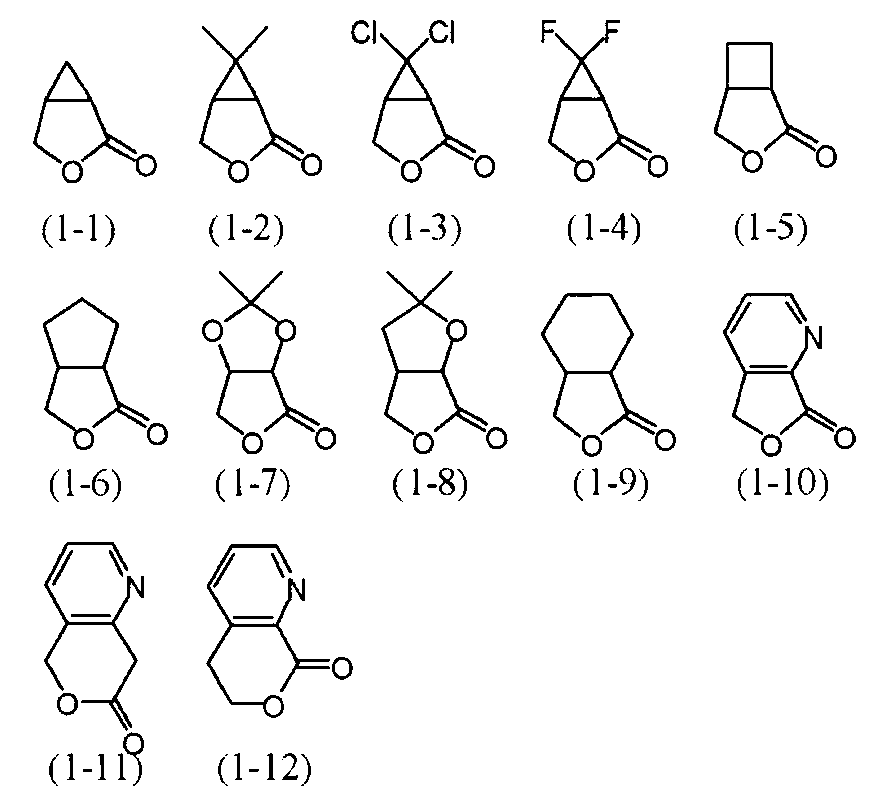 特に好ましいラクトン化合物(1)は、Raがメチレン基、Rbが置換基を有していてもよい2価のシクロアルカンジイル基、mが1及びnが0であるラクトン化合物(1)である。特に、以下の式(1’)で表されるラクトン化合物(1)が好ましい。
 (式中、Rdは置換基を有していてもよい炭素数1~4のアルカンジイル基を表す。)
かかる式(1’)で表されるラクトン化合物(1)は、上述のラクトン化合物(1)の具体例の中では、式(1−1)~式(1−6)、式(1−9)でそれぞれ表されるものが該当する。
アミン化合物(2)としては、例えば、アリルアミン、アニリン、クロロアニリン、ジクロロアニリン、トリクロロアニリン、フルオロアニリン、メトキシアニリン、ジメトキシアニリン、ニトロアニリン、ジニトロアニリン、アミノフラン、アミノピロール、アミノチオフェン、アミノピラン、アミノピリジン、ベンジルアミン、クロロベンジルアミン、ジクロロベンジルアミン、トリクロロベンジルアミン、フルオロベンジルアミン、メトキシベンジルアミン、ジメトキシベンジルアミン、ニトロベンジルアミン、ジニトロベンジルアミン、クロロベンジルアミン、ジクロロベンジルアミン、トリクロロベンジルアミン、フルオロベンジルアミン、メチルベンジルアミン、エチルベンジルアミン、メトキシベンジルアミン、ジメトキシベンジルアミン、アミノメチルベンゾニトリル、フェニルエチルアミン及びナフチルメチルアミンが挙げられ、好ましくは、アリルアミン、ベンジルアミン及びメトキシベンジルアミンが挙げられる。
N−置換ラクラム化合物(3)としては、以下の式(3−1)~(3−48)で示される化合物が例示される。N−置換ラクラム化合物(3)が不斉炭素を有する場合、N−置換ラクラム化合物(3)は、光学活性体であってもよい。


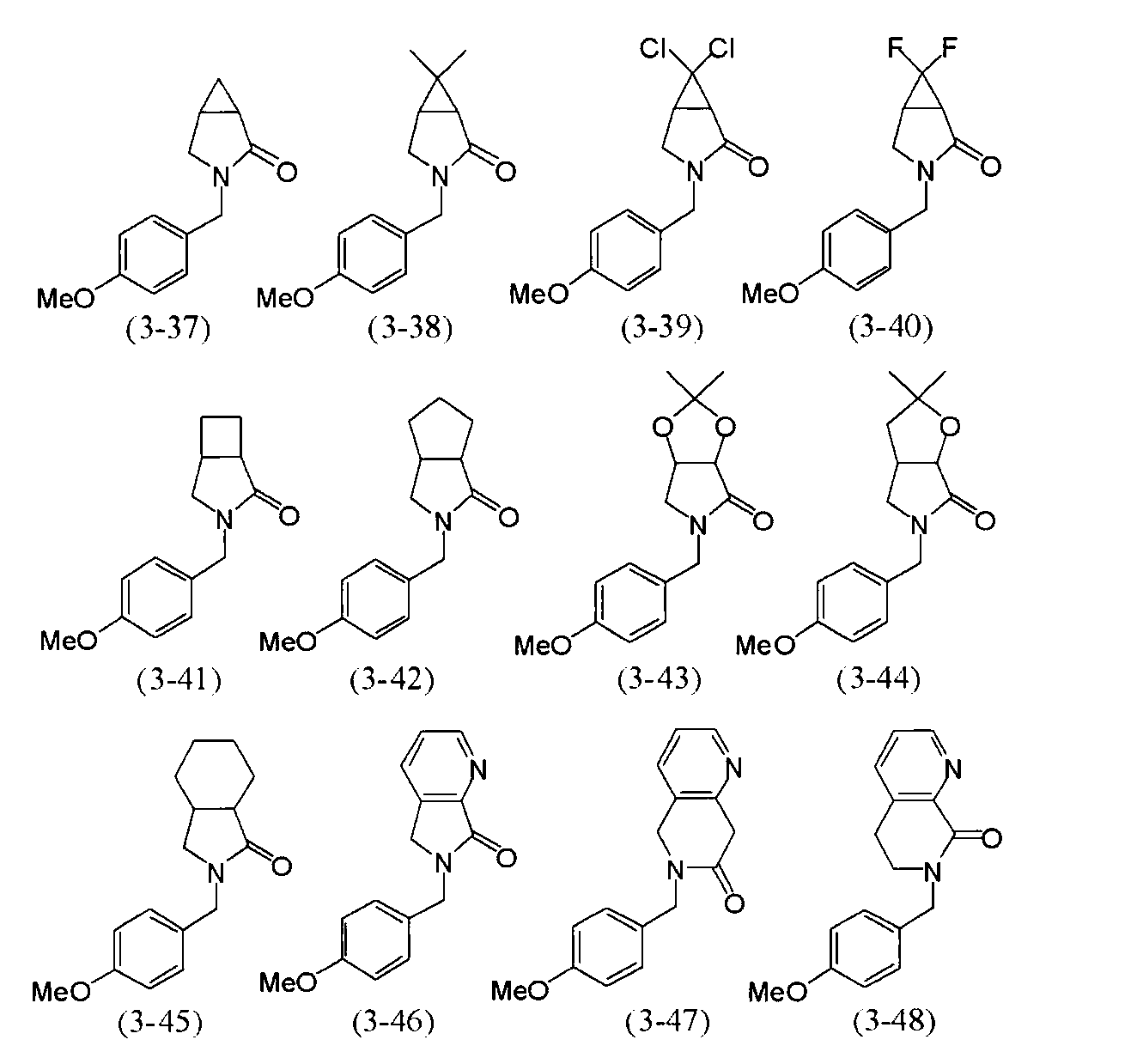 N−置換ラクタム化合物(3)は、ラクトン化合物(1)とアミン化合物(2)とを、水の存在下で反応させる工程により製造される。
ラクトン化合物(1)は、市販の化合物であるか、又は市販の化合物から容易に調製することができる。例えば、US2009/163722に従って調製することができる。
アミン化合物(2)の使用量は、ラクトン化合物(1)1モルに対して、0.8~10モル、好ましくは1~6モル、より好ましくは1.1~4モル、さらに好ましくは1.7~3モルの範囲内である。
本工程における水の使用量は、ラクトン化合物(1)1モルに対して、好ましくは3~500モル、より好ましくは4~210モルの範囲内である。
本工程は水の存在下での反応であり、通常、水を溶媒とする反応であるが、水と有機溶媒の混合溶媒中で反応させることもできる。かかる有機溶媒としては、例えば、脂肪族炭化水素(ヘキサン、ヘプタン、シクロヘキサン等)、芳香族炭化水素(ベンゼン、トルエン、キシレン、エチルベンゼン、クロロベンゼン、ジクロロベンゼン等)、ハロゲン化炭化水素(ジクロロメタン、ジクロロエタン、クロロホルム、クロロブタン等)、エーテル(テトラヒドロフラン、ジオキサン、ジメトキシエタン、ジエチレングリコールジメチルエーテル、メチルtert−ブチルエーテル、ジエチルエーテル等)、アルコール(メタノール、エタノール、1−プロパノール、2−プロパノール、1−ブタノール、2−メチル−2−プロパノール等)、ニトリル(アセトニトリル、プロピオニトリル等)、及びこれらの2種以上の混合物が挙げられる。好ましい有機溶媒としては、メタノール及びエタノールが挙げられる。有機溶媒の使用量は、例えばラクトン化合物(1)の1重量部に対して0~100重量部、好ましくは0.1~20重量部、より好ましくは0.1~2重量部の範囲内である。
本工程では、添加剤を加えることも好ましい。かかる添加剤としては、例えば、無機酸(塩化水素、臭化水素、フッ化水素酸、硫酸、硝酸、リン酸、ホウ酸等)、有機酸(ギ酸、酢酸、クエン酸、シュウ酸、メタンスルホン酸、トルエンスルホン酸、トリフルオロメタンスルホン酸等)、酸性イオン交換樹脂、γ−アルミナ、N−ヒドロキシベンゾトリアゾール、テトラブチルアンモニウムブロミド等が挙げられる。好ましい添加剤として、トルエンスルホン酸及びγ−アルミナが挙げられる。
反応温度は、例えば100~300℃、好ましくは130~210℃、より好ましくは160~210℃の範囲内である。
本工程は、加圧条件で行うことも好ましい。加圧条件で行う場合の圧力は、例えば0.1~5MPa、好ましくは0.5~2MPaの範囲内である。
本工程では、反応で得られる混合物を後処理に付すことで、N−置換ラクタム化合物(3)を単離することができる。例えば、反応混合物と水とを混合後、必要に応じて、水と分液可能な有機溶媒とさらに混合して分液することにより、過剰のアミン化合物(2)、添加剤、これらが加水分解された分解成分を水層に分配させて、他方、N−置換ラクタム化合物(3)を有機層に分配させることができる。上記後処理時に反応混合物と水とを混合させた後、酸を加えて酸性にするか、あるいは、酸性水溶液を反応混合物と混合することで、分液操作時の水層を酸性化して、過剰量のアミン化合物(2)を効率的に水層に分配することができる。当該水層のpHの好ましい範囲は1~7であり、より好ましい範囲は4~6である。
水と分液可能な有機溶媒としては、例えば、脂肪族炭化水素(ヘキサン、ヘプタン、シクロヘキサン等)、芳香族炭化水素(ベンゼン、トルエン、キシレン、エチルベンゼン、クロロベンゼン、ジクロロベンゼン等)、ハロゲン化炭化水素(ジクロロメタン、ジクロロエタン、クロロホルム、クロロブタン等)、エーテル(メチルtert−ブチルエーテル等)、ケトン(メチルイソブチルケトン等)、エステル(酢酸エチル、酢酸ブチル等)、及びこれらの二種以上の混合物が挙げられる。
分液により得られた有機層は、さらに水洗浄、無機塩水洗浄、塩基性水洗浄又は酸性水洗浄等に付してもよい。水洗浄、無機塩水洗浄、塩基性水洗浄又は酸性水洗浄等は繰り返し行ってもよい。
このようにして得られたN−置換ラクタム化合物(3)を含む溶液を、そのまま化学原料、医農薬の製造中間体等として用いてもよく、あるいは溶媒濃縮等によりN−置換ラクタム化合物(3)を単離し、単離したN−置換ラクタム化合物(3)を化学原料、医農薬の製造中間体等として用いてもよい。N−置換ラクタム化合物(3)は、さらにカラムクロマトグラフィー、再結晶等の方法により精製してもよい。
Rbで表される2価の脂環式炭化水素基としては、例えば、シクロアルカンジイル基、シクロアルケンジイル基、シクロアルキンジイル基が挙げられる。
シクロアルカンジイル基としては、例えば、シクロプロパンジイル基(シクロプロパン−1,1−ジイル基、シクロプロパン−1,2−ジイル基)、シクロブタンジイル基(シクロブタン−1,1−ジイル基、シクロブタン−1,2−ジイル基等)、シクロペンタンジイル基(シクロペンタン−1,1−ジイル基、シクロペンタン−1,2−ジイル基等)、シクロヘキサンジイル基(シクロヘキサン−1,1−ジイル基、シクロヘキサン−1,2−ジイル基等)、シクロヘプタンジイル基(シクロヘプタン−1,1−ジイル基、シクロヘプタン−1,2−ジイル基等)、シクロオクタンジイル基(シクロオクタン−1,1−ジイル基、シクロオクタン−1,2−ジイル基等)、シクロノナンジイル基(シクロノナン−1,1−ジイル基、シクロノナン−1,2−ジイル基等)、シクロデカンジイル基(シクロデカン−1,1−ジイル基、シクロデカン−1,2−ジイル基等)等のC3~C10シクロアルカンジイル基が挙げられる。
シクロアルケンジイル基としては、例えば、シクロブテンジイル基(2−シクロブテン−1,1−ジイル基、1−シクロブテン−1,2−ジイル基、2−シクロブテン−1,2−ジイル基等)、シクロペンテンジイル基(2−シクロペンテン−1,1−ジイル基、1−シクロペンテン−1,2−ジイル基等)、シクロヘキセンジイル基(2−シクロヘキセン−1,1−ジイル基、1−シクロヘキセン−1,2−ジイル基等)、シクロヘプテンジイル基(2−シクロヘプテン−1,1−ジイル基、1−シクロヘプテン−1,2−ジイル基等)、シクロオクテンジイル基(2−シクロオクテン−1,1−ジイル基、1−シクロオクテン−1,2−ジイル基等)、シクロノネンジイル基(2−シクロノネン−1,1−ジイル基、1−シクロノネン−1,2−ジイル基等)、シクロデセンジイル基(2−シクロデセン−1,1−ジイル基、1−シクロデセン−1,2−ジイル基等)等のC4~C10シクロアルケンジイル基が挙げられる。
シクロアルキンジイル基としては、例えば、シクロオクチンジイル基(2−シクロオクチン−1,1−ジイル基、3−シクロヘプチン−1,2−ジイル基等)、シクロノニンジイル基(2−シクロノニン−1,1−ジイル基、3−シクロノニン−1,2−ジイル基等)、シクロデシンジイル基(2−シクロデシン−1,1−ジイル基、3−シクロデシン−1,2−ジイル基等)等のC8~C10シクロアルキンジイルが挙げられる。
Rbで表される2価の複素環基としては、例えば、窒素原子、酸素原子及び硫黄原子から選ばれる1~3個のヘテロ原子を含む単環若しくは二環式の芳香族又は非芳香族の2価の複素環基が挙げられる。具体例としては、ピロールジイル基、チオフェンジイル基、フランジイル基、ピラゾールジイル基、イミダゾールジイル基、オキサゾールジイル基、イソキサゾールジイル基、オキサジアゾールジイル基、トリアゾールジイル基、チアジアゾールジイル基、イソチアゾールジイル基等の5員芳香族複素環基;ピリジンジイル基、ピリダジンジイル基、ピリミジンジイル基、ピラジンジイル基等の6員芳香族複素環;ピロリジンジイル基、ピロリンジイル基、イミダゾリンジイル基、ピラゾリジンジイル基、ピラゾリンジイル基、オキサゾリジンジイル基、チアゾリジンジイル基等の5員非芳香族複素環基;ピランジイル基、ピペリジンジイル基、テトラヒドロピリジンジイル基、ジヒドロピリジンジイル基、ピペラジンジイル基、モルホリンジイル基、チオモルホリンジイル基等の6員非芳香族複素環基;インドールジイル基、イソインドールジイル基、ベンゾチオフェンジイル基、イソベンゾチオフェンジイル基、ベンゾフランジイル基、イソベンゾフランジイル基、インダゾールジイル基、ベンゾイミダゾールジイル基、イミダゾピリジンジイル基、ベンゾチアゾールジイル基、キノリンジイル基、イソキノリンジイル基等の二環式芳香族複素環基;インドリンジイル基、イソインドリンジイル基、チオクロマンジイル基、クロマンジイル基等の二環式非芳香族複素環基が挙げられる。
R1で表されるアラルキル基としては、例えば、C7~C12のアラルキル基が挙げられ、具体的にはベンジル基、フェニルエチル基、ナフチルメチル等が挙げられる。
R1で表されるアルケニル基としては、例えば、C2~C10のアルケニル基が挙げられ、具体的にはビニル基、アリル基、ブテニル基、ペンテニル基、ヘキセニル基、ヘプテニル基、オクテニル基、ノネニル基、デセニル基等が挙げられる。
R1で表されるアルキニル基としては、例えば、C2~C10のアルキニル基が挙げられ、具体的にはエチニル基、プロパルギル基、ブチニル基、ペンチニル基、ヘキシニル基、ヘプチニル基、オクチニル基、ノニニル基、デシニル基等が挙げられる。
R1で表される芳香族炭化水素基としては、例えば、C6~C10のアリール基が挙げられ、具体的にはでフェニル基、ナフチル基等が挙げられる。
R1で表される複素環基としては、例えば、窒素原子、酸素原子及び硫黄原子から独立して選択される1~3個のヘテロ原子を含有する単環若しくは二環式の芳香族又は非芳香族の複素環基等が挙げられる。具体例としては、ピロリル基、チエニル基、フリル基、ピラゾリル基、イミダゾリル基、チアゾリル基、イソチアゾリル基、オキサゾリル基、イソキサゾリル基、オキサジアゾリル基、トリアゾリル基、テトラゾリル基、チアジアゾリル基等の5員芳香族複素環基;ピリジル基、ピリダジニル基、ピリミジニル基、ピラジニル基等の6員芳香族複素環;ピロリジニル基、ピロリニル基、イミダゾリジニル基、イミダゾリニル基、ピラゾリジニル基、ピラゾリニル基、オキサゾリジニル基、チアゾリジニル基、イソチアゾリル基等の5員非芳香族複素環基;ピラニル基、ピペリジル基、テトラヒドロピリジル基、ジヒドロピリジル基、ピペラジニル基、モルホリニル基、チオモルホリニル基等の6員非芳香族複素環基;インドリル基、イソインドリル基、ベンゾチオフェニル基、イソベンゾチオフェニル基、ベンゾフラニル基、イソベンゾフラニル基、インダゾリル基、ベンゾイミダゾリル基、イミダゾピリジル基、ベンゾチアゾリル基、キノリル基、イソキノリル基等の二環式芳香族複素環基;インドリニル基、イソインドリニル基、チオクロマニル基、クロマニル基等の二環式非芳香族複素環基が挙げられる。
メチレン基、2価の脂環式炭化水素基、2価の複素環基、アラルキル基、芳香族炭化水素基及び複素環基が有していてもよい置換基としては、例えば、ハロゲン原子(フッ素原子、塩素原子、臭素原子、ヨウ素原子)、アルコキシ基、シクロアルコキシ基、ニトロ基、シアノ基、アルキル基、シクロアルキル基、アリール基(該アリール基はアルキル基、ハロゲン原子、ニトロを有していてもよい)が挙げられ、1又は複数置換することができる。また、アルケニル基及びアルキニル基が有していてもよい置換基としては、例えば、ハロゲン原子(フッ素原子、塩素原子、臭素原子、ヨウ素原子)、アルコキシ基、ニトロ基、シアノ基、アリール基(該アリール基はアルキル基、ハロゲン原子、ニトロを有していてもよい)が挙げられ、1又は複数置換することができる。
ここで、アルコキシ基としては、例えば、直鎖又は分岐鎖のC1~C10アルコキシ基が挙げられ、具体的にはメトキシ基、エトキシ基、プロポキシ基、イソプロポキシ基、ブトキシ基、sec−ブトキシ基、tert−ブトキシ基、ペンチルオキシ基、ヘキシルオキシ基、ヘプチルオキシ基、オクチルオキシ基、ノニルオキシ基、デシルオキシ基等が挙げられる。
シクロアルコキシ基としては、例えば、C4~C10シクロアルコキシ基が挙げられ、具体的にはシクロブチルオキシ基、シクロペンチルオキシ基、シクロヘキシルオキシ基、シクロヘプチルオキシ基、シクロオクチルオキシ基、シクロノニルオキシ基、シクロデシルオキシ基等が挙げられる。
アルキル基としては、例えば、直鎖又は分岐鎖のC1~C10アルキル基が挙げられ、具体的にはメチル基、エチル基、プロピル基、イソプロピル基、ブチル基、sec−ブチル基、tert−ブチル基、ペンチル基、ヘキシル基、ヘプチル基、オクチル基、ノニル基、デシル基等が挙げられる。好ましくは、メチル基、エチル基、イソプロピル基、sec−ブチル基、tert−ブチル基等が挙げられる。
シクロアルキル基としては、例えば、C4~C10シクロアルキル基が挙げられ、具体的にはシクロブチル基、シクロペンチル基、シクロヘキシル基、シクロヘプチル基、シクロオクチル基、シクロノニル基、シクロデシル基等が挙げられる。
アリール基としては、例えば、C6~C10アリール基が挙げられ、具体的にはフェニル基、ナフチル基等が挙げられる。
R1は、好ましくは、置換基を有していてもよいアラルキル基又は置換基を有していてもよいアルケニル基であり、より好ましくは、置換基を有していてもよいベンジル基又は置換基を有していてもよいアリル基である。
Raは、好ましくは、メチレン基である。
mは、好ましくは1である。
Rbは、好ましくは、置換基を有していてもよい2価のシクロアルカンジイル基又は置換基を有していてもよい単環式の2価の複素環基であり、さらに好ましくは、置換基を有していてもよい2価のシクロアルカンジイル基であり、特に好ましくは、置換基を有していてもよい2価のC3~C6のシクロアルカンジイル基である。
Rcは、好ましくは、メチレン基である。
nは、好ましくは0又は1であり、より好ましくは0である。
ラクトン化合物(1)としては、γ−ラクトン化合物、δ−ラクトン化合物、ε−ラクトン化合物等が挙げられるが、好ましくはγ−ラクトン化合物が挙げられる。また、ラクトン化合物(1)としては、以下の式(1−1)~(1−12)で示される化合物が例示される。ラクトン化合物(1)が不斉炭素を有する場合、ラクトン化合物(1)は、光学活性体であってもよい。
かかる式(1’)で表されるラクトン化合物(1)は、上述のラクトン化合物(1)の具体例の中では、式(1−1)~式(1−6)、式(1−9)でそれぞれ表されるものが該当する。
アミン化合物(2)としては、例えば、アリルアミン、アニリン、クロロアニリン、ジクロロアニリン、トリクロロアニリン、フルオロアニリン、メトキシアニリン、ジメトキシアニリン、ニトロアニリン、ジニトロアニリン、アミノフラン、アミノピロール、アミノチオフェン、アミノピラン、アミノピリジン、ベンジルアミン、クロロベンジルアミン、ジクロロベンジルアミン、トリクロロベンジルアミン、フルオロベンジルアミン、メトキシベンジルアミン、ジメトキシベンジルアミン、ニトロベンジルアミン、ジニトロベンジルアミン、クロロベンジルアミン、ジクロロベンジルアミン、トリクロロベンジルアミン、フルオロベンジルアミン、メチルベンジルアミン、エチルベンジルアミン、メトキシベンジルアミン、ジメトキシベンジルアミン、アミノメチルベンゾニトリル、フェニルエチルアミン及びナフチルメチルアミンが挙げられ、好ましくは、アリルアミン、ベンジルアミン及びメトキシベンジルアミンが挙げられる。
N−置換ラクラム化合物(3)としては、以下の式(3−1)~(3−48)で示される化合物が例示される。N−置換ラクラム化合物(3)が不斉炭素を有する場合、N−置換ラクラム化合物(3)は、光学活性体であってもよい。
ラクトン化合物(1)は、市販の化合物であるか、又は市販の化合物から容易に調製することができる。例えば、US2009/163722に従って調製することができる。
アミン化合物(2)の使用量は、ラクトン化合物(1)1モルに対して、0.8~10モル、好ましくは1~6モル、より好ましくは1.1~4モル、さらに好ましくは1.7~3モルの範囲内である。
本工程における水の使用量は、ラクトン化合物(1)1モルに対して、好ましくは3~500モル、より好ましくは4~210モルの範囲内である。
本工程は水の存在下での反応であり、通常、水を溶媒とする反応であるが、水と有機溶媒の混合溶媒中で反応させることもできる。かかる有機溶媒としては、例えば、脂肪族炭化水素(ヘキサン、ヘプタン、シクロヘキサン等)、芳香族炭化水素(ベンゼン、トルエン、キシレン、エチルベンゼン、クロロベンゼン、ジクロロベンゼン等)、ハロゲン化炭化水素(ジクロロメタン、ジクロロエタン、クロロホルム、クロロブタン等)、エーテル(テトラヒドロフラン、ジオキサン、ジメトキシエタン、ジエチレングリコールジメチルエーテル、メチルtert−ブチルエーテル、ジエチルエーテル等)、アルコール(メタノール、エタノール、1−プロパノール、2−プロパノール、1−ブタノール、2−メチル−2−プロパノール等)、ニトリル(アセトニトリル、プロピオニトリル等)、及びこれらの2種以上の混合物が挙げられる。好ましい有機溶媒としては、メタノール及びエタノールが挙げられる。有機溶媒の使用量は、例えばラクトン化合物(1)の1重量部に対して0~100重量部、好ましくは0.1~20重量部、より好ましくは0.1~2重量部の範囲内である。
本工程では、添加剤を加えることも好ましい。かかる添加剤としては、例えば、無機酸(塩化水素、臭化水素、フッ化水素酸、硫酸、硝酸、リン酸、ホウ酸等)、有機酸(ギ酸、酢酸、クエン酸、シュウ酸、メタンスルホン酸、トルエンスルホン酸、トリフルオロメタンスルホン酸等)、酸性イオン交換樹脂、γ−アルミナ、N−ヒドロキシベンゾトリアゾール、テトラブチルアンモニウムブロミド等が挙げられる。好ましい添加剤として、トルエンスルホン酸及びγ−アルミナが挙げられる。
反応温度は、例えば100~300℃、好ましくは130~210℃、より好ましくは160~210℃の範囲内である。
本工程は、加圧条件で行うことも好ましい。加圧条件で行う場合の圧力は、例えば0.1~5MPa、好ましくは0.5~2MPaの範囲内である。
本工程では、反応で得られる混合物を後処理に付すことで、N−置換ラクタム化合物(3)を単離することができる。例えば、反応混合物と水とを混合後、必要に応じて、水と分液可能な有機溶媒とさらに混合して分液することにより、過剰のアミン化合物(2)、添加剤、これらが加水分解された分解成分を水層に分配させて、他方、N−置換ラクタム化合物(3)を有機層に分配させることができる。上記後処理時に反応混合物と水とを混合させた後、酸を加えて酸性にするか、あるいは、酸性水溶液を反応混合物と混合することで、分液操作時の水層を酸性化して、過剰量のアミン化合物(2)を効率的に水層に分配することができる。当該水層のpHの好ましい範囲は1~7であり、より好ましい範囲は4~6である。
水と分液可能な有機溶媒としては、例えば、脂肪族炭化水素(ヘキサン、ヘプタン、シクロヘキサン等)、芳香族炭化水素(ベンゼン、トルエン、キシレン、エチルベンゼン、クロロベンゼン、ジクロロベンゼン等)、ハロゲン化炭化水素(ジクロロメタン、ジクロロエタン、クロロホルム、クロロブタン等)、エーテル(メチルtert−ブチルエーテル等)、ケトン(メチルイソブチルケトン等)、エステル(酢酸エチル、酢酸ブチル等)、及びこれらの二種以上の混合物が挙げられる。
分液により得られた有機層は、さらに水洗浄、無機塩水洗浄、塩基性水洗浄又は酸性水洗浄等に付してもよい。水洗浄、無機塩水洗浄、塩基性水洗浄又は酸性水洗浄等は繰り返し行ってもよい。
このようにして得られたN−置換ラクタム化合物(3)を含む溶液を、そのまま化学原料、医農薬の製造中間体等として用いてもよく、あるいは溶媒濃縮等によりN−置換ラクタム化合物(3)を単離し、単離したN−置換ラクタム化合物(3)を化学原料、医農薬の製造中間体等として用いてもよい。N−置換ラクタム化合物(3)は、さらにカラムクロマトグラフィー、再結晶等の方法により精製してもよい。
以下、実施例により本発明をさらに詳細に説明する。
実施例1 (1R,5S)−3−ベンジル−6,6−ジメチル−3−アザビシクロ[3.1.0]ヘキサン−2−オン(化合物A)の合成
200mLオートクレーブに(1R,5S)−6,6−ジメチル−3−オキサビシクロ[3.1.0]ヘキサン−2−オン(化合物B)を15.0g(118.6mmol)含むトルエン溶液19.3gとベンジルアミン25.7g(239.7mmol)と水64.8g(3.6mol)を仕込み、混合した後、0.9MPaの圧力条件下、180℃に加熱した。同温で10時間攪拌し、35℃に冷却した後、反応混合液に1N塩酸を12.2g(117.1mmol)滴下して、pH4に調整した。該反応混合液をメチルtert−ブチルエーテル45gで2回抽出した。該反応マスを定量した結果、化合物Aを24.1g(111.8mmol、収率94.3%)含んでいた。得られた有機層を混合し、水45gで1回洗浄し、有機層を減圧条件下に溶媒を留去して濃縮した。濃縮液にヘプタン64gを加え、65℃に昇温後、活性炭を1.5g加え、同温で0.5時間攪拌した。この混合物を濾過し、ヘプタン45gで、濾過残渣を洗浄した。得られた濾液と洗浄液を混合し、減圧条件下に溶媒を留去して濃縮した。得られた濃縮液にヘプタン60gを加え、47℃に昇温し、(1R,5S)−3−ベンジル−6,6−ジメチル−3−アザビシクロ[3.1.0]ヘキサン−2−オンを0.02g加え、1時間攪拌した。その後、5℃まで冷却し、析出した結晶を濾過した。得られた結晶を更に5℃のヘプタン38gで洗浄した後、減圧乾燥して、化合物Aを21.52g(99.9mmol、収率84.3%)含む白色結晶を21.57g得た。収率は、HPLCを用いて下記条件で分析して求めた。
1H−NMR(CDCl3)δ:7.34~7.24(5H,m),4.50(1H,d,J=14Hz),4.15(1H,d,J=15Hz),3.37(1H,dd,J=7Hz,11Hz),2.99(1H,d,J=11Hz),1.85(1H,d,J=7Hz),1.58(1H,dd,J=7Hz,7Hz),1.09(3H,s),0.94(3H,s)
[HPLC条件]
カラム:CAPCELLPAC C18 MGIII、4.6mmφ×100mm,3μm(資生堂製)
流速: 1.35ml/min
検出波長:UV 220nm
移動相:A液(0.1%リン酸)/B液(アセトニトリル)
グラジエント条件:
 カラム温度:35℃
実施例2 化合物Aの合成
200mLオートクレーブに化合物Bを7.58g(60.1mmol)含むトルエン溶液9.82gとベンジルアミン12.87g(120mmol)と水32.5g(1.80mol)を仕込み、混合した後、0.7MPaの圧力下、170℃に加熱した。同温で15時間攪拌し、化合物Aを12.3g(57.3mmol、収率95.6%)含む反応混合物を得た。収率は、実施例1と同じHPLC条件で反応混合物を分析することにより求めた。
実施例3 化合物Aの合成
1000mLオートクレーブに化合物Bを50.0g(396.3mmol)含むトルエン溶液64.77gとベンジルアミン84.9g(792.7mmol)と水214g(11.9mol)を仕込み、混合した後、1.6MPaの圧力下、195℃に加熱した。同温で10時間攪拌し、化合物Aを81.56g(378.9mmol、収率95.6%)含む反応混合物を得た。収率は、実施例1と同じHPLC条件で反応混合物を分析することにより求めた。
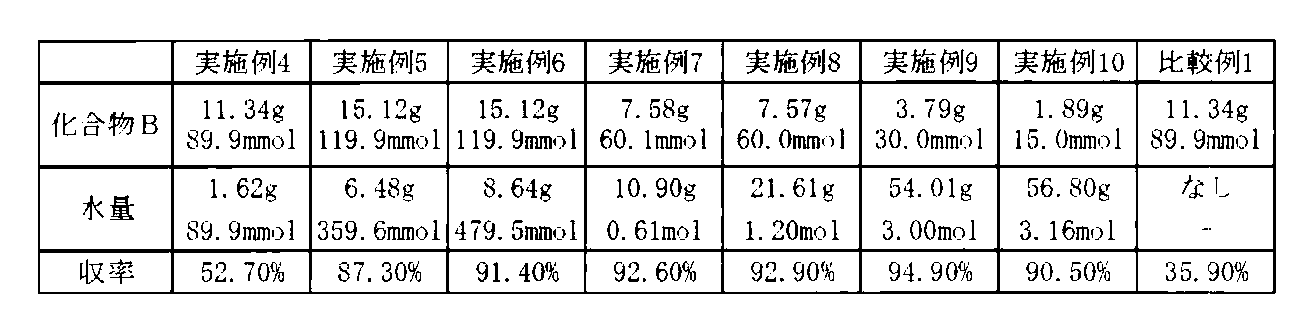
実施例4~10、比較例1 化合物Aの合成
実施例2に記載の水量を表1に記載の量に代え、水量以外は実施例2と同様に反応を行った。結果を表1に示す。
実施例11 化合物Aの合成
200mLオートクレーブに化合物Bを11.36g(90.1mmol)含むトルエン溶液14.71gとベンジルアミン19.3g(180mmol)と水16.2g(899mmol)とメタノール22.7gを仕込み、混合した後、1.0MPaの圧力下、160℃に加熱した。同温で21時間攪拌し、化合物Aを17.5g(81.3mmol、収率90.3%)含む反応混合物を得た。収率は、実施例1と同じHPLC条件で反応混合物を分析することにより求めた。
実施例12 化合物Aの合成
200mLオートクレーブに化合物Bを7.57g(60.0mmol)含むトルエン溶液9.81gとベンジルアミン12.85g(120mmol)と水10.84g(600mmol)とメタノール15.1gを仕込み、混合した後、1.2MPaの圧力下、170℃に加熱した。同温で15時間攪拌し、化合物Aを12.1g(56.2mmol、収率93.5%)含む反応混合物を得た。収率は、実施例1と同じHPLC条件で反応混合物を分析することにより求めた。
実施例13 化合物Aの合成
200mLオートクレーブに化合物B5.05g(39.6mmol、含量99.0%)とベンジルアミン8.49g(79.3mmol)と水17.96g(997mmol)とメタノール10.03gを仕込み、混合した後、0.9MPaの圧力下、165℃に加熱した。同温で12時間攪拌し、化合物Aを8.39g(39.0mmol、収率98.5%)含む反応混合物を得た。
その後、35%塩酸3.99gを加えpH5とした後、トルエン15gで2回抽出した。得られた有機層を合わせ、減圧条件下に溶媒を留去して濃縮後、ヘプタン23gを流入した。10℃に冷却し、析出した結晶を濾過、ヘプタン14gで洗浄、乾燥した。化合物Aの結晶7.05g(32.7mmol、収率82.5%)を得た。収率は、実施例1と同じHPLC条件で反応混合物を分析することにより求めた。
実施例14 化合物Aの合成
200mLオートクレーブに化合物Bを11.34g(90.0mmol)含むトルエン溶液14.69gとベンジルアミン16.39g(153mmol)と水16.2g(900mmol)とメタノール22.78gを仕込み、混合した後、1.2MPaの圧力下、170℃に加熱した。同温で15時間攪拌し、化合物Bを17.96g(83.4mmol、収率92.8%)含む反応混合物を得た。収率は、実施例1と同じHPLC条件で反応混合物を分析することにより求めた。
実施例15 化合物Aの合成
200mLオートクレーブに化合物Bを7.57g(60.0mmol)含むトルエン溶液9.80gとベンジルアミン32.1g(300mmol)と水10.8g(600mol)を仕込み、混合した後、0.6MPaの圧力下、170℃に加熱した。同温で15時間攪拌し、化合物Aを11.8g(54.9mmol、収率91.5%)含む反応混合物を得た。収率は、実施例1と同じHPLC条件で反応混合物を分析することにより求めた。
実施例16 化合物Aの合成
200mlオートクレーブに化合物Bを11.34g(89.9mmol)含むトルエン溶液14.69gとベンジルアミン19.26g(179.8mmol)と水16.25g(899mmol)とメタノール22.71gとp−トルエンスルホン酸・1水和物3.51g(18.0mmol)を仕込み、混合した後、1.2MPaの圧力下、170℃に加熱した。同温で15時間攪拌し、得られた反応混合物を実施例1と同じHPLC条件で定量分析した。化合物Aの化合物Bに対する収率は、95.4%であった。
実施例17 化合物Aの合成
100mlオートレクレーブに化合物Bを3.78g(30.0mmol)含むトルエン溶液4.90gとベンジルアミン3.54g(33.0mmol)と水5.5g(305mmol)とγアルミナ0.38g(3.00mmol)を仕込み、混合してオートクレーブ中で170℃に加熱した。同温で15時間攪拌し、得られた反応混合物に水を加え攪拌した後、分液し、有機層および水層を実施例1と同じHPLC条件で定量分析した。化合物Aの化合物Bに対する収率は、89.9%であった。
実施例18 化合物Aの合成
1000mLオートクレーブに化合物Bを50.0g(396.3mmol)含むトルエン溶液64.77gとベンジルアミン84.9g(792.7mmol)と水214g(11.9mol)を仕込み、混合した後、2.0MPaの圧力下、210℃に加熱した。同温で10時間攪拌し、化合物Aを81.90g(380.4mmol、収率96.0%)含む反応混合物を得た。収率は、実施例1と同じHPLC条件で分析することにより求めた。
実施例19 (1R,5S)−3−アリル−6,6−ジメチル−3−アザビシクロ[3.1.0]ヘキサン−2−オンの合成
100mlオートクレーブに化合物B5.0g(39.6mmol)とアリルアミン4.53g(79.3mmol)と水21.4g(1.19mol)を仕込み、混合した後、加圧下、175℃に加熱した。同温で15時間攪拌し、得られた反応混合物を実施例1と同じHPLC条件で定量分析した。化合物Bに対する収率は、100%であった。
1H−NMR(CDCl3)δ:5.75−5.65(1H,m),5.22−5.16(2H,m),3.84(1H,dd,J=7Hz,15Hz),3.72(1H,dd=7Hz,15Hz),3.48(1H,dd,J=7Hz,11Hz),3.08(1H,d,J=11Hz),1.81(1H,d,J=7Hz),1.61(1H,dd,J=6Hz,6Hz),1.11(3H,s),1.01(3H,s)
実施例20 (1R,5S)−6,6−ジメチル−3−[(1S)−1−フェニルエチル]−3−アザビシクロ[3.1.0]ヘキサン−2−オンの合成
100mlオートクレーブに化合物B5.00g(39.6mmol)と(S)−(−)−1−フェニルエチルアミン9.61g(79.3mmol)と水21.4g(1.2mol)を仕込み、混合した後、加圧下、175℃に加熱した。同温で37.5時間攪拌し、得られた反応混合物を実施例1と同じHPLC条件で定量分析した。(1R,5S)−6,6−ジメチル−3−[(1S)−1−フェニルエチル]−3−アザビシクロ[3.1.0]ヘキサン−2−オンの化合物Bに対する収率は、91%であった。
1H−NMR(CDCl3)δ:7.35−7.23(5H,m),5.39(1H,q,J=8Hz),3.45(1H,dd,J=7Hz,11Hz),2.78(1H,d,J=10Hz),1.82(1H,s),1.78(1H,dd,J=2Hz,7Hz),1.52(3H,d,J=7Hz),1.01(3H,s),0.64(3H,s)
実施例21 (1R,5S)−3−[(4−メトキシフェニル)メチル]−6,6−ジメチル−3−アザビシクロ[3.1.0]ヘキサン−2−オンの合成
100mlオートクレーブに化合物B8.00g(63.42mmol)と4−メトキシベンジルアミン17.4g(126.8mmol)と水11.43g(0.63mol)を仕込み、混合した後、加圧下、175℃に加熱した。同温で47.5時間攪拌し、得られた反応混合物を実施例1と同じHPLC条件で定量分析した。(1R,5S)−3−[(4−メトキシフェニル)メチル]−6,6−ジメチル−3−アザビシクロ[3.1.0]ヘキサン−2−オンの化合物Bに対する収率は、94%であった。
1H−NMR(CDCl3)δ:7.19−7.16(2H,m),6.89−6.83(2H,m),4.39(1H,d,J=15Hz),4.13(1H,d,J=14Hz),3.80(3H,s),3.35(1H,dd,J=7Hz,11Hz),2.98(1H,d,J=11Hz),1.83−1.81(1H,m),1.55(1H,dd,J=6Hz,6Hz),1.08(3H,s),0.92(3H,s)
実施例1 (1R,5S)−3−ベンジル−6,6−ジメチル−3−アザビシクロ[3.1.0]ヘキサン−2−オン(化合物A)の合成
200mLオートクレーブに(1R,5S)−6,6−ジメチル−3−オキサビシクロ[3.1.0]ヘキサン−2−オン(化合物B)を15.0g(118.6mmol)含むトルエン溶液19.3gとベンジルアミン25.7g(239.7mmol)と水64.8g(3.6mol)を仕込み、混合した後、0.9MPaの圧力条件下、180℃に加熱した。同温で10時間攪拌し、35℃に冷却した後、反応混合液に1N塩酸を12.2g(117.1mmol)滴下して、pH4に調整した。該反応混合液をメチルtert−ブチルエーテル45gで2回抽出した。該反応マスを定量した結果、化合物Aを24.1g(111.8mmol、収率94.3%)含んでいた。得られた有機層を混合し、水45gで1回洗浄し、有機層を減圧条件下に溶媒を留去して濃縮した。濃縮液にヘプタン64gを加え、65℃に昇温後、活性炭を1.5g加え、同温で0.5時間攪拌した。この混合物を濾過し、ヘプタン45gで、濾過残渣を洗浄した。得られた濾液と洗浄液を混合し、減圧条件下に溶媒を留去して濃縮した。得られた濃縮液にヘプタン60gを加え、47℃に昇温し、(1R,5S)−3−ベンジル−6,6−ジメチル−3−アザビシクロ[3.1.0]ヘキサン−2−オンを0.02g加え、1時間攪拌した。その後、5℃まで冷却し、析出した結晶を濾過した。得られた結晶を更に5℃のヘプタン38gで洗浄した後、減圧乾燥して、化合物Aを21.52g(99.9mmol、収率84.3%)含む白色結晶を21.57g得た。収率は、HPLCを用いて下記条件で分析して求めた。
1H−NMR(CDCl3)δ:7.34~7.24(5H,m),4.50(1H,d,J=14Hz),4.15(1H,d,J=15Hz),3.37(1H,dd,J=7Hz,11Hz),2.99(1H,d,J=11Hz),1.85(1H,d,J=7Hz),1.58(1H,dd,J=7Hz,7Hz),1.09(3H,s),0.94(3H,s)
[HPLC条件]
カラム:CAPCELLPAC C18 MGIII、4.6mmφ×100mm,3μm(資生堂製)
流速: 1.35ml/min
検出波長:UV 220nm
移動相:A液(0.1%リン酸)/B液(アセトニトリル)
グラジエント条件:
実施例2 化合物Aの合成
200mLオートクレーブに化合物Bを7.58g(60.1mmol)含むトルエン溶液9.82gとベンジルアミン12.87g(120mmol)と水32.5g(1.80mol)を仕込み、混合した後、0.7MPaの圧力下、170℃に加熱した。同温で15時間攪拌し、化合物Aを12.3g(57.3mmol、収率95.6%)含む反応混合物を得た。収率は、実施例1と同じHPLC条件で反応混合物を分析することにより求めた。
実施例3 化合物Aの合成
1000mLオートクレーブに化合物Bを50.0g(396.3mmol)含むトルエン溶液64.77gとベンジルアミン84.9g(792.7mmol)と水214g(11.9mol)を仕込み、混合した後、1.6MPaの圧力下、195℃に加熱した。同温で10時間攪拌し、化合物Aを81.56g(378.9mmol、収率95.6%)含む反応混合物を得た。収率は、実施例1と同じHPLC条件で反応混合物を分析することにより求めた。
実施例4~10、比較例1 化合物Aの合成
実施例2に記載の水量を表1に記載の量に代え、水量以外は実施例2と同様に反応を行った。結果を表1に示す。
200mLオートクレーブに化合物Bを11.36g(90.1mmol)含むトルエン溶液14.71gとベンジルアミン19.3g(180mmol)と水16.2g(899mmol)とメタノール22.7gを仕込み、混合した後、1.0MPaの圧力下、160℃に加熱した。同温で21時間攪拌し、化合物Aを17.5g(81.3mmol、収率90.3%)含む反応混合物を得た。収率は、実施例1と同じHPLC条件で反応混合物を分析することにより求めた。
実施例12 化合物Aの合成
200mLオートクレーブに化合物Bを7.57g(60.0mmol)含むトルエン溶液9.81gとベンジルアミン12.85g(120mmol)と水10.84g(600mmol)とメタノール15.1gを仕込み、混合した後、1.2MPaの圧力下、170℃に加熱した。同温で15時間攪拌し、化合物Aを12.1g(56.2mmol、収率93.5%)含む反応混合物を得た。収率は、実施例1と同じHPLC条件で反応混合物を分析することにより求めた。
実施例13 化合物Aの合成
200mLオートクレーブに化合物B5.05g(39.6mmol、含量99.0%)とベンジルアミン8.49g(79.3mmol)と水17.96g(997mmol)とメタノール10.03gを仕込み、混合した後、0.9MPaの圧力下、165℃に加熱した。同温で12時間攪拌し、化合物Aを8.39g(39.0mmol、収率98.5%)含む反応混合物を得た。
その後、35%塩酸3.99gを加えpH5とした後、トルエン15gで2回抽出した。得られた有機層を合わせ、減圧条件下に溶媒を留去して濃縮後、ヘプタン23gを流入した。10℃に冷却し、析出した結晶を濾過、ヘプタン14gで洗浄、乾燥した。化合物Aの結晶7.05g(32.7mmol、収率82.5%)を得た。収率は、実施例1と同じHPLC条件で反応混合物を分析することにより求めた。
実施例14 化合物Aの合成
200mLオートクレーブに化合物Bを11.34g(90.0mmol)含むトルエン溶液14.69gとベンジルアミン16.39g(153mmol)と水16.2g(900mmol)とメタノール22.78gを仕込み、混合した後、1.2MPaの圧力下、170℃に加熱した。同温で15時間攪拌し、化合物Bを17.96g(83.4mmol、収率92.8%)含む反応混合物を得た。収率は、実施例1と同じHPLC条件で反応混合物を分析することにより求めた。
実施例15 化合物Aの合成
200mLオートクレーブに化合物Bを7.57g(60.0mmol)含むトルエン溶液9.80gとベンジルアミン32.1g(300mmol)と水10.8g(600mol)を仕込み、混合した後、0.6MPaの圧力下、170℃に加熱した。同温で15時間攪拌し、化合物Aを11.8g(54.9mmol、収率91.5%)含む反応混合物を得た。収率は、実施例1と同じHPLC条件で反応混合物を分析することにより求めた。
実施例16 化合物Aの合成
200mlオートクレーブに化合物Bを11.34g(89.9mmol)含むトルエン溶液14.69gとベンジルアミン19.26g(179.8mmol)と水16.25g(899mmol)とメタノール22.71gとp−トルエンスルホン酸・1水和物3.51g(18.0mmol)を仕込み、混合した後、1.2MPaの圧力下、170℃に加熱した。同温で15時間攪拌し、得られた反応混合物を実施例1と同じHPLC条件で定量分析した。化合物Aの化合物Bに対する収率は、95.4%であった。
実施例17 化合物Aの合成
100mlオートレクレーブに化合物Bを3.78g(30.0mmol)含むトルエン溶液4.90gとベンジルアミン3.54g(33.0mmol)と水5.5g(305mmol)とγアルミナ0.38g(3.00mmol)を仕込み、混合してオートクレーブ中で170℃に加熱した。同温で15時間攪拌し、得られた反応混合物に水を加え攪拌した後、分液し、有機層および水層を実施例1と同じHPLC条件で定量分析した。化合物Aの化合物Bに対する収率は、89.9%であった。
実施例18 化合物Aの合成
1000mLオートクレーブに化合物Bを50.0g(396.3mmol)含むトルエン溶液64.77gとベンジルアミン84.9g(792.7mmol)と水214g(11.9mol)を仕込み、混合した後、2.0MPaの圧力下、210℃に加熱した。同温で10時間攪拌し、化合物Aを81.90g(380.4mmol、収率96.0%)含む反応混合物を得た。収率は、実施例1と同じHPLC条件で分析することにより求めた。
実施例19 (1R,5S)−3−アリル−6,6−ジメチル−3−アザビシクロ[3.1.0]ヘキサン−2−オンの合成
100mlオートクレーブに化合物B5.0g(39.6mmol)とアリルアミン4.53g(79.3mmol)と水21.4g(1.19mol)を仕込み、混合した後、加圧下、175℃に加熱した。同温で15時間攪拌し、得られた反応混合物を実施例1と同じHPLC条件で定量分析した。化合物Bに対する収率は、100%であった。
1H−NMR(CDCl3)δ:5.75−5.65(1H,m),5.22−5.16(2H,m),3.84(1H,dd,J=7Hz,15Hz),3.72(1H,dd=7Hz,15Hz),3.48(1H,dd,J=7Hz,11Hz),3.08(1H,d,J=11Hz),1.81(1H,d,J=7Hz),1.61(1H,dd,J=6Hz,6Hz),1.11(3H,s),1.01(3H,s)
実施例20 (1R,5S)−6,6−ジメチル−3−[(1S)−1−フェニルエチル]−3−アザビシクロ[3.1.0]ヘキサン−2−オンの合成
100mlオートクレーブに化合物B5.00g(39.6mmol)と(S)−(−)−1−フェニルエチルアミン9.61g(79.3mmol)と水21.4g(1.2mol)を仕込み、混合した後、加圧下、175℃に加熱した。同温で37.5時間攪拌し、得られた反応混合物を実施例1と同じHPLC条件で定量分析した。(1R,5S)−6,6−ジメチル−3−[(1S)−1−フェニルエチル]−3−アザビシクロ[3.1.0]ヘキサン−2−オンの化合物Bに対する収率は、91%であった。
1H−NMR(CDCl3)δ:7.35−7.23(5H,m),5.39(1H,q,J=8Hz),3.45(1H,dd,J=7Hz,11Hz),2.78(1H,d,J=10Hz),1.82(1H,s),1.78(1H,dd,J=2Hz,7Hz),1.52(3H,d,J=7Hz),1.01(3H,s),0.64(3H,s)
実施例21 (1R,5S)−3−[(4−メトキシフェニル)メチル]−6,6−ジメチル−3−アザビシクロ[3.1.0]ヘキサン−2−オンの合成
100mlオートクレーブに化合物B8.00g(63.42mmol)と4−メトキシベンジルアミン17.4g(126.8mmol)と水11.43g(0.63mol)を仕込み、混合した後、加圧下、175℃に加熱した。同温で47.5時間攪拌し、得られた反応混合物を実施例1と同じHPLC条件で定量分析した。(1R,5S)−3−[(4−メトキシフェニル)メチル]−6,6−ジメチル−3−アザビシクロ[3.1.0]ヘキサン−2−オンの化合物Bに対する収率は、94%であった。
1H−NMR(CDCl3)δ:7.19−7.16(2H,m),6.89−6.83(2H,m),4.39(1H,d,J=15Hz),4.13(1H,d,J=14Hz),3.80(3H,s),3.35(1H,dd,J=7Hz,11Hz),2.98(1H,d,J=11Hz),1.83−1.81(1H,m),1.55(1H,dd,J=6Hz,6Hz),1.08(3H,s),0.92(3H,s)
本発明により、化学原料、医農薬の製造中間体等として有用な式(1)のN−置換ラクタム化合物を高収率で製造することができる。
Claims (9)
- 式(1)
[式中、Raは置換基を有していてもよいメチレン基を表し、Rbは置換基を有していてもよい2価の脂環式炭化水素基又は置換基を有していてもよい2価の複素環基を表し、Rcは置換基を有していてもよいメチレン基を表し、mは1又は2を表し、nは0、1、2又は3を表す。]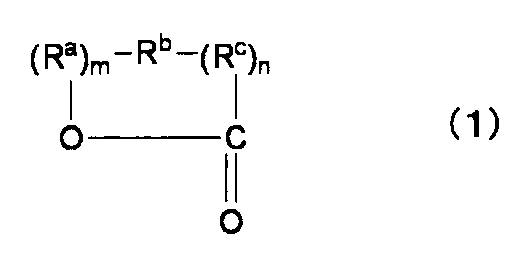
で示されるラクトン化合物と、式(2)
[式中、R1は置換基を有していてもよいアラルキル基、置換基を有していてもよいアルケニル基、置換基を有していてもよいアルキニル基、置換基を有していてもよい芳香族炭化水素基又は置換基を有していてもよい複素環基を表す。]
で示されるアミン化合物とを、水の存在下で反応させる工程を有する式(3)
[式中、R1、Ra、Rb、Rc、m及びnはそれぞれ上記で定義した通りである。]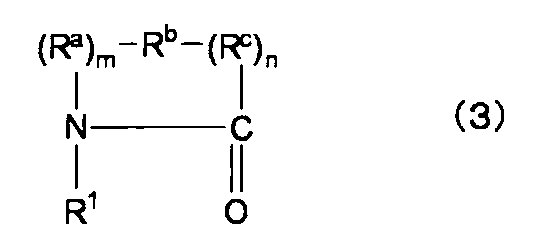
で示されるN−置換ラクタム化合物の製造方法。 - 式(1)で示されるラクトン化合物と式(2)で示されるアミン化合物とを100~300℃で反応させる請求項1に記載の製造方法。
- 0.1~5MPaの加圧条件下で行なわれる請求項1に記載の製造方法。
- 0.1~5MPaの加圧条件下で行なわれる請求項2に記載の製造方法。
- 水の使用量が、式(1)で示されるラクトン化合物1モルに対して、3~500モルの範囲内である請求項1に記載の製造方法。
- 水の使用量が、式(1)で示されるラクトン化合物1モルに対して、3~500モルの範囲内である請求項2に記載の製造方法。
- 式(1)で示されるラクトン化合物が、γ−ラクトン化合物、δ−ラクトン化合物又はε−ラクトン化合物である請求項1に記載の製造方法。
- 式(1)で示されるラクトン化合物が、γ−ラクトン化合物、δ−ラクトン化合物又はε−ラクトン化合物である請求項2に記載の製造方法。
- R1が置換基を有していてもよいベンジル基又は置換基を有していてもよいアリル基である請求項1~8のいずれかに記載の製造方法。
Priority Applications (1)
| Application Number | Priority Date | Filing Date | Title |
|---|---|---|---|
| CN201280024610.4A CN103547569A (zh) | 2011-06-03 | 2012-05-25 | N-取代内酰胺化合物的制造方法 |
Applications Claiming Priority (4)
| Application Number | Priority Date | Filing Date | Title |
|---|---|---|---|
| JP2011125581 | 2011-06-03 | ||
| JP2011-125581 | 2011-06-03 | ||
| JP2011273364A JP2013010734A (ja) | 2011-06-03 | 2011-12-14 | N−置換ラクタム化合物の製造方法 |
| JP2011-273364 | 2011-12-14 |
Publications (1)
| Publication Number | Publication Date |
|---|---|
| WO2012165606A1 true WO2012165606A1 (ja) | 2012-12-06 |
Family
ID=47259457
Family Applications (1)
| Application Number | Title | Priority Date | Filing Date |
|---|---|---|---|
| PCT/JP2012/064247 Ceased WO2012165606A1 (ja) | 2011-06-03 | 2012-05-25 | N-置換ラクタム化合物の製造方法 |
Country Status (3)
| Country | Link |
|---|---|
| JP (1) | JP2013010734A (ja) |
| CN (1) | CN103547569A (ja) |
| WO (1) | WO2012165606A1 (ja) |
Cited By (8)
| Publication number | Priority date | Publication date | Assignee | Title |
|---|---|---|---|---|
| US9255108B2 (en) | 2012-04-10 | 2016-02-09 | Infinity Pharmaceuticals, Inc. | Heterocyclic compounds and uses thereof |
| US9359365B2 (en) | 2013-10-04 | 2016-06-07 | Infinity Pharmaceuticals, Inc. | Heterocyclic compounds and uses thereof |
| US9708348B2 (en) | 2014-10-03 | 2017-07-18 | Infinity Pharmaceuticals, Inc. | Trisubstituted bicyclic heterocyclic compounds with kinase activities and uses thereof |
| US9751888B2 (en) | 2013-10-04 | 2017-09-05 | Infinity Pharmaceuticals, Inc. | Heterocyclic compounds and uses thereof |
| US9775844B2 (en) | 2014-03-19 | 2017-10-03 | Infinity Pharmaceuticals, Inc. | Heterocyclic compounds and uses thereof |
| US10160761B2 (en) | 2015-09-14 | 2018-12-25 | Infinity Pharmaceuticals, Inc. | Solid forms of isoquinolinones, and process of making, composition comprising, and methods of using the same |
| US10759806B2 (en) | 2016-03-17 | 2020-09-01 | Infinity Pharmaceuticals, Inc. | Isotopologues of isoquinolinone and quinazolinone compounds and uses thereof as PI3K kinase inhibitors |
| US10919914B2 (en) | 2016-06-08 | 2021-02-16 | Infinity Pharmaceuticals, Inc. | Heterocyclic compounds and uses thereof |
Families Citing this family (2)
| Publication number | Priority date | Publication date | Assignee | Title |
|---|---|---|---|---|
| CN117384082A (zh) * | 2022-07-20 | 2024-01-12 | 杭州国瑞生物科技有限公司 | 一种6,6-二甲基-3-氮杂双环[3.1.0]己烷的合成方法 |
| CN117126100B (zh) * | 2023-06-02 | 2026-03-31 | 四川奥邦古得药业有限公司 | 一种奈玛特韦中间体及其制备方法和应用 |
Citations (2)
| Publication number | Priority date | Publication date | Assignee | Title |
|---|---|---|---|---|
| JP2007520434A (ja) * | 2003-06-17 | 2007-07-26 | シェーリング コーポレイション | (1r,2s,5s)−6,6−ジメチル−3−アザビシクロ[3,1,0]ヘキサン−2−カルボキシレートまたはその塩の調製のためのプロセスおよび中間体 |
| WO2007122744A1 (ja) * | 2006-04-17 | 2007-11-01 | Sumitomo Chemical Company, Limited | 多環式プロリン誘導体又はその酸付加塩の製造方法 |
Family Cites Families (5)
| Publication number | Priority date | Publication date | Assignee | Title |
|---|---|---|---|---|
| JPS5142107B2 (ja) * | 1972-08-23 | 1976-11-13 | ||
| JPH0721420B2 (ja) * | 1986-03-19 | 1995-03-08 | 本田技研工業株式会社 | 回転角センサ |
| JPH0678304B2 (ja) * | 1988-01-21 | 1994-10-05 | 三菱化成株式会社 | N−アルキル置換ラクタムの製造方法 |
| JP3140269B2 (ja) * | 1993-05-06 | 2001-03-05 | 富士写真フイルム株式会社 | 色空間処理方法 |
| TWI257386B (en) * | 2000-04-14 | 2006-07-01 | Dairen Chemical Corp | Method for preparing lactams |
-
2011
- 2011-12-14 JP JP2011273364A patent/JP2013010734A/ja active Pending
-
2012
- 2012-05-25 CN CN201280024610.4A patent/CN103547569A/zh active Pending
- 2012-05-25 WO PCT/JP2012/064247 patent/WO2012165606A1/ja not_active Ceased
Patent Citations (2)
| Publication number | Priority date | Publication date | Assignee | Title |
|---|---|---|---|---|
| JP2007520434A (ja) * | 2003-06-17 | 2007-07-26 | シェーリング コーポレイション | (1r,2s,5s)−6,6−ジメチル−3−アザビシクロ[3,1,0]ヘキサン−2−カルボキシレートまたはその塩の調製のためのプロセスおよび中間体 |
| WO2007122744A1 (ja) * | 2006-04-17 | 2007-11-01 | Sumitomo Chemical Company, Limited | 多環式プロリン誘導体又はその酸付加塩の製造方法 |
Non-Patent Citations (2)
| Title |
|---|
| FUJIMOTO,T. ET AL.: "Discovery of a Tetrahydropyrimidin-2(lH)-one Derivative (TAK-442) as a Potent, Selective, and Orally Active Factor Xa Inhibitor", JOURNAL OF MEDICINAL CHEMISTRY, vol. 53, no. 9, 2010, pages 3517 - 3531 * |
| PEGLION,J. ET AL.: "Modulations of the amide function of the preferential dopamine D3 agonist (R,R)-532504: Improvements of affinity and selectivity for D3 versus D2 receptors", BIOORGANIC & MEDICINAL CHEMISTRY LETTERS, vol. 19, no. 8, 2009, pages 2133 - 2138 * |
Cited By (18)
| Publication number | Priority date | Publication date | Assignee | Title |
|---|---|---|---|---|
| US9255108B2 (en) | 2012-04-10 | 2016-02-09 | Infinity Pharmaceuticals, Inc. | Heterocyclic compounds and uses thereof |
| US10329299B2 (en) | 2013-10-04 | 2019-06-25 | Infinity Pharmaceuticals, Inc. | Heterocyclic compounds and uses thereof |
| US9359365B2 (en) | 2013-10-04 | 2016-06-07 | Infinity Pharmaceuticals, Inc. | Heterocyclic compounds and uses thereof |
| US12152032B2 (en) | 2013-10-04 | 2024-11-26 | Infinity Pharmaceuticals, Inc. | Heterocyclic compounds and uses thereof |
| US9751888B2 (en) | 2013-10-04 | 2017-09-05 | Infinity Pharmaceuticals, Inc. | Heterocyclic compounds and uses thereof |
| US9828377B2 (en) | 2013-10-04 | 2017-11-28 | Infinity Pharmaceuticals, Inc. | Heterocyclic compounds and uses thereof |
| US9775844B2 (en) | 2014-03-19 | 2017-10-03 | Infinity Pharmaceuticals, Inc. | Heterocyclic compounds and uses thereof |
| US10675286B2 (en) | 2014-03-19 | 2020-06-09 | Infinity Pharmaceuticals, Inc. | Heterocyclic compounds and uses thereof |
| US11541059B2 (en) | 2014-03-19 | 2023-01-03 | Infinity Pharmaceuticals, Inc. | Heterocyclic compounds and uses thereof |
| US10253047B2 (en) | 2014-10-03 | 2019-04-09 | Infinity Pharmaceuticals, Inc. | Heterocyclic compounds and uses thereof |
| US10941162B2 (en) | 2014-10-03 | 2021-03-09 | Infinity Pharmaceuticals, Inc. | Heterocyclic compounds and uses thereof |
| US9708348B2 (en) | 2014-10-03 | 2017-07-18 | Infinity Pharmaceuticals, Inc. | Trisubstituted bicyclic heterocyclic compounds with kinase activities and uses thereof |
| US10160761B2 (en) | 2015-09-14 | 2018-12-25 | Infinity Pharmaceuticals, Inc. | Solid forms of isoquinolinones, and process of making, composition comprising, and methods of using the same |
| US11247995B2 (en) | 2015-09-14 | 2022-02-15 | Infinity Pharmaceuticals, Inc. | Solid forms of isoquinolinones, and process of making, composition comprising, and methods of using the same |
| US11939333B2 (en) | 2015-09-14 | 2024-03-26 | Infinity Pharmaceuticals, Inc. | Solid forms of isoquinolinones, and process of making, composition comprising, and methods of using the same |
| US12384792B2 (en) | 2015-09-14 | 2025-08-12 | Twelve Therapeutics, Inc. | Solid forms of isoquinolinones, and process of making, composition comprising, and methods of using the same |
| US10759806B2 (en) | 2016-03-17 | 2020-09-01 | Infinity Pharmaceuticals, Inc. | Isotopologues of isoquinolinone and quinazolinone compounds and uses thereof as PI3K kinase inhibitors |
| US10919914B2 (en) | 2016-06-08 | 2021-02-16 | Infinity Pharmaceuticals, Inc. | Heterocyclic compounds and uses thereof |
Also Published As
| Publication number | Publication date |
|---|---|
| JP2013010734A (ja) | 2013-01-17 |
| CN103547569A (zh) | 2014-01-29 |
Similar Documents
| Publication | Publication Date | Title |
|---|---|---|
| WO2012165606A1 (ja) | N-置換ラクタム化合物の製造方法 | |
| JP5899091B2 (ja) | ヒダントイン誘導体 | |
| CA2891499C (en) | Indole carboxamide derivatives as p2x7 receptor antagonists | |
| CN1391469A (zh) | Npyy5拮抗剂 | |
| AU2016303540A1 (en) | Novel compounds as ROR gamma modulators | |
| Katuri et al. | A simple and expedient procedure for the preparation of gabapentin lactam (2-aza-spiro [4, 5] decan-3-one) | |
| MX2010011289A (es) | Compuestos que tienen actividad antagonista del receptor y5 de neuropeptido y. | |
| CN112585126A (zh) | 四环化合物的制备方法 | |
| WO1998028257A1 (en) | Aromatic amine derivatives having nos inhibitory effect | |
| WO2007105793A1 (ja) | イソ尿素類のニトロ化方法 | |
| TW202345812A (zh) | 作為組蛋白去乙醯酶6抑制劑之1,3,4-㗁二唑衍生化合物及其用途 | |
| US9828340B2 (en) | Asymmetric synthesis of a substituted pyrrolidine-2-carboxamide | |
| WO2012165607A1 (ja) | プロリン化合物の製造方法 | |
| MX2014009309A (es) | Metodo para preparar un compuesto mediante la reaccion de adicion de michael novedosa usando agua o varios acidos como aditivo. | |
| CN102702019B (zh) | 卡比多巴的合成方法 | |
| CN102863341B (zh) | 一种(1r,2s)-2-芳基环丙胺衍生物的化学合成方法 | |
| Igidov et al. | Iminofurans chemistry: IV. Synthesis and structure of 2-N-aryl-substituted derivatives of 2-amino-4-aryl-4-oxobut-2-enoic and 2-amino-5, 5-dimethyl-4-oxohex-2-enoic acids | |
| CN105934431B (zh) | 取代脲类化合物的制备方法 | |
| JP2013010733A (ja) | ヘミアミナール化合物の製造方法及びシアノアミン化合物の製造方法 | |
| WO2026006315A1 (en) | Bridged tricyclic gaba derivatives as calcium channel modulators, methods of making, and methods of using thereof | |
| Gasparyan et al. | Synthesis and X-ray analysis of 2-aryl-4-chloropyrrolidine-2-carbonitrile derivatives | |
| CN120040373A (zh) | 一种噻唑类gpr52调节剂化合物 | |
| RU2485126C1 (ru) | 6'-арил-2'-(2-гидроксифенил)-11',11'-диметил-3',4,4',13'-тетраоксоспиро[2,5-циклогексадиен-1,9'-(7'-окса-2',12'-диазатетрацикло[6.5.1.01,5.08,12]тетрадец-5'-ен)]-14'-карбоксилаты и способ их получения | |
| KR20110007741A (ko) | 5-(치환된 페닐알킬)-2-알콕시-5-아미노-벤조산 화합물의 제조방법 | |
| Lu et al. | Synthesis of α-hydroxy Amides |
Legal Events
| Date | Code | Title | Description |
|---|---|---|---|
| 121 | Ep: the epo has been informed by wipo that ep was designated in this application |
Ref document number: 12792484 Country of ref document: EP Kind code of ref document: A1 |
|
| NENP | Non-entry into the national phase |
Ref country code: DE |
|
| 122 | Ep: pct application non-entry in european phase |
Ref document number: 12792484 Country of ref document: EP Kind code of ref document: A1 |