WO2012133877A1 - 転炉スラグを用いた酸性緩和工法 - Google Patents
転炉スラグを用いた酸性緩和工法 Download PDFInfo
- Publication number
- WO2012133877A1 WO2012133877A1 PCT/JP2012/058785 JP2012058785W WO2012133877A1 WO 2012133877 A1 WO2012133877 A1 WO 2012133877A1 JP 2012058785 W JP2012058785 W JP 2012058785W WO 2012133877 A1 WO2012133877 A1 WO 2012133877A1
- Authority
- WO
- WIPO (PCT)
- Prior art keywords
- soil
- converter slag
- acid
- bark
- base material
- Prior art date
- Legal status (The legal status is an assumption and is not a legal conclusion. Google has not performed a legal analysis and makes no representation as to the accuracy of the status listed.)
- Ceased
Links
Images

Classifications
-
- C—CHEMISTRY; METALLURGY
- C09—DYES; PAINTS; POLISHES; NATURAL RESINS; ADHESIVES; COMPOSITIONS NOT OTHERWISE PROVIDED FOR; APPLICATIONS OF MATERIALS NOT OTHERWISE PROVIDED FOR
- C09K—MATERIALS FOR MISCELLANEOUS APPLICATIONS, NOT PROVIDED FOR ELSEWHERE
- C09K17/00—Soil-conditioning materials or soil-stabilising materials
- C09K17/40—Soil-conditioning materials or soil-stabilising materials containing mixtures of inorganic and organic compounds
Definitions
- the present invention is a Japanese cedar where the acidification of the soil has progressed due to delays in forest maintenance such as thinning and punching, and soil nutrients have been washed away and aggregates have been impaired, preventing public interest functions such as prevention of sediment runoff, Converter slag and organic matter generated when steel is produced for target sites that are strongly acidic and cause a significant drop in soil pH due to special forests such as cypress artificial forests and acidic sulfate soils.
- Improve the soil structure where the soil pH has been lowered and malfunctioned by the method of spraying and mixing the soil with the vegetation base sprayer, the method of sowing, and the method of mixing with a hydraulic excavator. That made it possible.
- CEC cation exchange capacity
- a vegetation base made of organic materials such as park compost mixed with strong alkaline materials such as converter slag, fertilizer, zeolite, etc.
- strong alkaline materials such as converter slag, fertilizer, zeolite, etc.
- a vegetation base that can reduce acidity can be created.
- cedar, cypress, etc. that have become unable to maintain public functions such as prevention of sediment discharge due to the loss of soil nutrients due to delays in forest maintenance such as thinning and pruning, and soil nutrients have been washed away and aggregated.
- special soils such as artificial forests and acid sulfate soils
- the first aspect of the present invention is that in the acid mitigation method using converter slag, the acidification of the soil progresses due to the delay in forest maintenance such as thinning, pruning, etc.
- forest maintenance such as thinning, pruning, etc.
- An acid mitigation base material made by mixing plant slag and organic materials with plant seeds, fertilizers, and binders is used as an acid mitigation base material.
- a second aspect of the present invention is an acid mitigation method using the converter slag according to the first invention, in which the converter slag and bark compost alone or park compost are subjected to a process such as microbial fermentation, undecomposed herbaceous and woody Add plant seeds, fertilizers and binders to the customer's soil, which is a mixture of bark organic material with at least one type of chip and humus soil produced by soaking in a highly acidic vinegar solution.
- the base ratio of the converter slag to the organic material and humus soil is set to 0.5 to 90% in terms of capacity. It is intended to spray on.
- the converter slag in the acid mitigation method using the converter slag according to the first invention, can be composted alone or undecomposed herbaceous and woody chips that have undergone a process such as microbial fermentation.
- the blending ratio is set to 0.5-90% in terms of volume with respect to humus soil produced by soaking in a bark organic material or extremely acidic vinegar solution, and the blended acid mitigation The base material is sown by human power and left on the target site.
- the converter slag in the acid mitigation method using the converter slag according to the first invention, can be composted alone or undecomposed herbaceous or woody chips that have undergone a process such as microbial fermentation.
- the blending ratio is set to 0.5-90% in terms of volume with respect to humus soil produced by crushing and curing in a bark organic material or extremely acidic vinegar, and the blended acid mitigation The base material is supplied to the target site while being mixed with the soil of the target site using a hydraulic excavator.
- bark compost of bark organic material in the acidic title method using the converter slag according to the first invention is a material having a C / N ratio of 35 or less and an organic matter content of 70% or more. It is assumed that a pH (H 2 O) of 2.0 to 9.0 and an electric conductivity of 2.0 mS / cm or less are used.
- the converter slag as a buffer material for increasing the pH of the strongly acidic soil has a pH (H 2 O) of 11. A thing of 0 or more is used.
- fertilizer to be mixed with the customer soil is positively analyzed using the analytical value of the soil chemistry in the strongly acidic target area.
- a fertilization design suitable for the excess or deficiency of the amount of base such as Ca, Mg, K, etc. in the ion exchange capacity is used.
- the ninth aspect of the present invention is a cation exchange function that adsorbs bases such as Ca, Mg, and K based on the soil analysis results of the target site in the acid mitigation method using the converter slag according to the first aspect of the present invention.
- the capacity is 10.0 meq / 100 g or less, which is the immaturity of the sand dunes, a zeolitic material that increases the cation exchange capacity is mixed.
- the converter slag as a material useful for mitigation of strongly acidic soil and plants is 5% or more of T-Fe, Al 2 O 3 is 5% or less and P 2 O 5 is 1% or more.
- the substrate can be left on the target surface by nozzle injection with a hydroseeder or mortar sprayer, sowing by human power, and swallowing with a hydraulic excavator. Can be used.
- the soil base saturation can be changed by changing the mixing amount of the converter slag with respect to the organic material, so that the soil environment suitable for the vegetation environment around the target site can be obtained. It becomes possible.
- T-Fe is 3.1% of the average of igneous rocks in the converter slag component (Kyoto University Academic Press: What is soil? ? high more than 5% P 2 O 5 is 0.3% of the average of igneous rock (Kyoto University Press than): it is necessary to possess What would) more than 1% higher than the soil?.
- Al 2 O 3 which inhibits the absorption of nutrients P 2 O 5 by plants is 4.8% of the average sandstone as sedimentary rock (Kyoto University Academic Press: What is soil?).
- Converter slag with 5% or less is required.
- the value of the cation exchange capacity which is a function to adsorb soil nutrients, is 3.0 to 10.0 meq / 100 g of immature soil in sand dunes (Volume 4 soil diagnosis / growth diagnosis).
- a zeolitic material for increasing the cation exchange capacity is mixed.
- 1 is an acid mitigation base material
- 2 is a guest soil
- 3 is a converter slag
- 4 is a bark-based organic material
- 5 is an organic member.
- 6 is artificial humus
- 7 is an additive, and consists of seed 8, fertilizer 9, and binder 10.
- the acid relaxation base material 1 is a mixture of the soil 2 and the additive 7.
- the customer soil 2 includes converter slag 3, bark compost alone or organic material 5 composed of bark compost and undecomposed herbaceous and wood chips that have undergone processes such as microbial fermentation, and artificial humus soil 6. Are mixed.
- the above organic material 4 is a mixture of bark compost alone or an organic material 5 made of undegraded herbaceous and wood chips that have undergone processes such as bark compost and microbial fermentation and artificial humus soil 6. is there.
- materials having a C / N ratio of 35 or less and an organic content of 70% or more are used.
- bark compost alone and undecomposed herbaceous or woody chips are used.
- the pH (H 2 O) of 5.5 to 7.5 and the electric conductivity of 0.9 mS / cm or less are utilized.
- Reference numeral 5 denotes converter slag, which has a pH (H 2 O) value of 11.0 or more.
- the artificial humus 6 is produced by immersing and curing bark compost or undegraded herbaceous and woody chips in extremely acidic vinegar.
- Additives 7 to be mixed with the customer soil 2 are herbs that are commercially available or collected directly from plants around the target area, and those collected directly from plants around the target area and those that are dormant on the land around the target area, It consists of woody seed 8, fertilizer 9, and binder 10.
- 11 is a belt conveyor for conveying the soil to the acid relaxation base material spraying machine
- 12 is a generator
- 13 is a compressor
- 14 is a spraying machine for the acid relaxation base material 1
- the injection type shall be used.
- 15 is a water pumping pump
- 16 is a water tank
- 17 is a switchboard
- 18 is an injection nozzle of a spraying machine 15 that sprays the acid relaxation base material 1 to a strongly acidic target site G.
- reference numeral 19 denotes a hydraulic excavator for mixing the acid mitigation base material 1 by mixing the soil of the target site G.
- Specific construction examples (1) Mixing organic material 4 consisting of converter slag 3, organic material 5 such as bark-based compost and artificial humus soil 6 to make the soil 2 further, seed 7, fertilizer 8 and binder 9 Additive 7 is added to make the acid relaxation base material 1. (2) The acidic relaxation base material 1 is sprayed onto the target ground G by nozzle injection using a hydroseeder or a mortar sprayer 14. (3) The acid relaxation base layer A is formed by spraying to a thickness of about 1.0 to 5.0 cm according to the purpose of the strongly acidic target site G. In addition, the acid relaxation base material 1 of a large diameter lump that has a particle diameter of 500 mm or less and cannot be sprayed by the spray nozzle is manually placed on the target site G at appropriate intervals.
- the present invention is a threatened forest and acid sulfate soil, it is a strong acid soil, and the area where the invasion of vegetation does not occur is administered slowly and continuously by supplying converter slag. Can be expected to restore nature.
- Acid mitigation base material 2 ... Soil 3 . Converter slag 4 ... Bark organic material 5 . Organic material (bark compost / humus soil) 6 ... Artificial humus 7 ... Additives 8 ... Seeds 9 ... Fertilizer 10 ... Binder 11 ... Conveyor 12 ... Generator 13 ... Compressor 14 ... Acidic relaxation base material spraying machine 15 ... ... water pumping pump 16 ... water tank 17 ... switchboard 18 ... injection nozzle 19 ... hydraulic excavator G ... target 18 ... injection nose 19 ... hydraulic excavator G ... target
Landscapes
- Chemical & Material Sciences (AREA)
- Inorganic Chemistry (AREA)
- Life Sciences & Earth Sciences (AREA)
- General Life Sciences & Earth Sciences (AREA)
- Soil Sciences (AREA)
- Engineering & Computer Science (AREA)
- Materials Engineering (AREA)
- Organic Chemistry (AREA)
- Cultivation Of Plants (AREA)
- Soil Conditioners And Soil-Stabilizing Materials (AREA)
- Fertilizers (AREA)
Abstract
従来,スギ,ヒノキに代表される人工林では,間伐,抜打ち等の森林整備亡よって,立木密度を低下させることで森林内照度を確保すれば森林の機能が回復するとされてきた。 しかし,過密に植栽された人工林内は低照度によって維持されている期間が長いことから土壌の酸性化の進行が顕著となって植生の回復していない箇所が多くなっている。また,酸性硫酸塩土壌等の特殊土壌であることから土壌pHが著しく低下して強酸性となっている箇所においても,そのまま放置した状態で土壌環境の改善が望めない。 転炉スラグ(3)と有機質資材(4)とを混合してなる客土(2)に植物の種子(8)や肥料(9)及び粘結剤(10)からなる添加材(7)を加えたものを酸性緩和基盤材(1)とし,当該酸性緩和基盤材(1)を土壌pHが低下して強酸性土壌となっている対象地(G)に供給する構成。
Description
本発明は,間伐,抜打ち等の森林整備が遅れることで土壌の酸性化が進行して土壌養分が流亡,団粒化が損なわれて土砂流出防止等の公益的機能が維持できなくなったスギ,ヒノキ等の人工林や酸性硫酸塩土壌等の特殊土壌であることから強酸性となって土壌pHの著しい低下を起こしている対象地に対して,鋼を作る際に発生する転炉スラグと有機質資材等を混合した客土を植生基材吹付機で対象面に吹き付ける手法や播き出す手法,油圧ショベルで混合する手法によって,土壌pHが著しく低下して機能不全となっている土壌構造の改善することを可能にしたものである。
一般的にスギ,ヒノキに代表される人工林では,間伐,枝打ち等の森林整備事業によって,立木密度を低下させることで森林内照度を確保すれば森林の機能が回復するとされてきた。しかし,過密に植栽された人工林内は低照度によって維持されている期間が長いことから土壌の酸性化の進行が顕著となっている。
また,酸性硫酸塩土壌等の特殊土壌によって土壌pHが著しく低下して強酸性となっている箇所においても,そのまま放置した状態で土壌環境の改善が望めない状態となっている。その対処法として,無機物である石灰岩砕石,鉱滓スラグ,貝殻類およびコンクリート廃材等を用いて酸性緩和をする方法とアルカリ資材に有機質資材を混合した酸遮断層を設けて酸性緩和してきた経緯がある。
また,酸性硫酸塩土壌等の特殊土壌によって土壌pHが著しく低下して強酸性となっている箇所においても,そのまま放置した状態で土壌環境の改善が望めない状態となっている。その対処法として,無機物である石灰岩砕石,鉱滓スラグ,貝殻類およびコンクリート廃材等を用いて酸性緩和をする方法とアルカリ資材に有機質資材を混合した酸遮断層を設けて酸性緩和してきた経緯がある。
ところが,上記の従来工法の無機質である石灰岩砕石,鉱滓スラグ,貝殻類およびコンクリート廃材等を酸性緩和に単体で用いる手法では,アルカリ無機物の粒径を酸性緩和の効果の過度の発現を緩和するために調整しなければならず,アルカリ資材単独で用いることから,粒径を大きくしないと固化してしまい土壌水分の浸透が著しく悪くなることも問題となっていた。
また,アルカリ資材に有機物資材を混合して酸性遮断層を作る方法も考案されているものの,植栽木の土壌に酸性の緩衝機能がないことから,緩衝酸性土壌の影響を遮断層で緩衝できずに植栽木が枯死することが問題となっている。
また,アルカリ資材に有機物資材を混合して酸性遮断層を作る方法も考案されているものの,植栽木の土壌に酸性の緩衝機能がないことから,緩衝酸性土壌の影響を遮断層で緩衝できずに植栽木が枯死することが問題となっている。
pHが4.4を下回る環境であることから養分を持つ力である陽イオン交換容量(CEC)が著しく低下し,アルミニウム等の有害な塩基分が流れ出し,土壌構造が単粒化してしまう土壌環境に対して有機質資材であるパーク堆肥に強アルカリ資材である転炉スラグ,肥料,ゼオライト等を混合した植生基盤を吹き付け,播き出し,油圧ショベルで混合することで,植物が成長する土壌環境となると伴に酸性緩和も行える植生基盤を造成できるようにした。
また,間伐,枝打ち等の森林整備が遅れることで土壌の酸性化が進行して土壌養分が流亡,団粒化が損なわれて土砂流出防止等の公益的機能が維持できなくなったスギ,ヒノキ等の人工林や酸性硫酸塩土壌等の特殊土壌であることから土壌pHの著しい低下して強酸性土壌となっている対象地に対し,鋼を作る際に発生する転炉スラグと有機質資材を混合した低下して機能不全となっている土壌構造を改善することを目的とする。
本発明の第1は,転炉スラグを用いた酸性緩和工法において,間伐,枝打ち等の森林整備が遅れることで土壌の酸性化が進行して土壌養分が流亡,団粒化が損なわれて土砂流出防止等の公益的機能が維持できなくなったスギ,ヒノキ等の人工林や酸性硫酸塩土壌等の特殊土壌であることから土壌pHが著しく低下して強酸性土壌となっている対象地において、転炉スラグと有機質資材とを混合してなる客土に植物の種子や肥料及び粘結剤を加えたものを酸性緩和基盤材とし,当該酸性緩和基盤材を土壌pHが低下して強酸性土壌となっている対象地に供給することによって土壌pHが著しく低下して機能不全となっている土壌構造を改善できるようにしたものである。
本発明の第2は,第1の発明に係る転炉スラグを用いた酸性緩和工法において,転炉スラグとバーク堆肥単独またはパーク堆肥に微生物発酵等のプロセスを経た未分解の草本,木本のチップの少なくとも一種を加えたバーク系の有機質資材と極強酸性の酢液に浸して養生することによって生成される腐植土を混合してなる客土に植物の種子や肥料及び粘結剤を加えて酸性緩和基盤材とし,当該客土のうち,有機質資材と腐植土に対する転炉スラグの配合割合を容量換算で0.5~90%に設定し,配合された酸性緩和基盤材を上記対象地に吹き付けを行うようにしたものである。
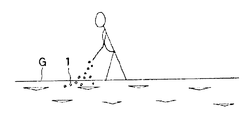
本発明の第3は,第1の発明に係る転炉スラグを用いた酸性緩和工法において,転炉スラグは,堆肥単独及び微生物発酵等のプロセスを経た未分解の草本,木本のチップを可とするバーク系の有機質資材又は極強酸性の酢液に浸して養生することによって生成される腐植土に対して配合割合を容量換算で0.5~90%に設定し,配合された酸性緩和基盤材を人力によって播き出して,対象地に残置するようにしたものである。
本発明の第4は,第1の発明に係る転炉スラグを用いた酸性緩和工法において,転炉スラグは,堆肥単独及び微生物発酵等のプロセスを経た未分解の草本,木本のチップを可とするバーク系の有機質資材又は極強酸性の酢液に潰して養生することによって生成される腐植土に対して配合割合を容量換算で0.5~90%に設定し,配合された酸性緩和基盤材を油圧ショベルで対象地の土壌と混合しながら,当該対象地へ供給するようにしたものである。
本発明の第5は,第1の発明に係る転炉スラグを用いた酸性題和工法においてバーク系有機質資材のバーク堆肥は,C/N比で35以下,有機物含有量70%以上の資材を用いることとし,pH(H2O)で2.0~9.0,電気伝導度が2.0mS/cm以下の値のものを用いるようにしたものである。
本発明の第6は,第1の発明に係る転炉スラグを用いた酸性緩和工法において,強酸性土壌のpHを上昇させる緩衝資材としての転炉スラグは,pH(H2O)で11.0以上のものを用いるようにしたものである。
本発明の第7は,第1の発明に係る転炉スラグを用いた酸性緩和工法において,強酸性土壌のpHを上昇させる緩衝資材としての転炉スラグは,粒径φ=500mm以下のものを用いるようにしたものである。
本発明の第8は,第1の発明に係る転炉スラグを用いた酸性緩和工法において,客土に混合する肥料については,強酸性の対象地の土壌の化学性の分析値を用いて陽イオン交換容量に占めるCa,Mg,K等の塩基量の過不足量に見合った施肥設計を用いるようにしたものである。
本発明の第9は,第1の発明に係る転炉スラグを用いた酸性緩和工法において,対象地の土壌分析結果から,Ca,Mg,K等の塩基類を吸着する機能である陽イオン交換容量が砂丘未熟度となる10.0meq/100g以下となる場合には,陽イオン交換容量を高めるゼオライト系資材を混合するようにしたものである。
本発明の第10は,第1の発明に係る転炉スラグを用いた酸性緩和工法において,強酸性土壌の緩和および植物に有用な資材としての転炉スラグはT−Feが5%以上,Al2O3が5%以下,P2O5が1%以上のものを用いるようにしたものである。
本発明は上記の構成であることから,次の効果がある。すなわち、土壌pHが著しく低下して強酸性土壌となっている対象地に酸性緩和基盤材を供給して残置させることによって土壌pHが著しく低下して機能不全となっている土壌構造を改善することができる。
また,有機質資材と転炉スラグからなる客土に種子や肥料,粘結剤を混合した酸性緩和基盤材を用いることにより,酸性化が進行して機能不全となっている土壌の改良ができ,植生が成育し易い環境へと移行することが期待できる。
上記の土壌改良効果の実現は,対象となる強酸性土壌が降雨等の外的ストレスによって流亡し難い環境とすることが可能となる。そして,基材の対象面への残置についてはハイドロシーダ又はモルタル吹付機によるノズル噴射,人力による播き出し,油圧ショベルによる鋤込み混合が実施可能であり,通常の土木工事で利活用されている機械の利用が可能である。
さらに,本発明にあっては,土壌の塩基飽和度を有機質資材に対して転炉スラグの混合量を可変することにより変更できることから,対象地周辺の植生環境に見合った土壌環境とすることが可能となる。
(1)土壌の団粒化を維持できる土壌環境では,土壌pHが5~6となるのに比較する,現在の間伐や抜打ち等の森林整備が遅れている森林土壌や酸性硫酸塩土壌等の酸性化し易い土壌環境ではpH4.4以下となってしまい,有機物及び有機物由来の塩類等が流亡して土壌構造が単粒化して砂質化してしまっていることを確認したことにある。
このような環境では,植生の成育が著しく阻害されることから,降雨等の外的ストレスに対しても非常に弱くなっている。
(2)有機物資材であるバーク系堆肥は,樹皮や廃材等を1~2年程度養生した後に製品化されるので,初期の段階ではpHが8程度のアルカリ性となる。
しかし,このような資材単独では,単粒化した土壌粒子を結びつける機能が低いことから強アルカリとなる転炉スラグを用いることによって,土壌の団粒化を図る。
(3)バーク系有機質資材及び転炉スラグは,降雨が連続すると流亡してしまうことが懸念される。このように導入した客土が流亡しないようにするために酢酸ビニール系粘結剤や中性の無機系固化剤を酢酸ビニール系では,1m3に対して1kg,無機系固化剤では10~20kgを添加することで問題を解決している。
(4)粒径がφ=10mm以上やφ=2mm以下の転炉スラグでは,基材の混合時に吹付け機内で詰まるので,粒径についてはφ=2~5mm程度のものを用いることで解決している。なお,吹付け用ノズルを用いないで対象地に載置する施工においては、最大500mm以下大径塊のものを用いることができる。
(5)転炉スラグの保有する成分で植物にとって栄養素となる成分としてT−Fe,P2O5がある。転炉スラグが保有するCaO量とのバランスより植物に供給できる栄養素については,転炉スラグ成分でT−Feが火成岩の平均の3.1%(京都大学学術出版会:土とは何だろうか?)よりも高5%以上P2O5が火成岩の平均の0.3%(京都大学学術出版会:土とは何だろうか?)よりも高い1%以上保有することが必要である。また,栄養素であるP2O5の植物への吸収を阻害するAl2O3は,堆積岩である砂岩平均の4.8%(京都大学学術出版会:土とは何だろうか?)となる5%以下を保有する転炉スラグが必要である。
(6)土壌の養分を吸着する機能である陽イオン交換容量の値が,砂丘未熟土3.0~10.0meq/100g(農業技術大系土壌施肥編 第4巻 土壌診断・生育診断)に相当する貧養分保持状態の10.0meq/100g以下となった場合には,陽イオン交換容量を高めるゼオライト系の資材を混合する。
このような環境では,植生の成育が著しく阻害されることから,降雨等の外的ストレスに対しても非常に弱くなっている。
(2)有機物資材であるバーク系堆肥は,樹皮や廃材等を1~2年程度養生した後に製品化されるので,初期の段階ではpHが8程度のアルカリ性となる。
しかし,このような資材単独では,単粒化した土壌粒子を結びつける機能が低いことから強アルカリとなる転炉スラグを用いることによって,土壌の団粒化を図る。
(3)バーク系有機質資材及び転炉スラグは,降雨が連続すると流亡してしまうことが懸念される。このように導入した客土が流亡しないようにするために酢酸ビニール系粘結剤や中性の無機系固化剤を酢酸ビニール系では,1m3に対して1kg,無機系固化剤では10~20kgを添加することで問題を解決している。
(4)粒径がφ=10mm以上やφ=2mm以下の転炉スラグでは,基材の混合時に吹付け機内で詰まるので,粒径についてはφ=2~5mm程度のものを用いることで解決している。なお,吹付け用ノズルを用いないで対象地に載置する施工においては、最大500mm以下大径塊のものを用いることができる。
(5)転炉スラグの保有する成分で植物にとって栄養素となる成分としてT−Fe,P2O5がある。転炉スラグが保有するCaO量とのバランスより植物に供給できる栄養素については,転炉スラグ成分でT−Feが火成岩の平均の3.1%(京都大学学術出版会:土とは何だろうか?)よりも高5%以上P2O5が火成岩の平均の0.3%(京都大学学術出版会:土とは何だろうか?)よりも高い1%以上保有することが必要である。また,栄養素であるP2O5の植物への吸収を阻害するAl2O3は,堆積岩である砂岩平均の4.8%(京都大学学術出版会:土とは何だろうか?)となる5%以下を保有する転炉スラグが必要である。
(6)土壌の養分を吸着する機能である陽イオン交換容量の値が,砂丘未熟土3.0~10.0meq/100g(農業技術大系土壌施肥編 第4巻 土壌診断・生育診断)に相当する貧養分保持状態の10.0meq/100g以下となった場合には,陽イオン交換容量を高めるゼオライト系の資材を混合する。
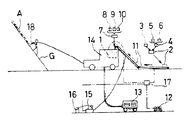
次に,本発明の実施例を説明する。図1において,1は酸性緩和基盤材,2は客土,3は転炉スラグ,4はバーク系の有機質資材,5は有機質部材である。また,6は人工腐植土,7は添加材であり、種子8,肥料9,粘結剤10とからなる。
上記の酸性緩和基盤材1は,客土2と添加材7を混合したものである。
上記の酸性緩和基盤材1は,客土2と添加材7を混合したものである。
また,客土2は転炉スラグ3と,バーク堆肥単独のもの又はバーク系堆肥と微生物発酵等のプロセスを経た未分解の草本,木本のチップとからなる有機質部材5と,人工腐植土6とを混合したものである。
上記の有機質資材4は,バーク堆肥単独のものと,又はバーク堆肥と微生物発酵等のプロセスを経た未分解の草本,木本のチップとからなる有機質部材5と人工腐植土6を混合したものである。上記のバーク堆肥は,C/N比35以下,有機質含有量70%以上の資材を用いることとし,具体的にはバーク堆肥単独及び未分解の草本,木本のチップ等を用いる。そして,pH(H2O)で5.5~7.5,電気伝導度が0.9mS/cm以下の値のものを利活用する。5は転炉スラグであり,pH(H2O)で11.0以上の値のものを利活用する。
また,人工腐植土6は,極強酸性の酢液にバーク堆肥または未分解の草本,木本チップを浸漬して養生することによって生成されるものである。
客土2に混合する添加材7は,市販又は対象地周辺で植物から直接採取したもの及び対象地周辺で植物から直接採取したもの及び対象地周辺の土地で休眠しているものを用いる草本,木本の種子8,肥料9,粘結剤10とからなる。
11は客土を酸性緩和基盤材の吹付機に搬送するベルトコンベア,12は発電機,13はコンプレツサ,14は酸性緩和基盤材1の吹付機であり,ハイドロシーダ又はモルタル吹付機の圧送型ノズル噴射式を用いるものとする。15は水汲み上げポンプ,16は水槽,17は配電盤,18は酸性緩和基盤材1を強酸性対象地Gに吹き付ける吹付機15の噴射ノズルを示す。図3で19は酸性緩和基盤材1を対象地Gの土壌を鋤込んで混合するための油圧ショベルを示す。
「具体的な施工例」
(1)転炉スラグ3とバーク系堆肥等の有機質部材5と人工腐植土6からなる有機質資材4を混合して客土2とし,さらに,これに種子7,肥料8,粘結剤9からなる添加剤7を加えて酸性緩和基盤材1とする。
(2)酸性緩和基盤材1をハイドロシーダ又はモルタル吹付機14を使って対象地Gにノズル噴射にて吹き付ける。
(3)強酸性対象地Gの目的に応じて厚さ1.0~5.0cm程度に吹き付けて酸性緩和基盤層Aを形成する。
なお、粒径が最大500mm以下で吹付け用ノズルで吹付けられない程の大径塊の酸性緩和基盤材1は手作業で対象地Gに適宜間隔を置いて載置する。
(1)転炉スラグ3とバーク系堆肥等の有機質部材5と人工腐植土6からなる有機質資材4を混合して客土2とし,さらに,これに種子7,肥料8,粘結剤9からなる添加剤7を加えて酸性緩和基盤材1とする。
(2)酸性緩和基盤材1をハイドロシーダ又はモルタル吹付機14を使って対象地Gにノズル噴射にて吹き付ける。
(3)強酸性対象地Gの目的に応じて厚さ1.0~5.0cm程度に吹き付けて酸性緩和基盤層Aを形成する。
なお、粒径が最大500mm以下で吹付け用ノズルで吹付けられない程の大径塊の酸性緩和基盤材1は手作業で対象地Gに適宜間隔を置いて載置する。
本発明は,荒廃した森林および酸性硫酸塩土壌であることから強酸性土壌となって植生の侵入が起こらない箇所に対して,転炉スラグを投与することによって緩効的に持続的なアルカリ供給を行うこと行い,自然復元することが期待できる。
1……酸性緩和基盤材
2……客土
3……転炉スラグ
4……バーク系の有機質資材
5……有機質部材(バーク堆肥・腐植土)
6……人工腐植土
7……添加材
8……種子
9……肥料
10……粘結剤
11……コンベア
12……発電機
13……コンプレッサ
14……酸性緩和基盤材の吹付機
15……水汲み上げポンプ
16……水槽
17……配電盤
18……噴射ノズ
19……油圧ショベル
G……対象地
18……噴射ノズ
19……油圧ショベル
G……対象地
2……客土
3……転炉スラグ
4……バーク系の有機質資材
5……有機質部材(バーク堆肥・腐植土)
6……人工腐植土
7……添加材
8……種子
9……肥料
10……粘結剤
11……コンベア
12……発電機
13……コンプレッサ
14……酸性緩和基盤材の吹付機
15……水汲み上げポンプ
16……水槽
17……配電盤
18……噴射ノズ
19……油圧ショベル
G……対象地
18……噴射ノズ
19……油圧ショベル
G……対象地
Claims (10)
- 転炉スラグと有機質資材とを混合してなる客土に植物の種子や肥料及び粘結剤を加えたものを酸性緩和基盤材とし,当該酸性緩和基盤材を土壌pHが低下して強酸性土壌となっている対象地に供給することで酸性を緩和する転炉スラグを用いた酸性緩和工法。
- 転炉スラグと微生物発酵等のプロセスを経たバーク堆肥単独または,このバーク堆肥に未分解の草本,木本のチップの少なくとも一種を加えたバーク系の有機質資材と,当該バーク堆肥または未分解の草本,木本チップを極強酸性の酢液に浸して養生することによって腐植含有量が3.0%以上に生成される腐植土を混合した客土に植物の種子や肥料及び粘結剤からなる添加材を加えたものを酸性緩和基盤材とし,当該客土のうち,有機質資材と腐植土に対する転炉スラグの配合割合を容量換算で0.5~90%に設定し、配合された酸性緩和基盤材を吹付機内で混合して対象地への吹き付けを行うようにした請求項1記載の転炉スラグを用いた酸性緩和工法。
- 転炉スラグと微生物発酵等のプロセスを経たバーク堆肥単独または,このバーク堆肥に未分解の草本,木本のチップの少なくとも一種を加えたバーク系の有機質資材と,当該バーク堆肥または未分解の草本,木本チップを極強酸性の酢液に浸して養生することによって腐植含有量が3.0%以上に生成される腐植土を混合した客土に植物物の種子や肥料,粘結剤からなる添加材を加えた客土に対して容量換算で0.5~90%配合したものを用いることとし,配合された酸性緩和基盤材を人力によって播き出して,当該対象地へ供給する請求項1記載の転炉スラグを用いた酸性緩和工法。
- 転炉スラグと微生物発酵等のプロセスを経たバーク堆肥単独または,このバーク堆肥に未分解の草本,木本のチップの少なくとも一種を加えたバーク系の有機質資材と,当該バーク堆肥または未分解の草本,木本チップを極強酸性の酢液に浸して養生することによって腐植含有量が3.0%以上に生成される腐植土を混合した客土に植物の種子や肥料,粘結剤からなる添加材を加えた客土に対して容量換算で0.5~90%配合したものを用いることとし,配合された酸性緩和基盤材を油圧ショベルで対象地の対象土壌と混合しながら,当該対象地へ供給する請求項1記載の転炉スラグを用いた酸性緩和工法。
- バーク系の有機質基材のバーク堆肥は,C/N比で35以下,有機物含有量70%以上の資材を用いることとしpH(H2O)で2.0~9.0,電気伝導度が2.0mS/cm以下の値のものを用いた請求項1記載の転炉スラグを用いた酸性緩和工法。
- 強酸性土壌のpHを上昇させる緩衝資材としての転炉スラグは,pH(H2O)で11.0以上のものを用いた請求項1記載の転炉スラグを用いた酸性緩和工法。
- 森林および強酸性土壌のpHを上昇させる緩衝資材としての転炉スラグは,粒径φ=500mm以下のものを用いた請求項1記載の転炉スラグを用いた酸性緩和工法。
- 客土に混合する肥料については,強酸性の対象地の土壌の化学性の分析値を用いて陽イオン交換容量に占めるCa,Mg,K等の塩基量の過不足量に見合った施肥設計を用いた請求項1記載の転炉スラグを用いた酸性緩和工法。
- 対象地の土壌分析結果から,Ca,Mg,K等の塩基類を吸着する機能である陽イオン交換容量が砂丘未熟度となる10.0meq/100g以下となる場合には,陽イオン交換容量を高めるゼオライト系資材を混合する請求項1記載の転炉スラグを用いた酸性緩和工法。
- T−Feが5%以上、Al2O3が5%以下、P2O5が1.0%以上のものを用いる請求項1記載の転炉スラグを用いた酸性緩和工法。
Priority Applications (1)
| Application Number | Priority Date | Filing Date | Title |
|---|---|---|---|
| JP2013507831A JP5857366B2 (ja) | 2011-03-30 | 2012-03-27 | 転炉スラグを用いた酸性緩和工法 |
Applications Claiming Priority (2)
| Application Number | Priority Date | Filing Date | Title |
|---|---|---|---|
| JP2011076894 | 2011-03-30 | ||
| JP2011-076894 | 2011-03-30 |
Publications (1)
| Publication Number | Publication Date |
|---|---|
| WO2012133877A1 true WO2012133877A1 (ja) | 2012-10-04 |
Family
ID=46931564
Family Applications (1)
| Application Number | Title | Priority Date | Filing Date |
|---|---|---|---|
| PCT/JP2012/058785 Ceased WO2012133877A1 (ja) | 2011-03-30 | 2012-03-27 | 転炉スラグを用いた酸性緩和工法 |
Country Status (2)
| Country | Link |
|---|---|
| JP (1) | JP5857366B2 (ja) |
| WO (1) | WO2012133877A1 (ja) |
Citations (9)
| Publication number | Priority date | Publication date | Assignee | Title |
|---|---|---|---|---|
| JPH0196085A (ja) * | 1987-10-09 | 1989-04-14 | Nishimura Fukoen:Kk | マルチ資材 |
| JPH01168791A (ja) * | 1987-12-25 | 1989-07-04 | Nippon Steel Chem Co Ltd | 芝草用土壌改良材 |
| JPH1098938A (ja) * | 1996-09-30 | 1998-04-21 | Giken Kogyo Kk | 環境保全型緑化資材 |
| JPH1161119A (ja) * | 1997-08-21 | 1999-03-05 | Sumitomo Metal Ind Ltd | 酸性重粘質土壌用改良材 |
| JP2000264624A (ja) * | 1999-03-16 | 2000-09-26 | Akio Henmi | 天然ゼオライトの品質改良方法 |
| JP2000282034A (ja) * | 1999-03-31 | 2000-10-10 | Sumitomo Metal Ind Ltd | 土壌の酸性化防止及び土壌pH安定化方法 |
| JP2010148398A (ja) * | 2008-12-24 | 2010-07-08 | Japan Conservation Engineers Co Ltd | 人工腐植土の製造方法 |
| JP2010209572A (ja) * | 2009-03-10 | 2010-09-24 | Japan Conservation Engineers Co Ltd | 人工腐植土による緑化工法 |
| JP2011099061A (ja) * | 2009-11-06 | 2011-05-19 | Sumitomo Metal Ind Ltd | 転炉スラグを用いた酸性緩和工法 |
-
2012
- 2012-03-27 JP JP2013507831A patent/JP5857366B2/ja active Active
- 2012-03-27 WO PCT/JP2012/058785 patent/WO2012133877A1/ja not_active Ceased
Patent Citations (9)
| Publication number | Priority date | Publication date | Assignee | Title |
|---|---|---|---|---|
| JPH0196085A (ja) * | 1987-10-09 | 1989-04-14 | Nishimura Fukoen:Kk | マルチ資材 |
| JPH01168791A (ja) * | 1987-12-25 | 1989-07-04 | Nippon Steel Chem Co Ltd | 芝草用土壌改良材 |
| JPH1098938A (ja) * | 1996-09-30 | 1998-04-21 | Giken Kogyo Kk | 環境保全型緑化資材 |
| JPH1161119A (ja) * | 1997-08-21 | 1999-03-05 | Sumitomo Metal Ind Ltd | 酸性重粘質土壌用改良材 |
| JP2000264624A (ja) * | 1999-03-16 | 2000-09-26 | Akio Henmi | 天然ゼオライトの品質改良方法 |
| JP2000282034A (ja) * | 1999-03-31 | 2000-10-10 | Sumitomo Metal Ind Ltd | 土壌の酸性化防止及び土壌pH安定化方法 |
| JP2010148398A (ja) * | 2008-12-24 | 2010-07-08 | Japan Conservation Engineers Co Ltd | 人工腐植土の製造方法 |
| JP2010209572A (ja) * | 2009-03-10 | 2010-09-24 | Japan Conservation Engineers Co Ltd | 人工腐植土による緑化工法 |
| JP2011099061A (ja) * | 2009-11-06 | 2011-05-19 | Sumitomo Metal Ind Ltd | 転炉スラグを用いた酸性緩和工法 |
Also Published As
| Publication number | Publication date |
|---|---|
| JPWO2012133877A1 (ja) | 2014-07-28 |
| JP5857366B2 (ja) | 2016-02-10 |
Similar Documents
| Publication | Publication Date | Title |
|---|---|---|
| CN103012016B (zh) | 轻度碱化土壤改良剂及其加工方法 | |
| CN102994097B (zh) | 中度碱化土壤改良剂的应用 | |
| CN101608446B (zh) | 一种植被防护土壤基材活性化方法 | |
| CN103031130B (zh) | 中度碱化土壤改良剂及其加工方法 | |
| CN101805221B (zh) | 一种防病长效草坪专用肥及其制备方法 | |
| CN105993259A (zh) | 用于矿区矸石山生态修复的基质材料和修复方法 | |
| CN102173919A (zh) | 泥岩岩石边坡绿化基质的制备方法 | |
| CN103013529A (zh) | 土壤改良剂及其加工方法 | |
| CN100560543C (zh) | 一种腐植酸铵类复混肥料的加工方法 | |
| US6419722B1 (en) | Recycled soil | |
| CN103143556A (zh) | 一种降低酸性菜地土壤镉活性的钝化剂及其使用方法 | |
| CN102994096A (zh) | 轻度碱化土壤改良剂的应用 | |
| US6302936B1 (en) | Recycled soil | |
| CN1854110A (zh) | 包含聚氨基酸的肥料 | |
| CN108794177A (zh) | 一种茶园土壤改良剂及其应用 | |
| JP5179456B2 (ja) | 転炉スラグを用いた酸性緩和工法 | |
| CN103013530A (zh) | 土壤改良剂的应用 | |
| CN103392534A (zh) | 园林植物复合种植土 | |
| JP2000204558A (ja) | 緑化基盤材および法面等の緑化工法 | |
| CN101973811B (zh) | 一种多元复混肥 | |
| JP5857366B2 (ja) | 転炉スラグを用いた酸性緩和工法 | |
| CN106365833A (zh) | 一种盐碱地用壳聚糖包膜控释肥料 | |
| CN108130099A (zh) | 一种针对东北板结土壤的复合土壤改良剂及其制备方法和应用 | |
| KR100892730B1 (ko) | 암 절개면 식재조성물 및 이를 이용한 식재방법 | |
| Seddik et al. | Utilization of vinasse and feldspar as alternative sources of potassium fertilizers and their effect on some soil properties and crop yield in sandy soils |
Legal Events
| Date | Code | Title | Description |
|---|---|---|---|
| 121 | Ep: the epo has been informed by wipo that ep was designated in this application |
Ref document number: 12762850 Country of ref document: EP Kind code of ref document: A1 |
|
| ENP | Entry into the national phase |
Ref document number: 2013507831 Country of ref document: JP Kind code of ref document: A |
|
| NENP | Non-entry into the national phase |
Ref country code: DE |
|
| 122 | Ep: pct application non-entry in european phase |
Ref document number: 12762850 Country of ref document: EP Kind code of ref document: A1 |