WO2012133575A1 - 間葉系幹細胞の細胞死抑制方法 - Google Patents
間葉系幹細胞の細胞死抑制方法 Download PDFInfo
- Publication number
- WO2012133575A1 WO2012133575A1 PCT/JP2012/058225 JP2012058225W WO2012133575A1 WO 2012133575 A1 WO2012133575 A1 WO 2012133575A1 JP 2012058225 W JP2012058225 W JP 2012058225W WO 2012133575 A1 WO2012133575 A1 WO 2012133575A1
- Authority
- WO
- WIPO (PCT)
- Prior art keywords
- mesenchymal stem
- stem cells
- aqueous solution
- trehalose
- physiological aqueous
- Prior art date
- Legal status (The legal status is an assumption and is not a legal conclusion. Google has not performed a legal analysis and makes no representation as to the accuracy of the status listed.)
- Ceased
Links
Images

Classifications
-
- C—CHEMISTRY; METALLURGY
- C12—BIOCHEMISTRY; BEER; SPIRITS; WINE; VINEGAR; MICROBIOLOGY; ENZYMOLOGY; MUTATION OR GENETIC ENGINEERING
- C12N—MICROORGANISMS OR ENZYMES; COMPOSITIONS THEREOF; PROPAGATING, PRESERVING, OR MAINTAINING MICROORGANISMS; MUTATION OR GENETIC ENGINEERING; CULTURE MEDIA
- C12N5/00—Undifferentiated human, animal or plant cells, e.g. cell lines; Tissues; Cultivation or maintenance thereof; Culture media therefor
- C12N5/06—Animal cells or tissues; Human cells or tissues
- C12N5/0602—Vertebrate cells
- C12N5/0652—Cells of skeletal and connective tissues; Mesenchyme
- C12N5/0662—Stem cells
- C12N5/0667—Adipose-derived stem cells [ADSC]; Adipose stromal stem cells
-
- C—CHEMISTRY; METALLURGY
- C12—BIOCHEMISTRY; BEER; SPIRITS; WINE; VINEGAR; MICROBIOLOGY; ENZYMOLOGY; MUTATION OR GENETIC ENGINEERING
- C12N—MICROORGANISMS OR ENZYMES; COMPOSITIONS THEREOF; PROPAGATING, PRESERVING, OR MAINTAINING MICROORGANISMS; MUTATION OR GENETIC ENGINEERING; CULTURE MEDIA
- C12N5/00—Undifferentiated human, animal or plant cells, e.g. cell lines; Tissues; Cultivation or maintenance thereof; Culture media therefor
- C12N5/06—Animal cells or tissues; Human cells or tissues
- C12N5/0602—Vertebrate cells
- C12N5/0652—Cells of skeletal and connective tissues; Mesenchyme
- C12N5/0662—Stem cells
- C12N5/0663—Bone marrow mesenchymal stem cells (BM-MSC)
-
- C—CHEMISTRY; METALLURGY
- C12—BIOCHEMISTRY; BEER; SPIRITS; WINE; VINEGAR; MICROBIOLOGY; ENZYMOLOGY; MUTATION OR GENETIC ENGINEERING
- C12N—MICROORGANISMS OR ENZYMES; COMPOSITIONS THEREOF; PROPAGATING, PRESERVING, OR MAINTAINING MICROORGANISMS; MUTATION OR GENETIC ENGINEERING; CULTURE MEDIA
- C12N2500/00—Specific components of cell culture medium
- C12N2500/30—Organic components
- C12N2500/34—Sugars
Definitions
- the present invention relates to a method for subculture while suppressing cell death of mesenchymal stem cells, and an agent used therefor.
- Mesenchymal stem cells exist in mammalian bone marrow and are known as stem cells that differentiate into adipocytes, chondrocytes, bone cells, and the like. Mesenchymal stem cells are attracting attention as transplant materials for regenerative medicine in many tissues because of their multipotency. That is, “regenerative medicine by cell transplantation” that uses mesenchymal stem cells to regenerate a tissue that has not been regenerated by a conventional treatment method and restores a function lost by a disease or a disorder.
- transplantation of bone marrow mesenchymal stem cells to patients with lower limb ischemia (Burger's disease)
- transplantation of bone marrow mesenchymal stem cells to the affected area of periodontal disease transplantation of bone marrow mesenchymal stem cells to patients with osteoarthritis Treatment such as transplantation is started or planned.
- mesenchymal stem cells are extremely small, and the amount that can be collected from one individual is small. Therefore, in order to provide a sufficient number of mesenchymal stem cells for practicing regenerative medicine, it is necessary to stably culture and proliferate them in a state with a high survival rate.
- trehalose is a kind of disaccharide formed by combining glucose with 1,1-glycoside.
- Trehalose is sweet and has a high water retention capacity, so it is used in various foods and cosmetics.
- Trehalose stabilizes cell membranes and suppresses cell damage, and is therefore used as an active ingredient in organ protective solutions when organs are transplanted.
- Excellent organ preservation solutions containing trehalose such as ET-Kyoto solution and New ET-Kyoto solution have been developed (Patent Documents 1 and 2, Non-Patent Document 1).
- mesenchymal stem cells are adherent cells, when they are passaged, the cells are first detached from the plate with trypsin, and proteolysis with trypsin is stopped with a medium or solution supplemented with serum or trypsin inhibitor. Then, the detached cells are collected by centrifugation, and further washed with PBS ( ⁇ ) or physiological saline to remove residual inactivated trypsin and contaminants. Sowing on a plate.
- PBS ⁇
- physiological saline physiological saline
- An object of the present invention is to provide a technique for subculturing mesenchymal stem cells while suppressing cell death and a technique for recovering a large amount of living cells necessary for transplantation.
- the present invention relates to the following.
- a method for in vitro passage of mesenchymal stem cells comprising washing mesenchymal stem cells detached from a cell culture vessel by proteolytic enzyme treatment with a physiological aqueous solution containing trehalose.
- the trehalose concentration in the physiological aqueous solution is 3 to 6 (w / v)%.
- An agent for washing mesenchymal stem cells detached from a cell culture vessel by proteolytic enzyme treatment in vitro passage of mesenchymal stem cells comprising a physiological aqueous solution containing trehalose.
- a physiological aqueous solution containing trehalose comprising a physiological aqueous solution containing trehalose.
- mesenchymal stem cells can be passaged while suppressing cell death. Therefore, the present invention contributes to the provision of high-quality mesenchymal stem cells in regenerative medicine.
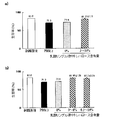
- the effect of trehalose on the survival rate of mesenchymal stem cells is shown.
- a) shows the measurement result of direct survival rate.
- b) shows a relative value when the survival rate immediately after peeling is 100%.
- c) shows a relative value when the survival rate of the PBS ( ⁇ ) washing treatment group is 100%.
- the effect of trehalose on the survival rate of mesenchymal stem cells is shown.
- a) shows the results of comparing the direct survival rate between the trehalose-containing group and the trehalose-free group.
- b) shows the results of comparing the direct survival rate between the group having a trehalose content of 3 to 6 (w / v)% and the group having a content of 6.5 to 10 (w / v)%.
- the present invention relates to a method for in vitro passage of mesenchymal stem cells, comprising washing mesenchymal stem cells detached from a cell culture vessel by proteolytic enzyme treatment with a physiological aqueous solution containing trehalose. It is to provide.
- Mesenchymal stem cell broadly means a population of stem cells or progenitor cells that proliferate in an undifferentiated state and can differentiate into all or some of bone cells, chondrocytes and adipocytes.
- the mesenchymal stem cell used in the method of the present invention is not particularly limited as long as it is a vertebrate cell.
- the vertebrates include mammals, birds, fish, amphibians and reptiles.
- mammals include, for example, laboratory animals such as rodents and rabbits such as mice, rats, hamsters, and guinea pigs, domestic animals such as pigs, cows, goats, horses, sheep and minks, pets such as dogs and cats, humans, Primates such as monkeys, rhesus monkeys, marmosets, orangutans and chimpanzees.
- the vertebrate is preferably a mammal, more preferably a rodent (such as a rat) or a primate (such as a human).
- mesenchymal stem cells are present at a low frequency in bone marrow, peripheral blood, umbilical cord blood, and adipose tissue.
- Mesenchymal stem cells can be isolated or purified from these tissues by a known method. “Isolated or purified” means that the artificially placed in a state different from the naturally occurring state, for example, an operation to remove components other than the desired component from the naturally occurring state.
- Human mesenchymal stem cells can be isolated from bone marrow fluid by the Percoll gradient method (Hum. Cell, vol.10, p.45-50, 1997).
- human mesenchymal stem cells can be isolated by culture and passage of hematopoietic stem cells after bone marrow puncture (Journalourof Autoimmunity, ity30 (2008) 163-171).
- Mesenchymal stem cells are usually adherently cultured in an appropriate medium in a culture container such as a petri dish, a plate, or a bottle.
- a basal medium of a medium used for culturing mesenchymal stem cells those commonly used for maintaining or culturing mammalian adherent cells can be used, and are not particularly limited.
- DMEM, EMEM, RPMI -1640, ⁇ -MEM, F-12, F-10, M-199 and the like can be used, and are not particularly limited.
- a medium modified for mesenchymal stem cell culture or the like may be used, or a mixture of the above basal medium may be used.
- the medium used for culturing mesenchymal stem cells may contain serum.
- the serum is not particularly limited as long as it is a serum derived from a mammal, but is preferably a serum derived from the mammal (for example, fetal bovine serum, human serum, etc.).
- serum supplements for example, Knockout Serum Replacement (KSR) (Invitrogen)
- KSR Knockout Serum Replacement
- concentration of serum is not particularly limited, but is usually in the range of 0.1 to 30 (v / v)%.
- the medium used for culturing mesenchymal stem cells can contain additives known per se.
- the additive include, but are not particularly limited to, for example, growth factors (such as insulin), iron sources (such as transferrin), minerals (such as sodium selenate), saccharides (such as glucose), organic acids (such as pyruvic acid, Lactic acid etc.), serum proteins (eg albumin etc.), amino acids (eg L-glutamine etc.), reducing agents (eg 2-mercaptoethanol etc.), vitamins (eg ascorbic acid, d-biotin etc.), antibiotics (eg streptomycin, etc.) , Penicillin, gentamicin, etc.), buffering agents (eg, HEPES, etc.) and the like.
- Each of the additives is preferably contained within a concentration range known per se.
- the culture temperature is usually in the range of about 30 to 40 ° C, preferably about 37 ° C.
- the CO 2 concentration is usually in the range of about 1-10%, preferably about 5%.
- the humidity is usually in the range of about 70-100%, preferably about 95-100%.
- the medium is removed with an aspirator or the like.
- the mesenchymal stem cells are washed with a physiological aqueous solution not containing the protein, and the remaining medium is removed.
- the physiological aqueous solution is not particularly limited as long as it does not inhibit the activity of the proteolytic enzyme and has no toxicity to mesenchymal stem cells.
- physiological saline phosphate buffered saline, Tris Buffered saline, HEPES buffered saline, Ringer's solution, 5% glucose aqueous solution, liquid medium for mammalian culture, aqueous solution of isotonic agents (glucose, D-sorbitol, D-mannitol, lactose, sodium chloride, etc.) And an isotonic aqueous solution.
- PBS is used.
- the physiological aqueous solution preferably does not contain calcium ions.
- the mesenchymal stem cells adhered to the surface of the culture container are treated with a proteolytic enzyme so as to be detached from the surface of the culture container.
- Treatment of mesenchymal stem cells with proteolytic enzymes is carried out by bringing mesenchymal stem cells into contact with a physiological aqueous solution containing proteolytic enzymes.
- proteolytic enzymes include trypsin, pronase, pepsin, elastase, collagenase and the like, but preferably trypsin is used.
- the physiological aqueous solution include those described above, and preferably PBS is used.
- the physiological aqueous solution preferably does not contain calcium ions.
- the concentration of the proteolytic enzyme in the physiological aqueous solution can be appropriately set depending on the type of the proteolytic enzyme, and can be appropriately set to detach mesenchymal stem cells. / V) in the range of%.
- the exfoliation of mesenchymal stem cells can be promoted by further containing a calcium ion chelator in a physiological aqueous solution containing a proteolytic enzyme and removing the calcium ions.
- a calcium ion chelator examples include EDTA and EGTA, and EDTA is preferable.
- the concentration of calcium ion chelator is usually in the range of 0.1 to 2 mM.
- the temperature during the proteolytic enzyme treatment is usually within a range of 20 to 37 ° C.
- the treatment time with the proteolytic enzyme is not particularly limited as long as it is sufficient to detach the cells from the culture vessel, but is usually 15 seconds to 15 minutes, preferably 30 seconds to 10 minutes. If mesenchymal stem cells are treated with proteolytic enzymes over a long period of time, the cells may be damaged and the survival rate may be reduced, so treatment with proteolytic enzymes while observing the state of the cells with the naked eye or under a microscope When the cell separation is confirmed, it is preferable to proceed to the next step in as short a time as possible.
- the resulting mesenchymal stem cell suspension contains a sufficient amount of protein to suppress the activity of proteolytic enzymes
- a physiological aqueous solution the culture medium for culture
- the obtained mesenchymal stem cell suspension is subjected to centrifugation, and the supernatant is discarded to separate the detached mesenchymal stem cells.
- Washing the exfoliated mesenchymal stem cells with a physiological aqueous solution containing trehalose is performed by suspending the mesenchymal stem cells separated with the physiological aqueous solution containing trehalose, and subjecting the obtained suspension to centrifugation. Discard the supernatant.
- the physiological aqueous solution is not particularly limited as long as it is not toxic to mesenchymal stem cells.
- physiological saline phosphate buffered saline, Tris buffered saline, HEPES buffered physiology Saline, Ringer's solution, 5% glucose aqueous solution, liquid culture medium for mammalian culture, isotonic aqueous solutions such as aqueous solutions of isotonic agents (glucose, D-sorbitol, D-mannitol, lactose, sodium chloride, etc.), the above-mentioned media, etc. Can be mentioned.
- the trehalose content in the physiological aqueous solution is not limited as long as it increases the survival rate of mesenchymal stem cells, but is usually 3 to 10 (w / v)%, preferably 3 to 6 (w / v)%. . If the trehalose concentration is too high, it may affect the cell morphology, such as the size of the mesenchymal stem cells becoming smaller. If the trehalose concentration is too low, the effect of increasing the survival rate of the mesenchymal stem cells is sufficiently achieved. There is a possibility that it will not be.
- ET-Kyoto solution Japanese Patent No. 3253131
- the ET-Kyoto solution is commercially available from Otsuka Pharmaceutical Factory.
- the trehalose content in the ET-Kyoto solution is 4.53 (w / v)%.
- the number of washing operations of exfoliated mesenchymal stem cells with a physiological aqueous solution containing trehalose may be performed only once or a plurality of times (for example, 2 to 4 times). If the number of washings is too large, the viability of the mesenchymal stem cells may decrease, and the number of washings is usually 1 to 2 times, preferably 1 time.
- the mesenchymal stem cells are suspended in an appropriate concentration in the above-mentioned fresh medium and seeded in a new culture vessel.
- the present invention also provides an agent for washing mesenchymal stem cells detached from a cell culture vessel by proteolytic enzyme treatment in vitro passage of mesenchymal stem cells, comprising the physiological aqueous solution containing trehalose described above. It is to provide.
- an agent for washing mesenchymal stem cells detached from a cell culture vessel by proteolytic enzyme treatment in vitro passage of mesenchymal stem cells comprising the physiological aqueous solution containing trehalose described above. It is to provide.
- Example 1 Human adipose tissue-derived mesenchymal stem cells (passage number 6) (1.3 ⁇ 10 6 cells) were cultured in ⁇ MEM (GIBCO) containing 10 (w / v)% FBS (GIBCO) on a culture dish. After removing the medium and washing the mesenchymal stem cell surface with PBS, 0.25 (w / v)% trypsin (GIBCO) was added dropwise to the dish and allowed to stand at room temperature. After confirming that the cells were detached from the dish, ⁇ MEM containing 10 (w / v)% FBS was immediately added and pipetting to stop the trypsin degradation and collect the cells.
- ⁇ MEM containing 10 (w / v)% FBS was immediately added and pipetting to stop the trypsin degradation and collect the cells.
- trehalose suppresses a decrease in the survival rate of mesenchymal stem cells within a range of at least 3 to 10 (w / v)%, suggesting that 3 to 6 (w / v)% is a preferable concentration range. It was done.
- mesenchymal stem cells can be collected and passaged while suppressing cell death. Therefore, the present invention contributes to the provision of high-quality mesenchymal stem cells in regenerative medicine.
Landscapes
- Health & Medical Sciences (AREA)
- Life Sciences & Earth Sciences (AREA)
- Engineering & Computer Science (AREA)
- Biomedical Technology (AREA)
- Chemical & Material Sciences (AREA)
- Wood Science & Technology (AREA)
- Organic Chemistry (AREA)
- Developmental Biology & Embryology (AREA)
- Biotechnology (AREA)
- Zoology (AREA)
- Bioinformatics & Cheminformatics (AREA)
- Genetics & Genomics (AREA)
- Cell Biology (AREA)
- Microbiology (AREA)
- Rheumatology (AREA)
- Biochemistry (AREA)
- General Engineering & Computer Science (AREA)
- General Health & Medical Sciences (AREA)
- Hematology (AREA)
- Immunology (AREA)
- Micro-Organisms Or Cultivation Processes Thereof (AREA)
Abstract
本発明は、間葉系幹細胞のインビトロ継代方法であって、タンパク質分解酵素処理により細胞培養容器から剥離した間葉系幹細胞を、トレハロースを含有する生理的水溶液で洗浄することを含む、方法を提供する。更に本発明は、トレハロースを含有する生理的水溶液を含む、間葉系幹細胞のインビトロ継代において、タンパク質分解酵素処理により細胞培養容器から剥離した間葉系幹細胞を洗浄するための剤を提供する。
Description
本発明は、間葉系幹細胞の細胞死を抑制しながら継代する方法、およびそれに用いる剤に関する。
間葉系幹細胞は、哺乳類の骨髄等に存在し、脂肪細胞、軟骨細胞、骨細胞等に分化する幹細胞として知られている。間葉系幹細胞は、その多分化能故に、多くの組織の再生医療のための移植材料として注目されている。すなわち、間葉系幹細胞を用いて、従来の治療方法では再生しなかった、疾病や障害により失った組織を再生し、機能を回復させる「細胞移植による再生医療」である。具体的には、例えば、下肢虚血(ビュルガー病)患者に対する骨髄間葉系幹細胞の移植、歯周病患部への骨髄間葉系幹細胞の移植、変形性関節症患者に対する骨髄間葉系幹細胞の移植等の治療が開始または計画されている。
しかしながら、間葉系幹細胞のポピュレーションは、極めて小さく、ひとつの個体から採取できる量は僅かである。従って、再生医療を実施するのに十分な数の間葉系幹細胞を提供するためには、これを安定的に、生存率の高い状態で維持培養して、増殖する必要がある。
一方、トレハロースはグルコースが1,1-グリコシド結合してできた二糖の一種である。トレハロースは甘味を呈し、高い保水力を持つため、種々の食品や化粧品に用いられている。また、トレハロースは細胞膜を安定化し、細胞傷害を抑制する性質を有するため、臓器を移植する際の臓器保護液の有効成分として用いられている。ET-Kyoto液やNew ET-Kyoto液等のトレハロースを含有する優れた臓器保存液が開発されている(特許文献1及び2、非特許文献1)。
Yonsei Medical Journal, vol.45, No.6, p.1107-1114, 2004
間葉系幹細胞は接着細胞であるため、これを継代する際には、まずトリプシンにより細胞をプレートから剥離し、血清やトリプシンインヒビターなどを添加した培地や溶液によりトリプシンによるタンパク質分解を停止した後で、遠心分離により剥離した細胞を回収し、これをさらにPBS(-)や生理食塩水により洗浄することによって残存する不活化トリプシンや夾雑物を除去した後で、新鮮な培地に懸濁し、新たなプレートに播いていた。本発明者らは、この継代操作の前後における細胞生存率を詳細に解析した結果、トリプシン処理の後に行われる洗浄操作において間葉系幹細胞の生存率が大きく低下する問題点があることを見出した。
本発明は、間葉系幹細胞の細胞死を抑制しながらこれを継代する技術及び移植に必要な大量の生細胞を回収する技術を提供することを目的とする。
本発明者らは、鋭意検討の結果、間葉系幹細胞を洗浄する際にトレハロースを含有する生理的水溶液を用いると、間葉系幹細胞の細胞死が抑制されることを見出した。この知見に基づき、更に検討を加えた結果、本発明を完成させた。
即ち、本発明は以下に関する。
[1] 間葉系幹細胞のインビトロ継代方法であって、タンパク質分解酵素処理により細胞培養容器から剥離した間葉系幹細胞を、トレハロースを含有する生理的水溶液で洗浄することを含む、方法。
[2] 生理的水溶液中のトレハロース濃度が3~10(w/v)%である、[1]記載の方法。
[3] 生理的水溶液中のトレハロース濃度が3~6(w/v)%である、[1]記載の方法。
[4] トレハロースを含有する生理的水溶液を含む、間葉系幹細胞のインビトロ継代において、タンパク質分解酵素処理により細胞培養容器から剥離した間葉系幹細胞を洗浄するための剤。
[5] 生理的水溶液中のトレハロース濃度が3~10(w/v)%である、[4]記載の剤。
[6] 生理的水溶液中のトレハロース濃度が3~6(w/v)%である、[4]記載の剤。
[1] 間葉系幹細胞のインビトロ継代方法であって、タンパク質分解酵素処理により細胞培養容器から剥離した間葉系幹細胞を、トレハロースを含有する生理的水溶液で洗浄することを含む、方法。
[2] 生理的水溶液中のトレハロース濃度が3~10(w/v)%である、[1]記載の方法。
[3] 生理的水溶液中のトレハロース濃度が3~6(w/v)%である、[1]記載の方法。
[4] トレハロースを含有する生理的水溶液を含む、間葉系幹細胞のインビトロ継代において、タンパク質分解酵素処理により細胞培養容器から剥離した間葉系幹細胞を洗浄するための剤。
[5] 生理的水溶液中のトレハロース濃度が3~10(w/v)%である、[4]記載の剤。
[6] 生理的水溶液中のトレハロース濃度が3~6(w/v)%である、[4]記載の剤。
本発明を用いれば、細胞死を抑制しながら間葉系幹細胞を継代することが可能である。したがって、本発明は再生医療における良質な間葉系幹細胞の提供に資する。
本発明は、間葉系幹細胞のインビトロ継代方法であって、タンパク質分解酵素処理により細胞培養容器から剥離した間葉系幹細胞を、トレハロースを含有する生理的水溶液で洗浄することを含む、方法を提供するものである。
「間葉系幹細胞」とは、未分化の状態で増殖し、骨細胞、軟骨細胞及び脂肪細胞の全て又はいくつかへの分化が可能な幹細胞又はその前駆細胞の集団を広義に意味する。
本発明の方法において用いられる間葉系幹細胞は、脊椎動物由来の細胞であれば特に限定されない。該脊椎動物としては、例えば、哺乳動物、鳥、魚、両生動物および爬虫類動物が挙げられる。哺乳動物としては、例えば、マウス、ラット、ハムスター、モルモット等のげっ歯類やウサギ等の実験動物、ブタ、ウシ、ヤギ、ウマ、ヒツジ、ミンク等の家畜、イヌ、ネコ等のペット、ヒト、サル、アカゲザル、マーモセット、オランウータン、チンパンジーなどの霊長類等を挙げることが出来る。鳥類としては、ニワトリ、ウズラ、アヒル、ガチョウ、シチメンチョウ、オーストリッチ、エミュ、ダチョウ、ホロホロ鳥、ハト等を挙げることができる。脊椎動物は、好ましくは哺乳動物であり、より好ましくはげっ歯類(ラット等)又は霊長類(ヒト等)である。
生体においては、間葉系幹細胞は骨髄、末梢血、臍帯血、脂肪組織中に低頻度で存在する。間葉系幹細胞は、これらの組織から公知の方法で単離又は精製することが出来る。「単離または精製」とは、天然に存在する状態とは異なる状態に人為的に置かれること、例えば、天然に存在する状態から、目的とする成分以外の成分を除去する操作が施されていることを意味する。例えば、ヒト間葉系幹細胞は、パーコールグラディエント法により骨髄液から単離することができる(Hum. Cell, vol.10, p.45-50, 1997)。或いは、骨髄穿刺後の造血幹細胞等の培養、継代によりヒト間葉系幹細胞を単離することができる(Journal of Autoimmunity, 30 (2008) 163-171)。
間葉系幹細胞は、通常、シャーレ、プレート、ボトル等の培養容器中、適切な培地中で、接着培養される。間葉系幹細胞の培養に用いられる培地の基礎培地は、哺乳動物の接着細胞の維持又は培養に一般的に使用されているものを用いることができ、特に限定されないが、例えばDMEM、EMEM、RPMI-1640、α-MEM、F-12、F-10、M-199等が挙げられる。また、間葉系幹細胞培養用等に改変された培地を用いてもよく、上記基礎培地の混合物を用いてもよい。
間葉系幹細胞の培養に用いられる培地は血清を含んでいてもよい。血清としては、哺乳動物由来の血清であれば特に限定されないが、好ましくは上記哺乳動物由来の血清(例えばウシ胎児血清、ヒト血清等)である。また血清の代替添加物(例えばKnockout Serum Replacement (KSR)(Invitrogen社製)等)を用いてもよい。血清の濃度は特に限定されないが、通常、0.1~30(v/v)%の範囲である。
間葉系幹細胞の培養に用いられる培地は、自体公知の添加物を含むことができる。添加物としては、特に限定されないが、例えば成長因子(例えばインスリン等)、鉄源(例えばトランスフェリン等)、ミネラル(例えばセレン酸ナトリウム等)、糖類(例えばグルコース等)、有機酸(例えばピルビン酸、乳酸等)、血清蛋白質(例えばアルブミン等)、アミノ酸(例えばL-グルタミン等)、還元剤(例えば2-メルカプトエタノール等)、ビタミン類(例えばアスコルビン酸、d-ビオチン等)、抗生物質(例えばストレプトマイシン、ペニシリン、ゲンタマイシン等)、緩衝剤(例えばHEPES等)等が挙げられる。当該添加物は、それぞれ自体公知の濃度範囲内で含まれることが好ましい。
培養温度は通常約30~40℃の範囲であり、好ましくは約37℃である。CO2濃度は通常約1~10%の範囲であり、好ましくは約5%である。湿度は通常約70~100%の範囲であり、好ましくは約95~100%である。
間葉系幹細胞の継代時には、まず、アスピレーター等により培地を除去する。次に、培地中に含まれるタンパク質は、タンパク質分解酵素の活性を阻害する可能性があるため、タンパク質を含まない生理的水溶液で間葉系幹細胞を洗浄し、残存する培地を除去する。生理的水溶液としては、タンパク質分解酵素の活性を阻害せず、間葉系幹細胞に対して毒性を有していない限り特に制限されないが、例えば、生理食塩水、リン酸緩衝化生理食塩水、トリス緩衝化生理食塩水、HEPES緩衝化生理食塩水、リンゲル液、5%グルコース水溶液、哺乳動物培養用の液体培地、等張剤(ブドウ糖、D-ソルビトール、D-マンニトール、ラクトース、塩化ナトリウム等)の水溶液等の等張水溶液等が挙げられる。好ましくはPBSが用いられる。間葉系幹細胞の剥離を促進するため、生理的水溶液は、カルシウムイオンを含まないことが好ましい。
次に、培養容器表面に接着した間葉系幹細胞をタンパク質分解酵素で処理することにより培養容器表面から剥離する。タンパク質分解酵素による間葉系幹細胞の処理は、タンパク質分解酵素を含有する生理的水溶液に、間葉系幹細胞を接触させることにより行う。タンパク質分解酵素としては、トリプシン、プロナーゼ、ペプシン、エラスターゼ、コラゲナーゼ等を挙げることができるが、好ましくは、トリプシンが用いられる。生理的水溶液としては、上述のものが挙げられるが、好ましくはPBSが用いられる。間葉系幹細胞の剥離を促進するため、生理的水溶液は、カルシウムイオンを含まないことが好ましい。生理的水溶液中のタンパク質分解酵素の濃度は、タンパク質分解酵素の種類に応じて、適宜間葉系幹細胞を剥離するのに十分な濃度を設定することができるが、通常0.1~1(w/v)%の範囲内である。
タンパク質分解酵素を含有する生理的水溶液に、カルシウムイオンキレーターを更に含有させ、カルシウムイオンを除去することにより、間葉系幹細胞の剥離を促進することができる。カルシウムイオンキレーターとしては、EDTA、EGTA等を挙げることができるが、好ましくはEDTAである。カルシウムイオンキレーターの濃度は、通常0.1~2mMの範囲内である。
タンパク質分解酵素処理時の温度は、通常20~37℃の範囲内である。タンパク質分解酵素による処理時間は、細胞を培養容器から剥離するのに十分な時間であれば特に限定されないが、通常15秒~15分、好ましくは、30秒~10分である。長い時間にわたって間葉系幹細胞をタンパク質分解酵素により処理すると、細胞がダメージを受けて、生存率が低下するおそれがあるので、肉眼や、顕微鏡により細胞の状態を観察しながらタンパク質分解酵素による処理を行い、細胞の剥離が確認できたら、できるだけ短時間のうちに、次の工程に進むことが好ましい。
タンパク質分解酵素処理により、間葉系幹細胞を培養容器表面から剥離した後に、得られた間葉系幹細胞の懸濁液に、タンパク質分解酵素の活性を抑制するのに十分な量のタンパク質を含有する生理的水溶液を加えることにより、タンパク質分解酵素の活性を抑制する。タンパク質を含有する生理的水溶液としては、例えば、上述の血清を含有する、間葉系幹細胞の培養用の培地を挙げることができる。得られた間葉系幹細胞の懸濁液を、遠心分離に付し、上清を捨てることにより、剥離した間葉系幹細胞を分離する。
トレハロースを含有する生理的水溶液による、剥離した間葉系幹細胞の洗浄は、トレハロースを含有する生理的水溶液で分離した間葉系幹細胞を懸濁し、得られた懸濁液を遠心分離に付し、上清を捨てることにより行う。生理的水溶液としては、間葉系幹細胞に対して毒性を有していない限り特に制限されないが、例えば、生理食塩水、リン酸緩衝化生理食塩水、トリス緩衝化生理食塩水、HEPES緩衝化生理食塩水、リンゲル液、5%グルコース水溶液、哺乳動物培養用の液体培地、等張剤(ブドウ糖、D-ソルビトール、D-マンニトール、ラクトース、塩化ナトリウム等)の水溶液等の等張水溶液、上述の培地等を挙げることができる。
生理的水溶液中のトレハロースの含有量は、間葉系幹細胞の生存率を上昇させる限り限定されないが、通常3~10(w/v)%、好ましくは3~6(w/v)%である。トレハロース濃度が高すぎると、間葉系幹細胞の細胞が小さくなる等の細胞形態に影響する可能性があり、トレハロース濃度が低すぎると、間葉系幹細胞の生存率を上昇させる効果が十分に奏されなくなる可能性がある。
トレハロースを含有する生理的水溶液の好適な具体例として、ET-Kyoto液(特許第3253131号)を挙げることができる。ET-Kyoto液は、株式会社大塚製薬工場より市販されている。ET-Kyoto液中のトレハロース含有量は4.53(w/v)%である。
トレハロースを含有する生理的水溶液による、剥離した間葉系幹細胞の洗浄操作の回数は、1回のみであってもよいし、複数回(たとえば2~4回)行ってもよい。洗浄回数が多すぎると、かえって間葉系幹細胞の生存率が低下してしまうおそれがあるため、洗浄回数は、通常1~2回、好ましくは1回である。
上記洗浄後の間葉系幹細胞は、新鮮な上述の培地中に適切な濃度に懸濁され、新たな培養容器中に播かれる。
また、本発明は、上述のトレハロースを含有する生理的水溶液を含む、間葉系幹細胞のインビトロ継代において、タンパク質分解酵素処理により細胞培養容器から剥離した間葉系幹細胞を洗浄するための剤を提供するものである。本発明の剤を用いて、上記本発明の方法により間葉系幹細胞のインビトロ継代を行うことにより、継代の間葉系幹細胞の生存率の低下を最小限に抑制することができる。
刊行物、特許文献等を含む、本明細書に引用されたすべての参考文献は、引用により、それらが個々に具体的に参考として援用されかつその内容全体が具体的に記載されているのと同程度まで、本明細書に援用される。
以下、実施例を示して本発明をより具体的に説明するが、本発明は以下に示す実施例によって何ら限定されるものではない。
[実施例1]
ヒト脂肪組織由来間葉系幹細胞(継代数6)(1.3×10⁶個)を培養ディッシュ上で10(w/v)%FBS(GIBCO)を含有するαMEM(GIBCO)中で培養した。培地を除去し、PBSにより間葉系幹細胞表面を洗浄した後に、0.25(w/v)%トリプシン(GIBCO)をディッシュに滴下し、室温にて静置した。細胞がディッシュから剥離したのを確認した後、直ちに10(w/v)%FBSを含有するαMEMを加え、ピペッティングすることにより、トリプシンによる分解を停止し、細胞を回収した。一部をトリパンブルー染色用に取り、残りの細胞懸濁液を12本の15ml遠心チューブに分注し、室温、1000rpmにて3分間遠心分離し、上清を除去した。細胞のペレットをほぐし、以下の各洗浄用溶液にて細胞を懸濁した。
・ PBS(2価イオン不含)
・ 乳酸リンゲル液
・ 乳酸リンゲル液中のトレハロース溶液(トレハロース含有量:3~10(w/v)%)
細胞懸濁液を、室温、1000rpmにて3分間遠心分離し、上清を除去した。細胞のペレットをほぐし、再び、同一の洗浄用溶液にて細胞を懸濁した。細胞の一部を採取し、トリパンブルーにより染色し、生存率を評価した。
ヒト脂肪組織由来間葉系幹細胞(継代数6)(1.3×10⁶個)を培養ディッシュ上で10(w/v)%FBS(GIBCO)を含有するαMEM(GIBCO)中で培養した。培地を除去し、PBSにより間葉系幹細胞表面を洗浄した後に、0.25(w/v)%トリプシン(GIBCO)をディッシュに滴下し、室温にて静置した。細胞がディッシュから剥離したのを確認した後、直ちに10(w/v)%FBSを含有するαMEMを加え、ピペッティングすることにより、トリプシンによる分解を停止し、細胞を回収した。一部をトリパンブルー染色用に取り、残りの細胞懸濁液を12本の15ml遠心チューブに分注し、室温、1000rpmにて3分間遠心分離し、上清を除去した。細胞のペレットをほぐし、以下の各洗浄用溶液にて細胞を懸濁した。
・ PBS(2価イオン不含)
・ 乳酸リンゲル液
・ 乳酸リンゲル液中のトレハロース溶液(トレハロース含有量:3~10(w/v)%)
細胞懸濁液を、室温、1000rpmにて3分間遠心分離し、上清を除去した。細胞のペレットをほぐし、再び、同一の洗浄用溶液にて細胞を懸濁した。細胞の一部を採取し、トリパンブルーにより染色し、生存率を評価した。
結果を図1および2に示す。乳酸リンゲル液に3~10(w/v)%のトレハロースを添加することにより、間葉系幹細胞の生存率の低下が抑制された。トレハロース含有量が3~6(w/v)%の範囲内では細胞の形態に大きな変化はなかったが、6.5~10(w/v)%では、生存率自体は3~6(w/v)%のものとほぼ同一であったが、細胞が全体的に小さくなる傾向が確認された。従って、トレハロースは、少なくとも3~10(w/v)%の範囲内で間葉系幹細胞の生存率の低下を抑制し、3~6(w/v)%が好ましい濃度範囲であることが示唆された。
本発明を用いれば、細胞死を抑制しながら間葉系幹細胞を回収及び継代することが可能である。したがって、本発明は再生医療における良質な間葉系幹細胞の提供に資する。
本出願は日本で出願された特願2011-072068(出願日:2011年3月29日)を基礎としており、その内容は本明細書に全て包含されるものである。
Claims (6)
- 間葉系幹細胞のインビトロ継代方法であって、タンパク質分解酵素処理により細胞培養容器から剥離した間葉系幹細胞を、トレハロースを含有する生理的水溶液で洗浄することを含む、方法。
- 生理的水溶液中のトレハロース濃度が3~10(w/v)%である、請求項1記載の方法。
- 生理的水溶液中のトレハロース濃度が3~6(w/v)%である、請求項1記載の方法。
- トレハロースを含有する生理的水溶液を含む、間葉系幹細胞のインビトロ継代において、タンパク質分解酵素処理により細胞培養容器から剥離した間葉系幹細胞を洗浄するための剤。
- 生理的水溶液中のトレハロース濃度が3~10(w/v)%である、請求項4記載の剤。
- 生理的水溶液中のトレハロース濃度が3~6(w/v)%である、請求項4記載の剤。
Applications Claiming Priority (2)
| Application Number | Priority Date | Filing Date | Title |
|---|---|---|---|
| JP2011-072068 | 2011-03-29 | ||
| JP2011072068 | 2011-03-29 |
Publications (1)
| Publication Number | Publication Date |
|---|---|
| WO2012133575A1 true WO2012133575A1 (ja) | 2012-10-04 |
Family
ID=46931282
Family Applications (1)
| Application Number | Title | Priority Date | Filing Date |
|---|---|---|---|
| PCT/JP2012/058225 Ceased WO2012133575A1 (ja) | 2011-03-29 | 2012-03-28 | 間葉系幹細胞の細胞死抑制方法 |
Country Status (1)
| Country | Link |
|---|---|
| WO (1) | WO2012133575A1 (ja) |
Cited By (2)
| Publication number | Priority date | Publication date | Assignee | Title |
|---|---|---|---|---|
| WO2014208053A1 (ja) | 2013-06-28 | 2014-12-31 | 株式会社大塚製薬工場 | トレハロース及びデキストラン含有哺乳動物細胞移植用溶液 |
| US9040300B2 (en) | 2012-09-28 | 2015-05-26 | Otsuka Pharmaceutical Factory, Inc. | Method of washing adherent cell using trehalose-containing cell-washing solution |
-
2012
- 2012-03-28 WO PCT/JP2012/058225 patent/WO2012133575A1/ja not_active Ceased
Non-Patent Citations (4)
| Title |
|---|
| ATSUSHI OHATA ET AL.: "Usagi Mocho Fukuheki Sakka Model o Mochiita Trehalose Seizai no Yuchaku Keigen Koka", JOURNAL OF ABDOMINAL EMERGENCY MEDICINE, vol. 31, no. 2, 17 February 2011 (2011-02-17), pages 434 - 464 * |
| CHIKAKO SOMEI ET AL.: "Effect of the tooth cryopreservation for the cell activity of periodontal membrane - Hozon Eki to shite no Trehalose no Koka", JAPANESE SOCIETY OF CONSERVATIVE DENTISTRY 2009 NENDO SHUNKI GAKUJUTSU TAIKAI (DAI 130 KAI) PROGRAM, KOEN SHOROKUSHU, 11 June 2009 (2009-06-11), pages 204 * |
| DI, G. ET AL.: "Development and evaluation of a trehalose-contained solution formula to preserve hUC-MSCs at 4°C", JOURNAL OF CELLULAR PHYSIOLOGY, vol. 227, no. 3, 14 December 2011 (2011-12-14), pages 879 - 884, Retrieved from the Internet <URL:http://onlinelibrary.wiley.com/doi/10.1002/jcp.23066> * |
| LIU, Y. ET AL.: "Cryopreservation of human bone marrow-derived mesenchymal stem cells with reduced dimethylsulfoxide and well-defined freezing solutions", BIOTECHNOLOGY PROGRESS, vol. 26, no. 6, November 2010 (2010-11-01), pages 1635 - 1643, XP055102221, doi:10.1002/btpr.464 * |
Cited By (8)
| Publication number | Priority date | Publication date | Assignee | Title |
|---|---|---|---|---|
| US9040300B2 (en) | 2012-09-28 | 2015-05-26 | Otsuka Pharmaceutical Factory, Inc. | Method of washing adherent cell using trehalose-containing cell-washing solution |
| US20150224145A1 (en) * | 2012-09-28 | 2015-08-13 | Otsuka Pharmaceutical Factory, Inc. | Method of washing adherent cell using trehalose-containing cell-washing solution |
| US9498500B2 (en) | 2012-09-28 | 2016-11-22 | Otsuka Pharmaceutical Factory, Inc. | Method of washing adherent cell using trehalose-containing cell-washing solution |
| WO2014208053A1 (ja) | 2013-06-28 | 2014-12-31 | 株式会社大塚製薬工場 | トレハロース及びデキストラン含有哺乳動物細胞移植用溶液 |
| KR20160026863A (ko) | 2013-06-28 | 2016-03-09 | 가부시기가이샤오오쓰까세이야꾸고오죠오 | 트레할로스 및 덱스트란 함유 포유동물 세포 이식용 용액 |
| JP2016034279A (ja) * | 2013-06-28 | 2016-03-17 | 株式会社大塚製薬工場 | トレハロース及びデキストラン含有哺乳動物細胞移植用溶液 |
| JPWO2014208053A1 (ja) * | 2013-06-28 | 2017-02-23 | 株式会社大塚製薬工場 | トレハロース及びデキストラン含有哺乳動物細胞移植用溶液 |
| US10945427B2 (en) | 2013-06-28 | 2021-03-16 | Otsuka Pharmaceutical Factory, Inc. | Trehalose and dextran-containing solution for transplanting mammalian cells |
Similar Documents
| Publication | Publication Date | Title |
|---|---|---|
| JP5341059B2 (ja) | 幹細胞懸濁液 | |
| KR102491558B1 (ko) | 세포 배양 배지를 사용한 제대 양막(umbilical cord amniotic membrane)으로부터 중간엽 줄기세포를 분리하는 방법 | |
| Radtke et al. | Characterization and osteogenic potential of equine muscle tissue–and periosteal tissue–derived mesenchymal stem cells in comparison with bone marrow–and adipose tissue–derived mesenchymal stem cells | |
| JP4217262B2 (ja) | 脂肪組織から幹細胞を調製するための方法およびシステム | |
| JP5998265B2 (ja) | トレハロース及びデキストラン含有哺乳動物細胞移植用溶液 | |
| EP3517118B1 (en) | Sperm activator and uses thereof | |
| JP6745449B2 (ja) | 臍帯組織の凍結保存方法 | |
| Romanov et al. | Optimized protocol for isolation of multipotent mesenchymal stromal cells from human umbilical cord | |
| JP7244991B2 (ja) | 脂肪組織由来間質細胞を含む肝疾患治療剤およびその製造方法 | |
| WO2014017267A1 (ja) | 組織保存液および組織保存方法 | |
| US12520839B2 (en) | Methods and compositions for cryopreservation of cell therapies | |
| KR101555568B1 (ko) | 트레할로스 함유 세포 세정용액을 이용한 접착세포의 세정 방법 | |
| CN113728089A (zh) | 含海藻糖的哺乳动物细胞保存用液 | |
| JP5753874B2 (ja) | 細胞生存率低下抑制剤 | |
| US20260002122A1 (en) | Stem cell culture method using serum-free medium | |
| JP7758411B1 (ja) | 間葉系幹細胞培養物の製造方法 | |
| US20250339470A1 (en) | Methods and compositions for maturing cardiomyocytes | |
| JP7018527B1 (ja) | 細胞の保存方法および細胞懸濁液 | |
| RU2836320C1 (ru) | Композиция для хранения или транспортировки мезенхимальных стволовых клеток и способы ее приготовления и применения | |
| JP6582044B2 (ja) | 凍結間葉系細胞の製造方法、及び、移植用治療材の製造方法 | |
| TWI742399B (zh) | 無酵素前處理與培養脂肪間質幹細胞的方法 | |
| RU2783992C2 (ru) | Способ выделения мезенхимальных стволовых клеток из амниотической мембраны пуповины с применением клеточной культуральной среды | |
| JP5276230B1 (ja) | トレハロース含有細胞洗浄溶液を用いた接着細胞のインビトロ継代方法 | |
| Singh | Studies on isolation, culture and characterization of mesenchymal stem cells in caprine |
Legal Events
| Date | Code | Title | Description |
|---|---|---|---|
| 121 | Ep: the epo has been informed by wipo that ep was designated in this application |
Ref document number: 12763600 Country of ref document: EP Kind code of ref document: A1 |
|
| NENP | Non-entry into the national phase |
Ref country code: DE |
|
| 122 | Ep: pct application non-entry in european phase |
Ref document number: 12763600 Country of ref document: EP Kind code of ref document: A1 |
|
| NENP | Non-entry into the national phase |
Ref country code: JP |