WO2012105523A1 - 受信装置、送信装置、放送システム及びプログラム - Google Patents
受信装置、送信装置、放送システム及びプログラム Download PDFInfo
- Publication number
- WO2012105523A1 WO2012105523A1 PCT/JP2012/052051 JP2012052051W WO2012105523A1 WO 2012105523 A1 WO2012105523 A1 WO 2012105523A1 JP 2012052051 W JP2012052051 W JP 2012052051W WO 2012105523 A1 WO2012105523 A1 WO 2012105523A1
- Authority
- WO
- WIPO (PCT)
- Prior art keywords
- application
- broadcast
- unit
- policy
- policy level
- Prior art date
- Legal status (The legal status is an assumption and is not a legal conclusion. Google has not performed a legal analysis and makes no representation as to the accuracy of the status listed.)
- Ceased
Links
Images








Classifications
-
- H—ELECTRICITY
- H04—ELECTRIC COMMUNICATION TECHNIQUE
- H04L—TRANSMISSION OF DIGITAL INFORMATION, e.g. TELEGRAPHIC COMMUNICATION
- H04L63/00—Network architectures or network communication protocols for network security
- H04L63/20—Network architectures or network communication protocols for network security for managing network security; network security policies in general
-
- G—PHYSICS
- G06—COMPUTING OR CALCULATING; COUNTING
- G06F—ELECTRIC DIGITAL DATA PROCESSING
- G06F21/00—Security arrangements for protecting computers, components thereof, programs or data against unauthorised activity
- G06F21/50—Monitoring users, programs or devices to maintain the integrity of platforms, e.g. of processors, firmware or operating systems
- G06F21/55—Detecting local intrusion or implementing counter-measures
- G06F21/554—Detecting local intrusion or implementing counter-measures involving event detection and direct action
-
- G—PHYSICS
- G06—COMPUTING OR CALCULATING; COUNTING
- G06F—ELECTRIC DIGITAL DATA PROCESSING
- G06F21/00—Security arrangements for protecting computers, components thereof, programs or data against unauthorised activity
- G06F21/60—Protecting data
- G06F21/62—Protecting access to data via a platform, e.g. using keys or access control rules
- G06F21/629—Protecting access to data via a platform, e.g. using keys or access control rules to features or functions of an application
-
- H—ELECTRICITY
- H04—ELECTRIC COMMUNICATION TECHNIQUE
- H04H—BROADCAST COMMUNICATION
- H04H60/00—Arrangements for broadcast applications with a direct linking to broadcast information or broadcast space-time; Broadcast-related systems
- H04H60/09—Arrangements for device control with a direct linkage to broadcast information or to broadcast space-time; Arrangements for control of broadcast-related services
- H04H60/13—Arrangements for device control affected by the broadcast information
-
- H—ELECTRICITY
- H04—ELECTRIC COMMUNICATION TECHNIQUE
- H04H—BROADCAST COMMUNICATION
- H04H60/00—Arrangements for broadcast applications with a direct linking to broadcast information or broadcast space-time; Broadcast-related systems
- H04H60/09—Arrangements for device control with a direct linkage to broadcast information or to broadcast space-time; Arrangements for control of broadcast-related services
- H04H60/14—Arrangements for conditional access to broadcast information or to broadcast-related services
-
- H—ELECTRICITY
- H04—ELECTRIC COMMUNICATION TECHNIQUE
- H04H—BROADCAST COMMUNICATION
- H04H60/00—Arrangements for broadcast applications with a direct linking to broadcast information or broadcast space-time; Broadcast-related systems
- H04H60/09—Arrangements for device control with a direct linkage to broadcast information or to broadcast space-time; Arrangements for control of broadcast-related services
- H04H60/14—Arrangements for conditional access to broadcast information or to broadcast-related services
- H04H60/15—Arrangements for conditional access to broadcast information or to broadcast-related services on receiving information
-
- H—ELECTRICITY
- H04—ELECTRIC COMMUNICATION TECHNIQUE
- H04H—BROADCAST COMMUNICATION
- H04H60/00—Arrangements for broadcast applications with a direct linking to broadcast information or broadcast space-time; Broadcast-related systems
- H04H60/09—Arrangements for device control with a direct linkage to broadcast information or to broadcast space-time; Arrangements for control of broadcast-related services
- H04H60/14—Arrangements for conditional access to broadcast information or to broadcast-related services
- H04H60/16—Arrangements for conditional access to broadcast information or to broadcast-related services on playing information
-
- H—ELECTRICITY
- H04—ELECTRIC COMMUNICATION TECHNIQUE
- H04N—PICTORIAL COMMUNICATION, e.g. TELEVISION
- H04N21/00—Selective content distribution, e.g. interactive television or video on demand [VOD]
- H04N21/40—Client devices specifically adapted for the reception of or interaction with content, e.g. set-top-box [STB]; Operations thereof
- H04N21/45—Management operations performed by the client for facilitating the reception of or the interaction with the content or administrating data related to the end-user or to the client device itself, e.g. learning user preferences for recommending movies, resolving scheduling conflicts
- H04N21/454—Content or additional data filtering, e.g. blocking advertisements
- H04N21/4542—Blocking scenes or portions of the received content, e.g. censoring scenes
-
- H—ELECTRICITY
- H04—ELECTRIC COMMUNICATION TECHNIQUE
- H04N—PICTORIAL COMMUNICATION, e.g. TELEVISION
- H04N21/00—Selective content distribution, e.g. interactive television or video on demand [VOD]
- H04N21/80—Generation or processing of content or additional data by content creator independently of the distribution process; Content per se
- H04N21/81—Monomedia components thereof
- H04N21/8126—Monomedia components thereof involving additional data, e.g. news, sports, stocks, weather forecasts
- H04N21/8133—Monomedia components thereof involving additional data, e.g. news, sports, stocks, weather forecasts specifically related to the content, e.g. biography of the actors in a movie, detailed information about an article seen in a video program
-
- H—ELECTRICITY
- H04—ELECTRIC COMMUNICATION TECHNIQUE
- H04N—PICTORIAL COMMUNICATION, e.g. TELEVISION
- H04N21/00—Selective content distribution, e.g. interactive television or video on demand [VOD]
- H04N21/80—Generation or processing of content or additional data by content creator independently of the distribution process; Content per se
- H04N21/81—Monomedia components thereof
- H04N21/8166—Monomedia components thereof involving executable data, e.g. software
- H04N21/8173—End-user applications, e.g. Web browser, game
-
- H—ELECTRICITY
- H04—ELECTRIC COMMUNICATION TECHNIQUE
- H04N—PICTORIAL COMMUNICATION, e.g. TELEVISION
- H04N21/00—Selective content distribution, e.g. interactive television or video on demand [VOD]
- H04N21/80—Generation or processing of content or additional data by content creator independently of the distribution process; Content per se
- H04N21/83—Generation or processing of protective or descriptive data associated with content; Content structuring
- H04N21/835—Generation of protective data, e.g. certificates
- H04N21/8355—Generation of protective data, e.g. certificates involving usage data, e.g. number of copies or viewings allowed
-
- G—PHYSICS
- G06—COMPUTING OR CALCULATING; COUNTING
- G06F—ELECTRIC DIGITAL DATA PROCESSING
- G06F2221/00—Indexing scheme relating to security arrangements for protecting computers, components thereof, programs or data against unauthorised activity
- G06F2221/21—Indexing scheme relating to G06F21/00 and subgroups addressing additional information or applications relating to security arrangements for protecting computers, components thereof, programs or data against unauthorised activity
- G06F2221/2101—Auditing as a secondary aspect
-
- G—PHYSICS
- G06—COMPUTING OR CALCULATING; COUNTING
- G06F—ELECTRIC DIGITAL DATA PROCESSING
- G06F2221/00—Indexing scheme relating to security arrangements for protecting computers, components thereof, programs or data against unauthorised activity
- G06F2221/21—Indexing scheme relating to G06F21/00 and subgroups addressing additional information or applications relating to security arrangements for protecting computers, components thereof, programs or data against unauthorised activity
- G06F2221/2141—Access rights, e.g. capability lists, access control lists, access tables, access matrices
Definitions
- the present invention relates to a receiving device, a transmitting device, a broadcasting system, and a program.
- This application claims priority based on Japanese Patent Application No. 2011-18262 filed in Japan on January 31, 2011 and Japanese Patent Application No. 2011-112981 filed on May 20, 2011 in Japan. And the contents thereof are incorporated herein.
- ARIB Association of Radio Industries and Broadcast
- STD-B23 an application execution environment in digital broadcasting is standardized.
- the standardization of the application execution environment includes standardization of transmission of application information.
- ETSI European Telecommunications Standards Institute
- TS 102 809 Digital Video Broadcasting (DVB); Signaling and carriage of interactive applications and services in hybrid broadcast / broadband environments”
- a markup language extentensible markup language (extensible markup language) encoding is defined.
- Patent Document 1 discloses a technique that enables display control from a provider side for a display device that displays an image of a content that is a program or an application program.
- Patent Document 2 discloses a technique that enables application activation control by various time designations in a broadcast application activation system.
- a broadcast receiving apparatus In a hybrid service in which broadcasting and communication are linked, a broadcast receiving apparatus simultaneously displays broadcast content and content acquired by an application via the Internet.
- it is required to control the application installed in the receiving device as intended by the broadcaster.
- it is also required to control the application in consideration of the intention of the broadcaster changing for each program, the intention of the communication content provider, and the like.
- the life cycle can be defined for each application, but only the applications in the range arbitrarily defined by the broadcaster at any given time in real time among the applications installed in the receiving device. There is no provision for control.
- Patent Document 1 described above aims to control image display of programs and applications, and performs display control on the receiving device from the broadcaster side, but is implemented in the receiver according to the broadcast program. It does not control the starting or exiting of existing applications.
- Patent Document 2 is a technique for starting an application provided by broadcasting in a receiving apparatus by designating a time or the like in advance, and performing control such as activation and termination for an application provided other than broadcasting. It is not possible.
- the present invention has been made in consideration of such circumstances, and a receiving apparatus and a transmitting apparatus that can control an application installed in a broadcast receiving apparatus according to the content being broadcast from a broadcaster. Provide broadcasting system and program.
- One aspect of the present invention is an output unit that outputs content broadcast from a transmission device, an application execution unit that executes an application, and a level division of the application transmitted from the transmission device for the application.
- a security policy acquisition unit that acquires security policy level data to indicate, a policy level acquisition unit that acquires policy level data transmitted from the transmission device for content being broadcast and indicates a level classification of the content being broadcast, and A judgment for determining whether or not the application is a control target based on the policy level data acquired by the policy level acquisition unit and the security policy level data of the application acquired by the security policy acquisition unit.
- Parts and the determination unit is a receiving device characterized by comprising a, an application control unit for instructing the application execution unit controlling said application it is determined that the control target.
- the receiving device that receives and outputs the broadcast content is transmitted from the transmitting device that broadcasts the content to the level of each application implemented in the receiving device by an arbitrary transmission method such as broadcasting or communication.
- Security policy level data indicating the division and policy level data indicating the level division of the content being broadcast are received.
- the receiving apparatus controls the application that is determined to be a control target based on the policy level data of the content being broadcast and the security policy data of each application. For example, an application whose level indicated by the security policy data is equal to or higher than the level indicated by the policy level data of the content being broadcast is started, and the application whose level is equal to or lower than the level indicated by the policy level data of the content being broadcast ends.
- One aspect of the present invention is the above-described receiving device, wherein the policy level acquisition unit associates the broadcast schedule of content and the security policy level data of the application transmitted from the transmitting device.
- the determination unit is the policy level data of the content being broadcast acquired by the policy level acquisition unit, and the application read from the storage unit corresponding to the content being broadcast It is characterized in that it is determined whether or not the application is a control target based on security policy level data.
- the reception device receives and stores the association between the broadcast schedule of the content and the security policy data of the application from the transmission device, and receives the policy level data of the content being broadcast and the broadcast before the broadcast. Whether or not the application is a control target is determined based on the security policy level data of the application corresponding to the content.
- the security policy data of the application can be stored in the receiving device in advance, so that the time from the reception of the policy level data of the content being broadcast to the control of the application is shortened.
- One aspect of the present invention is the above-described receiving device, including a policy management unit that acquires the content broadcast schedule and the content policy level transmitted from the transmission device and writes the content in the storage unit.
- the determination unit further includes a policy level data of the broadcast content acquired by the policy level acquisition unit and a current policy level data read from the storage unit corresponding to the broadcast content. Policy level data is determined, and it is determined whether or not the application is a control target based on the determined current policy level data and the security policy level data of the application.
- the reception device receives the broadcast schedule and policy level of the content to be broadcast from the transmission device and stores them.
- the receiving device determines the current policy level data from the policy level data of the content being broadcast and the policy level data of the content received before the broadcast, and uses the determined current policy level data to determine the application. Determine whether to start. For example, when the policy level data of the content being broadcast received in real time is different from the policy level data of the content received before the broadcast, the larger one is set as the current policy level data.
- the application that was activated in response to the normal content is terminated for the receiving device, and the application corresponding to the emergency content is terminated. It can be activated.
- One aspect of the present invention includes a broadcast transmission unit that broadcasts a broadcast signal in which content is set, and a data communication unit that transmits data through communication, and security policy level data indicating application level classification is described above. Whether the broadcast transmission unit broadcasts the broadcast signal, or the data communication unit transmits the policy level data indicating the level classification of the content being broadcast, and the broadcast transmission unit broadcasts the broadcast signal using the broadcast signal. Alternatively, the data communication unit transmits the data by communication.
- the transmission device that broadcasts content is implemented in the reception device that receives the policy level data indicating the level classification of the content being broadcast and the broadcast content by any transmission method such as broadcast or communication.
- Security policy level data indicating the level classification of each application being transmitted is transmitted.
- the transmitting apparatus that broadcasts the content can appropriately transmit the policy level data of the content being broadcast and the security policy data of each application to the receiving device by appropriately selecting transmission by broadcasting or communication.
- One aspect of the present invention is a broadcasting system including a transmitting device that broadcasts content and a receiving device that receives and outputs the broadcasted content, and the transmitting device classifies the application level.
- a security policy acquisition unit that acquires the security policy level data transmitted from the network, a policy level acquisition unit that acquires the policy level data transmitted from the transmission device for the content being broadcast, and the policy level acquisition unit.
- a determination unit that determines whether the application is a control target based on the policy level data and the security policy level data of the application acquired by the security policy acquisition unit, and the determination unit is a control target
- An application control unit for instructing the application execution unit to control the application determined to be a broadcasting system.
- the transmission device that broadcasts content can use the security policy level data indicating the level classification of each application installed in the reception device and the content of the content being broadcast by an arbitrary transmission method such as broadcast or communication.
- Policy level data indicating the level division is transmitted.
- the receiving device that receives and outputs the broadcast content controls the application that is determined to be controlled based on the policy level data of the content being broadcast received from the transmitting device and the security policy data of each application. Do. For example, an application whose level indicated by the security policy data is equal to or higher than the level indicated by the policy level data of the content being broadcast is started, and the application whose level is equal to or lower than the level indicated by the policy level data of the content being broadcast ends.
- the security policy data of each application set by the broadcaster and the policy level data of the content being broadcast are transmitted from the transmitting device that broadcasts the content, so that the broadcaster broadcasts as intended. It becomes possible to control the application corresponding to the content being broadcast on the content receiving device.
- the computer used for the receiving device controls the output control unit that controls the output of content broadcast from the transmitting device, and the level classification of the application transmitted from the transmitting device for the application.
- a security policy acquisition unit that acquires security policy level data to be indicated;
- a policy level acquisition unit that acquires policy level data that is transmitted from the transmitting device for content being broadcast and indicates a level classification of the content being broadcast;
- the policy level A determination unit that determines whether the application is a control target based on the policy level data acquired by the acquisition unit and the security policy level data of the application acquired by the security policy acquisition unit; Controlling said is determined that the control target application is a program for causing to function as an application control unit, which instructs the application execution unit for application execution.
- the transmission device can control the application installed in the reception device according to the content to be broadcast.
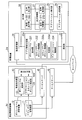
- FIG. 1 is a functional block diagram of a broadcasting system according to the first embodiment of the present invention.
- the broadcasting system of the present embodiment includes a broadcaster apparatus 1 (transmitting apparatus) that broadcasts content and a receiving apparatus 2 that receives and displays the broadcasted content.
- a broadcaster apparatus 1 transmitting apparatus
- a receiving apparatus 2 receives and displays the broadcasted content.
- only one receiving device 2 is shown, but a plurality of receiving devices are provided.
- the broadcasting system of this embodiment realizes a hybrid service that links broadcasting and communication.
- a hybrid service when various application programs (hereinafter referred to as “applications”) can be executed in a broadcast receiver, the broadcast content display screen (hereinafter referred to as “broadcast screen”) is described. ) And a display screen of content acquired by the application via the Internet (hereinafter referred to as “application screen”) are simultaneously displayed.
- application screen a display screen of content acquired by the application via the Internet
- the broadcaster apparatus 1 describes policy level data for real-time events (hereinafter referred to as “policy level”) and application security policy data (hereinafter referred to as “application security policy”). .)
- the application security policy includes a control code and security policy level data (hereinafter referred to as “security policy level”) of each application.
- the control code indicates an instruction for the application.
- the security policy level indicates application level classification.
- the real-time event is, for example, an event (content) being broadcast. Events include, for example, program events (normal contents) that are broadcast programs, and asynchronous events (emergency contents) such as earthquake warnings, tsunami warnings, and emergency news that occur without being synchronized with the program events.
- the policy level indicates the level of the event, and this level indicates the level of the application that permits control.
- the receiving device 2 controls the application installed in the own device according to the policy level and the application security policy received from the broadcaster device 1. For example, the receiving device 2 compares the policy level of the real-time event with the security policy level of each application indicated by the application security policy, determines the control target application, and executes the control code of the control target application. Accordingly, the broadcaster appropriately sets the policy level of the real-time event and the application security policy, and broadcasts them from the broadcaster device 1, whereby the application installed in the receiving device 2 can be viewed by the broadcaster. It can be controlled all at once according to the intention.
- the broadcaster apparatus 1 includes an application / policy management apparatus 11, a policy level setting apparatus 12, and a broadcast transmission apparatus 13.
- the application / policy management apparatus 11 is a computer server that stores the security policy of each application.
- the security policy includes a control code and a security policy level.
- the policy level setting device 12 is a computer server that stores a policy level of a real-time event.
- the broadcast transmission device 13 is a broadcasting facility for digital broadcasting including a program organization facility, a program transmission facility, a transmission facility, and the like, and includes an application security policy setting unit 131, a policy level setting unit 132, and a broadcast transmission unit 133 (transmission unit). ).
- the application security policy setting unit 131 reads out the security policy of each application from the application / policy management apparatus 11 and sets the application security policy including the read security policy of each application in the broadcast signal.
- the policy level setting unit 132 reads the policy level of the real-time event from the policy level setting device 12 and sets it in the broadcast signal.
- the broadcast sending unit 133 broadcasts a broadcast signal defined by ARIB (Association of Radio Industries and Broadcast) standard.
- the receiving device 2 is, for example, a device such as a television, a set top box, a personal computer, or a mobile terminal, and includes a broadcast receiving unit 21, a communication unit 22, an application control determination unit 23, an application execution unit 25, an application storage unit 26, and an output.
- a control unit 27 and an output unit 28 are provided.
- Broadcast receiver 21 is a tuner that receives a broadcast signal of a digital broadcast and demodulates the received broadcast signal.
- the communication unit 22 transmits and receives data by communication via a network such as the Internet.
- the application control determination unit 23 includes a policy level acquisition unit 231, a security policy acquisition unit 232, a determination unit 233, and an application control unit 234.
- the policy level acquisition unit 231 acquires the policy level of the real-time event from the demodulated broadcast signal.
- the security policy acquisition unit 232 acquires an application security policy from the demodulated broadcast signal.
- the determination unit 233 determines whether each application is a control target. It is determined whether or not there is.
- the application control unit 234 outputs a control code described in the application security policy corresponding to the application to be controlled to the application execution unit 25 and instructs execution thereof. In addition, the application control unit 234 instructs the application execution unit 25 to end an application that is not a control target.
- Application storage unit 26 stores applications.
- the application execution unit 25 executes a control code for the application in accordance with an instruction from the application control unit 234. For example, if the control code is an application activation, the application execution unit 25 reads the application from the application storage unit 26 and executes it.
- the output control unit 27 includes a display control unit 271 and an audio control unit 272, and the output unit 28 includes an image display unit 281 and an audio output unit 282.
- the display control unit 271 displays a broadcast screen that displays the video data obtained from the demodulated broadcast signal and an application screen that displays the video data of the content output from the application executed by the application execution unit 25. It is displayed on the display unit 281.
- the audio control unit 272 causes the audio output unit 282 to output broadcast audio based on audio data obtained from the demodulated broadcast signal.
- the video display unit 281 is a display that displays a screen.
- the audio output unit 282 is a speaker that outputs audio.
- applications that can be grasped by the broadcaster can be controlled.
- Applications that can be grasped by the broadcaster are an application created by the broadcaster and an application certified by the broadcaster. These applications may be those written in the application storage unit 26 of the receiving device 2 at the time of shipment. After the shipment, the receiving device 2 can receive via an arbitrary transmission line such as broadcast or communication, or can be read by a computer. It may be read from a recording medium or written to the application storage unit 26. Further, the application does not have to output content acquired via the Internet. For example, an application that displays a time based on a clock provided in the reception device 2 may be used.
- FIG. 2 is a diagram illustrating a description example of a policy level of a real-time event in a broadcast signal.
- a PMT Program Map Table
- a PMT Program Map Table
- TS Transport Stream
- ES Simple Stream
- MPEG Motion Picture Experts Group
- the PMT includes information for specifying a TS packet that transmits an ES of an application information table (AIT).
- the information for specifying the TS packet includes a data encoding scheme descriptor for the AIT ES.
- the AIT includes data for transmitting additional application information for specifying and controlling the application.
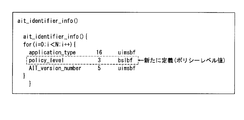
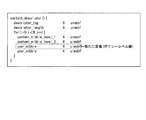
- policy_level is added as a new description for setting the policy level to the ait_identifier_info () structure described in the selector area of the data encoding scheme descriptor for the AIT ES.
- the policy level setting unit 132 of the broadcast transmission device 13 sets the policy level of the real-time event to the added policy_level.
- the policy level setting unit 132 updates the version number set in AIT_version_number, and also updates the set value of version_number defined in the AIT.
- the policy level of the real-time event is data that can take a value selected from three or more different values, but may be data that can take only two values of 0 or 1.
- the priority according to the type of real-time event such as a program event, an earthquake warning, a tsunami warning, or emergency news is used as a policy level setting value.
- FIG. 3 is a diagram showing another description example of the policy level in the broadcast signal.
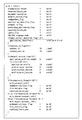
- a security policy descriptor (security_policy_descriptor) is newly defined as shown in FIG.
- the newly defined security policy descriptor is added to the common descriptor loop of AIT defined by ARIB STD-B23.
- the policy level setting unit 132 of the broadcast transmission device 13 sets the policy level of the real-time event to policy_level of this security policy policy descriptor.
- the policy level setting unit 132 also updates the setting value of version_number defined in the AIT.
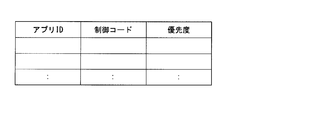
- FIG. 4 shows the data structure of the application security policy.
- the application security policy includes an application ID that identifies the application and the security policy of the application.
- the security policy includes a control code for the application and a relative priority of the application. In this embodiment, this relative priority is used as the security policy level of the application.
- the control code is, for example, activation of the application, but may be other control code such as termination of the application.
- the policy level setting unit 132 of the broadcast transmission apparatus 13 uses the AIT defined by ARIB STD-B23 and multiplexes and transmits the security policies for all applications provided at that time as control signals. Thereby, the broadcast transmission apparatus 13 transmits the application security policy by the broadcast signal.
- the policy level setting unit 132 describes the application ID in application_identifier in the application information descriptor loop of the AIT, and describes the control code of the application in application_control_code. Further, the policy level setting unit 132 describes the relative priority of the application in application_priority in the application descriptor included in the application information descriptor loop.
- the receiving device 2 can obtain the current policy level from the PMT of the received broadcast signal, and determine whether or not the description content of the AIT has been updated based on the version number of the AIT set in the PMT. Can do. Also, the priorities and control codes of all applications at the present time can be obtained from the AIT specified by the PMT.
- the application / policy management apparatus 11 stores the association between the application ID and the security policy
- the policy level setting apparatus 12 stores the policy level of the real-time event.
- the application security policy setting unit 131 of the broadcast transmission apparatus 13 sets an application security policy including the application ID and security policy of each application read from the application / policy management apparatus 11 in the broadcast signal.
- the policy level setting unit 132 of the broadcast transmission device 13 reads the policy level of the real-time event stored in the policy level setting device 12 and sets it in the broadcast signal.
- the broadcast sending unit 133 transmits a broadcast signal in which the application security policy is set by the application security policy setting unit 131 and the policy level is set by the policy level setting unit 132. Transmission of the real-time event policy level and the application security policy using a broadcast signal is performed periodically.
- the broadcaster When the broadcaster needs to change the security policy of the application, the broadcaster inputs the application ID and security policy of the changed application to the application / policy management apparatus 11.
- the application / policy management apparatus 11 stores the input application ID and security policy.
- the application security policy setting unit 131 of the broadcast transmission apparatus 13 reads the updated application ID and security policy from the application / policy management apparatus 11 and sets them in the broadcast signal.
- the broadcaster inputs the changed policy level to the policy level setting device 12.
- the policy level setting device 12 stores the policy level of the input real-time event.
- the policy level setting unit 132 of the broadcast transmission device 13 reads the updated policy level and sets it in the broadcast signal.
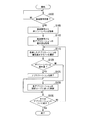
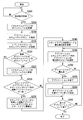
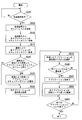
- FIG. 5 shows a processing flow of the receiving apparatus 2 according to the present embodiment.
- the broadcast receiving unit 21 of the receiving device 2 does not receive a broadcast signal (step S100: NO)
- the reception of the broadcast signal is awaited.
- the broadcast receiving unit 21 of the reception device 2 receives the broadcast signal transmitted from the broadcast transmission device 13 (step S100: YES)
- the received broadcast signal is demodulated to demodulate the application control determination unit 23 and the output control unit. 27.
- the policy level acquisition unit 231 of the application control determination unit 23 acquires the policy level of the real-time event from the demodulated broadcast signal PMT or AIT (step S105).
- the policy level acquisition unit 231 may acquire the policy level from the AIT of the broadcast signal only when the version number of the AIT is updated. If the AIT version number has not been updated, the policy level acquisition unit 231 sets the policy level acquired when updating to the current version number as the policy level acquired in step S105.
- the security policy acquisition unit 232 acquires, from the demodulated AIT of the broadcast signal, an application security policy composed of a combination of the application ID of each application and a security policy consisting of a control code and priority (step S110). Note that the security policy acquisition unit 232 may acquire the application security policy from the AIT of the broadcast signal only when the version number of the AIT is updated. If the version number of the AIT has not been updated, the security policy acquisition unit 232 sets the application security policy acquired at the time of updating to the current version number as the application security policy acquired in step S110.
- the determination unit 233 selects one application ID acquired in step S110, and acquires a priority corresponding to the selected application ID (step S115).
- the determination unit 233 compares the priority acquired in step S115 with the policy level acquired by the policy level acquisition unit 231 in step S105 (step S120).
- the application control unit 234 outputs the application ID selected in step S115 and the application end instruction to the application execution unit 25. To do.
- the application execution unit 25 ends if the application specified by the application ID received from the application control unit 234 is activated, and does not execute anything if it is not activated (step S125).
- step S120 determines in step S120 that the priority is higher than the policy level (step S120: NO)
- the application control unit 234 corresponds to the application ID selected in step S115 and the application ID.
- the control code is output to the application execution unit 25.
- the application execution unit 25 executes the received control code for the application specified by the application ID received from the application control unit 234 (step S130).
- the control code is an application activation command
- the application execution unit 25 reads the application specified by the application ID from the application storage unit 26 and executes it.
- the application execution unit 25 acquires the content provided on the network via the communication unit 22 by executing the application.
- the display control unit 271 displays a broadcast screen that displays the video data obtained from the broadcast signal demodulated by the broadcast receiving unit 21 and an application screen that displays the video data of the application output from the application execution unit 25. Display on the part 281.
- the audio control unit 272 also causes the audio output unit 282 to output broadcast audio based on audio data obtained from the broadcast signal demodulated by the broadcast receiving unit 21.
- step S125 or step S130 the determination unit 233 determines whether any of the application IDs acquired in step S110 has not yet been selected. If there is an application ID that has not yet been selected, the processing from step S115 is repeated (step S135: NO). If all application IDs have been selected, the process is terminated (step S135: YES).
- step S130 the display control unit 271 determines the layout of the application screen and the broadcast screen (overlay, how to overlap the screens, etc.) according to a predetermined arbitrary rule.
- the display control unit 271 may determine the layout of the application screen and the broadcast screen based on one or both of the policy level of the real-time event and the security policy level of the application.
- the audio control unit 272 When the application executed by the application execution unit 25 outputs audio data, the audio control unit 272 outputs the application audio based on the broadcast audio and the audio data output from the application according to a predetermined rule. A sound output method may be determined, and broadcast sound and application sound may be output to the sound output unit 282 according to the determined sound output method.
- the audio control unit 272 performs the audio output method (broadcast audio and application audio are output independently or mixed and output) based on one or both of the policy level of the real-time event and the security policy level of the application. You may decide.
- the application control unit 234 may execute the control code after the application identified by the application ID is activated, and is identified by the application ID.
- the control code may be executed only when the application is activated. For example, when the control code is a command for instructing the display method of the application screen, the application control unit 234 instructs the display control unit 271 to lay out the application screen and the broadcast screen according to the control code. Similarly, when the control code is a command for instructing a sound output method, the application control unit 234 instructs the sound control unit 272 according to the control code.
- the broadcaster can control the activation and termination of the application installed in the reception device 2 in accordance with the content being broadcast from the broadcast transmission device 13. Therefore, even if an event that is asynchronous with the program event occurs, the broadcast transmission device 13 controls the activation and termination of the application in the reception device 2 as determined by the broadcaster for the asynchronous event. Is possible.
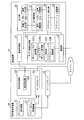
- FIG. 6 is a functional block diagram of a broadcasting system according to the second embodiment of the present invention.
- the broadcasting system of the present embodiment shown in the figure includes a broadcaster apparatus 1a instead of the broadcaster apparatus 1 of the first embodiment, and a receiving apparatus 2a instead of the receiving apparatus 2 of the first embodiment. Prepare.
- the broadcaster apparatus 1 broadcasts the policy level of the real-time event and the application security policy when the real-time event has occurred to the receiving apparatus 2 using a broadcast signal.
- the broadcaster apparatus 1a further transmits event schedule security policy data (hereinafter referred to as “event schedule security policy”) indicating a program policy for each program event to be broadcast to the receiving apparatus 2a.
- event schedule security policy indicates a policy level indicating program event level classification (hereinafter referred to as “program policy level”) and a start application that is an application to be started when the program event is broadcast.
- the receiving device 2a determines whether each application is a control target by using the program policy level of the current time indicated by the received event schedule security policy and the policy level of the real-time event, and starting and stopping the application. Perform application control. As a result, the applications installed in the receiving device 2a are simultaneously controlled as intended by the broadcaster.
- the difference from the first embodiment will be mainly described.
- the broadcasting company apparatus 1a shown in the figure is different from the broadcasting company apparatus 1 of the first embodiment shown in FIG. 1 in that an application / policy management apparatus 11a is provided instead of the application / policy management apparatus 11.
- an application / policy management apparatus 11a is provided instead of the application / policy management apparatus 11.
- a broadcast transmission device 13a is provided instead of the broadcast transmission device 13, and a composition information management device 14 is further provided.
- the application / policy management apparatus 11a is a computer server that stores a security policy of each application, and stores a program policy level and a start application for each program event.
- the organization information management device 14 is a computer server that stores the broadcast time of each program event.
- the broadcast transmission device 13a is different from the broadcast transmission device 13 of the first embodiment shown in FIG. 1 in that an event schedule security policy setting unit 134 is provided.
- the event schedule security policy setting unit 134 refers to the broadcast time of each program event stored in the composition information management device 14 and identifies a program event to be broadcast from now on.
- the event schedule security policy setting unit 134 reads the policy level and start application of the specified program event from the application / policy management apparatus 11a, and sets the event schedule security policy including the read information to the broadcast signal. Furthermore, the event schedule security policy setting unit 134 reads the broadcast time of the specified program event from the organization information management device 14 and sets it in the broadcast signal.
- the receiving device 2a shown in the figure is different from the receiving device 2 of the first embodiment shown in FIG. 1 in that an application control determination unit 23a is provided instead of the application control determination unit 23, and a storage unit 24 is further provided. Is a point.
- the storage unit 24 stores the event schedule security policy and the broadcast time of the program event.
- the application control determination unit 23a is different from the application control determination unit 23 of the first embodiment illustrated in FIG. 1 in that the application control determination unit 23a includes a policy management unit 235 and a determination unit 233a instead of the determination unit 233.
- the policy management unit 235 acquires the event schedule security policy and the broadcast time of the program event from the broadcast signal demodulated by the broadcast reception unit 21 and writes them in the storage unit 24.
- the determination unit 233a reads the program policy level of the program event currently being broadcast from the storage unit 24 and compares it with the policy level of the real-time event acquired by the policy level acquisition unit 231 to determine the current policy level.
- the determination unit 233a includes a start application stored in the storage unit 24 corresponding to a program event currently being broadcast, an application to be activated set in the application security policy acquired by the security policy acquisition unit 232, and Compare and update the start app.
- the determination unit 233a determines an application to be activated according to the current policy level and the priority of the start application, and instructs the application control unit 234.
- the policy level of the real-time event and the application security policy are described in the broadcast signal as in the first embodiment.
- the following describes the broadcast time of a program event on a broadcast signal and description of an event schedule security policy.
- the broadcast signal defined by the ARIB standard includes SI (Service Information).
- SI Service Information
- EPG Electronic Program Guide
- EIT Event Information Table
- the broadcast transmission device 13a sets the broadcast time of each program event to EIT as usual according to the provisions of the ARIB standard.
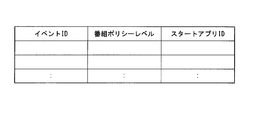
- FIG. 7 shows a data configuration example of the event schedule security policy.
- the event schedule security policy is data in which a program ID that identifies a program event, a program policy level, and a start application ID that is an application ID of the start application are associated with each other. Since it should be activated at the start of the program, it is assumed that the priority of the start application is the same as or higher than the program policy level. However, in this embodiment, the priority of the start application is the same as the program policy level. To do.
- FIG. 8 is a diagram showing a description example of the program policy level in the broadcast signal.
- the event schedule security policy is set in the EIT constituting the SI.
- the EIT includes a descriptor loop corresponding to each program event.
- the content descriptor (content_descriptor) user_nibble described in this loop is used.
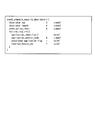
- the event schedule security policy setting unit 134 of the broadcast transmission device 13a sets a program policy level for this user_nibble.
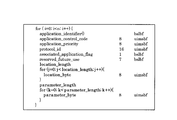
- FIG. 9 is a diagram showing a description example of the start application ID in the broadcast signal.
- the data content descriptor is also included in the corresponding descriptor loop of the program event in the EIT.
- the event schedule security policy setting unit 134 of the broadcast transmission device 13a describes the arib_j_info () structure defined in ARIB STD-B23 in the additional information of the data content descriptor corresponding to the program event, and the arib_j_info () structure Set the start application ID in application_identifier.
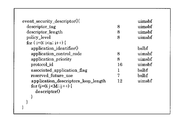
- FIG. 10 is a diagram illustrating another description example of an event schedule security policy for a broadcast signal.
- a new event schedule security descriptor is defined and described in the descriptor area in the EIT descriptor loop.
- FIG. 10 shows the structure of a newly defined event schedule security descriptor.
- the event schedule security policy setting unit 134 of the broadcast transmission apparatus 13a adds the event schedule security descriptor to the descriptor area corresponding to the event ID of the program event in the EIT, sets the program policy level in event_policy_level, and starts in application_identifier Set the application ID, and set the control code indicating activation in application_control_code.
- the event schedule security descriptor shown in the figure includes associated_application_flag which is a description area of a program related flag.
- the program related flag is information indicating whether an application is related to a program event.
- the application control unit 234 of the reception device 2a may use the setting value of the program related flag to determine the layout of the broadcast screen and the application screen and the output method of the broadcast sound and the application sound.
- the receiving device 2a can obtain the current policy level from the PMT of the received broadcast signal, and determine whether or not the description content of the AIT is updated based on the version number of the AIT set in the PMT. Can do. Further, the receiving device 2a receives, from the received EIT, a policy level of a future program event and an application ID of an application that should be activated when the program event is broadcast. Furthermore, the priorities and control codes of all applications at the present time can be obtained from the AIT specified by the PMT.
- the application / policy management apparatus 11a stores the association between the event ID of the program event, the program policy level, and the start application ID, and also stores the association between the application ID and the current security policy.
- the composition information management device 14 stores composition information.
- the organization information includes the event ID of the program event and the broadcast time. The broadcaster appropriately updates the information stored in the application / policy management device 11a and the composition information management device 14 as necessary.
- the event schedule security policy setting unit 134 of the broadcast transmission device 13a refers to the broadcast time of the composition information stored in the composition information management device 14, identifies a predetermined number of program events to be broadcast from now on, and identifies each identified program Read the event ID and broadcast time of the event.
- the event schedule security policy setting unit 134 reads out the policy level and start application ID corresponding to the read event ID from the application / policy management apparatus 11a, the event ID of each read program event, and the policy level corresponding to the event ID And an event schedule security policy including the start application ID is set in the broadcast signal, and the broadcast time of the program event is set in the broadcast signal.
- the policy level setting device 12 stores the policy level of the real-time event, and the broadcaster rewrites this policy level as necessary.
- the policy level setting unit 132 of the broadcast transmission device 13a reads the policy level of the real-time event stored in the policy level setting device 12, and sets the read policy level to the broadcast signal.
- the event schedule security policy setting unit 134 sets the event schedule security policy and the broadcast time of the program event
- the application security policy setting unit 131 sets the application security policy
- the policy level setting unit 132 sets the policy level. Transmits a broadcast signal for which is set.
- FIG. 11 shows a processing flow of the receiving apparatus 2a according to the present embodiment.
- the receiving device 2a performs the same processing as steps S100 to S110 of the first embodiment shown in FIG. 5 (steps S200 to S210). That is, when the broadcast signal is not received, the broadcast reception unit 21 waits for reception of the broadcast signal. When the broadcast signal is received, the broadcast reception unit 21 demodulates the received broadcast signal to the application control determination unit 23a and the output control unit 27. Output.
- the policy level acquisition unit 231 of the application control determination unit 23a acquires the policy level of the real-time event from the demodulated broadcast signal PMT or AIT, and the security policy acquisition unit 232 acquires the application security policy from the demodulated broadcast signal AIT. To get.
- the policy management unit 235 acquires the event schedule security policy, the event ID of each program event, and the broadcast time from the EIT of the demodulated broadcast signal, and writes them in the storage unit 24 (step S215).
- the policy management unit 235 refers to the broadcast time stored in the storage unit 24, identifies the program event currently being broadcast, and reads the program policy level corresponding to the event ID of the identified program event.
- step S220 determines that the read program policy level is equal to or higher than the policy level of the real-time event acquired by the policy level acquisition unit 231 in step S205 (step S220: YES).
- the policy management unit 235 sets the program policy level to the current policy. The level is determined, and the process of step S230 is executed.
- the policy management unit 235 determines that the program policy level is lower than the policy level of the real-time event (step S220: NO)
- the policy management unit 235 determines that the policy level of the real-time event is the current policy level (step S225). The process of S230 is executed.
- the policy management unit 235 reads from the storage unit 24 the start application ID corresponding to the event ID of the currently broadcast program event identified in step S220. Furthermore, the policy management unit 235 acquires an application ID corresponding to the control code indicating “startup” from the application security policy acquired by the security policy acquisition unit 232 in step S210, and determines whether the application ID matches the read start application ID. Judgment is made (step S230). If it is determined that they do not match, the policy management unit 235 sets the start application ID stored in the storage unit 24 corresponding to the event ID of the program event currently being broadcast to the control code for which “activation” is set. The corresponding application ID is rewritten (step S235).
- step S230 When it is determined in step S230 that the policy management unit 235 does not match (step S230: NO), or after the processing in step S235, the determination unit 233a determines the start application ID corresponding to the event ID of the program event currently being broadcast. Is acquired from the storage unit 24, and the control code and priority corresponding to the read start application ID are acquired from the application security policy (step S240).
- the determination unit 233a selects one start application ID acquired in step S240, and acquires a priority corresponding to the selected start application ID (step S245).
- the determination unit 233a compares the priority acquired in step S245 with the current policy level (step S250).
- the application control unit 234 indicates the start application ID selected in step S245 and the application end instruction to the application execution unit 25. Output to.
- the application execution unit 25 ends if the application specified by the start application ID received from the application control unit 234 is activated, and does not execute anything if it is not activated (step S255).
- step S250 determines the priority is equal to or higher than the current policy level (step S250: NO)
- the application control unit 234 determines the start application ID selected in step S245 and the start application A control code corresponding to the application ID is output to the application execution unit 25.
- the application execution unit 25 executes the received control code for the application specified by the start application ID received from the application control unit 234 (step S260).
- the control code is an application activation command
- the application execution unit 25 reads the application specified by the received start application ID from the application storage unit 26 and executes it.
- the display control unit 271 and the audio control unit 272 operate in the same manner as in the first embodiment.
- step S255 or step S260 the determination unit 233a determines whether any start application ID acquired in step S245 has not yet been selected. If there is a start application ID that has not yet been selected, the processing from step S245 is repeated (step S265: NO). If all start application IDs have been selected, the process ends (step S265: YES).
- the display control unit 271 displays the broadcast screen and the application screen based on the program-related flag corresponding to the application ID. Determine the layout. For example, when the program-related flag is ON, the display control unit 271 determines a layout in which the application screen is superimposed on the broadcast screen. When the program-related flag is OFF, the display control unit 271 displays the application screen on the outside of the broadcast screen. Alternatively, a layout that does not display the application screen is determined.
- the reception device 2a receives the application security policy in real time while managing the event policy and the start application for each program event received in advance according to the broadcast schedule, and always updates the policy of the managed program event. Update to information.
- the receiving apparatus 2a performs control determination based on the policy level received in real time and the program event policy managed internally, and controls the application at that time.
- the application security policy is real-time information and is repeatedly transmitted with a certain frequency. Therefore, there is almost no difference from the start of a new program event, and an application security policy corresponding to the program event is transmitted.
- the receiving device 2a activates the start application according to the application security policy received immediately after the program is started. Therefore, the start application is started almost simultaneously with the start of the program.
- the broadcast provider apparatus 1a of the broadcast provider broadcasts the policy level of the real-time event, the program policy level of each scheduled program event, and the security policy of each application to the receiving apparatus 2a.
- the application installed in the receiving device 2a is activated at the start of the program and an asynchronous event occurs, the application of the application in the receiving device 2a is determined as determined by the broadcaster for the asynchronous event. It is possible to control activation and termination.
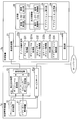
- FIG. 12 is a functional block diagram of a broadcasting system according to the third embodiment of the present invention.
- the broadcasting system of this embodiment shown in the figure includes a broadcasting company apparatus 1b instead of the broadcasting company apparatus 1 of the first embodiment, and a receiving apparatus 2b instead of the receiving apparatus 2 of the first embodiment. Prepare.
- the broadcaster apparatus 1 of the first embodiment and the broadcaster apparatus 1a of the second embodiment broadcast application control codes and priorities in real time.
- the broadcaster apparatus 1b broadcasts in advance the control code and priority of the application corresponding to the program event.
- the difference from the first embodiment will be mainly described.
- the broadcasting company apparatus 1b shown in the figure is different from the broadcasting company apparatus 1 of the first embodiment shown in FIG. 1 in that an application / policy management apparatus 11b is provided instead of the application / policy management apparatus 11. It is the point provided with the broadcast transmission apparatus 13b instead of the broadcast transmission apparatus 13, and the composition information management apparatus 14 of 2nd Embodiment shown in FIG.
- the application / policy management apparatus 11b is a computer server that stores an application ID of an application to be controlled, a control code of the application, and a priority corresponding to each program event.
- the broadcast transmission device 13b differs from the broadcast transmission device 13 of the first embodiment shown in FIG. 1 in that an event security policy setting unit 135 is provided instead of the application security policy setting unit 131.
- the event security policy setting unit 135 refers to the broadcast time of each program event stored in the composition information management device 14 and identifies a program event to be broadcast from now on.
- the event security policy setting unit 135 reads the application ID corresponding to the specified program event, the control code of the application and the priority program event from the application / policy management apparatus 11b, and event security including the read information. Set policy to broadcast signal. Further, the event security policy setting unit 135 reads the broadcast time of the specified program event from the organization information management device 14 and sets it in the broadcast signal.
- the receiving device 2b shown in the figure is different from the receiving device 2 of the first embodiment shown in FIG. 1 in that an application control determining unit 23b is provided instead of the application control determining unit 23, and a storage unit 24b is provided. Furthermore, it is a point provided.
- the storage unit 24b stores the event security policy and the broadcast time of the program event.
- the application control determination unit 23b is different from the application control determination unit 23 of the first embodiment shown in FIG. 1 in that an event security policy acquisition unit 236 is provided instead of the security policy acquisition unit 232, and the determination unit 233 is replaced.
- the determination unit 233b is provided.
- the event security policy acquisition unit 236 acquires the broadcast time and event security policy corresponding to the program event from the demodulated broadcast signal, and writes them in the storage unit 24b.
- the determination unit 233b reads the priority of the application corresponding to the program event currently being broadcast from the event security policy stored in the storage unit 24b, and based on the policy level of the real-time event and the priority of the read
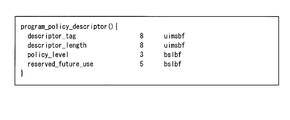
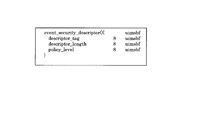
- FIG. 13 is a diagram showing a program policy descriptor for setting a policy level of a real-time event.
- the program policy descriptor includes information indicating a policy level tag (description_tag), a policy level description length (descriptor_length), and a policy level (policy_level). .
- This program policy descriptor is described in the first descriptor area in the PMT corresponding to the program event.
- the policy level setting unit 132 of the receiving device 2b sets the policy level of the real-time event in this program policy descriptor.
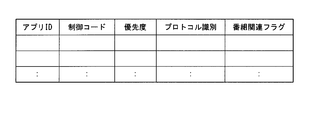
- FIG. 14 is a diagram showing a data structure of the event security policy.
- the event security policy includes an association with an application ID, a control code, a priority, a protocol identification, and a program related flag.
- the protocol identification indicates whether each application is transmitted by broadcasting or communication.
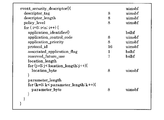
- FIG. 15 is a diagram showing an event security descriptor for setting an event security policy.
- the event security descriptor (event_security_descriptor) includes a tag (description_tag) indicating that the policy level of the program event is described, and a description length (descriptor_length) of the policy level.
- the event security descriptor includes a set of an application ID (application_identifier), a control code (application_control_code), a priority (application_priority), and a protocol identification (protocol_id).
- This event security descriptor is described in a descriptor area in the EIT corresponding to the program event.
- a program policy level (policy_level) of a program event can be set.
- the event security policy setting unit 135 of the receiving device 2b sets the event security policy in this event security descriptor.
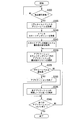
- FIG. 16 shows a processing flow of the receiving device 2b according to the present embodiment.
- the application / policy management apparatus 11b stores an event ID of a program event, an application ID of a control target application, a control code, a priority, a protocol identification, and a program related flag.
- the composition information management device 14 stores composition information. The broadcaster appropriately updates the information stored in the application / policy management device 11b and the composition information management device 14 as necessary.
- the event security policy setting unit 135 of the broadcast transmission device 13b refers to the broadcast time of the composition information stored in the composition information management device 14, identifies a predetermined number of program events to be broadcasted from now on, and identifies each identified program event The event ID and broadcast time are read out.
- the event security policy setting unit 135 reads the application ID, control code, priority, protocol identification, and program-related flag corresponding to the read event ID from the application / policy management apparatus 11b.
- the event security policy setting unit 135 sets an event security policy composed of the read information to a broadcast signal, and sets a broadcast time of a program event to the broadcast signal.
- the policy level setting device 12 stores the policy level of the real-time event, and the broadcaster appropriately stores the information stored in the policy level setting device 12 as necessary. rewrite.
- the policy level setting unit 132 of the broadcast transmission device 13b reads the policy level of the real-time event stored in the policy level setting device 12, and sets the read policy level to the broadcast signal.
- the broadcast transmission unit 133 transmits a broadcast signal in which the event security policy and the broadcast time are set by the event security policy setting unit 135 and the policy level is set by the policy level setting unit 132.
- the broadcast reception unit 21 of the reception device 2b receives the broadcast signal broadcast from the broadcast transmission device 13b, demodulates the received broadcast signal, and outputs it to the application control determination unit 23b.
- the policy level acquisition unit 231 of the application control determination unit 23b acquires the policy level of the real-time event from the demodulated broadcast signal PMT (step S305).
- the event security policy acquisition unit 236 acquires the event ID and broadcast time of each program event and the event security policy corresponding to the event ID from the EIT of the demodulated broadcast signal, and writes them in the storage unit 24 (step S310). .
- the determination unit 233b refers to the broadcast time stored in the storage unit 24, identifies the program event currently being broadcast, and sets the application ID, control code, and priority corresponding to the event ID of the identified program event as application security. Obtained from the policy (step S315).
- the application control determination unit 23b performs the same processing as Step S115 to Step S135 shown in FIG. 5 (Step S320 to Step S340). However, the determination unit 233 in the first embodiment executes the process of the determination unit 233b.
- the application ID, control code, and priority acquired in step S110 are the application ID, control code, and priority acquired by the determination unit 233b in step S315.
- the receiving device 2b acquires the current policy level from the PMT of the received broadcast signal, and acquires the application ID, control code, priority, etc. for each program event from the EIT of the broadcast signal.
- the receiving device 2b compares the priority of each application acquired from the EIT and the policy level received from the PMT. For example, for applications whose priority is higher than the policy level, control is performed according to the control code, and priority is given.
- the application is terminated. When the application is not activated, nothing is done.
- the display control unit 271 may determine the layout of the broadcast screen and the application screen based on the protocol identification set in the event security descriptor corresponding to the application ID. For example, when the protocol identification indicates transmission by broadcast, the display control unit 271 determines a layout in which the application screen is superimposed on the broadcast screen, and when it indicates transmission by communication, the display control unit 271 displays the application screen on the outside of the broadcast screen. To decide.
- the broadcast transmission device 13b may broadcast the program policy level.
- the receiving device 2b may determine the larger one as the current policy level and compare the priority of each application. Specific differences from the processing shown in FIG. 16 are shown below.
- the application policy management apparatus 11b further stores the program policy level of each program event.
- the event security policy setting unit 135 of the broadcast transmission device 13b further reads the program policy level corresponding to the event ID of the program event to be broadcast from the application / policy management device 11b, and sets it to the broadcast signal.
- step S310 the determination unit 233b further reads the program policy level corresponding to the event ID of the program event and writes it in the storage unit 24.
- the determination unit 233b refers to the broadcast time stored in the storage unit 24, identifies the program event currently being broadcast, and sets the program policy level corresponding to the event ID of the identified program event. read out. If the determination unit 233b determines that the read program policy level is equal to or higher than the policy level of the real-time event acquired by the policy level acquisition unit 231 in step S305, the determination unit 233b sets the program policy level as the current policy level, and the process of step S315 Execute.
- the determination unit 233b sets the policy level of the real-time event as the current policy level and executes the process of step S315.
- the determination unit 233b compares the current policy level with the priority of the application.
- the broadcaster apparatus 1b broadcasts the event security policy used as a reference when determining the policy level of the real-time event and the application to be controlled, so that the broadcaster apparatus 1b in the receiver 2b. Applications specified by can be controlled all at once.
- FIG. 17 is a functional block diagram of a broadcasting system according to the fourth embodiment of the present invention.
- the broadcast system of the present embodiment includes a broadcaster apparatus 1c instead of the broadcaster apparatus 1 of the first embodiment, and receives instead of the receiving apparatus 2 of the first embodiment.
- a device 2c is provided.
- the broadcasting system of this embodiment includes a service server 16 owned by an application provider.
- the application provider is a provider other than the broadcast provider, and provides an application implemented in the receiving device 2c.
- the broadcaster apparatus 1c, the receiving apparatus 2c, and the service server 16 (transmission unit) are connected to a network such as the Internet.
- the application security policy transmitted by broadcasting in the first embodiment is transmitted by communication.
- the difference from the first embodiment will be mainly described.
- the broadcast provider apparatus 1c shown in the figure is different from the broadcast provider apparatus 1 of the first embodiment shown in FIG. 1 in that a broadcast transmission apparatus 13c is provided instead of the broadcast transmission apparatus 13, and the service server 15 ( A transmission unit).
- the broadcast transmission device 13c is different from the broadcast transmission device 13 of the first embodiment in that the application security policy setting unit 131 is not provided.
- the service server 15 is a computer server that manages an application provided by a broadcaster, and reads the security policy of the managed application from the application / policy management apparatus 11 and stores it.
- the service server 15 transmits an application security policy including a security policy of each stored application to the receiving device 2c by communication.
- the service server 16 is a computer server that manages an application provided by the application provider, and reads a security policy corresponding to the managed application from the application / policy management apparatus 11 and stores it.
- the service server 16 transmits an application security policy including the security policy of each stored application to the receiving device 2c by communication.
- the receiving device 2c shown in the figure is different from the receiving device 2 shown in the first embodiment in that an application control determining unit 23c is provided instead of the application control determining unit 23.
- the application control determination unit 23 c is different from the application control determination unit 23 of the first embodiment in that a security policy acquisition unit 232 c is provided instead of the security policy acquisition unit 232.
- the security policy acquisition unit 232 c acquires an application security policy from the service server 15 and the service server 16.
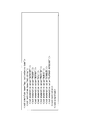
- FIGS. 18A and 18B are diagrams showing a description example of the application security policy transmitted from the service server 15 and the service server 16.
- the application security policy is described using, for example, XML (extensible markup language) encoding defined in ETSI TS 102 809.
- FIG. 18A the control code of each application is described in application_control_code.
- FIG. 18B the relative priority of the application is described in the priority in the application descriptor (ApplicationDescriptor).
- the policy level setting device 12 stores the policy level of the real-time event, and the broadcaster rewrites the information stored in the policy level setting device 12 as necessary.
- the policy level setting unit 132 of the broadcast transmission device 13c reads the policy level of the real-time event stored in the policy level setting device 12, and sets the read policy level to the broadcast signal.
- the broadcast sending unit 133 transmits a broadcast signal whose policy level is set by the policy level setting unit 132.
- the application / policy management apparatus 11 stores the association between the application ID and the security policy, and the broadcaster stores information stored in the application / policy management apparatus 11. Is rewritten as necessary.
- the service server 15 reads out the security policy corresponding to the application ID of the application provided by the broadcaster from the application / policy management apparatus 11 and stores it.
- the service server 16 reads out the security policy corresponding to the application ID of the application provided by the application provider from the application / policy management apparatus 11 and stores it.
- the processing flow of the receiving device 2c in this embodiment is the same as the processing flow of the receiving device 2 in the first embodiment shown in FIG.
- the security policy acquisition unit 232c of the reception device 2c accesses the service server 15 and the service server 16 via the communication unit 22, and an application including a set of application ID, control code, and priority of each application. Read security policy.
- the receiving device 2c acquires the current policy level from the PMT of the received broadcast signal, and from the application security policy received from the service server 15 of the broadcast provider and the service server 16 of the application provider, all Get the current priority and control code of the application. Then, the receiving device 2c performs control according to the control code for an application whose application priority is equal to or higher than the policy level, and terminates an application whose priority is lower than the policy level if the application has been activated. If it is not activated, nothing is done.
- the broadcaster apparatus 1c uses the real-time event policy level and the application security policy that each service server provides by communication, so that the broadcaster intends to use the receiving apparatus 2c. It is possible to control the activation and termination of the application.
- FIG. 19 is a functional block diagram of a broadcasting system according to the fifth embodiment of the present invention.
- the broadcasting system of this embodiment shown in the figure includes a broadcasting company apparatus 1d instead of the broadcasting company apparatus 1c of the fourth embodiment, and a receiving apparatus 2d instead of the receiving apparatus 2c of the fourth embodiment. Prepare.
- This embodiment is a combination of the first embodiment and the fourth embodiment.
- the application security policy is transmitted from the service server 15 and the service server 16 by communication, it is not suitable for updating information in real time. Therefore, in the present embodiment, as in the first embodiment, the application security policy is also transmitted from the broadcast transmission device 13 by broadcasting.
- the difference from the fourth embodiment will be mainly described.
- the broadcaster apparatus 1d shown in the figure is different from the broadcaster apparatus 1c of the fourth embodiment shown in FIG. 17 in that the broadcasting of the first embodiment shown in FIG. 1 is used instead of the broadcast sending apparatus 13c. It is a point provided with the sending device 13.
- the receiving device 2d shown in the figure is different from the receiving device 2c of the fourth embodiment shown in FIG. 17 in that an application control determining unit 23d is provided instead of the application control determining unit 23c.
- the application control determination unit 23d is different from the application control determination unit 23c of the fourth embodiment in that the application control determination unit 23d includes the security policy acquisition unit 232 of the first embodiment shown in FIG. It is a point provided with 233d.
- the determination unit 233d compares the application security policy received from the broadcast signal by the security policy acquisition unit 232 with the application security policy received by the security policy acquisition unit 232c through communication. Select a security policy. The determination unit 233d determines an application to be controlled based on the policy level of the real-time event acquired by the policy level acquisition unit 231 and the selected application security policy.
- the application security policy setting unit 131 of the broadcast transmission apparatus 13 sets the application ID and security policy read from the application / policy management apparatus 11 in the broadcast signal.
- the policy level setting unit 132 sets the policy level of the real-time event read from the policy level setting device 12 to the broadcast signal.
- the broadcast transmission unit 133 transmits a broadcast signal in which the application security policy and the policy level of the real-time event are set.
- the service server 15 reads the security policy corresponding to the application ID of the application provided by the broadcaster from the broadcast transmission device 13 and stores it.
- the service server 16 reads the security policy corresponding to the application ID of the application provided by the application provider from the application / policy management apparatus 11 and stores it.
- FIG. 20 is a diagram illustrating a processing flow of the receiving device 2d in the present embodiment.
- the receiving device 2d performs the same processing as steps S100 to S110 of the first embodiment shown in FIG. 5 (steps S500 to S510). That is, when the broadcast signal is not received, the broadcast receiver 21 waits for reception of the broadcast signal. When the broadcast signal is received, the broadcast receiver 21 demodulates the received broadcast signal to the application control determination unit 23d and the output control unit 27. Output.
- the policy level acquisition unit 231 of the application control determination unit 23d acquires the policy level of the real-time event from the demodulated broadcast signal, and the security policy acquisition unit 232 determines the application ID, control code, and code of each application from the demodulated broadcast signal. Get an application security policy consisting of a set of priorities.
- the security policy acquisition unit 232c of the receiving device 2d accesses the service server 15 and the service server 16 via the communication unit 22, and obtains an application security policy including a set of application ID, control code, and priority of each application. Read (step S515).
- the determination unit 233d determines the application security policy acquired by the security policy acquisition unit 232c (hereinafter referred to as “application security policy received through communication”) and the application security policy (step S510) acquired by the security policy acquisition unit 232 ( Hereinafter, it is determined whether or not “application security policy received by broadcasting” is the same (step S520). If it is determined that they are the same (step S520: YES), the determination unit 233d sets the application security policy received through communication as a processing target.
- the determination unit 233d sets the application security policy received by broadcasting as a processing target (step S525).
- the determination unit 233d acquires the application ID, the control code, and the priority from the application security policy to be processed (Step S530).
- the application control determination unit 23d executes the same processing as that in steps S115 to S135 shown in FIG. 5 for the application ID, control code, and priority acquired in step S530 (steps S535 to S555). However, the determination unit 233d executes the processing of the determination unit 233 in the first embodiment.
- the application ID, priority, and control code acquired in step S110 are the application ID, control code, and priority acquired by the determination unit 233d from the application security policy to be processed in step S530.
- the application security policy transmitted from the service server by communication, the application security policy and policy level broadcast from the broadcaster device 1d, and the application at that time Control if the security policy for each application is different between the application security policy received by communication and the application security policy received by broadcasting, the receiving device 2d gives priority to the application security policy received in real time by broadcasting. Then, the receiving device 2d compares the policy level of the real-time event with the priority of each application, and performs control determination.
- FIG. 21 is a functional block diagram of a broadcasting system according to the sixth embodiment of the present invention.
- the broadcasting system of the present embodiment shown in the figure includes a broadcaster apparatus 1e instead of the broadcaster apparatus 1 of the first embodiment, and a receiving apparatus 2e instead of the receiving apparatus 2 of the first embodiment.
- the policy level transmitted by broadcasting in the first embodiment is transmitted by communication.
- the difference from the first embodiment will be mainly described.
- the broadcast provider apparatus 1e shown in the figure is different from the broadcast provider apparatus 1 of the first embodiment shown in FIG. 1 in that a broadcast transmission apparatus 13e is provided instead of the broadcast transmission apparatus 13, and a service server. 15e (transmission unit).
- the broadcast transmission device 13e is different from the broadcast transmission device 13 of the first embodiment in that the policy level setting unit 132 is not provided.
- the service server 15e reads the policy level of the real-time event from the policy level setting device 12, and transmits it to the receiving device 2e by communication.
- the service server 15e performs policy level transmission to the receiving device 2e in real time using, for example, WebSocket technology.
- the receiving device 2e shown in the figure is different from the receiving device 2 of the first embodiment shown in FIG. 1 in that an application control determining unit 23e is provided instead of the application control determining unit 23.
- the application control determination unit 23e is different from the application control determination unit 23 of the first embodiment in that a policy level acquisition unit 231e is provided instead of the policy level acquisition unit 231.
- the policy level acquisition unit 231e reads the policy level of the real-time event from the service server 15e.
- the application security policy setting unit 131 of the broadcast transmission device 13e reads the application ID and the security policy stored in the application / policy management device 11 and sets them in the broadcast signal.
- the broadcast transmission unit 133 transmits a broadcast signal in which the application security policy is set by the application security policy setting unit 131.
- the service server 15e reads out and stores the policy level stored in the policy level setting device 12.
- the processing flow of the receiving device 2e in this embodiment is the same as the processing flow of the receiving device 2 in the first embodiment shown in FIG. However, in step S105, the policy level acquisition unit 231e of the reception device 2e receives the security policy for the real-time event from the service server 15e accessed via the communication unit 22.
- FIG. 22 is a functional block diagram of a broadcasting system according to the seventh embodiment of the present invention.
- the broadcasting system of the present embodiment shown in the figure includes a broadcaster apparatus 1f instead of the broadcaster apparatus 1 of the first embodiment, and a receiving apparatus 2f instead of the receiving apparatus 2 of the first embodiment.
- the broadcasting system of this embodiment includes the service server 16 of the fourth embodiment.
- the policy level and the application security policy that were transmitted by broadcasting in the first embodiment are transmitted by communication.
- the difference from the first embodiment will be mainly described.
- the broadcast provider apparatus 1f shown in the figure differs from the broadcast provider apparatus 1 of the first embodiment shown in FIG. 1 in that a broadcast transmission apparatus 13f is provided instead of the broadcast transmission apparatus 13, and a service server. 15 f (transmission unit) is further provided.
- the broadcast transmission device 13f is different from the broadcast transmission device 13 of the first embodiment in that the application security policy setting unit 131 and the policy level setting unit 132 are not provided.
- the service server 15f manages an application provided by the broadcaster, reads an application security policy corresponding to the managed application from the application / policy management apparatus 11, and transmits the application security policy to the receiving apparatus 2f by communication.
- the service server 15f reads the policy level of the real-time event from the policy level setting device 12, and transmits it to the receiving device 2f by communication.
- the service server 15f transmits data in real time to the receiving device 2f using, for example, WebSocket technology.
- the receiving device 2 f shown in the figure is different from the receiving device 2 of the first embodiment shown in FIG. 1 in that an application control determining unit 23 f is provided instead of the application control determining unit 23.
- the application control determination unit 23f is different from the application control determination unit 23 of the first embodiment in that the application control determination unit 23f includes a policy level acquisition unit 231e of the sixth embodiment instead of the policy level acquisition unit 231, and a security policy. It is a point provided with the security policy acquisition part 232c of 4th Embodiment instead of the acquisition part 232.
- the service server 15f reads the security policy corresponding to the application ID of the application provided by the broadcaster from the broadcast transmission device 13 and stores it. Further, the service server 15f reads and stores the policy level of the real-time event stored in the policy level setting device 12. On the other hand, the service server 16 reads the security policy corresponding to the application ID of the application provided by the application provider from the application / policy management apparatus 11 and stores it.
- the processing flow of the receiving device 2f in the present embodiment is the same as the processing flow of the receiving device 2 in the first embodiment shown in FIG.
- the policy level acquisition unit 231e of the reception device 2f receives the security policy of the real-time event from the service server 15f accessed via the communication unit 22.
- the security policy acquisition unit 232c of the reception device 2f accesses the service server 15f and the service server 16 via the communication unit 22, and an application security policy including a set of application ID, control code, and priority of each application. Is read.
- the policy level of the real-time event and the security policy are transmitted via communication by the service server. Therefore, the broadcaster can control activation and termination of the application installed in the receiving device without making any change to the broadcaster's broadcast transmission device.
- FIG. 23 is a functional block diagram used in the broadcasting system according to the eighth embodiment of the present invention.
- the same parts as those in the broadcast systems of the other embodiments described above are denoted by the same reference numerals, and the description thereof is omitted.
- the broadcast system of the present embodiment includes a broadcaster apparatus 1g instead of the broadcaster apparatus 1 of the first embodiment shown in FIG. 1, and receives the receiver instead of the receiving apparatus 2 of the first embodiment.
- a device 2g is provided.
- whether the policy level of the real-time event and the application security policy are transmitted by broadcast or communication is appropriately changed.
- the difference from the first embodiment will be mainly described.
- the broadcaster apparatus 1g shown in the figure is different from the broadcaster apparatus 1 of the first embodiment shown in FIG. 1 in that it further includes a service server 15g (transmission unit, data communication unit).
- the service server 15g reads the policy level of the real-time event from the policy level setting device 12, and transmits it to the receiving device 2g by communication.
- the service server 15g reads the application security policy from the application / policy management device 11 and transmits it to the receiving device 2g by communication.
- the receiving device 2g shown in the figure is different from the receiving device 2 of the first embodiment shown in FIG. 1 in that an application control determining unit 23g is provided instead of the application control determining unit 23.
- the application control determination unit 23g is different from the application control determination unit 23 of the first embodiment in that it includes a policy level acquisition unit 231e and a security policy acquisition unit 232c, and includes a determination unit 233g instead of the determination unit 233. It is.
- the broadcast transmission device 13 determines whether to transmit the policy level of the real-time event by broadcasting and whether to transmit the application security policy by broadcasting according to a predetermined condition or an instruction input from the broadcaster. Judge whether or not.
- the application security policy setting unit 131 of the broadcast transmission device 13 determines that the application security policy is transmitted by broadcasting
- the application security policy read from the application / policy management device 11 is used as a broadcast signal, as in the first embodiment.
- the policy level setting unit 132 determines that the policy level of the real-time event is to be transmitted by broadcasting
- the policy level of the real-time event read from the policy level setting device 12 is set in the broadcast signal as in the first embodiment. To do.
- the service server 15g determines whether or not to transmit the policy level of the real-time event by communication and whether to transmit the application security policy by communication according to a predetermined condition or an instruction input from the broadcaster. To do. If the service server 15g determines that the application security policy is transmitted by communication, the service server 15g transmits the application security policy read from the application / policy management device 11 to the receiving device 2g via the network, as in the fourth embodiment. To do. If the service server 15g determines that the policy level of the real-time event is transmitted by communication, the service server 15g sends the policy level of the real-time event read from the policy level setting device 12 via the network, as in the sixth embodiment. It transmits to the receiver 2g.
- the processing flow of the receiving device 2g in the present embodiment is the same as the processing flow of the receiving device 2 in the first embodiment shown in FIG.
- the policy level acquisition unit 231 of the reception device 2g acquires the policy level from the demodulated broadcast signal and is transmitted by communication.
- the level acquisition unit 231e reads the policy level of the real-time event from the service server 15g.
- the security policy acquisition unit 232 of the reception device 2g acquires the application security policy from the demodulated broadcast signal and is transmitted by communication.
- the acquisition unit 232c acquires the application security policy from the service server 15g.
- the determination unit 233g of the reception device 2g uses the policy level acquired by the policy level acquisition unit 231 or the policy level acquisition unit 231e and the application security policy acquired by the security policy acquisition unit 232 or the security policy acquisition unit 232c, Processing similar to that of the determination unit 233 of the embodiment is performed.
- the service server 16 of the application provider may be provided as in the fifth embodiment.
- the broadcaster service server 15g reads the security policy corresponding to the application ID of the application provided by the broadcaster from the broadcast transmitter 13 and transmits it to the receiver 2g via the network.
- the security policy corresponding to the application ID of the application provided by the provider is read from the application / policy management apparatus 11 and transmitted to the receiving apparatus 2g via the network.
- the receiving device 2g performs the same processing as in the fifth embodiment. Further, when the policy level of the real-time event is transmitted by both broadcasting and communication, the receiving device 2g may prioritize the policy level transmitted by broadcasting.
- the policy level indicating the level of the application for which control is permitted and the security policy level indicating the level of the application are changed to the receiving apparatus by changing a combination of transmission paths such as broadcasting and communication.
- An embodiment for transmitting has been described.
- the receiving device selects an application to be controlled in accordance with the policy level and security policy received from the broadcast provider device by broadcasting or communication, and executes the instructed control.
- the application installed in the receiving device can be controlled arbitrarily, including status control such as activation and termination, as the broadcaster intends. Is possible. Therefore, the broadcaster can define the application security policy and set it in the application / policy management device to control the application according to any level determined by the broadcaster, including lifecycle control of each application. It becomes possible.
- the application control information such as the policy level of the real-time event and the security policy level of each application
- the real-time event Even when the policy level is changed, there is little delay until the application control is started.
- the order of interpretation of the PMT is early, and then AIT and EIT specified by the PMT are interpreted. Therefore, as in the first embodiment, by setting the policy level of the real-time event in the PMT, the receiving device can detect a change in the policy level earlier.
- adding information to the AIT or EIT has less influence on the standard as in the second and third embodiments.
- the policy level of the real-time event is transmitted from the broadcaster apparatus or the service server.
- the association between the real-time event type and the policy data is stored in the receiving apparatus, and the policy level is acquired.
- the unit may read out policy data corresponding to the type of real-time event acquired from the broadcast signal.
- the type of real-time event the event ID of the asynchronous event is used during the generation of the asynchronous event, and the event ID of the program event or the genre of the program event is used when the asynchronous event has not occurred.
- the type of the asynchronous event indicate a change in the content of the broadcast signal in accordance with the start or end of the asynchronous event.
- an emergency warning broadcast activation flag of TMCC Transmission and Multiplexing Configuration and Control
- TMCC Transmission and Multiplexing Configuration and Control
- the emergency warning broadcast activation flag is It changes from “1” to “0”.
- binary data corresponding to the text of “Earthquake Early Warning” appears in data_group_data_byte in the data group of caption data transmitted by an independent PES (Packetized Elementary Stream) method, and when it ends, This binary data is lost.
- the genre of the program event can be obtained from content_nibble_level_1 and content_nibble_level_2 defined in the content descriptor of EIT.
- FIG. 24 is a diagram illustrating another description example of the event security descriptor of the broadcast signal.
- the location information of the application and the parameters at the time of starting the application are described.
- a character string “location_byte” is a character string indicating the location information of the application.
- the application location information is information indicating a location where an application execution file (code) is recorded.
- the location information may be, for example, a URL (Uniform Resource Locator) indicating an execution file, information indicating the IP address of the device storing the execution file and the path of the execution file, It may be information on the form.
- URL Uniform Resource Locator
- a character string “parameter_byte” is a character string representing a parameter passed to the application when the application is activated.
- FIG. 25 is a diagram illustrating another description example of the event security descriptor of the broadcast signal. Also in the description example of the event security descriptor shown in FIG. 25, the location information of the application and the parameters at the time of starting the application are described as in the description example shown in FIG. Specifically, in FIG. 25, an Application_descriptors area (“descriptor ()”) is added to the description example shown in FIG. In the Application_descriptors area, information corresponding to the ARIB-J application descriptor and the ARIB-J application location descriptor defined in B23 is described.
- application location information and startup parameters are described in the event security descriptor as in the case of FIG. Then, it is possible to notify the receiving apparatus of these.
- FIG. 26A is a diagram illustrating another description example of an event security descriptor of a broadcast signal.
- FIG. 26B is a diagram showing the description part deleted in FIG. 26A compared to the description example shown in FIG.
- the event security descriptor of the broadcast signal may be described as shown in FIG. 26A.
- the description part shown in FIG. 26B may be described in the AIT.
- the application is the same as in the cases shown in FIGS. It is possible to notify the receiving apparatus of location information and startup parameters.
- the service server 15e, the service server 15f, the service server 15g, and the service server 16 have a computer system inside.
- the “computer system” includes a homepage providing environment (or display environment) if a WWW system is used.
- the “computer-readable recording medium” refers to a portable medium such as a flexible disk, a magneto-optical disk, a ROM, and a CD-ROM, and a storage unit such as a hard disk built in the computer system.
- the “computer-readable recording medium” dynamically holds a program for a short time like a communication line when transmitting a program via a network such as the Internet or a communication line such as a telephone line.
- a volatile memory in a computer system serving as a server or a client in that case, and a program that holds a program for a certain period of time are also included.
- the program may be a program for realizing a part of the functions described above, and may be a program capable of realizing the functions described above in combination with a program already recorded in a computer system.
- the present invention can be used from the provider side to control an application installed in a broadcast receiving apparatus according to the content being broadcast.
Landscapes
- Engineering & Computer Science (AREA)
- Signal Processing (AREA)
- Computer Security & Cryptography (AREA)
- General Engineering & Computer Science (AREA)
- Software Systems (AREA)
- Multimedia (AREA)
- Theoretical Computer Science (AREA)
- Computer Hardware Design (AREA)
- General Physics & Mathematics (AREA)
- Physics & Mathematics (AREA)
- Computing Systems (AREA)
- Computer Networks & Wireless Communication (AREA)
- Databases & Information Systems (AREA)
- Health & Medical Sciences (AREA)
- Bioethics (AREA)
- General Health & Medical Sciences (AREA)
- Two-Way Televisions, Distribution Of Moving Picture Or The Like (AREA)
- Information Transfer Between Computers (AREA)
Priority Applications (2)
| Application Number | Priority Date | Filing Date | Title |
|---|---|---|---|
| EP12742702.9A EP2658252A4 (en) | 2011-01-31 | 2012-01-31 | RECEIVING DEVICE, TRANSMISSION DEVICE, BROADCASTING SYSTEM AND PROGRAM |
| US13/981,155 US9003482B2 (en) | 2011-01-31 | 2012-01-31 | Receiving device, transmitting device, broadcasting system, receiving method, and non-transitory computer-readable recording medium |
Applications Claiming Priority (4)
| Application Number | Priority Date | Filing Date | Title |
|---|---|---|---|
| JP2011-018262 | 2011-01-31 | ||
| JP2011018262 | 2011-01-31 | ||
| JP2011-112981 | 2011-05-20 | ||
| JP2011112981A JP5970160B2 (ja) | 2011-01-31 | 2011-05-20 | 受信装置、送信装置、放送システム及びプログラム |
Publications (1)
| Publication Number | Publication Date |
|---|---|
| WO2012105523A1 true WO2012105523A1 (ja) | 2012-08-09 |
Family
ID=46602736
Family Applications (1)
| Application Number | Title | Priority Date | Filing Date |
|---|---|---|---|
| PCT/JP2012/052051 Ceased WO2012105523A1 (ja) | 2011-01-31 | 2012-01-31 | 受信装置、送信装置、放送システム及びプログラム |
Country Status (4)
| Country | Link |
|---|---|
| US (1) | US9003482B2 (OSRAM) |
| EP (1) | EP2658252A4 (OSRAM) |
| JP (1) | JP5970160B2 (OSRAM) |
| WO (1) | WO2012105523A1 (OSRAM) |
Cited By (2)
| Publication number | Priority date | Publication date | Assignee | Title |
|---|---|---|---|---|
| US20160219347A1 (en) * | 2013-12-05 | 2016-07-28 | Sony Corporation | Information processing apparatus, broadcast apparatus, and receiving method |
| JP2019050601A (ja) * | 2014-01-07 | 2019-03-28 | ソニー株式会社 | 送信装置および送信方法 |
Families Citing this family (11)
| Publication number | Priority date | Publication date | Assignee | Title |
|---|---|---|---|---|
| US8875219B2 (en) * | 2009-07-30 | 2014-10-28 | Blackberry Limited | Apparatus and method for controlled sharing of personal information |
| JP5857636B2 (ja) * | 2011-11-02 | 2016-02-10 | ソニー株式会社 | 情報処理装置、情報処理方法及びプログラム |
| US9569433B1 (en) * | 2013-04-25 | 2017-02-14 | Amazon Technologies, Inc. | Mobile application analytics |
| JP6323753B2 (ja) * | 2013-06-14 | 2018-05-16 | サン パテント トラスト | 送信方法 |
| RU2598337C2 (ru) * | 2014-12-19 | 2016-09-20 | Закрытое акционерное общество "Лаборатория Касперского" | Система и способ выбора средств перехвата данных, передаваемых по сети |
| KR102335007B1 (ko) | 2015-04-01 | 2021-12-06 | 삼성전자주식회사 | 방송 시스템에서 디바이스들 간에 정보를 송수신하는 방법 및 장치 |
| JP6239674B2 (ja) * | 2016-04-05 | 2017-11-29 | 株式会社東芝 | 情報配信方法、および情報配信装置 |
| CN106708637B (zh) * | 2017-03-10 | 2020-06-26 | Oppo广东移动通信有限公司 | 发送开机广播的方法、装置及终端 |
| JP6466985B2 (ja) * | 2017-03-30 | 2019-02-06 | マクセル株式会社 | 放送受信装置、及び放送受信装置における放送番組映像及びアプリケーション映像の表示方法 |
| JP6782797B2 (ja) * | 2019-01-10 | 2020-11-11 | マクセル株式会社 | 放送受信装置及び表示方法 |
| JP7251236B2 (ja) * | 2019-03-18 | 2023-04-04 | 富士フイルムビジネスイノベーション株式会社 | 処理制御システム、端末装置管理サーバ及びプログラム |
Citations (4)
| Publication number | Priority date | Publication date | Assignee | Title |
|---|---|---|---|---|
| JP2002305695A (ja) * | 2001-04-03 | 2002-10-18 | Canon Inc | 表示制御装置 |
| JP2010004498A (ja) | 2008-06-23 | 2010-01-07 | Panasonic Corp | コンテンツ表示装置およびコンテンツ表示方法 |
| JP2010166335A (ja) | 2009-01-15 | 2010-07-29 | Nippon Hoso Kyokai <Nhk> | 放送型アプリケーションの起動システム |
| JP2010245868A (ja) * | 2009-04-07 | 2010-10-28 | Sharp Corp | コンテンツ一覧表示装置、コンテンツ一覧提示方法、プログラムおよびコンテンツ一覧提供装置 |
Family Cites Families (8)
| Publication number | Priority date | Publication date | Assignee | Title |
|---|---|---|---|---|
| JP4273535B2 (ja) | 1998-05-12 | 2009-06-03 | ソニー株式会社 | データ伝送制御方法、データ伝送システム、データ受信装置及びデータ送信装置 |
| JP2005102150A (ja) | 2003-08-29 | 2005-04-14 | Matsushita Electric Ind Co Ltd | 放送受信装置 |
| US20060129935A1 (en) * | 2004-12-15 | 2006-06-15 | Honeywell International, Inc. | Integrated information management system and method |
| US20060291487A1 (en) * | 2005-06-24 | 2006-12-28 | Aylus Networks, Inc. | IMS networks with AVS sessions with multiple access networks |
| KR20070082461A (ko) | 2006-02-16 | 2007-08-21 | 엘지전자 주식회사 | 방송 수신 장치, 방송 프로그램 정보 송수신방법 및 방송프로그램 정보를 전송하기 위한 데이터 구조 |
| US20080195664A1 (en) * | 2006-12-13 | 2008-08-14 | Quickplay Media Inc. | Automated Content Tag Processing for Mobile Media |
| US9124650B2 (en) * | 2006-12-13 | 2015-09-01 | Quickplay Media Inc. | Digital rights management in a mobile environment |
| US9847844B2 (en) * | 2010-11-29 | 2017-12-19 | Time Warner Cable Enterprises Llc | Technique for usage forecasting in a switched digital video system |
-
2011
- 2011-05-20 JP JP2011112981A patent/JP5970160B2/ja not_active Expired - Fee Related
-
2012
- 2012-01-31 WO PCT/JP2012/052051 patent/WO2012105523A1/ja not_active Ceased
- 2012-01-31 EP EP12742702.9A patent/EP2658252A4/en not_active Withdrawn
- 2012-01-31 US US13/981,155 patent/US9003482B2/en not_active Expired - Fee Related
Patent Citations (4)
| Publication number | Priority date | Publication date | Assignee | Title |
|---|---|---|---|---|
| JP2002305695A (ja) * | 2001-04-03 | 2002-10-18 | Canon Inc | 表示制御装置 |
| JP2010004498A (ja) | 2008-06-23 | 2010-01-07 | Panasonic Corp | コンテンツ表示装置およびコンテンツ表示方法 |
| JP2010166335A (ja) | 2009-01-15 | 2010-07-29 | Nippon Hoso Kyokai <Nhk> | 放送型アプリケーションの起動システム |
| JP2010245868A (ja) * | 2009-04-07 | 2010-10-28 | Sharp Corp | コンテンツ一覧表示装置、コンテンツ一覧提示方法、プログラムおよびコンテンツ一覧提供装置 |
Non-Patent Citations (1)
| Title |
|---|
| See also references of EP2658252A4 * |
Cited By (3)
| Publication number | Priority date | Publication date | Assignee | Title |
|---|---|---|---|---|
| US20160219347A1 (en) * | 2013-12-05 | 2016-07-28 | Sony Corporation | Information processing apparatus, broadcast apparatus, and receiving method |
| US10547912B2 (en) * | 2013-12-05 | 2020-01-28 | Sony Corporation | Information processing apparatus, broadcast apparatus, and receiving method |
| JP2019050601A (ja) * | 2014-01-07 | 2019-03-28 | ソニー株式会社 | 送信装置および送信方法 |
Also Published As
| Publication number | Publication date |
|---|---|
| JP5970160B2 (ja) | 2016-08-17 |
| US20130312059A1 (en) | 2013-11-21 |
| EP2658252A4 (en) | 2014-06-04 |
| EP2658252A1 (en) | 2013-10-30 |
| JP2012178811A (ja) | 2012-09-13 |
| US9003482B2 (en) | 2015-04-07 |
Similar Documents
| Publication | Publication Date | Title |
|---|---|---|
| JP5970160B2 (ja) | 受信装置、送信装置、放送システム及びプログラム | |
| US10171874B2 (en) | Receiving device, receiving method, and program | |
| US9538260B2 (en) | Receiving device, receiving method, program, and broadcasting system | |
| JP5586770B2 (ja) | 受信機 | |
| JP6076248B2 (ja) | 放送通信連携システム、アプリケーション管理サーバー、および、アプリケーション管理サーバーにおけるアプリケーション管理方法 | |
| KR101689050B1 (ko) | 정보 처리 장치, 데이터 관리 방법 및 기록 매체 | |
| US20140214967A1 (en) | Receiver and reception method | |
| US20130303077A1 (en) | Receiving device, broadcasting system, receiving method, and non-transitory computer-readable recording medium | |
| JP2013066159A (ja) | 受信機 | |
| CN104025616A (zh) | 信息处理设备、信息处理方法、程序,应用信息表供给设备及应用信息表供给方法 | |
| JP6148825B2 (ja) | 受信機 | |
| JP5909326B2 (ja) | 受信装置、放送システム及びプログラム | |
| JP5586657B2 (ja) | 受信機 | |
| KR102347851B1 (ko) | 수신 장치, 수신 방법, 송신 장치 및 송신 방법 | |
| JP2013009332A (ja) | 受信機 | |
| JPWO2018021015A1 (ja) | 受信装置、送信装置、及び、データ処理方法 | |
| EP2312844B1 (en) | Data broadcast system, data broadcast server and data broadcast program | |
| JP2012257222A (ja) | 受信機 | |
| CN114286168A (zh) | 节目列表的处理方法、显示设备及存储介质 | |
| JP2012257229A (ja) | 受信機 | |
| JP2015126233A (ja) | デジタル放送受信機、及び、アクセス権限抑制方法 | |
| JP2013009338A (ja) | 受信機 | |
| JP2012257227A (ja) | 受信機 |
Legal Events
| Date | Code | Title | Description |
|---|---|---|---|
| 121 | Ep: the epo has been informed by wipo that ep was designated in this application |
Ref document number: 12742702 Country of ref document: EP Kind code of ref document: A1 |
|
| WWE | Wipo information: entry into national phase |
Ref document number: 13981155 Country of ref document: US |
|
| WWE | Wipo information: entry into national phase |
Ref document number: 2012742702 Country of ref document: EP |
|
| NENP | Non-entry into the national phase |
Ref country code: DE |