WO2012101935A1 - Lex信号追尾方法、測位信号受信方法、lex信号追尾プログラム、測位信号受信プログラム、lex信号追尾装置、測位信号受信装置、および移動端末 - Google Patents
Lex信号追尾方法、測位信号受信方法、lex信号追尾プログラム、測位信号受信プログラム、lex信号追尾装置、測位信号受信装置、および移動端末 Download PDFInfo
- Publication number
- WO2012101935A1 WO2012101935A1 PCT/JP2011/079295 JP2011079295W WO2012101935A1 WO 2012101935 A1 WO2012101935 A1 WO 2012101935A1 JP 2011079295 W JP2011079295 W JP 2011079295W WO 2012101935 A1 WO2012101935 A1 WO 2012101935A1
- Authority
- WO
- WIPO (PCT)
- Prior art keywords
- weekend
- signal
- timing
- code
- lex
- Prior art date
- Legal status (The legal status is an assumption and is not a legal conclusion. Google has not performed a legal analysis and makes no representation as to the accuracy of the status listed.)
- Ceased
Links
Images



Classifications
-
- H—ELECTRICITY
- H04—ELECTRIC COMMUNICATION TECHNIQUE
- H04B—TRANSMISSION
- H04B1/00—Details of transmission systems, not covered by a single one of groups H04B3/00 - H04B13/00; Details of transmission systems not characterised by the medium used for transmission
- H04B1/69—Spread spectrum techniques
- H04B1/707—Spread spectrum techniques using direct sequence modulation
- H04B1/7073—Synchronisation aspects
- H04B1/7085—Synchronisation aspects using a code tracking loop, e.g. a delay-locked loop
-
- H—ELECTRICITY
- H04—ELECTRIC COMMUNICATION TECHNIQUE
- H04W—WIRELESS COMMUNICATION NETWORKS
- H04W56/00—Synchronisation arrangements
- H04W56/003—Arrangements to increase tolerance to errors in transmission or reception timing
-
- G—PHYSICS
- G01—MEASURING; TESTING
- G01S—RADIO DIRECTION-FINDING; RADIO NAVIGATION; DETERMINING DISTANCE OR VELOCITY BY USE OF RADIO WAVES; LOCATING OR PRESENCE-DETECTING BY USE OF THE REFLECTION OR RERADIATION OF RADIO WAVES; ANALOGOUS ARRANGEMENTS USING OTHER WAVES
- G01S19/00—Satellite radio beacon positioning systems; Determining position, velocity or attitude using signals transmitted by such systems
- G01S19/01—Satellite radio beacon positioning systems transmitting time-stamped messages, e.g. GPS [Global Positioning System], GLONASS [Global Orbiting Navigation Satellite System] or GALILEO
- G01S19/13—Receivers
- G01S19/24—Acquisition or tracking or demodulation of signals transmitted by the system
- G01S19/30—Acquisition or tracking or demodulation of signals transmitted by the system code related
Definitions
- the present invention relates to a method for continuously tracking a LEX signal used in a quasi-zenith satellite system (QZSS).
- QZSS quasi-zenith satellite system
- a positioning signal is formed by code-modulating a carrier wave on which a navigation message is superimposed.
- the positioning signal receiving apparatus receives a positioning signal and demodulates it to obtain a navigation message.
- the positioning signal must be captured and tracked.
- the result of the code correlation processing for the code obtained by modulating the carrier wave is used.
- an L1 wave that is a carrier wave is code-modulated by a C / A code, and is captured and tracked from a code correlation result for the C / A code. Execute.
- a quasi-zenith satellite was launched in Japan in the summer of 2010 for the purpose of improving positioning accuracy.
- This quasi-zenith satellite broadcasts a positioning signal called a LEX signal (QZSS LEX signal).
- the spreading code constituting the LEX signal is composed of a Short code and a Long code.
- the Long code of the LEX signal is initialized at the weekend timing. There will be a weekend reset. For this reason, discontinuity of the code phase occurs in the Long code at the weekend timing.
- the positioning signal receiving apparatus that receives and tracks the LEX signal does not initialize the replica code in synchronization with the timing of switching from the weekend to the beginning of the week, the code tracking is interrupted and the continuous code Tracking will not be possible.
- An object of the present invention is to provide a LEX signal tracking method for continuously tracking a LEX signal.
- the present invention relates to a LEX signal tracking method for tracking a LEX signal broadcast from a quasi-zenith satellite.
- the LEX signal tracking method includes the following steps.
- the LEX signal tracking method includes a step of detecting that the weekend timing is close to less than the code period of the Long code of the LEX signal.
- the LEX signal tracking method includes a step of acquiring the timing of the chip corresponding to the weekend in the Long code.
- the LEX signal tracking method includes a step of initializing the Long code at the timing when the proximity detection of the weekend timing and the acquisition of the timing of the chip corresponding to the weekend are performed.
- the timing of the chip corresponding to the weekend of the Long code can be acquired reliably and accurately.
- the timing for switching from the weekend to the beginning of the week that is, the timing for resetting the Long code of the LEX signal, can be accurately acquired, and the initialization of the Long code can be performed accurately.
- the step of detecting proximity at weekend timing (proximity detection step) in the LEX signal tracking method of the present invention includes the following steps.
- the proximity detection step includes a step of demodulating a positioning signal including a LEX signal to acquire a weekly time.
- the proximity detection step includes a step of observing the time of the week and detecting that the time is less than the code period with respect to the weekend timing.
- This method shows a specific process for detecting the proximity of the weekend timing, and shows the case of using the time of the week of the quasi-zenith satellite system. If this method is used, the proximity of the weekend timing can be detected only by the demodulation processing of a normal LEX signal.
- the step of acquiring the timing of the chip corresponding to the weekend in the LEX signal tracking method of the present invention includes the following steps.
- the weekend chip timing acquisition step includes a step of analyzing the state of the Long code.
- the weekend chip timing acquisition step includes a step of detecting that the state of the Long code is the state of the chip corresponding to the weekend.
- the weekend chip timing acquisition step includes a step of acquiring the state timing of the chip corresponding to the weekend.
- This method shows a specific process for acquiring the timing of the chip corresponding to the weekend, and shows a case where the demodulated Long code state is analyzed and used.
- the state shown in the present invention indicates a sequence of continuous chip codes. Therefore, when using a state, for example, specifically, a sequence (state) of chip codes appearing at the weekend timing is stored in advance, compared with the analyzed state, and when they match, it is detected as the weekend timing. If this method is used, the chip timing at the weekend timing can be acquired only by the demodulation processing of the normal LEX signal.
- the step of acquiring the timing of the chip corresponding to the weekend in the LEX signal tracking method of the present invention includes the following steps.
- the weekend chip timing acquisition step includes a step of counting the chip order of the Long code.
- the weekend chip timing acquisition step includes a step of detecting that the chip order is a weekend chip order.
- This method shows specific processing for acquiring the timing of the chip corresponding to the weekend, shows specific processing for acquiring the timing of the chip corresponding to the weekend, and counts the chip number of the Long code. Shows the case. Even with this method, the timing of the chip corresponding to the weekend can be easily obtained.
- the timing of the chip corresponding to the weekend in the LEX signal tracking method of the present invention is the timing of the 997425th chip of the Long code. This method shows a specific example of the timing of the chip corresponding to the weekend.
- the LEX signal can be continuously tracked even over the timing when the week in which the Long code becomes discontinuous changes.
- LEX signal tracking method LEX signal tracking device
- positioning signal receiving method positioning signal receiving device
- FIG. 1 is a time chart for explaining the concept of a weekend resetting method for a long code of a LEX signal according to an embodiment of the present invention.
- the LEX signal broadcast from the quasi-zenith satellite is superimposed with a navigation message unique to the LEX signal and is subjected to code modulation using a short code and a long code.
- the code period of the Short code is 4 msec. Together with the period of one symbol (Symbol) of the navigation message. (10230Chips), the timing of switching from the weekend to the beginning of the week, in other words, the timing of midnight 00:00 on Sunday (hereinafter, this timing is referred to as “ End-Start-of Week ” ). And the timing at which one cycle of the Short code ends. Therefore, the Short code does not cause a discontinuity of code at the weekend timing.
- the Long code has a code period of 410 msec. (1048575Chips), the weekend timing T ESW and the timing at which one cycle of the long code ends do not match, and 390 msec. From the initial state of the long code. The timing of (997425Chips) matches the weekend timing T ESW.
- the code discontinuity occurs at the weekend timing T ESW .
- the positioning signal receiving apparatus that receives the LEX signal, it is necessary to initialize the replica code of the Long code in synchronization with the weekend timing T ESW .
- the weekend timing T ESW is detected using the following concept.
- the chip related to the weekend timing T ESW is the 997425th chip based on the initial state.
- the Long code generated when tracking the code of the LEX signal is sequentially acquired and observed, and the 997425th chip is detected.
- chip detection for example, observation of the state of the Long code, counting of the chip order, and the like are used.
- the state indicates a sequence of continuous chip codes, for example, a sequence of a predetermined number of chip codes including the most recently acquired chip code. Therefore, specifically, when the 997425th chip is detected by state observation, a sequence (state) of chip codes in which the 997425th chip appearing at the weekend timing is the latest chip is stored in advance and analyzed. Compare with state. The 997425th chip is detected by detecting that the stored state matches the observed state.
- the counter When the chip number is counted, the counter is reset to the count value 1 at the time of the weekend and reset to the initial state, and the count value is added every time the code chip is updated, and the count value becomes 997425. At this time, the 997425th chip may be detected.
- the Long code is 410 msec. (10485575 Chips) period, as shown in FIG. 1, 390 msec. With the later timing as the first timing, 410 msec. In the cycle, the 997425th chip is repeatedly detected (see each 997425th chip timing tc in FIG. 1).
- the time of the week included in the navigation message of the demodulated LEX signal is used. Specifically, the navigation message demodulated by the tracking processing of the LEX signal is analyzed, and the weekly clock included in the navigation message is sequentially observed. And 410 msec. Before the weekend timing T ESW . The timing at which the weekly clock indicating the predetermined time less than is acquired is acquired as the weekend approach timing T near .
- the timing weekend performs time counting synchronized with the 1PPS signal, in earlier than the weekend timing T ESW 410msec.
- the timing at which the predetermined time less than is counted may be set as the weekend approach timing T near .
- the interval from the weekend approach timing T near to the weekend timing T ESW is 410 msec. Less than.
- the timing tc of the 994725th chip is 410 msec.
- An interval, the timing tc of 994,725 th chip of the weekend timing T ESW (TCT) substantially coincides with the weekend timing T ESW. Therefore, the timing tc of 994,725 th chip 994,725 th chip immediately preceding to the timing tc (TCT) of according to the weekend timing T ESW is entered in the section from the weekend close timing T near the weekend timing T ESW Absent.
- the weekend timing T ESW is detected with the timing tc (tcT) of the 997425th chip detected first as a trigger, and the Long code is initialized.
- Weekend proximity timing T near 997425 th chip detected after acquisition timing of the timing tc (TCT) since in synchronization with the weekend timing T ESW, can be detected accurately weekend timing T ESW.
- the Long code can be initialized and reset in synchronization with the weekend timing T ESW , and the code tracking can be continuously performed even over the week.
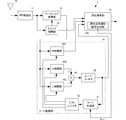
- FIG. 2 is a block diagram showing a main configuration of the positioning signal receiving apparatus 1 of the present embodiment.
- FIG. 3 is a flowchart for generating the weekend approach notification signal Swres according to the present embodiment.
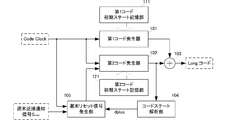
- FIG. 4 is a block diagram showing a specific functional configuration of the code generation unit 41 of the present embodiment.
- FIG. 5 is a flowchart of weekend reset processing according to the present embodiment.
- the positioning signal receiving apparatus 1 shown in FIG. 2 describes only a function unit related to the code tracking process for the LEX signal, but also includes a function unit for capturing and tracking a positioning signal of another GNSS (Global Navigation Statelite System). . Note that when the number of quasi-zenith satellites that broadcast LEX signals is, for example, four or more, only LEX signals may be captured and tracked.
- GNSS Global Navigation Statelite System
- the positioning signal receiving apparatus 1 includes an RF processing unit 11, a baseband conversion unit 12, a carrier correlation unit 13, a code tracking unit 14, and a positioning calculation unit 15.
- a configuration in which the code tracking unit 14 and the weekend reset request signal generation unit 150 in the positioning calculation unit 15 are combined corresponds to the “LEX signal tracking device” of the present invention.
- the antenna 10 is connected to the RF processing unit 11.
- the antenna 10 receives the LEX signal broadcast from the quasi-zenith satellite and outputs the received signal to the RF processing unit 11.
- the RF processing unit 11 down-converts the received LEX signal to generate an intermediate frequency signal (IF signal) and outputs the intermediate frequency signal (IF signal) to the baseband conversion unit 12 and the carrier correlation unit 13.
- the carrier correlation unit 13 multiplies the LEX signal IF signal and the carrier frequency signal to calculate a carrier phase difference.
- the outputted carrier phase difference is fed back to the carrier NCO through a loop filter having a predetermined time constant.
- the carrier NCO generates a carrier frequency signal based on the fed back carrier phase.
- the detected carrier phase difference is also output to the positioning calculation unit 16.
- the baseband converting unit 12 generates a baseband signal by multiplying the IF signal of the LEX signal by the carrier frequency signal.
- the baseband signal is output to the code tracking unit 14.
- the code tracking unit 14 performs tracking processing of the baseband signal of the LEX signal. Although details of the code tracking unit 14 will be described later, the code tracking unit 14 outputs the integrated value of the Prompt correlation value by the P correlation unit 11 and the EL correlation value by the loop filter 45 to the positioning calculation unit 15.
- the positioning calculation unit 15 decodes the navigation message from the Prompt correlation value.
- the positioning calculation unit 15 calculates the pseudo distance from the integrated value of the EL correlation value.
- the positioning calculation unit 15 performs a positioning calculation by a known method using the navigation message and the pseudo distance. At this time, the positioning calculation unit 15 can perform more accurate positioning calculation by using the carrier phase.
- FIG. 3 is a flowchart for generating the weekend approach notification signal S near according to the present embodiment.
- the weekend proximity notification signal generation unit 150 sequentially acquires the time of the week (S11).
- Weekend proximity notification signal generator 150 the weekend timing T ESW with the week time 410Msec.
- the weekly time is continuously observed until a predetermined timing within a time range less than the predetermined time is detected (S12: No ⁇ S11).
- the weekend approach notification signal generation unit 150 detects the predetermined timing (S12: Yes)
- the weekend approach notification signal generation unit 150 generates and outputs a weekend approach notification signal S near at the timing (S13).
- the weekend approach notification signal generation unit 150 is set to 400 msec. From the weekend timing T ESW . A weekend approach notification signal S near is generated and output at the timing when the previous time of the week is detected. This timing is an example, for example, 300 msec. And 100 msec. As shown in FIG. If it is less than this, it may be another timing, but by making it longer than the time of one chip of the Long code, the timing of the 994725th chip related to the weekend timing T ESW can be reliably detected.
- the generation timing of the weekend approach notification signal S near becomes the weekend approach timing T near .
- the outputted weekend approach notification signal S near is given to the code generation unit 41 of the code tracking unit 14.
- the code tracking unit 14 includes a code generation unit 41, a shift register 42, a P correlation unit 43P, an E correlation unit 43E, an L correlation unit 43L, an adder / subtractor 44, and a loop filter 45.
- the baseband signal of the LEX signal output from the baseband conversion unit 12 is input to the P correlation unit 43P, the E correlation unit 43E, and the L correlation unit 43L.
- the P correlation unit 43P multiplies the Prompt replica code signal and the baseband signal and outputs a Prompt correlation value.
- the Prompt correlation value is input to the positioning calculation unit 15.
- the E correlation unit 43E multiplies the Prompt replica code signal by the Early replica code signal whose code phase is advanced by 1 ⁇ 2 chip and the baseband signal, and outputs an Early correlation value.
- the L correlator 43L multiplies the Prompt replica code signal by the Late replica code signal whose code phase is delayed by 1/2 chip and the baseband signal, and outputs a Late correlation value.
- each phase difference of Early, Prompt, and Late is set to 1 ⁇ 2 chip, but the phase difference (so-called spacing) may be set as appropriate depending on the situation.
- each replica code signal is simply correlated with the baseband signal. However, in reality, the correlation between the baseband signal and the I-phase replica code signal and the Q-phase replica code signal is described. Each correlation value is calculated by performing processing.
- the adder / subtractor 44 generates an EL correlation value by subtracting the Late correlation value from the Early correlation value.
- the EL correlation value is fed back to the code generation unit 41 via the loop filter 45 and also output to the positioning calculation unit 15.
- the code generation unit 41 generates a replica code signal of the LEX signal based on the EL correlation value and outputs it to the shift register 42, although a specific generation method will be described later.
- the shift register 42 generates an Early replica code signal, a Prompt replica code signal, and a Late replica code signal whose code phases are different from each other by 1 ⁇ 2 chip based on the replica code signal from the code generation unit 41.
- the Prompt replica code signal is output to the P correlation unit 43P
- the Early replica code signal is output to the E correlation unit 43E
- the Late replica code signal is output to the L correlation unit 43L.
- the code tracking process is performed by the configuration and processing of the feedback loop as described above.
- the code generator 41 has the structure shown in FIG. 4, and generates a replica code signal while performing weekend reset shown in FIG. In FIG. 4, only the Long code generation unit is shown, and the Short code generation unit is not shown.
- the code generation unit 41 includes a first code generator 101, a second code generator 102, an adder 103, and a code state analysis unit corresponding to the “weekend timing pulse signal generation unit” of the present invention. 104, a weekend reset signal generation unit 105, a first code initial state storage unit 111, and a second code initial state storage unit 121.
- a code clock is input to the first code generator 101, and a first code is generated in synchronization with the code clock. The generated first code is output to the adder 103.
- the first code initial state storage unit 111 stores the initial state of the first code generator 101.
- the first code initial state storage unit 111 gives the stored initial state to the first code generator 101 at the start of generation of the Long code.
- the second code generator 102 receives a code clock, and generates a second code in synchronization with the code clock.
- the generated second code is output to the adder 103 and the code state analysis unit 104.
- the second code generator 102 opens the gate for the second code initial state storage unit 121 at the start of long code generation or when a reset signal is input from the weekend reset signal generation unit 105, and the second code initial state The initial state stored in the storage unit 121 is reset.
- the second code initial state storage unit 121 stores the initial state of the second code generator 102.
- the adder 103 adds the first code and the second code, generates a Long code, and outputs it.
- the code state analysis unit 104 sequentially stores the chips of the second code, and sequentially analyzes the state that is a sequence of the latest chip codes of a predetermined number (for example, the number of stages of the second code generator 102) in the second code.
- the code state analysis unit 104 stores the code state of the 997425th chip in advance.
- the code state analysis unit 104 compares the analyzed code state with the code state of the 997425th chip stored in advance, generates a pulse signal dplus at the timing when these code states match, and generates a weekend reset signal To the unit 105.
- the weekend reset signal generation unit 105 receives the pulse signal dplus from the code state analysis unit 104 and the weekend proximity notification signal S near from the weekend proximity notification signal generation unit 150.
- the weekend reset signal generation unit 105 generates a weekend reset signal at the input timing of the pulse signal dplus immediately after the weekend approach notification signal S near is input, and outputs it to the second code generator 102.
- a LEX signal broadcast from a quasi-zenith satellite is received, and the LEX signal is captured and tracked by code correlation processing. Along with the start of tracking of the LEX signal, the LEX signal is demodulated (S101). A weekend approach notification signal S near is generated based on the time of the week obtained when demodulating the LEX signal.
- the state of the Long code generated at the time of the above-described code correlation processing is sequentially acquired and the state is analyzed (S102). If the code state of the 997425th chip is stored in advance and the analyzed code state does not match the stored code state (S103: No), the state analysis of the Long code is continued (S102).
- each functional unit is described as a block.
- each functional unit may be realized by individual hardware by an individual element or circuit, and the above-described processing may be performed. It may be realized by programming and storing it and executing it by an arithmetic processing unit such as a CPU.
- the timing of the chip at the weekend or the timing tc (tcT) of the 997425th chip is simply shown, but this timing is the end timing even if it is the start timing of the chip. Good.
- the time length of the pulse of the pulse signal dplus is made substantially coincident with the time length of the chip as the start timing, reset processing of the Long code synchronized more accurately with the weekend timing T ESW becomes possible. Thereby, the precision of tracking at the time of straddling a week can be improved more.
- the example of generating the weekend approach notification signal S near using the time of the week included in the navigation message of the LEX signal has been shown.
- the time of the week included in the L1C / A signal of GPS is shown.
- the weekly time of other GNSS systems may be used.
- more accurate generation timing of the weekend approach notification signal S near can be obtained by using time correction information for other GNSS systems included in the navigation message of the LEX signal.
- time information is acquired from a device having a time synchronized with a quasi-zenith satellite system different from the positioning signal receiving device (for example, wireless communication from a ground base station), and the generation timing of the weekend proximity notification signal S near is generated. May be used.
- the code state of the 997425th chip is detected from the code state of the second code constituting the Long code, but the code state of the 997425th chip is finally detected using the long code to be output. May be detected.
- the weekend timing T ESW based on the weekends timing T ESW 410msec.
- the preset predetermined timing in the time range of less than is detected, but the previous timing is further detected, and the 410 msec.
- the weekend approach notification signal S near may be output with a delay until the timing reaches the range.
- the pulse signal dplus may be generated by detecting the time event.
- the configuration and processing for the Japanese quasi-zenith satellite system are shown.
- the above configuration and processing are also applied to a system having a code specification that causes a discontinuity of the code in the middle. It can be applied and enable continuous code tracking as well.
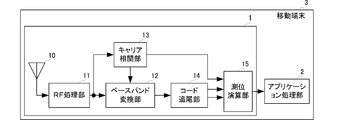
- FIG. 6 is a block diagram showing the main configuration of the mobile terminal 3 including the positioning signal receiver 1 of the present invention.
- a mobile terminal 3 as shown in FIG. 6 is, for example, a mobile phone, a car navigation device, a PND, a camera, a clock, and the like, and includes an application processing unit 2 together with the positioning signal receiving device 1 described above.
- the application processing unit 2 displays the position of its own device based on the positioning result obtained by the positioning calculation unit 15 of the positioning signal receiving device 1, and executes processing for use in navigation and the like.
- the pseudo distance can be continuously calculated with high accuracy by providing a configuration capable of continuously performing the code tracking process even over the weekend using the above-described LEX signal.
- highly accurate position display, navigation, and the like can be continuously realized without being affected by time.
- 1 positioning signal receiving device
- 2 application processing unit
- 3 mobile terminal
- 10 antenna
- 11 RF processing unit
- 12 baseband conversion unit
- 13 carrier correlation unit
- 14 code tracking unit
- 15 positioning calculation unit
- 43P P correlation unit
- 43E E correlation unit
- 43L L correlation unit
- 103 adder
- 104 code state analysis unit
- 105 weekend reset signal generation unit
- 111 first code initial state storage unit
- 121 second Code initial state storage
Landscapes
- Engineering & Computer Science (AREA)
- Computer Networks & Wireless Communication (AREA)
- Radar, Positioning & Navigation (AREA)
- Remote Sensing (AREA)
- Signal Processing (AREA)
- Physics & Mathematics (AREA)
- General Physics & Mathematics (AREA)
- Position Fixing By Use Of Radio Waves (AREA)
Abstract
Description
10:アンテナ、11:RF処理部、12:ベースバンド変換部、13:キャリア相関部、14:コード追尾部、15:測位演算部、
41:コード生成部、42:シフトレジスタ、43P:P相関部、43E:E相関部、43L:L相関部、44:加減算器、45:ループフィルタ、
101:第1コード発生器、102:第2コード発生器、103:加算器、104:コードステート解析部、105:週末リセット信号発生部、111:第1コード初期ステート記憶部、121:第2コード初期ステート記憶部、
150週末近接通知信号生成部
Claims (11)
- 準天頂衛星から放送されるLEX信号を追尾するLEX信号追尾方法であって、
週末タイミングが前記LEX信号のLongコードのコード周期未満まで近接したことを検出する工程と、
前記Longコードにおける週末に対応するチップのタイミングを取得する工程と、
前記週末タイミングの近接検出と前記週末に対応するチップのタイミングの取得とが行われたタイミングで、前記Longコードを初期化する工程と、
を有するLEX信号追尾方法。 - 請求項1に記載のLEX信号追尾方法であって、
前記週末タイミングの近接を検出する工程は、
前記LEX信号を含む測位信号を復調して、週内時刻を取得する工程と、
前記週内時刻を観測して前記週末タイミングに対して前記コード周期未満の時刻であることを検出する工程と、
を有するLEX信号追尾方法。 - 請求項1または請求項2に記載のLEX信号追尾方法であって、
前記週末に対応するチップのタイミングを取得する工程は、
前記Longコードのステートを解析する工程と、
前記Longコードのステートが、前記週末に対応するチップのステートであることを検出する工程と、
該週末に対応するチップのステートのタイミングを取得する工程と、
を有するLEX信号追尾方法。 - 請求項1または請求項2に記載のLEX信号追尾方法であって、
前記週末に対応するチップのタイミングを取得する工程は、
前記Longコードのチップ順番をカウントする工程と、
該チップ順番が前記週末のチップの順番であることを検出する工程と、
を有するLEX信号追尾方法。 - 請求項1乃至請求項4のいずれかに記載のLEX信号追尾方法であって、
前記週末に対応するチップのタイミングは、前記Longコードの997425番目のチップのタイミングである、LEX信号追尾方法。 - 請求項1乃至請求項5に記載のLEX信号追尾方法の各工程と、
生成された前記Longコードを含むレプリカコード信号と前記LEX信号との相関結果を用いて測位演算を行う工程と、を有する、測位信号受信方法。 - 準天頂衛星から放送されるLEX信号を追尾する処理を実行するためのLEX信号追尾プログラムであって、
週末タイミングが前記LEX信号のLongコードのコード周期未満まで近接したことを検出する処理と、
前記Longコードにおける前記週末に対応するチップのタイミングを取得する処理と、
前記週末タイミングの近接検出と前記週末に対応するチップのタイミングの取得とが行われたタイミングで、前記Longコードを初期化する処理と、
を有するLEX信号追尾プログラム。 - 請求項7に記載のLEX信号追尾プログラムに含まれる各処理と、
生成された前記Longコードを含むレプリカコード信号と前記LEX信号との相関結果を用いて行う測位演算処理と、を有する、測位信号受信プログラム。 - 準天頂衛星から放送されるLEX信号を追尾するLEX信号追尾装置であって、
週末タイミングが前記LEX信号のLongコードのコード周期未満まで近接したことを検出し、週末近接通知信号を生成する週末近接通知信号生成部と、
前記Longコードにおける前記週末に対応するチップのタイミングを検出し、パルス信号を発生する週末タイミング用パルス信号発生部と、
前記週末タイミングの近接検出と前記週末に対応するチップのタイミングの取得とが行われたタイミングで前記Longコードを初期化させる週末リセット信号を生成する週末リセット信号発生部と、を備えるLEX信号追尾装置。 - 請求項9に記載のLEX信号追尾装置の各部と、
生成された前記Longコードを含むレプリカコード信号と前記LEX信号との相関結果を用いて測位演算を行う測位演算部と、を備える測位信号受信装置。 - 請求項10に記載の測位信号受信装置を備えるとともに、
前記測位演算部の測位演算結果を用いて所定のアプリケーションを実行するアプリケーション処理部を、備える移動端末。
Priority Applications (4)
| Application Number | Priority Date | Filing Date | Title |
|---|---|---|---|
| JP2012554647A JP5716045B2 (ja) | 2011-01-28 | 2011-12-19 | Lex信号追尾方法、測位信号受信方法、lex信号追尾プログラム、測位信号受信プログラム、lex信号追尾装置、測位信号受信装置、および移動端末 |
| US13/982,236 US9510308B2 (en) | 2011-01-28 | 2011-12-19 | LEX signal tracking method, positioning signal receiving method, LEX signal tracking program, positioning signal receiving program, LEX signal tracking device, positioning signal receiving device and mobile terminal |
| CN201180065647.7A CN103329005B (zh) | 2011-01-28 | 2011-12-19 | Lex信号跟踪方法、定位信号接收方法、lex信号跟踪装置、定位信号接收装置及移动终端 |
| KR1020137022472A KR20140007400A (ko) | 2011-01-28 | 2011-12-19 | Lex신호 추미 방법, 측위 신호 수신 방법, lex신호 추미 프로그램, 측위 신호 수신 프로그램, lex신호 추미 장치, 측위 신호 수신 장치 및 이동 단말 |
Applications Claiming Priority (2)
| Application Number | Priority Date | Filing Date | Title |
|---|---|---|---|
| JP2011-016840 | 2011-01-28 | ||
| JP2011016840 | 2011-01-28 |
Publications (1)
| Publication Number | Publication Date |
|---|---|
| WO2012101935A1 true WO2012101935A1 (ja) | 2012-08-02 |
Family
ID=46580517
Family Applications (1)
| Application Number | Title | Priority Date | Filing Date |
|---|---|---|---|
| PCT/JP2011/079295 Ceased WO2012101935A1 (ja) | 2011-01-28 | 2011-12-19 | Lex信号追尾方法、測位信号受信方法、lex信号追尾プログラム、測位信号受信プログラム、lex信号追尾装置、測位信号受信装置、および移動端末 |
Country Status (5)
| Country | Link |
|---|---|
| US (1) | US9510308B2 (ja) |
| JP (1) | JP5716045B2 (ja) |
| KR (1) | KR20140007400A (ja) |
| CN (1) | CN103329005B (ja) |
| WO (1) | WO2012101935A1 (ja) |
Cited By (1)
| Publication number | Priority date | Publication date | Assignee | Title |
|---|---|---|---|---|
| WO2017183101A1 (ja) * | 2016-04-19 | 2017-10-26 | 三菱電機株式会社 | スペクトラム拡散信号受信装置および拡散符号の初期化方法 |
Family Cites Families (4)
| Publication number | Priority date | Publication date | Assignee | Title |
|---|---|---|---|---|
| JP3614713B2 (ja) * | 1999-06-09 | 2005-01-26 | 日本無線株式会社 | 日時特定方法及びgps受信機 |
| JP2001169330A (ja) * | 1999-10-22 | 2001-06-22 | Hyundai Electronics Ind Co Ltd | 移動通信システムおよび該システムにおける非同期式基地局と同期式基地局との間のハンドオフ処理方法 |
| US6788249B1 (en) * | 2003-07-23 | 2004-09-07 | Snaptrack Incorporated | System for setting coarse GPS time in a mobile station within an asynchronous wireless network |
| US7830993B2 (en) | 2008-02-20 | 2010-11-09 | Trimble Navigation Limited | Sample decimation in a GNSS receiver |
-
2011
- 2011-12-19 WO PCT/JP2011/079295 patent/WO2012101935A1/ja not_active Ceased
- 2011-12-19 CN CN201180065647.7A patent/CN103329005B/zh not_active Expired - Fee Related
- 2011-12-19 KR KR1020137022472A patent/KR20140007400A/ko not_active Ceased
- 2011-12-19 US US13/982,236 patent/US9510308B2/en not_active Expired - Fee Related
- 2011-12-19 JP JP2012554647A patent/JP5716045B2/ja not_active Expired - Fee Related
Non-Patent Citations (1)
| Title |
|---|
| WANG DUN ET AL.: "QZS-LEX Shingo Jushinki", GPS/GNSS SYMPOSIUM 2010, November 2011 (2011-11-01), pages 175 - 182 * |
Cited By (3)
| Publication number | Priority date | Publication date | Assignee | Title |
|---|---|---|---|---|
| WO2017183101A1 (ja) * | 2016-04-19 | 2017-10-26 | 三菱電機株式会社 | スペクトラム拡散信号受信装置および拡散符号の初期化方法 |
| JPWO2017183101A1 (ja) * | 2016-04-19 | 2018-09-20 | 三菱電機株式会社 | スペクトラム拡散信号受信装置および拡散符号の初期化方法 |
| US10516436B2 (en) | 2016-04-19 | 2019-12-24 | Mitsubishi Electric Corporation | Spread-spectrum-signal reception apparatus and spread code initialization method |
Also Published As
| Publication number | Publication date |
|---|---|
| US9510308B2 (en) | 2016-11-29 |
| JP5716045B2 (ja) | 2015-05-13 |
| CN103329005B (zh) | 2015-08-12 |
| JPWO2012101935A1 (ja) | 2014-06-30 |
| CN103329005A (zh) | 2013-09-25 |
| US20130308688A1 (en) | 2013-11-21 |
| KR20140007400A (ko) | 2014-01-17 |
Similar Documents
| Publication | Publication Date | Title |
|---|---|---|
| CN100377507C (zh) | 在gps接收机中确定时间 | |
| ES2607466T3 (es) | Sistema de transferencia de tiempo absoluto preciso desde un satélite | |
| EP1711841B1 (en) | Method and apparatus for processing satellite positioning system signals to obtain time information | |
| CN101952736B (zh) | 对收到sps信号的多径检测 | |
| AU2001251085A1 (en) | Determining time in a GPS receiver | |
| JP5968998B2 (ja) | 測位信号検出方法、測位信号検出プログラム、測位信号受信装置、測位装置および情報機器端末 | |
| PH12015500155B1 (en) | Satellite positioning signal receiving method and device | |
| CN101978284B (zh) | 用于获得收到sps信号的时间基准的系统和/或方法 | |
| US20110216703A1 (en) | Spread Spectrum Transmission Systems | |
| EP2793051B1 (en) | Gnss signal processing method, positioning method, gnss signal processing program, positioning program, gnss signal processing device, positioning device, and mobile terminal | |
| JP6047944B2 (ja) | 受信装置及び相関積算処理方法 | |
| JP2013053972A (ja) | 信号捕捉方法、通信信号受信方法、gnss信号受信方法、信号捕捉プログラム、通信信号受信プログラム、gnss信号受信プログラム、信号捕捉装置、通信信号受信装置、gnss信号受信装置、および移動端末 | |
| JP5267478B2 (ja) | 衛星信号追尾方法及び位置算出装置 | |
| JP5716045B2 (ja) | Lex信号追尾方法、測位信号受信方法、lex信号追尾プログラム、測位信号受信プログラム、lex信号追尾装置、測位信号受信装置、および移動端末 | |
| US20110235687A1 (en) | Signal acquisition method, signal acquisition apparatus and electronic device | |
| JP5933559B2 (ja) | 信号捕捉装置及び方法 | |
| JP2011164088A (ja) | 衛星信号追尾方法、位置算出方法、衛星信号追尾装置及び位置算出装置 | |
| JP2013190335A (ja) | 位置算出方法及び位置算出装置 | |
| JP2007124291A (ja) | 測位装置およびその制御方法 | |
| JP2007278708A (ja) | 衛星航法装置 | |
| JP6074917B2 (ja) | 受信装置及びコード位相判定方法 | |
| Kandziora et al. | Time Signal Assisted GPS Receiver for Mobile Devices | |
| JP2012122884A (ja) | コード追尾方法、測位信号受信方法、コード追尾プログラム、測位信号受信プログラム、コード追尾装置、測位信号受信装置、および移動端末 | |
| Kandziora et al. | Concept for a time-code signal assisted single-shot receiver | |
| JP2006090755A (ja) | 観測データ出力測位用受信機 |
Legal Events
| Date | Code | Title | Description |
|---|---|---|---|
| 121 | Ep: the epo has been informed by wipo that ep was designated in this application |
Ref document number: 11857112 Country of ref document: EP Kind code of ref document: A1 |
|
| ENP | Entry into the national phase |
Ref document number: 2012554647 Country of ref document: JP Kind code of ref document: A |
|
| NENP | Non-entry into the national phase |
Ref country code: DE |
|
| WWE | Wipo information: entry into national phase |
Ref document number: 13982236 Country of ref document: US |
|
| ENP | Entry into the national phase |
Ref document number: 20137022472 Country of ref document: KR Kind code of ref document: A |
|
| 122 | Ep: pct application non-entry in european phase |
Ref document number: 11857112 Country of ref document: EP Kind code of ref document: A1 |