WO2012081612A1 - 移動局装置、基地局装置、無線通信システム、制御方法及び集積回路 - Google Patents
移動局装置、基地局装置、無線通信システム、制御方法及び集積回路 Download PDFInfo
- Publication number
- WO2012081612A1 WO2012081612A1 PCT/JP2011/078892 JP2011078892W WO2012081612A1 WO 2012081612 A1 WO2012081612 A1 WO 2012081612A1 JP 2011078892 W JP2011078892 W JP 2011078892W WO 2012081612 A1 WO2012081612 A1 WO 2012081612A1
- Authority
- WO
- WIPO (PCT)
- Prior art keywords
- transmission timing
- station apparatus
- cells
- group
- mobile station
- Prior art date
- Legal status (The legal status is an assumption and is not a legal conclusion. Google has not performed a legal analysis and makes no representation as to the accuracy of the status listed.)
- Ceased
Links
Images




Classifications
-
- H—ELECTRICITY
- H04—ELECTRIC COMMUNICATION TECHNIQUE
- H04W—WIRELESS COMMUNICATION NETWORKS
- H04W72/00—Local resource management
- H04W72/20—Control channels or signalling for resource management
- H04W72/21—Control channels or signalling for resource management in the uplink direction of a wireless link, i.e. towards the network
-
- H—ELECTRICITY
- H04—ELECTRIC COMMUNICATION TECHNIQUE
- H04W—WIRELESS COMMUNICATION NETWORKS
- H04W56/00—Synchronisation arrangements
- H04W56/0005—Synchronisation arrangements synchronizing of arrival of multiple uplinks
-
- H—ELECTRICITY
- H04—ELECTRIC COMMUNICATION TECHNIQUE
- H04W—WIRELESS COMMUNICATION NETWORKS
- H04W72/00—Local resource management
- H04W72/04—Wireless resource allocation
- H04W72/044—Wireless resource allocation based on the type of the allocated resource
- H04W72/0446—Resources in time domain, e.g. slots or frames
-
- H—ELECTRICITY
- H04—ELECTRIC COMMUNICATION TECHNIQUE
- H04W—WIRELESS COMMUNICATION NETWORKS
- H04W74/00—Wireless channel access
- H04W74/08—Non-scheduled access, e.g. ALOHA
- H04W74/0833—Random access procedures, e.g. with 4-step access
-
- H—ELECTRICITY
- H04—ELECTRIC COMMUNICATION TECHNIQUE
- H04W—WIRELESS COMMUNICATION NETWORKS
- H04W74/00—Wireless channel access
- H04W74/08—Non-scheduled access, e.g. ALOHA
- H04W74/0833—Random access procedures, e.g. with 4-step access
- H04W74/0838—Random access procedures, e.g. with 4-step access using contention-free random access [CFRA]
Definitions
- the present invention relates to a base station device, a mobile station device, and a radio communication system, and more specifically, a mobile station device, a base station device, a radio communication system, and an operation when an uplink transmission timing becomes invalid,
- the present invention relates to a control method and an integrated circuit.
- the W-CDMA system has been standardized as a third generation cellular mobile communication system, and services have been started sequentially.
- HSDPA with higher communication speed has also been standardized and the service has started.
- EUTRA Evolved Universal Terrestrial Radio Access
- OFDM Orthogonal Frequency Division Multiplexing
- SC-FDMA Peak to Average Power Ratio
- DFT Single Carrier-Frequency Division Multiple Access
- Discrete Fourier Transform spread Fourier transform
- Advanced-EUTRA a further evolution of EUTRA.
- communication at a maximum transmission rate of 1 Gbps or higher and 500 Mbps or higher of the uplink is performed using a band up to a maximum of 100 MHz bandwidth in the uplink and the downlink, respectively.
- Advanced-EUTRA is considering to realize a maximum of 100 MHz band by bundling a plurality of bands below 20 MHz of EUTRA so that EUTRA mobile station devices can be accommodated.
- one band of 20 MHz or less of EUTRA is referred to as “Component Carrier (CC)” (non-patent document 2 described later).
- CC Component Carrier
- one cell is configured by combining one downlink component carrier and one uplink component carrier.
- a single cell can be configured with only one downlink component carrier.
- the base station apparatus allocates a plurality of cells to the mobile station apparatus and communicates with the mobile station apparatus via the allocated cells.
- 3GPP TS Technical Specification 36.300, V9.40 (2010-06), Evolved Universal Terrestrial Radio Access (E-UTRA) and Evolved Universal Terrestrial Radio Access Network (E-UTRAN), Overall description Stage2 3GPP TR (Technical Specification) 36.814, V9.00 (2010-03), Evolved Universal Terrestrial Radio Access (E-UTRA) Further advancements for E-UTRA physical layer aspects
- the mobile station apparatus When the mobile station apparatus communicates with the base station apparatus using a plurality of cells, the mobile station apparatus may connect to the base station apparatus via a repeater (Repeator) or the like. In such a case, the reception timing of data from the downlink component carrier in the mobile station apparatus differs for each cell. Furthermore, the transmission timing to the base station apparatus is different for each uplink component carrier of each cell. Therefore, the mobile station apparatus needs to perform transmission of data to the base station apparatus by adjusting the transmission timing for each uplink component carrier of each cell or for each group of component carriers having the same transmission timing.
- a repeater peerator
- the mobile station apparatus since it is necessary to adjust the transmission timing for each uplink component carrier of each cell or for each group of component carriers having the same transmission timing, transmits each uplink component carrier of each cell or transmits It is necessary to have a transmission timing timer indicating the effective period of transmission timing for each group of component carriers having the same timing.
- the mobile station apparatus adjusts the transmission timing for each uplink component carrier of each cell, the transmission timing is updated for each cell or the transmission timing becomes invalid. Therefore, it is necessary to consider the efficient operation of the mobile station apparatus when the transmission timing is updated or when the transmission timing becomes invalid.
- An object of the present invention is to provide a mobile station device, a base station device, a wireless communication system, a control method, and an integrated circuit.
- the mobile station apparatus of the present invention is a mobile station apparatus in which a base station apparatus allocates a plurality of cells and communicates with the base station apparatus via the plurality of cells, and the plurality of cells includes one first cell.
- the uplink transmission timing is managed using a transmission timing timer, and when the transmission timing timer of the first group expires, all uplink transmissions to the plurality of cells are stopped, and the transmission of the second group If the timing timer expires, uplink transmission for the second group of cells whose transmission timing timer has expired Characterized in that it stop.
- the mobile station apparatus of the present invention deletes data in all transmission HARQ buffers corresponding to the plurality of cells, and the second group When the transmission timing timer expires, data in the transmission HARQ buffer corresponding to the second group of cells for which the transmission timing timer has expired is erased.
- the mobile station apparatus of the present invention releases radio resources of the measurement reference signals allocated to the plurality of cells, and
- the transmission timing timer of the second group expires, the radio resource of the reference signal for measurement assigned to the cell of the second group whose transmission timing timer has expired is released.
- the mobile station apparatus of the present invention discards all the uplink shared channel and downlink shared channel allocation information, and When the transmission timing timer expires, the uplink shared channel allocation information allocated to the cell of the second group whose transmission timing timer has expired is discarded.
- the base station apparatus of the present invention is a base station apparatus in which a plurality of cells are allocated to a mobile station apparatus and communicates with the mobile station apparatus via the cell. Grouped into a first group consisting of cells with the same uplink transmission timing as one cell and a second group consisting of one or more cells with uplink transmission timing different from the first cell, The uplink transmission timing is managed using a transmission timing timer for each group, and when the transmission timing timer of the group including the first cell expires, the allocation process of the uplink shared channel to the plurality of cells is stopped. If the transmission timing timer of the second group expires, the second group of which the transmission timing timer has expired. Characterized by stopping the process of allocating uplink shared channel for the cell-loop.
- the base station apparatus of this invention erase
- the transmission timing timer of the second group expires, the received HARQ buffer data corresponding to the cell of the second group is erased.
- the base station apparatus of the present invention releases the radio resources of the measurement reference signals allocated to the plurality of cells of the mobile station apparatus,
- the transmission timing timer of the second group expires, the radio resource of the reference signal for measurement allocated to the cell of the second group of the mobile station device is released.
- the radio communication system of the present invention is a radio communication system in which a base station apparatus allocates a plurality of cells and communicates with the base station apparatus via the cells. Grouped into a first group composed of cells having the same uplink transmission timing as the cell and a second group composed of one or more cells having uplink transmission timing different from the first cell, The uplink transmission timing is managed using a transmission timing timer every time, and when the transmission timing timer of the first group expires, the base station apparatus can share the uplink for the plurality of cells of the mobile station apparatus.
- the mobile station apparatus stops all uplink transmission for the plurality of cells.
- the base station apparatus stops the uplink shared channel allocation process for the cells of the second group for which the transmission timing timer of the mobile station apparatus has expired, and the mobile station apparatus The station apparatus stops uplink transmission for the second group of cells for which the transmission timing timer has expired.
- control method of the present invention is a control method of a mobile station apparatus in which a base station apparatus allocates a plurality of cells and communicates with the base station apparatus through the cells. Grouped into a first group composed of cells of the same uplink transmission timing as the first cell and a second group composed of cells of uplink transmission timing different from the one or more first cells, The uplink transmission timing is managed using a transmission timing timer for each group, and when the transmission timing timer of the first group expires, stopping all uplink transmissions for the plurality of cells; When the transmission timing timer of the second group expires, the second group of cells whose transmission timing timer has expired Characterized in that it comprises a step of stopping the uplink transmission that.
- the control method of the present invention is a control method of a base station apparatus in which a mobile station apparatus is assigned a plurality of cells and communicates with the mobile station apparatus via the cells, and the plurality of cells is 1 Grouped into a first group composed of cells having the same uplink transmission timing as one first cell and a second group composed of cells having uplink transmission timing different from one or more of the first cells.
- the uplink transmission timing is managed using a transmission timing timer for each group, and when the transmission timing timer of the first group expires, allocation of an uplink shared channel to the plurality of cells of the mobile station device.
- An integrated circuit according to the present invention is an integrated circuit applied to a mobile station apparatus in which a base station apparatus allocates a plurality of cells and communicates with the base station apparatus through the cells. Are grouped into a first group composed of cells having the same uplink transmission timing as one first cell and a second group composed of cells having uplink transmission timings different from one or more of the first cells.
- the uplink transmission timing is managed using a transmission timing timer for each group, and when the transmission timing timer of the first group expires, all uplink transmissions for the plurality of cells are stopped. And when the transmission timing timer of the second group expires, the group of the group for which the transmission timing timer has expired. Characterized in that it comprises means for stopping the uplink transmission to.
- An integrated circuit according to the present invention is an integrated circuit applied to a base station apparatus to which a mobile station apparatus is assigned a plurality of cells and communicates with the mobile station apparatus via the cells.
- the cell is composed of a first group composed of cells having the same uplink transmission timing as one first cell and a second group composed of cells having uplink transmission timings different from one or more of the first cells.
- the uplink transmission timing is managed using a transmission timing timer for each group, and when the transmission timing timer of the first group expires, uplink sharing for the plurality of cells of the mobile station apparatus is performed Means for stopping channel assignment processing and when the transmission timing timer of the second group expires, the mobile station apparatus Characterized in that it comprises means for stopping the allocation processing of the uplink shared channel for a second group of cells the transmission timing timer has expired.
- the uplink transmission timing is different in each cell, and the transmission timing timer expires for each transmission timing cell group, the transmission timing timer has expired.
- the mobile station apparatus stops the transmission process of each cell and does not perform a useless transmission process operation. Thereby, efficient transmission control of the mobile station apparatus can be realized.
- the downlink of EUTRA includes downlink reference signal (Downlink Pilot Signal), downlink synchronization channel DSCH (Downlink Synchronization Channel), downlink shared channel PDSCH (Physical Downlink Shared Channel), downlink control channel PDCCH (Physical Downlink Control Channel).
- the broadcast channel PBCH Physical Broadcast Physical Channel.
- the uplink of EUTRA is based on the uplink reference signal (Uplink Pilot Signal), random access channel RACH (Random Access Channel), uplink shared channel PUSCH (Physical Uplink Shared Channel), uplink control channel PUCCH (Physical Uplink Control Channel). It is configured.
- the uplink reference signal includes two types of signals: a demodulation reference signal (Demodulation Reference Signal) and a measurement reference signal (Sounding Reference Signal).
- FIG. 6 is a diagram showing a channel configuration in EUTRA.
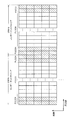
- FIG. 7 is a diagram illustrating an uplink configuration in EUTRA.
- One block includes 12 subcarriers and 7 OFDM symbols.
- One resource block (RB) is configured using two blocks.
- the uplink shared channel PUSCH and the uplink control channel PUCCH are used in units of one resource block.
- the random access channel RACH is configured using 6 resource blocks.
- the uplink reference signal is arranged in a specific OFDM symbol in the resource block.
- each uplink channel is divided into an uplink shared channel PUSCH region, an uplink control channel PUCCH region, and a random access channel RACH.
- Information on each region of the uplink shared channel PUSCH and the uplink control channel PUCCH is broadcast from the base station apparatus.
- the base station apparatus allocates radio resources for the uplink shared channel PUSCH and the uplink control channel PUCCH for each mobile station apparatus from each region.
- the random access channel RACH is arranged at a constant period.
- the downlink shared channel PDSCH is used for transmitting user data and control data from the base station apparatus to the mobile station apparatus.
- the downlink control channel PDCCH is used for notification of control information such as radio resource allocation information for the downlink shared channel PDSCH and the uplink shared channel PUSCH from the base station apparatus to the mobile station apparatus.
- the downlink reference signal is used to demodulate the downlink shared channel PDSCH and the downlink control channel PDCCH.
- the downlink synchronization channel DSCH is used for the mobile station apparatus to perform downlink synchronization.
- the broadcast channel PBCH is used to notify information related to system information of the base station apparatus.
- the uplink shared channel PUSCH is used for transmitting user data and control data from the mobile station apparatus to the base station apparatus.
- the data transmitted / received by the uplink shared channel PUSCH and the downlink shared channel PDSCH is subjected to HARQ (Hybrid Automatic Repeat reQuset) processing, and by combining the initial transmission data and the retransmission data at the time of retransmission, Improves data error correction capability.
- the uplink control channel PUCCH is used for notifying control information such as a response (Ack (Acknowledge) / Nack (Negative acknowledge)) to downlink data from the base station apparatus and downlink radio channel quality information.
- the random access channel RACH is mainly used for random access preamble transmission for acquiring transmission timing information from the mobile station apparatus to the base station apparatus. Random access preamble transmission is performed in a random access procedure.
- the reference signal for demodulation of the uplink reference signal is used by the base station apparatus to demodulate the uplink shared channel PUSCH.
- the demodulation reference signal is inserted into the fourth symbol position and the eleventh symbol position of the uplink shared channel PUSCH.
- the reference signal for measuring the uplink reference signal is used by the base station apparatus to measure the uplink radio channel quality.
- the measurement reference signal is inserted into the 14th symbol position of the uplink shared channel PUSCH.
- the radio resource for transmitting the measurement reference signal is allocated from the base station device to each mobile station device.
- Non-contention based Random Access Non-contention based random access
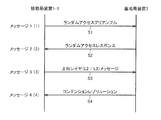
- FIG. 8 is a diagram showing the procedure of Contention based Random Access.
- Contention based Random Access is a random access that may collide between mobile station devices.
- Contention based Random Access (i) during initial access from a state where it is not connected (communication) with the base station device, (ii) is connected to the base station device, but moves in a state where uplink synchronization is lost This is performed for a scheduling request or the like when uplink data transmission occurs in the station apparatus.
- Non-contention based Random Access is a random access in which no collision occurs between mobile station devices.
- the base station device and the mobile station device are connected, but (i) uplink synchronization between the mobile station device and the base station device is quickly performed when uplink synchronization is lost.
- Non-contention based Random Access is instructed from the base station device in special cases such as when the transmission timing of the mobile station device is not valid.
- the mobile station apparatus starts random access (Non-patent Document 1).
- Non-contention based Random Access is indicated by RRC (Radio Resource Control: Layer 3) layer message and downlink control channel PDCCH control data.
- the mobile station apparatus 1-1 transmits a random access preamble to the base station apparatus 3 (message 1: (1), step S1).
- the base station device 3 that has received the random access preamble transmits a response to the random access preamble (random access response) to the mobile station device 1-1 (message 2: (2), step S2).
- the mobile station device 1-1 transmits an upper layer (Layer2 / Layer3) message based on the scheduling information included in the random access response (message 3: (3), step S3).
- the base station device 3 transmits a collision confirmation message to the mobile station device 1-1 that has received the upper layer message of (3) (message 4: (4), step S4).
- Contention based Random Access is also referred to as “random preamble transmission”.
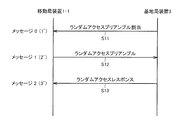
- the base station apparatus 3 notifies the mobile station apparatus 1-1 of the preamble number (or sequence number) and the random access channel number to be used (message 0: (1) ′, step S11).
- the mobile station apparatus 1-1 transmits the random access preamble having the designated preamble number to the designated random access channel RACH (message 1: (2) ', step S12).
- the base station device 3 that has received the random access preamble transmits a response to the random access preamble (random access response) to the mobile station device 1-1 (message 2: (3) ', step S13).
- the mobile station apparatus 1-1 performs Contention based Random Access.
- Non-contention based Random Access is also referred to as “dedicated preamble transmission”.
- the mobile station apparatus 1-1 acquires the system information of the base station apparatus 3 from the broadcast channel PBCH or the like.
- the mobile station apparatus 1-1 executes a random access procedure from the random access related information included in the system information and connects to the base station apparatus 3.
- the mobile station apparatus 1-1 generates a random access preamble from the random access related information in the system information.
- the mobile station apparatus 1-1 transmits a random access preamble using the random access channel RACH (message 1: (1)).
- the base station apparatus 3 When the base station apparatus 3 detects (i) a random access preamble from the mobile station apparatus 1-1, the base station apparatus 3 calculates an amount of transmission timing shift between the mobile station apparatus 1-1 and the base station apparatus 3 from the random access preamble. And (ii) scheduling (designation of uplink radio resource position (position of uplink shared channel PUSCH), transmission format (message size), etc.) for transmitting the Layer 2 (L2) / Layer 3 (L3) message, ( iii) Temporary C-RNTI (Cell-Radio Network Temporary Identity: mobile station device identification information) is allocated, and (iv) Random access channel RACH random access preamble is transmitted to downlink control channel PDCCH.
- Random accessless RA-RNTI Random Access-Radio Network Temporary Identity: random access response identification information
- transmission timing information scheduling information
- Temporary C-RNTI received random
- a random access response message including access preamble information is transmitted (message 2: (2)).
- the mobile station apparatus 1-1 When the mobile station apparatus 1-1 detects that the RA-RNTI is present in the downlink control channel PDCCH, the mobile station apparatus 1-1 confirms the content of the random access response message arranged in the downlink shared channel PDSCH. When the transmitted random access preamble information is included, the mobile station apparatus 1-1 adjusts the uplink transmission timing from the transmission timing information, and uses C-RNTI (or Temporary) with the scheduled radio resource and transmission format. An L2 / L3 message including information for identifying the mobile station device 1-1 such as C-RNTI) or IMSI (International Mobile Subscriber Identity) is transmitted (message 3: (3)). When the transmission timing is adjusted, the mobile station apparatus 1-1 starts a transmission timing timer in which the adjusted transmission timing is valid.
- C-RNTI or Temporary
- the adjusted transmission timing becomes invalid. While the transmission timing is valid, the mobile station apparatus 1-1 can transmit data to the base station apparatus. When the transmission timing is invalid, the mobile station apparatus 1-1 can only transmit a random access preamble. Further, a period in which the transmission timing is valid is referred to as an “uplink synchronization state”, and a period in which the transmission timing is not valid is also referred to as an “uplink asynchronous state”.
- the base station apparatus 3 When the base station apparatus 3 receives the L2 / L3 message from the mobile station apparatus 1-1, the base station apparatus 3 uses the C-RNTI (or Temporary C-RNTI) or IMSI included in the received L2 / L3 message.
- C-RNTI or Temporary C-RNTI
- IMSI included in the received L2 / L3 message.
- a collision confirmation (contention resolution) message for determining whether or not a collision occurs between 1-1 and 1-3 is transmitted to the mobile station apparatus 1-1 (message 4: (4)).
- the mobile station apparatus 1-1 does not detect the random access response message including the preamble number corresponding to the random access preamble transmitted within the predetermined period, fails to transmit the message 3, or is fixed period. If the identification information of the mobile station device 1-1 is not detected in the collision confirmation message, transmission is repeated from transmission of the random access preamble (message 1: (1)). When the number of random access preamble transmissions exceeds the maximum number of random access preamble transmissions indicated by the system information, the mobile station device 1-1 determines that the random access has failed and performs communication with the base station device 3. Disconnect. After the random access procedure is successful, control data for connection is further exchanged between the base station apparatus 3 and the mobile station apparatus 1-1. At this time, the base station apparatus 3 notifies the mobile station apparatus 1-1 of the uplink reference signal and the uplink control channel PUCCH allocation information that are individually allocated.
- the update of the uplink transmission timing after completion of the random access procedure is performed by the base station device 3 (i) an uplink reference signal (measurement reference signal) transmitted from the mobile station device 1-1.
- the transmission timing information is calculated by measuring (demodulation reference signal), and (ii) the calculated transmission timing information is notified to the mobile station apparatus 1-1.
- the mobile station apparatus 1-1 updates the transmission timing information notified from the base station apparatus 3, the mobile station apparatus 1-1 restarts the transmission timing timer.
- the base station apparatus 3 also holds the same transmission timing timer as that of the mobile station apparatus 1-1, and the base station apparatus 3 starts or restarts the transmission timing timer when transmitting the transmission timing information. In this way, the uplink synchronization state is managed in the base station device 3 and the mobile station device 1-1.
- the transmission timing timer expires, the transmission timing becomes invalid, and uplink transmission other than the random access preamble transmission is stopped.
- Advanced-EUTRA a further evolution of EUTRA.
- communication at a maximum transmission rate of 1 Gbps or higher and 500 Mbps or higher of the uplink is performed using a band up to a maximum of 100 MHz bandwidth in the uplink and the downlink, respectively.
- FIG. 11 is an explanatory diagram of a downlink component carrier in Advanced-EUTRA.
- FIG. 12 is an explanatory diagram of an uplink component carrier in Advanced-EUTRA.
- Advanced-EUTRA is considering to realize a maximum of 100 MHz band by bundling a plurality of bands below 20 MHz of EUTRA so that EUTRA mobile station devices can be accommodated.
- one band of 20 MHz or less of EUTRA is called a “Component Carrier (CC)” (Non-patent Document 2).
- CC Component Carrier
- one cell is configured by combining one downlink component carrier and one uplink component carrier.
- a single cell can be configured with only one downlink component carrier.
- Advanced-EUTRA communication is performed using a plurality of cells. Therefore, in order to reduce the load on the base station apparatus and the mobile station apparatus as much as possible, one cell among the plurality of cells is designated as a first cell (Primary Cell). ) And other cells are designated as secondary cells. And the special function is set to the 1st cell, such as allocation of the uplink control channel PUCCH, the permission of random access, etc. with respect to the cell used as a 1st cell.
- the base station apparatus allocates one or more cells that match the communication capability and communication conditions of the mobile station apparatus from among a plurality of cells.
- the mobile station apparatus transmits / receives data to / from the base station apparatus via one or more assigned cells.
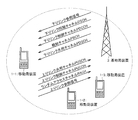
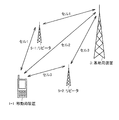
- a mobile station apparatus may be connected to the base station apparatus via a repeater as shown in FIG. In such a case, both or one of the reception timing of the downlink component carrier in the mobile station apparatus and the transmission timing to the base station apparatus for each uplink component carrier is different for each cell.
- the mobile station apparatus adjusts the transmission timing for each uplink component carrier of each cell and transmits data to the base station apparatus. There is a need.
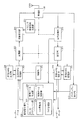
- FIG. 1 is a diagram illustrating a configuration of a mobile station apparatus according to an embodiment of the present invention.
- the mobile station apparatuses 1-1 to 1-3 include a radio unit 101, a transmission processing unit 103, a modulation unit 105, a transmission HARQ processing unit 107, a transmission HARQ storage unit 109, an uplink reference signal generation unit 111, and a random access preamble generation unit. 113, a reception processing unit 115, a demodulation unit 117, a reception HARQ processing unit 119, a reception HARQ storage unit 121, a control unit 123, and a mobile station management unit 125.
- the mobile station management unit 125 includes a UL scheduling unit 127, a control data creation unit 129, a control data analysis unit 131, a cell management unit 133, and a TAT management unit 135.
- Transmission HARQ processing unit 107 encodes input data in accordance with an instruction from the control unit 123, and performs puncture processing on the encoded data. Then, transmission HARQ processing section 107 outputs the punctured data to modulation section 105, and outputs the encoded data to transmission HARQ storage section 109. Also, when the transmission HARQ processing unit 107 is instructed to retransmit data by the control unit 123, (i) obtains encoded data from the transmission HARQ storage unit, and (ii) a puncture different from the previous puncture. Processing is performed, and (iii) punctured data is output to the modulation unit 105.
- the transmission HARQ storage unit 109 stores the data input from the transmission HARQ processing unit 107 and outputs the data stored in the transmission HARQ processing unit 107 according to an instruction from the transmission HARQ processing unit 107. In addition, the transmission HARQ storage unit 109 deletes the stored data in accordance with an instruction from the control unit 123.
- Modulation section 105 modulates input data from transmission HARQ processing section 107 and outputs the result to transmission processing section 103.
- the transmission processing unit 103 receives input data (or input signals) from the modulation unit 105, the uplink reference signal generation unit 111, and the random access preamble generation unit 113 in accordance with an instruction from the control unit 123 in the uplink of each cell.
- the mapped data is subjected to OFDM signal processing such as serial / parallel conversion, DFT-IFFT (Inverse Fast Fourier Transform) conversion, CP insertion, and so on. Generate a signal.
- the transmission processing unit 103 adjusts the transmission timing of the signal output for each uplink component carrier of each cell from the transmission timing information passed from the control unit 123, and after adjusting the transmission timing, transmits the OFDM signal to the radio unit 101. Output to.
- the uplink reference signal generation unit 111 generates an uplink reference signal from the uplink reference signal generation information acquired from the mobile station management unit 125 according to an instruction from the control unit 123, and transmits the generated uplink reference signal to the transmission processing unit 103. Output to.
- the random access preamble generation unit 113 generates a random access preamble from information regarding random access acquired from the mobile station management unit 125 according to an instruction from the control unit 123, and outputs the generated random access preamble to the transmission processing unit 103.
- the radio unit 101 up-converts the input signal from the transmission processing unit 103 to a radio frequency according to an instruction from the control unit 123 and transmits the radio signal from the transmission antenna.
- Radio section 101 down-converts the radio signal received from the antenna and outputs it to reception processing section 115.
- the reception processing unit 115 performs an FFT (Fast Fourier Transform) process on the input signal from the radio unit 101 and outputs the processed signal to the demodulation unit 117.
- Demodulation section 117 performs demodulation processing of input data and outputs the demodulated data to reception HARQ processing section 119.
- the reception HARQ processing unit 119 performs a decoding process on the input data.
- the reception HARQ processing unit 119 outputs control data to the mobile station management unit 125 and outputs user data to an upper layer.
- the reception HARQ processing unit 119 outputs the data that has failed in the decoding process to the reception HARQ storage unit 121 when the decoding process of the input data fails.
- reception HARQ processing section 119 When receiving the retransmission data, reception HARQ processing section 119 combines the data stored in reception HARQ storage section 121 with the retransmission data and performs a decoding process. Also, the reception HARQ processing unit 119 notifies the mobile station management unit 125 of the success or failure of the input data decoding process.
- the reception HARQ storage unit 121 stores the input data from the reception HARQ processing unit 119 and outputs the data stored in the reception HARQ processing unit 119 according to an instruction from the reception HARQ processing unit 119. Also, the reception HARQ storage unit 121 deletes the stored data in accordance with an instruction from the control unit 123.
- the control unit 123 includes a radio unit 101, a transmission processing unit 103, a modulation unit 105, a transmission HARQ processing unit 107, a transmission HARQ storage unit 109, an uplink reference signal generation unit 111, The random access preamble generation unit 113, the reception processing unit 115, the demodulation unit 117, the reception HARQ processing unit 119, and the reception HARQ storage unit 121 are controlled.
- the mobile station management unit 125 includes a UL scheduling unit 127, a control data creation unit 129, a control data analysis unit 131, a cell management unit 133, and a TAT management unit 135.
- the control data creation unit 129 creates an Ack / Nack message of data from the decoding result of the received data from the reception HARQ processing unit 119, and creates control data such as a message indicating downlink radio quality.
- the control data is output to the transmission HARQ processing unit 107.
- the control data analysis unit 131 analyzes the control data input from the reception HARQ processing unit 119.
- the control data analysis unit 131 outputs the cell system information, the cell allocation information, the random access response message, and the uplink reference signal generation information received from the base station apparatus 3 to the cell management unit 133 to transmit the transmission timing information and the transmission information.
- Timing timer information is output to the TAT management unit 135.
- the UL scheduling unit 127 includes a transmission processing unit 103, a modulation unit 105, a control unit 123 based on the uplink data scheduling information from the base station apparatus 3 or the transmitted uplink data response (ACK / NACK).
- the transmission HARQ processing unit 107 is controlled. Further, the cell management unit 133 is instructed to perform random access based on the control information from the upper layer.
- the cell management unit 133 manages the cells allocated from the base station device 3.
- the cell management unit 133 includes: (i) a physical channel configuration for each cell received from the base station device 3, transmission power information, information on random access, and (ii) uplink reference signal generation information. It manages radio resources individually allocated to the mobile station apparatus 1-1, such as information, radio resources of uplink reference signals (measurement reference signals), radio resources of the uplink control channel PUCCH, and the like.
- the cell management unit 133 notifies the random access preamble generation unit 113 of information related to random access via the control unit 123, and notifies the uplink reference signal generation unit 111 of the generation information of the uplink reference signal.
- the cell management unit 133 instructs the random access preamble generation unit 113 via the control unit 123 to transmit the random access preamble to the base station apparatus 3 at the start of communication or when making a schedule request for uplink data. .
- the cell management unit 133 When notified from the TAT management unit 135 that the transmission timing timer has expired, the cell management unit 133, via the control unit 123, (i) stops the HARQ process of the cell whose transmission timing has expired to the transmission HARQ processing unit 107 (Ii) Instruct the transmission HARQ storage unit 109 to erase data stored in the cell whose transmission timing has expired, and (iii) Uplink the cell whose transmission timing has expired to the uplink reference signal generation unit 111 Instructs to stop the generation of the link reference signal. In addition, the cell management unit 133 releases the radio resources of the uplink control channel PUCCH and the radio resources of the uplink reference signal (measurement reference signal) allocated from the base station apparatus 3 of the cell whose transmission timing has expired.
- the TAT management unit 135 manages the transmission timing and transmission timing timer for each cell. In addition, the TAT management unit 135 manages cell-related information having the same transmission timing.
- the TAT management unit 135 When acquiring the transmission timing information, the TAT management unit 135 notifies the transmission processing unit 103 of the transmission timing information of the acquired cell and the cell information for updating the transmission timing via the control unit 123, and starts the transmission timing timer. Or restart. Then, the TAT management unit 135 notifies the cell management unit 133 that the transmission timing timer has been started or restarted for each cell. Also, when the transmission timing timer expires for each cell, the TAT management unit 135 notifies the cell management unit 133 that the transmission timing timer of the target cell has expired.
- FIG. 2 shows a configuration diagram of the base station apparatus 3 according to the embodiment of the present invention.
- the base station apparatus 3 includes a radio unit 201, a transmission processing unit 203, a modulation unit 205, a transmission HARQ processing unit 207, a transmission HARQ storage unit 209, a downlink reference signal generation unit 211, a preamble detection unit 213, a reception processing unit 215, and a demodulation. 217, reception HARQ processing unit 219, reception HARQ storage unit 221, control unit 223, and base station management unit 225.
- the base station management unit 225 includes a DL / UL schedule unit 227, a control data creation unit 229, a control data analysis unit 231, a cell management unit 233, and a TAT management unit 235.
- Transmission HARQ processing unit 207 User data and control data are input to the transmission HARQ processing unit 207.
- the transmission HARQ processing unit 207 performs encoding on the input data and performs puncture processing on the encoded data according to an instruction from the control unit 223. Then, transmission HARQ processing section 207 outputs the punctured data to modulation section 205, and outputs the encoded data to transmission HARQ storage section 209.
- the transmission HARQ processing unit 207 when instructed to retransmit data by the control unit 223, (i) acquires encoded data from the transmission HARQ storage unit, and (ii) performs puncture processing different from the puncture performed previously. (Iii) The punctured data is output to the modulation unit 205.
- the transmission HARQ storage unit 209 stores the input data from the transmission HARQ process 207 and outputs the data stored in the transmission HARQ processing unit 207 according to an instruction from the transmission HARQ process 207. Further, the transmission HARQ storage unit 209 deletes the stored data in accordance with an instruction from the control unit 223.
- the modulation unit 205 modulates the input data from the transmission HARQ processing unit 207 and outputs it to the transmission processing unit 203.
- the transmission processing unit 203 (i) receives input data (or signals) from the modulation unit 205 and the downlink reference signal generation unit 211 in accordance with an instruction from the control unit 223, the downlink control channel PDCCH of the downlink component carrier of each cell, Mapping to each channel such as downlink synchronization channel DSCH, broadcast channel PBCH, downlink shared channel PDSCH, (ii) serial / parallel conversion, IFFT (Inverse Fast Fourier Transform) conversion, OFDM signal processing such as CP insertion is performed to generate an OFDM signal. Then, the transmission processing unit 203 outputs the generated OFDM signal to the wireless unit 201.
- the radio unit 201 up-converts the input signal from the transmission processing unit 203 to a radio frequency according to an instruction from the control unit 223, and transmits the radio signal to the mobile station apparatuses 1-1 to 1-3 from the transmission antenna.
- Radio section 201 receives a radio signal from mobile station apparatus 1-1 from an antenna, down-converts the received signal into a baseband signal, and converts the received signal to reception processing section 215 or preamble detection section 213. Output.
- the reception processing unit 215 performs FFT (Fast Fourier Transform) processing on the input signal from the wireless unit 201 and outputs the result to the demodulation unit 217.
- FFT Fast Fourier Transform
- the reception processing unit 215 measures the radio channel quality and the transmission timing deviation amount from the uplink reference signal (measurement reference signal), and passes the measurement result to the base station management unit 225.
- the uplink communication scheme is assumed to be a single carrier scheme such as DFT-spread OFDM, but a multicarrier scheme such as the OFDM scheme may be used.
- Demodulation section 217 performs demodulation processing of input data and outputs the demodulated data to reception HARQ processing section 219.
- the reception HARQ processing unit 219 performs a decoding process on the input data.
- the reception HARQ processing unit 219 outputs the control data to the base station management unit 225 and outputs the user data to the upper layer.
- the reception HARQ processing unit 219 outputs the data that has failed in the decoding process to the reception HARQ storage unit 221 when the decoding process of the input data fails.
- the reception HARQ processing unit 219 When receiving the retransmission data, the reception HARQ processing unit 219 combines the data stored in the reception HARQ storage unit 221 and the retransmission data, and performs a decoding process.
- reception HARQ processing unit 219 notifies the base station management unit 225 of the success or failure of the input data decoding process.
- the reception HARQ storage unit 221 stores input data from the reception HARQ storage unit, and outputs the data stored in the reception HARQ processing unit 219 according to an instruction from the reception HARQ processing 219. Further, the reception HARQ storage unit 221 deletes the stored data in accordance with an instruction from the control unit 223.
- the preamble detection unit 213 performs a correlation process on the input signal from the radio unit 201 and performs a random access preamble detection process. When detecting a random access preamble, the preamble detection unit 213 calculates a transmission timing shift amount from the detected random access preamble. The preamble detection unit 213 notifies the base station management unit 225 of the cell in which the random access preamble is detected, the information on the detected preamble, and the transmission timing shift amount.
- the control unit 223 includes a radio unit 201, a transmission processing unit 203, a modulation unit 205, a transmission HARQ processing unit 207, a transmission HARQ storage unit 209, a downlink reference signal generation unit 211, The reception processing unit 215, the demodulation unit 217, the reception HARQ processing unit 219, and the reception HARQ storage unit 221 are controlled.
- the base station management unit 225 includes a DL / UL schedule unit 227 that performs downlink and uplink schedules, a control data creation unit 229, a control data analysis unit 231, a cell management unit 233, and a TAT management unit 235.
- the DL / UL schedule unit 227 is a control created by the downlink radio channel quality information notified from the mobile station apparatus 1-1 or the data information of each user notified from the higher layer or the control data generating unit 229. A schedule for mapping user data and control data from the data to each downlink channel is performed, and the schedule result is passed to the control unit 223.
- the DL / UL schedule unit 227 maps user data to each uplink channel from the uplink radio channel quality result from the reception processing unit 215 and the radio resource allocation request from the mobile station apparatus 1-1. Schedule. Also, when notified from the preamble detector 213 that the random access preamble is detected, the DL / UL schedule unit 227 allocates the uplink shared channel PUSCH, and assigns the allocated uplink shared channel PUSCH and preamble number to the control data. The creation unit 229 is notified.
- the DL / UL schedule unit 227 When the DL / UL schedule unit 227 is notified of the transmission timing information from the TAT management unit 235, the DL / UL schedule unit 227 notifies the mobile station device 1-1 of the transmission timing information from the downlink and uplink schedule status of the mobile station device 1-1. Judge whether to do. When notifying the transmission timing information, the DL / UL scheduling unit 227 reports the transmission timing information to the TAT management unit 235 and notifies the control data creation unit 229 of the transmission timing information.
- the control data creation unit 229 creates control data arranged on the downlink control channel PDCCH and control data arranged on the downlink shared channel PDSCH.
- the control data creation unit 229 includes (i) a control message including schedule information, an uplink data response (ACK / NACK), (ii) physical channel configuration information, transmission power information of each channel, and information on random access. (Iii) Initial setting message including cell setting information (including information related to random access), (iv) Random access response including preamble number, transmission timing information, and scheduling information Control data such as a message, (v) a contention resolution message, and (vi) a transmission timing message including transmission timing information are created.
- the control data analysis unit 231 controls the transmission HARQ processing unit 207 via the control unit 223 according to the downlink data response (Ack / Nack) result from the mobile station apparatus 1-1.
- the cell management unit 233 manages each cell and system information of each cell (physical channel configuration information, transmission power information of each channel, information on random access, cell relation information of transmission timing, etc.). Further, the cell management unit 233 assigns one or more cells to the mobile station apparatuses 1-1 to 1-3. Also, the cell management unit 233 allocates radio resources for the uplink reference signal (measurement reference signal) and radio resources for the uplink control channel PUCCH. Then, the cell management unit 233 passes the cell allocation information, the cell system information, the allocated radio resource information, and the like to the control data creation unit 229 so as to notify the information about the allocated cell.
- the cell management unit 233 (i) stops the HARQ processing of the cell whose transmission timing has expired, via the control unit 223, to the transmission HARQ processing unit 207 (Ii)
- the transmission HARQ storage unit 209 is instructed to delete data stored in a cell whose transmission timing has expired, and (iii) an uplink reference signal assigned to the mobile station apparatus 1-1 (for measurement) The radio resource of the reference signal) and the radio resource of the uplink control channel PUCCH are released.
- the TAT management unit 235 manages the transmission timing and transmission timing timer for each cell of the mobile station apparatuses 1-1 to 1-3. In addition, the TAT management unit 235 manages cell-related information having the same transmission timing.
- the TAT management unit 235 acquires the transmission timing shift amount from the preamble detection unit 213 or the reception processing unit 215, the TAT management unit 235 creates transmission timing information and notifies the DL / UL scheduling unit 227 of the transmission timing information.
- the TAT management unit 235 is notified of transmission of transmission timing information from the cell management unit 233, the TAT management unit 235 starts or restarts the transmission timing timer. In addition, when the transmission timing timer expires for each cell, the TAT management unit 235 notifies the cell management unit 233 that the transmission timing timer of the target cell has expired.
- a radio communication system is assumed in which the base station apparatus described in FIG. 11 and FIG. 12 allocates a plurality of cells to the mobile station apparatus, and the base station apparatus and the mobile station apparatus communicate with each other through the allocated cells. Further, a wireless communication system is assumed in which communication is performed via a plurality of cells having different transmission timings from the mobile station apparatus described in FIG.
- the base station apparatus allocates, for each frequency, one or more cells having different frequencies that match the communication capability and communication conditions of the mobile station apparatus from among a plurality of cells. Then, the mobile station apparatus transmits / receives data to / from the base station apparatus via the assigned cell.
- a mobile station apparatus communicates with a base station apparatus using a plurality of cells, it may be connected to the base station apparatus via a repeater as shown in FIG. In such a case, the reception timing of data from the downlink component carrier in the mobile station apparatus may be different for each cell.
- the transmission timing to the base station apparatus may be different for each uplink component carrier of each cell. When the transmission timing to the base station apparatus differs for each uplink component carrier, the mobile station apparatus needs to adjust the transmission timing for each uplink component carrier of each cell.
- the transmission timing is adjusted for each uplink component carrier of each cell, the transmission timing is updated for each cell or the transmission timing becomes invalid. For this reason, it is necessary to efficiently update the transmission timing or consider an efficient operation of the mobile station when the transmission timing becomes invalid.
- the base station apparatus groups cells having the same transmission timing from the mobile station apparatus (hereinafter, the grouped cells are referred to as “transmission timing cell group”). Then, the base station apparatus sets one cell as the first cell and sets the other cells as the second cell. The base station device further permits random access to one cell in each transmission timing cell group for one cell in the transmission timing cell group, and the transmission timing information also includes the transmission timing cell group. Transmit to one of the cells. Further, the base station apparatus and the mobile station apparatus manage the transmission timing by having one transmission timing timer for each transmission timing cell group. By doing in this way, the base station apparatus and the mobile station apparatus can efficiently manage the transmission timing and the transmission timing timer.
- the mobile station apparatus stops the uplink transmission process for all cells.
- the mobile station apparatus stops the uplink transmission processing for the cells of the transmission timing cell group whose transmission timing timer has expired. To do.
- the mobile station apparatus transmits a transmission timing cell group (for example, the first timing cell group different from the transmission timing cell group for which the transmission timing timer has expired).
- the uplink transmission process is not stopped for the cells in the transmission timing cell group including the first cell.
- a transmission timing cell group (referred to as a first transmission timing cell group as appropriate for convenience of explanation) composed of cell groups including the first cell
- the mobile station only when the transmission timing timer of the first transmission timing cell group expires The apparatus stops the uplink transmission process for the cells of the first transmission timing cell group.
- the mobile station apparatus transmits the first transmission timing cell
- the uplink transmission process is not stopped for the cells in the group.
- the mobile station device when the transmission timing timer of the same second transmission timing cell group expires or when the transmission timing timer of the first transmission timing cell group expires, the mobile station device The uplink transmission process is stopped for the cells of the transmission timing cell group.
- the mobile station device does not stop the uplink transmission process for the cells of the same second transmission timing cell group.
- the base station apparatus when the base station apparatus and the mobile station apparatus perform notification via the cells of a plurality of transmission timing cell groups, the base station apparatus considers the amount of data from the mobile station apparatus, etc.
- the transmission timing information of the timing cell group is notified or the notification is stopped.
- the base station apparatus makes the transmission timing valid / invalid by continuing or stopping the transmission timing timer.
- the transmission unit control of the mobile station apparatus by the base station apparatus becomes possible.
- the uplink transmission is stopped by transmitting an uplink control channel PUCCH other than transmission of a random access preamble, transmitting an uplink shared channel PUSCH, and transmitting an uplink reference signal (a reference signal for measurement and a reference signal for demodulation). Indicates stoppage.
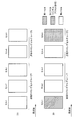
- the base station apparatus 3 includes cells 1 to 5 as shown in FIG. 3A, and the cells 1 to 3 are transmission timing cell groups having the same transmission timing. Assume that cell 5 is a transmission timing cell group having the same transmission timing.
- the mobile station apparatus 1-1 performs a cell search and finds one cell of the base station apparatus 3. Here, it is assumed that the mobile station apparatus 1-1 finds the cell 1.
- the mobile station apparatus 1-1 receives the broadcast channel PBCH of the cell 1, and acquires system information (cell physical channel configuration, transmission power information, information on random access, etc.). Then, the mobile station apparatus 1-1 transmits a random access preamble to the random access channel RACH of the cell 1 for initial access using information on random access included in the system information. Then, the mobile station apparatus 1-1 acquires (i) random access response information including transmission timing information for the cell 1 from the base station apparatus 3, and (ii) sets uplink component carrier transmission timing for the cell 1. Then, (iii) start the transmission timing timer.
- the mobile station apparatus 1-1 transmits the message 3 to the base station apparatus 3 via the cell 1.
- the mobile station apparatus 1-1 transmits the message 3 including the contents indicating the initial access in the message 3.
- the mobile station apparatus 1-1 receives the contention resolution from the base station apparatus 3, the mobile station apparatus 1-1 ends the contention based random access procedure.
- the base station device 3 allocates a cell to be used by the mobile station device 1-1 and notifies a cell that permits random access for each first cell and transmission timing cell group.
- the base station apparatus 3 assigns cells 1 to 5 to the mobile station apparatus 1-1, cell 1 is the first cell, and cells 2 to 5 are the second cell. Set to. The base station device 3 sets the cell 1 and the cell 5 to permit random access.
- the base station apparatus 3 (i) system information and cell timing group information of the cell allocated to the mobile station apparatus 1-1, (ii) uplink control channel PUCCH allocation information of the first cell, ( iii) Generation information of an uplink reference signal (measurement reference signal) and radio resource allocation information for transmitting an uplink reference signal (measurement reference signal), (iv) Radio resources of a periodic uplink shared channel PUSCH Setting information such as allocation information is also notified to the mobile station apparatus 1-1.
- the mobile station device 1-1 uses the same transmission timing as the cell 1 as the uplink transmission timing of the cell 2 and the cell 3 of the cell group.
- the transmission timing of cell 1 is set. Thereafter, data is exchanged between the mobile station apparatus 1-1 and the base station apparatus 3 via the downlink component carriers of cells 1 to 5 and the uplink component carriers of cells 1 to 3.
- the base station apparatus 3 When the amount of transmission data from the mobile station apparatus 1-1 increases and there is a cell that is not used by the mobile station apparatus 1-1, the base station apparatus 3 performs non-contention based random access to the cell for which random access is permitted. Random access instruction information for instructing access is notified by the downlink control channel PDCCH. Here, the base station apparatus 3 notifies the mobile station apparatus 1-1 of random access instruction information for the cell 5.
- the random access instruction information includes a preamble number and a random access channel number.
- the mobile station apparatus 1-1 confirms the preamble number, and if the preamble number indicates non-contention based random access, the mobile station apparatus 1-1 uses the preamble and random access channel specified by the base station apparatus 3 and uses the random access preamble. Is transmitted to the random access channel RACH of the cell 5.
- the base station device 3 When the base station device 3 detects the random access preamble, it calculates transmission timing information from the random access preamble, and the mobile station device 1-1 receives the random access including the transmission timing information via the downlink component carrier of the cell 5. Notify the response.
- the mobile station apparatus 1-1 sets the transmission timing included in the random access response as the uplink transmission timing of the cell 5.
- the mobile station apparatus 1-1 further sets the uplink transmission timing of the cell 4 that is the same transmission timing cell group, and starts the transmission timing timer. Then, the mobile station apparatus 1-1 completes the non-contention based random access procedure. Thereafter, data is exchanged between the mobile station apparatus 1-1 and the base station apparatus 3 including the uplink component carriers of the cells 4 and 5.
- the mobile station apparatus 1-1 has one transmission timing timer for each transmission timing cell group, and starts or restarts the transmission timing timer when receiving the transmission timing information.
- the base station apparatus 3 has one transmission timing timer for each transmission timing cell group, and when the transmission timing information is transmitted, the transmission timing timer is started or restarted. While the transmission timing timer is in operation, uplink synchronization is in effect (transmission timing is valid), and the mobile station apparatus 1-1 transmits an uplink on an uplink component carrier of the target transmission timing cell group. Transmission is possible.
- the transmission timing timer may be configured to be provided for each cell.
- the base station apparatus 3 measures the uplink reference signal from the mobile station apparatus 1-1 and calculates transmission timing information. When it is necessary to maintain the transmission timing, the base station device 3 notifies the mobile station device 1-1 of the transmission timing information.
- the mobile station device 1-1 When the transmission timing timer of the transmission timing cell group including the first cell expires, the mobile station device 1-1 (i) transmits the transmission timing cell group (cell 4, cell 5) configured only by the second cell. Stop the timing timer, and (ii) restrict uplink transmission other than random access preamble transmission in the first cell to all cells (cell 1, cell 2, cell 3, cell 4, cell 5), (iii) ) All data stored in the transmission HARQ storage unit 109 (hereinafter referred to as a transmission HARQ buffer) is deleted. Then, the mobile station apparatus 1-1 performs measurement allocated to the radio resources of the allocated uplink control channel PUCCH and all cells (cell 1, cell 2, cell 3, cell 4, cell 5). Release the radio resources of the reference signal for use. Also, when downlink and uplink allocation information is acquired, the mobile station apparatus 1-1 discards all downlink shared channel PDSCH allocation information and uplink shared channel PUSCH allocation information.
- the base station device 3 When the transmission timing timer of the transmission timing cell group including the first cell expires, the base station device 3 (i) transmits the transmission timing cell group (cell 4, cell 5) configured only by the second cell. Stop timing timer, (ii) stop allocation of uplink shared channel PUSCH to all cells of mobile station apparatus 1-1, and (iii) receive HARQ storage unit 221 (hereinafter referred to as receive HARQ buffer) ))) Erase all data stored in it. Then, the base station apparatus 3 releases the radio resource of the uplink control channel PUCCH allocated to the mobile station apparatus 1-1 and the radio resource of the measurement reference signal allocated to all cells.
- the base station apparatus 3 releases the radio resource of the uplink control channel PUCCH allocated to the mobile station apparatus 1-1 and the radio resource of the measurement reference signal allocated to all cells.
- the mobile station apparatus 1-1 When the transmission timing timer of the transmission timing cell group composed only of the second cell expires, the mobile station apparatus 1-1 includes the cells (cell 4 and cell 5) included in the transmission timing cell group whose transmission timing timer has expired. Uplink transmission is stopped, and data for cells included in the transmission timing cell group whose transmission timing timer stored in the transmission HARQ buffer has expired is erased. The mobile station apparatus 1-1 releases the radio resource of the reference signal for measurement assigned to the cell included in the transmission timing cell group whose transmission timing timer has expired. Further, when the mobile station apparatus 1-1 has acquired downlink and uplink assignment information, the mobile station apparatus 1-1 assigns the uplink shared channel PUSCH to the cells included in the transmission timing cell group whose transmission timing timer has expired. Discard information.
- the base station device 3 when the transmission timing timer of the transmission timing cell group configured by only the second cell expires, the base station device 3 includes cells (cell 4 and cell 5) included in the transmission timing cell group whose transmission timing timer has expired. The allocation of the uplink shared channel PUSCH to is stopped, and the data for the cells included in the transmission timing cell group whose transmission timing timer stored in the reception HARQ storage unit 221 has expired is erased. Then, the base station apparatus 3 releases the radio resources of the measurement reference signal allocated to the cells included in the transmission timing cell group for which the transmission timing timer allocated to the mobile station apparatus 1-1 has expired.
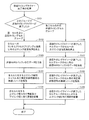
- FIG. 4 shows a processing flowchart of the mobile station device 1-1 when the transmission timing timer expires.
- the mobile station apparatus 1-1 checks which transmission timing cell group the transmission timing timer has expired (step S101).
- the mobile station apparatus 1-1 stops the transmission timing timer of the transmission timing cell group configured only by the second cell.
- the uplink transmission processing other than the random access preamble transmission in the first cell is stopped for all cells (step S102).
- the mobile station apparatus 1-1 deletes all data stored in the transmission HARQ buffer (step S103).
- the mobile station apparatus 1-1 releases the radio resource of the assigned uplink control channel PUCCH and the radio resource of the measurement reference signal assigned to all the cells (step 104). Further, when the radio resource of the periodic uplink shared channel PUSCH is assigned to the mobile station apparatus 1-1, the radio resource is also released.
- the mobile station apparatus 1-1 when acquiring the downlink and uplink allocation information, discards all the downlink shared channel PDSCH allocation information and the uplink shared channel PUSCH allocation information (step S105). ). Note that while the transmission timing is invalid in the transmission timing cell group including the first cell, the mobile station apparatus 1-1 may perform processing for detecting the uplink allocation information notified by the downlink control channel PDCCH. However, when uplink allocation information is detected, the mobile station apparatus 1-1 discards the acquired uplink allocation information. Note that the mobile station apparatus 1-1 also transmits a data response to the base station apparatus 3 even when data is received on the downlink shared channel PDSCH until the transmission timing becomes valid in the transmission timing cell group including the first cell. (Ack / Nack) is not returned.
- the radio resources of the uplink control channel PUCCH for data response (Ack / Nack) in the uplink control channel PUCCH allocated from the base station apparatus 3 may not be released. In this case, when uplink synchronization is resumed again, the mobile station apparatus 1-1 can immediately return a response to the downlink data to the base station apparatus 3.
- the mobile station apparatus 1-1 sets the cell included in the transmission timing cell group for which the transmission timing timer has expired. Then, the uplink transmission process is stopped (step S106). Also in this case, the mobile station apparatus 1-1 can transmit a random access preamble. Then, the mobile station device 1-1 deletes data for cells included in the transmission timing cell group whose transmission timing timer stored in the transmission HARQ buffer has expired (step S107). The mobile station apparatus 1-1 releases the radio resource of the reference signal for measurement assigned to the cell included in the transmission timing cell group whose transmission timing timer has expired (step S108).
- the mobile station apparatus 1-1 assigns the uplink shared channel PUSCH to the cells included in the transmission timing cell group whose transmission timing timer has expired. Information is discarded (step S109). Note that the mobile station apparatus 1-1 may perform detection processing of uplink allocation information notified by the downlink control channel PDCCH for cells included in the transmission timing cell group whose transmission timing timer has expired. However, when the uplink allocation information is detected, the mobile station apparatus 1-1 discards the acquired uplink allocation information.
- the mobile station apparatus 1-1 receives data on the downlink shared channel PDSCH, A data response (Ack / Nack) is returned to the base station apparatus 3 using the radio resource of the uplink control channel PUCCH.
- FIG. 5 shows a processing flowchart of the base station apparatus 3 when the transmission timing timer expires.
- the base station device 3 confirms which transmission timing cell group the transmission timing timer has expired (step S201).
- the transmission timing cell group for which the transmission timing timer has expired is a transmission timing cell group including the first cell
- the base station device 3 stops the transmission timing timer for the transmission timing cell group composed of only the second cell
- the allocation process of the uplink shared channel PUSCH of the mobile station apparatus 1-1 is stopped (step S202).
- the base station apparatus 3 deletes all data stored in the reception HARQ buffer (step S203).
- the base station apparatus 3 releases the radio resource of the uplink control channel PUCCH allocated to the mobile station apparatus 1-1 and the radio resource of the measurement reference signal allocated to all the cells (step 204).
- the radio resources of the uplink control channel PUCCH for data response (Ack / Nack) in the uplink control channel PUCCH allocated by the base station device 3 to the mobile station device 1-1 should not be released. May be. In this case, when uplink synchronization is resumed again, the mobile station apparatus 1-1 can immediately return a response to the downlink data to the base station apparatus 3.
- the base station device 3 When the transmission timing cell group for which the transmission timing timer has expired is a transmission timing cell group configured by only the second cell, the base station device 3 performs the operation for the cells included in the transmission timing cell group for which the transmission timing timer has expired.
- the uplink shared channel PUSCH allocation process is stopped (step S205).
- the base station device 3 erases data for cells included in the transmission timing cell group whose transmission timing timer stored in the reception HARQ buffer has expired (step S206).
- the base station apparatus 3 releases the radio resources of the measurement reference signal assigned to the cells included in the transmission timing cell group whose transmission timing timer has expired (step S207).
- the base station apparatus when the base station apparatus and the mobile station apparatus perform notification via the cells of a plurality of transmission timing cell groups, the base station apparatus considers the data amount from the mobile station apparatus and the like. Thus, the transmission timing information of each transmission timing cell group is notified or the notification is stopped. Thereby, the base station apparatus makes the transmission timing valid / invalid by continuing or stopping the transmission timing timer. This enables efficient transmission control of the mobile station apparatus by the base station apparatus.
- the mobile station apparatus 1-1 when the transmission timing timer of the transmission timing cell group including the first cell expires, the mobile station apparatus 1-1 further stops downlink reception processing for all the second cells, and receives HARQ. Erases data for all second cells stored in the buffer. Then, when the transmission timing timer of the transmission timing cell group composed only of the second cell expires, the mobile station apparatus 1-1 performs the downlink reception process for the cells of the transmission timing cell group whose transmission timing timer has expired. The data stored in the reception HARQ buffer of the cell of the transmission timing cell group that has stopped and whose transmission timing timer has expired may be erased.
- the mobile station apparatus 1-1 and the base station apparatus 3 of the embodiment have been described using functional block diagrams, but the functions of the respective units of the mobile station apparatus 1-1 and the base station apparatus 3 or these
- a program for realizing a part of the above functions is recorded on a computer-readable recording medium, and the program recorded on the recording medium is read into a computer system and executed, whereby the mobile station apparatus and the base station apparatus Control may be performed.
- the “computer system” here includes an OS (Operating System) and hardware such as peripheral devices.
- Computer-readable recording medium means a portable medium such as a flexible disk, a magneto-optical disk, a ROM (Read Only Memory), a CD (Compact Disk) -ROM, or a hard disk built in a computer system. Refers to the device. Furthermore, the “computer-readable recording medium” means that a program is dynamically held for a short time, like a communication line when a program is transmitted via a network such as the Internet or a communication line such as a telephone line. In this case, it is intended to include those that hold a program for a certain period of time, such as a volatile memory inside a computer system serving as a server or a client in that case.
- the program may be a program for realizing a part of the functions described above, and may be a program capable of realizing the functions described above in combination with a program already recorded in a computer system. .
- each functional block used in each of the above embodiments may be realized as an LSI that is typically an integrated circuit.
- Each functional block may be individually formed into chips, or a part or all of them may be integrated into a chip.
- the method of circuit integration is not limited to LSI, and may be realized by a dedicated circuit or a general-purpose processor.
- an integrated circuit based on the technology can also be used.
Landscapes
- Engineering & Computer Science (AREA)
- Computer Networks & Wireless Communication (AREA)
- Signal Processing (AREA)
- Mobile Radio Communication Systems (AREA)
Priority Applications (7)
| Application Number | Priority Date | Filing Date | Title |
|---|---|---|---|
| EP11849348.5A EP2654337B1 (en) | 2010-12-17 | 2011-12-14 | Mobile station apparatus, base station apparatus, wireless communication system, control method, and integrated circuit |
| CN201180060356.9A CN103535064B (zh) | 2010-12-17 | 2011-12-14 | 移动台装置、基站装置、无线通信系统、控制方法以及集成电路 |
| US13/994,279 US9258804B2 (en) | 2010-12-17 | 2011-12-14 | Mobile station apparatus including flashing and releasing circuitry and wireless communication system using same |
| US14/950,287 US9872281B2 (en) | 2010-12-17 | 2015-11-24 | Mobile station apparatus stopping uplink transmission based on timer expiration and, method and processor corresponding to the same |
| US15/636,803 US10194429B2 (en) | 2010-12-17 | 2017-06-29 | Mobile station apparatus that controls an uplink transmission, and a method for controlling an uplink transmission |
| US16/211,369 US10674491B2 (en) | 2010-12-17 | 2018-12-06 | Mobile station apparatus, method, and processor of the same configuring multiple timers related to multiple cell groups associated with HARQ buffers |
| US16/886,833 US20200296719A1 (en) | 2010-12-17 | 2020-05-29 | Mobile station apparatus, method, and processor of the same |
Applications Claiming Priority (2)
| Application Number | Priority Date | Filing Date | Title |
|---|---|---|---|
| JP2010281681A JP5307112B2 (ja) | 2010-12-17 | 2010-12-17 | 移動局装置、基地局装置、無線通信システム、制御方法及び集積回路 |
| JP2010-281681 | 2010-12-17 |
Related Child Applications (2)
| Application Number | Title | Priority Date | Filing Date |
|---|---|---|---|
| US13/994,279 A-371-Of-International US9258804B2 (en) | 2010-12-17 | 2011-12-14 | Mobile station apparatus including flashing and releasing circuitry and wireless communication system using same |
| US14/950,287 Continuation US9872281B2 (en) | 2010-12-17 | 2015-11-24 | Mobile station apparatus stopping uplink transmission based on timer expiration and, method and processor corresponding to the same |
Publications (1)
| Publication Number | Publication Date |
|---|---|
| WO2012081612A1 true WO2012081612A1 (ja) | 2012-06-21 |
Family
ID=46244709
Family Applications (1)
| Application Number | Title | Priority Date | Filing Date |
|---|---|---|---|
| PCT/JP2011/078892 Ceased WO2012081612A1 (ja) | 2010-12-17 | 2011-12-14 | 移動局装置、基地局装置、無線通信システム、制御方法及び集積回路 |
Country Status (5)
| Country | Link |
|---|---|
| US (5) | US9258804B2 (https=) |
| EP (1) | EP2654337B1 (https=) |
| JP (1) | JP5307112B2 (https=) |
| CN (1) | CN103535064B (https=) |
| WO (1) | WO2012081612A1 (https=) |
Cited By (2)
| Publication number | Priority date | Publication date | Assignee | Title |
|---|---|---|---|---|
| US20190166570A1 (en) * | 2011-07-29 | 2019-05-30 | Nec Corporation | Radio station, radio terminal, and synchronization timer control method in radio comunication system |
| US10887875B2 (en) | 2011-04-08 | 2021-01-05 | Sharp Kabushiki Kaisha | User equipment, base station, a method performed by a user equipment (UE) and a method performed by a base station for multi-group communications |
Families Citing this family (44)
| Publication number | Priority date | Publication date | Assignee | Title |
|---|---|---|---|---|
| WO2011138849A1 (ja) | 2010-05-06 | 2011-11-10 | パナソニック株式会社 | 端末装置及び応答信号マッピング方法 |
| CN107613523B (zh) | 2011-02-15 | 2021-12-28 | 三星电子株式会社 | 用户设备优先级的功率余量报告方法和装置 |
| KR102073027B1 (ko) * | 2011-04-05 | 2020-02-04 | 삼성전자 주식회사 | 반송파 집적 기술을 사용하는 무선통신시스템에서 복수 개의 타임 정렬 타이머 운용 방법 및 장치 |
| JP6125437B2 (ja) | 2011-02-21 | 2017-05-10 | サムスン エレクトロニクス カンパニー リミテッド | 端末送信電力量を效率的に報告する方法及び装置 |
| KR101995293B1 (ko) | 2011-02-21 | 2019-07-02 | 삼성전자 주식회사 | 반송파 집적 기술을 사용하는 시분할 무선통신시스템에서 부차반송파의 활성화 또는 비활성화 방법 및 장치 |
| KR101646320B1 (ko) | 2011-04-21 | 2016-08-05 | 후지쯔 가부시끼가이샤 | 타임 어드밴스 타이머를 유지하는 방법, 기지국 및 단말 장비 |
| US9681405B2 (en) | 2011-05-10 | 2017-06-13 | Samsung Electronics Co., Ltd. | Method and apparatus for applying a time alignment timer in a wireless communication system using a carrier aggregation technique |
| US8395985B2 (en) | 2011-07-25 | 2013-03-12 | Ofinno Technologies, Llc | Time alignment in multicarrier OFDM network |
| CN102932908B (zh) * | 2011-08-12 | 2016-03-23 | 上海贝尔股份有限公司 | 控制用户设备在从小区组中的从小区上的上行传输的方法 |
| US8964780B2 (en) | 2012-01-25 | 2015-02-24 | Ofinno Technologies, Llc | Sounding in multicarrier wireless communications |
| US8964683B2 (en) | 2012-04-20 | 2015-02-24 | Ofinno Technologies, Llc | Sounding signal in a multicarrier wireless device |
| US9237537B2 (en) | 2012-01-25 | 2016-01-12 | Ofinno Technologies, Llc | Random access process in a multicarrier base station and wireless device |
| EP3937551A3 (en) | 2012-01-25 | 2022-02-09 | Comcast Cable Communications, LLC | Random access channel in multicarrier wireless communications with timing advance groups |
| US11943813B2 (en) | 2012-04-01 | 2024-03-26 | Comcast Cable Communications, Llc | Cell grouping for wireless communications |
| US20130259008A1 (en) | 2012-04-01 | 2013-10-03 | Esmael Hejazi Dinan | Random Access Response Process in a Wireless Communications |
| WO2013151651A1 (en) | 2012-04-01 | 2013-10-10 | Dinan Esmael Hejazi | Cell group configuration in a wireless device and base station with timing advance groups |
| US11825419B2 (en) | 2012-04-16 | 2023-11-21 | Comcast Cable Communications, Llc | Cell timing in a wireless device and base station |
| US8964593B2 (en) | 2012-04-16 | 2015-02-24 | Ofinno Technologies, Llc | Wireless device transmission power |
| EP3337079B1 (en) | 2012-04-16 | 2024-06-05 | Comcast Cable Communications, LLC | Cell group configuration for uplink transmission in a multicarrier wireless device and base station with timing advance groups |
| US11582704B2 (en) | 2012-04-16 | 2023-02-14 | Comcast Cable Communications, Llc | Signal transmission power adjustment in a wireless device |
| US11252679B2 (en) | 2012-04-16 | 2022-02-15 | Comcast Cable Communications, Llc | Signal transmission power adjustment in a wireless device |
| US9210664B2 (en) | 2012-04-17 | 2015-12-08 | Ofinno Technologies. LLC | Preamble transmission in a wireless device |
| US9179425B2 (en) | 2012-04-17 | 2015-11-03 | Ofinno Technologies, Llc | Transmit power control in multicarrier communications |
| US8971298B2 (en) | 2012-06-18 | 2015-03-03 | Ofinno Technologies, Llc | Wireless device connection to an application server |
| US9179457B2 (en) | 2012-06-20 | 2015-11-03 | Ofinno Technologies, Llc | Carrier configuration in wireless networks |
| US9107206B2 (en) | 2012-06-18 | 2015-08-11 | Ofinne Technologies, LLC | Carrier grouping in multicarrier wireless networks |
| US11882560B2 (en) | 2012-06-18 | 2024-01-23 | Comcast Cable Communications, Llc | Carrier grouping in multicarrier wireless networks |
| US9210619B2 (en) | 2012-06-20 | 2015-12-08 | Ofinno Technologies, Llc | Signalling mechanisms for wireless device handover |
| US11622372B2 (en) | 2012-06-18 | 2023-04-04 | Comcast Cable Communications, Llc | Communication device |
| US9113387B2 (en) | 2012-06-20 | 2015-08-18 | Ofinno Technologies, Llc | Handover signalling in wireless networks |
| US9084228B2 (en) | 2012-06-20 | 2015-07-14 | Ofinno Technologies, Llc | Automobile communication device |
| JP6480421B2 (ja) * | 2014-03-31 | 2019-03-13 | 株式会社Nttドコモ | 移動局及び上りリンク信号送信方法 |
| WO2016089146A1 (ko) * | 2014-12-05 | 2016-06-09 | 엘지전자(주) | 무선 통신 시스템에서 셀 선택 방법 및 이를 위한 장치 |
| WO2016126027A1 (en) * | 2015-02-04 | 2016-08-11 | Lg Electronics Inc. | Method for deactivating scells upon a tat expiry for pucch cell in a carrier aggregation system and a device therefor |
| JP6408402B2 (ja) * | 2015-03-06 | 2018-10-17 | 富士通株式会社 | タイミングアドバンスタイマーの維持方法、基地局及び端末装置 |
| ES2945339T3 (es) * | 2015-09-18 | 2023-06-30 | Guangdong Oppo Mobile Telecommunications Corp Ltd | Dispositivo terminal, dispositivo de estación base, método de comunicación y circuito integrado |
| US10448448B2 (en) * | 2015-09-18 | 2019-10-15 | Sharp Kabushiki Kaisha | Terminal device that stops an uplink transmission after considering a timer as being expired, base station device that considers an uplink transmission stopped after considering a timer as being expired, and communication method and integrated circuit corresponding to same |
| US10470142B2 (en) * | 2016-09-12 | 2019-11-05 | Qualcomm Incorporated | Synchronization and reference signal for uplink based mobility |
| KR102314295B1 (ko) | 2017-09-07 | 2021-10-20 | 베이징 시아오미 모바일 소프트웨어 컴퍼니 리미티드 | 상향링크 빔 관리 |
| US10880867B2 (en) * | 2017-11-17 | 2020-12-29 | Qualcomm Incorporated | Selecting a new radio uplink resource to transmit a random access procedure communication |
| WO2019160360A1 (ko) * | 2018-02-14 | 2019-08-22 | 엘지전자 주식회사 | 무선 통신 시스템에서 상향링크 전송을 수행하기 위한 방법 및 이를 위한 장치 |
| US12113735B2 (en) * | 2018-11-02 | 2024-10-08 | Lg Electronics Inc. | Method for transmitting data on physical shared channel in wireless communication system, and device for same |
| US11032854B2 (en) * | 2019-01-18 | 2021-06-08 | Qualcomm Incorporated | Variable payload size for two-step random access |
| JP7039739B2 (ja) * | 2019-02-12 | 2022-03-22 | 京セラ株式会社 | 通信制御方法、ユーザ装置、及び基地局 |
Family Cites Families (13)
| Publication number | Priority date | Publication date | Assignee | Title |
|---|---|---|---|---|
| US8214711B2 (en) * | 2006-12-28 | 2012-07-03 | Telefonaktiebolaget L M Ericsson (Publ) | Next data indicator handling |
| EP2120480A4 (en) * | 2007-03-06 | 2013-12-11 | Ntt Docomo Inc | MOBILE STATION, BASIC STATION EQUIPMENT, WIRELESS COMMUNICATION SYSTEM AND COMMUNICATION CONTROL METHOD |
| KR100937432B1 (ko) * | 2007-09-13 | 2010-01-18 | 엘지전자 주식회사 | 무선 통신 시스템에서의 무선자원 할당 방법 |
| WO2009096748A2 (en) * | 2008-02-01 | 2009-08-06 | Lg Electronics Inc. | Mobile communication system and method for transmitting pdcp status report thereof |
| KR101531419B1 (ko) * | 2008-02-01 | 2015-06-24 | 엘지전자 주식회사 | 시간동기 타이머의 만료 시 상향링크 harq의 동작 방법 |
| RU2457636C2 (ru) * | 2008-03-21 | 2012-07-27 | Интердиджитал Пэйтент Холдингз, Инк. | Способ и устройство для выполнения изменения обслуживающей соты hs-dsch |
| CN101999219B (zh) * | 2008-04-14 | 2014-02-19 | Lg电子株式会社 | 执行随机接入过程的方法和装置 |
| KR101468742B1 (ko) * | 2008-05-06 | 2014-12-04 | 엘지전자 주식회사 | 무선통신 시스템에서 데이터 전송 방법 |
| EP2131624A1 (en) * | 2008-06-03 | 2009-12-09 | Innovative Sonic Limited | Method and apparatus for handling semi-persistent transmission resource |
| US9137764B2 (en) * | 2009-03-17 | 2015-09-15 | Htc Corporation | Method of managing timing alignment functionality for multiple component carriers and related communication device |
| KR101668699B1 (ko) * | 2009-08-20 | 2016-10-28 | 엘지전자 주식회사 | 다중 안테나 무선 통신 시스템에서 재전송 수행 방법 및 이를 위한 장치 |
| CA2775305C (en) * | 2009-09-25 | 2017-07-11 | Research In Motion Limited | System and method for multi-carrier network operation |
| US9084195B2 (en) * | 2010-04-01 | 2015-07-14 | Nokia Technologies Oy | Multiple timing advance and carrier aggregation |
-
2010
- 2010-12-17 JP JP2010281681A patent/JP5307112B2/ja active Active
-
2011
- 2011-12-14 WO PCT/JP2011/078892 patent/WO2012081612A1/ja not_active Ceased
- 2011-12-14 CN CN201180060356.9A patent/CN103535064B/zh active Active
- 2011-12-14 US US13/994,279 patent/US9258804B2/en active Active
- 2011-12-14 EP EP11849348.5A patent/EP2654337B1/en active Active
-
2015
- 2015-11-24 US US14/950,287 patent/US9872281B2/en not_active Expired - Fee Related
-
2017
- 2017-06-29 US US15/636,803 patent/US10194429B2/en not_active Expired - Fee Related
-
2018
- 2018-12-06 US US16/211,369 patent/US10674491B2/en not_active Expired - Fee Related
-
2020
- 2020-05-29 US US16/886,833 patent/US20200296719A1/en not_active Abandoned
Non-Patent Citations (4)
| Title |
|---|
| "E-mail rapporteur (NTT DOCOMO, INC.), CA support for multi-TA", 3GPP TSG- RAN2#69 R2-101567, 22 February 2010 (2010-02-22), XP050421923, Retrieved from the Internet <URL:http://www.3gpp.org/ftp/tsg_ran/WG2RL2/TSGR269/Docs/R2-101567.zip> [retrieved on 20120308] * |
| 3GPP TR (TECHNICAL REPORT) 36.814, March 2010 (2010-03-01) |
| 3GPP TS (TECHNICAL SPECIFICATION) 36.300, V9.40, June 2010 (2010-06-01) |
| See also references of EP2654337A4 |
Cited By (2)
| Publication number | Priority date | Publication date | Assignee | Title |
|---|---|---|---|---|
| US10887875B2 (en) | 2011-04-08 | 2021-01-05 | Sharp Kabushiki Kaisha | User equipment, base station, a method performed by a user equipment (UE) and a method performed by a base station for multi-group communications |
| US20190166570A1 (en) * | 2011-07-29 | 2019-05-30 | Nec Corporation | Radio station, radio terminal, and synchronization timer control method in radio comunication system |
Also Published As
| Publication number | Publication date |
|---|---|
| CN103535064A (zh) | 2014-01-22 |
| EP2654337A1 (en) | 2013-10-23 |
| EP2654337B1 (en) | 2018-02-21 |
| JP2012129922A (ja) | 2012-07-05 |
| US20170303269A1 (en) | 2017-10-19 |
| US20160081080A1 (en) | 2016-03-17 |
| US10194429B2 (en) | 2019-01-29 |
| US10674491B2 (en) | 2020-06-02 |
| CN103535064B (zh) | 2017-02-08 |
| US9258804B2 (en) | 2016-02-09 |
| US20200296719A1 (en) | 2020-09-17 |
| US20130279486A1 (en) | 2013-10-24 |
| US20190110289A1 (en) | 2019-04-11 |
| US9872281B2 (en) | 2018-01-16 |
| JP5307112B2 (ja) | 2013-10-02 |
| EP2654337A4 (en) | 2016-01-06 |
Similar Documents
| Publication | Publication Date | Title |
|---|---|---|
| JP5307112B2 (ja) | 移動局装置、基地局装置、無線通信システム、制御方法及び集積回路 | |
| JP5291135B2 (ja) | 無線通信システム、基地局装置、移動局装置、無線通信方法及び集積回路 | |
| JP5888646B2 (ja) | 無線通信システム、移動局装置、基地局装置、無線通信方法及び集積回路 | |
| US9326276B2 (en) | Wireless communication system, base station apparatus, mobile station apparatus, wireless communication method, and integrated circuit | |
| WO2013047219A1 (ja) | 無線通信システム、移動局装置、基地局装置、無線通信方法及び集積回路 | |
| WO2012017841A1 (ja) | 基地局装置、移動局装置、移動通信システム、通信方法、制御プログラムおよび集積回路 | |
| WO2012124557A1 (ja) | 無線通信システム、基地局装置、移動局装置、無線通信方法、および集積回路 | |
| JP6446710B2 (ja) | 基地局装置、端末装置、無線通信方法および集積回路 | |
| JP2013042257A (ja) | 無線通信システム、基地局装置、移動局装置、無線通信方法及び集積回路 |
Legal Events
| Date | Code | Title | Description |
|---|---|---|---|
| 121 | Ep: the epo has been informed by wipo that ep was designated in this application |
Ref document number: 11849348 Country of ref document: EP Kind code of ref document: A1 |
|
| WWE | Wipo information: entry into national phase |
Ref document number: 13994279 Country of ref document: US |
|
| NENP | Non-entry into the national phase |
Ref country code: DE |