WO2012010554A1 - Use of compounds resulting from a sugar polyol or from a dehydrogenated sugar polyol derivative as a uv-screening agent; antisun compositions containing same; and novel compounds - Google Patents
Use of compounds resulting from a sugar polyol or from a dehydrogenated sugar polyol derivative as a uv-screening agent; antisun compositions containing same; and novel compounds Download PDFInfo
- Publication number
- WO2012010554A1 WO2012010554A1 PCT/EP2011/062240 EP2011062240W WO2012010554A1 WO 2012010554 A1 WO2012010554 A1 WO 2012010554A1 EP 2011062240 W EP2011062240 W EP 2011062240W WO 2012010554 A1 WO2012010554 A1 WO 2012010554A1
- Authority
- WO
- WIPO (PCT)
- Prior art keywords
- formula
- radical
- alkyl
- agents
- branched
- Prior art date
- Legal status (The legal status is an assumption and is not a legal conclusion. Google has not performed a legal analysis and makes no representation as to the accuracy of the status listed.)
- Ceased
Links
- PHFXRRAFGACIMP-AXMZGBSTSA-N C#[N][C@]1([C@H]2OC[C@@H]1O)OC[C@@H]2O Chemical compound C#[N][C@]1([C@H]2OC[C@@H]1O)OC[C@@H]2O PHFXRRAFGACIMP-AXMZGBSTSA-N 0.000 description 1
- LFNPQRVVAGEVOS-AELBAFSOSA-N CCOc1ccc(/C=C/C(O[C@H]([C@H]([C@@H]([C@H]2O)O)O)O[C@H]2O)=O)cc1 Chemical compound CCOc1ccc(/C=C/C(O[C@H]([C@H]([C@@H]([C@H]2O)O)O)O[C@H]2O)=O)cc1 LFNPQRVVAGEVOS-AELBAFSOSA-N 0.000 description 1
Classifications
-
- C—CHEMISTRY; METALLURGY
- C07—ORGANIC CHEMISTRY
- C07D—HETEROCYCLIC COMPOUNDS
- C07D493/00—Heterocyclic compounds containing oxygen atoms as the only ring hetero atoms in the condensed system
- C07D493/02—Heterocyclic compounds containing oxygen atoms as the only ring hetero atoms in the condensed system in which the condensed system contains two hetero rings
- C07D493/04—Ortho-condensed systems
-
- A—HUMAN NECESSITIES
- A61—MEDICAL OR VETERINARY SCIENCE; HYGIENE
- A61K—PREPARATIONS FOR MEDICAL, DENTAL OR TOILETRY PURPOSES
- A61K8/00—Cosmetics or similar toiletry preparations
- A61K8/18—Cosmetics or similar toiletry preparations characterised by the composition
- A61K8/30—Cosmetics or similar toiletry preparations characterised by the composition containing organic compounds
- A61K8/49—Cosmetics or similar toiletry preparations characterised by the composition containing organic compounds containing heterocyclic compounds
- A61K8/4973—Cosmetics or similar toiletry preparations characterised by the composition containing organic compounds containing heterocyclic compounds with oxygen as the only hetero atom
-
- A—HUMAN NECESSITIES
- A61—MEDICAL OR VETERINARY SCIENCE; HYGIENE
- A61Q—SPECIFIC USE OF COSMETICS OR SIMILAR TOILETRY PREPARATIONS
- A61Q17/00—Barrier preparations; Preparations brought into direct contact with the skin for affording protection against external influences, e.g. sunlight, X-rays or other harmful rays, corrosive materials, bacteria or insect stings
- A61Q17/04—Topical preparations for affording protection against sunlight or other radiation; Topical sun tanning preparations
-
- C—CHEMISTRY; METALLURGY
- C07—ORGANIC CHEMISTRY
- C07H—SUGARS; DERIVATIVES THEREOF; NUCLEOSIDES; NUCLEOTIDES; NUCLEIC ACIDS
- C07H13/00—Compounds containing saccharide radicals esterified by carbonic acid or derivatives thereof, or by organic acids, e.g. phosphonic acids
- C07H13/02—Compounds containing saccharide radicals esterified by carbonic acid or derivatives thereof, or by organic acids, e.g. phosphonic acids by carboxylic acids
- C07H13/04—Compounds containing saccharide radicals esterified by carbonic acid or derivatives thereof, or by organic acids, e.g. phosphonic acids by carboxylic acids having the esterifying carboxyl radicals attached to acyclic carbon atoms
Definitions
- the present invention relates to the cosmetic use of compounds resulting from a sugar polyol or from a dehydrogenated sugar polyol derivative of formula (I) or (II), which will be defined in detail below, as an agent for screening out UV radiation.
- the present invention also relates to a composition
- a composition comprising, in a cosmetically acceptable medium, at least one compound of formula (I) or (II).
- the present invention also relates to novel compounds resulting from a sugar polyol or from a dehydrogenated sugar polyol derivative.
- UV-B radiation should thus be screened out.
- UV-A rays with wavelengths between 320 and 400 nm, which cause tanning of the skin, are liable to induce adverse changes therein, in particular in the case of sensitive skin or skin that is continually exposed to solar radiation.
- UV-A rays cause in particular a loss of elasticity of the skin and the appearance of wrinkles leading to premature ageing of the skin.
- an increasingly large number of people wish to control the effect of UV-A rays on their skin. It is thus desirable also to screen out UV-A radiation.
- antisun compositions comprising organic screening agents that are active in the UV-A range and in the UV-B range are generally used.
- antisun compositions are quite often in the form of an emulsion, of oil-in-water type (i.e. a cosmetically and/or dermatologically acceptable support consisting of an aqueous dispersing continuous phase and of a fatty dispersed discontinuous phase), or of water-in-oil type (aqueous phase dispersed in a continuous fatty phase), which contains, in varying concentrations, one or more standard lipophilic organic screening agents and/or metal oxide mineral nanopigments capable of selectively absorbing the harmful UV radiation, these screening agents (and the amounts thereof) being selected as a function of the desired sun protection factor, the sun protection factor (SPF) being expressed mathematically as the ratio of the dose of UV radiation required to reach the erythema-forming threshold with the UV-screening agent to the dose of UV radiation required to reach the erythema-forming threshold without the UV-screening agent.
- the hydrophilic screening agents are present in the aqueous phase and the lipophilic screening agents are present in the
- Oil-in-water emulsions are, in general, more appreciated by consumers than water-in-oil emulsions, especially on account of their pleasant feel (similar to water) and of their presentation in the form of milk or non-greasy cream; however, they also lose their UV- protecting efficacy more easily once they come into contact with water; specifically, hydrophilic screening agents have a tendency to disappear with water, on bathing in the sea or in a swimming pool, under the shower or when practising water sports; thus, the antisun compositions that contain them, alone or combined with lipophilic screening agents, no longer afford the desired initial protection once the substrate (skin or hair) onto which they have been applied comes into contact with water.
- Antisun compositions with improved water resistance may be obtained by using water-in- oil emulsions.
- a hydrophilic screening agent is more stable towards water in a water-in-oil emulsion than in an oil-in-water emulsion.
- such compositions are still not entirely satisfactory since they leave upon application a greasy feel that users find particularly unpleasant.
- organic sunscreens are subject to strict environmental regulation, especially to the European REACH regulation. They are evaluated on the criteria of persistance, bioaccumulation and ecotoxicity.
- the potential for bioaccumulation is first evaluated by considering various parameters including the molecular weight (MW) and log Kow. For a chemical substance not to be suspected of bioaccumulation, this log Kow should be less than 3.5.
- the log Kow may be calculated with various software, including KOWWIN v1.67a (The EPI (Estimation Programs Interface) SuiteTM is a Windows ® -based suite of physical/chemical property and environmental fate estimation programs developed by the EPA's Office of Pollution Prevention Toxics and Syracuse Research Corporation (SRC) http://www.epa.gov/oppt/exposure/pubs/episuite.htm).
- KOWWIN v1.67a The EPI (Estimation Programs Interface) SuiteTM is a Windows ® -based suite of physical/chemical property and environmental fate estimation programs developed by the EPA's Office of Pollution Prevention Toxics and Syracuse Research Corporation (SRC) http://www.epa.gov/oppt/exposure/pubs/episuite.htm).
- UV-screening agents diester derivatives obtained by reaction of a cinnamic acid (including ferulic acid) with a sugar polyol or an anhydrous sugar polyol derivative (isosorbide, isomannide, isoidide) have already been proposed as UV-screening agents.
- these UV-screening agents are not completely satisfactory from a viewpoint of solubility in the oils commonly used in antisun formulations and from an environmental viewpoint.
- the object of the present invention is thus to find novel UV-screening agents that can be applied to the surface of the skin and/or the hair and that are more stable with respect to common attacking factors during use, such as water, washing, bathing, swimming, sand, perspiration, sebum and rubbing, than standard UV-screening agents, and that have a good solubility in the antisun formulation and also good environmental behaviour.
- the present invention relates to the cosmetic use of at least one compound resulting from a sugar polyol or from a dehydrogenated sugar polyol derivative of formula (I) or (II), which will be defined in detail below, as an agent for screening out UV radiation.
- the present invention also relates to a composition
- a composition comprising, in a cosmetically acceptable medium, at least one sugar polyol derivative of formula (I) or (II).
- the present invention also relates to novel compounds resulting from a sugar polyol or from a dehydrogenated sugar polyol derivative.
- cosmetically acceptable means compatible with the skin and/or its integuments, which has a pleasant colour, odour and feel, and which does not cause any unacceptable discomfort (stinging, tautness or redness) liable to dissuade the consumer from using this composition.
- the compound(s) of formula (I) or (II) in accordance with the invention may be present in the compositions according to the invention in a concentration of between 0.1 % and 15% and preferably between 0.2% and 10% by weight relative to the total weight of the composition.
- R 1 radicals which may be identical or different, represent hydrogen; a linear or branched C C 3 o alkyl or C 3 -C 3 o alkenyl radical which may bear one or more hydroxyl substituents and which may contain in the carbon-based chain an alkyl ring, one or more heteroatoms chosen from oxygen, nitrogen and silicon atoms,
- the two R 1 radicals possibly forming a C 3 -C 7 alkyl ring; with the proviso that the two R 1 radicals cannot simultaneously be hydrogen, - R 2 represents the hydroxyl radical, a linear or branched C1-C1 0 alkoxy radical, a linear or branched C1-C1 0 alkyl radical, a linear or branched C 2 -C 8 alkenyl radical or - OSi(CH 3 ) 3 ; two adjacent R 2 radicals together possibly forming an alkylidenedioxy group in which the alkylidene group contains 1 to 2 carbon atoms,
- R 4 represents a linear or branched CrC 30 alkyl or C 3 -C 30 alkenyl radical which may bear one or more hydroxyl substituents and which may contain in the carbon-based chain an alkyl ring, one or more heteroatoms chosen from oxygen, nitrogen and silicon atoms,
- - X represents oxygen or an -NR 5 radical with R 5 being a linear or branched C C 8 alkyl radical
- R 6 represents a linear or branched C C 30 alkyl or C 3 -C 30 alkenyl radical which may bear one or more hydroxyl substituents and which may contain in the carbon-based chain an alkyl ring, one or more heteroatoms chosen from oxygen, nitrogen and silicon atoms,
- R 2 radical adjacent to the OR 6 group possibly forming with the latter an alkylenedioxy group in which the alkylidene group contains 1 to 2 carbon atoms;
- - Y represents the -(CH 2 ) q - group, which is uninterrupted or interrupted with -O- or -S-, and/or unsubstituted or substituted with one or two, linear or branched, C C 6 alkyl radicals;
- - q is an integer ranging from 2 to 5;
- - Zi represents a sugar polyol group or a dehydrogenated sugar polyol derivative such that the product of formula (I) has in its structure from 1 to 4 -OH groups remaining and optionally from 1 to 2 -COOH groups;
- the Z 2 radicals which may be identical or different, represent a sugar polyol group or a dehydrogenated sugar polyol derivative group such that the product of formula (II) has in its structure from 1 to 5 -OH groups remaining and optionally from 1 to 2 -COOH groups.
- the compounds of formulae (IV), (V), (Vila), (Vllb), (Xb), (XI) and (XII) may be in the E or Z isomeric forms.
- the compounds of formula (Xa) may be in the ⁇ , ⁇ -, ⁇ , ⁇ - or ⁇ , ⁇ - isomeric forms.
- dehydrogenated sugar polyol derivative group As an example of a dehydrogenated sugar polyol derivative group, mention may be made of:
- Ai represents one of the formulae (V), (VI), (Vila), (VIII), (IX) or (Xa);
- ⁇ glycerol, isosorbide or D-glucopyranose;
- R 1 denotes a C C 5 alkyl radical;
- R 3 denotes hydrogen, -CN or -SO2R4;
- R 4 denotes a C 1 -C5 alkyl.
- Z 2 glycerol or isosorbide
- R 2 denotes a C Ci 0 alkoxy radical
- R 3 denotes hydrogen, -CN or -SO2R4; R 4 denotes a CrC 5 alkyl.
- the more particularly preferred compounds of formula (II) are compounds (m) to (o) below and also the isomeric forms thereof:
- One subject of the invention is the compounds of formula (I) or (II) as defined previously, with the exception of compounds (a) to (f).
- the compounds of formula (I) may be prepared according to an esterification process starting from the corresponding carboxylic or sulphonic acid, or by a transesterification process starting from the corresponding ester, processes known to a person skilled in the art.
- the compounds of formula (I) containing an isosorbide group as the compound (g) may be in particular obtained by reaction between a mono-protected isosorbide 5- Tetrahydropyrane and the starting corresponding carboxylic acid or sulphonic acid group followed by selective deprotection using acid to give desired compound.
- the compounds of formula (II) may be prepared according to a 2-step process:
- esterification starting from the corresponding carboxylic or sulphonic acid or by a transesterification process starting from the corresponding ester, processes known to a person skilled in the art;
- compositions in accordance with the invention may also comprise other additional UVA-active and/or UVB-active organic or mineral UV-screening agents that are liposoluble or even insoluble, and also water-soluble UVB-screening agents, in the cosmetic solvents commonly used.
- the additional organic screening agents are chosen especially from dibenzoylmethane derivatives; anthranilates; cinnamic derivatives; salicylic derivatives; camphor derivatives; benzophenone derivatives; ⁇ , ⁇ -diphenylacrylate derivatives; triazine derivatives other than those of formula (I); benzalmalonate derivatives, especially those mentioned in patent US 5 624 663; benzimidazole derivatives; imidazolines; p- aminobenzoic acid (PABA) derivatives; benzotriazole derivatives; methylenebis- (hydroxyphenylbenzotriazole) derivatives as described in patent applications US 5 237 071 , US 5 166 355, GB 2 303 549, DE 197 26 184 and EP 893 119; benzoxazole derivatives as described in patent applications EP 0 832 642, EP 1 027 883, EP 1 300 137 and DE 101 62 844; screening polymers and screening silicones such as those described especially in patent application WO
- organic UV-screening agents mention may be made of those denoted hereinbelow under their INCI name:
- Butylmethoxydibenzoylmethane sold under the trade name Parsol 1789 by the company DSM Nutritional Products.
- Ethylhexyl dimethyl PABA sold in particular under the name Escalol 507 by ISP, Glyceryl PABA,
- Ethylhexyl salicylate sold under the name Neo Heliopan OS by Symrise,
- TEA salicylate sold under the name Neo Heliopan TS by Symrise.
- Ethylhexyl methoxycinnamate sold especially under the trade name Parsol MCX by DSM Nutritional Products,
- Neo Heliopan E 1000 Isoamyl methoxycinnamate sold under the trade name Neo Heliopan E 1000 by
- Etocrylene sold especially under the trade name Uvinul N35 by BASF,
- Benzophenone-3 or Oxybenzone sold under the trade name Uvinul M40 by BASF
- Benzophenone-4 sold under the trade name Uvinul MS40 by BASF
- Benzophenone-8 sold under the trade name Spectra-Sorb UV-24 by American Cyanamid,
- Phenylbenzimidazolesulfonic acid sold in particular under the trade name Eusolex 232 by Merck,
- Ethylhexyltriazone sold in particular under the trade name Uvinul T150 by BASF, Diethylhexylbutamidotriazone sold under the trade name Uvasorb HEB by Sigma 3V, 2,4-Bis(n-butyl 4'-aminobenzalmalonate)-6-[(3- ⁇ 1 ,3,3,3-tetramethyl-1-[(trimethylsilyl)- oxy]disiloxanyl ⁇ propyl)amino]-s-triazine,
- Neo Heliopan MA Menthyl anthranilate sold under the trade name Neo Heliopan MA by Symrise,
- Polyorganosiloxane containing benzalmalonate functions for instance Polysilicone-15, sold under the trade name Parsol SLX by DSM Nutritional Products.
- 4,4-Diarylbutadiene derivatives 1 , 1-Dicarboxy(2,2'-dimethylpropyl)-4,4-diphenylbutadiene,
- the preferential additional organic screening agents are chosen from:
- the additional mineral screening agents are chosen from coated or uncoated metal oxide pigments in which the mean size of the primary particles is preferentially between 5 nm and 100 nm (preferably between 10 nm and 50 nm), for instance titanium oxide (amorphous or crystallized in rutile and/or anatase form), iron oxide, zinc oxide, zirconium oxide or cerium oxide pigments, which are all UV-photoprotective agents that are well known per se.
- the pigments may be coated or uncoated.
- the coated pigments are pigments that have undergone one or more surface treatments of chemical, electronic, mechanochemical and/or mechanical nature with compounds as described, for example, in Cosmetics & Toiletries, February 1990, Vol. 105, pp. 53-64, such as amino acids, beeswax, fatty acids, fatty alcohols, anionic surfactants, lecithins, sodium, potassium, zinc, iron or aluminium salts of fatty acids, metal alkoxides (titanium or aluminium alkoxides), polyethylene, silicones, proteins (collagen, elastin), alkanolamines, silicon oxides, metal oxides or sodium hexametaphosphate.
- surface treatments of chemical, electronic, mechanochemical and/or mechanical nature with compounds as described, for example, in Cosmetics & Toiletries, February 1990, Vol. 105, pp. 53-64 such as amino acids, beeswax, fatty acids, fatty alcohols, anionic surfactants, lecithins, sodium
- silicones are organosilicon polymers or oligomers of linear or cyclic, branched or crosslinked structure, of variable molecular weight, obtained by polymerization and/or polycondensation of suitably functionalized silanes, and consist essentially of a repetition of main units in which the silicon atoms are linked together via oxygen atoms (siloxane bond), optionally substituted hydrocarbon-based radicals being directly attached via a carbon atom to the said silicon atoms.
- sicones also includes the silanes required for their preparation, in particular alkylsilanes.
- the silicones used for the coating of the pigments suitable for the present invention are preferably chosen from the group consisting of alkylsilanes, polydialkylsiloxanes and polyalkylhydrosiloxanes. More preferably still, the silicones are chosen from the group containing octyltrimethylsilane, polydimethylsiloxanes and polymethylhydrosiloxanes.
- the metal oxide pigments may have been treated with other surface agents, in particular with cerium oxide, alumina, silica, aluminium compounds or silicon compounds, or mixtures thereof.
- coated pigments are more particularly titanium oxides that have been coated:
- titanium oxide pigments treated with a silicone are preferably Ti0 2 treated with octyltrimethylsilane and for which the mean size of the elementary particles is between 25 and 40 nm, such as the product sold under the trade name T 805 by the company Degussa Silices, Ti0 2 treated with a polydimethylsiloxane and for which the mean size of the elementary particles is 21 nm, such as the product sold under the trade name 70250 Cardre UF Ti02SI3 by the company Cardre, anatase/rutile Ti0 2 treated with a polydimethylhydrosiloxane and for which the mean size of the elementary particles is 25 nm, such as the product sold under the trade name Microtitanium Dioxide USP Grade Hydrophobic by the company Color Techniques.
- the uncoated titanium oxide pigments are sold, for example, by the company Tayca under the trade names Microtitanium Dioxide MT 500 B or Microtitanium Dioxide MT 600 B, by the company Degussa under the name P 25, by the company Wacker under the name Transparent titanium oxide PW, by the company Miyoshi Kasei under the name UFTR, by the company Tomen under the name ITS and by the company Tioxide under the name Tioveil AQ.
- the uncoated zinc oxide pigments are, for example:
- Nanogard WCD 2025 those sold under the name Nanogard WCD 2025 by the company Nanophase Technologies.
- coated zinc oxide pigments are, for example:
- Zinc Oxide CS-5 those sold under the name Zinc Oxide CS-5 by the company Toshibi (ZnO coated with polymethylhydrosiloxane);
- Nanogard Zinc Oxide FN those sold under the name Nanogard Zinc Oxide FN by the company Nanophase Technologies (as a 40% dispersion in Finsolv TN, C12-C15 alkyl benzoate);
- Daitopersion ZN-30 and Daitopersion ZN-50 by the company Daito those sold under the name Daitopersion ZN-30 and Daitopersion ZN-50 by the company Daito (dispersions in cyclopolymethylsiloxane/oxyethylenated polydimethylsiloxane, containing 30% or 50% of nanozinc oxides coated with silica and polymethylhydrosiloxane);
- Nanox Gel TN those sold under the name Nanox Gel TN by the company Elementis (ZnO dispersed at a concentration of 55% in C12-C15 alkyl benzoate with hydroxystearic acid polycondensate).
- the uncoated cerium oxide pigments are sold, for example, under the name Colloidal Cerium Oxide by the company Rhone-Poulenc.
- the uncoated iron oxide pigments are sold, for example, by the company Arnaud under the names Nanogard WCD 2002 (FE 45B), Nanogard Iron FE 45 BL AQ, Nanogard FE 45R AQ and Nanogard WCD 2006 (FE 45R) or by the company Mitsubishi under the name TY-220,
- the coated iron oxide pigments are sold, for example, by the company Arnaud under the names Nanogard WCD 2008 (FE 45B FN), Nanogard WCD 2009 (FE 45B 556), Nanogard FE 45 BL 345 and Nanogard FE 45 BL or by the company BASF under the name Transparent Iron Oxide.
- the additional UV-screening agents are generally present in the compositions according to the invention in proportions ranging from 0.01 % to 20% by weight relative to the total weight of the composition, and preferably ranging from 0.1 % to 10% by weight relative to the total weight of the composition.
- aqueous compositions in accordance with the present invention may also comprise standard cosmetic adjuvants chosen especially from fatty substances, organic solvents, ionic or nonionic, hydrophilic or lipophilic thickeners, softeners, humectants, opacifiers, stabilizers, emollients, silicones, antifoams, fragrances, preserving agents, anionic, cationic, nonionic, zwitterionic or amphoteric surfactants, active agents, fillers, polymers, propellants, acidifying or basifying agents or any other ingredient usually used in cosmetics and/or dermatology.
- standard cosmetic adjuvants chosen especially from fatty substances, organic solvents, ionic or nonionic, hydrophilic or lipophilic thickeners, softeners, humectants, opacifiers, stabilizers, emollients, silicones, antifoams, fragrances, preserving agents, anionic, cationic, nonionic, zwitterionic or
- the fatty substances may consist of an oil or a wax other than the apolar waxes as defined above, or mixtures thereof.
- oil means a compound that is liquid at room temperature.
- wax means a compound that is solid or substantially solid at room temperature and whose melting point is generally greater than 35°C.
- Oils that may be mentioned include mineral oils (paraffin); plant oils (sweet almond oil, macadamia oil, blackcurrant seed oil or jojoba oil); synthetic oils, for instance perhydrosqualene, fatty alcohols, fatty amides (for instance isopropyl lauroyl sarcosinate sold under the name Eldew SL-205 by the company Ajinomoto), fatty acids or fatty esters, for instance the C12-C15 alkyl benzoate sold under the trade name Finsolv TN or Witconol TN by the company Witco, 2-ethylphenyl benzoate, for instance the commercial product sold under the name X-Tend 226® by the company ISP, octyl palmitate, isopropyl lanolate and triglycerides, including capric/caprylic acid triglycerides, and dicaprylyl carbonate sold under the name Cetiol CC by the company Cognis, oxyethyl
- Waxy compounds that may be mentioned include carnauba wax, beeswax, hydrogenated castor oil, polyethylene waxes and polymethylene waxes, for instance the product sold under the name Cirebelle 303 by the company Sasol.
- organic solvents that may be mentioned are lower alcohols and polyols.
- These polyols may be chosen from glycols and glycol ethers, for instance ethylene glycol, propylene glycol, butylene glycol, dipropylene glycol or diethylene glycol.
- Hydrophilic thickeners that may be mentioned include carboxyvinyl polymers such as the Carbopol products (carbomers) and the Pemulen products (acrylate/Cio-C 30 - alkylacrylate copolymer); polyacrylamides, for instance the crosslinked copolymers sold under the names Sepigel 305 (CTFA name: polyacrylamide/Ci 3 -i 4 isoparaffin/Laureth 7) or Simulgel 600 (CTFA name: acrylamide/sodium acryloyldimethyltaurate copolymer/isohexadecane/polysorbate 80) by the company SEPPIC; 2-acrylamido-2- methylpropanesulphonic acid polymers and copolymers, optionally crosslinked and/or neutralized, for instance poly(2-acrylamido-2-methylpropanesulphonic acid) sold by the company Hoechst under the trade name Hostacerin AMPS (CTFA name: ammonium polyacryloyldimethyl taurate or Sim
- Lipophilic thickeners that may be mentioned include synthetic polymers, such as the poly(C10-C30 alkyl acrylates) sold under the names Intelimer IPA 13-1 and Intelimer I PA 13-6 by the company Landec, or modified clays, such as hectorite and its derivatives, for instance the products sold under the name Bentone.
- compositions according to the invention may be prepared according to the techniques that are well known to those skilled in the art. They may in particular be in the form of a simple or complex emulsion (O/W, W/O, 0/W/O or W/O/W) such as a cream, a milk or a cream-gel; in the form of an aqueous gel; in the form of a lotion. They may optionally be packaged as an aerosol and may be in the form of a mousse or a spray.
- compositions according to the invention are preferably in the form of an oil-in-water or water-in-oil emulsion.
- the emulsification processes that may be used are of the paddle or impeller, rotor- stator or HHP type.
- the emulsions generally contain at least one emulsifier chosen from amphoteric, anionic, cationic and nonionic emulsifiers, used alone or as a mixture.
- the emulsifiers are appropriately chosen according to the emulsion to be obtained (W/O or O/W).
- emulsifying surfactants that may be used for the preparation of the W/O emulsions
- examples that may be mentioned include sorbitan, glycerol or sugar alkyl esters or ethers; silicone surfactants, for instance dimethicone copolyols, such as the mixture of cyclomethicone and of dimethicone copolyol, sold under the name DC 5225 C by the company Dow Corning, and alkyldimethicone copolyols such as laurylmethicone copolyol sold under the name Dow Corning 5200 Formulation Aid by the company Dow Corning; cetyldimethicone copolyol, such as the product sold under the name Abil EM 90R by the company Goldschmidt, and the mixture of cetyldimethicone copolyol, of polyglyceryl isostearate (4 mol) and of hexyl laurate, sold under the name Abil WE 09 by the company Goldschmid
- Polyol alkyl esters that may especially be mentioned include polyethylene glycol esters, for instance PEG-30 dipolyhydroxystearate, such as the product sold under the name Arlacel P135 by the company I CI .
- Glycerol and/or sorbitan esters that may especially be mentioned include, for example, polyglyceryl isostearate, such as the product sold under the name Isolan Gl 34 by the company Goldschmidt, sorbitan isostearate, such as the product sold under the name Arlacel 987 by the company I CI , sorbitan glyceryl isostearate, such as the product sold under the name Arlacel 986 by the company I CI , and mixtures thereof.
- emulsifiers examples include nonionic emulsifiers such as oxyalkylenated (more particularly polyoxyethylenated) fatty acid esters of glycerol; oxyalkylenated fatty acid esters of sorbitan; oxyalkylenated (oxyethylenated and/or oxypropylenated) fatty acid esters, for instance the mixture PEG-100 stearate/glyceryl stearate sold, for example, by the company ICI under the name Arlacel 165; oxyalkylenated (oxyethylenated and/or oxypropylenated) fatty alkyl ethers; sugar esters, for instance sucrose stearate; fatty alkyl ethers of sugars, especially alkyl polyglucosides (APG) such as decylglucoside and laurylglucoside sold, for example, by the company Hen
- APG alkyl polyglucosides
- the mixture of the alkyl polyglucoside as defined above with the corresponding fatty alcohol can be in the form of a self-emulsifying composition, for example as disclosed in the document WO-A-92/06778.
- the aqueous phase of this emulsion may comprise a nonionic vesicular dispersion prepared according to known processes (Bangham, Standish and Watkins, J. Mol. Biol. 13, 238 (1965), FR 2 315 991 and FR 2 416 008).
- compositions according to the invention find their application in a large number of treatments, especially cosmetic treatments, of the skin, the lips and the hair, including the scalp, especially for protecting and/or caring for the skin, the lips and/or the hair, and/or for making up the skin and/or the lips.
- compositions according to the invention as defined above for the manufacture of cosmetic products for treating the skin, the lips, the nails, the hair, the eyelashes, the eyebrows and/or the scalp, especially care products, antisun protection products and makeup products.
- the cosmetic compositions according to the invention may be used, for example, as makeup products.
- compositions according to the invention may be used, for example, as care products and/or antisun protection products for the face and/or the body, of liquid to semi-liquid consistency, such as milks, more or less rich creams, cream-gels and pastes. They may optionally be packaged as an aerosol and may be in the form of a mousse or a spray.
- the compositions according to the invention in the form of vaporizable fluid lotions in accordance with the invention are applied to the skin or the hair in the form of fine particles by means of pressurization devices.
- the devices in accordance with the invention are well known to those skilled in the art and comprise non-aerosol pumps or "atomizers", aerosol containers comprising a propellant and also aerosol pumps using compressed air as propellant. These devices are described in patents US 4 077 441 and US 4 850 517.
- compositions conditioned in aerosol form in accordance with the invention generally contain conventional propellants, for instance hydrofluoro compounds, dichlorodifluoromethane, difluoroethane, dimethyl ether, isobutane, n-butane, propane or trichlorofluoromethane. They are preferably present in amounts ranging from 15% to 50% by weight relative to the total weight of the composition.
- compositions according to the invention may also comprise additional cosmetic or dermatological active agents.
- moisturizers for instance polyols such as glycerol, butylene glycol or propylene glycol;
- a person skilled in the art will select the said active agent(s) as a function of the effect desired on the skin, the hair, the eyelashes, the eyebrows and the nails.
- the composition may also comprise at least one ingredient such as fillers with a soft- focus effect or agents for promoting the natural coloration of the skin, intended for complementing the biological effects of these active agents or for providing an immediate visual anti-ageing effect.
- at least one active agent chosen from desquamating agents, sebum-regulating agents or anti-seborrhoeic agents, and astringents.
- composition may also comprise at least one additional ingredient for complementing the biological effect of these active agents or for affording an immediate visual effect; mention may be made especially of matting agents, soft-focus fillers, fluorescers, agents for promoting the naturally pinkish coloration of the skin, and abrasive fillers or exfoliants.
- compositions of the invention may be advantageous to incorporate into the compositions of the invention other additional ingredients.
- these additional ingredients may impart an immediate visual effect that will be relayed by the biological effect of the active agents mentioned above. They may also, via a mechanical action (e.g.:abrasive fillers), amplify the effect of the biological active agents mentioned above.
- a mechanical action e.g.:abrasive fillers
- matting agent means agents intended to make the skin visibly more matt and less shiny.
- the matting effect of the agent and/or composition containing it may especially be evaluated using a gonioreflectometer, by measuring the ratio R between the specular reflection and the scattered reflection.
- a value of R of less than or equal to 2 generally indicates a matting effect.
- the matting agent may especially be chosen from a rice starch or a corn starch: I NCI name: Zea mays (Corn) Starch, such as, in particular, the product sold under the trade name Farmal CS 3650 Plus 036500 by National Starch, kaolinite, talc, a pumpkin seed extract, cellulose microbeads, plant fibres, synthetic fibres, in particular polyamide fibres, expanded acrylic copolymer microspheres, polyamide powders, silica powders, polytetrafluoroethylene powders, silicone resin powders, acrylic polymer powders, wax powders, polyethylene powders, powders of elastomeric crosslinked organopolysiloxane coated with silicone resin, talc/titanium dioxide/alumina/silica composite powders, amorphous mixed silicate powders, silicate particles and especially mixed silicate particles, and mixtures thereof.
- Zea mays (Corn) Starch such as, in particular, the product sold under the trade name Farmal CS 3650
- matting agents examples include:
- - fibres such as silk fibre, cotton fibre, wool fibre, flax fibre, cellulose fibre extracted especially from wood, from vegetables or from algae, polyamide fibre (Nylon®), modified cellulose fibre, poly-p-phenyleneterephthamide fibre, acrylic fibre, polyolefin fibre, glass fibre, silica fibre, aramid fibre, carbon fibre, Teflon® fibre, insoluble collagen fibre, polyester fibre, polyvinyl chloride or polyvinylidene chloride fibre, polyvinyl alcohol fibre, polyacrylonitrile fibre, chitosan fibre, polyurethane fibre, polyethylene phthalate fibre, fibres formed from a mixture of polymers, resorbable synthetic fibres, and mixtures thereof described in patent application EP 1 151 742;
- Nylon® polyamide powders
- Nylon 12 particles of the Orgasol type from Arkema with a mean size of 10 microns and a refractive index of 1.54
- silica powders for instance Silica beads SB150 from Miyoshi with a mean size of 5 microns and a refractive index of 1.45,
- polytetrafluoroethylene powders for instance PTFE Ceridust 9205F from Clariant, with a mean size of 8 microns and a refractive index of 1.36,
- silicone resin powders for instance the silicone resin Tospearl 145A from GE Silicone with a mean size of 4.5 microns and a refractive index of 1.41 ,
- acrylic copolymer powders especially of polymethyl (meth)acrylate, for instance the PMMA particles Jurymer MBI from Nihon Junyoki, with a mean size of 8 microns and a refractive index of 1.49, or the Micropearl M100® and F 80 ED® particles from the company Matsumoto Yushi-Seiyaku,
- polyethylene powders especially comprising at least one ethylene/acrylic acid copolymer, and in particular consisting of ethylene/acrylic acid copolymers, for instance the particles Flobeads EA 209 from Sumitomo (with a mean size of 10 microns and a refractive index of 1.48),
- elastomeric crosslinked organopolysiloxane powders coated with silicone resin especially with silsesquioxane resin, as described, for example, in patent US 5 538 793.
- Such elastomer powders are sold under the names KSP-100, KSP-101 , KSP-102, KSP-103, KSP-104 and KSP-105 by the company Shin- Etsu, and
- silica powders for instance the porous silica microspheres sold under the name Silica Beads SB-700 sold by the company Miyoshi, the products Sunsphere® H51 , Sunsphere® H33 and Sunsphere® H53 sold by the company Asahi Glass; the polydimethylsiloxane-coated amorphous silica microspheres sold under the name SA Sunsphere® H-33 and SA Sunsphere® H-53 sold by the company Asahi Glass;
- nylon® polyamide (Nylon®) powders, for instance Orgasol® 4000 sold by the company Arkema, and
- - acrylic polymer powders especially of polymethyl methacrylate, for instance Covabead® LH85 sold by the company Wackherr; of polymethyl methacrylate/ethylene glycol dimethacrylate, for instance Dow Corning 5640 Microsponge® Skin Oil Adsorber sold by the company Dow Corning, or Ganzpearl® GMP-0820 sold by the company Ganz Chemical; of polyallyl methacrylate/ethylene glycol dimethacrylate, for instance Poly-Pore® L200 or Poly-Pore® E200 sold by the company Amcol; of ethylene glycol dimethacrylate/lauryl methacrylate copolymer, for instance Polytrap® 6603 sold by the company Dow Corning;
- polymethyl methacrylate for instance Covabead® LH85 sold by the company Wackherr
- polymethyl methacrylate/ethylene glycol dimethacrylate for instance Dow Corning 5640 Microsponge® Skin Oil Adsorber sold by the company Dow Corning, or Ganzpearl®
- - silicate particles such as alumina silicate
- - mixed silicate particles such as: - magnesium aluminium silicate particles, such as saponite or hydrated magnesium aluminium silicate with a sodium sulphate sold under the trade name Sumecton® by the company Kunimine;
- Preferred matting agents that may be used according to the invention include a pumpkin seed extract, a rice or corn starch, kaolinite, silicas, talc, polyamide powders, polyethylene powders, acrylic copolymer powders, expanded acrylic copolymer microspheres, silicone resin microbeads and mixed silicate particles, and mixtures thereof.
- These fillers may be any material capable of modifying and hiding wrinkles by virtue of their intrinsic physical properties. These fillers may especially modify wrinkles via a tensioning effect, a covering effect or a soft-focus effect.
- fillers examples include the following compounds:
- silica microparticles for instance the Silica Beads® SB150 and SB700 from Miyoshi with a mean size of 5 ⁇ ;
- the series H Sunspheres® from Asahi Glass for instance Sunspheres H33, H51 with respective sizes of 3.5 and 5 ⁇ ;
- NLK 500®, NLK 506® and NLK 510® from Takemoto Oil and Fat, especially described in EP-A-1 579 849;
- silicone resin powders for instance the silicone resin Tospearl® 145A from GE Silicone, with a mean size of 4.5 ⁇ ;
- acrylic copolymer powders especially of polymethyl (meth)acrylate, for instance the PMMA particles Jurymer MBI® from Nihon Junyoki, with a mean size of 8 ⁇ , the hollow PMMA spheres sold under the name Covabead® LH85 by the company Wackherr, and vinylidene/acrylonitrile/methylene methacrylate expanded microspheres sold under the name Expancel®;
- polymethyl (meth)acrylate for instance the PMMA particles Jurymer MBI® from Nihon Junyoki, with a mean size of 8 ⁇
- the hollow PMMA spheres sold under the name Covabead® LH85 by the company Wackherr
- vinylidene/acrylonitrile/methylene methacrylate expanded microspheres sold under the name Expancel®;
- - wax powders for instance the paraffin wax particles MicroEase® 114S from MicroPowders, with a mean size of 7 ⁇ ;
- polyethylene powders especially comprising at least one ethylene/acrylic acid copolymer, for instance the Flobeads® EA 209 E particles from Sumitomo, with a mean size of 10 ⁇ ;
- talc/titanium dioxide/alumina/silica composite powders for instance those sold under the name Coverleaf AR-80® by the company Catalyst & Chemicals;
- abrasive fillers which, via a mechanical effect, smooth out the skin microrelief, such as abrasive silica, for instance Abrasif SP® from Semanez or nutshell powders (for example of apricot or walnut, from Cosmetochem).
- abrasive silica for instance Abrasif SP® from Semanez or nutshell powders (for example of apricot or walnut, from Cosmetochem).
- the fillers with an effect on the signs of ageing are especially chosen from porous silica microparticles, hollow hemispherical silicone particles, silicone resin powders, acrylic copolymer powders, polyethylene powders, crosslinked elastomeric organopolysiloxane powders coated with silicone resin, talc/titanium dioxide/alumina/silica composite powders, precipitated calcium carbonate, magnesium carbonate, magnesium hydrogen carbonate, barium sulphate, hydroxyapatite, calcium silicate, cerium dioxide, glass or ceramic microcapsules, and silk fibres or cotton fibres, and mixtures thereof.
- the filler may be a soft-focus filler.
- soft-focus filler means a filler which in addition gives the complexion transparency and a hazy effect.
- the soft-focus fillers have a mean particle size of less than or equal to 15 microns. These particles may be in any form and in particular may be spherical or non-spherical. These fillers are more preferably non- spherical.
- the soft-focus fillers may be chosen from silica and silicate powders, especially alumina powder, powders of polymethyl methacrylate (PMMA) type, talc, silica/Ti02 or silica/zinc oxide composites, polyethylene powders, starch powders, polyamide powders, styrene/acrylic copolymer powders and silicone elastomers, and mixtures thereof.
- silica and silicate powders especially alumina powder, powders of polymethyl methacrylate (PMMA) type, talc, silica/Ti02 or silica/zinc oxide composites, polyethylene powders, starch powders, polyamide powders, styrene/acrylic copolymer powders and silicone elastomers, and mixtures thereof.
- talc with a number-average size of less than or equal to 3 microns for example talc with a number-average size of 1.8 microns and especially the product sold under the trade name Talc P3® by the company Nippon Talc, Nylon® 12 powder, especially the product sold under the name Orgasol 2002 Extra D Nat Cos® by the company Atochem, silica particles 1 % to 2% surface-treated with a mineral wax (INCI name: hydrated silica (and) paraffin) such as the products sold by the company Degussa, amorphous silica microspheres, such as the products sold under the name Sunsphere, for example of reference H-53® by the company Asahi Glass, and silica microbeads such as those sold under the name SB-700® or SB-150® by the company Miyoshi, this list not being limiting.
- a mineral wax INCI name: hydrated silica (and) paraffin
- amorphous silica microspheres such as the
- the concentration of these fillers with an effect on the signs of ageing in the compositions according to the invention may be between 0.1 % and 40%, or even between 0.1 % and 20% by weight, relative to the total weight of the composition.
- a self-tanning agent i.e. an agent which, when applied to the skin, especially to the face, can produce a tan effect that is more or less similar in appearance to that which may result from prolonged exposure to the sun (natural tan) or under a UV lamp;
- an additional colouring agent i.e. any compound that has particular affinity for the skin, which allows it to give the skin a lasting, non-covering coloration (i.e. that does not have a tendency to opacify the skin) and that is not removed either with water or using a solvent, and that withstands both rubbing and washing with a solution containing surfactants.
- a lasting coloration is thus distinguished from the superficial and transient coloration provided, for example, by a makeup pigment; and mixtures thereof.
- self-tanning agents examples include:
- DHA dihydroxyacetone
- alkali metal and/or alkaline-earth metal hydrogen carbonates are examples of alkali metal and/or alkaline-earth metal hydrogen carbonates.
- the self-tanning agents are generally chosen from monocarbonyl or polycarbonyl compounds, for instance isatin, alloxan, ninhydrin, glyceraldehyde, mesotartaric aldehyde, glutaraldehyde, erythrulose, pyrazolin-4,5-dione derivatives as described in patent application FR 2 466 492 and WO 97/35842, dihydroxyacetone (DHA) and 4,4- dihydroxypyrazolin-5-one derivatives as described in patent application EP 903 342. DHA will preferably be used.
- DHA may be used in free and/or encapsulated form, for example in lipid vesicles such as liposomes, especially described in patent application WO 97/25970.
- the self-tanning agent is present in an amount ranging from 0.01 % to 20% by weight and preferably in an amount of between 0.1 % and 10% of the total weight of the composition.
- These dyes may be chosen from synthetic or natural direct dyes.
- dyes may be chosen, for example, from red or orange dyes of the fluorane type such as those described in patent application FR 2 840 806. Mention may be made, for example, of the following dyes:
- These dyes may also be chosen from anthraquinones, caramel, carmine, carbon black, azulene blues, methoxalene, trioxalene, guajazulene, chamuzulene, rose Bengal, eosin 10B, cyanosin and daphinin.
- dyes may also be chosen from indole derivatives, for instance the monohydroxyindoles as described in patent FR 2 651 126 (i.e.: 4-, 5-, 6- or 7- hydroxyindole) or the dihydroxyindoles as described in patent EP-B-0 425 324 (i.e.: 5,6- dihydroxyindole, 2-methyl-5,6-dihydroxyindole, 3-methyl-5,6-dihydroxyindole or 2,3- dimethyl-5,6-dihydroxyindole).
- indole derivatives for instance the monohydroxyindoles as described in patent FR 2 651 126 (i.e.: 4-, 5-, 6- or 7- hydroxyindole) or the dihydroxyindoles as described in patent EP-B-0 425 324 (i.e.: 5,6- dihydroxyindole, 2-methyl-5,6-dihydroxyindole, 3-methyl-5,6-dihydroxyindole or 2,3-
- exfoliants that may be used in rinse-out compositions according to the invention, examples that may be mentioned include exfoliant or scrubbing particles of mineral, plant or organic origin.
- exfoliant or scrubbing particles of mineral, plant or organic origin.
- polyethylene beads or powder, Nylon powder, polyvinyl chloride powder, pumice powder, ground apricot kernel or walnut husk, sawdust, glass beads and alumina, and mixtures thereof, may be used, for example.
- Exfogreen® from Solabia (bamboo extract)
- extracts of strawberry akenes from Greentech
- peach kernel powder apricot kernel powder
- cranberry kernel powder in the field of plant powders with an abrasive effect, mention may be made of cranberry kernel powder.
- peach kernel powder As abrasive fillers or exfoliants that are preferred according to the invention, mention will be made of peach kernel powder, apricot kernel powder, cranberry kernel powder, strawberry akene extracts and bamboo extracts.
- composition ingredients are given as weight percentages relative to the total weight of the composition.
- Compound (g) is obtained by reaction between monoprotected isosorbide (tetrahydropyrane ether) and methoxy cinnamic acid followed by selective deprotection using acid to give desired compound.
- the reaction mixture was slowly added to 350 ml concentrated HCI mixed with 400 ml distilled water. The final pH was 1-2.
- the organic material was extracted with dichloromethane; the DCM layer washed several times with saturated NaHC03 solution, distilled water and then dried over anhydrous magnesium sulfate. The solution was filtered and the DCM removed on a Rotavap to give a viscous oil weighting 192g 99 % theory.
- the 1 H NMR spectrum was consistent with the desired structure.
- UV Absorption properties Amax : 311 nm in Ethanol at 10 mg/l
- the aqueous phase a and oily phase b1 were prepared by mixing the raw materials, with mechanical stirring, at 80°C; the solutions obtained were macroscopically homogeneous.
- the emulsion was prepared by slow introduction of the oily phase into the aqueous phase with stirring using a Moritz homogenizer at a stirring speed of 4000 rpm for 15 minutes.
- the emulsion obtained was cooled, with stirring, to 40°C, then the oily phase b2 was added thereto with gentle stirring.
- the emulsion obtained was cooled to room temperature, with slow stirring. It was characterized by drops of between 1 ⁇ and 10 ⁇ in size.
Landscapes
- Chemical & Material Sciences (AREA)
- Organic Chemistry (AREA)
- Health & Medical Sciences (AREA)
- Life Sciences & Earth Sciences (AREA)
- General Health & Medical Sciences (AREA)
- Veterinary Medicine (AREA)
- Public Health (AREA)
- Animal Behavior & Ethology (AREA)
- Biochemistry (AREA)
- Molecular Biology (AREA)
- Birds (AREA)
- Epidemiology (AREA)
- Genetics & Genomics (AREA)
- Biotechnology (AREA)
- Engineering & Computer Science (AREA)
- Dermatology (AREA)
- Cosmetics (AREA)
Abstract
The present invention relates to the cosmetic use, as an agent for screening out UV radiation, of compounds resulting from a sugar polyol or from a dehydrogenated sugar polyol derivative of formula (I) or (II) in which A1 and A2 denote UV-screening groups; Z1 and Z2 a sugar polyol group or a dehydrogenated sugar polyol derivative such that the product of formula (I) has in its structure from 1 to 4 -OH groups remaining and optionally from 1 to 2 -COOH groups. The present invention also relates to a composition comprising, in a cosmetically acceptable medium, at least one compound of formula (I) or (II). The present invention also relates to novel compounds resulting from a sugar polyol or from a dehydrogenated sugar polyol derivative of formula (I) or (II).
Description
USE OF COMPOUNDS RESULTING FROM A SUGAR POLYOL OR FROM A DEHYDROGENATED SUGAR POLYOL DERIVATIVE AS A UV-SCREENING AGENT; ANTISUN COMPOSITIONS CONTAINING SAME; AND NOVEL COMPOUNDS
The present invention relates to the cosmetic use of compounds resulting from a sugar polyol or from a dehydrogenated sugar polyol derivative of formula (I) or (II), which will be defined in detail below, as an agent for screening out UV radiation.
The present invention also relates to a composition comprising, in a cosmetically acceptable medium, at least one compound of formula (I) or (II).
The present invention also relates to novel compounds resulting from a sugar polyol or from a dehydrogenated sugar polyol derivative.
It is known that light radiation with wavelengths of between 280 nm and 400 nm permits tanning of the human epidermis and that light rays with wavelengths more particularly between 280 and 320 nm, known as UV-B rays, can harm the development of a natural tan. For these reasons, as well as for aesthetic reasons, there is a constant demand for means of controlling this natural tanning in order thus to control the colour of the skin; this UV-B radiation should thus be screened out.
It is also known that UV-A rays, with wavelengths between 320 and 400 nm, which cause tanning of the skin, are liable to induce adverse changes therein, in particular in the case of sensitive skin or skin that is continually exposed to solar radiation. UV-A rays cause in particular a loss of elasticity of the skin and the appearance of wrinkles leading to premature ageing of the skin. Thus, for aesthetic and cosmetic reasons, for instance conservation of the skin's natural elasticity, an increasingly large number of people wish to control the effect of UV-A rays on their skin. It is thus desirable also to screen out UV-A radiation.
For the purpose of protecting the skin and keratin materials against UV radiation, antisun compositions comprising organic screening agents that are active in the UV-A range and in the UV-B range are generally used.
These antisun compositions are quite often in the form of an emulsion, of oil-in-water type (i.e. a cosmetically and/or dermatologically acceptable support consisting of an aqueous dispersing continuous phase and of a fatty dispersed discontinuous phase), or of water-in-oil type (aqueous phase dispersed in a continuous fatty phase), which contains, in varying concentrations, one or more standard lipophilic organic screening agents and/or metal oxide mineral nanopigments capable of selectively absorbing the harmful UV radiation, these screening agents (and the amounts thereof) being selected as a function of the desired sun protection factor, the sun protection factor (SPF) being expressed mathematically as the ratio of the dose of UV radiation required to reach the erythema-forming threshold with the UV-screening agent to the dose of UV radiation required to reach the erythema-forming threshold without the UV-screening agent. In such emulsions, the hydrophilic screening agents are present in the aqueous phase and the lipophilic screening agents are present in the fatty phase.
Oil-in-water emulsions are, in general, more appreciated by consumers than water-in-oil emulsions, especially on account of their pleasant feel (similar to water) and of their presentation in the form of milk or non-greasy cream; however, they also lose their UV- protecting efficacy more easily once they come into contact with water; specifically, hydrophilic screening agents have a tendency to disappear with water, on bathing in the
sea or in a swimming pool, under the shower or when practising water sports; thus, the antisun compositions that contain them, alone or combined with lipophilic screening agents, no longer afford the desired initial protection once the substrate (skin or hair) onto which they have been applied comes into contact with water.
Antisun compositions with improved water resistance may be obtained by using water-in- oil emulsions. Specifically, a hydrophilic screening agent is more stable towards water in a water-in-oil emulsion than in an oil-in-water emulsion. However, as has been indicated above, such compositions are still not entirely satisfactory since they leave upon application a greasy feel that users find particularly unpleasant.
Thus, there is still a need to find novel UV-screening agents that can be applied to the surface of the skin and/or the hair and that are more stable with respect to common attacking factors during use, such as water, washing, bathing, swimming, sand, perspiration, sebum and rubbing, than standard UV-screening agents.
It is known that organic sunscreens are subject to strict environmental regulation, especially to the European REACH regulation. They are evaluated on the criteria of persistance, bioaccumulation and ecotoxicity. In particular, the potential for bioaccumulation is first evaluated by considering various parameters including the molecular weight (MW) and log Kow. For a chemical substance not to be suspected of bioaccumulation, this log Kow should be less than 3.5. The log Kow may be calculated with various software, including KOWWIN v1.67a (The EPI (Estimation Programs Interface) Suite™ is a Windows®-based suite of physical/chemical property and environmental fate estimation programs developed by the EPA's Office of Pollution Prevention Toxics and Syracuse Research Corporation (SRC) http://www.epa.gov/oppt/exposure/pubs/episuite.htm).
In application WO 2007/098022, diester derivatives obtained by reaction of a cinnamic acid (including ferulic acid) with a sugar polyol or an anhydrous sugar polyol derivative (isosorbide, isomannide, isoidide) have already been proposed as UV-screening agents. However, these UV-screening agents are not completely satisfactory from a viewpoint of solubility in the oils commonly used in antisun formulations and from an environmental viewpoint.
The object of the present invention is thus to find novel UV-screening agents that can be applied to the surface of the skin and/or the hair and that are more stable with respect to common attacking factors during use, such as water, washing, bathing, swimming, sand, perspiration, sebum and rubbing, than standard UV-screening agents, and that have a good solubility in the antisun formulation and also good environmental behaviour.
The applicant has surprisingly discovered that novel compounds resulting from a sugar polyol or from a dehydrogenated sugar polyol derivative of formula (I) or (II), which will be defined in detail below, made it possible to achieve this objective.
This discovery forms the basis of the present invention.
The present invention relates to the cosmetic use of at least one compound resulting from a sugar polyol or from a dehydrogenated sugar polyol derivative of formula (I) or (II), which will be defined in detail below, as an agent for screening out UV radiation.
The present invention also relates to a composition comprising, in a cosmetically acceptable medium, at least one sugar polyol derivative of formula (I) or (II).
The present invention also relates to novel compounds resulting from a sugar polyol or from a dehydrogenated sugar polyol derivative.
Other features, aspects and advantages of the invention will emerge on reading the detailed description that follows.
The term "cosmetically acceptable" means compatible with the skin and/or its integuments, which has a pleasant colour, odour and feel, and which does not cause any unacceptable discomfort (stinging, tautness or redness) liable to dissuade the consumer from using this composition.
The compound(s) of formula (I) or (II) in accordance with the invention may be present in the compositions according to the invention in a concentration of between 0.1 % and 15% and preferably between 0.2% and 10% by weight relative to the total weight of the composition.
The compounds resulting from a sugar polyol or from a dehydrogenated sugar polyol derivative in accordance with the invention correspond to the formula (I) or (II) below:
A. O Z 0 H
1 (I)
Z2 O A2 O Z2 (I I) in which:
- the A radical corresponds to one of the formulae (III) to (Xb) below:
a) aminobenzoate of formul


d) aminobenzophenone of formula (VI):

e) benzylidenecamphor of formula (Vila) or (VI lb):

f) benzotriazole of formula (VIII):

g) phenylbenzimidazole of formula (IX):

h) merocyanine of formula (Xa) or (Xb):

- the A2 radical corresponds to one of the formulae (XI) and (XII) below:
a) alkoxycinnamate, alkoxybenzalmalonate or alkoxycyanoacrylate of formula (XI):

b) bis(benzylidenecamphor) of formula (XII):

- the R1 radicals, which may be identical or different, represent hydrogen; a linear or branched C C3o alkyl or C3-C3o alkenyl radical which may bear one or more hydroxyl substituents and which may contain in the carbon-based chain an alkyl ring, one or more heteroatoms chosen from oxygen, nitrogen and silicon atoms,
the two R1 radicals possibly forming a C3-C7 alkyl ring; with the proviso that the two R1 radicals cannot simultaneously be hydrogen,
- R2 represents the hydroxyl radical, a linear or branched C1-C10 alkoxy radical, a linear or branched C1-C10 alkyl radical, a linear or branched C2-C8 alkenyl radical or - OSi(CH3)3; two adjacent R2 radicals together possibly forming an alkylidenedioxy group in which the alkylidene group contains 1 to 2 carbon atoms,
- p is 0, 1 or 2,
- R3 is hydrogen, a linear or branched C C4 alkyl radical; a radical chosen from - (C=0)XR4, -CN, -(C=0)R4, -S02R4;
- R4 represents a linear or branched CrC30 alkyl or C3-C30 alkenyl radical which may bear one or more hydroxyl substituents and which may contain in the carbon-based chain an alkyl ring, one or more heteroatoms chosen from oxygen, nitrogen and silicon atoms,
- X represents oxygen or an -NR5 radical with R5 being a linear or branched C C8 alkyl radical,
- R6 represents a linear or branched C C30 alkyl or C3-C30 alkenyl radical which may bear one or more hydroxyl substituents and which may contain in the carbon-based chain an alkyl ring, one or more heteroatoms chosen from oxygen, nitrogen and silicon atoms,
an R2 radical adjacent to the OR6 group possibly forming with the latter an alkylenedioxy group in which the alkylidene group contains 1 to 2 carbon atoms;
- Y represents the -(CH2)q- group, which is uninterrupted or interrupted with -O- or -S-, and/or unsubstituted or substituted with one or two, linear or branched, C C6 alkyl radicals;
- q is an integer ranging from 2 to 5;
- Zi represents a sugar polyol group or a dehydrogenated sugar polyol derivative such that the product of formula (I) has in its structure from 1 to 4 -OH groups remaining and optionally from 1 to 2 -COOH groups;
- the Z2 radicals, which may be identical or different, represent a sugar polyol group or a dehydrogenated sugar polyol derivative group such that the product of formula (II) has in its structure from 1 to 5 -OH groups remaining and optionally from 1 to 2 -COOH groups.
The compounds of formulae (IV), (V), (Vila), (Vllb), (Xb), (XI) and (XII) may be in the E or Z isomeric forms.
The compounds of formula (Xa) may be in the Ε,Ε-, Ε,Ζ- or Ζ,Ζ- isomeric forms.
As examples of a sugar polyol Zi or Z2 group, mention may be made of:
- glycerol or propan-1 ,2,3-triol:

- sorbitol (or D-(-)glucitol):

- mannitol:

- D-glucopyranose:

- iditol;
- xylitol;
- erythritol;
threitol.
As an example of a dehydrogenated sugar polyol derivative group, mention may be made of:
- isosorbide (dianhydro-D-glucitol RN 652-67-5):
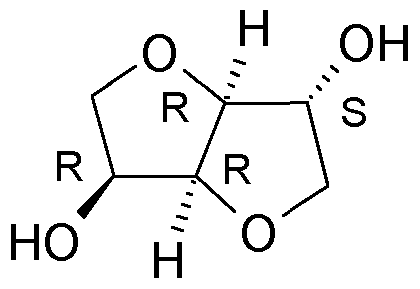
- isomannide (or dianhydro-D-mannitol RN 641 -74-7):

- quinic acid (D-(-)-quinic acid RN 77-95-2):

- the compound 2,5-dihydroxy-1 ,4-dioxane-2,5-dimethanol:

The preferred compounds of formula (I) are chosen from those for which:
Ai represents one of the formulae (V), (VI), (Vila), (VIII), (IX) or (Xa);
Ζ = glycerol, isosorbide or D-glucopyranose;
R1 denotes a C C5 alkyl radical;
P = 0;
R3 denotes hydrogen, -CN or -SO2R4;
R4 denotes a C1-C5 alkyl.
As examples of compounds of formula (I), mention may be made of compounds (a) to (I) below and also the E or Z isomeric forms thereof:

This is 1-0-(p-ethoxy)cinnamoyl-D-glucopyranose (RN
Huanjing Shengwu Xuebao, 15(3), 323-235 (2009)).

RN= 129744-06-5

RN=917894-95-2

RN=917894-94-1


(k) (')
The preferred compounds of formula (II) are chosen from those for which: A2 represents the formula (XI);
Z2 = glycerol or isosorbide;
R2 denotes a C Ci0 alkoxy radical;
P = 0;
R3 denotes hydrogen, -CN or -SO2R4;
R4 denotes a CrC5 alkyl.
The more particularly preferred compounds of formula (II) are compounds (m) to (o) below and also the isomeric forms thereof:

Some of the compounds of formula (I) or (II) are known. These are compounds (a) to (f).
One subject of the invention is the compounds of formula (I) or (II) as defined previously, with the exception of compounds (a) to (f).
In particular, the compounds (g), (h), (i), (j), (k), (I), (m) and (n) are novel and form one subject of the invention.
The compounds of formula (I) may be prepared according to an esterification process starting from the corresponding carboxylic or sulphonic acid, or by a transesterification process starting from the corresponding ester, processes known to a person skilled in the art.
The compounds of formula (I) containing an isosorbide group as the compound (g) may be in particular obtained by reaction between a mono-protected isosorbide 5-
Tetrahydropyrane and the starting corresponding carboxylic acid or sulphonic acid group followed by selective deprotection using acid to give desired compound.

The compounds of formula (II) may be prepared according to a 2-step process:
1) esterification starting from the corresponding carboxylic or sulphonic acid, or by a transesterification process starting from the corresponding ester, processes known to a person skilled in the art;
2) etherification of the alcohol via a process known to a person skilled in the art.
The compositions in accordance with the invention may also comprise other additional UVA-active and/or UVB-active organic or mineral UV-screening agents that are liposoluble or even insoluble, and also water-soluble UVB-screening agents, in the cosmetic solvents commonly used.
Of course, a person skilled in the art will take care to select the optional additional screening agent(s) and/or the amounts thereof such that the advantageous properties intrinsically associated with the compositions in accordance with the invention are not, or are not substantially, adversely affected by the envisaged addition(s).
The additional organic screening agents are chosen especially from dibenzoylmethane derivatives; anthranilates; cinnamic derivatives; salicylic derivatives; camphor derivatives; benzophenone derivatives; β,β-diphenylacrylate derivatives; triazine derivatives other than those of formula (I); benzalmalonate derivatives, especially those mentioned in patent US 5 624 663; benzimidazole derivatives; imidazolines; p- aminobenzoic acid (PABA) derivatives; benzotriazole derivatives; methylenebis- (hydroxyphenylbenzotriazole) derivatives as described in patent applications US 5 237 071 , US 5 166 355, GB 2 303 549, DE 197 26 184 and EP 893 119; benzoxazole derivatives as described in patent applications EP 0 832 642, EP 1 027 883, EP 1 300 137 and DE 101 62 844; screening polymers and screening silicones such as those described especially in patent application WO 93/04665; oc-alkylstyrene- based dimers, such as those described in patent application DE 198 55 649; 4,4- diarylbutadienes such as those described in patent applications EP 0 967 200,
DE 197 46 654, DE 197 55 649, EP-A-1 008 586, EP 1 133 980 and EP 133 981 ; merocyanine derivatives such as those described in patent applications WO 04/006878, WO 05/058269 and WO 06/032741 ; the indanylidene screening agents of patents EP-A-0 823 418 and EP-A-1 341 752.
As examples of organic UV-screening agents, mention may be made of those denoted hereinbelow under their INCI name:
Dibenzoylmethane derivatives:
Butylmethoxydibenzoylmethane, sold under the trade name Parsol 1789 by the company DSM Nutritional Products.
iOara-Aminobenzoic acid derivatives:
PABA,
Ethyl PABA,
Ethyl dihydroxypropyl PABA,
Ethylhexyl dimethyl PABA sold in particular under the name Escalol 507 by ISP, Glyceryl PABA,
PEG-25 PABA sold under the name Uvinul P25 by BASF,
Salicylic derivatives:
Homosalate sold under the name Eusolex HMS by Rona/EM Industries,
Ethylhexyl salicylate sold under the name Neo Heliopan OS by Symrise,
Dipropylene glycol salicylate sold under the name Dipsal by Scher,
TEA salicylate sold under the name Neo Heliopan TS by Symrise.
Cinnamic derivatives:
Ethylhexyl methoxycinnamate sold especially under the trade name Parsol MCX by DSM Nutritional Products,
Isopropyl methoxycinnamate,
Isoamyl methoxycinnamate sold under the trade name Neo Heliopan E 1000 by
Symrise,
Cinoxate,
DEA Methoxycinnamate,
Diisopropyl methylcinnamate,
Glyceryl ethylhexanoate dimethoxycinnamate
β, β-Diphenylacrylate derivatives:
Octocrylene sold especially under the trade name Uvinul N539 by BASF,
Etocrylene sold especially under the trade name Uvinul N35 by BASF,
Benzophenone derivatives:
Benzophenone-1 sold under the trade name Uvinul 400 by BASF,
Benzophenone-2 sold under the trade name Uvinul D50 by BASF,
Benzophenone-3 or Oxybenzone sold under the trade name Uvinul M40 by BASF, Benzophenone-4 sold under the trade name Uvinul MS40 by BASF,
Benzophenone-5,
Benzophenone-6 sold under the trade name Helisorb 11 by Norquay,
Benzophenone-8 sold under the trade name Spectra-Sorb UV-24 by American Cyanamid,
Benzophenone-9 sold under the trade name Uvinul DS-49 by BASF,
Benzophenone-12,
n-hexyl 2-(4-diethylamino-2-hydroxybenzoyl)benzoate sold under the trade name Uvinul A+ or in the form of a mixture with octyl methoxycinnamate under the trade name Uvinul A + B by BASF,
Benzylidenecamphor derivatives:
3- Benzylidenecamphor manufactured under the name Mexoryl SD by Chimex,
4- Methylbenzylidenecamphor sold under the name Eusolex 6300 by Merck,
Benzylidenecamphorsulfonic acid manufactured under the name Mexoryl SL by Chimex,
Camphor benzalkonium methosulfate manufactured under the name Mexoryl SO by Chimex,
Terephthalylidenedicamphorsulfonic acid manufactured under the name Mexoryl SX by Chimex,
Polyacrylamidomethylbenzylidenecamphor manufactured under the name Mexoryl SW by Chimex,
Phenylbenzimidazole derivatives:
Phenylbenzimidazolesulfonic acid sold in particular under the trade name Eusolex 232 by Merck,
Disodium phenyl dibenzimidazole tetrasulfonate sold under the trade name Neo Heliopan AP by Symrise.
Benzotriazole derivatives:
Drometrizole trisiloxane sold under the name Silatrizole by Rhodia Chimie, Methylenebis(benzotriazolyl)tetramethylbutylphenol sold in solid form under the trade name MIXXIM BB/100 by Fairmount Chemical, or in micronized form as an aqueous dispersion under the trade name Tinosorb M by Ciba Specialty Chemicals.
Triazine derivatives:
Bis(ethylhexyloxyphenol)methoxyphenyltriazine sold under the trade name Tinosorb S by Ciba Geigy,
Ethylhexyltriazone sold in particular under the trade name Uvinul T150 by BASF, Diethylhexylbutamidotriazone sold under the trade name Uvasorb HEB by Sigma 3V, 2,4-Bis(n-butyl 4'-aminobenzalmalonate)-6-[(3-{1 ,3,3,3-tetramethyl-1-[(trimethylsilyl)- oxy]disiloxanyl}propyl)amino]-s-triazine,
2,4,6-Tris(diisobutyl 4'-aminobenzalmalonate)-s-triazine,
2,4,6-Tris(dineopentyl 4'-aminobenzalmalonate)-s-triazine,
2,4-Bis(dineopentyl 4'-aminobenzalmalonate)-6-(n-butyl 4'-aminobenzoate)-s-triazine, the symmetrical triazine screening agents described in patent US 6 225 467, patent application WO 2004/085412 (see compounds 6 and 9) or the document "Symmetrical Triazine Derivatives" IP.COM Journal, IP.COM INC West Henrietta, NY, US (20 September 2004), especially 2,4,6-tris(biphenyl)-1 ,3,5-triazines (in particular 2,4,6- tris(biphenyl-4-yl-1 ,3,5-triazine) and 2,4,6-tris(terphenyl)-1 ,3,5-triazine which is also mentioned in Beiersdorf patent applications WO 06/035000, WO 06/034982, WO 06/034991 , WO 06/035007, WO 2006/034992 and WO 2006/034985.
Anthranilic derivatives:
Menthyl anthranilate sold under the trade name Neo Heliopan MA by Symrise,
Imidazoline derivatives:
Ethylhexyldimethoxybenzylidenedioxoimidazoline propionate,
Benzalmalonate derivatives:
Dineopentyl 4'-methoxybenzalmalonate,
Polyorganosiloxane containing benzalmalonate functions, for instance Polysilicone-15, sold under the trade name Parsol SLX by DSM Nutritional Products.
4,4-Diarylbutadiene derivatives:
1 , 1-Dicarboxy(2,2'-dimethylpropyl)-4,4-diphenylbutadiene,
Benzoxazole derivatives:
2,4-Bis[5-1 (dimethylpropyl)benzoxazol-2-yl-(4-phenyl)imino]-6-(2-ethylhexyl)imino- 1 ,3,5-triazine, sold under the name of Uvasorb K2A by Sigma 3V,
and mixtures thereof.
The preferential additional organic screening agents are chosen from:
Ethylhexyl methoxycinnamate,
Homosalate,
Ethylhexyl salicylate,
Octocrylene,
Butylmethoxydibenzoylmethane
Terephthalylidenedicamphorsulfonic acid,
Disodium phenyldibenzimidazoletetrasulfonate,
Phenylbenzimidazolesulfonic acid,
Benzophenone-3,
n-Hexyl 2-(4-diethylamino-2-hydroxybenzoyl)benzoate,
4-Methylbenzylidenecamphor,
Ethylhexyl triazone,
Bis(ethylhexyloxyphenol)methoxyphenyltriazine,
Diethylhexylbutamidotriazone,
2,4-Bis(n-butyl 4'-aminobenzalmalonate)-6-[(3-{1 ,3,3,3-tetramethyl-1-[(trimethylsilyl)- oxy]disiloxanyl}propyl)amino]-s-triazine,
2,4,6-Tris(biphenyl-4-yl-1 ,3,5-triazine,
2,4,6-Tris(dineopentyl 4'-aminobenzalmalonate)-s-triazine,
2,4,6-Tris(diisobutyl 4'-aminobenzalmalonate)-s-triazine,
2,4-Bis(dineopentyl 4'-aminobenzalmalonate)-6-(n-butyl 4'-aminobenzoate)-s-triazine, Methylenebis(benzotriazolyl)tetramethylbutylphenol,
Drometrizole trisiloxane,
Polysilicone-15,
Dineopentyl 4'-methoxybenzalmalonate,
1 , 1-Dicarboxy(2,2'-dimethylpropyl)-4,4-diphenylbutadiene,
2,4-Bis[5-1 (dimethylpropyl)benzoxazol-2-yl-(4-phenyl)imino]-6-(2-ethylhexyl)imino- 1 ,3,5-triazine,
and mixtures thereof.
The additional mineral screening agents are chosen from coated or uncoated metal oxide pigments in which the mean size of the primary particles is preferentially between 5 nm and 100 nm (preferably between 10 nm and 50 nm), for instance titanium oxide (amorphous or crystallized in rutile and/or anatase form), iron oxide, zinc oxide, zirconium oxide or cerium oxide pigments, which are all UV-photoprotective agents that are well known per se.
The pigments may be coated or uncoated.
The coated pigments are pigments that have undergone one or more surface treatments of chemical, electronic, mechanochemical and/or mechanical nature with compounds as described, for example, in Cosmetics & Toiletries, February 1990, Vol. 105, pp. 53-64, such as amino acids, beeswax, fatty acids, fatty alcohols, anionic surfactants, lecithins, sodium, potassium, zinc, iron or aluminium salts of fatty acids, metal alkoxides (titanium or aluminium alkoxides), polyethylene, silicones, proteins (collagen, elastin), alkanolamines, silicon oxides, metal oxides or sodium hexametaphosphate.
As is known, silicones are organosilicon polymers or oligomers of linear or cyclic, branched or crosslinked structure, of variable molecular weight, obtained by polymerization and/or polycondensation of suitably functionalized silanes, and consist essentially of a repetition of main units in which the silicon atoms are linked together via oxygen atoms (siloxane bond), optionally substituted hydrocarbon-based radicals being directly attached via a carbon atom to the said silicon atoms.
The term "silicones" also includes the silanes required for their preparation, in particular alkylsilanes.
The silicones used for the coating of the pigments suitable for the present invention are preferably chosen from the group consisting of alkylsilanes, polydialkylsiloxanes and polyalkylhydrosiloxanes. More preferably still, the silicones are chosen from the group containing octyltrimethylsilane, polydimethylsiloxanes and polymethylhydrosiloxanes.
Of course, before being treated with silicones, the metal oxide pigments may have been treated with other surface agents, in particular with cerium oxide, alumina, silica, aluminium compounds or silicon compounds, or mixtures thereof.
The coated pigments are more particularly titanium oxides that have been coated:
- with silica, such as the product Sunveil from the company Ikeda and the product Eusolex T-AVO from the company Merck,
- with silica and iron oxide, such as the product Sunveil F from the company Ikeda,
- with silica and alumina, such as the products Microtitanium Dioxide MT 500 SA and Microtitanium Dioxide MT 100 SA from the company Tayca, Tioveil from the company
Tioxide and Mirasun TiW 60 from the company Rhodia,
- with alumina, such as the products Tipaque TTO-55 (B) and Tipaque TTO-55 (A) from the company Ishihara and UVT 14/4 from the company Kemira,
- with alumina and aluminium stearate, such as the product Microtitanium Dioxide MT 100 TV, MT 100 TX, MT 100 Z and MT-01 from the company Tayca, and the products
Solaveil CT-10 W, Solaveil CT 100 and Solaveil CT 200 from the company Uniqema,
- with silica, alumina and alginic acid, such as the product MT-100 AQ from the company Tayca,
- with alumina and aluminium laurate, such as the product Microtitanium Dioxide MT 100 S from the company Tayca,
- with iron oxide and iron stearate, such as the product Microtitanium Dioxide MT 100 F from the company Tayca,
- with zinc oxide and zinc stearate, such as the product BR351 from the company Tayca,
- with silica and alumina and treated with a silicone, such as the products Microtitanium Dioxide MT 600 SAS, Microtitanium Dioxide MT 500 SAS or Microtitanium Dioxide MT 100 SAS from the company Tayca,
- with silica, alumina and aluminium stearate and treated with a silicone, such as the product STT-30-DS from the company Titan Kogyo,
- with silica and treated with a silicone, such as the product UV-Titan X 195 from the company Kemira, or the product SMT-100 WRS from the company Tayca,
- with alumina and treated with a silicone, such as the products Tipaque TTO-55 (S) from the company Ishihara or UV Titan M 262 from the company Kemira,
- with triethanolamine, such as the product STT-65-S from the company Titan Kogyo, - with stearic acid, such as the product Tipaque TTO-55 (C) from the company Ishihara,
- with sodium hexametaphosphate, such as the product Microtitanium Dioxide MT 150 W from the company Tayca.
Other titanium oxide pigments treated with a silicone are preferably Ti02 treated with octyltrimethylsilane and for which the mean size of the elementary particles is between
25 and 40 nm, such as the product sold under the trade name T 805 by the company Degussa Silices, Ti02 treated with a polydimethylsiloxane and for which the mean size of the elementary particles is 21 nm, such as the product sold under the trade name 70250 Cardre UF Ti02SI3 by the company Cardre, anatase/rutile Ti02 treated with a polydimethylhydrosiloxane and for which the mean size of the elementary particles is 25 nm, such as the product sold under the trade name Microtitanium Dioxide USP Grade Hydrophobic by the company Color Techniques.
The uncoated titanium oxide pigments are sold, for example, by the company Tayca under the trade names Microtitanium Dioxide MT 500 B or Microtitanium Dioxide MT 600 B, by the company Degussa under the name P 25, by the company Wacker under the name Transparent titanium oxide PW, by the company Miyoshi Kasei under the name UFTR, by the company Tomen under the name ITS and by the company Tioxide under the name Tioveil AQ.
The uncoated zinc oxide pigments are, for example:
- those sold under the name Z-Cote by the company Sunsmart;
- those sold under the name Nanox by the company Elementis;
- those sold under the name Nanogard WCD 2025 by the company Nanophase Technologies.
The coated zinc oxide pigments are, for example:
- those sold under the name Z-Cote HP1 by the company Sunsmart (dimethicone- coated ZnO);
- those sold under the name Zinc Oxide CS-5 by the company Toshibi (ZnO coated with polymethylhydrosiloxane);
- those sold under the name Nanogard Zinc Oxide FN by the company Nanophase Technologies (as a 40% dispersion in Finsolv TN, C12-C15 alkyl benzoate);
- those sold under the name Daitopersion ZN-30 and Daitopersion ZN-50 by the company Daito (dispersions in cyclopolymethylsiloxane/oxyethylenated polydimethylsiloxane, containing 30% or 50% of nanozinc oxides coated with silica and polymethylhydrosiloxane);
- those sold under the name NFD Ultrafine ZnO by the company Daikin (ZnO coated with perfluoroalkyi phosphate and copolymer based on perfluoroalkylethyl as a dispersion in cyclopentasiloxane);
- those sold under the name SPD-Z1 by the company Shin-Etsu (ZnO coated with silicone-grafted acrylic polymer, dispersed in cyclodimethylsiloxane);
- those sold under the name Escalol Z100 by the company ISP (alumina-treated ZnO dispersed in the ethylhexyl methoxycinnamate/PVP-hexadecene/methicone copolymer mixture);
- those sold under the name Fuji ZnO-SMS-10 by the company Fuji Pigment (ZnO coated with silica and polymethylsilsesquioxane);
- those sold under the name Nanox Gel TN by the company Elementis (ZnO dispersed at a concentration of 55% in C12-C15 alkyl benzoate with hydroxystearic acid polycondensate).
The uncoated cerium oxide pigments are sold, for example, under the name Colloidal Cerium Oxide by the company Rhone-Poulenc.
The uncoated iron oxide pigments are sold, for example, by the company Arnaud under the names Nanogard WCD 2002 (FE 45B), Nanogard Iron FE 45 BL AQ, Nanogard FE 45R AQ and Nanogard WCD 2006 (FE 45R) or by the company Mitsubishi under the name TY-220,
The coated iron oxide pigments are sold, for example, by the company Arnaud under the names Nanogard WCD 2008 (FE 45B FN), Nanogard WCD 2009 (FE 45B 556), Nanogard FE 45 BL 345 and Nanogard FE 45 BL or by the company BASF under the name Transparent Iron Oxide.
Mention may also be made of mixtures of metal oxides, especially of titanium dioxide and of cerium dioxide, including the silica-coated equal-weight mixture of titanium dioxide and of cerium dioxide, sold by the company Ikeda under the name Sunveil A, and also the alumina, silica and silicone-coated mixture of titanium dioxide and of zinc dioxide, such as the product M 261 sold by the company Kemira, or the alumina, silica and glycerol-coated mixture of titanium dioxide and of zinc dioxide, such as the product M 211 sold by the company Kemira.
The additional UV-screening agents are generally present in the compositions according to the invention in proportions ranging from 0.01 % to 20% by weight relative to the total weight of the composition, and preferably ranging from 0.1 % to 10% by weight relative to the total weight of the composition.
The aqueous compositions in accordance with the present invention may also comprise standard cosmetic adjuvants chosen especially from fatty substances, organic solvents, ionic or nonionic, hydrophilic or lipophilic thickeners, softeners, humectants, opacifiers, stabilizers, emollients, silicones, antifoams, fragrances, preserving agents, anionic, cationic, nonionic, zwitterionic or amphoteric surfactants, active agents, fillers, polymers, propellants, acidifying or basifying agents or any other ingredient usually used in cosmetics and/or dermatology.
The fatty substances may consist of an oil or a wax other than the apolar waxes as defined above, or mixtures thereof. The term oil means a compound that is liquid at room temperature. The term wax means a compound that is solid or substantially solid at room temperature and whose melting point is generally greater than 35°C.
Oils that may be mentioned include mineral oils (paraffin); plant oils (sweet almond oil, macadamia oil, blackcurrant seed oil or jojoba oil); synthetic oils, for instance perhydrosqualene, fatty alcohols, fatty amides (for instance isopropyl lauroyl sarcosinate sold under the name Eldew SL-205 by the company Ajinomoto), fatty acids or fatty esters, for instance the C12-C15 alkyl benzoate sold under the trade name Finsolv TN or Witconol TN by the company Witco, 2-ethylphenyl benzoate, for instance the commercial product sold under the name X-Tend 226® by the company ISP, octyl palmitate, isopropyl lanolate and triglycerides, including capric/caprylic acid triglycerides, and dicaprylyl carbonate sold under the name Cetiol CC by the company Cognis, oxyethylenated or oxypropylenated fatty esters and ethers; silicone oils (cyclomethicone and polydimethylsiloxanes, or PDMS) or fluoro oils, polyalkylenes, and trialkyl trimellitates such as tridecyl trimellitate.
Waxy compounds that may be mentioned include carnauba wax, beeswax, hydrogenated castor oil, polyethylene waxes and polymethylene waxes, for instance the product sold under the name Cirebelle 303 by the company Sasol.
Among the organic solvents that may be mentioned are lower alcohols and polyols. These polyols may be chosen from glycols and glycol ethers, for instance ethylene glycol, propylene glycol, butylene glycol, dipropylene glycol or diethylene glycol.
Hydrophilic thickeners that may be mentioned include carboxyvinyl polymers such as the Carbopol products (carbomers) and the Pemulen products (acrylate/Cio-C30- alkylacrylate copolymer); polyacrylamides, for instance the crosslinked copolymers sold
under the names Sepigel 305 (CTFA name: polyacrylamide/Ci3-i4 isoparaffin/Laureth 7) or Simulgel 600 (CTFA name: acrylamide/sodium acryloyldimethyltaurate copolymer/isohexadecane/polysorbate 80) by the company SEPPIC; 2-acrylamido-2- methylpropanesulphonic acid polymers and copolymers, optionally crosslinked and/or neutralized, for instance poly(2-acrylamido-2-methylpropanesulphonic acid) sold by the company Hoechst under the trade name Hostacerin AMPS (CTFA name: ammonium polyacryloyldimethyl taurate or Simulgel 800 sold by the company SEPPIC (CTFA name: sodium polyacryolyldimethyltaurate/polysorbate 80/sorbitan oleate); copolymers of 2-acrylamido-2-methylpropanesulphonic acid and of hydroxyethyl acrylate, for instance Simulgel NS and Sepinov EMT 10 sold by the company SEPPIC; cellulose derivatives such as hydroxyethyl cellulose; polysaccharides and especially gums such as xanthan gum; water-soluble or water-dispersible silicone derivatives, for instance acrylic silicones, polyether silicones and cationic silicones, and mixtures thereof.
Lipophilic thickeners that may be mentioned include synthetic polymers, such as the poly(C10-C30 alkyl acrylates) sold under the names Intelimer IPA 13-1 and Intelimer I PA 13-6 by the company Landec, or modified clays, such as hectorite and its derivatives, for instance the products sold under the name Bentone.
Of course, a person skilled in the art will take care to select the optional additional compound(s) mentioned above and/or the amounts thereof such that the advantageous properties intrinsically associated with the compositions in accordance with the invention are not, or are not substantially, adversely affected by the envisaged addition(s), especially the improvement in the photostability of the dibenzoylmethane derivative.
The compositions according to the invention may be prepared according to the techniques that are well known to those skilled in the art. They may in particular be in the form of a simple or complex emulsion (O/W, W/O, 0/W/O or W/O/W) such as a cream, a milk or a cream-gel; in the form of an aqueous gel; in the form of a lotion. They may optionally be packaged as an aerosol and may be in the form of a mousse or a spray.
The compositions according to the invention are preferably in the form of an oil-in-water or water-in-oil emulsion.
The emulsification processes that may be used are of the paddle or impeller, rotor- stator or HHP type.
It is also possible, via HHP (between 50 and 800 bar), to obtain stable dispersions with droplet sizes that may be as low as 100 nm.
The emulsions generally contain at least one emulsifier chosen from amphoteric, anionic, cationic and nonionic emulsifiers, used alone or as a mixture. The emulsifiers are appropriately chosen according to the emulsion to be obtained (W/O or O/W).
As emulsifying surfactants that may be used for the preparation of the W/O emulsions, examples that may be mentioned include sorbitan, glycerol or sugar alkyl esters or ethers; silicone surfactants, for instance dimethicone copolyols, such as the mixture of cyclomethicone and of dimethicone copolyol, sold under the name DC 5225 C by the company Dow Corning, and alkyldimethicone copolyols such as laurylmethicone copolyol sold under the name Dow Corning 5200 Formulation Aid by the company Dow Corning; cetyldimethicone copolyol, such as the product sold under the name Abil EM 90R by the company Goldschmidt, and the mixture of cetyldimethicone copolyol, of polyglyceryl isostearate (4 mol) and of hexyl laurate, sold under the name Abil WE 09
by the company Goldschmidt. One or more co-emulsifiers may also be added thereto, which may be chosen advantageously from the group comprising polyol alkyl esters.
Polyol alkyl esters that may especially be mentioned include polyethylene glycol esters, for instance PEG-30 dipolyhydroxystearate, such as the product sold under the name Arlacel P135 by the company I CI .
Glycerol and/or sorbitan esters that may especially be mentioned include, for example, polyglyceryl isostearate, such as the product sold under the name Isolan Gl 34 by the company Goldschmidt, sorbitan isostearate, such as the product sold under the name Arlacel 987 by the company I CI , sorbitan glyceryl isostearate, such as the product sold under the name Arlacel 986 by the company I CI , and mixtures thereof.
For the O/W emulsions, examples of emulsifiers that may be mentioned include nonionic emulsifiers such as oxyalkylenated (more particularly polyoxyethylenated) fatty acid esters of glycerol; oxyalkylenated fatty acid esters of sorbitan; oxyalkylenated (oxyethylenated and/or oxypropylenated) fatty acid esters, for instance the mixture PEG-100 stearate/glyceryl stearate sold, for example, by the company ICI under the name Arlacel 165; oxyalkylenated (oxyethylenated and/or oxypropylenated) fatty alkyl ethers; sugar esters, for instance sucrose stearate; fatty alkyl ethers of sugars, especially alkyl polyglucosides (APG) such as decylglucoside and laurylglucoside sold, for example, by the company Henkel under the respective names Plantaren 2000 and Plantaren 1200, cetostearyl glucoside optionally as a mixture with cetostearyl alcohol, sold, for example, under the name Montanov 68 by the company SEPPIC, under the name Tegocare CG90 by the company Goldschmidt and under the name Emulgade KE3302 by the company Henkel, and also arachidyl glucoside, for example in the form of a mixture of arachidyl alcohol, behenyl alcohol and arachidyl glucoside, sold under the name Montanov 202 by the company SEPPIC. According to a specific embodiment of the invention, the mixture of the alkyl polyglucoside as defined above with the corresponding fatty alcohol can be in the form of a self-emulsifying composition, for example as disclosed in the document WO-A-92/06778.
When it is an emulsion, the aqueous phase of this emulsion may comprise a nonionic vesicular dispersion prepared according to known processes (Bangham, Standish and Watkins, J. Mol. Biol. 13, 238 (1965), FR 2 315 991 and FR 2 416 008).
The compositions according to the invention find their application in a large number of treatments, especially cosmetic treatments, of the skin, the lips and the hair, including the scalp, especially for protecting and/or caring for the skin, the lips and/or the hair, and/or for making up the skin and/or the lips.
Another subject of the present invention consists of the use of the compositions according to the invention as defined above for the manufacture of cosmetic products for treating the skin, the lips, the nails, the hair, the eyelashes, the eyebrows and/or the scalp, especially care products, antisun protection products and makeup products.
The cosmetic compositions according to the invention may be used, for example, as makeup products.
The cosmetic compositions according to the invention may be used, for example, as care products and/or antisun protection products for the face and/or the body, of liquid to semi-liquid consistency, such as milks, more or less rich creams, cream-gels and pastes. They may optionally be packaged as an aerosol and may be in the form of a mousse or a spray.
The compositions according to the invention in the form of vaporizable fluid lotions in accordance with the invention are applied to the skin or the hair in the form of fine particles by means of pressurization devices. The devices in accordance with the invention are well known to those skilled in the art and comprise non-aerosol pumps or "atomizers", aerosol containers comprising a propellant and also aerosol pumps using compressed air as propellant. These devices are described in patents US 4 077 441 and US 4 850 517.
The compositions conditioned in aerosol form in accordance with the invention generally contain conventional propellants, for instance hydrofluoro compounds, dichlorodifluoromethane, difluoroethane, dimethyl ether, isobutane, n-butane, propane or trichlorofluoromethane. They are preferably present in amounts ranging from 15% to 50% by weight relative to the total weight of the composition.
The compositions according to the invention may also comprise additional cosmetic or dermatological active agents.
Mention may be made, among active agents, of:
- vitamins (A, C, E, K, PP, and the like) and their derivatives or precursors, alone or as mixtures;
- antiglycation agents;
- calmatives;
- NO-synthase inhibitors;
- agents for stimulating the synthesis of dermal or epidermal macromolecules and/or for preventing their degradation;
- agents for stimulating fibroblast proliferation;
- agents for stimulating keratinocyte proliferation;
- muscle relaxants;
- tensioning agents;
- matting agents;
- keratolytic agents;
- desquamating agents;
- moisturizers, for instance polyols such as glycerol, butylene glycol or propylene glycol;
- antiinflammatory agents;
- agents that act on the energy metabolism of cells;
- insect repellents;
- substance P or substance CRGP antagonists;
- hair-loss counteractants and/or hair restorers;
- anti-wrinkle agents.
Of course, a person skilled in the art will take care to select the optional additional compound(s) and/or the amounts thereof such that the advantageous properties intrinsically associated with the compositions in accordance with the invention are not, or are not substantially, adversely affected by the envisaged addition(s).
A person skilled in the art will select the said active agent(s) as a function of the effect desired on the skin, the hair, the eyelashes, the eyebrows and the nails.
The composition may also comprise at least one ingredient such as fillers with a soft- focus effect or agents for promoting the natural coloration of the skin, intended for complementing the biological effects of these active agents or for providing an immediate visual anti-ageing effect.
For caring for and/or making up greasy skin, a person skilled in the art will preferably select at least one active agent chosen from desquamating agents, sebum-regulating agents or anti-seborrhoeic agents, and astringents.
OTHER ADDITIONAL INGREDIENTS
The composition may also comprise at least one additional ingredient for complementing the biological effect of these active agents or for affording an immediate visual effect; mention may be made especially of matting agents, soft-focus fillers, fluorescers, agents for promoting the naturally pinkish coloration of the skin, and abrasive fillers or exfoliants.
To complement and/or optimize the effects imparted by the cosmetic and/or dermatological active agents mentioned above on the keratin materials, it may be advantageous to incorporate into the compositions of the invention other additional ingredients.
In particular, these additional ingredients may impart an immediate visual effect that will be relayed by the biological effect of the active agents mentioned above. They may also, via a mechanical action (e.g.:abrasive fillers), amplify the effect of the biological active agents mentioned above.
Matting agents
The term "matting agent" means agents intended to make the skin visibly more matt and less shiny.
The matting effect of the agent and/or composition containing it may especially be evaluated using a gonioreflectometer, by measuring the ratio R between the specular reflection and the scattered reflection. A value of R of less than or equal to 2 generally indicates a matting effect.
The matting agent may especially be chosen from a rice starch or a corn starch: I NCI name: Zea mays (Corn) Starch, such as, in particular, the product sold under the trade name Farmal CS 3650 Plus 036500 by National Starch, kaolinite, talc, a pumpkin seed extract, cellulose microbeads, plant fibres, synthetic fibres, in particular polyamide fibres, expanded acrylic copolymer microspheres, polyamide powders, silica powders, polytetrafluoroethylene powders, silicone resin powders, acrylic polymer powders, wax powders, polyethylene powders, powders of elastomeric crosslinked organopolysiloxane coated with silicone resin, talc/titanium dioxide/alumina/silica composite powders, amorphous mixed silicate powders, silicate particles and especially mixed silicate particles, and mixtures thereof.
Examples of matting agents that may especially be mentioned include:
- rice or corn starch, in particular an aluminium starch octenyl succinate sold under the name Dry Flo® by the company National Starch;
- kaolinite;
- silicas;
- talc;
- a pumpkin seed extract as sold under the name Curbilene® by the company Indena;
- cellulose microbeads as described in patent application EP 1 562 562;
- fibres, such as silk fibre, cotton fibre, wool fibre, flax fibre, cellulose fibre extracted especially from wood, from vegetables or from algae, polyamide fibre (Nylon®), modified cellulose fibre, poly-p-phenyleneterephthamide fibre, acrylic fibre, polyolefin fibre, glass fibre, silica fibre, aramid fibre, carbon fibre, Teflon® fibre, insoluble collagen
fibre, polyester fibre, polyvinyl chloride or polyvinylidene chloride fibre, polyvinyl alcohol fibre, polyacrylonitrile fibre, chitosan fibre, polyurethane fibre, polyethylene phthalate fibre, fibres formed from a mixture of polymers, resorbable synthetic fibres, and mixtures thereof described in patent application EP 1 151 742;
- expanded acrylic copolymer microspheres such as those sold by the company Expancel under the name Expancel 551®;
- fillers with an optical effect as described in patent application FR 2 869 796, in particular:
- polyamide powders (Nylon®), for instance Nylon 12 particles of the Orgasol type from Arkema, with a mean size of 10 microns and a refractive index of 1.54,
- silica powders, for instance Silica beads SB150 from Miyoshi with a mean size of 5 microns and a refractive index of 1.45,
- polytetrafluoroethylene powders, for instance PTFE Ceridust 9205F from Clariant, with a mean size of 8 microns and a refractive index of 1.36,
- silicone resin powders, for instance the silicone resin Tospearl 145A from GE Silicone with a mean size of 4.5 microns and a refractive index of 1.41 ,
- acrylic copolymer powders, especially of polymethyl (meth)acrylate, for instance the PMMA particles Jurymer MBI from Nihon Junyoki, with a mean size of 8 microns and a refractive index of 1.49, or the Micropearl M100® and F 80 ED® particles from the company Matsumoto Yushi-Seiyaku,
- wax powders, for instance the paraffin wax particles Microease 114S from Micropowders, with a mean size of 7 microns and a refractive index of 1.54,
- polyethylene powders, especially comprising at least one ethylene/acrylic acid copolymer, and in particular consisting of ethylene/acrylic acid copolymers, for instance the particles Flobeads EA 209 from Sumitomo (with a mean size of 10 microns and a refractive index of 1.48),
- elastomeric crosslinked organopolysiloxane powders coated with silicone resin, especially with silsesquioxane resin, as described, for example, in patent US 5 538 793. Such elastomer powders are sold under the names KSP-100, KSP-101 , KSP-102, KSP-103, KSP-104 and KSP-105 by the company Shin- Etsu, and
- talc/titanium dioxide/alumina/silica composite powders such as those sold under the name Coverleaf® AR-80 by the company Catalyst & Chemicals,
- mixtures thereof,
- compounds that absorb and/or adsorb sebum as described in patent application FR 2 869 796. Mention may be made especially of:
- silica powders, for instance the porous silica microspheres sold under the name Silica Beads SB-700 sold by the company Miyoshi, the products Sunsphere® H51 , Sunsphere® H33 and Sunsphere® H53 sold by the company Asahi Glass; the polydimethylsiloxane-coated amorphous silica microspheres sold under the name SA Sunsphere® H-33 and SA Sunsphere® H-53 sold by the company Asahi Glass;
- amorphous mixed silicate powders, especially of aluminium and magnesium, for instance the product sold under the name Neusilin UFL2 by the company Sumitomo;
- polyamide (Nylon®) powders, for instance Orgasol® 4000 sold by the company Arkema, and
- acrylic polymer powders, especially of polymethyl methacrylate, for instance Covabead® LH85 sold by the company Wackherr; of polymethyl methacrylate/ethylene glycol dimethacrylate, for instance Dow Corning 5640 Microsponge® Skin Oil Adsorber sold by the company Dow Corning, or Ganzpearl® GMP-0820 sold by the company Ganz Chemical; of polyallyl methacrylate/ethylene glycol dimethacrylate, for instance Poly-Pore® L200 or Poly-Pore® E200 sold by the company Amcol; of ethylene glycol dimethacrylate/lauryl methacrylate copolymer, for instance Polytrap® 6603 sold by the company Dow Corning;
- silicate particles, such as alumina silicate;
- mixed silicate particles, such as:
- magnesium aluminium silicate particles, such as saponite or hydrated magnesium aluminium silicate with a sodium sulphate sold under the trade name Sumecton® by the company Kunimine;
- the magnesium silicate, hydroxyethylcellulose, black cumin oil, marrow oil and phospholipids complex or Matipure® from Lucas Meyer, and
- mixtures thereof.
Preferred matting agents that may be used according to the invention include a pumpkin seed extract, a rice or corn starch, kaolinite, silicas, talc, polyamide powders, polyethylene powders, acrylic copolymer powders, expanded acrylic copolymer microspheres, silicone resin microbeads and mixed silicate particles, and mixtures thereof.
Fillers with a soft-focus effect
These fillers may be any material capable of modifying and hiding wrinkles by virtue of their intrinsic physical properties. These fillers may especially modify wrinkles via a tensioning effect, a covering effect or a soft-focus effect.
Examples of fillers that may be given include the following compounds:
- porous silica microparticles, for instance the Silica Beads® SB150 and SB700 from Miyoshi with a mean size of 5 μηι; the series H Sunspheres® from Asahi Glass, for instance Sunspheres H33, H51 with respective sizes of 3.5 and 5 μηι;
- hollow hemispherical silicone resin particles such as NLK 500®, NLK 506® and NLK 510® from Takemoto Oil and Fat, especially described in EP-A-1 579 849;
- silicone resin powders, for instance the silicone resin Tospearl® 145A from GE Silicone, with a mean size of 4.5 μηι;
- acrylic copolymer powders, especially of polymethyl (meth)acrylate, for instance the PMMA particles Jurymer MBI® from Nihon Junyoki, with a mean size of 8 μηι, the hollow PMMA spheres sold under the name Covabead® LH85 by the company Wackherr, and vinylidene/acrylonitrile/methylene methacrylate expanded microspheres sold under the name Expancel®;
- wax powders, for instance the paraffin wax particles MicroEase® 114S from MicroPowders, with a mean size of 7 μηι;
- polyethylene powders, especially comprising at least one ethylene/acrylic acid copolymer, for instance the Flobeads® EA 209 E particles from Sumitomo, with a mean size of 10 μηι;
- crosslinked elastomeric organopolysiloxane powders coated with silicone resin and especially with silsesquioxane resin, under the names KSP-100®, KSP-101®, KSP- 102®, KSP-103®, KSP-104® and KSP-105® by the company Shin-Etsu;
- talc/titanium dioxide/alumina/silica composite powders, for instance those sold under the name Coverleaf AR-80® by the company Catalyst & Chemicals;
- talc, mica, kaolin, lauryl glycine, starch powders crosslinked with octenyl succinate anhydride, boron nitride, polytetrafluoroethylene powders, precipitated calcium carbonate, magnesium carbonate, magnesium hydrogen carbonate, barium sulphate, hydroxyapatite, calcium silicate, cerium dioxide and glass or ceramic microcapsules;
- hydrophilic or hydrophobic, synthetic or natural, mineral or organic fibres such as silk fibres, cotton fibres, wool fibres, flax fibres, cellulose fibres extracted especially from wood, vegetables or algae, polyamide (Nylon®) fibres, modified cellulose fibres, poly-p- terephthamide fibres, acrylic fibres, polyolefin fibres, glass fibres, silica fibres, aramid fibres, carbon fibres, polytetrafluoroethylene (Teflon®) fibres, insoluble collagen fibres, polyester fibres, polyvinyl chloride fibres, polyvinylidene chloride fibres, polyvinyl alcohol fibres, polyacrylonitrile fibres, chitosan fibres, polyurethane fibres, polyethylene phthalate fibres, fibres formed from a mixture of polymers, resorbable synthetic fibres, and mixtures thereof described in patent application EP 1 151 742;
- spherical elastomeric crosslinked silicones, for instance Trefil E-505C® or E-506C® from Dow Corning;
- abrasive fillers, which, via a mechanical effect, smooth out the skin microrelief, such as abrasive silica, for instance Abrasif SP® from Semanez or nutshell powders (for example of apricot or walnut, from Cosmetochem).
The fillers with an effect on the signs of ageing are especially chosen from porous silica microparticles, hollow hemispherical silicone particles, silicone resin powders, acrylic copolymer powders, polyethylene powders, crosslinked elastomeric organopolysiloxane powders coated with silicone resin, talc/titanium dioxide/alumina/silica composite powders, precipitated calcium carbonate, magnesium carbonate, magnesium hydrogen carbonate, barium sulphate, hydroxyapatite, calcium silicate, cerium dioxide, glass or ceramic microcapsules, and silk fibres or cotton fibres, and mixtures thereof.
The filler may be a soft-focus filler.
The term "soft-focus" filler means a filler which in addition gives the complexion transparency and a hazy effect. Preferably, the soft-focus fillers have a mean particle size of less than or equal to 15 microns. These particles may be in any form and in particular may be spherical or non-spherical. These fillers are more preferably non- spherical.
The soft-focus fillers may be chosen from silica and silicate powders, especially alumina powder, powders of polymethyl methacrylate (PMMA) type, talc, silica/Ti02 or silica/zinc oxide composites, polyethylene powders, starch powders, polyamide powders, styrene/acrylic copolymer powders and silicone elastomers, and mixtures thereof.
Mention may be made in particular of talc with a number-average size of less than or equal to 3 microns, for example talc with a number-average size of 1.8 microns and especially the product sold under the trade name Talc P3® by the company Nippon Talc, Nylon® 12 powder, especially the product sold under the name Orgasol 2002 Extra D Nat Cos® by the company Atochem, silica particles 1 % to 2% surface-treated with a mineral wax (INCI name: hydrated silica (and) paraffin) such as the products sold by the company Degussa, amorphous silica microspheres, such as the products sold under the name Sunsphere, for example of reference H-53® by the company Asahi Glass, and silica microbeads such as those sold under the name SB-700® or SB-150® by the company Miyoshi, this list not being limiting.
The concentration of these fillers with an effect on the signs of ageing in the compositions according to the invention may be between 0.1 % and 40%, or even between 0.1 % and 20% by weight, relative to the total weight of the composition.
Agents for promoting the naturally pinkish coloration of the skin
Mention may be made especially of:
- a self-tanning agent, i.e. an agent which, when applied to the skin, especially to the face, can produce a tan effect that is more or less similar in appearance to that which may result from prolonged exposure to the sun (natural tan) or under a UV lamp;
- an additional colouring agent, i.e. any compound that has particular affinity for the skin, which allows it to give the skin a lasting, non-covering coloration (i.e. that does not have a tendency to opacify the skin) and that is not removed either with water or using a solvent, and that withstands both rubbing and washing with a solution containing surfactants. Such a lasting coloration is thus distinguished from the superficial and transient coloration provided, for example, by a makeup pigment;
and mixtures thereof.
Examples of self-tanning agents that may especially be mentioned include:
dihydroxyacetone (DHA),
erythrulose, and
the combination of a catalytic system formed from:
manganese and/or zinc oxide salts, and
alkali metal and/or alkaline-earth metal hydrogen carbonates.
The self-tanning agents are generally chosen from monocarbonyl or polycarbonyl compounds, for instance isatin, alloxan, ninhydrin, glyceraldehyde, mesotartaric aldehyde, glutaraldehyde, erythrulose, pyrazolin-4,5-dione derivatives as described in patent application FR 2 466 492 and WO 97/35842, dihydroxyacetone (DHA) and 4,4- dihydroxypyrazolin-5-one derivatives as described in patent application EP 903 342. DHA will preferably be used.
DHA may be used in free and/or encapsulated form, for example in lipid vesicles such as liposomes, especially described in patent application WO 97/25970.
In general, the self-tanning agent is present in an amount ranging from 0.01 % to 20% by weight and preferably in an amount of between 0.1 % and 10% of the total weight of the composition.
Other dyes that allow modification of the colour produced by the self-tanning agent may also be used.
These dyes may be chosen from synthetic or natural direct dyes.
These dyes may be chosen, for example, from red or orange dyes of the fluorane type such as those described in patent application FR 2 840 806. Mention may be made, for example, of the following dyes:
- tetrabromofluorescein or eosin known under the CTFA name: CI 45380 or Red 21
- phloxin B known under the CTFA name: CI 45410 or Red 27
- diiodofluorescein known under the CTFA name: CI 45425 or Orange 10;
- dibromofluorescein known under the CTFA name: CI 45370 or Orange 5;
- the sodium salt of tetrabromofluorescein known under the CTFA name: CI 45380 (Na salt) or Red 22;
- the sodium salt of phloxin B known under the CTFA name: CI 45410 (Na salt) or Red 28;
- the sodium salt of diiodofluorescein known under the CTFA name: CI 45425 (Na salt) or Orange 11 ;
- erythrosine known under the CTFA name: CI 45430 or Acid Red 51.
- phloxin known under the CTFA name: CI 45405 or Acid Red 98.
These dyes may also be chosen from anthraquinones, caramel, carmine, carbon black, azulene blues, methoxalene, trioxalene, guajazulene, chamuzulene, rose Bengal, eosin 10B, cyanosin and daphinin.
These dyes may also be chosen from indole derivatives, for instance the monohydroxyindoles as described in patent FR 2 651 126 (i.e.: 4-, 5-, 6- or 7- hydroxyindole) or the dihydroxyindoles as described in patent EP-B-0 425 324 (i.e.: 5,6- dihydroxyindole, 2-methyl-5,6-dihydroxyindole, 3-methyl-5,6-dihydroxyindole or 2,3- dimethyl-5,6-dihydroxyindole).
Abrasive fillers or exfoliants
As exfoliants that may be used in rinse-out compositions according to the invention, examples that may be mentioned include exfoliant or scrubbing particles of mineral, plant or organic origin. Thus, polyethylene beads or powder, Nylon powder, polyvinyl chloride powder, pumice powder, ground apricot kernel or walnut husk, sawdust, glass beads and alumina, and mixtures thereof, may be used, for example. Mention may also be made of Exfogreen® from Solabia (bamboo extract), extracts of strawberry akenes (Strawberry Akenes from Greentech), peach kernel powder, apricot kernel powder, and finally, in the field of plant powders with an abrasive effect, mention may be made of cranberry kernel powder.
As abrasive fillers or exfoliants that are preferred according to the invention, mention will be made of peach kernel powder, apricot kernel powder, cranberry kernel powder, strawberry akene extracts and bamboo extracts.
The examples that follow serve to illustrate the invention without, however, being limiting in nature. In these examples, the amounts of the composition ingredients are given as weight percentages relative to the total weight of the composition.
Exemple 1 of synthesis of the compound (g) : Isosorbide 2-(4-methoxycinnamate)

Compound (g) is obtained by reaction between monoprotected isosorbide (tetrahydropyrane ether) and methoxy cinnamic acid followed by selective deprotection using acid to give desired compound.

Preparation of isosorbide 5-Tetrahydropyrane-(4-methoxycinnamate)
A 500ml 3-neck flask fitted with a stir bar, addition funnel, long stem thermometer and a short air condenser with guard tube was charged with 300 ml dry pyridine, 250ml dichloromethane and 1 14 gm (0.496 mole) of isosorbide 5-THP. The mixture was stirred until a clear solution formed and chilled in an ice bath until the batch temperature was 0-5 C. A solution of 106 gm 4-methoxycinnamoyl chloride (0.539 mole) in 50 mis dichloromethane was added dropwise so as to maintain the reaction mixture below 5. A brown precipitate soon appeared. The mixture was allowed to warm to room temperature and stirred for 3 days. The reaction mixture was slowly added to 350 ml concentrated HCI mixed with 400 ml distilled water. The final pH was 1-2. The organic material was extracted with dichloromethane; the DCM layer washed several times with saturated NaHC03 solution, distilled water and then dried over anhydrous magnesium sulfate. The solution was filtered and the DCM removed on a Rotavap to give a viscous oil weighting 192g 99 % theory. The 1 H NMR spectrum was consistent with the desired structure.
Preparation of isosorbide 2-(4-methoxycinnamate)
700 ml of methanol was added to the esterified reaction mixture and it was stirred for 5.5 hrs to remove the THP protecting group with pyridinium 4-toluene sulphonate as catalyst. The reaction mixture was transferred to a 1000 ml rb flask and the methanol was removed on the Rotavap to 200 millibar with a bath temperature of 55 °C. On cooling the resulting oil crystallized. The product was recrystallized from ethanol to give 2-(4-methoxycinnamate),
NMR and Mass Spectrum analysis confirmed purity and structure of Isosorbide 2-(4- methoxycinnamate)
Melting point : 119-120 °C
UV Absorption properties : Amax : 311 nm in Ethanol at 10 mg/l
E1 % : 913 nm
FORMULATION EXAMPLE 2

Preparation process:
The aqueous phase a and oily phase b1 were prepared by mixing the raw materials, with mechanical stirring, at 80°C; the solutions obtained were macroscopically homogeneous. The emulsion was prepared by slow introduction of the oily phase into the aqueous phase with stirring using a Moritz homogenizer at a stirring speed of 4000 rpm for 15 minutes. The emulsion obtained was cooled, with stirring, to 40°C, then the oily phase b2 was added thereto with gentle stirring. The emulsion obtained was cooled to room temperature, with slow stirring. It was characterized by drops of between 1 μηι and 10 μηι in size.
Claims
1. Cosmetic use of at least one compound resulting from a sugar polyol or from dehydrogenated sugar polyol derivative corresponding to the formula (I) or (II) below one of the isomeric forms E, Z, EE, EZ, ZZ thereof:
A, 0- 0 H
"1 (I)
-o- -o- (I I) in which:
- the A radical corresponds to one of the formulae (III) to (Xb) below:
a) aminobenzoate of formul

b) aminocinnamate, aminobenzalmalonate or aminocyanoacrylate of formula (IV):


e) benzylidenecamphor of formula (Vila) or (VI lb): 
f) benzotriazole of formula (VIII): 
g) phenylbenzimidazole of formula (IX):

h) merocyanine of formula (Xa) or (Xb):


- the A2 radical corresponds to one of the formulae (XI) and (XII) below:
a) alkoxycinnamate, alkoxybenzalmalonate or alkoxycyanoacrylate of formula (XI):

b) bis(benzylidenecamphor) of formula (XII):

where:
- the R1 radicals, which may be identical or different, represent hydrogen; a linear or branched CrC30 alkyl or C3-C30 alkenyl radical which may bear one or more hydroxyl substituents and which may contain in the carbon-based chain an alkyl ring, one or more heteroatoms chosen from oxygen, nitrogen and silicon atoms,
the two R1 radicals possibly forming a C3-C7 alkyl ring; with the proviso that the two R1 radicals cannot simultaneously be hydrogen,
- R2 represents the hydroxyl radical, a linear or branched C Ci0 alkoxy radical, a linear or branched C Ci0 alkyl radical, a linear or branched C2-C8 alkenyl radical or -
OSi(CH3)3; two adjacent R2 radicals together possibly forming an alkylidenedioxy group in which the alkylidene group contains 1 to 2 carbon atoms,
- p is 0, 1 or 2,
- R3 is hydrogen, a linear or branched C C4 alkyl radical; a radical chosen from - (C=0)XR4, -CN, -(C=0)R4, -S02R4;
- R4 represents a linear or branched C C30 alkyl or C3-C30 alkenyl radical which may bear one or more hydroxyl substituents and which may contain in the carbon-based chain an alkyl ring, one or more heteroatoms chosen from oxygen, nitrogen and silicon atoms,
- X represents oxygen or an -NR5 radical with R5 being a linear or branched C C8 alkyl radical,
- R6 represents a linear or branched C C30 alkyl or C3-C30 alkenyl radical which may bear one or more hydroxyl substituents and which may contain in the carbon-based chain an alkyl ring, one or more heteroatoms chosen from oxygen, nitrogen and silicon atoms,
an R2 radical adjacent to the OR6 group possibly forming with the latter an alkylenedioxy group in which the alkylene group contains 1 to 2 carbon atoms; - Y represents the -(CH2)q- group, which is uninterrupted or interrupted with -O- or -S-, and/or unsubstituted or substituted with one or two, linear or branched, C C6 alkyl radicals;
- q is an integer ranging from 2 to 5;
- Zi represents a sugar polyol group or a dehydrogenated sugar polyol derivative such that the product of formula (I) has in its structure from 1 to 4 -OH groups remaining and optionally from 1 to 2 -COOH groups;
- the Z2 radicals, which may be identical or different, represent a sugar polyol group or a dehydrogenated sugar polyol derivative group such that the product of formula (II) has in its structure from 1 to 5 -OH groups remaining and optionally from 1 to 2 -COOH groups as an agent for screening out UV radiation.
2. Use according to Claim 1 , in which the compounds of formula (I) are chosen from those for which:
A† represents one of the formulae (V), (VI), (Vila), (VIII), (IX) or (Xa);
Zi = glycerol, isosorbide or D-glucopyranose;
R1 denotes a C C5 alkyl radical;
P = 0;
R3 denotes hydrogen, -CN or -SO2R4;
R4 denotes a C C5 alkyl.
3. Use according to Claim 1 , in which the compounds of formula (I) are chosen from compounds (a) to (I) below and also the E or Z isomeric forms thereof:
OH


4. Use according to Claim 1 , in which the compounds of formula (I) are chosen from those for which:
Z2 = glycerol or isosorbide;
R2 denotes a CrCi0 alkoxy radical;
p = 0;
R3 denotes hydrogen, -CN or -SO2R4;
R4 denotes a CrC5 alkyl.
5. Use according to Claim 1 , in which the compounds of formula (II) are chosen from compounds (m) to (o) below and also the isomeric forms thereof:

(o)
6. Composition comprising, in a cosmetically acceptable medium, at least one compound of formula (I) or (II) as defined in any one of Claims 1 to 5.
7. Composition according to Claim 6, characterized in that it also contains other UV-A- active and/or UV-B-active organic or mineral screening agents, which are water-soluble or liposoluble, or else insoluble in the commonly used cosmetic solvents.
8. Composition according to either one of Claims 6 and 7, also comprising at least one active agent chosen from:
- vitamins and derivatives or precursors thereof, alone or as mixtures;
- antiglycation agents;
- calmatives;
- NO-synthase inhibitors; - agents for stimulating the synthesis of dermal or epidermal macromolecules and/or for preventing their degradation;
- agents for stimulating fibroblast proliferation;
- agents for stimulating keratinocyte proliferation;
- muscle relaxants;
- tensioning agents;
- matting agents;
- keratolytic agents;
- desquamating agents;
- moisturizers;
- antiinflammatory agents;
- agents that act on the energy metabolism of cells;
- insect repellents;
- substance P or substance CRGP antagonists;
- hair-loss counteractants and/or hair restorers;
- anti-wrinkle agents.
9. Composition according to one of Claims 6 to 8, also comprising an additive chosen from fatty substances, organic solvents, ionic or nonionic, hydrophilic or lipophilic thickeners, softeners, humectants, opacifiers, stabilizers, emollients, silicones, antifoams, fragrances, preserving agents, anionic, cationic, nonionic, zwitterionic or amphoteric surfactants, active agents, fillers, polymers, propellants, acidifying or basifying agents; matting agents, fillers with a soft-focus effect, fluorescers, agents for promoting the naturally pinkish coloration of the skin, abrasive fillers or exfoliants.
10. Compound resulting from a sugar polyol or from a dehydrogenated sugar polyol derivative corresponding to the formula (I) or (II) below or one of the isomeric forms E, Z, EE, EZ, ZZ thereof:
A. O Z 0 H
1 (I)  in which:
- the A radical corresponds to one of the formulae (III) to (Xb) below:
a) aminobenzoate of formul

(IV)  c) alkoxycinnamate, alkoxybenzalmalonate or alkoxycyanoacrylate or diphenylcyanoacrylate of formula (Va) or (Vb) :


inobenzophenone of formula (VI): 
e) benzylidenecamphor of formula (Vila) or (VI lb): 
f) benzotriazole of formula (VIII): 
g) phenylbenzimidazole of formula (IX):

h) merocyanine of formula (Xa) or (Xb):

- the A2 radical corresponds to one of the formulae (XI) and (XII) below:
a) alkoxycinnamate, alkoxybenzalmalonate or alkoxycyanoacrylate of formula (XI): 
b) bis(benzylidenecamphor) of formula (XII):
(XII)  in which:
- the R1 radicals, which may be identical or different, represent hydrogen; a linear or branched CrC30 alkyl or C3-C30 alkenyl radical which may bear one or more hydroxyl substituents and which may contain in the carbon-based chain an alkyl ring, one or more heteroatoms chosen from oxygen, nitrogen and silicon atoms,
the two R1 radicals possibly forming a C3-C7 alkyl ring; with the proviso that the two R1 radicals cannot simultaneously be hydrogen,
- R2 represents the hydroxyl radical, a linear or branched C1-C10 alkoxy radical, a linear or branched C1-C10 alkyl radical, a linear or branched C2-C8 alkenyl radical or - OSi(CH3)3; two adjacent R2 radicals together possibly forming an alkylidenedioxy group in which the alkylidene group contains 1 to 2 carbon atoms,
- p is 0, 1 or 2,
- R3 is hydrogen, a linear or branched C C4 alkyl radical; a radical chosen from - (C=0)XR4, -CN, -(C=0)R4, -S02R4;
- R4 represents a linear or branched C C30 alkyl or C3-C30 alkenyl radical which may bear one or more hydroxyl substituents and which may contain in the carbon-based chain an alkyl ring, one or more heteroatoms chosen from oxygen, nitrogen and silicon atoms,
- X represents oxygen or an -NR5 radical with R5 being a linear or branched C C8 alkyl radical,
- R6 represents a linear or branched C C30 alkyl or C3-C30 alkenyl radical which may bear one or more hydroxyl substituents and which may contain in the carbon-based chain an alkyl ring, one or more heteroatoms chosen from oxygen, nitrogen and silicon atoms,
an R2 radical adjacent to the OR6 group possibly forming with the latter an alkylenedioxy group in which the alkylene group contains 1 to 2 carbon atoms;
- Y represents the -(CH2)q- group, which is uninterrupted or interrupted with -O- or -S-, and/or unsubstituted or substituted with one or two, linear or branched, C C6 alkyl radicals;
- q is an integer ranging from 2 to 5;
- Zi represents a sugar polyol group or a dehydrogenated sugar polyol derivative such that the product of formula (I) has in its structure from 1 to 4 -OH groups remaining and optionally from 1 to 2 -COOH groups;
- the Z2 radicals, which may be identical or different, represent a sugar polyol group or a dehydrogenated sugar polyol derivative group such that the product of formula (II) has in its structure from 1 to 5 -OH groups remaining and optionally from 1 to 2 -COOH groups with the exception of compounds (a) to (f) below:


11. Compound according to Claim 10, chosen from the following compounds and the isomeric forms thereof:


Applications Claiming Priority (2)
| Application Number | Priority Date | Filing Date | Title |
|---|---|---|---|
| US36598110P | 2010-07-20 | 2010-07-20 | |
| US61/365,981 | 2010-07-20 |
Publications (1)
| Publication Number | Publication Date |
|---|---|
| WO2012010554A1 true WO2012010554A1 (en) | 2012-01-26 |
Family
ID=44629383
Family Applications (1)
| Application Number | Title | Priority Date | Filing Date |
|---|---|---|---|
| PCT/EP2011/062240 Ceased WO2012010554A1 (en) | 2010-07-20 | 2011-07-18 | Use of compounds resulting from a sugar polyol or from a dehydrogenated sugar polyol derivative as a uv-screening agent; antisun compositions containing same; and novel compounds |
Country Status (1)
| Country | Link |
|---|---|
| WO (1) | WO2012010554A1 (en) |
Cited By (1)
| Publication number | Priority date | Publication date | Assignee | Title |
|---|---|---|---|---|
| WO2025242885A1 (en) * | 2024-05-24 | 2025-11-27 | Basf Se | Substituted cinnamic acid derivatives as uv absorbers and uses thereof |
Citations (49)
| Publication number | Priority date | Publication date | Assignee | Title |
|---|---|---|---|---|
| FR2315991A1 (en) | 1975-06-30 | 1977-01-28 | Oreal | METHOD OF MANUFACTURING AQUEOUS DISPERSIONS OF LIPID SPHERULES AND CORRESPONDING NEW COMPOSITIONS |
| US4077441A (en) | 1976-08-16 | 1978-03-07 | National Instrument Company | Convertible filling machine |
| FR2416008A1 (en) | 1978-02-02 | 1979-08-31 | Oreal | LIPOSOME LYOPHILISATES |
| FR2466492A1 (en) | 1979-10-03 | 1981-04-10 | Elf Aquitaine | Dyeing keratin substances, e.g. skin, nails, hair, fur - with compsns. contg. ketone or aldehyde dye and sulphoxy-aminoacid |
| EP0133981A2 (en) | 1983-08-05 | 1985-03-13 | Siemens Aktiengesellschaft | Mechanical overload protection |
| US4850517A (en) | 1985-09-27 | 1989-07-25 | Airspray International B.V. | Pressurized spray dispenser having valved mixing chamber |
| FR2651126A1 (en) | 1989-08-29 | 1991-03-01 | Oreal | ASSOCIATION OF DIHYDROXYACETONE AND INDOLIC DERIVATIVES FOR CONFERRING TO THE SKIN A COLORATION SIMILAR TO NATURAL TANNING AND METHOD FOR IMPLEMENTING THE SAME. |
| WO1992006778A1 (en) | 1990-10-17 | 1992-04-30 | Societe D'exploitation De Produits Pour Les Industries Chimiques (S.E.P.P.I.C.) | Use of fatty alcohol based compositions for preparing emulsions, method of preparing emulsions and emulsions so obtained |
| US5166355A (en) | 1991-02-04 | 1992-11-24 | Fairmount Chemical Co., Inc. | Process for preparing substituted 2,2'-methylene-bis-[6-(2H-benzotriazol-2-yl)-4-hydrocarbyl-phenols] |
| WO1993004665A1 (en) | 1991-08-29 | 1993-03-18 | L'oreal | Filtering cosmetic composition containing a liposoluble filter polymer with hydrocarbonated structure and a filter silicone |
| US5237071A (en) | 1991-01-22 | 1993-08-17 | Fairmount Chemical Company, Inc. | Process for preparing 2,2'-methylene-bis(6-(2H-benzotriazol-2-yl)-4-hydrocarbyl phenols) |
| US5538793A (en) | 1993-12-28 | 1996-07-23 | Shin-Etsu Chemical Co., Ltd. | Silicone rubber particles coated with silicone resin |
| GB2303549A (en) | 1995-07-22 | 1997-02-26 | Ciba Geigy Ag | Micronising organic UV absorbers with alkyl polyglucosides |
| US5624663A (en) | 1987-08-28 | 1997-04-29 | L'oreal | Photostable cosmetic filter composition cotaining a UV-A filter and a substituted dialkylbenzalmalonate, the use of substituted dialkylbenzalmalonates in cosmetics as broad-band solar filters and novel substituted dialkyl malonates |
| WO1997025970A1 (en) | 1996-01-17 | 1997-07-24 | Lancaster Group Gmbh | Cosmetic self-tanning agent having a sunscreen effect |
| WO1997035842A1 (en) | 1996-03-22 | 1997-10-02 | L'oreal | Cosmetic compositions containing pyrazolin-4,5-diones, novel pyrazolin-4,5-diones, preparation methods therefor and uses thereof |
| EP0823418A2 (en) | 1996-08-07 | 1998-02-11 | Haarmann & Reimer Gmbh | Indanylidene derivatives, process for their preparation and their use as UV-absorbers |
| EP0832642A2 (en) | 1996-09-13 | 1998-04-01 | 3V SIGMA S.p.A | Derivatives of Benzoxazole useful as uv filters |
| DE19726184A1 (en) | 1997-06-20 | 1998-12-24 | Beiersdorf Ag | Oil-in-water or multiple emulsion with high concentration of suspended UVB filter |
| EP0893119A1 (en) | 1997-07-26 | 1999-01-27 | Ciba SC Holding AG | UV-protection formulation |
| DE19746654A1 (en) | 1997-08-13 | 1999-02-18 | Basf Ag | Use of 4,4-di:aryl-butadiene derivatives as photostable UV filter compounds |
| EP0903342A1 (en) | 1997-09-19 | 1999-03-24 | L'oreal | 4,4-Dihydroxypyrazolin-5-one compounds, procedures for their preparation and their use as cosmetics |
| DE19755649A1 (en) | 1997-12-15 | 1999-06-17 | Basf Ag | Use of 4,4-diarylbutadienes as photostable UV filters in cosmetics |
| EP0967200A1 (en) | 1998-06-26 | 1999-12-29 | Basf Aktiengesellschaft | 4,4-Diarylbutadienes as water soluble, photostable UV-filters for cosmetic and pharmaceutical preparations |
| DE19855649A1 (en) | 1998-12-03 | 2000-06-08 | Basf Ag | Dimeric alpha-alkyl-styrene derivatives as photostable UV filters in cosmetic and pharmaceutical preparations |
| EP1008586A1 (en) | 1998-12-11 | 2000-06-14 | Basf Aktiengesellschaft | Oligomeric diarylbutadienes |
| EP1027883A2 (en) | 1999-01-11 | 2000-08-16 | 3V SIGMA S.p.A | Combinations of sunscreen agents with UV-A and UV-B filtering properties |
| US6225467B1 (en) | 2000-01-21 | 2001-05-01 | Xerox Corporation | Electroluminescent (EL) devices |
| EP1133980A2 (en) | 2000-03-15 | 2001-09-19 | Basf Aktiengesellschaft | Use of combinations of photoprotectors comprising as essential components aminosubstituted hydroxybenzophenones as photostable UV-filters in cosmetic and pharmaceutical preparations |
| EP1151742A2 (en) | 2000-05-04 | 2001-11-07 | L'oreal | Use of fibres in a make-up or skin-care composition for giving a matt skin appearance |
| EP1300137A2 (en) | 2001-10-02 | 2003-04-09 | 3V SIGMA S.p.A | Combinations of sunscreens |
| DE10162844A1 (en) | 2001-12-20 | 2003-07-03 | Beiersdorf Ag | Cosmetic and dermatological light protection formulations containing bis-resorcinyltriazine derivatives and benzoxazole derivatives |
| EP1341752A1 (en) | 2000-11-10 | 2003-09-10 | Haarmann & Reimer Gmbh | Novel indanylidene compounds |
| FR2840806A1 (en) | 2002-06-13 | 2003-12-19 | Oreal | COLORED SELF-TANNING COMPOSITIONS COMPRISING AT LEAST ONE RED OR ORANGE DYE CHOSEN AMONG FLUORANES OR THEIR ALKALI METAL SALTS |
| WO2004006878A1 (en) | 2002-07-10 | 2004-01-22 | Ciba Specialty Chemicals Holding Inc. | Merocyanine derivatives for cosmetic use |
| WO2004085412A2 (en) | 2003-03-24 | 2004-10-07 | Ciba Specialty Chemicals Holding Inc. | Symmetrical triazine derivatives |
| WO2005058269A1 (en) | 2003-12-17 | 2005-06-30 | Ciba Specialty Chemicals Holding Inc. | Merocyanine derivatives for cosmetic use |
| EP1562562A2 (en) | 2002-11-12 | 2005-08-17 | L'oreal | Use of cellulose microbeads to make the skin matt |
| EP1579849A1 (en) | 2004-03-22 | 2005-09-28 | L'oreal | Cosmetic compositions comprising concave particles. |
| FR2869796A1 (en) | 2004-05-07 | 2005-11-11 | Oreal | COSMETIC COMPOSITION FOR MAKE-UP AND / OR SKIN CARE, IN PARTICULAR FACE |
| WO2006032741A1 (en) | 2004-09-20 | 2006-03-30 | L'oréal | Silane merocyanine sulphone derivatives; photoprotecting compositions containing same; use thereof as uv filter |
| WO2006034991A1 (en) | 2004-09-27 | 2006-04-06 | Beiersdorf Ag | W/o emulsion comprising uv filter pigments |
| WO2006034985A1 (en) | 2004-09-27 | 2006-04-06 | Beiersdorf Ag | O/w emulsion comprising inorganic uv filter pigments and alkyl sulfate |
| WO2006034982A1 (en) | 2004-09-27 | 2006-04-06 | Beiersdorf Ag | Light-block concentrate with organic micropigments |
| WO2006035007A1 (en) | 2004-09-27 | 2006-04-06 | Beiersdorf Ag | Cosmetic light-block preparation made from micropigments |
| WO2006034992A1 (en) | 2004-09-27 | 2006-04-06 | Beiersdorf Ag | Cosmetic sunscreen emulsions containing organic micropigments |
| WO2006035000A1 (en) | 2004-09-27 | 2006-04-06 | Beiersdorf Ag | Sun protection emulsion comprising a high fraction of sun protection filter pigments |
| WO2007098022A2 (en) | 2006-02-16 | 2007-08-30 | Iowa Corn Promotion Board | Ultraviolet absorber for cosmetics and polymeric materials |
| US20110109868A1 (en) * | 2009-11-12 | 2011-05-12 | Industrial Technology Research Institute | Chiral compound and liquid crystal composition containing the same |
-
2011
- 2011-07-18 WO PCT/EP2011/062240 patent/WO2012010554A1/en not_active Ceased
Patent Citations (50)
| Publication number | Priority date | Publication date | Assignee | Title |
|---|---|---|---|---|
| FR2315991A1 (en) | 1975-06-30 | 1977-01-28 | Oreal | METHOD OF MANUFACTURING AQUEOUS DISPERSIONS OF LIPID SPHERULES AND CORRESPONDING NEW COMPOSITIONS |
| US4077441A (en) | 1976-08-16 | 1978-03-07 | National Instrument Company | Convertible filling machine |
| FR2416008A1 (en) | 1978-02-02 | 1979-08-31 | Oreal | LIPOSOME LYOPHILISATES |
| FR2466492A1 (en) | 1979-10-03 | 1981-04-10 | Elf Aquitaine | Dyeing keratin substances, e.g. skin, nails, hair, fur - with compsns. contg. ketone or aldehyde dye and sulphoxy-aminoacid |
| EP0133981A2 (en) | 1983-08-05 | 1985-03-13 | Siemens Aktiengesellschaft | Mechanical overload protection |
| US4850517A (en) | 1985-09-27 | 1989-07-25 | Airspray International B.V. | Pressurized spray dispenser having valved mixing chamber |
| US5624663A (en) | 1987-08-28 | 1997-04-29 | L'oreal | Photostable cosmetic filter composition cotaining a UV-A filter and a substituted dialkylbenzalmalonate, the use of substituted dialkylbenzalmalonates in cosmetics as broad-band solar filters and novel substituted dialkyl malonates |
| FR2651126A1 (en) | 1989-08-29 | 1991-03-01 | Oreal | ASSOCIATION OF DIHYDROXYACETONE AND INDOLIC DERIVATIVES FOR CONFERRING TO THE SKIN A COLORATION SIMILAR TO NATURAL TANNING AND METHOD FOR IMPLEMENTING THE SAME. |
| EP0425324B1 (en) | 1989-08-29 | 1993-10-27 | L'oreal | Skin-tanning composition containing indole derivatives and dihydroxyacetone |
| WO1992006778A1 (en) | 1990-10-17 | 1992-04-30 | Societe D'exploitation De Produits Pour Les Industries Chimiques (S.E.P.P.I.C.) | Use of fatty alcohol based compositions for preparing emulsions, method of preparing emulsions and emulsions so obtained |
| US5237071A (en) | 1991-01-22 | 1993-08-17 | Fairmount Chemical Company, Inc. | Process for preparing 2,2'-methylene-bis(6-(2H-benzotriazol-2-yl)-4-hydrocarbyl phenols) |
| US5166355A (en) | 1991-02-04 | 1992-11-24 | Fairmount Chemical Co., Inc. | Process for preparing substituted 2,2'-methylene-bis-[6-(2H-benzotriazol-2-yl)-4-hydrocarbyl-phenols] |
| WO1993004665A1 (en) | 1991-08-29 | 1993-03-18 | L'oreal | Filtering cosmetic composition containing a liposoluble filter polymer with hydrocarbonated structure and a filter silicone |
| US5538793A (en) | 1993-12-28 | 1996-07-23 | Shin-Etsu Chemical Co., Ltd. | Silicone rubber particles coated with silicone resin |
| GB2303549A (en) | 1995-07-22 | 1997-02-26 | Ciba Geigy Ag | Micronising organic UV absorbers with alkyl polyglucosides |
| WO1997025970A1 (en) | 1996-01-17 | 1997-07-24 | Lancaster Group Gmbh | Cosmetic self-tanning agent having a sunscreen effect |
| WO1997035842A1 (en) | 1996-03-22 | 1997-10-02 | L'oreal | Cosmetic compositions containing pyrazolin-4,5-diones, novel pyrazolin-4,5-diones, preparation methods therefor and uses thereof |
| EP0823418A2 (en) | 1996-08-07 | 1998-02-11 | Haarmann & Reimer Gmbh | Indanylidene derivatives, process for their preparation and their use as UV-absorbers |
| EP0832642A2 (en) | 1996-09-13 | 1998-04-01 | 3V SIGMA S.p.A | Derivatives of Benzoxazole useful as uv filters |
| DE19726184A1 (en) | 1997-06-20 | 1998-12-24 | Beiersdorf Ag | Oil-in-water or multiple emulsion with high concentration of suspended UVB filter |
| EP0893119A1 (en) | 1997-07-26 | 1999-01-27 | Ciba SC Holding AG | UV-protection formulation |
| DE19746654A1 (en) | 1997-08-13 | 1999-02-18 | Basf Ag | Use of 4,4-di:aryl-butadiene derivatives as photostable UV filter compounds |
| EP0903342A1 (en) | 1997-09-19 | 1999-03-24 | L'oreal | 4,4-Dihydroxypyrazolin-5-one compounds, procedures for their preparation and their use as cosmetics |
| DE19755649A1 (en) | 1997-12-15 | 1999-06-17 | Basf Ag | Use of 4,4-diarylbutadienes as photostable UV filters in cosmetics |
| EP0967200A1 (en) | 1998-06-26 | 1999-12-29 | Basf Aktiengesellschaft | 4,4-Diarylbutadienes as water soluble, photostable UV-filters for cosmetic and pharmaceutical preparations |
| DE19855649A1 (en) | 1998-12-03 | 2000-06-08 | Basf Ag | Dimeric alpha-alkyl-styrene derivatives as photostable UV filters in cosmetic and pharmaceutical preparations |
| EP1008586A1 (en) | 1998-12-11 | 2000-06-14 | Basf Aktiengesellschaft | Oligomeric diarylbutadienes |
| EP1027883A2 (en) | 1999-01-11 | 2000-08-16 | 3V SIGMA S.p.A | Combinations of sunscreen agents with UV-A and UV-B filtering properties |
| US6225467B1 (en) | 2000-01-21 | 2001-05-01 | Xerox Corporation | Electroluminescent (EL) devices |
| EP1133980A2 (en) | 2000-03-15 | 2001-09-19 | Basf Aktiengesellschaft | Use of combinations of photoprotectors comprising as essential components aminosubstituted hydroxybenzophenones as photostable UV-filters in cosmetic and pharmaceutical preparations |
| EP1151742A2 (en) | 2000-05-04 | 2001-11-07 | L'oreal | Use of fibres in a make-up or skin-care composition for giving a matt skin appearance |
| EP1341752A1 (en) | 2000-11-10 | 2003-09-10 | Haarmann & Reimer Gmbh | Novel indanylidene compounds |
| EP1300137A2 (en) | 2001-10-02 | 2003-04-09 | 3V SIGMA S.p.A | Combinations of sunscreens |
| DE10162844A1 (en) | 2001-12-20 | 2003-07-03 | Beiersdorf Ag | Cosmetic and dermatological light protection formulations containing bis-resorcinyltriazine derivatives and benzoxazole derivatives |
| FR2840806A1 (en) | 2002-06-13 | 2003-12-19 | Oreal | COLORED SELF-TANNING COMPOSITIONS COMPRISING AT LEAST ONE RED OR ORANGE DYE CHOSEN AMONG FLUORANES OR THEIR ALKALI METAL SALTS |
| WO2004006878A1 (en) | 2002-07-10 | 2004-01-22 | Ciba Specialty Chemicals Holding Inc. | Merocyanine derivatives for cosmetic use |
| EP1562562A2 (en) | 2002-11-12 | 2005-08-17 | L'oreal | Use of cellulose microbeads to make the skin matt |
| WO2004085412A2 (en) | 2003-03-24 | 2004-10-07 | Ciba Specialty Chemicals Holding Inc. | Symmetrical triazine derivatives |
| WO2005058269A1 (en) | 2003-12-17 | 2005-06-30 | Ciba Specialty Chemicals Holding Inc. | Merocyanine derivatives for cosmetic use |
| EP1579849A1 (en) | 2004-03-22 | 2005-09-28 | L'oreal | Cosmetic compositions comprising concave particles. |
| FR2869796A1 (en) | 2004-05-07 | 2005-11-11 | Oreal | COSMETIC COMPOSITION FOR MAKE-UP AND / OR SKIN CARE, IN PARTICULAR FACE |
| WO2006032741A1 (en) | 2004-09-20 | 2006-03-30 | L'oréal | Silane merocyanine sulphone derivatives; photoprotecting compositions containing same; use thereof as uv filter |
| WO2006034991A1 (en) | 2004-09-27 | 2006-04-06 | Beiersdorf Ag | W/o emulsion comprising uv filter pigments |
| WO2006034985A1 (en) | 2004-09-27 | 2006-04-06 | Beiersdorf Ag | O/w emulsion comprising inorganic uv filter pigments and alkyl sulfate |
| WO2006034982A1 (en) | 2004-09-27 | 2006-04-06 | Beiersdorf Ag | Light-block concentrate with organic micropigments |
| WO2006035007A1 (en) | 2004-09-27 | 2006-04-06 | Beiersdorf Ag | Cosmetic light-block preparation made from micropigments |
| WO2006034992A1 (en) | 2004-09-27 | 2006-04-06 | Beiersdorf Ag | Cosmetic sunscreen emulsions containing organic micropigments |
| WO2006035000A1 (en) | 2004-09-27 | 2006-04-06 | Beiersdorf Ag | Sun protection emulsion comprising a high fraction of sun protection filter pigments |
| WO2007098022A2 (en) | 2006-02-16 | 2007-08-30 | Iowa Corn Promotion Board | Ultraviolet absorber for cosmetics and polymeric materials |
| US20110109868A1 (en) * | 2009-11-12 | 2011-05-12 | Industrial Technology Research Institute | Chiral compound and liquid crystal composition containing the same |
Non-Patent Citations (4)
| Title |
|---|
| "IP.COM Journal", 20 September 2004, IP.COM INC WEST HENRIETTA, article "Symmetrical Triazine Derivatives" |
| BANGHAM, STANDISH, WATKINS, J. MOL. BIOL., vol. 13, 1965, pages 238 |
| COSMETICS & TOILETRIES, vol. 105, February 1990 (1990-02-01), pages 53 - 64 |
| YINGYOUNG YU, HUANJING SHENGWU XUEBAO, vol. 15, no. 3, 2009, pages 323 - 235 |
Cited By (4)
| Publication number | Priority date | Publication date | Assignee | Title |
|---|---|---|---|---|
| WO2025242885A1 (en) * | 2024-05-24 | 2025-11-27 | Basf Se | Substituted cinnamic acid derivatives as uv absorbers and uses thereof |
| WO2025242899A1 (en) * | 2024-05-24 | 2025-11-27 | Basf Se | Substituted cinnamic acid derivatives as uv absorbers and uses thereof |
| WO2025242884A1 (en) * | 2024-05-24 | 2025-11-27 | Basf Se | Substituted cinnamic acid derivatives as uv absorbers and uses thereof |
| WO2025242892A1 (en) * | 2024-05-24 | 2025-11-27 | Basf Se | Substituted cinnamic acid derivatives as uv absorbers and uses thereof |
Similar Documents
| Publication | Publication Date | Title |
|---|---|---|
| EP2485708B1 (en) | Photoprotective composition based on a 2-alkoxy-4-alkyl ketone phenol compound; use of said compound for increasing the sun protection factor | |
| US9078831B2 (en) | Cosmetic treatment method using a compound that can be condensed in situ and a UV-radiation-filtering agent | |
| EP2645985B1 (en) | Fluid aqueous antisun composition based on a superabsorbent polymer and a crosslinked copolymer of methacrylic acid and of a c1-c4 alkyl acrylate | |
| FR2957249A1 (en) | Composition, useful as care products, make-up product, and sunscreen products, comprises dibenzoylmethane derivative, and dicyano derivative or merocyanine cyanoacetate derivative in at least one UV filter system | |
| US20170135933A1 (en) | Photoprotective compositions comprising photosensitive 1,3,5-triazine compounds, dibenzoylmethane compounds and siliceous s-triazines substituted with two aminobenzoate or aminobenzamide groups | |
| FR2957250A1 (en) | Composition, useful for the cosmetic treatment of skin and/or scalp, comprises at least one dibenzoylmethane derivative and at least one hydrophilic or water-soluble merocyanine UV filter in a medium of at least one UV filter system | |
| WO2011080043A1 (en) | Ureidopyrimidones; cosmetic use as uv-screening agents; antisun compositions containing them | |
| US9526924B2 (en) | Composition comprising a screening agent of the lipophilic 2-hydroxybenzophenone type and a silicon-compromising s-triazine substituted by at least two alkylaminobenzoate groups | |
| WO2012119860A1 (en) | Cosmetic composition containing a dibenzoylmethane derivative and a monoester-monoamide compound of methylsuccinic acid; process for photostabilizing a dibenzoylmethane derivative | |
| WO2012010554A1 (en) | Use of compounds resulting from a sugar polyol or from a dehydrogenated sugar polyol derivative as a uv-screening agent; antisun compositions containing same; and novel compounds | |
| JP4713251B2 (en) | Method for photoprotecting dibenzoylmethane derivatives using arylalkyl benzoate derivatives and bis-resorcinyltriazine compounds, and photoprotective compositions | |
| WO2012139449A1 (en) | Sunscreening emulsion containing crosslmked homopolymer of (meth)acrylamido(c1 -c4)alkylsulphonic acid and homopolymer of acrylic acid at least partially neutralized | |
| FR2967900A1 (en) | Composition for protecting from sun or make up of skin, lips or hair comprises UV screening system comprising dibenzoylmethane derivative; and specific hydrophilic or water-soluble merocyanine UV-screening agent | |
| FR2949325A1 (en) | COMPOSITION COMPRISING A SILICIE S-TRIAZINE SUBSTITUTED WITH AT LEAST TWO ALKYLAMINOBENZOATE GROUPS AND A BENZOTRIAZOLE-FUNCTION SILICY DERIVATIVE |
Legal Events
| Date | Code | Title | Description |
|---|---|---|---|
| 121 | Ep: the epo has been informed by wipo that ep was designated in this application |
Ref document number: 11738684 Country of ref document: EP Kind code of ref document: A1 |
|
| NENP | Non-entry into the national phase |
Ref country code: DE |
|
| 122 | Ep: pct application non-entry in european phase |
Ref document number: 11738684 Country of ref document: EP Kind code of ref document: A1 |