WO2011129205A1 - 情報配信システム、情報受信装置、情報受信方法、情報配信装置、およびプログラム - Google Patents
情報配信システム、情報受信装置、情報受信方法、情報配信装置、およびプログラム Download PDFInfo
- Publication number
- WO2011129205A1 WO2011129205A1 PCT/JP2011/058435 JP2011058435W WO2011129205A1 WO 2011129205 A1 WO2011129205 A1 WO 2011129205A1 JP 2011058435 W JP2011058435 W JP 2011058435W WO 2011129205 A1 WO2011129205 A1 WO 2011129205A1
- Authority
- WO
- WIPO (PCT)
- Prior art keywords
- information
- unit
- broadcast
- broadcast station
- reception
- Prior art date
- Legal status (The legal status is an assumption and is not a legal conclusion. Google has not performed a legal analysis and makes no representation as to the accuracy of the status listed.)
- Ceased
Links
Images







Classifications
-
- H—ELECTRICITY
- H04—ELECTRIC COMMUNICATION TECHNIQUE
- H04N—PICTORIAL COMMUNICATION, e.g. TELEVISION
- H04N21/00—Selective content distribution, e.g. interactive television or video on demand [VOD]
- H04N21/40—Client devices specifically adapted for the reception of or interaction with content, e.g. set-top-box [STB]; Operations thereof
- H04N21/45—Management operations performed by the client for facilitating the reception of or the interaction with the content or administrating data related to the end-user or to the client device itself, e.g. learning user preferences for recommending movies, resolving scheduling conflicts
- H04N21/4508—Management of client data or end-user data
- H04N21/4524—Management of client data or end-user data involving the geographical location of the client
-
- H—ELECTRICITY
- H04—ELECTRIC COMMUNICATION TECHNIQUE
- H04N—PICTORIAL COMMUNICATION, e.g. TELEVISION
- H04N21/00—Selective content distribution, e.g. interactive television or video on demand [VOD]
- H04N21/40—Client devices specifically adapted for the reception of or interaction with content, e.g. set-top-box [STB]; Operations thereof
- H04N21/45—Management operations performed by the client for facilitating the reception of or the interaction with the content or administrating data related to the end-user or to the client device itself, e.g. learning user preferences for recommending movies, resolving scheduling conflicts
- H04N21/462—Content or additional data management e.g. creating a master electronic programme guide from data received from the Internet and a Head-end or controlling the complexity of a video stream by scaling the resolution or bit-rate based on the client capabilities
- H04N21/4622—Retrieving content or additional data from different sources, e.g. from a broadcast channel and the Internet
Definitions
- the present invention relates to an information distribution system, an information reception device, an information reception method, an information distribution device, and a program.
- IP broadcasting in which broadcasting is performed via an IP (Internet Protocol) communication network such as the Internet, a technique for providing content only to an area within a broadcasting target range of a broadcasting station is known (for example, Patent Document 1). reference).
- IP Internet Protocol
- Patent Document 1 uses latitude information / longitude information detected by a GPS (Global Positioning System) function provided in a set-top box installed in a viewer's house as regional information of the set-top box. Transmit to the server side, refer to the operation area table prepared in advance based on the area information, determine whether or not it is a broadcast target area, and determined that it is within the broadcast target range of the broadcast station In this case, the contract content is provided to the set top box.
- GPS Global Positioning System
- the present invention has an object to provide an information distribution system, an information reception device, an information reception method, an information distribution device, and a program that can appropriately receive content provided in a limited area.
- the information reception device includes a broadcast wave reception unit that receives broadcast waves from a broadcast station, and first information
- a communication unit that communicates with the distribution device and a second information distribution device that distributes information provided by the broadcast station via another communication medium different from the broadcast wave of the broadcast station, its own location information, and its own device information
- a registration information storage unit for storing frequency information of broadcast waves of the broadcast station and information indicating reception status of broadcast waves of the broadcast station in the own device, and registration information for the first information distribution device via the communication unit Transmits its own location information and broadcast wave frequency information stored in the storage unit, and obtains connection destination information of the second information distribution device based on the response of the first information distribution device to the transmitted information Connection destination information collection
- the second information distribution device receives the information acquisition request from the information acquisition unit of the information reception device and the information acquisition unit of the information reception device.
- a distribution availability determination unit that determines whether information can be distributed based on the reception status of the broadcast station, and information stored in the information storage unit is provided to the information reception device based on the determination of the distribution availability determination unit. And an information providing unit.
- one aspect of the present invention relates to an information receiving apparatus that constitutes a part of the information distribution system described above. That is, the broadcast wave receiving unit that receives the broadcast wave of the broadcast station, the first information distribution device, and the second that distributes the information provided by the broadcast station via another communication medium different from the broadcast wave of the broadcast station.
- the position information stored in the registration information storage unit and the frequency information of the broadcast wave of the broadcast station are transmitted to the storage unit and the first information distribution device via the communication unit, and the first information for the transmitted information is transmitted.
- a connection destination information acquisition unit that acquires connection destination information of the second information distribution device based on a response of the information distribution device and a second information distribution device that is connected based on the connection destination information via a communication unit Own information stored in the registration information storage Position information, own device information, and broadcast wave frequency information of the broadcast station, and information on either the broadcast station or the second information distribution device based on the response of the second information distribution device to the transmitted information
- the information acquisition destination determination unit determined as the acquisition destination and the acquisition source determined by the information acquisition destination determination unit, information is acquired from the broadcast station via the broadcast wave reception unit, or from the second information distribution device
- an information acquisition unit that acquires information via a communication unit.
- an information receiving method executed by an information receiving device that forms part of the information distribution system described above. That is, an information receiving method executed by an information receiving apparatus including a broadcast wave receiving unit, a communication unit, a registration information storage unit, a connection destination information acquisition unit, an information acquisition destination determination unit, and an information acquisition unit, Registration information storage step in which the unit stores its own location information, its own device information, broadcast wave frequency information of the broadcast station, and information indicating the broadcast wave reception status of the broadcast station in its own device, and connection information acquisition The first part transmits the position information stored in the registered information storage part and the frequency information of the broadcast wave of the broadcast station to the first information distribution apparatus via the communication part, and the first information for the transmitted information
- a connection destination information acquisition step for acquiring connection destination information of the second information distribution device based on the response of the distribution device, and an information acquisition destination determination unit for the second information distribution device connected based on the connection destination information Via the communication department Transmitting the own position information, the own device information, and the frequency information of the
- one aspect of the present invention relates to a program for causing a computer to function as an information receiving apparatus that constitutes a part of the above-described information distribution system. That is, the computer distributes information provided by the broadcast station via broadcast wave receiving means for receiving the broadcast wave of the broadcast station, the first information distribution device, and another communication medium different from the broadcast wave of the broadcast station.
- Communication means for communicating with the second information distribution device, and own location information, own device information, broadcast wave frequency information of the broadcast station, and information indicating the broadcast wave reception status of the broadcast station in the own device
- the position information stored in the registered information storage unit and the frequency information of the broadcast wave of the broadcasting station are transmitted to the first information distribution device, and the transmitted information is Communication means for connection destination information acquisition means for acquiring connection destination information of the second information distribution apparatus based on a response of the first information distribution apparatus, and second information distribution apparatus connected based on the connection destination information Registration information via
- the own position information, the own device information, and the broadcast wave frequency information of the broadcast station stored in the storage means are transmitted, and the broadcast station or the second information is transmitted based on the response of the second information distribution apparatus to the transmitted information.
- Information is acquired from the broadcast station via the broadcast wave receiving means based on the information acquisition destination determination means for determining any of the information distribution devices as the information acquisition destination and the acquisition destination determined by the information acquisition destination determination means. Or it is a program for functioning as information acquisition means for acquiring information from the second information distribution apparatus via communication means.
- one aspect of the present invention relates to a first information distribution apparatus that constitutes a part of the information distribution system described above. That is, the receiving unit that receives the position information of the information receiving device and the frequency information of the broadcast wave of the broadcasting station in the information receiving device, and the broadcasting station based on the position information and frequency information of the information receiving device received by the receiving unit Information distribution device specifying unit for specifying an information distribution device that distributes information provided by a broadcasting station via another communication medium different from the broadcast wave of the information, and connection information of the information distribution device specified by the information distribution specifying unit. And a connection information transmitting unit that transmits the information to the information receiving device.
- one aspect of the present invention relates to a second information distribution apparatus that constitutes a part of the information distribution system described above. That is, an information distribution device that distributes information provided by a broadcast station to an information receiving device via another communication medium different from the broadcast wave of the broadcast station, and stores information provided by the broadcast station And when receiving an information acquisition request from the information receiving device, based on the determination of the distribution availability determining unit that determines whether the information can be distributed based on the reception status of the broadcasting station in the information receiving device, and the determination of the distribution availability determining unit
- An information distribution device comprising: an information providing unit that provides information stored in the information storage unit to the information receiving device.
- the information reception device includes a broadcast wave reception unit that receives broadcast waves from a broadcast station, and first information
- a communication unit that communicates with the distribution device and a second information distribution device that distributes information provided by the broadcast station via another communication medium different from the broadcast wave of the broadcast station, its own location information, and its own device information
- a registration information storage unit for storing frequency information of broadcast waves of the broadcast station and information indicating reception status of broadcast waves of the broadcast station in the own device, and registration information for the first information distribution device via the communication unit Transmits its own location information and broadcast wave frequency information stored in the storage unit, and obtains connection destination information of the second information distribution device based on the response of the first information distribution device to the transmitted information Connection destination information collection To the second information distribution device connected to the communication information based on the connection destination information, and transmits the position information stored in the registration information
- An information acquisition destination determination unit that determines either the broadcast station or the second information distribution device as an information acquisition destination based on a response result from the second information distribution device.
- An information acquisition unit that acquires information from a broadcast station via a broadcast wave reception unit or acquires information from a second information distribution device via a communication unit based on the acquisition destination determined by the unit,
- the first information distribution device is information A receiver that receives the position information of the receiver and the frequency information of the broadcast wave of the broadcast station in the information receiver, and a second corresponding to the broadcast station based on the position information and the frequency information of the information receiver received by the receiver.
- the information distribution device receives the information from the position information included in the acquisition request.
- a region determination unit that determines whether or not the position of the device is included in a predetermined region, and a broadcast station for the information reception device when the determination result of the region determination unit is determined to be included in the predetermined region
- An information distribution system comprising: an information providing unit that provides information stored in an information storage unit to an information receiving device.
- one aspect of the present invention relates to an information receiving apparatus that constitutes a part of the other information distribution system described above. That is, the broadcast wave receiving unit that receives the broadcast wave of the broadcast station, the first information distribution device, and the second that distributes the information provided by the broadcast station via another communication medium different from the broadcast wave of the broadcast station.
- Registration information for storing a communication unit that communicates with the information distribution device of the device, and own location information, own device information, frequency information of the broadcast wave of the broadcast station, and information indicating a reception status of the broadcast wave of the broadcast station in the own device The position information stored in the registration information storage unit and the frequency information of the broadcast wave of the broadcast station are transmitted to the storage unit and the first information distribution device via the communication unit, and the first information for the transmitted information is transmitted.
- a connection destination information acquisition unit that acquires connection destination information of the second information distribution device based on a response of the information distribution device and a second information distribution device that is connected based on the connection destination information via a communication unit Own information stored in the registration information storage
- the second information distribution device requests the device information of itself and the information indicating the broadcast wave reception status of the broadcast station in the device
- the device stores the information stored in the registration information storage unit.
- the device information and the information indicating the broadcast wave reception status of the broadcast station are further transmitted, and either the broadcast station or the second information distribution device is acquired based on the response result from the second information distribution device.
- An information acquisition destination determination unit determined as a destination, and information is acquired from a broadcast station via a broadcast wave reception unit based on the acquisition source determined by the information acquisition destination determination unit, or a communication unit from the second information distribution device And an information acquisition unit that acquires information via the information receiving device.
- the information acquisition destination determination unit is configured to transmit the second information distribution device to the broadcast station in its own device.
- the information indicating the reception status of the broadcast wave is not requested, it is preferable to determine the second information distribution apparatus as the information acquisition destination.
- an information receiving method executed by an information receiving apparatus including a broadcast wave receiving unit, a communication unit, a registration information storage unit, a connection destination information acquisition unit, an information acquisition destination determination unit, and an information acquisition unit, Registration information storage step in which the unit stores its own location information, its own device information, broadcast wave frequency information of the broadcast station, and information indicating the broadcast wave reception status of the broadcast station in its own device, and connection information acquisition
- the first part transmits the position information stored in the registered information storage part and the frequency information of the broadcast wave of the broadcast station to the first information distribution apparatus via the communication part, and the first information for the transmitted information
- a connection destination information acquisition step for acquiring connection destination information of the second information distribution device based on the response of the distribution device, and an information acquisition destination determination unit for the second information distribution device connected based on the connection destination information Via the communication department
- An information acquisition destination determination step for determining one of the information distribution apparatuses as an information acquisition destination, and the information acquisition unit determines whether the broadcast wave reception unit from the broadcasting station is based on the acquisition destination determined in the information acquisition destination determination step.
- An information receiving method comprising: acquiring information via a communication unit, or obtaining information from a second information delivery device via a communication unit.
- one aspect of the present invention relates to a program for causing a computer to function as an information receiving apparatus that constitutes a part of the other information distribution system described above. That is, the computer distributes the information provided by the broadcast station via the broadcast wave receiving means for receiving the broadcast wave of the broadcast station, the first information distribution device, and another communication medium different from the broadcast wave of the broadcast station.
- the communication means for communicating with the second information distribution device and the registered information storage unit receive the own position information, own device information, broadcast wave frequency information of the broadcast station, and broadcast wave of the broadcast station in the own device.
- Registered information storage means for storing information indicating the situation and the first information distribution apparatus transmit its own position information and frequency information of broadcast waves of the broadcasting station stored in the registered information storage means via the communication means.
- connection destination information acquisition means for acquiring connection destination information of the second information distribution device based on the response of the first information distribution device to the transmitted information, and second information distribution connected based on the connection destination information
- connection destination information For equipment Transmitting the own position information stored in the registered information storage means via the communication means, and receiving from the second information distribution device the own device information and information indicating the broadcast wave reception status of the broadcasting station in the own device.
- the second information distribution device When requested, it further transmits its own device information stored in the registration information storage means and information indicating the broadcast wave reception status of the broadcast station, and broadcasts based on the response result from the second information distribution device Based on the information acquisition destination determination means for determining either the station or the second information distribution device as the information acquisition destination, and the acquisition destination determined by the information acquisition destination determination unit, from the broadcast station via the broadcast wave reception unit It is a program for functioning as information acquisition means for acquiring information or acquiring information from a second information distribution apparatus via a communication unit.
- one aspect of the present invention relates to a first information distribution apparatus that constitutes a part of the other information distribution system described above. That is, the receiving unit that receives the position information of the information receiving device and the frequency information of the broadcast wave of the broadcasting station in the information receiving device, and the broadcasting station based on the position information and frequency information of the information receiving device received by the receiving unit An information distribution device specifying unit for specifying an information distribution device corresponding to the information distribution device, and a connection information transmitting unit for transmitting connection information of the information distribution device specified by the information distribution specification unit to the information receiving device. An information distribution device.
- one aspect of the present invention relates to a second information distribution apparatus that constitutes a part of the other information distribution system described above. That is, an information distribution device that distributes information provided by a broadcast station to an information receiving device via another communication medium different from the broadcast wave of the broadcast station, and stores information provided by the broadcast station A region determination unit that determines whether or not the position of the information reception device is included in a predetermined region from the position information included in the acquisition request when an information acquisition request is received from the information reception device; When it is determined that the information is included in a predetermined area in the determination result of the determination unit, a reception status request unit that requests information indicating the reception status of the broadcasting station to the information reception device, and the information reception device A distribution availability determination unit that determines whether or not information can be distributed based on the reception status of the broadcast station, and information stored in the information storage unit based on the determination of the distribution availability determination unit.
- Information to provide A providing unit an information distribution apparatus, characterized in that it comprises a.
- one aspect of the present invention relates to another information distribution system different from the above-described two information distribution systems. That is, in an information distribution system including an information reception device, a first information distribution device, and a second information distribution device, the information reception device includes a broadcast wave reception unit that receives broadcast waves from a broadcast station, and a first information distribution.
- a communication unit that communicates with a second information distribution device that distributes information provided by the broadcast station via another communication medium different from the broadcast wave of the device and the broadcast station;
- a registration information storage unit that stores frequency information and information indicating the reception status of the broadcast wave of the broadcast station in its own device, and the self stored in the registration information storage unit via the communication unit for the first information distribution device
- a connection destination information acquisition unit that transmits the location information of the broadcast station and the frequency information of the broadcast wave of the broadcasting station, and acquires the connection destination information of the second information distribution device based on the response of the first information distribution device to the transmitted information;
- An information acquisition destination determination unit that determines either the broadcast station or the second information distribution device as an information acquisition destination based on a response of the second information distribution device to the received information, and an acquisition determined by the information acquisition destination determination unit
- An information acquisition unit that acquires information from a broadcast station via a broadcast wave reception unit or acquires information from a second information distribution device via a communication unit based on the first information distribution
- the apparatus includes: a first receiver that receives position information of the information receiver transmitted from the information receiver and frequency information of a broadcast wave of the broadcast station in the information receiver; and position information received by the first receiver And frequency information Information distribution device specifying unit for specifying the second information distribution device corresponding to the broadcast station based on the information, and connection information for transmitting the connection information of the second information distribution device specified by the information distribution specifying unit to the information receiving device
- a second receiving unit that receives the information to be received, a reception propriety determining unit that determines whether or not a broadcast wave can be received from a broadcasting station in the information receiving device, based on the information received by the second receiving unit, and a reception propriety determining unit And a reception propriety determination result transmission unit that transmits the determination result to the second information distribution device, and the second information distribution device transmits a broadcast wave of the broadcast station in the information reception device transmitted from the information reception device.
- Frequency information A first transmitter for transmitting information indicating the reception status of the broadcast wave of the broadcasting station in the information receiver to the first information distributor, and first information for the information transmitted by the first transmitter
- a distribution availability determination unit that determines whether the information provided by the second information distribution device is distributed based on a response from the distribution device; a second transmission unit that transmits a determination result of the distribution availability determination unit to the information reception device;
- An information storage unit for storing information provided by the broadcast station, and information stored in the information storage unit via another communication medium different from the broadcast wave of the broadcast station in response to a request from the information reception device
- An information distribution system comprising: an information providing unit to provide.
- one aspect of the present invention relates to a first information distribution apparatus that constitutes a part of another information distribution system different from the two information distribution systems described above. That is, the first receiving unit that receives the position information of the information receiving device transmitted from the information receiving device and the frequency information of the broadcast wave of the broadcast station in the information receiving device, the position information received by the receiving unit, and Based on the frequency information, an information distribution device specifying unit that specifies a second information distribution device corresponding to the broadcasting station, and connection information of the second information distribution device specified by the information distribution specifying unit is transmitted to the information receiving device.
- a second receiving unit that receives information indicating a situation, and a reception propriety determination that determines whether or not a broadcast wave can be received from a broadcasting station in the information receiving device based on the information received by the second receiving unit.
- one aspect of the present invention relates to a second information distribution apparatus that constitutes a part of another information distribution system different from the two information distribution systems described above.
- the frequency information of the broadcast wave of the broadcast station in the information receiving device and the information indicating the reception status of the broadcast wave of the broadcast station in the information receiving device transmitted from the information receiving device described above to the first information distribution device.
- a distribution availability determination unit that determines whether the information provided by the second information distribution device that distributes the information to be distributed, and a second transmission unit that transmits the determination result of the distribution availability determination unit to the information reception device.
- one aspect of the present invention relates to another information distribution system different from the above-described three information distribution systems. That is, in an information distribution system including an information reception device, a first information distribution device, and a second information distribution device, the information reception device includes a broadcast wave reception unit that receives broadcast waves from a broadcast station, and a first information distribution.
- a communication unit that communicates with a second information distribution device that distributes information provided by the broadcast station via another communication medium different from the broadcast wave of the device and the broadcast station;
- a registration information storage unit that stores frequency information and information indicating the reception status of the broadcast wave of the broadcast station in its own device, and the self stored in the registration information storage unit via the communication unit for the first information distribution device
- a connection destination information acquisition unit that transmits the location information of the broadcast station and the frequency information of the broadcast wave of the broadcasting station, and acquires the connection destination information of the second information distribution device based on the response of the first information distribution device to the transmitted information;
- the location information stored in the registration information storage unit is transmitted to the second information distribution device connected based on the acquired connection destination information via the communication unit, and the device is transmitted from the second information distribution device.
- information indicating the broadcast wave reception status of the broadcast station is requested, information indicating the broadcast wave reception status of the broadcast station stored in the registered information storage unit is further transmitted, and the second information distribution device
- An information acquisition destination determination unit that determines either the broadcast station or the second information distribution device as an acquisition destination of information based on the response result from the broadcast station, and the broadcast station based on the acquisition destination determined by the information acquisition destination determination unit
- an information acquisition unit that acquires information from the second information distribution device via a communication unit, the first information distribution device from the information reception device.
- a second receiving unit for receiving position information of the receiving device, frequency information of broadcast waves of the broadcasting station in the information receiving device, and information indicating a reception status of the broadcasting waves of the broadcasting station in the information receiving device;
- a reception propriety determination unit that determines whether or not a broadcast wave can be received from a broadcasting station in the information reception device based on information received by the reception unit, and a reception that transmits the determination result of the reception propriety determination unit to the second information distribution device
- the second information distribution device, the frequency information of the broadcast wave of the broadcast station in the information reception device transmitted from the information reception device, and the broadcast wave of the broadcast station in the information reception device A first transmitter that transmits information indicating the reception status of the second information to the first information distribution device, and a second information distribution based on a response from the
- one aspect of the present invention relates to a first information distribution apparatus that constitutes a part of another information distribution system different from the above-described three information distribution systems. That is, the first receiving unit that receives the position information of the information receiving device transmitted from the information receiving device and the frequency information of the broadcast wave of the broadcast station in the information receiving device, the position information received by the receiving unit, and An information distribution device specifying unit for specifying an information distribution device corresponding to the broadcast station based on the frequency information, a connection information transmitting unit for transmitting connection information of the information distribution device specified by the information distribution specifying unit to the information receiving device, Second information for receiving the position information of the information receiving device transmitted from the information distributing device, the frequency information of the broadcast wave of the broadcast station in the information receiving device, and the information indicating the reception status of the broadcast wave of the broadcast station in the information receiving device , A reception availability determination unit that determines whether or not a broadcast wave can be received from a broadcasting station in the information reception device based on information received by the second reception unit, and a reception availability
- one aspect of the present invention relates to a second information distribution apparatus that constitutes a part of another information distribution system different from the above-described three information distribution systems.
- the frequency information of the broadcast wave of the broadcast station in the information receiving device and the information indicating the reception status of the broadcast wave of the broadcast station in the information receiving device transmitted from the information receiving device are sent to the first information distribution device.
- a distribution availability determination unit that determines whether or not the information provided by the second information distribution device that distributes information to be distributed, a second transmission unit that transmits the determination result of the distribution availability determination unit to the information reception device, and a broadcasting station Information storage unit for storing information provided by the information storage unit, and information provided in the information storage unit via another communication medium different from the broadcast wave of the broadcasting station in response to a request from the information receiving device A providing unit; It is a multi-destination delivery unit.
- an information distribution system an information reception device, an information reception method, an information distribution device, and a program that can appropriately receive content provided in a limited region.
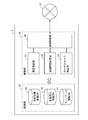
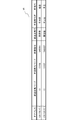
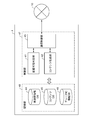
- FIG. 1 It is a block diagram which shows the example of whole structure of the information delivery system which concerns on the Example of this invention. It is a block diagram which shows the example of whole structure of the broadcasting station shown in FIG. It is a block diagram which shows the example of whole structure of the broadcast station management server shown in FIG. It is a figure which shows an example of the information stored in the positional information conversion DB shown in FIG. It is a figure which shows an example of the data stored in all the broadcast station information DB shown in FIG. It is a figure which shows an example of the data stored in tuner IC information DB shown in FIG. It is a block diagram which shows the structural example of the broadcast station portal server shown in FIG.
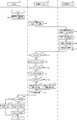
- FIG. 1 It is a figure which shows an example of the data stored at least in broadcasting station information DB shown in FIG. It is a block diagram which shows the whole structure of the receiver shown in FIG. It is a flowchart of the area
- 10 is a flowchart illustrating a modification of the content distribution process according to the first embodiment.
- 10 is a flowchart illustrating a modification of content distribution processing according to the second embodiment. It is a figure which shows an example of the information stored in the positional information conversion DB shown in FIG.
- Embodiments of an information distribution system, an information reception device, an information reception method, an information distribution device, and a program according to the present invention will be described with reference to the drawings. Note that the information receiving method according to the present invention is described together with the description of the processing executed by the information receiving apparatus.
- FIG. 1 is a block diagram showing an overall configuration of an information distribution system 1 according to an embodiment of the present invention.
- the information distribution system 1 includes a broadcasting station 2, a broadcasting station management server 3, a broadcasting station portal server 4, and a receiving device 5.
- Broadcast station 2 is an example of the claimed broadcast station, and broadcasts a plurality of contents superimposed on broadcast waves.
- the broadcast station management server 3 is an example of a first information distribution apparatus according to the claims, and provides connection destination information of the broadcast station portal server 4 corresponding to the broadcast station 2 in response to an inquiry from the reception apparatus 5.
- the broadcast station portal server 4 is an example of a second information distribution apparatus according to the claims. When there is a content distribution request from the reception apparatus 5, the broadcast station portal server 4 depends on the reception status of the broadcast station 2 of the reception apparatus 5. 2 can be distributed to the receiving device 5 via the IP communication network 10.
- the receiving device 5 is an example of the information receiving device in the claims, transmits its own location information to the broadcasting station management server 3, inquires about the presence or absence of the broadcasting station portal server 4 corresponding to the broadcasting station 2, and the inquiry result Accordingly, either the broadcast station 2 or the broadcast station portal server 4 can be determined as the content acquisition destination. In other words, the receiving device 5 can receive the content superimposed on the broadcast wave of the broadcast station 2, and can also transmit the content distribution request to the broadcast station portal server 4 via the IP communication network 10. The content provided by can be received.
- one broadcasting station 2 In the example of the information distribution system 1 shown in FIG. 1, one broadcasting station 2, one broadcasting station management server 3, one broadcasting station portal server 4 corresponding to one broadcasting station 2, and two receiving devices 5 are shown. However, in addition, a plurality of broadcasting stations 2, a plurality of broadcasting station management servers 3, a plurality of broadcasting station portal servers 4, and three or more receiving devices 5, in units of prefectures or in units of municipalities. May be configured.
- one broadcasting station portal server 4 exists for one broadcasting station 2, but a plurality of broadcasting station portal servers 4 exist for one broadcasting station 2. There may be one broadcast station portal server 4 corresponding to a plurality of broadcast stations 2. A broadcasting station 2 that does not have the broadcasting station portal server 4 may be included.
- the IP communication network 10 is a communication network for performing communication between the broadcast station management server 3, the broadcast station portal server 4, and the receiving device 5.
- the IP communication network 10 may be configured by a network using any one of the Internet, a CATV, a dedicated line, a VPN (virtual LAN), a WAN, or the like using a communication protocol such as TCP / IP, or a combination thereof. Good.
- the IP communication network 10 may include a network using a communication protocol other than IP communication.
- the broadcast station 2 shown in FIG. 1 superimposes broadcast program content on a broadcast wave according to a broadcast schedule. Also, the broadcasting station 2 can superimpose and transmit contents such as data broadcast and EPG (Electronic Program Guide) information on the broadcast wave. In addition, although the broadcasting station 2 shown in FIG. 1 assumes digital broadcasting, you may send out analog broadcasting.
- EPG Electronic Program Guide
- FIG. 2 is a block diagram showing an example of the overall configuration of the broadcasting station 2 shown in FIG.
- the broadcast station 2 includes a content stream creation unit 21, an EPG information creation unit 22, a data broadcast creation unit 23, a MUX (MultipleXer) unit 24, a broadcast content DB 25, a broadcast schedule DB 26, and a data broadcast.
- the content DB 27 is a main component.
- the control unit 28 that controls the entire broadcast station 2 is not shown. It is realized by executing in cooperation with hardware resources.
- control unit 28 includes a CPU, which is a hardware resource (not shown), and a central processing unit such as the CPU is stored in a storage unit such as a ROM, a hard disk, or a flash memory (not shown).
- the various programs are read out to the RAM via a bus (not shown) and executed in cooperation.
- the broadcast content DB 25, the broadcast schedule DB 26, and the data broadcast content DB 27 described above are stored in the storage unit 29.
- the storage unit 29 is, for example, an HDD (Hard Disk Drive) or a flash memory (not shown). Consists of storage devices.
- the content stream creation unit 21 creates broadcast content with reference to the broadcast content DB 25.
- the broadcast content is encoded and multiplexed in accordance with the MPEG2 (Moving Picture Experts Group 2) standard.
- MPEG2 Motion Picture Experts Group 2
- video and audio of the content to be transmitted is generated as an encoded ES (Elementary Stream), and a PES (Packetized Elementary Stream) in which ES is packetized for each meaningful unit is generated.
- a TS (Transport Stream) packet obtained by dividing the PES is transmitted from the broadcast station 2.
- SI of SI / PSI includes information necessary for creating EPG information
- PSI is control data including information for performing basic control.
- the TS packet may be subjected to encryption processing (hereinafter referred to as “scramble processing”) for preventing viewing contrary to the intention of the broadcast station 2.
- Encrypt processing hereinafter referred to as “scramble processing”.
- Multi2 can be used as the scrambling method. This Multi2 is one of the methods for encrypting digital data, and is widely used in BS digital broadcasting and terrestrial digital broadcasting.
- the broadcast content DB 25 stores information on which the above-described broadcast content is based.
- the EPG information creation unit 22 creates EPG information with reference to the broadcast schedule DB 26.
- the broadcast schedule of the broadcast station 2 is stored, but the broadcast schedule information of other broadcast stations 2 may be stored.
- the data broadcast creation unit 23 creates information related to data broadcast such as weather forecasts and information related to programs from the data broadcast content DB 27.
- Information related to data broadcasting is also encoded and multiplexed in conformity with the MPEG2 standard in the same manner as the broadcast content described above.
- URL Uniform Resource Locator
- search query information that can be used in the P2P (Peer to Peer) method may be stored.
- the data broadcast creation unit 23 supplies these information together to the MUX unit 24.
- the MUX unit 24 includes broadcast content data created by the content stream creation unit 21 with reference to the broadcast content DB 25, EPG information created by the EPG information creation unit 22 with reference to the broadcast schedule DB 26, and a data broadcast creation unit. 23 generates broadcast data D obtained by multiplexing data broadcast program data created with reference to the data broadcast content DB 27. Then, the broadcast data D is transmitted as a broadcast wave from the antenna of the broadcast station 2.
- the broadcasting station management server 3 shown in FIG. 1 determines the function of authenticating the receiving device 5, the function of specifying the area where the receiving device 5 is installed, and the presence or absence of the broadcasting station portal server 4 corresponding to the broadcasting station 2. It is a server that has at least a function and performs overall management of the broadcasting station portal server 4 in the information distribution system 1.
- the broadcast station management server 3 includes a broadcast station 2 (for example, a broadcast station portal server 4 corresponding to the broadcast station 2) that is not included in the information distribution system 1.
- the broadcast station portal server 4 may have information on the case where it is not registered as the broadcast station portal server 4 corresponding to the broadcast station 2 or the broadcast station portal server 4 does not exist in the first place.
- the broadcast station management server 3 corresponds to an example of a first information distribution apparatus in the claims.
- FIG. 3 is a block diagram showing an example of the overall configuration of the broadcast station management server 3 shown in FIG.
- the broadcast station management server 3 includes a device authentication unit 31, a region identification processing unit 32, a portal server identification unit 33, a communication control unit 34, a position information conversion DB 35, an all broadcast station information DB 36, and a tuner IC.
- the information DB 37 is a main component.
- the information processing realized by the functions of the device authentication unit 31, the area identification processing unit 32, the portal server identification unit 33, and the communication control unit 34 described above is performed by the control unit 38 that controls the entire broadcast station management server 3. This is realized by executing in cooperation with hardware resources (not shown).
- control unit 38 includes a CPU, which is a hardware resource (not shown), and the CPU stores various programs stored in a storage unit such as a ROM, a hard disk, and a flash memory (not shown). This is realized by reading the data into the RAM via the bus and executing it in cooperation. Further, the above-described position information conversion DB 35, all broadcast station information DB 36, and tuner IC information DB 37 are stored in the storage unit 39.
- the storage unit 39 is composed of a storage device such as an HDD (not shown) or a flash memory.
- the device authentication unit 31 is configured by a dedicated program, for example, and authenticates whether or not the receiving device 5 is a valid device in the information distribution system 1.
- a common mechanism that can be issued in advance as a one-time device ID by a time stamp method similar to a one-time password or a challenge-response method is provided to the receiving device 5 and the device authentication unit 31, respectively. It is possible to perform device authentication of the receiving device 5 by constructing and executing the “device ID” verification between them.
- the area specifying processing unit 32 is configured by a dedicated program, for example, and specifies the area where the receiving device 5 is installed. Details of the area specifying process performed by the area specifying processor 32 will be described later.
- the portal server specifying unit 33 is configured by, for example, a dedicated program, and specifies the broadcast station portal server 4 corresponding to the broadcast station 2 of the frequency from the frequency information received from the receiving device 5, and the broadcast station portal server 4. Execute the process to send the connection information.
- the communication control unit 34 is a communication interface for communicating with external devices such as the receiving device 5 and the broadcast station portal server 4 via the IP communication network 10.
- the position information conversion DB 35 is a database that stores at least information that can specify the installation position of the receiving device 5 from position information such as an IP address, a postal code, and an address.
- FIG. 4 is a diagram illustrating an example of information stored in the position information conversion DB 35 illustrated in FIG.
- the location information conversion DB 35 includes “IP address”, “prefecture code”, “prefecture name”, “city code”, “city name”, “zip code”, “town” Information such as “area name” is stored at least.
- the “IP address” includes a global IP address corresponding to an area specified by “prefecture code”, “prefecture name”, “city code”, and “city name”.
- the unit in which the IP address is stored may be a method of storing in units of a predetermined range (for example, a network address unit) in addition to the method of storing in units of individual IP addresses as shown in FIG.
- the all broadcast station information DB 36 is a database in which data relating to each broadcast station 2 included in the information distribution system 1 is stored.
- FIG. 5 is a diagram showing an example of data stored in the all broadcast station information DB 36 shown in FIG.
- the upper table for managing the information of the broadcasting station 2 shown in FIG. 5 stores at least information such as “broadcasting station ID”, “broadcasting station name”, “call sign”, and “broadcasting station portal server URL”.
- the “broadcast station ID” includes a code that can uniquely identify the correspondence to the broadcast station portal server 4 from the frequency of the broadcast station 2 in the information distribution system 1.
- “Broadcasting station name” includes the name of the broadcasting station 2 corresponding to the broadcasting station portal server 4.
- the “call sign” includes an identification number issued based on the international telecommunication treaty of the broadcasting station 2 corresponding to the broadcasting station portal server 4.
- “Broadcasting station portal server URL” includes the URL of the homepage of the broadcasting station portal server 4. Therefore, by referring to the “broadcast station ID” in the broadcast station information DB 44, the “broadcast station name”, “call sign”, “broadcast station portal server URL” and the like associated with the broadcast station ID are uniquely determined. can do.
- the table shown in the lower section for managing the viewing area information of the broadcasting station 2 stores information such as “prefecture code”, “city code”, “postal code”, “frequency”, “broadcasting station ID”, etc. Yes.
- the “prefecture code” includes a number that can uniquely identify a Japanese prefecture within the information distribution system 1.
- the “city code” includes a number that can uniquely identify a city in Japan in combination with the “prefecture code” in the information distribution system 1.
- the “zip code” includes the zip code of the area uniquely specified by the “prefecture code” and the “city code”.
- the “frequency” includes the frequency of the broadcast wave from the broadcast station 2 that can be received in the area specified by the “prefecture code” and “city code”.
- the “broadcast station ID” includes a code that can uniquely identify the broadcast station portal server 4 from the frequency of the broadcast station 2 in the information distribution system 1.
- the table shown in the upper part of FIG. 5 and the table shown in the lower part are associated by this “broadcast station ID”.
- the tuner IC information DB 37 is a database in which device information of the receiving device 5 used in the information distribution system 1 is stored.
- FIG. 6 is a diagram showing an example of data stored in the tuner IC information DB 37 shown in FIG.
- the “tuner information identification” includes identification information that can be uniquely identified by the tuner 52 of the receiving device 5 in the information distribution system 1.
- the “receiving device manufacturer code” includes identification information that can uniquely identify the manufacturer of the receiving device 5.
- the “receiving device model number” includes identification information that can uniquely identify the model number of the receiving device 5.
- the “tuner firmware version” includes firmware version information for the tuner 52 of the receiving device 5.
- the “reception level calculation count” includes a conversion count calculated in accordance with characteristics of various parameters related to the tuner 52. Therefore, if “tuner information identification” is specified as described later, by referring to the tuner IC information DB 37, “reception device manufacturer code”, “reception device model number” associated with the “tuner information identification”, “Tuner manufacturer name”, “tuner model number”, “tuner farm version”, and “reception level calculation count” can be uniquely specified.
- the broadcast station portal server 4 shown in FIG. 1 has broadcast contents of the broadcast station 2 (contents corresponding to the so-called simultaneous broadcast of the broadcast station 2) via the IP communication network 10 and related contents such as still images, sounds, and moving pictures related to the contents.
- the receiving device 5 receives content corresponding to the broadcast station 2 such as original content independently produced regardless of broadcast content (for example, a home page, text information, still image information, and moving image information provided by the broadcast station portal server 4).
- the broadcast station portal server 4 receives the content distribution request from the receiving device 5 and determines whether or not reception is possible based on the reception status of the broadcast station 2 in the receiving device 5.
- the broadcast station portal server 4 may have content corresponding to a plurality of broadcast stations 2.
- the broadcast station portal server 4 corresponds to an example of a second information distribution apparatus in the claims.
- FIG. 7 is a block diagram showing a configuration example of the broadcast station portal server 4 shown in FIG.
- the broadcast station portal server 4 includes a distribution availability determination unit 41, a content generation unit 42, a communication control unit 43, a broadcast station information DB 44, a content DB 45, and a tuner IC information DB 46 as main components.
- the information processing realized by each of the functions of the delivery permission determination unit 41, the content generation unit 42, and the communication control unit 43 described above is performed by the control unit 47 that controls the entire broadcast station portal server 4 and hardware resources (not shown). It is realized by executing in cooperation.
- control unit 47 includes a CPU, which is a hardware resource (not shown), and a central processing unit such as the CPU is stored in a storage unit such as a ROM, a hard disk, or a flash memory (not shown). This is realized by reading out various programs to a RAM (not shown) and executing them in cooperation.
- the broadcast station information DB 44, the content DB 45, and the tuner IC information DB 46 described above are stored in a storage unit 48.
- the storage unit 48 includes a storage device such as an HDD or a flash memory (not shown).
- the distribution availability determination unit 41 is configured by, for example, a program that can execute a distribution availability determination process, and refers to the broadcast station information DB 44 and the like for the receiving device 5 that has requested content distribution via the IP communication network 10. It is determined whether or not content distribution is permitted.
- the distribution availability determination unit 41 refers to the information transmitted by the receiving device 5 that has requested the content distribution, and determines that the content cannot be transmitted when it is determined that the content cannot be distributed via the IP communication network 10.
- a signal for permitting the content distribution request to the receiving device 5 (permitted information on distribution availability information) is supplied to the content generation unit 42. To do. Details of the delivery permission / inhibition determination will be described later.
- the content generation unit 42 When the content generation unit 42 receives a signal permitting a content distribution request from the distribution permission determination unit 41, the content generation unit 42 refers to the content DB 45 and generates content to be transmitted to the receiving device 5.
- the content to be transmitted to the receiving device 5 the content requested by the receiving device 5 may be used, or content linked to the broadcast program may be generated.
- the selected content may be generated when the receiving device 5 requests specific content, and program-linked content may be automatically generated and transmitted otherwise.
- the communication control unit 43 is a communication interface that receives a content distribution request from the receiving device 5 via the IP communication network 10 and transmits the content to the receiving device 5.
- the broadcast station information DB 44 is a database in which information related to the broadcast station 2 is stored, and the radio frequency and area classification of the broadcast station 2, reception level conditions in the area classification, and the broadcast station portal server 4 are connected to the IP communication network. 10 stores position information that becomes a viewing area that can be provided.
- FIG. 8 is a diagram showing an example of data stored at least in the broadcast station information DB 44 shown in FIG.
- the broadcast station information DB 44 stores three tables.
- the upper table for managing the information of the broadcasting station 2 stores at least information such as “broadcasting station ID”, “broadcasting station name”, “call sign”, “broadcasting station portal server URL”, and the like.
- the “broadcast station ID” includes a code that can uniquely identify the broadcast station 2 corresponding to the broadcast station portal server 4 in the information distribution system 1.
- “Broadcasting station name” includes the name of the broadcasting station 2 corresponding to the broadcasting station portal server 4.
- the “call sign” includes an identification number issued based on the international telecommunication treaty of the broadcasting station 2 corresponding to the broadcasting station portal server 4.
- “Broadcasting station portal server URL” includes the URL of the homepage of the broadcasting station portal server 4. Therefore, by referring to the “broadcast station ID” in the broadcast station information DB 44, the “broadcast station name”, “call sign”, “broadcast station portal server URL” and the like associated with the broadcast station ID are uniquely determined. can do.
- the table shown in the middle section for managing the viewing area information of the broadcasting station 2 includes “prefecture code”, “city code”, “postal code”, “frequency”, “area classification”, “broadcasting station ID”, etc. Information is stored.
- the “prefecture code” includes a number that can uniquely identify a Japanese prefecture within the information distribution system 1.
- the “city code” includes a number that can uniquely identify a city in Japan in combination with the “prefecture code” in the information distribution system 1.
- the “zip code” includes the zip code of the area uniquely specified by the “prefecture code” and the “city code”.
- the “frequency” includes the frequency of the broadcast wave from the broadcast station 2 that can be received in the area specified by the “prefecture code” and “city code”.
- the “area classification” includes a flag (1, 0) indicating an area classification for determining the reception status of the “frequency” of the broadcasting station 2.
- the flag When the value of the flag is “0”, it indicates a receivable area (broadcast license area that may be a good reception state), and when it is “1”, it is a fringe area (a bad reception state area). (Area other than the broadcasting license area).
- the “broadcast station ID” includes a code that can uniquely identify the broadcast station portal server 4 from the frequency of the broadcast station 2 in the information distribution system 1. The table shown in the upper part of FIG. 8 and the table shown in the lower part are associated by this “broadcast station ID”.
- the “area classification” is a foreign key to the table shown in the middle section described above.
- the “reception level condition” stores a numerical value of the reception level condition necessary for receiving from the broadcasting station 2 specified by the “area classification”.
- the unit of the numerical value stored in the “reception level condition” is mV / m.
- the table shown in the middle part of FIG. 8 and the table shown in the lower part are associated by “area classification”.
- broadcast station information DB 44 if “zip code” and “frequency” are specified in the table shown in the middle row, the “broadcast station ID” can be specified, and in the table shown in the upper row, the “broadcast station ID” is specified. "Broadcast station portal server URL” can be specified. Further, if “zip code” and “frequency” are specified in the table shown in the middle row, the “area division” of the specified broadcasting station 2 can be specified, and “reception” from the “area division” in the table shown in the lower row. Level condition "can be acquired.
- the content DB 45 is a database in which various contents are stored.
- Content stored in the content DB 45 stores content that is linked to a program broadcast by the broadcast station 2, content that can be connected even after the broadcast ends, content that does not have a limited receiving area, and the like.
- Specific types of content include still images, moving images, and audio.
- Such information is described in a markup language such as XML (extensible Markup Language) or BML (Broadcast Markup Language), and the compatibility with the IP communication network 10 by using such a markup language. Can be made good.
- the data in the content stream format from the broadcasting station 2 may be stored in the content DB 45 as it is and provided to the receiving device 5.
- the tuner IC information DB 46 is a database that stores at least device information of the receiving device 5 used in the information distribution system 1.
- the tuner IC information DB 46 is the same as the tuner IC information DB 37 (FIG. 6) described in the broadcasting station management server 3, and is not shown.
- the broadcast station portal server 4 executes the reception propriety determination, it is preferable to use the “reception level calculation count” stored in the tuner IC information DB 46.
- the reason is that the receiving device 5 has different performance depending on the manufacturer of the receiving device 5 and the type of tuner IC incorporated in the receiving device 5, and the influence of noise when the tuner IC is embedded in the receiving device 5. This is because the reception sensitivity from the same broadcasting station 2 varies depending on the product.
- RSSI Receiveive Signal Strength Indication
- SSI Signal to Noise ratio
- the receiving device 5 shown in FIG. 1 receives broadcast waves from the broadcast station 2 and outputs video, audio and EPG information of the received broadcast program.
- the reception device 5 has the same content as the content transmitted by the broadcast station 2 using the broadcast wave and / or the content. And other different contents can be received from the broadcast station portal server 4 via the IP communication network 10 and output.
- the receiving device 5 corresponds to an example of an information receiving device in claims.
- FIG. 9 is a block diagram showing the overall configuration of the receiving device 5 shown in FIG.
- the receiving device 5 is a stationary device configured to receive, for example, a TV broadcast or a radio broadcast from the broadcast station 2 and to be connected to the IP communication network 10.
- the receiving device 5 outputs information received from the broadcasting station 2, the broadcasting station management server 3, and the broadcasting station portal server 4 to the display device 6 and the audio reproduction device 7.
- the receiving device 5 according to the present embodiment is a separate device from the display device 6 and the audio playback device 7.
- the present invention is not limited to this, and the receiving device 5, the display device 6, and the audio reproducing device 7 may be provided in the same housing, for example, a television set.
- the receiving device 5 and the display device 6 may be provided in the same housing, and only the audio reproducing device 7 may be provided in another housing. That is, there are no particular limitations on the devices in which the three receiving devices 5, the display device 6, and the audio reproducing device 7 are provided.
- the receiving device 5 may have a recording function and a recording function.
- the receiving device 5 is an example of an information receiving device.
- the reception device 5 includes an operation input unit 51, a tuner 52, a DEMUX (DEMMultipleXer) unit 53, a decoding unit 54, a video / audio output unit 55, a network connection unit 56, a reception status detection unit 57, registration
- the information storage unit 58 and the control unit 59 are the main components.
- the control unit 59 is a central processing unit that controls the entire receiving device 5 including a CPU and the like, and the CPU is stored in various storage parts such as a ROM, a hard disk, and a flash memory (not shown).
- each function of the reception device 5 is realized in cooperation with each unit of the reception status detection unit 57 and the registration information storage unit 58.
- the operation input unit 51 receives an operation input (such as a channel selection instruction) from the user and transmits the user instruction to the control unit 59.
- the operation input unit 51 is configured by, for example, a remote control or a touch panel, but may be configured to allow voice input or the like.
- the user can perform an operation input to the receiving device 5 by operating the operation input unit 51.
- the operation input to the receiving device 5 may be input to the operation input unit 51 provided in the receiving device 5 via a radio signal (operation signal) such as infrared rays.
- a radio signal operation signal
- a signal indicating the content of the channel selection instruction is input to the control unit 59 via the operation input unit 51 and a bus (not shown). Transmits a tuning instruction to the channel selected by the user to the tuner 52 via a bus (not shown).
- the tuner 52 receives a broadcast wave of the broadcasting station 2 by an antenna according to a tuning instruction from the control unit 59, demodulates the received RF (Radio Frequency) signal, performs error correction processing, and the like, and is a TS signal composed of TS packets. Is output to the DEMUX unit 53.
- RF Radio Frequency
- FIG. 8 only one tuner 52 is shown for receiving terrestrial digital television broadcasts. However, in the case of receiving terrestrial analog television broadcasts, radio broadcasts (analog, digital), and BS broadcasts (analog, digital) as well. These tuners 52 may be provided, and two or more tuners 52 may be provided.
- the DEMUX unit 53 receives a TS signal composed of TS packets from the tuner 52 (that is, broadcast data D obtained by multiplexing a plurality of streams such as video and audio in the MUX unit 24 of the broadcasting station 2 on the transmission side), video, audio, etc. Is separated into stream data and section format data such as SI / PSI. Each data separated by the DEMUX unit 53 is supplied to the decoding unit 54.
- the decoding unit 54 decodes the broadcast content, EPG information, data broadcast, and the like supplied from the DEMUX unit 53, and generates audio data, video data, and program data, respectively.
- the audio data generated by decoding is supplied to the audio reproduction device 7 described above.
- the audio reproduction device 7 performs D / A conversion processing on the supplied audio data and outputs it as an audio signal.
- the decoding unit 54 supplies the decoded video data and program data to the video / audio output unit 55.
- the data supplied to the video / audio output unit 55 is output to the display device 6 and / or the audio reproduction device 7.
- the decoding unit 54 decodes data received from the network connection unit 56 and supplies the decoded data to the video / audio output unit 55.
- the decoding unit 54 supplies these decoded data to a storage unit (not shown) and stores them.
- the data supplied to the storage unit by the decoding unit 54 may be supplied as it is as a data signal without being decoded as a video signal or an audio signal.
- the video / audio output unit 55 stores the supplied program data in a RAM (not shown).
- the video / audio output unit 55 generates EPG information by drawing program data. Then, the video / audio output unit 55 generates a synthesized screen obtained by synthesizing the screen based on the EPG information on the screen based on the video data from the decoding unit 54, and sends it to the display device 6.
- the display device 6 displays this composite screen.
- Data decoded by the decoding unit 54 in response to a storage instruction from the control unit 59 is stored in a storage unit (not shown).
- the output method to the video / audio output unit 55 is not limited to the above, and the program data may be directly output to the display device 6 without being stored in the RAM.
- the video / audio output unit 55 does not form a composite screen obtained by combining the screen based on the EPG information on the screen based on the video data, but displays the screen including only the video data or the screen including only the EPG information. May be output respectively.
- the network connection unit 56 is a communication interface that communicates with the broadcast station management server 3 or the broadcast station portal server 4 via the IP communication network 10.
- the network connection unit 56 receives data from the broadcast station portal server 4 or the broadcast station management server 3 and sends the data to the decoding unit 54.
- the reception status detection unit 57 has a function of detecting the reception status of a broadcast wave transmitted from the broadcast station 2 in accordance with a reception status detection instruction from the control unit 59.
- the reception status detection unit 57 includes an electric field reception intensity signal generation circuit (not shown) that can generate an electric field reception intensity signal, and outputs a value obtained from the generation circuit to the control unit 59.
- the generation circuit for example, a known RSSI (Receive Signal Strength Indication) circuit can be provided, and an electric field reception intensity signal can be obtained from the RSSI circuit. Any circuit may be used as long as the electric field reception intensity can be detected. By using the electric field reception intensity signal obtained from the electric field reception intensity signal generation circuit described above, it is possible to detect the broadcast wave reception status.
- the reception status detection unit 57 may acquire the radio wave intensity using an S meter (Signal Meter) or the like. In addition, the reception status detection unit 57 performs S / N ratio (SNR: Signal to Noise ratio), multipath information (Multipath Information) may be detected.
- SNR Signal to Noise ratio
- Multipath Information Multipath Information
- the registration information storage unit 58 stores registration information about a user who uses the information distribution system 1 using the receiving device 5, device information about the receiving device 5, position information of the receiving device 5, and broadcasting station information. Storing.
- the registration information about the user here refers to an IP address associated with a user who can use the information distribution system 1 and assigned to the receiving device 5, a user ID of the user, a password associated with the user ID, Some or all of the user's address, postal code, telephone number, etc.
- the device information about the receiving device 5 includes device ID information of the receiving device 5 (for example, a manufacturer code and a serial number for identifying the manufacturer of the receiving device 5), device type information (for example, receiving) Model number information of the device 5), information on the tuner 52 (corresponding to “tuner information identification”, “tuner model number”, “tuner farm version” stored in the tuner IC information DB 37, 46), and the like.
- the location information of the receiving device 5 is a part or all of a postal code, a telephone number, an address, an IP address assigned to the own device, etc. of the place where the own device is installed.
- the broadcasting station information of the receiving device 5 includes a value detected by the reception status detection unit 57, information indicating the detection date and time, name information of the broadcasting station 2 corresponding to the detected value, Some or all of the frequency information.
- the receiving device 5 may include a descrambler unit (not shown) for releasing the scramble when the broadcast data D superimposed on the broadcast wave transmitted from the broadcast station 2 is scrambled. .
- the descrambler unit superimposes the TS signal, which is superimposed on the RF signal received by the tuner 52 and subjected to the scramble process, into a normal signal according to the descrambling instruction of the control unit 59. Perform the release process. Further, the descrambler unit supplies a TS signal including the TS packet from which the scramble process has been released to the DEMUX unit 53.
- the receiving device 5 may perform the following processing when data is transmitted from the broadcasting station portal server 4 in the TS packet format. That is, when the content is transmitted from the broadcasting station portal server 4 in the TS packet format, the control unit 59 supplies the TS packet data received by the network connection unit 56 to the DEMUX unit 53, and the video or video The data is separated into stream data such as audio and section format data such as SI / PSI, and the data separated by the decoding unit 54 is decoded and output to the display device 6 or the audio reproduction device 7 by the video / audio output unit 55. You may make it make it.
- FIG. 10 is a flowchart of the area specifying process executed between the receiving device 5 and the broadcast station management server 3 shown in FIG.
- the control unit 59 of the receiving device 5 starts the following processing when an operation input instruction is input by the user operating the operation input unit 51, for example.
- the area specifying process is configured to automatically start the following process when communication between the receiving device 5 and the broadcast station management server 3 is established. Also good.
- Step S ⁇ b> 1 The control unit 59 transmits the device information about the receiving device 5 and the registration information about the user stored in the registration information storage unit 58 to the broadcast station management server 3. Specifically, the control unit 59 transmits the device information of the receiving device 5, the IP address information allocated to the receiving device 5, and the user zip code information to the broadcast station management server 3.
- Step S2 When the control unit 38 of the broadcast station management server 3 receives the information of step S1 from the receiving device 5 via the communication control unit 34, the control unit 38 determines what device the receiving device 5 is. Specifically, the control unit 38 refers to the tuner IC information DB 37 (FIG. 6), and identifies the receiving device 5 of the receiving device 5 from the transmitted device information. For example, when the device type can be identified in the example of FIG. 6 from the device information of the receiving device 5, the control unit 38 proceeds to the process of step S ⁇ b> 3. In addition to the above-described specifying method, the control unit 38 specifies what type of receiving device 5 it is from the model type information sent from the receiving device 5 (for example, the model number information of the receiving device 5). You may do it.
- Step S3 The control unit 38 performs processing for confirming the validity of the position information transmitted from the receiving device 5. Specifically, the control unit 38 refers to the position information conversion DB 35 (FIG. 4), and from the position information specified from the transmitted “IP address” information and the “postal code” information also transmitted. Compare with the specified location information, and confirm the validity of the location information sent from the receiving device 5 based on whether or not the “prefecture name”, “city name”, “city name” match To do.
- Step S4 As a result of the comparison in step S3, if the validity of the position information transmitted from the receiving device 5 is confirmed, the control unit 38 notifies the receiving device 5 that the validity has been confirmed. If the validity cannot be confirmed, the fact that the validity cannot be confirmed is transmitted to the receiving device 5.
- Step S5 The control unit 59 of the receiving apparatus receives the confirmation result of the validity received from the broadcast station management server 3 via the IP communication network 10, displays the screen indicating the confirmation result on the display device 6, and performs processing. End (END).
- the broadcast station management server 3 compares the position information obtained from the IP address information transmitted from the receiving device 5 with the position information obtained from the zip code information by the determination process in step S3 described above. Thus, it is possible to confirm the legitimacy of the regional information that the receiving device is installed.
- FIG. 11 is a flowchart of the presence / absence determination process of the broadcast station portal server 4 corresponding to the broadcast station 2 executed between the receiving device 5 and the broadcast station management server 3 shown in FIG.
- Step S11 The control unit 59 of the receiving device 5 checks the frequency information corresponding to the changed broadcasting station 2 and the own device in order to confirm the presence / absence of the broadcasting station portal server 4 corresponding to the currently watching broadcasting station 2.
- the set zip code information is transmitted to the broadcast station management server 3.
- the information transmitted in step S11 may be transmitted simultaneously with the band type such as AM or FM.
- Step S12 When receiving the frequency information and the zip code information from the receiving device 5, the control unit 38 of the broadcast station management server 3 refers to the information stored in the all broadcast station information DB 36 (FIG. 5), and The broadcast station ID specified from the information and the zip code information is searched. When the broadcast station ID is searched with reference to the all broadcast station information DB 36 (YES in step S12), the control unit 38 proceeds to the process of step S13 and refers to the all broadcast station information DB 36. If there is no broadcast station ID, the process proceeds to step S15.
- Step S13 The control unit 38 acquires the broadcast station ID information searched in step S12. Thereafter, when the process of step S13 is completed, the control unit 38 proceeds to the process of step S14.
- Step S14 The control unit 38 searches and acquires the URL information of the broadcasting station portal server associated with the broadcasting station ID acquired in step S13 with reference to the all broadcasting station information DB 36, and transmits it to the receiving device 5. As a result of the presence / absence determination, the fact that there is a broadcasting station portal server 4 corresponding to the broadcasting station 2 currently being viewed and the URL information are set. Thereafter, when the process of step S14 is completed, the control unit 38 proceeds to the process of step S16.
- Step S15 The control unit 38 sets the fact that there is no broadcast station portal server 4 corresponding to the broadcast station 2 currently being viewed as the presence / absence determination result to be transmitted to the receiving device 5. Thereafter, when the process of step S15 is completed, the control unit 38 proceeds to the process of step S16.
- Step S16 The control unit 38 sets the determination result information set in step S14 (URL information for providing the corresponding broadcast station portal server 4 and connecting to the broadcast station portal server 4), or set in step S15.
- the determination result information (that there is no corresponding broadcasting station portal server 4) is transmitted to the receiving device 5.
- Step S17 The control unit 59 of the receiving device 5 receives the determination result information transmitted from the broadcast station management server 3 in step S16, and there is a corresponding broadcast station portal server 4 as the determination result information, and the broadcast If the URL information for connecting to the station portal server 4 is received (YES in step S17), the process proceeds to step S18, and if it is received that there is no corresponding broadcasting station portal server 4, step The process proceeds to S19.
- Step S18 The control unit 59 of the receiving device 5 connects to the broadcast station portal server 4 based on the URL information included in the determination result information received in Step S17 (END).
- Step S19 The control unit 59 of the receiving device 5 receives and outputs the content from the broadcast station 2 based on the frequency information from the determination result information received in Step S17 (END).
- the predetermined operation for starting the presence / absence determination processing described above the case where an operation to change the broadcast program being viewed by the user is exemplified, but other examples include, for example, broadcast content currently being viewed by the user
- the user switches the receiving method via the IP communication network 10
- the user turns on the power of the receiving device 5 and is established from the state where communication between the receiving device 5 and the broadcast station management server 3 is not established. It may be the case that an operation to change to is performed.
- FIG. 12 is a flowchart of a content distribution process executed between the receiving device 5 and the broadcast station portal server 4 shown in FIG.
- START The control unit 59 of the receiving device 5 starts the following process when the process of step S18 shown in FIG. 11 is completed.
- Step S ⁇ b> 21 The control unit 59 transmits the postal code information, device information, and tuner information set in the own device among the position information stored in the registration information storage unit 58 to the broadcast station portal server 4. .
- the tuner information included in the information transmitted in step S21 indicates information related to the tuner 52 and broadcast station information included in the device information stored in the registration information storage unit 58.
- Step S22 When the control unit 47 of the broadcasting station portal server 4 receives the zip code information, device information, and tuner information transmitted from the receiving device 5 in step S21, it refers to the broadcasting station information DB 44 (FIG. 8). The reception level information of the broadcasting station 2 is acquired. Specifically, the control unit 47 identifies the “area classification” from the zip code information. For example, when the “area classification” in the broadcast station information DB 44 is 0 (receivable area), the “area classification” The “reception level condition” when “0” is 0 is acquired. In the example illustrated in FIG.
- step S22 the “reception level condition” in which “area classification” is 0 is stored as the electric field strength of 0.25 mV / m, and thus this numerical value is acquired.
- the control unit 47 proceeds to the process of step S23.
- Step S23 The control unit 47 refers to the tuner IC information DB 46 (corresponding to FIG. 6), and acquires tuner information associated with the device information received in step S22. Specifically, the control unit 47 extracts the “reception device manufacturer code” and the “reception device model number” of the reception device 5 from the device information transmitted from the reception device 5, and refers to the tuner IC information DB 46. The tuner information that matches the extracted information is acquired. When the process of step S23 is completed, the control unit 47 proceeds to the process of step S24.
- Step S24 The control unit 47 performs a reception availability determination process based on the “reception level condition” obtained in step S22 and the tuner information obtained in step S23.
- this reception availability determination process it is determined whether or not the reception device 5 can actually receive the broadcast. For example, after the receiving device 5 is connected to the broadcast station portal server 4, the tuner information included in the receiving device 5 can be determined from the device information. Then, the RSSI and the S / N ratio included in the tuner information are compared with the reception level condition in the area where the receiving device 5 is installed. For example, when the “area classification” of the area where the receiving device 5 is installed is 0 (receivable area), it is understood that the “reception level condition” is 0.25 mV / m.
- the threshold values of RSSI and S / N ratio may be determined by fixed values in a program provided in the broadcast station portal server 4 (not shown), or the threshold values are stored in the tuner IC information DB 46 in advance. And may be acquired.
- Step S25 When the control unit 47 determines that reception is possible in the reception availability determination process of step S24 (YES in step S25), the control unit 47 proceeds to the process of step S31 and determines that reception is impossible (step S25). (NO in S25), the process proceeds to step S26.
- Step S26 The control unit 47 refers to the broadcast station information DB 44 (FIG. 8), and acquires an area classification that matches the zip code information transmitted from the receiving device 5. Thereafter, when the process of step S26 is completed, the control unit 47 proceeds to the process of step S27.
- Step S27 The controller 47 determines whether or not the area classification acquired in step S26 is a fringe area. If the area classification acquired in step S26 is a fringe area (YES in step S27), the control unit 47 proceeds to the process of step S28, and if it is not a fringe area (NO in step S27), the receiving device The position of 5 is determined to be a difficult viewing area although it is a receivable area, and the process proceeds to step S30. If the area classification acquired in step S26 is a fringe area (YES in step S27), the control unit 47 shifts to the process in step S30 without executing the processes in steps S28 and S29. May be. That is, the control unit 47 may perform processing for unconditionally disabling content distribution when it is determined that the place where the receiving device 5 is installed is a fringe area.
- Step S28 The control unit 47 refers to the broadcast station information DB 44 (FIG. 8), acquires the value of the reception level condition for the fringe area (area division is 1), and accepts the same reception as in step S24 described above. Execute judgment processing.
- Step S29 If the control unit 47 determines that reception is possible in the reception availability determination process of step S28 (YES in step S29), the control unit 47 proceeds to the process of step S31 and determines that reception is impossible (step S29). (NO in S29), the process proceeds to step S30.
- Step S30 The control unit 47 sets that the content provided by the broadcasting station portal server 4 cannot be distributed to the receiving device 5. Thereafter, when the process of step S30 is completed, the control unit 47 proceeds to the process of step S32.
- Step S31 If the control unit 47 determines that reception is possible in step S25, if it is determined in step S27 that the position of the receiving device 5 is a receivable area but a difficult viewing area, and that reception is possible in step S29. When the determination is made, it is set that the content provided by the broadcasting station portal server 4 can be distributed to the receiving device 5. Thereafter, when the process of step S31 is completed, the control unit 47 proceeds to the process of step S32.
- Step S32 When the process of step S30 or step S31 is completed, the control unit 47 transmits the determination result to the receiving device 5.
- Step S33 Upon receiving the determination result transmitted from the broadcasting station portal server 4 in step S32, the control unit 59 of the receiving device 5 determines whether or not the determination result can receive the content. If the received determination result indicates that the content can be received (YES in step S33), the control unit 59 proceeds to the process of step S34, and if the content cannot be received (in step S33). NO), the process proceeds to step S36.
- Step S34 The control unit 59 makes a content distribution request to the broadcast station portal server 4 and acquires the content. Thereafter, when the process of step S34 is completed, the control unit 59 proceeds to the process of step S35.
- Step S35 The control unit 59 outputs the content acquired in step S34 and ends the process (END).
- Step S36 Since it is determined in step S33 that the content cannot be received from the broadcast station portal server 4, the control unit 59 receives and outputs the content from the broadcast station 2, and ends the processing (END). .
- the receiving apparatus 5 and the information receiving method executed by the receiving apparatus 5 are the broadcasting station corresponding to the area specifying process shown in FIG. 10 and the broadcasting station 2 shown in FIG. Since the presence / absence determination process of the portal server 4 and the content distribution process shown in FIG. 12 are executed, even content distributed within a limited region can be received appropriately.
- the broadcast station management server 3 included in the information distribution system 1 described above, the information distribution method executed by the broadcast station management server 3, the broadcast station portal server 4, and the information distribution method executed by the broadcast station portal server 4 include regions. The content distributed in a limited manner can be appropriately received by the receiving device 5.
- the content distribution process executed between the receiving device 5 and the broadcasting station portal server 4 is different from the content distribution process (FIG. 12) of the first embodiment.
- the broadcast station portal server 4 only determines that it is located in the fringe area (an example of a predetermined range in the claims) from the zip code information transmitted from the receiving device 5.
- the receiver 5 is prompted to upload tuner information (information indicating the reception sensitivity of the broadcast station 2). That is, in other words, in the processing on the receiving device 5 side, the receiving device 5 transmits the postal code information set in the own device to the broadcast station portal server 4 and is requested to upload its own tuner information.
- the predetermined range the fringe area outside the broadcast license target area has been described, but other than that, the predetermined range can be freely set in the broadcast station portal server 4 regardless of the broadcast license target area inside or outside. You may do it. Since the second embodiment is the same as the first embodiment with respect to processes and configurations other than the above-described reception availability determination process, illustration and description of each device are omitted (however, when referring to the entire information distribution system of the second embodiment) Is an information distribution system 1A).
- FIG. 13 is a flowchart of the content distribution process executed between the receiving device 5 and the broadcast station portal server 4 according to the second embodiment of the present invention.
- START The control unit 59 of the receiving device 5 starts the following process when the process of step S18 shown in FIG. 11 is completed.
- Step S41 The control unit 59 transmits, to the broadcast station portal server 4, the zip code information and device information set in the own device among the position information stored in the registration information storage unit 58.
- Step S42 The control unit 47 of the broadcast station portal server 4 refers to the broadcast station information DB 44 (FIG. 8), and acquires the area division of the area that matches the postal code information transmitted from the receiving device 5. Thereafter, when the process of step S42 is completed, the control unit 47 proceeds to the process of step S43.
- Step S43 The controller 47 determines whether or not the area classification acquired in step S42 is a fringe area. If the area classification acquired in step S42 is a fringe area (YES in step S43), the control unit 47 proceeds to the process of step S44, and if it is not a fringe area (NO in step S43), the receiving device The position of 5 is determined to be a difficult viewing area although it is a receivable area, and the process proceeds to step S45.
- Step S44 Since the position of the receiving device 5 is the fringe area, the control unit 47 transmits a determination result indicating that the reception sensitivity needs to be uploaded to the receiving device 5.
- Step S45 Since the position of the receiving device 5 is not the fringe area, the control unit 47 transmits a determination result indicating that the reception sensitivity upload is unnecessary to the receiving device 5.
- Step S46 The control unit 59 of the receiving apparatus 5 refers to the determination result transmitted from the broadcast station portal server 4 in Step S44 or Step S45, and determines whether or not the reception sensitivity needs to be uploaded.
- the control unit 59 proceeds to the process of step S47 when uploading of the reception sensitivity is necessary (YES in step S46), and proceeds to the process of step S55 when not necessary (NO in step S46). To do.
- Step S47 The control unit 59 transmits the device information and tuner information set in the own device to the broadcast station portal server 4.
- the tuner information included in the information transmitted in step S47 indicates information related to the tuner 52 and broadcast station information included in the device information stored in the registration information storage unit 58.
- Step S48 The control unit 47 of the broadcasting station portal server 4 refers to the tuner IC information DB 46 (corresponding to FIG. 6), and acquires tuner information associated with the device information transmitted in step S47. Specifically, the control unit 47 extracts the manufacturer code of the receiving device 5 and the model number information of the receiving device 5 from the device ID information transmitted from the receiving device 5, and the tuner IC information DB 46 (corresponding to FIG. 6). To obtain information on the matching tuner IC. Thereafter, when the process of step S48 is completed, the control unit 47 proceeds to the process of step S49.
- Step S49 The control unit 47 performs a reception propriety determination process based on the tuner information acquired in step S48.
- this reception availability determination process it is determined whether or not the reception device 5 can actually receive the broadcast. For example, after the receiving device 5 is connected to the broadcast station portal server 4, the tuner information provided from the device information can be determined. Since it can be seen that the reception level condition when the RSSI and S / N ratio included in the tuner information and the “area classification” is 0 (receivable area) is 0.25 mV / m. If the RSSI and S / N ratio values in the above satisfy certain threshold conditions, it is determined that the broadcast wave of the broadcast station 2 has been received. Note that the threshold values of RSSI and S / N ratio may be determined by fixed values in a program provided in the broadcast station portal server 4 (not shown), or the threshold values are stored in the tuner IC information DB 46 in advance. And may be acquired.
- Step S50 If the control unit 47 determines that reception is possible in the reception availability determination process of step S49 (YES in step S50), the control unit 47 proceeds to the process of step S51 and determines that reception is impossible (step S50). (NO in S50), the process proceeds to step S52.
- Step S51 The control unit 47 transmits a determination result indicating that the content provided by the broadcast station portal server 4 can be distributed to the receiving device 5.
- Step S52 The control unit 47 transmits a determination result indicating that the content provided by the broadcasting station portal server 4 cannot be distributed to the receiving device 5.
- Step S53 Upon receiving the determination result transmitted in step S52, the control unit 59 of the reception device 5 determines whether or not the determination result can receive the content. If the received determination result indicates that the content can be received (YES in step S53), the control unit 59 proceeds to the process of step S55, and if the content cannot be received (NO in step S53). ), The process proceeds to step S54.
- Step S54 Since it is determined in step S53 that it is impossible to receive the content from the broadcast station portal server 4, the control unit 59 receives and outputs the content from the broadcast station 2, and ends the processing. (END).
- Step S55 Since it is determined that the content can be received from the broadcast station portal server 4, the control unit 59 makes a content distribution request to the broadcast station portal server 4 and acquires the content. When the process of step S55 is completed, the control unit 59 proceeds to the process of step S56.
- Step S56 The control unit 59 outputs the content acquired in step S55 and ends the process (END).
- the receiving device 5 Since the receiving sensitivity of the broadcasting station 2 is not determined, the time until the receiving device 5 acquires content from the broadcasting station portal server 4 is shortened. Further, when the broadcast station portal server 4 determines that the receiving device 5 is located in the receivable area, the broadcast station portal server 4 does not perform the process of determining the reception sensitivity of the receiving device 5, so the processing load on the broadcast station portal server 4 is reduced. It leads to reduction.
- the receiving device 5 executes the area specifying process with the broadcast station management server 3 and the content distribution process with the broadcast station portal server 4.
- a part or all of the processing executed by the broadcast station management server 3 may be configured to be executed by the broadcast station portal server 4, or part of the processing executed by the broadcast station portal server 4. Or you may comprise so that the broadcast station management server 3 can perform all.
- the broadcast station portal server 4 may execute an area specifying process, or the broadcast station management server 3 may perform a reception propriety determination process (steps S22 to S in FIG. 12) of the broadcast station 2 that is a part of the content distribution process. S32 and steps S42 to S52 in FIG. 13 may be executed.
- the content distribution processing (FIG. 12) described in the first embodiment may be the content distribution processing shown in FIG. That is, the broadcast station portal server 4 transmits the information received from the receiving device 5 to the broadcast station management server 3 (step S62).
- the broadcast station management server 3 executes a part of the reception availability determination process (corresponding to steps S22 to S24 in FIG. 12, and steps S63 to S65 in FIG. 14), and the execution result is received from the broadcast station management server 3. Is transmitted to the broadcasting station portal server 4 (step S66).
- the broadcast station portal server 4 executes the remaining reception determination process (corresponding to steps S25 to S32 in FIG. 12, and steps S67 to S74 in FIG. 14) when it is determined from the execution result that reception is possible. You may make it do.
- step S61, step S75 to step S78 The processing on the receiving device 5 side (step S61, step S75 to step S78) in the content distribution processing shown in FIG. 14 is not described in detail, but the processing of the first embodiment (step S21, step S33 to step S36 in FIG. 12). ).
- the processes in steps S70 and S71 may not be executed. That is, when it is determined from the broadcast station management server 3 that reception is not possible, if it is determined that the location where the receiving device 5 is located is a fringe area, content distribution may be unconditionally disabled.
- the content distribution processing (FIG. 13) described in the second embodiment may be the content distribution processing shown in FIG. That is, the broadcasting station portal server 4 performs the same processing (steps S81 to S87 in FIG. 15) with the receiving device 5 until the reception sensitivity uploading determination (steps S41 to 47 in FIG. 13). However, if tuner information is transmitted from the receiving device 5 thereafter, the transmitted information is transmitted to the broadcast station management server 3 (step S88). Then, the broadcast station management server 3 executes a part of the reception availability determination process (corresponding to steps S48 to S50 in FIG. 13 and steps S89 to S91 in FIG. 15), and the execution result is received from the broadcast station management server 3. Is transmitted to the broadcasting station portal server 4 (step S92 or step S93).
- the broadcasting station portal server 4 transmits the result executed by the broadcasting station management server 3 to the receiving device 5 (step S94).
- the processing on the receiving device 5 side (step S81, step S86, step S87, step 95 to step S98) in the content distribution processing shown in FIG. 15 is not described in detail, but the processing of the second embodiment (step S41 in FIG. 13). , Step S46, Step S47, Step S53 to Step S56).
- the broadcasting station portal server 4 in the above-described embodiments and modifications has been described as an apparatus having content provided by the broadcasting station 2, the broadcasting station portal server 4 is not necessarily an apparatus having content provided by the broadcasting station 2. May be.
- the broadcast station portal server 4 does not have any content provided by the broadcast station 2, and a content distribution server that distributes the content provided by the broadcast station 2 is configured independently of the broadcast station portal server 4,
- the receiving device 5 executes only the content distribution availability determination provided via the IP communication network 10 with the broadcast station portal server 4, and when the distribution is permitted as a result of the execution, the broadcast station portal server 4 It is also possible to acquire connection destination information of the content distribution server, connect to the content distribution server based on the connection destination information, and make a content distribution request.
- the receiving device 5 in the above-described embodiments and modifications is assumed to be used in a stationary type, it may be a mobile type receiving device 5. In that case, since it is difficult to specify the area even if a postal code or the like is used, it is assumed that the receiving device 5 is provided with a GPS function. Then, the broadcast station management server 3 adds to the position information conversion DB 35 a latitude / longitude conversion table capable of specifying the position from the latitude / longitude information as shown in FIG. Then, the mobile receiver 5 acquires latitude / longitude information indicating the current position by the GPS function, and transmits it to the broadcast station management server 3 together with the IP address information of the receiver 5.
- the location information conversion DB 35 to which the latitude / longitude conversion table has been added is referred to, the area specified from the latitude / longitude information transmitted from the mobile receiver 5 and the IP address information.
- the area where the mobile receiver 5 is located is identified by comparing with the area identified from the above. Note that the processing (content distribution processing) other than the region specifying processing in the mobile receiver 5 is the same as that in the above-described embodiment and modification, and thus the description thereof is omitted.
- the reception sensitivity is detected by the electric field reception intensity as a method of detecting the reception sensitivity of the broadcast station 2 in the reception device 5, but other reception error rates can be detected.
- a reception error rate detection circuit (not shown) is provided in the receiving device 5 so that a detection signal is generated when a predetermined reference value is exceeded from the reception error rate detection circuit. You may make it transmit to the portal server 4.
- FIG. In the case of the method of detecting the reception sensitivity of the broadcast station 2 based on the reception error rate, the standard reception error rate within the broadcast range of the broadcast station 2 is used in the entire broadcast station information DB 36 of the broadcast station management server 3. Is stored in advance, and in the tuner IC information DB 37, it is preferable to store a reception error rate multiplication coefficient for each reception device 5 in advance, and to perform reception acceptability determination processing from these pieces of information.
- step S21 and step S47 different information may be transmitted for each model of the receiving device 5.
- the receiving device 5A transmits RSSI and S / N ratio as tuner information
- the receiving device 5B transmits S meter (Signal Meter) and multipath information (Multipath Information). Different information may be transmitted for each model of the receiving device 5.
- a client server type network method for downloading content from the broadcast station portal server 4 is adopted.
- a P2P (Peer To Peer) type network method may be adopted.
- the content request for the broadcast station portal server 4 is broadcasted as a search query to the broadcast station portal server 4 or the broadcast station management server 3 included in the information distribution system 1, and information indicating the reception status is transmitted. Only when the information indicating the reception status satisfies the reference value, the information of the peer (computer) holding the content may be transmitted and the content may be downloaded from the peer.
- all or a part of the functions provided in each device described in the above-described embodiments and modifications is configured by a program, and the functions provided in each device described above by installing this program in an information processing device (computer). It is good also as a means to implement
- all or some of the functions of the broadcast station management server 3, the broadcast station portal server 4, and the receiving device 5 described in the above-described embodiments and modifications are configured by a program, and this program is an information processing apparatus (computer). It is good also as a means to implement
- the program can be directly installed on a computer from an information recording medium recorded in an executable state, but may be installed on a remote computer via a network. Such a program can be appropriately received even for content distributed in a limited area.
- An example of an information distribution request receiving unit an example of a first transmitting unit, an example of a second transmitting unit
- 44 ... broadcast station information DB 45 ... content DB
- 46 ... tuner IC information DB 47
- Control unit an example of a delivery determination unit, an example of an information providing unit, an example of an area determination unit, a reception letter Example of status request unit
- 48 ... Storage unit (example of information storage unit), 51 ... Operation input unit, 52 ... Tuner (example of broadcast wave reception unit), 53 ... DEMUX unit, 54... Decoding section, 55... Video / audio output section, 56... Network connection section (an example of a communication section), 57... Reception status detection section, 58.
- ... Control unit example of connection destination information acquisition unit, example of information acquisition destination determination unit, example of information acquisition unit
Landscapes
- Engineering & Computer Science (AREA)
- Databases & Information Systems (AREA)
- Multimedia (AREA)
- Signal Processing (AREA)
- Two-Way Televisions, Distribution Of Moving Picture Or The Like (AREA)
- Mobile Radio Communication Systems (AREA)
Abstract
地域を限定して提供されるコンテンツを適切に受信すること。 放送局2の放送波を受信する放送波受信部、放送局管理サーバ3(第1の情報配信装置)、およびIP通信網10を介して放送局2が提供するコンテンツを配信する放送局ポータルサーバ4(第2の情報配信装置)と通信する通信部、自己の位置情報、放送局の放送波の周波数情報、ならびに自装置における放送局2の放送波の受信状況を示す情報を記憶する登録情報記憶部、放送局管理サーバ3に対し、自己の位置情報および放送局の放送波の周波数情報を送信し、放送局管理サーバ3の判定結果に基づいて放送局2または放送局ポータルサーバ4のいずれかをコンテンツの取得先として決定してコンテンツを取得する受信装置5とする。
Description
本発明は、情報配信システム、情報受信装置、情報受信方法、情報配信装置、およびプログラムに関する。
インターネット等のIP(Internet Protocol)通信網を介して放送を行う、いわゆるIP放送において、放送局の放送対象範囲内にある地域のみにコンテンツを提供する技術が知られている(たとえば、特許文献1参照)。
特許文献1に開示される技術は、視聴者宅に設置されたセットトップボックスに備えられているGPS(Global Positioning System)機能により検知された緯度情報/経度情報を当該セットトップボックスの地域情報としてサーバ側へ送信し、当該地域情報に基づいて予め備えられている動作地域テーブルを参照し、放送対象地域であるか否かの判定を実行し、放送局の放送対象範囲内であると判定した場合には当該セットトップボックスへ契約コンテンツの提供を行うものである。
しかしながら、特許文献1に開示される技術においては、サーバ側で保存されている情報が緯度情報/経度情報の場合には、一律に放送対象地域が判断される。したがって、サーバ側に保存されている緯度情報/経度情報で放送対象地域外に該当すると判定されると、実際の放送局の受信状況が良好である地域であってもIP放送によるコンテンツを受信することができない。
そこで、本発明は、上述した課題に鑑み、地域を限定して提供されるコンテンツを適切に受信できる情報配信システム、情報受信装置、情報受信方法、情報配信装置、およびプログラムを提供することを目的とする。
本発明の一側面は、情報配信システムに係るものである。すなわち、情報受信装置、第1の情報配信装置、および第2の情報配信装置を備える情報配信システムにおいて、情報受信装置は、放送局の放送波を受信する放送波受信部と、第1の情報配信装置、および放送局の放送波とは異なる他の通信媒体を介して放送局が提供する情報を配信する第2の情報配信装置と通信する通信部と、自己の位置情報、自己の機器情報、放送局の放送波の周波数情報、および自装置における放送局の放送波の受信状況を示す情報を記憶する登録情報記憶部と、第1の情報配信装置に対し、通信部を介して登録情報記憶部に記憶された自己の位置情報および放送局の放送波の周波数情報を送信し、送信した情報に対する第1の情報配信装置の応答に基づいて第2の情報配信装置の接続先情報を取得する接続先情報取得部と、接続先情報に基づいて接続する第2の情報配信装置に対し、通信部を介して登録情報記憶部に記憶された自己の位置情報、自己の機器情報、および放送局の放送波の周波数情報を送信し、送信した情報に対する第2の情報配信装置の応答に基づいて放送局または第2の情報配信装置のいずれかを情報の取得先として決定する情報取得先決定部と、情報取得先決定部で決定した取得先に基づいて、放送局から放送波受信部を介して情報を取得する、または第2の情報配信装置から通信部を介して情報を取得する情報取得部と、を備え、第1の情報配信装置は、情報受信装置の位置情報および当該情報受信装置における放送局の放送波の周波数情報を受信する受信部と、受信部で受信した情報受信装置の位置情報および周波数情報に基づいて放送局に対応する第2の情報配信装置を特定する情報配信装置特定部と、情報配信特定部で特定された第2の情報配信装置の接続情報を情報受信装置へ送信する接続情報送信部と、を備え、第2の情報配信装置は、放送局が提供する情報が記憶される情報記憶部と、情報受信装置の情報取得部より情報の取得要求を受信した場合に、情報受信装置における放送局の受信状況に基づいて情報の配信可否を判定する配信可否判定部と、配信可否判定部の判定に基づいて、情報記憶部に記憶されている情報を、情報受信装置に対して提供する情報提供部と、を備える情報配信システムである。
また、本発明の一側面は、上述した情報配信システムの一部を構成する情報受信装置に係るものである。すなわち、放送局の放送波を受信する放送波受信部と、第1の情報配信装置、および放送局の放送波とは異なる他の通信媒体を介して放送局が提供する情報を配信する第2の情報配信装置と通信する通信部と、自己の位置情報、自己の機器情報、放送局の放送波の周波数情報、および自装置における放送局の放送波の受信状況を示す情報を記憶する登録情報記憶部と、第1の情報配信装置に対し、通信部を介して登録情報記憶部に記憶された自己の位置情報および放送局の放送波の周波数情報を送信し、送信した情報に対する第1の情報配信装置の応答に基づいて第2の情報配信装置の接続先情報を取得する接続先情報取得部と、接続先情報に基づいて接続する第2の情報配信装置に対し、通信部を介して登録情報記憶部に記憶された自己の位置情報、自己の機器情報、および放送局の放送波の周波数情報を送信し、送信した情報に対する第2の情報配信装置の応答に基づいて放送局または第2の情報配信装置のいずれかを情報の取得先として決定する情報取得先決定部と、情報取得先決定部で決定した取得先に基づいて、放送局から放送波受信部を介して情報を取得する、または第2の情報配信装置から通信部を介して情報を取得する情報取得部と、を備える情報受信装置である。
また、本発明の一側面は、上述した情報配信システムの一部を構成する情報受信装置が実行する情報受信方法に係るものである。すなわち、放送波受信部、通信部、登録情報記憶部、接続先情報取得部、情報取得先決定部、および情報取得部とを備える情報受信装置が実行する情報受信方法であって、登録情報記憶部が、自己の位置情報、自己の機器情報、放送局の放送波の周波数情報、および自装置における放送局の放送波の受信状況を示す情報を記憶する登録情報記憶ステップと、接続先情報取得部が、第1の情報配信装置に対し、通信部を介して登録情報記憶部に記憶された自己の位置情報および放送局の放送波の周波数情報を送信し、送信した情報に対する第1の情報配信装置の応答に基づいて第2の情報配信装置の接続先情報を取得する接続先情報取得ステップと、情報取得先決定部が、接続先情報に基づいて接続する第2の情報配信装置に対し、通信部を介して登録情報記憶部に記憶された自己の位置情報、自己の機器情報、および放送局の放送波の周波数情報を送信し、送信した情報に対する第2の情報配信装置の応答に基づいて放送局または第2の情報配信装置のいずれかを情報の取得先として決定する情報取得先決定ステップと、情報取得部が、情報取得先決定ステップで決定された取得先に基づいて、放送局から放送波受信部を介して情報を取得する、または第2の情報配信装置から通信部を介して情報を取得する取得ステップと、を備える情報受信方法である。
また、本発明の一側面は、上述した情報配信システムの一部を構成する情報受信装置としてコンピュータを機能させるためのプログラムに係るものである。すなわち、コンピュータを、放送局の放送波を受信する放送波受信手段と、第1の情報配信装置、および放送局の放送波とは異なる他の通信媒体を介して放送局が提供する情報を配信する第2の情報配信装置と通信する通信手段と、自己の位置情報、自己の機器情報、放送局の放送波の周波数情報、および自装置における放送局の放送波の受信状況を示す情報を記憶する登録情報記憶手段と、第1の情報配信装置に対し、通信部を介して登録情報記憶部に記憶された自己の位置情報および放送局の放送波の周波数情報を送信し、送信した情報に対する第1の情報配信装置の応答に基づいて第2の情報配信装置の接続先情報を取得する接続先情報取得手段と、接続先情報に基づいて接続する第2の情報配信装置に対し、通信手段を介して登録情報記憶手段に記憶された自己の位置情報、自己の機器情報、および放送局の放送波の周波数情報を送信し、送信した情報に対する第2の情報配信装置の応答に基づいて放送局または第2の情報配信装置のいずれかを情報の取得先として決定する情報取得先決定手段と、情報取得先決定手段で決定した取得先に基づいて、放送局から放送波受信手段を介して情報を取得する、または第2の情報配信装置から通信手段を介して情報を取得する情報取得手段、として機能させるためのプログラムである。
また、本発明の一側面は、上述した情報配信システムの一部を構成する第1の情報配信装置に係るものである。すなわち、上述した情報受信装置の位置情報および当該情報受信装置における放送局の放送波の周波数情報を受信する受信部と、受信部で受信した情報受信装置の位置情報および周波数情報に基づいて放送局の放送波とは異なる他の通信媒体を介して放送局が提供する情報を配信する情報配信装置を特定する情報配信装置特定部と、情報配信特定部で特定された情報配信装置の接続情報を情報受信装置へ送信する接続情報送信部と、を備える情報配信装置である。
また、本発明の一側面は、上述した情報配信システムの一部を構成する第2の情報配信装置に係るものである。すなわち、放送局の放送波とは異なる他の通信媒体を介して放送局が提供する情報を情報受信装置へ配信する情報配信装置であって、放送局が提供する情報が記憶される情報記憶部と、情報受信装置より情報の取得要求を受信した場合に、情報受信装置における放送局の受信状況に基づいて情報の配信可否を判定する配信可否判定部と、配信可否判定部の判定に基づいて、情報記憶部に記憶されている情報を、情報受信装置に対して提供する情報提供部と、を備えることを特徴とする情報配信装置である。
さらに、本発明の一側面は、上述した情報配信システムとは異なる他の情報配信システムに係るものである。すなわち、情報受信装置、第1の情報配信装置、および第2の情報配信装置を備える情報配信システムにおいて、情報受信装置は、放送局の放送波を受信する放送波受信部と、第1の情報配信装置、および放送局の放送波とは異なる他の通信媒体を介して放送局が提供する情報を配信する第2の情報配信装置と通信する通信部と、自己の位置情報、自己の機器情報、放送局の放送波の周波数情報、および自装置における放送局の放送波の受信状況を示す情報を記憶する登録情報記憶部と、第1の情報配信装置に対し、通信部を介して登録情報記憶部に記憶された自己の位置情報および放送局の放送波の周波数情報を送信し、送信した情報に対する第1の情報配信装置の応答に基づいて第2の情報配信装置の接続先情報を取得する接続先情報取得部と、接続先情報に基づいて接続する第2の情報配信装置に対し、通信部を介して登録情報記憶部に記憶された自己の位置情報を送信し、当該第2の情報配信装置より、自己の機器情報および自装置における放送局の放送波の受信状況を示す情報を要求された場合に、登録情報記憶部に記憶された自己の機器情報および放送局の放送波の受信状況を示す情報をさらに送信し、当該第2の情報配信装置からの応答結果に基づいて放送局または第2の情報配信装置のいずれかを情報の取得先として決定する情報取得先決定部と、情報取得先決定部で決定した取得先に基づいて、放送局から放送波受信部を介して情報を取得する、または第2の情報配信装置から通信部を介して情報を取得する情報取得部と、を備え、第1の情報配信装置は、情報受信装置の位置情報および当該情報受信装置における放送局の放送波の周波数情報を受信する受信部と、受信部で受信した情報受信装置の位置情報および周波数情報に基づいて放送局に対応する第2の情報配信装置を特定する情報配信装置特定部と、情報配信特定部で特定された第2の情報配信装置の接続情報を情報受信装置へ送信する接続情報送信部と、を備え、第2の情報配信装置は、放送局が提供する情報が記憶される情報記憶部と、情報受信装置の情報取得部より情報の取得要求を受信した場合に、当該取得要求に含まれる位置情報から当該情報受信装置の位置が所定の地域に含まれるか否かを判定する地域判定部と、地域判定部の判定結果において所定の地域に含まれると判定された場合に、当該情報受信装置に対して放送局の受信状況を示す情報を要求する受信状況要求部と、当該情報受信装置から送信されてきた放送局の受信状況に基づいて情報の配信可否を判定する配信可否判定部と、配信可否判定部の判定に基づいて、情報記憶部に記憶されている情報を、情報受信装置に対して提供する情報提供部と、を備える情報配信システムである。
また、本発明の一側面は、上述した他の情報配信システムの一部を構成する情報受信装置に係るものである。すなわち、放送局の放送波を受信する放送波受信部と、第1の情報配信装置、および放送局の放送波とは異なる他の通信媒体を介して放送局が提供する情報を配信する第2の情報配信装置と通信する通信部と、自己の位置情報、自己の機器情報、放送局の放送波の周波数情報、および自装置における放送局の放送波の受信状況を示す情報を記憶する登録情報記憶部と、第1の情報配信装置に対し、通信部を介して登録情報記憶部に記憶された自己の位置情報および放送局の放送波の周波数情報を送信し、送信した情報に対する第1の情報配信装置の応答に基づいて第2の情報配信装置の接続先情報を取得する接続先情報取得部と、接続先情報に基づいて接続する第2の情報配信装置に対し、通信部を介して登録情報記憶部に記憶された自己の位置情報を送信し、当該第2の情報配信装置より、自己の機器情報および自装置における放送局の放送波の受信状況を示す情報を要求された場合に、登録情報記憶部に記憶された自己の機器情報および放送局の放送波の受信状況を示す情報をさらに送信し、当該第2の情報配信装置からの応答結果に基づいて放送局または第2の情報配信装置のいずれかを情報の取得先として決定する情報取得先決定部と、情報取得先決定部で決定した取得先に基づいて、放送局から放送波受信部を介して情報を取得する、または第2の情報配信装置から通信部を介して情報を取得する情報取得部と、を備える情報受信装置である。
さらに、本発明の一側面は、上述した他の情報配信システムの一部を構成する情報受信装置の構成に加えて、情報取得先決定部は、第2の情報配信装置から自装置における放送局の放送波の受信状況を示す情報を要求されなかった場合には、第2の情報配信装置を情報取得先として決定することが好ましい。
本発明の一側面は、上述した他の情報配信システムの一部を構成する情報受信装置が実行する情報受信方法に係るものである。すなわち、放送波受信部、通信部、登録情報記憶部、接続先情報取得部、情報取得先決定部、および情報取得部とを備える情報受信装置が実行する情報受信方法であって、登録情報記憶部が、自己の位置情報、自己の機器情報、放送局の放送波の周波数情報、および自装置における放送局の放送波の受信状況を示す情報を記憶する登録情報記憶ステップと、接続先情報取得部が、第1の情報配信装置に対し、通信部を介して登録情報記憶部に記憶された自己の位置情報および放送局の放送波の周波数情報を送信し、送信した情報に対する第1の情報配信装置の応答に基づいて第2の情報配信装置の接続先情報を取得する接続先情報取得ステップと、情報取得先決定部が、接続先情報に基づいて接続する第2の情報配信装置に対し、通信部を介して登録情報記憶部に記憶された自己の位置情報を送信し、当該第2の情報配信装置より、自己の機器情報および自装置における放送局の放送波の受信状況を示す情報を要求された場合に、登録情報記憶部に記憶された自己の機器情報および放送局の放送波の受信状況を示す情報をさらに送信し、当該第2の情報配信装置からの応答結果に基づいて放送局または第2の情報配信装置のいずれかを情報の取得先として決定する情報取得先決定ステップと、情報取得部が、情報取得先決定ステップで決定された取得先に基づいて、放送局から放送波受信部を介して情報を取得する、または第2の情報配信装置から通信部を介して情報を取得する取得ステップと、を備える情報受信方法である。
また、本発明の一側面は、上述した他の情報配信システムの一部を構成する情報受信装置としてコンピュータを機能させるためのプログラムに係るものである。すなわち、コンピュータを、放送局の放送波を受信する放送波受信手段と、第1の情報配信装置、および放送局の放送波とは異なる他の通信媒体を介して放送局が提供する情報を配信する第2の情報配信装置と通信する通信手段と、登録情報記憶部が、自己の位置情報、自己の機器情報、放送局の放送波の周波数情報、および自装置における放送局の放送波の受信状況を示す情報を記憶する登録情報記憶手段と、第1の情報配信装置に対し、通信手段を介して登録情報記憶手段に記憶された自己の位置情報および放送局の放送波の周波数情報を送信し、送信した情報に対する第1の情報配信装置の応答に基づいて第2の情報配信装置の接続先情報を取得する接続先情報取得手段と、接続先情報に基づいて接続する第2の情報配信装置に対し、通信手段を介して登録情報記憶手段に記憶された自己の位置情報を送信し、当該第2の情報配信装置より、自己の機器情報および自装置における放送局の放送波の受信状況を示す情報を要求された場合に、登録情報記憶手段に記憶された自己の機器情報および放送局の放送波の受信状況を示す情報をさらに送信し、当該第2の情報配信装置からの応答結果に基づいて放送局または第2の情報配信装置のいずれかを情報の取得先として決定する情報取得先決定手段と、情報取得先決定部で決定した取得先に基づいて、放送局から放送波受信部を介して情報を取得する、または第2の情報配信装置から通信部を介して情報を取得する情報取得手段、として機能させるためのプログラムである。
また、本発明の一側面は、上述した他の情報配信システムの一部を構成する第1の情報配信装置に係るものである。すなわち、上述した情報受信装置の位置情報および当該情報受信装置における放送局の放送波の周波数情報を受信する受信部と、受信部で受信した情報受信装置の位置情報および周波数情報に基づいて放送局に対応する情報配信装置を特定する情報配信装置特定部と、情報配信特定部で特定された情報配信装置の接続情報を情報受信装置へ送信する接続情報送信部と、を備えることを特徴とする情報配信装置である。
また、本発明の一側面は、上述した他の情報配信システムの一部を構成する第2の情報配信装置に係るものである。すなわち、放送局の放送波とは異なる他の通信媒体を介して放送局が提供する情報を情報受信装置へ配信する情報配信装置であって、放送局が提供する情報が記憶される情報記憶部と、情報受信装置より情報の取得要求を受信した場合に、当該取得要求に含まれる位置情報から当該情報受信装置の位置が所定の地域に含まれるか否かを判定する地域判定部と、地域判定部の判定結果において所定の地域に含まれると判定された場合に、当該情報受信装置に対して放送局の受信状況を示す情報を要求する受信状況要求部と、当該情報受信装置から送信されてきた放送局の受信状況に基づいて情報の配信可否を判定する配信可否判定部と、配信可否判定部の判定に基づいて、情報記憶部に記憶されている情報を、情報受信装置に対して提供する情報提供部と、を備えることを特徴とする情報配信装置である。
また、本発明の一側面は、上述した2つの情報配信システムとは異なる他の情報配信システムに係るものである。すなわち、情報受信装置、第1の情報配信装置、第2の情報配信装置を備える情報配信システムにおいて、情報受信装置は、放送局の放送波を受信する放送波受信部と、第1の情報配信装置、放送局の放送波とは異なる他の通信媒体を介して放送局が提供する情報を配信する第2の情報配信装置と通信する通信部と、自己の位置情報、放送局の放送波の周波数情報、および自装置における放送局の放送波の受信状況を示す情報を記憶する登録情報記憶部と、第1の情報配信装置に対し、通信部を介して登録情報記憶部に記憶された自己の位置情報および放送局の放送波の周波数情報を送信し、送信した情報に対する第1の情報配信装置の応答に基づいて第2の情報配信装置の接続先情報を取得する接続先情報取得部と、接続先情報取得部により取得した接続先情報に基づいて接続した第2の情報配信装置に対し、通信部を介して登録情報記憶部に記憶された自己の位置情報および放送局の放送波の周波数情報を送信し、送信した情報に対する第2の情報配信装置の応答に基づいて放送局または第2の情報配信装置のいずれかを情報の取得先として決定する情報取得先決定部と、情報取得先決定部で決定した取得先に基づいて、放送局から放送波受信部を介して情報を取得する、または第2の情報配信装置から通信部を介して情報を取得する情報取得部と、を備え、第1の情報配信装置は、情報受信装置から送信された情報受信装置の位置情報および当該情報受信装置における放送局の放送波の周波数情報を受信する第1の受信部と、第1の受信部で受信した位置情報および周波数情報に基づいて放送局に対応する第2の情報配信装置を特定する情報配信装置特定部と、情報配信特定部で特定された第2の情報配信装置の接続情報を情報受信装置へ送信する接続情報送信部と、第2の情報配信装置から送信された情報受信装置の位置情報、当該情報受信装置における放送局の放送波の周波数情報、および当該情報受信装置における放送局の放送波の受信状況を示す情報を受信する第2の受信部と、第2の受信部で受信した情報に基づいて情報受信装置における放送局からの放送波の受信可否を判定する受信可否判定部と、受信可否判定部の判定結果を第2の情報配信装置へ送信する受信可否判定結果送信部と、を備え、第2の情報配信装置は、情報受信装置から送信された当該情報受信装置における放送局の放送波の周波数情報、および当該情報受信装置における放送局の放送波の受信状況を示す情報を第1の情報配信装置へ送信する第1の送信部と、第1の送信部で送信した情報に対する第1の情報配信装置からの応答に基づいて第2の情報配信装置が提供する情報の配信可否を判定する配信可否判定部と、配信可否判定部の判定結果を情報受信装置へ送信する第2の送信部と、放送局が提供する情報が記憶される情報記憶部と、情報記憶部に記憶されている情報を情報受信装置からの要求に応じて放送局の放送波とは異なる他の通信媒体を介して提供する情報提供部と、を備える情報配信システムである。
また、本発明の一側面は、上述した2つの情報配信システムとは異なる他の情報配信システムの一部を構成する第1の情報配信装置に係るものである。すなわち、上述の情報受信装置から送信された当該情報受信装置の位置情報および当該情報受信装置における放送局の放送波の周波数情報を受信する第1の受信部と、受信部で受信した位置情報および周波数情報に基づいて放送局に対応する第2の情報配信装置を特定する情報配信装置特定部と、情報配信特定部で特定された第2の情報配信装置の接続情報を情報受信装置へ送信する接続情報送信部と、第2の情報配信装置から送信された情報受信装置の位置情報、当該情報受信装置における放送局の放送波の周波数情報、および当該情報受信装置における放送局の放送波の受信状況を示す情報を受信する第2の受信部と、第2の受信部で受信した情報に基づいて情報受信装置における放送局からの放送波の受信可否を判定する受信可否判定部と、受信可否判定部の判定結果を第2の情報配信装置へ送信する受信可否判定結果送信部と、を備える情報配信装置である。
また、本発明の一側面は、上述した2つの情報配信システムとは異なる他の情報配信システムの一部を構成する第2の情報配信装置に係るものである。すなわち、上述の情報受信装置から送信された当該情報受信装置における放送局の放送波の周波数情報、および当該情報受信装置における放送局の放送波の受信状況を示す情報を第1の情報配信装置へ送信する第1の送信部と、第1の送信部で送信した情報に対する第1の情報配信装置からの応答に基づいて放送局の放送波とは異なる他の通信媒体を介して放送局が提供する情報を配信する第2の情報配信装置が提供する情報の配信可否を判定する配信可否判定部と、配信可否判定部の判定結果を情報受信装置へ送信する第2の送信部と、を備える情報配信装置である。
また、本発明の一側面は、上述した3つの情報配信システムとは異なる他の情報配信システムに係るものである。すなわち、情報受信装置、第1の情報配信装置、第2の情報配信装置を備える情報配信システムにおいて、情報受信装置は、放送局の放送波を受信する放送波受信部と、第1の情報配信装置、放送局の放送波とは異なる他の通信媒体を介して放送局が提供する情報を配信する第2の情報配信装置と通信する通信部と、自己の位置情報、放送局の放送波の周波数情報、および自装置における放送局の放送波の受信状況を示す情報を記憶する登録情報記憶部と、第1の情報配信装置に対し、通信部を介して登録情報記憶部に記憶された自己の位置情報および放送局の放送波の周波数情報を送信し、送信した情報に対する第1の情報配信装置の応答に基づいて第2の情報配信装置の接続先情報を取得する接続先情報取得部と、接続先情報取得部により取得した接続先情報に基づいて接続した第2の情報配信装置に対し、通信部を介して登録情報記憶部に記憶された自己の位置情報を送信し、当該第2の情報配信装置より自装置における放送局の放送波の受信状況を示す情報を要求された場合に、登録情報記憶部に記憶された放送局の放送波の受信状況を示す情報をさらに送信し、当該第2の情報配信装置からの応答結果に基づいて放送局または第2の情報配信装置のいずれかを情報の取得先として決定する情報取得先決定部と、情報取得先決定部で決定した取得先に基づいて、放送局から放送波受信部を介して情報を取得する、または第2の情報配信装置から通信部を介して情報を取得する情報取得部と、を備え、第1の情報配信装置は、情報受信装置から送信された情報受信装置の位置情報および当該情報受信装置における放送局の放送波の周波数情報を受信する第1の受信部と、受信部で受信した位置情報および周波数情報に基づいて放送局に対応する第2の情報配信装置を特定する情報配信装置特定部と、情報配信特定部で特定された第2の情報配信装置の接続情報を情報受信装置へ送信する接続情報送信部と、第2の情報配信装置から送信された情報受信装置の位置情報、当該情報受信装置における放送局の放送波の周波数情報、および当該情報受信装置における放送局の放送波の受信状況を示す情報を受信する第2の受信部と、第2の受信部で受信した情報に基づいて情報受信装置における放送局からの放送波の受信可否を判定する受信可否判定部と、受信可否判定部の判定結果を第2の情報配信装置へ送信する受信可否判定結果送信部と、を備え、第2の情報配信装置は、情報受信装置から送信された当該情報受信装置における放送局の放送波の周波数情報、および当該情報受信装置における放送局の放送波の受信状況を示す情報を第1の情報配信装置へ送信する第1の送信部と、第1の送信部で送信した情報に対する第1の情報配信装置からの応答に基づいて第2の情報配信装置が提供する情報の配信可否を判定する配信可否判定部と、配信可否判定部の判定結果を情報受信装置へ送信する第2の送信部と、放送局が提供する情報が記憶される情報記憶部と、情報記憶部に記憶されている情報を情報受信装置からの要求に応じて放送局の放送波とは異なる他の通信媒体を介して提供する情報提供部と、を備える情報配信システムである。
また、本発明の一側面は、上述した3つの情報配信システムとは異なる他の情報配信システムの一部を構成する第1の情報配信装置に係るものである。すなわち、上述の情報受信装置から送信された当該情報受信装置の位置情報および当該情報受信装置における放送局の放送波の周波数情報を受信する第1の受信部と、受信部で受信した位置情報および周波数情報に基づいて放送局に対応する情報配信装置を特定する情報配信装置特定部と、情報配信特定部で特定された情報配信装置の接続情報を情報受信装置へ送信する接続情報送信部と、情報配信装置から送信された情報受信装置の位置情報、当該情報受信装置における放送局の放送波の周波数情報、および当該情報受信装置における放送局の放送波の受信状況を示す情報を受信する第2の受信部と、第2の受信部で受信した情報に基づいて情報受信装置における放送局からの放送波の受信可否を判定する受信可否判定部と、受信可否判定部の判定結果を情報配信装置へ送信する受信可否判定結果送信部と、を備える情報配信装置である。
また、本発明の一側面は、上述した3つの情報配信システムとは異なる他の情報配信システムの一部を構成する第2の情報配信装置に係るものである。すなわち、上述の情報受信装置から送信された当該情報受信装置における放送局の放送波の周波数情報、および当該情報受信装置における放送局の放送波の受信状況を示す情報を第1の情報配信装置へ送信する第1の送信部と、第1の送信部で送信した情報に対する第1の情報配信装置からの応答に基づいて放送局の放送波とは異なる他の通信媒体を介して放送局が提供する情報を配信する第2の情報配信装置が提供する情報の配信可否を判定する配信可否判定部と、配信可否判定部の判定結果を情報受信装置へ送信する第2の送信部と、放送局が提供する情報が記憶される情報記憶部と、情報記憶部に記憶されている情報を情報受信装置からの要求に応じて放送局の放送波とは異なる他の通信媒体を介して提供する情報提供部と、を備える情報配信装置である。
本発明によれば、地域を限定して提供されるコンテンツを適切に受信できる情報配信システム、情報受信装置、情報受信方法、情報配信装置、およびプログラムを提供することができる。
本発明に係る情報配信システム、情報受信装置、情報受信方法、情報配信装置、およびプログラムについて、図面を参照しながら実施例を説明する。なお、本発明に係る情報受信方法については、情報受信装置が実行する処理の説明と共に行うものとする。
(情報配信システムの概要説明)
本発明の実施例1に係る情報配信システム1について説明する。図1は、本発明の実施例に係る情報配信システム1の全体構成を示すブロック図である。図1に示すように、情報配信システム1は、放送局2、放送局管理サーバ3、放送局ポータルサーバ4、および受信装置5を有している。
本発明の実施例1に係る情報配信システム1について説明する。図1は、本発明の実施例に係る情報配信システム1の全体構成を示すブロック図である。図1に示すように、情報配信システム1は、放送局2、放送局管理サーバ3、放送局ポータルサーバ4、および受信装置5を有している。
放送局2は、請求項の放送局の一例であり、複数のコンテンツを放送波に重畳させて放送する。放送局管理サーバ3は、請求項の第1の情報配信装置の一例であり、受信装置5からの問い合わせに応じて、放送局2に対応する放送局ポータルサーバ4の接続先情報の提供等を行う。放送局ポータルサーバ4は、請求項の第2の情報配信装置の一例であり、受信装置5からのコンテンツ配信要求があると、当該受信装置5の放送局2の受信状況に応じて上記放送局2が放送するコンテンツ、当該コンテンツに関連するコンテンツ、またはこれらのコンテンツ以外のコンテンツをIP通信網10経由で受信装置5へ配信することができる。受信装置5は、請求項の情報受信装置の一例であり、放送局管理サーバ3へ自分の位置情報を送信して、放送局2に対応する放送局ポータルサーバ4の有無を問い合わせ、当該問い合わせ結果に応じて、放送局2または放送局ポータルサーバ4のいずれかをコンテンツ取得先として決定することができる。すなわち、受信装置5は、放送局2の放送波に重畳されたコンテンツを受信することができると共に、IP通信網10経由で放送局ポータルサーバ4へコンテンツ配信要求を送信することでも、放送局2が提供するコンテンツを受信することができる。
図1に示す情報配信システム1の例では、1つの放送局2、1つの放送局管理サーバ3、1つの放送局2に対応する1つの放送局ポータルサーバ4、および2つの受信装置5を示したが、その他にも、都道府県単位別または市区町村別の単位などで、複数の放送局2、複数の放送局管理サーバ3、複数の放送局ポータルサーバ4、および3以上の受信装置5を有するように構成されてもよい。また、図1に示す情報配信システム1の例では、1つの放送局2に対して1つの放送局ポータルサーバ4が存在するが、1つの放送局2に対して複数の放送局ポータルサーバ4が存在してもよいし、複数の放送局2に対応する1つの放送局ポータルサーバ4が存在してもよい。また、放送局ポータルサーバ4をもたない放送局2が含まれてもよい。
IP通信網10は、放送局管理サーバ3、放送局ポータルサーバ4、ならびに受信装置5間の通信を行うための通信網である。このIP通信網10は、たとえば、TCP/IPなどの通信プロトコルを利用したインターネット、CATV、専用線、VPN(仮想LAN)、WANなどのいずれか、もしくはそれらの組み合わせたネットワークで構成されていてもよい。なお、IP通信網10には、IP通信以外の他の通信プロトコルを利用したネットワークが含まれていてもよい。
(放送局の構成)
図1に示す放送局2は、放送スケジュールに沿って放送番組用のコンテンツを放送波に重畳して送出する。また、放送局2は、放送波にデータ放送、EPG(Electronic Program Guide)情報などのコンテンツを放送波に重畳して送出することができる。なお、図1に示す放送局2はデジタル放送を想定しているが、アナログ放送を送出するものであってもよい。
図1に示す放送局2は、放送スケジュールに沿って放送番組用のコンテンツを放送波に重畳して送出する。また、放送局2は、放送波にデータ放送、EPG(Electronic Program Guide)情報などのコンテンツを放送波に重畳して送出することができる。なお、図1に示す放送局2はデジタル放送を想定しているが、アナログ放送を送出するものであってもよい。
図2は、図1に示す放送局2の全体構成例を示すブロック図である。図2に示すように、放送局2は、コンテンツストリーム作成部21、EPG情報作成部22、データ放送作成部23、MUX(MUltipleXer)部24、放送用コンテンツDB25、放送用スケジュールDB26、およびデータ放送用コンテンツDB27を主要な構成要素としている。ここで、上述したコンテンツストリーム作成部21、EPG情報作成部22、データ放送作成部23、MUX部24の各機能が実現する情報処理は、放送局2全体を制御する制御部28が不図示のハードウェア資源と協働して実行することにより実現される。具体的には、制御部28は、不図示のハードウェア資源であるCPUなどから構成され、当該CPUなどの中央演算処理装置が不図示のROM、ハードディスク、フラッシュメモリなどの記憶部位に格納されている各種プログラムを不図示のバスを介してRAMに読み出して協働して実行することにより実現している。また、上述した放送用コンテンツDB25、放送用スケジュールDB26、データ放送用コンテンツDB27は記憶部29に記憶されており、当該記憶部29は、たとえば不図示のHDD(Hard Disk Drive)やフラッシュメモリなどの記憶装置から構成される。
コンテンツストリーム作成部21は、放送用コンテンツDB25を参照して放送用コンテンツを作成する。本実施例において、放送用コンテンツは、MPEG2(Moving Picture Experts Group2)規格に準拠して符号化及び多重化されているものとして説明する。MPEG2規格では、伝送されるコンテンツの映像及び音声等は、符号化されたES(Elementary Stream)として生成され、ESを意味のある単位毎にパケット化されたPES(Packetized Elementary Stream)が生成される。更に、PESを分割したTS(Transport Stream)パケットが、放送局2から伝送される。
また、各TSパケットのヘッダにPIDと呼ばれる13ビットのパケット識別子を付与することにより、各TSパケットが、放送用コンテンツの映像データ、音声データ、制御データ等のいずれであるのか分類することができる。また、ここでいう制御データとは、SI/PSI(Service Information/Program Specific Information)と呼ばれるデータを指している。SI/PSIのSIは、EPG情報を作成するために必要な情報等を含み、PSIは、基本的な制御をするための情報を含む制御データのことである。なお、このTSパケットには、放送局2の意図に反する視聴を防止するための暗号化処理(以下、「スクランブル処理」という)が施されていてもよい。ここで、スクランブル処理の方式としてたとえば、Multi2を使用することができる。このMulti2は、デジタルデータを暗号化する方式の一つであり、BSデジタル放送や地上デジタル放送などでも広く採用されている。なお、放送用コンテンツDB25には、上述した放送用コンテンツの元になる情報が記憶されている。
EPG情報作成部22は、放送用スケジュールDB26を参照してEPG情報を作成する。放送用スケジュールDB26には、放送局2の放送スケジュールが記憶されているが、他の放送局2の放送スケジュール情報が記憶されていてもよい。
データ放送作成部23は、データ放送用コンテンツDB27から例えば天気予報や番組に関連した情報などのデータ放送に関連する情報を作成する。データ放送に関連する情報も、上述した放送用コンテンツと同様にMPEG2規格に準拠して符号化及び多重化されているものとする。データ放送用コンテンツDB27には、天気予報や番組に関連した情報などのデータ放送に関連する情報以外にも、その番組に関係する後述の放送局ポータルサーバ4が提供するURL(Uniform Resource Locator)情報やP2P(Peer to Peer)方式で利用できる検索クエリ情報が記憶されていてもよい。なお、データ放送作成部23は、これらの情報をあわせてMUX部24に供給する。
MUX部24は、コンテンツストリーム作成部21が放送用コンテンツDB25を参照して作成した放送コンテンツデータと、EPG情報作成部22が放送用スケジュールDB26を参照して作成したEPG情報と、データ放送作成部23がデータ放送用コンテンツDB27を参照して作成したデータ放送番組データとを多重化した放送データDを生成する。そして、当該放送データDは、放送局2のアンテナから放送波として送出される。
(放送局管理サーバの構成)
図1に示す放送局管理サーバ3は、受信装置5を認証する機能、当該受信装置5の設置されている地域を特定する機能、放送局2に対応する放送局ポータルサーバ4の有無を判定する機能などを少なくとも有し、情報配信システム1における放送局ポータルサーバ4について統括的な管理を行うサーバである。なお、放送局管理サーバ3には、当該情報配信システム1に含まれない放送局2(たとえば、放送局2に対応する放送局ポータルサーバ4が存在する場合であっても、情報配信システム1にその放送局ポータルサーバ4が当該放送局2に対応する放送局ポータルサーバ4として登録されていない場合、またはそもそも放送局ポータルサーバ4が存在しない場合など)についての情報を有していてもよい。放送局管理サーバ3は、請求項の第1の情報配信装置の一例に相当する。
図1に示す放送局管理サーバ3は、受信装置5を認証する機能、当該受信装置5の設置されている地域を特定する機能、放送局2に対応する放送局ポータルサーバ4の有無を判定する機能などを少なくとも有し、情報配信システム1における放送局ポータルサーバ4について統括的な管理を行うサーバである。なお、放送局管理サーバ3には、当該情報配信システム1に含まれない放送局2(たとえば、放送局2に対応する放送局ポータルサーバ4が存在する場合であっても、情報配信システム1にその放送局ポータルサーバ4が当該放送局2に対応する放送局ポータルサーバ4として登録されていない場合、またはそもそも放送局ポータルサーバ4が存在しない場合など)についての情報を有していてもよい。放送局管理サーバ3は、請求項の第1の情報配信装置の一例に相当する。
図3は、図1に示す放送局管理サーバ3の全体構成例を示すブロック図である。図3に示すように、放送局管理サーバ3は、機器認証部31、地域特定処理部32、ポータルサーバ特定部33、通信制御部34、位置情報変換DB35、全放送局情報DB36、およびチューナIC情報DB37を主要な構成要素としている。ここで、上述した機器認証部31、地域特定処理部32、ポータルサーバ特定部33、および通信制御部34の各機能が実現する情報処理は、放送局管理サーバ3全体を制御する制御部38が不図示のハードウェア資源と協働して実行することにより実現される。具体的には、制御部38は、不図示のハードウェア資源であるCPUなどから構成され、CPUが不図示のROM、ハードディスク、フラッシュメモリなどの記憶部位に格納されている各種プログラムを不図示のバスを介してRAMに読み出して協働して実行することにより実現している。また、上述した位置情報変換DB35、全放送局情報DB36、およびチューナIC情報DB37は記憶部39に記憶されている。記憶部39は、たとえば不図示のHDDやフラッシュメモリなどの記憶装置から構成される。
機器認証部31は、たとえば専用のプログラムなどで構成され、受信装置5が情報配信システム1において正当な機器であるか否かを認証する。情報配信システム1では、たとえば、ワンタイムパスワードと同様のタイム・スタンプ方式、またはチャレンジ・レスポンス方式などにより、ワンタイムデバイスIDとして予め発行できる共通の仕組みを受信装置5および当該機器認証部31にそれぞれ構築しておき、当該「機器ID」の照合をこれらの間で実行することで、受信装置5の機器認証を行うことが可能である。
地域特定処理部32は、たとえば専用のプログラムなどで構成され、受信装置5が設置されている地域を特定する。地域特定処理部32が行う地域特定処理の詳細については後述する。ポータルサーバ特定部33は、たとえば専用のプログラムなどで構成され、受信装置5から受信した周波数情報から、当該周波数の放送局2に対応する放送局ポータルサーバ4を特定し、当該放送局ポータルサーバ4の接続情報を送信する処理を実行する。通信制御部34は、受信装置5や、放送局ポータルサーバ4などの外部機器とIP通信網10を介して通信を行うための通信インターフェースである。
位置情報変換DB35は、IPアドレス、郵便番号、住所などの位置情報から受信装置5の設置位置を特定できる情報が少なくとも格納されているデータベースである。図4は、図3に示す位置情報変換DB35に格納されている情報の一例を示す図である。図4に示すように、位置情報変換DB35には、「IPアドレス」、「都道府県コード」、「都道府県名」、「市区町村コード」、「市区町村名」、「郵便番号」、「町域名」などの情報が少なくとも格納されている。「IPアドレス」には、「都道府県コード」、「都道府県名」、「市区町村コード」、「市区町村名」で特定される地域に対応するグローバルIPアドレスが含まれている。なお、このIPアドレスが格納されている単位は、図4に示すように個別のIPアドレス単位で格納する方法以外に、所定の範囲毎(たとえば、ネットワークアドレス単位など)に格納する方法でもよい。
全放送局情報DB36は、情報配信システム1に含まれる各放送局2に関するデータが格納されているデータベースである。図5は、図3に示す全放送局情報DB36に格納されているデータの一例を示す図である。図5に示す放送局2の情報を管理するための上段のテーブルには、「放送局ID」、「放送局名」、「コールサイン」、「放送局ポータルサーバURL」などの情報が少なくとも格納されている。「放送局ID」には、情報配信システム1内において、放送局2の周波数から放送局ポータルサーバ4に対応を一意に識別できるコードが含まれている。「放送局名」には、放送局ポータルサーバ4に対応する放送局2の名称が含まれている。「コールサイン」には、放送局ポータルサーバ4に対応する放送局2の国際電気通信条約に基づいて発行されている識別番号が含まれている。「放送局ポータルサーバURL」には、放送局ポータルサーバ4のホームページ等のURLが含まれている。したがって、放送局情報DB44の「放送局ID」を参照することにより、当該放送局IDに関連付けられている「放送局名」、「コールサイン」、「放送局ポータルサーバURL」などを一意に決定することができる。
放送局2の視聴エリア情報を管理する下段に示したテーブルには、「都道府県コード」、「市区町村コード」、「郵便番号」、「周波数」、「放送局ID」などの情報が格納されている。「都道府県コード」には、情報配信システム1内において、日本の都道府県を一意に識別できる番号が含まれている。「市区町村コード」には、情報配信システム1内の「都道府県コード」との組み合わせにより日本の市区町村を一意に識別できる番号が含まれている。「郵便番号」には、「都道府県コード」および「市区町村コード」により一意に特定される地域の郵便番号が含まれている。「周波数」には、「都道府県コード」および「市区町村コード」により特定される地域において受信できる放送局2からの放送波の周波数が含まれている。「放送局ID」には、情報配信システム1内において、放送局2の周波数から放送局ポータルサーバ4を一意に識別できるコードが含まれている。なお、図5中の上段に示したテーブルと下段に示したテーブルとはこの「放送局ID」により関連付けがなされている。
チューナIC情報DB37は、情報配信システム1において使用される受信装置5の機器情報が少なくとも格納されているデータベースである。図6は、図3に示すチューナIC情報DB37に格納されているデータの一例を示す図である。図6に示すように、「チューナ情報識別」、「受信装置メーカコード」、「受信装置型番」、「チューナ製造メーカ名」、「チューナ型番」、「チューナファームバージョン」、「受信レベル算出用計数」などの情報が少なくとも格納されている。「チューナ情報識別」には、情報配信システム1において、受信装置5のチューナ52が一意に識別できる識別情報が含まれている。「受信装置メーカコード」には、受信装置5の製造メーカを一意に識別できる識別情報が含まれている。「受信装置型番」には、受信装置5の型番を一意に識別できる識別情報が含まれている。「チューナファームバーション」には、受信装置5のチューナ52についてのファームウェアのバージョン情報が含まれている。「受信レベル算出用計数」には、チューナ52に関する各種パラメータの特性に応じて算出される変換計数が含まれている。したがって、「チューナ情報識別」が後述するように特定されれば、チューナIC情報DB37を参照することにより、当該「チューナ情報識別」に関連付けられた「受信装置メーカコード」、「受信装置型番」、「チューナ製造メーカ名」、「チューナ型番」、「チューナファームバージョン」、「受信レベル算出用計数」が一意に特定できる。
(放送局ポータルサーバの構成)
図1に示す放送局ポータルサーバ4は、IP通信網10を介して放送局2の放送コンテンツ(いわゆる放送局2のサイマル放送に該当するコンテンツ)、当該コンテンツに関する静止画、音声、動画といった関連コンテンツや、放送コンテンツとは関係なく独自に制作した独自コンテンツ(たとえば、放送局ポータルサーバ4が提供するホームページ、テキスト情報、静止画情報、動画情報)などの放送局2に対応するコンテンツを受信装置5に提供する。また、放送局ポータルサーバ4は、受信装置5からのコンテンツ配信要求を受けて、当該受信装置5における放送局2の受信状況に基づいて受信可否判定を行う。なお、この放送局ポータルサーバ4は、複数の放送局2に対応するコンテンツを有していてもよい。放送局ポータルサーバ4は、請求項の第2の情報配信装置の一例に相当する。
図1に示す放送局ポータルサーバ4は、IP通信網10を介して放送局2の放送コンテンツ(いわゆる放送局2のサイマル放送に該当するコンテンツ)、当該コンテンツに関する静止画、音声、動画といった関連コンテンツや、放送コンテンツとは関係なく独自に制作した独自コンテンツ(たとえば、放送局ポータルサーバ4が提供するホームページ、テキスト情報、静止画情報、動画情報)などの放送局2に対応するコンテンツを受信装置5に提供する。また、放送局ポータルサーバ4は、受信装置5からのコンテンツ配信要求を受けて、当該受信装置5における放送局2の受信状況に基づいて受信可否判定を行う。なお、この放送局ポータルサーバ4は、複数の放送局2に対応するコンテンツを有していてもよい。放送局ポータルサーバ4は、請求項の第2の情報配信装置の一例に相当する。
図7は、図1に示す放送局ポータルサーバ4の構成例を示すブロック図である。図7に示すように、放送局ポータルサーバ4は、配信可否判定部41、コンテンツ生成部42、通信制御部43、放送局情報DB44、コンテンツDB45、およびチューナIC情報DB46を主要な構成要素としている。ここで、上述した配信可否判定部41、コンテンツ生成部42、通信制御部43の各機能が実現する情報処理は、放送局ポータルサーバ4全体を制御する制御部47が不図示のハードウェア資源と協働して実行することにより実現される。具体的には、制御部47は、不図示のハードウェア資源であるCPUなどから構成され、当該CPUなどの中央演算処理装置が不図示のROM、ハードディスク、フラッシュメモリなどの記憶部位に格納されている各種プログラムを不図示のRAMに読み出して協働して実行することにより実現している。また、上述した放送局情報DB44、コンテンツDB45、チューナIC情報DB46は記憶部48に記憶されており、記憶部48は、たとえば不図示のHDDやフラッシュメモリなどの記憶装置から構成される。
配信可否判定部41は、たとえば、配信可否判定処理を実行可能なプログラム等で構成され、放送局情報DB44などを参照し、コンテンツ配信要求をしてきた受信装置5についてIP通信網10を介してのコンテンツ配信を許可するか否かの判定をする。配信可否判定部41は、コンテンツ配信要求をしてきた受信装置5が送信してきた情報を参照し、IP通信網10を介してのコンテンツ配信ができないと判定した場合には、コンテンツを送信できない旨を当該受信装置5に対して通知し、コンテンツ配信できると判定した場合には、当該受信装置5に対して当該コンテンツ配信要求を許可する信号(配信可否情報の可情報)をコンテンツ生成部42へ供給する。配信可否判定の詳細については、後述する。
コンテンツ生成部42は、配信可否判定部41からコンテンツ配信要求を許可する信号を受け取ると、コンテンツDB45を参照して、当該受信装置5に対して送信すべきコンテンツを生成する。ここで、受信装置5に対して送信すべきコンテンツとして、受信装置5が要求するコンテンツでもよいし、当該放送番組に連動するコンテンツを生成するようにしてもよい。特定のコンテンツを受信装置5が要求した場合に選択されたコンテンツを生成するようにし、それ以外では番組連動型のコンテンツを自動で生成し、送信するようにしてもよい。通信制御部43は、IP通信網10を介して、受信装置5からのコンテンツ配信要求を受信し、受信装置5へコンテンツを送信する通信インターフェースである。
放送局情報DB44は、放送局2に関する情報が格納されているデータベースであり、当該放送局2のラジオ周波数とエリア区分、当該エリア区分における受信レベル条件、および当該放送局ポータルサーバ4がIP通信網10において提供可能な視聴エリアとなる位置情報などが格納されている。
図8は、図7示す放送局情報DB44に少なくとも格納されているデータの一例を示す図である。この例の場合、放送局情報DB44には、3つのテーブルが格納されている。放送局2の情報を管理するための上段のテーブルには、「放送局ID」、「放送局名」、「コールサイン」、「放送局ポータルサーバURL」などの情報が少なくとも格納されている。「放送局ID」には、情報配信システム1内において、放送局ポータルサーバ4に対応する放送局2を一意に識別できるコードが含まれている。「放送局名」には、放送局ポータルサーバ4に対応する放送局2の名称が含まれている。「コールサイン」には、放送局ポータルサーバ4に対応する放送局2の国際電気通信条約に基づいて発行されている識別番号が含まれている。「放送局ポータルサーバURL」には、放送局ポータルサーバ4のホームページ等のURLが含まれている。したがって、放送局情報DB44の「放送局ID」を参照することにより、当該放送局IDに関連付けられている「放送局名」、「コールサイン」、「放送局ポータルサーバURL」などを一意に決定することができる。
放送局2の視聴エリア情報を管理する中段に示したテーブルには、「都道府県コード」、「市区町村コード」、「郵便番号」、「周波数」、「エリア区分」、「放送局ID」などの情報が格納されている。「都道府県コード」には、情報配信システム1内において、日本の都道府県を一意に識別できる番号が含まれている。「市区町村コード」には、情報配信システム1内の「都道府県コード」との組み合わせにより日本の市区町村を一意に識別できる番号含まれている。「郵便番号」には、「都道府県コード」および「市区町村コード」により一意に特定される地域の郵便番号含まれている。「周波数」には、「都道府県コード」および「市区町村コード」により特定される地域において受信できる放送局2からの放送波の周波数が含まれている。「エリア区分」は、放送局2の「周波数」の受信状況を判定するためのエリア区分を示すフラグ(1、0)が含まれている。なお、当該フラグの値が「0」の場合には、受信可能エリア(受信状態の良い地域であろう放送免許地域)を示し、「1」の場合には、フリンジエリア(受信状態の悪い地域であろう放送免許地域以外の地域)を示す。「放送局ID」には、情報配信システム1内において、放送局2の周波数から放送局ポータルサーバ4を一意に識別できるコードが含まれている。なお、図8中の上段に示したテーブルと下段に示したテーブルとはこの「放送局ID」により関連付けがなされている。
さらに、下段に示したテーブルには、「エリア区分」、「受信レベル条件」などの情報が格納されている。「エリア区分」は、上述した中段に示したテーブルとの外部キーである。「受信レベル条件」には、「エリア区分」によって特定される放送局2から受信するために必要な受信レベル条件の数値が格納されている。なお、「受信レベル条件」に格納されている数値の単位は、mV/mである。なお、図8中の中段に示したテーブルと下段に示したテーブルとは「エリア区分」により関連付けがなされている。
したがって、放送局情報DB44を参照することにより、中段に示すテーブルで「郵便番号」および「周波数」が特定されれば「放送局ID」を特定できると共に、上段に示すテーブルで当該「放送局ID」から「放送局ポータルサーバURL」を特定することができる。また、中段に示すテーブルで「郵便番号」および「周波数」が特定されれば、特定された放送局2の「エリア区分」が特定できると共に、下段に示すテーブルで当該「エリア区分」から「受信レベル条件」を取得することができる。
コンテンツDB45は、種々のコンテンツが格納されているデータベースである。コンテンツDB45に記憶されているコンテンツは放送局2が放送する番組に連動しているものや放送終了後にも接続可能なコンテンツ、また、受信するエリアが限定されないコンテンツ等が記憶されている。具体的なコンテンツの種類としては、静止画、動画、音声等がある。なお、これらの情報は例えばXML(eXtensible Markup Language)やBML(Broadcast Markup Language)等のマークアップ言語で記述されており、このようなマークアップ言語を用いることで、IP通信網10との親和性を良好なものとすることができる。なお、放送局2からコンテンツストリーム形式のデータをそのままコンテンツDB45に格納して、受信装置5へ提供するようにしてもよい。
チューナIC情報DB46は、情報配信システム1において使用される受信装置5の機器情報などが少なくとも格納されているデータベースである。なお、チューナIC情報DB46は、放送局管理サーバ3で説明したチューナIC情報DB37(図6)と同一であるため、図示は省略する。ここで、放送局ポータルサーバ4が受信可否判定を実行する際には、チューナIC情報DB46に記憶されている「受信レベル算出用計数」を用いることが好ましい。その理由は、受信装置5は、当該受信装置5の製造元、受信装置5に組み込まれているチューナICの種類によって性能が異なり、かつ、当該受信装置5にチューナICを埋め込んだ際のノイズの影響などにより同一の放送局2からの受信感度が製品単位でそれぞれ異なるからである。そこで、受信装置5の種類毎の受信可否判定において放送受信感度の基準値(閾値)と一律に比較することができる受信感度を算出するための、チューナ52に関するRSSI(Rceived Signal Strength Indication)やS/N比(SNR:Signal to Noise ratio)などの各種パラメータから算出される変換計数を用いることによって適切な受信可否判定を実行することが可能となる。
(受信装置の構成)
図1に示す受信装置5は、放送局2からの放送波を受信し、受信した放送番組の映像、音声出力やEPG情報の出力を行う。また、受信装置5は、放送局2のアンテナから送出される放送波の受信状況が所定のレベル以上の場合には、放送局2が放送波によって送信するコンテンツと同一のコンテンツおよび/または当該コンテンツに関連するコンテンツ、それ以外の異なるコンテンツを放送局ポータルサーバ4からIP通信網10を介して受信し、出力することができる。なお、受信装置5は、請求項の情報受信装置の一例に相当する。
図1に示す受信装置5は、放送局2からの放送波を受信し、受信した放送番組の映像、音声出力やEPG情報の出力を行う。また、受信装置5は、放送局2のアンテナから送出される放送波の受信状況が所定のレベル以上の場合には、放送局2が放送波によって送信するコンテンツと同一のコンテンツおよび/または当該コンテンツに関連するコンテンツ、それ以外の異なるコンテンツを放送局ポータルサーバ4からIP通信網10を介して受信し、出力することができる。なお、受信装置5は、請求項の情報受信装置の一例に相当する。
図9は、図1に示す受信装置5の全体構成を示すブロック図である。受信装置5は、たとえばTV放送やラジオ放送を放送局2から受信すると共に、IP通信網10と接続可能に構成されている据置き型の装置である。また、受信装置5は、放送局2、放送局管理サーバ3、放送局ポータルサーバ4からの受信情報を表示装置6、音声再生装置7へ出力する。本実施例に係る受信装置5は、表示装置6、音声再生装置7とは別個の装置としている。しかし、本発明ではこれに限定するものではなく、受信装置5、表示装置6、音声再生装置7が同じ筐体内に具備されるようなもの、例えばテレビセットとしても良い。また、受信装置5と表示装置6とが同一の筐体内に具備され、音声再生装置7だけが別の筐体内に具備されるような構成であっても良い。つまり、これら3つの受信装置5、表示装置6、音声再生装置7をどのような装置内に具備するのかについては特に限定するものではない。また、受信装置5は、録画機能、録音機能を有していてもよい。受信装置5は、請求項の情報受信装置の一例である。
図9に示すように、受信装置5は、操作入力部51、チューナ52、DEMUX(DEMUltipleXer)部53、デコード部54、映像/音声出力部55、ネットワーク接続部56、受信状況検出部57、登録情報記憶部58、および制御部59とを主要な構成要素としている。ここで、制御部59は、CPUなどから構成される受信装置5全体を制御する中央演算処理装置であり、当該CPUが不図示のROM、ハードディスク、フラッシュメモリなどの記憶部位に格納されている各種プログラムを不図示のバスを介してRAMに読み出し、これらのプログラムを実行することにより、操作入力部51、チューナ52、DEMUX部53、デコード部54、映像/音声出力部55、ネットワーク接続部56、受信状況検出部57、登録情報記憶部58の各部と協働して受信装置5の各機能を実現している。
操作入力部51は、ユーザからの操作入力(チャンネルの選局指示など)を受け付けて、制御部59へユーザの指示を伝える。操作入力部51は、たとえばリモコンやタッチパネルで構成されるが、音声入力等ができるように構成されてもよい。ユーザは、この操作入力部51を操作することで、受信装置5への操作入力を行うことができる。なお、受信装置5への操作入力は、赤外線などの無線信号(操作信号)を介して受信装置5内に設けられた操作入力部51に入力されるようにしてもよい。ユーザが操作入力部51を用いてチャンネルの選局指示を入力すると、この選局指示内容を示す信号が、操作入力部51および不図示のバスを介して制御部59に入力され、制御部59は、不図示のバスを介してチューナ52に対して、ユーザが選局したチャンネルにチューニング指示を送信する。
チューナ52は、制御部59からのチューニング指示により、放送局2の放送波をアンテナで受信し、受信したRF(Radio Frequency)信号を復調し、誤り訂正処理などを行い、TSパケットからなるTS信号をDEMUX部53へ出力する。図8では、チューナ52は、地上デジタルテレビ放送を受信するために1つのみ図示したが、地上アナログテレビ放送、ラジオ放送(アナログ、デジタル)、BS放送(アナログ、デジタル)も受信する場合にはそれらのチューナ52を備え、2つ以上のチューナ52を備えるようにしてもよい。
DEMUX部53は、チューナ52からTSパケットからなるTS信号(つまり、送信側の放送局2のMUX部24で映像や音声などの複数のストリームを多重化した放送データD)を、映像や音声などのストリームデータと、SI/PSIなどのセクション形式のデータとに分離する処理を行う。なお、DEMUX部53によって分離された各データは、デコード部54に供給される。
デコード部54は、DEMUX部53から供給された放送用コンテンツやEPG情報、データ放送などをデコードし、それぞれオーディオデータ、ビデオデータ、および番組データを生成する。デコードして生成されたオーディオデータは、上述の音声再生装置7に供給される。音声再生装置7は、供給されたオーディオデータに対してD/A変換処理を行い、音声信号として出力する。また、デコード部54は、デコードしたビデオデータおよび番組データを、映像/音声出力部55へ供給する。映像/音声出力部55に供給されたデータは、表示装置6および/または音声再生装置7に出力される。また、デコード部54は、ネットワーク接続部56から受信したデータをデコードし、映像/音声出力部55に供給する。デコード部54は、デコードしたこれらのデータを不図示の記憶部に供給して記憶させる。デコード部54が記憶部に供給するデータは、映像信号、音声信号としてデコードせずに、データ信号としてそのまま供給するようにしてもよい。
映像/音声出力部55は、供給された番組データを不図示のRAMに格納する。映像/音声出力部55は、番組データを描画することでEPG情報を生成する。そして、映像/音声出力部55は、デコード部54からのビデオデータに基づいた画面上に、EPG情報に基づいた画面を合成した合成画面を生成し、表示装置6に送出する。表示装置6は、この合成画面を表示する。制御部59からの記憶指示によりデコード部54でデコードしたデータが不図示の記憶部に記憶される。なお、映像/音声出力部55への出力方法は上記に限らず、番組データをRAMに格納しないで表示装置6に直接出力させるようにしてもよい。また、映像/音声出力部55は、ビデオデータに基づいた画面上に、EPG情報に基づいた画面を合成した合成画面とせずに、ビデオデータのみの画面、またはEPG情報のみの画面を表示装置6にそれぞれ出力するようにしてもよい。
ネットワーク接続部56は、IP通信網10を介して放送局管理サーバ3または放送局ポータルサーバ4と通信を行う通信インターフェースである。ネットワーク接続部56は、放送局ポータルサーバ4、または放送局管理サーバ3からのデータを受信し、デコード部54に当該データを送る。
受信状況検出部57は、制御部59からの受信状況検出指示により、放送局2から送出される放送波の受信状況を検出する機能を有する。たとえば、受信状況検出部57は、電界受信強度信号を生成できる電界受信強度信号生成回路(不図示)などから構成され、当該生成回路から得られる値が制御部59に出力されるようにする。当該生成回路としては、たとえば公知のRSSI(Receive Signal Strength Indication)回路を備えさせ、当該RSSI回路から電界受信強度信号を得られるようにすることができる。なお、電界受信強度が検出できればどのような回路であってもよい。上述した電界受信強度信号生成回路から得られる電界受信強度信号を用いることで放送波の受信状況を検出することができる。その他にも受信状況検出部57は、RSSI回路以外にも、Sメータ(Signal Meter)などで電波強度を取得できるようにしてもよい。また、受信状況検出部57は、S/N比(SNR:Signal to Noise ratio)、マルチパス情報(Multipath
Information)などを検出できるものでもよい。
Information)などを検出できるものでもよい。
登録情報記憶部58は、当該受信装置5を使用して情報配信システム1を利用するユーザについての登録情報や当該受信装置5についての機器情報、および受信装置5の位置情報、および放送局情報を格納している。ここでいうユーザについての登録情報とは、当該情報配信システム1を利用可能なユーザと関連付けられ受信装置5に割り振られているIPアドレス、当該ユーザのユーザID、当該ユーザIDに関連付けられたパスワード、当該ユーザの住所、郵便番号、電話番号などの一部または全部である。また、当該受信装置5についての機器情報とは、当該受信装置5の機器ID情報(たとえば、受信装置5の製造メーカを識別するためのメーカコード、シリアル番号など)、機器種別情報(たとえば、受信装置5の型番情報など)、チューナ52に関する情報(チューナIC情報DB37,46に格納されている「チューナ情報識別」、「チューナ型番」、「チューナファームバージョン」に対応)などである。また、当該受信装置5の位置情報とは、自装置が設置されている場所の郵便番号、電話番号、住所、自装置に割り振られているIPアドレスなどの一部または全部である。また、当該受信装置5の放送局情報とは、受信状況検出部57で検出された値、検出日時を示す情報、当該検出された値に対応する放送局2の名称情報、当該放送局2の周波数情報などの一部または全部である。
受信装置5は、放送局2から送出される放送波に重畳される放送データDにスクランブル処理がなされている場合には、当該スクランブルを解除するデスクランブラ部(不図示)を備えていてもよい。その場合、デスクランブラ部は、制御部59のスクランブル解除指示により、チューナ52で受信したRF信号に重畳され、スクランブル処理を施されて伝送されてきたTSパケットからなるTS信号を通常の信号へと解除する処理を行う。また、デスクランブラ部は、スクランブル処理が解除されたTSパケットからなるTS信号を、DEMUX部53に供給する。
また、受信装置5は、放送局ポータルサーバ4からTSパケット形式でデータが送信されてきた場合には、以下の処理をするようにしてもよい。すなわち、制御部59は、TSパケット形式でコンテンツが放送局ポータルサーバ4から送信されてきた場合、制御部59は、ネットワーク接続部56で受信したTSパケットデータをDEMUX部53に供給し、映像や音声などのストリームデータと、SI/PSIなどのセクション形式のデータとに分離し、デコード部54により分離したデータをそれぞれデコードし、映像/音声出力部55により表示装置6または音声再生装置7へ出力させるようにしてもよい。
(地域特定処理)
続いて、放送局管理サーバ3と受信装置5の間で実行される地域特定処理について説明する。図10は、図1に示す受信装置5と放送局管理サーバ3との間で実行される地域特定処理のフローチャートである。
続いて、放送局管理サーバ3と受信装置5の間で実行される地域特定処理について説明する。図10は、図1に示す受信装置5と放送局管理サーバ3との間で実行される地域特定処理のフローチャートである。
START:受信装置5の制御部59は、たとえば、ユーザが操作入力部51を操作することにより操作入力指示が入力されると、以下の処理を開始する。なお、この地域特定処理は、ユーザが操作入力部51を操作する以外にも、受信装置5と放送局管理サーバ3との通信が確立した場合に以下の処理が自動的に開始するようにしてもよい。
ステップS1:制御部59は、登録情報記憶部58に格納されている当該受信装置5についての機器情報およびユーザについての登録情報を放送局管理サーバ3に対して送信する。具体的には、制御部59は、当該受信装置5の機器情報、当該受信装置5に割り振られているIPアドレス情報、およびユーザの郵便番号情報を放送局管理サーバ3に対して送信する。
ステップS2:放送局管理サーバ3の制御部38は、通信制御部34を介してステップS1の情報を受信装置5から受信すると、当該受信装置5がどのような機器であるのかを判定する。具体的には、制御部38は、チューナIC情報DB37(図6)を参照し、送信された機器情報から当該受信装置5のどのような受信装置5であるのかを特定する。制御部38は、たとえば、受信装置5の機器情報から図6の例では機器種別が特定できた場合には、ステップS3の処理へ移行する。なお、制御部38は、上述した特定方法以外に、受信装置5から送られてきた機種種別情報(たとえば、受信装置5の型番情報など)から、どのような受信装置5であるのかを特定するようにしてもよい。
ステップS3:制御部38は、当該受信装置5から送信されてきた位置情報の正当性について確認する処理を行う。具体的には、制御部38は、位置情報変換DB35(図4)を参照し、送信されてきた「IPアドレス」情報から特定される位置情報と、同じく送信されてきた「郵便番号」情報から特定される位置情報とを比較し、「都道府県名」、「市区町村名」、「町域名」が一致するか否かにより、受信装置5から送信されてきた位置情報の正当性を確認する。なお、特定された位置を比較して両者が一致していると判定する方法としては、上記のように「都道府県名」、「市区町村名」、「町域名」が完全一致すれば両者は一致していると判定する方法以外にも、「都道府県名」、「市区町村名」が一致すれば両者は一致していると判定する方法、「都道府県名」のみ一致すれば両者は一致していると判定する方法が考えられるが、「IPアドレス」情報から特定される地域の精度と「郵便番号」情報から特定される地域の精度の状況を考慮して適宜選択することが好ましい。
ステップS4:制御部38は、ステップS3で比較した結果、受信装置5から送信されてきた位置情報の正当性が確認できた場合には、正当性が確認できた旨を受信装置5に対して送信し、正当性が確認できない場合には、正当性が確認できない旨を受信装置5に対して送信する。
ステップS5:受信装置の制御部59は、IP通信網10を介して放送局管理サーバ3から受信した正当性の確認結果を受信し、表示装置6にその確認結果を示す画面を表示し、処理を終了する(END)。
このように、放送局管理サーバ3は、上述したステップS3の判定処理により、受信装置5から送信されてきたIPアドレス情報から求められる位置情報と郵便番号情報から求められる位置情報とを比較することで、受信装置が設置されているとされる地域情報の正当性を確認することができる。
(放送局ポータルサーバの有無判定処理)
続いて、放送局管理サーバ3と受信装置5との間で実行される、放送局2に対応する放送局ポータルサーバ4の有無判定処理について説明する。図11は、図1に示す受信装置5と放送局管理サーバ3との間で実行される、放送局2に対応する放送局ポータルサーバ4の有無判定処理のフローチャートである。
続いて、放送局管理サーバ3と受信装置5との間で実行される、放送局2に対応する放送局ポータルサーバ4の有無判定処理について説明する。図11は、図1に示す受信装置5と放送局管理サーバ3との間で実行される、放送局2に対応する放送局ポータルサーバ4の有無判定処理のフローチャートである。
START:ユーザが操作入力部51で所定の操作(以下の場合は視聴している放送番組を変更する操作)を行ったときに、受信装置5は以下の処理を開始する。
ステップS11:受信装置5の制御部59は、現在視聴している放送局2に対応する放送局ポータルサーバ4の有無を確認するために、変更した放送局2に対応する周波数情報および自装置に設定された郵便番号情報を放送局管理サーバ3へ送信する。なお、このステップS11において送信する情報は、たとえばラジオ放送の場合であれば、AMやFMといったバンド種別を同時に送信するようにしてもよい。
ステップS12:放送局管理サーバ3の制御部38は、受信装置5から周波数情報および郵便番号情報を受信すると、全放送局情報DB36(図5)に格納されている情報を参照して、当該周波数情報および郵便番号情報から特定される放送局IDを検索する。そして、制御部38は、全放送局情報DB36を参照して放送局IDが検索された場合(ステップS12でYES)には、ステップS13の処理へ移行し、全放送局情報DB36を参照して放送局IDがなかった場合には、ステップS15の処理へ移行する。
ステップS13:制御部38は、ステップS12で検索された放送局ID情報を取得する。その後、制御部38は、ステップS13の処理が完了すると、ステップS14の処理へ移行する。
ステップS14:制御部38は、全放送局情報DB36を参照してステップS13で取得した放送局IDに関連付けられている放送局ポータルサーバのURL情報を検索して取得すると共に、受信装置5へ送信する有無判定結果として、現在視聴している放送局2に対応する放送局ポータルサーバ4がある旨と当該URL情報を設定する。その後、制御部38は、ステップS14の処理が完了すると、ステップS16の処理へ移行する。
ステップS15:制御部38は、現在視聴している放送局2に対応する放送局ポータルサーバ4がない旨を受信装置5へ送信する有無判定結果として設定する。その後、制御部38は、ステップS15の処理が完了すると、ステップS16の処理へ移行する。
ステップS16:制御部38は、ステップS14で設定された判定結果情報(対応する放送局ポータルサーバ4があり、かつ当該放送局ポータルサーバ4に接続するためのURL情報)、またはステップS15で設定された判定結果情報(対応する放送局ポータルサーバ4がない旨)を受信装置5へ送信する。
ステップS17:受信装置5の制御部59は、ステップS16で放送局管理サーバ3が送信してきた判定結果情報を受信し、当該判定結果情報として、対応する放送局ポータルサーバ4があり、かつ当該放送局ポータルサーバ4に接続するためのURL情報を受信した場合には(ステップS17でYES)、ステップS18の処理へ移行し、対応する放送局ポータルサーバ4がない旨を受信した場合には、ステップS19の処理へ移行する。
ステップS18:受信装置5の制御部59は、ステップS17で受信した判定結果情報に含まれるURL情報に基づいて放送局ポータルサーバ4へ接続する(END)。
ステップS19:受信装置5の制御部59は、ステップS17で受信した判定結果情報から、周波数情報に基づいて放送局2からコンテンツを受信し、出力する(END)。
上述した有無判定処理が開始される所定の操作としては、ユーザにより視聴している放送番組を変更する操作がなされたときを例示したが、その他にもたとえば、ユーザが現在視聴している放送コンテンツの受信方法をIP通信網10経由に切り替える操作をした場合、ユーザが受信装置5の電源をONにし、受信装置5と放送局管理サーバ3との通信が確立されていない状態から確立された状態へと変更する操作をした場合でもよい。
続いて、図11のステップS18の処理後により受信装置5と放送局ポータルサーバ4との通信が確立後に、受信装置5と放送局ポータルサーバ4との間で実行されるコンテンツ配信処理について説明する。図12は、図1に示す受信装置5と放送局ポータルサーバ4との間で実行されるコンテンツ配信処理のフローチャートである。
START:受信装置5の制御部59は、図11に示すステップS18の処理が完了すると、以下の処理を開始する。
ステップS21:制御部59は、登録情報記憶部58に記憶されている位置情報のうちの、自装置に設定されている郵便番号情報、機器情報、およびチューナ情報を放送局ポータルサーバ4へ送信する。このステップS21で送信される情報に含まれるチューナ情報とは、登録情報記憶部58に記憶されている機器情報に含まれるチューナ52に関する情報および放送局情報を指している。
ステップS22:放送局ポータルサーバ4の制御部47は、ステップS21で受信装置5より送信された郵便番号情報、機器情報、およびチューナ情報を受信すると、放送局情報DB44(図8)を参照して、放送局2の受信レベル情報を取得する。具体的には、制御部47は、郵便番号情報から「エリア区分」を特定し、たとえば放送局情報DB44の「エリア区分」が0(受信可能エリア)であった場合には、「エリア区分」が0である場合の「受信レベル条件」を取得する。図8に示した例では、「エリア区分」が0の「受信レベル条件」は、電界強度0.25mV/mとして記憶されているため、この数値が取得される。制御部47は、ステップS22の処理が完了すると、ステップS23の処理へ移行する。
ステップS23:制御部47は、チューナIC情報DB46(図6に相当する)を参照して、ステップS22で受信した機器情報に関連付けられているチューナ情報を取得する。具体的には、制御部47は、受信装置5から送信されてきた機器情報から受信装置5の「受信装置メーカコード」および「受信装置型番」を抽出すると共に、チューナIC情報DB46を参照して、抽出した情報と一致するチューナ情報を取得する。制御部47は、ステップS23の処理が完了すると、ステップS24の処理へ移行する。
ステップS24:制御部47は、ステップS22で得た「受信レベル条件」とステップS23で取得したチューナ情報に基づいて受信可否判定処理を行う。この受信可否判定処理では、受信装置5において放送が実際に受信できているか否かを判定する。たとえば、受信装置5が放送局ポータルサーバ4に接続した後、機器情報から当該受信装置5が具備しているチューナ情報が判別できる。そして、当該チューナ情報に含まれているRSSIおよびS/N比と、受信装置5の設置されている地域での受信レベル条件とを比較する。たとえば、受信装置5の設置されている地域の「エリア区分」が0(受信可能エリア)の場合には、「受信レベル条件」は0.25mV/mであることが分かるため、この受信レベル条件におけるRSSIおよびS/N比の値がある閾値の条件をそれぞれ満たしていれば、放送局2の放送波を受信できていると判定する。なお、RSSIとS/N比のそれぞれの閾値は、図示しないが放送局ポータルサーバ4に備わっているプログラム内の固定値で判定しても良いし、チューナIC情報DB46に予め当該閾値が格納されており、取得するようにしてもよい。
ステップS25:制御部47は、ステップS24の受信可否判定処理において受信可能と判定した場合には(ステップS25でYES)、ステップS31の処理へ移行し、受信不可能と判定した場合には(ステップS25でNO)、ステップS26の処理へ移行する。
ステップS26:制御部47は、放送局情報DB44(図8)を参照して、受信装置5より送信された郵便番号情報と一致するエリア区分を取得する。その後、制御部47は、ステップS26の処理が完了すると、ステップS27の処理へ移行する。
ステップS27:制御部47は、ステップS26で取得したエリア区分がフリンジエリアであるか否かを判定する。制御部47は、ステップS26で取得したエリア区分がフリンジエリアである場合には(ステップS27でYES)、ステップS28の処理へ移行し、フリンジエリアでない場合には(ステップS27でNO)、受信装置5の位置は受信可能地域ではあるが難視聴地域であると判定し、ステップS30の処理へ移行する。なお、制御部47は、ステップS26で取得したエリア区分がフリンジエリアである場合には(ステップS27でYES)、ステップS28およびステップS29の処理を実行せずにステップS30の処理へ移行するようにしてもよい。すなわち、制御部47は、受信装置5が設置されている場所がフリンジエリアと判定された場合には、無条件にコンテンツの配信を不可とする処理としてもよい。
ステップS28:制御部47は、放送局情報DB44(図8)を参照して、フリンジエリア(エリア区分が1)の受信レベル条件の値を取得して上述したステップS24の処理と同様の受信可否判定処理を実行する。
ステップS29:制御部47は、ステップS28の受信可否判定処理で受信可能と判定した場合には(ステップS29でYES)、ステップS31の処理へ移行し、受信不可能と判定した場合には(ステップS29でNO)、ステップS30の処理へ移行する。
ステップS30:制御部47は、受信装置5に放送局ポータルサーバ4が提供するコンテンツの配信が不可である旨を設定する。その後、制御部47は、ステップS30の処理が完了すると、ステップS32の処理へ移行する。
ステップS31:制御部47は、ステップS25で受信可能と判定した場合、ステップS27で受信装置5の位置は受信可能地域ではあるが難視聴地域であると判定した場合、およびステップS29で受信可能と判定した場合に、受信装置5に放送局ポータルサーバ4が提供するコンテンツの配信が可能である旨を設定する。その後、制御部47は、ステップS31の処理が完了すると、ステップS32の処理へ移行する。
ステップS32:制御部47は、ステップS30またはステップS31の処理が完了すると、判定結果を受信装置5へ送信する。
ステップS33:受信装置5の制御部59は、ステップS32で放送局ポータルサーバ4から送信された判定結果を受信すると、当該判定結果がコンテンツの受信が可能であるか否かを判定する。制御部59は、受信した判定結果がコンテンツの受信が可能である場合には(ステップS33でYES)、ステップS34の処理へ移行し、コンテンツの受信が不可能である場合には(ステップS33でNO)、ステップS36の処理へ移行する。
ステップS34:制御部59は、放送局ポータルサーバ4へコンテンツ配信要求を行い、コンテンツを取得する。その後、制御部59は、ステップS34の処理が完了すると、ステップS35の処理へ移行する。
ステップS35:制御部59は、ステップS34で取得したコンテンツを出力し、処理を終了する(END)
ステップS36:制御部59は、ステップS33で放送局ポータルサーバ4からコンテンツの受信が不可能であると判定されたため、放送局2からコンテンツを受信すると共に、出力し、処理を終了する(END)。
このような受信装置5および当該受信装置5が実行する情報受信方法は、放送局管理サーバ3との間で図10に示した地域特定処理、図11に示した放送局2に対応する放送局ポータルサーバ4の有無判定処理、および図12に示したコンテンツ配信処理が実行されるため、地域を限定して配信されるコンテンツであっても適切に受信することができる。また、上述した情報配信システム1に含まれる放送局管理サーバ3、放送局管理サーバ3が実行する情報配信方法、放送局ポータルサーバ4、放送局ポータルサーバ4が実行する情報配信方法は、地域を限定して配信されるコンテンツを受信装置5に対して適切に受信させることができる。
続いて、本発明の実施例2について説明する。本発明の実施例2は、受信装置5と放送局ポータルサーバ4との間で実行されるコンテンツ配信処理が実施例1のコンテンツ配信処理(図12)と異なる。具体的には、コンテンツ配信処理において放送局ポータルサーバ4は、受信装置5から送信されてきた郵便番号情報からフリンジエリア(請求項でいう所定の範囲の一例)に位置すると判定された場合にのみ、当該受信装置5に対してチューナ情報(放送局2の受信感度を示す情報)のアップロードを促す。つまり、受信装置5側の処理で言い換えると、受信装置5は、自装置に設定されている郵便番号情報を放送局ポータルサーバ4に対して送信し、自己のチューナ情報のアップロードを要求された場合にのみ自己のチューナ情報をさらに送信する。なお、所定の範囲の一例として放送免許対象地域外であるフリンジエリアを挙げたが、それ以外にも所定の範囲としては放送免許対象地域内外を問わず、自由に放送局ポータルサーバ4において設定するようにしてもよい。実施例2は、上述した受信可否判定処理以外の処理や構成については実施例1と同様であるため、図示および各装置の説明を省略する(ただし、実施例2の情報配信システム全体を指すときは情報配信システム1Aとする)。
図13は、本発明の実施例2に係る受信装置5と放送局ポータルサーバ4との間で実行されるコンテンツ配信処理のフローチャートである。
START:受信装置5の制御部59は、図11に示すステップS18の処理が完了すると、以下の処理を開始する。
ステップS41:制御部59は、登録情報記憶部58に記憶されている位置情報のうちの、自装置に設定されている郵便番号情報、機器情報を放送局ポータルサーバ4へ送信する。
ステップS42:放送局ポータルサーバ4の制御部47は、放送局情報DB44(図8)を参照して、受信装置5より送信された郵便番号情報と一致する地域のエリア区分を取得する。その後、制御部47は、ステップS42の処理が完了すると、ステップS43の処理へ移行する。
ステップS43:制御部47は、ステップS42で取得したエリア区分がフリンジエリアであるか否かを判定する。制御部47は、ステップS42で取得したエリア区分がフリンジエリアである場合には(ステップS43でYES)、ステップS44の処理へ移行し、フリンジエリアでない場合には(ステップS43でNO)、受信装置5の位置は受信可能地域ではあるが難視聴地域であると判定し、ステップS45の処理へ移行する。
ステップS44:制御部47は、受信装置5の位置がフリンジエリアであるため、受信感度のアップロードが必要である判定結果を受信装置5へ送信する。
ステップS45:制御部47は、受信装置5の位置がフリンジエリアではないため、受信感度のアップロードが不要である判定結果を受信装置5へ送信する。
ステップS46:受信装置5の制御部59は、ステップS44またはステップS45で放送局ポータルサーバ4より送信されてきた判定結果を参照し、受信感度のアップロードが必要であるか否かを判定する。制御部59は、受信感度のアップロードが必要である場合には(ステップS46でYES)、ステップS47の処理へ移行し、不要である場合には(ステップS46でNO)、ステップS55の処理へ移行する。
ステップS47:制御部59は、自装置に設定された機器情報、チューナ情報を放送局ポータルサーバ4へ送信する。このステップS47で送信される情報に含まれるチューナ情報とは、登録情報記憶部58に記憶されている機器情報に含まれるチューナ52に関する情報および放送局情報を指している。
ステップS48:放送局ポータルサーバ4の制御部47は、チューナIC情報DB46(図6に相当する)を参照して、ステップS47で送信された機器情報に関連付けられているチューナ情報を取得する。具体的には、制御部47は、受信装置5から送信されてきた機器ID情報から受信装置5のメーカコードおよび受信装置5の型番情報を抽出し、チューナIC情報DB46(図6に相当する)を参照して、一致するチューナICの情報を取得する。その後、制御部47は、ステップS48の処理が完了すると、ステップS49の処理へ移行する。
ステップS49:制御部47は、ステップS48で取得したチューナ情報に基づいて受信可否判定処理を行う。この受信可否判定処理では、受信装置5において放送が実際に受信できているか否かを判定する。たとえば、受信装置5が放送局ポータルサーバ4に接続した後、機器情報から具備しているチューナ情報が判別できる。そして、当該チューナ情報に含まれているRSSIとS/N比と、「エリア区分」が0(受信可能エリア)における受信レベル条件が0.25mV/mであることが分かるため、この受信レベル条件におけるRSSIとS/N比の値がある閾値の条件をそれぞれ満たしていれば、放送局2の放送波を受信できていると判定する。なお、RSSIとS/N比のそれぞれの閾値は、図示しないが放送局ポータルサーバ4に備わっているプログラム内の固定値で判定しても良いし、チューナIC情報DB46に予め当該閾値が格納されており、取得するようにしてもよい。
ステップS50:制御部47は、ステップS49の受信可否判定処理において受信可能と判定した場合には(ステップS50でYES)、ステップS51の処理へ移行し、受信不可能と判定した場合には(ステップS50でNO)、ステップS52の処理へ移行する。
ステップS51:制御部47は、受信装置5に放送局ポータルサーバ4が提供するコンテンツの配信が可能である判定結果を送信する。
ステップS52:制御部47は、受信装置5に放送局ポータルサーバ4が提供するコンテンツの配信が不可である判定結果を送信する。
ステップS53:受信装置5の制御部59は、ステップS52で送信された判定結果を受信すると、当該判定結果がコンテンツの受信が可能であるか否かを判定する。制御部59は、受信した判定結果がコンテンツの受信が可能である場合には(ステップS53でYES)、ステップS55の処理へ移行し、コンテンツの受信が不可である場合には(ステップS53でNO)、ステップS54の処理へ移行する。
ステップS54:制御部59は、ステップS53の判定で放送局ポータルサーバ4からコンテンツを受信することが不可であると判定されたため、放送局2からコンテンツを受信すると共に、出力し、処理を終了する(END)。
ステップS55:制御部59は、放送局ポータルサーバ4からコンテンツを受信することが可能であると判定されたため、放送局ポータルサーバ4へコンテンツ配信要求を行い、コンテンツを取得する。制御部59は、ステップS55の処理が完了すると、ステップS56の処理へ移行する。
ステップS56:制御部59は、ステップS55で取得したコンテンツを出力し、処理を終了する(END)
このような受信可否判定処理方法とすることで、受信装置5が放送局ポータルサーバ4に保存されている情報から放送局2の受信可能地域に位置すると判定した場合には、当該受信装置5における放送局2の受信感度について判定されることがないため、受信装置5が放送局ポータルサーバ4からコンテンツを取得するまでの時間が短縮される。また、放送局ポータルサーバ4は、受信装置5が受信可能地域に位置すると判定した場合には、当該受信装置5の受信感度を判定する処理を行わないため、放送局ポータルサーバ4における処理負荷の軽減に繋がる。
以上、情報配信システム1、情報配信システム1Aを本発明の一実施例として説明したが、本発明は、これに限定されるものではなく、発明の要旨を逸脱しない範囲において種々の変形や変更が可能である。たとえば上述した実施例および変形例では、受信装置5は、放送局管理サーバ3との間で地域特定処理を実行し、放送局ポータルサーバ4との間で、コンテンツ配信処理を実行するようにしていたが、その他にも放送局管理サーバ3が実行する処理の一部または全部を放送局ポータルサーバ4が実行できるように構成してもよいし、放送局ポータルサーバ4が実行する処理の一部または全部を放送局管理サーバ3が実行できるように構成してもよい。たとえば、放送局ポータルサーバ4において地域特定処理が実行されてもよいし、放送局管理サーバ3において、コンテンツ配信処理の一部である放送局2の受信可否判定処理(図12のステップS22~ステップS32、図13のステップS42~ステップS52)が実行されるように構成してもよい。
また、実施例1で説明したコンテンツ配信処理(図12)を図14に示すコンテンツ配信処理としてもよい。すなわち、放送局ポータルサーバ4は、受信装置5から受信した情報を放送局管理サーバ3へ送信する(ステップS62)。そして、受信可否判定処理の一部(図12のステップS22~ステップS24に相当し、図14ではステップS63~ステップS65)を放送局管理サーバ3が実行し、放送局管理サーバ3から当該実行結果を放送局ポータルサーバ4へ送信させる(ステップS66)。そして、放送局ポータルサーバ4は、実行結果から受信可能と判断された場合に残りの受信可否判定処理(図12のステップS25~ステップS32に相当し、図14ではステップS67~ステップS74)を実行するようにしてもよい。図14に示したコンテンツ配信処理における受信装置5側の処理(ステップS61、ステップS75~ステップS78)は、詳細に説明しないが、実施例1の処理(図12のステップS21、ステップS33~ステップS36)と同様の処理である。なお、この図14に示すコンテンツ配信処理とした場合において、ステップS70およびステップS71の処理を実行しないようにしてもよい。すなわち、放送局管理サーバ3から受信不可として通知された際、受信装置5の位置する場所がフリンジエリアと判定された場合には、無条件にコンテンツの配信を不可とする処理としてもよい。
同様に、実施例2で説明したコンテンツ配信処理(図13)を図15に示すコンテンツ配信処理としてもよい。すなわち、放送局ポータルサーバ4は、受信装置5との間で、受信感度のアップロード可否判定(図13のステップS41~ステップ47)までは同一の処理(図15のステップS81~ステップS87)を実行するが、その後にチューナ情報が受信装置5より送信されてきた場合には、送信されてきた情報を放送局管理サーバ3へ送信する(ステップS88)。そして、受信可否判定処理の一部(図13のステップS48~ステップS50に相当し、図15ではステップS89~ステップS91)を放送局管理サーバ3が実行し、放送局管理サーバ3から当該実行結果を放送局ポータルサーバ4へ送信させる(ステップS92またはステップS93)。そして、放送局ポータルサーバ4は、放送局管理サーバ3で実行された結果を受信装置5へ送信する(ステップS94)。図15に示したコンテンツ配信処理における受信装置5側の処理(ステップS81、ステップS86、ステップS87、ステップ95~ステップS98)は、詳細に説明しないが、実施例2の処理(図13のステップS41、ステップS46、ステップS47、ステップS53~ステップS56)と同様の処理である。
また、上述した実施例および変形例における放送局ポータルサーバ4は放送局2が提供するコンテンツを有する装置として説明したが、必ずしも放送局ポータルサーバ4が放送局2の提供するコンテンツを有する装置としなくてもよい。たとえば、放送局ポータルサーバ4は放送局2が提供するコンテンツを一切有さずに、放送局2が提供するコンテンツを配信するコンテンツ配信サーバが放送局ポータルサーバ4とは別に独立して構成され、受信装置5はIP通信網経由10で提供されるコンテンツ配信可否判定のみを放送局ポータルサーバ4との間で実行し、当該実行結果により配信許可となった場合に、当該放送局ポータルサーバ4からコンテンツ配信サーバの接続先情報を取得し、当該接続先情報に基づいてコンテンツ配信サーバへ接続し、コンテンツ配信要求をするようにしてもよい。
また、上述した実施例および変形例における受信装置5は据え置き型にて使用されることを前提としているが、移動体型の受信装置5であってもよい。その場合には、郵便番号等を使用しても地域特定が困難であるため、受信装置5にGPS機能を備えさせたものとする。そして、放送局管理サーバ3では、図16に示すような緯度経度情報から位置が特定できる緯度経度変換テーブルを位置情報変換DB35に追加する。そして、移動体型の受信装置5は、現在位置を示す緯度経度情報をGPS機能により取得し、受信装置5のIPアドレス情報と共に放送局管理サーバ3に送信する。そして、放送局管理サーバ3側では、緯度経度変換テーブルが追加された位置情報変換DB35を参照し、移動体型の受信装置5から送信されてきた緯度経度情報から特定される地域と、IPアドレス情報から特定される地域とを比較することで、移動体型の受信装置5のいる地域を特定する。なお、移動体型の受信装置5における地域特定処理以外の処理(コンテンツ配信処理)については、上述した実施例および変形例と同一であるため、その説明を省略する。
また、上述した実施例および変形例において、受信装置5での放送局2の受信感度を検出する方法として、電界受信強度により受信感度を検出していたが、その他にも受信誤り率を検出できる受信誤り率検出回路(不図示)を受信装置5に設け、当該受信誤り率検出回路から所定の基準値を超えた場合に検出信号が発生するように構成し、当該検出信号の有無を放送局ポータルサーバ4へ送信するようにしてもよい。なお、受信誤り率により放送局2の受信感度を検出する方法の場合には、放送局管理サーバ3の全放送局情報DB36においては、放送局2の放送範囲内での標準的な受信誤り率を予め記憶しておくと共に、チューナIC情報DB37においては、受信装置5毎の受信誤り率乗算用係数を予め記憶し、これらの情報から受信可否判定処理を行うことが好ましい。
また、ステップS21、ステップS47の送信処理において、受信装置5の機種毎に異なる情報を送信するようにしてもよい。たとえば、受信装置5Aの場合は、チューナ情報としてRSSIとS/N比を送信するが、受信装置5Bの場合は、Sメータ(Signal Meter)とマルチパス情報(Multipath Information)を送信するといったように受信装置5の機種毎に異なる情報を送信するようにしてもよい。
また、上述した実施例および変形例では、放送局ポータルサーバ4からコンテンツをダウンロードするクライアントサーバ型のネットワーク方式を採用していたが、P2P(Peer To Peer)型のネットワーク方式を採用してもよい。この場合、放送局ポータルサーバ4に対するコンテンツの要求を検索クエリとして情報配信システム1内に含まれる放送局ポータルサーバ4または放送局管理サーバ3などに対してブロードキャスト送信すると共に、当該受信状況を示す情報も送信し、受信状況を示す情報が基準値を満たす場合に限り、当該コンテンツを保有するピア(コンピュータ)の情報を伝え、当該ピアからコンテンツをダウンロードするようにしてもよい。
また、上述した実施例および変形例で説明した各装置の備える機能のすべてまたは一部をプログラムによって構成し、このプログラムを情報処理装置(コンピュータ)にインストールすることで上述した各装置の備える機能を実現する手段としてもよい。特に、上述した実施例および変形例で説明した放送局管理サーバ3、放送局ポータルサーバ4、受信装置5の備える機能のすべてまたは一部をプログラムによって構成し、このプログラムを情報処理装置(コンピュータ)にインストールすることで上述した放送局管理サーバ3、放送局ポータルサーバ4、受信装置5の備える機能を実現する手段としてもよい。なお、このプログラムを実行可能な状態で記録した情報記録媒体からコンピュータに直接インストールすることも可能であるが、ネットワーク経由で遠隔にあるコンピュータにインストールしてもよい。このようなプログラムは、地域を限定して配信されるコンテンツであっても適切に受信することができる。
1、1A・・・情報配信システム、2・・・放送局、3・・・放送局管理サーバ(第1の情報配信装置の一例)、4・・・放送局ポータルサーバ(第2の情報配信装置の一例)、5,5A,5B・・・受信装置(情報受信装置の一例)、6・・・表示装置、7・・・音声再生装置、10・・・IP通信網(放送局の放送波とは異なる他の通信媒体の一例)、21・・・コンテンツストリーム作成部、22・・・情報作成部、23・・・データ放送作成部、24・・・MUX部、25・・・放送用コンテンツDB、26・・・放送用スケジュールDB、27・・・データ放送用コンテンツDB、28・・・制御部、29・・・記憶部、31・・・機器認証部、32・・・地域特定処理部、33・・・ポータルサーバ特定部(情報配信装置特定部の一部の一例、接続情報送信部一部の一例)、34・・・通信制御部(受信部、第1の受信部の一例、第2の受信部の一例、第3の受信部の一例)、35・・・位置情報変換DB、36・・・全放送局情報DB、37・・・チューナIC情報DB、38・・・制御部(情報配信装置特定部の一例、接続情報送信部の一例、受信可否判定部の一例)、39・・・記憶部、41・・・配信可否判定部(配信可否判定部の一部の一例)、42・・・コンテンツ生成部、43・・・通信制御部(情報配信要求受信部の一例、第1の送信部の一例、第2の送信部の一例)、44・・・放送局情報DB、45・・・コンテンツDB、46・・・チューナIC情報DB、47・・・制御部(配信可否判定部の一例、情報提供部の一例、地域判定部の一例、受信状況要求部の一例)、48・・・記憶部(情報記憶部の一例)、51・・・操作入力部、52・・・チューナ(放送波受信部の一例)、53・・・DEMUX部、54・・・デコード部、55・・・映像/音声出力部、56・・・ネットワーク接続部(通信部の一例)、57・・・受信状況検出部、58・・・登録情報記憶部、59・・・制御部(接続先情報取得部の一例、情報取得先決定部の一例、情報取得部の一例)
Claims (19)
- 情報受信装置、第1の情報配信装置、および第2の情報配信装置を備える情報配信システムにおいて、
上記情報受信装置は、
放送局の放送波を受信する放送波受信部と、
上記第1の情報配信装置、および上記放送局の放送波とは異なる他の通信媒体を介して上記放送局が提供する情報を配信する上記第2の情報配信装置と通信する通信部と、
自己の位置情報、自己の機器情報、上記放送局の放送波の周波数情報、および自装置における上記放送局の放送波の受信状況を示す情報を記憶する登録情報記憶部と、
上記第1の情報配信装置に対し、上記通信部を介して上記登録情報記憶部に記憶された自己の位置情報および上記放送局の放送波の周波数情報を送信し、送信した情報に対する上記第1の情報配信装置の応答に基づいて上記第2の情報配信装置の接続先情報を取得する接続先情報取得部と、
上記接続先情報に基づいて接続する上記第2の情報配信装置に対し、上記通信部を介して上記登録情報記憶部に記憶された自己の位置情報、自己の機器情報、および上記放送局の放送波の周波数情報を送信し、送信した情報に対する上記第2の情報配信装置の応答に基づいて上記放送局または上記第2の情報配信装置のいずれかを上記情報の取得先として決定する情報取得先決定部と、
上記情報取得先決定部で決定した取得先に基づいて、上記放送局から上記放送波受信部を介して情報を取得する、または上記第2の情報配信装置から上記通信部を介して情報を取得する情報取得部と、
を備え、
上記第1の情報配信装置は、
上記情報受信装置の位置情報および当該情報受信装置における上記放送局の放送波の周波数情報を受信する受信部と、
上記受信部で受信した上記情報受信装置の位置情報および周波数情報に基づいて上記放送局に対応する上記第2の情報配信装置を特定する情報配信装置特定部と、
上記情報配信特定部で特定された上記第2の情報配信装置の接続情報を上記情報受信装置へ送信する接続情報送信部と、
を備え、
上記第2の情報配信装置は、
上記放送局が提供する上記情報が記憶される情報記憶部と、
上記情報受信装置の情報取得部より上記情報の取得要求を受信した場合に、上記情報受信装置における上記放送局の受信状況に基づいて上記情報の配信可否を判定する配信可否判定部と、
上記配信可否判定部の判定に基づいて、上記情報記憶部に記憶されている情報を、上記情報受信装置に対して提供する情報提供部と、
を備えることを特徴とする情報配信システム。 - 放送局の放送波を受信する放送波受信部と、
第1の情報配信装置、および上記放送局の放送波とは異なる他の通信媒体を介して上記放送局が提供する情報を配信する第2の情報配信装置と通信する通信部と、
自己の位置情報、自己の機器情報、上記放送局の放送波の周波数情報、および自装置における上記放送局の放送波の受信状況を示す情報を記憶する登録情報記憶部と、
上記第1の情報配信装置に対し、上記通信部を介して上記登録情報記憶部に記憶された自己の位置情報および上記放送局の放送波の周波数情報を送信し、送信した情報に対する上記第1の情報配信装置の応答に基づいて上記第2の情報配信装置の接続先情報を取得する接続先情報取得部と、
上記接続先情報に基づいて接続する上記第2の情報配信装置に対し、上記通信部を介して上記登録情報記憶部に記憶された自己の位置情報、自己の機器情報、および上記放送局の放送波の周波数情報を送信し、送信した情報に対する上記第2の情報配信装置の応答に基づいて上記放送局または上記第2の情報配信装置のいずれかを上記情報の取得先として決定する情報取得先決定部と、
上記情報取得先決定部で決定した取得先に基づいて、上記放送局から上記放送波受信部を介して情報を取得する、または上記第2の情報配信装置から上記通信部を介して情報を取得する情報取得部と、
を備えることを特徴とする情報受信装置。 - 放送波受信部、通信部、登録情報記憶部、接続先情報取得部、情報取得先決定部、および情報取得部とを備える情報受信装置が実行する情報受信方法であって、
上記登録情報記憶部が、自己の位置情報、自己の機器情報、上記放送局の放送波の周波数情報、および自装置における上記放送局の放送波の受信状況を示す情報を記憶する登録情報記憶ステップと、
上記接続先情報取得部が、上記第1の情報配信装置に対し、上記通信部を介して上記登録情報記憶部に記憶された自己の位置情報および上記放送局の放送波の周波数情報を送信し、送信した情報に対する上記第1の情報配信装置の応答に基づいて上記第2の情報配信装置の接続先情報を取得する接続先情報取得ステップと、
上記情報取得先決定部が、上記接続先情報に基づいて接続する上記第2の情報配信装置に対し、上記通信部を介して上記登録情報記憶部に記憶された自己の位置情報、自己の機器情報、および上記放送局の放送波の周波数情報を送信し、送信した情報に対する上記第2の情報配信装置の応答に基づいて上記放送局または上記第2の情報配信装置のいずれかを上記情報の取得先として決定する情報取得先決定ステップと、
上記情報取得部が、上記情報取得先決定ステップで決定された取得先に基づいて、上記放送局から上記放送波受信部を介して情報を取得する、または上記第2の情報配信装置から上記通信部を介して情報を取得する取得ステップと、
を備えることを特徴とする情報受信方法。 - コンピュータを、
放送局の放送波を受信する放送波受信手段と、
第1の情報配信装置、および上記放送局の放送波とは異なる他の通信媒体を介して上記放送局が提供する情報を配信する第2の情報配信装置と通信する通信手段と、
自己の位置情報、自己の機器情報、上記放送局の放送波の周波数情報、および自装置における上記放送局の放送波の受信状況を示す情報を記憶する登録情報記憶手段と、
上記第1の情報配信装置に対し、上記通信部を介して上記登録情報記憶部に記憶された自己の位置情報および上記放送局の放送波の周波数情報を送信し、送信した情報に対する上記第1の情報配信装置の応答に基づいて上記第2の情報配信装置の接続先情報を取得する接続先情報取得手段と、
上記接続先情報に基づいて接続する上記第2の情報配信装置に対し、上記通信手段を介して上記登録情報記憶手段に記憶された自己の位置情報、自己の機器情報、および上記放送局の放送波の周波数情報を送信し、送信した情報に対する上記第2の情報配信装置の応答に基づいて上記放送局または上記第2の情報配信装置のいずれかを上記情報の取得先として決定する情報取得先決定手段と、
上記情報取得先決定手段で決定した取得先に基づいて、上記放送局から上記放送波受信手段を介して情報を取得する、または上記第2の情報配信装置から上記通信手段を介して情報を取得する情報取得手段、
として機能させるためのプログラム。 - 請求項2に記載の情報受信装置の位置情報および当該情報受信装置における放送局の放送波の周波数情報を受信する受信部と、
上記受信部で受信した上記情報受信装置の位置情報および周波数情報に基づいて上記放送局の放送波とは異なる他の通信媒体を介して上記放送局が提供する情報を配信する情報配信装置を特定する情報配信装置特定部と、
上記情報配信特定部で特定された上記情報配信装置の接続情報を上記情報受信装置へ送信する接続情報送信部と、
を備えることを特徴とする情報配信装置。 - 放送局の放送波とは異なる他の通信媒体を介して上記放送局が提供する情報を請求項2に記載の情報受信装置へ配信する情報配信装置であって、
上記放送局が提供する上記情報が記憶される情報記憶部と、
上記情報受信装置より上記情報の取得要求を受信した場合に、上記情報受信装置における上記放送局の受信状況に基づいて上記情報の配信可否を判定する配信可否判定部と、
上記配信可否判定部の判定に基づいて、上記情報記憶部に記憶されている情報を、上記情報受信装置に対して提供する情報提供部と、
を備えることを特徴とする情報配信装置。 - 情報受信装置、第1の情報配信装置、および第2の情報配信装置を備える情報配信システムにおいて、
上記情報受信装置は、
放送局の放送波を受信する放送波受信部と、
上記第1の情報配信装置、および上記放送局の放送波とは異なる他の通信媒体を介して上記放送局が提供する情報を配信する上記第2の情報配信装置と通信する通信部と、
自己の位置情報、自己の機器情報、上記放送局の放送波の周波数情報、および自装置における上記放送局の放送波の受信状況を示す情報を記憶する登録情報記憶部と、
上記第1の情報配信装置に対し、上記通信部を介して上記登録情報記憶部に記憶された自己の位置情報および上記放送局の放送波の周波数情報を送信し、送信した情報に対する上記第1の情報配信装置の応答に基づいて上記第2の情報配信装置の接続先情報を取得する接続先情報取得部と、
上記接続先情報に基づいて接続する第2の情報配信装置に対し、上記通信部を介して上記登録情報記憶部に記憶された自己の位置情報を送信し、当該第2の情報配信装置より、自己の機器情報および自装置における上記放送局の放送波の受信状況を示す情報を要求された場合に、上記登録情報記憶部に記憶された自己の機器情報および上記放送局の放送波の受信状況を示す情報をさらに送信し、当該第2の情報配信装置からの応答結果に基づいて上記放送局または上記第2の情報配信装置のいずれかを上記情報の取得先として決定する情報取得先決定部と、
上記情報取得先決定部で決定した取得先に基づいて、上記放送局から上記放送波受信部を介して情報を取得する、または上記第2の情報配信装置から上記通信部を介して情報を取得する情報取得部と、
を備え、
上記第1の情報配信装置は、
上記情報受信装置の位置情報および当該情報受信装置における上記放送局の放送波の周波数情報を受信する受信部と、
上記受信部で受信した上記情報受信装置の位置情報および周波数情報に基づいて上記放送局に対応する上記第2の情報配信装置を特定する情報配信装置特定部と、
上記情報配信特定部で特定された上記第2の情報配信装置の接続情報を上記情報受信装置へ送信する接続情報送信部と、
を備え、
上記第2の情報配信装置は、
上記放送局が提供する上記情報が記憶される情報記憶部と、
上記情報受信装置の上記情報取得部より上記情報の取得要求を受信した場合に、当該取得要求に含まれる位置情報から当該情報受信装置の位置が所定の地域に含まれるか否かを判定する地域判定部と、
上記地域判定部の判定結果において所定の地域に含まれると判定された場合に、当該情報受信装置に対して上記放送局の受信状況を示す情報を要求する受信状況要求部と、
当該情報受信装置から送信されてきた上記放送局の受信状況に基づいて上記情報の配信可否を判定する配信可否判定部と、
上記配信可否判定部の判定に基づいて、上記情報記憶部に記憶されている情報を、上記情報受信装置に対して提供する情報提供部と、
を備えることを特徴とする情報配信システム。 - 放送局の放送波を受信する放送波受信部と、
第1の情報配信装置、および上記放送局の放送波とは異なる他の通信媒体を介して上記放送局が提供する情報を配信する第2の情報配信装置と通信する通信部と、
自己の位置情報、自己の機器情報、上記放送局の放送波の周波数情報、および自装置における上記放送局の放送波の受信状況を示す情報を記憶する登録情報記憶部と、
上記第1の情報配信装置に対し、上記通信部を介して上記登録情報記憶部に記憶された自己の位置情報および上記放送局の放送波の周波数情報を送信し、送信した情報に対する上記第1の情報配信装置の応答に基づいて上記第2の情報配信装置の接続先情報を取得する接続先情報取得部と、
上記接続先情報に基づいて接続する第2の情報配信装置に対し、上記通信部を介して上記登録情報記憶部に記憶された自己の位置情報を送信し、当該第2の情報配信装置より、自己の機器情報および自装置における上記放送局の放送波の受信状況を示す情報を要求された場合に、上記登録情報記憶部に記憶された自己の機器情報および上記放送局の放送波の受信状況を示す情報をさらに送信し、当該第2の情報配信装置からの応答結果に基づいて上記放送局または上記第2の情報配信装置のいずれかを上記情報の取得先として決定する情報取得先決定部と、
上記情報取得先決定部で決定した取得先に基づいて、上記放送局から上記放送波受信部を介して情報を取得する、または上記第2の情報配信装置から上記通信部を介して情報を取得する情報取得部と、
を備えることを特徴とする情報受信装置。 - 請求項8に記載の情報受信装置であって、
前記情報取得先決定部は、
前記第2の情報配信装置から自装置における前記放送局の放送波の受信状況を示す情報を要求されなかった場合には、前記第2の情報配信装置を情報取得先として決定すること
を特徴とする情報受信装置。 - 放送波受信部、通信部、登録情報記憶部、接続先情報取得部、情報取得先決定部、および情報取得部とを備える情報受信装置が実行する情報受信方法であって、
上記登録情報記憶部が、自己の位置情報、自己の機器情報、上記放送局の放送波の周波数情報、および自装置における上記放送局の放送波の受信状況を示す情報を記憶する登録情報記憶ステップと、
上記接続先情報取得部が、上記第1の情報配信装置に対し、上記通信部を介して上記登録情報記憶部に記憶された自己の位置情報および上記放送局の放送波の周波数情報を送信し、送信した情報に対する上記第1の情報配信装置の応答に基づいて上記第2の情報配信装置の接続先情報を取得する接続先情報取得ステップと、
上記情報取得先決定部が、上記接続先情報に基づいて接続する第2の情報配信装置に対し、上記通信部を介して上記登録情報記憶部に記憶された自己の位置情報を送信し、当該第2の情報配信装置より、自己の機器情報および自装置における上記放送局の放送波の受信状況を示す情報を要求された場合に、上記登録情報記憶部に記憶された自己の機器情報および上記放送局の放送波の受信状況を示す情報をさらに送信し、当該第2の情報配信装置からの応答結果に基づいて上記放送局または上記第2の情報配信装置のいずれかを上記情報の取得先として決定する情報取得先決定ステップと、
上記情報取得部が、上記情報取得先決定ステップで決定された取得先に基づいて、上記放送局から上記放送波受信部を介して情報を取得する、または上記第2の情報配信装置から上記通信部を介して情報を取得する取得ステップと、
を備えることを特徴とする情報受信方法。 - コンピュータを、
放送局の放送波を受信する放送波受信手段と、
第1の情報配信装置、および上記放送局の放送波とは異なる他の通信媒体を介して上記放送局が提供する情報を配信する第2の情報配信装置と通信する通信手段と、
上記登録情報記憶部が、自己の位置情報、自己の機器情報、上記放送局の放送波の周波数情報、および自装置における上記放送局の放送波の受信状況を示す情報を記憶する登録情報記憶手段と、
上記第1の情報配信装置に対し、上記通信手段を介して上記登録情報記憶手段に記憶された自己の位置情報および上記放送局の放送波の周波数情報を送信し、送信した情報に対する上記第1の情報配信装置の応答に基づいて上記第2の情報配信装置の接続先情報を取得する接続先情報取得手段と、
上記接続先情報に基づいて接続する第2の情報配信装置に対し、上記通信手段を介して上記登録情報記憶手段に記憶された自己の位置情報を送信し、当該第2の情報配信装置より、自己の機器情報および自装置における上記放送局の放送波の受信状況を示す情報を要求された場合に、上記登録情報記憶手段に記憶された自己の機器情報および上記放送局の放送波の受信状況を示す情報をさらに送信し、当該第2の情報配信装置からの応答結果に基づいて上記放送局または上記第2の情報配信装置のいずれかを上記情報の取得先として決定する情報取得先決定手段と、
上記情報取得先決定部で決定した取得先に基づいて、上記放送局から上記放送波受信部を介して情報を取得する、または上記第2の情報配信装置から上記通信部を介して情報を取得する情報取得手段、
として機能させるためのプログラム。 - 請求項8または9に記載の情報受信装置の位置情報および当該情報受信装置における上記放送局の放送波の周波数情報を受信する受信部と、
上記受信部で受信した上記情報受信装置の位置情報および周波数情報に基づいて上記放送局に対応する情報配信装置を特定する情報配信装置特定部と、
上記情報配信特定部で特定された上記情報配信装置の接続情報を上記情報受信装置へ送信する接続情報送信部と、
を備えることを特徴とする情報配信装置。 - 放送局の放送波とは異なる他の通信媒体を介して上記放送局が提供する情報を請求項8または9に記載の情報受信装置へ配信する情報配信装置であって、
上記放送局が提供する上記情報が記憶される情報記憶部と、
上記情報受信装置より上記情報の取得要求を受信した場合に、当該取得要求に含まれる位置情報から当該情報受信装置の位置が所定の地域に含まれるか否かを判定する地域判定部と、
上記地域判定部の判定結果において所定の地域に含まれると判定された場合に、当該情報受信装置に対して上記放送局の受信状況を示す情報を要求する受信状況要求部と、
当該情報受信装置から送信されてきた上記放送局の受信状況に基づいて上記情報の配信可否を判定する配信可否判定部と、
上記配信可否判定部の判定に基づいて、上記情報記憶部に記憶されている情報を、上記情報受信装置に対して提供する情報提供部と、
を備えることを特徴とする情報配信装置。 - 情報受信装置、第1の情報配信装置、第2の情報配信装置を備える情報配信システムにおいて、
上記情報受信装置は、
放送局の放送波を受信する放送波受信部と、
上記第1の情報配信装置、上記放送局の放送波とは異なる他の通信媒体を介して上記放送局が提供する情報を配信する上記第2の情報配信装置と通信する通信部と、
自己の位置情報、上記放送局の放送波の周波数情報、および自装置における上記放送局の放送波の受信状況を示す情報を記憶する登録情報記憶部と、
上記第1の情報配信装置に対し、上記通信部を介して上記登録情報記憶部に記憶された自己の位置情報および上記放送局の放送波の周波数情報を送信し、送信した情報に対する上記第1の情報配信装置の応答に基づいて上記第2の情報配信装置の接続先情報を取得する接続先情報取得部と、
上記接続先情報取得部により取得した接続先情報に基づいて接続した上記第2の情報配信装置に対し、上記通信部を介して上記登録情報記憶部に記憶された自己の位置情報および上記放送局の放送波の周波数情報を送信し、送信した情報に対する上記第2の情報配信装置の応答に基づいて上記放送局または上記第2の情報配信装置のいずれかを上記情報の取得先として決定する情報取得先決定部と、
上記情報取得先決定部で決定した取得先に基づいて、上記放送局から上記放送波受信部を介して情報を取得する、または上記第2の情報配信装置から上記通信部を介して情報を取得する情報取得部と、
を備え、
上記第1の情報配信装置は、
上記情報受信装置から送信された上記情報受信装置の位置情報および当該情報受信装置における上記放送局の放送波の周波数情報を受信する第1の受信部と、
上記第1の受信部で受信した位置情報および周波数情報に基づいて上記放送局に対応する上記第2の情報配信装置を特定する情報配信装置特定部と、
上記情報配信特定部で特定された上記第2の情報配信装置の接続情報を上記情報受信装置へ送信する接続情報送信部と、
上記第2の情報配信装置から送信された上記情報受信装置の位置情報、当該情報受信装置における上記放送局の放送波の周波数情報、および当該情報受信装置における上記放送局の放送波の受信状況を示す情報を受信する第2の受信部と、
上記第2の受信部で受信した情報に基づいて上記情報受信装置における上記放送局からの放送波の受信可否を判定する受信可否判定部と、
上記受信可否判定部の判定結果を上記第2の情報配信装置へ送信する受信可否判定結果送信部と、
を備え、
上記第2の情報配信装置は、
上記情報受信装置から送信された当該情報受信装置における上記放送局の放送波の周波数情報、および当該情報受信装置における上記放送局の放送波の受信状況を示す情報を上記第1の情報配信装置へ送信する第1の送信部と、
上記第1の送信部で送信した情報に対する上記第1の情報配信装置からの応答に基づいて上記第2の情報配信装置が提供する情報の配信可否を判定する配信可否判定部と、
上記配信可否判定部の判定結果を上記情報受信装置へ送信する第2の送信部と、
上記放送局が提供する上記情報が記憶される情報記憶部と、
上記情報記憶部に記憶されている情報を上記情報受信装置からの要求に応じて上記放送局の放送波とは異なる他の通信媒体を介して提供する情報提供部と、を備えることを特徴とする情報配信システム。 - 請求項8または9に記載の情報受信装置から送信された当該情報受信装置の位置情報および当該情報受信装置における放送局の放送波の周波数情報を受信する第1の受信部と、
上記受信部で受信した位置情報および周波数情報に基づいて上記放送局に対応する第2の情報配信装置を特定する情報配信装置特定部と、
上記情報配信特定部で特定された上記第2の情報配信装置の接続情報を上記情報受信装置へ送信する接続情報送信部と、
上記第2の情報配信装置から送信された上記情報受信装置の位置情報、当該情報受信装置における上記放送局の放送波の周波数情報、および当該情報受信装置における上記放送局の放送波の受信状況を示す情報を受信する第2の受信部と、
上記第2の受信部で受信した情報に基づいて上記情報受信装置における上記放送局からの放送波の受信可否を判定する受信可否判定部と、
上記受信可否判定部の判定結果を上記第2の情報配信装置へ送信する受信可否判定結果送信部と、
を備えることを特徴とする情報配信装置。 - 請求項8または9に記載の情報受信装置から送信された当該情報受信装置における放送局の放送波の周波数情報、および当該情報受信装置における上記放送局の放送波の受信状況を示す情報を第1の情報配信装置へ送信する第1の送信部と、
上記第1の送信部で送信した情報に対する上記第1の情報配信装置からの応答に基づいて上記放送局の放送波とは異なる他の通信媒体を介して上記放送局が提供する情報を配信する第2の情報配信装置が提供する情報の配信可否を判定する配信可否判定部と、
上記配信可否判定部の判定結果を上記情報受信装置へ送信する第2の送信部と、
備える情報配信装置。 - 情報受信装置、第1の情報配信装置、第2の情報配信装置を備える情報配信システムにおいて、
上記情報受信装置は、
放送局の放送波を受信する放送波受信部と、
上記第1の情報配信装置、上記放送局の放送波とは異なる他の通信媒体を介して上記放送局が提供する情報を配信する上記第2の情報配信装置と通信する通信部と、
自己の位置情報、上記放送局の放送波の周波数情報、および自装置における上記放送局の放送波の受信状況を示す情報を記憶する登録情報記憶部と、
上記第1の情報配信装置に対し、上記通信部を介して上記登録情報記憶部に記憶された自己の位置情報および上記放送局の放送波の周波数情報を送信し、送信した情報に対する上記第1の情報配信装置の応答に基づいて上記第2の情報配信装置の接続先情報を取得する接続先情報取得部と、
上記接続先情報取得部により取得した接続先情報に基づいて接続した上記第2の情報配信装置に対し、上記通信部を介して上記登録情報記憶部に記憶された自己の位置情報を送信し、当該第2の情報配信装置より自装置における上記放送局の放送波の受信状況を示す情報を要求された場合に、上記登録情報記憶部に記憶された上記放送局の放送波の受信状況を示す情報をさらに送信し、当該第2の情報配信装置からの応答結果に基づいて上記放送局または上記第2の情報配信装置のいずれかを上記情報の取得先として決定する情報取得先決定部と、
上記情報取得先決定部で決定した取得先に基づいて、上記放送局から上記放送波受信部を介して情報を取得する、または上記第2の情報配信装置から上記通信部を介して情報を取得する情報取得部と、
を備え、
上記第1の情報配信装置は、
上記情報受信装置から送信された上記情報受信装置の位置情報および当該情報受信装置における上記放送局の放送波の周波数情報を受信する第1の受信部と、
上記受信部で受信した位置情報および周波数情報に基づいて上記放送局に対応する上記第2の情報配信装置を特定する情報配信装置特定部と、
上記情報配信特定部で特定された上記第2の情報配信装置の接続情報を上記情報受信装置へ送信する接続情報送信部と、
上記第2の情報配信装置から送信された上記情報受信装置の位置情報、当該情報受信装置における上記放送局の放送波の周波数情報、および当該情報受信装置における上記放送局の放送波の受信状況を示す情報を受信する第2の受信部と、
上記第2の受信部で受信した情報に基づいて上記情報受信装置における上記放送局からの放送波の受信可否を判定する受信可否判定部と、
上記受信可否判定部の判定結果を上記第2の情報配信装置へ送信する受信可否判定結果送信部と、
を備え、
上記第2の情報配信装置は、
上記情報受信装置から送信された当該情報受信装置における上記放送局の放送波の周波数情報、および当該情報受信装置における上記放送局の放送波の受信状況を示す情報を上記第1の情報配信装置へ送信する第1の送信部と、
上記第1の送信部で送信した情報に対する上記第1の情報配信装置からの応答に基づいて上記第2の情報配信装置が提供する情報の配信可否を判定する配信可否判定部と、
上記配信可否判定部の判定結果を上記情報受信装置へ送信する第2の送信部と、
上記放送局が提供する上記情報が記憶される情報記憶部と、
上記情報記憶部に記憶されている情報を上記情報受信装置からの要求に応じて上記放送局の放送波とは異なる他の通信媒体を介して提供する情報提供部と、
を備えることを特徴とする情報配信システム。 - 請求項8または9に記載の情報受信装置から送信された当該情報受信装置の位置情報および当該情報受信装置における放送局の放送波の周波数情報を受信する第1の受信部と、
上記受信部で受信した位置情報および周波数情報に基づいて上記放送局に対応する情報配信装置を特定する情報配信装置特定部と、
上記情報配信特定部で特定された上記情報配信装置の接続情報を上記情報受信装置へ送信する接続情報送信部と、
上記情報配信装置から送信された上記情報受信装置の位置情報、当該情報受信装置における上記放送局の放送波の周波数情報、および当該情報受信装置における上記放送局の放送波の受信状況を示す情報を受信する第2の受信部と、
上記第2の受信部で受信した情報に基づいて上記情報受信装置における上記放送局からの放送波の受信可否を判定する受信可否判定部と、
上記受信可否判定部の判定結果を上記情報配信装置へ送信する受信可否判定結果送信部と、
を備えることを特徴とする情報配信装置。 - 請求項8または9に記載の情報受信装置から送信された当該情報受信装置における放送局の放送波の周波数情報、および当該情報受信装置における上記放送局の放送波の受信状況を示す情報を第1の情報配信装置へ送信する第1の送信部と、
上記第1の送信部で送信した情報に対する上記第1の情報配信装置からの応答に基づいて上記放送局の放送波とは異なる他の通信媒体を介して上記放送局が提供する情報を配信する第2の情報配信装置が提供する情報の配信可否を判定する配信可否判定部と、
上記配信可否判定部の判定結果を上記情報受信装置へ送信する第2の送信部と、
上記放送局が提供する上記情報が記憶される情報記憶部と、
上記情報記憶部に記憶されている情報を上記情報受信装置からの要求に応じて上記放送局の放送波とは異なる他の通信媒体を介して提供する情報提供部と、
を備えることを特徴とする情報配信装置。
Applications Claiming Priority (2)
| Application Number | Priority Date | Filing Date | Title |
|---|---|---|---|
| JP2010091728A JP2011223415A (ja) | 2010-04-12 | 2010-04-12 | 情報配信システム、情報受信装置、情報受信方法、情報配信装置、およびプログラム |
| JP2010-091728 | 2010-04-12 |
Publications (1)
| Publication Number | Publication Date |
|---|---|
| WO2011129205A1 true WO2011129205A1 (ja) | 2011-10-20 |
Family
ID=44798583
Family Applications (1)
| Application Number | Title | Priority Date | Filing Date |
|---|---|---|---|
| PCT/JP2011/058435 Ceased WO2011129205A1 (ja) | 2010-04-12 | 2011-04-01 | 情報配信システム、情報受信装置、情報受信方法、情報配信装置、およびプログラム |
Country Status (2)
| Country | Link |
|---|---|
| JP (1) | JP2011223415A (ja) |
| WO (1) | WO2011129205A1 (ja) |
Cited By (2)
| Publication number | Priority date | Publication date | Assignee | Title |
|---|---|---|---|---|
| EP3739890A1 (en) * | 2019-05-17 | 2020-11-18 | Canon Kabushiki Kaisha | Data transmission apparatus, control method for data transmission apparatus, and storage medium |
| US20240243828A1 (en) * | 2023-01-13 | 2024-07-18 | Inntot Technologies Private Limited | System for data regionalization and retransmission based on broadcast reception conditions and user preferences |
Citations (5)
| Publication number | Priority date | Publication date | Assignee | Title |
|---|---|---|---|---|
| JP2002123801A (ja) * | 2000-10-12 | 2002-04-26 | Sony Corp | 再生装置 |
| JP2005109637A (ja) * | 2003-09-29 | 2005-04-21 | Sony Corp | 情報処理装置、情報処理方法および情報処理プログラム |
| JP2007329783A (ja) * | 2006-06-09 | 2007-12-20 | Hitachi Ltd | 受信装置及び中継装置 |
| JP2008182604A (ja) * | 2007-01-25 | 2008-08-07 | Sony Corp | 視聴制限機能付き受信装置 |
| JP2008288814A (ja) * | 2007-05-16 | 2008-11-27 | Tv Portal:Kk | Ip放送システム、ip放送端末、およびip放送サーバ |
-
2010
- 2010-04-12 JP JP2010091728A patent/JP2011223415A/ja active Pending
-
2011
- 2011-04-01 WO PCT/JP2011/058435 patent/WO2011129205A1/ja not_active Ceased
Patent Citations (5)
| Publication number | Priority date | Publication date | Assignee | Title |
|---|---|---|---|---|
| JP2002123801A (ja) * | 2000-10-12 | 2002-04-26 | Sony Corp | 再生装置 |
| JP2005109637A (ja) * | 2003-09-29 | 2005-04-21 | Sony Corp | 情報処理装置、情報処理方法および情報処理プログラム |
| JP2007329783A (ja) * | 2006-06-09 | 2007-12-20 | Hitachi Ltd | 受信装置及び中継装置 |
| JP2008182604A (ja) * | 2007-01-25 | 2008-08-07 | Sony Corp | 視聴制限機能付き受信装置 |
| JP2008288814A (ja) * | 2007-05-16 | 2008-11-27 | Tv Portal:Kk | Ip放送システム、ip放送端末、およびip放送サーバ |
Cited By (3)
| Publication number | Priority date | Publication date | Assignee | Title |
|---|---|---|---|---|
| EP3739890A1 (en) * | 2019-05-17 | 2020-11-18 | Canon Kabushiki Kaisha | Data transmission apparatus, control method for data transmission apparatus, and storage medium |
| US20240243828A1 (en) * | 2023-01-13 | 2024-07-18 | Inntot Technologies Private Limited | System for data regionalization and retransmission based on broadcast reception conditions and user preferences |
| US12388546B2 (en) * | 2023-01-13 | 2025-08-12 | Inntot Technologies Private Limited | System for data regionalization and retransmission based on broadcast reception conditions and user preferences |
Also Published As
| Publication number | Publication date |
|---|---|
| JP2011223415A (ja) | 2011-11-04 |
Similar Documents
| Publication | Publication Date | Title |
|---|---|---|
| KR101760445B1 (ko) | 수신 장치, 수신 방법, 송신 장치 및 송신 방법 | |
| US20170078765A1 (en) | Apparatus for transmitting broadcast signal, apparatus for receiving broadcast signal, method for transmitting broadcast signal and method for receiving broadcast signal | |
| US20170164071A1 (en) | Broadcast signal transmission apparatus, broadcast signal reception apparatus, broadcast signal transmission method, and broadcast signal reception method | |
| JP2017011503A (ja) | 受信装置、送信装置、及び、データ処理方法 | |
| US9288443B2 (en) | Broadcast content distribution system, and distribution apparatus and broadcast reception terminal device for use in the system | |
| JP2011223417A (ja) | 情報配信システム、情報受信装置、情報受信方法、情報配信装置、およびプログラム | |
| JP2011193171A (ja) | 情報配信システム、情報配信可否判定装置、情報配信可否判定方法、情報送受信装置、情報送受信方法、およびプログラム | |
| JP2011223415A (ja) | 情報配信システム、情報受信装置、情報受信方法、情報配信装置、およびプログラム | |
| US20120208448A1 (en) | Information distribution system, information distribution management device, information distribution management method, information distribution management program, information reception device, information reception method and, information reception program | |
| JP4999431B2 (ja) | セットトップボックス | |
| JP5471641B2 (ja) | 情報配信システム、情報送受信装置 | |
| JP4575519B1 (ja) | 情報受信装置、情報受信方法、情報受信プログラム、および情報配信システム | |
| JP4575518B1 (ja) | 情報配信管理装置、情報配信管理方法、情報配信管理プログラム、および情報配信システム | |
| JP4496276B1 (ja) | 情報受信装置、情報受信方法、情報受信プログラム、情報配信装置並びに情報配信システム | |
| WO2017006773A1 (ja) | 受信装置、送信装置、情報処理装置、及び、データ処理方法 | |
| JP4585031B1 (ja) | 情報配信制御装置、情報配信制御方法、情報配信制御プログラム、情報受信装置並びに情報配信システム | |
| JP4576516B1 (ja) | 情報配信装置、情報配信方法、情報配信プログラム、情報受信装置並びに情報配信システム | |
| JP7790433B2 (ja) | 送信装置、送信方法、及び受信装置 | |
| JP4585032B1 (ja) | 情報受信制御装置、情報受信制御方法、情報受信制御プログラム並びに情報配信システム | |
| JP6468469B2 (ja) | 送信装置、送信方法、受信装置、及び、受信方法 | |
| JP2004135170A (ja) | デジタル放送システム、送信装置、受信装置、放送コンテンツ送信方法、伝送路切換方法 | |
| JP2015023479A (ja) | 送信装置、送信方法、受信装置、及び、受信方法 | |
| WO2011039897A1 (ja) | 情報配信システム、情報配信装置、情報配信方法、情報配信プログラム、情報受信装置、情報受信方法並びに情報受信プログラム | |
| JP2013077916A (ja) | 情報配信システム及び情報配信方法 | |
| WO2011070804A1 (ja) | 情報配信制御装置、情報配信制御方法、情報配信制御プログラム、情報受信装置、情報受信制御装置、情報受信制御方法、情報受信制御プログラム並びに情報配信システム |
Legal Events
| Date | Code | Title | Description |
|---|---|---|---|
| 121 | Ep: the epo has been informed by wipo that ep was designated in this application |
Ref document number: 11768726 Country of ref document: EP Kind code of ref document: A1 |
|
| NENP | Non-entry into the national phase |
Ref country code: DE |
|
| 122 | Ep: pct application non-entry in european phase |
Ref document number: 11768726 Country of ref document: EP Kind code of ref document: A1 |