WO2011030908A1 - 無線基地局及び通信制御方法 - Google Patents
無線基地局及び通信制御方法 Download PDFInfo
- Publication number
- WO2011030908A1 WO2011030908A1 PCT/JP2010/065869 JP2010065869W WO2011030908A1 WO 2011030908 A1 WO2011030908 A1 WO 2011030908A1 JP 2010065869 W JP2010065869 W JP 2010065869W WO 2011030908 A1 WO2011030908 A1 WO 2011030908A1
- Authority
- WO
- WIPO (PCT)
- Prior art keywords
- radio
- base station
- cce
- new
- predetermined
- Prior art date
- Legal status (The legal status is an assumption and is not a legal conclusion. Google has not performed a legal analysis and makes no representation as to the accuracy of the status listed.)
- Ceased
Links
Images


Classifications
-
- H—ELECTRICITY
- H04—ELECTRIC COMMUNICATION TECHNIQUE
- H04W—WIRELESS COMMUNICATION NETWORKS
- H04W72/00—Local resource management
- H04W72/04—Wireless resource allocation
-
- H—ELECTRICITY
- H04—ELECTRIC COMMUNICATION TECHNIQUE
- H04L—TRANSMISSION OF DIGITAL INFORMATION, e.g. TELEGRAPHIC COMMUNICATION
- H04L5/00—Arrangements affording multiple use of the transmission path
- H04L5/003—Arrangements for allocating sub-channels of the transmission path
-
- H—ELECTRICITY
- H04—ELECTRIC COMMUNICATION TECHNIQUE
- H04W—WIRELESS COMMUNICATION NETWORKS
- H04W88/00—Devices specially adapted for wireless communication networks, e.g. terminals, base stations or access point devices
- H04W88/08—Access point devices
Definitions
- the present invention relates to a radio base station that forms a predetermined cell or sector and allocates radio resources corresponding to the predetermined cell or sector to a radio terminal, and a communication control method in the radio base station.
- next-generation mobile communication systems that replace third-generation mobile communication systems and 3.5-generation mobile communication systems typified by W-CDMA (Wideband Code Division Multiple Access) are about to be put into practical use worldwide.
- W-CDMA Wideband Code Division Multiple Access
- Japan frequency allocation to a 3.9th generation mobile communication system, which is positioned as a mobile communication system connected to a 4th generation mobile communication system, has been started.
- LTE Long Term Term Evolution
- OFDMA Orthogonal Frequency Division Multiplexing Access
- SC-FDMA Single-channel
- Carrier Frequency Division Multiple Access is adopted.
- the frequency band which is a downlink radio resource, is divided into units called resource blocks (RB).
- This RB is a control information channel (PDCCH: Physical-Downlink-Control-CHannel) that is a time slot as a radio channel for downlink control information transmission, and a time slot as a radio channel for downlink user data transmission And a data channel (PDSCH: PhysicalSDownlink Shared CHannel).
- PDCCH Physical-Downlink-Control-CHannel
- PDSCH PhysicalSDownlink Shared CHannel
- the radio base station determines the number of continuous CCEs to be secured when assigning CCE (Control Channel Element) that is a radio resource for each radio terminal.
- CCE Control Channel Element
- A Aggregation Level
- a certain allocation position is limited in advance as a search space for each radio terminal.
- This search space is set to be different between wireless terminals as much as possible based on RNTI (RadioRadNetwork Temporary Id) that is unique information possessed by the wireless terminals, the number of subframes, and the AL corresponding to the wireless terminal.
- RNTI RadioRadNetwork Temporary Id
- the radio base station allocates a CCE to each radio terminal based on a predetermined standard, and notifies each radio terminal of the allocation result using control information. At this time, if consecutive CCEs within the search space determined by the AL corresponding to the wireless terminal have already been assigned to other wireless terminals, the wireless base station has to give up the intended assignment. As a result, the utilization efficiency of radio resources may be reduced.
- the AL corresponding to a radio terminal having a poor radio situation with the radio base station is often large.
- such wireless terminals are more difficult to secure continuous CCEs corresponding to the AL, and as a result, the wireless situation corresponding to the wireless terminals is further deteriorated.
- an object of the present invention is to provide a radio base station and a communication control method capable of efficiently allocating radio resources.
- a first feature of the present invention is that a radio base station (radio base station) that forms a predetermined cell or sector and allocates radio resources corresponding to the predetermined cell or sector to radio terminals (radio terminals 2A and 2B).
- a continuous radio resource number acquisition unit (AL acquisition unit 160) for acquiring the number of continuous radio resources determined by a radio state with the radio terminal, and the radio terminal corresponding to the predetermined radio terminal
- the gist is provided with an allocating unit (CCE allocating unit 166) for allocating radio resources that are continuously unallocated in a number larger than the number of consecutive radio resources to the predetermined radio terminal.
- the radio base station allocates radio resources to a predetermined radio terminal
- the radio base station allocates radio resources that are continuously unassignable by a number larger than the number of continuous radio resources corresponding to the predetermined radio terminal. assign.
- a wireless terminal with a larger number of continuous wireless resources becomes harder to allocate wireless resources. Therefore, by assigning radio resources that cannot be allocated to radio terminals having a large number of continuous radio resources to radio terminals having a small number of continuous radio resources, the number of continuous radio resources can be reduced. As many radio resources that can be allocated to a large radio terminal can be secured as much as possible. As a result, it is prevented that radio resources are difficult to be secured, and radio resources can be allocated efficiently.
- the allocating unit is included in a search area where all radio resources are unused among search areas for radio resources predetermined for the predetermined radio terminal, and The gist is to allocate, to the predetermined radio terminal, the non-assignable radio resources that are consecutive in a number larger than the number of the continuous radio resources corresponding to the predetermined radio terminal.
- the gist of the third feature of the present invention is that the radio resource is used for transmission of control information.
- a fourth feature of the present invention is a communication control method in a radio base station that forms a predetermined cell or sector and allocates a radio resource corresponding to the predetermined cell or sector to a radio terminal, wherein the radio base station Obtaining a number of continuous radio resources determined by a radio state between the radio terminal and a number larger than the number of the continuous radio resources corresponding to the predetermined radio terminal by the radio base station And assigning the consecutive non-assignable radio resources to the predetermined radio terminal.
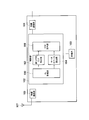
- FIG. 1 is an overall schematic configuration diagram of a radio communication system according to an embodiment of the present invention.
- FIG. 2 is a configuration diagram of a radio base station according to the embodiment of the present invention.
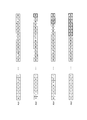
- FIG. 3 is a diagram illustrating an example of an unallocated CCE for each AL according to the embodiment of the present invention.
- FIG. 4 is a diagram illustrating an example of CCE allocation according to the embodiment of the present invention.
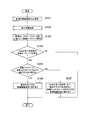
- FIG. 5 is a flowchart showing an operation of CCE allocation in the radio base station according to the embodiment of the present invention.
- FIG. 1 is an overall schematic configuration diagram of a radio communication system 10 according to an embodiment of the present invention.
- the wireless communication system 10 shown in FIG. 1 has a configuration based on LTE (Long Term Evolution) which is a standard formulated by 3GPP.
- the radio communication system 10 includes a radio base station 1 and radio terminals 2A and 2B.
- the cell 3 is divided into a plurality of sectors (not shown).
- the wireless terminals 2A and 2B exist in one sector (predetermined sector).
- the radio base station 1 communicates with the radio terminals 2A and 2B existing in the cell 3.
- FIG. 2 is a diagram showing a configuration of the radio base station 1.
- the radio base station 1 illustrated in FIG. 2 includes a control unit 102, a storage unit 103, a wired communication unit 104, a radio communication unit 105, and an antenna 107.
- the control unit 102 is constituted by a CPU, for example, and controls various functions provided in the radio base station 1.
- the storage unit 103 is configured by a memory, for example, and stores various types of information used for control and the like in the radio base station 1.
- the wired communication unit 104 is connected to a backbone network (not shown) via a router (not shown).
- the radio communication unit 105 receives radio signals from the radio terminals 2A and 2B via the antenna 107 and transmits radio signals to the radio terminals 2A and 2B.
- the control unit 102 controls the radio terminals 2A and 2B according to the channel quality required by the radio terminals 2A and 2B, which are radio terminals in one sector constituting the cell 3 formed by the radio base station 1. Then, CCEs (Control Channel Elements) constituting resource blocks (RBs) that are radio resources in the downlink direction are allocated.
- CCEs Control Channel Elements
- RB is composed of two types of radio channels, specifically, a control information channel (PDCCH) and a shared data channel (PDSCH).
- the PDCCH region is a maximum of three OFDM symbols from the top of the RB, and is composed of a plurality of CCEs.
- the region of PDSCH is an OFDM symbol following PDCCH.
- the channel quality required by wireless terminals in a given sector is different.
- the control unit 102 sets and assigns the number of CCEs to be assigned to the wireless terminal according to the channel quality requested by each wireless terminal.
- control unit 102 sets a communication method such as a modulation method, a coding rate, the number of retransmissions, and MIMO (Multiple-Input Multiple-Output) according to the channel quality required by the wireless terminal in a predetermined sector.
- a communication method such as a modulation method, a coding rate, the number of retransmissions, and MIMO (Multiple-Input Multiple-Output) according to the channel quality required by the wireless terminal in a predetermined sector.
- the PDCCH includes various information necessary for receiving user data included in the PDSCH. For this reason, the wireless terminal cannot receive the user data in the PDSCH when the information in the PDCCH cannot be received. Therefore, PDCCH is a very important radio channel.
- the number of consecutive CCEs to be secured is referred to as Aggregation Level (AL).
- the control unit 102 determines the AL so that the quality of the PDCCH satisfies SINR (Signal to Interference and Noise ⁇ Ratio) corresponding to the AL, thereby encoding by repetition. Rate adjustment can be realized and properties can be improved.
- SINR Signal to Interference and Noise ⁇ Ratio
- control unit 102 includes an AL acquisition unit 160, an unallocated CCE identification unit 162, a search space calculation unit 164, and a CCE allocation unit 166.
- the AL acquisition unit 160 estimates the PDCCH quality (SINR) corresponding to the wireless terminal. .
- a new radio terminal in a predetermined sector measures W-CQI corresponding to the average quality of PDSCH included in a predetermined radio resource in the downlink direction. Further, a new wireless terminal in a predetermined sector transmits the measured W-CQI to the wireless base station 1.
- the AL acquisition unit 160 in the control unit 102 of the radio base station 1 receives W-CQI from a new radio terminal via the antenna 107 and the radio communication unit 105. Next, the AL acquisition unit 160 converts the received W-CQI from the new radio terminal into SINR, and sets the SINR as the SINR of the PDCCH corresponding to the new radio terminal. Note that the AL acquisition unit 160 may estimate the SINR of the PDCCH corresponding to the new wireless terminal by another method.
- the AL acquisition unit 160 determines the predetermined value so that the AL decreases as the SINR of the PDCCH is better.
- An AL corresponding to a new wireless terminal in the sector is determined.
- the non-assignable CCE specifying unit 162 specifies a CCE that cannot be assigned (non-assignable CCE) determined according to the AL for each AL.
- the non-assignable CCE identification unit 162 acquires the total number of CCEs.
- the total number of CCEs is the number of all CCEs included in the PDCCH, and is stored in the storage unit 103 in advance, for example.
- the non-assignable CCE specifying unit 162 obtains a remainder when the total number of CCEs is divided by the AL, and among all the CCEs, the rear CCE corresponding to the number of the remainders is obtained. It is specified as an unassignable CCE corresponding to AL.
- FIG. 3 is a diagram illustrating an example of CCE that cannot be allocated for each AL.
- FIG. 2 there are CCEs CCE 0 to CCE 38 and the total number of CCEs is 39.
- the search space calculation unit 164 calculates a search space for a new wireless terminal in a predetermined sector.
- the search space calculation unit 164 acquires the RNTI, the number of subframes, and the total number of CCEs of new wireless terminals in a predetermined sector.
- the RNTI of the new wireless terminal is included in the wireless signal from the new wireless terminal.
- the number of subframes and the total number of CCEs are stored in advance in the storage unit 103, for example.
- the search space calculation unit 164 calculates a search space corresponding to a pseudo random sequence generated using the RNTI, the number of subframes, and the total number of CCEs of a new wireless terminal in a predetermined sector.
- the search spaces are CCE0 to CCE7, CCE8 to CCE15, CCE16 to CCE23, and CCE24 to CCE31.
- the CCE allocation unit 166 allocates a CCE to a new wireless terminal in a predetermined sector.
- the CCE allocating unit 166 determines whether or not there is a new search space in which all CCEs are unused among search spaces (new search spaces) corresponding to new wireless terminals in a predetermined sector. judge.
- the storage unit 103 stores information indicating whether each CCE is unused or allocated.
- the CCE allocation unit 166 cannot allocate a new search space in which all CCEs are unused to an AL that is larger than an AL corresponding to a new wireless terminal. It is determined whether CCE is included. For example, when the AL corresponding to the new wireless terminal is 2, the CCE allocating unit 166 determines whether or not an unallocated CCE corresponding to AL4 larger than AL2 is included in the new search space in which all CCEs are unused. Determine whether.
- the CCE allocating unit 166 determines the number of CCEs corresponding to the new radio terminal among the allocatable CCEs as the new radio terminal. Assign to.
- the CCE allocating unit 166 includes a new search space in which all CCEs are unused and no unallocated CCEs are included. Are assigned to a new wireless terminal.
- FIG. 4 is a diagram illustrating an example of CCE allocation.
- a wireless terminal corresponding to AL1 is a new wireless terminal, and an AL larger than AL1 is AL8.
- the non-assignable CCEs corresponding to AL8 are CCE32 to CCE38.
- new search spaces corresponding to new wireless terminals are all CCEs other than the used CCE3. Therefore, the CCE allocating unit 166 includes the number of ALs corresponding to the new wireless terminal among the CCEs 32 to CCE 38 included in the new search space in which all CCEs are unused and is an unallocated CCE, that is, 1 One CCE is assigned to a new wireless terminal.
- control unit 102 transmits information on the CCE assigned by the CCE assigning unit 166, for example, information that can uniquely identify the CCE, via the wireless communication unit 105 and the antenna 107, to a new radio in a predetermined sector. Send to the terminal.
- control unit 102 uses the CCE assigned to the new wireless terminal to send PDSCH assignment information, uplink shared data channel (PUSCH: Physical ⁇ Uplink Shared ⁇ ⁇ ⁇ ⁇ CHannel) assignment information, and a transmission power control command.
- PDSCH Physical ⁇ Uplink Shared ⁇ ⁇ ⁇ ⁇ CHannel
- the included control information is transmitted to the new wireless terminal via the wireless communication unit 105 and the antenna 107.
- a new wireless terminal When a new wireless terminal normally receives control information transmitted using the PDCCH, it performs various controls based on the control information. Specifically, the new wireless terminal receives user data transmitted using the assigned PDSCH, and transmits user data using the assigned PUSCH. Also, the new wireless terminal controls transmission power according to a transmission power control command. After that, when receiving the user data transmitted using the PDSCH, the new wireless terminal transmits ACK or NACK as a response to the wireless base station 1 using the PUSCH.
- FIG. 5 is a flowchart showing an operation of CCE allocation in the radio base station 1.
- step S101 the control unit 102 acquires the AL of a new wireless terminal in a predetermined sector.
- step S102 the control unit 102 acquires the total number of CCEs.
- step S103 the control unit 102 determines the search space (new) corresponding to the new wireless terminal based on the AL (new AL) corresponding to the new wireless terminal, the RNTI of the new wireless terminal, and the number of subframes. Search space).
- step S104 the control unit 102 determines whether there is a new search space in which all CCEs are unused among the calculated new search spaces. If there is no new search space in which all CCEs are unused, the series of operations ends.
- step S105 the control unit 102 adds a new search space to the new search space in which all CCEs are unused. It is determined whether or not an allocable CCE determined according to an AL larger than the AL corresponding to the wireless terminal is included.
- step S106 the control unit 102 assigns a number of CCEs corresponding to the new AL among the non-assignable CCEs to new wireless terminals.
- step S107 the control unit 102 performs a new search in which all CCEs are unused and does not include an unassignable CCE.
- the CCE in the space is assigned to the own wireless terminal.
- the radio base station 1 acquires a new AL corresponding to a new radio terminal when assigning a CCE as a radio resource to a new radio terminal in a predetermined sector, An unassignable CCE (unassignable CCE) determined according to an AL larger than the new AL is specified. Furthermore, the radio base station 1 has a new search space in which all CCEs are unused among the new search spaces corresponding to the new radio terminals, and the CCE cannot be allocated to new search spaces that are all unused. Is included, the non-assignable CCE is assigned to a new wireless terminal.
- a wireless terminal with a larger AL in other words, the more consecutive CCEs that need to be secured, the more difficult it is to assign a CCE to the wireless terminal. Therefore, by assigning CCEs that cannot be assigned to wireless terminals with a large AL to wireless terminals with a small AL, as many CCEs as possible can be secured for wireless terminals with a large AL. As a result, it is prevented that it is difficult to secure CCE, and efficient CCE allocation is possible.
- the present invention can be similarly applied even when the search space is not set.
- the CCE allocating unit 166 in the control unit 102 of the radio base station 1 allocates a CCE to a radio terminal
- the CCE allocating unit corresponding to an AL higher than the AL corresponding to the radio terminal is not allowed. Can be assigned.
- the radio base station and the communication control method of the present invention are capable of efficiently allocating radio resources, and are useful as a radio base station and a communication control method.
Landscapes
- Engineering & Computer Science (AREA)
- Signal Processing (AREA)
- Computer Networks & Wireless Communication (AREA)
- Mobile Radio Communication Systems (AREA)
Abstract
無線基地局1は、所定のセクタ内の新規の無線端末に無線リソースとしてのCCEを割り当てるに際して、新規の無線端末に対応する新規ALを取得するとともに、当該新規ALよりも大きいALに応じて定まる割り当て不可のCCE(割当不可CCE)を特定する。更に、無線基地局1は、新規の無線端末に対応する新規サーチスペースのうち、CCEが全て未使用の新規サーチスペースが存在し、且つ、当該CCEが全て未使用の新規サーチスペースに割当不可CCEが含まれる場合には、当該割当不可CCEを新規の無線端末に割り当てる。
Description
本発明は、所定のセル又はセクタを形成し、前記所定のセル又はセクタに対応する無線リソースを無線端末に割り当てる無線基地局、及び、当該無線基地局における通信制御方法に関する。
近年、移動通信サービスのブロードバンド化に伴い、更なる高速化及び大容量化が求められている。このため、W-CDMA(Wideband Code Division Multiple Access)に代表される第3世代移動通信システムや3.5世代移動通信システムに代わる次世代移動通信システムが世界的に実用化されようとしている。日本国内においても第4世代移動通信システムにつながる移動通信システムとして位置づけられた3.9世代移動通信システムへの周波数割り当てが開始されている。この3.9世代移動通信システムの中でも、LTE(Long Term Evolution)は、第4世代移動通信システムにつながる標準規格として、最も有力視されている。
LTEでは、無線基地局から無線端末に向かう下り方向の通信には、OFDMA(Orthogonal Frequency Division Multiplexing Access)が採用され、無線端末から無線基地局に向かう上り方向の通信には、SC-FDMA(Single Carrier Frequency Division Multiple Access)が採用されている。これらの多重化方式は、周波数と時間の2次元で無線リソースの配置を行ってユーザ多重を実現している。
下り方向の無線リソースである周波数帯域は、リソースブロック(RB:Resource Block)と称される単位に分割されている。このRBは、下り方向の制御情報伝送用の無線チャネルとしてのタイムスロットである制御情報チャネル(PDCCH:Physical Downlink Control CHannel)と、下り方向のユーザデータ伝送用の無線チャネルとしてのタイムスロットである共有データチャネル(PDSCH:Physical Downlink Shared CHannel)とにより構成される。
LTEでは、制御情報伝送用のPDCCHに対して、無線基地局は、無線端末毎に、当該無線端末に対する無線リソースであるCCE(Control Channel Element)の割り当てに際して、確保すべき連続するCCEの数を示すAggregation Level(AL)を設定する。これによって、当該無線端末と無線基地局との間の無線状態に応じた割り当て制御が可能となっている。
この場合、無線端末に向けた制御情報の伝送のためのCCEの割当位置については、無線端末毎に、予め、ある程度の割当位置がサーチスペース(Search Space)として制限されている。
このサーチスペースは、無線端末が有する固有の情報であるRNTI(Radio Network Temporary Id)、サブフレーム数、当該無線端末に対応するALに基づいて、可能な限り無線端末間で異なるように設定される(例えば、非特許文献1及び2参照)。
3GPP TS 36.213 V8.7.0 "Technical Specification Group Radio Access Network;Evolved Universal Terrestrial Radio Access (E-UTRA);Physical layer procedures (Release 8) "
3GPP TS 36.211 V8.7.0 "Technical Specification Group Radio Access Network;Evolved Universal Terrestrial Radio Access (E-UTRA);Physical Channels and Modulation (Release 8) "
無線基地局は、所定の基準に基づいて、CCEを各無線端末に割り当て、その割当結果を、制御情報によって各無線端末へ通知する。この際、無線端末に対応するALによって定まるサーチスペース内の連続するCCEが既に他の無線端末に割り当て済みである場合には、無線基地局は、意図した通りの割り当てを断念せざるを得なくなり、結果として無線リソースの利用効率が低下してしまうことがある。
特に、無線基地局との間の無線状況が悪い無線端末に対応するALは、大きくなる場合が多い。しかしながら、このような無線端末ほど、ALに対応する連続するCCEを確保しにくくなり、その結果、無線端末に対応する無線状況がより劣化してしまう。
そこで、本発明は、効率の良い無線リソースの割り当てが可能な無線基地局及び通信制御方法を提供することを目的とする。
上述した課題を解決するために、本発明は以下のような特徴を有している。まず、本発明の第1の特徴は、所定のセル又はセクタを形成し、前記所定のセル又はセクタに対応する無線リソースを無線端末(無線端末2A、2B)に割り当てる無線基地局(無線基地局1)であって、前記無線端末との間の無線状態によって定まる、連続する無線リソースの数を取得する連続無線リソース数取得部(AL取得部160)と、所定の前記無線端末に対応する前記連続する無線リソースの数よりも大きい数で連続する割り当て不可の無線リソースを、前記所定の無線端末に割り当てる割当部(CCE割当部166)とを備えることを要旨とする。
このような無線基地局は、所定の無線端末に対して、無線リソースを割り当てる際に、当該所定の無線端末に対応する連続する無線リソースの数よりも大きい数で連続する割り当て不可の無線リソースを割り当てる。
連続する無線リソースの数の大きい無線端末ほど、無線リソースは割り当てにくくなる。従って、連続する無線リソースの数の大きい無線端末に対して割り当てることができない無線リソースを、連続する無線リソースの数の小さい無線端末に対して割り当てるようにすることで、連続する無線リソースの数の大きい無線端末に対して割り当て可能な無線リソースを可能な限り多く確保することができ、その結果、無線リソースを確保しにくくなることが防止され、効率の良い無線リソースの割り当てが可能となる。
本発明の第2の特徴は、前記割当部は、前記所定の無線端末について予め定められた無線リソースの探索領域のうち、全ての無線リソースが未使用である探索領域に含まれ、且つ、前記所定の無線端末に対応する前記連続する無線リソースの数よりも大きい数で連続する前記割り当て不可の無線リソースを、前記所定の無線端末に割り当てることを要旨とする。
本発明の第3の特徴は、前記無線リソースは、制御情報の伝送に用いられることを要旨とする。
本発明の第4の特徴は、所定のセル又はセクタを形成し、前記所定のセル又はセクタに対応する無線リソースを無線端末に割り当てる無線基地局における通信制御方法であって、前記無線基地局が、前記無線端末との間の無線状態によって定まる、連続する無線リソースの数を取得するステップと、前記無線基地局が、所定の前記無線端末に対応する前記連続する無線リソースの数よりも大きい数で連続する割り当て不可の無線リソースを、前記所定の無線端末に割り当てるステップとを備えることを要旨とする。
本発明によれば、効率の良い無線リソースの割り当てが可能となる。
次に、図面を参照して、本発明の実施形態を説明する。具体的には、(1)無線通信システムの構成、(2)無線基地局の動作、(3)作用・効果、(4)その他の実施形態について説明する。以下の実施形態における図面の記載において、同一又は類似の部分には同一又は類似の符号を付している。
(1)無線通信システムの構成
(1.1)無線通信システムの全体概略構成
図1は、本発明の実施形態に係る無線通信システム10の全体概略構成図である。
(1.1)無線通信システムの全体概略構成
図1は、本発明の実施形態に係る無線通信システム10の全体概略構成図である。
図1に示す無線通信システム10は、3GPPで策定された規格であるLTE(Long Term Evolution)に基づく構成を有する。無線通信システム10は、無線基地局1と、無線端末2A及び2Bとを含む。
図1において、セル3は、複数のセクタ(図示せず)に分割されている。図1では、無線端末2A及び2Bは、1つのセクタ(所定のセクタ)内に存在する。無線基地局1は、セル3内に存在する無線端末2A及び2Bとの間で通信を行う。
(1.2)無線基地局の構成
図2は、無線基地局1の構成を示す図である。図2に示す無線基地局1は、制御部102、記憶部103、有線通信部104、無線通信部105及びアンテナ107を含む。
図2は、無線基地局1の構成を示す図である。図2に示す無線基地局1は、制御部102、記憶部103、有線通信部104、無線通信部105及びアンテナ107を含む。
制御部102は、例えばCPUによって構成され、無線基地局1が具備する各種機能を制御する。記憶部103は、例えばメモリによって構成され、無線基地局1における制御などに用いられる各種情報を記憶する。有線通信部104は、図示しないルータ等を介して図示しないバックボーンネットワークに接続される。無線通信部105は、アンテナ107を介して、無線端末2A及び2Bからの無線信号を受信するとともに、無線端末2A及び2Bに対して無線信号を送信する。
次に、制御部102の具体的な制御について説明する。制御部102は、無線基地局1によって形成されるセル3を構成する1つのセクタ内の無線端末である、無線端末2A及び2Bが要求するチャネル品質に応じて、当該無線端末2A及び2Bに対して、下り方向の無線リソースであるリソースブロック(RB)を構成するCCE(Control Channel Element)を割り当てる。
RBは、2種類の無線チャネル、具体的には、制御情報チャネル(PDCCH)と、共有データチャネル(PDSCH)とにより構成される。PDCCHの領域は、RBの先頭から最大3つのOFDMシンボルであり、複数のCCEからなる。PDSCHの領域は、PDCCHに続くOFDMシンボルである。
所定のセクタ内の無線端末が要求するチャネル品質は異なっている。制御部102は、各無線端末が要求するチャネル品質に応じて、当該無線端末に対して割り当て対象となるCCEの数を設定し、割り当てる。
また、制御部102は、所定のセクタ内の無線端末が要求するチャネル品質に応じて、変調方式、符号化率、再送回数、MIMO(Multiple-Input Multiple-Output)等の通信方式を設定する。
PDCCHには、PDSCHに含まれるユーザデータを受信するために必要な様々な情報が含まれる。このため、無線端末は、PDCCH内の情報を受信することができない場合には、PDSCH内のユーザデータを受信することができない。したがって、PDCCHは、非常に重要な無線チャネルである。
PDCCH内のCCEの割り当てに際して、確保すべき連続するCCEの数は、Aggregation Level(AL)と称される。
制御部102が、所定のセクタ内の無線端末毎に、PDCCHの品質がALに対応するSINR(Signal to Interference and Noise Ratio)を満足するように、当該ALを決定することにより、繰り返しによる符号化率の調節が実現され、特性を改善させることができる。
図2に示すように、制御部102は、AL取得部160、割当不可CCE特定部162、サーチスペース算出部164及びCCE割当部166を含む。
AL取得部160は、所定のセクタにおける、CCEを未割り当ての無線端末から任意の無線端末(新規の無線端末)を選択する毎に、当該無線端末に対応するPDCCHの品質(SINR)を推定する。
例えば、所定のセクタ内の新規の無線端末は、下り方向の所定の無線リソースに含まれるPDSCHの平均の品質に対応するW-CQIを測定する。更に、所定のセクタ内の新規の無線端末は、測定したW-CQIを、無線基地局1に向けて送信する。無線基地局1の制御部102内のAL取得部160は、新規の無線端末からのW-CQIを、アンテナ107及び無線通信部105を介して受信する。次に、AL取得部160は、受信した新規の無線端末からのW-CQIをSINRに変換し、当該SINRを、新規の無線端末に対応するPDCCHのSINRとする。なお、AL取得部160は、他の手法によって新規の無線端末に対応するPDCCHのSINRを推定するようにしてもよい。
このようにして、所定のセクタ内の新規の無線端末に対応するPDCCHのSINRが推定された後、AL取得部160は、PDCCHのSINRが良好であるほど、ALが少なくなるように、所定のセクタ内の新規の無線端末に対応するALを決定する。
割当不可CCE特定部162は、AL毎に、当該ALに応じて定まる、割り当てることができないCCE(割当不可CCE)を特定する。
具体的には、割当不可CCE特定部162は、総CCE数を取得する。総CCE数は、PDCCHに含まれる全てのCCEの数であり、例えば、予め記憶部103に記憶されている。
次に、割当不可CCE特定部162は、AL毎に、総CCE数を当該ALで除した際の余りを取得し、全てのCCEのうち、当該余りの数に対応する後方のCCEを、当該ALに対応する割当不可CCEとして特定する。
図3は、AL毎の割当不可CCEの一例を示す図である。図2では、CCE0~CCE38のCCEが存在し、総CCE数は39である。
図3において、AL1の場合には、総CCE数39をAL1で除した余りは0であるため、当該AL1に対応する割当不可CCEは存在しない。AL2の場合には、総CCE数39をAL2で除した余りは1であるため、当該AL2に対応する割当不可CCEは、最後方のCCE38となる。AL4の場合には、総CCE数39をAL4で除した余りは3であるため、当該AL4に対応する割当不可CCEは、後方のCCE36~CCE38となる。AL8の場合には、総CCE数39をAL8で除した余りは7であるため、当該AL8に対応する割当不可CCEは、後方のCCE32~CCE38となる。
サーチスペース算出部164は、所定のセクタ内の新規の無線端末について、サーチスペースを算出する。
具体的には、サーチスペース算出部164は、所定のセクタ内の新規の無線端末のRNTI、サブフレーム数、総CCE数を取得する。新規の無線端末のRNTIは、当該新規の無線端末からの無線信号に含まれる。また、サブフレーム数及び総CCE数は、例えば、予め記憶部103に記憶されている。
次に、サーチスペース算出部164は、所定のセクタ内の新規の無線端末のRNTI、サブフレーム数、総CCE数を用いて生成される疑似ランダム系列に対応するサーチスペースを算出する。
例えば、新規の無線端末に対応するALが8、総CCEが39である場合、サーチスペースは、CCE0~CCE7、CCE8~CCE15、CCE16~CCE23、CCE24~CCE31となる。
CCE割当部166は、所定のセクタ内の新規の無線端末に、CCEを割り当てる。
具体的には、CCE割当部166は、所定のセクタ内の新規の無線端末に対応するサーチスペース(新規サーチスペース)のうち、CCEが全て未使用である新規サーチスペースが存在するか否かを判定する。例えば、記憶部103には、各CCEについて、未使用であるか、割り当て済みであるかを示す情報が記憶されている。
CCEが全て未使用である新規サーチスペースが存在する場合、CCE割当部166は、CCEが全て未使用である新規サーチスペースに、新規の無線端末に対応するALよりも大きいALに対応する割当不可CCEが含まれるか否かを判定する。例えば、新規の無線端末に対応するALが2である場合、CCE割当部166は、CCEが全て未使用である新規サーチスペースに、AL2よりも大きいAL4に対応する割当不可CCEが含まれるか否かを判定する。 CCEが全て未使用である新規サーチスペースに、割当不可CCEが含まれる場合、CCE割当部166は、割当不可CCEのうち、新規の無線端末に対応するALの数のCCEを、新規の無線端末に割り当てる。一方、CCEが全て未使用である新規サーチスペースに、割当不可CCEが含まれない場合、CCE割当部166は、CCEが全て未使用であって、且つ、割当不可CCEを含まない新規サーチスペース内のCCEを新規の無線端末に割り当てる。
図4は、CCE割り当ての一例を示す図である。図4において、AL1に対応する無線端末が新規の無線端末であるものとし、AL1よりも大きいALがAL8であるものとする。
図4の例では、AL8に対応する割当不可CCEは、CCE32~CCE38である。一方、新規の無線端末に対応する新規サーチスペースは、使用済みのCCE3以外の全てのCCEである。従って、CCE割当部166は、CCEが全て未使用である新規サーチスペースに含まれ、且つ、割当不可CCEである、CCE32~CCE38のうち、新規の無線端末に対応するALの数、すなわち、1つのCCEを新規の無線端末に割り当てる。
その後、制御部102は、CCE割当部166によって割り当てられたCCEの情報、例えば、CCEを一意に特定可能な情報を、無線通信部105及びアンテナ107を介して、所定のセクタ内の新規の無線端末へ送信する。
その後、制御部102は、新規の無線端末に割り当てたCCEを用いて、PDSCHの割り当て情報、上り方向の共有データチャネル(PUSCH:Physical Uplink Shared CHannel)の割り当て情報、及び、送信電力制御のコマンドを含んだ制御情報を、無線通信部105及びアンテナ107を介して新規の無線端末へ送信する。
新規の無線端末は、PDCCHを用いて送信される制御情報を正常に受信した場合、制御情報に基づく各種の制御を行う。具体的には、新規の無線端末は、割り当てられたPDSCHを用いて伝送されるユーザデータを受信し、割り当てられたPUSCHを用いてユーザデータを送信する。また、新規の無線端末は、送信電力制御のコマンドに従って、送信電力を制御する。その後、新規の無線端末は、PDSCHを用いて送信されるユーザデータを受信すると、無線基地局1に対して応答としてのACK又はNACKを、PUSCHを用いて送信する。
(2)無線基地局の動作
図5は、無線基地局1におけるCCE割り当ての動作を示すフローチャートである。
図5は、無線基地局1におけるCCE割り当ての動作を示すフローチャートである。
ステップS101において、制御部102は、所定のセクタ内の新規の無線端末のALを取得する。
ステップS102において、制御部102は、総CCE数を取得する。
ステップS103において、制御部102は、新規の無線端末に対応するAL(新規AL)と、新規の無線端末のRNTIと、サブフレーム数とに基づいて、新規の無線端末に対応するサーチスペース(新規サーチスペース)を算出する。
ステップS104において、制御部102は、算出した新規サーチスペースのうち、CCEが全て未使用である新規サーチスペースが存在するか否かを判定する。CCEが全て未使用である新規サーチスペースが存在しない場合には、一連の動作が終了する。
一方、算出した新規サーチスペースのうち、CCEが全て未使用である新規サーチスペースが存在する場合には、ステップS105において、制御部102は、CCEが全て未使用である新規サーチスペースに、新規の無線端末に対応するALよりも大きいALに応じて定まる割当不可CCEが含まれるか否かを判定する。
CCEが全て未使用である新規サーチスペースに割当不可CCEが含まれる場合、ステップS106において、制御部102は、割当不可CCEのうち、新規ALに対応する数のCCEを新規の無線端末に割り当てる。
一方、CCEが全て未使用である新規サーチスペースに割当不可CCEが含まれない場合、ステップS107において、制御部102は、CCEが全て未使用であって、且つ、割当不可CCEを含まない新規サーチスペース内のCCEを自無線端末に割り当てる。
(3)作用・効果
本実施形態では、無線基地局1は、所定のセクタ内の新規の無線端末に無線リソースとしてのCCEを割り当てるに際して、新規の無線端末に対応する新規ALを取得するとともに、当該新規ALよりも大きいALに応じて定まる割り当て不可のCCE(割当不可CCE)を特定する。更に、無線基地局1は、新規の無線端末に対応する新規サーチスペースのうち、CCEが全て未使用の新規サーチスペースが存在し、且つ、当該CCEが全て未使用の新規サーチスペースに割当不可CCEが含まれる場合には、当該割当不可CCEを新規の無線端末に割り当てる。
本実施形態では、無線基地局1は、所定のセクタ内の新規の無線端末に無線リソースとしてのCCEを割り当てるに際して、新規の無線端末に対応する新規ALを取得するとともに、当該新規ALよりも大きいALに応じて定まる割り当て不可のCCE(割当不可CCE)を特定する。更に、無線基地局1は、新規の無線端末に対応する新規サーチスペースのうち、CCEが全て未使用の新規サーチスペースが存在し、且つ、当該CCEが全て未使用の新規サーチスペースに割当不可CCEが含まれる場合には、当該割当不可CCEを新規の無線端末に割り当てる。
ALが大きい無線端末ほど、換言すれば、確保が必要な連続する未使用のCCEの数が多いほど、当該無線端末へCCEを割り当てにくくなる。従って、ALの大きい無線端末に対して割り当てることができないCCEを、ALの小さい無線端末に対して割り当てるようにすることで、ALの大きい無線端末に対して割り当て可能なCCEを可能な限り多く確保することができ、その結果、CCEを確保しにくくなることが防止され、効率の良いCCEの割り当てが可能となる。
(4)その他の実施形態
本発明は実施形態によって記載したが、この開示の一部をなす論述及び図面はこの発明を限定するものであると理解すべきではない。この開示から当業者には様々な代替実施形態、実施例及び運用技術が明らかとなる。
本発明は実施形態によって記載したが、この開示の一部をなす論述及び図面はこの発明を限定するものであると理解すべきではない。この開示から当業者には様々な代替実施形態、実施例及び運用技術が明らかとなる。
上述した実施形態では、サーチスペースが設定される場合について説明したが、設定されない場合にも、同様に本発明を適用することができる。この場合には、無線基地局1の制御部102内のCCE割当部166は、無線端末に対してCCEを割り当てる際には、当該無線端末に対応するALよりも高いALに対応する割当不可CCEを、割り当てればよい。
また、上述した実施形態では、所定のセクタ内の新規の無線端末に対してCCEを割り当てる場合について説明したが、セルがセクタに分割されていない場合には、セル内に新たに進入した無線端末に対してCCEを割り当てる際にも、同様に本発明を適用することができる。
このように本発明は、ここでは記載していない様々な実施形態等を包含するということを理解すべきである。したがって、本発明はこの開示から妥当な特許請求の範囲の発明特定事項によってのみ限定されるものである。
なお、日本国特許出願第2009-211514号(2009年9月14日出願)の全内容が、参照により、本願明細書に組み込まれている。
本発明の無線基地局及び通信制御方法は、効率の良い無線リソースの割り当てが可能であり、無線基地局及び通信制御方法として有用である。
Claims (4)
- 所定のセル又はセクタを形成し、前記所定のセル又はセクタに対応する無線リソースを無線端末に割り当てる無線基地局であって、
前記無線端末との間の無線状態によって定まる、連続する無線リソースの数を取得する連続無線リソース数取得部と、
所定の前記無線端末に対応する前記連続する無線リソースの数よりも大きい数で連続する割り当て不可の無線リソースを、前記所定の無線端末に割り当てる割当部と
を備える無線基地局。 - 前記割当部は、前記所定の無線端末について予め定められた無線リソースの探索領域のうち、全ての無線リソースが未使用である探索領域に含まれ、且つ、前記所定の無線端末に対応する前記連続する無線リソースの数よりも大きい数で連続する割り当て不可の無線リソースを、前記所定の無線端末に割り当てる請求項1に記載の無線基地局。
- 前記無線リソースは、制御情報の伝送に用いられる請求項1又は2に記載の無線基地局。
- 所定のセル又はセクタを形成し、前記所定のセル又はセクタに対応する無線リソースを無線端末に割り当てる無線基地局における通信制御方法であって、
前記無線基地局が、前記無線端末との間の無線状態によって定まる、連続する無線リソースの数を取得するステップと、
前記無線基地局が、所定の前記無線端末に対応する前記連続する無線リソースの数よりも大きい数で連続する割り当て不可の無線リソースを、前記所定の無線端末に割り当てるステップと
を備える通信制御方法。
Priority Applications (1)
| Application Number | Priority Date | Filing Date | Title |
|---|---|---|---|
| US13/395,864 US8767652B2 (en) | 2009-09-14 | 2010-09-14 | Radio base station and communication control method |
Applications Claiming Priority (2)
| Application Number | Priority Date | Filing Date | Title |
|---|---|---|---|
| JP2009-211514 | 2009-09-14 | ||
| JP2009211514A JP4569788B1 (ja) | 2009-09-14 | 2009-09-14 | 無線基地局及び通信制御方法 |
Publications (1)
| Publication Number | Publication Date |
|---|---|
| WO2011030908A1 true WO2011030908A1 (ja) | 2011-03-17 |
Family
ID=43098852
Family Applications (1)
| Application Number | Title | Priority Date | Filing Date |
|---|---|---|---|
| PCT/JP2010/065869 Ceased WO2011030908A1 (ja) | 2009-09-14 | 2010-09-14 | 無線基地局及び通信制御方法 |
Country Status (3)
| Country | Link |
|---|---|
| US (1) | US8767652B2 (ja) |
| JP (1) | JP4569788B1 (ja) |
| WO (1) | WO2011030908A1 (ja) |
Family Cites Families (6)
| Publication number | Priority date | Publication date | Assignee | Title |
|---|---|---|---|---|
| US4920264A (en) * | 1989-01-17 | 1990-04-24 | Sri International | Method for preparing samples for mass analysis by desorption from a frozen solution |
| KR101288394B1 (ko) * | 2005-06-15 | 2013-07-22 | 후아웨이 테크놀러지 컴퍼니 리미티드 | 통신 리소스를 할당하기 위한 방법 및 시스템 |
| MX2010004489A (es) * | 2007-10-29 | 2010-05-05 | Panasonic Corp | Aparato de estacion de base de comunicacion inalambrica, aparato de estacion movil de comunicacion inalambrica y metodo de distribucion de canal de control. |
| PL3182605T3 (pl) * | 2007-10-29 | 2020-05-18 | Optis Wireless Technology, Llc | Przestrzeń wyszukiwania na podstawie rozmiaru agregacji elementów kanału sterowania |
| JP2009188675A (ja) * | 2008-02-05 | 2009-08-20 | Sharp Corp | 無線通信システム、基地局装置、移動局装置および無線通信方法 |
| KR100943908B1 (ko) * | 2008-02-19 | 2010-02-24 | 엘지전자 주식회사 | Pdcch를 통한 제어 정보 송수신 방법 |
-
2009
- 2009-09-14 JP JP2009211514A patent/JP4569788B1/ja not_active Expired - Fee Related
-
2010
- 2010-09-14 US US13/395,864 patent/US8767652B2/en not_active Expired - Fee Related
- 2010-09-14 WO PCT/JP2010/065869 patent/WO2011030908A1/ja not_active Ceased
Non-Patent Citations (1)
| Title |
|---|
| "3GPP TSG RAN WG1 Meeting #58 R1-093295", 24 August 2009, article "Research In Motion UK Limited, Blind Decoding for Carrier Aggregation" * |
Also Published As
| Publication number | Publication date |
|---|---|
| JP4569788B1 (ja) | 2010-10-27 |
| US8767652B2 (en) | 2014-07-01 |
| US20120170535A1 (en) | 2012-07-05 |
| JP2011061663A (ja) | 2011-03-24 |
Similar Documents
| Publication | Publication Date | Title |
|---|---|---|
| US11139937B2 (en) | Uplink control information transmission method and device | |
| US11889475B2 (en) | Method for allocating and reserving resource for sidelink communication, and apparatus therefor | |
| RU2533871C2 (ru) | Базовый блок и устройство для предполагаемого канала управления, а также способ для этого | |
| CN102804867B (zh) | 移动站装置、基站装置以及无线通信方法 | |
| US11343046B2 (en) | Method and device for receiving and sending reference signal, and computer-readable storage medium | |
| CN109921889B (zh) | 用于通信系统中的公共控制信道的系统和方法 | |
| US11683788B2 (en) | System and method for data channel transmission and reception | |
| US9668245B2 (en) | Method and device for processing uplink control data in a wireless network | |
| RU2546660C1 (ru) | Способ передачи и приема сигнализации управления для пользовательского оборудования в системе связи lte | |
| WO2016086405A1 (en) | Method and bs for scheduling ue and method and ue for transmitting harq | |
| JPWO2009057286A1 (ja) | 無線通信移動局装置および応答信号拡散系列制御方法 | |
| JP5574872B2 (ja) | 基地局装置、移動局装置、および、通信方法 | |
| US11902193B2 (en) | Search space configuration for short transmission time interval | |
| KR20190098990A (ko) | 정보 전송 방법, 네트워크 기기 및 단말 기기 | |
| CN103733710A (zh) | 基站装置、终端装置、发送方法及接收方法 | |
| JPWO2008155931A1 (ja) | 端末装置、基地局装置、無線通信システム、プログラム及び無線通信方法 | |
| CN103580822B (zh) | 一种数据传输方法及系统 | |
| JP5442369B2 (ja) | 無線基地局及び通信制御方法 | |
| JP4569788B1 (ja) | 無線基地局及び通信制御方法 | |
| CN110583068A (zh) | 控制无线接入网的方法及设备 | |
| JP5541411B2 (ja) | 無線通信ネットワークにおいてリソースブロックを割り当てるための方法および装置 | |
| WO2011013712A1 (ja) | 無線基地局及び通信制御方法 | |
| JP4751952B2 (ja) | 移動通信方法、移動局及び無線基地局 | |
| KR20170072127A (ko) | 멀티 빔 환경에서 제어 채널을 위한 자원을 할당하는 방법 및 장치, 그리고 제어 채널을 전송하는 방법 및 장치 | |
| JP2011250043A (ja) | 無線基地局及びその制御方法 |
Legal Events
| Date | Code | Title | Description |
|---|---|---|---|
| 121 | Ep: the epo has been informed by wipo that ep was designated in this application |
Ref document number: 10815498 Country of ref document: EP Kind code of ref document: A1 |
|
| WWE | Wipo information: entry into national phase |
Ref document number: 13395864 Country of ref document: US |
|
| NENP | Non-entry into the national phase |
Ref country code: DE |
|
| 122 | Ep: pct application non-entry in european phase |
Ref document number: 10815498 Country of ref document: EP Kind code of ref document: A1 |