WO2010079675A1 - 二環芳香族ヒドロキシカルボン酸の製造方法 - Google Patents
二環芳香族ヒドロキシカルボン酸の製造方法 Download PDFInfo
- Publication number
- WO2010079675A1 WO2010079675A1 PCT/JP2009/070944 JP2009070944W WO2010079675A1 WO 2010079675 A1 WO2010079675 A1 WO 2010079675A1 JP 2009070944 W JP2009070944 W JP 2009070944W WO 2010079675 A1 WO2010079675 A1 WO 2010079675A1
- Authority
- WO
- WIPO (PCT)
- Prior art keywords
- protein
- bicyclic aromatic
- carboxylic acid
- acid
- amino acid
- Prior art date
- Legal status (The legal status is an assumption and is not a legal conclusion. Google has not performed a legal analysis and makes no representation as to the accuracy of the status listed.)
- Ceased
Links
Images


Classifications
-
- C—CHEMISTRY; METALLURGY
- C07—ORGANIC CHEMISTRY
- C07D—HETEROCYCLIC COMPOUNDS
- C07D209/00—Heterocyclic compounds containing five-membered rings, condensed with other rings, with one nitrogen atom as the only ring hetero atom
- C07D209/02—Heterocyclic compounds containing five-membered rings, condensed with other rings, with one nitrogen atom as the only ring hetero atom condensed with one carbocyclic ring
- C07D209/04—Indoles; Hydrogenated indoles
- C07D209/30—Indoles; Hydrogenated indoles with hetero atoms or with carbon atoms having three bonds to hetero atoms with at the most one bond to halogen, directly attached to carbon atoms of the hetero ring
- C07D209/42—Carbon atoms having three bonds to hetero atoms with at the most one bond to halogen, e.g. ester or nitrile radicals
-
- C—CHEMISTRY; METALLURGY
- C07—ORGANIC CHEMISTRY
- C07D—HETEROCYCLIC COMPOUNDS
- C07D215/00—Heterocyclic compounds containing quinoline or hydrogenated quinoline ring systems
- C07D215/02—Heterocyclic compounds containing quinoline or hydrogenated quinoline ring systems having no bond between the ring nitrogen atom and a non-ring member or having only hydrogen atoms or carbon atoms directly attached to the ring nitrogen atom
- C07D215/16—Heterocyclic compounds containing quinoline or hydrogenated quinoline ring systems having no bond between the ring nitrogen atom and a non-ring member or having only hydrogen atoms or carbon atoms directly attached to the ring nitrogen atom with hetero atoms or with carbon atoms having three bonds to hetero atoms with at the most one bond to halogen, e.g. ester or nitrile radicals, directly attached to ring carbon atoms
- C07D215/48—Carbon atoms having three bonds to hetero atoms with at the most one bond to halogen
-
- C—CHEMISTRY; METALLURGY
- C12—BIOCHEMISTRY; BEER; SPIRITS; WINE; VINEGAR; MICROBIOLOGY; ENZYMOLOGY; MUTATION OR GENETIC ENGINEERING
- C12N—MICROORGANISMS OR ENZYMES; COMPOSITIONS THEREOF; PROPAGATING, PRESERVING, OR MAINTAINING MICROORGANISMS; MUTATION OR GENETIC ENGINEERING; CULTURE MEDIA
- C12N9/00—Enzymes; Proenzymes; Compositions thereof; Processes for preparing, activating, inhibiting, separating or purifying enzymes
- C12N9/0004—Oxidoreductases (1.)
- C12N9/0071—Oxidoreductases (1.) acting on paired donors with incorporation of molecular oxygen (1.14)
-
- C—CHEMISTRY; METALLURGY
- C12—BIOCHEMISTRY; BEER; SPIRITS; WINE; VINEGAR; MICROBIOLOGY; ENZYMOLOGY; MUTATION OR GENETIC ENGINEERING
- C12P—FERMENTATION OR ENZYME-USING PROCESSES TO SYNTHESISE A DESIRED CHEMICAL COMPOUND OR COMPOSITION OR TO SEPARATE OPTICAL ISOMERS FROM A RACEMIC MIXTURE
- C12P7/00—Preparation of oxygen-containing organic compounds
- C12P7/40—Preparation of oxygen-containing organic compounds containing a carboxyl group including Peroxycarboxylic acids
- C12P7/42—Hydroxy-carboxylic acids
Definitions
- the present invention relates to a method for producing a bicyclic aromatic hydroxycarboxylic acid, a novel fluorescent dye containing a bicyclic aromatic hydroxycarboxylic acid, and a novel bicyclic aromatic hydroxycarboxylic acid.
- Bicyclic aromatic hydroxycarboxylic acids are industrially useful as raw materials for pharmaceuticals, dyes, EL devices, polymers and the like.
- Hydroxy-2-naphthoic acid (Hy2NA) is particularly useful, of which 3-hydroxy-2-naphthoic acid (3Hy2NA) and 6-hydroxy-2-naphthoic acid (6Hy2NA) introduce a carboxyl group into 2-naphthol.
- 3Hy2NA 3-hydroxy-2-naphthoic acid
- 6Hy2NA 6-hydroxy-2-naphthoic acid
- 1-hydroxy-2-naphthoic acid (1Hy2NA) is also commercially available from Wako Pure Chemical as a reagent.
- Hy2NA in which hydroxyl groups are introduced at other positions is considered to have not been developed for use because its synthesis method has not been established.
- Hy2NA 2-naphthoic acid
- 2NA 2-naphthoic acid
- a monooxygenase capable of converting 2NA it has been reported that cinnamic acid monooxygenase CYP73, which is widely present in plants, oxidizes 6-position of 2NA to produce 6Hy2NA (Non-patent Document 2).
- an enzyme that produces Hy2NA in which other positions of 2NA are specifically oxidized is not known.
- the present invention provides a method for producing a bicyclic aromatic hydroxycarboxylic acid, comprising the step of reacting a bicyclic aromatic carboxylic acid monooxygenase with a bicyclic aromatic carboxylic acid.
- the bicyclic aromatic carboxylic acid may be a monocarboxylic acid of naphthalene, indole or quinoline.
- the bicyclic aromatic carboxylic acid may have a single oxygen atom added to at least one of the carbon atoms constituting the ring.
- the bicyclic aromatic carboxylic acid may be 2-naphthoic acid, 1-hydroxy-2-naphthoic acid, 3-hydroxy-2-naphthoic acid, 6-hydroxy. It may be selected from the group consisting of -2-naphthoic acid, indole-2-carboxylic acid, indole-6-carboxylic acid and quinoline-6-carboxylic acid.
- the bicyclic aromatic carboxylic acid monooxygenase comprises (1) a protein consisting of the amino acid sequence of SEQ ID NO: 10 or 12, and (2) SEQ ID NO: 10 or 12 A protein having an amino acid sequence in which one or several amino acids are deleted, substituted or added to the amino acid sequence described in the above, and having bicyclic aromatic carboxylic acid monooxygenase activity; (3) SEQ ID NO: 10 or A protein comprising an amino acid sequence having 78% or more or 90% or more homology with the amino acid sequence described in 12, and having bicyclic aromatic carboxylic acid monooxygenase activity; (4) SEQ ID NO: 9 or 11 80% or more, or 90% or more homology with the polynucleotide comprising the nucleotide sequence described in A protein comprising an amino acid sequence encoded by renucleotide and having bicyclic aromatic carboxylate monooxygenase activity; and (5) a polynucleotide comprising the nucleotide sequence described in A protein comprising an amino acid
- the fusion protein of the present invention is obtained by linking a specific binding tag peptide to the amino terminus or carboxyl terminus of any one of the proteins (1) to (5).
- the specific binding tag peptide of the present invention enables the detection, separation or purification of the expressed protein more easily when the protein of any one of (1) to (5) is prepared.
- the ligand that binds to the specific binding tag may be immobilized in a solid support, either in a free state dissolved in an aqueous solution. Therefore, since the fusion protein of the present invention specifically binds to the ligand immobilized on the solid support, other components of the expression system can be washed away.
- the fusion protein can be separated and recovered from the solid support by adding a ligand in a free state or changing pH, ionic strength and other conditions.
- Specific binding tags of the present invention include, but are not limited to, His tags, myc tags, HA tags, intein tags, MBP, GST and similar polypeptides.
- the specific binding tag of the present invention may have any amino acid sequence provided that the fusion protein retains bicyclic aromatic carboxylate monooxygenase activity.
- the present invention provides an enzyme that converts 2-naphthoic acid into 7-hydroxy-2-naphthoic acid or 8-hydroxy-2-naphthoic acid.
- a protein consisting of an amino acid sequence exhibiting sex and having bicyclic aromatic carboxylate monooxygenase activity; and (4) a polynucleotide comprising the nucleotide sequence of SEQ ID NO: 9 or 11 and 80% or more, or 90% It consists of an amino acid sequence encoded by a polynucleotide having the above homology, and is a bicyclic aromatic carbo A protein having acid monooxygenase activity, (5) an amino acid sequence encoded by a polynucleotide that hybridizes with a polynucleotide comprising the nucleotide sequence set forth in SEQ ID NO: 9 or 11 under stringent conditions, and two A protein selected from the group consisting of a protein having cyclic aromatic carboxylic acid monooxygenase activity and (6) a fusion protein in which a specific binding tag peptide is linked to any one of the proteins (1) to (5) including.
- the enzyme composition of the present invention may contain an electron transfer protein.
- the present invention provides a fluorescent dye containing 8-hydroxy-2-naphthoic acid and / or a derivative thereof.
- the present invention provides a white fluorescent conversion film in which the fluorescent dye of the present invention is dispersed in a light-transmitting medium.
- the present invention provides a white light emitting device comprising the white fluorescent conversion film of the present invention and a light emitting device portion.
- the present invention provides 3-hydroxyquinoline-6-carboxylic acid.
- the present invention provides a polymer having an ester bond of 3-hydroxyquinoline-6-carboxylic acid.
- the present invention provides a synthetic resin composition containing a polymer having an ester bond of 3-hydroxyquinoline-6-carboxylic acid.
- the monooxygenase to be used may be a monooxygenase protein derived from any biological species.
- the monooxygenase protein includes Bradyrizobium rhizobia such as soybean rhizobia Bradyrhizobium japonicum, Rhodopseudomonas palustris and Rhodopseudomonas palustris.
- the monooxygenase of the present invention includes P450 monooxygenase (GenBank accession number: BAC46313, hereinafter referred to as “CYP199A1”) of soybean rhizobia Bradyrizobium japonicacam USDA110, Rhodopseudomonas pultris CGA009 (ATCC accession number: BAA-98) -derived P450 monooxygenase (GenBank accession number: CAE27312, hereinafter referred to as “CYP199A2”), but is not limited thereto.
- the nucleotide sequence consisting of 1209 bases of the CYP199A1 gene is listed in SEQ ID NO: 9, and the amino acid sequence consisting of 402 amino acids of the CYP199A1 protein is listed in SEQ ID NO: 10.
- the nucleotide sequence consisting of 1218 bases of the CYP199A2 gene is listed in SEQ ID NO: 11, and the amino acid sequence consisting of 405 amino acids of the CYP199A2 protein is listed in SEQ ID NO: 12.
- the amino acid sequence of CYP199A1 protein has 78% homology with the amino acid sequence of CYP199A2 protein.
- the electron transfer protein contained in the enzyme composition for converting 2-naphthoic acid of the present invention to 7-hydroxy-2-naphthoic acid or 8-hydroxy-2-naphthoic acid is oxidized by an electron donor such as NADH or NADPH.
- Any electron transfer protein may be used on the condition that the electrons generated during the transfer can be transferred to the monooxygenase.
- Preferable electron transfer system proteins include, for example, putidaredoxin derived from Pseudomonas putida (ATCC registration number: 17453) (GenBank registration number: P00259, hereinafter referred to as “pdx”), and putidaredoxin reductase (GenBank registration).
- FdR pulse tris redoxin derived from Rhodopseudomonas pulse Tris (GenBank accession number CAE27313, hereinafter referred to as “pux”), and ferredoxin derived from spinach (hereinafter referred to as “Fdx”). And ferredoxin reductase (hereinafter referred to as “FdR”), but is not limited thereto. Both Fdx and FdR are available, for example, from Sigma-Aldridge (catalog numbers F3013 and F6028).
- the enzyme composition of the present invention is an inanimate expression system comprising a DNA comprising a nucleotide sequence encoding the bicyclic aromatic carboxylic acid monooxygenase and a DNA comprising a nucleotide sequence encoding an amino acid sequence of an electron transfer system protein, It is produced by expression in an expression system using a host organism and an expression vector.
- the DNA encoding the bicyclic aromatic carboxylate monooxygenase and the electron transfer system protein may be incorporated into the same expression vector or into separate expression vectors.
- the host organisms include prokaryotes such as E. coli and Bacillus subtilis and eukaryotes such as yeast, fungi, plants and animals.
- An expression system using the host organism and expression vector of the present invention may be a part of an organism such as a cell or tissue, or an entire individual of the organism.
- the bicyclic aromatic carboxylate monooxygenase requires heme iron as a coenzyme.
- the electron transfer proteins of the present invention PdR and FdR require flavin as a coenzyme, and Pdx and Fdx require iron and sulfur.
- the bicyclic aromatic carboxylic acid monooxygenase and the electron transfer system protein are mixed with other components of the inanimate expression system or the host organism and the expression system using the expression vector on condition that the respective enzyme activities are retained. And may be used in the production method of the bicyclic aromatic hydroxycarboxylic acid of the present invention, or may be used in the production method in a purified state.
- the homology of amino acid sequences is determined by aligning the amino acid sequences of the present invention and the amino acid sequences to be compared so that the number of amino acid residues having the same sequence is the largest. It is expressed as a percentage of the quotient obtained by dividing the total number of matching amino acid residues by the total number of amino acid residues of the amino acid sequence of the present invention.
- the homology of the nucleotide sequence and amino acid sequence of the present invention can be calculated by using the sequence alignment program CLUSTALW well known to those skilled in the art.
- nucleotide sequence homology is determined by aligning nucleotide sequences of the present invention and nucleotide sequences to be compared so that the number of nucleotide sequence matches is the largest. Is expressed as a percentage of the quotient divided by the total number of nucleotides of the nucleotide sequence of the present invention.
- stringent conditions refers to Sambrook, J. et al. And Russell, D .; W. , Molecular Cloning A Laboratory Manual 3rd Edition, Cold Spring Harbor Laboratory Press (2001), and the Southern blot method described in the following experimental conditions.
- a polynucleotide having a nucleotide sequence to be compared is band-formed by agarose electrophoresis and then immobilized on a nitrocellulose filter or other solid phase by capillary action or electrophoresis. Pre-wash with a solution consisting of 6x SSC and 0.2% SDS.
- a hybridization reaction between a probe obtained by labeling a polynucleotide comprising the nucleotide sequence of the present invention with a radioisotope or other labeling substance and a polynucleotide to be compared immobilized on the solid phase is performed with 6 ⁇ SSC and 0.2. % In SDS solution at 65 ° C overnight. Thereafter, the solid phase was washed twice at 65 ° C. for 30 minutes each in a solution consisting of 1 ⁇ SSC and 0.1% SDS, and 65 ° in a solution consisting of 0.2 ⁇ SSC and 0.1% SDS. C. Wash twice for 30 minutes each. Finally, the amount of the probe remaining on the solid phase is determined by quantifying the labeling substance.
- hybridization under “stringent conditions” means that the amount of the probe remaining on the solid phase immobilized with the polynucleotide consisting of the nucleotide sequence to be compared is equal to the polynucleotide consisting of the nucleotide sequence of the present invention. It refers to at least 25%, preferably at least 50%, more preferably at least 75% or more of the amount of probe remaining in the immobilized solid phase of the positive control experiment.
- the fluorescent dye of the present invention may contain 8-hydroxy-2-naphthoic acid.
- the fluorescent dye of the present invention is shared with any carbon atom or oxygen atom of 8-hydroxy-2-naphthoic acid on the condition that the white fluorescence of 8-hydroxy-2-naphthoic acid is substantially retained. It may include any derivative or polymer modified through a bond or through a carboxyl group or hydroxyl group and an ionic bond or other non-covalent bond.
- the fluorescent dye of the present invention comprises one or two or more substances selected from the group consisting of 8-hydroxy-2-naphthoic acid and any derivative or polymer of 8-hydroxy-2-naphthoic acid. May include.
- white refers to fluorescence that is visually recognized as a color close to white by substantially mixing three primary colors of red, green, and blue light in addition to white.
- the white fluorescent conversion film of the present invention is obtained by dispersing the fluorescent dye of the present invention in a light transmissive medium.
- the light transmissive medium may be any material as long as it has light transmissive properties and film-forming properties.
- a polymer compound, inorganic glass, and printing medium are used.
- the polymer compound include polyvinyl pyrrolidinone, polyacrylonitrile, poly (N, N-dimethylacrylamide), poly (N, N-dimethylmethacrylamide), polyvinyl alcohol, polymethyl methacrylate, polystyrene, polycarbonate, and polyvinyl acetate.
- Polyvinyl chloride, polybutene, polyethylene glycol, and copolymers thereof, and examples of the inorganic glass include borate glass and silica glass.
- polyvinyl pyrrolidinone is particularly preferred from the viewpoints of light transmissive properties, film forming properties, and other physical properties.
- one type of the above light-transmitting medium may be used, or two or more types may be used in combination.
- the white light emitting device of the present invention comprises the white fluorescent conversion film of the present invention and a light emitting device portion.
- the light emitting element portion used in the white light emitting element of the present invention may be any one as long as it emits light having a wavelength in the range of the excitation light spectrum of the fluorescent dye of the present invention. It is preferable that the emission maximum wavelength is in the ultraviolet region near 300 nm belonging to the optical spectrum.
- the white fluorescent conversion film of the present invention When combined with such a light emitting element portion, the white fluorescent conversion film of the present invention generates fluorescence in a wide range of wavelengths in the visible region by excitation light in the ultraviolet region, and is recognized as white by the naked eye. Therefore, the white light emitting device of the present invention is preferable for uses such as backlights for OA equipment, backlights for watches, and backlights for various displays.
- the 3-hydroxyquinoline-6-carboxylic acid provided by the present invention is a novel polymer material monomer compound having a quinoline skeleton.
- 3-hydroxyquinoline-6-carboxylic acid can be polymerized by forming an ester bond between a carboxyl group and a hydroxyl group.
- the copolymer with another monomer compound can also be obtained.
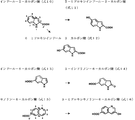
- the chemical structure of the naphthoic acid type compound of the present invention The chemical structure of the other bicyclic aromatic carboxylic acid compound of this invention.
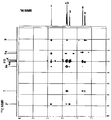
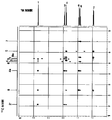
- the two-dimensional spectrum figure which shows the HMBC analysis result of 7Hy2NA The two-dimensional spectrum figure which shows the HMBC analysis result of 8Hy2NA.
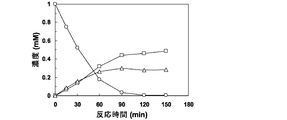
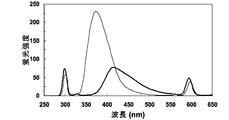
- the graph which shows the time-dependent change of the product of the hydroxylation reaction of 2NA by CYP199A2 enzyme The wave form diagram which shows the fluorescence spectrum of 8Hy2NA and 6Hy2NA.
- the P450 monooxygenase gene used includes the P450 monooxygenase gene (CYP199A1) of soybean rhizobia bradyrizobium japonicacam USDA110, and the P450 monooxygenase gene derived from Rhodopseudomonas pulstris CGA009 (ATCC registration number: BAA-98). (CYP199A2).
- CYP199A2 the P450 monooxygenase gene derived from Rhodopseudomonas pulstris CGA009
- the products of the CYP199A1 and CYP199A2 genes showed enzymatic activity to oxidize 2NA to produce Hy2NA. Therefore, a procedure for preparing a plasmid for expressing these P450 monooxygenases in the same Escherichia coli together with the electron transfer system protein necessary for the hydroxylation reaction will be described.
- Primers that specifically amplify the CYP199A1 gene and the CYP199A2 gene were designed based on the genome sequence information of soybean rhizobia Bradyrizobium japonicam and Rhodopseudomonas pulsetris. The base sequences of the primers are listed in SEQ ID NOs: 1-4. Amplification of CYP199A1 gene and CYP199A2 gene was performed using Expand High Fidelity PCR System (Roche) with polymerase chain reaction (PCR) using chromosomal DNA of each microorganism as a template.
- PCR polymerase chain reaction
- amplification product and vector pET21a were cleaved with restriction enzymes NdeI and HindIII, ligated, and then introduced into Escherichia coli BL21Star (DE3) strain.
- the plasmids in which the CYP199A1 gene and the CYP199A2 gene were inserted into pET21a were named pETA1 and pETA2, respectively.
- Peptidaredoxin (pdx) and putidaredoxin reductase (pdR) derived from Pseudomonas putida were used as electron transfer proteins.
- Primers that specifically amplify the pdx gene and the pdR gene were designed based on the genomic sequence information of Pseudomonas putida.
- the nucleotide sequences of primers that specifically amplify the gene are listed in SEQ ID NOs: 5-8.
- Amplification of the pdx gene and the pdR gene was performed by using an Expand High Fidelity PCR System (Roche) with a polymerase chain reaction (PCR) using Pseudomonas putida chromosomal DNA as a template.
- the reaction solution containing 4 types of deoxynucleotides, 0.2 mM each, primer 0.5 ⁇ M, Pseudomonas putida chromosomal DNA 2 ng / ⁇ L, DNA polymerase, etc., once at 94 ° C. for 2 minutes, 94 ° C. for 15 seconds, 55 ° C.
- the plasmids in which the pdx gene and the pdR gene were inserted into pET21a were named pETpdx and pETpdr, respectively.
- the pdx gene excised from the pETpdx with XbaI and HindIII is inserted between the XbaI and HindIII sites of the pMW218 vector (Nippon Gene), and further between the EcoRI and SacI sites 5 ′ to the pdx gene insertion site.
- the pdR gene cleaved with XbaI and SacI was inserted into pETpdr. EcoRI and XbaI were ligated after smoothing.
- a plasmid pMWpdr-pdx was obtained in which the pdR gene and the pdx gene were inserted in this order in the 5 'to 3' direction.
- Either pETA1 or pETA2 and pMWpdr-pdx are simultaneously introduced into Escherichia coli BL21 Star (DE3) (Invitrogen) to produce a plasmid in which the P450 monooxygenase and the electron transport system are co-expressed in the same Escherichia coli. It was.
- Screening for 2NA monooxygenase from P450 monooxygenase gene expression library Screening for 2NA monooxygenase was performed by using 2NA (FIG. 1-1, Formula 1) for recombinant Escherichia coli cells of each clone of the P450 monooxygenase gene expression library. And a clone that produces Hy2NA with a color reagent.
- the recombinant Escherichia coli of each clone of the P450 monooxygenase gene expression library was inoculated into LB medium containing 100 ⁇ g / mL ampicillin and 100 ⁇ g / mL kanamycin, and 25 ° C. for 12 hours. Further, 1 mM isopropyl- ⁇ -D-thiogalactopyranoside, 0.5 mM 5-aminolevulinic acid and 0.5 mM FeSO 4 were added and cultured for 12 hours.
- the cells are washed with 50 mM potassium phosphate buffer (pH 7.5) containing 10% (v / v) glycerol after collection, and suspended in the buffer so that the wet cell weight concentration is 50 g / L. Turbid and subjected to incubation with 2NA. A 100 mM 2NA / dimethyl sulfoxide solution and 0.01 volume part of 1M NADH were added to 1 part by volume of the prepared cells, respectively, and 250 ⁇ L of a reaction solution was prepared. The reaction was incubated at 30 ° C. with shaking for 3 hours.
- the color reagent 2,6-dichloroquinone-4-chloroimide or fast blue B salt was added to a final concentration of 2 mM.
- the color reagent acted on Hy2NA to cause a red or blue color reaction.
- the nucleotide sequence consisting of 1218 bases of the CYP199A2 gene expressed in pETA2 is listed in SEQ ID NO: 11, and the amino acid sequence consisting of 405 amino acids of the CYP199A2 protein is listed in SEQ ID NO: 12.
- the amino acid sequence of CYP199A1 protein has 78% homology with the amino acid sequence of CYP199A2 protein.
- Structure determination of 2NA hydroxylation product by CYP199A1 protein and CYP199A2 protein Structure determination of 2NA hydroxylation product by CYP199A1 protein and CYP199A2 protein was performed by high performance liquid chromatography (HPLC), Fourier transform ion cyclotron resonance mass spectrometry (FT-ICR / MS) and nuclear magnetic resonance analysis (NMR).
- HPLC high performance liquid chromatography
- MS Fourier transform ion cyclotron resonance mass spectrometry
- NMR nuclear magnetic resonance analysis
- HPLC analysis Using the reaction solution described in Example 2, the cells of recombinant Escherichia coli expressing CYP199A1 protein or CYP199A2 protein were incubated with 2NA. After the incubation, 5N HCl was added to a final concentration of 1% (v / v) and extracted with ethyl acetate to prepare a sample for HPLC analysis.
- the HPLC analysis was carried out by mounting a column (Waters, XTerra MS C18 IS, column length 4.6 ⁇ 20 mm, particle size 3.5 ⁇ m) on an HPLC apparatus (Agilent, 1100 series).
- a reaction solution for preparing a large amount of reaction product is a 50 mM potassium phosphate buffer containing 20 g / L of recombinant Escherichia coli cells, 5 mM 2NA, 5 mM NADH, and 10% (v / v) glycerol. 100 mL (pH 7.5) was prepared. Incubation for the hydroxylation reaction was carried out at 30 ° C. with shaking for 24 hours. After incubation, 5N HCl was added to 1% (v / v) and extracted with ethyl acetate.
- Compound A and Compound B were collected as peak fractions by a fraction collector, respectively.
- the developing solvent was removed with a rotary evaporator, and then each reaction product was dissolved in dimethyl sulfoxide containing 50 mM formic acid, and again subjected to HPLC separation-fraction collector fractionation under the same conditions.
- Compound A and Compound B were subjected to the following mass spectrometry after the developing solvent was removed again by a rotary evaporator.
- FT-ICR / MS Fourier transform ion cyclotron resonance mass spectrometry
- NMR Nuclear magnetic resonance analysis
- Compound B is H-1 to C-2 ', H-1 to C-3, H-1 to C-4a, H-1 to C-8, H-6 to C- Long range coupling ranging from 4a, H-6 to C-8 was detected (FIG. 3).
- COSY analysis in Compound B, coupling was detected between H-3 and H-4, between H-5 and H-6, and between H-6 and H-7, but at the 8-position. Coupling hydrogen groups were not detected (not shown). Therefore, Compound B was identified as 8Hy2NA having a hydroxyl group introduced at the 8-position of 2NA.
- the results of 1 H NMR analysis and 13 C NMR analysis of Compound B, that is, 8Hy2NA are as follows.
- Conversion of 2NA to 7Hy2NA and 8Hy2NA by CYP199A1 protein and CYP199A2 protein Conversion of 2NA to 7Hy2NA and 8Hy2NA by CYP199A1 protein or CYP199A2 protein was measured over time. The measurement is carried out by reacting cells of recombinant Escherichia coli expressing CYP199A1 protein or CYP199A2 protein with 2NA by the method described in Example 2, and performing HPLC analysis by the method described in Example 3. It was done.
- FIGS. 4 and 5 show the results of measuring the hydroxylation reaction of 2NA to 7-position or 8-position by CYP199A1 protein and CYP199A2 protein over time.
- CYP199A1 protein expressed in recombinant Escherichia coli reduces 2NA, which was 1 mM at the start of the reaction, to 0.7 mM after 30 minutes, 0.4 mM after 60 minutes, 0.1 mM after 120 minutes, and 180 minutes All later was consumed by the enzymatic reaction.
- the concentration of 7Hy2NA increased to 0.1 mM after 30 minutes, 0.15 mM after 60 minutes, 0.2 mM after 120 minutes, and 0.25 mM after 180 minutes to reach a plateau.
- the concentration of 8Hy2NA increased to 0.1 mM after 30 minutes, 0.2 mM after 60 minutes, 0.45 mM after 120 minutes, and 0.5 mM after 180 minutes to reach a plateau (FIG. 4).
- the ratio of 7Hy2NA and 8Hy2NA in the reaction product was 34:66, and the molar yield was 81%. From this result, it was revealed that CYP199A1 efficiently causes hydroxylation using 2NA as a substrate, but the hydroxyl substitution at the 8-position is 1.9 times more selective than the hydroxyl substitution at the 7-position.
- the ratio of 7Hy2NA and 8Hy2NA in the reaction product was 38:62, and the molar yield was 75%. From this result, the CYP199A2 protein efficiently causes hydroxylation using 2NA as a substrate in the same manner as the CYP199A1 protein, and the CYP199A2 protein is hydroxylated at the 7th position by hydroxyl substitution at the 8th position, similar to the CYP199A1 protein. It was found to occur 1.6 times more selectively than substitution.
- a pulstrithredoxin (pux) derived from Rhodopseudomonas pultris together with CYP199A1 protein or CYP199A2 protein is also expressed in the same Escherichia coli and substituted with the hydroxyl group at position 8.
- a 2NA monooxygenase activity that was 2-fold more selective than hydroxyl substitution at position 7 was detected (not shown). Therefore, it was concluded that the selectivity of the substrate position in the hydroxylation reaction of 2NA by CYP199A1 protein and CYP199A2 protein is not determined by the electron transfer system protein.
- Bicyclic aromatic carboxylic acids used as substrates instead of 2NA are 1Hy2NA (Formula 4), 3Hy2NA (Formula 6), 6Hy2NA (Formula 8), indole-2-carboxylic acid (Formula 10), indole-6-carvone Acid (formula 13) and quinoline-6-carboxylic acid (formula 15).
- 1Hy2NA Formmula 4
- 3Hy2NA Formmula 6
- 6Hy2NA Formulamula 8
- indole-2-carboxylic acid Formula 10
- indole-6-carvone Acid formula 13
- quinoline-6-carboxylic acid Formula 15
- reaction product 1 was identified as 5-hydroxyindole-2-carboxylic acid (formula 11).
- reaction product 2 was identified as 6-hydroxyindole-2-carboxylic acid (Formula 12).
- 3-hydroxyquinoline-6-carboxylic acid (Formula 16) can be polymerized by an ester bond, it can be used as a raw material for a novel polymer having a quinoline skeleton in pharmaceuticals, dyes, EL devices and the like.
- both CYP199A1 protein and CYP199A2 protein react with carbon at two different positions in the molecule when 2NA (formula 1) and indole-2-carboxylic acid (formula 10) are used as substrates.
- 2NA formula 1
- 3Hy2NA formula 6
- 6Hy2NA formula 8
- indole-6-carboxylic acid formula 13
- quinoline-6-carboxylic acid formula 15
- 7Hy2NA (2H (Formula 2), 1Hy2NA (Formula 4), 3Hy2NA (Formula 6) and 6Hy2NA (Formula 8)) synthesized with CYP199A1 protein or CYP199A2 protein were synthesized.
- Equation 2) and 8Hy2NA (Equation 3) were used.
- a 1 mM dimethyl sulfoxide solution was prepared for the compound, and it was evaluated with the naked eye whether or not fluorescence in the visible light region was generated by irradiating ultraviolet light having an excitation wavelength of 302 nm using a transilluminator. As a result, it was found that 8Hy2NA exhibits strong white fluorescence.
- Fluorescence spectrum analysis of 8Hy2NA The fluorescence spectrum of 8Hy2NA was measured at an excitation wavelength of 300 nm using a fluorescence spectrophotometer (JASCO, FP-750) by preparing a 2 ⁇ M dimethyl sulfoxide solution. 6 Hy2NA in 2 ⁇ M dimethyl sulfoxide was used as a control.
- FIG. 6 shows fluorescence spectrum waveforms of 8Hy2NA and 6Hy2NA.
- the fluorescence intensity is shown as a relative value (au).
- the fluorescence spectrum of 8Hy2NA indicated by a thick line drawn a gentle curve on the long wavelength side where the fluorescence intensity at 370 nm was 10, the fluorescence intensity at 420 nm was 75, and the fluorescence intensity at 25 at 490 nm was 25.
- the fluorescence spectrum of 6Hy2NA indicated by a thin line shows a slightly gentle curve on the long wavelength side where the fluorescence intensity at 340 nm reaches a peak of 230 at 370 nm and the fluorescence intensity at 75 nm is 75. As drawn, the fluorescence disappeared at 500 nm. The fluorescence intensity of the 6Hy2NA peak was three times higher than that of the 8Hy2NA peak, but there was almost no fluorescence in the visible region of 450 nm or more. Since 8Hy2NA emits fluorescence in a wide wavelength range from 350 nm to 600 nm, it is considered to appear white to the naked eye.
Landscapes
- Chemical & Material Sciences (AREA)
- Organic Chemistry (AREA)
- Life Sciences & Earth Sciences (AREA)
- Zoology (AREA)
- Engineering & Computer Science (AREA)
- Health & Medical Sciences (AREA)
- Wood Science & Technology (AREA)
- Genetics & Genomics (AREA)
- Bioinformatics & Cheminformatics (AREA)
- Microbiology (AREA)
- General Health & Medical Sciences (AREA)
- Biochemistry (AREA)
- Biotechnology (AREA)
- General Engineering & Computer Science (AREA)
- Medicinal Chemistry (AREA)
- Chemical Kinetics & Catalysis (AREA)
- General Chemical & Material Sciences (AREA)
- Molecular Biology (AREA)
- Biomedical Technology (AREA)
- Enzymes And Modification Thereof (AREA)
- Quinoline Compounds (AREA)
- Indole Compounds (AREA)
- Compositions Of Macromolecular Compounds (AREA)
- Polyesters Or Polycarbonates (AREA)
- Preparation Of Compounds By Using Micro-Organisms (AREA)
Abstract
二環芳香族ヒドロキシカルボン酸の位置特異的に酸化する酵素を用いることにより新規な二環芳香族ヒドロキシカルボン酸を効率的に生産する方法を開発すること、及び、該方法によって新規な二環芳香族ヒドロキシカルボン酸を開発すること。 本発明は、二環芳香族カルボン酸モノオキシゲナーゼと二環芳香族カルボン酸とを反応させるステップを含む、二環芳香族ヒドロキシカルボン酸の製造方法を提供する。前記二環芳香族カルボン酸は、2-ナフトエ酸、1-ヒドロキシ-2-ナフトエ酸、3-ヒドロキシ-2-ナフトエ酸、6-ヒドロキシ-2-ナフトエ酸、インドール-2-カルボン酸、インドール-6-カルボン酸及びキノリン-6-カルボン酸からなるグループから選択される場合がある。前記二環芳香族カルボン酸モノオキシゲナーゼは、配列番号10又は12のアミノ酸配列からなるタンパク質の場合がある。
Description
本発明は、二環芳香族ヒドロキシカルボン酸の製造方法と、二環芳香族ヒドロキシカルボン酸を含む新規蛍光色素と、新規二環芳香族ヒドロキシカルボン酸とに関する。
二環芳香族ヒドロキシカルボン酸は、医薬品、染料、EL素子、ポリマー等の原料として産業的に有用である。とくにヒドロキシ-2-ナフトエ酸(Hy2NA)は有用であり、そのうち、3-ヒドロキシ-2-ナフトエ酸(3Hy2NA)と6-ヒドロキシ-2-ナフトエ酸(6Hy2NA)は2-ナフトールへのカルボキシル基の導入(コルベ・シュミット反応)により大量生産されており(上野製薬、非特許文献1)、1-ヒドロキシ-2-ナフトエ酸(1Hy2NA)も和光純薬から試薬として市販されている。しかしながら、他の位置に水酸基が導入されたHy2NAは、その合成法が確立されていないことからも用途開発は進んでいないと考えられる。
Hy2NAを合成する手法として、2-ナフトエ酸(2NA)に水酸基を導入する手法が最も簡便で工業的にも有効な製造法であり、位置選択性の高い酵素による合成法、特に酸化酵素(モノオキシゲナーゼ)を用いることが効果的である。2NAを変換可能なモノオキシゲナーゼとしては、植物に広く存在するケイ皮酸モノオキシゲナーゼCYP73が2NAの6位を酸化して6Hy2NAを生成することが報告されている(非特許文献2)。また、ブルクホルデリア・エスピー(Burkholderia sp.)由来のモノオキゲナーゼが2NAの1位を酸化して1Hy2NAを生成することが報告されている(非特許文献3)。しかし、2NAの他の位置を特異的に酸化したHy2NAを生成する酵素は知られていない。
http://www.ueno-fc.co.jp/chem01.htmL
Eur. J. Biochem., 224, 835-844 (1994)
FEMS Microbiol. Lett., 273, 22-27 (2007)
そこで、二環芳香族ヒドロキシカルボン酸を位置特異的に酸化する酵素を用いることにより新規な二環芳香族ヒドロキシカルボン酸を効率的に生産する方法を開発すること、及び、該方法によって新規な二環芳香族ヒドロキシカルボン酸を開発することが本発明の解決しようとする課題である。
本発明は、二環芳香族カルボン酸モノオキシゲナーゼと二環芳香族カルボン酸とを反応させるステップを含む、二環芳香族ヒドロキシカルボン酸の製造方法を提供する。
本発明の二環芳香族ヒドロキシカルボン酸の製造方法において、前記二環芳香族カルボン酸は、ナフタレン、インドール及びキノリンのモノカルボン酸の場合がある。
本発明の二環芳香族ヒドロキシカルボン酸の製造方法において、前記二環芳香族カルボン酸は、環を構成する炭素原子のうち少なくとも1個に一酸素原子が付加される場合がある。
本発明の二環芳香族ヒドロキシカルボン酸の製造方法において、前記二環芳香族カルボン酸は、2-ナフトエ酸、1-ヒドロキシ-2-ナフトエ酸、3-ヒドロキシ-2-ナフトエ酸、6-ヒドロキシ-2-ナフトエ酸、インドール-2-カルボン酸、インドール-6-カルボン酸及びキノリン-6-カルボン酸からなるグループから選択される場合がある。
本発明の二環芳香族ヒドロキシカルボン酸の製造方法において、前記二環芳香族カルボン酸モノオキシゲナーゼは、(1)配列番号10又は12のアミノ酸配列からなるタンパク質と、(2)配列番号10又は12に記載のアミノ酸配列に1個若しくは数個のアミノ酸が欠失、置換又は付加されたアミノ酸配列からなり、かつ、二環芳香族カルボン酸モノオキシゲナーゼ活性を有するタンパク質と、(3)配列番号10又は12に記載のアミノ酸配列と78%以上、あるいは、90%以上の相同性を示すアミノ酸配列からなり、かつ、二環芳香族カルボン酸モノオキシゲナーゼ活性を有するタンパク質と、(4)配列番号9又は11に記載のヌクレオチド配列からなるポリヌクレオチドと80%以上、あるいは、90%以上の相同性を示すポリヌクレオチドによってエンコードされるアミノ酸配列からなり、かつ、二環芳香族カルボン酸モノオキシゲナーゼ活性を有するタンパク質と、(5)配列番号9又は11に記載のヌクレオチド配列からなるポリヌクレオチドとストリンジェントな条件下で雑種形成するポリヌクレオチドによってエンコードされるアミノ酸配列からなり、かつ、二環芳香族カルボン酸モノオキシゲナーゼ活性を有するタンパク質と、(6)特異的結合タグペプチドが前記(1)ないし(5)のいずれかのタンパク質に連結した、融合タンパク質とからなるグループから選択される場合がある。
本発明の融合タンパク質は、特異的結合タグペプチドが前記(1)ないし(5)のいずれかのタンパク質のアミノ末端又はカルボキシル末端に連結したものである。
本発明の特異的結合タグペプチドは、前記(1)ないし(5)のいずれかのタンパク質を調製する際に、発現したタンパク質の検出、分離又は精製をより容易に行うことを可能にするために、他のタンパク質、多糖類、糖脂質、核酸及びこれらの誘導体、樹脂等と特異的に結合するポリペプチドである。特異的結合タグと結合するリガンドは、水溶液中に溶解した遊離状態の場合も固体支持体に不動化される場合もある。そこで、本発明の融合タンパク質は固体支持体に不動化されたリガンドに特異的に結合するため、発現系の他の成分を洗浄除去することができる。その後、遊離状態のリガンドを添加したり、pH、イオン強度その他の条件を変えることにより、固体支持体から前記融合タンパク質を分離して回収することができる。本発明の特異的結合タグは、Hisタグ、mycタグ、HAタグ、インテインタグ、MBP、GSTその他これらに類するポリペプチドが含まれるが、これらに限定されない。本発明の特異的結合タグは、融合タンパク質が二環芳香族カルボン酸モノオキシゲナーゼ活性を保持することを条件としていかなるアミノ酸配列を有してもかまわない。
本発明は2-ナフトエ酸を7-ヒドロキシ-2-ナフトエ酸又は8-ヒドロキシ-2-ナフトエ酸に変換する酵素を提供する。
本発明は、2-ナフトエ酸を7-ヒドロキシ-2-ナフトエ酸又は8-ヒドロキシ-2-ナフトエ酸に変換する酵素組成物を提供する。本発明の酵素組成物は、(1)配列番号10又は12のアミノ酸配列からなるタンパク質と、(2)配列番号10又は12に記載のアミノ酸配列に1個若しくは数個のアミノ酸が欠失、置換又は付加されたアミノ酸配列からなり、かつ、二環芳香族カルボン酸モノオキシゲナーゼ活性を有するタンパク質と、(3)配列番号10又は12に記載のアミノ酸配列と78%以上、あるいは、90%以上の相同性を示すアミノ酸配列からなり、かつ、二環芳香族カルボン酸モノオキシゲナーゼ活性を有するタンパク質と、(4)配列番号9又は11に記載のヌクレオチド配列からなるポリヌクレオチドと80%以上、あるいは、90%以上の相同性を示すポリヌクレオチドによってエンコードされるアミノ酸配列からなり、かつ、二環芳香族カルボン酸モノオキシゲナーゼ活性を有するタンパク質と、(5)配列番号9又は11に記載のヌクレオチド配列からなるポリヌクレオチドとストリンジェントな条件下で雑種形成するポリヌクレオチドによってエンコードされるアミノ酸配列からなり、かつ、二環芳香族カルボン酸モノオキシゲナーゼ活性を有するタンパク質と、(6)特異的結合タグペプチドが前記(1)ないし(5)のいずれかのタンパク質に連結した、融合タンパク質とからなるグループから選択されるタンパク質を含む。
本発明の酵素組成物は、電子伝達系タンパク質を含む場合がある。
本発明は、8-ヒドロキシ-2-ナフトエ酸及び/又はその誘導体を含む、蛍光色素を提供する。
本発明は、本発明の蛍光色素を光透過性媒体に分散した、白色蛍光変換膜を提供する。
本発明は、本発明の白色蛍光変換膜と、発光素子部とからなる白色発光素子を提供する。
本発明は、3-ヒドロキシキノリン-6-カルボン酸を提供する。
本発明は、3-ヒドロキシキノリン-6-カルボン酸のエステル結合による重合体を提供する。
本発明は、3-ヒドロキシキノリン-6-カルボン酸のエステル結合による重合体を含む合成樹脂組成物を提供する。
本発明の製造方法に用いる二環芳香族カルボン酸モノオキシゲナーゼと、本発明の2-ナフトエ酸を7-ヒドロキシ-2-ナフトエ酸又は8-ヒドロキシ-2-ナフトエ酸に変換する酵素組成物に含まれるモノオキシゲナーゼとは、いずれも、いかなる生物種に由来するモノオキシゲナーゼタンパク質であってもよい。前記モノオキシゲナーゼタンパク質は、ダイズ根粒菌ブラディリゾビウム・ジャポニカム(Bradyrhizobium japonicum)等のブラディリゾビウム属根粒菌と、ロドシュードモナス・パルストリス(Rhodopseudomonas palustris)等のロドシュードモナス属紅色非硫黄細菌とを含む細菌と、糸状菌又は菌類と、古細菌と、植物と、動物とを含むいずれかの生物から由来する場合がある。本発明のモノオキシゲナーゼは、ダイズ根粒菌ブラディリゾビウム・ジャポニカムUSDA110のP450モノオキシゲナーゼ(GenBank登録番号:BAC46313、以下、「CYP199A1」という。)と、ロドシュードモナス・パルストリスCGA009(ATCC登録番号:BAA-98)由来P450モノオキシゲナーゼ(GenBank登録番号:CAE27312、以下、「CYP199A2」という。)とを含むが、これらに限定されるものではない。
CYP199A1遺伝子の1209個の塩基からなるヌクレオチド配列は配列番号9に列挙され、CYP199A1タンパク質の402個のアミノ酸からなるアミノ酸配列は配列番号10に列挙される。CYP199A2遺伝子の1218個の塩基からなるヌクレオチド配列は配列番号11に列挙され、CYP199A2タンパク質の405個のアミノ酸からなるアミノ酸配列は配列番号12に列挙される。CYP199A1タンパク質のアミノ酸配列はCYP199A2タンパク質のアミノ酸配列と78%の相同性を有する。
本発明の2-ナフトエ酸を7-ヒドロキシ-2-ナフトエ酸又は8-ヒドロキシ-2-ナフトエ酸に変換する酵素組成物に含まれる電子伝達系タンパク質は、NADH、NADPH等の電子供与体が酸化する際に発生する電子を前記モノオキシゲナーゼに伝達することができることを条件として、いかなる電子伝達系タンパク質を用いてもよい。好ましい電子伝達系タンパク質は、例えば、シュードモナス・プチダ(Pseudomonas putida、ATCC登録番号:17453)由来のプチダレドキシン(GenBank登録番号:P00259、以下、「pdx」という。)と、プチダレドキシンレダクターゼ(GenBank登録番号:P16640、以下、「pdR」という。)と、ロドシュードモナス・パルストリス由来のパルストリスレドキシン(GenBank登録番号CAE27313、以下、「pux」という。)と、ホウレンソウ由来のフェレドキシン(以下、「Fdx」という。)及びフェレドキシンレダクターゼ(以下、「FdR」という。)とを含むが、これらに限定されない。Fdx及びFdRはともに、例えばSigma-Aldridge社から入手可能である(カタログ番号F3013及びF6028)。
本発明の酵素組成物は、前記二環芳香族カルボン酸モノオキシゲナーゼをエンコードするヌクレオチド配列からなるDNAと、電子伝達系タンパク質のアミノ酸配列をエンコードするヌクレオチド配列からなるDNAとを、無生物発現系か、宿主生物及び発現ベクターを使用する発現系かで発現させることにより産生される。前記二環芳香族カルボン酸モノオキシゲナーゼ及び電子伝達系タンパク質をエンコードするDNAは同一の発現ベクターに組み込まれてもよく、別々の発現ベクターに組み込まれてもよい。前記宿主生物は、大腸菌、枯草菌等のような原核生物と、酵母、菌類、植物、動物等のような真核生物とを含む。本発明の宿主生物及び発現ベクターを使用する発現系は、細胞や組織のような生物の一部か、生物の個体全体かの場合がある。前記二環芳香族カルボン酸モノオキシゲナーゼは補酵素としてヘム鉄を必要とし、本発明の電子伝達系タンパク質のうち、PdR及びFdRは補酵素としてフラビンを必要とし、Pdx及びFdxは鉄及びイオウを必要とする。前記二環芳香族カルボン酸モノオキシゲナーゼ及び電子伝達系タンパク質は、それぞれの酵素活性を保持することを条件として、無生物発現系又は宿主生物及び発現ベクターを使用する発現系の他の成分が混在する状態で本発明の二環芳香族ヒドロキシカルボン酸の製造方法に使用されてもよく、あるいは、精製された状態で前記製造方法に使用されてもよい。
本明細書においてアミノ酸配列の相同性は、本発明のアミノ酸配列と、比較の対象となるアミノ酸配列との間で配列が一致するアミノ酸残基の数が最も多くなるように整列させて、配列が一致するアミノ酸残基の数の合計を本発明のアミノ酸配列のアミノ酸残基の総数で割った商の百分率で表される。本発明のヌクレオチド配列及びアミノ酸配列の相同性は、当業者に周知の配列整列プログラムCLUSTALWを使用することにより算出することができる。同様に、本明細書においてヌクレオチド配列の相同性は、本発明のヌクレオチド配列と、比較の対象となるヌクレオチド配列との間でヌクレオチド配列が一致する部分が最も多くなるように整列させて、ヌクレオチド配列が一致する部分のヌクレオチドの数を本発明のヌクレオチド配列のヌクレオチドの総数で割った商の百分率で表される。
本明細書において「ストリンジェントな条件」とは、Sambrook、J.及びRussell、D.W.、Molecular Cloning A Laboratory Manual 3rd Edition,Cold Spring Harbor Laboratory Press(2001)に説明されるサザンブロット法で以下の実験条件で行うことを指す。比較対象のヌクレオチド配列からなるポリヌクレオチドをアガロース電気泳動によりバンドを形成させた上で毛管現象又は電気泳動によりニトロセルロースフィルターその他の固相に不動化する。6× SSC及び0.2% SDSからなる溶液で前洗浄する。本発明のヌクレオチド配列からなるポリヌクレオチドを放射性同位元素その他の標識物質で標識したプローブと前記固相に不動化された比較対象のポリヌクレオチドとの間のハイブリダイゼーション反応を6× SSC及び0.2% SDSからなる溶液中で65°C、終夜行う。その後前記固相を1× SSC及び0.1% SDSからなる溶液中で65°C、各30分ずつ2回洗浄し、0.2× SSC及び0.1% SDSからなる溶液中で65°C、各30分ずつ2回洗浄する。最後に前記固相に残存するプローブの量を前記標識物質の定量により決定する。本明細書において「ストリンジェントな条件」でハイブリダイゼーションをするとは、比較対象のヌクレオチド配列からなるポリヌクレオチドを不動化した固相に残存するプローブの量が、本発明のヌクレオチド配列からなるポリヌクレオチドを不動化した陽性対照実験の固相に残存するプローブの量の少なくとも25%、好ましくは少なくとも50%、より好ましくは少なくとも75%以上であることを指す。
本発明の蛍光色素は、8-ヒドロキシ-2-ナフトエ酸を含む場合がある。また本発明の蛍光色素は、8-ヒドロキシ-2-ナフトエ酸の白色の蛍光を実質的に保持することを条件として、8-ヒドロキシ-2-ナフトエ酸のいずれかの炭素原子又は酸素原子と共有結合を介して、あるいは、カルボキシル基又は水酸基とイオン結合その他の非共有結合を介して修飾されたいずれかの誘導体又は重合体を含む場合がある。本発明の蛍光色素は、8-ヒドロキシ-2-ナフトエ酸と、8-ヒドロキシ-2-ナフトエ酸のいずれかの誘導体又は重合体とからなるグループから選択される1つ又は2つ以上の物質を含む場合がある。
本明細書において「白色」とは、白色の他、赤、緑及び青の光の三原色が実質的に混合して白色に近い色として視認される蛍光を指す。
本発明の白色蛍光変換膜は、本発明の蛍光色素を光透過性媒体に分散したものである。前記光透過性媒体は、光透過性を有し、かつ膜形成性を有するものであればいかなるものでもかまわない。例えば高分子化合物や無機ガラス、さらには印刷用メジウムなどが用いられる。ここで、高分子化合物としては、例えばポリビニルピロリジノン,ポリアクリロニトリル,ポリ(N,N-ジメチルアクリルアミド),ポリ(N,N-ジメチルメタクリルアミド),ポリビニルアルコール,ポリメチルメタクリレート,ポリスチレン,ポリカーボネート,ポリビニルアセテート,ポリ塩化ビニル,ポリブテン,ポリエチレングリコール、及びこれらの共重合体などが挙げられ、また、無機ガラスとしては、例えばホウ酸ガラスやシリカガラスなどが挙げられる。これらの光透過性媒体の中で、特に光透過性,膜形成性,その他物性などの点からポリビニルピロリジノンが好適である。また、本発明においては、上記光透過性媒体のうち1種類を用いてもよく、2種類以上を組み合わせて用いてもよい。
本発明の白色発光素子は、本発明の白色蛍光変換膜と、発光素子部とからなる。本発明の白色発光素子に用いる発光素子部は、本発明の蛍光色素の励起光スペクトルの範囲の波長の光を発光することを条件として、いかなるものでもかまわないが、本発明の蛍光色素の励起光スペクトルに属する300nmの近辺の紫外領域に発光極大波長があることが好ましい。このような発光素子部と組み合わせるとき、本発明の白色蛍光変換膜は紫外領域での励起光によって可視領域の広範な範囲の波長で蛍光を発生するので、肉眼で白色と認識される。したがって、本発明の白色発光素子は、OA機器用バックライト,時計用バックライト,各種ディスプレイ用バックライトなどの用途に好ましい。
本発明が提供する3-ヒドロキシキノリン-6-カルボン酸は、キノリン骨格を有する新規のポリマー原料のモノマー化合物である。3-ヒドロキシキノリン-6-カルボン酸は、カルボキシル基と水酸基との間でエステル結合を行うことにより重合することができる。また、他のモノマー化合物との共重合体を得ることもできる。
以下の実施例によって本発明について詳細な説明を行なうが、本発明はこれらの実施例により何ら制限されるものではない。
P450モノオキシゲナーゼ遺伝子の発現ライブラリの構築
特定の基質を水酸化することのできるP450モノオキシゲナーゼを単離するために、さまざまな生物種由来のP450モノオキシゲナーゼを、その水酸化反応に必要な電子伝達系タンパク質とともに同一のエシェリヒア・コリ(Escherichia coli)内で発現させるプラスミドのライブラリを構築した。
特定の基質を水酸化することのできるP450モノオキシゲナーゼを単離するために、さまざまな生物種由来のP450モノオキシゲナーゼを、その水酸化反応に必要な電子伝達系タンパク質とともに同一のエシェリヒア・コリ(Escherichia coli)内で発現させるプラスミドのライブラリを構築した。
用いたP450モノオキシゲナーゼ遺伝子には、ダイズ根粒菌ブラディリゾビウム・ジャポニカムUSDA110のP450モノオキシゲナーゼ遺伝子(CYP199A1)と、ロドシュードモナス・パルストリスCGA009(ATCC登録番号:BAA-98)由来P450モノオキシゲナーゼ遺伝子(CYP199A2)とが含まれた。実施例2に示すスクリーニングの結果、CYP199A1及びCYP199A2遺伝子の産物が、2NAを酸化してHy2NAを生成する酵素活性を示した。そこで、これらのP450モノオキシゲナーゼについて、その水酸化反応に必要な電子伝達系タンパク質とともに同一のエシェリヒア・コリ内で発現させるプラスミドの作製の手順を説明する。
ダイズ根粒菌ブラディリゾビウム・ジャポニカム及びロドシュードモナス・パルストリスのゲノム配列情報にもとづいて、CYP199A1遺伝子及びCYP199A2遺伝子を特異的に増幅するプライマーが設計された。前記プライマーの塩基配列は配列番号1-4に列挙される。CYP199A1遺伝子及びCYP199A2遺伝子の増幅は、それぞれの微生物の染色体DNAを鋳型としたポリメラーゼ連鎖反応(PCR)をExpand High Fidelity PCR System(ロシュ)を用いて行った。4種類のデオキシヌクレオチドをそれぞれ0.2mM、プライマー0.5μM、それぞれの微生物の染色体DNA2ng/μL、DNAポリメラーゼ等を含む反応液は、95°C3分を1回、95°C30秒、55°C30秒、72°C1分10秒を30回(但し、11回目からは、72°Cでの反応時間を1回ごとに5秒ずつ延長する)、72°C7分を1回の温度条件で反応され、終了後は4°Cで保存された。その後、増幅産物及びベクターpET21aは制限酵素NdeI及びHindIIIで切断され、連結された後、エシェリヒア・コリBL21Star(DE3)株に導入された。CYP199A1遺伝子及びCYP199A2遺伝子がpET21aに挿入されたプラスミドは、それぞれpETA1及びpETA2と名付けられた。
電子伝達系タンパク質として、シュードモナス・プチダ(ATCC登録番号:17453)由来のプチダレドキシン(pdx)及びプチダレドキシンレダクターゼ(pdR)が用いられた。シュードモナス・プチダ菌のゲノム配列情報にもとづいて、pdx遺伝子及びpdR遺伝子を特異的に増幅するプライマーが設計された。前記遺伝子を特異的に増幅するプライマーの塩基配列は配列番号5-8に列挙される。pdx遺伝子及びpdR遺伝子の増幅は、シュードモナス・プチダの染色体DNAを鋳型としたポリメラーゼ連鎖反応(PCR)をExpand High Fidelity PCR System(ロシュ)を用いて行った。4種類のデオキシヌクレオチドをそれぞれ0.2mM、プライマー0.5μM、シュードモナス・プチダの染色体DNA2ng/μL、DNAポリメラーゼ等を含む反応液は、94°C2分を1回、94°C15秒、55°C30秒、72°C1分を30回(但し、11回目からは、72°Cでの反応時間を1回ごとに5秒ずつ延長する)、72°C7分を1回の温度条件で反応され、終了後は4°Cで保存された。その後、pdxの増幅産物及びベクターpET21aは制限酵素NdeI及びHindIIIで切断され、連結された後、エシェリヒア・コリBL21Star(DE3)に導入された。pdRの増幅産物及びベクターpET21aは制限酵素NdeI及びSacIで切断され、連結された後、エシェリヒア・コリBL21Star(DE3)株に導入された。pdx遺伝子及びpdR遺伝子がpET21aに挿入されたプラスミドは、それぞれpETpdx及びpETpdrと名付けられた。前記pETpdxからXbaI及びHindIIIで切り出されたpdx遺伝子がpMW218ベクター(Nippon Gene社)のXbaI及びHindIII部位の間に挿入され、さらに、pdx遺伝子の挿入部位の5’側にあるEcoRI及びSacI部位の間にpETpdrからXbaI及びSacIで切断されたpdR遺伝子が挿入された。EcoRIとXbaIは平滑化後に連結された。こうして、pdR遺伝子及びpdx遺伝子が、この順で5’から3’方向に直列に並んで挿入されたプラスミドpMWpdr-pdxが得られた。pETA1又はpETA2のいずれかと、pMWpdr-pdxとがエシェリヒア・コリBL21 Star (DE3)(Invirogen社)に同時に導入され、P450モノオキシゲナーゼ及び電子伝達系が同一エシェリヒア・コリ内で共発現するプラスミドが作製された。同様にして、さまざまな生物種由来のP450モノオキシゲナーゼについて、その水酸化反応に必要な電子伝達系とともに同一のエシェリヒア・コリ内で発現させるプラスミドが作製され、これらを集めたP450モノオキシゲナーゼ遺伝子発現ライブラリが構築された。
P450モノオキシゲナーゼ遺伝子発現ライブラリからの2NAモノオキシゲナーゼのスクリーニング
2NAモノオキシゲナーゼのスクリーニングは、2NA(図1-1、式1)を前記P450モノオキシゲナーゼ遺伝子発現ライブラリの各クローンの組換えエシェリヒア・コリの菌体とインキュベーションして、呈色試薬でHy2NAを生成するクローンを検出することによって実施された。前記組換えエシェリヒア・コリの菌体を調製するために、P450モノオキシゲナーゼ遺伝子発現ライブラリの各クローンの組換えエシェリヒア・コリを100μg/mL アンピシリン及び100μg/mL カナマイシンを含むLB培地に接種し、25°Cで12時間培養した。さらに、1mM イソプロピル-β-D-チオガラクトピラノシド、0.5mM 5-アミノレブリン酸及び0.5mM FeSO4を添加して12時間培養した。前記菌体は、集菌後に10%(v/v) グリセロールを含む50mM リン酸カリウムバッファー(pH7.5)で洗菌し、湿菌体重量濃度が50g/Lになるように同バッファーに懸濁して2NAとのインキュベーションに供された。前記調製菌体1体積部に、100mM 2NA/ジメチルスルホキシド溶液及び1M NADHがそれぞれ0.01体積部ずつ添加され、250μLの反応液が調製された。前記反応液は30°Cで3時間振とうしながらインキュベーションされた。前記インキュベーション後に、呈色試薬2,6-ジクロロキノン-4-クロロイミド又はファストブルーB塩が終濃度2mMになるように添加された。前記菌体中のP450モノオキシゲナーゼが2NAをHy2NAに水酸化した場合には、前記呈色試薬がHy2NAに作用して赤色又は青色の呈色反応が起こった。
2NAモノオキシゲナーゼのスクリーニングは、2NA(図1-1、式1)を前記P450モノオキシゲナーゼ遺伝子発現ライブラリの各クローンの組換えエシェリヒア・コリの菌体とインキュベーションして、呈色試薬でHy2NAを生成するクローンを検出することによって実施された。前記組換えエシェリヒア・コリの菌体を調製するために、P450モノオキシゲナーゼ遺伝子発現ライブラリの各クローンの組換えエシェリヒア・コリを100μg/mL アンピシリン及び100μg/mL カナマイシンを含むLB培地に接種し、25°Cで12時間培養した。さらに、1mM イソプロピル-β-D-チオガラクトピラノシド、0.5mM 5-アミノレブリン酸及び0.5mM FeSO4を添加して12時間培養した。前記菌体は、集菌後に10%(v/v) グリセロールを含む50mM リン酸カリウムバッファー(pH7.5)で洗菌し、湿菌体重量濃度が50g/Lになるように同バッファーに懸濁して2NAとのインキュベーションに供された。前記調製菌体1体積部に、100mM 2NA/ジメチルスルホキシド溶液及び1M NADHがそれぞれ0.01体積部ずつ添加され、250μLの反応液が調製された。前記反応液は30°Cで3時間振とうしながらインキュベーションされた。前記インキュベーション後に、呈色試薬2,6-ジクロロキノン-4-クロロイミド又はファストブルーB塩が終濃度2mMになるように添加された。前記菌体中のP450モノオキシゲナーゼが2NAをHy2NAに水酸化した場合には、前記呈色試薬がHy2NAに作用して赤色又は青色の呈色反応が起こった。
結果
前記P450モノオキシゲナーゼ遺伝子発現ライブラリについて前記呈色反応により2NAモノオキシゲナーゼのスクリーニングを行ったところ、pETA1及びpETA2を含む組換えエシェリヒア・コリの反応液で呈色反応がみられた。pETA1で発現するCYP199A1遺伝子の1209個の塩基からなるヌクレオチド配列は配列番号9に列挙され、CYP199A1タンパク質の402個のアミノ酸からなるアミノ酸配列は配列番号10に列挙される。pETA2で発現するCYP199A2遺伝子の1218個の塩基からなるヌクレオチド配列は配列番号11に列挙され、CYP199A2タンパク質の405個のアミノ酸からなるアミノ酸配列は配列番号12に列挙される。CYP199A1タンパク質のアミノ酸配列はCYP199A2タンパク質のアミノ酸配列と78%の相同性を有する。
前記P450モノオキシゲナーゼ遺伝子発現ライブラリについて前記呈色反応により2NAモノオキシゲナーゼのスクリーニングを行ったところ、pETA1及びpETA2を含む組換えエシェリヒア・コリの反応液で呈色反応がみられた。pETA1で発現するCYP199A1遺伝子の1209個の塩基からなるヌクレオチド配列は配列番号9に列挙され、CYP199A1タンパク質の402個のアミノ酸からなるアミノ酸配列は配列番号10に列挙される。pETA2で発現するCYP199A2遺伝子の1218個の塩基からなるヌクレオチド配列は配列番号11に列挙され、CYP199A2タンパク質の405個のアミノ酸からなるアミノ酸配列は配列番号12に列挙される。CYP199A1タンパク質のアミノ酸配列はCYP199A2タンパク質のアミノ酸配列と78%の相同性を有する。
CYP199A1タンパク質及びCYP199A2タンパク質による2NA水酸化反応産物の構造決定
CYP199A1タンパク質及びCYP199A2タンパク質による2NA水酸化反応産物の構造決定は、高速液体クロマトグラフィー(HPLC)、フーリエ変換イオンサイクロトロン共鳴質量分析(FT-ICR/MS)及び核磁気共鳴分析(NMR)を用いて行なわれた。
CYP199A1タンパク質及びCYP199A2タンパク質による2NA水酸化反応産物の構造決定は、高速液体クロマトグラフィー(HPLC)、フーリエ変換イオンサイクロトロン共鳴質量分析(FT-ICR/MS)及び核磁気共鳴分析(NMR)を用いて行なわれた。
HPLC分析
実施例2に記載の反応液を用いて、CYP199A1タンパク質又はCYP199A2タンパク質を発現する組換えエシェリヒア・コリの菌体と2NAとのインキュベーションを行った。インキュベーション後の前記反応液に5N HClが終濃度1%(v/v)となるように添加され、酢酸エチルで抽出してHPLC分析用サンプルが用意された。HPLC分析は、HPLC装置(アジレント社、1100シリーズ)にカラム(ウォーターズ社、XTerra MS C18 IS、カラム長4.6×20mm、粒子径3.5μm)を装着して実施された。展開溶媒として、アセトニトリル、メタノール及び10mM リン酸カリウムバッファー(pH2.7)を2.5対2.5対95の割合で混合したA液と、アセトニトリル(CH3CN)からなるB液とが用いられた。流速1mL/分で0分から3分までB液0%で流した後、3分から12分までB液を直線勾配により70%まで上昇させてサンプルを溶出させた。
実施例2に記載の反応液を用いて、CYP199A1タンパク質又はCYP199A2タンパク質を発現する組換えエシェリヒア・コリの菌体と2NAとのインキュベーションを行った。インキュベーション後の前記反応液に5N HClが終濃度1%(v/v)となるように添加され、酢酸エチルで抽出してHPLC分析用サンプルが用意された。HPLC分析は、HPLC装置(アジレント社、1100シリーズ)にカラム(ウォーターズ社、XTerra MS C18 IS、カラム長4.6×20mm、粒子径3.5μm)を装着して実施された。展開溶媒として、アセトニトリル、メタノール及び10mM リン酸カリウムバッファー(pH2.7)を2.5対2.5対95の割合で混合したA液と、アセトニトリル(CH3CN)からなるB液とが用いられた。流速1mL/分で0分から3分までB液0%で流した後、3分から12分までB液を直線勾配により70%まで上昇させてサンプルを溶出させた。
HPLC分析の結果
CYP199A1及びCYP199A2の反応液をHPLCで分析すると、ともに、保持時間7.1分(以下、「化合物A」とする。)及び7.4分(以下、「化合物B」とする。)に顕著なピークがそれぞれ検出された(図示されない)。
CYP199A1及びCYP199A2の反応液をHPLCで分析すると、ともに、保持時間7.1分(以下、「化合物A」とする。)及び7.4分(以下、「化合物B」とする。)に顕著なピークがそれぞれ検出された(図示されない)。
HPLCピーク分画の精製
2つのピーク分画で分離される化合物A及び化合物Bは以下のとおり精製された。反応産物を大量に調製するための反応液は、組換えエシェリヒア・コリの菌体20g/Lと、5mM 2NAと、5mM NADHと、10%(v/v)グリセロールとを含む50mM リン酸カリウムバッファー(pH7.5)100mLが用意された。水酸化反応のためのインキュベーションは30°Cで24時間振とうして行なわれた。インキュベーション後に1%(v/v)になるように5N HClが添加され、酢酸エチルで抽出された。ロータリーエバポレーターで酢酸エチルを除去した後に、残った固体を50mM ギ酸を含むジメチルスルホキシドに溶解してHPLC分離-フラクションコレクター分取用のサンプルとした。HPLC分離は、前記装置にカラム(ウォーターズ社、XTerra MS C18、カラム長4.6×250mm、粒子径3.5μm)を装着して実施された。展開溶媒として50mM ギ酸(A液)と、50mM ギ酸を含むアセトニトリル(B液)とが用いられた。流速0.6mL/分で0分から40分までB液を直線勾配により20%から80%まで上昇させてサンプルを溶出させた。化合物A及び化合物Bはフラクションコレクターによりピーク分画としてそれぞれ回収された。回収物の純度を高めるために、ロータリーエバポレーターで展開溶媒を除去した後、各反応産物を50mM ギ酸を含むジメチルスルホキシドに溶解して同一条件で再度HPLC分離-フラクションコレクター分取された。化合物A及び化合物Bは、再度ロータリーエバポレーターで展開溶媒が除去された後に以下の質量分析に供された。
2つのピーク分画で分離される化合物A及び化合物Bは以下のとおり精製された。反応産物を大量に調製するための反応液は、組換えエシェリヒア・コリの菌体20g/Lと、5mM 2NAと、5mM NADHと、10%(v/v)グリセロールとを含む50mM リン酸カリウムバッファー(pH7.5)100mLが用意された。水酸化反応のためのインキュベーションは30°Cで24時間振とうして行なわれた。インキュベーション後に1%(v/v)になるように5N HClが添加され、酢酸エチルで抽出された。ロータリーエバポレーターで酢酸エチルを除去した後に、残った固体を50mM ギ酸を含むジメチルスルホキシドに溶解してHPLC分離-フラクションコレクター分取用のサンプルとした。HPLC分離は、前記装置にカラム(ウォーターズ社、XTerra MS C18、カラム長4.6×250mm、粒子径3.5μm)を装着して実施された。展開溶媒として50mM ギ酸(A液)と、50mM ギ酸を含むアセトニトリル(B液)とが用いられた。流速0.6mL/分で0分から40分までB液を直線勾配により20%から80%まで上昇させてサンプルを溶出させた。化合物A及び化合物Bはフラクションコレクターによりピーク分画としてそれぞれ回収された。回収物の純度を高めるために、ロータリーエバポレーターで展開溶媒を除去した後、各反応産物を50mM ギ酸を含むジメチルスルホキシドに溶解して同一条件で再度HPLC分離-フラクションコレクター分取された。化合物A及び化合物Bは、再度ロータリーエバポレーターで展開溶媒が除去された後に以下の質量分析に供された。
フーリエ変換イオンサイクロトロン共鳴質量分析(FT-ICR/MS)
精製された化合物A及び化合物Bの質量を測定するために質量分析計(サーモ社、Finnigan LTQ FT)を用いてFT-ICR/MS分析が行なわれた。前記FT-ICR/MS分析はエレクトロスプレーイオン化法によってネガティブモードで実施された。
精製された化合物A及び化合物Bの質量を測定するために質量分析計(サーモ社、Finnigan LTQ FT)を用いてFT-ICR/MS分析が行なわれた。前記FT-ICR/MS分析はエレクトロスプレーイオン化法によってネガティブモードで実施された。
FT-ICR/MSの結果
化合物A及び化合物Bはともに、質量数187.0397にピークを示した。この質量数は2NAに1酸素原子が添加した化合物の水素原子脱離イオンの質量数(187.0385)に相当する。そこでこの結果から、化合物A及び化合物Bは2NAに1酸素原子が添加した化合物であることが明らかとなった(図示されない)。
化合物A及び化合物Bはともに、質量数187.0397にピークを示した。この質量数は2NAに1酸素原子が添加した化合物の水素原子脱離イオンの質量数(187.0385)に相当する。そこでこの結果から、化合物A及び化合物Bは2NAに1酸素原子が添加した化合物であることが明らかとなった(図示されない)。
核磁気共鳴分析(NMR)
精製された化合物A及び化合物Bの構造を決定するためにNMR分析装置(ブルカー・バイオスピン社、AVANCE600)を用いてNMR分析が行なわれた。前記NMR分析は、13C NMR分析と、1H NMR分析と、COSY(correlation spectroscopy)分析と、HMQC(heteronuclear multiple quantum coherence)分析と、HMBC(heteronuclear multiple bond coherence)分析とを含み、それぞれのスペクトルデータが取得された。
精製された化合物A及び化合物Bの構造を決定するためにNMR分析装置(ブルカー・バイオスピン社、AVANCE600)を用いてNMR分析が行なわれた。前記NMR分析は、13C NMR分析と、1H NMR分析と、COSY(correlation spectroscopy)分析と、HMQC(heteronuclear multiple quantum coherence)分析と、HMBC(heteronuclear multiple bond coherence)分析とを含み、それぞれのスペクトルデータが取得された。
化合物Aの結果
HMBC分析によって化合物Aでは、H-5からC-4、H-5からC-8a、H-5からC-7に渡るロングレンジカップリングが検出された(図2)。COSY分析によって化合物Aでは、H-3及びH-4の間と、H-5及びH-6の間とにカップリングが検出されたが、7位にはカップリングする水素基は検出されなかった(図示されない)。そこで、化合物Aは2NAの7位に水酸基が導入された7Hy2NA(図1、式2)と同定された。化合物A、すなわち、7Hy2NAの1H NMR分析及び13C NMR分析の結果は以下のとおりである。
1H NMR(DMSO-d6)δ)7.23(dd,1H,J=8.8,2.4Hz,H-6)、7.31(d,1H,J=2.3Hz,H-8)、7.76(dd,1H,J=8.4,1.5Hz,H-3)、7.85(d,1H,J=9.4Hz,H-5)、7.86(d,1H,J=9.3Hz,H-4)、8.38(s,1H,H-1)。
13C NMR(13C NMR(DMSO-d6)δ)110.8(C-8)、121.8(C-6)、122.9(C-3)、128.7(C-4)、129.3(C-2)、129.5(C-1)、130.1(C-5)、130.4(C-4a)、134.7(C-8a)、156.8(C-7)、168.6(C-2’)。
HMBC分析によって化合物Aでは、H-5からC-4、H-5からC-8a、H-5からC-7に渡るロングレンジカップリングが検出された(図2)。COSY分析によって化合物Aでは、H-3及びH-4の間と、H-5及びH-6の間とにカップリングが検出されたが、7位にはカップリングする水素基は検出されなかった(図示されない)。そこで、化合物Aは2NAの7位に水酸基が導入された7Hy2NA(図1、式2)と同定された。化合物A、すなわち、7Hy2NAの1H NMR分析及び13C NMR分析の結果は以下のとおりである。
1H NMR(DMSO-d6)δ)7.23(dd,1H,J=8.8,2.4Hz,H-6)、7.31(d,1H,J=2.3Hz,H-8)、7.76(dd,1H,J=8.4,1.5Hz,H-3)、7.85(d,1H,J=9.4Hz,H-5)、7.86(d,1H,J=9.3Hz,H-4)、8.38(s,1H,H-1)。
13C NMR(13C NMR(DMSO-d6)δ)110.8(C-8)、121.8(C-6)、122.9(C-3)、128.7(C-4)、129.3(C-2)、129.5(C-1)、130.1(C-5)、130.4(C-4a)、134.7(C-8a)、156.8(C-7)、168.6(C-2’)。
化合物Bの結果
HMBC分析によって化合物Bでは、H-1からC-2’、H-1からC-3、H-1からC-4a、H-1からC-8、H-6からC-4a、H-6からC-8にわたるロングレンジカップリングが検出された(図3)。COSY分析によって化合物Bでは、H-3及びH-4の間、H-5及びH-6の間、H-6及びH-7の間とにカップリングが検出されたが、8位にはカップリングする水素基は検出されなかった(図示されない)。そこで、化合物Bは2NAの8位に水酸基が導入された8Hy2NAと同定された。化合物B、すなわち、8Hy2NAの1H NMR分析及び13C NMR分析の結果は以下のとおりである。
1H NMR(1H NMR(DMSO-d6)δ)6.97(dd,1H,J=7.4,1.0Hz,H-7)、7.41(d,1H,J=8.2Hz,H-5)、7.46(dd,1H,J=7.4,7.4Hz,H-6)、7.90(d,1H,J=8.5Hz,H-4)、7.96(dd,1H,J=8.5,1.7Hz,H-3)及び8.86(s,1H,H-1)。
13C NMR(13C NMR(DMSO-d6)δ)109.8(C-7)、119.1(C-5)、124.5(C-8a)、125.9(C-1)、126.2(C-3)、127.6(C-2)、128.6(C-4)、130.0(C-6)、137.2(C-4a)、155.3(C-8)、168.5(C-2’)。
HMBC分析によって化合物Bでは、H-1からC-2’、H-1からC-3、H-1からC-4a、H-1からC-8、H-6からC-4a、H-6からC-8にわたるロングレンジカップリングが検出された(図3)。COSY分析によって化合物Bでは、H-3及びH-4の間、H-5及びH-6の間、H-6及びH-7の間とにカップリングが検出されたが、8位にはカップリングする水素基は検出されなかった(図示されない)。そこで、化合物Bは2NAの8位に水酸基が導入された8Hy2NAと同定された。化合物B、すなわち、8Hy2NAの1H NMR分析及び13C NMR分析の結果は以下のとおりである。
1H NMR(1H NMR(DMSO-d6)δ)6.97(dd,1H,J=7.4,1.0Hz,H-7)、7.41(d,1H,J=8.2Hz,H-5)、7.46(dd,1H,J=7.4,7.4Hz,H-6)、7.90(d,1H,J=8.5Hz,H-4)、7.96(dd,1H,J=8.5,1.7Hz,H-3)及び8.86(s,1H,H-1)。
13C NMR(13C NMR(DMSO-d6)δ)109.8(C-7)、119.1(C-5)、124.5(C-8a)、125.9(C-1)、126.2(C-3)、127.6(C-2)、128.6(C-4)、130.0(C-6)、137.2(C-4a)、155.3(C-8)、168.5(C-2’)。
CYP199A1タンパク質及びCYP199A2タンパク質による2NAの7Hy2NA及び8Hy2NAへの変換
CYP199A1タンパク質又はCYP199A2タンパク質による2NAの7Hy2NA及び8Hy2NAへの変換を経時的に測定した。前記測定は、実施例2に記載の方法によってCYP199A1タンパク質又はCYP199A2タンパク質を発現する組換えエシェリヒア・コリの菌体と、2NAとを反応させ、実施例3に記載の方法によってHPLC分析することによって実施された。
CYP199A1タンパク質又はCYP199A2タンパク質による2NAの7Hy2NA及び8Hy2NAへの変換を経時的に測定した。前記測定は、実施例2に記載の方法によってCYP199A1タンパク質又はCYP199A2タンパク質を発現する組換えエシェリヒア・コリの菌体と、2NAとを反応させ、実施例3に記載の方法によってHPLC分析することによって実施された。
結果
CYP199A1タンパク質及びCYP199A2タンパク質による2NAの7位又は8位への水酸化反応を経時的に測定した結果を図4及び5に示す。組換えエシェリヒア・コリで発現するCYP199A1タンパク質は、反応開始時に1mMあった2NAを、30分後には0.7mM、60分後には0.4mM、120分後には0.1mMに減少させ、180分後には全て酵素反応に消費された。この間に、7Hy2NAの濃度は、30分後で0.1mM、60分後で0.15mM、120分後で0.2mM、180分後で0.25mMに増加してプラトーに達した。また8Hy2NAの濃度は、30分後で0.1mM、60分後で0.2mM、120分後で0.45mM、180分後で0.5mMに増加してプラトーに達した(図4)。反応産物の7Hy2NA及び8Hy2NAの比率は34対66で、モル収率は81%であった。この結果から、CYP199A1は、効率的に2NAを基質として水酸化反応を起こすが、8位の水酸基置換のほうが7位の水酸化置換より1.9倍選択的に起こることが明らかになった。
CYP199A1タンパク質及びCYP199A2タンパク質による2NAの7位又は8位への水酸化反応を経時的に測定した結果を図4及び5に示す。組換えエシェリヒア・コリで発現するCYP199A1タンパク質は、反応開始時に1mMあった2NAを、30分後には0.7mM、60分後には0.4mM、120分後には0.1mMに減少させ、180分後には全て酵素反応に消費された。この間に、7Hy2NAの濃度は、30分後で0.1mM、60分後で0.15mM、120分後で0.2mM、180分後で0.25mMに増加してプラトーに達した。また8Hy2NAの濃度は、30分後で0.1mM、60分後で0.2mM、120分後で0.45mM、180分後で0.5mMに増加してプラトーに達した(図4)。反応産物の7Hy2NA及び8Hy2NAの比率は34対66で、モル収率は81%であった。この結果から、CYP199A1は、効率的に2NAを基質として水酸化反応を起こすが、8位の水酸基置換のほうが7位の水酸化置換より1.9倍選択的に起こることが明らかになった。
組換えエシェリヒア・コリで発現するCYP199A2タンパク質によって、反応開始時に1mMあった2NAは、30分後には0.5mM、60分後には0.2mMに減少し、120分後には全て酵素反応に消費された。この間に、7Hy2NAの濃度は、30分後で0.15mM、60分後で0.25mM、120分後で0.3mMに増加してプラトーに達した。また8Hy2NAの濃度は、30分後で0.15mM、60分後で0.3mM、120分後で0.45mMに増加してプラトーに達した(図5)。反応産物の7Hy2NA及び8Hy2NAの比率は38対62であり、モル収率は75%であった。この結果から、CYP199A2タンパク質はCYP199A1タンパク質と同様に効率的に2NAを基質として水酸化反応を起こすこと、及び、CYP199A2タンパク質は、CYP199A1タンパク質と同様に、8位の水酸基置換のほうが7位の水酸化置換より1.6倍選択的に起こすことが明らかになった。
なお、電子伝達系タンパク質としてpdxのかわりにロドシュードモナス・パルストリス由来のパルストリスレドキシン(pux)をCYP199A1タンパク質又はCYP199A2タンパク質とともに同一のエシェリヒア・コリ内で発現させるプラスミドにおいても、8位の水酸基置換のほうが7位の水酸化置換より2倍選択的な2NAのモノオキシゲナーゼ活性が検出された(図示されない)。そこで、CYP199A1タンパク質及びCYP199A2タンパク質による2NAの水酸化反応の基質位置の選択性は、電子伝達系タンパク質によって決定されるわけではないと結論された。
CYP199A1タンパク質及びCYP199A2タンパク質によるさまざまな二環芳香族ヒドロキシカルボン酸の生産
実施例2に記載の方法によって組換えエシェリヒア・コリで発現するCYP199A1タンパク質及びCYP199A2タンパク質の基質として2NAのかわりにさまざまな二環芳香族カルボン酸を用いて、CYP199A1タンパク質又はCYP199A2タンパク質の基質特異性を検討した。2NAのかわりに基質として用いた二環芳香族カルボン酸は、1Hy2NA(式4)、3Hy2NA(式6)、6Hy2NA(式8)、インドール-2-カルボン酸(式10)、インドール-6-カルボン酸(式13)及びキノリン-6-カルボン酸(式15)であった。それぞれの基質について、実施例3で説明された手順で反応産物の構造決定が行なわれた。
実施例2に記載の方法によって組換えエシェリヒア・コリで発現するCYP199A1タンパク質及びCYP199A2タンパク質の基質として2NAのかわりにさまざまな二環芳香族カルボン酸を用いて、CYP199A1タンパク質又はCYP199A2タンパク質の基質特異性を検討した。2NAのかわりに基質として用いた二環芳香族カルボン酸は、1Hy2NA(式4)、3Hy2NA(式6)、6Hy2NA(式8)、インドール-2-カルボン酸(式10)、インドール-6-カルボン酸(式13)及びキノリン-6-カルボン酸(式15)であった。それぞれの基質について、実施例3で説明された手順で反応産物の構造決定が行なわれた。
1Hy2NA(式4)を基質とした反応産物の構造解析の結果
1Hy2NA(式4)を基質としたCYP199A1タンパク質及びCYP199A2タンパク質による反応産物は、いずれの酵素でも主な反応産物は1種類だけで、1H NMR分析及び13C NMR分析の結果ともに同じ構造を示した。
1H NMR(1H NMR(DMSO-d6)δ)7.14(dd,1H,J=8.7,2.1Hz,H-6)、7.27(d,1H,J=8.6Hz,H-4)、7.46(d,1H,J=1.9Hz,H-8)、7.55(d,1H,J=8.5Hz,H-3)、7.73(d,1H,J=8.8Hz,H-5)。
13C NMR(13C NMR(DMSO-d6)δ)113.1(C-8)、116.6(C-2)、126.0(C-4)、128.6(C-6)、129.5(C-3)、134.8(C-8a)、137.3(C-5)、139.0(C-4a)、163.4(C-7)、163.8(C-1)、172.4(C-2’)。
1Hy2NA(式4)を基質としたCYP199A1タンパク質及びCYP199A2タンパク質による反応産物は、いずれの酵素でも主な反応産物は1種類だけで、1H NMR分析及び13C NMR分析の結果ともに同じ構造を示した。
1H NMR(1H NMR(DMSO-d6)δ)7.14(dd,1H,J=8.7,2.1Hz,H-6)、7.27(d,1H,J=8.6Hz,H-4)、7.46(d,1H,J=1.9Hz,H-8)、7.55(d,1H,J=8.5Hz,H-3)、7.73(d,1H,J=8.8Hz,H-5)。
13C NMR(13C NMR(DMSO-d6)δ)113.1(C-8)、116.6(C-2)、126.0(C-4)、128.6(C-6)、129.5(C-3)、134.8(C-8a)、137.3(C-5)、139.0(C-4a)、163.4(C-7)、163.8(C-1)、172.4(C-2’)。
この結果から、CYP199A1タンパク質及びCYP199A2タンパク質のいずれについても、1Hy2NA(式4)を基質とした反応産物は、1,7-ジヒドロキシ-2-ナフトエ酸(1,7DiHy2NA(式5))と同定された。
3Hy2NA(式6)を基質とした反応産物の構造解析の結果
3Hy2NA(式6)を基質としたCYP199A1タンパク質及びCYP199A2タンパク質の反応産物は、いずれの酵素でも主な反応産物は1種類だけで、1H NMR分析及び13C NMR分析の結果ともに同じ構造を示した。
1H NMR(1H NMR(DMSO-d6)δ)7.17(dd,1H,J=8.8,2.4Hz,H-6)、7.19(d,1H,J=1.9Hz,H-8)、7.24(s,1H,H-4)、7.65(d,1H,J=8.8Hz,H-5)、8.33(s,1H,H-1)。
13C NMR(13C NMR(DMSO-d6)δ)110.3(C-8)、111.8(C-4)、116.0(C-2)、123.2(C-6)、128.3(C-5)、128.8(C-7)、131.1(C-1)、132.8(C-4a)、154.4(C-8a)、154.7(C-3)、172.6(C-2’)。
3Hy2NA(式6)を基質としたCYP199A1タンパク質及びCYP199A2タンパク質の反応産物は、いずれの酵素でも主な反応産物は1種類だけで、1H NMR分析及び13C NMR分析の結果ともに同じ構造を示した。
1H NMR(1H NMR(DMSO-d6)δ)7.17(dd,1H,J=8.8,2.4Hz,H-6)、7.19(d,1H,J=1.9Hz,H-8)、7.24(s,1H,H-4)、7.65(d,1H,J=8.8Hz,H-5)、8.33(s,1H,H-1)。
13C NMR(13C NMR(DMSO-d6)δ)110.3(C-8)、111.8(C-4)、116.0(C-2)、123.2(C-6)、128.3(C-5)、128.8(C-7)、131.1(C-1)、132.8(C-4a)、154.4(C-8a)、154.7(C-3)、172.6(C-2’)。
この結果から、CYP199A1タンパク質及びCYP199A2タンパク質のいずれについても、3Hy2NA(式6)を基質とした反応産物は3,7-ジヒドロキシ-2-ナフトエ酸(3,7DiHy2NA(式7))と同定された。
6Hy2NA(式8)を基質とした反応産物の構造解析の結果
6Hy2NA(式8)を基質としたCYP199A1タンパク質及びCYP199A2タンパク質の反応産物は、いずれの酵素でも主な反応産物は1種類だけで、1H NMR分析及び13C NMR分析の結果ともに同じ構造を示した。
1H NMR(1H NMR(DMSO-d6)δ)7.19(s,1H,H-5)、7.28(s,1H,H-8)、7.65(d,1H,J=8.5Hz,H-4)、7.69(d,1H,J=8.5Hz,H-3)、8.28(s,1H,H-1)。
13C NMR(13C NMR(DMSO-d6)δ)110.2(C-5)、111.7(C-8)、123.3(C-3)、125.8(C-2)、126.5(C-4)、128.6(C-8a)、129.3(C-1)、132.1(C-4a)、148.4(C-7)、150.0(C-6)、168.8 (C-2’)。
6Hy2NA(式8)を基質としたCYP199A1タンパク質及びCYP199A2タンパク質の反応産物は、いずれの酵素でも主な反応産物は1種類だけで、1H NMR分析及び13C NMR分析の結果ともに同じ構造を示した。
1H NMR(1H NMR(DMSO-d6)δ)7.19(s,1H,H-5)、7.28(s,1H,H-8)、7.65(d,1H,J=8.5Hz,H-4)、7.69(d,1H,J=8.5Hz,H-3)、8.28(s,1H,H-1)。
13C NMR(13C NMR(DMSO-d6)δ)110.2(C-5)、111.7(C-8)、123.3(C-3)、125.8(C-2)、126.5(C-4)、128.6(C-8a)、129.3(C-1)、132.1(C-4a)、148.4(C-7)、150.0(C-6)、168.8 (C-2’)。
この結果から、CYP199A1タンパク質及びCYP199A2タンパク質のいずれについても、6Hy2NA(式8)を基質とした反応産物は6,7-ジヒドロキシ-2-ナフトエ酸(6,7DiHy2NA(式9))と同定された。
インドール-2-カルボン酸(式10)を基質とした反応産物の構造解析の結果
組換えエシェリヒア・コリで発現するCYP199A1タンパク質及びCYP199A2タンパク質によるインドール-2-カルボン酸(式10)の水酸化反応では2種類の反応産物が得られた。
反応産物1
1H NMR(1H NMR(DMSO-d6)δ)6.79(dd,1H,J=8.8,2.3Hz,H-6)、6.89(m,1H,H-3)、6.90(d,1H,J=2.3Hz,H-4)、7.24(d,1H,J=8.8Hz,H-7)。
13C NMR(13C NMR(DMSO-d6)δ)112.5(C-4)、114.4(C-3)、121.2(C-7)、123.8(C-6)、135.7(C-3a)、136.6(C-2)、140.2(C-7a)、159.3(C-5)、171.0(C-2’)。
反応産物2
1H NMR(1H NMR(DMSO-d6)δ)6.60(dd,1H,J=8.6,2.1Hz,H-5)、6.78(d,1H,J=2.1Hz,H-7)、6.96(m,1H,H-3)、7.41(d,1H,J=8.6Hz,H-4)。
13C NMR(13C NMR(DMSO-d6)δ)104.4(C-7)、115.9(C-3)、119.9(C-5)、128.6(C-3a)、130.7(C-4)、134.8(C-2)、146.8(C-7a)、163.6(C-6)、170.9(C-2’)。
組換えエシェリヒア・コリで発現するCYP199A1タンパク質及びCYP199A2タンパク質によるインドール-2-カルボン酸(式10)の水酸化反応では2種類の反応産物が得られた。
反応産物1
1H NMR(1H NMR(DMSO-d6)δ)6.79(dd,1H,J=8.8,2.3Hz,H-6)、6.89(m,1H,H-3)、6.90(d,1H,J=2.3Hz,H-4)、7.24(d,1H,J=8.8Hz,H-7)。
13C NMR(13C NMR(DMSO-d6)δ)112.5(C-4)、114.4(C-3)、121.2(C-7)、123.8(C-6)、135.7(C-3a)、136.6(C-2)、140.2(C-7a)、159.3(C-5)、171.0(C-2’)。
反応産物2
1H NMR(1H NMR(DMSO-d6)δ)6.60(dd,1H,J=8.6,2.1Hz,H-5)、6.78(d,1H,J=2.1Hz,H-7)、6.96(m,1H,H-3)、7.41(d,1H,J=8.6Hz,H-4)。
13C NMR(13C NMR(DMSO-d6)δ)104.4(C-7)、115.9(C-3)、119.9(C-5)、128.6(C-3a)、130.7(C-4)、134.8(C-2)、146.8(C-7a)、163.6(C-6)、170.9(C-2’)。
この結果から、反応産物1は5-ヒドロキシインドール-2-カルボン酸(式11)と同定された。また反応産物2は6-ヒドロキシインドール-2-カルボン酸(式12)と同定された。
インドール-6-カルボン酸(式13)を基質とした反応産物の構造解析の結果
インドール-6-カルボン酸(式13)を基質としたCYP199A1タンパク質及びCYP199A2タンパク質の反応産物は、いずれの酵素でも主な反応産物は1種類だけで、1H NMR分析及び13C NMR分析の結果ともに同じ構造を示した。
1H NMR(1H NMR(DMSO-d6)δ)3.56(s,2H,H-3)、7.32(d,1H,J=7.7Hz,H-4)、7.34(d,1H,J=1.1Hz,H-7)、7.57(dd,1H,J=7.7,1.5Hz,H-5)。
13C NMR(13C NMR(DMSO-d6)δ)44.0(C-3)、117.3(C-7)、130.8(C-5)、132.4(C-4)、138.2(C-6)、139.3(C-3a)、152.1(C-7a)、175.3(C-6’)、184.2(C-2)。
インドール-6-カルボン酸(式13)を基質としたCYP199A1タンパク質及びCYP199A2タンパク質の反応産物は、いずれの酵素でも主な反応産物は1種類だけで、1H NMR分析及び13C NMR分析の結果ともに同じ構造を示した。
1H NMR(1H NMR(DMSO-d6)δ)3.56(s,2H,H-3)、7.32(d,1H,J=7.7Hz,H-4)、7.34(d,1H,J=1.1Hz,H-7)、7.57(dd,1H,J=7.7,1.5Hz,H-5)。
13C NMR(13C NMR(DMSO-d6)δ)44.0(C-3)、117.3(C-7)、130.8(C-5)、132.4(C-4)、138.2(C-6)、139.3(C-3a)、152.1(C-7a)、175.3(C-6’)、184.2(C-2)。
この結果から、CYP199A1タンパク質及びCYP199A2タンパク質のいずれについても、インドール-6-カルボン酸(式13)を基質とした反応産物は2-インドリノン-6-カルボン酸(式14)と同定された。
キノリン-6-カルボン酸(式15)を基質とした反応産物の構造解析の結果
キノリン-6-カルボン酸(式15)を基質としたCYP199A1タンパク質及びCYP199A2タンパク質の反応産物は、いずれの酵素でも主な反応産物は1種類だけで、1H NMR分析及び13C NMR分析の結果ともに同じ構造を示した。
1H NMR(1H NMR(DMSO-d6)δ)7.70(d,1H,J=2.7Hz,H-4)、7.97-7.98(overlapping signals,H-7,H-8)、8.49(s,1H,H-5)、8.69(d,1H,J=2.8Hz,H-2)。
13C NMR(13C NMR(DMSO-d6)δ)117.3(C-4)、126.2(C-7)、129.3(C-4aor6)、129.7(C-8)、130.1(C-4a,5or6)、130.2(C-4a,5or6)、144.8(C-8a)、146.9(C-2)、152.4(C-3)、68.2(C-6’)。
キノリン-6-カルボン酸(式15)を基質としたCYP199A1タンパク質及びCYP199A2タンパク質の反応産物は、いずれの酵素でも主な反応産物は1種類だけで、1H NMR分析及び13C NMR分析の結果ともに同じ構造を示した。
1H NMR(1H NMR(DMSO-d6)δ)7.70(d,1H,J=2.7Hz,H-4)、7.97-7.98(overlapping signals,H-7,H-8)、8.49(s,1H,H-5)、8.69(d,1H,J=2.8Hz,H-2)。
13C NMR(13C NMR(DMSO-d6)δ)117.3(C-4)、126.2(C-7)、129.3(C-4aor6)、129.7(C-8)、130.1(C-4a,5or6)、130.2(C-4a,5or6)、144.8(C-8a)、146.9(C-2)、152.4(C-3)、68.2(C-6’)。
この結果から、キノリン-6-カルボン酸(式15)を基質とした反応産物は3-ヒドロキシキノリン-6-カルボン酸(式16)と同定された。3-ヒドロキシキノリン-6-カルボン酸(式16)はエステル結合により重合できるので、キノリン骨格を有する新規ポリマーの原料として、医薬品、染料、EL素子等に利用することができる。
以上のとおり、CYP199A1タンパク質及びCYP199A2タンパク質はいずれも、2NA(式1)及びインドール-2-カルボン酸(式10)を基質とする場合には分子内の2つの異なる位置の炭素と反応するが、1Hy2NA(式4)、3Hy2NA(式6)、6Hy2NA(式8)、インドール-6-カルボン酸(式13)及びキノリン-6-カルボン酸(式15)を基質とする場合には、分子内の1つの位置の炭素だけと反応する。
Hy2NAの蛍光能評価
今回CYP199A1タンパク質又はCYP199A2タンパク質によって酵素合成された7Hy2NA(式2)、8Hy2NA(式3)は、従来有機合成法による報告しかないが、有機合成法は多段階反応であり、反応選択性(位置選択性)が低いため、収率が低い。そこで、これらのHy2NA化合物の物性、特に蛍光特性を検討した。
今回CYP199A1タンパク質又はCYP199A2タンパク質によって酵素合成された7Hy2NA(式2)、8Hy2NA(式3)は、従来有機合成法による報告しかないが、有機合成法は多段階反応であり、反応選択性(位置選択性)が低いため、収率が低い。そこで、これらのHy2NA化合物の物性、特に蛍光特性を検討した。
化合物の蛍光特性を評価するために、市販品の2NA(式2)、1Hy2NA(式4)、3Hy2NA(式6)及び6Hy2NA(式8)と、CYP199A1タンパク質又はCYP199A2タンパク質によって酵素合成された7Hy2NA(式2)及び8Hy2NA(式3)とを用いた。具体的には、前記化合物について1mM ジメチルスルホキシド溶液を調製し、トランスイルミネーターを用いて励起波長302nmの紫外線を照射して可視光領域での蛍光が発生するかどうかを肉眼で評価した。その結果、8Hy2NAは強い白色の蛍光を示すことがわかった。
8Hy2NAの蛍光スペクトル分析
8Hy2NAの蛍光スペクトルは、2μM ジメチルスルホキシド溶液を調製し、蛍光分光光度計(日本分光、FP-750)を用いて励起波長300nmで測定した。6Hy2NAの2μM ジメチルスルホキシド溶液を対照として用いた。
8Hy2NAの蛍光スペクトルは、2μM ジメチルスルホキシド溶液を調製し、蛍光分光光度計(日本分光、FP-750)を用いて励起波長300nmで測定した。6Hy2NAの2μM ジメチルスルホキシド溶液を対照として用いた。
8Hy2NAの蛍光スペクトル分析の結果
図6に8Hy2NA及び6Hy2NAの蛍光スペクトル波形図を示す。蛍光強度は相対値(a.u.)で示す。太い線で示す8Hy2NAの蛍光スペクトルは、370nmでの蛍光強度が10、420nmでの蛍光強度が75、490nmでの蛍光強度が25となる長波長側がややなだらかな曲線を描いた。これに対し細い線で示す6Hy2NAの蛍光スペクトルは、340nmでの蛍光強度が10、370nmでの蛍光強度が230のピークに達し、420nmでの蛍光強度が75となる長波長側がややなだらかな曲線を描いて、500nmで蛍光が消失した。6Hy2NAのピークの蛍光強度は8Hy2NAのピークの蛍光強度よりも3倍高いが、450nm以上の可視領域ではほとんど蛍光がなかった。8Hy2NAは350nmから600nmまでの広範な波長領域で蛍光を発するため、肉眼で白く見えると考えられる。
図6に8Hy2NA及び6Hy2NAの蛍光スペクトル波形図を示す。蛍光強度は相対値(a.u.)で示す。太い線で示す8Hy2NAの蛍光スペクトルは、370nmでの蛍光強度が10、420nmでの蛍光強度が75、490nmでの蛍光強度が25となる長波長側がややなだらかな曲線を描いた。これに対し細い線で示す6Hy2NAの蛍光スペクトルは、340nmでの蛍光強度が10、370nmでの蛍光強度が230のピークに達し、420nmでの蛍光強度が75となる長波長側がややなだらかな曲線を描いて、500nmで蛍光が消失した。6Hy2NAのピークの蛍光強度は8Hy2NAのピークの蛍光強度よりも3倍高いが、450nm以上の可視領域ではほとんど蛍光がなかった。8Hy2NAは350nmから600nmまでの広範な波長領域で蛍光を発するため、肉眼で白く見えると考えられる。
Claims (14)
- 二環芳香族カルボン酸モノオキシゲナーゼと二環芳香族カルボン酸とを反応させるステップを含むことを特徴とする、二環芳香族ヒドロキシカルボン酸の製造方法。
- 前記二環芳香族カルボン酸は、ナフタレン、インドール及びキノリンのモノカルボン酸であることを特徴とする、請求項1に記載の二環芳香族ヒドロキシカルボン酸の製造方法。
- 前記二環芳香族カルボン酸は、環を構成する炭素原子のうち少なくとも1個に一酸素原子が付加されることを特徴とする、請求項2に記載の二環芳香族ヒドロキシカルボン酸の製造方法。
- 前記二環芳香族カルボン酸は、2-ナフトエ酸、1-ヒドロキシ-2-ナフトエ酸、3-ヒドロキシ-2-ナフトエ酸、6-ヒドロキシ-2-ナフトエ酸、インドール-2-カルボン酸、インドール-6-カルボン酸及びキノリン-6-カルボン酸からなるグループから選択されることを特徴とする、請求項2又は3に記載の二環ヒドロキシカルボン酸の製造方法。
- 前記二環芳香族カルボン酸モノオキシゲナーゼは、
(1)配列番号10又は12のアミノ酸配列からなるタンパク質と、
(2)配列番号10又は12に記載のアミノ酸配列に1個若しくは数個のアミノ酸が欠失、置換又は付加されたアミノ酸配列からなり、かつ、二環芳香族カルボン酸モノオキシゲナーゼ活性を有するタンパク質と、
(3)配列番号10又は12に記載のアミノ酸配列と78%以上の相同性を示すアミノ酸配列からなり、かつ、二環芳香族カルボン酸モノオキシゲナーゼ活性を有するタンパク質と、
(4)配列番号9又は11に記載のヌクレオチド配列からなるポリヌクレオチドと80%以上の相同性を示すポリヌクレオチドによってエンコードされるアミノ酸配列からなり、かつ、二環芳香族カルボン酸モノオキシゲナーゼ活性を有するタンパク質と、
(5)配列番号9又は11に記載のヌクレオチド配列からなるポリヌクレオチドとストリンジェントな条件下で雑種形成するポリヌクレオチドによってエンコードされるアミノ酸配列からなり、かつ、二環芳香族カルボン酸モノオキシゲナーゼ活性を有するタンパク質と、
(6)特異的結合タグペプチドが前記(1)ないし(5)のいずれかのタンパク質に連結した、融合タンパク質とからなるグループから選択されることを特徴とする、請求項1ないし4に記載の二環ヒドロキシカルボン酸の製造方法。 - 2-ナフトエ酸を7-ヒドロキシ-2-ナフトエ酸又は8-ヒドロキシ-2-ナフトエ酸に変換することを特徴とする酵素。
- (1)配列番号10又は12のアミノ酸配列からなるタンパク質と、
(2)配列番号10又は12に記載のアミノ酸配列に1個若しくは数個のアミノ酸が欠失、置換又は付加されたアミノ酸配列からなり、かつ、二環芳香族カルボン酸モノオキシゲナーゼ活性を有するタンパク質と、
(3)配列番号10又は12に記載のアミノ酸配列と78%以上の相同性を示すアミノ酸配列からなり、かつ、二環芳香族カルボン酸モノオキシゲナーゼ活性を有するタンパク質と、
(4)配列番号9又は11に記載のヌクレオチド配列からなるポリヌクレオチドと80%以上の相同性を示すポリヌクレオチドによってエンコードされるアミノ酸配列からなり、かつ、二環芳香族カルボン酸モノオキシゲナーゼ活性を有するタンパク質と、
(5)配列番号9又は11に記載のヌクレオチド配列からなるポリヌクレオチドとストリンジェントな条件下で雑種形成するポリヌクレオチドによってエンコードされるアミノ酸配列からなり、かつ、二環芳香族カルボン酸モノオキシゲナーゼ活性を有するタンパク質と、
(6)特異的結合タグペプチドが前記(1)ないし(5)のいずれかのタンパク質に連結した、融合タンパク質とからなるグループから選択されるタンパク質を含むことを特徴とする、2-ナフトエ酸を7-ヒドロキシ-2-ナフトエ酸又は8-ヒドロキシ-2-ナフトエ酸に変換する酵素組成物。 - 電子伝達系タンパク質を含むことを特徴とする、請求項6に記載の酵素組成物。
- 8-ヒドロキシ-2-ナフトエ酸及び/又はその誘導体を含むことを特徴とする、蛍光色素。
- 請求項8に記載の蛍光色素を光透過性媒体に分散したことを特徴とする、白色蛍光変換膜。
- 請求項9に記載の白色蛍光変換膜と、発光素子部とからなることを特徴とする、白色発光素子。
- 3-ヒドロキシキノリン-6-カルボン酸。
- 3-ヒドロキシキノリン-6-カルボン酸のエステル結合による重合体。
- 請求項12に記載の重合体を含むことを特徴とする、合成樹脂組成物。
Applications Claiming Priority (2)
| Application Number | Priority Date | Filing Date | Title |
|---|---|---|---|
| JP2009-000933 | 2009-01-06 | ||
| JP2009000933A JP2010158177A (ja) | 2009-01-06 | 2009-01-06 | 二環芳香族ヒドロキシカルボン酸の製造方法 |
Publications (1)
| Publication Number | Publication Date |
|---|---|
| WO2010079675A1 true WO2010079675A1 (ja) | 2010-07-15 |
Family
ID=42316445
Family Applications (1)
| Application Number | Title | Priority Date | Filing Date |
|---|---|---|---|
| PCT/JP2009/070944 Ceased WO2010079675A1 (ja) | 2009-01-06 | 2009-12-16 | 二環芳香族ヒドロキシカルボン酸の製造方法 |
Country Status (2)
| Country | Link |
|---|---|
| JP (1) | JP2010158177A (ja) |
| WO (1) | WO2010079675A1 (ja) |
Families Citing this family (1)
| Publication number | Priority date | Publication date | Assignee | Title |
|---|---|---|---|---|
| JP6522551B2 (ja) * | 2016-06-10 | 2019-05-29 | 長谷川香料株式会社 | (−)−ロタンドンの製造方法 |
-
2009
- 2009-01-06 JP JP2009000933A patent/JP2010158177A/ja not_active Withdrawn
- 2009-12-16 WO PCT/JP2009/070944 patent/WO2010079675A1/ja not_active Ceased
Non-Patent Citations (7)
| Title |
|---|
| BELL S.G. ET AL.: "Crystal structure of CYP199A2, a para-substituted benzoic acid oxidizing cytochrome P450 from Rhodopseudomonas palustris.", JOURNAL OF MOLECULAR BIOLOGY, vol. 383, 2008, pages 561 - 574 * |
| BELL S.G. ET AL.: "Cytochrome P450 enzymes from the metabolically diverse bacterium Rhodopseudomonas palustris.", BIOCHEMICAL AND BIOPHYSICAL RESEARCH COMMUNICATIONS, vol. 342, 2006, pages 191 - 196 * |
| DATABASE DATABASE DDBJ/EMBL/GENBAN [online] 17 April 2005 (2005-04-17), retrieved from http://www.ncbi.nlm.nih.gov/ protein/39648791 Database accession no. CAE27312 * |
| DATABASE DATABASE DDBJ/EMBL/GENBAN [online] 23 June 2008 (2008-06-23), retrieved from http://www.ncbi.nlm.nih.gov/ protein/192284219 Database accession no. ACF00600 * |
| DENG, D. ET AL.: "Characterization of two components of the 2-naphthoate monooxygenase system from Burkholderia sp. strain JT1500.", FEMS MICROBIOLOGY LETTERS, vol. 273, 2007, pages 22 - 27 * |
| FURUYA, T. ET AL.: "Characterization of orphan monooxygenases by rapid substrate screening using FT-ICR mass spectrometry.", CHEMISTRY AND BIOLOGY, vol. 15, 2008, pages 563 - 572 * |
| SCHALK, M. ET AL.: "Design of fluorescent substrates and potent inhibitors of CYP73As, P450s that catalyze 4-hydroxylation of cinnamic acid in higher plants.", BIOCHEMISTRY, vol. 36, no. 49, 1997, pages 15253 - 15261 * |
Also Published As
| Publication number | Publication date |
|---|---|
| JP2010158177A (ja) | 2010-07-22 |
Similar Documents
| Publication | Publication Date | Title |
|---|---|---|
| Lee et al. | Production of Tyrian purple indigoid dye from tryptophan in Escherichia coli | |
| Büchler et al. | Algorithm-aided engineering of aliphatic halogenase WelO5* for the asymmetric late-stage functionalization of soraphens | |
| Hillwig et al. | A new family of iron-dependent halogenases acts on freestanding substrates | |
| Schnepel et al. | Enzymatic halogenation: A timely strategy for regioselective C− H activation | |
| Charubin et al. | Development of strong anaerobic fluorescent reporters for Clostridium acetobutylicum and Clostridium ljungdahlii using HaloTag and SNAP-tag proteins | |
| Daniels et al. | A biosynthetic pathway to aromatic amines that uses glycyl-tRNA as nitrogen donor | |
| Sørensen et al. | Molecular tools in rhizosphere microbiology—from single-cell to whole-community analysis | |
| Mallin et al. | Library design and screening protocol for artificial metalloenzymes based on the biotin-streptavidin technology | |
| Minges et al. | Recent advances in synthetic application and engineering of halogenases | |
| Strizhak et al. | Two-color fluorescent l-amino acid mimic of tryptophan for probing peptide–nucleic acid complexes | |
| JPH08510387A (ja) | 突然変異体ルシフェラーゼ | |
| Hara et al. | Discovery of lysine hydroxylases in the clavaminic acid synthase-like superfamily for efficient hydroxylysine bioproduction | |
| Li et al. | Concise chemoenzymatic synthesis of fasamycin A | |
| Brodl et al. | The impact of LuxF on light intensity in bacterial bioluminescence | |
| Bown et al. | A novel pathway for biosynthesis of the herbicidal phosphonate natural product phosphonothrixin is widespread in actinobacteria | |
| Payne et al. | Engineering flavin-dependent halogenases | |
| Kopp et al. | Harnessing the chemical activation inherent to carrier protein-bound thioesters for the characterization of lipopeptide fatty acid tailoring enzymes | |
| Furuya et al. | Discovery of 2‐naphthoic acid monooxygenases by genome mining and their use as biocatalysts | |
| Wissner et al. | Methods for the detection and analysis of dioxygenase catalyzed dihydroxylation in mutant derived libraries | |
| JP2010081908A (ja) | 変異型のホタルルシフェラーゼ | |
| Ma et al. | Multiple cation-doped linear polymers toward ATP sensing and a cell imaging application | |
| EP3204509A1 (en) | Bioluminescent succinate detection assay | |
| WO2010079675A1 (ja) | 二環芳香族ヒドロキシカルボン酸の製造方法 | |
| Hooe et al. | Exploration of the in vitro violacein synthetic pathway with substrate analogues | |
| Yu et al. | Tyrosine O-prenyltransferases TyrPT and SirD displaying similar behavior toward unnatural alkyl or benzyl diphosphate as their natural prenyl donor dimethylallyl diphosphate |
Legal Events
| Date | Code | Title | Description |
|---|---|---|---|
| 121 | Ep: the epo has been informed by wipo that ep was designated in this application |
Ref document number: 09837561 Country of ref document: EP Kind code of ref document: A1 |
|
| DPE1 | Request for preliminary examination filed after expiration of 19th month from priority date (pct application filed from 20040101) | ||
| NENP | Non-entry into the national phase |
Ref country code: DE |
|
| 122 | Ep: pct application non-entry in european phase |
Ref document number: 09837561 Country of ref document: EP Kind code of ref document: A1 |