WO2010071016A1 - 酢酸およびアンモニアの製造方法 - Google Patents
酢酸およびアンモニアの製造方法 Download PDFInfo
- Publication number
- WO2010071016A1 WO2010071016A1 PCT/JP2009/070110 JP2009070110W WO2010071016A1 WO 2010071016 A1 WO2010071016 A1 WO 2010071016A1 JP 2009070110 W JP2009070110 W JP 2009070110W WO 2010071016 A1 WO2010071016 A1 WO 2010071016A1
- Authority
- WO
- WIPO (PCT)
- Prior art keywords
- synthesis gas
- hydrogen
- ammonia
- production
- carbon monoxide
- Prior art date
- Legal status (The legal status is an assumption and is not a legal conclusion. Google has not performed a legal analysis and makes no representation as to the accuracy of the status listed.)
- Ceased
Links
Images

Classifications
-
- C—CHEMISTRY; METALLURGY
- C01—INORGANIC CHEMISTRY
- C01C—AMMONIA; CYANOGEN; COMPOUNDS THEREOF
- C01C1/00—Ammonia; Compounds thereof
- C01C1/02—Preparation, purification or separation of ammonia
- C01C1/04—Preparation of ammonia by synthesis
- C01C1/0405—Preparation of ammonia by synthesis from N2 and H2 in presence of a catalyst
-
- C—CHEMISTRY; METALLURGY
- C01—INORGANIC CHEMISTRY
- C01B—NON-METALLIC ELEMENTS; COMPOUNDS THEREOF; METALLOIDS OR COMPOUNDS THEREOF NOT COVERED BY SUBCLASS C01C
- C01B3/00—Hydrogen; Gaseous mixtures containing hydrogen; Separation of hydrogen from mixtures containing it; Purification of hydrogen; Reversible storage of hydrogen
- C01B3/02—Production of hydrogen; Production of gaseous mixtures containing hydrogen
- C01B3/025—Preparation or purification of gas mixtures for ammonia synthesis
-
- C—CHEMISTRY; METALLURGY
- C01—INORGANIC CHEMISTRY
- C01B—NON-METALLIC ELEMENTS; COMPOUNDS THEREOF; METALLOIDS OR COMPOUNDS THEREOF NOT COVERED BY SUBCLASS C01C
- C01B3/00—Hydrogen; Gaseous mixtures containing hydrogen; Separation of hydrogen from mixtures containing it; Purification of hydrogen; Reversible storage of hydrogen
- C01B3/02—Production of hydrogen; Production of gaseous mixtures containing hydrogen
- C01B3/06—Production of hydrogen; Production of gaseous mixtures containing hydrogen by reaction of inorganic compounds containing electro-positively bound hydrogen with inorganic reducing agents
- C01B3/12—Production of hydrogen; Production of gaseous mixtures containing hydrogen by reaction of inorganic compounds containing electro-positively bound hydrogen with inorganic reducing agents by reaction of water vapour with carbon monoxide
- C01B3/16—Production of hydrogen; Production of gaseous mixtures containing hydrogen by reaction of inorganic compounds containing electro-positively bound hydrogen with inorganic reducing agents by reaction of water vapour with carbon monoxide using catalysts
-
- C—CHEMISTRY; METALLURGY
- C01—INORGANIC CHEMISTRY
- C01B—NON-METALLIC ELEMENTS; COMPOUNDS THEREOF; METALLOIDS OR COMPOUNDS THEREOF NOT COVERED BY SUBCLASS C01C
- C01B3/00—Hydrogen; Gaseous mixtures containing hydrogen; Separation of hydrogen from mixtures containing it; Purification of hydrogen; Reversible storage of hydrogen
- C01B3/02—Production of hydrogen; Production of gaseous mixtures containing hydrogen
- C01B3/32—Production of hydrogen; Production of gaseous mixtures containing hydrogen by reaction of gaseous or liquid organic compounds with gasifying agents, e.g. water, carbon dioxide or air
- C01B3/34—Production of hydrogen; Production of gaseous mixtures containing hydrogen by reaction of gaseous or liquid organic compounds with gasifying agents, e.g. water, carbon dioxide or air by reaction of hydrocarbons with gasifying agents
- C01B3/36—Production of hydrogen; Production of gaseous mixtures containing hydrogen by reaction of gaseous or liquid organic compounds with gasifying agents, e.g. water, carbon dioxide or air by reaction of hydrocarbons with gasifying agents using oxygen; using mixtures containing oxygen as gasifying agents
-
- C—CHEMISTRY; METALLURGY
- C01—INORGANIC CHEMISTRY
- C01B—NON-METALLIC ELEMENTS; COMPOUNDS THEREOF; METALLOIDS OR COMPOUNDS THEREOF NOT COVERED BY SUBCLASS C01C
- C01B3/00—Hydrogen; Gaseous mixtures containing hydrogen; Separation of hydrogen from mixtures containing it; Purification of hydrogen; Reversible storage of hydrogen
- C01B3/02—Production of hydrogen; Production of gaseous mixtures containing hydrogen
- C01B3/32—Production of hydrogen; Production of gaseous mixtures containing hydrogen by reaction of gaseous or liquid organic compounds with gasifying agents, e.g. water, carbon dioxide or air
- C01B3/34—Production of hydrogen; Production of gaseous mixtures containing hydrogen by reaction of gaseous or liquid organic compounds with gasifying agents, e.g. water, carbon dioxide or air by reaction of hydrocarbons with gasifying agents
- C01B3/38—Production of hydrogen; Production of gaseous mixtures containing hydrogen by reaction of gaseous or liquid organic compounds with gasifying agents, e.g. water, carbon dioxide or air by reaction of hydrocarbons with gasifying agents using catalysts
- C01B3/386—Catalytic partial combustion
-
- C—CHEMISTRY; METALLURGY
- C01—INORGANIC CHEMISTRY
- C01B—NON-METALLIC ELEMENTS; COMPOUNDS THEREOF; METALLOIDS OR COMPOUNDS THEREOF NOT COVERED BY SUBCLASS C01C
- C01B3/00—Hydrogen; Gaseous mixtures containing hydrogen; Separation of hydrogen from mixtures containing it; Purification of hydrogen; Reversible storage of hydrogen
- C01B3/50—Separation of hydrogen or hydrogen-containing gases from gaseous mixtures, e.g. purification
-
- C—CHEMISTRY; METALLURGY
- C01—INORGANIC CHEMISTRY
- C01B—NON-METALLIC ELEMENTS; COMPOUNDS THEREOF; METALLOIDS OR COMPOUNDS THEREOF NOT COVERED BY SUBCLASS C01C
- C01B3/00—Hydrogen; Gaseous mixtures containing hydrogen; Separation of hydrogen from mixtures containing it; Purification of hydrogen; Reversible storage of hydrogen
- C01B3/50—Separation of hydrogen or hydrogen-containing gases from gaseous mixtures, e.g. purification
- C01B3/56—Separation of hydrogen or hydrogen-containing gases from gaseous mixtures, e.g. purification by contacting with solids; Regeneration of used solids
- C01B3/58—Separation of hydrogen or hydrogen-containing gases from gaseous mixtures, e.g. purification by contacting with solids; Regeneration of used solids including a catalytic reaction
- C01B3/583—Separation of hydrogen or hydrogen-containing gases from gaseous mixtures, e.g. purification by contacting with solids; Regeneration of used solids including a catalytic reaction the reaction being the selective oxidation of carbon monoxide
-
- C—CHEMISTRY; METALLURGY
- C07—ORGANIC CHEMISTRY
- C07C—ACYCLIC OR CARBOCYCLIC COMPOUNDS
- C07C51/00—Preparation of carboxylic acids or their salts, halides or anhydrides
- C07C51/10—Preparation of carboxylic acids or their salts, halides or anhydrides by reaction with carbon monoxide
- C07C51/12—Preparation of carboxylic acids or their salts, halides or anhydrides by reaction with carbon monoxide on an oxygen-containing group in organic compounds, e.g. alcohols
-
- C—CHEMISTRY; METALLURGY
- C01—INORGANIC CHEMISTRY
- C01B—NON-METALLIC ELEMENTS; COMPOUNDS THEREOF; METALLOIDS OR COMPOUNDS THEREOF NOT COVERED BY SUBCLASS C01C
- C01B2203/00—Integrated processes for the production of hydrogen or synthesis gas
- C01B2203/02—Processes for making hydrogen or synthesis gas
- C01B2203/025—Processes for making hydrogen or synthesis gas containing a partial oxidation step
- C01B2203/0255—Processes for making hydrogen or synthesis gas containing a partial oxidation step containing a non-catalytic partial oxidation step
-
- C—CHEMISTRY; METALLURGY
- C01—INORGANIC CHEMISTRY
- C01B—NON-METALLIC ELEMENTS; COMPOUNDS THEREOF; METALLOIDS OR COMPOUNDS THEREOF NOT COVERED BY SUBCLASS C01C
- C01B2203/00—Integrated processes for the production of hydrogen or synthesis gas
- C01B2203/02—Processes for making hydrogen or synthesis gas
- C01B2203/025—Processes for making hydrogen or synthesis gas containing a partial oxidation step
- C01B2203/0261—Processes for making hydrogen or synthesis gas containing a partial oxidation step containing a catalytic partial oxidation step [CPO]
-
- C—CHEMISTRY; METALLURGY
- C01—INORGANIC CHEMISTRY
- C01B—NON-METALLIC ELEMENTS; COMPOUNDS THEREOF; METALLOIDS OR COMPOUNDS THEREOF NOT COVERED BY SUBCLASS C01C
- C01B2203/00—Integrated processes for the production of hydrogen or synthesis gas
- C01B2203/02—Processes for making hydrogen or synthesis gas
- C01B2203/0283—Processes for making hydrogen or synthesis gas containing a CO-shift step, i.e. a water gas shift step
-
- C—CHEMISTRY; METALLURGY
- C01—INORGANIC CHEMISTRY
- C01B—NON-METALLIC ELEMENTS; COMPOUNDS THEREOF; METALLOIDS OR COMPOUNDS THEREOF NOT COVERED BY SUBCLASS C01C
- C01B2203/00—Integrated processes for the production of hydrogen or synthesis gas
- C01B2203/04—Integrated processes for the production of hydrogen or synthesis gas containing a purification step for the hydrogen or the synthesis gas
- C01B2203/0435—Catalytic purification
- C01B2203/044—Selective oxidation of carbon monoxide
-
- C—CHEMISTRY; METALLURGY
- C01—INORGANIC CHEMISTRY
- C01B—NON-METALLIC ELEMENTS; COMPOUNDS THEREOF; METALLOIDS OR COMPOUNDS THEREOF NOT COVERED BY SUBCLASS C01C
- C01B2203/00—Integrated processes for the production of hydrogen or synthesis gas
- C01B2203/04—Integrated processes for the production of hydrogen or synthesis gas containing a purification step for the hydrogen or the synthesis gas
- C01B2203/0435—Catalytic purification
- C01B2203/0445—Selective methanation
-
- C—CHEMISTRY; METALLURGY
- C01—INORGANIC CHEMISTRY
- C01B—NON-METALLIC ELEMENTS; COMPOUNDS THEREOF; METALLOIDS OR COMPOUNDS THEREOF NOT COVERED BY SUBCLASS C01C
- C01B2203/00—Integrated processes for the production of hydrogen or synthesis gas
- C01B2203/04—Integrated processes for the production of hydrogen or synthesis gas containing a purification step for the hydrogen or the synthesis gas
- C01B2203/0465—Composition of the impurity
- C01B2203/047—Composition of the impurity the impurity being carbon monoxide
-
- C—CHEMISTRY; METALLURGY
- C01—INORGANIC CHEMISTRY
- C01B—NON-METALLIC ELEMENTS; COMPOUNDS THEREOF; METALLOIDS OR COMPOUNDS THEREOF NOT COVERED BY SUBCLASS C01C
- C01B2203/00—Integrated processes for the production of hydrogen or synthesis gas
- C01B2203/16—Controlling the process
-
- Y—GENERAL TAGGING OF NEW TECHNOLOGICAL DEVELOPMENTS; GENERAL TAGGING OF CROSS-SECTIONAL TECHNOLOGIES SPANNING OVER SEVERAL SECTIONS OF THE IPC; TECHNICAL SUBJECTS COVERED BY FORMER USPC CROSS-REFERENCE ART COLLECTIONS [XRACs] AND DIGESTS
- Y02—TECHNOLOGIES OR APPLICATIONS FOR MITIGATION OR ADAPTATION AGAINST CLIMATE CHANGE
- Y02P—CLIMATE CHANGE MITIGATION TECHNOLOGIES IN THE PRODUCTION OR PROCESSING OF GOODS
- Y02P20/00—Technologies relating to chemical industry
- Y02P20/50—Improvements relating to the production of bulk chemicals
- Y02P20/52—Improvements relating to the production of bulk chemicals using catalysts, e.g. selective catalysts
Definitions
- the present invention relates to a method for producing (co-production) carboxylic acid (such as acetic acid) and ammonia.
- Ammonia is obtained by a reaction between hydrogen and nitrogen, and synthesis gas is usually used as a hydrogen source for this reaction.
- the synthesis gas contains carbon monoxide in addition to hydrogen, and the carbon monoxide and water are subjected to a so-called water gas shift reaction and used for ammonia production.
- Such a shift reaction can use a large amount of hydrogen in the production of ammonia, but a large amount of carbon dioxide is by-produced by the shift reaction.
- acetic acid is generally obtained by a reaction between carbon monoxide and methanol, and synthesis gas is usually used as a carbon monoxide source for this reaction. Hydrogen that is unnecessary in this reaction is used in the synthesis of methanol, dimethyl ether, and the like. However, carbon monoxide is also required in these syntheses, and a process for more effectively using the synthesis gas is required.
- Patent Document 1 discloses a method for producing a reaction product such as acetic acid from carbon monoxide and methanol, which includes hydrogen, carbon monoxide and carbon dioxide from hydrocarbons such as natural gas.
- a method is disclosed that includes a step of generating a gas and a step of converting hydrogen and carbon monoxide in the synthesis gas into methanol.
- a part or all of the synthesis gas is separated and separated into carbon dioxide rich, carbon monoxide rich and hydrogen rich gas streams, respectively. It is described that it can be fed and that a hydrogen-rich gas stream can be used for the synthesis of ammonia.
- this method proposes co-production of acetic acid and ammonia, methanol and acetic acid as raw materials for acetic acid are produced from the same synthesis gas. Therefore, this method does not focus on carbon dioxide produced as a by-product in the shift reaction in ammonia production, but can use only a small amount of carbon dioxide contained in the synthesis gas for synthesis of the synthesis gas. There is an upper limit to the amount of return to the synthesis gas.
- this method uses natural gas as a raw material for methanol synthesis, and requires a synthesis gas having a high hydrogen content. Therefore, a large-scale separation device or an additional separation device is required for separating a large amount of hydrogen in a later process. Furthermore, this method cannot effectively utilize oxygen separated from air used as a nitrogen source for ammonia synthesis.
- an object of the present invention is to provide a method for efficiently producing a carboxylic acid (such as acetic acid) and ammonia.
- Another object of the present invention is to provide a method for producing carboxylic acid and ammonia while reducing the amount of carbon dioxide generated.
- Still another object of the present invention is to provide a method for producing carboxylic acid and ammonia while reducing the amount of carbonaceous material (for example, coal) used as a raw material for synthesis gas.
- carbonaceous material for example, coal
- Another object of the present invention is to provide a method for producing carboxylic acid and ammonia while effectively utilizing oxygen by-produced for the production of ammonia.
- Still another object of the present invention is to provide a method for producing carboxylic acid and ammonia while controlling the production amount (production ratio).
- the present inventor (1) separated carbon monoxide from synthesis gas (synthetic gas derived from petroleum, coal, natural gas, etc., in particular, synthetic gas derived from coal).
- synthesis gas synthetic gas derived from petroleum, coal, natural gas, etc., in particular, synthetic gas derived from coal.
- carboxylic acid such as acetic acid
- the synthesis gas is added to the synthesis of ammonia in addition to the hydrogen separated from the synthesis gas.
- the production method (first method) of the present invention includes a carboxylic acid production process for producing carboxylic acid from carbon monoxide and alcohol, and ammonia production for producing ammonia from hydrogen and nitrogen.
- a process for producing carboxylic acid and ammonia comprising: a carbon monoxide / hydrogen separation step for separating carbon monoxide and hydrogen from synthesis gas (A); and synthesis gas (B).
- a shift reaction step for producing hydrogen by shift reaction of carbon monoxide separated from the synthesis gas (A) in the carboxylic acid production step (or separated from the synthesis gas (A)) Carbon monoxide is supplied to the carboxylic acid production process, and more specifically, carboxylic acid is produced using carbon monoxide separated from the synthesis gas (A)), and in the ammonia production process, Use hydrogen separated from the synthesis gas (A) and hydrogen obtained by the shift reaction step (or produce hydrogen from the hydrogen separated from the synthesis gas (A) and hydrogen obtained by the shift reaction step)
- the synthesis gas (A) is not particularly limited, and for example, synthesis gas derived from petroleum, coal, natural gas or the like can be used.
- Or carbon monoxide separated from the synthesis gas (A) is supplied to the carboxylic acid production process, specifically, the carbon monoxide separated from the synthesis gas (A) is used to produce the carboxylic acid), and In the ammonia production process
- the hydrogen separated from the synthesis gas (A) is used (or the hydrogen separated from the synthesis gas (A) is supplied to the ammonia production process. Specifically, the hydrogen separated from the synthesis gas (A) is used to produce ammonia. Manufacturing method).
- Such a method further includes a synthesis gas production step for producing a synthesis gas by gasifying a carbonaceous material (or a hydrocarbon source, for example, coal), The synthesis gas produced in this synthesis gas production process may be used as synthesis gas (A).
- the method further includes an oxygen / nitrogen separation step for separating nitrogen and oxygen from air, and the oxygen separated in the oxygen / nitrogen separation step is used as a gas of a carbonaceous material (for example, coal). Nitrogen separated in the oxygen / nitrogen separation step may be used in the ammonia production step.
- the second method as in the first method, hydrogen separated from the synthesis gas (A) in the ammonia production step and synthesis gas (B) (synthesis gas (B) different from synthesis gas (A)). ) And hydrogen obtained by the shift reaction may be used. That is, the second method further includes a shift reaction step for producing hydrogen by shift reaction of the synthesis gas (B), and hydrogen separated from the synthesis gas (A) in the ammonia production step. And hydrogen obtained by the shift reaction step may be used.
- “hydrogen obtained by the shift reaction (step)” means a mixture of hydrogen contained in the synthesis gas (B) and hydrogen newly produced by the shift reaction. Means gas.
- carboxylic acid and ammonia can be produced at a desired ratio.
- the synthesis gas (A) and the synthesis gas (B) may be a synthesis gas produced in the same synthesis gas production process. That is, the synthesis gas produced in the synthesis gas production process is divided into a synthesis gas (A) and a synthesis gas (B) (divided) and used for a carbon monoxide / hydrogen separation process and a shift reaction process, respectively. Also good. When the same synthesis gas production process is used, the production amount of carboxylic acid and ammonia can be adjusted while simplifying the process.
- first and second methods since a syngas shift reaction is used or a specific syngas having a small proportion of hydrogen (especially, a syngas derived from coal) is used, a carboxylic acid ( Acetic acid and the like) and ammonia can be produced efficiently.
- first and second methods compared to the case where the same amount of carboxylic acid and ammonia are each independently produced from synthesis gas, the amount of carbon dioxide generated and the raw material for synthesis gas are obtained. Carboxylic acid and ammonia can be produced while reducing the amount of carbonaceous material (for example, coal) used.
- carboxylic acid and ammonia can be produced while effectively using oxygen produced as a by-product for producing ammonia. Therefore, the method of the present invention is a very advantageous process in terms of environment, industry, and cost. Furthermore, in the method of the present invention (first and second methods), the production can be performed while controlling the production amount (production ratio) of carboxylic acid and ammonia by utilizing a shift reaction. By using such a shift reaction, the production amount of carboxylic acid and ammonia can be controlled even if the carbon monoxide / hydrogen ratio in the carbonaceous material changes.
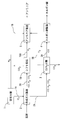
- FIG. 1 is a flowchart for explaining an example of the production method (or production apparatus) of the present invention.
- FIG. 2 is a flowchart for explaining another example of the production method (or production apparatus) of the present invention.
- FIG. 1 is a flowchart for explaining an example of the production method (and production apparatus) of the present invention.
- FIG. 2 is a flowchart for explaining another example of the production method (and production apparatus) of the present invention.
- a method (apparatus) for producing carboxylic acid by reacting carbon monoxide separated from coal-derived synthesis gas with alcohol or a derivative thereof, and ammonia using hydrogen separated from the synthesis gas is shown.
- This production method produces an oxygen / nitrogen separation unit 1 for separating nitrogen and oxygen from air, and produces coal by gasifying coal using the oxygen separated in this unit 1 to produce synthesis gas (A). And a carbon monoxide / hydrogen separation unit 3 for separating carbon monoxide and hydrogen from the synthesis gas (A) produced by the unit 2 and the unit 3 for separation.
- this manufacturing method is oxygen supply for supplying various lines for supplying each component to these units, that is, oxygen separated by the oxygen / nitrogen separation unit 1 to the synthesis gas manufacturing unit 2.
- a hydrogen supply line 3B for supplying the hydrogen separated from the separation unit 3 to the ammonia production unit 5; That.
- the synthesis gas (A) is produced by gasifying coal.
- coal is gasified by partial oxidation using oxygen separated by the oxygen / nitrogen separation unit 1.
- Coal gasification is usually performed at high temperature and high pressure.
- the separation method in the oxygen / nitrogen separation unit 1 include a conventional method, for example, a method of separating compressed air and compressed nitrogen from air.
- the unit 1 may include an air compressor, an oxygen compressor, a nitrogen compressor, and the like.
- Coal may be gasified using water (steam) in addition to oxygen.
- a slurry of coal and water may be partially oxidized with oxygen.
- oxygen which is a by-product of air used for the production of ammonia, can be used.
- a synthesis gas production process using natural gas or the like such oxygen is usually not used and oxygen cannot be effectively used.
- the synthesis gas production unit 2 may be provided with a reactor for coal gasification, and may be provided with a heat recovery device (cooling device) for heat recovery (cooling) of the generated synthesis gas. . Further, the heat recovered may be supplied to other processes or units as necessary, and used for other processes or reactions.
- the synthesis gas produced by the synthesis gas production unit 1 is a coal-derived gas, and a synthesis in which the ratio of hydrogen (H 2 ) to carbon monoxide (CO) is relatively small compared to a synthesis gas derived from natural gas.
- Gas synthesis gas (synthesis gas (A))
- the hydrogen to be separated in the carbon monoxide / hydrogen separation unit or the carbon monoxide / hydrogen separation step) can be reduced.
- the amount of carbon dioxide generated can be reduced.
- the synthesis gas usually contains other components [water, carbon dioxide, hydrocarbon (such as methane), hydrogen sulfide, and the like].
- Such other components are less than carbon monoxide and hydrogen, but it is preferable that they are basically not present because they may adversely affect (for example, become catalyst poisons) in later steps.
- the proportion of carbon dioxide contained in the synthesis gas (A) is, for example, in the range of 0 to 0.6 mol with respect to 1 mol of carbon monoxide contained in the synthesis gas (A). 01 to 0.5 mol (for example, 0.1 to 0.5 mol, preferably 0.25 to 0.45 mol), more preferably 0.3 to 0.4 mol (for example, 0.33 to 0.4 mol). 38 mol).
- the synthesis gas produced in the synthesis gas production unit 2 is supplied to the separation unit 3 through the synthesis gas supply line 2A as synthesis gas (A).
- synthesis gas (A) carbon monoxide and hydrogen are separated.
- the separation method in the unit 3 include conventional methods such as a membrane separation method, a cryogenic separation method, and a PSA (pressure swing adsorption) method.
- a cryogenic separation method can be suitably used.
- the order of separation of these components from the synthesis gas (A) is not particularly limited, and after separating hydrogen from the synthesis gas, carbon monoxide may be separated or vice versa.
- carbon dioxide which is a typical gas
- the separation unit 3 a unit including an acid gas removal unit
- carbon dioxide is separated prior to separation of carbon monoxide and hydrogen.
- a gas such as hydrogen sulfide is not shown.
- the carbon monoxide and hydrogen separated by the separation unit 3 are supplied to the carboxylic acid production unit 4 and the ammonia production unit 5 through lines 3A and 3B, respectively.
- ammonia production carbon monoxide and carbon dioxide are components that extremely inhibit the reaction, and therefore must be strictly removed. Therefore, if necessary, the hydrogen (gas) separated in the separation unit 3 (or separation step) is further separated by a conventional method such as a methanator treatment (a treatment for converting carbon monoxide to methane) ( Alternatively, it may be supplied to the ammonia production unit 5 (not shown).
- carboxylic acid production unit 4 and the ammonia production unit 5 carboxylic acid and ammonia are produced.
- acetic acid and ammonia can be produced together while reducing the amount of carbon dioxide generated.
- a specific model case a case where acetic acid is produced at a rate of 500,000 tons / year is assumed.
- coal as a raw material is required at a rate of 35 tons / h as an example, and is included in the synthesis gas (A) obtained by gasifying such coal.
- the rate of CO is 28000 Nm 3 / h
- the rate of H 2 is 23000 Nm 3 / h
- the gasification of coal was calculated on the assumption that the coal slurry method is used.
- ammonia is produced by separating 100% of hydrogen from this synthesis gas (A)
- ammonia is produced at a rate of 95,000 tons / year, and carbon dioxide is 12000 Nm 3 / h as described above. Occurs at a rate of.
- CO is 13000Nm 3 / h
- H 2 is 11000Nm 3 / h
- CO 2 is produced at a rate of 5600Nm 3 / h)
- the carbon dioxide contained in the carbon dioxide synthesis gas at a rate of 18600Nm 3 / h 5600Nm 3 / h, and 13000 Nm 3 / h of carbon dioxide generated by the shift reaction is generated.
- the amount of coal used can be reduced at a rate of 15 tons / h, and the amount of carbon dioxide generated is 6600 Nm 3 / h. Can be reduced at a rate of.
- an apparatus (or method) for producing carboxylic acid by reacting carbon monoxide and alcohol separated from synthesis gas, and hydrogen and synthesis gas separated from the synthesis gas were obtained by shift reaction.
- 1 shows an apparatus (or method) for producing ammonia using hydrogen.
- the production method (apparatus) of this figure includes a synthesis gas supply line 2B for supplying the synthesis gas produced in the synthesis gas production unit 2 to the shift reaction unit as a synthesis gas (B) separately from the synthesis gas (A), 2B further includes a shift reaction unit 10 that shifts the synthesis gas (B) supplied through 2B to produce hydrogen, and a hydrogen supply line 10A that supplies the hydrogen obtained by the shift reaction unit 10 to the ammonia production unit 5.
- the apparatus (or method) is the same as that shown in FIG. In the example shown in FIG. 2, synthesis gas is produced using coal in the synthesis gas production unit 2. However, in the example shown in FIG. 2, since a shift reaction can be used, the synthesis gas derived from coal is not necessarily used. It is not necessary to use a synthesis gas having a relatively small ratio of hydrogen (H 2 ) to carbon monoxide (CO).
- the synthesis gas (A) and the synthesis gas (B) produced in the same synthesis gas production unit 2 (or production process) are divided and the synthesis gas (B) is subjected to a shift reaction.
- the amount of hydrogen supplied to the ammonia production unit (production process) is controlled.
- the ammonia production unit 5 is supplied with hydrogen separated from the synthesis gas (A) and hydrogen separated from the shift reaction unit 10 through a shift reaction.
- the shift reaction is represented by the following formula.
- the shift reaction unit 10 only needs to include a synthesis gas shift reaction device (reactor).
- the shift reaction unit 10 performs a shift reaction, and hydrogen from the gas after the shift reaction (hydrogen and shift contained in the synthesis gas in advance). It has a separation device (process) for separating (hydrogen generated by the reaction) and supplying it to the supply line 10A. That is, since the gas after the shift reaction contains a large amount of other components as described above, particularly carbon dioxide by-produced by the shift reaction, an apparatus (process) for newly separating hydrogen is required. Become.
- a method for separating hydrogen the same separation method as described above, a rectisol process, a methanator method, and the like can be used.
- the manufacturing apparatus or manufacturing method of FIG. 2 it can manufacture, controlling the production amount of acetic acid and ammonia.
- the amount of acetic acid and ammonia produced is limited by the ratio of carbon monoxide / oxygen in the coal-derived synthesis gas, and a large amount of ammonia cannot be produced.
- the production amount can be increased.
- the production amount can be adjusted in balance with the production amount of acetic acid, and the amount of carbon dioxide emission and the coal usage fee can be reduced.
- acetic acid and ammonia can be stably generated by controlling the ratio of CO / H 2 .
- the synthesis gas (B) contains CO at a rate of 54000 Nm 3 / h, H 2 at 46000 Nm 3 / h, and CO 2 at a rate of 24000 Nm 3 / h.
- H 2 is 57000Nm 3 / h
- CO 2 is produced at a rate of 30000 nM 3 / h) required
- the carbon dioxide contained in the carbon dioxide (synthesis gas 97000Nm 3 / h is 30000 nM 3 / h
- the shift reaction The generated carbon dioxide is 67000 Nm 3 / h).
- the amount of coal used can be reduced at a rate of 15 tons / h, and the amount of carbon dioxide generated can be reduced to 19000 Nm 3 / h. It can be reduced at a rate of h.
- the synthesis gas is usually a gas obtained by modifying a carbonaceous material.
- the carbonaceous material can be selected according to the method (1) or (2).
- the synthesis gas is not limited to coal, and may be any of petroleum, natural gas, and the like.
- a synthesis gas (coal-derived synthesis gas) containing carbon monoxide and hydrogen in the specific range may be used.
- the ratio of carbon dioxide in the synthesis gas is in the same range as described above.
- the synthesis gas is not limited to coal as long as a synthesis gas having a small hydrogen ratio can be obtained. That is, as the synthesis gas, it is not always necessary to use a synthesis gas derived from coal, but usually coal can be suitably used as the carbonaceous material.
- the coal may be any of anthracite, bituminous coal, subbituminous coal, lignite, and the like.
- the reforming method can be appropriately selected according to the type of carbonaceous material.
- the gasification method of coal is not particularly limited.
- the coal slurry gasification method includes a GE method
- the coal dry feed gasification method includes a Shell method, an SFGT method (Siemens Fuel Gasification Technology), and the like.
- SFGT method Siemens Fuel Gasification Technology
- is there. 1 and 2 use oxygen, it is not always necessary to adopt a gasification method using oxygen.
- the gasification temperature of coal may be, for example, about 1300 to 1500 ° C., preferably about 1350 to 1450 ° C.
- the gasification pressure of coal can usually be selected from a range of 10 MPa or less, and is determined according to the purpose of use of the generated gas (synthesis gas).
- the gasification pressure of coal may be about 4 to 10 MPa.
- Coal gasification may be performed in the absence of a catalyst or in the presence of a suitable catalyst depending on the gasification method.
- the gasification method using water and oxygen may be performed in the absence of a catalyst.
- the separation and removal of these components may be performed from the synthesis gas itself, may be further performed on carbon monoxide and / or hydrogen after separation from the synthesis gas, or a combination thereof.
- a conventional method can be used as the separation and removal method.
- a conventional method such as a rectisol process can be used as the acid gas removal method.
- hydrogen sulfide may be further separated from the separated acid gas as a sulfur source.
- the synthesis gas (B) used in the shift reaction unit (or the shift reaction process) uses the synthesis gas obtained through the same synthesis gas production process as the synthesis gas (A) in the example of the above figure.
- the synthesis gas (B) is different from the synthesis gas (A)
- the synthesis gas obtained through different processes for example, a gas derived from coal, a gas derived from components other than coal (petroleum, natural gas, etc.)
- the synthesis gas (A) and the synthesis gas (B) may be the same or different in the composition ratio of each component (carbon monoxide, hydrogen, carbon dioxide, etc.).
- the synthesis gas (B) is a synthesis gas obtained in the same process as the synthesis gas (A) as in the example of the figure, it is advantageous because the process and apparatus can be simplified.
- the synthesis gas (A) and the synthesis gas (B) have the same composition.
- the shift reaction conditions are not particularly limited, and conventional conditions can be used.
- the shift reaction temperature may be, for example, about 200 to 600 ° C., preferably about 250 to 550 ° C., more preferably about 300 to 500 ° C.
- the shift reaction may be performed in the presence of a shift reaction catalyst (for example, an iron / chromium catalyst).
- the mixed gas after the shift reaction may be heat recovered (or cooled) as necessary. If necessary, the heat recovered may be supplied to another process or unit and used for a heating reaction in another process.
- Each line may be provided with control means (flow rate control means, etc.) for adjusting the supply amount of each component (syngas, carbon monoxide, hydrogen, oxygen, nitrogen, etc.).
- the alcohol is not particularly limited, and examples thereof include aliphatic alcohols [alkanols (eg, C 1-10 alkanols such as methanol, ethanol, propanol, isopropanol, butanol, pentanol and the like).
- alkanols eg, C 1-10 alkanols such as methanol, ethanol, propanol, isopropanol, butanol, pentanol and the like.
- Cycloalkanols eg C 4-10 cycloalkanols such as cyclopentanol, cyclohexanol, cycloheptanol, cyclooctanol, etc.
- phenols eg hydroxy C 6-10 arenes such as phenol
- aromatic fats Group alcohols for example, hydroxy C 1-4 alkyl C 6-10 arenes such as benzyl alcohol and phenethyl alcohol.
- aliphatic monools eg, C 1-4 alkanols such as methanol
- methanol particularly methanol
- the reaction conditions of carbon monoxide and alcohol are not particularly limited, and conventional conditions and equipment can be used.
- Carboxylic acid may be usually performed in a liquid phase reaction system.
- the pressure (or partial pressure) of carbon monoxide may be, for example, about 200 to 3000 kPa (eg, 400 to 1500 kPa), preferably about 500 to 1000 kPa.
- the reaction temperature may be, for example, about 100 to 300 ° C., preferably about 150 to 250 ° C. (eg, 170 to 220 ° C.), and the reaction pressure is about 1000 to 5000 kPa (eg, 1500 to 4000 kPa). There may be.
- the reaction between carbon monoxide and alcohol may be performed in the presence of a catalyst.
- the catalyst include a conventional carbonylation catalyst such as a transition metal catalyst (rhodium catalyst, iridium catalyst, platinum catalyst, palladium catalyst, copper catalyst, nickel catalyst, etc.).
- concentration of the catalyst may be, for example, about 5 to 10,000 ppm, preferably about 10 to 5000 ppm on a weight basis with respect to the liquid phase reaction system.
- promoters or reaction accelerators [metal halides (for example, alkali metal halides such as lithium iodide, potassium iodide, sodium iodide, lithium bromide), hydrogen halides (for example, hydrogen iodide, hydrogen bromide, etc.
- Halogenated hydrocarbons for example, halo C 1-4 alkanes such as methyl iodide and methyl bromide, etc.
- the carboxylic acid for example, acetic acid
- the reaction conditions of hydrogen and nitrogen are not particularly limited, and conventional conditions and equipment can be used.
- the reaction temperature may be, for example, about 300 to 700 ° C., preferably about 350 to 650 ° C. (for example, 400 to 600 ° C.)
- the reaction pressure depends on the low pressure method, medium pressure method, high pressure method, etc. For example, it may be about 5 to 50 MPa (for example, 10 to 30 MPa).
- the reaction between hydrogen and nitrogen may be performed in the presence of a catalyst.
- the catalyst include conventional catalysts, for example, transition metal catalysts such as iron-based catalysts (for example, triiron tetroxide) and ruthenium-based catalysts (Ru / C-based catalysts).
- a cocatalyst for example, alkali metal or alkaline earth metal oxide (such as potassium oxide, magnesium oxide, calcium oxide), aluminum compound (such as alumina), silicon compound (such as silicon dioxide), etc.
- generated at the ammonia manufacturing process can be refine
- carboxylic acid such as acetic acid
- ammonia can be efficiently produced from synthesis gas (especially, synthesis gas using cheap coal as a raw material).
- the amount of carbon dioxide and carbonaceous material especially coal
- carboxylic acid and ammonia can be produced with a desired production amount.
Landscapes
- Chemical & Material Sciences (AREA)
- Organic Chemistry (AREA)
- Chemical Kinetics & Catalysis (AREA)
- Engineering & Computer Science (AREA)
- Combustion & Propulsion (AREA)
- Inorganic Chemistry (AREA)
- Health & Medical Sciences (AREA)
- General Health & Medical Sciences (AREA)
- Analytical Chemistry (AREA)
- Oil, Petroleum & Natural Gas (AREA)
- Organic Low-Molecular-Weight Compounds And Preparation Thereof (AREA)
- Industrial Gases (AREA)
- Carbon And Carbon Compounds (AREA)
Abstract
Description
なお、シフト反応ユニット10は、合成ガスシフト反応装置(反応器)を備えていればよいが、通常、シフト反応させるとともに、シフト反応後のガスから水素(合成ガスに予め含まれている水素およびシフト反応により生成した水素)を分離して供給ライン10Aに供給するための分離する装置(工程)を有している。すなわち、シフト反応後のガスには、前記のような他の成分、特に、シフト反応により副生した二酸化炭素が多量に含まれているため、水素を新たに分離する装置(工程)が必要となる。水素を分離する方法としては、前記と同様の分離法、レクチゾールプロセス、メタネータ法などを利用できる。
2…合成ガス製造ユニット
3…一酸化炭素/水素分離ユニット
4…カルボン酸製造ユニット
5…アンモニア製造ユニット
1A…酸素供給ライン
1B…窒素供給ライン
2A,2B…合成ガス供給ライン
3A…一酸化炭素供給ライン
3B…水素供給ライン
10…シフト反応ユニット
10A…水素供給ライン
Claims (5)
- 一酸化炭素およびアルコールからカルボン酸を製造するためのカルボン酸製造工程と、水素および窒素からアンモニアを製造するためのアンモニア製造工程とを含み、カルボン酸とアンモニアとを製造するための方法であって、合成ガス(A)から一酸化炭素と水素とを分離するための一酸化炭素/水素分離工程および合成ガス(B)をシフト反応させて水素を製造するためのシフト反応工程を含み、前記合成ガス(A)から分離した一酸化炭素を前記カルボン酸製造工程で使用してカルボン酸を製造し、かつ前記合成ガス(A)から分離した水素と、前記シフト反応工程により得られた水素とを前記アンモニア製造工程で使用してアンモニアを製造する、製造方法。
- 一酸化炭素およびアルコールからカルボン酸を製造するためのカルボン酸製造工程と、水素および窒素からアンモニアを製造するためのアンモニア製造工程とを含み、カルボン酸とアンモニアとを製造する方法であって、一酸化炭素と水素との割合が前者/後者(モル比)=1/0.4~1/1.5である合成ガス(A)から一酸化炭素と水素とを分離するための一酸化炭素/水素分離工程を含み、前記合成ガス(A)から分離した一酸化炭素を前記カルボン酸製造工程で使用してカルボン酸を製造し、かつ前記合成ガス(A)から分離した水素を前記アンモニア製造工程で使用してアンモニアを製造する、製造方法。
- さらに、石炭をガス化して合成ガスを製造するための合成ガス製造工程と、空気から窒素と酸素とを分離するための酸素/窒素分離工程とを含み、この酸素/窒素分離工程で分離した酸素を石炭のガス化に使用し、前記酸素/窒素分離工程で分離した窒素をアンモニア製造工程で使用するとともに、前記合成ガス製造工程で製造された合成ガスを合成ガス(A)として使用する請求項1又は2記載の製造方法。
- さらに、合成ガス(B)をシフト反応させて水素を製造するためのシフト反応工程を含み、アンモニア製造工程で、合成ガス(A)から分離した水素と、前記シフト反応工程により得られた水素とを使用する請求項2記載の製造方法。
- 合成ガス(A)および合成ガス(B)が、同一の合成ガス製造工程で製造された合成ガスである請求項1又は4記載の製造方法。
Priority Applications (4)
| Application Number | Priority Date | Filing Date | Title |
|---|---|---|---|
| AU2009328027A AU2009328027B2 (en) | 2008-12-19 | 2009-11-30 | Process for producing acetic acid and ammonia |
| CN200980121909.XA CN102056885B (zh) | 2008-12-19 | 2009-11-30 | 乙酸和氨的制造方法 |
| JP2010542930A JP5687068B2 (ja) | 2008-12-19 | 2009-11-30 | 酢酸およびアンモニアの製造方法 |
| SG2010075976A SG171695A1 (en) | 2008-12-19 | 2009-11-30 | Method for manufacturing acetic acid and ammonia |
Applications Claiming Priority (2)
| Application Number | Priority Date | Filing Date | Title |
|---|---|---|---|
| JP2008324496 | 2008-12-19 | ||
| JP2008-324496 | 2008-12-19 |
Publications (1)
| Publication Number | Publication Date |
|---|---|
| WO2010071016A1 true WO2010071016A1 (ja) | 2010-06-24 |
Family
ID=42268689
Family Applications (1)
| Application Number | Title | Priority Date | Filing Date |
|---|---|---|---|
| PCT/JP2009/070110 Ceased WO2010071016A1 (ja) | 2008-12-19 | 2009-11-30 | 酢酸およびアンモニアの製造方法 |
Country Status (7)
| Country | Link |
|---|---|
| JP (1) | JP5687068B2 (ja) |
| KR (1) | KR101588071B1 (ja) |
| CN (1) | CN102056885B (ja) |
| AU (1) | AU2009328027B2 (ja) |
| MY (1) | MY150844A (ja) |
| SG (1) | SG171695A1 (ja) |
| WO (1) | WO2010071016A1 (ja) |
Cited By (1)
| Publication number | Priority date | Publication date | Assignee | Title |
|---|---|---|---|---|
| WO2015166706A1 (ja) * | 2014-04-28 | 2015-11-05 | 株式会社ダイセル | 酢酸及びアセトアルデヒドの製造方法 |
Families Citing this family (1)
| Publication number | Priority date | Publication date | Assignee | Title |
|---|---|---|---|---|
| KR102947388B1 (ko) * | 2023-07-07 | 2026-04-02 | 한국에너지기술연구원 | 바이오매스를 이용한 청정 수소 및 암모니아 생산시스템 및 생산방법 |
Citations (5)
| Publication number | Priority date | Publication date | Assignee | Title |
|---|---|---|---|---|
| JPS5373203A (en) * | 1976-12-10 | 1978-06-29 | Texaco Development Corp | Production of gas products for synthesis |
| JPS56120514A (en) * | 1980-02-28 | 1981-09-21 | Mitsubishi Heavy Ind Ltd | Process of manufacturing methanol and ammonia in combination |
| JPS59195502A (ja) * | 1983-04-15 | 1984-11-06 | Toyo Eng Corp | アンモニア合成ガスの製造法 |
| US6274096B1 (en) * | 1999-11-01 | 2001-08-14 | Acetex (Cyprus) Limited | Methanol plant retrofit |
| JP2008505047A (ja) * | 2004-07-09 | 2008-02-21 | アセテクス(キプロス)リミテッド | メタノールフィードストックの部分酸化による酢酸合成のための合成ガスの調製 |
Family Cites Families (4)
| Publication number | Priority date | Publication date | Assignee | Title |
|---|---|---|---|---|
| US4081253A (en) * | 1976-12-10 | 1978-03-28 | Texaco Development Corporation | Production of purified synthesis gas and carbon monoxide |
| US6232352B1 (en) | 1999-11-01 | 2001-05-15 | Acetex Limited | Methanol plant retrofit for acetic acid manufacture |
| GB0404793D0 (en) * | 2004-03-03 | 2004-04-07 | Bp Chem Int Ltd | Process |
| KR20070030889A (ko) * | 2004-07-09 | 2007-03-16 | 에이스텍스 (사이프러스) 리미티드 | 메탄올 공급원료의 부분 산화에 의한 아세트산 합성을 위한신가스의 제조방법 |
-
2009
- 2009-11-30 JP JP2010542930A patent/JP5687068B2/ja not_active Expired - Fee Related
- 2009-11-30 KR KR1020117003231A patent/KR101588071B1/ko not_active Expired - Fee Related
- 2009-11-30 AU AU2009328027A patent/AU2009328027B2/en not_active Ceased
- 2009-11-30 WO PCT/JP2009/070110 patent/WO2010071016A1/ja not_active Ceased
- 2009-11-30 CN CN200980121909.XA patent/CN102056885B/zh active Active
- 2009-11-30 MY MYPI20105986 patent/MY150844A/en unknown
- 2009-11-30 SG SG2010075976A patent/SG171695A1/en unknown
Patent Citations (5)
| Publication number | Priority date | Publication date | Assignee | Title |
|---|---|---|---|---|
| JPS5373203A (en) * | 1976-12-10 | 1978-06-29 | Texaco Development Corp | Production of gas products for synthesis |
| JPS56120514A (en) * | 1980-02-28 | 1981-09-21 | Mitsubishi Heavy Ind Ltd | Process of manufacturing methanol and ammonia in combination |
| JPS59195502A (ja) * | 1983-04-15 | 1984-11-06 | Toyo Eng Corp | アンモニア合成ガスの製造法 |
| US6274096B1 (en) * | 1999-11-01 | 2001-08-14 | Acetex (Cyprus) Limited | Methanol plant retrofit |
| JP2008505047A (ja) * | 2004-07-09 | 2008-02-21 | アセテクス(キプロス)リミテッド | メタノールフィードストックの部分酸化による酢酸合成のための合成ガスの調製 |
Cited By (2)
| Publication number | Priority date | Publication date | Assignee | Title |
|---|---|---|---|---|
| WO2015166706A1 (ja) * | 2014-04-28 | 2015-11-05 | 株式会社ダイセル | 酢酸及びアセトアルデヒドの製造方法 |
| JPWO2015166706A1 (ja) * | 2014-04-28 | 2017-04-20 | 株式会社ダイセル | 酢酸及びアセトアルデヒドの製造方法 |
Also Published As
| Publication number | Publication date |
|---|---|
| AU2009328027B2 (en) | 2013-05-02 |
| KR20110106268A (ko) | 2011-09-28 |
| JPWO2010071016A1 (ja) | 2012-05-24 |
| SG171695A1 (en) | 2011-07-28 |
| AU2009328027A1 (en) | 2010-06-24 |
| CN102056885B (zh) | 2015-04-08 |
| MY150844A (en) | 2014-02-28 |
| CN102056885A (zh) | 2011-05-11 |
| JP5687068B2 (ja) | 2015-03-18 |
| KR101588071B1 (ko) | 2016-01-25 |
Similar Documents
| Publication | Publication Date | Title |
|---|---|---|
| US8299133B2 (en) | Process for the conversion of hydrocarbons to oxygenates | |
| US8299132B2 (en) | Process for the conversion of hydrocarbons to alcohols | |
| RU2598071C2 (ru) | Применение ископаемых топлив для увеличения преимуществ синтетических топлив на основе биомассы | |
| EP1992591B1 (en) | A hydrogen production method | |
| US9133074B2 (en) | Process for the conversion of carbon dioxide to methanol | |
| CA2661493A1 (en) | Gasification and steam methane reforming integrated polygeneration method and system | |
| US20090143492A1 (en) | Preparation of syngas for acetic acid synthesis by partial oxidation of methanol feedstock | |
| JP4030846B2 (ja) | メタノールの製造方法および装置 | |
| Zennaro et al. | Syngas: the basis of Fischer–Tropsch | |
| JP5687068B2 (ja) | 酢酸およびアンモニアの製造方法 | |
| US20230219815A1 (en) | System network and method for operating a system network of this type for producing higher alcohols | |
| CN104087348A (zh) | 一种利用水煤浆气化炉联供甲酸、甲醇和合成氨生产工艺气的供气方法 | |
| KR102176909B1 (ko) | 제철 부생가스를 활용한 메탄올 합성 공정 | |
| JP2024121857A (ja) | 二酸化炭素回収利用製品の製造方法、及び、二酸化炭素回収利用製品の製造システム | |
| CN103443062A (zh) | 气态合成燃料的制备方法 |
Legal Events
| Date | Code | Title | Description |
|---|---|---|---|
| WWE | Wipo information: entry into national phase |
Ref document number: 200980121909.X Country of ref document: CN |
|
| 121 | Ep: the epo has been informed by wipo that ep was designated in this application |
Ref document number: 09833320 Country of ref document: EP Kind code of ref document: A1 |
|
| WWE | Wipo information: entry into national phase |
Ref document number: 2010542930 Country of ref document: JP |
|
| WWE | Wipo information: entry into national phase |
Ref document number: 2009328027 Country of ref document: AU |
|
| WWE | Wipo information: entry into national phase |
Ref document number: 7366/DELNP/2010 Country of ref document: IN |
|
| ENP | Entry into the national phase |
Ref document number: 2009328027 Country of ref document: AU Date of ref document: 20091130 Kind code of ref document: A |
|
| ENP | Entry into the national phase |
Ref document number: 20117003231 Country of ref document: KR Kind code of ref document: A |
|
| NENP | Non-entry into the national phase |
Ref country code: DE |
|
| 122 | Ep: pct application non-entry in european phase |
Ref document number: 09833320 Country of ref document: EP Kind code of ref document: A1 |