WO2010050335A1 - リソース管理方法と組込み装置 - Google Patents
リソース管理方法と組込み装置 Download PDFInfo
- Publication number
- WO2010050335A1 WO2010050335A1 PCT/JP2009/067241 JP2009067241W WO2010050335A1 WO 2010050335 A1 WO2010050335 A1 WO 2010050335A1 JP 2009067241 W JP2009067241 W JP 2009067241W WO 2010050335 A1 WO2010050335 A1 WO 2010050335A1
- Authority
- WO
- WIPO (PCT)
- Prior art keywords
- software module
- resource
- memory
- management method
- resource management
- Prior art date
- Legal status (The legal status is an assumption and is not a legal conclusion. Google has not performed a legal analysis and makes no representation as to the accuracy of the status listed.)
- Ceased
Links
Images

Classifications
-
- G—PHYSICS
- G06—COMPUTING OR CALCULATING; COUNTING
- G06F—ELECTRIC DIGITAL DATA PROCESSING
- G06F9/00—Arrangements for program control, e.g. control units
- G06F9/06—Arrangements for program control, e.g. control units using stored programs, i.e. using an internal store of processing equipment to receive or retain programs
- G06F9/46—Multiprogramming arrangements
- G06F9/50—Allocation of resources, e.g. of the central processing unit [CPU]
- G06F9/5005—Allocation of resources, e.g. of the central processing unit [CPU] to service a request
- G06F9/5011—Allocation of resources, e.g. of the central processing unit [CPU] to service a request the resources being hardware resources other than CPUs, Servers and Terminals
-
- G—PHYSICS
- G06—COMPUTING OR CALCULATING; COUNTING
- G06F—ELECTRIC DIGITAL DATA PROCESSING
- G06F9/00—Arrangements for program control, e.g. control units
- G06F9/06—Arrangements for program control, e.g. control units using stored programs, i.e. using an internal store of processing equipment to receive or retain programs
- G06F9/44—Arrangements for executing specific programs
- G06F9/445—Program loading or initiating
-
- G—PHYSICS
- G06—COMPUTING OR CALCULATING; COUNTING
- G06F—ELECTRIC DIGITAL DATA PROCESSING
- G06F9/00—Arrangements for program control, e.g. control units
- G06F9/06—Arrangements for program control, e.g. control units using stored programs, i.e. using an internal store of processing equipment to receive or retain programs
- G06F9/46—Multiprogramming arrangements
- G06F9/50—Allocation of resources, e.g. of the central processing unit [CPU]
- G06F9/5005—Allocation of resources, e.g. of the central processing unit [CPU] to service a request
- G06F9/5027—Allocation of resources, e.g. of the central processing unit [CPU] to service a request the resource being a machine, e.g. CPUs, Servers, Terminals
- G06F9/5055—Allocation of resources, e.g. of the central processing unit [CPU] to service a request the resource being a machine, e.g. CPUs, Servers, Terminals considering software capabilities, i.e. software resources associated or available to the machine
-
- G—PHYSICS
- G06—COMPUTING OR CALCULATING; COUNTING
- G06F—ELECTRIC DIGITAL DATA PROCESSING
- G06F9/00—Arrangements for program control, e.g. control units
- G06F9/06—Arrangements for program control, e.g. control units using stored programs, i.e. using an internal store of processing equipment to receive or retain programs
- G06F9/46—Multiprogramming arrangements
- G06F9/50—Allocation of resources, e.g. of the central processing unit [CPU]
- G06F9/5083—Techniques for rebalancing the load in a distributed system
- G06F9/5088—Techniques for rebalancing the load in a distributed system involving task migration
Definitions
- the present invention relates to a resource management method and a built-in device in a computer system, and more particularly to a resource management method for a computer system with few resources such as a built-in device.
- Patent Document 1 discloses a resource management method that avoids failures such as operation stoppage due to resource depletion by limiting the amount of resources used by the entire system and modules.
- Non-Patent Document 1 shows a method of limiting the amount of memory used by each module by dividing the memory area and associating the divided area with the module. More specifically, a method for limiting the amount of shared memory by providing one divided area dedicated to the shared memory is shown.
- the module does not necessarily consume resources up to the limit value. Since the amount of resources actually used by the module varies depending on the usage method of the user and the configuration of the module being executed on the system, it is necessary to provide some margin for the limit value set for each module. For this reason, if a module is executed with the total limit value of each module being less than the absolute amount of resources in the entire system, the number of modules that can be executed is limited even though there is room in the overall system resource amount. There is a problem of being able to. For example, in the conventional technique shown in Non-Patent Document 1, since the memory space has to be divided finely with an increase in the number of modules, there is a problem in that an empty area is generated in each divided area and the use efficiency of the memory is lowered. is there.
- An object of the present invention is to provide a resource management method and an embedded device that solve the above-described problems and improve resource usage efficiency while reducing the probability of occurrence of a failure due to resource depletion in an embedded system that operates by combining a plurality of modules. There is.
- the resources set in each module can be determined with respect to what can be determined that the module is stably operating based on the execution history of the already installed or executing software modules.
- the main feature is to determine whether installation or execution is possible by including the maximum value of the amount of resources actually used from the execution history instead of the usage amount limit value.
- the present invention is a resource management method in a system in which the amount of resources used by a software module is individually limited and the sum of the maximum resource usage of each software module is smaller than the total system resource amount.
- the present invention is an embedded device that individually limits the amount of resources used by a software module, and the sum of the maximum resource usage of each software module is smaller than the total system resource amount.
- install or execute by including the means to determine that the software module is operating stably based on the execution history of the already installed or executing software module group and the actual resource use maximum from the execution history. It is an embedded device having means for determining whether or not it is possible.
- FIG. 1 is a system configuration diagram of the first embodiment.
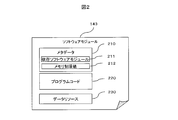
- FIG. 2 shows the details of the software module.
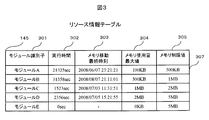
- FIG. 3 shows the data structure of the resource information table.
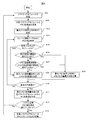
- FIG. 4 is a flowchart showing a process for determining whether to install or execute a software module.
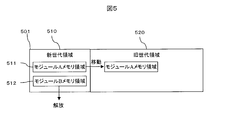
- FIG. 5 is a diagram illustrating an example of memory movement.
- FIG. 1 is a system configuration diagram of one embodiment of the present invention.
- the remote maintenance server device 110 includes a failure information collection unit 111 and failure information data 112, and collects failure information of software modules generated in the information home appliance terminal device via the Internet.
- the software module distribution server device 120 includes a software module registration unit 121, a distribution software module storage unit 122, and a software module distribution unit 123, and distributes new software modules to the information home appliance terminal device 140.
- the information home appliance terminal device 140 includes a software module reception unit 141, a module management unit 142, a module software module 143, a failure information transmission unit 144, a resource usage monitoring unit 145, and a resource information table 146.
- the software module receiving unit 141 receives a software module from the software module distribution server device 120.
- the module management unit 142 determines whether the module can be installed or executed.
- There are a plurality of software modules 143 such as software modules received from the software module distribution server device 120 and software modules installed in the information home appliance terminal device 140 in advance.
- the failure information transmission unit 144 transmits failure information generated in the software module 143 to the remote maintenance server device 110. In particular, when a failure occurs due to resource depletion within a range not exceeding the resource limit value set in the software module 143, the failure information is transmitted.
- the failure information is information used to identify the cause of a failure that has occurred in the software module 143, such as a log, a memory dump, a thread dump, and a resource usage status.
- the remote maintenance server device 110 performs necessary maintenance based on the information, for example, stops, uninstalls, updates, etc. the software module 143 that operates on the information home appliance terminal device 110.
- the resource usage monitoring unit 145 monitors the resources used by the software module 143 and stores the maximum value of resource usage in the resource information table 146.
- FIG. 2 shows details of the software module 143 of FIG.
- the software module 143 is stored in the distribution software module storage unit 122 and is executed on the information home appliance terminal device 140.
- the software module 143 includes metadata 210, program code 220, and data resources 230.
- the metadata 210 describes information necessary for the installation and execution of the software module 143, and information on the dependent software module 211 and the memory limit value 212 necessary for the execution of the software module 143. Zero or more dependent software modules 211 are designated.
- the program code 220 is a code executed on the information home appliance terminal device 140.
- the data resource 230 is data such as an image used by the program code 220.
- FIG. 3 shows the data structure of the resource information table 146 of FIG.
- the module management unit 142 refers to the resource information table 146 and determines whether to install or execute the software module.
- Reference numeral 301 denotes an identifier that uniquely identifies the software module.
- the execution time 302 is the total execution time after the software module is installed.
- the memory movement last time 303 is the last time when the memory area used by the software module is moved by garbage collection.
- the memory usage maximum value 304 is the maximum amount of memory used after the software module is installed.
- the memory limit value 305 is a limit value of the usable memory amount set in the software module.
- the memory limit value 305 may be set in advance at the time of shipment of the information home appliance terminal device 140, the setting may be updated by the remote maintenance server device 110, or the received software module may include a memory limit value.
- the row element 307 may be set by the remote maintenance server device 110 when it is set at the time of shipment, or when it is added when the software module is installed.
- FIG. 4 is a flowchart for determining whether to install or execute a module based on only memory-related data stored in the resource information table 146 by the module management unit 142 for the software module 143 received by the software module reception unit 141. ing. The processing flow will be described below.
- Process 401 The software module receiving unit 141 receives the software module 143.
- Process 402 The module management unit 142 acquires the dependent software module 211 and the memory limit value 212 from the received metadata 201 of the software module 143.
- Process 403 A variable for storing the maximum total memory usage is set to zero.
- Process 404 The next row element 307 is acquired from the resource information table 146.
- Process 405 When the module identifier 301 is included in the dependent software module 211 acquired from the received software module, the memory usage maximum value may increase due to the installation and execution of a new software module. Proceed to Otherwise, the process proceeds to process 406.
- Process 406 If the execution time 302 exceeds a preset threshold value, the process proceeds to process 409. Otherwise, the process proceeds to process 407.
- Process 407 The elapsed time is calculated from the difference between the current time and the memory movement final time 303. If the elapsed time exceeds a preset threshold, the process proceeds to process 409. Otherwise, the process proceeds to process 408.
- Process 408 The memory limit value 305 is added to the variable for storing the maximum total memory usage.
- Process 409 The memory usage maximum value 304 is added to the variable for storing the maximum total memory usage.
- Process 410 If it is the last row element 307 of the resource information table 146, the process proceeds to process 411. Otherwise, the process proceeds to process 404.
- Process 411 The memory limit value 212 of the received software module is added to the variable for storing the maximum total memory usage.
- Process 412 The value of the variable storing the maximum total memory usage is compared with the absolute amount of memory usable in the entire system. If the value of the variable storing the maximum total memory usage is small, the process proceeds to process 413. Otherwise, the process proceeds to process 401 without installing the reception software module.
- Process 413 Install and start the receiving software module. When determining whether to install or execute the received software module based on the limit value of the resource other than the memory, the memory of the above flow is replaced with another resource and executed. However, the process 407 is omitted because it is a memory-specific process.
- FIG. 5 is a diagram showing an example of timing for recording the memory movement last time 303 in the resource information table 146 of FIG.
- a generational garbage collection method is widely known as a method of efficiently garbage collecting the memory area 501 used by the software module.
- the memory area 501 used by the software module is divided into a new generation area 510 and an old generation area 520.
- an area 511 is first allocated to the new generation area 510. If the software module uses a memory area allocated to the new generation area 510 even after a certain number of garbage collections, the memory area is moved (copied) to the old generation area 520.
- the memory area 512 allocated to the new generation area 510 is released by executing garbage collection within a certain number of times.
- the resource usage monitoring unit 145 records the current time in the memory movement last time 303 of the resource information table 146.
- the module management unit 142 determines that the operation is stable when the elapsed time from the last memory movement time 303 is long.
- the present invention is not limited to an embedded system, and the present invention is not limited to an embedded system.
- a monitoring device, a data center device, or the like that is difficult for a user to install software arbitrarily and immediately recover when a failure occurs due to resource exhaustion. Applicable to any information system.
Landscapes
- Engineering & Computer Science (AREA)
- Software Systems (AREA)
- Theoretical Computer Science (AREA)
- Physics & Mathematics (AREA)
- General Engineering & Computer Science (AREA)
- General Physics & Mathematics (AREA)
- Stored Programmes (AREA)
- Debugging And Monitoring (AREA)
Abstract
Description
例えば、各機能要素を実現するソフトウェアモジュール(以下モジュールと呼称する)を複数組み合わせて全体機能を実現する組込み機器では、モジュールが相互にリソースを奪い合い、リソースが枯渇し、動作停止などの障害に結び付くケースが生じうる。このようなリソース障害は、開発作業を慎重に進めることで回避されるが、開発に必要な時間と経費の増加につながり、大きな問題となっている。
また、組込み機器のネットワーク接続の進展により、組込み機器がモジュールを受信し、受信したモジュールを実行するシステム事例が増加している。例えばネットワークなどを介してソフトウェア部品をやりとりすることで様々な機器の機能を容易に変更することを目指したプラットフォーム技術であるOSGi(登録商標)は、各家庭に設置されたホームゲートウェイにモジュールを配信するための規格を定めている。一般に、このようなシステムにより配信されるモジュールは多様であり、モジュールのリソース使用量も様々である。このため、リソースを大量に使うモジュールが配信されて実行されると、組込み機器の持つリソースが枯渇する可能性がある。
上記のような問題に対処する方法として、モジュール単位の使用リソース量を監視および制御する方法が多数知られている。代表的な方法として、モジュール単位のリソース量制限値を設けて一定量以上のリソースの使用を許さない方法がある。
例えば特許文献1では、システム全体およびモジュールが使用するリソース量を制限することでリソース枯渇による動作停止などの障害を避けるリソース管理方法を示している。
また、非特許文献1では、メモリ領域を分割し、分割領域とモジュールを対応づけることで、各モジュールが使用するメモリ量を制限する方法を示している。詳しくは、共有されるメモリ専用の分割領域を一つ設け、共有するメモリの量を制限する方法を示している。
例えば、非特許文献1の示す従来技術は、モジュール数の増加に伴って、メモリ空間を細かく分割しなければならないため、各分割領域に空き領域を発生させ、メモリの使用効率が下がるという課題がある。
本発明のリソース管理方法及び組込み装置の実施例について、説明する。
処理401:ソフトウェアモジュール受信部141がソフトウェアモジュール143を受信する。
処理402:モジュール管理部142は、受信したソフトウェアモジュール143のメタデータ201から、依存ソフトウェアモジュール211とメモリ制限値212を取得する。
処理403:最大メモリ使用量総和を格納する変数を0に設定する。
処理404:リソース情報テーブル146から次の行要素307を取得する。
処理405:受信ソフトウェアモジュールから取得した依存ソフトウェアモジュール211にモジュール識別子301が含まっている場合は、新たなソフトウェアモジュールのインストールおよび実行により、メモリ使用量最大値が増加する可能性があるため処理408に進む。その他は、処理406に進む。
処理406:実行時間302が予め設定された閾値を超える場合は、処理409に進む。その他は、処理407に進む。
処理407:現在時刻とメモリ移動最終時刻303の差分から経過時間を算出し、経過時間が予め設定された閾値を超える場合は、処理409に進む。その他は、処理408に進む。
処理408:最大メモリ使用量総和を格納する変数にメモリ制限値305を加算する。
処理409:最大メモリ使用量総和を格納する変数にメモリ使用量最大値304を加算する。
処理410:リソース情報テーブル146の最後の行要素307である場合は、処理411に進む。その他は、処理404に進む。
処理411:最大メモリ使用量総和を格納する変数に受信ソフトウェアモジュールのメモリ制限値212を加算する。
処理412:最大メモリ使用量総和を格納する変数の値とシステム全体で使用可能なメモリの絶対量を比較し、最大メモリ使用量総和を格納する変数の値が小さい場合は、処理413に進む。その他は、受信ソフトウェアモジュールのインストールは行わず処理401に進む。
処理413:受信ソフトウェアモジュールのインストールと起動を行う。
メモリ以外のリソースの制限値により受信ソフトウェアモジュールのインストールまたは実行可否の判断を行う場合、上記フローのメモリをその他のリソースに置き換えて実行する。ただし、処理407はメモリ特有の処理のため省略する。
111 障害情報収集部
112 障害情報データ
120 ソフトウェアモジュール配布サーバ装置
121 ソフトウェアモジュール登録部
122 配布ソフトウェアモジュール格納部
123 ソフトウェアモジュール配布部
130 ネットワーク
140 情報家電端末装置
141 ソフトウェアモジュール受信部
142 モジュール管理部
143 ソフトウェアモジュール
144 障害情報送信部
145 リソース使用監視部
146 リソース情報テーブル
210 メタデータ
211 依存ソフトウェアモジュール
212 メモリ制限値
220 プログラムコード
230 データリソース
301 モジュール識別子
302 実行時間
303 メモリ移動最終時刻
304 メモリ使用量最大値
305 メモリ制限値
307 行要素
501 ソフトウェアモジュール使用可能メモリ領域
510 新世代領域
511 ソフトウェアモジュール割当メモリ領域
512 ソフトウェアモジュール割当メモリ領域
520 旧世代領域
Claims (10)
- ソフトウェアモジュールが使用するリソース量を個別に制限し、各ソフトウェアモジュールの最大リソース使用量の総和がシステム全体リソース量より小さくなるシステムにおけるリソース管理方法であって、
新たにソフトウェアモジュールをインストールまたは実行する際に、既にインストール済みまたは実行中のソフトウェアモジュール群の実行履歴によりソフトウェアモジュールが安定動作していると判断するステップと、実行履歴から実リソース使用最大値を総和に含めて、インストールまたは実行可否を判断するステップとを有することを特徴としたリソース管理方法。 - 請求項1記載のリソース管理方法において、
ソフトウェアモジュールのインストール期間または実行期間が一定時間より長いことによりソフトウェアモジュールが安定動作していると判断するステップを有することを特徴とするリソース管理方法。 - 請求項1記載のリソース管理方法において、
インストールするソフトウェアモジュールとインストール済みのソフトウェアモジュールとの依存関係がある場合、安定動作していると判断できるソフトウェアモジュールであっても、リソース使用量制限値を総和に含めるステップを有することを特徴としたリソース管理方法。 - 請求項1記載のリソース管理方法において、
前記リソースが、メモリ、CPU、ファイルオープン、ソケット生成、ファイル容量、ネットワーク帯域、表示画面、およびその他計算機上で上限値が決まっているもののいずれか1以上であることを特徴とするリソース管理方法。 - 請求項1記載にリソース管理方法において、
対象リソースがメモリであり、ソフトウェアモジュールにより動的に確保されたメモリ領域が、メモリコンパクションまたはガベージコレクションにより移動するシステムの場合、メモリ領域の移動が少なくなったことによりソフトウェアモジュールが安定動作していると判断することを特徴とするリソース管理方法。 - ソフトウェアモジュールが使用するリソース量を個別に制限し、各ソフトウェアモジュールの最大リソース使用量の総和がシステム全体リソース量より小さくなる組込み機器であって、
新たにソフトウェアモジュールをインストールまたは実行する際に、既にインストール済みまたは実行中のソフトウェアモジュール群の実行履歴によりソフトウェアモジュールが安定動作していると判断する手段と、実行履歴から実リソース使用最大値を総和に含めて、インストールまたは実行可否を判断する手段とを有することを特徴とした組込み機器。 - 請求項6記載の組込み機器において、
ソフトウェアモジュールのインストール期間または実行期間が一定時間より長いことによりソフトウェアモジュールが安定動作していると判断する手段を有することを特徴とする組込み機器。 - 請求項6記載の組込み機器において、
インストールするソフトウェアモジュールとインストール済みのソフトウェアモジュールとの依存関係がある場合、安定動作していると判断できるソフトウェアモジュールであっても、リソース使用量制限値を総和に含める手段を有することを特徴とした組込み機器。 - 請求項6記載の組込み機器において、
前記リソースが、メモリ、CPU、ファイルオープン、ソケット生成、ファイル容量、ネットワーク帯域、表示画面、およびその他計算機上で上限値が決まっているもののいずれか1以上であることを特徴とする組込み機器。 - 請求項6記載に組込み機器において、
対象リソースがメモリであり、ソフトウェアモジュールにより動的に確保されたメモリ領域が、メモリコンパクションまたはガベージコレクションにより移動するシステムの場合、メモリ領域の移動が少なくなったことによりソフトウェアモジュールが安定動作していると判断することを特徴とする組込み機器。
Priority Applications (4)
| Application Number | Priority Date | Filing Date | Title |
|---|---|---|---|
| JP2010535739A JP5156838B2 (ja) | 2008-10-27 | 2009-10-02 | リソース管理方法と組込み装置 |
| CN200980142710.5A CN102197378B (zh) | 2008-10-27 | 2009-10-02 | 资源管理方法和嵌入设备 |
| KR1020117009596A KR101283864B1 (ko) | 2008-10-27 | 2009-10-02 | 리소스 관리 방법과 내장 장치 |
| US13/124,917 US8843934B2 (en) | 2008-10-27 | 2009-10-02 | Installing and executing new software module without exceeding system resource amount |
Applications Claiming Priority (2)
| Application Number | Priority Date | Filing Date | Title |
|---|---|---|---|
| JP2008-275145 | 2008-10-27 | ||
| JP2008275145 | 2008-10-27 |
Publications (1)
| Publication Number | Publication Date |
|---|---|
| WO2010050335A1 true WO2010050335A1 (ja) | 2010-05-06 |
Family
ID=42128701
Family Applications (1)
| Application Number | Title | Priority Date | Filing Date |
|---|---|---|---|
| PCT/JP2009/067241 Ceased WO2010050335A1 (ja) | 2008-10-27 | 2009-10-02 | リソース管理方法と組込み装置 |
Country Status (5)
| Country | Link |
|---|---|
| US (1) | US8843934B2 (ja) |
| JP (1) | JP5156838B2 (ja) |
| KR (1) | KR101283864B1 (ja) |
| CN (1) | CN102197378B (ja) |
| WO (1) | WO2010050335A1 (ja) |
Cited By (5)
| Publication number | Priority date | Publication date | Assignee | Title |
|---|---|---|---|---|
| JP2010117838A (ja) * | 2008-11-12 | 2010-05-27 | Canon Inc | アプリケーションプラットフォーム、アプリケーションプラットフォームの制御方法、プログラム |
| JP2012027614A (ja) * | 2010-07-21 | 2012-02-09 | Fujitsu Ltd | 情報提供装置、情報提供方法及びプログラム |
| JP2013080368A (ja) * | 2011-10-04 | 2013-05-02 | Hitachi Ltd | ゲートウェイ管理方法、ゲートウェイ管理装置、およびゲートウェイ装置 |
| WO2018096717A1 (ja) * | 2016-11-24 | 2018-05-31 | 株式会社日立産機システム | コントロールシステム及びコントロール方法 |
| WO2019097800A1 (ja) * | 2017-11-16 | 2019-05-23 | 株式会社日立産機システム | コントロール装置 |
Families Citing this family (14)
| Publication number | Priority date | Publication date | Assignee | Title |
|---|---|---|---|---|
| WO2012018423A1 (en) | 2010-08-06 | 2012-02-09 | Tapjoy, Inc. | System and method for rewarding application installs |
| US20120240125A1 (en) * | 2011-03-18 | 2012-09-20 | Qnx Software Systems Co | System Resource Management In An Electronic Device |
| US20130185133A1 (en) * | 2012-01-15 | 2013-07-18 | Linda Tong | Recommending virtual reward offers and awarding virtual rewards |
| JP2014149606A (ja) * | 2013-01-31 | 2014-08-21 | Fujitsu Ltd | 資源使用量集計プログラム、資源使用量集計方法及び資源使用量集計装置 |
| US10346188B1 (en) * | 2014-06-13 | 2019-07-09 | Veritas Technologies Llc | Booting virtual machine instances in a distributed data processing architecture |
| US10996945B1 (en) * | 2014-09-17 | 2021-05-04 | Amazon Technologies, Inc. | Splitting programs into distributed parts |
| JP2016146045A (ja) * | 2015-02-06 | 2016-08-12 | キヤノン株式会社 | リソース管理装置およびリソース管理方法 |
| JP2017027367A (ja) * | 2015-07-22 | 2017-02-02 | キヤノン株式会社 | 画像形成装置、リソース管理装置、リソース管理方法、画像形成装置およびプログラム |
| KR102317716B1 (ko) * | 2015-11-09 | 2021-10-26 | 에스케이텔레콤 주식회사 | 자원 사용량을 고려한 소프트웨어 배포 스케줄링 방법 및 장치 |
| CN106445589A (zh) * | 2016-09-08 | 2017-02-22 | 百富计算机技术(深圳)有限公司 | 嵌入式小系统的应用程序加载方法和装置 |
| JP2019067219A (ja) * | 2017-10-02 | 2019-04-25 | 株式会社東芝 | 画像形成装置及びコンピュータプログラム |
| KR102254797B1 (ko) * | 2018-02-28 | 2021-05-21 | 미쓰비시덴키 가부시키가이샤 | 리소스 제어 장치, 리소스 제어 방법 및 기록 매체에 저장된 리소스 제어 프로그램 |
| CN111767148B (zh) * | 2020-06-29 | 2022-03-01 | 中国电子科技集团公司第五十四研究所 | 一种基于多核dsp的嵌入式系统资源管理方法 |
| KR102531621B1 (ko) * | 2022-12-30 | 2023-05-11 | 주식회사 에스티씨랩 | 클라우드 기반 유량제어 비용 최적화를 위한 리소스 최적화 서버, 시스템 및 방법 |
Citations (5)
| Publication number | Priority date | Publication date | Assignee | Title |
|---|---|---|---|---|
| JP2000293386A (ja) * | 1999-04-12 | 2000-10-20 | Hitachi Ltd | メモリ管理方式 |
| JP2003084991A (ja) * | 2001-09-10 | 2003-03-20 | Fujitsu Ltd | メモリ管理方法 |
| JP2006039877A (ja) * | 2004-07-26 | 2006-02-09 | Aplix Corp | 世代別ガベージコレクション方法及び世代別ガベージコレクションプログラム |
| JP2006107197A (ja) * | 2004-10-06 | 2006-04-20 | Nec Corp | メモリ制御方法およびプログラムならびに端末装置 |
| JP2008186167A (ja) * | 2007-01-29 | 2008-08-14 | Kyocera Corp | 電子機器及び電子機器における制御方法 |
Family Cites Families (22)
| Publication number | Priority date | Publication date | Assignee | Title |
|---|---|---|---|---|
| JPH09274576A (ja) | 1996-04-03 | 1997-10-21 | Hitachi Ltd | システムの信頼度評価方法およびシステムの信頼度評価装置 |
| JP2000029336A (ja) | 1998-05-08 | 2000-01-28 | Ricoh Co Ltd | 誘導発熱型定着装置 |
| US6795836B2 (en) * | 2000-12-29 | 2004-09-21 | International Business Machines Corporation | Accurately determining an object's lifetime |
| JP2003256225A (ja) * | 2002-03-06 | 2003-09-10 | Mitsubishi Electric Corp | コンピュータシステム、障害対応方法及びコンピュータシステムを機能させるためのプログラム |
| JP4119239B2 (ja) * | 2002-12-20 | 2008-07-16 | 株式会社日立製作所 | 計算機資源割当方法、それを実行するための資源管理サーバおよび計算機システム |
| JP4071668B2 (ja) * | 2003-04-16 | 2008-04-02 | 富士通株式会社 | システムの使用資源を調整する装置および方法 |
| US7430741B2 (en) * | 2004-01-20 | 2008-09-30 | International Business Machines Corporation | Application-aware system that dynamically partitions and allocates resources on demand |
| JP4185030B2 (ja) * | 2004-08-30 | 2008-11-19 | 富士通株式会社 | リソース管理方法、装置及びプログラム |
| JP4215037B2 (ja) | 2004-12-27 | 2009-01-28 | セイコーエプソン株式会社 | リソース管理システム、プリンタ、プリンタ用ネットワークカードおよびリソース管理プログラム、並びにリソース管理方法 |
| CN100435084C (zh) * | 2004-12-27 | 2008-11-19 | 精工爱普生株式会社 | 资源管理系统、管理方法、打印机、打印机用网卡 |
| US7793308B2 (en) * | 2005-01-06 | 2010-09-07 | International Business Machines Corporation | Setting operation based resource utilization thresholds for resource use by a process |
| US8091088B2 (en) * | 2005-02-22 | 2012-01-03 | Microsoft Corporation | Method and system for hierarchical resource management involving hard and soft resource limits |
| JP4060322B2 (ja) | 2005-03-28 | 2008-03-12 | 三菱電機株式会社 | アプリケーション管理装置およびそのソフトウェアを格納した記憶媒体 |
| US8341622B1 (en) * | 2005-12-15 | 2012-12-25 | Crimson Corporation | Systems and methods for efficiently using network bandwidth to deploy dependencies of a software package |
| US7979733B2 (en) * | 2005-12-30 | 2011-07-12 | Sap Ag | Health check monitoring process |
| JP2007199811A (ja) | 2006-01-24 | 2007-08-09 | Hitachi Ltd | プログラム制御方法、計算機およびプログラム制御プログラム |
| US7974386B2 (en) * | 2006-07-31 | 2011-07-05 | At&T Intellectual Property I, L.P. | Methods and systems for testing new network element failure rate |
| US8104039B2 (en) * | 2006-08-07 | 2012-01-24 | International Business Machines Corporation | Method for balancing resource sharing and application latency within a data processing system |
| CN101201794B (zh) * | 2006-12-15 | 2010-08-18 | 中兴通讯股份有限公司 | 一种确定软件的内存占用的方法和系统 |
| US8631413B2 (en) * | 2007-01-26 | 2014-01-14 | Kyocera Corporation | Determining the termination priority of applications based on capability of applications to retain operation state information |
| TWI352931B (en) * | 2007-06-20 | 2011-11-21 | Ind Tech Res Inst | Resource management device and method |
| JP2009134379A (ja) | 2007-11-29 | 2009-06-18 | Hitachi Ltd | メモリ管理方法 |
-
2009
- 2009-10-02 WO PCT/JP2009/067241 patent/WO2010050335A1/ja not_active Ceased
- 2009-10-02 CN CN200980142710.5A patent/CN102197378B/zh not_active Expired - Fee Related
- 2009-10-02 KR KR1020117009596A patent/KR101283864B1/ko not_active Expired - Fee Related
- 2009-10-02 JP JP2010535739A patent/JP5156838B2/ja not_active Expired - Fee Related
- 2009-10-02 US US13/124,917 patent/US8843934B2/en not_active Expired - Fee Related
Patent Citations (5)
| Publication number | Priority date | Publication date | Assignee | Title |
|---|---|---|---|---|
| JP2000293386A (ja) * | 1999-04-12 | 2000-10-20 | Hitachi Ltd | メモリ管理方式 |
| JP2003084991A (ja) * | 2001-09-10 | 2003-03-20 | Fujitsu Ltd | メモリ管理方法 |
| JP2006039877A (ja) * | 2004-07-26 | 2006-02-09 | Aplix Corp | 世代別ガベージコレクション方法及び世代別ガベージコレクションプログラム |
| JP2006107197A (ja) * | 2004-10-06 | 2006-04-20 | Nec Corp | メモリ制御方法およびプログラムならびに端末装置 |
| JP2008186167A (ja) * | 2007-01-29 | 2008-08-14 | Kyocera Corp | 電子機器及び電子機器における制御方法 |
Cited By (9)
| Publication number | Priority date | Publication date | Assignee | Title |
|---|---|---|---|---|
| JP2010117838A (ja) * | 2008-11-12 | 2010-05-27 | Canon Inc | アプリケーションプラットフォーム、アプリケーションプラットフォームの制御方法、プログラム |
| JP2012027614A (ja) * | 2010-07-21 | 2012-02-09 | Fujitsu Ltd | 情報提供装置、情報提供方法及びプログラム |
| US8756600B2 (en) | 2010-07-21 | 2014-06-17 | Fujitsu Limited | Judging apparatus, method, and recording medium of program for estimating the effect of deployment of an application in a virtual machine environment |
| JP2013080368A (ja) * | 2011-10-04 | 2013-05-02 | Hitachi Ltd | ゲートウェイ管理方法、ゲートウェイ管理装置、およびゲートウェイ装置 |
| WO2018096717A1 (ja) * | 2016-11-24 | 2018-05-31 | 株式会社日立産機システム | コントロールシステム及びコントロール方法 |
| JP2018084994A (ja) * | 2016-11-24 | 2018-05-31 | 株式会社日立産機システム | コントロールシステム及びコントロール方法 |
| JP7085305B2 (ja) | 2016-11-24 | 2022-06-16 | 株式会社日立産機システム | コントロールシステム及びコントロール方法 |
| WO2019097800A1 (ja) * | 2017-11-16 | 2019-05-23 | 株式会社日立産機システム | コントロール装置 |
| US11194739B2 (en) | 2017-11-16 | 2021-12-07 | Hitachi Industrial Equipment Systems Co., Ltd. | Control apparatus |
Also Published As
| Publication number | Publication date |
|---|---|
| US8843934B2 (en) | 2014-09-23 |
| KR101283864B1 (ko) | 2013-07-08 |
| KR20110082012A (ko) | 2011-07-15 |
| CN102197378A (zh) | 2011-09-21 |
| US20110202928A1 (en) | 2011-08-18 |
| JP5156838B2 (ja) | 2013-03-06 |
| JPWO2010050335A1 (ja) | 2012-03-29 |
| CN102197378B (zh) | 2014-03-26 |
Similar Documents
| Publication | Publication Date | Title |
|---|---|---|
| JP5156838B2 (ja) | リソース管理方法と組込み装置 | |
| CN111818159B (zh) | 数据处理节点的管理方法、装置、设备及存储介质 | |
| JP6840099B2 (ja) | サービス提供システム、資源割り当て方法、及び資源割り当てプログラム | |
| CN110825544A (zh) | 计算节点及其失效检测方法与云端数据处理系统 | |
| CN103746838B (zh) | 一种无中心节点计算机网络的任务调度方法 | |
| US11132191B2 (en) | Software and firmware updates of computing systems | |
| JP2012094030A (ja) | 計算機システム及び処理制御方法 | |
| TWI621013B (zh) | 監控服務設備之系統 | |
| US9092396B2 (en) | Standby system device, a control method, and a program thereof | |
| KR20120071060A (ko) | 동적으로 확장 가능한 기능을 제공하는 스토리지 장치 및 그것의 동작 방법 | |
| WO2014015732A1 (zh) | 一种终端能力描述信息的生成方法及系统 | |
| US8898312B2 (en) | Element terminal and communication system | |
| CN102419753B (zh) | 信息处理设备、信息处理方法和信息处理系统 | |
| CN102025776A (zh) | 一种容灾控制方法、装置及系统 | |
| WO2010137600A1 (ja) | メモリ管理方法、計算機システム及びプログラムを格納した記憶媒体 | |
| JP5056464B2 (ja) | プロセス監視方法、情報処理装置、及びプログラム | |
| JP5549374B2 (ja) | 負荷分散装置及び負荷分散制御方法 | |
| CN101382776A (zh) | 电源管理装置及方法 | |
| US20180059640A1 (en) | Techniques for event driven scheduling in a welding or cutting system | |
| CN101120579A (zh) | 在网络控制系统中提供下载和上传服务的方法 | |
| CN107066336B (zh) | 一种任务处理方法及电子设备、资源管理装置 | |
| CN116954908A (zh) | 一种图数据库集群节点调度方法、系统、终端及介质 | |
| CN103995731A (zh) | 一种管理中心部署方法和虚拟装置 | |
| CN111625391B (zh) | 一种任务处理方法、系统和电子设备 | |
| CN103139643A (zh) | 一种应用程序的启动方法和数字电视终端 |
Legal Events
| Date | Code | Title | Description |
|---|---|---|---|
| WWE | Wipo information: entry into national phase |
Ref document number: 200980142710.5 Country of ref document: CN |
|
| 121 | Ep: the epo has been informed by wipo that ep was designated in this application |
Ref document number: 09823448 Country of ref document: EP Kind code of ref document: A1 |
|
| WWE | Wipo information: entry into national phase |
Ref document number: 2010535739 Country of ref document: JP |
|
| WWE | Wipo information: entry into national phase |
Ref document number: 13124917 Country of ref document: US |
|
| ENP | Entry into the national phase |
Ref document number: 20117009596 Country of ref document: KR Kind code of ref document: A |
|
| NENP | Non-entry into the national phase |
Ref country code: DE |
|
| 122 | Ep: pct application non-entry in european phase |
Ref document number: 09823448 Country of ref document: EP Kind code of ref document: A1 |