WO2009107656A1 - 無線通信システム、送信装置および通信制御方法 - Google Patents
無線通信システム、送信装置および通信制御方法 Download PDFInfo
- Publication number
- WO2009107656A1 WO2009107656A1 PCT/JP2009/053405 JP2009053405W WO2009107656A1 WO 2009107656 A1 WO2009107656 A1 WO 2009107656A1 JP 2009053405 W JP2009053405 W JP 2009053405W WO 2009107656 A1 WO2009107656 A1 WO 2009107656A1
- Authority
- WO
- WIPO (PCT)
- Prior art keywords
- transmission
- paths
- transmission weight
- communication quality
- wireless communication
- Prior art date
- Legal status (The legal status is an assumption and is not a legal conclusion. Google has not performed a legal analysis and makes no representation as to the accuracy of the status listed.)
- Ceased
Links
Images



Classifications
-
- H—ELECTRICITY
- H04—ELECTRIC COMMUNICATION TECHNIQUE
- H04B—TRANSMISSION
- H04B7/00—Radio transmission systems, i.e. using radiation field
- H04B7/02—Diversity systems; Multi-antenna system, i.e. transmission or reception using multiple antennas
- H04B7/04—Diversity systems; Multi-antenna system, i.e. transmission or reception using multiple antennas using two or more spaced independent antennas
- H04B7/06—Diversity systems; Multi-antenna system, i.e. transmission or reception using multiple antennas using two or more spaced independent antennas at the transmitting station
- H04B7/0613—Diversity systems; Multi-antenna system, i.e. transmission or reception using multiple antennas using two or more spaced independent antennas at the transmitting station using simultaneous transmission
- H04B7/0615—Diversity systems; Multi-antenna system, i.e. transmission or reception using multiple antennas using two or more spaced independent antennas at the transmitting station using simultaneous transmission of weighted versions of same signal
- H04B7/0619—Diversity systems; Multi-antenna system, i.e. transmission or reception using multiple antennas using two or more spaced independent antennas at the transmitting station using simultaneous transmission of weighted versions of same signal using feedback from receiving side
- H04B7/0621—Feedback content
- H04B7/0632—Channel quality parameters, e.g. channel quality indicator [CQI]
-
- H—ELECTRICITY
- H04—ELECTRIC COMMUNICATION TECHNIQUE
- H04B—TRANSMISSION
- H04B7/00—Radio transmission systems, i.e. using radiation field
- H04B7/02—Diversity systems; Multi-antenna system, i.e. transmission or reception using multiple antennas
- H04B7/04—Diversity systems; Multi-antenna system, i.e. transmission or reception using multiple antennas using two or more spaced independent antennas
- H04B7/0413—MIMO systems
-
- H—ELECTRICITY
- H04—ELECTRIC COMMUNICATION TECHNIQUE
- H04L—TRANSMISSION OF DIGITAL INFORMATION, e.g. TELEGRAPHIC COMMUNICATION
- H04L1/00—Arrangements for detecting or preventing errors in the information received
- H04L1/20—Arrangements for detecting or preventing errors in the information received using signal quality detector
-
- H—ELECTRICITY
- H04—ELECTRIC COMMUNICATION TECHNIQUE
- H04L—TRANSMISSION OF DIGITAL INFORMATION, e.g. TELEGRAPHIC COMMUNICATION
- H04L25/00—Baseband systems
- H04L25/02—Details ; arrangements for supplying electrical power along data transmission lines
- H04L25/03—Shaping networks in transmitter or receiver, e.g. adaptive shaping networks
- H04L25/03006—Arrangements for removing intersymbol interference
- H04L25/03343—Arrangements at the transmitter end
Definitions
- the present invention relates to a radio communication system, a transmission apparatus, and a communication control method for performing MIMO communication using a plurality of antennas on both the transmission side and the reception side.
- MIMO Multi-Input Multi-Output
- MIMO transmission it is possible to improve transmission speed and reliability by using a plurality of antennas for both the transmission side device and the reception side device.
- MIMO characteristics are further improved by feeding back the propagation path information acquired by the receiving device to the transmitting device and using the information by the transmitting device. This is called closed-loop MIMO or feedback MIMO.
- closed-loop MIMO or feedback MIMO The more detailed the information that is fed back, the better the characteristics.
- this requires a large amount of feedback information, which eventually causes the system capacity to be tight.
- a transmission weight that are common to both the transmission-side device and the reception-side device, and specify the transmission weight index that you want the reception-side device to use during transmission.
- the feedback information can be greatly reduced.
- the selection of the transmission weight at this time is performed based on MIMO (SVD-MIMO) using singular value decomposition, and the reception side apparatus measures the propagation path information and combines the propagation path information and the transmission weight.
- a transmission weight is selected that maximizes the sum (total) of SINR (Signal to Noise plus Interference Ratio) of all eigenpaths.
- FIG. 8 is a flowchart for explaining a conventional transmission weight selection method.
- transmission weight candidates are generated (step 201).
- SINR calculation of the eigenpath it is determined whether or not the SINR calculation of the eigenpath has been completed (step 202). If the calculation has not been completed (in the case of No), the current transmission weight is determined.
- SINR is calculated for each unique path (step 203).
- the current transmission weight candidate and the sum of SINR are stored (step 205).
- the present invention has been made in view of such a problem, and the object of the present invention is to make the quality of each eigenpath in a plurality of eigenpaths as equal as possible even when the SCW method is adopted, and An object of the present invention is to provide a radio communication system, a transmission apparatus, and a communication control method capable of selecting the transmission weight so that the communication quality of the eigenpath is increased and making the most of the advantages of MIMO.
- the present invention provides communication quality acquisition for acquiring information related to communication quality of each path in a wireless communication system that performs wireless communication between a transmission device and a reception device via a plurality of paths. And a transmission weight for determining a transmission weight that maximizes the communication quality of a path having a relatively low communication quality among the plurality of paths when the transmission device transmits the plurality of paths. And a weight determining unit.
- the transmission weight determining unit determines a transmission weight that maximizes the communication quality of the path having the lowest communication quality among the plurality of paths, and the transmission weight determining unit includes:
- the transmission weight is determined from a plurality of transmission weights generated in advance.
- the transmission weight is preferably determined when the transmission apparatus transmits one packet divided into a plurality of paths, and the packet is preferably a packet that has undergone modulation and coding processing.
- the present invention provides a transmission apparatus that performs wireless communication through a plurality of paths, and transmits the plurality of paths with a relatively low communication quality among the plurality of paths.
- a transmission weight that maximizes communication quality is applied.
- the present invention provides a communication control method in a wireless communication system in which wireless communication is performed via a plurality of paths between a transmission device and a reception device, the step of acquiring information on communication quality of each path, Determining a transmission weight that maximizes the communication quality of a path having a relatively low communication quality among the plurality of paths when the transmission device transmits the plurality of paths. It is characterized by.
- the present invention employs the SCW method because when selecting a transmission weight, the transmission weight is selected so that the quality of each unique path in a plurality of unique paths is as equal as possible and the communication quality of the entire unique path is increased. Even in this case, the advantage of MIMO can be utilized to the maximum.
- the transmission weight is defined by the following equation, for example.
- a method for calculating SINR as a selection criterion when selecting a transmission weight from the above will be described.
- the number of transmission antennas is N
- the number of reception antennas is M
- the number of eigenpaths is R
- the transmission signal is x (x is an R-dimensional complex vector)
- the reception signal is y (y is an R-dimensional complex vector)
- Propagation path H H is an M ⁇ N-dimensional complex matrix
- transmission weight Precoding Matrix
- W Tx W Tx is an N ⁇ R-dimensional complex matrix
- reception weight matrix W Rx (W Rx is R ⁇ M-dimensional) Complex matrix
- noise power N N is an M ⁇ M-dimensional complex diagonal matrix
- the reception weight WRx is expressed by the following equation. That is, the reception weight W Rx is determined from the transmission weight (Precoding Matrix) W Tx and channel H.
- SINR Signal to Noise plus Interference Ratio
- the conventional system selects a transmission weight (Precoding Matrix) that maximizes the sum (total) of the SINRs of the obtained unique paths.
- a transmission weight (Precoding Matrix) in which the SINR for each unique path is in descending order is selected, the characteristic closest to SVD-MIMO can be obtained.
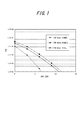
- FIG. 1 shows the BER (Bit ⁇ Error ⁇ Rate) characteristics of each unique path and the overall BER characteristics at this time.
- FIG. 1 shows BER with respect to SNR at the time of 4 transmitting antennas, 4 receiving antennas, 2 eigenpaths, QPSK (primary modulation), and 5 GHz (transmission frequency).
- the wireless communication system of the present invention has a communication quality of each eigenpath in a plurality of eigenpaths as equal as possible when selecting transmission weights in closed-loop MIMO communication, and the entire eigenpath.
- the transmission weight that increases the communication quality is selected.
- the radio communication system according to the present invention selects a transmission weight (Precoding Matrix) in which the SINR of the lowest eigenpath having the smallest eigenvalue is the maximum among all transmission weights (Precoding Matrix).
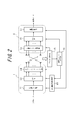
- FIG. 2 is a basic configuration diagram of the wireless communication system of the present invention.
- the wireless communication system of the present invention transmits one packet by dividing it into a plurality of unique paths by a MIMO system called SCW.
- the transmission apparatus 1 includes a plurality of transmission antennas, and includes a modulation and coding unit 11, an S / P unit 12, and a transmission beamforming unit 14.
- the receiving device 2 has a plurality of antennas, and includes a receiving antenna processing unit 15, a P / S unit 16, and a demodulation processing unit 17.
- the channel estimation unit 18, the transmission adaptive control calculation unit 19, and the transmission weight selection unit 20 may be provided in either the transmission device 1 or the reception device 2.
- the modulation encoding unit 11 modulates and encodes the transmission data according to the output of the transmission adaptive control calculation unit 19, respectively.
- the S / P unit 12 performs serial / parallel conversion on the transmission data output from the modulation encoding unit 11 and outputs transmission data for each unique path.
- the transmission beam forming unit 14 forms a transmission eigen beam by applying the transmission weight that is the output of the transmission weight selection unit 20 to the transmission signal for each eigen path that is the output of the S / P unit 12, and for each transmission antenna. These signals are multiplexed.
- a MIMO channel is formed between the plurality of transmission antennas and the plurality of reception antennas.
- the reception antenna processing unit 15 performs spatial filtering by calculating a reception weight based on the channel estimation result that is the output of the channel estimation unit 18, or performs a maximum likelihood reception process, etc. Take out.
- the P / S unit 16 performs parallel-serial conversion on the reception data in each eigenmode.
- the demodulation processing unit 17 performs processing such as error correction decoding on each eigenmode signal and outputs received data.
- the channel estimation unit 18 performs channel characteristic estimation (channel estimation) based on signals received by a plurality of reception antennas.
- the transmission adaptive control calculation unit 19 controls modulation and coding based on the value calculated by the transmission weight selection unit 20.
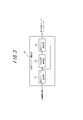
- FIG. 3 is a configuration diagram of the transmission weight selection unit.
- the transmission weight selection unit 20 includes a transmission weight generation unit 21, a communication quality acquisition unit 22, and a transmission weight determination unit 23.
- the transmission weight generation unit 21 generates a plurality of transmission weights.
- the communication quality acquisition unit 22 acquires information regarding the communication quality of each unique path.
- the transmission weight determining unit 23, among the transmission weights generated by the transmission weight generating unit 21, transmits a plurality of unique paths, the unique path having the lowest communication quality among the plurality of unique paths, A transmission weight is determined (selected) so that the communication quality of the lowest eigenpath with the smallest eigenvalue is maximized.
- the transmission weight generation unit 21 generates transmission weight candidates (step 101).
- the communication quality acquisition unit 22 determines whether or not the calculation of SINR of the unique path has been completed for all transmission weight candidates (step 102), and the calculation has not been completed (in the case of No) Calculates the SINR for each eigenpath for the current transmission weight candidate (step 103).
- the transmission weight determination unit 23 determines whether or not the SINR of the lowest eigenpath with the smallest eigenvalue exceeds the maximum SINR value of the lowest eigenpath obtained by calculation so far.
- Step 104 If it exceeds (Yes), the current transmission weight candidate and the SINR of the lowest eigenpath are stored (Step 105). If not exceeded (in the case of No), the communication quality acquisition unit 22 again determines whether or not the calculation of the SINR of the eigenpath has been completed for all transmission weight candidates (step 102). When the calculation has been completed for all transmission weight candidates (Yes), the transmission weight determination unit 23 outputs the stored transmission weight candidates (step 106).
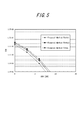
- FIG. 5 shows the BER (Bit Error Rate) characteristics and the overall BER characteristics when the transmission weight that maximizes the communication quality of the lowest eigenpath in the wireless communication system of the present invention is used.
- FIG. 5 shows BER with respect to SNR at the time of 4 transmitting antennas, 4 receiving antennas, 2 eigenpaths, QPSK (primary modulation), and 5 GHz (transmission frequency).
- FIG. 6 shows a comparison of the overall BER characteristics when the transmission weight selected in the conventional system is used and when the transmission weight selected in the wireless communication system of the present invention is used. From FIG. 6, it can be seen that the wireless communication system of the present invention achieves low BER characteristics with less SNR.
- FIG. 7 shows an evaluation similar to the frequency utilization efficiency, which is evaluated by the number of bits that can be transmitted per symbol. Again, the effectiveness of the transmission weight selection method in the wireless communication system of the present invention can be seen.
- SINR is used as the communication quality
- the transmission weight is determined (selected) so that the communication quality of the eigenpath having the lowest communication quality among the plurality of eigenpaths is maximized.
- SINR Signal to Noise Ratio
- SIR Signal to Interference Ratio
- Another index may be used to determine (select) the transmission weight so that the communication quality of the unique path having relatively low communication quality among the plurality of unique paths is maximized.
- the same modulation scheme is used for all eigenpaths.
- the present invention can also be applied to the case where the same modulation scheme is used for a plurality of eigenpaths. it can.
Landscapes
- Engineering & Computer Science (AREA)
- Computer Networks & Wireless Communication (AREA)
- Signal Processing (AREA)
- Quality & Reliability (AREA)
- Power Engineering (AREA)
- Radio Transmission System (AREA)
Abstract
Description
このフィードバックされる情報は、詳細であればあるほど特性が改善するが、そのためには大きなフィードバック情報を必要とし、結局システムの容量を逼迫させてしまうという問題があった。
このときの送信ウェイトの選択は、特異値分解を利用したMIMO(SVD-MIMO)に基づいて行われ、受信側の装置では、伝搬路情報を測定し、その伝搬路情報と送信ウェイトを組み合わせた時に、全固有パスのSINR(Signal to Noise plus Interference Ratio)の和(合計)が最大となる送信ウェイトを選択する。
このような場合、全固有パスのSINRの和が最大となっていても、どれか1つの固有パスでエラーが生じることでパケット全体がエラーになるという問題があった。
送信ウェイトは例えば次式で定義される。






上述した従来システムに対して、本発明の無線通信システムは、クローズド・ループMIMO通信において、送信ウェイトを選択する時に、複数の固有パスにおける各固有パスの通信品質をなるべく等しく、かつ全体の固有パスの通信品質が大きくなる送信ウェイトを選択する。具体的には、本発明の無線通信システムは、最も固有値の小さい最下位の固有パスのSINRが、全送信ウェイト(Precoding Matrix)において最大となる送信ウェイト(Precoding Matrix)を選択する。
チャネル推定部18は、複数の受信アンテナで受信された信号に基づいて、伝搬路特性の推定(チャネル推定)を行う。送信適応制御計算部19は、送信ウェイト選択部20で算出された値に基づいて、変調符号化の制御を行う。
また、従来システムにおいて選択した送信ウェイトを用いたときと、本発明の無線通信システムにおいて選択した送信ウェイト用いたときの全体のBER特性を比較したものを図6に示す。図6から、本発明の無線通信システムの方がより少ないSNRで低いBER特性を実現していることがわかる。
また、上述した実施の形態では、全固有パスで同じ変調方式が使用されることを前提としているが、本発明は、同じ変調方式が複数の固有パスに使用される場合にも適用することができる。
Claims (7)
- 送信装置と受信装置との間で、複数のパスを介して無線通信を行う無線通信システムにおいて、
前記各パスの通信品質に関する情報を取得する通信品質取得部と、
前記送信装置が前記複数のパスで送信する際に、前記複数のパスの中で、相対的に低い通信品質となるパスの当該通信品質が最大となるような送信ウェイトを決定する送信ウェイト決定部と、
を備えることを特徴とする無線通信システム。 - 前記送信ウェイト決定部は、前記複数のパスの中で、最低の通信品質となるパスの当該通信品質が最大となるような送信ウェイトを決定することを特徴とする請求項1に記載の無線通信システム。
- 前記送信ウェイト決定部は、予め生成された複数の送信ウェイトの中から、前記送信ウェイトを決定することを特徴とする請求項1に記載の無線通信システム。
- 前記送信ウェイトの決定は、前記送信装置が1つのパケットを複数のパスに分割して送信する場合に行うことを特徴とする請求項1に記載の無線通信システム。
- 前記パケットは、変調符号化処理を経たパケットであることを特徴とする請求項4に記載の無線通信システム。
- 複数のパスを介した無線通信を実行する送信装置において、
前記複数のパスで送信する際に、前記複数のパスの中で、相対的に低い通信品質となるパスの当該通信品質が最大となるような送信ウェイトを適用する、ことを特徴とする送信装置。 - 送信装置と受信装置との間で、複数のパスを介して無線通信を行う無線通信システムにおける通信制御方法において、
前記各パスの通信品質に関する情報を取得するステップと、
前記送信装置が前記複数のパスで送信する際に、前記複数のパスの中で、相対的に低い通信品質となるパスの当該通信品質が最大となるような送信ウェイトを決定するステップと、
を有する、ことを特徴とする通信制御方法。
Priority Applications (3)
| Application Number | Priority Date | Filing Date | Title |
|---|---|---|---|
| CN2009801066840A CN101960759A (zh) | 2008-02-27 | 2009-02-25 | 无线通信系统、发送设备和通信控制方法 |
| US12/919,316 US20110007833A1 (en) | 2008-02-27 | 2009-02-25 | Wireless communication system, transmission apparatus and communication control method |
| JP2010500715A JP5134077B2 (ja) | 2008-02-27 | 2009-02-25 | 無線通信システム、送信装置および通信制御方法 |
Applications Claiming Priority (2)
| Application Number | Priority Date | Filing Date | Title |
|---|---|---|---|
| JP2008-045869 | 2008-02-27 | ||
| JP2008045869 | 2008-02-27 |
Publications (1)
| Publication Number | Publication Date |
|---|---|
| WO2009107656A1 true WO2009107656A1 (ja) | 2009-09-03 |
Family
ID=41016044
Family Applications (1)
| Application Number | Title | Priority Date | Filing Date |
|---|---|---|---|
| PCT/JP2009/053405 Ceased WO2009107656A1 (ja) | 2008-02-27 | 2009-02-25 | 無線通信システム、送信装置および通信制御方法 |
Country Status (5)
| Country | Link |
|---|---|
| US (1) | US20110007833A1 (ja) |
| JP (1) | JP5134077B2 (ja) |
| KR (1) | KR20100114906A (ja) |
| CN (1) | CN101960759A (ja) |
| WO (1) | WO2009107656A1 (ja) |
Cited By (1)
| Publication number | Priority date | Publication date | Assignee | Title |
|---|---|---|---|---|
| JP2019140584A (ja) * | 2018-02-13 | 2019-08-22 | ソフトバンク株式会社 | 移動通信システム、基地局及び基地局間制御装置 |
Families Citing this family (3)
| Publication number | Priority date | Publication date | Assignee | Title |
|---|---|---|---|---|
| KR101358301B1 (ko) * | 2010-07-01 | 2014-02-06 | 한국전자통신연구원 | 다중 안테나 통신 시스템의 기지국 수신 장치 및 그것의 상향 링크 적응 방법 |
| JP5540146B2 (ja) | 2011-02-21 | 2014-07-02 | パナソニック株式会社 | プリコーディング方法、プリコーディング装置 |
| CN104239302B (zh) * | 2013-06-07 | 2017-10-03 | 腾讯科技(深圳)有限公司 | 页面内容获取方法、装置及应用设备与移动终端 |
Citations (4)
| Publication number | Priority date | Publication date | Assignee | Title |
|---|---|---|---|---|
| JP2005287056A (ja) * | 2005-04-08 | 2005-10-13 | Matsushita Electric Ind Co Ltd | 無線送信装置および無線送信方法 |
| JP2005323217A (ja) * | 2004-05-10 | 2005-11-17 | Sony Corp | 無線通信システム、無線通信装置及び無線通信方法、並びにコンピュータ・プログラム |
| JP2007324813A (ja) * | 2006-05-31 | 2007-12-13 | Sanyo Electric Co Ltd | ウエイトベクトルの導出方法ならびにそれを利用した送信装置および通信システム |
| WO2008129612A1 (ja) * | 2007-04-06 | 2008-10-30 | Panasonic Corporation | Mimo通信方法、mimo送信装置およびmimo受信装置 |
Family Cites Families (4)
| Publication number | Priority date | Publication date | Assignee | Title |
|---|---|---|---|---|
| MX2007003469A (es) * | 2004-09-28 | 2007-05-18 | Matsushita Electric Industrial Co Ltd | Aparato de comunicacion multiportador y metodo de comunicacion multiportador. |
| JP4589711B2 (ja) * | 2004-12-14 | 2010-12-01 | 富士通株式会社 | 無線通信システム及び無線通信装置 |
| JP4841330B2 (ja) * | 2005-09-14 | 2011-12-21 | 三洋電機株式会社 | 無線装置および通信システム |
| JP2008017143A (ja) * | 2006-07-05 | 2008-01-24 | Toshiba Corp | 無線受信装置および方法 |
-
2009
- 2009-02-25 WO PCT/JP2009/053405 patent/WO2009107656A1/ja not_active Ceased
- 2009-02-25 KR KR1020107018894A patent/KR20100114906A/ko not_active Ceased
- 2009-02-25 CN CN2009801066840A patent/CN101960759A/zh active Pending
- 2009-02-25 JP JP2010500715A patent/JP5134077B2/ja not_active Expired - Fee Related
- 2009-02-25 US US12/919,316 patent/US20110007833A1/en not_active Abandoned
Patent Citations (4)
| Publication number | Priority date | Publication date | Assignee | Title |
|---|---|---|---|---|
| JP2005323217A (ja) * | 2004-05-10 | 2005-11-17 | Sony Corp | 無線通信システム、無線通信装置及び無線通信方法、並びにコンピュータ・プログラム |
| JP2005287056A (ja) * | 2005-04-08 | 2005-10-13 | Matsushita Electric Ind Co Ltd | 無線送信装置および無線送信方法 |
| JP2007324813A (ja) * | 2006-05-31 | 2007-12-13 | Sanyo Electric Co Ltd | ウエイトベクトルの導出方法ならびにそれを利用した送信装置および通信システム |
| WO2008129612A1 (ja) * | 2007-04-06 | 2008-10-30 | Panasonic Corporation | Mimo通信方法、mimo送信装置およびmimo受信装置 |
Cited By (1)
| Publication number | Priority date | Publication date | Assignee | Title |
|---|---|---|---|---|
| JP2019140584A (ja) * | 2018-02-13 | 2019-08-22 | ソフトバンク株式会社 | 移動通信システム、基地局及び基地局間制御装置 |
Also Published As
| Publication number | Publication date |
|---|---|
| KR20100114906A (ko) | 2010-10-26 |
| JP5134077B2 (ja) | 2013-01-30 |
| JPWO2009107656A1 (ja) | 2011-07-07 |
| US20110007833A1 (en) | 2011-01-13 |
| CN101960759A (zh) | 2011-01-26 |
Similar Documents
| Publication | Publication Date | Title |
|---|---|---|
| US11057086B2 (en) | MIMO precoding enabling spatial multiplexing, power allocation and adaptive modulation and coding | |
| EP1366579B1 (en) | Method for controlling the weighting of a data signal in the at least two antenna elements of a radio connection unit, module and communications system | |
| US9991939B2 (en) | Multi-user MIMO-SDMA for finite rate feedback systems | |
| US8934565B2 (en) | Reference signaling scheme using compressed feedforward codebooks for multi-user, multiple-input multiple-output (MU-MIMO) systems | |
| KR101124932B1 (ko) | 어레이 안테나를 이용하는 이동 통신 시스템에서의 데이터송/수신 장치 및 방법 | |
| US8665930B2 (en) | System and method for channel status information feedback in a wireless communications system that utilizes multiple-input multiple-output (MIMO) transmission | |
| CA2787987A1 (en) | System and method for channel status information feedback in a wireless communications system that utilizes multiple-input multiple-output (mimo) transmission | |
| KR101698568B1 (ko) | 프리코딩을 이용하는 다중―이용자 네트워크에서 통신하기 위한 방법 및 그의 디바이스 | |
| WO2009107635A1 (ja) | 無線通信システム、送信装置および通信制御方法 | |
| JP5134077B2 (ja) | 無線通信システム、送信装置および通信制御方法 | |
| JP5134076B2 (ja) | 無線通信システム、送信装置および通信制御方法 | |
| JP5009826B2 (ja) | 無線通信システム、無線通信装置および通信制御方法 | |
| JP5006223B2 (ja) | 無線通信システム、無線通信装置および通信制御方法 | |
| KR20110091999A (ko) | 다중 사용자 다중 안테나 시스템에서 널 코드북 기반의 프리코딩 장치 및 방법 | |
| KR20120060729A (ko) | 다중 사용자를 지원하는 다중 입력 다중 출력 통신 시스템에서 채널 품질 정보를 피드백하는 방법 및 장치 |
Legal Events
| Date | Code | Title | Description |
|---|---|---|---|
| WWE | Wipo information: entry into national phase |
Ref document number: 200980106684.0 Country of ref document: CN |
|
| 121 | Ep: the epo has been informed by wipo that ep was designated in this application |
Ref document number: 09714408 Country of ref document: EP Kind code of ref document: A1 |
|
| ENP | Entry into the national phase |
Ref document number: 2010500715 Country of ref document: JP Kind code of ref document: A |
|
| ENP | Entry into the national phase |
Ref document number: 20107018894 Country of ref document: KR Kind code of ref document: A |
|
| WWE | Wipo information: entry into national phase |
Ref document number: 12919316 Country of ref document: US |
|
| NENP | Non-entry into the national phase |
Ref country code: DE |
|
| 122 | Ep: pct application non-entry in european phase |
Ref document number: 09714408 Country of ref document: EP Kind code of ref document: A1 |