WO2005105055A1 - Formulation comprising histone deacetylase inhibitors - Google Patents
Formulation comprising histone deacetylase inhibitors Download PDFInfo
- Publication number
- WO2005105055A1 WO2005105055A1 PCT/EP2005/004739 EP2005004739W WO2005105055A1 WO 2005105055 A1 WO2005105055 A1 WO 2005105055A1 EP 2005004739 W EP2005004739 W EP 2005004739W WO 2005105055 A1 WO2005105055 A1 WO 2005105055A1
- Authority
- WO
- WIPO (PCT)
- Prior art keywords
- pharmaceutical formulation
- cancer
- formulation according
- histone deacetylase
- deacetylase inhibitor
- Prior art date
- Legal status (The legal status is an assumption and is not a legal conclusion. Google has not performed a legal analysis and makes no representation as to the accuracy of the status listed.)
- Ceased
Links
Classifications
-
- A—HUMAN NECESSITIES
- A61—MEDICAL OR VETERINARY SCIENCE; HYGIENE
- A61K—PREPARATIONS FOR MEDICAL, DENTAL OR TOILETRY PURPOSES
- A61K9/00—Medicinal preparations characterised by special physical form
- A61K9/48—Preparations in capsules, e.g. of gelatin, of chocolate
- A61K9/50—Microcapsules having a gas, liquid or semi-solid filling; Solid microparticles or pellets surrounded by a distinct coating layer, e.g. coated microspheres, coated drug crystals
- A61K9/5084—Mixtures of one or more drugs in different galenical forms, at least one of which being granules, microcapsules or (coated) microparticles according to A61K9/16 or A61K9/50, e.g. for obtaining a specific release pattern or for combining different drugs
-
- A—HUMAN NECESSITIES
- A61—MEDICAL OR VETERINARY SCIENCE; HYGIENE
- A61P—SPECIFIC THERAPEUTIC ACTIVITY OF CHEMICAL COMPOUNDS OR MEDICINAL PREPARATIONS
- A61P1/00—Drugs for disorders of the alimentary tract or the digestive system
-
- A—HUMAN NECESSITIES
- A61—MEDICAL OR VETERINARY SCIENCE; HYGIENE
- A61P—SPECIFIC THERAPEUTIC ACTIVITY OF CHEMICAL COMPOUNDS OR MEDICINAL PREPARATIONS
- A61P1/00—Drugs for disorders of the alimentary tract or the digestive system
- A61P1/04—Drugs for disorders of the alimentary tract or the digestive system for ulcers, gastritis or reflux esophagitis, e.g. antacids, inhibitors of acid secretion, mucosal protectants
-
- A—HUMAN NECESSITIES
- A61—MEDICAL OR VETERINARY SCIENCE; HYGIENE
- A61P—SPECIFIC THERAPEUTIC ACTIVITY OF CHEMICAL COMPOUNDS OR MEDICINAL PREPARATIONS
- A61P11/00—Drugs for disorders of the respiratory system
- A61P11/02—Nasal agents, e.g. decongestants
-
- A—HUMAN NECESSITIES
- A61—MEDICAL OR VETERINARY SCIENCE; HYGIENE
- A61P—SPECIFIC THERAPEUTIC ACTIVITY OF CHEMICAL COMPOUNDS OR MEDICINAL PREPARATIONS
- A61P11/00—Drugs for disorders of the respiratory system
- A61P11/06—Antiasthmatics
-
- A—HUMAN NECESSITIES
- A61—MEDICAL OR VETERINARY SCIENCE; HYGIENE
- A61P—SPECIFIC THERAPEUTIC ACTIVITY OF CHEMICAL COMPOUNDS OR MEDICINAL PREPARATIONS
- A61P17/00—Drugs for dermatological disorders
-
- A—HUMAN NECESSITIES
- A61—MEDICAL OR VETERINARY SCIENCE; HYGIENE
- A61P—SPECIFIC THERAPEUTIC ACTIVITY OF CHEMICAL COMPOUNDS OR MEDICINAL PREPARATIONS
- A61P17/00—Drugs for dermatological disorders
- A61P17/06—Antipsoriatics
-
- A—HUMAN NECESSITIES
- A61—MEDICAL OR VETERINARY SCIENCE; HYGIENE
- A61P—SPECIFIC THERAPEUTIC ACTIVITY OF CHEMICAL COMPOUNDS OR MEDICINAL PREPARATIONS
- A61P19/00—Drugs for skeletal disorders
-
- A—HUMAN NECESSITIES
- A61—MEDICAL OR VETERINARY SCIENCE; HYGIENE
- A61P—SPECIFIC THERAPEUTIC ACTIVITY OF CHEMICAL COMPOUNDS OR MEDICINAL PREPARATIONS
- A61P19/00—Drugs for skeletal disorders
- A61P19/02—Drugs for skeletal disorders for joint disorders, e.g. arthritis, arthrosis
-
- A—HUMAN NECESSITIES
- A61—MEDICAL OR VETERINARY SCIENCE; HYGIENE
- A61P—SPECIFIC THERAPEUTIC ACTIVITY OF CHEMICAL COMPOUNDS OR MEDICINAL PREPARATIONS
- A61P25/00—Drugs for disorders of the nervous system
-
- A—HUMAN NECESSITIES
- A61—MEDICAL OR VETERINARY SCIENCE; HYGIENE
- A61P—SPECIFIC THERAPEUTIC ACTIVITY OF CHEMICAL COMPOUNDS OR MEDICINAL PREPARATIONS
- A61P25/00—Drugs for disorders of the nervous system
- A61P25/08—Antiepileptics; Anticonvulsants
-
- A—HUMAN NECESSITIES
- A61—MEDICAL OR VETERINARY SCIENCE; HYGIENE
- A61P—SPECIFIC THERAPEUTIC ACTIVITY OF CHEMICAL COMPOUNDS OR MEDICINAL PREPARATIONS
- A61P25/00—Drugs for disorders of the nervous system
- A61P25/18—Antipsychotics, i.e. neuroleptics; Drugs for mania or schizophrenia
-
- A—HUMAN NECESSITIES
- A61—MEDICAL OR VETERINARY SCIENCE; HYGIENE
- A61P—SPECIFIC THERAPEUTIC ACTIVITY OF CHEMICAL COMPOUNDS OR MEDICINAL PREPARATIONS
- A61P25/00—Drugs for disorders of the nervous system
- A61P25/24—Antidepressants
-
- A—HUMAN NECESSITIES
- A61—MEDICAL OR VETERINARY SCIENCE; HYGIENE
- A61P—SPECIFIC THERAPEUTIC ACTIVITY OF CHEMICAL COMPOUNDS OR MEDICINAL PREPARATIONS
- A61P25/00—Drugs for disorders of the nervous system
- A61P25/28—Drugs for disorders of the nervous system for treating neurodegenerative disorders of the central nervous system, e.g. nootropic agents, cognition enhancers, drugs for treating Alzheimer's disease or other forms of dementia
-
- A—HUMAN NECESSITIES
- A61—MEDICAL OR VETERINARY SCIENCE; HYGIENE
- A61P—SPECIFIC THERAPEUTIC ACTIVITY OF CHEMICAL COMPOUNDS OR MEDICINAL PREPARATIONS
- A61P29/00—Non-central analgesic, antipyretic or antiinflammatory agents, e.g. antirheumatic agents; Non-steroidal antiinflammatory drugs [NSAID]
-
- A—HUMAN NECESSITIES
- A61—MEDICAL OR VETERINARY SCIENCE; HYGIENE
- A61P—SPECIFIC THERAPEUTIC ACTIVITY OF CHEMICAL COMPOUNDS OR MEDICINAL PREPARATIONS
- A61P3/00—Drugs for disorders of the metabolism
- A61P3/04—Anorexiants; Antiobesity agents
-
- A—HUMAN NECESSITIES
- A61—MEDICAL OR VETERINARY SCIENCE; HYGIENE
- A61P—SPECIFIC THERAPEUTIC ACTIVITY OF CHEMICAL COMPOUNDS OR MEDICINAL PREPARATIONS
- A61P3/00—Drugs for disorders of the metabolism
- A61P3/08—Drugs for disorders of the metabolism for glucose homeostasis
- A61P3/10—Drugs for disorders of the metabolism for glucose homeostasis for hyperglycaemia, e.g. antidiabetics
-
- A—HUMAN NECESSITIES
- A61—MEDICAL OR VETERINARY SCIENCE; HYGIENE
- A61P—SPECIFIC THERAPEUTIC ACTIVITY OF CHEMICAL COMPOUNDS OR MEDICINAL PREPARATIONS
- A61P31/00—Antiinfectives, i.e. antibiotics, antiseptics, chemotherapeutics
-
- A—HUMAN NECESSITIES
- A61—MEDICAL OR VETERINARY SCIENCE; HYGIENE
- A61P—SPECIFIC THERAPEUTIC ACTIVITY OF CHEMICAL COMPOUNDS OR MEDICINAL PREPARATIONS
- A61P35/00—Antineoplastic agents
-
- A—HUMAN NECESSITIES
- A61—MEDICAL OR VETERINARY SCIENCE; HYGIENE
- A61P—SPECIFIC THERAPEUTIC ACTIVITY OF CHEMICAL COMPOUNDS OR MEDICINAL PREPARATIONS
- A61P35/00—Antineoplastic agents
- A61P35/02—Antineoplastic agents specific for leukemia
-
- A—HUMAN NECESSITIES
- A61—MEDICAL OR VETERINARY SCIENCE; HYGIENE
- A61P—SPECIFIC THERAPEUTIC ACTIVITY OF CHEMICAL COMPOUNDS OR MEDICINAL PREPARATIONS
- A61P37/00—Drugs for immunological or allergic disorders
- A61P37/02—Immunomodulators
-
- A—HUMAN NECESSITIES
- A61—MEDICAL OR VETERINARY SCIENCE; HYGIENE
- A61P—SPECIFIC THERAPEUTIC ACTIVITY OF CHEMICAL COMPOUNDS OR MEDICINAL PREPARATIONS
- A61P37/00—Drugs for immunological or allergic disorders
- A61P37/08—Antiallergic agents
-
- A—HUMAN NECESSITIES
- A61—MEDICAL OR VETERINARY SCIENCE; HYGIENE
- A61P—SPECIFIC THERAPEUTIC ACTIVITY OF CHEMICAL COMPOUNDS OR MEDICINAL PREPARATIONS
- A61P43/00—Drugs for specific purposes, not provided for in groups A61P1/00-A61P41/00
-
- A—HUMAN NECESSITIES
- A61—MEDICAL OR VETERINARY SCIENCE; HYGIENE
- A61P—SPECIFIC THERAPEUTIC ACTIVITY OF CHEMICAL COMPOUNDS OR MEDICINAL PREPARATIONS
- A61P7/00—Drugs for disorders of the blood or the extracellular fluid
- A61P7/06—Antianaemics
-
- A—HUMAN NECESSITIES
- A61—MEDICAL OR VETERINARY SCIENCE; HYGIENE
- A61P—SPECIFIC THERAPEUTIC ACTIVITY OF CHEMICAL COMPOUNDS OR MEDICINAL PREPARATIONS
- A61P9/00—Drugs for disorders of the cardiovascular system
-
- A—HUMAN NECESSITIES
- A61—MEDICAL OR VETERINARY SCIENCE; HYGIENE
- A61P—SPECIFIC THERAPEUTIC ACTIVITY OF CHEMICAL COMPOUNDS OR MEDICINAL PREPARATIONS
- A61P9/00—Drugs for disorders of the cardiovascular system
- A61P9/10—Drugs for disorders of the cardiovascular system for treating ischaemic or atherosclerotic diseases, e.g. antianginal drugs, coronary vasodilators, drugs for myocardial infarction, retinopathy, cerebrovascula insufficiency, renal arteriosclerosis
-
- A—HUMAN NECESSITIES
- A61—MEDICAL OR VETERINARY SCIENCE; HYGIENE
- A61K—PREPARATIONS FOR MEDICAL, DENTAL OR TOILETRY PURPOSES
- A61K9/00—Medicinal preparations characterised by special physical form
- A61K9/48—Preparations in capsules, e.g. of gelatin, of chocolate
- A61K9/50—Microcapsules having a gas, liquid or semi-solid filling; Solid microparticles or pellets surrounded by a distinct coating layer, e.g. coated microspheres, coated drug crystals
- A61K9/5005—Wall or coating material
- A61K9/5021—Organic macromolecular compounds
- A61K9/5026—Organic macromolecular compounds obtained by reactions only involving carbon-to-carbon unsaturated bonds, e.g. polyvinyl pyrrolidone, poly(meth)acrylates
-
- A—HUMAN NECESSITIES
- A61—MEDICAL OR VETERINARY SCIENCE; HYGIENE
- A61K—PREPARATIONS FOR MEDICAL, DENTAL OR TOILETRY PURPOSES
- A61K9/00—Medicinal preparations characterised by special physical form
- A61K9/48—Preparations in capsules, e.g. of gelatin, of chocolate
- A61K9/50—Microcapsules having a gas, liquid or semi-solid filling; Solid microparticles or pellets surrounded by a distinct coating layer, e.g. coated microspheres, coated drug crystals
- A61K9/5005—Wall or coating material
- A61K9/5021—Organic macromolecular compounds
- A61K9/5036—Polysaccharides, e.g. gums, alginate; Cyclodextrin
- A61K9/5042—Cellulose; Cellulose derivatives, e.g. phthalate or acetate succinate esters of hydroxypropyl methylcellulose
- A61K9/5047—Cellulose ethers containing no ester groups, e.g. hydroxypropyl methylcellulose
Definitions
- the present invention relates to a novel orally available galenics formulation of Valproic Acid or derivatives thereof exhibiting a specific bi-phasic pharmacokinetic profile optimized for maximum inhibition of histone deacetylases in a therapeutic setting.
- This specific galenics formulation is designed for the treatment of malignant diseases and diseases associated with hypoacetylation of histones or in which induction of hyperacetylation has a beneficial effect, e.g., by induction of differentiation and/or apoptosis. Due to the bi-phasic release pattern the resulting pharmacokinetic profile is able to inhibit HDAC target enzymes most efficiently and to subsequently induce histone hyperacetylation in a rapid as well as a long-lasting fashion. This profile secures the efficient modulation of a desired target gene expression profile which contributes to the therapeutic benefit.
- chromatin remodeling is a key step in the transcriptional activation of genes. Dynamic changes in the nucleosomal packaging of DNA must occur to allow transcriptional proteins to make contact with the DNA template.
- One of the most important mechanisms influencing chromatin remodeling and gene transcription are the posttranslational modifications of histones and other cellular proteins by acetylation and subsequent changes in chromatin structure (Davie, 1998, Curr Opin Genet Dev 8, 173-8; Kouzarides, 1999, Curr Opin Genet Dev 9, 40-8; Strahl and Allis, 2000, Nature 403, 41-4).
- histone hyperacetylation changes in electrostatic attraction for DNA and steric hindrance introduced by the hydrophobic acetyl group leads to destabilisation of the interaction of histones with DNA.
- acetylation of histones disrupts nucleosomes and allows the DNA to become accessible to the transcriptional machinery. Removal of the acetyl groups allows the histones to bind more tightly to DNA and to adjacent nucleosomes, and thus, to maintain a transcriptionally repressed chromatin structure.
- Acetylation is mediated by a series of enzymes with histone acetyltransferase (HAT) activity.
- HAT histone acetyltransferase
- HDAC histone deacetylase
- PML-RAR the fusion protein associated with acute promyelocytic leukemia (APL) inhibits p53 through mediating deacetylation and degradation of p53, thus allowing APL blasts to evade p53 dependent cancer surveillance pathways.
- APL acute promyelocytic leukemia
- Expression of PML-RAR in hematopoietic precursor cells results in repression of p53 mediated transcriptional activation, and protection from p53-dependent apoptosis triggered by genotoxic stresses (X-rays, oxidative stress).
- HDAC inhibitors implicating active recruitment of HDAC to p53 by PML-RAR as the mechanism underlying p53 inhibition (Insinga et al., February 2004, EMBO Journal, 1-11 ). Therefore, acetylation of proteins distinct from histones, such as acetylation of p53, plays a crucial role in the anti-tumor activity of HDAC inhibitors.
- Nuclear hormone receptors are ligand-dependent transcription factors that control development and homeostasis through both positive and negative control of gene expression. Defects in these regulatory processes underlie the causes of many diseases and play an important role in the development of cancer. Many nuclear receptors, including T3R, RAR and PPAR, can interact with corepressors, such as N-CoR and SMRT, in the absence of ligand and thereby inhibit transcription. Furthermore, N-CoR has also been reported to interact with antagonist-occupied progesterone and estrogen receptors. Most interestingly, N-CoR and SMRT have been shown to exist in large protein complexes, which also contain mSin3 proteins and histone deacetylases (Pazin and Kadonaga, 1997; Cell 89, 325-8). Thus, the ligand-induced switch of nuclear receptors from repression to activation reflects the exchange of corepressor and coactivator complexes with antagonistic enzymatic activities.
- Such corepressor complexes which contain HDAC activity, not only mediate repression by nuclear receptors, but also interact with additional transcription factors including Mad-1 , BCL-6, and ETO. Many of these proteins play key roles in disorders of cell proliferation and differentiation (Pazin and Kadonaga, 1997, Cell 89, 325-8; Huynh and Bardweli, 1998, Oncogene 17, 2473-84; Wang, J. et al., 1998, Proc Natl Acad Sci U S A 95, 10860-5).
- T3R for example was originally identified on the basis of its homology with the viral oncogene v- erbA, which in contrast to the wild type receptor does not bind ligand and functions as a constitutive repressor of transcription.
- RARs have been associated with a number of human cancers, particularly acute promyelocytic leukemia (APL) and hepatocellular carcinoma.
- APL acute promyelocytic leukemia
- PML promyelocytic leukemia protein
- PZF promyelocytic zinc finger protein
- HATs histone acetyltranferases
- HDACs histone deacetylases
- chromosomal translocations convert transcriptional activators into repressors, which constitutively repress target genes important for hematopoietic differentiation via recruitment of HDACs. It is plausible that similar events could also contribute to pathogenesis in many other types of cancer. There is growing evidence that the same holds true also for autoimmune, inflammatory or hyperproliferative disorders.
- HDACs 1 , 2, 3, and 8 which are homologues of the yeast RPD3 protein constitute class I.
- HDACs 4, 5, 6, 7, 9, and 10 are related to the yeast Hda 1 protein and form class II.
- HDAC11 has been classified as a class I histone deacetylase with structural features of a class II HDAC. All of these HDACs appear to exist in the cell as subunits of a plethora of multiprotein complexes.
- class I and II HDACs have been shown to interact with transcriptional corepressors mSin3, N-CoR and SMRT which serve as bridging factors required for the recruitment of HDACs to transcription factors.
- Another class comprises cyclic tetrapeptides, such as depsipeptide (FR901228 - Fujisawa) used successfully in a phase II trial for the treatment of T-cell lymphomas (Piekarz et al., 2001 , Blood 98, 2865-8). Furthermore, MS-27-275 (Mitsui Pharmaceuticals), a compound related to the class of benzamides, is now being tested in a phase I trial treating patients with hematological malignancies.
- depsipeptide FR901228 - Fujisawa
- MS-27-275 Mitsubishi Pharmaceuticals
- Valproic acid has multiple biological activities which depend on different molecular mechanisms of action: VPA is an antiepileptic drug. VPA is teratogenic. When used as an antiepileptic drug during pregnancy, VPA can induce birth defects (neural tube closure defects and other malformations) in a few percent of born children. In mice, VPA is teratogenic in the majority of mouse embryos when properly dosed. VPA activates a nuclear hormone receptor (PPAR ⁇ ). Several additional transcription factors are also derepressed but some factors are not significantly derepressed (glucocorticoid receptor, PPAR ⁇ ). VPA occasionally causes hepatotoxicity, which may depend on poorly metabolized esters with coenzyme A. VPA is an inhibitor of HDACs.
- VPA derivatives allowed to determine that the different activities are mediated by different molecular mechanisms of action. Teratogenicity and antiepileptic activity follow different modes of action because compounds could be isolated which are either preferentially teratogenic or preferentially antiepileptic (Nau et al., 1991 , Pharmacol. Toxicol. 69, 310-321 ). Activation of PPAR ⁇ was found to be strictly correlated with teratogenicity (Lampen et al., 1999, Toxicol. Appl. Pharmacol. 160, 238-249) suggesting that, both, PPAR ⁇ activation and teratogenicity require the same molecular activity of VPA.
- VPA has been developed as a drug used for the treatment of epilepsia. Accordingly, VPA is used systemically, orally, or intravenously, to allow the drug to pass the blood brain barrier to reach the epileptic target regions in the brain tissue in order to fulfill its anti-epileptic mission. Moreover, VPA has been shown to possess beneficial effects when used for the treatment of many different types of human cancers as a single agent or in combination with a whole variety of other anti-tumor therapies which are individually based on strikingly different modes of action by inhibiting specific sets of enzymes having HDAC activity and thereby inducing differentiation and/or apoptosis (WO 02/07722 A2, EP 1170008; WO 03/024442 A2, EP 1293205 A1 ).
- VPA may also be administered systemically, orally, or intravenously. Furthermore, it was shown, that VPA permeates human skin effectively and therefore can be administered topically on skin exhibiting beneficial effects when used for the topical treatment or prevention of autoimmune, inflammatory or hyperproliferative human skin diseases, e.g., psoriasis and human skin cancer (EP application No. 03014278.0).
- VPA has been developed in "slow release” as well as “fast release” application formulations.
- using a “slow release” application formulation will result in a slow increase of VPA levels in the blood over a long period of time without efficiently reaching VPA plasma concentrations required for the inhibition of enzymes having histone deacetylase activity.
- cellular compensatory counter-mechanisms might be induced during this period of slowly increasing VPA levels before effective serum doses are reached rendering VPA less effective in inhibiting enzymes having histone deacetylase activity.
- a formulation based exclusively on a "fast release” formulation of VPA on the other hand will lead to a high initial level of VPA in the blood, resulting only in a short period of effective HDAC inhibition.
- the inventors could demonstrate that not only the absolute concentration of VPA in the serum, but also the duration of effective levels of VPA during treatment are crucial for maximum inhibition of histone deacetylase activity.
- the desired and most beneficial pharmacokinetic profile can not be obtained by the use of acquainted and well established galenics formulations.
- the present invention relates to a pharmaceutical formulation comprising at least one histone deacetylase inhibitor, exhibiting a bi-phasic release profile.
- the formulation is an orally available formulation.
- Another aspect of this invention is a pharmaceutical formulation comprising (i) a fast releasing component which comprises compartments containing at least one histone deacetylase inhibitor, and (ii) a slow releasing component which comprises compartments containing at least one histone deacetylase inhibitor, wherein the compartments of the fast releasing component differ from the compartments of the slow releasing component.
- Yet another aspect of the present invention is a pharmaceutical formulation comprising at least one histone deacetylase inhibitor, wherein 10 to 60% of the histone deacetylase inhibitor in the formulation is released within 30 minutes, and 50 to 100% of the histone deacetylase inhibitor in the formulation is released within 6 hours, as determined according to USP 24, method 724, apparatus 2, in 900 ml buffer pH 6.8 USP at 100 rpm.
- release refers to the release of the histone deacetylase inhibitor from the pharmaceutical formulation.
- release profile refers to the release of the histone deacetylase inhibitor over a given period of time. Methods to determine the release profile of a pharmaceutical formulation in vitro are known to those skilled in the art. A preferred method in accordance with this invention is U.S. Pharmacopeia (USP) 24, method 724, apparatus 2, in 900ml buffer pH 6.8 USP at 100 rpm.
- USP U.S. Pharmacopeia
- a "bi-phasic" release profile shows a first phase of fast release (immediate release) followed by a second phase of slow release (sustained release).
- 10-60% of the histone deacetylase inhibitor in the formulation is released within 30 minutes, and 50-100% of the histone deacetylase inhibitor in the formulation is released within 6 hours. More preferably, 20-50% of the histone deacetylase inhibitor in the formulation is released within 30 minutes, and 60-100% of the histone deacetylase inhibitor in the formulation is released within 6 hours.
- histone deacetylase inhibitor denotes a substance that is capable of inhibiting the histone deacetylase acitivity of an enzyme having histone deacetylase acitivity.
- the inhibitory acitivity of a histone deacetylase inhibitor can be determined in an in vitro assay as described in Example 1 of this application.
- the IC 50 value can be taken as a measure for the inhibitory acitivity of a histone deacetylase inhibitor.
- a low IC 50 value indicates a high inhibitory activity; a high IC 50 value indicates a low inhibitory activity.
- the histone deacetylase inhibitors used in accordance with this invention preferably have an IC 50 value of less than 1 mM, more preferably of less than 500 ⁇ M with respect to at least one histone deacetylase.
- the histone deacetylase inhibitor or at least one histone deacetylase inhibitor is capable of inhibiting preferentially a subset of histone deacetylases or selected deacetylases.
- inhibiting preferentially refers to a situation where a first group of histone deacetylases are inhibited more strongly than a second group of histone deacetylases by a given histone deacetylase inhibitor.
- the histone deacetylase inhibitor inhibiting preferentially a first group of histone deacetylases has an IC 50 value of less than 800 ⁇ M, preferably of less than 500 ⁇ M with respect to the histone deacetylases of said first group.
- the IC 50 value with respect to histone deacetylases of the second group is usually greater than 800 ⁇ M, preferably greater than 1 mM.
- the histone deacetylase inhibitor or at least one histone deacetylase inhibitor is capable of inhibiting preferentially class I histone deacetylases.
- class I histone deacetylases are inhibited more strongly than class II histone deacetylases.
- the histone deacetylase inhibitor usually has IC 50 values of less than 800 ⁇ M, preferably of less than 500 ⁇ M with respect to the histone deacetylase enzymes HDAC 1 , 2, 3 and 8.
- the histone deacetylase inhibitor usually has IC 50 values of greater than 800 ⁇ M, preferably of greater than 1 mM with respect to the class II enzymes HDAC 4, 5, 6, 7, 9 and 10.
- the histone deacetylase inhibitor or at least one histone deacetylase inhibitor is capable of inhibiting preferentially class II histone deacetylases.
- class II histone deacetylases are inhibited more strongly than class I histone deacetylases.
- the histone deacetylase inhibitor usually has IC 50 values of less than 800 ⁇ M, preferably of less than 500 ⁇ M with respect to the class II enzymes HDAC 4, 5, 6, 7, 9 and 10, whereas the IC 50 values with respect to the class I enzymes HDAC 1 , 2, 3 and 8 are preferably greater than 800 ⁇ M, more preferably greater than 1 mM.
- Preferred histone deacetylase inhibitors are valproic acid, pharmaceutically acceptable salts of valproic acid, derivatives of valproic acid and pharmaceutically acceptable salts thereof. Most preferred are valproic acid and pharmaceutically acceptable salts thereof such as sodium valproate.
- valproic acid derivatives of valproic acid include, but are not limited to, compounds of formula I
- R 1 and R 2 independently are a linear or branched, saturated or unsaturated, aliphatic C 3 - 25 hydrocarbon chain which optionally comprises one or several heteroatoms and which may be substituted, R 3 is hydroxyl, halogen, alkoxy or an optionally alkylated amino group.
- R 1 and R 2 residues give rise to chiral compounds.
- one of the stereoisomers has a stronger teratogenic effect than the other and the more teratogenic isomer more efficiently activates PPAR ⁇ . Therefore, this isomer can be expected to inhibit HDACs more strongly (WO 02/07722 A2).
- the present invention encompasses the racemic mixtures of the respective compounds and in particular the more active isomers.
- the hydrocarbon chains R 1 and R 2 may comprise one or several heteroatoms (e.g. O, N, S) replacing carbon atoms in the hydrocarbon chain. This is due to the fact that structures very similar to that of carbon groups may be adopted by heteroatom groups when the heteroatoms have the same type of hybridization as a corresponding carbon group.
- heteroatoms e.g. O, N, S
- R 1 and R 2 may be substituted. Possible substituents include hydroxyl, amino, carboxylic and alkoxy groups as well as aryl and heterocyclic groups.
- R 1 and R 2 independently comprise 3 to 10, 4 to 10 or 5 to 10 carbon atoms. It is also preferred that R 1 and R 2 independently are saturated or comprise one double bond or one triple bond.
- one of the side chains (R 1 ) may preferably contain sp 1 hybridized carbon atoms in position 2 and 3 or heteroatoms which generate a similar structure. This side chain should comprise 3 carbon or heteroatoms but longer chains may also generate HDAC-inhibiting molecules.
- inclusion of aromatic rings or heteroatoms in R 2 is considered to generate compounds with HDAC inhibitory activity because the catalytic site of the HDAC protein apparently accommodates a wide variety of binding molecules.
- HDAC inhibitors also compounds which have previously been disregarded as suitable antiepileptic agents are considered as HDAC inhibitors (WO 02/07722 A2).
- compounds having a propinyl residue as R 1 and residues of 7 or more carbons as R 2 are considered (Lampen et al, 1999).
- the group “COR 3 " is a carboxylic group. Also derivatization of the carboxylic group has to be considered for generating compounds with potential HDAC inhibitory activity. Such derivatives may be halides (e.g. chlorides), esters or amides.
- R 3 is alkoxy
- the alkoxy group comprises 1 to 25, preferably 1-10 carbon atoms.
- R 3 is a mono- or di-alkylated amino group
- the alkyl substituents comprise 1 to 25, preferably 1-10 carbon atoms.
- R 1 and R 2 independently are a linear or branched C 3 . 25 hydrocarbon chain which optionally comprises one double or triple bond.
- a preferred example of this embodiment is 4-yn-VPA or a pharmaceutically acceptable salt thereof.
- histone deacetylase inhibitors may be used in such a bi-phasic release formulation and include, but are not limited to, hydroxamic acid derivatives such as but not limited to NVP-LAQ824, Trichostatin A (TSA), Suberoyl anilide hydroxamic acid, CBHA, Pyroxamide, Scriptaid, CI-994, CG-1521 , Chlamydocin, Biaryl hydroxamate, e.g., A-161906, Bicyclic aryl- N-hydroxycarboxamides, PXD-101 , Sulfonamide hydroxamic acid, TPX-HA analogue (CHAP), Oxamflatin, Trapoxin, Depudecin, microbial metabolites exhibiting HDAC inhibitory activity, Apidicin, benzamides such as but not limited to MS-27-275, pyroxamides and derivatives thereof, short chain fatty acids such as but not limited to butyric acid, and derivatives thereof, e.g.,
- the optimum serum profile for b.i.d. oral dosing at steady state is characterized by allowing a rapid increase of the VPA-serum concentration to levels between 90 to 200 ⁇ g/ml within 30 minutes and more preferentially between 110 to 180 ⁇ g/ml. This serum concentration level remains constant for 8 to 10 hours and then decreases below 110 ⁇ g/ml. However, the serum concentration level of VPA stays permanently above 80 ⁇ g/ml during treatment more preferentially above 100 ⁇ g/ml.
- the indicated periods of time refer to (start with) the time of oral administration.
- compositions for the administration of VPA and salts thereof are commonly available including parenterals, oral solutions, coated tablets with resistance to gastric fluids, slow releasing tablets and minitablets. Because of the liquid nature of VPA as well as the hygroscopic nature of sodium valproate, the formulation of multiple unit dosage forms is technologically challenging.
- the desired VPA serum concentration levels as described above can be obtained by a combination of fast and slow in vitro release pattern that cannot be obtained by existing formulations to effectively inhibit the HDAC target enzymes.
- a novel pharmaceutical formulation for oral administration which provides the desired serum concentration profile of VPA.
- a pharmaceutical composition with a bi-phasic release pattern of histone deacetylase inhibitors e.g., sodium valproate.
- the pharmaceutical formulation according to the invention therefore preferably comprises a fast releasing component and a slow releasing component, usually in a predefined proportion.
- the pharmaceutical formulation consists essentially of a fast releasing component and a slow releasing component in a predefined proportion.
- the ratio of fast releasing component to slow releasing component is preferably between 1 :0.5 and 1 :4, more preferably between 1 :1 and 1 :3. In one embodiment, the ratio is a ratio on a weight : weight basis. In another embodiment, the ratio is the ratio of the number of compartments (e.g. minitablets) in the respective components.
- the pharmaceutical formulation preferably shows an in vitro release of 20 to 50 % within 30 minutes, of 25 to 65 % within 2 hours, of 55 to 85 % within 4 hours and 70 to 100 % within 6 hours (USP 24, method 724, app. 2, in 900ml buffer pH 6.8 USP at 100 rpm).
- the water uptake of the combination of both components is usually below 5 % within 24 hours when exposed to 40 % relative humidity at 25 °C.
- the fast releasing component preferably shows an in vitro release of at least 90 % of histone deacetylase inhibitor (e.g. sodium valproate) within 15 minutes (USP 24, method 724, app. 2, in 900ml buffer pH 6.8 USP at 100 rpm).
- histone deacetylase inhibitor e.g. sodium valproate
- the water uptake of the component is regularly below 5 % within 24 hours when exposed to 40 % relative humidity at 25 °C.
- the slow releasing component preferably shows an in vitro release of 0 to 30 % within 1 hour, of 20 to 60 % within 4 hours, and of 55 to 95 % within 6 hours (USP 24, method 724, app. 2, in 900 ml buffer pH 6.8 USP at 100 rpm).
- the water uptake of the component is generally below 5 % within 24 hours when exposed to 40 % relative humidity at 25 °C.
- the slow releasing component usually has a content of histone deacetylase inhibitors (e.g. sodium valproate) of 50 to 96 % by weight, preferably of 70 to 95 %.
- the fast releasing component usually has a content of histone deacetylase inhibitors (e.g. sodium valproate) of 50 to 96 % by weight, preferably of 70 to 95 %. Since a high amount of drug should be administered, a multiparticulate formulation is preferred. Therefore, the pharmaceutical formulation of the invention is in one embodiment a multiple unit dosage form comprising compartments.
- the term "compartment" denotes a particle containing a histone deacetylase inhibitor. The particle may have one or more coatings.
- the histone deacetylase inhibitor contained in the particle is preferably separated from the environment by said one or more coatings.
- the compartments are coated microtablets.
- the compartments may be of different shape, preferably they are shaped spherically or bi-convexly.
- the maximum size (e.g., diameter) of the single compartments is usually 3 mm, preferably the size of the single compartments is 0.5 to 2.5 mm.
- the fast releasing component may comprise compartments, preferably the fast releasing component consists essentially of compartments.
- the slow releasing component may comprise compartments, preferably the slow releasing component consists essentially of compartments.
- the fast releasing component and the slow releasing component comprise compartments, preferably the fast releasing component and the slow releasing component consist essentially of compartments.
- the single compartments of the fast releasing component differ from those of the slow releasing component.
- the single compartments of the fast releasing component show very fast release of histone deacetylase inhibitors (e.g. sodium valproate) after oral administration. They can be prepared by commonly known granulation, pelletizing or tabletting techniques.
- histone deacetylase inhibitors e.g. sodium valproate
- the components can be coated with a suitable polymer in order to achieve the reduced hygroscopicity.
- the single compartments of the slow releasing component show slow release of histone deacetylase inhibitors (e.g. sodium valproate) after oral administration.
- histone deacetylase inhibitors e.g. sodium valproate
- the maximum size of the compartments is usually 3 mm. They can be prepared by commonly known granulation, pelletizing or tabletting techniques. As already mentioned, superior handling properties are achieved by reduced hygroscopicity when compared to the pure drug.
- the reduced hygroscopicity is established by using suitable excipients and preparation processes.
- the components can be coated with a suitable polymer in order to achieve the reduced hygroscopicity and the slow release pattern.
- the compartments may have a content of histone deacetylase inhibitor (e.g. sodium valproate) of 50 to 95 % by weight, preferably 60 to 85 %.
- histone deacetylase inhibitor e.g. sodium valproate
- the compartments are coated minitablets.
- the coated minitablets of the fast releasing component differ from those of the slow releasing component in their coating.
- the coated minitablets comprise at least one histone deacetylase inhibitor (e.g., sodium valproate), a lubricant, a polymer and a glidant.
- a histone deacetylase inhibitor e.g., sodium valproate
- a lubricant e.g., sodium valproate
- a polymer e.g., polypropylene glycol
- a glidant e.g., sodium valproate
- the coated minitablets consist essentially of these constituents.
- the lubricant is preferably magnesium stearate, calcium stearate and/or stearic acid.
- Suitable glidants include silicium dioxide, methylated silicium dioxide and/or talc.
- the polymer may be ammonio methacrylate copolymer, ethylcellulose and/or hypromellose.
- the coating of the coated minitablets of the fast release component comprises at least one polymer and at least one suitable plasticizer.
- the polymer is preferably aminoalkyl methacrylate copolymer, polyvinyl alcohol and/or hypromellose.
- Suitable plasticizers include Triacetin, Dibutyl sebacate, Triethyl citrate, Polyethylene glycol. Additional plasticizers can be reviewed in the literature (e.g., Lexikon der Hilfsstoffe, H.P. Fiedler, Editio Cantor Verlag Aulendorf, 4. Auflage 1998).
- the coating of the coated minitablets of the slow release component comprises at least one polymer and at least one suitable plasticizer.
- Suitable polymers are ammonio methacrylate copolymer and/or ethylcellulose.
- Both components may be present in a predefined proportion in capsules or containers for single dose administration.
- the content of histone deacetylase inhibitors e.g. sodium valproate
- the content of histone deacetylase inhibitors in a capsule or container for single dose administration may range from 0.1 to 3 g, preferably from 0.2 to 1.5 g.
- Container for single dose administration can be sachets or pouches. It may consist of an aluminium foil with a minimum thickness of 9 ⁇ m or alternatively coated paper or other materials with comparable characteristics in order to provide a sufficient barrier against humidity.
- the optimum amount of a histone deacetylase inhibitor (e.g. sodium valproate) for treatment is individually achieved by administration of the required amount of capsules or containers for single dose administration at each dosing interval.
- the optimum amount of a histone deacetylase inhibitor (e.g. sodium valproate) for treatment depends on the weight of the patient.
- the invention further relates to a method for the preparation of a pharmaceutical formulation exhibiting a bi-phasic release profile, comprising combining a fast releasing component containing a histone deacetylase inhibitor with a slow releasing component containing a histone deacetylase inhibitor such that a multiple unit dosage form comprising compartments is obtained.
- a method for the preparation of a pharmaceutical formulation exhibiting a bi-phasic release profile comprising combining a fast releasing component containing a histone deacetylase inhibitor with a slow releasing component containing a histone deacetylase inhibitor such that a multiple unit dosage form comprising compartments is obtained.
- the single drug containing compartments are prepared by granulation, extrusion, hot melt, pelletizing, tabletting and coating techniques.
- Both components may be mixed in a predefined proportion and filled in capsules or containers for single dose administration. Alternatively they may be filled successively in capsules or containers for single dose administration without mixing them beforehand.
- the content of sodium valproate in a capsule or container for single dose administration may range from 0.1 to 3 g, preferably from 0.2 to 1.5 g.
- the invention further relates to the use of a pharmaceutical formulation described herein for the manufacture of a medicament for the treatment or prevention of estrogen receptor- dependent breast cancer, estrogen receptor-independent breast cancer, hormone receptor- dependent prostate cancer, hormone receptor-independent prostate cancer, brain cancer, renal cancer, colon cancer, colorectal cancer, pancreatic cancer, bladder cancer, esophageal cancer, stomach cancer, genitourinary cancer, gastrointestinal cancer, uterine cancer, ovarian cancer, astrocytomas, gliomas, skin cancer, squamous cell carcinoma, Keratoakantoma, Bowen disease, cutaneous T-Cell Lymphoma, melanoma, basal cell carcinoma, actinic keratosis; ichtiosis; acne, acne vulgaris, sarcomas, Kaposi's sarcoma, osteosarcoma, head and neck cancer, small cell lung carcinoma, non-small cell lung carcinoma, leukemias, lymphomas and/or other blood cell cancers, thyroid
- the invention relates to the use of a histone deacetylase inhibitor for the manufacture of a medicament for the treatment or prevention of one or more of these disorders, wherein the medicament is a pharmaceutical formulation exhibiting a bi-phasic release profile.
- a histone deacetylase inhibitor for the manufacture of a medicament for the treatment or prevention of one or more of these disorders, wherein the medicament is a pharmaceutical formulation exhibiting a bi-phasic release profile.
- Yet another aspect of this invention is a method of treating one or more of the disorders listed above, comprising administering to a patient in need thereof an effective amount of a pharmaceutical formulation described herein before.
- the administration of the effective amount of the pharmaceutical formulation is suitable to ameliorate the condition of the patient to be treated.
- the preferred embodiment described herein with respect to the pharmaceutical formulation of the invention apply to this method of treatment mutatis mutandis.
- the present invention provides a pharmaceutical formulation having a bi-phasic pharmacokinetic release profile for the effective inhibition of HDAC proteins.
- the formulation displays highly beneficial characteristics without enhancing negative side effects.
- an initial fast release of the compound leads to a pharmaceutical relevant concentration inhibiting cellular HDAC activity shortly after the administration of the drug.
- the subsequent slow release of additional compound is able to maintain HDAC inhibition at serum levels slightly above the effective therapeutic dose for an extended period of time.
- This sustained constant concentration of the compound within the therapeutic range results in a prolonged effect of VPA on the target enzymes having histone deacetylase activity. This effect can be monitored by the analysis of surrogate markers such as histone hyperacetylation in peripheral blood of VPA treated patients.
- VPA is known to preferentially inhibit HDAC class I (one) isoenzymes in contrast to its weaker inhibitory activity for HDAC class II (two) enzymes.
- This profile is highly wanted, as the inhibition of HDAC class II enzymes might be associated with cardiotoxic side effects (Zhang et al., Cell 2002, 1 10:479-488; Antos et al., JBC 2003, 278:28930-7).
- sustained VPA serum levels in pharmaceutically relevant concentrations lead to a prolonged inhibition of histone deacetylases - in particular of class I isoenzymes - minimizing cardiotoxic side effects.
- inhibitors of histone deacetylases are included, such as but not limited to intraveneous, intramuscular, subcutaneous, topical (including plasters), other oral, nasal, intraperitoneal or suppository based (abdomino-anal) applications which may allow to create the release pattern and serum concentration levels of inhibitors of histone deacetylases as described in this invention.
- FIG. 1 VPA inhibits the activity of recombinant HDAC enzymes
- Figure 1 shows that VPA preferentially inhibits the tumor relevant class I HDAC enzymes (IC 50 of about 200 ⁇ M; exemplified for the class I enzyme HDAC 1 ) and is less active on class II HDAC enzymes (IC 50 of about 1.1 mM, exemplified for the class II enzyme HDAC 8).
- IC 50 of about 200 ⁇ M
- HDAC 1 IC 50 of about ⁇ M
- HDAC 8 class II HDAC enzymes
- the pharmacokinetic data obtained in a Phase I clinical study revealed serum levels of VPA in cancer patients sufficient to successfully inhibit these relevant class I isoenzymes.
- levels required for inhibition of class II HDAC enzymes can be avoided. This is a highly wanted profile since inhibition of class II enzymes is expected to cause cardiotoxicity (Zhang et al., Cell, 2002, 110:479-488; Antos et al., JBC, 2003, 278:28930-7
- FIG. 2 Correlation between VPA serum levels and histone hyperacetylation
- Figure 2 shows results from a clinical Phase l/ll study using VPA intravenously with patients exhibiting advanced malignant diseases. Induction of histone hyperacetylation (presented as "fold induction") as a marker for the efficacy of VPA treatment was examined in peripheral blood cells collected from patients before and 6h, 24h as well as 48h after VPA treatment start. A clear correlation of VPA serum peak levels (presented in ⁇ g/ml) with the induction of histone hyperacetylation was observed.
- FIG. 3 VPA induces histone hyperacetylation and regulation of marker genes in peripheral blood from patients from a phase l/ll trial
- Figure 3 displays a Western Blot analysis with peripheral blood cell lysates obtained from two patients (Pat. #1 and Pat. #2) exhibiting advanced malignant disease treated with VPA intravenously in the scope of a clinical Phase l/ll study. Blood samples were taken before and 6h, 24h as well as 48h after treatment start. Histone H3 and H4 hyperacetylation and down regulation of the marker protein HDAC 2 could be detected in patients with serum levels above the therapeutic plasma concentration.
- Figure 4 PC-3 mouse xenograft model
- Figure 4 shows the results from a mouse PC-3 xenograft model.
- 24 athymic Nu/Nu _/" mice were injected with 1x10 6 PC3 prostate carcinoma cells in 10O ⁇ l PBS into the right flank (8 animals per group). Tumors were allowed to grow for 4 days. Animals were treated with PBS (control), 2x200mg/kg/d or 2x400mg/kg/d, respectively, from day 5 until day 21. Tumor volumes were measured every 3-4 days.
- Figure 5 Histone hyperacetylation induced by various VPA formulations
- Figure 5 exemplifies the proposed course of VPA serum levels in a "fast release” (VPA "normal”' - A), a “slow release” ("VPA retard” - B), and a novel bi-phasic pharmacokinetic profile ("VPA PEAC C).
- Lysates of 293T cells treated with VPA for the indicated times (in hours) representative for either the "fast release” (A), the "slow release” (B), or the novel bi- phasic pharmacokinetic profile PEAC (C) were analysed in a Western Blot analysis using an anti-Histone H3 antibody.
- FIG. 6A depicts a VPA treatment schedule for Colo320DM and PC-3 cell lines.
- Cells were either treated with 1 mM VPA for 2 x 8 h with a 40h treatment free interval ("8h d") representative for a "fast release” VPA formulation, or treated for 20h twice with a 26h treatment free interval ("20h d") representative for a "slow release” formulation, or treated for 66h continuously representing the serum levels achievable using the novel bi-phasic compound release profile according to the PEAC concept ("continuously").
- Figure 6B shows results from SRB assays with Colo320DM and PC-3 cell lines treated according to the schedule described in Figure 6A. Whereas 2 x 8 hours (“8h d") exposure leads to only 26% (PC3) and 27% (Colo320DM) growth inhibition, 2 x 20 hours (“20h d”) exposure increases growth inhibition to 43% in PC3 cells and 57% in Colo320DM cells. Maximum inhibition is seen at continuous exposure to VPA, representing the therapeutic serum levels that would be achieved using the bi-phasic release profile over an extended period of time, with 57% inhibition in PC3 and 80% in Colo320DM (“continuously”).
- VPA representing the therapeutic serum levels that would be achieved using the bi-phasic release profile over an extended period of time
- Figure 7 shows a typical in vitro release profile of a formulation according to the present invention.
- a pharmaceutical formulation was prepared as described in example 3.
- the in vitro release profile of the formulation was determined according to USP 24, method 724, apparatus 2, in 900ml buffer pH 6.8 USP at 100 rpm.
- VPA serum concentrations from phase l/ll study with VPA intravenous administration This table displays the VPA serum level concentration requirements in order to efficiently inhibit class I HDAC isoenzymes.
- a total serum level of about 144.2 ⁇ g/ml there is a free fraction (i.e., not serum protein bound) of VPA which is in the concentration range of the IC 50 of class I enzyme inhibition (about 0.2 mM).
- Neuronal side effects have been observed from total VPA plasma concentrations above 210 ⁇ g/ml ( ⁇ 1.45mM). Based on these data, we have developed the novel galenics formulation of VPA described in this invention.
- This formulation secures an efficient inhibition of the most relevant HDAC class I target enzymes and subsequently induces histone hyperacetylation rapidly and long-lasting, whereas serum levels (especially of free VPA) as they would be required for the inhibition of class II HDAC enzymes are not reached. (MW: Molecular Weight)
- VPA which acts as a preferential inhibitor of histone deacetylase class I enzymes (Figure 1 ), induces histone hyperacetylation in cellular systems as well as in peripheral blood cells of patients ( Figure 3).
- the presented evidence for this invention relates also to the following patents: WO 02/07722 A2, EP 1 170008; WO 03/024442 A2, EP 1293205 A1 ; EP application No. 03014278.0.
- in vitro HDAC assay for determination of IC 50 values The determination of histone deacetylase activity in recombinant HDAC proteins derived from expression in High ⁇ insect cells is based on the specific deacetylation of an artificial substrate (Fluor de Lys, Biomol). The substrate turn over may be detected and quantified by fluorometry. By addition of a HDAC inhibitor the hydrolysis of the substrate is constrained resulting in a decreased fluorometric signal. IC 5 0 values may be calculated from dose-response curves. The assay is separated in two steps: in the first step the substrate (Fluor de Lys / Biomol KI-104) is hydrolysed by histone deacetylases.
- step two HDAC activity is terminated and the fluorophore is activated by the addition of a developer (Developer / Biomol KI-105).
- Recombinant proteins and the HDAC inhibitor are mixed with reaction buffer (Biomol Kl- 143) to a total volume of 25 ⁇ l per well of a 96 well plate.
- 25 ⁇ l substrate (1 :100 dilution in reaction buffer) per well are added to start the reaction.
- a negative control without histone deacetylase activity and a positive control without HDAC inhibitor are treated likewise.
- the reaction is stopped after 15-60min. by adding 50 ⁇ l developer (1 :20 dilution in reaction buffer). After another 15min.
- Recombinant histone deacetylases can be prepared and purified as described in Buggy et al., Cloning and characterization of a novel human histone deacetylase, HDAC8. Biochem J. 2000 Aug 15;350 Pt 1 :199-205.
- mice 24 athymic Nu/Nu "/_ (Harlan) mice were injected with 1x10 6 PC3 prostate carcinoma cells in 100 ⁇ l PBS into the right flank (8 animals per group). Tumors were allowed to grow for 4 days. Animals were treated with PBS (control), or VPA at 2x200mg/kg/d or 2x400mg/kg/d, respectively, from day 5 until day 21. Tumor volumes were measured every 3-4 days.
- VPA can be used for the treatment of many different types of human cancers and other hyperproliferative or inflammatory disorders as a single agent or in combination with a whole variety of other anti-tumor therapies which are individually based on strikingly different modes of action
- Patent applications WO 02/07722 A2, EP 1170008; WO 03/024442 A2, EP 1293205 A1 ; EP application No. 03014278.0
- VPA acts as a preferential inhibitor of histone deacetylase class I enzymes (Figure 1) and can be used in patients to reach effective therapeutic serum concentrations inducing histone hyperacetylation and regulation of a target protein, HDAC 2 ( Figure 3).
- Figure 1 shows results from an in vitro assay examining the HDAC isoenzyme inhibitory specificity of VPA. Generating dose-response curves using various doses of VPA on recombinant proteins purified from High 5 insect cells, it became apparent that VPA preferentially inhibits HDAC class I enzymes as the IC 50 values for HDAC 1 und 8 (both class I) are 200 ⁇ M and 300 ⁇ M, respectively, while the IC 50 value for HDAC 6 (class II) is 1.1 mM. These data are supported by results obtained from isolated human HDAC enzymes in immunoprecipitates (G ⁇ ttiere et al., EMBO J. (2001 ), 20:6969-78).
- VPA inhibitory IC 50 values for class I HDAC enzymes range from approximately 100 ⁇ M to 400 ⁇ M and for class II enzymes (e.g. HDAC 5, 6, and 10) from 1100 to 2800 ⁇ M.
- This preferential inhibition of HDAC class I enzymes is a highly wanted profile as the inhibition of HDAC class II enzymes might be associated with cardiotoxic side effects (Zhang et al., Cell 2002, 110:479-488; Antos et al., JBC 2003, 278:28930-7).
- Table 1 displays VPA serum levels obtained in patients treated with VPA intravenously within a phase l/ll trial showing that effective serum levels inhibiting HDAC enzymes can be reached in patients. Neuronal side effects have been observed from total VPA serum levels above 210 ⁇ g/ml (approximately 1.45 mM). Therefore, tolerable therapeutic serum concentrations will be far higher than the effective dose needed for HDAC class I inhibition (around 0.2 mM of free VPA, approximately 1.0 mM of total VPA) but still low enough to not inhibit HDAC class II enzymes, thereby avoiding cardiotoxic side effects.
- Table 1 :
- Figures 2 and 3 present data from patients treated with VPA intravenously in a phase l/ll trial.
- Induction of histone hyperacetylation as a marker for the efficacy of VPA treatment was examined in peripheral blood cells collected from patients before and 6h, 24h as well as 48h after VPA treatment start.
- a clear correlation of VPA serum peak levels with the induction of histone hyperacetylation was observed ( Figure 2).
- histone H3 and H4 hyperacetylation and down regulation of the marker protein HDAC 2 could be detected in patients with serum levels above the therapeutic plasma concentration (Figure 3).
- VPA is an isoenzyme specific inhibitor of histone deacetylases not only in cellular systems but also in a therapeutic setting for the treatment or prevention of patients with malignant tumor diseases or other hyperproliferative or inflammatory disorders.
- SRB proliferation assay The reduction in cellular biomass was measured by SRB-assay.
- cells were seeded in 96 well culture dishes at densities between 3000 and 8000 cells per well. After recovery of 24 hours, cells were cultured for 72 hours in the absence or presence of the indicated concentrations of VPA. Cells were fixed with cold Trichloracetat (TCA) producing a final TCA concentration of 10%. After 1 hour of incubation at 4°C the cells were washed five times with water and air dried. Fixed cells were stained for 30 minutes with 0,4% (wt/vol) Sulforhodamine B (SRB) dissolved in 1 % acetic acid and washed four times with 1 % acetic acid to remove unbound dye.
- TCA cold Trichloracetat
- Optical densities were read on a Molecular Devices Versa Max tunable microplate reader at 520-550 nm.
- T 0 the time at which the drug was added
- Background OD of complete medium with 5% FBS fixed and stained as described above was also determined in 12 separate wells. From the unprocessed OD data from each microtiter plate the background OD measurements (i.e. OD of complete medium plus stain and OD of cells at T 0 ) were subtracted thus giving the reduction of cellular biomass of the cells.
- results for growth inhibition by VPA obtained in two cancer cell lines, Colo320DM and PC3, indicate that VPA has to be administered for prolonged periods of time at therapeutic concentrations in order to achieve optimized growth inhibition.
- cell lines were exposed to 1 mM VPA for different time periods during a 72 hours culture period, ranging from 2 x 8 hours with a treatment free interval of 40 hours ("8 h d") and 2 x 20 hours with a treatment free interval of 26 hours ("20 h d") to continuous treatment of 66 hours, representative of resulting serum levels as to be achieved with the bi- phasic release principle of this invention ("continuously").
- Figure 6B illustrates that growth inhibition increases with prolonged exposure to VPA.
- autoimmune and anti-inflammatory therapy consists of a specific bi-phasic pharmacokinetic profile in order to inhibit the HDAC class I target enzymes most efficiently, to subsequently induce histone hyperacetylation in a rapid and long-lasting fashion, and to induce, e.g., maximum growth inhibition or induction of differentiation of cancer cells or other diseased hyperproliferating cells, such as immune cells in an immunological disorder.
- this profile may also be able to secure the efficient modulation of the desired target gene and protein expression profile which contributes to the therapeutic benefit and is suitable for the treatment or prevention of hyperproliferative, pre-malignant, and malignant diseases or autoimmune and inflammatory disorders in which the inhibition of enzymes having histone deacetylase activity has an beneficial therapeutic effect.
- Such disorders include but are not limited to estrogen receptor-dependent and independent breast cancer, hormone receptor- dependent and independent prostate cancer, brain cancer, renal cancer, colon and colorectal cancer, pancreatic cancer, bladder cancer, esophageal cancer, stomach cancer, genitourinary cancer, gastrointestinal cancer, uterine cancer, ovarian cancer, astrocytomas, gliomas, skin cancer, squamous cell carcinoma, Keratoakantoma, Bowen disease, cutaneous T-Cell Lymphoma, melanoma, basal cell carcinoma, actinic keratosis; ichtiosis; acne, acne vulgaris, sarcomas as Kaposi's sarcoma and osteosarcoma, head and neck cancer, small cell and non-small cell lung carcinoma, leukemias, lymphomas and other blood cell cancers, thyroid resistance syndrome, diabetes, thalassemia, cirrhosis, protozoal infection, rheumatoid arthritis, rheuma
- Atherosclerosis aplastic anemia
- DiGeorge syndrome Graves' disease, epilepsia, status epilepticus, alzheimer ' s disease, depression, schizophrenia, schizoaffective disorder, mania, stroke, mood-incongruent psychotic symptoms, bipolar disorder, affective disorders, meningitis, muscular dystrophy, multiple sclerosis, agitation, cardiac hypertrophy, heart failure, reperfusion injury, obesity.
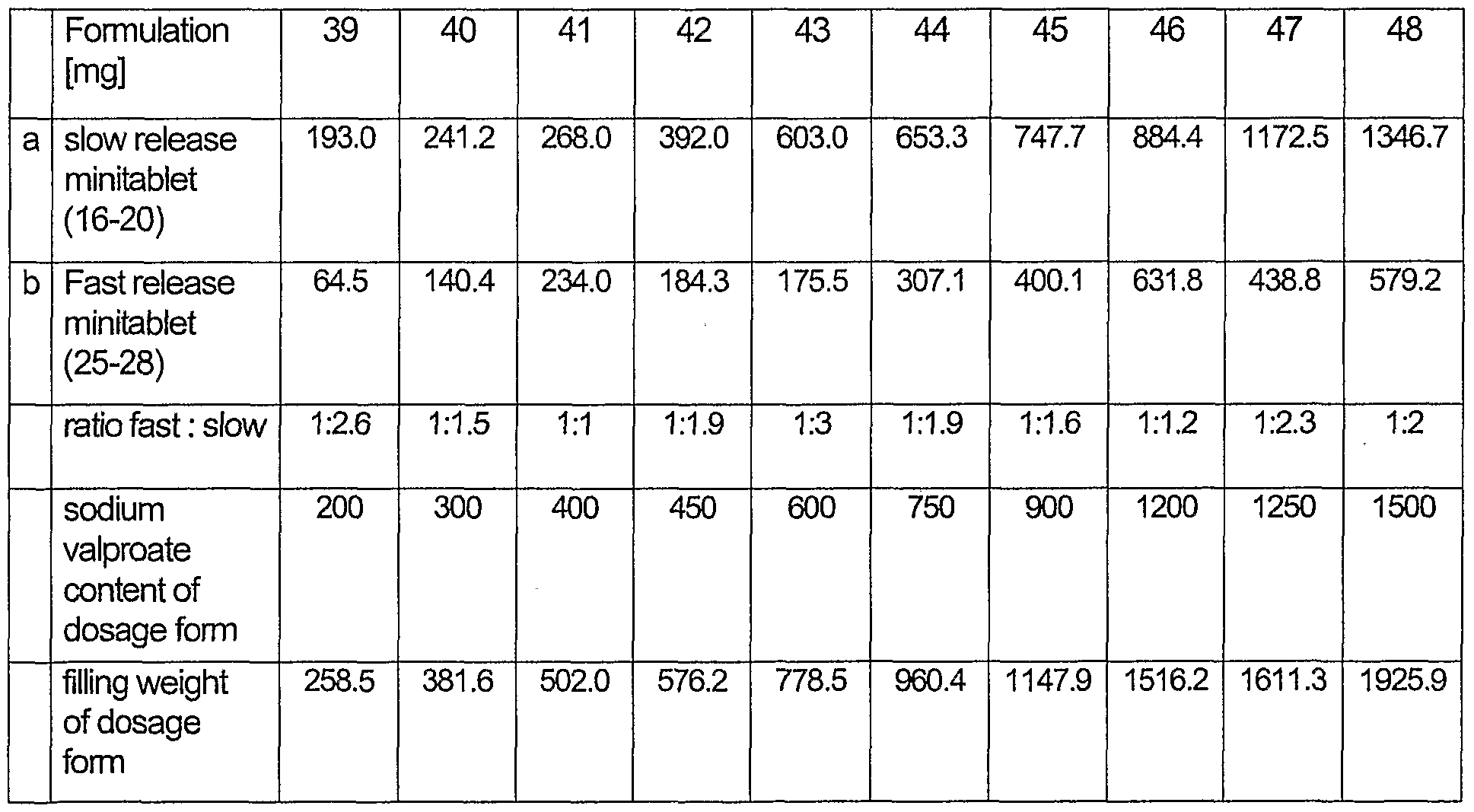
- Component "a” is mixed with 40 % of component “b", 45 % of component “c” and 60 % of component “d” in a suitable high shear mixer. The resulting mixture is then granulated on a roller compactor. The resulting granulate is blended with the residual amounts of component “b", “c” and “d” in a tumbling blender and tableted on a rotary tableting machine with the specified punch size, resulting in minitablets of the specified tablet weight.
- formulations 5,6 Batch size: 1000000 minitablets: Component "a” is mixed with 55 % of component "b", 45 % of component "c” in a suitable high shear mixer. The resulting mixture is then granulated with a dispersion of "d” in “e”. The resulting granulate is dried an sieved and then blended with the residual amounts of component "b” and “c” in a tumbling blender and tableted on a rotary tableting machine with the specified punch size, resulting in minitablets of the specified tablet weight.
- Component "a” is mixed with 70 % of component "b", 45 % of component “c” in a suitable high shear mixer. The resulting mixture is then granulated with dispersion of "d” in “e”. The resulting granulate is dried an sieved an then blended with the residual amounts of component "b” and “c” in a tumbling blender and tableted on a rotary tableting machine with the specified punch size, resulting in minitablets of the specified tablet weight.
- formulations 11 - 20 (Batch size: 1000000 minitablets): Component "a” is coated with a dispersion of "b", “c", “d” and “e” in a suitable coating unit.
- Component "a” is coated with a mixture of "b", “c", “d” and “e” in a suitable coating unit.
- Component “a” and “b” are filled in capsules or single dose containers.
- Component “b” may be mixed with 0.2 % of silicium dioxide in order to reduce electrostatic phenomena.
Landscapes
- Health & Medical Sciences (AREA)
- Engineering & Computer Science (AREA)
- Bioinformatics & Cheminformatics (AREA)
- Pharmacology & Pharmacy (AREA)
- Veterinary Medicine (AREA)
- Chemical & Material Sciences (AREA)
- Public Health (AREA)
- General Health & Medical Sciences (AREA)
- Medicinal Chemistry (AREA)
- Animal Behavior & Ethology (AREA)
- Life Sciences & Earth Sciences (AREA)
- Chemical Kinetics & Catalysis (AREA)
- Organic Chemistry (AREA)
- Nuclear Medicine, Radiotherapy & Molecular Imaging (AREA)
- General Chemical & Material Sciences (AREA)
- Neurosurgery (AREA)
- Neurology (AREA)
- Biomedical Technology (AREA)
- Diabetes (AREA)
- Hematology (AREA)
- Immunology (AREA)
- Pulmonology (AREA)
- Psychiatry (AREA)
- Pain & Pain Management (AREA)
- Oncology (AREA)
- Rheumatology (AREA)
- Epidemiology (AREA)
- Dermatology (AREA)
- Physical Education & Sports Medicine (AREA)
- Heart & Thoracic Surgery (AREA)
- Cardiology (AREA)
- Obesity (AREA)
- Child & Adolescent Psychology (AREA)
- Endocrinology (AREA)
- Communicable Diseases (AREA)
- Vascular Medicine (AREA)
- Otolaryngology (AREA)
- Orthopedic Medicine & Surgery (AREA)
- Hospice & Palliative Care (AREA)
- Emergency Medicine (AREA)
Abstract
Description


Claims

Priority Applications (8)
| Application Number | Priority Date | Filing Date | Title |
|---|---|---|---|
| JP2007509993A JP4789927B2 (en) | 2004-04-30 | 2005-05-02 | Formulation comprising a histone deacetylase inhibitor |
| AU2005237251A AU2005237251B2 (en) | 2004-04-30 | 2005-05-02 | Formulation comprising histone deacetylase inhibitors |
| CN2005800223047A CN1980647B (en) | 2004-04-30 | 2005-05-02 | Formulations comprising histone deacetylase inhibitors |
| NZ550879A NZ550879A (en) | 2004-04-30 | 2005-05-02 | Formulation of valproic acid (VPA) in fast and slow releasing components |
| US11/587,979 US20070232528A1 (en) | 2004-04-30 | 2005-05-02 | Formulation comprising histone deacetylase inhibitors |
| MXPA06012568A MXPA06012568A (en) | 2004-04-30 | 2005-05-02 | Formulation comprising histone deacetylase inhibitors. |
| CA002564877A CA2564877A1 (en) | 2004-04-30 | 2005-05-02 | Formulation comprising histone deacetylase inhibitors |
| BRPI0509340-6A BRPI0509340A (en) | 2004-04-30 | 2005-05-02 | formulation comprising histone deacetylase inhibitors |
Applications Claiming Priority (2)
| Application Number | Priority Date | Filing Date | Title |
|---|---|---|---|
| EP04010333A EP1591109B1 (en) | 2004-04-30 | 2004-04-30 | Formulation comprising histone deacetylase inhibitor exhibiting biphasic release |
| EP04010333.5 | 2004-04-30 |
Publications (1)
| Publication Number | Publication Date |
|---|---|
| WO2005105055A1 true WO2005105055A1 (en) | 2005-11-10 |
Family
ID=34924816
Family Applications (1)
| Application Number | Title | Priority Date | Filing Date |
|---|---|---|---|
| PCT/EP2005/004739 Ceased WO2005105055A1 (en) | 2004-04-30 | 2005-05-02 | Formulation comprising histone deacetylase inhibitors |
Country Status (19)
| Country | Link |
|---|---|
| US (1) | US20070232528A1 (en) |
| EP (1) | EP1591109B1 (en) |
| JP (1) | JP4789927B2 (en) |
| CN (1) | CN1980647B (en) |
| AT (1) | ATE399539T1 (en) |
| AU (1) | AU2005237251B2 (en) |
| BR (1) | BRPI0509340A (en) |
| CA (1) | CA2564877A1 (en) |
| CY (1) | CY1108301T1 (en) |
| DE (1) | DE602004014723D1 (en) |
| DK (1) | DK1591109T3 (en) |
| ES (1) | ES2308065T3 (en) |
| MX (1) | MXPA06012568A (en) |
| NZ (1) | NZ550879A (en) |
| PL (1) | PL1591109T3 (en) |
| PT (1) | PT1591109E (en) |
| SI (1) | SI1591109T1 (en) |
| WO (1) | WO2005105055A1 (en) |
| ZA (1) | ZA200608714B (en) |
Cited By (19)
| Publication number | Priority date | Publication date | Assignee | Title |
|---|---|---|---|---|
| WO2008069349A1 (en) * | 2006-12-06 | 2008-06-12 | Sapporo Medical University | Potentiation of cellular immunity using histone deacetylase (hdac) inhibitors |
| JP2009525991A (en) * | 2006-02-10 | 2009-07-16 | バイオジェネリクス ファルマ ゲーエムベーハー | Pharmaceutical formulation |
| DE102008047515A1 (en) * | 2008-09-12 | 2010-03-25 | Eberhard-Karls-Universität Tübingen Universitätsklinikum | Use of histone deacetylase inhibitor for the preparation of a medicament for prophylaxis and/or treatment of demyelinating disease, preferably autoimmune neuropathy, Guillain-Barre syndrome, acute inflammatory demyelinating polyneuropathy |
| US8691534B2 (en) | 2006-12-29 | 2014-04-08 | Celgene Corporation | Preparation of romidepsin |
| CN103800904A (en) * | 2007-01-19 | 2014-05-21 | 生物防护科技公司 | Hat acetylation promoters and uses of compositions thereof in promoting immunogenicity |
| JP2014139181A (en) * | 2006-12-26 | 2014-07-31 | Pharma Cyclics Inc | Method of using histone deacetylase inhibitors and monitoring biomarkers in combination therapy |
| US8841346B2 (en) | 2009-10-30 | 2014-09-23 | Massachusetts Institute Of Technology | Use of CI-994 and dinaline for the treatment of memory/cognition and anxiety disorders |
| US8859502B2 (en) | 2010-09-13 | 2014-10-14 | Celgene Corporation | Therapy for MLL-rearranged leukemia |
| US8957027B2 (en) | 2006-06-08 | 2015-02-17 | Celgene Corporation | Deacetylase inhibitor therapy |
| US8980825B2 (en) | 2010-07-12 | 2015-03-17 | Celgene Corporation | Romidepsin solid forms and uses thereof |
| US9101579B2 (en) | 2012-11-14 | 2015-08-11 | Celgene Corporation | Inhibition of drug resistant cancer cells |
| US9134325B2 (en) | 2012-09-07 | 2015-09-15 | Celgene Corporation | Resistance biomarkers for HDAC inhibitors |
| US9463215B2 (en) | 2013-12-27 | 2016-10-11 | Celgene Corporation | Romidepsin formulations and uses thereof |
| US9492423B2 (en) | 2011-09-13 | 2016-11-15 | Pharmacyclics Llc | Formulations of histone deacetylase inhibitor in combination with bendamustine and uses thereof |
| US9539303B2 (en) | 2006-04-24 | 2017-01-10 | Celgene Corporation | Treatment of Ras-expressing tumors |
| US20230117361A1 (en) * | 2019-12-26 | 2023-04-20 | Agency For Science, Technology And Research | Composition comprising mir-335 |
| US11819482B2 (en) | 2017-08-29 | 2023-11-21 | Conrig Pharma Aps | Composition comprising suplatast tosilate |
| US12059502B2 (en) | 2016-04-21 | 2024-08-13 | Valcuria Ab | Composition and method for pretreating cancer |
| EP3895702B1 (en) * | 2020-04-17 | 2025-09-24 | Lietuvos Sveikatos Mokslu Universitetas | Derivative of valproic acid and dichloroacetate used for the treatment of cancer |
Families Citing this family (38)
| Publication number | Priority date | Publication date | Assignee | Title |
|---|---|---|---|---|
| CA2324426A1 (en) | 1998-02-11 | 1999-08-19 | Douglas V. Faller | Compositions and methods for the treatment of cystic fibrosis |
| EP2946810A1 (en) | 2005-02-03 | 2015-11-25 | TopoTarget UK Limited | Combination therapy using an HDAC inhibitor and Vincristine for treating cancer |
| CN102579417B (en) | 2005-05-13 | 2014-11-26 | 托波塔吉特英国有限公司 | Pharmaceutical formulations of HDAC inhibitors |
| MX2008001964A (en) * | 2005-08-10 | 2008-03-26 | Novartis Ag | Method of use of deacetylase inhibitors. |
| EP2361619A1 (en) | 2005-11-10 | 2011-08-31 | TopoTarget UK Limited | Histone deacetylase (hdac) inhibitors (pxd-101) alone for the treatment of hematological cancer |
| BRPI0520686A2 (en) * | 2005-11-16 | 2009-05-19 | Univ Mexico Nacional Autonoma | use of transcriptome modifying agents associated with cancer chemotherapy or radiotherapy |
| US20070207950A1 (en) * | 2005-12-21 | 2007-09-06 | Duke University | Methods and compositions for regulating HDAC6 activity |
| EP1839656A1 (en) * | 2006-03-31 | 2007-10-03 | TopoTarget Germany AG | Use of valproic acid for the topical treatment of mild to moderate acne vulgaris |
| CA2661024A1 (en) * | 2006-08-28 | 2008-03-06 | The Regents Of The University Of California | Small molecule potentiator of hormonal therapy for breast cancer |
| US8088951B2 (en) * | 2006-11-30 | 2012-01-03 | Massachusetts Institute Of Technology | Epigenetic mechanisms re-establish access to long-term memory after neuronal loss |
| WO2008090534A1 (en) * | 2007-01-26 | 2008-07-31 | Berand Limited | Methods and compositions for inhibition of excessive weight gain, reduction of inappropriate eating behaviours and inhibition of binge eating for the treatment of obesity |
| EP2170311A4 (en) * | 2007-05-16 | 2011-10-19 | Avalon Pharmaceuticals | Compounds and methods for treating or preventing autoimmune diseases |
| CA2700173C (en) * | 2007-09-25 | 2016-10-11 | Topotarget Uk Limited | Methods of synthesis of certain hydroxamic acid compounds |
| WO2009109861A1 (en) * | 2008-03-07 | 2009-09-11 | Topotarget A/S | Methods of treatment employing prolonged continuous infusion of belinostat |
| GB0900555D0 (en) * | 2009-01-14 | 2009-02-11 | Topotarget As | New methods |
| WO2011038110A2 (en) * | 2009-09-23 | 2011-03-31 | The General Hospital Corporation | Methods of treating metabolic disease |
| US20110086869A1 (en) * | 2009-09-24 | 2011-04-14 | The Trustees Of Boston University | Methods for treating viral disorders |
| WO2011063164A2 (en) * | 2009-11-18 | 2011-05-26 | Steady Sleep Rx Co., Inc. | Sustained release cannabinoid medicaments |
| US8618068B2 (en) * | 2009-12-08 | 2013-12-31 | Trustees Of Boston University | Methods and low dose regimens for treating red blood cell disorders |
| US20110245154A1 (en) | 2010-03-11 | 2011-10-06 | Hemaquest Pharmaceuticals, Inc. | Methods and Compositions for Treating Viral or Virally-Induced Conditions |
| US9018176B2 (en) * | 2010-12-02 | 2015-04-28 | Susan Perrine | Inducers of hematopoiesis and fetal globin production for treatment of cytopenias and hemoglobin disorders |
| ES2842970T3 (en) | 2011-03-09 | 2021-07-15 | Cereno Scient Ab | Compounds and Methods for Ameliorating Altered Endogenous Fibrinolysis Using Histone Deacetylase Inhibitors |
| WO2013039956A2 (en) * | 2011-09-14 | 2013-03-21 | The Trustees Of Columbia University In The City Of New York | Compositions and methods for treating mood disorders |
| GB201417828D0 (en) | 2014-10-08 | 2014-11-19 | Cereno Scient Ab | New methods and compositions |
| FR3025105B1 (en) * | 2014-09-02 | 2018-03-02 | Centre Hospitalier Universitaire Pontchaillou | USE OF VALPROIC ACID OR ITS DERIVATIVES IN THE TREATMENT OF HEPCIDINE FAILURES AND THEIR CONSEQUENCES |
| JP2019515045A (en) * | 2016-05-03 | 2019-06-06 | スペクトリックス セラピューティクス, エルエルシーSpectrix Therapeutics, Llc | Compositions and Methods for Providing Thyroid Hormone or Analogs Thereof |
| CN109705057B (en) * | 2017-10-25 | 2023-05-30 | 成都先导药物开发股份有限公司 | Histone deacetylase inhibitor and its preparation method and use |
| CN108992442A (en) * | 2018-07-12 | 2018-12-14 | 上海交通大学医学院附属瑞金医院 | Use of MS-275 in the preparation of drugs for promoting insulin secretion |
| CN110882250B (en) * | 2018-09-07 | 2022-09-13 | 上海市生物医药技术研究院 | Application of Scriptaid in preparation of medicine, reagent and apparatus for treating asthenospermia |
| JP7541319B2 (en) * | 2019-04-18 | 2024-08-28 | 共和薬品工業株式会社 | Coated tablets containing hygroscopic ingredients |
| MX2021014639A (en) | 2019-05-31 | 2022-04-06 | Viracta Subsidiary Inc | METHODS FOR TREATING VIRUS-ASSOCIATED CANCERS WITH HISTONE DEACETYLASE INHIBITORS. |
| CN110652506A (en) * | 2019-11-09 | 2020-01-07 | 福建医科大学附属第一医院 | Use of triacetin in the preparation of drugs for preventing and treating depression |
| CN111358777A (en) * | 2020-02-24 | 2020-07-03 | 军事科学院军事医学研究院环境医学与作业医学研究所 | A method and application for improving mitochondrial function of peripheral blood mononuclear cells |
| WO2022005012A1 (en) * | 2020-06-30 | 2022-01-06 | 고려대학교 산학협력단 | Pharmaceutical composition containing sirt7 inhibitor for preventing or treating allergic diseases |
| CN112998101A (en) * | 2021-04-20 | 2021-06-22 | 上海舒泽生物科技研究所 | Solid beverage of inhibitor of KAT7 gene for human body aging and preparation method thereof |
| CN114306259B (en) * | 2021-11-18 | 2023-06-06 | 江苏宇锐医药科技有限公司 | Sodium valproate double-layer sustained release tablet and preparation method thereof |
| CN115094142B (en) * | 2022-07-19 | 2024-05-28 | 中国医学科学院肿瘤医院 | Methylation markers for diagnosis of lung intestinal adenocarcinoma |
| CN117050855A (en) * | 2023-08-11 | 2023-11-14 | 慕恩(广州)生物科技有限公司 | Methods and devices for screening strains with HDACi activity |
Citations (2)
| Publication number | Priority date | Publication date | Assignee | Title |
|---|---|---|---|---|
| EP0430287A2 (en) * | 1989-12-01 | 1991-06-05 | Abbott Laboratories | Sustained-release drug dosage units |
| WO1994027587A2 (en) * | 1993-05-28 | 1994-12-08 | Alza Corporation | Sustained antiepileptic therapy |
Family Cites Families (8)
| Publication number | Priority date | Publication date | Assignee | Title |
|---|---|---|---|---|
| DK152744C (en) * | 1982-08-13 | 1988-10-31 | Benzon As Alfred | PROCEDURE FOR THE PREPARATION OF A PHARMACEUTICAL PERORAL POLYDEPOT PREPARATION |
| IT1215726B (en) * | 1988-01-18 | 1990-02-22 | Alfa Wassermann Spa | GALENIC FORMULATIONS WITH SCHEDULED SALE. |
| IT1255522B (en) * | 1992-09-24 | 1995-11-09 | Ubaldo Conte | COMPRESSED FOR THERAPEUTIC USE SUITABLE FOR SELLING ONE OR MORE ACTIVE SUBSTANCES WITH DIFFERENT SPEEDS |
| FR2772615B1 (en) * | 1997-12-23 | 2002-06-14 | Lipha | MULTILAYER TABLET FOR INSTANT RELEASE THEN PROLONGED ACTIVE SUBSTANCES |
| US6419960B1 (en) * | 1998-12-17 | 2002-07-16 | Euro-Celtique S.A. | Controlled release formulations having rapid onset and rapid decline of effective plasma drug concentrations |
| BR0007360A (en) * | 1999-12-23 | 2001-08-14 | Johnson & Johnson | Controlled release composition |
| EP1170008A1 (en) * | 2000-07-07 | 2002-01-09 | Chemotherapeutisches Forschungsinstitut Georg-Speyer-Haus | Valproic acid and derivatives thereof as histone deacetylase inhibitors |
| JP4632166B2 (en) * | 2001-01-31 | 2011-02-16 | 日本ポリウレタン工業株式会社 | Adhesive composition for lignocellulosic hot-press molded body and method for producing hot-press molded body using the same |
-
2004
- 2004-04-30 DE DE602004014723T patent/DE602004014723D1/en not_active Expired - Lifetime
- 2004-04-30 AT AT04010333T patent/ATE399539T1/en active
- 2004-04-30 PL PL04010333T patent/PL1591109T3/en unknown
- 2004-04-30 PT PT04010333T patent/PT1591109E/en unknown
- 2004-04-30 DK DK04010333T patent/DK1591109T3/en active
- 2004-04-30 SI SI200430820T patent/SI1591109T1/en unknown
- 2004-04-30 ES ES04010333T patent/ES2308065T3/en not_active Expired - Lifetime
- 2004-04-30 EP EP04010333A patent/EP1591109B1/en not_active Expired - Lifetime
-
2005
- 2005-05-02 BR BRPI0509340-6A patent/BRPI0509340A/en not_active IP Right Cessation
- 2005-05-02 NZ NZ550879A patent/NZ550879A/en unknown
- 2005-05-02 JP JP2007509993A patent/JP4789927B2/en not_active Expired - Fee Related
- 2005-05-02 CN CN2005800223047A patent/CN1980647B/en not_active Expired - Fee Related
- 2005-05-02 CA CA002564877A patent/CA2564877A1/en not_active Abandoned
- 2005-05-02 WO PCT/EP2005/004739 patent/WO2005105055A1/en not_active Ceased
- 2005-05-02 US US11/587,979 patent/US20070232528A1/en not_active Abandoned
- 2005-05-02 MX MXPA06012568A patent/MXPA06012568A/en active IP Right Grant
- 2005-05-02 AU AU2005237251A patent/AU2005237251B2/en not_active Ceased
-
2006
- 2006-10-17 ZA ZA200608714A patent/ZA200608714B/en unknown
-
2008
- 2008-08-28 CY CY20081100925T patent/CY1108301T1/en unknown
Patent Citations (2)
| Publication number | Priority date | Publication date | Assignee | Title |
|---|---|---|---|---|
| EP0430287A2 (en) * | 1989-12-01 | 1991-06-05 | Abbott Laboratories | Sustained-release drug dosage units |
| WO1994027587A2 (en) * | 1993-05-28 | 1994-12-08 | Alza Corporation | Sustained antiepileptic therapy |
Non-Patent Citations (1)
| Title |
|---|
| QIU Y ET AL: "ONCE-A-DAY CONTROLLED-RELEASE DOSAGE FORM OF DIVALPROEX SODIUM I: FORMULATION DESIGN AND IN VITRO/IN VIVO INVESTIGATIONS", JOURNAL OF PHARMACEUTICAL SCIENCES, AMERICAN PHARMACEUTICAL ASSOCIATION. WASHINGTON, US, vol. 92, no. 6, June 2003 (2003-06-01), pages 1166 - 1173, XP001161543, ISSN: 0022-3549 * |
Cited By (28)
| Publication number | Priority date | Publication date | Assignee | Title |
|---|---|---|---|---|
| JP2009525991A (en) * | 2006-02-10 | 2009-07-16 | バイオジェネリクス ファルマ ゲーエムベーハー | Pharmaceutical formulation |
| US8883205B2 (en) | 2006-02-10 | 2014-11-11 | Biogenerics Pharma Gmbh | Microtablet-based pharmaceutical preparation |
| US9539303B2 (en) | 2006-04-24 | 2017-01-10 | Celgene Corporation | Treatment of Ras-expressing tumors |
| US9259452B2 (en) | 2006-06-08 | 2016-02-16 | Gelgene Corporation | Deacetylase inhibitor therapy |
| US8957027B2 (en) | 2006-06-08 | 2015-02-17 | Celgene Corporation | Deacetylase inhibitor therapy |
| JP2010511597A (en) * | 2006-12-06 | 2010-04-15 | 北海道公立大学法人 札幌医科大学 | Cellular immunity enhancer using substance having histone deacetylase inhibitory activity |
| WO2008069349A1 (en) * | 2006-12-06 | 2008-06-12 | Sapporo Medical University | Potentiation of cellular immunity using histone deacetylase (hdac) inhibitors |
| JP2014139181A (en) * | 2006-12-26 | 2014-07-31 | Pharma Cyclics Inc | Method of using histone deacetylase inhibitors and monitoring biomarkers in combination therapy |
| US9408816B2 (en) | 2006-12-26 | 2016-08-09 | Pharmacyclics Llc | Method of using histone deacetylase inhibitors and monitoring biomarkers in combination therapy |
| US8691534B2 (en) | 2006-12-29 | 2014-04-08 | Celgene Corporation | Preparation of romidepsin |
| CN103800904A (en) * | 2007-01-19 | 2014-05-21 | 生物防护科技公司 | Hat acetylation promoters and uses of compositions thereof in promoting immunogenicity |
| DE102008047515A1 (en) * | 2008-09-12 | 2010-03-25 | Eberhard-Karls-Universität Tübingen Universitätsklinikum | Use of histone deacetylase inhibitor for the preparation of a medicament for prophylaxis and/or treatment of demyelinating disease, preferably autoimmune neuropathy, Guillain-Barre syndrome, acute inflammatory demyelinating polyneuropathy |
| US8841346B2 (en) | 2009-10-30 | 2014-09-23 | Massachusetts Institute Of Technology | Use of CI-994 and dinaline for the treatment of memory/cognition and anxiety disorders |
| US8980825B2 (en) | 2010-07-12 | 2015-03-17 | Celgene Corporation | Romidepsin solid forms and uses thereof |
| US9624271B2 (en) | 2010-07-12 | 2017-04-18 | Celgene Corporation | Romidepsin solid forms and uses thereof |
| US9518094B2 (en) | 2010-07-12 | 2016-12-13 | Celgene Corporation | Romidepsin solid forms and uses thereof |
| US8859502B2 (en) | 2010-09-13 | 2014-10-14 | Celgene Corporation | Therapy for MLL-rearranged leukemia |
| US9492423B2 (en) | 2011-09-13 | 2016-11-15 | Pharmacyclics Llc | Formulations of histone deacetylase inhibitor in combination with bendamustine and uses thereof |
| US9134325B2 (en) | 2012-09-07 | 2015-09-15 | Celgene Corporation | Resistance biomarkers for HDAC inhibitors |
| US9101579B2 (en) | 2012-11-14 | 2015-08-11 | Celgene Corporation | Inhibition of drug resistant cancer cells |
| US9463215B2 (en) | 2013-12-27 | 2016-10-11 | Celgene Corporation | Romidepsin formulations and uses thereof |
| US9468664B2 (en) | 2013-12-27 | 2016-10-18 | Celgene Corporation | Romidepsin formulations and uses thereof |
| US9782451B2 (en) | 2013-12-27 | 2017-10-10 | Celgene Corporation | Romidepsin formulations and uses thereof |
| US9795650B2 (en) | 2013-12-27 | 2017-10-24 | Celgene Corporation | Romidepsin formulations and uses thereof |
| US12059502B2 (en) | 2016-04-21 | 2024-08-13 | Valcuria Ab | Composition and method for pretreating cancer |
| US11819482B2 (en) | 2017-08-29 | 2023-11-21 | Conrig Pharma Aps | Composition comprising suplatast tosilate |
| US20230117361A1 (en) * | 2019-12-26 | 2023-04-20 | Agency For Science, Technology And Research | Composition comprising mir-335 |
| EP3895702B1 (en) * | 2020-04-17 | 2025-09-24 | Lietuvos Sveikatos Mokslu Universitetas | Derivative of valproic acid and dichloroacetate used for the treatment of cancer |
Also Published As
| Publication number | Publication date |
|---|---|
| AU2005237251A1 (en) | 2005-11-10 |
| EP1591109B1 (en) | 2008-07-02 |
| NZ550879A (en) | 2010-05-28 |
| BRPI0509340A (en) | 2007-09-18 |
| ES2308065T3 (en) | 2008-12-01 |
| JP4789927B2 (en) | 2011-10-12 |
| US20070232528A1 (en) | 2007-10-04 |
| DE602004014723D1 (en) | 2008-08-14 |
| DK1591109T3 (en) | 2008-10-06 |
| PL1591109T3 (en) | 2008-11-28 |
| CY1108301T1 (en) | 2014-02-12 |
| ATE399539T1 (en) | 2008-07-15 |
| EP1591109A1 (en) | 2005-11-02 |
| CA2564877A1 (en) | 2005-11-10 |
| PT1591109E (en) | 2008-09-05 |
| JP2007535518A (en) | 2007-12-06 |
| SI1591109T1 (en) | 2008-10-31 |
| CN1980647A (en) | 2007-06-13 |
| CN1980647B (en) | 2010-08-18 |
| ZA200608714B (en) | 2008-07-30 |
| MXPA06012568A (en) | 2007-04-30 |
| AU2005237251B2 (en) | 2010-11-04 |
Similar Documents
| Publication | Publication Date | Title |
|---|---|---|
| AU2005237251B2 (en) | Formulation comprising histone deacetylase inhibitors | |
| US11896722B2 (en) | Methods and compositions particularly for treatment of attention deficit disorder | |
| ES2895918T3 (en) | Dabigatran etexilate oral pharmaceutical compositions | |
| RS59061B1 (en) | Pharmaceutical composition | |
| BR112018001859B1 (en) | PILL AND METHOD FOR PRODUCING A PILL | |
| TW201328726A (en) | Dry coated tablet | |
| AU2008309059A1 (en) | Pharmaceutical combination of Aliskiren and Valsartan | |
| EP2705843A1 (en) | Therapeutic approaches for treating epilepsy and related disorders through reduction of epileptogenesis | |
| JP2002332226A (en) | Method for producing drug granules, drug granules, and pharmaceutical preparations using the same | |
| US8962020B2 (en) | Long-acting and controlled release formulations of 2-[(3-chlorophenyl) amino] phenylacetic acid | |
| CA2595496C (en) | Medicament that is intended for oral administration, comprising a cyclooxygenase-2 inhibitor, and preparation method thereof |
Legal Events
| Date | Code | Title | Description |
|---|---|---|---|
| AK | Designated states |
Kind code of ref document: A1 Designated state(s): AE AG AL AM AT AU AZ BA BB BG BR BW BY BZ CA CH CN CO CR CU CZ DE DK DM DZ EC EE EG ES FI GB GD GE GH GM HR HU ID IL IN IS JP KE KG KM KP KR KZ LC LK LR LS LT LU LV MA MD MG MK MN MW MX MZ NA NI NO NZ OM PG PH PL PT RO RU SC SD SE SG SK SL SM SY TJ TM TN TR TT TZ UA UG US UZ VC VN YU ZA ZM ZW |
|
| AL | Designated countries for regional patents |
Kind code of ref document: A1 Designated state(s): BW GH GM KE LS MW MZ NA SD SL SZ TZ UG ZM ZW AM AZ BY KG KZ MD RU TJ TM AT BE BG CH CY CZ DE DK EE ES FI FR GB GR HU IE IS IT LT LU MC NL PL PT RO SE SI SK TR BF BJ CF CG CI CM GA GN GQ GW ML MR NE SN TD TG |
|
| 121 | Ep: the epo has been informed by wipo that ep was designated in this application | ||
| WWE | Wipo information: entry into national phase |
Ref document number: 2006/08714 Country of ref document: ZA |
|
| WWE | Wipo information: entry into national phase |
Ref document number: 2005237251 Country of ref document: AU Ref document number: 6231/DELNP/2006 Country of ref document: IN |
|
| WWE | Wipo information: entry into national phase |
Ref document number: 2007509993 Country of ref document: JP Ref document number: 550879 Country of ref document: NZ Ref document number: 2564877 Country of ref document: CA |
|
| WWE | Wipo information: entry into national phase |
Ref document number: PA/a/2006/012568 Country of ref document: MX |
|
| NENP | Non-entry into the national phase |
Ref country code: DE |
|
| WWW | Wipo information: withdrawn in national office |
Ref document number: DE |
|
| ENP | Entry into the national phase |
Ref document number: 2005237251 Country of ref document: AU Date of ref document: 20050502 Kind code of ref document: A |
|
| WWP | Wipo information: published in national office |
Ref document number: 2005237251 Country of ref document: AU |
|
| WWE | Wipo information: entry into national phase |
Ref document number: 11587979 Country of ref document: US Ref document number: 2007232528 Country of ref document: US |
|
| WWE | Wipo information: entry into national phase |
Ref document number: 200580022304.7 Country of ref document: CN |
|
| 122 | Ep: pct application non-entry in european phase | ||
| ENP | Entry into the national phase |
Ref document number: PI0509340 Country of ref document: BR |
|
| WWP | Wipo information: published in national office |
Ref document number: 11587979 Country of ref document: US |