WO2005000878A2 - Compositions of lipopeptide antibiotic derivatives and methods of use thereof - Google Patents

Compositions of lipopeptide antibiotic derivatives and methods of use thereof Download PDF

Info

Publication number
WO2005000878A2
WO2005000878A2 PCT/US2004/021039 US2004021039W WO2005000878A2 WO 2005000878 A2 WO2005000878 A2 WO 2005000878A2 US 2004021039 W US2004021039 W US 2004021039W WO 2005000878 A2 WO2005000878 A2 WO 2005000878A2
Authority
WO
WIPO (PCT)
Prior art keywords
compound
acid
amphomycin
substituted
amino acid
Prior art date
Legal status (The legal status is an assumption and is not a legal conclusion. Google has not performed a legal analysis and makes no representation as to the accuracy of the status listed.)
Ceased
Application number
PCT/US2004/021039
Other languages
French (fr)
Other versions
WO2005000878A8 (en
WO2005000878A3 (en
Inventor
Dale R. Cameron
Vincent A. Boyd
Richard A. Leese
William V. Curran
Donald B. Borders
Paulo W. M. Sgarbi
Shirley A. Wacowich-Sgarbi
Matthew Nodwell
Yuchen Chen
Qi Jia
Dominique Dugourd
Current Assignee (The listed assignees may be inaccurate. Google has not performed a legal analysis and makes no representation or warranty as to the accuracy of the list.)
Biowest Therapeutics Inc
Original Assignee
Micrologix Biotech Inc
Migenix Inc
Priority date (The priority date is an assumption and is not a legal conclusion. Google has not performed a legal analysis and makes no representation as to the accuracy of the date listed.)
Filing date
Publication date
Priority to JP2006520201A priority Critical patent/JP2007536200A/en
Priority to EP04777315A priority patent/EP1656390A2/en
Priority to NZ544750A priority patent/NZ544750A/en
Priority to CA002530063A priority patent/CA2530063A1/en
Priority to AU2004252174A priority patent/AU2004252174A1/en
Priority to EA200600280A priority patent/EA010294B1/en
Application filed by Micrologix Biotech Inc, Migenix Inc filed Critical Micrologix Biotech Inc
Publication of WO2005000878A2 publication Critical patent/WO2005000878A2/en
Publication of WO2005000878A3 publication Critical patent/WO2005000878A3/en
Priority to IL172647A priority patent/IL172647A0/en
Anticipated expiration legal-status Critical
Publication of WO2005000878A8 publication Critical patent/WO2005000878A8/en
Ceased legal-status Critical Current

Links

Classifications

    • C—CHEMISTRY; METALLURGY
    • C07—ORGANIC CHEMISTRY
    • C07K—PEPTIDES
    • C07K7/00—Peptides having 5 to 20 amino acids in a fully defined sequence; Derivatives thereof
    • C07K7/50—Cyclic peptides containing at least one abnormal peptide link
    • C07K7/54—Cyclic peptides containing at least one abnormal peptide link with at least one abnormal peptide link in the ring
    • C07K7/56—Cyclic peptides containing at least one abnormal peptide link with at least one abnormal peptide link in the ring the cyclisation not occurring through 2,4-diamino-butanoic acid
    • A—HUMAN NECESSITIES
    • A61—MEDICAL OR VETERINARY SCIENCE; HYGIENE
    • A61P—SPECIFIC THERAPEUTIC ACTIVITY OF CHEMICAL COMPOUNDS OR MEDICINAL PREPARATIONS
    • A61P13/00—Drugs for disorders of the urinary system
    • A61P13/02—Drugs for disorders of the urinary system of urine or of the urinary tract, e.g. urine acidifiers
    • A—HUMAN NECESSITIES
    • A61—MEDICAL OR VETERINARY SCIENCE; HYGIENE
    • A61P—SPECIFIC THERAPEUTIC ACTIVITY OF CHEMICAL COMPOUNDS OR MEDICINAL PREPARATIONS
    • A61P13/00—Drugs for disorders of the urinary system
    • A61P13/12—Drugs for disorders of the urinary system of the kidneys
    • A—HUMAN NECESSITIES
    • A61—MEDICAL OR VETERINARY SCIENCE; HYGIENE
    • A61P—SPECIFIC THERAPEUTIC ACTIVITY OF CHEMICAL COMPOUNDS OR MEDICINAL PREPARATIONS
    • A61P31/00—Antiinfectives, i.e. antibiotics, antiseptics, chemotherapeutics
    • A61P31/04—Antibacterial agents
    • A—HUMAN NECESSITIES
    • A61—MEDICAL OR VETERINARY SCIENCE; HYGIENE
    • A61K—PREPARATIONS FOR MEDICAL, DENTAL OR TOILETRY PURPOSES
    • A61K38/00—Medicinal preparations containing peptides

Definitions

  • the present invention relates generally to the treatment of infectious disease, and more specifically, to methods and compounds for preparation of lipopeptide antibiotic derivative compositions comprising derivatives of lipopeptide antibiotics, and therapeutic uses thereof.
  • lipopeptide antibiotics have either a cyclic peptide core or a cyclic depsipeptide core acylated with a lipophilic fragment.
  • the lipophilic fragment e.g., an unsaturated fatty acid
  • drug-resistance to these and other antibiotics is becoming an increasingly common problem all over the world for controlling several previously treatable infectious diseases.
  • infections due to Gram-positive, drug-resistant organisms such as those due to vancomycin-resistant Enterococci (VRE) and methicillin-resistant Staphylococcus aureus (MRS A) are on the rise.
  • VRE vancomycin-resistant Enterococci
  • MRS A methicillin-resistant Staphylococcus aureus
  • nosocomial infections i.e., those arising in hospitals
  • bacteria having resistance to multiple antibiotics is increasingly common.
  • the present invention meets such needs, and further provides other related advantages.
  • the present invention provides lipopeptide derivatives, in particular amphomycin or aspartocin derivatives, and compositions of such lipopeptides for use in treating or preventing, for example, primary infection sites, secondary infections arising from a primary disease state, or infections associated with foreign bodies.
  • the present invention provides amphomycin-based or aspartocin-based lipopeptide antibiotics, wherein the antibiotic comprises a cyclic peptide "core" and a lipophilic substituent.
  • the cyclic peptide core includes one or more amino acids having a side chain with an amine group, and derivatives thereof, which is typically at the 9-position of the core macrocyclic peptide.
  • the amino acid at the 9-position of the core macrocyclic peptide is a Dab 9 .
  • the macrocyclic peptide core also includes an at least one amino terminal exocyclic amino acid, which is typically Asp or Asn.
  • the amino terminal exocyclic amino acid is located between the cyclic portion of a core peptide and a lipophilic substituent.
  • the instant disclosure provides any of the aforementioned compounds wherein R 1 is OH or R 1 is NH 2 .
  • any of the aforementioned compounds are provided wherein R is at least one amino acid selected from glycine, ⁇ -alanine, sarcosine, lysine, or any combination thereof, or is at least one amino acid selected from Gly, ⁇ -alanine, GABA, 5-aminopentanoic acid, 6- aminohexanoic acid, Lys, gDab, Sar, Orn, Dap, hLys, or any combination thereof-
  • the R amino acid includes two amino acids selected from glycine-lysine or sarcosine-lysine.
  • R 3 further comprises at least one protecting group.
  • R and R are optionally substituted with a straight chain saturated aliphatic or hydroxy aliphatic moiety having a chain length of from 10 to 15 carbon atoms.
  • provided herein are certain compounds, such as compound 91 of Table 6D, compound 331 or 332 of Table 16, compound 86 of Table 6D, compound 87 or 280 of Table 7, or compound 89 of Table 8.
  • the instant disclosure provides any of the aforementioned compounds wherein R 1 is OH or R 1 is NH .
  • any of the aforementioned compounds are provided wherein R is a 10 to 20 membered heteroarylalkyl, or a straight chain saturated aliphatic or hydroxy aliphatic moiety having a chain length of from 5 to 17 carbon atoms, or R 4 is a straight chain saturated aliphatic or hydroxy aliphatic moiety having a chain length of from 8 to 16 carbon atoms.
  • L is at least one amino acid or at least one substituted amino acid, such as glycine, sarcosine, phenylglycine, phenylalanine, O-methyl-aspartic acid, O-t-butyl- aspartic acid, j9-aminobenzoic acid (PAB A), m-aminobenzoic acid, -hydrazino-benzoic acid, /7-aminophenylpropanoic acid, (p-amino-phenylpropanoic acid) ⁇ wherein n is 1 or 2, L-BBTA, m-amino-phenylacetic acid, -amino-phenylacetic acid (Apa), /.--amino- trans-cinnamic acid, ⁇ -aminobenzoic acid, .o-diamino benzoic acid, ⁇ ,m-diamino benzoic acid, 0,/7-diaminobenzo
  • any of the aforementioned compounds are provided wherein R 3 is at least one amino acid selected from Gly, ⁇ -alanine, GABA, 5-aminopentanoic acid, 6- aminohexanoic acid, Lys, gDab, Sar, Orn, Dap, or hLys.
  • R further comprises at least one protecting group.
  • any of the aforementioned compounds includecompound 103, 105, 106, 107, 112, 115, 116, 118, 311, 313, 314, 315 316, 317, 344, 345, 346, 358, 359, or 360 of Table 3; compound 104, 108, 109, 110, 111, 113, 122, 119, 281, 293, 294, 296, 297, 300, 301, 303, 310, 312 or 361 of Table 6D; compound 117 of Table 6C; compound 21, 85, 282, 283, 284, 285 or 123 of Table 7; compound 120 of Table 8; compound 305, 320, 319, 337, 374, 337, 305, 320 or 319 of Table 14; compound 286, 321, 304, 254, 307, 295 or 291 of Table 4; or compound 288, 306, 290, 362, 289, 292, 287 or 302 of Table 6A.
  • the instant disclosure provides any of the aforementioned compounds wherein R 1 is OH or R 1 is NH 2 .
  • any of the aforementioned compounds include compound 210, 373, 223, 237, 235, or 81 of Table 12.
  • R 3 is at least one amino acid or substituted amino acid selected from Gly, ⁇ -alanine, GABA, 5-aminopentanoic acid, 6- aminohexanoic acid, Lys, gDab, Sar, Orn, Dap, and hLys.
  • R 3 further comprises at least one protecting group.
  • the invention provides an antimicrobial compound and pharmaceutically acceptable salts thereof, such as compound 3 of Table 1; compound 4 of Table 10; compound 60 of Table 13; compound 128 of Table 16; compound 147 of Table 1; compound 199 of Table 10; compound 253 of Table 4; or compound 278 of Table 4.
  • any of the aforementioned compounds may be structurally pure, or they may be in the form of a composition comprising a mixture of one or more structurally different compounds.
  • the compounds of the invention may be in the form of a free acid or base, or in the form of a salt, such as a pharmaceutically acceptable salt.
  • the core cyclic peptide is a ⁇ -isomer, anhydro isomer, or a dianhydro isomer.
  • the present invention provides pharmaceutical compositions comprising any of the aforementioned compounds.
  • the compositions comprise one or more compounds of the invention and a pharmaceutically or physiologically acceptable carrier, excipient or diluent.
  • the exact nature of the carrier, excipient, or diluent will depend upon the desired use for the composition, and may range from being suitable or acceptable for environmental or industrial uses, to being suitable or acceptable for veterinary uses, to being suitable or acceptable for human use (i.e., pharmaceutically acceptable).
  • the present invention provides methods of synthesizing the compounds of the invention.
  • the compounds of the invention may be prepared from a parent amphomycin-based or aspartocin-based lipopeptide antibiotic isolated from culture by reacting the parent antibiotic with an appropriately protected reagent, such as an appropriately protected amino acid, under conditions suitable for attaching the reagent to the amino terminal amino group of an exocyclic amino acid or a ⁇ -nitrogen of a macrocyclic Dab 9 residue.
  • an appropriately protected reagent such as an appropriately protected amino acid
  • protecting groups may be removed to yield compounds of the invention having a specific amino terminal subsituent with or without a linker, a specific Dab subsituent with or without a linker, and any combination thereof.
  • such parent antibiotics are mixtures of compounds that differ from one another with respect to the structures of their macrocyclic peptide cores or lipophilic subsituents.
  • the resultant amino terminal or Dab 9 derivative of the invention is obtained as a mixture of compounds, the structures and relative quantities of which are dictated by the structures and relative quantities of the compounds comprising the parent antibiotic mixture.
  • the component compounds comprising the parent antibiotic mixture are separated and isolated from one another before derivatization of an amino terminal amino acid or of a macrocyclic Dab 9 residue-
  • the separation and isolation may be carried out on the resultant product of the amino terminal amino acid or Dab 9 derivatization reaction, either before or after removal of any protecting groups, to yield structurally pure amino terminal amino acid or Dab derivatives of the invention, and any combination thereof.
  • the structure of a fatty acid moiety at the amino terminus of a parent antibiotic is unknown.
  • the lipophilic fatty acid moiety is removed and replaced with a lipophilic substiuent, amino acid substituent, and combinations thereof, optionally attached via a linker group L, having a specified structure to provide amino terminal amino acid or Dab 9 derivative of the invention having precisely defined substituents with or without linkers.
  • the parent antibiotic mixture is protected at the ⁇ -amino group of the macrocyclic Dab 9 residue and delipidated to yield a delipidated intermediate, and this delipidated intermediate is then reacted with a desired lipophilic substiuent under acylating conditions to yield a synthetic antibiotic having a precisely defined lipophilic moiety.
  • this synthetic antibiotic may be derivatized according to the methods described above to yield Dab 9 derivatives of the invention.
  • the above-described synthetic pathways yield protected intermediate compounds and these intermediates constitute another aspect of the instant invention (as described above and herein, containing a protecting group).
  • the present invention provides methods of inhibiting the growth of microbes, such as Gram-positive bacteria.
  • the method generally involves contacting a microbe with one or more compounds of the invention (or an acceptable salt thereof) in an amount effective to inhibit the growth of the microbe.
  • the method may be practiced to achieve a microbistatic effect where the growth of the microbe is inhibited, or to achieve a microbicidal effect, where the microbe is killed.
  • the present invention provides methods for treating or preventing microbial infections, such as infections caused by Gram-positive bacteria, in a subject such as human, plant or animal.
  • the methods involve administering to a subject one or more compounds or compositions of the invention in an amount effective to treat or prevent the infection.
  • the compounds or compositions may be administered systemically or applied topically, depending on the nature of the infection.
  • compounds and compositions of the invention are used to treat or prevent skin and skin structure infections (including complicated infections), or pneumonia.
  • Figure 1 is an illustration of exemplary ⁇ -isomers of the derivative lipopeptide antibiotic compounds of the invention.
  • Figure 2 is an illustration of exemplary anhydro and dianhydro isomers of the derivative lipopeptide antibiotic compounds of the invention.
  • Figure 3 is an illustration (Scheme I) of two general synthetic approaches for making derivative lipopeptide antibiotic compounds of the invention.
  • Figures 4A-4I show kill curves for various lipopeptide derivatives against Enterococcus faecalis.
  • Figures 5A-5K show kill curves for various lipopeptide derivatives against Staphylococcus aureus.
  • the present invention provides compositions and methods for using and making antimicrobial lipopeptide derivatives to treat or prevent infectious diseases.
  • the invention therefore, relates generally to the surprising discovery that certain lipopeptide antibiotics may be chemically modified to maximize their in vivo and in vitro antimicrobial activity.
  • these lipopeptide antibiotics are useful for treating or preventing infections involving Gram-positive bacteria, such as Enterococci, Streptococci, and Staphylococci, which may arise in a variety of settings (e.g., nosocomial infections, acne, and infections associated with intravascular penetration, such as in the use of hypodermic needles, catheters, and other medical devices).
  • amino acids refer to a natural (those occurring in nature) amino acid, a substituted natural amino acid, a non-natural amino acid, a substituted non-natural amino acid, or any combination thereof.
  • the designations for natural amino acids are herein set forth as either the standard one- or three-letter code.
  • Natural polar amino acids include asparagine (Asp or N) and glutamine (Gin or Q); as well as basic amino acids such as arginine (Arg or R), lysine (Lys or K), histidine (His or H), and derivatives thereof; and acidic amino acids such as aspartic acid (Asp or D) and glutamic acid (Glu or E), and derivatives thereof.
  • Natural hydrophobic amino acids include tryptophan (Trp or W), phenylalanine (Phe or F), isoleucine (He or I), leucine (Leu or L), methionine (Met or M), valine (Val or V), and derivatives thereof; as well as other non-polar amino acids such as glycine (Gly or G), alanine (Ala or A), proline (Pro or P), and derivatives thereof.
  • Natural amino acids of intermediate polarity include serine (Ser or S), threonine (Thr or T), tyrosine (Tyr or Y), cysteine (Cys or C), and derivatives thereof. Unless specified otherwise, any amino acid described herein may be in either the D- or L-configuration.
  • Other exemplary amino acids include cinnamic acids (such as aminocinnamic acids, amino-trans-cinnamic acids, amino-cis-cinnamic acids, ⁇ -amino- cinnamic acids, m-amino-cinnamic acids, -amino-cinnamic acids, o-amino-trans- cinnamic acid, m-amino-trans-cinnamic acid, ?-amino-trans-cinnamic acid, ⁇ -amino- cis-cinnamic acid, m-amino-cis-cinnamic>acid,/?-amino-cis-cinnamic acid), phenylglycine (Phg), 2,3-diaminobutyric acid (Dab), 2,4
  • sarcosine Sar or N-methyl glycine
  • 6-aminohexanoic acid Ahx
  • para-f uoro- Phenylalanine p-F-Phe
  • ⁇ -amino-butyric acid GABA
  • benzoic acids such as aminobenzoic acids, diaminobenzoic acids, triaminobenzoic acids, ⁇ -amino-benzoic acid, m-amino-benzoic acid, 7-aminobenzoic acid (PABA), 0,0-diamino-benzoic acid, o.m-diamino-benzoic acid, ⁇ , >-diamino-benzoic acid, m.rn-diamino-benzoic acid, m,p- diamino-benzoic acid, 0,0, m-triamino-benzoic acid, 0,0, / triamino-benzoic acid, o,m,
  • any concentration range, percentage range, ratio range, or integer range is to be understood to include the value of any integer within the recited range and, when appropriate, fractions thereof (such as one tenth and one hundredth of an integer), unless otherwise indicated.
  • alkyl refers to a saturated or unsaturated, branched, straight-chain or cyclic monovalent hydrocarbon group derived by the removal of one hydrogen atom from a single carbon atom of a parent alkane, alkene or alkyne.
  • Typical alkyl groups include methyl; ethyls such as ethanyl, ethenyl, ethynyl; propyls such as propan-1-yl, propan-2-yl, cyclopropan-1-yl, prop-1-en-l-yl, prop-1-en- 2-yl, prop-2-en-l-yl (allyl), cycloprop-1-en-l-yl; cycloprop-2-en-l-yl, prop-1-yn-l-yl , prop-2-yn-l-yl, etc.; butyls such as butan-1-yl, butan-2-yl, 2-methyl-propan-l-yl, 2- methyl-propan-2-yl, cyclobutan-1-yl, but-1-en-l-yl, but-l-en-2-yl, 2-methyl-prop-l-en- 1-yl, but-2-en-l-yl , but-2-en-2
  • alkyl is specifically intended to include straight- or branched- hydrocarbons having from 1 to 25 carbon atoms, more preferably 5 to 20, and most preferably 10 to 18.
  • the alkyls may have any degree or level of saturation, i.e., groups having exclusively single carbon-carbon bonds, groups having one or more double carbon-carbon bonds, groups having one or more triple carbon-carbon bonds and groups having mixtures of single, double and triple carbon-carbon bonds. Where a specific level of saturation is intended, the expressions “alkanyl,” “alkenyl,” and “alkynyl” are used.
  • the expression “lower alkyl” refers to alkyl groups comprising from 1 to 8 carbon atoms. The alkyl group may be substituted or unsubstituted.
  • alkanyl refers to a saturated branched, straight-chain or cyclic alkyl group. Typical alkanyl groups include methanyl; ethanyl; propanyls such as propan-1- yl, propan-2-yl (isopropyl), cyclopropan-1-yl, etc.; butyanyls such as butan- 1-yl, butan-
  • Alkenyl refers to an unsaturated branched, straight-chain, cyclic alkyl group, or combinations thereof having at least one carbon-carbon double bond derived by the removal of one hydrogen atom from a single carbon atom of a parent alkene.
  • the group may be in either the cis or trans conformation about the double bond(s).
  • Typical alkenyl groups include ethenyl; propenyls such as prop- 1 -en- 1-yl, prop-l-en-2- yl, prop-2-en-l-yl (allyl), prop-2-en-2-yl, cycloprop-1-en-l-yl; cycloprop-2-en-l-yl; butenyls such as but- 1 -en- 1-yl, but-l-en-2-yl, 2-methyl-prop-l-en-l-yl, but-2-en-l-yl , but-2-en-l-yl, but-2-en-2-yl, buta-l,3-dien-l-yl, buta-l,3-dien-2-yl, cyclobut-1-en-l-yl, cyclobut-l-en-3-yl, cyclobuta-l,3-dien-l-yl, etc.; and the like.
  • alkenyl group may be substituted or unsubstituted.
  • Alkynyl refers to an unsaturated branched, straight-chain or cyclic alkyl group having at least one carbon-carbon triple bond derived by the removal of one hydrogen atom from a single carbon atom of a parent alkyne.
  • Typical alkynyl groups include ethynyl; propynyls such as prop- 1-yn- 1-yl, prop-2-yn-l-yl, etc.; butynyls such as but- 1-yn- 1-yl, but-l-yn-3-yl, but-3-yn-l-yl, etc.; and the like.
  • Alkyldiyl refers to a saturated or unsaturated, branched, straight- chain or cyclic divalent hydrocarbon group derived by the removal of one hydrogen atom from each of two different carbon atoms of a parent alkane, alkene or alkyne, or by the removal of two hydrogen atoms from a single carbon atom of a parent alkane, alkene or alkyne.
  • the two monovalent radical centers or each valency of the divalent radical center can form bonds with the same or different atoms.
  • Typical alkyldiyl groups include methandiyl; ethyldiyls such as ethan-l,l-diyl, ethan-l,2-diyl, ethen-l,l-diyl, ethen-l,2-diyl; propyldiyls such as propan-l,l-diyl, propan-l,2-diyl, propan-2,2-diyl, propan-l,3-diyl, cyclopropan-l ,l-diyl, cyclopropan-l,2-diyl, prop-l-en-l,l-diyl, prop-l-en-l,2-diyl, prop-2-en-l,2-diyl, prop-l-en-l,3-diyl, cycloprop-l-en-l,2-diyl,2-diyl, prop-2-en-l,2-
  • alkanyldiyl alkenyldiyl or alkynyldiyl
  • alkyldiyl group is (C ⁇ -C 4 ) alkyldiyl.
  • saturated acyclic alkanyldiyl groups in which the radical centers are at the terminal carbons e.g., methandiyl (methano); ethan- 1,2-diyl (ethano); propan- 1,3 -diyl (propano); butan- 1,4-diyl (butano); and the like (also referred to as alkyl enos, defined infra).
  • Alkyleno refers to a straight-chain alkyldiyl group having two terminal monovalent radical centers derived by the removal of one hydrogen atom from each of the two terminal carbon atoms of straight-chain parent alkane, alkene or alkyne.
  • Typical alkyleno groups include methano; ethylenos such as ethano, etheno, ethyno; propylenos such as propano, prop[l]eno, propa[l,2]dieno, prop[l]yno, etc.; butylenos such as butano, but[l]eno, but[2]eno, buta[l,3]dieno, but[l]yno, but[2]yno, but[l,3]diyno, etc.; and the like. Where specific levels of saturation are intended, the nomenclature alkano, alkeno or alkyno is used.
  • the alkyleno group is (C ⁇ -C 6 ) or (C ⁇ -C 4 ) alkyleno.
  • straight-chain saturated alkano groups e.g. , methano, ethano, propano, butano, and the like.
  • Heteroalkyl, Heteroalkanyl, Heteroalkenyl, Heteroalkanyl, Heteroalkyldiyl and Heteroalkyleno refer to alkyl, alkanyl, alkenyl, alkynyl, alkyldiyl and alkyleno groups, respectively, in which one or more of the carbon atoms (and any associated hydrogen atoms) are each independently replaced with the same or different heteroatoms or heteroatomic groups.
  • Aryl refers to a monovalent aromatic hydrocarbon group derived by the removal of one hydrogen atom from a single carbon atom of a parent aromatic ring system.
  • Typical aryl groups include groups derived from aceanthrylene, acenaphthylene, acephenanthrylene, anthracene, azulene, benzene, chrysene, coronene, fluoranthene, fluorene, hexacene, hexaphene, hexalene, ⁇ s-indacene, s-indacene, indane, indene, naphthalene, octacene, octaphene, octalene, ovalene, penta-2,4-diene, pentacene, pentalene, pentaphene, perylene, phenalene, phenanthrene, picene, pleiadene, pyrene,
  • the aryl group is (C 5 -C ⁇ 4 ) aryl, with (C 5 -C 10 ) being even more preferred.
  • Particularly preferred aryls are cyclopentadienyl, phenyl and naphthyl.
  • the aryl group may be substituted or unsubstituted.
  • “Arylalkyl” refers to an acyclic alkyl group in which one of the hydrogen atoms bonded to a carbon atom, typically a terminal or sp carbon atom is replaced with an aryl group.
  • Typical arylalkyl groups include benzyl, 2-phenylethan-l-yl, 2-phenylethen-l-yl, naphthylmethyl, 2-naphthylethan-l-yl, 2-naphthylethen-l-yl, naphthobenzyl, 2-naphthophenylethan-l-yl and the like. Where specific alkyl moieties are intended, the nomenclature arylalkanyl, arylakenyl or arylalkynyl is used.
  • the arylalkyl group is (C -C 2 o) arylalkyl, e.g., the alkanyl, alkenyl or alkynyl moiety of the arylalkyl group is (C
  • the arylalkyl group is (C -C ⁇ 3 ), e.g., the alkanyl, alkenyl or alkynyl moiety of the arylalkyl group is (C ⁇ -C ) and the aryl moiety is (C 5 -C,o).
  • Heteroaryl refers to a monovalent heteroaromatic group derived by the removal of one hydrogen atom from a single atom of a parent heteroaromatic ring system, which may be monocyclic or fused ring (i.e., rings that share an adjacent pair of atoms).
  • Typical heteroaryl groups include groups derived from acridine, arsindole, carbazole, ⁇ -carboline, chromane, chromene, cinnoline, furan, imidazole, indazole, indole, indoline, indolizine, isobenzofuran, isochromene, isoindole, isoindoline, isoquinoline, isothiazole, isoxazole, naphthyridine, oxadiazole, oxazole, perimidine, phenanthridine, phenanthroline, phenazine, phthalazine, pteridine, purine, pyran, pyrazine, pyrazole, pyridazine, pyridine, pyrimidine, pyrrole, pyrrolizine, quinazoline, quinoline, quinolizine, quinoxaline, tetrazole, thiadia
  • the heteroaryl group is a 5-14 membered heteroaryl, with 5-10 membered heteroaryl being particularly preferred.
  • the most preferred heteroaryl groups are those derived from thiophene, pyrrole, benzothiophene, benzofuran, indole, pyridine, quinoline, imidazole, oxazole and pyrazine.
  • the heteroaryl group may be substituted or unsubstituted.
  • Heteroarylalkyl refers to an acyclic alkyl group in which one of the hydrogen atoms bonded to a carbon atom, typically a terminal or sp 3 carbon atom is replaced with a heteroaryl group.
  • heteroarylalkanyl heteroarylalkenyl or heteroryl alkynyl
  • the heteroarylalkyl group is a 6-20 membered heteroarylalkyl, e.g., the alkanyl, alkenyl or alkynyl moiety of the heteroarylalkyl is 1-6 membered and the heteroaryl moiety is a 5-14-membered heteroaryl.
  • the heteroarylalkyl is a 6-13 membered heteroarylalkyl, e.g., the alkanyl, alkenyl or alkynyl moiety is 1-3 membered and the heteroaryl moiety is a 5-10 membered heteroaryl.
  • Acyl groups include aldehydes, ketones, acids, acid halides, esters and amides. Preferred acyl groups are carboxy groups, e.g., acids and esters. Esters include amino acid ester derivatives.
  • the acyl group may be attached to a compound's backbone at either end of the acyl group, z ' -e-, via the C or the RO Where the acyl group is attached via the R", then C will bear another substituent, such as hydrogen, alkyl, and the like.
  • “Substituted” refers to a group in which one or more hydrogen atoms are each independently replaced with the same or different substituent(s).
  • Aryl containing substituents, whether or not having one or more sustitutions, may be attached in a para (p-), meta (m-) or ortho (o-) conformation, or any combination thereof.
  • “Pharmaceutically acceptable salt” refers to a salt of a compound of the invention that is pharmaceutically acceptable and that possesses the desired pharmacological activity of the parent compound.
  • Such salts include the following: (1) acid addition salts, formed with inorganic acids such as hydrochloric acid, hydrobromic acid, sulfuric acid, nitric acid, phosphoric acid, and the like; or formed with organic acids such as acetic acid, propionic acid, hexanoic acid, cyclopentanepropionic acid, glycolic acid, pyruvic acid, lactic acid, malonic acid, succinic acid, malic acid, maleic acid, fumaric acid, tartaric acid, citric acid, benzoic acid, 3-(4-hydroxybenzoyl) benzoic acid, cinnamic acid, mandelic acid, methanesulfonic acid, ethanesulfonic acid, 1 ,2-ethane-disulfonic acid, 2- hydroxyethanesulfonic acid, benzenesulfonic acid, 4-chlorobenzenesulfonic acid, 2-naphthalenesulfonic acid, 4-toluenesul
  • any of the aforementioned compounds may have a core peptide that is derived from aspartocin.
  • Naturally occurring aspartocin varies from naturally occurring amphomycin only in the acyl tail region-
  • compounds of the instant invention may have the naturally occurring acyl tail, or a different (non- natural) acyl tail may be attached to the core peptide of amphomycin or aspartocin.
  • Derivative lipopeptide compounds of the instant disclosure having a core peptide of aspartocin are made by similar or identical methods used to make derivative of amphomycin core peptide, and vary only in the source of the starting material, which is derived from a different Streptomyces species (e.g., Streptomyces canus produces amphomycin and Streptomyces griseus produces aspartocin).
  • Streptomyces canus produces amphomycin
  • Streptomyces griseus produces aspartocin
  • amphomycin-based should be understood to be interchangeably replaceable with “aspartocin-based” without altering the scope of the invention, unless otherwise indicated.
  • substituents are also designated herein by the following abbreviations, including cyclohexyl (cHex or cHexyl), picolinic acid (Pla), 2-pyrazine carboxylic acid (Pea), Acetyl (Ac), succinic Acid (Sue).
  • the substituent listed in front of "Amphomycin” indicates a substituent, such as an acyl tail or an amino acid, is attached at amino-terminus of the core peptide, while the substituent listed after “Amphomycin-9-” indicates a substituent attached at the Dab9 position of the peptide core.
  • the short form C n e.g., Cio, C ⁇ 2 , C ⁇ 5
  • C n refers to a compound comprising a linear carbon chain, such as an acyl tail, with n carbon atoms.
  • small italicized " ⁇ ", "rn” or "p" in the name of a compound refers to ortho, meta and para substitution positions, respectively.
  • Ph refers to a phenyl ring
  • -OSu refers to a succinimide activated compound, such as an amino acid (e.g., Ala-OSu), which can be produced with a reaction as described herein (see, for example, Example 1 ) or can be purchased commercially (such as from Bachem California Inc., Torrance, CA).
  • the present invention provides lipopeptide antibiotic derivatives, pharmaceutically acceptable salts thereof, and uses thereof.
  • the lipopeptide antibiotic derivatives of the present invention include a "core cyclic peptide” (also referred to as “core macrocyclic peptide” herein) and an amino-terminal lipophilic substituent.
  • the "core cyclic peptide” refers to the cyclic peptide portion or cyclic depsipeptide of a lipophilic antibiotic that remains after the amino-terminal lipophilic substituent has been removed, which may include one or more exocyclic amino acids.
  • the lipopeptide antibiotic derivatives of the present invention may have a lipophilic substituent attached to the core cyclic peptide (1) directly (e.g., as an amido or amino lipophilic substituent), (2) via one or more intervening exocyclic amino acids, or (3) via a "linker” (L) either directly to the core cyclic peptide or via one or more intervening exocyclic amino acids, as described herein.
  • a "core cyclic peptide" is derived from A1437, aspartocin or amphomycin, and more preferably from aspartocin or amphomycin.
  • amphomycin-type lipopeptide antibiotics include amphomycin (glumamycin) (Heinemann et al., 1953, Antibiot. Chemother. 3:1239-1242; Fujino et al, 1965, Bull. Chem. Soc. Jap. 38:515; Bodanszky et al, 1973, J. Am. Chem. Soc. 95:2352; Shibata et al., U.S. Patent No. 3,160,561); aspartocin (Shay et al., U.S. Patent No. 3,057,779; Shay et ⁇ /-, 1960, Antibiotics Ann. 194; Hausman et al, 1964, Antimicrob. Ag. Chemother.
  • the amphomycin-type lipopeptide antibiotics display their antibiotic activity against Gram- positive bacteria, such as, for example, Streptococci, Staphylococci and Enterococci and consist of a macrocyclic peptide "core" acylated at its amino-terminus with a lipophilic fatty acid.
  • lipopeptide antibiotics useful in combination with compounds of the invention, or useful to derivatize with the methods of the instant invention, include laspartomycin (Umezawa et al, United States Patent No. 3,639,582; Naganawa et al, 1968, J. Antibiot., 21, 55; Naganawa et al, 1970, J. Antibiot., 23, 423), brevistin (Shoji et al, 1976, J. Antibiotics, 29, 380), cerexin A (Shoji et al, 1976, J. Antibiotics, 29, 1268), cerexin B (Shoji et al, 1976, J. Antibiotics, 29, 1275), daptomycin (Debono et. al, 1988, J. Antibiotics, 41, 1093 ), Antibiotic A-30912
  • amphomycin lipopeptide antibiotic or "aspartocin lipopeptide antibiotic” refers to an antibiotic comprising a macrocyclic peptide core that includes an amino acid having a side chain with a primary amino group, such as a Dab residue, and a lipophilic substituent, such as a fatty acid moiety.
  • An amphomycin or aspartocin core macrocyclic peptide includes at least one exocyclic amino acid, which is generally an Asn or an Asp.
  • the exocyclic amino acid(s) can be sandwiched between the cyclic peptide and the lipophilic substituent, or between the cyclic peptide and a linker having an attached lipophilic substituent.
  • R refers to an amphomycin or aspartocin core cyclic peptide, which is illustrated as follows:
  • the dashed line emanating from the exocyclic amino acid indicates the point of attachment of, for example, a linker L, one or more additional exocyclic amino acids, a lipophilic substituent, or any combination thereof.
  • the dashed line emanating from residue Dab 9 indicates the point of attachment of, for example, a linker L, one or more additional exocyclic amino acids, a lipophilic substituent, or any combination thereof, as described herein.
  • Ri of the core cyclic peptide moiety will be -OH (i.e., the exocyclic amino acid is Asp), and such a compound can be referred to by its IUPAC name (CRC Handbook of Chemistry and Physics, CRC Press, Inc., Boca Raton, FL, Weast, R.C, (ed.) and references therein) as follows: 3-Amino-N-[16-(l- amino-ethyl)-31-(l-carboxy-ethyl)-22,28-b/5-(carboxymethyl)-13-isopropyl-4-methyl- 2,6, 12,15,18,21 ,24,27,30,33-decaoxo-l ,5, 11 ,14, 17,20,23,26,29,32-de
  • the tricyclic, macrocyclic core of this peptide is named "2,6,12,15,18,21,24,27,30,33-decaoxo-l,5,l l,14,17,20,23,26,29,32-decaaza- tricyclo[32.4.0.0 7,1 'joctatriacontane", in which Pro 1 ' represents one ring, Pip 3 represents another ring, and the cyclic lactam core of the cyclic peptide represents the third, 31 membered ring .
  • the positions of each of the nitrogens of the tricyclic core are at positions 1, 5, 1 1, 14, 17, 20, 23, 26, 29, and 32.
  • each of the carbonyls of the tricyclic core are at positions 2, 6, 12, 15, 18, 21 , 24, 27, 30, and 33.
  • the nitrogens and carbonyls, each taken together, represent the amide bonds of the cyclic peptide core.
  • the carbons at positions 3, 7, 13, 16, 19, 22, 25, 28, 31 and 34 are the ⁇ - carbons of the amino acids making up the core cyclic peptide.
  • the carbon atom at position 4 is the ⁇ -carbon of the sidechain of Dab 2 , which forms the cyclic lactam by cyclizing with the carboxy terminus of the lipopeptide.
  • the ⁇ -methyl sidechain of Dab 2 is at position 4, and is referred to as "4-methyl".
  • the ⁇ -nitrogen of Dab is referred to as a "3- Amino" substituent at the 3-position.
  • the "N-[" portion and the "]-succinamic acid” portion represent the Asp 1 amino acid (i.e., when Ri is -OH), which can be the point of substitution of, for example, acyl tails (i.e., at Asp 1 ).
  • the sidechain of ⁇ -Asp 4 is referred to as
  • compound C] 5 -amphomycin-9-( ⁇ -Ala) would be named "3-(pentadecanoyl)amino-N-[ 16-[l-(3-amino-propionylamino)-ethyl]-31 -(1 - carboxy-ethyl)-22,28-bt5-(carboxymethyl)-13-isopropyl-4-methyl- 2,6,12,15,18,21,24,27,30,33-decaoxo-l,5,l l,14,17,20,23,26,29,32-decaaza- 7 1 1 tricyclo[32.4.0.0 ' ]octatriacont-3-yl]-succinamic acid", wherein two substituents, the acyl tail C ] 5 group (referred to as "pentadecanoyl”) and the Dab 9 ⁇ -Ala group (referred to as ["l-(3-amino-propion
  • an amphomycin-based lipopeptide antibiotic is characterized by the following structure I:
  • each R 4 is independently selected from hydrogen, (C1-C10) alkyl, (C 5 -C ⁇ o) aryl, 5 to 10 membered heteroaryl, (C 6 - C ⁇ ) arylalkyl and 6 to 16 membered heteroarylalkyl, a branched or straight-chained, saturated or singly or multiply unsaturated aliphatic or hydroxy aliphatic moiety having a chain length of from 6 to 25 carbon atoms, a primary or secondary amine, at least one amino acid, at least one substituted amino acid, and any combination thereof; with the proviso that R 2 and
  • structure (I) intermediates wherein R 1 is OH or NH 2 ; R 2 is hydrogen; and R 3 has a protecting group, such as protected amino acids Gly, Sar, ⁇ -Alanine, Gly-Lys or Sar-Lys.
  • an amphomycin-based lipopeptide antibiotic is characterized by the following structure II:
  • R' is OH or NH 2 ;
  • R 1 is OH or NH 2 ;
  • R 3 is independently selected from -OR 5 , -SR 5 , NR 5 R 5 , -CN, -NO
  • R 3 is at least one amino acid selected from glycine, ⁇ -alanine, sarcosine, lysine, or any combination thereof, or is at least one amino acid selected from Gly, ⁇ -alanine, GABA, 5-aminopentanoic acid, 6-aminohexanoic acid, Lys, gDab, Sar, Orn, Dap, hLys, or any combination thereof.
  • the R 3 amino acid includes two amino acids, such as glycine-lysine or sarcosine-lysine.
  • R 3 is amino acid glycine or ⁇ -alanine.
  • R 2 and R 3 are optionally substituted with a straight chain saturated aliphatic or hydroxy aliphatic moiety having a chain length of from 10 to 15 carbon atoms.
  • structure (II) intermediates are preferred, any of the aforementioned compounds are provided wherein R 3 further comprises at least one protecting group, as described herein.
  • L of structure (II) is at least one amino acid or at least one substituted amino acid.
  • the amino acids or substituted amino acids may bej ⁇ -aminophenylacetyl, (p-aminophenylpropanoyl) ⁇ wherein n is 1 or 2, m-aminophenylacetyl, (rn-aminophenylpropanoyl) classroom wherein n is 1 or 2, ⁇ -aminophenylacetyl, (o-aminophenylpropanoyl) classroom wherein n is 1 or 2, GABA, ?-aminobenzoic acid (PABA), m-aminobenzoic acid, ⁇ -aminobenzoic acid, p-hydrazinobenzoic acid, m-hydrazinobenzoic acid, ⁇ -hydrazinobenzoic acid, /?-arnino- trans-cinnarnyl, m-amino-trans-cinnamyl, o-amino-trans-cinnamyl, L-BBTA, or
  • L is/?-aminophenylacetyl, PABA, m-aminobenzoic acid, ⁇ -aminobenzoic acid, ?-amino-trans-cinnamyl, m-amino-trans-cinnamyl, o-amino- trans-cinnamyl, or any combination thereof.
  • the instant disclosure provides certain anitmicorbial lipopeptide compounds useful, for example, in treating or preventing microbial infections.
  • Exemplary derivatives of structure (II) compounds include compounds 91, 331, 332, 86, 87, 280 or 89.
  • the invention provides compound 280.
  • an amphomycin-based lipopeptide antibiotic is characterized by the following structure II:
  • R 1 is OH or NH 2 ;
  • R 3 is hydrogen; wherein each R 4 is independently selected from (C 7 .C ⁇ o) alkyl, (C ⁇ 7 -C 26 ) arylalkyl and 17 to 26 membered heteroarylalkyl, a branched or straight-chained, saturated or singly or multiply unsaturated aliphatic or hydroxy aliphatic moiety having a chain length of from 7 to 25 carbon atoms, a primary or secondary amine, at least one amino acid, and at least one substituted amino acid; and wherein each R 5 is independently selected from hydrogen, (Ci-Cio) alkyl, (C 5 ,
  • R 5 is a 10 to 20 membered heteroarylalkyl, or a straight chain saturated aliphatic or hydroxy aliphatic moiety having a chain length of from 5 to 17 carbon atoms.
  • R 4 is a straight chain saturated aliphatic or hydroxy aliphatic moiety having a chain length of from 8 to 16 carbon atoms.
  • L is at least one amino acid or substituted amino acid, such as glycine, sarcosine, phenyl glycine, phenylalanine, O-methyl-aspartic acid, O-t-butyl-aspartic acid, p-aminobenzoic acid (PABA), m-aminobenzoic acid, j?-hydrazino-benzoic acid, jo-aminophenylpropanoic acid, (p-amino-phenylpropanoic acid),j wherein n is 1 or 2, L-BBTA, m-amino-phenylacetic acid, 7-amino-phenylacetic acid (Apa), 7-amino-trans-cinnamic acid, o-aminobenzoic acid, ⁇ .o-diamino benzoic acid, ⁇ .m-diamino benzoic acid, ⁇ ?-diaminobenzoic acid
  • PABA
  • L is m-aminobenzoic acid, ⁇ -aminobenzoic acid, m,m-diaminobenzoic acid, aminothiazole acetic acid, or PABA, most preferably L is PABA.
  • R 3 is at least one amino acid selected from
  • R when providing internmediates of structure (II) derivatives, R further comprises at least one protecting group.
  • antimicrobial compounds of the disclosure are capable of treating or preventing a microbial infection, such as that caused by a Gram-positive bacterium.
  • Exemplary compounds include 21, 85, 103, 104, 105, 106, 107, 108, 109, 110, 111, 112, 113, 115, 116, 117, 118, 119, 120, 122, 123, 254, 281, 282, 283, 284, 285, 286, 287, 288, 289, 290, 291, 292, 293, 294, 295, 296, 297, 300, 301 , 302, 303, 304, 305, 306, 307, 310, 311, 312, 313, 314, 315, 316, 317, 319, 320, 321, 337, 344, 345, 346, 358, 359, 360, 361, 362, and 374.
  • lipopeptide derivatives of the instant invention include compound 85 or 108 or 119.
  • an amphomycin-based lipopeptide antibiotic is characterized by the following structure III:
  • R ⁇ ' i •s OH or NH 2 ;
  • an amphomycin-based lipopeptide antibiotic is characterized by the following structure IV:
  • R 1 is OH or NH 2 ;
  • the instant disclosure provides lipopeptide derivative compounds of structure (IV) wherein R 1 is OH or R 1 is NH 2 .
  • Exemplary compounds include 81, 210, 223, 235, 237, or 373.
  • R 3 is at least one amino acid or substituted amino acid selected from Gly, ⁇ -alanine, GABA, 5-aminopentanoic acid, 6- aminohexanoic acid, Lys, gDab, Sar, Orn, Dap, and hLys.
  • any of the aforementioned compounds are provided wherein at least one of L or R 3 further comprises at least one protecting group, as described herein.
  • antimicrobial lipopeptide derivative compounds and pharmaceutically acceptable salts thereof such as compound 3, 4, 60, 128, 147, 199, 253, or 278. Any of these derivatives or those described herein may be further formulated with a pharmaceutically acceptable carrier, excipient, or diluent.
  • the lipopeptide derivative compounds of the instant disclosure may be structurally pure, or they may be in the form of a composition comprising a mixture of one or more structurally different compounds.
  • the compounds of the invention may be in the form of a free acid or base, or in the form of a salt, such as a pharmaceutically acceptable salt.
  • the core cyclic peptide is a ⁇ -isomer, anhydro isomer, or a dianhydro isomer.
  • R 2 -R-R 3 derivatives of amphomycin core cyclic peptides can be abbreviated in the following ways: (la) R 2 -R-R 3 ; (Ila) R 2 -L-R-R 3 ; (Ilia) R 2 -R-L-R 3 ; and (IVa) R 2 -L-R-L-R 3 wherein R is an amphomycin core cyclic peptide (which includes exocyclic amino acid at position 1 where R is attached), R and R may be any substituent described herein, including, for example, hydrogen, (C
  • Exemplary linkage groups L can include an amide, imide, sulfonamide, sulfonimide, amidine, carbonate, carbamate, thiourea, urea, and the like.
  • lipopeptide antibiotics e.g., amphomycin, aspartocin
  • isolated from cultures typically comprise mixtures of compounds that differ with respect to the structures of their macrocyclic cores (defined below) or their lipophilic substituents (e.g., fatty acid moieties).
  • the various different compounds comprising the mixture may be separated from one another and isolated either as sub- mixtures or as structurally pure compounds, as described herein.
  • reference to a "lipopeptide antibiotic” is intended to include, ter alia, the mixtures naturally produced by the producing strain, as well as any sub-mixtures or structurally pure compounds isolated or derivatized therefrom.
  • the core cyclic peptides can be modified to include ⁇ - isomers, anhydro isomers, and dianhydro isomers.
  • the Asp-Gly pair (at positions 5,6 and 7,8, respectively) of an amphomycin or aspartocin core cyclic peptide can be modified from an ⁇ -linkage to a ⁇ -linkage.
  • the continuing peptide backbone changes from the ⁇ -acid to the ⁇ -acid of the aspartate residue.
  • the resulting ⁇ -isomers can contain one or more of the following three possible structural modifications, without taking into account possible changes in stereochemistry: (a) 5,6- ⁇ with 7,8- ⁇ , (b) 5,6- ⁇ with 7,8- ⁇ , or (c) 5,6- ⁇ with 7,8- ⁇ .
  • Each of these amphomycin or aspartocin core cyclic peptide ⁇ -isomers has the same molecular weight as an all ⁇ -amphomycin core cyclic peptide.
  • the Asp-Gly pair (at positions 5,6 and 7,8, respectively) of an amphomycin core cyclic peptide can be modified such that a molecule of water is lost to give an anhydro isomer or dianhydro isomer.
  • Two possible mono-anhydro isomers can be formed by the loss of one molecule of water. If both positions are modified, a dianhydro isomer can be formed by the loss of two molecules of water. It should be understood that combinations of ⁇ -isomers and anhydro isomers are also possible, as are modifications to the stereochemistry of the individual aspartate residues. Hence, as used herein, reference to a "lipopeptide antibiotic" is intended to include any such modified structures, or combinations thereof, as well. Exemplary amphomycin core cyclic peptide ⁇ -isomers are illustrated in Figure 1. Exemplary amphomycin core cyclic peptide anhydro and dianhydro isomers are illustrated in Figure 2.
  • “Structurally pure” refers to a compound composition in which a substantial percentage, e.g., on the order of 95% to 100% and preferably ranging from about 95%, 96%, 97%, 98%, 99% or more, of the individual molecules comprising the composition each contain the same number and types of atoms attached to each other in the same order and with the same bonds.
  • “structurally pure” is not intended to distinguish different geometric isomers or different optical isomers from one another. For example, as used herein a mixture of cis- and trans-but-2,3-ene is considered structurally pure, as is a racemic mixture.
  • compositions are intended to include a substantial percentage of a single geometric isomer or optical isomer, the nomenclature “geometrically pure” and “optically or enantiomerically pure,” respectively, are used.
  • the phrase “structurally pure” is also not intended to discriminate between different tautomeric forms or ionization states of a molecule, or other forms of a molecule that result as a consequence of equilibrium phenomena or other reversible interconversions.
  • a composition of, for example, an organic acid is structurally pure even though some of the carboxyl groups may be in a protonated state (-COOH) and others may be in a deprotonated state (-COO ).
  • the compounds of the invention are lipopeptide derivatives of parent amphomycin-type lipopeptide antibiotics produced from cultures.
  • parent amphomycin-type lipopeptide antibiotics include amphomycin (glumamycin), aspartocin, crystallomycin, friulimycin, tsushimycin and zaomycin.
  • the parent amphomycin-type lipopeptide antibiotics may comprise mixtures of compounds that differ from one another with respect to the structure of the exocyclic amino acid or lipophilic substituent R .
  • the desired compounds of the invention may be obtained by appropriate selection of the parent amphomycin-type lipopeptide antibiotic used as a starting material.
  • preparations of aspartocin, amphomycin, zaomycin and tsushimycin isolated from cultures comprise mixtures of compounds, they are all believed to share the same amphomycin-type macrocyclic core: the amphomycin-type cyclic peptide core R in which R 1 is -OH.
  • preparations of friulimycin the components of the mixture are all believed to share the same amphomycin-type cyclic peptide core: the amphomycin-type cyclic peptide core R in which R 1 is -NH 2 .
  • the compounds comprising these respective antibiotic mixtures differ from one another only with respect to the structures of their lipophilic substituent (i.e., fatty acid moieties).
  • antibiotic A 1437 comprises a mixture of compounds that are believed to differ from one another with respect to the structures of their amphomycin-type macrocyclic cores and fatty acid moieties (see, e.g., U.S. Patent No. 6,194,383). All of these various parent amphomycin-type lipopeptide antibiotics may be used as starting materials to produce the desired lipopeptide antibiotic (e.g., having a specific lipophilic substituent or Dab substitution) of the invention.
  • Structurally pure lipopeptide derivatives of the invention may be obtained by separating and isolating the component compounds of the parent amphomycin-based lipopeptide antibiotic starting material prior to derivatization of the core macrocyclic peptide, or, alternatively, separating the component compounds of the resultant mixture following derivatization, as will be described in more detail below.
  • the exact structures of the fatty acid moieties of such parent amphomycin-type lipopeptide antibiotics are unknown.
  • Compounds of the invention having a fatty acid moiety of a specified structure may be obtained by delipidating the parent amphomycin-type lipopeptide antibiotic starting material and reacting the delipidated intermediate with a fatty acid or other substituent (e.g., a lipophilic substituent) having a specified structure.
  • the resultant product may optionally be derivatized, for example, at the Dab 9 residue, which would yield a Dab 9 derivative of the invention having a specified lipophilic substituent at the amino- terminus.
  • a Dab derivative of the invention prepared by derivatizing a parent amphomycin-type lipopeptide antibiotic, may be delipidated and the Dab 9 derivatized delipidated intermediate reacted with a fatty acid or other substituent of specified structure.
  • Fatty acids suitable for use in producing an appropriate fatty acid moiety, or for attaching an appropriate fatty acid moiety to the core macrocyclic peptide are well known in the art (see, e.g., R ⁇ mpp Chemie Lexicon, Prof. Falbe and Prof. Regitz, 9 th Edition, Georg Thieme Verlag Stuttgart, New York; and Hawley, 3 rd Edition, Van Nostrand Reinhold Company, New York, each of which is incorporated herein by reference).
  • a fatty acid is selected that yields a compound of the invention having a fatty acid moiety that is identical to a fatty acid moiety of a known amphomycin-type lipopeptide antibiotic.
  • fatty acids are well known to those of ordinary skill in the art. Illustrative examples are provided, e.g., in U.S. Patent No. 6,194,383 (see especially Cols. 5-8), which is inco ⁇ orated herein by reference.
  • the fatty acid need not correspond to a fatty acid of a known amphomycin-type lipopeptide antibiotic.
  • Suitable fatty acids may include unbranched and saturated (e.g., caproic, enanthic, caprylic, pelargonic, capric, undecanoic, lauric, tridecanoic, myristic, pentadecanoic, palmitic, margaric, stearic, nonadecanoic, arachidic, behenic, lignoceric, pentacosenoic, and the like); branched and saturated (e.g., isobutyric, isovaleric, isopalmitic and the like, and corresponding acids in the ante-iso configuration and may contain methoxy or hydroxy substitutions); monoenoic (e.g., obtusilic, caproleic, lauroleic, linderic, myristoleic, physeteric, tsuzuic, palmitoleic, petroselinic, oleic, vaccenic, gadoleic, gondoic, ce
  • the fatty acid is a fatty acid moiety or a hydroxy fatty acid moiety with a chain length of from 6 to 25 carbon atoms and more preferably from 10-20 carbon atoms.
  • the fatty acid or hydroxy fatty acid may be branched or linear, saturated or singly or multiply unsaturated, and combinations thereof.
  • the fatty acid is a saturated or singly unsaturated fatty acid comprising 10 or 18 carbon atoms, which is either linear or singly branched, preferably in the iso or ante-iso configuration.
  • the fatty acid is a saturated or singly unsaturated hydroxy fatty acid comprising 10 or 18 carbon atoms that is either linear or singly branched, preferably in the iso or ante-iso configuration.
  • the hydroxy fatty acid is hydroxylated at position 2, 3 or at the end of the chain.
  • R e.g., a lipophilic substituent
  • an R substituent may be directly linked to the ⁇ -amino group of Dab 9
  • R 2 and R 3 are independently selected from hydrogen, (C C 25 ) alkyl, substituted (C C 25 ) alkyl, (C ⁇ -C 25 ) heteroalkyl, substituted (Cj-C 25 ) heteroalkyl, (C5-C1 0 ) aryl, substituted (C 5 -C ⁇ o) aryl, (C 5 -C 15 ) arylaryl, substituted (C 5 - C ⁇ 5 ) arylaryl, (C 5 -C ⁇ 5 ) biaryl, substituted (C 5 -C ⁇ 5 ) biaryl, 5-10 membered heteroaryl, substituted 5 to 10 membered heteroaryl, (C 6
  • R 1 may be -OH or -NH 2 , which means the amino-terminal exocyclic amino acid is an Asp residue or an Asn residue, respectively. Whether the amino-terminal exocyclic amino acid is Asp or Asn will depend upon the choice of parent amphomycin-based lipopeptide antibiotic used as a starting material in the synthesis of the lipopeptide derivatives of the invention, or derivatives of the invention with specified lipophilic substituents and/or Dab 9 substituents, as will be apparent to those of ordinary skill in the art.
  • lipopeptide derivatives in which the amino-terminal exocyclic amino acid is Asp may be prepared from amphomycin, aspartocin, tsushimycin, or the Asp fraction of antibiotic A1437.
  • Lipopeptide derivatives of the invention in which the amino-terminal exocyclic amino acid is Asn may be prepared from friulimycin or from the Asn fraction of antibiotic A1437.
  • the Asp and Asn fractions of antibiotic A1437 maybe isolated from a preparation of cultured antibiotic A1437 according to the methods described in, for example, U.S. Patent No. 6,194,383, which are inco ⁇ orated herein by reference.
  • each R is independently selected from hydrogen, (C 1 -C 10 ) alkyl, (C 5 -C ⁇ o) aryl, 5 to 10 membered heteroaryl, (C 6 -C
  • the ⁇ -amino group of Dab is directly attached to an R 3 substituent to form a primary or secondary amine having the formula -NHR 3 , wherein R 3 is hydrogen, (C,-C 25 ) alkyl, substituted (C C 25 ) alkyl, (C]-C 25 ) heteroalkyl, substituted (C
  • the primary or secondary amine group may be spaced away from the macrocyclic Dab residue via an optional linking moiety, as described herein and shown, for example, in compound structures (III) and (IV).
  • the present invention is based, in part, on the su ⁇ rising discovery that amphomycin-based lipopeptide antibiotics derivatized at the amino terminal exocyclic amino acid, at the macrocyclic Dab 9 residue or at both positions, retain substantially the same antimicrobial properties of the parent amphomycin-type lipopeptide antibiotics from which they are derived, but can have altered solubility properties.
  • amphomycin-based lipopeptide antibiotic derivatives having improved therapeutic properties or spectra as compared to parent amphomycin-type lipopeptide antibiotics from which they are derived.
  • the optional linking moiety to attach either or both R 2 and R 3 to the core macrocyclic peptide may be preferred to introduce a sufficient number of atoms to separate the added substituent from the core cyclic peptide in the range of about lA to about lOA.
  • a linkage group is a moiety that, when taken together with the amino-terminal exocyclic amino acid amino nitrogen atom or the Dab ⁇ -nitrogen atom to which the linkage group is bonded, yields a linkage that is stable to the physiologic conditions under which the compounds of the invention will be used.
  • suitable linkages include amide, imide, sulfonamide, sulfonimide, amidine, carbonate, carbamate, thiourea, urea, and the like.
  • the exact number of atoms necessary to achieve a particularly desired spacing between the R or R substituents and the core cyclic peptide will depend upon, among other things, the types of atoms (e.g., N, O, S, C, etc.) and bonds (e.g., single, double, triple, etc.) comprising the linking moiety and, therefore, will be able to select additional substituents, if necessary, to yield an appropriate spacing.
  • the additional spacer substituents which may be present or absent, may include virtually any combination of carbon or heteroatoms suitable for spacing.
  • the linker L may further comprise a spacer moiety that is hydrophilic or hydrophobic, long or short, rigid, semirigid or flexible.
  • spacers suitable for spacing include alkyl, heteroalkyl, acyclic heteroatomic bridges, aryl, arylaryl, arylalkyl, heteroaryl, heteroaryl-heteroaryl, substituted heteroaryl-heteroaryl, heteroarylalkyl, heteroaryl-heteroalkyl and the like.
  • spacers may include single, double, triple or aromatic carbon-carbon bonds, nitrogen-nitrogen bonds, carbon-nitrogen, carbon-oxygen bonds or carbon-sulfur bonds, and may therefore include functionalities such as carbonyls, ethers, thioethers, carboxamides, sulfonamides, ureas, urethanes, hydrazines, and the like.
  • functionalities such as carbonyls, ethers, thioethers, carboxamides, sulfonamides, ureas, urethanes, hydrazines, and the like.
  • These and other groups which will be apparent to those having ordinary skill in the art, may be used in a multitude of combinations to create suitable spacers or combined linker-spacers.
  • the spacers may be optionally substituted with one or more of the same or different substituents as described herein.
  • a suitable linker or spacer is within the capabilities of those having ordinary skill in the art.
  • a rigid linker or spacer may be a rigid polyunsaturated alkyl or an aryl, biaryl, heteroaryl, and the like-
  • a flexible linker or spacer may be a flexible peptide, such as Gly-Gly-Gly, or a flexible saturated alkanyl or heteroalkanyl.
  • Hydrophilic linkers or spacers may be, for example, polyalcohols or polyethers, such as polyalkyleneglycols.
  • Hydrophobic linkers or spacers may be, for example, alkyls or aryls.
  • substituent R or R may be one or more amino acid that is linked via its terminal carboxyl group to the amino-terminal amino group of the exocyclic amino acid or to the ⁇ -amino group of the macrocyclic Dab residue, respectively, to form an amide linkage.
  • amino acids may include ⁇ -, ⁇ - and ⁇ -amino acids.
  • the amino acids may optionally include side chain moieties, such as a side chain moiety of one of the twenty genetically encoded amino acids, or an analog thereof.
  • the substituent is an amino acid selected from glycine, proline, pipecolic acid, sarcosine, phenylalanine, phenyl glycine, asparagine, tyrosine, tryptophan, leucine, alanine, isoleucine, valine, glutamine, threonine, ⁇ -alanine, 2,4-diaminobutyric acid, 2,3-diaminopropionic acid, ⁇ -methylaspartate, cyclohexylalanine, isonipecotic acid, ornithine, and 6-aminohexanoic acid.
  • more than one amino acid substituent is added, such as glycine-leucine, glycine-lysine, lysine-glycine, glycine-leucine, proline-glycine, ( ⁇ -alanine)-(6-aminohexanoic acid), ( ⁇ -alanine)- ornithine, ( ⁇ -alanine)-lysine, glycine-alanine, (6-aminohexanoic acid)-glycine, glycine- (6-aminohexanoic acid), glycine-glycine-glycine, glycine-lysine-glycine, glycine- glycine-lysine, glycine-lysine-lysine, lysine-lysine-lysine, lysine-lysine, lysine-lysine, glycine-valine, proline-lysine, glycine-ornithine
  • Any chiral centers in the amino acid may be in either the R- or S-configuration.
  • suitable amino acids include the twenty genetically encoded amino acids; the various amino acids listed in Fasman, CRC Practical Handbook at Biochemistry and Molecular Biology, 1989, CRC Press, Inc., Boca Raton, FL at pages 4-60, and the ⁇ , ⁇ -unsaturated amino acids listed in Fasman, 1989, supra, at page 69.
  • Other suitable amino acids will be apparent to those of ordinary skill in the art.
  • RESULTS OF SYNTHESIS The compounds of the invention may be synthesized via several different synthetic routes using commercially available starting materials or starting materials prepared by conventional synthetic or biosynthetic methods. Two general synthetic approaches are illustrated in Figure 3.
  • R and R 1 are as previously defined in structural formulae (I)-(IV).
  • a parent amphomycin-type lipopeptide antibiotic (or mixture of antibiotics) 10 is coupled with an appropriately protected reactant 12, which in the specific illustrated example is Fmoc-protected glycine, to yield Dab protected intermediate (or mixture of intermediates) 14.
  • the protected reactant may be any of the substituents described herein, including lipophilic substituents, other organic substituents, one or more amino acids (natural, non-natural, substituted, etc.), and the like.
  • Reaction conditions for coupling primary amines, such as antibiotic (or mixture of antibiotics) 10, with carboxylic acids, such as reactant 12, to yield amide linkages are known to those of ordinary skill in the art and may be found in any compendium of standard synthetic methods or literature related to the synthesis of peptides and proteins.
  • Alternative reactive groups can be utilized, such as isocyanate (which would yield a urea) and others exemplified herein, in methods known in the art.
  • Protected intermediate 14 is then deprotected to yield Dab 9 derivative (or mixture of derivatives) 16. While the method is illustrated using an Fmoc protecting group, a person having ordinary skill in the art will recognize that other protecting groups may be employed.
  • reactant 12 may include other or additional functionalities that may require protection. Groups suitable for protecting a wide variety of different functionalities, as well as conditions for their removal, are well known and will be apparent to those of ordinary skill in the art.
  • Preferred protecting groups are those that may be easily removed.
  • Preferred groups for protecting primary amines are tert-butyloxycarbonyl ("t-Boc"), 9- fluorenylmethoxycarbonyl (“Fmoc”) and benzyloxycarbonyl ("Z").
  • parent amphomycin-type lipopeptide antibiotic 10 is a mixture of individual components, it should be recognized by those with skill in the art that a mixture of derivatives 16 will result and can be individually, partially or completely isolated, or purified to yield a number of independent derivatives 16 with varied R 1 groups, as described herein. Representative derivatives 16 that were prepared by this method are shown in Table 16 and in Examples 367, 378, 369, 370, 371 and 372.
  • Parent amphomycin-type lipopeptide antibiotic 10 may be obtained by isolation from a culture of a microorganism known to produce the antibiotic. Microorganisms for producing amphomycin-type lipopeptide antibiotics are well known, as are conditions for isolating, and optionally further purifying, the resultant antibiotics.
  • strains for producing amphomycin include Streptomyces canus (ATCC #12237; see also Heinemann et al, 1953, Antibiot. Chemother. 3:1239-1242) and Streptomyces zaomyceticus (ATCC #13876; see also U.S. Patent No. 3,160,561 to Shibata et al).
  • Strains for producing aspartocin include Streptomyces griseus subspecies sprialis (ATCC #13733; see also U.S. Patent No.
  • Strains for producing tsushimycin include Streptomyces pseudogriseolus Okami and Umezawa (ATCC pseudogriseolus #21139 and #21 140; see also U.S. Patent No. 3,781,420 to Nishimura et al.) and Streptomyces pseudogriseolus subspecies glucofermentans Nishimura and Otsuka (ATCC #21141; see also U.S. Patent No. 3,781,420 to Nishimura et al).
  • Strains for producing zaomycin include Streptomyces zaomyceticus Hinuma (NRRL #B-2038).
  • Biochemical synthesis of amphomycin is performed by inoculating a medium composed of 1.0% dextrose, 0.5% molasses, 1.0% Bacto Peptone, and 0.1 % CaCO 3 in 100 mL of tap water, with spore and mycelial scrapings from a slant of Streptomyces griseus ssp. spiralis (NRRL B-3290; BSP-M707).
  • the inoculated medium is incubated at a temperature of about 28°C on a rotary shaker at about 180 rotations per minute (RPM) for about 48 hours providing a substantial and uniform vegetative growth.
  • This seed growth (10 ml) is transferred to 400 ml of the same medium in a 2-liter flask, which is incubated under the same conditions and then added to 9.6 liters of the same medium in a 16-liter fermentor to give the 3 rd stage seed after 48 h, 200 ⁇ m, 5 Lpm air flow.
  • This final seed stage is used to inoculate 500 liters of medium containing 1 g/L CaCO , 10 g/L Grandma's Molasses (unsulfered), 10 g/L Difco Bacto Peptone, and 20 g/L Baker Dextrose adjusted to pH 7.1 prior to sterilization.
  • Fermentation is conducted with agitation speed 200 ⁇ m, air flow 125 Lpm, and 28°C with addition of antifoam, Mazu DF204, as required.
  • the fermentation broth is harvested after 1 14 hours.
  • the following exemplary process to obtain a crude preparation of the amphomycin-based lipopeptide can be used.
  • the cells and other solids of the fermentation broth can be removed by centrifugation and the supernatant (470 L) is adjusted to pH 3.3 with HCl and allowed to stand at 14°C for 2 hours.
  • the precipitate that forms is removed by centrifugation and discarded.
  • the decant is adjusted to pH 7.0 and ammonium sulfate is added to precipitate the crude antibiotic complex.
  • the precipitate is sedimented by centrifugation, dissolved in water, adjusted to pH 7.0, and then freeze dried to obtain 2058 g of solid containing 5-7% of the amphomycin-based lipopeptide complex.
  • an exemplary chelate procedure may be used as follows. The dark colored crude preparation, 68.3 grams, containing 5-7% of the amphomycin-based lipopeptide complex is dissolved in 500 ml distilled water and stirred as it is adjusted to pH 7.0 to maximize water solubility. Some insoluble material may form, which is separated by centrifugation, and then the remaining decant is adjusted to pH 3.5.
  • the amphomycin-based lipopeptide complex is extracted by two sequential 1-butanol extractions (500 ml, 300 ml) and 600 ml of water is added to the combined butanol phases. The resulting two phase system is stirred and adjusted to pH 8.0 with 1 N NaOH to provide the amphomycin-based lipopeptide complex as a sodium salt in the aqueous phase. Calcium chloride (2.642 g) is added to the separated aqueous phase, and the amphomycin-based lipopeptide extracted into 1 -butanol as a chelate by two sequential extractions (500 ml, 250 ml).
  • the 1-butanol phases is combined, mixed with 900 ml water, adjusted to pH 3.0, separated from the aqueous phase, and washed with 150 ml of water.
  • the 1-butanol phase containing the amphomycin-based lipopeptide complex is combined with 500 ml water and adjusted to pH 7.0.
  • the aqueous phase containing the antibiotic complex is adjusted to pH 3.0 and mixed with 500 ml of 1-butanol.
  • the 1-butanol phase is separated, washed with 150 ml water (pH 2-3), combined with 500 ml water, and the mixture is then adjusted to pH 7.0.
  • the aqueous phase containing the amphomycin- based lipopeptide complex as a partial sodium salt is evaporated under vacuum to remove residual 1-butanol and freeze-dried to obtain 3.6 g of a white powder.
  • HPLC analysis of the purified complex is used to determine the purity of the amphomycin- based lipopeptide by 215 nm area % with peaks of the complex between 9.4 to 10.6 minutes (preferably being about 85% to about 95% pure, more preferably about 90% to about 95% pure).
  • the HPLC system utilized can be a Prodigy® 5 ⁇ ODS(2) column eluted with an eight minute gradient of 10% to 75% acetonitrile at pH 7.2 with 0.05 M phosphate buffer.
  • amphomycin-type lipopeptide antibiotic or mixture of antibiotics 10, isolated from cultures are mixtures of compounds that differ with respect to the structures of R 1 and the cyclic peptide core R.
  • amphomycin is a mixture of compounds 10 in which R 1 is a mixture of iso and ante-iso C ⁇ 2 and Cn fatty acids.
  • Aspartocin is a mixture of compounds 10 in which R 1 is a mixture of iso and ante-iso C] 3 and C] 4 fatty acids.
  • Tsushimycin is a mixture of compounds 10 in which R is a mixture of iso and ante-iso Cj 4 and C ⁇ fatty acids.
  • Friulimycin is a mixture of compounds 10 in which R 1 is a mixture of iso and ante-iso C 13 and C ⁇ 5 fatty acids. In friulimycin, the core cyclic peptide is connected to R via an exocyclic asparagine amino acid.
  • Antibiotic A 1437 is a complex mixture of 11 compounds, where R 1 is mixture of iso and ante-iso Cn, 4 and C ⁇ 5 fatty acids and the exocyclic amino acid can be either aspartic acid or asparagine.
  • culture conditions useful for producing one or more of the compounds of the mixtures in greater or lesser yields are known (see, e.g., J. Biotechnology 7:283-292, 1988). Such methods may be used in conjunction with the invention to provide mixtures of Dab 9 derivatives having fatty acid moieties of defined molar ratios.
  • Amphomycin-type lipopeptide antibiotic (or mixture of antibiotics) 10 isolated from cultures may be used directly in Scheme (I) without prior separation and isolation of the various components of the mixtures, or they may be first separated, either with respect to the fatty acids or, in the case of antibiotic A 1437, with respect to the exocyclic amino acid (e.g., aspartic acid or asparagine), into structurally pure compounds or sub-fractions or sub-mixtures.
  • Methods for separating individual components or sub-mixtures of antibiotic preparations are well known in the art. Specific suitable methods are provided, for example, in U.S. Patent No. 6,194,383 (see especially Cols. 10-12), and in the Examples section, infra.
  • the structures of the fatty acid moieties of amphomycin-based lipopeptide antibiotic (or mixtures of antibiotics) 10 may be unknown.
  • Protected intermediate (or mixture of intermediates) 18 is then delipidated or deacylated to yield protected amphomycin-type macrocyclic core 20.
  • Protected core 20 is then coupled with a reactive group 22, which is exemplified as a carboxylic acid, again using standard chemistries, to yield protected amphomycin-type lipopeptide antibiotic 24.
  • a reactive group 22 which is exemplified as a carboxylic acid, again using standard chemistries, to yield protected amphomycin-type lipopeptide antibiotic 24.
  • any reactive group that is capable of reacting with the N-terminus could be employed to yield other lipopeptide antibiotics 24, as described herein.
  • R x combined with its carbonyl 9
  • this carboxylic acid may be activated and purified by the following exemplary procedure (see Example 1 below).
  • the carboxylic acid may be dissolved in dry dimethylformamide (DMF) under an inert atmosphere, hydroxysuccinimide added, and then cooled in an ice bath. Then, dicyclohexylcarbodiimide is added in two equal portions to the reaction mixture 10 minutes apart, after which, the mixture was stirred for while still on ice, allowed to warm to room temperature, and then stirred for at least 2 hours).
  • DMF dry dimethylformamide
  • the resulting crude product can then be concentrated in vacuo and purified by recrystallization using isopropanol and hexane, which provides a good yield and relatively clean activated ester.
  • the addition of the activated carboxylic acid to a protected core macrocyclic peptide may be accomplished by the following exemplary procedure (see, also, Examples).
  • Protected amphomycin-based core peptide 20 e.g., amphomycin-9- Fmoc
  • a solution of sodium bicarbonate is slowly added and the mixture is then cooled in an ice bath.
  • a predissolved solution of acyl activated ester 22 in DMF is added to the reaction mixture while still on ice, then the reaction mixture is allowed to stir for at least 6 hours at room temperature. Piperdine is added and the reaction mixture is stirred for an additional hour. The reaction is filtered, the insolubles washed with additional dimethylformamide, and the filtrate concentrated in vacuo until dry. Flash chromatography using a gradient system of methanol in chloroform (or methanol in ethyl acetate) provides a desired acyl tail-coupled amphomycin in good overall yield and purity.
  • Protected antibiotic 24 may then be deprotected to yield compound 26, reacted with reagent 12 to yield protected Dab 9 derivative 28, which, following deprotection, yields Dab derivative 30.
  • the addition of a substituent to the macrocylic Dab 9 residue may be accomplished by the following exemplary procedure (see
  • the acyl-coupled amphomycin is suspended in dimethylformamide, charged with sodium bicarbonate, and then cooled in an ice bath.
  • the succinimide activated carboxylic acid is predissolved in dimethylformamide, added to the reaction mixture while still on ice, and then the reaction is allowed to stir at least 6 hours at room temperature.
  • the resulting crude product may be concentrated in vacuo and then subjected to standard deprotection conditions as required.
  • Final purification by C18 Prepack B&J Solid Phase Column using a gradient system of acetonitrile in water provides clean product in good yield and purity.
  • parent amphomycin-type lipopeptide antibiotic (or mixture of antibiotics) 10 is a mixture of compounds that all share the same amphomycin-type macrocyclic core, such as amphomycin, aspartocin, friulimycin, tsushimycin or zaomycin
  • this method may be used to synthesize Dab 9 derivatives of the invention that are structurally pure without having to isolate the various fatty acid fractions of the parent amphomycin-type lipopeptide antibiotic 10 from one another.
  • Delipidation or deacylation yields a mixture comprising the various fatty acids and the same protected amphomycin-type macrocyclic core 19.
  • the protected macrocyclic core 19 may be readily isolated in high purity from this mixture using any art-known technique, such as high performance liquid chromatography, counter current extraction, centrifugation, filtration, precipitation, ion exchange chromatography, gel electrophoresis, affinity chromatography, etc. Specific procedures that may be used directly or that may be routinely adapted to isolate a particular protected macrocyclic core are described in Debono et. al, 1988, J. Antibiotics 41 :1093 and U.S. Patent No. 5,039,789 (see, e.g., Cols. 30-34), each of which is inco ⁇ orated herein by reference.
  • the fatty acid moiety of protected amphomycin-type lipopeptide antibiotic (or mixture of antibiotics) 18 or protected Dab 9 derivative (or mixture of derivatives) 14 may be cleaved with an enzyme.
  • the enzyme may be, for example, a degradative enzyme, such as a peptidase, esterase or thiolase, of which numerous examples exist in the art.
  • the enzyme is a deacylase.
  • the cleavage step involves culturing a microorganism that produces a deacylase in an appropriate culture medium and contacting protected Dab derivative (or mixture of derivatives) 14 or protected antibiotic (or mixture of antibiotics) 18 with the culture medium containing the deacylase.
  • protected Dab derivative or mixture of derivatives
  • protected antibiotic or mixture of antibiotics
  • compounds 14 or 18 are delipidated by contacting them with a culture medium comprising Actinoplanes utahensis (NRRL #12052) for about 4 to 16 hours at a temperature of about 29°C.
  • the reaction may be monitored by chromatography or other routine techniques, thereby permitting shorter or longer incubations, as needed. Additional methods which may be used to delipidate compounds 14 or 18 are found in Debono et al, 1988, J. Antibiotics 41 :1093; U.S. Patent No. 5,039,789 (see, e.g., Cols. 29-34) and U.S. Patent No. 5,629,288.
  • the derivative compounds of the invention may be isolated and purified using standard techniques, such as high performance liquid chromatography, counter current extraction, centrifugation, filtration, precipitation, ion exchange chromatography, gel electrophoresis, affinity chromatography, flash chromatography, etc. Specific methods of isolation are provided in the Examples section below. Any of the various parent antibiotics, core cyclic compounds, intermediate compounds, or derivative antibiotic compounds of the invention may also be isolated and purified using the extractive purification methods described in WO 02/055537, which is inco ⁇ orated herein by reference.
  • HPLC purification can be performed on a BioCAD SprintTM Perfusion Chromatography ® system using a Waters Symmetry- Prep C 18 or C8 column (7 ⁇ m, 19 x 150mm) for most of the methods used to prepare the derivative lipopeptide antibiotic compounds of the invention.
  • purity analysis can be performed using a Spherisorb S3 column (ODS2, 2.0 x 100mm) on a Waters 2695 Separations system with a 996 Photodiode Detector (Waters, Milford, MA).
  • a linear gradient elution from 40% to 80% acetonitrile in Milli-Q water can be used at 0.25 mL/min (each eluent containing 0.1% trifluoroacetic acid) over 15 minutes with a column temperature of 40°C, and data can be processed, for example, with the Millennium32TM Chromatography Manager V4 software (Waters, Milford, MA).
  • Millennium32TM Chromatography Manager V4 software Waters, Milford, MA.
  • the specific optical configurations are those possessed by the macrocyclic cores of the amphomycin-type lipopeptide antibiotics, whether they are known or unknown.
  • these structures of the peptide macrocycles comprising the various parent amphomycin-type lipopeptide antibiotics from which the lipopeptide derivatives of the invention are derived are believed to be correct, in some instances at a later date, errors may be revealed.
  • the structural illustrations are intended to be a short hand way of describing the various compounds and are not intended to be limiting. It should be understood that, in the derivative compounds of the disclosure, the structures of the peptide macrocycles are those possessed by the parent amphomycin-type lipopeptide antibiotics from which the specific derivatives are derived.
  • the lipopeptide derivatives of the invention generally exhibit antimicrobial activity against Gram-positive bacteria that is similar to that exhibited by conventional amphomycin-type lipopeptide antibiotics, as measured in in vitro and in vivo assays.
  • lipopeptide derivatives of the disclosure display su ⁇ risingly improved therapeutic potential (such as reduced toxicity, an improved spectrum of activity, and enhanced pharmacokinetics/pharmacodynamic properties) as compared to conventional amphomycin-type lipopeptide antibiotics, making the amino terminal or Dab 9 derivatives of the invention particularly suited for therapeutic use (e.g., for systemic administration), or for favorable dosing regimens to combat infections caused by, for example, Gram-positive bacteria (e.g., Staphylococcus spp., Streptococcus spp., Enter ococcus spp.).
  • Gram-positive bacteria e.g., Staphylococcus spp., Streptococcus spp., Enter ococcus spp.
  • Antimicrobial lipopeptide compounds of the disclosure may be identified as active by using, for example, in vitro screening assays known in the art, such as standard NCCLS bacterial inhibition assays or minimum inhibitory concentration (MIC) tests. See, e.g., National Committee on Clinical Laboratory Standards "Performance Standards for Antimicrobial Susceptibility Testing," NCCLS Document M100-S5 Vol. 14, No. 16, December 1994; "Methods for dilution antimicrobial susceptibility test for bacteria that grow aerobically- Third Edition," Approved Standard M7-A3, National Committee for Clinical Standards, Villanova, PA (“Approved Standard M7-A3"). Antimicrobial compounds are considered active when exhibiting an MIC of less than about 64 ⁇ g/mL.
  • the compounds have an MIC of less than about 64 ⁇ g/mL, less than about 32 ⁇ g/mL, less than about 16 ⁇ g/mL, or less than about 4 ⁇ g/mL against microorganisms, such as bacteria (particularly Gram positive bacteria).
  • antimicrobial lipopeptide compounds that exhibit low toxicity or significant antimicrobial activity e.g., less than 4 ⁇ g/mL or less than 16 ⁇ g/mL
  • antimicrobial lipopeptide compounds of the disclosure may be preferred for use in treating or preventing topical infections (e.g., skin infections).
  • An exemplary pharmacokinetic parameter to aid in characterizing the properties of lipopeptide derivative compounds of the disclosure is post-antibiotic effect (PAE) of a lipopeptide derivative.
  • PEE post-antibiotic effect
  • a bacterial culture with an initial count of 10 to 10 colony forming units per ml (CFU/ml) is treated with a certain concentration of lipopetide derivative for a certain time and a parallel (control) culture is left untreated.
  • a PAE can be defined as the time (which can be measured in minutes or hours) required for a lipopeptide derivative- treated culture to increase the number of CFU by 1 logio as compared to an untreated control.
  • a lipopeptide derivative having a measurable PAE activity will likely provide additional time for the host immune system to remove bacteria that might have survived antibiotic treatment and reproduced after the antibiotic is degraded, removed or filtered from the circulatory system.
  • a longer PAE can influence the clinical outcome of antimicrobial therapy (i.e., a lower dose of a lipopetide derivative may be used to treat an infection or the frequency of a dosing regimen can be reduced).
  • Another measure of the antimicrobial properties of the lipopeptide derivative compounds of this disclosure includes kill curve measurements. Kill curve experiments generally involve exposure of microorganisms to varying concentrations (e.g., multiples of a compound's MIC) of a test compound.
  • the microorganisms may be in culture at log phase of growth or may be in a particular host tissue (e.g., lung) for up to 24 hours before exposure to a test compound.
  • a sample of each culture or tissue can be analyzed for a titre of viable microorganisms, which is generally gauged against the time required for a compound to inhibit growth or kill bacteria. It is well established in the microbiological art that a compound is bactericidal if the compound kills 99.9% of bacterial cells within 24 hours (see, e.g., NCCLS guideline M26-A, Vol. 19 N#18).
  • a variety of in vivo models may be used to assess the antimicrobial properties of lipopeptide derivative compounds of this disclosure.
  • antimicrobial compounds of the instant disclosure may be tested for efficacy by measuring a compound's ability to protect a mouse against a microbial infection, such as an infection or disease caused by or related to Gram-positive bacteria, including
  • mice are individually infected (for example, intraperitoneally (i.p.)) with a bacterial inoculum of generally more than one LD 50 dose (50% lethal dose, e.g., 2-3 LD os).
  • An LD 5 o is the dose of bacteria required to kill 50% of an infected population, such as mice.
  • mice are then individually treated, for example intravenously (i.v.), with a lipopeptide derivative of this disclosure.
  • mice are then monitored for a certain period of time (e.g., a few days up to one or more weeks) to observe whether the test lipopeptide derivatives were capable of protecting mice from a fatal systemic infection, or capable of protecting against the appearance of other symptoms of infection.
  • a certain period of time e.g., a few days up to one or more weeks
  • exemplary in vivo models of infection that may be used to assess, for example, the efficacy of an antimicrobial lipopeptide of the instant disclosure include the following: (A) a mouse (murine) model of lung infection (pneumonia) wherein the bacterial infection is administered intranasally (i.n.); (B) a murine thigh muscle model wherein the bacterial infection is administered intramuscularly (i.m.) in normal or neutropenic (immunocompromised) mice; and (C) a combination murine thigh muscle model (i.m. infection)/lung (i.n.) infection.
  • an ED 50 (50% effective dose) for each lipopeptide derivative of the invention is measured.
  • an ED 5 o can mean an effective dose to (a) protect 50% of animals infected (e.g., as in the i.p. and pneumonia models), or (b) produce 50% of maximum log reduction at 24 hours post-treatment (e.g., as in the thigh muscle and lung tissue models).
  • ED 5 o values can range from about 0.1 mg/kg to about 50 mg/kg, or from about 0.15 mg/kg to about 30 mg/kg, or from about 0.2 mg/kg to about 15 mg/kg, or from about 0.25 mg/kg to about 10 mg/kg.
  • Yet other exemplary in vivo models can be used to characterize the pharmacokinetics and pharmacodynamic parameters of antimicrobial compounds of this disclosure.
  • Some parameters that can be measured include an in vivo half-life of a compound, elimination rate and clearance, volume of distribution, and bioavailability.
  • compounds can be administered as a single i.v. or oral (p.o.) dose in mice or rats.
  • p.o. oral
  • blood from treated animals is collected and the concentration of lipopeptide derivative in the ex vivo plasma can be quantified by, for example, liquid chromatography with mass spectrometric detection (LC/MS).
  • pharmacokinetics parameters can be calculated using methods known in the art, such as a one compartment model with mono-exponential decay and linear regression analysis (see, e.g., Fantin et al, Antimicrob. Agents Chemotherap. 35:1413. 1991).
  • compositions comprising the antimicrobial lipopeptide derivatives of the disclosure may be manufactured by means of conventional mixing, dissolving, granulating, dragee making, levigating, emulsifying, encapsulating, entrapping or lyophilizing processes.
  • Pharmaceutical compositions may be formulated in conventional manner using one or more physiologically acceptable carriers, diluents, excipients or auxiliaries that facilitate formulating active antimicrobial lipopeptide derivatives into preparations that can be used pharmaceutically.
  • a single antimicrobial lipopeptide derivative, a plurality of antimicrobial lipopeptide derivatives, or antimicrobial lipopeptide derivatives combined with one or more industrially or biologically active agents may be formulated with a pharmaceutically acceptable carrier, diluent or excipient to generate industrial and pharmaceutical compositions, respectively, of the instant disclosure.
  • Pharmaceutically acceptable carriers, diluents or excipients for therapeutic use are well known in the pharmaceutical art, and are described herein and, for example, in Remington's Pharmaceutical Sciences, Mack Publishing Co. (A.R. Gennaro, ed., 18 1 Edition, 1990) and in CRC Handbook of Food, Drug, and Cosmetic Excipients, CRC Press LLC (S.C. Smolinski, ed., 1992).
  • antimicrobial lipopeptides derivatives may be formulated with a pharmaceutically or physiologically acceptable carrier, diluent or excipient is aqueous, such as water or a mannitol solution (e.g., about 1% to about 20%), hydrophobic (e.g., oil or lipid), or a combination thereof (e.g., oil and water emulsions).
  • a pharmaceutically or physiologically acceptable carrier such as water or a mannitol solution (e.g., about 1% to about 20%), hydrophobic (e.g., oil or lipid), or a combination thereof (e.g., oil and water emulsions).
  • any of the pharmaceutical compositions described herein may be sterile.
  • the formulations of the present invention, having an amount of antimicrobial lipopeptide sufficient to treat or prevent an infection are, for example, particularly suitable for topical (e.g., creams, ointments, skin patches, eye drops, ear drops, shampoos) application or
  • parenteral includes subcutaneous, intravenous, intramuscular, intraarterial, intraabdominal, intraperitoneal, intraarticular, intraocular or retrobulbar, intraaural, intrathecal, intracavitary, intracelial, intraspinal, intrapulmonary or transpulmonary, intrasynovial, and intraurethral injection or infusion techniques.
  • the pharmaceutical compositions of the present disclosure are formulated so as to allow the antimicrobial lipopeptide(s) contained therein to be bioavailable upon administration of the composition to a subject.
  • the level of lipopeptide in serum and other tissues after administration can be monitored by various well-established techniques, such as bacterial, chromatographic or antibody (e.g.,
  • antimicrobial lipopeptides derivatives are formulated for topical application to a target site on a subject in need thereof, such as an animal or a human.
  • antimicrobial lipopeptides derivatives are formulated for parenteral administration to a subject in need thereof (e.g., having Gram-positive bacterial infection), such as an animal or a human.
  • parenteral administration to a subject in need thereof (e.g., having Gram-positive bacterial infection), such as an animal or a human.
  • Proper formulation is dependent upon the route of administration chosen, as is known in the art.
  • the antimicrobial lipopeptide derivatives of the disclosure may be formulated as solutions, gels, ointments, creams, suspensions, pastes, and the like.
  • Systemic formulations are another embodiment, which includes those designed for administration by injection, e.g. subcutaneous, intravenous, intramuscular, intrathecal or intraperitoneal injection, as well as those designed for transdermal, transmucosal, oral, intranasal, or pulmonary administration.
  • the systemic formulation is sterile.
  • the antimicrobial lipopeptide derivatives of the instant disclosure may be formulated in aqueous solutions, preferably in physiologically compatible solutions or buffers such as Hanks's solution, Ringer's solution, mannitol solutions or physiological saline buffer.
  • any of the compositions described herein may contain formulatory agents, such as suspending, stabilizing or dispersing agents.
  • the antimicrobial lipopeptide derivatives may be in solid (e.g., powder) form for constitution with a suitable vehicle (e.g., sterile pyrogen-free water) before use.
  • a suitable vehicle e.g., sterile pyrogen-free water
  • penetrants, solubilizers or emollients appropriate to the barrier to be permeated may be used in the formulation.
  • penetrants, solubilizers or emollients appropriate to the barrier to be permeated may be used in the formulation.
  • oleic acid oleic acid
  • propylene glycol menthol
  • diethyleneglycol ethoxyglycol monoethyl ether Transcutol®
  • the antimicrobial lipopeptide derivatives can be formulated with pharmaceutically acceptable carriers in the form of tablets, pills, dragees, capsules, liquids, gels, syrups, slurries, suspensions and the like, for oral ingestion by a subject or patient to be treated.
  • suitable excipients include fillers, such as sugars (e.g., lactose, sucrose, mannitol, sorbitol); cellulose preparations such as maize starch, wheat starch, rice starch, potato starch, gelatin, gum tragacanth, methyl cellulose, hydroxypropylmethyl-cellulose, sodium carboxymethylcellulose, or polyvinylpyrrolidone (PVP); granulating agents; or binding agents.
  • disintegrating agents may be added, such as cross-linked polyvinylpyrrolidone, agar, or alginic acid (or a salt thereof, such as sodium alginate).
  • solid dosage forms may be sugar-coated or enteric-coated using standard techniques.
  • suitable carriers, excipients or diluents include water, glycols, oils, alcohols, or combinations thereof. Additionally, flavoring agents, preservatives, viscosity- increasing agents, humectants, coloring agents, or the like, may be added.
  • the compositions may take the form of, for example, tablets or lozenges, formulated as known in the art and described herein.
  • the compounds for use according to the present disclosure may be formulated for convenient delivery in the form of drops for intranasal administration, or in the form of an aerosol spray from pressurized packs or nebulizer having a suitable propellant (e.g., dichlorodifluoromethane, trichlorofluoromethane, dichlorotetrafluoroethane, carbon dioxide or other suitable gas).
  • a suitable propellant e.g., dichlorodifluoromethane, trichlorofluoromethane, dichlorotetrafluoroethane, carbon dioxide or other suitable gas.
  • the drops or aerosol composition is sterile.
  • the dosage unit may be determined by providing a valve to deliver a metered amount.
  • Capsules and cartridges of, e.g., gelatin for use in an inhaler or insufflator may be formulated containing a powder mix of the compound and a suitable powder base, such as lactose or starch.
  • the antimicrobial lipopeptide derivatives may be formulated into rectal or vaginal compositions such as suppositories or retention enemas, e.g., containing conventional suppository bases, such as cocoa butter or other glycerides.
  • the antimicrobial lipopeptide derivatives may also be formulated as a depot preparation.
  • antimicrobial lipopeptide derivatives of this disclosure can be in the form of the slow- release formulation such that they can provide activity over time.
  • Such long-acting formulations may be administered by implantation (for example, subcutaneously or intramuscularly) or by intramuscular injection.
  • the compounds may be formulated with suitable a polymer (including poly(lactides), poly(glycolides), poly(ca ⁇ rolactones), and blends thereof), a hydrophobic material, (including a physiologically acceptable oil, which can be in the form of an emulsion), an ion exchange resin, or as sparingly soluble derivatives (such as a sparingly soluble salt).
  • suitable a polymer including poly(lactides), poly(glycolides), poly(ca ⁇ rolactones), and blends thereof
  • a hydrophobic material including a physiologically acceptable oil, which can be in the form of an emulsion
  • an ion exchange resin or as sparingly soluble derivatives (such as a sparingly
  • the compounds are formulated with liposomes or emulsions as delivery vehicles.
  • Certain organic solvents such as dimethylsulfoxide (DMSO), may also be employed.
  • the antimicrobial lipopeptide derivatives may be delivered using a sustained-release system, such as semipermeable matrices of solid or semi-solid polymers (e.g., thermopaste) containing the therapeutic agent.
  • Sustained- release capsules may, depending on their chemical nature, release the compounds for a few days, for a few weeks, or for up to about 100 days.
  • the antimicrobial lipopeptide derivatives of the invention may be included in any of the above-described formulations as a free acid, a free base, or as a pharmaceutically acceptable salt.
  • Pharmaceutically acceptable salts are those salts that substantially retain the antimicrobial activity of the free acid or base, and which are prepared by reaction with a base or acid, respectively. Suitable acids and bases are well known to those of ordinary skill in the art. Pharmaceutical salts tend to be more soluble in aqueous and other protic solvents than is the corresponding free base or acid form.
  • the lipopeptide compositions may be administered to a subject as a single dosage unit (e.g., a tablet, capsule, injection or gel), or the compositions may be administered as a plurality of dosage units (e.g., in aerosol or injectable form).
  • the antimicrobial lipopeptide formulations may be sterilized and packaged in single-use, plastic laminated pouches or plastic tubes of dimensions selected to provide for routine, measured dispensing.
  • the container may have dimensions anticipated to dispense 0.5ml of the antimicrobial lipopeptide composition (e.g., a drop, gel or injection form) to a subject, or to a limited area of a target surface on or in a subject, to treat or prevent an infection.
  • a target surface may be in the immediate vicinity of a skin infection (e.g., necrotizing fasciitis or other complicated skin infection), where the target surface area will depend on the extent of an infection.
  • the antimicrobial lipopeptide compositions may be provided in various forms, depending on the amount and number of different pharmaceutically acceptable excipients present.
  • the lipopeptide compositions may be in the form of a solid, a semi-solid, a liquid, a lotion, a cream, an ointment, a cement, a paste, a gel, or an aerosol.
  • the lipopeptide formulation is in the form of a liquid or a gel.
  • the pharmaceutically acceptable excipients suitable for use in the lipopeptide formulation compositions as described herein may optionally include, for example, a viscosity-increasing agent, a buffering agent, a solvent, a humectant, a preservative, a chelating agent (e.g., EDTA or EGTA), an oleaginous compound, an emollient, an antioxidant, an adjuvant, or the like.
  • exemplary buffering agents suitable for use with the antimicrobial lipopeptide derivatives or compositions thereof of the instant disclosure include monocarboxylate or dicarboxylate compounds (such as acetate, fumarate, lactate, malonate, succinate, or tartrate).
  • Exemplary preservatives include benzoic acid, benzyl alcohol, phenoxyethanol, methylparaben, propylparaben, and the like.
  • the function of each of these excipients is not mutually exclusive within the context of the present invention.
  • glycerin may be used as a solvent or as a humectant or as a viscosity-increasing agent.
  • the antimicrobial lipopeptide derivatives of the invention can be used in a wide variety of applications to inhibit the growth of, or to kill, microorganisms (e.g., Gram-positive bacteria).
  • the antimicrobial lipopeptide derivatives may be used as disinfectants or as preservatives for a variety of materials, including foodstuffs, cosmetics, medicaments or other nutrient-containing materials.
  • the antimicrobial lipopeptide derivatives can also be used to treat or prevent diseases related to, associated with, or caused by microbial infections in a subject, such as a human, plant or animal, and preferably a human (including immunocompromised or immunocompetent subjects).
  • the antimicrobial lipopeptide derivatives of this disclosure are useful for ameliorating, treating or preventing various clinical conditions, such as complicated skin or skin structure infections (e.g., necrotizing fasciitis), surgical wound infections, intra-abdominal infections, urinary tract infections or pyelonephritis, nosocomial infections, community-acquired infections (e.g., pneumonia), infective endocarditis, or the like.
  • the active antimicrobial compounds of the instant disclosure will be active against Gram-positive bacteria, such as Streptococci (including S. pyogenes, S. pneumoniae, Viridans Streptococci), Staphylococci (including S. aureus, S.
  • antibiotic-resistant microorganisms such as methicillin-resistant Staphylococcus areas (MRSA), methicillin-resistant Staphylococcus epidermidis (MRS ⁇ ), vancomycin-resistant Enterococci (VR ⁇ ), vancomycin-intermediate S. areas (VISA), penicillin-resistant Streptococcus pneumoniae (PRSP), penicillin-intermediate S. pneumoniae (PISP), or multidrug-resistant (MDR) microorganisms.
  • MRSA methicillin-resistant Staphylococcus areas
  • MRSA methicillin-resistant Staphylococcus epidermidis
  • VR ⁇ vancomycin-resistant Enterococci
  • VISA vancomycin-intermediate S. areas
  • PRSP penicillin-resistant Streptococcus pneumoniae
  • PISP penicillin-intermediate S. pneumoniae
  • MDR multidrug-resistant
  • antimicrobial lipopeptide derivatives can be added to a desired composition alone, as a mixture of the same or different antimicrobial lipopeptide derivatives, or in combination with other antimicrobial agents (e.g., antifungal, antiviral, antibacterial).
  • antimicrobial lipopeptide derivatives may be supplied as the compound per se, or may be combined, mixed or admixed with a variety of pharmaceutically acceptable carriers, diluents or excipients, as described herein.
  • antimicrobial lipopeptide derivatives of the instant disclosure can be administered or applied alone, as a plurality (e.g., two or more) of the same or different antimicrobial lipopeptide derivatives, in combination with other antimicrobial agents, or in combination with other pharmaceutically active agents.
  • the antimicrobial lipopeptide derivatives can be administered or applied per se, or as a pharmaceutical composition.
  • an antimicrobial lipopeptide derivative or composition thereof is based on a successful clinical outcome and does not require 100% elimination of the microorganisms involved in or associated with the infection. Achieving a level of antimicrobial activity at, for example, the site of infection, which allows host survival, resolution of the infection or eradication of the causative agent, is sufficient.
  • host defenses are maximally effective, such as in an otherwise healthy individual, only a minimal antimicrobial effect may suffice. For example, reducing the organism load by even one log (a factor of 10) may permit the defenses of the host to control the infection.
  • clinical therapeutic success may depend more on augmenting an early bactericidal effect rather than on a long-term effect because this allows time for activation of host defense mechanisms. This may be desirable in, for example, life- threatening acute infections (e.g. , necrotizing fasciitis) or serious chronic infections (e.g., infective endocarditis).
  • the antimicrobial lipopeptide derivatives of the instant disclosure, or compositions thereof can be used in an amount effective to achieve the intended pu ⁇ ose, which will depend on the particular application or indication. For example, for use as a disinfectant or preservative, an antimicrobially effective amount of an antimicrobial lipopeptide derivative or composition thereof is applied or added to the material to be disinfected or preserved.
  • antimicrobial effective amount is meant an amount of an antimicrobial lipopeptide derivative or composition of the invention that inhibits the growth of, or is lethal to, a target microbe. While the actual amount will depend on the particular target microbe and application, for use as a disinfectant or preservative, the antimicrobial lipopeptide derivatives, or compositions thereof, are usually added or applied to the material to be disinfected or preserved in relatively low amounts. Typically, the antimicrobial lipopeptide derivatives comprise less than about 5% by weight of the disinfectant solution or material to be preserved, preferably less than about 1 % by weight and more preferably less than about 0.1 % by weight.
  • inhibitor and kill refer to the administration of a desired composition or compound, in an amount or for a time sufficient to reduce, inhibit, attenuate, prevent, eradicate, exterminate or alter at least one aspect or marker of microbial growth or survival in a statistically significant manner (t-e-, is antimicrobially effective).
  • Inhibition of bacterial growth or survival may be determined, for example, by measuring the number of bacterial colony forming units (CFUs) before exposure to antimicrobial lipopeptide derivative(s) as compared to the number of bacterial CFUs after exposure to antimicrobial lipopeptide derivative(s) (in vitro or in vivo).
  • CFUs bacterial colony forming units
  • the antimicrobial lipopeptide derivatives of the invention and compositions thereof are administered or applied in a therapeuticaUy effective amount.
  • therapeuticaUy effective amount means an amount effective to ameliorate the symptoms of, or ameliorate, treat or prevent microbial infections. Determination of a therapeuticaUy effective amount is well within the capabilities of those having ordinary skill in the art as described herein.
  • a therapeuticaUy effective dose for topical administration to treat or prevent microbial infections can be determined using, for example, the in vitro or in vivo assays discussed herein.
  • the treatment may be applied while the infection is visible or when the infection is not visible.
  • the terms “treat”, “prevent” and “ameliorate” refer to the therapeutic administration of a desired composition or compound, in an amount or for a time sufficient to treat, inhibit, attenuate, ameliorate, reduce, prevent or alter at least one aspect or marker of a disease in a statistically significant manner (i.e., is therapeuticaUy effective).
  • compositions and methods of the present invention would be therapeuticaUy effective in treating or preventing complicated and uncomplicated skin or skin structure infections.
  • exemplary complicated and uncomplicated skin infections include impetigo, folliculitis, furunculosis (furuncle or skin boil), ecthyma, erysipelas, cellulitis, acute paronychia, felon, necrotizing fasciitis, Staphylococcal scalded skin infection, nodular lymphangitis, preseptal cellulitis, or periorbital cellulitis.
  • the lipopeptide formulations as described herein may be applied topically as a cream, lotion, ointment or gel (or in any of these forms as part of or coated on a dressing) to the affected areas, or as an injectable solution, emulsion, suspension, etc.
  • the lipopeptide formulations may be administered multiple times during the day, once a day, or in less frequent intervals (such as once a week or less), and the length of treatment may be for as long as the lesions are present or to prevent recurrent lesions.
  • the lipopeptide composition may be formulated for oral or systemic administration to treat or prevent complicated skin or skin structure infections.
  • antibiotic compounds and compositions thereof are provided for use in a method for treating or preventing a microbial infection, such as a complicated skin or skin structure infection, by administering to a subject in need thereof an antibiotic compound or composition thereof in an amount effective to treat or prevent the complicated skin infection.
  • the compositions and methods of the present invention would be therapeuticaUy effective in treating or preventing complicated intra-abdominal infections.
  • complicated intra-abdominal infections are problems in clinical practice and consume substantial hospital resources, such as emergency department services, imaging services, operating room time, laboratory services, antibiotic therapy, and in-hospital care of variable intensity. Outcomes are heavily influenced by the rapidity of diagnosis and appropriate intervention and by the timeliness and efficacy of anti-infective therapy.
  • Postoperative (nosocomial) infections are generally caused by more-resistant flora, which may include Pseudomonas aeruginosa, methicillin-resistant Staphylococcus aureus, enterococci, and Candida spp.
  • Pseudomonas aeruginosa Pseudomonas aeruginosa
  • methicillin-resistant Staphylococcus aureus enterococci
  • Candida spp complex multidrug regimens are recommended because adequate empirical therapy appears to be important in reducing mortality.
  • lipopeptide antibiotic compounds and compositions thereof of the instant disclosure are provided for use in a method for treating or preventing a microbial infection, including complicated intra-abdominal infections, such as those due to or associated with S. aureus.
  • compositions and methods of the present invention would be therapeuticaUy effective in treating or preventing complicated urinary tract infections or pyelonephritis.
  • complicated urinary tract infections cUTI
  • cUTI complex urinary tract infections
  • Pyelonephritis is defined as a systemic, ascending urinary tract infection, clinically manifested by fever, chills, flank pain, nausea or vomiting, which is frequently associated with bacteremia due to the same pathogen as isolated in the urine.
  • lipopeptide antibiotic compounds and compositions thereof of the instant disclosure are provided for use in a method for treating or preventing a microbial infection, such as complicated urinary tract infections or pyelonephritis.
  • an infection that is "complicated” refers to a disease condition upon which a morbid process or event has been superimposed, altering the symptoms and course of infection for the worse - the "complication" is not an essential part of the disease or infection, although the complication may arise from the disease or the infection, or from independent causes.
  • Another example of the therapeutic value of the compositions and methods of the present invention would be in the treatment of nosocomial infections.
  • infection by S. aureus may result in impetigenous lesions or infected wounds, and may be associated with increased infection rates following cardiac surgery, hemodialysis, orthopedic surgery and neutropenia, both disease-induced and iatrogenic.
  • Nasal and extra-nasal carriage of Staphylococci spp. can result in hospital outbreaks of the same staphylococcal strain that is colonizing a patient's or a hospital worker's nasal passage or extra-nasal site.
  • topical antimicrobial substances such as bacitracin, tetracycline, and chlorhexidine, results in the suppression of nasal colonization, as opposed to eradication.
  • the antibiotic compounds and compositions thereof are provided for use in a method for treating or preventing nosocomial infections (such as nosocomial pneumonia), community-acquired pneumonia (i.e., caused by an organism found regularly outside a hospital setting, such as Streptococcus pneumoniae, Hemophilus influenzae, Mycoplasma), infections due to drug-resistant bacteria (such as VRE and MRSA), endocarditis (acute or subacute), and the like.
  • nosocomial infections such as nosocomial pneumonia
  • community-acquired pneumonia i.e., caused by an organism found regularly outside a hospital setting, such as Streptococcus pneumoniae, Hemophilus influenzae, Mycoplasma
  • infections due to drug-resistant bacteria such as VRE and MRSA
  • endocarditis acute or subacute
  • a therapeuticaUy effective dose can be estimated initially from in vitro or in vivo assays.
  • a dose can be formulated in animal models to achieve a circulating antimicrobial lipopeptide derivative concentration range that includes the MIC, as determined in cell culture.
  • Initial dosages can also be estimated from in vivo data, e.g., animal models, using techniques that are well known in the art. One having ordinary skill in the art can readily optimize administration to humans based on animal data.
  • initial dosages can be determined from the dosages administered of known amphomycin-type lipopeptide antibiotics (e.g., amphomycin, aspartocin, crystallomycin, antibiotic A1437, friulimycin, glumamycin, tsushimycin and zaomycin) by comparing the MIC of the specific antimicrobial lipopeptide derivative with that of the known antimicrobial agent, and adjusting the initial dosages accordingly.
  • the optimal dosage may be obtained from these initial values by routine optimization.
  • Dosage amount and interval may be adjusted individually to provide plasma levels of one or more active antimicrobial lipopeptide derivatives that are sufficient to maintain a therapeutic effect-
  • patient dosages for administration by injection range from about 0.1 to about 200 mg/kg/day, and preferably range from about 1.5 to about 15 mg/kg/day.
  • therapeuticaUy effective serum levels may be achieved by administering a single dose daily, or by administering multiple doses each day over a specified time period. In other embodiments, therapeuticaUy effective serum levels may also be achieved by administering at less frequent dosing schedules such as, for example, once every two days, twice a week, once a week or at longer intervals between dosing, or any combination thereof.
  • combination administration schedules may be utilized to reach therapeuticaUy effective does, such as multiple does on one or more days followed by less frequent dosing such as, for example, once every two days, twice a week or once a week, or longer.
  • the effective local concentration of antimicrobial lipopeptide derivatives may not be related to plasma concentration.
  • One having ordinary skill in the art will be able to optimize therapeuticaUy effective local dosages without undue experimentation.
  • the amount of antimicrobial lipopeptide derivative administered will be dependent upon, among other factors, the subject being treated, the subject's weight, the severity of the affliction, the manner of administration and the judgment of the prescribing physician.
  • the antimicrobial therapy may be repeated intermittently while infections are detectable, or even when they are not detectable.
  • the therapy may be provided alone or in combination with other drugs, such as, for example, other antibiotics or antimicrobials, or other antimicrobial lipopeptide derivatives of this disclosure.
  • a therapeuticaUy effective dose of the antimicrobial lipopeptide derivatives described herein will provide therapeutic benefit without causing substantial toxicity.
  • Toxicity of the antimicrobial lipopeptide derivatives can be determined using standard pharmaceutical procedures in cell cultures or experimental animals, e.g., by determining the LD 5 o (the dose lethal to 50% of the population) or the LDioo (the dose lethal to 100% of the population).
  • MTD maximum tolerated dose
  • the dose ratio between toxic and therapeutic effect is the therapeutic index.
  • Antimicrobial lipopeptide derivatives that exhibit high therapeutic indices are preferred.
  • the data obtained from these cell culture assays and animal studies can be used in formulating a dosage range that is not toxic for use in human subjects.
  • the dosage of the antimicrobial lipopeptide derivatives described herein lies preferably within a range of circulating concentrations that include the effective dose with little or no toxicity. The dosage may vary within this range depending upon the dosage form employed and the route of administration utilized.
  • lipopeptide antibiotics of the invention can be tested in an animal model, such as Swiss CD1 mice, to determine the MTD.
  • the animals used to test toxicity of a particular compound can be approximately 5-6 weeks old at the start of the experiment and weigh 22-26 g.
  • the lipopeptides may be administered intravenously (i.v.) into, for example, the caudal tail vein at dose levels that range from about 50 to about 500 mg/kg, or from about 75 to about 250 mg/kg, or from about 100 to about 200 mg/kg, or at a dose range at or below 100 mg/kg.
  • the animals are generally observed immediately after administration, 1-2 hours post administration, 5-8 hours post administration, and once daily thereafter. Observations include both the activity level of the mouse as well as any physical side effects from the administered dose.
  • the animal weight is recorded on day 0 (immediately before dosing) and on day 7.
  • the observed MTD for amphomycin and aspartocin was about 100 mg/kg.
  • a lipopeptide derivative with an MTD greater than amphomycin and aspartocin should be considered as less toxic than amphomycin and aspartocin.
  • the toxicity (MTD) of a lipopeptide compound of the instant disclosure is at or below 100 mg/kg, while in other embodiments the compounds have an MTD at or below 200 mg/kg.
  • certain exemplary lipopeptide antibiotic derivatives of the instant disclosure do not show acute toxicity (MTD) until in the range 200-400 mg/kg (i.v.) (e.g., compounds 4, 199, 278, and 280.
  • lipopeptide compounds of the instant disclosure display toxicity (MTD) in a range of about 50 mg/kg to about 200 mg/kg (i.v.) (e.g., compounds 3, 85, 108, and 119.
  • the list of suppliers used to purchase the starting materials and reagents used in the methods described herein include Sigma Aldrich (and Fluka) (Oakville, Ontario), Advanced Chemtech (Louisville, Kentucky), Bachem (Torrance, California), Lancaster (Windham, New Hampshire), Chem-Impex International (Wooddale, Illinois), and Acros (Morris Plains, New Jersey).
  • Dicyclohexylcarbodiimide (1.07 g, 5.2 mmol) was added in two equal portions 10 minutes apart to the reaction mixture, after which the mixture was stirred for 20 minutes at about 4°C. The mixture was allowed to warm to room temperature and stirred for no less than 6 hours. The resulting crude product was concentrated in vacuo, purified by redissolving with isopropanol, and then the product was crystallized with hexane to afford relatively clean pentadecanoic acid succinimid- 1-yl ester (1.32 g, 3.9 mmol). As noted above and described herein, a variety of carboxylic acids can be used to generate an activated succinimide ester, such as C ⁇ o-C 25 fatty acids.
  • EXAMPLE 2 C is- AMPHOMYCIN
  • Amphomycin-9-Fmoc (2.0 g, 1.5 mmol, 79% pure) was dissolved in 10 mL H 2 O and then diluted with 100 mL DMF. A IM solution of sodium bicarbonate (7.5 mL) was slowly added to the mixture and then cooled in an ice bath. A predissolved solution of compound pentadecanoic acid succinimid-1-yl ester (1.32 g, 3.9 mmol) of Example 1 in 15 mL DMF was slowly added to the reaction mixture while still on ice, then the reaction was allowed to stir for at least 8 hours at room temperature. Piperidine (20 mL, 20% v/v) was added to the reaction and the mixture was stirred for an additional hour.
  • EXAMPLE 13 C is- AMPHOMYCIN
  • EXAMPLE 14 OLEOYL-AMPHOMYCIN Amphomycin-9-Fmoc (18.5 mg, 0.014 mmol) and octadec-9-enoic acid used in the method described in Example 2 provided the title compound, which was purified by HPLC and lyophilized (12 mg, 63% yield): 98% pure, MS (MALDI) calcd for C 63 H ⁇ o ⁇ N, 3 ⁇ 20 (M) 1361, found 1360.
  • Amphomycin-9-Fmoc (30 mg, 0.023 mmol) and 16-hydroxy- hexadecanoic acid used in the method described in Example 2 provided the title compound, which was purified by HPLC and lyophilized (8 mg, 26% yield): 85% pure, MS (MALDI) calcd for C 6 ⁇ H 99 N, 3 O 2 , (M) 1351, found 1351.
  • Example 3 provided the title compound, which was purified by HPLC and lyophilized (9 mg, 26% yield): 99% pure, MS (MALDI) calcd for C 69 H 105 ⁇ 5 O 23 (M) 1513, found
  • Example 3 provided the title compound, which was purified by HPLC and lyophilized
  • Example 3 provided the title compound, which was purified by HPLC and lyophilized (9 mg, 26% yield): 74% pure, MS (MALDI) calcd for C 7 ⁇ Hn 8 N
  • N-tert-butoxycarbonyl asparagine used in the method described in Example 3 provided the title compound, which was purified by HPLC and lyophilized (18 mg, 41% yield): 100% pure, MS (MALDI) calcd for C 64 H ⁇ 03 ⁇ 15 O 22 (M) 1435, found 1434.
  • N-(tert-butoxycarbonylglycinyl) glycine used in the method described in Example 3 provided the title compound, which was purified by HPLC and lyophilized (9 mg, 28% yield): 98% pure, MS (MALDI) calcd for C 64 H ⁇ 03 ⁇ 5 O 2l (M) 1435, found 1434.
  • N-(N-tert-butoxycarbonylglycinyl) proline used in the method described in Example 3 provided the title compound, which was purified by HPLC and lyophilized (12 mg, 40% yield): 84% pure, MS (MALDI) calcd for C 67 H 107 ⁇ 15 O 22 (M) 1475, found 1474.
  • Example 2 In a first step, compound Cis-amphomycin (35 mg, 0.027 mmol) of Example 2 was subjected to N-tert-butoxycarbonyl glycine as described in the method of Example 3. After purification by HPLC, the intermediate was lyophilized. In a second step, this intermediate was mixed with N,N'-disuccinimidyl carbonate (10.4 mg, 0.041 mmol) in the presence of diisopropylethyl amine (DIEA, 1 mL) in DMF (3 mL) for one hour at room temperature, which was followed by evaporation in vacuo to provide a crude product of the title compound.
  • DIEA diisopropylethyl amine
  • Example 2 was coupled to N-tert-butoxycarbonyl glycine as described in the method of Example 3. After purification by HPLC, the intermediate was lyophilized. In a second step, this intermediate was mixed with acetic anhydride (25 ⁇ L) in the presence of DIEA (1 mL) in DMF (3 mL) for one hour at room temperature, which was followed by evaporation in vacuo to provide a crude product of the title compound.
  • 6-tert-butoxycarbonyl-aminohexanoic acid used in the method described in Example 3 provided the title compound, which was purified by HPLC and lyophilized (18 mg, 84% yield): 98% pure, MS (MALDI) calcd for C 64 H 104 N ⁇ 4 O 2 ⁇ (M) 1406, found 1405.
  • N-(tert-butoxycarbonyl) sarcosine used in the method described in Example 3 provided the title compound, which was purified by HPLC and lyophilized (7 mg, 30% yield): 89% pure, MS (MALDI) calcd for C 62 H,oo ⁇ , 4 O 2 ⁇ (M) 1378, found 1377.
  • Example 2 was coupled to N-tert-butoxycarbonyl glycine as described in the method of Example 3.
  • the intermediate was purified by HPLC and lyophilized.
  • this intermediate and ⁇ -N-tert-butoxycarbonyl-aminobutanoic acid used in the method described in Example 3 provided the title compound, which was purified by HPLC and lyophilized (13 mg, 31% yield): 74% pure, MS (MALDI) calcd for C 65 H,o 5 ⁇ 5 O 2 2 (M) 1449, found 1448.
  • Example 2 In a first step, compound Cis-amphomycin (24 mg, 0.018 mmol) of Example 2 was initially coupled with N-tert-butoxycarbonyl glycinyl succinimide using the method described in Example 3. The resulting intermediate was purified by HPLC. In a second step, this purified intermediate and D-N-(tert-butoxycarbonyl) alanine used in the method described in Example 3 provided the title compound, which was purified by HPLC and lyophilized (9 mg, 37% yield): 75% pure, MS (MALDI) calcd for C 65 H
  • Example 2 In a first step, compound Cis-amphomycin (25 mg, 0.019 mmol) of Example 2 was coupled with ⁇ -N-tert-butoxycarbonyl-aminobutanoic acid as described in the method of Example 3. The resulting intermediate was purified by HPLC and lyophilized. In a second step, this purified intermediate and N-tert-butoxycarbonyl valine used as described in the method of Example 3 provided the title compound, which was purified by HPLC and lyophilized (15.6 mg, 55% yield): 92% pure, MS (MALDI) calcd for C 69 H, ⁇ 3 ⁇ 5 O 22 (M) 1505, found 1504. EXAMPLE 72 C 1 5 - AMPHOMYCIN-9-G AB A- AHX
  • Example 2 In a first step, compound Cis-amphomycin (25 mg, 0.019 mmol) of Example 2 was coupled with ⁇ -N-tert-butoxycarbonyl-aminobutanoic acid as described in the method of Example 3. The resulting intermediate was purified by HPLC and lyophilized. In a second step, this purified intermediate and 6-tert- butoxycarbonylamine hexanoic acid used as described in the method of Example 3 provided the title compound, which was purified by HPLC and lyophilized (12.8 mg, 44% yield): 100% pure, MS (MALDI) calcd for C 70 H ⁇ 5 ⁇ 5 O 22 (M) 1519, found 1518. EXAMPLE 73 C ⁇ 2 -AMPHOMYCIN-9-( ⁇ -ALA)
  • N-tert-butoxycarbonyl- ⁇ -alanine used in the method described in Example 3 provided the title compound, which was purified by HPLC (gradient, 20-45 % acetonitrile in water with 0.1% trifluoroacetic acid) and lyophilized (14.2 mg, 47% yield): 87% pure, MS (MALDI) calcd for C 58 H 92 ⁇ 14 O 2 ⁇ (M) 1321, found 1320.
  • MS (MALDI) calcd for C 58 H 92 ⁇ 14 O 2 ⁇ (M) 1321, found 1320.
  • EXAMPLE 77 C i o- AMPHOMYCIN-9-S AR
  • Example 3 provided the title compound, which was purified by HPLC and lyophilized (5 mg, 16% yield): 81% pure, MS (MALDI) calcd for C 65 H ⁇ o 7 ⁇
  • amphomyc ⁇ -9-Fmoc (30 mg, 0.022 mmol) was coupled with jp ⁇ r ⁇ -N-tert-butoxycarbonylaminobenzoic acid as described in the method of Example 3.
  • this intermediate from the first step was mixed with dodecanoyl chloride (7 ⁇ L, 0.033 mmol) in DMF (5 mL) in the presence of DIEA (20 ⁇ L, 0.11 mmol) for 3 hours under inert atmosphere to provide the title compound.
  • Example 271 Compound amphomycin-9-(N-Fmoc-Glycyl) (11.3 mg) of Example 271 was dissolved in 0.2 mL DMF, 0.02 mL water, and 0.03 mL IM sodium bicarbonate.
  • N-Dodecanoyl-p ⁇ ra-aminobenzoic acid succinimid-l-yl ester (7 mg, as prepared in Example 274 and using a succinimidyl ester as prepared in Example 1) was added in two increments over 60 min with stirring at room temperature. After an additional 20 min of stirring, the reaction was diluted with 5 mL methanol containing about 300 mg ammonium acetate.
  • EXAMPLE 89 C
  • Compound C ⁇ -(p-amino-trans-cinnamyl)-amphomycin (30 mg, 0.021 mmol) of Example 120 and N-tert-butoxycarbonyl glycine used in the method described in Example 3 provided the title compound, which was purified by HPLC and lyophilized (7 mg, 23% yield): 85% pure, MS (MALDI) calcd for C 68 H 10 ⁇ 5 O 22 (M) 1481, found 1480.
  • Example 121 0.021 mmol of Example 121 and N-tert-butoxycarbonyl glycine used in the method described in Example 3 provided the title compound, which was purified by HPLC and lyophilized (6.5 mg, 19% yield): 88% pure, MS (MALDI) calcd for C 68 H
  • Example 271 was dissolved in 0.2 mL DMF and 0.2 mL water, then 0.002 mL dodecylisocyanate was added. The mixture was stirred at 30°C and monitored by
  • Example 2 In a first step, compound Cis-amphomycin (38 mg, 0.029 mmol) of Example 2 was coupled with 6-tert-butoxycarbonyl-aminohexanoic acid as described in the method of Example 3. The resulting intermediate was purified by HPLC and lyophilized. In a second step, this purified intermediate and N-tert-butoxycarbonyl glycine used in the method described in Example 3 provided the title compound, which was purified by HPLC and lyophilized (12.7 mg, 30% yield): 99% pure, MS (MALDI) calcd for C 68 H, ⁇ N 15 O 2 2 (M) 1491, found 1490. EXAMPLE 94 C 1 5 - AMPHOMYCIN-9-G ABA-GAB A
  • Example 2 In a first step, compound Cis-amphomycin (25 mg, 0.019 mmol) of Example 2 was coupled with ⁇ -N-tert-butoxycarbonyl-aminobutanoic acid as described in the method of Example 3. The resulting intermediate was purified by HPLC. In a second step, this purified intermediate and ⁇ -N-tert-butoxycarbonyl-aminobutanoic acid used in the method described in Example 3 provided the title compound, which was purified by HPLC and lyophilized (3.7 mg, 9% yield): 99% pure, MS (MALDI) calcd for C 68 H ⁇ , 5 O 22 (M) 1491, found 1490. EXAMPLE 95 C i s- AMPHOM YCIN-9-HPRO
  • amphomycin-9-Fmoc (30 mg, 0.022 mmol) was coupled with N-tert-butoxycarbonyl glycine as described in the method of Example 3.
  • the resulting intermediate was purified by HPLC and lyophilized.
  • this purified intermediate was dissolved in 10 mL DMF under an inert atmosphere.
  • Pentadecanesulfonyl chloride (13.7 mg, 0.044 mmol) was added and the mixture was allowed to stir overnight to provide the title compound, which was purified by HPLC (gradient, 25% acetonitrile in water with 0.1% trifluoroacetic acid to 95% acetonitrile over 30 minutes) and lyophilized (5 mg): 89% pure, MS (MALDI) calcd for C 63 H,o 4 ⁇ , 4 O 22 S (M) 1442, found 1441.
  • amphomycin-9-Fmoc (30 mg, 0.022 mmol) was coupled with N-tert-butoxycarbonyl glycine and then in a second step with decanesulfonyl chloride as described in the method of Example 99 to provide a second intermediate, which was purified by HPLC and lyophilized.
  • the second intermediate was coupled with 2-N-tert-butoxycarbonyl-6-(9H-fluoren-9-yl-methoxycarbonyl) lysine as described in the method of Example 4 to provide the title compound, which was purified by HPLC and lyophilized (2 mg, 5.7% yield): 83% pure, MS (MALDI) calcd for C 65 H
  • amphomycin-9-Fmoc (30 mg, 0.022 mmol) was coupled with N-tert-butoxycarbonyl glycine and then in a second step with decanesulfonyl chloride as described in the method of Example 99 to provide a second intermediate, which was purified by HPLC and lyophilized.
  • the second intermediate was coupled with N-tert-butoxycarbonyl glycine as described in the method of Example 3 to provide the title compound, which was purified by HPLC and lyophilized (6 mg, 18% yield): 78% pure, MS (MALDI) calcd for C 6 ⁇ H 99 ⁇ 5 O 23 S (M) 1443, found 1442.
  • EXAMPLE 103 C J2 -GLY-AMPHOMYCIN Amphomycin-9-Fmoc (16.3 mg) was coupled with N-dodecanoyl glycine succinimid-l-yl ester (7.3 mg, as prepared in Example 274 and using a succinimidyl ester as prepared in Example 1 ) as described in the method of Example 3 to provide the title compound (10.5 mg): 90% pure, MS (FAB) calcd for C H 9 ⁇ J4 O 2 ⁇ (M) 1335, found 1336.
  • EXAMPLE 104 C 8 -(P-APA)-AMPHOMYCIN
  • EXAMPLE 107 C i 8 -GLY-AMPHOMYCIN
  • amphomycin-9-Fmoc 26 mg, 0.020 mmol
  • N-tert-butoxycarbonyl glycine as described in the method of Example 3.
  • the resulting intermediate was purified by HPLC and lyophilized.
  • this purified intermediate and octadecanoic acid used in the method described in Example 2 provided the title compound, which was purified by HPLC and lyophilized (8.2 mg, 29% yield): 84% pure, MS (MALDI) calcd for C 65 H ⁇ o 6 ⁇ 4 O 2 ⁇ (M) 1420, found 1419.
  • EXAMPLE 108 C I2 -CP-AMINOPHENYLPROPANOYL)-AMPHOMYCIN
  • amphomycin-9-Fmoc (30 mg, 0.022 mmol) was coupled with 4-tert-butoxycarbonylaminophenyl propanoic acid as described in the method of Example 3.
  • the resulting intermediate was purified by HPLC and lyophilized.
  • this purified intermediate was coupled with 4-tert- butoxycarbonylaminophenyl propanoic acid as described in the method of Example 3.
  • the resulting second intermediate was purified by HPLC and lyophilized.
  • this purified second intermediate and dodecanoic acid used in the method described in Example 2 provided the title compound, which was purified by HPLC and lyophilized (1.5 mg, 4% yield): 86% pure, MS (MALDI) calcd for C 75 H 109 N, 5 O 22 (M) 1573, found 1572.
  • Example 2 provided the title compound, which was purified by HPLC and lyophilized (8.9 mg, 28% yield): 88% pure, MS (MALDI) calcd for C 64 H 96 N ⁇ 4 O 22 (M) 1414, found 1413.
  • EXAMPLE 111 C 12-(M- APA)-AMPH0MYCIN Amphomycin-9-Fmoc (11 mg) and N-dodecanoyl-met ⁇ - arninophenylacetic acid succinirnid-1-yl ester (6.6 mg, as prepared in Example 274 and using a succinimidyl ester as prepared in Example 1) used in the method described in Example 3 provided the title compound (8.5 mg): 86% pure, MS (FAB) calcd for C 65 H 98 ⁇ , 4 O 2 ⁇ (M) 1412, found 1412. EXAMPLE 112 C 1 5 -[ ASP-(OTBU)] -AMPHOMYCIN
  • EXAMPLE 118 C i o-(L-BBTA)- AMPHOMYCIN
  • amphomycin-9-Fmoc (30 mg, 0.022 mmol) was coupled with (S)-3-Benzo[b]thiophen-3-yl-2-tert-butoxycarbonylamino-propionic acid as described in the method of Example 3.
  • the resulting intermediate was purified by HPLC and lyophilized.
  • this purified intermediate and decanoic acid used in the method described in Example 2 provided the title compound, which was purified by HPLC and lyophilized (4 mg, 12% yield): 84% pure, MS (MALDI) calcd for C 66 H 96 N, 4 O 2 iS (M) 1454, found 1453.
  • amphomycin-9-Fmoc (30 mg, 0.022 mmol) was coupled with N-tert-butoxycarbonyl glycine as described in the method of Example 3.
  • the resulting intermediate was purified by HPLC and lyophilized.
  • this purified intermediate and para-dodecanoxobenzoic acid used in the method described in Example 2 provided the title compound, which was purified by HPLC and lyophilized (10 mg, 30% yield): 86% pure, MS (MALDI) calcd for C 66 H 100 ⁇ 4 O 22 (M) 1442, found 1441.
  • Example 3 provided the title compound (7.6 mg): 82% pure, MS (FAB) calcd for
  • N-(2-N-tert-butoxycarbonyl-6-(9H-fluoren-9-yl-methoxycarbonyl) lysinyl) glycine used in the method described in Example 4 provided the title compound, which was purified by HPLC and lyophilized (60.5 mg, 54% yield): 85% pure, MS (MALDI) calcd for
  • N-(2-N-tert-butoxycarbonyl-6-N-(9H-Fluoren-9-yl-methoxycarbonyl) lysinyl) glycine used in the method described in Example 4 provided the title compound, which was purified by HPLC and lyophilized (13 mg, 46% yield): 93% pure, MS (MALDI) calcd for C 66 H
  • N-(2-N-tert-butoxycarbonyl-6-(9H-fluoren-9-yl-methoxycarbonyl) lysinyl) glycine used in the method described in Example 4 provided the title compound, which was purified by HPLC and lyophilized (4.5 mg, 13% yield): 79% pure, MS (MALDI) calcd for C 69 H ⁇ 14 ⁇ 6 O 2 2 (M) 1520, found 1519.
  • N-(2-N-tert-butoxycarbonyl-6-(9H-fluoren-9-yl-methoxycarbonyl) lysinyl) glycine used in the method described in Example 4 provided the title compound, which was purified by HPLC and lyophilized (5.2 mg, 15% yield): 82% pure, MS (MALDI) calcd for
  • Example 147 and 6-N-tert-butoxycarbonyl-2-(9H-fluoren-9-yl-methoxycarbonyl) ornithine used in the method described in Example 4 provided the title compound, which was purified by HPLC and lyophilized (9.1 mg, 23% yield): 97% pure, MS (MALDI) calcd for C 68 H ⁇ 2 ⁇ 16 ⁇ 22 (M) 1506, found 1505.
  • Example 147 which compound is a secondary product (amphomycin core peptide ⁇ -isomer) of that reaction.
  • the title compound was purified by HPLC and lyophilized (8.8 mg, 3% yield): 86% pure, MS (MALDI) calcd for (M) 1392, found
  • Example 147 The title compound was obtained using the method described in Example 147, which compound is a secondary product (amphomycin core peptide anhydro isomer) of that reaction.
  • the title compound was purified by HPLC and lyophilized (18.4 mg, 7% yield): 80% pure, MS (MALDI) calcd for C 63 H ⁇ ooN ⁇ 4 O 2 o (M)
  • Example 2 was coupled with N-tert-butoxycarbonyl glycine as described in the method of Example 3.
  • the resulting intermediate was purified by HPLC and lyophilized.
  • this purified intermediate and (D)-6-N-(9H-fluoren-9-yl-methoxycarbonyl)- 2-N-(tert-butoxycarbonyl) lysine used in the method described in Example 4 provided the title compound, which was purified by HPLC and lyophilized (16 mg, 58% yield): 82% pure, MS (MALDI) calcd for C 68 H ⁇ 2 ⁇ 16 O 22 (M) 1506, found 1505.
  • Example 2 In a first step, compound Cis-amphomycin (24 mg, 0.018 mmol) of Example 2 was coupled with N-tert-butoxycarbonyl glycine as described in the method of Example 3. The resulting intermediate was purified by HPLC and lyophilized. In a second step, this purified intermediate and 2-N-tert-butoxycarbonyl-6-(9H-fluoren-9-yl- methoxycarbonyl) ornithine used in the method described in Example 4 provided the title compound, which was purified by HPLC and lyophilized (18 mg, 66% yield): 68% pure, MS (MALDI) calcd for C 67 H, ⁇ 0 ⁇ 16 O 2 2 (M) 1492, found 1491. EXAMPLE 154 C i s- AMPHOMYCIN-9-GLY-GDAB
  • Example 2 In a first step, compound Cis-amphomycin (24 mg, 0.018 mmol) of Example 2 was coupled with N-tert-butoxycarbonyl glycine as described in the method of Example 3. The resulting intermediate was purified by HPLC and lyophilized.
  • this purified intermediate and (S)-2-tert-butoxycarbonylamino-4-(9H- fluoren-9-yl-methoxycarbonyl)-aminobutyric acid used in the method described in Example 4 provided the title compound, which was purified by HPLC and lyophilized i9.6 mg, 34% yield): 80% pure, MS (MALDI) calcd for C 66 H ⁇ o 8 ⁇ 16 O 22 (M) 1478, found 1477.
  • Example 2 In a first step, compound Cis-amphomycin (27 mg, 0.020 mmol) of Example 2 was coupled with N-tert-butoxycarbonyl-bet ⁇ -alanine as described in the method of Example 3. The resulting intermediate was purified by HPLC and lyophilized. In a second step, this purified intermediate and 2-N-tert-butoxycarbonyl-6- (9H-fluoren-9-yl-methoxycarbonyl) lysine used in the method described in Example 4 provided the title compound, which was purified by HPLC and lyophilized (19 mg, 61% yield): 84% pure, MS (MALDI) calcd for C 69 Hn 4 ⁇ 6 O 22 (M) 1520, found 1519. EXAMPLE 156 C 15 -AMPHOM YCIN-9-G AB A-LYS
  • Example 3 The resulting intermediate was purified by HPLC and lyophilized. In a second step, this purified intermediate and 2-N-tert-butoxycarbonyl-6-(9H-fluoren-9-yl- methoxycarbonyl) lysine used in the method described in Example 4 provided the title compound, which was purified by HPLC and lyophilized (19.2 mg, 66% yield): 95% pure, MS (MALDI) calcd for C 70 H ⁇ , 6 N, 6 O 22 (M) 1534, found 1533.
  • Example 2 was coupled with N-tert-butoxycarbonyl glycine as described in the method of Example 3.
  • the resulting intermediate was purified by HPLC and lyophilized.
  • this purified intermediate and (S)-2-tert-butoxycarbonylamino-3-(9H- fluoren-9-yl-methoxycarbonylamino)-propionic acid used in the method described in Example 4 provided the title compound, which was purified by HPLC and lyophilized (8.7 mg, 36% yield): 73% pure, MS (MALDI) calcd for C 65 H 106 ⁇ 16 O22 (M) 1464, found 1463.
  • Example 2 was coupled with N-tert-butoxycarbonyl glycine as described in the method of Example 3.
  • the resulting intermediate was purified by HPLC and lyophilized.
  • this purified intermediate and (S)-2-tert-butoxycarbonylamino-7-(9H- fluoren-9-yl-methoxycarbonylamino)-heptanoic acid used in the method described in Example 4 provided the title compound, which was purified by HPLC and lyophilized (6.8 mg, 17% yield): 91% pure, MS (MALDI) calcd for C 69 Hn 4 ⁇ , 6 O 22 (M) 1520, found 1519.
  • N-(9H-fluoren-9-yl-methoxycarbonyl)-proline used in the method described in Example 5 provided the title compound, which was purified by HPLC and lyophilized (11 mg, 23% yield): 85% pure, MS (MALDI) calcd for C 65 H ⁇ o 4 ⁇ 14 O 2 ⁇ (M) 1418, found 1417.
  • Example 147 and 5-(9H-fluoren-9-yl-methoxycarbonylamino)-pentanoic acid used in the method described in Example 5 provided the title compound, which was purified by
  • this purified intermediate and N-(9H-fluoren-9-yl-methoxycarbonyl) valine used in the method described in Example 5 provided the title compound, which was purified by HPLC and lyophilized (10 mg, 35% yield): 76% pure, MS (MALDI) calcd for C 68 H ⁇ 5 O 2 2 (M) 1491, found 1490.
  • Example 174 The title compound was obtained using the method described in Example 174, which compound is a secondary product (amphomycin core peptide ⁇ - isomer) of that reaction.
  • the title compound was purified by HPLC and lyophilized
  • EXAMPLE 178 PREPARATION OF FMOC-LYSINE(B ⁇ C)-RESIN (KR) Use of 2-chlorotrityl amine resin (2.1 lg, 4 mmol) and 2-N-tert- butoxycarbonyl-6-(9H-fluoren-9-yl-methoxycarbonyl) lysine as described in the method of Example 177 provided the title compound KR (4.5 g, 4 mmol).
  • N-(9H-fluoren-9-yl-methoxycarbonyl) glycine (1.57 g, 3.35 mmol)
  • O-benzotriazol-l-yl-N,N,N',N'-tetramethyluronium hexafluorophosphate (1.27 g, 3.35 mmol)
  • 1-hydroxybenzotriazole (0.51 g, 3.35 mmol)
  • 0.74 mL N-methylmo ⁇ holine 6.7 mmol
  • Example 177 Use of compound GR (0.75 g, 0.67 mmol) of Example 177 and 6-(9H- fluoren-9-yl-methoxycarbonylamine) hexanoic acid as described in the method of Example 180 provided the title compound AG (163 mg).
  • Resin GR (0.75 g, 0.67 mmol) of Example 177 was suspended in DMF (5 mL), and piperidine (1 mL, 20% v/v). After the mixture was stirred for 30 minutes, the resin was filtered and washed with DMF (twice, 5 mL each). The resin was suspended in 8 mL DMF.
  • N-(9H-fluoren-9-yl-methoxycarbonyl) glycine (1.57 g,
  • Resin KGR (0.67 mmol) was suspended in DMF (5 mL) and piperidine (1 mL, 20% v/v). After the mixture was stirred for 30 minutes, the resin was filtered and washed with DMF (twice, 5 mL each). The resin was resuspended in 8 mL DMF.
  • N-(9H-fluoren-9-yl-methoxycarbonyl)glycine (1.0 g, 3.35 mmol), O-benzotriazol-1-yl- N.N.N'-N'-tetramethyluronium hexafluorophosphate (1.27 g, 3.35 mmol), 1- hydroxybenzotriazole (0.51 g, 3.35 mmol), and 0.74 mL N-methylmo ⁇ holine (6.7 mmol) was added and the mixture was stirred for 6 hours at room temperature. After filtering, the resin was washed with DMF (twice, 5 mL).
  • Resin KGR (0.67 mmol) was suspended in DMF (5 mL) and piperidine (1 mL, 20% v/v). After the mixture was stirred for 30 minutes, the resin was filtered and washed with DMF (twice, 5 mL each). The resin was resuspended in 8 mL DMF.
  • Example 187 Using two couplings of 2-N-tert-butoxycarbonyl-6-(9H-fluoren-9-yl- methoxycarbonyl) lysine with KR (0.75 g, 0.67 mmol) of Example 178 as described in the method of Example 187 provided the title compound KKK (350 mg).
  • 2-pyrazinecarboxylic acid used in the method described in Example 201 provided the title compound, which was purified by HPLC and lyophilized (11 mg, 34% yield): 97%) pure, MS (MALDI) calcd for C 65 H 99 N, 5 O 2 ⁇ (M) 1427, found 1426.
  • Amphomycin-9-Fmoc (50 mg, 0.038 mmol, 79% pure) was dissolved in 5 mL DMF at room temperature under an inert atmosphere.
  • 1 -Isocyanato-pentadecane (8.8 mg, 0.06 mmol) and DIEA (26 ⁇ L, 0.15 mmol) were added to the reaction and the mixture was stirred overnight.
  • Piperidine (1 mL, 20% v/v) was added to the reaction and the mixture was stirred for an additional 3 hours. All solids were filtered, the insolubles washed with additional DMF (approximately 2 mL), and then the filtrate was concentrated in vacuo until dry.
  • the crude product was mixed with 2 mL of cocktail (46:46:2:2 trifluoroacetic acid:DCM:water:triisopropylsilane) for another hour and then concentrated in vacuo to provide the title compound.
  • cocktail 46:46:2:2 trifluoroacetic acid:DCM:water:triisopropylsilane
  • the title compound was purified by HPLC (gradient, 25% acetonitrile in water with 0.1% trifluoroacetic acid to 95% acetonitrile over 30 minutes) and lyophilized (8 mg, 30% yield): 86% pure, MS (MALDI) calcd for C 63 H ⁇ ooN 14 O 23 (M) 1422, found 1421.
  • Example 20 The title compound was obtained using the method described in Example 20, which compound is a secondary product (dialkyl) of that reaction.
  • the title compound was purified by HPLC and lyophilized (4 mg, 9% yield): 93% pure, MS (MALDI) calcd for C 74 H,o 9 N ⁇ 3 O 22 (M) 1533, found 1533.
  • amphomycin-9-Fmoc (30 mg, 0.022 mmol) was coupled with N-tert-butoxycarbonyl glycine as described in the method of Example 3.
  • the resulting intermediate was purified by HPLC and lyophilized.
  • this purified intermediate was dissolved in 10 mL DMF under an inert atmosphere.
  • Decanesulfonyl chloride (13.7 mg, 0.044 mmol) was added and the mixture was allowed to stir overnight to provide the title compound, which was purified by HPLC (gradient, 25% acetonitrile in water with 0.1% trifluoroacetic acid to 95% acetonitrile over 30 minutes) and lyophilized (5 mg): 89% pure, MS (MALDI) calcd for C 57 H 92 ⁇ l4 O 22 S (M) 1357, found 1357.
  • Amphomycin-9-(N-Fmoc-Glycyl) complex (1.25 g, prepared by fermentation as described above) was dissolved in ammonium phosphate buffer (0.2M, pH 7.2) and combined with 1250 mL of solubilized deacylase enzyme and placed in an incubator at 28°C for nine days.
  • the product was combined with 438 g ammonium sulphate, adjusted to pH 3.5 with IN HCl, and then filtered to remove the precipitated product.
  • the precipitate was combined with about 170 mL 1-butanol and 170 mL water, the aqueous phase discarded, and the 1-butanol phase rinsed with water.
  • the 1- butanol phase was mixed then with water and adjusted to ph 5.0.
  • the product was eluted using acetonitrile-modified, sodium phosphate-buffered eluents (22-28% acetonitrile over 120 min at 5 mL/min at room temperature.
  • Product-containing fractions (as determined by analytical HPLC) were pooled and then the acetonitrile was evaporated in vacuo.
  • the evaporated sample was desalted by adso ⁇ tion onto 1.0 g of EnviChrom-P resin (Supelco); the resin was rinsed with 8 mL of distilled water and the product was stripped from the resin using 20 mL 60% acetonitrile.
  • Amphomycin-9-(N-Fmoc-sarcosyl) complex (2 g) was converted after a three day incubation as described in Example 271 to provide the title compound (911 mg).
  • Amphomycin-9- (N-Fmoc- ⁇ -alanine) complex (2 g) was converted after a three day incubation as described in Example 271 to provide the title compound (1267 mg).
  • the product was dissolved in 10 mL methanol and 5 mL tetrahydrofuran, treated with 3 mL IN sodium hydroxide, and then sti ⁇ ed for 1 h at room temperature. After several minutes, a thick precipitate was formed. The mixture was diluted with water (20 mL) and then warmed to 40°C to make homogenous. The mixture was acidified with 5 mL IN HCl, and the precipitate was filtered and dried, yielding 0.34 g of the title compound.
  • amphomycin-9-Fmoc (45 mg) was coupled with para-N- tert-butoxycarbonyl-aminobenzoic acid as described in the method of Example 3.
  • this intermediate from the first step was mixed with decanoyl chloride as described in the method of Example 3 to provide the title compound (7.8 mg, 16% yield): 91.4% pure, MS (MALDI) calcd for C 62 H 92 N ⁇ 4 O 2 ⁇ (M) 1369, found 1368.
  • amphomycin-9-Fmoc 45 mg was coupled with para-N- tert-butoxycarbonyl-aminobenzoic acid as described in the method of Example 3.
  • this intermediate from the first step was mixed with tridecanoyl chloride as described in the method of Example 3 to provide the title compound (2 mg, 4% yield):
  • amphomycin-9-Fmoc (30 mg) was coupled with N-tert- butoxycarbonyl- ⁇ -alanine as described in the method of Example 3.
  • this intermediate from the first step was mixed with undecanyl isocyanate as described in the method of Example 3 to provide the title compound (7 mg, 23% yield): 91% pure, MS (MALDI) calcd for C 60 H 97 N ⁇ 5 O 2 ⁇ (M) 1365, found 1364.
  • amphomycin-9-Fmoc (47 mg) was coupled with para-N- tert-butoxycarbonyl -phenylacetic acid as described in the method of Example 3.
  • this intermediate from the first step was mixed with hexadecanyl isocyanate as described in the method of Example 3 to provide the title compound (6.3 mg, 12% yield): 90% pure, MS (MALDI) calcd for C 7 oHio 9 Ni 5 O 2 i (M) 1497, found 1495.
  • amphomycin-9-Fmoc 47 mg was coupled with para-N- tert-butoxycarbonyl -phenylacetic acid as described in the method of Example 3.
  • this intermediate from the first step was mixed with octanyl isocyanate as described in the method of Example 3 to provide the title compound (6.3 mg, 24% yield): 84% pure, MS (MALDI) calcd for C 62 H 93 N ⁇ 5 O 2 ⁇ (M) 1384, found 1383.
  • amphomycin-9-Fmoc (47 mg) was coupled with para-N- tert-butoxycarbonyl-phenylacetic acid as described in the method of Example 3.
  • this intermediate from the first step was mixed with tetradecanyl isocyanate as described in the method of Example 3 to provide the title compound (4.3 mg, 8% yield): 81% pure, MS (MALDI) calcd for C 68 H,o 5 N 15 O 2 , (M) 1469, found 1467.
  • amphomycin-9-Fmoc 47 mg was coupled with para-N- tert-butoxycarbonyl-phenylacetic acid as described in the method of Example 3.
  • this intermediate from the first step was mixed with undecanyl isocyanate as described in the method of Example 3 to provide the title compound (5.4 mg, 11% yield): 79% pure, MS (MALDI) calcd for C 65 H 99 N ⁇ 5 O 2 ⁇ (M) 1427, found 1425.
  • amphomycin-9-Fmoc (47 mg) was coupled with meta-N- tert-butoxycarbonyl-aminobenzoic acid as described in the method of Example 3.
  • this intermediate from the first step was mixed with decanoyl chloride as described in the method of Example 3 to provide the title compound (8.6 mg, 19.2% yield): 86.8% pure, MS (MALDI) calcd for C 62 H 92 N, 4 O 2 ⁇ (M) 1369, found 1370.
  • amphomycin-9-Fmoc 47 mg was coupled with meta-N- tert-butoxycarbonyl-aminobenzoic acid as described in the method of Example 3.
  • this intermediate from the first step was mixed with undecanoyl chloride as described in the method of Example 3 to provide the title compound (12.1 mg, 26.7% yield): 85.2% pure, MS (MALDI) calcd for C 63 H 94 N, 4 O 2 ⁇ (M) 1384, found 1384.
  • amphomycin-9-Fmoc 47 mg was coupled with meta-N- tert-butoxycarbonyl-aminobenzoic acid as described in the method of Example 3.
  • this intermediate from the first step was mixed with dodecanoyl chloride as described in the method of Example 3 to provide the title compound (3.5 mg, 7.6% yield): 97% pure, MS (MALDI) calcd for C 64 H 96 N 14 O 2 ⁇ (M) 1398, found 1399.
  • Part A A sample of Resin-bound boronate pinacol ester from example PRE-1476 (112mg, 0.94mmol/g, 0.105mmol) was swolled in DME for 30min. The solvent was drained and replaced with 300uL fresh DME. To this slurry there was added 4-N-octylbromobenzene (lOOuL; huge excess), PdCl 2 (dp ⁇ f)-DCM (9mg, 0.0105mmol), and CSCO 3 (200uL, 2M (aq), 0.42mmol). The reaction vessel was sealed and heated to 80°C for 3 hours. The solution was then drained and the beads were washed with H 2 O, MeOH, DMF, DMSO and DCM.
  • the beads were then suspended in 250uL DCM/750uL TFA for 1 hour. The solution from this step was collected and concentrated to give an oil.
  • the lipidated biphenyl carboxylic acid was then crystallized from MeOH, filtered, washed with cold MeOH and dried under vacuum.
  • Part B The lipidated biphenyl carboxylic acid (6.5mg, 0.0209mmol), HOBt (3.52mg, 0.23mmol) and DIPC (3.6uL, 0.23mmol) were combined in 200uL DMF and sti ⁇ ed for 1.5 hours.
  • amphomycin-9-Fmoc (30 mg) was coupled with meta-N- tert-butoxycarbonyl-aminophenylacetic acid as described in the method of Example 3.
  • this intermediate from the first step was mixed with hexadecanyl isocyanate as described in the method of Example 3 to provide the title compound (2.4 mg, 7.8% yield): 72% pure, MS (MALDI) calcd for C 7 oHio 9 N 15 O 21 (M) 1497, found 1497.
  • amphomycin-9-Fmoc (40 mg) was coupled with N-tert- butoxycarbonyl - ⁇ -aminobutyric acid as described in the method of Example 3.
  • this intermediate from the first step was mixed with undecanyl isocyanate as described in the method of Example 3 to provide the title compound (2 mg, 5.1% yield): 83.6% pure, MS (MALDI) calcd for C 61 H 99 ⁇ 15 O 2 ⁇ (M) 1379, found 1380.
  • EXAMPLE 305 N.N'-DI-C 8 -( . -DlAMINOBENZOYL)-AMPHOMYClN
  • amphomycin-9-Fmoc (30 mg) was coupled with met ⁇ ,met -NN'-di-tert-butoxycarbonyl-phenylacetic acid as described in the method of Example 3.
  • this intermediate from the first step was mixed with octanoyl chloride as described in the method of Example 85 to provide the title compound (3.7 mg, 11% yield): 99.5% pure, MS (MALDI) calcd for C 68 H 103 ⁇ 5 O 22 (M) 1483, found 1484.
  • amphomycin-9-Fmoc 35 mg was coupled with N-tert- butoxycarbonyl-glycine as described in the method of Example 3.
  • this intermediate from the first step was mixed with tetradecanyl isocyanate as described in the method of Example 3 to provide the title compound (13 mg, 36.6% yield): 70.9% pure, MS (MALDI) calcd for C 62 H 10 ⁇ i5 ⁇ 2i (M) 1393, found 1394.
  • EXAMPLE 308 1 -DODECYL- 1 H-( 1 ,2,3)-TRIAZOLE-4-CARBOXYLIC ACID
  • amphomycin-9-Fmoc (47 mg) was coupled with 1- dodecyl-lH-(l,2,3)-triazole-4-carboylic acid from Example 308 as described in the method of Example 3 to provide the title compound (1.3 mg, 2.9% yield): 83% pure, MS (MALDI) calcd for C 60 H 94 N ⁇ 6 O 20 (M) 1359, found 1361.
  • Amphomycin-9-Fmoc (66 mg) was coupled with N-pentadecanoyl-O- methyl-aspartate succinimid-l-yl ester as described in the method of Example 112 to provide the title compound (14.3 mg): 91% pure, MS (MALDI) calcd for C 65 H ⁇ o 4 ⁇ 4 ⁇ 23 (M) 1450, found 1450.
  • N-N'-di-C -(met ⁇ ,met ⁇ -diaminobenzoic acid) was prepared from met ⁇ .met ⁇ -diaminobenzoic acid and hexanoyl chloride as described in the method of Example 274.
  • amphomycin-9-Fmoc (30 mg) was coupled with N,N'-di-C 6 -(met ⁇ ,met ⁇ -diaminobenzoic acid) as described in the method of Example 299 (Part B) to provide the title compound (8.6 mg, 20% yield): 95% pure, MS (MALDI) calcd for C 64 H 95 ⁇ 15 ⁇ 22 (M) 1427, found 1428.
  • N,N'-di-C ⁇ 2 -(met ⁇ ,met ⁇ 3-diaminobenzoic acid) was prepared from met ⁇ .meta-diaminobenzoic ac id an( j dodecanoyl chloride as described in the method of Example 274.
  • Example 253 which compound is a secondary product of that reaction (i.e., ⁇ -isomer refers to the amphomycin core peptide).
  • MS and analytical HPLC analysis was used to identify the title compound, which was purified by HPLC and lyophilized (4 mg, 1.6% yield): 97.5% pure, MS (MALDI) calcd for C 60 H 98 N, 4 O 2 o (M) 1336, found 1336.
  • Example 304 which compound is a secondary product of that reaction (i.e., ⁇ -isomer refers to the amphomycin core peptide).
  • MS and analytical HPLC analysis was used to identify the title compound, which was purified by HPLC and lyophilized (2 mg, 5% yield): 99.9% pure, MS (MALDI) calcd for C 6) H 99 N 15 O 2 ⁇ (M) 1379, found 1379.
  • amphomycin-9-Fmoc 70 mg was coupled with Boc-Lys(Boc)-Gly (Chemlmpex) as described in the method of Example 299 (Part B) to provide Boc-Lys(Boc)-Gly-amphomycin.
  • pentadecanoic acid was coupled to the Boc-Lys(Boc)-Gly-amphomycin as described in the method of Example 299 (Part B) to provide Boc-Lys(Boc)-Gly-amphomycin-9-C ⁇ 5 .
  • amphomycin-9-Fmoc 70 mg was coupled to Boc- Lys(Boc)-Gly, followed by coupling with tridecanoic acid in a second step, and finally deprotected as described in the method of Example 331 to provide the title compound.
  • N-Ci2-((l S,4S)-4-aminocyclohexylcarboxylic acid was prepared from dodecanoyl chloride and (lS,4S)-4-aminocyclohexylcarboxylic acid as described in the method of Example 334.
  • amphomycin-9-Fmoc 100 mg was coupled with N-Ci2-((lS,4S)-4-aminocyclohexylcarboxylic acid as described in the method of Example 299 (Part B) to provide the title compound (16 mg, 21.5% yield): 76.7% pure, MS (MALDI) calcd for C ⁇ H ⁇ i (M) 1404, found 1405.
  • (2-amino-thiazol-4-yl)-acetic acid ethyl ester is coupled to dodecanoyl chloride as described in the method of Example 334 to provide (2-Dodecanoylamino-thiazol-4-yl)-acetic acid ethyl ester as a crude solid.
  • the crude solid of (2-Dodecanoylamino-thiazol-4-yl)-acetic acid ethyl ester was deprotected using LiOH (2-fold excess) in THF/H 2 O to provide the title compound as a crude solid, which was used directly without further purification or characterization.
  • EXAMPLE 340 ⁇ -ISOMER OF (8-DODECYLOXY-QUINOLINE-2-CARBONYL)- AMPHOMYCIN
  • the title compound was obtained using the method described in Example 339, which compound is a secondary product of that reaction (i.e., ⁇ -isomer refers to the amphomycin core peptide).
  • MS and analytical HPLC analysis was used to identify the title compound, which was purified by HPLC and lyophilized (7.1 mg, 11% yield): 95% pure, MS (MALDI) calcd for C 67 H 98 N ⁇ 4 O 2) (M) 1436, found 1437.
  • EXAMPLE 341 C 15- AMPHOMYCIN-9-PHE
  • N-decanoyl sarcosine succinimid- 1 -yl ester was prepared from decanoyl chloride and sarcosine as described by the method in Example 274, and converted into a succinimidyl ester as described in Example 1.
  • Amphomycin-9-Fmoc 25 mg was coupled with N-decanoyl sarcosine succinimid-l- yl ester as described in the method of Example 3 to provide the title compound (11 mg, 42.3% yield): 99.1% pure, MS (MALDI) calcd for C 58 H 92 ⁇
  • MS (MALDI) calcd for C 58 H 92 ⁇
  • N-tetradecanoyl sarcosine succinimid-l-yl ester was prepared from tetradecanoyl chloride and sarcosine as described by the method in Example 274, and converted into a succinimidyl ester as described in Example 1.
  • Amphomycin-9-Fmoc 40 mg was coupled with N-tetradecanoyl sarcosine succinimid-l-yl ester as described in the method of Example 3 to provide the title compound (1 mg, 2.4% yield): 80.9% pure, MS (MALDI) calcd for C 62 H 10 o ⁇ , 4 O 2 ⁇ (M) 1378, found 1380.
  • N-octanoyl sarcosine succinimid-l-yl ester was prepared from octanoyl chloride and sarcosine as described by the method in Example 274, and converted into a succinimidyl ester as described in Example 1.
  • Amphomycin-9-Fmoc 40 mg was coupled with N-octanoyl sarcosine succinimid-l-yl ester as described in the method of Example 3 to provide the title compound (1.9 mg, 3.1% yield): 98.2% pure, MS (MALDI) calcd for C 56 H 88 ⁇ 4 O 2 ⁇ (M) 1293, found 1295.
  • EXAMPLE 347 C 15-AMPHOMYCIN-9-C 1 2
  • Example 2 Compound Cis-amphomycin (24 mg, 0.018 mmol) of Example 2 was coupled with succinimide activated ( ⁇ -N-Fmoc-, ⁇ -N'-tert-butoxycarbonyl Lysyl)Proline as described in the method of Example 3.
  • the resulting intermediate was purified by HPLC and lyophilized and then deprotected with piperidine as described in Example 2 (using the deprotection and isolation/purification steps only) to provide the title compound, which was purified by HPLC and lyophilized (6.1 mg, 22.6% yield): 88.9% pure, MS (MALDI) calcd for C 7 ⁇ H ⁇ 6 ⁇ 6 O 22 (M) 1546, found 1548.
  • Example 357 was coupled with succinimide activated n-decanoic acid as described in the method of Example 2 to provide the title compound compound (8.7 mg, 37.8% yield): 91.7% pure, MS (MALDI) calcd for C 57 H 9 oNi 4 O2i (M) 1307, found 1309.
  • amphomycin-9-Fmoc (30 mg) was coupled with met ⁇ - tert-butoxycarbonyl-arninophenyl acetic acid as described in the method of Example 3.
  • Amphomycin complex was produced by fermentation of Streptomyces canus, and subsequently submitted to liquid chromatography (LC) and MS to identify the title compound. Once identified in the amphomycin complex, the title compound was purified by HPLC and used directly to make derivative lipopeptide antibiotics. (2.0 mg): 98% pure, MS (FAB) calcd for C 57 H 89 N ⁇ 3 O 20 (M) 1276, found 1277.
  • Amphomycin complex was produced and analyzed as described in Example 364. The title compound was purified by HPLC and used directly to make derivative lipopeptide antibiotics. (11.0 mg): 97% pure, MS (FAB) calcd for C 58 H 91 N, 3 O2o (M) 1290, found 1291.
  • Aspartocin complex was produced by fermentation of Streptomyces griseus and analyzed as described in Example 364. The title compound was purified by HPLC and used directly to make derivative lipopeptide antibiotics. (10.0 mg): 96% pure, MS (MALDI) calcd for C 60 H 95 Ni 3 ⁇ 2 o (M) 1319, found 1319.
  • EXAMPLE 367 10-METHYL-DODEC-2-ENOYL)-AMPHOMYCIN-9-GLY
  • the antimicrobial lipopeptide derivatives described herein were tested for antimicrobial activity against Gram-positive bacteria as follows.
  • the minimum inhibitory concentrations (MIC) of the antimicrobial lipopeptide derivatives of the invention were determined using NCCLS guidelines M7-A6 (2003) with a slight modification in that doubling serial dilutions were used to dilute the test compounds.
  • the broth phase microdilution method was used. Isolated colonies of Staphylococcus aureus (MSSA) from an 18-24 hour blood agar plate cultures were used to inoculate cation adjusted Mueller-Hinton broth (CAMHB) supplemented with 0.625 mM calcium.
  • MSSA Staphylococcus aureus
  • CAMHB Mueller-Hinton broth
  • a volume of 90 ⁇ L of a bacterial suspension having 10 5 colony forming units (CFU)/mL of culture was added to 10 ⁇ L of increasing concentrations of each compound of the invention (doubling in concentration each adjacent well and ranging from about 0.125 ⁇ g/mL to about 64 ⁇ g/mL).
  • a negative control containing media alone and a positive growth control containing bacteria with media alone were also included.
  • MICs were determined after incubating the plates at about 37°C for 24 hours.
  • Activity of several antimicrobial lipopeptide derivatives of the invention are shown in Tables 1-16. The MIC was recorded as the lowest concentration of a test antimicrobial compound that completely inhibited bacterial growth.
  • a range of MIC values shows a range of activity for compounds tested multiple times.
  • the unit value for the all the MIC values is ⁇ g/mL, and the natural amphomycin complex has an MIC of approximately 1.4 ⁇ g/mL against MSSA cultured as described above.
  • R is the core cyclic peptide of amphomycin or aspartocin, which can be in the form of a ⁇ -isomer, an anhydro, a dianhydro, or any combination thereof.

Landscapes

  • Health & Medical Sciences (AREA)
  • Chemical & Material Sciences (AREA)
  • Organic Chemistry (AREA)
  • General Health & Medical Sciences (AREA)
  • Medicinal Chemistry (AREA)
  • Life Sciences & Earth Sciences (AREA)
  • Veterinary Medicine (AREA)
  • Public Health (AREA)
  • Nuclear Medicine, Radiotherapy & Molecular Imaging (AREA)
  • Pharmacology & Pharmacy (AREA)
  • General Chemical & Material Sciences (AREA)
  • Animal Behavior & Ethology (AREA)
  • Chemical Kinetics & Catalysis (AREA)
  • Engineering & Computer Science (AREA)
  • Bioinformatics & Cheminformatics (AREA)
  • Urology & Nephrology (AREA)
  • Biochemistry (AREA)
  • Biophysics (AREA)
  • Genetics & Genomics (AREA)
  • Molecular Biology (AREA)
  • Proteomics, Peptides & Aminoacids (AREA)
  • Communicable Diseases (AREA)
  • Oncology (AREA)
  • Peptides Or Proteins (AREA)
  • Medicines That Contain Protein Lipid Enzymes And Other Medicines (AREA)

Abstract

The present invention provides derivatives of lipopeptide antibiotics that display antimicrobial activity against microorganisms, methods and compounds for synthesizing such antimicrobial derivatives and analogues, and methods of using the compounds in a variety of contexts, including in the treatment and prevention of microbial infections.

Description

COMPOSITIONS OF LIPOPEPTIDE ANTIBIOTIC DERIVATIVES AND METHODS OF USE THEREOF
FIELD OF THE INVENTION The present invention relates generally to the treatment of infectious disease, and more specifically, to methods and compounds for preparation of lipopeptide antibiotic derivative compositions comprising derivatives of lipopeptide antibiotics, and therapeutic uses thereof.
BACKGROUND OF THE INVENTION Aside from a healthy host immune response, therapeutic regimens employing antibiotics now represent the primary course of treatment for most infectious diseases in developed countries. An important class of antibiotics effective against Gram-positive bacteria is lipopeptide antibiotics. Generally, lipopeptide antibiotics have either a cyclic peptide core or a cyclic depsipeptide core acylated with a lipophilic fragment. The lipophilic fragment (e.g., an unsaturated fatty acid) may vary in length and this length may affect the activity of a particular lipopeptide. However, due to the widespread use of antibiotics, drug-resistance to these and other antibiotics is becoming an increasingly common problem all over the world for controlling several previously treatable infectious diseases. For example, infections due to Gram-positive, drug-resistant organisms, such as those due to vancomycin-resistant Enterococci (VRE) and methicillin-resistant Staphylococcus aureus (MRS A), are on the rise. Moreover, the leading cause of nosocomial infections (i.e., those arising in hospitals) is now due to Gram-positive cocci, and bacteria having resistance to multiple antibiotics is increasingly common. Given the rampant rise of strains of microorganisms that are resistant to current antibiotic therapies, there is a continuing need for the development of novel antibiotics and antibiotics with novel mechanisms of action. The present invention meets such needs, and further provides other related advantages. BRIEF SUMMARY Briefly, the present invention provides lipopeptide derivatives, in particular amphomycin or aspartocin derivatives, and compositions of such lipopeptides for use in treating or preventing, for example, primary infection sites, secondary infections arising from a primary disease state, or infections associated with foreign bodies. In one aspect, the present invention provides amphomycin-based or aspartocin-based lipopeptide antibiotics, wherein the antibiotic comprises a cyclic peptide "core" and a lipophilic substituent. The cyclic peptide core includes one or more amino acids having a side chain with an amine group, and derivatives thereof, which is typically at the 9-position of the core macrocyclic peptide. In one embodiment, the amino acid at the 9-position of the core macrocyclic peptide is a Dab9. The macrocyclic peptide core also includes an at least one amino terminal exocyclic amino acid, which is typically Asp or Asn. In another embodiment, the amino terminal exocyclic amino acid is located between the cyclic portion of a core peptide and a lipophilic substituent. In another aspect, the invention provides an antimicrobial compound and pharmaceutically acceptable salts thereof characterized by structure (Ila) R -L-R-R3, wherein R is an amphomycin or aspartocin core cyclic peptide; R1 is OH or NH2 at amino acid position 1 of the R core cyclic peptide; L is selected from at least one amino acid, at least one substituted amino acid, -R'C(=O)-, -R'OC(=O)(NR')-, and -O-PhC(=O)-; R2 is selected from -C(=O)R5, -C(=O)OR5, -C(=O)NHR4, -C(=O)NR4R4, -C(=S)NHR4, -C(=S)NR4R4, -C(=NR4)NHR4, and -C(=NR4)NR4R4; R3 is selected from -OR5, -SR5, NR5R5, -CN, -NO2, -N3, -C(=O)R5, -C(=O)OR5, -C(=O)NR5R5, -C(=S)NR5R5, -C(=NR5)NR5R5, -C(=O)H, -R5C(=O), -SO2R5, -S(=O)R5,
-P(=O)(OR5)2, -P(=O)(OR5), -CO2H, -SO3H, -PO3H, halogen, trihalomethyl, (C,-C25) alkyl, substituted (Cι-C2s) alkyl, (C|-C25) heteroalkyl, substituted (Cι-C25) heteroalkyl, (C5-Cιo) aryl, substituted (C5-C10) aryl, (C5-Cι5) arylaryl, substituted (C5-C|5) arylaryl, (C5-Cι5) biaryl, substituted (C5-Cι5) biaryl, 5 to 10 membered heteroaryl, substituted 5 to 10 membered heteroaryl, (C6-C26) arylalkyl, substituted (C6-C26) arylalkyl, 6 to 26 membered heteroarylalkyl, substituted 6 to 26 membered heteroaryl alkyl, at least one amino acid, and at least one substituted amino acid; R4 is independently selected from (C -Cιo) alkyl, (Cι -C26) arylalkyl and 17 to 26 membered heteroarylalkyl, a branched or straight-chained, saturated or singly or multiply unsaturated aliphatic or hydroxy aliphatic moiety having a chain length of from 7 to 25 carbon atoms, a primary or secondary amine, at least one amino acid, and at least one substituted amino acid; R5 is independently selected from hydrogen, (Ci-Cio) alkyl, (C5-Cιo) aryl, 5 to 10 membered heteroaryl, (C6-C 6) arylalkyl and 6 to 26 membered heteroarylalkyl, a branched or straight chained, saturated or singly or multiply unsaturated aliphatic or hydroxy aliphatic moiety having a chain length of from 5 to 25 carbon atoms, a primary or secondary amine, at least one amino acid, at least one substituted amino acid, and any combination thereof, and; R' is independently one or more of the same or different substituents as defined for R3 or R5. In certain embodiments, the instant disclosure provides any of the aforementioned compounds wherein R1 is OH or R1 is NH2. In further embodiments, any of the aforementioned compounds has R that is -C(=O)OR or -C(=O)R , or that is -C(=O)NHR4, -C(=S)NHR4, or -C(=NR4)NHR4. In other embodiments, any of the aforementioned compounds are provided wherein R is at least one amino acid selected from glycine, β-alanine, sarcosine, lysine, or any combination thereof, or is at least one amino acid selected from Gly, β-alanine, GABA, 5-aminopentanoic acid, 6- aminohexanoic acid, Lys, gDab, Sar, Orn, Dap, hLys, or any combination thereof- In related embodiments, the R amino acid includes two amino acids selected from glycine-lysine or sarcosine-lysine. In certain embodiments, any of the aforementioned compounds are provided wherein R3 further comprises at least one protecting group. In some embodiments, any of the aforementioned compounds wherein L is at least one amino acid or at least one substituted amino acid selected from jt?-aminophenylacetyl, (p-aminophenylpropanoyl)w wherein n is 1 or 2, m-aminophenylacetyl, (m-aminophenylpropanoyl)^ wherein n is 1 or 2, o-aminophenylacetyl, (ø-aminophenylpropanoyl)fl wherein n is 1 or 2, GABA, ?-aminobenzoic acid (PABA), m-aminobenzoic acid, o-aminobenzoic acid, /?-hydrazinobenzoic acid, m-hydrazinobenzoic acid, o-hydrazinobenzoic acid, »-arnino-trans-cinnarnyl, m-arnino- trans-cinnarnyl, o-arnino-trans-cinnarnyl, L-BBTA, or any combination thereof. In certain embodiments, R and R are optionally substituted with a straight chain saturated aliphatic or hydroxy aliphatic moiety having a chain length of from 10 to 15 carbon atoms. In some embodiments, provided herein are certain compounds, such as compound 91 of Table 6D, compound 331 or 332 of Table 16, compound 86 of Table 6D, compound 87 or 280 of Table 7, or compound 89 of Table 8. In a further aspect, the invention provides an antimicrobial compound and pharmaceutically acceptable salts thereof characterized by structure (Ila) "l ι R -L-R-R , wherein R is an amphomycin or aspartocin core cyclic peptide; R is OH or NH at amino acid position 1 of the R core cyclic peptide; L is selected from at least one amino acid, at least one substituted amino acid, -R'C(=O)-, and -R'OC(=O)(NR')-; R2 is selected from -OR5, -SR5, NR5R5, -C(=O)OR5, -C(=O)R5, -C(=O)NHR4, -C(=O)NR4R4, -C(=S)NHR4, -C(=S)NR4R4, -C(=NR4)NHR4, -C(=NR4)NR4R4, -R5C(=O), -SO2R5, -S(=O)R5, -P(=O)(OR5)2, -P(=O)(OR5), -CO2H, -SO3H, -PO3H, halogen, and trihalomethyl; R3 is hydrogen; R4 is independently selected from (C7.Cιo) alkyl, (Cι7-C26) arylalkyl and 17 to 26 membered heteroarylalkyl, a branched or straight-chained, saturated or singly or multiply unsaturated aliphatic or hydroxy aliphatic moiety having a chain length of from 7 to 25 carbon atoms, a primary or secondary amine, at least one amino acid, and at least one substituted amino acid; R5 is independently selected from hydrogen, (Ci-Cio) alkyl, (C5-Cιo) aryl, 5 to 10 membered heteroaryl, (C6-C26) arylalkyl and 6 to 26 membered heteroarylalkyl, a branched or straight-chained, saturated or singly or multiply unsaturated aliphatic or hydroxy aliphatic moiety having a chain length of from 5 to 25 carbon atoms, a primary or secondary amine, at least one amino acid, at least one substituted amino acid, and any combination thereof, and; R' is independently one or more of the same or different substituents as defined for R2 or R5. In certain embodiments, the instant disclosure provides any of the aforementioned compounds wherein R1 is OH or R1 is NH . In further embodiments, any of the aforementioned compounds has R2 that is -C(=O)R5, -C(=O)NHR4, -C(=S)NHR , or -C(=NR )NHR . In other embodiments, any of the aforementioned compounds are provided wherein R is a 10 to 20 membered heteroarylalkyl, or a straight chain saturated aliphatic or hydroxy aliphatic moiety having a chain length of from 5 to 17 carbon atoms, or R4 is a straight chain saturated aliphatic or hydroxy aliphatic moiety having a chain length of from 8 to 16 carbon atoms. In some embodiments, L is at least one amino acid or at least one substituted amino acid, such as glycine, sarcosine, phenylglycine, phenylalanine, O-methyl-aspartic acid, O-t-butyl- aspartic acid, j9-aminobenzoic acid (PAB A), m-aminobenzoic acid, -hydrazino-benzoic acid, /7-aminophenylpropanoic acid, (p-amino-phenylpropanoic acid)Λ wherein n is 1 or 2, L-BBTA, m-amino-phenylacetic acid, -amino-phenylacetic acid (Apa), /.--amino- trans-cinnamic acid, ø-aminobenzoic acid, .o-diamino benzoic acid, ø,m-diamino benzoic acid, 0,/7-diaminobenzoic acid, m./?-diaminobenzoic acid, m,m-diaminobenzoic acid, ø-amino-phenylacetic acid, m-amino-phenylacetic acid, /->-amino-phenylacetic acid (Apa), aminothiazole acetic acid, or any combination thereof. In still other embodiments, any of the aforementioned compounds are provided wherein R3 is at least one amino acid selected from Gly, β-alanine, GABA, 5-aminopentanoic acid, 6- aminohexanoic acid, Lys, gDab, Sar, Orn, Dap, or hLys. In still other embodiments, R further comprises at least one protecting group. In still other embodiments, any of the aforementioned compounds includecompound 103, 105, 106, 107, 112, 115, 116, 118, 311, 313, 314, 315 316, 317, 344, 345, 346, 358, 359, or 360 of Table 3; compound 104, 108, 109, 110, 111, 113, 122, 119, 281, 293, 294, 296, 297, 300, 301, 303, 310, 312 or 361 of Table 6D; compound 117 of Table 6C; compound 21, 85, 282, 283, 284, 285 or 123 of Table 7; compound 120 of Table 8; compound 305, 320, 319, 337, 374, 337, 305, 320 or 319 of Table 14; compound 286, 321, 304, 254, 307, 295 or 291 of Table 4; or compound 288, 306, 290, 362, 289, 292, 287 or 302 of Table 6A. In yet another aspect, the invention provides an antimicrobial compound and pharmaceutically acceptable salts thereof characterized by structure (IVa) R2-L-R-L-R3 wherein R is an amphomycin or aspartocin core cyclic peptide; R1 is OH or NH2 at amino acid position 1 of the R core cyclic peptide; L is independently selected from at least one amino acid, at least one substituted amino acid, -C(=O)-, -R'C(=O)-, -SO2, -C(=S)-, -P(=O)-, -OP(=O)-, -OC(=O)-, -R'OC(=O)(NR')-, -NHC(=O)-, -O-PhC(=O)-, and -NR'C(=O)-, with the proviso that L at Dab9 is -C(=O)-; R2 is selected from -OR4, -SR4, NR4R4, -CN, -NO2, -N3, -C(=O)OR4, -C(=O)R4, -C(=O)NR4R4, -C(=S)NR4R4, -C(=NR4)NR4R4, -C(=O)H, -R4C(=O), -SO2R4, -S(=O)R4, -P(=O)(OR4)2, -P(=O)(OR4), -CO2H, -SO3H, -PO3H, halogen, trihalomethyl, (Cι-C25) alkyl, substituted (C C25) alkyl, (d-C25) heteroalkyl, substituted (C C25) heteroalkyl, (C -Cιo) aryl, substituted (C5-Cιo) aryl, (C5-C15) arylaryl, substituted (C5- Cι5) arylaryl, (C5-Cι5) biaryl, substituted (C5-C]5) biaryl, 5-10 membered heteroaryl, substituted 5 to 10 membered heteroaryl, (C -C 6) arylalkyl, substituted (C6-C26) arylalkyl, 6 to 26 membered heteroarylalkyl, substituted 6 to 26 membered heteroarylalkyl, at least one amino acid, and at least one substituted amino acid; R3 is selected from -C(=O)OR4, -C(=O)NR4R4, -C(=S)NR4R4, -C(=NR4)NR4R4, -C(=O)H, -R4C(=O), -CO2H, substituted (Cι-C25) alkyl, substituted (Cι-C25) heteroalkyl, substituted (C5-Cιo) aryl, substituted (C5-Cι5) arylaryl, substituted (C5-Cι5) biaryl, substituted 5 to 10 membered heteroaryl, substituted (C6-C26) arylalkyl, substituted 6 to 26 membered heteroarylalkyl, at least one amino acid, and at least one substituted amino acid, with the proviso that R3 contain at least one of -C(=O)-, -C(=S)- or - C(=NR4)-; R4 is independently selected from hydrogen, (Ci-Cio) alkyl, (C5-Cιo) aryl, 5 to 10 membered heteroaryl, (C6-C26) arylalkyl and 6 to 26 membered heteroarylalkyl, a branched or straight-chained, saturated or singly or multiply unsaturated aliphatic or hydroxy aliphatic moiety having a chain length of from 5 to 25 carbon atoms, a primary or secondary amine, at least one amino acid, at least one substituted amino acid, and any combination thereof and; R' is independently one or more of the same or different substituents as defined for R , R or R . In certain embodiments, the instant disclosure provides any of the aforementioned compounds wherein R1 is OH or R1 is NH2. In further embodiments, any of the aforementioned compounds has R3 that is -C(=O)- or -C(=S)-. In other embodiments, any of the aforementioned compounds include compound 210, 373, 223, 237, 235, or 81 of Table 12. In certain embodiments, R3 is at least one amino acid or substituted amino acid selected from Gly, β-alanine, GABA, 5-aminopentanoic acid, 6- aminohexanoic acid, Lys, gDab, Sar, Orn, Dap, and hLys. In still other embodiments, R3 further comprises at least one protecting group. In yet another aspect, the invention provides an antimicrobial compound and pharmaceutically acceptable salts thereof, such as compound 3 of Table 1; compound 4 of Table 10; compound 60 of Table 13; compound 128 of Table 16; compound 147 of Table 1; compound 199 of Table 10; compound 253 of Table 4; or compound 278 of Table 4. In another aspect, any of the aforementioned compounds may be structurally pure, or they may be in the form of a composition comprising a mixture of one or more structurally different compounds. In certain embodiments, the compounds of the invention may be in the form of a free acid or base, or in the form of a salt, such as a pharmaceutically acceptable salt. In still other embodiments, the core cyclic peptide is a β-isomer, anhydro isomer, or a dianhydro isomer. In a further aspect, the present invention provides pharmaceutical compositions comprising any of the aforementioned compounds. In some embodiments, the compositions comprise one or more compounds of the invention and a pharmaceutically or physiologically acceptable carrier, excipient or diluent. The exact nature of the carrier, excipient, or diluent will depend upon the desired use for the composition, and may range from being suitable or acceptable for environmental or industrial uses, to being suitable or acceptable for veterinary uses, to being suitable or acceptable for human use (i.e., pharmaceutically acceptable). In still another aspect, the present invention provides methods of synthesizing the compounds of the invention. In one embodiment, the compounds of the invention may be prepared from a parent amphomycin-based or aspartocin-based lipopeptide antibiotic isolated from culture by reacting the parent antibiotic with an appropriately protected reagent, such as an appropriately protected amino acid, under conditions suitable for attaching the reagent to the amino terminal amino group of an exocyclic amino acid or a β-nitrogen of a macrocyclic Dab9 residue. In certain embodiments, protecting groups may be removed to yield compounds of the invention having a specific amino terminal subsituent with or without a linker, a specific Dab subsituent with or without a linker, and any combination thereof. In some embodiments, such parent antibiotics are mixtures of compounds that differ from one another with respect to the structures of their macrocyclic peptide cores or lipophilic subsituents. In certain embodiments, the resultant amino terminal or Dab9 derivative of the invention is obtained as a mixture of compounds, the structures and relative quantities of which are dictated by the structures and relative quantities of the compounds comprising the parent antibiotic mixture. In certain other embodiments, the component compounds comprising the parent antibiotic mixture are separated and isolated from one another before derivatization of an amino terminal amino acid or of a macrocyclic Dab9 residue- Alternatively, the separation and isolation may be carried out on the resultant product of the amino terminal amino acid or Dab9 derivatization reaction, either before or after removal of any protecting groups, to yield structurally pure amino terminal amino acid or Dab derivatives of the invention, and any combination thereof. In another related aspect, the structure of a fatty acid moiety at the amino terminus of a parent antibiotic is unknown. In certain embodiments, the lipophilic fatty acid moiety is removed and replaced with a lipophilic substiuent, amino acid substituent, and combinations thereof, optionally attached via a linker group L, having a specified structure to provide amino terminal amino acid or Dab9 derivative of the invention having precisely defined substituents with or without linkers. In one embodiment, the parent antibiotic mixture is protected at the β-amino group of the macrocyclic Dab9 residue and delipidated to yield a delipidated intermediate, and this delipidated intermediate is then reacted with a desired lipophilic substiuent under acylating conditions to yield a synthetic antibiotic having a precisely defined lipophilic moiety. In another embodiment, this synthetic antibiotic may be derivatized according to the methods described above to yield Dab9 derivatives of the invention. The above-described synthetic pathways yield protected intermediate compounds and these intermediates constitute another aspect of the instant invention (as described above and herein, containing a protecting group). In other aspects, the present invention provides methods of inhibiting the growth of microbes, such as Gram-positive bacteria. The method generally involves contacting a microbe with one or more compounds of the invention (or an acceptable salt thereof) in an amount effective to inhibit the growth of the microbe. The method may be practiced to achieve a microbistatic effect where the growth of the microbe is inhibited, or to achieve a microbicidal effect, where the microbe is killed. In a related aspect, the present invention provides methods for treating or preventing microbial infections, such as infections caused by Gram-positive bacteria, in a subject such as human, plant or animal. In certain embodiments, the methods involve administering to a subject one or more compounds or compositions of the invention in an amount effective to treat or prevent the infection. The compounds or compositions may be administered systemically or applied topically, depending on the nature of the infection. In certain embodiments, compounds and compositions of the invention are used to treat or prevent skin and skin structure infections (including complicated infections), or pneumonia.
BRIEF DESCRIPTION OF THE DRAWING Figure 1 is an illustration of exemplary β-isomers of the derivative lipopeptide antibiotic compounds of the invention. Figure 2 is an illustration of exemplary anhydro and dianhydro isomers of the derivative lipopeptide antibiotic compounds of the invention. Figure 3 is an illustration (Scheme I) of two general synthetic approaches for making derivative lipopeptide antibiotic compounds of the invention. Figures 4A-4I show kill curves for various lipopeptide derivatives against Enterococcus faecalis. Figures 5A-5K show kill curves for various lipopeptide derivatives against Staphylococcus aureus. DETAILED DESCRIPTION OF THE INVENTION As set forth above, the present invention provides compositions and methods for using and making antimicrobial lipopeptide derivatives to treat or prevent infectious diseases. The invention, therefore, relates generally to the surprising discovery that certain lipopeptide antibiotics may be chemically modified to maximize their in vivo and in vitro antimicrobial activity. In particular, these lipopeptide antibiotics are useful for treating or preventing infections involving Gram-positive bacteria, such as Enterococci, Streptococci, and Staphylococci, which may arise in a variety of settings (e.g., nosocomial infections, acne, and infections associated with intravascular penetration, such as in the use of hypodermic needles, catheters, and other medical devices). Discussed in more detail below are lipopeptide derivatives suitable for use within the present invention, as well as representative compositions and therapeutic uses. Prior to setting forth the invention in more detail, it may be helpful to an understanding thereof to set forth definitions of certain terms to be used hereinafter. As used herein, "amino acids" refer to a natural (those occurring in nature) amino acid, a substituted natural amino acid, a non-natural amino acid, a substituted non-natural amino acid, or any combination thereof. The designations for natural amino acids are herein set forth as either the standard one- or three-letter code. Natural polar amino acids include asparagine (Asp or N) and glutamine (Gin or Q); as well as basic amino acids such as arginine (Arg or R), lysine (Lys or K), histidine (His or H), and derivatives thereof; and acidic amino acids such as aspartic acid (Asp or D) and glutamic acid (Glu or E), and derivatives thereof. Natural hydrophobic amino acids include tryptophan (Trp or W), phenylalanine (Phe or F), isoleucine (He or I), leucine (Leu or L), methionine (Met or M), valine (Val or V), and derivatives thereof; as well as other non-polar amino acids such as glycine (Gly or G), alanine (Ala or A), proline (Pro or P), and derivatives thereof. Natural amino acids of intermediate polarity include serine (Ser or S), threonine (Thr or T), tyrosine (Tyr or Y), cysteine (Cys or C), and derivatives thereof. Unless specified otherwise, any amino acid described herein may be in either the D- or L-configuration. A capital letter indicates an L-enantiomer amino acid; a small letter indicates a D-enantiomer amino acid. Other exemplary amino acids include cinnamic acids (such as aminocinnamic acids, amino-trans-cinnamic acids, amino-cis-cinnamic acids, ø-amino- cinnamic acids, m-amino-cinnamic acids, -amino-cinnamic acids, o-amino-trans- cinnamic acid, m-amino-trans-cinnamic acid, ?-amino-trans-cinnamic acid, ø-amino- cis-cinnamic acid, m-amino-cis-cinnamic>acid,/?-amino-cis-cinnamic acid), phenylglycine (Phg), 2,3-diaminobutyric acid (Dab), 2,4-diaminobutyric acid (gDab), 2,3-diaminopropionic acid (Dap), β-methylaspartate (MeAsp), cyclohexylalanine (β- Cha), norleucine (Nle), norvaline (Nvl), isonipecotic acid (Ina), pipecolic acid (homoproline) (Pip or hPro), phenylacetic acids (such as aminophenylacetic acids, diaminophenylacetic acids, triaminophenylacetic acids, ø-amino-phenylacetic acid, m- amino-phenylacetic acid,/?-amino-phenylacetic acid (Apa), ø.o-diamino-phenyl acetic acid, ø.m-diamino-phenylacetic acid, o,/?-diamino-phenylacetic acid, m,m-diamino- phenylacetic acid, m ?-diamino-phenylacetic acid, o.ø, m-triamino-phenylacetic acid, ø,ø./7-triamino-phenylacetic acid, ø,m,/?-triamino-phenylacetic acid, m,m,/?-triamino- phenylacetic acid, o.m.m-triamino-phenyl acetic acid, ø,ø, m-triamino-phenylacetic acid), phenylpropanoic acids (such as aminophenylpropanoic acids, diaminophenylpropanoic acids, triaminophenylpropanoic acids, ø-amino-phenylpropanoic acid, m-amino- phenylpropanoic acid, / amino-phenylpropanoic acid, o.o-diamino-phenylpropanoic acid, ø.m-diamino-phenylpropanoic acid, ø./?-diamino-phenylpropanoic acid, m,m- diamino-phenylpropanoic acid, m, -diamino-phenylpropanoic acid, 0,0-m-triamino- phenylpropanoic acid, 0,0, 7-triamino-phenylpropanoic acid, ø,m,j9-triamino- phenylpropanoic acid, m,m,j9-triamino-phenylpropanoic acid, ø.m.m-triamino- phenylpropanoic acid, ø,ø,m-triamino-phenylpropanoic acid), 2-aminobutyric acid
(Abu), sarcosine (Sar or N-methyl glycine), 6-aminohexanoic acid (Ahx), para-f uoro- Phenylalanine (p-F-Phe), γ-amino-butyric acid (GABA), benzoic acids (such as aminobenzoic acids, diaminobenzoic acids, triaminobenzoic acids, ø-amino-benzoic acid, m-amino-benzoic acid, 7-aminobenzoic acid (PABA), 0,0-diamino-benzoic acid, o.m-diamino-benzoic acid, ø, >-diamino-benzoic acid, m.rn-diamino-benzoic acid, m,p- diamino-benzoic acid, 0,0, m-triamino-benzoic acid, 0,0, / triamino-benzoic acid, o,m,p- triamino-benzoic acid, m,m, ?-triamino-benzoic acid, o,m, m-triamino-benzoic acid, 0,0, m-triamino-benzoic acid), hydrazinobenzoic acids (such as dihydrazinobenzoic acids, trihydrazinobenzoic acids, ø-hydrazino-benzoic acid, m-hydrazino-benzoic acid, />-hydrazino-benzoic acid, 0,0-dihydrazino-benzoic acid, o.m-dihydrazino-benzoic acid, ø-j- dihydrazino-benzoic acid, m,m-dihydrazino-benzoic acid, m,/?-dihydrazino-benzoic acid, 0,0, rn-trihydrazino-benzoic acid, o.o. -trihydrazino-benzoic acid, o.m. -trihydrazino-benzoic acid, m-m,jt trihydrazino-benzoic acid, ø,m.m-trihydrazino- benzoic acid, ø.ø.m-trihydrazino-benzoic acid), hornophenylalanine (hornoPhe or hPhe), β-cyanoAlanine (β-cyano-Ala), methyl or ethyl aryl ethers of tyrosine (Tyr(Me) or Tyr(Et), respectively), aminoisobutyric acid (Aib, which is also known as α,α-dimethylglycine), S-methylcysteine (MeCys), NN'-dimethyl-arginine ((Me)2Arg), hydroxyProline (Hyp), citruline (Cit), N-N.N-trimethyllysine or NNN,-(CH )3-lysine or γ,γ,γ-trimethyllysine ((Me)3Lys), homolysine (homoLys or hLys), 5-aminopentanoic acid or aminovaleric acid (5-Ava), (S)-3-Benzo[b]thiophen-3-yl-aminopropanoic acid (L-BBTA), pyroglutamic acid (pGlu), aminothiazole acetic acids, 2-amino-thiazol-4-yl acetic acid, aminoheptanoic acids, aminooctanoic acids, aminononanoic acids, aminodecanoic acids, aminoundecanoic acids, aminododecanoic acids, 7- aminoheptanoic acid, 8-aminooctanoic acid, 9-aminononanoic acid, 10-aminodecanoic acid, 11-aminoundecanoic acid, 12-aminododecanoic acid, 3- or 4-mercaptoproline derivatives, Ν5-acetyl-Ν5-hydroxy-L-ornithine, α-N-hydroxyamino acids, and the like. An antimicrobial lipopeptide analog or derivative thereof may include any one or a combination of the above-noted amino acids or any one or a combination of the above- noted amino acids optionally substituted. As used herein, "ATCC" refers to the American Type Culture
Collection, Manassas, VA 20108 (see also www.atcc.org), and "NRRL" refers to the Agriculture Research Service Culture Collection, Microbial Genomics and Bioprocessing Research Unit, National Center for Agriculture Utilization Research, Peoria, IL 61604 (see also nrrl.ncaur.usda.gov). In the present description, any concentration range, percentage range, ratio range, or integer range is to be understood to include the value of any integer within the recited range and, when appropriate, fractions thereof (such as one tenth and one hundredth of an integer), unless otherwise indicated. As used herein, "about" or "consisting essentially of mean ± 15%. The use of the alternative (e.g., "or") should be understood to mean either one, both or any combination thereof of the alternatives. In addition, it should be understood that the individual compounds, or groups of compounds, derived from the various combinations of the structures and substituents described herein, are disclosed by the present application to the same extent as if each compound or group of compounds was set forth individually. Thus, selection of particular structures or particular substituents is within the scope of the present invention. As used herein, the term "alkyl" refers to a saturated or unsaturated, branched, straight-chain or cyclic monovalent hydrocarbon group derived by the removal of one hydrogen atom from a single carbon atom of a parent alkane, alkene or alkyne. Typical alkyl groups include methyl; ethyls such as ethanyl, ethenyl, ethynyl; propyls such as propan-1-yl, propan-2-yl, cyclopropan-1-yl, prop-1-en-l-yl, prop-1-en- 2-yl, prop-2-en-l-yl (allyl), cycloprop-1-en-l-yl; cycloprop-2-en-l-yl, prop-1-yn-l-yl , prop-2-yn-l-yl, etc.; butyls such as butan-1-yl, butan-2-yl, 2-methyl-propan-l-yl, 2- methyl-propan-2-yl, cyclobutan-1-yl, but-1-en-l-yl, but-l-en-2-yl, 2-methyl-prop-l-en- 1-yl, but-2-en-l-yl , but-2-en-2-yl, buta-l,3-dien-l-yl, buta-l,3-dien-2-yl, cyclobut-1- en-l-yl, cyclobut-l-en-3-yl, cyclobuta-l,3-dien-l-yl, but-1-yn-l-yl, but-l-yn-3-yl, but- 3-yn-l-yl, etc.; and the like. The term "alkyl" is specifically intended to include straight- or branched- hydrocarbons having from 1 to 25 carbon atoms, more preferably 5 to 20, and most preferably 10 to 18. The alkyls may have any degree or level of saturation, i.e., groups having exclusively single carbon-carbon bonds, groups having one or more double carbon-carbon bonds, groups having one or more triple carbon-carbon bonds and groups having mixtures of single, double and triple carbon-carbon bonds. Where a specific level of saturation is intended, the expressions "alkanyl," "alkenyl," and "alkynyl" are used. The expression "lower alkyl" refers to alkyl groups comprising from 1 to 8 carbon atoms. The alkyl group may be substituted or unsubstituted. "Alkanyl" refers to a saturated branched, straight-chain or cyclic alkyl group. Typical alkanyl groups include methanyl; ethanyl; propanyls such as propan-1- yl, propan-2-yl (isopropyl), cyclopropan-1-yl, etc.; butyanyls such as butan- 1-yl, butan-
2-yl (.sec-butyl), 2-methyl-propan-l-yl (isobutyl), 2-methyl-propan-2-yl (t-butyl), cyclobutan-1-yl, etc.; and the like. "Alkenyl" refers to an unsaturated branched, straight-chain, cyclic alkyl group, or combinations thereof having at least one carbon-carbon double bond derived by the removal of one hydrogen atom from a single carbon atom of a parent alkene.
The group may be in either the cis or trans conformation about the double bond(s).
Typical alkenyl groups include ethenyl; propenyls such as prop- 1 -en- 1-yl, prop-l-en-2- yl, prop-2-en-l-yl (allyl), prop-2-en-2-yl, cycloprop-1-en-l-yl; cycloprop-2-en-l-yl; butenyls such as but- 1 -en- 1-yl, but-l-en-2-yl, 2-methyl-prop-l-en-l-yl, but-2-en-l-yl , but-2-en-l-yl, but-2-en-2-yl, buta-l,3-dien-l-yl, buta-l,3-dien-2-yl, cyclobut-1-en-l-yl, cyclobut-l-en-3-yl, cyclobuta-l,3-dien-l-yl, etc.; and the like. The alkenyl group may be substituted or unsubstituted. "Alkynyl" refers to an unsaturated branched, straight-chain or cyclic alkyl group having at least one carbon-carbon triple bond derived by the removal of one hydrogen atom from a single carbon atom of a parent alkyne. Typical alkynyl groups include ethynyl; propynyls such as prop- 1-yn- 1-yl, prop-2-yn-l-yl, etc.; butynyls such as but- 1-yn- 1-yl, but-l-yn-3-yl, but-3-yn-l-yl, etc.; and the like. "Alkyldiyl" refers to a saturated or unsaturated, branched, straight- chain or cyclic divalent hydrocarbon group derived by the removal of one hydrogen atom from each of two different carbon atoms of a parent alkane, alkene or alkyne, or by the removal of two hydrogen atoms from a single carbon atom of a parent alkane, alkene or alkyne. The two monovalent radical centers or each valency of the divalent radical center can form bonds with the same or different atoms. Typical alkyldiyl groups include methandiyl; ethyldiyls such as ethan-l,l-diyl, ethan-l,2-diyl, ethen-l,l-diyl, ethen-l,2-diyl; propyldiyls such as propan-l,l-diyl, propan-l,2-diyl, propan-2,2-diyl, propan-l,3-diyl, cyclopropan-l ,l-diyl, cyclopropan-l,2-diyl, prop-l-en-l,l-diyl, prop-l-en-l,2-diyl, prop-2-en-l,2-diyl, prop-l-en-l,3-diyl, cycloprop-l-en-l,2-diyl, cycloprop-2-en-l,2-diyl, cycloprop-2-en-l,l-diyl, prop-l-yn-l,3-diyl, etc.; butyldiyls such as, butan-l,l-diyl, butan- 1,2-diyl, butan- 1,3-diyl, butan- 1,4-diyl, butan-2,2-diyl, 2-methyl-propan-l,l-diyl, 2-methyl-propan- 1,2-diyl, cyclobutan-l,l-diyl; cyclobutan- 1,2-diyl, cyclobutan-l,3-diyl, but-l-en-l,l-diyl, but- 1 -en- 1,2-diyl, but-l-en-l,3-diyl, but- 1 -en- 1,4-diyl, 2-methyl-prop-l-en-l,l-diyl, 2-methanylidene-ρropan- 1 , 1 -diyl, buta- 1 ,3 -dien- 1 , 1 -diyl, buta- 1 ,3-dien- 1 ,2-diyl, buta-l,3-dien-l,3-diyl, buta-l ,3-dien-l,4-diyl, cyclobut-1 -en- 1,2-diyl, cyclobut-l-en-l,3-diyl, cyclobut-2-en- 1,2-diyl, cyclobuta-l,3-dien-l,2-diyl, cyclobuta-l,3-dien-l,3-diyl, but-l-yn-l,3-diyl, but- 1-yn- 1,4-diyl, buta-l,3-diyn-l,4-diyl, etc.; and the like. Where specific levels of saturation are intended, the nomenclature alkanyldiyl, alkenyldiyl or alkynyldiyl is used. In preferred embodiments, the alkyldiyl group is (Cι-C4) alkyldiyl. Also preferred are saturated acyclic alkanyldiyl groups in which the radical centers are at the terminal carbons, e.g., methandiyl (methano); ethan- 1,2-diyl (ethano); propan- 1,3 -diyl (propano); butan- 1,4-diyl (butano); and the like (also referred to as alkyl enos, defined infra). "Alkyleno" refers to a straight-chain alkyldiyl group having two terminal monovalent radical centers derived by the removal of one hydrogen atom from each of the two terminal carbon atoms of straight-chain parent alkane, alkene or alkyne.
Typical alkyleno groups include methano; ethylenos such as ethano, etheno, ethyno; propylenos such as propano, prop[l]eno, propa[l,2]dieno, prop[l]yno, etc.; butylenos such as butano, but[l]eno, but[2]eno, buta[l,3]dieno, but[l]yno, but[2]yno, but[l,3]diyno, etc.; and the like. Where specific levels of saturation are intended, the nomenclature alkano, alkeno or alkyno is used. In preferred embodiments, the alkyleno group is (Cι-C6) or (Cι-C4) alkyleno. Also preferred are straight-chain saturated alkano groups, e.g. , methano, ethano, propano, butano, and the like. "Heteroalkyl, Heteroalkanyl, Heteroalkenyl, Heteroalkanyl, Heteroalkyldiyl and Heteroalkyleno" refer to alkyl, alkanyl, alkenyl, alkynyl, alkyldiyl and alkyleno groups, respectively, in which one or more of the carbon atoms (and any associated hydrogen atoms) are each independently replaced with the same or different heteroatoms or heteroatomic groups. Typical heteroatoms or heteroatomic groups that can be included in these groups include -O-, -S-, -Se-, -O-O-, -S-S-, -O-S-, -O-S-O-, -O-NR'-, -NR'-, -NR'-NR'-, =N-N= -N=N-, -N=N-NR'-, -PH-, -P(=O)2-, -O-P(=O)2-, -SH2-, -S(=O)2-, -SnH2- and the like, and combinations thereof, including -NR'-S(=O)2-, where each R' is independently selected from hydrogen, alkyl, alkanyl, alkenyl, alkynyl, aryl, arylalkyl, heteroaryl and heteroarylalkyl, as defined herein. "Aryl" refers to a monovalent aromatic hydrocarbon group derived by the removal of one hydrogen atom from a single carbon atom of a parent aromatic ring system. Typical aryl groups include groups derived from aceanthrylene, acenaphthylene, acephenanthrylene, anthracene, azulene, benzene, chrysene, coronene, fluoranthene, fluorene, hexacene, hexaphene, hexalene, αs-indacene, s-indacene, indane, indene, naphthalene, octacene, octaphene, octalene, ovalene, penta-2,4-diene, pentacene, pentalene, pentaphene, perylene, phenalene, phenanthrene, picene, pleiadene, pyrene, pyranthrene, rubicene, triphenylene, trinaphthalene, and the like. In preferred embodiments, the aryl group is (C5-Cι4) aryl, with (C5-C10) being even more preferred. Particularly preferred aryls are cyclopentadienyl, phenyl and naphthyl. The aryl group may be substituted or unsubstituted. "Arylalkyl" refers to an acyclic alkyl group in which one of the hydrogen atoms bonded to a carbon atom, typically a terminal or sp carbon atom is replaced with an aryl group. Typical arylalkyl groups include benzyl, 2-phenylethan-l-yl, 2-phenylethen-l-yl, naphthylmethyl, 2-naphthylethan-l-yl, 2-naphthylethen-l-yl, naphthobenzyl, 2-naphthophenylethan-l-yl and the like. Where specific alkyl moieties are intended, the nomenclature arylalkanyl, arylakenyl or arylalkynyl is used. In preferred embodiments, the arylalkyl group is (C -C2o) arylalkyl, e.g., the alkanyl, alkenyl or alkynyl moiety of the arylalkyl group is (C|-C6) and the aryl moiety is (C5- Cι4). In particularly preferred embodiments the arylalkyl group is (C -Cι3), e.g., the alkanyl, alkenyl or alkynyl moiety of the arylalkyl group is (Cι-C ) and the aryl moiety is (C5-C,o). "Heteroaryl" refers to a monovalent heteroaromatic group derived by the removal of one hydrogen atom from a single atom of a parent heteroaromatic ring system, which may be monocyclic or fused ring (i.e., rings that share an adjacent pair of atoms). Typical heteroaryl groups include groups derived from acridine, arsindole, carbazole, β-carboline, chromane, chromene, cinnoline, furan, imidazole, indazole, indole, indoline, indolizine, isobenzofuran, isochromene, isoindole, isoindoline, isoquinoline, isothiazole, isoxazole, naphthyridine, oxadiazole, oxazole, perimidine, phenanthridine, phenanthroline, phenazine, phthalazine, pteridine, purine, pyran, pyrazine, pyrazole, pyridazine, pyridine, pyrimidine, pyrrole, pyrrolizine, quinazoline, quinoline, quinolizine, quinoxaline, tetrazole, thiadiazole, thiazole, thiophene, triazole, xanthene, and the like. In preferred embodiments, the heteroaryl group is a 5-14 membered heteroaryl, with 5-10 membered heteroaryl being particularly preferred. The most preferred heteroaryl groups are those derived from thiophene, pyrrole, benzothiophene, benzofuran, indole, pyridine, quinoline, imidazole, oxazole and pyrazine. The heteroaryl group may be substituted or unsubstituted. "Heteroarylalkyl" refers to an acyclic alkyl group in which one of the hydrogen atoms bonded to a carbon atom, typically a terminal or sp3 carbon atom is replaced with a heteroaryl group. Where specific alkyl moieties are intended, the nomenclature heteroarylalkanyl, heteroarylalkenyl or heteroryl alkynyl is used. In preferred embodiments, the heteroarylalkyl group is a 6-20 membered heteroarylalkyl, e.g., the alkanyl, alkenyl or alkynyl moiety of the heteroarylalkyl is 1-6 membered and the heteroaryl moiety is a 5-14-membered heteroaryl. In particularly preferred embodiments, the heteroarylalkyl is a 6-13 membered heteroarylalkyl, e.g., the alkanyl, alkenyl or alkynyl moiety is 1-3 membered and the heteroaryl moiety is a 5-10 membered heteroaryl. "Acyl" group refers to the C(=O)-R" group, where R" is selected preferably from hydrogen, hydroxy, alkyl, haloalkyl, cycloalkyl, aryl optionally substituted with one or more alkyl, haloalkyl, alkoxy, halo and substituted amino groups, heteroaryl (bonded through a ring carbon) optionally substituted with one or more alkyl, haloalkyl, alkoxy, halo and substituted amino groups and heteroalicyclic (bonded through a ring carbon) optionally substituted with one or more alkyl, haloalkyl, alkoxy, halo and substituted amino groups. Acyl groups include aldehydes, ketones, acids, acid halides, esters and amides. Preferred acyl groups are carboxy groups, e.g., acids and esters. Esters include amino acid ester derivatives. The acyl group may be attached to a compound's backbone at either end of the acyl group, z'-e-, via the C or the RO Where the acyl group is attached via the R", then C will bear another substituent, such as hydrogen, alkyl, and the like. "Substituted" refers to a group in which one or more hydrogen atoms are each independently replaced with the same or different substituent(s). Typical substituents include -X, -R13, -O-, =O, -OR, -SR13, -S-, =S, -NR13R13, =NR13, CX3, -CF3, -CN, -OCN, -SCN, -NO, NO2, =N2, -N3, -S(=O)2O-, -S(=O)2OH, -S(=O)2R13, -OS(=O)2O-, -OS(=O)2OH, -OS(=O)2R13, -P(=O)(O )2, -P(=O)(OH)(O ), -OP(=O)2(O ), -C(=O)R13, -C(=S)R13, -C(=O)OR13, -C(=O)O-, -C(=S)OR13, -NR13-C(=O)-N(Rl3)2, - NRI3-C(=S)-N(RI3)2, and -C(=NRI3)NRI3R13, wherein each X is independently a halogen; each R13 is independently hydrogen, halogen, alkyl, aryl, arylalkyl, arylaryl, arylheteroalkyl, heteroaryl, heteroarylalkyl NRI4R14, -C(=O)R14, and -S(=O)2R14; and each R14 is independently hydrogen, alkyl, alkanyl, alkynyl, aryl, arylalkyl, arylheteralkyl, arylaryl, heteroaryl or heteroarylalkyl. Aryl containing substituents, whether or not having one or more sustitutions, may be attached in a para (p-), meta (m-) or ortho (o-) conformation, or any combination thereof. "Pharmaceutically acceptable salt" refers to a salt of a compound of the invention that is pharmaceutically acceptable and that possesses the desired pharmacological activity of the parent compound. Such salts include the following: (1) acid addition salts, formed with inorganic acids such as hydrochloric acid, hydrobromic acid, sulfuric acid, nitric acid, phosphoric acid, and the like; or formed with organic acids such as acetic acid, propionic acid, hexanoic acid, cyclopentanepropionic acid, glycolic acid, pyruvic acid, lactic acid, malonic acid, succinic acid, malic acid, maleic acid, fumaric acid, tartaric acid, citric acid, benzoic acid, 3-(4-hydroxybenzoyl) benzoic acid, cinnamic acid, mandelic acid, methanesulfonic acid, ethanesulfonic acid, 1 ,2-ethane-disulfonic acid, 2- hydroxyethanesulfonic acid, benzenesulfonic acid, 4-chlorobenzenesulfonic acid, 2-naphthalenesulfonic acid, 4-toluenesulfonic acid, camphorsulfonic acid, 4-methylbicyclo[2.2.2]-oct-2-ene-l-carboxylic acid, glucoheptonic acid, 3- phenylpropionic acid, trimethylacetic acid, tertiary butylacetic acid, lauryl sulfuric acid, gluconic acid, glutamic acid, hydroxynaphthoic acid, salicylic acid, stearic acid, muconic acid, and the like; or (2) salts formed when an acidic proton present in the parent compound either is replaced by a metal ion, e.g., an alkali metal ion, an alkaline earth ion, or an aluminum ion; or coordinates with an organic base such as ethanolamine, di ethanol amine, triethanolamine, N-methylglucamine, and the like. In another aspect, any of the aforementioned compounds may have a core peptide that is derived from aspartocin. Naturally occurring aspartocin varies from naturally occurring amphomycin only in the acyl tail region- Generally, compounds of the instant invention may have the naturally occurring acyl tail, or a different (non- natural) acyl tail may be attached to the core peptide of amphomycin or aspartocin. Derivative lipopeptide compounds of the instant disclosure having a core peptide of aspartocin are made by similar or identical methods used to make derivative of amphomycin core peptide, and vary only in the source of the starting material, which is derived from a different Streptomyces species (e.g., Streptomyces canus produces amphomycin and Streptomyces griseus produces aspartocin). As used herein, any general description of the synthesis of lipopeptide derivatives of the invention,
"amphomycin-based" should be understood to be interchangeably replaceable with "aspartocin-based" without altering the scope of the invention, unless otherwise indicated. The following substituents are also designated herein by the following abbreviations, including cyclohexyl (cHex or cHexyl), picolinic acid (Pla), 2-pyrazine carboxylic acid (Pea), Acetyl (Ac), succinic Acid (Sue). In the naming of compounds listed in the examples, the substituent listed in front of "Amphomycin" (or "Aspartocin") indicates a substituent, such as an acyl tail or an amino acid, is attached at amino-terminus of the core peptide, while the substituent listed after "Amphomycin-9-" indicates a substituent attached at the Dab9 position of the peptide core. In addition, the short form Cn (e.g., Cio, Cι2, Cι5) refers to a compound comprising a linear carbon chain, such as an acyl tail, with n carbon atoms. In the example of an acyl tail, the Cn designation can equally describe an acyl tail by way of the following exemplary structural formula: Cn = CH -(CH2)i-C(=O)-, in which i = n-2. In a specific example, a C15 designation for an acyl tail refers to the following structural formula: CH3-(CH2)ι - C(=O)-. As noted above, small italicized "ø", "rn" or "p" in the name of a compound refers to ortho, meta and para substitution positions, respectively. Ph, as used herein, refers to a phenyl ring, and -OSu refers to a succinimide activated compound, such as an amino acid (e.g., Ala-OSu), which can be produced with a reaction as described herein (see, for example, Example 1 ) or can be purchased commercially (such as from Bachem California Inc., Torrance, CA).
LIPOPEPTIDE ANTIBIOTICS AND DERIVATIVES THEREOF As noted above, the present invention provides lipopeptide antibiotic derivatives, pharmaceutically acceptable salts thereof, and uses thereof. The lipopeptide antibiotic derivatives of the present invention include a "core cyclic peptide" (also referred to as "core macrocyclic peptide" herein) and an amino-terminal lipophilic substituent. The "core cyclic peptide" refers to the cyclic peptide portion or cyclic depsipeptide of a lipophilic antibiotic that remains after the amino-terminal lipophilic substituent has been removed, which may include one or more exocyclic amino acids. The lipopeptide antibiotic derivatives of the present invention may have a lipophilic substituent attached to the core cyclic peptide (1) directly (e.g., as an amido or amino lipophilic substituent), (2) via one or more intervening exocyclic amino acids, or (3) via a "linker" (L) either directly to the core cyclic peptide or via one or more intervening exocyclic amino acids, as described herein. In a preferred embodiment, a "core cyclic peptide" is derived from A1437, aspartocin or amphomycin, and more preferably from aspartocin or amphomycin. Common amphomycin-type lipopeptide antibiotics include amphomycin (glumamycin) (Heinemann et al., 1953, Antibiot. Chemother. 3:1239-1242; Fujino et al, 1965, Bull. Chem. Soc. Jap. 38:515; Bodanszky et al, 1973, J. Am. Chem. Soc. 95:2352; Shibata et al., U.S. Patent No. 3,160,561); aspartocin (Shay et al., U.S. Patent No. 3,057,779; Shay et α/-, 1960, Antibiotics Ann. 194; Hausman et al, 1964, Antimicrob. Ag. Chemother. 352; Hausman et al, 1969, J. Antibiotics 22:207; Martin et al, 1960, J. -4m. Cλem. Soc. 2079); crystallornycin (Gauze et al, 1957, Antibiotiki 2:9- 14); antibiotic A1437 (Hammann et al, EP 0 629 636 Bl ; Hammann et al, U.S. Patent No. 6,194,383; Lattrell et al, U.S. Patent No. 5,629,288); friulimycin (Vertesy et al, 2000, J. Antibiotics 53:816); tsushimycin (Shoji et al, 1968, J Antibiotics 21 :439; Nishimura et al, U.S. Patent No. 3,781,420); and zaomycin (Hinuma, 1954, J. Antibiotics 7(4):134-136; Kuroya, 1960, Antibiotics Ann. 194; Kuroya, JP 8150). The amphomycin-type lipopeptide antibiotics display their antibiotic activity against Gram- positive bacteria, such as, for example, Streptococci, Staphylococci and Enterococci and consist of a macrocyclic peptide "core" acylated at its amino-terminus with a lipophilic fatty acid. Examples of other lipopeptide antibiotics useful in combination with compounds of the invention, or useful to derivatize with the methods of the instant invention, include laspartomycin (Umezawa et al, United States Patent No. 3,639,582; Naganawa et al, 1968, J. Antibiot., 21, 55; Naganawa et al, 1970, J. Antibiot., 23, 423), brevistin (Shoji et al, 1976, J. Antibiotics, 29, 380), cerexin A (Shoji et al, 1976, J. Antibiotics, 29, 1268), cerexin B (Shoji et al, 1976, J. Antibiotics, 29, 1275), daptomycin (Debono et. al, 1988, J. Antibiotics, 41, 1093 ), Antibiotic A-30912
(Hoehn et al, United States Patent No. 5,039,789), Antibiotic A-54145 (Fukada et al, United States Patent No. 5,039,789; Boeck et al, 1990, J. Antibiotics, 43, 587), and Antibiotic A-21978C (Debono et al, 1988, J. Antibiotics, 41, 1093). As used herein, "amphomycin lipopeptide antibiotic" or "aspartocin lipopeptide antibiotic" refers to an antibiotic comprising a macrocyclic peptide core that includes an amino acid having a side chain with a primary amino group, such as a Dab residue, and a lipophilic substituent, such as a fatty acid moiety. An amphomycin or aspartocin core macrocyclic peptide includes at least one exocyclic amino acid, which is generally an Asn or an Asp. The exocyclic amino acid(s) can be sandwiched between the cyclic peptide and the lipophilic substituent, or between the cyclic peptide and a linker having an attached lipophilic substituent. In certain aspects of the invention, R refers to an amphomycin or aspartocin core cyclic peptide, which is illustrated as follows:
Figure imgf000024_0001
In the above core cyclic peptide moiety, the dashed line emanating from the exocyclic amino acid indicates the point of attachment of, for example, a linker L, one or more additional exocyclic amino acids, a lipophilic substituent, or any combination thereof. The dashed line emanating from residue Dab9 indicates the point of attachment of, for example, a linker L, one or more additional exocyclic amino acids, a lipophilic substituent, or any combination thereof, as described herein. Alternatively, the above core cyclic peptide moiety is equivalently and interchangeably illustrated as follows (wherein the amino terminus of the core cyclic peptide is now on the right hand side of the illustration):
Figure imgf000025_0001
In certain embodiments, Ri of the core cyclic peptide moiety will be -OH (i.e., the exocyclic amino acid is Asp), and such a compound can be referred to by its IUPAC name (CRC Handbook of Chemistry and Physics, CRC Press, Inc., Boca Raton, FL, Weast, R.C, (ed.) and references therein) as follows: 3-Amino-N-[16-(l- amino-ethyl)-31-(l-carboxy-ethyl)-22,28-b/5-(carboxymethyl)-13-isopropyl-4-methyl- 2,6, 12,15,18,21 ,24,27,30,33-decaoxo-l ,5, 11 ,14, 17,20,23,26,29,32-decaaza- 7 1 1 tricyclo[32.4.0.0 ' ]octatriacont-3-yl]-succinamic acid. The tricyclic, macrocyclic core of this peptide is named "2,6,12,15,18,21,24,27,30,33-decaoxo-l,5,l l,14,17,20,23,26,29,32-decaaza- tricyclo[32.4.0.07,1 'joctatriacontane", in which Pro1 ' represents one ring, Pip3 represents another ring, and the cyclic lactam core of the cyclic peptide represents the third, 31 membered ring . The positions of each of the nitrogens of the tricyclic core are at positions 1, 5, 1 1, 14, 17, 20, 23, 26, 29, and 32. The positions of each of the carbonyls of the tricyclic core are at positions 2, 6, 12, 15, 18, 21 , 24, 27, 30, and 33. The nitrogens and carbonyls, each taken together, represent the amide bonds of the cyclic peptide core. The carbons at positions 3, 7, 13, 16, 19, 22, 25, 28, 31 and 34 are the α- carbons of the amino acids making up the core cyclic peptide. The carbon atom at position 4 is the β-carbon of the sidechain of Dab2, which forms the cyclic lactam by cyclizing with the carboxy terminus of the lipopeptide. The β-methyl sidechain of Dab2 is at position 4, and is referred to as "4-methyl". The α-nitrogen of Dab is referred to as a "3- Amino" substituent at the 3-position. The "N-[" portion and the "]-succinamic acid" portion represent the Asp1 amino acid (i.e., when Ri is -OH), which can be the point of substitution of, for example, acyl tails (i.e., at Asp1). The sidechain of β-Asp4 is referred to as
"1-carboxyethyl" at the 31 position of the tricyclic core. The sidechains of Asp5 and Asp7 are referred to as "bz-s-carboxymethyl" at the 28 and 22 positions of the tricyclic core, respectively. The sidechain of Val1 is referred to as the "isopropyl" at the 13 position of the tricyclic core. Lastly, the Dab sidechain is referred to as "1 -aminoethyl" at the 16 position of the tricyclic core, which can be the point of substitution for Dab9 substituents. It should be understood that the name would be identical for a core cyclic lipopeptide wherein Ri is NH2 (i.e., when the exocyclic amino acid is Asn), except that "succinamic acid" would be replaced by "succinamide". By way of example, compound C]5-amphomycin-9-(β-Ala), would be named "3-(pentadecanoyl)amino-N-[ 16-[l-(3-amino-propionylamino)-ethyl]-31 -(1 - carboxy-ethyl)-22,28-bt5-(carboxymethyl)-13-isopropyl-4-methyl- 2,6,12,15,18,21,24,27,30,33-decaoxo-l,5,l l,14,17,20,23,26,29,32-decaaza- 7 1 1 tricyclo[32.4.0.0 ' ]octatriacont-3-yl]-succinamic acid", wherein two substituents, the acyl tail C] 5 group (referred to as "pentadecanoyl") and the Dab9 β-Ala group (referred to as ["l-(3-amino-propionylamino)-ethyl]"), are highlighted in bold for clarity.
In one embodiment, an amphomycin-based lipopeptide antibiotic is characterized by the following structure I:
Figure imgf000027_0001
wherein: R' is OH or NH2; and each of R2 and R are independently selected from hydrogen, -OR4, -SR4, NR4R4, -CN, -NO2, -N3, -C(=O)OR4, -C(=O)R4, -C(=O)NR4R4, -C(=S)NR4R4, -C(=NR4)NR4R4, -C(=O)H, -R4C(=O), -SO2R4, -S(=O)R4, -P(=O)(OR4)2, -P(=O)(OR4), -CO2H, -SO3H, -PO3H, halogen, trihalomethyl, (Cι-C25) alkyl, substituted (C C25) alkyl, (Cι-C25) heteroalkyl, substituted (C|-C 5) heteroalkyl, (C5-Cιo) aryl, substituted (C5-Cιo) aryl, (C5-C15) arylaryl, substituted (C5-Cι5) arylaryl, (C5-C|5) biaryl, substituted (C5-Cι5) biaryl, 5-10 membered heteroaryl, substituted 5 to 10 membered heteroaryl, (C6-C 6) arylalkyl, substituted (C6-C26) arylalkyl, 6 to 26 membered heteroarylalkyl, substituted 6 to 26 membered heteroarylalkyl, amino acid or substituted amino acid. Some exemplary and independently selected substitutions include -OR4, »4n4, -CN, -NO2, -N3, -C(=O)OR\ -C(=O)R\ -C(=O)NR > 4*rR>4 4-r>4
-SR\ NR T , -C(=S)NRTT,
-C(=NR4)NR >4rR.4, -C(=O)H, -R (=O), -SO2R0 -S(=O)R -P(=O)(OR 2, -P(=O)(OR4), -CO H, -SO3H, -PO3H, halogen, and trihalomethyl; wherein each R4 is independently selected from hydrogen, (C1-C10) alkyl, (C5-Cιo) aryl, 5 to 10 membered heteroaryl, (C6- Cι ) arylalkyl and 6 to 16 membered heteroarylalkyl, a branched or straight-chained, saturated or singly or multiply unsaturated aliphatic or hydroxy aliphatic moiety having a chain length of from 6 to 25 carbon atoms, a primary or secondary amine, at least one amino acid, at least one substituted amino acid, and any combination thereof; with the proviso that R2 and R3 cannot both be hydrogen. In certain embodiments, structure (I) intermediates are provided wherein R1 is OH or NH2; R2 is hydrogen; and R3 has a protecting group, such as protected amino acids Gly, Sar, β-Alanine, Gly-Lys or Sar-Lys. In another embodiment, an amphomycin-based lipopeptide antibiotic is characterized by the following structure II:
Figure imgf000028_0001
wherein: R' is OH or NH2; L is selected from at least one amino acid or substituted amino acid, -C(=O)-, -R'C(=O)-, -SO2, -C(=S)-, -P(=O)-, -OP(=O)-, -OC(=O)-, -R'OC(=O)(NR'R")-, -NHC(=O)-, -O-PhC(=O)-, or -NR'C(=O)-; and each of R2 and R3 are independently selected from hydrogen, -OR4, -SR4, NR4R4, -CN, -NO2, -N3, -C(=O)OR4, -C(=O)R4, -C(=O)NR4R4, -C(=S)NR4R4, -C(=NR4)NR4R4, -C(=O)H, -R4C(=O), -SO2R4, -S(=O)R4, -P(=O)(OR4)2, -P(=O)(OR4), -CO2H, -SO3H, -PO3H, halogen, trihalomethyl, (Cι-C25) alkyl, substituted (C C25) alkyl, (Cι-C25) heteroalkyl, substituted (C)-C25) heteroalkyl, (C5-Cιo) aryl, substituted (C5-C10) aryl, (C5-Cι5) arylaryl, substituted (C5-Cι5) arylaryl, (C5-Cι ) biaryl, substituted (C5-Cι5) biaryl, 5-10 membered heteroaryl, substituted 5-10 membered heteroaryl, (C6-C26) arylalkyl, substituted (C6-C26) arylalkyl, 6 to 26 membered heteroarylalkyl, substituted 6 to 26 membered heteroarylalkyl, at least one amino acid, or at least one substituted amino acid. Some exemplary and independently selected substitutions include -OR4, -SR4, NR4R4, -CN, -NO2, -N3, -C(=O)OR4, -C(=O)R4, -C(=O)NR4R4, -C(=S)NR4R4, -C(=NR4)NR4R4, -C(=O)H, -R4C(=O), -SO2R4, -S(=O)R4, -P(=O)(OR4)2, -P(=O)(OR4), -CO2H, -SO3H, -PO3H, halogen, and trihalomethyl; wherein each R4 is independently selected from hydrogen, (C1-C10) alkyl, (C5-Cιo) aryl, 5 to 10 membered heteroaryl, (C -Cι6) arylalkyl and 6 to 16 membered heteroarylalkyl, a branched or straight-chained, saturated or singly or multiply unsaturated aliphatic or hydroxy aliphatic moiety having a chain length of from 6 to 25 carbon atoms, a primary or secondary amine, at least one amino acid, at least one substituted amino acid, and any combination thereof; and each of R' and R" are independently one or more of the same or different substituents defined for R2, R3, or R4; with the proviso that R2 and R3 cannot both be hydrogen. In a preferred embodiment, structure (II) is provided wherein: R1 is OH or NH2; L is selected from at least one amino acid, at least one substituted amino acid, -R'C(=O)-, -R'OC(=O)(NR')-, and -O-PhC(=O)-, wherein R* is independently one or more of the same or different substituents as defined for R3 or R5 as described herein; R2 is independently selected from -C(=O)R5, -C(=O)OR5, -C(=O)NHR4, -C(=O)NR4R4, -C(=S)NHR4, -C(=S)NR4R4, -C(=NR4)NHR4, and -C(=NR4)NR4R4; R3 is independently selected from -OR5, -SR5, NR5R5, -CN, -NO2, -N3, -C(=O)R5, -C(=O)OR5, -C(=O)NR5R5, -C(=S)NR5R5, -C(=NR5)NR5R5, -C(=O)H, -R5C(=O), -SO2R5, -S(=O)R5, -P(=O)(OR5)2, -P(=O)(OR5), -CO2H, -SO3H, -PO3H, halogen, trihalomethyl, (C|-C25) alkyl, substituted (Cι-C25) alkyl, (Cι-C25) heteroalkyl, substituted (Cι-C25) heteroalkyl, (C5-C10) aryl, substituted (C5-Cι0) aryl, (C5-Cι5) arylaryl, substituted (C5'-Cι ) arylaryl, (C5-C]5) biaryl, substituted (C5-C 15) biaryl, 5 to 10 membered heteroaryl, substituted 5 to 10 membered heteroaryl, (C -C26) arylalkyl, substituted (C6-C26) arylalkyl, 6 to 26 membered heteroarylalkyl, substituted 6 to 26 membered heteroarylalkyl, at least one amino acid, and at least one substituted amino acid; and wherein each R4 is independently selected from (C7.Cιo) alkyl, (Cι -C 6) arylalkyl and 17 to 26 membered heteroarylalkyl, a branched or straight-chained, saturated or singly or multiply unsaturated aliphatic or hydroxy aliphatic moiety having a chain length of from 7 to 25 carbon atoms, a primary or secondary amine, at least one amino acid, and at least one substituted amino acid; and wherein each R5 is independently selected from hydrogen, (Ci-Cio) alkyl, (C5-C10) aryl, 5 to 10 membered heteroaryl, (C6-C26) arylalkyl and 6 to 26 membered heteroarylalkyl, a branched or straight chained, saturated or singly or multiply unsaturated aliphatic or hydroxy aliphatic moiety having a chain length of from 5 to 25 carbon atoms, a primary or secondary amine, at least one amino acid, at least one substituted amino acid, and any combination thereof. In certain embodiments, R2 is -C(=O)OR5 or -C(=O)R5, or that is -C(=O)NHR4, -C(=S)NHR4, or -C(=NR4)NHR4. In still other embodiments, R3 is at least one amino acid selected from glycine, β-alanine, sarcosine, lysine, or any combination thereof, or is at least one amino acid selected from Gly, β-alanine, GABA, 5-aminopentanoic acid, 6-aminohexanoic acid, Lys, gDab, Sar, Orn, Dap, hLys, or any combination thereof. In related embodiments, the R3 amino acid includes two amino acids, such as glycine-lysine or sarcosine-lysine. Preferably, R3 is amino acid glycine or β-alanine. In certain embodiments, R2 and R3 are optionally substituted with a straight chain saturated aliphatic or hydroxy aliphatic moiety having a chain length of from 10 to 15 carbon atoms. In particular embodiments wherein structure (II) intermediates are preferred, any of the aforementioned compounds are provided wherein R3 further comprises at least one protecting group, as described herein. In some embodiments, L of structure (II) is at least one amino acid or at least one substituted amino acid. For example, the amino acids or substituted amino acids may bejσ-aminophenylacetyl, (p-aminophenylpropanoyl)π wherein n is 1 or 2, m-aminophenylacetyl, (rn-aminophenylpropanoyl)„ wherein n is 1 or 2, ø-aminophenylacetyl, (o-aminophenylpropanoyl)„ wherein n is 1 or 2, GABA, ?-aminobenzoic acid (PABA), m-aminobenzoic acid, ø-aminobenzoic acid, p-hydrazinobenzoic acid, m-hydrazinobenzoic acid, ø-hydrazinobenzoic acid, /?-arnino- trans-cinnarnyl, m-amino-trans-cinnamyl, o-amino-trans-cinnamyl, L-BBTA, or any combination thereof. Preferably, L is/?-aminophenylacetyl, PABA, m-aminobenzoic acid, ø-aminobenzoic acid, ?-amino-trans-cinnamyl, m-amino-trans-cinnamyl, o-amino- trans-cinnamyl, or any combination thereof. In certain preferred embodiments, the instant disclosure provides certain anitmicorbial lipopeptide compounds useful, for example, in treating or preventing microbial infections. Exemplary derivatives of structure (II) compounds include compounds 91, 331, 332, 86, 87, 280 or 89. In a preferred embodment, the invention provides compound 280.
In still another embodiment, an amphomycin-based lipopeptide antibiotic is characterized by the following structure II:
Figure imgf000032_0001
wherein: R1 is OH or NH2; L is selected from at least one amino acid, at least one substituted amino acid, -R'C(=O)-, and -R'OC(=O)(NR')-, wherein R' is independently one or more of the same or different substituents as defined for R2 or R5; R2 is selected from -OR5, -SR5, NR5R5, -C(=O)OR5, -C(=O)R5, -C(=O)NHR4, -C(=O)NR4R4, -C(=S)NHR4, -C(=S)NR4R4, -C(=NR4)NHR4,
-C(=NR4)NR4R4, -R5C(=O), -SO2R5, -S(=O)R5, -P(=O)(OR5)2, -P(=O)(OR5), -CO2H, -SO3H, -PO3H, halogen, and trihalomethyl; R3 is hydrogen; wherein each R4 is independently selected from (C7.Cιo) alkyl, (Cι7-C26) arylalkyl and 17 to 26 membered heteroarylalkyl, a branched or straight-chained, saturated or singly or multiply unsaturated aliphatic or hydroxy aliphatic moiety having a chain length of from 7 to 25 carbon atoms, a primary or secondary amine, at least one amino acid, and at least one substituted amino acid; and wherein each R5 is independently selected from hydrogen, (Ci-Cio) alkyl, (C5-Cιo) aryl, 5 to 10 membered heteroaryl, (C6-C26) arylalkyl and 6 to 26 membered heteroarylalkyl, a branched or straight-chained, saturated or singly or multiply unsaturated aliphatic or hydroxy aliphatic moiety having a chain length of from 5 to 25 carbon atoms, a primary or secondary amine, at least one amino acid, at least one substituted amino acid, and any combination thereof. In certain embodiments, R2 is -C(=O)R5, -C(=O)NHR4, -C(=S)NHR4, or -C(=NR4)NHR4. In other embodiments, R5 is a 10 to 20 membered heteroarylalkyl, or a straight chain saturated aliphatic or hydroxy aliphatic moiety having a chain length of from 5 to 17 carbon atoms. In yet other embodiments, R4 is a straight chain saturated aliphatic or hydroxy aliphatic moiety having a chain length of from 8 to 16 carbon atoms. In some embodiments, L is at least one amino acid or substituted amino acid, such as glycine, sarcosine, phenyl glycine, phenylalanine, O-methyl-aspartic acid, O-t-butyl-aspartic acid, p-aminobenzoic acid (PABA), m-aminobenzoic acid, j?-hydrazino-benzoic acid, jo-aminophenylpropanoic acid, (p-amino-phenylpropanoic acid),j wherein n is 1 or 2, L-BBTA, m-amino-phenylacetic acid, 7-amino-phenylacetic acid (Apa), 7-amino-trans-cinnamic acid, o-aminobenzoic acid, ø.o-diamino benzoic acid, ø.m-diamino benzoic acid, ø ?-diaminobenzoic acid, m, ?-diaminobenzoic acid, m,m-diaminobenzoic acid, ø-amino-phenylacetic acid, m-amino-phenylacetic acid, jc-amino-phenylacetic acid (Apa), aminothiazole acetic acid, or any combination thereof. Preferably L is m-aminobenzoic acid, ø-aminobenzoic acid, m,m-diaminobenzoic acid, aminothiazole acetic acid, or PABA, most preferably L is PABA. In still other embodiments, R3 is at least one amino acid selected from
Gly, β-alanine, GABA, 5-aminopentanoic acid, 6-aminohexanoic acid, Lys, gDab, Sar, Orn, Dap, or hLys. Alternatively, when providing internmediates of structure (II) derivatives, R further comprises at least one protecting group. In preferred embodiments, antimicrobial compounds of the disclosure are capable of treating or preventing a microbial infection, such as that caused by a Gram-positive bacterium. Exemplary compounds include 21, 85, 103, 104, 105, 106, 107, 108, 109, 110, 111, 112, 113, 115, 116, 117, 118, 119, 120, 122, 123, 254, 281, 282, 283, 284, 285, 286, 287, 288, 289, 290, 291, 292, 293, 294, 295, 296, 297, 300, 301 , 302, 303, 304, 305, 306, 307, 310, 311, 312, 313, 314, 315, 316, 317, 319, 320, 321, 337, 344, 345, 346, 358, 359, 360, 361, 362, and 374. In certain preferred embodiments, lipopeptide derivatives of the instant invention include compound 85 or 108 or 119. In another embodiment, an amphomycin-based lipopeptide antibiotic is characterized by the following structure III:
Figure imgf000034_0001
wherein: R , ι' i •s OH or NH2; L is selected from at least one amino acid or substituted amino acid, -C(=O)-, -R'C(=O)-, -SO2, -C(=S)-, -P(=O)-, -OP(=O)-, -OC(=O)-, -ROC(=O)(NR'R")-, -NHC(-O)-, -O-PhC(=O)-, or -NR'C(=O)-; and each of R2 and R3 are independently selected from hydrogen, -OR4, -SR4, NR4R4, -CN, -NO2, -N3, -C(=O)OR4, -C(=O)NR4R4, -C(=S)NR4R4,
-C(=NR4)NR4R4, -C(=O)H, -R4C(=O), -SO2R4, -SOR4, -P(=O)(OR4)2, -P(=O)(OR4), -CO2H, -SO3H, -PO3H, halogen, trihalomethyl, (CrC25) alkyl, substituted (C,-C25) alkyl, (Cι-C25) heteroalkyl, substituted (Cι-C25) heteroalkyl, (C5-Cιo) aryl, substituted (C5-Cιo) aryl, (C5-Cι5) arylaryl, substituted (C5-Cι5) arylaryl, (C5-Cι5) biaryl, substituted (C5-Cι5) biaryl, 5 to 10 membered heteroaryl, substituted 5-10 membered heteroaryl, (C6-C26) arylalkyl, substituted (C6-C 6) arylalkyl, 6 to 26 membered heteroarylalkyl, substituted 6 to 26 membered heteroarylalkyl, natural amino acids, non-natural amino acids, and substituted natural and non-natural amino acids. Some exemplary and independently selected substitutions include -OR4, -SR4, NR4R4, -CN, - NO2, -N3, -C(=O)OR4, -C(=O)R4, -C(=O)NR4R4, -C(=S)NR4R4, -C(=NR4)NR4R4, -C(=O)H, -R4C(=O), -SO2R4, -S(=O)R4, -P(=O)(OR4)2, -P(=O)(OR4), -CO2H, -SO3H, -PO3H, halogen, and trihalomethyl; wherein each R4 is independently selected from hydrogen, (C1-C10) alkyl, (C -Cιo) aryl, 5 to 10 membered heteroaryl, (C6-Cι6) arylalkyl and 6 to 16 membered heteroarylalkyl, a branched or straight-chained, saturated or singly or multiply unsaturated aliphatic or hydroxy aliphatic moiety having a chain length of from 6 to 25 carbon atoms, a primary or secondary amine, at least one amino acid, at least one substituted amino acid, and any combination thereof; and each R' and R" are independently one or more of the same or different substituents defined for R2, R3, or R4; with the proviso that R2 and R3 cannot both be hydrogen. In certain embodiments, structure (III) intermediates are provided wherein R1 is OH or NH2; L is an amino acid selected from Gly and Sar; R2 is hydrogen; and R is an amino acid with a protecting group, such as Lys. In another embodiment, an amphomycin-based lipopeptide antibiotic is characterized by the following structure IV:
Figure imgf000036_0001
wherein: R1 is OH or NH2; L is selected from at least one amino acid or substituted amino acid, -C(=O)-, -R'C(=O)-, -OC(=O)-, -C(=O)R'-, -SO2, -C(=S)-, -P(=O)-, -OP(=O)-, -R'OC(=O)(NR'R")-, -NHC(=O)-, -O-PhC(=O)-, or -NR'C(=O)-; and each of R2 and R3 are independently selected from hydrogen, -OR4, -SR4, NR4R4, -CN, -NO2, -N3, -C(=O)OR4, -C(=O)NR4R4, -C(=S)NR4R4,
-C(=NR4)NR4R4, -C(=O)H, -R4C(=O), -SO2R4, -S(=O)R4, -P(=O)(OR4)2, -P(=O)(OR4), -CO2H, -SO3H, -PO3H, halogen, trihalomethyl, (d-C25) alkyl, substituted (C C25) alkyl, (Cι-C25) heteroalkyl, substituted (Cι-C25) heteroalkyl, (C5-Cιo) aryl, substituted (C5-C10) aryl, (C5-Cι5) arylaryl, substituted (C5-C15) arylaryl, (C5-Cι5) biaryl, substituted (C5-Cι5) biaryl, 5 to 10 membered heteroaryl, substituted 5-10 membered heteroaryl, (C6-C26) arylalkyl, substituted (C6-C2 ) arylalkyl, 6 to 26 membered heteroarylalkyl, substituted 6 to 26 membered heteroarylalkyl, at least one amino acid or substituted amino acid. Some exemplary and independently selected substitutions include -OR4, -SR4, NR4R4, -CN, -NO2, -N3, -C(=O)OR4, -C(=O)R4, -C(=O)NR4R4, -C(=S)NR4R4, -C(=NR4)NR4R4, -C(=O)H, -R4C(=O), -SO2R4, -S(=O)R4, -P(=O)(OR4)2, -P(=O)(OR4), -CO2H, -SO3H, -PO3H, halogen, and trihalomethyl; wherein each R4 is independently selected from hydrogen, (Ci-Cio) alkyl, (C -Cιo) aryl, 5 to 10 membered heteroaryl, (C -Cι6) arylalkyl and 6 to 16 membered heteroarylalkyl, a branched or straight-chained, saturated or singly or multiply unsaturated aliphatic or hydroxy aliphatic moiety having a chain length of from 6 to 25 carbon atoms, a primary or secondary amine, at least one amino acid or substituted amino acid, and any combination thereof; and each of R' are independently one or more of the same or different substituents defined for R2, R3, or R4; with the proviso that R2 and R3 cannot both be hydrogen. In a preferred embodiment, an amphomycin-based or aspartocin-based lipopeptide antibiotic of structure (IV) wherein R1 is OH or NH2; L is independently selected from at least one amino acid, at least one substituted amino acid, -C(=O)-, -R'C(=O)-, -SO2, -C(=S)-, -P(=O)-, -OP(=O)-, -OC(=O)-, -R'OC(=O)(NR')-, -NHC(=O)-, -O-PhC(=O)-, and -NR'C(=O)-, with the proviso that L at Dab9 is -C(=O)-, wherein R' is independently one or more of the same or different substituents as defined for R , R or R ; R2 is selected from -OR4, -SR4, NR4R4, -CN, -NO2, -N3, -C(=O)OR4, -C(=O)R4, -C(=O)NR4R4, -C(=S)NR4R4, -C(=NR4)NR4R4, -C(=O)H, -R4C(=O), -SO2R4, -S(=O)R4, -P(=O)(OR4)2, -P(=O)(OR4), -CO2H, -SO3H, -PO3H, halogen, trihalomethyl, (C C25) alkyl, substituted (Cι-C25) alkyl, (CrC25) heteroalkyl, substituted (Cι-C25) heteroalkyl, (C5-C|0) aryl, substituted (C5-Cι0) aryl, (C5-C15) arylaryl, substituted (C5-C|5) arylaryl, (C5-Cι5) biaryl, substituted (C5-Cι5) biaryl, 5-10 membered heteroaryl, substituted 5 to 10 membered heteroaryl, (C6-C26) arylalkyl, substituted (C -C2 ) arylalkyl, 6 to 26 membered heteroarylalkyl, substituted 6 to 26 membered heteroarylalkyl, at least one amino acid, and at least one substituted amino acid; R3 is selected from -C(=O)OR4, -C(=O)NR4R4, -C(=S)NR4R4, -C(=NR4)NR4R4, -C(=O)H, -R4C(=O), -CO2H, substituted (C,-C25) alkyl, substituted (CpC25) heteroalkyl, substituted (C5-Cιo) aryl, substituted (C5-Cι5) arylaryl, substituted (C5-Cι5) biaryl, substituted 5 to 10 membered heteroaryl, substituted (C6-C26) arylalkyl, substituted 6 to 26 membered heteroarylalkyl, at least one amino acid, and at least one substituted amino acid, with the proviso that R3 contain at least one of-C(=O)-, -C(=S)- or -C(=NR4)-; wherein each R4 is independently selected from hydrogen, (Ci-Cio) alkyl, (C5-Cιo) aryl, 5 to 10 membered heteroaryl, (C6-C26) arylalkyl and 6 to 26 membered heteroarylalkyl, a branched or straight-chained, saturated or singly or multiply unsaturated aliphatic or hydroxy aliphatic moiety having a chain length of from 5 to 25 carbon atoms, a primary or secondary amine, at least one amino acid, at least one substituted amino acid, and any combination thereof. In certain embodiments, the instant disclosure provides lipopeptide derivative compounds of structure (IV) wherein R1 is OH or R1 is NH2. In further embodiments, R is -C(=O)- or -C(=S)-. In other preferred embodiments, there are provided compounds with antimicrobial activity. Exemplary compounds include 81, 210, 223, 235, 237, or 373. In certain embodiments, R3 is at least one amino acid or substituted amino acid selected from Gly, β-alanine, GABA, 5-aminopentanoic acid, 6- aminohexanoic acid, Lys, gDab, Sar, Orn, Dap, and hLys. In particular embodiments wherein structure (IV) intermediates are preferred, any of the aforementioned compounds are provided wherein at least one of L or R3 further comprises at least one protecting group, as described herein. In other embodiments, provided are antimicrobial lipopeptide derivative compounds and pharmaceutically acceptable salts thereof, such as compound 3, 4, 60, 128, 147, 199, 253, or 278. Any of these derivatives or those described herein may be further formulated with a pharmaceutically acceptable carrier, excipient, or diluent. In certain embodiments, the lipopeptide derivative compounds of the instant disclosure may be structurally pure, or they may be in the form of a composition comprising a mixture of one or more structurally different compounds. In certain embodiments, the compounds of the invention may be in the form of a free acid or base, or in the form of a salt, such as a pharmaceutically acceptable salt. In still other embodiments, the core cyclic peptide is a β-isomer, anhydro isomer, or a dianhydro isomer. For convenience, derivatives of amphomycin core cyclic peptides can be abbreviated in the following ways: (la) R2-R-R3; (Ila) R2-L-R-R3; (Ilia) R2-R-L-R3; and (IVa) R2-L-R-L-R3 wherein R is an amphomycin core cyclic peptide (which includes exocyclic amino acid at position 1 where R is attached), R and R may be any substituent described herein, including, for example, hydrogen, (C|-C25) alkyl, substituted (Cι-C25) alkyl, (Cι-C25) heteroalkyl, substituted (Cι-C25) heteroalkyl, (C5-Cιo) aryl, substituted (C -Cιo) aryl, (C5-C15) arylaryl, substituted (C5-C)5) arylaryl, (C5-C15) biaryl, substituted (C5-C15) biaryl, 5 to 10 membered heteroaryl, substituted 5 to 10 membered heteroaryl, (C6-C26) arylalkyl, substituted (C6-C26) arylalkyl, 6 to 26 membered heteroarylalkyl, substituted 6 to 26 membered heteroarylalkyl, amino acids, and substituted amino acids, or the like, with the proviso that R and R are not both hydrogen- Optionally, R and R may be attached to the core cyclic peptide via a linker L moiety as described herein, including any kind of chemical functionality that can form a covalent bond with nitrogen known to those of ordinary skill in the art. Exemplary linkage groups L can include an amide, imide, sulfonamide, sulfonimide, amidine, carbonate, carbamate, thiourea, urea, and the like. In a certain embodiments, L is selected from one or more amino acid, one or more substituted amino acids, -C(=O , -SO2, -C(=S)-, -P(=O)-, -OP(=O)-, -OC(=O)-, -R'OC(=O)(NR'R")-, -NHC(=O)-, -O-PhC(=O)-, and -NR'C(=O)-; and each R' is independently one or more of the same or different substituents defined herein for R , Rl or R4. As is known in the art, lipopeptide antibiotics (e.g., amphomycin, aspartocin) isolated from cultures typically comprise mixtures of compounds that differ with respect to the structures of their macrocyclic cores (defined below) or their lipophilic substituents (e.g., fatty acid moieties). The various different compounds comprising the mixture may be separated from one another and isolated either as sub- mixtures or as structurally pure compounds, as described herein. As used herein, reference to a "lipopeptide antibiotic" is intended to include, ter alia, the mixtures naturally produced by the producing strain, as well as any sub-mixtures or structurally pure compounds isolated or derivatized therefrom. Furthermore, the core cyclic peptides can be modified to include β- isomers, anhydro isomers, and dianhydro isomers. For example, the Asp-Gly pair (at positions 5,6 and 7,8, respectively) of an amphomycin or aspartocin core cyclic peptide can be modified from an α-linkage to a β-linkage. In the modification, the continuing peptide backbone changes from the α-acid to the β-acid of the aspartate residue. The resulting β-isomers can contain one or more of the following three possible structural modifications, without taking into account possible changes in stereochemistry: (a) 5,6-β with 7,8-α, (b) 5,6-α with 7,8-β, or (c) 5,6-β with 7,8-β. Each of these amphomycin or aspartocin core cyclic peptide β-isomers has the same molecular weight as an all α-amphomycin core cyclic peptide. Similarly, the Asp-Gly pair (at positions 5,6 and 7,8, respectively) of an amphomycin core cyclic peptide can be modified such that a molecule of water is lost to give an anhydro isomer or dianhydro isomer. Two possible mono-anhydro isomers can be formed by the loss of one molecule of water. If both positions are modified, a dianhydro isomer can be formed by the loss of two molecules of water. It should be understood that combinations of β-isomers and anhydro isomers are also possible, as are modifications to the stereochemistry of the individual aspartate residues. Hence, as used herein, reference to a "lipopeptide antibiotic" is intended to include any such modified structures, or combinations thereof, as well. Exemplary amphomycin core cyclic peptide β-isomers are illustrated in Figure 1. Exemplary amphomycin core cyclic peptide anhydro and dianhydro isomers are illustrated in Figure 2. "Structurally pure" refers to a compound composition in which a substantial percentage, e.g., on the order of 95% to 100% and preferably ranging from about 95%, 96%, 97%, 98%, 99% or more, of the individual molecules comprising the composition each contain the same number and types of atoms attached to each other in the same order and with the same bonds. As used herein, "structurally pure" is not intended to distinguish different geometric isomers or different optical isomers from one another. For example, as used herein a mixture of cis- and trans-but-2,3-ene is considered structurally pure, as is a racemic mixture. When compositions are intended to include a substantial percentage of a single geometric isomer or optical isomer, the nomenclature "geometrically pure" and "optically or enantiomerically pure," respectively, are used. The phrase "structurally pure" is also not intended to discriminate between different tautomeric forms or ionization states of a molecule, or other forms of a molecule that result as a consequence of equilibrium phenomena or other reversible interconversions. Thus, a composition of, for example, an organic acid is structurally pure even though some of the carboxyl groups may be in a protonated state (-COOH) and others may be in a deprotonated state (-COO ). Likewise, a composition comprising a mixture of keto and enol tautomers, unless specifically noted otherwise, is considered structurally pure. In some embodiments, the compounds of the invention are lipopeptide derivatives of parent amphomycin-type lipopeptide antibiotics produced from cultures. Examples of such parent amphomycin-type lipopeptide antibiotics include amphomycin (glumamycin), aspartocin, crystallomycin, friulimycin, tsushimycin and zaomycin. Those of ordinary skill in the art will recognize that in these embodiments, the structures of the exocyclic amino acid(s) and the lipophilic substituent R in formulae (I) to (IV) will be dictated in large part by the producing strain and culture conditions. Those of ordinary skill in the art will also recognize that in these embodiments, the parent amphomycin-type lipopeptide antibiotics may comprise mixtures of compounds that differ from one another with respect to the structure of the exocyclic amino acid or lipophilic substituent R . As will be discussed in more detail below in connection with the synthesis of the compounds of the invention, the desired compounds of the invention may be obtained by appropriate selection of the parent amphomycin-type lipopeptide antibiotic used as a starting material. For example, although preparations of aspartocin, amphomycin, zaomycin and tsushimycin isolated from cultures comprise mixtures of compounds, they are all believed to share the same amphomycin-type macrocyclic core: the amphomycin-type cyclic peptide core R in which R1 is -OH. Likewise, in preparations of friulimycin, the components of the mixture are all believed to share the same amphomycin-type cyclic peptide core: the amphomycin-type cyclic peptide core R in which R1 is -NH2. Thus, it is believed that the compounds comprising these respective antibiotic mixtures differ from one another only with respect to the structures of their lipophilic substituent (i.e., fatty acid moieties). Alternatively, antibiotic A 1437 comprises a mixture of compounds that are believed to differ from one another with respect to the structures of their amphomycin-type macrocyclic cores and fatty acid moieties (see, e.g., U.S. Patent No. 6,194,383). All of these various parent amphomycin-type lipopeptide antibiotics may be used as starting materials to produce the desired lipopeptide antibiotic (e.g., having a specific lipophilic substituent or Dab substitution) of the invention. Structurally pure lipopeptide derivatives of the invention may be obtained by separating and isolating the component compounds of the parent amphomycin-based lipopeptide antibiotic starting material prior to derivatization of the core macrocyclic peptide, or, alternatively, separating the component compounds of the resultant mixture following derivatization, as will be described in more detail below. In addition, in many instances, the exact structures of the fatty acid moieties of such parent amphomycin-type lipopeptide antibiotics are unknown. Compounds of the invention having a fatty acid moiety of a specified structure may be obtained by delipidating the parent amphomycin-type lipopeptide antibiotic starting material and reacting the delipidated intermediate with a fatty acid or other substituent (e.g., a lipophilic substituent) having a specified structure. The resultant product may optionally be derivatized, for example, at the Dab9 residue, which would yield a Dab9 derivative of the invention having a specified lipophilic substituent at the amino- terminus. Alternatively, a Dab derivative of the invention, prepared by derivatizing a parent amphomycin-type lipopeptide antibiotic, may be delipidated and the Dab9 derivatized delipidated intermediate reacted with a fatty acid or other substituent of specified structure. Fatty acids suitable for use in producing an appropriate fatty acid moiety, or for attaching an appropriate fatty acid moiety to the core macrocyclic peptide, are well known in the art (see, e.g., Rόmpp Chemie Lexicon, Prof. Falbe and Prof. Regitz, 9th Edition, Georg Thieme Verlag Stuttgart, New York; and Hawley, 3rd Edition, Van Nostrand Reinhold Company, New York, each of which is incorporated herein by reference). In one embodiment, a fatty acid is selected that yields a compound of the invention having a fatty acid moiety that is identical to a fatty acid moiety of a known amphomycin-type lipopeptide antibiotic. Such fatty acids are well known to those of ordinary skill in the art. Illustrative examples are provided, e.g., in U.S. Patent No. 6,194,383 (see especially Cols. 5-8), which is incoφorated herein by reference. However, the fatty acid need not correspond to a fatty acid of a known amphomycin-type lipopeptide antibiotic. Suitable fatty acids may include unbranched and saturated (e.g., caproic, enanthic, caprylic, pelargonic, capric, undecanoic, lauric, tridecanoic, myristic, pentadecanoic, palmitic, margaric, stearic, nonadecanoic, arachidic, behenic, lignoceric, pentacosenoic, and the like); branched and saturated (e.g., isobutyric, isovaleric, isopalmitic and the like, and corresponding acids in the ante-iso configuration and may contain methoxy or hydroxy substitutions); monoenoic (e.g., obtusilic, caproleic, lauroleic, linderic, myristoleic, physeteric, tsuzuic, palmitoleic, petroselinic, oleic, vaccenic, gadoleic, gondoic, cetoleic, erucic, nervonic, and the like); polyenoic (e.g., linoleic, γ-linoleic, arachidonic, stearidonic, and the like, and methylene interrupted polyenes, polymethylene interrupted polyenes, conjugated fatty acids, and halogenated fatty acids). See also U.S. Patent No. 6,194,383, which is incoφorated herein by reference. In certain preferred embodiments, the fatty acid is a fatty acid moiety or a hydroxy fatty acid moiety with a chain length of from 6 to 25 carbon atoms and more preferably from 10-20 carbon atoms. The fatty acid or hydroxy fatty acid may be branched or linear, saturated or singly or multiply unsaturated, and combinations thereof. In one embodiment, the fatty acid is a saturated or singly unsaturated fatty acid comprising 10 or 18 carbon atoms, which is either linear or singly branched, preferably in the iso or ante-iso configuration. In another embodiment, the fatty acid is a saturated or singly unsaturated hydroxy fatty acid comprising 10 or 18 carbon atoms that is either linear or singly branched, preferably in the iso or ante-iso configuration. In a specific embodiment, the hydroxy fatty acid is hydroxylated at position 2, 3 or at the end of the chain. In certain aspects, as shown for example in compounds having structures (I)-(III), R (e.g., a lipophilic substituent) may be linked directly to the amino-terminal amino group of the Asp or Asn, and an R substituent may be directly linked to the β-amino group of Dab9, wherein R2 and R3 are independently selected from hydrogen, (C C25) alkyl, substituted (C C25) alkyl, (Cι-C25) heteroalkyl, substituted (Cj-C25) heteroalkyl, (C5-C10) aryl, substituted (C5-Cιo) aryl, (C5-C15) arylaryl, substituted (C5- Cι5) arylaryl, (C5-Cι5) biaryl, substituted (C5-Cι5) biaryl, 5-10 membered heteroaryl, substituted 5 to 10 membered heteroaryl, (C6-C 6) arylalkyl, substituted (C6-C26) arylalkyl, 6 to 26 membered heteroarylalkyl, substituted 6 to 26 membered heteroarylalkyl, natural amino acids, non-natural amino acids, and substituted natural and non-natural amino acids; wherein R and R cannot both be hydrogen. Some exemplary and independently selected substitutions include -OR4, -SR4, NR4R4, -CN, - NO2, -N3, -C(=O)OR4, -C(=O)R4, -C(=O)NR4R4, -C(=S)NR4R4, -C(=NR4)NR4R4, -C(=O)H, -R4C(=O), -SO2R4, -S(=O)R4, -P(=O)(OR4)2, -P(=O)(OR4), -CO2H, -SO3H, -PO3H, halogen, and trihalomethyl; wherein each R is independently selected from hydrogen, (C1-C10) alkyl, (C5-Cιo) aryl, 5 to 10 membered heteroaryl, (C6-Cι6) arylalkyl and 6 to 16 membered heteroarylalkyl, a branched or straight-chained, saturated or singly or multiply unsaturated aliphatic or hydroxy aliphatic moiety having a chain length of from 6 to 25 carbon atoms, a primary or secondary amine, at least one amino acid, at least one substituted amino acid, and any combination thereof. In the compounds of structures (I) to (IV), R1 may be -OH or -NH2, which means the amino-terminal exocyclic amino acid is an Asp residue or an Asn residue, respectively. Whether the amino-terminal exocyclic amino acid is Asp or Asn will depend upon the choice of parent amphomycin-based lipopeptide antibiotic used as a starting material in the synthesis of the lipopeptide derivatives of the invention, or derivatives of the invention with specified lipophilic substituents and/or Dab9 substituents, as will be apparent to those of ordinary skill in the art. For example, lipopeptide derivatives in which the amino-terminal exocyclic amino acid is Asp may be prepared from amphomycin, aspartocin, tsushimycin, or the Asp fraction of antibiotic A1437. Lipopeptide derivatives of the invention in which the amino-terminal exocyclic amino acid is Asn may be prepared from friulimycin or from the Asn fraction of antibiotic A1437. The Asp and Asn fractions of antibiotic A1437 maybe isolated from a preparation of cultured antibiotic A1437 according to the methods described in, for example, U.S. Patent No. 6,194,383, which are incoφorated herein by reference. In certain other aspects, the derivative antimicrobial compounds of structural formulae (I) to (IV) may have an R3 substituent that includes hydrogen, -OR4, -SR4, NR4R4, -CN, -NO2, -N3, -C(=O)OR4, -C(=O)R4, -C(=O)NR4R4, -C(=S)NR4R4, -C(=NR4)NR4R4, -C(=O)H, -R4C(=O), -SO2R4, -S(=O)R4, -P(=O)(OR4)2, -P(=O)(OR4), -CO2H, -SO3H, -PO3H, halogen, trihalomethyl, (C C25) alkyl, substituted (Cι-C25) alkyl, (Cι-C25) heteroalkyl, substituted (Cι-C25) heteroalkyl, (C5-C10) aryl, substituted (C5-Cιo) aryl, (Cs-Cis) arylaryl, substituted (C5-C15) arylaryl, (C5-C|5) biaryl, substituted (C -Cι5) biaryl, 5-10 membered heteroaryl, substituted 5 to 10 membered heteroaryl, (C6-C26) arylalkyl, substituted (C6-C2 ) arylalkyl, 6 to 26 membered heteroarylalkyl, substituted 6 to 26 membered heteroarylalkyl, natural amino acids, non-natural amino acids, and substituted natural and non-natural amino acids. Some exemplary and independently selected substitutions include -OR4, -SR4, NR4R4, -CN, - NO2, -N3, -C(=O)OR4, -C(=O)R4, -C(=O)NR4R4, -C(=S)NR4R4, -C(=NR4)NR4R4,
-C(=O)H, -R4C(=O), -SO2R4, -S(=O)R4, -P(=O)(OR4)2, -P(=O)(OR4), -CO2H, -SO3H, -PO3H, halogen, and trihalomethyl; wherein each R is independently selected from hydrogen, (C1-C10) alkyl, (C5-Cιo) aryl, 5 to 10 membered heteroaryl, (C6-C|6) arylalkyl and 6 to 16 membered heteroarylalkyl, a branched or straight-chained, saturated or singly or multiply unsaturated aliphatic or hydroxy aliphatic moiety having a chain length of from 6 to 25 carbon atoms, a primary or secondary amine, at least one amino acid, at least one substituted amino acid, and any combination thereof a primary amine group, a secondary amine group, one or more amino acids, and one or more substituted amino acids. In one preferred embodiment, the β-amino group of Dab is directly attached to an R3 substituent to form a primary or secondary amine having the formula -NHR3, wherein R3 is hydrogen, (C,-C25) alkyl, substituted (C C25) alkyl, (C]-C25) heteroalkyl, substituted (C|-C25) heteroalkyl, (C5-C10) aryl, substituted (C5-C10) aryl, (C5-Cι5) arylaryl, substituted (C5-Cι5) arylaryl, (C5-C15) biaryl, substituted (C5-Cι5) biaryl, 5-10 membered heteroaryl, substituted 5 to 10 membered heteroaryl, (C6-C26) arylalkyl, substituted (C6-C26) arylalkyl, 6 to 26 membered heteroarylalkyl, substituted 6 to 26 membered heteroarylalkyl, natural amino acids, non-natural amino acids, and substituted natural and non-natural amino acids, and any combination thereof. In another preferred embodiment, the primary or secondary amine group may be spaced away from the macrocyclic Dab residue via an optional linking moiety, as described herein and shown, for example, in compound structures (III) and (IV). The present invention is based, in part, on the suφrising discovery that amphomycin-based lipopeptide antibiotics derivatized at the amino terminal exocyclic amino acid, at the macrocyclic Dab9 residue or at both positions, retain substantially the same antimicrobial properties of the parent amphomycin-type lipopeptide antibiotics from which they are derived, but can have altered solubility properties. For example, this may lead to amphomycin-based lipopeptide antibiotic derivatives having improved therapeutic properties or spectra as compared to parent amphomycin-type lipopeptide antibiotics from which they are derived. Without wishing to be bound by theory, the optional linking moiety to attach either or both R2 and R3 to the core macrocyclic peptide may be preferred to introduce a sufficient number of atoms to separate the added substituent from the core cyclic peptide in the range of about lA to about lOA. Typically, a linkage group is a moiety that, when taken together with the amino-terminal exocyclic amino acid amino nitrogen atom or the Dab β-nitrogen atom to which the linkage group is bonded, yields a linkage that is stable to the physiologic conditions under which the compounds of the invention will be used. Examples of suitable linkages include amide, imide, sulfonamide, sulfonimide, amidine, carbonate, carbamate, thiourea, urea, and the like. Accordingly, examples of suitable linking groups include one or more amino acid, one or more substituted amino acid, a combination of one or more amino acid with one or more substituted amino acid, -C(=O)-, -S(=O)2-, -C(=NH)-, -NHC(=O)-, -NHC(=S)-, -NHC(=O)NH-, -NHC(=S)NH- and -C(=O)O- groups. A person of ordinary skill in the art will recognize that the exact number of atoms necessary to achieve a particularly desired spacing between the R or R substituents and the core cyclic peptide will depend upon, among other things, the types of atoms (e.g., N, O, S, C, etc.) and bonds (e.g., single, double, triple, etc.) comprising the linking moiety and, therefore, will be able to select additional substituents, if necessary, to yield an appropriate spacing. For example, the additional spacer substituents, which may be present or absent, may include virtually any combination of carbon or heteroatoms suitable for spacing. In certain embodiments, the linker L may further comprise a spacer moiety that is hydrophilic or hydrophobic, long or short, rigid, semirigid or flexible. For example, suitable groups that may comprise the spacer include -CH2-, -CH-CH-, -C≡C-, -O-, -S-, -NH-, -NH-NH-, -N=N-, -C(=O)-, -S(=O)2-, -S(=O) -O-, -C(=NH)-, and the like. Other spacers suitable for spacing, are known in the art, and include alkyl, heteroalkyl, acyclic heteroatomic bridges, aryl, arylaryl, arylalkyl, heteroaryl, heteroaryl-heteroaryl, substituted heteroaryl-heteroaryl, heteroarylalkyl, heteroaryl-heteroalkyl and the like. Thus, spacers may include single, double, triple or aromatic carbon-carbon bonds, nitrogen-nitrogen bonds, carbon-nitrogen, carbon-oxygen bonds or carbon-sulfur bonds, and may therefore include functionalities such as carbonyls, ethers, thioethers, carboxamides, sulfonamides, ureas, urethanes, hydrazines, and the like. These and other groups, which will be apparent to those having ordinary skill in the art, may be used in a multitude of combinations to create suitable spacers or combined linker-spacers. In addition, the spacers may be optionally substituted with one or more of the same or different substituents as described herein. Choosing a suitable linker or spacer is within the capabilities of those having ordinary skill in the art. For example, where a rigid linker or spacer is desired, it may be a rigid polyunsaturated alkyl or an aryl, biaryl, heteroaryl, and the like- When a flexible linker or spacer is desired, it may be a flexible peptide, such as Gly-Gly-Gly, or a flexible saturated alkanyl or heteroalkanyl. Hydrophilic linkers or spacers may be, for example, polyalcohols or polyethers, such as polyalkyleneglycols. Hydrophobic linkers or spacers may be, for example, alkyls or aryls. In certain preferred embodiments of derivatives of structural formulae (I)-(IV), substituent R or R may be one or more amino acid that is linked via its terminal carboxyl group to the amino-terminal amino group of the exocyclic amino acid or to the β-amino group of the macrocyclic Dab residue, respectively, to form an amide linkage. Such amino acids may include α-, β- and γ-amino acids. The amino acids may optionally include side chain moieties, such as a side chain moiety of one of the twenty genetically encoded amino acids, or an analog thereof. In certain preferred embodiments, the substituent is an amino acid selected from glycine, proline, pipecolic acid, sarcosine, phenylalanine, phenyl glycine, asparagine, tyrosine, tryptophan, leucine, alanine, isoleucine, valine, glutamine, threonine, β-alanine, 2,4-diaminobutyric acid, 2,3-diaminopropionic acid, β-methylaspartate, cyclohexylalanine, isonipecotic acid, ornithine, and 6-aminohexanoic acid. In other preferred embodiments, more than one amino acid substituent is added, such as glycine-leucine, glycine-lysine, lysine-glycine, glycine-leucine, proline-glycine, (β-alanine)-(6-aminohexanoic acid), (β-alanine)- ornithine, (β-alanine)-lysine, glycine-alanine, (6-aminohexanoic acid)-glycine, glycine- (6-aminohexanoic acid), glycine-glycine-glycine, glycine-lysine-glycine, glycine- glycine-lysine, glycine-lysine-lysine, lysine-lysine-lysine, lysine-lysine, glycine-valine, proline-lysine, glycine-ornithine, glycine-(2,3-diaminobutyric acid), glycine- (2,3-diaminopropionic acid), glycine-homolysine, sarcosine-(6-aminohexanoic acid), sarcosine-lysine. Any chiral centers in the amino acid may be in either the R- or S-configuration. Examples of suitable amino acids include the twenty genetically encoded amino acids; the various amino acids listed in Fasman, CRC Practical Handbook at Biochemistry and Molecular Biology, 1989, CRC Press, Inc., Boca Raton, FL at pages 4-60, and the α, β-unsaturated amino acids listed in Fasman, 1989, supra, at page 69. Other suitable amino acids will be apparent to those of ordinary skill in the art.
METHODS OF SYNTHESIS The compounds of the invention may be synthesized via several different synthetic routes using commercially available starting materials or starting materials prepared by conventional synthetic or biosynthetic methods. Two general synthetic approaches are illustrated in Figure 3. In Scheme (I), R and R1 are as previously defined in structural formulae (I)-(IV). According to Scheme (I), a parent amphomycin-type lipopeptide antibiotic (or mixture of antibiotics) 10 is coupled with an appropriately protected reactant 12, which in the specific illustrated example is Fmoc-protected glycine, to yield Dab protected intermediate (or mixture of intermediates) 14. The protected reactant may be any of the substituents described herein, including lipophilic substituents, other organic substituents, one or more amino acids (natural, non-natural, substituted, etc.), and the like. Reaction conditions for coupling primary amines, such as antibiotic (or mixture of antibiotics) 10, with carboxylic acids, such as reactant 12, to yield amide linkages are known to those of ordinary skill in the art and may be found in any compendium of standard synthetic methods or literature related to the synthesis of peptides and proteins. See e.g., March, J., Advanced Organic Chemistry; Reactions, Mechanisms and Structure, 4l ed., 1992; Larock, Comprehensive Organic Transformations, VCH, New York, 1999; Bodanzsky, Principles of Peptide Synthesis, Springer Verlag, 1984; Bodanzsky, Practice of Peptide Synthesis, Springer Verlag, 1984; Lloyd-Williams et al, Chemical Approaches to the Synthesis of Peptides and Proteins, CRC Press, 1997 (see especially pp. 105-114); and Atherton & Sheppard, Solid Phase Peptide Synthesis: A Practical Approach, IRL Press, 1989). Alternative reactive groups can be utilized, such as isocyanate (which would yield a urea) and others exemplified herein, in methods known in the art. Protected intermediate 14 is then deprotected to yield Dab9 derivative (or mixture of derivatives) 16. While the method is illustrated using an Fmoc protecting group, a person having ordinary skill in the art will recognize that other protecting groups may be employed. Moreover, in some instances, reactant 12 may include other or additional functionalities that may require protection. Groups suitable for protecting a wide variety of different functionalities, as well as conditions for their removal, are well known and will be apparent to those of ordinary skill in the art. Specific guidance for selectively protecting a wide variety of functionalities may be found, for example, in Greene & Wuts, Protective Groups in Organic Synthesis, 3rd edition, 1999 ("Greene & Wuts"). Preferred protecting groups are those that may be easily removed. Preferred groups for protecting primary amines are tert-butyloxycarbonyl ("t-Boc"), 9- fluorenylmethoxycarbonyl ("Fmoc") and benzyloxycarbonyl ("Z"). If the parent amphomycin-type lipopeptide antibiotic 10 is a mixture of individual components, it should be recognized by those with skill in the art that a mixture of derivatives 16 will result and can be individually, partially or completely isolated, or purified to yield a number of independent derivatives 16 with varied R1 groups, as described herein. Representative derivatives 16 that were prepared by this method are shown in Table 16 and in Examples 367, 378, 369, 370, 371 and 372. Parent amphomycin-type lipopeptide antibiotic 10 may be obtained by isolation from a culture of a microorganism known to produce the antibiotic. Microorganisms for producing amphomycin-type lipopeptide antibiotics are well known, as are conditions for isolating, and optionally further purifying, the resultant antibiotics. For example, strains for producing amphomycin (glumamycin) include Streptomyces canus (ATCC #12237; see also Heinemann et al, 1953, Antibiot. Chemother. 3:1239-1242) and Streptomyces zaomyceticus (ATCC #13876; see also U.S. Patent No. 3,160,561 to Shibata et al). Strains for producing aspartocin include Streptomyces griseus subspecies sprialis (ATCC #13733; see also U.S. Patent No. 3,057,779 to Shay et al.) and Streptomyces violaceus (Rossi-Doria) Waksman (ATCC #13734; see also U.S. Patent No. 3,057,779). Strains for producing crystallomycin include Streptomyces violaceoniger var. crystallomycini (Gauze et al, 1957, Antibiotiki 2(6):9-14). Strains for producing antibiotic A1437 include Actinoplanes sp. (DSM #7358; see also U.S. Patent No. 6,194,383 to Hammann et al). Strains for producing friulimycin include Actinoplanes friuliensis (HAG #010964). Strains for producing tsushimycin include Streptomyces pseudogriseolus Okami and Umezawa (ATCC pseudogriseolus #21139 and #21 140; see also U.S. Patent No. 3,781,420 to Nishimura et al.) and Streptomyces pseudogriseolus subspecies glucofermentans Nishimura and Otsuka (ATCC #21141; see also U.S. Patent No. 3,781,420 to Nishimura et al). Strains for producing zaomycin include Streptomyces zaomyceticus Hinuma (NRRL #B-2038). Conditions for culturing and isolating the various lipopeptide antibiotics are described herein and found in the above-cited patents and references, as well as the various references mentioned previously in connection with these various antibiotics. The following description is an exemplary method for making amphomycin-based lipopeptide compounds using fermentation in a bioreactor. An amphomycin-based lipopeptide can be produced by fermentation in a 700-liter stainless steel bioreactor. Biochemical synthesis of amphomycin is performed by inoculating a medium composed of 1.0% dextrose, 0.5% molasses, 1.0% Bacto Peptone, and 0.1 % CaCO3 in 100 mL of tap water, with spore and mycelial scrapings from a slant of Streptomyces griseus ssp. spiralis (NRRL B-3290; BSP-M707). The inoculated medium is incubated at a temperature of about 28°C on a rotary shaker at about 180 rotations per minute (RPM) for about 48 hours providing a substantial and uniform vegetative growth. This seed growth (10 ml) is transferred to 400 ml of the same medium in a 2-liter flask, which is incubated under the same conditions and then added to 9.6 liters of the same medium in a 16-liter fermentor to give the 3rd stage seed after 48 h, 200 φm, 5 Lpm air flow. This final seed stage is used to inoculate 500 liters of medium containing 1 g/L CaCO , 10 g/L Grandma's Molasses (unsulfered), 10 g/L Difco Bacto Peptone, and 20 g/L Baker Dextrose adjusted to pH 7.1 prior to sterilization. Fermentation is conducted with agitation speed 200 φm, air flow 125 Lpm, and 28°C with addition of antifoam, Mazu DF204, as required. The fermentation broth is harvested after 1 14 hours. After fermentation, the following exemplary process to obtain a crude preparation of the amphomycin-based lipopeptide can be used. The cells and other solids of the fermentation broth can be removed by centrifugation and the supernatant (470 L) is adjusted to pH 3.3 with HCl and allowed to stand at 14°C for 2 hours. The precipitate that forms is removed by centrifugation and discarded. The decant is adjusted to pH 7.0 and ammonium sulfate is added to precipitate the crude antibiotic complex. The precipitate is sedimented by centrifugation, dissolved in water, adjusted to pH 7.0, and then freeze dried to obtain 2058 g of solid containing 5-7% of the amphomycin-based lipopeptide complex. To further purify the amphomycin-based lipopeptide, an exemplary chelate procedure may be used as follows. The dark colored crude preparation, 68.3 grams, containing 5-7% of the amphomycin-based lipopeptide complex is dissolved in 500 ml distilled water and stirred as it is adjusted to pH 7.0 to maximize water solubility. Some insoluble material may form, which is separated by centrifugation, and then the remaining decant is adjusted to pH 3.5. The amphomycin-based lipopeptide complex is extracted by two sequential 1-butanol extractions (500 ml, 300 ml) and 600 ml of water is added to the combined butanol phases. The resulting two phase system is stirred and adjusted to pH 8.0 with 1 N NaOH to provide the amphomycin-based lipopeptide complex as a sodium salt in the aqueous phase. Calcium chloride (2.642 g) is added to the separated aqueous phase, and the amphomycin-based lipopeptide extracted into 1 -butanol as a chelate by two sequential extractions (500 ml, 250 ml). To remove calcium, the 1-butanol phases is combined, mixed with 900 ml water, adjusted to pH 3.0, separated from the aqueous phase, and washed with 150 ml of water. The 1-butanol phase containing the amphomycin-based lipopeptide complex is combined with 500 ml water and adjusted to pH 7.0. To remove some residual pigments, the aqueous phase containing the antibiotic complex is adjusted to pH 3.0 and mixed with 500 ml of 1-butanol. The 1-butanol phase is separated, washed with 150 ml water (pH 2-3), combined with 500 ml water, and the mixture is then adjusted to pH 7.0. The aqueous phase containing the amphomycin- based lipopeptide complex as a partial sodium salt is evaporated under vacuum to remove residual 1-butanol and freeze-dried to obtain 3.6 g of a white powder. HPLC analysis of the purified complex is used to determine the purity of the amphomycin- based lipopeptide by 215 nm area % with peaks of the complex between 9.4 to 10.6 minutes (preferably being about 85% to about 95% pure, more preferably about 90% to about 95% pure). The HPLC system utilized can be a Prodigy® 5μ ODS(2) column eluted with an eight minute gradient of 10% to 75% acetonitrile at pH 7.2 with 0.05 M phosphate buffer. As discussed previously, in most instances, amphomycin-type lipopeptide antibiotic or mixture of antibiotics 10, isolated from cultures are mixtures of compounds that differ with respect to the structures of R1 and the cyclic peptide core R. For example, amphomycin is a mixture of compounds 10 in which R1 is a mixture of iso and ante-iso Cι2 and Cn fatty acids. Aspartocin is a mixture of compounds 10 in which R1 is a mixture of iso and ante-iso C]3 and C]4 fatty acids. Tsushimycin is a mixture of compounds 10 in which R is a mixture of iso and ante-iso Cj4 and Cι fatty acids. In amphomycin, aspartocin and tsusimycin, the core cyclic peptide is connected to R via an exocyclic aspartic acid amino acid. Friulimycin is a mixture of compounds 10 in which R1 is a mixture of iso and ante-iso C13 and Cι5 fatty acids. In friulimycin, the core cyclic peptide is connected to R via an exocyclic asparagine amino acid. Antibiotic A 1437 is a complex mixture of 11 compounds, where R1 is mixture of iso and ante-iso Cn, 4 and Cι5 fatty acids and the exocyclic amino acid can be either aspartic acid or asparagine. In many instances, culture conditions useful for producing one or more of the compounds of the mixtures in greater or lesser yields are known (see, e.g., J. Biotechnology 7:283-292, 1988). Such methods may be used in conjunction with the invention to provide mixtures of Dab9 derivatives having fatty acid moieties of defined molar ratios. Amphomycin-type lipopeptide antibiotic (or mixture of antibiotics) 10 isolated from cultures may be used directly in Scheme (I) without prior separation and isolation of the various components of the mixtures, or they may be first separated, either with respect to the fatty acids or, in the case of antibiotic A 1437, with respect to the exocyclic amino acid (e.g., aspartic acid or asparagine), into structurally pure compounds or sub-fractions or sub-mixtures. Methods for separating individual components or sub-mixtures of antibiotic preparations are well known in the art. Specific suitable methods are provided, for example, in U.S. Patent No. 6,194,383 (see especially Cols. 10-12), and in the Examples section, infra. In some instances, the structures of the fatty acid moieties of amphomycin-based lipopeptide antibiotic (or mixtures of antibiotics) 10 may be unknown. In certain instances, it may be desirable to have derivative compounds of the invention with specified substituents at the amino terminus, such as a fatty acid moiety, or macrocyclic Dab9 position. In other instances, it may be desirable to have derivatives that are structurally pure, geometrically pure, or optically pure with respect to, for example, the lipophilic substituent. Accordingly, rather than isolating components of a cultured antibiotic preparation, it may be more convenient or desirable to replace the natural fatty acid moiety of the cultured antibiotic (or mixture of antibiotics) 10 with a specific substituent, which may be a particular fatty acid moiety or any other moiety that is capable of covalently binding to the N-terminus as described herein. As illustrated in Scheme (I), this may be achieved by several synthetic strategies. According to a first strategy, amphomycin-type lipopeptide antibiotic (or mixture of antibiotics) 10 is first protected at the β-amino group of the macrocyclic Dab9 residue to yield protected intermediate (or mixture of intermediates) 18. Again, while the illustrated protecting group is Fmoc, those of ordinary skill in the art will appreciate that other commonly known amine protecting groups may be used.
Protected intermediate (or mixture of intermediates) 18 is then delipidated or deacylated to yield protected amphomycin-type macrocyclic core 20. Protected core 20 is then coupled with a reactive group 22, which is exemplified as a carboxylic acid, again using standard chemistries, to yield protected amphomycin-type lipopeptide antibiotic 24. It should be recognized by those skilled in the art that any reactive group that is capable of reacting with the N-terminus could be employed to yield other lipopeptide antibiotics 24, as described herein. In the exemplified carboxylic acid 22, Rx combined with its carbonyl 9
-C(=O)- could represent either R of structures (I) or (III), or R -L of structures (II) or (IV). Briefly, this carboxylic acid may be activated and purified by the following exemplary procedure (see Example 1 below). The carboxylic acid may be dissolved in dry dimethylformamide (DMF) under an inert atmosphere, hydroxysuccinimide added, and then cooled in an ice bath. Then, dicyclohexylcarbodiimide is added in two equal portions to the reaction mixture 10 minutes apart, after which, the mixture was stirred for while still on ice, allowed to warm to room temperature, and then stirred for at least 2 hours). The resulting crude product can then be concentrated in vacuo and purified by recrystallization using isopropanol and hexane, which provides a good yield and relatively clean activated ester. The addition of the activated carboxylic acid to a protected core macrocyclic peptide may be accomplished by the following exemplary procedure (see, also, Examples). Protected amphomycin-based core peptide 20 (e.g., amphomycin-9- Fmoc) is dissolved in water and then diluted with dimethylformamide. A solution of sodium bicarbonate is slowly added and the mixture is then cooled in an ice bath. A predissolved solution of acyl activated ester 22 in DMF is added to the reaction mixture while still on ice, then the reaction mixture is allowed to stir for at least 6 hours at room temperature. Piperdine is added and the reaction mixture is stirred for an additional hour. The reaction is filtered, the insolubles washed with additional dimethylformamide, and the filtrate concentrated in vacuo until dry. Flash chromatography using a gradient system of methanol in chloroform (or methanol in ethyl acetate) provides a desired acyl tail-coupled amphomycin in good overall yield and purity. Protected antibiotic 24 may then be deprotected to yield compound 26, reacted with reagent 12 to yield protected Dab9 derivative 28, which, following deprotection, yields Dab derivative 30. The addition of a substituent to the macrocylic Dab9 residue may be accomplished by the following exemplary procedure (see
Examples below). The acyl-coupled amphomycin is suspended in dimethylformamide, charged with sodium bicarbonate, and then cooled in an ice bath. The succinimide activated carboxylic acid is predissolved in dimethylformamide, added to the reaction mixture while still on ice, and then the reaction is allowed to stir at least 6 hours at room temperature. The resulting crude product may be concentrated in vacuo and then subjected to standard deprotection conditions as required. Final purification by C18 Prepack B&J Solid Phase Column using a gradient system of acetonitrile in water provides clean product in good yield and purity. When parent amphomycin-type lipopeptide antibiotic (or mixture of antibiotics) 10 is a mixture of compounds that all share the same amphomycin-type macrocyclic core, such as amphomycin, aspartocin, friulimycin, tsushimycin or zaomycin, this method may be used to synthesize Dab9 derivatives of the invention that are structurally pure without having to isolate the various fatty acid fractions of the parent amphomycin-type lipopeptide antibiotic 10 from one another. Delipidation (or deacylation) yields a mixture comprising the various fatty acids and the same protected amphomycin-type macrocyclic core 19. The protected macrocyclic core 19 may be readily isolated in high purity from this mixture using any art-known technique, such as high performance liquid chromatography, counter current extraction, centrifugation, filtration, precipitation, ion exchange chromatography, gel electrophoresis, affinity chromatography, etc. Specific procedures that may be used directly or that may be routinely adapted to isolate a particular protected macrocyclic core are described in Debono et. al, 1988, J. Antibiotics 41 :1093 and U.S. Patent No. 5,039,789 (see, e.g., Cols. 30-34), each of which is incoφorated herein by reference. Additional chemistries and procedures that may be used directly to delipidate/deacylate and reacylate parent amphomycin-type lipopeptide antibiotic 10 are found in U.S. Patent No. 5,629,288 to Lattrell et al, the disclosure of which is incoφorated herein by reference. In a preferred route, protected Dab9 derivative 14 is delipidated/deacylated to yield protected amphomycin-type macrocyclic core 19 as a key intermediate. Intermediate 19 may have a variety of different Dab9 substituents as described herein. Intermediate 19 can further be reacted with a reactive group 22, yielding protected Dab9 derivative 28, which, following deprotection, yields Dab9 derivative 30. This preferred route is advantageous in that it does not require separate protection of the macrocyclic Dab β-amino group and it provides Dab derivatives 30 in fewer overall steps. Generally, the fatty acid moiety of protected amphomycin-type lipopeptide antibiotic (or mixture of antibiotics) 18 or protected Dab9 derivative (or mixture of derivatives) 14 may be cleaved with an enzyme. The enzyme may be, for example, a degradative enzyme, such as a peptidase, esterase or thiolase, of which numerous examples exist in the art. Preferably, the enzyme is a deacylase. In an exemplary embodiment, the cleavage step involves culturing a microorganism that produces a deacylase in an appropriate culture medium and contacting protected Dab derivative (or mixture of derivatives) 14 or protected antibiotic (or mixture of antibiotics) 18 with the culture medium containing the deacylase. Microorganisms that produce deacylases are well known to those of ordinary skill in the art. In a preferred embodiment, the microorganism Actinoplanes utahensis (NRRL #12052) produces a suitable deacylase. Growing inocula, inoculating media, culturing media and conditions for culturing such enzymes are also well known to those of ordinary skill in the art and exemplary methods for Actinoplanes utahensis (NRRL #12052) are described in Boeck et al, 1988, J. Antibiot. 41 :1085; Debono et al, 1988, J. Antibiotics 41 :1093; U.S. Patent No. 4,524,135 (see, e.g., Cols. 22-23) and U.S. Patent No. 5,039,789 (see, e.g., Col. 29, lines 9-63). In one embodiment, compounds 14 or 18 are delipidated by contacting them with a culture medium comprising Actinoplanes utahensis (NRRL #12052) for about 4 to 16 hours at a temperature of about 29°C. The reaction may be monitored by chromatography or other routine techniques, thereby permitting shorter or longer incubations, as needed. Additional methods which may be used to delipidate compounds 14 or 18 are found in Debono et al, 1988, J. Antibiotics 41 :1093; U.S. Patent No. 5,039,789 (see, e.g., Cols. 29-34) and U.S. Patent No. 5,629,288. While Scheme (I) illustrates certain Dab9 derivatives of the invention in which substituent R is attached to the macrocyclic Dab9 residue via an amide linkage, those of ordinary skill in the art will recognize that Dab9 derivatives including other linkages may be synthesized by routine modification of the illustrated schemes. Moreover, in some instances, substituent R may include additional functionalities requiring protection. The identity of the protecting group will depend upon, among other things, the functionality being protected and other protecting groups present on the molecule, and will be apparent to those of ordinary skill in the art. Guidance may be found in Greene & Wuts, supra. While Scheme (I) illustrates certain Dab9 derivatives of the invention in 9 9 which substituent R or R -L is attached to the N-terminus via an amide linkage, those of ordinary skill in the art will recognize that derivatives including other linkages may be synthesized by routine modification of the illustrated schemes. Moreover, in some 9 9 instances, substituent R or R -L may include additional functionalities requiring protection. The identity of the protecting group will depend upon, among other things, the functionality being protected and other protecting groups present on the molecule, and will be apparent to those of ordinary skill in the art. Guidance may be found in Greene & Wuts, supra. The derivative compounds of the invention may be isolated and purified using standard techniques, such as high performance liquid chromatography, counter current extraction, centrifugation, filtration, precipitation, ion exchange chromatography, gel electrophoresis, affinity chromatography, flash chromatography, etc. Specific methods of isolation are provided in the Examples section below. Any of the various parent antibiotics, core cyclic compounds, intermediate compounds, or derivative antibiotic compounds of the invention may also be isolated and purified using the extractive purification methods described in WO 02/055537, which is incoφorated herein by reference. For example, HPLC purification can be performed on a BioCAD Sprint™ Perfusion Chromatography® system using a Waters Symmetry- Prep C 18 or C8 column (7μm, 19 x 150mm) for most of the methods used to prepare the derivative lipopeptide antibiotic compounds of the invention. In addition, purity analysis can be performed using a Spherisorb S3 column (ODS2, 2.0 x 100mm) on a Waters 2695 Separations system with a 996 Photodiode Detector (Waters, Milford, MA). For example, a linear gradient elution from 40% to 80% acetonitrile in Milli-Q water can be used at 0.25 mL/min (each eluent containing 0.1% trifluoroacetic acid) over 15 minutes with a column temperature of 40°C, and data can be processed, for example, with the Millennium32™ Chromatography Manager V4 software (Waters, Milford, MA). Those of ordinary skill in the art will appreciate that many of the derivative compounds of the invention, as well as the various compound species described herein, may exhibit the phenomena of tautomerism, conformational isomerism, geometric isomerism or optical isomerism. As the formula drawings within the specification and claims can represent only one of the possible tautomeric, conformational isomeric, optical isomeric or geometric isomeric forms, it should be understood that the invention encompasses any tautomeric, conformational isomeric, optical isomeric or geometric isomeric forms of the compounds having one or more of the utilities described herein, as well as mixtures of these various different forms. Moreover, although the exact optical configurations of the chiral centers of the various illustrated amphomycin-type macrocyclic cores are not specified, it is to be understood that the structural illustrations are intended to be a short-hand way of describing these cores, and are not intended to be limiting. It will be understood that the specific optical configurations are those possessed by the macrocyclic cores of the amphomycin-type lipopeptide antibiotics, whether they are known or unknown. Also, while these structures of the peptide macrocycles comprising the various parent amphomycin-type lipopeptide antibiotics from which the lipopeptide derivatives of the invention are derived are believed to be correct, in some instances at a later date, errors may be revealed. Again, the structural illustrations are intended to be a short hand way of describing the various compounds and are not intended to be limiting. It should be understood that, in the derivative compounds of the disclosure, the structures of the peptide macrocycles are those possessed by the parent amphomycin-type lipopeptide antibiotics from which the specific derivatives are derived.
CHARACTERIZATION OF LIPOPEPTIDE DERIVATIVES The lipopeptide derivatives of the invention generally exhibit antimicrobial activity against Gram-positive bacteria that is similar to that exhibited by conventional amphomycin-type lipopeptide antibiotics, as measured in in vitro and in vivo assays. Moreover, many of the lipopeptide derivatives of the disclosure display suφrisingly improved therapeutic potential (such as reduced toxicity, an improved spectrum of activity, and enhanced pharmacokinetics/pharmacodynamic properties) as compared to conventional amphomycin-type lipopeptide antibiotics, making the amino terminal or Dab9 derivatives of the invention particularly suited for therapeutic use (e.g., for systemic administration), or for favorable dosing regimens to combat infections caused by, for example, Gram-positive bacteria (e.g., Staphylococcus spp., Streptococcus spp., Enter ococcus spp.). Antimicrobial lipopeptide compounds of the disclosure may be identified as active by using, for example, in vitro screening assays known in the art, such as standard NCCLS bacterial inhibition assays or minimum inhibitory concentration (MIC) tests. See, e.g., National Committee on Clinical Laboratory Standards "Performance Standards for Antimicrobial Susceptibility Testing," NCCLS Document M100-S5 Vol. 14, No. 16, December 1994; "Methods for dilution antimicrobial susceptibility test for bacteria that grow aerobically- Third Edition," Approved Standard M7-A3, National Committee for Clinical Standards, Villanova, PA ("Approved Standard M7-A3"). Antimicrobial compounds are considered active when exhibiting an MIC of less than about 64 μg/mL. In certain preferred embodiments, the compounds have an MIC of less than about 64 μg/mL, less than about 32 μg/mL, less than about 16 μg/mL, or less than about 4 μg/mL against microorganisms, such as bacteria (particularly Gram positive bacteria). In certain embodiments, antimicrobial lipopeptide compounds that exhibit low toxicity or significant antimicrobial activity (e.g., less than 4 μg/mL or less than 16 μg/mL) may be preferred for use in treating or preventing systemic infections, including against antibiotic resistant microorganisms. . In other embodiments, antimicrobial lipopeptide compounds of the disclosure may be preferred for use in treating or preventing topical infections (e.g., skin infections). Specific in vitro and in vivo assays suitable for demonstrating antimicrobial activity pertinent to a particular route of administration are provided in the Examples. An exemplary pharmacokinetic parameter to aid in characterizing the properties of lipopeptide derivative compounds of the disclosure is post-antibiotic effect (PAE) of a lipopeptide derivative. For example, a bacterial culture with an initial count of 10 to 10 colony forming units per ml (CFU/ml) is treated with a certain concentration of lipopetide derivative for a certain time and a parallel (control) culture is left untreated. After treatment, the lipopetide derivative is removed from the culture (e.g., by dilution 1 : 1000 in fresh, lipopetide derivative-free medium), and the untreated culture is manipulated in the same way. Then the cultures are further incubated and monitored for bacterial growth over time. Hence, a PAE can be defined as the time (which can be measured in minutes or hours) required for a lipopeptide derivative- treated culture to increase the number of CFU by 1 logio as compared to an untreated control. By way of background and not wishing to be bound by theory, a lipopeptide derivative having a measurable PAE activity will likely provide additional time for the host immune system to remove bacteria that might have survived antibiotic treatment and reproduced after the antibiotic is degraded, removed or filtered from the circulatory system. A longer PAE can influence the clinical outcome of antimicrobial therapy (i.e., a lower dose of a lipopetide derivative may be used to treat an infection or the frequency of a dosing regimen can be reduced). Another measure of the antimicrobial properties of the lipopeptide derivative compounds of this disclosure includes kill curve measurements. Kill curve experiments generally involve exposure of microorganisms to varying concentrations (e.g., multiples of a compound's MIC) of a test compound. The microorganisms may be in culture at log phase of growth or may be in a particular host tissue (e.g., lung) for up to 24 hours before exposure to a test compound. At selected time points, a sample of each culture or tissue can be analyzed for a titre of viable microorganisms, which is generally gauged against the time required for a compound to inhibit growth or kill bacteria. It is well established in the microbiological art that a compound is bactericidal if the compound kills 99.9% of bacterial cells within 24 hours (see, e.g., NCCLS guideline M26-A, Vol. 19 N#18). A variety of in vivo models may be used to assess the antimicrobial properties of lipopeptide derivative compounds of this disclosure. For example, antimicrobial compounds of the instant disclosure may be tested for efficacy by measuring a compound's ability to protect a mouse against a microbial infection, such as an infection or disease caused by or related to Gram-positive bacteria, including
Staphylococcus aureus, Streptococcus pneumoniae, and Enterococcus faecalis. Briefly, mice are individually infected (for example, intraperitoneally (i.p.)) with a bacterial inoculum of generally more than one LD50 dose (50% lethal dose, e.g., 2-3 LD os). An LD5o is the dose of bacteria required to kill 50% of an infected population, such as mice. A certain period after infection, mice are then individually treated, for example intravenously (i.v.), with a lipopeptide derivative of this disclosure. The mice are then monitored for a certain period of time (e.g., a few days up to one or more weeks) to observe whether the test lipopeptide derivatives were capable of protecting mice from a fatal systemic infection, or capable of protecting against the appearance of other symptoms of infection. Other exemplary in vivo models of infection that may be used to assess, for example, the efficacy of an antimicrobial lipopeptide of the instant disclosure include the following: (A) a mouse (murine) model of lung infection (pneumonia) wherein the bacterial infection is administered intranasally (i.n.); (B) a murine thigh muscle model wherein the bacterial infection is administered intramuscularly (i.m.) in normal or neutropenic (immunocompromised) mice; and (C) a combination murine thigh muscle model (i.m. infection)/lung (i.n.) infection. Generally, an ED50 (50% effective dose) for each lipopeptide derivative of the invention is measured. As used herein, an ED5o can mean an effective dose to (a) protect 50% of animals infected (e.g., as in the i.p. and pneumonia models), or (b) produce 50% of maximum log reduction at 24 hours post-treatment (e.g., as in the thigh muscle and lung tissue models). In certain embodiments, ED5o values can range from about 0.1 mg/kg to about 50 mg/kg, or from about 0.15 mg/kg to about 30 mg/kg, or from about 0.2 mg/kg to about 15 mg/kg, or from about 0.25 mg/kg to about 10 mg/kg. Yet other exemplary in vivo models can be used to characterize the pharmacokinetics and pharmacodynamic parameters of antimicrobial compounds of this disclosure. Some parameters that can be measured include an in vivo half-life of a compound, elimination rate and clearance, volume of distribution, and bioavailability. For example, briefly, compounds can be administered as a single i.v. or oral (p.o.) dose in mice or rats. At various time points (ranging from 1 minute to 72 hours), blood from treated animals is collected and the concentration of lipopeptide derivative in the ex vivo plasma can be quantified by, for example, liquid chromatography with mass spectrometric detection (LC/MS). After quantification, pharmacokinetics parameters can be calculated using methods known in the art, such as a one compartment model with mono-exponential decay and linear regression analysis (see, e.g., Fantin et al, Antimicrob. Agents Chemotherap. 35:1413. 1991).
FORMULATIONS AND COMPOSITIONS Pharmaceutical compositions comprising the antimicrobial lipopeptide derivatives of the disclosure may be manufactured by means of conventional mixing, dissolving, granulating, dragee making, levigating, emulsifying, encapsulating, entrapping or lyophilizing processes. Pharmaceutical compositions may be formulated in conventional manner using one or more physiologically acceptable carriers, diluents, excipients or auxiliaries that facilitate formulating active antimicrobial lipopeptide derivatives into preparations that can be used pharmaceutically. A single antimicrobial lipopeptide derivative, a plurality of antimicrobial lipopeptide derivatives, or antimicrobial lipopeptide derivatives combined with one or more industrially or biologically active agents may be formulated with a pharmaceutically acceptable carrier, diluent or excipient to generate industrial and pharmaceutical compositions, respectively, of the instant disclosure. Pharmaceutically acceptable carriers, diluents or excipients for therapeutic use are well known in the pharmaceutical art, and are described herein and, for example, in Remington's Pharmaceutical Sciences, Mack Publishing Co. (A.R. Gennaro, ed., 181 Edition, 1990) and in CRC Handbook of Food, Drug, and Cosmetic Excipients, CRC Press LLC (S.C. Smolinski, ed., 1992). In certain embodiments, antimicrobial lipopeptides derivatives may be formulated with a pharmaceutically or physiologically acceptable carrier, diluent or excipient is aqueous, such as water or a mannitol solution (e.g., about 1% to about 20%), hydrophobic (e.g., oil or lipid), or a combination thereof (e.g., oil and water emulsions). In certain embodiments, any of the pharmaceutical compositions described herein may be sterile. The formulations of the present invention, having an amount of antimicrobial lipopeptide sufficient to treat or prevent an infection are, for example, particularly suitable for topical (e.g., creams, ointments, skin patches, eye drops, ear drops, shampoos) application or administration. Other routes of administration include, without limitation, oral, parenteral, sublingual, bladder wash-out, vaginal, rectal, enteric, suppository, nasal, or inhalation. The term parenteral, as used herein, includes subcutaneous, intravenous, intramuscular, intraarterial, intraabdominal, intraperitoneal, intraarticular, intraocular or retrobulbar, intraaural, intrathecal, intracavitary, intracelial, intraspinal, intrapulmonary or transpulmonary, intrasynovial, and intraurethral injection or infusion techniques. The pharmaceutical compositions of the present disclosure are formulated so as to allow the antimicrobial lipopeptide(s) contained therein to be bioavailable upon administration of the composition to a subject. The level of lipopeptide in serum and other tissues after administration can be monitored by various well-established techniques, such as bacterial, chromatographic or antibody (e.g.,
ELISA) based assays. In certain embodiments, antimicrobial lipopeptides derivatives, as described herein, are formulated for topical application to a target site on a subject in need thereof, such as an animal or a human. In other embodiments, antimicrobial lipopeptides derivatives are formulated for parenteral administration to a subject in need thereof (e.g., having Gram-positive bacterial infection), such as an animal or a human. Proper formulation is dependent upon the route of administration chosen, as is known in the art. For example, in exemplary embodiments for topical administration, the antimicrobial lipopeptide derivatives of the disclosure may be formulated as solutions, gels, ointments, creams, suspensions, pastes, and the like. Systemic formulations are another embodiment, which includes those designed for administration by injection, e.g. subcutaneous, intravenous, intramuscular, intrathecal or intraperitoneal injection, as well as those designed for transdermal, transmucosal, oral, intranasal, or pulmonary administration. In one embodiment, the systemic formulation is sterile. In embodiments for injection, the antimicrobial lipopeptide derivatives of the instant disclosure may be formulated in aqueous solutions, preferably in physiologically compatible solutions or buffers such as Hanks's solution, Ringer's solution, mannitol solutions or physiological saline buffer. In certain embodiments, any of the compositions described herein may contain formulatory agents, such as suspending, stabilizing or dispersing agents. Alternatively, the antimicrobial lipopeptide derivatives may be in solid (e.g., powder) form for constitution with a suitable vehicle (e.g., sterile pyrogen-free water) before use. In embodiments for transmucosal administration, penetrants, solubilizers or emollients appropriate to the barrier to be permeated may be used in the formulation. For example, l-dodecylhexahydro-2H-azepin-2-one (Azone®), oleic acid, propylene glycol, menthol, diethyleneglycol ethoxyglycol monoethyl ether (Transcutol®), polysorbate polyethylenesorbitan monolaurate
(Tween®-20), and the drug 7-chloro-l-methyl-5-phenyl-3H-l,4-benzodiazepin-2-one (Diazepam), isopropyl myristate, and other such penetrants, solubilizers or emollients generally known in the art may be used in any of the compositions of the instant disclosure. In other embodiments, the antimicrobial lipopeptide derivatives can be formulated with pharmaceutically acceptable carriers in the form of tablets, pills, dragees, capsules, liquids, gels, syrups, slurries, suspensions and the like, for oral ingestion by a subject or patient to be treated. In certain embodiments for oral solid formulations, such as powders, capsules or tablets, suitable excipients include fillers, such as sugars (e.g., lactose, sucrose, mannitol, sorbitol); cellulose preparations such as maize starch, wheat starch, rice starch, potato starch, gelatin, gum tragacanth, methyl cellulose, hydroxypropylmethyl-cellulose, sodium carboxymethylcellulose, or polyvinylpyrrolidone (PVP); granulating agents; or binding agents. Optionally, disintegrating agents may be added, such as cross-linked polyvinylpyrrolidone, agar, or alginic acid (or a salt thereof, such as sodium alginate). If desired, solid dosage forms may be sugar-coated or enteric-coated using standard techniques. In some embodiments for oral liquid preparations, such as suspensions, elixirs or solutions, suitable carriers, excipients or diluents include water, glycols, oils, alcohols, or combinations thereof. Additionally, flavoring agents, preservatives, viscosity- increasing agents, humectants, coloring agents, or the like, may be added. In embodiments for buccal administration, the compositions may take the form of, for example, tablets or lozenges, formulated as known in the art and described herein. In embodiments for administration by inhalation, the compounds for use according to the present disclosure may be formulated for convenient delivery in the form of drops for intranasal administration, or in the form of an aerosol spray from pressurized packs or nebulizer having a suitable propellant (e.g., dichlorodifluoromethane, trichlorofluoromethane, dichlorotetrafluoroethane, carbon dioxide or other suitable gas). In certain embodiments, the drops or aerosol composition is sterile. In the case of a pressurized aerosol, the dosage unit may be determined by providing a valve to deliver a metered amount. Capsules and cartridges of, e.g., gelatin for use in an inhaler or insufflator may be formulated containing a powder mix of the compound and a suitable powder base, such as lactose or starch. In other embodiments, the antimicrobial lipopeptide derivatives may be formulated into rectal or vaginal compositions such as suppositories or retention enemas, e.g., containing conventional suppository bases, such as cocoa butter or other glycerides. In addition to the formulations described herein, the antimicrobial lipopeptide derivatives may also be formulated as a depot preparation. For example, antimicrobial lipopeptide derivatives of this disclosure can be in the form of the slow- release formulation such that they can provide activity over time. Such long-acting formulations may be administered by implantation (for example, subcutaneously or intramuscularly) or by intramuscular injection. In certain embodiments, the compounds may be formulated with suitable a polymer (including poly(lactides), poly(glycolides), poly(caρrolactones), and blends thereof), a hydrophobic material, (including a physiologically acceptable oil, which can be in the form of an emulsion), an ion exchange resin, or as sparingly soluble derivatives (such as a sparingly soluble salt). Alternatively, other pharmaceutical delivery systems may be employed. In certain embodiments, the compounds are formulated with liposomes or emulsions as delivery vehicles. Certain organic solvents, such as dimethylsulfoxide (DMSO), may also be employed. Additionally, the antimicrobial lipopeptide derivatives may be delivered using a sustained-release system, such as semipermeable matrices of solid or semi-solid polymers (e.g., thermopaste) containing the therapeutic agent. Sustained- release capsules may, depending on their chemical nature, release the compounds for a few days, for a few weeks, or for up to about 100 days. As certain of the carboxyl groups of the antimicrobial lipopeptide derivatives of the invention are acidic, or the substituents R2, R3, R4, and linkers L may include acidic or basic substituents, the antimicrobial lipopeptide derivatives may be included in any of the above-described formulations as a free acid, a free base, or as a pharmaceutically acceptable salt. Pharmaceutically acceptable salts are those salts that substantially retain the antimicrobial activity of the free acid or base, and which are prepared by reaction with a base or acid, respectively. Suitable acids and bases are well known to those of ordinary skill in the art. Pharmaceutical salts tend to be more soluble in aqueous and other protic solvents than is the corresponding free base or acid form. The lipopeptide compositions may be administered to a subject as a single dosage unit (e.g., a tablet, capsule, injection or gel), or the compositions may be administered as a plurality of dosage units (e.g., in aerosol or injectable form). For example, the antimicrobial lipopeptide formulations may be sterilized and packaged in single-use, plastic laminated pouches or plastic tubes of dimensions selected to provide for routine, measured dispensing. In one example, the container may have dimensions anticipated to dispense 0.5ml of the antimicrobial lipopeptide composition (e.g., a drop, gel or injection form) to a subject, or to a limited area of a target surface on or in a subject, to treat or prevent an infection. A target surface, for example, may be in the immediate vicinity of a skin infection (e.g., necrotizing fasciitis or other complicated skin infection), where the target surface area will depend on the extent of an infection. The antimicrobial lipopeptide compositions may be provided in various forms, depending on the amount and number of different pharmaceutically acceptable excipients present. For example, the lipopeptide compositions may be in the form of a solid, a semi-solid, a liquid, a lotion, a cream, an ointment, a cement, a paste, a gel, or an aerosol. In a preferred embodiment, the lipopeptide formulation is in the form of a liquid or a gel. The pharmaceutically acceptable excipients suitable for use in the lipopeptide formulation compositions as described herein may optionally include, for example, a viscosity-increasing agent, a buffering agent, a solvent, a humectant, a preservative, a chelating agent (e.g., EDTA or EGTA), an oleaginous compound, an emollient, an antioxidant, an adjuvant, or the like. Exemplary buffering agents suitable for use with the antimicrobial lipopeptide derivatives or compositions thereof of the instant disclosure include monocarboxylate or dicarboxylate compounds (such as acetate, fumarate, lactate, malonate, succinate, or tartrate). Exemplary preservatives include benzoic acid, benzyl alcohol, phenoxyethanol, methylparaben, propylparaben, and the like. The function of each of these excipients is not mutually exclusive within the context of the present invention. For example, glycerin may be used as a solvent or as a humectant or as a viscosity-increasing agent.
INDUSTRIAL AND THERAPEUTIC USES The antimicrobial lipopeptide derivatives of the invention can be used in a wide variety of applications to inhibit the growth of, or to kill, microorganisms (e.g., Gram-positive bacteria). For example, the antimicrobial lipopeptide derivatives may be used as disinfectants or as preservatives for a variety of materials, including foodstuffs, cosmetics, medicaments or other nutrient-containing materials. The antimicrobial lipopeptide derivatives can also be used to treat or prevent diseases related to, associated with, or caused by microbial infections in a subject, such as a human, plant or animal, and preferably a human (including immunocompromised or immunocompetent subjects). For example, the antimicrobial lipopeptide derivatives of this disclosure are useful for ameliorating, treating or preventing various clinical conditions, such as complicated skin or skin structure infections (e.g., necrotizing fasciitis), surgical wound infections, intra-abdominal infections, urinary tract infections or pyelonephritis, nosocomial infections, community-acquired infections (e.g., pneumonia), infective endocarditis, or the like. In certain embodiments, the active antimicrobial compounds of the instant disclosure will be active against Gram-positive bacteria, such as Streptococci (including S. pyogenes, S. pneumoniae, Viridans Streptococci), Staphylococci (including S. aureus, S. epidermidis, coagulase-negative Staphylococci), and Enterococci (including E. faecalis, E. faecium), as well as antibiotic-resistant microorganisms, such as methicillin-resistant Staphylococcus areas (MRSA), methicillin-resistant Staphylococcus epidermidis (MRSΕ), vancomycin-resistant Enterococci (VRΕ), vancomycin-intermediate S. areas (VISA), penicillin-resistant Streptococcus pneumoniae (PRSP), penicillin-intermediate S. pneumoniae (PISP), or multidrug-resistant (MDR) microorganisms. Some other exemplary Gram-positive microorganisms against which antimicrobial compounds of the instant disclosure will be active include Bacillus spp. , Corynebacterium spp. , diphtheroids, Listeria spp., or the like. For industrial use as a disinfectant or preservative, the antimicrobial lipopeptide derivatives can be added to a desired composition alone, as a mixture of the same or different antimicrobial lipopeptide derivatives, or in combination with other antimicrobial agents (e.g., antifungal, antiviral, antibacterial). The antimicrobial lipopeptide derivatives may be supplied as the compound per se, or may be combined, mixed or admixed with a variety of pharmaceutically acceptable carriers, diluents or excipients, as described herein. When used therapeuticaUy to treat or prevent microbial infections or diseases related thereto, antimicrobial lipopeptide derivatives of the instant disclosure can be administered or applied alone, as a plurality (e.g., two or more) of the same or different antimicrobial lipopeptide derivatives, in combination with other antimicrobial agents, or in combination with other pharmaceutically active agents. The antimicrobial lipopeptide derivatives can be administered or applied per se, or as a pharmaceutical composition. The specific pharmaceutical formulation will depend upon the desired mode of administration, as described herein, and will be apparent to those having ordinary skill in the art. The therapeutic efficacy of an antimicrobial lipopeptide derivative or composition thereof according to the present disclosure is based on a successful clinical outcome and does not require 100% elimination of the microorganisms involved in or associated with the infection. Achieving a level of antimicrobial activity at, for example, the site of infection, which allows host survival, resolution of the infection or eradication of the causative agent, is sufficient. When host defenses are maximally effective, such as in an otherwise healthy individual, only a minimal antimicrobial effect may suffice. For example, reducing the organism load by even one log (a factor of 10) may permit the defenses of the host to control the infection. In certain embodiments, clinical therapeutic success may depend more on augmenting an early bactericidal effect rather than on a long-term effect because this allows time for activation of host defense mechanisms. This may be desirable in, for example, life- threatening acute infections (e.g. , necrotizing fasciitis) or serious chronic infections (e.g., infective endocarditis). The antimicrobial lipopeptide derivatives of the instant disclosure, or compositions thereof, can be used in an amount effective to achieve the intended puφose, which will depend on the particular application or indication. For example, for use as a disinfectant or preservative, an antimicrobially effective amount of an antimicrobial lipopeptide derivative or composition thereof is applied or added to the material to be disinfected or preserved. By "antimicrobial effective amount" is meant an amount of an antimicrobial lipopeptide derivative or composition of the invention that inhibits the growth of, or is lethal to, a target microbe. While the actual amount will depend on the particular target microbe and application, for use as a disinfectant or preservative, the antimicrobial lipopeptide derivatives, or compositions thereof, are usually added or applied to the material to be disinfected or preserved in relatively low amounts. Typically, the antimicrobial lipopeptide derivatives comprise less than about 5% by weight of the disinfectant solution or material to be preserved, preferably less than about 1 % by weight and more preferably less than about 0.1 % by weight. Those having ordinary skill in the art will be able to determine antimicrobially effective amounts of particular antimicrobial lipopeptide derivatives for particular applications or indications without undue experimentation using, for example, the in vitro or in vivo assays described herein. As used herein, it should be understood that the terms "inhibit" and "kill" refer to the administration of a desired composition or compound, in an amount or for a time sufficient to reduce, inhibit, attenuate, prevent, eradicate, exterminate or alter at least one aspect or marker of microbial growth or survival in a statistically significant manner (t-e-, is antimicrobially effective). Inhibition of bacterial growth or survival may be determined, for example, by measuring the number of bacterial colony forming units (CFUs) before exposure to antimicrobial lipopeptide derivative(s) as compared to the number of bacterial CFUs after exposure to antimicrobial lipopeptide derivative(s) (in vitro or in vivo). For use in treating or preventing microbial infections, the antimicrobial lipopeptide derivatives of the invention and compositions thereof are administered or applied in a therapeuticaUy effective amount. As used herein, "therapeuticaUy effective amount" means an amount effective to ameliorate the symptoms of, or ameliorate, treat or prevent microbial infections. Determination of a therapeuticaUy effective amount is well within the capabilities of those having ordinary skill in the art as described herein. As in the case of disinfectants and preservatives, a therapeuticaUy effective dose for topical administration to treat or prevent microbial infections can be determined using, for example, the in vitro or in vivo assays discussed herein. The treatment may be applied while the infection is visible or when the infection is not visible. As used herein, it should be understood that the terms "treat", "prevent" and "ameliorate" refer to the therapeutic administration of a desired composition or compound, in an amount or for a time sufficient to treat, inhibit, attenuate, ameliorate, reduce, prevent or alter at least one aspect or marker of a disease in a statistically significant manner (i.e., is therapeuticaUy effective). The compositions and methods of the present invention would be therapeuticaUy effective in treating or preventing complicated and uncomplicated skin or skin structure infections. Exemplary complicated and uncomplicated skin infections include impetigo, folliculitis, furunculosis (furuncle or skin boil), ecthyma, erysipelas, cellulitis, acute paronychia, felon, necrotizing fasciitis, Staphylococcal scalded skin infection, nodular lymphangitis, preseptal cellulitis, or periorbital cellulitis. The lipopeptide formulations as described herein may be applied topically as a cream, lotion, ointment or gel (or in any of these forms as part of or coated on a dressing) to the affected areas, or as an injectable solution, emulsion, suspension, etc. The lipopeptide formulations may be administered multiple times during the day, once a day, or in less frequent intervals (such as once a week or less), and the length of treatment may be for as long as the lesions are present or to prevent recurrent lesions. Alternatively, the lipopeptide composition may be formulated for oral or systemic administration to treat or prevent complicated skin or skin structure infections. In certain embodiments, antibiotic compounds and compositions thereof are provided for use in a method for treating or preventing a microbial infection, such as a complicated skin or skin structure infection, by administering to a subject in need thereof an antibiotic compound or composition thereof in an amount effective to treat or prevent the complicated skin infection. The compositions and methods of the present invention would be therapeuticaUy effective in treating or preventing complicated intra-abdominal infections. By way of background, complicated intra-abdominal infections are problems in clinical practice and consume substantial hospital resources, such as emergency department services, imaging services, operating room time, laboratory services, antibiotic therapy, and in-hospital care of variable intensity. Outcomes are heavily influenced by the rapidity of diagnosis and appropriate intervention and by the timeliness and efficacy of anti-infective therapy. Postoperative (nosocomial) infections are generally caused by more-resistant flora, which may include Pseudomonas aeruginosa, methicillin-resistant Staphylococcus aureus, enterococci, and Candida spp. For these infections, complex multidrug regimens are recommended because adequate empirical therapy appears to be important in reducing mortality. However, these infections remain an important area for clinical research. In certain embodiments, lipopeptide antibiotic compounds and compositions thereof of the instant disclosure are provided for use in a method for treating or preventing a microbial infection, including complicated intra-abdominal infections, such as those due to or associated with S. aureus. The compositions and methods of the present invention would be therapeuticaUy effective in treating or preventing complicated urinary tract infections or pyelonephritis. By way of background, complicated urinary tract infections (cUTI) is defined as a clinical syndrome in men or women characterized by the development of the systemic and local signs and symptoms of fever, chills, malaise, flank pain and back pain, occurring in the presence of a functional or anatomical abnormality of the urinary tract or in the presence of catheterization. Pyelonephritis is defined as a systemic, ascending urinary tract infection, clinically manifested by fever, chills, flank pain, nausea or vomiting, which is frequently associated with bacteremia due to the same pathogen as isolated in the urine. In the many cases, cUTI and pyelonephritis are caused by pathogens from the Enter obacteriaceae, and other etiologic agents include Enterococci spp. and Pseudomonas spp. In certain embodiments, lipopeptide antibiotic compounds and compositions thereof of the instant disclosure are provided for use in a method for treating or preventing a microbial infection, such as complicated urinary tract infections or pyelonephritis. As used herein, an infection that is "complicated" refers to a disease condition upon which a morbid process or event has been superimposed, altering the symptoms and course of infection for the worse - the "complication" is not an essential part of the disease or infection, although the complication may arise from the disease or the infection, or from independent causes. Another example of the therapeutic value of the compositions and methods of the present invention would be in the treatment of nosocomial infections. For example, infection by S. aureus may result in impetigenous lesions or infected wounds, and may be associated with increased infection rates following cardiac surgery, hemodialysis, orthopedic surgery and neutropenia, both disease-induced and iatrogenic. Nasal and extra-nasal carriage of Staphylococci spp. can result in hospital outbreaks of the same staphylococcal strain that is colonizing a patient's or a hospital worker's nasal passage or extra-nasal site. Much attention has been paid to the eradication of nasal colonization, but the results of treatment have been generally unsatisfactory. The use of topical antimicrobial substances, such as bacitracin, tetracycline, and chlorhexidine, results in the suppression of nasal colonization, as opposed to eradication. In certain embodiments, the antibiotic compounds and compositions thereof are provided for use in a method for treating or preventing nosocomial infections (such as nosocomial pneumonia), community-acquired pneumonia (i.e., caused by an organism found regularly outside a hospital setting, such as Streptococcus pneumoniae, Hemophilus influenzae, Mycoplasma), infections due to drug-resistant bacteria (such as VRE and MRSA), endocarditis (acute or subacute), and the like. For systemic administration, a therapeuticaUy effective dose can be estimated initially from in vitro or in vivo assays. For example, a dose can be formulated in animal models to achieve a circulating antimicrobial lipopeptide derivative concentration range that includes the MIC, as determined in cell culture. Initial dosages can also be estimated from in vivo data, e.g., animal models, using techniques that are well known in the art. One having ordinary skill in the art can readily optimize administration to humans based on animal data. Alternatively, initial dosages can be determined from the dosages administered of known amphomycin-type lipopeptide antibiotics (e.g., amphomycin, aspartocin, crystallomycin, antibiotic A1437, friulimycin, glumamycin, tsushimycin and zaomycin) by comparing the MIC of the specific antimicrobial lipopeptide derivative with that of the known antimicrobial agent, and adjusting the initial dosages accordingly. The optimal dosage may be obtained from these initial values by routine optimization. Dosage amount and interval may be adjusted individually to provide plasma levels of one or more active antimicrobial lipopeptide derivatives that are sufficient to maintain a therapeutic effect- Generally, patient dosages for administration by injection range from about 0.1 to about 200 mg/kg/day, and preferably range from about 1.5 to about 15 mg/kg/day. In certain lipopeptide derivative embodiments, therapeuticaUy effective serum levels may be achieved by administering a single dose daily, or by administering multiple doses each day over a specified time period. In other embodiments, therapeuticaUy effective serum levels may also be achieved by administering at less frequent dosing schedules such as, for example, once every two days, twice a week, once a week or at longer intervals between dosing, or any combination thereof. For example, combination administration schedules may be utilized to reach therapeuticaUy effective does, such as multiple does on one or more days followed by less frequent dosing such as, for example, once every two days, twice a week or once a week, or longer. In cases of local administration or selective uptake, the effective local concentration of antimicrobial lipopeptide derivatives may not be related to plasma concentration. One having ordinary skill in the art will be able to optimize therapeuticaUy effective local dosages without undue experimentation. The amount of antimicrobial lipopeptide derivative administered will be dependent upon, among other factors, the subject being treated, the subject's weight, the severity of the affliction, the manner of administration and the judgment of the prescribing physician. The antimicrobial therapy may be repeated intermittently while infections are detectable, or even when they are not detectable. The therapy may be provided alone or in combination with other drugs, such as, for example, other antibiotics or antimicrobials, or other antimicrobial lipopeptide derivatives of this disclosure. Preferably, a therapeuticaUy effective dose of the antimicrobial lipopeptide derivatives described herein will provide therapeutic benefit without causing substantial toxicity. Toxicity of the antimicrobial lipopeptide derivatives can be determined using standard pharmaceutical procedures in cell cultures or experimental animals, e.g., by determining the LD5o (the dose lethal to 50% of the population) or the LDioo (the dose lethal to 100% of the population). Another measure of toxicity is the maximum tolerated dose (MTD), which is determined as a dose level that is not accompanied by mortality or life-threatening toxicity. The dose ratio between toxic and therapeutic effect is the therapeutic index. Antimicrobial lipopeptide derivatives that exhibit high therapeutic indices are preferred. The data obtained from these cell culture assays and animal studies can be used in formulating a dosage range that is not toxic for use in human subjects. The dosage of the antimicrobial lipopeptide derivatives described herein lies preferably within a range of circulating concentrations that include the effective dose with little or no toxicity. The dosage may vary within this range depending upon the dosage form employed and the route of administration utilized. The exact formulation, route of administration and dosage can be chosen by the individual physician in view of the patient's condition or need thereof (see, e.g., Fingl et al, 1975, In: The Pharmacological Basis of Therapeutics, Chapter 1). For example, to examine acute toxicity, lipopeptide antibiotics of the invention can be tested in an animal model, such as Swiss CD1 mice, to determine the MTD. In certain embodiments, the animals used to test toxicity of a particular compound can be approximately 5-6 weeks old at the start of the experiment and weigh 22-26 g. The lipopeptides may be administered intravenously (i.v.) into, for example, the caudal tail vein at dose levels that range from about 50 to about 500 mg/kg, or from about 75 to about 250 mg/kg, or from about 100 to about 200 mg/kg, or at a dose range at or below 100 mg/kg. The animals are generally observed immediately after administration, 1-2 hours post administration, 5-8 hours post administration, and once daily thereafter. Observations include both the activity level of the mouse as well as any physical side effects from the administered dose. The animal weight is recorded on day 0 (immediately before dosing) and on day 7. The observed MTD for amphomycin and aspartocin was about 100 mg/kg. Thus, a lipopeptide derivative with an MTD greater than amphomycin and aspartocin (i.e., a subject can tolerate more of a compound before having detectable or even non-detectable side effects) should be considered as less toxic than amphomycin and aspartocin. In certain embodiments, the toxicity (MTD) of a lipopeptide compound of the instant disclosure is at or below 100 mg/kg, while in other embodiments the compounds have an MTD at or below 200 mg/kg. For example, certain exemplary lipopeptide antibiotic derivatives of the instant disclosure do not show acute toxicity (MTD) until in the range 200-400 mg/kg (i.v.) (e.g., compounds 4, 199, 278, and 280. In certain other embodiments, lipopeptide compounds of the instant disclosure display toxicity (MTD) in a range of about 50 mg/kg to about 200 mg/kg (i.v.) (e.g., compounds 3, 85, 108, and 119.
All of the U.S. patents, U.S. patent application publications, U.S. patent applications, foreign patents, foreign patent applications and non-patent publications referred to in this specification and/or listed in the Application Data Sheet, are incoφorated herein by reference, in their entirety. The invention having been described, the following examples are intended to illustrate, and not limit, the invention.
EXAMPLES
The list of suppliers used to purchase the starting materials and reagents used in the methods described herein include Sigma Aldrich (and Fluka) (Oakville, Ontario), Advanced Chemtech (Louisville, Kentucky), Bachem (Torrance, California), Lancaster (Windham, New Hampshire), Chem-Impex International (Wooddale, Illinois), and Acros (Morris Plains, New Jersey).
EXAMPLE 1 PREPARATION OF AN ACTIVATED ACID As is known in the art, any of a variety of carboxylic acids may be activated in the following or similar reaction. By way of example and not limitation, the preparation of an activated succinimide ester of pentadecanoic acid is described. Pentadecanoic acid (1.07 g, 4.4 mmol) was dissolved in 22 mL of dry dimethylformamide (DMF). Hydroxysuccinimide (0.52 g, 4.5 mmol) was added and the mixture cooled in an ice bath. Dicyclohexylcarbodiimide (1.07 g, 5.2 mmol) was added in two equal portions 10 minutes apart to the reaction mixture, after which the mixture was stirred for 20 minutes at about 4°C. The mixture was allowed to warm to room temperature and stirred for no less than 6 hours. The resulting crude product was concentrated in vacuo, purified by redissolving with isopropanol, and then the product was crystallized with hexane to afford relatively clean pentadecanoic acid succinimid- 1-yl ester (1.32 g, 3.9 mmol). As noted above and described herein, a variety of carboxylic acids can be used to generate an activated succinimide ester, such as Cιo-C25 fatty acids.
EXAMPLE 2 C is- AMPHOMYCIN
Amphomycin-9-Fmoc (2.0 g, 1.5 mmol, 79% pure) was dissolved in 10 mL H2O and then diluted with 100 mL DMF. A IM solution of sodium bicarbonate (7.5 mL) was slowly added to the mixture and then cooled in an ice bath. A predissolved solution of compound pentadecanoic acid succinimid-1-yl ester (1.32 g, 3.9 mmol) of Example 1 in 15 mL DMF was slowly added to the reaction mixture while still on ice, then the reaction was allowed to stir for at least 8 hours at room temperature. Piperidine (20 mL, 20% v/v) was added to the reaction and the mixture was stirred for an additional hour. All solids were filtered, the insolubles washed with additional DMF (approximately 15 mL), and then the filtrate was concentrated in vacuo until dry. Flash chromatography using a gradient system of methanol in ethyl acetate (40% methanol to neat, incremented by 20%) provided the title compound (1.34 g, 67% yield): 75% pure, MS (MALDI) calcd for C60H97N13O20 (M) 1320, found 1320. Purification by HPLC (gradient, 5% acetonitrile in water with 0.1% trifluoroacetic acid to 95% acetonitrile over 30 minutes) is also applicable.
EXAMPLE 3 CI S-AMPHOMYCIN-9-GLY
Compound Cι5-amphomycin (52 mg, 0.039 mmol) of Example 2 was suspended in 2.5 mL DMF and then charged with 197 μL IM sodium bicarbonate (in water, 0.20 mmol). The reaction mixture was cooled using an ice bath. A predissolved solution of succinimide activated N-tert-butoxycarbonyl glycine (1.5 equiv, prepared as described for compound pentadecanoic acid succinimid-1-yl ester in Example 1) in 0.5 mL DMF was slowly added to the reaction mixture while still on ice, then the reaction was allowed to stir for at least 8 hours at room temperature. Upon concentrating in vacuo, the product was deprotected using 3 mL 4M HCl in dioxane for 30 minutes under standard conditions and then the solvent was evaporated in vacuo to provide the title compound. The title compound was purified by HPLC (gradient, 25% acetonitrile in water with 0.1% trifluoroacetic acid to 95% acetonitrile over 30 minutes) and lyophilized (34 mg, 63% yield): 89% pure, MS (MALDI) calcd for C62Hι00N,4O2ι (M) 1378, found 1377. EXAMPLE 4 C 15-AMPHOMYCIN-9-GL Y-LYS
Compound Cis-amphomycin (30 mg, 0.023 mmol) of Example 2 was suspended in 2 mL DMF and then charged with 115 μL IM sodium bicarbonate (in water, 0.12 mmol). The reaction mixture was cooled in an ice bath. A predissolved solution of succinimide activated N-(2-N-tert-butoxycarbonyl-6-(9H-fluoren-9-yl- methoxycarbonyl) lysinyl) glycine (1.5 equiv, prepared as described for compound pentadecanoic acid succinimid-l-yl ester in Example 1) in 0.5 mL DMF was slowly added to the reaction mixture while still on ice, then the reaction was allowed to stir approximately 12 hours at room temperature. Piperidine (0.4 mL, 20% v/v) was added and the reaction was stirred for 1 hour and then concentrated in vacuo. The crude product was mixed with 2 mL 4M HCl in dioxane for another hour and then concentrated in vacuo to provide the title compound, which was purified by HPLC (gradient, 25% acetonitrile in water with 0.1% trifluoroacetic acid to 95% acetonitrile over 30 minutes) and lyophilized (14 mg, 41% yield): 80% pure, MS (MALDI) calcd for C68Hπ2N16O22 (M) 1506, found 1505.
EXAMPLE 5 C 15-AMPHOMYCIN-9-LEU
Compound Cis-amphomycin (30 mg, 0.023 mmol) of Example 2 was suspended in 2 mL DMF and then charged with 114 μL IM sodium bicarbonate (in water, 0.11 mmol). The reaction mixture was cooled in an ice bath. A predissolved solution of succinimide activated 2-N-(9H-fluoren-9-yl-methoxycarbonyl) leucine (1.5 equiv, prepared as described for compound pentadecanoic acid succinimid-l-yl ester in Example 1) in 0.5 mL DMF was slowly added to the reaction mixture while still on ice, then the reaction was allowed to stir approximately 8 hours at room temperature. Piperidine (400 mL, 20% v/v) was added, stirred an additional hour, and then the reaction mixture was evaporated in vacuo to provide the title compound. The title compound was purified by HPLC (gradient, 25% acetonitrile in water with 0.1% trifluoroacetic acid to 95% acetonitrile over 30 minutes) and lyophilized (5 mg, 15% yield): 74% pure, MS (MALDI) calcd for C66Hι08N14O2, (M) 1434, found 1433.
EXAMPLE 6 C ιo- AMPHOMYCIN Amphomycin-9-Fmoc (20 mg, 0.015 mmol) and decanoic acid used in the method described in Example 2 provided the title compound, which was purified by HPLC and lyophilized (9 mg, 48% yield): 89% pure, MS (MALDI) calcd for C55H87Nι3O20 (M) 1250, found 1249.
EXAMPLE 7 Cn -AMPHOMYCIN
Amphomycin-9-Fmoc (20 mg, 0.015 mmol) and undecanoic acid used in the method described in Example 2 provided the title compound, which was purified by HPLC and lyophilized (2 mg, 10% yield): 88% pure, MS (MALDI) calcd for C56H89N,3O20 (M) 1264, found 1263. EXAMPLE 8 Ci2- AMPHOMYCIN
Amphomycin-9-Fmoc (20 mg, 0.015 mmol) and dodecanoic acid used in the method described in Example 2 provided the title compound, which was purified by HPLC and lyophilized (3 mg, 15% yield): 87% pure, MS (MALDI) calcd for C57H9,N,3O20 (M) 1278, found 1277.
EXAMPLE 9 C i3- AMPHOMYCIN
Amphomycin-9-Fmoc (20 mg, 0.015 mmol) and tridecanoic acid used in the method described in Example 2 provided the title compound, which was purified by HPLC and lyophilized (8 mg, 41% yield): 80% pure, MS (MALDI) calcd for C58H93N,3O2o (M) 1292, found 1291.
EXAMPLE 10 CM- AMPHOMYCIN Amphomycin-9-Fmoc (20 mg, 0.015 mmol) and tetradecanoic acid used in the method described in Example 2 provided the title compound, which was purified by HPLC and lyophilized (7 mg, 35% yield): 95% pure, MS (MALDI) calcd for C59H95Nι3O20 (M) 1306, found 1305.
EXAMPLE 11 C 16- AMPHOMYCIN
Amphomycin-9-Fmoc (20 mg, 0.015 mmol) and hexadecanoic acid used in the method described in Example 2 provided the title compound, which was purified by HPLC and lyophilized (11 mg, 54% yield): 96% pure, MS (MALDI) calcd for C6ιH99Nι3O2o (M) 1335, found 1334. EXAMPLE 12 Cι7- AMPHOMYCIN
Amphomycin-9-Fmoc (20 mg, 0.015 mmol) and heptadecanoic acid used in the method described in Example 2 provided the title compound, which was purified by HPLC and lyophilized (10 mg, 49% yield): 94% pure, MS (MALDI) calcd for C62H,oιNι3O20 (M) 1349, found 1348.
EXAMPLE 13 C is- AMPHOMYCIN
Amphomycin-9-Fmoc (20 mg, 0.015 mmol) and octadecanoic acid used in the method described in Example 2 provided the title compound, which was purified by HPLC and lyophilized (5 mg, 24% yield): 92% pure, MS (MALDI) calcd for C63Hl03Nl3O2o (M) 1363, found 1362.
EXAMPLE 14 OLEOYL-AMPHOMYCIN Amphomycin-9-Fmoc (18.5 mg, 0.014 mmol) and octadec-9-enoic acid used in the method described in Example 2 provided the title compound, which was purified by HPLC and lyophilized (12 mg, 63% yield): 98% pure, MS (MALDI) calcd for C63HιoιN,3θ20 (M) 1361, found 1360.
EXAMPLE 15 CH3-(CH2),,-O- >-PH-C(=O)-AMPHOMYCIN
Amphomycin-9-Fmoc (30 mg, 0.022 mmol) and 4-dodecyloxy-benzoic acid used in the method described in Example 2 provided the title compound, which was purified by HPLC and lyophilized (5 mg, 16% yield): 88% pure, MS (MALDI) calcd for C64H97N,3O2ι (M) 1385, found 1384. EXAMPLE 16 CH3-(CH2)I 5-O-/>-PH-C(=O)- AMPHOMYCIN
Amphomycin-9-Fmoc (30 mg, 0.022 mmol) and para- hexadecanoxobenzoic acid used in the method described in Example 2 provided the title compound, which was purified by HPLC and lyophilized (4 mg, 12% yield): 70% pure, MS (MALDI) calcd for C68Hι05N,3O2ι (M) 1441, found 1440.
EXAMPLE 17 HO-(CH2) 15-C(=O)- AMPHOMYCIN
Amphomycin-9-Fmoc (30 mg, 0.023 mmol) and 16-hydroxy- hexadecanoic acid used in the method described in Example 2 provided the title compound, which was purified by HPLC and lyophilized (8 mg, 26% yield): 85% pure, MS (MALDI) calcd for C6ιH99N,3O2, (M) 1351, found 1351.
EXAMPLE 18 CH3-(CH2)9-O-/>-PH-C(=O)-AMPHOMYCIN Amphomycin-9-Fmoc (30 mg, 0.023 mmol) and αra-decanoxobenzoic acid used in the method described in Example 2 provided the title compound, which was purified by HPLC and lyophilized (8 mg, 26% yield): 69% pure, MS (MALDI) calcd for C62H93N13O2ι (M) 1356, found 1355.
EXAMPLE 19 CH3-(CH2)7-O-,P-PH-C(=O)-AMPHOMYCIN
Amphomycin-9-Fmoc (30 mg, 0.023 mmol) and />αr -octyloxybenzoic acid used in the method described in Example 2 provided the title compound, which was purified by HPLC and lyophilized (8 mg, 27% yield): 85% pure, MS (MALDI) calcd for C60H89N]3O2ι (M) 1328, found 1327. EXAMPLE 20 CH3-(CH2) 11 -NH-SUCCINYL- AMPHOMYCIN
Amphomycin-9-Fmoc (30 mg, 0.023 mmol) and N-dodecyl-succinamic acid used in the method described in Example 2 provided the title compound, which was purified by HPLC and lyophilized (8 mg, 26% yield): 83% pure, MS (MALDI) calcd for C6ιH98Νι4O21 (M) 1364, found 1363.
EXAMPLE 21 C 12-F-HYD AZINOBENZOIC ACID- AMPHOMYCIN
Amphomycin-9-Fmoc (30 mg, 0.023 mmol) and 4-(N'-tridecanoyl- hydrazino)-benzoic acid used in the method described in Example 2 provided the title compound, which was purified by HPLC and lyophilized (4 mg, 12% yield): 70% pure, MS (MALDI) calcd for C65H99N,5O2, (M) 1427, found 1426.
EXAMPLE 22 C 15- AMPHOMYCIN-9-G AB A Compound Cis-amphomycin (26 mg, 0.020 mmol) of Example 2 and
(S)-2,4-bts-tert-butoxycarbonyl-aminobutyric acid used in the method described in Example 3 provided the title compound, which was purified by HPLC and lyophilized (11 mg, 40% yield): 85% pure, MS (MALDI) calcd for C64H,o4N14O2, (M) 1406, found 1405. EXAMPLE 23 CH-AMPHOMYCIN-9-GLY
Compound Cι4-amphomycin (20 mg, 0.015 mmol) of Example 10 and N-tert-butoxycarbonyl glycine used in the method described in Example 3 provided the title compound, which was purified by HPLC and lyophilized (2 mg, 10% yield): 87% pure, MS (MALDI) calcd for C6ιH98N,4O2ι (M) 1364, found 1365.
EXAMPLE 24 C 15-AMPH0MYCIN-9-S AR
Compound Cis-amphomycin (40 mg, 0.030 mmol) of Example 2 and N-tert-butoxycarbonyl-N-methylglycine used in the method described in Example 3 provided the title compound, which was purified by HPLC and lyophilized (24 mg, 57% yield): 100% pure, MS (MALDI) calcd for C63Hl02N|4O2ι (M) 1392, found 1391.
EXAMPLE 25 C 15- AMPHOMYCIN-9-AHX
Compound Cis-amphomycin (40 mg, 0.030 mmol) of Example 2 and 6-tert-butoxycarbonylaminohexanoic acid used in the method described in Example 3 provided the title compound, which was purified by HPLC and lyophilized (25 mg, 58% yield): 92% pure, MS (MALDI) calcd for C66H,08N,4O21 (M) 1434, found 1433.
EXAMPLE 26 CI 5-AMPHOMYCIN-9-INA
Compound Cis-amphomycin (45 mg, 0.034 mmol) of Example 2 and N-tert-butoxycarbonyl isonipecotic acid used in the method described in Example 3 provided the title compound, which was purified by HPLC and lyophilized (11 mg, 23% yield): 89% pure, MS (MALDI) calcd for C66H,06N,4O2ι (M) 1432, found 1431. EXAMPLE 27 C i 5-AMPHOMYCIN-9-(P-NO2-PHE)
Compound Cis-amphomycin (30 mg, 0.023 mmol) of Example 2 and
N-tert-butoxycarbonyl-pαrα-nitro-phenylalanine used in the method described in
Example 3 provided the title compound, which was purified by HPLC and lyophilized (9 mg, 26% yield): 99% pure, MS (MALDI) calcd for C69H105Νι5O23 (M) 1513, found
1512.
EXAMPLE 28 C 15- AMPHOMYCIN-9-GL Y-PHE
Compound Cis-amphomycin (30 mg, 0.023 mmol) of Example 2 and N-(N-tert-butoxycarbonyl phenylalaninyl) glycine used in the method described in
Example 3 provided the title compound, which was purified by HPLC and lyophilized
(9 mg, 26% yield): 77% pure, MS (MALDI) calcd for C7ιH,09Νι5O22 (M) 1525, found
1524. EXAMPLE 29 C 15- AMPHOMYCIN-9-GLU
Compound Cis-amphomycin (30 mg, 0.023 mmol) of Example 2 and
(S)-2-tert-butoxycarbonylamino-pentanedioic acid 5-tert-butyl ester used in the method described in Example 3 provided the title compound, which was purified by HPLC and lyophilized (10 mg, 30% yield): 92% pure, MS (MALDI) calcd for C65H104Nι4O23 (M)
1450, found 1449.
EXAMPLE 30 CI 5-AMPHOMYCIN-9-( -F-PHE) Compound Cis-amphomycin (30 mg, 0.023 mmol) of Example 2 and
N-tert-butoxycarbonyl para-fluoro-phenylalanine used in the method described in Example 3 provided the title compound, which was purified by HPLC and lyophilized (9 mg, 27% yield): 99% pure, MS (MALDI) calcd for C69H,o5FΝι4O21 (M) 1486, found 1485. EXAMPLE 31 C 15-AMPHOMYCIN-9-(β-CHA)
Compound Cis-amphomycin (30 mg, 0.023 mmol) of Example 2 and N-tert-butoxycarbonyl-β-cyclohexylalanine used in the method described in Example 3 provided the title compound, which was purified by HPLC and lyophilized (4 mg, 12% yield): 83% pure, MS (MALDI) calcd for C69Hι ι2Ν14O2ι (M) 1474, found 1473.
EXAMPLE 32 C i 5-AMPHOMYCIN-9-HPHE
Compound Cis-amphomycin (30 mg, 0.023 mmol) of Example 2 and
(S)-2-tert-butoxycarbonylamino-4-phenyl-butyric acid used in the method described in Example 3 provided the title compound, which was purified by HPLC and lyophilized (9 mg, 27% yield): 90% pure, MS (MALDI) calcd for C7oHι08N14O2, (M) 1482, found 1481.
EXAMPLE 33 C j 5- AMPHOMYCIN-9-GLY-GLY-GLY Compound Cis-amphomycin (30 mg, 0.023 mmol) of Example 2 and
(N-tert-butoxycarbonylglycinyl)glycinyl glycine used in the method described in Example 3 provided the title compound, which was purified by HPLC and lyophilized (13 mg, 38% yield): 89% pure, MS (MALDI) calcd for C66Hι06Νι6O23 (M) 1492, found 1491. EXAMPLE 34 C ! 5- AMPHOMYCIN-9-C(=O)-(CH2) , 0-NH2
Compound Cis-amphomycin (30 mg, 0.023 mmol) of Example 2 and
11 -tert-butoxycarbonylamino-undecanoic acid used in the method described in
Example 3 provided the title compound, which was purified by HPLC and lyophilized (9 mg, 26% yield): 74% pure, MS (MALDI) calcd for C7ιHn8N|4O2ι (M) 1504, found
1503.
EXAMPLE 35 C 15- AMPHOMYCIN-9-(β-CYANO-AL A)
Compound Cis-amphomycin (30 mg, 0.023 mmol) of Example 2 and (S)-2-tert-butoxycarbonylamino-3-cyano-propionic acid used in the method described in Example 3 provided the title compound, which was purified by HPLC and lyophilized (7 mg, 22% yield): 99% pure, MS (MALDI) calcd for C64H,0ιN|5O2ι (M)
1417, found 1416. EXAMPLE 36 C 15- AMPHOMYCIN-9-ILE
Compound Cis-amphomycin (40 mg, 0.030 mmol) of Example 2 and N-tert-butoxycarbonyl isoleucine used in the method described in Example 3 provided the title compound, which was purified by HPLC and lyophilized (13 mg, 30% yield): 77% pure, MS (MALDI) calcd for C66H108Νι4O2ι (M) 1434, found 1433.
EXAMPLE 37 , C] 5-AMPHOMYCIN-9-GLY- VAL
Compound Cis-amphomycin (30 mg, 0.023 mmol) of Example 2 and (N-tert-butoxycarbonyl valinyl) glycine used in the method described in Example 3 provided the title compound, which was purified by HPLC and lyophilized (10 mg, 30% yield): 96% pure, MS (MALDI) calcd for C67H,o9Ν15O22 (M) 1477, found 1476.
EXAMPLE 38 C 15- AMPHOMYCIN-9- ASN Compound Cis-amphomycin (40 mg, 0.030 mmol) of Example 2 and
N-tert-butoxycarbonyl asparagine used in the method described in Example 3 provided the title compound, which was purified by HPLC and lyophilized (18 mg, 41% yield): 100% pure, MS (MALDI) calcd for C64Hι03Ν15O22 (M) 1435, found 1434.
EXAMPLE 39 C|5-AMPHOMYCIN-9-TYR
Compound Cis-amphomycin (40 mg, 0.030 mmol) of Example 2 and N-tert-butoxycarbonyl tyrosine used in the method described in Example 3 provided the title compound, which was purified by HPLC and lyophilized (4 mg, 9% yield): 89% pure, MS (MALDI) calcd for C69H,06Νι4O22 (M) 1484, found 1483. EXAMPLE 40 C i 5-AMPHOMYCIN-9-TRP
Compound Cis-amphomycin (40 mg, 0.030 mmol) of Example 2 and N-tert-butoxycarbonyl tryptophan used in the method described in Example 3 provided the title compound, which was purified by HPLC and lyophilized (9 mg, 20% yield): 92% pure, MS (MALDI) calcd for C7ιHιo7Ν15O2ι (M) 1507, found 1506.
EXAMPLE 41 C 15- AMPHOMYCIN-9-PHG
Compound Cis-amphomycin (40 mg, 0.030 mmol) of Example 2 and (S)-tert-butoxycarbonylamino-phenylglycine used in the method described in Example 3 provided the title compound, which was purified by HPLC and lyophilized (10 mg, 23% yield): 97% pure, MS (MALDI) calcd for
Figure imgf000090_0001
(M) 1454, found 1453.
EXAMPLE 42 C 15- AMPHOMYCIN-9-GL Y-GLY Compound Cis-amphomycin (30 mg, 0.023 mmol) of Example 2 and
N-(tert-butoxycarbonylglycinyl) glycine used in the method described in Example 3 provided the title compound, which was purified by HPLC and lyophilized (9 mg, 28% yield): 98% pure, MS (MALDI) calcd for C64Hι03Νι5O2l (M) 1435, found 1434.
EXAMPLE 43 C) 5-AMPHOMYCIN-9-GLN
Compound Cis-amphomycin (38 mg, 0.029 mmol) of Example 2 and N-tert-butoxycarbonyl-glutamine used in the method described in Example 3 provided the title compound, which was purified by HPLC and lyophilized (7 mg, 17% yield): 88% pure, MS (MALDI) calcd for C65H|05Νι5O22 (M) 1449, found 1448. EXAMPLE 44 C i 5-AMPHOMYCIN-9-THR
Compound Cis-amphomycin (41 mg, 0.031 mmol) of Example 2 and
(2S, 3S)-2-tert-butoxycarbonylamino-3-hydroxy-butyric acid used in the method described in Example 3 provided the title compound, which was purified by HPLC and lyophilized (7 mg, 16% yield): 74% pure, MS (MALDI) calcd for C64H,0 Nι4O22 (M)
1422, found 1421.
EXAMPLE 45 C 15- AMPHOMYCIN-9-PRO-GLY Compound Cis-amphomycin (27 mg, 0.020 mmol) of Example 2 and
N-(N-tert-butoxycarbonylglycinyl) proline used in the method described in Example 3 provided the title compound, which was purified by HPLC and lyophilized (12 mg, 40% yield): 84% pure, MS (MALDI) calcd for C67H107Ν15O22 (M) 1475, found 1474.
EXAMPLE 46 C 15- AMPHOMYCIN-9-GLY-LEU
Compound Cis-amphomycin (27 mg, 0.020 mmol) of Example 2 and N-(N-tert-butoxycarbonylleucinyl) glycine used in the method described in Example 3 provided the title compound, which was purified by HPLC and lyophilized (8 mg, 26% yield): 98% pure, MS (MALDI) calcd for C68Hι πΝ15O22 (M) 1491, found 1490. EXAMPLE 47 C i s- AMPHOM YCIN-9-TYR(ET)
Compound Cis-amphomycin (30 mg, 0.023 mmol) of Example 2 and N-tert-butoxycarbonyl-O-ethyl tyrosine used in the method described in Example 3 provided the title compound, which was purified by HPLC and lyophilized (7 mg, 20% yield): 74% pure, MS (MALDI) calcd for C71Hl l0Νι4Ο22 (M) 1512, found 1511. EXAMPLE 48 C 15-AMPHOMYCIN-9-GLY-SUC
In a first step, compound Cis-amphomycin (35 mg, 0.027 mmol) of Example 2 was subjected to N-tert-butoxycarbonyl glycine as described in the method of Example 3. After purification by HPLC, the intermediate was lyophilized. In a second step, this intermediate was mixed with N,N'-disuccinimidyl carbonate (10.4 mg, 0.041 mmol) in the presence of diisopropylethyl amine (DIEA, 1 mL) in DMF (3 mL) for one hour at room temperature, which was followed by evaporation in vacuo to provide a crude product of the title compound. The crude product was purified by HPLC (gradient, 25% acetonitrile in water with 0.1% trifluoroacetic acid to 95% acetonitrile over 30 minutes) and lyophilized (9 mg, 23% yield): 93% pure, MS (MALDI) calcd for C66Hι04Νl4O24 (M) 1478, found 1477.
EXAMPLE 49 C 15- AMPHOMYCIN-9-GLY- Ac In a first step, compound Cis-amphomycin (35 mg, 0.027 mmol) of
Example 2 was coupled to N-tert-butoxycarbonyl glycine as described in the method of Example 3. After purification by HPLC, the intermediate was lyophilized. In a second step, this intermediate was mixed with acetic anhydride (25 μL) in the presence of DIEA (1 mL) in DMF (3 mL) for one hour at room temperature, which was followed by evaporation in vacuo to provide a crude product of the title compound. The crude product was purified by HPLC (gradient, 25% acetonitrile in water with 0.1% trifluoroacetic acid to 95% acetonitrile over 30 minutes) and lyophilized (4 mg, 11% yield): 89% pure, MS (MALDI) calcd for C64H102Ν,4O22 (M) 1419, found 1420.
EXAMPLE 50 C)3-AMPHOMYCIN-9-GABA
Compound Ci3-amphomycin (25 mg, 0.019 mmol) of Example 9 and γ- N-tert-butoxycarbonyl-aminobutanoic acid used in the method described in Example 3 provided the title compound, which was purified by HPLC and lyophilized (10 mg, 38% yield): 100% pure, MS (MALDI) calcd for C62H,00Νι4O2ι (M) 1378, found 1377.
EXAMPLE 51 C) -AMPHOMYCIN-9-GLY-LYS
Compound Cι -amphomycin (25 mg, 0.019 mmol) of Example 10 and
(NN'-bis-tert-butoxycarbonyllysine) glycine used in the method described in Example
3 provided the title compound, which was purified by HPLC (gradient, 20-45 % acetonitrile in water with 0.1% trifluoroacetic acid) and lyophilized (10 mg, 35% yield): 94% pure, MS (MALDI) calcd for C67Hι ι0Ν16O22 (M) 1492, found 1491.
EXAMPLE 52 C i s- AMPHOMYCIN-9-TYR(ME)
Compound Cis-amphomycin (30 mg, 0.023 mmol) of Example 2 and N-tert-butoxycarbonyl-O-methyl tyrosine used in the method described in Example 3 provided the title compound, which was purified by HPLC and lyophilized (3 mg, 9% yield): 67% pure, MS (MALDI) calcd for C70H|08Ν,4Ο22 (M) 1498, found 1497.
EXAMPLE 53 CΠ-AMPHΟMYCIN-9-GLY
Compound Co-amphomycin (20 mg, 0.015 mmol) of Example 9 and N-(tert-butoxycarbonyl) glycine used in the method described in Example 3 provided the title compound, which was purified by HPLC and lyophilized (12 mg, 59% yield): 99% pure, MS (MALDI) calcd for C60H96Ν,4O2| (M) 1349, found 1348. EXAMPLE 54 C 13- AMPH0MYCiN-9-(β- ALA)
Compound Cu-amphomycin (20 mg, 0.015 mmol) of Example 9 and N-(tert-butoxycarbonyl) β-alanine used in the method described in Example 3 provided the title compound, which was purified by HPLC and lyophilized (12 mg, 58% yield): 93% pure, MS (MALDI) calcd for C61H98Ν14O2, (M) 1364, found 1363.
EXAMPLE 55 CI3-AMPHOMYCIN-9-SAR
Compound Ci3-amphomycin (20 mg, 0.015 mmol) of Example 9 and N-(tert-butoxycarbonyl) sarcosine used in the method described in Example 3 provided the title compound, which was purified by HPLC and lyophilized (12 mg, 58% yield): 95% pure, MS (MALDI) calcd for C61H98Ν)4O2ι (M) 1364, found 1363.
EXAMPLE 56 C 13- AMPHOMYCIN-9- AHX Compound Co-amphomycin (20 mg, 0.015 mmol) of Example 9 and
6-tert-butoxycarbonyl-aminohexanoic acid used in the method described in Example 3 provided the title compound, which was purified by HPLC and lyophilized (18 mg, 84% yield): 98% pure, MS (MALDI) calcd for C64H104Nι4O2ι (M) 1406, found 1405.
EXAMPLE 57 CI2-AMPHOMYCIN-9-GABA
Compound Cπ-amphomycin (25 mg, 0.020 mmol) of Example 8 and γ- N-tert-butoxycarbonyl-aminobutanoic acid used in the method described in Example 3 provided the title compound, which was purified by HPLC and lyophilized (15 mg, 58% yield): 97% pure, MS (MALDI) calcd for C6,H98Νι4O2ι (M) 1364, found 1363. EXAMPLE 58 C 12- AMPHOMYCIN-9-GLY
Compound Cπ-amphomycin (25 mg, 0.020 mmol) of Example 8 and N-(tert-butoxycarbonyl) glycine used in the method described in Example 3 provided the title compound, which was purified by HPLC and lyophilized (10 mg, 40% yield): 96% pure, MS (MALDI) calcd for C59H94Νι4O2ι (M) 1335, found 1334.
EXAMPLE 59 C[4-AMPHOMYCIN-9-(β-ALA)
Compound Cι4-amphomycin (107 mg, 0.082 mmol) of Example 10 and N-(tert-butoxycarbonyl) β-alanine used in the method described in Example 3 provided the title compound, which was purified by HPLC and lyophilized (66 mg, 59% yield): 94% pure, MS (MALDI) calcd for C62Hι00Ν,4O2ι (M) 1378, found 1377.
EXAMPLE 60 C|4-AMPHOMYCIN-9-SAR Compound Cι4-amphomycin (22 mg, 0.017 mmol) of Example 10 and
N-(tert-butoxycarbonyl) sarcosine used in the method described in Example 3 provided the title compound, which was purified by HPLC and lyophilized (7 mg, 30% yield): 89% pure, MS (MALDI) calcd for C62H,ooΝ,4O2ι (M) 1378, found 1377.
EXAMPLE 61 CI4-AMPHOMYCIN-9-AHX
Compound Cι4-amphomycin (22 mg, 0.017 mmol) of Example 10 and 6-(tert-butoxycarbonyl)-aminohexanoic acid used in the method described in Example 3 provided the title compound, which was purified by HPLC and lyophilized (9 mg, 38% yield): 87% pure, MS (MALDI) calcd for C65Hιo6N,4O2ι (M) 1420, found 1419. EXAMPLE 62 CI4-AMPHOMYCIN-9-GABA
Compound Cι -amphomycin (22 mg, 0.017 mmol) of Example 10 and γ-N-tert-butoxycarbonyl-aminobutanoic acid used in the method described in Example 3 provided the title compound, which was purified by HPLC and lyophilized (4 mg, 17% yield): 88% pure, MS (MALDI) calcd for C63Hιo2Νι4O2ι (M) 1392, found 1391.
EXAMPLE 63 C 13-AMPHOMYCIN-9-ALA
Compound C -amphomycin (22 mg, 0.017 mmol) of Example 9 and N-tert-butoxycarbonyl alanine used in the method described in Example 3 provided the title compound, which was purified by HPLC and lyophilized (9 mg, 40% yield): 84% pure, MS (MALDI) calcd for C6ιH98Νι4O2ι (M) 1364, found 1363.
EXAMPLE 64 C 13- AMPHOMYCIN-9-(D- ALA) Compound Cπ-amphomycin (22 mg, 0.017 mmol) of Example 9 and
D-N-tert-butoxycarbonyl alanine used in the method described in Example 3 provided the title compound, which was purified by HPLC and lyophilized (13 mg, 57% yield): 89% pure, MS (MALDI) calcd for C6ιH98Ν,4O2ι (M) 1364 found 1363.
EXAMPLE 65 CI3-AMPHOMYCIN-9-(D-PRO)
Compound Ci3-amphomycin (22 mg, 0.017 mmol) of Example 9 and D-N-tert-butoxycarbonyl proline used in the method described in Example 3 provided the title compound, which was purified by HPLC and lyophilized (1 1 mg, 47% yield): 90% pure, MS (MALDI) calcd for C63HιooΝ,4O2ι (M) 1390, found 1389. EXAMPLE 66 C 15- AMPHOMYCIN-9-(D-ALA)
Compound Cis-amphomycin (22 mg, 0.017 mmol) of Example 2 and D-N-tert-butoxycarbonyl alanine used in the method described in Example 3 provided the title compound, which was purified by HPLC and lyophilized (10 mg, 43% yield): 85% pure, MS (MALDI) calcd for C63Hιo2Νι4O2ι(M) 1392, found 1391.
EXAMPLE 67 C 15-AMPHOMYCIN-9-(D-PRθ)
Compound Cis-amphomycin (22 mg, 0.017 mmol) of Example 2 and D-N-tert-butoxycarbonyl proline used in the method described in Example 3 provided the title compound, which was purified by HPLC and lyophilized (11 mg, 47% yield): 77% pure, MS (MALDI) calcd for C65H,04Ν14O2ι (M) 1418, found 1417.
EXAMPLE 68 C 15- AMPHOMYCIN-9-GLY-GAB A In a first step, compound Cis-amphomycin (38 mg, 0.029 mmol) of
Example 2 was coupled to N-tert-butoxycarbonyl glycine as described in the method of Example 3. The intermediate was purified by HPLC and lyophilized. In a second step, this intermediate and γ-N-tert-butoxycarbonyl-aminobutanoic acid used in the method described in Example 3 provided the title compound, which was purified by HPLC and lyophilized (13 mg, 31% yield): 74% pure, MS (MALDI) calcd for C65H,o5Νι5O22 (M) 1449, found 1448.
EXAMPLE 69 C 15- AMPHOMYCIN-9-GL Y-(D- ALA)
In a first step, compound Cis-amphomycin (24 mg, 0.018 mmol) of Example 2 was initially coupled with N-tert-butoxycarbonyl glycinyl succinimide using the method described in Example 3. The resulting intermediate was purified by HPLC. In a second step, this purified intermediate and D-N-(tert-butoxycarbonyl) alanine used in the method described in Example 3 provided the title compound, which was purified by HPLC and lyophilized (9 mg, 37% yield): 75% pure, MS (MALDI) calcd for C65H|05Ν15O22 (M) 1449, found 1448.
EXAMPLE 70 C 15-AMPHOMYCIN-9-(β-ALA)-AHX
In a first step, compound Cis-amphomycin (25 mg, 0.018 mmol) of Example 2 was initially coupled with N-tert-butoxycarbonyl β-alanine is described in the method of Example 3. The resulting intermediate was purified by HPLC. In a second step, this purified intermediate and 6-N-tert-butoxycarbonyl-aminohexanoic acid used as described in the method of Example 3 provided the title compound, which was purified by HPLC and lyophilized (21 mg, 74% yield): 84% pure, MS (MALDI) calcd for C69H1,3Ν15θ22 (M) 1505, found 1504. EXAMPLE 71 C 15- AMPHOMYCIN-9-G AB A- VAL
In a first step, compound Cis-amphomycin (25 mg, 0.019 mmol) of Example 2 was coupled with γ-N-tert-butoxycarbonyl-aminobutanoic acid as described in the method of Example 3. The resulting intermediate was purified by HPLC and lyophilized. In a second step, this purified intermediate and N-tert-butoxycarbonyl valine used as described in the method of Example 3 provided the title compound, which was purified by HPLC and lyophilized (15.6 mg, 55% yield): 92% pure, MS (MALDI) calcd for C69H, ι3Νι5O22 (M) 1505, found 1504. EXAMPLE 72 C 15- AMPHOMYCIN-9-G AB A- AHX
In a first step, compound Cis-amphomycin (25 mg, 0.019 mmol) of Example 2 was coupled with γ-N-tert-butoxycarbonyl-aminobutanoic acid as described in the method of Example 3. The resulting intermediate was purified by HPLC and lyophilized. In a second step, this purified intermediate and 6-tert- butoxycarbonylamine hexanoic acid used as described in the method of Example 3 provided the title compound, which was purified by HPLC and lyophilized (12.8 mg, 44% yield): 100% pure, MS (MALDI) calcd for C70Hιι5Νι5O22 (M) 1519, found 1518. EXAMPLE 73 Cι2-AMPHOMYCIN-9-(β-ALA)
Compound Cπ-amphomycin (30 mg, 0.023 mmol) of Example 8 and N-tert-butoxycarbonyl-β-alanine used in the method described in Example 3 provided the title compound, which was purified by HPLC and lyophilized (21.8 mg, 71% yield): 86% pure, MS (MALDI) calcd for C60H96Νι4O21 (M) 1349, found 1348.
EXAMPLE 74 Ci2-AMPHOMYCIN-9-SAR
Compound Cπ-amphomycin (30 mg, 0.023 mmol) of Example 8 and N-tert-butoxycarbonyl-sarcosine used in the method described in Example 3 provided the title compound, which was purified by HPLC and lyophilized (19.7 mg, 64% yield): 78% pure, MS (MALDI) calcd for C60H96Νι4O2ι (M) 1349, found 1348.
EXAMPLE 75 C 16- AMPHOMYCIN-9-S AR
Compound Ci6-amphomycin (30 mg, 0.022 mmol) of Example 11 and N-tert-butoxycarbonyl-sarcosine used in the method described in Example 3 provided the title compound, which was purified by HPLC and lyophilized (18.5 mg, 58% yield): 85% pure, MS (MALDI) calcd for C^H^N,^ (M) 1406, found 1405.
EXAMPLE 76 C]0-AMPHOMYCIN-9-(β-ALA) Compound Cio-amphomycin (30 mg, 0.024 mmol) of Example 6 and
N-tert-butoxycarbonyl-β-alanine used in the method described in Example 3 provided the title compound, which was purified by HPLC (gradient, 20-45 % acetonitrile in water with 0.1% trifluoroacetic acid) and lyophilized (14.2 mg, 47% yield): 87% pure, MS (MALDI) calcd for C58H92Ν14O2ι (M) 1321, found 1320. EXAMPLE 77 C i o- AMPHOMYCIN-9-S AR
Compound Cio-amphomycin (30 mg, 0.024 mmol) of Example 6 and N-tert-butoxycarbonyl-sarcosine used in the method described in Example 3 provided the title compound, which was purified by HPLC and lyophilized (18.4 mg, 61% yield): 78% pure, MS (MALDI) calcd for C58H92Ν14O2ι (M) 1321, found 1320.
EXAMPLE 78 C 17-AMPHOM YCIN-9-S AR
Compound Cπ-amphomycin (30 mg, 0.022 mmol) of Example 12 and N-tert-butoxycarbonyl-sarcosine used in the method described in Example 3 provided the title compound, which was purified by HPLC and lyophilized (20 mg, 62% yield): 83% pure, MS (MALDI) calcd for C65H106Νι4θ2i (M) 1420, found 1419.
EXAMPLE 79 C 16- AMPHθMYCiN-9-(β- ALA)
Compound Cι6-amphomycin (30 mg, 0.023 mmol) of Example 11 and N-tert-butoxycarbonyl-β-alanine used in the method described in Example 3 provided the title compound, which was purified by HPLC and lyophilized (17.8 mg, 56% yield): 93% pure, MS (MALDI) calcd for C64H104Νι4O2ι (M) 1406, found 1405.
EXAMPLE 80 C)7-AMPHOMYCIN-9-(β-ALA)
Compound Cι7-amphomycin (30 mg, 0.022 mmol) of Example 12 and N-tert-butoxycarbonyl-β-alanine used in the method described in Example 3 provided the title compound, which was purified by HPLC and lyophilized (13.9 mg, 43% yield): 86% pure, MS (MALDI) calcd for C65H|06Νι4O2ι (M) 1420, found 1419. EXAMPLE 81 C 15- AMPHOMYCIN-9-GL Y-C6
Compound Cιs-amphomycin-9-Gly (21 mg, 0.014 mmol) of Example 3 and hexanoic acid used in the method described in Example 3 provided the title compound, which was purified by HPLC and lyophilized (2 mg, 9% yield): 98% pure, MS (MALDI) calcd for C68Hn0Nι4O22 (M) 1476, found 1477.
EXAMPLE 82 C i s- AMPHOMYCIN-9- ALA
Compound Cis-amphomycin (20 mg, 0.015 mmol) of Example 2 and N-tert-butoxycarbonyl-alanine used in the method described in Example 3 provided the title compound, which was purified by HPLC and lyophilized (6.3 mg, 30% yield): 78% pure, MS (MALDI) calcd for C63H,o2Νι4O2ι (M) 1392, found 1391.
EXAMPLE 83 CH3-(CH2) i 5-NH-C(-O)-AMPHOMYCIN-9-GLY
Compound CH3-(CH2)i5-NH-C(=O)-amphomycin (20 mg, 0.0147 mmol) of Example 249 and N-tert-butoxycarbonyl-glycine used in the method described in Example 3 provided the title compound, which was purified by HPLC and lyophilized (2 mg, 9.5% yield): 66% pure, MS (MALDI) calcd for C64Hι05Ν,5O2ι (M) 1421, found 1420. EXAMPLE 84 CH3-(CH2) 15-SO2- AMPHOMYCIN-9-GLY
Compound Ci6-SO2-Gly-amphomycin (30 mg, 0.022 mmol) of
Example 99 and N-tert-butoxycarbonyl-glycine used in the method described in
Example 3 provided the title compound, which was purified by HPLC and lyophilized (5 mg, 16% yield): 81% pure, MS (MALDI) calcd for C65Hιo7Ν|5O23S (M) 1499, found
1498.
EXAMPLE 85 C 12-P ABA- AMPHOMYCIN
In a first step, amphomycϋι-9-Fmoc (30 mg, 0.022 mmol) was coupled with jpαrα-N-tert-butoxycarbonylaminobenzoic acid as described in the method of Example 3. In a second step, this intermediate from the first step was mixed with dodecanoyl chloride (7 μL, 0.033 mmol) in DMF (5 mL) in the presence of DIEA (20 μL, 0.11 mmol) for 3 hours under inert atmosphere to provide the title compound. The title compound was concentrated in vacuo, purified by HPLC (gradient, 25% acetonitrile in water with 0.1 % trifluoroacetic acid to 95% acetonitrile over 30 minutes), and lyophilized (13.2 mg): 93% pure, MS (MALDI) calcd for C64H96Νι4O2ι (M) 1398, found 1397.
EXAMPLE 86 C i 2-(P-APA)- AMPHOMYCIN-9-GL Y Compound Cι2-(p-aminophenylacetyl)-amphomycin (30 mg, 0.023 mmol) of Example 119 and N-tert-butoxycarbonyl glycine used in the method described in Example 3 provided the title compound, which was purified by HPLC and lyophilized (5 mg, 15% yield): 81% pure, MS (MALDI) calcd for C67H101Νι5O22 (M) 1469, found 1468. EXAMPLE 87 C 12-P AB A-AMPHOMYCIN-9-GLY
Compound amphomycin-9-(N-Fmoc-Glycyl) (11.3 mg) of Example 271 was dissolved in 0.2 mL DMF, 0.02 mL water, and 0.03 mL IM sodium bicarbonate. N-Dodecanoyl-pαra-aminobenzoic acid succinimid-l-yl ester (7 mg, as prepared in Example 274 and using a succinimidyl ester as prepared in Example 1) was added in two increments over 60 min with stirring at room temperature. After an additional 20 min of stirring, the reaction was diluted with 5 mL methanol containing about 300 mg ammonium acetate. The title compound was isolated on a Sephadex LH- 20 column (2.5x42 cm) eluted with methanol at 2 mL/min and freeze-dried (9.5 mg): 88% pure, MS (FAB) calcd for C66H99Ν.5O22 (M) 1455, found 1454.
EXAMPLE 88 CH3-(CH )H-O-P-PH-C(=O)-AMPHOMYCIN-9-GLY
Compound CH3-(CH2)n-O-/>-Ph-C(=O)-amphomycin (30 mg, 0.021 mmol) of Example 15 and N-tert-butoxycarbonyl glycine used in the method described in Example 3 provided the title compound, which was purified by HPLC and lyophilized (7 mg, 27% yield): 84% pure, MS (MALDI) calcd for C66H10oΝ14O22 (M)
1442, found 1441.
EXAMPLE 89 C|2-(F-TRANS-CINNAMYL)-AMPHOMYCIN-9-GLY Compound Cπ-(p-amino-trans-cinnamyl)-amphomycin (30 mg, 0.021 mmol) of Example 120 and N-tert-butoxycarbonyl glycine used in the method described in Example 3 provided the title compound, which was purified by HPLC and lyophilized (7 mg, 23% yield): 85% pure, MS (MALDI) calcd for C68H10ιΝι5O22 (M) 1481, found 1480. EXAMPLE 90 CH3-(CH2)I I-O--P-PH-C(=O)-GLY-AMPHOMYCIN-9-GLY
Compound CH3-(CH2)n-O-p-Ph-C(=O)-Gly-amphomycin (30 mg,
0.021 mmol) of Example 121 and N-tert-butoxycarbonyl glycine used in the method described in Example 3 provided the title compound, which was purified by HPLC and lyophilized (6.5 mg, 19% yield): 88% pure, MS (MALDI) calcd for C68H|o Νι5O23 (M)
1499, found 1498.
EXAMPLE 91 CI -PABA-GLY-AMPHOMYCIN-9-GLY
Compound amphomycin-9-(N-Fmoc-Glycyl) (11.3 mg) of Example 271 and N-Dodecanoyl-/>αrø-aminobenzoylglycine succinimid-l-yl ester (6.3 mg, as prepared in Example 276 and using a succinimidyl ester as prepared in Example
1) used in the method described in Example 3 provided the title compound (6.8 mg):
86% pure, MS (FAB) calcd for C68H102Ν16O23 (M) 1512, found 1512.
EXAMPLE 92 CH3-(CH2)ι ,-NH-C(=O)-AMPHOMYCIN-9-GLY
Compound amphomycin-9-(N-Fmoc-Glycyl) (8.6 mg, 0.023 mmol) of
Example 271 was dissolved in 0.2 mL DMF and 0.2 mL water, then 0.002 mL dodecylisocyanate was added. The mixture was stirred at 30°C and monitored by
HPLC. After 30 min, 0.01 mL piperidine was added and mixed at room temperature. After 40 min, the reaction was diluted with 5 mL methanol containing approximately 300 mg ammonium acetate. The title compound was isolated on a Sephadex LH-20 column (2.5x42 cm) eluted with methanol at 2 mL/min. The title compound-containing fractions were pooled, and the solvent stripped in vacuo. Upon redissolving the title compound in 2 mL distilled water, the sample was freeze-dried (5.5 mg): 77% pure, MS (FAB) calcd for C60H97N15O2ι (M + Na)+ 1386, found 1386.
EXAMPLE 93 CI 5-AMPHOMYCIN-9-AHX-GLY
In a first step, compound Cis-amphomycin (38 mg, 0.029 mmol) of Example 2 was coupled with 6-tert-butoxycarbonyl-aminohexanoic acid as described in the method of Example 3. The resulting intermediate was purified by HPLC and lyophilized. In a second step, this purified intermediate and N-tert-butoxycarbonyl glycine used in the method described in Example 3 provided the title compound, which was purified by HPLC and lyophilized (12.7 mg, 30% yield): 99% pure, MS (MALDI) calcd for C68H,ιιN15O22 (M) 1491, found 1490. EXAMPLE 94 C 15- AMPHOMYCIN-9-G ABA-GAB A
In a first step, compound Cis-amphomycin (25 mg, 0.019 mmol) of Example 2 was coupled with γ-N-tert-butoxycarbonyl-aminobutanoic acid as described in the method of Example 3. The resulting intermediate was purified by HPLC. In a second step, this purified intermediate and γ-N-tert-butoxycarbonyl-aminobutanoic acid used in the method described in Example 3 provided the title compound, which was purified by HPLC and lyophilized (3.7 mg, 9% yield): 99% pure, MS (MALDI) calcd for C68HιπΝ,5O22 (M) 1491, found 1490. EXAMPLE 95 C i s- AMPHOM YCIN-9-HPRO
Compound Cis-amphomycin (23 mg, 0.017 mmol) of Example 2 and (S)-N-tert-butoxycarbonyl pipecolic acid used in the method described in Example 3 provided the title compound, which was purified by HPLC and lyophilized (3.2 mg, 13% yield): 70% pure, MS (MALDI) calcd for C66Hι06Ν14O2ι (M) 1432, found 1431.
EXAMPLE 96 C 15- AMPHOMYCIN-9-(D-PIP)
Compound Cis-amphomycin (175 mg, 0.133 mmol) of Example 2 and (R)-N-tert-butoxycarbonyl pipecolic acid used in the method described in Example 3 provided the title compound, which was purified by HPLC and lyophilized (60 mg, 32% yield): 77% pure, MS (MALDI) calcd for C66Hι06Ν14O2ι (M) 1432, found 1431.
EXAMPLE 97 CH3-(CH2)π-NH-C(=O)-AMPHθMYCiN-9-(β-ALA) Compound amphomycin-9-(N-Fmoc-β-Ala) (58 mg) of Example 273 and dodecylisocyanate used in the method described in Example 3 provided the title compound (20.7 mg): 91% pure, MS (FAB) calcd for C6ιH99N15O2, (M) 1379, found 1379.
EXAMPLE 98 CH3-(CH2), ,-NH-C(=0)-AMPH0MYCIN-9-SAR
Compound amphomycin-9-(N-Fmoc-Sar) (62 mg) of Example 272 and dodecylisocyanate used in the method described in Example 3 provided the title compound (12.2 mg): 80% pure, MS (FAB) calcd for C6,H99Nι5O2ι (M) 1379, found 1380. EXAMPLE 99 CH -(CH2)I5-SO2-GLY-AMPHOMYCIN
In a first step, amphomycin-9-Fmoc (30 mg, 0.022 mmol) was coupled with N-tert-butoxycarbonyl glycine as described in the method of Example 3. The resulting intermediate was purified by HPLC and lyophilized. In a second step, this purified intermediate was dissolved in 10 mL DMF under an inert atmosphere. Pentadecanesulfonyl chloride (13.7 mg, 0.044 mmol) was added and the mixture was allowed to stir overnight to provide the title compound, which was purified by HPLC (gradient, 25% acetonitrile in water with 0.1% trifluoroacetic acid to 95% acetonitrile over 30 minutes) and lyophilized (5 mg): 89% pure, MS (MALDI) calcd for C63H,o4Ν,4O22S (M) 1442, found 1441.
EXAMPLE 100 CH3-(CH2) -SO2-PHE-AMPHOMYCIN
In a first step, amphomycin-9-Fmoc (30 mg, 0.022 mmol) was coupled with N-tert-butoxycarbonyl phenylalanine. The resulting intermediate was purified by HPLC and lyophilized. In a second step, this purified intermediate was coupled with decanesulfonyl chloride as described in the method of Example 99 to provide the title compound, which was purified by HPLC and lyophilized (7 mg, 21% yield): 91% pure, MS (MALDI) calcd for CMH^Ν O^S (M) 1448, found 1447. EXAMPLE 101 CH3-(CH2)9-SO2-GLY-AMPHOMYCIΝ-9-LYS
In a first step, amphomycin-9-Fmoc (30 mg, 0.022 mmol) was coupled with N-tert-butoxycarbonyl glycine and then in a second step with decanesulfonyl chloride as described in the method of Example 99 to provide a second intermediate, which was purified by HPLC and lyophilized. In a third step, the second intermediate was coupled with 2-N-tert-butoxycarbonyl-6-(9H-fluoren-9-yl-methoxycarbonyl) lysine as described in the method of Example 4 to provide the title compound, which was purified by HPLC and lyophilized (2 mg, 5.7% yield): 83% pure, MS (MALDI) calcd for C65H|08N16O23S (M) 1514, found 1513.
EXAMPLE 102 CH3-(CH2)9-SO2-GLY-AMPHOMYCIN-9-GLY
In a first step, amphomycin-9-Fmoc (30 mg, 0.022 mmol) was coupled with N-tert-butoxycarbonyl glycine and then in a second step with decanesulfonyl chloride as described in the method of Example 99 to provide a second intermediate, which was purified by HPLC and lyophilized. In a third step, the second intermediate was coupled with N-tert-butoxycarbonyl glycine as described in the method of Example 3 to provide the title compound, which was purified by HPLC and lyophilized (6 mg, 18% yield): 78% pure, MS (MALDI) calcd for C6ιH99Νι5O23S (M) 1443, found 1442.
EXAMPLE 103 CJ2-GLY-AMPHOMYCIN Amphomycin-9-Fmoc (16.3 mg) was coupled with N-dodecanoyl glycine succinimid-l-yl ester (7.3 mg, as prepared in Example 274 and using a succinimidyl ester as prepared in Example 1 ) as described in the method of Example 3 to provide the title compound (10.5 mg): 90% pure, MS (FAB) calcd for C H9 ΝJ4O2ι (M) 1335, found 1336. EXAMPLE 104 C8-(P-APA)-AMPHOMYCIN
Amphomycin-9-Fmoc (11.1 mg) and N-octanoyl-pαra- aminophenylacetic acid succinimid-l-yl ester (7.8 mg, as prepared in Example 274 and using a succinimidyl ester as prepared in Example 1) used in the method described in Example 3 provided the title compound (7.1 mg): 85% pure, MS (FAB) calcd for C6ιH90Nι4O2ι (M) 1355, found 1355.
EXAMPLE 105 C I4-GLY- AMPHOMYCIN
In a first step, amphomycin-9-Fmoc (26 mg, 0.020 mmol) was coupled with N-tert-butoxycarbonyl glycine as described in the method of Example 3. The resulting intermediate was purified by HPLC and lyophilized. In a second step, this purified intermediate and tetradecanoic acid used in the method described in Example 2 provided the title compound, which was purified by HPLC and lyophilized (6.4 mg, 24% yield): 92% pure, MS (MALDI) calcd for C6ιH98Ν,4O2ι (M) 1364, found 1363. EXAMPLE 106 C i 6-GLY-AMPHOMYCIN
In a first step, amphomycin-9-Fmoc (26 mg, 0.020 mmol) was coupled with N-tert-butoxycarbonyl glycine as described in the method of Example 3. The resulting intermediate was purified by HPLC and lyophilized. In a second step, this purified intermediate and hexadecanoic acid used in the method described in Example 2 provided the title compound, which was purified by HPLC and lyophilized (9.7 mg, 35% yield): 96% pure, MS (MALDI) calcd for C63Hιo2Νι4O2ι (M) 1392, found 1391.
EXAMPLE 107 C i 8-GLY-AMPHOMYCIN In a first step, amphomycin-9-Fmoc (26 mg, 0.020 mmol) was coupled with N-tert-butoxycarbonyl glycine as described in the method of Example 3. The resulting intermediate was purified by HPLC and lyophilized. In a second step, this purified intermediate and octadecanoic acid used in the method described in Example 2 provided the title compound, which was purified by HPLC and lyophilized (8.2 mg, 29% yield): 84% pure, MS (MALDI) calcd for C65Hιo6Νι4O2ι (M) 1420, found 1419. EXAMPLE 108 CI2-CP-AMINOPHENYLPROPANOYL)-AMPHOMYCIN
Amphomycin-9-Fmoc (10.6 mg) and N-dodecanoyl-pαra-aminophenyl propanoic acid succinimid-l-yl ester (6.1 mg, as prepared in Example 2744 and using a succinimidyl ester as prepared in Example 1) used in the method described in Example
3 provided the title compound (6.3 mg): 93% pure, MS (FAB) calcd for C 6HιooΝι4O2ι
(M) 1426, found 1426.
EXAMPLE 109 CI2-(/>-AMINOPHENYLPROPANOYL)2- AMPHOMYCIN In a first step, amphomycin-9-Fmoc (30 mg, 0.022 mmol) was coupled with 4-tert-butoxycarbonylaminophenyl propanoic acid as described in the method of Example 3. The resulting intermediate was purified by HPLC and lyophilized. In a second step, this purified intermediate was coupled with 4-tert- butoxycarbonylaminophenyl propanoic acid as described in the method of Example 3. The resulting second intermediate was purified by HPLC and lyophilized. In a third step, this purified second intermediate and dodecanoic acid used in the method described in Example 2 provided the title compound, which was purified by HPLC and lyophilized (1.5 mg, 4% yield): 86% pure, MS (MALDI) calcd for C75H109N,5O22 (M) 1573, found 1572. EXAMPLE 110 CH3-(CH2)9-O-P-PH-C(=O)-GLY-AMPHOMYCIN
In a first step, amphomycin-9-Fmoc (30 mg, 0.022 mmol) was coupled with N-tert-butoxycarbonyl glycine as described in the method of Example 3. The resulting intermediate was purified by HPLC and lyophilized. In a second step, this purified intermediate and />-decanoxobenzoic acid used in the method described in
Example 2 provided the title compound, which was purified by HPLC and lyophilized (8.9 mg, 28% yield): 88% pure, MS (MALDI) calcd for C64H96Nι4O22 (M) 1414, found 1413.
EXAMPLE 111 C 12-(M- APA)-AMPH0MYCIN Amphomycin-9-Fmoc (11 mg) and N-dodecanoyl-metα- arninophenylacetic acid succinirnid-1-yl ester (6.6 mg, as prepared in Example 274 and using a succinimidyl ester as prepared in Example 1) used in the method described in Example 3 provided the title compound (8.5 mg): 86% pure, MS (FAB) calcd for C65H98Ν,4O2ι (M) 1412, found 1412. EXAMPLE 112 C 15-[ ASP-(OTBU)] -AMPHOMYCIN
Amphomycin-9-Fmoc (16.3 mg) was coupled with N-pentadecanoyl-O- t-butyl-aspartate succinimid-l-yl ester (7.2 mg, as prepared in Example 274 and using a succinimidyl ester as prepared in Example 1) as described in the method of Example 3 to provide the title compound (10.6 mg): 68% pure, MS (FAB) calcd for C6 HπoΝ]4Ο23
(M) 1492, found 1492.
EXAMPLE 113 C i O-(M- APA)- AMPHOMYCIN
In a first step, amphomycin-9-Fmoc (30 mg, 0.022 mmol) was coupled with 3-tert-butoxycarbonylamino-phenylacetic acid as described in the method of Example 3. The resulting intermediate was purified by HPLC and lyophilized. In a second step, this purified intermediate and decanoic acid used in the method described in Example 2 provided the title compound, which was purified by HPLC and lyophilized (18.9 mg, 26% yield): 93% pure, MS (MALDI) calcd for C63H94N,4O2ι (M) 1384, found 1383. EXAMPLE 114 (CH3-(CH2)7)(CH3-(CH2)5)CH-C(=O)-GLY-AMPHOMYCIN
Amphomycin-9-Fmoc (30 mg, 0.022 mmol) was coupled with N-(2- hexyl-decanoyl)glycine succinimid-l-yl ester (7.0 mg, as prepared in Example 274 and using a succinimidyl ester as prepared in Example 1) as described in the method of
Example 3 to provide the title compound (14.4 mg): 84% pure, MS (FAB) calcd for
C61H99Νι3O20 (M) 1335, found 1335.
EXAMPLE 115 C i 5-PHG- AMPHOMYCIN Amphomycin-9-Fmoc (16.3 mg) was coupled with N-pentadecanoyl phenylalanine succinimid-l-yl ester (9.9 mg, as prepared in Example 274 and using a succinimidyl ester as prepared in Example 1) as described in the method of Example 3 to provide the title compound (6.3 mg): 75% pure, MS (FAB) calcd for C 8Hιo4Ν]4O2ι (M) 1454, found 1454 EXAMPLE 116 C i 5-(D-PHE)- AMPHOMYCIN
In a first step, amphomycin-9-Fmoc (30 mg, 0.022 mmol) was coupled with D-N-tert-butoxycarbonyl phenylalanine as described in the method of Example 3. The resulting intermediate was purified by HPLC and lyophilized. In a second step, this purified intermediate and pentadecanoic acid used in the method described in Example 2 provided the title compound, which was purified by HPLC and lyophilized (11 mg, 33% yield): 60% pure, MS (MALDI) calcd for C69H,06Νι4O2ι (M) 1468, found 1467. EXAMPLE 117 PH-O-(CH2) 11 -GLY- AMPHOMYCIN
Amphomycin-9-Fmoc (16.3 mg) was coupled with N-(l l- phenoxyundecanoyl) glycine succinimid-l-yl ester (7.5 mg, as prepared in Example 276 and using a succinimidyl ester as prepared in Example 1) as described in the method of
Example 3 to provide the title compound (12.4 mg): 87% pure, MS (FAB) calcd for
C64H96Ν14O22 (M) 1414, found 1414.
EXAMPLE 118 C i o-(L-BBTA)- AMPHOMYCIN In a first step, amphomycin-9-Fmoc (30 mg, 0.022 mmol) was coupled with (S)-3-Benzo[b]thiophen-3-yl-2-tert-butoxycarbonylamino-propionic acid as described in the method of Example 3. The resulting intermediate was purified by HPLC and lyophilized. In a second step, this purified intermediate and decanoic acid used in the method described in Example 2 provided the title compound, which was purified by HPLC and lyophilized (4 mg, 12% yield): 84% pure, MS (MALDI) calcd for C66H96N,4O2iS (M) 1454, found 1453.
EXAMPLE 1 19 C I2-(/>-APA)-AMPHOMYCIN
In a first step, amphomycin-9-Fmoc (30 mg, 0.022 mmol) was coupled with 4-tert-butoxycarbonyl-aminophenylacetic acid as described in the method of Example 3. The resulting intermediate was purified by HPLC and lyophilized. In a second step, this purified intermediate and dodecanoic acid used in the method described in Example 2 provided the title compound, which was purified by HPLC and lyophilized (10 mg, 31% yield): 75% pure, MS (MALDI) calcd for C65H98N14O2ι (M) 1412, found 141 1.
I l l EXAMPLE 120 CI2-(/>-AMΓNO-TRANS-CINNAMYL)- AMPHOMYCIN
Amphomycin-9-Fmoc (11.1 mg) and N-Dodecanoyl-pαrα-amino-trans- cinnamic acid succinimid-l-yl ester (7.8 mg, as prepared in Example 274 and using a succinimidyl ester as prepared in Example 1) used in the method described in Example
3 provided the title compound (7.4 mg): 84% pure, MS (FAB) calcd for C66H98Ν)4O2ι
(M) 1424, found 1424.
EXAMPLE 121 CH3-(CH2) i , -O- 3-PH-C(=O)-GLY- AMPHOMYCIN In a first step, amphomycin-9-Fmoc (30 mg, 0.022 mmol) was coupled with N-tert-butoxycarbonyl glycine as described in the method of Example 3. The resulting intermediate was purified by HPLC and lyophilized. In a second step, this purified intermediate and para-dodecanoxobenzoic acid used in the method described in Example 2 provided the title compound, which was purified by HPLC and lyophilized (10 mg, 30% yield): 86% pure, MS (MALDI) calcd for C66H100Νι4O22 (M) 1442, found 1441.
EXAMPLE 122 CH3-(CH2)9-(/>-APA)-AMPHOMYCIN
In a first step, amphomycin-9-Fmoc (30 mg, 0.022 mmol) was coupled with 4-tert-butoxycarbonylaminophenylacetic acid as described in the method of Example 3. The resulting intermediate was purified by HPLC and lyophilized. In a second step, this purified intermediate and decanoyl acid used in the method described in Example 2 provided the title compound, which was purified by HPLC and lyophilized (3 mg, 7% yield): 62% pure, MS (MALDI) calcd for C63H94N|4O2ι (M) 1384, found 1383. EXAMPLE 123 C 12-P AB A-GLY-AMPHOMYCIN
Amphomycin-9-Fmoc (15.8 mg) and N-(N-Dodecanoyl-pαrα- aminobenzoyl) glycine succinimid-l-yl ester (6.3 mg, as prepared in Example 276 and using a succinimidyl ester as prepared in Example 1) used in the method described in
Example 3 provided the title compound (7.6 mg): 82% pure, MS (FAB) calcd for
C66H99Ν,5O22 (M) 1455, found 1455.
EXAMPLE 124 CI 5-AMPHOMYCIN-9-(D-ORN) Compound Cis-amphomycin (27 mg, 0.020 mmol) of Example 2 and
(D)-5-tert-butoxycarbonylamino-2-(9H-fluoren-9-ylmethoxycarbonyl)-aminopentanoic acid used in the method described in Example 4 provided the title compound, which was purified by HPLC and lyophilized (13 mg, 44% yield): 85% pure, MS (MALDI) calcd for C^H^N^, (M) 1435, found 1434. EXAMPLE 125 C i 4-AMPHOMYCIN-9-GL Y-LYS
Compound Cι -amphomycin (100 mg, 0.077 mmol) of Example 10 and
N-(2-N-tert-butoxycarbonyl-6-(9H-fluoren-9-yl-methoxycarbonyl) lysinyl) glycine used in the method described in Example 4 provided the title compound, which was purified by HPLC and lyophilized (60.5 mg, 54% yield): 85% pure, MS (MALDI) calcd for
C67Hι,oΝ|6O22 (M) 1492, found 1491.
EXAMPLE 126 C I -AMPHOMYCIN-9-LYS
Compound Cι -amphomycin (22 mg, 0.017 mmol) of Example 10 and 2-N-tert-butoxycarbonyl-6-N-(9H-fluoren-9-yl-methoxycarbonyl) lysine used in the method described in Example 4 provided the title compound, which was purified by HPLC and lyophilized (9 mg, 38% yield): 77% pure, MS (MALDI) calcd for C65H,o7Nl 5O2i (M) 1435, found 1434.
EXAMPLE 127 C|4-AMPHOMYCIN-9-θRN
Compound Cι -amphomycin (22 mg, 0.017 mmol) of Example 10 and
6-N-tert-butoxycarbonyl-2-N-(9H-fluoren-9-yl-methoxycarbonyl) ornithine used in the method described in Example 4 provided the title compound, which was purified by
HPLC and lyophilized (7 mg, 30% yield): 78% pure, MS (MALDI) calcd for C64H105Ν15O21 (M) 1421 , found 1420.
EXAMPLE 128 C 13- AMPHOMYCIN-9-GL Y-LYS
Compound Cn-amphomycin (25 mg, 0.019 mmol) of Example 9 and
N-(2-N-tert-butoxycarbonyl-6-N-(9H-Fluoren-9-yl-methoxycarbonyl) lysinyl) glycine used in the method described in Example 4 provided the title compound, which was purified by HPLC and lyophilized (13 mg, 46% yield): 93% pure, MS (MALDI) calcd for C66H|08Ν16O22 (M) 1478, found 1477.
EXAMPLE 129 C 15- AMPHOMYCIN-9-LYS Compound Cis-amphomycin (27 mg, 0.020 mmol) of Example 2 and
2-N-tert-butoxycarbonyl-6-(9H-fluoren-9-yl-methoxycarbonyl) lysine used in the method described in Example 4 provided the title compound, which was purified by HPLC and lyophilized (9 mg, 30% yield): 99% pure, MS (MALDI) calcd for C66Hι09Ν,5θ2i (M) 1449, found 1448. EXAMPLE 130 C 15-AMPHOM YCIN-9-ORN
Compound Cis-amphomycin (27 mg, 0.020 mmol) of Example 2 and
6-N-tert-butoxycarbonyl-2-(9H-fluoren-9-yl-methoxycarbonyl) ornithine used in the method described in Example 4 provided the title compound, which was purified by
HPLC and lyophilized (10 mg, 34% yield): 98% pure, MS (MALDI) calcd for
C65H,o7Ν15θ2i (M) 1435, found 1434.
EXAMPLE 131 C i 5-AMPHOMYCIN-9-GD AB Compound Cis-amphomycin (27 mg, 0.020 mmol) of Example 2 and
(S)-2-tert-butoxycarbonylamino-4-(9H-fluoren-9-yl-methoxycarbonyl)-aminobutyric acid used in the method described in Example 4 provided the title compound, which was purified by HPLC and lyophilized (9 mg, 31% yield): 96% pure, MS (MALDI) calcd for C64H105Nι5O2ι (M) 1421, found 1420. EXAMPLE 132 C i s- AMPHOMYCIN-9-D AP
Compound Cis-amphomycin (27 mg, 0.020 mmol) of Example 2 and (S)-2-tert-butoxycarbonylamino-3-(9H-fluoren-9-yl-methoxycarbonyl)-aminopropionic acid used in the method described in Example 4 provided the title compound, which was purified by HPLC and lyophilized (9 mg, 31% yield): 73% pure, MS (MALDI) calcd for C63H103N15O2, (M) 1407, found 1406.
EXAMPLE 133 C 13-AMPHOMYCIN-9-LYS
Compound Ci3-amphomycin (20 mg, 0.015 mmol) of Example 9 and 2-N-tert-butoxycarbonyl-6-(9H-fluoren-9-yl-methoxycarbonyl) lysine used in the method described in Example 4 provided the title compound, which was purified by HPLC and lyophilized (8 mg, 37% yield): 97% pure, MS (MALDI) calcd for C64Hιo5N,5θ2i (M) 1421, found 1420.
EXAMPLE 134 CI3-AMPHOMYCIN-9-ORN
Compound Cπ-amphomycin (20 mg, 0.015 mmol) of Example 9 and
6-N-tert-butoxycarbonyl-2-(9H-fluoren-9-yl-methoxycarbonyl) ornithine used in the method described in Example 4 provided the title compound, which was purified by
HPLC and lyophilized (9 mg, 42% yield): 86% pure, MS (MALDI) calcd for C63Hιo3Ν,5O2ι (M) 1407, found 1406.
EXAMPLE 135 C 13- AMPHOMYCIN-9-GD AB
Compound Cπ-amphomycin (20 mg, 0.015 mmol) of Example 9 and (S)-2-tert-butoxycarbonylamino-4-(9H-fluoren-9-yl-methoxycarbonyl)-aminobutyric acid used in the method described in Example 4 provided the title compound, which was purified by HPLC and lyophilized (12 mg, 57% yield): 92% pure, MS (MALDI) calcd for C62H10ιN,5O2ι (M) 1393, found 1392.
EXAMPLE 136 C 13-AMPHOMYCIN-9-D AP Compound Ci3-amphomycin (20 mg, 0.015 mmol) of Example 9 and
(S)-2-tert-butoxycarbonylamino-3-(9H-fluoren-9-yl-methoxycarbonyl)-aminopropionic acid used in the method described in Example 4 provided the title compound, which was purified by HPLC and lyophilized (9 mg, 43% yield): 93% pure, MS (MALDI) calcd for C61H99N,5O2ι (M) 1379, found 1378. EXAMPLE 137 Cι2-AMPHOMYCIN-9-LYS
Compound Cπ-amphomycin (25 mg, 0.020 mmol) of Example 8 and
2-N-tert-butoxycarbonyl-6-(9H-fluoren-9-yl-methoxycarbonyl) lysine used in the method described in Example 4 provided the title compound, which was purified by
HPLC and lyophilized (14 mg, 53% yield): 100% pure, MS (MALDI) calcd for
C63H103Νι5O2ι (M) 1407, found 1407.
EXAMPLE 138 C I2-AMPHOMYCIN-9-GDAB Compound Cπ-amphomycin (25 mg, 0.020 mmol) of Example 8 and
(S)-2-tert-butoxycarbonylamino-4-(9H-fluoren-9-yl-methoxycarbonyl)-aminobutyric acid used in the method described in Example 4 provided the title compound, which was purified by HPLC and lyophilized (6 mg, 23% yield): 100% pure, MS (MALDI) calcd for C61H99Nι5O2ι (M) 1379, found 1378. EXAMPLE 139 CI4-AMPHOMYCIN-9-GDAB
Compound Cι -amphomycin (22 mg, 0.017 mmol) of Example 10 and (S)-2-tert-butoxycarbonylamino-4-(9H-fluoren-9-yl-methoxycarbonyl)-aminobutyric acid used in the method described in Example 4 provided the title compound, which was purified by HPLC and lyophilized (6 mg, 26% yield): 84% pure, MS (MALDI) calcd for C63H|o3N15O21 (M) 1407, found 1406.
EXAMPLE 140 C 14-AMPHOMYCIN-9-D AP
Compound Cι -amphomycin (22 mg, 0.017 mmol) of Example 10 and (S)-2-tert-butoxycarbonylamino-3-(9H-fluoren-9-yl-methoxycarbonyl)-aminopropionic acid used in the method described in Example 4 provided the title compound, which was purified by HPLC and lyophilized (6 mg, 26% yield): 70% pure, MS (MALDI) calcd for C62HιoιNι5O2ι (M) 1393, found 1392.
EXAMPLE 141 CI 6-AMPHOMYCIN-9-GLY-LYS
Compound Ci6-amphomycin (30 mg, 0.022 mmol) of Example 11 and
N-(2-N-tert-butoxycarbonyl-6-(9H-fluoren-9-yl-methoxycarbonyl) lysinyl) glycine used in the method described in Example 4 provided the title compound, which was purified by HPLC and lyophilized (4.5 mg, 13% yield): 79% pure, MS (MALDI) calcd for C69Hι14Νι6O22 (M) 1520, found 1519.
EXAMPLE 142 C i η- AMPHOMYCIN-GLY-LYS
Compound Cπ-amphomycin (30 mg, 0.022 mmol) of Example 12 and
N-(2-N-tert-butoxycarbonyl-6-(9H-fluoren-9-yl-methoxycarbonyl) lysinyl) glycine used in the method described in Example 4 provided the title compound, which was purified by HPLC and lyophilized (5.2 mg, 15% yield): 82% pure, MS (MALDI) calcd for
C7oH116Ν16O22 (M) 1534, found 1533.
EXAMPLE 143 C 12- AMPHOMYCIN-9-GL Y-LYS Compound Cπ-amphomycin (30 mg, 0.023 mmol) of Example 8 and
N-(2-N-tert-butoxycarbonyl-6-(9H-fluoren-9-yl-methoxycarbonyl) lysinyl) glycine used in the method described in Example 4 provided the title compound, which was purified by HPLC and lyophilized (3.4 mg, 10% yield): 80% pure, MS (MALDI) calcd for C65H,o6Νι6θ22 (M) 1464, found 1463. EXAMPLE 144 C] 5-AMPHOMYCIN-9-SAR-ORN
Compound Cιs-amphomycin-9-Sar (27 mg, 0.020 mmol) of Example
24 and 6-N-tert-butoxycarbonyl-2-(9H-fluoren-9-yl-methoxycarbonyl) ornithine used in the method described in Example 4 provided the title compound, which was purified by
HPLC and lyophilized (5 mg, 16% yield): 89% pure, MS (MALDI) calcd for
C68Hι i2Ν,6θ22 (M) 1506, found 1505.
EXAMPLE 145 C i 5-AMPHOMYCIN-9-S AR-GDAB Compound Cιs-amphomycin-9-Sar (27 mg, 0.020 mmol) of Example
24 and (S)-2-tert-butoxycarbonylamino-4-(9H-fluoren-9-yl-methoxycarbonyl)- aminobutyric acid used in the method described in Example 4 provided the title compound, which was purified by HPLC and lyophilized (5.8 mg, 19% yield): 92% pure, MS (MALDI) calcd for C67H,ι0N16O22 (M) 1492, found 1491. EXAMPLE 146 C 15- AMPHOMYCIN-9-S AR-D AP
Compound Cιs-amphomycin-9-Sar (27 mg, 0.020 mmol) of Example
24 and (S)-2-tert-butoxycarbonylamino-3-(9H-fluoren-9-yl-methoxycarbonyl)- aminopropionic acid used in the method described in Example 4 provided the title compound, which was purified by HPLC and lyophilized (4.7 mg, 16% yield): 83% pure, MS (MALDI) calcd for C66Hι08N16O22 (M) 1478, found 1477.
EXAMPLE 147 C 15-AMPH0MYCIN-9-(β- ALA)
Compound Cis-amphomycin (250 mg, 0.189 mmol) of Example 2 and N-tert-butoxycarbonyl-β-alanine used in the method described in Example 4 provided the title compound, which was purified by HPLC and lyophilized (26.1 mg, 10% yield): 91% pure, MS (MALDI) calcd for C63Hl02N14O2i (M) 1392, found 1391.
EXAMPLE 148 C 15-AMPHOMYCIN-9-(β- ALA)-θRN Compound Cι5-amphomycin-9-(β-Ala) (35 mg, 0.025 mmol) of
Example 147 and 6-N-tert-butoxycarbonyl-2-(9H-fluoren-9-yl-methoxycarbonyl) ornithine used in the method described in Example 4 provided the title compound, which was purified by HPLC and lyophilized (9.1 mg, 23% yield): 97% pure, MS (MALDI) calcd for C68Hπ2Ν16θ22 (M) 1506, found 1505. EXAMPLE 149 β-ISOMER OF Cι5-AMPHOMYCIN-9-(β-ALA)
The title compound was obtained using the method described in
Example 147, which compound is a secondary product (amphomycin core peptide β-isomer) of that reaction. The title compound was purified by HPLC and lyophilized (8.8 mg, 3% yield): 86% pure, MS (MALDI) calcd for
Figure imgf000122_0001
(M) 1392, found
1391.
EXAMPLE 150 ANHYDRO ISOMER OF Ci 5-AMPH0MYCiN-9-(β-ALA)
The title compound was obtained using the method described in Example 147, which compound is a secondary product (amphomycin core peptide anhydro isomer) of that reaction. The title compound was purified by HPLC and lyophilized (18.4 mg, 7% yield): 80% pure, MS (MALDI) calcd for C63HιooNι4O2o (M)
1374, found 1373. EXAMPLE 151 C 15- AMPHOMYCIN-9-(D-PRO)-(D-LYS)
Compound Cιs-amphomycin-9-(D-Pro) (60 mg, 0.042 mmol) of
Example 67 and (D)-2-N-tert-butoxycarbonyl-6-(9H-fluoren-9-yl-methoxycarbonyl) lysine used in the method described in Example 4 provided the title compound, which was purified by HPLC and lyophilized (1.8 mg, 3% yield): 93% pure, MS (MALDI) calcd for C7ιH,ι6Ν16O22 (M) 1546, found 1545.
EXAMPLE 152 C i 5-AMPHOM YCIN-9-GL Y-(D-LYS) In a first step, compound Cis-amphomycin (24 mg, 0.018 mmol) of
Example 2 was coupled with N-tert-butoxycarbonyl glycine as described in the method of Example 3. The resulting intermediate was purified by HPLC and lyophilized. In a second step, this purified intermediate and (D)-6-N-(9H-fluoren-9-yl-methoxycarbonyl)- 2-N-(tert-butoxycarbonyl) lysine used in the method described in Example 4 provided the title compound, which was purified by HPLC and lyophilized (16 mg, 58% yield): 82% pure, MS (MALDI) calcd for C68Hπ2Ν16O22 (M) 1506, found 1505.
EXAMPLE 153 C 15- AMPHOMYCIN-9-GL Y-ORN
In a first step, compound Cis-amphomycin (24 mg, 0.018 mmol) of Example 2 was coupled with N-tert-butoxycarbonyl glycine as described in the method of Example 3. The resulting intermediate was purified by HPLC and lyophilized. In a second step, this purified intermediate and 2-N-tert-butoxycarbonyl-6-(9H-fluoren-9-yl- methoxycarbonyl) ornithine used in the method described in Example 4 provided the title compound, which was purified by HPLC and lyophilized (18 mg, 66% yield): 68% pure, MS (MALDI) calcd for C67H, ι0Ν16O22 (M) 1492, found 1491. EXAMPLE 154 C i s- AMPHOMYCIN-9-GLY-GDAB
In a first step, compound Cis-amphomycin (24 mg, 0.018 mmol) of Example 2 was coupled with N-tert-butoxycarbonyl glycine as described in the method of Example 3. The resulting intermediate was purified by HPLC and lyophilized. In a second step, this purified intermediate and (S)-2-tert-butoxycarbonylamino-4-(9H- fluoren-9-yl-methoxycarbonyl)-aminobutyric acid used in the method described in Example 4 provided the title compound, which was purified by HPLC and lyophilized i9.6 mg, 34% yield): 80% pure, MS (MALDI) calcd for C66Hιo8Ν16O22 (M) 1478, found 1477.
EXAMPLE 155 C) 5-AMPHOMYCIN-9-(β-ALA)-LYS
In a first step, compound Cis-amphomycin (27 mg, 0.020 mmol) of Example 2 was coupled with N-tert-butoxycarbonyl-betα-alanine as described in the method of Example 3. The resulting intermediate was purified by HPLC and lyophilized. In a second step, this purified intermediate and 2-N-tert-butoxycarbonyl-6- (9H-fluoren-9-yl-methoxycarbonyl) lysine used in the method described in Example 4 provided the title compound, which was purified by HPLC and lyophilized (19 mg, 61% yield): 84% pure, MS (MALDI) calcd for C69Hn4Νι6O22 (M) 1520, found 1519. EXAMPLE 156 C 15-AMPHOM YCIN-9-G AB A-LYS
In a first step, compound Cis-amphomycin (25 mg, 0.019 mmol) was coupled with γ-N-tert-butoxycarbonylamine butanoic acid as described in the method of
Example 3. The resulting intermediate was purified by HPLC and lyophilized. In a second step, this purified intermediate and 2-N-tert-butoxycarbonyl-6-(9H-fluoren-9-yl- methoxycarbonyl) lysine used in the method described in Example 4 provided the title compound, which was purified by HPLC and lyophilized (19.2 mg, 66% yield): 95% pure, MS (MALDI) calcd for C70Hι ,6N,6O22 (M) 1534, found 1533.
EXAMPLE 157 C 15- AMPHOMYCIN-9-GL Y-D AP In a first step, compound Cis-amphomycin (22 mg, 0.017 mmol) of
Example 2 was coupled with N-tert-butoxycarbonyl glycine as described in the method of Example 3. The resulting intermediate was purified by HPLC and lyophilized. In a second step, this purified intermediate and (S)-2-tert-butoxycarbonylamino-3-(9H- fluoren-9-yl-methoxycarbonylamino)-propionic acid used in the method described in Example 4 provided the title compound, which was purified by HPLC and lyophilized (8.7 mg, 36% yield): 73% pure, MS (MALDI) calcd for C65H106Ν16O22 (M) 1464, found 1463.
EXAMPLE 158 C i 5-AMPHOMYCIN-9-GLY-HLYS In a first step, compound Cis-amphomycin (35 mg, 0.027 mmol) of
Example 2 was coupled with N-tert-butoxycarbonyl glycine as described in the method of Example 3. The resulting intermediate was purified by HPLC and lyophilized. In a second step, this purified intermediate and (S)-2-tert-butoxycarbonylamino-7-(9H- fluoren-9-yl-methoxycarbonylamino)-heptanoic acid used in the method described in Example 4 provided the title compound, which was purified by HPLC and lyophilized (6.8 mg, 17% yield): 91% pure, MS (MALDI) calcd for C69Hn4Ν,6O22 (M) 1520, found 1519.
EXAMPLE 159 C 15- AMPHOMYCIN-9-GAB A-GD AB In a first step, compound Cis-amphomycin (25 mg, 0.019 mmol) was coupled with γ-N-tert-butoxycarbonyl-aminobutanoic acid as described in the method of Example 3. The resulting intermediate was purified by HPLC and lyophilized. In a second step, this purified intermediate and (S)-2-tert-butoxycarbonylamino-4-(9H- fluoren-9-yl-methoxycarbonyl)-aminobutyric acid used in the method described in Example 4 provided the title compound, which was purified by HPLC and lyophilized (17.2 mg, 46% yield): 76% pure, MS (MALDI) calcd for C68Hι ι2Νι6O22 (M) 1506, found 1505.
EXAMPLE 160 C 15- AMPHOMYCIN-9-PRO Compound Cis-amphomycin (45 mg, 0.034 mmol) of Example 2 and
N-(9H-fluoren-9-yl-methoxycarbonyl)-proline used in the method described in Example 5 provided the title compound, which was purified by HPLC and lyophilized (11 mg, 23% yield): 85% pure, MS (MALDI) calcd for C65Hιo4Ν14O2ι (M) 1418, found 1417.
EXAMPLE 161 C i 5-AMPHOMYCIN-9-AIB
Compound Ci5-amphomycin (30 mg, 0.023 mmol) of Example 2 and
2-N-(9H-fluoren-9-yl-methoxycarbonyl)-2,2-dimethylglycine used in the method described in Example 5 provided the title compound, which was purified by HPLC and lyophilized (8 mg, 25% yield): 82% pure, MS (MALDI) calcd for C64Hι0 Νι4O2ι (M) 1406, found 1405.
EXAMPLE 162 C 15- AMPHOMYCIN-9-MEC YS
Compound Cis-amphomycin (40 mg, 0.030 mmol) of Example 2 and
(S)-2-(9H-fluoren-9-yl-methoxycarbonyl)-amino-3-methylsulfanyl-propionic acid used in the method described in Example 5 provided the title compound, which was purified by HPLC and lyophilized (10 mg, 23% yield): 98% pure, MS (MALDI) calcd for C64H104N14O21S (M) 1438, found 1437.
EXAMPLE 163 C 15-AMPHOMYCIN-9-NVL Compound Cis-amphomycin (40 mg, 0.030 mmol) of Example 2 and
(S)-2-(9H-fluoren-9-yl-methoxycarbonyl)-aminopentanoic acid used in the method described in Example 5 provided the title compound, which was purified by HPLC and lyophilized (9 mg, 21% yield): 97% pure, MS (MALDI) calcd for C65H106Nι4O2ι (M) 1420, found 1419. EXAMPLE 164 C ] 5-AMPH0MYCIN-9-ABU
Compound Cis-amphomycin (40 mg, 0.030 mmol) of Example 2 and
(S)-2-(9H-fluoren-9-yl-methoxycarbonyl)-aminobutanoic acid used in the method described in Example 5 provided the title compound, which was purified by HPLC and lyophilized (11 mg, 25% yield): 92% pure, MS (MALDI) calcd for C64H,04N14O2ι (M)
1406, found 1405.
EXAMPLE 165 C 15-AMPH0MYCIN-9-ClT
Compound Cis-amphomycin (40 mg, 0.030 mmol) of Example 2 and (S)-2-(9H-fluoren-9-yl-methoxycarbonylamino)-5-ureido-pentanoic acid used in the method described in Example 5 provided the title compound, which was purified by
HPLC and lyophilized (11 mg, 25% yield): 89% pure, MS (MALDI) calcd for
C66H108NI 6O22 (M) 1478, found 1477. EXAMPLE 166 C i 5-AMPHOMYCIN-9-(ME)2 ARG
Compound Cis-amphomycin (40 mg, 0.030 mmol) of Example 2 and
(S)-2-(9H-fluoren-9-yl-methoxycarbonylamino)-N.N'-methylarginine used in the method described in Example 5 provided the title compound, which was purified by
HPLC and lyophilized (2 mg, 4% yield): 87% pure, MS (MALDI) calcd for
C68H| ,3Νι7O2ι (M) 1505, found 1504.
EXAMPLE 167 C i 5-AMPHOMYCIN-9-H YP Compound Cis-amphomycin (30 mg, 0.023 mmol) of Example 2 and
(S)-4-hydroxy-pyrrolidine-l,2-dicarboxylic acid l-(9H-fluoren-9-yl -methyl) ester used in the method described in Example 5 provided the title compound, which was purified by HPLC and lyophilized (12 mg, 37% yield): 71% pure, MS (MALDI) calcd for C65H104N,4O22 (M) 1434, found 1433. EXAMPLE 168 C i s- AMPHOMYCIN-9-(/5- APA)
Compound Cis-amphomycin (35 mg, 0.027 mmol) of Example 2 and
4-N-(9H-fluoren-9-yl-methoxycarbonyl)aminophenylacetic acid used in the method described in Example 5 provided the title compound, which was purified by HPLC and lyophilized (4 mg, 10% yield): 90% pure, MS (MALDI) calcd for C68Hιo4Ν,4O2ι (M)
1454, found 1453.
EXAMPLE 169 C 15- AMPHOMYCIN-9- V AL
Compound Cis-amphomycin (27 mg, 0.020 mmol) of Example 2 and N-(9H-fluoren-9-yl-methoxycarbonyl) valine used in the method described in Example 5 provided the title compound, which was purified by HPLC and lyophilized (6 mg, 21% yield): 64% pure, MS (MALDI) calcd for C65Hι06Nι4O2ι (M) 1420, found 1419.
EXAMPLE 170 C 15- AMPHOMYCIN-9-(ME)3LYS Compound Cis-amphomycin (31 mg, 0.023 mmol) of Example 2 and
[(S)-5-Carboxy-5-(9H-fluoren-9-yl-methoxycarbonylamino)-pentyl]-trimethyl- ammonium used in the method described in Example 5 provided the title compound, which was purified by HPLC and lyophilized (8 mg, 23% yield): 87% pure, MS (MALDI) calcd for C69H1 I6Nι5O2ι (M) 1492, found 1491. EXAMPLE 171 C 15- AMPHOM YCIN-9-NLE
Compound Cis-amphomycin (27 mg, 0.020 mmol) of Example 2 and
(S)-2-(9H-fluoren-9-yl-methoxycarbonylamino)-hexanoic acid used in the method described in Example 5 provided the title compound, which was purified by HPLC and lyophilized (10 mg, 34% yield): 95% pure, MS (MALDI) calcd for C66H,o8N14O2I (M)
1434, found 1433.
EXAMPLE 172 Ci 5-AMPHOMYCIN-9-LYS
Compound Cis-amphomycin (26 mg, 0.019 mmol) of Example 2 and 6-formyl-N-2-(9H-fluoren-9-yl-methoxycarbonyl) lysine used in the method described in Example 5 provided the title compound, which was purified by HPLC and lyophilized (10 mg, 343% yield): 88% pure, MS (MALDI) calcd for C67H109Νι5θ22 (M)
1477, found 1476. EXAMPLE 173 Cι5-AMPHOMYCIN-9-(β-ALA)-(5-AVA)
Compound Cιs-amphomycin-9-(β-Ala) (33 mg, 0.025 mmol) of
Example 147 and 5-(9H-fluoren-9-yl-methoxycarbonylamino)-pentanoic acid used in the method described in Example 5 provided the title compound, which was purified by
HPLC and lyophilized (8 mg, 21% yield): 83% pure, MS (MALDI) calcd for
C68HmN,5O22 (M) 1491, found 1490.
EXAMPLE 174 Cι5-AMPHOMYCIN-9-(β-ALA)-VAL In a first step, compound Cis-amphomycin (26 mg, 0.019 mmol) was coupled with N-tert-butoxycarbonyl β-alanine as described in the method of Example 3. The resulting intermediate was purified by HPLC and lyophilized. In a second step, this purified intermediate and N-(9H-fluoren-9-yl-methoxycarbonyl) valine used in the method described in Example 5 provided the title compound, which was purified by HPLC and lyophilized (10 mg, 35% yield): 76% pure, MS (MALDI) calcd for C68HιιιΝι5O22 (M) 1491, found 1490.
EXAMPLE 175 β-ISOMER OF Cι5-AMPHOMYCIN-9-(β-ALA)-NAL
The title compound was obtained using the method described in Example 174, which compound is a secondary product (amphomycin core peptide β- isomer) of that reaction. The title compound was purified by HPLC and lyophilized
(2.2 mg, 7% yield): 91% pure, MS (MALDI) calcd for C68HmΝ15θ22 (M) 1491, found
1490. EXAMPLE 176 Cι5-AMPHOMYCIN-9-(5-AVA)-(β-ALA)
In a first step, compound Cis-amphomycin (36 mg, 0.028 mmol) was coupled with 5-(9H-fluoren-9-yl-methoxycarbonylamino)-pentanoic acid as described in the method of Example 3. The resulting intermediate was purified by HPLC and lyophilized. In a second step, this purified intermediate and N-tert-butoxycarbonyl- β- alanine used in the method described in Example 5 provided the title compound, which was purified by HPLC and lyophilized (10.8 mg, 27% yield): 99% pure, MS (MALDI) calcd for C6gHniN,5O22 (M) 1491, found 1490. EXAMPLE 177 PREPARATION OF FMOC-GLYCINE RESIN (GR)
A solution of N-(9H-fluoren-9-yl-methoxycarbonyl)-glycine (1.45g, 4.8 mmol) and DIEA (2.83 mL, 16 mmol) in dichloromethane (DCM, 20 mL) was mixed with 2-chlorotrityl amine resin (2.1 lg, 4 mmol). After stirring for 2 hours at room temperature, the resin was filtered, washed three times with a cocktail of DCM:methanol:DIEA (17:2:1), followed twice each by DCM, DMF, and finally DCM. The GR resin was allowed to dry (4.5 g, 4 mmol).
EXAMPLE 178 PREPARATION OF FMOC-LYSINE(BθC)-RESIN (KR) Use of 2-chlorotrityl amine resin (2.1 lg, 4 mmol) and 2-N-tert- butoxycarbonyl-6-(9H-fluoren-9-yl-methoxycarbonyl) lysine as described in the method of Example 177 provided the title compound KR (4.5 g, 4 mmol).
EXAMPLE 179 PREPARATION OF FMOC-SARCOSINE RESIN (SR) Use of 2-chlorotrityl amine resin (2.1 lg, 4 mmol) and N-(9H-fluoren-9- yl-methoxycarbonyl) sarcosine as described in the method of Example 177 provided the title compound SR (4.5 g, 4 mmol).
EXAMPLE 180 PREPARATION OF FMOC-GLYCINE-LYSINE(BθC)-OH (GK) Resin KR (0.75 g, 0.67 mmol) of Example 178 was suspended in DMF
(5 mL) and piperidine (1 mL, 20% v/v). After the mixture was stirred for 30 minutes, the resin was filtered and washed with DMF (twice, 5 mL each). The resin was suspended in 8 mL DMF. N-(9H-fluoren-9-yl-methoxycarbonyl) glycine (1.57 g, 3.35 mmol), O-benzotriazol-l-yl-N,N,N',N'-tetramethyluronium hexafluorophosphate (1.27 g, 3.35 mmol), 1-hydroxybenzotriazole (0.51 g, 3.35 mmol), and 0.74 mL N-methylmoφholine (6.7 mmol) were added and the mixture was stirred for 6 hours at room temperature. After filtering, the resin was washed with DMF (twice, 5 mL). Cleavage from the resin was accomplished using 5 mL of a mixture of acetic acid:tetrafluoroethane:DCM (2:2:6). After 2 hours, the cleaved resin was filtered, and the filtrate containing the product was concentrated in vacuo to provide a relatively clean title compound (GK) as a powder (240 mg).
EXAMPLE 181 PREPARATION OF FMOC-D-LEUCΓNE-GLYCINE-OH (DLG)
Use of compound GR (0.75 g, 0.67 mmol) of Example 177 and N-(9H- fluoren-9-yl-methoxycarbonyl) leucine as described in the method of Example 180 provided the title compound dLG (154 mg).
EXAMPLE 182 PREPARATION OF 6-FMOC-AMINOHEXANOYL-GLYCINE-OH (AG)
Use of compound GR (0.75 g, 0.67 mmol) of Example 177 and 6-(9H- fluoren-9-yl-methoxycarbonylamine) hexanoic acid as described in the method of Example 180 provided the title compound AG (163 mg).
EXAMPLE 183 PREPARATION OF 6-FMOC-AMINOHEXANOYL-SARCOSINE-OH (AS)
Use of compound SR (0.75 g, 0.67 mmol) of Example 179 and 6-(9H- fluoren-9-yl-methoxycarbonylamine) hexanoic acid as described in the method of Example 180 provided the title compound AS (161 mg).
EXAMPLE 184 PREPARATION OF FMOC-LYSINE(BOC)-SARCOSINE-OH (KS)
Use of compound SR (0.75 g, 0.67 mmol) of Example 179 and 2-N-tert- butoxycarbonyl-6-(9H-fluoren-9-yl-methoxycarbonyl) lysine as described in the method of Example 180 provided the title compound KS (201 mg).
EXAMPLE 185 PREPARATION OF FMOC-LYSINE(BOC)-GLYCINE-GLYCINE-OH (KGG)
Resin GR (0.75 g, 0.67 mmol) of Example 177 was suspended in DMF (5 mL), and piperidine (1 mL, 20% v/v). After the mixture was stirred for 30 minutes, the resin was filtered and washed with DMF (twice, 5 mL each). The resin was suspended in 8 mL DMF. N-(9H-fluoren-9-yl-methoxycarbonyl) glycine (1.57 g,
3.35 mmol), O-benzotriazol-l-yl-N-N.N'-N'-tetramethyluronium hexafluorophosphate
(1.27 g, 3.35 mmol), 1-hydroxybenzotriazole (0.51 g, 3.35 mmol), and 0.74 mL N-methylmoφholine (6.7 mmol) was added and the mixture was stirred for 6 hours at room temperature. After filtering, the resin was washed with DMF (twice, 5 mL) and suspended in 5 mL DMF. 2-N-tert-butoxycarbonyl-6-(9H-fluoren-9-yl- methoxycarbonyl) lysine (1.57 g, 3.35 mmol), O-benzotriazol-l-yl-N-N-N',N'- tetramethyluronium hexafluorophosphate (1.27 g, 3.35 mmol), 1 -hydroxybenzotriazole (0.51 g, 3.35 mmol), and 0.74 mL N-methylmoφholine (6.7 mmol) was added. The mixture was stirred for 6 hours at room temperature. After filtering, the resin was washed with DMF (twice, 5 mL). Cleavage from the resin was accomplished using 5 mL of a mixture of acetic acid:tetrafluoroethane:DCM (2:2:6). After 2 hours, the cleaved resin was filtered off and the filtrate containing the product was concentrated in vacuo providing a relatively clean title compound (KGG) as a powder (170 mg).
EXAMPLE 186 PREPARATION OF FMOC-GLYCINE-LYSINE(BOC)-GLYCINE-OH (GKG)
Resin KGR (0.67 mmol) was suspended in DMF (5 mL) and piperidine (1 mL, 20% v/v). After the mixture was stirred for 30 minutes, the resin was filtered and washed with DMF (twice, 5 mL each). The resin was resuspended in 8 mL DMF. N-(9H-fluoren-9-yl-methoxycarbonyl)glycine (1.0 g, 3.35 mmol), O-benzotriazol-1-yl- N.N.N'-N'-tetramethyluronium hexafluorophosphate (1.27 g, 3.35 mmol), 1- hydroxybenzotriazole (0.51 g, 3.35 mmol), and 0.74 mL N-methylmoφholine (6.7 mmol) was added and the mixture was stirred for 6 hours at room temperature. After filtering, the resin was washed with DMF (twice, 5 mL). Cleavage from the resin was accomplished using 4 mL of a mixture of acetic acid:tetrafluoroethane:DCM (2:2:6). After 2 hours, the cleaved resin was filtered and the filtrate containing the product was concentrated in vacuo until a relatively clean title compound (GKG) was isolated as a powder (180 mg). EXAMPLE 187 PREPARATION OF FMOC-LYSINE(BOC)-LYSINE(BOC)-GLYCINE-OH (KKG)
Resin KGR (0.67 mmol) was suspended in DMF (5 mL) and piperidine (1 mL, 20% v/v). After the mixture was stirred for 30 minutes, the resin was filtered and washed with DMF (twice, 5 mL each). The resin was resuspended in 8 mL DMF. 2-N-tert-butoxycarbonyl-6-(9H-fluoren-9-yl-methoxycarbonyl) lysine (1.5 g, 3.35 mmol), O-benzotriazol-l-yl-N.N.N'-N'-tetramethyluronium hexafluorophosphate (1.27 g, 3.35 mmol), 1-hydroxybenzotriazole (0.51 g, 3.35 mmol), and 0.74 mL N-methylmoφholine (6.7 mmol) was added and the mixture was stirred for 6 hours at room temperature. After filtering, the resin was washed with DMF (twice, 5 mL). Cleavage from the resin was accomplished using 4 mL of a mixture of acetic acid:tetrafluoroethane:DCM (2:2:6). After 2 hours, the cleaved resin was filtered and the filtrate containing the product was concentrated in vacuo until a relatively clean title compound (KKG) was isolated as a powder (310 mg).
EXAMPLE 188 PREPARATION OF FMOC-LYSINE(BOC)-LYSINE(BOC)-OH (KK)
Use of compound KR (0.75 g, 0.67 mmol) of Example 178 and 2-N-tert- butoxycarbonyl-6-(9H-fluoren-9-yl-methoxycarbonyl) lysine as described in the method of Example 187 provided the title compound KK (350 mg).
EXAMPLE 189 PREPARATION OF FMOC-LYSINE(BOC)-LYSINE(BOC)-LYSINE(BOC)-OH (KKK)
Using two couplings of 2-N-tert-butoxycarbonyl-6-(9H-fluoren-9-yl- methoxycarbonyl) lysine with KR (0.75 g, 0.67 mmol) of Example 178 as described in the method of Example 187 provided the title compound KKK (350 mg).
EXAMPLE 190 C i 5-AMPHOMYCIΝ-9-GL Y-LYS-GLY
Compound Cis-amphomycin (25 mg, 0.019 mmol) of Example 2 and peptide GKG of Example 186 used in the method described in Example 4 provided the title compound, which was purified by HPLC and lyophilized (20 mg, 68% yield): 77% pure, MS (MALDI) calcd for C7oH, ,5N17O23 (M) 1563, found 1562. EXAMPLE 191 C i -AMPHOMYCIN-9-GLY-LYS-LYS
Compound Cis-amphomycin (25 mg, 0.019 mmol) of Example 2 and peptide KKG of Example 187 used in the method described in Example 4 provided the title compound, which was purified by HPLC and lyophilized (16 mg, 52% yield): 74% pure, MS (MALDI) calcd for C7 Hι24N,8O23 (M) 1634, found 1633.
EXAMPLE 192 C i 5-AMPHOMYCIN-9-GL Y-GLY-LYS
Compound Cis-amphomycin (25 mg, 0.019 mmol) of Example 2 and peptide KGG of Example 185 used in the method described in Example 4 provided the title compound, which was purified by HPLC and lyophilized (20 mg, 54% yield): 88% pure, MS (MALDI) calcd for C70H„5Nι7O23 (M) 1563, found 1562.
EXAMPLE 193 C i 5-AMPHOMYCIN-9-LYS-GLY Compound Cis-amphomycin (25 mg, 0.019 mmol) of Example 2 and peptide GK of Example 180 used in the method described in Example 4 provided the title compound, which was purified by HPLC and lyophilized (18 mg, 63% yield): 91% pure, MS (MALDI) calcd for C68Hi12N,6O22 (M) 1506, found 1505.
EXAMPLE 194 CI 5-AMPHOMYCIN-9-LYS-LYS
Compound Cis-amphomycin (25 mg, 0.019 mmol) of Example 2 and peptide KK of Example 188 used in the method described in Example 4 provided the title compound, which was purified by HPLC and lyophilized (7 mg, 23% yield): 72% pure, MS (MALDI) calcd for C72Hι21N17O22 (M) 1577, found 1576. EXAMPLE 195 C 15-A-MPHOMYCIN-9-LYS-LYS-LYS
Compound Cis-amphomycin (25 mg, 0.019 mmol) of Example 2 and peptide KKK of Example 189 used in the method described in Example 4 provided the title compound, which was purified by HPLC and lyophilized (18 mg, 56% yield): 91% pure, MS (MALDI) calcd for C78H,33N,9O23 (M) 1705, found 1704.
EXAMPLE 196 C i 5-AMPHOMYCIN-9-GL Y-(D-LEU)
Compound Cis-amphomycin (25 mg, 0.019 mmol) of Example 2 and peptide dLG of Example 181 used in the method described in Example 4 provided the title compound, which was purified by HPLC and lyophilized (5.4 mg, 19% yield): 83% pure, MS (MALDI) calcd for C68HιnN15O22 (M) 1491, found 1490.
EXAMPLE 197 C i s- AMPHOMYCIN-9-GL Y- AHX Compound Cis-amphomycin (25 mg, 0.019 mmol) of Example 2 and peptide AG of Example 182 used in the method described in Example 4 provided the title compound, which was purified by HPLC and lyophilized (4.1 mg, 15% yield): 98% pure, MS (MALDI) calcd for C68HπιNι5O22 (M) 1491, found 1490.
EXAMPLE 198 CI 5-AMPHOMYCIN-9-SAR-AHX
Compound Cis-amphomycin (25 mg, 0.019 mmol) of Example 2 and peptide AS of Example 183 used in the method described in Example 4 provided the title compound, which was purified by HPLC and lyophilized (3.5 mg, 12% yield): 98% pure, MS (MALDI) calcd for C69H113N15O22 (M) 1505, found 1504. EXAMPLE 199 C 15-AMPHOMYCIN-9-S AR-LYS
Compound Cis-amphomycin (25 mg, 0.019 mmol) of Example 2 and peptide KS of Example 184 used in the method described in Example 4 provided the title compound, which was purified by HPLC and lyophilized (2.5 mg, 9% yield): 84% pure, MS (MALDI) calcd for C69H, ,4N16O22 (M) 1520, found 1519.
EXAMPLE 200 C] 5-AMPHOMYCIN-9-DAP-(β-N-(β-ALA))
Compound Cis-amphomycin (30 mg, 0.023 mmol) and (S)-3-[(9H- fluoren-9-yl-methoxycarbonyl)-β-alaninyl]amino-2-tert-butoxycarbonylamino propionic acid (the latter compound prepared using the method described in Example 180) used in the method described in Example 4 provided the title compound, which was purified by HPLC and lyophilized (2.8 mg, 7%yield): 85% pure, MS (MALDI) calcd for C66Hι08Νι6O22 (M) 1478, found 1477. EXAMPLE 201 C) 5-AMPHOMYCIN-9-C6
Compound Cis-amphomycin (27 mg, 0.020 mmol) of Example 2 was suspended in 1 mL DMF and then charged with 102 μL IM sodium bicarbonate (in water, 0.10 mmol). The reaction mixture was cooled in an ice bath. A predissolved solution of succinimide activated hexanoic acid (1.5 equiv, prepared as described for compound pentadecanoic acid succinimid-l-yl ester of Example 1) in 0.5 mL DMF was slowly added to the reaction mixture while still on ice, then the reaction stirred for at least 8 hours at room temperature to provide a crude product of the title compound. This crude product was concentrated in vacuo, purified by HPLC (gradient, 25% acetonitrile in water with 0.1% trifluoroacetic acid to 95% acetonitrile over 30 minutes), and lyophilized (5 mg, 17% yield): 80% pure, MS (MALDI) calcd for C66Hio7Ni3O2i (M) 1419, found 1418.
EXAMPLE 202 Cι5-AMPHOMYCIN-9-PLA
Compound Cis-amphomycin (30 mg, 0.023 mmol) of Example 2 and picolinic acid used in the method described in Example 201 provided the title compound, which was purified by HPLC and lyophilized (10 mg, 31% yield): 100% pure, MS (MALDI) calcd for C66Hι00Nι4O2ι (M) 1426, found 1425.
EXAMPLE 203 C i s- AMPHOMYCIN-9-PC A Compound Cis-amphomycin (30 mg, 0.023 mmol) of Example 2 and
2-pyrazinecarboxylic acid used in the method described in Example 201 provided the title compound, which was purified by HPLC and lyophilized (11 mg, 34% yield): 97%) pure, MS (MALDI) calcd for C65H99N,5O2ι (M) 1427, found 1426.
EXAMPLE 204 C i 5-AMPHOMYCIN-9-(CARB AMOYL-LEU)
Compound Cis-amphomycin (30 mg, 0.023 mmol) of Example 2 and N-carbamoyl leucine used in the method described in Example 201 provided the title compound, which was purified by HPLC and lyophilized (12 mg, 36% yield): 100% pure, MS (MALDI) calcd for C67Hι09Νι5O22 (M) 1477, found 1476. EXAMPLE 205 C i s- AMPHOMYCIN-9-
Compound Cis-amphomycin (24 mg, 0.018 mmol) of Example 2 and octanoic acid used in the method described in Example 201 provided the title compound, which was purified by HPLC and lyophilized (4 mg, 15% yield): 85% pure, MS (MALDI) calcd for C68HmN,3O2ι (M) 1447, found 1446.
EXAMPLE 206 C i 5-AMPHOMYCIN-9-CHEXYL
Compound Cis-amphomycin (27 mg, 0.020 mmol) of Example 2 and cyclohexanecarboxylic acid used in the method described in Example 201 provided the title compound, which was purified by HPLC and lyophilized (8 mg, 27% yield): 86% pure, MS (MALDI) calcd for C67Hι07Nι3O2ι (M) 1431, found 1430.
EXAMPLE 207 C i 5-AMPHOMYCIN-9-C4 Compound Cis-amphomycin (24 mg, 0.018 mmol) of Example 2 and butyric acid used in the method described in Example 201 provided the title compound, which was purified by HPLC and lyophilized (6 mg, 24% yield): 70% pure, MS (MALDI) calcd for C64Hι03N13O2ι (M) 1391, found 1390.
EXAMPLE 208 CI5-AMPHOMYCIN-9-(2-NORBORNANEACETYL)
Compound Cis-amphomycin (27 mg, 0.020 mmol) of Example 2 and 2-norbornaneacetic acid used in the method described in Example 201 provided the title compound, which was purified by HPLC and lyophilized (8 mg, 27% yield): 91% pure, MS (MALDI) calcd for C69Hi09N13O2i (M) 1457, found 1456. EXAMPLE 209 C 15- AMPHOMYCIN-9-(N-BENZOYL-TYR-P AB A)
Compound Cis-amphomycin (27 mg, 0.020 mmol) of Example 2 and (S)-4-[2-benzoylamino-3-(4-hydroxy-phenyl)-propionylamino]-benzoic acid used in the method described in Example 201 provided the title compound, which was purified by HPLC and lyophilized (4 mg, 11% yield): 91% pure, MS (MALDI) calcd for C83H,,5Nl 5O24 (M) 1707, found 1706.
EXAMPLE 210 C i 5-AMPHOMYCIN-9-((S)-(+)-5-OXO-2-TETRAHYDROFURANCARBONYL) Compound Cis-amphomycin (25 mg, 0.019 mmol) of Example 2 and
(S)-(+)-5-oxo-2-tetrahydrofurancarboxylic acid used in the method described in Example 201 provided the title compound, which was purified by HPLC and lyophilized (6 mg, 22% yield): 80% pure, MS (MALDI) calcd for C65HιoιNι3O23 (M) 1433, found 1433. EXAMPLE 211 C 15- AMPHOM YCIN-9-PHENYLPROPYNYL
Compound Cis-amphomycin (27 mg, 0.020 mmol) of Example 2 and Phenylpropynoic acid used in the method described in Example 201 provided the title compound, which was purified by HPLC and lyophilized (3 mg, 10% yield): 70% pure, MS (MALDI) calcd for C69H10ιN13O2ι (M) 1449, found 1448.
EXAMPLE 212 Cι5-AMPHOMYCIN-9-(CARBAMOYL-β-ALA)
Compound Cis-amphomycin (30 mg, 0.023 mmol) of Example 2 and N-carbamoyl β-alanine used in the method described in Example 201 provided the title compound, which was purified by HPLC and lyophilized (14 mg, 43% yield): 99% pure, MS (MALDI) calcd for C64Hιo3Ν15O22 (M) 1435, found 1434.
EXAMPLE 213 C 15-AMPHOMYCIN-9- ACRYL
Compound Cis-amphomycin (30 mg, 0.023 mmol) of Example 2 and acrylic acid used in the method described in Example 201 provided the title compound, which was purified by HPLC and lyophilized (3 mg, 10% yield): 95% pure, MS (MALDI) calcd for C63H99Ni3O2i (M) 1375, found 1374.
EXAMPLE 214 C 15- AMPHOMYClN-9-( 1 -NAPTH YLACETYL)
Compound Cis-amphomycin (30 mg, 0.023 mmol) of Example 2 and 1-napthyl acetic acid used in the method described in Example 201 provided the title compound, which was purified by HPLC and lyophilized (9 mg, 27% yield): 93% pure, MS (MALDI) calcd for C72Hio5N13O2i (M) 1489, found 1488. EXAMPLE 215 C 15- AMPHOMYCIN-9-(4-PHENOXYBENZOYL)
Compound Cis-amphomycin (30 mg, 0.023 mmol) of Example 2 and 4-phenoxybenzoic acid used in the method described in Example 201 provided the title compound, which was purified by HPLC and lyophilized (5 mg, 15% yield): 87% pure, MS (MALDI) calcd for C73H1o5N13O22 (M) 1517, found 1516.
EXAMPLE 216 C 15-AMPHOMYCIN-9-(2-N APTH YLACETYL)
Compound Cis-amphomycin (30 mg, 0.023 mmol) of Example 2 and 2-napthylacetic acid used in the method described in Example 201 provided the title compound, which was purified by HPLC and lyophilized (5 mg, 15% yield): 84% pure, MS (MALDI) calcd for C72Hιo5Nι3O2, (M) 1489, found 1488.
EXAMPLE 217 C 15- AMPHOMYCIN-9-(2-FURYL)
Compound Cis-amphomycin (30 mg, 0.023 mmol) of Example 2 and furan-2-carboxylic acid used in the method described in Example 201 provided the title compound, which was purified by HPLC and lyophilized (10 mg, 31% yield): 80% pure, MS (MALDI) calcd for C65H99N,3O22 (M) 1415, found 1414.
EXAMPLE 218 Cι5-AMPHOMYCIN-9-CROTONYL
Compound Cis-amphomycin (30 mg, 0.023 mmol) of Example 2 and but-2-enoic acid used in the method described in Example 201 provided the title compound, which was purified by HPLC and lyophilized (7 mg, 22% yield): 91% pure, MS (MALDI) calcd for
Figure imgf000143_0001
(M) 1389, found 1388. EXAMPLE 219 C 15- AMPHOMYCIN-9-(3 ,4-(METHYLENEDIOXY)PHENYLACETYL)
Compound Cis-amphomycin (30 mg, 0.023 mmol) of Example 2 and 3,4-(methylenedioxy)phenyl acetic acid used in the method described in Example 201 provided the title compound, which was purified by HPLC and lyophilized (11 mg, 33% yield): 90% pure, MS (MALDI) calcd for C69H|03Ni3O23 (M) 1483, found 1482.
EXAMPLE 220 C 15-AMPHOM YCIN-9-C i o
Compound Cis-amphomycin (24 mg, 0.018 mmol) of Example 2 and decanoic acid used in the method described in Example 201 provided the title compound, which was purified by HPLC and lyophilized (10 mg, 37% yield): 80% pure, MS (MALDI) calcd for C70Hι,5Nι3O2ι (M) 1475, found 1474.
EXAMPLE 221 C 15-AMPHOMYCIN-9-(γ-OXO-5-ACENAPTHENEBUTANYL)
Compound Cis-amphomycin (24 mg, 0.018 mmol) of Example 2 and γ-oxo-5-acenapthenebutanic acid used in the method described in Example 201 provided the title compound, which was purified by HPLC and lyophilized (7 mg, 25% yield): 77% pure, MS (MALDI) calcd for C76Hιo9N,3O22 (M) 1557, found 1556.
EXAMPLE 222 CI5-AMPH0MYCIN-9-HYDR0CINNAMYL
Compound Ci5-amphomycin (24 mg, 0.018 mmol) of Example 2 and hydrocinnamic acid used in the method described in Example 201 provided the title compound, which was purified by HPLC and lyophilized (6 mg, 23% yield): 76% pure, MS (MALDI) calcd for C69Hιo5Nι3O2ι (M) 1453, found 1452. EXAMPLE 223 C 15- AMPHOMYCIN-9-(α-KETOBUTYL)
Compound Cis-amphomycin (23 mg, 0.018 mmol) of Example 2 and α-keto-butyric acid used in the method described in Example 201 provided the title compound, which was purified by HPLC and lyophilized (9 mg, 37% yield): 87% pure, MS (MALDI) calcd for C64H101N13O22 (M) 1405, found 1404.
EXAMPLE 224 C 15-AMPHOMYCIN-9-GER ANYL
Compound Cis-amphomycin (23 mg, 0.018 mmol) of Example 2 and 3,7-dimethyl-octa-2,6-dienoic acid used in the method described in Example 201 provided the title compound, which was purified by HPLC and lyophilized (3 mg, 12% yield): 88% pure, MS (MALDI) calcd for C70HmN,3θ2, (M) 1471, found 1470.
EXAMPLE 225 CI 5-AMPHOMYCΓN-9-(O-ANISYL)
Compound Cis-amphomycin (24 mg, 0.018 mmol) of Example 2 and 2-methoxybenzoic acid used in the method described in Example 201 provided the title compound, which was purified by HPLC and lyophilized (9 mg, 34% yield): 85% pure, MS (MALDI) calcd for C68H103N13O22 (M) 1455, found 1454.
EXAMPLE 226 CI 5-AMPH0MYCIN-9-PHEN YLACETYL
Compound Cis-amphomycin (25 mg, 0.019 mmol) of Example 2 and phenylacetic acid used in the method described in Example 201 provided the title compound, which was purified by HPLC and lyophilized (6 mg, 22% yield): 94% pure, MS (MALDI) calcd for C68Hιo3Nι3O2ι (M) 1439, found 1438. EXAMPLE 227 C 15-AMPHOMYCIN-9-(2-BUTYNYL)
Compound Cis-amphomycin (23 mg, 0.018 mmol) of Example 2 and but-2-ynoic acid used in the method described in Example 201 provided the title compound, which was purified by HPLC and lyophilized (7 mg, 29% yield): 84% pure, MS (MALDI) calcd for C64H99N13O21 (M) 1387, found 1386.
EXAMPLE 228 C 15-AMPHOMYCIN-9-(3 ,5-BIS(CF3)PHENYLACETYL)
Compound Cis-amphomycin (23 mg, 0.018 mmol) of Example 2 and 3,5-bis(trifluoromethyl)phenyl acetic acid used in the method described in Example 201 provided the title compound, which was purified by HPLC and lyophilized (8 mg, 26% yield): 85% pure, MS (MALDI) calcd for C7oHioiF6N,3O2i (M) 1575, found 1574.
EXAMPLE 229 C 15- AMPHOMYCIN-9-(3 ,4-METH YLENEDIOX Y-CINNAMYL)
Compound Cis-amphomycin (23 mg, 0.018 mmol) of Example 2 and 3, 4-methyl enedioxy-cinnamic acid used in the method described in Example 201 provided the title compound, which was purified by HPLC and lyophilized (5 mg, 18% yield): 81% pure, MS (MALDI) calcd for C70H103N13O23 (M) 1495, found 1494.
EXAMPLE 230 CI 5-AMPHOMYCIN-9-(TRANS-CINNAMYL)
Compound Cis-amphomycin (24 mg, 0.019 mmol) of Example 2 and trans-cinnamic acid used in the method described in Example 201 provided the title compound, which was purified by HPLC and lyophilized (6 mg, 23% yield): 84% pure, MS (MALDI) calcd for C69H,03N13O2i (M) 1451 , found 1450. EXAMPLE 231 C i 5-AMPHOM YCΓN-9-ACETOXY ACETYL
Compound Cis-amphomycin (23 mg, 0.018 mmol) of Example 2 and acetoxyacetic acid used in the method described in Example 201 provided the title compound, which was purified by HPLC and lyophilized (1 mg, 4% yield): 85% pure, MS (MALDI) calcd for C64HιoιNι3O23 (M) 1421, found 1420.
EXAMPLE 232 C i 5-AMPHOMYCIN-9-( 1 - ADAMANT ANYLCARBONYL)
Compound Cis-amphomycin (30 mg, 0.023 mmol) of Example 2 and 1-adamantanylcarboxylic acid used in the method described in Example 201 provided the title compound, which was purified by HPLC and lyophilized (5 mg, 15% yield): 93% pure, MS (MALDI) calcd for C71HmN,3θ2i (M) 1483, found 1482.
EXAMPLE 233 C i 5-AMPHOMYCIN-9-(4-COTININECARBONYL)
Compound Cis-amphomycin (30 mg, 0.023 mmol) of Example 2 and 4-cotininecarboxylic acid used in the method described in Example 201 provided the title compound, which was purified by HPLC and lyophilized (18 mg, 52% yield): 94% pure, MS (MALDI) calcd for C7ιH107N15O22 (M) 1523, found 1522.
EXAMPLE 234 C 15-AMPHOMYCIN-9-(4-FLUOROBENZOYL)
Compound Cis-amphomycin (25 mg, 0.019 mmol) of Example 2 and 4-fluorobenzoic acid used in the method described in Example 201 provided the title compound, which was purified by HPLC and lyophilized (7 mg, 25% yield): 82% pure, MS (MALDI) calcd for C68H102FN13O2i (M) 1457, found 1456. EXAMPLE 235 CI 5-AMPHOMYCIN-9-(S-ACETYLTHIOGLYCOLYL)
Compound Cis-amphomycin (25 mg, 0.019 mmol) of Example 2 and S-acetylthioglycolic acid used in the method described in Example 201 provided the title compound, which was purified by HPLC and lyophilized (2 mg, 7% yield): 95% pure, MS (MALDI) calcd for C64H10ιN,3O22S (M) 1437, found 1436.
EXAMPLE 236 CI 5-AMPHOMYCIN-9-(4-BUTOXYBENZOYL)
Compound Cis-amphomycin (27 mg, 0.020 mmol) of Example 2 and 4-butoxybenzoic acid used in the method described in Example 201 provided the title compound, which was purified by HPLC and lyophilized (4 mg, 13% yield): 78% pure, MS (MALDI) calcd for C7ιH,o9N13O22 (M) 1497, found 1496.
EXAMPLE 237 C 15- AMPHOM YCIN-9-(6-OXOHEPTANOYL)
Compound Cis-amphomycin (27 mg, 0.020 mmol) of Example 2 and 6-oxoheptanoic acid used in the method described in Example 201 provided the title compound, which was purified by HPLC and lyophilized (9 mg, 30% yield): 98% pure, MS (MALDI) calcd for C67H,07Nι3O22 (M) 1447, found 1446.
EXAMPLE 238 CI 5-AMPHOMYCIN-9-OLEATE
Compound Cis-amphomycin (27 mg, 0.020 mmol) of Example 2 and octadec-9-enoic acid used in the method described in Example 201 provided the title compound, which was purified by HPLC and lyophilized (12 mg, 37% yield): 94% pure, MS (MALDI) calcd for C78Hι29Nι3O21 (M) 1585, found 1584. EXAMPLE 239 C 15- AMPHOMYCIN-9-(4-PENTYLBENZOYL)
Compound Cis-amphomycin (24 mg, 0.019 mmol) of Example 2 and 4-pentylbenzoic acid used in the method described in Example 201 provided the title compound, which was purified by HPLC and lyophilized (3 mg, 11% yield): 74% pure, MS (MALDI) calcd for C72H111N13O21 (M) 1495, found 1494.
EXAMPLE 240 C 15- AMPHOMYCIN-9-(3 -PHENOXYBENZOYL)
Compound Cis-amphomycin (25 mg, 0.019 mmol) of Example 2 and 3-phenoxybenzoic acid used in the method described in Example 201 provided the title compound, which was purified by HPLC and lyophilized (5 mg, 17% yield): 87% pure, MS (MALDI) calcd for C73H,05N,3O22 (M) 1517, found 1516.
EXAMPLE 241 C 15- AMPHOMYCIN-9-(C(=O)-(CH2)2-PIPERIDINE)
Compound Cis-amphomycin (25 mg, 0.019 mmol) of Example 2 and 3-piperidin-l-yl-propionic acid used in the method described in Example 201 provided the title compound, which was purified by HPLC and lyophilized (8.5 mg, 31%0 yield): 84% pure, MS (MALDI) calcd for C68H,ι0Nι4O2ι (M) 1460, found 1459.
EXAMPLE 242 Cι5-AMPHOMYCIN-9-(N.N'-DlMETHYL-GABA)
Compound Cis-amphomycin (25 mg, 0.019 mmol) of Example 2 and NN'-dimethyl-γ-aminobutanoic acid used in the method described in Example 201 provided the title compound, which was purified by HPLC and lyophilized (6.2 mg, 23% yield): 98% pure, MS (MALDI) calcd for C66H108Ν14O2ι (M) 1434, found 1433. EXAMPLE 243 Cι5-AMPHOMYCIN-9-(N-ETHYL-GLY)
Compound Cis-amphomycin (42 mg, 0.032 mmol) of Example 2 and N- ethyl glycine used in the method described in Example 201 provided the title compound, which was purified by HPLC and lyophilized (5.2 mg, 12% yield): 80% pure, MS (MALDI) calcd for C64H104Ν14O21 (M) 1406, found 1405.
EXAMPLE 244 Cι5-AMPHOMYCIN-9-SAR-(NN-DlMETHYL-GLY)
Compound Cis-amphomycin (30 mg, 0.023 mmol) of Example 2 and NN-dimethyl glycine used in the method described in Example 201 provided the title compound, which was purified by HPLC and lyophilized (9 mg, 32% yield): 99% pure, MS (MALDI) calcd for C67Hι09Ν15O22 (M) 1477, found 1476.
EXAMPLE 245 Cι5-AMPHOMYCIN-9-(N-BENZYL-GLY)
Compound Cis-amphomycin (55 mg, 0.042 mmol) of Example 2 and N-benzylglycine used in the method described in Example 201 provided the title compound, which was purified by HPLC and lyophilized (5 mg, 8% yield): 78% pure, MS (MALDI) calcd for C69HI06Νι4O2ι (M) 1468, found 1467.
EXAMPLE 246 Cι5-AMPHOMYCIN-9-(NN-DlETHYL-β-ALA)
Compound Ci5-amphomycin (26 mg, 0.020 mmol) of Example 2 and NN-diethyl β-alanine used in the method described in Example 201 provided the title compound, which was purified by HPLC and lyophilized (19.2 mg, 67% yield): 91% pure, MS (MALDI) calcd for C67H, ,0Ν14O2ι (M) 1448, found 1447. EXAMPLE 247 C i o- AMPHOMYCIN-9-C 10
Compound Cio-amphomycin (30 mg, 0.024 mmol) of Example 6 and decanoic acid used in the method described in Example 201 provided the title compound, which was purified by HPLC and lyophilized (7 mg, 22% yield): 79% pure, MS (MALDI) calcd for C65Hι05N,3O2ι (M) 1405, found 1404.
EXAMPLE 248 C 15- AMPHOMYCIN-9-(N-METHYL-G AB A)
Compound Cis-amphomycin (23 mg, 0.017 mmol) of Example 2 and
Ν-tert-butoxycarbonyl-4-methyl-γ-aminobutanoic acid used in the method described in Example 201 provided the title compound, which was purified by HPLC and lyophilized (5.2 mg, 21% yield): 88% pure, MS (MALDI) calcd for C65H106N,4O2ι (M)
1420, found 1420. EXAMPLE 249 CH3-(CH2) 15-NH-C(=O)- AMPHOMYCIN
Amphomycin-9-Fmoc (50 mg, 0.038 mmol, 79% pure) was dissolved in 5 mL DMF at room temperature under an inert atmosphere. 1 -Isocyanato-pentadecane (8.8 mg, 0.06 mmol) and DIEA (26 μL, 0.15 mmol) were added to the reaction and the mixture was stirred overnight. Piperidine (1 mL, 20% v/v) was added to the reaction and the mixture was stirred for an additional 3 hours. All solids were filtered, the insolubles washed with additional DMF (approximately 2 mL), and then the filtrate was concentrated in vacuo until dry. Purification by HPLC (gradient, 25% acetonitrile in water with 0.1% trifluoroacetic acid to 95% acetonitrile over 30 minutes) and lyophilization provided the title compound (21 mg, 40% yield): 94% pure, MS (MALDI) calcd for C62H,02N14O20 (M) 1364, found 1363.
EXAMPLE 250 C i 5-AMPHOMYCIN-9-PGLU Compound Cis-amphomycin of Example 2 and pyroglutamic acid used in the method described in Example 201 provided the title compound, which was purified by HPLC and lyophilized (13.1 mg, 30% yield): 86% pure, MS (MALDI) calcd for C65H102Nι4O22 (M) 1432, found 1434.
EXAMPLE 251 CH3-(CH2),,-NH-C(=O)- AMPHOMYCIN
Amphomycin-9-Fmoc (30 mg, 0.022 mmol) and 1 -isocyanato- hexadecane used in the method described in Example 249 provided the title compound, which was purified by HPLC and lyophilized (2 mg, 7% yield): 77% pure, MS (MALDI) calcd for C58H94Nι4O20 (M) 1307, found 1306. EXAMPLE 252 CH3-(CH2)7-NH-C(=O)-AMPHOMYCIN
Amphomycin-9-Fmoc (50 mg, 0.011 mmol) and octanyl isocyanate used in the method described in Example 249 provided the title compound, which was purified by HPLC and lyophilized (8 mg, 17% yield): 85% pure, MS (MALDI) calcd for C54H86Nι4O20 (M) 1252, found 1251.
EXAMPLE 253 CH3-(CH2)i3-NH-C(=O)- AMPHOMYCIN
Amphomycin-9-Fmoc (51 mg, 0.011 mmol) and tetradecane isocyanate used in the method described in Example 249 provided the title compound, which was purified by HPLC and lyophilized (23 mg, 45% yield): 77% pure, MS (MALDI) calcd for C60H98Nι4O2o (M) 1336, found 1336.
EXAMPLE 254 CH3-(CH2) 11 -NH-C(=O)-GLY- AMPHOMYCIN Amphomycin-9-Fmoc (15.8 mg) and Dodecanamidylglycine succinimid-l-yl ester (12.8 mg, as prepared in Example 275 and using a succinimidyl ester as prepared in Example 1) used in the method described in Example 3 provided the title compound (13.2 mg): 93% pure, MS (FAB) calcd for C6oH97N,5O2ι (M) 1365, found 1365. EXAMPLE 255 C 15- AMPHOMYCIN-C(=O)-NH-N-BUTYL
Compound Cis-amphomycin (30 mg, 0.023 mmol) of Example 2 was suspended in 2 mL DMF under an inert atmosphere and then charged with about 4 μL
1-isocyanato-butane (0.035 mmol). The mixture was stiπed overnight and then concentrated in vacuo to provide the title compound, which was purified by HPLC (gradient, 25% acetonitrile in water with 0.1% trifluoroacetic acid to 95% acetonitrile over 30 minutes) and lyophilized (2 mg, 6% yield): 87% pure, MS (MALDI) calcd for C65Hιo6N,4O2ι (M) 1420, found 1419.
EXAMPLE 256 C i 5-AMPHOMYCIN-C(=O)-NH-CYCLOHEXYL
Compound Cis-amphomycin (30 mg, 0.023 mmol) of Example 2 and 1 -isocyanato-cyclohexane used in the method described in Example 255 provided the title compound, which was purified by HPLC and lyophilized (3 mg, 9% yield): 70% pure, MS (MALDI) calcd for C67H108Nι4O2, (M) 1446, found 1445. EXAMPLE 257 C ] 5- AMPHOMYCIN-C(=O)-NH-FURFURYL
Compound Cis-amphomycin (30 mg, 0.023 mmol) of Example 2 and 2-isocyanatomethyl-furan used in the method described in Example 255 provided the title compound, which was purified by HPLC and lyophilized (3 mg, 9% yield): 73% pure, MS (MALDI) calcd for C66H ,02N 14O22 (M) 1444, found 1443.
EXAMPLE 258 C i 5-AMPHOMYCIN-C(=O)-NH-2-FLUOROBENZYL
Compound Cis-amphomycin (30 mg, 0.023 mmol) of Example 2 and 2-fluorobenzyl isocyanate used in the method described in Example 255 provided the title compound, which was purified by HPLC and lyophilized (2 mg, 6% yield): 93% pure, MS (MALDI) calcd for C68H,o3FN,4O2ι (M) 1472, found 1471.
EXAMPLE 259 CI5-AMPHOMYCIN-C(=O)-NH-M-CF3-PHENYL
Compound Cis-amphomycin (30 mg, 0.023 mmol) of Example 2 and metα-(trifluoromethyl)phenyl isocyanate used in the method described in Example 255 provided the title compound, which was purified by HPLC and lyophilized (5 mg, 15% yield): 95% pure, MS (MALDI) calcd for C68H10iF3Ni4O2i (M) 1508, found 1507.
EXAMPLE 260 CI 5-AMPHOMYCIN-C(=O)-NH-F-CF3-PHENYL
Compound Cis-amphomycin (30 mg, 0.023 mmol) of Example 2 and j3 r -(trifluoromethyl)phenyl isocyanate used in the method described in Example 255 provided the title compound, which was purified by HPLC and lyophilized (4 mg, 12% yield): 86% pure, MS (MALDI) calcd for C68Hι0ιF3N14O2ι (M) 1508, found 1507. EXAMPLE 261 C 15- AMPHOMYCIN-C(=O)-NH-3 -FLUOROPHENYL
Compound Cis-amphomycin (30 mg, 0.023 mmol) of Example 2 and 3 -fluorophenyl isocyanate used in the method described in Example 255 provided the title compound, which was purified by HPLC and lyophilized (4 mg, 12% yield): 86% pure, MS (MALDI) calcd for C67H10ιFN14O2ι (M) 1458, found 1457.
EXAMPLE 262 C i 5-AMPHOMYCIN-(D-SER)
Compound Cis-amphomycin (27 mg, 0.020 mmol) of Example 2 was suspended in 1 mL DMF and then charged with 300 μL IM sodium bicarbonate (in water, 0.20 mmol). The reaction mixture was cooled in an ice bath. A predissolved solution of succinimide activated (D)-3-O-tert-butyl-2-(9H-fluoren-9-yl- methoxycarbonyl) serine (1.5 equiv, prepared as described for compound pentadecanoic acid succinimid-l-yl ester of Example 1) in 0.5 mL DMF was slowly added to the reaction mixture while still on ice. Then the reaction was stirred for approximately 12 hours at room temperature. Piperidine (0.5 mL, 20% v/v) was added, the reaction was stirred for 1 hour, and then concentrated in vacuo. The crude product was mixed with 2 mL of cocktail (46:46:2:2 trifluoroacetic acid:DCM:water:triisopropylsilane) for another hour, and then concentrated in vacuo to provide the title compound, which was purified by HPLC (gradient, 25% acetonitrile in water with 0.1% trifluoroacetic acid to 95% acetonitrile over 30 minutes) and lyophilized (8 mg, 28% yield): 81% pure, MS (MALDI) calcd for C63Hι02N|4O22 (M) 1408, found 1407.
EXAMPLE 263 C i 5-AMPHOMYCIN-(D-TYR) Compound Cis-amphomycin (27 mg, 0.020 mmol) of Example 2 and
(D)-O-tert-Butyl-N-(9H-fluoren-9-yl-methoxycarbonyl) tyrosine used in the method described in Example 262 provided the title compound, which was purified by HPLC and lyophilized (12 mg, 39% yield): 77% pure, MS (MALDI) calcd for C69Hιo6Ν,4Ο22 (M) 1484, found 1486. EXAMPLE 264 C 15- AMPHΟMYCIN-(D-TRP)
Compound Cis-amphomycin (27 mg, 0.020 mmol) of Example 2 and (D)-3-[2-Carboxy-2-(9H-fluoren-9-yl-methoxycarbonylamino)-ethyl]-indole-l- carboxylic acid tert-butyl ester used in the method described in Example 262 provided the title compound, which was purified by HPLC and lyophilized (11 mg, 36% yield): 80% pure, MS (MALDI) calcd for C7ιHι07Nι5O2ι (M) 1507, found 1506.
EXAMPLE 265 C 13- AMPHOMYCIN-9-GLU
Compound Co-amphomycin (25 mg, 0.019 mmol) of Example 9 was suspended in 1 mL DMF and then charged with 300 μL IM sodium bicarbonate (in water, 0.20 mmol). The reaction mixture was cooled in an ice bath. A predissolved solution of succinimide activated (L)-2-tert-butoxycarbonylamino-pentanedioic acid 5- tert-butyl ester (1.5 equiv, prepared as described for compound pentadecanoic acid succinimid-l-yl ester of Example 1) in 0.5 mL DMF was slowly added to the reaction mixture, and upon removal from the ice bath, the reaction was allowed to stir for approximately 12 hours at room temperature and then concentrated in vacuo. The crude product was mixed with 2 mL of cocktail (46:46:2:2 trifluoroacetic acid:DCM:water:triisopropylsilane) for another hour and then concentrated in vacuo to provide the title compound. The title compound was purified by HPLC (gradient, 25% acetonitrile in water with 0.1% trifluoroacetic acid to 95% acetonitrile over 30 minutes) and lyophilized (8 mg, 30% yield): 86% pure, MS (MALDI) calcd for C63HιooN14O23 (M) 1422, found 1421.
EXAMPLE 266 C 15- AMPHOMYCIN-9-(4-H YDROXYBENZYL) Compound Cis-amphomycin (38 mg, 0.029 mmol) of Example 2 was suspended in 2.5 mL DMF and then charged with 70 μL glacial acetic acid (pH ~ 4-5). 4-hydroxybenzaldehyde (37 mg, 0.303 mmol), predissolved in 1 mL DMF, was added to the reaction and the mixture was stirred for approximately 24 hours. Two equal portions of sodium cyanoborohydride (40 mg total, 0.637 mmol) were added over an hour period and then followed by 5 hours more of additional stirring before the solvent was removed in vacuo to provide the title compound. The title compound was purified by HPLC (gradient, 25% acetonitrile in water with 0.1% trifluoroacetic acid to 95% acetonitrile over 30 minutes) and lyophilized (14 mg, 34% yield): 99% pure, MS (MALDI) calcd for C67HιoιN,3O22 (M) 1441, found 1440. EXAMPLE 267 C15-AMPHOMYCIN-9-N-N-DI-CP-HYDROXYBENZYL)
The title compound was obtained using the method described in Example 20, which compound is a secondary product (dialkyl) of that reaction. The title compound was purified by HPLC and lyophilized (4 mg, 9% yield): 93% pure, MS (MALDI) calcd for C74H,o9Nι3O22 (M) 1533, found 1533.
EXAMPLE 268 C 15- AMPHOMYCIN-9-(N N-DlMETH YLGLYCIΝE)
Compound Cι5-amphomycin-9-Sar (15 mg, 0.011 mmol) of Example 24 and formaldehyde used in the method described in Example 20 provided the title compound, which was purified by HPLC and lyophilized (9.5 mg, 59% yield): 98% pure, MS (MALDI) calcd for C^H^Ν^i (M) 1406, found 1405. EXAMPLE 269 CH3-(CH2)9-SO2-GLY-AMPHOMYCIΝ '
In a first step, amphomycin-9-Fmoc (30 mg, 0.022 mmol) was coupled with N-tert-butoxycarbonyl glycine as described in the method of Example 3. The resulting intermediate was purified by HPLC and lyophilized. In a second step, this purified intermediate was dissolved in 10 mL DMF under an inert atmosphere. Decanesulfonyl chloride (13.7 mg, 0.044 mmol) was added and the mixture was allowed to stir overnight to provide the title compound, which was purified by HPLC (gradient, 25% acetonitrile in water with 0.1% trifluoroacetic acid to 95% acetonitrile over 30 minutes) and lyophilized (5 mg): 89% pure, MS (MALDI) calcd for C57H92Νl4O22S (M) 1357, found 1357.
EXAMPLE 270 CH3-(CH2) i 5-SO2-PHE-AMPHOMYCIN
In a first step, amphomycin-9-Fmoc (30 mg, 0.022 mmol) was coupled with N-tert-butoxycarbonyl phenylalanine. The resulting intermediate was purified by HPLC and lyophilized. In a second step, this purified intermediate was coupled with pentadecanesulfonyl chloride as described in the method of Example 99 to provide the title compound, which was purified by HPLC and lyophilized (7 mg, 21% yield): 91% pure, MS (MALDI) calcd for C7oHι,oN|4O22S (M) 1532, found 1532.
EXAMPLE 271 PREPARATION OF AMPHOMYCiN-9-(N-FMOC-GLY)
Amphomycin-9-(N-Fmoc-Glycyl) complex (1.25 g, prepared by fermentation as described above) was dissolved in ammonium phosphate buffer (0.2M, pH 7.2) and combined with 1250 mL of solubilized deacylase enzyme and placed in an incubator at 28°C for nine days. The product was combined with 438 g ammonium sulphate, adjusted to pH 3.5 with IN HCl, and then filtered to remove the precipitated product. The precipitate was combined with about 170 mL 1-butanol and 170 mL water, the aqueous phase discarded, and the 1-butanol phase rinsed with water. The 1- butanol phase was mixed then with water and adjusted to ph 5.0. The extraction of the 1-butanol phase was repeated, and the combined aqueous phases were evaporated in vacuo to remove residual butanol. The remaining aqueous layer was freeze-dried to obtain 500 mg of white powder, crude product. The crude amphomycin-9-(N-Fmoc- Glycine) (400 mg) was dissolved in 10 mL of a pH 6.6 sodium phosphate buffer and filtered through a 0.45 micron PVDF membrane. The filtrate was injected onto a Delta- Pak C18 radial pak column (2.5x21 cm, Waters Coφ.). The product was eluted using acetonitrile-modified, sodium phosphate-buffered eluents (22-28% acetonitrile over 120 min at 5 mL/min at room temperature. Product-containing fractions (as determined by analytical HPLC) were pooled and then the acetonitrile was evaporated in vacuo. The evaporated sample was desalted by adsoφtion onto 1.0 g of EnviChrom-P resin (Supelco); the resin was rinsed with 8 mL of distilled water and the product was stripped from the resin using 20 mL 60% acetonitrile. Acetonitrile was evaporated in vacuo and the remaining product solution was freeze-dried to produce 107 mg of the title compound (95% purity by HPLC (UV area % at 215nm). EXAMPLE 272 PREPARATION OF AMPHOMYCiN-9-(N-FMOC-SAR)
Amphomycin-9-(N-Fmoc-sarcosyl) complex (2 g) was converted after a three day incubation as described in Example 271 to provide the title compound (911 mg).
EXAMPLE 273 PREPARATION OF AMPHθMYCiN-9-(N-FMθC-β-ALA)
Amphomycin-9- (N-Fmoc-β-alanine) complex (2 g) was converted after a three day incubation as described in Example 271 to provide the title compound (1267 mg).
EXAMPLE 274 PREPARATION OF p-(N-DoDECANOYLAMiNo)-BENZoic ACID
4-Aminobenzoic acid (0.94 g, 6.85 mmol) was dissolved in 5 mL of pyridine and dodecanoyl chloride (1.58 mL, 6.85 mmol) was added. The mixture was stirred for 4 h at room temperature. The product was precipitated by dilution with water (50 mL), filtered, and dried to provide 1.96 g of the title compound.
EXAMPLE 275 PREPARATION OFN-DODECAMiDOGLYCiNE
Glycine (0.40 g, 5.25 mmol) and 0.91 mL of diisopropylethylamine (5.25 mmol) were dissolved in 4 mL DMF and 6 mL water. Dodecylisocyanate (0.72 mL, 3.0 mmol) in 7 mL tetrahydrofuran was added and the mixture was stiπed for 1 h at room temperature. Water (40 mL) was added and the resulting mixture was washed with ethyl acetate twice. The aqueous layer was acidified with 6N HCl, the resulting precipitate was filtered, and then dried to provide 575 mg of the title compound. EXAMPLE 276 PREPARATION OF P-DODECYLOXYBENZOYLGLYCINE
To a solution of 4-dodecyloxybenzoic acid (0.47 g, 1.53 mmol) and 0.27 mL of diisopropylethylamine (1.55 mmol) in 4 mL tetrahydrofuran was added fluoro- NNNN-tetramethylforamidinium hexafluorophosphate (0.41 g, 1.54 mmol) and the reaction was stiπed for 15 min at room temperature. To this mixture was added a solution of glycine ethyl ester hydrochloride (0.45 g, 3.2 mmol) and DIEA (0.53 mL, 3.04 mmol) in 5 mL of tetrahydrofuran and 5 mL of methylene chloride. The mixture was stiπed for several hours at room temperature then diluted with 50 mL IN hydrochloric acid and extracted with ethyl acetate. The organic layer was washed with water, saturated sodium bicarbonate, brine, then dried over magnesium sulfate. Evaporation in vacuo followed by trituration with hexane afforded the product (0.44 g). The product was dissolved in 10 mL methanol and 5 mL tetrahydrofuran, treated with 3 mL IN sodium hydroxide, and then stiπed for 1 h at room temperature. After several minutes, a thick precipitate was formed. The mixture was diluted with water (20 mL) and then warmed to 40°C to make homogenous. The mixture was acidified with 5 mL IN HCl, and the precipitate was filtered and dried, yielding 0.34 g of the title compound.
EXAMPLE 277 CH3-(CH2)13-ΝH-C(=O)-AMPHOMYCIΝ-9-GLY-LYS
Compound CH3-(CH2)i3-NH-C(=O)-amphomycin (50 mg) of Example
253 and succinimide activated N-(2-N-tert-butoxycarbonyl-6-(9H-fluoren-9-yl- methoxycarbonyl) lysinyl) glycine (58 mg, prepared as described in Example 1) used in the method described in Example 3 provided the title compound (16 mg, 28% yield): 80% pure, MS (MALDI) calcd for C68H1 13Ν17O22 (M) 1521, found 1520. EXAMPLE 278 CH3-(CH2),3-NH-C(=O)-AMPHOMYCIN-9-(β-ALA)
Compound CH3-(CH2)i3-NH-C(=O)-amphomycin (30 mg) of Example 253 and N-(tert-butoxycarbonyl) β-alanine used in the method described in Example 3 provided the title compound (8 mg, 25% yield): 70% pure, MS (MALDI) calcd for .3H103Ν15O21 (M) 1407, found 1406.
EXAMPLE 279 CH3-(CH2)I3-NH-C(=O)-AMPHOMYCIN-9-GLY
Compound CH3-(CH2)i3-NH-C(=O)-amphomycin (40 mg) of Example 253 and N-(tert-butoxycarbonyl) glycine used in the method described in Example 3 provided the title compound (8 mg, 31 % yield): 74% pure, MS (MALDI) calcd for C62H,oιΝι5O2ι (M) 1393, found 1392.
EXAMPLE 280 Ci2-PABA-AMPHOMYCIN-9-(β-ALA) Compound Ci2-/>-aminobenzoyl-amphomycin (80 mg) of Example 85 and N-(tert-butoxycarbonyl) β-alanine used in the method described in Example 3 provided the title compound (4 mg, 4% yield): 73% pure, MS (MALDI) calcd for C67H,oιΝι5O22 (M) 1469, found 1468.
EXAMPLE 281 Cι6-( >-APA)- AMPHOMYCIN
In a first step, amphomycin-9-Fmoc (40 mg) was coupled with 4-tert- butoxycarbonyl-aminophenylacetic acid as described in the method of Example 3. The resulting intermediate was purified by HPLC and lyophilized. In a second step, this purified intermediate and hexadecanoic acid used in the method described in Example 2 provided the title compound, which was purified by HPLC and lyophilized (7.4 mg, 17% yield): 83% pure, MS (MALDI) calcd for C69H106Nι4O2ι (M) 1468, found 1467.
EXAMPLE 282 C8-PABA-AMPHOMYCiN
In a first step, amphomycin-9-Fmoc (45 mg) was coupled with para-N- tert-butoxycarbonyl-aminobenzoic acid as described in the method of Example 3. In a second step, this intermediate from the first step was mixed with octanoyl chloride as described in the method of Example 3 to provide the title compound (13.3 mg, 28% yield): 70% pure, MS (MALDI) calcd for C60H88Nι4O2ι (M) 1341, found 1340.
EXAMPLE 283 C10-PABA-AMPHOMYCIN
In a first step, amphomycin-9-Fmoc (45 mg) was coupled with para-N- tert-butoxycarbonyl-aminobenzoic acid as described in the method of Example 3. In a second step, this intermediate from the first step was mixed with decanoyl chloride as described in the method of Example 3 to provide the title compound (7.8 mg, 16% yield): 91.4% pure, MS (MALDI) calcd for C62H92Nι4O2ι (M) 1369, found 1368.
EXAMPLE 284 C \ i -PAB A- AMPHOMYCIN
In a first step, amphomycin-9-Fmoc (25 mg) was coupled with para-N- tert-butoxycarbonyl-aminobenzoic acid as described in the method of Example 3. In a second step, this intermediate from the first step was mixed with undecanoyl chloride as described in the method of Example 3 to provide the title compound (1.7 mg, 6% yield): 93% pure, MS (MALDI) calcd for C63H94Nι4O2ι (M) 1384, found 1382. EXAMPLE 285 C 13 -PAB A- AMPHOMYCIN
In a first step, amphomycin-9-Fmoc (45 mg) was coupled with para-N- tert-butoxycarbonyl-aminobenzoic acid as described in the method of Example 3. In a second step, this intermediate from the first step was mixed with tridecanoyl chloride as described in the method of Example 3 to provide the title compound (2 mg, 4% yield):
75% pure, MS (MALDI) calcd for C65H98NHO2ι (M) 1412, found 141 1.
EXAMPLE 286 CH3-(CH2)ιo-NH-C(=O)-(β-ALA)-AMPHOMYCIN In a first step, amphomycin-9-Fmoc (30 mg) was coupled with N-tert- butoxycarbonyl-β-alanine as described in the method of Example 3. In a second step, this intermediate from the first step was mixed with undecanyl isocyanate as described in the method of Example 3 to provide the title compound (7 mg, 23% yield): 91% pure, MS (MALDI) calcd for C60H97Nι5O2ι (M) 1365, found 1364. EXAMPLE 287 CH3-(CH2) i 5-NH-C(=O)-(P-PHEN YLACETYL)- AMPHOMYCIN
In a first step, amphomycin-9-Fmoc (47 mg) was coupled with para-N- tert-butoxycarbonyl -phenylacetic acid as described in the method of Example 3. In a second step, this intermediate from the first step was mixed with hexadecanyl isocyanate as described in the method of Example 3 to provide the title compound (6.3 mg, 12% yield): 90% pure, MS (MALDI) calcd for C7oHio9Ni5O2i (M) 1497, found 1495.
EXAMPLE 288 CH3-(CH2)7-NH-C(=O)-(P-PHENYLACETYL)- AMPHOMYCIN In a first step, amphomycin-9-Fmoc (47 mg) was coupled with para-N- tert-butoxycarbonyl -phenylacetic acid as described in the method of Example 3. In a second step, this intermediate from the first step was mixed with octanyl isocyanate as described in the method of Example 3 to provide the title compound (6.3 mg, 24% yield): 84% pure, MS (MALDI) calcd for C62H93Nι5O2ι (M) 1384, found 1383. EXAMPLE 289 CH3-(CH2) i 3-NH-C(=O)-(F-PHENYLACETYL)-AMPHOMYCIN
In a first step, amphomycin-9-Fmoc (47 mg) was coupled with para-N- tert-butoxycarbonyl-phenylacetic acid as described in the method of Example 3. In a second step, this intermediate from the first step was mixed with tetradecanyl isocyanate as described in the method of Example 3 to provide the title compound (4.3 mg, 8% yield): 81% pure, MS (MALDI) calcd for C68H,o5N15O2, (M) 1469, found 1467.
EXAMPLE 290 CH3-(CH2)IO-NH-C(=O)-(P-PHENYLACETYL)-AMPHOMYCIN In a first step, amphomycin-9-Fmoc (47 mg) was coupled with para-N- tert-butoxycarbonyl-phenylacetic acid as described in the method of Example 3. In a second step, this intermediate from the first step was mixed with undecanyl isocyanate as described in the method of Example 3 to provide the title compound (5.4 mg, 11% yield): 79% pure, MS (MALDI) calcd for C65H99Nι5O2ι (M) 1427, found 1425. EXAMPLE 291 CH3-(CH2)I 3-NH-C(=O)-(GABA)-AMPHOMYCIN
In a first step, amphomycin-9-Fmoc (40 mg) was coupled with N-tert- butoxycarbonyl -γ-aminobutyric acid as described in the method of Example 3. In a second step, this intermediate from the first step was mixed with tetradecanyl isocyanate as described in the method of Example 3 to provide the title compound (3 mg, 7.4% yield): 95% pure, MS (MALDI) calcd for C^H^N^O^ (M) 1421, found 1422.
EXAMPLE 292 CH3-(CH2) i 3-NH-C(=O)-(M-PHENYLACETYL)- AMPHOMYCIN In a first step, amphomycin-9-Fmoc (75 mg) was coupled with meta-N- tert-butoxycarbonyl-phenyl acetic acid as described in the method of Example 3. In a second step, this intermediate from the first step was mixed with tetradecanyl isocyanate as described in the method of Example 3 to provide the title compound (3.8 mg, 5% yield): 90% pure, MS (MALDI) calcd for C68Hι05Nι5O21 (M) 1469, found 1469.
EXAMPLE 293 C i O-(W-AMINOBENZOYL)- AMPHOMYCIN
In a first step, amphomycin-9-Fmoc (47 mg) was coupled with meta-N- tert-butoxycarbonyl-aminobenzoic acid as described in the method of Example 3. In a second step, this intermediate from the first step was mixed with decanoyl chloride as described in the method of Example 3 to provide the title compound (8.6 mg, 19.2% yield): 86.8% pure, MS (MALDI) calcd for C62H92N,4O2ι (M) 1369, found 1370.
EXAMPLE 294 Ci I-(Λ -AMINOBENZOYL)- AMPHOMYCIN In a first step, amphomycin-9-Fmoc (47 mg) was coupled with meta-N- tert-butoxycarbonyl-aminobenzoic acid as described in the method of Example 3. In a second step, this intermediate from the first step was mixed with undecanoyl chloride as described in the method of Example 3 to provide the title compound (12.1 mg, 26.7% yield): 85.2% pure, MS (MALDI) calcd for C63H94N,4O2ι (M) 1384, found 1384. EXAMPLE 295 CH3-(CH2)ι3-NH-C(=O)-(β-ALA)-AMPHOMYCIN
In a first step, amphomycin-9-Fmoc (40 mg) was coupled with N-tert- butoxycarbonyl-β-alanine as described in the method of Example 3. In a second step, this intermediate from the first step was mixed with tetradecanyl isocyanate as described in the method of Example 3 to provide the title compound (8 mg, 19.7% yield): 73.9% pure, MS (MALDI) calcd for C63Hιo3N15O2ι (M) 1407, found 1408.
EXAMPLE 296 C J2-(M-AMINOBENZOYL)- AMPHOMYCIN In a first step, amphomycin-9-Fmoc (47 mg) was coupled with meta-N- tert-butoxycarbonyl-aminobenzoic acid as described in the method of Example 3. In a second step, this intermediate from the first step was mixed with dodecanoyl chloride as described in the method of Example 3 to provide the title compound (3.5 mg, 7.6% yield): 97% pure, MS (MALDI) calcd for C64H96N14O2ι (M) 1398, found 1399. EXAMPLE 297 C 13-(M-AMINOBENZOYL)- AMPHOMYCIN
In a first step, amphomycin-9-Fmoc (47 mg) was coupled with meta-N- tert-butoxycarbonyl-aminobenzoic acid as described in the method of Example 3. In a second step, this intermediate from the first step was mixed with tridecanoyl chloride as described in the method of Example 3 to provide the title compound (3.8 mg, 8.2% yield): 96% pure, MS (MALDI) calcd for C65H98N|4O2ι (M) 1412, found 1413.
EXAMPLE 298 BORONATE-PINACOL-ESTER-RESIN
Wang Resin (1.38g, 0.94 meq/g, 1.30mmol reactive sites) was swollen in DCM (DCM) for 1 hour. The solvent was drained and the beads were suspended in fresh DCM (5mL). To this slurry there was added 4-carboxyphenylboronic acid pinacol ester (lg), N,N-Dimethylaminopyridine (20mg), and HOBt (90mg). The solution was then stiπed for 20 min, and DIPC (700uL, 4.0 mmol) was added neat. The solution was then stiπed at room temperature for 24 hours. The reaction mixture was drained, and the beads were washed with DMF, DMSO/H2O, MeOH and DCM. Resin loading was assumed to be quantitative.
EXAMPLE 299 4'-OCTYL-BIPHEΝYL-4-CARBOXYL-AMPHOMYCIΝ
Part A: A sample of Resin-bound boronate pinacol ester from example PRE-1476 (112mg, 0.94mmol/g, 0.105mmol) was swolled in DME for 30min. The solvent was drained and replaced with 300uL fresh DME. To this slurry there was added 4-N-octylbromobenzene (lOOuL; huge excess), PdCl2(dpρf)-DCM (9mg, 0.0105mmol), and CSCO3 (200uL, 2M (aq), 0.42mmol). The reaction vessel was sealed and heated to 80°C for 3 hours. The solution was then drained and the beads were washed with H2O, MeOH, DMF, DMSO and DCM. The beads were then suspended in 250uL DCM/750uL TFA for 1 hour. The solution from this step was collected and concentrated to give an oil. The lipidated biphenyl carboxylic acid was then crystallized from MeOH, filtered, washed with cold MeOH and dried under vacuum. Part B: The lipidated biphenyl carboxylic acid (6.5mg, 0.0209mmol), HOBt (3.52mg, 0.23mmol) and DIPC (3.6uL, 0.23mmol) were combined in 200uL DMF and stiπed for 1.5 hours. To this solution there was added a slurry of amphomycin-9-Fmoc (22mg, 0.0167) and DIEA (50uL; large excess) in 200uL DMSO and the reaction mixture was stiπed at room temperature for 40 min. At this time, the solution was poured into Et2O, and the resulting solid collected by centrifugation. The solid was redissolved in ImL 20% piperidine in DMF, and allowed to stand for one hour at room temperature before Et2O was added and the resulting solid collected by centrifugation. The solid was washed with E 2θ and dried under vacuum. The crude solid was purified by RP-HPLC and the product was isolated by lyophilization to provide the title compound (0.56 mg, 2.4% yield): 67.3% pure, MS (MALDI) calcd for C66H93N13O2o (M) 1389, found 1389.
EXAMPLE 300 C j 3-(P- APA)-AMPHOMYCIN
In a first step, amphomycin-9-Fmoc (30 mg) was coupled with 4-N- tert-butoxycarbonyl-aminophenyl acetic acid as described in the method of Example 3. The resulting intermediate was purified by HPLC and lyophilized. In a second step, this purified intermediate and tridecanoic acid used in the method described in Example 2 provided the title compound, which was purified by HPLC and lyophilized (2 mg, 6.8% yield): 95% pure, MS (MALDI) calcd for C66Hι00Νι4O2ι (M) 1426, found 1427. EXAMPLE 301 Cι4-( -APA)-AMPHOMYCIN
In a first step, amphomycin-9-Fmoc (30 mg) was coupled with 4-N- tert-butoxycarbonyl-aminophenylacetic acid as described in the method of Example 3. The resulting intermediate was purified by HPLC and lyophilized. In a second step, this purified intermediate and tetradecanoic acid used in the method described in Example 2 provided the title compound, which was purified by HPLC and lyophilized (1 mg, 3.4% yield): 93% pure, MS (MALDI) calcd for C67H102Ν14O2ι (M) 1440, found 1441.
EXAMPLE 302 CH3-(CH2)15-NH-C(=O)-(Λ/-PHENYLACETYL)- AMPHOMYCIN
In a first step, amphomycin-9-Fmoc (30 mg) was coupled with meta-N- tert-butoxycarbonyl-aminophenylacetic acid as described in the method of Example 3.
In a second step, this intermediate from the first step was mixed with hexadecanyl isocyanate as described in the method of Example 3 to provide the title compound (2.4 mg, 7.8% yield): 72% pure, MS (MALDI) calcd for C7oHio9N15O21 (M) 1497, found 1497.
EXAMPLE 303 CH-(M- APA)- AMPHOMYCIN
In a first step, amphomycin-9-Fmoc (30 mg) was coupled with metα- tert-butoxycarbonyl-aminophenylacetic acid as described in the method of Example 3. The resulting intermediate was purified by HPLC and lyophilized. In a second step, this purified intermediate and tetradecanoic acid used in the method described in Example 2 provided the title compound, which was purified by HPLC and lyophilized (6.5 mg, 21.8% yield): 74% pure, MS (MALDI) calcd for C67Hιo2Nl4O2ι (M) 1440, found 1441.
EXAMPLE 304 CH3-(CH2)io-NH-C(=O)-GABA-AMPHOMYCiN
In a first step, amphomycin-9-Fmoc (40 mg) was coupled with N-tert- butoxycarbonyl -γ-aminobutyric acid as described in the method of Example 3. In a second step, this intermediate from the first step was mixed with undecanyl isocyanate as described in the method of Example 3 to provide the title compound (2 mg, 5.1% yield): 83.6% pure, MS (MALDI) calcd for C61H99Ν15O2ι (M) 1379, found 1380.
EXAMPLE 305 N.N'-DI-C8-( . -DlAMINOBENZOYL)-AMPHOMYClN In a first step, amphomycin-9-Fmoc (30 mg) was coupled with metα,met -NN'-di-tert-butoxycarbonyl-phenylacetic acid as described in the method of Example 3. In a second step, this intermediate from the first step was mixed with octanoyl chloride as described in the method of Example 85 to provide the title compound (3.7 mg, 11% yield): 99.5% pure, MS (MALDI) calcd for C68H103Νι5O22 (M) 1483, found 1484. EXAMPLE 306 CH3-(CH2)7-NH-C(=O)-(Λ -PHENYLACETYL)- AMPHOMYCIN
In a first step, amphomycin-9-Fmoc (30 mg) was coupled with meta-N- tert-butoxycarbonyl -phenylacetic acid as described in the method of Example 3. In a second step, this intermediate from the first step was mixed with octanyl isocyanate as described in the method of Example 3 to provide the title compound (4.7 mg, 16.4% yield): 89% pure, MS (MALDI) calcd for C62H93Nι5O2ι (M) 1384, found 1385.
EXAMPLE 307 CH3-(CH2)I 3-NH-C(=O)-GLY-AMPHOMYCIN In a first step, amphomycin-9-Fmoc (35 mg) was coupled with N-tert- butoxycarbonyl-glycine as described in the method of Example 3. In a second step, this intermediate from the first step was mixed with tetradecanyl isocyanate as described in the method of Example 3 to provide the title compound (13 mg, 36.6% yield): 70.9% pure, MS (MALDI) calcd for C62H10ιΝi5θ2i (M) 1393, found 1394. EXAMPLE 308 1 -DODECYL- 1 H-( 1 ,2,3)-TRIAZOLE-4-CARBOXYLIC ACID
A mixture of propiolic acid (46 μL, 0.7419 mmol) and 1 -azido-dodecane (156.8 mg, 0.7419 mmol) was heated to 120°C in a capped vial for 14 h, to yield the title triazole as white, crystalline solid (189.3 mg, 91% yield). The product was used without further purification.
EXAMPLE 309 1 -DODECYL- 1 H-( 1 ,2,3)-TRIAZOLE-4-CARBOXYL-AMPHOMYCIN
In a first step, amphomycin-9-Fmoc (47 mg) was coupled with 1- dodecyl-lH-(l,2,3)-triazole-4-carboylic acid from Example 308 as described in the method of Example 3 to provide the title compound (1.3 mg, 2.9% yield): 83% pure, MS (MALDI) calcd for C60H94Nι6O20 (M) 1359, found 1361.
EXAMPLE 310 C 15-(M- APA)-AMPHOMYCIN
In a first step, amphomycin-9-Fmoc (30 mg) was coupled with meta- tert-butoxycarbonyl-arninophenyl acetic acid as described in the method of Example 3. The resulting intermediate was purified by HPLC and lyophilized. In a second step, this purified intermediate and tetradecanoic acid used in the method described in Example 2 provided the title compound, which was purified by HPLC and lyophilized (1.1 mg, 3% yield): 79% pure, MS (MALDI) calcd for C68Hι04N,4O2ι (M) 1454, found 1455.
EXAMPLE 311 C i 3-(ASP-(OME))- AMPHOMYCIN
Amphomycin-9-Fmoc (30 mg) was coupled with N-tridecanoyl-O- methyl-aspartate succinimid-l-yl ester (39 mg) as described in the method of Example 112 to provide the title compound (3.7 mg, 12% yield): 93% pure, MS (MALDI) calcd for C63Hι00Νι4Ο23 (M) 1422, found 1421.
EXAMPLE 312 C i 5-(P-A?A)- AMPHOMYCIN
In a first step, amphomycin-9-Fmoc (30 mg) was coupled with 4-N- tert-butoxycarbonyl-aminophenylacetic acid as described in the method of Example 3. The resulting intermediate was purified by HPLC and lyophilized. In a second step, this purified intermediate and pentadecanoic acid used in the method described in Example 2 provided the title compound, which was purified by HPLC and lyophilized (1.7 mg): 73.9% pure, MS (MALDI) calcd for C68Hιo Ν,4O2ι (M) 1454, found 1457. EXAMPLE 313 C i 5-(ASP-(OME))- AMPHOMYCIN
Amphomycin-9-Fmoc (66 mg) was coupled with N-pentadecanoyl-O- methyl-aspartate succinimid-l-yl ester as described in the method of Example 112 to provide the title compound (14.3 mg): 91% pure, MS (MALDI) calcd for C65Hιo4Νι4Ο23 (M) 1450, found 1450.
EXAMPLE 314 Cn-(Asp-(θ7Bu))- AMPHOMYCIN
Amphomycin-9-Fmoc (60 mg) was coupled with N-undecanoyl-O-t- butyl-aspartate succinimid-l-yl ester as described in the method of Example 112 to provide the title compound (16.6 mg): 85% pure, MS (MALDI) calcd for C64H102Ν14Ο23 (M) 1436, found 1437.
EXAMPLE 315 Cι3-(Asp-(θ7Bu))- AMPHOMYCIN Amphomycin-9-Fmoc (58 mg) was coupled with N-tridecanoyl-O-t- butyl-aspartate succinimid-l-yl ester as described in the method of Example 112 to provide the title compound (20.5 mg): 93% pure, MS (MALDI) calcd for C66H106Ν14Ο23 (M) 1464, found 1465.
EXAMPLE 316 C 11 -(ASP-(ΟME))-AMPHΟMYCIN
Amphomycin-9-Fmoc (66 mg) was coupled with N-undecanoyl-O- methyl-aspartate succinimid-l-yl ester as described in the method of Example 112 to provide the title compound (10.1 mg): 92% pure, MS (MALDI) calcd for C6]H96Νι4θ23 (M) 1393, found 1394. EXAMPLE 317 C i 5-(ASP-(OME))- AMPHOMYCIN
Amphomycin-9-Fmoc (30 mg) was coupled with N-pentadecanoyl-O- methyl-aspartate succinimid-l-yl ester as described in the method of Example 112 to provide the title compound (15.3 mg, 45% yield): 93% pure, MS (ES+) calcd for C65Hιo Ν14Ο23 (M) 1450, found 1451.
EXAMPLE 318 CI 5-AMPHΟMYCIN-9-C(=Ο)-NH-(Ο-CF3-PHENYL)
Compound Cis-amphomycin (30 mg, 0.023 mmol) of Example 2 and ørt/zø-(trifluoromethyl)phenyl isocyanate used in the method described in Example 255 provided the title compound, which was purified by HPLC and lyophilized (7 mg,
21.9% yield): 96% pure, MS (MALDI) calcd for C68H,oiF3Ni4O2, (M) 1508, found
1510.
EXAMPLE 319 NN'-Di-C6-(^t,yV/-DiAMiNOBENZOYL)- AMPHOMYCIN
In a first step, N-N'-di-C -(metα,metα-diaminobenzoic acid) was prepared from metα.metα-diaminobenzoic acid and hexanoyl chloride as described in the method of Example 274. In a second step, amphomycin-9-Fmoc (30 mg) was coupled with N,N'-di-C6-(metα,metα-diaminobenzoic acid) as described in the method of Example 299 (Part B) to provide the title compound (8.6 mg, 20% yield): 95% pure, MS (MALDI) calcd for C64H95Ν15θ22 (M) 1427, found 1428.
EXAMPLE 320 NN'-Di-C12-( M-DiAMiNOBENZOYL)- AMPHOMYCIN
In a first step, N,N'-di-Cι2-(metα,met<3-diaminobenzoic acid) was prepared from metα.meta-diaminobenzoic acid an(j dodecanoyl chloride as described in the method of Example 274. In a second step, amphomycin-9-Fmoc (30 mg) was coupled with N,N'-di-Cι2-(metα.metα-diaminobenzoic acid) as described in the method of Example 299 (Part B) to provide the title compound (1.7 mg, 4% yield): 94% pure, MS (MALDI) calcd for C76Hιι9Νι5O22 (M) 1595, found 1596. EXAMPLE 321 CH3-(CH2)7-NH-C(=O)-(β-ALA)-AMPHOMYCIN
In a first step, amphomycin-9-Fmoc (30 mg) was coupled with N-tert- butoxycarbonyl-β-alanine as described in the method of Example 3. In a second step, this intermediate from the first step was mixed with octanyl isocyanate as described in the method of Example 3 to provide the title compound (5 mg, 18% yield): 89.5% pure,
MS (MALDI) calcd for C57H91Ni5O2i (M) 1322, found 1323.
EXAMPLE 322 (4-PHENYLBENZOYL)-AMPHOMYCIN
Amphomycin-9-Fmoc (70 mg) was coupled with 4-phenylbenzoic acid as described in the method of Example 299 (Part B) to provide the title compound (8.8 mg, 13% yield): 97.6% pure, MS (MALDI) calcd for C58H77Nι3O20 (M) 1276, found
1277.
EXAMPLE 323 (2-(PHENYLMETHYL)-BENZOYL)-AMPHOMYCIN Amphomycin-9-Fmoc (70 mg) was coupled with
2-(phenylmethyl)benzoic acid as described in the method of Example 299 (Part B) to provide the title compound (15.3 mg, 22% yield): 95.7% pure, MS (MALDI) calcd for C59H79N,3O2o (M) 1290, found 1291. EXAMPLE 324 NN-DIETHYL-PABA-AMPHOMYCIN
Amphomycin-9-Fmoc (70 mg) was coupled with para-N,N- diethylaminobenzoic acid (NN-Diethyl-PABA) as described in the method of Example 299 (Part B) to provide the title compound (15.1 mg, 22% yield): 98.4% pure, MS (MALDI) calcd for C56H82Ν,4O20 (M) 1271, found 1272.
EXAMPLE 325 (3,4,5-TRIMETHOXYBENZOYL)- AMPHOMYCIN
Amphomycin-9-Fmoc (70 mg) was coupled with 3,4,5-trimethoxybenzoic acid as described in the method of Example 299 (Part B) to provide the title compound (7.9 mg, 11.4% yield): 89.2% pure, MS (MALDI) calcd for C57H83Ni3O23 (M) 1318, found 1319.
EXAMPLE 326 (4-TBUTYLBENZOYL)- AMPHOMYCIN Amphomycin-9-Fmoc (70 mg) was coupled with 4-tert-butylbenzoic acid as described in the method of Example 299 (Part B) to provide the title compound (9.2 mg, 13.4% yield): 91.5% pure, MS (MALDI) calcd for C56H8ιNι3O20 (M) 1256, found 1257.
EXAMPLE 327 (3 -(PHENOXY)-BENZOYL)- AMPHOMYCIN
Amphomycin-9-Fmoc (70 mg) was coupled with 3-(phenoxy)benzoic acid as described in the method of Example 299 (Part B) to provide the title compound (5.9 mg, 8.7% yield): 92% pure, MS (MALDI) calcd for C58H77N13O2i (M) 1292, found 1293. EXAMPLE 328 C 15- AMPHOMYCIN-9-(D-DAP)
Compound Cis-amphomycin (27 mg, 0.020 mmol) of Example 2 and
(R)-2-tert-butoxycarbonylamino-3-(9H-fluoren-9-yl-methoxycarbonyl)-aminopropionic acid used in the method described in Example 4 provided the title compound, which was purified by HPLC and lyophilized (7 mg, 12% yield): 88.5% pure, MS (MALDI) calcd for C63H,o3Nι5O2ι (M) 1407, found 1407.
EXAMPLE 329 β-IsoMER OF
Figure imgf000176_0001
The title compound was obtained using the method described in
Example 253, which compound is a secondary product of that reaction (i.e., β-isomer refers to the amphomycin core peptide). MS and analytical HPLC analysis was used to identify the title compound, which was purified by HPLC and lyophilized (4 mg, 1.6% yield): 97.5% pure, MS (MALDI) calcd for C60H98N,4O2o (M) 1336, found 1336. EXAMPLE 330 β-IsoMER OF CH3-(CH2)10-NH-C(=O)-(GABA)- AMPHOMYCIN
The title compound was obtained using the method described in
Example 304, which compound is a secondary product of that reaction (i.e., β-isomer refers to the amphomycin core peptide). MS and analytical HPLC analysis was used to identify the title compound, which was purified by HPLC and lyophilized (2 mg, 5% yield): 99.9% pure, MS (MALDI) calcd for C6)H99N15O2ι (M) 1379, found 1379.
EXAMPLE 331 LYS-GLY-AMPHOMYCIN-9-C , 5
In a first step, amphomycin-9-Fmoc (70 mg) was coupled with Boc-Lys(Boc)-Gly (Chemlmpex) as described in the method of Example 299 (Part B) to provide Boc-Lys(Boc)-Gly-amphomycin. In a second step, pentadecanoic acid was coupled to the Boc-Lys(Boc)-Gly-amphomycin as described in the method of Example 299 (Part B) to provide Boc-Lys(Boc)-Gly-amphomycin-9-Cι5. This product was deprotected under standard conditions (4N HCl/dioxane) to provide the title compound after workup as described in the method of Example 299 (Part B). (14 mg, 17.5% yield): 90% pure, MS (MALDI) calcd for C68Hn2N,6O22 (M) 1506, found 1507.
EXAMPLE 332 LYS-GLY-AMPHOMYCIN-9-Ci3
In a first step, amphomycin-9-Fmoc (70 mg) was coupled to Boc- Lys(Boc)-Gly, followed by coupling with tridecanoic acid in a second step, and finally deprotected as described in the method of Example 331 to provide the title compound.
(11 mg, 17.8% yield): 89% pure, MS (MALDI) calcd for C66Hio8Ni6O22 (M) 1478, found 1479.
EXAMPLE 333 (11 -(PHENOXY)UNDECANOYL)- AMPHOMYCIN
Amphomycin-9-Fmoc (100 mg) was coupled with 1 1 -(phenoxy)undecanoic acid as described in the method of Example 299 (Part B) to provide the title compound (37.7 mg, 36.8% yield): 94% pure, MS (MALDI) calcd for C62H93Ni3θ2i (M) 1356, found 1357. EXAMPLE 334 N-C|2-((l S,4S)-4-AMIN0CYCL0HEXYLCARB0XYLIC ACID)
In a first step, 4-aminocyclohexylcarboxylic acid (1.12mL) was dissolved in DMF (5mL), DIEA (0.824 mL) was added, and then the mixture cooled to
0°C. Dodecanoyl chloride (3.64 mL) was added and the mixture stirred for 1.5 hr. The mixture was extracted into EtOAc and washed three (3) times with HCl (IM (aq)) followed by four (4) washes with NaCl (sat.) and dried over MgSO4. The resulting solid was triturated with hot hexanes, then filtered and washed with hexanes, which resulted in small white needle crystals that were further utilized without additional purification or characterization. EXAMPLE 335 CI2-((1 S,4S)-4-AMINOCYCLOHEXYLCARBONYL)-AMPHOMYCIN
In a first step, N-Ci2-((l S,4S)-4-aminocyclohexylcarboxylic acid was prepared from dodecanoyl chloride and (lS,4S)-4-aminocyclohexylcarboxylic acid as described in the method of Example 334. In a second step, amphomycin-9-Fmoc (100 mg) was coupled with N-Ci2-((lS,4S)-4-aminocyclohexylcarboxylic acid as described in the method of Example 299 (Part B) to provide the title compound (16 mg, 21.5% yield): 76.7% pure, MS (MALDI) calcd for C^H^Ν^i (M) 1404, found 1405.
EXAMPLE 336 (2-DθDECAΝOYLAMIΝO-THIAZOL-4-YL)-ACETIC ACID
In a first step, (2-amino-thiazol-4-yl)-acetic acid ethyl ester is coupled to dodecanoyl chloride as described in the method of Example 334 to provide (2-Dodecanoylamino-thiazol-4-yl)-acetic acid ethyl ester as a crude solid. In a second step, the crude solid of (2-Dodecanoylamino-thiazol-4-yl)-acetic acid ethyl ester was deprotected using LiOH (2-fold excess) in THF/H2O to provide the title compound as a crude solid, which was used directly without further purification or characterization.
EXAMPLE 337 (2-DODECANOYLAMINO-THIAZOL-4-YL) ACETYL-AMPHOMYCIN
Amphomycin-9-Fmoc (100 mg) was coupled with (2-dodecanoylamino-thiazol-4-yl)-acetic acid (crude solid as prepared in Example 336) as described in the method of Example 299 (Part B) to provide the title compound (8.1 mg, 9.2% yield): 89% pure, MS (MALDI) calcd for C64H9 N15O21S (M) 1447, found 1448.
EXAMPLE 338 8-DODECYLOXY-QUINOLINE-2-CARBOXYLIC ACID
In a first step, dodecyl bromide (767 μL, 3.2 mmol), Nal (478 mg, 3.2 mmol) and NaH (76 mg, 3.2 mmol) were added to a solution of 8-hydroxyl-quinoline- 2-carboxylic acid methyl ester (2.11 mmol) stirring in DMF (dry, lOmL), and the red reaction was allowed to stir overnight. The crude material resulting from removal of solvents by rotary evaporation was taken into DCM, washed with water, dried over Na2SO4, and filtered. The resulting solution was evaporated to dryness and the desired intermediate, 8-dodecyloxy-quinoline-2-carboxylic acid methyl ester, was obtained by HPLC (isocratic, 75% acetonitrile, 25% water) yielding 169 mg (about 14% yield). This intermediate was in turn deprotected using LiOH in THF/H2O as described in the method of Example 336 to yield the title compound, which was utilized further without additional purification or characterization.
EXAMPLE 339 (8-DθDECYLOXY-QUINOLINE-2-CARBONYL)-AMPHOMYCIN
Amphomycin-9-Fmoc (30 mg) was coupled with 8-dodecyloxy- quinoline-2-carboxylic acid (as prepared in Example 338) as described in the method of Example 2 to provide the title compound (24.5 mg, 37% yield): 95% pure, MS (ES+) calcd for C67H98Nι4O2ι (M) 1436, found 1437.
EXAMPLE 340 β-ISOMER OF (8-DODECYLOXY-QUINOLINE-2-CARBONYL)- AMPHOMYCIN The title compound was obtained using the method described in Example 339, which compound is a secondary product of that reaction (i.e., β-isomer refers to the amphomycin core peptide). MS and analytical HPLC analysis was used to identify the title compound, which was purified by HPLC and lyophilized (7.1 mg, 11% yield): 95% pure, MS (MALDI) calcd for C67H98Nι4O2) (M) 1436, found 1437. EXAMPLE 341 C 15- AMPHOMYCIN-9-PHE
Compound Cis-amphomycin (57 mg, 0.043 mmol) of Example 2 and succinimide activated N-tert-butoxycarbonyl phenylalanine used in the method described in Example 3 provided the title compound, which was purified by HPLC and lyophilized (57 mg, 5.5% yield): 85.5% pure, MS (MALDI) calcd for C69H,o6Νι4O2ι
(M) 1468, found 1470.
EXAMPLE 342 C) 5-AMPHOMYCIN-9-Cι5
Compound Cis-amphomycin (57 mg, 0.0438 mmol) of Example 2 and pentadecanoic acid used in the method described in Example 201 provided the title compound, which was purified by HPLC and lyophilized (2 mg, 3.6% yield): 87.7% pure, MS (MALDI) calcd for C75Hi25N,3O2i (M) 1545, found 1547.
EXAMPLE 343 C|5-AMPHOMYCIN-9-([2-(2-METHOXY-ETHOXY)-ETHOXY]-ACETYL) Compound Cis-amphomycin (40 mg, 0.031 mmol) of Example 2 and
[2-(2-Methoxy-ethoxy)-ethoxy]-acetic acid used in the method described in Example 201 provided the title compound, which was purified by HPLC and lyophilized (3 mg, 7.9% yield): 87% pure, MS (MALDI) calcd for C67H,o9Nι3O24 (M) 1481, found 1484. EXAMPLE 344 C i o-S AR- AMPHOMYCIN
In a first step, N-decanoyl sarcosine succinimid- 1 -yl ester was prepared from decanoyl chloride and sarcosine as described by the method in Example 274, and converted into a succinimidyl ester as described in Example 1. In a second step, Amphomycin-9-Fmoc (25 mg) was coupled with N-decanoyl sarcosine succinimid-l- yl ester as described in the method of Example 3 to provide the title compound (11 mg, 42.3% yield): 99.1% pure, MS (MALDI) calcd for C58H92Ν|4O2ι (M) 1321, found 1323. EXAMPLE 345 C14-SAR-AMPHOMYCIN
In a first step, N-tetradecanoyl sarcosine succinimid-l-yl ester was prepared from tetradecanoyl chloride and sarcosine as described by the method in Example 274, and converted into a succinimidyl ester as described in Example 1. In a second step, Amphomycin-9-Fmoc (40 mg) was coupled with N-tetradecanoyl sarcosine succinimid-l-yl ester as described in the method of Example 3 to provide the title compound (1 mg, 2.4% yield): 80.9% pure, MS (MALDI) calcd for C62H10oΝ,4O2ι (M) 1378, found 1380.
EXAMPLE 346 C8-SAR-AMPHOMYCIN
In a first step, N-octanoyl sarcosine succinimid-l-yl ester was prepared from octanoyl chloride and sarcosine as described by the method in Example 274, and converted into a succinimidyl ester as described in Example 1. In a second step, Amphomycin-9-Fmoc (40 mg) was coupled with N-octanoyl sarcosine succinimid-l-yl ester as described in the method of Example 3 to provide the title compound (1.9 mg, 3.1% yield): 98.2% pure, MS (MALDI) calcd for C56H88Νι4O2ι (M) 1293, found 1295. EXAMPLE 347 C 15-AMPHOMYCIN-9-C 12
Compound Cis-amphomycin (25 mg, 0.019 mmol) of Example 2 and dodecanoic acid used in the method described in Example 201 provided the title compound, which was purified by HPLC and lyophilized (7.3 mg, 27% yield): 87.8% pure, MS (MALDI) calcd for C72H1ι9N,3θ2ι (M) 1503, found 1505.
EXAMPLE 348 C15-AMPHOMYClN-9-(l 1 -PHENOXYUNDECANOYL)
Compound Cis-amphomycin (25 mg, 0.019 mmol) of Example 2 and 11 -phenyoxyundecanoic acid used in the method described in Example 201 provided the title compound, which was purified by HPLC and lyophilized (7.9 mg, 27% yield): 75.2% pure, MS (MALDI) calcd for C77H12iNi3O22 (M) 1581, found 1583.
EXAMPLE 349 C 15- AMPHOMYCIN-9-(3 -FURAN-2-YL-ACRYLOYL) Compound Cis-amphomycin (25 mg, 0.019 mmol) of Example 2 and
3-Furan-2-yl-acrylic acid used in the method described in Example 201 provided the title compound, which was purified by HPLC and lyophilized (13 mg, 48.1% yield): 94% pure, MS (MALDI) calcd for C67HιoιNι3O22 (M) 1441, found 1442.
EXAMPLE 350 CI 5-AMPHOMYCIN-9-(3-(BENZENESULFONYL)PROPIONOYL)
Compound Cis-amphomycin (26 mg, 0.020 mmol) of Example 2 and
3-(benzenesulfonyl)propionic acid used in the method described in Example 201 provided the title compound, which was purified by HPLC and lyophilized (7.3 mg,
27% yield): 92.6% pure, MS (MALDI) calcd for C69H,05N,3O23S (M) 1517, found 1519. EXAMPLE 351 C 15-AMPHOMYCIN-9-(4-(PYREN-2-YL)BUTYROYL)
Compound Cis-amphomycin (26 mg, 0.020 mmol) of Example 2 and 4-(pyren-2-yl)butyric acid used in the method described in Example 201 provided the title compound, which was purified by HPLC and lyophilized (9.3 mg, 12.2% yield): 90.4% pure, MS (MALDI) calcd for C80Hι , ιN13O2ι (M) 1591 , found 1591.
EXAMPLE 352 C 15-AMPHOMYCIN-9-SUC
Compound Cis-amphomycin (38mg) of Example 2 and succinic anhydride (30 mg) were dissolved in DMF, then DIPEA (1 eq.) was added and the mixture shaken overnight. Workup of this reaction afforded the title compound after
HPLC and lyophilization (6 mg, 14.6% yield): 99.1% pure, MS(MALDI) calcd for
0^,0^13023 (M) 1421, found 1423
EXAMPLE 353 C 15- AMPHOMYCIN-9-PRO-LYS
Compound Cis-amphomycin (24 mg, 0.018 mmol) of Example 2 was coupled with succinimide activated (α-N-Fmoc-,ε-N'-tert-butoxycarbonyl Lysyl)Proline as described in the method of Example 3. The resulting intermediate was purified by HPLC and lyophilized and then deprotected with piperidine as described in Example 2 (using the deprotection and isolation/purification steps only) to provide the title compound, which was purified by HPLC and lyophilized (6.1 mg, 22.6% yield): 88.9% pure, MS (MALDI) calcd for C7ιHιι6Νι6O22 (M) 1546, found 1548.
EXAMPLE 354 BOC-AMPHOMYCIN Compound amphomycin-9-Fmoc (151.2 mg, 0.11 mmol) was dissolved in water (5mL) and the pH adjusted to approximately 12 using NaOH (IM), while stirring at 0°C (ice bath). Di-tert-butyl dicarbonate (185.6 mg) dissolved in acetonitrile was added with stirring at 0°C, and the resulting mixture was allowed to stir until the reaction was complete (overnight). Piperidine in DMF (20% v/v) was then added to remove the Fmoc group at the Dab9 position, and the title compound was produced as described in the method of Example 2 (using the deprotection and isolation/purification steps only). The resulting product was used directly.
EXAMPLE 355 AMPHOMYCIN-9-(β-ALA) Boc-amphomycin (20 mg, as prepared in Example 354) was coupled with Boc-β-Ala-OSu (Bachem AG, Switzerland) as described in the method of Example 3 to provide the title compound (9.2 mg, 16.4% yield): 94.1% pure, MS (MALDI) calcd for C48H74Nι4O20 (M) 1167, found 1169.
EXAMPLE 356 AMPHOMYCIN-9-SAR
Boc-amphomycin (20 mg, prepared in Example 354) was coupled with Boc-Sarcosine-OSu (Bachem AG, Switzerland) as described in the method of Example 3 to provide the title compound (11.3 mg, 57.9% yield): 81.5% pure, MS (MALDI) calcd for C48H74N,4O2o (M) 1167, found 1169. EXAMPLE 357 GLY-AMPHOMYCIN-9-FMOC
Amphomycin-9-Fmoc (176.5 mg, 0.134 mmol) was coupled with succinimide activated N-tert-butoxycarbonyl glycine as described in the method of Example 3 to provide the title compound (160.2 mg), which was used directly in further reactions without additional purification or characterization. EXAMPLE 358 C6-GLY-AMPHOMYCIN-9-FMOC
Gly-amphomycin-9-Fmoc (25 mg, 0.018 mmol), as prepared in Example 357, was coupled with succinimide activated n-hexanoic acid as described in the method of Example 2 to provide the title compound compound (7.9 mg, 31.7% yield): 83.9% pure, MS (MALDI) calcd for C53H82Nι4O2ι (M) 1251, found 1253.
EXAMPLE 359 C8-GLY-AMPHOMYCIN-9-FMOC
Gly-amphomycin-9-Fmoc (25 mg, 0.018 mmol), as prepared in Example 357, was coupled with succinimide activated n-octanoic acid as described in the method of Example 2 to provide the title compound compound (3.7 mg, 16.1% yield): 82% pure, MS (MALDI) calcd for C55H86N,4O2ι (M) 1279, found 1281.
EXAMPLE 360 C IO-GLY-AMPHOMYCIN-9-FMOC Gly-amphomycin-9-Fmoc (25 mg, 0.018 mmol), as prepared in
Example 357, was coupled with succinimide activated n-decanoic acid as described in the method of Example 2 to provide the title compound compound (8.7 mg, 37.8% yield): 91.7% pure, MS (MALDI) calcd for C57H9oNi4O2i (M) 1307, found 1309.
EXAMPLE 361 C8-( W-APA)-AMPHOMYCIN
In a first step, amphomycin-9-Fmoc (30 mg) was coupled with metα- tert-butoxycarbonyl-arninophenyl acetic acid as described in the method of Example 3.
The resulting intermediate was purified by HPLC and lyophilized. In a second step, this purified intermediate and octanoic acid used in the method described in Example 2 provided the title compound, which was purified by HPLC and lyophilized (6.9 mg, 18% yield): 72% pure, MS (MALDI) calcd for C61H90N,4O21 (M) 1355, found 1357.
EXAMPLE 362 CH3-(CH2)ιo-NH-C(=O)-(Λt-PHENYLACETYL)- AMPHOMYCIN
In a first step, amphomycin-9-Fmoc (30 mg) was coupled with meta-N- tert-butoxycarbonyl-phenylacetic acid as described in the method of Example 3. In a second step, this intermediate from the first step was mixed with undecanyl isocyanate as described in the method of Example 3 to provide the title compound (2.3 mg, 1.5%> yield): 82% pure, MS (MALDI) calcd for C65H99Nι5O2ι (M) 1427, found 1429.
EXAMPLE 363 1 -ADAMANTANE-C(=O)-AMPHOMYCIN
Amphomycin-9-Fmoc was coupled with succinimide activated Adamantane-1 -carboxylic acid as described in the method of Example 2 to provide the title compound (4.1 mg): 90% pure, MS (FAB) calcd for C56H83Nι3O2o (M) 1258, found 1259. EXAMPLE 364 ( 10-METHYL-UNDEC-2-ENOYL)-AMPHOMYCIN
Amphomycin complex was produced by fermentation of Streptomyces canus, and subsequently submitted to liquid chromatography (LC) and MS to identify the title compound. Once identified in the amphomycin complex, the title compound was purified by HPLC and used directly to make derivative lipopeptide antibiotics. (2.0 mg): 98% pure, MS (FAB) calcd for C57H89Nι3O20 (M) 1276, found 1277.
EXAMPLE 365 ( 1 O-METHYL-DODEC-2-ENOYL)- AMPHOMYCIN
Amphomycin complex was produced and analyzed as described in Example 364. The title compound was purified by HPLC and used directly to make derivative lipopeptide antibiotics. (11.0 mg): 97% pure, MS (FAB) calcd for C58H91N,3O2o (M) 1290, found 1291.
EXAMPLE 366 (12-METHYL-TETRADEC-2-ENOYL)-ASPARTOCIN
Aspartocin complex was produced by fermentation of Streptomyces griseus and analyzed as described in Example 364. The title compound was purified by HPLC and used directly to make derivative lipopeptide antibiotics. (10.0 mg): 96% pure, MS (MALDI) calcd for C60H95Ni3θ2o (M) 1319, found 1319. EXAMPLE 367 ( 10-METHYL-DODEC-2-ENOYL)-AMPHOMYCIN-9-GLY
Compound (10-methyI-dodec-2-enoyl)-amphomycin, as prepared in Example 365, was coupled with succinimide activated Fmoc-glycine as described in the method of Example 2 to provide the title compound (10.5 mg): 84% pure, MS (FAB) calcd for C60H94N,4O2ι (M) 1347, found 1348.
EXAMPLE 368 (10-METHYL-DODEC-2-ENOYL)-AMPHOMYCIN-9-SAR
Compound (10-methyl-dodec-2-enoyl)-amphomycin, as prepared in Example 365, was coupled with succinimide activated Fmoc-sarcosine as described in the method of Example 2 to provide the title compound (10.6 mg): 89% pure, MS (FAB) calcd for C61H96N14O2ι (M) 1362, found 1362.
EXAMPLE 369 (10-METHYL-DODEC-2-ENOYL)-AMPHOMYCIN-9-(β-ALA)
Compound (10-methyl-dodec-2-enoyl)-amphomycin, as prepared in Example 365, was coupled with succinimide activated Fmoc-β-Alanine as described in the method of Example 2 to provide the title compound (10.9 mg): 86% pure, MS (FAB) calcd for C6ιH96Nι4O2ι (M) 1362, found 1362.
EXAMPLE 370 ( 12-METHYL-TETRADEC-2-ENOYL)-ASPARTOCIN-9-GLY
Compound (12-methyl-tetradec-2-enoyl)-aspartocin, as prepared in Example 366, was coupled with succinimide activated Fmoc-glycine as described in the method of Example 2 to provide the title compound (10.5 mg): 80% pure, MS (FAB) calcd for C62H98N,4O2, (M) 1376, found 1376. EXAMPLE 371 ( 12-METH YL-TETRADEC-2-ENOYL)- ASPARTOCIN-9-S AR
Compound (12-methyl-tetradec-2-enoyl)-aspartocin, as prepared in Example 365, was coupled with succinimide activated Fmoc-sarcosine as described in the method of Example 2 to provide the title compound (11.6 mg): 91% pure, MS (FAB) calcd for C63Hι0oNι4O2ι (M) 1390, found 1390.
EXAMPLE 372 (12-METHYL-TETRADEC-2-ENOYL)-ASPARTOClN-9-(β-ALA)
Compound (12-methyl-tetradec-2-enoyl)-aspartocin, as prepared in Example 365, was coupled with succinimide activated Fmoc-β-alanine as described in the method of Example 2 to provide the title compound (1 1.8 mg): 91% pure, MS (FAB) calcd for C63HιooN14O2ι (M) 1390, found 1390.
EXAMPLE 373 ( 12- ACETYLAMINODODEC ANOYL)- AMPHOMYCIN
Amphomycin-9-Fmoc was coupled with succinimide activated 12- acetylaminododecanoic acid as described in the method of Example 2 to provide the title compound (11 mg): 78% pure, MS (FAB) calcd for C59H94NMO2ι (M) 1335, found 1336.
EXAMPLE 374 (12-AMINODODECOYL)-AMPHOMYCIN
Amphomycin-9-Fmoc was coupled with succinimide activated N- Fmoc-12-aminododecanoic acid as described in the method of Example 2 to provide the title compound (5 mg): 84% pure, MS (FAB) calcd for C57H92Ν14O20 (M) 1293, found 1293. EXAMPLE 375 ASSAY FOR ANTIMICROBIAL ACTIVITY
The antimicrobial lipopeptide derivatives described herein were tested for antimicrobial activity against Gram-positive bacteria as follows. The minimum inhibitory concentrations (MIC) of the antimicrobial lipopeptide derivatives of the invention were determined using NCCLS guidelines M7-A6 (2003) with a slight modification in that doubling serial dilutions were used to dilute the test compounds. The broth phase microdilution method was used. Isolated colonies of Staphylococcus aureus (MSSA) from an 18-24 hour blood agar plate cultures were used to inoculate cation adjusted Mueller-Hinton broth (CAMHB) supplemented with 0.625 mM calcium. In 96-well plates, a volume of 90 μL of a bacterial suspension having 105 colony forming units (CFU)/mL of culture was added to 10 μL of increasing concentrations of each compound of the invention (doubling in concentration each adjacent well and ranging from about 0.125 μg/mL to about 64 μg/mL). A negative control containing media alone and a positive growth control containing bacteria with media alone were also included. MICs were determined after incubating the plates at about 37°C for 24 hours. Activity of several antimicrobial lipopeptide derivatives of the invention are shown in Tables 1-16. The MIC was recorded as the lowest concentration of a test antimicrobial compound that completely inhibited bacterial growth. However, a range of MIC values shows a range of activity for compounds tested multiple times. The unit value for the all the MIC values is μg/mL, and the natural amphomycin complex has an MIC of approximately 1.4 μg/mL against MSSA cultured as described above. In Tables 1 to 16, R is the core cyclic peptide of amphomycin or aspartocin, which can be in the form of a β-isomer, an anhydro, a dianhydro, or any combination thereof. A person of skill in the art will appreciate that the amino group of exocyclic amino acid at position 1 and the amino group of Dab9 shown in the structures above each of Tables 1 to 16 is to merely illustrate the attachment site of substituents to the core cyclic peptide and should not be inteφreted as a hydrazino group (i.e., the displayed amino groups, although shown for convenience, are actually a part of structure R, as described herein). Furthermore, a person of skill in the art will appreciate that all the individual compounds, or groups of compounds, derived from the various combinations of the structures and substituents shown in Tables 1 to 16, are disclosed by the present application to the same extent as if each compound or group of compounds was set forth individually.
Table 1.
Figure imgf000190_0001
Figure imgf000190_0002
Figure imgf000191_0001
Table 2.
Figure imgf000192_0001
Figure imgf000192_0002
Table 3.
Figure imgf000193_0001
Figure imgf000193_0002
Table 4.
Figure imgf000194_0001
Figure imgf000194_0003
t Indicates core is a β-isomer of core peptide
Table 5.
Figure imgf000194_0002
Figure imgf000194_0004
Table 6A.
Figure imgf000195_0001
Figure imgf000195_0004
Table 6B.
Figure imgf000195_0002
Figure imgf000195_0005
Table 6C.
Figure imgf000195_0003
Figure imgf000195_0006
Table 6D.
Figure imgf000196_0001
Figure imgf000196_0003
Figure imgf000196_0002
Table 7.
Figure imgf000197_0001
Figure imgf000197_0003
Table 8.
Figure imgf000197_0002
Figure imgf000197_0004
Table 9.
Figure imgf000198_0001
Figure imgf000198_0002
Table 10.
Figure imgf000199_0001
Figure imgf000199_0003
Table 11.
Figure imgf000199_0002
Figure imgf000199_0004
Table 12.
Figure imgf000200_0001
Table 13.
Figure imgf000201_0001
Figure imgf000201_0002
Compound # / MIC Gly = Glycine, β-Ala = β- Alanine, GABA- γ-aminobutyric acid, Sar = Sarcosine, Orn : Ornithine, Dap = 2,3-Diaminopropanoic acid, gDab = 2,4-Diaminobutanoic acid, Gly- Lys = Glycine-Lysine.
Table 14.
Figure imgf000202_0001
Figure imgf000202_0002
Figure imgf000203_0001
t Indicates core is a β-isomer of core peptide
Table 15.
Figure imgf000204_0001
Figure imgf000204_0003
Table 16.
Figure imgf000204_0004
EXAMPLE 376 COMPARISON OF COMPOUNDS IN MIC ASSAY
Antimicrobial lipopeptide derivatives of the instant invention were tested for antimicrobial activity against Gram-positive bacteria in a variety of media conditions. The mean inhibitory concentrations (MIC) of the antimicrobial lipopeptide derivatives were determined as described in Example 376. The various media used are described in Table 17. The MIC was recorded as the lowest concentration of antimicrobial that completely inhibited growth and are provided in Table 18. Some lipopeptide antibiotic derivatives of the invention showed better broad-spectrum activity against Gram-positive bacteria than other compounds under a variety of assay conditions. In certain embodiments, compounds having specific lipophilic substituents attached to the amino-terminal amino acid by a urea linker had unexpectedly better activity when compared to compounds having lipophilic substituents directly attached as linear carbon tails (i.e., with no Dab9 substitution). For example, see compound 253 as compared to either compound 2 or compound 11. In another embodiment, the addition of a dipeptide (Glycine-Lysine) at the Dab9 position produced a compound with an unexpected increase in activity, especially against Staphylococcus aureus in media E or F (see, e.g., compound 199 as compared to compound 2). Another example of a Dab9 substitution increasing both serum and broth MICs against Staphylococcus aureus is compound 80 as compared to compound 12. In addition, the relative differences in broth and serum MICs, depending on the Dab9 substituent, highlights the unexpected and unique differences of known compounds as compared to compound derivatives of the instant invention (see, e.g., compound 15 as compared to compound 88, and compound 2 as compared to compound 147). Furthermore, unexpected variations in MIC profile were observed as a result of small variations in Dab9 structure (e.g., D- vs L-amino acids). For example, see compound 160 as compared to compound 67, and compound 69 as compared to compound 4. Finally, the difference in calcium effect is unexpected and larger on broth MIC, as observed for some Dab9 derivatives (see compound 251 as compared to compound 92, compound 98, and compound 97).
Figure imgf000206_0001
Abbreviations: CAMHB (cation adjusted Mueller-Hinton broth), VRE (vancomycin resistant Enterococci), MDR (multi-drug resistant), VSE (vancomycin sensitive Enterococci), MSSA (methicillin sensitive S. aureus), VISA (vancomycin intermediate S. aureus), MRSA (methicillin resistant S. aureus), MRSE (methicillin resistant S. epidermidis), PISP (penicillin intermediate S. pneumoniae), PRSP (penicillin resistant S. pneumoniae), PSSP (penicillin sensitive S. pneumoniae), and PenS (penicillin sensitive).
Figure imgf000207_0001
A - M represent media conditions as defined in Table 17.
EXAMPLE 377 BACTERICIDAL ACTIVITY OF LIPOPEPTIDE DERIVATIVES
Kill curve experiments were performed with both Staphylococcus aureus (SAU0017) and Enterococcus faecalis (EFS0004) organisms grown to log phase, which were suspended in cation-adjusted Mueller-Hinton broth with additional 0.625mM Ca+2 to a concentration of 10 CFU/mL. The cultures were then exposed to varying concentrations (i.e., multiples of the MIC) of a lipopeptide derivative and incubated at about 37°C. At selected time points from about 0 hours to about 24 hours, a sample of each culture was analyzed for a titre of viable organisms (CFU/ml), which was compared against the time required for each compound to kill bacteria. Based on NCCLS guideline M26-A (Vol. 19 N#18), a compound is considered bactericidal if it kills 99.9% of bacterial cells after 24 hours. In contrast to vancomycin (see Figure 4A and 5A), which is generally bacteriostatic, the lipopeptide derivatives of the instant disclosure were all bactericidal within 24 hours against Enterococcus faecalis (Figure 4) and Staphylococcus aureus (Figure 5). For example, compounds 3, 85, 4, 128, 60, 1 19, 199, 147, 253, 278, and 280 were rapidly bactericidal, generally killing ^9.9% of Staphylococcus aureus and/or Enterococcus faecalis bacteria within 6 hours (generally at concentrations within two (2) dilutions of the compound MIC). Some compounds (such as 108 and 75) were bactericidal within about 2 to about 4 hours. The lipopeptide antibiotic derivatives of the instant disclosure are highly bactericidal, which is one parameter of potential therapeutic effectiveness.
EXAMPLE 378 POST- ANTIBIOTIC EFFECT OF LIPOPEPTIDE DERIVATIVES Post Antibiotic Effect (PAE) experiments were performed with
Staphylococcus aureus growing in log phase, which were exposed to varying concentrations (sub (0.5x) to supra (4x) multiples of the MIC) of a lipopeptide derivative for one (1) hour prior to removal of the drug. After removal of the lipopeptide compounds, bacterial titre was determined each hour to monitor bacterial re-growth. The PAE duration is defined as the difference in time required for antimicrobial exposed bacterial cells versus unexposed bacterial cells to achieve an increase of llogio unit in CFU/mL.
Table 19. Post Antibiotic Effect (hours)
Figure imgf000209_0001
* The MIC used for compounds 4 and 147 was 1 μg/mL, and for compounds 278 and 280 was 2 μg/mL.
Compounds 4, 147, 278 and 280 showed a long antibiotic effect varying from 0.6 hours (exposure at 0.5 x MIC for one hour) to 3.2 hours (exposure at 4 x MIC for one hour), many of which were dose dependent. The rapidly bactericidal properties and the long PAE shown for lipopeptide derivatives of the instant disclosure are an advantage over many known antibacterial compounds.
EXAMPLE 379 IN VIVO HALF-LIFE OF LIPOPEPTIDE DERIVATIVES
A pharmacokinetic parameter that can be measured, and which aids in determining efficacy, after a single i.v. administration of an antimicrobial lipopeptide derivative of the instant disclosure is the systemic half-life of the compound. Briefly, test compounds were dissolved in a 5% mannitol solution (pH was then adjusted) to a concentration of 1 mg/mL (w/v). A single intravenous injection in the lateral caudal vein of Swiss CD1 mice (5 to 6 weeks old, female) or Sprague Dawley rats (male) was used to administer the lipopeptide derivative at a final dose of 10 mg/kg. At various time points (ranging from about 4 minutes to about 24 hours for mice, and 48 or 72 hours for rats) mice were sacrificed and blood was harvested. The concentration of lipopeptide derivative in e-x vivo plasma was quantified using liquid chromatography (LC) with mass spectrometric detection (MS). As shown in Table 19, lipopeptide derivatives of the instant disclosure showed unusually long half-lives in mice and rats after i.v. administration.
Figure imgf000210_0001
Cmpd refers to "compound number". Values are in minutes; a similar acidic lipopeptide, daptomycin, has a half life of 54 minutes (subcutaneous administration at 10 mg/kg) to 108 minutes (i.p administration at 20 mg/kg) (see Safdar et al, Antimicrob. Agents Chemother. 48:63, 2004; Louie et al, Antimicrob. Agents Chemother. 45:845, 2001).
EXAMPLE 380 IN VIVO MOUSE MODEL OF PROTECTION AGAINST INFECTION Antimicrobial lipopeptide derivatives of the instant invention were tested for antimicrobial activity against Gram-positive bacteria in an intraperitoneal (i.p.) murine model (i.e., bacteria were injected i.p. and lipopeptide compounds were administered intravenously (i.v.)). Mice were infected with Staphylococcus aureus, Streptococcus pneumoniae, or Enterococcus faecalis, which were prepared as follows: S. aureus Smith (SAU0017, ATCC 19636) were grown in culture overnight on trypticase soy broth, harvested and then resuspended in fresh media containing 5% mucin (Sigma Chemical Co.); S. pneumoniae (SPN 0032, ATCC 10813) were grown overnight on blood agar plates and re-suspended in 0.9% sterile saline; and E. faecalis EFS0040 (clinical isolate) were grown overnight in culture on blood heart infusion broth, washed and resuspended in 0.9% saline and mixed with equal volume of sterile fecal rat extract. Swiss CD1 mice were each infected i.p. with bacteria at the following doses: S. aureus at IO6 CFU/mouse; S. pneumoniae at IO2 CFU/mouse; or E. faecalis at IO75 CFU/mouse. Either immediately after infection (for E- faecalis) or two hours post-infection (for S aureus and S. pneumoniae), mice were treated i.v. with one of the following compositions: (1) a lipopeptide derivative formulated in a 5% mannitol solution in a dose range of about 0.1 mg/kg to about 10 mg/kg; (2) the 5% mannitol vehicle alone at a dose volume of 10 mL/kg; or (3) a known parent lipopeptide antibiotic, such as amphomycin or aspartocin, or other antibiotic, such as vancomycin, at a similar dose as the lipopeptide derivative compounds. The mice were observed and deaths recorded for seven days post-treatment. The ΕD5o for each compound was calculated using the method of Reed and Meunch (Am. J. Hyg. 27:493, 1938). Surprisingly, several of these lipopeptide compounds showed activity equivalent or superior to parent compounds amphomycin or aspartocin. Furthermore, amphomycin is known in the art to be toxic (see Tisch et al, Antibiotics Ann. 55:1011, 1954, showed amphomycin had an LD50 of 177 mg/kg; see also Heinemann et al, Antibiotics Chemother. 3:1239, 1953).
Table 21. Lipopeptide Derivative ED5o (mg/kg)* in Mice
Figure imgf000211_0001
Figure imgf000212_0001
* The results shown as a range reflects results from multiple experiments.
EXAMPLE 381 IN Vivo LUNG INFECTION MODEL
Antimicrobial lipopeptide derivatives of the instant invention were tested for antimicrobial activity against Gram-positive bacteria in an intranasal (i.n.) murine lung infection model (i.e., bacteria were innoculated i.n. and lipopeptide compounds were administered i.v.). Streptococcus pneumoniae (SPN0032, ATCC 1081) were grown on 5% sheep blood agar plates for 24 h at 37°C, harvested and then resuspended in 0.9% saline. A group of eight Swiss CD1 mice were sedated with 2% isoflurane, and each was infected i.n. dropwise to the nares with 50 μl of the prepared bacterial inoculum (i.e., a dose of about 10° CFU/mouse). At three, 24 and 48 hours post-infection, the groups of mice received i.v. (1) a lipopeptide derivative formulated in a 5% D-mannitol solution at a dose of about 0.3 mg/kg, 1 mg/kg, 3 mg/kg, or 10 mg/kg; (2) the 5% mannitol vehicle alone at a dose volume of 10 mL/kg; or (3) a known antibiotic, such as vancomycin, at a similar dose as the lipopeptide compounds- The mice were observed and deaths recorded for ten days post-treatment. The ED5o (mg/kg) for each compound was calculated using the method of Reed and Meunch (Am. J. Hyg. 27:493, 1938). As shown in Table 22, representative compounds 4, 147, 278, and 280 displayed quite effective ED50 values in the range of about 1.0 mg/kg to about 2.5 mg/kg after i.v. administration.
Table 22. Lung (Pneumonia-Like) Infection with S. pneumoniae
Figure imgf000212_0002
280 1.8 * The results shown as a range reflects results from multiple experiments.
EXAMPLE 382 IN VIVO LUNG INFECTION MODEL IN NEUTROPENIC MICE Antimicrobial lipopeptide derivatives of the instant invention were tested for antimicrobial activity against Gram-positive bacteria in an intranasal (i.n.), immunocomprimised murine lung infection model (i.e., bacteria were innoculated i.n. and lipopeptide compounds were administered i.v.). Streptococcus pneumoniae (SPN0002) were grown on 5% sheep blood agar plates for 24 h at 37°C, harvested and then resuspended in 0.9% saline. A group of three to four Swiss CDl mice were rendered neutropenic by administration of cyclophosphamide (Sigma Chemical Co.; 150 mg/kg, i.p.) on day -4 and -1 before infection. At time -18 to -24 hours, each mouse was infected i.n. dropwise via the nares with 50 μl of the prepared bacterial inoculum (i.e., a dose of about 5 x IO6 CFU/mouse). At 18 to 24 hours post-infection, the groups of mice received i.v. (1) a lipopeptide derivative formulated in a 5% D-mannitol solution at a dose of about 1 mg/kg, 3 mg/kg, 10 mg/kg, or 30 mg/kg; (2) the 5% mannitol vehicle alone at a dose volume of 10 mL/kg; or (3) a known antibiotic, such as ampicillin, at a similar dose as the lipopeptide compounds. At 18 to 24 hours post-antibiotic treatment, mice were sacrificed and lungs harvested. Lungs were sampled by spreading homogenates on blood agar plates and incubating for 24 h at 37°C, and then counting the number of CFU. The EKiiι (killing effect; i.e., logio CFU/lung reduction as compared to CFU count at intial treatment time) and the E 3X (maximum reduction effect; i.e., logio CFU/lung reduction as compared to CFU count of control at 24 hours) for each compound was calculated. When administered at 18 to 24 h post-infection, the lipopeptide derivatives showed a dose-dependent antimicrobial effect as measured by a decrease in CFU in the lungs of treated mice as compared to untreated mice. At the highest dose level (30 mg/kg), for example, compound 147 showed a 4.0 logio CFU/lung reduction (P<0.001), while ampicillin showed a comparable 2.58 logio CFU/lung reduction. The EKJII for these compounds was a 3.2 and 1.8 logio CFU/lung reduction, respectively. Hence, this example and Example 381 show that the lipopeptide antibiotic derivatives of the instant disclosure may be therapeuticaUy effective against an acute lung infection, such as pneumonia.
EXAMPLE 383 IN VIVO LOCALIZED TISSUE INFECTION MODEL IN NEUTROPENIC MICE
Antimicrobial lipopeptide derivatives of the instant invention were tested for antimicrobial activity against Gram-positive bacteria in an intramuscular (i.m.) murine thigh infection model (i.e., bacteria were injected i.m. and lipopeptide compounds were administered i.v.). Staphylococcus aureus (SAU0017) were grown on 5% sheep blood agar plates for 24 h at 37°C, harvested and then resuspended in 0.9% saline. A group of three to four Swiss CDl mice were rendered neutropenic by administration of cyclophosphamide (Sigma Chemical Co.; 150 mg/kg, i.p.) on day -4 and -1 before infection. On day 0, an overnight broth culture of S. aureus Smith (SAU0017, ATCC 19636) in trypticase soy broth was used to inoculate animals by i.m. injection into each thigh (IO5 CFU/thigh). At two hours post-infection, the groups of mice received i.v. (1) a lipopeptide derivative formulated in a 5% mannitol solution in a dose range of about 1 mg/kg to about 80 mg/kg; (2) the 5% mannitol vehicle alone at a dose volume of 10 ml/kg; or (3) a known antibiotic, such as vancomycin, at a similar dose-range as the lipopeptide compounds. At 24 hours post-antibiotic treatment, mice were sacrificed and thighs harvested. The thighs were sampled by spreading homogenates on blood agar plates and incubating for 24 h at 37°C, and then counting the number of CFU. The ED5o and EM3X were determined using a nonlinear regression technique. The dose of antibiotic that achieves a bacteriostatic effect in the thigh over 24 hours was estimated from an additional equation. ERJH was calculated as a difference between counts at treatment initiation and 24 hours after treatment (corresponding to a computational max effect). Table 23. Thigh Infection with S- aureus
Figure imgf000215_0001
* The results shown as a range reflects results from multiple experiments.
As shown in Table 23, representative compounds 3, 4, 128, 147, 278, and 280 displayed ED50 values in the range of about 1 mg/kg to about 8 mg/kg. In this same experiment, those same representative compounds displayed a maximum effect (log reduction of bacterial counts in infected tissues at 24 hours post treatment) in the range of about -2.8 logs to about -4.9 logs, with a typical static dose (dose required to produce a bacteriostatic effect in infected tissues at 24 hours) in the range of about 1 mg/kg to about 11 mg/kg. Hence, this example shows that the lipopeptide antibiotic derivatives of the instant disclosure may be therapeuticaUy effective against acute localized infections.
EXAMPLE 384 IN VIVO COMBINED LUNG AND THIGH MUSCLE INFECTION MODEL
Antimicrobial lipopeptide derivatives of the instant invention were tested for antimicrobial activity against Gram-positive bacteria in a combination i.m./i.n. murine thigh/lung infection model (i.e., bacteria were administered i.m. and i.n., and lipopeptide compounds were administered i.v.). Streptococcus pneumoniae (SPN0032, ATCC 10813) were grown on 5% sheep blood agar plates for 24 h at 37°C, harvested and then resuspended in 0.9% saline. A group of three to four Swiss CDl mice were sedated with 2% isoflurane, and each was infected i.n. dropwise to the nares with 50 μl of the prepared bacterial inoculum (i.e., a dose of about IO6 CFU/mouse). Immediately after i.n. inoculation, the mice were each injected i.m. in each thigh with 0.1 ml of a prepared bacterial inoculum (i.e., a dose of about 105 CFU/mouse). At four hours post-infection, the groups of mice received i.v. (1) a lipopeptide derivative formulated in a 5% mannitol solution at a dose of about 0.16 mg/kg, 0.32 mg/kg, 0.63 mg/kg, 1.25 mg/kg, 2.5 mg/kg, 5 mg/kg, or 10 mg/kg; (2) the 5% mannitol vehicle alone at a dose volume of 10 ml/kg; or (3) a known lipopeptide antibiotic, such as vancomycin, at a similar dose as the test compounds. At 24 hours post- antibiotic treatment, mice were sacrificed, and thighs and lungs harvested. The thighs and lungs were sampled by spreading homogenates on blood agar plates and incubating for 24 h at 37°C, and then counting the number of CFU. The ED5o and EMOX were determined using a nonlinear regression technique. The dose of antibiotic that achieves a bacteriostatic effect in the thigh over 24 hours was estimated from an additional equation. Ek-n was calculated as a difference between counts at treatment initiation and at 24 hours after treatment (coπesponding to a computational max effect). In the combined murine model of lung and thigh muscle tissue infection, with Steptococcus pneumoniae, representative compounds 147, 278, and 280 displayed ED5o values in the range of about 0.25 mg/kg to about 1.5 mg/kg for lung tissue, and ED o values in the range of about 1 mg/kg to about 2 mg/kg for thigh muscle tissue. In this same experiment, for lung tissue, those same representative compounds displayed a maximum effect in a range of about -3.6 logs to about -4.4 logs, with a typical static dose in the range of about 0.4 mg/kg to about 1.5 mg/kg. Also, in this same experiment, for thigh muscle tissue, those same representative compounds displayed a maximum effect in a range of about -5.4 logs to about -6 logs, with a typical static dose in a range of about 1 mg/kg to 2 mg/kg. Hence, this example shows that the lipopeptide antibiotic derivatives of the instant disclosure may be therapeuticaUy effective against acute systemic infections, such as bacteremia.

Claims

1. An antimicrobial compound and pharmaceutically acceptable salts thereof, according to structural formula (II):
Figure imgf000217_0001
wherein: R1 is OH or NH2; L is selected from at least one amino acid, at least one substituted amino acid, -R'C(=O)-, -R'OC(=O)(NR')-, and -O-PhC(=O)-; R2 is selected from -C(=O)R5, -C(=O)OR5, -C(=O)NHR4, -C(=O)NR4R4, -C(=S)NHR4, -C(=S)NR4R4, -C(=NR4)NHR4, and -C(=NR4)NR4R4; R3 is selected from -OR5, -SR5, NR5R5, -CN, -NO2, -N3, -C(=O)R5,
-C(=O)OR5, -CO =O)NR5R5, -C(=S)NR5R5, -C(=NR5)NR5R5, -C(=O)H, -R5C(=O),
-SO2R5, -S(=O)R5, -P(=O)(OR5)2, -P(=O)(OR5), -CO2H, -SO3H, -PO3H, halogen, trihalomethyl, (C,-C25) alkyl, substituted (C,-C25) alkyl, (Cι-C25) heteroalkyl, substituted (Cι-C25) heteroalkyl, (C5-C|0) aryl, substituted (C5-C|0) aryl, (C5-C15) arylaryl, substituted (C5-Cι5) arylaryl, (C -C)5) biaryl, substituted (C5-C] ) biaryl, 5 to 10 membered heteroaryl, substituted 5 to 10 membered heteroaryl, (C6-C 6) arylalkyl, substituted (C6-C26) arylalkyl, 6 to 26 membered heteroarylalkyl, substituted 6 to 26 membered heteroarylalkyl, at least one amino acid, and at least one substituted amino acid; R4 is independently selected from (C7-Cι0) alkyl, (Cι -C26) arylalkyl and 17 to 26 membered heteroarylalkyl, a branched or straight-chained, saturated or singly or multiply unsaturated aliphatic or hydroxy aliphatic moiety having a chain length of from 7 to 25 carbon atoms, a primary or secondary amine, at least one amino acid, and at least one substituted amino acid; R5 is independently selected from hydrogen, (Ci-Cio) alkyl, (C5-Cιo) aryl, 5 to 10 membered heteroaryl, (C6-C26) arylalkyl and 6 to 26 membered heteroarylalkyl, a branched or straight chained, saturated or singly or multiply unsaturated aliphatic or hydroxy aliphatic moiety having a chain length of from 5 to 25 carbon atoms, a primary or secondary amine, at least one amino acid, at least one substituted amino acid, and any combination thereof, and; R' is independently one or more of the same or different substituents as defined for R3 or R5.
2. The compound of claim 1 wherein R1 is OH.
3. The compound of claim 1 wherein R1 is NH2.
4. The compound of claim 1 wherein R2 is -C(=O)OR5 or -C(=O)R5.
5. The compound of claim 1 wherein R2 is -C(=O)R5.
6. The compound of claim 1 wherein R2 is -C(=O)NHR4, -C(=S)NHR4, or -C(=NR4)NHR4.
7. The compound of claim 6 wherein R2 is -C(=O)NHR4.
8. The compound of claim 1 wherein R3 is at least one amino acid selected from glycine, β-alanine, sarcosine, lysine, or any combination thereof.
9. The compound of claim 8 wherein said at least one amino acid is two amino acids selected from glycine-lysine or sarcosine-lysine.
10. The compound of claim 8 wherein said at least one amino acid is glycine.
11. The compound of claim 8 wherein said at least one amino acid is β-alanine.
12. The compound of claim 5 wherein said compound is compound 91 of Table 6D, or compound 331 or 332 of Table 16.
13. The compound according to any one of claims 1 to 1 1 wherein L is at least one amino acid or at least one substituted amino acid selected from -aminophenylacetyl, (p-aminophenylρropanoyl) wherein n is 1 or 2, m-aminophenylacetyl, (m-aminophenylpropanoyl)„ wherein n is 1 or 2, o-aminophenylacetyl, (o-aminophenylpropanoyl)w wherein n is 1 or 2, GABA, j9-aminobenzoic acid (PABA), m-aminobenzoic acid, o-aminobenzoic acid, p- hydrazinobenzoic acid, m-hydrazinobenzoic acid, o-hydrazinobenzoic acid, 7-arnino- trans-cinnarnyl, m-amino-trans-cinnamyl, o-amino-trans-cinnamyl, L-BBTA, or any combination thereof.
14. The compound of claim 4 wherein L is at least one amino acid selected from >-aminophenylacetyl, PABA, m-aminobenzoic acid, o-aminobenzoic acid, 7-amino-trans-cinnamyl, m-amino-trans-cinnamyl, o-amino-trans-cinnamyl, or any combination thereof.
15. The compound of claim 14 wherein R5 is a straight chain saturated aliphatic or hydroxy aliphatic moiety having a chain length of from 10 to 15 carbon atoms.
16. The compound of claims 14 or 15 wherein said compound is compound 86 of Table 6D, compound 87 or 280 of Table 7, or compound 89 of Table 8.
17. The compound of claim 14 wherein said compound is compound 280 of Table 7.
18. The compound of claim 1 wherein R is at least one amino acid selected from Gly, β-alanine, GABA, 5-aminopentanoic acid, 6-aminohexanoic acid, Lys, gDab, Sar, Orn, Dap, hLys, or any combination thereof.
19. The compound according to any one of claims 1, 13 and 18 wherein said R3 further comprises at least one protecting group.
20. An antimicrobial compound and pharmaceutically acceptable salts thereof, according to structural formula (II):
Figure imgf000221_0001
wherein: R1 is OH or NH2; L is selected from at least one amino acid, at least one substituted amino acid, -R'C(=O)-, and -R'OC(=O)(NR')-; R2 is selected from -OR5, -SR5, NR5R5, -C(=O)OR5, -C(=O)R5, -C(=O)NHR4, -C(=O)NR4R4, -C(=S)NHR4, -C(=S)NR4R4, -C(=NR4)NHR4, -C(=NR4)NR4R4, -R5C(=O), -SO2R5, -S(=O)R5, -P(=O)(OR5)2, -P(=O)(OR5), -CO2H, -SO3H, -PO3H, halogen, and trihalomethyl; R3 is hydrogen; R4 is independently selected from (C7.Cιo) alkyl, (C|7-C2 ) arylalkyl and 17 to 26 membered heteroarylalkyl, a branched or straight-chained, saturated or singly or multiply unsaturated aliphatic or hydroxy aliphatic moiety having a chain length of from 7 to 25 carbon atoms, a primary or secondary amine, at least one amino acid, and at least one substituted amino acid; R5 is independently selected from hydrogen, (Cι-Cι0) alkyl, (C5-C10) aryl, 5 to 10 membered heteroaryl, (C6-C 6) arylalkyl and 6 to 26 membered heteroarylalkyl, a branched or straight-chained, saturated or singly or multiply unsaturated aliphatic or hydroxy aliphatic moiety having a chain length of from 5 to 25 carbon atoms, a primary or secondary amine, at least one amino acid, at least one substituted amino acid, and any combination thereof, and; R' is independently one or more of the same or different substituents as defined for R2 or R5.
21. The compound of claim 20 wherein R1 is OH.
22. The compound of claim 20 wherein R1 is NH2.
23. The compound of claim 20 wherein R2 is -C(=O)NHR4,
-C(=S)NHR4, or -C(=NR4)NHR4.
24. The compound of claim 20 wherein R 2 i ■s -C(=O)R .
25. The compound of claim 24 wherein R • 5 is a 10 to 20 membered heteroarylalkyl, or a straight chain saturated aliphatic or hydroxy aliphatic moiety having a chain length of from 5 to 17 carbon atoms.
26. A compound of claim 24 wherein L is at least one amino acid or at least one substituted amino acid selected from glycine, sarcosine, phenylglycine, phenylalanine, O-methyl-aspartic acid, O-t-butyl-aspartic acid, ?-aminobenzoic acid (PABA), m-aminobenzoic acid, jσ-hydrazino-benzoic acid, -aminophenylpropanoic acid, (p-amino-phenylpropanoic acid),j wherein n is 1 or 2, and L-BBTA, m-amino- phenylacetic acid, jo-amino-phenylacetic acid (Apa), /7-amino-trans-cinnamic acid, or any combination thereof.
27. The compound of any one of claims 24 to 26 wherein said compound is compound 103, 105, 106, 107, 112, 115, 116, 1 18, 311, 313, 314, 315 316, 317, 344, 345, 346, 358, 359, or 360 of Table 3.
28. The compound of any one of claims 24 to 26 wherein said compound is compound 104, 108, 109, 111, 113, 122, 119, 281, 293, 294, 296, 297, 300, 301, 303, 310, 312 or 361 of Table 6D.
29. The compound of claim 28 wherein said compound is compound 108 of Table 6D.
30. The compound of claim 28 wherein said compound is compound 119 of Table 6D.
31. The compound of any one of claims 24 to 26 wherein said compound is compound 110 of Table 6B, compound 117 of Table 6C, compound 21 , 85, 282, 283, 284, 285 or 123 of Table 7, or compound 120 of Table 8.
32. The compound of claim 31 wherein said compound is compound 85 of Table 7.
33. The compound of claim 24 wherein said compound is compound 374, 337, 305, 320 or 319 of Table 14.
34. The compound of claim 20 wherein R2 is -C(=O)NHR4.
35. The compound of claim 34 wherein R4 is a straight chain saturated aliphatic or hydroxy aliphatic moiety having a chain length of from 8 to 16 carbon atoms.
36. The compound of claim 34 or claim 35 wherein said compound is compound 286, 321, 304, 254, 307, 295 or 291 of Table 4.
37. The compound of claim 34 or claim 35 wherein said compound is compound 288, 306, 290, 362, 289, 292, 287 or 302 of Table 6A.
38. The compound of claim 20 wherein L is at least one amino acid or at least one substituted amino acid.
39. The compound of claim 38 wherein said at least one amino acid or at least one substituted amino acid is/>-aminobenzoic acid (PABA), m-aminobenzoic acid, o-aminobenzoic acid, o.o-diamino benzoic acid, o.m-diamino benzoic acid, o,p- diaminobenzoic acid, m.jo-diaminobenzoic acid, m,m-diaminobenzoic acid, o-amino- phenylacetic acid, m-amino-phenylacetic acid, jζ>-amino-pheny] acetic acid (Apa), aminothiazole acetic acid, or any combination thereof.
40. The compound of claim 38 wherein said at least one amino acid or at least one substituted amino acid is m,m-diaminobenzoic acid or aminothiazole acetic acid.
41. The compound of claim 40 wherein said compound is compound
305, 320, 319, or 337 of Table 14.
42. The compound of claim 38 wherein said at least one amino acid is m-aminobenzoic acid or o-aminobenzoic acid.
43. The compound of claim 42 wherein said compound is compound
306, 362, 292, or 302 of Table 6A.
44. The compound of claim 38 wherein said at least one amino acid is -aminobenzoic acid (PABA).
45. The compound of claim 44 wherein said compound is compound 282, 283, 284, 85, 285, or 123 of Table 7, or compound 288, 290, 289, or 287 of Table 6A.
46. The compound of claim 44 wherein R2 is -C(=O)OR5 or -C(=O)R5.
47. The compound of claim 46 wherein R2 is -C(=O)R5 and said compound is compound 282, 283, 284, 85, or 285 of Table 7.
48. The compound of claim 44 wherein R2 is -C(=O)NHR4,
-C(=S)NHR4, or -C(=NR4)NHR4.
49. The compound of claim 48 wherein R2 is -C(=O)NHR4 and said compound is compound 288, 290, 289, or 287 of Table 6A.
50. The compound of claim 20 wherein R3 is at least one amino acid or substituted amino acid selected from Gly, β-alanine, GABA, 5-aminopentanoic acid, 6-aminohexanoic acid, Lys, gDab, Sar, Orn, Dap, and hLys.
51. The compound according to any one of claims 20, 39 and 50 wherein said R3 further comprises at least one protecting group.
52. An antimicrobial compound and pharmaceutically acceptable salts thereof, according to structural formula (IV):
Figure imgf000226_0001
wherein: R , 1' i •s OH or NH2; L is independently selected from at least one amino acid, at least one substituted amino acid, -C(=O)-, -R'C(-O)-, -SO2, -C(=S)-, -P(=O)-, -OP(=O)-, -OC(=O)-, -R'OC(=O)(NR')-, -NHC(=O)-, -O-PhC(=O)-, and -NR'C(=O)-, with the proviso that L at Dab9 is -C(=O)-; R2 is selected from -OR4, -SR4, NR4R4, -CN, -NO2, -N3, -C(=O)OR4, -C(=O)R4, -C(=O)NR4R4, -C(=S)NR4R4, -C(=NR4)NR4R4, -C(=O)H, -R4C(=O), -SO2R4, -S(=O)R4, -P(=O)(OR4)2, -P(=O)(OR4), -CO2H, -SO3H, -PO3H, halogen, trihalomethyl, (C C 5) alkyl, substituted (Cι-C25) alkyl, (C C25) heteroalkyl, substituted (Cι-C25) heteroalkyl, (C5-Cιo) aryl, substituted (C5-Cιo) aryl, (C5-C15) arylaryl, substituted (C -Cι5) arylaryl, (C5-Cι5) biaryl, substituted (Cs-Cis) biaryl, 5-10 membered heteroaryl, substituted 5 to 10 membered heteroaryl, (C6-C 6) arylalkyl, substituted (C6-C26) arylalkyl, 6 to 26 membered heteroarylalkyl, substituted 6 to 26 membered heteroarylalkyl, at least one amino acid, and at least one substituted amino acid; R3 is selected from -C(=O)OR4, -C(=O)NR4R4, -C(=S)NR4R4, -C(=NR4)NR4R4, -C(=O)H, -R4C(=O), -CO2H, substituted (C,-C25) alkyl, substituted (Cι-C25) heteroalkyl, substituted (C5-Cιo) aryl, substituted (C5-C15) arylaryl, substituted (C5-Cι5) biaryl, substituted 5 to 10 membered heteroaryl, substituted (C6-C26) arylalkyl, substituted 6 to 26 membered heteroarylalkyl, at least one amino acid, and at least one substituted amino acid, with the proviso that R3 contain at least one of -C(=O)-, -C(=S)- or -C(=NR4)-; R4 is independently selected from hydrogen, (Ci-Cjo) alkyl, (C5-Cιo) aryl, 5 to 10 membered heteroaryl, (C -C26) arylalkyl and 6 to 26 membered heteroarylalkyl, a branched or straight-chained, saturated or singly or multiply unsaturated aliphatic or hydroxy aliphatic moiety having a chain length of from 5 to 25 carbon atoms, a primary or secondary amine, at least one amino acid, at least one substituted amino acid, and any combination thereof and; R' is independently one or more of the same or different substituents as defined for R2, R3 or R4.
53. The compound of claim 52 wherein R is OH.
54. The compound of claim 52 wherein R is NH2
55. The compound of claim 52 wherein R , 3 comprises at least one of -C(=O)- or -C(=S)-.
56. The compound of claim 52 wherein R3 is -C(=O)-.
57. The compound of claim 56 wherein said compound is compound 210, 373, 223, 237, 235, or 81 of Table 12.
58. The compound of claim 52 wherein R3 is at least one amino acid or substituted amino acid selected from Gly, β-alanine, GABA, 5-aminopentanoic acid, 6-aminohexanoic acid, Lys, gDab, Sar, Orn, Dap, and hLys.
59. The compound of claim 52 or 58 wherein at least one of L and R3 further comprise at least one protecting group.
60. An antimicrobial compound and pharmaceutically acceptable salts thereof, wherein the compound is compound 3 of Table 1.
61. An antimicrobial compound and pharmaceutically acceptable salts thereof, wherein the compound is compound 4 of Table 10.
62. An antimicrobial compound and pharmaceutically acceptable salts thereof, wherein the compound is compound 60 of Table 13.
63. An antimicrobial compound and pharmaceutically acceptable salts thereof, wherein the compound is compound 128 of Table 16.
64. An antimicrobial compound and pharmaceutically acceptable salts thereof, wherein the compound is compound 147 of Table 1.
65. An antimicrobial compound and pharmaceutically acceptable salts thereof, wherein the compound is compound 199 of Table 10.
66. An antimicrobial compound and pharmaceutically acceptable salts thereof, wherein the compound is compound 253 of Table 4.
67. An antimicrobial compound and pharmaceutically acceptable salts thereof, wherein the compound is compound 278 of Table 4.
68. A pharmaceutical composition, comprising an antimicrobial compound according to claim 1, 20 or 52, and a pharmaceutically acceptable carrier excipient or diluent.
69. A method for treating a microbial infection, comprising administering to a subject in need thereof a compound according to claim 1, 20 or 52.
70. A method for treating a microbial infection, comprising administering to a subject in need thereof a pharmaceutical composition according to claim 68.
71. A compound according to claim 1, 20 or 52 for use in a method for treating a microbial infection.
72. A pharmaceutical composition according to claim 68 for use in a method for treating a microbial infection.
PCT/US2004/021039 2003-06-26 2004-06-28 Compositions of lipopeptide antibiotic derivatives and methods of use thereof Ceased WO2005000878A2 (en)

Priority Applications (7)

Application Number Priority Date Filing Date Title
EP04777315A EP1656390A2 (en) 2003-07-17 2004-06-28 Compositions of lipopeptide antibiotic derivatives and methods of use thereof
NZ544750A NZ544750A (en) 2003-07-17 2004-06-28 Compositions of amphomycin or aspartocin based lipopeptide antibiotic derivatives and methods of use thereof
CA002530063A CA2530063A1 (en) 2003-06-26 2004-06-28 Compositions of lipopeptide antibiotic derivatives and methods of use thereof
AU2004252174A AU2004252174A1 (en) 2003-06-26 2004-06-28 Compositions of lipopeptide antibiotic derivatives and methods of use thereof
EA200600280A EA010294B1 (en) 2003-07-17 2004-06-28 Compositions of lipopeptide antibiotic derivatives and methods of use thereof
JP2006520201A JP2007536200A (en) 2003-07-17 2004-06-28 Composition of lipopeptide antibiotic derivative and method of use thereof
IL172647A IL172647A0 (en) 2003-07-17 2005-12-18 Compositions of lipopeptide antibiotic derivatives and methods of use thereof

Applications Claiming Priority (5)

Application Number Priority Date Filing Date Title
US60/482,985 2003-06-26
US48833103P 2003-07-17 2003-07-17
US60/488,331 2003-07-17
US56491204P 2004-04-23 2004-04-23
US60/564,912 2004-04-23

Publications (3)

Publication Number Publication Date
WO2005000878A2 true WO2005000878A2 (en) 2005-01-06
WO2005000878A3 WO2005000878A3 (en) 2005-06-16
WO2005000878A8 WO2005000878A8 (en) 2006-06-08

Family

ID=36203969

Family Applications (1)

Application Number Title Priority Date Filing Date
PCT/US2004/021039 Ceased WO2005000878A2 (en) 2003-06-26 2004-06-28 Compositions of lipopeptide antibiotic derivatives and methods of use thereof

Country Status (11)

Country Link
US (1) US7868135B2 (en)
EP (2) EP2147925A1 (en)
JP (1) JP2007536200A (en)
CN (1) CN1839150A (en)
AU (1) AU2004252174A1 (en)
CA (1) CA2530063A1 (en)
EA (1) EA010294B1 (en)
IL (1) IL172647A0 (en)
NZ (1) NZ544750A (en)
WO (1) WO2005000878A2 (en)
ZA (1) ZA200600008B (en)

Cited By (4)

* Cited by examiner, † Cited by third party
Publication number Priority date Publication date Assignee Title
WO2010062264A1 (en) 2008-11-25 2010-06-03 Merlion Pharmaceuticals Pte Ltd Lipopeptide compounds and their use
DE102009060102A1 (en) * 2009-12-21 2011-06-22 Martin-Luther-Universität Halle-Wittenberg, 06108 Derivatization reagents for the tandem mass spectrometric quantification of proteins
US8993597B2 (en) 2009-02-16 2015-03-31 Cerenis Therapeutics Holding Sa Apolipoprotein A-I mimics
US12209106B2 (en) 2018-07-20 2025-01-28 Fujimoto Chemicals Co., Ltd. Alkoxyphenyl derivatives, protected nucleosides and protected nucleotides, method for producing oligonucleotides, and method for removing substituents

Families Citing this family (24)

* Cited by examiner, † Cited by third party
Publication number Priority date Publication date Assignee Title
US7951232B2 (en) * 2006-02-09 2011-05-31 Elevance Renewable Sciences, Inc. Surface coating compositions and methods
CN101969771A (en) * 2006-02-09 2011-02-09 埃莱文斯可更新科学公司 Antimicrobial compositions, methods and systems
AU2011224710A1 (en) * 2010-03-09 2012-09-06 Merck Canada Inc. Bridged lipoglycopeptides that potentiate the activity of beta-lactam antibacterials
ES2374779B1 (en) * 2010-03-10 2012-12-27 Universidad De Barcelona USEFUL PEPTIDIC COMPOUNDS AS ANTIBACTERIAL AGENTS.
US9428845B1 (en) 2010-12-28 2016-08-30 Warp Drive Bio, Inc. Identifying new therapeutic agents
WO2012166665A2 (en) * 2011-05-27 2012-12-06 Rqx Pharmaceuticals, Inc. Broad spectrum antibiotics
US10501493B2 (en) 2011-05-27 2019-12-10 Rqx Pharmaceuticals, Inc. Broad spectrum antibiotics
EP2703410B1 (en) * 2012-08-28 2015-10-14 Leibniz-Institut für Naturstoff-Forschung und Infektionsbiologie Jagaricin, derivatives, and uses thereof
JP6437443B2 (en) 2012-11-21 2018-12-12 アールキューエックス ファーマシューティカルズ,インク. Macrocyclic wide-area antibiotics
US10392422B2 (en) 2014-05-20 2019-08-27 Rqx Pharmaceuticals, Inc. Macrocyclic broad spectrum antibiotics
US9856292B2 (en) * 2014-11-14 2018-01-02 Bristol-Myers Squibb Company Immunomodulators
CN104557743A (en) * 2014-12-02 2015-04-29 南京邮电大学 Candida albicans-resistant medicines with unsaturated fatty acid structure and preparation method of candida albicans-resistant medicines
EP4289950A3 (en) 2015-01-09 2024-01-24 Revolution Medicines, Inc. Macrocyclic compounds that participate in cooperative binding and medical uses thereof
CN104817619B (en) * 2015-04-23 2018-07-17 浙江大学 Antimicrobial compound and its application
CN105231000B (en) * 2015-09-25 2020-01-07 广东海洋大学 A method for producing antibacterial and nutritional compound feed additive by using leftovers of aquatic products
RU2761476C2 (en) 2015-11-20 2021-12-08 АрКьюИкс ФАРМАСЬЮТИКЭЛС, ИНК. Macrocyclic antibiotics of wide spectrum of action
KR20200003803A (en) * 2017-04-05 2020-01-10 레볼루션 메디슨즈, 인크. Compounds Participating in Cooperative Bonds and Uses
CN109593808B (en) * 2017-09-30 2022-10-04 上海医药工业研究院 Daptomycin fermentation medium and preparation method thereof
JP7296636B2 (en) * 2018-07-20 2023-06-23 藤本化学製品株式会社 Alkoxyphenyl derivative, protected nucleoside and protected nucleotide, method for producing oligonucleotide, and method for removing substituent
WO2020031083A1 (en) * 2018-08-06 2020-02-13 KHAN, Khalid Antimicrobial formulations comprising vancomycin or tobramycin
CN111434775B (en) * 2019-01-11 2022-12-06 上海医药工业研究院 A method for preparing daptomycin by fermentation
PT3968983T (en) 2019-05-28 2023-10-04 Hoffmann La Roche Macrocyclic broad spectrum antibiotics
RU2762182C1 (en) * 2020-12-08 2021-12-16 Федеральное государственное бюджетное научное учреждение "Научно-исследовательский институт по изысканию новых антибиотиков имени Г.Ф. Гаузе" Gausemycins a and b - glycolipopeptide antibacterial antibiotics and method for production thereof
CN112625106B (en) * 2021-01-13 2023-03-31 兰州大学 Antibacterial polypeptide compound, synthesis method and application thereof

Family Cites Families (20)

* Cited by examiner, † Cited by third party
Publication number Priority date Publication date Assignee Title
GB923544A (en) 1959-07-21 1963-04-10 Takeda Pharmaceutical A new antibiotic-glumamycin
US3057779A (en) 1960-03-14 1962-10-09 American Cyanamid Co Antibiotic and production thereof
US3639582A (en) 1967-04-14 1972-02-01 Zaidan Hojin Biseibutsu Antibiotic laspartomycin
DE1800363A1 (en) 1967-10-04 1969-07-03 Shionogi & Co Tsushimycin and its manufacture
FR2124060B1 (en) 1971-02-02 1974-04-12 Rhone Poulenc Sa
IL61604A (en) 1977-07-22 1981-10-30 Baxter Travenol Lab Flexible collapsible containers
US4524135A (en) 1982-05-21 1985-06-18 Eli Lilly And Company A-21978C cyclic peptides
CA1315229C (en) 1987-06-10 1993-03-30 Eli Lilly And Company Chromatographic purification process
US4977083A (en) 1988-04-11 1990-12-11 Eli Lilly And Company Processes for preparing A54145 compounds
US5028590A (en) 1988-04-11 1991-07-02 Eli Lilly And Company Derivatives of A54145 cyclic peptides
US5039789A (en) 1988-04-11 1991-08-13 Eli Lilly And Company A54145 cyclic peptides
US4994270A (en) 1988-04-11 1991-02-19 Eli Lilly And Company A54145 antibiotics and process for their production
TW455591B (en) * 1993-06-08 2001-09-21 Hoechst Ag Lipopeptides from actinoplanes sp. with pharmacological action, process for their production and the use thereof
DE4411025A1 (en) * 1994-03-30 1995-10-05 Hoechst Ag New lipopeptide A1437 derivs. with modified acyl gp.
EP1666587A1 (en) 1996-06-13 2006-06-07 Astellas Pharma Inc. Cyclic lipopeptide acylase
DE19807972A1 (en) 1998-02-25 1999-08-26 Hoechst Marion Roussel De Gmbh Lipopeptide antibiotic calcium salts, process for their preparation and use
AU7893301A (en) * 2000-07-17 2002-01-30 Intrabiotics Pharmaceuticals Antimicrobial sulfonamide derivatives of lipopeptide antibiotics
US6750199B2 (en) 2000-07-17 2004-06-15 Micrologix Biotech Inc. Antimicrobial sulfonamide derivatives of lipopeptide antibiotics
US6716962B2 (en) 2000-07-17 2004-04-06 Micrologix Biotech Inc. Extractive purification of lipopeptide antibiotics
CA2471458A1 (en) 2002-01-03 2003-07-17 Biowest Therapeutics Inc. Dab9 derivatives of lipopeptide antibiotics and methods of making and using the same

Cited By (9)

* Cited by examiner, † Cited by third party
Publication number Priority date Publication date Assignee Title
WO2010062264A1 (en) 2008-11-25 2010-06-03 Merlion Pharmaceuticals Pte Ltd Lipopeptide compounds and their use
US20110224129A1 (en) * 2008-11-25 2011-09-15 Merlion Pharmaceuticals Pte Ltd Lipopeptide Compounds and Their Use
AU2009320432B2 (en) * 2008-11-25 2014-01-23 Uniquest Pty Limited Lipopeptide compounds and their use
US8921309B2 (en) 2008-11-25 2014-12-30 Uniquest Pty Limited Lipopeptide compounds and their use
US8993597B2 (en) 2009-02-16 2015-03-31 Cerenis Therapeutics Holding Sa Apolipoprotein A-I mimics
US9388232B2 (en) 2009-02-16 2016-07-12 Cerenis Therapeutics Holding Sa Apolipoprotein A-I mimics
US9981008B2 (en) 2009-02-16 2018-05-29 Cerenis Therapeutics Holding Sa Apolipoprotein A-I mimics
DE102009060102A1 (en) * 2009-12-21 2011-06-22 Martin-Luther-Universität Halle-Wittenberg, 06108 Derivatization reagents for the tandem mass spectrometric quantification of proteins
US12209106B2 (en) 2018-07-20 2025-01-28 Fujimoto Chemicals Co., Ltd. Alkoxyphenyl derivatives, protected nucleosides and protected nucleotides, method for producing oligonucleotides, and method for removing substituents

Also Published As

Publication number Publication date
NZ544750A (en) 2009-06-26
EP2147925A1 (en) 2010-01-27
JP2007536200A (en) 2007-12-13
WO2005000878A8 (en) 2006-06-08
US7868135B2 (en) 2011-01-11
CA2530063A1 (en) 2005-01-06
AU2004252174A1 (en) 2005-01-06
US20050153876A1 (en) 2005-07-14
EA010294B1 (en) 2008-08-29
EP1656390A2 (en) 2006-05-17
CN1839150A (en) 2006-09-27
IL172647A0 (en) 2006-04-10
ZA200600008B (en) 2007-09-26
EA200600280A1 (en) 2006-10-27
WO2005000878A3 (en) 2005-06-16

Similar Documents

Publication Publication Date Title
US7868135B2 (en) Compositions of lipopeptide antibiotic derivatives and methods of use thereof
JP2007536200A5 (en)
RU2492179C2 (en) Short fatty acid tail polymyxin derivatives and use thereof
EP2261237A2 (en) Daptomycin and related analogs in crystalline form, their preparation and use
US11046730B2 (en) Antimicrobial compositions
AU2002246687A1 (en) Methods for preparing purified lipopeptides
KR20070047770A (en) Peptide antibiotics and preparation method thereof
US20090197799A1 (en) Methods for preparing purified lipotides
FI126143B (en) Polymyxin derivatives and uses thereof
US20100137199A1 (en) Dab9 DERIVATIVES OF LIPOPEPTIDE ANTIBIOTICS AND METHODS OF MAKING AND USING THE SAME
WO2002059145A1 (en) Methods for preparing purified lipopeptides
CN101522705B (en) Antibacterial and antiviral peptides from actinomadura namibiensis
MXPA06000525A (en) Compositions of lipopeptide antibiotic derivatives and methods of use thereof
JP3874372B2 (en) Anticancer drug effect enhancer
WO2024037263A1 (en) Synthetic peptide having low toxicity in vivo for inhibiting generation of toxins of staphylococcus aureus and use thereof
AU2013257422A1 (en) Short fatty acid tail polymyxin derivatives and uses thereof
HK1150615A (en) Daptomycin and related analogs in crystalline form, their preparation and use

Legal Events

Date Code Title Description
WWE Wipo information: entry into national phase

Ref document number: 200480020655.X

Country of ref document: CN

AK Designated states

Kind code of ref document: A2

Designated state(s): AE AG AL AM AT AU AZ BA BB BG BR BW BY BZ CA CH CN CO CR CU CZ DE DK DM DZ EC EE EG ES FI GB GD GE GH GM HR HU ID IL IN IS JP KE KG KP KR KZ LC LK LR LS LT LU LV MA MD MG MK MN MW MX MZ NA NI NO NZ OM PG PH PL PT RO RU SC SD SE SG SK SL SY TJ TM TN TR TT TZ UA UG US UZ VC VN YU ZA ZM ZW

AL Designated countries for regional patents

Kind code of ref document: A2

Designated state(s): GM KE LS MW MZ NA SD SL SZ TZ UG ZM ZW AM AZ BY KG KZ MD RU TJ TM AT BE BG CH CY CZ DE DK EE ES FI FR GB GR HU IE IT LU MC NL PL PT RO SE SI SK TR BF BJ CF CG CI CM GA GN GQ GW ML MR NE SN TD TG

121 Ep: the epo has been informed by wipo that ep was designated in this application
WWE Wipo information: entry into national phase

Ref document number: 2530063

Country of ref document: CA

WWE Wipo information: entry into national phase

Ref document number: 172647

Country of ref document: IL

WWE Wipo information: entry into national phase

Ref document number: 2626/KOLNP/2005

Country of ref document: IN

WWE Wipo information: entry into national phase

Ref document number: 2006/00008

Country of ref document: ZA

Ref document number: 200600008

Country of ref document: ZA

WWE Wipo information: entry into national phase

Ref document number: PA/a/2006/000525

Country of ref document: MX

WWE Wipo information: entry into national phase

Ref document number: 2004777315

Country of ref document: EP

Ref document number: 12006500135

Country of ref document: PH

WWE Wipo information: entry into national phase

Ref document number: 2006520201

Country of ref document: JP

Ref document number: 2004252174

Country of ref document: AU

WWE Wipo information: entry into national phase

Ref document number: 544750

Country of ref document: NZ

WWE Wipo information: entry into national phase

Ref document number: 200600280

Country of ref document: EA

WWP Wipo information: published in national office

Ref document number: 2004777315

Country of ref document: EP

DPEN Request for preliminary examination filed prior to expiration of 19th month from priority date (pct application filed from 20040101)
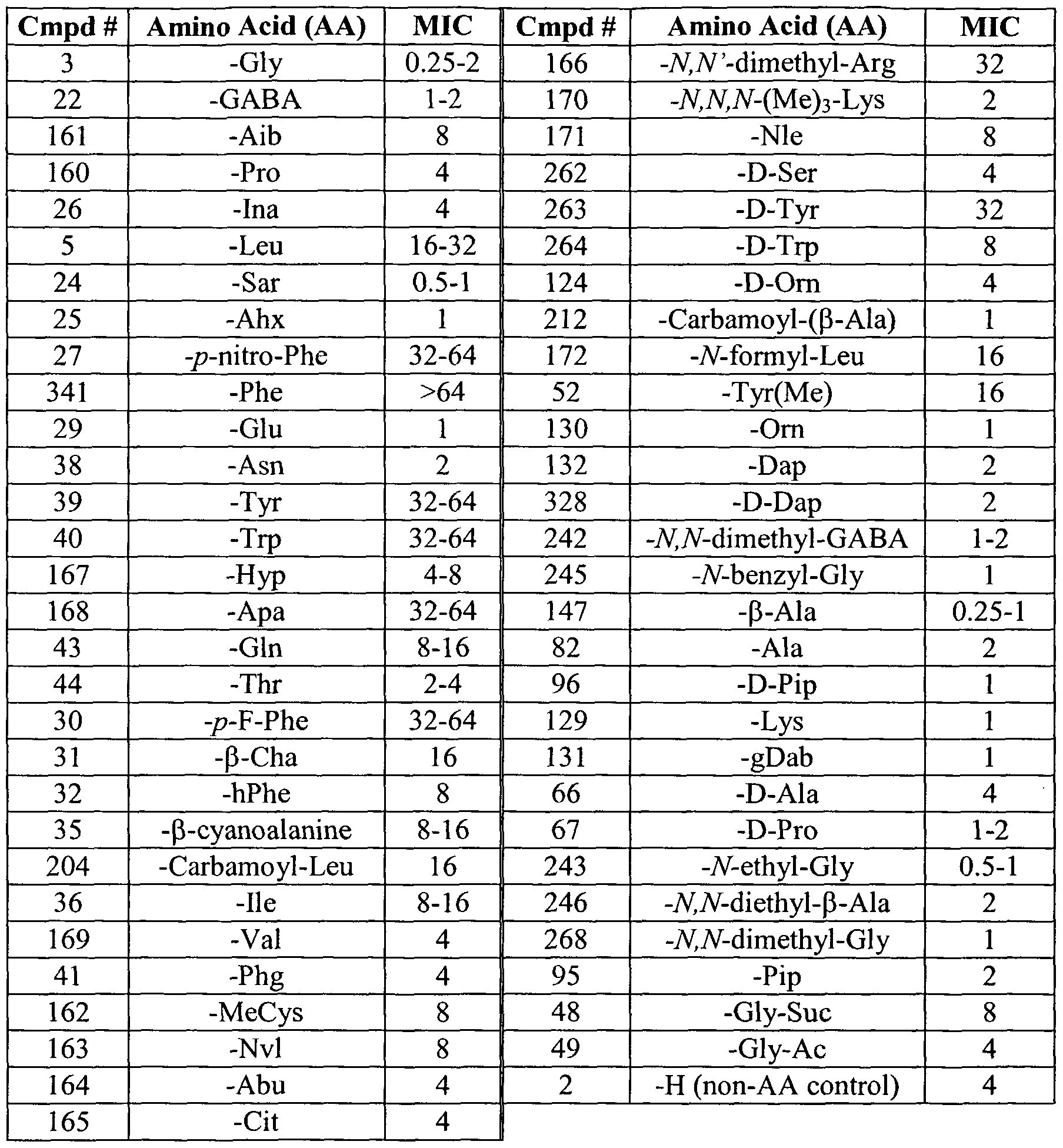
CFP Corrected version of a pamphlet front page
CR1 Correction of entry in section i

Free format text: IN PCT GAZETTE 01/2005 UNDER (30) DELETE "60/482,985, 26 JUNE 2003 (26.06.2003), US"