USPP357P - Gladiolus - Google Patents
Gladiolus Download PDFInfo
- Publication number
- USPP357P USPP357P US PP357 P USPP357 P US PP357P
- Authority
- US
- United States
- Prior art keywords
- color
- gladiolus
- variety
- coloring
- size
- Prior art date
Links
- 241000245654 Gladiolus Species 0.000 title description 7
- 210000000081 body of the sternum Anatomy 0.000 title description 7
- 238000004040 coloring Methods 0.000 description 7
- 241000196324 Embryophyta Species 0.000 description 3
- 239000011022 opal Substances 0.000 description 3
- 235000009827 Prunus armeniaca Nutrition 0.000 description 2
- 240000005204 Prunus armeniaca Species 0.000 description 2
- 210000000614 Ribs Anatomy 0.000 description 2
- 239000006071 cream Substances 0.000 description 2
- 239000000126 substance Substances 0.000 description 2
- 210000003800 Pharynx Anatomy 0.000 description 1
- 239000000203 mixture Substances 0.000 description 1
- 230000006308 pollination Effects 0.000 description 1
- 230000017260 vegetative to reproductive phase transition of meristem Effects 0.000 description 1
Images
Definitions
- My present invention relates to improvements in flowering gladioli of the type notable for quality and size of bloom.
- the object of this invention is to provide a superior gladiolus of the color commonly called apricot, having at the same time large flowers which are well placed and well formed, and are consistent in growing in this manner.
- My new gladiolus variety originated as a seedling produced from cross pollination work carried on by myself and is a cross between Grand Opera (Plant Patent No. 280) as the pollen parent and Picardy as the seed parent. The variety has been reproduced asexually through several generations and its qualities have proved to be permanently fixed.
- Color plate references are to Ridgways Color Standards and Nomenclature.
- Consists of six petals 0 Size. Generally six to seven inches across, although some run to seven and one-half inches. Form-Very nearly square in form, although they could also be compared to a very blunt I. five-pointed star (formed by six petals).
- gladiolus herein described and illustrated, characterized particularly by its vigorous, symmetrical and consistent growth; length of flower-head; and flowers of very large size, good substance, excellent keeping quality, and soft coloring of Safrano Pink with darker blotches, as described and shown.
Description
Jan. 30, 1940. c. SALBACH Plant Pat. 357
GLADIOLUS Filed March 22, 1959 Patented Jan. 30, 1940.
UNITED STATES Plant Pat. 357
GLADIOLUS Carl Salbach, Contra Costa County, CaliL, as-
Eignor to Ella S. Salbach, Contra Costa County,
Application March 22, 1939, Serial No. 263,528
1 Claim. (Cl. 47-60) My present invention relates to improvements in flowering gladioli of the type notable for quality and size of bloom. The object of this invention is to provide a superior gladiolus of the color commonly called apricot, having at the same time large flowers which are well placed and well formed, and are consistent in growing in this manner.
My new gladiolus variety originated as a seedling produced from cross pollination work carried on by myself and is a cross between Grand Opera (Plant Patent No. 280) as the pollen parent and Picardy as the seed parent. The variety has been reproduced asexually through several generations and its qualities have proved to be permanently fixed.
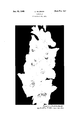
The illustration accompanying this specification shows a portion of a spike of this variety in approximately its true color but reduced in size.
Color plate references are to Ridgways Color Standards and Nomenclature.
Following is a more complete description of the plant and flower of this new variety.
Corm:
Medium in size. Yellow when peeled.
h fl wer The blossom:
Consists of six petals. 0 Size.Generally six to seven inches across, although some run to seven and one-half inches. Form-Very nearly square in form, although they could also be compared to a very blunt I. five-pointed star (formed by six petals).
Petals.Shapeblunt. Aspect-faintly fluted, edges slightly rufiled. Substance-heavy, making the variety very valuable for shipping and long keeping. Color-the color in Ridgways Color Standards which most nearly approaches the color of this variety is Safrano Pink (Plate II), with the blotch, which is deep in the throat, being best described as Ocher Red (Plate XXVII) faintly fringed with Coral Red (Plate XIII). The 10 coloring of this variety has a very soft appearance.
Stamens.Filaments Safrano Pink. Most of the anthers of the same color on top but Dark Dull Violet Blue (Plate XXIV) under- 1 neath where they are covered with pollen. Some anthers do not carry pollen and these are cream color (Plate XVI).
Pistila-Medium size. Cream color (Plate XVI). 20
Comparison Other known varieties of somewhat similar coloring have either smaller flowers or less vivid coloring. The former is true of such varieties as Wasaga, whilethe varieties Opal Queen and Paradise, although approaching the size of my new variety are, in the opinion of observers, of greatly inferior coloring, Opal Queen being somewhat honey-colored and Paradise carrying more yellow and less pink in its coloring. 80
The most notable characteristics which in combination readily distinguish my new gladiolus from other known apricot gladioli, particularly the varieties Wasaga, Opal Queen, and Paradise, are: 85.
. The soft coloring of the flowers.
. The unusual color pattern of the flowers.
. The large size of the flowers.
. The heavy substance with resultant fine keeping quality. I 49} The vigor and height of the plant, and the length of the flower-head.
6. The consistency of the ideally symmetrical growth, as described.
Having thus disclosed my invention, I claim:
The new variety of gladiolus herein described and illustrated, characterized particularly by its vigorous, symmetrical and consistent growth; length of flower-head; and flowers of very large size, good substance, excellent keeping quality, and soft coloring of Safrano Pink with darker blotches, as described and shown.
CARL SALBACH.
Family
ID=
Similar Documents
| Publication | Publication Date | Title |
|---|---|---|
| USPP357P (en) | Gladiolus | |
| USPP27285P2 (en) | Hibiscus plant named ‘ILVO347’ | |
| USPP356P (en) | Gladiolus | |
| USPP360P (en) | Gladiolus | |
| USPP396P (en) | --rose --rose plant | |
| USPP935P (en) | Rose plant | |
| USPP304P (en) | aicardi | |
| USPP359P (en) | Gladiolus | |
| USPP406P (en) | Begonia | |
| USPP114P (en) | easlea | |
| USPP3051P (en) | Rose plant | |
| USPP300P (en) | Rose plant | |
| USPP358P (en) | Gladiolus | |
| USPP3536P (en) | Chrysanthemum plant | |
| USPP344P (en) | Carnation | |
| USPP1977P (en) | Azalea plant | |
| USPP1801P (en) | james | |
| USPP2708P (en) | Schneeberg | |
| USPP1085P (en) | Poinsettia plant | |
| USPP2133P (en) | Azalea plant | |
| USPP1689P (en) | Rose plant | |
| USPP3486P (en) | Chrysanthemum plant | |
| USPP637P (en) | Rose plant | |
| USPP533P (en) | - carnation v | |
| USPP404P (en) | Gladiolus |