USPP24313P2 - Shrub rose plant named ‘ZARSBSUN’ - Google Patents
Shrub rose plant named ‘ZARSBSUN’ Download PDFInfo
- Publication number
- USPP24313P2 USPP24313P2 US13/506,869 US201213506869V USPP24313P2 US PP24313 P2 USPP24313 P2 US PP24313P2 US 201213506869 V US201213506869 V US 201213506869V US PP24313 P2 USPP24313 P2 US PP24313P2
- Authority
- US
- United States
- Prior art keywords
- zarsbsun
- color
- rosa
- flowers
- length
- Prior art date
- Legal status (The legal status is an assumption and is not a legal conclusion. Google has not performed a legal analysis and makes no representation as to the accuracy of the status listed.)
- Active, expires
Links
- 241000220317 Rosa Species 0.000 title description 6
- 235000011449 Rosa Nutrition 0.000 claims abstract description 16
- 235000014653 Carica parviflora Nutrition 0.000 abstract description 4
- 241000243321 Cnidaria Species 0.000 abstract description 4
- 208000035240 Disease Resistance Diseases 0.000 abstract description 3
- 230000005923 long-lasting effect Effects 0.000 abstract description 2
- 238000013138 pruning Methods 0.000 abstract description 2
- 241000196324 Embryophyta Species 0.000 description 15
- 241000894007 species Species 0.000 description 6
- 239000003086 colorant Substances 0.000 description 3
- 238000005520 cutting process Methods 0.000 description 3
- 239000011122 softwood Substances 0.000 description 3
- 230000017260 vegetative to reproductive phase transition of meristem Effects 0.000 description 3
- 241000221785 Erysiphales Species 0.000 description 2
- 206010027146 Melanoderma Diseases 0.000 description 2
- 241000607479 Yersinia pestis Species 0.000 description 2
- 230000001488 breeding effect Effects 0.000 description 2
- 230000010154 cross-pollination Effects 0.000 description 2
- 201000010099 disease Diseases 0.000 description 2
- 208000037265 diseases, disorders, signs and symptoms Diseases 0.000 description 2
- JEIPFZHSYJVQDO-UHFFFAOYSA-N iron(III) oxide Inorganic materials O=[Fe]O[Fe]=O JEIPFZHSYJVQDO-UHFFFAOYSA-N 0.000 description 2
- 238000000034 method Methods 0.000 description 2
- XLYOFNOQVPJJNP-UHFFFAOYSA-N water Substances O XLYOFNOQVPJJNP-UHFFFAOYSA-N 0.000 description 2
- 239000002023 wood Substances 0.000 description 2
- 241000205585 Aquilegia canadensis Species 0.000 description 1
- 241000208838 Asteraceae Species 0.000 description 1
- 241000238631 Hexapoda Species 0.000 description 1
- 235000004789 Rosa xanthina Nutrition 0.000 description 1
- 241000109329 Rosa xanthina Species 0.000 description 1
- 230000011681 asexual reproduction Effects 0.000 description 1
- 238000013465 asexual reproduction Methods 0.000 description 1
- 238000009395 breeding Methods 0.000 description 1
- 238000007796 conventional method Methods 0.000 description 1
- 238000002845 discoloration Methods 0.000 description 1
- 208000022602 disease susceptibility Diseases 0.000 description 1
- 238000001035 drying Methods 0.000 description 1
- 230000007613 environmental effect Effects 0.000 description 1
- 239000003205 fragrance Substances 0.000 description 1
- 230000000762 glandular Effects 0.000 description 1
- 238000005259 measurement Methods 0.000 description 1
- 210000000056 organ Anatomy 0.000 description 1
- 230000002688 persistence Effects 0.000 description 1
- 238000004382 potting Methods 0.000 description 1
- 230000033458 reproduction Effects 0.000 description 1
- 230000001850 reproductive effect Effects 0.000 description 1
- 239000002689 soil Substances 0.000 description 1
- 210000003462 vein Anatomy 0.000 description 1
Images

Classifications
-
- A—HUMAN NECESSITIES
- A01—AGRICULTURE; FORESTRY; ANIMAL HUSBANDRY; HUNTING; TRAPPING; FISHING
- A01H—NEW PLANTS OR NON-TRANSGENIC PROCESSES FOR OBTAINING THEM; PLANT REPRODUCTION BY TISSUE CULTURE TECHNIQUES
- A01H6/00—Angiosperms, i.e. flowering plants, characterised by their botanic taxonomy
- A01H6/74—Rosaceae, e.g. strawberry, apple, almonds, pear, rose, blackberries or raspberries
- A01H6/749—Rosa, i.e. roses
-
- A—HUMAN NECESSITIES
- A01—AGRICULTURE; FORESTRY; ANIMAL HUSBANDRY; HUNTING; TRAPPING; FISHING
- A01H—NEW PLANTS OR NON-TRANSGENIC PROCESSES FOR OBTAINING THEM; PLANT REPRODUCTION BY TISSUE CULTURE TECHNIQUES
- A01H5/00—Angiosperms, i.e. flowering plants, characterised by their plant parts; Angiosperms characterised otherwise than by their botanic taxonomy
- A01H5/02—Flowers
Definitions
- the present invention relates to a new and distinct cultivar of ROSA or shrub rose grown as an ornamental plant for use in the garden and landscape.
- the new invention is known botanically as ROSA ⁇ hybrida and will be referred to hereinafter by the cultivar name ‘ZARSBSUN’.
- ZARSBSUN is a complex hybrid plant that is the product of a breeding program to create new and improved varieties of garden roses in all commercial classes.
- ‘ZARSBSUN’ was selected as a seedling that resulted from the controlled cross-pollination carried out by the inventor in a cultivated area of Somis, Calif., USA.
- the breeding began in 1985 by crossing an individual plant Rosa ⁇ hybrida ‘SCRivluv’ (unpatented) as the female parent and an individual of Rosa ⁇ hybrida (species, unpatented) as the male parent. Seed was collected from hips formed on the female parent and coded as 3971, then sown with the intention of making a selection from the seedlings that resulted.
- ‘ZARSBSUN’ was selected in 2005 based on the criteria of disease resistance combined with a free flowering and compact plant habit, good tolerance to cold, ease of propagation and vigorous growth on its own roots. Selection was conducted by the inventor, in Somis, Calif., USA. The unique traits that distinguish ‘ZARSBSUN’ from other varieties of Rosa known to the inventor are resistance to common rose diseases; rust, powdery mildew and black spot. Ease of propagation from softwood cuttings and vigorous growth on its own roots.
- ‘ZARSBSUN’ is distinguishable from the parents predominantly by flower and foliage amount and size.
- the flowers of ‘SCRivluv’ (unpatented) female parent have fewer petals, five petals per flower, whereas the flowers of ‘ZARSBSUN’ have 20 to 25 petals per flower.
- ‘SCRivluv’ (unpatented) is also a larger plant at 75 cm ⁇ 50 cm, whereas ‘ZARSBSUN’ is smaller at 45 cm ⁇ 30 cm in size.
- the male parent (species, unpatented) has flowers of larger size, 10 cm on average and much larger leaves, 15 cm ⁇ 10 cm.
- ‘ZARSBSUN’ has flowers of a smaller size, 5 cm and smaller leaves, 8 cm ⁇ 5 cm.
- ‘ZARSBSUN’ exhibits a compact rounded habit, dark green glossy foliage, semi-double flowers that open as soft yellow with a faint coral blush.
- the plants of ‘ZARSBSUN’ exhibit a long flowering period, typically May to early November.
- Cultural conditions include full sun, regular water and rich well-draining potting soil.
- ‘ZARSBSUN’ is hardy to USDA Zone 5 and grows to 61 cm in height and 46 cm in width at maturity.
- Rosa ‘SCRivluv’ (unpatented) female parent. ‘SCRivluv’ have fewer petals per flower, five versus 20 to 25 for ‘ZARSBSUN’. ‘SCRivluv’ is a smaller, more compact habit than ‘ZARSBSUN’.
- ‘ZARSBSUN’ The following traits have been repeatedly observed and represent the distinguishing characteristics of the new Rosa cultivar named ‘ZARSBSUN’. These traits in combination distinguish ‘ZARSBSUN’ from all other existing varieties of Rosa known to the inventor. ‘ZARSBSUN’ has not been tested under all possible conditions and phenotypic differences may be observed with variations in environmental, climatic, and cultural conditions, however, without any variance in genotype.
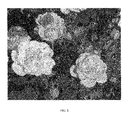
- FIG. 1 and FIG. 2 illustrate the overall appearance of ‘ZARSBSUN’ showing the colors as true as is reasonably possible to obtain in colored reproductions of this type. Colors in the photographs may differ from the color values cited in the detailed botanical description, which accurately describes the actual colors of ‘ZARSBSUN’.
- FIG. 1 depicts the entire plant in bloom.
- FIG. 2 depicts a close-up view of a flower.
Landscapes
- Life Sciences & Earth Sciences (AREA)
- Health & Medical Sciences (AREA)
- Physiology (AREA)
- Botany (AREA)
- Developmental Biology & Embryology (AREA)
- Environmental Sciences (AREA)
- Natural Medicines & Medicinal Plants (AREA)
- Breeding Of Plants And Reproduction By Means Of Culturing (AREA)
Abstract
A new cultivar of Rosa named ‘ZARSBSUN’ that is distinguishable by compact growth habit which requires limited pruning, dark green and glossy foliage, and flowers which open with a faint coral blush and become soft yellow. The flowers of ‘ZARSBSUN’ are semi-double and very long lasting, holding their color even in hot weather. ‘ZARSBSUN’ exhibits vigorous growth on its own roots, shows high disease resistance and is hardy to USDA Zone 5. In combination these traits set ‘ZARSBSUN’ apart from all other existing varieties of Rosa known to the inventor.
Description
Genus: ROSA.
Species: ×hybrida.
Denomination: ‘ZARSBSUN’.
This application claims the benefit of priority under 35 U.S.C. 119(e) of U.S. Provisional Application No. 61/571,574 filed on Jul. 1, 2011 entitled ROSA plant named ‘ZARSBSUN’.
This application is also co-pending with the inventor's variety of Shrub Rose plant named ‘ZARSBJOH’.
The present invention relates to a new and distinct cultivar of ROSA or shrub rose grown as an ornamental plant for use in the garden and landscape. The new invention is known botanically as ROSA×hybrida and will be referred to hereinafter by the cultivar name ‘ZARSBSUN’.
‘ZARSBSUN’ is a complex hybrid plant that is the product of a breeding program to create new and improved varieties of garden roses in all commercial classes.
‘ZARSBSUN’ was selected as a seedling that resulted from the controlled cross-pollination carried out by the inventor in a cultivated area of Somis, Calif., USA. The breeding began in 1985 by crossing an individual plant Rosa×hybrida ‘SCRivluv’ (unpatented) as the female parent and an individual of Rosa×hybrida (species, unpatented) as the male parent. Seed was collected from hips formed on the female parent and coded as 3971, then sown with the intention of making a selection from the seedlings that resulted.
‘ZARSBSUN’ was selected in 2005 based on the criteria of disease resistance combined with a free flowering and compact plant habit, good tolerance to cold, ease of propagation and vigorous growth on its own roots. Selection was conducted by the inventor, in Somis, Calif., USA. The unique traits that distinguish ‘ZARSBSUN’ from other varieties of Rosa known to the inventor are resistance to common rose diseases; rust, powdery mildew and black spot. Ease of propagation from softwood cuttings and vigorous growth on its own roots.
‘ZARSBSUN’ is distinguishable from the parents predominantly by flower and foliage amount and size. The flowers of ‘SCRivluv’ (unpatented) female parent have fewer petals, five petals per flower, whereas the flowers of ‘ZARSBSUN’ have 20 to 25 petals per flower. ‘SCRivluv’ (unpatented) is also a larger plant at 75 cm×50 cm, whereas ‘ZARSBSUN’ is smaller at 45 cm×30 cm in size.
The male parent (species, unpatented) has flowers of larger size, 10 cm on average and much larger leaves, 15 cm×10 cm. ‘ZARSBSUN’ has flowers of a smaller size, 5 cm and smaller leaves, 8 cm×5 cm.
‘ZARSBSUN’ exhibits a compact rounded habit, dark green glossy foliage, semi-double flowers that open as soft yellow with a faint coral blush. The plants of ‘ZARSBSUN’ exhibit a long flowering period, typically May to early November. Cultural conditions include full sun, regular water and rich well-draining potting soil. ‘ZARSBSUN’ is hardy to USDA Zone 5 and grows to 61 cm in height and 46 cm in width at maturity.
The variety of Rosa which is considered by the inventor to most closely resemble ‘ZARSBSUN’ is Rosa ‘SCRivluv’ (unpatented) female parent. ‘SCRivluv’ have fewer petals per flower, five versus 20 to 25 for ‘ZARSBSUN’. ‘SCRivluv’ is a smaller, more compact habit than ‘ZARSBSUN’.
The first asexual reproduction of ‘ZARSBSUN’ was conducted in 2005 in Somis, Calif., USA. The method of asexual propagation utilized was softwood cuttings. Since that time under careful observation, the distinguishing characteristics have been determined stable, uniform, and to be reproduced true to type in subsequent generations of asexual propagation.
The following traits have been repeatedly observed and represent the distinguishing characteristics of the new Rosa cultivar named ‘ZARSBSUN’. These traits in combination distinguish ‘ZARSBSUN’ from all other existing varieties of Rosa known to the inventor. ‘ZARSBSUN’ has not been tested under all possible conditions and phenotypic differences may be observed with variations in environmental, climatic, and cultural conditions, however, without any variance in genotype.
-
- 1. ‘ZARSBSUN’ exhibits compact growth habit which requires limited pruning.
- 2. ‘ZARSBSUN’ exhibits dark green and glossy foliage.
- 3. ‘ZARSBSUN’ bears coral buds that open as soft yellow flowers with a faint coral blush.
- 4. The flowers of ‘ZARSBSUN’ are semi-double and very long lasting, holding their color even in hot weather.
- 5. ‘ZARSBSUN’ exhibits vigorous growth on its own roots.
- 6. Plants of ‘ZARSBSUN’ exhibit a long flowering period, typically May to early November.
- 7. After one growing season, plants of ‘ZARBSUN’ are 45 cm in height and 30 cm in width
- 8. At maturity, plants of ‘ZARSBSUN’ are 46 cm to 61 cm in height and 30 cm to 46 cm in width.
- 9. ‘ZARSBSUN’ shows high disease resistance.
- 10. ‘ZARSBSUN’ is hardy to USDA Zone 5.
The accompanying color drawings labeled FIG. 1 and FIG. 2 illustrate the overall appearance of ‘ZARSBSUN’ showing the colors as true as is reasonably possible to obtain in colored reproductions of this type. Colors in the photographs may differ from the color values cited in the detailed botanical description, which accurately describes the actual colors of ‘ZARSBSUN’.
The drawing labeled FIG. 1 depicts the entire plant in bloom.
The drawing labeled FIG. 2 depicts a close-up view of a flower.
The drawings were made using conventional techniques and although flower and foliage color may appear different from actual color due to light reflectance, they are as accurate as possible by conventional photography.
The following is a detailed botanical description of the new Rosa cultivar named ‘ZARSBSUN’. Observations, measurements, values and comparisons were collected in Troy, Ohio from a 12 month old plant grown in the landscape. Color determinations were made in accordance with The 2001 Royal Horticultural Society Colour Chart from London England, except where general color terms of ordinary dictionary significance are used. Growing requirements are similar to the species.
- Botanical classification: Rosa×hybrida ‘ZARSBSUN’.
- Family: Compositae.
- Genus: ROSA.
- Species: ×hybrida.
- Denomination: ‘ZARSBSUN’.
- Common name: Rose.
- Parentage: Rosa×hybrida ‘ZARSBSUN’ is a seedling that resulted from the controlled cross-pollination of the following parents:
-
- Female parent.—Rosa×hybrida ‘SCRivluv’ (unpatented).
- Male parent.—Rosa Unnamed yellow Floribunda (unpatented).
-
- Propagation method: Asexual soft-wood cuttings.
- Rooting system: Fine and fibrous.
- Vigor: Vigorous growth on own roots.
- Habit: Upright compact habit.
- Use: For use in the garden and landscape.
- Type: Perennial.
- Dimensions: After one growing season, plants of ‘ZARBSUN’ are 45 cm in height and 30 cm in width. At maturity, plants of ‘ZARSBSUN’ are 46 cm to 61 cm in height and 30 cm to 46 cm in width.
- Cultural requirements: Grow in full sun with regular water, and well-draining media.
- Pest susceptibility: Susceptibility similar to the species.
- Disease susceptibility: Resistant to common rose diseases: rust, powdery mildew and blackspot.
- Hardiness: USDA Zone 5.
- Stem:
-
- Color, new wood.—146D.
- Color, old wood.—146A.
- Shape.—Cylindrical.
- Dimensions.—Length: 30 cm-35 cm, diameter at base 1.5 cm, diameter below uppermost leaf 0.7 cm.
- Bark surface.—Smooth.
- Internode length (average).—12 cm.
-
- Prickles:
-
- Quantity.—Ordinary, on main canes from base: 1 per cm of stem.
- Quantity.—Ordinary, on laterals from main canes: 1 per cm of stem.
- Form.—Straight.
- Length.—Ranges from 3 to 7 mm.
- Color, when young.—183D.
- Color, when mature.—N199B.
-
- Small prickles:
-
- Quantity.—On main stalk: None observed.
- Quantity.—On lateral stalks: None observed.
-
- Foliage:
-
- Type.—Evergreen.
- Leaf arrangement.—Alternate.
- Leaf division.—Pinnate.
- Leaf dimensions (average).—8 cm in length and 5 cm in width.
- Leaf color (adaxial surface).—137A.
- Leaf color (abaxial surface).—138B.
- Leaflets.—Leaflet number (average): 5. Size: 25 mm in length×20 mm in width. Shape: Obovate. Base shape: Oblique. Apex shape: Acuminate. Texture: Leathery, glossy. Edge: Serrated. Serrations: Single. Vein color: 147B. Venation pattern: Reticulate. Petiole color: 146D. Petiole rachis, Color: 146C. Petiole rachis, Underside: Smooth with occasional prickles. Auricles: None observed. Stipules: Present, fused to petiole; length 10 mm, shape serrated. Pest resistance: None observed (insects).
- Inflorescence.—
- Inflorescence type.—Terminal.
- Form.—When first open: High and centered.
- Form.—When mature: Flattens with age.
- Inflorescence quantity.—25 on average.
- Dimensions of inflorescence (average).—9.5 cm in diameter and 2.5 cm in depth.
- Inflorescence shape.—Radiate with center disk.
- Blooming seasons.—Spring through fall.
- Bud.—Shape: Pointed ovoid, long. Dimensions (average): 17 mm in height and 9 mm in diameter. Color: When sepals first divide, bud color is 25D. Color: When half blown, the upper sides of the petals are 15D, lower sides are 12C. Sepals: Quantity: 5, shape spindly foliate with fine hairy and glandular margins. Of these, three are lightly appended and two are unappended. Sepals: Color: Upper surface: 138B. Sepals: Color: Lower surface: 138C. Sepal length: 11 mm-12 mm. Sepal width: 4 mm-5 mm. Sepal shape: Subulate. Surface texture: Hoary. Receptacles: Color: 138A. Receptacle shape: Funnel. Receptacle size: 7 mm in width and 5 mm in length. Receptacle surface: Smooth. Peduncle: Length short, average of 50 mm. Peduncle surface: Prickly. Peduncle: Color: 146C. Peduncle strength: Stiff.
- Blooms.—Size: Small, average open diameter 50 mm. Borne: Singly. Stems: Strength: Strong. Average length is between 10 cm to 12 cm with a diameter of between 3 mm to 4 mm. Form: When first open: High and centered. Form: When mature: Bloom flattens with age. Petalage: Number of petals under normal conditions: Average of 25. Petalage Color (upper): 15D. Petalage Color (lower): 12C. Petalage Color (base): Small 2 mm×2 mm color spot of 2A. Discoloration: The general tonality at the end of the first to fourth day is little changed, general tonality at the end of the fifth day fades to 13D. Fragrance: Moderate, honeysuckle scent.
- Petals.—Thickness: Thick, leathery. Surface texture: Smooth. Shape: Round to deltoid. Margin: Entire. Apex shape: Rounded. Base shape: Cuneate. Form: Flat to slightly cupped. Arrangement: Imbricated. Petaloids, Number: 2 to 5. Petaloid Color: 15D. Persistence: Petals drop off cleanly before drying. Lastingness: On the plant: Fair, about 5 to 6 days. Lastingness: As a cut flower: Fair, about 6 to 7 days.
- Reproductive organs.—Stamens: Number: Average of 55 to 60. Length: 2 mm. Anthers: Length: 7 mm. Color: 13A. Arrangement: Regular around styles, mixed with occasional petaloids. Filaments: Color: 13A. Length: Average of 5 mm to 6 mm in length. Pollen: Color: 163C. Pistils: Number: Average of 15 to 20. Length: 3 mm. Styles: Color: 35B. Length: 2 mm. Stigmas: Color: 160C. Length: 1 mm.
- Hips.—Hips have not been observed during repeated observations.
-
Claims (1)
1. A new and distinct cultivar of Rosa plant named ‘ZARSBSUN’ as described and illustrated herein.
Priority Applications (1)
| Application Number | Priority Date | Filing Date | Title |
|---|---|---|---|
| US13/506,869 USPP24313P2 (en) | 2011-07-01 | 2012-05-22 | Shrub rose plant named ‘ZARSBSUN’ |
Applications Claiming Priority (2)
| Application Number | Priority Date | Filing Date | Title |
|---|---|---|---|
| US201161571574P | 2011-07-01 | 2011-07-01 | |
| US13/506,869 USPP24313P2 (en) | 2011-07-01 | 2012-05-22 | Shrub rose plant named ‘ZARSBSUN’ |
Publications (1)
| Publication Number | Publication Date |
|---|---|
| USPP24313P2 true USPP24313P2 (en) | 2014-03-18 |
Family
ID=50240555
Family Applications (1)
| Application Number | Title | Priority Date | Filing Date |
|---|---|---|---|
| US13/506,869 Active 2032-08-28 USPP24313P2 (en) | 2011-07-01 | 2012-05-22 | Shrub rose plant named ‘ZARSBSUN’ |
Country Status (1)
| Country | Link |
|---|---|
| US (1) | USPP24313P2 (en) |
-
2012
- 2012-05-22 US US13/506,869 patent/USPP24313P2/en active Active
Similar Documents
| Publication | Publication Date | Title |
|---|---|---|
| USPP36381P2 (en) | Hybrid tea rose plant named ‘KORclagran’ | |
| USPP24313P2 (en) | Shrub rose plant named ‘ZARSBSUN’ | |
| USPP16602P3 (en) | Shrub rose plant named ‘BAIpome’ | |
| USPP19754P3 (en) | Miniature rose plant ‘PACtwenty’ | |
| USPP33983P2 (en) | Petunia plant named ‘Dopetdurabluve’ | |
| USPP24314P2 (en) | Shrub rose plant named ‘ZARSBJOH’ | |
| USPP31790P2 (en) | Shrub rose plant named ‘WEKchedowahor’ | |
| USPP19105P3 (en) | Minature rose plant ‘PACfiftyone’ | |
| USPP31106P2 (en) | Polyantha rose plant named ‘Zlepoltwo’ | |
| USPP15240P3 (en) | Miniature rose plant ‘EVERgreen’ | |
| USPP30950P2 (en) | Miniature rose plant named ‘KORone001’ | |
| USPP19432P3 (en) | Miniature rose plant ‘PACfifty’ | |
| USPP14176P3 (en) | Hybrid Tea rose plant ‘KORjafir’ | |
| USPP29466P3 (en) | Shrub rose plant named ‘KORbaymun’ | |
| USPP23846P3 (en) | Miniature rose plant ‘PACninetyfive’ | |
| USPP19905P3 (en) | Miniature rose plant ‘PACfiftysix’ | |
| USPP18404P3 (en) | Miniature rose plant ‘JENthree’ | |
| USPP17545P3 (en) | Miniature rose plant ‘JENtwelve’ | |
| USPP21604P2 (en) | Miniature rose plant named ‘PACfive’ | |
| USPP9749P (en) | Miniature rose plant named `Ruifire` | |
| USPP27364P3 (en) | Rosa hybrida shrub named ‘AUSwhirl’ | |
| USPP14440P3 (en) | Hybrid Tea rose plant named ‘KORolesola’ | |
| USPP17844P3 (en) | Miniature rose plant ‘JENfour’ | |
| USPP24038P3 (en) | Miniature rose plant ‘PACninetyseven’ | |
| USPP25042P3 (en) | Shrub rose plant named ‘AUSwasher’ |