US9837615B2 - Nitrogen-containing heterocyclic derivative, organic electroluminescence element material using same, and organic electroluminescence element and electronic device using same - Google Patents
Nitrogen-containing heterocyclic derivative, organic electroluminescence element material using same, and organic electroluminescence element and electronic device using same Download PDFInfo
- Publication number
- US9837615B2 US9837615B2 US14/716,429 US201514716429A US9837615B2 US 9837615 B2 US9837615 B2 US 9837615B2 US 201514716429 A US201514716429 A US 201514716429A US 9837615 B2 US9837615 B2 US 9837615B2
- Authority
- US
- United States
- Prior art keywords
- group
- substituted
- carbon atoms
- unsubstituted
- ring
- Prior art date
- Legal status (The legal status is an assumption and is not a legal conclusion. Google has not performed a legal analysis and makes no representation as to the accuracy of the status listed.)
- Active
Links
- 0 [1*]C1=C([2*])C([3*])=C([4*])C2=C1C1=C3C([12*])=C([11*])C([10*])=C([9*])C3=C([8*])C([7*])=C1/C([6*])=C\2[5*] Chemical compound [1*]C1=C([2*])C([3*])=C([4*])C2=C1C1=C3C([12*])=C([11*])C([10*])=C([9*])C3=C([8*])C([7*])=C1/C([6*])=C\2[5*] 0.000 description 45
- UAYUDBCEGPCVLT-UHFFFAOYSA-N c(cc12)ccc1[nH]c1c2c(ccc2c3cccc2)c3c2ccccc12 Chemical compound c(cc12)ccc1[nH]c1c2c(ccc2c3cccc2)c3c2ccccc12 UAYUDBCEGPCVLT-UHFFFAOYSA-N 0.000 description 3
- MQIMCCLRJHQTSU-UHFFFAOYSA-N C1=CC=C(C2=NC(C3=CC=CC=C3)=NC(C3=CC=C(N4C5=C(C=CC=C5)C5=C6/C=C\C7=C(C=CC=C7)C6=C6C=CC=CC6=C54)C=C3)=N2)C=C1 Chemical compound C1=CC=C(C2=NC(C3=CC=CC=C3)=NC(C3=CC=C(N4C5=C(C=CC=C5)C5=C6/C=C\C7=C(C=CC=C7)C6=C6C=CC=CC6=C54)C=C3)=N2)C=C1 MQIMCCLRJHQTSU-UHFFFAOYSA-N 0.000 description 2
- MEZABFPLSMRQAM-UHFFFAOYSA-N CC.CC.CC.CC.CC1=CC(C)=O[C@@]2(O1)C1=C(C=CC=C1)C1=N2C=C2=C(C=CC=C2)C1.CC1=CC(C)=O[C@@]2(O1)C1=C(C=CC=C1)C1=N2C=CC2=CC=CC=C21 Chemical compound CC.CC.CC.CC.CC1=CC(C)=O[C@@]2(O1)C1=C(C=CC=C1)C1=N2C=C2=C(C=CC=C2)C1.CC1=CC(C)=O[C@@]2(O1)C1=C(C=CC=C1)C1=N2C=CC2=CC=CC=C21 MEZABFPLSMRQAM-UHFFFAOYSA-N 0.000 description 2
- GETQZCLCWQTVFV-UHFFFAOYSA-N CN(C)C Chemical compound CN(C)C GETQZCLCWQTVFV-UHFFFAOYSA-N 0.000 description 2
- RTKGYXOBXJTSIK-UHFFFAOYSA-N c(cc1)ccc1-c1nc(-[n]2c3c(cccc4)c4c4c5ccccc5ccc4c3c3c2cccc3)nc2ccccc12 Chemical compound c(cc1)ccc1-c1nc(-[n]2c3c(cccc4)c4c4c5ccccc5ccc4c3c3c2cccc3)nc2ccccc12 RTKGYXOBXJTSIK-UHFFFAOYSA-N 0.000 description 2
- TXHXXSCMSWPHOG-USEYFMJOSA-N *.BrC1=CC2=C(C3=C(C=CC=C3)C=C2)C2=C1C=CC=C2.BrC1=CC=C(Br)C2=C1C=CC=C2.C/C=C/C1=CC=CC=C1C1=CC=C(Br)C2=C1C=CC=C2.C1=CC2=C(C=C1)C1=C(C=C2)C2=C(C3=C(C=CC=C3)C2)C2=C1C=CC=C2.C1=CC=C(P(C2=CC=CC=C2)C2=CC=CC=C2)C=C1.CC[PH](C1=CC=CC=C1)(C1=CC=CC=C1)C1=CC=CC=C1.COC1=CC=CC=C1C1=CC=C(Br)C2=C1C=CC=C2.COC1=CC=CC=C1OBO.CS(=O)(=O)O.ClCCl.O=[N+]([O-])C1=C(B(O)O)C=CC=C1.O=[N+]([O-])C1=C(C2=CC3=C(C4=C(C=CC=C4)C=C3)C3=C2C=CC=C3)C=CC=C1 Chemical compound *.BrC1=CC2=C(C3=C(C=CC=C3)C=C2)C2=C1C=CC=C2.BrC1=CC=C(Br)C2=C1C=CC=C2.C/C=C/C1=CC=CC=C1C1=CC=C(Br)C2=C1C=CC=C2.C1=CC2=C(C=C1)C1=C(C=C2)C2=C(C3=C(C=CC=C3)C2)C2=C1C=CC=C2.C1=CC=C(P(C2=CC=CC=C2)C2=CC=CC=C2)C=C1.CC[PH](C1=CC=CC=C1)(C1=CC=CC=C1)C1=CC=CC=C1.COC1=CC=CC=C1C1=CC=C(Br)C2=C1C=CC=C2.COC1=CC=CC=C1OBO.CS(=O)(=O)O.ClCCl.O=[N+]([O-])C1=C(B(O)O)C=CC=C1.O=[N+]([O-])C1=C(C2=CC3=C(C4=C(C=CC=C4)C=C3)C3=C2C=CC=C3)C=CC=C1 TXHXXSCMSWPHOG-USEYFMJOSA-N 0.000 description 1
- PEQCGEZUZFOEDE-UHFFFAOYSA-N B.BrC1=CC2=C(C3=C(C=CC=C3)C=C2)C2=C1C=CC=C2.C1=CC2=C(C=C1)C1=C(C=C2)C2=C(NC3=C2C=CC=C3)C2=C1C=CC=C2.ClC1=C(NC2=CC3=C(C4=C(C=CC=C4)C=C3)C3=C2C=CC=C3)C=CC=C1.NC1=C(Cl)C=CC=C1 Chemical compound B.BrC1=CC2=C(C3=C(C=CC=C3)C=C2)C2=C1C=CC=C2.C1=CC2=C(C=C1)C1=C(C=C2)C2=C(NC3=C2C=CC=C3)C2=C1C=CC=C2.ClC1=C(NC2=CC3=C(C4=C(C=CC=C4)C=C3)C3=C2C=CC=C3)C=CC=C1.NC1=C(Cl)C=CC=C1 PEQCGEZUZFOEDE-UHFFFAOYSA-N 0.000 description 1
- RTSNBSBCWXSXAF-UHFFFAOYSA-N BrC1=CC2=C(C=C1)C1=CC=CC=C1C1=C2C=CC=C1.C1=CC2=C(C=C1)C1=C3C=CC=CC3=C3C(=C1C=C2)C1=C(C=CC=C1)N3C1=CC=C2C(=C1)C1=C(C=CC=C1)C1=C2C=CC=C1.C1=CC2=C(C=C1)C1=C3C=CC=CC3=C3NC4=C(C=CC=C4)C3=C1C=C2 Chemical compound BrC1=CC2=C(C=C1)C1=CC=CC=C1C1=C2C=CC=C1.C1=CC2=C(C=C1)C1=C3C=CC=CC3=C3C(=C1C=C2)C1=C(C=CC=C1)N3C1=CC=C2C(=C1)C1=C(C=CC=C1)C1=C2C=CC=C1.C1=CC2=C(C=C1)C1=C3C=CC=CC3=C3NC4=C(C=CC=C4)C3=C1C=C2 RTSNBSBCWXSXAF-UHFFFAOYSA-N 0.000 description 1
- DDANVEWGBHEJSS-UHFFFAOYSA-N BrC1=CC2=C(C=C1)C1=CC=CC=C1C1=C2C=CC=C1.C1=CC2=C(C=C1)C1=C3C=CC=CC3=C3C4=C(C=CC=C4)CC3=C1C=C2.C1=CC2=C(C=C1)C1=C3C=CC=CC3=C3C4=C(C=CC=C4)N(C4=C\C5=C(\C=C/4)C4=C(C=CC=C4)C4=C5C=CC=C4)C3=C1C=C2 Chemical compound BrC1=CC2=C(C=C1)C1=CC=CC=C1C1=C2C=CC=C1.C1=CC2=C(C=C1)C1=C3C=CC=CC3=C3C4=C(C=CC=C4)CC3=C1C=C2.C1=CC2=C(C=C1)C1=C3C=CC=CC3=C3C4=C(C=CC=C4)N(C4=C\C5=C(\C=C/4)C4=C(C=CC=C4)C4=C5C=CC=C4)C3=C1C=C2 DDANVEWGBHEJSS-UHFFFAOYSA-N 0.000 description 1
- WPCZRNOPGVMZMW-UHFFFAOYSA-N BrC1=CC=C(C2=NC(C3=CC=CC=C3)=NC(C3=CC=CC=C3)=N2)C=C1.C1=CC2=C(C=C1)C1=C3C=CC=CC3=C3C4=C(C=CC=C4)CC3=C1C=C2.C1=CC=C(C2=NC(C3=CC=CC=C3)=NC(C3=CC=C(N4C5=C(C=CC=C5)C5=C6C=CC=CC6=C6C7=C(C=CC=C7)C=CC6=C54)C=C3)=N2)C=C1 Chemical compound BrC1=CC=C(C2=NC(C3=CC=CC=C3)=NC(C3=CC=CC=C3)=N2)C=C1.C1=CC2=C(C=C1)C1=C3C=CC=CC3=C3C4=C(C=CC=C4)CC3=C1C=C2.C1=CC=C(C2=NC(C3=CC=CC=C3)=NC(C3=CC=C(N4C5=C(C=CC=C5)C5=C6C=CC=CC6=C6C7=C(C=CC=C7)C=CC6=C54)C=C3)=N2)C=C1 WPCZRNOPGVMZMW-UHFFFAOYSA-N 0.000 description 1
- ZSMAFKQSAUIWIV-UHFFFAOYSA-N BrC1=CC=C(C2=NC(C3=CC=CC=C3)=NC(C3=CC=CC=C3)=N2)C=C1.C1=CC2=C(C=C1)C1=C3C=CC=CC3=C3NC4=C(C=CC=C4)C3=C1C=C2.C1=CC=C(C2=NC(C3=CC=CC=C3)=NC(C3=CC=C(N4C5=C(C=CC=C5)C5=C6C=CC7=C(C=CC=C7)C6=C6C=CC=CC6=C54)C=C3)=N2)C=C1 Chemical compound BrC1=CC=C(C2=NC(C3=CC=CC=C3)=NC(C3=CC=CC=C3)=N2)C=C1.C1=CC2=C(C=C1)C1=C3C=CC=CC3=C3NC4=C(C=CC=C4)C3=C1C=C2.C1=CC=C(C2=NC(C3=CC=CC=C3)=NC(C3=CC=C(N4C5=C(C=CC=C5)C5=C6C=CC7=C(C=CC=C7)C6=C6C=CC=CC6=C54)C=C3)=N2)C=C1 ZSMAFKQSAUIWIV-UHFFFAOYSA-N 0.000 description 1
- ITNGTFUMDICURC-UHFFFAOYSA-N BrC1=CC=C(C2=NC3=C(C=CC=C3)C(C3=CC=CC=C3)=N2)C=C1.C1=CC2=C(C=C1)C1=C3C=CC=CC3=C3C4=C(C=CC=C4)CC3=C1C=C2.C1=CC=C(C2=NC(C3=CC=C(N4C5=C(C=CC=C5)C5=C6C=CC=CC6=C6C7=C(C=CC=C7)C=CC6=C54)C=C3)=NC3=C2C=CC=C3)C=C1 Chemical compound BrC1=CC=C(C2=NC3=C(C=CC=C3)C(C3=CC=CC=C3)=N2)C=C1.C1=CC2=C(C=C1)C1=C3C=CC=CC3=C3C4=C(C=CC=C4)CC3=C1C=C2.C1=CC=C(C2=NC(C3=CC=C(N4C5=C(C=CC=C5)C5=C6C=CC=CC6=C6C7=C(C=CC=C7)C=CC6=C54)C=C3)=NC3=C2C=CC=C3)C=C1 ITNGTFUMDICURC-UHFFFAOYSA-N 0.000 description 1
- QWAYBHXFHYNITR-UHFFFAOYSA-N BrC1=CC=C(C2=NC3=C(C=CC=C3)C(C3=CC=CC=C3)=N2)C=C1.C1=CC2=C(C=C1)C1=C3C=CC=CC3=C3NC4=C(C=CC=C4)C3=C1C=C2.C1=CC=C(C2=NC(C3=CC=C(N4C5=C(C=CC=C5)C5=C6C=CC7=C(C=CC=C7)C6=C6C=CC=CC6=C54)C=C3)=NC3=C2C=CC=C3)C=C1 Chemical compound BrC1=CC=C(C2=NC3=C(C=CC=C3)C(C3=CC=CC=C3)=N2)C=C1.C1=CC2=C(C=C1)C1=C3C=CC=CC3=C3NC4=C(C=CC=C4)C3=C1C=C2.C1=CC=C(C2=NC(C3=CC=C(N4C5=C(C=CC=C5)C5=C6C=CC7=C(C=CC=C7)C6=C6C=CC=CC6=C54)C=C3)=NC3=C2C=CC=C3)C=C1 QWAYBHXFHYNITR-UHFFFAOYSA-N 0.000 description 1
- JPTRQNORDMLOAR-UHFFFAOYSA-N BrC1=CC=CC=C1.C1=CC2=C(C=C1)C1=C3C=CC=CC3=C3C4=C(C=CC=C4)CC3=C1C=C2.C1=CC=C(N2C3=C(C=CC=C3)C3=C4C=CC=CC4=C4C5=C(C=CC=C5)C=CC4=C32)C=C1 Chemical compound BrC1=CC=CC=C1.C1=CC2=C(C=C1)C1=C3C=CC=CC3=C3C4=C(C=CC=C4)CC3=C1C=C2.C1=CC=C(N2C3=C(C=CC=C3)C3=C4C=CC=CC4=C4C5=C(C=CC=C5)C=CC4=C32)C=C1 JPTRQNORDMLOAR-UHFFFAOYSA-N 0.000 description 1
- VJUOJFKJGIFGDQ-UHFFFAOYSA-N BrC1=CC=CC=C1.C1=CC2=C(C=C1)C1=C3C=CC=CC3=C3NC4=C(C=CC=C4)C3=C1C=C2.C1=CC=C(N2C3=C(C=CC=C3)C3=C4C=CC5=C(C=CC=C5)C4=C4C=CC=CC4=C32)C=C1 Chemical compound BrC1=CC=CC=C1.C1=CC2=C(C=C1)C1=C3C=CC=CC3=C3NC4=C(C=CC=C4)C3=C1C=C2.C1=CC=C(N2C3=C(C=CC=C3)C3=C4C=CC5=C(C=CC=C5)C4=C4C=CC=CC4=C32)C=C1 VJUOJFKJGIFGDQ-UHFFFAOYSA-N 0.000 description 1
- GEDOYYDMCZUHNW-UHFFFAOYSA-N Brc(cc1)cc2c1c(cccc1)c1c1c2cccc1 Chemical compound Brc(cc1)cc2c1c(cccc1)c1c1c2cccc1 GEDOYYDMCZUHNW-UHFFFAOYSA-N 0.000 description 1
- FARAOARIVJZINN-UHFFFAOYSA-N Brc(cc1)ccc1-c1nc2ccccc2c(-c2ccccc2)n1 Chemical compound Brc(cc1)ccc1-c1nc2ccccc2c(-c2ccccc2)n1 FARAOARIVJZINN-UHFFFAOYSA-N 0.000 description 1
- MHSAXCNPAJRHNR-UHFFFAOYSA-N C/C1=C/C=C2/C=C/C3=C/C=C\C4C=CC1=C2C34.CC1=CC2=C(C=C1)C1=C(C=CC=C1)C2(C)C.CC1=CC2=C(C=CC=C2)C=C1.CC1=CC=C(C2=CC=CC=C2)C=C1.CC1=CC=C2C3=C(C=CC=C3)/C3=C/C=C\C1=C23.CC1=CC=CC2=C1C=CC=C2.CC1=CC=CC=C1 Chemical compound C/C1=C/C=C2/C=C/C3=C/C=C\C4C=CC1=C2C34.CC1=CC2=C(C=C1)C1=C(C=CC=C1)C2(C)C.CC1=CC2=C(C=CC=C2)C=C1.CC1=CC=C(C2=CC=CC=C2)C=C1.CC1=CC=C2C3=C(C=CC=C3)/C3=C/C=C\C1=C23.CC1=CC=CC2=C1C=CC=C2.CC1=CC=CC=C1 MHSAXCNPAJRHNR-UHFFFAOYSA-N 0.000 description 1
- XJFIYEFZKBPFBR-UHFFFAOYSA-N C1=CC(C2=CC3=C(C=CC=C3)C=C2)=CC(N2C3=C(C=CC=C3)C3=C4/C=CC5=C(C=CC=C5)/C4=C4\C=CC=C\C4=C\32)=C1.C1=CC2=C(C=C1)C=C(C1=CC=C(N3C4=C(C=CC=C4)C4=C5/C=CC6=C(C=CC=C6)/C5=C5\C=CC=C\C5=C\43)C=C1)C=C2.C1=CC2=CC=C(N3C4=C(C=CC=C4)C4=C5/C=CC6=C(C=CC=C6)/C5=C5\C=CC=C\C5=C\43)C=C2C=C1.C1=CC2=CC=CC(C3=CC=C(N4C5=C(C=CC=C5)C5=C6/C=CC7=C(C=CC=C7)/C6=C6\C=CC=C\C6=C\54)C=C3)=C2C=C1.C1=CC=C(N2C3=C(C=CC=C3)C3=C2C=CC(N2C4=C(C=CC=C4)C4=C5/C=CC6=C(C=CC=C6)/C5=C5\C=CC=C\C5=C\42)=C3)C=C1 Chemical compound C1=CC(C2=CC3=C(C=CC=C3)C=C2)=CC(N2C3=C(C=CC=C3)C3=C4/C=CC5=C(C=CC=C5)/C4=C4\C=CC=C\C4=C\32)=C1.C1=CC2=C(C=C1)C=C(C1=CC=C(N3C4=C(C=CC=C4)C4=C5/C=CC6=C(C=CC=C6)/C5=C5\C=CC=C\C5=C\43)C=C1)C=C2.C1=CC2=CC=C(N3C4=C(C=CC=C4)C4=C5/C=CC6=C(C=CC=C6)/C5=C5\C=CC=C\C5=C\43)C=C2C=C1.C1=CC2=CC=CC(C3=CC=C(N4C5=C(C=CC=C5)C5=C6/C=CC7=C(C=CC=C7)/C6=C6\C=CC=C\C6=C\54)C=C3)=C2C=C1.C1=CC=C(N2C3=C(C=CC=C3)C3=C2C=CC(N2C4=C(C=CC=C4)C4=C5/C=CC6=C(C=CC=C6)/C5=C5\C=CC=C\C5=C\42)=C3)C=C1 XJFIYEFZKBPFBR-UHFFFAOYSA-N 0.000 description 1
- RPHPKOLAXADXEO-UHFFFAOYSA-N C1=CC(C2=CC3=C(C=CC=C3)C=C2)=CC(N2C3=C(C=CC=C3)C3=C4/C=CC=C/C4=C4\C5=C(C=CC=C5)C=C\C4=C\32)=C1.C1=CC2=C(C=C1)C=C(C1=CC=C(N3C4=C(C=CC=C4)C4=C5/C=CC=C/C5=C5\C6=C(C=CC=C6)C=C\C5=C\43)C=C1)C=C2.C1=CC2=CC=C(N3C4=C(C=CC=C4)C4=C5/C=CC=C/C5=C5\C6=C(C=CC=C6)C=C\C5=C\43)C=C2C=C1.C1=CC=C(N2C3=C(C=CC=C3)C3=C2C=CC(N2C4=C(C=CC=C4)C4=C5/C=CC=C/C5=C5\C6=C(C=CC=C6)C=C\C5=C\42)=C3)C=C1 Chemical compound C1=CC(C2=CC3=C(C=CC=C3)C=C2)=CC(N2C3=C(C=CC=C3)C3=C4/C=CC=C/C4=C4\C5=C(C=CC=C5)C=C\C4=C\32)=C1.C1=CC2=C(C=C1)C=C(C1=CC=C(N3C4=C(C=CC=C4)C4=C5/C=CC=C/C5=C5\C6=C(C=CC=C6)C=C\C5=C\43)C=C1)C=C2.C1=CC2=CC=C(N3C4=C(C=CC=C4)C4=C5/C=CC=C/C5=C5\C6=C(C=CC=C6)C=C\C5=C\43)C=C2C=C1.C1=CC=C(N2C3=C(C=CC=C3)C3=C2C=CC(N2C4=C(C=CC=C4)C4=C5/C=CC=C/C5=C5\C6=C(C=CC=C6)C=C\C5=C\42)=C3)C=C1 RPHPKOLAXADXEO-UHFFFAOYSA-N 0.000 description 1
- MQSGVCQOXKBYJC-UHFFFAOYSA-N C1=CC(C2=CC=C(N3C4=C(C=CC=C4)C4=C3C=CC=C4)C=C2)=CC(C2=CC(C3=CC=C(N4C5=C(C=CC=C5)C5=C4C=CC=C5)C=C3)=CC=C2)=C1.C1=CC2=C(C=C1)N(C1=CC=C(C3=CC=C(N4C5=C(C=CC=C5)C5=C4/C=C\C=C/5)C=C3)C=C1)C1=C2C=CC=C1.C1=CC=C(C2=CC(C3=CC=C(N4C5=C(C=CC=C5)C5=C4C=CC=C5)C=C3)=CC(C3=CC(C4=CC=C(N5C6=C(C=CC=C6)C6=C5C=CC=C6)C=C4)=CC(C4=CC=CC=C4)=C3)=C2)C=C1.C1=CC=C(C2=CC(C3=CC=CC(C4=CC=C(N5C6=C(C=CC=C6)C6=C5C=CC=C6)C=C4)=C3)=CC(C3=CC=C(N4C5=C(C=CC=C5)C5=C4C=CC=C5)C=C3)=C2)C=C1 Chemical compound C1=CC(C2=CC=C(N3C4=C(C=CC=C4)C4=C3C=CC=C4)C=C2)=CC(C2=CC(C3=CC=C(N4C5=C(C=CC=C5)C5=C4C=CC=C5)C=C3)=CC=C2)=C1.C1=CC2=C(C=C1)N(C1=CC=C(C3=CC=C(N4C5=C(C=CC=C5)C5=C4/C=C\C=C/5)C=C3)C=C1)C1=C2C=CC=C1.C1=CC=C(C2=CC(C3=CC=C(N4C5=C(C=CC=C5)C5=C4C=CC=C5)C=C3)=CC(C3=CC(C4=CC=C(N5C6=C(C=CC=C6)C6=C5C=CC=C6)C=C4)=CC(C4=CC=CC=C4)=C3)=C2)C=C1.C1=CC=C(C2=CC(C3=CC=CC(C4=CC=C(N5C6=C(C=CC=C6)C6=C5C=CC=C6)C=C4)=C3)=CC(C3=CC=C(N4C5=C(C=CC=C5)C5=C4C=CC=C5)C=C3)=C2)C=C1 MQSGVCQOXKBYJC-UHFFFAOYSA-N 0.000 description 1
- KLFRCXUVNSCEKF-UHFFFAOYSA-N C1=CC2=C(C=C1)C(N1C3=C(C=CC=C3)C3=C4/C=CC5=C(C=CC=C5)/C4=C4\C=CC=C\C4=C\31)=CC=C2.C1=CC2=CC=CC(C3=CC(N4C5=C(C=CC=C5)C5=C6/C=CC7=C(C=CC=C7)/C6=C6\C=CC=C\C6=C\54)=CC=C3)=C2C=C1.C1=CC=C(C2=CC3=CC=C(N4C5=C(C=CC=C5)C5=C6/C=CC7=C(C=CC=C7)/C6=C6\C=CC=C\C6=C\54)C=C3C=C2)C=C1.C1=CC=C(C2=NC(C3=CC=CC=C3)=NC(N3C4=C(C=CC=C4)C4=C5/C=CC6=C(C=CC=C6)/C5=C5\C=CC=C\C5=C\43)=N2)C=C1.C1=CC=C(N2C3=C(C=CC=C3)C3=C4/C=CC5=C(C=CC=C5)/C4=C4\C=CC=C\C4=C\32)C(C2=CC=CC3=C2C=CC=C3)=C1 Chemical compound C1=CC2=C(C=C1)C(N1C3=C(C=CC=C3)C3=C4/C=CC5=C(C=CC=C5)/C4=C4\C=CC=C\C4=C\31)=CC=C2.C1=CC2=CC=CC(C3=CC(N4C5=C(C=CC=C5)C5=C6/C=CC7=C(C=CC=C7)/C6=C6\C=CC=C\C6=C\54)=CC=C3)=C2C=C1.C1=CC=C(C2=CC3=CC=C(N4C5=C(C=CC=C5)C5=C6/C=CC7=C(C=CC=C7)/C6=C6\C=CC=C\C6=C\54)C=C3C=C2)C=C1.C1=CC=C(C2=NC(C3=CC=CC=C3)=NC(N3C4=C(C=CC=C4)C4=C5/C=CC6=C(C=CC=C6)/C5=C5\C=CC=C\C5=C\43)=N2)C=C1.C1=CC=C(N2C3=C(C=CC=C3)C3=C4/C=CC5=C(C=CC=C5)/C4=C4\C=CC=C\C4=C\32)C(C2=CC=CC3=C2C=CC=C3)=C1 KLFRCXUVNSCEKF-UHFFFAOYSA-N 0.000 description 1
- KAKZYTAXZVIWHS-UHFFFAOYSA-N C1=CC2=C(C=C1)C(N1C3=C(C=CC=C3)C3=C4/C=CC=C/C4=C4\C5=C(C=CC=C5)C=C\C4=C\31)=CC=C2.C1=CC2=CC=CC(C3=CC(N4C5=C(C=CC=C5)C5=C6/C=CC=C/C6=C6\C7=C(C=CC=C7)C=C\C6=C\54)=CC=C3)=C2C=C1.C1=CC=C(C2=NC(C3=CC=CC=C3)=NC(N3C4=C(C=CC=C4)C4=C5/C=CC=C/C5=C5\C6=C(C=CC=C6)C=C\C5=C\43)=N2)C=C1.C1=CC=C(N2C3=C(C=CC=C3)C3=C4/C=CC=C/C4=C4\C5=C(C=CC=C5)C=C\C4=C\32)C(C2=CC=CC3=C2C=CC=C3)=C1 Chemical compound C1=CC2=C(C=C1)C(N1C3=C(C=CC=C3)C3=C4/C=CC=C/C4=C4\C5=C(C=CC=C5)C=C\C4=C\31)=CC=C2.C1=CC2=CC=CC(C3=CC(N4C5=C(C=CC=C5)C5=C6/C=CC=C/C6=C6\C7=C(C=CC=C7)C=C\C6=C\54)=CC=C3)=C2C=C1.C1=CC=C(C2=NC(C3=CC=CC=C3)=NC(N3C4=C(C=CC=C4)C4=C5/C=CC=C/C5=C5\C6=C(C=CC=C6)C=C\C5=C\43)=N2)C=C1.C1=CC=C(N2C3=C(C=CC=C3)C3=C4/C=CC=C/C4=C4\C5=C(C=CC=C5)C=C\C4=C\32)C(C2=CC=CC3=C2C=CC=C3)=C1 KAKZYTAXZVIWHS-UHFFFAOYSA-N 0.000 description 1
- IBKBABISRTYKLS-UHFFFAOYSA-N C1=CC2=C(C=C1)C1=C(/C=C\C=C/1)C2.CC.CN1C2=C(C=CC=C2)C2=C1/C=C\C=C/2 Chemical compound C1=CC2=C(C=C1)C1=C(/C=C\C=C/1)C2.CC.CN1C2=C(C=CC=C2)C2=C1/C=C\C=C/2 IBKBABISRTYKLS-UHFFFAOYSA-N 0.000 description 1
- GSQWMMOFNXFNOY-UHFFFAOYSA-N C1=CC2=C(C=C1)C1=C(/C=C\C=C/1)O2.C1=CC2=C(C=C1)C1=C(/C=C\C=C/1)S2.CC.CC Chemical compound C1=CC2=C(C=C1)C1=C(/C=C\C=C/1)O2.C1=CC2=C(C=C1)C1=C(/C=C\C=C/1)S2.CC.CC GSQWMMOFNXFNOY-UHFFFAOYSA-N 0.000 description 1
- ODENVKSZQUJRGX-UHFFFAOYSA-N C1=CC2=C(C=C1)C1=C(C=C2)C2=C(C3=C1C=CC=C3)C1=C(C=CC=C1)N2C1=C2C=CC=CC2=C2C(=C1)C1=C(C=CC=C1)C1=C2C=CC=C1.C1=CC2=C(C=C1)C1=C(C=C2)C2=C(C3=C1C=CC=C3)C1=C(C=CC=C1)N2C1=CC=C(C2=CC=NC=C2)C=C1.C1=CN=C(C2=CC=C(N3C4=C(C=CC=C4)C4=C3C3=C(C5=C(C=CC=C5)C=C3)C3=C4C=CC=C3)C=C2)C=C1.C1=CN=C(C2=NC=C(N3C4=C(C=CC=C4)C4=C3C3=C(C5=C(C=CC=C5)C=C3)C3=C4C=CC=C3)C=C2)C=C1 Chemical compound C1=CC2=C(C=C1)C1=C(C=C2)C2=C(C3=C1C=CC=C3)C1=C(C=CC=C1)N2C1=C2C=CC=CC2=C2C(=C1)C1=C(C=CC=C1)C1=C2C=CC=C1.C1=CC2=C(C=C1)C1=C(C=C2)C2=C(C3=C1C=CC=C3)C1=C(C=CC=C1)N2C1=CC=C(C2=CC=NC=C2)C=C1.C1=CN=C(C2=CC=C(N3C4=C(C=CC=C4)C4=C3C3=C(C5=C(C=CC=C5)C=C3)C3=C4C=CC=C3)C=C2)C=C1.C1=CN=C(C2=NC=C(N3C4=C(C=CC=C4)C4=C3C3=C(C5=C(C=CC=C5)C=C3)C3=C4C=CC=C3)C=C2)C=C1 ODENVKSZQUJRGX-UHFFFAOYSA-N 0.000 description 1
- IEUWGAXIPFOECO-UHFFFAOYSA-N C1=CC2=C(C=C1)C1=C(C=C2)C2=C(C3=C1C=CC=C3)C1=C(C=CC=C1)N2C1=CC=C(N2C3=C(C4=C(C=CC=C4)C=C3)C3=C2C=CC2=C3C=CC=C2)C=C1.C1=CC=C(N2C3=C(C=CC=C3)C3=C2/C=C\C(C2=CC4=C(C=C2)C2=C(C=CC=C2)N4C2=CC=C(N4C5=C(C=CC=C5)C5=C4C4=C(C6=C(C=CC=C6)C=C4)C4=C5C=CC=C4)C=C2)=C/3)C=C1.C1=CC=C(N2C3=C(C=CC=C3)C3=C2/C=C\C(C2=CC4=C(C=C2)N(C2=CC=C(N5C6=C(C=CC=C6)C6=C5C5=C(C7=C(C=CC=C7)C=C5)C5=C6C=CC=C5)C=C2)C2=C4C=CC=C2)=C/3)C=C1 Chemical compound C1=CC2=C(C=C1)C1=C(C=C2)C2=C(C3=C1C=CC=C3)C1=C(C=CC=C1)N2C1=CC=C(N2C3=C(C4=C(C=CC=C4)C=C3)C3=C2C=CC2=C3C=CC=C2)C=C1.C1=CC=C(N2C3=C(C=CC=C3)C3=C2/C=C\C(C2=CC4=C(C=C2)C2=C(C=CC=C2)N4C2=CC=C(N4C5=C(C=CC=C5)C5=C4C4=C(C6=C(C=CC=C6)C=C4)C4=C5C=CC=C4)C=C2)=C/3)C=C1.C1=CC=C(N2C3=C(C=CC=C3)C3=C2/C=C\C(C2=CC4=C(C=C2)N(C2=CC=C(N5C6=C(C=CC=C6)C6=C5C5=C(C7=C(C=CC=C7)C=C5)C5=C6C=CC=C5)C=C2)C2=C4C=CC=C2)=C/3)C=C1 IEUWGAXIPFOECO-UHFFFAOYSA-N 0.000 description 1
- JPSUGGWESDKTLK-UHFFFAOYSA-N C1=CC2=C(C=C1)C1=C(C=C2)C2=C(C3=C1C=CC=C3)C1=C(C=CC=C1)N2C1=CC=C(N2C3=C(C=CC=C3)C3=C2C2=C(C4=C(C=CC=C4)O2)C2=C3C=CC=C2)C=C1.C1=CC2=C(C=C1)C1=C(C=C2)C2=C(C3=C1C=CC=C3)C1=C(C=CC=C1)N2C1=CC=C(N2C3=C(C=CC=C3)C3=C2C2=C(C4=C(C=CC=C4)S2)C2=C3C=CC=C2)C=C1.C1=CC2=C(C=C1)C1=C(C=C2)C2=C(C3=C1C=CC=C3)C1=C(C=CC=C1)N2C1=CC=C(N2C3=C(C=CC=C3)C3=C2C=CC2=C3C=CC3=C2C2=C(C=CC=C2)O3)C=C1 Chemical compound C1=CC2=C(C=C1)C1=C(C=C2)C2=C(C3=C1C=CC=C3)C1=C(C=CC=C1)N2C1=CC=C(N2C3=C(C=CC=C3)C3=C2C2=C(C4=C(C=CC=C4)O2)C2=C3C=CC=C2)C=C1.C1=CC2=C(C=C1)C1=C(C=C2)C2=C(C3=C1C=CC=C3)C1=C(C=CC=C1)N2C1=CC=C(N2C3=C(C=CC=C3)C3=C2C2=C(C4=C(C=CC=C4)S2)C2=C3C=CC=C2)C=C1.C1=CC2=C(C=C1)C1=C(C=C2)C2=C(C3=C1C=CC=C3)C1=C(C=CC=C1)N2C1=CC=C(N2C3=C(C=CC=C3)C3=C2C=CC2=C3C=CC3=C2C2=C(C=CC=C2)O3)C=C1 JPSUGGWESDKTLK-UHFFFAOYSA-N 0.000 description 1
- DHWOAELTLMXTIO-UHFFFAOYSA-N C1=CC2=C(C=C1)C1=C(C=C2)C2=C(C3=C1C=CC=C3)C1=C(C=CC=C1)N2C1=CC=C(N2C3=C(C=CC=C3)C3=C2C2=C(C=CC=C2)C=C3)C=C1.C1=CC2=CC3=C(C=C2C=C1)N(C1=CC=C(N2C4=C(C=CC=C4)C4=C2C2=C(C5=C(C=CC=C5)C=C2)C2=C4C=CC=C2)C=C1)C1=C3C=CC=C1.C1=CC=C(N2C3=C(C=C(N4C5=C(C=CC=C5)C5=C4C4=C(C6=C(C=CC=C6)C=C4)C4=C5C=CC=C4)C=C3)C3=C2C2=C(C=CC=C2)C=C3)C=C1.C1=CC=C(N2C3=C(C=C(N4C5=C(C=CC=C5)C5=C4C4=C(C6=C(C=CC=C6)C=C4)C4=C5C=CC=C4)C=C3)C3=C2C=C2C=CC=CC2=C3)C=C1 Chemical compound C1=CC2=C(C=C1)C1=C(C=C2)C2=C(C3=C1C=CC=C3)C1=C(C=CC=C1)N2C1=CC=C(N2C3=C(C=CC=C3)C3=C2C2=C(C=CC=C2)C=C3)C=C1.C1=CC2=CC3=C(C=C2C=C1)N(C1=CC=C(N2C4=C(C=CC=C4)C4=C2C2=C(C5=C(C=CC=C5)C=C2)C2=C4C=CC=C2)C=C1)C1=C3C=CC=C1.C1=CC=C(N2C3=C(C=C(N4C5=C(C=CC=C5)C5=C4C4=C(C6=C(C=CC=C6)C=C4)C4=C5C=CC=C4)C=C3)C3=C2C2=C(C=CC=C2)C=C3)C=C1.C1=CC=C(N2C3=C(C=C(N4C5=C(C=CC=C5)C5=C4C4=C(C6=C(C=CC=C6)C=C4)C4=C5C=CC=C4)C=C3)C3=C2C=C2C=CC=CC2=C3)C=C1 DHWOAELTLMXTIO-UHFFFAOYSA-N 0.000 description 1
- LELQYBZCTFMSKZ-UHFFFAOYSA-N C1=CC2=C(C=C1)C1=C(C=C2)C2=C(C3=C1C=CC=C3)C1=C(C=CC=C1)N2C1=CC=C(N2C3=C(C=CC=C3)C3=C2C=C2OC4=C(C=CC=C4)C2=C3)C=C1.C1=CC2=C(C=C1)C1=C(C=C2)C2=C(C3=C1C=CC=C3)C1=C(C=CC=C1)N2C1=CC=C(N2C3=C(C=CC=C3)C3=C2C=C2SC4=C(C=CC=C4)C2=C3)C=C1.C1=CC2=C(C=C1)C1=C(C=C2)C2=C(C3=C1C=CC=C3)C1=C(C=CC=C1)N2C1=CC=C(N2C3=C(C=CC=C3)C3=C2C=CC2=C3OC3=C2C=CC=C3)C=C1.C1=CC2=C(C=C1)C1=C(C=C2)C2=C(C3=C1C=CC=C3)C1=C(C=CC=C1)N2C1=CC=C(N2C3=C(C=CC=C3)C3=C2C=CC2=C3SC3=C2C=CC=C3)C=C1 Chemical compound C1=CC2=C(C=C1)C1=C(C=C2)C2=C(C3=C1C=CC=C3)C1=C(C=CC=C1)N2C1=CC=C(N2C3=C(C=CC=C3)C3=C2C=C2OC4=C(C=CC=C4)C2=C3)C=C1.C1=CC2=C(C=C1)C1=C(C=C2)C2=C(C3=C1C=CC=C3)C1=C(C=CC=C1)N2C1=CC=C(N2C3=C(C=CC=C3)C3=C2C=C2SC4=C(C=CC=C4)C2=C3)C=C1.C1=CC2=C(C=C1)C1=C(C=C2)C2=C(C3=C1C=CC=C3)C1=C(C=CC=C1)N2C1=CC=C(N2C3=C(C=CC=C3)C3=C2C=CC2=C3OC3=C2C=CC=C3)C=C1.C1=CC2=C(C=C1)C1=C(C=C2)C2=C(C3=C1C=CC=C3)C1=C(C=CC=C1)N2C1=CC=C(N2C3=C(C=CC=C3)C3=C2C=CC2=C3SC3=C2C=CC=C3)C=C1 LELQYBZCTFMSKZ-UHFFFAOYSA-N 0.000 description 1
- YRWAUANPZSEWKT-UHFFFAOYSA-N C1=CC2=C(C=C1)C1=C(C=C2)C2=C(C3=C1C=CC=C3)C1=C(C=CC=C1)N2C1=CC=C(N2C3=C(C=CC=C3)C3=C2C=CC2=C3C=CC3=C2C2=C(C=CC=C2)S3)C=C1.CC1=CC=C(N2C3=C(C=CC=C3)C3=C2C2=C(C=CC=C2)C2=C3C=CC3=C2C=CC=C3)C=C1.FC1=CC=C(N2C3=C(C=CC=C3)C3=C2C2=C(C=CC=C2)C2=C3C=CC3=C2C=CC=C3)C=C1.O=P(C1=CC=CC=C1)(C1=CC=CC=C1)C1=CC=C(N2C3=C(C=CC=C3)C3=C2C2=C(C=CC=C2)C2=C3C=CC3=C2C=CC=C3)C=C1 Chemical compound C1=CC2=C(C=C1)C1=C(C=C2)C2=C(C3=C1C=CC=C3)C1=C(C=CC=C1)N2C1=CC=C(N2C3=C(C=CC=C3)C3=C2C=CC2=C3C=CC3=C2C2=C(C=CC=C2)S3)C=C1.CC1=CC=C(N2C3=C(C=CC=C3)C3=C2C2=C(C=CC=C2)C2=C3C=CC3=C2C=CC=C3)C=C1.FC1=CC=C(N2C3=C(C=CC=C3)C3=C2C2=C(C=CC=C2)C2=C3C=CC3=C2C=CC=C3)C=C1.O=P(C1=CC=CC=C1)(C1=CC=CC=C1)C1=CC=C(N2C3=C(C=CC=C3)C3=C2C2=C(C=CC=C2)C2=C3C=CC3=C2C=CC=C3)C=C1 YRWAUANPZSEWKT-UHFFFAOYSA-N 0.000 description 1
- DJYSTIPLYPDRPN-UHFFFAOYSA-N C1=CC2=C(C=C1)C1=C(C=C2)C2=C(C3=C1C=CC=C3)C1=C(C=CC=C1)N2C1=CC=C(N2C3=C(C=CC=C3)C3=C2C=CC2=C3C=CC=C2)C=C1.C1=CC2=CC=CC(N3C4=C(C=CC=C4)C4=C3C=CC(N3C5=C(C=CC=C5)C5=C3C3=C(C6=C(C=CC=C6)C=C3)C3=C5C=CC=C3)=C4)=C2C=C1.C1=CC=C(C2=CC=C(N3C4=C(C=CC=C4)C4=C3C=CC(N3C5=C(C=CC=C5)C5=C3C3=C(C6=C(C=CC=C6)C=C3)C3=C5C=CC=C3)=C4)C=C2)C=C1.C1=CC=C(N2C3=C(C=C(N4C5=C(C=CC=C5)C5=C4C4=C(C6=C(C=CC=C6)C=C4)C4=C5C=CC=C4)C=C3)C3=C2C=CC2=C3C=CC=C2)C=C1 Chemical compound C1=CC2=C(C=C1)C1=C(C=C2)C2=C(C3=C1C=CC=C3)C1=C(C=CC=C1)N2C1=CC=C(N2C3=C(C=CC=C3)C3=C2C=CC2=C3C=CC=C2)C=C1.C1=CC2=CC=CC(N3C4=C(C=CC=C4)C4=C3C=CC(N3C5=C(C=CC=C5)C5=C3C3=C(C6=C(C=CC=C6)C=C3)C3=C5C=CC=C3)=C4)=C2C=C1.C1=CC=C(C2=CC=C(N3C4=C(C=CC=C4)C4=C3C=CC(N3C5=C(C=CC=C5)C5=C3C3=C(C6=C(C=CC=C6)C=C3)C3=C5C=CC=C3)=C4)C=C2)C=C1.C1=CC=C(N2C3=C(C=C(N4C5=C(C=CC=C5)C5=C4C4=C(C6=C(C=CC=C6)C=C4)C4=C5C=CC=C4)C=C3)C3=C2C=CC2=C3C=CC=C2)C=C1 DJYSTIPLYPDRPN-UHFFFAOYSA-N 0.000 description 1
- HOGIKTFUJCYBDC-UHFFFAOYSA-N C1=CC2=C(C=C1)C1=C(C=C2)C2=C(C3=C1C=CC=C3)N(C1=C3C=CC=CC3=C3C(=C1)C1=C(C=CC=C1)C1=C3C=CC=C1)C1=C2C=CC=C1.C1=CC2=C(C=C1)C1=C(C=C2)C2=C(C3=C1C=CC=C3)N(C1=CC=C(C3=CC=NC=C3)C=C1)C1=C2C=CC=C1.C1=CN=C(C2=CC=C(N3C4=C(C=CC=C4)C4=C3C3=C(C=CC=C3)C3=C4C=CC4=C3C=CC=C4)C=C2)C=C1.C1=CN=C(C2=CC=CC(N3C4=C(C=CC=C4)C4=C3C3=C(C=CC=C3)C3=C4C=CC4=C3C=CC=C4)=N2)C=C1.C1=CN=C(C2=NC=C(N3C4=C(C=CC=C4)C4=C3C3=C(C=CC=C3)C3=C4C=CC4=C3C=CC=C4)C=C2)C=C1 Chemical compound C1=CC2=C(C=C1)C1=C(C=C2)C2=C(C3=C1C=CC=C3)N(C1=C3C=CC=CC3=C3C(=C1)C1=C(C=CC=C1)C1=C3C=CC=C1)C1=C2C=CC=C1.C1=CC2=C(C=C1)C1=C(C=C2)C2=C(C3=C1C=CC=C3)N(C1=CC=C(C3=CC=NC=C3)C=C1)C1=C2C=CC=C1.C1=CN=C(C2=CC=C(N3C4=C(C=CC=C4)C4=C3C3=C(C=CC=C3)C3=C4C=CC4=C3C=CC=C4)C=C2)C=C1.C1=CN=C(C2=CC=CC(N3C4=C(C=CC=C4)C4=C3C3=C(C=CC=C3)C3=C4C=CC4=C3C=CC=C4)=N2)C=C1.C1=CN=C(C2=NC=C(N3C4=C(C=CC=C4)C4=C3C3=C(C=CC=C3)C3=C4C=CC4=C3C=CC=C4)C=C2)C=C1 HOGIKTFUJCYBDC-UHFFFAOYSA-N 0.000 description 1
- GIUMGPKYRXNGBV-UHFFFAOYSA-N C1=CC2=C(C=C1)C1=C(C=C2)C2=C(C3=C1C=CC=C3)N(C1=CC=C(N3C4=C(C5=C(C=CC=C5)C=C4)C4=C3C=CC3=C4C=CC=C3)C=C1)C1=C2C=CC=C1.C1=CC2=C(C=C1)C1=C(C=C2)C2=C(C3=C1C=CC=C3)N(C1=CC=C(N3C4=C(C=CC=C4)C4=C3C3=C(C=CC=C3)C=C4)C=C1)C1=C2C=CC=C1.C1=CC=C(N2C3=C(C=C(N4C5=C(C=CC=C5)C5=C4C4=C(C=CC=C4)C4=C5C=CC5=C4C=CC=C5)C=C3)C3=C2C2=C(C=CC=C2)C=C3)C=C1.C1=CC=C(N2C3=C(C=CC=C3)C3=C2/C=C\C(C2=CC4=C(C=C2)N(C2=CC=C(N5C6=C(C=CC=C6)C6=C5C5=C(C=CC=C5)C5=C6C=CC6=C5C=CC=C6)C=C2)C2=C4C=CC=C2)=C/3)C=C1 Chemical compound C1=CC2=C(C=C1)C1=C(C=C2)C2=C(C3=C1C=CC=C3)N(C1=CC=C(N3C4=C(C5=C(C=CC=C5)C=C4)C4=C3C=CC3=C4C=CC=C3)C=C1)C1=C2C=CC=C1.C1=CC2=C(C=C1)C1=C(C=C2)C2=C(C3=C1C=CC=C3)N(C1=CC=C(N3C4=C(C=CC=C4)C4=C3C3=C(C=CC=C3)C=C4)C=C1)C1=C2C=CC=C1.C1=CC=C(N2C3=C(C=C(N4C5=C(C=CC=C5)C5=C4C4=C(C=CC=C4)C4=C5C=CC5=C4C=CC=C5)C=C3)C3=C2C2=C(C=CC=C2)C=C3)C=C1.C1=CC=C(N2C3=C(C=CC=C3)C3=C2/C=C\C(C2=CC4=C(C=C2)N(C2=CC=C(N5C6=C(C=CC=C6)C6=C5C5=C(C=CC=C5)C5=C6C=CC6=C5C=CC=C6)C=C2)C2=C4C=CC=C2)=C/3)C=C1 GIUMGPKYRXNGBV-UHFFFAOYSA-N 0.000 description 1
- WHKFQXIGQAKITE-UHFFFAOYSA-N C1=CC2=C(C=C1)C1=C(C=C2)C2=C(C3=C1C=CC=C3)N(C1=CC=C(N3C4=C(C=CC=C4)C4=C3C3=C(C5=C(C=CC=C5)O3)C3=C4C=CC=C3)C=C1)C1=C2C=CC=C1.C1=CC2=C(C=C1)C1=C(C=C2)C2=C(C3=C1C=CC=C3)N(C1=CC=C(N3C4=C(C=CC=C4)C4=C3C3=C(C5=C(C=CC=C5)S3)C3=C4C=CC=C3)C=C1)C1=C2C=CC=C1.C1=CC2=C(C=C1)C1=C(C=C2)C2=C(C3=C1C=CC=C3)N(C1=CC=C(N3C4=C(C=CC=C4)C4=C3C=CC3=C4C=CC4=C3C3=C(C=CC=C3)O4)C=C1)C1=C2C=CC=C1.C1=CC2=C(C=C1)C1=C(C=C2)C2=C(C3=C1C=CC=C3)N(C1=CC=C(N3C4=C(C=CC=C4)C4=C3C=CC3=C4C=CC4=C3C3=C(C=CC=C3)S4)C=C1)C1=C2C=CC=C1 Chemical compound C1=CC2=C(C=C1)C1=C(C=C2)C2=C(C3=C1C=CC=C3)N(C1=CC=C(N3C4=C(C=CC=C4)C4=C3C3=C(C5=C(C=CC=C5)O3)C3=C4C=CC=C3)C=C1)C1=C2C=CC=C1.C1=CC2=C(C=C1)C1=C(C=C2)C2=C(C3=C1C=CC=C3)N(C1=CC=C(N3C4=C(C=CC=C4)C4=C3C3=C(C5=C(C=CC=C5)S3)C3=C4C=CC=C3)C=C1)C1=C2C=CC=C1.C1=CC2=C(C=C1)C1=C(C=C2)C2=C(C3=C1C=CC=C3)N(C1=CC=C(N3C4=C(C=CC=C4)C4=C3C=CC3=C4C=CC4=C3C3=C(C=CC=C3)O4)C=C1)C1=C2C=CC=C1.C1=CC2=C(C=C1)C1=C(C=C2)C2=C(C3=C1C=CC=C3)N(C1=CC=C(N3C4=C(C=CC=C4)C4=C3C=CC3=C4C=CC4=C3C3=C(C=CC=C3)S4)C=C1)C1=C2C=CC=C1 WHKFQXIGQAKITE-UHFFFAOYSA-N 0.000 description 1
- VFURGFAQNQFDJJ-UHFFFAOYSA-N C1=CC2=C(C=C1)C1=C(C=C2)C2=C(C3=C1C=CC=C3)N(C1=CC=C(N3C4=C(C=CC=C4)C4=C3C=C3OC5=C(C=CC=C5)C3=C4)C=C1)C1=C2C=CC=C1.C1=CC2=C(C=C1)C1=C(C=C2)C2=C(C3=C1C=CC=C3)N(C1=CC=C(N3C4=C(C=CC=C4)C4=C3C=C3SC5=C(C=CC=C5)C3=C4)C=C1)C1=C2C=CC=C1.C1=CC2=C(C=C1)C1=C(C=C2)C2=C(C3=C1C=CC=C3)N(C1=CC=C(N3C4=C(C=CC=C4)C4=C3C=CC3=C4OC4=C3C=CC=C4)C=C1)C1=C2C=CC=C1.C1=CC2=C(C=C1)C1=C(C=C2)C2=C(C3=C1C=CC=C3)N(C1=CC=C(N3C4=C(C=CC=C4)C4=C3C=CC3=C4SC4=C3C=CC=C4)C=C1)C1=C2C=CC=C1 Chemical compound C1=CC2=C(C=C1)C1=C(C=C2)C2=C(C3=C1C=CC=C3)N(C1=CC=C(N3C4=C(C=CC=C4)C4=C3C=C3OC5=C(C=CC=C5)C3=C4)C=C1)C1=C2C=CC=C1.C1=CC2=C(C=C1)C1=C(C=C2)C2=C(C3=C1C=CC=C3)N(C1=CC=C(N3C4=C(C=CC=C4)C4=C3C=C3SC5=C(C=CC=C5)C3=C4)C=C1)C1=C2C=CC=C1.C1=CC2=C(C=C1)C1=C(C=C2)C2=C(C3=C1C=CC=C3)N(C1=CC=C(N3C4=C(C=CC=C4)C4=C3C=CC3=C4OC4=C3C=CC=C4)C=C1)C1=C2C=CC=C1.C1=CC2=C(C=C1)C1=C(C=C2)C2=C(C3=C1C=CC=C3)N(C1=CC=C(N3C4=C(C=CC=C4)C4=C3C=CC3=C4SC4=C3C=CC=C4)C=C1)C1=C2C=CC=C1 VFURGFAQNQFDJJ-UHFFFAOYSA-N 0.000 description 1
- VGQMBYIFYBECSV-UHFFFAOYSA-N C1=CC2=C(C=C1)C1=C(C=C2)C2=C(C3=C1C=CC=C3)N(C1=CC=C(N3C4=C(C=CC=C4)C4=C3C=CC3=C4C=CC=C3)C=C1)C1=C2C=CC=C1.C1=CC2=CC3=C(C=C2C=C1)N(C1=CC=C(N2C4=C(C=CC=C4)C4=C2C2=C(C=CC=C2)C2=C4C=CC4=C2C=CC=C4)C=C1)C1=C3C=CC=C1.C1=CC=C(N2C3=C(C=C(N4C5=C(C=CC=C5)C5=C4C4=C(C=CC=C4)C4=C5C=CC5=C4C=CC=C5)C=C3)C3=C2C=C2C=CC=CC2=C3)C=C1.C1=CC=C(N2C3=C(C=C(N4C5=C(C=CC=C5)C5=C4C4=C(C=CC=C4)C4=C5C=CC5=C4C=CC=C5)C=C3)C3=C2C=CC2=C3C=CC=C2)C=C1 Chemical compound C1=CC2=C(C=C1)C1=C(C=C2)C2=C(C3=C1C=CC=C3)N(C1=CC=C(N3C4=C(C=CC=C4)C4=C3C=CC3=C4C=CC=C3)C=C1)C1=C2C=CC=C1.C1=CC2=CC3=C(C=C2C=C1)N(C1=CC=C(N2C4=C(C=CC=C4)C4=C2C2=C(C=CC=C2)C2=C4C=CC4=C2C=CC=C4)C=C1)C1=C3C=CC=C1.C1=CC=C(N2C3=C(C=C(N4C5=C(C=CC=C5)C5=C4C4=C(C=CC=C4)C4=C5C=CC5=C4C=CC=C5)C=C3)C3=C2C=C2C=CC=CC2=C3)C=C1.C1=CC=C(N2C3=C(C=C(N4C5=C(C=CC=C5)C5=C4C4=C(C=CC=C4)C4=C5C=CC5=C4C=CC=C5)C=C3)C3=C2C=CC2=C3C=CC=C2)C=C1 VGQMBYIFYBECSV-UHFFFAOYSA-N 0.000 description 1
- KAEPSLYSFJTFGE-UHFFFAOYSA-N C1=CC2=C(C=C1)C1=C(C=C2)C2=C(C=CC(N3C4=C(C=CC=C4)C4=C5/C=CC6=C(C=CC=C6)/C5=C5\C=CC=C\C5=C\43)=C2)O1.C1=CC2=C(C=C1)C1=C(C=C2)C2=C(C=CC(N3C4=C(C=CC=C4)C4=C5/C=CC6=C(C=CC=C6)/C5=C5\C=CC=C\C5=C\43)=C2)S1.C1=CC2=C(C=C1)C1=C(C=C2)SC2=C1C=C(N1C3=C(C=CC=C3)C3=C4/C=CC5=C(C=CC=C5)/C4=C4\C=CC=C\C4=C\31)C=C2.C1=CC2=C(C=C1)C1=C3\C=CC=C\C3=C3C(=C/1C=C2)\C1=C(C=CC=C1)N\3C1=CC=C(N2C3=C(C=CC=C3)C3=C2C=CC=C3)C=C1 Chemical compound C1=CC2=C(C=C1)C1=C(C=C2)C2=C(C=CC(N3C4=C(C=CC=C4)C4=C5/C=CC6=C(C=CC=C6)/C5=C5\C=CC=C\C5=C\43)=C2)O1.C1=CC2=C(C=C1)C1=C(C=C2)C2=C(C=CC(N3C4=C(C=CC=C4)C4=C5/C=CC6=C(C=CC=C6)/C5=C5\C=CC=C\C5=C\43)=C2)S1.C1=CC2=C(C=C1)C1=C(C=C2)SC2=C1C=C(N1C3=C(C=CC=C3)C3=C4/C=CC5=C(C=CC=C5)/C4=C4\C=CC=C\C4=C\31)C=C2.C1=CC2=C(C=C1)C1=C3\C=CC=C\C3=C3C(=C/1C=C2)\C1=C(C=CC=C1)N\3C1=CC=C(N2C3=C(C=CC=C3)C3=C2C=CC=C3)C=C1 KAEPSLYSFJTFGE-UHFFFAOYSA-N 0.000 description 1
- IYZPVZLZEHEINR-UHFFFAOYSA-N C1=CC2=C(C=C1)C1=C(C=C2)C2=C(C=CC(N3C4=C(C=CC=C4)C4=C5/C=CC=C/C5=C5\C6=C(C=CC=C6)C=C\C5=C\43)=C2)O1.C1=CC2=C(C=C1)C1=C(C=C2)C2=C(C=CC(N3C4=C(C=CC=C4)C4=C5/C=CC=C/C5=C5\C6=C(C=CC=C6)C=C\C5=C\43)=C2)S1.C1=CC2=C(C=C1)C1=C3\C=CC=C\C3=C3\C4=C(C=CC=C4)N(C4=CC=C(N5C6=C(C=CC=C6)C6=C5C=CC=C6)C=C4)\C3=C\1C=C2.C1=CC2=CC=CC(C3=CC=C(N4C5=C(C=CC=C5)C5=C6/C=CC=C/C6=C6\C7=C(C=CC=C7)C=C\C6=C\54)C=C3)=C2C=C1 Chemical compound C1=CC2=C(C=C1)C1=C(C=C2)C2=C(C=CC(N3C4=C(C=CC=C4)C4=C5/C=CC=C/C5=C5\C6=C(C=CC=C6)C=C\C5=C\43)=C2)O1.C1=CC2=C(C=C1)C1=C(C=C2)C2=C(C=CC(N3C4=C(C=CC=C4)C4=C5/C=CC=C/C5=C5\C6=C(C=CC=C6)C=C\C5=C\43)=C2)S1.C1=CC2=C(C=C1)C1=C3\C=CC=C\C3=C3\C4=C(C=CC=C4)N(C4=CC=C(N5C6=C(C=CC=C6)C6=C5C=CC=C6)C=C4)\C3=C\1C=C2.C1=CC2=CC=CC(C3=CC=C(N4C5=C(C=CC=C5)C5=C6/C=CC=C/C6=C6\C7=C(C=CC=C7)C=C\C6=C\54)C=C3)=C2C=C1 IYZPVZLZEHEINR-UHFFFAOYSA-N 0.000 description 1
- SANWGGSQIHUESW-UHFFFAOYSA-N C1=CC2=C(C=C1)C1=C(C=C2)OC2=C1C=C(N1C3=C(C=CC=C3)C3=C4/C=CC5=C(C=CC=C5)/C4=C4\C=CC=C\C4=C\31)C=C2.C1=CC2=C(C=C1)C1=C3\C=CC=C\C3=C3C(=C/1C=C2)\C1=C(C=CC=C1)N\3C1=CC2=C(C=C1)SC1=C2C=CC=C1.C1=CC2=C(C=C1)C1=C3\C=CC=C\C3=C3C(=C/1C=C2)\C1=C(C=CC=C1)N\3C1=CC=CC2=C1OC1=C2C=CC=C1.C1=CC2=C(C=C1)C1=C3\C=CC=C\C3=C3C(=C/1C=C2)\C1=C(C=CC=C1)N\3C1=CC=CC2=C1SC1=C2C=CC=C1 Chemical compound C1=CC2=C(C=C1)C1=C(C=C2)OC2=C1C=C(N1C3=C(C=CC=C3)C3=C4/C=CC5=C(C=CC=C5)/C4=C4\C=CC=C\C4=C\31)C=C2.C1=CC2=C(C=C1)C1=C3\C=CC=C\C3=C3C(=C/1C=C2)\C1=C(C=CC=C1)N\3C1=CC2=C(C=C1)SC1=C2C=CC=C1.C1=CC2=C(C=C1)C1=C3\C=CC=C\C3=C3C(=C/1C=C2)\C1=C(C=CC=C1)N\3C1=CC=CC2=C1OC1=C2C=CC=C1.C1=CC2=C(C=C1)C1=C3\C=CC=C\C3=C3C(=C/1C=C2)\C1=C(C=CC=C1)N\3C1=CC=CC2=C1SC1=C2C=CC=C1 SANWGGSQIHUESW-UHFFFAOYSA-N 0.000 description 1
- VGMMUPTTYKKKOZ-UHFFFAOYSA-N C1=CC2=C(C=C1)C1=C(C=C2)OC2=C1C=C(N1C3=C(C=CC=C3)C3=C4/C=CC=C/C4=C4\C5=C(C=CC=C5)C=C\C4=C\31)C=C2.C1=CC2=C(C=C1)C1=C(C=C2)SC2=C1C=C(N1C3=C(C=CC=C3)C3=C4/C=CC=C/C4=C4\C5=C(C=CC=C5)C=C\C4=C\31)C=C2.C1=CC2=C(C=C1)C1=C3\C=CC=C\C3=C3\C4=C(C=CC=C4)N(C4=CC=CC5=C4OC4=C5C=CC=C4)\C3=C\1C=C2.C1=CC2=C(C=C1)C1=C3\C=CC=C\C3=C3\C4=C(C=CC=C4)N(C4=CC=CC5=C4SC4=C5C=CC=C4)\C3=C\1C=C2 Chemical compound C1=CC2=C(C=C1)C1=C(C=C2)OC2=C1C=C(N1C3=C(C=CC=C3)C3=C4/C=CC=C/C4=C4\C5=C(C=CC=C5)C=C\C4=C\31)C=C2.C1=CC2=C(C=C1)C1=C(C=C2)SC2=C1C=C(N1C3=C(C=CC=C3)C3=C4/C=CC=C/C4=C4\C5=C(C=CC=C5)C=C\C4=C\31)C=C2.C1=CC2=C(C=C1)C1=C3\C=CC=C\C3=C3\C4=C(C=CC=C4)N(C4=CC=CC5=C4OC4=C5C=CC=C4)\C3=C\1C=C2.C1=CC2=C(C=C1)C1=C3\C=CC=C\C3=C3\C4=C(C=CC=C4)N(C4=CC=CC5=C4SC4=C5C=CC=C4)\C3=C\1C=C2 VGMMUPTTYKKKOZ-UHFFFAOYSA-N 0.000 description 1
- BPWRMFNZDADTDA-UHFFFAOYSA-N C1=CC2=C(C=C1)C1=C(C=CC=C1)C(N1C3=C(C=CC=C3)C3=C4/C=CC5=C(C=CC=C5)/C4=C4\C=CC=C\C4=C\31)=C2.C1=CC2=C(C=C1)C1=C3\C=CC=C\C3=C3C(=C/1C=C2)\C1=C(C=CC=C1)N\3C1=CC2=C(C=C1)C1=C(C=CC=C1)C1=C2C=CC=C1.C1=CC=C(C2=C3C=CC=CC3=NC(N3C4=C(C=CC=C4)C4=C5/C=CC=C/C5=C5\C6=C(C=CC=C6)C=C\C5=C\43)=N2)C=C1.C1=CC=C(C2=CC(C3=CC=CC=C3)=NC(C3=CC=C(N4C5=C(C=CC=C5)C5=C6/C=CC7=C(C=CC=C7)/C6=C6\C=CC=C\C6=C\54)C=C3)=N2)C=C1.N#CC1=CC=C(N2C3=C(C=CC=C3)C3=C4/C=CC=C/C4=C4\C5=C(C=CC=C5)C=C\C4=C\32)C=C1 Chemical compound C1=CC2=C(C=C1)C1=C(C=CC=C1)C(N1C3=C(C=CC=C3)C3=C4/C=CC5=C(C=CC=C5)/C4=C4\C=CC=C\C4=C\31)=C2.C1=CC2=C(C=C1)C1=C3\C=CC=C\C3=C3C(=C/1C=C2)\C1=C(C=CC=C1)N\3C1=CC2=C(C=C1)C1=C(C=CC=C1)C1=C2C=CC=C1.C1=CC=C(C2=C3C=CC=CC3=NC(N3C4=C(C=CC=C4)C4=C5/C=CC=C/C5=C5\C6=C(C=CC=C6)C=C\C5=C\43)=N2)C=C1.C1=CC=C(C2=CC(C3=CC=CC=C3)=NC(C3=CC=C(N4C5=C(C=CC=C5)C5=C6/C=CC7=C(C=CC=C7)/C6=C6\C=CC=C\C6=C\54)C=C3)=N2)C=C1.N#CC1=CC=C(N2C3=C(C=CC=C3)C3=C4/C=CC=C/C4=C4\C5=C(C=CC=C5)C=C\C4=C\32)C=C1 BPWRMFNZDADTDA-UHFFFAOYSA-N 0.000 description 1
- OMDFHOMKUKHAPO-UHFFFAOYSA-N C1=CC2=C(C=C1)C1=C(C=CC=C1)C(N1C3=C(C=CC=C3)C3=C4/C=CC=C/C4=C4\C5=C(C=CC=C5)C=C\C4=C\31)=C2.C1=CC2=C(C=C1)C1=C3\C=CC=C\C3=C3\C4=C(C=CC=C4)N(C4=CC5=C(C=C4)C4=C(C=CC=C4)C4=C5C=CC=C4)\C3=C\1C=C2.C1=CC=C(C2=C3C=CC=CC3=NC(C3=CC=CC(N4C5=C(C=CC=C5)C5=C6/C=CC=C/C6=C6\C7=C(C=CC=C7)C=C\C6=C\54)=C3)=N2)C=C1.C1=CC=C(C2=CC(C3=CC=CC=C3)=NC(C3=CC=C(N4C5=C(C=CC=C5)C5=C6/C=CC=C/C6=C6\C7=C(C=CC=C7)C=C\C6=C\54)C=C3)=N2)C=C1 Chemical compound C1=CC2=C(C=C1)C1=C(C=CC=C1)C(N1C3=C(C=CC=C3)C3=C4/C=CC=C/C4=C4\C5=C(C=CC=C5)C=C\C4=C\31)=C2.C1=CC2=C(C=C1)C1=C3\C=CC=C\C3=C3\C4=C(C=CC=C4)N(C4=CC5=C(C=C4)C4=C(C=CC=C4)C4=C5C=CC=C4)\C3=C\1C=C2.C1=CC=C(C2=C3C=CC=CC3=NC(C3=CC=CC(N4C5=C(C=CC=C5)C5=C6/C=CC=C/C6=C6\C7=C(C=CC=C7)C=C\C6=C\54)=C3)=N2)C=C1.C1=CC=C(C2=CC(C3=CC=CC=C3)=NC(C3=CC=C(N4C5=C(C=CC=C5)C5=C6/C=CC=C/C6=C6\C7=C(C=CC=C7)C=C\C6=C\54)C=C3)=N2)C=C1 OMDFHOMKUKHAPO-UHFFFAOYSA-N 0.000 description 1
- NTFVRAIHUJOMHF-UHFFFAOYSA-N C1=CC2=C(C=C1)C1=C3C=CC=CC3=C3C4=C(C=CC=C4)CC3=C1C=C2.C1=CC=C(C2=CC(C3=CC=CC=C3)=NC(N3C4=C(C=CC=C4)C4=C5C=CC=CC5=C5C6=C(C=CC=C6)C=CC5=C43)=N2)C=C1.ClC1=NC(C2=CC=CC=C2)=CC(C2=CC=CC=C2)=N1 Chemical compound C1=CC2=C(C=C1)C1=C3C=CC=CC3=C3C4=C(C=CC=C4)CC3=C1C=C2.C1=CC=C(C2=CC(C3=CC=CC=C3)=NC(N3C4=C(C=CC=C4)C4=C5C=CC=CC5=C5C6=C(C=CC=C6)C=CC5=C43)=N2)C=C1.ClC1=NC(C2=CC=CC=C2)=CC(C2=CC=CC=C2)=N1 NTFVRAIHUJOMHF-UHFFFAOYSA-N 0.000 description 1
- ZRYJEGBHIFFPJS-UHFFFAOYSA-N C1=CC2=C(C=C1)C1=C3C=CC=CC3=C3C4=C(C=CC=C4)CC3=C1C=C2.C1=CC=C(C2=NC(C3=CC=CC=C3)=NC(N3C4=C(C=CC=C4)C4=C5C=CC=CC5=C5C6=C(C=CC=C6)C=CC5=C43)=N2)C=C1.ClC1=NC(C2=CC=CC=C2)=NC(C2=CC=CC=C2)=N1 Chemical compound C1=CC2=C(C=C1)C1=C3C=CC=CC3=C3C4=C(C=CC=C4)CC3=C1C=C2.C1=CC=C(C2=NC(C3=CC=CC=C3)=NC(N3C4=C(C=CC=C4)C4=C5C=CC=CC5=C5C6=C(C=CC=C6)C=CC5=C43)=N2)C=C1.ClC1=NC(C2=CC=CC=C2)=NC(C2=CC=CC=C2)=N1 ZRYJEGBHIFFPJS-UHFFFAOYSA-N 0.000 description 1
- TYZOYTMTJNAFGT-UHFFFAOYSA-N C1=CC2=C(C=C1)C1=C3C=CC=CC3=C3C4=C(C=CC=C4)CC3=C1C=C2.C1=CC=C(C2=NC(N3C4=C(C=CC=C4)C4=C5C=CC=CC5=C5C6=C(C=CC=C6)C=CC5=C43)=NC3=C2C=CC=C3)C=C1.ClC1=NC2=C(C=CC=C2)C(C2=CC=CC=C2)=N1 Chemical compound C1=CC2=C(C=C1)C1=C3C=CC=CC3=C3C4=C(C=CC=C4)CC3=C1C=C2.C1=CC=C(C2=NC(N3C4=C(C=CC=C4)C4=C5C=CC=CC5=C5C6=C(C=CC=C6)C=CC5=C43)=NC3=C2C=CC=C3)C=C1.ClC1=NC2=C(C=CC=C2)C(C2=CC=CC=C2)=N1 TYZOYTMTJNAFGT-UHFFFAOYSA-N 0.000 description 1
- MKEHGUSCNBDJHD-UHFFFAOYSA-N C1=CC2=C(C=C1)C1=C3C=CC=CC3=C3NC4=C(C=CC=C4)C3=C1C=C2.C1=CC=C(C2=CC(C3=CC=CC=C3)=NC(N3C4=C(C=CC=C4)C4=C5C=CC6=C(C=CC=C6)C5=C5C=CC=CC5=C43)=N2)C=C1.ClC1=NC(C2=CC=CC=C2)=CC(C2=CC=CC=C2)=N1 Chemical compound C1=CC2=C(C=C1)C1=C3C=CC=CC3=C3NC4=C(C=CC=C4)C3=C1C=C2.C1=CC=C(C2=CC(C3=CC=CC=C3)=NC(N3C4=C(C=CC=C4)C4=C5C=CC6=C(C=CC=C6)C5=C5C=CC=CC5=C43)=N2)C=C1.ClC1=NC(C2=CC=CC=C2)=CC(C2=CC=CC=C2)=N1 MKEHGUSCNBDJHD-UHFFFAOYSA-N 0.000 description 1
- BZEXCLAEVDYABL-UHFFFAOYSA-N C1=CC2=C(C=C1)C1=C3C=CC=CC3=C3NC4=C(C=CC=C4)C3=C1C=C2.C1=CC=C(C2=NC(C3=CC=CC=C3)=NC(N3C4=C(C=CC=C4)C4=C5C=CC6=C(C=CC=C6)C5=C5C=CC=CC5=C43)=N2)C=C1.ClC1=NC(C2=CC=CC=C2)=NC(C2=CC=CC=C2)=N1 Chemical compound C1=CC2=C(C=C1)C1=C3C=CC=CC3=C3NC4=C(C=CC=C4)C3=C1C=C2.C1=CC=C(C2=NC(C3=CC=CC=C3)=NC(N3C4=C(C=CC=C4)C4=C5C=CC6=C(C=CC=C6)C5=C5C=CC=CC5=C43)=N2)C=C1.ClC1=NC(C2=CC=CC=C2)=NC(C2=CC=CC=C2)=N1 BZEXCLAEVDYABL-UHFFFAOYSA-N 0.000 description 1
- RDGMRMUJTMDRIA-UHFFFAOYSA-N C1=CC2=C(C=C1)C1=C3C=CC=CC3=C3NC4=C(C=CC=C4)C3=C1C=C2.C1=CC=C(C2=NC(N3C4=C(C=CC=C4)C4=C5C=CC6=C(C=CC=C6)C5=C5C=CC=CC5=C43)=NC3=C2C=CC=C3)C=C1.ClC1=NC2=C(C=CC=C2)C(C2=CC=CC=C2)=N1 Chemical compound C1=CC2=C(C=C1)C1=C3C=CC=CC3=C3NC4=C(C=CC=C4)C3=C1C=C2.C1=CC=C(C2=NC(N3C4=C(C=CC=C4)C4=C5C=CC6=C(C=CC=C6)C5=C5C=CC=CC5=C43)=NC3=C2C=CC=C3)C=C1.ClC1=NC2=C(C=CC=C2)C(C2=CC=CC=C2)=N1 RDGMRMUJTMDRIA-UHFFFAOYSA-N 0.000 description 1
- ZYRCAXVOYYBDBW-UHFFFAOYSA-N C1=CC2=C(C=C1)C1=C3\C=CC=C\C3=C3C(=C/1C=C2)\C1=C(C=CC=C1)N\3C1=CC2=C(C=C1)OC1=C2C=CC=C1.C1=CC=C(C2=C3C=CC=CC3=C(N3C4=C(C=CC=C4)C4=C5/C=CC6=C(C=CC=C6)/C5=C5\C=CC=C\C5=C\43)C=C2)C=C1.C1=CC=C(C2=NC(C3=CC=CC(N4C5=C(C=CC=C5)C5=C6/C=CC7=C(C=CC=C7)/C6=C6\C=CC=C\C6=C\54)=C3)=C3C=CC=CC3=N2)C=C1.C1=CC=C(C2=NC(N3C4=C(C=CC=C4)C4=C5/C=CC6=C(C=CC=C6)/C5=C5\C=CC=C\C5=C\43)=C3C=CC=CC3=N2)C=C1.N#CC1=CC(N2C3=C(C=CC=C3)C3=C4/C=CC5=C(C=CC=C5)/C4=C4\C=CC=C\C4=C\32)=CC=C1 Chemical compound C1=CC2=C(C=C1)C1=C3\C=CC=C\C3=C3C(=C/1C=C2)\C1=C(C=CC=C1)N\3C1=CC2=C(C=C1)OC1=C2C=CC=C1.C1=CC=C(C2=C3C=CC=CC3=C(N3C4=C(C=CC=C4)C4=C5/C=CC6=C(C=CC=C6)/C5=C5\C=CC=C\C5=C\43)C=C2)C=C1.C1=CC=C(C2=NC(C3=CC=CC(N4C5=C(C=CC=C5)C5=C6/C=CC7=C(C=CC=C7)/C6=C6\C=CC=C\C6=C\54)=C3)=C3C=CC=CC3=N2)C=C1.C1=CC=C(C2=NC(N3C4=C(C=CC=C4)C4=C5/C=CC6=C(C=CC=C6)/C5=C5\C=CC=C\C5=C\43)=C3C=CC=CC3=N2)C=C1.N#CC1=CC(N2C3=C(C=CC=C3)C3=C4/C=CC5=C(C=CC=C5)/C4=C4\C=CC=C\C4=C\32)=CC=C1 ZYRCAXVOYYBDBW-UHFFFAOYSA-N 0.000 description 1
- VTMVZVSNAITSQF-UHFFFAOYSA-N C1=CC2=C(C=C1)C1=C3\C=CC=C\C3=C3\C4=C(C=CC=C4)N(C4=CC5=C(C=C4)OC4=C5C=CC=C4)\C3=C\1C=C2.C1=CC2=C(C=C1)C1=C3\C=CC=C\C3=C3\C4=C(C=CC=C4)N(C4=CC5=C(C=C4)SC4=C5C=CC=C4)\C3=C\1C=C2.C1=CC=C(C2=C3C=CC=CC3=C(N3C4=C(C=CC=C4)C4=C5/C=CC=C/C5=C5\C6=C(C=CC=C6)C=C\C5=C\43)C=C2)C=C1.C1=CC=C(C2=NC(N3C4=C(C=CC=C4)C4=C5/C=CC=C/C5=C5\C6=C(C=CC=C6)C=C\C5=C\43)=C3C=CC=CC3=N2)C=C1 Chemical compound C1=CC2=C(C=C1)C1=C3\C=CC=C\C3=C3\C4=C(C=CC=C4)N(C4=CC5=C(C=C4)OC4=C5C=CC=C4)\C3=C\1C=C2.C1=CC2=C(C=C1)C1=C3\C=CC=C\C3=C3\C4=C(C=CC=C4)N(C4=CC5=C(C=C4)SC4=C5C=CC=C4)\C3=C\1C=C2.C1=CC=C(C2=C3C=CC=CC3=C(N3C4=C(C=CC=C4)C4=C5/C=CC=C/C5=C5\C6=C(C=CC=C6)C=C\C5=C\43)C=C2)C=C1.C1=CC=C(C2=NC(N3C4=C(C=CC=C4)C4=C5/C=CC=C/C5=C5\C6=C(C=CC=C6)C=C\C5=C\43)=C3C=CC=CC3=N2)C=C1 VTMVZVSNAITSQF-UHFFFAOYSA-N 0.000 description 1
- IKEBKFVEKCZNPM-UHFFFAOYSA-N C1=CC2=C(C=C1)C1=NC=CN1C=C2.C1=CC2=C(C=C1)N1C=CN=C1C=C2.C1=CC2=C(C=C1)N=CC=C2.C1=CC2=C(C=C1)N=CC=N2.C1=CC2=C(C=N1)N=CC=N2.C1=CC2=C(N=C1)N=CC=N2.C1=CC2=CC3=C(C=CC=C3)N=C2C=C1.C1=CC2=CC3=NC=CN3C=C2C=C1.C1=CC2=NC=CN2C=C1.C1=CC=NC=C1.C1=CC=NN=C1.C1=CN2C=CN=C2C=N1.C1=CN2C=CN=C2N=C1.C1=CN2C=CN=C2N=N1.C1=CN2C=NC=NC2=N1.C1=CN2N=CC=NC2=N1.C1=CN2N=CC=NC2=N1.C1=CN2N=CC=NC2=N1.C1=CN2N=CN=CC2=N1.C1=CN=CC=N1.C1=CN=CN=C1.C1=NC=NC=N1.C1=NC=NN=C1.CC.CC.CC.CC.CC.CC.CC.CC.CC.CC.CC.CC.CC.CC.CC.CC.CC.CC.CC.CC.CC.CC.CC.C[Rn].C[Rn].C[Rn].C[Rn].C[Rn].C[Rn].C[Rn].C[Rn].C[Rn].C[Rn].C[Rn].C[Rn].C[Rn].C[Rn].C[Rn].C[Rn].C[Rn].C[Rn].C[Rn].C[Rn].C[Rn].C[Rn].C[Rn] Chemical compound C1=CC2=C(C=C1)C1=NC=CN1C=C2.C1=CC2=C(C=C1)N1C=CN=C1C=C2.C1=CC2=C(C=C1)N=CC=C2.C1=CC2=C(C=C1)N=CC=N2.C1=CC2=C(C=N1)N=CC=N2.C1=CC2=C(N=C1)N=CC=N2.C1=CC2=CC3=C(C=CC=C3)N=C2C=C1.C1=CC2=CC3=NC=CN3C=C2C=C1.C1=CC2=NC=CN2C=C1.C1=CC=NC=C1.C1=CC=NN=C1.C1=CN2C=CN=C2C=N1.C1=CN2C=CN=C2N=C1.C1=CN2C=CN=C2N=N1.C1=CN2C=NC=NC2=N1.C1=CN2N=CC=NC2=N1.C1=CN2N=CC=NC2=N1.C1=CN2N=CC=NC2=N1.C1=CN2N=CN=CC2=N1.C1=CN=CC=N1.C1=CN=CN=C1.C1=NC=NC=N1.C1=NC=NN=C1.CC.CC.CC.CC.CC.CC.CC.CC.CC.CC.CC.CC.CC.CC.CC.CC.CC.CC.CC.CC.CC.CC.CC.C[Rn].C[Rn].C[Rn].C[Rn].C[Rn].C[Rn].C[Rn].C[Rn].C[Rn].C[Rn].C[Rn].C[Rn].C[Rn].C[Rn].C[Rn].C[Rn].C[Rn].C[Rn].C[Rn].C[Rn].C[Rn].C[Rn].C[Rn] IKEBKFVEKCZNPM-UHFFFAOYSA-N 0.000 description 1
- YMHHCDGHJMZXBL-UHFFFAOYSA-N C1=CC2=C(C=C1)N(C1=CC=C(N(C3=CC=C(N4C5=C(C=CC=C5)C5=C4C=CC=C5)C=C3)C3=CC=C(N4C5=C(C=CC=C5)C5=C4C=CC=C5)C=C3)C=C1)C1=C2C=CC=C1.C1=CC=C(C2=CC=C(N(C3=CC=C(C4=CC=CC=C4)C=C3)C3=CC=C(C4=CC=C5OC6=C(C=C(C7=CC=CC=C7)C=C6)C5=C4)C=C3)C=C2)C=C1.C1=CC=C(C2=CC=C(N(C3=CC=C(C4=CC=CC=C4)C=C3)C3=CC=C(C4=CC=CC=C4)C=C3)C=C2)C=C1 Chemical compound C1=CC2=C(C=C1)N(C1=CC=C(N(C3=CC=C(N4C5=C(C=CC=C5)C5=C4C=CC=C5)C=C3)C3=CC=C(N4C5=C(C=CC=C5)C5=C4C=CC=C5)C=C3)C=C1)C1=C2C=CC=C1.C1=CC=C(C2=CC=C(N(C3=CC=C(C4=CC=CC=C4)C=C3)C3=CC=C(C4=CC=C5OC6=C(C=C(C7=CC=CC=C7)C=C6)C5=C4)C=C3)C=C2)C=C1.C1=CC=C(C2=CC=C(N(C3=CC=C(C4=CC=CC=C4)C=C3)C3=CC=C(C4=CC=CC=C4)C=C3)C=C2)C=C1 YMHHCDGHJMZXBL-UHFFFAOYSA-N 0.000 description 1
- FKAFQTWVOOEWER-VKAMKDGRSA-K C1=CC2=C3\C4=C(C=CS4)[Ir]\N3=C\C=C\2C=C1.C1=CC=C2C(=C1)C1=CC=CC=N1[Ir@]21C2=C(C=CC=C2)C2=C3C=CC=CC3=CC=N21.C1=CC=N2[Pt]C3=C(C=CC=C3)C2=C1.CC1=CC(C)=O[Ir@@]2(O1)C1=C(C3=CC4=C(C=CC=C4)C=N32)C2=C(C=CC=C2)C=C1.CC1=CC(C)=O[Ir@@]2(O1)C1=C(C=C3/C=C\C=C/C3=C1)C1=C3C=CC=CC3=CC=N12.CC1=CC(C)=O[Ir@@]2(O1)C1=C(C=CN=C1)C1=N2C=CC2=C1C=CC=C2 Chemical compound C1=CC2=C3\C4=C(C=CS4)[Ir]\N3=C\C=C\2C=C1.C1=CC=C2C(=C1)C1=CC=CC=N1[Ir@]21C2=C(C=CC=C2)C2=C3C=CC=CC3=CC=N21.C1=CC=N2[Pt]C3=C(C=CC=C3)C2=C1.CC1=CC(C)=O[Ir@@]2(O1)C1=C(C3=CC4=C(C=CC=C4)C=N32)C2=C(C=CC=C2)C=C1.CC1=CC(C)=O[Ir@@]2(O1)C1=C(C=C3/C=C\C=C/C3=C1)C1=C3C=CC=CC3=CC=N12.CC1=CC(C)=O[Ir@@]2(O1)C1=C(C=CN=C1)C1=N2C=CC2=C1C=CC=C2 FKAFQTWVOOEWER-VKAMKDGRSA-K 0.000 description 1
- LNHQNAAHQVQBPR-UZRIOWSWSA-L C1=CC2=C3\C4=C(C=CS4)[Ir]\N3=C\C=C\2C=C1.C1=CC=C2C(=C1)C1=CC=CC=N1[Ir@]21C2=C(C=CC=C2)C2=C3C=CC=CC3=CC=N21.CC1=CC(C)=O[Ir@@]2(O1)C1=C(C3=CC4=C(C=CC=C4)C=N32)C2=C(C=CC=C2)C=C1.CC1=CC(C)=O[Ir@@]2(O1)C1=C(C=CN=C1)C1=N2C=CC2=C1C=CC=C2 Chemical compound C1=CC2=C3\C4=C(C=CS4)[Ir]\N3=C\C=C\2C=C1.C1=CC=C2C(=C1)C1=CC=CC=N1[Ir@]21C2=C(C=CC=C2)C2=C3C=CC=CC3=CC=N21.CC1=CC(C)=O[Ir@@]2(O1)C1=C(C3=CC4=C(C=CC=C4)C=N32)C2=C(C=CC=C2)C=C1.CC1=CC(C)=O[Ir@@]2(O1)C1=C(C=CN=C1)C1=N2C=CC2=C1C=CC=C2 LNHQNAAHQVQBPR-UZRIOWSWSA-L 0.000 description 1
- RVNKGTFEOXPKEY-UHFFFAOYSA-N C1=CC2=CC(C3=CC=C(N(C4=CC=C(C5=CC6=C(C=CC=C6)C6=C5C=CC=C6)C=C4)C4=C5C=CC=CC5=CC5=C4C=CC=C5)C=C3)=C3C=CC=CC3=C2C=C1.C1=CC2=CC=C(C3=CC=C(N(C4=CC=C(C5=CC6=C(C=CC=C6)C=C5)C=C4)C4=C5C=CC=CC5=C5C=CC=CC5=C4)C=C3)C=C2C=C1.C1=CC=C(C2=CC=C(C3=CC=C(N(C4=CC=C(C5=CC=C(C6=CC=CC=C6)S5)C=C4)C4=C5C=CC=CC5=C5C=CC=CC5=C4)C=C3)S2)C=C1.C1=CC=C(C2=CC=C(N(C3=CC=C(C4=CC=C(C5=CC=CC=C5)S4)C=C3)C3=CC=C(C4=CC=C(C5=CC=CC=C5)S4)C=C3)C=C2)C=C1 Chemical compound C1=CC2=CC(C3=CC=C(N(C4=CC=C(C5=CC6=C(C=CC=C6)C6=C5C=CC=C6)C=C4)C4=C5C=CC=CC5=CC5=C4C=CC=C5)C=C3)=C3C=CC=CC3=C2C=C1.C1=CC2=CC=C(C3=CC=C(N(C4=CC=C(C5=CC6=C(C=CC=C6)C=C5)C=C4)C4=C5C=CC=CC5=C5C=CC=CC5=C4)C=C3)C=C2C=C1.C1=CC=C(C2=CC=C(C3=CC=C(N(C4=CC=C(C5=CC=C(C6=CC=CC=C6)S5)C=C4)C4=C5C=CC=CC5=C5C=CC=CC5=C4)C=C3)S2)C=C1.C1=CC=C(C2=CC=C(N(C3=CC=C(C4=CC=C(C5=CC=CC=C5)S4)C=C3)C3=CC=C(C4=CC=C(C5=CC=CC=C5)S4)C=C3)C=C2)C=C1 RVNKGTFEOXPKEY-UHFFFAOYSA-N 0.000 description 1
- XKKAEHPFQSWGOA-UHFFFAOYSA-N C1=CC2=CC(C3=CC=C(N(C4=CC=C(C5=CC6=C(C=CC=C6)C6=C5C=CC=C6)C=C4)C4=C5C=CC=CC5=CC=C4)C=C3)=C3C=CC=CC3=C2C=C1.C1=CC2=CC(C3=CC=C(N(C4=CC=C(C5=CC6=C(C=CC=C6)C6=C5C=CC=C6)C=C4)C4=CC5=C(C=CC=C5)C=C4)C=C3)=C3C=CC=CC3=C2C=C1.C1=CC=C(C2=C3C=CC=CC3=C(C3=CC=C(N(C4=CC=C(C5=C6C=CC=CC6=C(C6=CC=CC=C6)C6=C5C=CC=C6)C=C4)C4=C5C=CC=CC5=C5C=CC=CC5=C4)C=C3)C3=C2C=CC=C3)C=C1.C1=CC=C(C2=C3C=CC=CC3=C(C3=CC=C(N(C4=CC=C(C5=C6C=CC=CC6=C(C6=CC=CC=C6)C6=C5C=CC=C6)C=C4)C4=C5C=CC=CC5=CC=C4)C=C3)C3=C2C=CC=C3)C=C1 Chemical compound C1=CC2=CC(C3=CC=C(N(C4=CC=C(C5=CC6=C(C=CC=C6)C6=C5C=CC=C6)C=C4)C4=C5C=CC=CC5=CC=C4)C=C3)=C3C=CC=CC3=C2C=C1.C1=CC2=CC(C3=CC=C(N(C4=CC=C(C5=CC6=C(C=CC=C6)C6=C5C=CC=C6)C=C4)C4=CC5=C(C=CC=C5)C=C4)C=C3)=C3C=CC=CC3=C2C=C1.C1=CC=C(C2=C3C=CC=CC3=C(C3=CC=C(N(C4=CC=C(C5=C6C=CC=CC6=C(C6=CC=CC=C6)C6=C5C=CC=C6)C=C4)C4=C5C=CC=CC5=C5C=CC=CC5=C4)C=C3)C3=C2C=CC=C3)C=C1.C1=CC=C(C2=C3C=CC=CC3=C(C3=CC=C(N(C4=CC=C(C5=C6C=CC=CC6=C(C6=CC=CC=C6)C6=C5C=CC=C6)C=C4)C4=C5C=CC=CC5=CC=C4)C=C3)C3=C2C=CC=C3)C=C1 XKKAEHPFQSWGOA-UHFFFAOYSA-N 0.000 description 1
- NNOVHOILSPBWSD-UHFFFAOYSA-N C1=CC2=CC3=C(C=C2C=C1)C1=C(C=CC(N2C4=C(C=CC=C4)C4=C5/C=CC6=C(C=CC=C6)/C5=C5\C=CC=C\C5=C\42)=C1)O3.C1=CC2=CC3=C(C=C2C=C1)C1=C(C=CC(N2C4=C(C=CC=C4)C4=C5/C=CC6=C(C=CC=C6)/C5=C5\C=CC=C\C5=C\42)=C1)S3.C1=CC=C(C2=CN=C(N3C4=C(C=CC=C4)C4=C5/C=CC6=C(C=CC=C6)/C5=C5\C=CC=C\C5=C\43)C=C2)C=C1.C1=CC=C(C2=NC(C3=CC=C(N4C5=C(C=CC=C5)C5=C6/C=CC7=C(C=CC=C7)/C6=C6\C=CC=C\C6=C\54)C=C3)=C3C=CC=CC3=N2)C=C1.C1=CC=C(C2=NC=C(N3C4=C(C=CC=C4)C4=C5/C=CC6=C(C=CC=C6)/C5=C5\C=CC=C\C5=C\43)C=C2)C=C1 Chemical compound C1=CC2=CC3=C(C=C2C=C1)C1=C(C=CC(N2C4=C(C=CC=C4)C4=C5/C=CC6=C(C=CC=C6)/C5=C5\C=CC=C\C5=C\42)=C1)O3.C1=CC2=CC3=C(C=C2C=C1)C1=C(C=CC(N2C4=C(C=CC=C4)C4=C5/C=CC6=C(C=CC=C6)/C5=C5\C=CC=C\C5=C\42)=C1)S3.C1=CC=C(C2=CN=C(N3C4=C(C=CC=C4)C4=C5/C=CC6=C(C=CC=C6)/C5=C5\C=CC=C\C5=C\43)C=C2)C=C1.C1=CC=C(C2=NC(C3=CC=C(N4C5=C(C=CC=C5)C5=C6/C=CC7=C(C=CC=C7)/C6=C6\C=CC=C\C6=C\54)C=C3)=C3C=CC=CC3=N2)C=C1.C1=CC=C(C2=NC=C(N3C4=C(C=CC=C4)C4=C5/C=CC6=C(C=CC=C6)/C5=C5\C=CC=C\C5=C\43)C=C2)C=C1 NNOVHOILSPBWSD-UHFFFAOYSA-N 0.000 description 1
- PDFQOMHWQLLDKN-UHFFFAOYSA-N C1=CC2=CC3=C(C=C2C=C1)C1=C(C=CC(N2C4=C(C=CC=C4)C4=C5/C=CC=C/C5=C5\C6=C(C=CC=C6)C=C\C5=C\42)=C1)O3.C1=CC=C(C2=CN=C(N3C4=C(C=CC=C4)C4=C5/C=CC=C/C5=C5\C6=C(C=CC=C6)C=C\C5=C\43)C=C2)C=C1.C1=CC=C(C2=NC=C(N3C4=C(C=CC=C4)C4=C5/C=CC=C/C5=C5\C6=C(C=CC=C6)C=C\C5=C\43)C=C2)C=C1.C1=CC=C(N2C3=C(C=CC=C3)C3=C4/C=CC=C/C4=C4\C5=C(C=CC=C5)C=C\C4=C\32)C=C1 Chemical compound C1=CC2=CC3=C(C=C2C=C1)C1=C(C=CC(N2C4=C(C=CC=C4)C4=C5/C=CC=C/C5=C5\C6=C(C=CC=C6)C=C\C5=C\42)=C1)O3.C1=CC=C(C2=CN=C(N3C4=C(C=CC=C4)C4=C5/C=CC=C/C5=C5\C6=C(C=CC=C6)C=C\C5=C\43)C=C2)C=C1.C1=CC=C(C2=NC=C(N3C4=C(C=CC=C4)C4=C5/C=CC=C/C5=C5\C6=C(C=CC=C6)C=C\C5=C\43)C=C2)C=C1.C1=CC=C(N2C3=C(C=CC=C3)C3=C4/C=CC=C/C4=C4\C5=C(C=CC=C5)C=C\C4=C\32)C=C1 PDFQOMHWQLLDKN-UHFFFAOYSA-N 0.000 description 1
- ADADRVBVJMLFQC-UHFFFAOYSA-N C1=CC2=CC3=C(C=C2C=C1)C1=C(C=CC(N2C4=C(C=CC=C4)C4=C5/C=CC=C/C5=C5\C6=C(C=CC=C6)C=C\C5=C\42)=C1)S3.C1=CC=C(C2=NC(C3=CC=C(N4C5=C(C=CC=C5)C5=C6/C=CC=C/C6=C6\C7=C(C=CC=C7)C=C\C6=C\54)C=C3)=C3C=CC=CC3=N2)C=C1.C1=CC=C(C2=NC(C3=CC=CC(N4C5=C(C=CC=C5)C5=C6/C=CC=C/C6=C6\C7=C(C=CC=C7)C=C\C6=C\54)=C3)=C3C=CC=CC3=N2)C=C1.N#CC1=CC(N2C3=C(C=CC=C3)C3=C4/C=CC=C/C4=C4\C5=C(C=CC=C5)C=C\C4=C\32)=CC=C1 Chemical compound C1=CC2=CC3=C(C=C2C=C1)C1=C(C=CC(N2C4=C(C=CC=C4)C4=C5/C=CC=C/C5=C5\C6=C(C=CC=C6)C=C\C5=C\42)=C1)S3.C1=CC=C(C2=NC(C3=CC=C(N4C5=C(C=CC=C5)C5=C6/C=CC=C/C6=C6\C7=C(C=CC=C7)C=C\C6=C\54)C=C3)=C3C=CC=CC3=N2)C=C1.C1=CC=C(C2=NC(C3=CC=CC(N4C5=C(C=CC=C5)C5=C6/C=CC=C/C6=C6\C7=C(C=CC=C7)C=C\C6=C\54)=C3)=C3C=CC=CC3=N2)C=C1.N#CC1=CC(N2C3=C(C=CC=C3)C3=C4/C=CC=C/C4=C4\C5=C(C=CC=C5)C=C\C4=C\32)=CC=C1 ADADRVBVJMLFQC-UHFFFAOYSA-N 0.000 description 1
- DVOBQOFVMZBBIC-UHFFFAOYSA-N C1=CC2=CC3=C(C=CC=C3)C(C3=CC=C(N(C4=CC=C(C5=C6C=CC=CC6=CC6=C5C=CC=C6)C=C4)C4=CC5=C(C=CC=C5)C5=C4C=CC=C5)C=C3)=C2C=C1.C1=CC2=CC3=C(C=CC=C3)C(C3=CC=C(N(C4=CC=C(C5=C6C=CC=CC6=CC6=C5C=CC=C6)C=C4)C4=CC5=C(C=CC=C5)C=C4)C=C3)=C2C=C1.C1=CC2=CC=CC(C3=CC=C(N(C4=CC=C(C5=CC=CC6=C5C=CC=C6)C=C4)C4=C5C=CC=CC5=C5C=CC=CC5=C4)C=C3)=C2C=C1.C1=CC2=CC=CC(C3=CC=C(N(C4=CC=C(C5=CC=CC6=C5C=CC=C6)C=C4)C4=C5C=CC=CC5=CC=C4)C=C3)=C2C=C1 Chemical compound C1=CC2=CC3=C(C=CC=C3)C(C3=CC=C(N(C4=CC=C(C5=C6C=CC=CC6=CC6=C5C=CC=C6)C=C4)C4=CC5=C(C=CC=C5)C5=C4C=CC=C5)C=C3)=C2C=C1.C1=CC2=CC3=C(C=CC=C3)C(C3=CC=C(N(C4=CC=C(C5=C6C=CC=CC6=CC6=C5C=CC=C6)C=C4)C4=CC5=C(C=CC=C5)C=C4)C=C3)=C2C=C1.C1=CC2=CC=CC(C3=CC=C(N(C4=CC=C(C5=CC=CC6=C5C=CC=C6)C=C4)C4=C5C=CC=CC5=C5C=CC=CC5=C4)C=C3)=C2C=C1.C1=CC2=CC=CC(C3=CC=C(N(C4=CC=C(C5=CC=CC6=C5C=CC=C6)C=C4)C4=C5C=CC=CC5=CC=C4)C=C3)=C2C=C1 DVOBQOFVMZBBIC-UHFFFAOYSA-N 0.000 description 1
- JPAYBGWLASFPRG-UHFFFAOYSA-N C1=CC2=CC=CC(N3C4=C(C=CC=C4)C4=C3C=CC(N3C5=C(C=CC=C5)C5=C3C3=C(C=CC=C3)C3=C5C=CC5=C3C=CC=C5)=C4)=C2C=C1.C1=CC=C(C2=CC3=C(C=C2)N(C2=CC=C(N4C5=C(C=CC=C5)C5=C4C4=C(C=CC=C4)C4=C5C=CC5=C4C=CC=C5)C=C2)C2=C3C=C(C3=CC=CC=C3)C=C2)C=C1.C1=CC=C(C2=CC=C(N3C4=C(C=CC=C4)C4=C3C=CC(N3C5=C(C=CC=C5)C5=C3C3=C(C=CC=C3)C3=C5C=CC5=C3C=CC=C5)=C4)C=C2)C=C1.C1=CC=C(N(C2=CC=CC=C2)C2=CC3=C(C=C2)N(C2=CC=C(N4C5=C(C=CC=C5)C5=C4C4=C(C=CC=C4)C4=C5C=CC5=C4C=CC=C5)C=C2)C2=C3C=CC=C2)C=C1 Chemical compound C1=CC2=CC=CC(N3C4=C(C=CC=C4)C4=C3C=CC(N3C5=C(C=CC=C5)C5=C3C3=C(C=CC=C3)C3=C5C=CC5=C3C=CC=C5)=C4)=C2C=C1.C1=CC=C(C2=CC3=C(C=C2)N(C2=CC=C(N4C5=C(C=CC=C5)C5=C4C4=C(C=CC=C4)C4=C5C=CC5=C4C=CC=C5)C=C2)C2=C3C=C(C3=CC=CC=C3)C=C2)C=C1.C1=CC=C(C2=CC=C(N3C4=C(C=CC=C4)C4=C3C=CC(N3C5=C(C=CC=C5)C5=C3C3=C(C=CC=C3)C3=C5C=CC5=C3C=CC=C5)=C4)C=C2)C=C1.C1=CC=C(N(C2=CC=CC=C2)C2=CC3=C(C=C2)N(C2=CC=C(N4C5=C(C=CC=C5)C5=C4C4=C(C=CC=C4)C4=C5C=CC5=C4C=CC=C5)C=C2)C2=C3C=CC=C2)C=C1 JPAYBGWLASFPRG-UHFFFAOYSA-N 0.000 description 1
- UBMYBNSIZFPDNQ-BNAGMJKZSA-J C1=CC2=CC=N3[Ir]C4=C(C=CC=C4)C3=C2C=C1.CC1=CC(C)=O[Ir@@]2(O1)C1=C(C=CC(C(C)(C)C)=C1)C1=C3C=CC=CC3=CC=N12.CC1=CC(C)=O[Ir@@]2(O1)C1=C(C=CC=C1)C1=CC=C3C=CC=CC3=N12.CC1=CC(C)=O[Ir@@]2(O1)C1=C(C=CC=C1)C1=N2C2=C(C=CC=C2)N=C1C1=CC=CC=C1.CC1=CC(C)=O[Ir@@]2(O1)C1=C(C=CC=C1)C1=N2C2=C(CCCC2)N=C1C1=CC=CC=C1 Chemical compound C1=CC2=CC=N3[Ir]C4=C(C=CC=C4)C3=C2C=C1.CC1=CC(C)=O[Ir@@]2(O1)C1=C(C=CC(C(C)(C)C)=C1)C1=C3C=CC=CC3=CC=N12.CC1=CC(C)=O[Ir@@]2(O1)C1=C(C=CC=C1)C1=CC=C3C=CC=CC3=N12.CC1=CC(C)=O[Ir@@]2(O1)C1=C(C=CC=C1)C1=N2C2=C(C=CC=C2)N=C1C1=CC=CC=C1.CC1=CC(C)=O[Ir@@]2(O1)C1=C(C=CC=C1)C1=N2C2=C(CCCC2)N=C1C1=CC=CC=C1 UBMYBNSIZFPDNQ-BNAGMJKZSA-J 0.000 description 1
- GUARLIZQMXFCNM-XAQBZWGFSA-M C1=CC2=N(C=C1)[Pt]C1=C2SC=C1.C1=CC=C2C(=C1)C1=N(C=CC=C1)[Ru@]21N2=CC=CC=C2C2=N1C=CC=C2.CC1=CC(C)=O[Ir@@]2(O1)C1=C(C=CC=C1)C1=N2C=CN=C1C1=CC=CC=C1.CC1=CC(C)=O[Ir]2(O1)C1=C(SC3=C1C=CC=C3)C1=CC=CC=N12.CC1=CC(C)=O[Ir]2(O1)C1=CC=CC=C1C1=N2C2=C(C=CC=C2)S1.CC1=CC2=N(C=C1)[Os]([PH](C)(C1=CC=CC=C1)C1=CC=CC=C1)([PH](C)(C1=CC=CC=C1)C1=CC=CC=C1)N1N=C(C)N=C21 Chemical compound C1=CC2=N(C=C1)[Pt]C1=C2SC=C1.C1=CC=C2C(=C1)C1=N(C=CC=C1)[Ru@]21N2=CC=CC=C2C2=N1C=CC=C2.CC1=CC(C)=O[Ir@@]2(O1)C1=C(C=CC=C1)C1=N2C=CN=C1C1=CC=CC=C1.CC1=CC(C)=O[Ir]2(O1)C1=C(SC3=C1C=CC=C3)C1=CC=CC=N12.CC1=CC(C)=O[Ir]2(O1)C1=CC=CC=C1C1=N2C2=C(C=CC=C2)S1.CC1=CC2=N(C=C1)[Os]([PH](C)(C1=CC=CC=C1)C1=CC=CC=C1)([PH](C)(C1=CC=CC=C1)C1=CC=CC=C1)N1N=C(C)N=C21 GUARLIZQMXFCNM-XAQBZWGFSA-M 0.000 description 1
- NEBHZLHHKLOONL-UHFFFAOYSA-N C1=CC=C(C2=C3C=CC=CC3=NC(C3=CC=C(N4C5=C(C=CC=C5)C5=C6/C=CC7=C(C=CC=C7)/C6=C6\C=CC=C\C6=C\54)C=C3)=N2)C=C1.C1=CC=C(C2=NC(C3=CC=CC=C3)=NC(C3=CC=C(N4C5=C(C=CC=C5)C5=C6/C=CC7=C(C=CC=C7)/C6=C6\C=CC=C\C6=C\54)C=C3)=N2)C=C1.C1=CC=C(C2=NC(C3=CC=CC=C3)=NC(C3=CC=CC(N4C5=C(C=CC=C5)C5=C6/C=CC7=C(C=CC=C7)/C6=C6\C=CC=C\C6=C\54)=C3)=N2)C=C1.C1=CC=C(C2=NC(N3C4=C(C=CC=C4)C4=C5/C=CC6=C(C=CC=C6)/C5=C5\C=CC=C\C5=C\43)=CC=C2)C=C1 Chemical compound C1=CC=C(C2=C3C=CC=CC3=NC(C3=CC=C(N4C5=C(C=CC=C5)C5=C6/C=CC7=C(C=CC=C7)/C6=C6\C=CC=C\C6=C\54)C=C3)=N2)C=C1.C1=CC=C(C2=NC(C3=CC=CC=C3)=NC(C3=CC=C(N4C5=C(C=CC=C5)C5=C6/C=CC7=C(C=CC=C7)/C6=C6\C=CC=C\C6=C\54)C=C3)=N2)C=C1.C1=CC=C(C2=NC(C3=CC=CC=C3)=NC(C3=CC=CC(N4C5=C(C=CC=C5)C5=C6/C=CC7=C(C=CC=C7)/C6=C6\C=CC=C\C6=C\54)=C3)=N2)C=C1.C1=CC=C(C2=NC(N3C4=C(C=CC=C4)C4=C5/C=CC6=C(C=CC=C6)/C5=C5\C=CC=C\C5=C\43)=CC=C2)C=C1 NEBHZLHHKLOONL-UHFFFAOYSA-N 0.000 description 1
- GFQYMWXISAYOKL-UHFFFAOYSA-N C1=CC=C(C2=C3C=CC=CC3=NC(C3=CC=C(N4C5=C(C=CC=C5)C5=C6/C=CC=C/C6=C6\C7=C(C=CC=C7)C=C\C6=C\54)C=C3)=N2)C=C1.C1=CC=C(C2=CC3=CC=C(N4C5=C(C=CC=C5)C5=C6/C=CC=C/C6=C6\C7=C(C=CC=C7)C=C\C6=C\54)C=C3C=C2)C=C1.C1=CC=C(C2=NC(C3=CC=CC=C3)=NC(C3=CC=CC(N4C5=C(C=CC=C5)C5=C6/C=CC=C/C6=C6\C7=C(C=CC=C7)C=C\C6=C\54)=C3)=N2)C=C1.C1=CC=C(C2=NC(N3C4=C(C=CC=C4)C4=C5/C=CC=C/C5=C5\C6=C(C=CC=C6)C=C\C5=C\43)=CC=C2)C=C1 Chemical compound C1=CC=C(C2=C3C=CC=CC3=NC(C3=CC=C(N4C5=C(C=CC=C5)C5=C6/C=CC=C/C6=C6\C7=C(C=CC=C7)C=C\C6=C\54)C=C3)=N2)C=C1.C1=CC=C(C2=CC3=CC=C(N4C5=C(C=CC=C5)C5=C6/C=CC=C/C6=C6\C7=C(C=CC=C7)C=C\C6=C\54)C=C3C=C2)C=C1.C1=CC=C(C2=NC(C3=CC=CC=C3)=NC(C3=CC=CC(N4C5=C(C=CC=C5)C5=C6/C=CC=C/C6=C6\C7=C(C=CC=C7)C=C\C6=C\54)=C3)=N2)C=C1.C1=CC=C(C2=NC(N3C4=C(C=CC=C4)C4=C5/C=CC=C/C5=C5\C6=C(C=CC=C6)C=C\C5=C\43)=CC=C2)C=C1 GFQYMWXISAYOKL-UHFFFAOYSA-N 0.000 description 1
- YODQPLJFWMTLLS-UHFFFAOYSA-N C1=CC=C(C2=C3C=CC=CC3=NC(C3=CC=CC(N4C5=C(C=CC=C5)C5=C6/C=CC7=C(C=CC=C7)/C6=C6\C=CC=C\C6=C\54)=C3)=N2)C=C1.C1=CC=C(C2=CC(C3=CC=CC=C3)=NC(C3=CC=CC(N4C5=C(C=CC=C5)C5=C6/C=CC7=C(C=CC=C7)/C6=C6\C=CC=C\C6=C\54)=C3)=N2)C=C1.C1=CC=C(C2=CC(N3C4=C(C=CC=C4)C4=C5/C=CC6=C(C=CC=C6)/C5=C5\C=CC=C\C5=C\43)=CN=C2)C=C1.C1=CC=C(C2=CC=C(N3C4=C(C=CC=C4)C4=C5/C=CC6=C(C=CC=C6)/C5=C5\C=CC=C\C5=C\43)C=C2)C=C1 Chemical compound C1=CC=C(C2=C3C=CC=CC3=NC(C3=CC=CC(N4C5=C(C=CC=C5)C5=C6/C=CC7=C(C=CC=C7)/C6=C6\C=CC=C\C6=C\54)=C3)=N2)C=C1.C1=CC=C(C2=CC(C3=CC=CC=C3)=NC(C3=CC=CC(N4C5=C(C=CC=C5)C5=C6/C=CC7=C(C=CC=C7)/C6=C6\C=CC=C\C6=C\54)=C3)=N2)C=C1.C1=CC=C(C2=CC(N3C4=C(C=CC=C4)C4=C5/C=CC6=C(C=CC=C6)/C5=C5\C=CC=C\C5=C\43)=CN=C2)C=C1.C1=CC=C(C2=CC=C(N3C4=C(C=CC=C4)C4=C5/C=CC6=C(C=CC=C6)/C5=C5\C=CC=C\C5=C\43)C=C2)C=C1 YODQPLJFWMTLLS-UHFFFAOYSA-N 0.000 description 1
- XJIDSFOOURRCLJ-UHFFFAOYSA-N C1=CC=C(C2=C3C=CC=CC3=NC(N3C4=C(C=CC=C4)C4=C5/C=CC6=C(C=CC=C6)/C5=C5\C=CC=C\C5=C\43)=N2)C=C1.N#CC1=CC=C(N2C3=C(C=CC=C3)C3=C4/C=CC5=C(C=CC=C5)/C4=C4\C=CC=C\C4=C\32)C=C1 Chemical compound C1=CC=C(C2=C3C=CC=CC3=NC(N3C4=C(C=CC=C4)C4=C5/C=CC6=C(C=CC=C6)/C5=C5\C=CC=C\C5=C\43)=N2)C=C1.N#CC1=CC=C(N2C3=C(C=CC=C3)C3=C4/C=CC5=C(C=CC=C5)/C4=C4\C=CC=C\C4=C\32)C=C1 XJIDSFOOURRCLJ-UHFFFAOYSA-N 0.000 description 1
- GONNONBTZOVZTF-UHFFFAOYSA-N C1=CC=C(C2=CC(C3=CC=C(C4=CC=C(N5C6=C(C=CC=C6)C6=C5/C=C\C=C/6)C=C4)C=C3)=NC(C3=CC=CC=C3)=N2)C=C1.C1=CC=C(C2=NC(C3=CC=CC=C3)=NC(C3=CC(C4=CC=C(N5C6=C(C=CC=C6)C6=C5C=CC=C6)C=C4)=CC=C3)=C2)C=C1 Chemical compound C1=CC=C(C2=CC(C3=CC=C(C4=CC=C(N5C6=C(C=CC=C6)C6=C5/C=C\C=C/6)C=C4)C=C3)=NC(C3=CC=CC=C3)=N2)C=C1.C1=CC=C(C2=NC(C3=CC=CC=C3)=NC(C3=CC(C4=CC=C(N5C6=C(C=CC=C6)C6=C5C=CC=C6)C=C4)=CC=C3)=C2)C=C1 GONNONBTZOVZTF-UHFFFAOYSA-N 0.000 description 1
- ASNXLTFVZYFHNI-UHFFFAOYSA-N C1=CC=C(C2=CC(C3=CC=CC=C3)=NC(C3=CC=CC(N4C5=C(C=CC=C5)C5=C6/C=CC=C/C6=C6\C7=C(C=CC=C7)C=C\C6=C\54)=C3)=N2)C=C1.C1=CC=C(C2=CC(N3C4=C(C=CC=C4)C4=C5/C=CC=C/C5=C5\C6=C(C=CC=C6)C=C\C5=C\43)=CN=C2)C=C1.C1=CC=C(C2=CC=C(N3C4=C(C=CC=C4)C4=C5/C=CC=C/C5=C5\C6=C(C=CC=C6)C=C\C5=C\43)C=C2)C=C1.C1=CC=C(C2=NC(C3=CC=CC=C3)=NC(C3=CC=C(N4C5=C(C=CC=C5)C5=C6/C=CC=C/C6=C6\C7=C(C=CC=C7)C=C\C6=C\54)C=C3)=N2)C=C1 Chemical compound C1=CC=C(C2=CC(C3=CC=CC=C3)=NC(C3=CC=CC(N4C5=C(C=CC=C5)C5=C6/C=CC=C/C6=C6\C7=C(C=CC=C7)C=C\C6=C\54)=C3)=N2)C=C1.C1=CC=C(C2=CC(N3C4=C(C=CC=C4)C4=C5/C=CC=C/C5=C5\C6=C(C=CC=C6)C=C\C5=C\43)=CN=C2)C=C1.C1=CC=C(C2=CC=C(N3C4=C(C=CC=C4)C4=C5/C=CC=C/C5=C5\C6=C(C=CC=C6)C=C\C5=C\43)C=C2)C=C1.C1=CC=C(C2=NC(C3=CC=CC=C3)=NC(C3=CC=C(N4C5=C(C=CC=C5)C5=C6/C=CC=C/C6=C6\C7=C(C=CC=C7)C=C\C6=C\54)C=C3)=N2)C=C1 ASNXLTFVZYFHNI-UHFFFAOYSA-N 0.000 description 1
- UXCNFBRRRXZERG-UHFFFAOYSA-N C1=CC=C(C2=CC(C3=CC=CC=C3)=NC(N3C4=C(C=CC=C4)C4=C5/C=CC6=C(C=CC=C6)/C5=C5\C=CC=C\C5=C\43)=N2)C=C1.C1=CC=C(C2=CC(N3C4=C(C=CC=C4)C4=C5/C=CC6=C(C=CC=C6)/C5=C5\C=CC=C\C5=C\43)=CC=C2)C=C1.C1=CC=C(C2=CC=CC=C2N2C3=C(C=CC=C3)C3=C4/C=CC5=C(C=CC=C5)/C4=C4\C=CC=C\C4=C\32)C=C1.C1=CC=C(N2C3=C(C=CC=C3)C3=C4/C=CC5=C(C=CC=C5)/C4=C4\C=CC=C\C4=C\32)C=C1.C1=CC=C2C(=C1)C1=CC=CC3=C1C2=CC=C3N1C2=C(C=CC=C2)C2=C3/C=CC4=C(C=CC=C4)/C3=C3\C=CC=C\C3=C\21 Chemical compound C1=CC=C(C2=CC(C3=CC=CC=C3)=NC(N3C4=C(C=CC=C4)C4=C5/C=CC6=C(C=CC=C6)/C5=C5\C=CC=C\C5=C\43)=N2)C=C1.C1=CC=C(C2=CC(N3C4=C(C=CC=C4)C4=C5/C=CC6=C(C=CC=C6)/C5=C5\C=CC=C\C5=C\43)=CC=C2)C=C1.C1=CC=C(C2=CC=CC=C2N2C3=C(C=CC=C3)C3=C4/C=CC5=C(C=CC=C5)/C4=C4\C=CC=C\C4=C\32)C=C1.C1=CC=C(N2C3=C(C=CC=C3)C3=C4/C=CC5=C(C=CC=C5)/C4=C4\C=CC=C\C4=C\32)C=C1.C1=CC=C2C(=C1)C1=CC=CC3=C1C2=CC=C3N1C2=C(C=CC=C2)C2=C3/C=CC4=C(C=CC=C4)/C3=C3\C=CC=C\C3=C\21 UXCNFBRRRXZERG-UHFFFAOYSA-N 0.000 description 1
- RJQSGPAXTCHFEX-UHFFFAOYSA-N C1=CC=C(C2=CC(C3=CC=CC=C3)=NC(N3C4=C(C=CC=C4)C4=C5/C=CC=C/C5=C5\C6=C(C=CC=C6)C=C\C5=C\43)=N2)C=C1.C1=CC=C(C2=CC(N3C4=C(C=CC=C4)C4=C5/C=CC=C/C5=C5\C6=C(C=CC=C6)C=C\C5=C\43)=CC=C2)C=C1.C1=CC=C(C2=CC=CC=C2N2C3=C(C=CC=C3)C3=C4/C=CC=C/C4=C4\C5=C(C=CC=C5)C=C\C4=C\32)C=C1.C1=CC=C2C(=C1)C1=CC=CC3=C1C2=CC=C3N1C2=C(C=CC=C2)C2=C3/C=CC=C/C3=C3\C4=C(C=CC=C4)C=C\C3=C\21 Chemical compound C1=CC=C(C2=CC(C3=CC=CC=C3)=NC(N3C4=C(C=CC=C4)C4=C5/C=CC=C/C5=C5\C6=C(C=CC=C6)C=C\C5=C\43)=N2)C=C1.C1=CC=C(C2=CC(N3C4=C(C=CC=C4)C4=C5/C=CC=C/C5=C5\C6=C(C=CC=C6)C=C\C5=C\43)=CC=C2)C=C1.C1=CC=C(C2=CC=CC=C2N2C3=C(C=CC=C3)C3=C4/C=CC=C/C4=C4\C5=C(C=CC=C5)C=C\C4=C\32)C=C1.C1=CC=C2C(=C1)C1=CC=CC3=C1C2=CC=C3N1C2=C(C=CC=C2)C2=C3/C=CC=C/C3=C3\C4=C(C=CC=C4)C=C\C3=C\21 RJQSGPAXTCHFEX-UHFFFAOYSA-N 0.000 description 1
- VAMNXGWSVRWYMD-UHFFFAOYSA-N C1=CC=C(C2=CC(C3=NC(C4=CC=CC=C4)=NC(C4=CC=C(N5C6=C(C=CC=C6)C6=C5C5=C(C7=C(C=CC=C7)C=C5)C5=C6C=CC=C5)C=C4)=C3)=CC=C2)C=C1.C1=CC=C(C2=CC=C(C3=NC(C4=CC=CC=C4)=NC(C4=CC=C(N5C6=C(C=CC=C6)C6=C5C5=C(C7=C(C=CC=C7)C=C5)C5=C6C=CC=C5)C=C4)=C3)C=C2)C=C1.C1=CC=C(C2=NC(C3=CC=C(C4=CN=CC=C4)C=C3)=NC(C3=CC=C(N4C5=C(C=CC=C5)C5=C4C4=C(C6=C(C=CC=C6)C=C4)C4=C5C=CC=C4)C=C3)=C2)C=C1.C1=CC=C(C2=NC(C3=CC=C(N4C5=C(C=CC=C5)C5=C4C4=C(C6=C(C=CC=C6)C=C4)C4=C5C=CC=C4)C=C3)=CC(C3=CC=C(C4=CC=CC=N4)C=C3)=N2)C=C1 Chemical compound C1=CC=C(C2=CC(C3=NC(C4=CC=CC=C4)=NC(C4=CC=C(N5C6=C(C=CC=C6)C6=C5C5=C(C7=C(C=CC=C7)C=C5)C5=C6C=CC=C5)C=C4)=C3)=CC=C2)C=C1.C1=CC=C(C2=CC=C(C3=NC(C4=CC=CC=C4)=NC(C4=CC=C(N5C6=C(C=CC=C6)C6=C5C5=C(C7=C(C=CC=C7)C=C5)C5=C6C=CC=C5)C=C4)=C3)C=C2)C=C1.C1=CC=C(C2=NC(C3=CC=C(C4=CN=CC=C4)C=C3)=NC(C3=CC=C(N4C5=C(C=CC=C5)C5=C4C4=C(C6=C(C=CC=C6)C=C4)C4=C5C=CC=C4)C=C3)=C2)C=C1.C1=CC=C(C2=NC(C3=CC=C(N4C5=C(C=CC=C5)C5=C4C4=C(C6=C(C=CC=C6)C=C4)C4=C5C=CC=C4)C=C3)=CC(C3=CC=C(C4=CC=CC=N4)C=C3)=N2)C=C1 VAMNXGWSVRWYMD-UHFFFAOYSA-N 0.000 description 1
- YNTGQRWGSJRQTB-UHFFFAOYSA-N C1=CC=C(C2=CC(C3=NC(C4=CC=CC=C4)=NC(C4=CC=C(N5C6=C(C=CC=C6)C6=C5C5=C(C=CC=C5)C5=C6C=CC6=C5C=CC=C6)C=C4)=C3)=CC=C2)C=C1.C1=CC=C(C2=CC=C(C3=NC(C4=CC=CC=C4)=NC(C4=CC=C(N5C6=C(C=CC=C6)C6=C5C5=C(C=CC=C5)C5=C6C=CC6=C5C=CC=C6)C=C4)=C3)C=C2)C=C1.C1=CC=C(C2=CC=CC=C2C2=NC(C3=CC=CC=C3)=NC(C3=CC=C(N4C5=C(C=CC=C5)C5=C4C4=C(C=CC=C4)C4=C5C=CC5=C4C=CC=C5)C=C3)=C2)C=C1.C1=CC=C(C2=NC(C3=CC=C(C4=CN=CC=C4)C=C3)=NC(C3=CC=C(N4C5=C(C=CC=C5)C5=C4C4=C(C=CC=C4)C4=C5C=CC5=C4C=CC=C5)C=C3)=C2)C=C1 Chemical compound C1=CC=C(C2=CC(C3=NC(C4=CC=CC=C4)=NC(C4=CC=C(N5C6=C(C=CC=C6)C6=C5C5=C(C=CC=C5)C5=C6C=CC6=C5C=CC=C6)C=C4)=C3)=CC=C2)C=C1.C1=CC=C(C2=CC=C(C3=NC(C4=CC=CC=C4)=NC(C4=CC=C(N5C6=C(C=CC=C6)C6=C5C5=C(C=CC=C5)C5=C6C=CC6=C5C=CC=C6)C=C4)=C3)C=C2)C=C1.C1=CC=C(C2=CC=CC=C2C2=NC(C3=CC=CC=C3)=NC(C3=CC=C(N4C5=C(C=CC=C5)C5=C4C4=C(C=CC=C4)C4=C5C=CC5=C4C=CC=C5)C=C3)=C2)C=C1.C1=CC=C(C2=NC(C3=CC=C(C4=CN=CC=C4)C=C3)=NC(C3=CC=C(N4C5=C(C=CC=C5)C5=C4C4=C(C=CC=C4)C4=C5C=CC5=C4C=CC=C5)C=C3)=C2)C=C1 YNTGQRWGSJRQTB-UHFFFAOYSA-N 0.000 description 1
- WYRGKZGEMBADKN-UHFFFAOYSA-N C1=CC=C(C2=CC(C3=NC(C4=CC=CC=C4)=NC(N4C5=C(C=CC=C5)C5=C4C4=C(C6=C(C=CC=C6)C=C4)C4=C5C=CC=C4)=N3)=CC=C2)C=C1.CC(C)(C)C1=CC=C(C2=NC(C3=CC=CC=C3)=NC(N3C4=C(C=CC=C4)C4=C3C3=C(C5=C(C=CC=C5)C=C3)C3=C4C=CC=C3)=N2)C=C1.C[Si](C)(C)C1=CC=C(C2=NC(C3=CC=CC=C3)=NC(N3C4=C(C=CC=C4)C4=C3C3=C(C5=C(C=CC=C5)C=C3)C3=C4C=CC=C3)=N2)C=C1.FC1=CC=C(C2=NC(C3=CC=CC=C3)=NC(N3C4=C(C=CC=C4)C4=C3C3=C(C5=C(C=CC=C5)C=C3)C3=C4C=CC=C3)=N2)C=C1 Chemical compound C1=CC=C(C2=CC(C3=NC(C4=CC=CC=C4)=NC(N4C5=C(C=CC=C5)C5=C4C4=C(C6=C(C=CC=C6)C=C4)C4=C5C=CC=C4)=N3)=CC=C2)C=C1.CC(C)(C)C1=CC=C(C2=NC(C3=CC=CC=C3)=NC(N3C4=C(C=CC=C4)C4=C3C3=C(C5=C(C=CC=C5)C=C3)C3=C4C=CC=C3)=N2)C=C1.C[Si](C)(C)C1=CC=C(C2=NC(C3=CC=CC=C3)=NC(N3C4=C(C=CC=C4)C4=C3C3=C(C5=C(C=CC=C5)C=C3)C3=C4C=CC=C3)=N2)C=C1.FC1=CC=C(C2=NC(C3=CC=CC=C3)=NC(N3C4=C(C=CC=C4)C4=C3C3=C(C5=C(C=CC=C5)C=C3)C3=C4C=CC=C3)=N2)C=C1 WYRGKZGEMBADKN-UHFFFAOYSA-N 0.000 description 1
- MEUZLEIFARJQMW-UHFFFAOYSA-N C1=CC=C(C2=CC(C3=NC(C4=CC=CC=C4)=NC(N4C5=C(C=CC=C5)C5=C4C4=C(C=CC=C4)C4=C5C=CC5=C4C=CC=C5)=N3)=CC=C2)C=C1.C1=CC=C(C2=CC=C(C3=NC(C4=CC=CC=C4)=NC(N4C5=C(C=CC=C5)C5=C4C4=C(C=CC=C4)C4=C5C=CC5=C4C=CC=C5)=N3)C=C2)C=C1.CC(C)(C)C1=CC=C(C2=NC(C3=CC=CC=C3)=NC(N3C4=C(C=CC=C4)C4=C3C3=C(C=CC=C3)C3=C4C=CC4=C3C=CC=C4)=N2)C=C1.C[Si](C)(C)C1=CC=C(C2=NC(C3=CC=CC=C3)=NC(N3C4=C(C=CC=C4)C4=C3C3=C(C=CC=C3)C3=C4C=CC4=C3C=CC=C4)=N2)C=C1 Chemical compound C1=CC=C(C2=CC(C3=NC(C4=CC=CC=C4)=NC(N4C5=C(C=CC=C5)C5=C4C4=C(C=CC=C4)C4=C5C=CC5=C4C=CC=C5)=N3)=CC=C2)C=C1.C1=CC=C(C2=CC=C(C3=NC(C4=CC=CC=C4)=NC(N4C5=C(C=CC=C5)C5=C4C4=C(C=CC=C4)C4=C5C=CC5=C4C=CC=C5)=N3)C=C2)C=C1.CC(C)(C)C1=CC=C(C2=NC(C3=CC=CC=C3)=NC(N3C4=C(C=CC=C4)C4=C3C3=C(C=CC=C3)C3=C4C=CC4=C3C=CC=C4)=N2)C=C1.C[Si](C)(C)C1=CC=C(C2=NC(C3=CC=CC=C3)=NC(N3C4=C(C=CC=C4)C4=C3C3=C(C=CC=C3)C3=C4C=CC4=C3C=CC=C4)=N2)C=C1 MEUZLEIFARJQMW-UHFFFAOYSA-N 0.000 description 1
- IQXIPJMQPIEGSL-UHFFFAOYSA-N C1=CC=C(C2=CC3=C(C=C2)N(C2=CC=C(N4C5=C(C=CC=C5)C5=C4C4=C(C6=C(C=CC=C6)C=C4)C4=C5C=CC=C4)C=C2)C2=C3C=C(C3=CC=CC=C3)C=C2)C=C1.C1=CC=C(N(C2=CC=CC=C2)C2=CC3=C(C=C2)N(C2=CC=C(N4C5=C(C=CC=C5)C5=C4C4=C(C6=C(C=CC=C6)C=C4)C4=C5C=CC=C4)C=C2)C2=C3C=CC=C2)C=C1.N#CC1=CC=C(C2=NC(C3=CC=CC=C3)=NC(C3=CC=CC(N4C5=C(C=CC=C5)C5=C4C4=C(C6=C(C=CC=C6)C=C4)C4=C5C=CC=C4)=C3)=N2)C=C1.N#CC1=CC=C(C2=NC(C3=CC=CC=C3)=NC(N3C4=C(C=CC=C4)C4=C3C3=C(C5=C(C=CC=C5)C=C3)C3=C4C=CC=C3)=N2)C=C1 Chemical compound C1=CC=C(C2=CC3=C(C=C2)N(C2=CC=C(N4C5=C(C=CC=C5)C5=C4C4=C(C6=C(C=CC=C6)C=C4)C4=C5C=CC=C4)C=C2)C2=C3C=C(C3=CC=CC=C3)C=C2)C=C1.C1=CC=C(N(C2=CC=CC=C2)C2=CC3=C(C=C2)N(C2=CC=C(N4C5=C(C=CC=C5)C5=C4C4=C(C6=C(C=CC=C6)C=C4)C4=C5C=CC=C4)C=C2)C2=C3C=CC=C2)C=C1.N#CC1=CC=C(C2=NC(C3=CC=CC=C3)=NC(C3=CC=CC(N4C5=C(C=CC=C5)C5=C4C4=C(C6=C(C=CC=C6)C=C4)C4=C5C=CC=C4)=C3)=N2)C=C1.N#CC1=CC=C(C2=NC(C3=CC=CC=C3)=NC(N3C4=C(C=CC=C4)C4=C3C3=C(C5=C(C=CC=C5)C=C3)C3=C4C=CC=C3)=N2)C=C1 IQXIPJMQPIEGSL-UHFFFAOYSA-N 0.000 description 1
- WLQBJWYDCALZLY-UHFFFAOYSA-N C1=CC=C(C2=CC=C(C3=CC(C4=CC=C(C5=CC=CC=C5)C=C4)=NC(N4C5=C(C=CC=C5)C5=C4C4=C(C6=C(C=CC=C6)C=C4)C4=C5C=CC=C4)=N3)C=C2)C=C1.C1=CC=C(C2=CC=C(C3=CC(C4=CC=CC=C4)=NC(C4=CC=C(N5C6=C(C=CC=C6)C6=C5C5=C(C7=C(C=CC=C7)C=C5)C5=C6C=CC=C5)C=C4)=N3)C=C2)C=C1.C1=CC=C(C2=NC(C3=CC=C(N4C5=C(C=CC=C5)C5=C4C4=C(C6=C(C=CC=C6)C=C4)C4=C5C=CC=C4)C=C3)=NC(C3=CC=C4C=CC=CC4=C3)=C2)C=C1 Chemical compound C1=CC=C(C2=CC=C(C3=CC(C4=CC=C(C5=CC=CC=C5)C=C4)=NC(N4C5=C(C=CC=C5)C5=C4C4=C(C6=C(C=CC=C6)C=C4)C4=C5C=CC=C4)=N3)C=C2)C=C1.C1=CC=C(C2=CC=C(C3=CC(C4=CC=CC=C4)=NC(C4=CC=C(N5C6=C(C=CC=C6)C6=C5C5=C(C7=C(C=CC=C7)C=C5)C5=C6C=CC=C5)C=C4)=N3)C=C2)C=C1.C1=CC=C(C2=NC(C3=CC=C(N4C5=C(C=CC=C5)C5=C4C4=C(C6=C(C=CC=C6)C=C4)C4=C5C=CC=C4)C=C3)=NC(C3=CC=C4C=CC=CC4=C3)=C2)C=C1 WLQBJWYDCALZLY-UHFFFAOYSA-N 0.000 description 1
- OENJVFDYLOTHGQ-UHFFFAOYSA-N C1=CC=C(C2=CC=C(C3=CC(C4=CC=C(C5=CC=CC=C5)C=C4)=NC(N4C5=C(C=CC=C5)C5=C4C4=C(C=CC=C4)C4=C5C=CC5=C4C=CC=C5)=N3)C=C2)C=C1.C1=CC=C(C2=NC(C3=CC=CC=C3)=NC(C3=CC=C(N4C5=C(C=CC=C5)C5=C4C4=C(C=CC=C4)C4=C5C=CC5=C4C=CC=C5)C=C3)=C2)C=C1.C1=CC=C(C2=NC(C3=CC=CC=C3)=NC(C3=CC=CC(N4C5=C(C=CC=C5)C5=C4C4=C(C=CC=C4)C4=C5C=CC5=C4C=CC=C5)=C3)=C2)C=C1.C1=CC=C(C2=NC(C3=CC=CC=C3)=NC(N3C4=C(C=CC=C4)C4=C3C3=C(C=CC=C3)C3=C4C=CC4=C3C=CC=C4)=C2)C=C1 Chemical compound C1=CC=C(C2=CC=C(C3=CC(C4=CC=C(C5=CC=CC=C5)C=C4)=NC(N4C5=C(C=CC=C5)C5=C4C4=C(C=CC=C4)C4=C5C=CC5=C4C=CC=C5)=N3)C=C2)C=C1.C1=CC=C(C2=NC(C3=CC=CC=C3)=NC(C3=CC=C(N4C5=C(C=CC=C5)C5=C4C4=C(C=CC=C4)C4=C5C=CC5=C4C=CC=C5)C=C3)=C2)C=C1.C1=CC=C(C2=NC(C3=CC=CC=C3)=NC(C3=CC=CC(N4C5=C(C=CC=C5)C5=C4C4=C(C=CC=C4)C4=C5C=CC5=C4C=CC=C5)=C3)=C2)C=C1.C1=CC=C(C2=NC(C3=CC=CC=C3)=NC(N3C4=C(C=CC=C4)C4=C3C3=C(C=CC=C3)C3=C4C=CC4=C3C=CC=C4)=C2)C=C1 OENJVFDYLOTHGQ-UHFFFAOYSA-N 0.000 description 1
- ILGSUBOEMDCJAP-UHFFFAOYSA-N C1=CC=C(C2=CC=C(C3=CC(C4=CC=CC=C4)=NC(C4=CC=C(N5C6=C(C=CC=C6)C6=C5C5=C(C=CC=C5)C5=C6C=CC6=C5C=CC=C6)C=C4)=N3)C=C2)C=C1.C1=CC=C(C2=NC(C3=CC=C(N4C5=C(C=CC=C5)C5=C4C4=C(C=CC=C4)C4=C5C=CC5=C4C=CC=C5)C=C3)=NC(C3=CC=C4C=CC=CC4=C3)=C2)C=C1.C1=CN=C(C2=CC=CC(C3=CC=C(N4C5=C(C=CC=C5)C5=C4C4=C(C=CC=C4)C4=C5C=CC5=C4C=CC=C5)C=C3)=N2)C=C1.C1=CN=C2C(=C1)C=CC1=C2N=C(C2=CC=C(N3C4=C(C=CC=C4)C4=C3C3=C(C=CC=C3)C3=C4C=CC4=C3C=CC=C4)C=C2)C=C1.C1=CN=C2C(=C1)C=CC1=C2N=C(N2C3=C(C=CC=C3)C3=C2C2=C(C=CC=C2)C2=C3C=CC3=C2C=CC=C3)C=C1 Chemical compound C1=CC=C(C2=CC=C(C3=CC(C4=CC=CC=C4)=NC(C4=CC=C(N5C6=C(C=CC=C6)C6=C5C5=C(C=CC=C5)C5=C6C=CC6=C5C=CC=C6)C=C4)=N3)C=C2)C=C1.C1=CC=C(C2=NC(C3=CC=C(N4C5=C(C=CC=C5)C5=C4C4=C(C=CC=C4)C4=C5C=CC5=C4C=CC=C5)C=C3)=NC(C3=CC=C4C=CC=CC4=C3)=C2)C=C1.C1=CN=C(C2=CC=CC(C3=CC=C(N4C5=C(C=CC=C5)C5=C4C4=C(C=CC=C4)C4=C5C=CC5=C4C=CC=C5)C=C3)=N2)C=C1.C1=CN=C2C(=C1)C=CC1=C2N=C(C2=CC=C(N3C4=C(C=CC=C4)C4=C3C3=C(C=CC=C3)C3=C4C=CC4=C3C=CC=C4)C=C2)C=C1.C1=CN=C2C(=C1)C=CC1=C2N=C(N2C3=C(C=CC=C3)C3=C2C2=C(C=CC=C2)C2=C3C=CC3=C2C=CC=C3)C=C1 ILGSUBOEMDCJAP-UHFFFAOYSA-N 0.000 description 1
- PHXYKWFSXGGDRX-UHFFFAOYSA-N C1=CC=C(C2=CC=C(C3=CC=C(N(C4=CC=C(C5=CC=CC=C5)C=C4)C4=CC=C(N(C5=CC=CC=C5)C5=CC=CC6=C5C=CC=C6)C=C4)C=C3)C=C2)C=C1.C1=CC=C(C2=CC=C(N(C3=CC=C(C4=CC=CC=C4)C=C3)C3=CC=C(N(C4=CC=CC=C4)C4=CC=C5C=CC=CC5=C4)C=C3)C=C2)C=C1.C1=CC=C(C2=CC=C(N(C3=CC=CC=C3)C3=C4C=CC=CC4=C(N(C4=CC=CC=C4)C4=CC=C(C5=CC=CC=C5)C=C4)C4=C3C=CC=C4)C=C2)C=C1 Chemical compound C1=CC=C(C2=CC=C(C3=CC=C(N(C4=CC=C(C5=CC=CC=C5)C=C4)C4=CC=C(N(C5=CC=CC=C5)C5=CC=CC6=C5C=CC=C6)C=C4)C=C3)C=C2)C=C1.C1=CC=C(C2=CC=C(N(C3=CC=C(C4=CC=CC=C4)C=C3)C3=CC=C(N(C4=CC=CC=C4)C4=CC=C5C=CC=CC5=C4)C=C3)C=C2)C=C1.C1=CC=C(C2=CC=C(N(C3=CC=CC=C3)C3=C4C=CC=CC4=C(N(C4=CC=CC=C4)C4=CC=C(C5=CC=CC=C5)C=C4)C4=C3C=CC=C4)C=C2)C=C1 PHXYKWFSXGGDRX-UHFFFAOYSA-N 0.000 description 1
- AGPXEOBIVUURPB-UHFFFAOYSA-N C1=CC=C(C2=CC=C(C3=CC=C(N(C4=CC=CC=C4)C4=CC=C(C5=CC=C(N(C6=CC=C(C7=CC=CC=C7)C=C6)C6=CC=C(C7=CC=CC=C7)C=C6)C=C5)C=C4)C=C3)C=C2)C=C1.C1=CC=C(C2=CC=C(C3=CC=C(N(C4=CC=CC=C4)C4=CC=C(C5=CC=C(N(C6=CC=CC=C6)C6=CC=C(C7=CC=CC=C7)C=C6)C=C5)C=C4)C=C3)C=C2)C=C1.C1=CC=C(C2=CC=C(N(C3=CC=C(C4=CC=CC=C4)C=C3)C3=CC=C(N(C4=CC=CC=C4)C4=CC=CC5=C4C=CC=C5)C=C3)C=C2)C=C1 Chemical compound C1=CC=C(C2=CC=C(C3=CC=C(N(C4=CC=CC=C4)C4=CC=C(C5=CC=C(N(C6=CC=C(C7=CC=CC=C7)C=C6)C6=CC=C(C7=CC=CC=C7)C=C6)C=C5)C=C4)C=C3)C=C2)C=C1.C1=CC=C(C2=CC=C(C3=CC=C(N(C4=CC=CC=C4)C4=CC=C(C5=CC=C(N(C6=CC=CC=C6)C6=CC=C(C7=CC=CC=C7)C=C6)C=C5)C=C4)C=C3)C=C2)C=C1.C1=CC=C(C2=CC=C(N(C3=CC=C(C4=CC=CC=C4)C=C3)C3=CC=C(N(C4=CC=CC=C4)C4=CC=CC5=C4C=CC=C5)C=C3)C=C2)C=C1 AGPXEOBIVUURPB-UHFFFAOYSA-N 0.000 description 1
- JDUKAKVGOUQMBK-UHFFFAOYSA-N C1=CC=C(C2=CC=C(C3=NC(C4=CC=CC=C4)=NC(N4C5=C(C=CC=C5)C5=C4C4=C(C6=C(C=CC=C6)C=C4)C4=C5C=CC=C4)=N3)C=C2)C=C1.C1=CC=C(C2=NC3=CC=C(C4=CC=C(N5C6=C(C=CC=C6)C6=C5C5=C(C7=C(C=CC=C7)C=C5)C5=C6C=CC=C5)C=C4)C=C3C(C3=CC=CC=C3)=N2)C=C1.C1=CC=C(C2=NC3=CC=C(C4=CC=CC(N5C6=C(C=CC=C6)C6=C5C5=C(C7=C(C=CC=C7)C=C5)C5=C6C=CC=C5)=C4)C=C3C(C3=CC=CC=C3)=N2)C=C1.C1=CC=C(C2=NC3=CC=C(N4C5=C(C=CC=C5)C5=C4C4=C(C6=C(C=CC=C6)C=C4)C4=C5C=CC=C4)C=C3C(C3=CC=CC=C3)=N2)C=C1 Chemical compound C1=CC=C(C2=CC=C(C3=NC(C4=CC=CC=C4)=NC(N4C5=C(C=CC=C5)C5=C4C4=C(C6=C(C=CC=C6)C=C4)C4=C5C=CC=C4)=N3)C=C2)C=C1.C1=CC=C(C2=NC3=CC=C(C4=CC=C(N5C6=C(C=CC=C6)C6=C5C5=C(C7=C(C=CC=C7)C=C5)C5=C6C=CC=C5)C=C4)C=C3C(C3=CC=CC=C3)=N2)C=C1.C1=CC=C(C2=NC3=CC=C(C4=CC=CC(N5C6=C(C=CC=C6)C6=C5C5=C(C7=C(C=CC=C7)C=C5)C5=C6C=CC=C5)=C4)C=C3C(C3=CC=CC=C3)=N2)C=C1.C1=CC=C(C2=NC3=CC=C(N4C5=C(C=CC=C5)C5=C4C4=C(C6=C(C=CC=C6)C=C4)C4=C5C=CC=C4)C=C3C(C3=CC=CC=C3)=N2)C=C1 JDUKAKVGOUQMBK-UHFFFAOYSA-N 0.000 description 1
- KDMQNJNHMFKOJM-UHFFFAOYSA-N C1=CC=C(C2=CC=C(C3=NN=C(C4=CC=C(C5=CC=C(C6=NN=C(C7=CC=C(C8=CC=CC=C8)C=C7)O6)C=C5)C=C4)O3)C=C2)C=C1.C1=CC=C(C2=CC=C(C3=NN=C(C4=CC=C(OC5=CC=C(C6=NN=C(C7=CC=C(C8=CC=CC=C8)C=C7)O6)C=C5)C=C4)O3)C=C2)C=C1.CC(C)(C)C1=CC=C(C2=CC=C(C3=NN=C(C4=CC=C(C5=CC=C(C6=NN=C(C7=CC=C(C8=CC=C(C(C)(C)C)C=C8)C=C7)O6)C=C5)C=C4)O3)C=C2)C=C1.CC(C)(C)C1=CC=C(C2=CC=C(C3=NN=C(C4=CC=CC=C4)O3)C=C2)C=C1.CC(C)(C)C1=CC=C(C2=NN=C(C3=CC=C(C4=CC=CC=C4)C=C3)O2)C=C1.CC1=CC(C2=CC(C)=C(C3=NN=C(C4=C5C=CC=CC5=CC=C4)O3)C=C2)=CC=C1C1=NN=C(C2=CC=CC3=C2C=CC=C3)O1 Chemical compound C1=CC=C(C2=CC=C(C3=NN=C(C4=CC=C(C5=CC=C(C6=NN=C(C7=CC=C(C8=CC=CC=C8)C=C7)O6)C=C5)C=C4)O3)C=C2)C=C1.C1=CC=C(C2=CC=C(C3=NN=C(C4=CC=C(OC5=CC=C(C6=NN=C(C7=CC=C(C8=CC=CC=C8)C=C7)O6)C=C5)C=C4)O3)C=C2)C=C1.CC(C)(C)C1=CC=C(C2=CC=C(C3=NN=C(C4=CC=C(C5=CC=C(C6=NN=C(C7=CC=C(C8=CC=C(C(C)(C)C)C=C8)C=C7)O6)C=C5)C=C4)O3)C=C2)C=C1.CC(C)(C)C1=CC=C(C2=CC=C(C3=NN=C(C4=CC=CC=C4)O3)C=C2)C=C1.CC(C)(C)C1=CC=C(C2=NN=C(C3=CC=C(C4=CC=CC=C4)C=C3)O2)C=C1.CC1=CC(C2=CC(C)=C(C3=NN=C(C4=C5C=CC=CC5=CC=C4)O3)C=C2)=CC=C1C1=NN=C(C2=CC=CC3=C2C=CC=C3)O1 KDMQNJNHMFKOJM-UHFFFAOYSA-N 0.000 description 1
- YUIUCDVFNDEWJQ-UHFFFAOYSA-N C1=CC=C(C2=CC=C(N(C3=CC=C(C4=CC=CC=C4)C=C3)C3=CC4=C(C=C3)C3=C(C=C(N(C5=CC=CC=C5)C5=CC=CC6=C5C=CC=C6)C=C3)C4(C3=CC=CC=C3)C3=CC=CC=C3)C=C2)C=C1.C1=CC=C(C2=CC=C(N(C3=CC=C(C4=CC=CC=C4)C=C3)C3=CC4=C(C=C3)C3=C(C=C(N(C5=CC=CC=C5)C5=CC=CC6=C5C=CC=C6)C=C3)C4)C=C2)C=C1.C1=CC=C(C2=CC=C(N(C3=CC=C(C4=CC=CC=C4)C=C3)C3=CC=C(C4=CC=C(N(C5=CC=C(C6=CC=CC=C6)C=C5)C5=CC=C(C6=CC=CC=C6)C=C5)C=C4)C=C3)C=C2)C=C1 Chemical compound C1=CC=C(C2=CC=C(N(C3=CC=C(C4=CC=CC=C4)C=C3)C3=CC4=C(C=C3)C3=C(C=C(N(C5=CC=CC=C5)C5=CC=CC6=C5C=CC=C6)C=C3)C4(C3=CC=CC=C3)C3=CC=CC=C3)C=C2)C=C1.C1=CC=C(C2=CC=C(N(C3=CC=C(C4=CC=CC=C4)C=C3)C3=CC4=C(C=C3)C3=C(C=C(N(C5=CC=CC=C5)C5=CC=CC6=C5C=CC=C6)C=C3)C4)C=C2)C=C1.C1=CC=C(C2=CC=C(N(C3=CC=C(C4=CC=CC=C4)C=C3)C3=CC=C(C4=CC=C(N(C5=CC=C(C6=CC=CC=C6)C=C5)C5=CC=C(C6=CC=CC=C6)C=C5)C=C4)C=C3)C=C2)C=C1 YUIUCDVFNDEWJQ-UHFFFAOYSA-N 0.000 description 1
- XODVRVFUXRMALH-UHFFFAOYSA-N C1=CC=C(C2=CC=C(N(C3=CC=C(C4=CC=CC=C4)C=C3)C3=CC=C(C4=CC=C(C5=CC=C(N(C6=CC=CC=C6)C6=CC=CC=C6)C=C5)C=C4)C=C3)C=C2)C=C1.C1=CC=C(C2=CC=C(N(C3=CC=C(C4=CC=CC=C4)C=C3)C3=CC=C(C4=CC=C(N(C5=CC=CC=C5)C5=CC=C6C=CC=CC6=C5)C=C4)C=C3)C=C2)C=C1.C1=CC=C(C2=CC=C(N(C3=CC=C(C4=CC=CC=C4)C=C3)C3=CC=C(C4=CC=C(N(C5=CC=CC=C5)C5=CC=CC6=C5C=CC=C6)C=C4)C=C3)C=C2)C=C1.C1=CC=C(C2=CC=C(N(C3=CC=C(C4=CC=CC=C4)C=C3)C3=CC=C(N(C4=CC=CC=C4)C4=CC=CC=C4)C=C3)C=C2)C=C1 Chemical compound C1=CC=C(C2=CC=C(N(C3=CC=C(C4=CC=CC=C4)C=C3)C3=CC=C(C4=CC=C(C5=CC=C(N(C6=CC=CC=C6)C6=CC=CC=C6)C=C5)C=C4)C=C3)C=C2)C=C1.C1=CC=C(C2=CC=C(N(C3=CC=C(C4=CC=CC=C4)C=C3)C3=CC=C(C4=CC=C(N(C5=CC=CC=C5)C5=CC=C6C=CC=CC6=C5)C=C4)C=C3)C=C2)C=C1.C1=CC=C(C2=CC=C(N(C3=CC=C(C4=CC=CC=C4)C=C3)C3=CC=C(C4=CC=C(N(C5=CC=CC=C5)C5=CC=CC6=C5C=CC=C6)C=C4)C=C3)C=C2)C=C1.C1=CC=C(C2=CC=C(N(C3=CC=C(C4=CC=CC=C4)C=C3)C3=CC=C(N(C4=CC=CC=C4)C4=CC=CC=C4)C=C3)C=C2)C=C1 XODVRVFUXRMALH-UHFFFAOYSA-N 0.000 description 1
- MWAQLYSDLQQKIZ-UHFFFAOYSA-N C1=CC=C(C2=CC=C(N(C3=CC=C(C4=CC=CC=C4)C=C3)C3=CC=C(C4=CC=C(C5=CC=C6C(=C5)C5=C(C=CC=C5)N6C5=CC=CC=C5)C=C4)C=C3)C=C2)C=C1.C1=CC=C(C2=CC=C(N(C3=CC=CC=C3)C3=CC=C(C4=CC=C(C5=CC=C6C(=C5)C5=C(C=CC=C5)N6C5=CC=CC=C5)C=C4)C=C3)C=C2)C=C1.C1=CC=C(C2=CC=C(N(C3=CC=CC=C3)C3=CC=C4C(=C3)OC3=CC(C5=CC=C6C(=C5)C5=C(C=CC=C5)N6C5=CC=CC=C5)=CC=C34)C=C2)C=C1.CC1(C)C2=CC(N(C3=CC=C(C4=CC=CC=C4)C=C3)C3=CC=C(C4=CC=CC=C4)C=C3)=CC=C2C2=CC=C(N3C4=CC=CC=C4C4=C3C=CC=C4)C=C21 Chemical compound C1=CC=C(C2=CC=C(N(C3=CC=C(C4=CC=CC=C4)C=C3)C3=CC=C(C4=CC=C(C5=CC=C6C(=C5)C5=C(C=CC=C5)N6C5=CC=CC=C5)C=C4)C=C3)C=C2)C=C1.C1=CC=C(C2=CC=C(N(C3=CC=CC=C3)C3=CC=C(C4=CC=C(C5=CC=C6C(=C5)C5=C(C=CC=C5)N6C5=CC=CC=C5)C=C4)C=C3)C=C2)C=C1.C1=CC=C(C2=CC=C(N(C3=CC=CC=C3)C3=CC=C4C(=C3)OC3=CC(C5=CC=C6C(=C5)C5=C(C=CC=C5)N6C5=CC=CC=C5)=CC=C34)C=C2)C=C1.CC1(C)C2=CC(N(C3=CC=C(C4=CC=CC=C4)C=C3)C3=CC=C(C4=CC=CC=C4)C=C3)=CC=C2C2=CC=C(N3C4=CC=CC=C4C4=C3C=CC=C4)C=C21 MWAQLYSDLQQKIZ-UHFFFAOYSA-N 0.000 description 1
- NRDWVZIQVHVMHW-UHFFFAOYSA-N C1=CC=C(C2=CC=C(N(C3=CC=C(C4=CC=CC=C4)C=C3)C3=CC=C(C4=CC=C(C5=CC=C6OC7=C(C=C(C8=CC=CC=C8)C=C7)C6=C5)C=C4)C=C3)C=C2)C=C1.C1=CC=C(C2=CC=C(N(C3=CC=CC=C3)C3=CC=C(C4=CC=C(C5=CC=C6OC7=C(C=C(C8=CC=CC=C8)C=C7)C6=C5)C=C4)C=C3)C=C2)C=C1 Chemical compound C1=CC=C(C2=CC=C(N(C3=CC=C(C4=CC=CC=C4)C=C3)C3=CC=C(C4=CC=C(C5=CC=C6OC7=C(C=C(C8=CC=CC=C8)C=C7)C6=C5)C=C4)C=C3)C=C2)C=C1.C1=CC=C(C2=CC=C(N(C3=CC=CC=C3)C3=CC=C(C4=CC=C(C5=CC=C6OC7=C(C=C(C8=CC=CC=C8)C=C7)C6=C5)C=C4)C=C3)C=C2)C=C1 NRDWVZIQVHVMHW-UHFFFAOYSA-N 0.000 description 1
- OUPPCJCQXCIIBC-AEMQUSHISA-M C1=CC=C(C2=CC=C(N(C3=CC=C(C4=CC=CC=C4)C=C3)C3=CC=C(C4=CC=C(N(C5=CC=C(C6=CC=CC=C6)C=C5)C5=CC=C(C6=CC=CC=C6)C=C5)C=C4)C=C3)C=C2)C=C1.C1=CC=C(C2=NC3=C(C=CC=C3)N2C2=CC=C(C3=C4C=CC=CC4=C(C4=CC=C5C=CC=CC5=C4)C4=C3C=CC=C4)C=C2)C=C1.CC1(C)C2=CC(N(C3=CC=C(C4=CC=CC=C4)C=C3)C3=CC=C(C4=CC=CC=C4)C=C3)=CC=C2C2=CC=C(N3C4=CC=CC=C4C4=C3C=CC=C4)C=C21.CC1=CC(C)=O[Ir@@]2(O1)C1=C(C=CC(C(C)(C)C)=C1)C1=N2C=CC2=CC=CC=C21 Chemical compound C1=CC=C(C2=CC=C(N(C3=CC=C(C4=CC=CC=C4)C=C3)C3=CC=C(C4=CC=C(N(C5=CC=C(C6=CC=CC=C6)C=C5)C5=CC=C(C6=CC=CC=C6)C=C5)C=C4)C=C3)C=C2)C=C1.C1=CC=C(C2=NC3=C(C=CC=C3)N2C2=CC=C(C3=C4C=CC=CC4=C(C4=CC=C5C=CC=CC5=C4)C4=C3C=CC=C4)C=C2)C=C1.CC1(C)C2=CC(N(C3=CC=C(C4=CC=CC=C4)C=C3)C3=CC=C(C4=CC=CC=C4)C=C3)=CC=C2C2=CC=C(N3C4=CC=CC=C4C4=C3C=CC=C4)C=C21.CC1=CC(C)=O[Ir@@]2(O1)C1=C(C=CC(C(C)(C)C)=C1)C1=N2C=CC2=CC=CC=C21 OUPPCJCQXCIIBC-AEMQUSHISA-M 0.000 description 1
- ZMXFSMKRVHQTLA-UHFFFAOYSA-N C1=CC=C(C2=CC=C(N(C3=CC=C(C4=CC=CC=C4)C=C3)C3=CC=C(C4=CC=C(N(C5=CC=C6C(=C5)CC5=C6C=CC=C5)C5=CC6=C(C=C5)C5=C(C=CC=C5)C6)C=C4)C=C3)C=C2)C=C1.C1=CC=C(C2=CC=C(N(C3=CC=C(C4=CC=CC=C4)C=C3)C3=CC=C(N(C4=CC=CC=C4)C4=CC=C(N(C5=CC=CC=C5)C5=CC=CC=C5)C=C4)C=C3)C=C2)C=C1.CC(C)C1=CC=C(C2=CC=C(N(C3=CC=C(C4=CC=C(C(C)C)C=C4)C=C3)C3=CC=C(C4=CC=C(N(C5=CC=C(C6=CC=CC=C6)C=C5)C5=CC=C(C6=CC=CC=C6)C=C5)C=C4)C=C3)C=C2)C=C1 Chemical compound C1=CC=C(C2=CC=C(N(C3=CC=C(C4=CC=CC=C4)C=C3)C3=CC=C(C4=CC=C(N(C5=CC=C6C(=C5)CC5=C6C=CC=C5)C5=CC6=C(C=C5)C5=C(C=CC=C5)C6)C=C4)C=C3)C=C2)C=C1.C1=CC=C(C2=CC=C(N(C3=CC=C(C4=CC=CC=C4)C=C3)C3=CC=C(N(C4=CC=CC=C4)C4=CC=C(N(C5=CC=CC=C5)C5=CC=CC=C5)C=C4)C=C3)C=C2)C=C1.CC(C)C1=CC=C(C2=CC=C(N(C3=CC=C(C4=CC=C(C(C)C)C=C4)C=C3)C3=CC=C(C4=CC=C(N(C5=CC=C(C6=CC=CC=C6)C=C5)C5=CC=C(C6=CC=CC=C6)C=C5)C=C4)C=C3)C=C2)C=C1 ZMXFSMKRVHQTLA-UHFFFAOYSA-N 0.000 description 1
- PXSKRDCEGADASG-UHFFFAOYSA-N C1=CC=C(C2=CC=C(N(C3=CC=C(C4=CC=CC=C4)C=C3)C3=CC=C(C4=CC=C(N(C5=CC=C6C=CC=CC6=C5)C5=CC6=C(C=CC=C6)C=C5)C=C4)C=C3)C=C2)C=C1.C1=CC=C(C2=CC=C(N(C3=CC=C(C4=CC=CC=C4)C=C3)C3=CC=C(C4=CC=C(N(C5=CC=CC(C6=CC=CC=C6)=C5)C5=CC(C6=CC=CC=C6)=CC=C5)C=C4)C=C3)C=C2)C=C1.C1=CC=C(C2=CC=C(N(C3=CC=C(C4=CC=CC=C4)C=C3)C3=CC=C(C4=CC=C(N(C5=CC=CC=C5)C5=CC=CC=C5)C=C4)C=C3)C=C2)C=C1.C1=CC=C(C2=CC=C(N(C3=CC=C(OC4=CC=C(N(C5=CC=CC=C5)C5=CC=CC=C5)C=C4)C=C3)C3=CC=C(C4=CC=CC=C4)C=C3)C=C2)C=C1 Chemical compound C1=CC=C(C2=CC=C(N(C3=CC=C(C4=CC=CC=C4)C=C3)C3=CC=C(C4=CC=C(N(C5=CC=C6C=CC=CC6=C5)C5=CC6=C(C=CC=C6)C=C5)C=C4)C=C3)C=C2)C=C1.C1=CC=C(C2=CC=C(N(C3=CC=C(C4=CC=CC=C4)C=C3)C3=CC=C(C4=CC=C(N(C5=CC=CC(C6=CC=CC=C6)=C5)C5=CC(C6=CC=CC=C6)=CC=C5)C=C4)C=C3)C=C2)C=C1.C1=CC=C(C2=CC=C(N(C3=CC=C(C4=CC=CC=C4)C=C3)C3=CC=C(C4=CC=C(N(C5=CC=CC=C5)C5=CC=CC=C5)C=C4)C=C3)C=C2)C=C1.C1=CC=C(C2=CC=C(N(C3=CC=C(OC4=CC=C(N(C5=CC=CC=C5)C5=CC=CC=C5)C=C4)C=C3)C3=CC=C(C4=CC=CC=C4)C=C3)C=C2)C=C1 PXSKRDCEGADASG-UHFFFAOYSA-N 0.000 description 1
- ANKWZASXKUWSNI-UHFFFAOYSA-N C1=CC=C(C2=CC=C(N(C3=CC=C(C4=CC=CC=C4)C=C3)C3=CC=C(N(C4=CC=C5C=CC=CC5=C4)C4=CC5=C(C=C4)/C=C\C=C/5)C=C3)C=C2)C=C1.C1=CC=C(C2=CC=C(N(C3=CC=CC=C3)C3=CC=C(C4=CC=C(N(C5=CC=C(C6=CC=CC7=C6C=CC=C7)C=C5)C5=CC=C(C6=CC=CC7=C6C=CC=C7)C=C5)C=C4)C=C3)C=C2)C=C1.CC(C)C1=CC=C(N(C2=CC=C(C(C)C)C=C2)C2=C3C=CC=CC3=C(N(C3=CC=CC=C3)C3=CC=CC=C3)C3=C2C=CC=C3)C=C1 Chemical compound C1=CC=C(C2=CC=C(N(C3=CC=C(C4=CC=CC=C4)C=C3)C3=CC=C(N(C4=CC=C5C=CC=CC5=C4)C4=CC5=C(C=C4)/C=C\C=C/5)C=C3)C=C2)C=C1.C1=CC=C(C2=CC=C(N(C3=CC=CC=C3)C3=CC=C(C4=CC=C(N(C5=CC=C(C6=CC=CC7=C6C=CC=C7)C=C5)C5=CC=C(C6=CC=CC7=C6C=CC=C7)C=C5)C=C4)C=C3)C=C2)C=C1.CC(C)C1=CC=C(N(C2=CC=C(C(C)C)C=C2)C2=C3C=CC=CC3=C(N(C3=CC=CC=C3)C3=CC=CC=C3)C3=C2C=CC=C3)C=C1 ANKWZASXKUWSNI-UHFFFAOYSA-N 0.000 description 1
- GRQCDRYDGGYLNN-UHFFFAOYSA-N C1=CC=C(C2=CC=C(N(C3=CC=CC=C3)C3=CC=C(C4=CC=C(C5=CC=C6C(=C5)C5=C(C=CC(C7=CC=CC=C7)=C5)N6C5=CC=CC=C5)C=C4)C=C3)C=C2)C=C1.C1=CC=C(C2=CC=C(N(C3=CC=CC=C3)C3=CC=C(C4=CC=C(N5C6=C(C=C(C7=CC=CC=C7)C=C6)C6=C5C=CC(C5=CC=CC=C5)=C6)C=C4)C=C3)C=C2)C=C1.C1=CC=C(C2=CC=C(N(C3=CC=CC=C3)C3=CC=C(C4=CC=C(N5C6=C(C=CC=C6)C6=C5C=CC=C6)C=C4)C=C3)C=C2)C=C1.CC1(C)C2=CC(C3=CC=C4C(=C3)C3=C(C=CC=C3)N4C3=CC=CC=C3)=CC=C2C2=C1C=C(N(C1=CC=C(C3=CC=CC=C3)C=C1)C1=CC=C(C3=CC=CC=C3)C=C1)C=C2 Chemical compound C1=CC=C(C2=CC=C(N(C3=CC=CC=C3)C3=CC=C(C4=CC=C(C5=CC=C6C(=C5)C5=C(C=CC(C7=CC=CC=C7)=C5)N6C5=CC=CC=C5)C=C4)C=C3)C=C2)C=C1.C1=CC=C(C2=CC=C(N(C3=CC=CC=C3)C3=CC=C(C4=CC=C(N5C6=C(C=C(C7=CC=CC=C7)C=C6)C6=C5C=CC(C5=CC=CC=C5)=C6)C=C4)C=C3)C=C2)C=C1.C1=CC=C(C2=CC=C(N(C3=CC=CC=C3)C3=CC=C(C4=CC=C(N5C6=C(C=CC=C6)C6=C5C=CC=C6)C=C4)C=C3)C=C2)C=C1.CC1(C)C2=CC(C3=CC=C4C(=C3)C3=C(C=CC=C3)N4C3=CC=CC=C3)=CC=C2C2=C1C=C(N(C1=CC=C(C3=CC=CC=C3)C=C1)C1=CC=C(C3=CC=CC=C3)C=C1)C=C2 GRQCDRYDGGYLNN-UHFFFAOYSA-N 0.000 description 1
- FIJPIQILULYRPR-UHFFFAOYSA-N C1=CC=C(C2=CC=CC=C2C2=NC(C3=CC=CC=C3)=NC(C3=CC=C(N4C5=C(C=CC=C5)C5=C4C4=C(C6=C(C=CC=C6)C=C4)C4=C5C=CC=C4)C=C3)=C2)C=C1.C1=CC=C(C2=NC(C3=CC=CC=C3)=NC(C3=CC=C(N4C5=C(C=CC=C5)C5=C4C4=C(C6=C(C=CC=C6)C=C4)C4=C5C=CC=C4)C=C3)=C2)C=C1.C1=CC=C(C2=NC(C3=CC=CC=C3)=NC(C3=CC=CC(N4C5=C(C=CC=C5)C5=C4C4=C(C6=C(C=CC=C6)C=C4)C4=C5C=CC=C4)=C3)=C2)C=C1.C1=CC=C(C2=NC(C3=CC=CC=C3)=NC(N3C4=C(C=CC=C4)C4=C3C3=C(C5=C(C=CC=C5)C=C3)C3=C4C=CC=C3)=C2)C=C1 Chemical compound C1=CC=C(C2=CC=CC=C2C2=NC(C3=CC=CC=C3)=NC(C3=CC=C(N4C5=C(C=CC=C5)C5=C4C4=C(C6=C(C=CC=C6)C=C4)C4=C5C=CC=C4)C=C3)=C2)C=C1.C1=CC=C(C2=NC(C3=CC=CC=C3)=NC(C3=CC=C(N4C5=C(C=CC=C5)C5=C4C4=C(C6=C(C=CC=C6)C=C4)C4=C5C=CC=C4)C=C3)=C2)C=C1.C1=CC=C(C2=NC(C3=CC=CC=C3)=NC(C3=CC=CC(N4C5=C(C=CC=C5)C5=C4C4=C(C6=C(C=CC=C6)C=C4)C4=C5C=CC=C4)=C3)=C2)C=C1.C1=CC=C(C2=NC(C3=CC=CC=C3)=NC(N3C4=C(C=CC=C4)C4=C3C3=C(C5=C(C=CC=C5)C=C3)C3=C4C=CC=C3)=C2)C=C1 FIJPIQILULYRPR-UHFFFAOYSA-N 0.000 description 1
- DWUCWNQXSAWVSV-VKAMKDGRSA-J C1=CC=C(C2=CC=CC=C2O[Pt@@]23C4=C(C=CC=C4C4=N2C=CC=C4)C2=CC=CC=N23)C=C1.CC1=CC(C)=O[Ir@@]2(O1)C1=C(C=CC=C1)C1=C(C3=CC=CC=C3)N=C(C3=CC=CC=C3)C=N12.CC1=CC(C)=O[Ir@@]2(O1)C1=C(C=CC=C1)C1=C3C=CC=CC3=CC=N12.CC1=CC(C)=O[Ir@@]2(O1)C1=C(C=CC=C1)C1=CC=CC=N12.CC1=CC2=C(C=C1)C1=CC=CC=N1[Ir]2.CC1=CC2=C(C=C1)[Ir]N1=CC=CC=C21 Chemical compound C1=CC=C(C2=CC=CC=C2O[Pt@@]23C4=C(C=CC=C4C4=N2C=CC=C4)C2=CC=CC=N23)C=C1.CC1=CC(C)=O[Ir@@]2(O1)C1=C(C=CC=C1)C1=C(C3=CC=CC=C3)N=C(C3=CC=CC=C3)C=N12.CC1=CC(C)=O[Ir@@]2(O1)C1=C(C=CC=C1)C1=C3C=CC=CC3=CC=N12.CC1=CC(C)=O[Ir@@]2(O1)C1=C(C=CC=C1)C1=CC=CC=N12.CC1=CC2=C(C=C1)C1=CC=CC=N1[Ir]2.CC1=CC2=C(C=C1)[Ir]N1=CC=CC=C21 DWUCWNQXSAWVSV-VKAMKDGRSA-J 0.000 description 1
- ROZZVXQGCCWOKS-UHFFFAOYSA-N C1=CC=C(C2=NC(C3=CC=C(N4C5=C(C=CC=C5)C5=C4C4=C(C6=C(C=CC=C6)C=C4)C4=C5C=CC=C4)C=C3)=CC(C3=CC=C(C4=CC=CN=C4)C=C3)=N2)C=C1.C1=CC=C(C2=NC(C3=CC=C(N4C5=C(C=CC=C5)C5=C4C4=C(C6=C(C=CC=C6)C=C4)C4=C5C=CC=C4)C=C3)=CC(C3=CC=C(C4=CC=NC=C4)C=C3)=N2)C=C1.C1=CN=CC(C2=CC=C(C3=NC(C4=CC=C(C5=CN=CC=C5)C=C4)=NC(C4=CC=C(N5C6=C(C=CC=C6)C6=C5C5=C(C7=C(C=CC=C7)C=C5)C5=C6C=CC=C5)C=C4)=C3)C=C2)=C1 Chemical compound C1=CC=C(C2=NC(C3=CC=C(N4C5=C(C=CC=C5)C5=C4C4=C(C6=C(C=CC=C6)C=C4)C4=C5C=CC=C4)C=C3)=CC(C3=CC=C(C4=CC=CN=C4)C=C3)=N2)C=C1.C1=CC=C(C2=NC(C3=CC=C(N4C5=C(C=CC=C5)C5=C4C4=C(C6=C(C=CC=C6)C=C4)C4=C5C=CC=C4)C=C3)=CC(C3=CC=C(C4=CC=NC=C4)C=C3)=N2)C=C1.C1=CN=CC(C2=CC=C(C3=NC(C4=CC=C(C5=CN=CC=C5)C=C4)=NC(C4=CC=C(N5C6=C(C=CC=C6)C6=C5C5=C(C7=C(C=CC=C7)C=C5)C5=C6C=CC=C5)C=C4)=C3)C=C2)=C1 ROZZVXQGCCWOKS-UHFFFAOYSA-N 0.000 description 1
- ZAGDCRULYXKZKB-UHFFFAOYSA-N C1=CC=C(C2=NC(C3=CC=C(N4C5=C(C=CC=C5)C5=C4C4=C(C=CC=C4)C4=C5C=CC5=C4C=CC=C5)C=C3)=CC(C3=CC=C(C4=CC=CC=N4)C=C3)=N2)C=C1.C1=CC=C(C2=NC(C3=CC=C(N4C5=C(C=CC=C5)C5=C4C4=C(C=CC=C4)C4=C5C=CC5=C4C=CC=C5)C=C3)=CC(C3=CC=C(C4=CC=CN=C4)C=C3)=N2)C=C1.C1=CC=C(C2=NC(C3=CC=C(N4C5=C(C=CC=C5)C5=C4C4=C(C=CC=C4)C4=C5C=CC5=C4C=CC=C5)C=C3)=CC(C3=CC=C(C4=CC=NC=C4)C=C3)=N2)C=C1.C1=CN=CC(C2=CC=C(C3=NC(C4=CC=C(C5=CN=CC=C5)C=C4)=NC(C4=CC=C(N5C6=C(C=CC=C6)C6=C5C5=C(C=CC=C5)C5=C6C=CC6=C5C=CC=C6)C=C4)=C3)C=C2)=C1 Chemical compound C1=CC=C(C2=NC(C3=CC=C(N4C5=C(C=CC=C5)C5=C4C4=C(C=CC=C4)C4=C5C=CC5=C4C=CC=C5)C=C3)=CC(C3=CC=C(C4=CC=CC=N4)C=C3)=N2)C=C1.C1=CC=C(C2=NC(C3=CC=C(N4C5=C(C=CC=C5)C5=C4C4=C(C=CC=C4)C4=C5C=CC5=C4C=CC=C5)C=C3)=CC(C3=CC=C(C4=CC=CN=C4)C=C3)=N2)C=C1.C1=CC=C(C2=NC(C3=CC=C(N4C5=C(C=CC=C5)C5=C4C4=C(C=CC=C4)C4=C5C=CC5=C4C=CC=C5)C=C3)=CC(C3=CC=C(C4=CC=NC=C4)C=C3)=N2)C=C1.C1=CN=CC(C2=CC=C(C3=NC(C4=CC=C(C5=CN=CC=C5)C=C4)=NC(C4=CC=C(N5C6=C(C=CC=C6)C6=C5C5=C(C=CC=C5)C5=C6C=CC6=C5C=CC=C6)C=C4)=C3)C=C2)=C1 ZAGDCRULYXKZKB-UHFFFAOYSA-N 0.000 description 1
- AZIZFVCUJYMTII-UHFFFAOYSA-N C1=CC=C(C2=NC(C3=CC=CC=C3)=NC(N3C4=C(C=CC=C4)C4=C3C3=C(C=CC=C3)C3=C4C=CC=C3)=N2)C=C1 Chemical compound C1=CC=C(C2=NC(C3=CC=CC=C3)=NC(N3C4=C(C=CC=C4)C4=C3C3=C(C=CC=C3)C3=C4C=CC=C3)=N2)C=C1 AZIZFVCUJYMTII-UHFFFAOYSA-N 0.000 description 1
- HZTWBFZPXFPDTE-JQYZQXHTSA-L C1=CC=C(C2=NC3=C(C=CC=C3)N3=C2C2=C(C=CC=C2)[Ir]3)C=C1.CC1=CC(C)=O[Ir@@]2(O1)C1=C(C=C(C3=CC=CC=C3)C=C1)C1=CC=CC=N12.CC1=CC(C)=O[Ir@@]2(O1)C1=C(C=CC=C1)C1=C3C=CC=CC3=C3C=CC=CC3=N12.CCC1=C(CC)C2=N3C1=CC1=C(CC)C(CC)=C4/C=C5/C(CC)=C(CC)C6=N5[Pt@@]3(N14)N1/C(=C\2)C(CC)=C(CC)/C1=C/6 Chemical compound C1=CC=C(C2=NC3=C(C=CC=C3)N3=C2C2=C(C=CC=C2)[Ir]3)C=C1.CC1=CC(C)=O[Ir@@]2(O1)C1=C(C=C(C3=CC=CC=C3)C=C1)C1=CC=CC=N12.CC1=CC(C)=O[Ir@@]2(O1)C1=C(C=CC=C1)C1=C3C=CC=CC3=C3C=CC=CC3=N12.CCC1=C(CC)C2=N3C1=CC1=C(CC)C(CC)=C4/C=C5/C(CC)=C(CC)C6=N5[Pt@@]3(N14)N1/C(=C\2)C(CC)=C(CC)/C1=C/6 HZTWBFZPXFPDTE-JQYZQXHTSA-L 0.000 description 1
- XKRILECZXIXTNO-UHFFFAOYSA-N C1=CC=C(C2=NC3=CC=C(C4=CC=C(N5C6=C(C=CC=C6)C6=C5C5=C(C=CC=C5)C5=C6C=CC6=C5C=CC=C6)C=C4)C=C3C(C3=CC=CC=C3)=N2)C=C1.C1=CC=C(C2=NC3=CC=C(C4=CC=CC(N5C6=C(C=CC=C6)C6=C5C5=C(C=CC=C5)C5=C6C=CC6=C5C=CC=C6)=C4)C=C3C(C3=CC=CC=C3)=N2)C=C1.C1=CC=C(C2=NC3=CC=C(N4C5=C(C=CC=C5)C5=C4C4=C(C=CC=C4)C4=C5C=CC5=C4C=CC=C5)C=C3C(C3=CC=CC=C3)=N2)C=C1 Chemical compound C1=CC=C(C2=NC3=CC=C(C4=CC=C(N5C6=C(C=CC=C6)C6=C5C5=C(C=CC=C5)C5=C6C=CC6=C5C=CC=C6)C=C4)C=C3C(C3=CC=CC=C3)=N2)C=C1.C1=CC=C(C2=NC3=CC=C(C4=CC=CC(N5C6=C(C=CC=C6)C6=C5C5=C(C=CC=C5)C5=C6C=CC6=C5C=CC=C6)=C4)C=C3C(C3=CC=CC=C3)=N2)C=C1.C1=CC=C(C2=NC3=CC=C(N4C5=C(C=CC=C5)C5=C4C4=C(C=CC=C4)C4=C5C=CC5=C4C=CC=C5)C=C3C(C3=CC=CC=C3)=N2)C=C1 XKRILECZXIXTNO-UHFFFAOYSA-N 0.000 description 1
- XLBUYTPEEDOGEO-UHFFFAOYSA-N C1=CC=C(N2C3=C(C=CC=C3)C3=C2/C2=C(\C=C/3)C3=C(C=CC=C3)N2C2=CC=C(N3C4=C(C=CC=C4)C4=C3C3=C(C=CC=C3)C3=C4C=CC4=C3C=CC=C4)C=C2)C=C1.C1=CC=C(N2C3=C(C=CC=C3)C3=C2/C=C\C(C2=CC4=C(C=C2)C2=C(C=CC=C2)N4C2=CC=C(N4C5=C(C=CC=C5)C5=C4C4=C(C=CC=C4)C4=C5C=CC5=C4C=CC=C5)C=C2)=C/3)C=C1.C1=CC=C(N2C3=CC4=C(C=C3C3=C2C=CC=C3)C2=C(C=CC=C2)N4C2=CC=C(N3C4=C(C=CC=C4)C4=C3C3=C(C=CC=C3)C3=C4C=CC4=C3C=CC=C4)C=C2)C=C1.C1=CC=C(N2C3=CC4=C(C=C3C3=C2C=CC=C3)N(C2=CC=C(N3C5=C(C=CC=C5)C5=C3C3=C(C=CC=C3)C3=C5C=CC5=C3C=CC=C5)C=C2)C2=C4C=CC=C2)C=C1 Chemical compound C1=CC=C(N2C3=C(C=CC=C3)C3=C2/C2=C(\C=C/3)C3=C(C=CC=C3)N2C2=CC=C(N3C4=C(C=CC=C4)C4=C3C3=C(C=CC=C3)C3=C4C=CC4=C3C=CC=C4)C=C2)C=C1.C1=CC=C(N2C3=C(C=CC=C3)C3=C2/C=C\C(C2=CC4=C(C=C2)C2=C(C=CC=C2)N4C2=CC=C(N4C5=C(C=CC=C5)C5=C4C4=C(C=CC=C4)C4=C5C=CC5=C4C=CC=C5)C=C2)=C/3)C=C1.C1=CC=C(N2C3=CC4=C(C=C3C3=C2C=CC=C3)C2=C(C=CC=C2)N4C2=CC=C(N3C4=C(C=CC=C4)C4=C3C3=C(C=CC=C3)C3=C4C=CC4=C3C=CC=C4)C=C2)C=C1.C1=CC=C(N2C3=CC4=C(C=C3C3=C2C=CC=C3)N(C2=CC=C(N3C5=C(C=CC=C5)C5=C3C3=C(C=CC=C3)C3=C5C=CC5=C3C=CC=C5)C=C2)C2=C4C=CC=C2)C=C1 XLBUYTPEEDOGEO-UHFFFAOYSA-N 0.000 description 1
- QGCDQVSVVDADFY-UHFFFAOYSA-N C1=CC=C(N2C3=C(C=CC=C3)C3=C2C2=C(C=C3)C3=C(C=CC=C3)N2C2=CC=C(N3C4=C(C=CC=C4)C4=C3C3=C(C5=C(C=CC=C5)C=C3)C3=C4C=CC=C3)C=C2)C=C1.C1=CC=C(N2C3=CC4=C(C=C3C3=C2C=CC=C3)C2=C(C=CC=C2)N4C2=CC=C(N3C4=C(C=CC=C4)C4=C3C3=C(C5=C(C=CC=C5)C=C3)C3=C4C=CC=C3)C=C2)C=C1.C1=CC=C(N2C3=CC4=C(C=C3C3=C2C=CC=C3)N(C2=CC=C(N3C5=C(C=CC=C5)C5=C3C3=C(C6=C(C=CC=C6)C=C3)C3=C5C=CC=C3)C=C2)C2=C4C=CC=C2)C=C1 Chemical compound C1=CC=C(N2C3=C(C=CC=C3)C3=C2C2=C(C=C3)C3=C(C=CC=C3)N2C2=CC=C(N3C4=C(C=CC=C4)C4=C3C3=C(C5=C(C=CC=C5)C=C3)C3=C4C=CC=C3)C=C2)C=C1.C1=CC=C(N2C3=CC4=C(C=C3C3=C2C=CC=C3)C2=C(C=CC=C2)N4C2=CC=C(N3C4=C(C=CC=C4)C4=C3C3=C(C5=C(C=CC=C5)C=C3)C3=C4C=CC=C3)C=C2)C=C1.C1=CC=C(N2C3=CC4=C(C=C3C3=C2C=CC=C3)N(C2=CC=C(N3C5=C(C=CC=C5)C5=C3C3=C(C6=C(C=CC=C6)C=C3)C3=C5C=CC=C3)C=C2)C2=C4C=CC=C2)C=C1 QGCDQVSVVDADFY-UHFFFAOYSA-N 0.000 description 1
- MQLSAIMUJRHWNM-UHFFFAOYSA-N C1=CC=C(N2C3=C(C=CC=C3)C3=C4/C=CC5=C(C=CC=C5)/C4=C4\C=CC=C\C4=C\32)C(C2=CC=C3C=CC=CC3=C2)=C1.C1=CC=C2C(=C1)C1=CC=CC3=C1C2=CC=C3C1=CC=C(N2C3=C(C=CC=C3)C3=C4/C=CC5=C(C=CC=C5)/C4=C4\C=CC=C\C4=C\32)C=C1.C1=CC=C2C(=C1)C1=CC=CC3=C1C2=CC=C3C1=CC=CC(N2C3=C(C=CC=C3)C3=C4/C=CC5=C(C=CC=C5)/C4=C4\C=CC=C\C4=C\32)=C1.N#CC1=CC=C(C2=CC=C(N3C4=C(C=CC=C4)C4=C5/C=CC6=C(C=CC=C6)/C5=C5\C=CC=C\C5=C\43)C=C2)C=C1 Chemical compound C1=CC=C(N2C3=C(C=CC=C3)C3=C4/C=CC5=C(C=CC=C5)/C4=C4\C=CC=C\C4=C\32)C(C2=CC=C3C=CC=CC3=C2)=C1.C1=CC=C2C(=C1)C1=CC=CC3=C1C2=CC=C3C1=CC=C(N2C3=C(C=CC=C3)C3=C4/C=CC5=C(C=CC=C5)/C4=C4\C=CC=C\C4=C\32)C=C1.C1=CC=C2C(=C1)C1=CC=CC3=C1C2=CC=C3C1=CC=CC(N2C3=C(C=CC=C3)C3=C4/C=CC5=C(C=CC=C5)/C4=C4\C=CC=C\C4=C\32)=C1.N#CC1=CC=C(C2=CC=C(N3C4=C(C=CC=C4)C4=C5/C=CC6=C(C=CC=C6)/C5=C5\C=CC=C\C5=C\43)C=C2)C=C1 MQLSAIMUJRHWNM-UHFFFAOYSA-N 0.000 description 1
- ZUCCSVIHOGBUQF-UHFFFAOYSA-N C1=CC=C(N2C3=C(C=CC=C3)C3=C4/C=CC=C/C4=C4\C5=C(C=CC=C5)C=C\C4=C\32)C(C2=CC=C3C=CC=CC3=C2)=C1.C1=CC=C2C(=C1)C1=CC=CC3=C1C2=CC=C3C1=CC=C(N2C3=C(C=CC=C3)C3=C4/C=CC=C/C4=C4\C5=C(C=CC=C5)C=C\C4=C\32)C=C1.C1=CC=C2C(=C1)C1=CC=CC3=C1C2=CC=C3C1=CC=CC(N2C3=C(C=CC=C3)C3=C4/C=CC=C/C4=C4\C5=C(C=CC=C5)C=C\C4=C\32)=C1.N#CC1=CC=C(C2=CC=C(N3C4=C(C=CC=C4)C4=C5/C=CC=C/C5=C5\C6=C(C=CC=C6)C=C\C5=C\43)C=C2)C=C1 Chemical compound C1=CC=C(N2C3=C(C=CC=C3)C3=C4/C=CC=C/C4=C4\C5=C(C=CC=C5)C=C\C4=C\32)C(C2=CC=C3C=CC=CC3=C2)=C1.C1=CC=C2C(=C1)C1=CC=CC3=C1C2=CC=C3C1=CC=C(N2C3=C(C=CC=C3)C3=C4/C=CC=C/C4=C4\C5=C(C=CC=C5)C=C\C4=C\32)C=C1.C1=CC=C2C(=C1)C1=CC=CC3=C1C2=CC=C3C1=CC=CC(N2C3=C(C=CC=C3)C3=C4/C=CC=C/C4=C4\C5=C(C=CC=C5)C=C\C4=C\32)=C1.N#CC1=CC=C(C2=CC=C(N3C4=C(C=CC=C4)C4=C5/C=CC=C/C5=C5\C6=C(C=CC=C6)C=C\C5=C\43)C=C2)C=C1 ZUCCSVIHOGBUQF-UHFFFAOYSA-N 0.000 description 1
- OGFHOTZCDNBPED-XNZHIDDXSA-J C1=CC=N2[Pt]C3=C(C=CC=C3)C2=C1.CC1=CC(C)=O[Ir]2(O1)C1=C(C(=O)OC3=C1C=CC(N(C)C)=C3)C1=N2C2=CC=CC=C2S1.CC1=CC(C)=O[Ir]2(O1)C1=C(C3=C(C=CC=C3)C=C1)C1=N2C2=C(C=CC=C2)S1.CC1=CC(C)=O[Ir]2(O1)C1=C(C=CC=C1)C1=N2C2=C(C=CC=C2)O1.CC1=CC(C)=O[Ir]2(O1)C1=C(SC=C1)C1=N2C=CC=C1.FC(F)(F)C1=CC2=C(C=C1)C1=CC=CC=N1[Ir]2 Chemical compound C1=CC=N2[Pt]C3=C(C=CC=C3)C2=C1.CC1=CC(C)=O[Ir]2(O1)C1=C(C(=O)OC3=C1C=CC(N(C)C)=C3)C1=N2C2=CC=CC=C2S1.CC1=CC(C)=O[Ir]2(O1)C1=C(C3=C(C=CC=C3)C=C1)C1=N2C2=C(C=CC=C2)S1.CC1=CC(C)=O[Ir]2(O1)C1=C(C=CC=C1)C1=N2C2=C(C=CC=C2)O1.CC1=CC(C)=O[Ir]2(O1)C1=C(SC=C1)C1=N2C=CC=C1.FC(F)(F)C1=CC2=C(C=C1)C1=CC=CC=N1[Ir]2 OGFHOTZCDNBPED-XNZHIDDXSA-J 0.000 description 1
- GXGAQGLZSPBOMT-UHFFFAOYSA-N C1=CN=C(C2=CC=CC(C3=CC=C(N4C5=C(C=CC=C5)C5=C4C4=C(C6=C(C=CC=C6)C=C4)C4=C5C=CC=C4)C=C3)=N2)C=C1.C1=CN=C(C2=CC=CC(N3C4=C(C=CC=C4)C4=C3C3=C(C5=C(C=CC=C5)C=C3)C3=C4C=CC=C3)=N2)C=C1.C1=CN=C2C(=C1)C=CC1=C2N=C(C2=CC=C(N3C4=C(C=CC=C4)C4=C3C3=C(C5=C(C=CC=C5)C=C3)C3=C4C=CC=C3)C=C2)C=C1.C1=CN=C2C(=C1)C=CC1=C2N=C(N2C3=C(C=CC=C3)C3=C2C2=C(C4=C(C=CC=C4)C=C2)C2=C3C=CC=C2)C=C1 Chemical compound C1=CN=C(C2=CC=CC(C3=CC=C(N4C5=C(C=CC=C5)C5=C4C4=C(C6=C(C=CC=C6)C=C4)C4=C5C=CC=C4)C=C3)=N2)C=C1.C1=CN=C(C2=CC=CC(N3C4=C(C=CC=C4)C4=C3C3=C(C5=C(C=CC=C5)C=C3)C3=C4C=CC=C3)=N2)C=C1.C1=CN=C2C(=C1)C=CC1=C2N=C(C2=CC=C(N3C4=C(C=CC=C4)C4=C3C3=C(C5=C(C=CC=C5)C=C3)C3=C4C=CC=C3)C=C2)C=C1.C1=CN=C2C(=C1)C=CC1=C2N=C(N2C3=C(C=CC=C3)C3=C2C2=C(C4=C(C=CC=C4)C=C2)C2=C3C=CC=C2)C=C1 GXGAQGLZSPBOMT-UHFFFAOYSA-N 0.000 description 1
- IXPQJOYYVZGTLN-UHFFFAOYSA-N C=NC.CN Chemical compound C=NC.CN IXPQJOYYVZGTLN-UHFFFAOYSA-N 0.000 description 1
- ZEODIEYDPUZZPA-IYRQCQCPSA-J CC(C)(C)C1=CC2=C(O[Pt]34OC5=C(C(C)(C)C)C=C(C(C)(C)C)C=C5/C=N\3C3=C(C=CC=C3)/N4=C/2)C(C(C)(C)C)=C1.CC1=CC(C)=O[Ir@@]2(O1)C1=C(/C=C\C(F)=C/1)C1=CC=CC=N12.CC1=O[Ir@]2(OC3=C1C(=O)CCC3)C1=C(C=CC=C1)C1=C3C=CC=CC3=CC=N12.FC1(F)C2=CC=CC3=C2C2=C4C(=CC=N2[Ir]3)C=CC=C41.FC1=C/C2=C(C3=CC=CC=N3[Ir]2)/C(F)=C\1.FC1=C/C2=C(\C=C/1)C1=CC=CC=N1[Ir]2.OCC1=CC=N2[Ir]C3=C(/C=C\C(F)=C/3)C2=C1 Chemical compound CC(C)(C)C1=CC2=C(O[Pt]34OC5=C(C(C)(C)C)C=C(C(C)(C)C)C=C5/C=N\3C3=C(C=CC=C3)/N4=C/2)C(C(C)(C)C)=C1.CC1=CC(C)=O[Ir@@]2(O1)C1=C(/C=C\C(F)=C/1)C1=CC=CC=N12.CC1=O[Ir@]2(OC3=C1C(=O)CCC3)C1=C(C=CC=C1)C1=C3C=CC=CC3=CC=N12.FC1(F)C2=CC=CC3=C2C2=C4C(=CC=N2[Ir]3)C=CC=C41.FC1=C/C2=C(C3=CC=CC=N3[Ir]2)/C(F)=C\1.FC1=C/C2=C(\C=C/1)C1=CC=CC=N1[Ir]2.OCC1=CC=N2[Ir]C3=C(/C=C\C(F)=C/3)C2=C1 ZEODIEYDPUZZPA-IYRQCQCPSA-J 0.000 description 1
- RFJHJYDGCOWHQS-UHFFFAOYSA-N CC(C)(C)C1=CC=C(N2C3=C(C=CC=C3)C3=C2C2=C(C4=C(C=CC=C4)C=C2)C2=C3C=CC=C2)C=C1.CC1=CC=C(N2C3=C(C=CC=C3)C3=C2C2=C(C4=C(C=CC=C4)C=C2)C2=C3C=CC=C2)C=C1.FC1=CC=C(N2C3=C(C=CC=C3)C3=C2C2=C(C4=C(C=CC=C4)C=C2)C2=C3C=CC=C2)C=C1.O=P(C1=CC=CC=C1)(C1=CC=CC=C1)C1=CC=C(N2C3=C(C=CC=C3)C3=C2C2=C(C4=C(C=CC=C4)C=C2)C2=C3C=CC=C2)C=C1 Chemical compound CC(C)(C)C1=CC=C(N2C3=C(C=CC=C3)C3=C2C2=C(C4=C(C=CC=C4)C=C2)C2=C3C=CC=C2)C=C1.CC1=CC=C(N2C3=C(C=CC=C3)C3=C2C2=C(C4=C(C=CC=C4)C=C2)C2=C3C=CC=C2)C=C1.FC1=CC=C(N2C3=C(C=CC=C3)C3=C2C2=C(C4=C(C=CC=C4)C=C2)C2=C3C=CC=C2)C=C1.O=P(C1=CC=CC=C1)(C1=CC=CC=C1)C1=CC=C(N2C3=C(C=CC=C3)C3=C2C2=C(C4=C(C=CC=C4)C=C2)C2=C3C=CC=C2)C=C1 RFJHJYDGCOWHQS-UHFFFAOYSA-N 0.000 description 1
- QYDNRTFJQVWPBJ-UHFFFAOYSA-N CC(C)(C)C1=CC=C(N2C3=C(C=CC=C3)C3=C2C2=C(C=CC=C2)C2=C3C=CC3=C2C=CC=C3)C=C1.C[Si](C)(C)C1=CC=C(N2C3=C(C=CC=C3)C3=C2C2=C(C=CC=C2)C2=C3C=CC3=C2C=CC=C3)C=C1.N#CC1=CC2=C(C=C1)C1=CC=C(N3C4=C(C=CC=C4)C4=C3C3=C(C=CC=C3)C3=C4C=CC4=C3C=CC=C4)C=C1C1=C2C=CC=C1.N#CC1=CC2=C(C=C1)C=C(N1C3=C(C=CC=C3)C3=C1C1=C(C=CC=C1)C1=C3C=CC3=C1C=CC=C3)C=C2.N#CC1=CC=C(C2=CC=C(N3C4=C(C=CC=C4)C4=C3C3=C(C=CC=C3)C3=C4C=CC4=C3C=CC=C4)C3=C2C=CC=C3)C=C1 Chemical compound CC(C)(C)C1=CC=C(N2C3=C(C=CC=C3)C3=C2C2=C(C=CC=C2)C2=C3C=CC3=C2C=CC=C3)C=C1.C[Si](C)(C)C1=CC=C(N2C3=C(C=CC=C3)C3=C2C2=C(C=CC=C2)C2=C3C=CC3=C2C=CC=C3)C=C1.N#CC1=CC2=C(C=C1)C1=CC=C(N3C4=C(C=CC=C4)C4=C3C3=C(C=CC=C3)C3=C4C=CC4=C3C=CC=C4)C=C1C1=C2C=CC=C1.N#CC1=CC2=C(C=C1)C=C(N1C3=C(C=CC=C3)C3=C1C1=C(C=CC=C1)C1=C3C=CC3=C1C=CC=C3)C=C2.N#CC1=CC=C(C2=CC=C(N3C4=C(C=CC=C4)C4=C3C3=C(C=CC=C3)C3=C4C=CC4=C3C=CC=C4)C3=C2C=CC=C3)C=C1 QYDNRTFJQVWPBJ-UHFFFAOYSA-N 0.000 description 1
- LXONAKMWGUXVOT-UHFFFAOYSA-N CC1(C)C2=CC(C3=CC=C4C(=C3)C3=C(C=CC=C3)N4C3=CC=CC=C3)=CC=C2C2=C1C=C(N(C1=CC=CC=C1)C1=CC=C(C3=CC=CC=C3)C=C1)C=C2 Chemical compound CC1(C)C2=CC(C3=CC=C4C(=C3)C3=C(C=CC=C3)N4C3=CC=CC=C3)=CC=C2C2=C1C=C(N(C1=CC=CC=C1)C1=CC=C(C3=CC=CC=C3)C=C1)C=C2 LXONAKMWGUXVOT-UHFFFAOYSA-N 0.000 description 1
- ABXZYJBXXLIIBS-UHFFFAOYSA-N CC1=C/C2=C(\C=C/1)C1=C(C=CC3=C1C=C[Y]3)C2.CC1=C/C2=C(\C=C/1)C1=C(C=CC3=C1CC[Y]3)C2.CC1=C2C=C[Y]C2=CC2=C1CC1=C2C=CC=C1.CC1=C2[Y]C=CC2=CC2=C1CC1=C2C=CC=C1.CC1=CC2=C(C=C1)CC1=C2C2=C(C=C1)CC[Y]2.CC1=CC2=C(C=C1)CC1=C2C2=C(C=C[Y]2)C=C1.CC1=CC2=C(C=C1)CC1=C2C=C(C)C2=C1C=C[Y]2.CC1=CC2=C(C=C1)CC1=C2C=CC2=C1CC=C2 Chemical compound CC1=C/C2=C(\C=C/1)C1=C(C=CC3=C1C=C[Y]3)C2.CC1=C/C2=C(\C=C/1)C1=C(C=CC3=C1CC[Y]3)C2.CC1=C2C=C[Y]C2=CC2=C1CC1=C2C=CC=C1.CC1=C2[Y]C=CC2=CC2=C1CC1=C2C=CC=C1.CC1=CC2=C(C=C1)CC1=C2C2=C(C=C1)CC[Y]2.CC1=CC2=C(C=C1)CC1=C2C2=C(C=C[Y]2)C=C1.CC1=CC2=C(C=C1)CC1=C2C=C(C)C2=C1C=C[Y]2.CC1=CC2=C(C=C1)CC1=C2C=CC2=C1CC=C2 ABXZYJBXXLIIBS-UHFFFAOYSA-N 0.000 description 1
- HKLDAEODSFLEST-UHFFFAOYSA-N CC1=C/C2=C(\C=C/1)CC1=C2C=CC2=C1C1=C(C=CC=C1)[Y]2.CC1=C2CC[Y]C2=CC2=C1CC1=C2C=CC=C1.CC1=C2[Y]CCC2=CC2=C1CC1=C2C=CC=C1.CC1=CC2=C(CC3=C2C=CC=C3)C2=C1[Y]CC2.CC1=CC2=C([Y]C3=C2C=CC=C3)C2=C1CC1=C2C=CC=C1.CC1=CC=CC2=C1C1=C(C2)C2=C(C=C1)CC[Y]2.CC1=CC=CC2=C1C1=C(C=C3C(=C1)[Y]C1=C3C=CC=C1)C2.CC1=CC=CC2=C1CC1=C2C2=C(C=C1)[Y]C1=C2C=CC=C1.CC1=CC=CC2=C1CC1=C2C=C2C(=C1)[Y]C1=C2C=CC=C1.CC1=CC=CC2=C1CC1=C2C=CC2=C1[Y]C1=C2C=CC=C1 Chemical compound CC1=C/C2=C(\C=C/1)CC1=C2C=CC2=C1C1=C(C=CC=C1)[Y]2.CC1=C2CC[Y]C2=CC2=C1CC1=C2C=CC=C1.CC1=C2[Y]CCC2=CC2=C1CC1=C2C=CC=C1.CC1=CC2=C(CC3=C2C=CC=C3)C2=C1[Y]CC2.CC1=CC2=C([Y]C3=C2C=CC=C3)C2=C1CC1=C2C=CC=C1.CC1=CC=CC2=C1C1=C(C2)C2=C(C=C1)CC[Y]2.CC1=CC=CC2=C1C1=C(C=C3C(=C1)[Y]C1=C3C=CC=C1)C2.CC1=CC=CC2=C1CC1=C2C2=C(C=C1)[Y]C1=C2C=CC=C1.CC1=CC=CC2=C1CC1=C2C=C2C(=C1)[Y]C1=C2C=CC=C1.CC1=CC=CC2=C1CC1=C2C=CC2=C1[Y]C1=C2C=CC=C1 HKLDAEODSFLEST-UHFFFAOYSA-N 0.000 description 1
- ZOXQGRPDAMHFLD-UHFFFAOYSA-N CC1=C/C2=C3\C(=C/1)C1=C(C=CC=C1)N3C1=C2C=CC=C1.CC1=C/C=C2/CC3=C(C4=C(C=CC=C4)C=C3)/C2=C\1.CN1C2=C(C3=C(C=CC=C3)C=C2)C2=C1/C=C\C1=C2C=CC=C1.CN1C2=C(C3=C(C=CC=C3)C=C2)C2=C\C=C/C=C\21.CN1C2=C(C=C3C=CC=CC3=C2)C2=C1C1=C(C=CC=C1)/C=C\2 Chemical compound CC1=C/C2=C3\C(=C/1)C1=C(C=CC=C1)N3C1=C2C=CC=C1.CC1=C/C=C2/CC3=C(C4=C(C=CC=C4)C=C3)/C2=C\1.CN1C2=C(C3=C(C=CC=C3)C=C2)C2=C1/C=C\C1=C2C=CC=C1.CN1C2=C(C3=C(C=CC=C3)C=C2)C2=C\C=C/C=C\21.CN1C2=C(C=C3C=CC=CC3=C2)C2=C1C1=C(C=CC=C1)/C=C\2 ZOXQGRPDAMHFLD-UHFFFAOYSA-N 0.000 description 1
- ZEUBQNSDBQYCHO-UHFFFAOYSA-N CC1=C2C=CC=CC2=NC2=C1C=CC=C2.CC1=CC(C2=CC=CC=N2)=NC(C2=CC=CC=C2)=C1.CC1=CC2=C(C=C1)N=C(C1=CC=CC=C1)C(C1=CC=CC=C1)=N2.CC1=CC2=C(C=C1)N=C(C1=CC=CC=N1)C(C1=NC=CC=C1)=N2.CC1=CC=CC2=NC(C3=CC=CC=C3)=CN12.CC1=CC=CC2=NC(C3=CC=CC=C3)=CN12.CC1=CN2C=CC=CC2=N1.CC1=CN=C(C2=CC=CC=C2)N=N1.CC1=NC2=C(C=CC=C2)C(C2=CC=CC=C2)=C1.CC1=NC2=C(C=CC=C2)C=N1.CC1=NC2=C(C=CC=N2)C=N1.CC1=NC2=C(C=CN=C2)C=N1 Chemical compound CC1=C2C=CC=CC2=NC2=C1C=CC=C2.CC1=CC(C2=CC=CC=N2)=NC(C2=CC=CC=C2)=C1.CC1=CC2=C(C=C1)N=C(C1=CC=CC=C1)C(C1=CC=CC=C1)=N2.CC1=CC2=C(C=C1)N=C(C1=CC=CC=N1)C(C1=NC=CC=C1)=N2.CC1=CC=CC2=NC(C3=CC=CC=C3)=CN12.CC1=CC=CC2=NC(C3=CC=CC=C3)=CN12.CC1=CN2C=CC=CC2=N1.CC1=CN=C(C2=CC=CC=C2)N=N1.CC1=NC2=C(C=CC=C2)C(C2=CC=CC=C2)=C1.CC1=NC2=C(C=CC=C2)C=N1.CC1=NC2=C(C=CC=N2)C=N1.CC1=NC2=C(C=CN=C2)C=N1 ZEUBQNSDBQYCHO-UHFFFAOYSA-N 0.000 description 1
- SMRAZEISQAZJKB-PMJWHUJKSA-I CC1=CC(C)=O[Ir@@]2(O1)C1=C(C=C3/C=C\C=C/C3=C1)C1=C3C=CC=CC3=CC=N12.CC1=CC(C)=O[Ir]2(O1)C1=C(C(=O)OC3=C1C=CC(N(C)C)=C3)C1=N2C2=CC=CC=C2S1.CC1=CC(C)=O[Ir]2(O1)C1=C(C3=C(C=CC=C3)C=C1)C1=N2C2=C(C=CC=C2)S1.CC1=CC(C)=O[Ir]2(O1)C1=C(C=CC=C1)C1=N2C2=C(C=CC=C2)O1.CC1=CC(C)=O[Ir]2(O1)C1=C(SC=C1)C1=N2C=CC=C1.FC(F)(F)C1=CC2=C(C=C1)C1=CC=CC=N1[Ir]2 Chemical compound CC1=CC(C)=O[Ir@@]2(O1)C1=C(C=C3/C=C\C=C/C3=C1)C1=C3C=CC=CC3=CC=N12.CC1=CC(C)=O[Ir]2(O1)C1=C(C(=O)OC3=C1C=CC(N(C)C)=C3)C1=N2C2=CC=CC=C2S1.CC1=CC(C)=O[Ir]2(O1)C1=C(C3=C(C=CC=C3)C=C1)C1=N2C2=C(C=CC=C2)S1.CC1=CC(C)=O[Ir]2(O1)C1=C(C=CC=C1)C1=N2C2=C(C=CC=C2)O1.CC1=CC(C)=O[Ir]2(O1)C1=C(SC=C1)C1=N2C=CC=C1.FC(F)(F)C1=CC2=C(C=C1)C1=CC=CC=N1[Ir]2 SMRAZEISQAZJKB-PMJWHUJKSA-I 0.000 description 1
- UDPKOQUQWSFEBI-OWMBGFEASA-M CC1=CC(C)=O[Ir]2(O1)C1=C(/C=C\C(F)=C/1)C1=CC(N(C)C)=CC=N12.CC1=CC=N2[Ir]C3=C(C2=C1)/C(F)=C\C(F)=C/3.FC1=C/C2=C(\C=C/1)C1=CC(N(C3=CC=CC=C3)C3=CC=CC=C3)=CC=N1[Ir]2.FC1=CC2=C(C(F)=C1)C1=CC=CC=N1[Ir]21C2=C(/C=C\C(F)=C/2)C2=CC=CC=N21.OCC1=CC=N2[Ir]C3=C(C2=C1)/C(F)=C\C(F)=C/3 Chemical compound CC1=CC(C)=O[Ir]2(O1)C1=C(/C=C\C(F)=C/1)C1=CC(N(C)C)=CC=N12.CC1=CC=N2[Ir]C3=C(C2=C1)/C(F)=C\C(F)=C/3.FC1=C/C2=C(\C=C/1)C1=CC(N(C3=CC=CC=C3)C3=CC=CC=C3)=CC=N1[Ir]2.FC1=CC2=C(C(F)=C1)C1=CC=CC=N1[Ir]21C2=C(/C=C\C(F)=C/2)C2=CC=CC=N21.OCC1=CC=N2[Ir]C3=C(C2=C1)/C(F)=C\C(F)=C/3 UDPKOQUQWSFEBI-OWMBGFEASA-M 0.000 description 1
- OLAHQJPGDCDOSU-UHFFFAOYSA-N CC1=CC(C2=C3C=CC=CC3=CC=C2)=NC(C2=CC=CC=C2)=N1.CC1=CC(C2=C3C=CC=CC3=NC=C2)=NC(C2=CC=CC=C2)=N1.CC1=CC(C2=CC3=C(C=CC=C3)C=C2)=NC(C2=CC=CC=C2)=N1.CC1=CC(C2=CC=CC=C2)=NC(C2=CC=CC=C2)=N1.CC1=CC(C2=CC=CC=N2)=NC(C2=NC=CC=C2)=C1.CC1=CC(C2=CC=NC=C2)=NC(C2=CC=CC=C2)=N1.CC1=CC(C2=NC=CC=C2)=NC(C2=CC=CC=C2)=N1.CC1=NC(C2=CC=CC=C2)=NC(C2=CC=CC=C2)=N1 Chemical compound CC1=CC(C2=C3C=CC=CC3=CC=C2)=NC(C2=CC=CC=C2)=N1.CC1=CC(C2=C3C=CC=CC3=NC=C2)=NC(C2=CC=CC=C2)=N1.CC1=CC(C2=CC3=C(C=CC=C3)C=C2)=NC(C2=CC=CC=C2)=N1.CC1=CC(C2=CC=CC=C2)=NC(C2=CC=CC=C2)=N1.CC1=CC(C2=CC=CC=N2)=NC(C2=NC=CC=C2)=C1.CC1=CC(C2=CC=NC=C2)=NC(C2=CC=CC=C2)=N1.CC1=CC(C2=NC=CC=C2)=NC(C2=CC=CC=C2)=N1.CC1=NC(C2=CC=CC=C2)=NC(C2=CC=CC=C2)=N1 OLAHQJPGDCDOSU-UHFFFAOYSA-N 0.000 description 1
- XVGCIZXSPFINQP-UHFFFAOYSA-N CC1=CC=C(C)C=C1.CC1=CN=C(C)C=C1 Chemical compound CC1=CC=C(C)C=C1.CC1=CN=C(C)C=C1 XVGCIZXSPFINQP-UHFFFAOYSA-N 0.000 description 1
- YVSMRTOGMKSFCA-UHFFFAOYSA-N CC1=NN=C(C)O1.CC1=NN=C(CC2=NN=C(C)O2)O1.CC1=NN=C(COCC2=NN=C(C)O2)O1 Chemical compound CC1=NN=C(C)O1.CC1=NN=C(CC2=NN=C(C)O2)O1.CC1=NN=C(COCC2=NN=C(C)O2)O1 YVSMRTOGMKSFCA-UHFFFAOYSA-N 0.000 description 1
- VGIVLIHKENZQHQ-UHFFFAOYSA-N CN(C)CN(C)C Chemical compound CN(C)CN(C)C VGIVLIHKENZQHQ-UHFFFAOYSA-N 0.000 description 1
- QEOWCLLRDFRSAX-UHFFFAOYSA-N C[Si](C)(C)C1=CC=C(N2C3=C(C=CC=C3)C3=C2C2=C(C4=C(C=CC=C4)C=C2)C2=C3C=CC=C2)C=C1.N#CC1=CC2=C(C=C1)C1=CC=C(N3C4=C(C=CC=C4)C4=C3C3=C(C5=C(C=CC=C5)C=C3)C3=C4C=CC=C3)C=C1C1=C2C=CC=C1.N#CC1=CC2=C(C=C1)C=C(N1C3=C(C=CC=C3)C3=C1C1=C(C4=C(C=CC=C4)C=C1)C1=C3C=CC=C1)C=C2.N#CC1=CC=C(C2=CC=C(N3C4=C(C=CC=C4)C4=C3C3=C(C5=C(C=CC=C5)C=C3)C3=C4C=CC=C3)C3=C2C=CC=C3)C=C1 Chemical compound C[Si](C)(C)C1=CC=C(N2C3=C(C=CC=C3)C3=C2C2=C(C4=C(C=CC=C4)C=C2)C2=C3C=CC=C2)C=C1.N#CC1=CC2=C(C=C1)C1=CC=C(N3C4=C(C=CC=C4)C4=C3C3=C(C5=C(C=CC=C5)C=C3)C3=C4C=CC=C3)C=C1C1=C2C=CC=C1.N#CC1=CC2=C(C=C1)C=C(N1C3=C(C=CC=C3)C3=C1C1=C(C4=C(C=CC=C4)C=C1)C1=C3C=CC=C1)C=C2.N#CC1=CC=C(C2=CC=C(N3C4=C(C=CC=C4)C4=C3C3=C(C5=C(C=CC=C5)C=C3)C3=C4C=CC=C3)C3=C2C=CC=C3)C=C1 QEOWCLLRDFRSAX-UHFFFAOYSA-N 0.000 description 1
- OTOQAYRPVRHZDQ-UHFFFAOYSA-N Cc(cc1)cc2c1[nH]c1c2c2ccccc2c2c1ccc1c2cccc1 Chemical compound Cc(cc1)cc2c1[nH]c1c2c2ccccc2c2c1ccc1c2cccc1 OTOQAYRPVRHZDQ-UHFFFAOYSA-N 0.000 description 1
- SFKMVPQJJGJCMI-UHFFFAOYSA-N Clc1nc(-c2ccccc2)c(cccc2)c2n1 Chemical compound Clc1nc(-c2ccccc2)c(cccc2)c2n1 SFKMVPQJJGJCMI-UHFFFAOYSA-N 0.000 description 1
- DDGPPAMADXTGTN-UHFFFAOYSA-N Clc1nc(-c2ccccc2)nc(-c2ccccc2)n1 Chemical compound Clc1nc(-c2ccccc2)nc(-c2ccccc2)n1 DDGPPAMADXTGTN-UHFFFAOYSA-N 0.000 description 1
- JWGSWACHTBXCPG-UHFFFAOYSA-N FC1=CC=C(C2=NC(C3=CC=CC=C3)=NC(N3C4=C(C=CC=C4)C4=C3C3=C(C=CC=C3)C3=C4C=CC4=C3C=CC=C4)=N2)C=C1.N#CC1=CC=C(C2=NC(C3=CC=CC=C3)=NC(C3=CC=CC(N4C5=C(C=CC=C5)C5=C4C4=C(C=CC=C4)C4=C5C=CC5=C4C=CC=C5)=C3)=N2)C=C1.N#CC1=CC=C(C2=NC(C3=CC=CC=C3)=NC(N3C4=C(C=CC=C4)C4=C3C3=C(C=CC=C3)C3=C4C=CC4=C3C=CC=C4)=N2)C=C1 Chemical compound FC1=CC=C(C2=NC(C3=CC=CC=C3)=NC(N3C4=C(C=CC=C4)C4=C3C3=C(C=CC=C3)C3=C4C=CC4=C3C=CC=C4)=N2)C=C1.N#CC1=CC=C(C2=NC(C3=CC=CC=C3)=NC(C3=CC=CC(N4C5=C(C=CC=C5)C5=C4C4=C(C=CC=C4)C4=C5C=CC5=C4C=CC=C5)=C3)=N2)C=C1.N#CC1=CC=C(C2=NC(C3=CC=CC=C3)=NC(N3C4=C(C=CC=C4)C4=C3C3=C(C=CC=C3)C3=C4C=CC4=C3C=CC=C4)=N2)C=C1 JWGSWACHTBXCPG-UHFFFAOYSA-N 0.000 description 1
- OGLPAKDLAFMQQU-UHFFFAOYSA-N c(cc1)cc(c2c3c(cccc4)c4c4c2ccc2ccccc42)c1[n]3-c1ccc(c2ccccc2c2ccccc22)c2c1 Chemical compound c(cc1)cc(c2c3c(cccc4)c4c4c2ccc2ccccc42)c1[n]3-c1ccc(c2ccccc2c2ccccc22)c2c1 OGLPAKDLAFMQQU-UHFFFAOYSA-N 0.000 description 1
- XLQIBYZZMRYOLP-UHFFFAOYSA-N c(cc1)ccc1-c1nc(-[n]2c3c(cccc4)c4c4c5ccccc5ccc4c3c3c2cccc3)nc(-c2ccccc2)n1 Chemical compound c(cc1)ccc1-c1nc(-[n]2c3c(cccc4)c4c4c5ccccc5ccc4c3c3c2cccc3)nc(-c2ccccc2)n1 XLQIBYZZMRYOLP-UHFFFAOYSA-N 0.000 description 1
- FXJDQNWKXZUNDW-UHFFFAOYSA-N c(cc1)ccc1-c1nc(-c(cc2)ccc2-[n](c2c3cccc2)c2c3c3ccccc3c3c2ccc2c3cccc2)nc2ccccc12 Chemical compound c(cc1)ccc1-c1nc(-c(cc2)ccc2-[n](c2c3cccc2)c2c3c3ccccc3c3c2ccc2c3cccc2)nc2ccccc12 FXJDQNWKXZUNDW-UHFFFAOYSA-N 0.000 description 1
Images


Classifications
-
- H01L51/0054—
-
- C—CHEMISTRY; METALLURGY
- C07—ORGANIC CHEMISTRY
- C07D—HETEROCYCLIC COMPOUNDS
- C07D209/00—Heterocyclic compounds containing five-membered rings, condensed with other rings, with one nitrogen atom as the only ring hetero atom
- C07D209/56—Ring systems containing three or more rings
-
- C—CHEMISTRY; METALLURGY
- C07—ORGANIC CHEMISTRY
- C07D—HETEROCYCLIC COMPOUNDS
- C07D209/00—Heterocyclic compounds containing five-membered rings, condensed with other rings, with one nitrogen atom as the only ring hetero atom
- C07D209/56—Ring systems containing three or more rings
- C07D209/80—[b, c]- or [b, d]-condensed
-
- C—CHEMISTRY; METALLURGY
- C07—ORGANIC CHEMISTRY
- C07D—HETEROCYCLIC COMPOUNDS
- C07D401/00—Heterocyclic compounds containing two or more hetero rings, having nitrogen atoms as the only ring hetero atoms, at least one ring being a six-membered ring with only one nitrogen atom
- C07D401/02—Heterocyclic compounds containing two or more hetero rings, having nitrogen atoms as the only ring hetero atoms, at least one ring being a six-membered ring with only one nitrogen atom containing two hetero rings
- C07D401/04—Heterocyclic compounds containing two or more hetero rings, having nitrogen atoms as the only ring hetero atoms, at least one ring being a six-membered ring with only one nitrogen atom containing two hetero rings directly linked by a ring-member-to-ring-member bond
-
- C—CHEMISTRY; METALLURGY
- C07—ORGANIC CHEMISTRY
- C07D—HETEROCYCLIC COMPOUNDS
- C07D403/00—Heterocyclic compounds containing two or more hetero rings, having nitrogen atoms as the only ring hetero atoms, not provided for by group C07D401/00
- C07D403/02—Heterocyclic compounds containing two or more hetero rings, having nitrogen atoms as the only ring hetero atoms, not provided for by group C07D401/00 containing two hetero rings
- C07D403/04—Heterocyclic compounds containing two or more hetero rings, having nitrogen atoms as the only ring hetero atoms, not provided for by group C07D401/00 containing two hetero rings directly linked by a ring-member-to-ring-member bond
-
- C—CHEMISTRY; METALLURGY
- C07—ORGANIC CHEMISTRY
- C07D—HETEROCYCLIC COMPOUNDS
- C07D403/00—Heterocyclic compounds containing two or more hetero rings, having nitrogen atoms as the only ring hetero atoms, not provided for by group C07D401/00
- C07D403/02—Heterocyclic compounds containing two or more hetero rings, having nitrogen atoms as the only ring hetero atoms, not provided for by group C07D401/00 containing two hetero rings
- C07D403/10—Heterocyclic compounds containing two or more hetero rings, having nitrogen atoms as the only ring hetero atoms, not provided for by group C07D401/00 containing two hetero rings linked by a carbon chain containing aromatic rings
-
- C—CHEMISTRY; METALLURGY
- C07—ORGANIC CHEMISTRY
- C07D—HETEROCYCLIC COMPOUNDS
- C07D405/00—Heterocyclic compounds containing both one or more hetero rings having oxygen atoms as the only ring hetero atoms, and one or more rings having nitrogen as the only ring hetero atom
- C07D405/02—Heterocyclic compounds containing both one or more hetero rings having oxygen atoms as the only ring hetero atoms, and one or more rings having nitrogen as the only ring hetero atom containing two hetero rings
- C07D405/04—Heterocyclic compounds containing both one or more hetero rings having oxygen atoms as the only ring hetero atoms, and one or more rings having nitrogen as the only ring hetero atom containing two hetero rings directly linked by a ring-member-to-ring-member bond
-
- C—CHEMISTRY; METALLURGY
- C07—ORGANIC CHEMISTRY
- C07D—HETEROCYCLIC COMPOUNDS
- C07D409/00—Heterocyclic compounds containing two or more hetero rings, at least one ring having sulfur atoms as the only ring hetero atoms
- C07D409/02—Heterocyclic compounds containing two or more hetero rings, at least one ring having sulfur atoms as the only ring hetero atoms containing two hetero rings
- C07D409/04—Heterocyclic compounds containing two or more hetero rings, at least one ring having sulfur atoms as the only ring hetero atoms containing two hetero rings directly linked by a ring-member-to-ring-member bond
-
- C—CHEMISTRY; METALLURGY
- C07—ORGANIC CHEMISTRY
- C07D—HETEROCYCLIC COMPOUNDS
- C07D487/00—Heterocyclic compounds containing nitrogen atoms as the only ring hetero atoms in the condensed system, not provided for by groups C07D451/00 - C07D477/00
- C07D487/02—Heterocyclic compounds containing nitrogen atoms as the only ring hetero atoms in the condensed system, not provided for by groups C07D451/00 - C07D477/00 in which the condensed system contains two hetero rings
- C07D487/04—Ortho-condensed systems
-
- C—CHEMISTRY; METALLURGY
- C07—ORGANIC CHEMISTRY
- C07D—HETEROCYCLIC COMPOUNDS
- C07D491/00—Heterocyclic compounds containing in the condensed ring system both one or more rings having oxygen atoms as the only ring hetero atoms and one or more rings having nitrogen atoms as the only ring hetero atoms, not provided for by groups C07D451/00 - C07D459/00, C07D463/00, C07D477/00 or C07D489/00
- C07D491/02—Heterocyclic compounds containing in the condensed ring system both one or more rings having oxygen atoms as the only ring hetero atoms and one or more rings having nitrogen atoms as the only ring hetero atoms, not provided for by groups C07D451/00 - C07D459/00, C07D463/00, C07D477/00 or C07D489/00 in which the condensed system contains two hetero rings
- C07D491/04—Ortho-condensed systems
- C07D491/044—Ortho-condensed systems with only one oxygen atom as ring hetero atom in the oxygen-containing ring
- C07D491/048—Ortho-condensed systems with only one oxygen atom as ring hetero atom in the oxygen-containing ring the oxygen-containing ring being five-membered
-
- C—CHEMISTRY; METALLURGY
- C07—ORGANIC CHEMISTRY
- C07D—HETEROCYCLIC COMPOUNDS
- C07D495/00—Heterocyclic compounds containing in the condensed system at least one hetero ring having sulfur atoms as the only ring hetero atoms
- C07D495/02—Heterocyclic compounds containing in the condensed system at least one hetero ring having sulfur atoms as the only ring hetero atoms in which the condensed system contains two hetero rings
- C07D495/04—Ortho-condensed systems
-
- C—CHEMISTRY; METALLURGY
- C09—DYES; PAINTS; POLISHES; NATURAL RESINS; ADHESIVES; COMPOSITIONS NOT OTHERWISE PROVIDED FOR; APPLICATIONS OF MATERIALS NOT OTHERWISE PROVIDED FOR
- C09K—MATERIALS FOR MISCELLANEOUS APPLICATIONS, NOT PROVIDED FOR ELSEWHERE
- C09K11/00—Luminescent materials, e.g. electroluminescent or chemiluminescent
- C09K11/06—Luminescent materials, e.g. electroluminescent or chemiluminescent containing organic luminescent materials
-
- H01L51/0067—
-
- H01L51/0072—
-
- H01L51/0085—
-
- H—ELECTRICITY
- H10—SEMICONDUCTOR DEVICES; ELECTRIC SOLID-STATE DEVICES NOT OTHERWISE PROVIDED FOR
- H10K—ORGANIC ELECTRIC SOLID-STATE DEVICES
- H10K85/00—Organic materials used in the body or electrodes of devices covered by this subclass
- H10K85/30—Coordination compounds
- H10K85/341—Transition metal complexes, e.g. Ru(II)polypyridine complexes
- H10K85/342—Transition metal complexes, e.g. Ru(II)polypyridine complexes comprising iridium
-
- H—ELECTRICITY
- H10—SEMICONDUCTOR DEVICES; ELECTRIC SOLID-STATE DEVICES NOT OTHERWISE PROVIDED FOR
- H10K—ORGANIC ELECTRIC SOLID-STATE DEVICES
- H10K85/00—Organic materials used in the body or electrodes of devices covered by this subclass
- H10K85/60—Organic compounds having low molecular weight
- H10K85/615—Polycyclic condensed aromatic hydrocarbons, e.g. anthracene
- H10K85/622—Polycyclic condensed aromatic hydrocarbons, e.g. anthracene containing four rings, e.g. pyrene
-
- H—ELECTRICITY
- H10—SEMICONDUCTOR DEVICES; ELECTRIC SOLID-STATE DEVICES NOT OTHERWISE PROVIDED FOR
- H10K—ORGANIC ELECTRIC SOLID-STATE DEVICES
- H10K85/00—Organic materials used in the body or electrodes of devices covered by this subclass
- H10K85/60—Organic compounds having low molecular weight
- H10K85/649—Aromatic compounds comprising a hetero atom
- H10K85/654—Aromatic compounds comprising a hetero atom comprising only nitrogen as heteroatom
-
- H—ELECTRICITY
- H10—SEMICONDUCTOR DEVICES; ELECTRIC SOLID-STATE DEVICES NOT OTHERWISE PROVIDED FOR
- H10K—ORGANIC ELECTRIC SOLID-STATE DEVICES
- H10K85/00—Organic materials used in the body or electrodes of devices covered by this subclass
- H10K85/60—Organic compounds having low molecular weight
- H10K85/649—Aromatic compounds comprising a hetero atom
- H10K85/657—Polycyclic condensed heteroaromatic hydrocarbons
-
- H—ELECTRICITY
- H10—SEMICONDUCTOR DEVICES; ELECTRIC SOLID-STATE DEVICES NOT OTHERWISE PROVIDED FOR
- H10K—ORGANIC ELECTRIC SOLID-STATE DEVICES
- H10K85/00—Organic materials used in the body or electrodes of devices covered by this subclass
- H10K85/60—Organic compounds having low molecular weight
- H10K85/649—Aromatic compounds comprising a hetero atom
- H10K85/657—Polycyclic condensed heteroaromatic hydrocarbons
- H10K85/6572—Polycyclic condensed heteroaromatic hydrocarbons comprising only nitrogen in the heteroaromatic polycondensed ring system, e.g. phenanthroline or carbazole
-
- H—ELECTRICITY
- H10—SEMICONDUCTOR DEVICES; ELECTRIC SOLID-STATE DEVICES NOT OTHERWISE PROVIDED FOR
- H10K—ORGANIC ELECTRIC SOLID-STATE DEVICES
- H10K85/00—Organic materials used in the body or electrodes of devices covered by this subclass
- H10K85/60—Organic compounds having low molecular weight
- H10K85/649—Aromatic compounds comprising a hetero atom
- H10K85/657—Polycyclic condensed heteroaromatic hydrocarbons
- H10K85/6574—Polycyclic condensed heteroaromatic hydrocarbons comprising only oxygen in the heteroaromatic polycondensed ring system, e.g. cumarine dyes
-
- H—ELECTRICITY
- H10—SEMICONDUCTOR DEVICES; ELECTRIC SOLID-STATE DEVICES NOT OTHERWISE PROVIDED FOR
- H10K—ORGANIC ELECTRIC SOLID-STATE DEVICES
- H10K85/00—Organic materials used in the body or electrodes of devices covered by this subclass
- H10K85/60—Organic compounds having low molecular weight
- H10K85/649—Aromatic compounds comprising a hetero atom
- H10K85/657—Polycyclic condensed heteroaromatic hydrocarbons
- H10K85/6576—Polycyclic condensed heteroaromatic hydrocarbons comprising only sulfur in the heteroaromatic polycondensed ring system, e.g. benzothiophene
-
- C—CHEMISTRY; METALLURGY
- C09—DYES; PAINTS; POLISHES; NATURAL RESINS; ADHESIVES; COMPOSITIONS NOT OTHERWISE PROVIDED FOR; APPLICATIONS OF MATERIALS NOT OTHERWISE PROVIDED FOR
- C09K—MATERIALS FOR MISCELLANEOUS APPLICATIONS, NOT PROVIDED FOR ELSEWHERE
- C09K2211/00—Chemical nature of organic luminescent or tenebrescent compounds
- C09K2211/10—Non-macromolecular compounds
- C09K2211/1003—Carbocyclic compounds
- C09K2211/1007—Non-condensed systems
-
- C—CHEMISTRY; METALLURGY
- C09—DYES; PAINTS; POLISHES; NATURAL RESINS; ADHESIVES; COMPOSITIONS NOT OTHERWISE PROVIDED FOR; APPLICATIONS OF MATERIALS NOT OTHERWISE PROVIDED FOR
- C09K—MATERIALS FOR MISCELLANEOUS APPLICATIONS, NOT PROVIDED FOR ELSEWHERE
- C09K2211/00—Chemical nature of organic luminescent or tenebrescent compounds
- C09K2211/10—Non-macromolecular compounds
- C09K2211/1003—Carbocyclic compounds
- C09K2211/1011—Condensed systems
-
- C—CHEMISTRY; METALLURGY
- C09—DYES; PAINTS; POLISHES; NATURAL RESINS; ADHESIVES; COMPOSITIONS NOT OTHERWISE PROVIDED FOR; APPLICATIONS OF MATERIALS NOT OTHERWISE PROVIDED FOR
- C09K—MATERIALS FOR MISCELLANEOUS APPLICATIONS, NOT PROVIDED FOR ELSEWHERE
- C09K2211/00—Chemical nature of organic luminescent or tenebrescent compounds
- C09K2211/10—Non-macromolecular compounds
- C09K2211/1018—Heterocyclic compounds
- C09K2211/1025—Heterocyclic compounds characterised by ligands
- C09K2211/1029—Heterocyclic compounds characterised by ligands containing one nitrogen atom as the heteroatom
-
- C—CHEMISTRY; METALLURGY
- C09—DYES; PAINTS; POLISHES; NATURAL RESINS; ADHESIVES; COMPOSITIONS NOT OTHERWISE PROVIDED FOR; APPLICATIONS OF MATERIALS NOT OTHERWISE PROVIDED FOR
- C09K—MATERIALS FOR MISCELLANEOUS APPLICATIONS, NOT PROVIDED FOR ELSEWHERE
- C09K2211/00—Chemical nature of organic luminescent or tenebrescent compounds
- C09K2211/10—Non-macromolecular compounds
- C09K2211/1018—Heterocyclic compounds
- C09K2211/1025—Heterocyclic compounds characterised by ligands
- C09K2211/1044—Heterocyclic compounds characterised by ligands containing two nitrogen atoms as heteroatoms
-
- C—CHEMISTRY; METALLURGY
- C09—DYES; PAINTS; POLISHES; NATURAL RESINS; ADHESIVES; COMPOSITIONS NOT OTHERWISE PROVIDED FOR; APPLICATIONS OF MATERIALS NOT OTHERWISE PROVIDED FOR
- C09K—MATERIALS FOR MISCELLANEOUS APPLICATIONS, NOT PROVIDED FOR ELSEWHERE
- C09K2211/00—Chemical nature of organic luminescent or tenebrescent compounds
- C09K2211/10—Non-macromolecular compounds
- C09K2211/1018—Heterocyclic compounds
- C09K2211/1025—Heterocyclic compounds characterised by ligands
- C09K2211/1059—Heterocyclic compounds characterised by ligands containing three nitrogen atoms as heteroatoms
-
- C—CHEMISTRY; METALLURGY
- C09—DYES; PAINTS; POLISHES; NATURAL RESINS; ADHESIVES; COMPOSITIONS NOT OTHERWISE PROVIDED FOR; APPLICATIONS OF MATERIALS NOT OTHERWISE PROVIDED FOR
- C09K—MATERIALS FOR MISCELLANEOUS APPLICATIONS, NOT PROVIDED FOR ELSEWHERE
- C09K2211/00—Chemical nature of organic luminescent or tenebrescent compounds
- C09K2211/10—Non-macromolecular compounds
- C09K2211/1018—Heterocyclic compounds
- C09K2211/1025—Heterocyclic compounds characterised by ligands
- C09K2211/1088—Heterocyclic compounds characterised by ligands containing oxygen as the only heteroatom
-
- C—CHEMISTRY; METALLURGY
- C09—DYES; PAINTS; POLISHES; NATURAL RESINS; ADHESIVES; COMPOSITIONS NOT OTHERWISE PROVIDED FOR; APPLICATIONS OF MATERIALS NOT OTHERWISE PROVIDED FOR
- C09K—MATERIALS FOR MISCELLANEOUS APPLICATIONS, NOT PROVIDED FOR ELSEWHERE
- C09K2211/00—Chemical nature of organic luminescent or tenebrescent compounds
- C09K2211/10—Non-macromolecular compounds
- C09K2211/1018—Heterocyclic compounds
- C09K2211/1025—Heterocyclic compounds characterised by ligands
- C09K2211/1092—Heterocyclic compounds characterised by ligands containing sulfur as the only heteroatom
-
- H01L51/0059—
-
- H01L51/5012—
-
- H01L51/5016—
-
- H01L51/5056—
-
- H01L51/5072—
-
- H01L51/5088—
-
- H01L51/5092—
-
- H01L51/5096—
-
- H—ELECTRICITY
- H10—SEMICONDUCTOR DEVICES; ELECTRIC SOLID-STATE DEVICES NOT OTHERWISE PROVIDED FOR
- H10K—ORGANIC ELECTRIC SOLID-STATE DEVICES
- H10K2101/00—Properties of the organic materials covered by group H10K85/00
- H10K2101/10—Triplet emission
-
- H—ELECTRICITY
- H10—SEMICONDUCTOR DEVICES; ELECTRIC SOLID-STATE DEVICES NOT OTHERWISE PROVIDED FOR
- H10K—ORGANIC ELECTRIC SOLID-STATE DEVICES
- H10K50/00—Organic light-emitting devices
- H10K50/10—OLEDs or polymer light-emitting diodes [PLED]
- H10K50/11—OLEDs or polymer light-emitting diodes [PLED] characterised by the electroluminescent [EL] layers
-
- H—ELECTRICITY
- H10—SEMICONDUCTOR DEVICES; ELECTRIC SOLID-STATE DEVICES NOT OTHERWISE PROVIDED FOR
- H10K—ORGANIC ELECTRIC SOLID-STATE DEVICES
- H10K50/00—Organic light-emitting devices
- H10K50/10—OLEDs or polymer light-emitting diodes [PLED]
- H10K50/14—Carrier transporting layers
- H10K50/15—Hole transporting layers
-
- H—ELECTRICITY
- H10—SEMICONDUCTOR DEVICES; ELECTRIC SOLID-STATE DEVICES NOT OTHERWISE PROVIDED FOR
- H10K—ORGANIC ELECTRIC SOLID-STATE DEVICES
- H10K50/00—Organic light-emitting devices
- H10K50/10—OLEDs or polymer light-emitting diodes [PLED]
- H10K50/14—Carrier transporting layers
- H10K50/16—Electron transporting layers
-
- H—ELECTRICITY
- H10—SEMICONDUCTOR DEVICES; ELECTRIC SOLID-STATE DEVICES NOT OTHERWISE PROVIDED FOR
- H10K—ORGANIC ELECTRIC SOLID-STATE DEVICES
- H10K50/00—Organic light-emitting devices
- H10K50/10—OLEDs or polymer light-emitting diodes [PLED]
- H10K50/17—Carrier injection layers
-
- H—ELECTRICITY
- H10—SEMICONDUCTOR DEVICES; ELECTRIC SOLID-STATE DEVICES NOT OTHERWISE PROVIDED FOR
- H10K—ORGANIC ELECTRIC SOLID-STATE DEVICES
- H10K50/00—Organic light-emitting devices
- H10K50/10—OLEDs or polymer light-emitting diodes [PLED]
- H10K50/17—Carrier injection layers
- H10K50/171—Electron injection layers
-
- H—ELECTRICITY
- H10—SEMICONDUCTOR DEVICES; ELECTRIC SOLID-STATE DEVICES NOT OTHERWISE PROVIDED FOR
- H10K—ORGANIC ELECTRIC SOLID-STATE DEVICES
- H10K50/00—Organic light-emitting devices
- H10K50/10—OLEDs or polymer light-emitting diodes [PLED]
- H10K50/18—Carrier blocking layers
-
- H—ELECTRICITY
- H10—SEMICONDUCTOR DEVICES; ELECTRIC SOLID-STATE DEVICES NOT OTHERWISE PROVIDED FOR
- H10K—ORGANIC ELECTRIC SOLID-STATE DEVICES
- H10K85/00—Organic materials used in the body or electrodes of devices covered by this subclass
- H10K85/60—Organic compounds having low molecular weight
- H10K85/631—Amine compounds having at least two aryl rest on at least one amine-nitrogen atom, e.g. triphenylamine
Definitions
- the present invention relates to nitrogen-containing heterocyclic derivatives, materials for organic electroluminescence devices comprising the derivative, organic electroluminescence devices comprising the derivative, and electronic equipment.
- An organic electroluminescence (EL) device is generally composed of an anode, a cathode, and one or more organic thin film layers sandwiched between the anode and the cathode.
- a voltage is applied between the electrodes, electrons are injected from the cathode and holes are injected from the anode into a light emitting region.
- the injected electrons recombine with the injected holes in the light emitting region to form excited states.
- the excited states return to the ground state, the energy is released as light.
- the present invention has been made to solve the above problems and an object of the invention is to provide a new material useful for organic EL devices.
- each of R 1 to R 12 independently represents a hydrogen atom or a substituent group, and a pair of adjacent two groups selected from R 1 to R 12 may be bonded to each other to form a saturated or unsaturated divalent group which completes a ring, provided that at least one pair of the adjacent two groups selected from R 1 to R 12 are bonded to each other to form a ring structure represented by formula (a):
- each of R 13 to R 17 independently represents a hydrogen atom or a substituent group, a pair of adjacent two groups selected from R 13 to R 17 may be bonded to each other to form a saturated or unsaturated divalent group which completes a ring, and *1 and *2 are bonded to carbon atoms to which the at least one pair of the adjacent two groups selected from R 1 to R 12 are bonded; (2) a material for organic electroluminescence devices comprising the nitrogen-containing heterocyclic derivative mentioned above; (3) an organic electroluminescence device which comprises an organic thin film layer between a cathode and an anode, wherein the organic thin film layer comprises one or more layers and comprises a light emitting layer, and at least one layer of the organic thin film layer comprises the nitrogen-containing heterocyclic derivative mentioned above; and (4) an electronic equipment comprising the organic electroluminescence device mentioned above.
- the present invention provides a novel material useful as a material for organic EL devices and an organic EL device comprising the material.
- FIG. 1 s a schematic illustration showing an example of the structure of an organic electroluminescence device according to an embodiment of the invention.
- XX to YY carbon atoms referred to by “a substituted or unsubstituted group ZZ having XX to YY carbon atoms” used herein is the number of carbon atoms of the unsubstituted group ZZ and does not include any carbon atom in the substituent of the substituted group ZZ.
- YY is larger than “XX” and each of “XX” and “YY” represents an integer of 1 or more.
- XX to YY atoms referred to by “a substituted or unsubstituted group ZZ having XX to YY atoms” used herein is the number of atoms of the unsubstituted group ZZ and does not include any atom in the substituent of the substituted group ZZ. “YY” is larger than “XX” and each of “XX” and “YY” represents an integer of 1 or more.
- unsubstituted group ZZ referred to by “a substituted or unsubstituted group ZZ” used herein means the group ZZ wherein no hydrogen atom is substituted by a substituent.
- the number of “ring carbon atoms” referred to herein means the number of the carbon atoms included in the atoms which are members forming the ring itself of a compound in which a series of atoms is bonded to form the ring (for example, a monocyclic compound, a fused ring compound, a cross-linked compound, a carbocyclic compound, and a heterocyclic compound). If the ring has a substituent, the carbon atom in the substituent is not included in the ring carbon atom. The same applies to the number of “ring carbon atom” described below, unless otherwise noted.
- a benzene ring has 6 ring carbon atoms
- a naphthalene ring has 10 ring carbon atoms
- a pyridinyl group has 5 ring carbon atoms
- a furanyl group has 4 ring carbon atoms. If a benzene ring or a naphthalene ring has, for example, an alkyl substituent, the carbon atom in the alkyl substituent is not counted as the ring carbon atom of the benzene or naphthalene ring.
- the number of “ring atom” referred to herein means the number of the atoms which are members forming the ring itself (for example, a monocyclic ring, a fused ring, and a ring assembly) of a compound in which a series of atoms is bonded to form the ring (for example, a monocyclic compound, a fused ring compound, a cross-linked compound, a carbocyclic compound, and a heterocyclic compound).
- the atom not forming the ring for example, hydrogen atom(s) for saturating the valence of the atom which forms the ring
- the atom in a substituent if the ring is substituted, are not counted as the ring atom.
- a pyridine ring has 6 ring atoms
- a quinazoline ring has 10 ring atoms
- a furan ring has 5 ring atoms.
- the hydrogen atom on the ring carbon atom of a pyridine ring or a quinazoline ring and the atom in a substituent are not counted as the ring atom.
- the atom in the fluorene substituent is not counted as the ring atom of the fluorene ring.
- hydroxide atom used herein includes isotopes different in the neutron numbers, i.e., light hydrogen (protium), heavy hydrogen (deuterium), and tritium.
- a substituted or unsubstituted carbazolyl group referred to herein includes the following carbazolyl groups:
- a substituted or unsubstituted dibenzofuranyl group and a substituted or unsubstituted dibenzothiophenyl group referred to herein include the following dibenzofuranyl group and the following dibenzothiophenyl group:
- dibenzofuranyl group and a dibenzothiophenyl group each being substituted by an optional substituent mentioned below, and further includes, for example, the following substituted dibenzofuranyl groups and the following substituted dibenzothiophenyl groups:
- X represents an oxygen atom or a sulfur atom and Y represents an oxygen atom, a sulfur atom, NH, NR a wherein R a represents an alkyl group or an aryl group, CH 2 , or CR b 2 wherein R b represents an alkyl group or an aryl group.
- the group or the substituent referred to by “a group” or “substituted or unsubstituted” used herein is preferably selected from the group consisting of an alkyl group having 1 to 50, preferably 1 to 18, more preferably 1 to 8 carbon atoms; a cycloalkyl group having 3 to 50, preferably 3 to 10, more preferably 3 to 8, still more preferably 5 or 6 ring carbon atoms; an aryl group having 6 to 50, preferably 6 to 25, more preferably 6 to 18 ring carbon atoms; an aralkyl group having 7 to 51, preferably 7 to 30, more preferably 7 to 20 carbon atoms which includes an aryl group having 6 to 50, preferably 6 to 25, more preferably 6 to 18 ring carbon atoms; an amino group; a mono- or di-substituted amino group, wherein the substituent is selected from an alkyl group having 1 to 50, preferably 1 to 18, more preferably 1 to 8 carbon atoms and an aryl group having 6 to 50
- the optional substituent may be further substituted with an optional substituent mentioned above.
- the optional substituents may be bonded to each other to form a ring.
- unsubstituted referred to by “substituted or unsubstituted” means that a hydrogen atom is not substituted by the group mentioned above.
- the nitrogen-containing heterocyclic derivative in an aspect of the invention is represented by formula (1):
- each of R 1 to R 12 independently represents a hydrogen atom or a substituent group, and a pair of adjacent groups selected from R 1 to R 12 may be bonded to each other to form a saturated or unsaturated divalent group which completes a ring, provided that at least one pair of the adjacent groups selected from R 1 to R 12 are bonded to each other to form a ring structure represented by formula (a):
- each of R 13 to R 17 independently represents a hydrogen atom or a substituent group
- a pair of adjacent groups selected from R 13 to R 17 may be bonded to each other to form a saturated or unsaturated divalent group which completes a ring
- *1 and *2 are bonded to carbon atoms to which the at least one pair of the adjacent groups selected from R 1 to R 12 are bonded
- R 1 to R 12 when the adjacent two groups selected from R 1 to R 12 are R 5 and R 6 , *1 is bonded to the carbon atom to which R 6 is bonded and *2 is bonded to the carbon atom to which R 5 is bonded, or *1 is bonded to the carbon atom to which R 5 is bonded and *2 is bonded to the carbon atom to which R 6 is bonded.
- the nitrogen-containing heterocyclic derivative may be a polymer comprising a repeating unit represented by formula (b) or (d).
- R 1 to R 12 are as defined in formula (1) and L b represents a single bond or a divalent linking group.
- Examples of the divalent linking group represented by L b include a substituted or unsubstituted arylene group having 6 to 60 ring carbon atoms, a substituted or unsubstituted heteroarylene group having 3 to 60 ring atoms and a substituted or unsubstituted alkylene group having 1 to 50 carbon atoms.
- R 1 to R 12 are as defined in formula (1) and L d represents a trivalent organic group.
- the nitrogen-containing heterocyclic derivative is more preferably represented by formula (c):
- R 1 to R 12 are as defined in formula (1);
- Y c represents a substituted or unsubstituted p-valent aromatic hydrocarbon group having 6 to 60 ring carbon atoms or a substituted or unsubstituted p-valent heterocyclic group having 3 to 60 ring atoms;
- L c represents a single bond, a substituted or unsubstituted arylene group having 6 to 60 ring carbon atoms, a substituted or unsubstituted heteroarylene group having 3 to 60 ring atoms or a substituted or unsubstituted alkylene group having 1 to 50 carbon atoms;
- p represents an integer of 1 to 6.
- a nitrogen-containing heterocyclic derivative represented by formula (1) wherein any of R 1 and R 2 , R 2 and R 3 , R 3 and R 4 , R 5 and R 6 , R 7 and R 8 , R 9 and R 10 , R 10 and R 11 , and R 11 and R 12 forms the ring structure represented by formula (a) is preferred, and a nitrogen-containing heterocyclic derivative represented by formula (2) or (3) wherein R 5 and R 6 form the ring structure represented by formula (a) is more preferred.
- R 1 to R 4 and R 7 to R 17 are as defined above and a pair of adjacent two groups selected from R 1 to R 4 and R 7 to R 17 may be bonded to each other to form a saturated or unsaturated divalent group which completes a ring.
- Examples of the pair referred to by “a pair of adjacent two groups selected from R 1 to R 4 and R 7 to R 17 ” include R 1 and R 2 , R 2 and R 3 , R 3 and R 4 , R 7 and R 8 , R 8 and R 9 , R 9 and R 10 , R 10 and R 11 , R 11 and R 12 , R 13 and R 14 , R 14 and R 15 , R 15 and R 16 , R 1 and R 12 , R 13 and R 17 , R 7 and R 17 , R 4 and R 17 , R 4 and R 16 , and R 7 and R 16 .
- Two or more pairs may form two or more saturated or unsaturated divalent groups each of which completes a ring.
- the nitrogen-containing heterocyclic derivative of formula (1) is also preferably represented by any of formulae (4) to (21).
- R 1 to R 4 and R 7 to R 16 are as defined above; a pair of adjacent two groups selected from R 1 to R 4 and R 7 to R 16 may be bonded to each other to form a saturated or unsaturated divalent group which completes a ring;
- R 18 represents a substituted or unsubstituted aryl group having 6 to 30 ring carbon atoms or a substituted or unsubstituted nitrogen-containing heterocyclic group having 5 to 30 ring atoms;
- L 1 represents a single bond or a substituted or unsubstituted arylene group having 6 to 30 ring carbon atoms.
- Examples of the pair referred to by “a pair of adjacent two groups selected from R 1 to R 4 and R 7 to R 16 ” include R 1 and R 2 , R 2 and R 3 , R 3 and R 4 , R 7 and R 8 , R 8 and R 9 , R 9 and R 10 , R 10 and R 11 , R 11 and R 12 , R 13 and R 14 , R 14 and R 15 , R 15 and R 16 , R 1 and R 12 , R 4 and R 16 , and R 7 and R 16 .
- Two or more pairs may form two or more saturated or unsaturated divalent groups each of which completes a ring.
- R 1 to R 4 , R 7 to R 16 and R 18 are as defined above and a pair of adjacent two groups selected from R 1 to R 4 , R 7 to R 16 and R 18 may be bonded to each other to form a saturated or unsaturated divalent group which completes a ring.
- Examples of the pair referred to by “a pair of adjacent two groups selected from R 1 to R 4 , R 7 to R 16 and R 18 ” include R 1 and R 2 , R 2 and R 3 , R 3 and R 4 , R 7 and R 8 , R 8 and R 9 , R 9 and R 10 , R 10 and R 11 , R 11 and R 12 , R 13 and R 14 , R 14 and R 15 , R 15 and R 16 , R 1 and R 12 , R 4 and R 16 , R 7 and R 16 , R 13 and R 18 , R 7 and R 18 , and R 4 and R 18 .
- Two or more pairs may form two or more saturated or unsaturated divalent groups each of which completes a ring.
- each of X 1 to X 3 independently represents C(R 21 ) or a nitrogen atom; R 1 to R 4 , R 7 to R 16 are as defined above; a pair of adjacent two groups selected from R 1 to R 4 and R 7 to R 16 may be bonded to each other to form a saturated or unsaturated divalent group which completes a ring; each of R 19 to R 21 independently represents a hydrogen atom, a substituted or unsubstituted aryl group having 6 to 30 ring carbon atoms, or a substituted or unsubstituted nitrogen-containing heterocyclic group having 5 to 30 ring atoms, and a pair of adjacent two groups selected from R 19 to R 21 may be bonded to each other to form a saturated or unsaturated divalent group which completes a ring.
- Examples of the pair referred to by “a pair of adjacent two groups selected from R 1 to R 4 and R 7 to R 16 ” are the same as those mentioned above with respect to formulae (4) and (5).
- Examples of the pair referred to by “a pair of adjacent two groups selected from R 19 to R 21 ” include R 21 and R 19 , and R 21 and R 20 when X 1 is C(R 21 ), R 21 and R 19 when X 2 is C(R 21 ), and R 21 and R 20 when X 3 is C(R 21 ).
- Two or more pairs may form two or more saturated or unsaturated divalent groups each of which completes a ring.
- each of R 19 and R 20 in formulae (8) and (9) independently represents a substituted or unsubstituted aryl group having 6 to 30 ring carbon atoms or a substituted or unsubstituted nitrogen-containing heterocyclic group having 5 to 30 ring atoms.
- each of X 1 to X 3 independently represents C(R 21 ) or a nitrogen atom; R 1 to R 4 and R 7 to R 16 are as defined above; a pair of adjacent two groups selected from R 1 to R 4 and R 7 to R 16 may be bonded to each other to form a saturated or unsaturated divalent group which completes a ring; each of R 19 to R 21 independently represents a hydrogen atom, a substituted or unsubstituted aryl group having 6 to 30 ring carbon atoms or a substituted or unsubstituted nitrogen-containing heterocyclic group having 5 to 30 ring atoms; and a pair of adjacent two groups selected from R 19 to R 21 may be bonded to each other to form a saturated or unsaturated divalent group which completes a ring.
- Examples of the pair referred to by “a pair of adjacent two groups selected from R 1 to R 4 and R 7 to R 16 ” are the same as those mentioned above with respect to formulae (4) and (5), and examples of the pair referred to by “a pair of adjacent two groups selected from R 19 to R 21 ” are the same as those mentioned above with respect to formulae (8) and (9).
- each of R 19 and R 20 in formulae (10) and (11) independently represents a substituted or unsubstituted aryl group having 6 to 30 ring carbon atoms or a substituted or unsubstituted nitrogen-containing heterocyclic group having 5 to 30 ring atoms.
- X 1 represents C(R 21 ) or a nitrogen atom
- R 1 to R 4 and R 7 to R 16 are as defined above; a pair of adjacent two groups selected from R 1 to R 4 and R 7 to R 16 may be bonded to each other to form a saturated or unsaturated divalent group which completes a ring
- each of R 19 to R 21 independently represents a hydrogen atom, a substituted or unsubstituted aryl group having 6 to 30 ring carbon atoms or a substituted or unsubstituted nitrogen-containing heterocyclic group having 5 to 30 ring atoms
- a pair of adjacent two groups selected from R 19 to R 21 may be bonded to each other to form a saturated or unsaturated divalent group which completes a ring.
- Examples of the pair referred to by “a pair of adjacent two groups selected from R 1 to R 4 and R 7 to R 16 ” are the same as those mentioned above with respect to formulae (4) and (5).
- Examples of the pair referred to by “a pair of adjacent two groups selected from R 19 to R 21 ” include R 21 and R 19 , and R 21 and R 20 when X 1 is C(R 21 ). Two or more pairs may form two or more saturated or unsaturated divalent groups each of which completes a ring.
- each of R 19 and R 20 in formulae (12) and (13) independently represents a substituted or unsubstituted aryl group having 6 to 30 ring carbon atoms or a substituted or unsubstituted nitrogen-containing heterocyclic group having 5 to 30 ring atoms.
- each of X 2 to X 3 independently represents C(R 21 ) or a nitrogen atom; R 1 to R 4 and R 7 to R 16 are as defined above; a pair of adjacent two groups selected from R 1 to R 4 and R 7 to R 16 may be bonded to each other to form a saturated or unsaturated divalent group which completes a ring; each of R 19 , R 21 to R 25 independently represents a hydrogen atom, a substituted or unsubstituted aryl group having 6 to 30 ring carbon atoms or a substituted or unsubstituted nitrogen-containing heterocyclic group having 5 to 30 ring atoms; and a pair of adjacent two groups selected from R 19 and R 21 to R 25 may be bonded to each other to form a saturated or unsaturated divalent group which completes a ring.
- Examples of the pair referred to by “a pair of adjacent two groups selected from R 1 to R 4 and R 7 to R 16 ” are the same as those mentioned above with respect to formulae (4) and (5).
- R 19 in formulae (14) and (15) preferably represents a substituted or unsubstituted aryl group having 6 to 30 ring carbon atoms or a substituted or unsubstituted nitrogen-containing heterocyclic group having 5 to 30 ring atoms.
- X 1 represents C(R 21 ) or a nitrogen atom
- R 1 to R 4 and R 7 to R 16 are as defined above, a pair of adjacent two groups selected from R 1 to R 4 and R 7 to R 16 may be bonded to each other to form a saturated or unsaturated divalent group which completes a ring
- each of R 19 to R 21 independently represents a hydrogen atom, a substituted or unsubstituted aryl group having 6 to 30 ring carbon atoms or a substituted or unsubstituted nitrogen-containing heterocyclic group having 5 to 30 ring atoms
- a pair of adjacent two groups selected from R 19 to R 21 may be bonded to each other to form a saturated or unsaturated divalent group which completes a ring.
- Examples of the pair referred to by “a pair of adjacent two groups selected from R 1 to R 4 and R 7 to R 16 ” are the same as those mentioned above with respect to formulae (4) and (5), and examples of the pair referred to by “a pair of adjacent two groups selected from R 19 to R 21 ” are the same as those mentioned above with respect to formulae (12) and (13).
- each of R 19 and R 20 in formulae (16) and (17) independently represents a substituted or unsubstituted aryl group having 6 to 30 ring carbon atoms or a substituted or unsubstituted nitrogen-containing heterocyclic group having 5 to 30 ring atoms.
- each of X 2 to X 3 independently represents C(R 21 ) or a nitrogen atom; R 1 to R 4 and R 7 to R 16 are as defined above; a pair of adjacent two groups selected from R 1 to R 4 and R 7 to R 16 may be bonded to each other to form a saturated or unsaturated divalent group which completes a ring; each of R 19 and R 21 to R 25 independently represents a hydrogen atom, a substituted or unsubstituted aryl group having 6 to 30 ring carbon atoms or a substituted or unsubstituted nitrogen-containing heterocyclic group having 5 to 30 ring atoms; and a pair of adjacent two groups selected from R 19 and R 21 to R 25 may be bonded to each other to form a saturated or unsaturated divalent group which completes a ring.
- Examples of the pair referred to by “a pair of adjacent two groups selected from R 1 to R 4 and R 16 ” are the same as those mentioned above with respect to formulae (4) and (5).
- R 19 in formulae (18) and (19) preferably represents a substituted or unsubstituted aryl group having 6 to 30 ring carbon atoms or a substituted or unsubstituted nitrogen-containing heterocyclic group having 5 to 30 ring atoms.
- R 17 is as defined above.
- the substituent group represented by any of R 1 to R 17 and R 22 to R 25 in formulae (1) to (21) and (b) to (d) is independently selected preferably from the group (A), more preferably from the group (B), still more preferably from the group (C), and particularly preferably from the group (D).
- the group (A) consists of a substituted or unsubstituted alkyl group having 1 to 50 carbon atoms, a substituted or unsubstituted cycloalkyl group having 3 to 50 ring carbon atoms, a substituted or unsubstituted aryl group (a synonym for an aromatic hydrocarbon group and the same applies below) having 6 to 60 ring carbon atoms, a substituted or unsubstituted aralkyl group having 7 to 61 carbon atoms, an amino group, a mono- or disubstituted amino group having a substituent selected from a substituted or unsubstituted alkyl group having 1 to 50 carbon atoms and a substituted or unsubstituted aryl group having 6 to 60 ring carbon atoms, a substituted or unsubstituted alkoxy group having 1 to 50 carbon atoms, a substituted or unsubstituted aryloxy group having 6 to 60 ring carbon atoms,
- the group (B) consists of a substituted or unsubstituted alkyl group having 1 to 50 carbon atoms, a substituted or unsubstituted cycloalkyl group having 3 to 50 ring carbon atoms, a substituted or unsubstituted aryl group having 6 to 60 ring carbon atoms, a substituted or unsubstituted aralkyl group having 7 to 51 carbon atoms, an amino group, a mono- or disubstituted amino group having a substituent selected from a substituted or unsubstituted alkyl group having 1 to 50 carbon atoms and a substituted or unsubstituted aryl group having 6 to 60 ring carbon atoms, a substituted or unsubstituted alkoxy group having 1 to 50 carbon atoms, a substituted or unsubstituted aryloxy group having 6 to 60 ring carbon atoms, a mono-, di-, or trisubstituted si
- the group (C) consists of a substituted or unsubstituted alkyl group having 1 to 50 carbon atoms, a substituted or unsubstituted cycloalkyl group having 3 to 50 ring carbon atoms, a substituted or unsubstituted aryl group having 6 to 60 ring carbon atoms, a substituted or unsubstituted aralkyl group having 7 to 51 carbon atoms, an amino group, a mono- or disubstituted amino group having a substituent selected from a substituted or unsubstituted alkyl group having 1 to 50 carbon atoms and a substituted or unsubstituted aryl group having 6 to 60 ring carbon atoms, a substituted or unsubstituted alkoxy group having 1 to 50 carbon atoms, a substituted or unsubstituted aryloxy group having 6 to 60 ring carbon atoms, a mono-, di-, or trisubstituted si
- the group (D) consists of a substituted or unsubstituted alkyl group having 1 to 50 carbon atoms, a substituted or unsubstituted cycloalkyl group having 3 to 50 ring carbon atoms, a substituted or unsubstituted aryl group having 6 to 60 ring carbon atoms, a mono- or disubstituted amino group having a substituent selected from a substituted or unsubstituted alkyl group having 1 to 50 carbon atoms and a substituted or unsubstituted aryl group having 6 to 60 ring carbon atoms, a substituted or unsubstituted heteroaryl group having 5 to 60 ring atoms, a halogen atom, and a cyano group.
- alkyl group having 1 to 50, preferably 1 to 18, more preferably 1 to 8 carbon atoms examples include a methyl group, an ethyl group, a n-propyl group, an isopropyl group, a n-butyl group, an isobutyl group, a s-butyl group, a t-butyl group, a pentyl group (inclusive of isomeric groups), a hexyl group (inclusive of isomeric groups), a heptyl group (inclusive of isomeric groups), an octyl group (inclusive of isomeric groups), a nonyl group (inclusive of isomeric groups), a decyl group (inclusive of isomeric groups), an undecyl group (inclusive of isomeric groups), a dodecyl group (inclusive of isomeric groups), a tridecyl group, a tetradecyl group, an octade
- Preferred examples include a methyl group, an ethyl group, a n-propyl group, an isopropyl group, a n-butyl group, an isobutyl group, a s-butyl group, a t-butyl group, a pentyl group (inclusive of isomeric groups), a hexyl group (inclusive of isomeric groups), a heptyl group (inclusive of isomeric groups), an octyl group (inclusive of isomeric groups), a nonyl group (inclusive of isomeric groups), a decyl group (inclusive of isomeric groups), an undecyl group (inclusive of isomeric groups), a dodecyl group (inclusive of isomeric groups), a tridecyl group, a tetradecyl group, and an octadecyl group.
- More preferred examples include a methyl group, an ethyl group, a n-propyl group, an isopropyl group, a n-butyl group, an isobutyl group, a s-butyl group, a t-butyl group, a pentyl group (inclusive of isomeric groups), a hexyl group (inclusive of isomeric groups), a heptyl group (inclusive of isomeric groups), and an octyl group (inclusive of isomeric groups).
- Examples of the cycloalkyl group having 3 to 50, preferably 3 to 10, more preferably 3 to 8, still more preferably 5 or 6 ring carbon atoms include a cyclopropyl group, a cyclobutyl group, a cyclopentyl group, a cyclohexyl group, a cycloheptyl group, a cyclooctyl group, and an adamantyl group, with a cyclopentyl group and a cyclohexyl group being preferred.
- Examples of the aryl group having 6 to 60, preferably 6 to 25, more preferably 6 to 18 ring carbon atoms include a phenyl group, a naphthyl group, a naphthylphenyl group, a biphenylyl group, a terphenylyl group, an acenaphthylenyl group, an anthryl group, a benzanthryl group, an aceanthryl group, a phenanthryl group, a benzophenanthryl group, a phenalenyl group, a fluorenyl group, a 9,9′-spirobifluorenyl group, a benzofluorenyl group, a dibenzofluorenyl group, a picenyl group, a pentaphenyl group, a pentacenyl group, a pyrenyl group, a chrysenyl group, a benzochrysenyl group, a
- the heteroaryl group having 5 to 60, preferably 5 to 24, more preferably 5 to 13 ring atoms include at least one, preferably 1 to 5, more preferably 1 to 3, and still more preferably 1 or 2 hetero atoms, for example, a nitrogen atom, a sulfur atom, an oxygen atom, and a phosphorus atom.
- Examples thereof include a pyrrolyl group, a furyl group, a thienyl group, a pyridyl group, a pyridazinyl group, a pyrimidinyl group, a pyrazinyl group, a triazinyl group, an imidazolyl group, an oxazolyl group, a thiazolyl group, a pyrazolyl group, an isooxazolyl group, an isothiazolyl group, an oxadiazolyl group, a thiadiazolyl group, a triazolyl group, a tetrazolyl group, an indolyl group, an isoindolyl group, a benzofuranyl group, an isobenzofuranyl group, a benzothiophenyl group, an isobenzothiophenyl group, an indolizinyl group, a quinolizinyl group, a quino
- heteroaryl group having 5 to 60 ring atoms preferably include mono-valent groups derived from the following compounds by removing one hydrogen atom:
- each A independently represents CR 100 or a nitrogen atom
- each R 100 independently represents a hydrogen atom or a substituent group
- each Y independently represents a single bond, C(R 101 )(R 102 ), an oxygen atom, a sulfur atom, or N(R 103 );
- each of R 101 , R 102 and R 103 independently represents a hydrogen atom or a substituent group
- n independently represents 0 or 1.
- Examples of the aryl group having 6 to 60, preferably 6 to 25, more preferably 6 to 18 ring carbon atoms included in the aralkyl group having 7 to 61 total carbon atoms are the same as those mentioned above.
- alkyl group having 1 to 50, preferably 1 to 18, more preferably 1 to 8 carbon atoms and the aryl group having 6 to 60, preferably 6 to 25, more preferably 6 to 18 ring carbon atoms each included in the mono- or di-substituted amino group are the same as those mentioned above.
- alkyl group having 1 to 50, preferably 1 to 18, more preferably 1 to 8 carbon atoms included in the alkoxy group are the same as those mentioned above.
- aryl group having 6 to 60, preferably 6 to 25, more preferably 6 to 18 ring carbon atoms included in the aryloxy group are the same as those mentioned above.
- alkyl group having 1 to 50, preferably 1 to 18, more preferably 1 to 8 carbon atoms and the aryl group having 6 to 60, preferably 6 to 25, more preferably 6 to 18 ring carbon atoms each included in the mono-, di- or tri-substituted silyl group are the same as those mentioned above.
- haloalkyl group having 1 to 50, preferably 1 to 18, more preferably 1 to 8 carbon atoms include those obtained by replacing one or more hydrogen atoms of the alkyl groups mentioned above with a halogen atom, such as a fluorine atom, a chlorine atom, a bromine atom and an iodine atom.
- a halogen atom such as a fluorine atom, a chlorine atom, a bromine atom and an iodine atom.
- alkyl group having 1 to 50, preferably 1 to 18, more preferably 1 to 8 carbon atoms and the aryl group having 6 to 60, preferably 6 to 25, more preferably 6 to 18 ring carbon atoms each included in the substituted sulfonyl group are the same as those mentioned above.
- alkyl group having 1 to 50, preferably 1 to 18, more preferably 1 to 8 carbon atoms and the aryl group having 6 to 60, preferably 6 to 25, more preferably 6 to 18 ring carbon atoms each included in the di-substituted phosphoryl group are the same as those mentioned above.
- Examples of the substituted or unsubstituted arylene group having 6 to 60 ring carbon atoms represented by L b of formula (b), and examples of the substituted or unsubstituted arylene group having 6 to 60 ring carbon atoms represented by L c of formula (c) include those obtained by removing one hydrogen atom from the aryl groups mentioned above.
- Examples of the substituted or unsubstituted heteroarylene group having 3 to 60 ring atoms represented by L b of formula (b), and examples of the substituted or unsubstituted heteroarylene group having 3 to 60 ring atoms represented by L c of formula (c) include those obtained by removing one hydrogen atom from the heteroaryl groups mentioned above.
- Examples of the substituted or unsubstituted alkylene group having 1 to 50 carbon atoms represented by L b of formula (b), and examples of the substituted or unsubstituted alkylene group having 1 to 50 carbon atoms represented by L c of formula (c) include those obtained by removing one hydrogen atom from the alkyl groups mentioned above.
- Examples of the trivalent organic group represented by L d of formula (d) include those obtained by removing one hydrogen atom from the divalent groups mentioned above with respect to L b and L c .
- the nitrogen-containing heterocyclic derivative in an aspect of the invention may include a substituted or unsubstituted arylene group having 6 to 60 ring carbon atoms or a substituted or unsubstituted heteroarylene group having 5 to 60 ring atoms.
- Examples of the substituted or unsubstituted arylene group having 6 to 60 ring carbon atoms include those obtained by removing one hydrogen atom from the aryl groups mentioned above.
- Examples of the substituted or unsubstituted heteroarylene group having 5 to 60 ring atoms include those obtained by removing one hydrogen atom from the heteroaryl groups mentioned above.
- the group preferably includes a ring-containing group, particularly, R 17 preferably includes the ring-containing group.
- a material for organic EL devices which comprises a nitrogen-containing heterocyclic derivative including the ring-containing group exhibits an effect of, for example, improving the film properties of an organic thin film which comprises the material.
- ring-containing group examples include those having a group selected from a substituted or unsubstituted cycloalkyl group having 5 to 60, preferably 3 to 6, and more preferably 5 or 6 ring carbon atoms, a substituted or unsubstituted aryl group having 6 to 60, preferably 6 to 24, and more preferably 6 to 18 ring carbon atoms, an aralkyl group having 7 to 61 carbon atoms in total, which includes a substituted or unsubstituted aryl group having 6 to 60, preferably 6 to 24, and more preferably 6 to 18 ring carbon atoms, an amino group having a substituted or unsubstituted aryl group having 6 to 60, preferably 6 to 24, and more preferably 6 to 18 ring carbon atoms, an aryloxy group having a substituted or unsubstituted aryl group having 6 to 60, preferably 6 to 24, and more preferably 6 to 18 ring carbon atoms, a silyl group having a group
- the details of the above groups are the same as those mentioned above.
- a substituted or unsubstituted aryl group having 6 to 60 ring carbon atoms and a substituted or unsubstituted heteroaryl group having 5 to 60 ring atoms are preferred.
- the ring-containing group may be a substituent group having a ring-containing group thereon.
- substituent group examples are those as mentioned above.
- R 17 is preferably a group represented by formula (I) and more preferably a group represented by formula (II) or (III); *-L 1 -R 18 (I) wherein L 1 represents a single bond or a substituted or unsubstituted arylene group having 6 to 30 ring carbon atoms, R 18 represents a substituted or unsubstituted aryl group having 6 to 30 ring carbon atoms or a substituted or unsubstituted nitrogen-containing heterocyclic group having 5 to 30 ring atoms, and * represents a bonding site;
- R 18 represents a substituted or unsubstituted aryl group having 6 to 30 ring carbon atoms or a substituted or unsubstituted nitrogen-containing heterocyclic group having 5 to 30 ring atoms and * represents a bonding site;
- X 1 represents C(R 21 ) or a nitrogen atom
- each of R 19 and R 20 independently represents a substituted or unsubstituted aryl group having 6 to 30 ring carbon atoms or a substituted or unsubstituted nitrogen-containing heterocyclic group having 5 to 30 ring atoms
- adjacent groups may be bonded to each other to form a saturated or unsaturated ring structure
- * represents a bonding site.
- the nitrogen-containing heterocyclic derivative represented by formula (4) or (5) is a compound wherein R 17 is a group represented by formula (I).
- the nitrogen-containing heterocyclic derivative represented by formula (6) or (7) is a compound wherein R 17 is a group represented by formula (II), and the nitrogen-containing heterocyclic derivative represented by formula (16) or (17) is a compound wherein R 17 is a group represented by formula (III).
- Examples of the aryl group in the substituted or unsubstituted aryl group having 6 to 30 ring carbon atoms which is represented by R 18 to R 25 of formulae (I) to (III) and (4) to (19) include those having 6 to 30 ring carbon atoms which are selected from the aryl groups mentioned above.
- Examples of the nitrogen-containing heterocyclic group in the substituted or unsubstituted nitrogen-containing heterocyclic group having 5 to 30 ring atoms which is represented by R 18 to R 25 of formulae (I) to (III) and (4) to (19) include those having 5 to 30 ring atoms including a nitrogen atom which are selected from the heteroaryl groups mentioned above, such as a pyridyl group, a pyrimidyl group, a triazinyl group, a pyrazinyl group, a quinolyl group, an isoquinolyl group, a quinoxalinyl group, a quinazolyl group, a phenanthrolinyl group, a dibenzoquinoxalinyl group, a pyrrolyl group, an indolyl group, a carbazolyl group, an imidazolyl group, a benzimidazolyl group, an imidazopyridinyl group, an indolizinyl
- examples of the substituted or unsubstituted arylene group having 6 to 30 ring carbon atoms include divalent groups obtained by removing one hydrogen atom from the aryl groups mentioned above, and examples of the substituted or unsubstituted nitrogen-containing heterocyclic group having 5 to 30 ring atoms include divalent groups obtained by removing one hydrogen atom from the nitrogen-containing heterocyclic groups mentioned above with respect to R 16 to R 19 .
- Example of R 18 to R 21 is preferably a group represented by formula (i), more preferably a group represented by formula (ii), and still more preferably a group represented by formula (iii):
- each of Z 21 to Z 25 independently represents C(R 1 ) or a nitrogen atom
- R 1 independently represents a hydrogen atom or a bond to Ar 1 ;
- Ar 1 independently represents a substituent group, preferably a substituted or unsubstituted aryl group having 6 to 60 ring carbon atoms or a substituted or unsubstituted heteroaryl group having 5 to 60 ring atoms;
- n an integer of 0 to 5;
- each of Z 26 to Z 28 independently represents MO or a nitrogen atom
- R 1 independently represents a hydrogen atom or a substituent group
- each of Ar 2 and Ar 3 independently represents a hydrogen atom or a substituent group, preferably a substituted or unsubstituted aryl group having 6 to 60 ring carbon atoms or a substituted or unsubstituted heteroaryl group having 5 to 60 ring atoms;
- each of Ar 4 and Ar y independently represents a hydrogen atom or a substituent group, preferably a substituted or unsubstituted aryl group having 6 to 60 ring carbon atoms or a substituted or unsubstituted heteroaryl group having 5 to 60 ring atoms, and more preferably an aryl group having 6 to 18 ring carbon atoms or a heteroaryl group having 5 to 13 ring atoms, and * represents a bonding site.
- the substituent group represented by Ar 1 of formula (i), Ar 2 and Ar 3 of formula (ii), and Ar 4 and Ar 5 of formula (iii) is selected from preferably the group (A), more preferably the group (B), still more preferably the group (C), and particularly preferably the group (D), each described above.
- the compound in an aspect of the invention is useful as a material for organic EL devices and particularly useful as a material for forming a light emitting layer, a anode-side organic thin film layer (a hole transporting layer, a hole injecting layer, etc.), and a cathode-side organic thin film layer (an electron transporting layer, an electron injecting layer, etc.).
- the material for organic electroluminescence devices in an aspect of the invention comprises the nitrogen-containing heterocyclic derivative mentioned above.
- the content of the nitrogen-containing heterocyclic derivative in the material for organic electroluminescence devices is, but not particularly limited, 1% by mass or more, preferably 10% by mass or more, more preferably 50% by mass or more, still more preferably 80% by mass or more, and particularly preferably 90% by mass or more.
- the material for organic EL devices of the invention is useful as a material for producing an organic EL device and may be used, for example, in a light emitting layer of a fluorescent emitting unit as a host material or a dopant material and in a light emitting layer of a phosphorescent emitting unit as a host material.
- the material for organic EL devices of the invention is also useful as a material for an anode-side organic thin film layer which is formed between an anode and a light emitting layer and a material for a cathode-side organic thin film layer which is formed between a cathode and a light emitting layer, i.e., also useful as a material for a hole transporting layer, a hole injecting layer, an electron transporting layer, an electron injecting layer, a hole blocking layer, and an electron blocking layer.
- the “emission unit” referred to herein is the smallest unit for emitting light by the recombination of injected holes and injected electrons, which comprises one or more organic layers wherein at least one layer is a light emitting layer.
- the organic EL device comprises an organic thin film layer between a cathode and an anode.
- the organic thin film layer comprises a light emitting layer and at least one layer of the organic thin film layer comprises the compound in an aspect of the invention.
- Examples of the organic thin film layer comprising the compound in an aspect of the invention include an anode-side organic thin film layer formed between an anode and a light emitting layer (hole transporting layer, hole injecting layer, etc.), a light emitting layer, a cathode-side organic thin film layer formed between a cathode and a light emitting layer (electron transporting layer, electron injecting layer, etc.), a space layer, and a blocking layer, although not limited thereto.
- the compound in an aspect of the invention may be used in any of the above layers and preferably used in a light emitting layer of a fluorescent emitting unit as a host material or a dopant material or in a light emitting layer of a phosphorescent emitting unit as a host material.
- the compound in an aspect of the invention may be used in the anode-side organic thin film layer of an emission unit, such as a hole transporting layer and a hole injecting layer, or in the cathode-side organic thin film layer of an emission unit, such as an electron transporting layer and an electron injecting layer.
- the organic EL device in an aspect of the invention may be any of a single color emitting device of fluorescent or phosphorescent type, a white-emitting device of fluorescent-phosphorescent hybrid type, an emitting device of a simple type having a single emission unit, and an emitting device of a tandem type having two or more emission units, with the phosphorescent device being preferred.
- the “emission unit” referred to herein is the smallest unit for emitting light by the recombination of injected holes and injected electrons, which comprises one or more organic layers wherein at least one layer is a light emitting layer.
- the emission unit may be a laminate comprising two or more layers selected from a phosphorescent light emitting layer and a fluorescent light emitting layer.
- a space layer may be disposed between the light emitting layers to prevent the diffusion of excitons generated in the phosphorescent light emitting layer into the fluorescent light emitting layer. Representative layered structures of the emission unit are shown below.
- the emission color of the phosphorescent light emitting layer and that of the fluorescent light emitting layer may be different.
- the layered structure of the laminated light emitting layer (d) may be hole transporting layer/first phosphorescent light emitting layer (red emission)/second phosphorescent light emitting layer (green emission)/space layer/fluorescent light emitting layer (blue emission)/electron transporting layer.
- An electron blocking layer may be disposed between the light emitting layer and the hole transporting layer or between the light emitting layer and the space layer, if necessary.
- a hole blocking layer may be disposed between the light emitting layer and the electron transporting layer, if necessary.
- the layered structure of the first emission unit and the second emission unit may be selected from those described above with respect to the emission unit.
- the intermediate layer is also called an intermediate electrode, an intermediate conductive layer, a charge generation layer, an electron withdrawing layer, a connecting layer, or an intermediate insulating layer.
- the intermediate layer may be formed by known materials so as to supply electrons to the first emission unit and holes to the second emission unit.
- FIG. 1 A schematic structure of an example of the organic EL device in an aspect of the invention is shown in the FIGURE wherein the organic EL device 1 comprises a substrate 2 , an anode 3 , a cathode 4 , and an emission unit 10 disposed between the anode 3 and the cathode 4 .
- the emission unit 10 comprises a light emitting layer 5 which comprises at least one phosphorescent emitting layer containing a phosphorescent host material and a phosphorescent dopant material (phosphorescent material).
- a hole injecting/transporting layer (an anode-side organic thin film layer) 6 may be disposed between the light emitting layer 5 and the anode 3
- an electron injecting/transporting layer (a cathode-side thin film layer) 7 may be disposed between the light emitting layer 5 and the cathode 4
- An electron blocking layer may be disposed on the anode 3 side of the light emitting layer 5
- a hole blocking layer may be disposed on the cathode 4 side of the light emitting layer 5 .
- a host is referred to as a fluorescent host when combinedly used with a fluorescent dopant (fluorescent material) and as a phosphorescent host when combinedly used with a phosphorescent dopant. Therefore, the fluorescent host and the phosphorescent host are not distinguished from each other merely by the difference in their molecular structures.
- the term “phosphorescent host” means a material for constituting a phosphorescent emitting layer containing a phosphorescent dopant and does not mean a material that cannot be utilized as a material for a fluorescent emitting layer. The same applies to the fluorescent host.
- the organic EL device in an aspect of the invention is formed on a light-transmissive substrate.
- the light-transmissive substrate serves as a support for the organic EL device and preferably a flat substrate having a transmittance of 50% or more to 400 to 700 nm visible light.
- the substrate include a glass plate and a polymer plate.
- the glass plate may include a plate made of soda-lime glass, barium-strontium-containing glass, lead glass, aluminosilicate glass, borosilicate glass, barium borosilicate glass, or quartz.
- the polymer plate may include a plate made of polycarbonate, acryl, polyethylene terephthalate, polyether sulfide, or polysulfone.
- the anode of the organic EL device injects holes to the hole transporting layer or the light emitting layer, and an anode having a work function of 4.5 eV or more is effective.
- the material for anode include indium tin oxide alloy (ITO), tin oxide (NESA), indium zinc oxide alloy, gold, silver, platinum, and cupper.
- the anode is formed by making the electrode material into a thin film by a method, such as a vapor deposition method or a sputtering method.
- the transmittance of anode to visible light is preferably 10% or more.
- the sheet resistance of anode is preferably several hundreds ⁇ / ⁇ or less.
- the film thickness of anode depends upon the kind of material and generally 10 nm to 1 ⁇ m, preferably 10 to 200 nm.
- the cathode injects electrons to the electron injecting layer, the electron transporting layer or the light emitting layer, and formed preferably by a material having a small work function.
- the material for cathode include, but not limited to, indium, aluminum, magnesium, magnesium-indium alloy, magnesium-aluminum alloy, aluminum-lithium alloy, aluminum-scandium-lithium alloy, and magnesium-silver alloy.
- the cathode is formed by making the material into a thin film by a method, such as the vapor deposition method and the sputtering method. The emitted light may be taken through the cathode, if necessary.
- the light emitting layer is an organic layer having a light emitting function and contains a host material and a dopant material when a doping system is employed.
- the major function of the host material is to promote the recombination of electrons and holes and confine excitons in the light emitting layer.
- the dopant material causes the excitons generated by recombination to emit light efficiently.
- the major function of the host material is to confine the excitons generated on the dopant in the light emitting layer.
- the light emitting layer may be made into a double host (host/co-host) layer, for example, by combinedly using an electron transporting host and a hole transporting host.
- the light emitting layer may be made into a double dopant layer, in which two or more kinds of dopant materials having high quantum yield are combinedly used and each dopant material emits light with its own color. For example, to obtain a yellow emission, a light emitting layer formed by co-depositing a host, a red-emitting dopant and a green-emitting dopant is used.
- the easiness of hole injection to the light emitting layer and the easiness of electron injection to the light emitting layer may be different from each other. Also, the hole transporting ability and the electron transporting ability each being expressed by mobility of holes and electrons in the light emitting layer may be different from each other.
- the light emitting layer is formed, for example, by a known method, such as a vapor deposition method, a spin coating method, and LB method.
- the light emitting layer can be formed also by making a solution of a binder, such as resin, and the material for the light emitting layer in a solvent into a thin film by a method such as spin coating.
- the light emitting layer is preferably a molecular deposit film.
- the molecular deposit film is a thin film formed by depositing a vaporized material or a film formed by solidifying a material in the state of solution or liquid.
- the molecular deposit film can be distinguished from a thin film formed by LB method (molecular build-up film) by the differences in the assembly structures and higher order structures and the functional difference due to the structural differences.
- the phosphorescent dopant (phosphorescent material) used in the light emitting layer is a compound which emits light by releasing the energy of excited triplet state and preferably a organometallic complex comprising at least one metal selected from Ir, Pt, Os, Au, Cu, Re, and Ru and a ligand, although not particularly limited thereto as long as emitting light by releasing the energy of excited triplet state.
- the ligand is preferably ortho-metallated.
- a metal complex comprising a metal selected from Ir, Os, and Pt is preferred, with a metal complex, such as an iridium complex, an osmium complex and a platinum complex, particularly an ortho-metallated complex comprising a metal selected from iridium, osmium and platinum being more preferred, an iridium complex and a platinum complex being still more preferred, and an ortho-metallated iridium complex being particularly preferred.
- the content of the phosphorescent dopant in the light emitting layer is not particularly limited and selected according to the use of the device, and preferably 0.1 to 70% by mass, and more preferably 1 to 30% by mass. If being 0.1% by mass or more, the amount of light emission is sufficient. If being 70% by mass or less, the concentration quenching can be avoided.
- organometallic complex for the phosphorescent dopant Preferred examples of the organometallic complex for the phosphorescent dopant are shown below.
- the complex represented by formula (X) or (Y) is also preferred as the phosphorescent dopant.
- the substituent group represented by R is as defined above with respect to the substituent group of formula (1).
- the phosphorescent host is a compound which confines the triplet energy of the phosphorescent dopant efficiently in the light emitting layer to cause the phosphorescent dopant to emit light efficiently.
- the material for organic EL device in an aspect of the invention is useful as a phosphorescent host, a compound other than the material for organic EL device may be used as the phosphorescent host according to the use of the device.
- the material for organic EL device in an aspect of the invention and the compound other than it may be combinedly used in the same light emitting layer as the phosphorescent host material. If two or more light emitting layers are formed, the material for organic EL device can be used in one of the light emitting layers as the phosphorescent host material and a compound other than the material for organic EL device can be used in another light emitting layer as the phosphorescent host material.
- the material for organic EL device may be used in an organic layer other than the light emitting layer. In this case, a compound other than the material for organic EL device may be used as a phosphorescent host of the light emitting layer.
- Examples of the preferred phosphorescent host other than the material for organic EL device in an aspect of the invention include a carbazole derivative, a triazole derivative, a oxazole derivative, an oxadiazole derivative, an imidazole derivative, a polyarylalkane derivative, a pyrazoline derivative, a pyrazolone derivative, a phenylenediamine derivative, an arylamine derivative, an amino-substituted chalcone derivative, a styrylanthracene derivative, a fluorenone derivative, a hydrazone derivative, a stilbene derivative, a silazane derivative, an aromatic tertiary amine compound, a styrylamine compound, an aromatic methylidene compound, a porphyrin compound, an anthraquinodimethane derivative, an anthrone derivative, a diphenylquinone derivative, a thiopyran dioxide derivative, a carbodiimide derivative,
- the organic EL device in an aspect of the invention may comprise a light emitting layer comprising a fluorescent material, i.e., a fluorescent emitting layer.
- the fluorescent emitting layer may be formed from a known fluorescent material, for example, at least one material selected from an anthracene derivative, a fluoranthene derivative, a styrylamine derivative, and an arylamine derivative, with the anthracene derivative and the arylamine derivative being more preferred.
- the anthracene derivative is preferably used as the host material and the arylamine derivative is preferably used as the dopant.
- the materials described in WO 2010/134350 and WO 2010/134352 are preferably used.
- the material for organic EL device may be used in a fluorescent emitting layer as a fluorescent emitting material or a host material.
- the anthracene derivative for use as a fluorescent material has preferably 26 to 100, more preferably 26 to 80, and still more preferably 26 to 60 ring carbon atoms.
- the anthracene derivative is preferably represented by formula (10):
- each of Ar 31 and Ar 32 independently represents a substituted or unsubstituted aryl group having 6 to 50 ring carbon atoms or a substituted or unsubstituted heteroaryl group having 5 to 50 ring atoms;
- each of R 81 to R 88 independently represents a hydrogen atom, a substituted or unsubstituted aryl group having 6 to 50 ring carbon atoms, a substituted or unsubstituted heteroaryl group having 5 to 50 ring atoms, a substituted or unsubstituted alkyl group having 1 to 50 carbon atoms, a substituted or unsubstituted alkoxy group having 1 to 50 carbon atoms, a substituted or unsubstituted aralkyl group having 7 to 50 carbon atoms, a substituted or unsubstituted aryloxy group having 6 to 50 ring carbon atoms, a substituted or unsubstituted arylthio group having 6 to 50 ring carbon atoms, a substituted or unsubstituted alkoxycarbonyl group having 2 to 50 carbon atoms, a substituted or unsubstituted silyl group, a carboxyl group, a halogen atom
- the aryl group having 6 to 50 ring carbon atoms is preferably an aryl group having 6 to 40 ring carbon atoms and more preferably an aryl group having 6 to 30 ring carbon atoms.
- the heteroaryl group having 5 to 50 ring atoms is preferably a heteroaryl group having 5 to 40 ring atoms and more preferably a heteroaryl group having 5 to 30 ring atoms.
- the alkyl group having 1 to 50 carbon atoms is preferably an alkyl group having 1 to 30 carbon atoms, more preferably an alkyl group having 1 to 10 carbon atoms, and still more preferably an alkyl group having 1 to 5 carbon atoms.
- the alkoxy group having 1 to 50 carbon atoms is preferably an alkoxy group having 1 to 30 carbon atoms, more preferably an alkoxy group having 1 to 10 carbon atoms, and still more preferably an alkoxy group having 1 to 5 carbon atoms.
- the aralkyl group having 7 to 50 carbon atoms is preferably an aralkyl group having 7 to 30 carbon atoms and more preferably an aralkyl group having 7 to 20 carbon atoms.
- the aryloxy group having 6 to 50 ring carbon atoms is preferably an aryloxy group having 6 to 40 ring carbon atoms and more preferably an aryloxy group having 6 to 30 ring carbon atoms.
- the arylthio group having 6 to 50 ring carbon atoms is preferably an arylthio group having 6 to 40 ring carbon atoms and more preferably an arylthio group having 6 to 30 ring carbon atoms.
- the alkoxycarbonyl group having 2 to 50 carbon atoms is preferably an alkoxycarbonyl group having 2 to 30 carbon atoms, more preferably an alkoxycarbonyl group having 2 to 10 carbon atoms, and still more preferably an alkoxycarbonyl group having 2 to 5 carbon atoms.
- halogen atom examples include a fluorine atom, a chlorine atom, and a bromine atom.
- Each of Ar 31 and Ar 32 particularly preferably represents a substituted or unsubstituted aryl group having 6 to 50 ring carbon atoms.
- the anthracene derivative represented by formula (10) is preferably represented by formula (10-1);
- Ar 33 represents a substituted or unsubstituted aryl group having 6 to 50 ring carbon atoms or a substituted or unsubstituted heteroaryl group having 5 to 50 ring atoms;
- each of R 81 to R 88 is as defined above;
- R 89 is defined in the same manner as in R 81 to R 88 ;
- a is an integer of 1 to 7.
- R 81 to R 88 are as described above.
- R 89 are the same as those of R 81 to R 88 .
- the subscript a is preferably an integer of 1 to 3 and more preferably 1 or 2.
- the aryl group having 6 to 50 ring carbon atoms for Ar 33 is preferably an aryl group having 6 to 40 ring carbon atoms, more preferably an aryl group having 6 to 30 ring carbon atoms, still more preferably an aryl group having 6 to 20 ring carbon atoms, and particularly preferably an aryl group having 6 to 12 ring carbon atoms.
- the arylamine derivative for use as the fluorescent material is preferably an aryldiamine derivative, more preferably an aryldiamine derivative comprising a pyrene skeleton, and still more preferably an aryldiamine derivative having a pyrene skeleton and a dibenzofuran skeleton.
- the aryldiamine derivative is preferably an aryldiamine derivative represented by formula (11):
- each of Ar 34 to Ar 37 independently represents a substituted or unsubstituted aryl group having 6 to 50 ring carbon atoms or a substituted or unsubstituted heteroaryl group having 5 to 50 ring atoms;
- L 21 represents a substituted or unsubstituted arylene group having 6 to 50 ring carbon atoms or a substituted or unsubstituted heteroarylene group having 5 to 50 ring atoms.
- the aryl group having 6 to 50 ring carbon atoms is preferably an aryl group having 6 to 30 ring carbon atoms, more preferably an aryl group having 6 to 20 ring carbon atoms, still more preferably an aryl group having 6 to 12 ring carbon atoms, with a phenyl group and a naphthyl group being particularly preferred.
- the heteroaryl group having 5 to 50 ring atoms is preferably a heteroaryl group having 5 to 40 ring atoms, more preferably a heteroaryl group having 5 to 30 ring atoms, and still more preferably a heteroaryl group having 5 to 20 ring atoms, for example, a carbazolyl group, a dibenzofuranyl group and dibenzothiophenyl group, with a dibenzofuranyl group being preferred.
- Preferred examples of the substituent for the heteroaryl group include an aryl group having 6 to 30, preferably 6 to 20, and more preferably 6 to 12 ring carbon atoms, with a phenyl group and a naphthyl group being more preferred.
- the arylene group having 6 to 50 ring carbon atoms is preferably an arylene group having 6 to 40 ring carbon atoms, more preferably an arylene group having 6 to 30 ring carbon atoms, and still more preferably an arylene group having 6 to 20 ring carbon atoms, with a pyrenyl group being particularly preferred.
- a double host (host/co-host) system may be used for the light emitting layer.
- an electron transporting host and a hole transporting host may be combinedly used.
- the light emitting layer may be also made into a double dopant layer.
- each dopant emits light with its own color.
- a yellow light emitting layer can be obtained by co-depositing a host, a red-emitting dopant and a green-emitting dopant.
- the light emitting layer may further comprise a hole transporting material, an electron transporting material, and a polymer binder, if necessary.
- the thickness of the light emitting layer is preferably 5 to 50 nm, more preferably 7 to 50 nm and most preferably 10 to 50 nm. If less than 5 nm, the light emitting layer may be difficult to form and the color may be difficult to control. If exceeding 50 nm, the driving voltage is likely to increase.
- the organic EL device in an aspect of the invention preferably comprises an electron-donating dopant at an interfacial region between the cathode and the emitting unit.
- the organic EL device has an improved luminance and an elongated lifetime.
- the electron-donating dopant comprises a metal having a work function of 3.8 eV or less and examples thereof include at least one selected from alkali metal, alkali metal complex, alkali metal compound, alkaline earth metal, alkaline earth metal complex, alkaline earth metal compound, rare earth metal, rare earth metal complex, and rare earth metal compound.
- alkali metal examples include Na (work function: 2.36 eV), K (work function: 2.28 eV), Rb (work function: 2.16 eV), and Cs (work function: 1.95 eV), with those having a work function of 2.9 eV or less being particularly preferred.
- K, Rb, and Cs more preferred are Rb and Cs, and most preferred is Cs.
- the alkaline earth metal examples include Ca (work function: 2.9 eV), Sr (work function: 2.0 to 2.5 eV), and Ba (work function: 2.52 eV), with those having a work function of 2.9 eV or less being particularly preferred.
- the rare earth metal examples include Sc, Y, Ce, Tb, and Yb, with those having a work function of 2.9 eV or less being particularly preferred.
- alkali metal compound examples include alkali oxide, such as Li 2 O, Cs 2 O, K 2 O, and alkali halide, such as LiF, NaF, CsF, and KF, with LiF, Li 2 O, and NaF being preferred.
- alkaline earth metal compound examples include BaO, SrO, CaO, and mixture thereof, such as Ba x Sr 1-x O (0 ⁇ x ⁇ 1) and Ba x CA 1 -x O (0 ⁇ x ⁇ 1), with BaO, SrO, and CaO being preferred.
- rare earth metal compound examples include YbF 3 , ScF 3 , ScO 3 , Y 2 O 3 , Ce 2 O 3 , GdF 3 , and TbF 3 , with YbF 3 , ScF 3 , and TbF 3 being preferred.
- alkali metal complex examples are not particularly limited as long as containing at least one metal ion selected from alkali metal ions, alkaline earth metal ions, and rare earth metal ions, respectively.
- the ligand is preferably, but not limited to, quinolinol, benzoquinolinol, acridinol, phenanthridinol, hydroxyphenyloxazole, hydroxyphenylthiazole, hydroxydiaryloxadiazole, hydroxydiarylthiadiazole, hydroxyphenylpyridine, hydroxyphenylbenzimidazole, hydroxybenzotriazole, hydroxyfulborane, bipyridyl, phenanthroline, phthalocyanine, porphyrin, cyclopentadiene, ⁇ -diketones, azomethines, and derivative thereof.
- the electron-donating dopant is added to the interfacial region preferably into a form of layer or island.
- the electron-donating dopant is added preferably by co-depositing the electron-donating dopant with the organic compound (light emitting material, electron injecting material) for forming the interfacial region by a resistance heating deposition method, thereby dispersing the electron-donating dopant into the organic material.
- the disperse concentration expressed by the molar ratio of the organic material and the electron-donating dopant is 100:1 to 1:100 and preferably 5:1 to 1:5.
- the electron-donating dopant When the electron-donating dopant is formed into a form of layer, a light emitting material or an electron injecting material is made into a layer which serves as an organic layer in the interface, and then, the electron-donating dopant alone is deposited by a resistance heating deposition method into a layer having a thickness preferably 0.1 to 15 nm.
- a resistance heating deposition method When the electron-donating dopant is formed into a form of island, a light emitting material or an electron injecting material is made into a form of island which serves as an organic layer in the interface, and then, the electron-donating dopant alone is deposited by a resistance heating deposition method into a form of island having a thickness preferably 0.05 to 1 nm.
- the molar ratio of the main component and the electron-donating dopant in the organic electroluminescence device in an aspect of the invention is preferably 5:1 to 1:5 and more preferably 2:1 to 1:2.
- the electron transporting layer is an organic layer disposed between the light emitting layer and the cathode and transports electrons from the cathode to the light emitting layer. If two or more electron transporting layers are provided, the organic layer closer to the cathode may be called an electron injecting layer in some cases.
- the electron injecting layer injects electrons from the cathode to the organic layer unit efficiently.
- the material for organic EL device in an aspect of the invention may be used in the electron transporting layer as the electron transporting material.
- An aromatic heterocyclic compound having one or more heteroatoms in a molecule thereof is preferably used as an electron transporting material used in the electron transporting layer, and a nitrogen-containing ring derivative is particularly preferred.
- the nitrogen-containing ring derivative is preferably an aromatic ring compound having a nitrogen-containing, 6- or 5-membered ring, or a fused aromatic ring compound having a nitrogen-containing, 6- or 5-membered ring.
- the nitrogen-containing ring derivative is preferably, for example, a metal chelate complex of a nitrogen-containing ring represented by formula (A):
- each of R 2 to R 7 independently represents a hydrogen atom, a heavy hydrogen atom, a halogen atom, a hydroxyl group, an amino group, a hydrocarbon group having 1 to 40 carbon atoms, an alkoxy group having 1 to 40 carbon atoms, an aryloxy group having 6 to 50 carbon atoms, an alkoxycarbonyl group, or an aromatic heteroaryl group having 5 to 50 ring carbon atoms, each being optionally substituted.
- the halogen atom may include fluorine, chlorine, bromine, and iodine.
- the substituted amino group may include an alkylamino group, an arylamino group, and an aralkylamino group.
- the alkylamino group and the aralkylamino group are represented by —NQ 1 Q 2 .
- Each of Q 1 and Q 2 independently represents an alkyl group having 1 to 20 carbon atoms or an aralkyl group having 1 to 20 carbon atoms.
- One of Q 1 and Q 2 may be a hydrogen atom or a heavy hydrogen atom.
- the arylamino group is represented by —NAr 1 Ar 2 , wherein each of Ar 1 and Ar 2 independently represents a non-fused aromatic hydrocarbon groups or a fused aromatic hydrocarbon groups, each having 6 to 50 carbon atoms.
- Ar 1 and Ar 2 may be a hydrogen atom or a heavy hydrogen atom.
- hydrocarbon group having 1 to 40 carbon atoms examples include an alkyl group, an alkenyl group, a cycloalkyl group, an aryl group, and an aralkyl group.
- the alkoxycarbonyl group is represented by —COOY′, wherein Y′ is an alkyl group having 1 to 20 carbon atoms.
- M is aluminum (Al), gallium (Ga), or indium (In), with In being preferred.
- L is a group represented by formula (A′) or (A′′):
- each R 8 to R 12 independently represents a hydrogen atom, a heavy hydrogen atom or a substituted or unsubstituted hydrocarbon group having 1 to 40 carbon atoms. Two neighboring groups may form a ring structure.
- Each of R 13 to R 27 independently represents a hydrogen atom, a heavy hydrogen atom or a substituted or unsubstituted hydrocarbon group having 1 to 40 carbon atoms. Two neighboring groups may form a ring structure.
- Examples of the hydrocarbon group having 1 to 40 carbon atoms for R 8 to R 12 and R 13 to R 27 in formulae (A′) and (A′′) are the same as those described above with respect to R 2 to R 7 of formula (A).
- Examples of the divalent group formed by two neighboring groups of R 8 to R 12 and R 13 to R 27 which completes the ring structure include a tetramethylene group, a pentamethylene group, a hexamethylene group, a diphenylmethane-2,2′-diyl group, a diphenylethane-3,3′-diyl group, and a diphenylpropane-4,4′-diyl group.
- the electron transporting compound for use in the electron transporting layer is preferably a metal complex including 8-hydroxyquinoline or its derivative, an oxadiazole derivative, or a nitrogen-containing heterocyclic derivative.
- the metal complex including 8-hydroxyquinoline or its derivative include a metal chelate oxinoid including a chelated oxine (generally, 8-quinolinol or 8-hydroxyquinoline), for example, tris(8-quinolinol)aluminum.
- Examples of the oxadiazole derivative are shown below:
- each of Ar 17 , Ar 18 , Ar 19 , Ar 21 , Ar 22 , and Ar 25 is a substituted or unsubstituted aromatic hydrocarbon group or a substituted or unsubstituted fused aromatic hydrocarbon group each having 6 to 50 carbon atoms, and Ar 17 and Ar 18 , Ar 19 and Ar 21 , and Ar 22 and Ar 25 may be the same or different.
- the aromatic hydrocarbon group and the fused aromatic hydrocarbon group include a phenyl group, a naphthyl group, a biphenyl group, an anthranyl group, a perylenyl group, and a pyrenyl group.
- the optional substituent may be an alkyl group having 1 to 10 carbon atoms, an alkoxyl group having 1 to 10 carbon atoms or a cyano group.
- Each of Ar 20 , Ar 23 , and Ar 24 is a substituted or unsubstituted bivalent aromatic hydrocarbon group or a substituted or unsubstituted bivalent fused aromatic hydrocarbon group each having 6 to 50 carbon atoms, and Ar 23 and Ar 24 may be the same or different.
- the bivalent aromatic hydrocarbon group or the bivalent fused aromatic hydrocarbon group include a phenylene group, a naphthylene group, a biphenylene group, an anthranylene group, a perylenylene group, and a pyrenylene group.
- the optional substituent may be an alkyl group having 1 to 10 carbon atoms, an alkoxyl group having 1 to 10 carbon atoms or a cyano group.
- Electron transporting compounds which have a good thin film-forming property are preferably used. Examples of the electron transporting compound are shown below.
- X is a carbon atom or a nitrogen atom and each of Z 1 and Z 2 independently represents a group of atoms for completing the nitrogen-containing heterocyclic ring.
- the nitrogen-containing heterocyclic derivative is more preferably an organic compound which has a nitrogen-containing aromatic polycyclic ring comprising a 5-membered ring or a 6-membered ring. If two or more nitrogen atoms are included, the nitrogen-containing aromatic polycyclic compound preferably has a skeleton of a combination of (B) and (C) or a combination of (B) and (D):
- the nitrogen-containing group of the nitrogen-containing aromatic polycyclic compound is selected, for example, from the nitrogen-containing heterocyclic groups shown below:
- R is an aromatic hydrocarbon group or a fused aromatic hydrocarbon group each having 6 to 40 carbon atoms, an aromatic heterocyclic group or a fused aromatic heterocyclic group each having 3 to 40 carbon atoms, an alkyl group having 1 to 20 carbon atoms, or an alkoxy group having 1 to 20 carbon atoms; and n is an integer of 0 to 5. If n is an integer of 2 or more, groups R may be the same or different.
- a nitrogen-containing heterocyclic derivative represented by formula (D1): HAr-L 1 -Ar 1 —Ar 2 (D1) wherein HAr is a substituted or unsubstituted nitrogen-containing heterocyclic group having 3 to 40 carbon atoms;
- L 1 is a single bond, a substituted or unsubstituted aromatic hydrocarbon group or fused aromatic hydrocarbon group each having 6 to 40 carbon atoms, or a substituted or unsubstituted aromatic heterocyclic group or fused aromatic heterocyclic group each having 3 to 40 carbon atoms;
- Ar 1 is a substituted or unsubstituted divalent aromatic hydrocarbon group having 6 to 40 carbon atoms; and
- Ar 2 is a substituted or unsubstituted aromatic hydrocarbon group or fused aromatic hydrocarbon group each having 6 to 40 carbon atoms or a substituted or unsubstituted aromatic heterocyclic group or fused aromatic heterocyclic group each having 3 to 40 carbon atoms.
- HAr is selected, for example, from the following groups:
- L 1 is selected, for example, from the following groups:
- Ar 1 is selected, for example, from the group represented by formula (D2) or (D3):
- R 1 to R 14 are each independently a hydrogen atom, a halogen atom, an alkyl group having 1 to 20 carbon atoms, an alkoxy group having 1 to 20 carbon atoms, an aryloxy group having 6 to 40 carbon atoms, a substituted or unsubstituted aromatic hydrocarbon group or fused aromatic hydrocarbon group each having 6 to 40 carbon atoms, or a substituted or unsubstituted aromatic heterocyclic group or fused aromatic heterocyclic group each having 3 to 40 carbon atoms; and Ar 3 is a substituted or unsubstituted aromatic hydrocarbon group or fused aromatic hydrocarbon group each having 6 to 40 carbon atoms or a substituted or unsubstituted aromatic heterocyclic group or fused aromatic heterocyclic group each having 3 to 40 carbon atoms.
- Each of R 1 to R 8 may be selected from a hydrogen atom and a heavy hydrogen atom.
- Ar 2 is selected, for example, from the following groups:
- the nitrogen-containing aromatic polycyclic compound for use as the electron transporting compound:
- R 1 to R 4 each independently represent a hydrogen atom, a heavy hydrogen atom, a substituted or unsubstituted aliphatic group having 1 to 20 carbon atoms, a substituted or unsubstituted alicyclic group having 3 to 20 carbon atoms, a substituted or unsubstituted aromatic ring group having 6 to 50 carbon atoms, or a substituted or unsubstituted heterocyclic group having 3 to 50 carbon atoms; and X 1 and X 2 each independently represent an oxygen atom, a sulfur atom, or dicyanomethylene group.
- R 1 , R 2 , R 3 , and R 4 may be the same or different and each represents an aromatic hydrocarbon group or a fused aromatic hydrocarbon group each represented by formula (D6):
- R 5 , R 6 , R 7 , R 8 , and R 9 may be the same or different and each represents a hydrogen atom, a heavy hydrogen atom, a saturated or unsaturated alkoxyl group having 1 to 20 carbon atoms, a saturated or unsaturated alkyl group having 1 to 20 carbon atoms, an amino group, or an alkylamino group having 1 to 20 carbon atoms. At least one of R 5 , R 6 , R 7 , R 8 , and R 9 represents a group other than a hydrogen atom and a heavy hydrogen atom.
- a polymer including the nitrogen-containing heterocyclic group or the nitrogen-containing heterocyclic derivative is also usable as the electron transporting compound.
- the electron transporting layer in the organic EL device of the invention preferably comprises at least one compound selected from the nitrogen-containing heterocyclic derivatives represented by formulae (E) to (G):
- Z 1 , Z 2 , and Z 3 each independently represent a nitrogen atom or a carbon atom
- R 1 and R 2 each independently represent a substituted or unsubstituted aryl group having 6 to 50 ring carbon atoms, a substituted or unsubstituted heteroaryl group having 5 to 50 ring atoms, a substituted or unsubstituted alkyl group having 1 to 20 carbon atoms, a substituted or unsubstituted haloalkyl group having 1 to 20 carbon atoms, or a substituted or unsubstituted alkoxyl group having 1 to 20 carbon atoms;
- n is an integer of 0 to 5, when n is an integer of 2 or more, groups R 1 may be the same or different, and neighboring two groups R 1 may bond to each other to form a substituted or unsubstituted hydrocarbon ring;
- Ar 1 represents a substituted or unsubstituted aryl group having 6 to 50 ring carbon atoms or a substituted or unsubstituted heteroaryl group having 5 to 50 ring atoms;
- Ar 2 represents a hydrogen atom, a substituted or unsubstituted alkyl group having 1 to 20 carbon atoms, a substituted or unsubstituted haloalkyl group having 1 to 20 carbon atoms, a substituted or unsubstituted alkoxyl group having 1 to 20 carbon atoms, a substituted or unsubstituted aryl group having 6 to 50 ring carbon atoms, or a substituted or unsubstituted heteroaryl group having 5 to 50 ring atoms;
- Ar 1 and Ar 2 is a substituted or unsubstituted condensed aromatic hydrocarbon ring group having 10 to 50 ring carbon atoms or a substituted or unsubstituted condensed aromatic heterocyclic group having 9 to 50 ring atoms;
- Ar 3 represents a substituted or unsubstituted arylene group having 6 to 50 ring carbon atoms or a substituted or unsubstituted heteroarylene group having 5 to 50 ring atoms;
- L 1 , L 2 , and L 3 each independently represent a single bond, a substituted or unsubstituted arylene group having 6 to 50 ring carbon atoms or a substituted or unsubstituted divalent condensed aromatic heterocyclic group having 9 to 50 ring atoms.
- Examples of the aryl group having 6 to 50 ring carbon atoms include a phenyl group, a naphthyl group, an anthryl group, a phenanthryl group, a naphthacenyl group, a chrysenyl group, pyrenyl group, a biphenyl group, a terphenyl group, a tolyl group, a fluoranthenyl group, and a fluorenyl group.
- heteroaryl group having 5 to 50 ring atoms examples include a pyrrolyl group, a furyl group, a thiophenyl group, a silolyl group, a pyridyl group, a quinolyl group, an isoquinolyl group, a benzofuryl group, an imidazolyl group, a pyrimidyl group, a carbazolyl group, a selenophenyl group, an oxadiazolyl group, a triazolyl group, a pyrazinyl group, a pyridazinyl group, a triazinyl group, a quinoxalinyl group, an acridinyl group, an imidazo[1,2-a]pyridinyl group, and an imidazo[1,2-a]pyrimidinyl.
- alkyl group having 1 to 20 carbon atoms examples include a methyl group, an ethyl group, a propyl group, a butyl group, a pentyl group, and a hexyl group.
- haloalkyl group having 1 to 20 carbon atoms examples include the groups obtained by replacing one or more hydrogen atoms of the alkyl group mentioned above with at least one halogen atom selected from fluorine, chlorine, iodine, and bromine.
- alkyl moiety of the alkoxyl group having 1 to 20 carbon atoms examples include the alkyl group mentioned above.
- Examples of the arylene groups include the groups obtained by removing one hydrogen atom from the aryl group mentioned above.
- Examples of the divalent condensed aromatic heterocyclic group having 9 to 50 ring atoms include the groups obtained by removing one hydrogen atom from the condensed aromatic heterocyclic group mentioned above as the heteroaryl group.
- the thickness of the electron transporting layer is preferably, but not particularly limited to, 1 to 100 nm.
- Preferred examples of the material for an electron injecting layer optionally formed adjacent to the electron transporting layer include, in addition to the nitrogen-containing ring derivative, an inorganic compound, such as an insulating material and a semiconductor.
- the electron injecting layer containing the insulating material or the semiconductor effectively prevents the leak of electric current to enhance the electron injecting properties.
- the insulating material is preferably at least one metal compound selected from the group consisting of alkali metal chalcogenides, alkaline earth metal chalcogenides, alkali metal halides and alkaline earth metal halides.
- the alkali metal chalcogenide, etc. mentioned above are preferred because the electron injecting properties of the electron injecting layer are further enhanced.
- Examples of preferred alkali metal chalcogenide include Li 2 O, K 2 O, Na 2 S, Na 2 Se and Na 2 O
- examples of preferred alkaline earth metal chalcogenide include CaO, BaO, SrO, BeO, BaS and CaSe.
- preferred alkali metal halide include LiF, NaF, KF, LiCl, KCl and NaCl.
- the alkaline earth metal halide include fluorides, such as CaF 2 , BaF 2 , SrF 2 , MgF 2 and BeF 2 , and halides other than fluorides.
- the semiconductor examples include oxides, nitrides or oxynitrides of at least one element selected from the group consisting of Ba, Ca, Sr, Yb, Al, Ga, In, Li, Na, Cd, Mg, Si, Ta, Sb and Zn.
- the semiconductor may be used alone or in combination of two or more.
- the inorganic compound included in the electron injecting layer preferably forms a microcrystalline or amorphous insulating thin film. If the electron injecting layer is formed from such an insulating thin film, the pixel defects, such as dark spots, can be decreased because a more uniform thin film is formed.
- examples of such inorganic compound include the alkali metal chalcogenide, the alkaline earth metal chalcogenide, the alkali metal halide and the alkaline earth metal halide.
- the thickness of its layer is preferably about 0.1 to 15 nm.
- the electron injecting layer in an aspect of the invention may contain the electron-donating dopant mentioned above.
- the hole injecting/transporting layer is an organic layer formed between the light emitting layer and the anode and has a function of transporting holes from the anode to the light emitting layer.
- the layer closer to the anode may be defined as the hole injecting layer in some cases.
- the hole injecting layer has a function of efficiently injecting holes from the anode to the organic layer unit.
- the material for organic EL device in an aspect of the invention may be used in the hole transporting layer as a hole transporting material.
- Another preferred material for the hole transporting layer may include an aromatic amine compound, for example, an aromatic amine derivative represented by formula (H):
- each of Ar 1 to Ar 4 represents a substituted or unsubstituted aromatic hydrocarbon group or fused aromatic hydrocarbon group having 6 to 50 ring carbon atoms, a substituted or unsubstituted aromatic heteroaryl group or fused aromatic heteroaryl group having 5 to 50 ring atoms, or a group wherein the aromatic hydrocarbon group or fused aromatic hydrocarbon group is bonded to the aromatic heteroaryl group or fused aromatic heteroaryl group;
- L represents a substituted or unsubstituted aromatic hydrocarbon group or fused aromatic hydrocarbon group having 6 to 50 ring carbon atoms or a substituted or unsubstituted aromatic heteroaryl group or fused aromatic heteroaryl group having 5 to 50 ring atoms.
- An aromatic amine represented by formula (J) is also preferably used to form the hole transporting layer:
- the hole transporting layer may be made into two-layered structure of a first hole transporting layer (anode side) and a second hole transporting layer (cathode side).
- the thickness of the hole transporting layer is preferably 10 to 200 nm, although not particularly limited thereto.
- the organic EL device in an aspect of the invention may have a layer comprising an acceptor material which is disposed in contact with the anode side of each of the hole transporting layer and the first hole transporting layer. With such a layer, it is expected that the driving voltage is lowered and the production cost is reduced.
- the acceptor material is preferably a compound represented by formula (K):
- R 21 to R 26 may be the same or different and each independently represent a cyano group, —CONH 2 , a carboxyl group, or —COOR 27 wherein R 27 represents an alkyl group having 1 to 20 carbon atoms or a cycloalkyl group having 3 to 20 carbon atoms.
- R 21 and R 22 , a pair of R 23 and R 24 , and a pair of R 25 and R 26 may bond to each other to form a group represented by —CO—O—CO—.
- R 27 examples include a methyl group, an ethyl group, a n-propyl group, an isopropyl group, a n-butyl group, an isobutyl group, a t-butyl group, a cyclopentyl group, and a cyclohexyl group.
- the thickness of the layer comprising the acceptor material is preferably 5 to 20 nm, although not particularly limited thereto.
- the carrier injecting properties of the hole transporting layer and the electron transporting layer can be controlled, as described in JP 3695714B, by the doping (n) with a donor material or the doping (p) with an acceptor material.
- n-doping is an electron transporting material doped with a metal, such as Li and Cs
- p-doping is a hole transporting material doped with an acceptor material, such as F 4 TCNQ (2,3,5,6-Tetrafluoro-7,7,8,8-tetracyanoquinodimethane).
- a space layer is disposed between the fluorescent light emitting layer and the phosphorescent light emitting layer to prevent the diffusion of excitons generated in the phosphorescent light emitting layer to the fluorescent light emitting layer or to control the carrier balance.
- the space layer may be disposed between two or more phosphorescent light emitting layers.
- the space layer is disposed between the light emitting layers, a material combining the electron transporting ability and the hole transporting ability is preferably used for forming the space layer.
- the triplet energy of the material for the space layer is preferably 2.6 eV or more.
- the materials described with respect to the hole transporting layer are usable as the material for the space layer.
- the material for organic EL device in an aspect of the invention may be used as the material for the space layer.
- the organic EL device in an aspect of the invention preferably has a blocking layer, such as an electron blocking layer, a hole blocking layer, and a triplet blocking layer, which is disposed adjacent to the light emitting layer.
- the electron blocking layer is a layer which prevents the diffusion of electrons from the light emitting layer to the hole transporting layer.
- the hole blocking layer is a layer which prevents the diffusion of holes from the light emitting layer to the electron transporting layer.
- the material for organic EL device in an aspect of the invention may be used as the material for the hole blocking layer.
- the triplet blocking layer prevents the diffusion of triplet excitons generated in the light emitting layer to adjacent layers and has a function of confining the triplet excitons in the light emitting layer, thereby preventing the deactivation of energy on molecules other than the emitting dopant of triplet excitons, for example, on molecules in the electron transporting layer.
- a phosphorescent device having a triplet blocking layer satisfies the following energy relationship: E T d ⁇ E T TB wherein E T d is the triplet energy of the phosphorescent dopant in the light emitting layer and E T TB is the triplet energy of the compound forming the triplet blocking layer, the triplet excitons of phosphorescent dopant are confined (not diffuse to other molecules). Therefore, the energy deactivation process other than the emission on the phosphorescent dopant may be prevented to cause the emission with high efficiency.
- the phosphorescent emission is relatively likely to be affected by the diffusion of excitons due to the heat absorption because the lifetime of triplet excitons is longer. Therefore, as for the energy difference ⁇ E T , the larger as compared with the heat energy of room temperature, the better.
- the energy difference ⁇ E T is more preferably 0.1 eV or more and particularly preferably 0.2 eV or more.
- the material for organic EL device in an aspect of the invention is usable as the material for triplet blocking layer of the TTF device described in WO 2010/134350A1.
- the electron mobility of the material for the triplet blocking layer is preferably 10 ⁇ 6 cm 2 /Vs or more at an electric field strength in a range of 0.04 to 0.5 MV/cm.
- There are several methods for measuring the electron mobility of organic material for example, Time of Flight method.
- the electron mobility is determined by impedance spectroscopy.
- the electron mobility of the electron injecting layer is preferably 10 ⁇ 6 cm 2 /Vs or more at an electric field strength in a range of 0.04 to 0.5 MV/cm. Within the above range, the injection of electrons from the cathode to the electron transporting layer is promoted and the injection of electrons to the adjacent blocking layer and light emitting layer is also promoted, thereby enabling to drive a device at lower voltage.
- the organic electroluminescence device in an aspect of the invention is usable in electronic equipment, for example, as display parts, such as organic EL panel module, display devices of television sets, mobile phones, personal computer, etc., and light emitting sources of lighting equipment and vehicle lighting equipment.
- display parts such as organic EL panel module, display devices of television sets, mobile phones, personal computer, etc., and light emitting sources of lighting equipment and vehicle lighting equipment.
- a compound was synthesized in the same manner as in Synthesis of Compound 1 except for using 2-bromotriphenylene in place of bromobenzene.
- a compound was synthesized in the same manner as in Synthesis of Compound 1 except for using 2-chloro-4,6-diphenylpyrimidine in place of bromobenzene.
- a compound was synthesized in the same manner as in Synthesis of Compound 1 except for using 2-chloro-4,6-diphenyltriazine in place of bromobenzene.
- a compound was synthesized in the same manner as in Synthesis of Compound 1 except for using 2-chloro-4-phenylquinazoline which was synthesized by a known method in place of bromobenzene.
- a compound was synthesized in the same manner as in Synthesis of Compound 1 except for using 2-(4-bromophenyl)-4,6-diphenyltriazine in place of bromobenzene.
- a compound was synthesized in the same manner as in Synthesis of Compound 1 except for using 2-(4-bromophenyl)-4-phenylquinazoline which was synthesized by a known method in place of bromobenzene.
- a compound was synthesized in the same manner as in Synthesis of Compound 1 except for using the intermediate B in place of the intermediate A.
- a compound was synthesized in the same manner as in Synthesis of Compound 1 except for using the intermediate B in place of the intermediate A and using 2-bromotriphenylene in place of bromobenzene.
- a compound was synthesized in the same manner as in Synthesis of Compound 1 except for using the intermediate B in place of the intermediate A and using 2-chloro-4,6-diphenylpyridine in place of bromobenzene.
- a compound was synthesized in the same manner as in Synthesis of Compound 1 except for using the intermediate B in place of the intermediate A and using 2-chloro-4,6-diphenyltriazine in place of bromobenzene.
- a compound was synthesized in the same manner as in Synthesis of Compound 1 except for using the intermediate B in place of the intermediate A and using 2-chloro-4-phenylquinazoline which was synthesized by a known method in place of bromobenzene.
- a compound was synthesized in the same manner as in Synthesis of compound 1 except for using the intermediate B in place of the intermediate A and using 2-(4-bromophenyl)-4,6-diphenyltriazine which was synthesized by a known method in place of bromobenzene.
- a compound was synthesized in the same manner as in Synthesis of Compound 1 except for using the intermediate B in place of the intermediate A and using 2-(4-bromophenyl)-4-phenylquinazoline which was synthesized by a known method in place of bromobenzene.
- a glass substrate of 25 mm ⁇ 75 mm ⁇ 1.1 mm thickness having an ITO transparent electrode (product of Geomatec Company) was cleaned by ultrasonic cleaning in isopropyl alcohol for 5 min and then UV ozone cleaning for 30 min.
- the cleaned glass substrate having a transparent electrode line with a thickness of 130 nm was mounted to a substrate holder of a vacuum vapor deposition apparatus.
- the following compound HT-1 as a first hole transporting material was vapor-deposited so as to cover the transparent electrode to form a first hole transporting layer with a thickness of 45 nm.
- the following compound HT-2 as a second hole transporting material was vapor-deposited to form a second hole transporting layer with a thickness of 10 nm.
- the compound 11 (host material) obtained in Example 11 and the following compound RD-1 (phosphorescent material) were vapor co-deposited to form a phosphorescent light emitting layer with a thickness of 40 nm.
- the concentration of the compound RD-1 in the light emitting layer was 5.0% by mass.
- the co-deposited film works as a light emitting layer.
- the following compound ET-1 was vapor-deposited into a film with a thickness of 40 nm.
- the film of the compound ET-1 works as a first electron transporting layer.
- LiF was vapor-deposited into a film with a thickness of 1 nm at a film-forming speed of 0.01 nm/sec to form an electron injecting electrode (cathode).
- metallic Al was vapor-deposited to form a metallic cathode with a thickness of 80 nm, thereby obtaining an organic EL device.
- the organic EL device thus obtained was evaluated for the emission performance in the following manner.
- Example 15 Each device was produced in the same manner as in Example 15 except for using each compound shown in Table 1 in place of the compound 11 as a host material for the phosphorescent emitting layer.
- the evaluation of the emission performance was conducted in the same manner as in Example 15. The results are shown in Table 1.
- Example 15 A device was produced in the same manner as in Example 15 except for using the comparative compound 1 shown below in place of the compound 11 as a host material for the phosphorescent emitting layer.
- the evaluation of the emission performance was conducted in the same manner as in Example 15. The results are shown in Table 1.
Landscapes
- Chemical & Material Sciences (AREA)
- Organic Chemistry (AREA)
- Engineering & Computer Science (AREA)
- Materials Engineering (AREA)
- Physics & Mathematics (AREA)
- Spectroscopy & Molecular Physics (AREA)
- Crystallography & Structural Chemistry (AREA)
- Inorganic Chemistry (AREA)
- Plural Heterocyclic Compounds (AREA)
- Electroluminescent Light Sources (AREA)
- Indole Compounds (AREA)
- Nitrogen Condensed Heterocyclic Rings (AREA)
Abstract
Description
- Patent Document 1: KR 10-2012-0021203A
- Patent Document 2: WO 2011/037429

wherein each of R1 to R12 independently represents a hydrogen atom or a substituent group, and a pair of adjacent two groups selected from R1 to R12 may be bonded to each other to form a saturated or unsaturated divalent group which completes a ring, provided that at least one pair of the adjacent two groups selected from R1 to R12 are bonded to each other to form a ring structure represented by formula (a):

wherein each of R13 to R17 independently represents a hydrogen atom or a substituent group, a pair of adjacent two groups selected from R13 to R17 may be bonded to each other to form a saturated or unsaturated divalent group which completes a ring, and *1 and *2 are bonded to carbon atoms to which the at least one pair of the adjacent two groups selected from R1 to R12 are bonded;
(2) a material for organic electroluminescence devices comprising the nitrogen-containing heterocyclic derivative mentioned above;
(3) an organic electroluminescence device which comprises an organic thin film layer between a cathode and an anode, wherein the organic thin film layer comprises one or more layers and comprises a light emitting layer, and at least one layer of the organic thin film layer comprises the nitrogen-containing heterocyclic derivative mentioned above; and
(4) an electronic equipment comprising the organic electroluminescence device mentioned above.

and a carbazolyl group substituted by an optional substituent mentioned below, and further includes, for example, the following substituted carbazolyl groups:


and a dibenzofuranyl group and a dibenzothiophenyl group each being substituted by an optional substituent mentioned below, and further includes, for example, the following substituted dibenzofuranyl groups and the following substituted dibenzothiophenyl groups:


wherein X represents an oxygen atom or a sulfur atom and Y represents an oxygen atom, a sulfur atom, NH, NRa wherein Ra represents an alkyl group or an aryl group, CH2, or CRb 2 wherein Rb represents an alkyl group or an aryl group.

wherein each of R1 to R12 independently represents a hydrogen atom or a substituent group, and a pair of adjacent groups selected from R1 to R12 may be bonded to each other to form a saturated or unsaturated divalent group which completes a ring, provided that at least one pair of the adjacent groups selected from R1 to R12 are bonded to each other to form a ring structure represented by formula (a):

wherein each of R13 to R17 independently represents a hydrogen atom or a substituent group, a pair of adjacent groups selected from R13 to R17 may be bonded to each other to form a saturated or unsaturated divalent group which completes a ring, and *1 and *2 are bonded to carbon atoms to which the at least one pair of the adjacent groups selected from R1 to R12 are bonded

wherein R1 to R12 are as defined in formula (1) and Lb represents a single bond or a divalent linking group.

wherein R1 to R12 are as defined in formula (1) and Ld represents a trivalent organic group.

wherein:

wherein R1 to R4 and R7 to R17 are as defined above and a pair of adjacent two groups selected from R1 to R4 and R7 to R17 may be bonded to each other to form a saturated or unsaturated divalent group which completes a ring.

wherein R1 to R4 and R7 to R16 are as defined above; a pair of adjacent two groups selected from R1 to R4 and R7 to R16 may be bonded to each other to form a saturated or unsaturated divalent group which completes a ring; R18 represents a substituted or unsubstituted aryl group having 6 to 30 ring carbon atoms or a substituted or unsubstituted nitrogen-containing heterocyclic group having 5 to 30 ring atoms; and L1 represents a single bond or a substituted or unsubstituted arylene group having 6 to 30 ring carbon atoms.

wherein R1 to R4, R7 to R16 and R18 are as defined above and a pair of adjacent two groups selected from R1 to R4, R7 to R16 and R18 may be bonded to each other to form a saturated or unsaturated divalent group which completes a ring.

wherein each of X1 to X3 independently represents C(R21) or a nitrogen atom; R1 to R4, R7 to R16 are as defined above; a pair of adjacent two groups selected from R1 to R4 and R7 to R16 may be bonded to each other to form a saturated or unsaturated divalent group which completes a ring; each of R19 to R21 independently represents a hydrogen atom, a substituted or unsubstituted aryl group having 6 to 30 ring carbon atoms, or a substituted or unsubstituted nitrogen-containing heterocyclic group having 5 to 30 ring atoms, and a pair of adjacent two groups selected from R19 to R21 may be bonded to each other to form a saturated or unsaturated divalent group which completes a ring.

wherein each of X1 to X3 independently represents C(R21) or a nitrogen atom; R1 to R4 and R7 to R16 are as defined above; a pair of adjacent two groups selected from R1 to R4 and R7 to R16 may be bonded to each other to form a saturated or unsaturated divalent group which completes a ring; each of R19 to R21 independently represents a hydrogen atom, a substituted or unsubstituted aryl group having 6 to 30 ring carbon atoms or a substituted or unsubstituted nitrogen-containing heterocyclic group having 5 to 30 ring atoms; and a pair of adjacent two groups selected from R19 to R21 may be bonded to each other to form a saturated or unsaturated divalent group which completes a ring.

wherein X1 represents C(R21) or a nitrogen atom; R1 to R4 and R7 to R16 are as defined above; a pair of adjacent two groups selected from R1 to R4 and R7 to R16 may be bonded to each other to form a saturated or unsaturated divalent group which completes a ring; each of R19 to R21 independently represents a hydrogen atom, a substituted or unsubstituted aryl group having 6 to 30 ring carbon atoms or a substituted or unsubstituted nitrogen-containing heterocyclic group having 5 to 30 ring atoms; and a pair of adjacent two groups selected from R19 to R21 may be bonded to each other to form a saturated or unsaturated divalent group which completes a ring.

wherein each of X2 to X3 independently represents C(R21) or a nitrogen atom; R1 to R4 and R7 to R16 are as defined above; a pair of adjacent two groups selected from R1 to R4 and R7 to R16 may be bonded to each other to form a saturated or unsaturated divalent group which completes a ring; each of R19, R21 to R25 independently represents a hydrogen atom, a substituted or unsubstituted aryl group having 6 to 30 ring carbon atoms or a substituted or unsubstituted nitrogen-containing heterocyclic group having 5 to 30 ring atoms; and a pair of adjacent two groups selected from R19 and R21 to R25 may be bonded to each other to form a saturated or unsaturated divalent group which completes a ring.

wherein X1 represents C(R21) or a nitrogen atom; R1 to R4 and R7 to R16 are as defined above, a pair of adjacent two groups selected from R1 to R4 and R7 to R16 may be bonded to each other to form a saturated or unsaturated divalent group which completes a ring; each of R19 to R21 independently represents a hydrogen atom, a substituted or unsubstituted aryl group having 6 to 30 ring carbon atoms or a substituted or unsubstituted nitrogen-containing heterocyclic group having 5 to 30 ring atoms; and a pair of adjacent two groups selected from R19 to R21 may be bonded to each other to form a saturated or unsaturated divalent group which completes a ring.

wherein each of X2 to X3 independently represents C(R21) or a nitrogen atom; R1 to R4 and R7 to R16 are as defined above; a pair of adjacent two groups selected from R1 to R4 and R7 to R16 may be bonded to each other to form a saturated or unsaturated divalent group which completes a ring; each of R19 and R21 to R25 independently represents a hydrogen atom, a substituted or unsubstituted aryl group having 6 to 30 ring carbon atoms or a substituted or unsubstituted nitrogen-containing heterocyclic group having 5 to 30 ring atoms; and a pair of adjacent two groups selected from R19 and R21 to R25 may be bonded to each other to form a saturated or unsaturated divalent group which completes a ring.

wherein R17 is as defined above.


wherein:
*-L1-R18 (I)
wherein L1 represents a single bond or a substituted or unsubstituted arylene group having 6 to 30 ring carbon atoms, R18 represents a substituted or unsubstituted aryl group having 6 to 30 ring carbon atoms or a substituted or unsubstituted nitrogen-containing heterocyclic group having 5 to 30 ring atoms, and * represents a bonding site;

wherein R18 represents a substituted or unsubstituted aryl group having 6 to 30 ring carbon atoms or a substituted or unsubstituted nitrogen-containing heterocyclic group having 5 to 30 ring atoms and * represents a bonding site;

wherein X1 represents C(R21) or a nitrogen atom, each of R19 and R20 independently represents a substituted or unsubstituted aryl group having 6 to 30 ring carbon atoms or a substituted or unsubstituted nitrogen-containing heterocyclic group having 5 to 30 ring atoms, adjacent groups may be bonded to each other to form a saturated or unsaturated ring structure, and * represents a bonding site.

wherein:

wherein;


wherein each R independently represents a hydrogen atom or a substituent group; k represents an integer of 1 to 4; 1 represents an integer of 1 to 6; n represents an integer of 2 to 4; and M represents Ir, Os, or Pt.


wherein:

wherein:

wherein:

wherein each of R2 to R7 independently represents a hydrogen atom, a heavy hydrogen atom, a halogen atom, a hydroxyl group, an amino group, a hydrocarbon group having 1 to 40 carbon atoms, an alkoxy group having 1 to 40 carbon atoms, an aryloxy group having 6 to 50 carbon atoms, an alkoxycarbonyl group, or an aromatic heteroaryl group having 5 to 50 ring carbon atoms, each being optionally substituted.

wherein each R8 to R12 independently represents a hydrogen atom, a heavy hydrogen atom or a substituted or unsubstituted hydrocarbon group having 1 to 40 carbon atoms. Two neighboring groups may form a ring structure. Each of R13 to R27 independently represents a hydrogen atom, a heavy hydrogen atom or a substituted or unsubstituted hydrocarbon group having 1 to 40 carbon atoms. Two neighboring groups may form a ring structure.

wherein each of Ar17, Ar18, Ar19, Ar21, Ar22, and Ar25 is a substituted or unsubstituted aromatic hydrocarbon group or a substituted or unsubstituted fused aromatic hydrocarbon group each having 6 to 50 carbon atoms, and Ar17 and Ar18, Ar19 and Ar21, and Ar22 and Ar25 may be the same or different. Examples of the aromatic hydrocarbon group and the fused aromatic hydrocarbon group include a phenyl group, a naphthyl group, a biphenyl group, an anthranyl group, a perylenyl group, and a pyrenyl group. The optional substituent may be an alkyl group having 1 to 10 carbon atoms, an alkoxyl group having 1 to 10 carbon atoms or a cyano group.

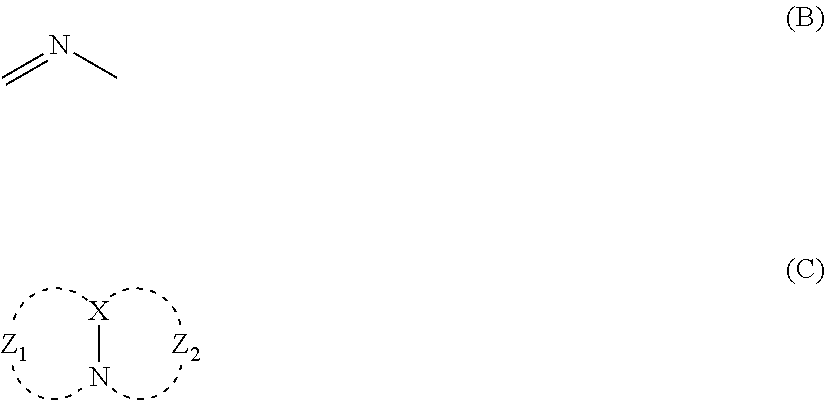
wherein X is a carbon atom or a nitrogen atom and each of Z1 and Z2 independently represents a group of atoms for completing the nitrogen-containing heterocyclic ring.


wherein R is an aromatic hydrocarbon group or a fused aromatic hydrocarbon group each having 6 to 40 carbon atoms, an aromatic heterocyclic group or a fused aromatic heterocyclic group each having 3 to 40 carbon atoms, an alkyl group having 1 to 20 carbon atoms, or an alkoxy group having 1 to 20 carbon atoms; and n is an integer of 0 to 5. If n is an integer of 2 or more, groups R may be the same or different.
HAr-L1-Ar1—Ar2 (D1)
wherein HAr is a substituted or unsubstituted nitrogen-containing heterocyclic group having 3 to 40 carbon atoms; L1 is a single bond, a substituted or unsubstituted aromatic hydrocarbon group or fused aromatic hydrocarbon group each having 6 to 40 carbon atoms, or a substituted or unsubstituted aromatic heterocyclic group or fused aromatic heterocyclic group each having 3 to 40 carbon atoms; Ar1 is a substituted or unsubstituted divalent aromatic hydrocarbon group having 6 to 40 carbon atoms; and Ar2 is a substituted or unsubstituted aromatic hydrocarbon group or fused aromatic hydrocarbon group each having 6 to 40 carbon atoms or a substituted or unsubstituted aromatic heterocyclic group or fused aromatic heterocyclic group each having 3 to 40 carbon atoms.


wherein R1 to R14 are each independently a hydrogen atom, a halogen atom, an alkyl group having 1 to 20 carbon atoms, an alkoxy group having 1 to 20 carbon atoms, an aryloxy group having 6 to 40 carbon atoms, a substituted or unsubstituted aromatic hydrocarbon group or fused aromatic hydrocarbon group each having 6 to 40 carbon atoms, or a substituted or unsubstituted aromatic heterocyclic group or fused aromatic heterocyclic group each having 3 to 40 carbon atoms; and Ar3 is a substituted or unsubstituted aromatic hydrocarbon group or fused aromatic hydrocarbon group each having 6 to 40 carbon atoms or a substituted or unsubstituted aromatic heterocyclic group or fused aromatic heterocyclic group each having 3 to 40 carbon atoms. Each of R1 to R8 may be selected from a hydrogen atom and a heavy hydrogen atom.


wherein R1 to R4 each independently represent a hydrogen atom, a heavy hydrogen atom, a substituted or unsubstituted aliphatic group having 1 to 20 carbon atoms, a substituted or unsubstituted alicyclic group having 3 to 20 carbon atoms, a substituted or unsubstituted aromatic ring group having 6 to 50 carbon atoms, or a substituted or unsubstituted heterocyclic group having 3 to 50 carbon atoms; and X1 and X2 each independently represent an oxygen atom, a sulfur atom, or dicyanomethylene group.

wherein R1, R2, R3, and R4 may be the same or different and each represents an aromatic hydrocarbon group or a fused aromatic hydrocarbon group each represented by formula (D6):

wherein R5, R6, R7, R8, and R9 may be the same or different and each represents a hydrogen atom, a heavy hydrogen atom, a saturated or unsaturated alkoxyl group having 1 to 20 carbon atoms, a saturated or unsaturated alkyl group having 1 to 20 carbon atoms, an amino group, or an alkylamino group having 1 to 20 carbon atoms. At least one of R5, R6, R7, R8, and R9 represents a group other than a hydrogen atom and a heavy hydrogen atom.


wherein:


wherein Ar1 to Ar3 are the same as defined with respect to Ar1 to Ar4 of formula (H). Examples of the compound represented by formula (J) are shown below, although not limited thereto.


wherein R21 to R26 may be the same or different and each independently represent a cyano group, —CONH2, a carboxyl group, or —COOR27 wherein R27 represents an alkyl group having 1 to 20 carbon atoms or a cycloalkyl group having 3 to 20 carbon atoms. One or more of a pair of R21 and R22, a pair of R23 and R24, and a pair of R25 and R26 may bond to each other to form a group represented by —CO—O—CO—.
ET d<ET TB
wherein ET d is the triplet energy of the phosphorescent dopant in the light emitting layer and ET TB is the triplet energy of the compound forming the triplet blocking layer,
the triplet excitons of phosphorescent dopant are confined (not diffuse to other molecules). Therefore, the energy deactivation process other than the emission on the phosphorescent dopant may be prevented to cause the emission with high efficiency. However, even in case of satisfying the relationship of ET d<ET TB, the triplet excitons may move into other molecules if the energy difference (ΔET=ET TB−ET d) is small, because the energy difference ΔET may be overcome by the absorption of ambient heat energy when driving a device at around room temperature as generally employed in practical drive of device. As compared with the fluorescent emission, the phosphorescent emission is relatively likely to be affected by the diffusion of excitons due to the heat absorption because the lifetime of triplet excitons is longer. Therefore, as for the energy difference ΔET, the larger as compared with the heat energy of room temperature, the better. The energy difference ΔET is more preferably 0.1 eV or more and particularly preferably 0.2 eV or more. In fluorescent devices, the material for organic EL device in an aspect of the invention is usable as the material for triplet blocking layer of the TTF device described in WO 2010/134350A1.


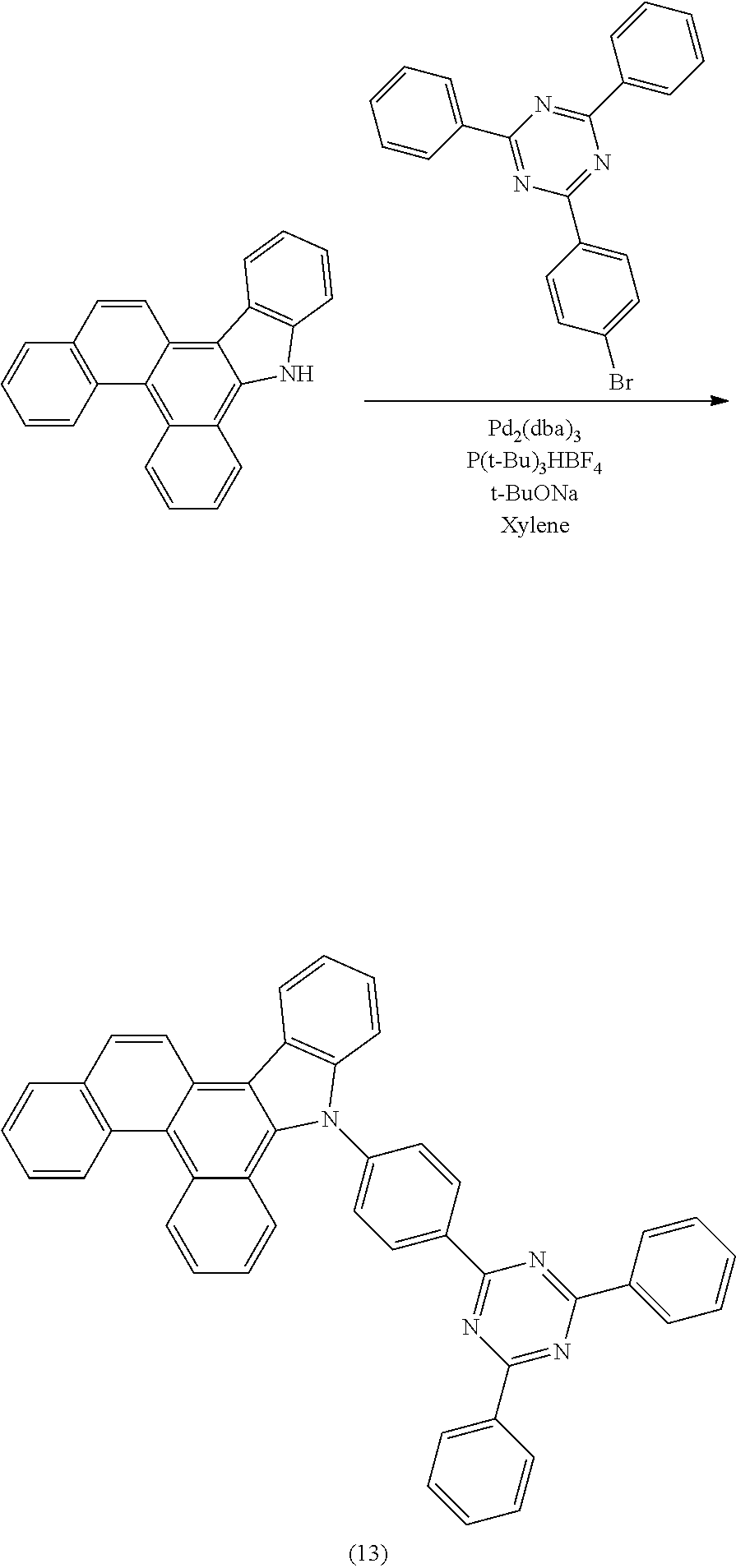


| TABLE 1 | |||||
| External | |||||
| quantum | |||||
| Light emitting layer | Voltage | efficiency | |||
| host material | (V) | (%) | |||
| Example 15 | compound 11 | 3.31 | 16.2 | ||
| Example 16 | |
3.26 | 15.5 | ||
| Example 17 | |
3.35 | 16.6 | ||
| Example 18 | |
3.22 | 15.3 | ||
| Example 19 | |
3.19 | 15.1 | ||
| Example 20 | compound 12 | 3.39 | 16.8 | ||
| Example 21 | compound 13 | 3.28 | 15.8 | ||
| Example 22 | compound 14 | 3.27 | 15.6 | ||
| Comparative | comparative | 3.50 | 13.1 | ||
| Example 1 | |
||||
- 1: Organic electroluminescence device
- 2: Substrate
- 3: Anode
- 4: Cathode
- 5: Light emitting layer
- 6: Anode-side organic thin film layer
- 7: Cathode-side organic thin film layer
- 10: Emission unit
Claims (21)


Applications Claiming Priority (3)
| Application Number | Priority Date | Filing Date | Title |
|---|---|---|---|
| JP2013117795 | 2013-06-04 | ||
| JP2013-117795 | 2013-06-04 | ||
| PCT/JP2014/064883 WO2014196580A1 (en) | 2013-06-04 | 2014-06-04 | Nitrogen-containing heterocyclic derivative, organic electroluminescence element material using same, and organic electroluminescence element and electronic device using same |
Related Parent Applications (1)
| Application Number | Title | Priority Date | Filing Date |
|---|---|---|---|
| PCT/JP2014/064883 Continuation WO2014196580A1 (en) | 2013-06-04 | 2014-06-04 | Nitrogen-containing heterocyclic derivative, organic electroluminescence element material using same, and organic electroluminescence element and electronic device using same |
Publications (2)
| Publication Number | Publication Date |
|---|---|
| US20150255726A1 US20150255726A1 (en) | 2015-09-10 |
| US9837615B2 true US9837615B2 (en) | 2017-12-05 |
Family
ID=52008213
Family Applications (1)
| Application Number | Title | Priority Date | Filing Date |
|---|---|---|---|
| US14/716,429 Active US9837615B2 (en) | 2013-06-04 | 2015-05-19 | Nitrogen-containing heterocyclic derivative, organic electroluminescence element material using same, and organic electroluminescence element and electronic device using same |
Country Status (5)
| Country | Link |
|---|---|
| US (1) | US9837615B2 (en) |
| JP (1) | JP5827772B2 (en) |
| KR (1) | KR101682844B1 (en) |
| CN (1) | CN104781232B (en) |
| WO (1) | WO2014196580A1 (en) |
Families Citing this family (17)
| Publication number | Priority date | Publication date | Assignee | Title |
|---|---|---|---|---|
| WO2014196580A1 (en) | 2013-06-04 | 2014-12-11 | 出光興産株式会社 | Nitrogen-containing heterocyclic derivative, organic electroluminescence element material using same, and organic electroluminescence element and electronic device using same |
| US11818949B2 (en) | 2015-04-06 | 2023-11-14 | Universal Display Corporation | Organic electroluminescent materials and devices |
| US11495749B2 (en) | 2015-04-06 | 2022-11-08 | Universal Display Corporation | Organic electroluminescent materials and devices |
| US10593890B2 (en) | 2015-04-06 | 2020-03-17 | Universal Display Corporation | Organic electroluminescent materials and devices |
| US11183645B2 (en) * | 2015-05-11 | 2021-11-23 | Nippon Hoso Kyokai | Organic thin film and method for manufacturing organic thin film, organic electroluminescence element, display device, illumination device, organic thin film solar cell, thin film transistor, and coating composition |
| KR101905970B1 (en) * | 2015-09-24 | 2018-10-10 | 주식회사 엘지화학 | Compound and organic electronic device comprising the same |
| WO2017109722A1 (en) | 2015-12-21 | 2017-06-29 | Idemitsu Kosan Co., Ltd. | Nitrogen-containing heterocyclic compounds and organic electroluminescence devices containing them |
| KR102042191B1 (en) | 2016-03-23 | 2019-11-07 | 삼성에스디아이 주식회사 | Organic compound and organic optoelectric device and display device |
| EP3498700A1 (en) | 2017-12-15 | 2019-06-19 | Idemitsu Kosan Co., Ltd. | Nitrogen-containing heterocyclic derivative, organic electroluminescence element material using the same, and organic electroluminescence element and electronic device using the same |
| CN108586188B (en) * | 2018-06-01 | 2021-06-29 | 石家庄诚志永华显示材料有限公司 | Derivatives, materials containing the Derivatives, and organic electroluminescent devices |
| US11834459B2 (en) | 2018-12-12 | 2023-12-05 | Universal Display Corporation | Host materials for electroluminescent devices |
| EP3680242A1 (en) | 2019-01-10 | 2020-07-15 | Idemitsu Kosan Co., Ltd. | Organic light emitting device and compounds for use in same |
| JP6827135B2 (en) * | 2019-03-29 | 2021-02-10 | 住友化学株式会社 | Light emitting element and composition for light emitting element |
| CN113402501B (en) * | 2020-03-16 | 2023-10-03 | 北京夏禾科技有限公司 | An organic electroluminescent material and device containing a helix structure |
| KR20210116214A (en) | 2020-03-17 | 2021-09-27 | 롬엔드하스전자재료코리아유한회사 | Organic electroluminescent compound and organic electroluminescent device comprising the same |
| CN113402508B (en) | 2020-03-17 | 2025-09-16 | 杜邦特种材料韩国有限公司 | Organic electroluminescent compound and organic electroluminescent device comprising the same |
| CN115838372B (en) * | 2022-11-25 | 2024-05-10 | 广东省大湾区华南理工大学聚集诱导发光高等研究院 | Triphenylethylene derivative and organic electroluminescent device comprising triphenylethylene derivative |
Citations (38)
| Publication number | Priority date | Publication date | Assignee | Title |
|---|---|---|---|---|
| JPH11149987A (en) | 1997-11-18 | 1999-06-02 | Mitsui Chem Inc | Organic electroluminescent element |
| JP2002069044A (en) | 2000-08-25 | 2002-03-08 | Idemitsu Kosan Co Ltd | Organic electroluminescence device |
| JP2004142131A (en) | 2002-10-22 | 2004-05-20 | Mitsui Chemicals Inc | Quinazoline compound and optical recording medium using this compound |
| US20040247933A1 (en) | 2003-06-03 | 2004-12-09 | Canon Kabushiki Kaisha | Bipolar asymmetric carbazole-based host materials for electrophosphorescent guest-host OLED systems |
| US20080122344A1 (en) | 2006-11-24 | 2008-05-29 | Samsung Electronics Co., Ltd. | Organic light emitting compound and organic light emitting device comprising the same, and method of manufacturing the organic light emitting device |
| US20080124455A1 (en) | 2006-11-24 | 2008-05-29 | Samsung Electronics Co., Ltd. | Organic light emitting compound, organic light emitting device comprising the same, and method of manufacturing the organic light emitting device |
| JP2010059158A (en) | 2008-09-04 | 2010-03-18 | Gracel Display Inc | New organic electroluminescent compound and organic electroluminescent device produced by using the same |
| WO2010114264A2 (en) | 2009-03-31 | 2010-10-07 | Dow Advanced Display Materials,Ltd. | Novel organic electroluminescent compounds and organic electroluminescent device using the same |
| WO2011037429A2 (en) | 2009-09-28 | 2011-03-31 | 덕산하이메탈(주) | Compounds having 5-membered aryl-ring-condensed heterocyclic derivatives, organic electronic device using the compounds, and terminal comprising the organic electronic device |
| US20110084256A1 (en) | 2009-10-09 | 2011-04-14 | Samsung Mobile Display Co., Ltd. | Condensed-cyclic compound and organic light emitting diode including organic layer containing the condensed-cyclic compound |
| US20110108821A1 (en) | 2008-07-29 | 2011-05-12 | Merck Patent Gmbh | Organic electroluminescent device |
| US20110210318A1 (en) | 2008-08-22 | 2011-09-01 | Lg Chem, Ltd. | Material for organic electronic device, and organic electronic device using same |
| WO2011139125A2 (en) | 2010-05-06 | 2011-11-10 | 주식회사 두산 | Phenanthrocarbazole compound, and organic electroluminescent device using same |
| KR20120021203A (en) | 2010-08-31 | 2012-03-08 | 롬엔드하스전자재료코리아유한회사 | Novel compounds for organic electronic material and organic electroluminescent device using the same |
| WO2012036482A1 (en) | 2010-09-17 | 2012-03-22 | Rohm And Haas Electronic Materials Korea Ltd. | Novel organic electroluminescent compounds and organic electroluminescent device using the same |
| WO2012050347A1 (en) | 2010-10-13 | 2012-04-19 | Rohm And Haas Electronic Materials Korea Ltd. | Novel compounds for organic electronic material and organic electroluminescent device using the same |
| US20120132899A1 (en) | 2010-01-15 | 2012-05-31 | Idemitsu Kosan Co., Ltd. | Nitrogenated heterocyclic ring derivative and organic electroluminescent element comprising same |
| US20120211735A1 (en) | 2009-01-09 | 2012-08-23 | Mitsubishi Chemical Corporation | Organic el element and organic light-emitting device |
| KR20120095765A (en) | 2011-02-21 | 2012-08-29 | (주)씨에스엘쏠라 | Organic light compound and organic light device using the same |
| US20120217485A1 (en) | 2009-07-31 | 2012-08-30 | Rohm And Haas Electronic Materials Korea Ltd. | Novel organic electroluminescent compounds and organic electroluminescent device using the same |
| KR20120104067A (en) | 2011-03-11 | 2012-09-20 | (주)씨에스엘쏠라 | Organic light compound and organic light device using the same |
| KR101219492B1 (en) | 2009-12-11 | 2013-01-28 | 삼성디스플레이 주식회사 | Compound Containing 5-Membered Heterocycle And Organic Electronic Element Using The Same, Terminal Thereof |
| KR20130016163A (en) | 2011-01-11 | 2013-02-14 | (주)씨에스엘쏠라 | Organic light compound and organic light device using the same |
| WO2013122364A2 (en) | 2012-02-13 | 2013-08-22 | 덕산하이메탈(주) | Compound for organic electrical element, organic electrical element comprising same, and electronic device therewith |
| CN103524398A (en) | 2013-10-22 | 2014-01-22 | 山东大学 | Naphthalene-based high condensed ring-aza [6] helicene compound and synthesis method thereof |
| WO2014014310A1 (en) | 2012-07-20 | 2014-01-23 | Rohm And Haas Electronic Materials Korea Ltd. | A novel combination of a host compound and a dopant compound and an organic electroluminescence device comprising the same |
| JP2014045101A (en) | 2012-08-28 | 2014-03-13 | Konica Minolta Inc | Organic electroluminescent element, lighting device, and display device |
| WO2014038867A1 (en) | 2012-09-07 | 2014-03-13 | Rohm And Haas Electronic Materials Korea Ltd. | A novel combination of a host compound and a dopant compound and an organic electroluminescence device comprising the same |
| WO2014054596A1 (en) | 2012-10-02 | 2014-04-10 | 三菱化学株式会社 | Organic electroluminescent element, organic el lighting and organic el display device |
| US20140117326A1 (en) | 2012-10-30 | 2014-05-01 | Sun-young Lee | Heterocyclic compound and organic light-emitting device including the same |
| KR20140103391A (en) | 2013-02-15 | 2014-08-27 | 에스에프씨 주식회사 | Novel organic compounds for organic light-emitting diode and organic light-emitting diode including the same |
| WO2014137104A1 (en) | 2013-03-07 | 2014-09-12 | 덕산하이메탈(주) | Compound for organic electronic element, organic electronic element comprising compound, and electronic device using organic electronic element |
| JP2014183315A (en) | 2013-03-15 | 2014-09-29 | Dow Global Technologies Llc | Quinazoline derivative compounds for electronic film and device |
| WO2014157574A1 (en) | 2013-03-27 | 2014-10-02 | 出光興産株式会社 | Condensed fluoranthene compound, material for organic electroluminescent element using this compound, organic electroluminescent element using this material, and electronic device |
| WO2014178434A1 (en) | 2013-05-02 | 2014-11-06 | 出光興産株式会社 | Compound, material for organic electroluminescent elements, organic electroluminescent element, and electronic device |
| EP2871686A1 (en) | 2012-07-05 | 2015-05-13 | Toray Industries, Inc. | Light emitting elment material and light emitting element |
| EP2907803A1 (en) | 2012-10-12 | 2015-08-19 | Toray Industries, Inc. | Fluoranthene derivative, luminescent element material containing same, and luminescent element |
| US20150255726A1 (en) | 2013-06-04 | 2015-09-10 | Idemitsu Kosan Co., Ltd. | Nitrogen-containing heterocyclic derivative, organic electroluminescence element material using same, and organic electroluminescence element and electronic device using same |
Family Cites Families (1)
| Publication number | Priority date | Publication date | Assignee | Title |
|---|---|---|---|---|
| KR101810045B1 (en) * | 2010-10-25 | 2017-12-19 | 삼성디스플레이 주식회사 | Heterocyclic compound and Organic light emitting device containing same |
-
2014
- 2014-06-04 WO PCT/JP2014/064883 patent/WO2014196580A1/en not_active Ceased
- 2014-06-04 JP JP2015518686A patent/JP5827772B2/en active Active
- 2014-06-04 KR KR1020157013098A patent/KR101682844B1/en active Active
- 2014-06-04 CN CN201480003093.1A patent/CN104781232B/en active Active
-
2015
- 2015-05-19 US US14/716,429 patent/US9837615B2/en active Active
Patent Citations (46)
| Publication number | Priority date | Publication date | Assignee | Title |
|---|---|---|---|---|
| JPH11149987A (en) | 1997-11-18 | 1999-06-02 | Mitsui Chem Inc | Organic electroluminescent element |
| JP2002069044A (en) | 2000-08-25 | 2002-03-08 | Idemitsu Kosan Co Ltd | Organic electroluminescence device |
| JP2004142131A (en) | 2002-10-22 | 2004-05-20 | Mitsui Chemicals Inc | Quinazoline compound and optical recording medium using this compound |
| US20040247933A1 (en) | 2003-06-03 | 2004-12-09 | Canon Kabushiki Kaisha | Bipolar asymmetric carbazole-based host materials for electrophosphorescent guest-host OLED systems |
| US20080122344A1 (en) | 2006-11-24 | 2008-05-29 | Samsung Electronics Co., Ltd. | Organic light emitting compound and organic light emitting device comprising the same, and method of manufacturing the organic light emitting device |
| US20080124455A1 (en) | 2006-11-24 | 2008-05-29 | Samsung Electronics Co., Ltd. | Organic light emitting compound, organic light emitting device comprising the same, and method of manufacturing the organic light emitting device |
| US20110108821A1 (en) | 2008-07-29 | 2011-05-12 | Merck Patent Gmbh | Organic electroluminescent device |
| US20150228905A1 (en) | 2008-07-29 | 2015-08-13 | Merck Patent Gmbh | Compounds for electronic devices |
| JP2011529614A (en) | 2008-07-29 | 2011-12-08 | メルク パテント ゲーエムベーハー | Organic electroluminescence device |
| US20110114889A1 (en) | 2008-07-29 | 2011-05-19 | Merck Patent Gmbh | Compounds for electronic devices |
| US20110210318A1 (en) | 2008-08-22 | 2011-09-01 | Lg Chem, Ltd. | Material for organic electronic device, and organic electronic device using same |
| JP2010059158A (en) | 2008-09-04 | 2010-03-18 | Gracel Display Inc | New organic electroluminescent compound and organic electroluminescent device produced by using the same |
| US20100096982A1 (en) | 2008-09-04 | 2010-04-22 | Gracel Display Inc. | Novel organic electroluminescent compounds and organic electrouminescent device using the same |
| US20120211735A1 (en) | 2009-01-09 | 2012-08-23 | Mitsubishi Chemical Corporation | Organic el element and organic light-emitting device |
| WO2010114264A2 (en) | 2009-03-31 | 2010-10-07 | Dow Advanced Display Materials,Ltd. | Novel organic electroluminescent compounds and organic electroluminescent device using the same |
| US20120217485A1 (en) | 2009-07-31 | 2012-08-30 | Rohm And Haas Electronic Materials Korea Ltd. | Novel organic electroluminescent compounds and organic electroluminescent device using the same |
| WO2011037429A2 (en) | 2009-09-28 | 2011-03-31 | 덕산하이메탈(주) | Compounds having 5-membered aryl-ring-condensed heterocyclic derivatives, organic electronic device using the compounds, and terminal comprising the organic electronic device |
| US20110084256A1 (en) | 2009-10-09 | 2011-04-14 | Samsung Mobile Display Co., Ltd. | Condensed-cyclic compound and organic light emitting diode including organic layer containing the condensed-cyclic compound |
| JP2011079822A (en) | 2009-10-09 | 2011-04-21 | Samsung Mobile Display Co Ltd | Fused-ring compound and organic luminescent element |
| KR101219492B1 (en) | 2009-12-11 | 2013-01-28 | 삼성디스플레이 주식회사 | Compound Containing 5-Membered Heterocycle And Organic Electronic Element Using The Same, Terminal Thereof |
| US20120132899A1 (en) | 2010-01-15 | 2012-05-31 | Idemitsu Kosan Co., Ltd. | Nitrogenated heterocyclic ring derivative and organic electroluminescent element comprising same |
| WO2011139125A2 (en) | 2010-05-06 | 2011-11-10 | 주식회사 두산 | Phenanthrocarbazole compound, and organic electroluminescent device using same |
| US20130048975A1 (en) | 2010-05-06 | 2013-02-28 | Doosan Corporation | Phenanthrocarbazole compound, and organic electroluminescent device using same |
| KR20120021203A (en) | 2010-08-31 | 2012-03-08 | 롬엔드하스전자재료코리아유한회사 | Novel compounds for organic electronic material and organic electroluminescent device using the same |
| WO2012036482A1 (en) | 2010-09-17 | 2012-03-22 | Rohm And Haas Electronic Materials Korea Ltd. | Novel organic electroluminescent compounds and organic electroluminescent device using the same |
| WO2012050347A1 (en) | 2010-10-13 | 2012-04-19 | Rohm And Haas Electronic Materials Korea Ltd. | Novel compounds for organic electronic material and organic electroluminescent device using the same |
| KR20130016163A (en) | 2011-01-11 | 2013-02-14 | (주)씨에스엘쏠라 | Organic light compound and organic light device using the same |
| KR20120095765A (en) | 2011-02-21 | 2012-08-29 | (주)씨에스엘쏠라 | Organic light compound and organic light device using the same |
| KR20130080827A (en) | 2011-02-21 | 2013-07-15 | (주)씨에스엘쏠라 | Organic light compound and organic light device using the same |
| KR20120104067A (en) | 2011-03-11 | 2012-09-20 | (주)씨에스엘쏠라 | Organic light compound and organic light device using the same |
| WO2013122364A2 (en) | 2012-02-13 | 2013-08-22 | 덕산하이메탈(주) | Compound for organic electrical element, organic electrical element comprising same, and electronic device therewith |
| EP2871686A1 (en) | 2012-07-05 | 2015-05-13 | Toray Industries, Inc. | Light emitting elment material and light emitting element |
| WO2014014310A1 (en) | 2012-07-20 | 2014-01-23 | Rohm And Haas Electronic Materials Korea Ltd. | A novel combination of a host compound and a dopant compound and an organic electroluminescence device comprising the same |
| JP2014045101A (en) | 2012-08-28 | 2014-03-13 | Konica Minolta Inc | Organic electroluminescent element, lighting device, and display device |
| WO2014038867A1 (en) | 2012-09-07 | 2014-03-13 | Rohm And Haas Electronic Materials Korea Ltd. | A novel combination of a host compound and a dopant compound and an organic electroluminescence device comprising the same |
| KR20140032823A (en) | 2012-09-07 | 2014-03-17 | 롬엔드하스전자재료코리아유한회사 | Organic electroluminescence device |
| WO2014054596A1 (en) | 2012-10-02 | 2014-04-10 | 三菱化学株式会社 | Organic electroluminescent element, organic el lighting and organic el display device |
| EP2907803A1 (en) | 2012-10-12 | 2015-08-19 | Toray Industries, Inc. | Fluoranthene derivative, luminescent element material containing same, and luminescent element |
| US20140117326A1 (en) | 2012-10-30 | 2014-05-01 | Sun-young Lee | Heterocyclic compound and organic light-emitting device including the same |
| KR20140103391A (en) | 2013-02-15 | 2014-08-27 | 에스에프씨 주식회사 | Novel organic compounds for organic light-emitting diode and organic light-emitting diode including the same |
| WO2014137104A1 (en) | 2013-03-07 | 2014-09-12 | 덕산하이메탈(주) | Compound for organic electronic element, organic electronic element comprising compound, and electronic device using organic electronic element |
| JP2014183315A (en) | 2013-03-15 | 2014-09-29 | Dow Global Technologies Llc | Quinazoline derivative compounds for electronic film and device |
| WO2014157574A1 (en) | 2013-03-27 | 2014-10-02 | 出光興産株式会社 | Condensed fluoranthene compound, material for organic electroluminescent element using this compound, organic electroluminescent element using this material, and electronic device |
| WO2014178434A1 (en) | 2013-05-02 | 2014-11-06 | 出光興産株式会社 | Compound, material for organic electroluminescent elements, organic electroluminescent element, and electronic device |
| US20150255726A1 (en) | 2013-06-04 | 2015-09-10 | Idemitsu Kosan Co., Ltd. | Nitrogen-containing heterocyclic derivative, organic electroluminescence element material using same, and organic electroluminescence element and electronic device using same |
| CN103524398A (en) | 2013-10-22 | 2014-01-22 | 山东大学 | Naphthalene-based high condensed ring-aza [6] helicene compound and synthesis method thereof |
Non-Patent Citations (3)
| Title |
|---|
| International Search Report dated Jul. 22, 2014, in PCT/JP2014/064883 filed Jun. 4, 2014. |
| Kimio Hirano et al., Gold(I)-Catalyzed Polycyclizations of Polyenyne-Type Anilines Based on Hydroamination and Consecutive Hydroarylation Cascade, Journal of Organic Chemistry, 2011, vol. 76, No. 21, pp. 9068-9080. |
| Office Action dated Jul. 14, 2015, in Japanese Patent Application No. 2015-518686. |
Also Published As
| Publication number | Publication date |
|---|---|
| KR101682844B1 (en) | 2016-12-05 |
| CN104781232A (en) | 2015-07-15 |
| CN104781232B (en) | 2019-03-15 |
| KR20150126340A (en) | 2015-11-11 |
| WO2014196580A1 (en) | 2014-12-11 |
| JP5827772B2 (en) | 2015-12-02 |
| JPWO2014196580A1 (en) | 2017-02-23 |
| US20150255726A1 (en) | 2015-09-10 |
Similar Documents
| Publication | Publication Date | Title |
|---|---|---|
| US9741943B2 (en) | Condensed fluoranthene compound, material for organic electroluminescent element using this compound, organic electroluminescent element using this material, and electronic device | |
| US9837615B2 (en) | Nitrogen-containing heterocyclic derivative, organic electroluminescence element material using same, and organic electroluminescence element and electronic device using same | |
| US9502667B2 (en) | Organic electroluminescence | |
| US10205099B2 (en) | Condensed fluoranthene compound, organic electroluminescence element material including same, organic electroluminescence element using same, and electronic device | |
| KR102245875B1 (en) | Material for organic electroluminescent elements, organic electroluminescent element using same, and electronic device | |
| US9887367B2 (en) | Heterocyclic compound, material for organic electroluminescent elements using same, organic electroluminescent element using same, and electronic device | |
| US9991445B2 (en) | Heterocyclic compound, material for organic electroluminescence device including the same, and organic electroluminescence device and electronic equipment employing the same | |
| US9963429B2 (en) | Carbazole derivative, material for organic electroluminescent element which comprises same, and organic electroluminescent element and electronic device each manufactured using same | |
| US12492162B2 (en) | Organic electroluminescent element and electronic device | |
| US9954178B2 (en) | Aromatic amine derivative and organic electroluminescent element | |
| US20150364692A1 (en) | Compound, material for organic electroluminescent elements, organic electroluminescent element, and electronic device | |
| US10763442B2 (en) | Compound, organic electroluminescent element material using same, organic electroluminescent element using this material, and electronic device |
Legal Events
| Date | Code | Title | Description |
|---|---|---|---|
| AS | Assignment |
Owner name: IDEMITSU KOSAN CO., LTD., JAPAN Free format text: ASSIGNMENT OF ASSIGNORS INTEREST;ASSIGNORS:KAWAMURA, MASAHIRO;MIZUKI, YUMIKO;ITO, HIROKATSU;AND OTHERS;REEL/FRAME:035672/0801 Effective date: 20150511 |
|
| STCF | Information on status: patent grant |
Free format text: PATENTED CASE |
|
| MAFP | Maintenance fee payment |
Free format text: PAYMENT OF MAINTENANCE FEE, 4TH YEAR, LARGE ENTITY (ORIGINAL EVENT CODE: M1551); ENTITY STATUS OF PATENT OWNER: LARGE ENTITY Year of fee payment: 4 |
|
| MAFP | Maintenance fee payment |
Free format text: PAYMENT OF MAINTENANCE FEE, 8TH YEAR, LARGE ENTITY (ORIGINAL EVENT CODE: M1552); ENTITY STATUS OF PATENT OWNER: LARGE ENTITY Year of fee payment: 8 |