CROSS-REFERENCE TO RELATED APPLICATION
The present application claims priority from Japanese Patent Application No. 2015-168248 filed on Aug. 27, 2015, the content of which is hereby incorporated by reference into this application.
TECHNICAL FIELD OF THE INVENTION
The present invention relates to technique of manufacturing a semiconductor device, for example, technique for a wafer process package and so forth, and to a semiconductor device.
BACKGROUND OF THE INVENTION
In a wafer process package (WPP, or referred to also as a wafer level package (WLP)), a solder bump is bonded to each terminating end of a plurality of rearrangement wirings (rewirings).
There is a description in, for example, Japanese Patent Application Laid-Open No. 2009-246218 (Patent Document 1) regarding a structure and assembly of the wafer process package. Patent Document 1 discloses technique in which a probe needle is brought into contact with an electrode of a wafer process package.
SUMMARY OF THE INVENTION
In the above-described wafer process package, there is a step of testing a non-volatile memory during an assembly process when the non-volatile memory is incorporated in a semiconductor chip. This testing step includes a heat processing step, which is called a retention baking step, in which data is programmed in the non-volatile memory, and then, a thermal load is applied at 250° C. for about 72 hours, for example. Further, it is checked whether there is a loss in the data programmed in the memory after the retention baking step.
Here, when the rearrangement wiring is formed after the step of testing the memory, for example, there is a possibility that the data programmed in the memory is lost in the heat processing at high temperature which is implemented at the time of forming the rearrangement wiring. Accordingly, it is preferable to perform the step of testing the non-volatile memory after forming the rearrangement wiring in order to prevent the loss in the data programmed in the memory.
In this case, the memory test is performed by bringing the probe into contact with a pad of the rearrangement wiring in the above-described step of testing the non-volatile memory, but accuracy of the test decreases since a Ni (nickel) layer formed on a surface of a Cu (copper) layer of the rearrangement wiring is hard and a contact resistance with the probe is large. At this time, it is considered to perform Au plating on the pad of the rearrangement wiring in order to achieve a countermeasure against the contact resistance of the probe and to secure the wettability of the solder bump, which causes Ni to spring up and be oxidized on an Au (gold)-plated film due to the retention baking, and as a result, leads to an increase of the contact resistance of the probe and defective wettability and defective bonding of the solder.
Other problems and novel features will become apparent from the description of the specification and the attached drawings.
In a method of manufacturing a semiconductor device of an embodiment of the present invention, a semiconductor substrate is prepared, the semiconductor substrate including a first pad electrode and a second pad electrode, the first pad electrode being formed at an uppermost layer of a plurality of wiring layers and having a first metal film formed on a surface of the first pad electrode, and the second pad electrode being electrically connected to the first pad electrode, being formed at the uppermost layer of the plurality of wiring layers and having a second metal film formed on a surface of the second pad electrode. Further, a first insulating film is formed having a first opening for exposing the first metal film of the first pad electrode, and a second opening for exposing the second metal film in the second pad electrode. A wiring which is electrically connected to the second pad electrode via the second opening is formed. Further, a third opening is formed in a second insulating film above the first pad electrode and a fourth opening of the second insulating film above the wiring is formed while leaving an organic reaction layer on each surface of the first pad electrode and the wiring. Still further, after forming the fourth opening, heat processing is performed on the semiconductor substrate, and then a bump is formed in the fourth opening on the wiring.
A semiconductor device of an embodiment includes: a semiconductor chip having a main surface in which a semiconductor circuit is formed; a plurality of first pad electrodes electrically connected to the semiconductor circuit and are exposed at the main surface; a plurality of second pad electrodes electrically connected to the plurality of first pad electrodes, respectively, and formed on the same layer with each of the plurality of first pad electrodes; and a plurality of wirings covering each of the plurality of second pad electrodes and are electrically connected to the plurality of second pad electrodes, respectively. Further, the semiconductor device includes an insulating film formed on the plurality of wirings; and a plurality of bumps provided in opening portions of the insulating films of the plurality of wirings. Each surface of the plurality of first pad electrodes is exposed.
According to the embodiment described above, in a test of a semiconductor device, reliability of the test can be improved with suppressing a defective solder joint.
BRIEF DESCRIPTIONS OF THE DRAWINGS
FIG. 1 is a partial plan view transparently illustrating an example of an internal structure of the main part of the semiconductor device according to an embodiment;
FIG. 2 is a cross-sectional view illustrating a structure taken along a line A-A illustrated in FIG. 1;
FIG. 3 is an enlarged partial cross-sectional view illustrating an example of the internal structure of the main part of the semiconductor device illustrated in FIG. 1;
FIG. 4 is an enlarged partial plan view illustrating an example of a structure of a pad of the main part illustrating the semiconductor device illustrated in FIG. 1;
FIG. 5 is a plan view illustrating each example of a pad array and a rewiring of the main part of the semiconductor device illustrated in FIG. 1;
FIG. 6 is an enlarged partial plan view and an enlarged partial cross-sectional view illustrating an example of a structure of a part A of FIG. 5;
FIG. 7 is an enlarged partial plan view and an enlarged partial cross-sectional view illustrating an example of a structure of a part B of FIG. 5;
FIG. 8 is a flow chart with a cross-sectional view illustrating a part of a manufacturing method of the semiconductor device of FIG. 1;
FIG. 9 is a flow chart with a cross-sectional view illustrating a part of the manufacturing method of the semiconductor device of FIG. 1;
FIG. 10 is a flow chart with a cross-sectional view illustrating a part of the manufacturing method of the semiconductor device of FIG. 1;
FIG. 11 is a flow chart with a cross-sectional view illustrating a part of the manufacturing method of the semiconductor device of FIG. 1;
FIG. 12 is a flow chart with a cross-sectional view illustrating a part of the manufacturing method of the semiconductor device of FIG. 1;
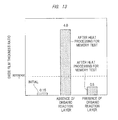
FIG. 13 is a data diagram illustrating a relationship of a thickness of an oxide film and an organic reaction layer in the method of manufacturing the semiconductor device;
FIG. 14 is an enlarged partial plan view illustrating a structure of a modification example of the embodiment;
FIG. 15 is a partial cross-sectional view illustrating a structure taken along a line A-A illustrated in FIG. 14; and
FIG. 16 is a cross-sectional view illustrating a structure of a semiconductor device to which the modification example of the embodiment is applied.
DESCRIPTIONS OF THE PREFERRED EMBODIMENTS
In an embodiment described hereinafter, repetitive descriptions of the same or similar components will be omitted.
In the embodiments described below, the invention will be described in a plurality of sections or embodiments when required as a matter of convenience. However, these sections or embodiments are not irrelevant to each other unless otherwise stated, and the one relates to the entire or a part of the other as a modification example, details, or a supplementary explanation thereof.
Also, in the embodiments described below, when referring to the number of elements (including number of pieces, values, amount, range, and the like), the number of the elements is not limited to a specific number unless otherwise stated or except the case where the number is apparently limited to a specific number in principle. The number larger or smaller than the specified number is also applicable.
Further, in the embodiments described below, it goes without saying that the components (including element steps) are not always indispensable unless otherwise stated or except the case where the components are apparently indispensable in principle.
Further, it is needless to say that such phrases as “formed of A”, “made of A”, “comprising A”, “including A”, “having A” do not eliminate other elements than A unless otherwise stated that the element is limited to that. Similarly, in the embodiments described below, when the shape of the components, positional relation thereof, and the like are mentioned, the substantially approximate and similar shapes and the like are included therein unless otherwise stated or except the case where it is conceivable that they are apparently excluded in principle. The same goes for the numerical value and the range described above.
Hereinafter, the embodiment of the present invention will be described in detail based on the accompanying drawings. Note that, in all of the drawings for describing the embodiments, identical members are provided with the same reference character in principle, and are not repetitively described. Note that even a plan view may be hatched in order to make the drawing easily understood.
<Structure of Semiconductor Device>
FIG. 1 is a partial plan view transparently illustrating an example of an internal structure of the main part of the semiconductor device according to an embodiment; FIG. 2 is a cross-sectional view illustrating a structure taken along a line A-A illustrated in FIG. 1; FIG. 3 is an enlarged partial cross-sectional view illustrating an example of the internal structure of the main part of the semiconductor device illustrated in FIG. 1; and FIG. 4 is an enlarged partial plan view illustrating an example of a structure of a pad of the main part illustrating the semiconductor device illustrated in FIG. 1. In addition, FIG. 5 is a plan view illustrating each example of a pad array and a rewiring of the main part of the semiconductor device illustrated in FIG. 1; FIG. 6 is an enlarged partial plan view and an enlarged partial cross-sectional view illustrating an example of a structure of a part A of FIG. 5; and FIG. 7 is an enlarged partial plan view and an enlarged partial cross-sectional view illustrating an example of a structure of a part B of FIG. 5.
A semiconductor device according to the present embodiment illustrated in FIG. 1 is a wafer process package 5, and a small semiconductor package which is substantially equal to a size of a chip.
A description will be given regarding a configuration of the wafer process package 5 according to the present embodiment with reference to FIGS. 1 and 2. The wafer process package 5 includes a semiconductor chip 2 having a main surface 2 b, in which a semiconductor circuit is formed on the main surface 2 b, a plurality of first pad electrodes 2 aa which are electrically connected to the semiconductor circuit and exposed at the main surface 2 b, and a plurality of second pad electrodes tab which are electrically connected to each of the plurality of first pad electrodes 2 aa, and formed on the same layer with each of the plurality of first pad electrodes 2 aa.
That is, a plurality of pad electrodes 2 a are provided side by side in two columns, and there are those which are arranged side by side at the outer side are the plurality of first pad electrodes 2 aa while there are those which are arranged side by side at the inner side are the plurality of second pad electrodes 2 ab as illustrated in FIG. 1.
Further, rearrangement wirings (wirings) 2 e are connected to each of the plurality of second pad electrodes 2 ab. The rearrangement wiring 2 e is provided for rearranging each position of the plurality of second pad electrodes 2 ab to a different position, and is also called the rewiring.
In other words, each of the plurality of first pad electrodes 2 aa is arranged side by side on an end portion side (peripheral edge portion side) of the main surface 2 b of the semiconductor chip 2, and each of the plurality of second pad electrodes 2 ab is arranged at the inner side than each of the plurality of first pad electrodes 2 aa. Further, the rearrangement wiring 2 e is led out from each of the plurality of second pad electrodes 2 ab arranged at the inner side.
Specifically, the rearrangement wiring 2 e covers each of the plurality of second pad electrodes 2 ab, and further, is electrically connected to each of the plurality of second pad electrodes 2 ab as illustrated in FIG. 2. Further, bump lands 2 ac are formed at end portions on the opposite side of the second pad electrodes 2 ab of the rearrangement wirings 2 e, and each of a solder bump (bump) 3 is mounted to each of the bump lands 2 ac as an external terminal of the wafer process package 5.
Specifically, a polyimide layer 2 f serving as an insulating film is formed on each of the plurality of rearrangement wirings 2 e, further, the bump land 2 ac is formed in an opening portion 2 m of the polyimide layer 2 f on each of the plurality of rearrangement wirings 2 e, and the solder bump 3 is provided on each of the bump lands 2 ac.
Incidentally, each surface of the plurality of first pad electrodes 2 aa arranged at the outer side is exposed. Specifically, a first cap film (first metal film) 2 r is formed on each surface of the first pad electrodes 2 aa, and further, an organic reaction layer 2 ka is formed on the first cap film 2 r as illustrated in FIG. 2. In addition, the first cap film 2 r extends on each of the plurality of second pad electrodes 2 ab.
Specifically, the first cap film 2 r is formed on a surface of an Al (aluminum) pad 2 s in the first pad electrode 2 aa, and further, the organic reaction layer 2 ka, which is an organic thin film, is formed on the surface of the first cap film 2 r as illustrated in FIG. 2. Further, the Al pad 2 s of the first pad electrode 2 aa is linked with the Al pad 2 s of the second pad electrode 2 ab. That is, the Al pad 2 s of the first pad electrode 2 aa and the Al pad 2 s of the second pad electrode 2 ab are integrally formed. In other words, the Al pad 2 s according to the present embodiment is considered also as the Al pad 2 s equipped with a cap film.
Further, a second cap film (second metal film) 2 t is also formed on a surface of the Al pad 2 s in a region of the second pad electrode 2 ab. That is, the first cap film 2 r and the second cap film 2 t are also integrally formed on the Al pad 2 s.
Further, the rearrangement wiring 2 e is connected to the second pad electrode 2 ab.
Incidentally, the first cap film 2 r and the second cap film 2 t are made of, for example, TiN (titanium nitride). Accordingly, the first cap film 2 r made of TiN is exposed to the first pad electrode 2 aa.
In addition, the rearrangement wiring 2 e has, for example, a three-layer structure, and includes, for example, a seed layer 2 hb made of a Cu (copper) film, a Cu layer 2 i, and a Ni (nickel) layer 2 n from a lower layer side toward an upper layer side.
In addition, a plurality of wiring layers 2 u are formed below the first pad electrodes 2 aa, a wiring M of each layer is electrically connected via a plug 2 w as illustrated in FIG. 3. Further, memory cells 2 v are formed on both sides of the plug 2 w serving as a drain at the lowermost layer of the wiring layer 2 u. The memory cell 2 v is, for example, a non-volatile memory (flash memory), and the semiconductor circuit including the non-volatile memory circuit is formed in the semiconductor chip 2 according to the present embodiment.
In addition, FIG. 4 is the plan view of each of the first pad electrode 2 aa and the second pad electrode 2 ab, and a first opening 2 ja, which is an opening portion of the first pad electrode 2 aa, has a size far larger than that of a second opening 2 jb which is an opening portion of the second pad electrode 2 ab (Y>X). This is because the first pad electrode 2 aa is a pad for a probe test or wire bonding while the second pad electrode 2 ab is a pad for rearrangement wiring connection, which will be described later.
It is possible to easily change each size of these pads by adjusting a size of an opening portion of an insulating film formed in the pad.
Next, a description will be given regarding a structure of the pad of the semiconductor chip to be mounted to the wafer process package 5 according to the present embodiment.
The semiconductor chip 2 illustrated in FIG. 5 has a structure before attaching the solder bump 3 that is illustrated in FIG. 2 thereto.
The pad electrodes 2 a are provided in two columns on the main surface 2 b of the semiconductor chip 2 along the peripheral edge portion thereof. Further, the rearrangement wirings 2 e are provided on each of the second pad electrodes 2 ab in the column at the inner side among the pad electrodes 2 a arranged in two columns, and each of the plurality of rearrangement wirings 2 e is led out toward the inside of the main surface 2 b. Further, the bump lands 2 ac are formed at the respective end portions of the rearrangement wirings 2 e.
Incidentally, the respective bump lands 2 ac are provided side by side at an equal pitch both in the X direction and in the Y direction on the main surface 2 b. That is, the plurality of bump lands 2 ac are provided side by side in a lattice style on the main surface 2 b.
Accordingly, the plurality of solder bumps 3 are also arranged in a lattice style when the solder bumps 3 are mounted to each of the plurality of bump lands 2 ac.
FIG. 6 illustrates the plan view and the cross-sectional view of the first pad electrode 2 aa and the second pad electrode 2 ab. The first pad electrode 2 aa and the second pad electrode 2 ab according to the present embodiment are configured such that the insulating film is interposed in the Al pad 2 s having an elongated rectangular planar shape, and two openings are formed in the insulating film. Accordingly, the integrally formed Al pad 2 s is divided into two electrode regions and used with the first pad electrode 2 aa and the second pad electrode 2 ab.
Accordingly, the Al pad 2 s is formed to be integrally linked from the first pad electrode 2 aa over the second pad electrode 2 ab, and further, the first cap film 2 r and the second cap film 2 t, which are integrally formed, are arranged on the Al pad 2 s. That is, the Al pad 2 s is the Al pad 2 s equipped with the cap film. Incidentally, the first cap film 2 r and the second cap film 2 t are made of, for example, TiN (titanium nitride).
Further, the organic reaction layer 2 ka, which is extremely thin having a thickness of, for example, about several hundred nm (nano meters), is formed on the surface of the first cap film 2 r of the first pad electrode 2 aa.
In addition, the plurality of wiring layers 2 u are formed below the first pad electrode 2 aa, and further, the memory cells 2 v are formed at the lowermost layer thereof as illustrated in FIG. 3, and the memory cell 2 v is, for example, the non-volatile memory (flash memory) as described above.
In addition, the bump land 2 ac is formed at the end portion of the rearrangement wiring 2 e led out from the second pad electrode 2 ab as illustrated in FIG. 7. An organic reaction layer 2 kb, which is an organic thin film, is formed on a surface of the Ni layer 2 n at the uppermost layer of the bump land 2 ac illustrated in FIG. 2 before mounting the solder bump 3 d.
Incidentally, the organic reaction layer 2 kb formed on the surface of the bump land 2 ac is removed by, for example, ashing at the time of mounting the solder bump 3 to the bump land 2 ac. Accordingly, it is possible to cause the bump land 2 ac to be wetted with the solder bump 3, and to cause the solder bump 3 to be favorably connected with the bump land 2 ac.
In the wafer process package 5 according to the present embodiment, the first pad electrodes 2 aa, which are at the outer side (end portion side) among the plurality of pad electrodes 2 a arranged in two columns on the peripheral edge portion of the main surface 2 b of the semiconductor chip 2, remain without any change, and the second pad electrodes 2 ab in the inner-side column are connected with the rearrangement wirings 2 e.
Accordingly, the plurality of first pad electrodes 2 aa, which are different from the electrode for mounting of the bump, are provided at the peripheral edge portion (end portion) of the main surface 2 b so that it is possible to implement the probe test using the first pad electrodes 2 aa even after the solder bump are mounted. That is, it is possible to perform the probe test by bringing a probe in contact with the first pad electrode 2 aa without bringing the probe in contact with the solder bump 3 even after the wafer process package 5 is assembled.
Incidentally, the first pad electrode 2 aa and the second pad electrode 2 ab may be formed by dividedly providing the two openings of the insulating film may be formed at the upper layer of the single elongated Al pad 2 s as in the present embodiment, or by forming different Al pads 2 s in advance and forming the first pad electrode 2 aa and the second pad electrode 2 ab to the Al pads 2 s, respectively.
<Method of Manufacturing Semiconductor Device>
Next, a description will be given regarding a method of manufacturing the semiconductor device according to the present embodiment. Each of FIGS. 8 to 12 is a flow chart with a cross-sectional view illustrating a part of the method of manufacturing the semiconductor device of FIG. 1.
First, pad opening (leaving a cap) illustrated in FIG. 8 is performed. In the above-described pad opening, a semiconductor wafer (semiconductor substrate) 1, which includes the plurality of semiconductor chips 2 each of which has a first region 2 x and a second region 2 y different from the first region 2 x formed therein, is prepared. Incidentally, the plurality of wiring layers 2 u, the first pad electrode 2 aa provided with the first cap film 2 r formed at the uppermost layer of the plurality of wiring layers 2 u in the first region 2 x, and the second pad electrode 2 ab provided with the second cap film 2 t formed at the uppermost layer of the plurality of wiring layers 2 u in the second region 2 y, which are illustrated in FIG. 3, are formed in each region of the semiconductor chips 2 of the semiconductor wafer 1.
Further, the Al pad 2 s, which is formed in an integrally linked manner, is formed with respect to the first pad electrode 2 aa and the second pad electrode 2 ab. Specifically, the insulating film is interposed in the Al pad 2 s having the elongated rectangular planar shape, the two openings are formed in the insulating film, and the integrally formed Al pad 2 s is divided into the two electrode regions and used with the first pad electrode 2 aa and the second pad electrode 2 ab.
That is, the opening for the first pad electrode 2 aa and the opening for the second pad electrode 2 ab are formed in a protective film 2 z serving as the insulating film and formed on the elongated Al pad 2 s such that the first cap film 2 r and the second cap film 2 t remain. Incidentally, the first cap film 2 r and the second cap film 2 t, which are integrally formed, are arranged on the Al pad 2 s. That is, the Al pad 2 s is the Al pad 2 s equipped with the cap film. Here, the first cap film 2 r and the second cap film 2 t are made of, for example, TiN.
In addition, the plurality of wiring layers 2 u are formed below the first pad electrode 2 aa, and further, the memory cells 2 v are formed at the lowermost layer thereof as illustrated in FIG. 3, and the memory cell 2 v is, for example, a non-volatile memory (flash memory).
Next, polyimide layer patterning illustrated in FIG. 8 is performed. In this polyimide layer patterning, a polyimide layer 2 d is formed on the protective film 2 z on a main surface 1 a of the semiconductor wafer 1, and thereafter, each upper surface of the first pad electrode 2 aa and the second pad electrode 2 ab is opened by patterning. In other words, the polyimide layer (first insulating film) 2 d, which includes the first opening 2 ja causing the first cap film 2 r to be exposed on the first pad electrode 2 aa, and the second opening 2 jb causing the second cap film 2 t to be exposed on the second pad electrode 2 ab, is formed.
At this time, a size of the first opening 2 ja when viewed in a plan view is larger than a size of the second opening 2 jb when viewed in a plan view as illustrated in FIG. 4. That is, the first pad electrode 2 aa is the pad for the probe test or the wire bonding, and the second pad electrode 2 ab is the pad for connection of the rearrangement wiring 2 e. Accordingly, the relationship is like the first opening 2 ja>the second opening 2 jb. Incidentally, it is possible to easily change each size of these pads by adjusting each size of the opening portions of the insulating film (polyimide layer 2 d) formed on the pads.
Ashing illustrated in FIG. 8 is performed after the above-described polyimide layer patterning. In the above-described ashing, an organic film (the organic reaction layer), formed on the surface of the second cap film 2 t of the second pad electrode 2 ab, is removed by the ashing.
Seed layer sputtering illustrated in FIG. 8 is performed after the above-described ashing. In this seed layer sputtering, the seed layer 2 hb is formed (deposited) on the polyimide layer 2 d, the first pad electrode 2 aa, and the second pad electrode 2 ab by sputtering. Accordingly, each of the first pad electrode 2 aa and the second pad electrode 2 ab is electrically connected to the seed layer 2 hb. First, a Cr (chromium) film 2 ha is formed as a barrier layer (conductive layer), and a Cu film 2 hb is formed on the Cr film 2 ha as the seed layer. In addition, the barrier layer (conductive layer) may be the above-described Cr film 2 ha or a film made of titanium (TiN), and a film made of a different material from those of the first cap film 2 r and the second cap film 2 t is used.
Resist patterning illustrated in FIG. 9 is performed after the above-described seed layer sputtering. In this resist patterning, the entire region is covered by a resist 2 g except for a portion of the rearrangement wiring 2 e to be formed in the subsequent step. Specifically, the resist 2 g serving as a mask layer that covers the first opening 2 ja and causes the second opening 2 jb to be exposed is formed on the polyimide layer (first insulating film) 2 d with the seed layer 2 hb interposed therebetween. That is, an upper surface of the first opening 2 ja of the first pad electrode 2 aa is covered by the resist 2 g, and further the second opening 2 jb is exposed without covering an upper surface of the second opening 2 jb of the second pad electrode 2 ab with the resist 2 g.
Rearrangement wiring-Cu/Ni electroplating formation, illustrated in FIG. 9, is performed after the above-described resist patterning. In this rearrangement wiring-Cu/Ni electroplating formation, the rearrangement wiring (wiring) 2 e, which is electrically connected to the second pad electrode 2 ab and mainly contains Cu, is formed via the second opening 2 jb. First, electroplating formation of Cu is performed, and thereafter, electroplating formation of Ni is performed upon the formation of the rearrangement wiring 2 e.
Specifically, first, the Cu layer 2 i is formed on the seed layer 2 hb inside a region surrounded by the resist (mask layer) 2 g by electroplating. In this manner, the rearrangement wiring 2 e (the Cu layer 2 i) containing Cu as the main component is formed on the seed layer 2 hb. Thereafter, the Ni layer 2 n is formed on the surface of the rearrangement wiring 2 e by electroplating. In this manner, the seed layer 2 hb, the rearrangement wiring 2 e (the Cu layer 2 i), and the Ni layer 2 n are formed.
As a result, the rearrangement wiring 2 e is formed to the second pad electrode 2 ab, but is not formed to the first pad electrode 2 aa.
Resist removing and wet etching illustrated in FIG. 10 are performed after the above-described rearrangement wiring-Cu/Ni electroplating formation. In this resist removing and wet etching, the resist 2 g that surrounds the rearrangement wiring 2 e is removed, and further, the seed layer 2 hb and the Cr film 2 ha on the first pad electrode 2 aa (below the resist 2 g) are removed.
That is, the resist 2 g serving as the mask layer is removed to expose the first opening 2 ja, and further, the Cu film (seed layer) 2 hb and the Cr film (conductive layer) on the first cap film 2 r are removed by wet etching such that the first cap film 2 r of the first pad electrode 2 aa remains.
At this time, the barrier layer is the Cr film 2 ha, and the first cap film 2 r is the TiN film, and thus, the first cap film 2 r remains on the Al pad 2 s without being removed even when the Cr film 2 ha is removed by the wet etching. That is, the Al pad 2 s is kept in the state of being covered by the first cap film 2 r.
Accordingly, it is possible to prevent the Al pad 2 s from corrosion.
Polyimide layer patterning illustrated in FIG. 10 is performed after the above-described resist removing and wet etching. In this polyimide layer patterning, first, the polyimide layer (second insulating film) 2 f is formed on the rearrangement wiring 2 e and on the first pad electrode 2 aa. Further, an upper part of the end portion of the rearrangement wiring 2 e and the upper surface of the first pad electrode 2 aa are opened by patterning.
Specifically, a third opening 2 ma is formed above the first pad electrode 2 aa of the polyimide layer 2 f such that the organic reaction layer 2 ka remains on the surface of the first pad electrode 2 aa, and a fourth opening 2 mb is formed at an end portion (bump land 2 ac) of the polyimide layer 2 f such that the organic reaction layer 2 kb remains on the surface of the end portion (bump land 2 ac) of the rearrangement wiring 2 e. That is, the organic reaction layer 2 ka is formed on the surface of the first pad electrode 2 aa, and further, the organic reaction layer 2 kb is formed on the surface of the bump land 2 ac by not performing the ashing. Incidentally, it is possible to form the organic reaction layers 2 ka and 2 kb having the anticorrosive effect in the case of only opening the polyimide layer. Accordingly, the Ni layer 2 n of the bump land 2 ac is not substantially oxidized, and this effect is maintained as long as the ashing is not performed. Each thickness of the organic reaction layer 2 ka and the organic reaction layer 2 kb, which are formed at this time, is about 100 nm, for example.
In the above-described manner, the organic reaction layer 2 ka is formed on a surface of the third opening 2 ma of the first pad electrode 2 aa, and the organic reaction layer 2 kb is formed on a surface of the fourth opening 2 mb in the bump land 2 ac of the end portion of the rearrangement wiring 2 e.
Accordingly, the first cap film 2 r on the Al pad 2 s is not exposed in the third opening 2 ma of the first pad electrode 2 aa, nor is the Ni layer 2 n of the rearrangement wiring 2 e exposed in the fourth opening 2 mb of the bump land 2 ac of the rearrangement wiring 2 e.
Further, it is possible to prevent the surface of the bump land 2 ac from oxidation using the organic reaction layer 2 kb in the present embodiment, and thus, Au (gold) plating formation (immersion gold) is not performed on the surface of the bump land 2 ac.
Here, a description will be given regarding whether the plated film is formed depending on presence or absence of the organic reaction layer with reference to FIG. 13. FIG. 13 is a data diagram illustrating a relation between a thickness of an oxide film and the organic reaction layer in the method of manufacturing the semiconductor device of FIG. 1, and illustrates a ratio of the oxide film thickness on the basis of an initial stage of the heat processing for a memory test and a stage after the processing, and further, on the basis of “presence” and “absence” of the organic reaction layer. Incidentally, the vertical axis in FIG. 13 uses a maximum oxide film thickness (thickness of a Ni oxide film), which enables the Au plating to be formed, as Reference 1, and FIG. 13 illustrates that the Au plating can be formed in a range under or equal to Reference 1.
According to the oxide film thickness ratios of FIG. 13, a ratio is 0.5 below Reference 1 when the organic reaction layer is present after the heat processing (retention baking) for the memory test, and a ratio becomes 4.0 significantly above Reference 1 when the organic reaction layer is absent. That is, FIG. 13 illustrates that it is possible to form the Au plating even after the heat processing for the memory test as long as the organic reaction layer is formed on a metal surface.
Although the description is given regarding a case in which the Au plating is not performed on the surface of the bump land 2 ac in the present embodiment as described above, the Au plating may be formed if the cost is not considered.
The probe test and programming illustrated in FIG. 11 are performed after the above-described polyimide layer patterning. In this probe test (first probe test), a probe needle 4 is brought into contact with the first pad electrode 2 aa to perform an electrical test, and data is programmed in the non-volatile memory (memory cell 2 v). Specifically, the organic reaction layer 2 ka and the first cap film 2 r on the surface of the first pad electrode 2 aa are pierced through by the probe needle 4 so that the probe needle 4 is brought into contact with the Al pad 2 s, and the probe test (the first probe test and the programming of data in the non-volatile memory) is performed in this state.
In this manner, the first pad electrode 2 aa, which is different from the second pad electrode 2 ab, is formed to be exposed to the outside other than the second pad electrode 2 ab for the connection of the rearrangement wiring 2 e in the assembly of the semiconductor device according to the present embodiment, and thus, it is possible to perform the probe test by bringing the probe needle 4 into contact with the first pad electrode 2 aa.
Baking at 250° C. for 12 h illustrated in FIG. 11 is performed after the above-described probe test and programming. That is, heat processing is performed with respect to the semiconductor wafer 1. This heat processing is a baking test (thermal load test) of the non-volatile memory (flash memory) formed in the semiconductor chip 2, and is also called a retention baking test, in which, for example, the semiconductor wafer 1 is heated at 250° C. for 12 hours (there also is a test performed for 72 hours when the test time is long). In this case, the temperature of 250° C. of the heat processing described above is higher than a melting point of the solder bump 3 (for example, 230° C. in the case of a lead-free solder).
Accordingly, the solder bump 3 is melted when the retention baking test of the non-volatile memory is performed after mounting the solder bump 3, and thus, it is necessary to perform the retention baking test before mounting the solder bump 3.
In addition, the heating is performed at 250° C. for a long period of time in the retention baking test, and thus, there is a risk that an oxide film is formed on the surface of the rearrangement wiring 2 e of the bump land 2 ac, but the oxidation of the Ni layer 2 n does not proceed since the organic reaction layer 2 kb is formed on the surface of the rearrangement wiring 2 e of the bump land 2 ac. That is, it is possible to prevent the oxidation of Ni in the bump land 2 ac caused by the high-temperature baking (retention baking) (it is possible to protect the Ni layer 2 n of the rearrangement wiring 2 e using the organic reaction layer 2 kb).
The probe test and a retention test illustrated in FIG. 11 are performed after the above-described baking at 250° C. for 12 hours. In this probe test, the probe needle 4 is brought into contact with the first pad electrode 2 aa to perform a second probe test. The above-described second probe test tests, after the high-temperature baking of the non-volatile memory (memory cell 2 v), whether the programmed data of the memory is lost or whether data failure occurs, for example.
Incidentally, the first pad electrode 2 aa, different from the second pad electrode 2 ab to which the rearrangement wiring 2 e is connected, is formed to be exposed to the outside also in this second probe test. Thus, it is possible to perform the second probe test by bringing the probe needle 4 into contact with the first pad electrode 2 aa, similarly to the first probe test.
Ashing illustrated in FIG. 12 is performed after the above-described probe test and retention test. In this step, the organic reaction layer 2 kb formed on the surface of the rearrangement wiring 2 e of the bump land 2 ac is removed by the ashing, and accordingly, the Ni layer 2 n of the bump land 2 ac is exposed. Incidentally, the Au plating may be formed on the surface of the bump land 2 ac in order to improve the wettability of the solder bump 3.
Bump formation illustrated in FIG. 12 is performed after the above-described ashing. In this bump formation, the solder bump 3 is mounted on the bump land 2 ac which is exposed through the fourth opening 2 mb of the rearrangement wiring 2 e. At this time, the bump is mounted using a flux to activate the Ni layer 2 n, and thereafter, reflow is performed to heat the solder bump 3, thereby melting the solder bump 3. As a result, the solder bump 3 and the Ni layer 2 n of the bump land 2 ac are connected to each other.
In the above-described manner, the bump formation is completed. Accordingly, the Al pad 2 s and the solder bump 3 of the semiconductor chip 2 are electrically connected via the rearrangement wiring 2 e.
An appearance and shear test illustrated in FIG. 12 is performed after the above-described bump formation. In this step, an appearance test of the semiconductor wafer 1 is performed, and connection strength of the solder bump 3 is tested using a shear stress.
The respective semiconductor chips 2 are cut out for singulation by dicing into pieces from the semiconductor wafer 1 after the above-described appearance and shear test, and the assembly of the wafer process package 5 illustrated in FIG. 1 is completed.
Here, the wafer process package 5 according to the present embodiment has the structure in which the non-volatile memory is formed in the semiconductor chip 2. In the probe test of the semiconductor substrate in which the non-volatile memory is formed in the above-described manner, a memory retention test of the non-volatile memory is sometimes required, but it is not possible to perform the test after mounting the bump since the test is performed at the temperature of 250° C. for 8 hours, for example, and such a temperature is higher than 230° C., which is the melting point of the lead-free solder bump. In addition, even when the test is performed before forming the rewiring, a maximum temperature in the rewiring process is 350° C., and thus if any memory loss occurs, that is meaningless. It is necessary to provide the wafer process package that allows the memory to be performed before mounting the bump after forming the rewiring on the basis of such backgrounds.
Further, the memory test is performed by bringing the probe needle 4 into contact with the pad of the rearrangement wiring 2 e in the above-described memory test. The accuracy of the test decreases since the Ni layer 2 n formed on the surface of the Cu layer 2 i of the rearrangement wiring 2 e has a large contact resistance. At this time, it is considered to perform the Au plating on the pad of the rearrangement wiring 2 e in order to achieve a countermeasure against the contact resistance of the probe needle 4 and to secure the wettability of the solder bump 3, which causes Ni to spring up and be oxidized on the Au-plated film due to the retention baking, and as a result, leads to an increase of the contact resistance of the probe needle 4 and poor wettability and defective bonding of the solder.
In addition, it is also considered to perform the Au plating formation on the pad of the rearrangement wiring 2 e again after the retention baking as a countermeasure against the spring-up of Ni on the Au plated film, but in this case, cost increases because the Au plating is formed twice.
Thus, in the method of manufacturing the semiconductor device according to the present embodiment, the Al pad equipped with a metal cap as well as the rewiring structure is newly added to the semiconductor chip 2 which requires to be tested at high temperature that exceeds the melting point of the solder such as the memory retention test for a long period of time. Specifically, each of the first pad electrode 2 aa for the test and the second pad electrode 2 ab for the lead-out of the rearrangement wiring (rewiring) 2 e is provided on the main surface 2 b of the semiconductor chip 2. For example, the first pad electrode 2 aa, which is close to the chip end portion as illustrated in FIG. 4, is provided for the probe test, and the second pad electrode 2 ab for the rearrangement wiring 2 e is provided at the inner side than the first pad electrode 2 aa.
At this time, the first cap film 2 r and the second cap film 2 t are linked to be integrally formed on the Al pad 2 s of each of the first pad electrode 2 aa and the second pad electrode 2 ab, and the sizes of the respective openings of the electrodes are adjusted for the probe test and for the rearrangement wiring 2 e to be different from each other (the size of the opening for the probe test>the size of the opening for the rearrangement wiring 2 e). In addition, the Al pad 2 s of the f first pad electrode 2 aa and the second pad electrode 2 ab is covered by a metal cap film (first cap film 2 r and the second cap film 2 t). Thus, the Al pad 2 s is protected by the metal cap film (metal film) even when the test such as the retention baking is performed at high temperature for a long period of time.
Meanwhile, the bump land 2 ac provided in the rearrangement wiring 2 e (rewiring) is covered by the organic reaction layer 2 kb which is extremely thin. Accordingly, it is possible to prevent the bump land 2 ac from being oxidized or corroded during the heat processing such as the retention baking.
Incidentally, the thin organic reaction layer 2 ka is left on the first cap film 2 r of the first pad electrode 2 aa provided for the probe test by not performing the ashing to process organic residues after forming the opening in the polyimide layer 2 f at the upper layer. As a result, it is possible to protect the Al pad 2 s in the process of forming the rearrangement wiring 2 e.
As described above, it is possible to obtain both a desired heat resistance and the wettability and bonding property of the solder, and to perform the memory retention test at the high temperature exceeding the melting point of the solder bump 3 for the long period of time before forming the bump, according to the process and the structure of the present embodiment.
Incidentally, since it is unnecessary to perform the Au plating on the bump land 2 ac in the method of manufacturing the semiconductor device according to the present embodiment, it is possible to suppress the cost increase in the test. Accordingly, it is possible to achieve the stabilization of the test and to enhance the reliability of the test while suppressing the cost increase and the defective bonding of the solder in the test of the semiconductor device (semiconductor chip 2).
In addition, when the test such as the retention baking is performed using the first pad electrode 2 aa provided at the end portion of the main surface 2 b of the semiconductor chip 2, a cantilever is used, and thus, the probe needle 4 is brought into contact by penetrating the thin organic reaction layer 2 ka and the first cap film 2 r. Accordingly, failure of conduction in the test is not caused.
In addition, the solder bump 3 is mounted to the bump land 2 ac of the rearrangement wiring 2 e to which the solder bump 3 is mounted after performing the ashing to remove the organic reaction layer 2 kb and to expose the Ni layer 2 n of the bump land 2 ac. Thus, it is possible to mount the bump without inhibiting the alloying reaction with respect to the solder bump 3.
In addition, since the bump land 2 ac is formed by leading out the rearrangement wiring 2 e from the second pad electrode 2 ab, it is possible to correspond to a decrease in pitch of the bump land 2 ac.
In addition, the first pad electrode 2 aa for the test (probe test) and the bump land 2 ac for the bump mounting are divided, and thus, the bump mounting is performed after the high-temperature storage test such as the retention baking, the quality of the bump mounting is not degraded. Further, it is possible to perform the test using the first pad electrode 2 aa for the test even after mounting the bump in the wafer process package 5 according to the present embodiment.
MODIFICATION EXAMPLE
FIG. 14 is an enlarged partial plan view illustrating a structure of a modification example of the embodiment, FIG. 15 is a partial cross-sectional view illustrating a structure taken along a line A-A illustrated in FIG. 14, and FIG. 16 is a cross-sectional view illustrating a structure of a semiconductor device to which the modification example of the embodiment is applied.
The modification example has structure in which the semiconductor chip 2 according to the embodiment described above is incorporated in a system in package (SIP) 6 illustrated in FIG. 16, and chips are electrically connected to each other using a wire 8.
That is, the semiconductor device has the structure in which the wire (metal wire) 8 is connected to the first pad electrode 2 aa for the probe test illustrated in FIG. 14, and the neighboring semiconductor chips 2 are connected using via wire as illustrated in FIG. 16.
That is, the wire 8 such as the metal wire is connected to the first pad electrode 2 aa for the test (probe test), which is arranged near an end portion (outer peripheral portion) of the semiconductor chip 2 as illustrated in FIG. 15. When the first pad electrode 2 aa is used for the pad for the wire bonding, it is possible to apply the semiconductor device to the SIP 6 which is a chip on chip (COC) as illustrated in FIG. 16.
The SIP 6 illustrated in FIG. 16 is configured such that small semiconductor chips 7 are mounted on each of the plurality of semiconductor chips 2, which are mounted on a package substrate 9, via the plurality of solder bumps 3 using flip-chip connection. Specifically, the plurality of semiconductor chips 2 are mounted on the package substrate 9 such that the respective back surfaces 2 c thereof oppose the package substrate 9 using face-up mounting, and further, the small semiconductor chips 7 are flip-chip connected with each other via the plurality of solder bumps 3 on the semiconductor chip 2, respectively.
Further, the neighboring semiconductor chips 2 are electrically connected via the wire 8 using a difference in planar size between the semiconductor chip 2 and the semiconductor chip 7. Further, the respective semiconductor chips 2 and the plurality of wires 8 are resin-sealed by a sealing body 11 made of resin. In addition, a plurality of ball electrodes 10 are provided on a lower surface of the package substrate 9 as external terminals. That is, the SIP 6 illustrated in FIG. 16 is the semiconductor device of a type in which the flip-chip mounting and the wire bonding mounting are mixed.
In the SIP 6, the semiconductor chip 7 on an upper stage side is, for example, a memory chip, and the semiconductor chip 2 on a lower stage side is, for example, a control chip that controls the semiconductor chip 7.
In the above-described SIP 6, the first pad electrode 2 aa and the second pad electrode 2 ab are formed to the semiconductor chip 2, the first pad electrode 2 aa is used for the wire connection, and the second pad electrode 2 ab is used for the lead-out of the rearrangement wiring 2 e as illustrated in FIGS. 14 and 15. Further, the bump land 2 ac formed at the rearrangement wiring 2 e is used as the flip-chip connection of the semiconductor chip 7 on the upper stage side, and the semiconductor chip 2 on the lower stage side and the semiconductor chip 7 on the upper stage side are electrically connected via the plurality of solder bumps 3.
It is possible to apply the semiconductor chip 2 according to the present embodiment to the COC structure and the SIP structure by forming the first pad electrode 2 aa and the second pad electrode 2 ab in the semiconductor chip 2 as described above.
In the foregoing, the invention made by the inventor has been specifically described based on the embodiments. However, it is needless to say that the present invention is not limited to the foregoing embodiments and various modifications can be made within the gist of the present invention.
The description has been given regarding a case in which the semiconductor device is the wafer process package in the above-described embodiment, but the above-described semiconductor device may be another semiconductor package as long as including the rearrangement wiring and the semiconductor chip 2 which is provided with the second pad electrode 2 ab to which the rearrangement wiring is connected, and the first pad electrode 2 aa different from the second pad electrode 2 ab.
In addition, the description has been given regarding a case in which the first pad electrode 2 aa and the second pad electrode 2 ab are provided on the single integrally-formed Al pad 2 s in the above-described embodiment, but the first pad electrode 2 aa and the second pad electrode 2 ab may be pads in a structure of being formed on the different Al pads 2 s, and are connected via an internal wiring.
Further, within the gist of the technical idea described above in the embodiment, one or more combination modification examples can be used.