US9818540B2 - Film capacitor - Google Patents

Film capacitor Download PDF

Info

Publication number
US9818540B2
US9818540B2 US14/873,860 US201514873860A US9818540B2 US 9818540 B2 US9818540 B2 US 9818540B2 US 201514873860 A US201514873860 A US 201514873860A US 9818540 B2 US9818540 B2 US 9818540B2
Authority
US
United States
Prior art keywords
thermal conductive
high thermal
film
stacked body
conductive filler
Prior art date
Legal status (The legal status is an assumption and is not a legal conclusion. Google has not performed a legal analysis and makes no representation as to the accuracy of the status listed.)
Expired - Fee Related, expires
Application number
US14/873,860
Other versions
US20160099109A1 (en
Inventor
Takahiro Saito
Current Assignee (The listed assignees may be inaccurate. Google has not performed a legal analysis and makes no representation or warranty as to the accuracy of the list.)
Toyota Motor Corp
Original Assignee
Toyota Motor Corp
Priority date (The priority date is an assumption and is not a legal conclusion. Google has not performed a legal analysis and makes no representation as to the accuracy of the date listed.)
Filing date
Publication date
Application filed by Toyota Motor Corp filed Critical Toyota Motor Corp
Assigned to TOYOTA JIDOSHA KABUSHIKI KAISHA reassignment TOYOTA JIDOSHA KABUSHIKI KAISHA ASSIGNMENT OF ASSIGNORS INTEREST (SEE DOCUMENT FOR DETAILS). Assignors: SAITO, TAKAHIRO
Publication of US20160099109A1 publication Critical patent/US20160099109A1/en
Application granted granted Critical
Publication of US9818540B2 publication Critical patent/US9818540B2/en
Expired - Fee Related legal-status Critical Current
Adjusted expiration legal-status Critical

Links

Images

Classifications

    • HELECTRICITY
    • H01ELECTRIC ELEMENTS
    • H01GCAPACITORS; CAPACITORS, RECTIFIERS, DETECTORS, SWITCHING DEVICES, LIGHT-SENSITIVE OR TEMPERATURE-SENSITIVE DEVICES OF THE ELECTROLYTIC TYPE
    • H01G4/00Fixed capacitors; Processes of their manufacture
    • H01G4/002Details
    • H01G4/018Dielectrics
    • H01G4/20Dielectrics using combinations of dielectrics from more than one of groups H01G4/02 - H01G4/06
    • H01G4/206Dielectrics using combinations of dielectrics from more than one of groups H01G4/02 - H01G4/06 inorganic and synthetic material
    • HELECTRICITY
    • H01ELECTRIC ELEMENTS
    • H01GCAPACITORS; CAPACITORS, RECTIFIERS, DETECTORS, SWITCHING DEVICES, LIGHT-SENSITIVE OR TEMPERATURE-SENSITIVE DEVICES OF THE ELECTROLYTIC TYPE
    • H01G2/00Details of capacitors not covered by a single one of groups H01G4/00-H01G11/00
    • H01G2/08Cooling arrangements; Heating arrangements; Ventilating arrangements
    • HELECTRICITY
    • H01ELECTRIC ELEMENTS
    • H01GCAPACITORS; CAPACITORS, RECTIFIERS, DETECTORS, SWITCHING DEVICES, LIGHT-SENSITIVE OR TEMPERATURE-SENSITIVE DEVICES OF THE ELECTROLYTIC TYPE
    • H01G4/00Fixed capacitors; Processes of their manufacture
    • H01G4/002Details
    • H01G4/018Dielectrics
    • H01G4/06Solid dielectrics
    • H01G4/14Organic dielectrics
    • H01G4/18Organic dielectrics of synthetic material, e.g. derivatives of cellulose
    • HELECTRICITY
    • H01ELECTRIC ELEMENTS
    • H01GCAPACITORS; CAPACITORS, RECTIFIERS, DETECTORS, SWITCHING DEVICES, LIGHT-SENSITIVE OR TEMPERATURE-SENSITIVE DEVICES OF THE ELECTROLYTIC TYPE
    • H01G4/00Fixed capacitors; Processes of their manufacture
    • H01G4/30Stacked capacitors
    • HELECTRICITY
    • H01ELECTRIC ELEMENTS
    • H01GCAPACITORS; CAPACITORS, RECTIFIERS, DETECTORS, SWITCHING DEVICES, LIGHT-SENSITIVE OR TEMPERATURE-SENSITIVE DEVICES OF THE ELECTROLYTIC TYPE
    • H01G4/00Fixed capacitors; Processes of their manufacture
    • H01G4/30Stacked capacitors
    • H01G4/306Stacked capacitors made by thin film techniques

Definitions

  • the invention relates to a film capacitor and in particular to a film capacitor with excellent heat resistance, heat dissipation, and workability.
  • a metalized film capacitor (also referred to as a metal-deposited-electrode type capacitor) in which metal such as aluminum is deposited on a surface of a dielectric film made of polypropylene or the like has been used in various industrial fields including a home appliance industry and an automotive industry.
  • an electrostatic capacitance of this type of the film capacitor greatly depends on a temperature and that the electrostatic capacitance decreases with a temperature increase. It has also been known that, for example, in the case where large high-frequency noise, an in-rush current, a short-circuit current, or a lightning surge current flows through the capacitor during use and an operating temperature increases, a crack is produced on the inside of the dielectric film when the temperature of the capacitor returns from a high temperature to a room temperature or the like. Accordingly, a leakage current increases, and the capacitor can no longer withstand a high electric field. As a result, the withstand voltage decreases.
  • JP 2007-19327 A describes a high heat resistance film capacitor which has a capacitor element constituted by a dielectric film and a conductor, and in which a synthetic polymer compound contained in the dielectric film contains insulating ceramic fine particles with thermal conductivity of 4 W/m ⁇ K or higher.
  • the synthetic polymer compound contained in the dielectric film contains the insulating ceramic fine particles with the thermal conductivity of 4 W/m ⁇ K or higher.
  • the film capacitor has excellent heat resistance and heat dissipation.
  • rated capacitance can be increased by increasing current density.
  • a cooling device a fan or a heat sink or the like does not need to be provided.
  • a configuration of the capacitor is simplified. As a result, downsizing and cost reduction can be achieved.
  • the dielectric film contains the synthetic polymer compound, which contains the insulating ceramic fine particles composed of aluminum nitride, beryllium oxide, alumina, silicon carbide, diamond, boron nitride or the like, in a state where the synthetic polymer compound is dispersed over the entire dielectric film.
  • the synthetic polymer compound which contains the insulating ceramic fine particles composed of aluminum nitride, beryllium oxide, alumina, silicon carbide, diamond, boron nitride or the like, in a state where the synthetic polymer compound is dispersed over the entire dielectric film.
  • toughness of the dielectric film itself decreases and workability thereof decreases (for example, in the case where the toughness of the dielectric film is low, the dielectric film may break due to stress applied to the dielectric film when evaporated metal is deposited on a surface of the dielectric film), and production cost increases.
  • the invention provides a film capacitor that makes it possible to increase workability while maintaining heat resistance and heat dissipation, and to reduce production cost.
  • An aspect of the invention relates to a film capacitor including a stacked body formed by stacking metalized films in each of which a metal electrode is formed on a surface of a dielectric film, at least one of the dielectric films of the stacked body containing a high thermal conductive filler; and external electrodes formed at electrode forming ends provided at opposed positions in the stacked body.
  • the stacked body includes a high thermal conductive portion in which a content of the high thermal conductive filler in the at least one dielectric film is relatively high, and a low thermal conductive portion in which the content of the high thermal conductive filler in the at least one dielectric film is relatively low, or the high thermal conductive filler is not contained.
  • the high thermal conductive portion is provided to continuously extend from an inside of the stacked body to a side portion other than the electrode forming ends.
  • Examples of the material for forming the dielectric film of the film capacitor according to the above-mentioned aspect of the invention include paper, polyethylene terephthalate, polyethylene naphthalate, polypropylene, polyphenylene sulfide, polyvinylidene fluoride, polyether imide, polyimide, and polyimide amide.
  • the metal electrode, which is formed on the surface of the dielectric film can be formed by disposing metal foil on the surface of the dielectric film or depositing evaporated metal on the surface of the dielectric film.
  • the material for forming the metal foil and the deposited metal examples include metals such as aluminum (Al), zinc (Zn), tin (Sn), copper (Cu), iron (Fe), nickel (Ni), and chrome (Cr), and alloys thereof.
  • the deposited metal can be formed by vacuum film forming methods that include a vacuum deposition method, a sputtering method, and a laser ablation method, for example.
  • the high thermal conductive filler contained in the dielectric film is a filler with the thermal conductivity that is higher than at least that of the material for forming the dielectric film (the material of which the dielectric film is formed).
  • Examples of the material for forming the high thermal conductive filler include silica (SiO 2 ), calcium fluoride (CaF 2 ), alumina (Al 2 O 3 ), magnesium oxide (MgO), boron nitride (BN), aluminum nitride (AlN), and carbon nanotube (CNT).
  • the stacked body of the film capacitor according to the above-mentioned aspect of the invention may be formed by superimposing on each other plural pairs of the metalized films in a thickness direction, or may be formed by winding a pair of the metalized films around a winding core.
  • the winding core may be a shaft-shaped core member with a specified cross-sectional shape or may be a hollow core.
  • the stacked body which is formed by stacking the metalized films, includes the high thermal conductive portion in which the content of the high thermal conductive filler in the at least one dielectric film is relatively high, and the low thermal conductive portion in which the content of the high thermal conductive filler in the at least one dielectric film is relatively low, or the high thermal conductive filler is not contained.
  • the high thermal conductive portion is provided to continuously extend from the inside of the stacked body to the side portion other than the electrode forming ends provided with the external electrodes of the stacked body.
  • heat generated in the stacked body is transferred to the side portion other than the electrode forming ends via the high thermal conductive portion in which the content of the high thermal conductive filler is relatively high, and the heat is dissipated to the outside.
  • at least a part of the metalized films constituting the stacked body is constituted by the low thermal conductive portion in which the content of the high thermal conductive filler is relatively low or the high thermal conductive filler is not contained.
  • the inside of the stacked body signifies a portion of the metalized film that is positioned inside the metalized film adjacent to the outside of the stacked body, the portion of the metalized film excluding the side portion other than the electrode forming ends provided with the external electrodes.
  • each of the dielectric films of the stacked body may include a high thermal conductive region in which the content of the high thermal conductive filler is relatively high, and a low thermal conductive region in which the content of the high thermal conductive filler is relatively low, or the high thermal conductive filler is not contained;
  • the high thermal conductive region may be provided to continuously extend from an inside of each of the dielectric films to an end of the dielectric film, the end corresponding to the side portion other than the electrode forming ends, when seen in a thickness direction of the dielectric film; and the metalized films may be stacked in the thickness direction so as to form the stacked body.
  • the dielectric films of the stacked body may include a high thermal conductive film in which the content of the high thermal conductive filler is relatively high and the high thermal conductive filler is disposed in a dispersed manner, and a low thermal conductive film in which the content of the high thermal conductive filler is relatively low and the high thermal conductive filler is disposed in the dispersed manner, or the high thermal conductive filler is not contained; and the metalized film, in which the metal electrode is formed on a surface of the high thermal conductive film, may be stacked at a relatively inner position in a stacking direction, and the metalized film, in which the metal electrode is formed on a surface of the low thermal conductive film, may be stacked at a relatively outer position in the stacking direction, so as to form the stacked body.
  • the stacked body of the film capacitor has a simple configuration.
  • each of the dielectric films of the stacked body includes the high thermal conductive region in which the content of the high thermal conductive filler is relatively high, and the low thermal conductive region in which the content of the high thermal conductive filler is relatively low, or the high thermal conductive filler is not contained;
  • the high thermal conductive region is provided to continuously extend from the inside of each of the dielectric films to the end of the dielectric film, the end corresponding to the side portion other than the electrode forming ends, when seen in the thickness direction of the dielectric film; and the metalized films are stacked in the thickness direction so as to form the stacked body.
  • each of the electrode forming ends is constituted by the low thermal conductive region (the low thermal conductive portion).
  • the heat resistance and the heat dissipation of the film capacitor can be increased, and the workability in producing the film capacitor can reliably be secured.
  • the stacked body that is formed by stacking the metalized films includes the high thermal conductive portion in which the content of the high thermal conductive filler in the at least one dielectric film is relatively high; and the low thermal conductive portion in which the content of the high thermal conductive filler in the at least one dielectric film is relatively low, or the high thermal conductive filler is not contained.
  • the high thermal conductive portion is provided to continuously extend from the inside of the stacked body to the side portion other than the electrode forming ends provided with the external electrodes of the stacked body.
  • FIG. 1 is a perspective view showing a basic configuration of a film capacitor according to a first embodiment of the invention
  • FIG. 2 is an exploded perspective view in which a stacked body of the film capacitor shown in FIG. 1 is exploded;
  • FIG. 3 is a perspective view showing a basic configuration of a film capacitor according to a second embodiment of the invention.
  • FIG. 4 is an exploded perspective view in which a stacked body of the film capacitor shown in FIG. 3 is exploded;
  • FIG. 5 is a perspective view showing a basic configuration of a film capacitor according to a third embodiment of the invention.
  • FIG. 6 is an exploded perspective view in which a stacked body of a film capacitor according to a fourth embodiment of the invention is exploded;
  • FIG. 7 is a sectional perspective view showing a basic configuration of a film capacitor according to a fifth embodiment of the invention.
  • FIG. 8 is an exploded perspective view in which a portion of a stacked body of the film capacitor shown in FIG. 7 is exploded;
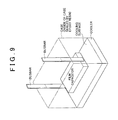
  • FIG. 9 is a schematic view that schematically explains a method for measuring a temperature of a film capacitor by using a test sample
  • FIG. 10 is a graph showing a result of measurement of a temperature distribution of the film capacitor by using each test sample.
  • FIG. 11 is a graph showing a result of measurement of a relationship between a cooling temperature and a center portion temperature of the film capacitor by using each test sample.
  • FIG. 1 is a perspective view showing a basic configuration of a film capacitor according to a first embodiment of the invention
  • FIG. 2 is an exploded perspective view in which a stacked body of the film capacitor shown in FIG. 1 is exploded.
  • a film capacitor 10 which is shown, mainly includes: a stacked body 5 in a substantially rectangular shape that is formed by stacking metalized films 5 a , 5 b in a thickness direction (a Z-direction in the drawing), metal electrodes 2 a , 2 b being respectively formed on surfaces of dielectric films 1 a , 1 b in substantially rectangular shapes in the metalized films 5 a , 5 b ; and external electrodes 9 a , 9 b respectively formed on both of opposed side portions (electrode forming ends) 6 a , 6 b of the stacked body 5 (i.e., both of the side portions 6 a , 6 b that are opposed to each other in a right-left direction (an X-direction in the drawing) in an illustrated example).
  • the film-shaped metal electrodes 2 a , 2 b that constitute internal electrodes are respectively formed on the surfaces of the paired dielectric films 1 a , 1 b in a thickness of several ⁇ m to several tens of ⁇ m.
  • the plural pairs of the metalized films 5 a , 5 b are superimposed on each other (placed on top of each other) in the thickness direction.
  • the stacked body 5 is formed.
  • One of these paired metalized films 5 a , 5 b constitutes a positive electrode, whereas the other thereof constitutes a negative electrode.
  • the metalized film constituting the positive electrode and the metalized film constituting the negative electrode are alternately stacked, and thus, the stacked body 5 is formed.
  • examples of the material for forming the dielectric films 1 a , 1 b include paper, polyethylene terephthalate, polyethylene naphthalate, polypropylene, polyphenylene sulfide, polyvinylidene fluoride, polyether imide, polyimide, and polyimide amide.
  • the metal electrodes 2 a , 2 b which are respectively formed on the surfaces of the dielectric films 1 a , 1 b , can be formed by disposing metal foil on the surfaces of the dielectric films 1 a , 1 b or by depositing deposited metal on the surfaces of the dielectric films 1 a , 1 b .
  • the material for forming the metal foil and the deposited metal examples include metals such as aluminum (Al), zinc (Zn), tin (Sn), copper (Cu), iron (Fe), nickel (Ni), and chrome (Cr), and alloys thereof.
  • the deposited metal can be formed by vacuum film forming methods that include a vacuum deposition method, a sputtering method, and a laser ablation method, for example.
  • the dielectric films 1 a , 1 b of the stacked body 5 respectively include: high thermal conductive regions 3 a , 3 b in which a content of a high thermal conductive filler is relatively high (that is, the high thermal conductive regions 3 a , 3 b with high thermal conductivity); and low thermal conductive regions 4 a , 4 b in which the content of the high thermal conductive filler is relatively low, or the high thermal conductive filler is not contained (that is, the low thermal conductive regions 4 a , 4 b with low thermal conductivity).
  • the content of the high thermal conductive filler in the high thermal conductive regions 3 a , 3 b is higher than the content of the high thermal conductive filler in the low thermal conductive regions 4 a , 4 b.
  • the high thermal conductive regions 3 a , 3 b are respectively provided to extend in a front-rear direction (a Y-direction in the drawing) in central portions that are formed by substantially equally dividing the dielectric films 1 a , 1 b into three in the right-left direction.
  • the low thermal conductive regions 4 a , 4 b are respectively provided in side portions (right side portions and left side portions that are formed by substantially equally dividing the dielectric films 1 a , 1 b into three in the right-left direction) on the sides of the high thermal conductive regions 3 a , 3 b provided in the central portions.
  • the high thermal conductive regions 3 a , 3 b are provided to continuously extend from the inside of the dielectric films 1 a , 1 b (particularly center portions thereof) to ends (in the illustrated example, front ends and rear ends) that correspond to side portions (in the illustrated example, front side portions and rear side portions) other than both of the side portions 6 a , 6 b respectively provided with the external electrodes 9 a , 9 b .
  • the low thermal conductive regions 4 a , 4 b are provided at ends (in the illustrated example, right ends and left ends) that correspond to both of the side portions 6 a , 6 b respectively provided with the external electrodes 9 a , 9 b.
  • the metal electrodes 2 a , 2 b are respectively formed on the surfaces of the dielectric films 1 a , 1 b that respectively have the high thermal conductive regions 3 a , 3 b and the low thermal conductive regions 4 a , 4 b , as described above.
  • the metalized films 5 a , 5 b are stacked such that the high thermal conductive regions 3 a , 3 b are superimposed on each other (placed on top of each other) (see FIG. 2 ).
  • a high thermal conductive portion 8 a that is constituted by the high thermal conductive regions 3 a , 3 b of the dielectric films 1 a , 1 b and the metal electrodes formed on upper surfaces thereof is provided (to extend in the front-rear direction and in the up-down direction) in a central portion that is formed by substantially equally dividing the stacked body 5 into three in the right-left direction.
  • Low thermal conductive portions 8 b that are each constituted by the low thermal conductive regions 4 a , 4 b and the metal electrodes formed on upper surfaces thereof are provided in side portions (a right side portion and a left side portion that are formed by substantially equally dividing the stacked body 5 into three in the right-left direction) on the sides of the high thermal conductive portion 8 a .
  • molten metal such as zinc
  • molten metal is sprayed on (ends of) the low thermal conductive portions 8 b , and the molten metal adheres to surfaces (of the ends) of the low thermal conductive portions 8 b .
  • the external electrodes also referred to as metal-sprayed electrodes
  • 9 a , 9 b are formed.
  • the high thermal conductive filler contained in the dielectric films 1 a , 1 b is a filler with the thermal conductivity that is higher than at least that of the material for forming the dielectric films 1 a , 1 b .
  • the material for forming the filler include silica (SiO 2 ), calcium fluoride (CaF 2 ), alumina (Al 2 O 3 ), magnesium oxide (MgO), boron nitride (BN), aluminum nitride (AlN), carbon nanotube (CNT), beryllium oxide, silicon carbide, and diamond.
  • a busbar is attached to each of the external electrodes 9 a , 9 b by welding, for example.
  • the film capacitor 10 in this state is covered with a molding material made of an epoxy resin or the like.
  • the stacked body 5 that is formed by stacking the metalized films 5 a , 5 b in the thickness direction includes: the high thermal conductive portion 8 a in which the content of the high thermal conductive filler in the dielectric films 1 a , 1 b is relatively high (i.e., the high thermal conductive portion 8 a with the high thermal conductivity); and the low thermal conductive portions 8 b in which the content of the high thermal conductive filler in the dielectric films 1 a , 1 b is relatively low, or the high thermal conductive filler is not contained (i.e., the low thermal conductive portions 8 b with the low thermal conductivity).
  • the high thermal conductive portion 8 a is provided to continuously extend from the inside of the stacked body 5 (particularly, a center portion whose temperature may become a high temperature) to the side portions (the front and rear side portions as well as the upper and lower side portions in the illustrated example) other than both of the side portions (the electrode forming ends) 6 a , 6 b respectively provided with the external electrodes 9 a , 9 b .
  • heat generated in the stacked body 5 is transferred to the side portions other than both of the side portions 6 a , 6 b respectively provided with the external electrodes 9 a , 9 b , via the high thermal conductive portion 8 a , and is dissipated to the outside.
  • both of the side portions 6 a , 6 b respectively provided with the external electrodes 9 a , 9 b and portions inside the side portions 6 a , 6 b are constituted by the low thermal conductive portions 8 b in which the content of the high thermal conductive filler is relatively low or the high thermal conductive filler is not contained.
  • workability in producing the film capacitor 10 for example, workability in work in which the evaporated metal is deposited on the surfaces of the dielectric films 1 a , 1 b so as to form the metal electrodes 2 a , 2 b
  • the production cost thereof can be effectively reduced.
  • FIG. 3 is a perspective view showing a basic configuration of a film capacitor according to the second embodiment of the invention
  • FIG. 4 is an exploded perspective view in which a stacked body of the film capacitor shown in FIG. 3 is exploded.
  • a film capacitor 10 A of the second embodiment which is shown in FIG. 3 , differs from the film capacitor 10 of the first embodiment described above in terms of an internal structure of the stacked body.
  • the rest of a configuration of the film capacitor 10 A is substantially the same as that of the film capacitor 10 of the first embodiment.
  • the same configuration as that of the film capacitor 10 of the first embodiment will not be described in detail.
  • dielectric films 1 a A, 1 b A of a stacked body 5 A of the film capacitor 10 A respectively include: high thermal conductive films 1 aa A, 1 ba A in which the content of the high thermal conductive filler is relatively high and the high thermal conductive filler is disposed in a dispersed manner; and low thermal conductive films 1 ab A, 1 bb A in which the content of the high thermal conductive filler is relatively low and the high thermal conductive filler is disposed in the dispersed manner, or the high thermal conductive filler is not contained.
  • Metal electrodes 2 a A, 2 b A are respectively formed on surfaces of the high thermal conductive films 1 aa A, 1 ba A in metalized films 5 aa A, 5 ba A.
  • the metalized films 5 aa A, 5 ba A are stacked in a central portion in a stacking direction (the thickness direction).
  • the metal electrodes 2 a A, 2 b A are also respectively formed on surfaces of the low thermal conductive films 1 ab A, 1 bb A in metalized films 5 ab A, 5 bb A.
  • the metalized films 5 ab A, 5 bb A are stacked on an upper side and a lower side of the metalized films 5 aa A, 5 ba A in the stacking direction (the thickness direction) (see FIG. 4 ).
  • a high thermal conductive portion 8 a A is constituted by the metalized films 5 aa A, 5 ba A in which the metal electrodes 2 a A, 2 b A are respectively formed on upper surfaces of the high thermal conductive films 1 aa A, 1 ba A.
  • the high thermal conductive portion 8 a A is provided in the central portion of the stacked body 5 A in the stacking direction (to extend in the front-rear direction and the right-left direction).
  • Low thermal conductive portions 8 b A are constituted by the metalized films 5 ab A, 5 bb A in which the metal electrodes 2 a A, 2 b A are respectively formed on upper surfaces of the low thermal conductive films 1 ab A, 1 bb A.
  • the low thermal conductive portions 8 b A are provided outside the high thermal conductive portion 8 a A (on an upper side and a lower side of the high thermal conductive portion 8 a A) in the stacking direction (to extend in the front-rear direction and the right-left direction).
  • the stacked body 5 A that is formed by stacking the metalized films 5 a A, 5 b A in the thickness direction includes: the high thermal conductive portion 8 a A (the metalized films 5 aa A, 5 ba A) in which the content of the high thermal conductive filler in the dielectric films 1 a A, 1 b A is relatively high (i.e., the high thermal conductive portion 8 a A with the high thermal conductivity); and the low thermal conductive portions 8 b A (the metalized films 5 ab A, 5 bb A) in each of which the content of the high thermal conductive filler in the dielectric films 1 a A, 1 b A is relatively low, or the high thermal conductive filler is not contained (i.e., the low thermal conductive portions 8 b A with the low thermal conductivity).
  • the high thermal conductive portion 8 a A is provided to continuously extend from the inside of the stacked body 5 A (particularly, a center portion whose temperature may become a high temperature) to side portions (front and rear side portions in the illustrated example) other than both of side portions (electrode forming ends) 6 a A, 6 b A respectively provided with external electrodes 9 a A, 9 b A. In this way, heat generated in the stacked body 5 A is transferred to the side portions other than both of the side portions 6 a A, 6 b A respectively provided with the external electrodes 9 a A, 9 b A, via the high thermal conductive portion 8 a A, and is dissipated to the outside.
  • portions (upper portions and lower portions in the illustrated example) of both of the side portions 6 a A, 6 b A respectively provided with the external electrodes 9 a A, 9 b A and portions inside the upper portions and the lower portions of the side portions 6 a A, 6 b A are constituted by the low thermal conductive portions 8 b A in which the content of the high thermal conductive filler is relatively low or the high thermal conductive filler is not contained.
  • the workability in producing the film capacitor 10 A can reliably be secured while the heat resistance and the heat dissipation thereof are maintained.
  • the production cost thereof can be effectively reduced.
  • the dielectric films 1 a A, 1 b A of the stacked body 5 A respectively include: the high thermal conductive films 1 aa A, 1 ba A in which the content of the high thermal conductive filler is relatively high and the high thermal conductive filler is disposed in the dispersed manner; and the low thermal conductive films 1 ab A, 1 bb A in which the content of the high thermal conductive filler is relatively low and the high thermal conductive filler is disposed in the dispersed manner, or the high thermal conductive filler is not contained.
  • the film capacitor 10 A of the second embodiment also has such an advantage that a configuration of the inside of the stacked body 5 A can be simplified.
  • FIG. 5 is a perspective view showing a basic configuration of a film capacitor according to a third embodiment of the invention.
  • a film capacitor 10 B of the third embodiment which is shown in FIG. 5 , differs from the film capacitors 10 , 10 A of the first and second embodiments described above in terms of the internal structure of the stacked body.
  • the rest of a configuration of the film capacitor 10 B is substantially the same as that of the film capacitors 10 , 10 A of the first and second embodiments.
  • the same configuration as those of the film capacitors 10 , 10 A of the first and second embodiments will not be described in detail.
  • dielectric films 1 a B, 1 b B of a stacked body 5 B of the film capacitor 10 B respectively include high thermal conductive films 1 aa B, 1 ba B and low thermal conductive films 1 ab B, 1 bb B.
  • the high thermal conductive films 1 aa B, 1 ba B respectively include: high thermal conductive regions 3 a B, 3 b B in which the content of the high thermal conductive filler is relatively high; and low thermal conductive regions 4 a B, 4 b B in which the content of the high thermal conductive filler is relatively low, or the high thermal conductive filler is not contained.
  • the low thermal conductive films 1 ab B, 1 bb B the content of the high thermal conductive filler is relatively low and the high thermal conductive filler is disposed in the dispersed manner, or the high thermal conductive filler is not contained.
  • the high thermal conductive regions 3 a B, 3 b B of the high thermal conductive films 1 aa B, 1 ba B are respectively provided to extend in the front-rear direction in central portions that are formed by substantially equally dividing the dielectric films 1 a B, 1 b B (the high thermal conductive films 1 aa B, 1 ba B) into three in the right-left direction.
  • the low thermal conductive regions 4 a B, 4 b B are respectively provided in side portions (right side portions and left side portions that are formed by substantially equally dividing the dielectric films 1 a B, 1 b B (the high thermal conductive films 1 aa B, 1 ba B) into three in the right-left direction) on the sides of the high thermal conductive regions 3 a B, 3 b B provided in the central portions.
  • metal electrodes 2 a B, 2 b B are respectively formed on surfaces of the high thermal conductive films 1 aa B, 1 ba B that respectively include the high thermal conductive regions 3 a B, 3 b B and the low thermal conductive regions 4 a B, 4 b B.
  • the metalized films 5 aa B, 5 ba B are stacked in a central portion in the stacking direction (the thickness direction).
  • the metal electrodes 2 a B, 2 b B are formed on surfaces of the low thermal conductive films 1 ab B, 1 bb B.
  • the metalized films 5 ab B, 5 bb B are stacked on an upper side and a lower side of the metalized films 5 aa B, 5 ba B in the stacking direction (the thickness direction).
  • a high thermal conductive portion 8 a B is constituted by the high thermal conductive regions 3 a B, 3 b B of the high thermal conductive films 1 aa B, 1 ba B and the metal electrodes formed on the upper surfaces thereof.
  • the high thermal conductive portion 8 a B is provided in a portion that is located in the central portion formed by substantially equally dividing the stacked body 5 B into three in the right-left direction, and that is also located in a central portion in the stacking direction (such that the high thermal conductive portion 8 a B extends in the front-rear direction).
  • the low thermal conductive portions 8 b B are constituted by: the low thermal conductive regions 4 a B, 4 b B of the high thermal conductive films 1 aa B, 1 ba B; the metal electrodes formed on the upper surfaces thereof; and the metalized films 5 ab B, 5 bb B in which the metal electrodes are formed on the upper surfaces of the low thermal conductive films 1 ab B, 1 bb B.
  • the low thermal conductive portions 8 b B are provided outside (on a left side, a right side, an upper side, and a lower side of) the high thermal conductive portion 8 a B.
  • FIG. 6 is an exploded perspective view in which a stacked body of a film capacitor according to a fourth embodiment of the invention is exploded.
  • a film capacitor 10 C of the fourth embodiment which is shown in FIG. 6 , differs from the film capacitors 10 , 10 A, 10 B of the first to third embodiments described above in terms of the internal structure of the stacked body.
  • the rest of a configuration of the film capacitor 10 C is substantially the same as that of the film capacitors 10 , 10 A, 10 B of the first to third embodiments.
  • the same configuration as those of the film capacitors 10 , 10 A, 10 B of the first to third embodiments will not be described in detail.
  • dielectric films 1 a C, 1 b C of a stacked body 5 C of the film capacitor 10 C respectively include: high thermal conductive regions 3 a C, 3 b C in which the content of the high thermal conductive filler is relatively high; and low thermal conductive regions 4 a C, 4 b C in which the content of the high thermal conductive filler is relatively low, or the high thermal conductive filler is not contained.
  • the high thermal conductive regions 3 a C, 3 b C are respectively provided (in substantially rectangular shapes in a plan view) in central portions of the dielectric films 1 a C, 1 b C, and the low thermal conductive regions 4 a C, 4 b C are respectively provided around the high thermal conductive regions 3 a C, 3 b C provided in the central portions.
  • metal electrodes 2 a C, 2 b C are respectively formed on surfaces of the dielectric films 1 a C, 1 b C that respectively include the high thermal conductive regions 3 a C, 3 b C and the low thermal conductive regions 4 a C, 4 b C, as described above.
  • the metalized films 5 a C, 5 b C are stacked such that the high thermal conductive regions 3 a C, 3 b C are superimposed on each other (placed on top of each other).
  • a high thermal conductive portion 8 a C is constituted by the high thermal conductive regions 3 a C, 3 b C of the dielectric films 1 a C, 1 b C and the metal electrodes formed on upper surfaces thereof.
  • the high thermal conductive portion 8 a C is provided (to extend in the up-down direction) in a central portion (in the plan view) of the stacked body 5 C.
  • a low thermal conductive portion 8 b C is constituted by the low thermal conductive regions 4 a C, 4 b C and the metal electrodes formed on upper surfaces thereof, and the low thermal conductive portion 8 b C is provided around the high thermal conductive portion 8 a C.
  • FIG. 7 is a sectional perspective view showing a basic configuration of a film capacitor according to a fifth embodiment of the invention
  • FIG. 8 is an exploded perspective view in which a portion of a stacked body of the film capacitor shown in FIG. 7 is exploded (developed).
  • a film capacitor 10 D of the fifth embodiment which is shown in FIG. 7 and FIG. 8 , differs from the film capacitor 10 of the first embodiment described above in terms of the internal structure of the stacked body.
  • the rest of a configuration of the film capacitor 10 D is substantially the same as that of the film capacitor 10 of the first embodiment.
  • the same configuration as that of the film capacitor 10 of the first embodiment will not be described in detail.
  • the film capacitor 10 D which is shown, mainly includes: a stacked body 5 D that is formed by winding a pair of elongated metalized films 5 a D, 5 b D (the metalized films 5 a D, 5 b D in which metal electrodes 2 a D, 2 b D are respectively formed on surfaces of elongated dielectric films 1 a D, 1 b D) around a winding core LD; and external electrodes 9 a D, 9 b D that are respectively formed in both of opposed ends (electrode forming ends) 6 a D, 6 b D (in a winding core LD direction) of the stacked body 5 D.
  • the winding core LD may be constituted by a core member in a columnar shape or a cylindrical shape, for example.
  • the winding core LD may be a hollow core in which the core member is not used.
  • each of the metalized films 5 a D, 5 b D may be wound to have a substantially circular cross section or may be wound to have a substantially rectangular cross section, for example.
  • the dielectric films 1 a D, 1 b D of the stacked body 5 D respectively include: high thermal conductive regions 3 a D, 3 b D in which the content of the high thermal conductive filler is relatively high (that is, the high thermal conductive regions 3 a D, 3 b D with the high thermal conductivity); and low thermal conductivity regions 4 a D, 4 b D in which the content of the high thermal conductive filler is relatively low, or the high thermal conductive filler is not contained (that is, the low thermal conductivity regions 4 a D, 4 b D with the low thermal conductivity).
  • the high thermal conductive regions 3 a D, 3 b D are provided to continuously extend (in a longitudinal direction) in central portions that are formed by substantially equally dividing the dielectric films 1 a D, 1 b D into three in the right-left direction.
  • the low thermal conductivity regions 4 a D, 4 b D are respectively provided in side portions (right side portions and left side portions that are formed by substantially equally dividing the dielectric films 1 a D, 1 b D into three in the right-left direction) on the sides of the high thermal conductive regions 3 a D, 3 b D provided in the central portions such that the low thermal conductivity regions 4 a D, 4 b D continuously extend.
  • the metal electrodes 2 a D, 2 b D are respectively formed on the surfaces of the dielectric films 1 a D, 1 b D that respectively include the high thermal conductive regions 3 a D, 3 b D and the low thermal conductivity regions 4 a D, 4 b D, as described above.
  • the metalized films 5 a D, 5 b D are wound such that the high thermal conductive regions 3 a D, 3 b D are superimposed on each other (see FIG. 8 ).
  • a high thermal conductivity portion 8 a D is constituted by the high thermal conductive regions 3 a D, 3 b D of the dielectric films 1 a D, 1 b D and the metal electrodes formed on the upper surfaces thereof.
  • the high thermal conductivity portion 8 a D is provided (to extend in a radial direction) in a central portion that is formed by substantially equally dividing the stacked body 5 D into three in the right-left direction.
  • Low thermal conductive portions 8 b D are constituted by the low thermal conductivity regions 4 a D, 4 b D and the metal electrodes formed on the upper surfaces thereof.
  • the low thermal conductive portions 8 b D are provided on side portions (a right side portion and a left side portion that are formed by substantially equally dividing the stacked body 5 D into three in the right-left direction) on the sides of the high thermal conductive portion 8 a D.
  • the stacked body 5 D that is formed by stacking the metalized films 5 a D, 5 b D in the thickness direction includes: the high thermal conductive portion 8 a D in which the content of the high thermal conductive filler in the dielectric films 1 a D, 1 b D is relatively high (i.e., the high thermal conductive portion 8 a D with the high thermal conductivity); and the low thermal conductive portions 8 b D in which the content of the high thermal conductive filler in the dielectric films 1 a D, 1 b D is relatively low, or the high thermal conductive filler is not contained (i.e., the low thermal conductive portions 8 b D with the low thermal conductivity).
  • the high thermal conductive portion 8 a D is provided to continuously extend from the inside of the stacked body 5 D (particularly, a center portion whose temperature may become a high temperature) to circumferential side portions other than both of the ends 6 a D, 6 b D respectively provided with the external electrodes 9 a D, 9 b D.
  • heat generated in the stacked body 5 D is transferred to the circumferential side portions other than both of the ends (the electrode forming ends) 6 a D, 6 b D respectively provided with the external electrodes 9 a D, 9 b D, via the high thermal conductive portion 8 a D, and the heat is dissipated to the outside.
  • both of the ends 6 a D, 6 b D respectively provided with the external electrodes 9 a D, 9 b D and portions inside the ends 6 a D, 6 b D are constituted by the low thermal conductive portions 8 b D in which the content of the high thermal conductive filler is relatively low or the high thermal conductive filler is not contained.
  • the workability in producing the film capacitor 10 D can reliably be secured while the heat resistance and the heat dissipation thereof are maintained.
  • the production cost thereof can be effectively suppressed.
  • the high thermal conductive portion that is constituted by the high thermal conductive regions and the high thermal conductive films is provided at a position that extends through the center portion of (the stacked body of) the film capacitor, so as to effectively dissipate heat in the center portion whose temperature may become the highest temperature in the film capacitor.
  • the high thermal conductive portion does not necessarily need to extend through the center portion of (the stacked body of) the film capacitor as long as the high thermal conductive portion is provided to continuously extend from the inside of (the stacked body of) the film capacitor to the side portion thereof.
  • the position and size (a range) of the high thermal conductive portion with respect to the entire film capacitor may be appropriately changed in accordance with, for example, an arrangement environment in which the film capacitor is arranged.
  • the high thermal conductive portion may be divided and disposed at plural positions of the stacked body of the film capacitor.
  • Examples 1, 2, and Comparative examples 1, 2 were different internal structures, and measured a temperature distribution of the inside of the stacked body of each of the test samples.
  • the film capacitor according to Comparative Example 1 was constituted by: a stacked body that was formed by superimposing on each other metalized films in which metal electrodes were formed on surfaces of dielectric films containing no high thermal conductive filler; and external electrodes respectively formed on both of opposed side portions of the stacked body.
  • the film capacitor according to Comparative Example 2 was constituted by: a stacked body that was formed by superimposing on each other metalized films in which metal electrodes were formed on surfaces of dielectric films in which the content of the high thermal conductive filler was relatively high (the content was equivalent to the content in the high thermal conductive regions in Example 1 and the content in the high thermal conductive films in Example 2) and the high thermal conductive filler was disposed in the dispersed manner; and external electrodes respectively formed on both of opposed side portions of the stacked body.
  • the thermal conductivity of the high thermal conductive region in the test sample of Example 1, the thermal conductivity of the high thermal conductive film in the test sample of Example 2, and the thermal conductivity of the dielectric film of the test sample of Comparative Example 2 were approximately 1.0 W/m ⁇ K, and the thermal conductivities of the other portions were approximately 0.1 to 0.3 W/m ⁇ K.
  • the inventor attached a busbar to each of the external electrodes in each of the test samples, accommodated the test sample in the above-mentioned state in a case, covered the test sample by using a molding material made of the epoxy resin, and placed the case on a cooler such that a lower surface of the case was in contact with a cooling surface of the cooler. Then, the inventor measured temperatures at nine positions in a region from the center portion to the side portion (the end) at the external electrode side at a time when the test sample (the film capacitor) was energized via the busbars.
  • element capacitance of each of the test samples was 150 ⁇ F
  • a bias was 300 Vdc
  • ripple was 16 Arms at 10 kHz
  • an ambient temperature at a time of the temperature measurement was 90° C.
  • a temperature of the cooling surface of the cooler was 50° C.
  • FIG. 10 shows the result of the measurement of the temperature distributions of the film capacitors by using the test samples. It should be noted that, in FIG. 10 , a temperature at the center portion of Comparative Example 2 is indicated as 1.
  • Comparative Example 1 As shown in the graph, it was confirmed that in Comparative Example 1, the temperature was high in the region from the center portion of the film capacitor to the end at the external electrode side, in particular, the temperature increased toward the center portion of the film capacitor. Meanwhile, it was confirmed that in each of Examples 1, 2, the film capacitor had the temperature distribution equivalent to that of Comparative Example 2 in the region from the center portion of the film capacitor to the end at the external electrode side. In particular, it was confirmed that the temperature distribution in a region in the vicinity of the center portion of the film capacitor in Example 1 was closer to the temperature distribution in Comparative Example 2 than the temperature distribution in Example 2 was.
  • the stacked body that was formed by stacking the metalized films included: the high thermal conductive portion in which the content of the high thermal conductive filler in the dielectric films was relatively high; and the low thermal conductive portions in which the content of the high thermal conductive filler in the dielectric films was relatively low, or the high thermal conductive filler was not contained.
  • the high thermal conductive portion was provided to continuously extend from the inside (particularly, the center portion whose temperature may become a high temperature) of the stacked body to the side portions other than both of the side portions (the electrode forming ends) provided with the external electrodes.
  • FIG. 11 shows the result of measurement of the relationship between the cooling temperature and the center portion temperature of the film capacitor by using each test sample. It should be noted that, in FIG. 11 , the temperature at the center portion of Comparative Example 2 at a time when the temperature of the cooling surface of the cooler was 50° C. is indicated as 1.
  • the inventor confirmed that the same result as the result shown in FIG. 11 was obtained even in the case where the film capacitor was cooled in a state where the cooler was disposed with respect to the case such that the cooling surface of the cooler was in contact with an external electrode-side surface of the case (i.e., the side surface of the case at the external electrode side).
  • the stacked body that was formed by stacking the metalized films included: the high thermal conductive portion in which the content of the high thermal conductive filler in the dielectric films was relatively high; and the low thermal conductive portions in which the content of the high thermal conductive filler in the dielectric films was relatively low, or the high thermal conductive filler was not contained.
  • the high thermal conductive portion was provided to continuously extend from the inside (particularly, the center portion whose temperature may become a high temperature) of the stacked body to the side portions other than both of the side portions (the electrode forming ends) provided with the external electrodes.

Landscapes

  • Engineering & Computer Science (AREA)
  • Power Engineering (AREA)
  • Microelectronics & Electronic Packaging (AREA)
  • Manufacturing & Machinery (AREA)
  • Chemical & Material Sciences (AREA)
  • Inorganic Chemistry (AREA)
  • Fixed Capacitors And Capacitor Manufacturing Machines (AREA)

Abstract

A film capacitor includes a stacked body formed by stacking metalized films in each of which a metal electrode is formed on a surface of a dielectric film, at least one of the dielectric films containing a high thermal conductive filler; and external electrodes formed at electrode forming ends provided at opposed positions in the stacked body. The stacked body includes a high thermal conductive portion in which a content of the high thermal conductive filler in the at least one dielectric film is relatively high, and a low thermal conductive portion in which the content of the high thermal conductive filler in the at least one dielectric film is relatively low, or the high thermal conductive filler is not contained. The high thermal conductive portion is provided to continuously extend from an inside of the stacked body to a side portion other than the electrode forming ends.

Description

INCORPORATION BY REFERENCE
The disclosure of Japanese Patent Application No. 2014-205514 filed on Oct. 6, 2014 including the specification, drawings and abstract is incorporated herein by reference in its entirety.
BACKGROUND OF THE INVENTION
1. Field of the Invention
The invention relates to a film capacitor and in particular to a film capacitor with excellent heat resistance, heat dissipation, and workability.
2. Description of Related Art
Conventionally, due to an electrical characteristic of a high withstand voltage and low loss, a metalized film capacitor (also referred to as a metal-deposited-electrode type capacitor) in which metal such as aluminum is deposited on a surface of a dielectric film made of polypropylene or the like has been used in various industrial fields including a home appliance industry and an automotive industry.
It has been known that an electrostatic capacitance of this type of the film capacitor greatly depends on a temperature and that the electrostatic capacitance decreases with a temperature increase. It has also been known that, for example, in the case where large high-frequency noise, an in-rush current, a short-circuit current, or a lightning surge current flows through the capacitor during use and an operating temperature increases, a crack is produced on the inside of the dielectric film when the temperature of the capacitor returns from a high temperature to a room temperature or the like. Accordingly, a leakage current increases, and the capacitor can no longer withstand a high electric field. As a result, the withstand voltage decreases.
To address such a problem, Japanese Patent Application Publication No. 2007-19327 (JP 2007-19327 A) describes a high heat resistance film capacitor which has a capacitor element constituted by a dielectric film and a conductor, and in which a synthetic polymer compound contained in the dielectric film contains insulating ceramic fine particles with thermal conductivity of 4 W/m·K or higher.
In the high heat resistance film capacitor described in JP 2007-19327 A, the synthetic polymer compound contained in the dielectric film contains the insulating ceramic fine particles with the thermal conductivity of 4 W/m·K or higher. Thus, the film capacitor has excellent heat resistance and heat dissipation. In addition, rated capacitance can be increased by increasing current density. Furthermore, a cooling device (a fan or a heat sink) or the like does not need to be provided. Thus, a configuration of the capacitor is simplified. As a result, downsizing and cost reduction can be achieved.
However, in the high heat resistance film capacitor described in JP 2007-19327 A, the dielectric film contains the synthetic polymer compound, which contains the insulating ceramic fine particles composed of aluminum nitride, beryllium oxide, alumina, silicon carbide, diamond, boron nitride or the like, in a state where the synthetic polymer compound is dispersed over the entire dielectric film. Thus, toughness of the dielectric film itself decreases and workability thereof decreases (for example, in the case where the toughness of the dielectric film is low, the dielectric film may break due to stress applied to the dielectric film when evaporated metal is deposited on a surface of the dielectric film), and production cost increases.
SUMMARY OF THE INVENTION
The invention provides a film capacitor that makes it possible to increase workability while maintaining heat resistance and heat dissipation, and to reduce production cost.
An aspect of the invention relates to a film capacitor including a stacked body formed by stacking metalized films in each of which a metal electrode is formed on a surface of a dielectric film, at least one of the dielectric films of the stacked body containing a high thermal conductive filler; and external electrodes formed at electrode forming ends provided at opposed positions in the stacked body. The stacked body includes a high thermal conductive portion in which a content of the high thermal conductive filler in the at least one dielectric film is relatively high, and a low thermal conductive portion in which the content of the high thermal conductive filler in the at least one dielectric film is relatively low, or the high thermal conductive filler is not contained. The high thermal conductive portion is provided to continuously extend from an inside of the stacked body to a side portion other than the electrode forming ends.
Examples of the material for forming the dielectric film of the film capacitor according to the above-mentioned aspect of the invention include paper, polyethylene terephthalate, polyethylene naphthalate, polypropylene, polyphenylene sulfide, polyvinylidene fluoride, polyether imide, polyimide, and polyimide amide. In addition, the metal electrode, which is formed on the surface of the dielectric film, can be formed by disposing metal foil on the surface of the dielectric film or depositing evaporated metal on the surface of the dielectric film. Examples of the material for forming the metal foil and the deposited metal include metals such as aluminum (Al), zinc (Zn), tin (Sn), copper (Cu), iron (Fe), nickel (Ni), and chrome (Cr), and alloys thereof. Furthermore, the deposited metal can be formed by vacuum film forming methods that include a vacuum deposition method, a sputtering method, and a laser ablation method, for example.
The high thermal conductive filler contained in the dielectric film is a filler with the thermal conductivity that is higher than at least that of the material for forming the dielectric film (the material of which the dielectric film is formed).
Examples of the material for forming the high thermal conductive filler include silica (SiO2), calcium fluoride (CaF2), alumina (Al2O3), magnesium oxide (MgO), boron nitride (BN), aluminum nitride (AlN), and carbon nanotube (CNT).
The stacked body of the film capacitor according to the above-mentioned aspect of the invention may be formed by superimposing on each other plural pairs of the metalized films in a thickness direction, or may be formed by winding a pair of the metalized films around a winding core. It should be noted that, in the case where the metalized films are wound around the winding core, the winding core may be a shaft-shaped core member with a specified cross-sectional shape or may be a hollow core.
In the film capacitor of the above-mentioned aspect, the stacked body, which is formed by stacking the metalized films, includes the high thermal conductive portion in which the content of the high thermal conductive filler in the at least one dielectric film is relatively high, and the low thermal conductive portion in which the content of the high thermal conductive filler in the at least one dielectric film is relatively low, or the high thermal conductive filler is not contained. The high thermal conductive portion is provided to continuously extend from the inside of the stacked body to the side portion other than the electrode forming ends provided with the external electrodes of the stacked body. Thus, heat generated in the stacked body is transferred to the side portion other than the electrode forming ends via the high thermal conductive portion in which the content of the high thermal conductive filler is relatively high, and the heat is dissipated to the outside. Meanwhile, at least a part of the metalized films constituting the stacked body is constituted by the low thermal conductive portion in which the content of the high thermal conductive filler is relatively low or the high thermal conductive filler is not contained. Thus, the workability in producing the film capacitor can be secured while heat resistance and heat dissipation thereof are kept. In addition, production cost thereof can effectively be suppressed.
It should be noted that the inside of the stacked body signifies a portion of the metalized film that is positioned inside the metalized film adjacent to the outside of the stacked body, the portion of the metalized film excluding the side portion other than the electrode forming ends provided with the external electrodes.
In the above-mentioned aspect, each of the dielectric films of the stacked body may include a high thermal conductive region in which the content of the high thermal conductive filler is relatively high, and a low thermal conductive region in which the content of the high thermal conductive filler is relatively low, or the high thermal conductive filler is not contained; the high thermal conductive region may be provided to continuously extend from an inside of each of the dielectric films to an end of the dielectric film, the end corresponding to the side portion other than the electrode forming ends, when seen in a thickness direction of the dielectric film; and the metalized films may be stacked in the thickness direction so as to form the stacked body.
In the above-mentioned aspect, the dielectric films of the stacked body may include a high thermal conductive film in which the content of the high thermal conductive filler is relatively high and the high thermal conductive filler is disposed in a dispersed manner, and a low thermal conductive film in which the content of the high thermal conductive filler is relatively low and the high thermal conductive filler is disposed in the dispersed manner, or the high thermal conductive filler is not contained; and the metalized film, in which the metal electrode is formed on a surface of the high thermal conductive film, may be stacked at a relatively inner position in a stacking direction, and the metalized film, in which the metal electrode is formed on a surface of the low thermal conductive film, may be stacked at a relatively outer position in the stacking direction, so as to form the stacked body.
In the film capacitor of the above-mentioned aspect, the stacked body of the film capacitor has a simple configuration. In particular, each of the dielectric films of the stacked body includes the high thermal conductive region in which the content of the high thermal conductive filler is relatively high, and the low thermal conductive region in which the content of the high thermal conductive filler is relatively low, or the high thermal conductive filler is not contained; the high thermal conductive region is provided to continuously extend from the inside of each of the dielectric films to the end of the dielectric film, the end corresponding to the side portion other than the electrode forming ends, when seen in the thickness direction of the dielectric film; and the metalized films are stacked in the thickness direction so as to form the stacked body. In this case, a sufficient surface area of the high thermal conductive region (the high thermal conductive portion) in the surface of the stacked body can be secured, and in addition, each of the electrode forming ends is constituted by the low thermal conductive region (the low thermal conductive portion). Thus, the heat resistance and the heat dissipation of the film capacitor can be increased, and the workability in producing the film capacitor can reliably be secured.
As it can be understood from the above description, in the film capacitor according to the above-mentioned aspect of the invention, the stacked body that is formed by stacking the metalized films includes the high thermal conductive portion in which the content of the high thermal conductive filler in the at least one dielectric film is relatively high; and the low thermal conductive portion in which the content of the high thermal conductive filler in the at least one dielectric film is relatively low, or the high thermal conductive filler is not contained. The high thermal conductive portion is provided to continuously extend from the inside of the stacked body to the side portion other than the electrode forming ends provided with the external electrodes of the stacked body. Thus, in the film capacitor including the at least one dielectric film containing the high thermal conductive filler, the workability in producing the film capacitor can be increased while the heat resistance and the heat dissipation thereof are maintained. In addition, the production cost thereof can be reduced.
BRIEF DESCRIPTION OF THE DRAWINGS
Features, advantages, and technical and industrial significance of exemplary embodiments of the invention will be described below with reference to the accompanying drawings, in which like numerals denote like elements, and wherein:
FIG. 1 is a perspective view showing a basic configuration of a film capacitor according to a first embodiment of the invention;
FIG. 2 is an exploded perspective view in which a stacked body of the film capacitor shown in FIG. 1 is exploded;
FIG. 3 is a perspective view showing a basic configuration of a film capacitor according to a second embodiment of the invention;
FIG. 4 is an exploded perspective view in which a stacked body of the film capacitor shown in FIG. 3 is exploded;
FIG. 5 is a perspective view showing a basic configuration of a film capacitor according to a third embodiment of the invention;
FIG. 6 is an exploded perspective view in which a stacked body of a film capacitor according to a fourth embodiment of the invention is exploded;
FIG. 7 is a sectional perspective view showing a basic configuration of a film capacitor according to a fifth embodiment of the invention;
FIG. 8 is an exploded perspective view in which a portion of a stacked body of the film capacitor shown in FIG. 7 is exploded;
FIG. 9 is a schematic view that schematically explains a method for measuring a temperature of a film capacitor by using a test sample;
FIG. 10 is a graph showing a result of measurement of a temperature distribution of the film capacitor by using each test sample; and
FIG. 11 is a graph showing a result of measurement of a relationship between a cooling temperature and a center portion temperature of the film capacitor by using each test sample.
DETAILED DESCRIPTION OF EMBODIMENTS
A description will hereinafter be made on embodiments of the invention with reference to the drawings.
First Embodiment
FIG. 1 is a perspective view showing a basic configuration of a film capacitor according to a first embodiment of the invention, and FIG. 2 is an exploded perspective view in which a stacked body of the film capacitor shown in FIG. 1 is exploded.
A film capacitor 10, which is shown, mainly includes: a stacked body 5 in a substantially rectangular shape that is formed by stacking metalized films 5 a, 5 b in a thickness direction (a Z-direction in the drawing), metal electrodes 2 a, 2 b being respectively formed on surfaces of dielectric films 1 a, 1 b in substantially rectangular shapes in the metalized films 5 a, 5 b; and external electrodes 9 a, 9 b respectively formed on both of opposed side portions (electrode forming ends) 6 a, 6 b of the stacked body 5 (i.e., both of the side portions 6 a, 6 b that are opposed to each other in a right-left direction (an X-direction in the drawing) in an illustrated example).
In the paired metalized films 5 a, 5 b, the film-shaped metal electrodes 2 a, 2 b that constitute internal electrodes are respectively formed on the surfaces of the paired dielectric films 1 a, 1 b in a thickness of several μm to several tens of μm. The plural pairs of the metalized films 5 a, 5 b are superimposed on each other (placed on top of each other) in the thickness direction. Thus, the stacked body 5 is formed. One of these paired metalized films 5 a, 5 b constitutes a positive electrode, whereas the other thereof constitutes a negative electrode. The metalized film constituting the positive electrode and the metalized film constituting the negative electrode are alternately stacked, and thus, the stacked body 5 is formed.
It should be noted that examples of the material for forming the dielectric films 1 a, 1 b include paper, polyethylene terephthalate, polyethylene naphthalate, polypropylene, polyphenylene sulfide, polyvinylidene fluoride, polyether imide, polyimide, and polyimide amide. In addition, the metal electrodes 2 a, 2 b, which are respectively formed on the surfaces of the dielectric films 1 a, 1 b, can be formed by disposing metal foil on the surfaces of the dielectric films 1 a, 1 b or by depositing deposited metal on the surfaces of the dielectric films 1 a, 1 b. Examples of the material for forming the metal foil and the deposited metal include metals such as aluminum (Al), zinc (Zn), tin (Sn), copper (Cu), iron (Fe), nickel (Ni), and chrome (Cr), and alloys thereof. Furthermore, the deposited metal can be formed by vacuum film forming methods that include a vacuum deposition method, a sputtering method, and a laser ablation method, for example.
Moreover, the dielectric films 1 a, 1 b of the stacked body 5 respectively include: high thermal conductive regions 3 a, 3 b in which a content of a high thermal conductive filler is relatively high (that is, the high thermal conductive regions 3 a, 3 b with high thermal conductivity); and low thermal conductive regions 4 a, 4 b in which the content of the high thermal conductive filler is relatively low, or the high thermal conductive filler is not contained (that is, the low thermal conductive regions 4 a, 4 b with low thermal conductivity). In other words, the content of the high thermal conductive filler in the high thermal conductive regions 3 a, 3 b is higher than the content of the high thermal conductive filler in the low thermal conductive regions 4 a, 4 b.
In the illustrated example, the high thermal conductive regions 3 a, 3 b are respectively provided to extend in a front-rear direction (a Y-direction in the drawing) in central portions that are formed by substantially equally dividing the dielectric films 1 a, 1 b into three in the right-left direction. The low thermal conductive regions 4 a, 4 b are respectively provided in side portions (right side portions and left side portions that are formed by substantially equally dividing the dielectric films 1 a, 1 b into three in the right-left direction) on the sides of the high thermal conductive regions 3 a, 3 b provided in the central portions. In other words, when seen in the thickness direction of the dielectric films 1 a, 1 b, the high thermal conductive regions 3 a, 3 b are provided to continuously extend from the inside of the dielectric films 1 a, 1 b (particularly center portions thereof) to ends (in the illustrated example, front ends and rear ends) that correspond to side portions (in the illustrated example, front side portions and rear side portions) other than both of the side portions 6 a, 6 b respectively provided with the external electrodes 9 a, 9 b. The low thermal conductive regions 4 a, 4 b are provided at ends (in the illustrated example, right ends and left ends) that correspond to both of the side portions 6 a, 6 b respectively provided with the external electrodes 9 a, 9 b.
In the metalized films 5 a, 5 b, the metal electrodes 2 a, 2 b are respectively formed on the surfaces of the dielectric films 1 a, 1 b that respectively have the high thermal conductive regions 3 a, 3 b and the low thermal conductive regions 4 a, 4 b, as described above. The metalized films 5 a, 5 b are stacked such that the high thermal conductive regions 3 a, 3 b are superimposed on each other (placed on top of each other) (see FIG. 2). Thus, a high thermal conductive portion 8 a that is constituted by the high thermal conductive regions 3 a, 3 b of the dielectric films 1 a, 1 b and the metal electrodes formed on upper surfaces thereof is provided (to extend in the front-rear direction and in the up-down direction) in a central portion that is formed by substantially equally dividing the stacked body 5 into three in the right-left direction. Low thermal conductive portions 8 b that are each constituted by the low thermal conductive regions 4 a, 4 b and the metal electrodes formed on upper surfaces thereof are provided in side portions (a right side portion and a left side portion that are formed by substantially equally dividing the stacked body 5 into three in the right-left direction) on the sides of the high thermal conductive portion 8 a. Then, molten metal, such as zinc, is sprayed on (ends of) the low thermal conductive portions 8 b, and the molten metal adheres to surfaces (of the ends) of the low thermal conductive portions 8 b. In this way, the external electrodes (also referred to as metal-sprayed electrodes) 9 a, 9 b are formed.
It should be noted that the high thermal conductive filler contained in the dielectric films 1 a, 1 b is a filler with the thermal conductivity that is higher than at least that of the material for forming the dielectric films 1 a, 1 b. Examples of the material for forming the filler include silica (SiO2), calcium fluoride (CaF2), alumina (Al2O3), magnesium oxide (MgO), boron nitride (BN), aluminum nitride (AlN), carbon nanotube (CNT), beryllium oxide, silicon carbide, and diamond.
In addition, in the film capacitor 10 configured as described above, a busbar is attached to each of the external electrodes 9 a, 9 b by welding, for example. The film capacitor 10 in this state is covered with a molding material made of an epoxy resin or the like.
As described above, in the film capacitor 10 of the first embodiment, the stacked body 5 that is formed by stacking the metalized films 5 a, 5 b in the thickness direction includes: the high thermal conductive portion 8 a in which the content of the high thermal conductive filler in the dielectric films 1 a, 1 b is relatively high (i.e., the high thermal conductive portion 8 a with the high thermal conductivity); and the low thermal conductive portions 8 b in which the content of the high thermal conductive filler in the dielectric films 1 a, 1 b is relatively low, or the high thermal conductive filler is not contained (i.e., the low thermal conductive portions 8 b with the low thermal conductivity). The high thermal conductive portion 8 a is provided to continuously extend from the inside of the stacked body 5 (particularly, a center portion whose temperature may become a high temperature) to the side portions (the front and rear side portions as well as the upper and lower side portions in the illustrated example) other than both of the side portions (the electrode forming ends) 6 a, 6 b respectively provided with the external electrodes 9 a, 9 b. In this way, heat generated in the stacked body 5 is transferred to the side portions other than both of the side portions 6 a, 6 b respectively provided with the external electrodes 9 a, 9 b, via the high thermal conductive portion 8 a, and is dissipated to the outside. Meanwhile, both of the side portions 6 a, 6 b respectively provided with the external electrodes 9 a, 9 b and portions inside the side portions 6 a, 6 b are constituted by the low thermal conductive portions 8 b in which the content of the high thermal conductive filler is relatively low or the high thermal conductive filler is not contained. Thus, workability in producing the film capacitor 10 (for example, workability in work in which the evaporated metal is deposited on the surfaces of the dielectric films 1 a, 1 b so as to form the metal electrodes 2 a, 2 b) can reliably be secured while the heat resistance and the heat dissipation thereof are maintained. In addition, the production cost thereof can be effectively reduced.
Second Embodiment
FIG. 3 is a perspective view showing a basic configuration of a film capacitor according to the second embodiment of the invention, and FIG. 4 is an exploded perspective view in which a stacked body of the film capacitor shown in FIG. 3 is exploded. A film capacitor 10A of the second embodiment, which is shown in FIG. 3, differs from the film capacitor 10 of the first embodiment described above in terms of an internal structure of the stacked body. The rest of a configuration of the film capacitor 10A is substantially the same as that of the film capacitor 10 of the first embodiment. Thus, the same configuration as that of the film capacitor 10 of the first embodiment will not be described in detail.
In the second embodiment, dielectric films 1 aA, 1 bA of a stacked body 5A of the film capacitor 10A respectively include: high thermal conductive films 1 aaA, 1 baA in which the content of the high thermal conductive filler is relatively high and the high thermal conductive filler is disposed in a dispersed manner; and low thermal conductive films 1 abA, 1 bbA in which the content of the high thermal conductive filler is relatively low and the high thermal conductive filler is disposed in the dispersed manner, or the high thermal conductive filler is not contained.
Metal electrodes 2 aA, 2 bA are respectively formed on surfaces of the high thermal conductive films 1 aaA, 1 baA in metalized films 5 aaA, 5 baA. The metalized films 5 aaA, 5 baA are stacked in a central portion in a stacking direction (the thickness direction). The metal electrodes 2 aA, 2 bA are also respectively formed on surfaces of the low thermal conductive films 1 abA, 1 bbA in metalized films 5 abA, 5 bbA. The metalized films 5 abA, 5 bbA are stacked on an upper side and a lower side of the metalized films 5 aaA, 5 baA in the stacking direction (the thickness direction) (see FIG. 4). In this way, a high thermal conductive portion 8 aA is constituted by the metalized films 5 aaA, 5 baA in which the metal electrodes 2 aA, 2 bA are respectively formed on upper surfaces of the high thermal conductive films 1 aaA, 1 baA. The high thermal conductive portion 8 aA is provided in the central portion of the stacked body 5A in the stacking direction (to extend in the front-rear direction and the right-left direction). Low thermal conductive portions 8 bA are constituted by the metalized films 5 abA, 5 bbA in which the metal electrodes 2 aA, 2 bA are respectively formed on upper surfaces of the low thermal conductive films 1 abA, 1 bbA. The low thermal conductive portions 8 bA are provided outside the high thermal conductive portion 8 aA (on an upper side and a lower side of the high thermal conductive portion 8 aA) in the stacking direction (to extend in the front-rear direction and the right-left direction).
In the film capacitor 10A of the second embodiment, as in the film capacitor 10 of the first embodiment described above, the stacked body 5A that is formed by stacking the metalized films 5 aA, 5 bA in the thickness direction includes: the high thermal conductive portion 8 aA (the metalized films 5 aaA, 5 baA) in which the content of the high thermal conductive filler in the dielectric films 1 aA, 1 bA is relatively high (i.e., the high thermal conductive portion 8 aA with the high thermal conductivity); and the low thermal conductive portions 8 bA (the metalized films 5 abA, 5 bbA) in each of which the content of the high thermal conductive filler in the dielectric films 1 aA, 1 bA is relatively low, or the high thermal conductive filler is not contained (i.e., the low thermal conductive portions 8 bA with the low thermal conductivity). The high thermal conductive portion 8 aA is provided to continuously extend from the inside of the stacked body 5A (particularly, a center portion whose temperature may become a high temperature) to side portions (front and rear side portions in the illustrated example) other than both of side portions (electrode forming ends) 6 aA, 6 bA respectively provided with external electrodes 9 aA, 9 bA. In this way, heat generated in the stacked body 5A is transferred to the side portions other than both of the side portions 6 aA, 6 bA respectively provided with the external electrodes 9 aA, 9 bA, via the high thermal conductive portion 8 aA, and is dissipated to the outside. Meanwhile, portions (upper portions and lower portions in the illustrated example) of both of the side portions 6 aA, 6 bA respectively provided with the external electrodes 9 aA, 9 bA and portions inside the upper portions and the lower portions of the side portions 6 aA, 6 bA are constituted by the low thermal conductive portions 8 bA in which the content of the high thermal conductive filler is relatively low or the high thermal conductive filler is not contained. Thus, the workability in producing the film capacitor 10A can reliably be secured while the heat resistance and the heat dissipation thereof are maintained. In addition, the production cost thereof can be effectively reduced.
In addition, the dielectric films 1 aA, 1 bA of the stacked body 5A respectively include: the high thermal conductive films 1 aaA, 1 baA in which the content of the high thermal conductive filler is relatively high and the high thermal conductive filler is disposed in the dispersed manner; and the low thermal conductive films 1 abA, 1 bbA in which the content of the high thermal conductive filler is relatively low and the high thermal conductive filler is disposed in the dispersed manner, or the high thermal conductive filler is not contained. Thus, the film capacitor 10A of the second embodiment also has such an advantage that a configuration of the inside of the stacked body 5A can be simplified.
Third Embodiment
FIG. 5 is a perspective view showing a basic configuration of a film capacitor according to a third embodiment of the invention. A film capacitor 10B of the third embodiment, which is shown in FIG. 5, differs from the film capacitors 10, 10A of the first and second embodiments described above in terms of the internal structure of the stacked body. The rest of a configuration of the film capacitor 10B is substantially the same as that of the film capacitors 10, 10A of the first and second embodiments. Thus, the same configuration as those of the film capacitors 10, 10A of the first and second embodiments will not be described in detail.
In the third embodiment, dielectric films 1 aB, 1 bB of a stacked body 5B of the film capacitor 10B respectively include high thermal conductive films 1 aaB, 1 baB and low thermal conductive films 1 abB, 1 bbB. The high thermal conductive films 1 aaB, 1 baB respectively include: high thermal conductive regions 3 aB, 3 bB in which the content of the high thermal conductive filler is relatively high; and low thermal conductive regions 4 aB, 4 bB in which the content of the high thermal conductive filler is relatively low, or the high thermal conductive filler is not contained. In the low thermal conductive films 1 abB, 1 bbB, the content of the high thermal conductive filler is relatively low and the high thermal conductive filler is disposed in the dispersed manner, or the high thermal conductive filler is not contained.
As in the high thermal conductive regions 3 a, 3 b and the low thermal conductive regions 4 a, 4 b of the film capacitor 10 of the first embodiment, the high thermal conductive regions 3 aB, 3 bB of the high thermal conductive films 1 aaB, 1 baB are respectively provided to extend in the front-rear direction in central portions that are formed by substantially equally dividing the dielectric films 1 aB, 1 bB (the high thermal conductive films 1 aaB, 1 baB) into three in the right-left direction. The low thermal conductive regions 4 aB, 4 bB are respectively provided in side portions (right side portions and left side portions that are formed by substantially equally dividing the dielectric films 1 aB, 1 bB (the high thermal conductive films 1 aaB, 1 baB) into three in the right-left direction) on the sides of the high thermal conductive regions 3 aB, 3 bB provided in the central portions.
In metalized films 5 aaB, 5 baB, metal electrodes 2 aB, 2 bB are respectively formed on surfaces of the high thermal conductive films 1 aaB, 1 baB that respectively include the high thermal conductive regions 3 aB, 3 bB and the low thermal conductive regions 4 aB, 4 bB. The metalized films 5 aaB, 5 baB are stacked in a central portion in the stacking direction (the thickness direction). In metalized films 5 abB, 5 bbB, the metal electrodes 2 aB, 2 bB are formed on surfaces of the low thermal conductive films 1 abB, 1 bbB. The metalized films 5 abB, 5 bbB are stacked on an upper side and a lower side of the metalized films 5 aaB, 5 baB in the stacking direction (the thickness direction). In this way, a high thermal conductive portion 8 aB is constituted by the high thermal conductive regions 3 aB, 3 bB of the high thermal conductive films 1 aaB, 1 baB and the metal electrodes formed on the upper surfaces thereof. The high thermal conductive portion 8 aB is provided in a portion that is located in the central portion formed by substantially equally dividing the stacked body 5B into three in the right-left direction, and that is also located in a central portion in the stacking direction (such that the high thermal conductive portion 8 aB extends in the front-rear direction). The low thermal conductive portions 8 bB are constituted by: the low thermal conductive regions 4 aB, 4 bB of the high thermal conductive films 1 aaB, 1 baB; the metal electrodes formed on the upper surfaces thereof; and the metalized films 5 abB, 5 bbB in which the metal electrodes are formed on the upper surfaces of the low thermal conductive films 1 abB, 1 bbB. The low thermal conductive portions 8 bB are provided outside (on a left side, a right side, an upper side, and a lower side of) the high thermal conductive portion 8 aB.
In the film capacitor 10B of the third embodiment as well, the same effects as those of the film capacitors 10, 10A of the first and second embodiments described above can be obtained.
Fourth Embodiment
FIG. 6 is an exploded perspective view in which a stacked body of a film capacitor according to a fourth embodiment of the invention is exploded. A film capacitor 10C of the fourth embodiment, which is shown in FIG. 6, differs from the film capacitors 10, 10A, 10B of the first to third embodiments described above in terms of the internal structure of the stacked body. The rest of a configuration of the film capacitor 10C is substantially the same as that of the film capacitors 10, 10A, 10B of the first to third embodiments. Thus, the same configuration as those of the film capacitors 10, 10A, 10B of the first to third embodiments will not be described in detail.
In this fourth embodiment, dielectric films 1 aC, 1 bC of a stacked body 5C of the film capacitor 10C respectively include: high thermal conductive regions 3 aC, 3 bC in which the content of the high thermal conductive filler is relatively high; and low thermal conductive regions 4 aC, 4 bC in which the content of the high thermal conductive filler is relatively low, or the high thermal conductive filler is not contained.
In an illustrated example, when seen in the thickness direction of the dielectric films 1 aC, 1 bC, the high thermal conductive regions 3 aC, 3 bC are respectively provided (in substantially rectangular shapes in a plan view) in central portions of the dielectric films 1 aC, 1 bC, and the low thermal conductive regions 4 aC, 4 bC are respectively provided around the high thermal conductive regions 3 aC, 3 bC provided in the central portions.
In metalized films 5 aC, 5 bC, metal electrodes 2 aC, 2 bC are respectively formed on surfaces of the dielectric films 1 aC, 1 bC that respectively include the high thermal conductive regions 3 aC, 3 bC and the low thermal conductive regions 4 aC, 4 bC, as described above. The metalized films 5 aC, 5 bC are stacked such that the high thermal conductive regions 3 aC, 3 bC are superimposed on each other (placed on top of each other). Thus, a high thermal conductive portion 8 aC is constituted by the high thermal conductive regions 3 aC, 3 bC of the dielectric films 1 aC, 1 bC and the metal electrodes formed on upper surfaces thereof. The high thermal conductive portion 8 aC is provided (to extend in the up-down direction) in a central portion (in the plan view) of the stacked body 5C. A low thermal conductive portion 8 bC is constituted by the low thermal conductive regions 4 aC, 4 bC and the metal electrodes formed on upper surfaces thereof, and the low thermal conductive portion 8 bC is provided around the high thermal conductive portion 8 aC.
In the film capacitor 10C of the fourth embodiment as well, the same effects as those of the film capacitors 10, 10A, 10B of the first to third embodiments described above can be obtained.
(Fifth embodiment) FIG. 7 is a sectional perspective view showing a basic configuration of a film capacitor according to a fifth embodiment of the invention, and FIG. 8 is an exploded perspective view in which a portion of a stacked body of the film capacitor shown in FIG. 7 is exploded (developed). A film capacitor 10D of the fifth embodiment, which is shown in FIG. 7 and FIG. 8, differs from the film capacitor 10 of the first embodiment described above in terms of the internal structure of the stacked body. The rest of a configuration of the film capacitor 10D is substantially the same as that of the film capacitor 10 of the first embodiment. Thus, the same configuration as that of the film capacitor 10 of the first embodiment will not be described in detail.
The film capacitor 10D, which is shown, mainly includes: a stacked body 5D that is formed by winding a pair of elongated metalized films 5 aD, 5 bD (the metalized films 5 aD, 5 bD in which metal electrodes 2 aD, 2 bD are respectively formed on surfaces of elongated dielectric films 1 aD, 1 bD) around a winding core LD; and external electrodes 9 aD, 9 bD that are respectively formed in both of opposed ends (electrode forming ends) 6 aD, 6 bD (in a winding core LD direction) of the stacked body 5D. It should be noted that the winding core LD may be constituted by a core member in a columnar shape or a cylindrical shape, for example. Alternatively, the winding core LD may be a hollow core in which the core member is not used. In addition, each of the metalized films 5 aD, 5 bD may be wound to have a substantially circular cross section or may be wound to have a substantially rectangular cross section, for example.
The dielectric films 1 aD, 1 bD of the stacked body 5D respectively include: high thermal conductive regions 3 aD, 3 bD in which the content of the high thermal conductive filler is relatively high (that is, the high thermal conductive regions 3 aD, 3 bD with the high thermal conductivity); and low thermal conductivity regions 4 aD, 4 bD in which the content of the high thermal conductive filler is relatively low, or the high thermal conductive filler is not contained (that is, the low thermal conductivity regions 4 aD, 4 bD with the low thermal conductivity).
In the illustrated example, the high thermal conductive regions 3 aD, 3 bD are provided to continuously extend (in a longitudinal direction) in central portions that are formed by substantially equally dividing the dielectric films 1 aD, 1 bD into three in the right-left direction. The low thermal conductivity regions 4 aD, 4 bD are respectively provided in side portions (right side portions and left side portions that are formed by substantially equally dividing the dielectric films 1 aD, 1 bD into three in the right-left direction) on the sides of the high thermal conductive regions 3 aD, 3 bD provided in the central portions such that the low thermal conductivity regions 4 aD, 4 bD continuously extend.
In the metalized films 5 aD, 5 bD, the metal electrodes 2 aD, 2 bD are respectively formed on the surfaces of the dielectric films 1 aD, 1 bD that respectively include the high thermal conductive regions 3 aD, 3 bD and the low thermal conductivity regions 4 aD, 4 bD, as described above. The metalized films 5 aD, 5 bD are wound such that the high thermal conductive regions 3 aD, 3 bD are superimposed on each other (see FIG. 8). Thus, a high thermal conductivity portion 8 aD is constituted by the high thermal conductive regions 3 aD, 3 bD of the dielectric films 1 aD, 1 bD and the metal electrodes formed on the upper surfaces thereof. The high thermal conductivity portion 8 aD is provided (to extend in a radial direction) in a central portion that is formed by substantially equally dividing the stacked body 5D into three in the right-left direction. Low thermal conductive portions 8 bD are constituted by the low thermal conductivity regions 4 aD, 4 bD and the metal electrodes formed on the upper surfaces thereof. The low thermal conductive portions 8 bD are provided on side portions (a right side portion and a left side portion that are formed by substantially equally dividing the stacked body 5D into three in the right-left direction) on the sides of the high thermal conductive portion 8 aD.
In the film capacitor 10D of the fifth embodiment as well, as in the film capacitor 10 of the first embodiment described above, the stacked body 5D that is formed by stacking the metalized films 5 aD, 5 bD in the thickness direction includes: the high thermal conductive portion 8 aD in which the content of the high thermal conductive filler in the dielectric films 1 aD, 1 bD is relatively high (i.e., the high thermal conductive portion 8 aD with the high thermal conductivity); and the low thermal conductive portions 8 bD in which the content of the high thermal conductive filler in the dielectric films 1 aD, 1 bD is relatively low, or the high thermal conductive filler is not contained (i.e., the low thermal conductive portions 8 bD with the low thermal conductivity). The high thermal conductive portion 8 aD is provided to continuously extend from the inside of the stacked body 5D (particularly, a center portion whose temperature may become a high temperature) to circumferential side portions other than both of the ends 6 aD, 6 bD respectively provided with the external electrodes 9 aD, 9 bD. Thus, heat generated in the stacked body 5D is transferred to the circumferential side portions other than both of the ends (the electrode forming ends) 6 aD, 6 bD respectively provided with the external electrodes 9 aD, 9 bD, via the high thermal conductive portion 8 aD, and the heat is dissipated to the outside. Meanwhile, both of the ends 6 aD, 6 bD respectively provided with the external electrodes 9 aD, 9 bD and portions inside the ends 6 aD, 6 bD are constituted by the low thermal conductive portions 8 bD in which the content of the high thermal conductive filler is relatively low or the high thermal conductive filler is not contained. Thus, the workability in producing the film capacitor 10D can reliably be secured while the heat resistance and the heat dissipation thereof are maintained. In addition, the production cost thereof can be effectively suppressed.
It should be noted that, in the first to fifth embodiments described above, the high thermal conductive portion that is constituted by the high thermal conductive regions and the high thermal conductive films is provided at a position that extends through the center portion of (the stacked body of) the film capacitor, so as to effectively dissipate heat in the center portion whose temperature may become the highest temperature in the film capacitor. However, the high thermal conductive portion does not necessarily need to extend through the center portion of (the stacked body of) the film capacitor as long as the high thermal conductive portion is provided to continuously extend from the inside of (the stacked body of) the film capacitor to the side portion thereof. The position and size (a range) of the high thermal conductive portion with respect to the entire film capacitor may be appropriately changed in accordance with, for example, an arrangement environment in which the film capacitor is arranged. Alternatively, the high thermal conductive portion may be divided and disposed at plural positions of the stacked body of the film capacitor.
(An experiment on measurement of temperature distributions of the film capacitors by using test samples and a result thereof) The inventor produced plural test samples (Examples 1, 2, and Comparative examples 1, 2) in which stacked bodies had different internal structures, and measured a temperature distribution of the inside of the stacked body of each of the test samples.
(A method for producing the test samples of the film capacitors) First, a method for producing the test samples of the film capacitors according to Examples 1, 2 and Comparative Examples 1, 2 will be briefly described. The inventor used the film capacitor of the first embodiment described above as the film capacitor according to Example 1, and set a ratio of a dimension of the high thermal conductive region in the right-left direction (a direction toward both of the side portions provided with the external electrodes) to a dimension of the dielectric films in the right-left direction at approximately 30%. In addition, the film capacitor of the second embodiment described above was used as the film capacitor according to Example 2, and a ratio of a dimension of the high thermal conductive films in the up-down direction (the stacking direction) to a dimension of the stacked body in the up-down direction was set at approximately 30%. Furthermore, the film capacitor according to Comparative Example 1 was constituted by: a stacked body that was formed by superimposing on each other metalized films in which metal electrodes were formed on surfaces of dielectric films containing no high thermal conductive filler; and external electrodes respectively formed on both of opposed side portions of the stacked body. Moreover, the film capacitor according to Comparative Example 2 was constituted by: a stacked body that was formed by superimposing on each other metalized films in which metal electrodes were formed on surfaces of dielectric films in which the content of the high thermal conductive filler was relatively high (the content was equivalent to the content in the high thermal conductive regions in Example 1 and the content in the high thermal conductive films in Example 2) and the high thermal conductive filler was disposed in the dispersed manner; and external electrodes respectively formed on both of opposed side portions of the stacked body.
Here, the thermal conductivity of the high thermal conductive region in the test sample of Example 1, the thermal conductivity of the high thermal conductive film in the test sample of Example 2, and the thermal conductivity of the dielectric film of the test sample of Comparative Example 2 were approximately 1.0 W/m·K, and the thermal conductivities of the other portions were approximately 0.1 to 0.3 W/m·K.
(A method for measuring the temperature distribution of the film capacitor by using each test sample) Next, a method for measuring the temperature distribution of the film capacitor by using each test sample will be briefly described. As shown in FIG. 9, the inventor attached a busbar to each of the external electrodes in each of the test samples, accommodated the test sample in the above-mentioned state in a case, covered the test sample by using a molding material made of the epoxy resin, and placed the case on a cooler such that a lower surface of the case was in contact with a cooling surface of the cooler. Then, the inventor measured temperatures at nine positions in a region from the center portion to the side portion (the end) at the external electrode side at a time when the test sample (the film capacitor) was energized via the busbars.
Here, element capacitance of each of the test samples was 150 μF, a bias was 300 Vdc, ripple was 16 Arms at 10 kHz, an ambient temperature at a time of the temperature measurement was 90° C., and a temperature of the cooling surface of the cooler was 50° C.
(A result of the measurement of the temperature distributions of the film capacitors by using the test samples) FIG. 10 shows the result of the measurement of the temperature distributions of the film capacitors by using the test samples. It should be noted that, in FIG. 10, a temperature at the center portion of Comparative Example 2 is indicated as 1.
As shown in the graph, it was confirmed that in Comparative Example 1, the temperature was high in the region from the center portion of the film capacitor to the end at the external electrode side, in particular, the temperature increased toward the center portion of the film capacitor. Meanwhile, it was confirmed that in each of Examples 1, 2, the film capacitor had the temperature distribution equivalent to that of Comparative Example 2 in the region from the center portion of the film capacitor to the end at the external electrode side. In particular, it was confirmed that the temperature distribution in a region in the vicinity of the center portion of the film capacitor in Example 1 was closer to the temperature distribution in Comparative Example 2 than the temperature distribution in Example 2 was.
In each of Examples 1 and 2, the stacked body that was formed by stacking the metalized films included: the high thermal conductive portion in which the content of the high thermal conductive filler in the dielectric films was relatively high; and the low thermal conductive portions in which the content of the high thermal conductive filler in the dielectric films was relatively low, or the high thermal conductive filler was not contained. The high thermal conductive portion was provided to continuously extend from the inside (particularly, the center portion whose temperature may become a high temperature) of the stacked body to the side portions other than both of the side portions (the electrode forming ends) provided with the external electrodes. Thus, it was verified from this experiment result that in each of Examples 1 and 2 with the above-mentioned configuration, it was possible to obtain the heat resistance and the heat dissipation equivalent to those of the film capacitor in Comparative Example 2 which included the stacked body formed by superimposing on each other the metalized films in which the metal electrodes were formed on the surfaces of the dielectric films in which the content of the high thermal conductive filler was relatively high and the high thermal conductive filler was disposed in the dispersed manner, and it was possible to effectively reduce the temperature in the inside (particularly, the center portion) of the stacked body.
(An experiment on measurement of a relationship between the cooling temperature and the center portion temperature of the film capacitor by using each test sample and a result thereof) The inventor used the above-mentioned plural test samples (Examples 1, 2, and Comparative Examples 1, 2) and measured the temperature of the center portion of the stacked body at a time when the cooling temperature was changed for each of the test samples. It should be noted that the experiment apparatus shown in FIG. 9 was used in this experiment and the temperature at the center portion was measured at a time when the temperature of the cooling surface of the cooler (that is, the temperature of the lower surface of the case) was changed from 40° C. to 55° C. It should also be noted that the other experimental conditions were the same as the experimental conditions for the above-mentioned method for measuring the temperature distribution of the film capacitor by using each test sample.
(A result of measurement of the relationship between the cooling temperature and the center portion temperature of the film capacitor by using each test sample) FIG. 11 shows the result of measurement of the relationship between the cooling temperature and the center portion temperature of the film capacitor by using each test sample. It should be noted that, in FIG. 11, the temperature at the center portion of Comparative Example 2 at a time when the temperature of the cooling surface of the cooler was 50° C. is indicated as 1.
As shown in the graph, it was confirmed that in Comparative Example 1, the temperature at the center portion of the film capacitor (the center portion temperature) increased when the cooling temperature exceeded 45° C. Meanwhile, it was confirmed that in each of Examples 1 and 2, as in Comparative Example 2, the center portion temperature did not increase abruptly (sharply) when the cooling temperature was between 45° C. and 50° C. In addition, it was confirmed that the center portion temperature gradually increased in Example 2 when the cooling temperature exceeded 50° C.; however, as in Comparative Example 2, the center portion temperature did not increase abruptly in Example 1. That is, it was confirmed that the cooling temperature needed to be set at 45° C. or lower for the test sample of Comparative Example 1; however, the cooling temperature only needed to be set at 50° C. or lower for the test sample of Example 2. In addition, it was confirmed that the cooling temperature could be set at 55° C. or higher for the test sample of Example 1.
It should be noted that the inventor confirmed that the same result as the result shown in FIG. 11 was obtained even in the case where the film capacitor was cooled in a state where the cooler was disposed with respect to the case such that the cooling surface of the cooler was in contact with an external electrode-side surface of the case (i.e., the side surface of the case at the external electrode side).
In each of Examples 1 and 2, the stacked body that was formed by stacking the metalized films included: the high thermal conductive portion in which the content of the high thermal conductive filler in the dielectric films was relatively high; and the low thermal conductive portions in which the content of the high thermal conductive filler in the dielectric films was relatively low, or the high thermal conductive filler was not contained. The high thermal conductive portion was provided to continuously extend from the inside (particularly, the center portion whose temperature may become a high temperature) of the stacked body to the side portions other than both of the side portions (the electrode forming ends) provided with the external electrodes. Thus, it was verified from this experiment result that in each of Examples 1 and 2 with the above-mentioned configuration, it was possible to obtain the heat resistance and the heat dissipation equivalent to those of the film capacitor in Comparative Example 2 which included the stacked body formed by superimposing on each other the metalized films in which the metal electrodes were formed on the surfaces of the dielectric films in which the content of the high thermal conductive filler was relatively high and the high thermal conductive filler was disposed in the dispersed manner, and thus, it was possible to significantly expand the use range or the application range of the film capacitor.
The embodiments of the invention have been described in detail so far by using the drawings. The specific configurations are not limited to those of the embodiments, and design changes and the like within the scope of the invention are included in the invention.

Claims (4)

What is claimed is:
1. A film capacitor comprising:
a stacked body formed by stacking metalized films in each of which a metal electrode is formed on a surface of a dielectric film, at least one of the dielectric films of the stacked body containing a high thermal conductive filler; and
external electrodes formed at electrode forming ends provided at opposed positions in the stacked body, wherein:
the stacked body includes a high thermal conductive portion in which a content of the high thermal conductive filler in the at least one dielectric film is relatively high, and a low thermal conductive portion in which the content of the high thermal conductive filler in the at least one dielectric film is relatively low, or the high thermal conductive filler is not contained; and
the high thermal conductive portion is provided to continuously extend from an inside of the stacked body to a side portion other than the electrode forming ends, wherein:
the dielectric films of the stacked body include a high thermal conductive film in which the content of the high thermal conductive filler is relatively high and the high thermal conductive filler is disposed in a dispersed manner, and a low thermal conductive film in which the content of the high thermal conductive filler is relatively low and the high thermal conductive filler is disposed in the dispersed manner, or the high thermal conductive filler is not contained; and
the metalized film, in which the metal electrode is formed on a surface of the high thermal conductive film, is stacked at a relatively inner position in a stacking direction, and the metalized film, in which the metal electrode is formed on a surface of the low thermal conductive film, is stacked at a relatively outer position in the stacking direction, so as to form the stacked body.
2. The film capacitor according to claim 1, wherein the stacked body is formed by superimposing on each other plural pairs of the metalized films in a thickness direction.
3. A film capacitor comprising:
a stacked body formed by stacking metalized films in each of which a metal electrode is formed on a surface of a dielectric film, at least one of the dielectric films of the stacked body containing a high thermal conductive filler; and
external electrodes formed at electrode forming ends provided at opposed positions in the stacked body, wherein:
the stacked body includes a high thermal conductive portion in which a content of the high thermal conductive filler in the at least one dielectric film is relatively high, and a low thermal conductive portion in which the content of the high thermal conductive filler in the at least one dielectric film is relatively low, or the high thermal conductive filler is not contained; and
the high thermal conductive portion is provided to continuously extend from an inside of the stacked body to a side portion other than the electrode forming ends, wherein:
the dielectric films of the stacked body include a high thermal conductive film and a low thermal conductive film;
the high thermal conductive film includes a high thermal conductive region in which the content of the high thermal conductive filler is relatively high, and a low thermal conductive region in which the content of the high thermal conductive filler is relatively low, or the high thermal conductive filler is not contained;
in the high thermal conductive film, the high thermal conductive region is provided to continuously extend from an inside of the high thermal conductive film to an end of the high thermal conductive film, the end corresponding to the side portion other than the electrode forming ends, when seen in a thickness direction of the high thermal conductive film;
in the low thermal conductive film, the content of the high thermal conductive filler is relatively low and the high thermal conductive filler is disposed in a dispersed manner, or the high thermal conductive filler is not contained; and
the metalized film, in which the metal electrode is formed on a surface of the high thermal conductive film, is stacked at a relatively inner position in a stacking direction, and the metalized film, in which the metal electrode is formed on a surface of the low thermal conductive film, is stacked at a relatively outer position in the stacking direction, so as to form the stacked body.
4. The film capacitor according to claim 3, wherein the stacked body is formed by superimposing on each other plural pairs of the metalized films in a thickness direction.
US14/873,860 2014-10-06 2015-10-02 Film capacitor Expired - Fee Related US9818540B2 (en)

Applications Claiming Priority (2)

Application Number Priority Date Filing Date Title
JP2014-205514 2014-10-06
JP2014205514A JP6176218B2 (en) 2014-10-06 2014-10-06 Film capacitor

Publications (2)

Publication Number Publication Date
US20160099109A1 US20160099109A1 (en) 2016-04-07
US9818540B2 true US9818540B2 (en) 2017-11-14

Family

ID=55531287

Family Applications (1)

Application Number Title Priority Date Filing Date
US14/873,860 Expired - Fee Related US9818540B2 (en) 2014-10-06 2015-10-02 Film capacitor

Country Status (4)

Country Link
US (1) US9818540B2 (en)
JP (1) JP6176218B2 (en)
CN (1) CN105489375B (en)
DE (1) DE102015116385A1 (en)

Cited By (1)

* Cited by examiner, † Cited by third party
Publication number Priority date Publication date Assignee Title
US12243687B2 (en) 2020-04-14 2025-03-04 KYOCERA AVX Components Corporation Component array including one or more heat sink layers

Families Citing this family (6)

* Cited by examiner, † Cited by third party
Publication number Priority date Publication date Assignee Title
JP6586940B2 (en) * 2016-12-22 2019-10-09 トヨタ自動車株式会社 Dielectric film and film capacitor
KR102051914B1 (en) * 2017-09-18 2019-12-06 삼화콘덴서공업 주식회사 Metallized thin film for metallized film capacitor
US10660238B2 (en) * 2017-09-21 2020-05-19 Avx Corporation Electrically insulating thermal connector having a low thermal resistivity
US10523109B2 (en) 2018-01-15 2019-12-31 Ford Global Technologies, Llc Vehicle capacitor assembly
US10964476B2 (en) * 2018-12-27 2021-03-30 Industrial Technology Research Institute Capacitor with multiple dielectric layers having dielectric powder and polyimide
CN114007370B (en) * 2020-07-27 2024-12-06 杜邦电子公司 Heat sinks for electronic equipment

Citations (5)

* Cited by examiner, † Cited by third party
Publication number Priority date Publication date Assignee Title
JPS5963423U (en) 1982-10-19 1984-04-26 日新電機株式会社 capacitor
JP2007019327A (en) 2005-07-08 2007-01-25 Kansai Electric Power Co Inc:The High heat-resistant film capacitor
JP2010192787A (en) 2009-02-20 2010-09-02 Murata Mfg Co Ltd Film capacitor
JP2012069840A (en) 2010-09-27 2012-04-05 Panasonic Corp Case mold type capacitor
JP2012232435A (en) * 2011-04-28 2012-11-29 Kyocera Corp Dielectric film, and capacitor using the same

Family Cites Families (4)

* Cited by examiner, † Cited by third party
Publication number Priority date Publication date Assignee Title
JPS5021254A (en) * 1973-06-29 1975-03-06
EP2661763A1 (en) * 2011-01-04 2013-11-13 OC Oerlikon Balzers AG Method for manufacturing high performance multi layer ceramic capacitors
JP2013207202A (en) * 2012-03-29 2013-10-07 Kyocera Corp Film capacitor
CN103680941A (en) * 2013-12-21 2014-03-26 铜陵源丰电子有限责任公司 Capacitor containing heat conducting and insulating film

Patent Citations (5)

* Cited by examiner, † Cited by third party
Publication number Priority date Publication date Assignee Title
JPS5963423U (en) 1982-10-19 1984-04-26 日新電機株式会社 capacitor
JP2007019327A (en) 2005-07-08 2007-01-25 Kansai Electric Power Co Inc:The High heat-resistant film capacitor
JP2010192787A (en) 2009-02-20 2010-09-02 Murata Mfg Co Ltd Film capacitor
JP2012069840A (en) 2010-09-27 2012-04-05 Panasonic Corp Case mold type capacitor
JP2012232435A (en) * 2011-04-28 2012-11-29 Kyocera Corp Dielectric film, and capacitor using the same

Cited By (1)

* Cited by examiner, † Cited by third party
Publication number Priority date Publication date Assignee Title
US12243687B2 (en) 2020-04-14 2025-03-04 KYOCERA AVX Components Corporation Component array including one or more heat sink layers

Also Published As

Publication number Publication date
JP6176218B2 (en) 2017-08-09
CN105489375A (en) 2016-04-13
CN105489375B (en) 2018-03-16
DE102015116385A1 (en) 2016-04-07
US20160099109A1 (en) 2016-04-07
JP2016076573A (en) 2016-05-12

Similar Documents

Publication Publication Date Title
US9818540B2 (en) Film capacitor
JP6277436B2 (en) Film capacitor
JP2013251351A (en) Capacitor
US20160190032A1 (en) Wiring board and semiconductor package including wiring board
WO2006112099A1 (en) Metalized film capacitor and inverter smoothing capacitor for automobile
JP4967711B2 (en) Metallized film capacitors
JP6870100B2 (en) Secondary battery with heat pipe and heat pipe
US9177727B2 (en) Metallized film capacitor
CN109313983B (en) Power capacitor module with cooling arrangement
JP5982633B2 (en) Metallized film capacitor and method for producing metallized film capacitor
JP2016207823A (en) Film capacitor element
JP2013153115A (en) Metalization film capacitor
WO2018116735A1 (en) Electricity storage device
JP2014107394A (en) Metalized film capacitor
JP2012222313A (en) Case mold type capacitor
US20230024031A1 (en) Capacitor
US12437932B2 (en) Wound capacitor, pulse-controlled inverter and motor vehicle
WO2020031940A1 (en) Metalized film and film capacitor
JP5537303B2 (en) Vacuum valve
JP5954280B2 (en) Metallized film
JP5854925B2 (en) Vacuum valve
WO2020196335A1 (en) Cooling structure
JPWO2017150151A1 (en) Film capacitor
KR200393101Y1 (en) Metalized plastic film for film capacitor
JP5786827B2 (en) Metallized film capacitors

Legal Events

Date Code Title Description
AS Assignment

Owner name: TOYOTA JIDOSHA KABUSHIKI KAISHA, JAPAN

Free format text: ASSIGNMENT OF ASSIGNORS INTEREST;ASSIGNOR:SAITO, TAKAHIRO;REEL/FRAME:036718/0523

Effective date: 20150819

STCF Information on status: patent grant

Free format text: PATENTED CASE

MAFP Maintenance fee payment

Free format text: PAYMENT OF MAINTENANCE FEE, 4TH YEAR, LARGE ENTITY (ORIGINAL EVENT CODE: M1551); ENTITY STATUS OF PATENT OWNER: LARGE ENTITY

Year of fee payment: 4

FEPP Fee payment procedure

Free format text: MAINTENANCE FEE REMINDER MAILED (ORIGINAL EVENT CODE: REM.); ENTITY STATUS OF PATENT OWNER: LARGE ENTITY

LAPS Lapse for failure to pay maintenance fees

Free format text: PATENT EXPIRED FOR FAILURE TO PAY MAINTENANCE FEES (ORIGINAL EVENT CODE: EXP.); ENTITY STATUS OF PATENT OWNER: LARGE ENTITY

STCH Information on status: patent discontinuation

Free format text: PATENT EXPIRED DUE TO NONPAYMENT OF MAINTENANCE FEES UNDER 37 CFR 1.362

FP Lapsed due to failure to pay maintenance fee

Effective date: 20251114