US9718448B2 - Pedal simulator - Google Patents

Pedal simulator Download PDF

Info

Publication number
US9718448B2
US9718448B2 US14/924,401 US201514924401A US9718448B2 US 9718448 B2 US9718448 B2 US 9718448B2 US 201514924401 A US201514924401 A US 201514924401A US 9718448 B2 US9718448 B2 US 9718448B2
Authority
US
United States
Prior art keywords
pedal
check valve
simulator
simulation chamber
piston
Prior art date
Legal status (The legal status is an assumption and is not a legal conclusion. Google has not performed a legal analysis and makes no representation as to the accuracy of the status listed.)
Active
Application number
US14/924,401
Other versions
US20160114769A1 (en
Inventor
Hyun-Dong Kim
Current Assignee (The listed assignees may be inaccurate. Google has not performed a legal analysis and makes no representation or warranty as to the accuracy of the list.)
HL Mando Corp
Original Assignee
Mando Corp
Priority date (The priority date is an assumption and is not a legal conclusion. Google has not performed a legal analysis and makes no representation as to the accuracy of the date listed.)
Filing date
Publication date
Application filed by Mando Corp filed Critical Mando Corp
Assigned to MANDO CORPORATION reassignment MANDO CORPORATION ASSIGNMENT OF ASSIGNORS INTEREST (SEE DOCUMENT FOR DETAILS). Assignors: KIM, HYUN-DONG
Publication of US20160114769A1 publication Critical patent/US20160114769A1/en
Application granted granted Critical
Publication of US9718448B2 publication Critical patent/US9718448B2/en
Assigned to HL MANDO CORPORATION reassignment HL MANDO CORPORATION CHANGE OF NAME Assignors: MANDO CORPORATION
Active legal-status Critical Current
Anticipated expiration legal-status Critical

Links

Images

Classifications

    • BPERFORMING OPERATIONS; TRANSPORTING
    • B60VEHICLES IN GENERAL
    • B60TVEHICLE BRAKE CONTROL SYSTEMS OR PARTS THEREOF; BRAKE CONTROL SYSTEMS OR PARTS THEREOF, IN GENERAL; ARRANGEMENT OF BRAKING ELEMENTS ON VEHICLES IN GENERAL; PORTABLE DEVICES FOR PREVENTING UNWANTED MOVEMENT OF VEHICLES; VEHICLE MODIFICATIONS TO FACILITATE COOLING OF BRAKES
    • B60T13/00Transmitting braking action from initiating means to ultimate brake actuator with power assistance or drive; Brake systems incorporating such transmitting means, e.g. air-pressure brake systems
    • B60T13/10Transmitting braking action from initiating means to ultimate brake actuator with power assistance or drive; Brake systems incorporating such transmitting means, e.g. air-pressure brake systems with fluid assistance, drive, or release
    • B60T13/12Transmitting braking action from initiating means to ultimate brake actuator with power assistance or drive; Brake systems incorporating such transmitting means, e.g. air-pressure brake systems with fluid assistance, drive, or release the fluid being liquid
    • B60T13/14Transmitting braking action from initiating means to ultimate brake actuator with power assistance or drive; Brake systems incorporating such transmitting means, e.g. air-pressure brake systems with fluid assistance, drive, or release the fluid being liquid using accumulators or reservoirs fed by pumps
    • B60T13/142Systems with master cylinder
    • BPERFORMING OPERATIONS; TRANSPORTING
    • B60VEHICLES IN GENERAL
    • B60TVEHICLE BRAKE CONTROL SYSTEMS OR PARTS THEREOF; BRAKE CONTROL SYSTEMS OR PARTS THEREOF, IN GENERAL; ARRANGEMENT OF BRAKING ELEMENTS ON VEHICLES IN GENERAL; PORTABLE DEVICES FOR PREVENTING UNWANTED MOVEMENT OF VEHICLES; VEHICLE MODIFICATIONS TO FACILITATE COOLING OF BRAKES
    • B60T7/00Brake-action initiating means
    • B60T7/02Brake-action initiating means for personal initiation
    • B60T7/04Brake-action initiating means for personal initiation foot actuated
    • B60T7/042Brake-action initiating means for personal initiation foot actuated by electrical means, e.g. using travel or force sensors
    • BPERFORMING OPERATIONS; TRANSPORTING
    • B60VEHICLES IN GENERAL
    • B60TVEHICLE BRAKE CONTROL SYSTEMS OR PARTS THEREOF; BRAKE CONTROL SYSTEMS OR PARTS THEREOF, IN GENERAL; ARRANGEMENT OF BRAKING ELEMENTS ON VEHICLES IN GENERAL; PORTABLE DEVICES FOR PREVENTING UNWANTED MOVEMENT OF VEHICLES; VEHICLE MODIFICATIONS TO FACILITATE COOLING OF BRAKES
    • B60T13/00Transmitting braking action from initiating means to ultimate brake actuator with power assistance or drive; Brake systems incorporating such transmitting means, e.g. air-pressure brake systems
    • B60T13/10Transmitting braking action from initiating means to ultimate brake actuator with power assistance or drive; Brake systems incorporating such transmitting means, e.g. air-pressure brake systems with fluid assistance, drive, or release
    • B60T13/66Electrical control in fluid-pressure brake systems
    • BPERFORMING OPERATIONS; TRANSPORTING
    • B60VEHICLES IN GENERAL
    • B60TVEHICLE BRAKE CONTROL SYSTEMS OR PARTS THEREOF; BRAKE CONTROL SYSTEMS OR PARTS THEREOF, IN GENERAL; ARRANGEMENT OF BRAKING ELEMENTS ON VEHICLES IN GENERAL; PORTABLE DEVICES FOR PREVENTING UNWANTED MOVEMENT OF VEHICLES; VEHICLE MODIFICATIONS TO FACILITATE COOLING OF BRAKES
    • B60T7/00Brake-action initiating means
    • B60T7/02Brake-action initiating means for personal initiation
    • B60T7/04Brake-action initiating means for personal initiation foot actuated
    • B60T7/06Disposition of pedal
    • BPERFORMING OPERATIONS; TRANSPORTING
    • B60VEHICLES IN GENERAL
    • B60TVEHICLE BRAKE CONTROL SYSTEMS OR PARTS THEREOF; BRAKE CONTROL SYSTEMS OR PARTS THEREOF, IN GENERAL; ARRANGEMENT OF BRAKING ELEMENTS ON VEHICLES IN GENERAL; PORTABLE DEVICES FOR PREVENTING UNWANTED MOVEMENT OF VEHICLES; VEHICLE MODIFICATIONS TO FACILITATE COOLING OF BRAKES
    • B60T8/00Arrangements for adjusting wheel-braking force to meet varying vehicular or ground-surface conditions, e.g. limiting or varying distribution of braking force
    • B60T8/32Arrangements for adjusting wheel-braking force to meet varying vehicular or ground-surface conditions, e.g. limiting or varying distribution of braking force responsive to a speed condition, e.g. acceleration or deceleration
    • B60T8/34Arrangements for adjusting wheel-braking force to meet varying vehicular or ground-surface conditions, e.g. limiting or varying distribution of braking force responsive to a speed condition, e.g. acceleration or deceleration having a fluid pressure regulator responsive to a speed condition
    • B60T8/40Arrangements for adjusting wheel-braking force to meet varying vehicular or ground-surface conditions, e.g. limiting or varying distribution of braking force responsive to a speed condition, e.g. acceleration or deceleration having a fluid pressure regulator responsive to a speed condition comprising an additional fluid circuit including fluid pressurising means for modifying the pressure of the braking fluid, e.g. including wheel driven pumps for detecting a speed condition, or pumps which are controlled by means independent of the braking system
    • B60T8/4072Systems in which a driver input signal is used as a control signal for the additional fluid circuit which is normally used for braking
    • B60T8/4081Systems with stroke simulating devices for driver input
    • BPERFORMING OPERATIONS; TRANSPORTING
    • B60VEHICLES IN GENERAL
    • B60TVEHICLE BRAKE CONTROL SYSTEMS OR PARTS THEREOF; BRAKE CONTROL SYSTEMS OR PARTS THEREOF, IN GENERAL; ARRANGEMENT OF BRAKING ELEMENTS ON VEHICLES IN GENERAL; PORTABLE DEVICES FOR PREVENTING UNWANTED MOVEMENT OF VEHICLES; VEHICLE MODIFICATIONS TO FACILITATE COOLING OF BRAKES
    • B60T8/00Arrangements for adjusting wheel-braking force to meet varying vehicular or ground-surface conditions, e.g. limiting or varying distribution of braking force
    • B60T8/32Arrangements for adjusting wheel-braking force to meet varying vehicular or ground-surface conditions, e.g. limiting or varying distribution of braking force responsive to a speed condition, e.g. acceleration or deceleration
    • B60T8/34Arrangements for adjusting wheel-braking force to meet varying vehicular or ground-surface conditions, e.g. limiting or varying distribution of braking force responsive to a speed condition, e.g. acceleration or deceleration having a fluid pressure regulator responsive to a speed condition
    • B60T8/40Arrangements for adjusting wheel-braking force to meet varying vehicular or ground-surface conditions, e.g. limiting or varying distribution of braking force responsive to a speed condition, e.g. acceleration or deceleration having a fluid pressure regulator responsive to a speed condition comprising an additional fluid circuit including fluid pressurising means for modifying the pressure of the braking fluid, e.g. including wheel driven pumps for detecting a speed condition, or pumps which are controlled by means independent of the braking system
    • B60T8/4072Systems in which a driver input signal is used as a control signal for the additional fluid circuit which is normally used for braking
    • B60T8/4081Systems with stroke simulating devices for driver input
    • B60T8/409Systems with stroke simulating devices for driver input characterised by details of the stroke simulating device
    • FMECHANICAL ENGINEERING; LIGHTING; HEATING; WEAPONS; BLASTING
    • F16ENGINEERING ELEMENTS AND UNITS; GENERAL MEASURES FOR PRODUCING AND MAINTAINING EFFECTIVE FUNCTIONING OF MACHINES OR INSTALLATIONS; THERMAL INSULATION IN GENERAL
    • F16KVALVES; TAPS; COCKS; ACTUATING-FLOATS; DEVICES FOR VENTING OR AERATING
    • F16K15/00Check valves
    • F16K15/02Check valves with guided rigid valve members
    • F16K15/04Check valves with guided rigid valve members shaped as balls

Definitions

  • a fixing member may be further installed at a lower end of the damping housing to fix the damping housing to the simulation block.

Landscapes

  • Engineering & Computer Science (AREA)
  • Mechanical Engineering (AREA)
  • Physics & Mathematics (AREA)
  • Fluid Mechanics (AREA)
  • Transportation (AREA)
  • General Engineering & Computer Science (AREA)
  • Regulating Braking Force (AREA)
  • Braking Elements And Transmission Devices (AREA)

Abstract

A pedal simulator of the present invention is disclosed. According to an aspect of the present invention, the pedal simulator, which is connected with a master cylinder and receives pedal pressure of the driver and configured to provide a sense of a pedal for a driver, includes: a simulation chamber having one end connected with the master cylinder and the other end provided in the simulator block closed by a damping housing, and configured to store oil; a check valve pressurized by the piston, provided in the simulation chamber to be slideable, and slid; an orifice formed in the simulator block and allowing a flow of oil in the simulation chamber by the sliding check valve; and an accumulator configured to store the oil discharged through the orifice.

Description

CROSS-REFERENCE TO RELATED APPLICATION
This application claims the benefit of Korean Patent Application No. 10-2014-0147064, filed on Oct. 28, 2014 in the Korean Intellectual Property Office, the disclosure of which is incorporated herein by reference.
BACKGROUND
1. Field
The present invention relates to a pedal simulator, and more specifically, to a pedal simulator capable of increasing a sense of a pedal.
2. Description of the Related Art
In general, a brake system for braking is necessarily mounted in a vehicle. Recently, a system for electronically controlling braking hydraulic pressure transferred toward wheel cylinders mounted on wheels to obtain a more powerful and stable braking force has been proposed. As an example of the electronic brake system, an anti-lock brake system (ABS), a brake traction control system (BTCS), or an electronic stability control system (ESC), etc. has been proposed.
The electronic brake system provides a sense of the pedal by having a separate hydraulic pedal sensation simulating device (hereafter, referred as a pedal simulator) installed to provide a sense of the pedal for a driver at the time of braking. At this time, the pedal simulator, which is designed to provide reaction force similar to that of the pedal simulator of a conventional brake system (CBS), has been used.
In FIG. 1, a conventional pedal simulator is shown.
Referring to FIG. 1, the pedal simulator 10 provides a sense of the pedal by including: a simulator block 11 having a simulation chamber 12 which is connected with a master cylinder 1 and into which hydraulic pressure, generated according to the pedal pressure of a brake pedal 2, is introduced; two pistons 21 and 22 provided in the simulation chamber 12; and two springs 23 and 24 and two rubber dampers 25 and 26. Also, oil stored in the simulation chamber 12 is connected through a flow path 13 connected with a reservoir 3, so the oil pressurized according to movement of the pistons 21 and 22 is introduced into the reservoir 3. At this time, a simulation valve 30 is installed in the flow path 13 to control the flow of oil between the reservoir 3 and the simulation chamber 12. That is, the conventional pedal simulator 10 provides a sense of the pedal using the springs 23 and 24 and the rubber dampers 25 and 26.
However, since the pedal simulator 10 achieves a sense of the pedal only using the springs 23 and 24 and the rubber dampers 25 and 26, a difference between pedal pressure of the brake pedal 2 and the reaction force at the time of releasing of the pedal pressure is hardly generated, and thus there is a problem of providing a unfamiliar sense of braking for a driver.
Also, the plurality of springs 23 and 24 and the plurality of rubber dampers 25 and 26 are needed to provide a sense of the pedal, and also the simulation valve 30 should be separately provided, and thus there are problems of having a complicated configuration and increasing costs.
The pedal simulator according to an embodiment of the present invention is configured as a closed circuit between the simulation chamber and the accumulator, and can adjust pedal pressure of the brake pedal and a sense of the pedal at the time of releasing the pedal pressure by providing a sense of the pedal through the flow path resistance of the orifice.
SUMMARY
According to an aspect of the present invention, a pedal simulator, which is connected with a master cylinder and configured to provide a sense of a pedal for a driver by receiving hydraulic pressure according to pedal pressure of a driver, may include: a simulation chamber which has one end connected with the master cylinder and the other end provided in a simulator block closed by a damping housing, and is configured to store oil; a check valve which is pressurized by a piston, provided in the simulation chamber to be slideable, and is slid; an orifice formed in the simulator block and allowing flow of oil in the simulation chamber by the sliding check valve; and an accumulator configured to store oil discharged through the orifice.
Also, the pedal simulator may further include a return spring provided between the check valve and the damping housing and returning the check valve to its original position.
Also, the simulation chamber and the accumulator connected through the orifice may be configured as a closed circuit.
Also, the orifice may be formed by selectively changing a size and number thereof depending on a required pedal pressure
Also, the orifice may be formed below the maximum movement range of the check valve to prevent the orifice from being blocked by the check valve pressurized by the piston.
Also, a stopper, which is in contact with the piston, may be provided at an upper end of the check valve, and the stopper is formed of a rubber material.
Also, a stopper for limiting a movement distance of the check valve may be provided in the damping housing, and the stopper is formed of a rubber material.
Also, the check valve may include a valve body for sealing between the simulation chamber and the piston and sliding in the simulation chamber; and a ball member for closing a flow path formed to penetrate the valve body, wherein the ball member is configured to block the flow path when pressure is generated in the simulation chamber.
Also, the damping housing may include an escape preventing protrusion protruding toward the flow path of the check valve to prevent the ball member from escaping from the flow path.
Also, a fixing member may be further installed at a lower end of the damping housing to fix the damping housing to the simulation block.
BRIEF DESCRIPTION OF THE DRAWINGS
The present invention will be described in detail by the below drawings, but the drawings illustrate a preferable embodiment of the present invention. Therefore, the technical scope of the present invention should not be construed as limited to the drawings.
These and/or other aspects of the invention will become apparent and more readily appreciated from the following description of the embodiments, taken in conjunction with the accompanying drawings of which:
FIG. 1 is a drawing schematically illustrating a conventional pedal simulator;
FIG. 2 is a drawing showing a pedal simulator according to a preferable embodiment of the present invention; and
FIGS. 3 and 4 are drawings each illustrating operation states of the pedal simulator according to the preferable embodiment of the present invention.
DETAILED DESCRIPTION
Hereinafter, embodiments of the present invention will be described in detail with reference to the accompanying drawings. The embodiments set forth hereinafter are proposed to sufficiently explain the technical ideas or spirit of the present invention to those having ordinary knowledge in the related art to which the present invention pertains. In the accompanying drawings, portions unrelated to the description will be omitted in order to clearly describe the present invention, and a size of component may be exaggerated in order to assist in understanding of the present invention.
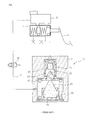
FIG. 2 is a drawing showing a pedal simulator according to a preferable embodiment of the present invention.
Referring to FIG. 2, the pedal simulator 100 according to an embodiment of the present invention includes: a simulator block 110 including a simulation chamber 111 which is connected with a master cylinder 1 and into which hydraulic pressure is introduced by the pedal pressure of the brake pedal 2; a piston 120 provided on the simulation chamber 111 to be slideable; a check valve 130 pressurized by the piston 120; a return spring 140 for elastically supporting the check valve 130; a damping housing 150 for sealing the simulator block 110; an orifice 160 formed in the simulator block 110; and an accumulator 170 in communication with the simulation chamber 111 through the orifice 160.
The simulator block 110 is connected so that hydraulic pressure is introduced from a master cylinder 1 from an upper part, and has the simulation chamber 111 having an open lower part. The lower part of the simulator block 110 is closed by the damping housing 150. The piston 120, the check valve 130, the return spring 140, and the damping housing 150 are provided in the simulator block 110 in order in a serial structure. Here, the orifice 160 is formed in a radial direction of a lower side of the simulator block 110, the structure of which will be described below again. Meanwhile, oil is stored in the simulation chamber 111.
The piston 120 is provided in the simulation chamber 111 to be slideable, and is pressurized and moved by the hydraulic pressure introduced from the master cylinder 1.
The check valve 130 is provided in the simulation chamber 111 to be slideable in a state of being in contact with the piston 120, and is pressurized by moving the piston 120. More specifically, the check valve 130 includes a valve body 131 sliding in the simulation chamber 111 and a ball member 132 for closing a flow path 133 formed to penetrate the valve body 131.
The valve body 131 is provided to seal between the simulation chamber 111 and the piston 120. That is, an outer surface of the valve body 131 is provided to be in a state of contact with an inner surface of the simulator block 110, and is slid and moved. An upper surface of the valve body 131 is provided to be in contact with the piston 120. The flow path 133 penetrated in a movement direction of the check valve 130 and stepped is provided in the center of the valve body 131.
The ball member 132 for opening and closing the flow path 133 is configured to block the flow path 133 when pressure is generated in the simulation chamber 111. For example, the ball member 132, as shown in FIG. 2, is provided in a state of opening the flow path 133. When the hydraulic pressure is generated, that is, when the hydraulic pressure is introduced from the master cylinder 1 to pressurize the piston 120 and the check valve 130, pressure is generated in the simulation chamber 111, and thus, as shown in FIG. 2, the ball member 132 blocks the flow path 133. At this time, the ball member 132 is supported by an escape preventing protrusion 153 of the damping housing 150 to be described below to prevent the ball member 132 from escaping from the flow path 133 of the check valve 130.
Meanwhile, the check valve 130 further includes a stopper 135. The stopper 135 is provided at an upper end of the valve body 131, and is installed to be in contact with the piston 120. The stopper 135 is formed of a rubber material to absorb a shock when pressurized by the piston 120. That is, the stopper 135 is provided to minimize a sense of heterogeneity generated when the metal piston 120 and the valve body 131 are directly bumped into each other.
The return spring 140 is provided so that the check valve 130, pressurized by the piston 120 according to a brake operation and is moved, returns to its original position at the time of releasing braking. The return spring 140 is provided in the simulation chamber 111 to elastically support the check valve 130. That is, the return spring 140 is arranged between the damping housing 150 and the check valve 130, and one end of the return spring 140 is supported on the valve body 131 and the other end is supported on the damping housing 150.
The damping housing 150 is coupled to be spaced apart a predetermined distance from the check valve 130 to close a lower end of the simulator block 110, and supports the return spring 140. The damping housing 150 has a stopper 155. The stopper 155 is supported on the damping housing 150, and limits a movement distance of the check valve 130 by coming in contact with the check valve 130 when the check valve 130 is moved. Also, the stopper 155 is formed of a rubber material to absorb a shock when coming in contact with the check valve 130. That is, the stopper 155 is provided to minimize a sense of heterogeneity generated when the metal check valve 130 and the damping housing 150 are directly bumped into each other.
Also, the damping housing 150 includes the escape preventing protrusion 153. The escape preventing protrusion 153, as described above, prevents the ball member 132 of the check valve 130 from escaping from the flow path 133. Therefore, the escape preventing protrusion 153 is formed to protrude toward the flow path 133 of the check valve 130.
Meanwhile, a fixing member 180 is further installed at a lower end of the damping housing 150 so that the damping housing 150 is stably fixed to the simulator block 110. At this time, the fixing member 180, provided as a circlip, and the like, is fixed to the simulator block 110 to support the damping housing 150.
When the check valve 130 is pressurized by the piston 120, pressure is applied to the oil stored in the simulation chamber 111. Therefore, the orifice 160 is formed in the simulator block 110 and provides pedal pressure by allowing the flow of oil. The orifice 160 is formed in a side surface adjacent to a lower side of the simulator block 110 to prevent the orifice from being blocked by the check valve 130 when the check valve 130 is pressurized and moved. Therefore, the orifice 160 is formed to be positioned below the maximum movement range of the check valve 130.
The orifice 160 may be formed in a plural number. That is, the orifice 160 may be formed by selectively changing a size or number thereof depending on the required pedal pressure. For example, when the number and size of the orifices 160 are increased, a sense of a smooth pedal may be provided. When the number and size of the orifices 160 are decreased, a sense of a stiff pedal may be provided.
According to an embodiment of the present invention, the pedal simulator 100 is configured as a closed circuit by including the accumulator 170. That is, the accumulator 170 is connected with the simulation chamber 111 through the orifice 160. Since the simulation chamber 111 is blocked from the master cylinder 1 by the check valve 130, the closed circuit is configured in the pedal simulator 100. The accumulator 170, which stores a predetermined amount of oil, preferably stores an amount of oil as much as a volume of the piston 120 pressurized by the hydraulic pressure. At this time, although not shown, the accumulator 170 includes a chamber therein, and may store the oil discharged through the orifice 160 by providing a piston and a spring or damper in the chamber.
Then, an operation state of the pedal simulator will be described with reference to FIGS. 2 to 4.
Firstly, the pedal simulator 100 shown in FIG. 2 is in a state of braking not being performed. When the pedal simulator 100 is in a state of braking not being performed, the ball member 132 of the check valve 130 is supported by the escape preventing protrusion 153 of the damping housing 150.
Next, when the hydraulic pressure is introduced into the simulation chamber 111 through the simulator block 110 from the master cylinder 1 by a driver stepping on the brake pedal 2, as shown in FIG. 3, the piston 120 is slid to pressurize the check valve 130. At this time, the simulation chamber 111 is pressurized by the check valve 130 to generate pressure, so the ball member 132 blocks the flow path 133 of the check valve 130.
Meanwhile, the stopper 135, formed of a rubber material, is provided at an upper end of the check valve 130, pressurized by the piston 120, to be in contact with the piston 120, and thus, a sense of heterogeneity transmitted to the driver may be minimized when the piston 120 pressurizes the check valve 130.
When the driver continuously steps on the brake pedal 2, as shown in FIG. 4, the piston 120 and the check valve 130 are moved while compressing the return spring 140. That is, the oil stored in the simulation chamber 111 is stored in the accumulator 170 through the orifice 160. At this time, the oil discharged through the orifice 160 generates a flow path resistance depending on a size and number of the orifices 160 to provide pedal pressure for the driver.
Also, the check valve 130 is limited in movement by the stopper 155 provided in the damping housing 150. Since the stopper 155 is formed of a rubber material, a sense of heterogeneity transmitted to the driver may be minimized when the check valve 130 and the stopper 155 are in contact with each other.
As described above, after braking is completed, when the pedal pressure of the brake pedal 2 is released, the piston in the master cylinder 1 is moved back (returns to its original position), and the hydraulic pressure introduced into the simulator block 110 is suctioned into the master cylinder 1. By an elastic restoring force of the return spring 140 and by allowing the oil compressed in the accumulator 170 to be introduced into the simulation chamber 111, the piston 120 and the check valve 130 may return to their original positions, and also smooth pedal pressure may be provided. At this time, a sense of the pedal may be adjusted at the time of releasing of pedal pressure of the brake pedal 2 by controlling an amount of compression and size of the accumulator 170.
Meanwhile, the pedal simulator 100 according to an embodiment of the present invention may constantly provide the same sense of the pedal for a driver by being configured as a closed circuit using the simulation chamber 111 and the accumulator 170. A sense of the pedal is provided through the oil stored in the simulation chamber 111, so a sense of the pedal similar to a sense of the pedal of the hydraulic brake may be provided.
The pedal simulator according to an embodiment of the present invention is formed by adjusting a size and number of orifices, thereby providing the pedal pressure of a brake pedal and repulsive force, generated when the pedal pressure is released, as a specification that a driver requires.
Also, the pedal simulator can control pedal pressure at the time of releasing the pedal pressure of the brake pedal by adjusting a size and compression amount of the accumulator, and can make a difference between a sense of the pedal according to pedal pressure of the brake pedal and a sense of the pedal at the time of releasing pedal pressure. That is, a sense of the pedal similar to a sense of the pedal of a hydraulic brake is provided at the time of braking, and, when braking is released, a smooth sense of the pedal is provided by oil suctioning into the master cylinder, an elastic restoring force of the return spring, and pressure of oil returned from the accumulator.
Meanwhile, since the pedal simulator is configured as a closed circuit between the simulation chamber and the accumulator, connection with a reservoir is not necessary, and a simulation valve may be omitted, thereby having a simple configuration and reducing costs.
As described above, although the present invention has been described with reference to exemplary embodiments and the accompanying drawings, it would be appreciated by those skilled in the art that the present invention is not limited thereto but various modifications and alterations might be made without departing from the scope defined in the claims and their equivalents.

Claims (10)

What is claimed is:
1. A pedal simulator, which is connected with a master cylinder and configured to provide a sense of a pedal for a driver by receiving hydraulic pressure according to pedal pressure of the driver, comprising:
a simulation chamber which has one end connected with the master cylinder and the other end provided in a simulator block closed by a damping housing, and is configured to store oil;
a check valve which is pressurized by a piston, provided in the simulation chamber to be slideable, and is slid;
an orifice formed in the simulator block and configured to allow a flow of oil in the simulation chamber by the sliding check valve; and
an accumulator configured to store oil discharged through the orifice,
wherein the check valve comprises a valve body configured to seal between the simulation chamber and the piston and slide in the simulation chamber; and a ball member which closes a flow path formed to penetrate the valve body,
wherein the ball member is configured to block the flow path when pressure is generated in the simulation chamber.
2. The pedal simulator according to claim 1, further comprising a return spring provided between the check valve and the damping housing and configured to return the check valve to its original position.
3. The pedal simulator according to claim 1, wherein the simulation chamber and the accumulator connected through the orifice are configured as a closed circuit.
4. The pedal simulator according to claim 1, the orifice is formed by selectively changing a size and number thereof depending on a required pedal pressure.
5. The pedal simulator according to claim 1, wherein the orifice is formed below the maximum movement range of the check valve to prevent the orifice from being blocked by the check valve pressurized by the piston.
6. The pedal simulator according to claim 1, wherein a stopper, which is in contact with the piston, may be provided at an upper end of the check valve, and the stopper is formed of a rubber material.
7. The pedal simulator according to 1, wherein a stopper configured to limit a movement distance of the check valve is provided in the damping housing, and the stopper is formed of a rubber material.
8. The pedal simulator according to 1, wherein the damping housing comprises an escape preventing protrusion configured to protrude toward the flow path of the check valve to prevent the ball member from escaping from the flow path.
9. The pedal simulator according to claim 1, a fixing member is further installed at a lower end of the damping housing to fix the damping housing to the simulator block.
10. A pedal simulator, which is connected with a master cylinder and configured to provide a sense of a pedal for a driver by receiving hydraulic pressure according to pedal pressure of the driver, comprising:
a simulation chamber which has one end connected with the master cylinder and the other end provided in a simulator block closed by a damping housing, and is configured to store oil;
a check valve which is pressurized by a piston, provided in the simulation chamber to be slideable, and is slid;
an orifice formed in the simulator block and configured to allow a flow of oil in the simulation chamber by the sliding check valve; and
an accumulator configured to store oil discharged through the orifice,
wherein the simulator block has a variable inner diameter in which an upper portion of the simulator block, into which the piston is fitted, has an inner diameter smaller than an inner diameter of a lower portion of the simulator block, and
wherein the piston is a solid body and has a protrusion protruding from a bottom at a center of the piston into the check valve.
US14/924,401 2014-10-28 2015-10-27 Pedal simulator Active US9718448B2 (en)

Applications Claiming Priority (2)

Application Number Priority Date Filing Date Title
KR1020140147064A KR102016357B1 (en) 2014-10-28 2014-10-28 Pedal simulator
KR10-2014-0147064 2014-10-28

Publications (2)

Publication Number Publication Date
US20160114769A1 US20160114769A1 (en) 2016-04-28
US9718448B2 true US9718448B2 (en) 2017-08-01

Family

ID=55698737

Family Applications (1)

Application Number Title Priority Date Filing Date
US14/924,401 Active US9718448B2 (en) 2014-10-28 2015-10-27 Pedal simulator

Country Status (4)

Country Link
US (1) US9718448B2 (en)
KR (1) KR102016357B1 (en)
CN (1) CN105539405B (en)
DE (1) DE102015220947B4 (en)

Cited By (2)

* Cited by examiner, † Cited by third party
Publication number Priority date Publication date Assignee Title
US11124165B2 (en) * 2019-07-10 2021-09-21 Bwi (Shanghai) Co., Ltd. Pedal free emulator and brake-by-wire system
US11964637B2 (en) 2020-03-18 2024-04-23 Eric Paad Tire cleaning mechanism for wheelchair and methods of use

Families Citing this family (17)

* Cited by examiner, † Cited by third party
Publication number Priority date Publication date Assignee Title
KR20170130937A (en) * 2016-05-20 2017-11-29 주식회사 만도 Pedal simulator
KR102510629B1 (en) * 2016-07-14 2023-03-16 에이치엘만도 주식회사 Pedal simulator
US20180093648A1 (en) * 2016-09-30 2018-04-05 GM Global Technology Operations LLC Brake pedal emulator of a brake-by-wire system
CN109927690B (en) * 2017-12-26 2020-09-15 万向钱潮股份有限公司 Simulator hydraulic control switch valve and brake-by-wire pedal system
DE102018214869A1 (en) * 2018-08-31 2020-03-05 Continental Teves Ag & Co. Ohg Brake system simulator
DE102018222075A1 (en) * 2018-12-18 2020-06-18 Continental Teves Ag & Co. Ohg Pedal simulator for a brake system and brake system
CN109733356B (en) * 2018-12-28 2022-06-28 上海擎度汽车科技有限公司 Force simulator and electronic hydraulic brake system formed by same
CN109849882B (en) * 2019-03-06 2021-08-06 上海擎度汽车科技有限公司 Force simulator
JP2020142756A (en) * 2019-03-08 2020-09-10 ロベルト・ボッシュ・ゲゼルシャフト・ミト・ベシュレンクテル・ハフツングRobert Bosch Gmbh Hydraulic pressure control unit
KR102227216B1 (en) * 2019-04-18 2021-03-12 현대모비스 주식회사 Electric brake device
IT201900025318A1 (en) * 2019-12-23 2021-06-23 Freni Brembo Spa ADJUSTABLE PRESSURE SIMULATOR DEVICE FOR BRAKING SYSTEM OF BRAKE BY WIRE VEHICLES
IT201900025336A1 (en) * 2019-12-23 2021-06-23 Freni Brembo Spa A brake system for vehicles with a collapsible actuation pedal and the associated method of actuating a braking system in the event of an impact
CN111256970B (en) * 2020-02-18 2024-07-09 万向钱潮股份公司 Adjustable automobile brake pedal feel simulator
DE102020211085B4 (en) 2020-09-02 2022-07-28 Volkswagen Aktiengesellschaft Brake pedal system with a braking force simulator, brake-by-wire braking system and motor vehicle
KR102451768B1 (en) 2020-12-01 2022-10-05 재단법인대구경북과학기술원 Passive type pedal simulator with adjustable pedal effort module
KR102422968B1 (en) 2020-12-23 2022-07-19 재단법인대구경북과학기술원 Passive type pedal simulator with adjustable pedal effort module
CN117400892A (en) * 2023-11-07 2024-01-16 中国第一汽车股份有限公司 A brake pedal simulator for a brake-by-wire system and its control method

Citations (5)

* Cited by examiner, † Cited by third party
Publication number Priority date Publication date Assignee Title
US5312172A (en) * 1992-02-28 1994-05-17 Aisin Seiki Kabushiki Kaisha Brake control system
US6139119A (en) * 1997-08-08 2000-10-31 Toyota Jidosha Kabushiki Kaisha Brake stroke simulator and method
US20080284242A1 (en) * 2004-05-06 2008-11-20 Ganzel Blaise J Slip Control Boost Braking System
US20110006594A1 (en) * 2007-10-29 2011-01-13 Ganzel Blaise J Hydraulic brake system with controlled boost
US20140131154A1 (en) * 2009-02-03 2014-05-15 Kelsey-Hayes Company Vehicle Brake System

Family Cites Families (5)

* Cited by examiner, † Cited by third party
Publication number Priority date Publication date Assignee Title
JP2008179270A (en) * 2007-01-25 2008-08-07 Toyota Motor Corp Brake pedal reaction force generator
DE102012203099A1 (en) * 2011-05-02 2012-11-08 Continental Teves Ag & Co. Ohg Pedal travel simulator, operating unit for a hydraulic brake system and brake system
KR101337233B1 (en) * 2011-11-14 2013-12-06 주식회사 만도 Hydraulic brake booster
JP5796554B2 (en) * 2012-07-12 2015-10-21 株式会社アドヴィックス Braking device for vehicle
KR101565139B1 (en) 2014-08-21 2015-11-02 학교법인 신일학원 Method for serving learning resources for multi channel in smart learning

Patent Citations (5)

* Cited by examiner, † Cited by third party
Publication number Priority date Publication date Assignee Title
US5312172A (en) * 1992-02-28 1994-05-17 Aisin Seiki Kabushiki Kaisha Brake control system
US6139119A (en) * 1997-08-08 2000-10-31 Toyota Jidosha Kabushiki Kaisha Brake stroke simulator and method
US20080284242A1 (en) * 2004-05-06 2008-11-20 Ganzel Blaise J Slip Control Boost Braking System
US20110006594A1 (en) * 2007-10-29 2011-01-13 Ganzel Blaise J Hydraulic brake system with controlled boost
US20140131154A1 (en) * 2009-02-03 2014-05-15 Kelsey-Hayes Company Vehicle Brake System

Cited By (2)

* Cited by examiner, † Cited by third party
Publication number Priority date Publication date Assignee Title
US11124165B2 (en) * 2019-07-10 2021-09-21 Bwi (Shanghai) Co., Ltd. Pedal free emulator and brake-by-wire system
US11964637B2 (en) 2020-03-18 2024-04-23 Eric Paad Tire cleaning mechanism for wheelchair and methods of use

Also Published As

Publication number Publication date
US20160114769A1 (en) 2016-04-28
CN105539405B (en) 2018-12-28
DE102015220947A1 (en) 2016-04-28
DE102015220947B4 (en) 2023-09-28
KR20160049658A (en) 2016-05-10
KR102016357B1 (en) 2019-08-30
CN105539405A (en) 2016-05-04

Similar Documents

Publication Publication Date Title
US9718448B2 (en) Pedal simulator
US20140360177A1 (en) Variable pedal feeling adjustment device
KR101734038B1 (en) Device for regulate of flex brake pedal feeling
KR101853771B1 (en) Device for regulate of flex brake pedal feeling
US20170334416A1 (en) Brake system including pedal simulator
US9010879B2 (en) Pre-fill system to improve brake feel and method of increasing initial flux using the same
US10913440B2 (en) Pedal simulator
CN104554200A (en) Pedal simulator for active brake system
US20100012442A1 (en) Hysteresis characterizing typed electro pedal device
JP2018161900A (en) Braking operation device
US20150097418A1 (en) Electronic hydraulic brake device
US20170074342A1 (en) Air spring
KR102414698B1 (en) Pedal simulator
KR102510629B1 (en) Pedal simulator
KR20180094274A (en) Pedal simulator
KR101337233B1 (en) Hydraulic brake booster
KR101885745B1 (en) Device for regulate of flex brake pedal feeling
JP2009227173A (en) Stroke simulator
KR20150122425A (en) Pedal simulator for brake system
KR20200059196A (en) Pedal simulator and Vehicle braking system having the same
KR102413492B1 (en) Pedal simulator for active Hydraulic Booster
KR102115951B1 (en) Pedal simulator and Vehicle braking system having the same
KR101913129B1 (en) Pedal simulator
US11999325B2 (en) Friction member and master cylinder comprising same
KR102398041B1 (en) Pedal simulator

Legal Events

Date Code Title Description
AS Assignment

Owner name: MANDO CORPORATION, KOREA, REPUBLIC OF

Free format text: ASSIGNMENT OF ASSIGNORS INTEREST;ASSIGNOR:KIM, HYUN-DONG;REEL/FRAME:036895/0639

Effective date: 20151020

STCF Information on status: patent grant

Free format text: PATENTED CASE

MAFP Maintenance fee payment

Free format text: PAYMENT OF MAINTENANCE FEE, 4TH YEAR, LARGE ENTITY (ORIGINAL EVENT CODE: M1551); ENTITY STATUS OF PATENT OWNER: LARGE ENTITY

Year of fee payment: 4

AS Assignment

Owner name: HL MANDO CORPORATION, KOREA, REPUBLIC OF

Free format text: CHANGE OF NAME;ASSIGNOR:MANDO CORPORATION;REEL/FRAME:062206/0260

Effective date: 20220905

MAFP Maintenance fee payment

Free format text: PAYMENT OF MAINTENANCE FEE, 8TH YEAR, LARGE ENTITY (ORIGINAL EVENT CODE: M1552); ENTITY STATUS OF PATENT OWNER: LARGE ENTITY

Year of fee payment: 8