US9549987B2 - Glucose responsive hydrogel comprising PBA-grafted hyaluronic acid (HA) - Google Patents
Glucose responsive hydrogel comprising PBA-grafted hyaluronic acid (HA) Download PDFInfo
- Publication number
- US9549987B2 US9549987B2 US14/440,812 US201314440812A US9549987B2 US 9549987 B2 US9549987 B2 US 9549987B2 US 201314440812 A US201314440812 A US 201314440812A US 9549987 B2 US9549987 B2 US 9549987B2
- Authority
- US
- United States
- Prior art keywords
- polymer
- cis
- group
- diol
- acid
- Prior art date
- Legal status (The legal status is an assumption and is not a legal conclusion. Google has not performed a legal analysis and makes no representation as to the accuracy of the status listed.)
- Expired - Fee Related, expires
Links
- 0 [1*]OC1C(O[2*])[C@H](OC2[C@H]([3*]O)C(CO[4*])O[C@@H](C)[C@H]2NC(C)=O)O[C@@H](C(=O)O[Na])[C@H]1OC Chemical compound [1*]OC1C(O[2*])[C@H](OC2[C@H]([3*]O)C(CO[4*])O[C@@H](C)[C@H]2NC(C)=O)O[C@@H](C(=O)O[Na])[C@H]1OC 0.000 description 10
- RNDVGJZUHCKENF-UHFFFAOYSA-N C=CCCC(C)=O Chemical compound C=CCCC(C)=O RNDVGJZUHCKENF-UHFFFAOYSA-N 0.000 description 4
- ZBCQJXIZKSRDNT-UHFFFAOYSA-N CC(=O)CCCCSCCC(=O)CC1=CC(B(O)O)=CC=C1 Chemical compound CC(=O)CCCCSCCC(=O)CC1=CC(B(O)O)=CC=C1 ZBCQJXIZKSRDNT-UHFFFAOYSA-N 0.000 description 4
- QCQNCUAYCPFQDO-RKZHGHIISA-N CC(=O)CCCCSCCNC(=O)CONC1OC(CO)[C@@H](O[C@H]2OC(CO)[C@@H](O)C(O)[C@@H]2O)C(O)[C@@H]1O Chemical compound CC(=O)CCCCSCCNC(=O)CONC1OC(CO)[C@@H](O[C@H]2OC(CO)[C@@H](O)C(O)[C@@H]2O)C(O)[C@@H]1O QCQNCUAYCPFQDO-RKZHGHIISA-N 0.000 description 4
- CKDQVYYITVHZEC-UHFFFAOYSA-N O=C(CCS)NC1=CC(B(O)O)=CC=C1 Chemical compound O=C(CCS)NC1=CC(B(O)O)=CC=C1 CKDQVYYITVHZEC-UHFFFAOYSA-N 0.000 description 2
- ISVSSYJJUBXCPI-RDVGPWNDSA-N O=C(CONC1OC(CO)[C@@H](O[C@H]2OC(CO)[C@@H](O)C(O)[C@@H]2O)C(O)[C@@H]1O)NCCS Chemical compound O=C(CONC1OC(CO)[C@@H](O[C@H]2OC(CO)[C@@H](O)C(O)[C@@H]2O)C(O)[C@@H]1O)NCCS ISVSSYJJUBXCPI-RDVGPWNDSA-N 0.000 description 2
- GAIWTPWLGYKINJ-MLSMLTDNSA-N CO[C@@H]1C(C(=O)O)O[C@@H](OC2[C@H](O)C(CO)O[C@H](C)[C@H]2NC(C)=O)[C@@H](O)C1O Chemical compound CO[C@@H]1C(C(=O)O)O[C@@H](OC2[C@H](O)C(CO)O[C@H](C)[C@H]2NC(C)=O)[C@@H](O)C1O GAIWTPWLGYKINJ-MLSMLTDNSA-N 0.000 description 1
Images




Classifications
-
- A—HUMAN NECESSITIES
- A61—MEDICAL OR VETERINARY SCIENCE; HYGIENE
- A61K—PREPARATIONS FOR MEDICAL, DENTAL OR TOILETRY PURPOSES
- A61K47/00—Medicinal preparations characterised by the non-active ingredients used, e.g. carriers or inert additives; Targeting or modifying agents chemically bound to the active ingredient
- A61K47/30—Macromolecular organic or inorganic compounds, e.g. inorganic polyphosphates
- A61K47/36—Polysaccharides; Derivatives thereof, e.g. gums, starch, alginate, dextrin, hyaluronic acid, chitosan, inulin, agar or pectin
-
- A—HUMAN NECESSITIES
- A61—MEDICAL OR VETERINARY SCIENCE; HYGIENE
- A61K—PREPARATIONS FOR MEDICAL, DENTAL OR TOILETRY PURPOSES
- A61K38/00—Medicinal preparations containing peptides
- A61K38/16—Peptides having more than 20 amino acids; Gastrins; Somatostatins; Melanotropins; Derivatives thereof
- A61K38/17—Peptides having more than 20 amino acids; Gastrins; Somatostatins; Melanotropins; Derivatives thereof from animals; from humans
- A61K38/22—Hormones
- A61K38/28—Insulins
-
- A—HUMAN NECESSITIES
- A61—MEDICAL OR VETERINARY SCIENCE; HYGIENE
- A61K—PREPARATIONS FOR MEDICAL, DENTAL OR TOILETRY PURPOSES
- A61K9/00—Medicinal preparations characterised by special physical form
- A61K9/0012—Galenical forms characterised by the site of application
- A61K9/0019—Injectable compositions; Intramuscular, intravenous, arterial, subcutaneous administration; Compositions to be administered through the skin in an invasive manner
-
- A—HUMAN NECESSITIES
- A61—MEDICAL OR VETERINARY SCIENCE; HYGIENE
- A61K—PREPARATIONS FOR MEDICAL, DENTAL OR TOILETRY PURPOSES
- A61K9/00—Medicinal preparations characterised by special physical form
- A61K9/06—Ointments; Bases therefor; Other semi-solid forms, e.g. creams, sticks, gels
-
- A—HUMAN NECESSITIES
- A61—MEDICAL OR VETERINARY SCIENCE; HYGIENE
- A61P—SPECIFIC THERAPEUTIC ACTIVITY OF CHEMICAL COMPOUNDS OR MEDICINAL PREPARATIONS
- A61P3/00—Drugs for disorders of the metabolism
- A61P3/08—Drugs for disorders of the metabolism for glucose homeostasis
- A61P3/10—Drugs for disorders of the metabolism for glucose homeostasis for hyperglycaemia, e.g. antidiabetics
-
- C—CHEMISTRY; METALLURGY
- C08—ORGANIC MACROMOLECULAR COMPOUNDS; THEIR PREPARATION OR CHEMICAL WORKING-UP; COMPOSITIONS BASED THEREON
- C08B—POLYSACCHARIDES; DERIVATIVES THEREOF
- C08B37/00—Preparation of polysaccharides not provided for in groups C08B1/00 - C08B35/00; Derivatives thereof
- C08B37/006—Heteroglycans, i.e. polysaccharides having more than one sugar residue in the main chain in either alternating or less regular sequence; Gellans; Succinoglycans; Arabinogalactans; Tragacanth or gum tragacanth or traganth from Astragalus; Gum Karaya from Sterculia urens; Gum Ghatti from Anogeissus latifolia; Derivatives thereof
- C08B37/0063—Glycosaminoglycans or mucopolysaccharides, e.g. keratan sulfate; Derivatives thereof, e.g. fucoidan
- C08B37/0072—Hyaluronic acid, i.e. HA or hyaluronan; Derivatives thereof, e.g. crosslinked hyaluronic acid (hylan) or hyaluronates
-
- C—CHEMISTRY; METALLURGY
- C08—ORGANIC MACROMOLECULAR COMPOUNDS; THEIR PREPARATION OR CHEMICAL WORKING-UP; COMPOSITIONS BASED THEREON
- C08J—WORKING-UP; GENERAL PROCESSES OF COMPOUNDING; AFTER-TREATMENT NOT COVERED BY SUBCLASSES C08B, C08C, C08F, C08G or C08H
- C08J3/00—Processes of treating or compounding macromolecular substances
- C08J3/02—Making solutions, dispersions, lattices or gels by other methods than by solution, emulsion or suspension polymerisation techniques
- C08J3/03—Making solutions, dispersions, lattices or gels by other methods than by solution, emulsion or suspension polymerisation techniques in aqueous media
- C08J3/075—Macromolecular gels
-
- C—CHEMISTRY; METALLURGY
- C08—ORGANIC MACROMOLECULAR COMPOUNDS; THEIR PREPARATION OR CHEMICAL WORKING-UP; COMPOSITIONS BASED THEREON
- C08J—WORKING-UP; GENERAL PROCESSES OF COMPOUNDING; AFTER-TREATMENT NOT COVERED BY SUBCLASSES C08B, C08C, C08F, C08G or C08H
- C08J3/00—Processes of treating or compounding macromolecular substances
- C08J3/24—Crosslinking, e.g. vulcanising, of macromolecules
- C08J3/243—Two or more independent types of crosslinking for one or more polymers
-
- C—CHEMISTRY; METALLURGY
- C08—ORGANIC MACROMOLECULAR COMPOUNDS; THEIR PREPARATION OR CHEMICAL WORKING-UP; COMPOSITIONS BASED THEREON
- C08J—WORKING-UP; GENERAL PROCESSES OF COMPOUNDING; AFTER-TREATMENT NOT COVERED BY SUBCLASSES C08B, C08C, C08F, C08G or C08H
- C08J3/00—Processes of treating or compounding macromolecular substances
- C08J3/28—Treatment by wave energy or particle radiation
-
- C—CHEMISTRY; METALLURGY
- C08—ORGANIC MACROMOLECULAR COMPOUNDS; THEIR PREPARATION OR CHEMICAL WORKING-UP; COMPOSITIONS BASED THEREON
- C08L—COMPOSITIONS OF MACROMOLECULAR COMPOUNDS
- C08L5/00—Compositions of polysaccharides or of their derivatives not provided for in groups C08L1/00 or C08L3/00
- C08L5/08—Chitin; Chondroitin sulfate; Hyaluronic acid; Derivatives thereof
-
- A—HUMAN NECESSITIES
- A61—MEDICAL OR VETERINARY SCIENCE; HYGIENE
- A61K—PREPARATIONS FOR MEDICAL, DENTAL OR TOILETRY PURPOSES
- A61K9/00—Medicinal preparations characterised by special physical form
- A61K9/48—Preparations in capsules, e.g. of gelatin, of chocolate
- A61K9/50—Microcapsules having a gas, liquid or semi-solid filling; Solid microparticles or pellets surrounded by a distinct coating layer, e.g. coated microspheres, coated drug crystals
- A61K9/51—Nanocapsules; Nanoparticles
- A61K9/5107—Excipients; Inactive ingredients
- A61K9/513—Organic macromolecular compounds; Dendrimers
- A61K9/5161—Polysaccharides, e.g. alginate, chitosan, cellulose derivatives; Cyclodextrin
-
- C—CHEMISTRY; METALLURGY
- C08—ORGANIC MACROMOLECULAR COMPOUNDS; THEIR PREPARATION OR CHEMICAL WORKING-UP; COMPOSITIONS BASED THEREON
- C08J—WORKING-UP; GENERAL PROCESSES OF COMPOUNDING; AFTER-TREATMENT NOT COVERED BY SUBCLASSES C08B, C08C, C08F, C08G or C08H
- C08J2305/00—Characterised by the use of polysaccharides or of their derivatives not provided for in groups C08J2301/00 or C08J2303/00
- C08J2305/08—Chitin; Chondroitin sulfate; Hyaluronic acid; Derivatives thereof
-
- C—CHEMISTRY; METALLURGY
- C08—ORGANIC MACROMOLECULAR COMPOUNDS; THEIR PREPARATION OR CHEMICAL WORKING-UP; COMPOSITIONS BASED THEREON
- C08J—WORKING-UP; GENERAL PROCESSES OF COMPOUNDING; AFTER-TREATMENT NOT COVERED BY SUBCLASSES C08B, C08C, C08F, C08G or C08H
- C08J2405/00—Characterised by the use of polysaccharides or of their derivatives not provided for in groups C08J2401/00 or C08J2403/00
- C08J2405/08—Chitin; Chondroitin sulfate; Hyaluronic acid; Derivatives thereof
Definitions
- the present invention relates to novel glucose-sensitive hydrogels based on biopolymers, which can be used as insulin delivery systems in the treatment of diabetes and related aspects.
- Diabetes mellitus is a disorder of glucose regulation, characterized by an accumulating glucose concentration in the blood.
- the breakdown of glucose regulation can be attributed to the inability of the endocrine pancreas to secrete insulin or to the body's inability to properly use insulin.
- the usual treatment consists in multiple daily blood glucose controls and sub-cutaneous injections.
- a better control of the glycemia could be achieved if the insulin dose could be continuously adapted to the level of glucose in the blood, therefore avoiding glucose levels below or above the normal range, which causes detrimental complications.
- closed-loop delivery of insulin is highly sought-after.
- Glucose-responsive polymers and especially hydrogels have attracted much attention in this area due to their ability to both detect the glucose level and deliver insulin accordingly.
- Phenylboronic acid is known to reversibly bind to diols to form a cyclic boronic ester in aqueous media (Kataoka et al., 1998).
- the polymers are generally synthetic, non-biodegradable and are not biocompatible, which prevents in vivo applications.
- a dynamic matrix comprising boronic acid (PBA) as glucose sensor is based on the formation of boronate-cis-diol complexes which are stable at alkaline pH but not under physiological conditions.
- the invention describes a novel biopolymer complex system sensitive to glucose for modulated insulin delivery.
- This biopolymer complex is obtained by mixing hyaluronic acid (HA) derivatives modified with PBA and maltose.
- HA is an anionic linear polysaccharide which is ubiquitous in all tissues where it has important structural and biological functions. It is thus biocompatible and can be degraded by enzymes in the organism. In addition, it can be easily produced by bacterial fermentation.
- PBA can bind to molecules having cis-diol units, it can form complexes with the sugar units of the HA chain.
- a first object of the present invention is a polymer composition comprising a mixture of:
- the polymer composition comprises a mixture of:
- the polymer composition according to anyone of the preceding claims comprises a mixture of:
- the PBA modified HA polymer is preferably grafted on at least a hydroxyl with a group comprising phenylboronic acid via thiol-ene coupling and the cis-diol modified HA polymer is preferably grafted on at least a hydroxyl with a group comprising a cis-diol via thiol-ene coupling.
- the polymer composition comprises a mixture of:
- the PBA modified HA polymer has preferably a DS with a group comprising phenylboronic acid from 0.02 to 0.6, more preferably from 0.05 to 0.2.
- the cis-diol modified HA polymer has preferably a DS with a group comprising a cis-diol from 0.02 to 0.6, more preferably from 0.05 to 0.2.
- the PBA modified HA polymer has preferably a molecular weight M w from 10 000 g/mol to 3 000 000 g/mol, more preferentially from 20 000 g/mol to 800 000 g/mol and the cis-diol modified HA polymer has a molecular weight M w from 10 000 g/mol to 3 000 000 000 g/mol, more preferentially from 20 000 g/mol to 800 000 g/mol.
- the molar ratio between the group comprising phenylboronic acid and the group comprising a cis-diol is preferably from 0.25/1 to 2.5/1, more preferably from 0.5/1 to 2/1.
- the composition has preferably a pH from 7 to 10, preferably from 7 to 7.5.
- the PBA modified HA polymer is preferably further grafted on at least a hydroxyl with an alkene group and the cis-diol modified HA polymer is preferably further grafted on at least a hydroxyl with an alkene group.
- the alkene group is preferably selected in the group consisting of pentenoate and maleimide.
- the PBA modified HA polymer has preferably a DS with the alkene group from 0.02 to 0.6, more preferably from 0.05 to 0.5 and the cis-diol modified HA polymer has preferably a DS with the alkene group from 0.02 to 0.6, more preferably from 0.05 to 0.5.
- the PBA modified HA polymer and the cis-diol modified HA polymer are reversibly covalently crosslinked via their groups comprising phenyl boronic acid and their groups comprising a cis-diol.
- the PBA modified HA polymer and the cis-diol modified HA polymer are chemically crosslinked via their alkene groups.
- the PBA modified HA polymer and the cis-diol modified HA polymer are chemically crosslinked via their alkene groups by a photocrosslinking reaction with bisthiolated poly(ethylene glycol) P(EG-(SH) 2 ).
- the PBA modified HA polymer and the cis-diol modified HA polymer are further reversibly covalently crosslinked via their groups comprising phenyl boronic acid and their groups comprising a cis-diol.
- Another object of the present invention is an injectable hydrogel comprising a polymer composition wherein the PBA modified HA polymer and the cis-diol modified HA polymer are reversibly covalently crosslinked via their groups comprising phenyl boronic acid and their groups comprising a cis-diol.
- Another object of the present invention is an implantable hydrogel comprising a polymer composition wherein the PBA modified HA polymer and the cis-diol modified HA polymer are chemically crosslinked via their alkene groups and are further reversibly covalently crosslinked via their groups comprising phenyl boronic acid and their groups comprising a cis-diol.
- Another object of the present invention is a polymer composition
- a polymer composition comprising a mixture of:
- R 1 , R 2 , R 3 and R 4 are independently selected in the group consisting of H, the PBA group of formula (I)
- n 1 is an integer from 25 to 8000, preferably from 50 to 2000
- the DS with the PBA group of formula (I) is from 0.02 to 0.6, preferably from 0.05 to 0.2
- the DS with the alkene group of formula (IV) is from 0 to 0.6, preferably from 0.02 to 0.6
- R 5 , R 6 , R 7 and R 8 are independently selected in the group consisting of H, the maltose group of formula (II)
- n 2 is an integer from 25 to 8000, preferably from 50 to 2000
- the DS with the maltose group is from 0.02 to 0.6, preferably from 0.05 to 0.2
- the DS with the alkene group is from 0 to 0.6, preferably from 0.02 to 0.6.
- the polymer composition comprises preferably a mixture wherein the molar ratio between the PBA group and the alkene group is from 0.25/1 to 2.5/1, preferably from 0.5/1 to 2/1.
- the polymer composition preferably has a pH from 7 to 10, preferably from 7 to 7.5.
- the PBA modified HA polymer and the cis-diol modified HA polymer are preferably reversibly covalently crosslinked via respectively their PBA groups and their maltose groups.
- the PBA modified HA polymer has preferably a DS with the alkene group from 0.02 to 0.6, more preferably from 0.05 to 0.2 and the cis-diol modified HA polymer has preferably a DS with the alkene group from 0.02 to 0.6, preferably from 0.05 to 0.2.
- the PBA modified HA polymer and the cis-diol modified HA polymer are preferably chemically crosslinked via their alkene groups.
- the PBA modified HA polymer and the cis-diol modified HA polymer are chemically crosslinked via their alkene groups by a photocrosslinking reaction with PEG-(SH) 2 .
- the PBA modified HA polymer and the cis-diol modified HA polymer are further reversibly covalently crosslinked via their PBA groups and their maltose groups.
- Another object of the present invention is an injectable hydrogel comprising a polymer composition wherein the PBA modified HA polymer and the cis-diol modified HA polymer are reversibly covalently crosslinked via their groups comprising phenyl boronic acid and their groups comprising a cis-diol.
- Another object of the present invention is an implantable hydrogel comprising a polymer composition wherein the PBA modified HA polymer and the cis-diol modified HA polymer are chemically crosslinked via their alkene groups and are further reversibly covalently crosslinked via their groups comprising phenyl boronic acid and their groups comprising a cis-diol.
- Another object of the present invention is a drug delivery system comprising a polymer composition as described above and a drug contained in said polymer composition.
- the drug delivery system according to the present invention is for use as a medicament.
- the drug delivery system according to the present invention is for use in a method of treatment of diabetes mellitus.
- the drug is insulin.
- Another object of the present invention is a process for manufacturing a PBA modified HA polymer grafted on at least a hydroxyl with a group comprising phenylboronic acid comprising the steps of:
- the alkene group is selected from pentenoate and maleimide.
- step b) the phenylboronic acid-thiol derivative obtained is the compound of formula (VI)
- Another object of the present invention is a process for manufacturing a cis-diol modified HA polymer grafted on at least a hydroxyl with a group comprising a cis-diol comprising the steps of:
- the alkene group is selected from pentenoate and maleimide.
- step b) the cis-diol is maltose and the thiol cis-diol obtained is the compound of formula (VII)
- Another object of the present invention is a process for manufacturing a reversibly crosslinked hydrogel comprising a HA polymer composition comprising the steps of:
- Another object of the present invention is a process for manufacturing a reversibly crosslinked hydrogel comprising a HA polymer composition comprising the steps of:
- step c) mixing aqueous solutions of the PBA modified HA polymer of step a) and of the cis-diol HA polymer of step b) is performed in the presence of a drug thereby incorporating the drug into the HA polymer composition.
- Another object of the present invention is a process for manufacturing a double cross-linked hydrogel comprising a HA polymer composition comprising the steps of:
- step d) a drug is incorporated into the HA polymer composition.
- the present invention describes polymer compositions obtained by mixing HA derivatives modified with PBA (phenylboronic acid) and HA derivatives modified with a cis-diol.
- hydrophilic HA polymers By crosslinking of these hydrophilic HA polymers a network of polymer chains is obtained resulting in the formation of an hydrogel which is highly water absorbent.
- compositions of the present invention form a dynamic matrix or hydrogel.
- the boronate-cis-diol complexes which are usually only stable at alkaline pH exhibit remarkable stability at lower pH including at physiological pH (7.4).
- compositions form dynamic hydrogels exhibiting glucose-sensitive viscosity based on the competitive displacement of cis-diol modified HA from PBA modified HA by free glucose.
- the hydrogels of the present invention can have properties ranging from soft to hard rendering them suitable both for injection or implantation.
- HA refers to sodium hyaluronate, hyaluronan, hyaluronic acid or hyaluronate and in particular to hyaluronan having CAS number 9004-61-9 and 9067-32-7 (sodium salt).
- the HA glycosaminoglycan may be represented by the following formula:
- compositions of the present invention comprise a PBA modified HA polymer grafted on at least a hydroxyl with a group comprising phenylboronic acid and a cis-diol modified HA polymer grafted on at least a hydroxyl with a group comprising a cis-diol.
- the PBA modified HA and the cis-diol modified HA may comprise any other functional group grafted in particular on the hydroxyl groups of the HA polymer.
- the polymer compositions of the present invention are obtained by mixing aqueous solutions of PBA modified HA and cis-diol modified HA.
- a dynamic hydrogel is formed comprising boronate-cis-diol complexes crosslinking the HA molecules.
- the boronate-cis-diol complexes are sensitive to glucose and accordingly the swelling, viscosity and permeability of the hydrogels of the present invention will vary depending on the presence of glucose and the amount of glucose present in the medium.
- compositions and hydrogels of the present invention are glucose-sensitive. Any drug or API (active pharmaceutical ingredient) may be incorporated into the compositions and hydrogels of the present invention.
- the compositions and hydrogels of the present invention can be used as drug delivery systems wherein release of a drug from the hydrogel is regulated by glucose concentration.
- a first object of the present invention is a polymer composition comprising a mixture of:
- the group comprising phenylboronic acid may be any group comprising PBA or a PBA derivative able to form boronate-cis-diol complexes with the group comprising a cis-diol.
- the group comprising a cis-diol is preferably selected in the group consisting of:
- the polymer composition comprises a mixture of:
- the polymer composition comprises a mixture of:
- the polymer composition comprises a mixture of:
- the PBA modified HA polymer is preferably grafted on at least a hydroxyl with a group comprising phenylboronic acid via thiol-ene coupling and the cis-diol modified HA polymer is preferably grafted on at least a hydroxyl with a group comprising a cis-diol via thiol-ene coupling.
- the synthetic strategy based on thiol-ene coupling developed by the inventors provides PBA modified HA and cis-diol modified HA with varying degrees of substitution.
- these HA polymers may also possess alkene groups grafted on the hydroxyl groups along the polymer chain. These alkene groups may be advantageously used to chemically crosslink the glucose-sensitive hydrogels of the present invention. The alkene groups may further be used for further functionalization of the HA polymer. This synthetic strategy is also described in WO2012/066133.
- the PBA modified HA polymer is preferably further grafted on at least a hydroxyl with an alkene group and the cis-diol modified HA polymer is preferably further grafted on at least a hydroxyl with an alkene group.
- the alkene group is preferably selected in the group consisting of pentenoate and maleimide.
- the PBA modified HA polymer has preferably a DS with the alkene group from 0.02 to 0.6, more preferably from 0.05 to 0.5 and the cis-diol modified HA polymer has preferably a DS with the alkene group from 0.02 to 0.6, more preferably from 0.05 to 0.5.
- Any other method may be used to graft PBA groups or cis-diol groups along the HA chain via the hydroxyl groups of the polymer.
- the polymer composition comprises a mixture of:
- R 1 , R 2 , R 3 and R 4 are independently selected in the group consisting of H, the PBA group of formula (I)
- n 1 is an integer from 25 to 8000, preferably from 50 to 2000
- the DS with the PBA group of formula (I) is from 0.02 to 0.6, preferably from 0.05 to 0.2
- the DS with the alkene group of formula (IV) is from 0 to 0.6, preferably from 0.02 to 0.6
- R 5 , R 6 , R 7 and R 8 are independently selected in the group consisting of H, the maltose group of formula (II)
- n 2 is an integer from 25 to 8000, preferably from 50 to 2000
- the DS with the maltose group is from 0.02 to 0.6, preferably from 0.05 to 0.2
- the DS with the alkene group is from 0 to 0.6, preferably from 0.02 to 0.6.
- the PBA modified HA polymer has preferably a DS with a group comprising phenylboronic acid from 0.02 to 0.6, more preferably from 0.05 to 0.2.
- the cis-diol modified HA polymer has preferably a DS with a group comprising a cis-diol from 0.02 to 0.6, more preferably from 0.05 to 0.2.
- the PBA modified HA polymer has preferably a DS with an alkene group from 0.02 to 0.6, more preferably from 0.05 to 0.5 and the cis-diol modified HA polymer has preferably a DS with an alkene group from 0.02 to 0.6, more preferably from 0.05 to 0.5.
- the alkene group is preferably selected in the group consisting of pentenoate and maleimide.
- the PBA modified HA polymer has preferably a molecular weight M w from 10 000 g/mol to 3 000 000 g/mol, more preferentially from 20 000 g/mol to 800 000 g/mol and the cis-diol modified HA polymer has a molecular weight M w from 10 000 g/mol to 3 000 000 000 g/mol, more preferentially from 20 000 g/mol to 800 000 g/mol.
- the molar ratio between the group comprising phenylboronic acid and the group comprising a cis-diol is preferably from 0.25/1 to 2.5/1, more preferably from 0.5/1 to 2/1.
- the polymer compositions of the present invention preferably have a pH from 7 to 10, preferably from 7.2 to 9.5, more preferably from 7.2 to 7.5 and even more preferably of 7.4 (physiological pH).
- compositions of the present invention form crosslinked hydrogels at neutral or alkaline pH.
- the PBA modified HA polymer and the cis-diol modified HA polymer are reversibly covalently crosslinked via their groups comprising phenyl boronic acid and their groups comprising a cis-diol. This crosslinking is “dynamic” or “reversible” as it will vary in response to glucose.
- the swelling, viscosity and permeability of these dynamic hydrogels also depend on the DS with the PBA group or the cis-diol group for each of the modified HA polymers of the composition.
- the molar ratio between the group comprising phenylboronic acid and the group comprising a cis-diol in the polymer composition also determines the properties of the HA hydrogel as well as the Mw of the HA polymers.
- Hydrogels with tunable glucose-sensitivity are obtained by changing these different parameters.
- Drugs, APIs or any other active ingredient may be incorporated into the hydrogels before or during reversible crosslinking of the HA polymer by formation of boronate-cis diol complexes.
- hydrogels obtained by crosslinking the PBA groups and the cis-diol group of the HA polymers via formation of boronate-cis diol complexes may in particular be used as injectable hydrogels.
- hydrogels may also be formulated as nanoparticles having a size comprised between 50 and 1000 nm, preferably between 100 and 500 nm. These nanoparticles are also suitable for administration by injection.
- another object of the present invention is an injectable hydrogel comprising a polymer composition wherein the PBA modified HA polymer and the cis-diol modified HA polymer are reversibly covalently crosslinked via their groups comprising phenyl boronic acid and their groups comprising a cis-diol.
- the polymer compositions of the present invention may further be chemically crosslinked by any appropriate method known to the skilled person.
- chemical crosslinking of the HA polymer composition may be performed via the alkene groups grafted on the hydroxyls along the HA polymer chains.
- the PBA modified HA polymer and the cis-diol modified HA polymer are chemically crosslinked via their alkene groups.
- the PBA modified HA and the cis-diol modified HA may further be chemically crosslinked via their alkene groups by any method known to the skilled person.
- formation of chemically crosslinked hydrogels is performed by radical-thiol ene addition reactions.
- the PBA modified HA polymer and the cis-diol modified HA polymer are chemically crosslinked via their alkene groups by a photocrosslinking reaction with bisthiolated poly(ethylene glycol) (PEG-(SH) 2 ).
- a drug, an API or any active ingredient may be incorporated into the hydrogel before the reversible and dynamic glucose-sensitive crosslinking is carried out via the PBA groups and the cis-diol groups along the HA polymer chains.
- the chemically crosslinked hydrogels comprising the PBA modified HA polymer and the cis-diol modified HA polymer are further reversibly covalently crosslinked via their groups comprising phenyl boronic acid and their groups comprising a cis-diol.
- These double crosslinked hydrogels comprising a polymer composition wherein the PBA modified HA polymer and the cis-diol modified HA polymer are chemically crosslinked via their alkene groups and are further reversibly covalently crosslinked via their groups comprising phenyl boronic acid and their groups comprising a cis-diol, may in particular be used as implantable hydrogels.
- the double crosslinked hydrogels of the present invention may also be formulated as nanoparticles having a size comprised between 50 and 1000 nm, preferably between 100 and 500 nm. These nanoparticles are suitable for administration by injection.
- Another object of the present invention is an implantable hydrogel comprising a polymer composition wherein the PBA modified HA polymer and the cis-diol modified HA polymer are chemically crosslinked via their alkene groups and are further reversibly covalently crosslinked via their groups comprising phenyl boronic acid and their groups comprising a cis-diol.
- Another object of the present invention is a drug delivery system comprising a polymer composition as described above and a drug or active ingredient contained in said polymer composition.
- the drug delivery systems of the present invention provide glucose-sensitive release of drugs or active ingredients.
- the drug delivery system according to the present invention is for use as a medicament.
- the drug delivery system according to the present invention is for use in a method of treatment of diabetes mellitus.
- the drug is insulin.
- the inventors developed a synthetic strategy allowing the synthesis of PBA modified HA and cis-diol modified HA with varying degrees of substitution.
- the hydrogel behavior was quantified by measuring the dynamic rheology of HA-PBA/HA-cis-diol mixtures in aqueous solutions, without and in the presence of free glucose.
- we showed that the type of glucose response is strongly affected by changing ratios between HA-bound PBA and HA-bound cis-diol, which can be advantageously used to precisely tune glucose-sensitivity and to control tightly the release of a drug from the hydrogels.
- an aspect of the invention relates to the development of dynamic hydrogels with tunable glucose-sensitivity, from chemically modified biocompatible and biodegradable natural polysaccharides.
- Another aspect of this invention relates to the development of a versatile route to polysaccharides derivatives possessing either PBA groups or cis-diol moieties along the chain with varying degree of substitution (DS).
- these polysaccharides can also possess alkene groups along the chain which can be used to chemically crosslink the glucose sensitive networks.
- the resulting chemical hydrogels can be used as implantable materials for achieving for example self-regulated insulin delivery as a result of their reversible swelling according to blood glucose concentration.
- the HA derivatives were synthesized from a common intermediate possessing alkene functionalities along the chain as illustrated in Scheme 1.
- thiol-ene reaction The strategy for the functionalization of HA with PBA and cis-diol relies on a “thiol-ene reaction”, which has been classified as click chemistry because of its simplicity, high reactivity, and the broad variety of available reagents.
- the thiol-ene reaction is based on the radical addition of thiols on double bonds resulting in the formation of thioether linkages.
- HA was first functionalized with alkene groups according to a procedure previously described in WO2012/066133. We indeed developed mild conditions to functionalize HA with alkene groups by reaction of the polysaccharide with carboxylic acid anhydride in hydroorganic media.
- the degree of substitution of HA-alkene can be adjusted by varying the [carboxylic acid anhydride]/[HA] feed ratio. For example, using a [pentenoic acid anhydride]/[HA] ratio of 1, we obtained a pentenoate-modified HA with a DS of 0.2 which was further reacted in thiol-ene reactions with cis-diol-thiol and PBA-thiol derivatives.
- Another object of the present invention is a process for manufacturing a PBA modified HA polymer grafted on at least a hydroxyl with a group comprising phenylboronic acid comprising the steps of:
- the alkene group is selected from pentenoate and maleimide.
- step b) the phenylboronic acid-thiol derivative obtained is the compound of formula (VI)
- Another object of the present invention is a process for manufacturing a cis-diol modified HA polymer grafted on at least a hydroxyl with a group comprising a cis-diol comprising the steps of:
- the alkene group is selected from pentenoate and maleimide.
- step b) the cis-diol is maltose and the thiol cis-diol obtained is the compound of formula (VII)
- Another object of the present invention is a process for manufacturing a dynamically and/or reversibly crosslinked hydrogel comprising a HA polymer composition comprising the steps of:
- Another object of the present invention is a process for manufacturing a reversibly crosslinked hydrogel comprising a HA polymer composition comprising the steps of:
- a drug or any other active ingredient may be incorporated into the hydrogel by any appropriate method.
- the drug or active ingredient is typically added to the aqueous solution containing the HA polymer composition and diffuses into the composition or is mixed into the HA composition.
- the drug may be added to the HA composition during the reversible crosslinking step.
- step c) mixing aqueous solutions of the PBA modified HA polymer of step a) and of the cis-diol HA polymer of step b) is performed in the presence of a drug thereby incorporating the drug into the HA polymer composition.
- Another object of the present invention is a process for manufacturing a double cross-linked hydrogel comprising a HA polymer composition comprising the steps of:
- Step d) is the chemical crosslinking step whereas step e) corresponds to the dynamic or reversible crosslinking step obtained by formation of boronate-cis-diol complexes.
- this second crosslinking step is dynamic or reversible and is sensitive to glucose concentration.
- a drug or any other active ingredient may be incorporated into the hydrogel by any appropriate method.
- the drug or active ingredient is typically added to the aqueous solution containing the HA polymer composition and diffuses into the composition or is mixed into the HA composition.
- the HA composition may be immersed in a solution containing a drug or active ingredient of interest to allow for diffusion of the drug into the HA composition.
- the drug or active ingredient may be directly added to the HA composition at a pH comprised between 7 and 10, preferentially between 7.2 and 9.5 during the reversible crosslinking step.
- FIG. 1 Glucose-sensitive hydrogel based on the reversible complexation of phenylboronic acid and maltose moieties grafted on polysaccharide (HA) chains.
- FIG. 2 Synthesis of PBA- and maltose-modified HA.
- FIG. 4 Comparison of the dynamic rheological behavior of mixtures of HA-PBA/HA-maltose at different PBA/maltose molar ratios, and of solutions of initial HA, HA-PBA, HA-maltose alone.
- the total polymer concentration C p was fixed at 15 g/L.
- Solvent 0.01 M HEPES, pH 7.4; temperature: 25° C.
- FIG. 5 Effect of addition of glucose on the HA-PBA/HA-maltose mixtures with different [PBA]/[maltose] ratios.
- FIG. 6 Comparison of the effect of addition of glucose and ⁇ -D-GlucMe at a concentration of 15 mM on the HA-PBA/HA-maltose mixture with the greatest ratio [PBA]/[maltose] (2.5/1).
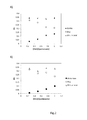
- FIG. 7 Variation of
- the total polymer concentration C p was fixed at 15 g/L.
- FIG. 8 Doubly crosslinked hydrogel
- FIG. 9 Formation of doubly crosslinked hydrogel
- the modified APBA was extracted five times with ethyl acetate. After evaporation of the solvent, the residue was purified by recrystallization from water and obtained as a yellow solid in 18% yield (0.215 g, 0.96 mmol).
- DMF 33 mL was then added dropwise in order to have a water/DMF ratio of (3/2, v/v).
- Pentenoic anhydride (0.454 g, 2.5 mmol) was added while maintaining the pH between 8 and 9 (by adding 0.5 M NaOH) for 4 h. The reaction was kept at 4° C. under continuous stirring for one night. After this time, NaCl was added to the reaction mixture to have a NaCl concentration of 0.5 M.
- the polymer was precipitated by addition of ethanol (with a water/EtOH (v/v) ratio of 2/3). After removal of the supernatant, the precipitate was successively washed with mixtures of water/EtOH (3/7, 1/4, 1/9, v/v) and finally dissolved in ultrapure water for a final purification by diafiltration with ultrapure water.
- the product was recovered by freeze-drying (1.024 g). The degree of substitution of HA-pentenoate was found to be 0.20 ⁇ 0.01 by 1 H NMR.
- the first step consisted in reducing the disulfide bond of maltose-cystamine.
- a solution of maltose-cystamine 0.2 g, 0.211 mmol
- a solution of tris(2-carboxyethyl)phosphine hydrochloride 91 mg, 0.317 mmol
- the mixture was stirred for 15 min under nitrogen at room temperature to give maltose-SH.
- the pH was adjusted to 7.4 using 0.1 M NaOH and the solution was added to an aqueous solution of HA-pentenoate in the presence Irgacure 2959 (0.05% w/v) as a photoinitiator.
- the product was purified by diafiltration with ultrapure water and was recovered by freeze-drying (0.148 g).
- the degree of substitution of HA-maltose was found to be 0.06 ⁇ 0.01 by 1 H NMR.
- the formation of such networks results from the simultaneous formation of many complexes between the PBA and maltose moieties grafted along the HA chain.
- the elastic modulus increases at least by two orders of magnitude. Moreover, G′ is larger than G′′ within a large range of frequency for the HA-PBA/HA-maltose mixtures, reflecting a viscoelastic behavior, contrary to the solutions of HA, HA-PBA and HA-maltose which exhibit a viscous character (G′′>G′) within the whole range of frequencies covered.
- the glucose molecule also acts as a cross-linking agent.
- the hydrogel will experience a contraction upon glucose addition. This behavior can also be useful for controlling insulin output in a self-regulating delivery system.
- glucose-sensitive hydrogels can be used for their gating properties after being cast or grafted in the pores of a membrane. The hydrogel contraction increases the membrane permeability as a function of glucose concentration.
- FIG. 7 shows the variation of
- a decrease of viscosity over the 5-50 mM glucose range can be observed for the two mixtures, which confirms the glucose sensitivity of the system. This decrease reflects the loss of cross-linkages, leading to a loosening of the network.
- the rate of decrease is different for the two [PBA]/[maltose] ratios, which indicates that the glucose responsiveness of the dynamic network can be easily optimized.
- This property can be used to control the release of a macromolecule by diffusion through the network.
- Such hydrogels could be loaded with insulin to achieve its delivery as a function of glycemia variations.
- the two products were prepared from the same HA-pentenoate sample (with a DS of 0.34), the DS of pentenoate groups for both derivatives is 0.29.
- the sample was equilibrated for 1 min before being illuminated with 20 mW/cm 2 UV intensity for a time of 35 min.
- G′′ is larger than G′, reflecting the viscous behavior of the sample.
- the storage modulus increases sharply due to the formation of elastic effective intermolecular cross-links, exceeding the loss modulus.
- the G′ curve levels off at 20 min, indicating the end of the gelation process.
- the steady-state value of G′ was used as a measure for hydrogel elasticity.
- the elasticity decreases as the DS in functional molecules increases (i.e. as the DS in pentenoates decreases).
- a significant difference in the elasticity can be observed for the hydrogels prepared from HA-PBA and HA-maltose with a DS of 0.05. This may be attributed to the presence of additional crosslinkages resulting from the formation of ester bonds between PBA and sugars of HA.
- the resulting mixture (0.100 mL) is then illuminated with 20 mW/cm 2 UV intensity for 5 min, leading to the formation of a chemical gel.
Landscapes
- Health & Medical Sciences (AREA)
- Chemical & Material Sciences (AREA)
- Medicinal Chemistry (AREA)
- Life Sciences & Earth Sciences (AREA)
- Organic Chemistry (AREA)
- Chemical Kinetics & Catalysis (AREA)
- Polymers & Plastics (AREA)
- General Health & Medical Sciences (AREA)
- Public Health (AREA)
- Pharmacology & Pharmacy (AREA)
- Animal Behavior & Ethology (AREA)
- Veterinary Medicine (AREA)
- Epidemiology (AREA)
- Engineering & Computer Science (AREA)
- Diabetes (AREA)
- Dispersion Chemistry (AREA)
- Bioinformatics & Cheminformatics (AREA)
- Endocrinology (AREA)
- Proteomics, Peptides & Aminoacids (AREA)
- Inorganic Chemistry (AREA)
- Dermatology (AREA)
- Immunology (AREA)
- Zoology (AREA)
- Gastroenterology & Hepatology (AREA)
- Materials Engineering (AREA)
- Biochemistry (AREA)
- Molecular Biology (AREA)
- Emergency Medicine (AREA)
- Hematology (AREA)
- Obesity (AREA)
- General Chemical & Material Sciences (AREA)
- Nuclear Medicine, Radiotherapy & Molecular Imaging (AREA)
- Medicinal Preparation (AREA)
- Medicines That Contain Protein Lipid Enzymes And Other Medicines (AREA)
- Polysaccharides And Polysaccharide Derivatives (AREA)
Abstract
Description
-
- a) PBA modified HA polymer grafted on at least a hydroxyl with a group comprising phenylboronic acid, and
- b) Cis-diol modified HA polymer grafted on at least a hydroxyl with a group comprising a cis-diol, wherein said cis-diol is selected in the group consisting of: disaccharides, hexoses, uronic acid derivatives of hexoses, hexosamines, N-acetyl derivatives of hexosamines, glycerol and mannitol.
-
- a) PBA modified HA polymer grafted on at least a hydroxyl with a group comprising phenylboronic acid, wherein said group is selected in the group consisting of 3-aminophenylboronic acid, 4-aminophenylboronic acid, 4-(aminoethylcarbamoyl)-3-fluorophenylboronic acid and 4-[(2-aminoethyl)carbamoyl]phenylboronic acid, and
- b) Cis-diol modified HA polymer grafted on at least a hydroxyl with a group comprising a cis-diol, wherein said cis-diol is selected in the group consisting of: disaccharides, hexoses, uronic acid derivatives of hexoses, hexosamines, N-acetyl derivatives of hexosamines, glycerol, mannitol and sialic acid.
-
- a) PBA modified HA polymer grafted on at least a hydroxyl with a group comprising 3-aminophenylboronic acid, and
- b) Cis-diol modified HA polymer grafted on at least a hydroxyl with a group comprising maltose.
-
- a) PBA modified HA polymer grafted on at least a hydroxyl with a PBA group of formula (I)

-
- and,
- b) Cis-diol modified HA polymer grafted on at least a hydroxyl with a maltose group of formula (II)


wherein R1, R2, R3 and R4 are independently selected in the group consisting of H, the PBA group of formula (I)

and the alkene group of formula (IV)

n1 is an integer from 25 to 8000, preferably from 50 to 2000,
the DS with the PBA group of formula (I) is from 0.02 to 0.6, preferably from 0.05 to 0.2,
the DS with the alkene group of formula (IV) is from 0 to 0.6, preferably from 0.02 to 0.6, and
Cis-diol modified HA polymer of formula (V)

wherein R5, R6, R7 and R8 are independently selected in the group consisting of H, the maltose group of formula (II)

and the alkene group of formula (IV)

n2 is an integer from 25 to 8000, preferably from 50 to 2000,
the DS with the maltose group is from 0.02 to 0.6, preferably from 0.05 to 0.2,
the DS with the alkene group is from 0 to 0.6, preferably from 0.02 to 0.6.
-
- a) Grafting an alkene group to a hydroxyl of a HA polymer to obtain a HA intermediate modified with alkene groups,
- b) Grafting a thiol group to the group comprising phenylboronic acid to obtain a phenylboronic acid-thiol derivative,
- c) Reacting the product obtained in step a) with the product obtained in step b) to form thioether linkages.

-
- a) Grafting an alkene group to a hydroxyl of a HA polymer to obtain a HA intermediate modified with alkene groups,
- b) Grafting a thiol group to the cis-diol to obtain a thiol cis-diol,
- c) Reacting the product obtained in step a) with the product obtained in step b) to form thioether linkages.

-
- a) Preparing a PBA modified HA polymer grafted on at least a hydroxyl with a group comprising phenylboronic acid;
- b) Preparing a cis-diol modified HA polymer grafted on a hydroxyl with a group comprising a cis-diol, wherein said cis-diol is selected in the group consisting of: disaccharides, hexoses, uronic acid derivatives of hexoses, hexosamines, N-acetyl derivatives of hexosamines, glycerol, mannitol and sialic acid;
- c) Mixing aqueous solutions of the PBA modified HA polymer of step a) and of the cis-diol modified HA polymer of step at a pH from comprised between 7 and 10, preferably between, 7.2 and 9.5 to obtain a reversibly crosslinked hydrogel.
-
- a) Preparing a PBA modified HA polymer grafted on at least a hydroxyl with a group comprising phenylboronic acid, wherein said group is selected in the group consisting of phenylboronic acid, 3-aminophenylboronic acid, 4-aminophenylboronic acid, 4-(aminoethylcarbamoyl)-3-fluorophenylboronic acid and 4-[(2-aminoethyl)carbamoyl]phenylboronic acid;
- b) Preparing a cis-diol modified HA polymer grafted on a hydroxyl with a group comprising a cis-diol, wherein said cis-diol is selected in the group consisting of: disaccharides, hexoses, uronic acid derivatives of hexoses, hexosamines, N-acetyl derivatives of hexosamines, glycerol, mannitol and sialic acid;
- c) Mixing aqueous solutions of the PBA modified HA polymer of step a) and of the cis-diol modified HA polymer of step b) at a pH comprised between 7 and 10, preferably between, 7.2 and 9.5 to obtain a reversibly crosslinked hydrogel.
-
- a) Preparing a PBA modified HA polymer
- grafted on at least a hydroxyl with a group comprising phenylboronic acid, wherein said group is selected in the group consisting of phenylboronic acid, 3-aminophenylboronic acid, 4-aminophenylboronic acid, 4-(aminoethylcarbamoyl)-3-fluorophenylboronic acid and 4-[(2-aminoethyl)carbamoyl]phenylboronic acid, and
- grafted on at least a hydroxyl with an alkene group;
- b) Preparing a cis-diol modified HA polymer
- grafted on a hydroxyl with a group comprising a cis-diol, wherein said cis-diol is selected in the group consisting of: disaccharides, hexoses, uronic acid derivatives of hexoses, hexosamines, N-acetyl derivatives of hexosamines, glycerol, mannitol and sialic acid, and
- grafted on at least a hydroxyl with an alkene group;
- c) Mixing aqueous solutions of the PBA modified HA polymer of step a) and of the cis-diol modified HA polymer of step b) at a pH from 3 to 6.5 to obtain a HA polymer composition;
- d) Photocrosslinking of the HA polymer composition obtained in step c) by the radical addition of PEG-(SH)2 on the alkene groups on the HA polymer composition to obtain a chemically crosslinked HA polymer composition;
- e) Crosslinking of the HA polymer composition of step d) at a pH comprised between 7 and 10, preferentially between 7.2 and 9.5.
- a) Preparing a PBA modified HA polymer

-
- a) PBA modified HA polymer grafted on at least a hydroxyl with a group comprising phenylboronic acid, and
- b) Cis-diol modified HA polymer grafted on at least a hydroxyl with a group comprising a cis-diol.
-
- disaccharides such as maltose, lactose and sucrose;
- hexoses such as glucose, galactose and mannose;
- uronic acid derivatives of hexoses such as glucuronic acid, galacturonic acid, and mannuronic acid;
- hexosamines such as galactosamine and glucosamine,
- N-acetyl derivatives of hexosamines such as N-acetyl-galactosamine and N-acetylglucosamine;
- glycerol;
- mannitol; and
- sialic acid.
-
- a) PBA modified HA polymer grafted on at least a hydroxyl with a group comprising phenylboronic acid, wherein said group is selected in the group consisting of phenylboronic acid, 3-aminophenylboronic acid, 4-aminophenylboronic acid, 4-(aminoethylcarbamoyl)-3-fluorophenylboronic acid and 4-[(2-aminoethyl)carbamoyl]phenylboronic acid, and
- b) Cis-diol modified HA polymer grafted on at least a hydroxyl with a group comprising a cis-diol, wherein said cis-diol is selected in the group consisting of: disaccharides, hexoses, uronic acid derivatives of hexoses, hexosamines, N-acetyl derivatives of hexosamines, glycerol, mannitoland sialic acid.
-
- a) PBA modified HA polymer grafted on at least a hydroxyl with a group comprising 3-aminophenylboronic acid, and
- b) Cis-diol modified HA polymer grafted on at least a hydroxyl with a group comprising maltose.
-
- a) PBA modified HA polymer grafted on at least a hydroxyl with a PBA group of formula (I)

-
- and,
- b) Cis-diol modified HA polymer grafted on at least a hydroxyl with a maltose group of formula (II)


wherein R1, R2, R3 and R4 are independently selected in the group consisting of H, the PBA group of formula (I)

and the alkene group of formula (IV)

n1 is an integer from 25 to 8000, preferably from 50 to 2000,
the DS with the PBA group of formula (I) is from 0.02 to 0.6, preferably from 0.05 to 0.2,
the DS with the alkene group of formula (IV) is from 0 to 0.6, preferably from 0.02 to 0.6, and

wherein R5, R6, R7 and R8 are independently selected in the group consisting of H, the maltose group of formula (II)

and the alkene group of formula (IV)

n2 is an integer from 25 to 8000, preferably from 50 to 2000,
the DS with the maltose group is from 0.02 to 0.6, preferably from 0.05 to 0.2,
the DS with the alkene group is from 0 to 0.6, preferably from 0.02 to 0.6.

-
- R—SH: Cis-diol derivative or phenylboronic acid derivative functionalized by a thiol group
-
- a) Grafting an alkene group to a hydroxyl of a HA polymer to obtain a HA intermediate modified with alkene groups,
- b) Grafting a thiol group to the group comprising phenylboronic acid to obtain a phenylboronic acid-thiol derivative,
- c) Reacting the product obtained in step a) with the product obtained in step b) to form thioether linkages.

-
- a) Grafting an alkene group to a hydroxyl of a HA polymer to obtain a HA intermediate modified with alkene groups,
- b) Grafting a thiol group to the cis-diol to obtain a thiol cis-diol,
- c) Reacting the product obtained in step a) with the product obtained in step b) to form thioether linkages.

-
- a) Preparing a PBA modified HA polymer grafted on at least a hydroxyl with a group comprising phenylboronic acid;
- b) Preparing a cis-diol modified HA polymer grafted on a hydroxyl with a group comprising a cis-diol;
- c) Mixing aqueous solutions of the PBA modified HA polymer of step a) and of the cis-diol modified HA polymer of step b) at a pH comprised between 7 and 10, preferentially between 7.2 and 9.5 to obtain a dynamically and/or reversibly crosslinked hydrogel.
-
- a) Preparing a PBA modified HA polymer grafted on at least a hydroxyl with a group comprising phenylboronic acid, wherein said group is selected in the group consisting of phenylboronic acid, 3-aminophenylboronic acid, 4-aminophenylboronic acid, 4-(aminoethylcarbamoyl)-3-fluorophenylboronic acid and 4-[(2-aminoethyl)carbamoyl]phenylboronic acid;
- b) Preparing a cis-diol modified HA polymer grafted on a hydroxyl with a group comprising a cis-diol, wherein said cis-diol is selected in the group consisting of: disaccharides, hexoses, uronic acid derivatives of hexoses, hexosamines, N-acetyl derivatives of hexosamines, glycerol, mannitol and sialic acid;
- c) Mixing aqueous solutions of the PBA modified HA polymer of step a) and of the cis-diol modified HA polymer of step b) at a pH comprised between 7 and 10, preferentially between 7.2 and 9.5 to obtain a reversibly crosslinked hydrogel.
-
- a) Preparing a PBA modified HA polymer
- grafted on at least a hydroxyl with a group comprising phenylboronic acid, wherein said group is selected in the group consisting of phenylboronic acid, 3-aminophenylboronic, 4-aminophenylboronic acid, 4-(aminoethylcarbamoyl)-3-fluorophenylboronic acid and 4-[(2-aminoethyl)carbamoyl]phenylboronic acid, and
- grafted on at least a hydroxyl with an alkene group;
- b) Preparing a cis-diol modified HA polymer
- grafted on a hydroxyl with a group comprising a cis-diol, wherein said cis-diol is selected in the group consisting of: disaccharides, hexoses, uronic acid derivatives of hexoses, hexosamines, N-acetyl derivatives of hexosamines, glycerol, mannitol and sialic acid, and
- grafted on at least a hydroxyl with an alkene group;
- c) Mixing aqueous solutions of the PBA modified HA polymer of step a) and of the cis-diol modified HA polymer of step b) at a pH from 3 to 6.5 to obtain a HA polymer composition;
- d) Photocrosslinking of the HA polymer composition obtained in step c) by the radical addition of PEG-(SH)2 on the alkene groups on the HA polymer composition to obtain a chemically crosslinked HA polymer composition;
- e) Crosslinking of the HA polymer composition of step d) at a pH comprised between 7 and 10, preferentially between 7.2 and 9.5.
- a) Preparing a PBA modified HA polymer

- WO2012/066133
- Wu et al., Chemical Reviews, 111:7855-7875, 2011
- Kataoka K, Miyazaki H, Bunya M, Okano T, Sakurai Y. Totally Synthetic Polymer Gels Responding to External Glucose Concentration: Their Preparation and Application to On-Off Regulation of Insulin Release. Journal of the American Chemical Society. 1998; 120:12694-5.
- Ravaine V, Ancla C, Catargi B. Chemically controlled closed-loop insulin delivery. Journal of Controlled Release. 2008; 132:2-11.
- Samoei G K, Wang W, Escobedo J O, Xu X, Schneider H-J, Cook R L, et al. A chemomechanical polymer that functions in blood plasma with high glucose selectivity. Angewandte Chemie, International Edition. 2006; 45:5319-22.
- Wang L, Liu M-Z, Gao C-M, Ma L-W, Cui D-P. A pH-, thermo-, and glucose-, triple-responsive hydrogels: Synthesis and controlled drug delivery. Reactive & Functional Polymers. 2010; 70:159-67.
- Wu Z, Zhang S, Zhang X, Shu S, Chu T, Yu D. Phenylboronic acid grafted chitosan as a glucose-sensitive vehicle for controlled insulin release. Journal of Pharmaceutical Sciences. 2011; 100:2278-86.
- Ivanov A E, Larsson H, Galaev I Y, Mattiasson B. Synthesis of boronate-containing copolymers of N,N-dimethylacrylamide, their interaction with poly(vinyl alcohol) and rheological behaviour of the gels. Polymer. 2004; 45:2495-505.
- Kitano S, Koyama Y, Kataoka K, Okano T, Sakurai Y. A novel drug delivery system utilizing a glucose responsive polymer complex between poly(vinyl alcohol) and poly(N-vinyl-2-pyrrolidone) with a phenylboronic acid moiety. Journal of Controlled Release. 1992; 19:161-70.
- Matsumoto A, Yoshida R, Kataoka K. Glucose-responsive polymer gel bearing phenylborate derivative as a glucose-sensing moiety operating at the physiological pH. Biomacromolecules. 2004; 5:1038-45.
Claims (19)
Applications Claiming Priority (4)
| Application Number | Priority Date | Filing Date | Title |
|---|---|---|---|
| EP12306369.5 | 2012-11-06 | ||
| EP12306369 | 2012-11-06 | ||
| EP12306369.5A EP2727597A1 (en) | 2012-11-06 | 2012-11-06 | Glucose responsive hydrogel comprising pba-grafted hyaluronic acid (ha) |
| PCT/EP2013/073140 WO2014072330A1 (en) | 2012-11-06 | 2013-11-06 | Glucose responsive hydrogel comprising pba-grafted hyaluronic acid (ha) |
Publications (2)
| Publication Number | Publication Date |
|---|---|
| US20150283247A1 US20150283247A1 (en) | 2015-10-08 |
| US9549987B2 true US9549987B2 (en) | 2017-01-24 |
Family
ID=47227730
Family Applications (1)
| Application Number | Title | Priority Date | Filing Date |
|---|---|---|---|
| US14/440,812 Expired - Fee Related US9549987B2 (en) | 2012-11-06 | 2013-11-06 | Glucose responsive hydrogel comprising PBA-grafted hyaluronic acid (HA) |
Country Status (5)
| Country | Link |
|---|---|
| US (1) | US9549987B2 (en) |
| EP (2) | EP2727597A1 (en) |
| JP (1) | JP6231115B2 (en) |
| CA (1) | CA2887324C (en) |
| WO (1) | WO2014072330A1 (en) |
Cited By (3)
| Publication number | Priority date | Publication date | Assignee | Title |
|---|---|---|---|---|
| US10555965B2 (en) * | 2015-12-24 | 2020-02-11 | Industry-University Cooperation Foundation Hanyang University | Environment-responsive hyaluronic acid nanoparticles |
| US20220081519A1 (en) * | 2016-08-03 | 2022-03-17 | Galderma Research & Development | Method of crosslinking glycosaminoglycans |
| WO2025021960A1 (en) | 2023-07-25 | 2025-01-30 | Glucoset As | Biosensors for measuring glucose concentration and glucose-sensing polymers |
Families Citing this family (39)
| Publication number | Priority date | Publication date | Assignee | Title |
|---|---|---|---|---|
| JPH0686720B2 (en) | 1986-05-12 | 1994-11-02 | 三井東圧化学株式会社 | Paper modifier and paper containing the same |
| PL3116887T3 (en) | 2014-03-13 | 2021-09-06 | Universität Basel | Carbohydrate ligands that bind to igm antibodies against myelin-associated glycoprotein |
| JP6778113B2 (en) * | 2014-11-11 | 2020-10-28 | 田畑 泰彦 | Preservatives for biological components and methods for recovering biological components |
| CN108026134A (en) * | 2015-09-16 | 2018-05-11 | 巴塞尔大学 | With reference to the carbohydrate ligand of anti-glycosphingolipid glycoprotein epitope antibodies |
| EP3187510A1 (en) * | 2015-12-29 | 2017-07-05 | Galderma S.A. | Carbohydrate crosslinker |
| ES2962687T3 (en) | 2015-12-29 | 2024-03-20 | Galderma Holding SA | Carbohydrate cross-linking |
| US10317359B2 (en) | 2016-01-05 | 2019-06-11 | Ravi Kumar Meruva | Differential carbon dioxide sensor |
| PT3623390T (en) | 2016-05-31 | 2023-10-27 | Galderma Sa | Carbohydrate crosslinker |
| WO2018024795A1 (en) | 2016-08-03 | 2018-02-08 | Galderma Research & Development | Method of crosslinking glycosaminoglycans |
| WO2018024794A1 (en) | 2016-08-03 | 2018-02-08 | Galderma Research & Development | Double crosslinked glycosaminoglycans |
| CN108342049B (en) * | 2017-01-25 | 2023-08-22 | 厦门天策材料科技有限公司 | Physical split-phase dynamic polymer and application thereof |
| JP7216006B2 (en) | 2017-03-22 | 2023-01-31 | ジェネンテック, インコーポレイテッド | Hydrogel Crosslinked Hyaluronic Acid Prodrug Compositions and Methods |
| EP3634470A4 (en) * | 2017-06-02 | 2021-03-10 | North Carolina State University | GLUCOSE-SENSITIVE COMPOSITIONS FOR DRUG DISPENSING |
| JP6954529B2 (en) * | 2017-07-13 | 2021-10-27 | 国立研究開発法人国立循環器病研究センター | Gelation composition and gel structure |
| WO2019057920A1 (en) | 2017-09-22 | 2019-03-28 | Centre National De La Recherche Scientifique (Cnrs) | Boronate ester crosslinked nanogels based on modified polysaccharides |
| CN108714221B (en) * | 2018-05-04 | 2020-09-08 | 浙江大学 | A kind of oral nano-formulation of monoclonal antibody and preparation method thereof |
| CN108976439B (en) * | 2018-05-24 | 2020-12-18 | 清华大学 | A kind of preparation method of intelligent responsive hydrogel with interpenetrating network structure |
| EP3976002A4 (en) * | 2019-06-03 | 2023-06-14 | Duke University | COMPOSITIONS AND METHODS FOR BONE REPAIR AND BONE HEALTH |
| FR3099163A1 (en) | 2019-07-24 | 2021-01-29 | Centre National De La Recherche Scientifique | Injectable polymeric compositions of hyaluronic acid crosslinked by boronate esters and functionalized by RGD peptides for cell and tissue engineering |
| WO2021086081A1 (en) * | 2019-10-31 | 2021-05-06 | 부산대학교 산학협력단 | Manufacture of photo-crosslinkable biodegradable tissue adhesive |
| EP4053164A4 (en) | 2019-10-31 | 2023-11-08 | Pusan National University Industry - University Cooperation Foundation | PRODUCTION OF A PHOTO-CROSS-LINKABLE BIODEGRADABLE TISSUE ADHESIVE USING A COPOLYMER |
| AU2020395955A1 (en) | 2019-12-02 | 2022-07-14 | Galderma Holding SA | High molecular weight esthetic compositions |
| CN111138687A (en) * | 2019-12-24 | 2020-05-12 | 中国药科大学 | Injectable glucose response self-healing hydrogel and preparation method and application thereof |
| EP3878891A1 (en) * | 2020-03-10 | 2021-09-15 | Centre National De La Recherche Scientifique -Cnrs- | Dynamic covalent hydrogels, precursors thereof and uses thereof |
| KR102394596B1 (en) * | 2020-09-11 | 2022-05-09 | 단국대학교 산학협력단 | external stimulus insulin smart drug delivery system |
| CN112210027B (en) * | 2020-10-13 | 2023-10-20 | 苏州永沁泉智能设备有限公司 | Precursor polymer of cleavable material, cleavable material and preparation method thereof |
| KR102595422B1 (en) * | 2020-12-10 | 2023-10-31 | 부산대학교 산학협력단 | Photocrosslinkable hemostatic composition |
| CN113209375B (en) * | 2021-04-21 | 2023-01-06 | 温州医科大学 | Preparation method and application of hydrogel based on arylborate crosslinking and having self-repairing and injectable properties |
| CN113388049A (en) * | 2021-06-24 | 2021-09-14 | 南京工业大学 | Macromolecular derivative, preparation method thereof and application thereof in biological tissue adhesive |
| CN113730577B (en) * | 2021-09-07 | 2022-11-08 | 浙江大学 | Schiff base water gel material with phenylboronic acid grafted on side chain and active oxygen eliminating function and preparation method thereof |
| CN114225097B (en) * | 2021-11-12 | 2023-02-03 | 暨南大学 | Self-healing hydrogel wound dressing loaded with antibacterial peptide and preparation method thereof |
| CN114681661B (en) * | 2022-03-28 | 2023-03-17 | 四川大学 | A kind of hemostatic powder and preparation method thereof |
| CN115970040B (en) * | 2022-12-16 | 2024-07-26 | 北京科技大学 | Hydrogel application capable of bonding wet surface and facilitating replacement and repair and preparation method thereof |
| JP2024106274A (en) * | 2023-01-26 | 2024-08-07 | 地方独立行政法人神奈川県立産業技術総合研究所 | Sugar-responsive gel |
| CN116807998A (en) * | 2023-02-16 | 2023-09-29 | 重庆医科大学附属第一医院 | Preparation method and application of bladder tumor targeted therapy nanoparticle |
| CN116603097B (en) * | 2023-06-13 | 2025-10-24 | 西南交通大学 | Self-repairing injectable hydrogel dressing and preparation method thereof |
| WO2025010400A2 (en) * | 2023-07-05 | 2025-01-09 | Eleos Pharmaceuticals, Inc. | Compositions and methods for improved treatment of skin wounds |
| CN117159786B (en) * | 2023-08-30 | 2024-03-26 | 广州贝奥吉因生物科技股份有限公司 | Preparation method of bioactive hydrogel for regenerating wound healing |
| CN120754023A (en) * | 2025-07-24 | 2025-10-10 | 吉林大学 | Hyaluronic acid-based nanogel with intestinal targeting and inflammatory response as well as preparation method and application thereof |
Family Cites Families (8)
| Publication number | Priority date | Publication date | Assignee | Title |
|---|---|---|---|---|
| JP3087293B2 (en) * | 1990-09-13 | 2000-09-11 | 日本油脂株式会社 | Sugar-responsive polymer complex |
| JP3018463B2 (en) * | 1989-10-19 | 2000-03-13 | 日本油脂株式会社 | Glucose-responsive drug-releasing complex |
| KR930001079B1 (en) * | 1990-07-18 | 1993-02-15 | 한국과학기술연구원 | Self-Release Controlled Insulin Formulations |
| JP4503825B2 (en) * | 1997-08-27 | 2010-07-14 | カリフォルニア インスティテュート オブ テクノロジー | Methods and compositions for preventing adhesion formation in biological tissues |
| DE69921158T2 (en) * | 1998-08-27 | 2006-01-12 | Eidgenössische Technische Hochschule Zürich | YELLOW AND MULTILAYER SURFACE STRUCTURES OF BORONIC ACIDIC POLYMERS |
| FR2967677B1 (en) | 2010-11-18 | 2014-05-16 | Centre Nat Rech Scient | POLYSACCHARIDE DERIVATIVES COMPRISING ALKENOUS PATTERN AND THIO-CLICK CHEMICAL COUPLING REACTION |
| AU2012223210B2 (en) * | 2011-03-02 | 2016-12-22 | Board Of Regents Of The University Of Texas System | Vesicle compositions |
| CZ2012282A3 (en) * | 2012-04-25 | 2013-11-06 | Contipro Biotech S.R.O. | Cross-linked hyaluronan derivative, its preparation, its hydrogel and its microfibre |
-
2012
- 2012-11-06 EP EP12306369.5A patent/EP2727597A1/en not_active Withdrawn
-
2013
- 2013-11-06 US US14/440,812 patent/US9549987B2/en not_active Expired - Fee Related
- 2013-11-06 JP JP2015540172A patent/JP6231115B2/en not_active Expired - Fee Related
- 2013-11-06 EP EP13788964.8A patent/EP2916848B1/en not_active Not-in-force
- 2013-11-06 WO PCT/EP2013/073140 patent/WO2014072330A1/en not_active Ceased
- 2013-11-06 CA CA2887324A patent/CA2887324C/en not_active Expired - Fee Related
Non-Patent Citations (11)
| Title |
|---|
| Extended European Search Report, issued Jan. 31, 2013, for European Application No. 12306369.5. |
| International Search Report and Written Opinion of the International Search Authority (forms PCT/ISA/210, PCT/ISA/237 and PCT/ISA/220), issued Feb. 27, 2014, for International Application No. PCT/EP2013/073140. |
| Ivanov et al., "Synthesis of Boronate-containing Copolymers of N,N-dimethylacrylamide, their Interaction with Poly(Vinyl Alcohol) and Rheological Behavior of the Gels," Polymer, vol. 45, 2004, pp. 2495-2505. |
| Kataoka et al., "Totally Synthetic Polymer Gels Responding to External Glucose Concentration: Their Preparation and Application to On-Off Regulation of Insulin Release," J. Am. Chem. Soc., vol. 120, No. 48, (published on web Nov. 19, 1998), 1998, pp. 12694-12695. |
| Kitano et al., "A Novel Drug Delivery System Utilizing a Glucose Responsive Polymer Complex Between Poly (Vinyl Alcohol) and Poly (N-vinyl-2-pyrrolidone) with a Phenylboronic Acid Moiety," Journal of Controlled Release, vol. 19, 1992, pp. 161-170. |
| Matsumoto et al., "Glucose-Responsive Polymer Gel Bearing Phenylborate Derivative as a Glucose-Sensing Moiety Operating at the Physiological pH," Biomacromolecules, vol. 5, No. 3, Published online Apr. 15, 2004, pp. 1038-1045. |
| Ravaine et al., "Chemically Controlled Closed-loop Insulin Delivery," Journal of Controlled Release, vol. 132, Available online Aug. 23, 2008, pp. 2-11. |
| Samoei et al., "A Chemomechanical Polymer that Functions in Blood Plasma with High Glucose Selectivity," Angew. Chem. Int. Ed., vol. 45, 2006, pp. 5319-5322. |
| Wang et al., "A pH-, Thermo-, and Glucose-, Triple-responsive Hydrogels: Synthesis and Controlled Drug Delivery," Reactive & Functional Polymers, vol. 70, Available online Nov. 26, 2009, pp. 159-167. |
| Wu et al., "Organization of Glucose-Responsive Systems and Their Properties," Chemical Reviews, vol. 111, Sep. 8, 2011, pp. 7855-7875. |
| Wu et al., "Phenylboronic Acid Grafted Chitosan as a Glucose-Sensitive Vehicle for Controlled Insulin Release," Journal of Pharmaceutical Sciences, vol. 100, No. 6, May, 2011 (Published Online Jan. 25, 2011), pp. 2278-2286. |
Cited By (4)
| Publication number | Priority date | Publication date | Assignee | Title |
|---|---|---|---|---|
| US10555965B2 (en) * | 2015-12-24 | 2020-02-11 | Industry-University Cooperation Foundation Hanyang University | Environment-responsive hyaluronic acid nanoparticles |
| US20220081519A1 (en) * | 2016-08-03 | 2022-03-17 | Galderma Research & Development | Method of crosslinking glycosaminoglycans |
| US11807726B2 (en) * | 2016-08-03 | 2023-11-07 | Centre National De La Recherche Scientifique | Method of crosslinking glycosaminoglycans |
| WO2025021960A1 (en) | 2023-07-25 | 2025-01-30 | Glucoset As | Biosensors for measuring glucose concentration and glucose-sensing polymers |
Also Published As
| Publication number | Publication date |
|---|---|
| JP2015537078A (en) | 2015-12-24 |
| EP2916848B1 (en) | 2016-09-28 |
| CA2887324C (en) | 2020-12-15 |
| CA2887324A1 (en) | 2014-05-15 |
| EP2727597A1 (en) | 2014-05-07 |
| US20150283247A1 (en) | 2015-10-08 |
| EP2916848A1 (en) | 2015-09-16 |
| JP6231115B2 (en) | 2017-11-15 |
| WO2014072330A1 (en) | 2014-05-15 |
Similar Documents
| Publication | Publication Date | Title |
|---|---|---|
| EP2916848B1 (en) | Glucose responsive hydrogel comprising pba-grafted hyaluronic acid (ha) | |
| Mateen et al. | Injectable, in situ gelling, cyclodextrin–dextran hydrogels for the partitioning-driven release of hydrophobic drugs | |
| RU2230073C2 (en) | Method for cross-linking carboxylated polysaccharides | |
| Maia et al. | Dextran-based materials for biomedical applications | |
| Zhai et al. | Polysaccharide aldehydes and ketones: synthesis and reactivity | |
| EP2199308B1 (en) | Swellable crosslinked hyaluronic acid powder and method for producing the same | |
| JP5907489B2 (en) | Hydrogels derived from chitosan derivatives | |
| Berillo et al. | Preparation and physicochemical characteristics of cryogel based on gelatin and oxidised dextran | |
| WO2008034176A1 (en) | Cross-linked polysaccharide gels | |
| Moriyama et al. | Hyaluronic acid grafted with poly (ethylene glycol) as a novel peptide formulation | |
| AU2020386559A1 (en) | Hydrogel of mercapto-modified macromolecular compound, and preparation method therefor and use thereof | |
| WO2009150651A1 (en) | Injectable hydrogel forming chitosan mixtures | |
| Quadrado et al. | All-polysaccharide, self-healing, pH-sensitive, in situ-forming hydrogel of carboxymethyl chitosan and aldehyde-functionalized hydroxyethyl cellulose | |
| KR20200017625A (en) | Use of modified hyaluronic acids for delivering biomolecules or drugs in vivo | |
| EP2373345A2 (en) | Biocompatible polysaccharide-based hydrogels | |
| Wu et al. | Water soluble complexes of chitosan‐g‐MPEG and hyaluronic acid | |
| FR2873379A1 (en) | PROCESS FOR PREPARING RETICULATED HYALURONIC ACID, RETICULATED HYALURONIC ACID WHICH CAN BE OBTAINED THEREBY, IMPLANT CONTAINING SAID RETICULATED HYALURONIC ACID, AND USE THEREOF | |
| Lee et al. | Fabrication of schizophyllan hydrogel via orthogonal thiol-ene photopolymerization | |
| CN113599507A (en) | Preparation method of glucose-triggered active oxygen response injection type composite hydrogel | |
| US8663686B2 (en) | Biodegradable chitosan-PEG compositions and methods of use | |
| Patois et al. | Novel thermosensitive chitosan hydrogels: In vivo evaluation | |
| KR102132478B1 (en) | Hyaluronic Acid-Polydeoxyribonucleotide Complex and Its Film and Preparation Method Thereof | |
| Bejenariu et al. | Stiffness xanthan hydrogels: synthesis, swelling characteristics and controlled release properties | |
| Vaid et al. | Sustained release of edaravone from (2-hydroxypropyl)-β-cyclodextrin mediated tamarind kernel powder/kappa-carrageenan hydrogel: Microwave-assisted synthesis and optimization using experimental design | |
| Manamoongmongkol et al. | Study on chemical structure stability and properties of chitosan-incorporated tamarind seed kernel xyloglucan hydrogels |
Legal Events
| Date | Code | Title | Description |
|---|---|---|---|
| AS | Assignment |
Owner name: UNIVERSITE JOSEPH FOURIER - GRENOBLE 1, FRANCE Free format text: ASSIGNMENT OF ASSIGNORS INTEREST;ASSIGNORS:AUZELY-VELTY, RACHEL;HACHET, EMILIE;CATARGI, BOGDAN;AND OTHERS;SIGNING DATES FROM 20150615 TO 20150723;REEL/FRAME:036604/0180 Owner name: CENTRE NATIONAL DE LA RECHERCHE SCIENTIFIQUE (CNRS Free format text: ASSIGNMENT OF ASSIGNORS INTEREST;ASSIGNORS:AUZELY-VELTY, RACHEL;HACHET, EMILIE;CATARGI, BOGDAN;AND OTHERS;SIGNING DATES FROM 20150615 TO 20150723;REEL/FRAME:036604/0180 |
|
| STCF | Information on status: patent grant |
Free format text: PATENTED CASE |
|
| MAFP | Maintenance fee payment |
Free format text: PAYMENT OF MAINTENANCE FEE, 4TH YEAR, LARGE ENTITY (ORIGINAL EVENT CODE: M1551); ENTITY STATUS OF PATENT OWNER: LARGE ENTITY Year of fee payment: 4 |
|
| FEPP | Fee payment procedure |
Free format text: MAINTENANCE FEE REMINDER MAILED (ORIGINAL EVENT CODE: REM.); ENTITY STATUS OF PATENT OWNER: LARGE ENTITY |
|
| LAPS | Lapse for failure to pay maintenance fees |
Free format text: PATENT EXPIRED FOR FAILURE TO PAY MAINTENANCE FEES (ORIGINAL EVENT CODE: EXP.); ENTITY STATUS OF PATENT OWNER: LARGE ENTITY |
|
| STCH | Information on status: patent discontinuation |
Free format text: PATENT EXPIRED DUE TO NONPAYMENT OF MAINTENANCE FEES UNDER 37 CFR 1.362 |
|
| FP | Lapsed due to failure to pay maintenance fee |
Effective date: 20250124 |