US9460189B2 - Data model dualization - Google Patents
Data model dualization Download PDFInfo
- Publication number
- US9460189B2 US9460189B2 US12/888,918 US88891810A US9460189B2 US 9460189 B2 US9460189 B2 US 9460189B2 US 88891810 A US88891810 A US 88891810A US 9460189 B2 US9460189 B2 US 9460189B2
- Authority
- US
- United States
- Prior art keywords
- data model
- model
- data
- database
- relational
- Prior art date
- Legal status (The legal status is an assumption and is not a legal conclusion. Google has not performed a legal analysis and makes no representation as to the accuracy of the status listed.)
- Active
Links
Images




Classifications
-
- G—PHYSICS
- G06—COMPUTING OR CALCULATING; COUNTING
- G06F—ELECTRIC DIGITAL DATA PROCESSING
- G06F16/00—Information retrieval; Database structures therefor; File system structures therefor
- G06F16/20—Information retrieval; Database structures therefor; File system structures therefor of structured data, e.g. relational data
- G06F16/21—Design, administration or maintenance of databases
- G06F16/211—Schema design and management
- G06F16/212—Schema design and management with details for data modelling support
-
- G06F17/30595—
-
- G—PHYSICS
- G06—COMPUTING OR CALCULATING; COUNTING
- G06F—ELECTRIC DIGITAL DATA PROCESSING
- G06F16/00—Information retrieval; Database structures therefor; File system structures therefor
- G06F16/20—Information retrieval; Database structures therefor; File system structures therefor of structured data, e.g. relational data
- G06F16/28—Databases characterised by their database models, e.g. relational or object models
- G06F16/284—Relational databases
-
- G—PHYSICS
- G06—COMPUTING OR CALCULATING; COUNTING
- G06F—ELECTRIC DIGITAL DATA PROCESSING
- G06F16/00—Information retrieval; Database structures therefor; File system structures therefor
- G06F16/20—Information retrieval; Database structures therefor; File system structures therefor of structured data, e.g. relational data
- G06F16/28—Databases characterised by their database models, e.g. relational or object models
- G06F16/284—Relational databases
- G06F16/288—Entity relationship models
-
- G—PHYSICS
- G06—COMPUTING OR CALCULATING; COUNTING
- G06F—ELECTRIC DIGITAL DATA PROCESSING
- G06F16/00—Information retrieval; Database structures therefor; File system structures therefor
- G06F16/80—Information retrieval; Database structures therefor; File system structures therefor of semi-structured data, e.g. markup language structured data such as SGML, XML or HTML
- G06F16/84—Mapping; Conversion
- G06F16/86—Mapping to a database
-
- G06F17/30294—
-
- G06F17/30917—
Definitions
- a data model describes how data can be stored and accessed. More formally, data models define data entities and relationships between the data entities. The primary objective of a data model is to provide a definition and format of data to facilitate management and processing of large quantities of data.
- One application of data models is database models, which define how a database or other store is structured and utilized.
- a database model can be relational or non-relational.
- a relational model or more particularly a relational database
- data is structured in terms of one or more tables.
- Tables are relations that comprise a number of columns and rows, wherein the named columns are referred to as attributes and rows capture data for specific entity instances.
- a table can capture information about a particular entity such as a book in rows, also called tuples, and columns.
- the columns identify various attributes of an entity such as the title, author, and year of publication of a book.
- the rows capture an instance of an entity such as a particular book.
- each row in the table represents attributes of a particular book.
- a table can include primary and foreign keys that enable two or more tables to be linked together.
- a key-value model is one of the most popular.
- Key-value databases or stores represent a simple data model that maps unique keys to a set of one or more values. More specifically, the key-value store stores values and an index to facilitate location of the stored values based on a key. For example, a key be located that identifies one of a title, author, or publication of a data of a book.
- Relational databases are often referred to as SQL databases while some non-relational databases are called NoSQL databases or stores.
- SQL stands for Structured Query Language, which is the primary language utilized to query and update data in a relational database.
- the database can be referred to as a SQL-based relational database.
- a SQL-based relational database is simply referred to as a SQL database and used as a synonym for a relational database.
- NoSQL is a term utilized to designate databases that differ from SQL-based relational databases. In other words, the term NoSQL is used as a synonym for a non-relational database or store such as but not limited to a key-value store.
- SQL databases and NoSQL stores have a number of advantages and disadvantages that are captured at a high level by the CAP theorem, which states that of consistency (C), availability (A), and partition tolerance (P) only two can be guaranteed at any one time.
- Consistency refers to a characteristic of a system to remain in a consistent state after an operation such as an update.
- Availability concerns remaining operational over a period of time, even with the presence of failures
- partition tolerance refers to the ability of a system to operate across network partitions.
- the design choice for SQL databases is to choose consistency and availability over partition tolerance, and for NoSQL stores to drop consistency in favor or partition tolerance and availability. In other words, NoSQL stores sacrifice consistency for scalability or alternatively SQL databases sacrifice scalability for consistency.
- the subject disclosure generally pertains to data model dualization.
- a second data model can be produced that is a mathematical dual of the first data model. Accordingly, if the dual second data model were itself dualized, then the first data model would be returned.
- a dual non-relational data model can be generated. More specifically, a key-value data model can be generated, which consequently shows that the NoSQL data model is a dual of the SQL model.
- FIG. 1 is a block diagram of a data modeling system.
- FIG. 2 illustrates an abstract transformation between data models.
- FIG. 3 depicts an exemplary relational representation.
- FIG. 4 illustrates an exemplary relation representation including pointers between tables.
- FIG. 5 illustrates an exemplary non-relational key-value representation.
- FIG. 6 depicts a generalized key-value representation.
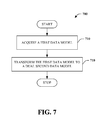
- FIG. 7 is a flow chart diagram of a method of data model generation.
- FIG. 8 is a flow chart diagram of a method dualizing a data model.
- FIG. 9 is a schematic block diagram illustrating a suitable operating environment for aspects of the subject disclosure.
- a data model can be generated by dualizing another data model.
- a first data model can be transformed into a second data model, wherein the second data model is a mathematical dual of the first data model.
- a non-relational data model such as a key-value store, can be produced consequently proving that a NoSQL data model is a dual of the SQL data model.
- duality and various forms thereof as used herein are intended to refer to mathematical duality as it pertains to category theory, or in other words categorical duality. More specifically, duality is a correspondence between properties of a category “C” and dual properties of the opposite category “C op .” Given a statement regarding the category “C,” by interchanging the source and the target of each morphism (e.g., mapping) as well as interchanging the order of composing two morphisms, a corresponding dual statement can be obtained regarding the opposite category “C op .” For example, the category “C” can corresponds to a data model and the opposite category “C op ” can refer to a dual- or co-data model. “Dualizing” refers to the act of generating a categorical dual from a data model, for example.
- the data modeling system 100 includes a transformation component 110 that receives retrieves or otherwise obtains or acquires a first data model and generates a second database model by dualizing the first data model.
- the second data model is a mathematical dual of the first data model.
- the transformation component 110 can receive, retrieve or otherwise obtain or acquire a second data model, which is a dual of the first data model, and transform the second data model back into the first data model by dualizing the second data model.
- the first data model can simply be referred to as a data model and the second data model can be referred to as a dual- or co-data model.
- the transformation component 110 transforms a data model (D) into a co-data model (co(D)), or in other words generate a co-data model (co(D)) as a function of the data model (D).
- the transformation component 110 transforms a co-data model (co(D)) into a data model (e.g. co(co(D)) ⁇ >D), or in other words produces the data model (D) as a function of the co-data model (co(D))
- the transformation component 110 includes an entity component 112 and a relationship component 114 .
- a data model comprises a set of entities and relationships, or in other words associations, between entities.
- the entity component 112 is configured to generate a dual- or co-entity, for example, from an entity of the first data model.
- the relationship component 114 can derive dual- or co-relationships from relationships specified in the first data model, for example.
- the relationship component 114 can generate dual compositions of relationships, or associations, from those of a first data model, for instance.
- FIG. 2 illustrates an abstract transformation between two data models to facilitate clarity and understanding. More particularly, from a first data model 200 , a second data model 210 can result and vice versa.
- the first data model includes three entities “S” 202 , “T” 204 , and “G” 206 . Relationships between the entities are shown as arrows. More specifically, a relationship “F” goes from “S” 202 to “T” 204 , and a relationship “G” goes from “T” 202 to “G” 206 . “G” also includes an identity relationship “ID” that starts from “G” 206 and returns to “G” 206 . Additionally, a composition relationship “F;G” (F compose G) exists between “S” 202 and “G” 206 .
- the second data model 210 includes “CO-S” 212 , “CO-T” 214 , and “CO-G” 216 entities.
- the arrows representing the morphisms are reversed, representing a change in the source and target of morphisms.
- the composition relationship of the first data model 200 “F;G” (F compose G) becomes “G;F” (G compose F) in the second data model 210 .
- the result is the first data model 200 .
- the dual is derived for a relational database.
- the first data model is a relational model.
- the result, or second data model can be a non-relational model or more specifically a key-value model.
- FIG. 3 illustrates an exemplary relational representation 300 for storing product information.
- Product table 310 provides primary key “ID” 312 as well as other columns for product information such as title, author, year of publication, and total number of pages.
- Rating table 320 provides product rating information and a foreign key “PRODUCT ID” 322 referencing the sole record of product table 310 .
- keyword table 330 provides keywords associated with a product and includes a foreign key “PRODUCT ID” 332 that refers back to the corresponding record of product table 310 .
- FIG. 4 the exemplary relational representation 300 of FIG. 3 is illustrated with pointers inserted between foreign keys and primary keys.
- pointers 410 point from the foreign key “PRODUCTS ID” 322 of ranking table 320 to the corresponding record identified by the primary key “ID” 312 of the product table 310 .
- pointers 420 point from the foreign key “PRODUCTS ID” 332 of the keyword table 330 to the corresponding record identified by the primary key “ID” 312 of the product table 310 .
- FIG. 5 illustrates an exemplary non-relational key-value representation 500 of the same data provided with respect the exemplary relational representations of FIGS. 3 and 4 .
- rows such as 510 , 520 , and 530 can store either keys, shown as pointers to values, or scalar values.
- row 510 can include keys for title, author, keywords, and ratings and scalar values for year of publication and total number of pages.
- Row 520 includes three keys that map to three keywords
- row 530 includes two keys that map to two ratings representations.
- Row 610 corresponding to previous row 510 of FIG. 5 , now includes values for title and author and a collection of keys for both keywords and ratings 620 and 630 , respectively. More specifically, keys 620 point to keywords and keys 630 point to rating information.
- a structured data model can be transformed into, or generate, an unstructured data model or vice versa.
- the transformation component 110 of FIG. 1 can receive as input an XML (eXtensible Markup Language) data model and output a document data model, wherein documents or objects (data items) are indexed to perform queries expeditiously and efficiently.
- XML eXtensible Markup Language
- the transformation component 110 of FIG. 1 can operate automatically or semi-automatically.
- the transformation component 110 can receive a first data model and automatically output a dual second data model.
- the transformation component 110 can solicit input from a user to facilitate production of a dual data model.
- the transformation component 110 can be a tool to aid users in data modeling with respect to dualization.
- various portions of the disclosed systems above and methods below can include or consist of artificial intelligence, machine learning, or knowledge or rule-based components, sub-components, processes, means, methodologies, or mechanisms (e.g., support vector machines, neural networks, expert systems, Bayesian belief networks, fuzzy logic, data fusion engines, classifiers . . . ).
- Such components can automate certain mechanisms or processes performed thereby to make portions of the systems and methods more adaptive as well as efficient and intelligent.
- the transformation component 110 or one or more sub-components thereof can employ such mechanisms to efficiently determine or otherwise infer data model properties and dual data model features.
- a method of data model generation 700 is illustrated.
- a first data model is received, retrieved, or otherwise obtained or acquired.
- the first data model is transformed into, or in other words used to generate, a dual second data model.
- a first relational data model including primary and foreign keys can be transformed into or used to generate a non-relational key-value data model.
- This example shows that a known first data model can be transformed into a particular form of another known data model such that if the dual second data model is dualized itself, the first data model results. This is quite a surprising result since the two data models where thought to be antithetical at least by some in the industry. Of course, the result of data model dualization can be a completely new and previously unrecognized data model with equally surprising or unremarkable consequences.
- FIG. 8 is a flow chart diagram of a method of dualizing a data model 800 .
- a second entity is derived from a first entity where the second entity is the dual of the first entity.
- dual relationships between elements are defined for example by “reversing the arrows” (e.g., S ⁇ R to S ⁇ R).
- dual composite relationships are determined for instance be “reversing the arrows” and reversing the order of composition (e.g., F compose G to G compose F).
- a component may be, but is not limited to being, a process running on a processor, a processor, an object, an instance, an executable, a thread of execution, a program, and/or a computer.
- an application running on a computer and the computer can be a component.
- One or more components may reside within a process and/or thread of execution and a component may be localized on one computer and/or distributed between two or more computers.
- the term “inference” or “infer” refers generally to the process of reasoning about or inferring states of the system, environment, and/or user from a set of observations as captured via events and/or data. Inference can be employed to identify a specific context or action, or can generate a probability distribution over states, for example. The inference can be probabilistic—that is, the computation of a probability distribution over states of interest based on a consideration of data and events. Inference can also refer to techniques employed for composing higher-level events from a set of events and/or data.
- Such inference results in the construction of new events or actions from a set of observed events and/or stored event data, whether or not the events are correlated in close temporal proximity, and whether the events and data come from one or several event and data sources.
- Various classification schemes and/or systems e.g., support vector machines, neural networks, expert systems, Bayesian belief networks, fuzzy logic, data fusion engines . . . ) can be employed in connection with performing automatic and/or inferred action in connection with the claimed subject matter.
- FIG. 9 As well as the following discussion are intended to provide a brief, general description of a suitable environment in which various aspects of the subject matter can be implemented.
- the suitable environment is only an example and is not intended to suggest any limitation as to scope of use or functionality.
- microprocessor-based or programmable consumer or industrial electronics and the like.
- aspects can also be practiced in distributed computing environments where tasks are performed by remote processing devices that are linked through a communications network. However, some, if not all aspects of the claimed subject matter can be practiced on stand-alone computers.
- program modules may be located in one or both of local and remote memory storage devices.
- the computer 910 includes one or more processor(s) 920 , system memory 930 , system bus 940 , mass storage 950 , and one or more interface components 970 .
- the system bus 940 communicatively couples at least the above system components.
- the computer 910 can include one or more processors 920 coupled to system memory 930 that execute various computer executable actions, instructions, and or components.
- the processor(s) 920 can be implemented with a general purpose processor, a digital signal processor (DSP), an application specific integrated circuit (ASIC), a field programmable gate array (FPGA) or other programmable logic device, discrete gate or transistor logic, discrete hardware components, or any combination thereof designed to perform the functions described herein.
- a general-purpose processor may be a microprocessor, but in the alternative, the processor may be any processor, controller, microcontroller, or state machine.
- the processor(s) 920 may also be implemented as a combination of computing devices, for example a combination of a DSP and a microprocessor, a plurality of microprocessors, multi-core processors, one or more microprocessors in conjunction with a DSP core, or any other such configuration.
- the computer 910 can include or otherwise interact with a variety of computer-readable media to facilitate control of the computer 910 to implement one or more aspects of the claimed subject matter.
- the computer-readable media can be any available media that can be accessed by the computer 910 and includes volatile and nonvolatile media and removable and non-removable media.
- computer-readable media may comprise computer storage media and communication media.
- Computer storage media includes volatile and nonvolatile, removable and non-removable media implemented in any method or technology for storage of information such as computer-readable instructions, data structures, program modules, or other data.
- Computer storage media can include memory devices (e.g., random access memory (RAM), read-only memory (ROM), electrically erasable programmable read-only memory (EEPROM) . . . ), magnetic storage devices (e.g., hard disk, floppy disk, cassettes, tape . . . ), optical disks (e.g., compact disk (CD), digital versatile disk (DVD) . . . ), and solid state devices (e.g., solid state drive (SSD), flash memory drive (e.g., card, stick, key drive . . . ) . . . ), or any other like medium which can be used to store the desired information and which can be accessed by the computer 910 .
- RAM random access memory
- ROM read-only memory
- EEPROM electrically
- Communication media typically embodies computer-readable instructions, data structures, program modules, or other data in a modulated data signal such as a carrier wave or other transport mechanism and includes any information delivery media.
- modulated data signal means a signal that has one or more of its characteristics set or changed in such a manner as to encode information in the signal.
- communication media includes wired media such as a wired network or direct-wired connection, and wireless media such as acoustic, RF, infrared and other wireless media. Combinations of any of the above should also be included within the scope of computer-readable media.
- System memory 930 and mass storage 950 are examples of computer-readable storage media.
- system memory 930 may be volatile (e.g., RAM), non-volatile (e.g., ROM, flash memory . . . ) or some combination of the two.
- the basic input/output system (BIOS) including basic routines to transfer information between elements within the computer 910 , such as during start-up, can be stored in nonvolatile memory, while volatile memory can act as external cache memory to facilitate processing by the processor(s) 920 , among other things.
- BIOS basic input/output system
- Mass storage 950 includes removable/non-removable, volatile/non-volatile computer storage media for storage of large amounts of data relative to the system memory 930 .
- mass storage 950 includes, but is not limited to, one or more devices such as a magnetic or optical disk drive, floppy disk drive, flash memory, solid-state drive, or memory stick.
- System memory 930 and mass storage 950 can include, or have stored therein, operating system 960 , one or more applications 962 , one or more program modules 964 , and data 966 .
- the operating system 960 acts to control and allocate resources of the computer 910 .
- Applications 962 include one or both of system and application software and can exploit management of resources by the operating system 960 through program modules 964 and data 966 stored in system memory 930 and/or mass storage 950 to perform one or more actions. Accordingly, applications 962 can turn a general-purpose computer 910 into a specialized machine in accordance with the logic provided thereby.
- the transformation component 110 can be, or form part, of an application 962 , and include one or more modules 964 and data 966 stored in memory and/or mass storage 950 whose functionality can be realized when executed by one or more processor(s) 920 , as shown.
- the computer 910 also includes one or more interface components 970 that are communicatively coupled to the system bus 940 and facilitate interaction with the computer 910 .
- the interface component 970 can be a port (e.g., serial, parallel, PCMCIA, USB, FireWire . . . ) or an interface card (e.g., sound, video . . . ) or the like.
- the interface component 970 can be embodied as a user input/output interface to enable a user to enter commands and information into the computer 910 through one or more input devices (e.g., pointing device such as a mouse, trackball, stylus, touch pad, keyboard, microphone, joystick, game pad, satellite dish, scanner, camera, other computer . . . ).
- the interface component 970 can be embodied as an output peripheral interface to supply output to displays (e.g., CRT, LCD, plasma . . . ), speakers, printers, and/or other computers, among other things.
- the interface component 970 can be embodied as a network interface to enable communication with other computing devices (not shown), such as over a wired or wireless communications link.
Landscapes
- Engineering & Computer Science (AREA)
- Databases & Information Systems (AREA)
- Theoretical Computer Science (AREA)
- Data Mining & Analysis (AREA)
- Physics & Mathematics (AREA)
- General Engineering & Computer Science (AREA)
- General Physics & Mathematics (AREA)
- Information Retrieval, Db Structures And Fs Structures Therefor (AREA)
- Compression, Expansion, Code Conversion, And Decoders (AREA)
- Debugging And Monitoring (AREA)
Priority Applications (8)
| Application Number | Priority Date | Filing Date | Title |
|---|---|---|---|
| US12/888,918 US9460189B2 (en) | 2010-09-23 | 2010-09-23 | Data model dualization |
| TW100128900A TW201229792A (en) | 2010-09-23 | 2011-08-12 | Data model dualization |
| JP2013530166A JP5873498B2 (ja) | 2010-09-23 | 2011-09-06 | データモデルの二重化 |
| PCT/US2011/050578 WO2012039923A2 (en) | 2010-09-23 | 2011-09-06 | Data model dualization |
| AU2011305918A AU2011305918B2 (en) | 2010-09-23 | 2011-09-06 | Data model dualization |
| EP11827187.3A EP2619694A4 (en) | 2010-09-23 | 2011-09-06 | DUALIZATION OF DATA MODEL |
| CN201110296894.XA CN102508852B (zh) | 2010-09-23 | 2011-09-22 | 数据模型对偶化 |
| US15/248,915 US11003637B2 (en) | 2010-09-23 | 2016-08-26 | Data model dualization |
Applications Claiming Priority (1)
| Application Number | Priority Date | Filing Date | Title |
|---|---|---|---|
| US12/888,918 US9460189B2 (en) | 2010-09-23 | 2010-09-23 | Data model dualization |
Related Child Applications (1)
| Application Number | Title | Priority Date | Filing Date |
|---|---|---|---|
| US15/248,915 Continuation US11003637B2 (en) | 2010-09-23 | 2016-08-26 | Data model dualization |
Publications (2)
| Publication Number | Publication Date |
|---|---|
| US20120078974A1 US20120078974A1 (en) | 2012-03-29 |
| US9460189B2 true US9460189B2 (en) | 2016-10-04 |
Family
ID=45871731
Family Applications (2)
| Application Number | Title | Priority Date | Filing Date |
|---|---|---|---|
| US12/888,918 Active US9460189B2 (en) | 2010-09-23 | 2010-09-23 | Data model dualization |
| US15/248,915 Active 2033-02-04 US11003637B2 (en) | 2010-09-23 | 2016-08-26 | Data model dualization |
Family Applications After (1)
| Application Number | Title | Priority Date | Filing Date |
|---|---|---|---|
| US15/248,915 Active 2033-02-04 US11003637B2 (en) | 2010-09-23 | 2016-08-26 | Data model dualization |
Country Status (7)
| Country | Link |
|---|---|
| US (2) | US9460189B2 (enExample) |
| EP (1) | EP2619694A4 (enExample) |
| JP (1) | JP5873498B2 (enExample) |
| CN (1) | CN102508852B (enExample) |
| AU (1) | AU2011305918B2 (enExample) |
| TW (1) | TW201229792A (enExample) |
| WO (1) | WO2012039923A2 (enExample) |
Cited By (3)
| Publication number | Priority date | Publication date | Assignee | Title |
|---|---|---|---|---|
| US10838952B2 (en) | 2019-01-03 | 2020-11-17 | Bank Of America Corporation | Resource offloading process using machine learning for database |
| US20230186123A1 (en) * | 2021-12-15 | 2023-06-15 | Cavenwell Industrial AI Corp. | Automatic theorem solver |
| US20230186021A1 (en) * | 2021-12-15 | 2023-06-15 | Cavenwell Industrial AI Corp. | Automatic theorem solver |
Families Citing this family (13)
| Publication number | Priority date | Publication date | Assignee | Title |
|---|---|---|---|---|
| US9436710B2 (en) * | 2010-09-28 | 2016-09-06 | Redis Labs Ltd. | Systems, methods, and media for managing an in-memory NoSQL database |
| JP5867208B2 (ja) * | 2012-03-16 | 2016-02-24 | 富士通株式会社 | データモデル変換プログラム、データモデル変換方法およびデータモデル変換装置 |
| US10169446B1 (en) | 2012-09-10 | 2019-01-01 | Amazon Technologies, Inc. | Relational modeler and renderer for non-relational data |
| US8725750B1 (en) * | 2012-10-25 | 2014-05-13 | Hulu, LLC | Framework for generating programs to process beacons |
| US9111012B2 (en) | 2012-11-26 | 2015-08-18 | Accenture Global Services Limited | Data consistency management |
| CN103390015B (zh) * | 2013-01-16 | 2016-03-30 | 华北电力大学 | 基于统一索引的海量数据联合存储方法及检索方法 |
| US9686118B1 (en) | 2013-06-04 | 2017-06-20 | Amazon Technologies, Inc. | Abstraction layer for streaming data sources |
| CN104699720A (zh) * | 2013-12-10 | 2015-06-10 | 中兴通讯股份有限公司 | 海量数据融合存储方法及系统 |
| CN105786925B (zh) * | 2014-12-26 | 2021-02-26 | 远光软件股份有限公司 | 基于参考模型进行动态数据建模的方法及装置 |
| JP6849904B2 (ja) * | 2016-10-28 | 2021-03-31 | 富士通株式会社 | 検索プログラム、検索装置および検索方法 |
| US11269822B2 (en) * | 2017-10-09 | 2022-03-08 | Sap Se | Generation of automated data migration model |
| US11003550B2 (en) * | 2017-11-04 | 2021-05-11 | Brian J. Bulkowski | Methods and systems of operating a database management system DBMS in a strong consistency mode |
| CN108363785A (zh) * | 2018-02-12 | 2018-08-03 | 平安科技(深圳)有限公司 | 数据关系展示方法、装置、计算机设备及存储介质 |
Citations (33)
| Publication number | Priority date | Publication date | Assignee | Title |
|---|---|---|---|---|
| JPH10307742A (ja) | 1997-05-07 | 1998-11-17 | Fujitsu Ltd | データ移行システム、データ移行用プログラムを格納 した記録媒体、及びデータ移行方法 |
| US5956707A (en) | 1997-02-13 | 1999-09-21 | Chu; Wesley W. | Database system with query relaxation using type abstraction hierarchy (TAH) as query condition relaxation structure |
| JP2000112795A (ja) | 1998-10-05 | 2000-04-21 | Fujitsu Ltd | データ構造変換処理装置および記録媒体 |
| US20030014397A1 (en) | 1999-12-02 | 2003-01-16 | International Business Machines Corporation | Generating one or more XML documents from a relational database using XPath data model |
| US20030069908A1 (en) * | 2000-01-27 | 2003-04-10 | Anthony Jon S | Software composition using graph types,graph, and agents |
| US20030172368A1 (en) * | 2001-12-26 | 2003-09-11 | Elizabeth Alumbaugh | System and method for autonomously generating heterogeneous data source interoperability bridges based on semantic modeling derived from self adapting ontology |
| US20040205562A1 (en) | 2001-12-27 | 2004-10-14 | G.E. Information Services, Inc. | System and method for transforming documents to and from an XML format |
| US6820135B1 (en) * | 2000-08-31 | 2004-11-16 | Pervasive Software, Inc. | Modeless event-driven data transformation |
| US20050050068A1 (en) | 2003-08-29 | 2005-03-03 | Alexander Vaschillo | Mapping architecture for arbitrary data models |
| US6879946B2 (en) * | 1999-11-30 | 2005-04-12 | Pattern Discovery Software Systems Ltd. | Intelligent modeling, transformation and manipulation system |
| US20050149555A1 (en) * | 2001-08-01 | 2005-07-07 | Yaoping Wang | System and method for managing object to relational one-to-many mapping |
| US20050171966A1 (en) | 2004-01-29 | 2005-08-04 | International Business Machines Corporation | Relational to hierarchical tree data conversion technique |
| US20060047780A1 (en) * | 2005-11-08 | 2006-03-02 | Gregory Patnude | Method and apparatus for web-based, schema-driven application-server and client-interface package using a generalized, data-object format and asynchronous communication methods without the use of a markup language. |
| US7013289B2 (en) * | 2001-02-21 | 2006-03-14 | Michel Horn | Global electronic commerce system |
| US20060101423A1 (en) | 2004-10-01 | 2006-05-11 | Microsoft Corporation | Method and apparatus for elegant mapping between data models |
| US20060173804A1 (en) | 2005-01-31 | 2006-08-03 | Microsoft Corporation | Integration of a non-relational query language with a relational data store |
| US7159185B1 (en) * | 2000-09-14 | 2007-01-02 | Microsoft Corporation | Function objects |
| US20070185591A1 (en) | 2004-08-16 | 2007-08-09 | Abb Research Ltd | Method and system for bi-directional data conversion between IEC 61970 and IEC 61850 |
| TW200813750A (en) | 2006-05-24 | 2008-03-16 | 170 Systems Inc | System for and method of providing a user interface for a computer-based software application |
| US20090106282A1 (en) | 2007-10-19 | 2009-04-23 | Siemens Product Lifecycle Management Software Inc. | System and method for interformat data conversion |
| US7555709B2 (en) * | 2004-04-09 | 2009-06-30 | International Business Machines Corporation | Method and apparatus for stream based markup language post-processing |
| US7580941B2 (en) * | 2006-06-13 | 2009-08-25 | Microsoft Corporation | Automated logical database design tuning |
| WO2009147185A1 (en) | 2008-06-03 | 2009-12-10 | Alcatel Lucent | Method for mapping an x500 data model onto a relational database |
| US7680817B2 (en) * | 2001-10-15 | 2010-03-16 | Maya-Systems Inc. | Multi-dimensional locating system and method |
| US7680767B2 (en) | 2006-03-23 | 2010-03-16 | Microsoft Corporation | Mapping architecture with incremental view maintenance |
| US20100145946A1 (en) | 2008-12-09 | 2010-06-10 | Microsoft Corporation | Translating queries to representational state transfer (rest) |
| JP2010152748A (ja) | 2008-12-25 | 2010-07-08 | Nec Corp | グラフ変換支援システム、グラフ変換支援方法、及びプログラム |
| US20100205586A1 (en) * | 2009-02-11 | 2010-08-12 | Mun Johnathan C | Evaluation compiler method |
| US7937281B2 (en) * | 2001-12-07 | 2011-05-03 | Accenture Global Services Limited | Accelerated process improvement framework |
| US8135718B1 (en) * | 2007-02-16 | 2012-03-13 | Google Inc. | Collaborative filtering |
| US20120158633A1 (en) * | 2002-12-10 | 2012-06-21 | Jeffrey Scott Eder | Knowledge graph based search system |
| US8316306B2 (en) * | 2001-10-15 | 2012-11-20 | Maya-Systems Inc. | Method and system for sequentially navigating axes of elements |
| US8572236B2 (en) * | 2006-08-10 | 2013-10-29 | Ab Initio Technology Llc | Distributing services in graph-based computations |
Family Cites Families (10)
| Publication number | Priority date | Publication date | Assignee | Title |
|---|---|---|---|---|
| US7320001B1 (en) * | 1999-01-15 | 2008-01-15 | Hon Hai Precision Industry, Ltd. | Method for visualizing information in a data warehousing environment |
| US6615220B1 (en) * | 2000-03-14 | 2003-09-02 | Oracle International Corporation | Method and mechanism for data consolidation |
| US7426520B2 (en) * | 2003-09-10 | 2008-09-16 | Exeros, Inc. | Method and apparatus for semantic discovery and mapping between data sources |
| US20050204347A1 (en) * | 2004-03-12 | 2005-09-15 | International Business Machines Corporation | Method for generating XSLT documents from multiple versions of a UML model or XML schemas created from multiple versions of a UML model |
| US20050246353A1 (en) * | 2004-05-03 | 2005-11-03 | Yoav Ezer | Automated transformation of unstructured data |
| US7827205B2 (en) * | 2004-05-27 | 2010-11-02 | International Business Machines Corporation | Bi-directional data mapping tool |
| WO2007122639A2 (en) * | 2006-04-26 | 2007-11-01 | Tata Consultancy Services | A system and method for pattern based services extraction |
| US7783680B2 (en) * | 2008-01-07 | 2010-08-24 | International Business Machines Corporation | Quasi-inverses of schema mappings |
| US8495559B2 (en) * | 2008-09-09 | 2013-07-23 | International Business Machines Corporation | Extracting platform independent models from composite applications |
| US8898627B2 (en) * | 2010-05-11 | 2014-11-25 | Smartshift Gmbh | Systems and methods for applying rules to transform objects of an application |
-
2010
- 2010-09-23 US US12/888,918 patent/US9460189B2/en active Active
-
2011
- 2011-08-12 TW TW100128900A patent/TW201229792A/zh unknown
- 2011-09-06 JP JP2013530166A patent/JP5873498B2/ja not_active Expired - Fee Related
- 2011-09-06 AU AU2011305918A patent/AU2011305918B2/en not_active Ceased
- 2011-09-06 EP EP11827187.3A patent/EP2619694A4/en not_active Ceased
- 2011-09-06 WO PCT/US2011/050578 patent/WO2012039923A2/en not_active Ceased
- 2011-09-22 CN CN201110296894.XA patent/CN102508852B/zh active Active
-
2016
- 2016-08-26 US US15/248,915 patent/US11003637B2/en active Active
Patent Citations (33)
| Publication number | Priority date | Publication date | Assignee | Title |
|---|---|---|---|---|
| US5956707A (en) | 1997-02-13 | 1999-09-21 | Chu; Wesley W. | Database system with query relaxation using type abstraction hierarchy (TAH) as query condition relaxation structure |
| JPH10307742A (ja) | 1997-05-07 | 1998-11-17 | Fujitsu Ltd | データ移行システム、データ移行用プログラムを格納 した記録媒体、及びデータ移行方法 |
| JP2000112795A (ja) | 1998-10-05 | 2000-04-21 | Fujitsu Ltd | データ構造変換処理装置および記録媒体 |
| US6879946B2 (en) * | 1999-11-30 | 2005-04-12 | Pattern Discovery Software Systems Ltd. | Intelligent modeling, transformation and manipulation system |
| US20030014397A1 (en) | 1999-12-02 | 2003-01-16 | International Business Machines Corporation | Generating one or more XML documents from a relational database using XPath data model |
| US20030069908A1 (en) * | 2000-01-27 | 2003-04-10 | Anthony Jon S | Software composition using graph types,graph, and agents |
| US6820135B1 (en) * | 2000-08-31 | 2004-11-16 | Pervasive Software, Inc. | Modeless event-driven data transformation |
| US7159185B1 (en) * | 2000-09-14 | 2007-01-02 | Microsoft Corporation | Function objects |
| US7013289B2 (en) * | 2001-02-21 | 2006-03-14 | Michel Horn | Global electronic commerce system |
| US20050149555A1 (en) * | 2001-08-01 | 2005-07-07 | Yaoping Wang | System and method for managing object to relational one-to-many mapping |
| US8316306B2 (en) * | 2001-10-15 | 2012-11-20 | Maya-Systems Inc. | Method and system for sequentially navigating axes of elements |
| US7680817B2 (en) * | 2001-10-15 | 2010-03-16 | Maya-Systems Inc. | Multi-dimensional locating system and method |
| US7937281B2 (en) * | 2001-12-07 | 2011-05-03 | Accenture Global Services Limited | Accelerated process improvement framework |
| US20030172368A1 (en) * | 2001-12-26 | 2003-09-11 | Elizabeth Alumbaugh | System and method for autonomously generating heterogeneous data source interoperability bridges based on semantic modeling derived from self adapting ontology |
| US20040205562A1 (en) | 2001-12-27 | 2004-10-14 | G.E. Information Services, Inc. | System and method for transforming documents to and from an XML format |
| US20120158633A1 (en) * | 2002-12-10 | 2012-06-21 | Jeffrey Scott Eder | Knowledge graph based search system |
| US20050050068A1 (en) | 2003-08-29 | 2005-03-03 | Alexander Vaschillo | Mapping architecture for arbitrary data models |
| US20050171966A1 (en) | 2004-01-29 | 2005-08-04 | International Business Machines Corporation | Relational to hierarchical tree data conversion technique |
| US7555709B2 (en) * | 2004-04-09 | 2009-06-30 | International Business Machines Corporation | Method and apparatus for stream based markup language post-processing |
| US20070185591A1 (en) | 2004-08-16 | 2007-08-09 | Abb Research Ltd | Method and system for bi-directional data conversion between IEC 61970 and IEC 61850 |
| US20060101423A1 (en) | 2004-10-01 | 2006-05-11 | Microsoft Corporation | Method and apparatus for elegant mapping between data models |
| US20060173804A1 (en) | 2005-01-31 | 2006-08-03 | Microsoft Corporation | Integration of a non-relational query language with a relational data store |
| US20060047780A1 (en) * | 2005-11-08 | 2006-03-02 | Gregory Patnude | Method and apparatus for web-based, schema-driven application-server and client-interface package using a generalized, data-object format and asynchronous communication methods without the use of a markup language. |
| US7680767B2 (en) | 2006-03-23 | 2010-03-16 | Microsoft Corporation | Mapping architecture with incremental view maintenance |
| TW200813750A (en) | 2006-05-24 | 2008-03-16 | 170 Systems Inc | System for and method of providing a user interface for a computer-based software application |
| US7580941B2 (en) * | 2006-06-13 | 2009-08-25 | Microsoft Corporation | Automated logical database design tuning |
| US8572236B2 (en) * | 2006-08-10 | 2013-10-29 | Ab Initio Technology Llc | Distributing services in graph-based computations |
| US8135718B1 (en) * | 2007-02-16 | 2012-03-13 | Google Inc. | Collaborative filtering |
| US20090106282A1 (en) | 2007-10-19 | 2009-04-23 | Siemens Product Lifecycle Management Software Inc. | System and method for interformat data conversion |
| WO2009147185A1 (en) | 2008-06-03 | 2009-12-10 | Alcatel Lucent | Method for mapping an x500 data model onto a relational database |
| US20100145946A1 (en) | 2008-12-09 | 2010-06-10 | Microsoft Corporation | Translating queries to representational state transfer (rest) |
| JP2010152748A (ja) | 2008-12-25 | 2010-07-08 | Nec Corp | グラフ変換支援システム、グラフ変換支援方法、及びプログラム |
| US20100205586A1 (en) * | 2009-02-11 | 2010-08-12 | Mun Johnathan C | Evaluation compiler method |
Non-Patent Citations (33)
| Title |
|---|
| "Cooperative Database Systems", Retrieved at << http://www.cobase.cs.ucla.edu/tech-docs/cobase.pdf >>, Editor: Benjamin Wah, p. 1-15. |
| "Cooperative Database Systems", Retrieved at >, Editor: Benjamin Wah, p. 1-15. |
| "First Office Action and Search Report Issued in Chinese Patent Application No. 201110296894.X", Mailed Date: Jan. 15, 2014, 11 Pages. |
| "Fourth Office Action Issued in Chinese Patent Application No. 201110296894.X", Mailed Date: Jun. 15, 2015, 6 Pages. |
| "International Search Report", Mailed Date: Apr. 9, 2012, Application No. PCT/US2011/050578, Filed Date: Sep. 6, 2011, pp. 8. |
| "LINQ 2010-DevelopMentor", Retrieved at << http://browse.develop.com/2010/linq/ >>, Aug. 5, 2010, pp. 6. |
| "LINQ 2010-DevelopMentor", Retrieved at >, Aug. 5, 2010, pp. 6. |
| "Office Action and Search Report Issued in Taiwan Patent Application No. 100128900", Mailed Date: Jun. 16, 2015, 8 Pages. |
| "Office Action Issued in Australia Patent Application No. 2011305918", Mailed Date: Apr. 10, 2014, 4 Pages. |
| "Office Action Issued in Australia Patent Application No. 2011305918", Mailed Date: Aug. 14, 2014, 4 Pages. |
| "Office Action Issued in Australia Patent Application No. 2011305918", Mailed Date: Jun. 13, 2014, 5 Pages. |
| "Office Action Issued in Japanese Application No. 2013-530166", Mailed Date: Aug. 31, 2015, 6 Pages. |
| "Office Action Issued in Taiwan Application No. 100128900", Mailed Date: Oct. 2, 2015, 8 Pages. |
| "Search Y Combinator-NoSQL", Retrieved at << http://searchyc.com/nosql?page=79&sort=by-date >>, Aug. 5, 2010, pp. 3. |
| "Search Y Combinator-NoSQL", Retrieved at >, Aug. 5, 2010, pp. 3. |
| "Second Office Action Issued in Chinese Patent Application No. 201110296894.X", Mailed Date: Jun. 30, 2014, 8 Pages. |
| "Supplementary Search Report Received for European Patent Application No. 11827187.3", Mailed Date: Dec. 11, 2014, 8 Pages. |
| "Third Office Action Received for Chinese Patent Application No. 201110296894.X", Mailed Date: Dec. 26, 2014, 8 Pages. |
| "Venu Anuganti Blog-CAP Theorem, Eventual Consistency, NoSQL", Retrieved at << http://venublog.com/2010/04/07/cap-theorem-eventual-consistency-nosql/ >>, Apr. 7, 2010, pp. 4. |
| "Venu Anuganti Blog-CAP Theorem, Eventual Consistency, NoSQL", Retrieved at >, Apr. 7, 2010, pp. 4. |
| Bunch, et al., "An Evaluation of Distributed Datastores Using the AppScale Cloud Platform", Retrieved at << http://www.cs.ucsb.edu/˜ckrintz/papers/cloud10.pdf >>, 2010 IEEE 3rd International Conference on Cloud Computing, Jul. 5-10, pp. 8. |
| Bunch, et al., "An Evaluation of Distributed Datastores Using the AppScale Cloud Platform", Retrieved at >, 2010 IEEE 3rd International Conference on Cloud Computing, Jul. 5-10, pp. 8. |
| Cárdenas, Christian, "Parsing and Preprocessing of RLXQuery for XML Query Relaxation", Retrieved at << http://www.cobase.cs.ucla.edu/projects/coxml/doc/chris-comp-exam.pdf >>, 2004, pp. 34. |
| Cárdenas, Christian, "Parsing and Preprocessing of RLXQuery for XML Query Relaxation", Retrieved at >, 2004, pp. 34. |
| Garcia-Molina, et al., "Chapter 11-Data Storage", In Book-Database Systems: The Complete Book, Jan. 1, 2002, pp. 503-566. |
| Hurst, Nathan, "Visual Guide to NoSQL Systems", Retrieved at << http://blog.nahurst.com/visual-guide-to-nosql-systems >>, Mar. 15, 2010, pp. 7. |
| Hurst, Nathan, "Visual Guide to NoSQL Systems", Retrieved at >, Mar. 15, 2010, pp. 7. |
| Leavitt, Neal, "Will NoSQL Databases Live Up to Their Promise?", Retrieved at << http://www.leavcom.com/pdf/NoSQL.pdf >>, vol. 43, No. 2, Feb. 2010, p. 12-14. |
| Leavitt, Neal, "Will NoSQL Databases Live Up to Their Promise?", Retrieved at >, vol. 43, No. 2, Feb. 2010, p. 12-14. |
| Zhang, et al., "Query Formulation from High-level Concepts for Relational Databases", Retrieved at << http://cobase-www.cs.ucla.edu/tech-docs/uidis99.pdf >>, Proceedings of the User Interfaces to Data Intensive Systems, Sep. 5-6, 1999, pp. 11. |
| Zhang, et al., "Query Formulation from High-level Concepts for Relational Databases", Retrieved at >, Proceedings of the User Interfaces to Data Intensive Systems, Sep. 5-6, 1999, pp. 11. |
| Zyp, Kris, "NoSQL Architecture-SitePen Blog", Retrieved at << http://www.sitepen.com/blog/2010/05/11/nosql-architecture/ >>, May 11, 2010, pp. 11. |
| Zyp, Kris, "NoSQL Architecture-SitePen Blog", Retrieved at >, May 11, 2010, pp. 11. |
Cited By (5)
| Publication number | Priority date | Publication date | Assignee | Title |
|---|---|---|---|---|
| US10838952B2 (en) | 2019-01-03 | 2020-11-17 | Bank Of America Corporation | Resource offloading process using machine learning for database |
| US20230186123A1 (en) * | 2021-12-15 | 2023-06-15 | Cavenwell Industrial AI Corp. | Automatic theorem solver |
| US20230186021A1 (en) * | 2021-12-15 | 2023-06-15 | Cavenwell Industrial AI Corp. | Automatic theorem solver |
| US12450507B2 (en) * | 2021-12-15 | 2025-10-21 | Cavenwell Industrial AI Corp. | Automatic theorem solver |
| US12639514B2 (en) * | 2021-12-15 | 2026-05-26 | Cavenwell Industrial AI Corp. | Automatic theorem solver |
Also Published As
| Publication number | Publication date |
|---|---|
| JP2013542501A (ja) | 2013-11-21 |
| US11003637B2 (en) | 2021-05-11 |
| JP5873498B2 (ja) | 2016-03-01 |
| EP2619694A2 (en) | 2013-07-31 |
| AU2011305918B2 (en) | 2014-11-20 |
| CN102508852A (zh) | 2012-06-20 |
| TW201229792A (en) | 2012-07-16 |
| US20170017670A1 (en) | 2017-01-19 |
| EP2619694A4 (en) | 2015-01-14 |
| AU2011305918A1 (en) | 2013-03-21 |
| CN102508852B (zh) | 2016-04-20 |
| WO2012039923A2 (en) | 2012-03-29 |
| WO2012039923A3 (en) | 2012-05-31 |
| US20120078974A1 (en) | 2012-03-29 |
Similar Documents
| Publication | Publication Date | Title |
|---|---|---|
| US11003637B2 (en) | Data model dualization | |
| AU2011323637B2 (en) | Object model to key-value data model mapping | |
| US11526338B2 (en) | System and method for inferencing of data transformations through pattern decomposition | |
| US20120110004A1 (en) | Homomorphism lemma for efficiently querying databases | |
| US12332931B2 (en) | Priming generative AI model leveraging directed acyclic graph-driven notebook environment | |
| US11061935B2 (en) | Automatically inferring data relationships of datasets | |
| CN104504018A (zh) | 基于浓密树和自顶向下的大数据实时查询优化方法 | |
| US12287810B2 (en) | Method for efficient re-ranking and classification of ambiguous inputs in deep hierarchy | |
| US20120078878A1 (en) | Optimized lazy query operators | |
| De et al. | BayesWipe: A scalable probabilistic framework for cleaning bigdata | |
| AU2011323639B2 (en) | Homomorphism Lemma for efficiently querying databases |
Legal Events
| Date | Code | Title | Description |
|---|---|---|---|
| AS | Assignment |
Owner name: MICROSOFT CORPORATION, WASHINGTON Free format text: ASSIGNMENT OF ASSIGNORS INTEREST;ASSIGNOR:JOHANNES MARIA MEIJER, HENRICUS;REEL/FRAME:025035/0479 Effective date: 20100920 |
|
| AS | Assignment |
Owner name: MICROSOFT TECHNOLOGY LICENSING, LLC, WASHINGTON Free format text: ASSIGNMENT OF ASSIGNORS INTEREST;ASSIGNOR:MICROSOFT CORPORATION;REEL/FRAME:034544/0001 Effective date: 20141014 |
|
| STCF | Information on status: patent grant |
Free format text: PATENTED CASE |
|
| MAFP | Maintenance fee payment |
Free format text: PAYMENT OF MAINTENANCE FEE, 4TH YEAR, LARGE ENTITY (ORIGINAL EVENT CODE: M1551); ENTITY STATUS OF PATENT OWNER: LARGE ENTITY Year of fee payment: 4 |
|
| MAFP | Maintenance fee payment |
Free format text: PAYMENT OF MAINTENANCE FEE, 8TH YEAR, LARGE ENTITY (ORIGINAL EVENT CODE: M1552); ENTITY STATUS OF PATENT OWNER: LARGE ENTITY Year of fee payment: 8 |