US9387216B2 - Biomarkers for treatment of neoplastic disorders using androgen-targeted therapies - Google Patents
Biomarkers for treatment of neoplastic disorders using androgen-targeted therapies Download PDFInfo
- Publication number
- US9387216B2 US9387216B2 US14/792,490 US201514792490A US9387216B2 US 9387216 B2 US9387216 B2 US 9387216B2 US 201514792490 A US201514792490 A US 201514792490A US 9387216 B2 US9387216 B2 US 9387216B2
- Authority
- US
- United States
- Prior art keywords
- androgen
- tumor
- psa
- androgen receptor
- prostate cancer
- Prior art date
- Legal status (The legal status is an assumption and is not a legal conclusion. Google has not performed a legal analysis and makes no representation as to the accuracy of the status listed.)
- Expired - Fee Related
Links
- 0 [2*]C1=CCC2C3CC=C4C[C@@H]([1*]O)CC[C@]4(C)C3CC[C@]12C Chemical compound [2*]C1=CCC2C3CC=C4C[C@@H]([1*]O)CC[C@]4(C)C3CC[C@]12C 0.000 description 8
- BBFMBYRQOMZCCH-QVSHTFAISA-N C1=CC=C2NC=NC2=C1.C[C@H]1CC[C@@]2(C)C(=CCC3C4CC(C=O)=C(Cl)[C@@]4(C)CCC32)C1.C[C@H]1CC[C@@]2(C)C(=CCC3C4CC(C=O)=C(N5C=NC6=CC=CC=C65)[C@@]4(C)CCC32)C1 Chemical compound C1=CC=C2NC=NC2=C1.C[C@H]1CC[C@@]2(C)C(=CCC3C4CC(C=O)=C(Cl)[C@@]4(C)CCC32)C1.C[C@H]1CC[C@@]2(C)C(=CCC3C4CC(C=O)=C(N5C=NC6=CC=CC=C65)[C@@]4(C)CCC32)C1 BBFMBYRQOMZCCH-QVSHTFAISA-N 0.000 description 1
- UVIQSJCZCSLXRZ-HMMZIKKISA-N CC(=O)O[C@H]1CC[C@@]2(C)C(=CCC3C4CC=C(C5=CC=CN=C5)[C@@]4(C)CCC32)C1 Chemical compound CC(=O)O[C@H]1CC[C@@]2(C)C(=CCC3C4CC=C(C5=CC=CN=C5)[C@@]4(C)CCC32)C1 UVIQSJCZCSLXRZ-HMMZIKKISA-N 0.000 description 1
- KZPRUOSSNRTIDS-ALXSGWJUSA-N C[C@H]1CC[C@@]2(C)C(=CCC3C4CC(C=O)=C(N5C=NC6=CC=CC=C65)[C@@]4(C)CCC32)C1.C[C@H]1CC[C@@]2(C)C(=CCC3C4CC=C(N5C=NC6=CC=CC=C65)[C@@]4(C)CCC32)C1 Chemical compound C[C@H]1CC[C@@]2(C)C(=CCC3C4CC(C=O)=C(N5C=NC6=CC=CC=C65)[C@@]4(C)CCC32)C1.C[C@H]1CC[C@@]2(C)C(=CCC3C4CC=C(N5C=NC6=CC=CC=C65)[C@@]4(C)CCC32)C1 KZPRUOSSNRTIDS-ALXSGWJUSA-N 0.000 description 1
- DUZVFKHAWLCGSX-XDIKRQTBSA-N C[C@H]1CC[C@@]2(C)C(=CCC3C4CC=C(N5C=NC6=CC=CC=C65)[C@@]4(C)CCC32)C1.C[C@]12CCC3C(CC=C4C[C@@H](O)CC[C@@]43C)C1CC=C2N1C=NC2=CC=CC=C21 Chemical compound C[C@H]1CC[C@@]2(C)C(=CCC3C4CC=C(N5C=NC6=CC=CC=C65)[C@@]4(C)CCC32)C1.C[C@]12CCC3C(CC=C4C[C@@H](O)CC[C@@]43C)C1CC=C2N1C=NC2=CC=CC=C21 DUZVFKHAWLCGSX-XDIKRQTBSA-N 0.000 description 1
- PAFKTGFSEFKSQG-BLYLLKCRSA-N C[C@]12CCC3C(CC=C4C[C@@H](O)CC[C@@]43C)C1CC=C2N1C=NC2=C1C=CC=C2 Chemical compound C[C@]12CCC3C(CC=C4C[C@@H](O)CC[C@@]43C)C1CC=C2N1C=NC2=C1C=CC=C2 PAFKTGFSEFKSQG-BLYLLKCRSA-N 0.000 description 1
Images


Classifications
-
- A—HUMAN NECESSITIES
- A61—MEDICAL OR VETERINARY SCIENCE; HYGIENE
- A61K—PREPARATIONS FOR MEDICAL, DENTAL OR TOILETRY PURPOSES
- A61K31/00—Medicinal preparations containing organic active ingredients
- A61K31/56—Compounds containing cyclopenta[a]hydrophenanthrene ring systems; Derivatives thereof, e.g. steroids
- A61K31/58—Compounds containing cyclopenta[a]hydrophenanthrene ring systems; Derivatives thereof, e.g. steroids containing heterocyclic rings, e.g. danazol, stanozolol, pancuronium or digitogenin
-
- A—HUMAN NECESSITIES
- A61—MEDICAL OR VETERINARY SCIENCE; HYGIENE
- A61P—SPECIFIC THERAPEUTIC ACTIVITY OF CHEMICAL COMPOUNDS OR MEDICINAL PREPARATIONS
- A61P13/00—Drugs for disorders of the urinary system
- A61P13/08—Drugs for disorders of the urinary system of the prostate
-
- A—HUMAN NECESSITIES
- A61—MEDICAL OR VETERINARY SCIENCE; HYGIENE
- A61P—SPECIFIC THERAPEUTIC ACTIVITY OF CHEMICAL COMPOUNDS OR MEDICINAL PREPARATIONS
- A61P35/00—Antineoplastic agents
-
- A—HUMAN NECESSITIES
- A61—MEDICAL OR VETERINARY SCIENCE; HYGIENE
- A61P—SPECIFIC THERAPEUTIC ACTIVITY OF CHEMICAL COMPOUNDS OR MEDICINAL PREPARATIONS
- A61P43/00—Drugs for specific purposes, not provided for in groups A61P1/00-A61P41/00
-
- C—CHEMISTRY; METALLURGY
- C07—ORGANIC CHEMISTRY
- C07J—STEROIDS
- C07J43/00—Normal steroids having a nitrogen-containing hetero ring spiro-condensed or not condensed with the cyclopenta(a)hydrophenanthrene skeleton
- C07J43/003—Normal steroids having a nitrogen-containing hetero ring spiro-condensed or not condensed with the cyclopenta(a)hydrophenanthrene skeleton not condensed
-
- C—CHEMISTRY; METALLURGY
- C12—BIOCHEMISTRY; BEER; SPIRITS; WINE; VINEGAR; MICROBIOLOGY; ENZYMOLOGY; MUTATION OR GENETIC ENGINEERING
- C12Q—MEASURING OR TESTING PROCESSES INVOLVING ENZYMES, NUCLEIC ACIDS OR MICROORGANISMS; COMPOSITIONS OR TEST PAPERS THEREFOR; PROCESSES OF PREPARING SUCH COMPOSITIONS; CONDITION-RESPONSIVE CONTROL IN MICROBIOLOGICAL OR ENZYMOLOGICAL PROCESSES
- C12Q1/00—Measuring or testing processes involving enzymes, nucleic acids or microorganisms; Compositions therefor; Processes of preparing such compositions
- C12Q1/68—Measuring or testing processes involving enzymes, nucleic acids or microorganisms; Compositions therefor; Processes of preparing such compositions involving nucleic acids
- C12Q1/6876—Nucleic acid products used in the analysis of nucleic acids, e.g. primers or probes
- C12Q1/6883—Nucleic acid products used in the analysis of nucleic acids, e.g. primers or probes for diseases caused by alterations of genetic material
- C12Q1/6886—Nucleic acid products used in the analysis of nucleic acids, e.g. primers or probes for diseases caused by alterations of genetic material for cancer
-
- C—CHEMISTRY; METALLURGY
- C12—BIOCHEMISTRY; BEER; SPIRITS; WINE; VINEGAR; MICROBIOLOGY; ENZYMOLOGY; MUTATION OR GENETIC ENGINEERING
- C12Q—MEASURING OR TESTING PROCESSES INVOLVING ENZYMES, NUCLEIC ACIDS OR MICROORGANISMS; COMPOSITIONS OR TEST PAPERS THEREFOR; PROCESSES OF PREPARING SUCH COMPOSITIONS; CONDITION-RESPONSIVE CONTROL IN MICROBIOLOGICAL OR ENZYMOLOGICAL PROCESSES
- C12Q2600/00—Oligonucleotides characterized by their use
- C12Q2600/156—Polymorphic or mutational markers
-
- C—CHEMISTRY; METALLURGY
- C12—BIOCHEMISTRY; BEER; SPIRITS; WINE; VINEGAR; MICROBIOLOGY; ENZYMOLOGY; MUTATION OR GENETIC ENGINEERING
- C12Q—MEASURING OR TESTING PROCESSES INVOLVING ENZYMES, NUCLEIC ACIDS OR MICROORGANISMS; COMPOSITIONS OR TEST PAPERS THEREFOR; PROCESSES OF PREPARING SUCH COMPOSITIONS; CONDITION-RESPONSIVE CONTROL IN MICROBIOLOGICAL OR ENZYMOLOGICAL PROCESSES
- C12Q2600/00—Oligonucleotides characterized by their use
- C12Q2600/158—Expression markers
Definitions
- Cancer represents a significant burden on human health, accounting for an estimated 13% of all deaths each year.
- several common cancers and diseases are associated with androgen hormone signaling, such as, for example, prostate cancer, breast cancer, ovarian cancer, bladder cancer, pancreatic cancer, and polycystic ovary disease.
- prostate cancer PCa
- PCa prostate cancer
- the majority of prostate cancer deaths are due to the development of metastatic disease that is unresponsive to conventional androgen deprivation therapy.
- Androgen deprivation therapy has been the standard of care in subjects with prostate cancer since the 1940s. Despite androgen deprivation, most subjects ultimately experience disease progression.
- prostate cancer hormone insensitive prostate cancer
- androgen independent prostate cancer The prostate cancer cells that have survived have gained the ability to import low levels of circulating androgens (expressed from adrenal glands), become much more sensitive to these low levels of testosterone, and actually synthesize testosterone within the prostate cancer cell itself. This stage of prostate cancer is now termed “castration resistant prostate cancer” or CRPC.
- biomarkers identified below may be used, for example, to evaluate treatment options at various points in the course of treatment of a patient.
- the biomarkers are used in the evaluation of treatment options at various cancer treatment transition points by analysis of one ore more biomarkers or a biomarker panel to identify and optimize therapeutic choices.
- Biomarkers may also be used to predict unresponsiveness or poor responsiveness to existing anti-cancer therapy and responsiveness to galeterone in the same patient.
- biomarker detection is performed and correlated with galeterone efficacy in the treatment of prostate cancer.
- a method of treating a disease in a patient in need thereof comprising: a) determining whether the disease is characterized by an altered form of androgen receptor; and b) if said altered form of androgen receptor is present, administering to said subject a pharmaceutical composition comprising a therapeutically effective amount of a compound of Formula I,
- R 1 is H or acetyl
- R 2 is benzimidazole
- R 1 is acetyl and the compound is a pro-drug of galeterone.
- R 1 is H and R 2 is benzamidazole and the compound is galeterone.
- a method of treating a cancer in a patient in need thereof comprising: a) obtaining a sample from said patient, for example a sample of circulating tumor cells; b) determining whether a truncated form of androgen receptor is present in the sample, for example ARV-7 or AR-V567es; and c) if said altered form of androgen receptor is present, administering to said subject a pharmaceutical composition comprising a therapeutically effective amount of a compound of Formula I,
- the altered form of androgen receptor is a truncated AR lacking the ligand-binding domain, for example ARV-7.
- Said determining may include, for example, use of an antibody capable of binding to a ligand binding domain of the androgen receptor, such that absence of binding of the antibody results in absence of signal.
- Said determining may also include the use of two antibodies, for example one to the NH 2 terminal of the AR and one to the COOH terminal (ligand binding domain) of the AR to differentiate or generate a ratio of the presence of the NH2 terminal and absence of the COOH terminal (ligand binding).
- the analysis result is a ratio of antibody detection signals of the NH2 terminal and the C-terminal in the same subject sample.
- Said determining may also include detection of a truncated AR lacking the ligand binding domain by nucleic acid amplification, either quantitative or qualitative, or by a gene expression assay.
- the detection of the truncated AR lacking the ligand binding domain is from a patient or subject sample, for example where the patient/subject sample has been enriched for circulating tumor cells.
- the patient/subject sample is enriched for circulating DNA.
- the patient/subject sample is a tumor biopsy or tissue sample.
- the disease is a prostate disease, for example prostate cancer.
- the prostate cancer may be resistant to castration.
- the subject has undergone castration, for example chemical castration or surgical castration, or has undergone androgen receptor antagonist treatment or treatment to reduce nascent androgen production, such as interference with the steroidogenesis pathway, for example a CYP-17 lyase inhibitor, or combination therapy.
- the disease is cancer, such as ovarian, bladder, pancreatic or breast cancer.
- the cancer may be resistant to an anti-androgen such as an androgen receptor antagonist, for example to enzalutamide or bicalutamide or ARN-509.
- the cancer may be resistant to a CYP17-lyase inhibitor, for example to abiraterone.
- the cancer may be resistant to a taxane, for example docetaxel or cabazitaxel.
- the disease is androgen dependent.
- the patient may be determined to have a mutated androgen receptor, for example a truncated AR such as AR-V1, AR-V2, AR-V3, AR-V4. AR-V5, AR-V567es, AR-V6, or AR-V7.
- the mutated AR can carry a point mutation such as T877A (T878A), D879G, (D878G), W741C, W741L, M749L, R629Q, G142V, P533S, T575A, H874Y, or F876L.
- R 1 is H or acetyl; and R 2 is benzimidazole; determining the status of at least one biomarker; and based on the determination of said biomarker, maintaining or modifying the therapy regimen.
- R 1 is hydrogen and R 2 is benzamidazole.
- the biomarker is the expression level or function of an androgen receptor, for example a wild-type or mutated AR.
- the mutated AR can be a splice variant and/or truncated AR, including AR-V1, AR-V2, AR-V3, AR-V4. AR-V5, AR-V567es, AR-V6, or AR-V7.
- Mutated AR can be AR with point mutations including, but not limited to, T877A (T878A), D879G (D878G), W741C, W741L, M749L, R629Q, G142V, P533S, T575A, H874Y, F876L.
- the disease is a prostate disease, for example prostate cancer.
- the prostate cancer may be resistant to castration.
- the disease is cancer, such as ovarian, bladder, pancreatic or breast cancer.
- the cancer may be resistant to an anti-androgen such as an androgen receptor antagonist, for example to enzalutamide or bicalutamide or ARN-509.
- the cancer may be resistant to taxanes, for example docetaxel or cabazitaxel.
- the subject has undergone castration or has undergone androgen receptor antagonist treatment, or both.
- the disease is an androgen dependent disease.
- the biomarker may also be a decrease in the number of circulating tumor cells (CTCs), for example wherein the number of circulating tumor cells is determined after at least 1 week of galeterone therapy.
- CTCs circulating tumor cells
- Suitable biomarkers include, but are not limited to: an increase in apoptotic CTCs; a decrease in PSA or a reduction in PSA doubling time; an increase in PSMA expression; a reduction in the tumor 18 F-DHT-PET signal; a tissue biopsy based test, for example ProMark; the presence or expression of a proteosome degradation pathway member; a 5-kallikrein panel; the pre- and post-treatment testosterone blood level; a change in the level of at least one steroid after initiation of the treatment regimen; a metabolic marker, for example in the level of a P450 enzyme; a mutation or variant of a CYP17 protein; determination of a CTLA-4 blockade; a prostate health index; the presence or level of PCA3; the prostate core mito
- FIG. 1 depicts androgen receptor (AR) and alternative splice variants thereof.
- FIG. 2 shows that galeterone downregulates full-length and splice variant AR and reduces cell proliferation in a CWR22rv1 cell line.
- FIG. 3 shows that galeterone overcomes abiraterone and enzalutamide resistance due to AR splice variants. Galeterone, but not enzalutamide, reduces full-length and splice variant AR-V7 protein.
- FIG. 4 shows that galeterone reduces both full-length and AR-V7 proteins in a CWR22rv1 cell line.
- FIG. 5 shows that galeterone reduces AR-V7 in DU145 cells transfected with AR-V7 splice variant.
- FIG. 6 shows that galeterone reduces full-length and splice variant AR-V7 with 72 hour exposure.
- FIG. 7 depicts proliferation of castration resistant and enzalutamide resistant cell lines.
- FIG. 8 depicts response of castration resistant and enzalutamide resistant cell lines to galeterone.
- FIG. 9A depicts an Androgen Receptor (AR) and Prostate Specific Antigen (PSA) western blot of LNCaP and enzalutamide resistant LNCaP cells.
- AR Androgen Receptor
- PSA Prostate Specific Antigen
- FIG. 9B depicts the effect of galeterone on AR and PSA protein levels in enzalutamide responsive and enzalutamide resistant LNCaP cells.
- FIG. 10 depicts androgen receptor localization in cells treated with a synthetic androgen in the presence or absence of enzalutamide.
- FIG. 11 depicts androgen receptor localization in a CPRC cell line treated with a synthetic androgen in the presence or absence of enzalutamide or galeterone.
- FIG. 12 depicts androgen receptor localization in an enzalutamide resistant cell line treated with a synthetic androgen in the presence or absence of enzalutamide or galeterone.
- FIG. 13 depicts androgen receptor localization in an enzalutamide resistant cell line treated with a synthetic androgen in the presence or absence of enzalutamide or galeterone.
- FIG. 14 depicts AR luciferase reporter activity in cell lines treated with enzalutamide or galeterone.
- FIG. 15A shows the design of an immunofluorescence experiment to visualize nuclear localization of test compounds used.
- FIG. 15B describes the results of the experiment described in FIG. 15A and shows that galeterone, but not enzalutamide, reduces AR nuclear translocation.
- FIG. 16 shows that castration resistant tumors which express AR-V7 respond to galeterone.
- AR-V7 was detected in LuCaP136 castration resistant xenograft tumors using RT-PCR.
- FIG. 17 shows that galeterone downregulates androgen receptors carrying the AR-T878A mutation.
- FIG. 18 shows the results of a binding assay of galeterone to wild type AR and AR point mutants.
- FIG. 19 shows that galeterone reduces AR-dependent gene expression in cells with wild-type AR and cells with AR point mutations. These cells also express AR receptors with F876L mutation.
- FIG. 20 shows decrease in PSA induced by PSA in CRPC and enzalutamide resistant cell lines.
- FIG. 21 depicts a scheme illustrating the detection of AR variants in which the C-terminal domain has been lost.
- FIG. 22 shows the results of a study in which patients with C-terminal AR loss (4/4) treated with galeterone show maximal PSA response (>50%).
- a “subject” as used herein refers to a patient or subject in a clinical trial and more broadly a biological entity containing expressed genetic materials. Tissues (including biopsied materials), cells and their progeny from a subject obtained in vivo or cultured in vitro are also encompassed.
- sample is meant a fluid, solid, or tissue removed from a subject and includes whole blood, serum, plasma, tissue, semen, cell, biopsy, mucous, feces, bone, teeth, nasal or throat or cheek swab, urine, skin, tears, organ biopsy (liver, kidney, colon, lung, pancreas), tumor biopsy, or tumor tissue, circulating tumor cells, exosomes from the primary tumor or metastatic tissue.
- the sample may also include a portion of the collected fluid, solid, or tissue from a subject, for example a circulating tumor cell, or an analyte.
- processed sample is meant the fluid, solid, or tissue from the subject is treated, handled, or managed via laboratory techniques to enrich for an analyte.
- processed whole blood sample is meant that the whole blood sample is processed through in vitro laboratory techniques to analyze a component of the whole blood sample including cells, DNA, RNA, proteins, peptides, or an analyte as described below; for example, cells found in a whole blood sample may be enriched, washed, and analyzed separately; more specifically, circulating tumor cells may be enriched from a whole blood sample and analyzed for a biomarker or biomarkers, and these biomarkers may include a mutated form of androgen receptor.
- Another example is to enrich a whole blood sample for DNA (for example circulating DNA or tumor cell DNA) that can be analyzed for a biomarker or biomarkers and these biomarkers may include a mutated form of androgen receptor.
- analyte is meant a substance or a constituent of a sample to be analyzed.
- exemplary analytes include one or more species of one or more of the following: a protein, a peptide, a polypeptide, an amino acid, a nucleic acid, an oligonucleotide, mRNA, RNA, microRNA, long non-coding RNA, DNA, circulating DNA, cDNA, an antibody, a carbohydrate, a polysaccharide, glucose, a lipid, a gas (e.g., oxygen or carbon dioxide), an electrolyte (e.g., sodium, potassium, chloride, bicarbonate, BUN, magnesium, phosphate, calcium, ammonia, lactate, zinc, citrate), a lipoprotein, cholesterol, a fatty acid, a glycoprotein, a proteoglycan, a lipopolysaccharide, a cell surface marker (e.g., CD3, CD4, CD8, IL2R, or CD35
- the term “small molecule” refers to a drug, medication, medicament, or other chemically synthesized compound that is contemplated for human therapeutic use.
- biological refers to a substance derived from a biological source, not synthesized and that is contemplated for human therapeutic use.
- a biomarker is a biological substance that can be used as an indicator of a particular disease state or particular physiological state of an organism, generally a biomarker is a protein or other native compound measured in bodily fluid whose concentration reflects the presence or severity or staging of a disease state or dysfunction, can be used to monitor therapeutic progress of treatment of a disease or disorder or dysfunction, or can be used as a surrogate measure of clinical outcome or progression.
- the term “metabolic biomarker” refers to a substance, molecule, or compound that is synthesized or biologically derived that is used to determine the status of a patient or subject's liver or kidney function.
- the term “genotyping” refers to the ability to determine genetic differences in specific genes that may or may not affect the phenotype of the specific gene.
- the term “phenotype” refers to the resultant biological expression, (metabolic or physiological) of the protein set by the genotype.
- the term “gene expression profiling” refers to the ability to determine the rate or amount of the production of a gene product or the activity of gene transcription in a specific tissue, in a temporal or spatial manner.
- proteomic analysis refers to a protein pattern or array to identify key differences in proteins or peptides in normal and diseased tissues. Additional exemplary analytes are described herein.
- analyte further includes components of a sample that are a direct product of a biochemical means of amplification of the initial target analyte, such as the product of a nucleic acid amplification reaction.
- Combination Therapy refers to those situations in which two or more different pharmaceutical agents are administered in overlapping regimens so that the subject is simultaneously exposed to two or more agents or administered in temporal regimens so that the subject is exposed to two or more agents in sequence.
- Dosing regimen refers to a set of unit doses (typically more than one) that are administered individually separated by periods of time.
- the recommended set of doses i.e., amounts, timing, route of administration, etc.
- a particular pharmaceutical agent constitutes its dosing regimen.
- initiation when applied to a dosing regimen can be used to refer to a first administration of a pharmaceutical agent to a subject who has not previously received the pharmaceutical agent. Alternatively or additionally, the term “initiation” can be used to refer to administration of a particular unit dose of a pharmaceutical agent during therapy of a subject.
- composition refers to any agent that, when administered to a subject, has a therapeutic effect and/or elicits a desired biological and/or pharmacological effect.
- esters which hydrolyze in vivo and include those that break down readily in the human body to leave the parent compound or a salt thereof.
- Therapeutically effective amount of a pharmaceutical agent or combination of agents is intended to refer to an amount of agent(s) which confers a therapeutic effect on the treated subject, at a reasonable benefit/risk ratio applicable to any medical treatment.
- the therapeutic effect may be objective (i.e., measurable by some test or marker) or subjective (i.e., subject gives an indication of or feels an effect).
- a therapeutically effective amount is commonly administered in a dosing regimen that may comprise multiple unit doses.
- a therapeutically effective amount and/or an appropriate unit dose within an effective dosing regimen) may vary, for example, depending on route of administration, on combination with other pharmaceutical agents.
- the specific therapeutically effective amount (and/or unit dose) for any particular subject may depend upon a variety of factors including the disorder being treated and the severity of the disorder, the activity of the specific pharmaceutical agent employed; the specific composition employed; the age, body weight, general health, sex and diet of the subject; the time of administration, route of administration, and/or rate of excretion or metabolism of the specific pharmaceutical agent employed; the duration of the treatment; and like factors as is well known in the medical arts.
- treatment refers to any administration of a pharmaceutical agent, remedy, or medicament that partially or completely alleviates, ameliorates, relieves, inhibits, delays onset of, reduces severity of and/or reduces incidence of one or more symptoms or features of a particular disease, disorder, syndrome and/or condition.
- a pharmaceutical agent remedy, or medicament that partially or completely alleviates, ameliorates, relieves, inhibits, delays onset of, reduces severity of and/or reduces incidence of one or more symptoms or features of a particular disease, disorder, syndrome and/or condition.
- Such treatment may be of a subject who does not exhibit signs of the relevant disease, disorder and/or condition and/or of a subject who exhibits only early signs of the disease, disorder, and/or condition.
- such treatment may be of a subject who exhibits one or more established signs of the relevant disease, disorder and/or condition.
- unresponsiveness refers to the lack of change of or minimal change of a patient's or subject's clinical or medical presentation, prognosis, symptoms, diagnostic indices, features, survival or outcomes after treatment and it further implies and infers that the treatment has not partially or completely alleviate, ameliorate, relieve, inhibit, delay onset of, reduce severity of and/or reduce incidence of one or more symptoms or features of a particular disease, disorder, syndrome and/or condition.
- Unresponsiveness can be used interchangeably with “lack of efficacy”, “lack of response”.
- “response” or “responsiveness” to treatment refers to a change of a patient's clinical or medical presentation, prognosis, symptoms, diagnostic indices, features, survival or outcomes after treatment and it further implies and infers that the treatment has partially or completely alleviate, ameliorate, relieve, inhibit, delay onset of, reduce severity of and/or reduce incidence of one or more symptoms or features of a particular disease, disorder, syndrome and/or condition.
- Response may be used interchangeably with “efficacy” as the capacity of a treatment or remedy for producing a desired result or effect and is reflective of the quality of the treatment or remedy to produce the intended result.
- the biomarkers of the instant invention are used at assisting medical decision making.
- a sample is analyzed from the patient for a biomarker or a panel of biomarkers, determining the presence/absence or level of a biomarker or panel of biomarkers and then administering to the patient a compound of formula I or a compound of formula II based on the biomarker analysis result.
- Unit dose refers to a discrete administration of a pharmaceutical agent, typically in the context of a dosing regimen.
- Solid dispersion refers to composition comprising two different components, generally a solid matrix with a secondary substance (such as an active pharmaceutical ingredient) dispersed within.
- Solid matrix refers to a solid phase in which molecules of a second substance (such as an active pharmaceutical ingredient) are embedded or dispersed within.
- prostate cancer Once prostate cancer is diagnosed and staged, clinical management options include expectant, regular, or interval management or surveillance, surgery, radiation therapy, cryosurgery, hormone therapy, chemotherapy, immunotherapy and vaccine treatment. Often the inclusion of age and expected life span and other concomitant health conditions are considered along with the stage and grade of the tumor in the treatment options. Since prostate cancer is an androgen-dependent disease, hormone therapy or androgen deprivation therapy (ADT) or androgen suppression therapy has the overall goal of reducing the levels of androgens in the body or to prevent them from reaching the prostate cancer cells (chemical castration).
- ADT hormone therapy or androgen deprivation therapy
- androgen suppression therapy has the overall goal of reducing the levels of androgens in the body or to prevent them from reaching the prostate cancer cells (chemical castration).
- Hormone therapy includes LHRH agonists (Lupron, eligard, goserelin, tripterelin, histrelin); LHRH antagonists (firmagon). Hormone therapy may be used in conjunction with surgical resection of the tumor, orchietomy (surgical castration), or radiation therapy or radiopharmaceutical (Radium 223 Dichloride, Xofigo (Radium 223 Dichloride). Therapy aimed at reducing the production of androgens include abiraterone (a CYP17 inhibitor). Anti-androgen therapy is aimed at inhibiting the androgen receptor and examples are flutamide, bicalutamide, nilutamide, ARN-509 and enzalutamide.
- Anti-androgen treatment may be combined with orchiectomy or LHRH analogs as first-line hormone therapy. This is called combined androgen blockade (CAB).
- CAB combined androgen blockade
- Other androgen suppressing drugs include estrogens and ketoconazole.
- targeting the androgen receptor signaling pathway has been a drug development staple and broadly includes CYP17 inhibitors or modulators, antiandrogens, chaperone inhibitors (targeting heat shock proteins, Hsp-27 inhibitor), androgen-receptor modulator (blocking transactivation domain of the receptor).
- Vaccine treatment currently Sipuleucel, is intended to boost the body's immune system to recognize the prostate tumor and lodge an anti-tumor immune response.
- This form of therapy is not “off the shelf” as each vaccine is made from the unique white cells from each individual patient after exposing in a lab to prostate acid phosphatase (PAP).
- Another immunotherapy includes ipilimumab (a CTLA-4 antagonist).
- Castration resistant prostate cancer (CRPC) is the term used for those patients for which androgen deprivation or androgen suppression therapy is no longer effective at slowing the proliferation of the prostate tumor or the metastasis, and it is a stage of the disease that is associated with primary or acquired resistance to therapy and for which there are few therapeutic options, one being broad cancer chemotherapy (docetaxel and cabazitaxel being examples).
- Galeterone (the compound of Formula II), is being developed as a therapeutic for androgen-sensitive cancers. Galeterone has been shown to be a potent inhibitor of CYP17 lyase in the steroidogenic pathway and uniquely also to antagonize binding of androgens to the androgen receptor, and downregulate the androgen receptor. The overall result of these effects on the androgen signaling pathway is the inhibition of prostate cancer growth. (See U.S. Pat. No. 7,875,599, incorporated herein by reference.)
- Methods are provided herein to assist medical decision making in androgen dependent disease, disorders, syndromes, and conditions as a means to enhance the assessment and evaluation of, and optimize the predictive course of, treatment and to optimize the use of a compound of formula I and more preferably formula II.
- Methods are described and provided herein to identify patients that are more likely to respond to galeterone therapy or to identify patients who are not responding to the drug.
- prospectively screening patients who are more likely to respond to the drug, galeterone, or a clinical evaluation of therapy options by analyzing a biomarker or biomarker panel from a patient sample, patients with prostate cancer will benefit because if selected as more likely to respond to galeterone, they may have a decreased risk of cancer progression and metastases and overall better outcomes.
- galeterone is a potential candidate of choice in cases where there is observed PCa therapy resistance. For example, if an antiandrogen has lost its ability to inhibit androgen receptor activity via the ligand binding site on the receptor, galeterone is a choice therapy as it has been shown to function as an anti-proliferative agent in antiandrogen resistant cells.
- galeterone is a potential candidate of choice therapy as it has the potential to be an anti-proliferative agent in taxane (for example docetaxel or cabazitaxel) resistant cells.
- identification of therapy resistance biomarkers may optimize selection of therapies known to be active by circumventing these resistance mechanisms.
- a biomarker for optimal galeterone therapy may be in the form of a panel of biomarkers or a biomarker panel that are indicators of disease status, therapeutic optimization, and outcomes.
- Galeterone may be prescribed alone or in combination with another therapy, thus a biomarker, biomarkers, or a biomarker panel can help predict utility, efficacy, safety, or toxicity and can help guide optimal medical decision making for not only galeterone alone, but galeterone in combination with other therapies.
- Biomarkers can be prognostic, predictive, pharmacodynamic/mechanistic, or surrogate. Prognostic biomarkers are predictive of likely outcome of a disease independent of treatment. In PCa, prognostic biomarkers include PSA level, Gleason score, monitoring pattern of spread of disease, presence/absence/morphology/enumeration of CTCs, lactate dehydrogenase levels, and pain. Predictive biomarkers come in the form of a disease or host characteristic that may be involved in the improvement of outcomes with a particular treatment; for PCa predictive biomarkers include: PSA levels, when to biopsy, when to re-biopsy, when to start treatment and when to alter treatment.
- Pharmacodynamic biomarkers are able to reveal the mechanism of action or result of a pharmaceutical intervention, and in PCa these may include loss of androgen (testosterone or DHT), up or down regulation of AR specific gene expression (i.e. protein analysis), immune reactivity (detection of antibody or specific immune cells), PSA levels, or broadly, tumor shrinkage.
- Surrogate biomarkers are used to estimate the treatment effect as an intermediate endpoint for a gold standard outcome (eg. survival).
- surrogate markers include CTC enumeration, PSA reduction, radiographic progression free survival.
- biomarkers pose a rational approach to addressing current clinical challenges including when and in which patient to biopsy or re-biopsy, offer interventional therapies (surgery and the like), or alter/combine therapies. Identifying a biomarker or a panel of biomarkers for companion use in galeterone therapy will provide powerful decision making capability to the therapeutic management of disease. While predictive and surrogate biomarkers carry a greater degree of importance in therapeutic management and decision making, either or both combined with prognostic biomarkers may provide even greater value to clinical management.
- Prognostic factors for post-treatment include PSA decline relative to pretreatment levels, pain improvements, quality of life improvements (direct patient measure), changes in CTC count (for example greater than 5 to less than 5 per mL blood sample) and changes in CTC characterization (for example, size of CTCs), PSA Progression Free Survival (PFS), radiographic PFS, induction of immunity to tumor antigens (sipuleucel-T).
- PCa has a high propensity for bone metastasis and it is postulated that this is mediated through the acquisition of osteomimicry or adhesion molecules that allow attachment to the bone microenvironment.
- zoledronic and denosumab may interfere with tumor bone stromal interactions and thus limit the skeletal related events (SREs) such as fractures, radiation/surgery to the bones, and spinal cord compression.
- SREs skeletal related events
- Effects of PCa bone metastases can be indirectly related to bone turnover markers such as the bone type 1 collagen breakdown product N-telopeptide (urine/serum Ntx) and others such as tartrate-resistant acid phosphatase 5b, serum type 1 C telopeptide, osteopontin.
- N-telopeptide urine/serum Ntx
- others such as tartrate-resistant acid phosphatase 5b, serum type 1 C telopeptide, osteopontin.
- biomarkers might include osteoclast activators such as bone alkaline phosphatase (BAP, or a component of total alkaline phosphatase), or broadly one or more of the OPG/RANKL/RANK system, a dominant, final mediator of osteoclastogenesis.
- BAP bone alkaline phosphatase
- Another clinical consequence of PCa is anemia brought on by bone marrow suppression. While anemia might be a consequence of androgen deprivation therapy, renal disease, chemotherapy toxicity, anemia of chronic disease, iron deficiency from blood loss, bone marrow infiltration or other co-existing disease, hemoglobin levels and anemia has been shown to be a prognostic factor in the nomogram CRPC risk-based classification (anemia, progression by bone scan, visceral metastases, pain). Anemia falls into the category of reflecting both burden of PCa as well as host response.
- LDH lactate dehydrogenase
- Androgen receptor activity and gene expression profiling has been studied in prostate cancer. In seeking a biomarker, one begins with identifying an up-regulated gene and testing if this gene product can be a candidate biomarker. Gene expression profiling and linking the expression to mechanism of therapeutic resistance has been described by Holzbeierlein et al, Am. J. Path. 164(1), pp 217-227 2004.
- genomic alterations in certain genes may also occur in prostate cancer and these include: rearrangement (ETS transcription factors, RAF, KRAS); mutation (androgen receptor, PIK3CA, AKT, RAF, KRAS); amplification (androgen receptor, PIK3CA, MYC, AURKA); loss (PTEN, RB 1).
- ETS transcription factors RAF, KRAS
- mutation androgen receptor, PIK3CA, AKT, RAF, KRAS
- amplification androgen receptor, PIK3CA, MYC, AURKA
- loss PTEN, RB .
- Other known genetic alterations occur in the SPOP, FOXA 1, AURKA, MED 12, MAGI-1 and CHD 1 genes.
- ETS fusions can be found it upwards of 50% of PCa and a targeted therapy or biomarker may be useful, for example targeting inhibition of PARP or DNAPK or analyzing patient samples for the ETS fusions.
- Androgen receptor is known to regulate a large repertoire of genes central to the identity and behavior of prostate cancer cells.
- Overexpression of long non-coding RNA, for example PCGEM1 and PRNCR1 is associated and has been correlated with susceptibility of prostate cancer.
- PCGEM1 and PRNCR1 are highly overexpressed in CRPC and they bind to and activate both ligand dependent and ligand independent AR-mediated gene activation programs and can lead to unchecked proliferation in prostate cancer cells. (Yang et al. Nature 2013, 500(7464):598-602)
- Prostate cancer biology varies from locally confined tumors with low risk for relapse to tumors with high risk for progression.
- biomarkers are in use for patients with prostate cancer.
- Gleason score and serum prostate specific antigen (PSA) levels are used separately to predict pathological stage in patients with localized prostate cancer.
- PSA serum prostate specific antigen
- serum PSA levels alone do not reflect tumor burden accurately.
- CTC may have the potential to accurately and independently predict aspects of PCa and studies have linked identifying CTC to overall survival in CRPC.
- Biomarkers for CRPC include: development of visceral metastatic disease (e.g. kidney, brain, intestine, pancreas, colon, lung, adrenal, breast, liver metastases), performance status, pain, hemoglobin, anemia, alkaline phosphatase (bone), pain, PSA and PSA by RT-PCR, PSA kinetics, CTC count, lactate dehydrogenase, albumin, type of progression (i.e.
- VEGF vascular endothelial growth factor
- IL-6 IL-6
- chromagranin-A levels serum TRAP-5b and other bone turnover markers (sCTX, P1NP, and others)
- Gleason sum in primary tumor and urine N-telopeptide.
- a biomarker or a biomarker panel is a measured characteristic, substance, or analyte or group of characteristics, substances or analytes that are objectively measured and evaluated as an indicator of normal biological processes, pathogenic processes, or pharmacologic responses to a therapeutic intervention.
- Cancer staging including identification and/or localization of tumor, nodes, and or metastases (TNM), may the broadest clinical set of biomarkers.
- Biomarkers can be readily attained from patient samples for routine monitoring and thus biomarkers analyzed in whole blood, serum or plasma, urine, mucous, feces, tears, semen and the like are most easily obtainable.
- biomarkers may be analyzed in patient samples that require more invasive procedures such as biopsy or tissue sampling for example tumor, bone, skin, teeth, organ biopsy (liver, kidney, colon, lung pancreas).
- circulating tumor cells or exosomes from prostate tumor or metastatic cells may be tested for biomarkers.
- Biomarkers include biological, physiological molecules, compounds, substances, or analytes and are analyzed to determine an absence/presence, level, concentration, value, intensity, activity, or measurement.
- Biomarkers may be detected using standard methods known in the art, including: immunodetection, PCR (realtime PCR, RT-PCR, qPCR, TaqMan PCR), chromatography, mass spectrometry, NMR and the like.
- Biomarkers stemming from gene expression assays using RNA isolated or derived from a patient or subject sample may include RNA quantification, RNA QC and reverse transcription, DNase1 treatment and PCR based quantitative gene expression analysis and microRNA assays.
- the gene expression analysis may include high, medium or low density arrays or a combination of gene expression arrays, and these analyses are focused on allowing for analysis of gene expression pattern identification across many genes that are known to be induced by androgen receptor activation.
- Biomarkers may be characteristic of a pathogenic processes and may include a measurement of health quality of life, such as pain, ease and frequency of urination, sexual function, and the like.
- the androgen receptor gene has a cytogenetic location at Xq12 and the molecular location on the X chromosome is at base pairs 67,544,031 to 67/730,618. Androgen receptor is currently understood to consist of 8 exons (see FIG. 1 ). Exon 1 encodes amino-terminal domain (NTD) containing transcriptional activation sites; exons 2-4 encode DNA-binding domain (DBD); while exons 5-8 encode a Ligand-binding domain (LBD).
- NTD amino-terminal domain
- DBD DNA-binding domain
- LBD Ligand-binding domain
- Alternative spliced variants exist, for example, lacking the LBD. Such variants may be constitutively active.
- a splice variant lacking the LBD may, for example, localize in the nucleus, where it binds DNA and activates transcription independently of ligands.
- the androgen receptor gene contains two polymorphic trinucleotide microsatellites in exon 1.
- the first microsatellite (nearest the 5′ end) contains 8 to 60 repetitions of the glutamine codon “CAG” and is thus known as the polyglutamine tract.
- the second microsatellite contains 4 to 31 repetitions of the glycine codon “GGC” and is known as the polyglycine tract.
- GGC glycine codon
- the number of CAG repeats in the AR gene ranges from fewer than 10 to about 36 and in Caucasian men the average number is 21 and in Black men the average number is 18.
- CAG repeat region in the AR gene may increase the risk of endometrial cancer in women.
- the extended CAG region changes the structure of the androgen receptor, it is unclear how the altered protein disrupts cells and androgen-AR mediated intracellular response.
- a fragment of the androgen receptor protein containing the CAG repeats appears to accumulate within cells and the accumulation may interfere with normal cell functions. This buildup may lead to apoptosis and in Kennedy's disease there is nerve cell loss in the brain and spinal cord that control muscle movement.
- a prostate cancer cell or a cell having low CAG repeats in the AR gene product, has circumvented the buildup of AR protein fragments by having low number of CAG repeats in the AR gene and hence a more likely process of AR protein expression and functionality.
- identification of the number of CAG repeats in the AR gene product may provide a daunting biomarker of androgen-dependent disease or therapy of androgen-dependent disease.
- Prostate cancer is an androgen receptor dependent disease. Treatments, as described above, are often aimed at the androgen receptor, ligand binding to the receptor, or androgen mediated intracellular signaling pathways. PCa has been shown to circumvent these treatment pathways (resistance, resistance to treatment, treatment failure) by processes of selectivity and treatment pressures, to mutate the key proteins involved in the proliferation and “health” of the tumor.
- Mutations or genetic alterations may result in gain or loss of function, increased or decreased ligand binding, increased or decreased gene expression (changes or selectivity on gene expression of the androgen receptor itself or a gene product that is involved in steroid receptor activity), increase or decrease of steroid receptor DNA binding, receptor constitutive activity or loss of ligand responsivity, changes to the ability of the receptor to dimerize, changes to ligand binding sites on the effector proteins—e.g. cofactors become enhancers or inhibitors, antagonists become agonists, ligand promiscuity (e.g.
- altered or mutated or mutant androgen receptor is used to refer to an androgen receptor which has changed relative to its wild-type form.
- the altered androgen receptor phenotypically expresses one or more of the above described gain or loss of function.
- Changes include, but are note limited to splice variants including exon skipping, cryptic splicing donor/acceptor usage, and cryptic exon inclusion; amino acid substitution/s, deletion/s, or insertion/s; alterations of post transcription and/or post translation processing (i.e. glycosylation, folding, phosphorylation, ubiquinylation or the like).
- Biomarkers for prostate cancer include the expression variants of the androgen receptor and known mutations have been found in established cell lines or from tumor biopsies. Mutations can be amino acid substitutions, insertions or deletions. Alternatively, there are splice variants that have been identified.
- Exemplary mutations include, for example, E43G, L54S, Q58L, L57Q, Q64R, ⁇ Q86, Q112H, G142V, E166S, K180R, L192F, Q198G, E211E, D221H, N222D, T227C, M266T, P269S, A251V, E253K, S296R, P334F, P340L, A356V, P390L, G414S, W433L, T438P, T438I, L444S, G449D, G451D, G456S, G457D, R484C, T497I, A498T, P499P, V508L, G524S, G524D, D528G, ⁇ L547, ⁇ P554, T573A, L574P, K580R, A586V, A587S, L594M, K609E, R6
- amino acid substitutions are: T877A (T878A), D879G (D878G), W741C, W741L, M749L, R629Q, G142V, P533S, T575A, H874Y or, F876L.
- T877A T878A
- D879G D879G
- W741C W741L
- M749L R629Q
- G142V P533S
- T575A H874Y
- F876L F876L.
- LBD mutants T877A, D879G, W741C.
- W741L, M749L, H874Y, F876L) and mutations in the LBD may have altered ligand binding due to receptor protein conformation changes or alterations in amino acid R groups in the ligand binding pocket or conformation resulting in loss of ligand binding, loss of ligand recognition, switching of antagonist to agonist, and/or ligand promiscuity; 2) NTD or hinge region mutants (R629Q, G142V, P533S) that may affect the ability of receptor transactivation, interaction with the transcription machinery or cofactors/regulators and result in alterations of receptor functions such as DNA binding, regulating gene expression, or nuclear translocation; or 3) DBD mutants (T575A) that may affect the receptor's ability to regulate of gene expression.
- H874Y mutation in the androgen receptor has been shown to allow estradiol, progesterone, hydrocortisone, flutamide, and bicalutamide binding in 22Rv1 and CWR22RV1 cells
- D878G has been shown to confer loss of DHT and testosterone binding and activity
- W741C mutations confers bicalutamide and flutamide as agonists
- F876L changes ARN-509 and enzalutamide from antagonists to agonists
- M749L confers a hypersensitivity to estradiol
- T575A leads to preferential binding to AR-nonspecific motifs, i.e. GRE
- R629Q leads to gain of function with DHT.
- Splice variants include exon skipping, cryptic splicing donor/acceptor usage, and cryptic exon inclusion.
- Variants that have been identified include AR-V1, AR-V2, AR-V3, AR-V4.
- the androgen receptor variants are lacking some or all of the LBD and/or that portion of the carboxyl terminal of the androgen receptor protein that confers ligand binding.
- the presence of the androgen AR-V7 variant correlates with resistance to anti-androgens such as enzalutamide (Efstathiou et al. European Urology 2014).
- galeterone is administered to subjects identified to have tumors in which AR-V7 is expressed.
- galeterone is administered to subjects identified to have tumors in which an androgen receptor is expressed which has a carboxy terminal loss.
- AR-V12 Another variant known as AR-V12, has been shown to have about a 40% prevalence in androgen receptor positive metastatic samples. Since it has been proposed that nearly 60% of androgen receptor positive metastasis samples express one or more androgen receptor splice variants, it would follow that a large percentage of the tumors would then have the AR-V12 splice variant. Further, AR-V12 has been observed in samples from men that have demonstrated resistance to abiraterone (Mostaghel et al. 2011). The AR-V12 variant has been shown to be constitutively active, as it is lacking the ligand binding domain.
- AR point mutation T878A (alternatively “T877A”), which is reported in 33% of hormone-refractory tumors.
- T877A increases the promiscuity of AR, allowing progesterone, which is elevated in patients treated with abiraterone, to activate AR-T878A. The tumor therefore continues to grow despite continued androgen blockade and abiraterone resistance can be conferred by expression of this mutant AR variant.
- the mutation also changes the binding specificity of the receptor such that in tumors carrying this mutation, flutamide acts as an agonist, while bicalutamide loses its activity.
- AR-T878A has a 6-fold increase in activity relative to wild type AR.
- the presence of the androgen AR-T878A variant correlates with resistance to anti-androgens such as enzalutamide and abiraterone.
- galeterone is administered to subjects identified to have tumors in which AR-T878A is expressed.
- AR point mutation F876L Another such variant is the AR point mutation F876L.
- This single amino acid mutation is within the AR LBD and it has shown to affect both enzalutamide and ARN-509 binding and ultimately potentially mediates tumor resistance to both compounds.
- the F876L mutation was identified in approximately 10% of ARN-509 treated patients. It has been postulated that the F876L mutation switches an antagonist to agonist effects and hence the mutation drives resistance to the anti-androgen compound.
- an AR variant is detected in a tumor sample isolated from a subject.
- circulating tumor blood cells are isolated from the subject the cells are tested for the presence of the AR variant.
- cells are tested for immunoreactivity of an antibody to bind the C-terminal portion (e.g. the ligand-binding domain) of the AR protein.
- an antibody having specificity to the ligand-binding domain is used. Lack of immunoreactivity indicates the presence of an AR variant which lacks the ligand-binding domain, while presence of immunoreactivity indicates presence of an AR protein which possesses the ligand-binding domain, including the wild-type AR protein.
- the analysis can also be performed using an antibody specific to the NH2 portion of the AR protein, thus it can detect the presence of all AR proteins, whether they have a C-terminal truncation or not.
- detection of the AR variant is performed by detecting the presence or level of a nucleic acid (including DNA or RNA) coding for the AR variant. Detection is performed, for example, by using a nucleic acid amplification reaction, a gene expression assay, or by using a sequencing-based method.
- detection of ARV-7 is performed as described in US Patent Application NO. 2011/0110926, filed on Jan. 18, 2011, which is hereby incorporated by reference in its entirety.
- PCR amplification of an RNA transcript is performed using primers designed to amplify the truncated ARV-7 transcript.
- quantitative PCR amplification is performed.
- Taxanes in PCa has been observed to be correlated with antiandrogen insensitivity. Further, taxanes have been shown to have a differential effect on prostate cancer cells that are expressing ARv567 vs ARv7, which are clinically relevant splice variants.
- ARv567 appearing in about 59% of prostate cancer tumor specimens from patients having CRPC and arises in response to ADT or abiraterone therapy, appears to have an effect on dynamic microtubules and the dynein motor protein.
- the AR variant ARv567 is sequestered in the cytoplasm and thus is inactive in promoting transcription in the presence of taxane therapy.
- ARv7 is present in both benign and malignant prostate tissues, but has been described as enriched in metastatic disease.
- ARv7 a variant that lacks the hinge region, did not co-sediment with microtubules or co-precipitate with dynein motor protein and both nuclear accumulation and transcriptional activity of ARv7 was unaffected by the presence of taxanes.
- galeterone is administered to subjects identified to have tumors resistant to taxanes by analyzing a biomarker in the subject for one or more AR mutants.
- Abiraterone reduces CRPC growth via suppression of intratumoral androgens. Resistance to abiraterone may occur through upregulation of CYP17A1 and/or induction of androgen receptor and AR splice variants that confer ligand independent signaling. In some embodiments, galeterone is administered to subjects identified to have tumors resistant to abiraterone.
- EMTs Epithelial-mesenchymal transitions
- diffusion MRI for assessing response to anticancer therapy is based on its ability to quantify the random or Brownian motion of water. Diffusion of water within a tumor is reduced in the presence of cellular membranes that act to impede the random motion of water molecules. During the course of successful treatment, loss of tumor cells and/or tumor cell membrane integrity occurs, which will then result in a reduction in the barriers that impede mobility of water molecules. Diffusion MRI can be used to assess the treatment effect through quantification of the amount of increased apparent diffusion coefficient (ADC) values in tumor regions experiencing a loss of cellular density.
- ADC apparent diffusion coefficient
- fDM functional diffusion map
- biomarkers comprise molecular and cellular markers and include:
- Markers that are measured include:
- the androgen receptor mediated disease or condition is prostate cancer.
- the prostate cancer is castration resistant prostate cancer.
- the disease is an anti-androgen resistant disease.
- the anti-androgen resistant disease may have previously been treated by providing an anti-androgen therapy, such as, e.g., castration, treatment with an androgen receptor antagonist, or a combination thereof.
- the disease may have initially responded to the anti-androgen therapy, but subsequently become insensitive to the therapy (e.g., worsened despite continued anti-androgen treatment).
- the disease may have always been insensitive to the anti-androgen therapy.
- the disease is an androgen dependent disease and is marked by excessive production of adrenal or gonadal androgens by adrenal adenomas, carcinomas, or hyperplasia, Leydig cell tumors in men, and arrhenoblastomas and polycystic ovarian syndrome in women.
- Androgen dependent disease includes Kennedy's disease, breast cancer, prostate cancer, bladder cancer, pancreatic cancer, ovarian cancer, acne, hidradennitis supprurativa, androgenic alopecia, keratosis pilaris, begin prostatic hyperplasia, hisutism.
- the invention provides compounds, pharmaceutical compositions, and medicaments comprising such compounds, and methods of using such compounds that decrease androgen biosynthesis, decrease androgen receptor signaling and decrease androgen receptor sensitivity.
- the anti-androgen therapy can be, e.g., castration, treatment with an androgen receptor antagonist, e.g., enzalutamide, ARN-509, vinclozolin, procymidone, linuron, the DDT metabolite dichlorodiphenyldichloroethylene (p.p′-DDE), ketoconazole, fenitrothion, Di-n-butyl phthalate (DBP), diisobutyl phthalate (DiBP), benzyl butyl phthalate (BBP), Bis(2-ethylhexyl) phthalate (DEHP) and di-n-pentyl phthalate (DPP), Paraben esters, such as butylparaben, 3,3′-Diindo
- the compound of Formula I or formula II and the anti-androgen therapy are administered sequentially, simultaneously, alone, or in combination.
- the compound of Formula I and the anti-androgen therapy e.g., the androgen receptor antagonist
- the compounds, pharmaceutical compositions and medicaments comprising such compounds, and methods of using such compounds decrease androgen biosynthesis.
- the compounds disclosed herein inhibit the activity of enzymes that controls androgen production.
- the compounds disclosed herein inhibit the activity of cytochrome C 17 ⁇ -hydroxylase/C 17-20 -lyase (CYP17).
- the compounds, pharmaceutical compositions and medicaments comprising such compounds, and methods of using such compounds decrease androgen receptor signaling.
- the compounds disclosed herein bind to the AR and are a competitive inhibitor of testosterone binding.
- the compounds, pharmaceutical compositions and medicaments comprising such compounds, and methods of using such compounds decrease androgen receptor sensitivity.
- the compounds disclosed herein reduce the content of AR protein within the cell and diminish the ability of the cell to be sustained by low levels of androgenic growth signals.
- compositions comprising a compound of Formula I
- the compound is a compound of Formula II (also known as “galeterone”; “TOK-001”; or “VN/124-1”):
- the compound is a compound of Formula III:
- Compounds of Formula (II) (also described as Compound (1) or 3- ⁇ -Hydroxyl 17-(1H-benzimidazol-1-yl)androsta-5,16-diene) or TOK-001 or Galeterone) may be synthesized using standard synthetic techniques known to those of skill in the art or using methods known in the art in combination with methods described herein. Compounds of Formula (III) may be synthesized by similar methods. As one of skill in the art would understand, the solvents, temperatures and reaction conditions presented herein may vary according to the practice and knowledge of those of skill in the art.
- the starting material used for the synthesis of the Compound (1) can be obtained from commercial sources, such as Aldrich Chemical Co. (Milwaukee, Wis.), Sigma Chemical Co. (St. Louis, Mo.), or the starting materials can be synthesized.
- the compounds described herein, and other related compounds having different substituents can be synthesized using techniques and materials known to those of skill in the art, such as described, for example, in March, ADVANCED ORGANIC CHEMISTRY 4 th Ed., (Wiley 1992); Carey and Sundberg, ADVANCED ORGANIC CHEMISTRY 4 th Ed., Vols.
- Compounds of Formula I-III can be prepared as a pharmaceutically acceptable acid addition salt (which is a type of a pharmaceutically acceptable salt) by reacting the free base form of the compound with a pharmaceutically acceptable inorganic or organic acid, including, but not limited to, inorganic acids such as hydrochloric acid, hydrobromic acid, sulfuric acid, nitric acid, phosphoric acid, metaphosphoric acid, and the like; and organic acids such as acetic acid, propionic acid, hexanoic acid, cyclopentanepropionic acid, glycolic acid, pyruvic acid, lactic acid, malonic acid, succinic acid, malic acid, maleic acid, fumaric acid, p-toluenesulfonic acid, tartaric acid, trifluoroacetic acid, citric acid, benzoic acid, 3-(4-hydroxybenzoyl)benzoic acid, cinnamic acid, mandelic acid, arylsulfonic acid, methanesulf
- Prodrugs are generally drug precursors that, following administration to a subject and subsequent absorption, are converted to an active, or a more active species via some process, such as conversion by a metabolic pathway. Some prodrugs have a chemical group present on the prodrug that renders it less active and/or confers solubility or some other property to the drug. Once the chemical group has been cleaved and/or modified from the prodrug the active drug is generated. Prodrugs are often useful because, in some situations, they may be easier to administer than the parent drug. Prodrugs may, for instance, be bioavailable by oral administration whereas the parent is not. The prodrug may also have improved solubility in pharmaceutical compositions over the parent drug.
- prodrug a derivative of Formula (I-III), which is administered as a hydrophilic ester (the “prodrug”) to facilitate absorption in the gastrointestinal tract where improved water solubility is beneficial, but which then is metabolically hydrolyzed to a carboxylic acid and the active entity, Formula (I-III).
- prodrug is a short peptide bonded to the hydroxyl group of Compound (1), wherein the peptide is metabolized to provide a compound of Formula I, II, or III.
- Prodrugs may be designed as reversible drug derivatives for use as modifiers to enhance drug transport to site-specific tissues.
- the design of prodrugs to date has been to increase the effective water solubility of the therapeutic compound for targeting to regions where water is the principal solvent. See, e.g., Fedorak et al., Am. J Physiol., 269:G210-218 (1995); McLoed et al., Gastroenterol, 106:405-413 (1994); Hochhaus et al., Biomed. Chrom., 6:283-286 (1992); J. Larsen and H. Bundgaard, Int. J. Pharmaceutics, 37, 87 (1987); J. Larsen et al., Int.
- prodrug derivatives of compounds of Formula I-III can be prepared by methods known to those of ordinary skill in the art (e.g., for further details see Saulnier et al., (1994), Bioorganic and Medicinal Chemistry Letters, Vol. 4, p. 1985). Prodrug forms of the herein described compounds, wherein the prodrug is metabolized in vivo to produce a derivative as set forth herein are included within the scope of the claims. Indeed, some of the herein-described compounds may be a prodrug for another derivative or active compound.
- Sites on the aromatic ring portion of compounds of Formula I-III can be susceptible to various metabolic reactions, therefore incorporation of appropriate substituents on the aromatic ring structures, for example, halogens, can reduce, minimize or eliminate this metabolic pathway.
- one or more of the following chemical reactions is performed in an inert atmosphere, for example, nitrogen or argon.
- the temperature of the reaction is monitored.
- the reaction is monitored by HPLC or TLC.
- the pH of the reaction is monitored.
- the temperature of the reaction is controlled.
- the purity of the product is determined by HPLC.
- the experiments are run on small scale, medium scale, large scale, analytical scale, or manufacturing scale.
- the product is clarified by filtration through a pad comprising one or more of silica gel and celite.
- the synthesis is performed on large scale.
- large scale comprises a scale of about 1 to about 10 kg.
- the synthesis is performed on manufacturing scale.
- manufacturing scale comprises a scale of greater than about 10 kg.
- manufacturing scale comprises a scale of about 10 to about 1,000 kg.
- manufacturing scale comprises a scale of about 10 to about 100 kg.
- manufacturing scale comprises a scale of about 10 to about 50 kg.
- manufacturing scale comprises a scale of about 33.4 kg.
- an experiment is performed on a smaller scale to gather information to be used to plan or perform synthesis on a manufacturing scale.
- the results obtained on the smaller scales are expected to be reproducible on manufacturing scale.
- the results obtained on smaller scales are not expected to be reproducible on manufacturing scale.
- the yields obtained on manufacturing scale are greater than the yields obtained on smaller scales. In some embodiments, the yields obtained on manufacturing scale are lesser than the yields obtained on smaller scales.
- a solution of a compound of Formula i in a solvent is prepared.
- a compound of Formula ii is then contacted to the solution, and the resultant mixture is heated in the presence of a base for a period of time sufficient to provide a compound of Formula iii.
- the period of time is about 1 hour, about 2 hours, about 4 hours, about 8 hours, about 12 hours, or about 24 hours.
- the time is from about 1 hour to about 24 hours.
- the base comprises lithium carbonate, sodium carbonate, potassium carbonate, sodium bicarbonate, a sodium phosphate, or a potassium phosphate.
- the solvent comprises DMF.
- the temperature is about 50° C., about 70° C., about 100° C., about 150° C., or a temperature effective to sustain reflux conditions. In some embodiments, the temperature is from about 50° C. to about 200° C.
- the compound of Formula iii can be isolated from the reaction mixture and purified by any method known to one of skill in the art. Such methods include, but are not limited to, pouring an aqueous mixture into the reaction mixture, thereby effecting the precipitation of compound iii as a solid.
- the isolated compound of Formula iii may optionally be purified by any method known to one of skill in the art. Such methods include, but are not limited to, trituration with water.
- a solution of a compound of Formula iii in a solvent is prepared, and the solution is contacted with a catalyst for a period of time sufficient to provide a compound of Formula iv.
- the period of time is about 1 hour, about 2 hours, about 4 hours, about 8 hours, about 12 hours, or about 24 hours. In some embodiments, the time is from about 1 hour to about 24 hours.
- the catalyst comprises palladium on carbon, platinum on carbon, a transition metal salt, or a transition metal complex.
- the solvent comprises N-methylpyrrolidone.
- the temperature is about 50° C., about 70° C., about 100° C., about 150° C., about 190° C., about 200° C., or a temperature effective to sustain reflux conditions. In some embodiments, the temperature is from about 50° C. to about 250° C.
- the compound of Formula iv can be isolated from the reaction mixture and purified by any method known to one of skill in the art. Such methods include, but are not limited to, in-line filtration. The isolated compound of Formula iv may optionally be purified by any method known to one of skill in the art.
- a solution of a compound of Formula iv in a solvent is prepared, and the solution is contacted with a base for a period of time sufficient to provide a compound of Formula v (i.e., Compound (1)).
- the period of time is about 1 hour, about 2 hours, about 4 hours, about 8 hours, about 12 hours, or about 24 hours.
- the time is from about 1 hour to about 24 hours.
- the base comprises lithium hydroxide, sodium hydroxide, potassium hydroxide, sodium methoxide, potassium methoxide, sodium ethoxide, potassium ethoxide, lithium carbonate, sodium carbonate, potassium carbonate, sodium bicarbonate, a sodium phosphate, or a potassium phosphate.
- the solvent comprises water, methanol, ethanol, 2-propanol, t-butanol, or mixtures thereof. In some embodiments, the solvent comprises methanol and the base comprises sodium methoxide. In some embodiments, the temperature is about 35° C., about 50° C., about 70° C., about 100° C., or a temperature effective to sustain reflux conditions. In some embodiments, the temperature is from about 25° C. to about 100° C.
- the compound of Formula v can be isolated from the reaction mixture and purified by any method known to one of skill in the art. Such methods include, but are not limited to, extraction. The isolated compound of Formula v may optionally be purified by any method known to one of skill in the art. Such methods include, but are not limited to, trituration.
- a pharmaceutical composition refers to a mixture of a compound of Formula I with other chemical components, such as carriers, stabilizers, diluents, dispersing agents, suspending agents, thickening agents, and/or excipients.
- the pharmaceutical composition facilitates administration of the compound to an organism.
- Pharmaceutical composition containing a compound of Formula I can be administered in therapeutically effective amounts as pharmaceutical compositions by any conventional form and route known in the art including, but not limited to: intravenous, oral, rectal, aerosol, parenteral, ophthalmic, pulmonary, transdermal, vaginal, otic, nasal, and topical administration.
- pharmaceutical composition containing a compound of Formula I in a targeted drug delivery system for example, in a liposome coated with organ-specific antibody. The liposomes will be targeted to and taken up selectively by the organ.
- the pharmaceutical composition containing a compound of Formula I may be provided in the form of a rapid release formulation, in the form of an extended release formulation, or in the form of an intermediate release formulation.
- the extended release formulation releases the compound for over 1 hour, over 2 hours, over 3 hours, over 4 hours, over 6 hours, over 12 hours, over 24 hours, or more.
- the extended release formulation releases the compound at a steady rate for over 1 hour, over 2 hours, over 3 hours, over 4 hours, over 6 hours, over 12 hours, over 24 hours, or more.
- a compound of Formula I can be formulated readily by combining the active compounds with pharmaceutically acceptable carriers or excipients well known in the art.
- Such carriers enable the compounds described herein to be formulated as tablets, powders, pills, dragees, capsules, liquids, gels, syrups, elixirs, slurries, suspensions and the like, for oral ingestion by a subject to be treated.
- excipients such as fillers, disintegrants, glidants, surfactants, recrystallization inhibitors, lubricants, pigments, binders, flavoring agents, and so forth can be used for customary purposes and in typical amounts without affecting the properties of the compositions.
- Non-limiting examples of fillers include lactose monohydrate, microcrystalline cellulose, mannitol, xylitol, calcium diphosphate, and starch.
- Non-limiting examples of disintegrants include croscarmellose, sodium starch glycholate, crospovidone, sodium alginate, methyl cellulose, and carboxymethyl cellulose sodium.
- Non-limiting examples of glidants include magnesium stearate, colloidal silicon dioxide, starch and talc.
- Non-limiting examples of surfactants include sodium lauryl sulfate, sorbitan esters, poloxamers, PEG block copolymers, and polysorbates.
- Non-limiting examples of recrystallization inhibitors include poloxamer 188, poloxamer 407, Povidone K-90, or hypromellose.
- Non-limiting examples of lubricants include magnesium stearate and calcium stearate
- compositions for oral use can be obtained by mixing one or more solid excipient with one or more of the compounds described herein, optionally grinding the resulting mixture, and processing the mixture of granules, after adding suitable auxiliaries, if desired, to obtain tablets or dragee cores.
- Dragee cores are provided with suitable coatings.
- suitable coatings For this purpose, concentrated sugar solutions may be used, which may optionally contain gum arabic, talc, polyvinylpyrrolidone, carbopol gel, polyethylene glycol, and/or titanium dioxide, lacquer solutions, and suitable organic solvents or solvent mixtures.
- Dyestuffs or pigments may be added to the tablets or dragee coatings for identification or to characterize different combinations of active compound doses.
- compositions which can be used orally include push-fit capsules made of gelatin, as well as soft, sealed capsules made of gelatin and a plasticizer, such as glycerol or sorbitol.
- the capsule comprises a hard gelatin capsule comprising one or more of pharmaceutical, bovine, and plant gelatins.
- a gelatin is alkaline processed.
- the push-fit capsules can contain the active ingredients in admixture with filler such as lactose, binders such as starches, and/or lubricants such as talc or magnesium stearate and, optionally, stabilizers.
- the active compounds may be dissolved or suspended in suitable liquids, such as fatty oils, liquid paraffin, or liquid polyethylene glycols.
- stabilizers may be added. All formulations for oral administration should be in dosages suitable for such administration.
- compositions may take the form of tablets, lozenges, or gels formulated in conventional manner.
- Parental injections may involve for bolus injection or continuous infusion.
- the pharmaceutical composition of Compound (1) may be in a form suitable for parenteral injection as a sterile suspensions, solutions or emulsions in oily or aqueous vehicles, and may contain formulatory agents such as suspending, stabilizing and/or dispersing agents.
- Pharmaceutical formulations for parenteral administration include aqueous solutions of the active compounds in water-soluble form. Additionally, suspensions of the active compounds may be prepared as appropriate oily injection suspensions.
- Suitable lipophilic solvents or vehicles include fatty oils such as sesame oil, or synthetic fatty acid esters, such as ethyl oleate or triglycerides, or liposomes.
- Aqueous injection suspensions may contain substances which increase the viscosity of the suspension, such as sodium carboxymethyl cellulose, sorbitol, or dextran.
- the suspension may also contain suitable stabilizers or agents which increase the solubility of the compounds to allow for the preparation of highly concentrated solutions.
- the active ingredient may be in powder form for constitution with a suitable vehicle, e.g., sterile pyrogen-free water, before use.
- compositions described herein can be administered topically and can be formulated into a variety of topically administrable compositions, such as solutions, suspensions, lotions, gels, pastes, medicated sticks, balms, creams or ointments.
- Such pharmaceutical composition can contain solubilizers, stabilizers, tonicity enhancing agents, buffers and preservatives.
- Formulations suitable for transdermal administration of compounds having the structure of Formula (1) may employ transdermal delivery devices and transdermal delivery patches and can be lipophilic emulsions or buffered, aqueous solutions, dissolved and/or dispersed in a polymer or an adhesive. Such patches may be constructed for continuous, pulsatile, or on demand delivery of pharmaceutical agents. Still further, transdermal delivery of a compound of Formula I can be accomplished by means of iontophoretic patches and the like. Additionally, transdermal patches can provide controlled delivery of a compound of Formula I. The rate of absorption can be slowed by using rate-controlling membranes or by trapping the compound within a polymer matrix or gel. Conversely, absorption enhancers can be used to increase absorption.
- transdermal devices are in the form of a bandage comprising a backing member, a reservoir containing the compound optionally with carriers, optionally a rate controlling barrier to deliver the compound to the skin of the host at a controlled and predetermined rate over a prolonged period of time, and means to secure the device to the skin.
- compositions of the present invention may be in a form as an aerosol, a mist or a powder.
- Pharmaceutical compositions of Formula (I) are conveniently delivered in the form of an aerosol spray presentation from pressurized packs or a nebuliser, with the use of a suitable propellant, e.g., dichlorodifluoromethane, trichlorofluoromethane, dichlorotetrafluoroethane, carbon dioxide or other suitable gas.
- a suitable propellant e.g., dichlorodifluoromethane, trichlorofluoromethane, dichlorotetrafluoroethane, carbon dioxide or other suitable gas.
- the dosage unit may be determined by providing a valve to deliver a metered amount.
- Capsules and cartridges of, such as, by way of example only, gelatin for use in an inhaler or insufflator may be formulated containing a powder mix of the compound and a suitable powder base such as lac
- the compound of Formula I may also be formulated in rectal compositions such as enemas, rectal gels, rectal foams, rectal aerosols, suppositories, jelly suppositories, or retention enemas, containing conventional suppository bases such as cocoa butter or other glycerides, as well as synthetic polymers such as polyvinylpyrrolidone, PEG, and the like.
- rectal compositions such as enemas, rectal gels, rectal foams, rectal aerosols, suppositories, jelly suppositories, or retention enemas
- conventional suppository bases such as cocoa butter or other glycerides
- synthetic polymers such as polyvinylpyrrolidone, PEG, and the like.
- a low-melting wax such as, but not limited to, a mixture of fatty acid glycerides, optionally in combination with cocoa butter is first melted.
- therapeutically effective amounts of a compound of Formula I provided herein are administered in a pharmaceutical composition to a mammal having a disease or condition to be treated.
- the mammal is a human.
- a therapeutically effective amount can vary widely depending on the severity of the disease, the age and relative health of the subject, the potency of the compound used and other factors.
- the compounds can be used singly or in combination with one or more therapeutic agents as components of mixtures.
- compositions may be formulated in conventional manner using one or more physiologically acceptable carriers comprising excipients and auxiliaries which facilitate processing of the active compounds into preparations which can be used pharmaceutically. Proper formulation is dependent upon the route of administration chosen. Any of the well-known techniques, carriers, and excipients may be used as suitable and as understood in the art.
- Pharmaceutical compositions comprising a compound of Formula (I) may be manufactured in a conventional manner, such as, by way of example only, by means of conventional mixing, dissolving, granulating, dragee-making, levigating, emulsifying, encapsulating, entrapping or compression processes.
- the pharmaceutical compositions can include at least one pharmaceutically acceptable carrier, diluent or excipient and a compound of Formula (I) described herein as an active ingredient in free-base form, or in a pharmaceutically acceptable salt form.
- the methods and pharmaceutical compositions described herein include the use of N-oxides, crystalline forms (also known as polymorphs), as well as active metabolites of these compounds having the same type of activity.
- compositions comprising the compounds described herein include formulating the compounds with one or more inert, pharmaceutically acceptable excipients or carriers to form a solid, semi-solid or liquid.
- Solid compositions include, but are not limited to, powders, tablets, dispersible granules, capsules, cachets, and suppositories.
- Liquid compositions include solutions in which a compound is dissolved, emulsions comprising a compound, or a solution containing liposomes, micelles, or nanoparticles comprising a compound as disclosed herein.
- Semi-solid compositions include, but are not limited to, gels, suspensions and creams.
- compositions may be in liquid solutions or suspensions, solid forms suitable for solution or suspension in a liquid prior to use, or as emulsions. These compositions may also contain minor amounts of nontoxic, auxiliary substances, such as wetting or emulsifying agents, pH buffering agents, and so forth.
- the pharmaceutical composition is a solid dispersion delivery system.
- the solid dispersion delivery system comprises hydroxypropyl methylcellulose (HPMC).
- HPMC hydroxypropyl methylcellulose
- the solid dispersion delivery system comprises hydroxypropyl methylcellulose phthalate (HPMCP).
- HPMCP hydroxypropyl methylcellulose phthalate
- the solid dispersion delivery system comprises hydroxypropyl methylcellulose acetate succinate (HPMCAS).
- HPMCAS hydroxypropyl methylcellulose acetate succinate
- the solid dispersion delivery system comprises Poloxamer 188.
- the solid dispersion delivery system comprises Poloxamer 407.
- the solid dispersion delivery system comprises Povidone K-90.
- the pharmaceutical composition is a physical mixture.
- the present invention provides solid dispersion compositions comprising a compound of Formula I:
- R 1 is H or acetyl
- R 2 is pyridyl or benzimidazole
- the compound of Formula I is dispersed in said solid matrix.
- the solid matrix is comprised of a polymer.
- the polymer is a water soluble polymer.
- water soluble polymers used in solid dispersions include hydroxypropyl methyl cellulose (HPMC), polyvinylpyrrolidone (PVPblock copolymers of ethylene oxide and propylene oxide ((K-25, 50 30, 90; PVP), hydroxypropyl cellulose (HPC), methyl cellulose (MC), and polyethyleneglycol (PEG).
- HPMC hydroxypropyl methyl cellulose
- PVPblock copolymers of ethylene oxide and propylene oxide (K-25, 50 30, 90; PVP), hydroxypropyl cellulose (HPC), methyl cellulose (MC), and polyethyleneglycol (PEG).
- HPMC hydroxypropyl methyl cellulose
- HPC hydroxypropyl methyl cellulose
- HPC hydroxypropyl methyl cellulose
- PVPEG polyvinyl
- Non-limiting examples of polymers soluble in aqueous solutions of pH 5.5 or greater include sodium carboxymethylcellulose (NaCMC, sodium cellulose glycolate) and hydroxypropylmethyl cellulose acetate succinate (HPMCAS).
- Other non-limiting examples of polymers suitable for use in solid dispersions include, e.g., of 3,4-dimethyl-phenomethylcarbamate (MPMC), hypromellose phthalate (HPMCP), Poloxamer 188, Poloxamer 407, Povidone K-90, poly(meth)acrylates (Eudragit), homopolymers of N-vinyl-2-pyrrolidone, povidone, copovidone (Plasdone), carboxymethylethylcellulose (CMEC), cellulose acetate phthalate (CAP), methacrylic copolymer LD (L30 D55), methacrylic copolymer S (S-100), aminoalkyl methacrylate copolymer E (gastric coating base),
- the solid dispersion of the compound in matrix can be prepared by forming a homogeneous solution or melt of the drug and polymer, followed by solidifying the mixture, resulting in a solid composition of the compound dispersed in the solid matrix.
- preparation of the solid dispersion comprises forming a homogenous solution comprising the compound, the polymer, and a solvent, followed by solidifying the mixture by removal of the solvent.
- the solvent is an organic solvent or a mixture of more than one organic solvent.
- Non-limiting examples of organic solvents include dimethylformamide (DMF), acetone, methanol, ethanol, ethyl acetate, tetrahydrofuran, n-propanol, iso-propanol, butanol, methyl ethyl ketone, methyl iso-butyl ketone, propylacetate, acetonitrile, methylene chloride, toluene, 1,1,1-trichloroethane, dimethylacetamide, and dimethylsulfoxide.
- DMF dimethylformamide
- acetone acetone
- methanol ethanol
- ethanol ethyl acetate
- tetrahydrofuran n-propanol
- iso-propanol butanol
- methyl ethyl ketone methyl iso-butyl ketone
- propylacetate acetonitrile
- methylene chloride toluene, 1,
- the solvent is methanol, ethanol, ethyl acetate, acetone, tetrahydrofuran, 2:1 acetone: methanol, 2:1 methanol: tetrahydrofuran, 2:1 methanol: acetone, 6:1 DMF: water, 14:7:2:1 acetone: methanol: DMF: water, 4:1:1 methanol: water: acetone, 8:1 ethanol: water.
- Methods for removing the solvent from the mixture are known in the art, and can include freeze-drying, vacuum drying, spray-drying, or combinations thereof.
- the solvent is removed by spray-drying.
- spray-drying generally broadly refers to atomizing the solution into a spray of small droplets and rapidly removing solvent from the droplets using a spray-drying apparatus that facilitates rapid evaporation of solvent from the droplets.
- Spray-drying processes and spray-drying equipment are described generally in Perry's Chemical Engineers' Handbook, pages 20-54 to 20-57 (Sixth Edition 1984).
- Solvent evaporation can be facilitated by, e.g., maintaining the pressure in the spray-drying apparatus at a partial vacuum (for example, 0.01 to 0.50 atm), contacting the droplets with a warm drying gas, or a combination of these measures.
- spray drying comprises contacting the spray of droplets with a drying gas.
- removal of the solvent by spray drying results in solid dispersion compositions in the form of particles.
- the particles can have a mean diameter of about 100 ⁇ m or less, about 95 ⁇ m or less, about 90 ⁇ m or less, about 85 ⁇ m or less, about 80 ⁇ m or less, about 75 ⁇ m or less, about 70 ⁇ m or less, about 65 ⁇ m or less, about 60 ⁇ m or less, about 55 ⁇ m or less, about 50 ⁇ m or less, about 45 ⁇ m or less, about 40 ⁇ m or less, about 35 ⁇ m or less, about 30 ⁇ m or less, about 25 ⁇ m or less, or about 20 ⁇ m or less.
- the particles have a mean diameter of about 50-100 ⁇ m, about 30-75 ⁇ m, about 25-50 ⁇ m, about 20-30 ⁇ m, about 10-25 ⁇ m, or about 15-20 ⁇ m.
- Particle size can be measured using particle size measuring techniques known to those of skill in the art. Non-limiting examples of particle size measuring techniques include sedimentation field flow fractionation, photon correlation spectroscopy, laser diffraction or disk centrifugation. Another useful characteristic diameter of the droplets produced by an atomizer is D90, the droplet diameter corresponding to the diameter of droplets that make up 90% of the total liquid volume.
- the particles of the composition have diameters spanning about 10-20 ⁇ m at D90, 15-20 ⁇ m at D90, or 17-19 ⁇ m at D90.
- spray-drying results in compositions in which the compound of Formula I is amorphous. Methods and characterization of amorphousness are described herein.
- compositions comprising a compound of Formula I-III can be used in the preparation of medicaments for the treatment of diseases or conditions in which steroid hormone nuclear receptor activity contributes to the pathology and/or symptoms of the disease.
- a method for treating any of the diseases or conditions described herein in a subject in need of such treatment involves administration of pharmaceutical compositions containing at least one compound of Formula (1), or a pharmaceutically acceptable salt, pharmaceutically acceptable N-oxide, pharmaceutically active metabolite, pharmaceutically-acceptable prodrug, or pharmaceutically acceptable solvate thereof, in therapeutically-effective amounts to said subject.
- compositions containing the compound(s) described herein can be administered for prophylactic and/or therapeutic treatments.
- the compositions are administered to a subject already suffering from a disease or condition, in an amount sufficient to cure or at least partially arrest the symptoms of the disease or condition, or to cure, heal, improve, or ameliorate the condition itself. Amounts effective for this use will depend on the severity and course of the disease or condition, previous therapy, the subject's health status, weight, and response to the drugs, and the judgment of the treating physician.
- a maintenance dose is administered if necessary. Subsequently, the dosage or the frequency of administration, or both, can be reduced, as a function of the symptoms, to a level at which the improved disease or condition is retained. Subjects can, however, require intermittent treatment on a long-term basis upon any recurrence of symptoms.
- the compounds described herein may be administered therapeutically effective amounts of at least one of the compounds described herein (or a pharmaceutically acceptable salts, pharmaceutically-acceptable N-oxides, pharmaceutically active metabolites, pharmaceutically-acceptable prodrugs, and pharmaceutically acceptable solvates thereof) in combination with another therapeutic agent.
- a pharmaceutically acceptable salts, pharmaceutically-acceptable N-oxides, pharmaceutically active metabolites, pharmaceutically-acceptable prodrugs, and pharmaceutically acceptable solvates thereof in combination with another therapeutic agent.
- an adjuvant i.e., by itself the adjuvant may only have minimal therapeutic benefit, but in combination with another therapeutic agent, the overall therapeutic benefit to the subject is enhanced.
- the benefit of experienced by a subject may be increased by administering one of the compounds described herein with another therapeutic agent (which also includes a therapeutic regimen) that also has therapeutic benefit.
- another therapeutic agent which also includes a therapeutic regimen
- the overall benefit experienced by the subject may simply be additive of the two therapeutic agents or the subject may experience a synergistic benefit.
- dosages of the co-administered compounds will of course vary depending on the type of co-drug employed, on the specific drug employed, on the disease or condition being treated and so forth.
- the compound provided herein may be administered either simultaneously with the biologically active agent(s), or sequentially. If administered sequentially, the attending physician will decide on the appropriate sequence of administering protein in combination with the biologically active agent(s).
- the multiple therapeutic agents may be administered in any order or even simultaneously. If simultaneously, the multiple therapeutic agents may be provided in a single, unified form, or in multiple forms (by way of example only, either as a single pill or as two separate pills). One of the therapeutic agents may be given in multiple doses, or both may be given as multiple doses. If not simultaneous, the timing between the multiple doses may vary from more than zero weeks to less than four weeks. In addition, the combination methods, compositions and formulations are not to be limited to the use of only two agents. Multiple therapeutic combinations are envisioned.
- compounds of Formula I-III may also be used in combination with procedures that may provide additional or synergistic benefit to the subject.
- subjects are expected to find therapeutic and/or prophylactic benefit in the methods described herein, wherein pharmaceutical composition of Formula (I) and/or combinations with other therapeutics are combined with genetic testing to determine whether that individual is a carrier of a mutant gene that is known to be correlated with certain diseases or conditions.
- Compounds of Formula I-III and combination therapies can be administered before, during or after the occurrence of a disease or condition, and the timing of administering the composition containing a compound can vary.
- the compounds can be used as a prophylactic and can be administered continuously to subjects with a propensity to conditions or diseases in order to prevent the occurrence of the disease or condition.
- the compounds and compositions can be administered to a subject during or as soon as possible after the onset of the symptoms.
- the administration of the compounds can be initiated within the first 48 hours of the onset of the symptoms, preferably within the first 48 hours of the onset of the symptoms, more preferably within the first 6 hours of the onset of the symptoms, and most preferably within 3 hours of the onset of the symptoms.
- the initial administration can be via any route practical, such as, for example, an intravenous injection, a bolus injection, infusion over 5 minutes to about 5 hours, a pill, a capsule, transdermal patch, buccal delivery, and the like, or combination thereof.
- a compound is preferably administered as soon as is practicable after the onset of a disease or condition is detected or suspected, and for a length of time necessary for the treatment of the disease, such as, for example, from about 1 month to about 3 months.
- the length of treatment can vary for each subject, and the length can be determined using the known criteria.
- the compound or a formulation containing the compound can be administered for at least 2 weeks, preferably about 1 month to about 3 years and in some embodiments from about 1 month to about 10 years. In other embodiments, the compound is administered once a day from 90 days to 2 years.
- the pharmaceutical composition described herein may be in unit dosage forms suitable for single administration of precise dosages.
- the formulation is divided into unit doses containing appropriate quantities of one or more compounds.
- the unit dosage may be in the form of a package containing discrete quantities of the formulation.
- Non-limiting examples are packaged tablets or capsules, and powders in vials or ampoules.
- Aqueous suspension compositions can be packaged in single-dose non-reclosable containers.
- multiple-dose reclosable containers can be used, in which case it is typical to include a preservative in the composition.
- formulations for parenteral injection may be presented in unit dosage form, which include, but are not limited to ampoules, or in multi-dose containers, with an added preservative.
- the daily dosages appropriate for any of the compounds described herein are from about 0.03 to 60 mg/kg per body weight.
- An indicated daily dosage in a larger mammal, including, but not limited to, humans, is in the range from about 1 mg to about 4000 mg, conveniently administered in one or more doses, including, but not limited to, up to five times a day or in retard form.
- Suitable unit dosage forms for oral administration comprise from about 1 mg to about 4000 mg active ingredient.
- a single dose of compounds of Formula (1) is within the range of about 50 mg to about 3500 mg.
- a single dose of compounds of Formula (1) is about 90 mg, about 200 mg, about 250 mg, about 325 mg, about 500 mg, about 650 mg, about 975 mg, about 1300 mg, about 1625 mg, about 1950 mg, about 2600 mg or about 3250 mg.
- an administration of compounds of Formula (1) of about 90 mg, about 325 mg, about 500 mg, about 650 mg, about 975 mg, about 1300 mg, about 1625 mg, about 1950 mg, about 2600 mg or about 3250 mg is given as multiple doses.
- the single dose of compounds of Formula (a) is between 90 to 3500 mgs and the compound is administered to a subject for between 90 days to two years.
- Such dosages may be altered depending on a number of variables, not limited to the activity of the compound used, the disease or condition to be treated, the mode of administration, the requirements of the individual subject, the severity of the disease or condition being treated, and the judgment of the practitioner.
- the present invention provides therapeutic strategies for the treatment of cancer or other disease in subjects.
- the disease is polycystic ovarian disease.
- the cancer in prostate cancer In other embodiments, the cancer is breast cancer. In yet other embodiments, the cancer is ovarian cancer.
- the subject is human. In other embodiments, the subject is not a human.
- the present invention provides preparations and regimens for the use of a compound of Formula I or formula II in the treatment of prostate cancer.
- the prostate cancer is castration resistance prostate cancer.
- the prostate cancer is chemotherapy na ⁇ ve prostate cancer.
- the present invention provides therapeutic regimens that involve oral administration of a compound of Formula I or formula II.
- the present invention provides therapeutic regimens that involve administration of multiple doses of a compound of Formula I or formula II.
- different doses are spaced apart in time.
- all doses contain the same amount of a compound of Formula I or formula II.
- different doses contain different amounts of a compound of Formula I or formula II.
- different doses that are separated in time are separated from one another by the same amount of time; in some embodiments, different doses that are separated in time are separated from one another by different amounts of time.
- the present invention provides dosing regimens that include administration of a plurality of doses separated by a regular time interval (or intervals), followed by a rest period, optionally followed by a second plurality of doses separated by a regular time interval (or intervals).
- At least 7, 14, 21, 28, 35, 42, 49, 56, 63, 70, 77, 84, 91, 98, 105, 112, 119, 126, 133, 140, 147, 154, 161, 168, or more doses of a compound of Formula I or formula II are administered.
- Galeterone is a novel drug that exhibits three mechanisms of action to inhibit AR activity, via inhibition of de novo androgen synthesis, blocking the ligand binding domain to prevent androgen binding, and inducing AR degradation.
- this study we evaluated the relationship between the mechanism of action of this drug and the utility of various biomarkers, including the status of androgen receptor in the tumor being treated.
- FIG. 9B Compared to Enzalutamide treatment, Galeterone induced a greater reduction in AR and prostate-specific antigen (PSA) protein expression ( FIG. 9B ). Strikingly, the effects of Galeterone were still observed in resistant cells ( FIG. 9B ), which show no decrease in AR protein expression or PSA protein expression ( FIG. 9A ).
- LNCaP and Enzalutamide resistant cell lines were treated with the synthetic androgen R1881 and/or Enzalutamide. AR localization was visualized by immunocytochemistry. R1881 alone caused robust AR translocation to the nucleus in both LNCaP and Enzalutamide resistant cell lines ( FIGS.
- FIGS. 10-13 Co-treatment with R1881 and enzalutamide reduced AR nuclear translocation as compared to R1881 treatment alone in LNCaP cells but not Enzalutamide resistant cells ( FIGS. 10-13 ).
- an AR luciferase assay was performed in the enzalutamide-responsive CPRC cell line and the Enzalutamide resistant cell lines 49C and 49F. All cell lines, untreated, exhibited high AR activity levels ( FIG. 14 ).
- Enzalutamide treatment reduced AR activity in the enzalutamide-responsive cell line but not in the resistant cell lines 49C or 49F ( FIG. 14 ).
- FIG. 15A shows the design of an immunofluorescence experiment to visualize nuclear localization of test compounds used
- FIG. 15B shows that galeterone, but not enzalutamide, reduces AR nuclear translocation (as seen by increased green cytoplasmic staining vs. control or enzalutamide and less nuclear green staining).
- the data show that Galeterone strongly inhibits AR activity and suppresses castration-resistant LNCaP growth as well as enzalutamide-resistant cell growth in vitro.
- FIG. 16 shows that castration resistant tumors which express AR-V7 respond to galeterone.
- AR-V7 was detected in LuCaP136 castration resistant xenograft tumors using RT-PCR.
- AR point mutation AR-T878A is commonly present in hormone refractory tumors and because the mutation is in the androgen binding site the mutant AR binds to steroids and drugs very differently.
- the AR-T878A mutant binds to progesterone which is elevated in abiraterone-treatment thus tumors expressing this mutation are resistant to abiraterone.
- An experiment was conducted to FIG. 17 shows that galeterone downregulates androgen receptors carrying the AR-T878A mutation. This effect is seen on either LNCaP cells or AR negative PC3 cells that have been transfected with AR-T878A.
- Galeterone was administered to a group of patients for 12 weeks at 2550 mg daily.
- a group of six patients naive to previous CRPC therapy was analyzed with respect to AR status.
- Four of the six patients were identified as having AR receptors with a C-terminal loss as determined by the evaluation of C-terminal androgen receptor expression in relation to N-terminal androgen receptor expression.
- the results of the experiments are shown in FIG. 22 . All four of the patients having this AR variant had maximal reductions in PSA levels of at least 50%.
- the other two patients, which did not have AR receptors with a loss of the C-terminal domain did not respond as strongly to galeterone as evidenced by the lesser reduction in PSA.
- galeterone is a potent inhibitor of the AR pathway and may represent the next generation of hormone therapy for patients with not only CRPC but also Enzalutamide resistant disease. Furthermore, as galeterone is a potent inhibitor of the AR pathway, it may represent an alternative to abiraterone or to patients who are resistant to abiraterone therapy. While preferred embodiments of the present invention have been shown and described herein, it will be obvious to those skilled in the art that such embodiments are provided by way of example only. Numerous variations, changes, and substitutions will now occur to those skilled in the art without departing from the invention. It should be understood that various alternatives to the embodiments of the invention described herein may be employed in practicing the invention. It is intended that the following claims define the scope of the invention and that methods and structures within the scope of these claims and their equivalents be covered thereby.
- Mutated AR in patient samples may be detected by PCR.
- Quantitative real-time PCR methods are known in the literature, specifically as described in Luo et al., US2011/0110926.
- PCR primers were designed as described to specifically amplify transcript sequences that are known in the NH2 terminal (5′ primers) (for example primer P6/P7/P9) and within the mutated forms (truncated, for example P7) of the AR protein (i.e. specific to AR-V7) mRNA and can be readily detected within about 30 (specifically 28) PCR amplification cycles.
- Using methods as described it would be possible to detect expression levels of truncated AR in samples from patients with prostate cancer. In this analysis, and due to variable expression levels in patient samples, the gene SF3A3, was used as a reference gene for normalization.
Landscapes
- Health & Medical Sciences (AREA)
- Chemical & Material Sciences (AREA)
- Organic Chemistry (AREA)
- Life Sciences & Earth Sciences (AREA)
- General Health & Medical Sciences (AREA)
- Proteomics, Peptides & Aminoacids (AREA)
- Engineering & Computer Science (AREA)
- Medicinal Chemistry (AREA)
- Pharmacology & Pharmacy (AREA)
- Animal Behavior & Ethology (AREA)
- Public Health (AREA)
- Veterinary Medicine (AREA)
- Genetics & Genomics (AREA)
- Pathology (AREA)
- Wood Science & Technology (AREA)
- Zoology (AREA)
- Immunology (AREA)
- Analytical Chemistry (AREA)
- Bioinformatics & Cheminformatics (AREA)
- Epidemiology (AREA)
- Nuclear Medicine, Radiotherapy & Molecular Imaging (AREA)
- General Chemical & Material Sciences (AREA)
- Chemical Kinetics & Catalysis (AREA)
- Oncology (AREA)
- Biophysics (AREA)
- Biotechnology (AREA)
- Microbiology (AREA)
- Molecular Biology (AREA)
- Physics & Mathematics (AREA)
- Hospice & Palliative Care (AREA)
- Biochemistry (AREA)
- General Engineering & Computer Science (AREA)
- Urology & Nephrology (AREA)
- Medicines That Contain Protein Lipid Enzymes And Other Medicines (AREA)
- Measuring Or Testing Involving Enzymes Or Micro-Organisms (AREA)
- Pharmaceuticals Containing Other Organic And Inorganic Compounds (AREA)
- Investigating Or Analysing Biological Materials (AREA)
- Acyclic And Carbocyclic Compounds In Medicinal Compositions (AREA)
Abstract
Description


or a pharmaceutically acceptable salt, N-oxide, active metabolite, prodrug, or solvate thereof; wherein R1 is H or acetyl; and R2 is benzimidazole. For example, R1 is hydrogen, R2 is benzimidazole and the compound is galeterone. In some embodiments, the altered form of androgen receptor is a truncated AR lacking the ligand-binding domain, for example ARV-7. Said determining may include, for example, use of an antibody capable of binding to a ligand binding domain of the androgen receptor, such that absence of binding of the antibody results in absence of signal. Said determining may also include the use of two antibodies, for example one to the NH2 terminal of the AR and one to the COOH terminal (ligand binding domain) of the AR to differentiate or generate a ratio of the presence of the NH2 terminal and absence of the COOH terminal (ligand binding). In a preferred embodiment, the analysis result is a ratio of antibody detection signals of the NH2 terminal and the C-terminal in the same subject sample. Said determining may also include detection of a truncated AR lacking the ligand binding domain by nucleic acid amplification, either quantitative or qualitative, or by a gene expression assay. In one embodiment, the detection of the truncated AR lacking the ligand binding domain is from a patient or subject sample, for example where the patient/subject sample has been enriched for circulating tumor cells. In another embodiment the patient/subject sample is enriched for circulating DNA. In yet another preferred embodiment, the patient/subject sample is a tumor biopsy or tissue sample.

or a pharmaceutically acceptable salt, N-oxide, active metabolite, prodrug, or solvate thereof; wherein R1 is H or acetyl; and R2 is benzimidazole;
determining the status of at least one biomarker; and based on the determination of said biomarker, maintaining or modifying the therapy regimen. In a preferred embodiment, R1 is hydrogen and R2 is benzamidazole.
-
- a. Genomic sequencing of specific genes within tumor cells or CTCs from a patient (ex. TP53, ZFHX3, RP1, PTEN, TMPRSS2 fusion, APC, wnt signaling, AR mutations and truncations, AR amplification, hepsin, PIM-1)
- b. PTEN is a tumor suppressor gene that is involved in cell cycle regulation and is consistently associated with poor prognosis in PCa. Deletion of PTEN is associated with a higher Gleason grade, risk of progression, advanced localized or metastatic disease, and recurrence after therapy. Typically measured by fluorescence in situ hybridization (FISH), the test is typically ordered in conjunction with biopsy tests to indicate partial (hemizygous) or complete (homozygous) deletions of the gene
- c. Mutations in the androgen receptor:
- i. Point mutations leading to amino acid substitutions, including: T877A (T878A), D879G (D878G), W741C, W741L, M749L, R629Q, G142V, P533S, T575A, H874Y, F876L
- ii. Splice variants, including AR-V1, AR-V2, AR-V3, AR-V4. AR-V5, AR-V567es, AR-V6, AR-V7, ARV7, AR-V9, AR-V12, AR-V13, AR-V14. (see US2011/0110926, U.S. Pat. No. 8,133,724, US2013/0130241).
- d. Circulating tumor cells (CTC)
- e. Enumeration at baseline (circulating cells with the profile: CK+, CD45−) or at some time after initiation of therapy
- f. Enumeration of a sub-set of CTC which are small in size or by another cellular shape/size characteristic at baseline or at some time after initiation of therapy
- g. Enumeration of CK−, CD45− CTC candidates at baseline or at some time after initiation of therapy
- h. Androgen receptor (AR) expression in CTC or tumor biopsies at baseline or at some time after initiation of therapy
- i. Sub-cellular localization of AR protein in CTC or tumor biopsies (nuclear: cytoplasmic ratio) at baseline or at some time after initiation of therapy
- j. Assessing deletions and gene rearrangements in CTC and tumor biopsies by FISH (ex. PTEN deletion, TMPRSS2 fusions) at baseline or at some time after initiation of therapy
- k. TMPRSS2-ERG is a fusion between the
transmembrane protease serine 2 gene and the v-ets erythroblastosis virus E26 oncogene homolog (avian (ERG) gene. This gene fusion is the predominant variant in approximately 40-80% of PCa. Quantitative levels of TMPRSS2-ERG in the urine appears to be associated with clinically significant PCa based on the Epstein criteria—a stratification of disease aggressiveness using PSA density and characteristics of the patient's biopsy (Gleason score), the % of tumor vs normal tissue observed, and number of cores with the tumor. TMPRRSS2-ERG detection combined with detection of PCA3 in urine has shown to have utility in predicting the severity of the PCa. - l. Absolute Prostate specific antigen (PSA) blood level and PSA doubling time prior to treatment
- m. Prostate specific membrane antigen (PSMA) expression as determined by imaging modalities such as radiolabeled ligands of PSMA or antibodies than bind PSMA.
- n. 5 Kallikrein panel (total PSA, free PSA, intact PSA, Kallikrein 2)
- o. Pre-treatment testosterone blood level
- p. Changes in steroid levels at some time after initiation of therapy. Steroids include: androgens (testosterone, DHT), androgen precursors (DHEA, DHEA-Sulfate, androstenedione), corticosteroids, progestogens, mineralocorticoids, and androgen precursors in the “back-door” pathway.
- q. Staging of prostate tumor via Gleason Score (a biopsy grading scale from 1-5; lower Gleason grades are associated with small, closely packed glands and cells spread out and lose glandular architecture as Gleason grade increases)
- r. Metabolic markers such as P450 enzymes that may be used to determine hi-, med-, low-metabolizers
- s. CYP17 mutations that may change the efficacy of galeterone
- t. Immune checkpoint blockade and immunologic approaches (CTLA-4 blockade)
- u. Immune modulators, programmed
death ligands 1 and 2 (PD-L1 and PD-L2) and their receptor, for example PD-1. - v. Prostate health index—a ratio of pro-PSA to free PSA
- w. PCA3—a noncoding mRNA that has been shown to be elevated in >90% of men with PCa. PCA3 is measured in urine
- x. Prostate core mitomic test—identifies a large-scale depletion in mitochondrial DNA that indicates cellular change associated with undiagnosed prostate cancer and detects the presence of malignant cells in normal appearing prostate tissue across an extended area.
- y. CCP genes—cell cycle progression gene mutations
- z. Serologic tests include: hemoglobin, lactate dehydrogenase (LDH), alkaline phosphatase.
- aa. Cross reactivity in resistance—chemotherapy resistance and enzalutamide resistance appears to be common in CRPC therefore a biomarker that suggests chemotherapy resistance may also indicate a resistance to enzalutamide or to the broader class of anti-androgen compounds.
-
- a. Decrease in numbers of CTC (particularly after 1 week of galeterone therapy)
- b. Increase in apoptotic CTC
- c. Decrease in PSA or reduction in PSA doubling time
- d. Increase in PSMA expression as determined by imaging modalities such as radiolabeled ligands of PSMA or antibodies than bind PSMA. Because blocking androgen-signaling results in an increase PSMA expression, an increase in the PSMA signal is an indicator of anti-androgen activity.
- e. Reduction in the tumor 18F-DHT-PET signal, indicating antagonism of the androgen receptor
- f. ProMark—a tissue biopsy based test—differentiation of indolent from aggressive disease in formalin-fixed, paraffin-embedded tissue samples.
- g. Proteosome degradation pathway members—i.e. inhibition of the tagging or removal of the androgen receptor from the cell

- or a pharmaceutically acceptable salt, N-oxide, active metabolite, prodrug, or solvate thereof; wherein R1 is H or acetyl; R2 is pyridyl or benzimidazole.

- or a pharmaceutically acceptable salt, N-oxide, active metabolite, prodrug, or solvate thereof.

- or a pharmaceutically acceptable salt, N-oxide, active metabolite, prodrug, or solvate thereof;


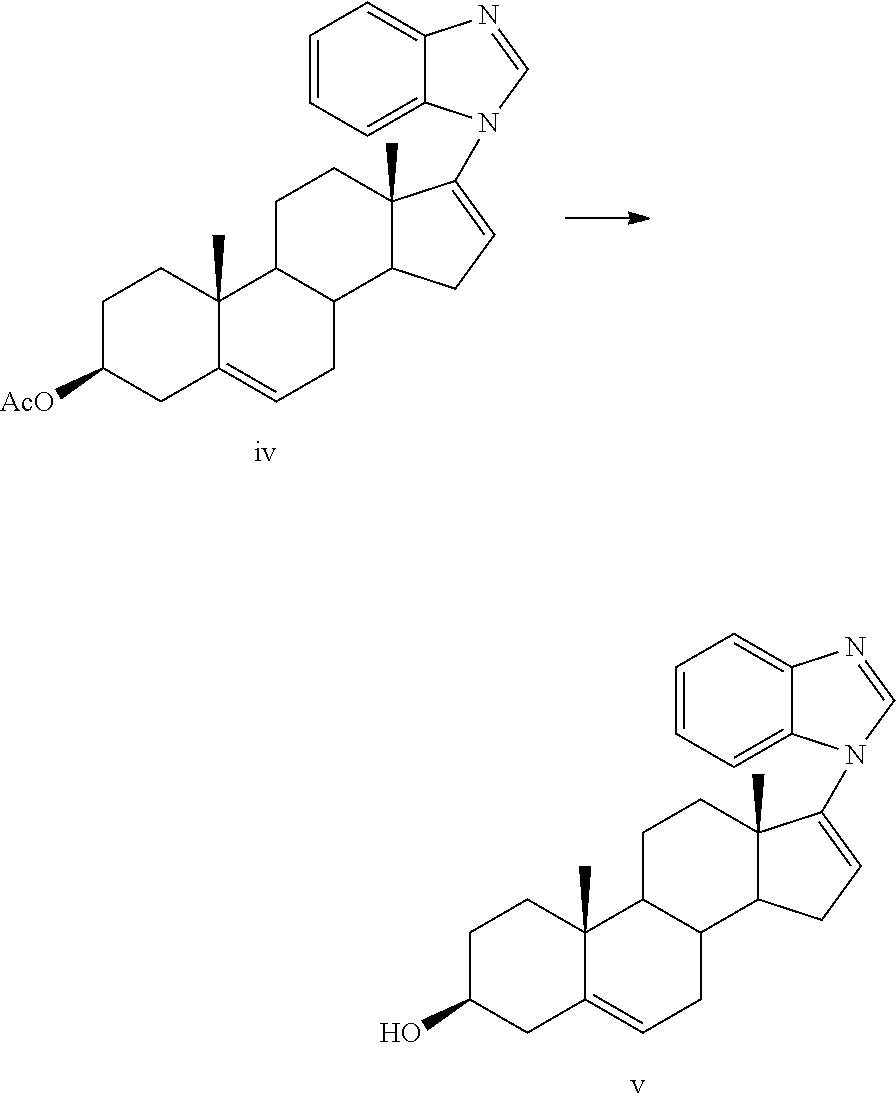

or a pharmaceutically acceptable salt, N-oxide, active metabolite, prodrug, or solvate thereof; wherein R1 is H or acetyl; R2 is pyridyl or benzimidazole; and a solid matrix. In some embodiments, the compound of Formula I is dispersed in said solid matrix.
Claims (30)

Priority Applications (1)
| Application Number | Priority Date | Filing Date | Title |
|---|---|---|---|
| US14/792,490 US9387216B2 (en) | 2013-08-12 | 2015-07-06 | Biomarkers for treatment of neoplastic disorders using androgen-targeted therapies |
Applications Claiming Priority (6)
| Application Number | Priority Date | Filing Date | Title |
|---|---|---|---|
| US201361865038P | 2013-08-12 | 2013-08-12 | |
| US201461990570P | 2014-05-08 | 2014-05-08 | |
| US201462002110P | 2014-05-22 | 2014-05-22 | |
| US14/758,938 US9808472B2 (en) | 2013-08-12 | 2014-08-12 | Biomarkers for treatment of neoplastic disorders using androgen-targeted therapies |
| PCT/US2014/050793 WO2015023710A1 (en) | 2013-08-12 | 2014-08-12 | Biomarkers for treatment of neoplastic disorders using androgen-targeted therapies |
| US14/792,490 US9387216B2 (en) | 2013-08-12 | 2015-07-06 | Biomarkers for treatment of neoplastic disorders using androgen-targeted therapies |
Related Parent Applications (2)
| Application Number | Title | Priority Date | Filing Date |
|---|---|---|---|
| PCT/US2014/050793 Continuation WO2015023710A1 (en) | 2013-08-12 | 2014-08-12 | Biomarkers for treatment of neoplastic disorders using androgen-targeted therapies |
| US14/758,938 Continuation US9808472B2 (en) | 2013-08-12 | 2014-08-12 | Biomarkers for treatment of neoplastic disorders using androgen-targeted therapies |
Publications (2)
| Publication Number | Publication Date |
|---|---|
| US20150374721A1 US20150374721A1 (en) | 2015-12-31 |
| US9387216B2 true US9387216B2 (en) | 2016-07-12 |
Family
ID=52468645
Family Applications (2)
| Application Number | Title | Priority Date | Filing Date |
|---|---|---|---|
| US14/758,938 Expired - Fee Related US9808472B2 (en) | 2013-08-12 | 2014-08-12 | Biomarkers for treatment of neoplastic disorders using androgen-targeted therapies |
| US14/792,490 Expired - Fee Related US9387216B2 (en) | 2013-08-12 | 2015-07-06 | Biomarkers for treatment of neoplastic disorders using androgen-targeted therapies |
Family Applications Before (1)
| Application Number | Title | Priority Date | Filing Date |
|---|---|---|---|
| US14/758,938 Expired - Fee Related US9808472B2 (en) | 2013-08-12 | 2014-08-12 | Biomarkers for treatment of neoplastic disorders using androgen-targeted therapies |
Country Status (13)
| Country | Link |
|---|---|
| US (2) | US9808472B2 (en) |
| EP (1) | EP3033088A4 (en) |
| JP (1) | JP2016528252A (en) |
| KR (1) | KR20160058774A (en) |
| CN (1) | CN105636594A (en) |
| AU (1) | AU2014306698A1 (en) |
| BR (1) | BR112016002970A2 (en) |
| CA (1) | CA2920317A1 (en) |
| IL (1) | IL243419A0 (en) |
| MX (1) | MX2016001901A (en) |
| RU (1) | RU2016104643A (en) |
| SG (1) | SG11201600525XA (en) |
| WO (1) | WO2015023710A1 (en) |
Cited By (6)
| Publication number | Priority date | Publication date | Assignee | Title |
|---|---|---|---|---|
| US20170268063A1 (en) * | 2014-05-19 | 2017-09-21 | The Johns Hopkins University | Methods for identifying androgen receptor splice variants in subjects having castration resistant prostate cancer |
| US9808472B2 (en) | 2013-08-12 | 2017-11-07 | Tokai Pharmaceuticals, Inc. | Biomarkers for treatment of neoplastic disorders using androgen-targeted therapies |
| US9884067B2 (en) | 2013-03-14 | 2018-02-06 | University Of Maryland, Baltimore | Androgen receptor down-regulating agents and uses thereof |
| US11224575B2 (en) | 2014-12-05 | 2022-01-18 | Aragon Pharmaceuticals, Inc. | Anticancer compositions |
| US20220151931A1 (en) * | 2014-12-05 | 2022-05-19 | Aragon Pharmaceuticals, Inc. | Anticancer compositions |
| US12303493B2 (en) | 2014-12-05 | 2025-05-20 | Aragon Pharmaceuticals, Inc. | Anticancer compositions |
Families Citing this family (25)
| Publication number | Priority date | Publication date | Assignee | Title |
|---|---|---|---|---|
| US20100048524A1 (en) | 2008-03-14 | 2010-02-25 | Angela Brodie | Novel C-17-Heteroaryl Steroidal CYP17 Inhibitors/Antiandrogens;Synthesis In Vitro Biological Activities, Pharmacokinetics and Antitumor Activity |
| EP3062106B1 (en) | 2008-04-16 | 2020-11-11 | The Johns Hopkins University | Method for determining androgen receptor variants in prostate cancer |
| WO2014052237A1 (en) | 2012-09-26 | 2014-04-03 | Aragon Pharmaceuticals, Inc. | Anti-androgens for the treatment of non-metastatic castrate-resistant prostate cancer |
| AU2015259571B2 (en) | 2014-05-12 | 2021-04-15 | Janssen Pharmaceutica Nv | Biological markers for identifying patients for treatment with abiraterone acetate |
| WO2016033114A1 (en) * | 2014-08-25 | 2016-03-03 | The Johns Hopkins University | Methods and compositions related to prostate cancer therapeutics |
| US10524686B2 (en) * | 2014-12-01 | 2020-01-07 | The Regents Of The University Of California | Diffusion reproducibility evaluation and measurement (DREAM)-MRI imaging methods |
| US20180057889A1 (en) | 2015-03-25 | 2018-03-01 | The General Hospital Corporation | Digital Analysis of Circulating Tumor Cells in Blood Samples |
| WO2017181161A1 (en) * | 2016-04-15 | 2017-10-19 | Predicine, Inc. | Systems and methods for detecting genetic alterations |
| CA3024301A1 (en) | 2016-05-23 | 2017-11-30 | Yale University | Improved therapeutic index of anti-immune checkpoint inhibitors using combination therapy comprising a phy906 extract, a scutellaria baicalensis georgi (s) extract or a compound from such extracts |
| ITUA20164793A1 (en) * | 2016-06-30 | 2017-12-30 | Ind Chimica Srl | Process for the preparation of 3β-hydroxy-17- (1H-benzimidazol-1-yl) androsta-5,16-diene |
| EP3464623B1 (en) * | 2016-06-02 | 2021-09-01 | Sint-Augustinus | Androgen receptor splice variants and androgen deprivation therapy |
| WO2018023017A1 (en) * | 2016-07-29 | 2018-02-01 | Janssen Pharmaceutica Nv | Methods of treating prostate cancer |
| JOP20190067A1 (en) * | 2016-09-30 | 2019-03-28 | Janssen Pharmaceutica Nv | Methods of diagnosing and treating abiraterone acetate- glucocorticoid -resistant or -sensitive metastatic castration resistant prostate cancer |
| CN110050075B (en) * | 2016-10-27 | 2024-04-02 | 通用医疗公司 | Digital analysis of blood samples for determining efficacy of cancer therapies for specific cancers |
| WO2018217237A1 (en) * | 2017-05-26 | 2018-11-29 | Genyous Biomed International | Combination therapy for cancer using botanical compositions and enzalutamide |
| WO2018222979A1 (en) * | 2017-06-02 | 2018-12-06 | Epic Sciences, Inc. | Methods of determining therapies based on single cell characterization of circulating tumor cells (ctcs) in metastatic disease |
| WO2019023651A2 (en) | 2017-07-28 | 2019-01-31 | Massachusetts Institute Of Technology | Small molecule modulators of the androgen receptor |
| WO2019023654A2 (en) * | 2017-07-28 | 2019-01-31 | Massachusetts Institute Of Technology | Discovery of small molecules that target the androgen receptor and uses thereof |
| CN107375276B (en) * | 2017-07-28 | 2021-03-16 | 广东工业大学 | A kind of pharmaceutical composition and its application |
| KR20240096623A (en) * | 2017-10-16 | 2024-06-26 | 아라곤 파마슈티컬스, 인코포레이티드 | Anti-androgens for the treatment of non-metastatic castration-resistant |
| CN107722101A (en) * | 2017-11-03 | 2018-02-23 | 郑州大学 | Steroidal pyridine derivatives and its preparation method and application |
| CN112687354B (en) * | 2019-01-29 | 2022-07-12 | 杭州纽安津生物科技有限公司 | Polypeptide vaccine composition of kinase inhibitor aiming at targeted drugs PI3K, AKT and mTOR pathways and design method thereof |
| RU2731002C1 (en) * | 2019-10-22 | 2020-08-26 | Государственное бюджетное учреждение здравоохранения Московской области "Московский областной научно-исследовательский клинический институт им. М.Ф. Владимирского" (ГБУЗ МО МОНИКИ им. М.Ф. Владимирского) | Method of treating prostate cancer |
| KR102543618B1 (en) * | 2021-05-27 | 2023-06-13 | 사회복지법인 삼성생명공익재단 | Novel biomarker for predicting of resistance against enzalutamide of prostate cancer and uses thereof |
| CN114113633B (en) * | 2021-12-27 | 2024-05-24 | 复旦大学 | Molecular markers and kits for prostate cancer risk diagnosis and efficacy evaluation |
Citations (181)
| Publication number | Priority date | Publication date | Assignee | Title |
|---|---|---|---|---|
| US2664423A (en) | 1952-03-12 | 1953-12-29 | Searle & Co | 4-(cyclopentanopolyhydrophenanthr-17-yl) imidazoles and derivatives thereof |
| US3060174A (en) | 1960-01-14 | 1962-10-23 | Ciba Geigy Corp | Esters of the androstane series and process for their manufacture |
| GB972672A (en) | 1960-01-14 | 1964-10-14 | Ciba Ltd | Pharmaceutical preparations containing compounds of the androstane series |
| US3313809A (en) | 1965-03-05 | 1967-04-11 | Sterling Drug Inc | Steroido[21, 20-d]isoxazoles |
| US3317520A (en) | 1965-03-05 | 1967-05-02 | Sterling Drug Inc | Steroido[20, 21-c]pyrazoles and intermediates |
| US3480621A (en) | 1967-01-17 | 1969-11-25 | Phytogen Prod Inc | Steroid ketal |
| US3539687A (en) | 1965-09-03 | 1970-11-10 | Schering Ag | Medicinal compositions containing 5beta - bisnorcholane-22-amino derivative as an active ingredient |
| JPS5141372A (en) | 1974-08-08 | 1976-04-07 | Siphar Sa | |
| JPS563000Y2 (en) | 1976-07-27 | 1981-01-23 | ||
| US4316885A (en) | 1980-08-25 | 1982-02-23 | Ayerst, Mckenna And Harrison, Inc. | Acyl derivatives of rapamycin |
| US4650803A (en) | 1985-12-06 | 1987-03-17 | University Of Kansas | Prodrugs of rapamycin |
| US5023263A (en) | 1990-08-09 | 1991-06-11 | American Home Products Corporation | 42-oxorapamycin |
| US5023264A (en) | 1990-07-16 | 1991-06-11 | American Home Products Corporation | Rapamycin oximes |
| US5028726A (en) | 1990-02-07 | 1991-07-02 | The University Of Vermont And State Agricultural College | Platinum amine sulfoxide complexes |
| EP0469548A2 (en) | 1990-08-01 | 1992-02-05 | Merrell Pharmaceuticals Inc. | 4-Amino-delta4-steroids and their use as 5alpha-reductase inhibitors |
| US5100883A (en) | 1991-04-08 | 1992-03-31 | American Home Products Corporation | Fluorinated esters of rapamycin |
| WO1992005179A1 (en) | 1990-09-19 | 1992-04-02 | American Home Products Corporation | Carboxylic acid esters of rapamycin |
| US5104895A (en) | 1988-04-01 | 1992-04-14 | Boehringer Mannheim Italia S.P.A. | Platinum(ii) complexes, their preparation and use as anti-tumor agents |
| US5118677A (en) | 1991-05-20 | 1992-06-02 | American Home Products Corporation | Amide esters of rapamycin |
| US5118678A (en) | 1991-04-17 | 1992-06-02 | American Home Products Corporation | Carbamates of rapamycin |
| US5120842A (en) | 1991-04-01 | 1992-06-09 | American Home Products Corporation | Silyl ethers of rapamycin |
| US5151413A (en) | 1991-11-06 | 1992-09-29 | American Home Products Corporation | Rapamycin acetals as immunosuppressant and antifungal agents |
| US5162333A (en) | 1991-09-11 | 1992-11-10 | American Home Products Corporation | Aminodiesters of rapamycin |
| US5177203A (en) | 1992-03-05 | 1993-01-05 | American Home Products Corporation | Rapamycin 42-sulfonates and 42-(N-carboalkoxy) sulfamates useful as immunosuppressive agents |
| WO1993011130A1 (en) | 1991-12-03 | 1993-06-10 | Smithkline Beecham Plc | Rapamycin derivative and its medicinal use |
| US5221670A (en) | 1990-09-19 | 1993-06-22 | American Home Products Corporation | Rapamycin esters |
| US5232917A (en) | 1987-08-25 | 1993-08-03 | University Of Southern California | Methods, compositions, and compounds for allosteric modulation of the GABA receptor by members of the androstane and pregnane series |
| US5233036A (en) | 1990-10-16 | 1993-08-03 | American Home Products Corporation | Rapamycin alkoxyesters |
| US5237064A (en) | 1992-05-20 | 1993-08-17 | Merck & Co., Inc. | Process for producing 7β-substituted-aza-5αandrostan-3-ones |
| WO1993020097A1 (en) | 1992-03-31 | 1993-10-14 | British Technology Group Ltd. | 17-substituted steroids useful in cancer treatment |
| US5256790A (en) | 1992-08-13 | 1993-10-26 | American Home Products Corporation | 27-hydroxyrapamycin and derivatives thereof |
| US5258389A (en) | 1992-11-09 | 1993-11-02 | Merck & Co., Inc. | O-aryl, O-alkyl, O-alkenyl and O-alkynylrapamycin derivatives |
| US5260300A (en) | 1992-11-19 | 1993-11-09 | American Home Products Corporation | Rapamycin carbonate esters as immuno-suppressant agents |
| US5262423A (en) | 1992-10-29 | 1993-11-16 | American Home Products Corporation | Rapamycin arylcarbonyl and alkoxycarbonyl carbamates as immunosuppressive and antifungal agents |
| US5264427A (en) | 1992-01-29 | 1993-11-23 | Research Corporation Technologies, Inc. | 20-substituted pregnene derivatives and their use as androgen synthesis inhibitors |
| US5270163A (en) | 1990-06-11 | 1993-12-14 | University Research Corporation | Methods for identifying nucleic acid ligands |
| WO1994002136A1 (en) | 1992-07-17 | 1994-02-03 | Smithkline Beecham Corporation | Rapamycin derivatives |
| WO1994002485A1 (en) | 1992-07-17 | 1994-02-03 | Smithkline Beecham Corporation | Rapamycin derivatives |
| US5300294A (en) | 1990-06-27 | 1994-04-05 | Smithkline Beecham Corporation | Method of treating prostatic adenocarcinoma |
| US5302584A (en) | 1992-10-13 | 1994-04-12 | American Home Products Corporation | Carbamates of rapamycin |
| WO1994009010A1 (en) | 1992-10-09 | 1994-04-28 | Sandoz Ltd. | O-alkylated rapamycin derivatives and their use, particularly as immunosuppressants |
| JPH06192287A (en) | 1992-09-29 | 1994-07-12 | Sigma Tau Ind Farmaceut Riunite Spa | 17-aryl or 17-heterocyclyl-14beta-5alpha-androstane, androstene and androstadiene derivatives effective for cardiovascular system, their preparation and medicinal compositions containing them |
| US5362718A (en) | 1994-04-18 | 1994-11-08 | American Home Products Corporation | Rapamycin hydroxyesters |
| WO1994025626A1 (en) | 1993-04-30 | 1994-11-10 | Pacific Northwest Research Foundation | Dna profiles as an indicator of cellular redox potential and cancer risk |
| US5373014A (en) | 1993-10-08 | 1994-12-13 | American Home Products Corporation | Rapamycin oximes |
| US5378836A (en) | 1993-10-08 | 1995-01-03 | American Home Products Corporation | Rapamycin oximes and hydrazones |
| US5385936A (en) | 1990-07-12 | 1995-01-31 | The United States Of America As Represented By The Secretary Of The Department Of The Health And Human Services | Gossypol acetic acid for the treatment of cancer |
| US5385910A (en) | 1993-11-22 | 1995-01-31 | American Home Products Corporation | Gem-distributed esters of rapamycin |
| US5385908A (en) | 1993-11-22 | 1995-01-31 | American Home Products Corporation | Hindered esters of rapamycin |
| US5385909A (en) | 1993-11-22 | 1995-01-31 | American Home Products Corporation | Heterocyclic esters of rapamycin |
| US5389639A (en) | 1993-12-29 | 1995-02-14 | American Home Products Company | Amino alkanoic esters of rapamycin |
| US5391730A (en) | 1993-10-08 | 1995-02-21 | American Home Products Corporation | Phosphorylcarbamates of rapamycin and oxime derivatives thereof |
| US5411967A (en) | 1992-10-13 | 1995-05-02 | American Home Products Corporation | Carbamates of rapamycin |
| WO1995014023A1 (en) | 1993-11-19 | 1995-05-26 | Abbott Laboratories | Semisynthetic analogs of rapamycin (macrolides) being immunomodulators |
| WO1995016691A1 (en) | 1993-12-17 | 1995-06-22 | Sandoz Ltd. | Rapamycin derivatives useful as immunosuppressants |
| US5434260A (en) | 1992-10-13 | 1995-07-18 | American Home Products Corporation | Carbamates of rapamycin |
| US5456923A (en) | 1991-04-16 | 1995-10-10 | Nippon Shinyaku Company, Limited | Method of manufacturing solid dispersion |
| US5463048A (en) | 1994-06-14 | 1995-10-31 | American Home Products Corporation | Rapamycin amidino carbamates |
| US5475096A (en) | 1990-06-11 | 1995-12-12 | University Research Corporation | Nucleic acid ligands |
| US5480989A (en) | 1992-10-13 | 1996-01-02 | American Home Products Corporation | Carbamates of rapamycin |
| US5480988A (en) | 1992-10-13 | 1996-01-02 | American Home Products Corporation | Carbamates of rapamycin |
| US5489680A (en) | 1992-10-13 | 1996-02-06 | American Home Products Corporation | Carbamates of rapamycin |
| US5491231A (en) | 1994-11-28 | 1996-02-13 | American Home Products Corporation | Hindered N-oxide esters of rapamycin |
| US5504091A (en) | 1993-04-23 | 1996-04-02 | American Home Products Corporation | Biotin esters of rapamycin |
| US5512570A (en) | 1994-03-04 | 1996-04-30 | Merck & Co., Inc. | Treatment of emesis with morpholine tachykinin receptor antagonists |
| US5563145A (en) | 1994-12-07 | 1996-10-08 | American Home Products Corporation | Rapamycin 42-oximes and hydroxylamines |
| US5567588A (en) | 1990-06-11 | 1996-10-22 | University Research Corporation | Systematic evolution of ligands by exponential enrichment: Solution SELEX |
| WO1996041807A1 (en) | 1995-06-09 | 1996-12-27 | Novartis Ag | Rapamycin derivatives |
| US5595877A (en) | 1990-06-11 | 1997-01-21 | Nexstar Pharmaceuticals, Inc. | Methods of producing nucleic acid ligands |
| US5604213A (en) | 1992-03-31 | 1997-02-18 | British Technology Group Limited | 17-substituted steroids useful in cancer treatment |
| US5620986A (en) | 1992-05-20 | 1997-04-15 | Merck & Co., Inc. | 17 urea, thiourea, thiocarbamyl and carbamyl4-azasteroid 5-reductase inhibitors useful in the prevention and treatment of hyperandrogenic disorders |
| US5637459A (en) | 1990-06-11 | 1997-06-10 | Nexstar Pharmaceuticals, Inc. | Systematic evolution of ligands by exponential enrichment: chimeric selex |
| US5637310A (en) | 1993-12-20 | 1997-06-10 | Smithkline Beecham Corporation | Method of treating prostatic adenocarcinoma |
| US5660985A (en) | 1990-06-11 | 1997-08-26 | Nexstar Pharmaceuticals, Inc. | High affinity nucleic acid ligands containing modified nucleotides |
| US5683867A (en) | 1990-06-11 | 1997-11-04 | Nexstar Pharmaceuticals, Inc. | Systematic evolution of ligands by exponential enrichment: blended SELEX |
| US5707796A (en) | 1990-06-11 | 1998-01-13 | Nexstar Pharmaceuticals, Inc. | Method for selecting nucleic acids on the basis of structure |
| WO1998002441A2 (en) | 1996-07-12 | 1998-01-22 | Ariad Pharmaceuticals, Inc. | Non immunosuppressive antifungal rapalogs |
| US5741795A (en) | 1995-10-19 | 1998-04-21 | Merck & Co., Inc. | 16-substituted-6-aza-androsten-4-ene-3-ones as 5-α-reductase inhibitors |
| US5780462A (en) | 1995-12-27 | 1998-07-14 | American Home Products Corporation | Water soluble rapamycin esters |
| US5994334A (en) | 1997-02-05 | 1999-11-30 | University Of Maryland | Androgen synthesis inhibitors |
| US5994335A (en) | 1997-10-17 | 1999-11-30 | The University Of Maryland, Baltimore | 17-azolyl steroids useful as androgen synthesis inhibitors |
| WO1999063974A2 (en) | 1998-06-11 | 1999-12-16 | Endorecherche, Inc. | Selective estrogen receptor modulator in combination with denydroepiandrosterone (dhea) or analogues |
| US6011020A (en) | 1990-06-11 | 2000-01-04 | Nexstar Pharmaceuticals, Inc. | Nucleic acid ligand complexes |
| WO2001014387A1 (en) | 1999-08-24 | 2001-03-01 | Ariad Gene Therapeutics, Inc. | 28-epirapalogs |
| WO2001019828A2 (en) | 1999-09-17 | 2001-03-22 | Basf Aktiengesellschaft | Kinase inhibitors as therapeutic agents |
| US20020009494A1 (en) | 1997-08-11 | 2002-01-24 | Curatolo William J. | Solid pharmaceutical dispersions with enhanced bioavailability |
| US6368598B1 (en) | 1996-09-16 | 2002-04-09 | Jcrt Radiation Oncology Support Services, Inc. | Drug complex for treatment of metastatic prostate cancer |
| US6444649B1 (en) | 1998-04-10 | 2002-09-03 | Mitsubishi Chemical Corporation | Solid dispersion containing sialic acid derivative |
| US20030054053A1 (en) | 2001-09-20 | 2003-03-20 | Charles Young | Methods and compositions for inhibiting the proliferation of prostate cancer cells |
| US20030059471A1 (en) | 1997-12-15 | 2003-03-27 | Compton Bruce Jon | Oral delivery formulation |
| US6548555B1 (en) | 1999-02-09 | 2003-04-15 | Pfizer Inc | Basic drug compositions with enhanced bioavailability |
| WO2003032950A1 (en) | 2001-10-15 | 2003-04-24 | Astrazeneca Ab | Pharmaceutical formulation comprising (r) -bicalutamide |
| US20040058896A1 (en) | 2000-12-07 | 2004-03-25 | Rango Dietrich | Pharmaceutical preparation comprising an active dispersed on a matrix |
| US6763607B2 (en) | 2002-02-01 | 2004-07-20 | Pfizer Inc. | Method for making homogeneous spray-dried solid amorphous drug dispersions utilizing modified spray-drying apparatus |
| WO2005009429A1 (en) | 2003-07-18 | 2005-02-03 | Idexx Laboratories, Inc. | Compositions containing prodrugs of florfenicol and methods of use |
| WO2005014023A1 (en) | 2003-07-29 | 2005-02-17 | Dompe' Pha.R.Ma S.P.A. | Pharmaceutical combination of g-csf and plgf useful for blood stem cell |
| WO2005047289A1 (en) | 2003-11-17 | 2005-05-26 | Pfizer Products Inc. | Pyrrolopyrimidine compounds useful in treatment of cancer |
| US6933312B2 (en) | 2002-10-07 | 2005-08-23 | Agouron Pharmaceuticals, Inc. | Pyrazole derivatives |
| WO2005097107A2 (en) | 2004-04-08 | 2005-10-20 | Topotarget A/S | Diphenyl - indol-2-on compounds and their use in the treatment of cancer |
| US6960584B2 (en) | 2001-04-10 | 2005-11-01 | Merck & Co., Inc. | Inhibitors of Akt activity |
| US6982258B2 (en) | 2001-10-12 | 2006-01-03 | Cytochroma Inc. | Low-calcemic oxime analogs of 1α,25-dihydroxy vitamin D3 |
| US20060013873A1 (en) | 2004-07-16 | 2006-01-19 | Chih-Chiang Yang | Bioadhesive dosage form of steroids |
| US7098208B2 (en) | 2001-04-10 | 2006-08-29 | Merck & Co., Inc. | Inhibitors of Akt activity |
| WO2006093993A1 (en) | 2005-03-02 | 2006-09-08 | University Of Maryland | Novel c-17-heteroaryl steroidal cyp17 inhibitors/antiandrogens: synthesis, in vitro biological activities, pharmacokinetics and antitumor activity |
| EP1712222A2 (en) | 1999-12-23 | 2006-10-18 | Pfizer Products Inc. | Pharmaceutical compositions providing enhanced drug concentrations |
| US20070037887A1 (en) | 2003-08-22 | 2007-02-15 | University Of Virginia Patent Foundation | Blockade of mtor to prevent a hormonal adaptive response |
| US7192974B2 (en) | 2003-03-01 | 2007-03-20 | Astrazeneca Ab | Hydroxymethyl substituted dihydroisoxazole derivatives useful as antibiotic agents |
| US7223738B2 (en) | 2002-04-08 | 2007-05-29 | Merck & Co., Inc. | Inhibitors of Akt activity |
| WO2007061737A2 (en) | 2005-11-17 | 2007-05-31 | Osi Pharmaceuticals, Inc. | FUSED BICYCLIC mTOR INHIBITORS |
| WO2007064993A2 (en) | 2005-12-02 | 2007-06-07 | Osi Pharmaceuticals, Inc. | Bicyclic protein kinase inhibitors |
| WO2007087395A2 (en) | 2006-01-25 | 2007-08-02 | Osi Pharmaceuticals, Inc. | UNSATURATED mTOR INHIBITORS |
| US20070185152A1 (en) | 2004-03-02 | 2007-08-09 | Smithkline Beecham Corporation | Inhibitors of akt activity |
| CN101023349A (en) | 2004-03-31 | 2007-08-22 | 约翰·霍普金斯大学 | Biomarkers for ovarian cancer |
| US20070238647A1 (en) | 2005-07-14 | 2007-10-11 | Voyager Pharmaceutical Corporation | Methods for treating prostate cancer |
| US7304063B2 (en) | 2003-04-24 | 2007-12-04 | Merck & Co., Inc. | Inhibitors of Akt activity |
| WO2008027855A2 (en) | 2006-08-30 | 2008-03-06 | Novartis Ag | Compositions and methods for modulating mtor signaling |
| US20080058301A1 (en) | 1999-09-30 | 2008-03-06 | Hollis-Eden Pharmaceuticals, Inc. | Formulations |
| US7378403B2 (en) | 2002-09-03 | 2008-05-27 | The United States Of America As Represented By The Department Of Health And Human Services | Akt inhibitors, pharmaceutical compositions, and uses thereof |
| US7396832B2 (en) | 2002-04-08 | 2008-07-08 | Merck & Co., Inc. | Inhibitors of Akt activity |
| US7399764B2 (en) | 2002-10-30 | 2008-07-15 | Merck & Co., Inc. | Inhibitors of Akt activity |
| US7414055B2 (en) | 2003-04-24 | 2008-08-19 | Merck & Co., Inc. | Inhibitors of Akt activity |
| WO2008109163A1 (en) | 2007-03-07 | 2008-09-12 | Abraxis Bioscience, Llc. | Nanoparticle comprising rapamycin and albumin as anticancer agent |
| WO2008154382A1 (en) | 2007-06-06 | 2008-12-18 | University Of Maryland, Baltimore | Hdac inhibitors and hormone targeted drugs for the treatment of cancer |
| US20090012045A1 (en) | 2007-06-26 | 2009-01-08 | Rigel Pharmaceuticals, Inc. | Methods of Treating Cell Proliferative Disorders |
| US20090047252A1 (en) | 2007-06-29 | 2009-02-19 | Gilead Sciences, Inc. | Antiviral compounds |
| US20090048149A1 (en) | 2003-10-22 | 2009-02-19 | Amgen Inc. | Antagonists of the bradykinin B1 receptor |
| US7544677B2 (en) | 2004-08-23 | 2009-06-09 | Merck & Co., Inc. | Inhibitors of Akt activity |
| US7576209B2 (en) | 2006-12-06 | 2009-08-18 | Merck & Co., Inc. | Inhibitors of Akt activity |
| US7579355B2 (en) | 2003-04-24 | 2009-08-25 | Merck & Co., Inc. | Inhibitors of Akt activity |
| US20090221672A1 (en) | 2005-09-19 | 2009-09-03 | The Johns Hopkins University | Biomarker for Prostate Cancer |
| EP1530457B1 (en) | 2002-08-12 | 2009-09-09 | Bend Research, Inc. | Pharmaceutical compositions of drugs in semi-ordered form and polymers |
| US7589068B2 (en) | 2005-02-14 | 2009-09-15 | Merck & Co., Inc. | Inhibitors of Akt activity |
| WO2009114658A2 (en) | 2008-03-12 | 2009-09-17 | University Of Maryland, Baltimore | Androgen receptor inactivation contributes to antitumor efficacy of cyp17 inhibitors in prostate cancer |
| WO2009120565A2 (en) | 2008-03-25 | 2009-10-01 | University Of Maryland, Baltimore | Novel prodrugs of c-17-heteroaryl steroidal cyp17 inhibitors/antiandrogens: synthesis, in vitro biological activities, pharmacokinetics and antitumor activity |
| US7604947B2 (en) | 2004-06-09 | 2009-10-20 | Cornell Research Foundation, Inc. | Detection and modulation of cancer stem cells |
| US7638530B2 (en) | 2003-04-24 | 2009-12-29 | Merck & Co., Inc. | Inhibitors of Akt activity |
| US20100009397A1 (en) | 2006-12-07 | 2010-01-14 | University Of South Florida | Substrate-mimetic akt inhibitor |
| US7655649B2 (en) | 2004-04-09 | 2010-02-02 | Merck Sharp & Dohme Corp. | Inhibitors of Akt activity |
| US20100029667A1 (en) | 2006-10-17 | 2010-02-04 | Bend Research Inc. | Spray dried formulation |
| US20100048914A1 (en) | 2008-03-14 | 2010-02-25 | Angela Brodie | Novel C-17-Heteroaryl Steroidal Cyp17 Inhibitors/Antiandrogens, In Vitro Biological Activities, Pharmacokinetics and Antitumor Activity |
| WO2010028646A1 (en) | 2008-09-12 | 2010-03-18 | Dako Denmark A/S | Prostate cancer biomarker |
| US20100068802A1 (en) | 2008-09-17 | 2010-03-18 | University Of Maryland, Baltimore | Novel human androgen receptor alternative splice variants as biomarkers and therapeutic targets |
| US7705014B2 (en) | 2005-04-12 | 2010-04-27 | Merck Sharp & Dohme Corp. | Inhibitors of AKT activity |
| US7750151B2 (en) | 2004-04-09 | 2010-07-06 | Merck Sharp & Dohme Corp. | Inhibitors of Akt activity |
| WO2010089763A2 (en) | 2008-06-30 | 2010-08-12 | Reliance Life Sciences Pvt. Ltd. | Poly(n-vinyl caprolactam-co-acrylamide) microparticles for controlled release applications |
| WO2010091306A1 (en) | 2009-02-05 | 2010-08-12 | Tokai Pharmaceuticals | Novel prodrugs of steroidal cyp17 inhibitors/antiandrogens |
| WO2010091299A2 (en) | 2009-02-05 | 2010-08-12 | Tokai Pharmaceuticals | Novel combination cancer therapies |
| US7780988B2 (en) | 2002-02-01 | 2010-08-24 | Bend Research, Inc. | Method for making homogeneous spray-dried solid amorphous drug dispersions using pressure nozzles |
| WO2010111132A2 (en) | 2009-03-27 | 2010-09-30 | Bend Research, Inc. | Spray-drying process |
| US7807393B2 (en) | 2007-01-29 | 2010-10-05 | Northwestern University | Biomarkers for prostate cancer |
| US20100298383A1 (en) | 2004-09-30 | 2010-11-25 | Raymond Ng | Novel benzimidazole derivatives useful as selective androgen receptor modulators (sarms) |
| US20110034428A1 (en) | 2009-08-07 | 2011-02-10 | Tokai Pharmaceuticals, Inc. | Treatment of Prostate Cancer |
| US7887840B2 (en) | 2001-06-22 | 2011-02-15 | Bend Research, Inc. | Pharmaceutical compositions comprising drug and concentration-enhancing polymers |
| US20110110926A1 (en) * | 2008-04-16 | 2011-05-12 | Johns Hopkins University | Compositions and methods for treating or preventing prostate cancer and for detecting androgen receptor variants |
| US7943732B2 (en) | 2006-06-05 | 2011-05-17 | Intrexon Corporation | AKT ligands and polynucleotides encoding AKT ligands |
| US7960435B2 (en) | 2006-12-15 | 2011-06-14 | University Of Maryland, Baltimore | Anti-cancer agents and androgen inhibition activity compound |
| US20110160170A1 (en) | 2008-04-14 | 2011-06-30 | Njar Vincent C | Compositions and methods of inducing endoplasmic reticulum stress response |
| US20110178070A1 (en) | 2008-06-24 | 2011-07-21 | Takeda Pharmaceutical Company Limited | PI3K/mTOR INHIBITORS |
| US20110195966A1 (en) | 2008-10-31 | 2011-08-11 | Novartis Ag | Combination of a phosphatidylinositol-3-kinase (pi3k) inhibitor and a mtor inhibitor |
| US8003651B2 (en) | 2006-07-06 | 2011-08-23 | Array Biopharma Inc. | Pyrimidyl cyclopentanes as AKT protein kinase inhibitors |
| US8008317B2 (en) | 2005-06-10 | 2011-08-30 | Merck Sharp & Dohme Corp. | Inhibitors of akt activtiy |
| US20110224223A1 (en) | 2008-07-08 | 2011-09-15 | The Regents Of The University Of California, A California Corporation | MTOR Modulators and Uses Thereof |
| WO2011116344A2 (en) | 2010-03-18 | 2011-09-22 | The Uab Research Foundation | Targeting cancer stem cells |
| US20110312924A1 (en) | 2009-02-05 | 2011-12-22 | Tokai Pharmaceuticals, Inc. | Novel steroidal cyp17 inhibitors/antiandrogens |
| US20110313229A1 (en) | 2008-07-24 | 2011-12-22 | Kiminobu Sugaya | Therapy Targeting Cancer Stem Cells |
| US20120028972A1 (en) | 2010-07-30 | 2012-02-02 | Lilly Wong | Biomarker assays for detecting or measuring inhibition of tor kinase activity |
| US8110550B2 (en) | 2007-06-06 | 2012-02-07 | University Of Maryland, Baltimore | HDAC inhibitors and hormone targeted drugs for the treatment of cancer |
| US8129184B2 (en) | 2006-09-26 | 2012-03-06 | Cedars-Sinai Medical Center | Cancer stem cell antigen vaccines and methods |
| US8168652B2 (en) | 2009-03-12 | 2012-05-01 | Merck Sharp & Dohme Corp. | Inhibitors of AKT activity |
| US8273782B2 (en) | 2007-02-07 | 2012-09-25 | Glaxosmithkline Llc | Inhibitors of Akt activity |
| WO2012129408A2 (en) | 2011-03-22 | 2012-09-27 | The Johns Hopkins University | Biomarkers for aggressive prostate cancer |
| US20120282331A1 (en) | 2009-11-13 | 2012-11-08 | Tokai Pharmaceuticals, Inc. | Mammalian metabolites of steroids |
| US8324221B2 (en) | 2008-01-09 | 2012-12-04 | Array Biopharma Inc. | Pyrimidyl cyclopentanes as Akt protein kinase inhibitors |
| WO2013012959A1 (en) | 2011-07-18 | 2013-01-24 | Tokai Pharmaceuticals, Inc. | Novel compositions and methods for treating prostate cancer |
| US20130130241A1 (en) | 2010-03-08 | 2013-05-23 | Regents Of The University Of Minnesota | Androgen receptor isoforms and methods |
| WO2013079964A1 (en) | 2011-11-30 | 2013-06-06 | Astrazeneca Ab | Combination treatment of cancer |
| WO2013096907A1 (en) | 2011-12-22 | 2013-06-27 | Tokai Pharmaceuticals, Inc. | Methods and compositions for combination therapy using p13k/mtor inhibitors |
| US8822438B2 (en) | 2006-08-25 | 2014-09-02 | Janssen Oncology, Inc. | Methods and compositions for treating cancer |
| US8841422B2 (en) | 2008-09-17 | 2014-09-23 | University Of Maryland, Baltimore | Human androgen receptor alternative splice variants |
| WO2014153215A1 (en) | 2013-03-14 | 2014-09-25 | University Of Maryland,Baltimore Office Of Technology Transfer | Androgen receptor down-regulating agents and uses thereof |
| WO2015023710A1 (en) | 2013-08-12 | 2015-02-19 | Tokai Pharmaceuticals, Inc. | Biomarkers for treatment of neoplastic disorders using androgen-targeted therapies |
Family Cites Families (38)
| Publication number | Priority date | Publication date | Assignee | Title |
|---|---|---|---|---|
| JPS563000A (en) | 1979-06-20 | 1981-01-13 | Green Cross Corp:The | Water-soluble cholesterol derivative |
| US4469689A (en) | 1983-03-30 | 1984-09-04 | The Upjohn Company | Sulfonate containing ester prodrugs of corticosteroids |
| US4816567A (en) | 1983-04-08 | 1989-03-28 | Genentech, Inc. | Recombinant immunoglobin preparations |
| GB8422238D0 (en) | 1984-09-03 | 1984-10-10 | Neuberger M S | Chimeric proteins |
| US4877611A (en) | 1986-04-15 | 1989-10-31 | Ribi Immunochem Research Inc. | Vaccine containing tumor antigens and adjuvants |
| US5843708A (en) | 1988-01-05 | 1998-12-01 | Ciba-Geigy Corporation | Chimeric antibodies |
| EP1690935A3 (en) | 1990-01-12 | 2008-07-30 | Abgenix, Inc. | Generation of xenogeneic antibodies |
| US5264428A (en) | 1990-02-16 | 1993-11-23 | Kanoldt Arzneimittel Gmbh | Use of stigmasta-4-en-3-one in the treatment of androgen dependent diseases |
| CA2090473A1 (en) | 1990-08-29 | 1992-03-01 | Robert M. Kay | Homologous recombinatin in mammalian cells |
| ES2136092T3 (en) | 1991-09-23 | 1999-11-16 | Medical Res Council | PROCEDURES FOR THE PRODUCTION OF HUMANIZED ANTIBODIES. |
| US6042828A (en) | 1992-09-07 | 2000-03-28 | Kyowa Hakko Kogyo Co., Ltd. | Humanized antibodies to ganglioside GM2 |
| US6180377B1 (en) | 1993-06-16 | 2001-01-30 | Celltech Therapeutics Limited | Humanized antibodies |
| US5858659A (en) | 1995-11-29 | 1999-01-12 | Affymetrix, Inc. | Polymorphism detection |
| US5578832A (en) | 1994-09-02 | 1996-11-26 | Affymetrix, Inc. | Method and apparatus for imaging a sample on a device |
| US5631734A (en) | 1994-02-10 | 1997-05-20 | Affymetrix, Inc. | Method and apparatus for detection of fluorescently labeled materials |
| US5571639A (en) | 1994-05-24 | 1996-11-05 | Affymax Technologies N.V. | Computer-aided engineering system for design of sequence arrays and lithographic masks |
| US6974666B1 (en) | 1994-10-21 | 2005-12-13 | Appymetric, Inc. | Methods of enzymatic discrimination enhancement and surface-bound double-stranded DNA |
| US5556752A (en) | 1994-10-24 | 1996-09-17 | Affymetrix, Inc. | Surface-bound, unimolecular, double-stranded DNA |
| WO1997027317A1 (en) | 1996-01-23 | 1997-07-31 | Affymetrix, Inc. | Nucleic acid analysis techniques |
| US5599695A (en) | 1995-02-27 | 1997-02-04 | Affymetrix, Inc. | Printing molecular library arrays using deprotection agents solely in the vapor phase |
| US6130364A (en) | 1995-03-29 | 2000-10-10 | Abgenix, Inc. | Production of antibodies using Cre-mediated site-specific recombination |
| US6113898A (en) | 1995-06-07 | 2000-09-05 | Idec Pharmaceuticals Corporation | Human B7.1-specific primatized antibodies and transfectomas expressing said antibodies |
| US6410690B1 (en) | 1995-06-07 | 2002-06-25 | Medarex, Inc. | Therapeutic compounds comprised of anti-Fc receptor antibodies |
| US5856174A (en) | 1995-06-29 | 1999-01-05 | Affymetrix, Inc. | Integrated nucleic acid diagnostic device |
| WO1997029212A1 (en) | 1996-02-08 | 1997-08-14 | Affymetrix, Inc. | Chip-based speciation and phenotypic characterization of microorganisms |
| US6458530B1 (en) | 1996-04-04 | 2002-10-01 | Affymetrix Inc. | Selecting tag nucleic acids |
| MY138883A (en) | 2000-08-29 | 2009-08-28 | Government Of Malaysia As Represented By The Ministry Of Science Tehnology And Innovation Malaysia | Use of asiatic acid for treatment of cencer |
| JP4585201B2 (en) | 2004-01-23 | 2010-11-24 | 丸善製薬株式会社 | Androgen receptor binding inhibitor, hair nourishing agent, sebum secretion inhibitor and prostate hypertrophy inhibitor |
| JP2007530582A (en) | 2004-03-26 | 2007-11-01 | ライジェル ファーマシューティカルズ, インコーポレイテッド | Heterocyclic antiviral compounds containing metabolizable moieties and uses thereof |
| US20060204588A1 (en) | 2005-03-10 | 2006-09-14 | Elan Pharma International Limited | Formulations of a nanoparticulate finasteride, dutasteride or tamsulosin hydrochloride, and mixtures thereof |
| DE102005011786A1 (en) | 2005-03-11 | 2006-09-14 | Pharmasol Gmbh | Process for preparing ultrafine submicron suspensions |
| CN101607985B (en) | 2008-12-24 | 2013-03-27 | 中国科学院生物物理研究所 | Monoclonal antibody for anti-human CEA, a composition containing same and application thereof |
| AU2011276363A1 (en) | 2010-07-06 | 2013-01-10 | Dicerna Pharmaceuticals, Inc. | Methods and compositions for the specific inhibition of androgen receptor by double-stranded RNA |
| BR112013017635A2 (en) | 2010-12-16 | 2016-10-11 | Biomarin Pharm Inc | cyp11b, cyp17 and / or cyp21 inhibitors |
| US8946409B2 (en) | 2011-01-27 | 2015-02-03 | Board Of Regents, The University Of Texas System | Polycyclic β lactam derivatives for the treatment of cancer |
| BR122017017921A2 (en) | 2012-07-27 | 2019-09-10 | Aragon Pharmaceuticals, Inc. | methods and system for determining resistance to androgen receptor therapy |
| WO2016033114A1 (en) | 2014-08-25 | 2016-03-03 | The Johns Hopkins University | Methods and compositions related to prostate cancer therapeutics |
| WO2016172517A1 (en) | 2015-04-24 | 2016-10-27 | Tokai Pharmaceuticals, Inc. | Methods of treating prostate cancer |
-
2014
- 2014-08-12 KR KR1020167006189A patent/KR20160058774A/en not_active Withdrawn
- 2014-08-12 JP JP2016534806A patent/JP2016528252A/en active Pending
- 2014-08-12 SG SG11201600525XA patent/SG11201600525XA/en unknown
- 2014-08-12 BR BR112016002970A patent/BR112016002970A2/en not_active Application Discontinuation
- 2014-08-12 CA CA2920317A patent/CA2920317A1/en not_active Abandoned
- 2014-08-12 EP EP14836226.2A patent/EP3033088A4/en not_active Withdrawn
- 2014-08-12 WO PCT/US2014/050793 patent/WO2015023710A1/en not_active Ceased
- 2014-08-12 RU RU2016104643A patent/RU2016104643A/en not_active Application Discontinuation
- 2014-08-12 US US14/758,938 patent/US9808472B2/en not_active Expired - Fee Related
- 2014-08-12 MX MX2016001901A patent/MX2016001901A/en unknown
- 2014-08-12 CN CN201480044702.8A patent/CN105636594A/en active Pending
- 2014-08-12 AU AU2014306698A patent/AU2014306698A1/en not_active Abandoned
-
2015
- 2015-07-06 US US14/792,490 patent/US9387216B2/en not_active Expired - Fee Related
- 2015-12-30 IL IL243419A patent/IL243419A0/en unknown
Patent Citations (234)
| Publication number | Priority date | Publication date | Assignee | Title |
|---|---|---|---|---|
| US2664423A (en) | 1952-03-12 | 1953-12-29 | Searle & Co | 4-(cyclopentanopolyhydrophenanthr-17-yl) imidazoles and derivatives thereof |
| US3060174A (en) | 1960-01-14 | 1962-10-23 | Ciba Geigy Corp | Esters of the androstane series and process for their manufacture |
| GB972672A (en) | 1960-01-14 | 1964-10-14 | Ciba Ltd | Pharmaceutical preparations containing compounds of the androstane series |
| US3313809A (en) | 1965-03-05 | 1967-04-11 | Sterling Drug Inc | Steroido[21, 20-d]isoxazoles |
| US3317520A (en) | 1965-03-05 | 1967-05-02 | Sterling Drug Inc | Steroido[20, 21-c]pyrazoles and intermediates |
| US3539687A (en) | 1965-09-03 | 1970-11-10 | Schering Ag | Medicinal compositions containing 5beta - bisnorcholane-22-amino derivative as an active ingredient |
| US3480621A (en) | 1967-01-17 | 1969-11-25 | Phytogen Prod Inc | Steroid ketal |
| JPS5141372A (en) | 1974-08-08 | 1976-04-07 | Siphar Sa | |
| US4000125A (en) | 1974-08-08 | 1976-12-28 | Siphar S.A. | Novel cardiotonic steroids, process for their preparation and therapeutical use |
| JPS563000Y2 (en) | 1976-07-27 | 1981-01-23 | ||
| US4316885A (en) | 1980-08-25 | 1982-02-23 | Ayerst, Mckenna And Harrison, Inc. | Acyl derivatives of rapamycin |
| US4650803A (en) | 1985-12-06 | 1987-03-17 | University Of Kansas | Prodrugs of rapamycin |
| US5232917A (en) | 1987-08-25 | 1993-08-03 | University Of Southern California | Methods, compositions, and compounds for allosteric modulation of the GABA receptor by members of the androstane and pregnane series |
| US5104895A (en) | 1988-04-01 | 1992-04-14 | Boehringer Mannheim Italia S.P.A. | Platinum(ii) complexes, their preparation and use as anti-tumor agents |
| US5028726A (en) | 1990-02-07 | 1991-07-02 | The University Of Vermont And State Agricultural College | Platinum amine sulfoxide complexes |
| US5475096A (en) | 1990-06-11 | 1995-12-12 | University Research Corporation | Nucleic acid ligands |
| US5696249A (en) | 1990-06-11 | 1997-12-09 | Nexstar Pharmaceuticals, Inc. | Nucleic acid ligands |
| US5270163A (en) | 1990-06-11 | 1993-12-14 | University Research Corporation | Methods for identifying nucleic acid ligands |
| US5567588A (en) | 1990-06-11 | 1996-10-22 | University Research Corporation | Systematic evolution of ligands by exponential enrichment: Solution SELEX |
| US5595877A (en) | 1990-06-11 | 1997-01-21 | Nexstar Pharmaceuticals, Inc. | Methods of producing nucleic acid ligands |
| US5637459A (en) | 1990-06-11 | 1997-06-10 | Nexstar Pharmaceuticals, Inc. | Systematic evolution of ligands by exponential enrichment: chimeric selex |
| US5660985A (en) | 1990-06-11 | 1997-08-26 | Nexstar Pharmaceuticals, Inc. | High affinity nucleic acid ligands containing modified nucleotides |
| US6011020A (en) | 1990-06-11 | 2000-01-04 | Nexstar Pharmaceuticals, Inc. | Nucleic acid ligand complexes |
| US5670637A (en) | 1990-06-11 | 1997-09-23 | Nexstar Pharmaceuticals, Inc. | Nucleic acid ligands |
| US5707796A (en) | 1990-06-11 | 1998-01-13 | Nexstar Pharmaceuticals, Inc. | Method for selecting nucleic acids on the basis of structure |
| US5683867A (en) | 1990-06-11 | 1997-11-04 | Nexstar Pharmaceuticals, Inc. | Systematic evolution of ligands by exponential enrichment: blended SELEX |
| US5300294A (en) | 1990-06-27 | 1994-04-05 | Smithkline Beecham Corporation | Method of treating prostatic adenocarcinoma |
| US5496556A (en) | 1990-06-27 | 1996-03-05 | Smithkline Beecham Corporation | Method of treating prostatic adenocarcinoma |
| US5385936A (en) | 1990-07-12 | 1995-01-31 | The United States Of America As Represented By The Secretary Of The Department Of The Health And Human Services | Gossypol acetic acid for the treatment of cancer |
| US5023264A (en) | 1990-07-16 | 1991-06-11 | American Home Products Corporation | Rapamycin oximes |
| EP0469548A2 (en) | 1990-08-01 | 1992-02-05 | Merrell Pharmaceuticals Inc. | 4-Amino-delta4-steroids and their use as 5alpha-reductase inhibitors |
| US5023263A (en) | 1990-08-09 | 1991-06-11 | American Home Products Corporation | 42-oxorapamycin |
| US5221670A (en) | 1990-09-19 | 1993-06-22 | American Home Products Corporation | Rapamycin esters |
| WO1992005179A1 (en) | 1990-09-19 | 1992-04-02 | American Home Products Corporation | Carboxylic acid esters of rapamycin |
| US5233036A (en) | 1990-10-16 | 1993-08-03 | American Home Products Corporation | Rapamycin alkoxyesters |
| US5120842A (en) | 1991-04-01 | 1992-06-09 | American Home Products Corporation | Silyl ethers of rapamycin |
| US5120842B1 (en) | 1991-04-01 | 1993-07-06 | A Failli Amedeo | |
| US5100883A (en) | 1991-04-08 | 1992-03-31 | American Home Products Corporation | Fluorinated esters of rapamycin |
| US5456923A (en) | 1991-04-16 | 1995-10-10 | Nippon Shinyaku Company, Limited | Method of manufacturing solid dispersion |
| US5118678A (en) | 1991-04-17 | 1992-06-02 | American Home Products Corporation | Carbamates of rapamycin |
| US5118677A (en) | 1991-05-20 | 1992-06-02 | American Home Products Corporation | Amide esters of rapamycin |
| US5162333A (en) | 1991-09-11 | 1992-11-10 | American Home Products Corporation | Aminodiesters of rapamycin |
| US5151413A (en) | 1991-11-06 | 1992-09-29 | American Home Products Corporation | Rapamycin acetals as immunosuppressant and antifungal agents |
| WO1993011130A1 (en) | 1991-12-03 | 1993-06-10 | Smithkline Beecham Plc | Rapamycin derivative and its medicinal use |
| US5264427A (en) | 1992-01-29 | 1993-11-23 | Research Corporation Technologies, Inc. | 20-substituted pregnene derivatives and their use as androgen synthesis inhibitors |
| US5177203A (en) | 1992-03-05 | 1993-01-05 | American Home Products Corporation | Rapamycin 42-sulfonates and 42-(N-carboalkoxy) sulfamates useful as immunosuppressive agents |
| WO1993020097A1 (en) | 1992-03-31 | 1993-10-14 | British Technology Group Ltd. | 17-substituted steroids useful in cancer treatment |
| US5604213A (en) | 1992-03-31 | 1997-02-18 | British Technology Group Limited | 17-substituted steroids useful in cancer treatment |
| JPH07505377A (en) | 1992-03-31 | 1995-06-15 | ブリテイツシユ・テクノロジー・グループ・リミテツド | 17-substituted steroid useful for cancer treatment |
| US5237064A (en) | 1992-05-20 | 1993-08-17 | Merck & Co., Inc. | Process for producing 7β-substituted-aza-5αandrostan-3-ones |
| US5620986A (en) | 1992-05-20 | 1997-04-15 | Merck & Co., Inc. | 17 urea, thiourea, thiocarbamyl and carbamyl4-azasteroid 5-reductase inhibitors useful in the prevention and treatment of hyperandrogenic disorders |
| WO1994002485A1 (en) | 1992-07-17 | 1994-02-03 | Smithkline Beecham Corporation | Rapamycin derivatives |
| WO1994002136A1 (en) | 1992-07-17 | 1994-02-03 | Smithkline Beecham Corporation | Rapamycin derivatives |
| US5256790A (en) | 1992-08-13 | 1993-10-26 | American Home Products Corporation | 27-hydroxyrapamycin and derivatives thereof |
| JPH06192287A (en) | 1992-09-29 | 1994-07-12 | Sigma Tau Ind Farmaceut Riunite Spa | 17-aryl or 17-heterocyclyl-14beta-5alpha-androstane, androstene and androstadiene derivatives effective for cardiovascular system, their preparation and medicinal compositions containing them |
| US5721227A (en) | 1992-09-29 | 1998-02-24 | Sigma-Tau Industrie Farmaceutiche Riunite S.P.A. | 17-aryl and 17-heterocyclyl-14β-5α-androstane, androstene and androstadiene derivatives active on the cardiovascular system, processes for their preparation and pharmaceutical compositions containing same |
| US5665772A (en) | 1992-10-09 | 1997-09-09 | Sandoz Ltd. | O-alkylated rapamycin derivatives and their use, particularly as immunosuppressants |
| WO1994009010A1 (en) | 1992-10-09 | 1994-04-28 | Sandoz Ltd. | O-alkylated rapamycin derivatives and their use, particularly as immunosuppressants |
| US5434260A (en) | 1992-10-13 | 1995-07-18 | American Home Products Corporation | Carbamates of rapamycin |
| US5411967A (en) | 1992-10-13 | 1995-05-02 | American Home Products Corporation | Carbamates of rapamycin |
| US5480989A (en) | 1992-10-13 | 1996-01-02 | American Home Products Corporation | Carbamates of rapamycin |
| US5480988A (en) | 1992-10-13 | 1996-01-02 | American Home Products Corporation | Carbamates of rapamycin |
| US5489680A (en) | 1992-10-13 | 1996-02-06 | American Home Products Corporation | Carbamates of rapamycin |
| US5302584A (en) | 1992-10-13 | 1994-04-12 | American Home Products Corporation | Carbamates of rapamycin |
| US5262423A (en) | 1992-10-29 | 1993-11-16 | American Home Products Corporation | Rapamycin arylcarbonyl and alkoxycarbonyl carbamates as immunosuppressive and antifungal agents |
| US5258389A (en) | 1992-11-09 | 1993-11-02 | Merck & Co., Inc. | O-aryl, O-alkyl, O-alkenyl and O-alkynylrapamycin derivatives |
| US5260300A (en) | 1992-11-19 | 1993-11-09 | American Home Products Corporation | Rapamycin carbonate esters as immuno-suppressant agents |
| US5504091A (en) | 1993-04-23 | 1996-04-02 | American Home Products Corporation | Biotin esters of rapamycin |
| WO1994025626A1 (en) | 1993-04-30 | 1994-11-10 | Pacific Northwest Research Foundation | Dna profiles as an indicator of cellular redox potential and cancer risk |
| US5601981A (en) | 1993-04-30 | 1997-02-11 | Pacific Northwest Research Foundation | Methods for determining and agents for modulating cellular redox potential and genotoxic states |
| JPH08509617A (en) | 1993-04-30 | 1996-10-15 | パシフィック・ノースウエスト・リサーチ・ファウンデーション | DNA profile as an indicator of cellular redox potential and cancer risk |
| US5378836A (en) | 1993-10-08 | 1995-01-03 | American Home Products Corporation | Rapamycin oximes and hydrazones |
| US5391730A (en) | 1993-10-08 | 1995-02-21 | American Home Products Corporation | Phosphorylcarbamates of rapamycin and oxime derivatives thereof |
| US5373014A (en) | 1993-10-08 | 1994-12-13 | American Home Products Corporation | Rapamycin oximes |
| US5672605A (en) | 1993-11-19 | 1997-09-30 | Abbott Laboratories | Macrolide immunomodulators |
| WO1995014023A1 (en) | 1993-11-19 | 1995-05-26 | Abbott Laboratories | Semisynthetic analogs of rapamycin (macrolides) being immunomodulators |
| US5385909A (en) | 1993-11-22 | 1995-01-31 | American Home Products Corporation | Heterocyclic esters of rapamycin |
| US5385908A (en) | 1993-11-22 | 1995-01-31 | American Home Products Corporation | Hindered esters of rapamycin |
| US5385910A (en) | 1993-11-22 | 1995-01-31 | American Home Products Corporation | Gem-distributed esters of rapamycin |
| WO1995016691A1 (en) | 1993-12-17 | 1995-06-22 | Sandoz Ltd. | Rapamycin derivatives useful as immunosuppressants |
| US5637310A (en) | 1993-12-20 | 1997-06-10 | Smithkline Beecham Corporation | Method of treating prostatic adenocarcinoma |
| US5389639A (en) | 1993-12-29 | 1995-02-14 | American Home Products Company | Amino alkanoic esters of rapamycin |
| US5512570A (en) | 1994-03-04 | 1996-04-30 | Merck & Co., Inc. | Treatment of emesis with morpholine tachykinin receptor antagonists |
| US5362718A (en) | 1994-04-18 | 1994-11-08 | American Home Products Corporation | Rapamycin hydroxyesters |
| US5463048A (en) | 1994-06-14 | 1995-10-31 | American Home Products Corporation | Rapamycin amidino carbamates |
| US5491231A (en) | 1994-11-28 | 1996-02-13 | American Home Products Corporation | Hindered N-oxide esters of rapamycin |
| US5563145A (en) | 1994-12-07 | 1996-10-08 | American Home Products Corporation | Rapamycin 42-oximes and hydroxylamines |
| WO1996041807A1 (en) | 1995-06-09 | 1996-12-27 | Novartis Ag | Rapamycin derivatives |
| US5741795A (en) | 1995-10-19 | 1998-04-21 | Merck & Co., Inc. | 16-substituted-6-aza-androsten-4-ene-3-ones as 5-α-reductase inhibitors |
| US5780462A (en) | 1995-12-27 | 1998-07-14 | American Home Products Corporation | Water soluble rapamycin esters |
| WO1998002441A2 (en) | 1996-07-12 | 1998-01-22 | Ariad Pharmaceuticals, Inc. | Non immunosuppressive antifungal rapalogs |
| US6368598B1 (en) | 1996-09-16 | 2002-04-09 | Jcrt Radiation Oncology Support Services, Inc. | Drug complex for treatment of metastatic prostate cancer |
| US5994334A (en) | 1997-02-05 | 1999-11-30 | University Of Maryland | Androgen synthesis inhibitors |
| US6133280A (en) | 1997-02-05 | 2000-10-17 | University Of Maryland At Baltimore | Androgen synthesis inhibitors |
| EP0901786B1 (en) | 1997-08-11 | 2007-06-13 | Pfizer Products Inc. | Solid pharmaceutical dispersions with enhanced bioavailability |
| US20020009494A1 (en) | 1997-08-11 | 2002-01-24 | Curatolo William J. | Solid pharmaceutical dispersions with enhanced bioavailability |
| US20010001099A1 (en) | 1997-10-17 | 2001-05-10 | Angela Brodie | Novel 17-azolyl steroids useful as androgen synthesis inhibitors |
| US6200965B1 (en) | 1997-10-17 | 2001-03-13 | The University Of Marylsnd, Baltimore | 17-Azolyl steroids useful as androgren synthesis inhibitors |
| US5994335A (en) | 1997-10-17 | 1999-11-30 | The University Of Maryland, Baltimore | 17-azolyl steroids useful as androgen synthesis inhibitors |
| US6444683B2 (en) | 1997-10-17 | 2002-09-03 | University Of Maryland At Baltimore | 17-azolyl steroids useful as androgen synthesis inhibitors |
| US20030059471A1 (en) | 1997-12-15 | 2003-03-27 | Compton Bruce Jon | Oral delivery formulation |
| US6444649B1 (en) | 1998-04-10 | 2002-09-03 | Mitsubishi Chemical Corporation | Solid dispersion containing sialic acid derivative |
| WO1999063974A2 (en) | 1998-06-11 | 1999-12-16 | Endorecherche, Inc. | Selective estrogen receptor modulator in combination with denydroepiandrosterone (dhea) or analogues |
| US6548555B1 (en) | 1999-02-09 | 2003-04-15 | Pfizer Inc | Basic drug compositions with enhanced bioavailability |
| WO2001014387A1 (en) | 1999-08-24 | 2001-03-01 | Ariad Gene Therapeutics, Inc. | 28-epirapalogs |
| WO2001019828A2 (en) | 1999-09-17 | 2001-03-22 | Basf Aktiengesellschaft | Kinase inhibitors as therapeutic agents |
| US20080058301A1 (en) | 1999-09-30 | 2008-03-06 | Hollis-Eden Pharmaceuticals, Inc. | Formulations |
| US8026286B2 (en) | 1999-12-23 | 2011-09-27 | Bend Research, Inc. | Pharmaceutical compositions providing enhanced drug concentrations |
| EP1712222A2 (en) | 1999-12-23 | 2006-10-18 | Pfizer Products Inc. | Pharmaceutical compositions providing enhanced drug concentrations |
| US20040058896A1 (en) | 2000-12-07 | 2004-03-25 | Rango Dietrich | Pharmaceutical preparation comprising an active dispersed on a matrix |
| US7098208B2 (en) | 2001-04-10 | 2006-08-29 | Merck & Co., Inc. | Inhibitors of Akt activity |
| US6960584B2 (en) | 2001-04-10 | 2005-11-01 | Merck & Co., Inc. | Inhibitors of Akt activity |
| US7887840B2 (en) | 2001-06-22 | 2011-02-15 | Bend Research, Inc. | Pharmaceutical compositions comprising drug and concentration-enhancing polymers |
| US20030054053A1 (en) | 2001-09-20 | 2003-03-20 | Charles Young | Methods and compositions for inhibiting the proliferation of prostate cancer cells |
| US6982258B2 (en) | 2001-10-12 | 2006-01-03 | Cytochroma Inc. | Low-calcemic oxime analogs of 1α,25-dihydroxy vitamin D3 |
| WO2003032950A1 (en) | 2001-10-15 | 2003-04-24 | Astrazeneca Ab | Pharmaceutical formulation comprising (r) -bicalutamide |
| US6973741B2 (en) | 2002-02-01 | 2005-12-13 | Pfizer, Inc. | Method for making homogeneous spray-dried solid amorphous drug dispersions utilizing modified spray-drying apparatus |
| US6763607B2 (en) | 2002-02-01 | 2004-07-20 | Pfizer Inc. | Method for making homogeneous spray-dried solid amorphous drug dispersions utilizing modified spray-drying apparatus |
| US7780988B2 (en) | 2002-02-01 | 2010-08-24 | Bend Research, Inc. | Method for making homogeneous spray-dried solid amorphous drug dispersions using pressure nozzles |
| US7396832B2 (en) | 2002-04-08 | 2008-07-08 | Merck & Co., Inc. | Inhibitors of Akt activity |
| US7223738B2 (en) | 2002-04-08 | 2007-05-29 | Merck & Co., Inc. | Inhibitors of Akt activity |
| EP1530457B1 (en) | 2002-08-12 | 2009-09-09 | Bend Research, Inc. | Pharmaceutical compositions of drugs in semi-ordered form and polymers |
| US7378403B2 (en) | 2002-09-03 | 2008-05-27 | The United States Of America As Represented By The Department Of Health And Human Services | Akt inhibitors, pharmaceutical compositions, and uses thereof |
| US6933312B2 (en) | 2002-10-07 | 2005-08-23 | Agouron Pharmaceuticals, Inc. | Pyrazole derivatives |
| US7399764B2 (en) | 2002-10-30 | 2008-07-15 | Merck & Co., Inc. | Inhibitors of Akt activity |
| US7192974B2 (en) | 2003-03-01 | 2007-03-20 | Astrazeneca Ab | Hydroxymethyl substituted dihydroisoxazole derivatives useful as antibiotic agents |
| US7304063B2 (en) | 2003-04-24 | 2007-12-04 | Merck & Co., Inc. | Inhibitors of Akt activity |
| US7579355B2 (en) | 2003-04-24 | 2009-08-25 | Merck & Co., Inc. | Inhibitors of Akt activity |
| US7638530B2 (en) | 2003-04-24 | 2009-12-29 | Merck & Co., Inc. | Inhibitors of Akt activity |
| US7414055B2 (en) | 2003-04-24 | 2008-08-19 | Merck & Co., Inc. | Inhibitors of Akt activity |
| WO2005009429A1 (en) | 2003-07-18 | 2005-02-03 | Idexx Laboratories, Inc. | Compositions containing prodrugs of florfenicol and methods of use |
| WO2005014023A1 (en) | 2003-07-29 | 2005-02-17 | Dompe' Pha.R.Ma S.P.A. | Pharmaceutical combination of g-csf and plgf useful for blood stem cell |
| US20070037887A1 (en) | 2003-08-22 | 2007-02-15 | University Of Virginia Patent Foundation | Blockade of mtor to prevent a hormonal adaptive response |
| US20090048149A1 (en) | 2003-10-22 | 2009-02-19 | Amgen Inc. | Antagonists of the bradykinin B1 receptor |
| WO2005047289A1 (en) | 2003-11-17 | 2005-05-26 | Pfizer Products Inc. | Pyrrolopyrimidine compounds useful in treatment of cancer |
| US20070185152A1 (en) | 2004-03-02 | 2007-08-09 | Smithkline Beecham Corporation | Inhibitors of akt activity |
| CN101023349A (en) | 2004-03-31 | 2007-08-22 | 约翰·霍普金斯大学 | Biomarkers for ovarian cancer |
| WO2005097107A2 (en) | 2004-04-08 | 2005-10-20 | Topotarget A/S | Diphenyl - indol-2-on compounds and their use in the treatment of cancer |
| US8003643B2 (en) | 2004-04-09 | 2011-08-23 | Merck Sharp & Dohme Corp. | Inhibitors of Akt activity |
| US7655649B2 (en) | 2004-04-09 | 2010-02-02 | Merck Sharp & Dohme Corp. | Inhibitors of Akt activity |
| US7750151B2 (en) | 2004-04-09 | 2010-07-06 | Merck Sharp & Dohme Corp. | Inhibitors of Akt activity |
| US7604947B2 (en) | 2004-06-09 | 2009-10-20 | Cornell Research Foundation, Inc. | Detection and modulation of cancer stem cells |
| US20060013873A1 (en) | 2004-07-16 | 2006-01-19 | Chih-Chiang Yang | Bioadhesive dosage form of steroids |
| US7544677B2 (en) | 2004-08-23 | 2009-06-09 | Merck & Co., Inc. | Inhibitors of Akt activity |
| US20100298383A1 (en) | 2004-09-30 | 2010-11-25 | Raymond Ng | Novel benzimidazole derivatives useful as selective androgen receptor modulators (sarms) |
| US7589068B2 (en) | 2005-02-14 | 2009-09-15 | Merck & Co., Inc. | Inhibitors of Akt activity |
| US7875599B2 (en) * | 2005-03-02 | 2011-01-25 | University Of Maryland | C-17-heteroaryl steroidal CYP17 inhibitors/antiandrogens, in vitro biological activities, pharmacokinetics and antitumor activity |
| US20140288036A1 (en) | 2005-03-02 | 2014-09-25 | The University Of Maryland, Baltimore | Novel c-17-heteroaryl steroidal cyp17 inhibitors/antiandrogens, in vitro biological activities, pharmacokinetics and antitumor activity |
| US20080280864A1 (en) | 2005-03-02 | 2008-11-13 | University Of Maryland, Baltimore | Novel C-17-Heteroaryl Steroidal Cyp17 Inhibitors/Antiandrogens, In Vitro Biological Activities, Pharmacokinetics and Antitumor Activity |
| JP2008536807A (en) | 2005-03-02 | 2008-09-11 | ユニバーシティ、オブ、メリーランド | Novel C-17-heteroaryl steroid CYP17 inhibitors / antiandrogens: synthesis, in vitro bioactivity, pharmacokinetics and antitumor activity |
| WO2006093993A1 (en) | 2005-03-02 | 2006-09-08 | University Of Maryland | Novel c-17-heteroaryl steroidal cyp17 inhibitors/antiandrogens: synthesis, in vitro biological activities, pharmacokinetics and antitumor activity |
| US7705014B2 (en) | 2005-04-12 | 2010-04-27 | Merck Sharp & Dohme Corp. | Inhibitors of AKT activity |
| US8008317B2 (en) | 2005-06-10 | 2011-08-30 | Merck Sharp & Dohme Corp. | Inhibitors of akt activtiy |
| US20070238647A1 (en) | 2005-07-14 | 2007-10-11 | Voyager Pharmaceutical Corporation | Methods for treating prostate cancer |
| US20090221672A1 (en) | 2005-09-19 | 2009-09-03 | The Johns Hopkins University | Biomarker for Prostate Cancer |
| WO2007061737A2 (en) | 2005-11-17 | 2007-05-31 | Osi Pharmaceuticals, Inc. | FUSED BICYCLIC mTOR INHIBITORS |
| WO2007064993A2 (en) | 2005-12-02 | 2007-06-07 | Osi Pharmaceuticals, Inc. | Bicyclic protein kinase inhibitors |
| WO2007087395A2 (en) | 2006-01-25 | 2007-08-02 | Osi Pharmaceuticals, Inc. | UNSATURATED mTOR INHIBITORS |
| US7943732B2 (en) | 2006-06-05 | 2011-05-17 | Intrexon Corporation | AKT ligands and polynucleotides encoding AKT ligands |
| US8263357B2 (en) | 2006-06-05 | 2012-09-11 | Intrexon Corporation | AKT ligands and polynucleotides encoding AKT ligands |
| US8003651B2 (en) | 2006-07-06 | 2011-08-23 | Array Biopharma Inc. | Pyrimidyl cyclopentanes as AKT protein kinase inhibitors |
| US8822438B2 (en) | 2006-08-25 | 2014-09-02 | Janssen Oncology, Inc. | Methods and compositions for treating cancer |
| WO2008027855A2 (en) | 2006-08-30 | 2008-03-06 | Novartis Ag | Compositions and methods for modulating mtor signaling |
| US8129184B2 (en) | 2006-09-26 | 2012-03-06 | Cedars-Sinai Medical Center | Cancer stem cell antigen vaccines and methods |
| US20100029667A1 (en) | 2006-10-17 | 2010-02-04 | Bend Research Inc. | Spray dried formulation |
| US7576209B2 (en) | 2006-12-06 | 2009-08-18 | Merck & Co., Inc. | Inhibitors of Akt activity |
| US20100009397A1 (en) | 2006-12-07 | 2010-01-14 | University Of South Florida | Substrate-mimetic akt inhibitor |
| US7960435B2 (en) | 2006-12-15 | 2011-06-14 | University Of Maryland, Baltimore | Anti-cancer agents and androgen inhibition activity compound |
| US7807393B2 (en) | 2007-01-29 | 2010-10-05 | Northwestern University | Biomarkers for prostate cancer |
| US8273782B2 (en) | 2007-02-07 | 2012-09-25 | Glaxosmithkline Llc | Inhibitors of Akt activity |
| WO2008109163A1 (en) | 2007-03-07 | 2008-09-12 | Abraxis Bioscience, Llc. | Nanoparticle comprising rapamycin and albumin as anticancer agent |
| US8110550B2 (en) | 2007-06-06 | 2012-02-07 | University Of Maryland, Baltimore | HDAC inhibitors and hormone targeted drugs for the treatment of cancer |
| WO2008154382A1 (en) | 2007-06-06 | 2008-12-18 | University Of Maryland, Baltimore | Hdac inhibitors and hormone targeted drugs for the treatment of cancer |
| US20090012045A1 (en) | 2007-06-26 | 2009-01-08 | Rigel Pharmaceuticals, Inc. | Methods of Treating Cell Proliferative Disorders |
| US20090047252A1 (en) | 2007-06-29 | 2009-02-19 | Gilead Sciences, Inc. | Antiviral compounds |
| US8324221B2 (en) | 2008-01-09 | 2012-12-04 | Array Biopharma Inc. | Pyrimidyl cyclopentanes as Akt protein kinase inhibitors |
| US20150297615A1 (en) | 2008-03-12 | 2015-10-22 | University Of Maryland, Baltimore | Androgen receptor inactivation contributes to antitumor efficacy of cyp17 inhibitors in prostate cancer |
| WO2009114658A2 (en) | 2008-03-12 | 2009-09-17 | University Of Maryland, Baltimore | Androgen receptor inactivation contributes to antitumor efficacy of cyp17 inhibitors in prostate cancer |
| US20110105445A1 (en) | 2008-03-12 | 2011-05-05 | University Of Maryland, Baltimore | Androgen receptor inactivation contributes to antitumor efficacy of cyp17 inhibitors in prostate cancer |
| US20100048914A1 (en) | 2008-03-14 | 2010-02-25 | Angela Brodie | Novel C-17-Heteroaryl Steroidal Cyp17 Inhibitors/Antiandrogens, In Vitro Biological Activities, Pharmacokinetics and Antitumor Activity |
| US20100048913A1 (en) | 2008-03-14 | 2010-02-25 | Angela Brodie | Novel C-17-Heteroaryl Steroidal CYP17 Inhibitors/Antiandrogens;Synthesis In Vitro Biological Activities, Pharmacokinetics and Antitumor Activity |
| US20100048912A1 (en) | 2008-03-14 | 2010-02-25 | Angela Brodie | Novel C-17-Heteroaryl Steroidal CYP17 Inhibitors/Antiandrogens, In Vitro Biological Activities, Pharmacokinetics and Antitumor Activity |
| US20100047338A1 (en) | 2008-03-14 | 2010-02-25 | Angela Brodie | Novel C-17-Heteroaryl Steroidal CYP17 Inhibitors/Antiandrogens, In Vitro Biological Activities, Pharmacokinetics and Antitumor Activity |
| US20100048524A1 (en) | 2008-03-14 | 2010-02-25 | Angela Brodie | Novel C-17-Heteroaryl Steroidal CYP17 Inhibitors/Antiandrogens;Synthesis In Vitro Biological Activities, Pharmacokinetics and Antitumor Activity |
| US20100137269A1 (en) | 2008-03-14 | 2010-06-03 | Angela Brodie | Novel C-17-Heteroaryl Steroidal Cyp17 Inhibitors/Antiandrogens: Synehesis, In Vitro Biological Activities, Pharmacokinetics and Antitumor Activity |
| US20110118219A1 (en) | 2008-03-25 | 2011-05-19 | University Of Maryland, Baltimore | Novel prodrugs of c-17-heteroaryl steroidal cyp17 inhibitors/antiandrogens: synthesis, in vitro biological activities, pharmacokinetics and antitumor activity |
| WO2009120565A2 (en) | 2008-03-25 | 2009-10-01 | University Of Maryland, Baltimore | Novel prodrugs of c-17-heteroaryl steroidal cyp17 inhibitors/antiandrogens: synthesis, in vitro biological activities, pharmacokinetics and antitumor activity |
| US9018198B2 (en) | 2008-03-25 | 2015-04-28 | University Of Maryland | Prodrugs of C-17-heteroaryl steroidal CYP17 inhibitors/antiandrogens: synthesis, in vitro biological activities, pharmacokinetics and antitumor activity |
| US20150174143A1 (en) | 2008-03-25 | 2015-06-25 | University Of Maryland, Baltimore | Novel prodrugs of c-17-heteroaryl steroidal cyp17 inhibitors/antiandrogens: synthesis, in vitro biological activities, pharmacokinetics and antitumor activity |
| US20110160170A1 (en) | 2008-04-14 | 2011-06-30 | Njar Vincent C | Compositions and methods of inducing endoplasmic reticulum stress response |
| US8785423B2 (en) | 2008-04-14 | 2014-07-22 | University Of Maryland, Baltimore | Compositions and methods of inducing endoplasmic reticulum stress response for the treatment of cell proliferative diseases |
| US20110110926A1 (en) * | 2008-04-16 | 2011-05-12 | Johns Hopkins University | Compositions and methods for treating or preventing prostate cancer and for detecting androgen receptor variants |
| US20110178070A1 (en) | 2008-06-24 | 2011-07-21 | Takeda Pharmaceutical Company Limited | PI3K/mTOR INHIBITORS |
| WO2010089763A2 (en) | 2008-06-30 | 2010-08-12 | Reliance Life Sciences Pvt. Ltd. | Poly(n-vinyl caprolactam-co-acrylamide) microparticles for controlled release applications |
| US20110224223A1 (en) | 2008-07-08 | 2011-09-15 | The Regents Of The University Of California, A California Corporation | MTOR Modulators and Uses Thereof |
| US20110313229A1 (en) | 2008-07-24 | 2011-12-22 | Kiminobu Sugaya | Therapy Targeting Cancer Stem Cells |
| WO2010028646A1 (en) | 2008-09-12 | 2010-03-18 | Dako Denmark A/S | Prostate cancer biomarker |
| US20100068802A1 (en) | 2008-09-17 | 2010-03-18 | University Of Maryland, Baltimore | Novel human androgen receptor alternative splice variants as biomarkers and therapeutic targets |
| US8841422B2 (en) | 2008-09-17 | 2014-09-23 | University Of Maryland, Baltimore | Human androgen receptor alternative splice variants |
| US8133724B2 (en) | 2008-09-17 | 2012-03-13 | University Of Maryland, Baltimore | Human androgen receptor alternative splice variants as biomarkers and therapeutic targets |
| US20110195966A1 (en) | 2008-10-31 | 2011-08-11 | Novartis Ag | Combination of a phosphatidylinositol-3-kinase (pi3k) inhibitor and a mtor inhibitor |
| US20150051179A1 (en) | 2009-02-05 | 2015-02-19 | Tokai Pharmaceuticals, Inc. | Novel steroidal cyp17 inhibitors/antiandrogens |
| US8791095B2 (en) | 2009-02-05 | 2014-07-29 | Tokai Pharmaceuticals, Inc. | Steroidal CYP17 inhibitors/antiandrogens |
| WO2010091306A1 (en) | 2009-02-05 | 2010-08-12 | Tokai Pharmaceuticals | Novel prodrugs of steroidal cyp17 inhibitors/antiandrogens |
| US20110312916A1 (en) | 2009-02-05 | 2011-12-22 | Tokai Pharmaceuticals, Inc. | Novel prodrugs of steroidal cyp17 inhibitors/antiandrogens |
| US20110319369A1 (en) | 2009-02-05 | 2011-12-29 | Tokai Pharmaceuticals, Inc. | Combination of a 17 alpha-hydroxylase/c17, 20-lyase inhibitor with an additional therapeutic agent |
| US20140371181A1 (en) | 2009-02-05 | 2014-12-18 | Tokai Pharmaceuticals, Inc. | Novel prodrugs of steroidal cyp17 inhibitors/antiandrogens |
| WO2010091299A2 (en) | 2009-02-05 | 2010-08-12 | Tokai Pharmaceuticals | Novel combination cancer therapies |
| US20110312924A1 (en) | 2009-02-05 | 2011-12-22 | Tokai Pharmaceuticals, Inc. | Novel steroidal cyp17 inhibitors/antiandrogens |
| GB2479337A (en) | 2009-02-05 | 2011-10-05 | Tokai Pharmaceuticals Inc | Combination of a 17 alpha-hydroxylase/c17, 20-lyase inhibitor with an additional therapeutic agent |
| US8168652B2 (en) | 2009-03-12 | 2012-05-01 | Merck Sharp & Dohme Corp. | Inhibitors of AKT activity |
| WO2010111132A2 (en) | 2009-03-27 | 2010-09-30 | Bend Research, Inc. | Spray-drying process |
| US9156878B2 (en) | 2009-08-07 | 2015-10-13 | Tokai Pharmaceuticals, Inc. | Treatment of prostate cancer |
| US20110034428A1 (en) | 2009-08-07 | 2011-02-10 | Tokai Pharmaceuticals, Inc. | Treatment of Prostate Cancer |
| US20150203528A1 (en) | 2009-08-07 | 2015-07-23 | Tokai Pharmaceuticals, Inc. | Treatment of prostate cancer |
| US20150166599A1 (en) | 2009-08-07 | 2015-06-18 | Tokai Pharmaceuticals, Inc. | Treatment of prostate cancer |
| US8791094B2 (en) | 2009-08-07 | 2014-07-29 | Tokai Pharmaceuticals, Inc. | Treatment of prostate cancer |
| US20140343024A1 (en) | 2009-08-07 | 2014-11-20 | Tokai Pharmaceuticals, Inc. | Treatment of prostate cancer |
| US20120282331A1 (en) | 2009-11-13 | 2012-11-08 | Tokai Pharmaceuticals, Inc. | Mammalian metabolites of steroids |
| US20130130241A1 (en) | 2010-03-08 | 2013-05-23 | Regents Of The University Of Minnesota | Androgen receptor isoforms and methods |
| WO2011116344A2 (en) | 2010-03-18 | 2011-09-22 | The Uab Research Foundation | Targeting cancer stem cells |
| US20120028972A1 (en) | 2010-07-30 | 2012-02-02 | Lilly Wong | Biomarker assays for detecting or measuring inhibition of tor kinase activity |
| WO2012129408A2 (en) | 2011-03-22 | 2012-09-27 | The Johns Hopkins University | Biomarkers for aggressive prostate cancer |
| US20150320770A1 (en) | 2011-07-18 | 2015-11-12 | Tokai Pharmaceuticals, Inc. | Novel compositions and methods for treating prostate cancer |
| WO2013012959A1 (en) | 2011-07-18 | 2013-01-24 | Tokai Pharmaceuticals, Inc. | Novel compositions and methods for treating prostate cancer |
| US20140288037A1 (en) | 2011-07-18 | 2014-09-25 | Tokai Pharmaceuticals, Inc. | Novel compositions and methods for treating prostate cancer |
| WO2013079964A1 (en) | 2011-11-30 | 2013-06-06 | Astrazeneca Ab | Combination treatment of cancer |
| WO2013096907A1 (en) | 2011-12-22 | 2013-06-27 | Tokai Pharmaceuticals, Inc. | Methods and compositions for combination therapy using p13k/mtor inhibitors |
| US20150005265A1 (en) | 2011-12-22 | 2015-01-01 | Susan Stewart | Methods and compositions for combination therapy using p13k/mtor inhibitores |
| WO2014153215A1 (en) | 2013-03-14 | 2014-09-25 | University Of Maryland,Baltimore Office Of Technology Transfer | Androgen receptor down-regulating agents and uses thereof |
| US20150361126A1 (en) | 2013-03-14 | 2015-12-17 | University Of Maryland Eastern Shore | Androgen receptor down-regulating agents and uses thereof |
| US20160000808A1 (en) | 2013-03-14 | 2016-01-07 | University Of Maryland | Androgen receptor down-regulating agents and uses thereof |
| WO2015023710A1 (en) | 2013-08-12 | 2015-02-19 | Tokai Pharmaceuticals, Inc. | Biomarkers for treatment of neoplastic disorders using androgen-targeted therapies |
| US20160038511A1 (en) | 2013-08-12 | 2016-02-11 | Tokai Pharmaceuticals, Inc. | Biomarkers for treatment of neoplastic disorders using androgen-targeted therapies |
Non-Patent Citations (350)
| Title |
|---|
| Abstract of NIH Grant Project Reference No. 2R01 CA27440-25A1, approximate submission date Feb. 18, 2004; approximate award date Sep. 23, 2004. |
| Abstract of NIH Grant Project Reference No. 3R01 CA27440-22S1, approximate date Jun. 21, 2001; approximate award date Aug. 17, 2001. |
| Abstract of NIH Grant Project Reference No. 3R01 CA27440-23S1, approximate date May 3, 2002; approximate award date Jun. 21, 2002. |
| Abstract of NIH Grant Project Reference No. 3R01 CA27440-24S1, approximate date Apr. 1, 2003; approximate award date Jun. 3, 2003. |
| Abstract of NIH Grant Project Reference No. 5R01 CA27440-23, approximate date Jan. 21, 2002; approximate award date Apr. 29, 2002. |
| Abstract of NIH Grant Project Reference No. 5R01 CA27440-24, approximate date Feb. 20, 2003; approximate award date Jun. 3, 2003. |
| Abstract of NIH Grant Project Reference No. 5R01 CA27440-26, approximate submission date Jul. 1, 2005; approximate award date Aug. 2, 2005. |
| Abstract of NIH Grant Project Reference No. 5R01 CA27440-27, approximate submission date Apr. 26, 2006. |
| Angelastro, M.R. et al., 17 beta-(cyclopropylamino)-androst-5-en-3 beta-ol, a selective mechanism-based inhibitor of cytochrome P450(17 alpha) (steroid 17 alpha-hydroxylase/C17-20 lyase), Biochemical and Biophysical Research Communications, 162(3):1571-1577 (1989). |
| Antonarakis, E.S. et al., AR-V7 and resistance to enzalutamide and abiraterone in prostate cancer, N. Engl. J. Med., 371(11):1028-38 (2014). |
| Armstrong, A.J. et al., A pharmacodynamic study of rapamycin in men with intermediate to high risk localized prostate cancer: A Department of Defense Prostate Cancer Clinical Trials Consortium Trial, Clin. Cancer Res., 16(11):3057-66 (2010). |
| Auchus, R.J. et al., Use of Prednisone with Abiraterone Acetate in Metastatic Castration-Resistant Prostate Cancer, The Oncologist, 19:1-10 (2014). |
| Ausubel, et al. Current Protocols in Molecular Biology. 1987. |
| Author Not Known, A Study of Galeterone Compared to Enzalutamide in Men Expressing Androgen Receptor Splice Variant-7 mRNA (AR-V7) Metastatic CRPC (ARMOR3-SV), ClinicalTrials.gov, first received Mar. 19, 2015, last updated Mar. 16, 2016, 3 pages, retrieved online on Mar. 23, 2016: <https://clinicaltrials.gov/ct2/show/NCT02438007?term=galeterone&rank=1>. |
| Author Not Known, Definition of Poloxamer, Wikipedia.org, 3 pages, retrieved in May 1, 2014 . |
| Author Not Known, Definition of Poloxamer, Wikipedia.org, 3 pages, retrieved in May 1, 2014 <http://en.wikipedia.org/wiki/Poloxamer>. |
| Author Not Known, FDA approves Zytiga for late-stage prostate cancer, FDA Press Release of Apr. 28, 2001, U.S. Food and Drug Administration, 3 pages (2001) retrieved from the internet on Feb. 7, 2016 <http://www.fda.gov/NewsEvents/Newsroom/PressAnnouncements/ucm253055.htm>. |
| Author Not Known, Galeterone shows activity in a variant form of castration-resistant prostate cancer, European Cancer Organisation Report, www.ecco-org.eu, 3 pages (2014) retrieved from the internet on Feb. 17, 2016 <https://www.ecco-org.eu/Global/News/ENA2014PR/2014/11/Galeteroneshowsactivityinavariantformofcastrationresistantprostatecancer>. |
| Author Not Known, Highlights of Prescribing Information for Lupron Depot, AbbVie Inc., Chicago, IL, Takeda Pharmaceutical Company, Japan, 26 pages, initial U.S. Approval: 1989, most recent update: 2014. |
| Author Not Known, Phase I Study of Palomid 529 a Dual TORC1/2 Inhibitor of the PI3K/Akt/mTOR Pathway for Advanced Neovascular Age-Related Macular Degeneration (P52901), ClinicalTrials.gov: A Service of the U.S. National Institutes of Health (2012), 3 pages, retrieved on Sep. 16, 2015 . |
| Author Not Known, Phase I Study of Palomid 529 a Dual TORC1/2 Inhibitor of the PI3K/Akt/mTOR Pathway for Advanced Neovascular Age-Related Macular Degeneration (P52901), ClinicalTrials.gov: A Service of the U.S. National Institutes of Health (2012), 3 pages, retrieved on Sep. 16, 2015 <https://clinicaltrials.gov/ct2/show/NCT01033721>. |
| Ayub, M. et al., Inhibition of testicular 17 alpha-hydroxylase and 17,20-lyase but not 3 beta-hydroxysteroid dehydrogenase-isomerase or 17 beta-hydroxysteroid oxidoreductase by ketoconazole and other imidazole drugs, Journal of Steroid Biochemistry, 28(5):521-531 (1987). |
| Baldo, P. et al., mTOR pathway and mTOR inhibitors as agents for cancer therapy, Curr. Cancer Drug Targets, 8(8):647-65 (2008). [Abstract Only]. |
| Banks, P.K. et al., Regulation of ovarian steroid biosynthesis by estrogen during proestrus in the rat, Endocrinology, 129(3):1295-1304 (1991). |
| Barrie, S. E. et al., Pharmacology of novel steroidal inhibitors of cytochrome P450(17) alpha (17 alpha-hydroxylase/C17-20 lyase). J Steroid Biochem Mol Biol. 50:(5-6):267-273 (1994). |
| Barrie, S.E. et al., Inhibition of 17 alpha-hydroxylase/C17-C20 lyase by bifluranol and its analogues, Journal of Steroid Biochemistry, 33(6):1191-1195 (1989). |
| Berge, et al. Pharmaceutical Salts. Journal of Pharmaceutical Sciences, 66 (1); 1977: 1-17. |
| Brodie, A.M.H. et al., Inactivation of aromatase in vitro by 4-hydroxy-4-androstene-3,17-dione and 4-acetoxy-4-androstene-3,17-dione and sustained effects in vivo, Steroids, 38(6):693-702 (1981). |
| Brodie, A.M.H. et al., Studies on the mechanism of estrogen biosynthesis in the rat ovary-I, Journal of Steroid Biochemistry, 7(10):787-793 (1976). |
| Brodie, A.M.H. Steroidogenesis Pathway Enzymes-Section 9A Introduction, Design of Enzyme Inhibitors as Drugs vol. 2, M. Sandler and H.J. Smith, Oxford University Press, (Ch. 9):414-423 (1993). |
| Brodie, A.M.H., et al. Lack of evidence for aromatase in human prostatic tissues: effects of 4-hydroxyandrostenedione and other inhibitors on androgen metabolism, Cancer Research, 49(23):6551-6555 (1989). |
| Brodie, A.M.H., Inhibitors of Steroid Biosynthesis, Design of Enzyme Inhibitors as Drugs vol. 2, M. Sandler and H.J. Smith, Oxford University Press, (Ch.16):503-522 (1993). |
| Brodie, A.M.H., Steroidogenesis Pathway Enzymes-Aromatase Inhibitors, Design of Enzyme Inhibitors as Drugs vol. 2, M. Sandler and H.J. Smith, Oxford University Press, (Section 9B):424-438 (1993). |
| Bruchovsky, N and Wilson, J., The conversion of testosterone to 5-alpha-androstan-17-beta-ol-3-one by rat prostate in vivo and in vitro. J Biol Chem. 243(8):2012-2021 (1968). |
| Bruno, R. D. et al., 17.alpha.-Hydroxylase/17,20 Lyase Inhibitor VN/124-1 Inhibits Growth of Androgen-independent Prostate Cancer Cells via Induction of theEndoplasmic Reticulum Stress Response, Molecular Cancer Therapeutics, 7 (9), 2828-2836 (2008). |
| Bruno, R.D. et al., Synthesis and biological evaluations of putative metabolically stable analogs of VN/124-1 (TOK-001): head to head anti-tumor efficacy evaluation of VN/124-1 (TOK-001) and abiraterone in LAPC-4 human prostate cancer xenograft model, Steroids, 76(12):1268-79 (2011). |
| Bruno, R.D. et al., Targeting cytochrome P450 enzymes: a new approach in anti-cancer drug development, Bioorganic & Medicinal Chemistry, 15(15):5047-5060 (2007). |
| Bühler, Pharmaceutical Technology of BASF Excipient, 3rd revised edition, pp. 6-164 (2008). |
| Bulun, S.E. et al., Use of tissue-specific promoters in the regulation of aromatase cytochrome P450 gene expression in human testicular and ovarian sex cord tumors, as well as in normal fetal and adult gonads, The Journal of Clinical Endocrinology & Metabolism, 77(6):1616-1621 (1993). |
| Burkhart, J. P. et al., Inhibition of steroid C17(20) lyase with C-17-heteroaryl steroids. Bioorg Med Chem. 4(9):1411-1420 (1996). |
| Cai, C. et al., Intratumoral de novo steroid synthesis activates androgen receptor in castration-resistant prostate cancer and is upregulated by treatment with CYP17A1 inhibitors, Cancer Res., 71(20):6503-13 (2011). |
| Castles, C.G. et al., Expression of a constitutively active estrogen receptor variant in the estrogen receptor-negative BT-20 human breast cancer cell line, Cancer Res., 53(24):5934-9 (1993). |
| Chang, S.S., Treatment options for hormone refractory prostate cancer, Rev. Urol., 9 (Suppl 2): S13-S18 (2007). |
| Chao, J. et al., A versatile synthesis of 17-heterosrylandrostenes via palladium-mediated Suzuki cross-coupling with heteroarylboronic acids, Steroids, 71(7):585-590 (2006). |
| Chaumeil, J. C., Micronization: A Method of Improving the Bioavailability of Poorly Soluble Drugs, Meth Find Exp Clin Pharmacol 20(3):211-215 (1998). |
| Chen, C. D. et al., Molecular determinants of resistance to antiandrogen therapy, Nat Med. 10(1):33-39 (2004). |
| Chengjie, R. et al., Syntheses and Pharmacological Activity of some 17-[2′substituted)-4′-pyrimidyl] androstene derivativies as inhibitors of human 17alpha-hydroxylase/C17,20-lyse., J. Chin. Pharm. Sci., 10(1): 3-8 (2001). |
| Chengjie, R. et al., Syntheses and Pharmacological Activity of some 17-[2'substituted)-4'-pyrimidyl] androstene derivativies as inhibitors of human 17alpha-hydroxylase/C17,20-lyse., J. Chin. Pharm. Sci., 10(1): 3-8 (2001). |
| Chomczynski, P. and Sacchi, N., Single-step method of RNA isolation by acid guanidinium thiocyanate-phenol-chloroform extraction, Analytical Biochemistry, 162(1):156-159 (1987). |
| Choshi, T. et al., Total synthesis of grossularines-1 and -2. J. Org. Chem. 60:5899-5904 (1995). |
| Christensen, S.B. et al., Thapsigargin analogues for targeting programmed death of androgen-independent prostate cancer cells, Bioorganic & Medicinal Chemistry, 7(7):1273-1280 (1999). |
| Church, G.M. and Gilbert, W., Genomic sequencing, Proceedings of the National Academy of Sciences of the USA, 81(7):1991-1995 (1984). |
| Clement, O., et al., Three dimensional pharmacophore modeling of human CYP17 inhibitors. Potential agents for prostate cancer therapy, Journal of Medicinal Chemistry,46(12):2345-2351 (2003). |
| Coen, P. et al., An aromatase-producing sex-cord tumor resulting in prepubertal gynecomastia, The New England Journal of Medicine, 324(5):317-322 (1991). |
| Cohen, S.M. et al., Comparison of the effects of new specific azasteroid inhibitors of steroid 5 alpha-reductase on canine hyperplastic prostate: suppression of prostatic DHT correlated with prostate regression, The Prostate, 26(2):55-71 (1995). |
| Communication pursuant to Article 94(3) EPC for EP 10150763.0, 12 pages (Mar. 23, 2012). |
| Communication Pursuant to Article 94(3) EPC for EP 10704283.0, 9 pages (Nov. 6, 2012). |
| Coombes, R.C. et al., 4-Hydroxyandrostenedione treatment for postmenopausal patients with advanced breast cancer, Steroids, 50(1-3):245-252 (1987). |
| Corbishley, T.P. et al., Androgen Receptor in Human Normal and Malignant Pancreatic Tissue and Cell Lines, Cancer, 57:1992-1995 (1986). |
| Covey, D.F. et al., 10 beta-propynyl-substituted steroids. Mechanism-based enzyme-activated irreversible inhibitors of estrogen biosynthesis, The Journal of Biological Chemistry, 256(3):1076-1079 (1980). |
| Crawford, E. D. et al., A controlled trial of leuprolide with and without flutamide in prostatic carcinoma, New Eng J Med. 321:419-424 (1989). |
| Crawford, E.D. et al., Treatment of newly diagnosed stage D2 prostate cancer with leuprolide and flutamide or leuprolide alone, phase III: prognostic significance of minimal disease, J. Urol., Abstract from AUA Eighty-Seventh Annual Meeting, May 10-14, 1992, 147:417A (1992). |
| De Souza, et al. Enhancement of paclitaxel activity against hormone-refractory prostate cancer cells in vitro and in vivo by quinacrine. Br J Cancer. 1997; 75 (11): 1593-600. |
| Dehm, S.M., et al., Splicing of a Novel Androgen Receptor Exon Generates a Constitutively Active Androgen Receptor that Mediates Prostate Cancer Therapy Resistance, Cancer Res., 68(13):5469-5477 (2008). |
| Denis, L., Role of maximal androgen blockade in advanced prostate cancer. The Prostate Supplement, 5:17-22 (1994). |
| Denmeade, S.R. and Isaacs, J.T., A history of prostate cancer treatment. Nat Rev Cancer. 2(5):389-396 (2002). |
| Denmeade, S.R. and Isaacs, J.T., The SERCA pump as a therapeutic target: making a "smart bomb" for prostate cancer, Cancer Biology & Therapy, 4(1):14-22 (2005). |
| Di Salle, E. et al., Effects of 5 alpha-reductase inhibitors on intraprostatic androgens in the rat, The Journal of Steroid Biochemistry and Molecular Biology, 53(1-6):381-385 (1995). |
| Dihrendra, K. et al, Solid dispersions: a review, Pak. J. Pharm. Sci., 22(2):234-246 (2009). |
| Doorenbos, N.J. and Milewich, L., 17-beta-isoxazolyl and 17-beta-pyrazolyl steroids from 3-beta-hydroxy-21-formylpregn-5-en-20-one. Structural assignments, The Journal of Organic Chemistry, 31(10):3193-3199 (1966). |
| Dorwald, F.Z., Side Reactions in Organic Synthesis: A Guide to Successful Synthesis Design, Weinheim: WILEY-VCH Verlag GmbH and Co. KGaA, Preface, 4 pages (2005). |
| Dransfield, D.T. et al., Galeterone-induced Degradation of the Androgen Receptor Involves Inhibition of a Deubiquitnating Enzyme, ASCO-GU, Jan. 2016, Abstract #345, 1 page (2016). |
| Duc, I. et al., In vitro and in vivo models for the evaluation of potent inhibitors of male rat 17alpha-hydroxylase/C17,20-lyase, J. Steroid. Biochem. Mol. Biol., 84(5):537-42 (2003). |
| Eisenhauer, et al. New response evaluation criteria in solid tumours: revises RECIST guideline (version 1.1), Eur. J. Cancer, 45(2): 228-47 (2009). |
| Elliott, G.B et al. Latent carcinoma of the prostate in a 24-year-old man receiving cyclophosphamide and azathioprine, Can. Med. Assoc. J., 116 (6):651-2 (1977). |
| Evans, B. E. et al., Methods for drug discovery: development of potent, selective, orally effective cholecystokinin antagonists. J Med Chem, 31(12):2235-2246 (1988). |
| Examination Report for GB 1114154.6, 2 pages (May 30, 2013). |
| Extended European Search Report for EP 06736460, 15 pages (Jul. 29, 2009). |
| Extended European Search Report for EP 10150763.0, 14 pages (Dec. 2, 2010). |
| Extended European Search Report for EP 10807167.1, 10 pages (Nov. 6, 2012). |
| Extended European Search Report for EP 10830591.3, 8 pages (Feb. 20, 2013). |
| Extended European Search Report for EP 12814940.8, 5 pages (May 18, 2015). |
| Extended European Search Report for EP 12859516.2, 8 pages (May 26, 2015). |
| Fedorak, et al. A novel colon-specific steroid prodrug enhances sodium chloride absorption in rat colitis. Am J Physiol. Aug. 1995; 269 (2 Pt 1): G210-8. |
| Feldman, B.J. et al., The development of androgen-independent prostate cancer, Nature Reviews Cancer, 1(1):34-45 (2001). |
| Ferraldeschi et al., The Cancer J., vol. 19(1), Jan./Feb. 2013. * |
| Forti, G. et al., Three-month treatment with a long-acting gonadotropin-releasing hormone agonist of patients with benign prostatic hyperplasia: effects on tissue androgen concentration, 5 alpha-reductase activity and androgen receptor content, The Journal of Clinical Endocrinology & Metabolism, 68(2):461-468 (1989). |
| Frey, B.M. et al., Pharmacokinetics of 3 prednisolone prodrugs. Evidence of therapeutic inequivalence in renal transplant patients with rejection, Transplantation, 39(3):270-274 (1985). |
| Frye, S.V. et al., 6-Azasteroids: potent dual inhibitors of human type 1 and 2 steroid 5 alpha-reductase, The Journal of Medicinal Chemistry, 36(26):4313-4315 (1993). |
| Frye, S.V. et al., 6-Azasteroids: structure-activity relationships for inhibition of type 1 and 2 human 5 alpha-reductase and human adrenal 3 beta-hydroxy-delta 5-steroid dehydrogenase/3-keto-delta 5-steroid isomerase, The Journal of Medicinal Chemistry, 37(15):2352-2360 (1994). |
| Frye, S.V. et al., Structure-activity relationships for inhibition of type 1 and 2 human 5 alpha-reductase and human adrenal 3 beta-hydroxy-delta 5-steroid dehydrogenase/3-keto-delta 5-steroid isomerase by 6-azaandrost-4-en-3-ones: optimization of the C17 substituent, The Journal of Medicinal Chemistry, 38(14):2621-2627 (1995). |
| Funke, R. et al., A Phase Ib/II Study Testing the Safety and Efficacy of Combined Inhibition of the PI3K/Akt and Androgen Receptor Signaling Pathways in Castration-resistant Prostate Cancer: GDC-0068 or GDC-0980 with Abiraterone Acetate Versus Abiraterone Acetate, Array Biopharma, TPS2616, 1 page (2012), retrieved on Sep. 25, 2012 . |
| Funke, R. et al., A Phase Ib/II Study Testing the Safety and Efficacy of Combined Inhibition of the PI3K/Akt and Androgen Receptor Signaling Pathways in Castration-resistant Prostate Cancer: GDC-0068 or GDC-0980 with Abiraterone Acetate Versus Abiraterone Acetate, Array Biopharma, TPS2616, 1 page (2012), retrieved on Sep. 25, 2012 <http://www.arraybiopharma.com/-documents/Publication/PubAttachment524.pdf>. |
| Gaddipati, J.P. et al., Frequent detection of codon 877 mutation in the androgen receptor gene in advanced prostate cancers, Cancer Research, 54(11):2861-2864 (1994). |
| Garde, D., Tokai Pharmaceuticals' Reformulated Galeterone Demonstrates Robust PSA Reductions in Advanced Prostate Cancer Patients, FierceBiotech, 2 pages, Jan. 2, 2014. URL: http://www.fiercebiotech.com/node/349034/print (Retrieved from the Internet Jul. 28, 2015). |
| Garrett, R. H. et al. [Editors]. Chapter 8: Lipids. Biochemistry (Second Edition). Saunders College Publishing. pp. 238-258 (1999). |
| Geller, J. et al., Comparison of prostatic cancer tissue dihydrotestosterone levels at the time of relapse following orchiectomy or estrogen therapy, The Journal of Urology, 132(4):693-696 (1984). |
| Gold, R. et al., Detection of DNA fragmentation in apoptosis: application of in situ nick translation to cell culture systems and tissue sections, Journal of Histochemistry & Cytochemistry, 41(7):1023-1030 (1993). |
| Goldman, A.S. et al., Production of male pseudohermaphroditism in rats by two new inhibitors of steroid 17alpha-hydroxylase and C 17-20 lyase, Journal of Endocrinology, 71(3):289-297 (1976). |
| Gomez-Orellana, I., Strategies to improve oral drug bioavailability, Expert Opinion on Drug Delivery, 2(3):419-433 (2005). |
| Goodin, et al. Effect of docetaxel in patients with hormone-dependent prostate-specific antigen progression after local therapy for prostate cancer. J Clin Oncol. May 20, 2005; 23(15): 3352-7. Epub Feb. 28, 2005. |
| Gormley, G.J., Role of 5 alpha-reductase inhibitors in the treatment of advanced prostatic carcinoma, Urologic Clinics of North America, 18(1):93-98 (1991). |
| Goss, P.E. et al., Treatment of advanced postmenopausal breast cancer with an aromatase inhibitor, 4-hydroxyandrostenedione: phase II report, Cancer Research, 46(9):4823-4826 (1986). |
| Goya, S. et al., Studies on cardiotonic steroid analogs, V. : synthesis of 17beta(or alpha)-isoxazolyl and pyrazolyl-16-methyl-14beta(or alpha)-androst-5-enes, Yakugaku Zasshi, 90(5):537-543 (1970) [English Abstract Only]. |
| Goya, S. et al., Studies on cardiotonic steroid analogs, V. : synthesis of 17β(or α)-isoxazolyl and pyrazolyl-16-methyl-14β(or α)-androst-5-enes, Yakugaku Zasshi, 90(5):537-543 (1970) [English Abstract Only]. |
| Gravina, G.L. et al., The TORC1/TORC2 inhibitor, Palomid 529, reduces tumor growth and sensitizes to docetaxel and cisplatin in aggressive and hormone-refractory prostate cancer cells, Endocr. Relat. Cancer, 18(4):385-400 (2011). |
| Greene, et al. Protective Groups in Organic Synthesis, 2nd Ed. John Wiley and Sons. 1991. |
| Griengl, H. et al. Phosphonoformate and phosphonoacetate derivatives of 5-substituted 2′-deoxyuridines: synthesis and antiviral activity, J. Med. Chem., 31(9):1831-9 (1988). |
| Griengl, H. et al. Phosphonoformate and phosphonoacetate derivatives of 5-substituted 2'-deoxyuridines: synthesis and antiviral activity, J. Med. Chem., 31(9):1831-9 (1988). |
| Grigoryev, D. N. et al., Cytochrome P450c17-expressing Escherichia coli as a first-step screening system for 17alpha-hydroxylase-C17,20-lyase inhibitors, Analytical Biochem. 267(2):319-30 (1999). |
| Grigoryev, D. N. et al., Effects of new 17alpha-hydroxylase/C(17,20)-lyase inhibitors on LNCaP prostate cancer cell growth in vitro and in vivo. Br J Cancer. 81(4):622-630 (1999). |
| Guarna, A. et al., A concise route to 19-nor-10-azasteroids, a new class of steroid 5alpha-reductase inhibitors. 3.1 synthesis of (+)-19-nor-10-azatestosterone and (+)-17beta-(acetyloxy)-(5beta)-10-azaestr-1-en-3-one, The Journal of Organic Chemistry, 63(12):4111-4115 (1998). |
| Guarna, A. et al., A concise route to 19-nor-10-azasteroids, a new class of steroid 5α-reductase inhibitors. 3.1 synthesis of (+)-19-nor-10-azatestosterone and (+)-17β-(acetyloxy)-(5β)-10-azaestr-1-en-3-one, The Journal of Organic Chemistry, 63(12):4111-4115 (1998). |
| Guo, Z. et al., A Novel Androgen Receptor Splice Variant is Up-regulated during Prostate Cancer Progression and Promotes Androgen Depletion-Resistant Growth, Cancer Res., 69(6):2305-2313 (2009). |
| Haase-Held, M. et al., The synthesis of 4-cyanoprogesterone: a potent inhibitor of the enzyme 5-alpha-reductase, Journal of the Chemical Society, Perkin Transactions 1, 22:2999-3000 (1992). |
| Haase-Held, M. et al., The synthesis of 4-cyanoprogesterone: a potent inhibitor of the enzyme 5-α-reductase, Journal of the Chemical Society, Perkin Transactions 1, 22:2999-3000 (1992). |
| Habernicht, U.F. et al., Induction of estrogen-related hyperplastic changes in the prostate of the cynomolgus monkey (Macaca fascicularis) by androstenedione and its antagonization by the aromatase inhibitor 1-methyl-androsta-1,4-diene-3,17-dione , The Prostate, 11(4):313-326 (1987). |
| Haffner, C., Synthesis of 6-azacholesten-3-ones: potent inhibitors of 5?-reductase, Tetrahedron Letters, 36(23):4039-4042 (1995). |
| Haidar, S. et al. Effects of novel 17alpha-hydroxylase/C17, 20-lyase (P450 17, CYP 17) inhibitors on androgen biosynthesis in vitro and in vivo. J Steroid Biochem Mol Biol. 84(5):555-562 (2003). |
| Haidar, S. et al., Novel steroidal pyrimidyl inhibitors of P450 17 (17 alpha-hydroxylase/C17-20-lyase). Arch Pharm, Pharm Med. Chem 334(12):373-374 (2001). |
| Hakki, T. and Bernhardt, R., CYP17- and CYPIIB-dependent steroidhydroxylases as drug development targets, Pharmacology & Therapeutics, 111(1):27-52 (2006). |
| Hall, P. F., Cytochrome P-450 C21scc: one enzyme with two actions: hydroxylase and lyase. J Steroid Biochem Mol Biol. 40(4-6):527-532 (1991). |
| Hamilton, G.A., Chemical models and mechanisms for oxygenases, Molecular Mechanisms of Oxygen Activation, 1:405-451 (1974). |
| Hamm, R. et al., Patient self-injection: A new approach to administering luteinizing hormone-releasing hormone analogues, 86(7): 840-842 (2000). |
| Handratta, V. D. et al, Potent CYP17 inhibitors: improved syntheses, pharmacokinetics and anti-tumor activity in the LNCaP human prostate cancer model. J Steroid Biochem Mol Biol. 92(3):155-165 (2004). |
| Handratta, V. et al., Novel C-17-heteroaryl steroidal CYP17 inhibitors/antiandrogens: synthesis, in vitro biological activity, pharmacokinetics, and antitumor activity in the LAPC4 human prostate cancer xenograft model, Journal of Medicinal Chemistry, 48(8):2972-2984 (2005). |
| Harada, N., Novel properties of human placental aromatase as cytochrome P-450: purification and characterization of a unique form of aromatase, The Journal of Biochemistry, 103(1):106-113 (1988). |
| Harlow, et al. Antibodies, a laboratory manual. 1988. |
| Hartley, T. et al., Endoplasmic reticulum stress response in an INS-1 pancreatic beta-cell line with inducible expression of a folding-deficient proinsulin, BMC Cell Biology, 11:59 (2010). |
| Hartmann, R. W. et al. Synthesis and evaluation of novel steroidal oxime inhibitors of P450 17 (17 alpha-hydroxylase/C17-20-lyase) and 5 alpha-reductase types 1 and 2. J Med Chem. 43(22):4266-4277 (2000). |
| Henderson, D. et al., Estrogens and benign prostatic hyperplasia: the basis for aromatase inhibitor therapy, 50(1-3):219-233 (1987). |
| Higuchi and Stella, V., Pro-drugs as novel drug delivery systems. American Chemical Soceity. ACS symposium series 14. (1975). |
| Hochhaus, et al. A selective HPLC/RIA for dexamethasone and its prodrug dexamethasone-21-sulphobenzoate sodium in biological fluids. Biomed Chromatogr. Nov.-Dec. 1992; 6 (6): 283-6. |
| Hoehn, W. et al., Human prostatic adenocarcinoma: some characteristics of a serially transplantable line in nude mice (PC 82), The Prostate, 1(1):95-104 (1980). |
| Holt, D.A. et al., Inhibition of steroid 5 alpha-reductase by unsaturated 3-carbonysteroids, The Journal of Medicinal Chemistry, 33(3):943-950 (1990). |
| Hsiang, Y.H. et al., The influence of 4-hydroxy-4-androstene-3,17-dione on androgen metabolism and action in cultured human foreskin fibroblasts, Journal of Steroid Biochemistry, 26(1):131-135 (1987). |
| Hu, R. et al., Ligand-Independent Androgen Receptor Variants Derived from Splicing of Cryptic Exons Signify Hormone-Refractory Prostate Cancer, Cancer Res., 69(1):16-22 (2009). |
| Hudes, et al. Paciltaxel plus estramustine in metastatic hormone-refractory prostate cancer. Seminars in Oncology, vol. 22, No. 5. Suppl. 12. Oct. 1995, pp. 41-45. |
| Huggins, C. et al., Studies in prostate cancer: The effects of castration on advanced carcinoma of the prostate gland, Arch. Surg., 43(2):209-22 (1941), retrieved on Sep. 30, 2009 <www.archsurg.com >. |
| Humber, D. C. et al. Synthesis and biological activity of some cardiotonic compounds related to digitoxigenin. Steroids. 42(2):189-202 (1983). |
| Humez, S. et al., Role of endoplasmic reticulum calcium content in prostate cancer cell growth regulation by IGF and TNFalpha, Journal of Cellular Physiology, 201(2):201-213 (2004). |
| Hussain, et al. Docetaxel followed by hormone therapy after failure of definitive treatments for clinically localized/locally advanced prostate cancer; preliminary results. Seminars in Oncology, vol. 28, No. 4, Suppl. 15 Aug. 2001, pp. 22-31. |
| Huynh, C. and Julia, Fixation d'un Groupe Nitrile en Position 4 des Ceto-3.sub..DELTA..sup.4-Steroides, Bull. Soc. Chim. Fr., 4396, (1971) [English translation of introduction]. |
| Inkster, S. et al., Human testicular aromatase: immunocytochemical and biochemical studies, The Journal of Clinical Endocrinology & Metabolism, 80(6):1941-1947 (1995). |
| International Search Report and Written Opinion for PCT/US10/044570 (Apr. 29, 2011). |
| International Search Report and Written Opinion for PCT/US2010/023391 (Jun. 17, 2010). |
| International Search Report and Written Opinion for PCT/US2010/040448 (Nov. 30, 2009). |
| International Search Report and Written Opinion for PCT/US2010/055996 (Jul. 28, 2011). |
| International Search Report and Written Opinion for PCT/US2012/071485 (Feb. 27, 2013). |
| International Search Report for PCT/US2006/007143, 1 page (Aug. 14, 2006). |
| International Search Report for PCT/US2009/036891, 3 pages (Oct. 7, 2009). |
| International Search Report for PCT/US2009/037610, 4 pages (Dec. 1, 2009). |
| International Search Report for PCT/US2010/023381 (dated Jun. 9, 2010). |
| International Search Report for PCT/US2010/023387 (Jul. 5, 2010). |
| International Search Report for PCT/US2012/047253, 5 pages (Dec. 7, 2012). |
| International Search Report for PCT/US2014/050793, 4 pages (Jan. 12, 2015). |
| Ishibashi, K. et al., Synthesis of b-nor-4-aza-5α-androstane compound as 5α-reductase inhibitor, Bioorganic & Medicinal Chemistry Letters, 4(5):729-732 (1994). |
| Jacoby, D.B. et al., Galeterone Shows Anti-Tumor Activity in Multiple Pre-Clinical Models that Express Androgen Receptor Splice Varients, Supporting Correlative Patient Data Seen in ARMOR2, AACR-NCI-EORTC International Conference on Molecular and Cancer Therapeutics, Abstract, 1 page (2015). |
| Jain, et al. Food and oral antineoplastics: more than meets the eye. Clin Cancer Res. Sep. 1, 2010; 16(17): 4305-7. doi: 10.1158/1078-0432.CCR-10-1857. Epub Aug. 24, 2010. |
| Jarman, M. et al., Hydroxyperfluoroazobenzenes: novel inhibitors of enzymes of androgen biosynthesis, The Journal of Medicinal Chemistry, 33(9):2452-2455 (1990). |
| Jarman, M. et al., Inhibitors of enzymes of androgen biosynthesis: cytochrome P450(17) alpha and 5 alpha-steroid reductase. Nat Prod Rep. 15(5):495-512 (1998). |
| Jarman, M. et al., The 16,17-double bond is needed for irreversible inhibition of human cytochrome p45017alpha by abiraterone (17-(3-pyridyl)androsta-5, 16-dien-3beta-ol) and related steroidal inhibitors, The Journal of Medicinal Chemistry, 41(27):5375-5381 (1998). |
| Jaworski, T., Degradation and beyond: control of androgen receptor activity by the proteasome system, Cell Mol. Biol. Lett., 11(1):109-31 (2006). |
| Jefcoate, C. R., Measurement of substrate and inhibitor binding to microsomal cytochrome P-450 by optical-difference spectroscopy. Methods Enzymol. 52:258-279 (1978). |
| Jemal, A. et al. Cancer statistics, 2004. CA cancer J. Clin. 54(1):8-29 (2004). |
| Kadar et al., Technical and safety aspects of blood and marrow transplantation using G-CSF mobilized family donors, Transfusion Science 17(4):611-618 (1996). |
| Kim, O. et al. Synergism of cytoplasmic kinases in IL6-induced ligand-independent activation of androgen receptor in prostate cancer cells. Oncogene. 23(10):1838-1844 (2004). |
| Kitz, R. and Wilson, I.B., Esters of methanesulfonic acid as irreversible inhibitors of acetylcholinesterase, The Journal of Biological Chemistry 237(10):3245-3249 (1962). |
| Klein, K. A. et al. Progression of metastatic human prostate cancer to androgen independence in immunodeficient SCID mice. Nat Med. 3(4):402-408 (1997). |
| Klus, G.T. et al., Growth inhibition of human prostate cells in vitro by novel inhibitors of androgen synthesis, Cancer Research, 56(21):4956-4964 (1996). |
| Kozák, I. et al., Nuclei of stroma: site of highest estrogen concentration in human benign prostatic hyperplasia, The Prostate, 3(5):433-438 (1982). |
| Krieg, M. et al., Stroma of human benign prostatic hyperplasia: preferential tissue for androgen metabolism and oestrogen binding, Acta Endocrinologica (Copenhagen), 96(3):422-432 (1981). |
| Kuppens, I.E.L.M. et al., Oral bioavailability of docetaxel in combination with OC144-093 (ONT-093), Cancer Chemother. Pharmacol., 55: 72-78 (2005). |
| Kyprianou, N. and Isaacs, J.T., Expression of transforming growth factor-beta in the rat ventral prostate during castration-induced programmed cell death, Molecular Endocrinology, 3(10):1515-1522 (1989). |
| Kyprianou, N. et al., Programmed cell death during regression of PC-82 human prostate cancer following androgen ablation, Cancer Research, 50(12):3748-3753 (1990). |
| Labrie, F. et al., Combination therapy for prostate cancer. Endocrine and biologic basis of its choice as new standard first-line therapy, Cancer, 71(3 Suppl):1059-1067 (1993). |
| Lai, E. et al., Endoplasmic reticulum stress: signaling the unfolded protein response, Physiology (Bethesda, Md.), 22(3):193-201 (2007). |
| Laneri, et al. Ionized prodrugs of dehydroepiandrosterone for transdermal iontophoretic delivery, Pharm. Res., 16(12): 1818-24 (1999). |
| Larsen, J.D. and Bundgaard, H., Prodrug forms for the sulfonamide group. I. Evaluation of N-acyl derivatives, N-sulfonylamidines, N-sulfonylsulfilimines and sulfonylureas as possible prodrug derivatives, Int. J. Pharmaceutics, 37:87-95 (1987). |
| Larsen, J.D. et al., Prodrug forms for the sulfonamide group. II. Water-soluble amino acid derivatives of N-methylsulfonamides as possible prodrugs, Int. J. Pharmaceutics, 47:103-110 (1988). |
| Li, J. et al., 4-pregnene-3-one-20β-carboxaldehyde: a potent inhibitor of 17α-hydroxylase/c17,20-lyase and of 5α-reductase, The Journal of Steroid Biochemistry and Molecular Biology, 42(3-4):313-320 (1992). |
| Li, J. et al., Inhibition of androgen synthesis by 22-hydroximino-23,24-bisnor-4-cholen-3-one, The Prostate, 26(3):140-150 (1995). |
| Li, J. et al., Synthesis and evaluation of pregnane derivatives as inhibitors of human testicular 17 alpha-hydroxylase/C17,20-lyase, The Journal of Medicinal Chemistry, 39(21):4335-4339 (1996). |
| Li, Y. et al., Androgen receptor splice variants mediate enzalutamide resistance in castration-resistant prostate cancer cell lines, Cancer Res., 73(2):483-9 (2013). |
| Libertini, S.J. et al., Evidence for Calpain-Mediated Androgen Receptor Cleavage as a Mechanism for Androgen Independence, Cancer Res, 67(19):9001-9005 (2007). |
| Ling, Y.Z. et al., 17-Imidazolyl, pyrazolyl, and isoxazolyl androstene derivatives. Novel steroidal inhibitors of human cytochrome C17,20-lyase (P450(17 alpha), The Journal of Medicinal Chemistry, 40(20):3297-3304 (1997). |
| Litvinov, I.V. et al., PC3, but not DU145, human prostate cancer cells retain the coregulators required for tumor suppressor ability of androgen receptor, Prostate, 66(12):1329-38 (2006). |
| Long, B.J. et al., Antiandrogenic effects of novel androgen synthesis inhibitors on hormone-dependent prostate cancer, Cancer Research, 60(23):6630-6640 (2000). |
| Long, B.J. et al., In vitro and in vivo inhibition of LNCaP prostate cancer cell growth by novel inhibitors of androgen synthesis, Proceedings of the American Association for Cancer Research, 90th Annual Meeting, Apr. 10-14, 1999, vol. 40, Abstract #423 (1999). |
| Lu, Q. et al., Expression of aromatase protein and messenger ribonucleic acid in tumor epithelial cells and evidence of functional significance of locally produced estrogen in human breast cancers, Endocrinology, 137(7):3061-3068 (1996). |
| Maggiolini, et al. The mutant androgen receptor T877A mediates the proliferative but not the cytotoxic dose-dependent effects of genistein and quercetin on human LNCaP prostate cancer cells, Molecular Pharmacology, 62:1027-1035 (2002). |
| Maggiolini, et al. The mutant androgen receptor T877A mediates the proliferative but not the cytotoxic dose-dependent effects of genistein and quercetin on human LNCaP prostate cancer cells. Molecular Pharmacology, vol. 62, pp. 1027-1035, 2002. |
| Matsunaga, N. et al. C(17,20)-lyase inhibitors. Part 2: design, synthesis and structure-activity relationships of (2-naphthylmethyl)-1H-imidazoles as novel C(17,20)-lyase inhibitors. Bioorg Med Chem. 12(16):4313-4336 (2004). |
| Matsunaga, N. et al. C17,20-lyase inhibitors I. Structure-based de novo design and SAR study of C17,20-lyase inhibitors. Bioorg Med. Chem. 12(9):2251-2273 (2004). |
| Matsunaga, N. et al. Synthetic studies on (1S)-1-(6,7-dimethoxy-2-naphthyl)-1-(1H-imidazol-4-yl)-2-methylpropan-1-o-I as a selective C17,20-lyase inhibitor. Tetrahedron: Asymmetry. 15:2021-2028 (2004). |
| Mawhinney, M.G. and Belts, J.A., Androgens and estrogens in prostatic neoplasia, Advances in Sex Hormone Research, 2:141-209 (1976). |
| McCague, R. et al., Inhibition of enzymes of estrogen and androgen biosynthesis by esters of 4-pyridylacetic acid, The Journal of Medicinal Chemistry, 33(11):3050-3055 (1990). |
| McConnell, J. D., Physiologic basis of endocrine therapy for prostatic cancer. Urol Clin North Am. 18(1):1-13 (1991). |
| McDonald, I.A. et al., Inhibition of steroid 5-alpha-reductase by "inverted" competitive inhibitors, Bioorganic and Medicinal Chemistry Letters, 4(6):847-851 (1994). |
| McLeod, et al. A glucocorticoid prodrug facilitates normal mucosal function in rat colitis without adrenal suppression. Gastroenterology. Feb. 1994; 106 (2): 405-13. |
| Metcalf, B.W. et al., Substrate-induced inactivation of aromatase by allenic and acetylenic steroids, Journal of the American Chemical Society, 103(11):3221-3222 (1981). |
| Mohler, J. L. et al., The androgen axis in recurrent prostate cancer. Clin Cancer Res. 10(2):440-448 (2004). |
| Montgomery, R.B. et al., Galeterone in men with CRPC: results in four distinct patient populations from the ARMOR2 study, Abstract #5029, Poster, Presented at the 50th Annual Meeting of the American Society of Clinical Oncology (ASCO), Chicago, Illinois (May 30, 2014-Jun. 3, 2014). |
| Moreira, V. et al. Synthesis and evaluation of novel 17-indazole androstene derivatives designed as CYP17 inhibitors, Steroids 72(14):939-948 (2007). |
| Moreira, V.M. et al., CYP17 inhibitors for prostate cancer treatment-an update, Curr. Med. Chem., 15(9):868-99 (2008) [Abstract Only]. |
| Muscato, J. J. et al., Optimal dosing of ketoconazole (KETO) and hydrocortisone (HC) leads to long responses in hormone refractory prostate cancer, Thirtieth Annual Meeting of the Americal Society of Clinical Oncology, May 14-17, 1994, vol. 13, p. 229, Abstract 701 (1994). |
| Nakajin, S. and Hall, P.F., Microsomal cytochrome P-450 from neonatal pig testis. Purification and properties of a C21 steroid side-chain cleavage system (17 alpha-hydroxylase-C17,20 lyase), The Journal of Biological Chemistry, 256(8):3871-3876 (1981). |
| Nakajin, S. et al., Inhibitory effects and spectral changes in pig testicular cytochrome P-450(17 alpha-hydroxylase/lyase) by 20 beta-hydroxy-C21-steroids, Yakugaku Zasshi (Journal of the Pharmaceutical Society of Japan), 108(12):1188-1195 (1988) [English Abstract Only]. |
| Nakajin, S. et al., Microsomal cytochrome P-450 from neonatal pig testis: two enzymatic activities (17 alpha-hydroxylase and c17,20-lyase) associated with one protein, Biochemistry, 20(14):4037-4042 (1981). |
| Nawrocki, S.T. et al., Bortezomib sensitizes pancreatic cancer cells to endoplasmic reticulum stress-mediated apoptosis, Cancer Research, 65(24):11658-11666 (2005). |
| Nicolaou, K. C. et al., Natural Product-like Combinatorial Libraries Based on Privileged Structures. 1. General Principles and Solid-Phase Synthesis of Benzopyrans, J. Am. Chem. Soc. 122(41):9939-9953 (2000). |
| NIH Grant Project Reference No. 2R01 CA27440-24A1, 2R01 CA27440-25A1 Revised Grant Renewal Application, approximate submission date Feb. 18, 2004; approximate award date Sep. 23, 2004, SAI.MD04. 02 12-5610-360221, 51 pages, signed Feb. 18, 2004. |
| NIH Grant Project Reference No. 3R01 CA27440-22S1 Grant Application for Supplemental Funding, approximate date Jun. 21, 2001; approximate award date Aug. 17, 2001, SAI:MD01:06 20-5504-360221, 31 pages, received Jun. 21, 2001, signed Jun. 14, 2001. |
| NIH Grant Project Reference No. 3R01 CA27440-23S1 Grant Continuation Application and Progress Report, approximate date May 3, 2002; approximate award date Jun. 21, 2002, MD01-0220-5807-360221, 3 pages, signed May 3, 2002. |
| NIH Grant Project Reference No. 5R01 CA27440-23 Grant Continuation Application and Progress Report, approximate date Jan. 21, 2002; approximate award date Apr. 29, 2002, SAI.MD02 17-5787-360221, 7 pages, signed Jan. 21, 2002. |
| NIH Grant Project Reference No. 5R01 CA27440-24 Grant Continuation Application and Progress Report, approximate date Feb. 20, 2003; approximate award date Jun. 3, 2003. CA27440-24, signed Apr. 1, 2003. |
| NIH Grant Project Reference No. 5R01 CA27440-24S1 Grant Continuation Application and Progress Report, 11 pages, approximate date Apr. 1, 2003; approximate award date Jun. 3, 2003. |
| NIH Grant Project Reference No. 5R01 CA27440-25 Grant Renewal Application, 39 pages, approximate submission date Jun. 26, 2003-Unfunded. |
| NIH Grant Project Reference No. 5R01 CA27440-26 Grant Renewal Continuation Application and Progress Report, approximate submission date Jul. 1, 2005; approximate award date Aug. 2, 2005, CA27440-26, 7 pages, signed Jul. 1, 2005. |
| NIH Grant Project Reference No. 5R01 CA27440-27 ESNAP Report, 9 pages, approximate submission date May 8, 2006. |
| NIH Grant Project Reference No. 5R01 CA27440-27 Grant Continuation Application and Progress Report, approximate submission date Apr. 26, 2006, CA27440-27, signed Apr. 26, 2006. |
| Nishimura, et al. Effects of flutamide as a second-line agent for maximum androgen blockade of hormone refractory prostate cancer. Int J Urol. Mar. 2007; 14 (3): 264-7. |
| Njar, V. and Brodie, A., Inhibitors of 17alpha-hydroxylase/17,20-lyase (CYP17): potential agents for the treatment of prostate cancer, Curr Pharm Des. 5(3):163-180 (1999). |
| Njar, V. et al., Novel 17-azolyl steroids, potent inhibitors of human cytochrome 17 alpha-hydroxylase-C17,20-1yase (P450(17) alpha): potential agents for the treatment of prostate cancer, J Med Chem. 41(6):902-912 (1998). |
| Njar, V. et al., Nucleophilic vinylic "addition-elimination" substitution reaction of 3.beta.-acetoxy-17-chloro-16-formylandrosta-5,16-diene: A novel and general route to 17-substituted steroids. Part 1-synthesis of novel 17-azolyl-.DELTA..sup.16steroids; inhibitors of 17.alpha.-hydroxylase/17,20-lyase (17.alpha.-lyase), Bioorganic & Medicinal Chemistry Letters, 6(22):2777-2782 (1996). |
| Njar, V.C. and Brodie, A.M., Discovery and development of Galeterone (TOK-001 or VN/124-1) for the treatment of all stages of prostate cancer, J. Med. Chem., 58(5):2077-87 (2015). |
| Njar, V.C. et al., Synthesis of novel 21-trifluoropregnane steroids: inhibitors of 17 alpha-hydroxylase/17,20-lyase (17 alpha-lyase), Steroids, 62(6):468-473 (1997). |
| Njar, V.C.O. et al., Novel 10β-aziridinyl steroids; inhibitors of aromatase, Journal of the Chemical Society, Perkin Transactions 1, 10:1161-1168 (1993). |
| Nnane, I. P. et al., Effects of novel 17-azolyl compounds on androgen synthesis in vitro and in vivo. J Steroid Biochem Mol Biol. 71(3-4):145-152 (1999). |
| Nnane, I.P. et al., Effects of some novel inhibitors of C17,20-lyase and 5alpha-reductase in vitro and in vivo and their potential role in the treatment of prostate cancer, Cancer Res., 58(17):3826-32 (1998). |
| Notice of Allowance for U.S. Appl. No. 12/851,070 (May 5, 2014). |
| Notice of Allowance for U.S. Appl. No. 13/145,997 (May 2, 2014). |
| O'Donnell, A. et al. Hormonal impact of the 17alpha-hydroxylase/C(17,20)-lyase inhibitor abiraterone acetate (CB7630) in patients with prostate cancer. Br J Cancer. 90(12):2317-2325 (2004). |
| Office Action dated Apr. 4, 2012 for U.S. Appl. No. 12/577,090. |
| Office Action dated Aug. 29, 2013 for U.S. Appl. No. 13/145,997. |
| Office Action dated Feb. 5, 2015 for U.S. Appl. No. 14/313,894. |
| Office Action dated Feb. 8, 2013 for U.S. Appl. No. 12/934,135. |
| Office Action dated Jan. 31, 2011 for U.S. Appl. No. 12/577,094. |
| Office Action dated Jun. 1, 2010 from U.S. Appl. No. 12/577,090. |
| Office Action dated Jun. 1, 2011 from U.S. Appl. No. 12/623,257. |
| Office Action dated Jun. 2, 2010 for U.S. Appl. No. 11/817,550. |
| Office Action dated Mar. 12, 2010 for U.S. Appl. No. 11/817,550. |
| Office Action dated May 12, 2014 for U.S. Appl. No. 13/146,004. |
| Office Action dated May 23, 2011 from U.S. Appl. No. 12/577,094. |
| Office Action dated May 25, 2010 for U.S. Appl. No. 12/577,096. |
| Office Action dated May 5, 2010 for U.S. Appl. No. 12/577,091. |
| Office Action dated May 7, 2010 from U.S. Appl. No. 12/577,092. |
| Office Action dated Nov. 01, 2010 from U.S. Appl. No. 12/577,096. |
| Office Action dated Oct. 17, 2012 for U.S. Appl. No. 12/577,090. |
| Office Action dated Oct. 20, 2010 for U.S. Appl. No. 12/623,257. |
| Office Action dated Oct. 28, 2010 for U.S. Appl. No. 12/577,091. |
| Office Action dated Oct. 28, 2010 for U.S. Appl. No. 12/577,092. |
| Office Action dated Oct. 29, 2010 from U.S. Appl. No. 12/577,090. |
| Office Action dated Oct. 5, 2011 for U.S. Appl. No. 12/577,094. |
| Office Action dated Sep. 16, 2013 for U.S. Appl. No. 12/934,135. |
| Office Action dated Sep. 19, 2013 for U.S. Appl. No. 12/851,070. |
| Office Action dated Sep. 19, 2013 for U.S. Appl. No. 13/146,004. |
| Office Action dated Sep. 8, 2011 from U.S. Appl. No. 12/577,096. |
| Office Action dated Sep. 9, 2011 from U.S. Appl. No. 12/577,090. |
| Office Action for JP 2007-558143, 7 pages (Mar. 7, 2012). |
| Office Action for U.S. Appl. No. 12/851,070, 19 pages (Mar. 12, 2013). |
| Ojida et al., Stereocontrolled synthesis of (1S)-1-(1H-imidazol-4-yl)-1-(6-methoxy-2-naphthyl)-2-methylpropan-1-ol as a potent C.sub.17,20-lyase inhibitor, Tetrahedron: Asymmetry, 15: 1555-1559 (2004). |
| Onoda, M. et al., Affinity alkylation of the active site of C21 steroid side-chain cleavage cytochrome P-450 from neonatal porcine testis: a unique cysteine residue alkylated by 17-(bromoacetoxy)progesterone, Biochemistry, 26(2):657-662 (1987). |
| Pappo, R. and Chorvat, R.J., The synthesis of 2-azasteroids, Tetrahedron Letters, 13(31):3237-3240 (1972). |
| Partial European Search Report for EP 10150763.0, 6 pages (Jul. 16, 2010). |
| Pataki, J. and Jensen, E.V., Synthesis of fluorinated 3beta-hydroxypregn-5-en-20-one derivatives, Steroids, 28(4):437-447 (1976). |
| Pelc, B. and Hodkova, J., Androstane derivatives substituted by pyrazole ring in position 17, Collection of Czechoslovak Chemical Communications, 34(2):442-450 (1969). |
| Petrow, V. and Lack, L., Studies on a 5-alpha-Reductase Inhibitor and Their Therapeutic Implications, The Prostate Cell: Structure and Function, Part B, pp. 283-297 (1981). |
| Picard, F. et al., Synthesis and evaluation of 2′-substituted 4-(4′-carboxy- or 4′-carboxymethylbenzylidene)-N-acylpiperidines: highly potent and in vivo active steroid 5alpha-reductase type 2 inhibitors. J Med Chem. 45(16):3406-3417 (2002). |
| Potter, G. A. et al., A convenient, large-scale synthesis of abiraterone acetate [3B-acetoxy-17-(3-pryidyl)androsta-5,16-diene], a potential new drug for the treatment of prostate cancer. Organic Preparations and Procedures Int. 29(1):123-134 (1997). |
| Potter, G.A. et al., Novel Steroidal Inhibitors of Human Cytochrome P450.sub.17.alpha.(17.alpha.-Hydroxylase-C.sub.17,20-lyase): Potential Agents for the Treatment of Prostatic Cancer, J. Med. Chem., 38(13): 2463-2471 (1995). |
| Purushottamachar, P. et al., Exploitation of Multi-target Prostate Cancer Clinical Candidate VN/124-1 (TOK-001) to Develop a Novel Class of Androgen Receptor Down Regulating Agents for Prostate Cancer Therapy, Poster, 242nd ACS National Meeting, Aug. 28-Sep. 1, 2011, Paper ID: 11268, 1 page (Aug. 28, 2011). |
| Purushottamachar, P. et al., Systematic structure modifications of multitarget prostate cancer drug candidate galeterone to produce novel androgen receptor down-regulating agents as an approach to treatment of advanced prostate cancer, J. Med. Chem., 56(12):4880-98 (2013). |
| Purushottamachar, P. et al., Systematic Structure Modifications of Multi-target Prostate Cancer Drug Candidate Galeterone to Produce Novel Androgen Receptor Down-regulating Agents as an Approach to Treatment of Advanced Prostate Cancer, Journal of Medicinal Chemistry, 79 pages (2013). |
| Rahmani, M. et al. The kinase inhibitor sorafenib induces cell death through a process involving induction of endoplasmic reticulum stress, Molecular and Cellular Biology, 27(15):5499-5513 (2007). |
| Randimbivololona, F. and Lesne, M., Metabolism and excretion in bile of SC4453, a new semi-synthetic derivative of digoxin following an i.v. bolus injection in the guinea-pig. J. Pharmacol. 15(1):53-64 (1984). |
| Rasmusson, G.H. and Toney, J.H., Therapeutic Control of Androgen Action, Annual Reports in Medicinal Chemistry, 29(23):225-232 (1994). |
| Rasmusson, G.H. et al., Azasteroids as inhibitors of rat prostatic 5 alpha-reductase, The Journal of Medicinal Chemistry, 27(12):1690-1701 (1984). |
| Rasmusson, G.H. et al., Azasteroids: structure-activity relationships for inhibition of 5 alpha-reductase and of androgen receptor binding, The Journal of Medicinal Chemistry, 29(11):2298-2315 (1986). |
| Rathkopf, D. et al., Phase I dose-escalation study of the novel antiandrogen BMS-641988 in patients with castration-resistant prostate cancer, Clin. Cancer Res., 17(4):880-7 (2011). |
| Recanatini, M. et al., A new class of nonsteroidal aromatase inhibitors: design and synthesis of chromone and xanthone derivatives and inhibition of the P450 enzymes aromatase and 17 alpha-hydroxylase/C17,20-lyase. Med Chem. 44(5):672-680 (2001). |
| Reid, et al. CYP17 inhibition as a hormonal strategy for prostate cancer. Nat Clin Pract Urol. Nov. 2008; 5 (11): 610-20. |
| Remington: The Science and Practice of Pharmacy, Nineteenth Ed., Mack Publishing Co., Easton, Pennsylvania, (1995). |
| Rittmaster, R.S. et al., Differential effect of 5 alpha-reductase inhibition and castration on androgen-regulated gene expression in rat prostate, Molecular Endocrinology, 5(7):1023-1029 (1991). |
| Ron, D. and Walter, P., Signal integration in the endoplasmic reticulum unfolded protein response, Nature Reviews Molecular Cell Biology, 8(7):519-529 (2007). |
| Russell, D.W. and Wilson, J.D., Steroid 5 alpha-reductase: two genes/two enzymes, Annual Review of Biochemistry, 63:25-61 (1994). |
| Saad, et al. The Canadian Uro-Oncology Group multicentre phase II study of docetaxel administered every 3 weeks with prednisone in men with metastatic hormone-refractory prostate cancer progressing after mitoxantrone/prednisone. BJU Int. Aug. 5, 2008; 102 (5); 551-5, doi: 10.1111/j.1464-410X.2008.07733.x Epub May 28. |
| Saulnier, et al. An efficient method for the synthesis of guanidino prodrugs. Bioorganic and Medicinal Chemistry Letters. 1994; 4(16):1985-1990. |
| Schayowitz, A. et al., Prolonging hormone sensitivity in prostate cancer xenografts through dual inhibition of AR and mTOR, Br. J. Cancer, 103(7):1001-7 (2010). |
| Schayowitz, et al. Synergistic effect of a novel antiandrogen, VN/124-1, and signal transduction inhibitors in prostate cancer progression of hormone independence in vitro. Mol. Cancer Ther., vol. 7 (1), pp. 121-132, Jan. 2008. |
| Schayowitz. Synergistic effect of anti-androgens and signal transduction inhibitors in prostate cancer progression, University of Maryland Baltimore Thesis, 86 pages (2008). |
| Schieweck, K. et al., Anti-tumor and endocrine effects of non-steroidal aromatase inhibitors on estrogen-dependent rat mammary tumors, The Journal of Steroid Biochemistry and Molecular Biology, 44(4-6):633-636 (1993). |
| Schwarzel, W.C. et al., Studies on the mechanism of estrogen biosynthesis. 8. The development of inhibitors of the enzyme system in human placenta, Endocrinology, 92(3):866-880 (1993). |
| Shao, T.C. et al., Effects of finasteride on the rat ventral prostate, Journal of Andrology, 14(2):79-86 (1993). |
| Shearer, R. and Davies, J.H., Studies in Prostatic Cancer with 4-Hydroxyandrostenedione, 4-hydroxyandrostenedione-A new approach to hormone-dependent cancer, Royal Society of Medicine Services, Limited, Ed. Coombes, R.C. and Dowsett, M., Royal Society of Medicine Services International Congress and Symposium Series No. 180, pp. 41-44 (1991). |
| Simmons, et al. Combined androgen blockade revisited: emerging options for the treatment of castration-resistant prostate cancer. Urology. Apr. 2009; 73 (4): 697-705. |
| Sinkula, J.A. and Yalkowsky, S.H., Rationale for design of biologically reversible drug derivatives: prodrugs, J. Pharm. Sci., 64(2):181-210 (1975). |
| Sjoerdsma, A., Suicide enzyme inhibitors as potential drugs, Clinical Pharmacology & Therapeutics, 30(1):3-22 (1981). |
| Skryma, R. et al., Store depletion and store-operated Ca2+ current in human prostate cancer LNCaP cells: involvement in apoptosis, The Journal of Physiology, 527(Pt 1):71-83 (2000). |
| Small, E. J. et al. Ketoconazole retains activity in advanced prostate cancer patients with progression despite flutamide withdrawal. J Urol. 157(4):1204-1207 (1997). |
| Snider, C.E. and Brueggemeier, R.W., Covalent modification of aromatase by a radiolabeled irreversible inhibitor, Journal of Steroid Biochemistry, 22(3):325-330 (1985). |
| Souillac et al., Characterization of Delivery Systems, Differential Scanning Calorimetry in Encyclopedia of Controlled Drug Delivery, John Wiley & Sons, 212-227 (1999). |
| Stanbrough, M. et al., Increased expression of genes converting adrenal androgens to testosterone in androgen-independent prostate cancer, Cancer Res., 66(5):2815-25 (2006). |
| Stangelberger, et al. The combination of antagonists of LHRH with antagonists of GHRH improves inhibition of androgen sensitive MDA-PCa-2b and LuCaP-35 prostate cancers. Prostate. Sep. 1, 2007; 67 (12): 1339-53. |
| STN Registry No. 851983-85-2, CAS Registry, 1 page, entered STN Jun. 9, 2005. |
| Stoner, E., The clinical development of a 5 alpha-reductase inhibitor, finasteride, The Journal of Steroid Biochemistry and Molecular Biology 37(3):375-378 (1990). |
| Szendi, Z. et al., Steroids, LIII: new routes of aminosteroids[1], Monatshefte für Chemie Chemical Monthly, 127(11):1189-1196 (1996). |
| Tepper, C.G. et al., Characterization of a Novel Androgen Receptor Mutation in a Relapsed CWR22 Prostate Cancer Xenograft and Cell Line, Cancer Research, 62:6606-6614 (2002). |
| Thompson T. A. and Wilding, G., Androgen antagonist activity by the antioxidant moiety of vitamin E, 2,2,5,7,8-pentamethyl-6-chromanol in human prostate carcinoma cells. Mol Cancer Ther. 2(8):797-803 (2003). |
| Tindall, D. et al., Symposium on androgen action in prostate cancer. Cancer Res. 64(19):7178-7180 (2004). |
| Trachtenberg, J. et al. Ketoconazole: a novel and rapid treatment for advanced prostatic cancer. J Urol. 130(1):152-153 (1983). |
| Trachtenberg, J., Ketoconazole therapy in advanced prostatic cancer, The Journal of Urology, 132(1):61-63 (1984). |
| Tran, C. et al., Development of a second-generation antiandrogen for treatment of advanced prostate cancer, Science, 324(5928):787-90 (2009). |
| Tunn, U.W. et al., Comparison of LH-RH analogue 1-month depot and 3-month depot by their hormone levels and pharmacokinetic profile in patients with advanced prostate cancer, 60(Suppl. 1): 9-17 (1998). |
| UK Examination report dated Nov. 21, 2014 for GB Application No. 1114153.8. |
| UK Examination report dated Nov. 21, 2014 for GB Application No. 1416433.9. |
| UK Examination report dated Oct. 8, 2014 for GB Application No. 1114153.8. |
| UK Examination report dated Sep. 27, 2013 for GB Application No. 1114153.8. |
| Vakatkar, V.V. et al., Cleavage of steriodal oximes, semicarbazones and thiosemicarbazones with titanous chloride under mild conditions, Abstract, Chemistry and Industry, Society of Chemical Industry, London, No. 17, p. 742 (1977). |
| Van Steenbrugge, G.J. et al., Transplantable human prostatic carcinoma (PC-82) in athymic nude mice. III. Effects of estrogens on the growth of the tumor tissue, The Prostate, 12(2):157-171 (1988). |
| Vasaitis, T. et al., Androgen receptor inactivation contributes to antitumor efficacy of CYP17 inhibitor VN/124-1 in prostate cancer, Molecular Cancer Therapeutics, 7(8): 2348-2357 (2008). |
| Vasaitis, T. et al., The Effects of Novel Anti-Androgens on Androgen Receptor Action and Expression, Proceedings of the American Association for Cancer Research 47, Abstract 5340 (2006)http://aacrmeetingabstracts.org/cgi/content/abstract/2006/1/252-d. |
| Vasaitis, T.S. et al., CYP17 inhibitors for prostate cancer therapy, J. Steroid Biochem. Mol. Biol., 125(1-2):23-31 (2011). |
| Vehring. Pharmaceutical particle engineering via spray drying. Pharm Res. May 2008;25(5):999-1022. Epub Nov. 28, 2007. |
| Veldscholte, J. et al., Anti-androgens and the mutated androgen receptor of LNCaP cells: differential effects on binding affinity, heat-shock protein interaction, and transcription activation, Biochemistry, 31(8):2393-2399 (1992). |
| Veldscholte, J. et al., The androgen receptor in LNCaP cells contains a mutation in the ligand binding domain which affects steroid binding characteristics and response to antiandrogens, J. Steroid Biochem. Molec. Biol., 41(3-8): 665-669 (1992). |
| Vescio, R.A. et al., Cancer biology for individualized therapy: correlation of growth fraction index in native-state histoculture with tumor grade and stage, Proceedings of the National Academy of Sciences of the USA, 87(2):691-695 (1990). |
| Vippagunta, S. R. et al., Crystalline solids. Adv Drug Deliv Rev. 48(1):3-26 (2001). |
| Visakorpi, T. et al., In vivo amplification of the androgen receptor gene and progression of human prostate cancer, Nature Genetics 9(4):401-406 (1995). |
| Voets, M. et al., Heteroaryl-substituted naphthalenes and structurally modified derivatives: selective inhibitors of CYP11B2 for the treatment of congestive heart failure and myocardial fibrosis. J Med Chem. 48(21):6632-6642 (2005). |
| Wainstein M.A. et al., CWR22: androgen-dependent xenograft model derived from a primary human prostatic carcinoma, Cancer Research, 54(23):6049-6052 (1994). |
| Weintraub, P.M. et al., Chemical Abstract No. 116:214776V for EP 0469547, Chemical Abstracts Service, American Chemical Society, Columbus, OH, 116(22):778 (1992). |
| Weintraub, P.M. et al., Chemical Abstract No. 117 for EP0469-548 A2, Steroids, 117:985 (1992). |
| Wicha, J. and Masnyk, M., Cardiotonic Steroids, Part 8., Synthesis of 17beta-(3′-Pyridyl)-14beta-androst-4-ene-3beta, 14-diol from 17-Oxandrostane Derivatives, Bulletin of the Polish Academy of Sciences, Chemistry, 33(1-2):19-27 (1985). |
| Wilkinson, G.R., Chapter One: Pharmacokinetics, The Dynamics of Drug Absorption, Distribution, and Elimination, Goodman and Gilman's the Pharmaological Basis of Therapeutics, 10th Supp. Edition, 2 pages (2001). |
| Williams, G. et al., Objective responses to ketoconazole therapy in patients with relapsed progressive prostatic cancer, British Journal of Urology, 58(1):45-51 (1986). |
| Written Opinion for PCT/US2006/007143, 4 pages (Aug. 14, 2006). |
| Written Opinion for PCT/US2009/037610, 5 pages (Dec. 1, 2009). |
| Written Opinion for PCT/US2012/047253, 9 pages (Dec. 7, 2012). |
| Written Opinion for PCT/US2014/050793, 7 pages (Jan. 12, 2015). |
| Wu, J. and Kaufman, R.J., From acute ER stress to physiological roles of the Unfolded Protein Response, Cell Death & Differentiation, 13(3):374-384 (2006). |
| Yen, W.C. et al., Differential effect of taxol in rat primary and metastatic prostate tumors: site-dependent pharmacodynamics, Pharmaceutical Research, 13(9):1305-1312 (1996). |
| Yue, W. et al., A new nude mouse model for postmenopausal breast cancer using MCF-7 cells transfected with the human aromatase gene, Cancer Research, 54(19):5092-5095 (1994). |
| Yue, W., et al. Effect of aromatase inhibitors on growth of mammary tumors in a nude mouse model, Cancer Research, 55(14):3073-3077 (1995). |
| Zenger, M. et al., Structure-Activity Relationship and Drug Design, Remington's Pharmaceutical Sciences (Sixteenth Edition), Mack Publishing, Chapter 27: 420-425 (1980). |
| Zhang, J. et al. A small composite probasin promoter confers high levels of prostate-specific gene expression through regulation by androgens and glucocorticoids in vitro and in vivo. Endocrinology. 141(12):4698-4710 (2000). |
| Zheng, J.Y. and Fulu, M., Decrease of genital organ weights and plasma testosterone levels in rats following oral administration of leurpolide microemulsion, International Journal of Pharmaceutics, 307: 209-215 (2006). |
| Zhou, J.L. and Brodie, A., The effect of aromatase inhibitor 4-hydroxyandrostenedione on steroid receptors in hormone-dependent tissues of the rat, The Journal of Steroid Biochemistry and Molecular Biology, 52(1):71-76 (1995). |
| Zhou, Z.X. et al., The androgen receptor: an overview, Recent Prog. Horm. Res., 49:249-74 (1994). |
| Zhuang, Q.Y. et al., [Effects of rapamycin on prostate cancer PC-3 cells], Ai Zheng, 28(8):851-5 (2009) [English Abstract Only]. |
Cited By (9)
| Publication number | Priority date | Publication date | Assignee | Title |
|---|---|---|---|---|
| US9884067B2 (en) | 2013-03-14 | 2018-02-06 | University Of Maryland, Baltimore | Androgen receptor down-regulating agents and uses thereof |
| US9808472B2 (en) | 2013-08-12 | 2017-11-07 | Tokai Pharmaceuticals, Inc. | Biomarkers for treatment of neoplastic disorders using androgen-targeted therapies |
| US20170268063A1 (en) * | 2014-05-19 | 2017-09-21 | The Johns Hopkins University | Methods for identifying androgen receptor splice variants in subjects having castration resistant prostate cancer |
| US10774387B2 (en) * | 2014-05-19 | 2020-09-15 | The Johns Hopkins University | Methods for identifying androgen receptor splice variants in subjects having castration resistant prostate cancer |
| US11224575B2 (en) | 2014-12-05 | 2022-01-18 | Aragon Pharmaceuticals, Inc. | Anticancer compositions |
| US20220151931A1 (en) * | 2014-12-05 | 2022-05-19 | Aragon Pharmaceuticals, Inc. | Anticancer compositions |
| US11911511B2 (en) | 2014-12-05 | 2024-02-27 | Aragon Pharmaceuticals, Inc. | Anticancer compositions |
| US20240293321A1 (en) * | 2014-12-05 | 2024-09-05 | Aragon Pharmaceuticals, Inc. | Anticancer compositions |
| US12303493B2 (en) | 2014-12-05 | 2025-05-20 | Aragon Pharmaceuticals, Inc. | Anticancer compositions |
Also Published As
| Publication number | Publication date |
|---|---|
| IL243419A0 (en) | 2016-02-29 |
| US20150374721A1 (en) | 2015-12-31 |
| BR112016002970A2 (en) | 2017-09-12 |
| WO2015023710A1 (en) | 2015-02-19 |
| US20160038511A1 (en) | 2016-02-11 |
| CA2920317A1 (en) | 2015-02-19 |
| JP2016528252A (en) | 2016-09-15 |
| US9808472B2 (en) | 2017-11-07 |
| RU2016104643A (en) | 2017-09-19 |
| EP3033088A4 (en) | 2017-03-08 |
| EP3033088A1 (en) | 2016-06-22 |
| MX2016001901A (en) | 2016-10-13 |
| SG11201600525XA (en) | 2016-02-26 |
| KR20160058774A (en) | 2016-05-25 |
| CN105636594A (en) | 2016-06-01 |
| AU2014306698A1 (en) | 2016-01-28 |
Similar Documents
| Publication | Publication Date | Title |
|---|---|---|
| US9808472B2 (en) | Biomarkers for treatment of neoplastic disorders using androgen-targeted therapies | |
| US20240398837A1 (en) | Combination Therapy For Prostate Cancer | |
| EP2877599B1 (en) | Methods and compositions for determining resistance to androgen receptor therapy | |
| EP3820874B1 (en) | Selective estrogen receptor degraders | |
| EP4023298A1 (en) | Pharmaceutical composition for cancer treatment in patient having specific gene marker | |
| CA2978454A1 (en) | Altering steroid metabolism for treatment of steroid-dependent disease | |
| US20200009088A1 (en) | Compositions and methods for treating androgen-independent cancer | |
| CN109700811B (en) | Indole acetamide structure type androgen receptor antagonist and application thereof | |
| CN114222576A (en) | Methods of treating cancer | |
| US11155879B2 (en) | Method of predicting effects of CDC7 inhibitor | |
| WO2023131894A1 (en) | Genomic loss of heterozygosity as a predictive biomarker for treatment with talazoparib and methods of treatment thereof | |
| US20250367184A1 (en) | Cyp11a1 inhibitor for use in the treatment of prostate cancer | |
| US20230241063A1 (en) | Methods of treating prostate cancer | |
| Li | CDK8/CDK19 Mediator Kinases as Novel Targets in Advanced Prostate Cancer | |
| WO2024076633A1 (en) | Methods of treating estrogen receptor-mediated disorders | |
| BR122022022077B1 (en) | COMBINATION AND COMPOSITION COMPRISING NIRAPARIB, ABIRATERONE ACETATE, AND PREDNISONE, ITS USE TO TREAT PROSTATE CANCER AND KIT | |
| TW202404589A (en) | Methods of tricyclic akr1c3 dependent kars inhibitor dosing | |
| HK40020609B (en) | Method of predicting effects of cdc7 inhibitor | |
| HK40020609A (en) | Method of predicting effects of cdc7 inhibitor | |
| EA044835B1 (en) | COMBINATION THERAPY FOR PROSTATE CANCER | |
| HK1211060B (en) | Methods and compositions for determining resistance to androgen receptor therapy |
Legal Events
| Date | Code | Title | Description |
|---|---|---|---|
| AS | Assignment |
Owner name: THE UNIVERSITY OF BRITISH COLUMBIA, CANADA Free format text: ASSIGNMENT OF ASSIGNORS INTEREST;ASSIGNOR:ZOUBEIDI, AMINA;REEL/FRAME:037106/0611 Effective date: 20151027 Owner name: UNIVERSITY OF WASHINGTON, WASHINGTON Free format text: ASSIGNMENT OF ASSIGNORS INTEREST;ASSIGNOR:COREY, EVA;REEL/FRAME:037106/0563 Effective date: 20151026 Owner name: UNIVERSITY OF MARYLAND, BALTIMORE, MARYLAND Free format text: ASSIGNMENT OF ASSIGNORS INTEREST;ASSIGNOR:NJAR, VINCENT C.O.;REEL/FRAME:037106/0581 Effective date: 20151023 Owner name: TOKAI PHARMACEUTICALS, INC., MASSACHUSETTS Free format text: ASSIGNMENT OF ASSIGNORS INTEREST;ASSIGNOR:THE UNIVERSITY OF BRITISH COLUMBIA;REEL/FRAME:037106/0607 Effective date: 20151119 Owner name: TOKAI PHARMACEUTICALS, INC., MASSACHUSETTS Free format text: ASSIGNMENT OF ASSIGNORS INTEREST;ASSIGNORS:FERRANTE, KAREN;JACOBY, DOUGLAS;REEL/FRAME:037106/0568 Effective date: 20151102 |
|
| AS | Assignment |
Owner name: UNIVERSITY OF WASHINGTON, WASHINGTON Free format text: ASSIGNMENT OF ASSIGNORS INTEREST;ASSIGNOR:COREY, EVA;REEL/FRAME:038840/0642 Effective date: 20160406 |
|
| STCF | Information on status: patent grant |
Free format text: PATENTED CASE |
|
| FEPP | Fee payment procedure |
Free format text: MAINTENANCE FEE REMINDER MAILED (ORIGINAL EVENT CODE: REM.); ENTITY STATUS OF PATENT OWNER: LARGE ENTITY |
|
| LAPS | Lapse for failure to pay maintenance fees |
Free format text: PATENT EXPIRED FOR FAILURE TO PAY MAINTENANCE FEES (ORIGINAL EVENT CODE: EXP.); ENTITY STATUS OF PATENT OWNER: LARGE ENTITY |
|
| STCH | Information on status: patent discontinuation |
Free format text: PATENT EXPIRED DUE TO NONPAYMENT OF MAINTENANCE FEES UNDER 37 CFR 1.362 |
|
| FP | Lapsed due to failure to pay maintenance fee |
Effective date: 20200712 |