US9255080B2 - Quinazolinedione derivatives as PARP inhibitors - Google Patents
Quinazolinedione derivatives as PARP inhibitors Download PDFInfo
- Publication number
- US9255080B2 US9255080B2 US14/098,720 US201314098720A US9255080B2 US 9255080 B2 US9255080 B2 US 9255080B2 US 201314098720 A US201314098720 A US 201314098720A US 9255080 B2 US9255080 B2 US 9255080B2
- Authority
- US
- United States
- Prior art keywords
- parp
- compound
- compounds
- alkanediyl
- formula
- Prior art date
- Legal status (The legal status is an assumption and is not a legal conclusion. Google has not performed a legal analysis and makes no representation as to the accuracy of the status listed.)
- Expired - Fee Related, expires
Links
- 0 CCC1CC[Y](CC)CC1.O=C1NC(=O)C2=C(/C=C\C=C/2)N1.[1*]C Chemical compound CCC1CC[Y](CC)CC1.O=C1NC(=O)C2=C(/C=C\C=C/2)N1.[1*]C 0.000 description 15
- GETQZCLCWQTVFV-UHFFFAOYSA-N CN(C)C Chemical compound CN(C)C GETQZCLCWQTVFV-UHFFFAOYSA-N 0.000 description 12
- NNPPMTNAJDCUHE-UHFFFAOYSA-N CC(C)C Chemical compound CC(C)C NNPPMTNAJDCUHE-UHFFFAOYSA-N 0.000 description 10
- KALNRVPTCYZOAY-UHFFFAOYSA-N CC(C)C.CN(C)C Chemical compound CC(C)C.CN(C)C KALNRVPTCYZOAY-UHFFFAOYSA-N 0.000 description 9
- HYUBQKBUJIRGJV-UHFFFAOYSA-N O=C1NC(=O)N(C2CCNCC2)C2=CC=CC=C12 Chemical compound O=C1NC(=O)N(C2CCNCC2)C2=CC=CC=C12 HYUBQKBUJIRGJV-UHFFFAOYSA-N 0.000 description 6
- ZJRWZDJUMKSYOB-UHFFFAOYSA-N C.C.C.CC(C)C.CN(C)C Chemical compound C.C.C.CC(C)C.CN(C)C ZJRWZDJUMKSYOB-UHFFFAOYSA-N 0.000 description 4
- KHRIPQMMFOGLOF-UHFFFAOYSA-N C.CN(C)C Chemical compound C.CN(C)C KHRIPQMMFOGLOF-UHFFFAOYSA-N 0.000 description 2
- SAHZNGZONIBDKB-UHFFFAOYSA-N O=C(CCCN1CCC(N2C(=O)NC(=O)C3=CC=CC=C32)CC1)C1=CC=C(F)C=C1 Chemical compound O=C(CCCN1CCC(N2C(=O)NC(=O)C3=CC=CC=C32)CC1)C1=CC=C(F)C=C1 SAHZNGZONIBDKB-UHFFFAOYSA-N 0.000 description 2
- ZMOVBQKCNUELSN-UHFFFAOYSA-N O=C1CC(=O)N(CCCN2CCC(C3=CNC4=C3C=CC=C4)CC2)C2=CC=CC=C12 Chemical compound O=C1CC(=O)N(CCCN2CCC(C3=CNC4=C3C=CC=C4)CC2)C2=CC=CC=C12 ZMOVBQKCNUELSN-UHFFFAOYSA-N 0.000 description 2
- FCTDONYXEVQRPC-UHFFFAOYSA-N C.C.CC(C)C.CN(C)C Chemical compound C.C.CC(C)C.CN(C)C FCTDONYXEVQRPC-UHFFFAOYSA-N 0.000 description 1
- YAIMLYLSPVCJPI-UHFFFAOYSA-N O=C(C1=CC=C(Cl)C=C1)C1CCN(CCN2C(=O)NC3=C(C=CC=C3)C2=O)CC1 Chemical compound O=C(C1=CC=C(Cl)C=C1)C1CCN(CCN2C(=O)NC3=C(C=CC=C3)C2=O)CC1 YAIMLYLSPVCJPI-UHFFFAOYSA-N 0.000 description 1
- MIYKJWRTRDDYJQ-UHFFFAOYSA-N O=C(C1=CC=C(Cl)C=C1)C1CCN(CCN2C(=O)NC3=C(C=CC=C3)C2=O)CC1.O=C1CC(=O)N(CCCN2CCC(C(=O)C3=CC=C(F)C=C3)CC2)C2=C1C=CC=C2.O=C1CC(=O)N(CCN2CCC(C(=O)C3=CC=C(F)C=C3)CC2)C2=CC=CC=C12.O=C1NC2=C(C=CC=C2)C(=O)N1CCN1CCC(C(O)C2=CC=C(F)C=C2)CC1 Chemical compound O=C(C1=CC=C(Cl)C=C1)C1CCN(CCN2C(=O)NC3=C(C=CC=C3)C2=O)CC1.O=C1CC(=O)N(CCCN2CCC(C(=O)C3=CC=C(F)C=C3)CC2)C2=C1C=CC=C2.O=C1CC(=O)N(CCN2CCC(C(=O)C3=CC=C(F)C=C3)CC2)C2=CC=CC=C12.O=C1NC2=C(C=CC=C2)C(=O)N1CCN1CCC(C(O)C2=CC=C(F)C=C2)CC1 MIYKJWRTRDDYJQ-UHFFFAOYSA-N 0.000 description 1
- XGBDPWAUINCSKB-UHFFFAOYSA-N O=C1CC(=O)N(CCCN2CCC(C(=O)C3=CC=C(F)C=C3)CC2)C2=CC=CC=C12 Chemical compound O=C1CC(=O)N(CCCN2CCC(C(=O)C3=CC=C(F)C=C3)CC2)C2=CC=CC=C12 XGBDPWAUINCSKB-UHFFFAOYSA-N 0.000 description 1
- TWYNBMNBPZICGC-UHFFFAOYSA-N O=C1CC(=O)N(CCCN2CCC(N3C(=O)NC4=C3C=CC(Cl)=C4)CC2)C2=CC=CC=C12 Chemical compound O=C1CC(=O)N(CCCN2CCC(N3C(=O)NC4=C3C=CC(Cl)=C4)CC2)C2=CC=CC=C12 TWYNBMNBPZICGC-UHFFFAOYSA-N 0.000 description 1
- DIQDVOULMAFBKM-UHFFFAOYSA-N O=C1CC(=O)N(CCCN2CCC(O)(C3=CC=C(Cl)C=C3)CC2)C2=CC=CC=C12 Chemical compound O=C1CC(=O)N(CCCN2CCC(O)(C3=CC=C(Cl)C=C3)CC2)C2=CC=CC=C12 DIQDVOULMAFBKM-UHFFFAOYSA-N 0.000 description 1
- BUNQSMQTHHPKPC-UHFFFAOYSA-N O=C1CC(=O)N(CCN2CCC(C(=O)C3=CC=C(F)C=C3)CC2)C2=CC=CC=C12 Chemical compound O=C1CC(=O)N(CCN2CCC(C(=O)C3=CC=C(F)C=C3)CC2)C2=CC=CC=C12 BUNQSMQTHHPKPC-UHFFFAOYSA-N 0.000 description 1
- ZSJZVYHWRQXYOB-UHFFFAOYSA-N O=C1CC(=O)N(CCN2CCC(O)(C3=CC=C(Cl)C=C3)CC2)C2=CC=CC=C12 Chemical compound O=C1CC(=O)N(CCN2CCC(O)(C3=CC=C(Cl)C=C3)CC2)C2=CC=CC=C12 ZSJZVYHWRQXYOB-UHFFFAOYSA-N 0.000 description 1
- KCUUODDLHSAYFW-UHFFFAOYSA-N O=C1NC(=O)N(C2CCN(CC3=CC=CC=C3)CC2)C2=CC=CC=C12 Chemical compound O=C1NC(=O)N(C2CCN(CC3=CC=CC=C3)CC2)C2=CC=CC=C12 KCUUODDLHSAYFW-UHFFFAOYSA-N 0.000 description 1
- WOMVKHIUBNSXRR-UHFFFAOYSA-N O=C1NC(=O)N(C2CCN(CCCN3C(=O)NC4=CC=CC=C43)CC2)C2=CC=CC=C12 Chemical compound O=C1NC(=O)N(C2CCN(CCCN3C(=O)NC4=CC=CC=C43)CC2)C2=CC=CC=C12 WOMVKHIUBNSXRR-UHFFFAOYSA-N 0.000 description 1
- UBZLYJIBJJWIHS-UHFFFAOYSA-N O=C1NC(=O)N(C2CCN(CCN3C(=O)NC4=C(C=CC=C4)C3=O)CC2)C2=CC=CC=C12 Chemical compound O=C1NC(=O)N(C2CCN(CCN3C(=O)NC4=C(C=CC=C4)C3=O)CC2)C2=CC=CC=C12 UBZLYJIBJJWIHS-UHFFFAOYSA-N 0.000 description 1
- VOEBBSSZAXYWLA-PSDZMVHGSA-N O=C1NC(=O)N(C2CCN(C[C@@H](O)C3CCC4=C(C=CC=C4)O3)CC2)C2=CC=CC=C12 Chemical compound O=C1NC(=O)N(C2CCN(C[C@@H](O)C3CCC4=C(C=CC=C4)O3)CC2)C2=CC=CC=C12 VOEBBSSZAXYWLA-PSDZMVHGSA-N 0.000 description 1
- VOEBBSSZAXYWLA-IFMALSPDSA-N O=C1NC(=O)N(C2CCN(C[C@@H](O)[C@H]3CCC4=C(C=CC=C4)O3)CC2)C2=CC=CC=C12 Chemical compound O=C1NC(=O)N(C2CCN(C[C@@H](O)[C@H]3CCC4=C(C=CC=C4)O3)CC2)C2=CC=CC=C12 VOEBBSSZAXYWLA-IFMALSPDSA-N 0.000 description 1
- CSAITASUWRGAOT-UHFFFAOYSA-N O=C1NC2=C(C=CC=C2)C(=O)N1CCN1CCC(C(O)C2=CC=C(F)C=C2)CC1 Chemical compound O=C1NC2=C(C=CC=C2)C(=O)N1CCN1CCC(C(O)C2=CC=C(F)C=C2)CC1 CSAITASUWRGAOT-UHFFFAOYSA-N 0.000 description 1
Classifications
-
- C—CHEMISTRY; METALLURGY
- C07—ORGANIC CHEMISTRY
- C07D—HETEROCYCLIC COMPOUNDS
- C07D401/00—Heterocyclic compounds containing two or more hetero rings, having nitrogen atoms as the only ring hetero atoms, at least one ring being a six-membered ring with only one nitrogen atom
- C07D401/02—Heterocyclic compounds containing two or more hetero rings, having nitrogen atoms as the only ring hetero atoms, at least one ring being a six-membered ring with only one nitrogen atom containing two hetero rings
- C07D401/04—Heterocyclic compounds containing two or more hetero rings, having nitrogen atoms as the only ring hetero atoms, at least one ring being a six-membered ring with only one nitrogen atom containing two hetero rings directly linked by a ring-member-to-ring-member bond
-
- A—HUMAN NECESSITIES
- A61—MEDICAL OR VETERINARY SCIENCE; HYGIENE
- A61K—PREPARATIONS FOR MEDICAL, DENTAL OR TOILETRY PURPOSES
- A61K31/00—Medicinal preparations containing organic active ingredients
- A61K31/33—Heterocyclic compounds
- A61K31/395—Heterocyclic compounds having nitrogen as a ring hetero atom, e.g. guanethidine or rifamycins
- A61K31/495—Heterocyclic compounds having nitrogen as a ring hetero atom, e.g. guanethidine or rifamycins having six-membered rings with two or more nitrogen atoms as the only ring heteroatoms, e.g. piperazine or tetrazines
- A61K31/505—Pyrimidines; Hydrogenated pyrimidines, e.g. trimethoprim
- A61K31/517—Pyrimidines; Hydrogenated pyrimidines, e.g. trimethoprim ortho- or peri-condensed with carbocyclic ring systems, e.g. quinazoline, perimidine
-
- A—HUMAN NECESSITIES
- A61—MEDICAL OR VETERINARY SCIENCE; HYGIENE
- A61K—PREPARATIONS FOR MEDICAL, DENTAL OR TOILETRY PURPOSES
- A61K45/00—Medicinal preparations containing active ingredients not provided for in groups A61K31/00 - A61K41/00
- A61K45/06—Mixtures of active ingredients without chemical characterisation, e.g. antiphlogistics and cardiaca
-
- A—HUMAN NECESSITIES
- A61—MEDICAL OR VETERINARY SCIENCE; HYGIENE
- A61P—SPECIFIC THERAPEUTIC ACTIVITY OF CHEMICAL COMPOUNDS OR MEDICINAL PREPARATIONS
- A61P1/00—Drugs for disorders of the alimentary tract or the digestive system
- A61P1/04—Drugs for disorders of the alimentary tract or the digestive system for ulcers, gastritis or reflux esophagitis, e.g. antacids, inhibitors of acid secretion, mucosal protectants
-
- A—HUMAN NECESSITIES
- A61—MEDICAL OR VETERINARY SCIENCE; HYGIENE
- A61P—SPECIFIC THERAPEUTIC ACTIVITY OF CHEMICAL COMPOUNDS OR MEDICINAL PREPARATIONS
- A61P13/00—Drugs for disorders of the urinary system
- A61P13/12—Drugs for disorders of the urinary system of the kidneys
-
- A—HUMAN NECESSITIES
- A61—MEDICAL OR VETERINARY SCIENCE; HYGIENE
- A61P—SPECIFIC THERAPEUTIC ACTIVITY OF CHEMICAL COMPOUNDS OR MEDICINAL PREPARATIONS
- A61P17/00—Drugs for dermatological disorders
-
- A—HUMAN NECESSITIES
- A61—MEDICAL OR VETERINARY SCIENCE; HYGIENE
- A61P—SPECIFIC THERAPEUTIC ACTIVITY OF CHEMICAL COMPOUNDS OR MEDICINAL PREPARATIONS
- A61P19/00—Drugs for skeletal disorders
- A61P19/02—Drugs for skeletal disorders for joint disorders, e.g. arthritis, arthrosis
-
- A—HUMAN NECESSITIES
- A61—MEDICAL OR VETERINARY SCIENCE; HYGIENE
- A61P—SPECIFIC THERAPEUTIC ACTIVITY OF CHEMICAL COMPOUNDS OR MEDICINAL PREPARATIONS
- A61P19/00—Drugs for skeletal disorders
- A61P19/06—Antigout agents, e.g. antihyperuricemic or uricosuric agents
-
- A—HUMAN NECESSITIES
- A61—MEDICAL OR VETERINARY SCIENCE; HYGIENE
- A61P—SPECIFIC THERAPEUTIC ACTIVITY OF CHEMICAL COMPOUNDS OR MEDICINAL PREPARATIONS
- A61P19/00—Drugs for skeletal disorders
- A61P19/08—Drugs for skeletal disorders for bone diseases, e.g. rachitism, Paget's disease
- A61P19/10—Drugs for skeletal disorders for bone diseases, e.g. rachitism, Paget's disease for osteoporosis
-
- A—HUMAN NECESSITIES
- A61—MEDICAL OR VETERINARY SCIENCE; HYGIENE
- A61P—SPECIFIC THERAPEUTIC ACTIVITY OF CHEMICAL COMPOUNDS OR MEDICINAL PREPARATIONS
- A61P21/00—Drugs for disorders of the muscular or neuromuscular system
-
- A—HUMAN NECESSITIES
- A61—MEDICAL OR VETERINARY SCIENCE; HYGIENE
- A61P—SPECIFIC THERAPEUTIC ACTIVITY OF CHEMICAL COMPOUNDS OR MEDICINAL PREPARATIONS
- A61P21/00—Drugs for disorders of the muscular or neuromuscular system
- A61P21/02—Muscle relaxants, e.g. for tetanus or cramps
-
- A—HUMAN NECESSITIES
- A61—MEDICAL OR VETERINARY SCIENCE; HYGIENE
- A61P—SPECIFIC THERAPEUTIC ACTIVITY OF CHEMICAL COMPOUNDS OR MEDICINAL PREPARATIONS
- A61P25/00—Drugs for disorders of the nervous system
-
- A—HUMAN NECESSITIES
- A61—MEDICAL OR VETERINARY SCIENCE; HYGIENE
- A61P—SPECIFIC THERAPEUTIC ACTIVITY OF CHEMICAL COMPOUNDS OR MEDICINAL PREPARATIONS
- A61P25/00—Drugs for disorders of the nervous system
- A61P25/02—Drugs for disorders of the nervous system for peripheral neuropathies
-
- A—HUMAN NECESSITIES
- A61—MEDICAL OR VETERINARY SCIENCE; HYGIENE
- A61P—SPECIFIC THERAPEUTIC ACTIVITY OF CHEMICAL COMPOUNDS OR MEDICINAL PREPARATIONS
- A61P25/00—Drugs for disorders of the nervous system
- A61P25/04—Centrally acting analgesics, e.g. opioids
-
- A—HUMAN NECESSITIES
- A61—MEDICAL OR VETERINARY SCIENCE; HYGIENE
- A61P—SPECIFIC THERAPEUTIC ACTIVITY OF CHEMICAL COMPOUNDS OR MEDICINAL PREPARATIONS
- A61P25/00—Drugs for disorders of the nervous system
- A61P25/08—Antiepileptics; Anticonvulsants
-
- A—HUMAN NECESSITIES
- A61—MEDICAL OR VETERINARY SCIENCE; HYGIENE
- A61P—SPECIFIC THERAPEUTIC ACTIVITY OF CHEMICAL COMPOUNDS OR MEDICINAL PREPARATIONS
- A61P25/00—Drugs for disorders of the nervous system
- A61P25/14—Drugs for disorders of the nervous system for treating abnormal movements, e.g. chorea, dyskinesia
-
- A—HUMAN NECESSITIES
- A61—MEDICAL OR VETERINARY SCIENCE; HYGIENE
- A61P—SPECIFIC THERAPEUTIC ACTIVITY OF CHEMICAL COMPOUNDS OR MEDICINAL PREPARATIONS
- A61P25/00—Drugs for disorders of the nervous system
- A61P25/14—Drugs for disorders of the nervous system for treating abnormal movements, e.g. chorea, dyskinesia
- A61P25/16—Anti-Parkinson drugs
-
- A—HUMAN NECESSITIES
- A61—MEDICAL OR VETERINARY SCIENCE; HYGIENE
- A61P—SPECIFIC THERAPEUTIC ACTIVITY OF CHEMICAL COMPOUNDS OR MEDICINAL PREPARATIONS
- A61P25/00—Drugs for disorders of the nervous system
- A61P25/18—Antipsychotics, i.e. neuroleptics; Drugs for mania or schizophrenia
-
- A—HUMAN NECESSITIES
- A61—MEDICAL OR VETERINARY SCIENCE; HYGIENE
- A61P—SPECIFIC THERAPEUTIC ACTIVITY OF CHEMICAL COMPOUNDS OR MEDICINAL PREPARATIONS
- A61P25/00—Drugs for disorders of the nervous system
- A61P25/28—Drugs for disorders of the nervous system for treating neurodegenerative disorders of the central nervous system, e.g. nootropic agents, cognition enhancers, drugs for treating Alzheimer's disease or other forms of dementia
-
- A—HUMAN NECESSITIES
- A61—MEDICAL OR VETERINARY SCIENCE; HYGIENE
- A61P—SPECIFIC THERAPEUTIC ACTIVITY OF CHEMICAL COMPOUNDS OR MEDICINAL PREPARATIONS
- A61P27/00—Drugs for disorders of the senses
- A61P27/02—Ophthalmic agents
-
- A—HUMAN NECESSITIES
- A61—MEDICAL OR VETERINARY SCIENCE; HYGIENE
- A61P—SPECIFIC THERAPEUTIC ACTIVITY OF CHEMICAL COMPOUNDS OR MEDICINAL PREPARATIONS
- A61P29/00—Non-central analgesic, antipyretic or antiinflammatory agents, e.g. antirheumatic agents; Non-steroidal antiinflammatory drugs [NSAID]
-
- A—HUMAN NECESSITIES
- A61—MEDICAL OR VETERINARY SCIENCE; HYGIENE
- A61P—SPECIFIC THERAPEUTIC ACTIVITY OF CHEMICAL COMPOUNDS OR MEDICINAL PREPARATIONS
- A61P3/00—Drugs for disorders of the metabolism
- A61P3/08—Drugs for disorders of the metabolism for glucose homeostasis
- A61P3/10—Drugs for disorders of the metabolism for glucose homeostasis for hyperglycaemia, e.g. antidiabetics
-
- A—HUMAN NECESSITIES
- A61—MEDICAL OR VETERINARY SCIENCE; HYGIENE
- A61P—SPECIFIC THERAPEUTIC ACTIVITY OF CHEMICAL COMPOUNDS OR MEDICINAL PREPARATIONS
- A61P31/00—Antiinfectives, i.e. antibiotics, antiseptics, chemotherapeutics
- A61P31/04—Antibacterial agents
-
- A—HUMAN NECESSITIES
- A61—MEDICAL OR VETERINARY SCIENCE; HYGIENE
- A61P—SPECIFIC THERAPEUTIC ACTIVITY OF CHEMICAL COMPOUNDS OR MEDICINAL PREPARATIONS
- A61P31/00—Antiinfectives, i.e. antibiotics, antiseptics, chemotherapeutics
- A61P31/12—Antivirals
- A61P31/14—Antivirals for RNA viruses
- A61P31/18—Antivirals for RNA viruses for HIV
-
- A—HUMAN NECESSITIES
- A61—MEDICAL OR VETERINARY SCIENCE; HYGIENE
- A61P—SPECIFIC THERAPEUTIC ACTIVITY OF CHEMICAL COMPOUNDS OR MEDICINAL PREPARATIONS
- A61P35/00—Antineoplastic agents
-
- A—HUMAN NECESSITIES
- A61—MEDICAL OR VETERINARY SCIENCE; HYGIENE
- A61P—SPECIFIC THERAPEUTIC ACTIVITY OF CHEMICAL COMPOUNDS OR MEDICINAL PREPARATIONS
- A61P35/00—Antineoplastic agents
- A61P35/04—Antineoplastic agents specific for metastasis
-
- A—HUMAN NECESSITIES
- A61—MEDICAL OR VETERINARY SCIENCE; HYGIENE
- A61P—SPECIFIC THERAPEUTIC ACTIVITY OF CHEMICAL COMPOUNDS OR MEDICINAL PREPARATIONS
- A61P37/00—Drugs for immunological or allergic disorders
- A61P37/02—Immunomodulators
- A61P37/04—Immunostimulants
-
- A—HUMAN NECESSITIES
- A61—MEDICAL OR VETERINARY SCIENCE; HYGIENE
- A61P—SPECIFIC THERAPEUTIC ACTIVITY OF CHEMICAL COMPOUNDS OR MEDICINAL PREPARATIONS
- A61P43/00—Drugs for specific purposes, not provided for in groups A61P1/00-A61P41/00
-
- A—HUMAN NECESSITIES
- A61—MEDICAL OR VETERINARY SCIENCE; HYGIENE
- A61P—SPECIFIC THERAPEUTIC ACTIVITY OF CHEMICAL COMPOUNDS OR MEDICINAL PREPARATIONS
- A61P9/00—Drugs for disorders of the cardiovascular system
- A61P9/10—Drugs for disorders of the cardiovascular system for treating ischaemic or atherosclerotic diseases, e.g. antianginal drugs, coronary vasodilators, drugs for myocardial infarction, retinopathy, cerebrovascula insufficiency, renal arteriosclerosis
-
- C—CHEMISTRY; METALLURGY
- C07—ORGANIC CHEMISTRY
- C07D—HETEROCYCLIC COMPOUNDS
- C07D401/00—Heterocyclic compounds containing two or more hetero rings, having nitrogen atoms as the only ring hetero atoms, at least one ring being a six-membered ring with only one nitrogen atom
- C07D401/02—Heterocyclic compounds containing two or more hetero rings, having nitrogen atoms as the only ring hetero atoms, at least one ring being a six-membered ring with only one nitrogen atom containing two hetero rings
- C07D401/06—Heterocyclic compounds containing two or more hetero rings, having nitrogen atoms as the only ring hetero atoms, at least one ring being a six-membered ring with only one nitrogen atom containing two hetero rings linked by a carbon chain containing only aliphatic carbon atoms
-
- C—CHEMISTRY; METALLURGY
- C07—ORGANIC CHEMISTRY
- C07D—HETEROCYCLIC COMPOUNDS
- C07D401/00—Heterocyclic compounds containing two or more hetero rings, having nitrogen atoms as the only ring hetero atoms, at least one ring being a six-membered ring with only one nitrogen atom
- C07D401/14—Heterocyclic compounds containing two or more hetero rings, having nitrogen atoms as the only ring hetero atoms, at least one ring being a six-membered ring with only one nitrogen atom containing three or more hetero rings
-
- C—CHEMISTRY; METALLURGY
- C07—ORGANIC CHEMISTRY
- C07D—HETEROCYCLIC COMPOUNDS
- C07D403/00—Heterocyclic compounds containing two or more hetero rings, having nitrogen atoms as the only ring hetero atoms, not provided for by group C07D401/00
- C07D403/02—Heterocyclic compounds containing two or more hetero rings, having nitrogen atoms as the only ring hetero atoms, not provided for by group C07D401/00 containing two hetero rings
- C07D403/12—Heterocyclic compounds containing two or more hetero rings, having nitrogen atoms as the only ring hetero atoms, not provided for by group C07D401/00 containing two hetero rings linked by a chain containing hetero atoms as chain links
-
- C—CHEMISTRY; METALLURGY
- C07—ORGANIC CHEMISTRY
- C07D—HETEROCYCLIC COMPOUNDS
- C07D405/00—Heterocyclic compounds containing both one or more hetero rings having oxygen atoms as the only ring hetero atoms, and one or more rings having nitrogen as the only ring hetero atom
- C07D405/14—Heterocyclic compounds containing both one or more hetero rings having oxygen atoms as the only ring hetero atoms, and one or more rings having nitrogen as the only ring hetero atom containing three or more hetero rings
Definitions
- the present invention relates to inhibitors of PARP and provides compounds and compositions containing the disclosed compounds. Moreover, the present invention provides methods of using the disclosed PARP inhibitors for instance as a medicine.
- the nuclear enzyme poly(ADP-ribose) polymerase-1 (PARP-1) is a member of the PARP enzyme family.
- PARPs such as, for example: PARP-1, PARP-2, PARP-3 and Vault-PARP; and Tankyrases (TANKs), such as, for example: TANK-1, TANK-2 and TANK-3.
- PARP is also referred to as poly(adenosine 5′-diphospho-ribose) polymerase or PARS (poly(ADP-ribose) synthetase).
- Tankyrases were identified as components of the human telomeric complex. They have also been proposed to have a role in vesicle trafficking and may serve as scaffolds for proteins involved in various other cellular processes. Telomeres, which are essential for chromosome maintenance and stability, are maintained by telomerase, a specialized reverse transcriptase. TANKs are (ADP-ribose)transferases with some features of both signalling and cytoskeletal proteins.
- TRF1 Telomere Repeat binding Factor-1
- TANK functions as a positive regulator of telomere length, allowing elongation of the telomeres by telomerase.
- PARP-1 is a major nuclear protein of 116 kDa consisting of three domains: the N-terminal DNA binding domain containing two zinc fingers, the automodification domain and the C-terminal catalytic domain. It is present in almost all eukaryotes.
- the enzyme synthesizes poly(ADP-ribose), a branched polymer that can consist of over 200 ADP-ribose units.
- the protein acceptors of poly(ADP-ribose) are directly or indirectly involved in maintaining DNA integrity. They include histones, topoisomerases, DNA and RNA polymerases, DNA ligases, and Ca 2+ - and Mg 2+ -dependent endonucleases.
- PARP protein is expressed at a high level in many tissues, most notably in the immune system, heart, brain and germ-line cells. Under normal physiological conditions, there is minimal PARP activity. However, DNA damage causes an immediate activation of PARP by up to 500-fold.
- PARP and PARG form a cycle that converts a large amount of NAD + to ADP-ribose.
- over-stimulation of PARP can cause a drop of NAD + and ATP to less than 20% of the normal level.
- Such a scenario is especially detrimental during ischaemia when deprivation of oxygen has already drastically compromised cellular energy output.
- Subsequent free radical production during reperfusion is assumed to be a major cause of tissue damage.
- Part of the ATP drop which is typical in many organs during ischaemia and reperfusion, could be linked to NAD + depletion due to poly(ADP-ribose) turnover.
- PARP or PARG inhibition is expected to preserve the cellular energy level thereby potentiating the survival of ischaemic tissues after insult.
- PARP inhibitors suppress production of inducible nitric oxide synthase (iNOS) in macrophages, P-type selectin and intercellular adhesion molecule-1 (ICAM-1) in endothelial cells. Such activity underlies the strong anti-inflammation effects exhibited by PARP inhibitors.
- PARP inhibition is able to reduce necrosis by preventing translocation and infiltration of neutrophils to the injured tissues.
- PARP is activated by damaged DNA fragments and, once activated, catalyzes the attachment of up to 100 ADP-ribose units to a variety of nuclear proteins, including histones and PARP itself.
- the extensive activation of PARP can rapidly lead to cell damage or death through depletion of energy stores.
- ATP may also become depleted.
- PARP activation can also be used as a measure of damage following neurotoxic insults resulting from exposure to any of the following inducers like glutamate (via NMDA receptor stimulation), reactive oxygen intermediates, amyloid ⁇ -protein, N-methyl-4-phenyl-1,2,3,6-tetrahydropyridine (MPTP) or its active metabolite N-methyl-4 phenylpyridine (MPP + ), which participate in pathological conditions such as stroke, Alzheimer's disease and Parkinson's disease.
- inducers like glutamate (via NMDA receptor stimulation), reactive oxygen intermediates, amyloid ⁇ -protein, N-methyl-4-phenyl-1,2,3,6-tetrahydropyridine (MPTP) or its active metabolite N-methyl-4 phenylpyridine (MPP + ), which participate in pathological conditions such as stroke, Alzheimer's disease and Parkinson's disease.
- MPTP N-methyl-4-phenyl-1,2,3,6-tetrahydropyridine
- MPP + active
- glutamate which serves as the predominate central nervous system neurotransmitter and acts upon the N-methyl D-aspartate (NMDA) receptors and other subtype receptors, most often occurs as a result of stroke or other neurodegenerative processes.
- Oxygen deprived neurons release glutamate in great quantities during ischaemic brain insult such as during a stroke or heart attack.
- NMDA N-methyl-D-aspartate
- AMPA AMPA
- Kainate MGR receptors
- ion flow e.g., Ca 2+ and Na + into the cells and K + out of the cells
- the over-stimulated neurons secrete more glutamate, creating a feedback loop or domino effect which ultimately results in cell damage or death via the production of proteases, lipases and free radicals.
- Glutamate exposure and stimulation has also been implicated as a basis for compulsive disorders, particularly drug dependence.
- Evidence includes findings in many animal species, as well as in cerebral cortical cultures treated with glutamate or NMDA, that glutamate receptor antagonists (i.e., compounds which block glutamate from binding to or activating its receptor) block neural damage following vascular stroke.
- NMDA neurotoxicity may be prevented by treatment with nitric oxide synthase (NOS) inhibitors or through targeted genetic disruption of nNOS in vitro.
- NOS neuronal nitric oxide synthase
- neuropathic pain such as that induced by chronic constriction injury (CCI) of the common sciatic nerve and in which transsynaptic alteration of spinal cord dorsal horn characterized by hyperchromatosis of cytoplasm and nucleoplasm (so-called “dark” neurons) occurs.
- CCI chronic constriction injury
- PARP inhibitors are useful for treating inflammatory bowel disorders, such as colitis. Specifically, colitis was induced in rats by intraluminal administration of the hapten trinitrobenzene sulfonic acid in 50% ethanol. Treated rats received 3-aminobenzamide, a specific inhibitor of PARP activity Inhibition of PARP activity reduced the inflammatory response and restored the morphology and the energetic status of the distal colon.
- PARP inhibitors are useful for treating arthritis. Further, PARP inhibitors appear to be useful for treating diabetes. PARP inhibitors have been shown to be useful for treating endotoxic shock or septic shock.
- PARP inhibitors have also been used to extend the lifespan and proliferative capacity of cells including treatment of diseases such as skin aging, Alzheimer's disease, atherosclerosis, osteoarthritis, osteoporosis, muscular dystrophy, degenerative diseases of skeletal muscle involving replicative senescence, age-related muscular degeneration, immune senescence, AIDS, and other immune senescence disease; and to alter gene expression of senescent cells.
- diseases such as skin aging, Alzheimer's disease, atherosclerosis, osteoarthritis, osteoporosis, muscular dystrophy, degenerative diseases of skeletal muscle involving replicative senescence, age-related muscular degeneration, immune senescence, AIDS, and other immune senescence disease.
- PARP inhibitors such as 3-amino benzamide, affect overall DNA repair in response, for example, to hydrogen peroxide or ionizing radiation.
- PARP inhibitors have been reported to be effective in radiosensitizing (hypoxic) tumor cells and effective in preventing tumor cells from recovering from potentially lethal and sublethal damage of DNA after radiation therapy, presumably by their ability to prevent DNA strand break rejoining and by affecting several DNA damage signaling pathways.
- the present invention provides compounds, compositions for, and methods of, inhibiting PARP activity for treating cancer and/or preventing cellular, tissue and/or organ damage resulting from cell damage or death due to, for example, necrosis or apoptosis.
- the compounds and compositions of the present invention are especially useful in enhancing the effectiveness of chemotherapy and radiotherapy where a primary effect of the treatment is that of causing DNA damage in the targeted cells.
- EP 1036073 published on Jun. 17, 1999, discloses substituted quinazolinedione derivatives.
- the described compounds have fundic relaxation properties. More in particular the compound 1-[1-[(2S)-2-[(2R)-3,4-dihydro-2H-1-benzopyran-2-yl]-2-hydroxyethyl]-4-piperidinyl]-2,4(1H,3H)-quinazolinedione (compound No. 9 of the present application) is disclosed.
- EP 13612 published on Nov. 11, 1983, discloses substituted piperidinylalkylquinazoline derivatives.
- the described compounds are serotonin-antagonists. More in particular the compounds 1-[2-[4-(4-fluorobenzoyl)-1-piperidinyl]ethyl]-2,4-(1H,3H)-quinazolinedione (compound No. 10 of the present application) 1-[3-[4-(4-fluorobenzoyl)-1-piperidinyl]propyl]-2,4-(1H,3H)-quinazolinedione (compound No.
- This invention concerns compounds of formula (I)
- each Y is independently
- L 1 is a direct bond or a bivalent radical selected from —C 1-6 alkanediyl-;
- L 2 is a direct bond or a bivalent radical selected from carbonyl, —C 1-6 alkanediyl-, -(hydroxy)C 1-6 alkanediyl-, —C(O)—C 1-6 alkanediyl- or —C 1-6 alkanediyl-C(O)—;
- R 1 is hydrogen or hydroxy;
- Z is hydrogen or a radical selected from
- each R 2 is independently selected from hydrogen, halo or C 1-6 alkyl, with the proviso that 1-[1-[(2S)-2-[(2R)-3,4-dihydro-2H-1-benzopyran-2-yl]-2-hydroxyethyl]-4-piperidinyl]-2,4(1H,3H)-quinazolinedione, 1-[2-[4-(4-fluorobenzoyl)-1-piperidinyl]ethyl]-2,4-(1H,3H)-quinazolinedione, 1-[3-[4-(4-fluorobenzoyl)-1-piperidinyl]propyl]-2,4-(1H,3H)-quinazolinedione, 3-[2-[4-(4-chlorobenzoyl)-1-piperidinyl]ethyl]-2,4-(1H,3H)-quinazolinedione and 3-[2-[4-[4
- Z is the heterocyclic ring system containing a —CH 2 —, —CH ⁇ , or —NH— moiety
- the substituent R 2 and/or the rest of the molecule can be attached to the carbon and/or nitrogen atom in which case one or both hydrogen atoms are replaced.
- the quinazolinedione moiety can be attached to the rest of the molecule on the —NH-moieties in the 1- or the 3-position in which case a hydrogen atom is replaced.
- halo is generic to fluoro, chloro, bromo and iodo;
- C 1-6 alkyl defines straight and branched chain saturated hydrocarbon radicals having from 1 to 6 carbon atoms such as, e.g.
- C 1-6 alkanediyl defines bivalent straight and branched chained saturated hydrocarbon radicals having from 1 to 6 carbon atoms such as, for example, methylene, 1,2-ethanediyl, 1,3-propanediyl 1,4-butanediyl, 1,5-pentanediyl, 1,6-hexanediyl and the branched isomers thereof such as, 2-methylpentanediyl, 3-methylpentanediyl, 2,2-dimethylbutanediyl, 2,3-dimethylbutanediyl and the like.
- pharmaceutically acceptable salts means pharmaceutically acceptable acid or base addition salts.
- the pharmaceutically acceptable acid or base addition salts as mentioned hereinabove are meant to comprise the therapeutically active non-toxic acid and non-toxic base addition salt forms which the compounds of formula (I) are able to form.
- the compounds of formula (I) which have basic properties can be converted in their pharmaceutically acceptable acid addition salts by treating said base form with an appropriate acid.
- Appropriate acids comprise, for example, inorganic acids such as hydrohalic acids, e.g.
- hydrochloric or hydrobromic acid sulfuric; nitric; phosphoric and the like acids; or organic acids such as, for example, acetic, propanoic, hydroxyacetic, lactic, pyruvic, oxalic, malonic, succinic (i.e. butanedioic acid), maleic, fumaric, malic, tartaric, citric, methanesulfonic, ethanesulfonic, benzenesulfonic, p-toluenesulfonic, cyclamic, salicylic, p-aminosalicylic, pamoic and the like acids.
- succinic i.e. butanedioic acid
- maleic fumaric, malic, tartaric, citric, methanesulfonic, ethanesulfonic, benzenesulfonic, p-toluenesulfonic, cyclamic, salicylic, p-aminosal
- the compounds of formula (I) which have acidic properties may be converted in their pharmaceutically acceptable base addition salts by treating said acid form with a suitable organic or inorganic base.
- suitable organic or inorganic base e.g. the ammonium salts, the alkali and earth alkaline metal salts, e.g. the lithium, sodium, potassium, magnesium, calcium salts and the like, salts with organic bases, e.g. the benzathine, N-methyl-D-glucamine, hydrabamine salts, and salts with amino acids such as, for example, arginine, lysine and the like.
- acid or base addition salt also comprise the hydrates and the solvent addition forms which the compounds of formula (I) are able to form. Examples of such forms are e.g. hydrates, alcoholates and the like.
- stereochemically isomeric forms of compounds of formula (I), as used hereinbefore, defines all possible compounds made up of the same atoms bonded by the same sequence of bonds but having different three-dimensional structures which are not interchangeable, which the compounds of formula (I) may possess.
- chemical designation of a compound encompasses the mixture of all possible stereochemically isomeric forms which said compound may possess. Said mixture may contain all diastereomers and/or enantiomers of the basic molecular structure of said compound.
- All stereochemically isomeric forms of the compounds of formula (I) both in pure form or in admixture with each other are intended to be embraced within the scope of the present invention.
- N-oxide forms of the compounds of formula (I) are meant to comprise those compounds of formula (I) wherein one or several nitrogen atoms are oxidized to the so-called N-oxide, particularly those N-oxides wherein one or more of the piperidine- or piperazine nitrogens are N-oxidized.
- the compounds described in EP 1036073 have fundic relaxation properties.
- 1-[1-[(2S)-2-[(2R)-3,4-dihydro-2H-1-benzopyran-2-yl]-2-hydroxyethyl]-4-piperidinyl]-2,4(1H,3H)-quinazolinedione (compound No. 9 of the present application) has been disclosed in EP 1036073.
- the compounds in EP 13612, are serotonin-antagonists.
- a first group of interesting compounds consists of those compounds of formula (I) wherein one or more of the following restrictions apply:
- a second group of interesting compounds consists of those compounds of formula (I) wherein one or more of the following restrictions apply:
- a third group of interesting compounds consists of those compounds of formula (I) wherein one or more of the following restrictions apply:
- a group of preferred compounds consists of those compounds of formula (I) wherein each X is independently
- each Y is independently
- L 1 is a direct bond or a bivalent radical selected from —C 1-6 alkanediyl-;
- L 2 is a direct bond or a bivalent radical selected from carbonyl or —C 1-6 alkanediyl-;
- R 1 is hydrogen or hydroxy;
- Z is hydrogen or a radical selected from (a-1), (a-2), (a-3), (a-4) or (a-5); and each R 2 is independently selected from hydrogen, halo or C 1-6 alkyl.
- a group of more preferred compounds consists of those compounds of formula (I) wherein each X is
- each Y is
- L 1 is a direct bond
- L 2 is a direct bond
- R 1 is hydrogen
- Z is hydrogen
- the most preferred compound is compound No 1.
- the compounds of formula (I) can be prepared according to the general methods described in EP1036073 and EP13612.
- the starting materials and some of the intermediates are known compounds and are commercially available or may be prepared according to conventional reaction procedures generally known in the art. Some preparation methods will be described hereinafter in more detail. Other methods for obtaining final compounds of formula (I) are described in the examples.
- compounds of formula (I-a) can be prepared by reacting an intermediate of formula (II), with an intermediate of formula (III), wherein W is an appropriate leaving group such as, for example, halo, e.g. fluoro, chloro, bromo or iodo, or a sulfonyloxy radical such as methylsulfonyloxy, 4-methylphenylsulfonyloxy and the like.
- W is an appropriate leaving group such as, for example, halo, e.g. fluoro, chloro, bromo or iodo, or a sulfonyloxy radical such as methylsulfonyloxy, 4-methylphenylsulfonyloxy and the like.
- the reaction can be performed in a reaction-inert solvent such as, for example, an alcohol, e.g. methanol, ethanol, 2-methoxy-ethanol, propanol, butanol and the like; an ether, e.g
- compounds of formula (I-b) can be prepared by reacting an intermediate of formula (IV), with an intermediate of formula (V) wherein W is as described above.
- the compounds of formula (I) may also be converted into each other via art-known reactions or functional group transformations. Some of such transformations are already described hereinabove. Other examples are hydrolysis of carboxylic esters to the corresponding carboxylic acid or alcohol; hydrolysis of amides to the corresponding carboxylic acids or amines; hydrolysis of nitriles to the corresponding amides; amino groups on imidazole or phenyl may be replaced by a hydrogen by art-known diazotation reactions and subsequent replacement of the diazo-group by hydrogen; alcohols may be converted into esters and ethers; primary amines may be converted into secondary or tertiary amines; double bonds may be hydrogenated to the corresponding single bond; an iodo radical on a phenyl group may be converted in to an ester group by carbon monoxide insertion in the presence of a suitable palladium catalyst.
- the present invention also relates to a compound of formula (I) as defined above for use as a medicine.
- the compounds of the present invention have PARP inhibiting properties as can be seen from the experimental part hereinunder.
- PARP is used herein to mean a protein having poly-ADP-ribosylation activity. Within the meaning of this term, PARP encompass all proteins encoded by a parp gene, mutants thereof, and alternative slice proteins thereof. Additionally, as used herein, the term “PARP” includes PARP analogues, homologues and analogues of other animals.
- PARP includes but is not limited to PARP-1.
- PARP-2, PARP-3, Vault-PARP (PARP-4), PARP-7 (TiPARP), PARP-8, PARP-9 (Bal), PARP-10, PARP-11, PARP-12, PARP-13, PARP-14, PARP-15, PARP-16, TANK-1, TANK-2, and TANK-3 may be encompassed.
- Compounds that inhibit both PARP-1 and tankyrase 2 can have advantageous properties in that they have enhanced growth inhibiting activities in cancer cells.
- the present invention also contemplates the use of compounds in the preparation of a medicament for the treatment of any of the diseases and disorders in an animal described herein, wherein said compounds are compounds of formula (I)
- each Y is independently
- L 1 is a direct bond or a bivalent radical selected from —C 1-6 alkanediyl-;
- L 2 is a direct bond or a bivalent radical selected from carbonyl, —C 1-6 alkanediyl-, -(hydroxy)C 1-6 alkanediyl-, —C(O)—C 1-6 alkanediyl- or —C 1-6 alkanediyl-C(O)—;
- R 1 is hydrogen or hydroxy; and Z is hydrogen or a radical selected from
- each R 2 is independently selected from hydrogen, halo or C 1-6 alkyl.
- the compounds of the present invention may be used as reference compounds or tracer compounds in which case one of the atoms of the molecule may be replaced with, for instance, a radioactive isotope.
- compositions of this invention an effective amount of a particular compound, in base or acid addition salt form, as the active ingredient is combined in intimate admixture with a pharmaceutically acceptable carrier, which carrier may take a wide variety of forms depending on the form of preparation desired for administration.
- a pharmaceutically acceptable carrier which carrier may take a wide variety of forms depending on the form of preparation desired for administration.
- These pharmaceutical compositions are desirably in unitary dosage form suitable, preferably, for administration orally, rectally, percutaneously, or by parenteral injection.
- any of the usual pharmaceutical media may be employed, such as, for example, water, glycols, oils, alcohols and the like in the case of oral liquid preparations such as suspensions, syrups, elixirs and solutions; or solid carriers such as starches, sugars, kaolin, lubricants, binders, disintegrating agents and the like in the case of powders, pills, capsules and tablets. Because of their ease in administration, tablets and capsules represent the most advantageous oral dosage unit form, in which case solid pharmaceutical carriers are obviously employed.
- the carrier will usually comprise sterile water, at least in large part, though other ingredients, to aid solubility for example, may be included.
- Injectable solutions may be prepared in which the carrier comprises saline solution, glucose solution or a mixture of saline and glucose solution. Injectable suspensions may also be prepared in which case appropriate liquid carriers, suspending agents and the like may be employed.
- the carrier optionally comprises a penetration enhancing agent and/or a suitable wetting agent, optionally combined with suitable additives of any nature in minor proportions, which additives do not cause a significant deleterious effect to the skin. Said additives may facilitate the administration to the skin and/or may be helpful for preparing the desired compositions.
- These compositions may be administered in various ways, e.g., as a transdermal patch, as a spot-on, as an ointment.
- Dosage unit form as used in the specification and claims herein refers to physically discrete units suitable as unitary dosages, each unit containing a predetermined quantity of active ingredient calculated to produce the desired therapeutic effect in association with the required pharmaceutical carrier.
- dosage unit forms are tablets (including scored or coated tablets), capsules, pills, powder packets, wafers, injectable solutions or suspensions, teaspoonfuls, tablespoonfuls and the like, and segregated multiples thereof.
- the compounds of the present invention can treat or prevent tissue damage resulting from cell damage or death due to necrosis or apoptosis; can ameliorate neural or cardiovascular tissue damage, including that following focal ischemia, myocardial infarction, and reperfusion injury; can treat various diseases and conditions caused or exacerbated by PARP activity; can extend or increase the lifespan or proliferative capacity of cells; can alter the gene expression of senescent cells; can radiosensitize and/or chemosensitize cells.
- inhibition of PARP activity spares the cells from energy loss, preventing, in the case of neural cells, irreversible depolarization of the neurons, and thus, provides neuroprotection.
- the present invention further relates to a method of administering a therapeutically effective amount of the above-identified compounds in an amount sufficient to inhibit PARP activity, to treat or prevent tissue damage resulting from cell damage or death due to necrosis or apoptosis, to effect a neuronal activity not mediated by NMDA toxicity, to effect a neuronal activity mediated by NMDA toxicity, to treat neural tissue damage resulting from ischemia and reperfusion injury, neurological disorders and neurodegenerative diseases; to prevent or treat vascular stroke; to treat or prevent cardiovascular disorders; to treat other conditions and/or disorders such as age-related muscular degeneration, AIDS and other immune senescence diseases, inflammation, gout, arthritis, atherosclerosis, cachexia, cancer, degenerative diseases of skeletal muscle involving replicative senescence, diabetes, head trauma, inflammatory bowel disorders (such as colitis and Crohn's disease), muscular dystrophy, osteoarthritis, osteoporosis, chronic and/or acute pain (such as n
- the present invention relates to a method of treating, preventing or inhibiting a neurological disorder in an animal, which comprises administering to said animal a therapeutically effective amount of the above-identified compounds.
- the neurological disorder is selected from the group consisting of peripheral neuropathy caused by physical injury or disease state, traumatic brain injury, physical damage to the spinal cord, stroke associated with brain damage, focal ischemia, global ischemia, reperfusion injury, demyelinating disease and neurological disorder relating to neurodegeneration.
- the present invention also contemplates the use of compounds of formula (I) for inhibiting PARD activity, for treating, preventing or inhibiting tissue damage resulting from cell damage or death due to necrosis or apoptosis, for treating, preventing or inhibiting a neurological disorder in an animal.
- preventing neurodegeneration includes the ability to prevent neurodegeneration in patients newly diagnosed as having a neurodegenerative disease, or at risk of developing a new degenerative disease and for preventing further neurodegeneration in patients who are already suffering from or have symptoms of a neurodegenerative disease.
- treatment covers any treatment of a disease and/or condition in an animal, particularly a human, and includes: (i) preventing a disease and/or condition from occurring in a subject which may be predisposed to the disease and/or condition but has not yet been diagnosed as having it; (ii) inhibiting the disease and/or condition, i.e., arresting its development; (iii) relieving the disease and/or condition, i.e., causing regression of the disease and/or condition.
- radiosensitizer is defined as a molecule, preferably a low molecular weight molecule, administered to animals in therapeutically effective amounts to increase the sensitivity of the cells to ionizing radiation and/or to promote the treatment of diseases which are treatable with ionizing radiation.
- Diseases which are treatable with ionizing radiation include neoplastic diseases, benign and malignant tumors, and cancerous cells. Ionizing radiation treatment of other diseases not listed herein are also contemplated by the present invention.
- chemosensitizer is defined as a molecule, preferably a low molecular weight molecule, administered to animals in therapeutically effective amounts to increase the sensitivity of cells to chemotherapy and/or promote the treatment of diseases which are treatable with chemotherapeutics.
- Diseases which are treatable with chemotherapy include neoplastic diseases, benign and malignant tumors and cancerous cells. Chemotherapy treatment of other diseases not listed herein are also contemplated by the present invention.
- the compounds, compositions and methods of the present invention are particularly useful for treating or preventing tissue damage resulting from cell death or damage due to necrosis or apoptosis.
- the compounds of the present invention can be “anti-cancer agents”, which term also encompasses “anti-tumor cell growth agents” and “anti-neoplastic agents”.
- the methods of the invention are useful for treating cancers and chemosensitizing and/or radiosensitizing tumor cells in cancers such as ACTH-producing tumors, acute lymphocytic leukemia, acute nonlymphocytic leukemia, cancer of the adrenal cortex, bladder cancer, brain cancer, breast cancer, cervical cancer, chronic lymphocytic leukemia, chronic myelocytic leukemia, colorectal cancer, cutaneous T-cell lymphoma, endometrial cancer, esophageal cancer, Ewing's sarcoma gallbladder cancer, hairy cell leukemia, head & neck cancer, Hodgkin's lymphoma, Kaposi's sarcoma, kidney cancer, liver cancer, lung cancer (small and/or non-small cell), malignant peritoneal effusion, malignant ple
- the compounds of the present invention can be used as “radiosensitizer” and/or “chemosensitizer”.
- Radiosensitizers are known to increase the sensitivity of cancerous cells to the toxic effects of ionizing radiation.
- hypoxic cell radiosensitizers e.g., 2-nitroimidazole compounds, and benzotriazine dioxide compounds
- non-hypoxic cell radiosensitizers e.g., halogenated pyrimidines
- various other potential mechanisms of action have been hypothesized for radiosensitizers in the treatment of disease.
- radiosensitizers include, but are not limited to, the following: metronidazole, misonidazole, desmethylmisonidazole, pimonidazole, etanidazole, nimorazole, mitomycin C, RSU 1069, SR 4233, EO9, RB 6145, nicotinamide, 5-bromodeoxyuridine (BUdR), 5-iododeoxyuridine (IUdR), bromodeoxycytidine, fluorodeoxyuridine (FudR), hydroxyurea, cisplatin, and therapeutically effective analogs and derivatives of the same.
- Photodynamic therapy (PDT) of cancers employs visible light as the radiation activator of the sensitizing agent.
- photodynamic radiosensitizers include the following, but are not limited to: hematoporphyrin derivatives, Photofrin, benzoporphyrin derivatives, tin etioporphyrin, pheoborbide-a, bacteriochlorophyll-a, naphthalocyanines, phthalocyanines, zinc phthalocyanine, and therapeutically effective analogs and derivatives of the same.
- Radiosensitizers may be administered in conjunction with a therapeutically effective amount of one or more other compounds, including but not limited to: compounds which promote the incorporation of radiosensitizers to the target cells; compounds which control the flow of therapeutics, nutrients, and/or oxygen to the target cells; chemotherapeutic agents which act on the tumor with or without additional radiation; or other therapeutically effective compounds for treating cancer or other disease.
- radiosensitizers examples include, but are not limited to: 5-fluorouracil, leucovorin, 5′-amino-5′deoxythymidine, oxygen, carbogen, red cell transfusions, perfluorocarbons (e.g., Fluosol 10 DA), 2,3-DPG, BW12C, calcium channel blockers, pentoxyfylline, antiangiogenesis compounds, hydralazine, and LBSO.
- chemotherapeutic agents that may be used in conjunction with radiosensitizers include, but are not limited to: adriamycin, camptothecin, carboplatin, cisplatin, daunorubicin, docetaxel, doxorubicin, interferon (alpha, beta, gamma), interleukin 2, irinotecan, paclitaxel, topotecan, and therapeutically effective analogs and derivatives of the same.
- Chemosensitizers may be administered in conjunction with a therapeutically effective amount of one or more other compounds, including but not limited to: compounds which promote the incorporation of chemosensitizers to the target cells; compounds which control the flow of therapeutics, nutrients, and/or oxygen to the target cells; chemotherapeutic agents which act on the tumor or other therapeutically effective compounds for treating cancer or other disease.
- additional therapeutica agents that may be used in conjunction with chemosensitizers include, but are not limited to: methylating agents, toposisomerase I inhibitors and other chemotherapeutic agents such as cisplatin and bleomycin.
- the compounds of formula (I) can also be used to detect or identify the PARP, and more in particular the PARP-1 receptor.
- the compounds of formula (I) can be labeled.
- Said label can be selected from the group consisting of a radioisotope, spin label, antigen label, enzyme label fluorescent group or a chemiluminescent group.
- an effective amount would be from 0.001 mg/kg to 100 mg/kg body weight, and in particular from 0.005 mg/kg to 10 mg/kg body weight. It may be appropriate to administer the required dose as two, three, four or more sub-doses at appropriate intervals throughout the day. Said sub-doses may be formulated as unit dosage forms, for example, containing 0.05 to 500 mg, and in particular 0.1 mg to 200 mg of active ingredient per unit dosage form.
- DCM dichloromethane
- DIPE diisopropyl ether
- DMF N,N-dimethylformamide
- EtOH is defined as ethanol
- MeOH is defined as methanol
- MEK is defined as methyl ethyl keton
- TAA triethylamine
- THF is defined as tetrahydrofuran.
- Table F-1 lists the compounds that were prepared according to one of the above Examples.
- the assay relies upon the well established SPA technology for the detection of poly(ADP-ribosyl)ation of biotinylated target proteins, i.e histones.
- This ribosylation is induced using nicked DNA activated PARP-1 enzyme and [ 3 H]-nicotinamide adenine dinucleotide ([ 3 H]-NAD + ) as ADP-ribosyl donor.
- DNAse buffer 10 mM Tris-HCl, pH 7.4; 0.5 mg/ml Bovine Serum Albumine (BSA); 5 mM MgCl 2 .6H 2 O and 1 mM KCl
- DNAse solution 1 mg/ml in 0.15 M NaCl
- a stock solution of [ 3 H]-NAD + was made by adding 120 ⁇ l of [ 3 H]-NAD + (0.1 mCi/ml, supplier: NEN) to 6 ml incubation buffer (50 mM Tris/HCl, pH 8; 0.2 mM DTT; 4 mM MgCl 2 ).
- a solution of 4 mM NAD + (supplier: Roche) was made in incubation buffer (from a 100 mM stock solution in water stored at ⁇ 20° C.).
- the PARP-1 enzyme was produced using art known techniques, i.e. cloning and expression of the protein starting from human liver cDNA.
- the final concentrations in the incubation mixture were 2 ⁇ g/ml for the biotinylated histones, 2 mg/ml for the PVT-SPA beads, 2 ⁇ g/ml for the nicked DNA and between 5-10 ⁇ g/ml for the PARP-1 enzyme.
- the reaction was terminated by adding 100 ⁇ l of 4 mM NAD + in incubation buffer (final concentration 2 mM) and plates were mixed.
- the beads were allowed to sediment for at least 15 min. and plates transferred to a TopCountNXTTM (Packard) for scintillation counting, values were expressed as counts per minute (cpm).
- controls containing PARP-1 enzyme and DMSO without compound
- a blank incubation containing DMSO but no PARP-1 enzyme or compound
- samples containing PARP-1 enzyme and compound dissolved in DMSO
- All compounds tested were dissolved and eventually further diluted in DMSO. In first instance, compounds were tested at a concentration of 10 ⁇ 5 M. When the compounds showed activity at 10 ⁇ 5 M, a dose-response curve was made wherein the compounds were tested at concentrations between 10 ⁇ 5 M and 10 ⁇ 8 M.
- a mixture of histones (stock solution: 5 mg/ml in H 2 O), NAD + (stock solution: 100 mM in H 2 O), and [ 32 P]-NAD + in incubation buffer (50 mM Tris/HCl, pH 8; 0.2 mM DTT; 4 mM MgCl 2 ) was made.
- a mixture of the PARP-1 enzyme (5-10 ⁇ g/ml) and nicked DNA was also made. The nicked DNA was prepared as described in the in vitro SPA for PARP-1 inhibitory activity.
- the amount of cpm was expressed as a percentage of the mean cpm value of the controls.
- IC 50 -values concentration of the drug, needed to reduce the PARP-1 enzyme activity to 50% of the control
- pIC 50 the negative log value of the IC 50 -value
- 4-amino-1,8-naphthalimide was included to validate the filtration assay. The tested compounds showed inhibitory activity at the initial test concentration of 10 ⁇ 5 M (see Table-2).
- the assay relies upon SPA technology for the detection of auto-poly(ADP-ribosyl)ation of TANK-2 protein using [ 3 H]-nicotinamide adenine dinucleotide ([ 3 H]-NAD + ) as ADP-ribosyl donor.
- a stock solution of [ 3 H]-NAD + /NAD was made by adding 64.6 ⁇ l of [ 3 H]-NAD + (0.1 mCi/ml, supplier: Perkin Elmer) and 46.7 ⁇ l NAD-stock (10.7 mM, stored at ⁇ 20° C., supplier Roche) to 1888.7 ⁇ l assay buffer (60 mM Tris/HCl, pH 7.4; 0.9 mM DTT; 6 mM MgCl 2 ).
- the TANK-2 enzyme was produced as described in EP1238063.
- the amount of cpm was expressed as a percentage of the mean cpm value of the controls.
- IC 50 -values concentration of the drug, needed to reduce the TANK-2 enzyme activity to 50% of the control
- pIC 50 the negative log value of the IC 50 -value.
- 3-aminobenzamide and 4-amino-1,8-naphthalimide were included to validate the SPA assay.
- the assay was described using 96-well plates. In the assay using 384-well plates the same final concentrations were used and volumes were adapted. If 96-well plate results were available these results were incorporated in Table-2, otherwise the results from the 384-well plate assay were shown.
- the compounds can be further evaluated in a cellular chemo- and/or radiosensitization assay, an assay measuring inhibition of endogenous PARP-1 activity in cancer cell lines and eventually in an in vivo radiosensitization test.
Landscapes
- Health & Medical Sciences (AREA)
- Chemical & Material Sciences (AREA)
- Organic Chemistry (AREA)
- Life Sciences & Earth Sciences (AREA)
- Animal Behavior & Ethology (AREA)
- Medicinal Chemistry (AREA)
- Pharmacology & Pharmacy (AREA)
- General Health & Medical Sciences (AREA)
- Public Health (AREA)
- Veterinary Medicine (AREA)
- Chemical Kinetics & Catalysis (AREA)
- General Chemical & Material Sciences (AREA)
- Nuclear Medicine, Radiotherapy & Molecular Imaging (AREA)
- Bioinformatics & Cheminformatics (AREA)
- Engineering & Computer Science (AREA)
- Neurology (AREA)
- Biomedical Technology (AREA)
- Neurosurgery (AREA)
- Physical Education & Sports Medicine (AREA)
- Rheumatology (AREA)
- Pain & Pain Management (AREA)
- Orthopedic Medicine & Surgery (AREA)
- Immunology (AREA)
- Epidemiology (AREA)
- Diabetes (AREA)
- Oncology (AREA)
- Psychiatry (AREA)
- Communicable Diseases (AREA)
- Psychology (AREA)
- Virology (AREA)
- Urology & Nephrology (AREA)
- Endocrinology (AREA)
- Vascular Medicine (AREA)
- Ophthalmology & Optometry (AREA)
- Emergency Medicine (AREA)
- Tropical Medicine & Parasitology (AREA)
- Hematology (AREA)
- Obesity (AREA)
- Heart & Thoracic Surgery (AREA)
- Hospice & Palliative Care (AREA)
Abstract

wherein R1, L1, L2, X, Y and Z have defined meanings.
Description


the N-oxide forms, the pharmaceutically acceptable addition salts and the stereo-chemically isomeric forms thereof, wherein
each X is independently

and when X is

then Y is

each Y is independently

except when X is

then Y is

L1 is a direct bond or a bivalent radical selected from —C1-6alkanediyl-;
L2 is a direct bond or a bivalent radical selected from carbonyl, —C1-6alkanediyl-, -(hydroxy)C1-6alkanediyl-, —C(O)—C1-6alkanediyl- or —C1-6alkanediyl-C(O)—;
R1 is hydrogen or hydroxy;
Z is hydrogen or a radical selected from

wherein each R2 is independently selected from hydrogen, halo or C1-6alkyl,
with the proviso that 1-[1-[(2S)-2-[(2R)-3,4-dihydro-2H-1-benzopyran-2-yl]-2-hydroxyethyl]-4-piperidinyl]-2,4(1H,3H)-quinazolinedione, 1-[2-[4-(4-fluorobenzoyl)-1-piperidinyl]ethyl]-2,4-(1H,3H)-quinazolinedione, 1-[3-[4-(4-fluorobenzoyl)-1-piperidinyl]propyl]-2,4-(1H,3H)-quinazolinedione, 3-[2-[4-(4-chlorobenzoyl)-1-piperidinyl]ethyl]-2,4-(1H,3H)-quinazolinedione and 3-[2-[4-[(4-fluorophenyl)hydroxymethyl]-1-piperidinyl]ethyl]-2,4-(1H,3H)-quinazolinedione are not included.
- a) each X is independently

- b) each Y is independently

- c) L1 is a direct bond or a bivalent radical selected from —C1-6alkanediyl-;
- d) L2 is a direct bond or a bivalent radical selected from carbonyl, —C1-6alkanediyl-, -(hydroxy)C1-6alkanediyl-, or —C(O)—C1-6alkanediyl-;
- e) R1 is hydrogen or hydroxy;
- f) Z is hydrogen or a radical selected from (a-1), (a-2), (a-3), (a-4) or (a-5);
- g) each R2 is independently selected from hydrogen, halo or C1-6alkyl.
- a) L2 is a direct bond or a bivalent radical selected from —C1-6alkanediyl- or —C(O)—C1-6alkanediyl-;
- b) Z is hydrogen or a radical selected from (a-1), (a-4) or (a-5).
- a) each X is

- b) each Y is

- c) L1 is a direct bond;
- d) L2 is a direct bond;
- e) R1 is hydrogen;
- f) Z is hydrogen;

each Y is independently

L1 is a direct bond or a bivalent radical selected from —C1-6alkanediyl-; L2 is a direct bond or a bivalent radical selected from carbonyl or —C1-6alkanediyl-; R1 is hydrogen or hydroxy;
Z is hydrogen or a radical selected from (a-1), (a-2), (a-3), (a-4) or (a-5); and each R2 is independently selected from hydrogen, halo or C1-6alkyl.

each Y is

L1 is a direct bond; L2 is a direct bond; R1 is hydrogen; and Z is hydrogen.


herein referred to as compounds of formula (I-a), can be prepared by reacting an intermediate of formula (II), with an intermediate of formula (III), wherein W is an appropriate leaving group such as, for example, halo, e.g. fluoro, chloro, bromo or iodo, or a sulfonyloxy radical such as methylsulfonyloxy, 4-methylphenylsulfonyloxy and the like. The reaction can be performed in a reaction-inert solvent such as, for example, an alcohol, e.g. methanol, ethanol, 2-methoxy-ethanol, propanol, butanol and the like; an ether, e.g. 4,4-dioxane, 1,1′-oxybispropane and the like; or a ketone, e.g. 4-methyl-2-pentanone, N,N-dimethylformamide, nitrobenzene and the like. The addition of an appropriate base such as, for example, an alkali or earth alkaline metal carbonate or hydrogen carbonate, e.g. triethylamine or sodium carbonate, may be utilized to pick up the acid which is liberated during the course of the reaction. A small amount of an appropriate metal iodide, e.g., sodium or potassium iodide may be added to promote the reaction. Stirring may enhance the rate of the reaction. The reaction may conveniently be carried out at a temperature ranging between room temperature and the reflux temperature of the reaction mixture and, if desired, the reaction may be carried out at an increased pressure.


herein referred to as compounds of formula (I-b), can be prepared by reacting an intermediate of formula (IV), with an intermediate of formula (V) wherein W is as described above.


the N-oxide forms, the pharmaceutically acceptable addition salts and the stereo-chemically isomeric forms thereof, wherein
each X is independently

and when X is

then Y is

each Y is independently

except when X is

then Y is

L1 is a direct bond or a bivalent radical selected from —C1-6alkanediyl-;
L2 is a direct bond or a bivalent radical selected from carbonyl, —C1-6alkanediyl-, -(hydroxy)C1-6alkanediyl-, —C(O)—C1-6alkanediyl- or —C1-6alkanediyl-C(O)—;
R1 is hydrogen or hydroxy;
and Z is hydrogen or a radical selected from

wherein each R2 is independently selected from hydrogen, halo or C1-6alkyl.

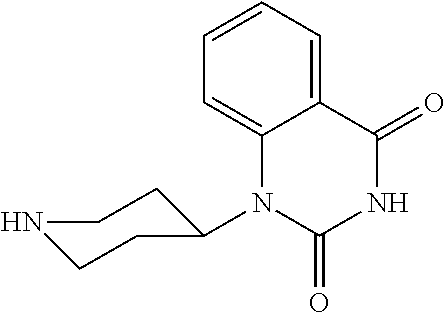


 |
 |
 |
 |
 |
 |
 |
 |
 |
 |
 |
 |
 |
| TABLE 2 | |||||
| in vitro filter | in vitro SPA | in vitro SPA | |||
| assay | assay | assay | |||
| PARP-1 | PARP-1 | TANK-2 | |||
| Co. No. | pIC50 | pIC50 | pIC50 | ||
| 1 | 6.333 | 6.691 | <5 | ||
| 2 | 5.804 | 6.59 | <5 | ||
| 3 | 5.988 | 6.867 | <5 | ||
| 4 | 5.642 | 6.257 | 5.158 | ||
| 5 | 5.759 | 6.458 | 5.121 | ||
| 6 | 5.877 | 6.778 | 5.86 | ||
| 7 | 5.49 | 6.535 | <5 | ||
| 8 | 5.792 | 6.848 | 5.247 | ||
| 9 | 5.661 | 6.445 | <5 | ||
| 10 | 5.745 | 6.658 | 5.143 | ||
| 11 | 5.566 | 6.655 | <5 | ||
Claims (8)


Priority Applications (2)
| Application Number | Priority Date | Filing Date | Title |
|---|---|---|---|
| US14/098,720 US9255080B2 (en) | 2004-06-30 | 2013-12-06 | Quinazolinedione derivatives as PARP inhibitors |
| US14/985,028 US20160108020A1 (en) | 2004-06-30 | 2015-12-30 | Quinazolinedione derivatives as parp inhibitors |
Applications Claiming Priority (7)
| Application Number | Priority Date | Filing Date | Title |
|---|---|---|---|
| EP04076885 | 2004-06-30 | ||
| EP04076885 | 2004-06-30 | ||
| EP04076885.5 | 2004-06-30 | ||
| PCT/EP2005/053031 WO2006003148A1 (en) | 2004-06-30 | 2005-06-28 | Quinazolinedione derivatives as parp inhibitors |
| US56994806A | 2006-12-01 | 2006-12-01 | |
| US13/298,934 US8623884B2 (en) | 2004-06-30 | 2011-11-17 | Quinazolinedione derivatives as PARP inhibitors |
| US14/098,720 US9255080B2 (en) | 2004-06-30 | 2013-12-06 | Quinazolinedione derivatives as PARP inhibitors |
Related Parent Applications (2)
| Application Number | Title | Priority Date | Filing Date |
|---|---|---|---|
| US13/298,934 Division US8623884B2 (en) | 2004-06-30 | 2011-11-17 | Quinazolinedione derivatives as PARP inhibitors |
| US13/298,884 Division US8847360B2 (en) | 2004-06-30 | 2011-11-17 | Systems and methods for enabling ESD protection on 3-D stacked devices |
Related Child Applications (1)
| Application Number | Title | Priority Date | Filing Date |
|---|---|---|---|
| US14/985,028 Division US20160108020A1 (en) | 2004-06-30 | 2015-12-30 | Quinazolinedione derivatives as parp inhibitors |
Publications (2)
| Publication Number | Publication Date |
|---|---|
| US20140100239A1 US20140100239A1 (en) | 2014-04-10 |
| US9255080B2 true US9255080B2 (en) | 2016-02-09 |
Family
ID=34979083
Family Applications (4)
| Application Number | Title | Priority Date | Filing Date |
|---|---|---|---|
| US11/569,948 Expired - Fee Related US8080557B2 (en) | 2004-06-30 | 2005-06-28 | Quinazolinedione derivatives as PARP inhibitors |
| US13/298,934 Expired - Fee Related US8623884B2 (en) | 2004-06-30 | 2011-11-17 | Quinazolinedione derivatives as PARP inhibitors |
| US14/098,720 Expired - Fee Related US9255080B2 (en) | 2004-06-30 | 2013-12-06 | Quinazolinedione derivatives as PARP inhibitors |
| US14/985,028 Abandoned US20160108020A1 (en) | 2004-06-30 | 2015-12-30 | Quinazolinedione derivatives as parp inhibitors |
Family Applications Before (2)
| Application Number | Title | Priority Date | Filing Date |
|---|---|---|---|
| US11/569,948 Expired - Fee Related US8080557B2 (en) | 2004-06-30 | 2005-06-28 | Quinazolinedione derivatives as PARP inhibitors |
| US13/298,934 Expired - Fee Related US8623884B2 (en) | 2004-06-30 | 2011-11-17 | Quinazolinedione derivatives as PARP inhibitors |
Family Applications After (1)
| Application Number | Title | Priority Date | Filing Date |
|---|---|---|---|
| US14/985,028 Abandoned US20160108020A1 (en) | 2004-06-30 | 2015-12-30 | Quinazolinedione derivatives as parp inhibitors |
Country Status (21)
| Country | Link |
|---|---|
| US (4) | US8080557B2 (en) |
| EP (1) | EP1763523B1 (en) |
| JP (1) | JP5100376B2 (en) |
| CN (1) | CN1980913B (en) |
| AR (1) | AR049540A1 (en) |
| AU (1) | AU2005259190B2 (en) |
| BR (1) | BRPI0512938A (en) |
| CA (1) | CA2569827C (en) |
| EA (1) | EA011552B1 (en) |
| EG (1) | EG25942A (en) |
| ES (1) | ES2415771T3 (en) |
| IL (1) | IL180409A0 (en) |
| MX (1) | MXPA06014541A (en) |
| MY (1) | MY169515A (en) |
| NO (2) | NO20070526L (en) |
| NZ (1) | NZ551801A (en) |
| SG (1) | SG154432A1 (en) |
| TW (1) | TWI359142B (en) |
| UA (1) | UA88012C2 (en) |
| WO (1) | WO2006003148A1 (en) |
| ZA (1) | ZA200610771B (en) |
Families Citing this family (41)
| Publication number | Priority date | Publication date | Assignee | Title |
|---|---|---|---|---|
| NZ546990A (en) | 2003-11-20 | 2010-03-26 | Janssen Pharmaceutica Nv | 7-Phenylalkyl substituted 2-quinolinones and 2 quinoxalinones as poly(adp-ribose) polymerase inhibitors |
| NZ546991A (en) | 2003-11-20 | 2010-01-29 | Janssen Pharmaceutica Nv | 6-Alkenyl and 6-phenylalkyl substituted 2-quinolinones and 2-quinoxalinones as PARP inhibitors |
| JP4806353B2 (en) * | 2003-12-05 | 2011-11-02 | ジヤンセン・フアーマシユーチカ・ナームローゼ・フエンノートシヤツプ | 6-Substituted 2-quinolinones and 2-quinoxalinones as poly (ADP-ribose) polymerase inhibitors |
| WO2006003147A1 (en) * | 2004-06-30 | 2006-01-12 | Janssen Pharmaceutica N.V. | Phthalazine derivatives as parp inhibitors |
| JP5100376B2 (en) | 2004-06-30 | 2012-12-19 | ジヤンセン・フアーマシユーチカ・ナームローゼ・フエンノートシヤツプ | Quinazolinedione derivatives as PARP inhibitors |
| CA2568835C (en) | 2004-06-30 | 2014-05-27 | Janssen Pharmaceutica N.V. | Quinazolinone derivatives as parp inhibitors |
| MY150958A (en) * | 2005-06-16 | 2014-03-31 | Astrazeneca Ab | Compounds for the treatment of multi-drug resistant bacterial infections |
| EP1906948A4 (en) | 2005-07-18 | 2010-03-17 | Bipar Sciences Inc | Treatment of cancer |
| WO2008030883A2 (en) | 2006-09-05 | 2008-03-13 | Bipar Sciences, Inc. | Treatment of cancer |
| AU2007292306A1 (en) | 2006-09-05 | 2008-03-13 | Bipar Sciences, Inc. | Inhibition of fatty acid synthesis by PARP inhibitors and methods of treatment thereof |
| JP5545955B2 (en) * | 2007-03-08 | 2014-07-09 | ジヤンセン・フアーマシユーチカ・ナームローゼ・フエンノートシヤツプ | Quinolinone derivatives as PARP and TANK inhibitors |
| WO2009053373A1 (en) * | 2007-10-26 | 2009-04-30 | Janssen Pharmaceutica Nv | Quinolinone derivatives as parp inhibitors |
| WO2009064738A2 (en) | 2007-11-12 | 2009-05-22 | Bipar Sciences, Inc. | Treatment of breast cancer with a parp inhibitor alone or in combination with anti-tumor agents |
| DK2271626T3 (en) * | 2008-03-27 | 2015-02-23 | Janssen Pharmaceutica Nv | TETRAHYDROPHENANTHRIDINONES AND TETRAHYDROCYCLOPENTAQUINOLINONES AS INHIBITORS OF POLYMERIZATION OF PARP AND TUBULIN |
| WO2009118384A1 (en) * | 2008-03-27 | 2009-10-01 | Janssen Pharmaceutica Nv | Quinazolinone derivatives as tubulin polymerization inhibitors |
| WO2010081778A1 (en) | 2009-01-17 | 2010-07-22 | Universität Zürich | Blockers of parp for the prevention and treatment of helicobacter pylori induced gastric cancer |
| FR2943673B1 (en) | 2009-03-27 | 2013-03-29 | Sanofi Aventis | THERAPEUTIC APPLICATIONS OF QUINAZOLINEDIONE DERIVATIVES |
| WO2011058367A2 (en) | 2009-11-13 | 2011-05-19 | Astrazeneca Ab | Diagnostic test for predicting responsiveness to treatment with poly(adp-ribose) polymerase (parp) inhibitor |
| US9090568B2 (en) | 2011-03-14 | 2015-07-28 | Impact Therapeutics, Inc. | Quinazolinediones and their use |
| TWI527800B (en) | 2011-04-01 | 2016-04-01 | 南京英派藥業有限公司 | 1-(arylmethyl)quinazoline-2,4(1h,3h)-diones as parp inhibitors and the use thereof |
| CN103130723B (en) | 2011-11-30 | 2015-01-14 | 成都地奥制药集团有限公司 | Poly (aenosine diphosphate glucose pyrophospheralase (ADP)-ribose) polymerase inhibitor |
| BR112014030416A2 (en) | 2012-06-07 | 2017-06-27 | Hoffmann La Roche | compound, methods for tankyrase 1 inhibition and cancer treatment, use of a compound, composition and invention. |
| US9951038B2 (en) | 2012-12-27 | 2018-04-24 | Purdue Pharma L.P. | Quinazolin-4(3H)-one-type piperidine compounds and uses thereof |
| RU2016147727A (en) | 2014-05-07 | 2018-06-08 | Мерк Патент Гмбх | HETEROCYCLYLBUTANAMIDE DERIVATIVES |
| EP3265560B1 (en) | 2015-03-02 | 2021-12-08 | Sinai Health System | Homologous recombination factors |
| WO2016155655A1 (en) | 2015-04-03 | 2016-10-06 | 上海瑛派药业有限公司 | Solid pharmaceutical dosage form of parp inhibitor, and application of solid pharmaceutical dosage form of parp inhibitor |
| WO2017013237A1 (en) | 2015-07-23 | 2017-01-26 | Institut Curie | Use of a combination of dbait molecule and parp inhibitors to treat cancer |
| GB201519573D0 (en) | 2015-11-05 | 2015-12-23 | King S College London | Combination |
| US10722484B2 (en) | 2016-03-09 | 2020-07-28 | K-Gen, Inc. | Methods of cancer treatment |
| CN109153652B (en) * | 2016-04-01 | 2021-07-27 | 上海瑛派药业有限公司 | Preparation technology of 1-(arylmethyl)quinazoline-2,4(1H,3H)-dione |
| WO2018022851A1 (en) | 2016-07-28 | 2018-02-01 | Mitobridge, Inc. | Methods of treating acute kidney injury |
| AU2017355402A1 (en) | 2016-11-02 | 2019-05-30 | Health Research, Inc. | Combination treatment with antibody-drug conjugates and PARP inhibitors |
| WO2018162439A1 (en) | 2017-03-08 | 2018-09-13 | Onxeo | New predictive biomarker for the sensitivity to a treatment of cancer with a dbait molecule |
| WO2018197461A1 (en) | 2017-04-28 | 2018-11-01 | Akribes Biomedical Gmbh | A parp inhibitor in combination with a glucocorticoid and/or ascorbic acid and/or a protein growth factor for the treatment of impaired wound healing |
| WO2019089216A1 (en) | 2017-11-01 | 2019-05-09 | Dana-Farber Cancer Institute, Inc. | Methods of treating cancers |
| WO2019175132A1 (en) | 2018-03-13 | 2019-09-19 | Onxeo | A dbait molecule against acquired resistance in the treatment of cancer |
| AU2020274407B2 (en) * | 2019-05-14 | 2023-09-28 | Suzhou Four Health Pharmaceuticals Co., Ltd | Quinazoline-2,4-dione derivatives as PARP inhibitors |
| WO2021148581A1 (en) | 2020-01-22 | 2021-07-29 | Onxeo | Novel dbait molecule and its use |
| EP3974337B1 (en) * | 2020-09-25 | 2024-11-06 | SCHOTT Pharma Schweiz AG | Holding device which restricts movement of primary packaging containers at first and further longitudinal positions |
| CN116783181B (en) * | 2021-04-12 | 2026-01-30 | 上海瑛派药业有限公司 | Substituted fused bicyclic compounds as PARP inhibitors and their applications |
| WO2024261243A1 (en) | 2023-06-21 | 2024-12-26 | Hemispherian As | Combination comprising a deoxycytidine derivative and a parp inhibitor for use in a method of treating hr proficient cancer |
Citations (63)
| Publication number | Priority date | Publication date | Assignee | Title |
|---|---|---|---|---|
| GB732581A (en) | 1952-01-18 | 1955-06-29 | Ciba Ltd | Manufacture of hydrazine compounds |
| DE1006423B (en) | 1952-01-18 | 1957-04-18 | Ciba Geigy | Process for the preparation of hydrazinophthalazines |
| US3274194A (en) | 1963-03-29 | 1966-09-20 | Miles Lab | Quinazolinedione derivatives |
| GB1062357A (en) | 1965-03-23 | 1967-03-22 | Pfizer & Co C | Quinazolone derivatives |
| DE2258561A1 (en) | 1971-12-02 | 1973-06-20 | Byk Gulden Lomberg Chem Fab | BASIC SUBSTITUTED PYRIMIDONE (4) DERIVATIVES, THE PROCESS FOR THEIR PRODUCTION AND THE MEDICINAL PRODUCTS CONTAINING THEM |
| US3753988A (en) | 1969-05-03 | 1973-08-21 | Aspro Nicholas Ltd | Substituted phthalazines |
| US3879393A (en) | 1973-06-18 | 1975-04-22 | Miles Lab | Derivatives of 1,3-disubstituted 2,4(1h,3h)-quinazolinediones |
| US3919425A (en) | 1971-04-09 | 1975-11-11 | Miles Lab | Method of producing vasodilation using certain 3-substituted-quinazoline derivatives |
| FR2436781A1 (en) | 1978-09-19 | 1980-04-18 | Berri Balzac | 3-Amino-(1h,3h)-quinazoline-2,4-di:one derivs. - useful as anxiolytics and sedatives to treat hypertension |
| US4335127A (en) | 1979-01-08 | 1982-06-15 | Janssen Pharmaceutica, N.V. | Piperidinylalkyl quinazoline compounds, composition and method of use |
| JPS5976082A (en) | 1982-10-23 | 1984-04-28 | Kyowa Hakko Kogyo Co Ltd | Novel piperidine derivative |
| JPS60120872A (en) | 1983-12-01 | 1985-06-28 | Kyowa Hakko Kogyo Co Ltd | Novel heterocyclic compound and cardiotonic agent |
| EP0156433A2 (en) | 1984-03-26 | 1985-10-02 | Janssen Pharmaceutica N.V. | Anti-virally active pyridazinamines |
| JPS60226862A (en) | 1984-03-26 | 1985-11-12 | ジヤンセン・フア−マシユ−チカ・ナ−ムロ−ゼ・フエンノ−トシヤツプ | Antiviral pyrid |
| EP0229391A1 (en) | 1985-12-27 | 1987-07-22 | Eisai Co., Ltd. | Piperidine derivate, its use and pharmaceutical composition containing it |
| EP0391462A1 (en) | 1989-04-05 | 1990-10-10 | Janssen Pharmaceutica N.V. | Synergistic compositions containing ketanserin |
| WO1991012006A2 (en) | 1990-02-13 | 1991-08-22 | Warner-Lambert Company | Tumor cell sensitization method |
| US5231184A (en) | 1987-11-23 | 1993-07-27 | Janssen Pharmaceutica N.V. | Pridazinamine derivatives |
| WO1993022309A1 (en) | 1992-04-23 | 1993-11-11 | Merrell Dow Pharmaceuticals Inc. | 4-imidomethyl-1-[2'phenyl-2'oxoethyl-] piperidines as serotonin 5ht2-antagonists, their preparation and use in therapy |
| US5304560A (en) | 1990-10-15 | 1994-04-19 | Fujisawa Pharmaceutical Co., Ltd. | Quinazoline derivatives and their preparation |
| WO1994019342A1 (en) | 1993-02-18 | 1994-09-01 | Kyowa Hakko Kogyo Co., Ltd. | Adenosine incorporation inhibitor |
| US5374637A (en) | 1989-03-22 | 1994-12-20 | Janssen Pharmaceutica N.V. | N-(3-hydroxy-4-piperidinyl)(dihydrobenzofuran, dihydro-2H-benzopyran or dihydrobenzodioxin)carboxamide derivatives |
| WO1995024379A1 (en) | 1994-03-09 | 1995-09-14 | Newcastle University Ventures Limited | Benzamide analogs, useful as parp (adp-ribosyltransferase, adprt) dna repair enzyme inhibitors |
| JPH107572A (en) | 1996-06-17 | 1998-01-13 | Sumitomo Pharmaceut Co Ltd | Tumor necrosis factor production inhibitor |
| JPH10330377A (en) | 1997-06-02 | 1998-12-15 | Kyowa Hakko Kogyo Co Ltd | Piperidine derivative |
| EP0669919B1 (en) | 1992-11-20 | 1999-01-27 | Janssen Pharmaceutica N.V. | Use of dimethylbenzofurans and dimethylbenzopyrans as 5-ht3 antagonists |
| WO1999011649A2 (en) | 1997-09-03 | 1999-03-11 | Guilford Pharmaceuticals Inc. | Parp inhibitors, pharmaceutical compositions comprising same, and methods of using same |
| WO1999029687A1 (en) | 1997-12-05 | 1999-06-17 | Janssen Pharmaceutica N.V. | (benzodioxan, benzofuran or benzopyran) derivatives having fundic relaxation properties |
| JP2000505100A (en) | 1996-09-10 | 2000-04-25 | ドクトル カルル トーマエ ゲゼルシャフト ミット ベシュレンクテル ハフツング | Modified amino acids, drugs containing these compounds and methods for their preparation |
| JP2000191659A (en) | 1999-01-04 | 2000-07-11 | Sumitomo Pharmaceut Co Ltd | Tumor necrosis factor production inhibitor |
| WO2000044755A1 (en) | 1999-01-29 | 2000-08-03 | Abbott Laboratories | Diazabicyclic derivatives as nicotinic acetylcholine receptor ligands |
| EP1026160A1 (en) | 1997-09-16 | 2000-08-09 | Takeda Chemical Industries, Ltd. | Nitrogenous fused-ring compounds, process for the preparation of the same, and drugs |
| WO2002028837A1 (en) | 2000-10-02 | 2002-04-11 | Janssen Pharmaceutica N.V. | Metabotropic glutamate receptor antagonists |
| WO2002048117A1 (en) | 2000-12-11 | 2002-06-20 | Fujisawa Pharmaceutical Co., Ltd. | Quinazolinone derivatives |
| JP2002284699A (en) | 2001-03-28 | 2002-10-03 | Sumitomo Pharmaceut Co Ltd | Remedies for photoreceptor degenerative diseases |
| WO2003015785A1 (en) | 2001-08-15 | 2003-02-27 | Icos Corporation | 2h-phthalazin-1-ones and methods for use thereof |
| US20030069231A1 (en) | 1999-10-12 | 2003-04-10 | Klaus Rudolf | Modified aminoacids, pharmaceuticals containing these compounds and method for their production |
| EP0885190B1 (en) | 1996-02-29 | 2003-05-07 | Janssen Pharmaceutica N.V. | N-substituted 4-((4'-aminobenzoyl)-oxymethyl)-piperidines having gastric prokinetic properties |
| WO2003039460A2 (en) | 2001-11-07 | 2003-05-15 | Merck & Co., Inc. | Mitotic kinesin inhibitors |
| US6583144B2 (en) | 1997-05-30 | 2003-06-24 | Meiji Seika Kaisha, Ltd. | Nitrogen-containing heterocyclic compounds and therapeutic agents for hyperlipidemia comprising the same |
| US20030130505A1 (en) | 1999-08-27 | 2003-07-10 | Lin Zhi | Bicyclic androgen and progesterone receptor modulator compounds and methods |
| WO2003082350A2 (en) | 2002-03-29 | 2003-10-09 | Janssen Pharmaceutica N.V. | Radiolabelled quinoline and quinolinone derivatives and their use as metabotropic glutamate receptor ligands |
| US20030225268A1 (en) | 1999-01-29 | 2003-12-04 | Bunnelle William H. | Diazabicyclic CNS active agents |
| WO2003101985A1 (en) | 2002-05-29 | 2003-12-11 | Amgen Inc. | 2-oxo-1,3,4-trihydroquinazolinyl derivatives for the treatment of cell proliferation-related disorders |
| US20040176361A1 (en) | 2001-05-23 | 2004-09-09 | Masakazu Fujio | Fused heterocyclic compound and medicinal use thereof |
| WO2005004801A2 (en) | 2003-07-01 | 2005-01-20 | Bristol-Myers Squibb Company | Indole, azaindole and related heterocyclic n-substituted piperazine derivatives |
| WO2005054209A1 (en) | 2003-11-20 | 2005-06-16 | Janssen Pharmaceutica N.V. | 7-phenylalkyl substituted 2-quinolinones and 2 quinoxalinones as poly(adp-ribose) polymerase inhibitors |
| WO2005054210A1 (en) | 2003-12-05 | 2005-06-16 | Janssen Pharmaceutica N.V. | 6-substituted 2-quinolinones and 2-quinoxalinones as poly(adp-ribose) polymerase inhibitors |
| WO2005054199A1 (en) | 2003-12-03 | 2005-06-16 | Cytopia Research Pty Ltd | Tubulin inhibitors |
| WO2005058843A1 (en) | 2003-12-10 | 2005-06-30 | Janssen Pharmaceutica N.V. | Substituted 6-cyclohexylalkyl substituted 2-quinolinones and 2-quinoxalinones as poly(adp-ribose) polymerase inhibitors |
| WO2005097750A1 (en) | 2004-03-30 | 2005-10-20 | Aventis Pharmaceuticals Inc. | Substituted pyridones as inhibitors of poly(adp-ribose) polymerase (parp) |
| WO2005117876A1 (en) | 2004-06-01 | 2005-12-15 | University Of Virginia Patent Foundation | Dual small molecule inhibitors of cancer and angiogenesis |
| WO2006003147A1 (en) | 2004-06-30 | 2006-01-12 | Janssen Pharmaceutica N.V. | Phthalazine derivatives as parp inhibitors |
| WO2006003150A1 (en) | 2004-06-30 | 2006-01-12 | Janssen Pharmaceutica N.V. | Substituted 2-alkyl quinazolinone derivatives as parp inhibitors |
| WO2006003148A1 (en) | 2004-06-30 | 2006-01-12 | Janssen Pharmaceutica N.V. | Quinazolinedione derivatives as parp inhibitors |
| WO2006089177A2 (en) | 2005-02-17 | 2006-08-24 | Synta Pharmaceuticals Corp. | Isoxazole combretastin derivatives for the treatment of disorders |
| WO2007025009A2 (en) | 2005-08-24 | 2007-03-01 | Inotek Pharmaceuticals Corporation | Indenoisoquinolinone analogs and methods of use thereof |
| WO2007087684A1 (en) | 2006-02-03 | 2007-08-09 | Bionomics Limited | Substituted benzofurans, benzothiophenes, benzoselenophenes and indoles and their use as tubulin polymerisation inhibitors |
| WO2007095628A1 (en) | 2006-02-15 | 2007-08-23 | Abbott Laboratories | Pyrazoloquinolones are potent parp inhibitors |
| WO2008107478A1 (en) | 2007-03-08 | 2008-09-12 | Janssen Pharmaceutica Nv | Quinolinone derivatives as parp and tank inhibitors |
| US20080269234A1 (en) | 2006-12-28 | 2008-10-30 | Abbott Laboratories | Inhibitors of poly(adp-ribose)polymerase |
| US20090048259A1 (en) | 2007-06-25 | 2009-02-19 | Amgen Inc. | Phthalazine compounds, compositions and methods of use |
| US20090292121A1 (en) | 2005-04-28 | 2009-11-26 | Masahiko Morioka | Cyanopyridine derivative and use thereof as medicine |
Family Cites Families (10)
| Publication number | Priority date | Publication date | Assignee | Title |
|---|---|---|---|---|
| US4166177A (en) * | 1977-12-27 | 1979-08-28 | Merck & Co., Inc. | Substituted 2,2-dioxo-1,2,3-benzoxathiazines |
| US5177075A (en) | 1988-08-19 | 1993-01-05 | Warner-Lambert Company | Substituted dihydroisoquinolinones and related compounds as potentiators of the lethal effects of radiation and certain chemotherapeutic agents; selected compounds, analogs and process |
| GB8827822D0 (en) | 1988-11-29 | 1988-12-29 | Janssen Pharmaceutica Nv | (1h-azol-1-ylmethyl)substituted quinoline derivatives |
| CA2002864C (en) | 1988-11-29 | 1999-11-16 | Eddy J. E. Freyne | (1h-azol-1-ylmethyl) substituted quinoline, quinazoline or quinoxaline derivatives |
| JPH11152275A (en) * | 1997-09-16 | 1999-06-08 | Takeda Chem Ind Ltd | Nitrogen-containing condensed ring compound, its production and agent |
| ITMI20002358A1 (en) | 2000-10-31 | 2002-05-01 | Flavio Moroni | TIENO DERIVATIVES, 2, 3-C | ISOCHINOLIN-3-ONE AS INHIBITORS OF POLY (DP-RIBOSE) POLYMERASE |
| AR043059A1 (en) | 2002-11-12 | 2005-07-13 | Bayer Pharmaceuticals Corp | DERIVATIVES OF INDOLIL PIRAZINONA USEFUL FOR THE TREATMENT OF HYPER-PROLIFERATIVE DISORDERS |
| NZ546991A (en) | 2003-11-20 | 2010-01-29 | Janssen Pharmaceutica Nv | 6-Alkenyl and 6-phenylalkyl substituted 2-quinolinones and 2-quinoxalinones as PARP inhibitors |
| DE102004023332A1 (en) | 2004-05-12 | 2006-01-19 | Bayer Cropscience Gmbh | Quinoxaline-2-one derivatives, crop protection agents containing them, and processes for their preparation and their use |
| US8198448B2 (en) | 2006-07-14 | 2012-06-12 | Amgen Inc. | Fused heterocyclic derivatives and methods of use |
-
2005
- 2005-06-28 JP JP2007518608A patent/JP5100376B2/en not_active Expired - Fee Related
- 2005-06-28 MX MXPA06014541A patent/MXPA06014541A/en active IP Right Grant
- 2005-06-28 WO PCT/EP2005/053031 patent/WO2006003148A1/en not_active Ceased
- 2005-06-28 EP EP05771970A patent/EP1763523B1/en not_active Expired - Lifetime
- 2005-06-28 CN CN200580022330XA patent/CN1980913B/en not_active Expired - Fee Related
- 2005-06-28 AU AU2005259190A patent/AU2005259190B2/en not_active Ceased
- 2005-06-28 CA CA2569827A patent/CA2569827C/en not_active Expired - Fee Related
- 2005-06-28 SG SG200904449-6A patent/SG154432A1/en unknown
- 2005-06-28 US US11/569,948 patent/US8080557B2/en not_active Expired - Fee Related
- 2005-06-28 EA EA200700185A patent/EA011552B1/en not_active IP Right Cessation
- 2005-06-28 BR BRPI0512938-9A patent/BRPI0512938A/en active Search and Examination
- 2005-06-28 ES ES05771970T patent/ES2415771T3/en not_active Expired - Lifetime
- 2005-06-28 NZ NZ551801A patent/NZ551801A/en not_active IP Right Cessation
- 2005-06-28 UA UAA200612978A patent/UA88012C2/en unknown
- 2005-06-29 MY MYPI20052985A patent/MY169515A/en unknown
- 2005-06-29 TW TW094121739A patent/TWI359142B/en not_active IP Right Cessation
- 2005-06-29 AR ARP050102689A patent/AR049540A1/en unknown
-
2006
- 2006-12-20 EG EGNA2006001238 patent/EG25942A/en active
- 2006-12-20 ZA ZA200610771A patent/ZA200610771B/en unknown
- 2006-12-28 IL IL180409A patent/IL180409A0/en not_active IP Right Cessation
-
2007
- 2007-01-29 NO NO20070526A patent/NO20070526L/en unknown
- 2007-01-29 NO NO20070529A patent/NO20070529L/en unknown
-
2011
- 2011-11-17 US US13/298,934 patent/US8623884B2/en not_active Expired - Fee Related
-
2013
- 2013-12-06 US US14/098,720 patent/US9255080B2/en not_active Expired - Fee Related
-
2015
- 2015-12-30 US US14/985,028 patent/US20160108020A1/en not_active Abandoned
Patent Citations (79)
| Publication number | Priority date | Publication date | Assignee | Title |
|---|---|---|---|---|
| DE1006423B (en) | 1952-01-18 | 1957-04-18 | Ciba Geigy | Process for the preparation of hydrazinophthalazines |
| GB732581A (en) | 1952-01-18 | 1955-06-29 | Ciba Ltd | Manufacture of hydrazine compounds |
| US3274194A (en) | 1963-03-29 | 1966-09-20 | Miles Lab | Quinazolinedione derivatives |
| GB1062357A (en) | 1965-03-23 | 1967-03-22 | Pfizer & Co C | Quinazolone derivatives |
| US3753988A (en) | 1969-05-03 | 1973-08-21 | Aspro Nicholas Ltd | Substituted phthalazines |
| US3919425A (en) | 1971-04-09 | 1975-11-11 | Miles Lab | Method of producing vasodilation using certain 3-substituted-quinazoline derivatives |
| DE2258561A1 (en) | 1971-12-02 | 1973-06-20 | Byk Gulden Lomberg Chem Fab | BASIC SUBSTITUTED PYRIMIDONE (4) DERIVATIVES, THE PROCESS FOR THEIR PRODUCTION AND THE MEDICINAL PRODUCTS CONTAINING THEM |
| US3879393A (en) | 1973-06-18 | 1975-04-22 | Miles Lab | Derivatives of 1,3-disubstituted 2,4(1h,3h)-quinazolinediones |
| FR2436781A1 (en) | 1978-09-19 | 1980-04-18 | Berri Balzac | 3-Amino-(1h,3h)-quinazoline-2,4-di:one derivs. - useful as anxiolytics and sedatives to treat hypertension |
| US4335127A (en) | 1979-01-08 | 1982-06-15 | Janssen Pharmaceutica, N.V. | Piperidinylalkyl quinazoline compounds, composition and method of use |
| EP0013612B1 (en) | 1979-01-08 | 1983-11-09 | Janssen Pharmaceutica N.V. | (piperidinylalkyl)quinazoline derivatives, process for their preparation and pharmaceutical compositions containing them |
| JPS5976082A (en) | 1982-10-23 | 1984-04-28 | Kyowa Hakko Kogyo Co Ltd | Novel piperidine derivative |
| JPS60120872A (en) | 1983-12-01 | 1985-06-28 | Kyowa Hakko Kogyo Co Ltd | Novel heterocyclic compound and cardiotonic agent |
| JPS60226862A (en) | 1984-03-26 | 1985-11-12 | ジヤンセン・フア−マシユ−チカ・ナ−ムロ−ゼ・フエンノ−トシヤツプ | Antiviral pyrid |
| EP0156433A2 (en) | 1984-03-26 | 1985-10-02 | Janssen Pharmaceutica N.V. | Anti-virally active pyridazinamines |
| EP0229391A1 (en) | 1985-12-27 | 1987-07-22 | Eisai Co., Ltd. | Piperidine derivate, its use and pharmaceutical composition containing it |
| JPS62234065A (en) | 1985-12-27 | 1987-10-14 | Eisai Co Ltd | Piperidine derivative |
| US5118684A (en) | 1985-12-27 | 1992-06-02 | Eisai Co., Ltd. | Piperdine derivative and pharmaceutical composition |
| US5231184A (en) | 1987-11-23 | 1993-07-27 | Janssen Pharmaceutica N.V. | Pridazinamine derivatives |
| US5374637A (en) | 1989-03-22 | 1994-12-20 | Janssen Pharmaceutica N.V. | N-(3-hydroxy-4-piperidinyl)(dihydrobenzofuran, dihydro-2H-benzopyran or dihydrobenzodioxin)carboxamide derivatives |
| EP0391462A1 (en) | 1989-04-05 | 1990-10-10 | Janssen Pharmaceutica N.V. | Synergistic compositions containing ketanserin |
| WO1991012006A2 (en) | 1990-02-13 | 1991-08-22 | Warner-Lambert Company | Tumor cell sensitization method |
| US5304560A (en) | 1990-10-15 | 1994-04-19 | Fujisawa Pharmaceutical Co., Ltd. | Quinazoline derivatives and their preparation |
| US20020002174A1 (en) | 1992-04-23 | 2002-01-03 | Nieduzak Thaddeus R. | Serotonin antagonists |
| WO1993022309A1 (en) | 1992-04-23 | 1993-11-11 | Merrell Dow Pharmaceuticals Inc. | 4-imidomethyl-1-[2'phenyl-2'oxoethyl-] piperidines as serotonin 5ht2-antagonists, their preparation and use in therapy |
| EP0669919B1 (en) | 1992-11-20 | 1999-01-27 | Janssen Pharmaceutica N.V. | Use of dimethylbenzofurans and dimethylbenzopyrans as 5-ht3 antagonists |
| WO1994019342A1 (en) | 1993-02-18 | 1994-09-01 | Kyowa Hakko Kogyo Co., Ltd. | Adenosine incorporation inhibitor |
| EP0638567A1 (en) | 1993-02-18 | 1995-02-15 | Kyowa Hakko Kogyo Kabushiki Kaisha | Adenosine incorporation inhibitor |
| WO1995024379A1 (en) | 1994-03-09 | 1995-09-14 | Newcastle University Ventures Limited | Benzamide analogs, useful as parp (adp-ribosyltransferase, adprt) dna repair enzyme inhibitors |
| EP0885190B1 (en) | 1996-02-29 | 2003-05-07 | Janssen Pharmaceutica N.V. | N-substituted 4-((4'-aminobenzoyl)-oxymethyl)-piperidines having gastric prokinetic properties |
| JPH107572A (en) | 1996-06-17 | 1998-01-13 | Sumitomo Pharmaceut Co Ltd | Tumor necrosis factor production inhibitor |
| US6344449B1 (en) | 1996-09-10 | 2002-02-05 | Dr. Karl Thomae Gmbh | Modified aminoacids, pharmaceuticals containing these compounds and method for their production |
| JP2000505100A (en) | 1996-09-10 | 2000-04-25 | ドクトル カルル トーマエ ゲゼルシャフト ミット ベシュレンクテル ハフツング | Modified amino acids, drugs containing these compounds and methods for their preparation |
| US20010036946A1 (en) | 1996-09-10 | 2001-11-01 | Klaus Rudolf | Modified amino acids, pharmaceuticals containing these compounds and method for their production |
| US6583144B2 (en) | 1997-05-30 | 2003-06-24 | Meiji Seika Kaisha, Ltd. | Nitrogen-containing heterocyclic compounds and therapeutic agents for hyperlipidemia comprising the same |
| JPH10330377A (en) | 1997-06-02 | 1998-12-15 | Kyowa Hakko Kogyo Co Ltd | Piperidine derivative |
| WO1999011649A2 (en) | 1997-09-03 | 1999-03-11 | Guilford Pharmaceuticals Inc. | Parp inhibitors, pharmaceutical compositions comprising same, and methods of using same |
| US6635642B1 (en) | 1997-09-03 | 2003-10-21 | Guilford Pharmaceuticals Inc. | PARP inhibitors, pharmaceutical compositions comprising same, and methods of using same |
| JP2002515072A (en) | 1997-09-03 | 2002-05-21 | ギルフォード・ファーマシューティカルズ・インコーポレーテッド | PARP inhibitors, pharmaceutical compositions containing the inhibitors and methods of using the inhibitors |
| US20090163480A1 (en) | 1997-09-08 | 2009-06-25 | Dr. Karl Thomae Gmbh | Modified amino acids, pharmaceuticals containing these compounds and method for their production |
| US7498325B2 (en) | 1997-09-08 | 2009-03-03 | Karl Thomas Gmbh | Modified amino acids, pharmaceuticals containing these compounds and method for their production |
| EP1026160A1 (en) | 1997-09-16 | 2000-08-09 | Takeda Chemical Industries, Ltd. | Nitrogenous fused-ring compounds, process for the preparation of the same, and drugs |
| WO1999029687A1 (en) | 1997-12-05 | 1999-06-17 | Janssen Pharmaceutica N.V. | (benzodioxan, benzofuran or benzopyran) derivatives having fundic relaxation properties |
| JP2000191659A (en) | 1999-01-04 | 2000-07-11 | Sumitomo Pharmaceut Co Ltd | Tumor necrosis factor production inhibitor |
| JP2002535409A (en) | 1999-01-29 | 2002-10-22 | アボット・ラボラトリーズ | Diazabicyclic derivatives as nicotinic acetylcholine receptor ligands |
| US20030225268A1 (en) | 1999-01-29 | 2003-12-04 | Bunnelle William H. | Diazabicyclic CNS active agents |
| WO2000044755A1 (en) | 1999-01-29 | 2000-08-03 | Abbott Laboratories | Diazabicyclic derivatives as nicotinic acetylcholine receptor ligands |
| US20030130505A1 (en) | 1999-08-27 | 2003-07-10 | Lin Zhi | Bicyclic androgen and progesterone receptor modulator compounds and methods |
| US20030069231A1 (en) | 1999-10-12 | 2003-04-10 | Klaus Rudolf | Modified aminoacids, pharmaceuticals containing these compounds and method for their production |
| WO2002028837A1 (en) | 2000-10-02 | 2002-04-11 | Janssen Pharmaceutica N.V. | Metabotropic glutamate receptor antagonists |
| US20040077667A1 (en) | 2000-12-11 | 2004-04-22 | Nobuya Matsuoka | Quinazolinone derivatives |
| WO2002048117A1 (en) | 2000-12-11 | 2002-06-20 | Fujisawa Pharmaceutical Co., Ltd. | Quinazolinone derivatives |
| JP2002284699A (en) | 2001-03-28 | 2002-10-03 | Sumitomo Pharmaceut Co Ltd | Remedies for photoreceptor degenerative diseases |
| US20040176361A1 (en) | 2001-05-23 | 2004-09-09 | Masakazu Fujio | Fused heterocyclic compound and medicinal use thereof |
| WO2003015785A1 (en) | 2001-08-15 | 2003-02-27 | Icos Corporation | 2h-phthalazin-1-ones and methods for use thereof |
| WO2003039460A2 (en) | 2001-11-07 | 2003-05-15 | Merck & Co., Inc. | Mitotic kinesin inhibitors |
| WO2003082350A2 (en) | 2002-03-29 | 2003-10-09 | Janssen Pharmaceutica N.V. | Radiolabelled quinoline and quinolinone derivatives and their use as metabotropic glutamate receptor ligands |
| WO2003101985A1 (en) | 2002-05-29 | 2003-12-11 | Amgen Inc. | 2-oxo-1,3,4-trihydroquinazolinyl derivatives for the treatment of cell proliferation-related disorders |
| WO2005004801A2 (en) | 2003-07-01 | 2005-01-20 | Bristol-Myers Squibb Company | Indole, azaindole and related heterocyclic n-substituted piperazine derivatives |
| WO2005054209A1 (en) | 2003-11-20 | 2005-06-16 | Janssen Pharmaceutica N.V. | 7-phenylalkyl substituted 2-quinolinones and 2 quinoxalinones as poly(adp-ribose) polymerase inhibitors |
| US7928104B2 (en) | 2003-11-20 | 2011-04-19 | Dominique Jean-Pierre Mabire | 7-phenylalkyl substituted 2-quinolinones and 2-quinoxalinones as poly(ADP-ribose) polymerase inhibitors |
| WO2005054199A1 (en) | 2003-12-03 | 2005-06-16 | Cytopia Research Pty Ltd | Tubulin inhibitors |
| WO2005054210A1 (en) | 2003-12-05 | 2005-06-16 | Janssen Pharmaceutica N.V. | 6-substituted 2-quinolinones and 2-quinoxalinones as poly(adp-ribose) polymerase inhibitors |
| WO2005058843A1 (en) | 2003-12-10 | 2005-06-30 | Janssen Pharmaceutica N.V. | Substituted 6-cyclohexylalkyl substituted 2-quinolinones and 2-quinoxalinones as poly(adp-ribose) polymerase inhibitors |
| WO2005097750A1 (en) | 2004-03-30 | 2005-10-20 | Aventis Pharmaceuticals Inc. | Substituted pyridones as inhibitors of poly(adp-ribose) polymerase (parp) |
| WO2005117876A1 (en) | 2004-06-01 | 2005-12-15 | University Of Virginia Patent Foundation | Dual small molecule inhibitors of cancer and angiogenesis |
| WO2006003146A1 (en) | 2004-06-30 | 2006-01-12 | Janssen Pharmaceutica N.V. | Quinazolinone derivatives as parp inhibitors |
| US20080039480A1 (en) | 2004-06-30 | 2008-02-14 | Kennis Ludo Edmond J | Quinazolinedione Derivatives as Parp Inhibitors |
| WO2006003148A1 (en) | 2004-06-30 | 2006-01-12 | Janssen Pharmaceutica N.V. | Quinazolinedione derivatives as parp inhibitors |
| WO2006003150A1 (en) | 2004-06-30 | 2006-01-12 | Janssen Pharmaceutica N.V. | Substituted 2-alkyl quinazolinone derivatives as parp inhibitors |
| WO2006003147A1 (en) | 2004-06-30 | 2006-01-12 | Janssen Pharmaceutica N.V. | Phthalazine derivatives as parp inhibitors |
| WO2006089177A2 (en) | 2005-02-17 | 2006-08-24 | Synta Pharmaceuticals Corp. | Isoxazole combretastin derivatives for the treatment of disorders |
| US20090292121A1 (en) | 2005-04-28 | 2009-11-26 | Masahiko Morioka | Cyanopyridine derivative and use thereof as medicine |
| WO2007025009A2 (en) | 2005-08-24 | 2007-03-01 | Inotek Pharmaceuticals Corporation | Indenoisoquinolinone analogs and methods of use thereof |
| WO2007087684A1 (en) | 2006-02-03 | 2007-08-09 | Bionomics Limited | Substituted benzofurans, benzothiophenes, benzoselenophenes and indoles and their use as tubulin polymerisation inhibitors |
| WO2007095628A1 (en) | 2006-02-15 | 2007-08-23 | Abbott Laboratories | Pyrazoloquinolones are potent parp inhibitors |
| US20080269234A1 (en) | 2006-12-28 | 2008-10-30 | Abbott Laboratories | Inhibitors of poly(adp-ribose)polymerase |
| WO2008107478A1 (en) | 2007-03-08 | 2008-09-12 | Janssen Pharmaceutica Nv | Quinolinone derivatives as parp and tank inhibitors |
| US20090048259A1 (en) | 2007-06-25 | 2009-02-19 | Amgen Inc. | Phthalazine compounds, compositions and methods of use |
Non-Patent Citations (76)
| Title |
|---|
| "Cancer definition", http://www.medterms.com/script/main/art.asp?articlekey=2580, accessed Nov. 27, 2007. |
| "Prostate Cancer Prevention", http://www.cancer.gov/cancertopics/pdq/prevention/prostate/Patient, accessed Apr. 9, 2010. |
| Albert, J.M., et al., "Inhibition of Poly(ADP-Ribose) Polyerase Enhances Cell Death and Improves Tumor Growth Delay in Irradiated Lung Cancer MODels", Clin Cancer Res, (2007), vol. 13, No. 10, pp. 3033-3042. |
| Ame, J.C., et al., "PARP-2, A Novel Mammalian DNA Damage-Dependent Poly(ADP-Ribose) Polymerase", Journal of Biological Chemistry, (1999), vol. 274, No. 25, pp. 17860-17868. |
| Ame, J.C., et al., "The PARP Superfamily", BioEssays, (2004), vol. 26, No. 8, pp. 882-893. |
| Bellasio, E., et al., "Antihypertensives. N-1H-Pyrrol-1-YL-3-Pyridazinamines", J. Med. Chem., (1984), vol. 27, No. 8 pp. 1077-1083. |
| Bernard et al., "Automated docking of 82 N-benzylpiperidine derivatives to mouse acetylcholinesterase and comparative molecular field analysis with 'natural' alignment.", Journal of Computer-Aided Molecular Design, 1999, 13(4), pp. 355-371. |
| Blackburn, W., et al., "The Preparation of 3-Methyl-6- and -7-Carboxy-2-Quinoxalones", Journal of Organic Chemistry, ((1961), vol. 26, pp. 2805-2809. |
| Bloch, W., et al., "Poly-Adenosine Diphosphate-Ribose Polymerase Inhibition for Myocardial Protection: Pathopysiologic and Physiologic Considerations", Journal of Thoracic and Cardiovascular Surgery, Aug. 2004, vol. 128, No. 2, pp. 323-324. |
| Bonne, D., et al., "4′6-Diamidino-2-phenylindole, a Fluorescent Probe for Tubulin and Microtubules*", Journal of Biological Chemistry, vol. 260, No. 5 (1985) pp. 2819-2825. |
| Bonne, D., et al., "4'6-Diamidino-2-phenylindole, a Fluorescent Probe for Tubulin and Microtubules*", Journal of Biological Chemistry, vol. 260, No. 5 (1985) pp. 2819-2825. |
| Calabrese, C.R., et al., "Anticancer Chemosensitization and Radiosensitization by the Novel Poly(ADP-Ribose) Polymerase-1 Inhibitor AG14361", Journal of the National Cancer Institute, (2004), vol. 96, No. 1, pp. 56-67. |
| Cardozo, M.G., et al., "Conformational Analyses and Molecular-Shape Comparisons of a Series of Indanone-Benzylpiperidine Inhibitors of Acetylcholinesterase", J. Med. Chem., (1992), vol. 35, pp. 590-601. |
| CAS Registry Nos. 464169-24-2, 464169-25-3, 223587-51-7 abstract; figure 24-&JP 2002 284699 A (Sumitomo Pharmaceuticals Co., Ltd., Japan) Oct. 3, 2002. |
| Cockcroft, X., et al., "Phthalazines 2: Optimisation and Synthesis of Novel Potent Inhibitors of Poly(ADP-Ribose)Polymerase", Bioorganic & Medicinal Chemistry Letters, (2006), vol. 16, pp. 1040-1044. |
| Costantino, G., et al., "Modeling of Poly(ADP-Ribose)Polymerase (PARP) Inhibitors. Docking of Ligands and Quantitative Structure-Activity Relationship Analysis", J. Med. Chem., (2001), vol. 44, pp. 3786-3794. |
| Cuzzocrea, S., "Shock Inflammation and PARP", Pharmacological Research, (2005), vol. 52, pp. 72-82. |
| Darchen et al., "Ketanserin binds to the monoamine transporter of chromaffin granules and of synaptic vesicles.", Molecular Pharmacology, 1988, 33(6), pp. 672-677. |
| Dastmalchi, S., et al., "Molecular Modelling of Human Aldehyde Oxidase and Identification of the Key Interactions in the Enzyme-Substrate Complex", Daru, J. Faculty of Pharm., (2005), vol. 13, No. 3, pp. 82-93. |
| Database CA ′Online! Chemical Abstracts Service, Columbus, Ohio, US; 2002, Tatsuno, Toru et al: "PARP Inhibitors for Treatment of Retinal Degeneration or Chemotherapy-Induced Cell Injury" XP002348719 retrieved from STN Database accession No. 2002:747681. |
| Database CA 'Online! Chemical Abstracts Service, Columbus, Ohio, US; 2002, Tatsuno, Toru et al: "PARP Inhibitors for Treatment of Retinal Degeneration or Chemotherapy-Induced Cell Injury" XP002348719 retrieved from STN Database accession No. 2002:747681. |
| Database WPI 'Online! Derwent Publications Ltd., London, GB; XP002347462, retrieved from WPI accession No. 1970-18449R, *;see RN 27631-66-9:3-(piperidin-1-yl-propyl)-1H-quinazoline-2,4-dione*, abstract & JP 45007058B (Sankyo) Jul. 6, 1967. |
| Dörwald, F.Z., "Side Reactions in Organic Synthesis": A Guide to Successful Synthesis Design, Weinheim: Wiley-VCH Verlag GmbH & Co. KGaA, (2005), Preface. |
| EDAN30610, Jun. 8, 2011. |
| Finney, D. J., "Graded Response: The Linear Dosage-Response Curve", Probit Analysis, 2nd Edition, Chapter 10 (1962), Cambridge Publishing Press, 16 page article. |
| FUELOEP (Journal of Heterocyclic Chemistry, 1997, 34(1), 289-293. * |
| Golbraikh, A., et al., "Validation of Protein-Based Alignment in 3D Quantitative Structure-Activity Relationships With CoMFA Models", Eur. J. Med. Chem., (2000), vol. 35, pp. 123-136. |
| Guery, S., et al., "Synthesis of 4-Aryl-1-(4-Methylpiperazin-1-YL)Phthalazines by Suzuki-Type Cross-Coupling Reaction", Synthesis, (2001), No. 5, pp. 699-701. |
| Gupta, C.M., et al., "Drugs Acting on the Central Nervous System. Syntheses of Substituted Quinazolones and Quinazolines and Triazepino- and Triazocinoquinazolones", Journal of Medicinal Chemistry (1968), vol. 11, No. 2, pp. 392-395. |
| Habon, T., et al., "The Effect of Carvedilol on Enhanced ADP-Ribosylation and Red Blood Cell Membrane Damage Caused by Free Radicals", Cardiovascular Research, (2001), vol. 52, p. 153-160. |
| Hayao, S., et al., "New Sedative and Hypotensive 3-Substituted 2,4(1 H,3h-)-Quinazolinediones", Journal of Medicinal Chemistry, (1965), vol. 8, pp. 807-811. |
| Hazard, P.R., et al., "De Quelques Actions Pharmacologiques Exercees Par Des Derives De L'Orthoprocainamide", Thérapie, (1965), vol. XX, pp. 1043-1049. |
| Herndon, J.L., et al., "Ketanserin Analogues: Structure-Affinity Relationships for 5-HT2 and 5-HT1C Serotonin Receptor Binding", J. Med. Chem., (1992), vol. 35, pp. 4903-4910. |
| Hori, M., et al., "Novel 4-Phenoxy-2-(1-Piperazinyl)Quinazolines As Potent Anticonvulsive and Antihypdxic Agents", Chem. Pharm. Bull, (1990), vol. 38, No. 3, pp. 681-687. |
| Hori, M., et al., "Novel 4-Phenoxy-2-(1-Piperazinyl)Quinazolines As Potent Anticonvulsive and Antihypoxic Agents", Chem. Pharm. Bull, (1990), vol. 38, No. 5, pp. 1286-1291. |
| Horvath, E.M., et al., "Poly(ADP-Ribose) Polymerase As a Drug Target for Cardiovascular Disease and Cancer: An Update", Drug News Perspect, (2007), vol. 20, No. 3, pp. 171-181. |
| International Search report for Application No. PCT/EP2004/013162 mailed Mar. 18, 2005. |
| International Search report for Application No. PCT/EP2004/013163 mailed Apr. 20, 2005. |
| International Search report for Application No. PCT/EP2004/013164 mailed Mar. 14, 2005. |
| International Search report for Application No. PCT/EP2004/013165 mailed Mar. 24, 2005. |
| International Search report for Application No. PCT/EP2005/053029 mailed Oct. 7, 2005. |
| International Search report for Application No. PCT/EP2005/053030 mailed Oct. 24, 2005. |
| International Search report for Application No. PCT/EP2005/053031 mailed Oct. 25, 2005. |
| International Search report for Application No. PCT/EP2005/53034 mailed Sep. 19, 2005. |
| International Search report for Application No. PCT/EP2008/052764 mailed Aug. 12, 2008. |
| International Search report for Application No. PCT/EP2008/064243 mailed Mar. 30, 2009. |
| International Search report for Application No. PCT/EP2009/053598 mailed May 19, 2009. |
| International Search report for Application No. PCT/EP2009/053604 mailed May 8, 2009. |
| Jordan, V.C., "Tamoxifen: A Most Unlikely Pioneering Medicine", Nature Reviews, (2003), vol. 2, pp. 205-213. |
| Kormendy, K. and Ruff, F., "Aminophthalazinone Derivatives, VII* Reaction of Chlorophthalazinone With Secondary Amines Study of the Steric Effect, II.", Acta Chimica Academiae Scientiarum Hungaricae, 1981, pp. 155-166, vol. 106(2). |
| Kormendy, K. and Ruff, F., "Aminophthalazinone Derivatives, VII. Methods for the Synthesis of Imidazo[2,1-alpha]Phthalazine and Pirimido[2,1-alpha]Phthalazine Ring Systems, I.", Acta Chimica Hungarica, 1983, pp. 65-82, vol. 112(1). |
| Kormendy, K. and Ruff, F., "Aminophthalazinone Derivatives, VII. Methods for the Synthesis of Imidazo[2,1-α]Phthalazine and Pirimido[2,1-α]Phthalazine Ring Systems, I.", Acta Chimica Hungarica, 1983, pp. 65-82, vol. 112(1). |
| Kormendy, K., et al., "Aminophthalazinone Derivatives, V Synthesis of 4-Hydrazino-1-(2-H)Ophthalazinones, I", Acta Chimica Academiae Scientiarum Hungaricae, (1979), vol. 102, No. 1, pp. 39-50. |
| Kornet, M.J., et al., "Synthesis of 3-Amino-2,4(1H,3H)-Quinazolinediones for Testing As Anticonvulsants", J. Heterocyclic Chem., (1984), vol. 21, No. 5, pp. 1533-1535. |
| Kulcsar, G., et al., Synthesis and Study of New 4-Quinazolinone Inhibitors of the DNA Repair Enzyme Poly(ADP-Ribose) Polymerase (PARP), Arkivoc, XX,XX, (2003), vol. 2003, No. Part V, pp. 121-131. |
| Larner, A.J., "Poly(ADP-Ribose) Polymerase Inhibitors in the Prevention of Neuronal Cell Death", Expert Opin. Ther. Patents, (2002), vol. 12, No. 4, pp. 481-487. |
| Leysen et al., "Non-serotonergic [3H]ketanserin binding sites in striatal membranes are associated with a dopac release system on dopaminergic nerve endings European Journal of Pharmacology.", European Journal of Pharmacology, 1987, 134(3) 373-375. |
| Lord, C.J., et al., "Targeted Therapy for Cancer Using PARP Inhibitors", Current Opinion in Pharmacology, (2008), vol. 8, pp. 363-369. |
| Meier, H.L., et al., "Alterations in Human Lymphocyte DNA Caused by Sulfur Mustard Can Be Mitigated by Selective Inhibitors of Poly(ADP-Ribose) Polymerase", Biochimica et Biophysica Acta, (1998), vol. 1404, pp. 367-376. |
| Miller, B.A., "Inhibition of TRPM2 Function by PARP Inhibitors Protects Cells From Oxidative Stress-Induced Death", British Journal of Pharmacology, (2004), vol. 143, pp. 515-516. |
| Nguewa, P.A., et al., "Poly(ADP-Ribose) Polymerases: Homology, Structural Domains and Functions. Novel Therapeutical Applications", Progress in Biophysics & Molecular Biology, (2005), vol. 88, pp. 143-172. |
| Oliver, A.W., et al., "Crystal Structure of the Catalytic Fragment of Murine Poly(ADP-Ribose) Polymerase-2", Nucleic Acids Research, (2004), vol. 32, No. 4, pp. 456-464. |
| Patent Abstracts of Japan, vol. 1998, No. 5, Apr. 30, 1998-& JP 10007572 A (Sumitomo Pharmaceut Co Ltd), Jan. 13, 1998 '0046!, Formula 14 abstract. |
| Peters et al., "Basis for effective combination cancer chemotherapy with antimetabolites.", Pharmacology & Therapeutics, 2000, vol. 87, pp. 227-253. |
| Schreiber, V., et al., "Poly(ADP-Ribose) Polymerase-2 Is Required for Efficient Base Excision DNA Repair in Association With PARP-1 and XRCC1", Journal of Biological Chemistry, (2002), vol. 277, No. 25, pp. 23028-23036. |
| Szabo, G., et al., "Poly(ADP-Ribose Polymerase Inhibition Protects Against Myocardial and Endothelial Reperfusion Injury After Hypothermic Cardiac Arrest", Journal of Thoracic and Cardiovascular Surgery, (2003), vol. 126, No. 3, pp. 651-658. |
| Takai, H., et al., "Synthesis of Piperidine Derivatives With a Quinazoline Ring System As Potential Antihypertensive Agents", Chem. Pharm. Bull, (1986), vol. 34, No. 5, pp. 1907-1916. |
| Tasatargil, A., et al., "Poly(ADP-Ribose) Polymerase Inhibition Prevents Homocysteine-Induced Endothelial Dysfunction in the Isolated Rat Aorta", Pharmacology, (2004), vol. 72, pp. 99-105. |
| Tentori, L., et al. "Poly(ADP-ribose)polymerase (PARP) Inhibition or PARP-1 gene Deletion Reduces Angiogenesis", European Journal of Cancer, vol. 43, No. 14 (2007) pp. 2124-2133. |
| Tentori, L., et al., "Chemopotentiation by PARP Inhibitors in Cancer Therapy", Pharmacological Research, (2005), vol. 52, pp. 25-33. |
| The Merck Index, 13th Ed., p. 670, monograph for "Ethyl Alcohol"© 2001 by Merck and Co., Inc. |
| Vippagunta, S.R., et al., "Crystalline Solids", Advanced Drug Delivery Reviews, (2001), vol. 48, pp. 3-26. |
| Virag, L., et al., "The Therapeutic Potential of Poly(ADP-Ribose) Polymerase Inhibitors", Pharmacological Reviews, (2002), vol. 54, No. 3, pp. 375-429. |
| Wolff, M.E., Burger's Medicinal Chemistry, 4th ed., Part I The Basis of Medicinal Chemistry, (1980), pp. 336-337. |
| Yolles, S., et al., "Quinoxaline Studies. I. The Preparation of 2-Hydroxy-3-Methyl-6-Methoxyquinoxaline and 2-Hydroxy-3-Methyl-7-Methoxyquinoxaline", Journal of the American Chemical Society, (1949), vol. 71, pp. 2375-2377. |
| Zhang, J., "PARP Inhibition: A Novel Approach to Treat Ischaemia/Reperfusion and Inflammation-Related Injuries", Emerging Drugs, (1999), vol. 4, pp. 209-221. |
Also Published As
Similar Documents
| Publication | Publication Date | Title |
|---|---|---|
| US10150757B2 (en) | Quinazolinone derivatives as PARP inhibitors | |
| US8623884B2 (en) | Quinazolinedione derivatives as PARP inhibitors | |
| US8946221B2 (en) | Phthalazine derivatives as PARP inhibitors | |
| HK1105957B (en) | Quinazolinedione derivatives as parp inhibitors |
Legal Events
| Date | Code | Title | Description |
|---|---|---|---|
| ZAAA | Notice of allowance and fees due |
Free format text: ORIGINAL CODE: NOA |
|
| ZAAB | Notice of allowance mailed |
Free format text: ORIGINAL CODE: MN/=. |
|
| ZAAA | Notice of allowance and fees due |
Free format text: ORIGINAL CODE: NOA |
|
| STCF | Information on status: patent grant |
Free format text: PATENTED CASE |
|
| MAFP | Maintenance fee payment |
Free format text: PAYMENT OF MAINTENANCE FEE, 4TH YEAR, LARGE ENTITY (ORIGINAL EVENT CODE: M1551); ENTITY STATUS OF PATENT OWNER: LARGE ENTITY Year of fee payment: 4 |
|
| FEPP | Fee payment procedure |
Free format text: MAINTENANCE FEE REMINDER MAILED (ORIGINAL EVENT CODE: REM.); ENTITY STATUS OF PATENT OWNER: LARGE ENTITY |
|
| LAPS | Lapse for failure to pay maintenance fees |
Free format text: PATENT EXPIRED FOR FAILURE TO PAY MAINTENANCE FEES (ORIGINAL EVENT CODE: EXP.); ENTITY STATUS OF PATENT OWNER: LARGE ENTITY |
|
| STCH | Information on status: patent discontinuation |
Free format text: PATENT EXPIRED DUE TO NONPAYMENT OF MAINTENANCE FEES UNDER 37 CFR 1.362 |
|
| FP | Lapsed due to failure to pay maintenance fee |
Effective date: 20240209 |