US9205837B2 - Parking operation control apparatus and control method thereof - Google Patents

Parking operation control apparatus and control method thereof Download PDF

Info

Publication number
US9205837B2
US9205837B2 US14/305,297 US201414305297A US9205837B2 US 9205837 B2 US9205837 B2 US 9205837B2 US 201414305297 A US201414305297 A US 201414305297A US 9205837 B2 US9205837 B2 US 9205837B2
Authority
US
United States
Prior art keywords
current
automobile
range
parking
wheel
Prior art date
Legal status (The legal status is an assumption and is not a legal conclusion. Google has not performed a legal analysis and makes no representation as to the accuracy of the status listed.)
Active
Application number
US14/305,297
Other versions
US20150039185A1 (en
Inventor
Yong-Kil Kim
Current Assignee (The listed assignees may be inaccurate. Google has not performed a legal analysis and makes no representation or warranty as to the accuracy of the list.)
HL Mando Corp
Original Assignee
Mando Corp
Priority date (The priority date is an assumption and is not a legal conclusion. Google has not performed a legal analysis and makes no representation as to the accuracy of the date listed.)
Filing date
Publication date
Application filed by Mando Corp filed Critical Mando Corp
Assigned to MANDO CORPORATION reassignment MANDO CORPORATION ASSIGNMENT OF ASSIGNORS INTEREST (SEE DOCUMENT FOR DETAILS). Assignors: KIM, YONG-KIL
Publication of US20150039185A1 publication Critical patent/US20150039185A1/en
Application granted granted Critical
Publication of US9205837B2 publication Critical patent/US9205837B2/en
Assigned to HL MANDO CORPORATION reassignment HL MANDO CORPORATION CHANGE OF NAME (SEE DOCUMENT FOR DETAILS). Assignors: MANDO CORPORATION
Active legal-status Critical Current
Anticipated expiration legal-status Critical

Links

Images

Classifications

    • BPERFORMING OPERATIONS; TRANSPORTING
    • B60VEHICLES IN GENERAL
    • B60WCONJOINT CONTROL OF VEHICLE SUB-UNITS OF DIFFERENT TYPE OR DIFFERENT FUNCTION; CONTROL SYSTEMS SPECIALLY ADAPTED FOR HYBRID VEHICLES; ROAD VEHICLE DRIVE CONTROL SYSTEMS FOR PURPOSES NOT RELATED TO THE CONTROL OF A PARTICULAR SUB-UNIT
    • B60W30/00Purposes of road vehicle drive control systems not related to the control of a particular sub-unit, e.g. of systems using conjoint control of vehicle sub-units
    • B60W30/06Automatic manoeuvring for parking
    • BPERFORMING OPERATIONS; TRANSPORTING
    • B60VEHICLES IN GENERAL
    • B60WCONJOINT CONTROL OF VEHICLE SUB-UNITS OF DIFFERENT TYPE OR DIFFERENT FUNCTION; CONTROL SYSTEMS SPECIALLY ADAPTED FOR HYBRID VEHICLES; ROAD VEHICLE DRIVE CONTROL SYSTEMS FOR PURPOSES NOT RELATED TO THE CONTROL OF A PARTICULAR SUB-UNIT
    • B60W30/00Purposes of road vehicle drive control systems not related to the control of a particular sub-unit, e.g. of systems using conjoint control of vehicle sub-units
    • B60W30/18Propelling the vehicle
    • B60W30/18009Propelling the vehicle related to particular drive situations
    • B60W30/181Preparing for stopping
    • BPERFORMING OPERATIONS; TRANSPORTING
    • B60VEHICLES IN GENERAL
    • B60WCONJOINT CONTROL OF VEHICLE SUB-UNITS OF DIFFERENT TYPE OR DIFFERENT FUNCTION; CONTROL SYSTEMS SPECIALLY ADAPTED FOR HYBRID VEHICLES; ROAD VEHICLE DRIVE CONTROL SYSTEMS FOR PURPOSES NOT RELATED TO THE CONTROL OF A PARTICULAR SUB-UNIT
    • B60W10/00Conjoint control of vehicle sub-units of different type or different function
    • B60W10/10Conjoint control of vehicle sub-units of different type or different function including control of change-speed gearings
    • BPERFORMING OPERATIONS; TRANSPORTING
    • B60VEHICLES IN GENERAL
    • B60WCONJOINT CONTROL OF VEHICLE SUB-UNITS OF DIFFERENT TYPE OR DIFFERENT FUNCTION; CONTROL SYSTEMS SPECIALLY ADAPTED FOR HYBRID VEHICLES; ROAD VEHICLE DRIVE CONTROL SYSTEMS FOR PURPOSES NOT RELATED TO THE CONTROL OF A PARTICULAR SUB-UNIT
    • B60W10/00Conjoint control of vehicle sub-units of different type or different function
    • B60W10/18Conjoint control of vehicle sub-units of different type or different function including control of braking systems
    • BPERFORMING OPERATIONS; TRANSPORTING
    • B60VEHICLES IN GENERAL
    • B60WCONJOINT CONTROL OF VEHICLE SUB-UNITS OF DIFFERENT TYPE OR DIFFERENT FUNCTION; CONTROL SYSTEMS SPECIALLY ADAPTED FOR HYBRID VEHICLES; ROAD VEHICLE DRIVE CONTROL SYSTEMS FOR PURPOSES NOT RELATED TO THE CONTROL OF A PARTICULAR SUB-UNIT
    • B60W10/00Conjoint control of vehicle sub-units of different type or different function
    • B60W10/18Conjoint control of vehicle sub-units of different type or different function including control of braking systems
    • B60W10/182Conjoint control of vehicle sub-units of different type or different function including control of braking systems including control of parking brakes
    • BPERFORMING OPERATIONS; TRANSPORTING
    • B60VEHICLES IN GENERAL
    • B60WCONJOINT CONTROL OF VEHICLE SUB-UNITS OF DIFFERENT TYPE OR DIFFERENT FUNCTION; CONTROL SYSTEMS SPECIALLY ADAPTED FOR HYBRID VEHICLES; ROAD VEHICLE DRIVE CONTROL SYSTEMS FOR PURPOSES NOT RELATED TO THE CONTROL OF A PARTICULAR SUB-UNIT
    • B60W10/00Conjoint control of vehicle sub-units of different type or different function
    • B60W10/20Conjoint control of vehicle sub-units of different type or different function including control of steering systems
    • BPERFORMING OPERATIONS; TRANSPORTING
    • B60VEHICLES IN GENERAL
    • B60WCONJOINT CONTROL OF VEHICLE SUB-UNITS OF DIFFERENT TYPE OR DIFFERENT FUNCTION; CONTROL SYSTEMS SPECIALLY ADAPTED FOR HYBRID VEHICLES; ROAD VEHICLE DRIVE CONTROL SYSTEMS FOR PURPOSES NOT RELATED TO THE CONTROL OF A PARTICULAR SUB-UNIT
    • B60W40/00Estimation or calculation of non-directly measurable driving parameters for road vehicle drive control systems not related to the control of a particular sub unit, e.g. by using mathematical models
    • B60W40/10Estimation or calculation of non-directly measurable driving parameters for road vehicle drive control systems not related to the control of a particular sub unit, e.g. by using mathematical models related to vehicle motion
    • BPERFORMING OPERATIONS; TRANSPORTING
    • B60VEHICLES IN GENERAL
    • B60WCONJOINT CONTROL OF VEHICLE SUB-UNITS OF DIFFERENT TYPE OR DIFFERENT FUNCTION; CONTROL SYSTEMS SPECIALLY ADAPTED FOR HYBRID VEHICLES; ROAD VEHICLE DRIVE CONTROL SYSTEMS FOR PURPOSES NOT RELATED TO THE CONTROL OF A PARTICULAR SUB-UNIT
    • B60W40/00Estimation or calculation of non-directly measurable driving parameters for road vehicle drive control systems not related to the control of a particular sub unit, e.g. by using mathematical models
    • B60W40/10Estimation or calculation of non-directly measurable driving parameters for road vehicle drive control systems not related to the control of a particular sub unit, e.g. by using mathematical models related to vehicle motion
    • B60W40/105Speed
    • BPERFORMING OPERATIONS; TRANSPORTING
    • B60VEHICLES IN GENERAL
    • B60TVEHICLE BRAKE CONTROL SYSTEMS OR PARTS THEREOF; BRAKE CONTROL SYSTEMS OR PARTS THEREOF, IN GENERAL; ARRANGEMENT OF BRAKING ELEMENTS ON VEHICLES IN GENERAL; PORTABLE DEVICES FOR PREVENTING UNWANTED MOVEMENT OF VEHICLES; VEHICLE MODIFICATIONS TO FACILITATE COOLING OF BRAKES
    • B60T15/00Construction arrangement, or operation of valves incorporated in power brake systems and not covered by groups B60T11/00 or B60T13/00
    • B60T15/02Application and release valves
    • B60T15/04Driver's valves
    • B60T15/043Driver's valves controlling service pressure brakes
    • BPERFORMING OPERATIONS; TRANSPORTING
    • B60VEHICLES IN GENERAL
    • B60TVEHICLE BRAKE CONTROL SYSTEMS OR PARTS THEREOF; BRAKE CONTROL SYSTEMS OR PARTS THEREOF, IN GENERAL; ARRANGEMENT OF BRAKING ELEMENTS ON VEHICLES IN GENERAL; PORTABLE DEVICES FOR PREVENTING UNWANTED MOVEMENT OF VEHICLES; VEHICLE MODIFICATIONS TO FACILITATE COOLING OF BRAKES
    • B60T2250/00Monitoring, detecting, estimating vehicle conditions
    • B60T2250/04Vehicle reference speed; Vehicle body speed
    • B60T2250/042Reference speed calculation in ASR or under wheel spinning condition
    • BPERFORMING OPERATIONS; TRANSPORTING
    • B60VEHICLES IN GENERAL
    • B60TVEHICLE BRAKE CONTROL SYSTEMS OR PARTS THEREOF; BRAKE CONTROL SYSTEMS OR PARTS THEREOF, IN GENERAL; ARRANGEMENT OF BRAKING ELEMENTS ON VEHICLES IN GENERAL; PORTABLE DEVICES FOR PREVENTING UNWANTED MOVEMENT OF VEHICLES; VEHICLE MODIFICATIONS TO FACILITATE COOLING OF BRAKES
    • B60T7/00Brake-action initiating means
    • B60T7/02Brake-action initiating means for personal initiation
    • B60T7/04Brake-action initiating means for personal initiation foot actuated
    • B60T7/045Brake-action initiating means for personal initiation foot actuated with locking and release means, e.g. providing parking brake application
    • BPERFORMING OPERATIONS; TRANSPORTING
    • B60VEHICLES IN GENERAL
    • B60TVEHICLE BRAKE CONTROL SYSTEMS OR PARTS THEREOF; BRAKE CONTROL SYSTEMS OR PARTS THEREOF, IN GENERAL; ARRANGEMENT OF BRAKING ELEMENTS ON VEHICLES IN GENERAL; PORTABLE DEVICES FOR PREVENTING UNWANTED MOVEMENT OF VEHICLES; VEHICLE MODIFICATIONS TO FACILITATE COOLING OF BRAKES
    • B60T8/00Arrangements for adjusting wheel-braking force to meet varying vehicular or ground-surface conditions, e.g. limiting or varying distribution of braking force
    • B60T8/17Using electrical or electronic regulation means to control braking
    • B60T8/1755Brake regulation specially adapted to control the stability of the vehicle, e.g. taking into account yaw rate or transverse acceleration in a curve
    • B60T8/17551Brake regulation specially adapted to control the stability of the vehicle, e.g. taking into account yaw rate or transverse acceleration in a curve determining control parameters related to vehicle stability used in the regulation, e.g. by calculations involving measured or detected parameters
    • BPERFORMING OPERATIONS; TRANSPORTING
    • B60VEHICLES IN GENERAL
    • B60TVEHICLE BRAKE CONTROL SYSTEMS OR PARTS THEREOF; BRAKE CONTROL SYSTEMS OR PARTS THEREOF, IN GENERAL; ARRANGEMENT OF BRAKING ELEMENTS ON VEHICLES IN GENERAL; PORTABLE DEVICES FOR PREVENTING UNWANTED MOVEMENT OF VEHICLES; VEHICLE MODIFICATIONS TO FACILITATE COOLING OF BRAKES
    • B60T8/00Arrangements for adjusting wheel-braking force to meet varying vehicular or ground-surface conditions, e.g. limiting or varying distribution of braking force
    • B60T8/32Arrangements for adjusting wheel-braking force to meet varying vehicular or ground-surface conditions, e.g. limiting or varying distribution of braking force responsive to a speed condition, e.g. acceleration or deceleration
    • B60T8/321Arrangements for adjusting wheel-braking force to meet varying vehicular or ground-surface conditions, e.g. limiting or varying distribution of braking force responsive to a speed condition, e.g. acceleration or deceleration deceleration
    • B60T8/329Systems characterised by their speed sensor arrangements
    • BPERFORMING OPERATIONS; TRANSPORTING
    • B60VEHICLES IN GENERAL
    • B60TVEHICLE BRAKE CONTROL SYSTEMS OR PARTS THEREOF; BRAKE CONTROL SYSTEMS OR PARTS THEREOF, IN GENERAL; ARRANGEMENT OF BRAKING ELEMENTS ON VEHICLES IN GENERAL; PORTABLE DEVICES FOR PREVENTING UNWANTED MOVEMENT OF VEHICLES; VEHICLE MODIFICATIONS TO FACILITATE COOLING OF BRAKES
    • B60T8/00Arrangements for adjusting wheel-braking force to meet varying vehicular or ground-surface conditions, e.g. limiting or varying distribution of braking force
    • B60T8/32Arrangements for adjusting wheel-braking force to meet varying vehicular or ground-surface conditions, e.g. limiting or varying distribution of braking force responsive to a speed condition, e.g. acceleration or deceleration
    • B60T8/72Arrangements for adjusting wheel-braking force to meet varying vehicular or ground-surface conditions, e.g. limiting or varying distribution of braking force responsive to a speed condition, e.g. acceleration or deceleration responsive to a difference between a speed condition, e.g. deceleration, and a fixed reference
    • BPERFORMING OPERATIONS; TRANSPORTING
    • B60VEHICLES IN GENERAL
    • B60WCONJOINT CONTROL OF VEHICLE SUB-UNITS OF DIFFERENT TYPE OR DIFFERENT FUNCTION; CONTROL SYSTEMS SPECIALLY ADAPTED FOR HYBRID VEHICLES; ROAD VEHICLE DRIVE CONTROL SYSTEMS FOR PURPOSES NOT RELATED TO THE CONTROL OF A PARTICULAR SUB-UNIT
    • B60W2520/00Input parameters relating to overall vehicle dynamics
    • B60W2520/10Longitudinal speed
    • B60W2520/105Longitudinal acceleration
    • BPERFORMING OPERATIONS; TRANSPORTING
    • B60VEHICLES IN GENERAL
    • B60WCONJOINT CONTROL OF VEHICLE SUB-UNITS OF DIFFERENT TYPE OR DIFFERENT FUNCTION; CONTROL SYSTEMS SPECIALLY ADAPTED FOR HYBRID VEHICLES; ROAD VEHICLE DRIVE CONTROL SYSTEMS FOR PURPOSES NOT RELATED TO THE CONTROL OF A PARTICULAR SUB-UNIT
    • B60W2520/00Input parameters relating to overall vehicle dynamics
    • B60W2520/12Lateral speed
    • B60W2520/125Lateral acceleration
    • BPERFORMING OPERATIONS; TRANSPORTING
    • B60VEHICLES IN GENERAL
    • B60WCONJOINT CONTROL OF VEHICLE SUB-UNITS OF DIFFERENT TYPE OR DIFFERENT FUNCTION; CONTROL SYSTEMS SPECIALLY ADAPTED FOR HYBRID VEHICLES; ROAD VEHICLE DRIVE CONTROL SYSTEMS FOR PURPOSES NOT RELATED TO THE CONTROL OF A PARTICULAR SUB-UNIT
    • B60W2520/00Input parameters relating to overall vehicle dynamics
    • B60W2520/14Yaw
    • BPERFORMING OPERATIONS; TRANSPORTING
    • B60VEHICLES IN GENERAL
    • B60WCONJOINT CONTROL OF VEHICLE SUB-UNITS OF DIFFERENT TYPE OR DIFFERENT FUNCTION; CONTROL SYSTEMS SPECIALLY ADAPTED FOR HYBRID VEHICLES; ROAD VEHICLE DRIVE CONTROL SYSTEMS FOR PURPOSES NOT RELATED TO THE CONTROL OF A PARTICULAR SUB-UNIT
    • B60W2520/00Input parameters relating to overall vehicle dynamics
    • B60W2520/28Wheel speed
    • BPERFORMING OPERATIONS; TRANSPORTING
    • B60VEHICLES IN GENERAL
    • B60WCONJOINT CONTROL OF VEHICLE SUB-UNITS OF DIFFERENT TYPE OR DIFFERENT FUNCTION; CONTROL SYSTEMS SPECIALLY ADAPTED FOR HYBRID VEHICLES; ROAD VEHICLE DRIVE CONTROL SYSTEMS FOR PURPOSES NOT RELATED TO THE CONTROL OF A PARTICULAR SUB-UNIT
    • B60W2720/00Output or target parameters relating to overall vehicle dynamics
    • B60W2720/10Longitudinal speed
    • BPERFORMING OPERATIONS; TRANSPORTING
    • B60VEHICLES IN GENERAL
    • B60WCONJOINT CONTROL OF VEHICLE SUB-UNITS OF DIFFERENT TYPE OR DIFFERENT FUNCTION; CONTROL SYSTEMS SPECIALLY ADAPTED FOR HYBRID VEHICLES; ROAD VEHICLE DRIVE CONTROL SYSTEMS FOR PURPOSES NOT RELATED TO THE CONTROL OF A PARTICULAR SUB-UNIT
    • B60W2720/00Output or target parameters relating to overall vehicle dynamics
    • B60W2720/10Longitudinal speed
    • B60W2720/106Longitudinal acceleration
    • BPERFORMING OPERATIONS; TRANSPORTING
    • B60VEHICLES IN GENERAL
    • B60WCONJOINT CONTROL OF VEHICLE SUB-UNITS OF DIFFERENT TYPE OR DIFFERENT FUNCTION; CONTROL SYSTEMS SPECIALLY ADAPTED FOR HYBRID VEHICLES; ROAD VEHICLE DRIVE CONTROL SYSTEMS FOR PURPOSES NOT RELATED TO THE CONTROL OF A PARTICULAR SUB-UNIT
    • B60W2720/00Output or target parameters relating to overall vehicle dynamics
    • B60W2720/12Lateral speed
    • B60W2720/125Lateral acceleration
    • BPERFORMING OPERATIONS; TRANSPORTING
    • B60VEHICLES IN GENERAL
    • B60WCONJOINT CONTROL OF VEHICLE SUB-UNITS OF DIFFERENT TYPE OR DIFFERENT FUNCTION; CONTROL SYSTEMS SPECIALLY ADAPTED FOR HYBRID VEHICLES; ROAD VEHICLE DRIVE CONTROL SYSTEMS FOR PURPOSES NOT RELATED TO THE CONTROL OF A PARTICULAR SUB-UNIT
    • B60W2720/00Output or target parameters relating to overall vehicle dynamics
    • B60W2720/14Yaw
    • BPERFORMING OPERATIONS; TRANSPORTING
    • B60VEHICLES IN GENERAL
    • B60WCONJOINT CONTROL OF VEHICLE SUB-UNITS OF DIFFERENT TYPE OR DIFFERENT FUNCTION; CONTROL SYSTEMS SPECIALLY ADAPTED FOR HYBRID VEHICLES; ROAD VEHICLE DRIVE CONTROL SYSTEMS FOR PURPOSES NOT RELATED TO THE CONTROL OF A PARTICULAR SUB-UNIT
    • B60W2720/00Output or target parameters relating to overall vehicle dynamics
    • B60W2720/28Wheel speed

Definitions

  • Embodiments of the present invention relate to a parking operation control apparatus and a control method thereof.
  • conventional parking operation devices are provided to park an automobile at a desired position using an electronic parking brake system upon parking.
  • the electronic parking brake system allows a driver to operate or release a parking brake via simplified switch operation and to achieve braking stability in an emergency situation.
  • driving or parking may be implemented via operation of a release lever.
  • a parking operation control apparatus includes a first sensing unit to sense at least one current wheel speed among a current front-wheel speed and a current rear-wheel speed of an automobile in a parking release mode of a parking operation device, or to sense a current front-wheel speed of the automobile in a parking operation mode of the parking operation device, a first controller to receive the at least one current wheel speed sensed by the first sensing unit and to output the at least one current wheel speed, the first controller storing a reference wheel-speed range corresponding to a preset reference front-wheel speed range and a preset reference rear-wheel speed range, a second sensing unit to sense the at least one current wheel speed output from the first controller, a first judgment unit to judge whether or not the at least one current wheel speed sensed by the first sensing unit deviates from the reference wheel-speed range, or to judge whether or not the at least one current wheel speed sensed by the second sensing unit is not yet output, and a regulation unit to regulate the at least one current wheel speed to conform to the
  • the first sensing unit may further sense current final reduction of the automobile in the parking release mode
  • the first controller may further store a preset reference final reduction range
  • the first judgment unit may further judge whether or not the current final reduction of the automobile sensed by the first sensing unit deviates from the reference final reduction range
  • the regulation unit may regulate the current final reduction to conform to the reference final reduction range when the first judgment unit judges that the current final reduction of the automobile deviates from the reference final reduction range.
  • the first sensing unit may sense a current yaw rate and current lateral acceleration
  • the first controller may further store a preset reference yaw-rate range and a preset reference lateral-acceleration range
  • the first judgment unit may further judge whether or not the current yaw rate and the current lateral acceleration of the automobile sensed by the first sensing unit deviate from the reference yaw-rate range and the reference lateral-acceleration range
  • the regulation unit may regulate the current yaw rate and the current lateral acceleration of the automobile to conform to the reference yaw-rate range and the reference lateral-acceleration range when the first judgment unit judges that the current yaw rate and the current lateral acceleration of the automobile deviate from the reference yaw-rate range and the reference lateral-acceleration range.
  • the first controller may further store a preset first parking-force level range, and the regulation unit may reduce parking force of the automobile to conform to the first parking-force level range so as to stabilize the automobile when the first judgment unit judges that the current yaw rate and the current lateral acceleration of the automobile deviate from the reference yaw-rate range and the reference lateral-acceleration range.
  • the first sensing unit may further sense current speed-reduction of the automobile
  • the first controller may further store a preset second parking-force level range and a target speed-reduction range
  • the regulation unit may increase parking force of the automobile to conform to the second parking-force level range and maintain the increased parking force of the automobile conforming to the second parking-force level range when current speed-reduction of the automobile reaches the target speed-reduction range so as to stabilize the automobile when the first judgment unit judges that the current yaw rate and the current lateral acceleration of the automobile fall within the reference yaw-rate range and the reference lateral-acceleration range.
  • the parking operation control apparatus may further include a third sensing unit to sense at least one current wheel drive shaft rotation information among current front-wheel drive shaft rotation information and current rear-wheel drive shaft rotation information of the automobile when the first judgment unit judges that the at least one current wheel speed deviates from the reference wheel-speed range or that the at least one current wheel speed is not yet output, a second controller to receive the at least one current wheel drive shaft rotation information sensed by the third sensing unit, the second controller storing reference wheel drive shaft rotation information corresponding to preset reference front-wheel drive shaft rotation information and preset reference rear-wheel drive shaft rotation information, the second controller further storing a wheel-speed range on a per reference wheel drive shaft rotation information basis, and a second judgment unit to judge whether or not the at least one current wheel drive shaft rotation information sensed by the third sensing unit deviates from the reference wheel drive shaft rotation information, and the regulation unit may regulate the at least one current wheel drive shaft rotation information to conform to the wheel speed range on a per reference wheel drive shaft rotation information basis when the second judgment unit judges that the at least
  • a parking operation control method includes first sensing operation implemented by a first sensing unit to sense at least one current wheel speed among a current front-wheel speed and a current rear-wheel speed of an automobile in a parking release mode of a parking operation device, second sensing operation implemented by a second sensing unit to sense the at least one current wheel speed output from a first controller, first judgment operation implemented by a first judgment unit to judge whether or not the at least one current wheel speed sensed by the first sensing unit deviates from a reference wheel-speed range set in the first controller, or to judge whether or not the at least one current wheel speed sensed by the second sensing unit is not yet output, and first regulation operation implemented by a regulation unit to regulate the at least one current wheel speed to conform to the reference wheel-speed range when the first judgment unit judges that the at least one current wheel speed deviates from the reference wheel-speed range or that the at least one current wheel speed is not yet output.
  • the parking operation control method may further include fourth sensing operation implemented by a third sensing unit to sense at least one current wheel drive shaft rotation information among current front-wheel drive shaft rotation information and current rear-wheel drive shaft rotation information of the automobile when the first judgment unit judges that the at least one current wheel speed deviates from the reference wheel-speed range or that the at least one current wheel speed is not yet output, third judgment operation implemented by a second judgment unit to judge whether or not the at least one current wheel drive shaft rotation information sensed by the third sensing unit deviates from the reference wheel drive shaft rotation information set in a second controller, and third regulation operation implemented by the regulation unit to regulate the at least one current wheel drive shaft rotation information to conform to a wheel speed range per reference wheel drive shaft rotation information set in the second controller when the second judgment unit judges that the at least one current wheel drive shaft rotation information deviates from the reference wheel drive shaft rotation information.
  • fourth sensing operation implemented by a third sensing unit to sense at least one current wheel drive shaft rotation information among current front-wheel drive shaft rotation information and current rear-wheel drive shaft rotation information
  • a parking operation control method includes third sensing operation implemented by a first sensing unit to sense a current front-wheel speed of an automobile in a parking operation mode of a parking operation device, second judgment operation implemented by a first judgment unit to judge whether or not the current front-wheel speed sensed by the first sensing unit deviates from a reference front-wheel speed range set in a first controller, and second regulation operation implemented by a regulation unit to regulate the current front-wheel speed to conform to the reference front-wheel speed range when the first judgment unit judges that the current front-wheel speed deviates from the reference front-wheel speed range.
  • the parking operation control method may further include fifth sensing operation implemented by a third sensing unit to sense current front-wheel drive shaft rotation information of the automobile when the first judgment unit judges that the current front-wheel speed deviates from the reference front-wheel speed range, fourth judgment operation implemented by a second judgment unit to judge whether or not the current front-wheel drive shaft rotation information sensed by the third sensing unit deviates from the reference front-wheel drive shaft rotation information set in a second controller, and fourth regulation operation implemented by the regulation unit to regulate the current front-wheel drive shaft rotation information to conform to a wheel speed range per reference wheel drive shaft rotation information set in the second controller when the second judgment unit judges that the current front-wheel drive shaft rotation information deviates from the reference front-wheel drive shaft rotation information.
  • a parking operation control method includes fourth sensing operation implemented by a first sensing unit to sense current final reduction of an automobile in a parking release mode of a parking operation device, first judgment operation implemented by a first judgment unit to judge whether or not the current final reduction of the automobile sensed by the first sensing unit deviates from a reference final reduction range set in a first controller in a parking operation mode of the parking operation device, and fifth regulation operation implemented by a regulation unit to regulate the current final reduction to conform to the reference final reduction range when the first judgment unit judges that the current final reduction of the automobile deviates from the reference final reduction range.
  • the parking operation control method may further include seventh sensing operation implemented by the first sensing unit to sense a current yaw rate and current lateral acceleration, sixth judgment operation implemented by the first judgment unit to judge whether or not the current yaw rate and the current lateral acceleration of the automobile sensed by the first sensing unit deviate from a reference yaw-rate range and a reference lateral-acceleration range, and sixth regulation operation implemented by the regulation unit to regulate the current yaw rate and the current lateral acceleration of the automobile to conform to the reference yaw-rate range and the reference lateral-acceleration range when the first judgment unit judges that the current yaw rate and the current lateral acceleration of the automobile deviate from the reference yaw-rate range and the reference lateral-acceleration range.
  • the regulation unit may reduce parking force of the automobile to conform to a first parking-force level range set in the first controller so as to stabilize the automobile when the first judgment unit judges that the current yaw rate and the current lateral acceleration of the automobile deviate from the reference yaw-rate range and the reference lateral-acceleration range.
  • the parking operation control method may further include eighth sensing operation implemented by the first sensing unit to sense current speed-reduction of the automobile, seventh judgment operation implemented by the first judgment unit to judge whether or not the current yaw rate and the current lateral acceleration of the automobile deviate from the reference yaw-rate range and the reference lateral-acceleration range, and seventh regulation operation implemented by the regulation unit to increase parking force of the automobile to conform to a second parking-force level range set in the first controller and to maintain the increased parking force of the automobile conforming to the second parking-force level range when the current speed-reduction of the automobile reaches a target speed-reduction range set in the first controller so as to stabilize the automobile when the first judgment unit judges that the current yaw rate and the current lateral acceleration of the automobile fall within the reference yaw-rate range and the reference lateral-acceleration range.
  • the parking operation control method may further include ninth sensing operation implemented by the first sensing unit to sense a current yaw-rate and current lateral acceleration, eighth judgment operation implemented by the first judgment unit to judge whether or not the current yaw rate and the current lateral acceleration of the automobile sensed by the first sensing unit deviate from a reference yaw-rate range and a reference lateral-acceleration range, and eighth regulation operation implemented by the regulation unit to regulate the current yaw rate and the current lateral acceleration of the automobile to conform to the reference yaw-rate range and the reference lateral-acceleration range when the first judgment unit judges that the current yaw rate and the current lateral acceleration of the automobile deviate from the reference yaw-rate range and the reference lateral-acceleration range.
  • the regulation unit may reduce parking force of the automobile to conform to a first parking-force level range set in the first controller so as to stabilize the automobile when the first judgment unit judges that the current yaw rate and the current lateral acceleration of the automobile deviate from the reference yaw-rate range and the reference lateral-acceleration range.
  • the parking operation control method may further include tenth sensing operation implemented by the first sensing unit to sense current speed-reduction of the automobile, ninth judgment operation implemented by the first judgment unit to judge whether or not the current yaw rate and the current lateral acceleration of the automobile fall within the reference yaw-rate range and the reference lateral-acceleration range, and ninth regulation operation implemented by the regulation unit to increase parking force of the automobile to conform to a second parking-force level range set in the first controller and to maintain the increased parking force of the automobile conforming to the second parking-force level range when the current speed-reduction of the automobile reaches a target speed-reduction range set in the first controller so as to stabilize the automobile when the first judgment unit judges that the current yaw rate and the current lateral acceleration of the automobile fall within the reference yaw-rate range and the reference lateral-acceleration range.
  • FIG. 1 is a block diagram showing connection of a parking operation device and a parking operation control apparatus according to a first embodiment of the present invention
  • FIG. 2 is a block diagram showing one example of the parking operation control apparatus shown in FIG. 1 ;
  • FIG. 3 is a flowchart showing one example of a parking operation control method of the parking operation control apparatus according to the first embodiment of the present invention
  • FIG. 4 is a flowchart showing another example of a parking operation control method of the parking operation control apparatus according to the first embodiment of the present invention.
  • FIG. 5 is a block diagram showing one example of a parking operation control apparatus according to a second embodiment of the present invention.
  • FIG. 6 is a flowchart showing one example of a parking operation control method of the parking operation control apparatus according to the second embodiment of the present invention.
  • FIG. 7 is a flowchart showing another example of a parking operation control method of the parking operation control apparatus according to the second embodiment of the present invention.
  • FIG. 8 is a block diagram showing one example of a parking operation control apparatus according to a third embodiment of the present invention.
  • FIG. 9 is a flowchart showing one example of a parking operation control method of the parking operation control apparatus according to the third embodiment of the present invention.
  • FIG. 10 is a block diagram showing one example of a parking operation control apparatus according to a fourth embodiment of the present invention.
  • FIG. 11 is a flowchart showing one example of a parking operation control method of the parking operation control apparatus according to the fourth embodiment of the present invention.
  • FIG. 12 is a flowchart showing another example of a parking operation control method of the parking operation control apparatus according to the fourth embodiment of the present invention.
  • FIG. 13 is a block diagram showing one example of a parking operation control apparatus according to a fifth embodiment of the present invention.
  • FIG. 14 is a flowchart showing one example of a parking operation control method of the parking operation control apparatus according to the fifth embodiment of the present invention.
  • FIG. 15 is a flowchart showing another example of a parking operation control method of the parking operation control apparatus according to the fifth embodiment of the present invention.
  • FIG. 16 is a block diagram showing one example of a parking operation control apparatus according to a sixth embodiment of the present invention.
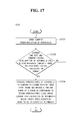
  • FIG. 17 is a flowchart showing one example of a parking operation control method of the parking operation control apparatus according to the sixth embodiment of the present invention.
  • FIG. 18 is a flowchart showing another example of a parking operation control method of the parking operation control apparatus according to the sixth embodiment of the present invention.
  • FIG. 1 is a block diagram showing connection of a parking operation device and a parking operation control apparatus according to a first embodiment of the present invention
  • FIG. 2 is a block diagram showing one example of the parking operation control apparatus shown in FIG. 1 .
  • the parking operation control apparatus 100 includes a first sensing unit 102 , a first controller 104 , a second sensing unit 106 , a first judgment unit 108 and a regulation unit 110 .
  • the first sensing unit 102 serves to sense at least one current wheel speed among a current front-wheel speed and a current rear-wheel speed of an automobile in a parking release mode 10 a of the parking operation device 10 .
  • the first sensing unit 102 serves to sense a current front-wheel speed of the automobile in a parking operation mode 10 b of the parking operation device 10 .
  • the first sensing unit 102 may include a wheel-speed sensor (not shown) without being limited thereto and all wheel-speed sensing means to sense a wheel speed may be possible.
  • the first controller 104 receives the at least one current wheel speed sensed by the first sensing unit 102 to output the same.
  • the first controller 104 stores a reference wheel-speed range corresponding to a preset reference front-wheel speed range and a preset reference rear-wheel speed range.
  • the first controller 104 may receive a current front-wheel speed sensed by the first sensing unit 102 and store a preset reference front-wheel speed range.
  • the second sensing unit 106 serves to sense the at least one current wheel speed output from the first controller 104 .
  • the second sensing unit 106 may include a wheel-speed sensor (not shown) without being limited thereto and all wheel-speed sensing means to sense a wheel speed may be possible.
  • the first judgment unit 108 serves to judge whether or not the at least one current wheel speed sensed by the first sensing unit 102 deviates from the reference wheel-speed range, or whether or not the at least one current wheel speed sensed by the second sensing unit 106 is not yet output.
  • the first judgment unit 108 may serve to judge whether or not the current front-wheel speed sensed by the first sensing unit 102 deviates from the reference front-wheel speed range.
  • the regulation unit 110 may serve to regulate the at least one current wheel speed to conform to the reference wheel-speed range when the first judgment unit 108 judges that the at least one current wheel speed deviates from the reference wheel-speed range or that the at least one current wheel speed is not yet output.
  • the regulation unit 110 may serve to regulate the current front-wheel speed to conform to the reference front-wheel speed range when the first judgment unit 108 judges that the current front-wheel speed deviates from the reference front-wheel speed range.
  • the first controller 104 , the first judgment unit 108 and the regulation unit 110 may include a general Electronic Control Unit (ECU) (not shown) or a general Micro Control Unit (MCU) (not shown).
  • the ECU is a main computer applied to the automobile and functions to control and judge general operations and to regulate a wheel speed.
  • the MCU includes a processor, a memory and an input/output device in a single chip and functions to control and judge general operations and to regulate a wheel speed.
  • the disclosure is not limited thereto and all control means, judgment means and regulation means which may control and judge general operations of the automobile and regulate a wheel speed may be possible.
  • the first controller 104 , the first judgment unit 108 and the regulation unit 110 may constitute an integrated ECU or MCU, or may be discrete ECUs or MCUs.
  • a parking operation control method to control a parking operation using the parking operation control apparatus 100 according to the first embodiment of the present invention will be described below with reference to FIGS. 3 and 4 .
  • FIG. 3 is a flowchart showing one example of a parking operation control method of the parking operation control apparatus according to the first embodiment of the present invention
  • FIG. 4 is a flowchart showing another example of a parking operation control method of the parking operation control apparatus according to the first embodiment of the present invention.
  • the parking operation control method 300 of the parking operation control apparatus ( 100 in FIGS. 1 and 2 ) according to the first embodiment of the present invention includes first sensing operation S 302 , second sensing operation S 304 , first judgment operation S 306 and first regulation operation S 308 .
  • the first sensing unit ( 102 in FIG. 2 ) senses at least one current wheel speed among a current front-wheel speed and a current rear-wheel speed of the automobile in the parking release mode ( 10 a in FIG. 2 ) of the parking operation device ( 10 in FIG. 2 ).
  • the second sensing unit ( 106 in FIG. 2 ) senses the at least one current wheel speed output from the first controller ( 104 in FIG. 2 ).
  • the first judgment unit ( 108 in FIG. 2 ) judges whether or not the at least one current wheel speed sensed by the first sensing unit ( 102 in FIG. 2 ) deviates from a reference wheel-speed range set in the first controller ( 104 in FIG. 2 ) (S 306 a ), or the first judgment unit ( 108 in FIG. 2 ) judges whether or not the at least one current wheel speed sensed by the second sensing unit ( 106 in FIG. 2 ) is not yet output (S 306 b ).
  • the regulation unit ( 110 in FIG. 2 ) regulates the at least one current wheel speed to conform to the reference wheel-speed range when the first judgment unit ( 108 in FIG. 2 ) judges that the at least one current wheel speed deviates from the reference wheel-speed range or that the at least one current wheel speed is not yet output.
  • a parking operation control method 400 of the parking operation control apparatus ( 100 in FIGS. 1 and 2 ) according to the first embodiment of the present invention includes third sensing operation S 402 , second judgment operation S 406 and second regulation operation S 408 .
  • the first sensing unit ( 102 in FIG. 2 ) senses a current front-wheel speed of the automobile in the parking operation mode ( 10 b in FIG. 2 ) of the parking operation device ( 10 in FIG. 2 ).
  • the first judgment unit ( 108 in FIG. 2 ) judges whether or not the current front-wheel speed sensed by the first sensing unit ( 102 in FIG. 2 ) deviates from a reference front-wheel speed range set in the first controller ( 104 in FIG. 2 ).
  • the regulation unit ( 110 in FIG. 2 ) regulates the current front-wheel speed to conform to the reference front-wheel speed range when the first judgment unit ( 108 in FIG. 2 ) judges that the current front-wheel speed deviates from the reference front-wheel speed range.
  • the parking operation control apparatus 100 includes the first sensing unit 102 , the first controller 104 , the second sensing unit 106 , the first judgment unit 108 and the regulation unit 110 and the control methods 300 and 400 thereof includes the first sensing operation S 302 , the second sensing operation S 304 , the first judgment operation S 306 and the first regulation operation S 308 or the third sensing operation S 402 , the second judgment operation S 406 and the second regulation operation S 408 .
  • the parking operation control apparatus 100 and the control methods 300 and 400 thereof may regulate at least one current wheel speed to conform to a reference wheel-speed range when the at least one current wheel speed deviates from the reference wheel-speed range or is not yet output.
  • the parking operation control apparatus 100 and the control methods 300 and 400 thereof according to the first embodiment of the present invention may enhance parking efficiency, convenience and stability by regulating at least one current wheel speed to conform to a reference wheel-speed range even under a situation in which the current wheel speed is abnormal.
  • FIG. 5 is a block diagram showing one example of a parking operation control apparatus according to a second embodiment of the present invention.
  • the parking operation control apparatus 500 includes the first sensing unit 102 , the first controller 104 , the first judgment unit 108 and the regulation unit 510 in the same manner as the parking operation control apparatus ( 100 in FIG. 2 ) according to the first embodiment.
  • Functions of and connection relationships between the respective components of the parking operation control apparatus 500 according to the second embodiment of the present invention are equal to functions of and connection relationships between the respective components of the parking operation control apparatus ( 100 in FIG. 2 ) according to the first embodiment and, thus, an additional description thereof will be omitted below.
  • the parking operation control apparatus 500 further includes a third sensing unit 512 , a second controller 514 and a second judgment unit 516 .
  • the third sensing unit 512 serves to sense at least one current wheel drive shaft rotation information among current front-wheel drive shaft rotation information and current rear-wheel drive shaft rotation information of the automobile when the first judgment unit 108 judges that at least one current wheel speed deviates from a reference wheel-speed range or that at least one current wheel speed is not yet output.
  • the third sensing unit 512 may include a rotation sensor (not shown) to sense rotation of a wheel drive shaft without being limited thereto, and all rotation sensing means to sense rotation of a wheel drive shaft may be possible.
  • the second controller 514 receives the at least one current wheel drive shaft rotation information sensed by the third sensing unit 512 .
  • the second controller 514 stores reference wheel drive shaft rotation information corresponding to preset reference front-wheel drive shaft rotation information and preset reference rear-wheel drive shaft rotation information.
  • the second controller 514 further stores a wheel-speed range on a per reference wheel drive shaft rotation information basis.
  • the second judgment unit 516 serves to judge whether or not the at least one current wheel drive shaft rotation information sensed by the third sensing unit 512 deviates from the reference wheel drive shaft rotation information.
  • the regulation unit 510 may serve to regulate the at least one current wheel drive shaft rotation information to conform to a wheel speed range on a per reference wheel drive shaft rotation information basis when the second judgment unit 516 judges that the at least one current wheel drive shaft rotation information deviates from the reference wheel drive shaft rotation information.
  • the second controller 514 , the second judgment unit 516 and the regulation unit 510 may include a general Electronic Control Unit (ECU) (not shown) or a general Micro Control Unit (MCU) (not shown).
  • the ECU is a main computer applied to the automobile and functions to control and judge general operations and to regulate rotation of a wheel drive shaft.
  • the MCU includes a processor, a memory and an input/output device in a single chip and functions to control and judge general operations and to regulate rotation of a wheel drive shaft.
  • the disclosure is not limited thereto and all control means, judgment means and regulation means which may control and judge general operations of the automobile and regulate rotation of a wheel drive shaft may be possible.
  • the second controller 514 , the second judgment unit 516 and the regulation unit 510 may constitute an integrated ECU or MCU, or may be discrete ECUs or MCUs.
  • a parking operation control method to control a parking operation using the parking operation control apparatus 500 according to the second embodiment of the present invention will be described below with reference to FIGS. 6 and 7 .
  • FIG. 6 is a flowchart showing one example of a parking operation control method of the parking operation control apparatus according to the second embodiment of the present invention
  • FIG. 7 is a flowchart showing another example of a parking operation control method of the parking operation control apparatus according to the second embodiment of the present invention.
  • the parking operation control methods 600 and 700 of the parking operation control apparatus ( 500 in FIG. 5 ) according to the second embodiment of the present invention include the first sensing operation (S 302 in FIG. 3 ), the second sensing operation (S 304 in FIG. 3 ), the first judgment operation (S 306 in FIG. 3 ) and the first regulation operation (S 308 in FIG. 3 ) or the third sensing operation (S 402 in FIG. 4 ), the second judgment operation (S 406 in FIG. 4 ) and the second regulation operation (S 408 in FIG. 4 ).
  • Functions of and connection relationships between the respective operations corresponding to the parking operation control methods 600 and 700 of the parking operation control apparatus 500 according to the second embodiment of the present invention are equal to functions of and connection relationships between the respective operations corresponding to the parking operation control methods ( 300 and 400 in FIGS. 3 and 4 ) of the parking operation control apparatus ( 100 in FIG. 2 ) according to the first embodiment and, thus, an additional description thereof will be omitted below.
  • the parking operation control methods 600 and 700 of the parking operation control apparatus ( 500 in FIG. 5 ) according to the second embodiment of the present invention further includes fourth sensing operation S 602 , third judgment operation S 606 and third regulation operation S 608 , or fifth sensing operation S 702 , fourth judgment operation S 706 and fourth regulation operation S 708 .
  • the parking operation control method 600 of the parking operation control apparatus ( 500 in FIG. 5 ) according to the second embodiment of the present invention further includes the fourth sensing operation S 602 , the third judgment operation S 606 and the third regulation operation S 608 .
  • the third sensing unit ( 512 in FIG. 5 ) senses at least one current wheel drive shaft rotation information among current front-wheel drive shaft rotation information and current rear-wheel drive shaft rotation information when the first judgment unit ( 108 in FIG. 2 ) judges that the at least one current wheel speed deviates from the reference wheel-speed range or that the at least one current wheel speed is not yet output (S 306 in FIG. 3 ).
  • the second judgment unit judges whether or not the at least one current wheel drive shaft rotation information sensed by the third sensing unit ( 512 in FIG. 5 ) deviates from reference wheel drive shaft rotation information set in the second controller ( 514 in FIG. 5 ).
  • the regulation unit ( 510 in FIG. 5 ) regulates the at least one current wheel drive shaft rotation information to conform to a wheel speed range per reference wheel drive shaft rotation information set in the second controller ( 514 in FIG. 5 ) when the second judgment unit ( 516 in FIG. 5 ) judges that the at least one current wheel drive shaft rotation information deviates from the reference wheel drive shaft rotation information.
  • the parking operation control method 700 of the parking operation control apparatus ( 500 in FIG. 5 ) according to the second embodiment of the present invention further includes the fifth sensing operation S 702 , the fourth judgment operation S 706 and the fourth regulation operation S 708 .
  • the third sensing unit senses current front-wheel drive shaft rotation information of the automobile when the first judgment unit ( 108 in FIG. 2 ) judges that the current front-wheel speed deviates from the reference front-wheel speed range (S 406 in FIG. 4 ).
  • the second judgment unit judges whether or not the current front-wheel drive shaft rotation information sensed by the third sensing unit ( 512 in FIG. 5 ) deviates from reference front-wheel drive shaft rotation information set in the second controller ( 514 in FIG. 5 ).
  • the regulation unit ( 510 in FIG. 5 ) regulates the current front-wheel drive shaft rotation information to conform to a wheel-speed range per reference wheel drive shaft rotation information set in the second controller ( 514 in FIG. 5 ) when the second judgment unit ( 516 in FIG. 5 ) judges that the current front-wheel drive shaft rotation information deviates from the reference front-wheel drive shaft rotation information.
  • the parking operation control apparatus 500 includes the first sensing unit 102 , the first controller 104 , the second sensing unit 106 , the first judgment unit 108 , the regulation unit 510 , the third sensing unit 512 , the second controller 514 and the second judgment unit 516 and the control methods 600 and 700 thereof include the first sensing operation S 302 , the second sensing operation S 304 , the first judgment operation S 306 , the first regulation operation S 308 , the fourth sensing operation S 602 , the third judgment operation S 606 and the third regulation operation S 608 or the third sensing operation S 402 , the second judgment operation S 406 , the second regulation operation S 408 , the fifth sensing operation S 702 , the fourth judgment operation S 706 and the fourth regulation operation S 708 .
  • the parking operation control apparatus 500 and the control methods 600 and 700 thereof may regulate current front-wheel drive shaft rotation information to conform to a wheel-speed range per reference wheel drive shaft rotation information when the current front-wheel drive shaft rotation information deviates from the reference wheel drive shaft rotation information.
  • the parking operation control apparatus 500 and the control methods 600 and 700 thereof according to the second embodiment of the present invention may enhance parking efficiency, convenience and stability by regulating current front-wheel drive shaft rotation information to conform to a wheel-speed range per reference wheel drive shaft rotation information even under a situation in which the current front-wheel drive shaft rotation information is abnormal.
  • FIG. 8 is a block diagram showing one example of a parking operation control apparatus according to a third embodiment of the present invention.
  • the parking operation control apparatus 800 includes a first sensing unit 802 , a first controller 804 , the second sensing unit 106 , a first judgment unit 808 and a regulation unit 810 in the same manner as the parking operation control apparatus ( 100 in FIG. 2 ) according to the first embodiment.
  • Functions of and connection relationships between the respective components of the parking operation control apparatus 800 according to the third embodiment of the present invention are equal to functions of and connection relationships between the respective components of the parking operation control apparatus ( 100 in FIG. 2 ) according to the first embodiment and, thus, an additional description thereof will be omitted below.
  • the first sensing unit 802 of the parking operation control apparatus 800 serves to further sense current final reduction of the automobile in the parking release mode 10 a.
  • the first sensing unit 802 may include a final reduction sensor (not shown) without being limited thereto and all final reduction sensing means to sense final reduction may be possible.
  • the first controller 804 further stores a preset reference final reduction range and the first judgment unit 808 serves to further judge whether or not the current final reduction of the automobile sensed by the first sensing unit 802 deviates from the reference final reduction range.
  • the regulation unit 810 of the parking operation control apparatus 800 serves to regulate the current final reduction to conform to the reference final reduction range when the first judgment unit 808 judges that the current final reduction of the automobile deviates from the reference final reduction range.
  • the first controller 804 , the first judgment unit 808 and the regulation unit 810 may include a general Electronic Control Unit (ECU) (not shown) or a general Micro Control Unit (MCU) (not shown).
  • the ECU is a main computer applied to the automobile and functions to control and judge general operations and to regulate final reduction.
  • the MCU includes a processor, a memory and an input/output device in a single chip and functions to control and judge general operations and to regulate final reduction.
  • the disclosure is not limited thereto and all control means, judgment means and regulation means which may control and judge general operations of the automobile and regulate final reduction may be possible.
  • the first controller 804 , the first judgment unit 808 and the regulation unit 810 may constitute an integrated ECU or MCU, or may be discrete ECUs or MCUs.
  • a parking operation control method to control a parking operation using the parking operation control apparatus 800 according to the third embodiment of the present invention will be described below with reference to FIG. 9 .
  • FIG. 9 is a flowchart showing one example of a parking operation control method of the parking operation control apparatus according to the third embodiment of the present invention.
  • the parking operation control method 900 of the parking operation control apparatus ( 800 in FIG. 8 ) according to the third embodiment of the present invention includes the third sensing operation (S 402 in FIG. 4 ), the second judgment operation (S 406 in FIG. 4 ) and the second regulation operation (S 408 in FIG. 4 ) in the same manner as the parking operation control method ( 400 in FIG. 4 ) of the parking operation control apparatus ( 100 in FIG. 2 ) according to the first embodiment.
  • Functions of and connection relationships between the respective operations corresponding to the parking operation control method 900 of the parking operation control apparatus ( 800 in FIG. 8 ) according to the third embodiment of the present invention are equal to functions of and connection relationships between the respective operations corresponding to the parking operation control method ( 400 in FIG. 4 ) of the parking operation control apparatus ( 100 in FIG. 2 ) according to the first embodiment and, thus, an additional description thereof will be omitted below.
  • the parking operation control method 900 of the parking operation control apparatus ( 800 in FIG. 8 ) according to the third embodiment of the present invention further includes, after the second regulation operation (S 408 in FIG. 4 ), sixth sensing operation S 902 , fifth judgment operation S 906 and fifth regulation operation S 908 .
  • the first sensing unit ( 802 in FIG. 8 ) senses current final reduction of the automobile in the parking release mode ( 10 a in FIG. 8 ) of the parking operation device ( 10 in FIG. 8 ).
  • the first judgment unit ( 808 in FIG. 8 ) judges whether or not the current final reduction of the automobile sensed by the first sensing unit ( 802 in FIG. 8 ) deviates from a reference final reduction range set in the first controller ( 804 in FIG. 8 ) in the parking release mode ( 10 a in FIG. 8 ) of the parking operation device ( 10 in FIG. 8 ).
  • the regulation unit ( 810 in FIG. 8 ) regulates the current final reduction to conform to the reference final reduction range when the first judgment unit ( 808 in FIG. 8 ) judges that the current final reduction of the automobile deviates from the reference final reduction range.
  • the parking operation control apparatus 800 includes the first sensing unit 802 , the first controller 804 , the second sensing unit 106 , the first judgment unit 808 and the regulation unit 810 and the control method 900 thereof includes the third sensing operation S 402 , the second judgment operation S 406 , the second regulation operation S 408 , the sixth sensing operation S 902 , the fifth judgment operation S 906 and the fifth regulation operation S 908 .
  • the parking operation control apparatus 800 and the control method 900 thereof according to the third embodiment of the present invention may regulate current final reduction to conform to a reference final reduction range when the current final reduction of the automobile deviates from the reference final reduction range.
  • the parking operation control apparatus 800 and the control method 900 thereof according to the third embodiment of the present invention may enhance parking efficiency, convenience and stability by regulating current final reduction to conform to a reference final reduction range even under a situation in which the current final reduction is abnormal.
  • FIG. 10 is a block diagram showing one example of a parking operation control apparatus according to a fourth embodiment of the present invention.
  • the parking operation control apparatus 1000 includes a first sensing unit 1002 , a first controller 1004 , the second sensing unit 106 , a first judgment unit 1008 and a regulation unit 1010 , in the same manner as the parking operation control apparatus ( 100 in FIG. 2 ) according to the first embodiment.
  • Functions of and connection relationships between the respective components of the parking operation control apparatus 1000 according to the fourth embodiment of the present invention are equal to functions of and connection relationships between the respective components of the parking operation control apparatus ( 100 in FIG. 2 ) according to the first embodiment and, thus, an additional description thereof will be omitted below.
  • the first sensing unit 1002 serves to further sense a current yaw rate and current lateral acceleration and the first controller 1004 further stores a preset reference yaw-rate range and a preset reference lateral-acceleration range.
  • the first sensing unit 1002 may include a yaw-rate sensor (not shown) and a lateral acceleration sensor (not shown) without being limited thereto and all yaw-rate sensing means to sense a yaw-rate and all lateral-acceleration sensing means to sense lateral acceleration may be possible.
  • the first judgment unit 1008 of the parking operation control apparatus 1000 serves to further judge whether or not the current yaw rate and current lateral acceleration of the automobile sensed by the first sensing unit 1002 deviate from the reference yaw-rate range and the reference lateral-acceleration range.
  • the regulation unit 1010 of the parking operation control apparatus 1000 serves to regulate the current yaw rate and the current lateral acceleration of the automobile to conform to the reference yaw-rate range and the reference lateral-acceleration range when the first judgment unit 1008 judges that the current yaw rate and the current lateral acceleration of the automobile deviate from the reference yaw-rate range and the reference lateral-acceleration range.
  • the first controller 1004 , the first judgment unit 1008 and the regulation unit 1010 may include a general Electronic Control Unit (ECU) (not shown) or a general Micro Control Unit (MCU) (not shown).
  • the ECU is a main computer applied to the automobile and functions to control and judge general operations and to regulate a yaw rate and lateral acceleration of the automobile.
  • the MCU includes a processor, a memory and an input/output device in a single chip and functions to control and judge general operations and to regulate a yaw rate and lateral acceleration of the automobile.
  • the disclosure is not limited thereto and all control means, judgment means and regulation means which may control and judge general operations of the automobile and regulate a yaw rate and lateral acceleration of the automobile may be possible.
  • the first controller 1004 , the first judgment unit 1008 and the regulation unit 1010 may constitute an integrated ECU or MCU, or may be discrete ECUs or MCUs.
  • a parking operation control method to control a parking operation using the parking operation control apparatus 1000 according to the fourth embodiment of the present invention will be described below with reference to FIGS. 11 and 12 .
  • FIG. 11 is a flowchart showing one example of a parking operation control method of the parking operation control apparatus according to the fourth embodiment of the present invention
  • FIG. 12 is a flowchart showing another example of a parking operation control method of the parking operation control apparatus according to the fourth embodiment of the present invention.
  • the parking operation control methods 1100 and 1200 of the parking operation control apparatus ( 1000 in FIG. 10 ) according to the fourth embodiment of the present invention include the first sensing operation (S 302 in FIG. 3 ), the second sensing operation (S 304 in FIG. 3 ), the first judgment operation (S 306 in FIG. 3 ) and the first regulation operation (S 308 in FIG. 3 ), or the third sensing operation (S 402 in FIG. 4 ), the second judgment operation (S 406 in FIG. 4 ) and the second regulation operation (S 408 in FIG. 4 ).
  • Functions of and connection relationships between the respective operations corresponding to the parking operation control methods 1100 and 1200 of the parking operation control apparatus ( 1000 in FIG. 10 ) according to the fourth embodiment of the present invention are equal to functions of and connection relationships between the respective operations corresponding to the parking operation control methods ( 300 and 400 in FIGS. 3 and 4 ) of the parking operation control apparatus ( 100 in FIG. 2 ) according to the first embodiment and, thus, an additional description thereof will be omitted below.
  • the parking operation control method 1100 of the parking operation control apparatus ( 1000 in FIG. 10 ) according to the fourth embodiment of the present invention further includes, after the first regulation operation (S 308 in FIG. 3 ), seventh sensing operation S 1102 , sixth judgment operation S 1106 and sixth regulation operation S 1108 .
  • the first sensing unit 1002 of FIG. 10 senses a current yaw rate and current lateral acceleration.
  • the first judgment unit judges whether or not the current yaw rate and the current lateral acceleration sensed by the first sensing unit ( 1002 in FIG. 10 ) deviate from a reference yaw-rate range and a reference lateral-acceleration range.
  • the regulation unit ( 1010 in FIG. 10 ) regulates the current yaw rate and the current lateral acceleration of the automobile to conform to the reference yaw-rate range and the reference lateral-acceleration range when the first judgment unit ( 1008 in FIG. 10 ) judges that the current yaw rate and the current lateral acceleration of the automobile deviate from the reference yaw-rate range and the reference lateral-acceleration range.
  • the parking operation control method 1200 of the parking operation control apparatus ( 1000 in FIG. 10 ) according to the fourth embodiment of the present invention further includes, after the second regulation operation (S 408 in FIG. 4 ), ninth sensing operation S 1202 , eighth judgment operation S 1206 and eighth regulation operation S 1208 .
  • the first sensing unit ( 1002 in FIG. 10 ) senses a current yaw rate and current lateral acceleration.
  • the first judgment unit judges whether or not the current yaw rate and the current lateral acceleration sensed by the first sensing unit ( 1002 in FIG. 10 ) deviate from a reference yaw-rate range and a reference lateral-acceleration range.
  • the regulation unit ( 1010 in FIG. 10 ) regulates the current yaw rate and the current lateral acceleration of the automobile to conform to the reference yaw-rate range and the reference lateral-acceleration range when the first judgment unit ( 1008 in FIG. 10 ) judges that the current yaw rate and the current lateral acceleration of the automobile deviate from the reference yaw-rate range and the reference lateral-acceleration range.
  • the parking operation control apparatus 1000 includes the first sensing unit 1002 , the second sensing unit 106 , the first judgment unit 1008 and the regulation unit 1010 and the control methods 1100 and 1200 thereof include the first sensing operation S 302 , the second sensing operation S 304 , the first judgment operation S 306 , the first regulation operation S 308 , the seventh sensing operation S 1102 , the sixth judgment operation S 1106 and the sixth regulation operation S 1108 , or the third sensing operation S 402 , the second judgment operation S 406 , the second regulation operation S 408 , the ninth sensing operation S 1202 , the eighth judgment operation S 1206 and the eighth regulation operation S 1208 .
  • the parking operation control apparatus 1000 and the control methods 1100 and 1200 thereof may regulate a current yaw rate and current lateral acceleration of the automobile to conform to a reference yaw-rate range and a reference lateral-acceleration range when the current yaw rate and the current lateral acceleration of the automobile deviate from the reference yaw-rate range and the reference lateral-acceleration range.
  • the parking operation control apparatus 1000 and the control methods 1100 and 1200 thereof according to the fourth embodiment of the present invention may enhance parking efficiency, convenience and stability by regulating a current yaw rate and current lateral acceleration of the automobile to conform to a reference yaw-rate range and a reference lateral-acceleration range even under a situation in which the current yaw rate and current lateral acceleration of the automobile are abnormal.
  • FIG. 13 is a block diagram showing one example of a parking operation control apparatus according to a fifth embodiment of the present invention.
  • the parking operation control apparatus 1300 includes a first sensing unit 1302 , a first controller 1304 , the second sensing unit 106 , a first judgment unit 1308 and a regulation unit 1310 , in the same manner as the parking operation control apparatus ( 1000 in FIG. 10 ) according to the fourth embodiment.
  • Functions of and connection relationships between the respective components of the parking operation control apparatus 1300 according to the fifth embodiment of the present invention are equal to functions of and connection relationships between the respective components of the parking operation control apparatus ( 1000 in FIG. 10 ) according to the first embodiment and, thus, an additional description thereof will be omitted below.
  • the first controller 1304 of the parking operation control apparatus 1300 further stores a preset first parking-force level range.
  • the regulation unit 1310 of the parking operation control apparatus 1300 serves to reduce parking force of the automobile to conform to the first parking-force level range so as to stabilize the automobile when the first judgment unit 1308 judges that the current yaw rate and the current lateral acceleration of the automobile deviate from the reference yaw-rate range and the reference lateral-acceleration range.
  • the first controller 1304 , the first judgment unit 1308 and the regulation unit 1310 may include a general Electronic Control Unit (ECU) (not shown) or a general Micro Control Unit (MCU) (not shown).
  • the ECU is a main computer applied to the automobile and functions to control and judge general operations and to regulate a parking-force level of the automobile.
  • the MCU includes a processor, a memory and an input/output device in a single chip and functions to control and judge general operations and to regulate a parking-force level of the automobile.
  • the disclosure is not limited thereto and all control means, judgment means and regulation means which may control and judge general operations of the automobile and regulate a parking-force level of the automobile may be possible.
  • the first controller 1304 , the first judgment unit 1308 and the regulation unit 1310 may constitute an integrated ECU or MCU, or may be discrete ECUs or MCUs.
  • a parking operation control method to control a parking operation using the parking operation control apparatus 1300 according to the fifth embodiment of the present invention will be described below with reference to FIGS. 14 and 15 .
  • FIG. 14 is a flowchart showing one example of a parking operation control method of the parking operation control apparatus according to the fifth embodiment of the present invention
  • FIG. 15 is a flowchart showing another example of a parking operation control method of the parking operation control apparatus according to the fifth embodiment of the present invention.
  • the parking operation control methods 1400 and 1500 of the parking operation control apparatus ( 1300 in FIG. 13 ) according to the fifth embodiment of the present invention include the seventh sensing operation S 1102 , the sixth judgment operation S 1106 and sixth regulation operation S 1408 , or the ninth sensing operation S 1202 , the eighth judgment operation S 1206 and eighth regulation operation S 1508 .
  • Functions of and connection relationships between the respective operations corresponding to the parking operation control methods 1400 and 1500 of the parking operation control apparatus ( 1300 in FIG. 13 ) according to the fifth embodiment of the present invention are equal to functions of and connection relationships between the respective operations corresponding to the parking operation control methods ( 1100 and 1200 in FIGS. 11 and 12 ) of the parking operation control apparatus ( 1000 in FIG. 10 ) according to the fourth embodiment and, thus, an additional description thereof will be omitted below.
  • the regulation unit ( 1310 in FIG. 13 ) reduces parking force of the automobile to conform to a first parking-force level range set in the first controller ( 1304 in FIG. 13 ) to stabilize the automobile when the first judgment unit ( 1308 in FIG. 13 ) judges that a current yaw rate and current lateral acceleration of the automobile deviate from a reference yaw-rate range and a reference lateral-acceleration range.
  • the regulation unit ( 1310 in FIG. 13 ) reduces parking force of the automobile to conform to a first parking-force level range set in the first controller ( 1304 in FIG. 13 ) to stabilize the automobile when the first judgment unit ( 1308 in FIG. 13 ) judges that a current yaw rate and current lateral acceleration of the automobile deviate from a reference yaw-rate range and a reference lateral-acceleration range.
  • the parking operation control apparatus 1300 includes the first sensing unit 1302 , the first controller 1304 , the second sensing unit 106 , the first judgment unit 1308 and the regulation unit 1310 and the control methods 1400 and 1500 thereof include the first sensing operation S 302 , the second sensing operation S 304 , the first judgment operation S 306 , the first regulation operation S 308 , the seventh sensing operation S 1102 , the sixth judgment operation S 1106 and the sixth regulation operations S 1108 and S 1408 , or the third sensing operation S 402 , the second judgment operation S 406 , the second regulation operation S 408 , the ninth sensing operation S 1202 , the eighth judgment operation S 1206 and the eighth regulation operations S 1208 and S 1508 .
  • the parking operation control apparatus 1300 and the control methods 1400 and 1500 thereof may reduce parking force of the automobile to conform to a first parking-force level range so as to stabilize the automobile when a current yaw rate and current lateral acceleration of the automobile deviate from a reference yaw-rate range and a reference lateral-acceleration range.
  • the parking operation control apparatus 1300 and the control methods 1400 and 1500 thereof may enhance parking efficiency, convenience and stability by reducing parking force of the automobile to conform to a first parking-force level range so as to stabilize the automobile even under a situation in which the current yaw rate and the current lateral acceleration of the automobile are abnormal.
  • FIG. 16 is a block diagram showing one example of a parking operation control apparatus according to a sixth embodiment of the present invention.
  • the parking operation control apparatus 1600 includes a first sensing unit 1602 , a first controller 1604 , the second sensing unit 106 , a first judgment unit 1608 and a regulation unit 1610 , in the same manner as the parking operation control apparatus ( 1000 in FIG. 10 ) according to the fourth embodiment.
  • Functions of and connection relationships between the respective components of the parking operation control apparatus 1600 according to the sixth embodiment of the present invention are equal to functions of and connection relationships between the respective components of the parking operation control apparatus ( 1000 in FIG. 10 ) according to the fourth embodiment and, thus, an additional description thereof will be omitted below.
  • the first sensing unit 1602 of the parking operation control apparatus 1600 serves to further sense current speed-reduction of the automobile.
  • the first sensing unit 1602 may include a speed-reduction sensor (not shown) without being limited thereto, and all speed-reduction sensors to sense speed-reduction may be possible.
  • the first controller 1604 of the parking operation control apparatus 1600 further stores a preset second parking-force level range and a target speed-reduction range.
  • the regulation unit 1610 of the parking operation control apparatus 1600 serves to increase parking force of the automobile to conform to the second parking-force level range and to maintain the increased parking force of the automobile conforming to the second parking-force level range when current speed-reduction of the automobile reaches the target speed-reduction range.
  • current lateral acceleration may be used to determine a given magnitude of offset variation per hour and may be calculated by multiplying the square of vehicle velocity by a turn radius and dividing the same by the square of time.
  • the first controller 1604 , the first judgment unit 1608 and the regulation unit 1610 may include a general Electronic Control Unit (ECU) (not shown) or a general Micro Control Unit (MCU) (not shown).
  • the ECU is a main computer applied to the automobile and functions to control and judge general operations and to regulate a parking-force level of the automobile.
  • the MCU includes a processor, a memory and an input/output device in a single chip and functions to control and judge general operations and to regulate a parking-force level of the automobile.
  • the disclosure is not limited thereto and all control means, judgment means and regulation means which may control and judge general operations of the automobile and regulate a parking-force level of the automobile are possible.
  • the first controller 1604 , the first judgment unit 1608 and the regulation unit 1610 may constitute an integrated ECU or MCU, or may be discrete ECUs or MCUs.
  • a parking operation control method to control a parking operation using the parking operation control apparatus 1600 according to the sixth embodiment of the present invention will be described below with reference to FIGS. 17 and 18 .
  • FIG. 17 is a flowchart showing one example of a parking operation control method of the parking operation control apparatus according to the sixth embodiment of the present invention
  • FIG. 18 is a flowchart showing another example of a parking operation control method of the parking operation control apparatus according to the sixth embodiment of the present invention.
  • the parking operation control methods 1700 and 1800 of the parking operation control apparatus ( 1600 in FIG. 16 ) according to the sixth embodiment of the present invention include the seventh sensing operation S 1102 , the sixth judgment operation S 1106 and the sixth regulation operation S 1408 , or the ninth sensing operation S 1202 , the eighth judgment operation S 1206 and the eighth regulation operation S 1508 .
  • Functions of and connection relationships between the respective operations corresponding to the parking operation control methods 1700 and 1800 of the parking operation control apparatus ( 1600 in FIG. 16 ) according to the sixth embodiment of the present invention are equal to functions of and connection relationships between the respective operations corresponding to the parking operation control methods ( 1100 and 1200 in FIGS. 11 and 12 ) of the parking operation control apparatus ( 1000 in FIG. 10 ) according to the fourth embodiment and, thus, an additional description thereof will be omitted below.
  • the parking operation control method 1700 of the parking operation control apparatus ( 1600 in FIG. 16 ) according to the sixth embodiment of the present invention further includes, after the sixth regulation operation (S 1108 in FIG. 11 ), eighth sensing operation S 1702 , seventh judgment operation S 1706 and seventh regulation operation S 1708 .
  • the first sensing unit 1602 in FIG. 16 ) senses current speed-reduction of the automobile.
  • the first judgment unit judges whether or not a current yaw rate and current lateral acceleration of the automobile fall within a reference yaw-rate range and a reference lateral-acceleration range.
  • the regulation unit ( 1610 in FIG. 16 ) increases parking force of the automobile to conform to a second parking-force level range set in the first controller ( 1604 in FIG. 16 ) and maintains the increased parking force of the automobile conforming to the second parking-force level range when current speed-reduction of the automobile reaches a target speed-reduction range set in the first controller ( 1604 in FIG. 16 ), so as to stabilize the automobile.
  • the parking operation control method 1800 of the parking operation control apparatus ( 1600 in FIG. 16 ) according to the sixth embodiment of the present invention further includes, after the eighth regulation operation (S 1208 in FIG. 12 ), tenth sensing operation S 1802 , ninth judgment operation S 1806 and ninth regulation operation S 1808 .
  • the first sensing unit 1602 in FIG. 16 ) senses current speed-reduction of the automobile.
  • the first judgment unit judges whether or not a current yaw rate and current lateral acceleration of the automobile fall within a reference yaw-rate range and a reference lateral-acceleration range.
  • the regulation unit ( 1610 in FIG. 16 ) increases parking force of the automobile to conform to a second parking-force level range set in the first controller ( 1604 in FIG. 16 ) and maintains the increased parking force of the automobile conforming to the second parking-force level range when current speed-reduction of the automobile reaches a target speed-reduction range set in the first controller ( 1604 in FIG. 16 ), so as to stabilize the automobile.
  • the parking operation control apparatus 1600 includes the first sensing unit 1602 , the first controller 1604 , the second sensing unit 106 , the first judgment unit 1608 and the regulation unit 1610 and the control methods 1700 and 1800 thereof include the first sensing operation S 302 , the second sensing operation S 304 , the first judgment operation S 306 , the first regulation operation S 308 , the seventh sensing operation S 1102 , the sixth judgment operation S 1106 , the sixth regulation operation S 1108 , the eighth sensing operation S 1702 , the seventh judgment operation S 1706 and the seventh regulation operation S 1708 , or the third sensing operation S 402 , the second judgment operation S 406 , the second regulation operation S 408 , the ninth sensing operation S 1202 , the eighth judgment operation S 1206 , the eighth regulation operations S 1208 , the tenth sensing operation S 1802 , the ninth judgment operation S 1806 and the ninth regulation operation S 1808 .
  • the parking operation control apparatus 1600 and the control methods 1700 and 1800 thereof may increase parking force of the automobile to conform to a second parking-force level range and maintain the increased parking force of the automobile conforming to the second parking-force range when current speed-reduction of the automobile reaches a target speed-reduction range so as to stabilize the automobile when a current yaw rate and current lateral acceleration of the automobile fall within a reference yaw-rate range and a reference lateral-acceleration range.
  • the parking operation control apparatus 1600 and the control methods 1700 and 1800 thereof according to the sixth embodiment of the present invention may enhance parking efficiency, convenience and stability by increasing parking force of the automobile to conform to a second parking-force level range and maintain the increased parking force of the automobile conforming to the second parking-force range when current speed-reduction of the automobile reaches a target speed-reduction range so as to stabilize the automobile even under a situation in which the current yaw rate and the current lateral acceleration of the automobile are abnormal.
  • a parking operation control apparatus and a control method thereof according to the present invention may achieve the following effects.
  • At least one current wheel speed may be regulated to conform to a reference wheel-speed range under a situation in which the at least one current wheel speed is abnormal, which has the effect of enhancing parking efficiency, convenience and stability.
  • current front-wheel drive shaft rotation information may be regulated to conform to a wheel-speed range per reference wheel drive shaft rotation information under a situation in which the current front-wheel drive shaft rotation information is abnormal, which has the effect of enhancing parking efficiency, convenience and stability.
  • current final reduction may be regulated to conform to a reference final reduction range under a situation in which the current final reduction is abnormal, which has the effect of enhancing parking efficiency, convenience and stability.
  • a current yaw rate and current lateral acceleration of an automobile may be regulated to conform to a reference yaw-rate range and a reference lateral-acceleration range under a situation in which the current yaw rate and the current lateral acceleration are abnormal, which has the effect of enhancing parking efficiency, convenience and stability.
  • parking force of an automobile may be reduced to conform to a first parking-force level range so as to stabilize the automobile under a situation in which a current yaw rate and current lateral acceleration of the automobile are abnormal, which has the effect of enhancing parking efficiency, convenience and stability.
  • parking force of an automobile may be reduced to conform to a second parking-force level range and the increased parking force of the automobile conforming to the second parking-force level range may be maintained when current speed-reduction of the automobile reaches a target speed-reduction range so as to stabilize the automobile under a situation in which the current speed-reduction of the automobile is abnormal, which has the effect of enhancing parking efficiency, convenience and stability.

Landscapes

  • Engineering & Computer Science (AREA)
  • Transportation (AREA)
  • Mechanical Engineering (AREA)
  • Automation & Control Theory (AREA)
  • Chemical & Material Sciences (AREA)
  • Combustion & Propulsion (AREA)
  • Physics & Mathematics (AREA)
  • Mathematical Physics (AREA)
  • Regulating Braking Force (AREA)
  • Electric Propulsion And Braking For Vehicles (AREA)
  • Control Of Driving Devices And Active Controlling Of Vehicle (AREA)

Abstract

Disclosed are a parking operation control apparatus and a control method thereof. The apparatus includes a first sensing unit to sense current wheel speed of an automobile in a parking release mode or a current front-wheel speed of the automobile in a parking operation mode, a first controller to receive the current wheel speed and output the same and to store a reference wheel-speed range, a second sensing unit to sense the current wheel speed from the first controller, a first judgment unit to judge whether the current wheel speed deviates from the reference wheel-speed range, or whether the current wheel speed sensed by the second sensing unit is not output, and a regulation unit to regulate the current wheel speed to conform to the reference wheel-speed range when the first judgment unit judges that the current wheel speed deviates from the reference wheel-speed range or is not output.

Description

CROSS-REFERENCE TO RELATED APPLICATION
This application claims the benefit of Korean Patent Applications No. 2013-0092434, filed on Aug. 5, 2013 in the Korean Intellectual Property Office, the disclosure of which is incorporated herein by reference.
BACKGROUND
1. Field
Embodiments of the present invention relate to a parking operation control apparatus and a control method thereof.
2. Description of the Related Art
Generally, conventional parking operation devices are provided to park an automobile at a desired position using an electronic parking brake system upon parking.
The electronic parking brake system allows a driver to operate or release a parking brake via simplified switch operation and to achieve braking stability in an emergency situation.
In addition, when the user has difficulty in driving or parking the automobile due to failure of the electronic parking brake system, driving or parking may be implemented via operation of a release lever.
Recently, studies on an improved parking operation control apparatus, which may enhance parking efficiency, convenience and stability by stabilizing an automobile under occurrence of malfunction of the electronic parking brake system and a control method thereof have been continuously conducted.
SUMMARY
It is an aspect of the present invention to provide a parking operation control apparatus and a control method thereof, which may regulate at least one current wheel speed to conform to a reference wheel-speed range under a situation in which the at least one current wheel speed is abnormal, thereby enhancing parking efficiency, convenience and stability.
It is another aspect of the present invention to provide a parking operation control apparatus and a control method thereof, which may regulate current front-wheel drive shaft rotation information to conform to a wheel-speed range per reference wheel drive shaft rotation information under a situation in which the current front-wheel drive shaft rotation information is abnormal, thereby enhancing parking efficiency, convenience and stability.
It is another aspect of the present invention to provide a parking operation control apparatus and a control method thereof, which may regulate current final reduction to conform to a reference final reduction range under a situation in which the current final reduction is abnormal, thereby enhancing parking efficiency, convenience and stability.
It is another aspect of the present invention to provide a parking operation control apparatus and a control method thereof, which may regulate a current yaw rate and current lateral acceleration of an automobile to conform to a reference yaw-rate range and a reference lateral-acceleration range under a situation in which the current yaw rate and the current lateral acceleration are abnormal, thereby enhancing parking efficiency, convenience and stability.
It is another aspect of the present invention to provide a parking operation control apparatus and a control method thereof, which may reduce parking force of an automobile to conform to a first parking-force level range so as to stabilize the automobile under a situation in which a current yaw rate and current lateral acceleration of the automobile are abnormal, thereby enhancing parking efficiency, convenience and stability.
It is a further aspect of the present invention to provide a parking operation control apparatus and a control method thereof, which may increase parking force of an automobile to conform to a second parking-force level range and maintain the increased parking force of the automobile conforming to the second parking-force level range when current speed-reduction of the automobile reaches a target speed-reduction range so as to stabilize the automobile under a situation in which the current speed-reduction of the automobile is abnormal, thereby enhancing parking efficiency, convenience and stability.
Additional aspects of the invention will be set forth in part in the description which follows and, in part, will be obvious from the description, or may be learned by practice of the invention.
In accordance with one embodiment, a parking operation control apparatus includes a first sensing unit to sense at least one current wheel speed among a current front-wheel speed and a current rear-wheel speed of an automobile in a parking release mode of a parking operation device, or to sense a current front-wheel speed of the automobile in a parking operation mode of the parking operation device, a first controller to receive the at least one current wheel speed sensed by the first sensing unit and to output the at least one current wheel speed, the first controller storing a reference wheel-speed range corresponding to a preset reference front-wheel speed range and a preset reference rear-wheel speed range, a second sensing unit to sense the at least one current wheel speed output from the first controller, a first judgment unit to judge whether or not the at least one current wheel speed sensed by the first sensing unit deviates from the reference wheel-speed range, or to judge whether or not the at least one current wheel speed sensed by the second sensing unit is not yet output, and a regulation unit to regulate the at least one current wheel speed to conform to the reference wheel-speed range when the first judgment unit judges that the at least one current wheel speed deviates from the reference wheel-speed range or that the at least one current wheel speed is not yet output.
The first sensing unit may further sense current final reduction of the automobile in the parking release mode, the first controller may further store a preset reference final reduction range, the first judgment unit may further judge whether or not the current final reduction of the automobile sensed by the first sensing unit deviates from the reference final reduction range, and the regulation unit may regulate the current final reduction to conform to the reference final reduction range when the first judgment unit judges that the current final reduction of the automobile deviates from the reference final reduction range.
The first sensing unit may sense a current yaw rate and current lateral acceleration, the first controller may further store a preset reference yaw-rate range and a preset reference lateral-acceleration range, the first judgment unit may further judge whether or not the current yaw rate and the current lateral acceleration of the automobile sensed by the first sensing unit deviate from the reference yaw-rate range and the reference lateral-acceleration range, and the regulation unit may regulate the current yaw rate and the current lateral acceleration of the automobile to conform to the reference yaw-rate range and the reference lateral-acceleration range when the first judgment unit judges that the current yaw rate and the current lateral acceleration of the automobile deviate from the reference yaw-rate range and the reference lateral-acceleration range.
The first controller may further store a preset first parking-force level range, and the regulation unit may reduce parking force of the automobile to conform to the first parking-force level range so as to stabilize the automobile when the first judgment unit judges that the current yaw rate and the current lateral acceleration of the automobile deviate from the reference yaw-rate range and the reference lateral-acceleration range.
The first sensing unit may further sense current speed-reduction of the automobile, the first controller may further store a preset second parking-force level range and a target speed-reduction range, and the regulation unit may increase parking force of the automobile to conform to the second parking-force level range and maintain the increased parking force of the automobile conforming to the second parking-force level range when current speed-reduction of the automobile reaches the target speed-reduction range so as to stabilize the automobile when the first judgment unit judges that the current yaw rate and the current lateral acceleration of the automobile fall within the reference yaw-rate range and the reference lateral-acceleration range.
The parking operation control apparatus may further include a third sensing unit to sense at least one current wheel drive shaft rotation information among current front-wheel drive shaft rotation information and current rear-wheel drive shaft rotation information of the automobile when the first judgment unit judges that the at least one current wheel speed deviates from the reference wheel-speed range or that the at least one current wheel speed is not yet output, a second controller to receive the at least one current wheel drive shaft rotation information sensed by the third sensing unit, the second controller storing reference wheel drive shaft rotation information corresponding to preset reference front-wheel drive shaft rotation information and preset reference rear-wheel drive shaft rotation information, the second controller further storing a wheel-speed range on a per reference wheel drive shaft rotation information basis, and a second judgment unit to judge whether or not the at least one current wheel drive shaft rotation information sensed by the third sensing unit deviates from the reference wheel drive shaft rotation information, and the regulation unit may regulate the at least one current wheel drive shaft rotation information to conform to the wheel speed range on a per reference wheel drive shaft rotation information basis when the second judgment unit judges that the at least one current wheel drive shaft rotation information deviates from the reference wheel drive shaft rotation information.
In accordance with another embodiment, a parking operation control method includes first sensing operation implemented by a first sensing unit to sense at least one current wheel speed among a current front-wheel speed and a current rear-wheel speed of an automobile in a parking release mode of a parking operation device, second sensing operation implemented by a second sensing unit to sense the at least one current wheel speed output from a first controller, first judgment operation implemented by a first judgment unit to judge whether or not the at least one current wheel speed sensed by the first sensing unit deviates from a reference wheel-speed range set in the first controller, or to judge whether or not the at least one current wheel speed sensed by the second sensing unit is not yet output, and first regulation operation implemented by a regulation unit to regulate the at least one current wheel speed to conform to the reference wheel-speed range when the first judgment unit judges that the at least one current wheel speed deviates from the reference wheel-speed range or that the at least one current wheel speed is not yet output.
The parking operation control method may further include fourth sensing operation implemented by a third sensing unit to sense at least one current wheel drive shaft rotation information among current front-wheel drive shaft rotation information and current rear-wheel drive shaft rotation information of the automobile when the first judgment unit judges that the at least one current wheel speed deviates from the reference wheel-speed range or that the at least one current wheel speed is not yet output, third judgment operation implemented by a second judgment unit to judge whether or not the at least one current wheel drive shaft rotation information sensed by the third sensing unit deviates from the reference wheel drive shaft rotation information set in a second controller, and third regulation operation implemented by the regulation unit to regulate the at least one current wheel drive shaft rotation information to conform to a wheel speed range per reference wheel drive shaft rotation information set in the second controller when the second judgment unit judges that the at least one current wheel drive shaft rotation information deviates from the reference wheel drive shaft rotation information.
In accordance with another embodiment, a parking operation control method includes third sensing operation implemented by a first sensing unit to sense a current front-wheel speed of an automobile in a parking operation mode of a parking operation device, second judgment operation implemented by a first judgment unit to judge whether or not the current front-wheel speed sensed by the first sensing unit deviates from a reference front-wheel speed range set in a first controller, and second regulation operation implemented by a regulation unit to regulate the current front-wheel speed to conform to the reference front-wheel speed range when the first judgment unit judges that the current front-wheel speed deviates from the reference front-wheel speed range.
The parking operation control method may further include fifth sensing operation implemented by a third sensing unit to sense current front-wheel drive shaft rotation information of the automobile when the first judgment unit judges that the current front-wheel speed deviates from the reference front-wheel speed range, fourth judgment operation implemented by a second judgment unit to judge whether or not the current front-wheel drive shaft rotation information sensed by the third sensing unit deviates from the reference front-wheel drive shaft rotation information set in a second controller, and fourth regulation operation implemented by the regulation unit to regulate the current front-wheel drive shaft rotation information to conform to a wheel speed range per reference wheel drive shaft rotation information set in the second controller when the second judgment unit judges that the current front-wheel drive shaft rotation information deviates from the reference front-wheel drive shaft rotation information.
In accordance with a further embodiment, a parking operation control method includes fourth sensing operation implemented by a first sensing unit to sense current final reduction of an automobile in a parking release mode of a parking operation device, first judgment operation implemented by a first judgment unit to judge whether or not the current final reduction of the automobile sensed by the first sensing unit deviates from a reference final reduction range set in a first controller in a parking operation mode of the parking operation device, and fifth regulation operation implemented by a regulation unit to regulate the current final reduction to conform to the reference final reduction range when the first judgment unit judges that the current final reduction of the automobile deviates from the reference final reduction range.
The parking operation control method may further include seventh sensing operation implemented by the first sensing unit to sense a current yaw rate and current lateral acceleration, sixth judgment operation implemented by the first judgment unit to judge whether or not the current yaw rate and the current lateral acceleration of the automobile sensed by the first sensing unit deviate from a reference yaw-rate range and a reference lateral-acceleration range, and sixth regulation operation implemented by the regulation unit to regulate the current yaw rate and the current lateral acceleration of the automobile to conform to the reference yaw-rate range and the reference lateral-acceleration range when the first judgment unit judges that the current yaw rate and the current lateral acceleration of the automobile deviate from the reference yaw-rate range and the reference lateral-acceleration range.
In the sixth regulation operation, the regulation unit may reduce parking force of the automobile to conform to a first parking-force level range set in the first controller so as to stabilize the automobile when the first judgment unit judges that the current yaw rate and the current lateral acceleration of the automobile deviate from the reference yaw-rate range and the reference lateral-acceleration range.
The parking operation control method may further include eighth sensing operation implemented by the first sensing unit to sense current speed-reduction of the automobile, seventh judgment operation implemented by the first judgment unit to judge whether or not the current yaw rate and the current lateral acceleration of the automobile deviate from the reference yaw-rate range and the reference lateral-acceleration range, and seventh regulation operation implemented by the regulation unit to increase parking force of the automobile to conform to a second parking-force level range set in the first controller and to maintain the increased parking force of the automobile conforming to the second parking-force level range when the current speed-reduction of the automobile reaches a target speed-reduction range set in the first controller so as to stabilize the automobile when the first judgment unit judges that the current yaw rate and the current lateral acceleration of the automobile fall within the reference yaw-rate range and the reference lateral-acceleration range.
The parking operation control method may further include ninth sensing operation implemented by the first sensing unit to sense a current yaw-rate and current lateral acceleration, eighth judgment operation implemented by the first judgment unit to judge whether or not the current yaw rate and the current lateral acceleration of the automobile sensed by the first sensing unit deviate from a reference yaw-rate range and a reference lateral-acceleration range, and eighth regulation operation implemented by the regulation unit to regulate the current yaw rate and the current lateral acceleration of the automobile to conform to the reference yaw-rate range and the reference lateral-acceleration range when the first judgment unit judges that the current yaw rate and the current lateral acceleration of the automobile deviate from the reference yaw-rate range and the reference lateral-acceleration range.
In the eighth regulation operation, the regulation unit may reduce parking force of the automobile to conform to a first parking-force level range set in the first controller so as to stabilize the automobile when the first judgment unit judges that the current yaw rate and the current lateral acceleration of the automobile deviate from the reference yaw-rate range and the reference lateral-acceleration range.
The parking operation control method may further include tenth sensing operation implemented by the first sensing unit to sense current speed-reduction of the automobile, ninth judgment operation implemented by the first judgment unit to judge whether or not the current yaw rate and the current lateral acceleration of the automobile fall within the reference yaw-rate range and the reference lateral-acceleration range, and ninth regulation operation implemented by the regulation unit to increase parking force of the automobile to conform to a second parking-force level range set in the first controller and to maintain the increased parking force of the automobile conforming to the second parking-force level range when the current speed-reduction of the automobile reaches a target speed-reduction range set in the first controller so as to stabilize the automobile when the first judgment unit judges that the current yaw rate and the current lateral acceleration of the automobile fall within the reference yaw-rate range and the reference lateral-acceleration range.
BRIEF DESCRIPTION OF THE DRAWINGS
These and/or other aspects of the invention will become apparent and more readily appreciated from the following description of the embodiments, taken in conjunction with the accompanying drawings of which:
FIG. 1 is a block diagram showing connection of a parking operation device and a parking operation control apparatus according to a first embodiment of the present invention;
FIG. 2 is a block diagram showing one example of the parking operation control apparatus shown in FIG. 1;
FIG. 3 is a flowchart showing one example of a parking operation control method of the parking operation control apparatus according to the first embodiment of the present invention;
FIG. 4 is a flowchart showing another example of a parking operation control method of the parking operation control apparatus according to the first embodiment of the present invention;
FIG. 5 is a block diagram showing one example of a parking operation control apparatus according to a second embodiment of the present invention;
FIG. 6 is a flowchart showing one example of a parking operation control method of the parking operation control apparatus according to the second embodiment of the present invention;
FIG. 7 is a flowchart showing another example of a parking operation control method of the parking operation control apparatus according to the second embodiment of the present invention;
FIG. 8 is a block diagram showing one example of a parking operation control apparatus according to a third embodiment of the present invention;
FIG. 9 is a flowchart showing one example of a parking operation control method of the parking operation control apparatus according to the third embodiment of the present invention;
FIG. 10 is a block diagram showing one example of a parking operation control apparatus according to a fourth embodiment of the present invention;
FIG. 11 is a flowchart showing one example of a parking operation control method of the parking operation control apparatus according to the fourth embodiment of the present invention;
FIG. 12 is a flowchart showing another example of a parking operation control method of the parking operation control apparatus according to the fourth embodiment of the present invention;
FIG. 13 is a block diagram showing one example of a parking operation control apparatus according to a fifth embodiment of the present invention;
FIG. 14 is a flowchart showing one example of a parking operation control method of the parking operation control apparatus according to the fifth embodiment of the present invention;
FIG. 15 is a flowchart showing another example of a parking operation control method of the parking operation control apparatus according to the fifth embodiment of the present invention;
FIG. 16 is a block diagram showing one example of a parking operation control apparatus according to a sixth embodiment of the present invention;
FIG. 17 is a flowchart showing one example of a parking operation control method of the parking operation control apparatus according to the sixth embodiment of the present invention; and
FIG. 18 is a flowchart showing another example of a parking operation control method of the parking operation control apparatus according to the sixth embodiment of the present invention.
DETAILED DESCRIPTION
Reference will now be made in detail to the embodiments of the present invention, examples of which are illustrated in the accompanying drawings.
FIG. 1 is a block diagram showing connection of a parking operation device and a parking operation control apparatus according to a first embodiment of the present invention and FIG. 2 is a block diagram showing one example of the parking operation control apparatus shown in FIG. 1.
Referring to FIGS. 1 and 2, the parking operation control apparatus 100 according to the first embodiment of the present invention includes a first sensing unit 102, a first controller 104, a second sensing unit 106, a first judgment unit 108 and a regulation unit 110.
The first sensing unit 102 serves to sense at least one current wheel speed among a current front-wheel speed and a current rear-wheel speed of an automobile in a parking release mode 10 a of the parking operation device 10.
In addition, the first sensing unit 102 serves to sense a current front-wheel speed of the automobile in a parking operation mode 10 b of the parking operation device 10.
In this case, although not shown, the first sensing unit 102 may include a wheel-speed sensor (not shown) without being limited thereto and all wheel-speed sensing means to sense a wheel speed may be possible.
The first controller 104 receives the at least one current wheel speed sensed by the first sensing unit 102 to output the same. The first controller 104 stores a reference wheel-speed range corresponding to a preset reference front-wheel speed range and a preset reference rear-wheel speed range.
In addition, the first controller 104 may receive a current front-wheel speed sensed by the first sensing unit 102 and store a preset reference front-wheel speed range.
The second sensing unit 106 serves to sense the at least one current wheel speed output from the first controller 104.
In this case, although not shown, the second sensing unit 106 may include a wheel-speed sensor (not shown) without being limited thereto and all wheel-speed sensing means to sense a wheel speed may be possible.
The first judgment unit 108 serves to judge whether or not the at least one current wheel speed sensed by the first sensing unit 102 deviates from the reference wheel-speed range, or whether or not the at least one current wheel speed sensed by the second sensing unit 106 is not yet output.
In addition, the first judgment unit 108 may serve to judge whether or not the current front-wheel speed sensed by the first sensing unit 102 deviates from the reference front-wheel speed range.
The regulation unit 110 may serve to regulate the at least one current wheel speed to conform to the reference wheel-speed range when the first judgment unit 108 judges that the at least one current wheel speed deviates from the reference wheel-speed range or that the at least one current wheel speed is not yet output.
In addition, the regulation unit 110 may serve to regulate the current front-wheel speed to conform to the reference front-wheel speed range when the first judgment unit 108 judges that the current front-wheel speed deviates from the reference front-wheel speed range.
In this case, although not shown, the first controller 104, the first judgment unit 108 and the regulation unit 110 may include a general Electronic Control Unit (ECU) (not shown) or a general Micro Control Unit (MCU) (not shown). The ECU is a main computer applied to the automobile and functions to control and judge general operations and to regulate a wheel speed. The MCU includes a processor, a memory and an input/output device in a single chip and functions to control and judge general operations and to regulate a wheel speed. Of course, the disclosure is not limited thereto and all control means, judgment means and regulation means which may control and judge general operations of the automobile and regulate a wheel speed may be possible.
Here, the first controller 104, the first judgment unit 108 and the regulation unit 110 may constitute an integrated ECU or MCU, or may be discrete ECUs or MCUs.
A parking operation control method to control a parking operation using the parking operation control apparatus 100 according to the first embodiment of the present invention will be described below with reference to FIGS. 3 and 4.
FIG. 3 is a flowchart showing one example of a parking operation control method of the parking operation control apparatus according to the first embodiment of the present invention and FIG. 4 is a flowchart showing another example of a parking operation control method of the parking operation control apparatus according to the first embodiment of the present invention.
First, referring to FIG. 3, the parking operation control method 300 of the parking operation control apparatus (100 in FIGS. 1 and 2) according to the first embodiment of the present invention includes first sensing operation S302, second sensing operation S304, first judgment operation S306 and first regulation operation S308.
In the first sensing operation S302, the first sensing unit (102 in FIG. 2) senses at least one current wheel speed among a current front-wheel speed and a current rear-wheel speed of the automobile in the parking release mode (10 a in FIG. 2) of the parking operation device (10 in FIG. 2).
Thereafter, in the second sensing operation S304, the second sensing unit (106 in FIG. 2) senses the at least one current wheel speed output from the first controller (104 in FIG. 2).
Thereafter, in the first judgment operation S306, the first judgment unit (108 in FIG. 2) judges whether or not the at least one current wheel speed sensed by the first sensing unit (102 in FIG. 2) deviates from a reference wheel-speed range set in the first controller (104 in FIG. 2) (S306 a), or the first judgment unit (108 in FIG. 2) judges whether or not the at least one current wheel speed sensed by the second sensing unit (106 in FIG. 2) is not yet output (S306 b).
Finally, in the first regulation operation S308, the regulation unit (110 in FIG. 2) regulates the at least one current wheel speed to conform to the reference wheel-speed range when the first judgment unit (108 in FIG. 2) judges that the at least one current wheel speed deviates from the reference wheel-speed range or that the at least one current wheel speed is not yet output.
On the other hand, referring to FIG. 4, a parking operation control method 400 of the parking operation control apparatus (100 in FIGS. 1 and 2) according to the first embodiment of the present invention includes third sensing operation S402, second judgment operation S406 and second regulation operation S408.
First, in the third sensing operation S402, the first sensing unit (102 in FIG. 2) senses a current front-wheel speed of the automobile in the parking operation mode (10 b in FIG. 2) of the parking operation device (10 in FIG. 2).
Thereafter, in the second judgment operation S406, the first judgment unit (108 in FIG. 2) judges whether or not the current front-wheel speed sensed by the first sensing unit (102 in FIG. 2) deviates from a reference front-wheel speed range set in the first controller (104 in FIG. 2).
Finally, in the second regulation operation S408, the regulation unit (110 in FIG. 2) regulates the current front-wheel speed to conform to the reference front-wheel speed range when the first judgment unit (108 in FIG. 2) judges that the current front-wheel speed deviates from the reference front-wheel speed range.
As described above, according to the first embodiment of the present invention, the parking operation control apparatus 100 includes the first sensing unit 102, the first controller 104, the second sensing unit 106, the first judgment unit 108 and the regulation unit 110 and the control methods 300 and 400 thereof includes the first sensing operation S302, the second sensing operation S304, the first judgment operation S306 and the first regulation operation S308 or the third sensing operation S402, the second judgment operation S406 and the second regulation operation S408.
Accordingly, the parking operation control apparatus 100 and the control methods 300 and 400 thereof according to the first embodiment of the present invention may regulate at least one current wheel speed to conform to a reference wheel-speed range when the at least one current wheel speed deviates from the reference wheel-speed range or is not yet output.
In this way, the parking operation control apparatus 100 and the control methods 300 and 400 thereof according to the first embodiment of the present invention may enhance parking efficiency, convenience and stability by regulating at least one current wheel speed to conform to a reference wheel-speed range even under a situation in which the current wheel speed is abnormal.
FIG. 5 is a block diagram showing one example of a parking operation control apparatus according to a second embodiment of the present invention.
Referring to FIG. 5, the parking operation control apparatus 500 according to the second embodiment of the present invention includes the first sensing unit 102, the first controller 104, the first judgment unit 108 and the regulation unit 510 in the same manner as the parking operation control apparatus (100 in FIG. 2) according to the first embodiment.
Functions of and connection relationships between the respective components of the parking operation control apparatus 500 according to the second embodiment of the present invention are equal to functions of and connection relationships between the respective components of the parking operation control apparatus (100 in FIG. 2) according to the first embodiment and, thus, an additional description thereof will be omitted below.
Here, the parking operation control apparatus 500 according to the second embodiment of the present invention further includes a third sensing unit 512, a second controller 514 and a second judgment unit 516.
The third sensing unit 512 serves to sense at least one current wheel drive shaft rotation information among current front-wheel drive shaft rotation information and current rear-wheel drive shaft rotation information of the automobile when the first judgment unit 108 judges that at least one current wheel speed deviates from a reference wheel-speed range or that at least one current wheel speed is not yet output.
In this case, the third sensing unit 512, although not shown, may include a rotation sensor (not shown) to sense rotation of a wheel drive shaft without being limited thereto, and all rotation sensing means to sense rotation of a wheel drive shaft may be possible.
The second controller 514 receives the at least one current wheel drive shaft rotation information sensed by the third sensing unit 512. The second controller 514 stores reference wheel drive shaft rotation information corresponding to preset reference front-wheel drive shaft rotation information and preset reference rear-wheel drive shaft rotation information. The second controller 514 further stores a wheel-speed range on a per reference wheel drive shaft rotation information basis.
The second judgment unit 516 serves to judge whether or not the at least one current wheel drive shaft rotation information sensed by the third sensing unit 512 deviates from the reference wheel drive shaft rotation information.
Here, the regulation unit 510 may serve to regulate the at least one current wheel drive shaft rotation information to conform to a wheel speed range on a per reference wheel drive shaft rotation information basis when the second judgment unit 516 judges that the at least one current wheel drive shaft rotation information deviates from the reference wheel drive shaft rotation information.
In this case, although not shown, the second controller 514, the second judgment unit 516 and the regulation unit 510 may include a general Electronic Control Unit (ECU) (not shown) or a general Micro Control Unit (MCU) (not shown). The ECU is a main computer applied to the automobile and functions to control and judge general operations and to regulate rotation of a wheel drive shaft. The MCU includes a processor, a memory and an input/output device in a single chip and functions to control and judge general operations and to regulate rotation of a wheel drive shaft. Of course, the disclosure is not limited thereto and all control means, judgment means and regulation means which may control and judge general operations of the automobile and regulate rotation of a wheel drive shaft may be possible.
Here, the second controller 514, the second judgment unit 516 and the regulation unit 510 may constitute an integrated ECU or MCU, or may be discrete ECUs or MCUs.
A parking operation control method to control a parking operation using the parking operation control apparatus 500 according to the second embodiment of the present invention will be described below with reference to FIGS. 6 and 7.
FIG. 6 is a flowchart showing one example of a parking operation control method of the parking operation control apparatus according to the second embodiment of the present invention and FIG. 7 is a flowchart showing another example of a parking operation control method of the parking operation control apparatus according to the second embodiment of the present invention.
Referring to FIGS. 6 and 7, in the same manner as the parking operation control methods (300 and 400 in FIGS. 3 and 4) of the parking operation control apparatus (100 in FIG. 2) according to the first embodiment, the parking operation control methods 600 and 700 of the parking operation control apparatus (500 in FIG. 5) according to the second embodiment of the present invention include the first sensing operation (S302 in FIG. 3), the second sensing operation (S304 in FIG. 3), the first judgment operation (S306 in FIG. 3) and the first regulation operation (S308 in FIG. 3) or the third sensing operation (S402 in FIG. 4), the second judgment operation (S406 in FIG. 4) and the second regulation operation (S408 in FIG. 4).
Functions of and connection relationships between the respective operations corresponding to the parking operation control methods 600 and 700 of the parking operation control apparatus 500 according to the second embodiment of the present invention are equal to functions of and connection relationships between the respective operations corresponding to the parking operation control methods (300 and 400 in FIGS. 3 and 4) of the parking operation control apparatus (100 in FIG. 2) according to the first embodiment and, thus, an additional description thereof will be omitted below.
Here, the parking operation control methods 600 and 700 of the parking operation control apparatus (500 in FIG. 5) according to the second embodiment of the present invention further includes fourth sensing operation S602, third judgment operation S606 and third regulation operation S608, or fifth sensing operation S702, fourth judgment operation S706 and fourth regulation operation S708.
First, referring to FIG. 6, the parking operation control method 600 of the parking operation control apparatus (500 in FIG. 5) according to the second embodiment of the present invention further includes the fourth sensing operation S602, the third judgment operation S606 and the third regulation operation S608.
In the fourth sensing operation S602, the third sensing unit (512 in FIG. 5) senses at least one current wheel drive shaft rotation information among current front-wheel drive shaft rotation information and current rear-wheel drive shaft rotation information when the first judgment unit (108 in FIG. 2) judges that the at least one current wheel speed deviates from the reference wheel-speed range or that the at least one current wheel speed is not yet output (S306 in FIG. 3).
Thereafter, in the third judgment operation S606, the second judgment unit (516 in FIG. 5) judges whether or not the at least one current wheel drive shaft rotation information sensed by the third sensing unit (512 in FIG. 5) deviates from reference wheel drive shaft rotation information set in the second controller (514 in FIG. 5).
Finally, in the third regulation operation S608, the regulation unit (510 in FIG. 5) regulates the at least one current wheel drive shaft rotation information to conform to a wheel speed range per reference wheel drive shaft rotation information set in the second controller (514 in FIG. 5) when the second judgment unit (516 in FIG. 5) judges that the at least one current wheel drive shaft rotation information deviates from the reference wheel drive shaft rotation information.
On the other hand, referring to FIG. 7, the parking operation control method 700 of the parking operation control apparatus (500 in FIG. 5) according to the second embodiment of the present invention further includes the fifth sensing operation S702, the fourth judgment operation S706 and the fourth regulation operation S708.
In the fifth sensing operation S702, the third sensing unit (512 in FIG. 5) senses current front-wheel drive shaft rotation information of the automobile when the first judgment unit (108 in FIG. 2) judges that the current front-wheel speed deviates from the reference front-wheel speed range (S406 in FIG. 4).
Thereafter, in the fourth judgment operation S706, the second judgment unit (516 in FIG. 5) judges whether or not the current front-wheel drive shaft rotation information sensed by the third sensing unit (512 in FIG. 5) deviates from reference front-wheel drive shaft rotation information set in the second controller (514 in FIG. 5).
Finally, in the fourth regulation operation S708, the regulation unit (510 in FIG. 5) regulates the current front-wheel drive shaft rotation information to conform to a wheel-speed range per reference wheel drive shaft rotation information set in the second controller (514 in FIG. 5) when the second judgment unit (516 in FIG. 5) judges that the current front-wheel drive shaft rotation information deviates from the reference front-wheel drive shaft rotation information.
As described above, according to the second embodiment of the present invention, the parking operation control apparatus 500 includes the first sensing unit 102, the first controller 104, the second sensing unit 106, the first judgment unit 108, the regulation unit 510, the third sensing unit 512, the second controller 514 and the second judgment unit 516 and the control methods 600 and 700 thereof include the first sensing operation S302, the second sensing operation S304, the first judgment operation S306, the first regulation operation S308, the fourth sensing operation S602, the third judgment operation S606 and the third regulation operation S608 or the third sensing operation S402, the second judgment operation S406, the second regulation operation S408, the fifth sensing operation S702, the fourth judgment operation S706 and the fourth regulation operation S708.
Accordingly, the parking operation control apparatus 500 and the control methods 600 and 700 thereof according to the second embodiment of the present invention may regulate current front-wheel drive shaft rotation information to conform to a wheel-speed range per reference wheel drive shaft rotation information when the current front-wheel drive shaft rotation information deviates from the reference wheel drive shaft rotation information.
In this way, the parking operation control apparatus 500 and the control methods 600 and 700 thereof according to the second embodiment of the present invention may enhance parking efficiency, convenience and stability by regulating current front-wheel drive shaft rotation information to conform to a wheel-speed range per reference wheel drive shaft rotation information even under a situation in which the current front-wheel drive shaft rotation information is abnormal.
FIG. 8 is a block diagram showing one example of a parking operation control apparatus according to a third embodiment of the present invention.
Referring to FIG. 8, the parking operation control apparatus 800 according to the third embodiment of the present invention includes a first sensing unit 802, a first controller 804, the second sensing unit 106, a first judgment unit 808 and a regulation unit 810 in the same manner as the parking operation control apparatus (100 in FIG. 2) according to the first embodiment.
Functions of and connection relationships between the respective components of the parking operation control apparatus 800 according to the third embodiment of the present invention are equal to functions of and connection relationships between the respective components of the parking operation control apparatus (100 in FIG. 2) according to the first embodiment and, thus, an additional description thereof will be omitted below.
Here, the first sensing unit 802 of the parking operation control apparatus 800 according to the third embodiment of the present invention serves to further sense current final reduction of the automobile in the parking release mode 10 a.
In this case, although not shown, the first sensing unit 802 may include a final reduction sensor (not shown) without being limited thereto and all final reduction sensing means to sense final reduction may be possible.
In addition, in the parking operation control apparatus 800 according to the third embodiment of the present invention, the first controller 804 further stores a preset reference final reduction range and the first judgment unit 808 serves to further judge whether or not the current final reduction of the automobile sensed by the first sensing unit 802 deviates from the reference final reduction range.
In addition, the regulation unit 810 of the parking operation control apparatus 800 according to the third embodiment of the present invention serves to regulate the current final reduction to conform to the reference final reduction range when the first judgment unit 808 judges that the current final reduction of the automobile deviates from the reference final reduction range.
In this case, although not shown, the first controller 804, the first judgment unit 808 and the regulation unit 810 may include a general Electronic Control Unit (ECU) (not shown) or a general Micro Control Unit (MCU) (not shown). The ECU is a main computer applied to the automobile and functions to control and judge general operations and to regulate final reduction. The MCU includes a processor, a memory and an input/output device in a single chip and functions to control and judge general operations and to regulate final reduction. Of course, the disclosure is not limited thereto and all control means, judgment means and regulation means which may control and judge general operations of the automobile and regulate final reduction may be possible.
Here, the first controller 804, the first judgment unit 808 and the regulation unit 810 may constitute an integrated ECU or MCU, or may be discrete ECUs or MCUs.
A parking operation control method to control a parking operation using the parking operation control apparatus 800 according to the third embodiment of the present invention will be described below with reference to FIG. 9.
FIG. 9 is a flowchart showing one example of a parking operation control method of the parking operation control apparatus according to the third embodiment of the present invention.
Referring to FIG. 9, the parking operation control method 900 of the parking operation control apparatus (800 in FIG. 8) according to the third embodiment of the present invention includes the third sensing operation (S402 in FIG. 4), the second judgment operation (S406 in FIG. 4) and the second regulation operation (S408 in FIG. 4) in the same manner as the parking operation control method (400 in FIG. 4) of the parking operation control apparatus (100 in FIG. 2) according to the first embodiment.
Functions of and connection relationships between the respective operations corresponding to the parking operation control method 900 of the parking operation control apparatus (800 in FIG. 8) according to the third embodiment of the present invention are equal to functions of and connection relationships between the respective operations corresponding to the parking operation control method (400 in FIG. 4) of the parking operation control apparatus (100 in FIG. 2) according to the first embodiment and, thus, an additional description thereof will be omitted below.
Here, the parking operation control method 900 of the parking operation control apparatus (800 in FIG. 8) according to the third embodiment of the present invention further includes, after the second regulation operation (S408 in FIG. 4), sixth sensing operation S902, fifth judgment operation S906 and fifth regulation operation S908.
First, in the sixth sensing operation S902, the first sensing unit (802 in FIG. 8) senses current final reduction of the automobile in the parking release mode (10 a in FIG. 8) of the parking operation device (10 in FIG. 8).
Thereafter, in the fifth judgment operation S906, the first judgment unit (808 in FIG. 8) judges whether or not the current final reduction of the automobile sensed by the first sensing unit (802 in FIG. 8) deviates from a reference final reduction range set in the first controller (804 in FIG. 8) in the parking release mode (10 a in FIG. 8) of the parking operation device (10 in FIG. 8).
Finally, in the fifth regulation operation S908, the regulation unit (810 in FIG. 8) regulates the current final reduction to conform to the reference final reduction range when the first judgment unit (808 in FIG. 8) judges that the current final reduction of the automobile deviates from the reference final reduction range.
As described above, according to the third embodiment of the present invention, the parking operation control apparatus 800 includes the first sensing unit 802, the first controller 804, the second sensing unit 106, the first judgment unit 808 and the regulation unit 810 and the control method 900 thereof includes the third sensing operation S402, the second judgment operation S406, the second regulation operation S408, the sixth sensing operation S902, the fifth judgment operation S906 and the fifth regulation operation S908.
Accordingly, the parking operation control apparatus 800 and the control method 900 thereof according to the third embodiment of the present invention may regulate current final reduction to conform to a reference final reduction range when the current final reduction of the automobile deviates from the reference final reduction range.
In this way, the parking operation control apparatus 800 and the control method 900 thereof according to the third embodiment of the present invention may enhance parking efficiency, convenience and stability by regulating current final reduction to conform to a reference final reduction range even under a situation in which the current final reduction is abnormal.
FIG. 10 is a block diagram showing one example of a parking operation control apparatus according to a fourth embodiment of the present invention.
Referring to FIG. 10, the parking operation control apparatus 1000 according to the fourth embodiment of the present invention includes a first sensing unit 1002, a first controller 1004, the second sensing unit 106, a first judgment unit 1008 and a regulation unit 1010, in the same manner as the parking operation control apparatus (100 in FIG. 2) according to the first embodiment.
Functions of and connection relationships between the respective components of the parking operation control apparatus 1000 according to the fourth embodiment of the present invention are equal to functions of and connection relationships between the respective components of the parking operation control apparatus (100 in FIG. 2) according to the first embodiment and, thus, an additional description thereof will be omitted below.
Here, in the parking operation control apparatus 1000 according to the fourth embodiment of the present invention, the first sensing unit 1002 serves to further sense a current yaw rate and current lateral acceleration and the first controller 1004 further stores a preset reference yaw-rate range and a preset reference lateral-acceleration range.
In this case, although not shown, the first sensing unit 1002 may include a yaw-rate sensor (not shown) and a lateral acceleration sensor (not shown) without being limited thereto and all yaw-rate sensing means to sense a yaw-rate and all lateral-acceleration sensing means to sense lateral acceleration may be possible.
In addition, the first judgment unit 1008 of the parking operation control apparatus 1000 according to the fourth embodiment of the present invention serves to further judge whether or not the current yaw rate and current lateral acceleration of the automobile sensed by the first sensing unit 1002 deviate from the reference yaw-rate range and the reference lateral-acceleration range.
In addition, the regulation unit 1010 of the parking operation control apparatus 1000 according to the fourth embodiment of the present invention serves to regulate the current yaw rate and the current lateral acceleration of the automobile to conform to the reference yaw-rate range and the reference lateral-acceleration range when the first judgment unit 1008 judges that the current yaw rate and the current lateral acceleration of the automobile deviate from the reference yaw-rate range and the reference lateral-acceleration range.
In this case, although not shown, the first controller 1004, the first judgment unit 1008 and the regulation unit 1010 may include a general Electronic Control Unit (ECU) (not shown) or a general Micro Control Unit (MCU) (not shown). The ECU is a main computer applied to the automobile and functions to control and judge general operations and to regulate a yaw rate and lateral acceleration of the automobile. The MCU includes a processor, a memory and an input/output device in a single chip and functions to control and judge general operations and to regulate a yaw rate and lateral acceleration of the automobile. Of course, the disclosure is not limited thereto and all control means, judgment means and regulation means which may control and judge general operations of the automobile and regulate a yaw rate and lateral acceleration of the automobile may be possible.
Here, the first controller 1004, the first judgment unit 1008 and the regulation unit 1010 may constitute an integrated ECU or MCU, or may be discrete ECUs or MCUs.
A parking operation control method to control a parking operation using the parking operation control apparatus 1000 according to the fourth embodiment of the present invention will be described below with reference to FIGS. 11 and 12.
FIG. 11 is a flowchart showing one example of a parking operation control method of the parking operation control apparatus according to the fourth embodiment of the present invention and FIG. 12 is a flowchart showing another example of a parking operation control method of the parking operation control apparatus according to the fourth embodiment of the present invention.
Referring to FIGS. 11 and 12, in the same manner as the parking operation control methods (300 and 400 in FIGS. 3 and 4) of the parking operation control apparatus (100 in FIG. 2) according to the first embodiment, the parking operation control methods 1100 and 1200 of the parking operation control apparatus (1000 in FIG. 10) according to the fourth embodiment of the present invention include the first sensing operation (S302 in FIG. 3), the second sensing operation (S304 in FIG. 3), the first judgment operation (S306 in FIG. 3) and the first regulation operation (S308 in FIG. 3), or the third sensing operation (S402 in FIG. 4), the second judgment operation (S406 in FIG. 4) and the second regulation operation (S408 in FIG. 4).
Functions of and connection relationships between the respective operations corresponding to the parking operation control methods 1100 and 1200 of the parking operation control apparatus (1000 in FIG. 10) according to the fourth embodiment of the present invention are equal to functions of and connection relationships between the respective operations corresponding to the parking operation control methods (300 and 400 in FIGS. 3 and 4) of the parking operation control apparatus (100 in FIG. 2) according to the first embodiment and, thus, an additional description thereof will be omitted below.
Here, the parking operation control method 1100 of the parking operation control apparatus (1000 in FIG. 10) according to the fourth embodiment of the present invention further includes, after the first regulation operation (S308 in FIG. 3), seventh sensing operation S1102, sixth judgment operation S1106 and sixth regulation operation S1108.
First, in the seventh sensing operation S1102, the first sensing unit 1002 of FIG. 10) senses a current yaw rate and current lateral acceleration.
Thereafter, in the sixth judgment operation S1106, the first judgment unit (1008 in FIG. 10) judges whether or not the current yaw rate and the current lateral acceleration sensed by the first sensing unit (1002 in FIG. 10) deviate from a reference yaw-rate range and a reference lateral-acceleration range.
Finally, in the sixth regulation operation S1108, the regulation unit (1010 in FIG. 10) regulates the current yaw rate and the current lateral acceleration of the automobile to conform to the reference yaw-rate range and the reference lateral-acceleration range when the first judgment unit (1008 in FIG. 10) judges that the current yaw rate and the current lateral acceleration of the automobile deviate from the reference yaw-rate range and the reference lateral-acceleration range.
On the other hand, the parking operation control method 1200 of the parking operation control apparatus (1000 in FIG. 10) according to the fourth embodiment of the present invention further includes, after the second regulation operation (S408 in FIG. 4), ninth sensing operation S1202, eighth judgment operation S1206 and eighth regulation operation S1208.
First, in the ninth sensing operation S1202, the first sensing unit (1002 in FIG. 10) senses a current yaw rate and current lateral acceleration.
Thereafter, in the eighth judgment operation S1206, the first judgment unit (1008 in FIG. 10) judges whether or not the current yaw rate and the current lateral acceleration sensed by the first sensing unit (1002 in FIG. 10) deviate from a reference yaw-rate range and a reference lateral-acceleration range.
Finally, in the eighth regulation operation S1208, the regulation unit (1010 in FIG. 10) regulates the current yaw rate and the current lateral acceleration of the automobile to conform to the reference yaw-rate range and the reference lateral-acceleration range when the first judgment unit (1008 in FIG. 10) judges that the current yaw rate and the current lateral acceleration of the automobile deviate from the reference yaw-rate range and the reference lateral-acceleration range.
As described above, according to the fourth embodiment of the present invention, the parking operation control apparatus 1000 includes the first sensing unit 1002, the second sensing unit 106, the first judgment unit 1008 and the regulation unit 1010 and the control methods 1100 and 1200 thereof include the first sensing operation S302, the second sensing operation S304, the first judgment operation S306, the first regulation operation S308, the seventh sensing operation S1102, the sixth judgment operation S1106 and the sixth regulation operation S1108, or the third sensing operation S402, the second judgment operation S406, the second regulation operation S408, the ninth sensing operation S1202, the eighth judgment operation S1206 and the eighth regulation operation S1208.
Accordingly, the parking operation control apparatus 1000 and the control methods 1100 and 1200 thereof according to the fourth embodiment of the present invention may regulate a current yaw rate and current lateral acceleration of the automobile to conform to a reference yaw-rate range and a reference lateral-acceleration range when the current yaw rate and the current lateral acceleration of the automobile deviate from the reference yaw-rate range and the reference lateral-acceleration range.
In this way, the parking operation control apparatus 1000 and the control methods 1100 and 1200 thereof according to the fourth embodiment of the present invention may enhance parking efficiency, convenience and stability by regulating a current yaw rate and current lateral acceleration of the automobile to conform to a reference yaw-rate range and a reference lateral-acceleration range even under a situation in which the current yaw rate and current lateral acceleration of the automobile are abnormal.
FIG. 13 is a block diagram showing one example of a parking operation control apparatus according to a fifth embodiment of the present invention.
Referring to FIG. 13, the parking operation control apparatus 1300 according to the fifth embodiment of the present invention includes a first sensing unit 1302, a first controller 1304, the second sensing unit 106, a first judgment unit 1308 and a regulation unit 1310, in the same manner as the parking operation control apparatus (1000 in FIG. 10) according to the fourth embodiment.
Functions of and connection relationships between the respective components of the parking operation control apparatus 1300 according to the fifth embodiment of the present invention are equal to functions of and connection relationships between the respective components of the parking operation control apparatus (1000 in FIG. 10) according to the first embodiment and, thus, an additional description thereof will be omitted below.
Here, the first controller 1304 of the parking operation control apparatus 1300 according to the fifth embodiment of the present invention further stores a preset first parking-force level range.
In this case, the regulation unit 1310 of the parking operation control apparatus 1300 according to the fifth embodiment of the present invention serves to reduce parking force of the automobile to conform to the first parking-force level range so as to stabilize the automobile when the first judgment unit 1308 judges that the current yaw rate and the current lateral acceleration of the automobile deviate from the reference yaw-rate range and the reference lateral-acceleration range.
Here, although not shown, the first controller 1304, the first judgment unit 1308 and the regulation unit 1310 may include a general Electronic Control Unit (ECU) (not shown) or a general Micro Control Unit (MCU) (not shown). The ECU is a main computer applied to the automobile and functions to control and judge general operations and to regulate a parking-force level of the automobile. The MCU includes a processor, a memory and an input/output device in a single chip and functions to control and judge general operations and to regulate a parking-force level of the automobile. Of course, the disclosure is not limited thereto and all control means, judgment means and regulation means which may control and judge general operations of the automobile and regulate a parking-force level of the automobile may be possible.
Here, the first controller 1304, the first judgment unit 1308 and the regulation unit 1310 may constitute an integrated ECU or MCU, or may be discrete ECUs or MCUs.
A parking operation control method to control a parking operation using the parking operation control apparatus 1300 according to the fifth embodiment of the present invention will be described below with reference to FIGS. 14 and 15.
FIG. 14 is a flowchart showing one example of a parking operation control method of the parking operation control apparatus according to the fifth embodiment of the present invention and FIG. 15 is a flowchart showing another example of a parking operation control method of the parking operation control apparatus according to the fifth embodiment of the present invention.
Referring to FIGS. 14 and 15, in the same manner as the parking operation control methods (1100 and 1200 in FIGS. 11 and 12) of the parking operation control apparatus (1000 in FIG. 10) according to the fourth embodiment, the parking operation control methods 1400 and 1500 of the parking operation control apparatus (1300 in FIG. 13) according to the fifth embodiment of the present invention include the seventh sensing operation S1102, the sixth judgment operation S1106 and sixth regulation operation S1408, or the ninth sensing operation S1202, the eighth judgment operation S1206 and eighth regulation operation S1508.
Functions of and connection relationships between the respective operations corresponding to the parking operation control methods 1400 and 1500 of the parking operation control apparatus (1300 in FIG. 13) according to the fifth embodiment of the present invention are equal to functions of and connection relationships between the respective operations corresponding to the parking operation control methods (1100 and 1200 in FIGS. 11 and 12) of the parking operation control apparatus (1000 in FIG. 10) according to the fourth embodiment and, thus, an additional description thereof will be omitted below.
Here, as exemplarily shown in FIG. 14, in the sixth regulation operation S1408 of the parking operation control method 1400 of the parking operation control apparatus (1300 in FIG. 13) according to the fifth embodiment of the present invention, the regulation unit (1310 in FIG. 13) reduces parking force of the automobile to conform to a first parking-force level range set in the first controller (1304 in FIG. 13) to stabilize the automobile when the first judgment unit (1308 in FIG. 13) judges that a current yaw rate and current lateral acceleration of the automobile deviate from a reference yaw-rate range and a reference lateral-acceleration range.
On the other hand, as exemplarily shown in FIG. 15, in the eighth regulation operation S1508 of the parking operation control method 1500 of the parking operation control apparatus (1300 in FIG. 13) according to the fifth embodiment of the present invention, the regulation unit (1310 in FIG. 13) reduces parking force of the automobile to conform to a first parking-force level range set in the first controller (1304 in FIG. 13) to stabilize the automobile when the first judgment unit (1308 in FIG. 13) judges that a current yaw rate and current lateral acceleration of the automobile deviate from a reference yaw-rate range and a reference lateral-acceleration range.
As described above, according to the fifth embodiment of the present invention, the parking operation control apparatus 1300 includes the first sensing unit 1302, the first controller 1304, the second sensing unit 106, the first judgment unit 1308 and the regulation unit 1310 and the control methods 1400 and 1500 thereof include the first sensing operation S302, the second sensing operation S304, the first judgment operation S306, the first regulation operation S308, the seventh sensing operation S1102, the sixth judgment operation S1106 and the sixth regulation operations S1108 and S1408, or the third sensing operation S402, the second judgment operation S406, the second regulation operation S408, the ninth sensing operation S1202, the eighth judgment operation S1206 and the eighth regulation operations S1208 and S1508.
Accordingly, the parking operation control apparatus 1300 and the control methods 1400 and 1500 thereof according to the fifth embodiment of the present invention may reduce parking force of the automobile to conform to a first parking-force level range so as to stabilize the automobile when a current yaw rate and current lateral acceleration of the automobile deviate from a reference yaw-rate range and a reference lateral-acceleration range.
In this way, the parking operation control apparatus 1300 and the control methods 1400 and 1500 thereof according to the fifth embodiment of the present invention may enhance parking efficiency, convenience and stability by reducing parking force of the automobile to conform to a first parking-force level range so as to stabilize the automobile even under a situation in which the current yaw rate and the current lateral acceleration of the automobile are abnormal.
FIG. 16 is a block diagram showing one example of a parking operation control apparatus according to a sixth embodiment of the present invention.
Referring to FIG. 16, the parking operation control apparatus 1600 according to the sixth embodiment of the present invention includes a first sensing unit 1602, a first controller 1604, the second sensing unit 106, a first judgment unit 1608 and a regulation unit 1610, in the same manner as the parking operation control apparatus (1000 in FIG. 10) according to the fourth embodiment.
Functions of and connection relationships between the respective components of the parking operation control apparatus 1600 according to the sixth embodiment of the present invention are equal to functions of and connection relationships between the respective components of the parking operation control apparatus (1000 in FIG. 10) according to the fourth embodiment and, thus, an additional description thereof will be omitted below.
Here, the first sensing unit 1602 of the parking operation control apparatus 1600 according to the sixth embodiment of the present invention serves to further sense current speed-reduction of the automobile.
In this case, although not shown, the first sensing unit 1602 may include a speed-reduction sensor (not shown) without being limited thereto, and all speed-reduction sensors to sense speed-reduction may be possible.
In addition, the first controller 1604 of the parking operation control apparatus 1600 according to the sixth embodiment of the present invention further stores a preset second parking-force level range and a target speed-reduction range.
In addition, when the first judgment unit 1608 judges that the current yaw rate and the current lateral acceleration of the automobile fall within the reference yaw-rate range and the reference lateral-acceleration range, the regulation unit 1610 of the parking operation control apparatus 1600 according to the sixth embodiment of the present invention serves to increase parking force of the automobile to conform to the second parking-force level range and to maintain the increased parking force of the automobile conforming to the second parking-force level range when current speed-reduction of the automobile reaches the target speed-reduction range.
Here, current lateral acceleration may be used to determine a given magnitude of offset variation per hour and may be calculated by multiplying the square of vehicle velocity by a turn radius and dividing the same by the square of time.
In this case, the first controller 1604, the first judgment unit 1608 and the regulation unit 1610 may include a general Electronic Control Unit (ECU) (not shown) or a general Micro Control Unit (MCU) (not shown). The ECU is a main computer applied to the automobile and functions to control and judge general operations and to regulate a parking-force level of the automobile. The MCU includes a processor, a memory and an input/output device in a single chip and functions to control and judge general operations and to regulate a parking-force level of the automobile. Of course, the disclosure is not limited thereto and all control means, judgment means and regulation means which may control and judge general operations of the automobile and regulate a parking-force level of the automobile are possible.
Here, the first controller 1604, the first judgment unit 1608 and the regulation unit 1610 may constitute an integrated ECU or MCU, or may be discrete ECUs or MCUs.
A parking operation control method to control a parking operation using the parking operation control apparatus 1600 according to the sixth embodiment of the present invention will be described below with reference to FIGS. 17 and 18.
FIG. 17 is a flowchart showing one example of a parking operation control method of the parking operation control apparatus according to the sixth embodiment of the present invention, and FIG. 18 is a flowchart showing another example of a parking operation control method of the parking operation control apparatus according to the sixth embodiment of the present invention.
Referring to FIGS. 17 and 18, in the same manner as the parking operation control methods (1100 and 1200 in FIGS. 11 and 12) of the parking operation control apparatus (1000 in FIG. 10) according to the fourth embodiment, the parking operation control methods 1700 and 1800 of the parking operation control apparatus (1600 in FIG. 16) according to the sixth embodiment of the present invention include the seventh sensing operation S1102, the sixth judgment operation S1106 and the sixth regulation operation S1408, or the ninth sensing operation S1202, the eighth judgment operation S1206 and the eighth regulation operation S1508.
Functions of and connection relationships between the respective operations corresponding to the parking operation control methods 1700 and 1800 of the parking operation control apparatus (1600 in FIG. 16) according to the sixth embodiment of the present invention are equal to functions of and connection relationships between the respective operations corresponding to the parking operation control methods (1100 and 1200 in FIGS. 11 and 12) of the parking operation control apparatus (1000 in FIG. 10) according to the fourth embodiment and, thus, an additional description thereof will be omitted below.
Here, as exemplarily shown in FIG. 17, the parking operation control method 1700 of the parking operation control apparatus (1600 in FIG. 16) according to the sixth embodiment of the present invention further includes, after the sixth regulation operation (S1108 in FIG. 11), eighth sensing operation S1702, seventh judgment operation S1706 and seventh regulation operation S1708.
First, in the eighth sensing operation S1702, the first sensing unit (1602 in FIG. 16) senses current speed-reduction of the automobile.
Thereafter, in the seventh judgment operation S1706, the first judgment unit (1608 in FIG. 16) judges whether or not a current yaw rate and current lateral acceleration of the automobile fall within a reference yaw-rate range and a reference lateral-acceleration range.
Finally, when the first judgment unit (1608 in FIG. 16) judges that the current yaw rate and the current lateral acceleration of the automobile fall within the reference yaw-rate range and the reference lateral-acceleration range, in the seventh regulation operation S1708, the regulation unit (1610 in FIG. 16) increases parking force of the automobile to conform to a second parking-force level range set in the first controller (1604 in FIG. 16) and maintains the increased parking force of the automobile conforming to the second parking-force level range when current speed-reduction of the automobile reaches a target speed-reduction range set in the first controller (1604 in FIG. 16), so as to stabilize the automobile.
On the other hand, as exemplarily shown in FIG. 18, the parking operation control method 1800 of the parking operation control apparatus (1600 in FIG. 16) according to the sixth embodiment of the present invention further includes, after the eighth regulation operation (S1208 in FIG. 12), tenth sensing operation S1802, ninth judgment operation S1806 and ninth regulation operation S1808.
First, in the tenth sensing operation S1802, the first sensing unit (1602 in FIG. 16) senses current speed-reduction of the automobile.
Thereafter, in the ninth judgment operation S1806, the first judgment unit (1608 in FIG. 16) judges whether or not a current yaw rate and current lateral acceleration of the automobile fall within a reference yaw-rate range and a reference lateral-acceleration range.
Finally, when the first judgment unit (1608 in FIG. 16) judges that the current yaw rate and the current lateral acceleration of the automobile fall within the reference yaw-rate range and the reference lateral-acceleration range, in the ninth regulation operation S1808, the regulation unit (1610 in FIG. 16) increases parking force of the automobile to conform to a second parking-force level range set in the first controller (1604 in FIG. 16) and maintains the increased parking force of the automobile conforming to the second parking-force level range when current speed-reduction of the automobile reaches a target speed-reduction range set in the first controller (1604 in FIG. 16), so as to stabilize the automobile.
As described above, according to the sixth embodiment of the present invention, the parking operation control apparatus 1600 includes the first sensing unit 1602, the first controller 1604, the second sensing unit 106, the first judgment unit 1608 and the regulation unit 1610 and the control methods 1700 and 1800 thereof include the first sensing operation S302, the second sensing operation S304, the first judgment operation S306, the first regulation operation S308, the seventh sensing operation S1102, the sixth judgment operation S1106, the sixth regulation operation S1108, the eighth sensing operation S1702, the seventh judgment operation S1706 and the seventh regulation operation S1708, or the third sensing operation S402, the second judgment operation S406, the second regulation operation S408, the ninth sensing operation S1202, the eighth judgment operation S1206, the eighth regulation operations S1208, the tenth sensing operation S1802, the ninth judgment operation S1806 and the ninth regulation operation S1808.
Accordingly, the parking operation control apparatus 1600 and the control methods 1700 and 1800 thereof according to the sixth embodiment of the present invention may increase parking force of the automobile to conform to a second parking-force level range and maintain the increased parking force of the automobile conforming to the second parking-force range when current speed-reduction of the automobile reaches a target speed-reduction range so as to stabilize the automobile when a current yaw rate and current lateral acceleration of the automobile fall within a reference yaw-rate range and a reference lateral-acceleration range.
In this way, the parking operation control apparatus 1600 and the control methods 1700 and 1800 thereof according to the sixth embodiment of the present invention may enhance parking efficiency, convenience and stability by increasing parking force of the automobile to conform to a second parking-force level range and maintain the increased parking force of the automobile conforming to the second parking-force range when current speed-reduction of the automobile reaches a target speed-reduction range so as to stabilize the automobile even under a situation in which the current yaw rate and the current lateral acceleration of the automobile are abnormal.
As is apparent from the above description, a parking operation control apparatus and a control method thereof according to the present invention may achieve the following effects.
Firstly, at least one current wheel speed may be regulated to conform to a reference wheel-speed range under a situation in which the at least one current wheel speed is abnormal, which has the effect of enhancing parking efficiency, convenience and stability.
Secondly, current front-wheel drive shaft rotation information may be regulated to conform to a wheel-speed range per reference wheel drive shaft rotation information under a situation in which the current front-wheel drive shaft rotation information is abnormal, which has the effect of enhancing parking efficiency, convenience and stability.
Thirdly, current final reduction may be regulated to conform to a reference final reduction range under a situation in which the current final reduction is abnormal, which has the effect of enhancing parking efficiency, convenience and stability.
Fourthly, a current yaw rate and current lateral acceleration of an automobile may be regulated to conform to a reference yaw-rate range and a reference lateral-acceleration range under a situation in which the current yaw rate and the current lateral acceleration are abnormal, which has the effect of enhancing parking efficiency, convenience and stability.
Fifthly, parking force of an automobile may be reduced to conform to a first parking-force level range so as to stabilize the automobile under a situation in which a current yaw rate and current lateral acceleration of the automobile are abnormal, which has the effect of enhancing parking efficiency, convenience and stability.
Sixthly, parking force of an automobile may be reduced to conform to a second parking-force level range and the increased parking force of the automobile conforming to the second parking-force level range may be maintained when current speed-reduction of the automobile reaches a target speed-reduction range so as to stabilize the automobile under a situation in which the current speed-reduction of the automobile is abnormal, which has the effect of enhancing parking efficiency, convenience and stability.
It will be apparent that the above description merely exemplifies the technical spirit, and various modifications, variations, and substitutions may be made by those skilled in the field of medical appliances without departing from the fundamental characteristics of the disclosure. Thus, it should be understood that there is no intent to limit the technical spirit to the disclosed embodiments and the accompanying drawings. Rather, the disclosed embodiments and the accompanying drawings are provided to explain the technical spirit, and the scope of the disclosure should be defined by the following claims, and all equivalent technical ideas should be construed as falling within the spirit and scope as defined by the claims.

Claims (17)

What is claimed is:
1. A parking operation control apparatus, comprising:
a first sensing unit configured to sense at least one current wheel speed of an automobile based on an operating mode of a parking operation device of the automobile,
a first controller configured to receive the at least one current wheel speed sensed by the first sensing unit, to output the at least one current wheel speed, to store a reference wheel-speed range corresponding to a preset reference front-wheel speed range, and to store a preset reference rear-wheel speed range;
a second sensing unit configured to sense the at least one current wheel speed output from the first controller;
a first judgment unit configured to judge whether the at least one current wheel speed sensed by the first sensing unit deviates from the reference wheel-speed range, or to judge whether the at least one current wheel speed sensed by the second sensing unit is not yet output; and
a regulation unit configured to regulate the at least one current wheel speed to conform to the reference wheel-speed range if the first judgment unit judges that the at least one current wheel speed deviates from the reference wheel-speed range or that the at least one current wheel speed is not yet output,
wherein
the first sensing unit is configured to sense a current front-wheel speed and a current rear-wheel speed of the automobile if the parking operation device is in a parking release mode, and
the first sensing unit is configured to sense the current front-wheel speed of the automobile if the parking operation device is in a parking operation mode.
2. The apparatus according to claim 1, wherein
the first sensing unit is further configured to sense a current final reduction of the automobile if the parking operation device is in the parking release mode,
the first controller is further configured to store a preset reference final reduction range,
the first judgment unit is further configured to judge whether the current final reduction of the automobile sensed by the first sensing unit deviates from the reference final reduction range, and
the regulation unit is further configured to regulate the current final reduction to conform to the reference final reduction range if the first judgment unit judges that the current final reduction of the automobile deviates from the reference final reduction range.
3. The apparatus according to claim 1, wherein
the first sensing unit is further configured to sense a current yaw rate and current lateral acceleration of the automobile;
the first controller is further configured to store a preset reference yaw-rate range and a preset reference lateral-acceleration range,
the first judgment unit is further configured to judge whether the current yaw rate and the current lateral acceleration of the automobile sensed by the first sensing unit deviate from the reference yaw-rate range and the reference lateral-acceleration range, and
the regulation unit is further configured to regulate the current yaw rate and the current lateral acceleration of the automobile to conform to the reference yaw-rate range and the reference lateral-acceleration range if the first judgment unit judges that the current yaw rate and the current lateral acceleration of the automobile deviate from the reference yaw-rate range and the reference lateral-acceleration range.
4. The apparatus according to claim 3, wherein
the first controller is further configured to store a preset first parking-force level range, and
the regulation unit is further configured to reduce a parking force of the automobile to conform to the first parking-force level range so as to stabilize the automobile if the first judgment unit judges that the current yaw rate and the current lateral acceleration of the automobile deviate from the reference yaw-rate range and the reference lateral-acceleration range.
5. The apparatus according to claim 4, wherein
the first sensing unit is further configured to sense a current speed-reduction of the automobile,
the first controller is further configured to store a preset second parking-force level range and a target speed-reduction range, and
the regulation unit is further configured to increase the parking force of the automobile to conform to the second parking-force level range and maintains the increased parking force of the automobile conforming to the second parking-force level range if the first sensing unit senses that the current speed-reduction of the automobile reaches the target speed-reduction range so as to stabilize the automobile if the first judgment unit judges that the current yaw rate and the current lateral acceleration of the automobile are within the reference yaw-rate range and the reference lateral-acceleration range.
6. The apparatus according to claim 1, further comprising:
a third sensing unit configured to sense at least one current wheel drive shaft rotation information among current front-wheel drive shaft rotation information and current rear-wheel drive shaft rotation information of the automobile if the first judgment unit judges that the at least one current wheel speed deviates from the reference wheel-speed range or that the at least one current wheel speed is not yet output;
a second controller configured to receive the at least one current wheel drive shaft rotation information sensed by the third sensing unit, wherein the second controller is configured to store reference wheel drive shaft rotation information corresponding to preset reference front-wheel drive shaft rotation information and preset reference rear-wheel drive shaft rotation information, and the second controller is further configured to store a wheel-speed range on a per reference wheel drive shaft rotation information basis; and
a second judgment unit configured to judge whether the at least one current wheel drive shaft rotation information sensed by the third sensing unit deviates from the reference wheel drive shaft rotation information,
wherein the regulation unit is configured to regulate the at least one current wheel drive shaft rotation information to conform to the wheel speed range on a per reference wheel drive shaft rotation information basis if the second judgment unit judges that the at least one current wheel drive shaft rotation information deviates from the reference wheel drive shaft rotation information.
7. A parking operation control method, comprising:
sensing, using a sensing unit, at least one current wheel speed of an automobile based on an operating mode of a parking operation device of the automobile, wherein the sensing unit is configured to sense a current front-wheel speed and a current rear-wheel speed of the automobile if the parking operation device is in a parking release mode, and to sense the current front-wheel speed of the automobile if the parking operation device is in a parking operation mode;
setting a reference wheel-speed range in a first controller;
judging whether the at least one current wheel speed deviates from the reference wheel-speed range; and
regulating the at least one current wheel speed to conform to the reference wheel-speed range if the at least one current wheel speed deviates from the reference wheel-speed range.
8. The method according to claim 7, further comprising:
sensing at least one current wheel drive shaft rotation information among current front-wheel drive shaft rotation information and current rear-wheel drive shaft rotation information of the automobile if the at least one current wheel speed deviates from the reference wheel-speed range;
setting reference wheel drive shaft rotation information in a second controller;
judging whether the at least one current wheel drive shaft rotation information deviates from the reference wheel drive shaft rotation information; and
regulating the at least one current wheel drive shaft rotation information to conform to a wheel speed range per the reference wheel drive shaft rotation information set in the second controller if the at least one current wheel drive shaft rotation information deviates from the reference wheel drive shaft rotation information.
9. A parking operation control method, comprising:
sensing, using a sensing unit comprising one or more sensors, at least one current wheel speed of an automobile based on an operating mode of a parking operation device of the automobile, wherein the first sensing unit is configured to sense a current front-wheel speed and a current rear-wheel speed of the automobile if the parking operation device is in a parking release mode, and to sense the current front-wheel speed of the automobile if the parking operation device is in a parking operation mode;
judging whether the current front-wheel speed sensed by the sensing unit deviates from a reference front-wheel speed range set in a first controller; and
regulating the current front-wheel speed to conform to the reference front-wheel speed range if the current front-wheel speed deviates from the reference front-wheel speed range.
10. The method according to claim 9, further comprising:
sensing current front-wheel drive shaft rotation information of the automobile if the current front-wheel speed deviates from the reference front-wheel speed range;
judging whether the current front-wheel drive shaft rotation information deviates from the reference front-wheel drive shaft rotation information set in a second controller; and
regulating the current front-wheel drive shaft rotation information to conform to a wheel speed range per the reference wheel drive shaft rotation information set in the second controller if the current front-wheel drive shaft rotation information deviates from the reference front-wheel drive shaft rotation information.
11. A parking operation control method comprising:
sensing, using a sensing unit comprising one or more sensors, at least one current wheel speed of an automobile based on an operating mode of a parking operation device of the automobile, wherein the first sensing unit is configured to sense a current front-wheel speed and a current rear-wheel speed of the automobile if the parking operation device is in a parking release mode, and to sense the current front-wheel speed of the automobile if the parking operation device is in a parking operation mode;
judging whether the current front-wheel speed sensed by the sensing unit deviates from a reference front-wheel speed range set in a first controller;
sensing a current final reduction of the automobile if the parking operation device is in the parking release mode;
regulating the current front-wheel speed to conform to the reference front-wheel speed range if the current front-wheel speed deviates from the reference front-wheel speed range
judging whether the current final reduction of the automobile deviates from a reference final reduction range set in the first controller; and
regulating the current final reduction to conform to the reference final reduction range if the current final reduction of the automobile deviates from the reference final reduction range.
12. The method according to claim 7, further comprising:
sensing a current yaw rate and current lateral acceleration of the automobile;
judging whether the current yaw rate and the current lateral acceleration of the automobile deviates from a reference yaw-rate range and a reference lateral-acceleration range; and
regulating the current yaw rate and the current lateral acceleration of the automobile to conform to the reference yaw-rate range and the reference lateral-acceleration range if the current yaw rate and the current lateral acceleration of the automobile deviate from the reference yaw-rate range and the reference lateral-acceleration range.
13. The method according to claim 12, wherein regulating the current yaw rate and the current lateral acceleration of the automobile comprises reducing a parking force of the automobile to conform to a first parking-force level range set in the first controller so as to stabilize the automobile if the current yaw rate and the current lateral acceleration of the automobile deviate from the reference yaw-rate range and the reference lateral-acceleration range.
14. The method according to claim 13, further comprising:
sensing a current speed-reduction of the automobile;
judging whether the current yaw rate and the current lateral acceleration of the automobile deviate from the reference yaw-rate range and the reference lateral-acceleration range;
increasing the parking force of the automobile to conform to a second parking-force level range set in the first controller; and
maintaining the increased parking force of the automobile conforming to the second parking-force level range if the current speed-reduction of the automobile reaches a target speed-reduction range set in the first controller so as to stabilize the automobile if the current yaw rate and the current lateral acceleration of the automobile are within the reference yaw-rate range and the reference lateral-acceleration range.
15. The method according to claim 9, further comprising:
sensing a current yaw-rate and a current lateral acceleration of the automobile;
judging whether the current yaw rate and the current lateral acceleration of the automobile deviate from a reference yaw-rate range and a reference lateral-acceleration range; and
regulating the current yaw rate and the current lateral acceleration of the automobile to conform to the reference yaw-rate range and the reference lateral-acceleration range if the current yaw rate and the current lateral acceleration of the automobile deviate from the reference yaw-rate range and the reference lateral-acceleration range.
16. The method according to claim 15, regulating the current yaw rate and the current lateral acceleration of the automobile comprises reducing a parking force of the automobile to conform to a first parking-force level range set in the first controller so as to stabilize the automobile if the current yaw rate and the current lateral acceleration of the automobile deviate from the reference yaw-rate range and the reference lateral-acceleration range.
17. The method according to claim 16, further comprising:
sensing a current speed-reduction of the automobile;
judging whether the current yaw rate and the current lateral acceleration of the automobile are within the reference yaw-rate range and the reference lateral-acceleration range; and
increasing the parking force of the automobile to conform to a second parking-force level range set in the first controller; and
maintaining the increased parking force of the automobile conforming to the second parking-force level range if the current speed-reduction of the automobile reaches a target speed-reduction range set in the first controller so as to stabilize the automobile if the current yaw rate and the current lateral acceleration of the automobile are within the reference yaw-rate range and the reference lateral-acceleration range.
US14/305,297 2013-08-05 2014-06-16 Parking operation control apparatus and control method thereof Active US9205837B2 (en)

Applications Claiming Priority (2)

Application Number Priority Date Filing Date Title
KR10-2013-0092434 2013-08-05
KR1020130092434A KR101878690B1 (en) 2013-08-05 2013-08-05 Apparatus for controlling driving in parking and method for controlling thereof

Publications (2)

Publication Number Publication Date
US20150039185A1 US20150039185A1 (en) 2015-02-05
US9205837B2 true US9205837B2 (en) 2015-12-08

Family

ID=52342029

Family Applications (1)

Application Number Title Priority Date Filing Date
US14/305,297 Active US9205837B2 (en) 2013-08-05 2014-06-16 Parking operation control apparatus and control method thereof

Country Status (4)

Country Link
US (1) US9205837B2 (en)
KR (1) KR101878690B1 (en)
CN (1) CN104340203B (en)
DE (1) DE102014009060B4 (en)

Cited By (1)

* Cited by examiner, † Cited by third party
Publication number Priority date Publication date Assignee Title
US20150284000A1 (en) * 2012-11-27 2015-10-08 Nissan Motor Co., Ltd. Vehicular Acceleration Suppression Device and Vehicular Acceleration Suppression Method

Families Citing this family (4)

* Cited by examiner, † Cited by third party
Publication number Priority date Publication date Assignee Title
JP6022517B2 (en) * 2014-09-12 2016-11-09 アイシン精機株式会社 Vehicle control device
US9637117B1 (en) * 2016-01-12 2017-05-02 Ford Global Technologies, Llc System and method for automatic activation of autonomous parking
CN114829223B (en) * 2019-12-24 2024-12-10 日产自动车株式会社 Driving force control method and driving force control device
JP7616416B2 (en) * 2021-11-15 2025-01-17 日産自動車株式会社 Operation control method and operation control device

Citations (8)

* Cited by examiner, † Cited by third party
Publication number Priority date Publication date Assignee Title
US4708406A (en) * 1985-10-04 1987-11-24 Nippondenso Co., Ltd. Hydraulic braking system with malfunction alarm junction
US6158822A (en) * 1997-12-16 2000-12-12 Toyota Jidosha Kabushiki Kaisha Method and apparatus for diagnosing electrically operated brake without manual operation of brake operating member
US20070029876A1 (en) * 2005-08-08 2007-02-08 Fuji Jukogyo Kabushiki Kaisha Electric parking brake system
US20070192002A1 (en) * 2006-02-13 2007-08-16 Toyota Jidosha Kabushiki Kaisha Vehicle control system
US20080294319A1 (en) * 2004-03-23 2008-11-27 Mark Baijens System for Vehicle Driver Support for Stopping and Starting Procedures
KR20110125378A (en) 2010-05-13 2011-11-21 주식회사 만도 Electronic parking brake system
US20130138316A1 (en) * 2011-11-25 2013-05-30 Hitachi Automotive Systems, Ltd. Brake Control Apparatus
US20150039199A1 (en) * 2012-05-14 2015-02-05 Nissan Motor Co., Ltd. Vehicle control device, and vehicle control method

Family Cites Families (6)

* Cited by examiner, † Cited by third party
Publication number Priority date Publication date Assignee Title
JP2981965B2 (en) 1993-11-29 1999-11-22 本田技研工業株式会社 Vehicle driving force control device
DE19715622A1 (en) 1997-04-15 1998-10-22 Itt Mfg Enterprises Inc Collision warning system for use with a road vehicle
JP4631477B2 (en) * 2005-03-04 2011-02-16 日産自動車株式会社 Vehicle regenerative braking control device
JP4640044B2 (en) * 2005-06-01 2011-03-02 トヨタ自動車株式会社 Automobile and control method thereof
JP4882302B2 (en) * 2005-07-28 2012-02-22 株式会社アドヴィックス Parking assistance control device and parking assistance control system
KR101492073B1 (en) 2012-02-10 2015-02-11 손윤호 The Automatic Salt Meter having Internal Switching Device

Patent Citations (8)

* Cited by examiner, † Cited by third party
Publication number Priority date Publication date Assignee Title
US4708406A (en) * 1985-10-04 1987-11-24 Nippondenso Co., Ltd. Hydraulic braking system with malfunction alarm junction
US6158822A (en) * 1997-12-16 2000-12-12 Toyota Jidosha Kabushiki Kaisha Method and apparatus for diagnosing electrically operated brake without manual operation of brake operating member
US20080294319A1 (en) * 2004-03-23 2008-11-27 Mark Baijens System for Vehicle Driver Support for Stopping and Starting Procedures
US20070029876A1 (en) * 2005-08-08 2007-02-08 Fuji Jukogyo Kabushiki Kaisha Electric parking brake system
US20070192002A1 (en) * 2006-02-13 2007-08-16 Toyota Jidosha Kabushiki Kaisha Vehicle control system
KR20110125378A (en) 2010-05-13 2011-11-21 주식회사 만도 Electronic parking brake system
US20130138316A1 (en) * 2011-11-25 2013-05-30 Hitachi Automotive Systems, Ltd. Brake Control Apparatus
US20150039199A1 (en) * 2012-05-14 2015-02-05 Nissan Motor Co., Ltd. Vehicle control device, and vehicle control method

Cited By (2)

* Cited by examiner, † Cited by third party
Publication number Priority date Publication date Assignee Title
US20150284000A1 (en) * 2012-11-27 2015-10-08 Nissan Motor Co., Ltd. Vehicular Acceleration Suppression Device and Vehicular Acceleration Suppression Method
US9457806B2 (en) * 2012-11-27 2016-10-04 Nissan Motor Co., Ltd. Vehicular acceleration suppression device and vehicular acceleration suppression method

Also Published As

Publication number Publication date
KR20150017018A (en) 2015-02-16
CN104340203A (en) 2015-02-11
DE102014009060B4 (en) 2022-05-05
DE102014009060A1 (en) 2015-02-05
KR101878690B1 (en) 2018-08-20
US20150039185A1 (en) 2015-02-05
CN104340203B (en) 2018-04-20

Similar Documents

Publication Publication Date Title
US8855833B2 (en) Vehicle dynamic control platform between application and controlled object
JP6091607B2 (en) Powertrain control system and control method
US9205837B2 (en) Parking operation control apparatus and control method thereof
US9014916B2 (en) Vehicle dynamic control apparatus and vehicle dynamic control system using the same
US8977464B1 (en) Method and apparatus for performing driving assistance
US9180862B2 (en) Vehicle dynamic control apparatus and vehicle dynamic control system using the same
US9031747B2 (en) Control in an electric steering system
JP7754987B2 (en) Manager, electronic control unit, system, control method, control program, and vehicle
JP6140017B2 (en) Vehicle drive control device
EP2712782A1 (en) Method and apparatus for performing driving assistance
JP6252992B2 (en) Vehicle behavior control device
JP6605142B2 (en) Method and apparatus for driving an automobile brake system, brake system
JP2014008927A (en) Control device and program
CN116438104B (en) Vehicle motion control method and vehicle motion control device
US20230121593A1 (en) Differential braking to reduce steering effort during electric power steering loss of assist
CN102458950B (en) Method for generating a differential torque acting on the vehicle wheels of a vehicle
KR102677303B1 (en) Traction control system and method thereof
JP7280776B2 (en) CONTROL DEVICE, CONTROL METHOD, AND CONTROL SYSTEM FOR ELECTRIC VEHICLE
JP7559675B2 (en) Manager, control method, control program, and vehicle
CN111448123A (en) Method and steering device for operating a steering device
JP7634155B2 (en) Vehicle Control Systems
US9037367B2 (en) System and method for inhibiting top gear at winding road driving
JP7246405B2 (en) Controller and method for operating at least one vehicle decelerator
CN119305542A (en) Distributed drive vehicle control method, system and computer readable storage medium
CN119176119A (en) Driving assistance system, brake control apparatus therefor, and brake control method therefor

Legal Events

Date Code Title Description
AS Assignment

Owner name: MANDO CORPORATION, KOREA, REPUBLIC OF

Free format text: ASSIGNMENT OF ASSIGNORS INTEREST;ASSIGNOR:KIM, YONG-KIL;REEL/FRAME:033329/0260

Effective date: 20140710

STCF Information on status: patent grant

Free format text: PATENTED CASE

FEPP Fee payment procedure

Free format text: PAYOR NUMBER ASSIGNED (ORIGINAL EVENT CODE: ASPN); ENTITY STATUS OF PATENT OWNER: LARGE ENTITY

MAFP Maintenance fee payment

Free format text: PAYMENT OF MAINTENANCE FEE, 4TH YEAR, LARGE ENTITY (ORIGINAL EVENT CODE: M1551); ENTITY STATUS OF PATENT OWNER: LARGE ENTITY

Year of fee payment: 4

AS Assignment

Owner name: HL MANDO CORPORATION, KOREA, REPUBLIC OF

Free format text: CHANGE OF NAME;ASSIGNOR:MANDO CORPORATION;REEL/FRAME:062214/0438

Effective date: 20220908

MAFP Maintenance fee payment

Free format text: PAYMENT OF MAINTENANCE FEE, 8TH YEAR, LARGE ENTITY (ORIGINAL EVENT CODE: M1552); ENTITY STATUS OF PATENT OWNER: LARGE ENTITY

Year of fee payment: 8