US9026136B2 - Method for implementing location update, serving GPRS support node and visitor location register - Google Patents
Method for implementing location update, serving GPRS support node and visitor location register Download PDFInfo
- Publication number
- US9026136B2 US9026136B2 US13/711,959 US201213711959A US9026136B2 US 9026136 B2 US9026136 B2 US 9026136B2 US 201213711959 A US201213711959 A US 201213711959A US 9026136 B2 US9026136 B2 US 9026136B2
- Authority
- US
- United States
- Prior art keywords
- area update
- location
- network system
- mobile terminal
- routing area
- Prior art date
- Legal status (The legal status is an assumption and is not a legal conclusion. Google has not performed a legal analysis and makes no representation as to the accuracy of the status listed.)
- Active, expires
Links
- 238000000034 method Methods 0.000 title claims abstract description 58
- 230000004044 response Effects 0.000 claims description 14
- 238000010295 mobile communication Methods 0.000 claims description 5
- 230000008569 process Effects 0.000 description 15
- 238000010586 diagram Methods 0.000 description 12
- 238000004891 communication Methods 0.000 description 11
- 238000005516 engineering process Methods 0.000 description 9
- 230000003993 interaction Effects 0.000 description 5
- 102000018059 CS domains Human genes 0.000 description 3
- 108050007176 CS domains Proteins 0.000 description 3
- 230000009471 action Effects 0.000 description 3
- 230000009977 dual effect Effects 0.000 description 3
- 238000013507 mapping Methods 0.000 description 3
- 208000036855 Left sided atrial isomerism Diseases 0.000 description 2
- 238000011161 development Methods 0.000 description 2
- 230000011664 signaling Effects 0.000 description 2
- 208000033368 Right sided atrial isomerism Diseases 0.000 description 1
- 238000010276 construction Methods 0.000 description 1
- 230000007774 longterm Effects 0.000 description 1
- 238000012986 modification Methods 0.000 description 1
- 230000004048 modification Effects 0.000 description 1
- 230000000750 progressive effect Effects 0.000 description 1
- 238000011160 research Methods 0.000 description 1
Images



Classifications
-
- H—ELECTRICITY
- H04—ELECTRIC COMMUNICATION TECHNIQUE
- H04W—WIRELESS COMMUNICATION NETWORKS
- H04W64/00—Locating users or terminals or network equipment for network management purposes, e.g. mobility management
-
- H—ELECTRICITY
- H04—ELECTRIC COMMUNICATION TECHNIQUE
- H04W—WIRELESS COMMUNICATION NETWORKS
- H04W60/00—Affiliation to network, e.g. registration; Terminating affiliation with the network, e.g. de-registration
- H04W60/005—Multiple registrations, e.g. multihoming
-
- Y02B60/50—
-
- Y—GENERAL TAGGING OF NEW TECHNOLOGICAL DEVELOPMENTS; GENERAL TAGGING OF CROSS-SECTIONAL TECHNOLOGIES SPANNING OVER SEVERAL SECTIONS OF THE IPC; TECHNICAL SUBJECTS COVERED BY FORMER USPC CROSS-REFERENCE ART COLLECTIONS [XRACs] AND DIGESTS
- Y02—TECHNOLOGIES OR APPLICATIONS FOR MITIGATION OR ADAPTATION AGAINST CLIMATE CHANGE
- Y02D—CLIMATE CHANGE MITIGATION TECHNOLOGIES IN INFORMATION AND COMMUNICATION TECHNOLOGIES [ICT], I.E. INFORMATION AND COMMUNICATION TECHNOLOGIES AIMING AT THE REDUCTION OF THEIR OWN ENERGY USE
- Y02D30/00—Reducing energy consumption in communication networks
- Y02D30/70—Reducing energy consumption in communication networks in wireless communication networks
Definitions
- the present invention relates to the field of mobile communications technologies, and in particular, to a method for implementing a location update, a serving general packet radio service (GPRS) support node, and a visitor location register.
- GPRS general packet radio service
- the location update includes a location area update and a routing area update.
- the location update includes a location area update and a routing area update.
- a mobile terminal changes a location area, it needs to notify a network system to perform the location area update.
- the mobile terminal changes a routing area, it needs to interact with the network system to perform the routing area update.
- 3G technology for example, a technology such as wideband code division multiple access (WCDMA), code division multiple access 2000 (CDMA2000), and time division-synchronous code division multiple access (TD-SCDMA) has been widely applied.
- WCDMA wideband code division multiple access
- CDMA2000 code division multiple access 2000
- TD-SCDMA time division-synchronous code division multiple access
- a network system based on the 3G technology is capable of transmitting voice and data information at the same time.
- 2G technology has undergone long-term construction and provides better coverage than a 3G network. Therefore, generally, an existing terminal device based on the 3G network supports a 2G network so as to satisfy that a user can use a wireless service at any location.
- most 3G mobile phones are dual-mode mobile phones that support a 2G/3G network system, for example, WCDMA/global system for mobile communications (GSM) dual mode and TD-SCDMA/GSM dual mode.
- GSM global system for mobile communications
- the 2G network and 3G network can support a circuit switched (CS) domain service and a packet switched (PS) domain service at the same time.
- a common voice service and short message service are mainly provided by a CS domain
- a data service is mainly provided by a PS domain.
- a network such as a GSM network, among 2G networks with complete coverage are suitable for the voice service
- the 3G network with an advanced system, such as a TD-SCDMA network are suitable for the data service. Therefore, generally, an existing dual-mode mobile terminal is designed to support a PS service of the 3G network and a CS service of the 2G network at the same time.
- a single-card dual-mode (e.g., GSM/TD-SCDMA dual-mode) mobile phone uses two sets of antennas, two sets of radio frequency modules, and two independent protocol stacks, GSM protocol stack and TD-SCDMA protocol stack, so that a 2G system and a 3G system can operate on and access one universal subscriber identity module (USIM) card at the same time.
- GSM/TD-SCDMA dual-mode uses two sets of antennas, two sets of radio frequency modules, and two independent protocol stacks, GSM protocol stack and TD-SCDMA protocol stack, so that a 2G system and a 3G system can operate on and access one universal subscriber identity module (USIM) card at the same time.
- USIM universal subscriber identity module
- Such a single-card dual-mode mobile terminal can camp on the 2G network and 3G network.
- a PS domain of the 3G network has a plurality of routing areas, whereas a CS domain of the 2G network has a plurality of location areas.
- an existing mobile terminal separately executes update processes on the 2G network and the 3G network, which increases the workload and power consumption of the mobile terminal and finally affects the technical performance of the mobile terminal.
- the present invention provides a method for implementing a location update to solve a problem in the prior art that the calculation workload of a mobile terminal is heavy, the power consumption is large, and finally the technical performance of the mobile terminal is affected.
- the present invention provides the following technical solutions:
- An aspect of the present invention provides a method for implementing a location update, where the method includes: receiving a routing area update request message which contains at least a mixed location update indication and a routing area identification (RAI) and is sent by a serving radio network subsystem (SRNS), where the routing area update request message which contains at least the mixed location update indication and the RAI is generated after the SRNS adds the RAI to a received routing area update request message which contains at least the mixed location update indication and is sent by a mobile terminal; obtaining the RAI from the routing area update request message which contains at least the mixed location update indication and the RAI, and performing, at least according to the RAI, a routing area update; at least according to the routing area update request message which contains at least the mixed location update indication and the RAI, obtaining a location area identification (LAI) and an address of a visitor location register (VLR) which are of a 2G network system where the mobile terminal is located; and sending the location area update request message, which contains at least the mixed location update indication and the LAI
- Another aspect of the present invention provides a method for implementing a location update, where the method includes: receiving a location area update request message which contains at least a mixed location update indication and an LAI, where the location area update request message is sent by a serving GPRS support node (SGSN) of a 3G network system in response to a routing area update request message sent by the SRNS, and the routing area update request message is generated after the SRNS adds an RAI to a received routing area update request message which contains at least the mixed location update indication and is sent by the mobile terminal; and obtaining the LAI from the location area update request message, and implementing, at least according to the LAI, a location area update.
- SGSN serving GPRS support node
- a serving GPRS support node including: a routing area request message receiving module configured to receive a routing area update request message which contains at least a mixed location update indication and an RAI and is sent by a SRNS, where the routing area update request message which contains at least the mixed location update indication and the RAI is generated after the SRNS adds the RAI to a received routing area update request message which contains at least the mixed location update indication and is sent by a mobile terminal; a routing area updating module configured to obtain the RAI from the routing area update request message which contains at least the mixed location update indication and the RAI and is received by the receiving module, and perform, at least according to the RAI, a routing area update; an obtaining module configured to, at least according to the routing area update request message which contains at least the mixed location update indication and the RAI, obtain an LAI and an address of a VLR of a 2G network system where the mobile terminal is located; and a sending module configured to send the location area update request message, which contains at least the mixed location
- a visitor location register including: a location area request message receiving module configured to receive a location area update request message which contains at least a mixed location update indication and an LAI, where the location area update request message is sent by a serving GPRS support node SGSN of a 3G network system in response to a routing area update request message sent by an SRNS, and the routing area update request message is generated after the SRNS adds the RAI to a received routing area update request message which contains at least the mixed location update indication and is sent by a mobile terminal; and a location area updating module configured to implement a location area update, at least according to the LAI contained in the location area update request message received by the location area request message receiving module.
- the present invention provides a method for implementing a location update, a serving GPRS support node, and a visitor location register, where a mobile terminal carries a mixed location update indication when sending a routing area update request to a 3G network system, and at the same time of a routing area update, sends a location area update request to the VLR of a 2G network system, and the 2G network system performs a location area update, thereby implementing updates of a location area and routing area for the mobile terminal at the same time, reducing the workload of the mobile terminal, and solving a problem that the technical performance of the mobile terminal is finally affected due to large power consumption.
- FIG. 1 is a flowchart of a first embodiment of a method for implementing a location update according to the present invention
- FIG. 2 is a flowchart of a second embodiment of a method for implementing a location update according to the present invention
- FIG. 3 is a flowchart of a third embodiment of a method for implementing a location update according to the present invention.
- FIG. 4 is a flowchart of a fourth embodiment of a method for implementing a location update according to the present invention.
- FIG. 5 is a flowchart of a fifth embodiment of a method for implementing a location update according to the present invention.
- FIG. 6 is a flowchart of a sixth embodiment of a method for implementing a location update according to the present invention.
- FIG. 7 is a structural schematic diagram of a first embodiment of a serving GPRS support node according to the present invention.
- FIG. 8 is a structural schematic diagram of a second embodiment of a serving GPRS support node according to the present invention.
- FIG. 9 is a structural schematic diagram of a third embodiment of a serving GPRS support node according to the present invention.
- FIG. 10 is a structural schematic diagram of a first embodiment of a visitor location register according to the present invention.
- FIG. 11 is a structural schematic diagram of a second embodiment of a visitor location register according to the present invention.
- FIG. 12 is a structural schematic diagram of a third embodiment of a visitor location register according to the present invention.
- FIG. 13 is a signaling flowchart of implementing a location update in an actual scenario according to the present invention.
- FIG. 1 is a flowchart of a first embodiment of a method for implementing a location update according to the present invention. The following steps are included:
- Step 101 Receive a routing area update request message which contains at least a mixed location update indication and a routing area identification (RAI) and is sent by a serving radio network subsystem (SRNS).
- RAI routing area identification
- SRNS serving radio network subsystem
- a routing area update request sent by the SRNS is received by a serving GPRS support node (SGSN) in a 3G network system.
- SGSN serving GPRS support node
- the RAI is used for routing area selection of a mobile user.
- a mobile terminal sends the SRNS a routing area update request message that carries the mixed location update indication, and the SRNS identifies the mobile terminal to perform a mixed location update process, adds the RAI to the routing area update request message, and then sends the message to the SGSN.
- the location update includes a routing area update and a location area update.
- the routing area update refers in particular to a location update performed in a packet switched (PS) domain in a 3G/2G network system
- the location area update refers in particular to a location update performed in a circuit switched (CS) domain in the 3G/2G network system.
- PS packet switched
- CS circuit switched
- the mobile terminal is a dual-mode mobile terminal, and the dual-mode mobile terminal can support a 3G network and a 2G network at the same time.
- the location update means that at the same time when a mobile terminal in the PS domain of a 3G network performs a location update, a location update on a 2G network is implemented.
- the mobile terminal When performing a voice call, the mobile terminal undergoes a location area update when moving across location areas; during a data call, the mobile terminal undergoes a routing area update when moving across routing areas.
- the SGSN In a 3G network system, the SGSN is responsible for management of routing areas; in a 2G network system, a visitor location register (VLR) is responsible for management of location areas.
- VLR visitor location register
- Step 102 Obtain the RAI from the routing area update request message which contains at least the mixed location update indication and the RAI, and perform, at least according to the RAI, a routing area update.
- a routing area update in the 3G network system may be performed. This update process is the same as an existing routing area update process and is not described in detail herein again.
- a routing area update message may be sent to a home location register (HLR) so that the HLR stores and manages location information of the mobile terminal.
- HLR home location register
- Step 103 At least according to the routing area update request message, obtain a location area identification (LAI) and an address of a VLR which are of a 2G network system where the mobile terminal is located.
- LAI location area identification
- the LAI may be obtained through interception by the mobile terminal in the 2G network system. Then, the routing area update request message further includes the LAI intercepted by the mobile terminal, and the LAI may be obtained from the routing area update request message.
- an RAI in the 3G network system and an RAI in the 2G network system are the same, and LAIs are also the same.
- RAC routing area code
- mapping relationship exists between an LAI and a VLR. According to the mapping relationship, the address of the VLR corresponding to the LAI may be known.
- Step 104 Send a location area update request message, which contains at least the mixed location update indication and the LAI, to the VLR corresponding to the address of the VLR.
- the VLR is used for managing and updating a location area. After the address of the VLR is known, the location area update request message may be sent to the VLR.
- the location area update request message contains the LAI and carries the mixed location update indication, so that the VLR knows, after receiving the location area update request message, that it is a request for performing a mixed location area update and interacts, according to the LAI, with a mobile switching center (MSC) and the HLR, so as to implement a location area update.
- MSC mobile switching center
- the VLR After the location area update is completed, the VLR returns a location area update acknowledgment message (e.g., a “Location Update Accept”) to the SGSN. After receiving the location area update acknowledgment message, a routing area update acknowledgment message (e.g., a “Routing Update Accept”) is sent to the mobile terminal to notify the mobile terminal of accepting the update to facilitate a corresponding update operation.
- a location area update acknowledgment message e.g., a “Location Update Accept”
- a routing area update acknowledgment message e.g., a “Routing Update Accept”
- step 102 is not limited to the sequence in this embodiment and may also be performed after or at the same time of any one of step 103 to step 104 .
- the location area update in the 2G network system is implemented at the same time when the routing area update is performed in the 3G network system, thereby implementing location updates of the mobile terminal at the same time, reducing the workload of the mobile terminal, and solving a problem that the technical performance of the mobile terminal is finally affected due to large power consumption.
- FIG. 2 is a flowchart of a second embodiment of a method for implementing a location update according to the present invention. The following steps are included:
- Step 201 Receive a routing area update request message sent by an SRNS.
- the routing area update request message contains a mixed location update indication, an RAI, and an LAI obtained through interception by a mobile terminal in a 2G network system.
- the routing area update request message sent by the SRNS is received by an SGSN in the 3G network system.
- the mobile terminal first sends the SRNS a routing area update request message that carries the mixed location update indication, and the SRNS identifies the mobile terminal to perform a mixed update process, writes the RAI to the routing area update request message, and then sends the message to the SGSN.
- Step 202 Interact with an HLR to obtain authentication information and perform authentication on the mobile terminal according to the authentication information.
- the HLR stores subscription data of a managed user and location information of a mobile user, and saves authentication information of the user in the register.
- the SGSN in the 3G network system requests obtaining authentication information from the HLR.
- the HLR returns an authentication parameter and a key to the SGSN, and authentication is performed on the mobile terminal according to the authentication parameter and key.
- Step 203 Obtain the RAI from the routing area update request message and perform, at least according to the RAI, a routing area update.
- a temporary identification is allocated to the mobile terminal, to implement the routing area update.
- Step 204 Send a routing area update message to the home location register HLR.
- the routing area update message is sent to the HLR, so that the HLR performs recording and management.
- Step 205 Obtain, from the routing area update request message, the LAI of the 2G network system where the mobile terminal is located, and obtain, according to a pre-saved allocation principle of the LAI and a VLR, an address of a VLR of the 2G network system where the mobile terminal is located.
- the routing area update request message further contains the LAI intercepted by the mobile terminal in the 2G network system.
- the LAI may be directly obtained from the routing area update request message.
- the allocation principle refers to a mapping relationship between an LAI and a VLR.
- a system predefines which LAI is allocated to which VLR. According to this allocation principle, the address of the VLR in the 2G network system where the mobile terminal is located may be obtained.
- Step 206 Send a location area update request message, which contains at least the mixed location update indication and the LAI, to the VLR corresponding to the address of the VLR.
- the location area update request message is used to instruct the VLR to implement a location area update.
- Step 207 After receiving a location area update acknowledgment message returned by the VLR corresponding to the address of the VLR, send a routing area update acknowledgment message to the mobile terminal.
- the VLR corresponding to the address of the VLR returns the location area update acknowledgment message.
- the SGSN sends a routing area update acknowledgment message to the mobile terminal to notify the mobile terminal of accepting the update.
- steps 202 to 204 are not limited to the sequence described in this embodiment and may also be performed after or at the same time of any one of step 205 to step 206 .
- the SGSN of the 3G network system after receiving the routing area update request message that contains the mixed location update indication, obtains the LAI and the address of the VLR which are in the 2G network system where the mobile terminal is located and then sends the location area update request message to the VLR corresponding to the address of the VLR, thereby implementing updates of a routing area and location area at the same time, reducing the workload of the mobile terminal, and solving a problem that the technical performance of the mobile terminal is finally affected due to large power consumption.
- FIG. 3 is a flowchart of a third embodiment of a method for implementing a location update according to the present invention. The following steps are included:
- Step 301 Receive a routing area update request message sent by an SRNS.
- the routing area update request message contains a mixed location update indication and an RAI.
- the routing area update request message sent by the SRNS is received by an SGSN in a 3G network system.
- the mobile terminal first sends the SRNS a routing area update request message that carries the mixed location update indication, and the SRNS identifies the mobile terminal to perform a mixed update process, writes the RAI to the routing area update request message, and sends the message to the SGSN.
- Step 302 Interact with a home location register (HLR) to obtain authentication information and perform authentication on the mobile terminal according to the authentication information.
- HLR home location register
- Step 303 Obtain the RAI from the routing area update request message and perform, at least according to the RAI, a routing area update.
- Step 304 Send a routing area update message to the home location register HLR.
- Step 305 Obtain, according to the RAI and a saved routing area code, a location area identification (LAI) of a 2G network system where the mobile terminal is located, and obtain, according to a pre-saved allocation principle of the LAI and a VLR, an address of a VLR of the 2G network system where the mobile terminal is located.
- LAI location area identification
- LAIs are the same.
- Step 306 Send a location area update request message, which contains at least the mixed location update indication and the LAI, to the VLR corresponding to the address of the VLR.
- the location area update request message is used as a basis for the VLR to implement a location area update.
- Step 307 After receiving a location area update acknowledgment message returned from the VLR corresponding to the address of the VLR, sending a routing area update acknowledgment message to the mobile terminal.
- steps 302 to 304 are not limited to the sequence described in this embodiment and may also be performed after or at the same time of any one of step 305 to step 306 .
- the SGSN of the 3G network system after receiving the routing area update request message that contains the mixed location update indication and the RAI, the SGSN of the 3G network system obtains, according to a relationship between the RAI and the LAI, and the allocation principle of the LAI and VLR in the 2G network system, the LAI and address of the VLR which are of the 2G network system where the mobile terminal is located, and then sends the location area update request message to the VLR corresponding to the address of the VLR, thereby implementing updates of a routing area and location area at the same time, reducing the workload of the mobile terminal, and solving a problem that the technical performance of the mobile terminal is finally affected due to large power consumption.
- FIG. 4 is a flowchart of a fourth embodiment of a method for implementing a location update according to the present invention. The following steps are included:
- Step 401 Receive a location area update request message that contains at least a mixed location update indication and an LAI, where the location area update request message is sent by an SGSN in a 3G network system in response to a routing area update request sent by an SRNS.
- the routing area update request is generated after the SRNS adds an RAI to a received routing area update request message which contains at least the mixed location update indication and is sent by a mobile terminal.
- the mobile terminal implements a location area update in a 2G network system at the same time of performing a routing area update in the 3G network system.
- the location area update request message sent by the SGSN in the 3G network system where the mobile terminal is located is received by a VLR in the 2G network system.
- the SGSN After receiving the routing area update request message which carries the mixed location update indication and is sent by the mobile terminal, the SGSN obtains an LAI and an address of a VLR which are of the 2G network system where the mobile terminal is located.
- the location area update request message may be sent to the VLR.
- Step 402 Obtain the LAI from the location area update request message and implement, at least according to the LAI, a location area update.
- the location area update request message is received by the VLR, it is known that it is a mixed location update request. Interaction is performed with an MSC and HLR according to the LAI in the location area update request message, so as to implement the location area update.
- a location area update message may be sent to the HLR, so that the HLR stores and manages location information of the mobile terminal.
- a location area update acknowledgment message may be returned to the SGSN in the 3G network system.
- the SGSN After receiving the location area update acknowledgment message, the SGSN sends a routing area update acknowledgment message to the mobile terminal to notify the mobile terminal to accept the update.
- the VLR in the 2G network system receives the location area update request message sent by the SGSN in the 3G network system to implement the location area update in the 2G network system, thereby implementing a mixed location update of the mobile terminal, reducing the workload of the mobile terminal, and solving a problem that the technical performance of the mobile terminal is finally affected due to large power consumption.
- FIG. 5 is a flowchart of a fifth embodiment of a method for implementing a location update according to the present invention. The following steps are included:
- Step 501 Receive a location area update request message that contains a mixed location update indication and an LAI, where the location area update request message is sent by an SGSN in response to a routing area update request sent by an SRNS.
- the routing area update request is generated after the SRNS adds an RAI to a received routing area update request message which contains at least the mixed location update indication and is sent by a mobile terminal, where the location area update request message further contains authentication information, and where the authentication information is obtained by the SGSN through interaction with the HLR when authentication is performed on the mobile terminal during a routing area update.
- Step 502 Obtain the authentication information from the location area update request message and perform authentication on the mobile terminal according to the authentication information.
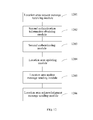
- Step 503 Obtain the LAI from the location area update request message and implement, at least according to the LAI, a location area update.
- the VLR After the authentication is successful, that is, after the VLR receives an authentication response sent by the mobile terminal, the VLR interacts with an MSC, and the VLR starts a location update program, thereby implementing the location area update.
- Step 504 Send a location area update message to an HLR.
- Step 505 Send a location area update acknowledgment message to the SGSN.
- the location area update acknowledgment message is sent to the SGSN in a 3G network system, so that the SGSN sends a routing area update acknowledgment message to the mobile terminal after receiving the location area update acknowledgment message.
- the authentication is performed on the mobile terminal, and the location area update is performed after the authentication is successful.
- the location area update in this embodiment is performed at the same time when the routing area update is performed in the 3G network system, thereby reducing the workload of the mobile terminal, and solving a problem that the technical performance of the mobile terminal is finally affected due to large power consumption.
- FIG. 6 a flowchart of a sixth embodiment of a method for implementing a location update according to the present invention is shown. The following steps may be included:
- Step 601 Receive a location area update request message that contains a mixed location update indication and an LAI, where the location area update request message is sent by an SGSN in response to a routing area update request sent by an SRNS.
- the routing area update request is generated after the SRNS adds an RAI to a received routing area update request message which contains at least the mixed location update indication and is sent by a mobile terminal.
- Step 602 Interact with an HLR to obtain authentication information, and perform authentication on the mobile terminal according to the authentication information.
- a VLR requests obtaining the authentication information from the HLR.
- the authentication information includes content such as an authentication parameter and a key.
- the VLR implements an authentication process for the mobile terminal according to the authentication information.
- Step 603 Obtain the LAI from the location area update request message and implement, at least according to the LAI, a location area update.
- an MSC interacts with the VLR, and the VLR starts a location update program, thereby implementing the location area update.
- Step 604 Send a location area update message to the HLR.
- Step 605 Send a location area update acknowledgment message to the SGSN.
- FIG. 7 is a schematic structural diagram of a first embodiment of a serving GPRS support node according to the present invention that includes:
- a routing area request message receiving module 701 configured to receive a routing area update request message sent by an SRNS.
- the routing area update request message contains at least a mixed location update indication and an RAI.
- a mobile terminal sends the SRNS a routing area update request message that contains the mixed location update indication, and the SRNS identifies the mobile terminal to perform a mixed location update process, writes the RAI to the routing area update request message, and then sends the message to the SGSN.
- the message is received by the routing area request message receiving module 701 .
- a routing area updating module 702 is configured to obtain the RAI from the routing area update request message received by the routing area request message receiving module 701 and perform, at least according to the RAI, a routing area update.
- An obtaining module 703 is configured to, at least according to the routing area update request message, obtain a location area identification (LAI) and an address of a visitor location register VLR which are of a 2G network system where the mobile terminal is located.
- LAI location area identification
- VLR visitor location register
- a sending module 704 is configured to send the location area update request message, which contains the mixed location update indication and the LAI, to the VLR corresponding to the address of the VLR, so that the VLR performs a location area update, at least according to the location area update request message.
- the mobile terminal performs the routing area update in the 3G network system at the same time of performing the location area update in the 2G network system, thereby reducing the workload of the mobile terminal and solving a problem that the technical performance of the mobile terminal is finally affected due to large power consumption.
- FIG. 8 is a structural schematic diagram of a second embodiment of a serving GPRS support node according to the present invention that includes: a routing area request message receiving module 801 configured to receive a routing area update request message sent by an SRNS, where the routing area update request message contains a mixed location update indication, a routing area identification (RAI), and a location area identification (LAI) which is intercepted by a mobile terminal in a 2G network system; a first authentication information obtaining module 802 configured to obtain authentication information through interaction with a home location register (HLR); a first authenticating module 803 configured to perform authentication on the mobile terminal according to the authentication information; a routing area updating module 804 configured to, after the authenticating module 803 succeeds in the authentication, obtain the RAI from the routing area update request message received by the routing area request message receiving module 801 and perform, at least according to the RAI, a routing area update; an obtaining module 805 configured to obtain, from the routing area update request message received by the routing area request message receiving module 801 , the
- the SGSN may further include a routing area update message sending module 809 configured to send a routing area update message to the home location register (HLR).
- HLR home location register
- the SGSN of a 3G network system after receiving the routing area update request message that contains at least the mixed location update indication and the RAI, the SGSN of a 3G network system obtains the LAI and address of the VLR which are in the 2G network system where the mobile terminal is located and then sends the location area update request message to the VLR corresponding to the address of the VLR, thereby implementing updates of a routing area and location area at the same time, reducing the workload of the mobile terminal, and solving a problem that the technical performance of the mobile terminal is finally affected due to large power consumption.
- FIG. 9 is a structural schematic diagram of a third embodiment of a serving GPRS support node according to the present invention.
- This apparatus differs from the second apparatus embodiment in that an obtaining module 905 is configured to obtain, according to an RAI and a saved routing area code RAC, an LAI of a 2G network system where a mobile terminal is located and obtain, according to a pre-saved allocation principle of the LAI and a VLR, an address of a VLR of the 2G network system where the mobile terminal is located.
- an obtaining module 905 is configured to obtain, according to an RAI and a saved routing area code RAC, an LAI of a 2G network system where a mobile terminal is located and obtain, according to a pre-saved allocation principle of the LAI and a VLR, an address of a VLR of the 2G network system where the mobile terminal is located.
- FIG. 10 is a structural schematic diagram of a first embodiment of a visitor location register according to the present invention.
- This apparatus may include:
- a location area request message receiving module 1001 configured to receive a location area update request message that contains at least a mixed location update indication and a location area identification LAI.
- the location area update request message is sent by an SGSN in response to the routing area update request sent by an SRNS.
- the routing area update request message is generated after the SRNS adds an RAI to a received routing area update request message which contains at least the mixed location update indication and is sent by a mobile terminal.
- a location area updating module 1002 is configured to obtain the LAI from the location area update request message received by the location area request message receiving module 1001 and implement, at least according to the LAI, a location area update.
- the location area update request message sent by the SGSN in the 3G network system is received to implement the location area update in an 2G network system, thereby implementing a mixed location area/routing area update of the mobile terminal, reducing the workload of the mobile terminal, and solving a problem that the technical performance of the mobile terminal is finally affected due to large power consumption.
- FIG. 11 is a structural schematic diagram of a second embodiment of a visitor location register according to the present invention that includes:
- a location area request message receiving module 1101 configured to receive a location area update request message that contains a mixed location update indication and a location area identification LAI.
- the location area update request message is sent by an SGSN in response to a routing area update request sent by an SRNS.
- the routing area update request message is generated after the SRNS adds an RAI to a received routing area update request message which contains at least the mixed location update indication and is sent by a mobile terminal.
- the location area update request message further includes authentication information, where the authentication information is obtained by the SGSN through interaction with an HLR when authentication is performed on the mobile terminal during a routing area update.
- An authenticating module 1102 is configured to perform authentication on the mobile terminal according to the authentication information.
- a location area updating module 1103 is configured to, after the authenticating module 1102 succeeds in the authentication, obtain the LAI from the location area update request message and implement, at least according to the LAI, a location area update.
- a location area update message sending module 1104 is configured to send a location area update message to the home location register HLR.
- a location area acknowledgment message sending module 1105 configured to send a location area update acknowledgment message to the SGSN.
- the VLR in a 2G network system after receiving the location area update request message that contains the mixed location update indication, the VLR in a 2G network system performs the authentication on the mobile terminal and performs the location area update after the authentication is successful.
- the location area update in this embodiment may be performed at the same time of performing the routing area update in a 3G network system, thereby reducing the workload of the mobile terminal and solving a problem that the technical performance of the mobile terminal is finally affected due to large power consumption.
- FIG. 12 is a structural schematic diagram of a third embodiment of a visitor location register according to the present invention that includes: a location area request receiving module 1201 configured to receive a location area update request message that contains a mixed location update indication and a location area identification (LAI); a second authentication information obtaining module 1202 configured to obtain authentication information through interaction with a home location register (HLR); a second authenticating module 1203 configured to perform authentication on the mobile terminal according to the authentication information; a location area updating module 1204 configured to, after the second authenticating module 1203 succeeds in the authentication, obtain the LAI from the location area update request message and implement, at least according to the LAI, a location area update; a location area update message sending module 1205 configured to send a location area update message to the home location register (HLR); and a routing area acknowledgment message sending module 1206 configured to send a location area update acknowledgment message to an SGSN.
- a location area request receiving module 1201 configured to receive a location area update request message that contains a mixed location update indication and
- the dual-mode mobile terminal described in the present invention is in a state of being attached to a PS domain of a 3G network and being attached to a CS domain of a 2G network.
- the dual-mode mobile terminal may specifically be a 3G mobile phone that supports dual modes or another mobile device.
- the 3G network system described in the present invention may specifically be a TD-SCDMA communications system, an SCDMA communications system, or another communications system that is based on a 3G technology.
- the 2G network system may specifically be a GSM communications system.
- the following takes a case where a dual-mode mobile terminal performs a location area update in a GSM communications system at the same time of implementing a routing area update in a PS domain in a TD-SCDMA communications system for example.
- FIG. 13 a signaling flowchart of implementing a location update in an actual scenario according to the present invention is shown. The following may be included:
- Step 1301 The mobile terminal sends a routing area update request message to an SRNS, where the routing area update request message contains a mixed location update indication.
- Step 1302 The SRNS knows, according to the mixed location update indication, that the mobile terminal performs a mixed update process, adds an RAI to the routing area update request message, and sends the message to a TD-SGSN.
- the TD-SGSN indicates an SGSN in the TD-SCDMA communications system.
- Step 1303 The TD-SGSN interacts with an HLR to obtain authentication information.
- Step 1304 The TD-SGSN performs authentication on the mobile terminal according to the authentication information.
- Step 1305 After the authentication is successful, that is, after the TD-SGSN receives an authentication response of the mobile terminal, implement a routing area update according to the RAI.
- Step 1306 Send a routing area update message to the HLR.
- Step 1307 Obtain an LAI and an address of a VLR which are of the GSM system to which the mobile terminal belongs.
- Step 1308 Send a location area update request message to the VLR.
- the location area update request message contains the mixed location update indication and the LAI.
- the location area update request message further includes the authentication information.
- Step 1309 Perform authentication on the mobile terminal according to the authentication information.
- the VLR may further interact with the HLR to obtain the authentication information.
- Step 1310 After the authentication is successful, that is, after the VLR receives an authentication response of the mobile terminal, interact with an MSC to implement a location area update.
- Step 1311 The VLR sends a location area update request message to the HLR.
- Step 1312 The VLR sends a location area update acknowledgment message to the TD-SGSN.
- Step 1313 After receiving the location update acknowledgment message, the TD-SGSN sends a routing area update acknowledgment message to the mobile terminal to notify the mobile terminal of accepting the update.
- the dual-mode mobile terminal in the TD-SCDMA communications system performs the location area update in the GSM communications system at the same time of performing the routing area update, and the mobile terminal does not need to perform updates in the two systems separately, thereby implementing a mixed update process of a routing area and location area, reducing the workload of the mobile terminal, reducing power consumption, and improving the technical performance of the mobile terminal.
- the preceding apparatuses are divided into a variety of units according to functions for separate description.
- the function of each of the units may be implemented in a same or a plurality of software programs and/or hardware components.
Landscapes
- Engineering & Computer Science (AREA)
- Computer Networks & Wireless Communication (AREA)
- Signal Processing (AREA)
- Mobile Radio Communication Systems (AREA)
Applications Claiming Priority (1)
| Application Number | Priority Date | Filing Date | Title |
|---|---|---|---|
| PCT/CN2011/073571 WO2011116729A2 (zh) | 2011-04-29 | 2011-04-29 | 实现位置更新的方法、服务支持节点和访问位置寄存器 |
Related Parent Applications (1)
| Application Number | Title | Priority Date | Filing Date |
|---|---|---|---|
| PCT/CN2011/073571 Continuation WO2011116729A2 (zh) | 2011-04-29 | 2011-04-29 | 实现位置更新的方法、服务支持节点和访问位置寄存器 |
Publications (2)
| Publication Number | Publication Date |
|---|---|
| US20130122865A1 US20130122865A1 (en) | 2013-05-16 |
| US9026136B2 true US9026136B2 (en) | 2015-05-05 |
Family
ID=44673697
Family Applications (1)
| Application Number | Title | Priority Date | Filing Date |
|---|---|---|---|
| US13/711,959 Active 2031-05-12 US9026136B2 (en) | 2011-04-29 | 2012-12-12 | Method for implementing location update, serving GPRS support node and visitor location register |
Country Status (4)
| Country | Link |
|---|---|
| US (1) | US9026136B2 (de) |
| EP (1) | EP2571318B1 (de) |
| CN (1) | CN102405670B (de) |
| WO (1) | WO2011116729A2 (de) |
Cited By (1)
| Publication number | Priority date | Publication date | Assignee | Title |
|---|---|---|---|---|
| US20170127371A1 (en) * | 2014-05-12 | 2017-05-04 | Huawei Technologies Co., Ltd. | Method for Updating RPLMN Information and User Equipment |
Families Citing this family (1)
| Publication number | Priority date | Publication date | Assignee | Title |
|---|---|---|---|---|
| CN104661257B (zh) * | 2013-11-19 | 2018-01-30 | 中国移动通信集团湖南有限公司 | 一种网络覆盖性能的测试方法及装置 |
Citations (8)
| Publication number | Priority date | Publication date | Assignee | Title |
|---|---|---|---|---|
| WO2002028116A2 (en) | 2000-09-27 | 2002-04-04 | Motorola Inc | Cellular communications system and method for signalling therein |
| CN1996795A (zh) | 2006-06-22 | 2007-07-11 | 华为技术有限公司 | 一种路由区/位置区更新方法 |
| CN1997224A (zh) | 2006-06-21 | 2007-07-11 | 华为技术有限公司 | 一种路由区/位置区更新方法 |
| CN101111059A (zh) | 2006-07-20 | 2008-01-23 | 华为技术有限公司 | 一种位置区和路由区联合更新的方法 |
| US20080194287A1 (en) * | 2007-02-09 | 2008-08-14 | Qualcomm Incorporated | Method and appratus for cell change order |
| US7486957B2 (en) * | 2000-12-01 | 2009-02-03 | Nokia Corporation | Method of performing an area update for a terminal equipment in a communication network |
| US7782818B2 (en) * | 2000-05-22 | 2010-08-24 | Nokia Corporation | System and method for providing a connection in a communication network |
| US8249017B2 (en) * | 2008-03-25 | 2012-08-21 | Motorola Mobility Llc | Cellular communication system and method of operation therefor |
-
2011
- 2011-04-29 CN CN201180000306.1A patent/CN102405670B/zh not_active Expired - Fee Related
- 2011-04-29 EP EP11758839.2A patent/EP2571318B1/de not_active Not-in-force
- 2011-04-29 WO PCT/CN2011/073571 patent/WO2011116729A2/zh not_active Ceased
-
2012
- 2012-12-12 US US13/711,959 patent/US9026136B2/en active Active
Patent Citations (8)
| Publication number | Priority date | Publication date | Assignee | Title |
|---|---|---|---|---|
| US7782818B2 (en) * | 2000-05-22 | 2010-08-24 | Nokia Corporation | System and method for providing a connection in a communication network |
| WO2002028116A2 (en) | 2000-09-27 | 2002-04-04 | Motorola Inc | Cellular communications system and method for signalling therein |
| US7486957B2 (en) * | 2000-12-01 | 2009-02-03 | Nokia Corporation | Method of performing an area update for a terminal equipment in a communication network |
| CN1997224A (zh) | 2006-06-21 | 2007-07-11 | 华为技术有限公司 | 一种路由区/位置区更新方法 |
| CN1996795A (zh) | 2006-06-22 | 2007-07-11 | 华为技术有限公司 | 一种路由区/位置区更新方法 |
| CN101111059A (zh) | 2006-07-20 | 2008-01-23 | 华为技术有限公司 | 一种位置区和路由区联合更新的方法 |
| US20080194287A1 (en) * | 2007-02-09 | 2008-08-14 | Qualcomm Incorporated | Method and appratus for cell change order |
| US8249017B2 (en) * | 2008-03-25 | 2012-08-21 | Motorola Mobility Llc | Cellular communication system and method of operation therefor |
Non-Patent Citations (6)
| Title |
|---|
| "3rd Generation Partnership Project; Technical Specification Group Services and System Aspects; General Packet Radio Service (GPRS); Service Description; Stage 2 (Release 10)," 3GPP TS 23.060, V10.0.0, Jun. 10, 2010, 303 pages. |
| Communication from a foreign counterpart application, International Application No. PCT/CN2011/073571, English Translation, International Search Report dated Feb. 9, 2012, 3 pages. |
| Communication from a foreign counterpart application, International Application No. PCT/CN2011/073571, International Search Report dated Feb. 9, 2012, 3 pages. |
| Foreign Communication From a Counterpart Application, Chinese Application 201180000306.1, Chinese Office Action dated Apr. 24, 2013, 9 pages. |
| Foreign Communication From a Counterpart Application, Chinese Application 201180000306.1, Partial English Translation of Chinese Office Action dated Apr. 24, 2013, 14 pages. |
| Foreign Communication From a Counterpart Application, European Application No. 11758839.2, Extended European Search Report dated Jun. 6, 2013, 8 pages. |
Cited By (2)
| Publication number | Priority date | Publication date | Assignee | Title |
|---|---|---|---|---|
| US20170127371A1 (en) * | 2014-05-12 | 2017-05-04 | Huawei Technologies Co., Ltd. | Method for Updating RPLMN Information and User Equipment |
| US9992760B2 (en) * | 2014-05-12 | 2018-06-05 | Huawei Technologies Co., Ltd. | Method for updating RPLMN information and user equipment |
Also Published As
| Publication number | Publication date |
|---|---|
| EP2571318A2 (de) | 2013-03-20 |
| CN102405670A (zh) | 2012-04-04 |
| EP2571318B1 (de) | 2017-08-30 |
| WO2011116729A3 (zh) | 2012-04-05 |
| CN102405670B (zh) | 2016-03-02 |
| EP2571318A4 (de) | 2013-07-10 |
| US20130122865A1 (en) | 2013-05-16 |
| WO2011116729A2 (zh) | 2011-09-29 |
Similar Documents
| Publication | Publication Date | Title |
|---|---|---|
| US12082288B2 (en) | Wireless communication method and device | |
| EP2999270B1 (de) | Zugriffsverfahren, endgerät und server für drahtloses lokales netzwerk (wlan) | |
| US9036568B2 (en) | Method and arrangements for circuit switched services in communication networks | |
| EP2210435B1 (de) | Verfahren, vorrichtung und computerprogrammprodukt zur bereitstellung von schlüsselverwaltung für eine mobilauthentifikationsarchitektur | |
| CN106131816B (zh) | 虚拟sim卡管理方法及终端 | |
| CN108012271B (zh) | 一种伪基站发现方法及装置 | |
| US10251119B2 (en) | Method and apparatus for handling reject | |
| US20180376442A1 (en) | Wireless Communications Network Registration Method and Terminal | |
| US9026136B2 (en) | Method for implementing location update, serving GPRS support node and visitor location register | |
| CN105516958A (zh) | 数据业务传输方法及用户终端 | |
| CN100407832C (zh) | 一种支持终端实现通信系统间互操作的方法 | |
| CN105376729A (zh) | 一种通信方法和移动通信设备 | |
| US9729503B2 (en) | Network name processing method and mobility management network element device | |
| US12532154B2 (en) | Method and apparatus for association between communication devices | |
| US12349072B2 (en) | Method for triggering terminal to start discovery process via network device, terminal device, and network device | |
| CN109788469B (zh) | 一种号码绑定方法及终端设备 | |
| TWI753117B (zh) | 用於選擇無線電存取技術模式的方法及其無線通訊裝置 | |
| CN104780527B (zh) | 网络名称处理方法和移动性管理网元设备 | |
| CN109600801A (zh) | 切换方法及装置 |
Legal Events
| Date | Code | Title | Description |
|---|---|---|---|
| AS | Assignment |
Owner name: HUAWEI DEVICE CO., LTD., CHINA Free format text: ASSIGNMENT OF ASSIGNORS INTEREST;ASSIGNOR:JIN, HUI;REEL/FRAME:029475/0061 Effective date: 20121205 |
|
| STCF | Information on status: patent grant |
Free format text: PATENTED CASE |
|
| AS | Assignment |
Owner name: NOKIA TECHNOLOGIES OY, FINLAND Free format text: ASSIGNMENT OF ASSIGNORS INTEREST;ASSIGNOR:HUAWEI TECHNOLOGIES CO., LTD.;REEL/FRAME:045337/0001 Effective date: 20171221 |
|
| MAFP | Maintenance fee payment |
Free format text: PAYMENT OF MAINTENANCE FEE, 4TH YEAR, LARGE ENTITY (ORIGINAL EVENT CODE: M1551); ENTITY STATUS OF PATENT OWNER: LARGE ENTITY Year of fee payment: 4 |
|
| MAFP | Maintenance fee payment |
Free format text: PAYMENT OF MAINTENANCE FEE, 8TH YEAR, LARGE ENTITY (ORIGINAL EVENT CODE: M1552); ENTITY STATUS OF PATENT OWNER: LARGE ENTITY Year of fee payment: 8 |