EP2571318B1 - Verfahren zur durchführung einer standortaktualisierung, dienstsupportknoten und besucherstandortregister dafür - Google Patents
Verfahren zur durchführung einer standortaktualisierung, dienstsupportknoten und besucherstandortregister dafür Download PDFInfo
- Publication number
- EP2571318B1 EP2571318B1 EP11758839.2A EP11758839A EP2571318B1 EP 2571318 B1 EP2571318 B1 EP 2571318B1 EP 11758839 A EP11758839 A EP 11758839A EP 2571318 B1 EP2571318 B1 EP 2571318B1
- Authority
- EP
- European Patent Office
- Prior art keywords
- area update
- network system
- location
- request message
- mobile terminal
- Prior art date
- Legal status (The legal status is an assumption and is not a legal conclusion. Google has not performed a legal analysis and makes no representation as to the accuracy of the status listed.)
- Not-in-force
Links
- 238000000034 method Methods 0.000 title claims description 53
- 230000004044 response Effects 0.000 claims description 12
- 230000008569 process Effects 0.000 description 15
- 238000010586 diagram Methods 0.000 description 12
- 238000004891 communication Methods 0.000 description 11
- 238000005516 engineering process Methods 0.000 description 9
- 230000003993 interaction Effects 0.000 description 5
- 102000018059 CS domains Human genes 0.000 description 3
- 108050007176 CS domains Proteins 0.000 description 3
- 230000009471 action Effects 0.000 description 3
- 230000009977 dual effect Effects 0.000 description 3
- 238000013507 mapping Methods 0.000 description 3
- 238000010295 mobile communication Methods 0.000 description 3
- 208000036855 Left sided atrial isomerism Diseases 0.000 description 2
- 230000011664 signaling Effects 0.000 description 2
- CSRZQMIRAZTJOY-UHFFFAOYSA-N trimethylsilyl iodide Substances C[Si](C)(C)I CSRZQMIRAZTJOY-UHFFFAOYSA-N 0.000 description 2
- 208000033368 Right sided atrial isomerism Diseases 0.000 description 1
- 238000010276 construction Methods 0.000 description 1
- 230000001419 dependent effect Effects 0.000 description 1
- 238000011161 development Methods 0.000 description 1
- 230000007774 longterm Effects 0.000 description 1
- 238000012986 modification Methods 0.000 description 1
- 230000004048 modification Effects 0.000 description 1
- 230000000750 progressive effect Effects 0.000 description 1
Images



Classifications
-
- H—ELECTRICITY
- H04—ELECTRIC COMMUNICATION TECHNIQUE
- H04W—WIRELESS COMMUNICATION NETWORKS
- H04W64/00—Locating users or terminals or network equipment for network management purposes, e.g. mobility management
-
- H—ELECTRICITY
- H04—ELECTRIC COMMUNICATION TECHNIQUE
- H04W—WIRELESS COMMUNICATION NETWORKS
- H04W60/00—Affiliation to network, e.g. registration; Terminating affiliation with the network, e.g. de-registration
- H04W60/005—Multiple registrations, e.g. multihoming
-
- Y—GENERAL TAGGING OF NEW TECHNOLOGICAL DEVELOPMENTS; GENERAL TAGGING OF CROSS-SECTIONAL TECHNOLOGIES SPANNING OVER SEVERAL SECTIONS OF THE IPC; TECHNICAL SUBJECTS COVERED BY FORMER USPC CROSS-REFERENCE ART COLLECTIONS [XRACs] AND DIGESTS
- Y02—TECHNOLOGIES OR APPLICATIONS FOR MITIGATION OR ADAPTATION AGAINST CLIMATE CHANGE
- Y02D—CLIMATE CHANGE MITIGATION TECHNOLOGIES IN INFORMATION AND COMMUNICATION TECHNOLOGIES [ICT], I.E. INFORMATION AND COMMUNICATION TECHNOLOGIES AIMING AT THE REDUCTION OF THEIR OWN ENERGY USE
- Y02D30/00—Reducing energy consumption in communication networks
- Y02D30/70—Reducing energy consumption in communication networks in wireless communication networks
Definitions
- the present invention relates to the field of mobile communications technologies, and in particular, to a method for implementing a location update, a serving GPRS support node, and a visitor location register.
- the location update includes a location area update and a routing area update.
- the location update includes a location area update and a routing area update.
- a mobile terminal changes a location area, it needs to notify a network system of performing the location area update.
- the mobile terminal changes a routing area, it needs to interact with the network system to perform the routing area update.
- 3G technology for example, a technology such as WCDMA (Wideband Code Division Multiple Access, wideband code division multiple access), CDMA2000 (Code Division Multiple Access 2000, code division multiple access 2000), and TD-SCDMA (Time Division-Synchronous Code Division Multiple Access, time division-synchronous code division multiple access), has been widely applied.
- a network system based on the 3G technology is capable of transmitting voice and data information at the same time.
- a network system based on a second-generation communications technology, 2G technology has undergone long-term construction, and provides better coverage than a 3G network.
- an existing terminal device based on the 3G network supports a 2G network so as to satisfy that a user can use a wireless service at any location.
- 3G mobile phones are dual-mode mobile phones that support a 2G/3G network system, for example, WCDMA/GSM dual mode and TD-SCDMA/GSM dual mode.
- the 2G network and 3G network can support a CS (Circuit Switched, circuit switched) domain service and a PS (Packet Switched, packet switched) domain service at the same time.
- a common voice service and short message service are mainly provided by a CS domain
- a data service is mainly provided by a PS domain.
- a network such as a GSM network, among 2G networks with complete coverage are suitable for the voice service
- the 3G network with an advanced system, such as a TD-SCDMA network are suitable for the data service. Therefore, generally, an existing dual-mode mobile terminal is designed to support a PS service of the 3G network and a CS service of the 2G network at the same time.
- a single-card dual-mode (GSM/TD-SCDMA dual-mode) mobile phone uses two sets of antennas, two sets of radio frequency modules, and two independent protocol stacks, GSM protocol stack and TD-SCDMA protocol stack, so that a 2G system and a 3G system can operate on and access one (U)SIM card at the same time.
- GSM/TD-SCDMA dual-mode uses two sets of antennas, two sets of radio frequency modules, and two independent protocol stacks, GSM protocol stack and TD-SCDMA protocol stack, so that a 2G system and a 3G system can operate on and access one (U)SIM card at the same time.
- the MS sends a Routing Area Update Request (old RAI, old P-TMSI Signature, Update Type, MS Radio Access Capability, DRX parameters, MS Network Capability, additional P-TMSI/RAI) to the SGSN.
- Update Type shall indicate combined RA/LA update, or, if the MS wants to perform an IMSI attach, combined RA/LA update with IMSI attach requested.
- the BSS shall add the Cell Global Identity including the RAC and LAC of the cell where the message was received before passing the message to the SGSN.
- the SGSN sends a Location Update Request (new LAI, IMSI, SGSN Number, Location Update Type) to the VLR.
- Location Update Type shall indicate IMSI attach if Update Type in step1 indicated combined RA/LA update with IMSI attach requested. Otherwise, Location Update Type shall indicate normal location update.
- Such a single-card dual-mode mobile terminal can camp on the 2G network and 3G network.
- a PS domain of the 3G network has a plurality of routing areas, whereas a CS domain of the 2G network has a plurality of location areas.
- an existing mobile terminal separately executes update processes on the 2G network and the 3G network, which increases the workload and power consumption of the mobile terminal, and finally affects the technical performance of the mobile terminal.
- the present invention provides a method for implementing a location update to solve a problem in the prior art that the calculation workload of a mobile terminal is heavy, the power consumption is large, and finally the technical performance of the mobile terminal is affected.
- the present invention provides the following technical solutions:
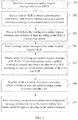
- FIG. 1 is a flowchart of a first embodiment of a method for implementing a location update according to the present invention. The following steps are included:
- a routing area update request sent by the SRNS is received by an SGSN (Serving GPRS Support Node, serving GPRS support node) in a 3G network system.
- SGSN Serving GPRS Support Node, serving GPRS support node
- the RAI is used for routing area selection of a mobile user.
- a mobile terminal sends the SRNS (Serving Radio Network Subsystem, serving radio network subsystem) a routing area update request message that carries the mixed location update indication, and the SRNS identifies the mobile terminal to perform a mixed location update process, adds the RAI to the routing area update request message, and then sends the message to the SGSN.
- SRNS Serving Radio Network Subsystem, serving radio network subsystem
- the location update includes a routing area update and a location area update.
- the routing area update refers in particular to a location update performed in a PS (Packet Switched, packet switched) domain in a 3G/2G network system
- the location area update refers in particular to a location update performed in a CS (Circuit Switched, circuit switched) domain in the 3G/2G network system.
- the mobile terminal is a dual-mode mobile terminal, and the dual-mode mobile terminal can support a 3G network and a 2G network at the same time.
- the location update means that at the same time when a mobile terminal in the PS domain of a 3G network performs a location update, a location update on a 2G network is implemented.
- the mobile terminal When performing a voice call, the mobile terminal undergoes a location area update when moving across location areas; during a data call, the mobile terminal undergoes a routing area update when moving across routing areas.
- the SGSN Server GPRS Support Node, serving GPRS support node
- a VLR Visitor Location Register, visitor location register
- Step 102 Obtain the RAI from the routing area update request message which contains at least the mixed location update indication and the RAI, and perform, at least according to the RAI, a routing area update.
- a routing area update in the 3G network system may be performed. This update process is the same as an existing routing area update process, and is not described in detail herein again.
- a routing area update message may be sent to an HLR (Home Location Register, home location register) so that the HLR stores and manages location information of the mobile terminal.
- HLR Home Location Register, home location register
- Step 103 At least according to the routing area update request message, obtain an LAI and an address of a VLR which are of a 2G network system where the mobile terminal is located.
- the LAI (Location Area Identification, location area identification) may be obtained through interception by the mobile terminal in the 2G network system. Then, the routing area update request message further includes the LAI intercepted by the mobile terminal, and the LAI may be obtained from the routing area update request message.
- an RAI in the 3G network system and an RAI in the 2G network system are the same, and LAIs are also the same.
- mapping relationship exists between an LAI and a VLR. According to the mapping relationship, the address of the VLR corresponding to the LAI may be known.
- Step 104 Send a location area update request message, which contains at least the mixed location update indication and the LAI, to the VLR corresponding to the address of the VLR.
- the VLR is used for managing and updating a location area. After the address of the VLR is known, the location area update request message may be sent to the VLR.
- the location area update request message contains the LAI and carries the mixed location update indication, so that the VLR knows, after receiving the location area update request message, that it is a request for performing a mixed location area update, and interacts, according to the LAI, with an MSC (Mobile Switching Center, mobile switching center) and the HLR, so as to implement a location area update.
- MSC Mobile Switching Center, mobile switching center
- the VLR After the location area update is completed, the VLR returns a location area update acknowledgment message (Location Update Accept) to the SGSN. After receiving the location area update acknowledgment message, a routing area update acknowledgment message (Routing Update Accept) is sent to the mobile terminal to notify the mobile terminal of accepting the update, to facilitate a corresponding update operation.
- Location Update Accept a location area update acknowledgment message
- Routing Update Accept a routing area update acknowledgment message
- step 102 is not limited to the sequence in this embodiment, and may also be performed after or at the same time of any one of step 103 to step 104.
- the location area update in the 2G network system is implemented at the same time when the routing area update is performed in the 3G network system, thereby implementing location updates of the mobile terminal at the same time, reducing the workload of the mobile terminal, and solving a problem that the technical performance of the mobile terminal is finally affected due to large power consumption.
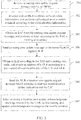
- FIG. 2 is a flowchart of a second embodiment of a method for implementing a location update according to the present invention. The following steps are included:
- the routing area update request message contains a mixed location update indication and a routing area identification RAI, and a location area identification LAI obtained through interception by a mobile terminal in a 2G network system.
- the routing area update request message sent by the SRNS is received by an SGSN in the 3G network system.
- the mobile terminal first sends the SRNS a routing area update request message that carries the mixed location update indication, and the SRNS identifies the mobile terminal to perform a mixed update process, writes the RAI to the routing area update request message, and then sends the message to the SGSN.
- Step 202 Interact with an HLR to obtain authentication information, and perform authentication on the mobile terminal according to the authentication information.
- the HLR stores subscription data of a managed user and location information of a mobile user, and saves authentication information of the user in the register.
- the SGSN in the 3G network system requests obtaining authentication information from the HLR.
- the HLR returns an authentication parameter and a key to the SGSN, and authentication is performed on the mobile terminal according to the authentication parameter and key.
- Step 203 Obtain the RAI from the routing area update request message, and perform, at least according to the RAI, a routing area update.
- a temporary identification is allocated to the mobile terminal, to implement the routing area update.
- Step 204 Send a routing area update message to the home location register HLR.
- the routing area update message is sent to the HLR, so that the HLR performs recording and management.
- Step 205 Obtain, from the routing area update request message, the LAI of the 2G network system where the mobile terminal is located, and obtain, according to a pre-saved allocation principle of the LAI and a VLR, an address of a VLR of the 2G network system where the mobile terminal is located.
- the routing area update request message further contains the LAI intercepted by the mobile terminal in the 2G network system.
- the LAI may be directly obtained from the routing area update request message.
- the allocation principle refers to a mapping relationship between an LAI and a VLR.
- a system predefines which LAI is allocated to which VLR. According to this allocation principle, the address of the VLR in the 2G network system where the mobile terminal is located may be obtained.
- Step 206 Send a location area update request message, which contains at least the mixed location update indication and the LAI, to the VLR corresponding to the address of the VLR.
- the location area update request message is used to instruct the VLR to implement a location area update.
- Step 207 After receiving a location area update acknowledgment message returned by the VLR corresponding to the address of the VLR, send a routing area update acknowledgment message to the mobile terminal.
- the VLR corresponding to the address of the VLR returns the location area update acknowledgment message.
- the SGSN sends a routing area update acknowledgment message to the mobile terminal to notify the mobile terminal of accepting the update.
- steps 202 to 204 are not limited to the sequence described in this embodiment, and may also be performed after or at the same time of any one of step 205 to step 206.
- the SGSN of the 3G network system after receiving the routing area update request message that contains the mixed location update indication, obtains the LAI and the address of the VLR which are in the 2G network system where the mobile terminal is located and, and then sends the location area update request message to the VLR corresponding to the address of the VLR, thereby implementing updates of a routing area and location area at the same time, reducing the workload of the mobile terminal, and solving a problem that the technical performance of the mobile terminal is finally affected due to large power consumption.
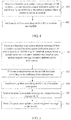
- FIG. 3 is a flowchart of a third embodiment of a method for implementing a location update according to the present invention. The following steps are included:
- the routing area update request message contains a mixed location update indication and an RAI.
- the routing area update request message sent by the SRNS is received by an SGSN in a 3G network system.
- the mobile terminal first sends the SRNS a routing area update request message that carries the mixed location update indication, and the SRNS identifies the mobile terminal to perform a mixed update process, write the RAI to the routing area update request message, and send the message to the SGSN.
- Step 302 Interact with a home location register HLR to obtain authentication information, and perform authentication on the mobile terminal according to the authentication information.
- Step 303 Obtain the RAI from the routing area update request message, and perform, at least according to the RAI, a routing area update.
- Step 304 Send a routing area update message to the home location register HLR.
- Step 305 Obtain, according to the RAI and a saved routing area code, a location area identification LAI of a 2G network system where the mobile terminal is located, and obtain, according to a pre-saved allocation principle of the LAI and a VLR, an address of a VLR of the 2G network system where the mobile terminal is located.
- LAI RAI + RAC.
- Step 306 Send a location area update request message, which contains at least the mixed location update indication and the LAI, to the VLR corresponding to the address of the VLR.
- the location area update request message is used as a basis for the VLR to implement a location area update.
- Step 307 After receiving a location area update acknowledgment message returned from the VLR corresponding to the address of the VLR, sending a routing area update acknowledgment message to the mobile terminal.
- steps 302 to 304 are not limited to the sequence described in this embodiment, and may also be performed after or at the same time of any one of step 305 to step 306.
- the SGSN of the 3G network system after receiving the routing area update request message that contains the mixed location update indication and the RAI, the SGSN of the 3G network system obtains, according to a relationship between the RAI and the LAI, and the allocation principle of the LAI and VLR in the 2G network system, the LAI and address of the VLR which are of the 2G network system where the mobile terminal is located, and then sends the location area update request message to the VLR corresponding to the address of the VLR, thereby implementing updates of a routing area and location area at the same time, reducing the workload of the mobile terminal, and solving a problem that the technical performance of the mobile terminal is finally affected due to large power consumption.
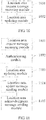
- FIG. 4 is a flowchart of a fourth embodiment of a method for implementing a location update according to the present invention. The following steps are included:
- the routing area update request is generated after the SRNS adds an RAI to a received routing area update request message which contains at least the mixed location update indication and is sent by a mobile terminal.
- the mobile terminal implements a location area update in a 2G network system at the same time of performing a routing area update in the 3G network system.
- the location area update request message sent by the SGSN in the 3G network system where the mobile terminal is located is received by a VLR in the 2G network system.
- the SGSN After receiving the routing area update request message which carries the mixed location update indication and is sent by the mobile terminal, the SGSN obtains an LAI and an address of a VLR which are of the 2G network system where the mobile terminal is located.
- the location area update request message may be sent to the VLR.
- Step 402 Obtain the LAI from the location area update request message, and implement, at least according to the LAI, a location area update.
- the location area update request message is received by the VLR, it is known that it is a mixed location update request. Interaction is performed with an MSC and HLR according to the LAI in the location area update request message, so as to implement the location area update.
- a location area update message may be sent to the HLR, so that the HLR stores and manages location information of the mobile terminal.
- a location area update acknowledgment message may be returned to the SGSN in the 3G network system.
- the SGSN After receiving the location area update acknowledgment message, the SGSN sends a routing area update acknowledgment message to the mobile terminal to notify the mobile terminal to accept update.
- the VLR in the 2G network system receives the location area update request message sent by the SGSN in the 3G network system, to implement the location area update in the 2G network system, thereby implementing a mixed location update of the mobile terminal, reducing the workload of the mobile terminal, and solving a problem that the technical performance of the mobile terminal is finally affected due to large power consumption.
- FIG. 5 is a flowchart of a fifth embodiment of a method for implementing a location update according to the present invention. The following steps are included:
- the routing area update request is generated after the SRNS adds an RAI to a received routing area update request message which contains at least the mixed location update indication and is sent by a mobile terminal.
- the location area update request message further contains authentication information, where the authentication information is obtained by the SGSN through interaction with the HLR when authentication is performed on the mobile terminal during a routing area update.
- Step 502 Obtain the authentication information from the location area update request message, and perform authentication on the mobile terminal according to the authentication information.
- Step 503 Obtain the LAI from the location area update request message, and implement, at least according to the LAI, a location area update.
- the VLR After the authentication is successful, that is, after the VLR receives an authentication response sent by the mobile terminal, the VLR interacts with an MSC, and the VLR starts a location update program, thereby implementing the location area update.
- Step 504 Send a location area update message to an HLR.
- Step 505 Send a location area update acknowledgment message to the SGSN.
- the location area update acknowledgment message is sent to the SGSN in a 3G network system, so that the SGSN sends a routing area update acknowledgment message to the mobile terminal after receiving the location area update acknowledgment message.
- the authentication is performed on the mobile terminal, and the location area update is performed after the authentication is successful.
- the location area update in this embodiment is performed at the same time when the routing area update is performed in the 3G network system, thereby reducing the workload of the mobile terminal, and solving a problem that the technical performance of the mobile terminal is finally affected due to large power consumption.
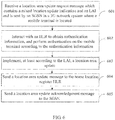
- FIG. 6 a flowchart of a sixth embodiment of a method for implementing a location update according to the present invention is shown. The following steps may be included:
- the routing area update request is generated after the SRNS adds an RAI to a received routing area update request message which contains at least the mixed location update indication and is sent by a mobile terminal.
- Step 602 Interact with an HLR to obtain authentication information, and perform authentication on the mobile terminal according to the authentication information.
- a VLR requests obtaining the authentication information from the HLR.
- the authentication information includes content such as an authentication parameter and a key.
- the VLR implements an authentication process for the mobile terminal according to the authentication information.
- Step 603 Obtain the LAI from the location area update request message, and implement, at least according to the LAI, a location area update.
- an MSC interacts with the VLR, and the VLR starts a location update program, thereby implementing the location area update.
- Step 604 Send a location area update message to the HLR.
- Step 605 Send a location area update acknowledgment message to the SGSN.
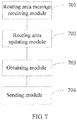
- FIG. 7 is a schematic structural diagram of a first embodiment of a serving GPRS support node according to the present invention, including:
- the routing area update request message contains at least a mixed location update indication and an RAI (Routing Area Identification, routing area identification).
- a mobile terminal sends the SRNS (Serving Radio Network Subsystem, serving radio network subsystem) a routing area update request message that contains the mixed location update indication, and the SRNS identifies the mobile terminal to perform a mixed location update process, writes the RAI to the routing area update request message, and then sends the message to the SGSN.
- the message is received by the routing area request message receiving module 701.
- a routing area updating module 702 is configured to obtain the RAI from the routing area update request message received by the routing area request message receiving module 701, and perform, at least according to the RAI, a routing area update.
- An obtaining module 703 is configured to, at least according to the routing area update request message, obtain a location area identification LAI and an address of a visitor location register VLR which are of a 2G network system where the mobile terminal is located.
- a sending module 704 is configured to send the location area update request message, which contains the mixed location update indication and the LAI, to the VLR corresponding to the address of the VLR, so that the VLR performs a location area update, at least according to the location area update request message.
- the mobile terminal performs the routing area update in the 3G network system at the same time of performing the location area update in the 2G network system, thereby reducing the workload of the mobile terminal, and solving a problem that the technical performance of the mobile terminal is finally affected due to large power consumption.
- FIG. 8 is a structural schematic diagram of a second embodiment of a serving GPRS support node according to the present invention, including:
- the SGSN may further include a routing area update message sending module 809, configured to send a routing area update message to the home location register HLR.
- a routing area update message sending module 809 configured to send a routing area update message to the home location register HLR.
- the SGSN of a 3G network system after receiving the routing area update request message that contains at least the mixed location update indication and the RAI, the SGSN of a 3G network system obtains the LAI and address of the VLR which are in the 2G network system where the mobile terminal is located, and then sends the location area update request message to the VLR corresponding to the address of the VLR, thereby implementing updates of a routing area and location area at the same time, reducing the workload of the mobile terminal, and solving a problem that the technical performance of the mobile terminal is finally affected due to large power consumption.
- FIG. 9 is a structural schematic diagram of a third embodiment of a serving GPRS support node according to the present invention.
- This apparatus differs from the second apparatus embodiment in that an obtaining module 905 is configured to obtain, according to an RAI and a saved routing area code RAC, an LAI of a 2G network system where a mobile terminal is located, and obtain, according to a pre-saved allocation principle of the LAI and a VLR, an address of a VLR of the 2G network system where the mobile terminal is located.
- an obtaining module 905 is configured to obtain, according to an RAI and a saved routing area code RAC, an LAI of a 2G network system where a mobile terminal is located, and obtain, according to a pre-saved allocation principle of the LAI and a VLR, an address of a VLR of the 2G network system where the mobile terminal is located.
- FIG. 10 is a structural schematic diagram of a first embodiment of a visitor location register according to the present invention.
- This apparatus may include:
- the location area update request message is sent by an SGSN in response to the routing area update request sent by an SRNS.
- the routing area update request message is generated after the SRNS adds an RAI to a received routing area update request message which contains at least the mixed location update indication and is sent by a mobile terminal.
- a location area updating module 1002 is configured to obtain the LAI from the location area update request message received by the location area request message receiving module 1001, and implement, at least according to the LAI, a location area update.
- the location area update request message sent by the SGSN in the 3G network system is received to implement the location area update in an 2G network system, thereby implementing a mixed location area/routing area update of the mobile terminal, reducing the workload of the mobile terminal, and solving a problem that the technical performance of the mobile terminal is finally affected due to large power consumption.
- FIG. 11 is a structural schematic diagram of a second embodiment of a visitor location register according to the present invention, including:
- the location area update request message is sent by an SGSN in response to a routing area update request sent by an SRNS.
- the routing area update request message is generated after the SRNS adds an RAI to a received routing area update request message which contains at least the mixed location update indication and is sent by a mobile terminal.
- the location area update request message further includes authentication information, where the authentication information is obtained by the SGSN through interaction with an HLR when authentication is performed on the mobile terminal during a routing area update.
- An authenticating module 1102 is configured to perform authentication on the mobile terminal according to the authentication information.
- a location area updating module 1103 is configured to, after the authenticating module 1102 succeeds in the authentication, obtain the LAI from the location area update request message, and implement, at least according to the LAI, a location area update.
- a location area update message sending module 1104 is configured to send a location area update message to the home location register HLR.
- a location area acknowledgment message sending module 1105 configured to send a location area update acknowledgment message to the SGSN.
- the VLR in a 2G network system after receiving the location area update request message that contains the mixed location update indication, the VLR in a 2G network system performs the authentication on the mobile terminal, and performs the location area update after the authentication is successful.
- the location area update in this embodiment may be performed at the same time of performing the routing area update in a 3G network system, thereby reducing the workload of the mobile terminal, and solving a problem that the technical performance of the mobile terminal is finally affected due to large power consumption.
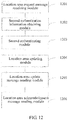
- FIG. 12 is a structural schematic diagram of a third embodiment of a visitor location register according to the present invention, including:
- the dual-mode mobile terminal described in the present invention is in a state of being attached to a PS domain of a 3G network and being attached to a CS domain of a 2G network.
- the dual-mode mobile terminal may specifically be a 3G mobile phone that supports dual modes or another mobile device.
- the 3G network system described in the present invention may specifically be a TD-SCDMA communications system, an SCDMA communications system, or another communications system that is based on a 3G technology.
- the 2G network system may specifically be a GSM communications system.
- the following takes a case where a dual-mode mobile terminal performs a location area update in a GSM communications system at the same time of implementing a routing area update in a PS domain in a TD-SCDMA communications system for example.
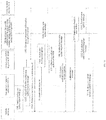
- FIG. 13 a signaling flowchart of implementing a location update in an actual scenario according to the present invention is shown. The following may be included:
- the TD-SGSN indicates an SGSN in the TD-SCDMA communications system.
- Step 1303 The TD-SGSN interacts with an HLR to obtain authentication information.
- Step 1304 The TD-SGSN perform authentication on the mobile terminal according to the authentication information.
- Step 1305 After the authentication is successful, that is, after the TD-SGSN receives an authentication response of the mobile terminal, implement a routing area update according to the RAI.
- Step 1306 Send a routing area update message to the HLR.
- Step 1307 Obtain an LAI and an address of a VLR which are of the GSM system to which the mobile terminal belongs.
- Step 1308 Send a location area update request message to the VLR.
- the location area update request message contains the mixed location update indication, and the LAI.
- the location area update request message further includes the authentication information.
- Step 1309 Perform authentication on the mobile terminal according to the authentication information.
- the VLR may further interact with the HLR to obtain the authentication information.
- Step 1310 After the authentication is successful, that is, after the VLR receives an authentication response of the mobile terminal, interact with an MSC to implement a location area update.
- Step 1311 The VLR sends a location area update request message to the HLR.
- Step 1312 The VLR sends a location area update acknowledgment message to the TD-SGSN.
- Step 1313 After receiving the location update acknowledgment message, the TD-SGSN sends a routing area update acknowledgment message to the mobile terminal to notify the mobile terminal of accepting the update.
- the dual-mode mobile terminal in the TD-SCDMA communications system performs the location area update in the GSM communications system at the same time of performing the routing area update, and the mobile terminal does not need to perform updates in the two systems separately, thereby implementing a mixed update process of a routing area and location area, reducing the workload of the mobile terminal, reducing power consumption, and improving the technical performance of the mobile terminal.
- the preceding apparatuses are divided into a variety of units according to functions for separate description.
- the function of each of the units may be implemented in a same or a plurality of software programs and/or hardware components.
Landscapes
- Engineering & Computer Science (AREA)
- Computer Networks & Wireless Communication (AREA)
- Signal Processing (AREA)
- Mobile Radio Communication Systems (AREA)
Claims (10)
- Verfahren zum Implementieren einer Ortsaktualisierung, wobei das Verfahren durch einen versorgenden Unterstützungsknoten, SGSN, des allgemeinen Paketfunkdienstes, GPRS, eines Netzsystems der dritten Generation, 3G-Netzsystem, ausgeführt wird, wobei das Verfahren dadurch gekennzeichnet ist, dass es Folgendes umfasst:Empfangen (101) einer ersten Lenkungsbereichsaktualisierungsanforderungsnachricht, die wenigstens eine gemischte Ortsaktualisierungsangabe und eine Lenkungsbereichskennung, RAI, umfasst, wobei die erste Lenkungsbereichsaktualisierungsanforderungsnachricht durch ein versorgendes Funknetzteilsystem, SRNS, des 3G-Netzsystems gesendet wird, wobei die erste Lenkungsbereichsaktualisierungsanforderungsnachricht erzeugt wird, nachdem das SRNS die RAI zu einer zweiten Lenkungsbereichsaktualisierungsanforderungsnachricht hinzugefügt hat, die wenigstens die gemischte Ortsaktualisierungsangabe enthält, wobei die zweite Lenkungsbereichsaktualisierungsanforderungsnachricht durch das SRNS von einem mobilen Endgerät in dem 3G-Netzsystem empfangen wird, wobei die gemischte Ortsaktualisierungsangabe sowohl eine Lenkungsbereichsaktualisierung in dem 3G-Netzsystem als auch eine Ortsbereichsaktualisierung in einem Netzsystem der zweiten Generation, 2G-Netzsystem, angibt, wenn sich das mobile Endgerät in sowohl dem 2G-Netzsystem als auch dem 3G-Netzsystem aufhält;Erhalten (102) der RAI aus der ersten Lenkungsbereichsaktualisierungsanforderungsnachricht und Ausführen einer Lenkungsbereichsaktualisierung wenigstens gemäß der RAI in dem 3G-Netzsystem;Erhalten (103) einer Ortsbereichskennung, LAI, und einer Adresse einer Besucherdatei, VLR, die zu dem 2G-Netzsystem gehören, wo sich das mobile Endgerät befindet, wenigstens gemäß der ersten Lenkungsbereichsaktualisierungsanforderungsnachricht; undSenden (104) einer Ortsbereichsaktualisierungsanforderungsnachricht, die wenigstens die gemischte Ortsaktualisierungsangabe und die LAI enthält, zu der VLR des 2G-Netzsystems, die der Adresse der VLR entspricht, wobei die VLR eine Ortsbereichsaktualisierung in dem 2G-Netzsytem wenigstens gemäß der Ortsbereichsaktualisierungsanforderungsnachricht implementiert.
- Verfahren nach Anspruch 1, wobei dann, wenn die erste Lenkungsbereichsaktualisierungsanforderungsnachricht ferner eine Ortsbereichskennung, LAI, enthält, die durch Abfangen durch das mobile Endgerät in dem 2G-Netzsystem erhalten wird, das Erhalten der LAI und der Adresse der VLR Folgendes umfasst:Erhalten, aus der ersten Lenkungsbereichsaktualisierungsanforderungsnachricht, der LAI des 2G-Netzsystems, wo sich das mobile Endgerät befindet; undErhalten, gemäß einem vorab gesicherten Zuweisungsprinzip der LAI und der VLR, der Adresse der VLR des 2G-Netzsystems, wo sich das mobile Endgerät befindet.
- Verfahren nach Anspruch 1, wobei das Erhalten der Ortsbereichskennung, LAI, und der Adresse der VLR Folgendes umfasst:Erhalten, gemäß der RAI und einem gesicherten Lenkungsbereichscode, der LAI des 2G-Netzsystems, wo sich das mobile Endgerät aufhält, wobei der gesicherte Lenkungsbereichscode durch einen SGSN des 3G-Netzsystems, wo sich das mobile Endgerät aufhält, gespeichert ist; undErhalten, gemäß einem vorab gesicherten Zuweisungsprinzip der LAI und der VLR, der Adresse der VLR des 2G-Netzsystems, wo sich das mobile Endgerät befindet.
- Verfahren zum Implementieren einer Ortsaktualisierung, wobei das Verfahren durch eine Besucherdatei, VLR, eines Netzsystems der zweiten Generation, 2G-Netzsystems, durchgeführt wird, wobei das Verfahren dadurch gekennzeichnet ist, dass es Folgendes umfasst:Empfangen einer Ortsbereichsaktualisierungsanforderungsnachricht, die wenigstens eine gemischte Ortsaktualisierungsangabe und eine Ortsbereichskennung, LAI, des 2G-Netzsystems, wo sich das mobile Endgerät aufhält, enthält, wobei die gemischte Ortsaktualisierungsangabe sowohl eine Lenkungsbereichsaktualisierung in einem Netzsystem der dritten Generation, 3G-Netzsystem, als auch eine Ortsbereichsaktualisierung in dem 2G-Netzsystem angibt, wenn sich das mobile Endgerät in sowohl dem 2G-Netzsystem als auch dem 3G-Netzsystem aufhält, wobei die Ortsbereichsaktualisierungsanforderungsnachricht durch einen versorgenden Unterstützungsknoten, SGSN, des allgemeinen Paketfunkdienstes, GPRS, des 3G-Netzsystem gesendet wird in Reaktion auf Empfangen einer ersten Lenkungsbereichsaktualisierungsanforderungsnachricht, die durch ein versorgendes Funknetzteilsystem, SRNS, des 3G-Netzsystems gesendet wird, und die erste Lenkungsbereichsaktualisierungsanforderungsnachricht erzeugt wird, nachdem das SRNS eine Lenkungsbereichskennung, RAI, einer zweiten Lenkungsbereichsaktualisierungsanforderungsnachricht hinzufügt, die wenigstens die gemischte Ortsaktualisierungsangabe enthält, wobei die zweite Lenkungsbereichsaktualisierungsanforderungsnachricht durch das mobile Endgerät in dem 3G-Netzsystem gesendet wird und wobei die RAI durch den SGSN verwendet wird, um eine Lenkungsbereichsaktualisierung in dem 3G-Netzsystem auszuführen; undErhalten der LAI aus der Ortsbereichsaktualisierungsanforderungsnachricht und Implementieren einer Ortsbereichsaktualisierung in dem 2G-Netzsystem wenigstens gemäß der LAI.
- Verfahren nach Anspruch 4, wobei die Ortsbereichsaktualisierungsanforderungsnachricht ferner Authentifizierungsinformationen enthält und das Implementieren der Ortsbereichsaktualisierung wenigstens gemäß der LAI Folgendes umfasst:Ausführen von Authentifizierung auf dem mobilen Endgerät wenigstens gemäß den Authentifizierungsinformationen; undErhalten, nachdem die Authentifizierung erfolgreich ist, der LAI aus der Ortsbereichsaktualisierungsanforderungsnachricht und Implementieren der Ortsbereichsaktualisierung wenigstens gemäß der LAI.
- Versorgender Unterstützungsknoten, SGSN, des allgemeinen Paketfunkdienstes, GPRS, eines Netzsystems der dritten Generation, 3G-Netzsystems, wobei der SGSN dadurch gekennzeichnet ist, dass er Folgendes umfasst:ein Lenkungsbereichsanforderungsnachrichtenempfangsmodul (701), das konfiguriert ist, eine erste Lenkungsbereichsaktualisierungsanforderungsnachricht zu empfangen, die wenigstens eine gemischte Ortsaktualisierungsangabe und eine Lenkungsbereichskennung, RAI, enthält, wobei die erste Lenkungsbereichsaktualisierungsanforderungsnachricht durch ein versorgendes Funknetzteilsystem, SRNS, des 3G-Netzsystems gesendet wird, wobei die gemischte Ortsaktualisierungsangabe sowohl eine Lenkungsbereichsaktualisierung in dem 3G-Netzsystem als auch eine Ortsbereichsaktualisierung in einem Netzsystem der zweiten Generation, 2G-Netzsystem, angibt, wenn sich das mobile Endgerät in sowohl dem 2G-Netzsystem als auch dem 3G-Netzsystem aufhält, wobei die erste Lenkungsbereichsaktualisierungsanforderungsnachricht erzeugt wird, nachdem das SRNS die RAI zu einer zweiten Lenkungsbereichsaktualisierungsanforderungsnachricht hinzufügt, die wenigstens die gemischte Ortsaktualisierungsangabe enthält, wobei die zweite Lenkungsbereichsaktualisierungsanforderungsnachricht durch ein mobiles Endgerät in dem 3G-Netzsystem gesendet wird;ein Lenkungsbereichsaktualisierungsmodul (702), das konfiguriert ist, die RAI aus der ersten Lenkungsbereichsaktualisierungsanforderungsnachricht zu erhalten und wenigstens gemäß der RAI eine Lenkungsbereichsaktualisierung in dem 3G-Netzsystem auszuführen;ein Erhaltemodul (703), das konfiguriert ist, wenigstens gemäß der ersten Lenkungsbereichsaktualisierungsanforderungsnachricht eine Ortsbereichskennung, LAI, und eine Adresse einer Besucherdatei, VLR, die zu dem 2G-Netzsystem gehören, wo sich das mobile Endgerät befindet, zu erhalten; undein Sendemodul (704), das konfiguriert ist, eine Ortsbereichsaktualisierungsanforderungsnachricht, die wenigstens die gemischte Ortsaktualisierungsangabe und die LAI enthält, zu der VLR des 2G-Netzsystems, die der Adresse der VLR entspricht, zu senden, so dass die VLR, die der Adresse der VLR entspricht, eine Ortsbereichsaktualisierung in dem 2G-Netzsystem wenigstens gemäß der Ortsbereichsaktualisierungsanforderungsnachricht implementiert.
- SGSN nach Anspruch 6, wobei das Erhaltemodul insbesondere konfiguriert ist, wenn die erste Lenkungsbereichsaktualisierungsanforderungsnachricht ferner eine LAI enthält, die durch Abfangen durch das mobile Endgerät in dem 2G-Netzsystem erhalten wird, aus der ersten Lenkungsbereichsaktualisierungsanforderungsnachricht, die durch das Empfangsmodul empfangen wird, die LAI des 2G-Netzsystems, wo sich das mobile Endgerät befindet, zu erhalten und gemäß einem vorab gesicherten Zuweisungsprinzip der LAI und der Besucherdatei, VLR, die Adresse der VLR des 2G-Netzsystems, wo sich das mobile Endgerät befindet, zu erhalten.
- SGSN nach Anspruch 6, wobei das Erhaltemodul insbesondere konfiguriert ist, gemäß der RAI und einem gesicherten Lenkungsbereichscode, der durch einen SGSN des 3G-Netzsystems, wo sich das mobile Endgerät befindet, gespeichert ist, die Ortsbereichskennung, LAI, des 2G-Netzsystems, wo sich das mobile Endgerät befindet, zu erhalten und gemäß dem vorab gesicherten Zuweisungsprinzip der LAI und der VLR die Adresse der VLR des 2G-Netzsystems, wo sich das mobile Endgerät befindet, zu erhalten.
- Besucherdatei, VLR, eines Netzes der zweiten Generation, 2G-Netzes, wobei die VLR dadurch gekennzeichnet ist, dass sie Folgendes umfasst:ein Ortsbereichsanforderungsnachrichtenempfangsmodul (1001), das konfiguriert ist, eine Ortsbereichsaktualisierungsanforderungsnachricht zu empfangen, die wenigstens eine gemischte Ortsaktualisierungsangabe und eine Ortsbereichskennung, LAI, des 2G-Netzsystems, in dem sich das mobile Endgerät befindet, enthält, wobei die gemischte Ortsaktualisierungsangabe sowohl eine Lenkungsbereichsaktualisierung in einem Netzsystem der dritten Generation, 3G-Netzsystem, als auch eine Ortsbereichsaktualisierung in dem 2G-Netzsystem angibt, wenn sich das mobile Endgerät in sowohl dem 2G-Netzsystem als auch dem 3G-Netzsystem aufhält, wobei die Ortsbereichsaktualisierungsanforderungsnachricht durch einen versorgenden Unterstützungsknoten, SGSN, des allgemeinen Paketfunkdienstes, GPRS, des 3G-Netzsystem gesendet wird in Reaktion auf Empfangen einer ersten Lenkungsbereichsaktualisierungsanforderungsnachricht, die durch ein versorgendes Funknetzteilsystem, SRNS, des 3G-Netzsystems gesendet wird, und die erste Lenkungsbereichsaktualisierungsanforderungsnachricht erzeugt wird, nachdem das SRNS eine RAI einer empfangenen zweiten Lenkungsbereichsaktualisierungsanforderungsnachricht, die wenigstens die gemischte Ortsaktualisierungsangabe enthält, hinzufügt, wobei die zweite Lenkungsbereichsaktualisierungsanforderungsnachricht durch ein mobiles Endgerät in dem 3G-Netzsystem gesendet wird und wobei die RAI durch den SGSN verwendet wird, um eine Lenkungsbereichsaktualisierung in dem 3G-Netzsystem auszuführen; undein Ortsbereichsaktualisierungsmodul (1002), das konfiguriert ist, eine Ortsbereichsaktualisierung in dem 2G-Netzsystem wenigstens gemäß der LAI, die in der Ortsbereichsaktualisierungsanforderungsnachricht, die durch das Ortsbereichsanforderungsnachrichtenempfangsmodul empfangen wird, enthalten ist, zu implementieren.
- VLR nach Anspruch 9, wobei die Vorrichtung dann, wenn die Ortsbereichsaktualisierungsanforderungsnachricht ferner Authentifizierungsinformationen enthält, ferner Folgendes umfasst:ein Authentifizierungsmodul, das konfiguriert ist, Authentifizierung auf dem mobilen Endgerät gemäß den Authentifizierungsinformationen auszuführen; und dann das Ortsbereichsaktualisierungsmodul insbesondere konfiguriert ist, nachdem das Authentifizierungsmodul die Authentifizierung erfolgreich ausgeführt hat, die Ortsbereichsaktualisierung wenigstens gemäß der LAI, die in der Ortsbereichsaktualisierungsanforderungsnachricht enthalten ist, die durch das Ortsbereichsanforderungsnachrichtenempfangsmodul empfangen wird, zu implementieren.
Applications Claiming Priority (1)
| Application Number | Priority Date | Filing Date | Title |
|---|---|---|---|
| PCT/CN2011/073571 WO2011116729A2 (zh) | 2011-04-29 | 2011-04-29 | 实现位置更新的方法、服务支持节点和访问位置寄存器 |
Publications (3)
| Publication Number | Publication Date |
|---|---|
| EP2571318A2 EP2571318A2 (de) | 2013-03-20 |
| EP2571318A4 EP2571318A4 (de) | 2013-07-10 |
| EP2571318B1 true EP2571318B1 (de) | 2017-08-30 |
Family
ID=44673697
Family Applications (1)
| Application Number | Title | Priority Date | Filing Date |
|---|---|---|---|
| EP11758839.2A Not-in-force EP2571318B1 (de) | 2011-04-29 | 2011-04-29 | Verfahren zur durchführung einer standortaktualisierung, dienstsupportknoten und besucherstandortregister dafür |
Country Status (4)
| Country | Link |
|---|---|
| US (1) | US9026136B2 (de) |
| EP (1) | EP2571318B1 (de) |
| CN (1) | CN102405670B (de) |
| WO (1) | WO2011116729A2 (de) |
Families Citing this family (2)
| Publication number | Priority date | Publication date | Assignee | Title |
|---|---|---|---|---|
| CN104661257B (zh) * | 2013-11-19 | 2018-01-30 | 中国移动通信集团湖南有限公司 | 一种网络覆盖性能的测试方法及装置 |
| JP6367975B2 (ja) * | 2014-05-12 | 2018-08-01 | 華為技術有限公司Huawei Technologies Co.,Ltd. | Rplmn情報を更新するための方法、およびユーザ機器 |
Family Cites Families (8)
| Publication number | Priority date | Publication date | Assignee | Title |
|---|---|---|---|---|
| AU2000245676A1 (en) * | 2000-05-22 | 2001-12-03 | Nokia Corporation | System and method for providing a connection in a communication network |
| GB2367454B (en) * | 2000-09-27 | 2004-05-19 | Motorola Inc | Cellular communications system and method for signalling therein |
| WO2002045451A1 (en) * | 2000-12-01 | 2002-06-06 | Nokia Corporation | A method of performing an area update for a terminal equipment in a communication network |
| CN100512497C (zh) * | 2006-06-21 | 2009-07-08 | 华为技术有限公司 | 一种路由区/位置区更新方法 |
| CN100589345C (zh) * | 2006-06-22 | 2010-02-10 | 华为技术有限公司 | 一种路由区/位置区更新方法 |
| CN101111059B (zh) * | 2006-07-20 | 2010-05-12 | 华为技术有限公司 | 一种位置区和路由区联合更新的方法 |
| US8571562B2 (en) * | 2007-02-09 | 2013-10-29 | Qualcomm Incorporated | Method and apparatus for cell change order |
| US8249017B2 (en) * | 2008-03-25 | 2012-08-21 | Motorola Mobility Llc | Cellular communication system and method of operation therefor |
-
2011
- 2011-04-29 CN CN201180000306.1A patent/CN102405670B/zh not_active Expired - Fee Related
- 2011-04-29 WO PCT/CN2011/073571 patent/WO2011116729A2/zh not_active Ceased
- 2011-04-29 EP EP11758839.2A patent/EP2571318B1/de not_active Not-in-force
-
2012
- 2012-12-12 US US13/711,959 patent/US9026136B2/en active Active
Non-Patent Citations (1)
| Title |
|---|
| None * |
Also Published As
| Publication number | Publication date |
|---|---|
| WO2011116729A3 (zh) | 2012-04-05 |
| US20130122865A1 (en) | 2013-05-16 |
| WO2011116729A2 (zh) | 2011-09-29 |
| CN102405670B (zh) | 2016-03-02 |
| EP2571318A4 (de) | 2013-07-10 |
| CN102405670A (zh) | 2012-04-04 |
| EP2571318A2 (de) | 2013-03-20 |
| US9026136B2 (en) | 2015-05-05 |
Similar Documents
| Publication | Publication Date | Title |
|---|---|---|
| EP2123011B1 (de) | Verfahren und anordnungen für das ausrufen eines teilnehmerendgerätes für leitungsvermittelte dienste in einem paketvermittelten lte kommunikationsnetz | |
| US10034324B2 (en) | Optimization of power consumption in dual SIM mobiles in connected mode in a wireless network | |
| EP2210435B1 (de) | Verfahren, vorrichtung und computerprogrammprodukt zur bereitstellung von schlüsselverwaltung für eine mobilauthentifikationsarchitektur | |
| JP5519736B2 (ja) | ブートストラッピングアーキテクチャ内でキーをリフレッシュするための方法および装置 | |
| EP2999270B1 (de) | Zugriffsverfahren, endgerät und server für drahtloses lokales netzwerk (wlan) | |
| US20200275506A1 (en) | Apparatuses and methods for handling a non-integrity-protected reject message | |
| EP2103165A1 (de) | Imsi-abwicklungssystem | |
| EP3664568A1 (de) | Kommunikationsverfahren und -vorrichtung | |
| CN102448144A (zh) | 一种mtc设备接入网络的方法和设备 | |
| US9148868B2 (en) | Method, apparatus, and system for location update | |
| EP2571318B1 (de) | Verfahren zur durchführung einer standortaktualisierung, dienstsupportknoten und besucherstandortregister dafür | |
| KR20180091059A (ko) | 무선 통신 네트워크 등록 방법 및 단말기 | |
| CN100407832C (zh) | 一种支持终端实现通信系统间互操作的方法 | |
| CN105516958A (zh) | 数据业务传输方法及用户终端 | |
| US9729503B2 (en) | Network name processing method and mobility management network element device | |
| US12532154B2 (en) | Method and apparatus for association between communication devices | |
| US12349072B2 (en) | Method for triggering terminal to start discovery process via network device, terminal device, and network device | |
| CN104780527B (zh) | 网络名称处理方法和移动性管理网元设备 | |
| JP2009522828A (ja) | ブートストラッピングアーキテクチャ内でキーをリフレッシュするための方法および装置 | |
| JP2009522828A6 (ja) | ブートストラッピングアーキテクチャ内でキーをリフレッシュするための方法および装置 | |
| CN110933669A (zh) | 一种跨rat用户的快速注册的方法 |
Legal Events
| Date | Code | Title | Description |
|---|---|---|---|
| PUAI | Public reference made under article 153(3) epc to a published international application that has entered the european phase |
Free format text: ORIGINAL CODE: 0009012 |
|
| 17P | Request for examination filed |
Effective date: 20121210 |
|
| AK | Designated contracting states |
Kind code of ref document: A2 Designated state(s): AL AT BE BG CH CY CZ DE DK EE ES FI FR GB GR HR HU IE IS IT LI LT LU LV MC MK MT NL NO PL PT RO RS SE SI SK SM TR |
|
| REG | Reference to a national code |
Ref country code: DE Ref legal event code: R079 Ref document number: 602011041090 Country of ref document: DE Free format text: PREVIOUS MAIN CLASS: H04W0040340000 Ipc: H04W0060000000 |
|
| A4 | Supplementary search report drawn up and despatched |
Effective date: 20130606 |
|
| RIC1 | Information provided on ipc code assigned before grant |
Ipc: H04W 60/00 20090101AFI20130531BHEP |
|
| DAX | Request for extension of the european patent (deleted) | ||
| 17Q | First examination report despatched |
Effective date: 20150908 |
|
| GRAP | Despatch of communication of intention to grant a patent |
Free format text: ORIGINAL CODE: EPIDOSNIGR1 |
|
| STAA | Information on the status of an ep patent application or granted ep patent |
Free format text: STATUS: GRANT OF PATENT IS INTENDED |
|
| INTG | Intention to grant announced |
Effective date: 20170328 |
|
| GRAS | Grant fee paid |
Free format text: ORIGINAL CODE: EPIDOSNIGR3 |
|
| GRAA | (expected) grant |
Free format text: ORIGINAL CODE: 0009210 |
|
| STAA | Information on the status of an ep patent application or granted ep patent |
Free format text: STATUS: THE PATENT HAS BEEN GRANTED |
|
| AK | Designated contracting states |
Kind code of ref document: B1 Designated state(s): AL AT BE BG CH CY CZ DE DK EE ES FI FR GB GR HR HU IE IS IT LI LT LU LV MC MK MT NL NO PL PT RO RS SE SI SK SM TR |
|
| REG | Reference to a national code |
Ref country code: GB Ref legal event code: FG4D |
|
| REG | Reference to a national code |
Ref country code: CH Ref legal event code: EP |
|
| REG | Reference to a national code |
Ref country code: AT Ref legal event code: REF Ref document number: 924778 Country of ref document: AT Kind code of ref document: T Effective date: 20170915 |
|
| REG | Reference to a national code |
Ref country code: IE Ref legal event code: FG4D |
|
| REG | Reference to a national code |
Ref country code: DE Ref legal event code: R096 Ref document number: 602011041090 Country of ref document: DE |
|
| REG | Reference to a national code |
Ref country code: NL Ref legal event code: MP Effective date: 20170830 |
|
| REG | Reference to a national code |
Ref country code: LT Ref legal event code: MG4D |
|
| REG | Reference to a national code |
Ref country code: AT Ref legal event code: MK05 Ref document number: 924778 Country of ref document: AT Kind code of ref document: T Effective date: 20170830 |
|
| PG25 | Lapsed in a contracting state [announced via postgrant information from national office to epo] |
Ref country code: SE Free format text: LAPSE BECAUSE OF FAILURE TO SUBMIT A TRANSLATION OF THE DESCRIPTION OR TO PAY THE FEE WITHIN THE PRESCRIBED TIME-LIMIT Effective date: 20170830 Ref country code: LT Free format text: LAPSE BECAUSE OF FAILURE TO SUBMIT A TRANSLATION OF THE DESCRIPTION OR TO PAY THE FEE WITHIN THE PRESCRIBED TIME-LIMIT Effective date: 20170830 Ref country code: AT Free format text: LAPSE BECAUSE OF FAILURE TO SUBMIT A TRANSLATION OF THE DESCRIPTION OR TO PAY THE FEE WITHIN THE PRESCRIBED TIME-LIMIT Effective date: 20170830 Ref country code: NO Free format text: LAPSE BECAUSE OF FAILURE TO SUBMIT A TRANSLATION OF THE DESCRIPTION OR TO PAY THE FEE WITHIN THE PRESCRIBED TIME-LIMIT Effective date: 20171130 Ref country code: FI Free format text: LAPSE BECAUSE OF FAILURE TO SUBMIT A TRANSLATION OF THE DESCRIPTION OR TO PAY THE FEE WITHIN THE PRESCRIBED TIME-LIMIT Effective date: 20170830 Ref country code: HR Free format text: LAPSE BECAUSE OF FAILURE TO SUBMIT A TRANSLATION OF THE DESCRIPTION OR TO PAY THE FEE WITHIN THE PRESCRIBED TIME-LIMIT Effective date: 20170830 |
|
| PG25 | Lapsed in a contracting state [announced via postgrant information from national office to epo] |
Ref country code: ES Free format text: LAPSE BECAUSE OF FAILURE TO SUBMIT A TRANSLATION OF THE DESCRIPTION OR TO PAY THE FEE WITHIN THE PRESCRIBED TIME-LIMIT Effective date: 20170830 Ref country code: IS Free format text: LAPSE BECAUSE OF FAILURE TO SUBMIT A TRANSLATION OF THE DESCRIPTION OR TO PAY THE FEE WITHIN THE PRESCRIBED TIME-LIMIT Effective date: 20171230 Ref country code: LV Free format text: LAPSE BECAUSE OF FAILURE TO SUBMIT A TRANSLATION OF THE DESCRIPTION OR TO PAY THE FEE WITHIN THE PRESCRIBED TIME-LIMIT Effective date: 20170830 Ref country code: BG Free format text: LAPSE BECAUSE OF FAILURE TO SUBMIT A TRANSLATION OF THE DESCRIPTION OR TO PAY THE FEE WITHIN THE PRESCRIBED TIME-LIMIT Effective date: 20171130 Ref country code: GR Free format text: LAPSE BECAUSE OF FAILURE TO SUBMIT A TRANSLATION OF THE DESCRIPTION OR TO PAY THE FEE WITHIN THE PRESCRIBED TIME-LIMIT Effective date: 20171201 Ref country code: RS Free format text: LAPSE BECAUSE OF FAILURE TO SUBMIT A TRANSLATION OF THE DESCRIPTION OR TO PAY THE FEE WITHIN THE PRESCRIBED TIME-LIMIT Effective date: 20170830 |
|
| REG | Reference to a national code |
Ref country code: FR Ref legal event code: PLFP Year of fee payment: 8 |
|
| PG25 | Lapsed in a contracting state [announced via postgrant information from national office to epo] |
Ref country code: NL Free format text: LAPSE BECAUSE OF FAILURE TO SUBMIT A TRANSLATION OF THE DESCRIPTION OR TO PAY THE FEE WITHIN THE PRESCRIBED TIME-LIMIT Effective date: 20170830 |
|
| PG25 | Lapsed in a contracting state [announced via postgrant information from national office to epo] |
Ref country code: RO Free format text: LAPSE BECAUSE OF FAILURE TO SUBMIT A TRANSLATION OF THE DESCRIPTION OR TO PAY THE FEE WITHIN THE PRESCRIBED TIME-LIMIT Effective date: 20170830 Ref country code: DK Free format text: LAPSE BECAUSE OF FAILURE TO SUBMIT A TRANSLATION OF THE DESCRIPTION OR TO PAY THE FEE WITHIN THE PRESCRIBED TIME-LIMIT Effective date: 20170830 Ref country code: PL Free format text: LAPSE BECAUSE OF FAILURE TO SUBMIT A TRANSLATION OF THE DESCRIPTION OR TO PAY THE FEE WITHIN THE PRESCRIBED TIME-LIMIT Effective date: 20170830 Ref country code: CZ Free format text: LAPSE BECAUSE OF FAILURE TO SUBMIT A TRANSLATION OF THE DESCRIPTION OR TO PAY THE FEE WITHIN THE PRESCRIBED TIME-LIMIT Effective date: 20170830 |
|
| PG25 | Lapsed in a contracting state [announced via postgrant information from national office to epo] |
Ref country code: SM Free format text: LAPSE BECAUSE OF FAILURE TO SUBMIT A TRANSLATION OF THE DESCRIPTION OR TO PAY THE FEE WITHIN THE PRESCRIBED TIME-LIMIT Effective date: 20170830 Ref country code: IT Free format text: LAPSE BECAUSE OF FAILURE TO SUBMIT A TRANSLATION OF THE DESCRIPTION OR TO PAY THE FEE WITHIN THE PRESCRIBED TIME-LIMIT Effective date: 20170830 Ref country code: EE Free format text: LAPSE BECAUSE OF FAILURE TO SUBMIT A TRANSLATION OF THE DESCRIPTION OR TO PAY THE FEE WITHIN THE PRESCRIBED TIME-LIMIT Effective date: 20170830 Ref country code: SK Free format text: LAPSE BECAUSE OF FAILURE TO SUBMIT A TRANSLATION OF THE DESCRIPTION OR TO PAY THE FEE WITHIN THE PRESCRIBED TIME-LIMIT Effective date: 20170830 |
|
| REG | Reference to a national code |
Ref country code: DE Ref legal event code: R097 Ref document number: 602011041090 Country of ref document: DE |
|
| PLBE | No opposition filed within time limit |
Free format text: ORIGINAL CODE: 0009261 |
|
| STAA | Information on the status of an ep patent application or granted ep patent |
Free format text: STATUS: NO OPPOSITION FILED WITHIN TIME LIMIT |
|
| 26N | No opposition filed |
Effective date: 20180531 |
|
| PG25 | Lapsed in a contracting state [announced via postgrant information from national office to epo] |
Ref country code: SI Free format text: LAPSE BECAUSE OF FAILURE TO SUBMIT A TRANSLATION OF THE DESCRIPTION OR TO PAY THE FEE WITHIN THE PRESCRIBED TIME-LIMIT Effective date: 20170830 |
|
| PG25 | Lapsed in a contracting state [announced via postgrant information from national office to epo] |
Ref country code: MC Free format text: LAPSE BECAUSE OF FAILURE TO SUBMIT A TRANSLATION OF THE DESCRIPTION OR TO PAY THE FEE WITHIN THE PRESCRIBED TIME-LIMIT Effective date: 20170830 |
|
| REG | Reference to a national code |
Ref country code: CH Ref legal event code: PL |
|
| REG | Reference to a national code |
Ref country code: BE Ref legal event code: MM Effective date: 20180430 |
|
| REG | Reference to a national code |
Ref country code: IE Ref legal event code: MM4A |
|
| PG25 | Lapsed in a contracting state [announced via postgrant information from national office to epo] |
Ref country code: LU Free format text: LAPSE BECAUSE OF NON-PAYMENT OF DUE FEES Effective date: 20180429 |
|
| PG25 | Lapsed in a contracting state [announced via postgrant information from national office to epo] |
Ref country code: LI Free format text: LAPSE BECAUSE OF NON-PAYMENT OF DUE FEES Effective date: 20180430 Ref country code: BE Free format text: LAPSE BECAUSE OF NON-PAYMENT OF DUE FEES Effective date: 20180430 Ref country code: CH Free format text: LAPSE BECAUSE OF NON-PAYMENT OF DUE FEES Effective date: 20180430 |
|
| PG25 | Lapsed in a contracting state [announced via postgrant information from national office to epo] |
Ref country code: IE Free format text: LAPSE BECAUSE OF NON-PAYMENT OF DUE FEES Effective date: 20180429 |
|
| PG25 | Lapsed in a contracting state [announced via postgrant information from national office to epo] |
Ref country code: MT Free format text: LAPSE BECAUSE OF NON-PAYMENT OF DUE FEES Effective date: 20180429 |
|
| PG25 | Lapsed in a contracting state [announced via postgrant information from national office to epo] |
Ref country code: TR Free format text: LAPSE BECAUSE OF FAILURE TO SUBMIT A TRANSLATION OF THE DESCRIPTION OR TO PAY THE FEE WITHIN THE PRESCRIBED TIME-LIMIT Effective date: 20170830 |
|
| PG25 | Lapsed in a contracting state [announced via postgrant information from national office to epo] |
Ref country code: HU Free format text: LAPSE BECAUSE OF FAILURE TO SUBMIT A TRANSLATION OF THE DESCRIPTION OR TO PAY THE FEE WITHIN THE PRESCRIBED TIME-LIMIT; INVALID AB INITIO Effective date: 20110429 Ref country code: PT Free format text: LAPSE BECAUSE OF FAILURE TO SUBMIT A TRANSLATION OF THE DESCRIPTION OR TO PAY THE FEE WITHIN THE PRESCRIBED TIME-LIMIT Effective date: 20170830 |
|
| PG25 | Lapsed in a contracting state [announced via postgrant information from national office to epo] |
Ref country code: MK Free format text: LAPSE BECAUSE OF NON-PAYMENT OF DUE FEES Effective date: 20170830 Ref country code: CY Free format text: LAPSE BECAUSE OF FAILURE TO SUBMIT A TRANSLATION OF THE DESCRIPTION OR TO PAY THE FEE WITHIN THE PRESCRIBED TIME-LIMIT Effective date: 20170830 |
|
| PG25 | Lapsed in a contracting state [announced via postgrant information from national office to epo] |
Ref country code: AL Free format text: LAPSE BECAUSE OF FAILURE TO SUBMIT A TRANSLATION OF THE DESCRIPTION OR TO PAY THE FEE WITHIN THE PRESCRIBED TIME-LIMIT Effective date: 20170830 |
|
| PGFP | Annual fee paid to national office [announced via postgrant information from national office to epo] |
Ref country code: FR Payment date: 20230309 Year of fee payment: 13 |
|
| PGFP | Annual fee paid to national office [announced via postgrant information from national office to epo] |
Ref country code: GB Payment date: 20230309 Year of fee payment: 13 |
|
| P01 | Opt-out of the competence of the unified patent court (upc) registered |
Effective date: 20230527 |
|
| PGFP | Annual fee paid to national office [announced via postgrant information from national office to epo] |
Ref country code: DE Payment date: 20230307 Year of fee payment: 13 |
|
| REG | Reference to a national code |
Ref country code: DE Ref legal event code: R119 Ref document number: 602011041090 Country of ref document: DE |
|
| GBPC | Gb: european patent ceased through non-payment of renewal fee |
Effective date: 20240429 |
|
| PG25 | Lapsed in a contracting state [announced via postgrant information from national office to epo] |
Ref country code: DE Free format text: LAPSE BECAUSE OF NON-PAYMENT OF DUE FEES Effective date: 20241105 |
|
| PG25 | Lapsed in a contracting state [announced via postgrant information from national office to epo] |
Ref country code: GB Free format text: LAPSE BECAUSE OF NON-PAYMENT OF DUE FEES Effective date: 20240429 |
|
| PG25 | Lapsed in a contracting state [announced via postgrant information from national office to epo] |
Ref country code: FR Free format text: LAPSE BECAUSE OF NON-PAYMENT OF DUE FEES Effective date: 20240430 |
|
| PG25 | Lapsed in a contracting state [announced via postgrant information from national office to epo] |
Ref country code: GB Free format text: LAPSE BECAUSE OF NON-PAYMENT OF DUE FEES Effective date: 20240429 Ref country code: FR Free format text: LAPSE BECAUSE OF NON-PAYMENT OF DUE FEES Effective date: 20240430 Ref country code: DE Free format text: LAPSE BECAUSE OF NON-PAYMENT OF DUE FEES Effective date: 20241105 |