US8994874B2 - Image capture apparatus and control method therefor - Google Patents
Image capture apparatus and control method therefor Download PDFInfo
- Publication number
- US8994874B2 US8994874B2 US14/107,508 US201314107508A US8994874B2 US 8994874 B2 US8994874 B2 US 8994874B2 US 201314107508 A US201314107508 A US 201314107508A US 8994874 B2 US8994874 B2 US 8994874B2
- Authority
- US
- United States
- Prior art keywords
- subject
- focus
- areas
- distances
- control unit
- Prior art date
- Legal status (The legal status is an assumption and is not a legal conclusion. Google has not performed a legal analysis and makes no representation as to the accuracy of the status listed.)
- Expired - Fee Related
Links
Images




Classifications
-
- H04N5/23212—
-
- H—ELECTRICITY
- H04—ELECTRIC COMMUNICATION TECHNIQUE
- H04N—PICTORIAL COMMUNICATION, e.g. TELEVISION
- H04N23/00—Cameras or camera modules comprising electronic image sensors; Control thereof
- H04N23/60—Control of cameras or camera modules
- H04N23/67—Focus control based on electronic image sensor signals
- H04N23/676—Bracketing for image capture at varying focusing conditions
-
- H—ELECTRICITY
- H04—ELECTRIC COMMUNICATION TECHNIQUE
- H04N—PICTORIAL COMMUNICATION, e.g. TELEVISION
- H04N23/00—Cameras or camera modules comprising electronic image sensors; Control thereof
- H04N23/60—Control of cameras or camera modules
- H04N23/63—Control of cameras or camera modules by using electronic viewfinders
- H04N23/633—Control of cameras or camera modules by using electronic viewfinders for displaying additional information relating to control or operation of the camera
- H04N23/635—Region indicators; Field of view indicators
-
- H—ELECTRICITY
- H04—ELECTRIC COMMUNICATION TECHNIQUE
- H04N—PICTORIAL COMMUNICATION, e.g. TELEVISION
- H04N23/00—Cameras or camera modules comprising electronic image sensors; Control thereof
- H04N23/60—Control of cameras or camera modules
- H04N23/67—Focus control based on electronic image sensor signals
- H04N23/673—Focus control based on electronic image sensor signals based on contrast or high frequency components of image signals, e.g. hill climbing method
-
- G—PHYSICS
- G03—PHOTOGRAPHY; CINEMATOGRAPHY; ANALOGOUS TECHNIQUES USING WAVES OTHER THAN OPTICAL WAVES; ELECTROGRAPHY; HOLOGRAPHY
- G03B—APPARATUS OR ARRANGEMENTS FOR TAKING PHOTOGRAPHS OR FOR PROJECTING OR VIEWING THEM; APPARATUS OR ARRANGEMENTS EMPLOYING ANALOGOUS TECHNIQUES USING WAVES OTHER THAN OPTICAL WAVES; ACCESSORIES THEREFOR
- G03B13/00—Viewfinders; Focusing aids for cameras; Means for focusing for cameras; Autofocus systems for cameras
- G03B13/32—Means for focusing
- G03B13/34—Power focusing
- G03B13/36—Autofocus systems
Definitions
- the present invention relates to an image capture apparatus and a control method therefor.
- image capture is performed while driving the focus lens in a focus detection range (for example, from the near end to the far end). Then, evaluation values based on high-frequency components of luminance signals acquired from the image sensor (also referred to as focus evaluation values) are obtained and stored in correspondence with positions of the focus lens.
- the focus evaluation values are not obtained for the entirety of an image, but for focus detection areas (hereinafter referred to as AF frames) that are set in the vicinity of the center of a screen or in the vicinity of detected subject areas.
- AF frames focus detection areas
- the position of the focus lens corresponding to the maximum focus evaluation value of the AF frames (hereinafter also referred to as a peak position) is determined as the in-focus position.
- the resultant focus thus achieved at the time of AF is used to determine the in-focus position during image capture, and may further be used in determination associated with image capture processing and with image processing in the case where the distribution of distances in the screen is acquired by setting a plurality of AF frames.
- distance information of each subject is acquired, an image is divided into areas of subjects located in the foreground and areas of subjects located in the background, and scene determination and image processing based on the result of scene determination are executed for each divided area.
- This document also discloses generation of distance information (range images) of subjects included in a captured screen based on the high-frequency components of an image acquired while moving the focus lens.
- Japanese Patent Laid-Open No. 2012-4716 does not evaluate the accuracy of area division based on information of subject distances, and therefore gives rise to the possibility that erroneous area division is performed in a scene with a small difference among subject distances.
- the present invention enables appropriate execution of image processing and image capture processing based on distance information of subjects by making use of the distance information in consideration of whether or not a scene has changed.
- an image capture apparatus comprising: a focus detection unit that detects a plurality of focus evaluation values by moving a focus lens within a driving range, the plurality of focus evaluation values indicating in-focus positions of a plurality of focus detection areas; a distance computation unit that computes subject distances of a plurality of subject areas included in a captured image based on the plurality of focus evaluation values; and a change detection unit that detects whether or not the captured image has changed, wherein when the change detection unit has detected a change in the captured image, the distance computation unit re-computes the subject distances of the plurality of subject areas by re-moving the focus lens, the driving range of the focus lens for re-computing the subject distances of the plurality of subject areas is determined in accordance with distribution of previously-computed subject distances of the plurality of subject areas, and the driving range of the focus lens for re-computing the subject distances of the plurality of subject areas includes in-focus positions corresponding to
- an image capture apparatus comprising: a focus detection unit that detects a plurality of focus evaluation values by moving a focus lens within a driving range, the plurality of focus evaluation values indicating in-focus positions of a plurality of focus detection areas; a distance computation unit that computes subject distances of a plurality of subject areas included in a captured image based on the plurality of focus evaluation values; and a change detection unit that detects whether or not the captured image has changed, wherein when the change detection unit has detected a change in the captured image after moving the focus lens to compute the subject distances for the first time, the distance computation unit re-computes the subject distances of the plurality of subject areas by re-moving the focus lens, when the subject distances of the plurality of subject areas computed for the first time fall within a part of a range from a near end to a far end, the driving range of the focus lens for re-computing the subject distances of the plurality of subject areas is set to be smaller
- a control method for an image capture apparatus comprising: a focus detection step of detecting a plurality of focus evaluation values by moving a focus lens within a driving range, the plurality of focus evaluation values indicating in-focus positions of a plurality of focus detection areas; a distance computation step of computing subject distances of a plurality of subject areas included in a captured image based on the plurality of focus evaluation values; and a change detection step of detecting whether or not the captured image has changed, wherein when a change in the captured image has been detected in the change detection step, the distance computation step re-computes the subject distances of the plurality of subject areas by re-moving the focus lens, the driving range of the focus lens for re-computing the subject distances of the plurality of subject areas is determined in accordance with distribution of previously-computed subject distances of the plurality of subject areas, and the driving range of the focus lens for re-computing the subject distances of the plurality of subject areas includes
- a control method for an image capture apparatus comprising: a focus detection step of detecting a plurality of focus evaluation values by moving a focus lens within a driving range, the plurality of focus evaluation values indicating in-focus positions of a plurality of focus detection areas; a distance computation step of computing subject distances of a plurality of subject areas included in a captured image based on the plurality of focus evaluation values; and a change detection step of detecting whether or not the captured image has changed, wherein when a change in the captured image has been detected in the change detection step after moving the focus lens to compute the subject distances for the first time, the distance computation step re-computes the subject distances of the plurality of subject areas by re-moving the focus lens, when the subject distances of the plurality of subject areas computed for the first time fall within a part of a range from a near end to a far end, the driving range of the focus lens for re-computing the subject distances of the plurality of
- FIG. 1 is a block diagram showing an example of a functional configuration of a digital still camera, which is one example of an image capture apparatus according to an embodiment.
- FIG. 2 is a flowchart of an overall operation of a digital camera according to the embodiment.
- FIG. 3 is a flowchart of AF scan processing according to the embodiment.
- FIG. 4 shows an example of AF frames set in the AF scan processing according to the embodiment.
- FIG. 5 is a flowchart of zone AF scan processing according to the embodiment.
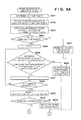
- FIG. 6 is a flowchart of zone update determination processing according to the embodiment.
- FIGS. 7A to 7G are diagrams for describing examples of the zone update determination processing according to the embodiment.
- FIGS. 8A and 8B are flowcharts of AF frame selection processing for the case where subjects have been detected in the embodiment.
- FIG. 9 is a flowchart of AF frame selection processing for the case where subjects have not been detected in the embodiment.
- FIGS. 10A to 10C are schematic diagrams for describing an example of AF frame selection for the case where subjects have not been detected in the present embodiment.
- FIG. 11 is a flowchart of equidistance determination processing according to the embodiment.
- FIGS. 12A and 12B are flowcharts of a continuous AF operation according to the embodiment.
- FIG. 13 is a flowchart of bracketing determination processing according to the embodiment.
- FIG. 14 is a flowchart of an AF operation for regular exposure according to the embodiment.
- FIG. 15A shows an example of AF frames set in the AF operation for regular exposure.
- FIG. 15B schematically shows peak positions acquired in AF frames.
- FIG. 16 is a flowchart of image capture processing according to the embodiment.
- FIGS. 17A and 17B show examples of in-focus frames displayed in the case where scan has been performed to acquire a distance map in the embodiment.
- FIG. 18 is a flowchart of an operation for scene instability determination according to the embodiment.
- FIGS. 19A and 19B are flowcharts of processing for setting a scene change flag according to the embodiment.
- FIG. 20 is a flowchart of an operation for previous reference determination according to the embodiment.
- FIG. 1 is a block diagram showing an example of a functional configuration of a digital (still) camera, which is one example of an image capture apparatus according to an embodiment of the present invention.
- a photographic lens 101 has, for example, a zoom mechanism.
- An AE processing unit 103 measures the luminance of a subject and determines exposure conditions (shutter speed, aperture size, photographing sensitivity, and the like).
- a focus lens 104 is movable in the direction of the optical axis under control by an AF processing unit 105 , and adjusts the distance to the subject that is focused by the photographic lens 101 on an imaging surface of an image sensor 108 .
- the AF processing unit 105 also drives the zoom mechanism of the photographic lens 101 .
- the image sensor 108 is a photoelectric conversion element, such as a CCD image sensor and a CMOS image sensor, and converts a subject image, which is reflected light from the subject that is formed on the imaging surface by the photographic lens 101 and the focus lens 104 , into electrical signals on a per-pixel basis.
- An A/D converter 109 converts signals output from the image sensor 108 into digital signals.
- the A/D converter 109 includes a CDS circuit for removing signal noise, and a nonlinear amplifier circuit that operates prior to the A/D conversion.
- An image processing unit 110 applies various types of image processing, such as color interpolation processing, gamma conversion processing, resize processing and encoding processing, to digital image signals that have been A/D converted.
- the image processing unit 110 also decodes encoded image data read from an image recording unit 114 .
- a format converter 112 converts a signal format, for example, from an RGB format into a YUV format.
- a DRAM 113 is a built-in memory and used as a high-speed buffer for temporarily storing images, or as a working memory for compression and decompression of images.
- the image recording unit 114 includes a recording medium, such as a semiconductor memory card, and an interface for reading/writing data from/to the recording medium.
- a system control unit 115 is a programmable processor such as a CPU and an MPU, and realizes the operations of the digital camera, including later-described AF processing, by controlling various components through execution of programs pre-stored in a non-volatile storage device such as a ROM.
- a VRAM 116 is a memory used for display, and a display unit 117 displays data that is stored in the VRAM 116 for display purpose.
- the display unit 117 may be, for example, a flat-panel display such as a liquid crystal display and an organic EL display.
- the display unit 117 displays: images captured by the image sensor 108 ; images read from the image recording unit 114 ; assistance for user operations; the statuses of the camera; and marks indicating a captured screen and focus detection areas during image capture.
- An operation unit 118 is a collective term for a group of input devices via which a user inputs instructions and settings to the digital camera.
- the group of input devices includes: a shutter button; buttons for various types of settings related to image capture functions and image playback (e.g., a menu button, direction buttons, and an enter button); a zoom lever for instructing the photographic lens 101 to execute a zoom operation; and a switch for switching between an image capture mode and a playback mode.
- the operation unit 118 may further include: a touch screen attached to the display unit 117 ; and an input device that utilizes such technology as voice recognition and eye-tracking and therefore is not provided with buttons and switches.
- a switch 121 (hereinafter referred to as SW 1 ) is used to issue instructions for starting image capture standby operations, such as automatic focus adjustment (AF) processing and automatic exposure control (AE).
- a switch 122 (hereinafter referred to as SW 2 ) is used to issue instructions for capturing images for recording purpose.
- SW 2 is turned ON while SW 1 is in the ON state. For example, SW 1 is turned on by pressing the shutter button halfway down, and SW 2 is turned on by pressing the shutter button all the way down.
- a subject detection unit 123 detects areas of subjects having predetermined features using image signals processed by the image processing unit 110 .
- a subject is typically a human face, but may be any object that can be detected from image signals.
- a subject is not limited to being detected by a particular method, and may be detected using any known method as appropriate, such as a method utilizing pattern matching.
- the subject detection unit 123 outputs, to the system control unit 115 , information of each subject area (position, size, reliability, and the like) as a result of detection.
- a moving-object detection unit 124 detects whether or not subjects and the background in a screen are moving, and outputs a result of detection (moving-object information) to the system control unit 115 .
- the moving-object detection unit 124 detects moving-object information of subjects and the background (positions, ranges, movement amounts, and directions of moving-object areas) based on, for example, differential information of a plurality of images captured at different timings.
- An angular velocity sensor 125 detects the movement of the digital camera itself, and outputs camera movement information to the system control unit 115 .
- step S 201 the system control unit 115 determines the state (ON/OFF) of SW 1 used to issue an instruction for image capture preparation, and proceeds to steps S 208 and S 202 if SW 1 is in the ON state and the OFF state, respectively.
- step S 202 the system control unit 115 determines whether or not a captured scene is in a stable state (scene stability determination).
- the stable state of the captured scene denotes the state where the movement of subjects to be captured and the change in the state (orientation) of the digital camera are kept below corresponding thresholds, that is to say, the state suitable for image capture.
- the system control unit 115 can determine whether or not the captured scene is in the stable state based on, for example, a movement amount of the digital camera detected by the angular velocity sensor 125 and on the amount of change in the luminance of subjects detected by the AE processing unit 103 .
- step S 203 the system control unit 115 checks whether or not the captured scene was determined to be in the stable state in step S 202 ; it proceeds to step S 204 if the captured scene was determined to be in the stable state, and returns to step S 201 if the captured scene was not determined to be in the stable state.
- step S 204 the system control unit 115 executes AF scan processing in accordance with a later-described procedure so as to detect focus points and distance information of subjects included in the captured scene.
- step S 205 the system control unit 115 executes continuous AF processing in accordance with a later-described procedure.
- step S 206 the system control unit 115 determines whether or not the captured scene is in an unstable state (scene instability determination).
- the unstable state of the captured scene denotes the state where the subjects to be captured and the digital camera are unstable, that is to say, the state unsuitable for image capture.
- the system control unit 115 can determine whether or not the captured scene is in the unstable state based on, for example, a movement amount of the digital camera detected by the angular velocity sensor 125 and on the amount of change in the luminance of subjects detected by the AE processing unit 103 . A specific description will be provided later with reference to FIG. 18 .
- step S 207 the system control unit 115 checks whether or not the captured scene was determined to be in the unstable state in step S 206 ; it proceeds to step S 201 if the captured scene was determined to be in the unstable state, and to step S 205 if the captured scene was not determined to be in the unstable state.
- step S 208 the system control unit 115 determines, in step S 208 , the optimal control (AF bracketing, AE bracketing, and continuous shooting) to be executed when capturing images for recording purpose (bracketing determination) in accordance with a later-described procedure.
- the optimal control AF bracketing, AE bracketing, and continuous shooting
- step S 209 the system control unit 115 causes the AE processing unit 103 to execute AE (automatic exposure control) processing for regular exposure (to capture images for recording purpose).
- AE automatic exposure control
- step S 210 the system control unit 115 executes AF (automatic focus detection or automatic focus adjustment) processing for regular exposure in accordance with a later-described procedure.
- AF automatic focus detection or automatic focus adjustment
- step S 211 the system control unit 115 determines the state (ON/OFF) of SW 2 , and proceeds to step S 212 and waits in step S 211 if SW 2 is in the ON state and the OFF state, respectively.
- step S 212 the system control unit 115 executes image capture processing in accordance with a later-described procedure.
- FIG. 3 is a flowchart of AF scan processing executed in step S 204 of FIG. 2 . More specifically, this AF scan processing involves acquisition of distance information, which is used to determine whether or not a captured scene includes subjects with different distances (hereinafter referred to as equidistance determination), and search for the in-focus position.
- distance information which is used to determine whether or not a captured scene includes subjects with different distances (hereinafter referred to as equidistance determination), and search for the in-focus position.
- step S 301 the system control unit 115 sets N ⁇ M focus detection areas (AF frames) in a screen, N and M being along the vertical direction and the horizontal direction, respectively.
- the AF frames may be set in consideration of subject areas detected by the subject detection unit 123 .
- step S 302 the system control unit 115 determines whether or not the captured scene shows little change from the previous determination (previous reference determination).
- the system control unit 115 obtains TRUE as a result of determination if the captured scene is determined to show little change from the previous determination, and obtains FALSE as a result of determination otherwise.
- the system control unit 115 also sets an AF scan range in accordance with a result of the previous reference determination processing. Specifics of the previous reference determination will be described later with reference to FIG. 20 .
- step S 303 the system control unit 115 proceeds to steps S 304 and S 307 if the result of the previous reference determination in step S 302 is TRUE and FALSE, respectively.
- step S 304 the system control unit 115 executes previous reference AF scan, in which a specific range set in the previous reference determination is scanned instead of the entire scannable range.
- step S 305 the system control unit 115 executes equidistance determination in accordance with a later-described procedure of FIG. 11 .
- the equidistance determination is processing for determining, based on the distribution of peak positions in AF frames, whether or not the captured scene is an equidistance scene in which there is no difference among distances of subjects in the screen.
- the result of the equidistance determination is one of (1) the equidistance determination was able to be performed and the captured scene is determined as the equidistance scene, (2) the equidistance determination was able to be performed but the captured scene was not determined as the equidistance scene, and (3) the equidistance determination was not able to be performed.
- step S 306 the system control unit 115 proceeds to step S 309 if it determines that the in-focus position was able to be detected in the previous reference AF scan in step S 304 and the equidistance determination was able to be performed in step S 305 , and proceeds to step S 307 otherwise.
- step S 307 the system control unit 115 performs zone AF scan in accordance with a later-described procedure.
- Zone AF scan is processing for performing AF scan zone-by-zone in the case where a range from the near end to the far end is divided into a plurality of ranges (zones).
- step S 308 the system control unit 115 performs equidistance determination similar to that of step S 305 .
- the system control unit 115 determines in step S 309 whether or not the captured scene was determined as the equidistance scene in the equidistance determination of step S 305 or S 308 ; it sets an equidistance determination flag to TRUE in step S 310 if the captured scene was determined as the equidistance scene, and sets the equidistance determination flag to FALSE in step S 311 otherwise.
- step S 312 if subject areas have been detected by the subject detection unit 123 , the system control unit 115 sets AF frames in accordance with the detected subject areas. If subject areas have not been detected by the subject detection unit 123 but were able to be identified in the zone AF scan in step S 307 , the system control unit 115 sets AF frames in accordance with the subject areas identified in the zone AF scan. If subject areas have not been detected by the subject detection unit 123 and were not able to be identified in the zone AF scan in step S 307 , the system control unit 115 sets AF frames in accordance with a predetermined region. It should be noted that an area that is likely to include a subject, such as a central area of the screen, is set as the predetermined area.
- the system control unit 115 causes the AF processing unit 105 to drive the focus lens 104 to the in-focus position in step S 313 .
- the focus lens 104 is driven to a preset fixed point (a position with a high probability of existence of a subject).
- FIG. 5 is a flowchart of zone AF scan processing executed in step S 307 of FIG. 3 .
- Zones denote ranges obtained by dividing a distance range in which focus can be achieved (from the near end to the far end) into a plurality of ranges (zones).
- step S 501 the system control unit 115 moves the focus lens 104 to a scan start position. It will be assumed that the scan start position corresponds to, for example, the far end.
- step S 502 the A/D converter 109 converts analog image signals read from the image sensor 108 into digital signals, the image processing unit 110 extracts, from the output digital signals, high-frequency components of luminance signals as a focus evaluation value, and the system control unit 115 stores the focus evaluation value.
- step S 503 the system control unit 115 acquires the current position of the focus lens 104 from the AF processing unit 105 , and stores the same in correspondence with the focus evaluation value.
- step S 504 the system control unit 115 determines the state (ON/OFF) of SW 1 used to issue an instruction for image capture preparation; it completes the present processing and proceeds to step S 208 of FIG. 2 if SW 1 is in the ON state, and proceeds to step S 505 if SW 1 is in the OFF state.
- step S 505 the system control unit 115 determines whether or not exposure settings have changed from the start of the scan; it proceeds to step S 201 of FIG. 2 if the exposure settings have changed, and to step S 506 if the exposure settings have not changed.
- step S 506 the system control unit 115 checks whether or not the focus lens 104 is located at a preset zone boundary position; it proceeds to step S 507 if the focus lens 104 is located at the preset zone boundary position, and to step S 509 otherwise.
- step S 507 the system control unit 115 performs zone update determination in accordance with a later-described procedure of FIG. 6 .
- Zone update determination is determination as to whether or not completion of AF scan in a certain zone should be continuously followed by the execution of AF scan in an adjacent zone.
- step S 508 the system control unit 115 proceeds to step S 509 if it has determined in the zone update determination of step S 507 that a zone is to be updated, that is to say, AF scan is to be continued in a zone adjacent in the direction toward a scan finish position.
- the system control unit 115 proceeds to step S 511 if it has determined that a zone is not to be updated.
- step S 509 the system control unit 115 causes the AF processing unit 105 to check whether or not the current position of the focus lens 104 is equal to the scan finish position (more specifically, the position corresponding to the near end); it proceeds to step S 511 if they are equal, and to step S 510 otherwise.
- step S 510 the system control unit 115 causes the AF processing unit 105 to move the focus lens 104 by a predetermined amount toward the scan finish position, and then returns to step S 502 .
- step S 511 the system control unit 115 determines one of the following three determinations as a result of scan in each AF frame.
- ⁇ determination the contrast of subjects is sufficient, and subjects exist in the scanned distance range.
- X determination the contrast of subjects is insufficient, or subjects exist outside the scanned distance range.
- ⁇ determination subjects are closer to the scan finish position (more specifically, closer to the near end) than the scanned distance range is.
- the in-focus determination can be performed using known methods, such as methods described in Japanese Patents No. 4235422 and No. 4185740, and therefore a description thereof is omitted.
- step S 512 the system control unit 115 checks whether or not subject areas have been detected by the subject detection unit 123 ; it proceeds to step S 513 if the subject areas have been detected, and to step S 514 if the subject areas have not been detected.
- step S 513 the system control unit 115 performs AF frame selection for the case where subjects have been detected in accordance with later-described processing of FIGS. 8A and 8B .
- step S 514 the system control unit 115 performs AF frame selection for the case where subjects have not been detected in accordance with later-described processing of FIG. 9 .
- FIG. 6 is a flowchart of the zone update determination performed in step S 507 of FIG. 5 .
- the zone update determination whether or not any subject is likely to exist further ahead in the scan direction, that is to say, whether or not to continue AF scan, is determined.
- step S 601 the system control unit 115 performs in-focus determination similar to the one performed in step S 511 in all AF frames that have been set. It will be assumed that the result of the in-focus determination for each AF frame is as shown in FIG. 7A .
- step S 602 the system control unit 115 checks whether or not AF scan has been performed until the last zone; it proceeds to step S 614 if AF scan has been performed until the last zone, and to step S 603 otherwise.
- step S 603 the system control unit 115 checks whether or not there is any AF frame for which ⁇ determination has been made ( ⁇ -determination frame); it proceeds to step S 604 if there is any ⁇ -determination frame, and to step S 613 otherwise.
- step S 604 the system control unit 115 checks whether or not a subject area has been detected by the subject detection unit 123 ; it proceeds to step S 606 if a subject area has been detected, and to step S 605 otherwise.
- step S 605 the system control unit 115 checks whether or not a predetermined number or more of AF frames for which ⁇ determination has been made ( ⁇ -determination frames) are located “in a cluster” among M1 ⁇ M2 frames at the central portion of the screen; it proceeds to step S 613 if the ⁇ -determination frames are thus located “in a cluster”, and to step S 607 otherwise.
- a predetermined number or more of AF frames for which ⁇ determination has been made ⁇ -determination frames
- step S 606 the system control unit 115 checks whether or not a predetermined number or more of ⁇ -determination frames are included among AF frames including the detected subject area; it proceeds to step S 613 if the predetermined number or more of ⁇ -determination frames are included, and to step S 607 if the predetermined number or more of ⁇ -determination frames are not included.
- an AF frame including a subject area denotes an AF frame in which the subject area accounts for a predetermined percentage or more of the AF frame. Referring to FIG.
- step S 607 the system control unit 115 checks whether or not there is any possibility that a predetermined number or more of ⁇ -determination frames exist “in a cluster” among N ⁇ M AF frames including at least one of L1 ⁇ L2 frames at the center.
- the system control unit 115 proceeds to step S 613 if there is any position that achieves that possibility, and to step S 608 if there is no such position.
- step S 608 the system control unit 115 checks whether or not the scan has been completed until a predetermined zone that has been preset; it proceeds to step S 614 if the scan has been completed, and to step S 609 if the scan has not been completed.
- a predetermined zone denotes a zone in which ⁇ determination is assumed to be made for AF frames corresponding to the position of a subject in the screen in the case where the subject exists at the end of a scannable range in the AF scan direction (the near end in the present embodiment). If this zone is reached without detection of a cluster of ⁇ -determination frames (subject area), it is considered that a subject does not exist in zones along the direction in which the scan is to be performed from that point.
- step S 609 the system control unit 115 checks whether or not a predetermined number or more of ⁇ -determination frames or X-determination frames exist in a cluster among N ⁇ M frames; it proceeds to step S 613 if they exist, and to step S 614 otherwise.
- a predetermined number is 20
- a maximum of 18 ⁇ -determination frames or X-determination frames exist in a cluster that is to say, a cluster of the predetermined number or more of ⁇ -determination frames or X-determination frames does not exist.
- step S 610 the system control unit 115 checks whether or not a subject area has been detected by the subject detection unit 123 ; it proceeds to step S 612 if the subject area has been detected, and to step S 611 if the subject area has not been detected.
- step S 611 the system control unit 115 checks whether or not a predetermined number or more of ⁇ -determination frames exist in a cluster among M1 ⁇ M2 frames at the center; it proceeds to step S 613 if they exist in a cluster, and to step S 614 otherwise.
- the predetermined number is ten
- a cluster of the predetermined number or more of ⁇ -determination frames exists.
- step S 612 the system control unit 115 checks whether or not a predetermined number or more of ⁇ -determination frames are included among AF frames including the subject area; it proceeds to step S 613 if they are included, and to step S 614 otherwise.
- a predetermined number is five, as five ⁇ -determination frames exist in a cluster among AF frames including the subject area (in a thick frame), a cluster of the predetermined number or more of ⁇ -determination frames exists.
- step S 613 the system control unit 115 determines that “the zone is to be updated”, and ends the processing.
- step S 614 the system control unit 115 determines that “the zone is not to be updated”, and ends the processing.
- predetermined numbers in steps S 605 , S 606 , S 607 , S 609 , S 611 , and S 612 have been described above as fixed values, they may be changed in accordance with a zone range and the in-focus position. For example, these predetermined numbers may increase as the subject approaches the near end.
- FIGS. 8A and 8B are flowcharts of the AF frame selection processing executed in step S 513 of FIG. 5 for the case where subjects have been detected.
- an AF frame is selected from among AF frames including subject areas.
- step S 801 the system control unit 115 determines, out of AF frames including subject areas detected by the subject detection unit 123 , AF frames for which ⁇ determination has been made in step S 511 of FIG. 5 (in-focus AF frames) as candidate frames.
- step S 802 the system control unit 115 computes and stores peak positions (hereinafter referred to as PeakPos) of focus evaluation values in candidate frames. As the positions of the focus lens for which the focus evaluation values have been obtained are discrete, the system control unit 115 computes the peak positions by way of interpolation and the like.
- PeakPos peak positions
- step S 803 the system control unit 115 sorts PeakPos in the candidate frames from the near end, and considers the number of sorted PeakPos (that is to say, the total number of candidate frames) as S.
- step S 804 the system control unit 115 checks whether or not the number of sorted PeakPos S is equal to or greater than one; it proceeds to step S 805 if the number S is equal to or greater than one, and proceeds to step S 821 if the number S is smaller than one (there is no candidate frame).
- step S 821 the system control unit 115 considers that focus has not been achieved as an in-focus frame was not able to be selected, and ends the present processing.
- step S 805 the system control unit 115 sets a counter P to one, the counter P indicating orders of the peak positions in the candidate frames computed in step S 802 from the near end.
- step S 806 the system control unit 115 checks whether or not the following conditions are satisfied: a difference between the P th PeakPos and the (P+1) th PeakPos in sort order is within the depth of focus; and the frame positions corresponding to the P th PeakPos and the (P+1) th PeakPos in the screen are adjacent. It should be noted that a range of “adjacent” frame positions is defined in advance in accordance with the frame size and the like. It should be noted that the frame positions do not necessarily have to be adjacent. If the above conditions are satisfied, the system control unit 115 proceeds to step S 820 , selects the AF frame corresponding to the P th PeakPos as the in-focus frame, and ends the processing. On the other hand, if the above conditions are not satisfied, the system control unit 115 proceeds to step S 807 .
- step S 807 the system control unit 115 increments the counter P by one.
- step S 808 the system control unit 115 checks whether or not the value of the counter P is greater than the number of sorted PeakPos S (P>S); it proceeds to step S 809 if the value of the counter P is greater than the number of sorted PeakPos S, and returns to step S 806 otherwise.
- step S 809 the system control unit 115 computes a difference between the first PeakPos and the S th PeakPos, and stores the difference as a variable MaxMin.
- the value of MaxMin is the value of the maximum difference in peak positions in frames for which ⁇ determination has been made as a result of the in-focus determination.
- step S 810 the system control unit 115 checks whether or not MaxMin computed in step S 809 falls within the depth of focus; if MaxMin falls within the depth of focus, it selects the first AF frame (the AF frame whose peak position is closest to the near end among all frames for which ⁇ determination has been made as a result of the in-focus determination) as the in-focus frame in step S 819 , and ends the processing.
- the diameter of the acceptable circle of confusion is ⁇ and the maximum aperture size of the photographic lens 101 is F
- the depth of focus used in steps S 806 and S 810 is expressed as ⁇ F and is also referred to as the maximum depth.
- step S 812 the system control unit 115 sets a counter N to one, the counter N indicating orders of the groups from the near end.
- step S 813 the system control unit 115 counts the number of AF frames included in the N th group.
- step S 814 the system control unit 115 checks whether or not the number counted in step S 813 is greater than the counted number of frames included in the (N ⁇ 1) th group (N ⁇ 2); it proceeds to step S 815 if the former is greater than the latter, and proceeds to step S 816 if the former is smaller than the latter.
- step S 815 the system control unit 115 determines the AF frame whose PeakPos is closest to the near end out of all AF frames included in the N th group as a representative frame of the candidate frames.
- step S 816 the system control unit 115 increments the counter N by one.
- step S 817 the system control unit 115 checks whether or not all groups have been confirmed; it proceeds to step S 818 if all groups have been confirmed, and to step S 813 if all groups have not been confirmed.
- step S 818 the system control unit 115 selects the representative frame as the in-focus frame, and ends the processing.
- FIG. 9 is a flowchart of AF frame selection performed in step S 514 of FIG. 5 for the case where subjects have not been detected.
- AF frame selection a main subject area is identified from the screen, and a frame is selected from the main subject area.
- step S 901 the system control unit 115 computes and stores peak positions (hereinafter referred to as PeakPos) of focus evaluation values in AF frames.
- PeakPos peak positions
- the result of computing the peak positions in the AF frames is as shown in FIG. 10B .
- the peak positions are expressed using the aforementioned number of driving pulses.
- step S 902 the system control unit 115 sorts PeakPos in M1 ⁇ M2 AF frames at the center (indicated by a thick frame in FIG. 10B ) in order from the near end, and considers the number of sorted PeakPos as S, M1 and M2 being along the horizontal direction and the vertical direction, respectively.
- AF frames for which X determination has been made in the in-focus determination in step S 511 of FIG. 5 are excluded from the sorting as peak positions cannot be computed therein. For example, in the case of FIG.
- the result of the sorting provides 202, 202, 201, 201, 201, 200, 200, 200, 103, 103, 102, 102, and 101 in order from the near end, and the number of sorted PeakPos S is 13.
- step S 903 the system control unit 115 sets a counter P to one, the counter P indicating orders of the peak positions in the M1 ⁇ M2 frames computed in step S 902 from the near end.
- step S 905 the system control unit 115 detects, out of the M1 ⁇ M2 AF frames at the center, a “cluster” of AF frames for which ⁇ determination has been made and which fall within a predetermined depth range with respect to PeakPosP, and stores the number and positions of AF frames constituting this “cluster”.
- a “cluster” indicates the state where AF frames satisfying the above conditions are adjacent.
- one of the plurality of “clusters” may be selected based on the number of AF frames constituting each “cluster” and on the positions of the “clusters”.
- step S 906 the system control unit 115 detects, out of the N ⁇ M AF frames, a “cluster” of AF frames for which ⁇ determination has been made and which fall within a predetermined depth with respect to PeakPosP, such that the “cluster” includes at least one of the M1 ⁇ M2 AF frames at the center, and stores the number and positions of AF frames constituting the “cluster”. For example, in the case where the result of determination is as shown in FIGS. 10A and 10B , a “cluster” indicated by gray frames shown in FIG. 10C is detected.
- step S 908 the system control unit 115 checks whether or not the “cluster” detected in step S 905 or S 906 includes a predetermined number or more of the M1 ⁇ M2 AF frames; it proceeds to step S 913 if the “cluster” includes the predetermined number or more of the M1 ⁇ M2 AF frames, and to step S 909 otherwise.
- step S 909 the system control unit 115 checks whether or not the “cluster” detected in step S 905 or S 906 includes at least one of the M1 ⁇ M2 frames at the center and includes a predetermined number or more of the N ⁇ M AF frames.
- the system control unit 115 proceeds to step S 913 if the “cluster” includes at least one of the M1 ⁇ M2 frames at the center and includes a predetermined number or more of the N ⁇ M AF frames, and proceeds to step S 910 otherwise.
- step S 910 the system control unit 115 increments the counter P by one.
- step S 911 the system control unit 115 checks whether or not the value of the counter P is greater than the number of sorted PeakPos S (P>S); if the value of the counter P is greater than the number of sorted PeakPos S, it proceeds to step S 912 , determines that the main subject area was not able to be identified, and ends the present determination processing. On the other hand, if the value of the counter P is equal to or smaller than the number of sorted PeakPos S, the processing returns to step S 904 .
- step S 913 the system control unit 115 determines that the main subject area was able to be identified.
- step S 914 the system control unit 115 determines and selects the AF frames constituting the cluster detected in step S 907 , S 908 or S 909 as the main subject area, and ends the present determination processing.
- predetermined numbers in steps S 908 and S 909 may be uniformly determined irrespective of the focus position, and may be changed in accordance with the focus position. For example, these predetermined numbers may increase as the subject approaches the near end.
- FIG. 11 is a flowchart of the equidistance determination in steps S 305 and S 308 of FIG. 3 .
- This equidistance determination involves determination of whether or not a captured scene is an equidistance scene with a small difference in distance in the screen based on the distribution of peak positions in AF frames.
- step S 1101 the system control unit 115 corrects the peak positions in the AF frames based on error amounts that have been prepared in advance in correspondence with image heights. This is because there may be error in the distribution of peak positions due to the influence of the field curvature and of the image tilt caused by error in the attachment of the image sensor.
- step S 1102 the system control unit 115 rearranges the AF frames for which ⁇ determination has been made in step S 601 of FIG. 6 (in-focus AF frames) in order from the peak position closest to the near end.
- step S 1103 the system control unit 115 checks whether or not the number of the ⁇ -determination frames is equal to or greater than a predetermined percentage of the total number of AF frames; if the number of the ⁇ -determination frames is not equal to or greater than the predetermined percentage, it determines in step S 1113 that the equidistance determination was not able to be performed, and ends the processing for the equidistance determination.
- the system control unit 115 proceeds to step S 1104 .
- step S 1104 the system control unit 115 sets a predetermined percentage of the number of the ⁇ -determination frames as a range that is considered as equidistant (EqualRange).
- step S 1105 the system control unit 115 resets a variable i to zero, the variable i being used to count the number of the ⁇ -determination frames.
- step S 1106 the system control unit 115 checks whether or not a difference between the peak position in the i th AF frame and the peak position in the (i+EqualRange) th AF frame falls within a predetermined depth; it proceeds to step S 1107 if the difference falls within the predetermined depth, and to step S 1109 if the difference does not fall within the predetermined depth.
- step S 1107 the system control unit 115 checks whether or not focus was achieved in the immediately previous scan (step S 304 or S 307 of FIG. 3 ); it proceeds to step S 1108 if focus was achieved, and to step S 1111 if focus was not achieved.
- step S 1108 the system control unit 115 checks whether or not the in-focus position detected in the immediately previous scan falls within a range from the peak position in the i th AF frame and the peak position in the (i+EqualRange) th AF frame, and proceeds to step S 1111 if the detected in-focus position falls within the range.
- step S 1111 the system control unit 115 determines that the equidistance determination was able to be performed and the captured scene is the equidistance scene, and ends the processing.
- the system control unit 115 increments i by one in step S 1109 , and proceeds to step S 1110 .
- step S 1110 if i is smaller than the total number of the ⁇ -determination frames, the system control unit 115 returns to step S 1106 and continues the determination. On the other hand, if i is equal to or greater than the total number of the ⁇ -determination frames, it is determined that the determination has been performed for all of the ⁇ -determination frames; therefore, in step S 1112 , it is determined that the equidistance determination was able to be performed and the captured scene exhibits different distances, and then the processing is ended.
- FIGS. 12A and 12B are flowcharts of a continuous AF operation executed in step S 205 of FIG. 2 .
- step S 1201 the system control unit 115 acquires focus evaluation values of AF frames that have been set for in-focus control in continuous AF.
- the AF frames that have been set for in-focus control in continuous AF denote AF frames that have been set in subject areas in the case where the subject areas have been detected, and denote AF frames that have been selected as in-focus frames in step S 513 of FIG. 5 in the case where the subject areas have not been detected.
- step S 1202 the system control unit 115 determines the state (ON/OFF) of SW 1 used to issue an instruction for image capture preparation; if SW 1 is in the ON state, it ends the present processing and proceeds to step S 208 of FIG. 2 , and if SW 1 is in the OFF state, it proceeds to step S 1203 .
- step S 1203 the system control unit 115 checks whether or not a peak detection flag is set to TRUE; it proceeds to steps S 1220 and S 1204 if the peak detection flag is set to TRUE and FALSE, respectively. It will be assumed that the peak detection flag is preset to FALSE as a default value.
- step S 1204 the system control unit 115 acquires the current position of the focus lens 104 .
- step S 1205 the system control unit 115 increments an acquisition counter by one, the acquisition counter being used to count the acquisition of the focus evaluation values and the acquisition of the current position of the focus lens 104 . It will be assumed that this acquisition counter is preset to zero in a reset operation.
- step S 1206 the system control unit 115 checks whether or not the value of the acquisition counter is one; it proceeds to step S 1209 if the value of the acquisition counter is one, and to step S 1207 if the value of the acquisition counter is not one.
- step S 1207 the system control unit 115 checks whether or not the “current focus evaluation value” is greater than the “previous focus evaluation value”; it proceeds to step S 1208 if the former is greater than the latter, and to step S 1215 otherwise.
- step S 1208 the system control unit 115 increments an increase counter by one.
- step S 1209 the system control unit 115 stores the current focus evaluation value as the maximum focus evaluation value into an operation memory in the system control unit 115 .
- step S 1210 the system control unit 115 stores the current position of the focus lens 104 as the peak position of the focus evaluation values into the operation memory.
- step S 1211 the system control unit 115 stores the current focus evaluation value into the operation memory as the previous focus evaluation value.
- step S 1212 the system control unit 115 checks whether or not the current position of the focus lens 104 is at the end of a driving range; it proceeds to step S 1213 if the current position is at the end of the driving range, and to step S 1214 otherwise.
- step S 1213 the system control unit 115 reverses the direction of movement of the focus lens 104 .
- step S 1214 the system control unit 115 moves the focus lens 104 by a predetermined amount.
- step S 1215 the system control unit 115 proceeds to step S 1216 if “the maximum focus evaluation value—the current focus evaluation value” is greater than a predetermined amount, and to step S 1211 if “the maximum focus evaluation value—the current focus evaluation value” is equal to or smaller than the predetermined amount. It will be assumed that, if “the maximum focus evaluation value—the current focus evaluation value” is greater than the predetermined amount, that is to say, if the current focus evaluation value has decreased from the maximum focus evaluation value by the predetermined amount, the maximum focus evaluation value is considered as the focus evaluation value at the peak position.
- step S 1216 the system control unit 115 checks whether or not the value of the increase counter is greater than zero; it proceeds to step S 1217 if the value of the increase counter is greater than zero, and to step S 1211 if the value of the increase counter is equal to or smaller than zero.
- step S 1217 the system control unit 115 moves the focus lens 104 to the peak position stored in step S 1210 .
- step S 1218 the system control unit 115 sets the peak detection flag to TRUE.
- step S 1219 the system control unit 115 sets the acquisition counter to zero.
- step S 1220 the system control unit 115 checks whether or not the current focus evaluation value has changed from the maximum focus evaluation value by a predetermined percentage or more; it proceeds to step S 1222 if the current focus evaluation value has changed significantly, that is to say, by the predetermined percentage or more, and to step S 1221 if the current focus evaluation value has changed insignificantly, that is to say, by a percentage smaller than the predetermined percentage.
- step S 1221 the system control unit 115 keeps the position of the focus lens 104 as-is.
- step S 1222 in order to re-acquire the position of the focus lens that maximizes the focus evaluation value, the system control unit 115 sets the peak detection flag to FALSE and resets the maximum focus evaluation value and the peak position.
- step S 1223 the system control unit 115 resets the increase counter.
- the continuous AF operation drives the focus lens so as to place a main subject in a focused state at any time.
- FIG. 13 is a flowchart of processing for bracketing determination in step S 208 of FIG. 2 . This processing determines the optimal processing for image capture based on information that was acquired before SW 1 was turned ON.
- step S 1301 the system control unit 115 determines whether or not the digital camera or subjects are moving by referring to the result of output from the angular velocity sensor 125 and the moving-object detection unit 124 immediately before SW 1 was turned ON. If the camera or subjects are moving, the system control unit 115 determines that the captured scene is a moving scene and proceeds to step S 1303 ; if the captured scene is not a moving scene, it proceeds to step S 1302 .
- step S 1302 the system control unit 115 proceeds to step S 1305 if the captured scene was determined as an equidistance scene in the equidistance determination in step S 305 or S 308 of FIG. 3 immediately before SW 1 was turned on, and proceeds to step S 1304 if the captured scene was not determined as an equidistance scene.
- step S 1304 the system control unit 115 determines that AF bracketing is to be performed as processing for image capture, and ends the present processing.
- step S 1303 the system control unit 115 acquires the exposure distribution in the screen immediately before SW 1 was turned ON from the AE processing unit 103 ; it proceeds to step S 1305 if the captured scene is determined as a scene exhibiting different exposures in the screen, and to step S 1306 if the captured scene is determined as a scene with no difference in exposure in the screen.
- step S 1305 the system control unit 115 determines that AE bracketing is to be performed as processing for image capture, and ends the present processing.
- step S 1306 the system control unit 115 determines that continuous shooting is to be performed as processing for image capture, and ends the present processing.
- FIG. 14 is a flowchart of an operation of AF for regular exposure executed in step S 210 of FIG. 2 .
- This processing involves acquisition of distance information and AF scan for determining the in-focus position.
- the distance information is used for generating the result of grouping in accordance with the distance distribution in the screen (hereinafter referred to as a distance map), and for the above-described equidistance determination processing.
- step S 1401 the system control unit 115 moves the focus lens 104 to a scan start position. It will be assumed that the scan start position corresponds to the farthest point in a range in which AF scan can be performed, such as the far end.
- step S 1402 the system control unit 115 proceeds to step S 1409 if it has determined that continuous shooting is to be performed during image capture as a result of bracketing determination in step S 208 of FIG. 2 , and to step S 1403 if it has determined that AF bracketing or AE bracketing is to be performed.
- step S 1404 in order to acquire the distance map, the system control unit 115 performs AF scan in which the peak positions are searched for in all of the AF frames set in step S 1403 .
- step S 1405 the system control unit 115 determines the in-focus position based on the peak positions in the AF frames obtained as a result of the scan performed in step S 1404 .
- step S 1407 the system control unit 115 performs the equidistance determination, which has been described above with reference to FIG. 11 .
- step S 1408 the system control unit 115 generates the distance map based on the distribution of the peak positions in the AF frames corrected in step S 1101 of the equidistance determination.
- FIG. 15B schematically shows the peak positions in the AF frames for the case where the flower in the foreground and the mountain in the background have been captured. X indicates that the peak positions were not found. It will be assumed that the peak positions are expressed using the number of pulses of the stepping motor, similarly to the case of FIG. 10B .
- the flower in the foreground exhibits the distribution of peak positions in a range of 199 to 202, and the mountain in the background exhibits the distribution of peak positions in a range of 100 to 103.
- the screen is divided into a plurality of groups based on distance. Furthermore, the accuracy of grouping may be improved by combining the result of dividing the screen based on color through the image processing unit 110 and the result of dividing the screen based on distance.
- step S 1409 the system control unit 115 sets AF frames in correspondence with the positions of subjects in the case where the subjects have been detected by the subject detection unit 123 , and sets multiple AF frames in the case where subjects have not been detected. It should be noted that, if it is determined to perform continuous shooting processing in the bracketing determination processing, it means that the subjects or the camera is moving, and therefore the accuracy of focus in the AF frames is lowered due to the influence of the movement on the focus evaluation values. Therefore, in this case, distance-based area division is not performed, and AF scan is performed only to determine the in-focus position.
- step S 1410 the system control unit 115 performs AF scan to determine the in-focus position.
- this AF scan is performed until the peak positions are found in the AF frames set in correspondence with the positions of the detected subjects, and in the case where subjects have not been detected, this AF scan is performed until a cluster of AF frames with close peak positions are acquired from among multiple AF frames.
- step S 1411 the system control unit 115 determines the in-focus position based on the peak positions in the AF frames acquired as a result of the scan performed in step S 1410 .
- the peak positions in the AF frames set in correspondence with the positions of the detected subjects are used as the in-focus position, and if the peak positions were not able to be detected in the AF frames set in correspondence with the positions of the detected subject, focus is not achieved.
- AF frames for determining the in-focus position are determined from among the cluster of AF frames; if the cluster of AF frames has not been acquired, focus is not achieved.
- step S 1412 if the in-focus position was determined in step S 1407 or S 1410 , the system control unit 115 causes the AF processing unit 105 to drive the focus lens 104 to the in-focus position. If focus was not achieved, the system control unit 115 drives the focus lens 104 to a fixed point which has been determined in advance and at which there is a high probability of existence of a subject.
- step S 1413 the system control unit 115 displays in-focus frames and/or out-of-focus frames on the display unit 117 . If focus has been achieved, the system control unit 115 displays the focus position and AF frames that fall within the depth thereof, and if focus has not been achieved, it displays out-of-focus frames at a predetermined position, such as a center.
- FIG. 16 is a flowchart of an operation for the image capture processing executed in step S 212 of FIG. 2 .
- appropriate image capture processing and image processing are executed in accordance with the result of bracketing determination in step S 208 of FIG. 2 , and with the result of equidistance determination in step S 1407 of AF processing for regular exposure shown in FIG. 14 .
- step S 1601 the system control unit 115 checks which processing has been determined to be executed during image capture as a result of bracketing determination in step S 208 of FIG. 2 .
- the system control unit 115 proceeds to steps S 1602 , S 1605 , and S 1607 if AF bracketing, AE bracketing, and continuous shooting have been determined to be executed, respectively.
- step S 1602 the system control unit 115 proceeds to step S 1605 if the captured scene was determined as an equidistance scene in the equidistance determination of step S 1407 in AF for regular exposure shown in FIG. 14 , and proceeds to step S 1603 if the captured scene was not determined as an equidistance scene.
- step S 1603 the system control unit 115 determines the focus position at which AF bracketing is to be performed based on distances of groups divided in step S 1408 of FIG. 14 .
- step S 1604 the system control unit 115 performs image capture with AF bracketing at the focus position determined in step S 1603 .
- AF bracketing is effective for the captured scene.
- step S 1605 the system control unit 115 determines exposure settings for AE bracketing based on the result of a difference in exposures in the screen immediately before SW 1 was turned on, which was acquired by the AE processing unit 103 , and then proceeds to step S 1606 .
- step S 1606 the system control unit 115 performs image capture with AE bracketing based on the exposure settings determined in step S 1605 .
- step S 1607 the system control unit 115 determines the speed of continuous shooting based on the result of output from the angular velocity sensor 125 and the moving-object detection unit 124 immediately before SW 1 was turned ON such that, for example, the speed of continuous shooting is faster for larger camera/subject movements, and then proceeds to step S 1608 .
- step S 1608 the system control unit 115 performs continuous shooting image capture while controlling each component in accordance with the speed determined in step S 1607 .
- step S 1609 the system control unit 115 causes the image processing unit 110 to generate images by applying defocus effect processing to certain areas in captured images that were acquired through the image capture with focus bracketing in step S 1604 in accordance with the distance distribution, the certain areas being areas other than the main subject area in the screen.
- the result of grouping performed in step S 1408 of FIG. 14 and the distribution of distances and colors in the screen may be used.
- processing related to airbrushing is executed only if the captured scene was determined to exhibit different subject distances as a result of the equidistance determination, and therefore the airbrushing processing based on the distance distribution can be executed with high accuracy.
- step S 1610 the system control unit 115 generates images by extracting a part of the screen based on the detected subject areas, on the result of grouping performed in step S 1408 of FIG. 14 , and on the distribution of distances and colors in the screen.
- FIG. 18 shows a flowchart of an operation for the scene instability determination in step S 206 of FIG. 2 .
- the system control unit 115 sets a scene change flag. A specific description will be provided later with reference to FIGS. 19A and 19B .
- step S 1802 the system control unit 115 proceeds to step S 1803 if the scene change flag is set to TRUE, and returns FALSE as a result of the scene instability determination otherwise.
- step S 1803 if the subject luminance Bv acquired by the AE processing unit 103 is equal to or greater than a predetermined value, the system control unit 115 proceeds to step S 1804 .
- the system control unit 115 returns FALSE as a result of determination so as to continue the execution of continuous AF.
- step S 1804 the system control unit 115 determines whether or not the main subject has moved to the outside of the area of the AF frames set in step S 301 of FIG. 3 , and returns TRUE if the subject is inside the area of the AF frames. If the main subject is not inside the area of the AF frames, AF scan cannot be performed, and therefore FALSE is returned as a result of determination so as to continue the execution of continuous AF.
- FIGS. 19A and 19B are flowcharts of processing for setting the scene change flag in step S 1801 of FIG. 18 .
- the system control unit 115 refers to the output from the angular velocity sensor 125 in order to determine whether or not the user is yet to determine a capturing scene. If the output from the angular velocity sensor 125 is equal to or greater than a predetermined value, the system control unit 115 determines that the scene is yet to be determined and that the scene has changed, sets the scene change flag to TRUE in step S 1910 , and ends the processing.
- the system control unit 115 detects, in step S 1902 , whether or not the position of the camera has changed in the vertical or horizontal direction from the previous scan based on the output from the angular velocity sensor 125 . If the position of the camera has changed in the vertical or horizontal direction, the system control unit 115 determines that the scene has changed, sets the scene change flag to TRUE in step S 1910 , and ends the processing.
- the system control unit 115 determines, in step S 1903 , whether or not the luminance of subjects has changed by a predetermined value or more from the previous scan based on the output from the AE processing unit 103 . If the luminance of subjects has changed by the predetermined value or more, the system control unit 115 determines that the scene has changed, sets the scene change flag to TRUE in step S 1910 , and ends the processing.
- the system control unit 115 determines, in step S 1904 , whether or not a subject exists whose detection state has changed from the previous execution of scan based on the output from the subject detection unit 123 . For example, if the system control unit 115 determines that the subject that was detected in the previously-scanned scene is no longer detected, or the subject that was not detected in the previously-scanned scene is detected, it determines that the scene has changed. Then, the system control unit 115 sets the scene change flag to TRUE in step S 1910 , and ends the processing.
- step S 1905 the system control unit 115 determines whether or not the focus lens 104 has moved by a predetermined amount or more from the peak position that was obtained in the previous scan as a result of having a subject continuously focused through continuous AF in step S 205 . If the position of the focus lens 104 has changed by the predetermined amount or more, the system control unit 115 determines that the scene has changed, sets the scene change flag to TRUE in step S 1910 , and ends the processing. If the position of the focus lens 104 has not changed by the predetermined amount or more, the system control unit 115 proceeds to step S 1906 .
- step S 1906 the system control unit 115 determines whether or not the subject detection unit 123 has detected a subject area. If the subject area has not been detected, the system control unit 115 determines that the scene has not changed, sets the scene change flag to FALSE in step S 1909 , and ends the processing. If the subject area has been detected, the system control unit 115 determines, in step S 1907 , whether or not the position of the detected subject area has changed by a predetermined amount or more from the previous scan.
- the system control unit 115 determines that the scene has changed, sets the scene change flag to TRUE in step S 1910 , and ends the processing; otherwise, it determines that the scene has not changed, sets the scene change flag to FALSE in step S 1909 , and ends the processing.
- FIG. 20 is a flowchart of an operation for the previous reference determination in step S 302 of FIG. 3 .
- step S 2001 the system control unit 115 proceeds to step S 2004 if the captured scene was determined as an equidistance scene as a result of the above-described equidistance determination in step S 305 , and to step S 2002 if the captured scene was not determined as the equidistance scene.
- step S 2002 the system control unit 115 determines whether or not the distance map has been generated; it proceeds to step S 2005 if the distance map has been generated, and to step S 2003 if the distance map has not been generated. It should be noted that the distance map is generated if a plurality of peaks have been acquired in step S 1404 of FIG. 14 ; therefore, if not a single peak has been acquired, it is determined that the distance map has not been generated.
- step S 2005 the system control unit 115 sets a range (2) including the detected subjects, that is to say, peaks.
- step S 2003 the entire area (3) is set as a scan range.
- step S 2004 as the subjects in the screen were determined to be substantially equidistant in step S 2001 , the system control unit 115 sets a range (1) smaller than the range (2), centering around the current position of the focus lens.
- step S 2004 or S 2005 If the system control unit 115 has set the scan range (1) or (2) (step S 2004 or S 2005 ), it sets the result of the previous reference determination to TRUE, that is to say, it determines that there is no change or little change in the scene. On the other hand, if it has set the entire area as the scan range (3) (step S 2003 ), it sets the result of the previous reference determination to FALSE, that is to say, it determines that the change in the scene is large and therefore the distance map needs to be generated.
- the present embodiment if it has been determined that the scene has changed, distance information of subjects is re-acquired, and therefore the accuracy of the distance information of the subjects, as well as the accuracy of image capture processing and image processing utilizing the distance information, can be improved. Furthermore, as the range of AF scan is changed in accordance with the distance ranges of subjects included in the captured scene, a focus detection operation can be executed at high speed.
- Embodiments of the present invention can also be realized by a computer of a system or apparatus that reads out and executes computer executable instructions recorded on a storage medium (e.g., non-transitory computer-readable storage medium) to perform the functions of one or more of the above-described embodiment(s) of the present invention, and by a method performed by the computer of the system or apparatus by, for example, reading out and executing the computer executable instructions from the storage medium to perform the functions of one or more of the above-described embodiment(s).
- the computer may comprise one or more of a central processing unit (CPU), micro processing unit (MPU), or other circuitry, and may include a network of separate computers or separate computer processors.
- the computer executable instructions may be provided to the computer, for example, from a network or the storage medium.
- the storage medium may include, for example, one or more of a hard disk, a random-access memory (RAM), a read only memory (ROM), a storage of distributed computing systems, an optical disk (such as a compact disc (CD), digital versatile disc (DVD), or Blu-ray Disc (BD)TM), a flash memory device, a memory card, and the like.
Landscapes
- Engineering & Computer Science (AREA)
- Multimedia (AREA)
- Signal Processing (AREA)
- Automatic Focus Adjustment (AREA)
- Studio Devices (AREA)
- Focusing (AREA)
- Physics & Mathematics (AREA)
- General Physics & Mathematics (AREA)
Applications Claiming Priority (2)
| Application Number | Priority Date | Filing Date | Title |
|---|---|---|---|
| JP2012281753A JP2014126612A (ja) | 2012-12-25 | 2012-12-25 | 撮像装置およびその制御方法 |
| JP2012-281753 | 2012-12-25 |
Publications (2)
| Publication Number | Publication Date |
|---|---|
| US20140176786A1 US20140176786A1 (en) | 2014-06-26 |
| US8994874B2 true US8994874B2 (en) | 2015-03-31 |
Family
ID=50974220
Family Applications (1)
| Application Number | Title | Priority Date | Filing Date |
|---|---|---|---|
| US14/107,508 Expired - Fee Related US8994874B2 (en) | 2012-12-25 | 2013-12-16 | Image capture apparatus and control method therefor |
Country Status (2)
| Country | Link |
|---|---|
| US (1) | US8994874B2 (enExample) |
| JP (1) | JP2014126612A (enExample) |
Cited By (2)
| Publication number | Priority date | Publication date | Assignee | Title |
|---|---|---|---|---|
| US20170265726A1 (en) * | 2014-12-02 | 2017-09-21 | Olympus Corporation | Focus control device, endoscope apparatus, and method for controlling focus control device |
| US20240179393A1 (en) * | 2022-11-29 | 2024-05-30 | Canon Kabushiki Kaisha | Imaging apparatus, control method of the same, and storage medium |
Families Citing this family (8)
| Publication number | Priority date | Publication date | Assignee | Title |
|---|---|---|---|---|
| JP6590496B2 (ja) * | 2015-03-13 | 2019-10-16 | キヤノン株式会社 | 撮像装置、その制御方法、及びプログラム |
| US11240421B2 (en) * | 2015-04-10 | 2022-02-01 | Qualcomm Incorporated | Methods and apparatus for defocus reduction using laser autofocus |
| JP6521715B2 (ja) * | 2015-04-22 | 2019-05-29 | キヤノン株式会社 | 撮像装置、その制御方法、および制御プログラム |
| US10846896B2 (en) * | 2018-10-23 | 2020-11-24 | Adobe Inc. | Automatic generation of multiple document layouts while maintaining image focus |
| JP2020118764A (ja) * | 2019-01-21 | 2020-08-06 | オリンパス株式会社 | フォーカス制御装置およびフォーカス制御方法 |
| JP7693370B2 (ja) * | 2021-04-08 | 2025-06-17 | キヤノン株式会社 | 撮像制御装置、撮像制御方法およびプログラム |
| JP7696747B2 (ja) * | 2021-04-08 | 2025-06-23 | キヤノン株式会社 | 撮像制御装置、撮像制御方法およびプログラム |
| JP2025025064A (ja) * | 2023-08-08 | 2025-02-21 | キヤノン株式会社 | 焦点調節装置及び方法、及び電子機器 |
Citations (8)
| Publication number | Priority date | Publication date | Assignee | Title |
|---|---|---|---|---|
| JP2006162724A (ja) | 2004-12-03 | 2006-06-22 | Casio Comput Co Ltd | カメラ装置及び撮影制御プログラム |
| JP4185740B2 (ja) | 2002-09-12 | 2008-11-26 | キヤノン株式会社 | 自動焦点調整装置、撮像装置、信頼性判定方法、プログラム、及び記憶媒体 |
| JP4235422B2 (ja) | 2002-09-06 | 2009-03-11 | キヤノン株式会社 | 焦点検出方法、焦点検出装置、及び撮像装置 |
| US20090190023A1 (en) * | 2008-01-25 | 2009-07-30 | Sony Corporation | Imaging apparatus, imaging apparatus control method, and computer program |
| JP2012004716A (ja) | 2010-06-15 | 2012-01-05 | Sanyo Electric Co Ltd | 撮像装置及び電子機器 |
| US20120229628A1 (en) * | 2009-11-13 | 2012-09-13 | Eiji Ishiyama | Distance measuring apparatus, distance measuring method, distance measuring program, distance measuring system, and image pickup apparatus |
| US20140253760A1 (en) * | 2013-03-05 | 2014-09-11 | Canon Kabushiki Kaisha | Image processing apparatus, image capturing apparatus, image processing method, and storage medium |
| US20140300800A1 (en) * | 2013-04-05 | 2014-10-09 | Canon Kabushiki Kaisha | Imaging apparatus and method for controlling same |
Family Cites Families (2)
| Publication number | Priority date | Publication date | Assignee | Title |
|---|---|---|---|---|
| JP3733392B2 (ja) * | 1996-03-05 | 2006-01-11 | イーストマン コダック カンパニー | 画像の構図変化検出方法 |
| JP5262417B2 (ja) * | 2008-08-19 | 2013-08-14 | 株式会社リコー | 画像処理装置、画像処理方法および画像処理プログラム |
-
2012
- 2012-12-25 JP JP2012281753A patent/JP2014126612A/ja active Pending
-
2013
- 2013-12-16 US US14/107,508 patent/US8994874B2/en not_active Expired - Fee Related
Patent Citations (8)
| Publication number | Priority date | Publication date | Assignee | Title |
|---|---|---|---|---|
| JP4235422B2 (ja) | 2002-09-06 | 2009-03-11 | キヤノン株式会社 | 焦点検出方法、焦点検出装置、及び撮像装置 |
| JP4185740B2 (ja) | 2002-09-12 | 2008-11-26 | キヤノン株式会社 | 自動焦点調整装置、撮像装置、信頼性判定方法、プログラム、及び記憶媒体 |
| JP2006162724A (ja) | 2004-12-03 | 2006-06-22 | Casio Comput Co Ltd | カメラ装置及び撮影制御プログラム |
| US20090190023A1 (en) * | 2008-01-25 | 2009-07-30 | Sony Corporation | Imaging apparatus, imaging apparatus control method, and computer program |
| US20120229628A1 (en) * | 2009-11-13 | 2012-09-13 | Eiji Ishiyama | Distance measuring apparatus, distance measuring method, distance measuring program, distance measuring system, and image pickup apparatus |
| JP2012004716A (ja) | 2010-06-15 | 2012-01-05 | Sanyo Electric Co Ltd | 撮像装置及び電子機器 |
| US20140253760A1 (en) * | 2013-03-05 | 2014-09-11 | Canon Kabushiki Kaisha | Image processing apparatus, image capturing apparatus, image processing method, and storage medium |
| US20140300800A1 (en) * | 2013-04-05 | 2014-10-09 | Canon Kabushiki Kaisha | Imaging apparatus and method for controlling same |
Cited By (4)
| Publication number | Priority date | Publication date | Assignee | Title |
|---|---|---|---|---|
| US20170265726A1 (en) * | 2014-12-02 | 2017-09-21 | Olympus Corporation | Focus control device, endoscope apparatus, and method for controlling focus control device |
| US10517467B2 (en) * | 2014-12-02 | 2019-12-31 | Olympus Corporation | Focus control device, endoscope apparatus, and method for controlling focus control device |
| US20240179393A1 (en) * | 2022-11-29 | 2024-05-30 | Canon Kabushiki Kaisha | Imaging apparatus, control method of the same, and storage medium |
| US12556798B2 (en) * | 2022-11-29 | 2026-02-17 | Canon Kabushiki Kaisha | Imaging apparatus, control method of the same, and storage medium |
Also Published As
| Publication number | Publication date |
|---|---|
| US20140176786A1 (en) | 2014-06-26 |
| JP2014126612A (ja) | 2014-07-07 |
Similar Documents
| Publication | Publication Date | Title |
|---|---|---|
| US20140176786A1 (en) | Image capture apparatus and control method therefor | |
| US10516821B2 (en) | Focus detection apparatus and control method therefor | |
| US9876950B2 (en) | Image capturing apparatus, control method thereof, and storage medium | |
| US9489747B2 (en) | Image processing apparatus for performing object recognition focusing on object motion, and image processing method therefor | |
| US11184524B2 (en) | Focus control device, focus control method, program, and imaging device | |
| US10395348B2 (en) | Image pickup apparatus, image processing apparatus, and control method of image pickup apparatus | |
| US10237491B2 (en) | Electronic apparatus, method of controlling the same, for capturing, storing, and reproducing multifocal images | |
| EP2768214A2 (en) | Method of tracking object using camera and camera system for object tracking | |
| US20160191810A1 (en) | Zoom control device, imaging apparatus, control method of zoom control device, and recording medium | |
| CN107566741B (zh) | 对焦方法、装置、计算机可读存储介质和计算机设备 | |
| US10121067B2 (en) | Image processing apparatus that determines processing target area of an image based on degree of saliency, image processing method, and storage medium | |
| US20180241949A1 (en) | Image pickup apparatus, control method for image pickup apparatus | |
| US12597221B2 (en) | Image processing apparatus and electronic apparatus | |
| GB2528382A (en) | Image processing apparatus, method for controlling the same, and storage medium | |
| US10477101B2 (en) | Focus detection apparatus, control method and storage medium | |
| JP2016143022A (ja) | 撮像装置及び撮像方法 | |
| US20200177814A1 (en) | Image capturing apparatus and method of controlling image capturing apparatus | |
| US20260004548A1 (en) | Image processing apparatus, image processing method, and storage medium | |
| US9742983B2 (en) | Image capturing apparatus with automatic focus adjustment and control method thereof, and storage medium | |
| US9357124B2 (en) | Focusing control device and controlling method of the same | |
| JP2019032370A (ja) | 撮像装置、及びその制御方法 | |
| JP5786544B2 (ja) | 画像処理装置、撮像装置、及びプログラム | |
| JP2018017876A (ja) | 撮像装置及びその制御方法、及び画像処理装置及び方法 | |
| US10694096B2 (en) | Image pickup apparatus, method for controlling image pickup apparatus, and computer-readable storage medium | |
| US12556798B2 (en) | Imaging apparatus, control method of the same, and storage medium |
Legal Events
| Date | Code | Title | Description |
|---|---|---|---|
| AS | Assignment |
Owner name: CANON KABUSHIKI KAISHA, JAPAN Free format text: ASSIGNMENT OF ASSIGNORS INTEREST;ASSIGNOR:IWASAKI, NAOKI;REEL/FRAME:033012/0282 Effective date: 20131212 |
|
| STCF | Information on status: patent grant |
Free format text: PATENTED CASE |
|
| MAFP | Maintenance fee payment |
Free format text: PAYMENT OF MAINTENANCE FEE, 4TH YEAR, LARGE ENTITY (ORIGINAL EVENT CODE: M1551); ENTITY STATUS OF PATENT OWNER: LARGE ENTITY Year of fee payment: 4 |
|
| FEPP | Fee payment procedure |
Free format text: MAINTENANCE FEE REMINDER MAILED (ORIGINAL EVENT CODE: REM.); ENTITY STATUS OF PATENT OWNER: LARGE ENTITY |
|
| LAPS | Lapse for failure to pay maintenance fees |
Free format text: PATENT EXPIRED FOR FAILURE TO PAY MAINTENANCE FEES (ORIGINAL EVENT CODE: EXP.); ENTITY STATUS OF PATENT OWNER: LARGE ENTITY |
|
| STCH | Information on status: patent discontinuation |
Free format text: PATENT EXPIRED DUE TO NONPAYMENT OF MAINTENANCE FEES UNDER 37 CFR 1.362 |
|
| FP | Lapsed due to failure to pay maintenance fee |
Effective date: 20230331 |