US8835665B2 - Recovery of multiple compounds and recyclable water from thin stillage - Google Patents
Recovery of multiple compounds and recyclable water from thin stillage Download PDFInfo
- Publication number
- US8835665B2 US8835665B2 US12/995,660 US99566009A US8835665B2 US 8835665 B2 US8835665 B2 US 8835665B2 US 99566009 A US99566009 A US 99566009A US 8835665 B2 US8835665 B2 US 8835665B2
- Authority
- US
- United States
- Prior art keywords
- thin stillage
- solvent
- gpc
- fermentation
- fraction
- Prior art date
- Legal status (The legal status is an assumption and is not a legal conclusion. Google has not performed a legal analysis and makes no representation as to the accuracy of the status listed.)
- Active, expires
Links
Images




Classifications
-
- C—CHEMISTRY; METALLURGY
- C12—BIOCHEMISTRY; BEER; SPIRITS; WINE; VINEGAR; MICROBIOLOGY; ENZYMOLOGY; MUTATION OR GENETIC ENGINEERING
- C12F—RECOVERY OF BY-PRODUCTS OF FERMENTED SOLUTIONS; DENATURED ALCOHOL; PREPARATION THEREOF
- C12F3/00—Recovery of by-products
- C12F3/10—Recovery of by-products from distillery slops
-
- A23K1/06—
-
- A—HUMAN NECESSITIES
- A23—FOODS OR FOODSTUFFS; TREATMENT THEREOF, NOT COVERED BY OTHER CLASSES
- A23K—FODDER
- A23K10/00—Animal feeding-stuffs
- A23K10/30—Animal feeding-stuffs from material of plant origin, e.g. roots, seeds or hay; from material of fungal origin, e.g. mushrooms
- A23K10/37—Animal feeding-stuffs from material of plant origin, e.g. roots, seeds or hay; from material of fungal origin, e.g. mushrooms from waste material
- A23K10/38—Animal feeding-stuffs from material of plant origin, e.g. roots, seeds or hay; from material of fungal origin, e.g. mushrooms from waste material from distillers' or brewers' waste
-
- Y—GENERAL TAGGING OF NEW TECHNOLOGICAL DEVELOPMENTS; GENERAL TAGGING OF CROSS-SECTIONAL TECHNOLOGIES SPANNING OVER SEVERAL SECTIONS OF THE IPC; TECHNICAL SUBJECTS COVERED BY FORMER USPC CROSS-REFERENCE ART COLLECTIONS [XRACs] AND DIGESTS
- Y02—TECHNOLOGIES OR APPLICATIONS FOR MITIGATION OR ADAPTATION AGAINST CLIMATE CHANGE
- Y02P—CLIMATE CHANGE MITIGATION TECHNOLOGIES IN THE PRODUCTION OR PROCESSING OF GOODS
- Y02P60/00—Technologies relating to agriculture, livestock or agroalimentary industries
- Y02P60/80—Food processing, e.g. use of renewable energies or variable speed drives in handling, conveying or stacking
- Y02P60/87—Re-use of by-products of food processing for fodder production
Definitions
- the present invention generally relates to methods for the recovery of recyclable water and fermentation co-products from thin stillage process streams.
- Fermentation production of short chain alcohols from high-starch feedstocks such as grains and tubers generally comprises the steps of pulverizing the feedstocks, liquifaction and saccharification of starch components in the pulverized feedstocks into fermentable sugars by enzymatic hydrolysis, and then fermenting the sugars with a suitable microorganism to produce a “beer” or “mash”.
- the beer generally comprises alcohol, water, solubilized organic compounds produced during fermentation, and “solids” which include un-metabolized starch moieties, non-starch plant debris, and dead microbial cells.
- the solubilized organic compounds in fermentation beers include microbial metabolic products generally comprising organic compounds, as well as plant extractives and plant derivatives produced during enzymatic hydrolysis of the pulverized feedstocks. All of these components comprising beers are commonly referred to as fermentation co-products.
- SSF semizymeous saccharification and fermentation
- the beers produced from fermentation of high-starch feedstocks generally comprise about 5% to 7% alcohol.
- the alcohol product is recovered from the other products produced during fermentation, by distillation.
- the post-distillation residual materials represent about 90% to 95% of the fermentation products, and are commonly referred to as “whole stillage”.
- Whole stillage is typically separated into a solids fraction and a liquid fraction by centrifugation.
- the solids fraction is commonly referred to as a “wet cake” which is then further de-watered and dried to produce “Distillers Dried Grains” (DDG).
- DDG is used directly as animal feed and/or indirectly as feed supplements.
- the liquid fraction separated from whole stillage is commonly referred to as “thin stillage” and represents the largest volume output from commercial fermentation operations.
- thin stillage is referred to as “backset”.
- backset thin stillage may simply be collected, evaporated and discharged into waste disposal systems.
- thin stillage generally comprises a wide range of yeast metabolites, monosaccharides, di-saccharides, organic compounds released from plant materials during enzymatic hydrolysis and incompletely digested plant debris.
- Thin stillage components may include glycerol, ethanol, lactose, glucose, arabinitol ribitol, various non-nitrogenous and nitrogenous acids, polyhydroxyl alcohols, amino acids and proteins.
- Large-scale commercial fermentations generally experience some degree of bacterial contamination that usually does not negatively affect the enzymatic and biological processes.
- bacterial metabolites such as acetic acid, lactic acid, and various organic acids. These metabolites end up in the thin stillage. At high levels, these bacterial metabolites are known to inhibit enzyme activities and microbial metabolism. Problems commonly encountered in commercial fermentations relate to the elevated concentrations of these types of bacterial metabolites in recycled thin stillage, i.e., backset, causing significant reductions in the rates of enzymatic hydrolysis in saccharification tanks, and in fermentation rates. Other problems associated with these bacterial metabolites are their known inhibitory effects on rumen bacteria, and therefore, the digestion and metabolism of DDG amended with thin stillage syrups by livestock may negatively affected.
- Some exemplary embodiments of the present invention relate to methods for recovery of recyclable water from thin stillage process outputs from fermentation production of short-chain alcohols from high-starch feedstocks. Fermentation co-products are separated from thin stillage after which, recyclable water is recovered from the processed thin stillage. The recovered water is recyclable into one or more of the liquifaction and saccharification process step and the fermentation process step.
- the fermentation co-products generally comprise microbial metabolites, plant extractives, and plant derivatives. Certain aspects of the exemplary embodiments pertain to recover of the separated fermentation co-products.
- Some aspects of the exemplary embodiments pertain to de-watering of the thin stillage process outputs prior to separation of fermentation co-products therefrom.
- Some exemplary embodiments of the present invention relate to methods for separation and recovery of organic compounds from the thin stillage process outputs from fermentation production systems.
- Such organic compounds comprise generally comprise microbial metabolites, plant extractives, and plant derivatives.
- Microbial metabolites as used herein refer to yeast metabolites and/or bacterial metabolites produced during saccharification and fermentation steps.
- Exemplary microbial metabolites include 2-phenylethanol, ⁇ -glycerylphosphorylcholine, glycerol, betaine, succinic acid, ethanol, isopropanol, acetic acid, lactic acid, betaine, succinic acid, 1,3-propanediol, 3 hydroxypropanal, and 3-hydroxypropanoic acid, and combinations thereof.
- Exemplary plant derivatives include monosaccharides and di-saccharides.
- Certain aspects of the exemplary embodiments pertain to methods for separation and recovery of ⁇ -glycerylphosphorylcholine from thin stillage process streams. Some aspects pertain to recovery of 2-phenethanol from thin stillage process streams. Other aspects pertain to concurrent recovery of ⁇ -glycerylphosphorylcholine and 2-phenethanol from thin stillage process streams.
- Some exemplary embodiments of the present invention relate to methods for separation and recovery of inhibitory compounds from thin stillage process outputs front fermentation production systems.
- Inhibitory compounds are comprise certain microbial metabolites exemplified by 2-phenylethanol, ethanol, isopropanol, acetic acid, lactic acid, 1,3-propanediol, 3 hydroxypropanal, and 3-hydroxypropanoic acid, and combinations thereof.
- Water recovered from the processed thin stillage is suitable for recycling into one or more of the liquifaction and saccharification process step and the fermentation process step.
- the de-watered processed thin stillage is suitable for commingling with dried distillers grains.
- FIG. 1 is a flow chart illustrating an exemplary prior art fermentation process for production of ethanol
- FIG. 2 (a) is a 1 H-NMR spectrum of thin stillage “a” without added lactic acid and “b” with added lactic acid, and (b) is a two-dimensional 1 H-NMR spectra of thin stillage with added lactic acid;
- FIG. 3 (a) is a 1 H-NMR spectrum of thin stillage “a” without added 1,3-propanediol and “b” with added 1,3-propanediol, and (b) is a two-dimensional 1 H-NMR spectra of thin stillage with added 1,3-propanediol;
- FIG. 4 (a) is a 1 H-NMR spectrum of thin stillage “a” without added acetic acid and “b” with added acetic acid, and (b) is a two-dimensional 1 H-NMR spectra of thin stillage with added acetic acid;
- FIG. 5 (a) is a 1 H-NMR spectrum of thin stillage “a” without added succinic acid and “b” with added succinic acid, and (b) is a two-dimensional 1 H-NMR spectra of thin stillage with added succinic acid;
- FIG. 6 (a) is a 1 H-NMR spectrum of thin stillage “a” without added ⁇ -glycerylphosphorylcholine and “b” with added ⁇ -glycerylphosphorylcholine, and (b) is a two-dimensional 1 H-NMR spectra of thin stillage with added ⁇ -glycerylphosphorylcholine;
- FIG. 7 (a) is a 1 H-NMR spectrum of thin stillage “a” without added betaine and “b” with added betaine, and (b) is a two-dimensional 1 H-NMR spectra of thin stillage with added betaine;
- FIG. 8 (a) is a 1 H-NMR spectrum of thin stillage “a” without added glycerol and “b” with added glycerol, and (b) is a two-dimensional 1 H-NMR spectra of thin stillage with added glycerol;
- FIG. 9 is a flow chart showing an exemplary method of the present invention for solvent recovery organic compounds from thin stillage
- FIG. 10 is a 1 H-NMR spectrum of the most polar band A of five bands of organic compounds separated from thin stillage according to an exemplary method of the present invention (Example 4);
- FIG. 11 is a 1 H-NMR spectrum of separated acetylated products from band A shown in FIG. 10 (Example 4);
- FIG. 12 is a 1 H-NMR spectrum of a solid product prepared from the separated acetylated products shown in FIG. 11 (Example 4);
- FIG. 13 is a 1 H-NMR spectrum of a highly-enriched compound prepared from the solid product shown in FIG. 12 (Example 4);
- FIG. 14 is a 1 H-NMR spectrum of the highly-enriched compound shown in FIG. 13 (Example 4);
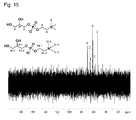
- FIG. 15 is a 13 C-NMR spectrum of the highly-enriched compound shown in FIG. 13 (Example 4);
- FIG. 16 is a APT-NMR spectrum of the highly-enriched compound shown in FIG. 13 (Example 4);
- FIG. 17 is a 2-dimensional COSY-NMR spectrum of the highly-enriched compound shown in FIG. 13 (Example 4);
- FIG. 18 is a 2-dimensional QC correlation of the 1 H-NMR and 13 C-NMR spectra of the highly-enriched compound shown in FIG. 13 (Example 4);
- FIG. 19 is a flow chart showing an exemplary method of the present invention for extraction of glycerophosphorylcholine from thin stillage (Example 5);
- FIG. 20 is a 1 H-NMR spectrum of a solids fraction B produced by an exemplary method of the present invention for recovery of ⁇ -glycerylphosphorylcholine from thin stillage (Example 5);
- FIG. 21 is a 1 H-NMR spectrum of a liquids fraction A produced by an exemplary method of the present invention for recovery of ⁇ -glycerylphosphorylcholine from thin stillage (Example 5);
- FIG. 22 is a 1 H-NMR spectrum of a liquids fraction B produced by an exemplary method of the present invention for recover) of ⁇ -glycerylphosphorylcholine from thin stillage (Example 5);
- FIG. 23 is a 1 H-NMR spectrum of a liquids fraction C produced by an exemplary method of the present invention for recovery of ⁇ -glycerylphosphorylcholine from thin stillage (Example 5);
- FIG. 24 is a flow chart showing an exemplary method of the present invention for extraction of 2-phenethanol from thin stillage (Example 7);
- FIG. 25 is a proton-NMR spectrum showing the presence of 2-phenethanol in dichloromethane extracts prepared from thin stillage (Example 7);
- FIG. 26 is a proton-NMR spectrum showing the presence of 2-phenethanol in dichloromethane extracts prepared from distilled thin stillage (Example 7);
- FIG. 27 is a flow chart showing an exemplary method of the present invention for recovery of 2-phenethanol from thin stillage with canola oil (Example 8);
- FIG. 28 is a proton-NMR spectrum showing the presence of 2-phenethanol in canola oil/IPA extracts prepared from thin stillage (Example 8);
- FIG. 29 is a proton-NMR spectrum showing the presence of 2-phenethanol in canola oil/IPA extracts prepared from distillery residue of thin stillage (Example 8);
- FIG. 30 is a flow chart showing an exemplary method of the present invention for recovery of recyclable water, glycerophosphorylcholine, 2-phenethanol and other fermentation co-products from thin stillage (Example 9);
- FIG. 31 is a 1 H-NMR spectrum of thin stillage prior to processing with an exemplary method of the present invention (Example 9);
- FIG. 32 is a 1 H-NMR spectrum of thin stillage condensate recovered with the method used in FIG. 31 (Example 9);
- FIG. 33 is a 1 H-NMR spectrum of recycled water recovered with the method used in FIG. 31 (Example 9);
- FIG. 34 is a 1 H-NMR spectrum of an enriched 2-phenethanol fraction recovered with the method used in FIG. 31 (Example 9).
- FIG. 35 is a 1 H-NMR spectrum of an enriched ⁇ -glycerylphosphorylcholine residue recovered from thin stillage syrup with the method used in FIG. 31 (Example 9);
- the exemplary embodiments of the present invention generally relate to methods for recovery of recyclable water and fermentation co-products from thin stillage process streams.
- FIG. 1 An exemplary prior art process for production of ethanol from grains and tubers is shown in FIG. 1 .
- a selected high-starch feed stock 10 exemplified by corn, wheat, barley, rye, sorghum, potato, cassava and the like, is ground and/or pulverized 12 to expose and make the starch components more accessible to enzymatic hydrolysis.
- the pulverized feedstock is then suspended in water to which are added suitable enzymes known to those skilled in these arts, for liquifaction and saccharification 14 of the starch moities in the feedstock. It is optional to add water to the liquifaction and saccharification step to facilitate mixing of the suspension during enzymatic hydrolysis to enhance enzyme performance and complete digestion of the feedstock.
- An active culture of a suitable fermentative microorganism is added to the scarified suspension for fermentation 16 of the monosaccharides to produce fermentation beer which comprises short-chain alcohols such as ethanol, butanol and propanol, fermentation co-products comprising solubilized organic compounds produced during fermentation, and “solids” which include un-metabolized starch moieties, non-starch plant debris, and dead microbial cells.
- the fermentation broth also comprises yeast metabolites, monosaccharides, di-saccharides, organic compounds released from plant materials during enzymatic hydrolysis and incompletely digested plant debris. Since it is common for large-scale industrial fermentations to be contaminated by opportunistic bacteria, the fermentation beers produced may also contain bacterial metabolites.
- the fermentation beer is transferred to a distillation apparatus wherein the short-chain alcohol products exemplified bb ethanol 20 are separated and recovered from the beer by distillation 18 .
- the whole stillage 22 process stream is centrifuged to separate a solids fraction 24 which is dried to produce DDG 25 .
- the thin stillage 28 liquids fraction separated by centrifugation may be recycled as backset 30 into the liquifaction and saccharification step 14 and/or the fermentation step 16 .
- the thin stillage 26 may be dried down to remove water thereby producing a syrup 27 which may be commingled with the DDG 25 .
- the thin stillage 28 may be discarded as a waste stream 28 .
- Such fermentation processes are being increasingly used to produce short-chain alcohols that are suitable for use as fuels for internal combustion engines or alternatively, as fuel supplements for petroleum-based fuels.
- the production of fuel alcohols enables the use of selected nitrogen compounds as yeast nutritives that result in the production of certain metabolites that accumulate in the beers, and end up in the thin stillage fractions after distillation of the beer and centrifugation of whole stillage.
- nitrogen compounds are also rapidly utilized by bacterial contaminants and the resulting metabolites also tend to accumulate in thin stillage fractions.
- yeast and bacterial metabolites commonly present as fermentation co-products in thin stillage include 2-phenethanol (PEA), glycerol, isopropanol, acetic acid, lactic acid, and 1,3-propanediol. These organic compounds are concentrated in thin stillage syrups produced b) de-watering.
- Some exemplary embodiments of the present invention relate to methods for separation of yeast-derived and bacterial-derived fermentation co-products from thin stillage Certain exemplary embodiments relate to separation and purification of selected fermentation co-products comprising high-value small-molecule organic compounds.
- the separated organic compounds may be characterized using 1D and 2D nuclear magnetic resonance (NMR) spectroscopy and/or thin-layer chromatography.
- NMR nuclear magnetic resonance
- GPC ⁇ -glycerylphosphorylcholine
- the resulting ester is treated with trimethylamine in an aprotic solvent at about ambient temperature followed by hydrolysis in acid aqueous solution.
- the resulting crude compound is purified by a column of IRC-50 type and crystallized from ethanol.
- Purification of GPC from the above sources typically comprises elution on cationic resins in the H form and in non-aqueous medium and removal of impurities by washing with methanol and then with water.
- the resulting aqueous solution contains a mixture of compounds from which pure GPC is obtained by removing GPE and GPS on strong basic resins in an aqueous medium.
- GPC is a known precursor in the biosynthesis of brain phospholipids.
- GPC is also known to increase the bioavailability of choline in nervous tissue.
- choline alphoscerate different from other cholinergic precursors such as choline or lecithin.
- This compound considered as relatively new cholinergic precursor, a centrally acting parasympathomimetic drug in dementia disorder and in acute cerebrovascular disease.
- the build-up of GPC in the cell has been associated with a number of disease processes including cancer and Alzheimer disease.
- GPC has been implicated in diverse cellular functions such as maintenance of renal osmolarity, inhibition of lysophospholipase activity, and inhibition of phosphatidyl inositol transfer protein alpha.
- GPC is known for its use in moisturizers, emollients, elasticizes, restitutives and the like, nutritive cream, and topical cosmetical or pharmaceutical compositions.
- GPC has very low systemic toxicity as well as a particularly low topical toxicity.
- GPC has been used in drug combinations with an acetylcholinesterase (AChE) inhibitor (such as rivastigmine, donepexil) in the treatment of cognitive disorders specific to adults, including Alzheimer's disease.
- AChE inhibitors such as rivastigmine, donepexil
- This drug combination permits the use of smaller doses of AChE inhibitors resulting in a reduced incidence of side and/or toxic effects typically suffered on long-term treatment with AChE inhibitors
- PC has further been used as an active ingredient in the manufacture of functional foods.
- GPC accumulated as a fermentation co-product in thin stillage process streams. Accordingly, some exemplary embodiments of the present invention relate to methods for recovery of GPC from thin stillage process
- organic chemicals are metabolites produced by yeast cells during fermentation of monosaccharides produced from liquifaction and saccharification of high-starch feedstocks. Such organic chemicals are exemplified by glycerol, 2-phenylethanol, ⁇ -glycerylphosphorylcholine, betaine, ethanol, isopropanol, succinic acid, and 3-hydroxypropanoic acid.
- Some organic chemicals are metabolites produced by bacterial cells that may have contaminated the saccharification and/or fermentation processes. Such organic chemicals are exemplified by acetic acid, lactic acid, betaine, 1,3-propanediol, 3 hydroxypropanal. Certain embodiments pertain to concurrent recovery and separation of multiple organic chemicals from thin stillage process streams.
- Some ethanol production plants recycle a portion of the thin stillage produced in order to conserve water.
- this recycling of thin stillage results in accumulations of incompletely digested plant products, yeast metabolites, bacterial metabolites and solids comprising plant debris and dead microbial cells in the saccharification and fermentation process steps and, in the and has been found to cause a reduction in fermentation activity.
- Several components present in the thin stillage are known to be inhibitory to yeast fermentation, and in some cases may cause fouling and corrosion of heat exchangers and other process equipment present in ethanol production facilities.
- One embodiment of the present invention relates to methods for recovering recyclable water from thin stillage.
- the method relates to the separation of at least one of yeast metabolites, microbial metabolites, and combinations thereof from thin stillage.
- the method relates to the separation of organic compounds that act as fermentation inhibitors from thin stillage.
- the method relates to the separation of compounds that act as rumen microbe inhibitors from thin stillage.
- the method further relates to the recovery of at least one of the yeast metabolites, microbial metabolites, fermentation inhibitors, rumen microbe inhibitors, and combinations thereof.
- Organic compounds in the thin stillage for example microbial metabolites such as acetic, propionic and lactic acids, and yeast metabolites such as PEA that act as fermentation inhibitors are linked to significant decreases in fermentation activity, more specifically in least fermentation activity, and even more specifically in yeast growth rates.
- microbial metabolites such as acetic, propionic and lactic acids
- yeast metabolites such as PEA that act as fermentation inhibitors are linked to significant decreases in fermentation activity, more specifically in least fermentation activity, and even more specifically in yeast growth rates.
- the removal of these compounds that act as fermentation inhibitors prior to the recycling of thin stillage enables more effective and efficient fermentation processes, and more specifically enables more cost effective ethanol fuel production processes.
- separation and further recovery of the yeast metabolites and microbial metabolites present in thin stillage provide for the recovery of valuable compounds that may have significant commercial value. Accordingly, some exemplary embodiments of the present invention relate to separation and recovery of at least one of yeast metabolites and bacterial metabolites from thin stillage.
- yeast metabolites 2-phenylethanol (PEA), ⁇ -glycerylphosphorylcholine (GPC), and glycerol is separated and recovered from thin stillage.
- PDA 2-phenylethanol
- GPC ⁇ -glycerylphosphorylcholine
- glycerol is separated and recovered from thin stillage.
- at least one of bacterial metabolites isopropanol, acetic acid, lactic acid, and 1,3-propanediol is separated and recovered from thin stillage.
- the methods of the present invention generally comprise separation of thin stillage into a thin stillage condensate and a thin stillage syrup. Suitable processes are exemplified by evaporation of water from the thin stillage to produce a syrup, and recovery of the evaporated water by condensation. Alternatively, thin stillage may be centrifuged to decant water from the thin stillage solids which are the dried by sublimation to yield a thin stillage syrup, also referred to as still bottoms. Alternatively, thin stillage may be centrifuged and concentrated into thin stillage syrup under a vacuum by evaporation. The decanted water is condensed and recovered as thin stillage condensates.
- Exemplary methods for separating and recovering organic compounds from tin stillage syrups generally comprise a first step of commingling the thin stillage syrups with a solvent in which GPC is not soluble.
- solvents are exemplified by acetone.
- Acetone-soluble compounds extractable from thin stillage syrup include glycerol, succinic acid, acetic acid, 1,3-propanediol, lactic acid, betaine and the like.
- the acetone-insoluble compounds can be recovered by filtration and drying.
- the acetone comprising dissolved compounds therein can be recovered and the dissolved compounds such as glycerol, succinic acid, acetic acid, 1,3-propanediol, lactic acid, and betaine can be further separated and recovered using processes known to those skilled in these arts.
- the acetone-insoluble compounds e.g., GPC can be separated and purified with polar organic solvents exemplified by methanol and ethanol.
- Certain exemplary embodiments pertain to methods for separating GPC and/or glycerol and/or betaine from the polar organic solvents wherein they were solubilized.
- Exemplary methods for separating and recovering organic compounds from thin stillage condensates generally comprise a first step of commingling the thin stillage condensates with dichloromethane (DCM) to solubilize organic compounds exemplified by PEA.
- DCM dichloromethane
- Recovery of the DCM extracts significantly reduces the levels of organic compounds in water and makes it suitable for recycling.
- the PEA enriched residues are suitable for use in other commercial and industrial applications known to those skilled in these arts.
- PEA may be recovered from thin stillage condensates by commingling with an oil exemplified by canola oil.
- PEA is solubilized into the oil fraction and can be separated from the aqueous phase using phase separation processes known to those skilled in these arts.
- PEA removed in the oil fraction can be extracted by commingling isopropyl alcohol (IPA) with the oil fraction, and then separating the IPA with extracted PEA from the oil.
- IPA isopropyl alcohol
- the PEA-enriched residues are suitable for use in other commercial and industrial applications known to those skilled in these arts.
- the thin stillage was clarified by centrifugation.
- the components of centrifuged thin stillage were determined using proton NMR analysis. Prior to analysis, samples were passed through a 0.45- ⁇ m membrane filter (PTFE membrane filter, Model TF-450, Pall Corporation, Ann Arbor, Mich.). Deuterium oxide and dimethylformamide (DMF) were used as solvent and internal standard, respectively. Since the water peak at around 4.7 ppm was large. NMR proton saturation methods (water suppression) were used to eliminate the water peak (data not shown).
- the organic compounds present in the thin stillage from ethanol production may be concentrated by removing water and concentrating the thin stillage into a thin stillage syrup.
- Analysis of the components of a non-dried thin stillage sample were compared to the components of dried thin stillage samples to determine if the application of a drying process impacted the concentration of various components present within thin stillage. Two drying methods were used, centrifugation and then drying by sublimation to form syrups; and centrifugation and concentration to syrups under vacuum by evaporation. Results from the application of a proton NMR spectra on syrups obtained through both drying methods and a non-dried thin stillage sample were analyzed.
- composition and ratios of compounds present in the dried syrups mixture were very similar to the composition and ratios of compounds present in the non-dried thin stillage samples. Exceptions were evident in the concentration of acetic acid, which decreased significantly during the drying process by either method and in the concentration of lactic acid, which increased in samples dried by vacuum evaporation. Thoroughly-dried thin stillage is about 5% by weight of the original liquid thin stillage material.
- FIG. 9 shows an exemplary process flow chart 30 used for the recovery or organic compounds from thin stillage 32 .
- Thin stillage 32 was dried was dried using methods known in the art to provide a thin stillage syrup 34 .
- a polar water-miscible solvent was added 36 to the thin stillage syrup 34 , and the resulting mixture was separated into a solid fraction 38 and a liquid fraction 40 .
- the solid fraction 38 was subsequently washed 40 using the solvent and the liquid portion of the wash residue was added to the liquid fraction 42 .
- the liquid fraction 42 was then dried to provide a concentrated liquid fraction 44 .
- Each of the concentrated liquid fraction 44 and the solid fraction 38 were analyzed by NMR 46 to identify the various components of each fraction.
- thin stillage (about 174.7 g, wet weight) was freeze-dried to produce a thin stillage syrup (about 8.6 g).
- the resulting thin stillage syrup was mixed with 10 mL methanol by stirring for a period of about one hour.
- a pale yellow solid fraction was separated from the mixture by filtration under vacuum through a Buchner funnel, collected, and rinsed three times with 10 mL of fresh methanol.
- the liquid washing residues were combined with the combined liquid methanol fraction.
- the pooled liquid fraction was evaporated under vacuum yielding a brown liquid fraction.
- Each of the solid and brown liquid fractions were prepared for proton NMR spectra analysis.
- the solid fraction comprised about 2% by total weight of the thin stillage.
- the majority of the solid fraction was composed of sugars and a minor portion of the solid fraction was protein.
- the brown liquid fraction comprised about 3% of the total weight of thin stillage and was composed of a mixture including glycerol, lactic acid, succinic acid, acetic acid, betaine and GPC (data not shown).
- thin stillage (about 561.9 g, wet weight) was evaporated under vacuum at about 70° C. to produce a dried syrup (about 30.4 g) which was subsequently mixed with ethanol at about 65° C. with stirring for a period of about one hour.
- the resulting pale yellow solid fraction was separated from the mixture by filtration under vacuum through a Buchner funnel, collected, and rinsed about three times with ethanol.
- the liquid wash residue was combined with the combined liquid ethanol fraction, and the resulting clear brown ethanol solution was evaporated under vacuum, yielding a brown liquid.
- Both solid and liquid fractions were prepared for 1 H-NMR analysis.
- the solid fraction comprised about 2.6% of total thin stillage weight.
- the major component of the solids fraction was sugars and the minor component was protein.
- the solid fraction contained trace amounts of betaine and GPC.
- the brown liquid fraction comprised about 2.8% of the total weight of thin stillage and was composed of glycerol, lactic acid, succinic acid, acetic acid and betaine
- GPC the component present in thin stillage
- a source of commercially available GPC was used as a control to provide a standard for comparison of the thin stillage fractions identified as GPC.
- a GPC fraction was isolated from thin stillage, for example by silica-gel column using a solvent system comprising 20% methanol in dichloromethane and 100% methanol after acetylating the mixture containing GPC.
- the sample of the mixture was prepared in heavy water (D 2 O) for 1D and 2D NMR analysis, including 1 H, 13 C, COSY, HMQC and APT.
- Thin stillage was lyophilized using methods known in the art. Methanol was then added to the lyophilized thin stillage and the resulting methanol solution was concentrated under a vacuum and loaded onto a thin layer chromatography column (TLC 20-20 cm) to separate the components of the thin stillage mixture. A 30% methanol in dichloromethane solution was used as a developing solvent. The TLC was developed twice in the developing solvent. Five bands, A, B, C, D, E in the order of decreased polarity, were obtained (data not shown). Each band was scraped off the column and placed in sintered glass funnels and subsequently washed with 10 mL of pure methanol. The resulting solutions in each funnel were evaporated under a vacuum and the resulting solids or syrups were prepared for 1 H-NMR analysis.
- band E the least polar compound was identified as pure glycerol. Less polar compounds (bands D and C) were identified as lactic acid. Band B was identified as a mixture containing betaine phosphate, small amounts of lactic acid and trace amount of sugars. 1 H-NMR analysis of the most polar band, band A is shown in FIG. 10 . Band A was identified as a mixture compounds containing primarily GPC.
- Band A was subjected to acylation by the addition of about 0.2 mL of acetic acid anhydride in about 0.6 mL of pyridine. The mixture was allowed to stand at about room temperature for a period of about 16 hours. The mixture was then concentrated under a vacuum to remove any excess pyridine and acetic acid anhydride. The concentrated product was dissolved in deuterated methanol to provide a crude acetylated product that was analyzed by 1 H-NMR. Results are shown in FIG. 11 . The crude acetylated product was dissolved in a solvent of about 20% methanol in dichloromethane (solvent A).
- FIG. 14 (2) 13 C-NMR are shown in FIG. 15 ; (c) APT analysis are shown in FIG. 16 ; (d) 2-dimensional COSY 1 H-NMR- 1 H-NMR correlation is shown in FIG. 17 ; and (e) 2-dimensional QC 1 H-NMR- 13 C-NMR correlation is shown in FIG. 18 ).
- the structure of the fourth fraction 4 was identified as GPC.
- the 13 C-NMR (proton-decoupled) analysis of the fourth fraction provides good agreement with the literature data for GPC in D 2 O.
- FIG. 19 shows an exemplary method 100 for the recovers of GPC from thin stillage 102 .
- Thin stillage 102 was dried using methods known in the art to provide a thin stillage syrup 104 .
- a ketone solvent, in which GPC is not soluble, was added to the thin stillage syrup 106 , and the resulting mixture was separated into a plurality of fractions 10 . These fractions comprised solids and liquids. This process was repeated several times.
- Each of the fractions 108 was then washed with a solvent in which GPC is soluble 110 , and the resulting solvent-fraction mixtures 112 were dried and yielded a plurality of concentrated fractions 114 . These fractions were then subjected to NMR analysis 116 .
- Thin stillage (about 140.5 g, wet weight) was evaporated wider vacuum at a temperature of about 65° C. to yield a concentrated solution (16.5 g in total weight) which contained about 7% (w/w) water based on about a 5% (w/w) dried thin stillage syrup in total wet thin stillage.
- a portion of the concentrated solution (about 3.025 g. containing about 1,260 of dried syrup) was mixed with 10 mL of acetone solvent and the mixture was continuously stirred for about one hour to yield a brown viscous syrup. The resulting brown viscous syrup was separated by filtration wider a vacuum using a Buchner funnel to yield liquid and solid fractions.
- the liquid fraction was rinsed several times with 10 mL of acetone to yield a clear brown acetone solution that was subsequently evaporated under vacuum yielding a brown liquid fraction A (about 0.374 g).
- the solid fraction A was produced from the brown viscous syrup.
- a portion of solid fraction A was mixed with acetone and stirred continuously for a period of about an hour. The mixture was then separated by filtration under vacuum through a Buchner funnel to yield a second liquid fraction B.
- the liquid fraction was rinsed with 10 mL of fresh acetone then evaporated under vacuum to yield a second brown liquid fraction B (about 0.0695 g)
- the remaining portion of dried solid fraction A was mixed with methanol and was continuously stirred for about an hour, and then the mixture was subsequently separated by filtration under vacuum through a Buchner funnel to yield a third liquid fraction C and a second solid fraction B.
- Solid fraction B was rinsed with methanol, and the resulting liquid residue fraction was combined with the liquid methanol fraction and the mixture was evaporated under vacuum to yield a brown liquid fraction C (about 0.5573 g).
- the dried solid B fraction (about 0.2519 g) and liquids (liquids A, B and C) were analyzed with 1 H-NMR as described previously ( FIGS. 20 , 21 , 22 , 23 , respectively).
- the major parts of the solid fraction B may be sugars, whereas the minor components could be protein, based on 1 H-NMR spectra ( FIG. 20 ).
- Liquids A and B ( FIGS. 21 , 22 ) were composed of glycerol, lactic acid, acetic acid and trace amounts of betaine.
- Liquid B contained a lower ratio of betaine phosphate and lactic acid compared to glycerol than the ratio of those same components of liquid A.
- Liquid C produced by methanol extraction after two acetone extractions was composed of a high concentrations of GPC, as well as betaine and lactic acid ( FIG. 23 ).
- the molar ratio of GPC to betaine for Liquid C was about 1.4:1 whereas the molar ratio for thin stillage syrup that was extracted with straight methanol is about 1:1.
- the top layer of the aqueous solution was extracted with second portion of DCM (about 5 mL) using the same procedure.
- the recovery of PEA following the second extraction was about another 10% (about 10 mg) with an additional 1% (about 1 mg) recovered after the third extraction.
- the results show the total recovery of PEA was about 100% from a 1% PEA aqueous solution after three extractions by DCM using a ratio of 2:1 of water:DCM). DCM was used as solvent to extract PEA from thin stillage.
- FIG. 24 shows an exemplary method 120 of the present invention for recovery of PEA from thin stillage process streams.
- a portion of a thin stillage process stream 122 was distilled 123 to provide a thin stillage condensate 124 .
- the condensate 124 was combined with the remaining portion of the thin stillage stream 122 , and then was extracted with DCM 126 .
- the DCM fractions were recovered 128 and dried 130 by solvent removal 132 . The residues were collected and analysed.
- FIG. 27 shows another exemplary method 140 of the present invention for recovery of PEA from thin stillage process streams.
- a portion of a thin stillage process stream 142 was distilled 143 to remove any remaining traces of short-chain alcohols.
- the resulting stillage was separated into a liquid fraction 144 which was combined with the remaining portion of the thin stillage stream 142 .
- the combined thin stillage streams were then commingled with canola oil 146 , allowed to separate into an oil phase and aqueous phase, from which was recovered the oil phase 148 .
- the oil phase was extracted several times with isopropyl alcohol (IPA) 150 .
- Residual canola oil as separated from the IPA extracts 152 after which, the IPA as removed by evaporation in a rotary evaporator 154 .
- the residues ere collected 156 and anal zed with proton-NMR spectroscopy 158 .
- FIG. 30 shows an exemplary method 168 of the present invention for recovery of recyclable water and multiple fermentation co-products from thin stillage process streams.
- a thin stillage process stream 170 is separated by distillation 172 to provide a thin stillage condensate 190 and a thin stillage syrup 174 .
- the thin stillage condensate 190 is extracted with DCM 192 after which, the DCM extracts 196 are separated from the aqueous fraction 194 which comprises recyclable ater 194 .
- the DCM fractions are dried 198 after which the solvent is removed by evaporation 200 thereby producing a PEA-enriched residue fraction 202 that also contains acetic acid.
- the thin stillage syrup 174 is commingled with a solvent in which GPC is not soluble 176 , and the resulting mixture is allowed to separate into fractions 178 .
- the GPC-containing fraction 182 is concentrated and comprises primarily GPC 184 .
- the remaining fractions are collected 186 and dried down thereby producing residues 188 enriched with betaine and lactic acid.
- a thin stillage 172 was analyzed for the presence of fermentation co-products and was determined to comprise glycerol, lactic acid, acetic acid, ethanol, betaine, GPC and PEA ( FIG. 31 ).
- the thin stillage 172 was separated into a thin stillage condensate 190 and a thin stillage syrup 174 .
- the thin stillage condensate 190 was found to comprise glycerol, lactic acid, acetic acid, succinic acid, ethanol, and PEA ( FIG. 32 ).
- the recovered water 194 was found to comprise small amounts of glycerol and lactic acid, and moderate amounts of acetic acids and ethanol ( FIG. 33 ).
Landscapes
- Chemical & Material Sciences (AREA)
- Life Sciences & Earth Sciences (AREA)
- Engineering & Computer Science (AREA)
- Organic Chemistry (AREA)
- Zoology (AREA)
- Health & Medical Sciences (AREA)
- Polymers & Plastics (AREA)
- Wood Science & Technology (AREA)
- Genetics & Genomics (AREA)
- General Health & Medical Sciences (AREA)
- General Engineering & Computer Science (AREA)
- Bioinformatics & Cheminformatics (AREA)
- Biochemistry (AREA)
- Molecular Biology (AREA)
- Botany (AREA)
- Mycology (AREA)
- Physiology (AREA)
- Animal Husbandry (AREA)
- Biotechnology (AREA)
- Food Science & Technology (AREA)
- Preparation Of Compounds By Using Micro-Organisms (AREA)
- Organic Low-Molecular-Weight Compounds And Preparation Thereof (AREA)
Priority Applications (1)
| Application Number | Priority Date | Filing Date | Title |
|---|---|---|---|
| US12/995,660 US8835665B2 (en) | 2008-06-02 | 2009-06-02 | Recovery of multiple compounds and recyclable water from thin stillage |
Applications Claiming Priority (3)
| Application Number | Priority Date | Filing Date | Title |
|---|---|---|---|
| US12905708P | 2008-06-02 | 2008-06-02 | |
| PCT/CA2009/000719 WO2009146526A1 (en) | 2008-06-02 | 2009-06-02 | Recovery of multiple compounds and recyclable water from thin stillage |
| US12/995,660 US8835665B2 (en) | 2008-06-02 | 2009-06-02 | Recovery of multiple compounds and recyclable water from thin stillage |
Publications (2)
| Publication Number | Publication Date |
|---|---|
| US20110130586A1 US20110130586A1 (en) | 2011-06-02 |
| US8835665B2 true US8835665B2 (en) | 2014-09-16 |
Family
ID=41397663
Family Applications (1)
| Application Number | Title | Priority Date | Filing Date |
|---|---|---|---|
| US12/995,660 Active 2030-11-14 US8835665B2 (en) | 2008-06-02 | 2009-06-02 | Recovery of multiple compounds and recyclable water from thin stillage |
Country Status (4)
| Country | Link |
|---|---|
| US (1) | US8835665B2 (de) |
| EP (1) | EP2297291A4 (de) |
| CA (1) | CA2726329A1 (de) |
| WO (1) | WO2009146526A1 (de) |
Cited By (2)
| Publication number | Priority date | Publication date | Assignee | Title |
|---|---|---|---|---|
| US10400201B2 (en) | 2016-08-19 | 2019-09-03 | Kiwi Green Technologies, Llc | Method and structure for comprehensive utilization of co-products of alcohol production from grains |
| US11242544B2 (en) | 2018-07-11 | 2022-02-08 | Wisconsin Alumni Research Foundation | Microbiomes and methods for producing medium-chain fatty acids from organic substrates |
Families Citing this family (4)
| Publication number | Priority date | Publication date | Assignee | Title |
|---|---|---|---|---|
| FR2954350B1 (fr) * | 2009-12-23 | 2012-02-17 | Inst Francais Du Petrole | Procede de production d'alcools et/ou de solvants a partir de pulpes papetieres avec recyclage du vegetal non hydrolyse dans un reacteur de regeneration |
| US8404884B2 (en) * | 2010-03-26 | 2013-03-26 | University Of Saskatchewan | Process for the extraction of macromolecules from a biomass using thin stillage |
| CA2844420A1 (en) | 2011-08-31 | 2013-03-07 | Iogen Energy Corporation | Process for recovering salt during a lignocellulosic conversion process |
| US9752164B2 (en) | 2012-06-15 | 2017-09-05 | Microvi Biotech, Inc. | Enhanced efficiency ethanol and sugar conversion processes |
Citations (19)
| Publication number | Priority date | Publication date | Assignee | Title |
|---|---|---|---|---|
| EP0411780A2 (de) | 1989-07-18 | 1991-02-06 | KAMPEN, Willem Hemmo | Kontinuierliches Verfahren zur Rückgewinnung von Betain |
| US5177009A (en) | 1987-12-22 | 1993-01-05 | Kampen Willem H | Process for manufacturing ethanol and for recovering glycerol, succinic acid, lactic acid, betaine, potassium sulfate, and free flowing distiller's dry grain and solubles or a solid fertilizer therefrom |
| US5250719A (en) | 1989-05-08 | 1993-10-05 | Prime European Therapeuticals S.P.A. | Process for the preparation of L-α-glycerylphosphoryl-choline and of L-α-glycerylphosphorylethanolamine |
| US5250182A (en) | 1992-07-13 | 1993-10-05 | Zenon Environmental Inc. | Membrane-based process for the recovery of lactic acid and glycerol from a "corn thin stillage" stream |
| US5316782A (en) | 1992-10-21 | 1994-05-31 | Brown-Forman Beverage Company | Product and process of making a product flavored using a by-product of alcohol production |
| US5356812A (en) * | 1990-08-10 | 1994-10-18 | Daicel Chemical Industries, Ltd. | Processes for production of optically active 3-phenyl-1,3-propanediol by asymmetric assimilation |
| US5433833A (en) | 1993-05-11 | 1995-07-18 | Italfarmaco Sud S.P.A. | Process for the preparation of glycerophospholipids |
| US5919991A (en) | 1996-07-03 | 1999-07-06 | Subbiah; Ven | Solid phase extraction of phenethyl alcohol |
| US5965780A (en) | 1996-08-01 | 1999-10-12 | Pernod Ricard | Method for extracting 2-phenylethanol |
| US20040082044A1 (en) | 2002-10-28 | 2004-04-29 | John Prevost | Treatment of thin spillage resulting from the production of ethanol from cereal grains |
| US20040115779A1 (en) | 2002-03-19 | 2004-06-17 | Olsen Hans Sejr | Fermentation process |
| US20060006116A1 (en) | 2004-07-09 | 2006-01-12 | Scheimann David W | Method of dewatering thin stillage processing streams |
| US20060041152A1 (en) | 2004-08-17 | 2006-02-23 | Cantrell David F | Method of processing ethanol byproducts and related subsystems |
| US7009076B2 (en) | 2002-06-26 | 2006-03-07 | Finnfeeds Finland Oy | Process for recovering betaine |
| WO2007010892A1 (ja) * | 2005-07-19 | 2007-01-25 | Asahi Kasei Pharma Corporation | 新規なリン脂質加工剤 |
| WO2007056321A1 (en) | 2005-11-08 | 2007-05-18 | Novozymes North America, Inc. | Dewatering whole stillage |
| CA2642838A1 (en) | 2006-02-16 | 2007-08-30 | Gs Industrial Design, Inc. | Method of freeing the bound oil present in whole stillage and thin stillage |
| US7465791B1 (en) * | 2007-05-31 | 2008-12-16 | Lignol Innovations Ltd. | Continuous counter-current organosolv processing of lignocellulosic feedstocks |
| WO2009108748A2 (en) * | 2008-02-27 | 2009-09-03 | Novozymes A/S | Methods for producing 1,3-propanediol |
-
2009
- 2009-06-02 EP EP09756988A patent/EP2297291A4/de not_active Withdrawn
- 2009-06-02 WO PCT/CA2009/000719 patent/WO2009146526A1/en not_active Ceased
- 2009-06-02 CA CA2726329A patent/CA2726329A1/en not_active Abandoned
- 2009-06-02 US US12/995,660 patent/US8835665B2/en active Active
Patent Citations (20)
| Publication number | Priority date | Publication date | Assignee | Title |
|---|---|---|---|---|
| US5177009A (en) | 1987-12-22 | 1993-01-05 | Kampen Willem H | Process for manufacturing ethanol and for recovering glycerol, succinic acid, lactic acid, betaine, potassium sulfate, and free flowing distiller's dry grain and solubles or a solid fertilizer therefrom |
| US5177008A (en) | 1987-12-22 | 1993-01-05 | Kampen Willem H | Process for manufacturing ethanol and for recovering glycerol, succinic acid, lactic acid, betaine, potassium sulfate, and free flowing distiller's dry grain and solubles or a solid fertilizer therefrom |
| US5250719A (en) | 1989-05-08 | 1993-10-05 | Prime European Therapeuticals S.P.A. | Process for the preparation of L-α-glycerylphosphoryl-choline and of L-α-glycerylphosphorylethanolamine |
| EP0411780A2 (de) | 1989-07-18 | 1991-02-06 | KAMPEN, Willem Hemmo | Kontinuierliches Verfahren zur Rückgewinnung von Betain |
| US5356812A (en) * | 1990-08-10 | 1994-10-18 | Daicel Chemical Industries, Ltd. | Processes for production of optically active 3-phenyl-1,3-propanediol by asymmetric assimilation |
| US5250182A (en) | 1992-07-13 | 1993-10-05 | Zenon Environmental Inc. | Membrane-based process for the recovery of lactic acid and glycerol from a "corn thin stillage" stream |
| US5316782A (en) | 1992-10-21 | 1994-05-31 | Brown-Forman Beverage Company | Product and process of making a product flavored using a by-product of alcohol production |
| US5433833A (en) | 1993-05-11 | 1995-07-18 | Italfarmaco Sud S.P.A. | Process for the preparation of glycerophospholipids |
| US5919991A (en) | 1996-07-03 | 1999-07-06 | Subbiah; Ven | Solid phase extraction of phenethyl alcohol |
| US5965780A (en) | 1996-08-01 | 1999-10-12 | Pernod Ricard | Method for extracting 2-phenylethanol |
| US20040115779A1 (en) | 2002-03-19 | 2004-06-17 | Olsen Hans Sejr | Fermentation process |
| US7009076B2 (en) | 2002-06-26 | 2006-03-07 | Finnfeeds Finland Oy | Process for recovering betaine |
| US20040082044A1 (en) | 2002-10-28 | 2004-04-29 | John Prevost | Treatment of thin spillage resulting from the production of ethanol from cereal grains |
| US20060006116A1 (en) | 2004-07-09 | 2006-01-12 | Scheimann David W | Method of dewatering thin stillage processing streams |
| US20060041152A1 (en) | 2004-08-17 | 2006-02-23 | Cantrell David F | Method of processing ethanol byproducts and related subsystems |
| WO2007010892A1 (ja) * | 2005-07-19 | 2007-01-25 | Asahi Kasei Pharma Corporation | 新規なリン脂質加工剤 |
| WO2007056321A1 (en) | 2005-11-08 | 2007-05-18 | Novozymes North America, Inc. | Dewatering whole stillage |
| CA2642838A1 (en) | 2006-02-16 | 2007-08-30 | Gs Industrial Design, Inc. | Method of freeing the bound oil present in whole stillage and thin stillage |
| US7465791B1 (en) * | 2007-05-31 | 2008-12-16 | Lignol Innovations Ltd. | Continuous counter-current organosolv processing of lignocellulosic feedstocks |
| WO2009108748A2 (en) * | 2008-02-27 | 2009-09-03 | Novozymes A/S | Methods for producing 1,3-propanediol |
Non-Patent Citations (2)
| Title |
|---|
| Extended European Search Report of European Patent Application No. 09756988.3 dated Jul. 19, 2012. |
| Kim, Youngmi, et al., "Composition of corn dry-grind ethanol by-products: DDGS, wet cake and thin stillage", Bioresource Technology, Aug. 1, 2008, vol. 99, No. 12, pp. 5165-5176. |
Cited By (3)
| Publication number | Priority date | Publication date | Assignee | Title |
|---|---|---|---|---|
| US10400201B2 (en) | 2016-08-19 | 2019-09-03 | Kiwi Green Technologies, Llc | Method and structure for comprehensive utilization of co-products of alcohol production from grains |
| US11242544B2 (en) | 2018-07-11 | 2022-02-08 | Wisconsin Alumni Research Foundation | Microbiomes and methods for producing medium-chain fatty acids from organic substrates |
| US12305215B2 (en) | 2018-07-11 | 2025-05-20 | Wisconsin Alumni Research Foundation | Microbiomes and methods for producing medium-chain fatty acids from organic substrates |
Also Published As
| Publication number | Publication date |
|---|---|
| EP2297291A1 (de) | 2011-03-23 |
| CA2726329A1 (en) | 2009-12-10 |
| EP2297291A4 (de) | 2012-08-22 |
| US20110130586A1 (en) | 2011-06-02 |
| WO2009146526A1 (en) | 2009-12-10 |
Similar Documents
| Publication | Publication Date | Title |
|---|---|---|
| AU749915B2 (en) | Method for conversion of biomass to chemicals and fuels | |
| George et al. | Analysis of rhamnolipid biosurfactants produced through submerged fermentation using orange fruit peelings as sole carbon source | |
| US8304588B2 (en) | Recovery of higher alcohols from dilute aqueous solutions | |
| US5705618A (en) | Process for extracting lignans from flaxseed | |
| US20110130586A1 (en) | Recovery of multiple compounds and recyclable water from thin stillage | |
| US20090017503A1 (en) | Method and Apparatus for Saccharide Precipitation From Pretreated Lignocellulosic Materials | |
| US20170058300A1 (en) | Methods for the digestion of soluble components isolated from the spent grains of a fermentation process | |
| US10480038B2 (en) | System and method for producing a sugar stream | |
| US20100190973A1 (en) | Single step process for separating biomass components | |
| US20170362618A1 (en) | High solids enzymatic hydrolysis and fermentation of pretreated biomass | |
| US20170327858A1 (en) | Extracts of whole stillage and other biomass and methods thereof | |
| US20130337552A1 (en) | Fermentation apparatus that uses biomass as feedstock | |
| WO2015085012A1 (en) | Methods and systems for production of bioproducts | |
| BR112016012142B1 (pt) | Método de produção de óleo unicelular a partir de materiais lignocelulósicos | |
| CA2825542C (en) | Apparatus for producing saccharide solution that uses biomass as feedstock | |
| Wall et al. | Effect of recycling distillers' solubles on alcohol and feed production from corn fermentation | |
| Cooray | Valorization of brewer's spent grain using fermentation: potential for food sustainability | |
| DE102007033988A1 (de) | Verbesserte Verfahren zur Herstellung von Ethanol, Gluten und Kleie aus Getreide |
Legal Events
| Date | Code | Title | Description |
|---|---|---|---|
| AS | Assignment |
Owner name: UNIVERSITY OF SASKATCHEWAN, CANADA Free format text: ASSIGNMENT OF ASSIGNORS INTEREST;ASSIGNORS:REANEY, MARTIN J.;JIA, YUNHUA;SHEN, JIANHENG;AND OTHERS;REEL/FRAME:026341/0547 Effective date: 20100428 |
|
| STCF | Information on status: patent grant |
Free format text: PATENTED CASE |
|
| MAFP | Maintenance fee payment |
Free format text: PAYMENT OF MAINTENANCE FEE, 4TH YR, SMALL ENTITY (ORIGINAL EVENT CODE: M2551) Year of fee payment: 4 |
|
| FEPP | Fee payment procedure |
Free format text: MAINTENANCE FEE REMINDER MAILED (ORIGINAL EVENT CODE: REM.); ENTITY STATUS OF PATENT OWNER: SMALL ENTITY |
|
| FEPP | Fee payment procedure |
Free format text: 7.5 YR SURCHARGE - LATE PMT W/IN 6 MO, SMALL ENTITY (ORIGINAL EVENT CODE: M2555); ENTITY STATUS OF PATENT OWNER: SMALL ENTITY |
|
| MAFP | Maintenance fee payment |
Free format text: PAYMENT OF MAINTENANCE FEE, 8TH YR, SMALL ENTITY (ORIGINAL EVENT CODE: M2552); ENTITY STATUS OF PATENT OWNER: SMALL ENTITY Year of fee payment: 8 |
|
| MAFP | Maintenance fee payment |
Free format text: PAYMENT OF MAINTENANCE FEE, 12TH YR, SMALL ENTITY (ORIGINAL EVENT CODE: M2553); ENTITY STATUS OF PATENT OWNER: SMALL ENTITY Year of fee payment: 12 |