US8329703B2 - Pyrazole compounds - Google Patents
Pyrazole compounds Download PDFInfo
- Publication number
- US8329703B2 US8329703B2 US11/058,852 US5885205A US8329703B2 US 8329703 B2 US8329703 B2 US 8329703B2 US 5885205 A US5885205 A US 5885205A US 8329703 B2 US8329703 B2 US 8329703B2
- Authority
- US
- United States
- Prior art keywords
- alkyl
- aryl
- cycloalkyl
- heteroaryl
- aralkyl
- Prior art date
- Legal status (The legal status is an assumption and is not a legal conclusion. Google has not performed a legal analysis and makes no representation as to the accuracy of the status listed.)
- Expired - Fee Related, expires
Links
- 0 CC.[2*]N1N=C(cc[5*])C([4*])=C1[3*] Chemical compound CC.[2*]N1N=C(cc[5*])C([4*])=C1[3*] 0.000 description 41
- URLKBWYHVLBVBO-UHFFFAOYSA-N CC1=CC=C(C)C=C1 Chemical compound CC1=CC=C(C)C=C1 URLKBWYHVLBVBO-UHFFFAOYSA-N 0.000 description 35
- BDCFWIDZNLCTMF-UHFFFAOYSA-N CC(C)(O)C1=CC=CC=C1 Chemical compound CC(C)(O)C1=CC=CC=C1 BDCFWIDZNLCTMF-UHFFFAOYSA-N 0.000 description 28
- NPDACUSDTOMAMK-UHFFFAOYSA-N CC1=CC=C(Cl)C=C1 Chemical compound CC1=CC=C(Cl)C=C1 NPDACUSDTOMAMK-UHFFFAOYSA-N 0.000 description 22
- VTBOTOBFGSVRMA-UHFFFAOYSA-N CC1(O)CCCCC1 Chemical compound CC1(O)CCCCC1 VTBOTOBFGSVRMA-UHFFFAOYSA-N 0.000 description 18
- YNQLUTRBYVCPMQ-UHFFFAOYSA-N CCC1=CC=CC=C1 Chemical compound CCC1=CC=CC=C1 YNQLUTRBYVCPMQ-UHFFFAOYSA-N 0.000 description 18
- CHLICZRVGGXEOD-UHFFFAOYSA-N COC1=CC=C(C)C=C1 Chemical compound COC1=CC=C(C)C=C1 CHLICZRVGGXEOD-UHFFFAOYSA-N 0.000 description 18
- ITQTTZVARXURQS-UHFFFAOYSA-N CC1=CN=CC=C1 Chemical compound CC1=CN=CC=C1 ITQTTZVARXURQS-UHFFFAOYSA-N 0.000 description 16
- MMZYCBHLNZVROM-UHFFFAOYSA-N CC1=CC=CC=C1F Chemical compound CC1=CC=CC=C1F MMZYCBHLNZVROM-UHFFFAOYSA-N 0.000 description 15
- YXFVVABEGXRONW-UHFFFAOYSA-N CC1=CC=CC=C1 Chemical compound CC1=CC=CC=C1 YXFVVABEGXRONW-UHFFFAOYSA-N 0.000 description 14
- AEHWKBXBXYNPCX-UHFFFAOYSA-N CCSC1=CC=CC=C1 Chemical compound CCSC1=CC=CC=C1 AEHWKBXBXYNPCX-UHFFFAOYSA-N 0.000 description 14
- CRSOQBOWXPBRES-UHFFFAOYSA-N CC(C)(C)C Chemical compound CC(C)(C)C CRSOQBOWXPBRES-UHFFFAOYSA-N 0.000 description 13
- CTMHWPIWNRWQEG-UHFFFAOYSA-N CC1=CCCCC1 Chemical compound CC1=CCCCC1 CTMHWPIWNRWQEG-UHFFFAOYSA-N 0.000 description 13
- VNXBKJFUJUWOCW-UHFFFAOYSA-N CC1CC1 Chemical compound CC1CC1 VNXBKJFUJUWOCW-UHFFFAOYSA-N 0.000 description 12
- RZXMPPFPUUCRFN-UHFFFAOYSA-N CC1=CC=C(N)C=C1 Chemical compound CC1=CC=C(N)C=C1 RZXMPPFPUUCRFN-UHFFFAOYSA-N 0.000 description 11
- LRLRAYMYEXQKID-UHFFFAOYSA-N CC1=CC=C(C(F)(F)F)C=C1 Chemical compound CC1=CC=C(C(F)(F)F)C=C1 LRLRAYMYEXQKID-UHFFFAOYSA-N 0.000 description 9
- XGRMVENQJLQMLT-UHFFFAOYSA-N CCC(C(=O)OC)C(=O)OC Chemical compound CCC(C(=O)OC)C(=O)OC XGRMVENQJLQMLT-UHFFFAOYSA-N 0.000 description 9
- GNKZMNRKLCTJAY-UHFFFAOYSA-N CC(=O)C1=CC=C(C)C=C1 Chemical compound CC(=O)C1=CC=C(C)C=C1 GNKZMNRKLCTJAY-UHFFFAOYSA-N 0.000 description 8
- VJYXZJGDFJJDGF-UHFFFAOYSA-N CC1=CC=CC(C(F)(F)F)=C1 Chemical compound CC1=CC=CC(C(F)(F)F)=C1 VJYXZJGDFJJDGF-UHFFFAOYSA-N 0.000 description 7
- XQQBUAPQHNYYRS-UHFFFAOYSA-N CC1=CC=CS1 Chemical compound CC1=CC=CS1 XQQBUAPQHNYYRS-UHFFFAOYSA-N 0.000 description 7
- IIEWJVIFRVWJOD-UHFFFAOYSA-N CCC1CCCCC1 Chemical compound CCC1CCCCC1 IIEWJVIFRVWJOD-UHFFFAOYSA-N 0.000 description 7
- OSIGJGFTADMDOB-UHFFFAOYSA-N COC1=CC=CC(C)=C1 Chemical compound COC1=CC=CC(C)=C1 OSIGJGFTADMDOB-UHFFFAOYSA-N 0.000 description 7
- DDAICBTYXRJVOZ-UHFFFAOYSA-N CC.CC.CCC(=O)N1CCC(C2=CC=CC=C2)CC1.CCC(=O)N1CCCC1 Chemical compound CC.CC.CCC(=O)N1CCC(C2=CC=CC=C2)CC1.CCC(=O)N1CCCC1 DDAICBTYXRJVOZ-UHFFFAOYSA-N 0.000 description 6
- LGYIEPRJZUCDAY-UHFFFAOYSA-N CCOC1=C(Cl)C=CC=C1Cl Chemical compound CCOC1=C(Cl)C=CC=C1Cl LGYIEPRJZUCDAY-UHFFFAOYSA-N 0.000 description 6
- FZMPLKVGINKUJZ-UHFFFAOYSA-N CC1=CC=C(F)C(F)=C1 Chemical compound CC1=CC=C(F)C(F)=C1 FZMPLKVGINKUJZ-UHFFFAOYSA-N 0.000 description 5
- WYUIWKFIFOJVKW-UHFFFAOYSA-N CC1=CC(Cl)=C(Cl)C=C1 Chemical compound CC1=CC(Cl)=C(Cl)C=C1 WYUIWKFIFOJVKW-UHFFFAOYSA-N 0.000 description 3
- OSOUNOBYRMOXQQ-UHFFFAOYSA-N CC1=CC(Cl)=CC=C1 Chemical compound CC1=CC(Cl)=CC=C1 OSOUNOBYRMOXQQ-UHFFFAOYSA-N 0.000 description 3
- BTQZKHUEUDPRST-UHFFFAOYSA-N CC1=CC(F)=CC=C1 Chemical compound CC1=CC(F)=CC=C1 BTQZKHUEUDPRST-UHFFFAOYSA-N 0.000 description 3
- HYHGMNNRWDVDMF-UHFFFAOYSA-N CC1=CC=C(C#CC2=CN(C)N=C2C2=CC(C)=CC=C2O)C=C1 Chemical compound CC1=CC=C(C#CC2=CN(C)N=C2C2=CC(C)=CC=C2O)C=C1 HYHGMNNRWDVDMF-UHFFFAOYSA-N 0.000 description 3
- BSKHPKMHTQYZBB-UHFFFAOYSA-N CC1=NC=CC=C1 Chemical compound CC1=NC=CC=C1 BSKHPKMHTQYZBB-UHFFFAOYSA-N 0.000 description 3
- RFSBGIIRKZHQHU-UHFFFAOYSA-N COCC#CC1=CN(C)N=C1C1=C(O)C=C(C)C(Cl)=C1 Chemical compound COCC#CC1=CN(C)N=C1C1=C(O)C=C(C)C(Cl)=C1 RFSBGIIRKZHQHU-UHFFFAOYSA-N 0.000 description 3
- YEWUHOHLKDCNAZ-UHFFFAOYSA-N C=CCNC1=CC=C([N+](=O)[O-])C=C1C1=NN(C)C=C1C#CC(C)(C)C Chemical compound C=CCNC1=CC=C([N+](=O)[O-])C=C1C1=NN(C)C=C1C#CC(C)(C)C YEWUHOHLKDCNAZ-UHFFFAOYSA-N 0.000 description 2
- JBWPMKWFRHCVKP-UHFFFAOYSA-N CC#CC(O)(C(C)C)C(C)C Chemical compound CC#CC(O)(C(C)C)C(C)C JBWPMKWFRHCVKP-UHFFFAOYSA-N 0.000 description 2
- GSFDRMRODJELOZ-UHFFFAOYSA-N CC#CC(O)C(C)CCC Chemical compound CC#CC(O)C(C)CCC GSFDRMRODJELOZ-UHFFFAOYSA-N 0.000 description 2
- QFIGXPMFVPAVTK-UHFFFAOYSA-N CC#CC(O)CC(C)C Chemical compound CC#CC(O)CC(C)C QFIGXPMFVPAVTK-UHFFFAOYSA-N 0.000 description 2
- GLWAHBXMSOEVCP-UHFFFAOYSA-N CC#CC1(O)CCCC1 Chemical compound CC#CC1(O)CCCC1 GLWAHBXMSOEVCP-UHFFFAOYSA-N 0.000 description 2
- UTISCLIDFORRJP-UHFFFAOYSA-N CC#CC1(O)CCCCC1 Chemical compound CC#CC1(O)CCCCC1 UTISCLIDFORRJP-UHFFFAOYSA-N 0.000 description 2
- CLGJQIMOOUFULP-UHFFFAOYSA-N CC#CC1=CC=C(Cl)C=C1 Chemical compound CC#CC1=CC=C(Cl)C=C1 CLGJQIMOOUFULP-UHFFFAOYSA-N 0.000 description 2
- QVJGHZTXDKQLRT-UHFFFAOYSA-N CC#CC1=CC=C(OC)C=C1 Chemical compound CC#CC1=CC=C(OC)C=C1 QVJGHZTXDKQLRT-UHFFFAOYSA-N 0.000 description 2
- QIZPVNNYFKFJAD-UHFFFAOYSA-N CC#CC1=CC=CC=C1Cl Chemical compound CC#CC1=CC=CC=C1Cl QIZPVNNYFKFJAD-UHFFFAOYSA-N 0.000 description 2
- LIWWTIQFDBDUHK-UHFFFAOYSA-N CC#CC1CC1 Chemical compound CC#CC1CC1 LIWWTIQFDBDUHK-UHFFFAOYSA-N 0.000 description 2
- RBDZKGQHNYXKLW-UHFFFAOYSA-N CC(=O)C1=CC=C(N2CCN(C(=O)C3=C(C#CC(C)(C)C)C(C4=C(O)C=CC(Cl)=C4)=NN3C)CC2)C=C1 Chemical compound CC(=O)C1=CC=C(N2CCN(C(=O)C3=C(C#CC(C)(C)C)C(C4=C(O)C=CC(Cl)=C4)=NN3C)CC2)C=C1 RBDZKGQHNYXKLW-UHFFFAOYSA-N 0.000 description 2
- KYWXRBNOYGGPIZ-UHFFFAOYSA-N CC(=O)N1CCOCC1 Chemical compound CC(=O)N1CCOCC1 KYWXRBNOYGGPIZ-UHFFFAOYSA-N 0.000 description 2
- PLBKIHGOKQZSPW-UHFFFAOYSA-N CC.CC#CC.CC#CC#CC.CC1=CC=CC=C1.CN1CCN(C)CC1 Chemical compound CC.CC#CC.CC#CC#CC.CC1=CC=CC=C1.CN1CCN(C)CC1 PLBKIHGOKQZSPW-UHFFFAOYSA-N 0.000 description 2
- KAKOUNRRKSHVJO-UHFFFAOYSA-N CC.CC1=CC=CC=C1 Chemical compound CC.CC1=CC=CC=C1 KAKOUNRRKSHVJO-UHFFFAOYSA-N 0.000 description 2
- AAIJEURQKZASKQ-UHFFFAOYSA-N CC1=CC(C)=C(F)C=C1 Chemical compound CC1=CC(C)=C(F)C=C1 AAIJEURQKZASKQ-UHFFFAOYSA-N 0.000 description 2
- WZTVSUFPEIGNCY-UHFFFAOYSA-N CC1=CC(C2=NN(C)C=C2C#CC(C)(C)C)=C(O)C=C1 Chemical compound CC1=CC(C2=NN(C)C=C2C#CC(C)(C)C)=C(O)C=C1 WZTVSUFPEIGNCY-UHFFFAOYSA-N 0.000 description 2
- UFPSXOBURPRSPP-UHFFFAOYSA-N CC1=CC(C2=NN(C)C=C2C#CC2=CCCCC2)=C(O)C=C1 Chemical compound CC1=CC(C2=NN(C)C=C2C#CC2=CCCCC2)=C(O)C=C1 UFPSXOBURPRSPP-UHFFFAOYSA-N 0.000 description 2
- KZNRNQGTVRTDPN-UHFFFAOYSA-N CC1=CC(Cl)=C(C)C=C1 Chemical compound CC1=CC(Cl)=C(C)C=C1 KZNRNQGTVRTDPN-UHFFFAOYSA-N 0.000 description 2
- RYMMNSVHOKXTNN-UHFFFAOYSA-N CC1=CC(Cl)=CC(Cl)=C1 Chemical compound CC1=CC(Cl)=CC(Cl)=C1 RYMMNSVHOKXTNN-UHFFFAOYSA-N 0.000 description 2
- AZKLWQYJCKDUCM-UHFFFAOYSA-N CC1=CC(O)=C(C2=NN(C)C=C2C#CCCCC#N)C=C1Cl Chemical compound CC1=CC(O)=C(C2=NN(C)C=C2C#CCCCC#N)C=C1Cl AZKLWQYJCKDUCM-UHFFFAOYSA-N 0.000 description 2
- VPOGLNJOYHFDEI-UHFFFAOYSA-N CC1=CC=C(C#CC2=CN(C)N=C2C2=CC(Cl)=CC=C2O)C=C1 Chemical compound CC1=CC=C(C#CC2=CN(C)N=C2C2=CC(Cl)=CC=C2O)C=C1 VPOGLNJOYHFDEI-UHFFFAOYSA-N 0.000 description 2
- LMTXRYHIVCLDHY-UHFFFAOYSA-N CC1=CC=C(C#CC2=CN(C)N=C2C2=CC=CC=C2O)C=C1 Chemical compound CC1=CC=C(C#CC2=CN(C)N=C2C2=CC=CC=C2O)C=C1 LMTXRYHIVCLDHY-UHFFFAOYSA-N 0.000 description 2
- WRWPPGUCZBJXKX-UHFFFAOYSA-N CC1=CC=C(F)C=C1 Chemical compound CC1=CC=C(F)C=C1 WRWPPGUCZBJXKX-UHFFFAOYSA-N 0.000 description 2
- SZQCPPRPWDXLMM-UHFFFAOYSA-N CC1=CN(C)N=C1 Chemical compound CC1=CN(C)N=C1 SZQCPPRPWDXLMM-UHFFFAOYSA-N 0.000 description 2
- LAGWZWJDSQHXQZ-UHFFFAOYSA-N CCC1=CC(Cl)=C(Cl)C=C1 Chemical compound CCC1=CC(Cl)=C(Cl)C=C1 LAGWZWJDSQHXQZ-UHFFFAOYSA-N 0.000 description 2
- HYFLWBNQFMXCPA-UHFFFAOYSA-N CCC1=CC=CC=C1C Chemical compound CCC1=CC=CC=C1C HYFLWBNQFMXCPA-UHFFFAOYSA-N 0.000 description 2
- LMWWLNKVUIHGBR-UHFFFAOYSA-N CCC1=CC=CC=C1F Chemical compound CCC1=CC=CC=C1F LMWWLNKVUIHGBR-UHFFFAOYSA-N 0.000 description 2
- RFFFKMOABOFIDF-UHFFFAOYSA-N CCCCC#N Chemical compound CCCCC#N RFFFKMOABOFIDF-UHFFFAOYSA-N 0.000 description 2
- PDRYZWSWLULFRB-UHFFFAOYSA-N CN1C=C(C#CC(C)(C)C)C(C2=C(NC(=O)COC3=CC=CC=C3)C=CC([N+](=O)[O-])=C2)=N1 Chemical compound CN1C=C(C#CC(C)(C)C)C(C2=C(NC(=O)COC3=CC=CC=C3)C=CC([N+](=O)[O-])=C2)=N1 PDRYZWSWLULFRB-UHFFFAOYSA-N 0.000 description 2
- MLILTNKDWIFMHH-UHFFFAOYSA-N CN1C=C(C#CC(C)(C)C)C(C2=CC(C#CC3=CC=C(Cl)C=C3)=CC=C2O)=N1 Chemical compound CN1C=C(C#CC(C)(C)C)C(C2=CC(C#CC3=CC=C(Cl)C=C3)=CC=C2O)=N1 MLILTNKDWIFMHH-UHFFFAOYSA-N 0.000 description 2
- YQQHWTFEYDRVOM-UHFFFAOYSA-N CN1C=C(C#CC(C)(C)C)C(C2=CC(C#CCC3CCCCC3)=CC=C2O)=N1 Chemical compound CN1C=C(C#CC(C)(C)C)C(C2=CC(C#CCC3CCCCC3)=CC=C2O)=N1 YQQHWTFEYDRVOM-UHFFFAOYSA-N 0.000 description 2
- VKOJLPDIDVSUKJ-UHFFFAOYSA-N CN1C=C(C#CC(C)(C)C)C(C2=CC([N+](=O)[O-])=CC=C2NC(=O)C2=C(F)C=CC(C(F)(F)F)=C2)=N1 Chemical compound CN1C=C(C#CC(C)(C)C)C(C2=CC([N+](=O)[O-])=CC=C2NC(=O)C2=C(F)C=CC(C(F)(F)F)=C2)=N1 VKOJLPDIDVSUKJ-UHFFFAOYSA-N 0.000 description 2
- SBGVTIWIVBFRBR-UHFFFAOYSA-N CN1C=C(C#CC(C)(C)C)C(C2=CC([N+](=O)[O-])=CC=C2NCC(C)(C)CNC2=C(C3=NN(C)C=C3C#CC(C)(C)C)C=C([N+](=O)[O-])C=C2)=N1 Chemical compound CN1C=C(C#CC(C)(C)C)C(C2=CC([N+](=O)[O-])=CC=C2NCC(C)(C)CNC2=C(C3=NN(C)C=C3C#CC(C)(C)C)C=C([N+](=O)[O-])C=C2)=N1 SBGVTIWIVBFRBR-UHFFFAOYSA-N 0.000 description 2
- JEMZZDHORUEQMN-UHFFFAOYSA-N CN1C=C(C#CC(C)(C)C)C(C2=CC([N+](=O)[O-])=CC=C2NCCCNC2=C(C3=NN(C)C=C3C#CC(C)(C)C)C=C([N+](=O)[O-])C=C2)=N1 Chemical compound CN1C=C(C#CC(C)(C)C)C(C2=CC([N+](=O)[O-])=CC=C2NCCCNC2=C(C3=NN(C)C=C3C#CC(C)(C)C)C=C([N+](=O)[O-])C=C2)=N1 JEMZZDHORUEQMN-UHFFFAOYSA-N 0.000 description 2
- PPVTUPTXTYDONU-UHFFFAOYSA-N CN1C=C(C#CC2CC2)C(C2=C(O)C=CC(Br)=C2)=N1 Chemical compound CN1C=C(C#CC2CC2)C(C2=C(O)C=CC(Br)=C2)=N1 PPVTUPTXTYDONU-UHFFFAOYSA-N 0.000 description 2
- KDKCFIOOLIJSOK-UHFFFAOYSA-N CN1C=C(C#CCC2CCCCC2)C(C2=C(O)C=CC=C2)=N1 Chemical compound CN1C=C(C#CCC2CCCCC2)C(C2=C(O)C=CC=C2)=N1 KDKCFIOOLIJSOK-UHFFFAOYSA-N 0.000 description 2
- PLINVNAXBHCXKN-UHFFFAOYSA-N CN1C=C(C2=CC=C(O)C(C3=NN(C)C=C3C#CC(C)(C)C)=C2)C=N1 Chemical compound CN1C=C(C2=CC=C(O)C(C3=NN(C)C=C3C#CC(C)(C)C)=C2)C=N1 PLINVNAXBHCXKN-UHFFFAOYSA-N 0.000 description 2
- RXYPXQSKLGGKOL-UHFFFAOYSA-N CN1CCN(C)CC1 Chemical compound CN1CCN(C)CC1 RXYPXQSKLGGKOL-UHFFFAOYSA-N 0.000 description 2
- NENSIVUZXOVMOZ-UHFFFAOYSA-N COC1=CC(C2=NN(C)C=C2C#CC(C)(C)C)=C(O)C=C1 Chemical compound COC1=CC(C2=NN(C)C=C2C#CC(C)(C)C)=C(O)C=C1 NENSIVUZXOVMOZ-UHFFFAOYSA-N 0.000 description 2
- MOUZGTYMKNOAJI-UHFFFAOYSA-N C[n](cc1C#CCCCC#N)nc1-c(cc(c(C=C)c1)Cl)c1O Chemical compound C[n](cc1C#CCCCC#N)nc1-c(cc(c(C=C)c1)Cl)c1O MOUZGTYMKNOAJI-UHFFFAOYSA-N 0.000 description 2
- XBQYRNRIHZDZPK-UHFFFAOYSA-N Nc(cccc1N)c1O Chemical compound Nc(cccc1N)c1O XBQYRNRIHZDZPK-UHFFFAOYSA-N 0.000 description 2
- IABUZZLGNCZRPT-UHFFFAOYSA-N B.C.CC1=CC=C(S(=O)(=O)OC2=CC=C([N+](=O)[O-])C=C2C2=NN(C)C=C2C#CC(C)(C)C)C=C1.CN.CN.CNC1=C(C2=NN(C)C=C2C#CC(C)(C)C)C=C([N+](=O)[O-])C=C1.CNC1=CC=C([N+](=O)[O-])C=C1C1=NN(C)C=C1C#CC(C)(C)C Chemical compound B.C.CC1=CC=C(S(=O)(=O)OC2=CC=C([N+](=O)[O-])C=C2C2=NN(C)C=C2C#CC(C)(C)C)C=C1.CN.CN.CNC1=C(C2=NN(C)C=C2C#CC(C)(C)C)C=C([N+](=O)[O-])C=C1.CNC1=CC=C([N+](=O)[O-])C=C1C1=NN(C)C=C1C#CC(C)(C)C IABUZZLGNCZRPT-UHFFFAOYSA-N 0.000 description 1
- MGACJAIJLLBKNE-UHFFFAOYSA-N BB(B)B(B)B(B)B.CN1N=CC(C#CC(C)(C)C)=C1C1=CC=CC=C1N.CN1N=CC(C#CC(C)(C)C)=C1C1=CC=CC=C1[N+](=O)[O-] Chemical compound BB(B)B(B)B(B)B.CN1N=CC(C#CC(C)(C)C)=C1C1=CC=CC=C1N.CN1N=CC(C#CC(C)(C)C)=C1C1=CC=CC=C1[N+](=O)[O-] MGACJAIJLLBKNE-UHFFFAOYSA-N 0.000 description 1
- LUZMADZWPTWUPP-UHFFFAOYSA-N C.C.CN1C=C(C#CC(C)(C)C)C(C2=CC=CC=C2[N+](=O)[O-])=N1.CN1C=C(I)C(C2=CC=CC=C2[N+](=O)[O-])=N1.CN1C=CC(C2=CC=CC=C2[N+](=O)[O-])=N1 Chemical compound C.C.CN1C=C(C#CC(C)(C)C)C(C2=CC=CC=C2[N+](=O)[O-])=N1.CN1C=C(I)C(C2=CC=CC=C2[N+](=O)[O-])=N1.CN1C=CC(C2=CC=CC=C2[N+](=O)[O-])=N1 LUZMADZWPTWUPP-UHFFFAOYSA-N 0.000 description 1
- ONKDMZCZICJQFA-UHFFFAOYSA-N C.C.CN1N=CC(C#CC(C)(C)C)=C1C1=CC=CC=C1[N+](=O)[O-].CN1N=CC(I)=C1C1=CC=CC=C1[N+](=O)[O-].CN1N=CC=C1C1=CC=CC=C1[N+](=O)[O-] Chemical compound C.C.CN1N=CC(C#CC(C)(C)C)=C1C1=CC=CC=C1[N+](=O)[O-].CN1N=CC(I)=C1C1=CC=CC=C1[N+](=O)[O-].CN1N=CC=C1C1=CC=CC=C1[N+](=O)[O-] ONKDMZCZICJQFA-UHFFFAOYSA-N 0.000 description 1
- SUHDBBGLKZZOLK-UHFFFAOYSA-N C.C1CCOC1.C=CN1C=CN=C1.CC1=CC=C(S(N)(=O)=O)C=C1.CN1C=CC(C2=CC=CC=C2[N+](=O)[O-])=N1.CN1N=CC=C1C1=CC=CC=C1[N+](=O)[O-].N#N.O=CC1=CC=CC=C1[N+](=O)[O-].O=[N+]([O-])C1=CC=CC=C1C1=NNC=C1 Chemical compound C.C1CCOC1.C=CN1C=CN=C1.CC1=CC=C(S(N)(=O)=O)C=C1.CN1C=CC(C2=CC=CC=C2[N+](=O)[O-])=N1.CN1N=CC=C1C1=CC=CC=C1[N+](=O)[O-].N#N.O=CC1=CC=CC=C1[N+](=O)[O-].O=[N+]([O-])C1=CC=CC=C1C1=NNC=C1 SUHDBBGLKZZOLK-UHFFFAOYSA-N 0.000 description 1
- GOGKMVDOGJGYLV-FNORWQNLSA-N C/C=C/C1=C(C)CCCC1(C)C Chemical compound C/C=C/C1=C(C)CCCC1(C)C GOGKMVDOGJGYLV-FNORWQNLSA-N 0.000 description 1
- DSUMGEAEHAVBJG-UHFFFAOYSA-N C1=CC=C(P(C2=CC=CC=C2)C2=CC=CC=C2)C=C1.C1=CC=C(P(C2=CC=CC=C2)C2=CC=CC=C2)C=C1.C1=CC=C(P(C2=CC=CC=C2)C2=CC=CC=C2)C=C1.C1=CC=C(P(C2=CC=CC=C2)C2=CC=CC=C2)C=C1.C=CCNC1=CC=C([N+](=O)[O-])C=C1C1=NN(C)C=C1C#CC(C)(C)C.CN1C=C(C#CC(C)(C)C)C(C2=CC(N)=CC=C2N)=N1.CN1C=C(C#CC(C)(C)C)C(C2=CC([N+](=O)[O-])=CC=C2N)=N1.[Pd] Chemical compound C1=CC=C(P(C2=CC=CC=C2)C2=CC=CC=C2)C=C1.C1=CC=C(P(C2=CC=CC=C2)C2=CC=CC=C2)C=C1.C1=CC=C(P(C2=CC=CC=C2)C2=CC=CC=C2)C=C1.C1=CC=C(P(C2=CC=CC=C2)C2=CC=CC=C2)C=C1.C=CCNC1=CC=C([N+](=O)[O-])C=C1C1=NN(C)C=C1C#CC(C)(C)C.CN1C=C(C#CC(C)(C)C)C(C2=CC(N)=CC=C2N)=N1.CN1C=C(C#CC(C)(C)C)C(C2=CC([N+](=O)[O-])=CC=C2N)=N1.[Pd] DSUMGEAEHAVBJG-UHFFFAOYSA-N 0.000 description 1
- SFUHUBZMHPBGBW-UHFFFAOYSA-N C=CCNC1=CC=C([N+](=O)[O-])C=C1C1=NN(C)C=C1C#CC(C)(C)C.CN1C=C(C(=O)CC(C)(C)C)C(C2=CC([N+](=O)[O-])=CC=C2O)=N1.CN1C=C2C(CC(C)(C)C)=NC3=CC=C([N+](=O)[O-])C=C3C2=N1 Chemical compound C=CCNC1=CC=C([N+](=O)[O-])C=C1C1=NN(C)C=C1C#CC(C)(C)C.CN1C=C(C(=O)CC(C)(C)C)C(C2=CC([N+](=O)[O-])=CC=C2O)=N1.CN1C=C2C(CC(C)(C)C)=NC3=CC=C([N+](=O)[O-])C=C3C2=N1 SFUHUBZMHPBGBW-UHFFFAOYSA-N 0.000 description 1
- DZOOXMGZVWHNAS-UHFFFAOYSA-N CC#CC(C)=O Chemical compound CC#CC(C)=O DZOOXMGZVWHNAS-UHFFFAOYSA-N 0.000 description 1
- UUZRIAGCTHKQSP-UHFFFAOYSA-N CC#CC(O)C1=CC=CC=C1 Chemical compound CC#CC(O)C1=CC=CC=C1 UUZRIAGCTHKQSP-UHFFFAOYSA-N 0.000 description 1
- AHEOVUWANYQNIZ-UHFFFAOYSA-N CC#CC1(O)C2=CC=CC=C2C2=C\C=C/C=C\21 Chemical compound CC#CC1(O)C2=CC=CC=C2C2=C\C=C/C=C\21 AHEOVUWANYQNIZ-UHFFFAOYSA-N 0.000 description 1
- OLAMMXKLCDFHMR-UHFFFAOYSA-N CC#CC1=CCCCC1 Chemical compound CC#CC1=CCCCC1 OLAMMXKLCDFHMR-UHFFFAOYSA-N 0.000 description 1
- GNPRXXGKEWSOHB-UHFFFAOYSA-N CC#CC1=CN=CC=C1 Chemical compound CC#CC1=CN=CC=C1 GNPRXXGKEWSOHB-UHFFFAOYSA-N 0.000 description 1
- PXKSPZIOORAWIT-UHFFFAOYSA-N CC#CCC1=CC=CC=C1 Chemical compound CC#CCC1=CC=CC=C1 PXKSPZIOORAWIT-UHFFFAOYSA-N 0.000 description 1
- GVBINOUNJSKYPF-UHFFFAOYSA-N CC#CCC1CCCCC1 Chemical compound CC#CCC1CCCCC1 GVBINOUNJSKYPF-UHFFFAOYSA-N 0.000 description 1
- HWIFKHZSFBGZSH-UHFFFAOYSA-N CC#CCSC1=CC=CC=C1 Chemical compound CC#CCSC1=CC=CC=C1 HWIFKHZSFBGZSH-UHFFFAOYSA-N 0.000 description 1
- ZLDDSCHHMXTRHJ-UHFFFAOYSA-N CC(=O)C1=C(C)C=CC(C(F)(F)F)=C1 Chemical compound CC(=O)C1=C(C)C=CC(C(F)(F)F)=C1 ZLDDSCHHMXTRHJ-UHFFFAOYSA-N 0.000 description 1
- OLDXVWXLMGJVPH-UHFFFAOYSA-N CC(=O)C1=C(F)C=C(C(F)(F)F)C=C1 Chemical compound CC(=O)C1=C(F)C=C(C(F)(F)F)C=C1 OLDXVWXLMGJVPH-UHFFFAOYSA-N 0.000 description 1
- PYEGOARCMCIYCW-UHFFFAOYSA-N CC(=O)C1=C(F)C=CC(C(F)(F)F)=C1 Chemical compound CC(=O)C1=C(F)C=CC(C(F)(F)F)=C1 PYEGOARCMCIYCW-UHFFFAOYSA-N 0.000 description 1
- IYMYYQMPOBPRPU-UHFFFAOYSA-N CC(=O)C1=C(F)C=CC=C1C(F)(F)F Chemical compound CC(=O)C1=C(F)C=CC=C1C(F)(F)F IYMYYQMPOBPRPU-UHFFFAOYSA-N 0.000 description 1
- MCYCSIKSZLARBD-UHFFFAOYSA-N CC(=O)C1=CC(C(F)(F)F)=CC(C(F)(F)F)=C1 Chemical compound CC(=O)C1=CC(C(F)(F)F)=CC(C(F)(F)F)=C1 MCYCSIKSZLARBD-UHFFFAOYSA-N 0.000 description 1
- BDIYAWLPLVWTJY-UHFFFAOYSA-N CC(=O)C1=CC(F)=CC(C(F)(F)F)=C1 Chemical compound CC(=O)C1=CC(F)=CC(C(F)(F)F)=C1 BDIYAWLPLVWTJY-UHFFFAOYSA-N 0.000 description 1
- UJKLOPRIBGOVFO-BYCLXTJYSA-N CC(=O)C1=CC=C(/C(C2=CC=C(C)C=C2)=C2/OC3=CC=C(C)C=C3C3=NN(C)C=C32)C=C1 Chemical compound CC(=O)C1=CC=C(/C(C2=CC=C(C)C=C2)=C2/OC3=CC=C(C)C=C3C3=NN(C)C=C32)C=C1 UJKLOPRIBGOVFO-BYCLXTJYSA-N 0.000 description 1
- QQRYLSSAWZMMCF-IMVLJIQESA-N CC(=O)C1=CC=C(/C(C2=CC=C(C)C=C2)=C2/OC3=CC=C(Cl)C=C3C3=NN(C)C=C32)C=C1 Chemical compound CC(=O)C1=CC=C(/C(C2=CC=C(C)C=C2)=C2/OC3=CC=C(Cl)C=C3C3=NN(C)C=C32)C=C1 QQRYLSSAWZMMCF-IMVLJIQESA-N 0.000 description 1
- BLKWPYNFKPFFCK-IMVLJIQESA-N CC(=O)C1=CC=C(/C(C2=CC=C(C)C=C2)=C2/OC3=CC=C([N+](=O)[O-])C=C3C3=NN(C)C=C32)C=C1 Chemical compound CC(=O)C1=CC=C(/C(C2=CC=C(C)C=C2)=C2/OC3=CC=C([N+](=O)[O-])C=C3C3=NN(C)C=C32)C=C1 BLKWPYNFKPFFCK-IMVLJIQESA-N 0.000 description 1
- FWYIGXNUOMDYTM-IMVLJIQESA-N CC(=O)C1=CC=C(/C(C2=CC=C(C)C=C2)=C2/OC3=CC=CC=C3C3=NN(C)C=C32)C=C1 Chemical compound CC(=O)C1=CC=C(/C(C2=CC=C(C)C=C2)=C2/OC3=CC=CC=C3C3=NN(C)C=C32)C=C1 FWYIGXNUOMDYTM-IMVLJIQESA-N 0.000 description 1
- XKTHOJPZFALKAW-LCUIJRPUSA-N CC(=O)C1=CC=C(/C(C2=CC=C(Cl)C=C2)=C2/OC3=CC=CC=C3C3=NN(C)C=C32)C=C1 Chemical compound CC(=O)C1=CC=C(/C(C2=CC=C(Cl)C=C2)=C2/OC3=CC=CC=C3C3=NN(C)C=C32)C=C1 XKTHOJPZFALKAW-LCUIJRPUSA-N 0.000 description 1
- SKBBQSLSGRSQAJ-UHFFFAOYSA-N CC(=O)C1=CC=C(C(C)=O)C=C1 Chemical compound CC(=O)C1=CC=C(C(C)=O)C=C1 SKBBQSLSGRSQAJ-UHFFFAOYSA-N 0.000 description 1
- NXQBONPKAOTSNA-UHFFFAOYSA-N CC(=O)C1=CC=C(C(F)(F)F)C(F)=C1 Chemical compound CC(=O)C1=CC=C(C(F)(F)F)C(F)=C1 NXQBONPKAOTSNA-UHFFFAOYSA-N 0.000 description 1
- SBCFGFDAZCTSRH-UHFFFAOYSA-N CC(=O)C1=CC=CC(C#N)=C1 Chemical compound CC(=O)C1=CC=CC(C#N)=C1 SBCFGFDAZCTSRH-UHFFFAOYSA-N 0.000 description 1
- ABXGMGUHGLQMAW-UHFFFAOYSA-N CC(=O)C1=CC=CC(C(F)(F)F)=C1 Chemical compound CC(=O)C1=CC=CC(C(F)(F)F)=C1 ABXGMGUHGLQMAW-UHFFFAOYSA-N 0.000 description 1
- LJCNLAUPUYILQZ-UHFFFAOYSA-N CC(=O)C1=CC=CC(C(F)(F)F)=C1F Chemical compound CC(=O)C1=CC=CC(C(F)(F)F)=C1F LJCNLAUPUYILQZ-UHFFFAOYSA-N 0.000 description 1
- UUWJBXKHMMQDED-UHFFFAOYSA-N CC(=O)C1=CC=CC(Cl)=C1.O Chemical compound CC(=O)C1=CC=CC(Cl)=C1.O UUWJBXKHMMQDED-UHFFFAOYSA-N 0.000 description 1
- KWOLFJPFCHCOCG-UHFFFAOYSA-N CC(=O)C1=CC=CC=C1 Chemical compound CC(=O)C1=CC=CC=C1 KWOLFJPFCHCOCG-UHFFFAOYSA-N 0.000 description 1
- FYDUUODXZQITBF-UHFFFAOYSA-N CC(=O)C1=CC=CC=C1C(F)(F)F Chemical compound CC(=O)C1=CC=CC=C1C(F)(F)F FYDUUODXZQITBF-UHFFFAOYSA-N 0.000 description 1
- KDISMIMTGUMORD-UHFFFAOYSA-N CC(=O)N1CCCCC1 Chemical compound CC(=O)N1CCCCC1 KDISMIMTGUMORD-UHFFFAOYSA-N 0.000 description 1
- KNVQTRVKSOEHPU-UHFFFAOYSA-N CC(=O)NC1=C(Cl)C=CC=C1 Chemical compound CC(=O)NC1=C(Cl)C=CC=C1 KNVQTRVKSOEHPU-UHFFFAOYSA-N 0.000 description 1
- SCYGGCAQZFJGRF-UHFFFAOYSA-N CC(=O)NC1=CC(Cl)=C(Cl)C=C1 Chemical compound CC(=O)NC1=CC(Cl)=C(Cl)C=C1 SCYGGCAQZFJGRF-UHFFFAOYSA-N 0.000 description 1
- MUUQHCOAOLLHIL-UHFFFAOYSA-N CC(=O)NC1=CC(Cl)=CC=C1 Chemical compound CC(=O)NC1=CC(Cl)=CC=C1 MUUQHCOAOLLHIL-UHFFFAOYSA-N 0.000 description 1
- WRAGCBBWIYQMRF-UHFFFAOYSA-N CC(=O)NC1CCCCC1 Chemical compound CC(=O)NC1CCCCC1 WRAGCBBWIYQMRF-UHFFFAOYSA-N 0.000 description 1
- XDUZQDDGQDHVGC-UHFFFAOYSA-N CC(C)(C)C#Cc1c(-c2ccccc2N)[n](C)nc1 Chemical compound CC(C)(C)C#Cc1c(-c2ccccc2N)[n](C)nc1 XDUZQDDGQDHVGC-UHFFFAOYSA-N 0.000 description 1
- QGRWYOXDDLEHDO-UHFFFAOYSA-N CC(C)(C)C#Cc1c(-c2ccccc2[N+]([O-])=O)[n](C)nc1 Chemical compound CC(C)(C)C#Cc1c(-c2ccccc2[N+]([O-])=O)[n](C)nc1 QGRWYOXDDLEHDO-UHFFFAOYSA-N 0.000 description 1
- RVRPSYRUXKDSPG-UHFFFAOYSA-N CC(C)(C)C#Cc1c[n](C)nc1-c(cc(cc1)[N+]([O-])=O)c1NS(c1ccccc1)(=O)=O Chemical compound CC(C)(C)C#Cc1c[n](C)nc1-c(cc(cc1)[N+]([O-])=O)c1NS(c1ccccc1)(=O)=O RVRPSYRUXKDSPG-UHFFFAOYSA-N 0.000 description 1
- RTAOFYZFOWSHMB-UHFFFAOYSA-N CC(C)(C)C#Cc1c[n](C)nc1-c1cc([N+]([O-])=O)ccc1N Chemical compound CC(C)(C)C#Cc1c[n](C)nc1-c1cc([N+]([O-])=O)ccc1N RTAOFYZFOWSHMB-UHFFFAOYSA-N 0.000 description 1
- WAGFIEKBFAWCIO-UHFFFAOYSA-N CC(NC1=C(C2=NN(C)C=C2C#CC(C)(C)C)C=C([N+](=O)[O-])C=C1)C1=CC=CC=C1 Chemical compound CC(NC1=C(C2=NN(C)C=C2C#CC(C)(C)C)C=C([N+](=O)[O-])C=C1)C1=CC=CC=C1 WAGFIEKBFAWCIO-UHFFFAOYSA-N 0.000 description 1
- QPUYECUOLPXSFR-UHFFFAOYSA-N CC1=C2C=CC=CC2=CC=C1 Chemical compound CC1=C2C=CC=CC2=CC=C1 QPUYECUOLPXSFR-UHFFFAOYSA-N 0.000 description 1
- XLTFRTTTZWMJJQ-UHFFFAOYSA-N CC1=C2OC3=CC=CC=C3C2=CC=C1 Chemical compound CC1=C2OC3=CC=CC=C3C2=CC=C1 XLTFRTTTZWMJJQ-UHFFFAOYSA-N 0.000 description 1
- LEIKPMFRIYWHKW-UHFFFAOYSA-N CC1=C2SC3=C(C=CC=C3)SC2=CC=C1 Chemical compound CC1=C2SC3=C(C=CC=C3)SC2=CC=C1 LEIKPMFRIYWHKW-UHFFFAOYSA-N 0.000 description 1
- BCVSJTYOIRUCFC-UHFFFAOYSA-N CC1=CC(C)=CC(CN(CC2=CC(C)=CC(C)=C2)C2=CC=C([N+](=O)[O-])C=C2C2=NN(C)C=C2C#CC(C)(C)C)=C1 Chemical compound CC1=CC(C)=CC(CN(CC2=CC(C)=CC(C)=C2)C2=CC=C([N+](=O)[O-])C=C2C2=NN(C)C=C2C#CC(C)(C)C)=C1 BCVSJTYOIRUCFC-UHFFFAOYSA-N 0.000 description 1
- DBXBZEOMDUOKQO-UHFFFAOYSA-N CC1=CC(C)=CC(CNC2=CC=C([N+](=O)[O-])C=C2C2=NN(C)C=C2C#CC(C)(C)C)=C1 Chemical compound CC1=CC(C)=CC(CNC2=CC=C([N+](=O)[O-])C=C2C2=NN(C)C=C2C#CC(C)(C)C)=C1 DBXBZEOMDUOKQO-UHFFFAOYSA-N 0.000 description 1
- XGCYAZNHVDFESX-UHFFFAOYSA-N CC1=CC(C2=NN(C)C=C2C#CC2=CC=C(N)C=C2)=C(O)C=C1 Chemical compound CC1=CC(C2=NN(C)C=C2C#CC2=CC=C(N)C=C2)=C(O)C=C1 XGCYAZNHVDFESX-UHFFFAOYSA-N 0.000 description 1
- RHLAJEKVHZLEFY-UHFFFAOYSA-N CC1=CC(Cl)=C(F)C=C1F Chemical compound CC1=CC(Cl)=C(F)C=C1F RHLAJEKVHZLEFY-UHFFFAOYSA-N 0.000 description 1
- JOXXHDGUTVUBDL-UHFFFAOYSA-N CC1=CC(Cl)=CC=C1F Chemical compound CC1=CC(Cl)=CC=C1F JOXXHDGUTVUBDL-UHFFFAOYSA-N 0.000 description 1
- YISYUYYETHYYMD-UHFFFAOYSA-N CC1=CC(F)=CC(F)=C1 Chemical compound CC1=CC(F)=CC(F)=C1 YISYUYYETHYYMD-UHFFFAOYSA-N 0.000 description 1
- YSNVKDGEALPJGC-UHFFFAOYSA-N CC1=CC(F)=CC=C1F Chemical compound CC1=CC(F)=CC=C1F YSNVKDGEALPJGC-UHFFFAOYSA-N 0.000 description 1
- GPIJERBCWQPBMB-UHFFFAOYSA-N CC1=CC(O)=C(C2=NN(C)C=C2C#CCCCCC#CC2=CN(C)N=C2C2=CC(Cl)=C(C)C=C2O)C=C1Cl Chemical compound CC1=CC(O)=C(C2=NN(C)C=C2C#CCCCCC#CC2=CN(C)N=C2C2=CC(Cl)=C(C)C=C2O)C=C1Cl GPIJERBCWQPBMB-UHFFFAOYSA-N 0.000 description 1
- RLSSMJSEOOYNOY-UHFFFAOYSA-N CC1=CC(O)=CC=C1 Chemical compound CC1=CC(O)=CC=C1 RLSSMJSEOOYNOY-UHFFFAOYSA-N 0.000 description 1
- QIMMUPPBPVKWKM-UHFFFAOYSA-N CC1=CC2=C(C=CC=C2)C=C1 Chemical compound CC1=CC2=C(C=CC=C2)C=C1 QIMMUPPBPVKWKM-UHFFFAOYSA-N 0.000 description 1
- BLZKSRBAQDZAIX-UHFFFAOYSA-N CC1=CC2=CC=CC=C2S1 Chemical compound CC1=CC2=CC=CC=C2S1 BLZKSRBAQDZAIX-UHFFFAOYSA-N 0.000 description 1
- VVXCLZYVVDRWOS-WJTDDFOZSA-N CC1=CC=C(/C(C2=CC(Cl)=CC=C2)=C2\OC3=CC=CC=C3C3=NN(C)C=C32)C=C1 Chemical compound CC1=CC=C(/C(C2=CC(Cl)=CC=C2)=C2\OC3=CC=CC=C3C3=NN(C)C=C32)C=C1 VVXCLZYVVDRWOS-WJTDDFOZSA-N 0.000 description 1
- RBAGLDQIHGTEBH-WJTDDFOZSA-N CC1=CC=C(/C(C2=CC(F)=C(F)C=C2)=C2\OC3=CC=CC=C3C3=NN(C)C=C32)C=C1 Chemical compound CC1=CC=C(/C(C2=CC(F)=C(F)C=C2)=C2\OC3=CC=CC=C3C3=NN(C)C=C32)C=C1 RBAGLDQIHGTEBH-WJTDDFOZSA-N 0.000 description 1
- XWTLEDMDEIDQHM-WJTDDFOZSA-N CC1=CC=C(/C(C2=CC=C(C(F)(F)F)C=C2)=C2\OC3=CC=CC=C3C3=NN(C)C=C32)C=C1 Chemical compound CC1=CC=C(/C(C2=CC=C(C(F)(F)F)C=C2)=C2\OC3=CC=CC=C3C3=NN(C)C=C32)C=C1 XWTLEDMDEIDQHM-WJTDDFOZSA-N 0.000 description 1
- DHBNXTZZOMZJOE-UHFFFAOYSA-N CC1=CC=C(C#CC2=CN(C)N=C2C2=C(O)C=C(C)C(Cl)=C2)C=C1 Chemical compound CC1=CC=C(C#CC2=CN(C)N=C2C2=C(O)C=C(C)C(Cl)=C2)C=C1 DHBNXTZZOMZJOE-UHFFFAOYSA-N 0.000 description 1
- RRJJPTUPIYWJKU-UHFFFAOYSA-N CC1=CC=C(C#CC2=CN(C)N=C2C2=CC([N+](=O)[O-])=CC=C2O)C=C1 Chemical compound CC1=CC=C(C#CC2=CN(C)N=C2C2=CC([N+](=O)[O-])=CC=C2O)C=C1 RRJJPTUPIYWJKU-UHFFFAOYSA-N 0.000 description 1
- CQSJKQJKISFSJQ-UHFFFAOYSA-N CC1=CC=C(C#CC2=CN(CC3=CC=CC=C3)N=C2C2=CC=CC=C2O)C=C1 Chemical compound CC1=CC=C(C#CC2=CN(CC3=CC=CC=C3)N=C2C2=CC=CC=C2O)C=C1 CQSJKQJKISFSJQ-UHFFFAOYSA-N 0.000 description 1
- JUWNXGFGZNFJQW-UHFFFAOYSA-N CC1=CC=C(C#CC2=CN(CCO)N=C2C2=CC=CC=C2O)C=C1 Chemical compound CC1=CC=C(C#CC2=CN(CCO)N=C2C2=CC=CC=C2O)C=C1 JUWNXGFGZNFJQW-UHFFFAOYSA-N 0.000 description 1
- WWAFPFFNSXIQFQ-UHFFFAOYSA-N CC1=CC=C(C(C2=CC=C(C)C=C2)=C2OC3=CC=CC=C3C3=NN(C)C=C32)C=C1 Chemical compound CC1=CC=C(C(C2=CC=C(C)C=C2)=C2OC3=CC=CC=C3C3=NN(C)C=C32)C=C1 WWAFPFFNSXIQFQ-UHFFFAOYSA-N 0.000 description 1
- SLQAQFJSTNASJQ-UHFFFAOYSA-N CC1=CC=C(CNC2=CC=C([N+](=O)[O-])C=C2C2=NN(C)C=C2C#CC(C)(C)C)C=C1 Chemical compound CC1=CC=C(CNC2=CC=C([N+](=O)[O-])C=C2C2=NN(C)C=C2C#CC(C)(C)C)C=C1 SLQAQFJSTNASJQ-UHFFFAOYSA-N 0.000 description 1
- IWDCLRJOBJJRNH-UHFFFAOYSA-N CC1=CC=C(O)C=C1 Chemical compound CC1=CC=C(O)C=C1 IWDCLRJOBJJRNH-UHFFFAOYSA-N 0.000 description 1
- WCYQQDFPSCCLSN-UHFFFAOYSA-N CC1=CC=C(S(=O)(=O)OC2=CC=C([N+](=O)[O-])C=C2C2=NN(C)C=C2C#CC(C)(C)C)C=C1.CC1=CC=C([N+](=O)[O-])C=C1C1=NN(C)C=C1C#CC(C)(C)C Chemical compound CC1=CC=C(S(=O)(=O)OC2=CC=C([N+](=O)[O-])C=C2C2=NN(C)C=C2C#CC(C)(C)C)C=C1.CC1=CC=C([N+](=O)[O-])C=C1C1=NN(C)C=C1C#CC(C)(C)C WCYQQDFPSCCLSN-UHFFFAOYSA-N 0.000 description 1
- GHPODDMCSOYWNE-UHFFFAOYSA-N CC1=CC=C2OCOC2=C1 Chemical compound CC1=CC=C2OCOC2=C1 GHPODDMCSOYWNE-UHFFFAOYSA-N 0.000 description 1
- BOHCMQZJWOGWTA-UHFFFAOYSA-N CC1=CC=CC(C#N)=C1 Chemical compound CC1=CC=CC(C#N)=C1 BOHCMQZJWOGWTA-UHFFFAOYSA-N 0.000 description 1
- IVSZLXZYQVIEFR-UHFFFAOYSA-N CC1=CC=CC(C)=C1 Chemical compound CC1=CC=CC(C)=C1 IVSZLXZYQVIEFR-UHFFFAOYSA-N 0.000 description 1
- OVWYEQOVUDKZNU-UHFFFAOYSA-N CC1=CC=CC(C=O)=C1 Chemical compound CC1=CC=CC(C=O)=C1 OVWYEQOVUDKZNU-UHFFFAOYSA-N 0.000 description 1
- ZNEHIDGAPGVZSA-UHFFFAOYSA-N CC1=CC=CC(F)=C1F Chemical compound CC1=CC=CC(F)=C1F ZNEHIDGAPGVZSA-UHFFFAOYSA-N 0.000 description 1
- JJYPMNFTHPTTDI-UHFFFAOYSA-N CC1=CC=CC(N)=C1 Chemical compound CC1=CC=CC(N)=C1 JJYPMNFTHPTTDI-UHFFFAOYSA-N 0.000 description 1
- CTQNGGLPUBDAKN-UHFFFAOYSA-N CC1=CC=CC=C1C Chemical compound CC1=CC=CC=C1C CTQNGGLPUBDAKN-UHFFFAOYSA-N 0.000 description 1
- IBSQPLPBRSHTTG-UHFFFAOYSA-N CC1=CC=CC=C1Cl Chemical compound CC1=CC=CC=C1Cl IBSQPLPBRSHTTG-UHFFFAOYSA-N 0.000 description 1
- OOANNWPEHWZSDZ-UHFFFAOYSA-N CC1=CC=CC=C1S(=O)(=O)NC(C)(C)C Chemical compound CC1=CC=CC=C1S(=O)(=O)NC(C)(C)C OOANNWPEHWZSDZ-UHFFFAOYSA-N 0.000 description 1
- IWENMMUGBHGGDI-UHFFFAOYSA-N CC1=CC=NC(F)=C1F Chemical compound CC1=CC=NC(F)=C1F IWENMMUGBHGGDI-UHFFFAOYSA-N 0.000 description 1
- VXLYOURCUVQYLN-UHFFFAOYSA-N CC1=CN=C(Cl)C=C1 Chemical compound CC1=CN=C(Cl)C=C1 VXLYOURCUVQYLN-UHFFFAOYSA-N 0.000 description 1
- DUUIILVZSQCYAJ-UHFFFAOYSA-N CC1=CN=C(NC2=C(C3=NN(C)C=C3C#CC(C)(C)C)C=C([N+](=O)[O-])C=C2)S1 Chemical compound CC1=CN=C(NC2=C(C3=NN(C)C=C3C#CC(C)(C)C)C=C([N+](=O)[O-])C=C2)S1 DUUIILVZSQCYAJ-UHFFFAOYSA-N 0.000 description 1
- MJIZEJCLXHFZHD-UHFFFAOYSA-N CC=NNC(=O)C1=CC=CC=C1 Chemical compound CC=NNC(=O)C1=CC=CC=C1 MJIZEJCLXHFZHD-UHFFFAOYSA-N 0.000 description 1
- NBOXZRBYWXQDLY-UHFFFAOYSA-N CCC1=C(F)C(F)=C(F)C(F)=C1F Chemical compound CCC1=C(F)C(F)=C(F)C(F)=C1F NBOXZRBYWXQDLY-UHFFFAOYSA-N 0.000 description 1
- SLBRVTYGFQJTND-UHFFFAOYSA-N CCC1=C(F)C(F)=CC(F)=C1F Chemical compound CCC1=C(F)C(F)=CC(F)=C1F SLBRVTYGFQJTND-UHFFFAOYSA-N 0.000 description 1
- WEDBHNMGFLTQNC-UHFFFAOYSA-N CCC1=CC(C#N)=CC=C1 Chemical compound CCC1=CC(C#N)=CC=C1 WEDBHNMGFLTQNC-UHFFFAOYSA-N 0.000 description 1
- CKQINTYJQOUAOQ-UHFFFAOYSA-N CCC1=CC(C(F)(F)F)=CC=C1 Chemical compound CCC1=CC(C(F)(F)F)=CC=C1 CKQINTYJQOUAOQ-UHFFFAOYSA-N 0.000 description 1
- LMAUULKNZLEMGN-UHFFFAOYSA-N CCC1=CC(C)=CC(C)=C1 Chemical compound CCC1=CC(C)=CC(C)=C1 LMAUULKNZLEMGN-UHFFFAOYSA-N 0.000 description 1
- ZLCSFXXPPANWQY-UHFFFAOYSA-N CCC1=CC(C)=CC=C1 Chemical compound CCC1=CC(C)=CC=C1 ZLCSFXXPPANWQY-UHFFFAOYSA-N 0.000 description 1
- DPCQFBWPRXQASW-UHFFFAOYSA-N CCC1=CC(Cl)=CC(Cl)=C1 Chemical compound CCC1=CC(Cl)=CC(Cl)=C1 DPCQFBWPRXQASW-UHFFFAOYSA-N 0.000 description 1
- LOXUEGMPESDGBQ-UHFFFAOYSA-N CCC1=CC(Cl)=CC=C1 Chemical compound CCC1=CC(Cl)=CC=C1 LOXUEGMPESDGBQ-UHFFFAOYSA-N 0.000 description 1
- PFINYKRPUJCMCT-UHFFFAOYSA-N CCC1=CC(F)=CC(F)=C1 Chemical compound CCC1=CC(F)=CC(F)=C1 PFINYKRPUJCMCT-UHFFFAOYSA-N 0.000 description 1
- SMWZLURIVGDUAU-UHFFFAOYSA-N CCC1=CC(F)=CC=C1F Chemical compound CCC1=CC(F)=CC=C1F SMWZLURIVGDUAU-UHFFFAOYSA-N 0.000 description 1
- RXAKLPGKSXJZEF-UHFFFAOYSA-N CCC1=CC([N+](=O)[O-])=CC=C1 Chemical compound CCC1=CC([N+](=O)[O-])=CC=C1 RXAKLPGKSXJZEF-UHFFFAOYSA-N 0.000 description 1
- SXFFMFAQNAFSLF-UHFFFAOYSA-N CCC1=CC=C(C#N)C=C1 Chemical compound CCC1=CC=C(C#N)C=C1 SXFFMFAQNAFSLF-UHFFFAOYSA-N 0.000 description 1
- CAABRJFUDNBRJZ-UHFFFAOYSA-N CCC1=CC=C(C(=O)OC)C=C1 Chemical compound CCC1=CC=C(C(=O)OC)C=C1 CAABRJFUDNBRJZ-UHFFFAOYSA-N 0.000 description 1
- OYBFKZHDPTTWGE-UHFFFAOYSA-N CCC1=CC=C(C(C)(C)C)C=C1 Chemical compound CCC1=CC=C(C(C)(C)C)C=C1 OYBFKZHDPTTWGE-UHFFFAOYSA-N 0.000 description 1
- JRLPEMVDPFPYPJ-UHFFFAOYSA-N CCC1=CC=C(C)C=C1 Chemical compound CCC1=CC=C(C)C=C1 JRLPEMVDPFPYPJ-UHFFFAOYSA-N 0.000 description 1
- BLDNWXVISIXWKZ-UHFFFAOYSA-N CCC1=CC=C(F)C=C1 Chemical compound CCC1=CC=C(F)C=C1 BLDNWXVISIXWKZ-UHFFFAOYSA-N 0.000 description 1
- NIHOFUPGUVQJBQ-UHFFFAOYSA-N CCC1=CC=C(F)C=C1Cl Chemical compound CCC1=CC=C(F)C=C1Cl NIHOFUPGUVQJBQ-UHFFFAOYSA-N 0.000 description 1
- XVCMGQVQWZFHDZ-UHFFFAOYSA-N CCC1=CC=C(OC(F)(F)F)C=C1 Chemical compound CCC1=CC=C(OC(F)(F)F)C=C1 XVCMGQVQWZFHDZ-UHFFFAOYSA-N 0.000 description 1
- GEWYYMIVTBJEPG-UHFFFAOYSA-N CCC1=CC=CC(F)=C1F Chemical compound CCC1=CC=CC(F)=C1F GEWYYMIVTBJEPG-UHFFFAOYSA-N 0.000 description 1
- CVGAWKYSRYXQOI-UHFFFAOYSA-N CCC1=CC=CC=C1Cl Chemical compound CCC1=CC=CC=C1Cl CVGAWKYSRYXQOI-UHFFFAOYSA-N 0.000 description 1
- PXWYZLWEKCMTEZ-UHFFFAOYSA-N CCC1=CC=CC=C1[N+](=O)[O-] Chemical compound CCC1=CC=CC=C1[N+](=O)[O-] PXWYZLWEKCMTEZ-UHFFFAOYSA-N 0.000 description 1
- LPXCHPSTROLSJX-UHFFFAOYSA-N CCCCC(=N)N Chemical compound CCCCC(=N)N LPXCHPSTROLSJX-UHFFFAOYSA-N 0.000 description 1
- GUXVGJQNRARVBG-UHFFFAOYSA-N CCCCCC#CC1=CN(C)N=C1C1=C(O)C=CC(Cl)=C1 Chemical compound CCCCCC#CC1=CN(C)N=C1C1=C(O)C=CC(Cl)=C1 GUXVGJQNRARVBG-UHFFFAOYSA-N 0.000 description 1
- UQBRZOXCKKBKDU-UHFFFAOYSA-N CCCCCCCC1=CC=C(C(C)=O)C=C1 Chemical compound CCCCCCCC1=CC=C(C(C)=O)C=C1 UQBRZOXCKKBKDU-UHFFFAOYSA-N 0.000 description 1
- CIYAZUFBXUKDTA-UHFFFAOYSA-N CCCCCCNC1=C(C2=NN(C)C=C2C#CC(C)(C)C)C=C([N+](=O)[O-])C=C1 Chemical compound CCCCCCNC1=C(C2=NN(C)C=C2C#CC(C)(C)C)C=C([N+](=O)[O-])C=C1 CIYAZUFBXUKDTA-UHFFFAOYSA-N 0.000 description 1
- LQHIBGHWVXMCSH-UHFFFAOYSA-N CCO.CN1C=C(C#CC(C)(C)C)C(C2=CC=CC=C2[N+](=O)[O-])=N1.CN1C=C2C(CC(C)(C)C)=NC3=CC=CC=C3C2=N1 Chemical compound CCO.CN1C=C(C#CC(C)(C)C)C(C2=CC=CC=C2[N+](=O)[O-])=N1.CN1C=C2C(CC(C)(C)C)=NC3=CC=CC=C3C2=N1 LQHIBGHWVXMCSH-UHFFFAOYSA-N 0.000 description 1
- JZHWQCAOVXBGTH-UHFFFAOYSA-N CN(CC1)CCN1I Chemical compound CN(CC1)CCN1I JZHWQCAOVXBGTH-UHFFFAOYSA-N 0.000 description 1
- MPQGMXJFJSNEFW-UHFFFAOYSA-N CN1C=C(C#CC(C)(C)C)C(C2=C(NC(=O)C3=C(C(F)(F)F)C=CC=C3)C=CC([N+](=O)[O-])=C2)=N1 Chemical compound CN1C=C(C#CC(C)(C)C)C(C2=C(NC(=O)C3=C(C(F)(F)F)C=CC=C3)C=CC([N+](=O)[O-])=C2)=N1 MPQGMXJFJSNEFW-UHFFFAOYSA-N 0.000 description 1
- UBGRXRFGLCEVPH-UHFFFAOYSA-N CN1C=C(C#CC(C)(C)C)C(C2=C(NC3CCCCC3)C=CC([N+](=O)[O-])=C2)=N1 Chemical compound CN1C=C(C#CC(C)(C)C)C(C2=C(NC3CCCCC3)C=CC([N+](=O)[O-])=C2)=N1 UBGRXRFGLCEVPH-UHFFFAOYSA-N 0.000 description 1
- BGNVUCWGWRSBHI-UHFFFAOYSA-N CN1C=C(C#CC(C)(C)C)C(C2=C(NCC3=C(C#N)C=CC=C3)C=CC([N+](=O)[O-])=C2)=N1 Chemical compound CN1C=C(C#CC(C)(C)C)C(C2=C(NCC3=C(C#N)C=CC=C3)C=CC([N+](=O)[O-])=C2)=N1 BGNVUCWGWRSBHI-UHFFFAOYSA-N 0.000 description 1
- RMXHWMCKTOFELD-UHFFFAOYSA-N CN1C=C(C#CC(C)(C)C)C(C2=C(NCC3=C(Cl)C=CC=C3Cl)C=CC([N+](=O)[O-])=C2)=N1 Chemical compound CN1C=C(C#CC(C)(C)C)C(C2=C(NCC3=C(Cl)C=CC=C3Cl)C=CC([N+](=O)[O-])=C2)=N1 RMXHWMCKTOFELD-UHFFFAOYSA-N 0.000 description 1
- OKVGIXAQOWPDCY-UHFFFAOYSA-N CN1C=C(C#CC(C)(C)C)C(C2=C(NCC3=C(F)C(F)=C(F)C(F)=C3F)C=CC([N+](=O)[O-])=C2)=N1 Chemical compound CN1C=C(C#CC(C)(C)C)C(C2=C(NCC3=C(F)C(F)=C(F)C(F)=C3F)C=CC([N+](=O)[O-])=C2)=N1 OKVGIXAQOWPDCY-UHFFFAOYSA-N 0.000 description 1
- MOPAIGROCZNTTE-UHFFFAOYSA-N CN1C=C(C#CC(C)(C)C)C(C2=C(NCC3=C(F)C(F)=CC(F)=C3F)C=CC([N+](=O)[O-])=C2)=N1 Chemical compound CN1C=C(C#CC(C)(C)C)C(C2=C(NCC3=C(F)C(F)=CC(F)=C3F)C=CC([N+](=O)[O-])=C2)=N1 MOPAIGROCZNTTE-UHFFFAOYSA-N 0.000 description 1
- YDYSNRDFVIGHJN-UHFFFAOYSA-N CN1C=C(C#CC(C)(C)C)C(C2=C(NCC3=C(F)C=CC=C3F)C=CC([N+](=O)[O-])=C2)=N1 Chemical compound CN1C=C(C#CC(C)(C)C)C(C2=C(NCC3=C(F)C=CC=C3F)C=CC([N+](=O)[O-])=C2)=N1 YDYSNRDFVIGHJN-UHFFFAOYSA-N 0.000 description 1
- XRKKZYDCXOXPFW-UHFFFAOYSA-N CN1C=C(C#CC(C)(C)C)C(C2=C(NCC3=C4C=CC=CC4=CC=C3)C=CC([N+](=O)[O-])=C2)=N1 Chemical compound CN1C=C(C#CC(C)(C)C)C(C2=C(NCC3=C4C=CC=CC4=CC=C3)C=CC([N+](=O)[O-])=C2)=N1 XRKKZYDCXOXPFW-UHFFFAOYSA-N 0.000 description 1
- IJKCRWDNINBTRD-UHFFFAOYSA-N CN1C=C(C#CC(C)(C)C)C(C2=C(NCC3=CC=C(I)C=C3)C=CC([N+](=O)[O-])=C2)=N1 Chemical compound CN1C=C(C#CC(C)(C)C)C(C2=C(NCC3=CC=C(I)C=C3)C=CC([N+](=O)[O-])=C2)=N1 IJKCRWDNINBTRD-UHFFFAOYSA-N 0.000 description 1
- CNYLHBRHURIYSH-UHFFFAOYSA-N CN1C=C(C#CC(C)(C)C)C(C2=C(O)C=CC(Cl)=C2)=N1 Chemical compound CN1C=C(C#CC(C)(C)C)C(C2=C(O)C=CC(Cl)=C2)=N1 CNYLHBRHURIYSH-UHFFFAOYSA-N 0.000 description 1
- LSTHVVLZOXAGEU-UHFFFAOYSA-N CN1C=C(C#CC(C)(C)C)C(C2=C(OCC3=C(F)C=CC=C3F)C=CC([N+](=O)[O-])=C2)=N1 Chemical compound CN1C=C(C#CC(C)(C)C)C(C2=C(OCC3=C(F)C=CC=C3F)C=CC([N+](=O)[O-])=C2)=N1 LSTHVVLZOXAGEU-UHFFFAOYSA-N 0.000 description 1
- JSFSQOGDSKNRON-UHFFFAOYSA-N CN1C=C(C#CC(C)(C)C)C(C2=CC(C3=CC(Cl)=CC=C3)=CC=C2O)=N1 Chemical compound CN1C=C(C#CC(C)(C)C)C(C2=CC(C3=CC(Cl)=CC=C3)=CC=C2O)=N1 JSFSQOGDSKNRON-UHFFFAOYSA-N 0.000 description 1
- JLSHOASQUPUFGR-UHFFFAOYSA-N CN1C=C(C#CC(C)(C)C)C(C2=CC(NC(=O)C3=CC(Cl)=C(Cl)C=C3)=CC=C2O)=N1 Chemical compound CN1C=C(C#CC(C)(C)C)C(C2=CC(NC(=O)C3=CC(Cl)=C(Cl)C=C3)=CC=C2O)=N1 JLSHOASQUPUFGR-UHFFFAOYSA-N 0.000 description 1
- JVPMAXHNWHTIDM-UHFFFAOYSA-N CN1C=C(C#CC(C)(C)C)C(C2=CC(NC(=O)C3=CC(Cl)=CC=C3)=CC=C2O)=N1 Chemical compound CN1C=C(C#CC(C)(C)C)C(C2=CC(NC(=O)C3=CC(Cl)=CC=C3)=CC=C2O)=N1 JVPMAXHNWHTIDM-UHFFFAOYSA-N 0.000 description 1
- DWGDXTHICWMGCW-UHFFFAOYSA-N CN1C=C(C#CC(C)(C)C)C(C2=CC([N+](=O)[O-])=CC=C2N2CCN(C3=C(C4=NN(C)C=C4C#CC(C)(C)C)C=C([N+](=O)[O-])C=C3)CC2)=N1 Chemical compound CN1C=C(C#CC(C)(C)C)C(C2=CC([N+](=O)[O-])=CC=C2N2CCN(C3=C(C4=NN(C)C=C4C#CC(C)(C)C)C=C([N+](=O)[O-])C=C3)CC2)=N1 DWGDXTHICWMGCW-UHFFFAOYSA-N 0.000 description 1
- XIMGUKFVOVURKM-UHFFFAOYSA-N CN1C=C(C#CC(C)(C)C)C(C2=CC([N+](=O)[O-])=CC=C2NCC(O)CNC2=C(C3=NN(C)C=C3C#CC(C)(C)C)C=C([N+](=O)[O-])C=C2)=N1 Chemical compound CN1C=C(C#CC(C)(C)C)C(C2=CC([N+](=O)[O-])=CC=C2NCC(O)CNC2=C(C3=NN(C)C=C3C#CC(C)(C)C)C=C([N+](=O)[O-])C=C2)=N1 XIMGUKFVOVURKM-UHFFFAOYSA-N 0.000 description 1
- DNWRXKRODQKNQE-UHFFFAOYSA-N CN1C=C(C#CC(C)(C)C)C(C2=CC([N+](=O)[O-])=CC=C2NCC2CCC(CNC3=C(C4=NN(C)C=C4C#CC(C)(C)C)C=C([N+](=O)[O-])C=C3)CC2)=N1 Chemical compound CN1C=C(C#CC(C)(C)C)C(C2=CC([N+](=O)[O-])=CC=C2NCC2CCC(CNC3=C(C4=NN(C)C=C4C#CC(C)(C)C)C=C([N+](=O)[O-])C=C3)CC2)=N1 DNWRXKRODQKNQE-UHFFFAOYSA-N 0.000 description 1
- AEPKEYMGRXMHCK-UHFFFAOYSA-N CN1C=C(C#CC(C)(C)C)C(C2=CC([N+](=O)[O-])=CC=C2NCC2CCCC(CNC3=C(C4=NN(C)C=C4C#CC(C)(C)C)C=C([N+](=O)[O-])C=C3)C2)=N1 Chemical compound CN1C=C(C#CC(C)(C)C)C(C2=CC([N+](=O)[O-])=CC=C2NCC2CCCC(CNC3=C(C4=NN(C)C=C4C#CC(C)(C)C)C=C([N+](=O)[O-])C=C3)C2)=N1 AEPKEYMGRXMHCK-UHFFFAOYSA-N 0.000 description 1
- NNADJZAFTJUFEI-UHFFFAOYSA-N CN1C=C(C#CC(C)(C)C)C(C2=CC([N+](=O)[O-])=CC=C2NCCCCCNC2=C(C3=NN(C)C=C3C#CC(C)(C)C)C=C([N+](=O)[O-])C=C2)=N1 Chemical compound CN1C=C(C#CC(C)(C)C)C(C2=CC([N+](=O)[O-])=CC=C2NCCCCCNC2=C(C3=NN(C)C=C3C#CC(C)(C)C)C=C([N+](=O)[O-])C=C2)=N1 NNADJZAFTJUFEI-UHFFFAOYSA-N 0.000 description 1
- CXAHCXTVSZAIRN-UHFFFAOYSA-N CN1C=C(C#CC(C)(C)C)C(C2=CC([N+](=O)[O-])=CC=C2NCCCCNC2=C(C3=NN(C)C=C3C#CC(C)(C)C)C=C([N+](=O)[O-])C=C2)=N1 Chemical compound CN1C=C(C#CC(C)(C)C)C(C2=CC([N+](=O)[O-])=CC=C2NCCCCNC2=C(C3=NN(C)C=C3C#CC(C)(C)C)C=C([N+](=O)[O-])C=C2)=N1 CXAHCXTVSZAIRN-UHFFFAOYSA-N 0.000 description 1
- LNDUSINLEIJJOW-UHFFFAOYSA-N CN1C=C(C#CC(C)(C)C)C(C2=CC([N+](=O)[O-])=CC=C2NCCNC2=C(C3=NN(C)C=C3C#CC(C)(C)C)C=C([N+](=O)[O-])C=C2)=N1 Chemical compound CN1C=C(C#CC(C)(C)C)C(C2=CC([N+](=O)[O-])=CC=C2NCCNC2=C(C3=NN(C)C=C3C#CC(C)(C)C)C=C([N+](=O)[O-])C=C2)=N1 LNDUSINLEIJJOW-UHFFFAOYSA-N 0.000 description 1
- YRGANLVWUAUCCL-UHFFFAOYSA-N CN1C=C(C#CC(C)(C)C)C(C2=CC=CC=C2N)=N1.CN1C=C(C#CC(C)(C)C)C(C2=CC=CC=C2[N+](=O)[O-])=N1 Chemical compound CN1C=C(C#CC(C)(C)C)C(C2=CC=CC=C2N)=N1.CN1C=C(C#CC(C)(C)C)C(C2=CC=CC=C2[N+](=O)[O-])=N1 YRGANLVWUAUCCL-UHFFFAOYSA-N 0.000 description 1
- HJBFQXNAYHNAMK-UHFFFAOYSA-N CN1C=C(C#CC2(O)CCCCC2)C(C2=CC=CC=C2O)=N1 Chemical compound CN1C=C(C#CC2(O)CCCCC2)C(C2=CC=CC=C2O)=N1 HJBFQXNAYHNAMK-UHFFFAOYSA-N 0.000 description 1
- VLYGZSKCGFOKCU-UHFFFAOYSA-N CN1C=C(C#CC2=CC=C(Cl)C=C2)C(C2=CC=CC=C2O)=N1 Chemical compound CN1C=C(C#CC2=CC=C(Cl)C=C2)C(C2=CC=CC=C2O)=N1 VLYGZSKCGFOKCU-UHFFFAOYSA-N 0.000 description 1
- SXZOXRWDZJNFLI-UHFFFAOYSA-N CN1C=C(C#CC2=CC=C(N)C=C2)C(C2=C(O)C=CC(Cl)=C2)=N1 Chemical compound CN1C=C(C#CC2=CC=C(N)C=C2)C(C2=C(O)C=CC(Cl)=C2)=N1 SXZOXRWDZJNFLI-UHFFFAOYSA-N 0.000 description 1
- UOVXWQKOEKOSRN-UHFFFAOYSA-N CN1C=C(C#CC2=CC=C(N)C=C2)C(C2=C(O)C=CC=C2)=N1 Chemical compound CN1C=C(C#CC2=CC=C(N)C=C2)C(C2=C(O)C=CC=C2)=N1 UOVXWQKOEKOSRN-UHFFFAOYSA-N 0.000 description 1
- CEOJNZWSEZXNER-UHFFFAOYSA-N CN1C=C(C#CC2=CC=CC=C2)C(C2=CC=CC=C2O)=N1 Chemical compound CN1C=C(C#CC2=CC=CC=C2)C(C2=CC=CC=C2O)=N1 CEOJNZWSEZXNER-UHFFFAOYSA-N 0.000 description 1
- YESINAPJTXUOJC-UHFFFAOYSA-N CN1C=C(C#CCCCC#N)C(C2=CC=CC=C2O)=N1 Chemical compound CN1C=C(C#CCCCC#N)C(C2=CC=CC=C2O)=N1 YESINAPJTXUOJC-UHFFFAOYSA-N 0.000 description 1
- VLDNJWSAMYRYII-UHFFFAOYSA-N CN1C=C(C#CCCCCC#CC2=CN(C)N=C2C2=C(O)C=CC(Br)=C2)C(C2=CC(Br)=CC=C2O)=N1 Chemical compound CN1C=C(C#CCCCCC#CC2=CN(C)N=C2C2=C(O)C=CC(Br)=C2)C(C2=CC(Br)=CC=C2O)=N1 VLDNJWSAMYRYII-UHFFFAOYSA-N 0.000 description 1
- QAZIMKBBGXMJRS-UHFFFAOYSA-N CN1C=C(C#CCCCCC#CC2=CN(C)N=C2C2=C(O)C=CC(Cl)=C2)C(C2=CC(Cl)=CC=C2O)=N1 Chemical compound CN1C=C(C#CCCCCC#CC2=CN(C)N=C2C2=C(O)C=CC(Cl)=C2)C(C2=CC(Cl)=CC=C2O)=N1 QAZIMKBBGXMJRS-UHFFFAOYSA-N 0.000 description 1
- WOMBPERBRHUGOT-UHFFFAOYSA-N CN1C=C(C#CCCCCC#CC2=CN(C)N=C2C2=C(O)C=CC([N+](=O)[O-])=C2)C(C2=CC([N+](=O)[O-])=CC=C2O)=N1 Chemical compound CN1C=C(C#CCCCCC#CC2=CN(C)N=C2C2=C(O)C=CC([N+](=O)[O-])=C2)C(C2=CC([N+](=O)[O-])=CC=C2O)=N1 WOMBPERBRHUGOT-UHFFFAOYSA-N 0.000 description 1
- HMDBZUUMHFWEEK-UHFFFAOYSA-N CN1C=C(C#CCCCCC#CC2=CN(C)N=C2C2=C(O)C=CC=C2)C(C2=CC=CC=C2O)=N1 Chemical compound CN1C=C(C#CCCCCC#CC2=CN(C)N=C2C2=C(O)C=CC=C2)C(C2=CC=CC=C2O)=N1 HMDBZUUMHFWEEK-UHFFFAOYSA-N 0.000 description 1
- YGWQLGOLWZDWAU-UHFFFAOYSA-N CN1C=C(C#CCSC2=CC=CC=C2)C(C2=CC=CC=C2O)=N1 Chemical compound CN1C=C(C#CCSC2=CC=CC=C2)C(C2=CC=CC=C2O)=N1 YGWQLGOLWZDWAU-UHFFFAOYSA-N 0.000 description 1
- IPLKBNZMRMKLOQ-UHFFFAOYSA-N CN1C=C(CCC(C)(C)C)C(C2=CC(NC(=O)C3=CC=CC(Cl)=C3F)=CC=C2O)=N1 Chemical compound CN1C=C(CCC(C)(C)C)C(C2=CC(NC(=O)C3=CC=CC(Cl)=C3F)=CC=C2O)=N1 IPLKBNZMRMKLOQ-UHFFFAOYSA-N 0.000 description 1
- KMVBWSJRUAJBJK-UHFFFAOYSA-N CN1N=C(C2=C(O)C=CC(Br)=C2)C(C#CC(C)(C)C)=C1C#CCCCC#N Chemical compound CN1N=C(C2=C(O)C=CC(Br)=C2)C(C#CC(C)(C)C)=C1C#CCCCC#N KMVBWSJRUAJBJK-UHFFFAOYSA-N 0.000 description 1
- ULABJBUUUYUJNP-UHFFFAOYSA-N CN1N=C(C2=C(O)C=CC=C2)C(C#CCCCC#N)=C1C1=CC=CC=C1 Chemical compound CN1N=C(C2=C(O)C=CC=C2)C(C#CCCCC#N)=C1C1=CC=CC=C1 ULABJBUUUYUJNP-UHFFFAOYSA-N 0.000 description 1
- PRVGVYYQCYHVBW-UHFFFAOYSA-N CNC(=O)C12CCC(C)(C(=O)O1)C2(C)C Chemical compound CNC(=O)C12CCC(C)(C(=O)O1)C2(C)C PRVGVYYQCYHVBW-UHFFFAOYSA-N 0.000 description 1
- UFGSMQGJSZTAFB-UHFFFAOYSA-N CNC(=O)C1=C(F)C(C(F)(F)F)=CC=C1 Chemical compound CNC(=O)C1=C(F)C(C(F)(F)F)=CC=C1 UFGSMQGJSZTAFB-UHFFFAOYSA-N 0.000 description 1
- OLCDIAITVHRPNL-UHFFFAOYSA-N CNC(=O)C1=C(F)C=C(C(F)(F)F)C=C1 Chemical compound CNC(=O)C1=C(F)C=C(C(F)(F)F)C=C1 OLCDIAITVHRPNL-UHFFFAOYSA-N 0.000 description 1
- ZJDDARZBIHXIFJ-UHFFFAOYSA-N CNC(=O)C1=C(F)C=CC=C1C Chemical compound CNC(=O)C1=C(F)C=CC=C1C ZJDDARZBIHXIFJ-UHFFFAOYSA-N 0.000 description 1
- DSYHSXLMNHOIKV-UHFFFAOYSA-N CNC(=O)C1=CC(C(F)(F)F)=CC(C)=C1.CNC(=O)C1=CC(C(F)(F)F)=CC=C1 Chemical compound CNC(=O)C1=CC(C(F)(F)F)=CC(C)=C1.CNC(=O)C1=CC(C(F)(F)F)=CC=C1 DSYHSXLMNHOIKV-UHFFFAOYSA-N 0.000 description 1
- XRUKAGQPESXODY-UHFFFAOYSA-N CNC(=O)C1=CC(C(F)(F)F)=CC(F)=C1 Chemical compound CNC(=O)C1=CC(C(F)(F)F)=CC(F)=C1 XRUKAGQPESXODY-UHFFFAOYSA-N 0.000 description 1
- ORKXMOMDYXMMNG-UHFFFAOYSA-N CNC(=O)C1=CC(C(F)(F)F)=CC=C1 Chemical compound CNC(=O)C1=CC(C(F)(F)F)=CC=C1 ORKXMOMDYXMMNG-UHFFFAOYSA-N 0.000 description 1
- WIJUGUXNYJKLAC-UHFFFAOYSA-N CNC(=O)C1=CC(C(F)(F)F)=CC=C1.CNC(=O)C1=CC(C(F)(F)F)=CC=C1F Chemical compound CNC(=O)C1=CC(C(F)(F)F)=CC=C1.CNC(=O)C1=CC(C(F)(F)F)=CC=C1F WIJUGUXNYJKLAC-UHFFFAOYSA-N 0.000 description 1
- QTZBPVBTLIEXEO-UHFFFAOYSA-N CNC(=O)C1=CC(C(F)(F)F)=CC=C1C Chemical compound CNC(=O)C1=CC(C(F)(F)F)=CC=C1C QTZBPVBTLIEXEO-UHFFFAOYSA-N 0.000 description 1
- VRWBSDOXHXVAFJ-UHFFFAOYSA-N CNC(=O)C1=CC=C(C(F)(F)F)C(F)=C1 Chemical compound CNC(=O)C1=CC=C(C(F)(F)F)C(F)=C1 VRWBSDOXHXVAFJ-UHFFFAOYSA-N 0.000 description 1
- LHOXIWGZPWGFHY-UHFFFAOYSA-N CNC(c(c(C(F)(F)F)ccc1)c1F)=O Chemical compound CNC(c(c(C(F)(F)F)ccc1)c1F)=O LHOXIWGZPWGFHY-UHFFFAOYSA-N 0.000 description 1
- XFHKVGJSPZEFHQ-UHFFFAOYSA-N CNS(=O)(=O)C1=CC(=O)OC2=C1C=CC=C2 Chemical compound CNS(=O)(=O)C1=CC(=O)OC2=C1C=CC=C2 XFHKVGJSPZEFHQ-UHFFFAOYSA-N 0.000 description 1
- GWLOGZRVYXAHRE-UHFFFAOYSA-N CNS(=O)(=O)C1=CC=C(C)C=C1 Chemical compound CNS(=O)(=O)C1=CC=C(C)C=C1 GWLOGZRVYXAHRE-UHFFFAOYSA-N 0.000 description 1
- WAJOJIDDKJFGMT-RFBIWTDZSA-N COC1=CC=C(/C(C2=CC=C(C(C)=O)C=C2)=C2\OC3=CC=CC=C3C3=NN(C)C=C32)C=C1 Chemical compound COC1=CC=C(/C(C2=CC=C(C(C)=O)C=C2)=C2\OC3=CC=CC=C3C3=NN(C)C=C32)C=C1 WAJOJIDDKJFGMT-RFBIWTDZSA-N 0.000 description 1
- LFVGEUICJYXMHH-UHFFFAOYSA-N COC1=CC=C(C#CC2=CN(C)N=C2C2=C(O)C=C(C)C(Cl)=C2)C=C1 Chemical compound COC1=CC=C(C#CC2=CN(C)N=C2C2=C(O)C=C(C)C(Cl)=C2)C=C1 LFVGEUICJYXMHH-UHFFFAOYSA-N 0.000 description 1
- XZEXGUSWIWRAQX-UHFFFAOYSA-N COC1=CC=C(C#CC2=CN(C)N=C2C2=C(O)C=CC(Cl)=C2)C=C1 Chemical compound COC1=CC=C(C#CC2=CN(C)N=C2C2=C(O)C=CC(Cl)=C2)C=C1 XZEXGUSWIWRAQX-UHFFFAOYSA-N 0.000 description 1
- FPIIBYBUYLTSDH-UHFFFAOYSA-N COC1=CC=C(C#CC2=CN(C)N=C2C2=CC=CC=C2O)C=C1 Chemical compound COC1=CC=C(C#CC2=CN(C)N=C2C2=CC=CC=C2O)C=C1 FPIIBYBUYLTSDH-UHFFFAOYSA-N 0.000 description 1
- LMHRZZFPHJZLKC-UHFFFAOYSA-N COC1=CC=C(F)C=C1C.COC1=CC=CC=C1C Chemical compound COC1=CC=C(F)C=C1C.COC1=CC=CC=C1C LMHRZZFPHJZLKC-UHFFFAOYSA-N 0.000 description 1
- JPARISAWQHAUSF-UHFFFAOYSA-N COC1=CC=C(S(=O)(=O)NC2=C(C3=NN(C)C=C3C#CC(C)(C)C)C=C([N+](=O)[O-])C=C2)C=C1 Chemical compound COC1=CC=C(S(=O)(=O)NC2=C(C3=NN(C)C=C3C#CC(C)(C)C)C=C([N+](=O)[O-])C=C2)C=C1 JPARISAWQHAUSF-UHFFFAOYSA-N 0.000 description 1
- XNJCOVLJRMTEIN-SHHOIMCASA-N COC1=CC=CC(/C(C2=CC=C(C)C=C2)=C2/OC3=CC=CC=C3C3=NN(C)C=C32)=C1 Chemical compound COC1=CC=CC(/C(C2=CC=C(C)C=C2)=C2/OC3=CC=CC=C3C3=NN(C)C=C32)=C1 XNJCOVLJRMTEIN-SHHOIMCASA-N 0.000 description 1
- DTFKRVXLBCAIOZ-UHFFFAOYSA-N COC1=CC=CC=C1C Chemical compound COC1=CC=CC=C1C DTFKRVXLBCAIOZ-UHFFFAOYSA-N 0.000 description 1
- YBMNNLMGGFBEDD-UHFFFAOYSA-N COCC#CC1=CN(C)N=C1C1=CC=CC=C1O Chemical compound COCC#CC1=CN(C)N=C1C1=CC=CC=C1O YBMNNLMGGFBEDD-UHFFFAOYSA-N 0.000 description 1
- SXZOXRWDZJNFLI-UHFFFAOYSA-O C[n](cc1C#Cc(cc2)ccc2[NH3+])nc1-c(cc(cc1)Cl)c1O Chemical compound C[n](cc1C#Cc(cc2)ccc2[NH3+])nc1-c(cc(cc1)Cl)c1O SXZOXRWDZJNFLI-UHFFFAOYSA-O 0.000 description 1
- CSKNSYBAZOQPLR-UHFFFAOYSA-N O=S(c1ccccc1)(Cl)=O Chemical compound O=S(c1ccccc1)(Cl)=O CSKNSYBAZOQPLR-UHFFFAOYSA-N 0.000 description 1
- URRLGKSRAQOOIV-UHFFFAOYSA-N [C-]#[N+]C1=CC=CC=C1CC Chemical compound [C-]#[N+]C1=CC=CC=C1CC URRLGKSRAQOOIV-UHFFFAOYSA-N 0.000 description 1
- PSPCYNGYZAKNGJ-LYBHJNIJSA-N [C-]#[N+]CCC/C(C1=CC=C(C(C)=O)C=C1)=C1\OC2=CC=CC=C2C2=NN(C)C=C21 Chemical compound [C-]#[N+]CCC/C(C1=CC=C(C(C)=O)C=C1)=C1\OC2=CC=CC=C2C2=NN(C)C=C21 PSPCYNGYZAKNGJ-LYBHJNIJSA-N 0.000 description 1
- RIKMMFOAQPJVMX-UHFFFAOYSA-N [H]N1C=C(C)C=N1 Chemical compound [H]N1C=C(C)C=N1 RIKMMFOAQPJVMX-UHFFFAOYSA-N 0.000 description 1
Classifications
-
- C—CHEMISTRY; METALLURGY
- C07—ORGANIC CHEMISTRY
- C07D—HETEROCYCLIC COMPOUNDS
- C07D231/00—Heterocyclic compounds containing 1,2-diazole or hydrogenated 1,2-diazole rings
- C07D231/02—Heterocyclic compounds containing 1,2-diazole or hydrogenated 1,2-diazole rings not condensed with other rings
- C07D231/10—Heterocyclic compounds containing 1,2-diazole or hydrogenated 1,2-diazole rings not condensed with other rings having two or three double bonds between ring members or between ring members and non-ring members
- C07D231/12—Heterocyclic compounds containing 1,2-diazole or hydrogenated 1,2-diazole rings not condensed with other rings having two or three double bonds between ring members or between ring members and non-ring members with only hydrogen atoms, hydrocarbon or substituted hydrocarbon radicals, directly attached to ring carbon atoms
-
- A—HUMAN NECESSITIES
- A61—MEDICAL OR VETERINARY SCIENCE; HYGIENE
- A61K—PREPARATIONS FOR MEDICAL, DENTAL OR TOILETRY PURPOSES
- A61K31/00—Medicinal preparations containing organic active ingredients
- A61K31/33—Heterocyclic compounds
- A61K31/395—Heterocyclic compounds having nitrogen as a ring hetero atom, e.g. guanethidine or rifamycins
- A61K31/41—Heterocyclic compounds having nitrogen as a ring hetero atom, e.g. guanethidine or rifamycins having five-membered rings with two or more ring hetero atoms, at least one of which being nitrogen, e.g. tetrazole
- A61K31/415—1,2-Diazoles
-
- A—HUMAN NECESSITIES
- A61—MEDICAL OR VETERINARY SCIENCE; HYGIENE
- A61K—PREPARATIONS FOR MEDICAL, DENTAL OR TOILETRY PURPOSES
- A61K31/00—Medicinal preparations containing organic active ingredients
- A61K31/33—Heterocyclic compounds
- A61K31/395—Heterocyclic compounds having nitrogen as a ring hetero atom, e.g. guanethidine or rifamycins
- A61K31/41—Heterocyclic compounds having nitrogen as a ring hetero atom, e.g. guanethidine or rifamycins having five-membered rings with two or more ring hetero atoms, at least one of which being nitrogen, e.g. tetrazole
- A61K31/415—1,2-Diazoles
- A61K31/4155—1,2-Diazoles non condensed and containing further heterocyclic rings
-
- A—HUMAN NECESSITIES
- A61—MEDICAL OR VETERINARY SCIENCE; HYGIENE
- A61K—PREPARATIONS FOR MEDICAL, DENTAL OR TOILETRY PURPOSES
- A61K31/00—Medicinal preparations containing organic active ingredients
- A61K31/33—Heterocyclic compounds
- A61K31/395—Heterocyclic compounds having nitrogen as a ring hetero atom, e.g. guanethidine or rifamycins
- A61K31/41—Heterocyclic compounds having nitrogen as a ring hetero atom, e.g. guanethidine or rifamycins having five-membered rings with two or more ring hetero atoms, at least one of which being nitrogen, e.g. tetrazole
- A61K31/415—1,2-Diazoles
- A61K31/4162—1,2-Diazoles condensed with heterocyclic ring systems
-
- A—HUMAN NECESSITIES
- A61—MEDICAL OR VETERINARY SCIENCE; HYGIENE
- A61K—PREPARATIONS FOR MEDICAL, DENTAL OR TOILETRY PURPOSES
- A61K31/00—Medicinal preparations containing organic active ingredients
- A61K31/33—Heterocyclic compounds
- A61K31/395—Heterocyclic compounds having nitrogen as a ring hetero atom, e.g. guanethidine or rifamycins
- A61K31/41—Heterocyclic compounds having nitrogen as a ring hetero atom, e.g. guanethidine or rifamycins having five-membered rings with two or more ring hetero atoms, at least one of which being nitrogen, e.g. tetrazole
- A61K31/425—Thiazoles
- A61K31/427—Thiazoles not condensed and containing further heterocyclic rings
-
- A—HUMAN NECESSITIES
- A61—MEDICAL OR VETERINARY SCIENCE; HYGIENE
- A61K—PREPARATIONS FOR MEDICAL, DENTAL OR TOILETRY PURPOSES
- A61K31/00—Medicinal preparations containing organic active ingredients
- A61K31/33—Heterocyclic compounds
- A61K31/395—Heterocyclic compounds having nitrogen as a ring hetero atom, e.g. guanethidine or rifamycins
- A61K31/435—Heterocyclic compounds having nitrogen as a ring hetero atom, e.g. guanethidine or rifamycins having six-membered rings with one nitrogen as the only ring hetero atom
- A61K31/44—Non condensed pyridines; Hydrogenated derivatives thereof
- A61K31/4427—Non condensed pyridines; Hydrogenated derivatives thereof containing further heterocyclic ring systems
- A61K31/4439—Non condensed pyridines; Hydrogenated derivatives thereof containing further heterocyclic ring systems containing a five-membered ring with nitrogen as a ring hetero atom, e.g. omeprazole
-
- A—HUMAN NECESSITIES
- A61—MEDICAL OR VETERINARY SCIENCE; HYGIENE
- A61K—PREPARATIONS FOR MEDICAL, DENTAL OR TOILETRY PURPOSES
- A61K31/00—Medicinal preparations containing organic active ingredients
- A61K31/33—Heterocyclic compounds
- A61K31/395—Heterocyclic compounds having nitrogen as a ring hetero atom, e.g. guanethidine or rifamycins
- A61K31/435—Heterocyclic compounds having nitrogen as a ring hetero atom, e.g. guanethidine or rifamycins having six-membered rings with one nitrogen as the only ring hetero atom
- A61K31/44—Non condensed pyridines; Hydrogenated derivatives thereof
- A61K31/445—Non condensed piperidines, e.g. piperocaine
- A61K31/4523—Non condensed piperidines, e.g. piperocaine containing further heterocyclic ring systems
- A61K31/454—Non condensed piperidines, e.g. piperocaine containing further heterocyclic ring systems containing a five-membered ring with nitrogen as a ring hetero atom, e.g. pimozide, domperidone
-
- A—HUMAN NECESSITIES
- A61—MEDICAL OR VETERINARY SCIENCE; HYGIENE
- A61K—PREPARATIONS FOR MEDICAL, DENTAL OR TOILETRY PURPOSES
- A61K31/00—Medicinal preparations containing organic active ingredients
- A61K31/33—Heterocyclic compounds
- A61K31/395—Heterocyclic compounds having nitrogen as a ring hetero atom, e.g. guanethidine or rifamycins
- A61K31/495—Heterocyclic compounds having nitrogen as a ring hetero atom, e.g. guanethidine or rifamycins having six-membered rings with two or more nitrogen atoms as the only ring heteroatoms, e.g. piperazine or tetrazines
- A61K31/496—Non-condensed piperazines containing further heterocyclic rings, e.g. rifampin, thiothixene or sparfloxacin
-
- A—HUMAN NECESSITIES
- A61—MEDICAL OR VETERINARY SCIENCE; HYGIENE
- A61K—PREPARATIONS FOR MEDICAL, DENTAL OR TOILETRY PURPOSES
- A61K31/00—Medicinal preparations containing organic active ingredients
- A61K31/33—Heterocyclic compounds
- A61K31/395—Heterocyclic compounds having nitrogen as a ring hetero atom, e.g. guanethidine or rifamycins
- A61K31/535—Heterocyclic compounds having nitrogen as a ring hetero atom, e.g. guanethidine or rifamycins having six-membered rings with at least one nitrogen and one oxygen as the ring hetero atoms, e.g. 1,2-oxazines
- A61K31/5375—1,4-Oxazines, e.g. morpholine
- A61K31/5377—1,4-Oxazines, e.g. morpholine not condensed and containing further heterocyclic rings, e.g. timolol
-
- A—HUMAN NECESSITIES
- A61—MEDICAL OR VETERINARY SCIENCE; HYGIENE
- A61K—PREPARATIONS FOR MEDICAL, DENTAL OR TOILETRY PURPOSES
- A61K45/00—Medicinal preparations containing active ingredients not provided for in groups A61K31/00 - A61K41/00
- A61K45/06—Mixtures of active ingredients without chemical characterisation, e.g. antiphlogistics and cardiaca
-
- C—CHEMISTRY; METALLURGY
- C07—ORGANIC CHEMISTRY
- C07D—HETEROCYCLIC COMPOUNDS
- C07D231/00—Heterocyclic compounds containing 1,2-diazole or hydrogenated 1,2-diazole rings
- C07D231/02—Heterocyclic compounds containing 1,2-diazole or hydrogenated 1,2-diazole rings not condensed with other rings
- C07D231/10—Heterocyclic compounds containing 1,2-diazole or hydrogenated 1,2-diazole rings not condensed with other rings having two or three double bonds between ring members or between ring members and non-ring members
- C07D231/14—Heterocyclic compounds containing 1,2-diazole or hydrogenated 1,2-diazole rings not condensed with other rings having two or three double bonds between ring members or between ring members and non-ring members with hetero atoms or with carbon atoms having three bonds to hetero atoms with at the most one bond to halogen, e.g. ester or nitrile radicals, directly attached to ring carbon atoms
-
- C—CHEMISTRY; METALLURGY
- C07—ORGANIC CHEMISTRY
- C07D—HETEROCYCLIC COMPOUNDS
- C07D401/00—Heterocyclic compounds containing two or more hetero rings, having nitrogen atoms as the only ring hetero atoms, at least one ring being a six-membered ring with only one nitrogen atom
- C07D401/02—Heterocyclic compounds containing two or more hetero rings, having nitrogen atoms as the only ring hetero atoms, at least one ring being a six-membered ring with only one nitrogen atom containing two hetero rings
- C07D401/06—Heterocyclic compounds containing two or more hetero rings, having nitrogen atoms as the only ring hetero atoms, at least one ring being a six-membered ring with only one nitrogen atom containing two hetero rings linked by a carbon chain containing only aliphatic carbon atoms
-
- C—CHEMISTRY; METALLURGY
- C07—ORGANIC CHEMISTRY
- C07D—HETEROCYCLIC COMPOUNDS
- C07D401/00—Heterocyclic compounds containing two or more hetero rings, having nitrogen atoms as the only ring hetero atoms, at least one ring being a six-membered ring with only one nitrogen atom
- C07D401/02—Heterocyclic compounds containing two or more hetero rings, having nitrogen atoms as the only ring hetero atoms, at least one ring being a six-membered ring with only one nitrogen atom containing two hetero rings
- C07D401/10—Heterocyclic compounds containing two or more hetero rings, having nitrogen atoms as the only ring hetero atoms, at least one ring being a six-membered ring with only one nitrogen atom containing two hetero rings linked by a carbon chain containing aromatic rings
-
- C—CHEMISTRY; METALLURGY
- C07—ORGANIC CHEMISTRY
- C07D—HETEROCYCLIC COMPOUNDS
- C07D405/00—Heterocyclic compounds containing both one or more hetero rings having oxygen atoms as the only ring hetero atoms, and one or more rings having nitrogen as the only ring hetero atom
- C07D405/02—Heterocyclic compounds containing both one or more hetero rings having oxygen atoms as the only ring hetero atoms, and one or more rings having nitrogen as the only ring hetero atom containing two hetero rings
- C07D405/10—Heterocyclic compounds containing both one or more hetero rings having oxygen atoms as the only ring hetero atoms, and one or more rings having nitrogen as the only ring hetero atom containing two hetero rings linked by a carbon chain containing aromatic rings
-
- C—CHEMISTRY; METALLURGY
- C07—ORGANIC CHEMISTRY
- C07D—HETEROCYCLIC COMPOUNDS
- C07D405/00—Heterocyclic compounds containing both one or more hetero rings having oxygen atoms as the only ring hetero atoms, and one or more rings having nitrogen as the only ring hetero atom
- C07D405/02—Heterocyclic compounds containing both one or more hetero rings having oxygen atoms as the only ring hetero atoms, and one or more rings having nitrogen as the only ring hetero atom containing two hetero rings
- C07D405/12—Heterocyclic compounds containing both one or more hetero rings having oxygen atoms as the only ring hetero atoms, and one or more rings having nitrogen as the only ring hetero atom containing two hetero rings linked by a chain containing hetero atoms as chain links
-
- C—CHEMISTRY; METALLURGY
- C07—ORGANIC CHEMISTRY
- C07D—HETEROCYCLIC COMPOUNDS
- C07D409/00—Heterocyclic compounds containing two or more hetero rings, at least one ring having sulfur atoms as the only ring hetero atoms
- C07D409/02—Heterocyclic compounds containing two or more hetero rings, at least one ring having sulfur atoms as the only ring hetero atoms containing two hetero rings
- C07D409/10—Heterocyclic compounds containing two or more hetero rings, at least one ring having sulfur atoms as the only ring hetero atoms containing two hetero rings linked by a carbon chain containing aromatic rings
-
- C—CHEMISTRY; METALLURGY
- C07—ORGANIC CHEMISTRY
- C07D—HETEROCYCLIC COMPOUNDS
- C07D417/00—Heterocyclic compounds containing two or more hetero rings, at least one ring having nitrogen and sulfur atoms as the only ring hetero atoms, not provided for by group C07D415/00
- C07D417/02—Heterocyclic compounds containing two or more hetero rings, at least one ring having nitrogen and sulfur atoms as the only ring hetero atoms, not provided for by group C07D415/00 containing two hetero rings
- C07D417/12—Heterocyclic compounds containing two or more hetero rings, at least one ring having nitrogen and sulfur atoms as the only ring hetero atoms, not provided for by group C07D415/00 containing two hetero rings linked by a chain containing hetero atoms as chain links
-
- C—CHEMISTRY; METALLURGY
- C07—ORGANIC CHEMISTRY
- C07D—HETEROCYCLIC COMPOUNDS
- C07D491/00—Heterocyclic compounds containing in the condensed ring system both one or more rings having oxygen atoms as the only ring hetero atoms and one or more rings having nitrogen atoms as the only ring hetero atoms, not provided for by groups C07D451/00 - C07D459/00, C07D463/00, C07D477/00 or C07D489/00
- C07D491/02—Heterocyclic compounds containing in the condensed ring system both one or more rings having oxygen atoms as the only ring hetero atoms and one or more rings having nitrogen atoms as the only ring hetero atoms, not provided for by groups C07D451/00 - C07D459/00, C07D463/00, C07D477/00 or C07D489/00 in which the condensed system contains two hetero rings
- C07D491/04—Ortho-condensed systems
- C07D491/044—Ortho-condensed systems with only one oxygen atom as ring hetero atom in the oxygen-containing ring
- C07D491/052—Ortho-condensed systems with only one oxygen atom as ring hetero atom in the oxygen-containing ring the oxygen-containing ring being six-membered
Definitions
- Pyrazole has a long history of application in pharmaceutical and agrochemical industry, and posses a widespread occurrence as sub-structures in a large variety of compounds, which exhibit important biological activities and pharmacological properties.
- Elguero J. In Comprehensive Heterocyclic Chemistry II ; Katritzky, A. R.; Rees, C. W.; Scriven, E. F. V.; Pergamon-Elsevier Science: Oxiford, 1996; Vol. 6, pp. 1-75; (b) Sutharchanadevi, M.; Murugan, R. In Comprehensive Heterocyclic Chemistry II ; Katritzky, A. R.; Rees, C. W.; Scriven, E. F. V.; Pergamon-Elsevier Science: Oxiford, 1996; Vol. 6, pp. 221-260.
- HCV Hepatitis C virus
- the present invention provides pyrazole derivatives of the formula I:
- the invention provides a compound having the formula V:
- the invention also provides a synthetic process for the preparation of compounds of the invention.
- the process uses mild reaction conditions, which provides a high substituent tolerance.
- the process is applicable to the preparation of a wide variety of pyrazole derivatives with diverse substitution patterns.
- the process is appropriate for use with combinatorial synthesis techniques.
- the process provides a method for producing a library of pyrazole derivatives for biological screening.
- the invention also provides compositions and methods for the treatment of HCV by administering a compound of the present invention in a therapeutically effective amount.
- halo or “halogen” as used herein includes fluorine, chlorine, bromine and iodine.
- alkyl as used herein contemplates both straight and branched chain alkyl radicals containing from one to fifteen carbon atoms.
- lower alkyl as used herein contemplates both straight and branched chain alkyl radicals containing from one to six carbon atoms and includes methyl, ethyl, propyl, isopropyl, butyl, isobutyl, tert-butyl, and the like.
- the alkyl group may be optionally substituted with one or more substituents selected from halo, CN, NO 2 , CO 2 R, C(O)R, —O—R, —N(R′)(R′′), —N(R)C(O)R, —N(R)SO 2 R, —SR, —C(O)N(R′)(R′′), —OC(O)R, —OC(O)N(R′)(R′′), SO 2 , —SOR, —SO 3 R, —SO 2 N(R′)(R′′), halo, cycloalkyl, cycloalkenyl, aryl and heteroaryl.
- substituents selected from halo, CN, NO 2 , CO 2 R, C(O)R, —O—R, —N(R′)(R′′), —N(R)C(O)R, —N(R)SO 2 R, —SR, —C(O)
- alkenyl as used herein contemplates both straight and branched chain alkene radicals containing from two to 8 carbon atoms. Additionally, the alkenyl group may be optionally substituted with one or more substituents selected from halo, CN, NO 2 , CO 2 R, C(O)R, —O—R, —N(R′)(R′′), —N(R)C(O)R, —N(R)SO 2 R, —SR, —C(O)N(R′)(R′′), —OC(O)R, —OC(O)N(R′)(R′′), SO 2 , —SOR, —SO 3 R, —SO 2 N(R′)(R′′), halo, cycloalkyl, cycloalkenyl, aryl and heteroaryl.
- alkynyl as used herein contemplates both straight and branched carbon chain containing from two to 8 carbon atoms and having at least one carbon-carbon triple bond.
- alkynyl includes, for example ethynyl, 1-propynyl, 2-propynyl, 1-butynyl, 3-methyl-1-butynyl, and the like.
- the alkynyl group may be optionally substituted with one or more substituents selected from halo, CN, NO 2 , CO 2 R, C(O)R, —O—R, —N(R′)(R′′), —N(R)C(O)R, —N(R)SO 2 R, —SR, —C(O)N(R′)(R′′), —OC(O)R, —OC(O)N(R′)(R′′), SO 2 , —SOR, —SO 3 R, —SO 2 N(R′)(R′′), halo, cycloalkyl, cycloalkenyl, aryl and heteroaryl.
- substituents selected from halo, CN, NO 2 , CO 2 R, C(O)R, —O—R, —N(R′)(R′′), —N(R)C(O)R, —N(R)SO 2 R, —SR, —C(
- cycloalkyl as used herein contemplates cyclic alkyl radicals containing form 3 to 7 carbon atoms and includes cyclopropyl, cyclopentyl, cyclohexyl, and the like. Additionally, the cycloalkyl group may be optionally substituted with one or more substituents selected from halo, CN, NO 2 , CO 2 R, C(O)R, —O—R, —N(R′)(R′′), —N(R)C(O)R, —N(R)SO 2 R, —SR, —C(O)N(R′)(R′′), —OC(O)R, —OC(O)N(R′)(R′′), SO 2 , —SOR, —SO 3 R, —SO 2 N(R′)(R′′), halo, alkyl, cycloalkenyl, aryl and heteroaryl.
- cycloalkenyl as used herein contemplates cyclic alkenyl radicals containing form 5 to 7 carbon atoms in which has a double bond between two of the ring carbons and includes cyclopentenyl, cyclohexenyl, and the like.
- the cycloalkenyl group may be optionally substituted with one or more substituents selected from halo, CN, NO 2 , CO 2 R, C(O)R, —O—R, —N(R′)(R′′), —N(R)C(O)R, —N(R)SO 2 R, —SR, —C(O)N(R′)(R′′), —OC(O)R, —OC(O)N(R′)(R′′), SO 2 , —SOR, —SO 3 R, —SO 2 N(R′)(R′′), halo, alkyl, cycloalkenyl, aryl and heteroaryl.
- substituents selected from halo, CN, NO 2 , CO 2 R, C(O)R, —O—R, —N(R′)(R′′), —N(R)C(O)R, —N(R)SO 2 R, —SR, —C(O
- aralkyl as used herein contemplates a lower alkyl group which has as a substituent an aromatic group. Additionally, the aralkyl group may be optionally substituted with one or more substituents selected from halo, CN, NO 2 , CO 2 R, C(O)R, —O—R, —N(R′)(R′′), —N(R)C(O)R, —N(R)SO 2 R, —SR, —C(O)N(R′)(R′′), —OC(O)R, —OC(O)N(R′)(R′′), SO 2 , —SOR, —SO 3 R, —SO 2 N(R′)(R′′), halo, cycloalkyl, cycloalkenyl, aryl and heteroaryl.
- heterocyclic group or “heterocyclic ring” as used herein contemplates aromatic and non-aromatic cyclic radicals having at least one heteroatom as a ring member.
- Preferred heterocyclic groups are those containing 5 or 6 ring atoms which includes at least one hetero atom, and includes cyclic amines such as morpholino, piperidino, pyrrolidino, and the like, and cyclic ethers, such as tetrahydrofuran, tetrahydropyran, and the like.
- Aromatic heterocyclic groups also termed “heteroaryl” groups contemplates single-ring hetero-aromatic groups that may include from one to three heteroatoms, for example, pyrrole, furan, thiophene, imidazole, oxazole, thiazole, triazole, pyrazole, pyridine, pyrazine, pyridazine, pyrimidine, and the like.
- heteroaryl also includes polycyclic hetero-aromatic systems having two or more rings in which two atoms are common to two adjoining rings (the rings are “fused”) wherein at least one of the rings is a heteroaryl, e.g., the other rings can be cycloalkyls, cycloalkenyls, aryl, heterocycles and/or heteroaryls.
- polycyclic heteroaromatic systems include quinoline, isoquinoline, tetrahydroisoquinoline, quinoxaline, quinaxoline, benzimidazole, benzofuran, purine, imidazopyridine, benzotriazole, and the like.
- the heterocyclic group may be optionally substituted with one or more substituents selected from halo, alkyl, CN, NO 2 , CO 2 R, C(O)R, —O—R, —N(R′)(R′′), —N(R)C(O)R, —N(R)SO 2 R, —SR, —C(O)N(R′)(R′′), —OC(O)R, —OC(O)N(R′)(R′′), SO 2 , —SOR, —SO 3 R, —SO 2 N(R′)(R′′), halo, cycloalkyl, cycloalkenyl, aryl and heteroaryl.
- substituents selected from halo, alkyl, CN, NO 2 , CO 2 R, C(O)R, —O—R, —N(R′)(R′′), —N(R)C(O)R, —N(R)SO 2 R, —
- aryl contemplates single-ring aromatic groups (for example, phenyl, pyridyl, pyrazole, etc.) and polycyclic ring systems (naphthyl, quinoline, etc.).
- the polycyclic rings may have two or more rings in which two atoms are common to two adjoining rings (the rings are “fused”) wherein at least one of the rings is aromatic, e.g., the other rings can be cycloalkyls, cycloalkenyls, aryl, heterocycles and/or heteroaryls.
- the aryl group may be optionally substituted with one or more substituents selected from halo, alkyl, CN, NO 2 , CO 2 R, C(O)R, —O—R, —N(R′)(R′′), —N(R)C(O)R, —N(R)SO 2 R, —SR, —C(O)N(R′)(R′′), —OC(O)R, —OC(O)N(R′)(R′′), SO 2 , —SOR, —SO 3 R, —SO 2 N(R′)(R′′), halo, cycloalkyl, cycloalkenyl, aryl and heteroaryl.
- substituents selected from halo, alkyl, CN, NO 2 , CO 2 R, C(O)R, —O—R, —N(R′)(R′′), —N(R)C(O)R, —N(R)SO 2 R, —
- Each R is independently selected from H, alkyl, cycloalkyl, cycloalkenyl, alkenyl, alkynyl, aralkyl, aryl and heteroaryl.
- Each R′ and R′′ are independently selected from H, alkyl, cycloalkyl, cycloalkenyl, alkenyl, alkynyl, aralkyl, aryl and heteroaryl; or R′ and R′′ may be taken together with the nitrogen to which they are attached form a 5- to 7-membered ring which may optionally contain a further heteroatom.
- heteroatom particularly as a ring heteroatom, refers to N, O, and S.
- the present invention provides pyrazole derivatives of the formula I:
- the substances according to the invention may also be present as salts.
- Pharmaceutically acceptable salts refers to an acid addition salt or a basic addition salt of a compound of the invention in which the resulting counter ion is understood in the art to be generally acceptable for pharmaceutical uses.
- Pharmaceutically acceptable salts can be salts of the compounds according to the invention with inorganic or organic acids.
- salts with inorganic acids such as, for example, hydrochloric acid, hydrobromic acid, phosphoric acid or sulfuric acid
- organic carboxylic or sulfonic acids such as, for example, acetic acid, maleic acid, fumaric acid, malic acid, citric acid, tartaric acid, lactic acid, benzoic acid, or methanesulfonic acid, ethanesulfonic acid, phenylsulfonic acid, toluenesulfonic acid or naphthalenedisulfonic acid.
- Pharmaceutically acceptable salts can also be metal or ammonium salts of the compounds according to the invention.
- ammonium salts which are derived from ammonia or organic amines, such as, for example, ethylamine, di- or triethylamine, di- or triethanolamine, dicyclohexylamine, dimethylaminoethanol, arginine, lysine, ethylenediamine or 2-phenylethylamine.
- ammonia or organic amines such as, for example, ethylamine, di- or triethylamine, di- or triethanolamine, dicyclohexylamine, dimethylaminoethanol, arginine, lysine, ethylenediamine or 2-phenylethylamine.
- compounds of the present invention When one or more chiral centers are present in the compounds of the present invention, the individual isomers and mixtures thereof (e.g., racemates, etc.) are intended to be encompassed by the formulae depicted herein.
- compounds of the invention may exist in several tautomeric forms. Accordingly, the chemical structures depicted herein encompass all possible tautomeric forms of the illustrated compounds. Compounds of the invention may exist in various hydrated forms.
- each R 1 group may be selected independently.
- the R 1 groups may be selected from any of the stated groups so as to be the same or different. This also holds true for any other group or substituent which may be selected independently from among various groups or values.
- R 5 is selected from OR 51 , —OC(O)R 51 , —OC(O)N(R 52 )(R 53 ), O(CH 2 ) e C(O)OR 51 , —O(CH 2 ) e C(O)N(R 52 )(R 53 ), —N(R 52 )(R 53 ), —N(R 51 )C(O)R 51 , and —N(R 51 )SO 2 R 51 .
- R 5 is selected to be a group of the formula O—R 6 to give a compound of the formula II
- the ring A of the compound according to formula II is selected to be a phenyl or substituted phenyl to give a compound of the formula III:
- R 4 of a compound according to formula III is selected to be a group of the formula
- ring A is selected to be a phenyl or substituted phenyl to give a compound of the formula IV:
- R 2 of the compound according to the formula IV is selected to be methyl and R 6 is selected to be H to give a compound having the formula V:
- R 4 of a compound according to the formula II is selected to be a group of the formula
- the ring A of the compound according to formula VI is selected to be a phenyl or substituted phenyl to give a compound of the formula VI a :
- Table 2 provides representative embodiments for compounds of the formula VI.
- R 4 of a compound according to formula II is selected to be a group of the formula
- the ring A of the compound according to formula VII is selected to be a phenyl or substituted phenyl to give a compound of the formula VII a :
- Table 3 provides representative embodiments for compounds of the formula VII a .
- R 4 of a compound according to the formula II is selected to be a group of the formula
- the ring A of the compound according to formula VIII is selected to be a phenyl or substituted phenyl to give a compound of the formula VIII a :
- two compounds of the formula I are linked by a linking group, L, to form a dimeric compound.
- the two compounds of the formula I which are linked by L to form the dimeric compound may be linked through any position off of the formula I structure.
- two compounds of the formula I may be linked through a linking group at the position of R 1 , R 2 , R 3 , R 4 , or R 5 .
- the dimeric compound is linked through R 4 of the compounds of formula I.
- R 4 of a compound according to formula I is selected to be a group of the formula
- the resulting “dimeric” compound may be symmetric or unsymmetrical and is represented by the formula X:
- ring A and ring A′ are independently selected from 5- or 6-membered aromatic rings which may optionally contain 0 to 3 ring heteroatoms; each R 1 and R 1 ′ are selected independently from alkyl, alkenyl, alkynyl, aralkyl, —O—R 11 , —N(R 12 )(R 13 ),
- the dimeric compound is linked through R 5 of the compounds of formula 1.
- R 5 of a compound according to formula I is selected to be a group of the formula:
- the resulting dimeric compound may be symmetric or unsymmetrical and is represented by the formula XI:
- ring A and ring A′ are independently selected from 5- or 6-membered aromatic rings which may optionally contain 0 to 3 ring heteroatoms;
- each R 1 and R 1 ′ are selected independently from alkyl, alkenyl, alkynyl, aralkyl, —O—R 11 , —N(R 12 )(R 13 ),
- Step 1 of Scheme 1 preferably involves using a Sonogashira reaction in which a compound of the formula C is prepared by reacting a compound of the formula A with a terminal alkyne represented by the formula B in the presence of base and a transition metal catalyst, wherein R 1 , R 2 , R 3 , R 15 and n are as described above for the compound of the formula I.
- a suitable base may be, for example, an organic base such as a primary, secondary or tertiary amine.
- Non-limiting examples include triethylamine, diisopropylamine, 1,8-diazabicyclo-[5.4.0]-undec-7-ene (DBU), 1,5-diazabicyclo-[4,3,0]-non-5-ene (DBN), or 1,4-diazabicyclo-[2.2.2]-octane (DABCO).
- DBU 1,8-diazabicyclo-[5.4.0]-undec-7-ene
- DBN 1,5-diazabicyclo-[4,3,0]-non-5-ene
- DABCO 1,4-diazabicyclo-[2.2.2]-octane
- an inorganic base may be used, such as an alkali metal or alkaline earth metal salt, such as a carbonate, bicarbonate or acetate salt.
- the metal catalyst may be in the form of a salt or a complex with organic ligands.
- Particularly suitable metal catalysts are, for example, the Group VIII metals, preferably Pd(0) complexes or a Pd(II) salt.
- the ligands may be selected from, for example, phosphorus-containing ligands, such as triphenylphosphine (PPh 3 ) and 1,2-bis(diphenyl-phosphino)ethane (dppe).
- Preferred palladium catalysts include Pd(PPh 3 ) 2 Cl 2 , Pd(PPh 3 ) 4 and Pd(OAc) 2 .
- the reaction is performed in the presence of a Cu(I) salt, such as a Cu(I) halide, Cu 2 O, and CuCN, preferably CuI or CuCl.
- a Cu(I) salt such as a Cu(I) halide, Cu 2 O, and CuCN, preferably CuI or CuCl.
- Suitable organic solvents include, but are not limited to, dioxane, tetrahydrofuran (THF) dimethylformamide (DMF), acetonitrile, dimethylsulfoxide, and other polar aprotic solvents or mixtures thereof.
- Step 2 of Scheme 1 involves a reaction in which a compound of the formula E is prepared by reacting a compound of the formula C with a hydrazine represented by the formula D.
- the hydrazine D is added directly to the pot containing the crude intermediate C.
- Pd 0 catalysts include Pd(PPh 3 ) 4 , Pd 2 (dba) 3 , 3-Pd 2 (dba) 2 /Pt—Bu 3 , 4-Pd 2 (dba) 3 /dppf, and 5-Pd 2 (dba) 2 /bpy.
- the base may be selected from appropriate organic and inorganic bases including carbonate salts (for example, potassium carbonate, sodium carbonate, and cesium carbonate) and acetate salts (for example, sodium acetate).
- carbonate salts for example, potassium carbonate, sodium carbonate, and cesium carbonate
- acetate salts for example, sodium acetate.
- aryl pyrazoles may be prepared according to the Scheme III:
- aryl aldehyde H is treated with p-toluenesulfonyl hydrazide in a polar solvent, followed by treatment with base and N-vinyl imidazole.
- the resulting pyrazole may be further modified.
- the pyrazole may be alkylated by treatment with a strong base, such as NaH, followed by reaction with an alkylating agent.
- Alkylating agents may have the structure alkyl-LG, wherein LG represents a leaving group.
- the pyrazole ring may be further modified, for example, by treatment with iodosuccinimide followed by reaction with a terminal alkyne and metal catalyst, Boronic acid and metal catalyst, alkene and metal catalyst, alkyl tin and metal catalyst, etc. to give diversified derivatives.
- Compound V may be cyclized by treatment with a metal catalyst such as Nickel, Palladium, and Rhodium in a polar acidic solvent to give compounds VII a .
- a metal catalyst such as Nickel, Palladium, and Rhodium in a polar acidic solvent
- compound VIIIa can be synthesized by treating a 4-chloro-3-carbonyl-coumarin with a hydrazine using microwave in acetic acid conditions at about 150° C. for about 10 mins.
- Dimeric compounds according to the present invention may be prepared according to the schemes provided below:
- RG is a reactive group and RG′ is its reactive partner.
- RG may be a leaving group, such as tosylate
- RG′ may be a nucleophile, such as an amine.
- RG-RG′ pairs include: a) an activated carbonyl-containing group, such as an acyl halide or anhydride, which may be reacted with a nucleophile such as —NH 2 , —OH, etc. b) iodide which may be reacted with a terminal acetylene using a Sonogashira reaction or with boronic acid using Suzuki coupling, etc.
- Other reactive groups/reactive partners will be apparent to the ordinarily skilled worker.
- protecting group means temporary modifications of a potentially reactive functional group which protect it from undesired chemical transformations.
- protecting groups include esters of carboxylic acids, silyl ethers of alcohols, and acetals and ketals of aldehydes and ketones, respectively.
- the field of protecting group chemistry has been reviewed (Greene, T. W.; Wuts, P. G. M. Protective Groups in Organic Synthesis, 2 nd ed.; Wiley: New York, 1991).
- the compounds and processes disclosed herein are useful in the production of a library of pyrazole derivatives for biological screening.
- Derivatives of pyrazole posses a range of biological activities.
- Pryrazole-based compounds have shown efficacy, for example, as antivirals.
- the compounds of the present invention may be used to prevent or treat infection with HCV.
- HCV Replicon Assay developed in the laboratories of Bartenschlager (Lohman et al, Science 285, 110-113, 1999) and Rice (Blight et al, Science 290, 1972-1974, 2000).
- the assay is performed using the Huh-Luc-Neo cell line (Lohman et al, Science 285, 110-113, 1999).
- Huh-Luc-Neo cells are a human hepatoma cell line (Huh-7) stably expressing a bi-cistronic subgenomic replicon containing the HCV IRES in which the structural proteins of HCV had been deleted and replaced by a construct containing sequences coding for the firefly luciferase reporter gene, the neomycin selectable marker and the EMCV IRES to direct expression of a truncated HCV genome expressing the structural proteins NS3, NS4A, NS4B, NS5A, and NS5B.
- HCV targets through which inhibitors could act to inhibit replication include the NS3 protease, the helicase/ATPase, NS5A, the NS5B-RNA dependent RNA polymerase, and the HCV IRES.
- HCV IRES driven luciferase reporter activity and HCV RNA is measured to obtain indirect and direct measures of replication of HCV RNA respectively.
- Inhibitors of HCV replication and/or proliferation are determined by initially identifying molecules that inhibit expression of the HCV IRES driven luciferase reporter in this HCV Replicon Luciferase Assay. Cell viability assays and control cell based luciferase assays are then run on hits identified in the HCV Replicon Luciferase Assay to eliminate cytoxic compounds and non-specific compounds which act by inhibiting the luciferase enzyme.
- HCV Replicon Luciferase hits that are specific and non-cytoxic and demonstrating that these compounds inhibit expression of HCV RNA using a quantitative PCR based approach (Taqman) using primers and probes specific for HCV RNA (HCV Replicon RNA Assay).
- the HCV Replicon Assay may be used to predict compound efficacy in treatment and/or prevention of HCV infection as well as inhibition of HCV replication and/or proliferation.
- the HCV Replicon encompasses a multiplicity of viral and host targets through which an inhibitor could work to inhibit HCV Replication.
- Viral targets expressed in the HCV Replicon include the HCV IRES (for translation), NS3 Protease, the HCV Helicase/ATPase, NS5A phosphorylation, and the NS5B polymerase.
- HCV IRES for translation
- NS3 Protease for translation
- the HCV Helicase/ATPase HCV Helicase/ATPase
- NS5A phosphorylation NS5B polymerase
- the present invention provides pharmaceutical compositions comprising an anti-HCV effective amount of a compound of formula I, or a pharmaceutically acceptable salt or hydrate thereof, in combination with a pharmaceutically acceptable carrier or auxiliary agent.
- pharmaceutically acceptable salts and “hydrates” refer to those salts and hydrated forms of the compound that would favorably affect the physical or pharmacokinetic properties of the compound, such as solubility, palatability, absorption, distribution, metabolism and excretion.
- Other factors, more practical in nature, which those skilled in the art may take into account in the selection include the cost of the raw materials, ease of crystallization, yield, stability, solubility, hygroscopicity and flowability of the resulting bulk drug.
- the invention also provides a method of treating HCV infection in a mammal, preferable a human, by administering to the mammal an effective amount of a compound of the present invention, a pharmaceutically acceptable salt or hydrate thereof, or a composition as described above.
- the compounds of the invention may be administered alone or may be administered in combination with other approved therapeutics, such as: an interferon (pegylated or not), preferably ⁇ -interferon, ribavirin, or interferon and ribavirin, or one or more other anti-HCV agent, such as an HCV protease inhibitor, HCV polymerase inhibitor, HCV IRES inhibitor, HCV Helicase and/or ATPase inhibitor, NS5A phosphorylation inhibitor, HCV NS2 inhibitor, or other HCV life cycle inhibitor.
- Combination therapies with may include a compound of the invention with multiple different inhibitors of HCV life cycle (immunomodulatory agents, Toll Like Receptor modulators, antisense therapeutics etc.).
- the agents that comprise a combination therapy may be administered together or separately, e.g., prior to, concurrently with or following the administration of the compound of the invention or pharmaceutically acceptable salt thereof.
- additional agents may be combined with the compounds of this invention to create a single pharmaceutical dosage form.
- these additional agents may be separately administered to the patient as part of a multiple dosage form, for example, using a kit.
- Such additional agents may be administered to the patient prior to, concurrently with, or following the administration of wherein a compound of formula (I), or a pharmaceutically acceptable salt thereof.
- the compounds of the present invention may be employed in solid or liquid form including, for example, amorphous powder or crystalline form, in solution or in suspension. They may be administered in numerous different ways, such as orally, parenterally, topically, transdermally or by inhalation. Oral administration or administration by injection is preferred.
- the choice of carrier and the content of active compound in the carrier are generally determined in accordance with the solubility and chemical properties of the desired product, the particular mode of administration and well established pharmaceutical practice.
- the pharmaceutical composition of this invention may contain any conventional non-toxic pharmaceutically-acceptable carriers, adjuvants or vehicles.
- the pH of the formulation may be adjusted with pharmaceutically acceptable acids, bases or buffers to enhance the stability of the formulated compound or its delivery form.
- parenteral as used herein includes subcutaneous, intracutaneous, intravenous, intramuscular, intra-articular, intrasynovial, intrasternal, intrathecal, and intralesional injection or infusion techniques.
- liquid carriers examples include syrups, peanut oil, olive oil, water, saline and the like.
- emulsions, suspensions or solutions of the compounds according to the invention in vegetable oil for example sesame oil, groundnut oil or olive oil, or aqueous-organic solutions such as water and propylene glycol, injectable organic esters such as ethyl oleate, as well as sterile aqueous solutions of the pharmaceutically acceptable salts, may be used.
- Injectable forms must be fluid to the extent they can be easily syringed, and proper fluidity can be maintained, for example, by the use of a coating such as lecithin, by the maintenance of the required particle size in the case of dispersion and by the use of surfactants. Prolonged absorption of the injectable compositions can be brought about by use of agents delaying absorption, for example, aluminum monostearate and gelatin.
- the pharmaceutical composition may be in the form of a sterile injectable preparation, for example, as a sterile injectable aqueous or oleaginous suspension. This suspension may be formulated according to techniques known in the art using suitable dispersing or wetting agents (such as, for example Tween 80) and suspending agents.
- the pharmaceutical composition of this invention may be orally administered in any orally acceptable dosage form including, but not limited to, capsules, tablets, and aqueous suspensions and solutions.
- Compounds of the invention may be enclosed in hard or soft shell gelatin capsules, or compressed into tablets.
- oral liquid dosage forms include solutions, suspensions, syrups, emulsions, soft gelatin capsules and the like.
- Carriers for oral use may include time delay materials known in the art, such as glyceryl monostearate or glyceryl distearate alone or with a wax.
- lactose and a liquid carrier such as high molecular weight polyethylene glycols.
- compositions and dosage forms prepared in accordance with the present invention optionally may contain lactose, sodium citrate, calcium carbonate, dicalcium phosphate and disintegrating agents such as starch, alginic acids and certain complex silica gels combined with lubricants such as magnesium stearate, sodium lauryl sulfate and talc may be used for preparing tablets, capsules and the like.
- Various other materials may be present as coatings or to otherwise modify the physical form of the dosage unit. For instance, tablets, and capsules may be coated with shellac, sugar or both. When aqueous suspensions are used they may contain emulsifying agents or agents which facilitate suspension.
- Diluents such as sucrose, ethanol, polyols such as polyethylene glycol, propylene glycol and glycerol, and mixtures thereof also may be used.
- the active compound may be incorporated into sustained-release preparations and formulations. If desired, certain sweetening and/or flavoring and/or coloring agents may be added.
- suitable vehicles or carriers for the above noted formulations and compositions can be found in standard pharmaceutical texts, e.g. in “Remington's Pharmaceutical Sciences”, The Science and Practice of Pharmacy, 19.sup.th Ed. Mack Publishing Company, Easton, Pa., (1995).
- the resulting composition may be administered in vivo to mammals, such as man, to treat or prevent HCV virus infection.
- mammals such as man
- Such treatment may also be achieved using a compound of this invention in combination with other anti-viral agents which include, but are not limited to a-interferon and ribavirin.
- the additional agents may be combined with compounds of this invention to create a single dosage form. Alternatively these additional agents may be separately administered to a mammal as part of a multiple dosage form.
- Reaction solvents were commercially purchased from Aldrich or Acros without further purification and reagents were used as received. Reaction was monitored by thin-layer chromatography (TLC) on 0.25 mm precoated Merck Silica Gel 60 F 254 , visualizing with ultraviolet light. Flash column chromatography was performed on Merck Silica Gel 60 (230-400 mesh) using reagent grade hexanes, dichloromethane, and ACS grade ethyl acetate, and methanol. LC-MS was performed on Water Separation. 1 H and 13 C NMR spectra were recorded on a Varian Unity INPVA 500 MHz spectrometer, CDCl 3 as solvent, TMS as internal reference. 1 H- 1 H coupling are assumed to be first order, and peak multiplicity is reported as a s (single), d (doublet), t (triplet), q (quartet), m (multiplet), or b (broad).
- the aldehyde 1 (1.5 mmol) was added to a solution of p-Toluenesulfonyl hydrazide (1.5 mmol) in acetonitrile (250 mL). After the mixture was stirred for 3 h at room temperature, a solution of 5 N NaOH (1.5 mmol) was added and the mixture was stirred for a further 20 min. The N-vinylimidazole (7.5 mmol) was added, and the mixture was stirred at 50° C. for 2 days. The volatiles were evaporated under reduced pressure, and the residue was dissolved in a 1:1 mixture of H 2 O-EtOAc (70 mL). The organic layer was separated and dried over Na 2 SO 4 . After filtration and removal of the solvent under reduced pressure, the crude material was purified by flash chromatography on silica gel to give pure product 2 in 40% yield.
- Huh-Luc-Neo Cells are seeded at 25,000/well in an opaque-walled 96 plate with Growth Medium (DMEM phenol red free+PS+2 mM glutamine; 100 ⁇ l/well).
- the compounds to be tested are added to the experimental wells (10 ⁇ l/well at 10 ⁇ assay concentration) and the cells are then incubated (5% CO 2 , 37° C.) for 48 h.
- the Bright-Glo Luciferase Assay Buffer (Promega) is thawed and equilibrated to room temperature prior to use.
- the lyophilized Bright-Glo Luciferase Assay Substrate is equilibrated to room temperature prior to use.
- 10 ml of Bright-Glo Luciferase Assay Buffer is transferred to 1 vial of Bright-Glo Luciferase Assay Substrate bottle and mixed by gently with a Vortex.
- Hits validated in the Replicon Luciferase assay have IC50s ⁇ 8.0 ⁇ M and show ⁇ 30% inhibition of Cell Viability at a compound concentration of 100 ⁇ M (Cell Titer Glow Assay, cell viability assay conditions identical to HCV Replicon Luciferase Assay conditions).
- Huh-Luc-Neo Cells are seeded at 25,000/well in an opaque-walled 96 plate with Growth Medium (DMEM phenol red free+PS+2 mM glutamine; 100 ⁇ l/well).
- the compounds to be tested are added to the experimental wells (10 ⁇ l/well at 10 ⁇ assay concentration) and the cells are then incubated (5% CO 2 , 37° C.).
- RNA Isolation and cDNA Synthesis The cells are washed with 1 ⁇ Phosphate Buffered Saline (PBS) once. Cells are then lysed and RNA is isolated in 96 well format using a vacuum manifold and the RNAeasy 96 kit (Qiagen) according to the manufacturer's suggested protocol. cDNA is then synthesized from RNA isolated from each well using the Taqman Reverse Transcription Reagents kit (Applied Biosystems) according to manufacturer's suggested protocol.
- PBS Phosphate Buffered Saline
- Quantitative PCR Based Measurement of HCV RNA (Taqman Assay): Quantitative PCR analysis to measure HCV RNA expression from cDNA synthesized on Day 2 is performed using the ABI 9700 HT Sequence Detection System (Applied Biosystems) as previously described (Lohman et al, Science 285, 110-113, 1999). The data is analyzed and IC50s are determined using GraphPad Prism 4 software. Hits validated in the Replicon RNA Assay have IC50s ⁇ 8.0 ⁇ M and show ⁇ 30% inhibition of Cell Viability at a compound concentration of 50 ⁇ M (Cell Titer Glow Assay, cell viability assay conditions identical to HCV Replicon RNA Assay conditions).
- Huh-Luc-Neo Cells are seeded at 25,000/well in an opaque-walled 96 plate with Growth Medium (DMEM phenol red free+PS+2 mM glutamine; 100 ul/well).
- the compounds to be tested for inhibition of cell viability are added to the experimental wells (10 ⁇ L/well at 10 ⁇ assay concentration) and the cells are then incubated (5% CO 2 , 37° C.) for 48 h.
- Reagent Preparation and Assay The CellTiter-Glo Buffer is thawed and equilibrated to room temperature prior to use. The lyophilized CellTiter-Glo Substrate is equilibrated to room temperature prior to use. 10 ml of CellTiter-Glo Buffer is transferred to 1 vial of CellTiter-Glo Substrate and mixed by gently with a Vortex. 100 ⁇ l of CellTiter-Glo Assay reagent (CellTiter-Glo Buffer+CellTiter-Glo Substrate Mixture) is added to each well. The well contents are mixed for 5 min. on an orbital shaker at room temperature to induce cell lysis and the luminescence is then measured using a luminometer.
- CellTiter-Glo Buffer CellTiter-Glo Buffer+CellTiter-Glo Substrate Mixture
Landscapes
- Chemical & Material Sciences (AREA)
- Organic Chemistry (AREA)
- Health & Medical Sciences (AREA)
- Animal Behavior & Ethology (AREA)
- Epidemiology (AREA)
- Life Sciences & Earth Sciences (AREA)
- Pharmacology & Pharmacy (AREA)
- General Health & Medical Sciences (AREA)
- Public Health (AREA)
- Veterinary Medicine (AREA)
- Medicinal Chemistry (AREA)
- Pharmaceuticals Containing Other Organic And Inorganic Compounds (AREA)
- Medicines That Contain Protein Lipid Enzymes And Other Medicines (AREA)
Abstract
Description

wherein:
- ring A is selected from a 5- or 6-membered aromatic rings which may optionally contain 0 to 3 ring heteroatoms;
- each R1 is independently selected from alkyl, alkenyl, alkynyl, aralkyl, —O—R11, —N(R12)(R13), —N(R11)C(O)R11, —N(R11)SO2R11, —SR11, —C(O)R11, —C(O)OR11, —C(O)N(R12)(R13), —OC(O)R11, —OC(O)N(R12)(R13), CN, CF3, NO2, SO2, —SOR11, —SO3R11, —SO2N(R12)(R13), -alkyl-O—R11, cycloalkyl, cycloalkenyl, halo, aryl and heteroaryl;
- additionally or alternatively two R1 substituents on adjacent ring atoms my be combined to form a fused 5 or 6-membered ring, wherein the fused 5- or 6-membered ring may contain from 0 to 3 ring heteroatoms and may be further substituted with on or more substituents selected from R1;
- each R11 is independently selected from H, alkyl, alkyl-O-alkyl, alkyl-O-aryl, alkenyl, alkynyl, cycloalkyl, cycloalkenyl, aralkyl, aryl and heteroaryl; each R12 and R13 are independently selected from H, alkyl, cycloalkyl, cycloalkenyl, alkyl-O-alkyl, alkyl-O-aryl, alkenyl, alkynyl, aralkyl, aryl and heteroaryl; or R12 and R13 may be taken together with the nitrogen to which they are attached form a 5- to 7-membered ring which may optionally contain a further heteroatom,
- additionally or alternatively two R1 substituents on adjacent ring atoms my be combined to form a fused 5 or 6-membered ring, wherein the fused 5- or 6-membered ring may contain from 0 to 3 ring heteroatoms and may be further substituted with on or more substituents selected from R1;
- n is 0 to 4;
- R2 is selected from H, alkyl, cycloalkyl, cycloalkenyl, alkenyl, alkynyl, aralkyl, aryl, heteroaryl, —C(O)R21, —C(O)OR21, -alkyl-O-alkyl, -alkyl-O-aryl;
- R21 is selected from H, alkyl, alkyl-O-alkyl, alkyl-O-aryl, alkenyl, alkynyl, cycloalkyl, cycloalkenyl, aralkyl, aryl and heteroaryl;
- R3 is selected from H, alkyl, cycloalkyl, cyloalkenyl, alkenyl, alkynyl, -alkyl-O-alkyl, alkyl-O-aryl, aralkyl, aryl, heteroaryl, —C(O)R31, —C(O)OR31, —C(O)N(R32)(R33);
- R31 is selected from H, alkyl, alkyl-O-alkyl, alkyl-O-aryl, alkenyl, alkynyl, cycloalkyl, cycloalkenyl, aralkyl, aryl and heteroaryl;
- R32 and R33 are independently selected from H, alkyl, cycloalkyl, cycloalkenyl, alkyl-O-alkyl, alkyl-O-aryl, alkenyl, alkynyl, aralkyl, aryl and heteroaryl; or R32 and R33 may be taken together with the nitrogen to which they are attached form a 5- to 7-membered ring which may optionally contain a further heteroatom and which may be optionally substituted with one or more CN, NO2, CO2R34, C(O)R34—O—R34, —N(R34)(R35), —N(R34)C(O)R34—N(R34)SO2R34, —SR34, —C(O)N(R35)(R36), —OC(O)R34, —OC(O)N(R35)(R36), SO2, —SOR34, —SO3R34, —SO2N(R35)(R36), halo, cycloalkyl, cycloalkenyl, aryl and heteroaryl;
- each R34 is independently selected from H, alkyl, cycloalkyl, cycloalkeneyl, alkenyl, alkynyl, aralkyl, aryl and heteroaryl;
- each R35 and R36 are independently selected from H, alkyl, cycloalkyl, alkenyl, alkynyl, aralkyl, aryl and heteroaryl; or R35 and R36 may be taken together with the nitrogen to which they are attached form a 5- to 7-membered ring which may optionally contain a further heteroatom;
- R4 is selected from H, alkyl, -alkyl-O-alkyl, cycloalkyl, aralkyl, aryl, heteroaryl,

-
- wherein
- Z is selected from O, N—OR461;
- R461 is selected from H, alkyl, alkenyl, aralkyl, cycloalkyl, cycloalkenyl, -alkyl-O-alkyl, alkyl-O-aryl and —(CH2)a—R42;
- R41, R43, R44, R46, R47, R48 and R49 are independently selected from H, alkyl, alkenyl, alkynyl, aralkyl, cycloalkyl, cycloalkenyl, -alkyl-O-alkyl, -alkyl-O-aryl, and —(CH2)a—R42;
- R45 is selected from H, alkyl, -alkyl-O-alkyl, -alkyl-O-aryl, aryl, aralkyl, cycloalkyl, cycloalkenyl, and —(CH2)a—R42;
- R42 is selected from —N(R421)C(O)R421, —N(R421)SO2R421, —OR421, —SR421, —C(O)R421, —C(O)OR421, —C(O)N(R422)(R423), —OC(O)R421, —C(O)N(R422)(R423), CN, CF3, NO2, SO2, —SOR421, —SO3R421, —SO2N(R422)(R423), -alkyl-O-alkyl, -alkyl-O-aryl, halo, cycloalkyl, cycloalkenyl, aryl and heteroaryl;
- or R42 is selected from a group having the formula

-
-
- each R421 is independently selected from H, alkyl, cycloalkyl, alkenyl, alkynyl, aralkyl, aryl and heteroaryl;
- each R422 and R423 are independently selected from H, alkyl, cycloalkyl, alkenyl, alkynyl, aralkyl, aryl and heteroaryl; or R422 and R423 may be taken together with the nitrogen to which they are attached form a 5- to 7-membered ring which may optionally contain a further heteroatom;
- each R424 is independently selected from H, OH, alkyl, cycloalkyl, alkenyl, alkynyl, aralkyl, aryl and heteroaryl;
- each R425 and R426 are independently selected from H, alkyl, cycloalkyl, alkenyl, alkynyl, aralkyl, aryl and heteroaryl; or R425 and R426 may be taken together with the carbon to which they are attached form a 5- to 7-membered ring which may optionally contain a further heteroatom;
- a is 1 to 6;
-
- R5 is selected from H, OR51, —SR51, alkyl, cycloalkyl, cycloalkenyl, alkenyl, alkynyl, CN, CF3, NO2, SO2, —SOR51, —SO3R51, —SO2N(R52)(R53), -alkyl-O-alkyl, halo, aralkyl, aryl, heteroaryl, —C(O)R51, —C(O)OR51, —C(O)N(R52)(R53), —OC(O)R51, —OC(O)N(R52)(R53), —O(CH2)eC(O)OR51, —O(CH2)eC(O)N(R52)(R53), —N(R52)(R53), —N(R51)C(O)R51, and —N(R51)SO2R51;
- each R51 is independently selected from H, alkyl, cycloalkyl, cycloalkenyl, alkenyl, alkynyl, aralkyl, aryl and heteroaryl;
- R52 and R53 are independently selected from H, alkyl, cycloalkyl, cycloalkenyl, alkenyl, alkynyl, aralkyl, aryl and heteroaryl;
- or R52 and R53 may be taken together with the nitrogen to which they are attached form a 5- to 7-membered ring which may optionally contain a further heteroatom;
- e is 1 to 6;
- alternatively, —O—R51 is combined with R41, R46, or R47 to give a 6-membered ring that is fused to ring A and to the pyrazole ring;
- or R5 is selected from a group having the formula:

-
- wherein
- each R54 and R56 is independently selected from —OR57, halo, alkyl, cycloalkyl, cycloalkenyl, alkenyl, alkynyl, NO2, CN, —C(O)R57, —C(O)OR57, —C(O)N(R58)(R59), —OC(O)R57, —OC(O)N(R58)(R59), O(CH2)iC(O)OR57, —O(CH2)iC(O)N(R58)(R59), —N(R58)(R59), —N(R57)C(O)R57, —N(R57)SO2R57, aralkyl, aryl and heteroaryl;
- each R57 is independently selected from H, alkyl, cycloalkyl, cycloalkenyl, alkenyl, alkynyl, aralkyl, aryl and heteroaryl;
- R58 and R59 are independently selected from H, alkyl, cycloalkyl, cycloalkenyl, alkenyl, alkynyl, aralkyl, aryl and heteroaryl; or R52 and R53 may be taken together with the nitrogen to which they are attached form a 5- to 7-membered ring which may optionally contain a further heteroatom;
- i is 1 to 6;
- X1 is selected from N and CH;
- f is 1 to 6;
- g is 0 to 4; and
- h if 0 to 5;
- each R54 and R56 is independently selected from —OR57, halo, alkyl, cycloalkyl, cycloalkenyl, alkenyl, alkynyl, NO2, CN, —C(O)R57, —C(O)OR57, —C(O)N(R58)(R59), —OC(O)R57, —OC(O)N(R58)(R59), O(CH2)iC(O)OR57, —O(CH2)iC(O)N(R58)(R59), —N(R58)(R59), —N(R57)C(O)R57, —N(R57)SO2R57, aralkyl, aryl and heteroaryl;
- or a pharmaceutically acceptable salt or hydrate thereof.
- wherein

wherein:
- each R1 is independently selected from alkyl, alkenyl, alkynyl, aralkyl, —O—R11, —N(R12)(R13), —N(R11)C(O)R11, —N(R11)SO2R11, —SR11, —C(O)R11, —C(O)OR11, —C(O)N(R12)(R13), —OC(O)R11, —OC(O)N(R12)(R13), CN, CF3, NO2, SO2, —SOR11, —SO3R11, —SO2N(R12)(R13), -alkyl-O—R11, cycloalkyl, cycloalkenyl, halo, aryl and heteroaryl;
- additionally or alternatively two R1 substituents on adjacent ring atoms my be combined to form a fused 5 or 6-membered ring, wherein the fused 5- or 6-membered ring may contain from 0 to 3 ring heteroatoms and may be further substituted with on or more substituents selected from R1;
- each R11 is independently selected from H, alkyl, alkyl-O-alkyl, alkyl-O-aryl, alkenyl, alkynyl, cycloalkyl, cycloalkenyl, aralkyl, aryl and heteroaryl; each R12 and R13 are independently selected from H, alkyl, cycloalkyl, cycloalkenyl, alkyl-O-alkyl, alkyl-O-aryl, alkenyl, alkynyl, aralkyl, aryl and heteroaryl; or R12 and R13 may be taken together with the nitrogen to which they are attached form a 5- to 7-membered ring which may optionally contain a further heteroatom,
- additionally or alternatively two R1 substituents on adjacent ring atoms my be combined to form a fused 5 or 6-membered ring, wherein the fused 5- or 6-membered ring may contain from 0 to 3 ring heteroatoms and may be further substituted with on or more substituents selected from R1;
- n is 0 to 4;
- R3 is selected from H, alkyl, cycloalkyl, cyloalkenyl, alkenyl, alkynyl, -alkyl-O-alkyl, alkyl-O-aryl, aralkyl, aryl, heteroaryl, —C(O)R31, —C(O)OR31, —C(O)N(R32)(R33);
- R31 is selected from H, alkyl, alkyl-O-alkyl, alkyl-O-aryl, alkenyl, alkynyl, cycloalkyl, cycloalkenyl, aralkyl, aryl and heteroaryl;
- R32 and R33 are independently selected from H, alkyl, cycloalkyl, cycloalkenyl, alkyl-O-alkyl, alkyl-O-aryl, alkenyl, alkynyl, aralkyl, aryl and heteroaryl; or R32 and R33 may be taken together with the nitrogen to which they are attached form a 5- to 7-membered ring which may optionally contain a further heteroatom and which may be optionally substituted with one or more CN, NO2, CO2R34, C(O)R34, —O—R34, —N(R34)(R35), —N(R34)C(O)R34—N(R34)SO2R34—SR34, —C(O)N(R35)(R36), —OC(O)R34, —OC(O)N(R35)(R36), SO2, —SOR34, —SO3R34, —SO2N(R35)(R36), halo, cycloalkyl, cycloalkenyl, aryl and heteroaryl;
- each R34 is independently selected from H, alkyl, cycloalkyl, cycloalkeneyl, alkenyl, alkynyl, aralkyl, aryl and heteroaryl; each R35 and R36 are independently selected from H, alkyl, cycloalkyl, alkenyl, alkynyl, aralkyl, aryl and heteroaryl; or R35 and R36 may be taken together with the nitrogen to which they are attached form a 5- to 7-membered ring which may optionally contain a further heteroatom;
- R45 is selected from H, alkyl, -alkyl-O-alkyl, -alkyl-O-aryl, aryl, aralkyl, cycloalkyl, cycloalkenyl, and —(CH2)a—R42;
- R42 is selected from —N(R421)C(O)R421, —N(R421)SO2R421, —OR421, —SR421, —C(O)R421, —C(O)OR421, —C(O)N(R422)(R423), —OC(O)R421, —OC(O)N(R422)(R423), CN, CF3, NO2, SO2, —SOR421, —SO3R421, —SO2N(R422)(R423), -alkyl-O-alkyl, -alkyl-O-aryl, halo, cycloalkyl, cycloalkenyl, aryl and heteroaryl;
- or R42 is selected from a group having the formula

-
- each R421 is independently selected from H, alkyl, cycloalkyl, alkenyl, alkynyl, aralkyl, aryl and heteroaryl;
- each R422 and R423 are independently selected from H, alkyl, cycloalkyl, alkenyl, alkynyl, aralkyl, aryl and heteroaryl; or R422 and R423 may be taken together with the nitrogen to which they are attached form a 5- to 7-membered ring which may optionally contain a further heteroatom;
- each R424 is independently selected from H, OH, alkyl, cycloalkyl, alkenyl, alkynyl, aralkyl, aryl and heteroaryl;
- each R425 and R426 are independently selected from H, alkyl, cycloalkyl, alkenyl, alkynyl, aralkyl, aryl and heteroaryl; or R425 and R426 may be taken together with the carbon to which they are attached form a 5- to 7-membered ring which may optionally contain a further heteroatom;
- a is 1 to 6;
- or a pharmaceutically acceptable salt or hydrate thereof.

wherein:
- ring A is selected from a 5- or 6-membered aromatic rings which may optionally contain 0 to 3 ring heteroatoms;
- each R1 is independently selected from alkyl, alkenyl, alkynyl, aralkyl, —O—R11, —N(R12)(R13), —N(R11)C(O)R11, —N(R11)SO2R11, —SR11, —C(O)R11, —C(O)OR11, —C(O)N(R12)(R13), —OC(O)R11, —OC(O)N(R12)(R13), CN, CF3, NO2, SO2, —SOR11, —SO3R11, —SO2N(R12)(R13), -alkyl-O—R11, cycloalkyl, cycloalkenyl, halo, aryl and heteroaryl;
- additionally or alternatively two R1 substituents on adjacent ring atoms my be combined to form a fused 5 or 6-membered ring, wherein the fused 5- or 6-membered ring may contain from 0 to 3 ring heteroatoms and may be further substituted with on or more substituents selected from R1;
- each R11 is independently selected from H, alkyl, alkyl-O-alkyl, alkyl-O-aryl, alkenyl, alkynyl, cycloalkyl, cycloalkenyl, aralkyl, aryl and heteroaryl;
- each R12 and R13 are independently selected from H, alkyl, cycloalkyl, cycloalkenyl, alkyl-O-alkyl, alkyl-O-aryl, alkenyl, alkynyl, aralkyl, aryl and heteroaryl; or R12 and R13 may be taken together with the nitrogen to which they are attached form a 5- to 7-membered ring which may optionally contain a further heteroatom,
- additionally or alternatively two R1 substituents on adjacent ring atoms my be combined to form a fused 5 or 6-membered ring, wherein the fused 5- or 6-membered ring may contain from 0 to 3 ring heteroatoms and may be further substituted with on or more substituents selected from R1;
- n is 0 to 4;
- R2 is selected from H, alkyl, cycloalkyl, cycloalkenyl, alkenyl, alkynyl, aralkyl, aryl, heteroaryl, —C(O)R21, —C(O)OR21, -alkyl-O-alkyl, -alkyl-O-aryl;
- R21 is selected from H, alkyl, alkyl-O-alkyl, alkyl-O-aryl, alkenyl, alkynyl, cycloalkyl, cycloalkenyl, aralkyl, aryl and heteroaryl;
- R3 is selected from H, alkyl, cycloalkyl, cyloalkenyl, alkenyl, alkynyl, -alkyl-O-alkyl, alkyl-O-aryl, aralkyl, aryl, heteroaryl, —C(O)R31, —C(O)OR31, —C(O)N(R32)(R33);
- R31 is selected from H, alkyl, alkyl-O-alkyl, alkyl-O-aryl, alkenyl, alkynyl, cycloalkyl, cycloalkenyl, aralkyl, aryl and heteroaryl;
- R32 and R33 are independently selected from H, alkyl, cycloalkyl, cycloalkenyl, alkyl-O-alkyl, alkyl-O-aryl, alkenyl, alkynyl, aralkyl, aryl and heteroaryl; or R32 and R33 may be taken together with the nitrogen to which they are attached form a 5- to 7-membered ring which may optionally contain a further heteroatom and which may be optionally substituted with one or more CN, NO2, CO2R34, C(O)R, —O—R34, —N(R34)(R35), —N(R34)C(O)R34, N(R34)SO2R34, —SR34, —C(O)N(R35)(R36), —OC(O)R34, —OC(O)N(R35)(R36), SO2, —SOR34, —SO3R34, —SO2N(R35)(R36), halo, cycloalkyl, cycloalkenyl, aryl and heteroaryl;
- each R34 is independently selected from H, alkyl, cycloalkyl, cycloalkeneyl, alkenyl, alkynyl, aralkyl, aryl and heteroaryl;
- each R35 and R36 are independently selected from H, alkyl, cycloalkyl, alkenyl, alkynyl, aralkyl, aryl and heteroaryl; or R35 and R36 may be taken together with the nitrogen to which they are attached form a 5- to 7-membered ring which may optionally contain a further heteroatom;
- R4 is selected from H, alkyl, -alkyl-O-alkyl, cycloalkyl, aralkyl, aryl, heteroaryl,

-
- wherein
- Z is selected from O, N—OR461;
- R461 is selected from H, alkyl, alkenyl, aralkyl, cycloalkyl, cycloalkenyl, -alkyl-O-alkyl, alkyl-O-aryl and —(CH2)a—R42;
- R41, R43, R44, R46, R47, R48 and R49 are independently selected from H, alkyl, alkenyl, alkynyl, aralkyl, cycloalkyl, cycloalkenyl, -alkyl-O-alkyl, -alkyl-O-aryl, and —(CH2)a—R42;
- R45 is selected from H, alkyl, -alkyl-O-alkyl, -alkyl-O-aryl, aryl, aralkyl, cycloalkyl, cycloalkenyl, and —(CH2)a—R42;
- R42 is selected from —N(R42)C(O)R421, —N(R421)SO2R421, OR421, —SR421, —C(O)R421, —C(O)OR421, —C(O)N(R422)(R423), —OC(O)R421, —OC(O)N(R422)(R423), CN, CF3, NO2, SO2, —SOR421, —SO3R421, —SO2N(R422)(R423), -alkyl-O-alkyl, -alkyl-O-aryl, halo, cycloalkyl, cycloalkenyl, aryl and heteroaryl;
- or R42 is selected from a group having the formula

-
-
- each R421 is independently selected from H, alkyl, cycloalkyl, alkenyl, alkynyl, aralkyl, aryl and heteroaryl;
- each R422 and R423 are independently selected from H, alkyl, cycloalkyl, alkenyl, alkynyl, aralkyl, aryl and heteroaryl; or R422 and R423 may be taken together with the nitrogen to which they are attached form a 5- to 7-membered ring which may optionally contain a further heteroatom;
- each R424 is independently selected from H, OH, alkyl, cycloalkyl, alkenyl, alkynyl, aralkyl, aryl and heteroaryl;
- each R425 and R426 are independently selected from H, alkyl, cycloalkyl, alkenyl, alkynyl, aralkyl, aryl and heteroaryl; or R425 and R426 may be taken together with the carbon to which they are attached form a 5- to 7-membered ring which may optionally contain a further heteroatom;
- a is 1 to 6;
-
- R5 is selected from H, OR51, —SR51, alkyl, cycloalkyl, cycloalkenyl, alkenyl, alkynyl, CN, CF3, NO2, SO2, —SOR51, —SO3R51, —SO2N(R52)(R53), -alkyl-O-alkyl, halo, aralkyl, aryl, heteroaryl, —C(O)R51, —C(O)OR51, —C(O)N(R52)(R53), —OC(O)R51, —OC(O)N(R52)(R53), —O(CH2)eC(O)OR11, —O(CH2)eC(O)N(R52)(R53), —N(R52)(R53), —N(R51)C(O)R51, and —N(R51)SO2R51;
- each R51 is independently selected from H, alkyl, cycloalkyl, cycloalkenyl, alkenyl, alkynyl, aralkyl, aryl and heteroaryl;
- R52 and R53 are independently selected from H, alkyl, cycloalkyl, cycloalkenyl, alkenyl, alkynyl, aralkyl, aryl and heteroaryl; or R52 and R53 may be taken together with the nitrogen to which they are attached form a 5- to 7-membered ring which may optionally contain a further heteroatom;
- e is 1 to 6;
- alternatively, —O—R51 is combined with R41, R46, or R47 to give a 6-membered ring that is fused to ring A and to the pyrazole ring;
- or R5 is selected from a group having the formula:

-
- wherein
- each R54 and R56 is independently selected from —OR57, halo, alkyl, cycloalkyl, cycloalkenyl, alkenyl, alkynyl, NO2, CN, —C(O)R57, —C(O)OR57, —C(O)N(R58)(R59), —OC(O)R57, —OC(O)N(R58)(R59), O(CH2)iC(O)OR57, —O(CH2)iC(O)N(R58)(R59)—N(R58)(R59), —N(R57)C(O)R57, —N(R57)SO2R57, aralkyl, aryl and heteroaryl;
- each R57 is independently selected from H, alkyl, cycloalkyl, cycloalkenyl, alkenyl, alkynyl, aralkyl, aryl and heteroaryl;
- R58 and R59 are independently selected from H, alkyl, cycloalkyl, cycloalkenyl, alkenyl, alkynyl, aralkyl, aryl and heteroaryl; or R52 and R53 may be taken together with the nitrogen to which they are attached form a 5- to 7-membered ring which may optionally contain a further heteroatom;
- i is 1 to 6;
- X1 is selected from N and CH;
- f is 1 to 6;
- g is 0 to 4; and
- h if 0 to 5;
- each R54 and R56 is independently selected from —OR57, halo, alkyl, cycloalkyl, cycloalkenyl, alkenyl, alkynyl, NO2, CN, —C(O)R57, —C(O)OR57, —C(O)N(R58)(R59), —OC(O)R57, —OC(O)N(R58)(R59), O(CH2)iC(O)OR57, —O(CH2)iC(O)N(R58)(R59)—N(R58)(R59), —N(R57)C(O)R57, —N(R57)SO2R57, aralkyl, aryl and heteroaryl;
- or a pharmaceutically acceptable salt or hydrate thereof.
- wherein

wherein:
- ring A is selected from a 5- or 6-membered aromatic rings which may optionally contain 0 to 3 ring heteroatoms;
- each R1 is independently selected from alkyl, alkenyl, alkynyl, aralkyl, —O—R11, —N(R12)(R13), —N(R11)C(O)R11, —N(R11)SO2R11, —SR11, —C(O)R11, —C(O)OR11, —C(O)N(R12)(R13), —OC(O)R11, —OC(O)N(R12)(R13), CN, CF3, NO2, SO2, —SOR11, —SO3R11, —SO2N(R12)(R13), -alkyl-O—R11, cycloalkyl, cycloalkenyl, halo, aryl and heteroaryl;
- additionally or alternatively two R1 substituents on adjacent ring atoms my be combined to form a fused 5 or 6-membered ring, wherein the fused 5- or 6-membered ring may contain from 0 to 3 ring heteroatoms and may be further substituted with on or more substituents selected from R1;
- each R11 is independently selected from H, alkyl, alkyl-O-alkyl, alkyl-O-aryl, alkenyl, alkynyl, cycloalkyl, cycloalkenyl, aralkyl, aryl and heteroaryl;
- each R12 and R13 are independently selected from H, alkyl, cycloalkyl, cycloalkenyl, alkyl-O-alkyl, alkyl-O-aryl, alkenyl, alkynyl, aralkyl, aryl and heteroaryl; or R12 and R13 may be taken together with the nitrogen to which they are attached form a 5- to 7-membered ring which may optionally contain a further heteroatom,
- additionally or alternatively two R1 substituents on adjacent ring atoms my be combined to form a fused 5 or 6-membered ring, wherein the fused 5- or 6-membered ring may contain from 0 to 3 ring heteroatoms and may be further substituted with on or more substituents selected from R1;
- n is 0 to 4;
- R2 is selected from H, alkyl, cycloalkyl, cycloalkenyl, alkenyl, alkynyl, aralkyl, aryl, heteroaryl, —C(O)R21, —C(O)OR21, -alkyl-O-alkyl, -alkyl-O-aryl;
- R21 is selected from H, alkyl, alkyl-O-alkyl, alkyl-O-aryl, alkenyl, alkynyl, cycloalkyl, cycloalkenyl, aralkyl, aryl and heteroaryl;
- R3 is selected from H, alkyl, cycloalkyl, cyloalkenyl, alkenyl, alkynyl, -alkyl-O-alkyl, alkyl-O-aryl, aralkyl, aryl, heteroaryl, —C(O)R31, —C(O)OR31, —C(O)N(R32)(R33);
- R31 is selected from H, alkyl, alkyl-O-alkyl, alkyl-O-aryl, alkenyl, alkynyl, cycloalkyl, cycloalkenyl, aralkyl, aryl and heteroaryl;
- R32 and R33 are independently selected from H, alkyl, cycloalkyl, cycloalkenyl, alkyl-O-alkyl, alkyl-O-aryl, alkenyl, alkynyl, aralkyl, aryl and heteroaryl; or R32 and R33 may be taken together with the nitrogen to which they are attached form a 5- to 7-membered ring which may optionally contain a further heteroatom and which may be optionally substituted with one or more CN, NO2, CO2R34, C(O)R34, —O—R34, —N(R34)(R35), —N(R34)C(O)R34, N(R34)SO2R34, —SR34, —C(O)N(R35)(R36), —OC(O)R34, —OC(O)N(R35)(R36), SO2, —SOR34, —SO3R34, —SO2N(R35)(R36), halo, cycloalkyl, cycloalkenyl, aryl and heteroaryl;
- each R34 is independently selected from H, alkyl, cycloalkyl, cycloalkeneyl, alkenyl, alkynyl, aralkyl, aryl and heteroaryl;
- each R35 and R36 are independently selected from H, alkyl, cycloalkyl, alkenyl, alkynyl, aralkyl, aryl and heteroaryl; or R35 and R36 may be taken together with the nitrogen to which they are attached form a 5- to 7-membered ring which may optionally contain a further heteroatom;
- R4 is selected from H, alkyl, -alkyl-O-alkyl, cycloalkyl, aralkyl, aryl, heteroaryl,

-
- wherein
- Z is selected from O, N—OR461;
- R461 is selected from H, alkyl, alkenyl, aralkyl, cycloalkyl, cycloalkenyl, -alkyl-O-alkyl, alkyl-O-aryl and —(CH2)a—R42;
- R41, R43, R44, R46, R47, R48 and R49 are independently selected from H, alkyl, alkenyl, alkynyl, aralkyl, cycloalkyl, cycloalkenyl, -alkyl-O-alkyl, -alkyl-O-aryl, and —(CH2)a—R42;
- R45 is selected from H, alkyl, -alkyl-O-alkyl, -alkyl-O-aryl, aryl, aralkyl, cycloalkyl, cycloalkenyl, and —(CH2)a—R42;
- R42 is selected from —N(R421)C(O)R421, —N(R421)SO2R421, OR421, SR421, —C(O)R421, —(O)OR421, —C(O)N(R422)(R423)—OC(O)R421, —OC(O)N(R422)(R423), CN, CF3, NO2, SO2, —SOR421, —SO3R421, —SO2N(R422)(R423), -alkyl-O-alkyl, -alkyl-O-aryl, halo, cycloalkyl, cycloalkenyl, aryl and heteroaryl;
- or R42 is selected from a group having the formula

-
-
- each R421 is independently selected from H, alkyl, cycloalkyl, alkenyl, alkynyl, aralkyl, aryl and heteroaryl;
- each R422 and R423 are independently selected from H, alkyl, cycloalkyl, alkenyl, alkynyl, aralkyl, aryl and heteroaryl; or R422 and R423 may be taken together with the nitrogen to which they are attached form a 5- to 7-membered ring which may optionally contain a further heteroatom;
- each R424 is independently selected from H, OH, alkyl, cycloalkyl, alkenyl, alkynyl, aralkyl, aryl and heteroaryl;
- each R425 and R426 are independently selected from H, alkyl, cycloalkyl, alkenyl, alkynyl, aralkyl, aryl and heteroaryl; or R425 and R426 may be taken together with the carbon to which they are attached form a 5- to 7-membered ring which may optionally contain a further heteroatom;
- a is 1 to 6;
-
- R6 is selected from H, alkyl, cycloalkyl, cycloalkenyl, alkenyl, alkynyl, aralkyl, aryl, heteroaryl, —C(O)R51, —C(O)N(R52)(R53), (CH2)eC(O)OR51, and —(CH2)eC(O)N(R52)(R53),
- each R51 is independently selected from H, alkyl, cycloalkyl, cycloalkenyl, alkenyl, alkynyl, aralkyl, aryl and heteroaryl;
- R52 and R53 are independently selected from H, alkyl, cycloalkyl, cycloalkenyl, alkenyl, alkynyl, aralkyl, aryl and heteroaryl;
- or R52 and R53 may be taken together with the nitrogen to which they are attached form a 5- to 7-membered ring which may optionally contain a further heteroatom;
- e is 1 to 6;
- alternatively, R6 is combined with R41, R46, or R47 to give a 6-membered ring that is fused to ring A and to the pyrazole ring;
- or R6 is selected from a group having the formula:

-
- wherein
- each R54 and R56 is independently selected from —OR57, halo, alkyl, cycloalkyl, cycloalkenyl, alkenyl, alkynyl, NO2, CN, —C(O)R57, —C(O)OR57, —C(O)N(R58)(R59), —OC(O)R57, —OC(O)N(R58)(R59), O(CH2)iC(O)OR57, —O(CH2)iC(O)N(R58)(R59), —N(R58)(R59), —N(R57)C(O)R57, —N(R57)SO2R57, aralkyl, aryl and heteroaryl;
- each R57 is independently selected from H, alkyl, cycloalkyl, cycloalkenyl, alkenyl, alkynyl, aralkyl, aryl and heteroaryl;
- R58 and R59 are independently selected from H, alkyl, cycloalkyl, cycloalkenyl, alkenyl, alkynyl, aralkyl, aryl and heteroaryl; or R52 and R53 may be taken together with the nitrogen to which they are attached form a 5- to 7-membered ring which may optionally contain a further heteroatom;
- i is 1 to 6;
- X1 is selected from N and CH;
- f is 1 to 6;
- g is 0 to 4; and
- h if 0 to 5;
- each R54 and R56 is independently selected from —OR57, halo, alkyl, cycloalkyl, cycloalkenyl, alkenyl, alkynyl, NO2, CN, —C(O)R57, —C(O)OR57, —C(O)N(R58)(R59), —OC(O)R57, —OC(O)N(R58)(R59), O(CH2)iC(O)OR57, —O(CH2)iC(O)N(R58)(R59), —N(R58)(R59), —N(R57)C(O)R57, —N(R57)SO2R57, aralkyl, aryl and heteroaryl;
- or a pharmaceutically acceptable salt or hydrate thereof.
- wherein

wherein:
- each R1 is independently selected from alkyl, alkenyl, alkynyl, aralkyl, —O—R11, —N(R12)(R13), —N(R11)C(O)R11, —N(R11)SO2R11, —SR11, —C(O)R11, —C(O)OR11, —C(O)N(R12)(R13), —OC(O)R11, —OC(O)N(R12)(R13), CN, CF3, NO2, SO2, —SOR11, —SO3R11, —SO2N(R12)(R13), -alkyl-O—R11, cycloalkyl, cycloalkenyl, halo, aryl and heteroaryl;
- additionally or alternatively two R1 substituents on adjacent ring atoms my be combined to form a fused 5 or 6-membered ring, wherein the fused 5- or 6-membered ring may contain from 0 to 3 ring heteroatoms and may be further substituted with on or more substituents selected from R1;
- each R11 is independently selected from H, alkyl, alkyl-O-alkyl, alkyl-O-aryl, alkenyl, alkynyl, cycloalkyl, cycloalkenyl, aralkyl, aryl and heteroaryl; each R12 and R13 are independently selected from H, alkyl, cycloalkyl, cycloalkenyl, alkyl-O-alkyl, alkyl-O-aryl, alkenyl, alkynyl, aralkyl, aryl and heteroaryl; or R12 and R13 may be taken together with the nitrogen to which they are attached form a 5- to 7-membered ring which may optionally contain a further heteroatom,
- additionally or alternatively two R1 substituents on adjacent ring atoms my be combined to form a fused 5 or 6-membered ring, wherein the fused 5- or 6-membered ring may contain from 0 to 3 ring heteroatoms and may be further substituted with on or more substituents selected from R1;
- n is 0 to 4;
- R2 is selected from H, alkyl, cycloalkyl, cycloalkenyl, alkenyl, alkynyl, aralkyl, aryl, heteroaryl, —C(O)R, —C(O)OR21, -alkyl-O-alkyl, -alkyl-O-aryl;
- R21 is selected from H, alkyl, alkyl-O-alkyl, alkyl-O-aryl, alkenyl, alkynyl, cycloalkyl, cycloalkenyl, aralkyl, aryl and heteroaryl;
- R3 is selected from H, alkyl, cycloalkyl, cyloalkenyl, alkenyl, alkynyl, -alkyl-O-alkyl, alkyl-O-aryl, aralkyl, aryl, heteroaryl, —C(O)R31, —C(O)OR31, —C(O)N(R32)(R33);
- R31 is selected from H, alkyl, alkyl-O-alkyl, alkyl-O-aryl, alkenyl, alkynyl, cycloalkyl, cycloalkenyl, aralkyl, aryl and heteroaryl;
- R32 and R33 are independently selected from H, alkyl, cycloalkyl, cycloalkenyl, alkyl-O-alkyl, alkyl-O-aryl, alkenyl, alkynyl, aralkyl, aryl and heteroaryl; or R32 and R33 may be taken together with the nitrogen to which they are attached form a 5- to 7-membered ring which may optionally contain a further heteroatom and which may be optionally substituted with one or more CN, NO2, CO2R34, C(O)R34, —O—R34, —N(R34)(R35), —N(R34)C(O)R34, N(R34)SO2R34, —SR34, —C(O)N(R35)(R36), —OC(O)R34, —OC(O)N(R35)(R36), SO2, —SOR34, —SO3R34, —SO2N(R35)(R36), halo, cycloalkyl, cycloalkenyl, aryl and heteroaryl;
- each R34 is independently selected from H, alkyl, cycloalkyl, cycloalkeneyl, alkenyl, alkynyl, aralkyl, aryl and heteroaryl;
- each R35 and R36 are independently selected from H, alkyl, cycloalkyl, alkenyl, alkynyl, aralkyl, aryl and heteroaryl; or R35 and R36 may be taken together with the nitrogen to which they are attached form a 5- to 7-membered ring which may optionally contain a further heteroatom;
- R4 is selected from H, alkyl, -alkyl-O-alkyl, cycloalkyl, aralkyl, aryl, heteroaryl,

-
- wherein
- Z is selected from O, N—OR461;
- R461 is selected from H, alkyl, alkenyl, aralkyl, cycloalkyl, cycloalkenyl, -alkyl-O-alkyl, alkyl-O-aryl and —(CH2)a—R42
- R41, R43, R44, R46, R47, R48 and R49 are independently selected from H, alkyl, alkenyl, alkynyl, aralkyl, cycloalkyl, cycloalkenyl, -alkyl-O-alkyl, -alkyl-O-aryl, and —(CH2)a—R42;
- R45 is selected from H, alkyl, -alkyl-O-alkyl, -alkyl-O-aryl, aryl, aralkyl, cycloalkyl, cycloalkenyl, and —(CH2)a—R42;
- R42 is selected from —N(R421)C(O)R42, —N(R42)SO2R421, OR421, —SR421, —C(O)R421, —C(O)OR421, —C(O)N(R422)(R423), —OC(O)R421, —OC(O)N(R422)(R423), CN, CF3, NO2, SO2, —SOR421, —SOR421, —SO2N(R422)(R423), -alkyl-O-alkyl, -alkyl-O-aryl, halo, cycloalkyl, cycloalkenyl, aryl and heteroaryl;
- or R42 is selected from a group having the formula

-
- each R421 is independently selected from H, alkyl, cycloalkyl, alkenyl, alkynyl, aralkyl, aryl and heteroaryl;
- each R422 and R423 are independently selected from H, alkyl, cycloalkyl, alkenyl, alkynyl, aralkyl, aryl and heteroaryl; or R422 and R423 may be taken together with the nitrogen to which they are attached form a 5- to 7-membered ring which may optionally contain a further heteroatom;
- each R424 is independently selected from H, OH, alkyl, cycloalkyl, alkenyl, alkynyl, aralkyl, aryl and heteroaryl;
- each R425 and R426 are independently selected from H, alkyl, cycloalkyl, alkenyl, alkynyl, aralkyl, aryl and heteroaryl; or R425 and R426 may be taken together with the carbon to which they are attached form a 5- to 7-membered ring which may optionally contain a further heteroatom;
- a is 1 to 6;
- R6 is selected from H, alkyl, cycloalkyl, cycloalkenyl, alkenyl, alkynyl, aralkyl, aryl, heteroaryl, —C(O)R51, —C(O)N(R52)(R53), (CH2)eC(O)OR51, and —(CH2)eC(O)N(R52)(R53), each R51 is independently selected from H, alkyl, cycloalkyl, cycloalkenyl, alkenyl, alkynyl, aralkyl, aryl and heteroaryl;
- R52 and R53 are independently selected from H, alkyl, cycloalkyl, cycloalkenyl, alkenyl, alkynyl, aralkyl, aryl and heteroaryl;
- or R52 and R53 may be taken together with the nitrogen to which they are attached form a 5- to 7-membered ring which may optionally contain a further heteroatom;
- e is 1 to 6;
- alternatively, R6 is combined with R41, R46, or R47 to give a 6-membered ring that is fused to ring A and to the pyrazole ring;
- R52 and R53 are independently selected from H, alkyl, cycloalkyl, cycloalkenyl, alkenyl, alkynyl, aralkyl, aryl and heteroaryl;
- or R6 is selected from a group having the formula:

-
- wherein
- each R54 and R56 is independently selected from —OR57, halo, alkyl, cycloalkyl, cycloalkenyl, alkenyl, alkynyl, NO2, CN, —C(O)R57, —C(O)OR57, —C(O)N(R58)(R59), —OC(O)R57, —OC(O)N(R58)(R59), O(CH2)iC(O)OR57, —O(CH2)iC(O)N(R58)(R59), —N(R58)(R59), —N(R57)C(O)R57, —N(R57)SO2R57, aralkyl, aryl and heteroaryl;
- each R57 is independently selected from H, alkyl, cycloalkyl, cycloalkenyl, alkenyl, alkynyl, aralkyl, aryl and heteroaryl;
- R58 and R59 are independently selected from H, alkyl, cycloalkyl, cycloalkenyl, alkenyl, alkynyl, aralkyl, aryl and heteroaryl; or R52 and R53 may be taken together with the nitrogen to which they are attached form a 5- to 7-membered ring which may optionally contain a further heteroatom;
- i is 1 to 6;
- X1 is selected from N and CH;
- f is 1 to 6;
- g is 0 to 4; and
- h if 0 to 5;
- each R54 and R56 is independently selected from —OR57, halo, alkyl, cycloalkyl, cycloalkenyl, alkenyl, alkynyl, NO2, CN, —C(O)R57, —C(O)OR57, —C(O)N(R58)(R59), —OC(O)R57, —OC(O)N(R58)(R59), O(CH2)iC(O)OR57, —O(CH2)iC(O)N(R58)(R59), —N(R58)(R59), —N(R57)C(O)R57, —N(R57)SO2R57, aralkyl, aryl and heteroaryl;
- or a pharmaceutically acceptable salt or hydrate thereof.
- wherein

and the ring A is selected to be a phenyl or substituted phenyl to give a compound of the formula IV:

wherein:
- each R1 is independently selected from alkyl, alkenyl, alkynyl, aralkyl, —O—R11, —N(R12)(R13), —N(R11)C(O)R11, —N(R11)SO2R11, —SR11, —C(O)R11, —C(O)OR11, —C(O)N(R12)(R13), —OC(O)R11, —OC(O)N(R12)(R13), CN, CF3, NO2, SO2, —SOR11, —SO3R11, —SO2N(R12)(R13), -alkyl-O—R11, cycloalkyl, cycloalkenyl, halo, aryl and heteroaryl;
- additionally or alternatively two R1 substituents on adjacent ring atoms my be combined to form a fused 5 or 6-membered ring, wherein the fused 5- or 6-membered ring may contain from 0 to 3 ring heteroatoms and may be further substituted with on or more substituents selected from R1;
- each R11 is independently selected from H, alkyl, alkyl-O-alkyl, alkyl-O-aryl, alkenyl, alkynyl, cycloalkyl, cycloalkenyl, aralkyl, aryl and heteroaryl;
- each R12 and R13 are independently selected from H, alkyl, cycloalkyl, cycloalkenyl, alkyl-O-alkyl, alkyl-O-aryl, alkenyl, alkynyl, aralkyl, aryl and heteroaryl; or R12 and R13 may be taken together with the nitrogen to which they are attached form a 5- to 7-membered ring which may optionally contain a further heteroatom,
- additionally or alternatively two R1 substituents on adjacent ring atoms my be combined to form a fused 5 or 6-membered ring, wherein the fused 5- or 6-membered ring may contain from 0 to 3 ring heteroatoms and may be further substituted with on or more substituents selected from R1;
- n is 0 to 4;
- R2 is selected from H, alkyl, cycloalkyl, cycloalkenyl, alkenyl, alkynyl, aralkyl, aryl, heteroaryl, —C(O)R21, —C(O)OR21, -alkyl-O-alkyl, -alkyl-O-aryl;
- R21 is selected from H, alkyl, alkyl-O-alkyl, alkyl-O-aryl, alkenyl, alkynyl, cycloalkyl, cycloalkenyl, aralkyl, aryl and heteroaryl;
- R3 is selected from H, alkyl, cycloalkyl, cyloalkenyl, alkenyl, alkynyl, -alkyl-O-alkyl, alkyl-O-aryl, aralkyl, aryl, heteroaryl, —C(O)R31, —C(O)OR31, —C(O)N(R32)(R33);
- R31 is selected from H, alkyl, alkyl-O-alkyl, alkyl-O-aryl, alkenyl, alkynyl, cycloalkyl, cycloalkenyl, aralkyl, aryl and heteroaryl;
- R32 and R33 are independently selected from H, alkyl, cycloalkyl, cycloalkenyl, alkyl-O-alkyl, alkyl-O-aryl, alkenyl, alkynyl, aralkyl, aryl and heteroaryl; or R32 and R33 may be taken together with the nitrogen to which they are attached form a 5- to 7-membered ring which may optionally contain a further heteroatom and which may be optionally substituted with one or more CN, NO2, CO2R34, C(O)R34—O—R34—N(R34)(R35), —N(R34)C(O)R34, —N(R34)SO2R34, —SR34, —C(O)N(R35)(R36), —OC(O)R34, —OC(O)N(R35)(R36), SO2, —SOR34, —SO3R34, —SO2N(R35)(R36), halo, cycloalkyl, cycloalkenyl, aryl and heteroaryl;
- each R34 is independently selected from H, alkyl, cycloalkyl, cycloalkeneyl, alkenyl, alkynyl, aralkyl, aryl and heteroaryl;
- each R35 and R36 are independently selected from H, alkyl, cycloalkyl, alkenyl, alkynyl, aralkyl, aryl and heteroaryl; or R35 and R36 may be taken together with the nitrogen to which they are attached form a 5- to 7-membered ring which may optionally contain a further heteroatom;
- R45 is selected from H, alkyl, -alkyl-O-alkyl, -alkyl-O-aryl, aryl, aralkyl, cycloalkyl, cycloalkenyl, and —(CH2)a—R42;
- R42 is selected from —N(R421)C(O)R421, —N(R421)SO2R421, OR421, —SR421, C(O)R421, —C(O)OR421, —C(O)N(R422)(R423), —OC(O)R421, —OC(O)N(R422)(R423), CN, CF3, NO2, SO2, —SOR421, —SO3R421, —SO2N(R422)(R423), -alkyl-O-alkyl, -alkyl-O-aryl, halo, cycloalkyl, cycloalkenyl, aryl and heteroaryl;
- or R42 is selected from a group having the formula

-
- each R421 is independently selected from H, alkyl, cycloalkyl, alkenyl, alkynyl, aralkyl, aryl and heteroaryl;
- each R422 and R423 are independently selected from H, alkyl, cycloalkyl, alkenyl, alkynyl, aralkyl, aryl and heteroaryl; or R422 and R423 may be taken together with the nitrogen to which they are attached form a 5- to 7-membered ring which may optionally contain a further heteroatom;
- each R424 is independently selected from H, OH, alkyl, cycloalkyl, alkenyl, alkynyl, aralkyl, aryl and heteroaryl;
- each R425 and R426 are independently selected from H, alkyl, cycloalkyl, alkenyl, alkynyl, aralkyl, aryl and heteroaryl; or R425 and R426 may be taken together with the carbon to which they are attached form a 5- to 7-membered ring which may optionally contain a further heteroatom;
- a is 1 to 6;
- R6 is selected from H, alkyl, cycloalkyl, alkenyl, alkynyl, aralkyl, aryl, heteroaryl, —C(O)R51, —C(O)N(R52)(R53), (CH2)eC(O)OR51, and —(CH2)eC(O)N(R52)(R53),
- each R51 is independently selected from H, alkyl, cycloalkyl, cycloalkenyl, alkenyl, alkynyl, aralkyl, aryl and heteroaryl;
- R52 and R53 are independently selected from H, alkyl, cycloalkyl, cycloalkenyl, alkenyl, alkynyl, aralkyl, aryl and heteroaryl;
- or R52 and R53 may be taken together with the nitrogen to which they are attached form a 5- to 7-membered ring which may optionally contain a further heteroatom;
- e is 1 to 6;
- or R6 is selected from a group having the formula:

-
- wherein
- each R54 and R56 is independently selected from OH, halo, alkyl, cycloalkyl, alkenyl, alkynyl, NO2, CN, —C(O)R57, —C(O)OR57, —C(O)N(R58)(R59), —OC(O)R57, —OC(O)N(R58)(R59), O(CH2)iC(O)OR57, —O(CH2)iC(O)N(R58)(R59), —N(R58)(R59), —N(R57)C(O)R57, —N(R57)SO2R57, aralkyl, aryl and heteroaryl;
- each R57 is independently selected from H, alkyl, cycloalkyl, alkenyl, alkynyl, aralkyl, aryl and heteroaryl;
- R58 and R59 are independently selected from H, alkyl, cycloalkyl, alkenyl, alkynyl, aralkyl, aryl and heteroaryl; or R52 and R53 may be taken together with the nitrogen to which they are attached form a 5- to 7-membered ring which may optionally contain a further heteroatom;
- i is 1 to 6;
- X1 is selected from N and CH;
- f is 1 to 6;
- g is 0 to 4; and
- h if 0 to 5;
- each R54 and R56 is independently selected from OH, halo, alkyl, cycloalkyl, alkenyl, alkynyl, NO2, CN, —C(O)R57, —C(O)OR57, —C(O)N(R58)(R59), —OC(O)R57, —OC(O)N(R58)(R59), O(CH2)iC(O)OR57, —O(CH2)iC(O)N(R58)(R59), —N(R58)(R59), —N(R57)C(O)R57, —N(R57)SO2R57, aralkyl, aryl and heteroaryl;
- or a pharmaceutically acceptable salt or hydrate thereof.
- wherein
| TABLE 1 |
| Table 1 provides representative embodiments for compounds of the formula IV. |
 |
| No. | R1 | R2 | R3 | R6 | R45 | MW |
| 1 | — | CH3 | H | H | CH3 | 212.25 |
| 21432 | — | CH3 | H | H |
 |
288.34 |
| 21433 | — | CH3 | H | H |
 |
304.34 |
| 21434 | — | CH3 | H | H |
 |
308.76 |
| 21435 | — | CH3 | H | H |
 |
278.35 |
| 21436 | — | CH3 | H | H | —(CH2)3CN | 265.31 |
| 21437 | — | CH3 | H | H |
 |
292.31 |
| 21438 | — | CH3 | H | H | —C(CH3)3 | 254.33 |
| 21439 | — | CH3 | H | H | —(CH2)3Cl | 274.75 |
| 21440 | — | CH3 | H | H | —(CH2)3CH3 | 254.33 |
| 21441 | — | CH3 | H | H | —CH2OCH3 | 242.27 |
| 21442 | — | CH3 | H | H | —C(CH3)2OH | 256.30 |
| 21443 | — | CH3 | H | H |
 |
320.41 |
| 21444 | — |
 |
H | H |
 |
364.44 |
| 21445 | — |
 |
H | H |
 |
380.44 |
| 21446 | — |
 |
H | H |
 |
396.51 |
| 21447 | 5-CH3 | CH3 | H | H |
 |
302.37 |
| 21448 | 5-CH3 | CH3 | H | H |
 |
318.37 |
| 23306 | 5-CH3 | CH3 | H | H |
 |
322.79 |
| 23307 | 5-CH3 | CH3 | H | H |
 |
292.37 |
| 23308 | 5-CH3 | CH3 | H | H | —(CH2)3CN | 279.34 |
| 23309 | 5-CH3 | CH3 | H | H |
 |
306.33 |
| 23310 | 5-CH3 | CH3 | H | H | —C(CH3)3 | 268.35 |
| 23311 | 5-CH3 | CH3 | H | H | —(CH2)3Cl | 288.77 |
| 23312 | 5-CH3 | CH3 | H | H | —(CH2)3CH3 | 268.35 |
| 23313 | 5-CH3 | CH3 | H | H | —CH2OCH3 | 256.30 |
| 23314 | 5-CH3 | CH3 | H | H | —C(CH3)2OH | 270.33 |
| 23315 | 5-CH3 | CH3 | H | H |
 |
334.43 |
| 23316 | 5-Cl | CH3 | H | H |
 |
322.79 |
| 23317 | 5-Cl | CH3 | H | H |
 |
338.79 |
| 23318 | 5-Cl | CH3 | H | H |
 |
343.21 |
| 23319 | 5-Cl | CH3 | H | H |
 |
312.79 |
| 23320 | 5-Cl | CH3 | H | H | —(CH2)3CN | 299.75 |
| 23321 | 5-Cl | CH3 | H | H |
 |
326.75 |
| 23322 | 5-Cl | CH3 | H | H | —C(CH3)3 | 288.77 |
| 23323 | 5-Cl | CH3 | H | H | —(CH2)3Cl | 309.19 |
| 23324 | 5-Cl | CH3 | H | H | —(CH2)3CH3 | 288.77 |
| 23325 | 5-Cl | CH3 | H | H | —CH2OCH3 | 276.62 |
| 23326 | 5-Cl | CH3 | H | H | —C(CH3)2OH | 290.74 |
| 23327 | 5-Cl | CH3 | H | H |
 |
354.85 |
| 23328 | 5-Cl |
 |
H | H |
 |
398.88 |
| 23329 | 5-Cl |
 |
H | H |
 |
414.88 |
| 23330 | 5-Cl |
 |
H | H |
 |
419.30 |
| 23331 | 5-Cl |
 |
H | H |
 |
388.89 |
| 23332 | 5-Cl |
 |
H | H | —(CH2)3CN | 375.85 |
| 23333 | 5-Cl |
 |
H | H |
 |
402.85 |
| 23334 | 5-Cl |
 |
H | H | —C(CH3)3 | 364.87 |
| 23335 | 5-Cl |
 |
H | H | —(CH2)3Cl | 385.29 |
| 23336 | 5-Cl |
 |
H | H | —(CH2)3CH3 | 364.87 |
| 23337 | 5-Cl |
 |
H | H | —CH2OCH3 | 352.81 |
| 23338 | 5-Cl |
 |
H | H | —C(CH3)2OH | 366.84 |
| 23339 | 5-Cl |
 |
H | H |
 |
430.95 |
| 23340 | — |
 |
H | H | —(CH2)3CH3 | 330.42 |
| 23341 | 5-Br | CH3 | H | H |
 |
367.24 |
| 23342 | 5-Br | CH3 | H | H |
 |
383.24 |
| 23343 | 5-Br | CH3 | H | H |
 |
387.66 |
| 23344 | 5-Br | CH3 | H | H |
 |
357.24 |
| 23345 | 5-Br | CH3 | H | H | —(CH2)3CN | 344.21 |
| 23346 | 5-Br | CH3 | H | H |
 |
371.20 |
| 23347 | 5-Br | CH3 | H | H |
 |
421.24 |
| 23348 | 5-Br | CH3 | H | H |
 |
353.21 |
| 23350 | 5-Br | CH3 | H | H | —(CH2)3Cl | 353.64 |
| 23351 | 5-Br | CH3 | H | H | —(CH2)3CH3 | 333.22 |
| 23352 | 5-Br | CH3 | H | H | —CH2OCH3 | 321.17 |
| 23353 | 5-Br | CH3 | H | H | —C(CH3)2OH | 335.20 |
| 23354 | 5-Br | CH3 | H | H |
 |
399.30 |
| 23355 | 5-Br | CH3 | H | H |
 |
397.27 |
| 23356 | 5-Br | CH3 | H | H |
 |
375.26 |
| 23357 | 5-Br | CH2CH2OH | H | H |
 |
397.27 |
| 23358 | 5-Br | CH2CH2OH | H | H |
 |
413.26 |
| 23359 | 5-Br | CH2CH2OH | H | H |
 |
417.68 |
| 23360 | 5-Br | CH2CH2OH | H | H |
 |
387.27 |
| 23361 | 5-Br | CH2CH2OH | H | H | —(CH2)3CN | 374.23 |
| 23362 | 5-Br | CH2CH2OH | H | H |
 |
401.23 |
| 23363 | 5-Br | CH2CH2OH | H | H |
 |
451.27 |
| 23364 | 5-Br | CH2CH2OH | H | H |
 |
383.24 |
| 23366 | 5-Br | CH2CH2OH | H | H | —(CH2)3Cl | 383.67 |
| 23367 | 5-Br | CH2CH2OH | H | H | —(CH2)3CH3 | 363.25 |
| 23368 | 5-Br | CH2CH2OH | H | H | —C(CH3)2OH | 365.22 |
| 23369 | 5-Br | CH2CH2OH | H | H |
 |
429.33 |
| 23370 | 5-Br | CH2CH2OH | H | H |
 |
427.29 |
| 23371 | 5-Br | CH2CH2OH | H | H |
 |
405.29 |
| 23373 | 4-CH3 5-Cl | CH3 | H | H |
 |
336.81 |
| 23374 | 4-CH3 5-Cl | CH3 | H | H |
 |
352.81 |
| 23375 | 4-CH3 5-Cl | CH3 | H | H |
 |
357.23 |
| 23376 | 4-CH3 5-Cl | CH3 | H | H |
 |
326.82 |
| 23377 | 4-CH3 5-Cl | CH3 | H | H |
 |
340.78 |
| 23378 | 4-CH3 5-Cl | CH3 | H | H |
 |
390.82 |
| 23379 | 4-CH3 5-Cl | CH3 | H | H |
 |
322.79 |
| 23380 | 4-CH3 | CH3 | H | H | —(CH2)3Cl | 323.22 |
| 5-Cl | ||||||
| 23381 | 4-CH3 | CH3 | H | H | —(CH2)3CH3 | 302.80 |
| 5-Cl | ||||||
| 23382 | 4-CH3 | CH3 | H | H | —CH2OCH3 | 290.74 |
| 5-Cl | ||||||
| 23383 | 4-CH3 | CH3 | H | H | —C(CH3)2OH | 304.77 |
| 5-Cl | ||||||
| 23384 | 4-CH3 5-Cl | CH3 | H | H |
 |
368.88 |
| 23385 | 4-CH3 5-Cl | CH3 | H | H |
 |
366.84 |
| 23386 | 4-CH3 5-Cl | CH3 | H | H |
 |
344.84 |
| 23387 | 4-CH3 5-Cl | CH2CH2OH | H | H |
 |
382.84 |
| 23388 | 4-CH3 5-Cl | CH2CH2OH | H | H |
 |
387.26 |
| 23389 | 4-CH3 5-Cl | CH2CH2OH | H | H |
 |
356.85 |
| 23390 | 4-CH3 | CH2CH2OH | H | H | —(CH2)3CN | 343.81 |
| 5-Cl | ||||||
| 23391 | 4-CH3 5-Cl | CH2CH2OH | H | H |
 |
370.80 |
| 23392 | 4-CH3 5-Cl | CH2CH2OH | H | H |
 |
420.84 |
| 23393 | 4-CH3 5-Cl | CH2CH2OH | H | H |
 |
352.81 |
| 23395 | 4-CH3 | CH2CH2OH | H | H | —(CH2)3Cl | 353.24 |
| 5-Cl | ||||||
| 23396 | 4-CH3 | CH2CH2OH | H | H | —(CH2)3CH3 | 332.82 |
| 5-Cl | ||||||
| 23397 | 4-CH3 | CH2CH2OH | H | H | —CH2OCH3 | 320.77 |
| 5-Cl | ||||||
| 23398 | 4-CH3 | CH2CH2OH | H | H | —C(CH3)2OH | 334.80 |
| 5-Cl | ||||||
| 23399 | 4-CH3 5-Cl | CH2CH2OH | H | H |
 |
398.91 |
| 23400 | 4-CH3 5-Cl | CH2CH2OH | H | H |
 |
396.87 |
| 23401 | 4-CH3 5-Cl | CH2CH2OH | H | H |
 |
374.86 |
| 23402 | 5-NO2 | CH3 | H | H |
 |
333.34 |
| 23403 | 5-NO2 | CH3 | H | H |
 |
349.34 |
| 23404 | 5-NO2 | CH3 | H | H |
 |
353.76 |
| 23405 | 5-NO2 | CH3 | H | H |
 |
323.35 |
| 23406 | 5-NO2 | CH3 | H | H | —(CH2)3CN | 310.31 |
| 23407 | 5-NO2 | CH3 | H | H |
 |
337.30 |
| 23408 | 5-NO2 | CH3 | H | H |
 |
387.34 |
| 23409 | 5-NO2 | CH3 | H | H |
 |
319.31 |
| 23411 | 5-NO2 | CH3 | H | H | —(CH2)3Cl | 319.74 |
| 23412 | 5-NO2 | CH3 | H | H | —(CH2)3CH3 | 299.32 |
| 23413 | 5-NO2 | CH3 | H | H | —CH2OCH3 | 287.27 |
| 23414 | 5-NO2 | CH3 | H | H | —C(CH3)2OH | 301.30 |
| 23415 | 5-NO2 | CH3 | H | H |
 |
365.41 |
| 23416 | 5-NO2 | CH3 | H | H |
 |
341.36 |
| 23417 | 5-NO2 | CH2CH2OH | H | H |
 |
363.37 |
| 23418 | 5-NO2 | CH2CH2OH | H | H |
 |
379.37 |
| 23419 | 5-NO2 | CH2CH2OH | H | H |
 |
383.79 |
| 23420 | 5-NO2 | CH2CH2OH | H | H |
 |
353.37 |
| 23421 | 5-NO2 | CH2CH2OH | H | H | —(CH2)3CN | 340.33 |
| 23422 | 5-NO2 | CH2CH2OH | H | H |
 |
367.33 |
| 23423 | 5-NO2 | CH2CH2OH | H | H |
 |
417.37 |
| 23424 | 5-NO2 | CH2CH2OH | H | H |
 |
349.34 |
| 23425 | 5-NO2 | CH2CH2OH | H | H | —C(CH3)3 | 329.35 |
| 23427 | 5-NO2 | CH2CH2OH | H | H | —(CH2)3Cl | 349.77 |
| 23428 | 5-NO2 | CH2CH2OH | H | H | —(CH2)3CH3 | 329.35 |
| 23429 | 5-NO2 | CH2CH2OH | H | H | —C(CH3)2OH | 331.32 |
| 23430 | 5-NO2 | CH2CH2OH | H | H |
 |
395.43 |
| 23431 | 5-NO2 | CH2CH2OH | H | H |
 |
371.39 |
| 23432 | — | CH2CH2OH | H | H |
 |
318.37 |
| 23433 | — | CH2CH2OH | H | H |
 |
334.37 |
| 23434 | — | CH2CH2OH | H | H |
 |
338.79 |
| 23435 | — | CH2CH2OH | H | H |
 |
308.37 |
| 23437 | — | CH2CH2OH | H | H |
 |
322.33 |
| 23438 | — | CH2CH2OH | H | H |
 |
372.37 |
| 23439 | — | CH2CH2OH | H | H |
 |
304.34 |
| 23440 | — | CH2CH2OH | H | H | —C(CH3)3 | 284.35 |
| 23441 | — | CH2CH2OH | H | H | —(CH2)3Cl | 304.77 |
| 23442 | — | CH2CH2OH | H | H | —(CH2)3CH3 | 284.35 |
| 23443 | — | CH2CH2OH | H | H | —OCH3 | 258.27 |
| 23444 | — | CH2CH2OH | H | H | —C(CH3)2OH | 286.33 |
| 23445 | — | CH2CH2OH | H | H |
 |
250.43 |
| 23446 | — | CH2CH2OH | H | H |
 |
348.40 |
| 23447 | — | CH2CH2OH | H | H |
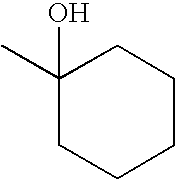 |
326.39 |
| 23448 | 5-CH3 | CH2CH2OH | H | H |
 |
332.40 |
| 23449 | 5-CH3 | CH2CH2OH | H | H |
 |
348.40 |
| 23450 | 5-CH3 | CH2CH2OH | H | H |
 |
352.81 |
| 23451 | 5-CH3 | CH2CH2OH | H | H |
 |
322.40 |
| 23452 | 5-CH3 | CH2CH2OH | H | H | —(CH2)3CN | 309.36 |
| 23453 | 5-CH3 | CH2CH2OH | H | H |
 |
336.36 |
| 23454 | 5-CH3 | CH2CH2OH | H | H |
 |
386.40 |
| 23455 | 5-CH3 | CH2CH2OH | H | H |
 |
318.37 |
| 23456 | 5-CH3 | CH2CH2OH | H | H | —C(CH3)3 | 298.38 |
| 23457 | 5-CH3 | CH2CH2OH | H | H | —(CH2)3Cl | 318.80 |
| 23458 | 5-CH3 | CH2CH2OH | H | H | —(CH2)3CH3 | 298.38 |
| 23459 | 5-CH3 | CH2CH2OH | H | H | —OCH3 | 272.30 |
| 23460 | 5-CH3 | CH2CH2OH | H | H | —C(CH3)2OH | 300.35 |
| 23461 | 5-CH3 | CH2CH2OH | H | H |
 |
364.46 |
| 23462 | 5-CH3 | CH2CH2OH | H | H |
 |
362.42 |
| 23463 | 5-CH3 | CH2CH2OH | H | H |
 |
340.42 |
| 23464 | 5-Cl | CH2CH2OH | H | H |
 |
352.81 |
| 23465 | 5-Cl | CH2CH2OH | H | H |
 |
373.23 |
| 23466 | 5-Cl | CH2CH2OH | H | H |
 |
342.82 |
| 23467 | 5-Cl | CH2CH2OH | H | H | —(CH2)3CN | 329.78 |
| 23468 | 5-Cl | CH2CH2OH | H | H |
 |
356.78 |
| 23469 | 50Cl | CH2CH2OH | H | H |
 |
406.82 |
| 23470 | 5-Cl | CH2CH2OH | H | H |
 |
338.79 |
| 23471 | 5-Cl | CH2CH2OH | H | H | —C(CH3)3 | 318.80 |
| 23472 | 5-Cl | CH2CH2OH | H | H | —(CH2)3Cl | 339.22 |
| 23473 | 5-Cl | CH2CH2OH | H | H | —(CH2)3CH3 | 318.80 |
| 23474 | 5-Cl | CH2CH2OH | H | H | —OCH3 | 292.72 |
| 23475 | 5-Cl | CH2CH2OH | H | H | —C(CH3)2OH | 320.77 |
| 23476 | 5-Cl | CH2CH2OH | H | H |
 |
384.88 |
| 23477 | 5-Cl | CH2CH2OH | H | H |
 |
382.84 |
| 23478 | 5-Cl | CH2CH2OH | H | H |
 |
360.83 |
| 23704 | — | CH3 | H | H |
 |
373.23 |
| 23705 | — | CH3 | H | H |
 |
294.39 |
| 23706 | — | CH3 | H | H |
 |
275.30 |
| 23707 | — | CH3 | H | H |
 |
275.30 |
| 23708 | — | CH3 | H | H |
 |
289.33 |
| 23709 | — | CH3 | H | H |
 |
342.31 |
| 23710 | 5-CH3 | CH3 | H | H |
 |
387.26 |
| 23711 | 5-CH3 | CH3 | H | H |
 |
308.42 |
| 23712 | 5-CH3 | CH3 | H | H |
 |
289.33 |
| 23713 | 5-CH3 | CH3 | H | H |
 |
289.33 |
| 23714 | 5-CH3 | CH3 | H | H |
 |
303.36 |
| 23715 | 5-CH3 | CH3 | H | H |
 |
356.34 |
| 23716 | 5-Cl | CH3 | H | H |
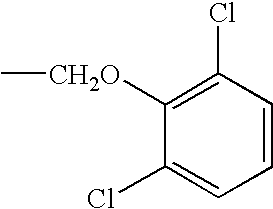 |
407.68 |
| 23717 | 5-Cl | CH3 | H | H |
 |
328.84 |
| 23718 | 5-Cl | CH3 | H | H |
 |
309.75 |
| 23719 | 5-Cl | CH3 | H | H |
 |
309.75 |
| 23720 | 5-Cl | CH3 | H | H |
 |
323.78 |
| 23721 | 5-Cl | CH3 | H | H |
 |
376.76 |
| 23722 | — | CH2CH2OH | H | H |
 |
403.26 |
| 23723 | — | CH2CH2OH | H | H |
 |
324.42 |
| 23724 | — | CH2CH2OH | H | H |
 |
305.33 |
| 23725 | — | CH2CH2OH | H | H |
 |
319.36 |
| 23726 | — | CH2CH2OH | H | H |
 |
372.34 |
| 23727 | 5-CH3 | CH2CH2OH | H | H |
 |
417.29 |
| 23728 | 5-CH3 | CH2CH2OH | H | H |
 |
338.44 |
| 23729 | 5-CH3 | CH2CH2OH | H | H |
 |
319.36 |
| 23730 | 5-CH3 | CH2CH2OH | H | H |
 |
386.37 |
| 23731 | 5-Cl | CH2CH2OH | H | H |
 |
437.70 |
| 23732 | 5-Cl | CH2CH2OH | H | H |
 |
358.86 |
| 23733 | 5-Cl | CH2CH2OH | H | H |
 |
353.80 |
| 23734 | 5-Cl | CH2CH2OH | H | H |
 |
406.79 |
| 24679 | — | CH3 | H | H |
 |
318.37 |
| 24680 | — | CH3 | H | H |
 |
296.36 |
| 24681 | 5-CH3 | CH3 | H | H |
 |
332.40 |
| 24682 | 5-CH3 | CH3 | H | H |
 |
310.39 |
| 24683 | 5-Cl | CH3 | H | H |
 |
352.81 |
| 24684 | 5-Cl | CH3 | H | H |
 |
330.81 |
| 24685 | 4-CH3 | CH3 | H | H | —C(CH3)3 | 302.80 |
| 5-Cl | ||||||
| 24686 | 4-CH3 | CH2CH2OH | H | H | —C(CH3)3 | 332.82 |
| 5-Cl | ||||||
| 24687 | 5-Br | CH3 | H | H | —C(CH3)3 | 333.22 |
| 24688 | 5-Br | CH2CH2OH | H | H | —C(CH3)3 | 363.25 |
| 24689 | 5-NO2 | CH3 | H | H | —C(CH3)3 | 299.32 |
| 24691 | 4-CH3 | CH3 | H | H | —(CH2)3CN | 313.78 |
| 5-Cl | ||||||
| 24692 | 4-CH3 5-Cl | CH2CH2OH | H | H |
 |
366.84 |
| 24695 | 5-NO2 | CH3 | H | H |
 |
363.37 |
| 24697 | 5-NO2 | CH2CH2OH | H | H | —CH2OCH3 | 317.30 |
| 25058 | — | CH3 |
 |
H |
 |
364.44 |
| 25059 | — | CH3 | H |
 |
 |
434.49 |
| 26558 | — | CH3 | H | H |
 |
346.47 |
| 27058 | — | CH3 | H | H |
 |
282.34 |
| 30716 | — | CH3 |
 |
H | —(CH2)3CN | 341.41 |
| 33471 | 5-NO2 |
 |
H | H | —C(CH3)3 | 375.42 |
| 33472 | 5-NO2 |
 |
H | H | —C(CH3)3 | 409.87 |
| 33474 | 5-NO2 |
 |
H | H | —C(CH3)3 | 395.84 |
| 33475 | 5-NO2 |
 |
H | H | —C(CH3)3 | 429.40 |
| 33476 | 5-NO2 |
 |
H | H | —C(CH3)3 | 430.29 |
| 33478 | 5-NO2 |
 |
H | H | —C(CH3)3 | 379.39 |
| 33481 | 5-NO2 |
 |
H | H | —C(CH3)3 | 391.43 |
| 33482 | 5-NO2 |
 |
H | H | —C(CH3)3 | 430.29 |
| 33486 | 5-NO2 |
 |
H | H | —C(CH3)3 | 429.40 |
| 33487 | 5-NO2 |
 |
H | H | —C(CH3)3 | 397.38 |
| 33508 | 5-NO2 | CH3 | H | —CH2CO2H | —C(CH3)3 | 357.36 |
| 33513 | 5-Br | CH3 | H | —CH2CO2Et | —(CH2)3CN | 430.30 |
| 33514 | 5-Br | CH3 | H |
 |
—(CH2)3CN | 503.22 |
| 33515 | 5-NO2 | CH3 | H |
 |
—C(CH3)3 | 365.38 |
| 33516 | 5-NO2 | CH3 | H |
 |
—C(CH3)3 | 455.55 |
| 33517 | 5-NO2 | CH3 | H |
 |
—C(CH3)3 | 458.34 |
| 33518 | 5-NO2 | CH3 | H |
 |
—C(CH3)3 | 425.43 |
| 33519 | 5-NO2 | CH3 | H |
 |
—C(CH3)3 | 458.34 |
| 33520 | 5-NO2 | CH3 | H |
 |
—C(CH3)3 | 425.43 |
| 33521 | 5-NO2 | CH3 | H |
 |
—C(CH3)3 | 441.88 |
| 33522 | 5-NO2 | CH3 | H |
 |
—C(CH3)3 | 423.89 |
| 33523 | 5-NO2 | CH3 | H |
 |
—C(CH3)3 | 423.89 |
| 33524 | 5-NO2 | CH3 | H |
 |
—C(CH3)3 | 461.41 |
| 33525 | 5-NO2 | CH3 | H |
 |
—C(CH3)3 | 434.44 |
| 33526 | 5-NO2 | CH3 | H |
 |
—C(CH3)3 | 434.44 |
| 33527 | 5-NO2 | CH3 | H |
 |
—C(CH3)3 | 414.46 |
| 33528 | 5-NO2 | CH3 | H |
 |
—C(CH3)3 | 414.46 |
| 33529 | 5-NO2 | CH3 | H |
 |
—C(CH3)3 | 414.46 |
| 33530 | 5-NO2 | CH3 | H |
 |
—C(CH3)3 | 457.44 |
| 33531 | 5-NO2 | CH3 | H |
 |
—C(CH3)3 | 403.47 |
| 33532 | 5-NO2 | CH3 | H |
 |
—C(CH3)3 | 403.47 |
| 33533 | 5-NO2 | CH3 | H |
 |
—C(CH3)3 | 403.47 |
| 33534 | 5-NO2 | CH3 | H |
 |
—C(CH3)3 | 417.50 |
| 33535 | 5-NO2 | CH3 | H |
 |
—C(CH3)3 | 389.45 |
| 33536 | 5-NO2 | CH3 | H |
 |
—C(CH3)3 | 407.44 |
| 33537 | 5-NO2 | CH3 | H |
 |
—C(CH3)3 | 407.44 |
| 33538 | 5-NO2 | CH3 | H |
 |
—C(CH3)3 | 425.43 |
| 33539 | 5-NO2 | CH3 | H |
 |
—C(CH3)3 | 479.40 |
| 33540 | 5-NO2 | CH3 | H |
 |
—C(CH3)3 | 461.41 |
| 33541 | 5-NO2 | CH3 | H |
 |
—C(CH3)3 | 447.48 |
| 33542 | 5-NO2 | CH3 | H |
 |
—C(CH3)3 | 457.44 |
| 33543 | 5-NO2 | CH3 | H |
 |
—C(CH3)3 | 473.44 |
| 33638 | 5-NO2 | CH3 | H | —CH2CO2Et | —C(CH3)3 | 385.41 |
| 33674 | 5-NO2 | CH3 | H |
 |
—C(CH3)3 | 403.43 |
| 33675 | 5-NO2 | CH3 | H |
 |
—C(CH3)3 | 437.88 |
| 33676 | 5-NO2 | CH3 | H |
 |
—C(CH3)3 | 489.42 |
| 33677 | 5-NO2 | CH3 | H |
 |
—C(CH3)3 | 489.42 |
| 33678 | 5-NO2 | CH3 | H |
 |
—C(CH3)3 | 489.42 |
| 33679 | 5-NO2 | CH3 | H |
 |
—C(CH3)3 | 489.42 |
| 33680 | 5-NO2 | CH3 | H |
 |
—C(CH3)3 | 471.43 |
| 33681 | 5-NO2 | CH3 | H |
 |
—C(CH3)3 | 489.42 |
| 33682 | 5-NO2 | CH3 | H |
 |
—C(CH3)3 | 517.62 |
| 33683 | 5-NO2 | CH3 | H |
 |
—C(CH3)3 | 639.43 |
| 33684 | 5-NO2 | CH3 | H |
 |
—C(CH3)3 | 489.42 |
| 33685 | 5-NO2 | CH3 | H |
 |
—C(CH3)3 | 428.44 |
| 33686 | 5-NO2 | CH3 | H |
 |
—C(CH3)3 | 539.43 |
| 33687 | 5-NO2 | CH3 | H |
 |
—C(CH3)3 | 471.43 |
| 34141 | 5-Br | CH3 | H | H | —C(CH3)3 | 361.24 |
| 34142 | 5-NH2 | CH3 | H | H | —C(CH3)3 | 269.35 |
| 34144 | 5-Br | CH3 |
 |
H | —C(CH3)3 | 480.36 |
| 34145 | 5-OCH3 | CH3 | H | H | —C(CH3)3 | 284.36 |
| 34146 | 5-Br | CH3 | —C(O)N(CH3)2 | H | —C(CH3)3 | 404.31 |
| 34147 | 5-Br | CH3 | H | —C(O)CH3 | —C(CH3)3 | 375.26 |
| 34148 | 5- —C═CHCO2CH3 | CH3 | H | H | —C(CH3)3 | 338.41 |
| 34177 | 5- —NHSO2CH3 | CH3 | H | H | —C(CH3)3 | 347.43 |
| 34178 |
 |
CH3 | H | H | —C(CH3)3 | 423.53 |
| 34179 |
 |
CH3 | H | H | —C(CH3)3 | 477.53 |
| 34180 | 5- —CH═CHCO2H | CH3 | H | H | —C(CH3)3 | 324.38 |
| 34227 | 5-NO2 | CH3 | H | H |
 |
320.31 |
| 34228 | 5-NO2 | CH3 | H | H |
 |
334.33 |
| 34229 | 4-CH3 5-Cl | CH3 | H | H |
 |
323.78 |
| 34230 | 4-CH3 5-Cl | CH3 | H | H |
 |
337.81 |
| 34231 | 4-CH3 5-Cl | —CH2CH2OH | H | H |
 |
353.81 |
| 34232 | 4-CH3 5-Cl | —CH2CH2OH | H | H |
 |
367.83 |
| 34233 | 5-CH3 | —CH2CH2OH | H | H |
 |
333.39 |
| 34234 | 5-Cl | —CH2CH2OH | H | H |
 |
339.78 |
| 34235 | 5-Br | —CH3 | H | H |
 |
354.20 |
| 34236 | 5-Br | —CH3 | H | H |
 |
368.23 |
| 34237 | 5-Br | —CH2CH2OH | H | H |
 |
398.26 |
| 34238 | 5-Br | —CH2CH2OH | H | H |
 |
384.23 |
| 34295 | 5- —C≡C(CH2)3CN | —CH3 | H | H | —C(CH3)3 | 345.44 |
| 34297 | 5-Br | —CH3 |
 |
H | —C(CH3)3 | 441.34 |
| 34298 | 5-Br | —CH3 | —(CH2)3CN | H | —C(CH3)3 | 424.34 |
| 34300 | 5-Br | —CH3 | I | H | —C(CH3)3 | 459.12 |
| 34302 |
 |
—CH3 | H | H | —C(CH3)3 | 441.45 |
| 34303 |
 |
—CH3 | H | H | —C(CH3)3 | 509.45 |
| 34304 |
 |
—CH3 | H | H | —C(CH3)3 | 509.45 |
| 34305 |
 |
—CH3 | H | H | —C(CH3)3 | 459.44 |
| 34306 |
 |
—CH3 | H | H | —C(CH3)3 | 459.44 |
| 34307 |
 |
—CH3 | H | H | —C(CH3)3 | 459.44 |
| 34308 |
 |
—CH3 | H | H | —C(CH3)3 | 459.44 |
| 34309 |
 |
—CH3 | H | H | —C(CH3)3 | 459.44 |
| 34310 |
 |
—CH3 | H | H | —C(CH3)3 | 459.44 |
| 34311 |
 |
—CH3 | H | H | —C(CH3)3 | 449.54 |
| 34392 |
 |
—CH3 | H | H | —C(CH3)3 | 388.90 |
| 34393 |
 |
—CH3 | H | H | —C(CH3)3 | 384.48 |
| 34394 |
 |
—CH3 | H | H | —C(CH3)3 | 388.90 |
| 34395 |
 |
—CH3 | H | H | —C(CH3)3 | 374.52 |
| 34396 | —C≡CC(CH3)2OH | —CH3 | H | H | —C(CH3)3 | 336.43 |
| 34397 |
 |
—CH3 | H | H | —C(CH3)3 | 400.54 |
| 34398 |
 |
—CH3 | H | H | —C(CH3)3 | 376.50 |
| 34399 |
 |
—CH3 | H | H | —C(CH3)3 | 318.42 |
| 34401 |
 |
—CH3 | H | H | —C(CH3)3 | 378.51 |
| 34402 |
 |
—CH3 | H | H | —C(CH3)3 | 364.49 |
| 34403 |
 |
—CH3 | H | H | —C(CH3)3 | 362.47 |
| 34404 |
 |
—CH3 | H | H | —C(CH3)3 | 392.54 |
| 34405 |
 |
—CH2CH2OH | H | H | —C(CH3)3 | 418.92 |
| 34406 |
 |
—CH2CH2OH | H | H | —C(CH3)3 | 414.50 |
| 34407 |
 |
—CH2CH2OH | H | H | —C(CH3)3 | 418.92 |
| 34408 |
 |
—CH2CH2OH | H | H | —C(CH3)3 | 388.51 |
| 34409 | —C≡CC(CH3)3 | —CH2CH2OH | H | H | —C(CH3)3 | 364.49 |
| 34410 |
 |
—CH2CH2OH | H | H | —C(CH3)3 | 404.55 |
| 34411 |
 |
—CH2CH2OH | H | H | —C(CH3)3 | 385.46 |
| 34412 | —C≡C(CH2)3CN | —CH2CH2OH | H | H | —C(CH3)3 | 375.47 |
| 34413 | —C≡CCH2OCH3 | —CH2CH2OH | H | H | —C(CH3)3 | 352.43 |
| 34414 | —C≡CC(CH3)2OH | —CH2CH2OH | H | H | —C(CH3)3 | 366.46 |
| 34415 |
 |
—CH2CH2OH | H | H | —C(CH3)3 | 406.52 |
| 34416 |
 |
—CH2CH2OH | H | H | —C(CH3)3 | 348.44 |
| 34417 |
 |
—CH2CH2OH | H | H | —C(CH3)3 | 490.60 |
| 34419 |
 |
—CH2CH2OH | H | H | —C(CH3)3 | 408.54 |
| 34420 |
 |
—CH2CH2OH | H | H | —C(CH3)3 | 394.51 |
| 34421 |
 |
—CH2CH2OH | H | H | —C(CH3)3 | 392.50 |
| 34422 |
 |
—CH2CH2OH | H | H | —C(CH3)3 | 422.57 |
| 34423 |
 |
—CH2CH2OH | H | H | —C(CH3)3 | 488.58 |
| 34424 | 5-NO2 | —CH3 | H | H |
 |
283.29 |
| 34425 | 5-NO2 | —CH2CH2OH | H | H |
 |
313.31 |
| 34426 | 4-CH3 5-Cl | —CH3 | H | H |
 |
286.76 |
| 34427 | 4-CH3 5-Cl | —CH2CH2OH | H | H |
 |
316.78 |
| 34428 | 5-CH3 | —CH3 | H | H |
 |
252.32 |
| 34429 | 5-CH3 | —CH2CH2OH | H | H |
 |
282.34 |
| 34430 | 5-Cl | —CH3 | H | H |
 |
272.73 |
| 34431 | 5-Cl | —CH2CH2OH | H | H |
 |
302.76 |
| 34432 | 5-Br | —CH3 | H | H |
 |
317.18 |
| 34433 | 5-Br | —CH2CH2OH | H | H |
 |
347.21 |
| 34434 | 4-CH3 5-F | —CH3 | H | H |
 |
270.31 |
| 34435 | 4-CH3 5-F | —CH2CH2OH | H | H |
 |
300.33 |
| 34436 |
 |
—CH3 | H | H | —C(CH3)3 | 362.45 |
| 34927 | 3-NO2 | —CH3 | H | H | —C(CH3)3 | 344.33 |
| 5-NO2 | ||||||
| 34928 | 3-NO2 | —CH3 | H | H | —C(CH3)3 | 378.22 |
| 5-Br | ||||||
| 35030 |
 |
—CH3 | H | H | —C(CH3)3 | 365.47 |
| 35031 |
 |
—CH3 | H | H | —C(CH3)3 | 348.42 |
| 35036 |
 |
—CH3 | H | H | —C(CH3)3 | 346.43 |
| 35528 |
 |
—CH3 | H | H | —C(CH3)3 | 374.44 |
| 35529 |
 |
—CH3 | H | H | —C(CH3)3 | 345.44 |
| 35530 |
 |
—CH3 | H | H | —C(CH3)3 | 355.44 |
| 35531 |
 |
—CH3 | H | H | —C(CH3)3 | 344.46 |
| 35532 |
 |
—CH3 | H | H | —C(CH3)3 | 386.51 |
| 35533 |
 |
—CH3 | H | H | —C(CH3)3 | 358.44 |
| 35534 |
 |
—CH3 | H | H | —C(CH3)3 | 465.61 |
| 35535 |
 |
—CH3 | H | H | —C(CH3)3 | 348.42 |
| 35536 |
 |
—CH3 | H | H | —C(CH3)3 | 348.42 |
| 35537 |
 |
—CH3 | H | H | —C(CH3)3 | 365.86 |
| 35538 |
 |
—CH3 | H | H | —C(CH3)3 | 334.42 |
| 35539 |
 |
—CH3 | H | H | —C(CH3)3 | 330.43 |
| 35540 | 5-C(O)H | —CH3 | H | H | —C(CH3)3 | 282.34 |
| 35541 |
 |
—CH3 | H | H | —C(CH3)3 | 399.32 |
| 35542 |
 |
—CH3 | H | H | —C(CH3)3 | 346.43 |
| 35543 |
 |
—CH3 | H | H | —C(CH3)3 | 364.87 |
| 35544 |
 |
—CH3 | H | H | —C(CH3)3 | 360.45 |
| 35545 |
 |
—CH3 | H | H | —C(CH3)3 | 380.49 |
| 35546 |
 |
—CH3 | H | H | —C(CH3)3 | 380.49 |
| 35547 |
 |
—CH3 | H | H | —C(CH3)3 | 468.63 |
| 35548 |
 |
—CH3 | H | H | —C(CH3)3 | 420.51 |
| 35549 |
 |
—CH3 | H | H | —C(CH3)3 | 360.45 |
| 35550 |
 |
—CH3 | H | H | —C(CH3)3 | 378.45 |
| 35551 |
 |
—CH3 | H | H | —C(CH3)3 | 331.42 |
| 35552 |
 |
—CH3 | H | H | —C(CH3)3 | 400.85 |
| 35553 |
 |
—CH3 | H | H | —C(CH3)3 | 366.41 |
| 35554 |
 |
—CH3 | H | H | —C(CH3)3 | 400.31 |
| 35555 |
 |
—CH3 | H | H | —C(CH3)3 | 320.39 |
| 35556 |
 |
—CH3 | H | H | —C(CH3)3 | 442.34 |
| 35557 |
 |
—CH3 | H | H | —C(CH3)3 | 367.45 |
| 35558 |
 |
—CH3 | H | H | —C(CH3)3 | 407.90 |
| 35559 |
 |
—CH3 | H | H | —C(CH3)3 | 407.90 |
| 35560 |
 |
—CH3 | H | H | —C(CH3)3 | 379.50 |
| 35569 | 5-CO2H | —CH3 | H | H | —C(CH3)3 | 298.34 |

wherein:
- each R1 is independently selected from alkyl, alkenyl, alkynyl, aralkyl, —O—R11, —N(R12)(R13), —N(R11)C(O)R11, —N(R11)SO2R11, —SR11, —C(O)R11, —C(O)OR11, —C(O)N(R12)(R13), —OC(O)R11, —OC(O)N(R12)(R13), CN, CF3, NO2, SO2, —SOR11, —SO3R11, —SO2N(R12)(R13), -alkyl-O—R11, cycloalkyl, cycloalkenyl, halo, aryl and heteroaryl;
- additionally or alternatively two R1 substituents on adjacent ring atoms my be combined to form a fused 5 or 6-membered ring, wherein the fused 5- or 6-membered ring may contain from 0 to 3 ring heteroatoms and may be further substituted with on or more substituents selected from R1;
- each R11 is independently selected from H, alkyl, alkyl-O-alkyl, alkyl-O-aryl, alkenyl, alkynyl, cycloalkyl, cycloalkenyl, aralkyl, aryl and heteroaryl; each R12 and R13 are independently selected from H, alkyl, cycloalkyl, cycloalkenyl, alkyl-O-alkyl, alkyl-O-aryl, alkenyl, alkynyl, aralkyl, aryl and heteroaryl; or R12 and R13 may be taken together with the nitrogen to which they are attached form a 5- to 7-membered ring which may optionally contain a further heteroatom,
- additionally or alternatively two R1 substituents on adjacent ring atoms my be combined to form a fused 5 or 6-membered ring, wherein the fused 5- or 6-membered ring may contain from 0 to 3 ring heteroatoms and may be further substituted with on or more substituents selected from R1;
- n is 0 to 4;
- R3 is selected from H, alkyl, cycloalkyl, cyloalkenyl, alkenyl, alkynyl, -alkyl-O-alkyl, alkyl-O-aryl, aralkyl, aryl, heteroaryl, —C(O)R31, —C(O)OR31, —C(O)N(R32)(R33);
- R31 is selected from H, alkyl, alkyl-O-alkyl, alkyl-O-aryl, alkenyl, alkynyl, cycloalkyl, cycloalkenyl, aralkyl, aryl and heteroaryl;
- R32 and R33 are independently selected from H, alkyl, cycloalkyl, cycloalkenyl, alkyl-O-alkyl, alkyl-O-aryl, alkenyl, alkynyl, aralkyl, aryl and heteroaryl; or R32 and R33 may be taken together with the nitrogen to which they are attached form a 5- to 7-membered ring which may optionally contain a further heteroatom and which may be optionally substituted with one or more CN, NO2, CO2R34, C(O)R34, —O—R34, —N(R34)(R35), —N(R34)C(O)R34, —N(R34)SO2R34, —SR34, —C(O)N(R35)(R36), —OC(O)R34, —OC(O)N(R35)(R36), SO2, —SOR34, —SO3R34, —SO2N(R35)(R36), halo, cycloalkyl, cycloalkenyl, aryl and heteroaryl;
- each R34 is independently selected from H, alkyl, cycloalkyl, cycloalkeneyl, alkenyl, alkynyl, aralkyl, aryl and heteroaryl;
- each R35 and R36 are independently selected from H, alkyl, cycloalkyl, alkenyl, alkynyl, aralkyl, aryl and heteroaryl; or R35 and R36 may be taken together with the nitrogen to which they are attached form a 5- to 7-membered ring which may optionally contain a further heteroatom;
- R45 is selected from H, alkyl, -alkyl-O-alkyl, -alkyl-O-aryl, aryl, aralkyl, cycloalkyl, cycloalkenyl, and —(CH2)a—R42;
- R42 is selected from —N(R421)C(O)R421, —N(R42)SO2R421, —OR421, —SR421, —C(O)R421, —C(O)OR421, —C(O)N422)(R423), —OC(O)R421, —OC(O)N(R422)(R423), CN, CF3, NO2, SO2, —SOR421, —SO3R421, —SO2N(R422)(R423), -alkyl-O-alkyl, -alkyl-O-aryl, halo, cycloalkyl, cycloalkenyl, aryl and heteroaryl;
- or R42 is selected from a group having the formula

-
- each R421 is independently selected from H, alkyl, cycloalkyl, alkenyl, alkynyl, aralkyl, aryl and heteroaryl;
- each R422 and R423 are independently selected from H, alkyl, cycloalkyl, alkenyl, alkynyl, aralkyl, aryl and heteroaryl; or R422 and R423 may be taken together with the nitrogen to which they are attached form a 5- to 7-membered ring which may optionally contain a further heteroatom;
- each R424 is independently selected from H, OH, alkyl, cycloalkyl, alkenyl, alkynyl, aralkyl, aryl and heteroaryl;
- each R425 and R426 are independently selected from H, alkyl, cycloalkyl, alkenyl, alkynyl, aralkyl, aryl and heteroaryl; or R425 and R426 may be taken together with the carbon to which they are attached form a 5- to 7-membered ring which may optionally contain a further heteroatom;
- a is 1 to 6;
- or a pharmaceutically acceptable salt or hydrate thereof.

and R6 is combined with R41 to give a compound having the formula VI:

wherein
- ring A is selected from a 5- or 6-membered aromatic rings which may optionally contain 0 to 3 ring heteroatoms;
- each R1 is independently selected from alkyl, alkenyl, alkynyl, aralkyl, —O—R11, —N(R12)(R13), —N(R11)C(O)R11, —N(R11)SO2R11, —SR11, —C(O)R11, —C(O)OR11, —C(O)N(R12)(R13), —OC(O)R11, —OC(O)N(R12)(R13), CN, CF3, NO2, SO2, —SOR11, —SO3R11, —SO2N(R12)(R13), -alkyl-O—R11, cycloalkyl, cycloalkenyl, halo, aryl and heteroaryl;
- additionally or alternatively two R1 substituents on adjacent ring atoms my be combined to form a fused 5 or 6-membered ring, wherein the fused 5- or 6-membered ring may contain from 0 to 3 ring heteroatoms and may be further substituted with on or more substituents selected from R1;
- each R11 is independently selected from H, alkyl, alkyl-O-alkyl, alkyl-O-aryl, alkenyl, alkynyl, cycloalkyl, cycloalkenyl, aralkyl, aryl and heteroaryl; each R12 and R13 are independently selected from H, alkyl, cycloalkyl, cycloalkenyl, alkyl-O-alkyl, alkyl-O-aryl, alkenyl, alkynyl, aralkyl, aryl and heteroaryl; or R12 and R13 may be taken together with the nitrogen to which they are attached form a 5- to 7-membered ring which may optionally contain a further heteroatom,
- additionally or alternatively two R1 substituents on adjacent ring atoms my be combined to form a fused 5 or 6-membered ring, wherein the fused 5- or 6-membered ring may contain from 0 to 3 ring heteroatoms and may be further substituted with on or more substituents selected from R1;
- n is 0 to 4;
- R2 is selected from H, alkyl, cycloalkyl, cycloalkenyl, alkenyl, alkynyl, aralkyl, aryl, heteroaryl, —C(O)R21, —C(O)OR21, -alkyl-O-alkyl, -alkyl-O-aryl;
- R21 is selected from H, alkyl, alkyl-O-alkyl, alkyl-O-aryl, alkenyl, alkynyl, cycloalkyl, cycloalkenyl, aralkyl, aryl and heteroaryl;
- R3 is selected from H, alkyl, cycloalkyl, cyloalkenyl, alkenyl, alkynyl, -alkyl-O-alkyl, alkyl-O-aryl, aralkyl, aryl, heteroaryl, —C(O)R31, —C(O)OR31, —C(O)N(R32)(R33);
- R31 is selected from H, alkyl, alkyl-O-alkyl, alkyl-O-aryl, alkenyl, alkynyl, cycloalkyl, cycloalkenyl, aralkyl, aryl and heteroaryl;
- R32 and R33 are independently selected from H, alkyl, cycloalkyl, cycloalkenyl, alkyl-O-alkyl, alkyl-O-aryl, alkenyl, alkynyl, aralkyl, aryl and heteroaryl; or R32 and R33 may be taken together with the nitrogen to which they are attached form a 5- to 7-membered ring which may optionally contain a further heteroatom and which may be optionally substituted with one or more CN, NO2, CO2R34, C(O)R34, —O—R34, —N(R34)(R35), —N(R34)C(O)R34, —N(R34)SO2R34, —SR34, —C(O)N(R35)(R36), —OC(O)R34, —OC(O)N(R35)(R36), SO2, —SOR34, —SO3R34, —SO2N(R35)(R36), halo, cycloalkyl, cycloalkenyl, aryl and heteroaryl;
- each R34 is independently selected from H, alkyl, cycloalkyl, cycloalkeneyl, alkenyl, alkynyl, aralkyl, aryl and heteroaryl;
- each R35 and R36 are independently selected from H, alkyl, cycloalkyl, alkenyl, alkynyl, aralkyl, aryl and heteroaryl; or R35 and R36 may be taken together with the nitrogen to which they are attached form a 5- to 7-membered ring which may optionally contain a further heteroatom;
- R43, and R44 are independently selected from H, alkyl, alkenyl, aralkyl, cycloalkyl, cycloalkenyl, -alkyl-O-alkyl and —(CH2)a—R42;
- R42 is selected from —N(R421)C(O)R421, —N(R421)SO2R421, —SR421, —C(O)R421, —C(O)OR421, —C(O)N(R422)(R423), —OC(O)R421, —OC(O)N(R422)(R23), CN, CF3, NO2, SO2, —SOR421, —SO3R421, —SO2N(R422)(R423), -alkyl-O-alkyl, halo, aryl and heteroaryl;
- or R42 is selected from a group having the formula

-
- each R421 is independently selected from H, alkyl, cycloalkyl, alkenyl, alkynyl, aralkyl, aryl and heteroaryl;
- each R422 and R423 are independently selected from H, alkyl, cycloalkyl, alkenyl, alkynyl, aralkyl, aryl and heteroaryl; or R422 and R423 may be taken together with the nitrogen to which they are attached form a 5- to 7-membered ring which may optionally contain a further heteroatom;
- each R424 is independently selected from H, OH, alkyl, cycloalkyl, alkenyl, alkynyl, aralkyl, aryl and heteroaryl;
- each R425 and R426 are independently selected from H, alkyl, cycloalkyl, alkenyl, alkynyl, aralkyl, aryl and heteroaryl; or R425 and R426 may be taken together with the carbon to which they are attached form a 5- to 7-membered ring which may optionally contain a further heteroatom; and
- a is 1 to 6;
- or a pharmaceutically acceptable salt or hydrate thereof.

wherein
- each R1 is independently selected from alkyl, alkenyl, alkynyl, aralkyl, —O—R11, —N(R12)(R13), —N(R11)C(O)R11, —N(R11)SO2R11, —SR11, —C(O)R11, —C(O)OR11, —C(O)N(R12)(R13), —OC(O)R11, —OC(O)N(R12)(R13), CN, CF3, NO2, SO2, —SOR11, —SO3R11, —SO2N(R12)(R13), -alkyl-O—R11, cycloalkyl, cycloalkenyl, halo, aryl and heteroaryl;
- additionally or alternatively two R1 substituents on adjacent ring atoms my be combined to form a fused 5 or 6-membered ring, wherein the fused 5- or 6-membered ring may contain from 0 to 3 ring heteroatoms and may be further substituted with on or more substituents selected from R1;
- each R11 is independently selected from H, alkyl, alkyl-O-alkyl, alkyl-O-aryl, alkenyl, alkynyl, cycloalkyl, cycloalkenyl, aralkyl, aryl and heteroaryl; each R12 and R13 are independently selected from H, alkyl, cycloalkyl, cycloalkenyl, alkyl-O-alkyl, alkyl-O-aryl, alkenyl, alkynyl, aralkyl, aryl and heteroaryl; or R12 and R13 may be taken together with the nitrogen to which they are attached form a 5- to 7-membered ring which may optionally contain a further heteroatom,
- additionally or alternatively two R1 substituents on adjacent ring atoms my be combined to form a fused 5 or 6-membered ring, wherein the fused 5- or 6-membered ring may contain from 0 to 3 ring heteroatoms and may be further substituted with on or more substituents selected from R1;
- n is 0 to 4;
- R2 is selected from H, alkyl, cycloalkyl, cycloalkenyl, alkenyl, alkynyl, aralkyl, aryl, heteroaryl, —C(O)R21, —C(O)OR21, -alkyl-O-alkyl, -alkyl-O-aryl;
- R21 is selected from H, alkyl, alkyl-O-alkyl, alkyl-O-aryl, alkenyl, alkynyl, cycloalkyl, cycloalkenyl, aralkyl, aryl and heteroaryl;
- R3 is selected from H, alkyl, cycloalkyl, cyloalkenyl, alkenyl, alkynyl, -alkyl-O-alkyl, alkyl-O-aryl, aralkyl, aryl, heteroaryl, —C(O)R31, —C(O)OR31, —C(O)N(R32)(R33);
- R31 is selected from H, alkyl, alkyl-O-alkyl, alkyl-O-aryl, alkenyl, alkynyl, cycloalkyl, cycloalkenyl, aralkyl, aryl and heteroaryl;
- R32 and R33 are independently selected from H, alkyl, cycloalkyl, cycloalkenyl, alkyl-O-alkyl, alkyl-O-aryl, alkenyl, alkynyl, aralkyl, aryl and heteroaryl; or R32 and R33 may be taken together with the nitrogen to which they are attached form a 5- to 7-membered ring which may optionally contain a further heteroatom and which may be optionally substituted with one or more CN, NO2, CO2R34, C(O)R34, —O—R34, —N(R34)(R35), —N(R34)C(O)R34, —N(R34)SO2R34, —SR34, —C(O)N(R35)(R36), —OC(O)R34, —OC(O)N(R35)(R36), SO2, —SOR34, —SO3R34, —SO2N(R35)(R36), halo, cycloalkyl, cycloalkenyl, aryl and heteroaryl;
- each R34 is independently selected from H, alkyl, cycloalkyl, cycloalkeneyl, alkenyl, alkynyl, aralkyl, aryl and heteroaryl;
- each R35 and R36 are independently selected from H, alkyl, cycloalkyl, alkenyl, alkynyl, aralkyl, aryl and heteroaryl; or R35 and R36 may be taken together with the nitrogen to which they are attached form a 5- to 7-membered ring which may optionally contain a further heteroatom;
- R43, and R44 are independently selected from H, alkyl, alkenyl, aralkyl, cycloalkyl, cycloalkenyl, -alkyl-O-alkyl and —(CH2)a—R42;
- R42 is selected from —N(R421)C(O)R421, —N(R421)SO2R421, —SR421, —C(O)R421, —C(O)OR421, —C(O)N(R422)(R423), —OC(O)R421, —OC(O)N(R422)(R23), CN, CF3, NO2, SO2, —SOR421, —SO3R421, —SO2N(R422)(R423), -alkyl-O-alkyl, halo, aryl and heteroaryl;
- or R42 is selected from a group having the formula

-
- each R421 is independently selected from H, alkyl, cycloalkyl, alkenyl, alkynyl, aralkyl, aryl and heteroaryl;
- each R422 and R423 are independently selected from H, alkyl, cycloalkyl, alkenyl, alkynyl, aralkyl, aryl and heteroaryl; or R422 and R423 may be taken together with the nitrogen to which they are attached form a 5- to 7-membered ring which may optionally contain a further heteroatom;
- each R424 is independently selected from H, OH, alkyl, cycloalkyl, alkenyl, alkynyl, aralkyl, aryl and heteroaryl; each R425 and R426 are independently selected from H, alkyl, cycloalkyl, alkenyl, alkynyl, aralkyl, aryl and heteroaryl; or R425 and R426 may be taken together with the carbon to which they are attached form a 5- to 7-membered ring which may optionally contain a further heteroatom; and
- a is 1 to 6;
- or a pharmaceutically acceptable salt or hydrate thereof.
| TABLE 2 | |
| (VI) | |
 |
|
| No. | R1 | R2 | R3 | R43 | R44 | MW |
| 24698 | H | CH3 | H |
 |
 |
408.49 |
| 24699 | H | CH3 | H |
 |
 |
462.47 |
| 24700 | H | CH3 | H |
 |
 |
428.92 |
| 24701 | H | CH3 | H |
 |
 |
430.45 |
| 24702 | H | CH3 | H |
 |
 |
400.49 |
| 24703 | H | CH3 | H |
 |
 |
424.49 |
| 24704 | H | CH3 | H |
 |
 |
386.49 |
| 24705 | H | CH3 | H |
 |
 |
440.46 |
| 24706 | H | CH3 | H |
 |
 |
406.91 |
| 24707 | H | CH3 | H |
 |
 |
408.45 |
| 24709 | H | CH3 | H |
 |
 |
409.49 |
| 24710 | 5-CH3 | CH3 | H |
 |
 |
422.52 |
| 24711 | 5-CH3 | CH3 | H |
 |
 |
442.94 |
| 24712 | 5-CH3 | CH3 | H |
 |
 |
444.48 |
| 24713 | 5-CH3 | CH3 | H |
 |
 |
414.52 |
| 24714 | 5-CH3 | CH3 | H |
 |
 |
438.52 |
| 24722 | 5-Cl | CH3 | H |
 |
 |
442.94 |
| 24724 | 5-Cl | CH3 | H |
 |
 |
496.92 |
| 24725 | 5-Cl | CH3 | H |
 |
 |
463.36 |
| 24726 | 5-Cl | CH3 | H |
 |
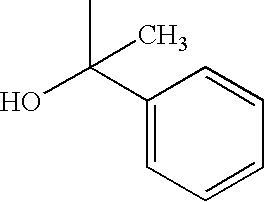 |
464.90 |
| 24727 | 5-Cl | CH3 | H |
 |
 |
434.94 |
| 24730 | 5-Cl, 4-CH3 | CH3 | H |
 |
 |
446.90 |
| 24734 | 5-Cl, 4-CH3 | CH3 | H |
 |
 |
384.92 |
| 24735 | 5-Cl, 4-CH3 | CH3 | H |
 |
 |
408.93 |
| 24737 | 5-Cl, 4-CH3 | HOCH2CH2 | H |
 |
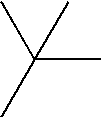 |
476.92 |
| 24738 | 5-Cl, 4-CH3 | HOCH2CH2 | H | H |
 |
332.83 |
| 24741 | 5-Cl, 4-CH3 | HOCH2CH2 | H |
 |
 |
414.95 |
| 24744 | Br | CH3 | H |
 |
 |
477.32 |
| 24745 | Br | CH3 | H |
 |
 |
443.77 |
| 24746 | Br | CH3 | H |
 |
 |
445.30 |
| 24747 | Br | CH3 | H |
 |
 |
415.35 |
| 24748 | Br | CH3 | H |
 |
 |
439.35 |
| 24749 | NO2 | CH3 | H |
 |
 |
409.87 |
| 24750 | NO2 | CH3 | H |
 |
 |
381.45 |
| 24751 | 5-Cl, 4-CH3 | CH3 | H |
 |
 |
403.91 |
| 24995 | 5-Cl, 4-CH3 | HOCH2CH2 | H |
 |
 |
456.97 |
| 25047 | H | CH3 | H |
 |
 |
406.48 |
| 25041 | H | CH3 | H |
 |
 |
394.47 |
| 25044 | H | CH3 | H |
 |
 |
432.44 |
| 25043 | H | CH3 | H |
 |
 |
398.89 |
| 25042 | H | CH3 | H |
 |
 |
400.42 |
| 25028 | H | CH3 | H |
 |
 |
422.48 |
| 25029 | H | CH3 | H |
 |
 |
426.90 |
| 25030 | H | CH3 | H |
 |
 |
383.45 |
| 25031 | 5-CH3 | CH3 | H |
 |
 |
420.51 |
| 25032 | 5-Cl | CH3 | H |
 |
 |
440.92 |
| 25033 | 5-NO2 | CH3 | H |
 |
 |
451.48 |

and R6 is combined with R41 to give a compound having the formula VII:

wherein
- ring A is selected from a 5- or 6-membered aromatic rings which may optionally contain 0 to 3 ring heteroatoms;
- each R1 is independently selected from alkyl, alkenyl, alkynyl, aralkyl, —O—R11, —N(R12)(R13), —N(R11)C(O)R11, —N(R11)SO2R11, —SR11, —C(O)R11, —C(O)OR11, —C(O)N(R12)(R13), —OC(O)R11, —OC(O)N(R12)(R13), CN, CF3, NO2, SO2, —SOR11, —SO3R11, —SO2N(R12)(R13), -alkyl-O—R11, cycloalkyl, cycloalkenyl, halo, aryl and heteroaryl;
- additionally or alternatively two R1 substituents on adjacent ring atoms my be combined to form a fused 5 or 6-membered ring, wherein the fused 5- or 6-membered ring may contain from 0 to 3 ring heteroatoms and may be further substituted with on or more substituents selected from R1;
- each R11 is independently selected from H, alkyl, alkyl-O-alkyl, alkyl-O-aryl, alkenyl, alkynyl, cycloalkyl, cycloalkenyl, aralkyl, aryl and heteroaryl; each R12 and R13 are independently selected from H, alkyl, cycloalkyl, cycloalkenyl, alkyl-O-alkyl, alkyl-O-aryl, alkenyl, alkynyl, aralkyl, aryl and heteroaryl; or R12 and R13 may be taken together with the nitrogen to which they are attached form a 5- to 7-membered ring which may optionally contain a further heteroatom,
- additionally or alternatively two R1 substituents on adjacent ring atoms my be combined to form a fused 5 or 6-membered ring, wherein the fused 5- or 6-membered ring may contain from 0 to 3 ring heteroatoms and may be further substituted with on or more substituents selected from R1;
- n is 0 to 4;
- R2 is selected from H, alkyl, cycloalkyl, cycloalkenyl, alkenyl, alkynyl, aralkyl, aryl, heteroaryl, —C(O)R21, —C(O)OR21, -alkyl-O-alkyl, -alkyl-O-aryl;
- R21 is selected from H, alkyl, alkyl-O-alkyl, alkyl-O-aryl, alkenyl, alkynyl, cycloalkyl, cycloalkenyl, aralkyl, aryl and heteroaryl;
- R3 is selected from H, alkyl, cycloalkyl, cyloalkenyl, alkenyl, alkynyl, -alkyl-O-alkyl, alkyl-O-aryl, aralkyl, aryl, heteroaryl, —C(O)R31, —C(O)OR31, —C(O)N(R32)(R33);
- R31 is selected from H, alkyl, alkyl-O-alkyl, alkyl-O-aryl, alkenyl, alkynyl, cycloalkyl, cycloalkenyl, aralkyl, aryl and heteroaryl;
- R32 and R33 are independently selected from H, alkyl, cycloalkyl, cycloalkenyl, alkyl-O-alkyl, alkyl-O-aryl, alkenyl, alkynyl, aralkyl, aryl and heteroaryl; or R32 and R33 may be taken together with the nitrogen to which they are attached form a 5- to 7-membered ring which may optionally contain a further heteroatom and which may be optionally substituted with one or more CN, NO2, CO2R34, C(O)R34, R34—N(R34)(R35), —N(R34)C(O)R34, —N(R34)SO2R34—SR34, —C(O)N(R35)(R36), —OC(O)R34, —OC(O)N(R35)36), SO2, —SOR34, —SO3R34, —SO2N(R35)(R36), halo, cycloalkyl, cycloalkenyl, aryl and heteroaryl;
- each R34 is independently selected from H, alkyl, cycloalkyl, cycloalkeneyl, alkenyl, alkynyl, aralkyl, aryl and heteroaryl;
- each R35 and R36 are independently selected from H, alkyl, cycloalkyl, alkenyl, alkynyl, aralkyl, aryl and heteroaryl; or R35 and R36 may be taken together with the nitrogen to which they are attached form a 5- to 7-membered ring which may optionally contain a further heteroatom;
- R48 and R49 are independently selected from H, alkyl, alkenyl, aralkyl, cycloalkyl, cycloalkenyl, -alkyl-O-alkyl and —(CH2)a—R42;
- R42 is selected from —N(R421)C(O)R421, —N(R421)SO2R421, —SR421, —C(O)R421, —C(O)OR421, —C(O)N(R422)(R423), —OC(O)R421, —OC(O)N(R422)(R423), CN, CF3, NO2, SO2, —SOR421, —SO3R421, —SO2N(R422)(R423), -alkyl-O-alkyl, halo, aryl and heteroaryl;
- or R42 is selected from a group having the formula

-
- each R421 is independently selected from H, alkyl, cycloalkyl, alkenyl, alkynyl, aralkyl, aryl and heteroaryl;
- each R422 and R423 are independently selected from H, alkyl, cycloalkyl, alkenyl, alkynyl, aralkyl, aryl and heteroaryl; or R422 and R423 may be taken together with the nitrogen to which they are attached form a 5- to 7-membered ring which may optionally contain a further heteroatom;
- each R424 is independently selected from H, OH, alkyl, cycloalkyl, alkenyl, alkynyl, aralkyl, aryl and heteroaryl;
- each R425 and R426 are independently selected from H, alkyl, cycloalkyl, alkenyl, alkynyl, aralkyl, aryl and heteroaryl; or R425 and R426 may be taken together with the carbon to which they are attached form a 5- to 7-membered ring which may optionally contain a further heteroatom; and
- a is 1 to 6;
- or a pharmaceutically acceptable salt or hydrate thereof.

wherein
- each R1 is independently selected from alkyl, alkenyl, alkynyl, aralkyl, —O—R11, —N(R12)(R13), —N(R11)C(O)R11, —N(R11)SO2R11, —SR11, —C(O)R11, —C(O)OR11, —C(O)N(R12)(R13), —OC(O)R11, —OC(O)N(R12)(R13), CN, CF3, NO2, SO2, —SOR11, —SO3R11, —SO2N(R12)(R13), -alkyl-O—R11, cycloalkyl, cycloalkenyl, halo, aryl and heteroaryl;
- additionally or alternatively two R1 substituents on adjacent ring atoms my be combined to form a fused 5 or 6-membered ring, wherein the fused 5- or 6-membered ring may contain from 0 to 3 ring heteroatoms and may be further substituted with on or more substituents selected from R1;
- each R11 is independently selected from H, alkyl, alkyl-O-alkyl, alkyl-O-aryl, alkenyl, alkynyl, cycloalkyl, cycloalkenyl, aralkyl, aryl and heteroaryl; each R12 and R13 are independently selected from H, alkyl, cycloalkyl, cycloalkenyl, alkyl-O-alkyl, alkyl-O-aryl, alkenyl, alkynyl, aralkyl, aryl and heteroaryl; or R12 and R13 may be taken together with the nitrogen to which they are attached form a 5- to 7-membered ring which may optionally contain a further heteroatom,
- additionally or alternatively two R1 substituents on adjacent ring atoms my be combined to form a fused 5 or 6-membered ring, wherein the fused 5- or 6-membered ring may contain from 0 to 3 ring heteroatoms and may be further substituted with on or more substituents selected from R1;
- n is 0 to 4;
- R2 is selected from H, alkyl, cycloalkyl, cycloalkenyl, alkenyl, alkynyl, aralkyl, aryl, heteroaryl, —C(O)R21, —C(O)OR21, -alkyl-O-alkyl, -alkyl-O-aryl;
- R21 is selected from H, alkyl, alkyl-O-alkyl, alkyl-O-aryl, alkenyl, alkynyl, cycloalkyl, cycloalkenyl, aralkyl, aryl and heteroaryl;
- R3 is selected from H, alkyl, cycloalkyl, cyloalkenyl, alkenyl, alkynyl, -alkyl-O-alkyl, alkyl-O-aryl, aralkyl, aryl, heteroaryl, —C(O)R31, —C(O)OR31, —C(O)N(R32)(R33);
- R31 is selected from H, alkyl, alkyl-O-alkyl, alkyl-O-aryl, alkenyl, alkynyl, cycloalkyl, cycloalkenyl, aralkyl, aryl and heteroaryl;
- R32 and R33 are independently selected from H, alkyl, cycloalkyl, cycloalkenyl, alkyl-O-alkyl, alkyl-O-aryl, alkenyl, alkynyl, aralkyl, aryl and heteroaryl; or R32 and R33 may be taken together with the nitrogen to which they are attached form a 5- to 7-membered ring which may optionally contain a further heteroatom and which may be optionally substituted with one or more CN, NO2, CO2R34, C(O)R34, —O—R34, —N(R34)(R35), —N(R34)C(O)R34, —N(R34)SO2R34, —SR34, —C(O)N(R35)(R36), —OC(O)R34, —OC(O)N(R35)(R36), SO2, —SOR34, —SO3R34, —SO2N(R35)(R36), halo, cycloalkyl, cycloalkenyl, aryl and heteroaryl;
- each R34 is independently selected from H, alkyl, cycloalkyl, cycloalkeneyl, alkenyl, alkynyl, aralkyl, aryl and heteroaryl;
- each R35 and R36 are independently selected from H, alkyl, cycloalkyl, alkenyl, alkynyl, aralkyl, aryl and heteroaryl; or R35 and R36 may be taken together with the nitrogen to which they are attached form a 5- to 7-membered ring which may optionally contain a further heteroatom;
- R48 and R49 are independently selected from H, alkyl, alkenyl, aralkyl, cycloalkyl, cycloalkenyl, -alkyl-O-alkyl and —(CH2)a—R42;
- R42 is selected from —N(R421)C(O)R421, —N(421)SO2R421, —SR421, —C(O)R421, —C(O)OR421, —C(O)N(R422)(R423), —OC(O)R421, —OC(O)N(R422)(R423), CN, CF3, NO2, SO2, —SOR421, —SO3R421, —SO2N(R422)(R423), -alkyl-O-alkyl, halo, aryl and heteroaryl;
- or R42 is selected from a group having the formula

-
- each R421 is independently selected from H, alkyl, cycloalkyl, alkenyl, alkynyl, aralkyl, aryl and heteroaryl;
- each R422 and R423 are independently selected from H, alkyl, cycloalkyl, alkenyl, alkynyl, aralkyl, aryl and heteroaryl; or R422 and R423 may be taken together with the nitrogen to which they are attached form a 5- to 7-membered ring which may optionally contain a further heteroatom;
- each R424 is independently selected from H, OH, alkyl, cycloalkyl, alkenyl, alkynyl, aralkyl, aryl and heteroaryl;
- each R425 and R426 are independently selected from H, alkyl, cycloalkyl, alkenyl, alkynyl, aralkyl, aryl and heteroaryl; or R425 and R426 may be taken together with the carbon to which they are attached form a 5- to 7-membered ring which may optionally contain a further heteroatom; and
- a is 1 to 6;
- or a pharmaceutically acceptable salt or hydrate thereof.
| TABLE 3 | |
| (VIIa) | |
 |
|
| No. | R1 | R2 | R3 | R48 | R49 | MW |
| 33473 | 5-NO2 |
 |
H | —OH | —CH2C(CH3)3 | 427.88 |
| 33477 | 5-NO2 |
 |
H | —OH | —CH2C(CH3)3 | 448.30 |
| 33479 | 5-NO2 |
 |
H | —OH | —CH2C(CH3)3 | 397.40 |
| 33480 | 5-NO2 |
 |
H | —OH | —CH2C(CH3)3 | 431.84 |
| 33483 | 5-NO2 |
 |
H | —OH | —CH2C(CH3)3 | 448.30 |
| 33484 | 5-NO2 |
 |
H | —OH | —CH2C(CH3)3 | 397.40 |
| 33485 | 5-NO2 |
 |
H | —OH | —CH2C(CH3)3 | 415.39 |
| 33488 | 5-NO2 |
 |
H | —OH | —CH2C(CH3)3 | 393.44 |
| 33490 | 5-NO2 |
 |
H | —OH | —CH2C(CH3)3 | 429.39 |

and R6 is combined with R41 to give a compound having the formula VIII:

wherein
- ring A is selected from a 5- or 6-membered aromatic rings which may optionally contain 0 to 3 ring heteroatoms;
- each R1 is independently selected from alkyl, alkenyl, alkynyl, aralkyl, —O—R11, —N(R12)(R13), —N(R11)C(O)R11, —N(R11)SO2R11, —SR11, —C(O)R11, —C(O)OR11, —C(O)N(R12)(R13), —OC(O)R, —OC(O)N(R12)(R13), CN, CF3, NO2, SO2, —SOR, —SO3R11, —SO2N(R12)(R13), -alkyl-O—R11, cycloalkyl, cycloalkenyl, halo, aryl and heteroaryl;
- additionally or alternatively two R1 substituents on adjacent ring atoms my be combined to form a fused 5 or 6-membered ring, wherein the fused 5- or 6-membered ring may contain from 0 to 3 ring heteroatoms and may be further substituted with on or more substituents selected from R1;
- each R11 is independently selected from H, alkyl, alkyl-O-alkyl, alkyl-O-aryl, alkenyl, alkynyl, cycloalkyl, cycloalkenyl, aralkyl, aryl and heteroaryl;
- each R12 and R13 are independently selected from H, alkyl, cycloalkyl, cycloalkenyl, alkyl-O-alkyl, alkyl-O-aryl, alkenyl, alkynyl, aralkyl, aryl and heteroaryl; or R12 and R13 may be taken together with the nitrogen to which they are attached form a 5- to 7-membered ring which may optionally contain a further heteroatom,
- additionally or alternatively two R1 substituents on adjacent ring atoms my be combined to form a fused 5 or 6-membered ring, wherein the fused 5- or 6-membered ring may contain from 0 to 3 ring heteroatoms and may be further substituted with on or more substituents selected from R1;
- n is 0 to 4;
- R2 is selected from H, alkyl, cycloalkyl, cycloalkenyl, alkenyl, alkynyl, aralkyl, aryl, heteroaryl, —C(O)R21, —C(O)OR21, -alkyl-O-alkyl, -alkyl-O-aryl;
- R21 is selected from H, alkyl, alkyl-O-alkyl, alkyl-O-aryl, alkenyl, alkynyl, cycloalkyl, cycloalkenyl, aralkyl, aryl and heteroaryl;
- R3 is selected from H, alkyl, cycloalkyl, cyloalkenyl, alkenyl, alkynyl, -alkyl-O-alkyl, alkyl-O-aryl, aralkyl, aryl, heteroaryl, —C(O)R31, —C(O)OR31, —C(O)N(R32)(R33);
- R31 is selected from H, alkyl, alkyl-O-alkyl, alkyl-O-aryl, alkenyl, alkynyl, cycloalkyl, cycloalkenyl, aralkyl, aryl and heteroaryl;
- R32 and R33 are independently selected from H, alkyl, cycloalkyl, cycloalkenyl, alkyl-O-alkyl, alkyl-O-aryl, alkenyl, alkynyl, aralkyl, aryl and heteroaryl; or R32 and R33 may be taken together with the nitrogen to which they are attached form a 5- to 7-membered ring which may optionally contain a further heteroatom and which may be optionally substituted with one or more CN, NO2, CO2R34, C(O)R34, —O—R34, —N(R34)(R35), —N(R34)C(O)R34, —N(R34)SO2R34, —SR34, —C(O)N(R35)(R36), —OC(O)R34, OC(O)N(R35)(R36), SO2, —SOR34, —SO3R34, —SO2N(R35)(R36), halo, cycloalkyl, cycloalkenyl, aryl and heteroaryl;
- each R34 is independently selected from H, alkyl, cycloalkyl, cycloalkeneyl, alkenyl, alkynyl, aralkyl, aryl and heteroaryl;
- each R35 and R36 are independently selected from H, alkyl, cycloalkyl, alkenyl, alkynyl, aralkyl, aryl and heteroaryl; or R35 and R36 may be taken together with the nitrogen to which they are attached form a 5- to 7-membered ring which may optionally contain a further heteroatom;
- Z is selected from O, N—OR461;
- R461 is selected from H, alkyl, alkenyl, aralkyl, cycloalkyl, cycloalkenyl, -alkyl-O-alkyl and —(CH2)a—R42
- R42 is selected from —N(R421)C(O)R421, —N(R421)SO2R421, —SR421, —C(O)R421, C(O)OR421, —C(O)N(R422)(R423), —OC(O)R421, —OC(O)N(R422)(R423), CN, CF3, NO2, SO2, —SOR421, —SO3R421, —SO2N(R422)(R423), -alkyl-O-alkyl, halo, aryl and heteroaryl;
- or R42 is selected from a group having the formula

-
- each R421 is independently selected from H, alkyl, cycloalkyl, alkenyl, alkynyl, aralkyl, aryl and heteroaryl;
- each R422 and R423 are independently selected from H, alkyl, cycloalkyl, alkenyl, alkynyl, aralkyl, aryl and heteroaryl; or R422 and R423 may be taken together with the nitrogen to which they are attached form a 5- to 7-membered ring which may optionally contain a further heteroatom;
- each R424 is independently selected from H, OH, alkyl, cycloalkyl, alkenyl, alkynyl, aralkyl, aryl and heteroaryl;
- each R425 and R426 are independently selected from H, alkyl, cycloalkyl, alkenyl, alkynyl, aralkyl, aryl and heteroaryl; or R425 and R426 may be taken together with the carbon to which they are attached form a 5- to 7-membered ring which may optionally contain a further heteroatom; and
- a is 1 to 6;
- or a pharmaceutically acceptable salt or hydrate thereof.

wherein
- each R1 is independently selected from alkyl, alkenyl, alkynyl, aralkyl, —O—R11, —N(R12)(R13), —N(R11)C(O)R11, —N(R11)SO2R11, —SR11, —C(O)R11, —C(O)OR11, —C(O)N(R12)(R13), —OC(O)R11, —OC(O)N(R12)(R13), CN, CF3, NO2, SO2, —SOR11, —SO3R11, —SO2N(R12)(R13), -alkyl-O—R11, cycloalkyl, cycloalkenyl, halo, aryl and heteroaryl;
- additionally or alternatively two R1 substituents on adjacent ring atoms my be combined to form a fused 5 or 6-membered ring, wherein the fused 5- or 6-membered ring may contain from 0 to 3 ring heteroatoms and may be further substituted with on or more substituents selected from R1;
- each R11 is independently selected from H, alkyl, alkyl-O-alkyl, alkyl-O-aryl, alkenyl, alkynyl, cycloalkyl, cycloalkenyl, aralkyl, aryl and heteroaryl; each R12 and R13 are independently selected from H, alkyl, cycloalkyl, cycloalkenyl, alkyl-O-alkyl, alkyl-O-aryl, alkenyl, alkynyl, aralkyl, aryl and heteroaryl; or R12 and R13 may be taken together with the nitrogen to which they are attached form a 5- to 7-membered ring which may optionally contain a further heteroatom,
- additionally or alternatively two R1 substituents on adjacent ring atoms my be combined to form a fused 5 or 6-membered ring, wherein the fused 5- or 6-membered ring may contain from 0 to 3 ring heteroatoms and may be further substituted with on or more substituents selected from R1;
- n is 0 to 4;
- R2 is selected from H, alkyl, cycloalkyl, cycloalkenyl, alkenyl, alkynyl, aralkyl, aryl, heteroaryl, —C(O)R21, —C(O)OR21, -alkyl-O-alkyl, -alkyl-O-aryl;
- R21 is selected from H, alkyl, alkyl-O-alkyl, alkyl-O-aryl, alkenyl, alkynyl, cycloalkyl, cycloalkenyl, aralkyl, aryl and heteroaryl;
- R3 is selected from H, alkyl, cycloalkyl, cyloalkenyl, alkenyl, alkynyl, -alkyl-O-alkyl, alkyl-O-aryl, aralkyl, aryl, heteroaryl, —C(O)R31, —C(O)OR31, —C(O)N(R32)(R33);
- R31 is selected from H, alkyl, alkyl-O-alkyl, alkyl-O-aryl, alkenyl, alkynyl, cycloalkyl, cycloalkenyl, aralkyl, aryl and heteroaryl;
- R32 and R33 are independently selected from H, alkyl, cycloalkyl, cycloalkenyl, alkyl-O-alkyl, alkyl-O-aryl, alkenyl, alkynyl, aralkyl, aryl and heteroaryl; or R32 and R33 may be taken together with the nitrogen to which they are attached form a 5- to 7-membered ring which may optionally contain a further heteroatom and which may be optionally substituted with one or more CN, NO2, CO2R34, C(O)R34—O—R34—N(R34)(R35), —N(R34)C(O)R34, —N(R34)SO2R34, —SR34, —C(O)N(R35)(R36), —OC(O)R34, —OC(O)N(R35)(R36), SO2, —SOR34, —SO3R34, —SO2N(R35)(R36), halo, cycloalkyl, cycloalkenyl, aryl and heteroaryl;
- each R34 is independently selected from H, alkyl, cycloalkyl, cycloalkeneyl, alkenyl, alkynyl, aralkyl, aryl and heteroaryl;
- each R35 and R36 are independently selected from H, alkyl, cycloalkyl, alkenyl, alkynyl, aralkyl, aryl and heteroaryl; or R35 and R36 may be taken together with the nitrogen to which they are attached form a 5- to 7-membered ring which may optionally contain a further heteroatom;
- Z is selected from O, N—OR461;
- R461 is selected from H, alkyl, alkenyl, aralkyl, cycloalkyl, cycloalkenyl, -alkyl-O-alkyl and —(CH2)a—R42
- R42 is selected from —N(R421)C(O)R421, —N(R421)SO2R421, —SR421, —C(O)R421, —C(O)OR421, —C(O)N(R422)(R423), —OC(O)R421, —OC(O)N(R422)(R421), CN, CF3, NO2, SO2, —SOR421, —SO3R421, —SO2N(R422)(R423), -alkyl-O-alkyl, halo, aryl and heteroaryl;
- or R42 is selected from a group having the formula

-
- each R421 is independently selected from H, alkyl, cycloalkyl, alkenyl, alkynyl, aralkyl, aryl and heteroaryl;
- each R422 and R423 are independently selected from H, alkyl, cycloalkyl, alkenyl, alkynyl, aralkyl, aryl and heteroaryl; or R422 and R423 may be taken together with the nitrogen to which they are attached form a 5- to 7-membered ring which may optionally contain a further heteroatom;
- each R424 is independently selected from H, OH, alkyl, cycloalkyl, alkenyl, alkynyl, aralkyl, aryl and heteroaryl;
- each R425 and R426 are independently selected from H, alkyl, cycloalkyl, alkenyl, alkynyl, aralkyl, aryl and heteroaryl; or R425 and R426 may be taken together with the carbon to, which they are attached form a 5- to 7-membered ring which may optionally contain a further heteroatom; and
- a is 1 to 6;
- or a pharmaceutically acceptable salt or hydrate thereof.

The resulting “dimeric” compound may be symmetric or unsymmetrical and is represented by the formula X:

wherein:
ring A and ring A′ are independently selected from 5- or 6-membered aromatic rings which may optionally contain 0 to 3 ring heteroatoms;
each R1 and R1′ are selected independently from alkyl, alkenyl, alkynyl, aralkyl, —O—R11, —N(R12)(R13),
-
- —N(R11)C(O)R11, —N(R11)SO2R11, —SR11, —C(O)R11, —C(O)OR11, —C(O)N(R12)(R13), —OC(O)R11, —OC(O)N(R12)(R13), CN, CF3, NO2, SO2, —SOR11, —SO3R11, —SO2N(R12)(R13), -alkyl-O-alkyl, halo, aryl and heteroaryl;
- additionally or alternatively two R1 substituents on adjacent ring atoms my be combined to form a fused 5 or 6-membered ring, wherein the fused 5- or 6-membered ring may contain from 0 to 3 ring heteroatoms and may be further substituted with on or more substituents selected from R1;
- each R11 is independently selected from H, alkyl, cycloalkyl, alkenyl, alkynyl, aralkyl, aryl and heteroaryl;
- each R12 and R13 are independently selected from H, alkyl, cycloalkyl, alkenyl, alkynyl, aralkyl, aryl and heteroaryl; or R12 and R13 may be taken together with the nitrogen to which they are attached form a 5- to 7-membered ring which may optionally contain a further heteroatom,
- n is 0 to 4;
- R2 and R2′ are selected independently from H, alkyl, cycloalkyl, cycloalkenyl, alkenyl, alkynyl, aralkyl, aryl, heteroaryl, —C(O)R21, —C(O)OR21, -alkyl-O-alkyl, -alkyl-O-aryl;
- R21 is selected from H, alkyl, alkyl-O-alkyl, alkyl-O-aryl, alkenyl, alkynyl, cycloalkyl, cycloalkenyl, aralkyl, aryl and heteroaryl;
- R3 and R3′ are independently selected from H, alkyl, cycloalkyl, cyloalkenyl, alkenyl, alkynyl, -alkyl-O-alkyl, alkyl-O-aryl, aralkyl, aryl, heteroaryl, —C(O)R31, —C(O)OR31, —C(O)N(R32)(R33);
- R31 is selected from H, alkyl, alkyl-O-alkyl, alkyl-O-aryl, alkenyl, alkynyl, cycloalkyl, cycloalkenyl, aralkyl, aryl and heteroaryl;
- R32 and R33 are independently selected from H, alkyl, cycloalkyl, cycloalkenyl, alkyl-O-alkyl, alkyl-O-aryl, alkenyl, alkynyl, aralkyl, aryl and heteroaryl; or R32 and R33 may be taken together with the nitrogen to which they are attached form a 5- to 7-membered ring which may optionally contain a further heteroatom and which may be optionally substituted with one or more CN, NO2, CO2R34, C(O)R34, —O—R34, —N(R34)(R35), —N(R34)C(O)R34, —N(R34)SO2R34, —SR34, —C(O)N(R35)(R36), —OC(O)R34, —OC(O)N(R35)(R36), SO2, —SOR34, —SO3R34, —SO2N(R35)(R36), halo, cycloalkyl, cycloalkenyl, aryl and heteroaryl;
- each R34 is independently selected from H, alkyl, cycloalkyl, cycloalkeneyl, alkenyl, alkynyl, aralkyl, aryl and heteroaryl;
- each R35 and R36 are independently selected from H, alkyl, cycloalkyl, alkenyl, alkynyl, aralkyl, aryl and heteroaryl; or R35 and R36 may be taken together with the nitrogen to which they are attached form a 5- to 7-membered ring which may optionally contain a further heteroatom;
- R5 and R5′ are independently selected from H, OR51, —SR51, alkyl, cycloalkyl, cycloalkenyl, alkenyl, alkynyl, CN, CF3, NO2, SO2, —SOR51, —SO3R51, —SO2N(R52)(R53), -alkyl-O-alkyl, halo, aralkyl, aryl, heteroaryl, —C(O)R51, —C(O)OR51, —C(O)N(R52)(R53), —OC(O)R51, —OC(O)N(R52)(R53), —O(CH2)eC(O)OR51, —O(CH2)eC(O)N(R52)(R53), —N(R52)(R53), —N(R51)C(O)R51, and —N(R51)SO2R51
- each R51 is independently selected from H, alkyl, cycloalkyl, cycloalkenyl, alkenyl, alkynyl, aralkyl, aryl and heteroaryl;
- R52 and R53 are independently selected from H, alkyl, cycloalkyl, cycloalkenyl, alkenyl, alkynyl, aralkyl, aryl and heteroaryl;
- or R52 and R53 may be taken together with the nitrogen to which they are attached form a 5- to 7-membered ring which may optionally contain a further heteroatom;
- e is 1 to 6;
- alternatively, —O—R51 is combined with R41, R46, or R47 to give a 6-membered ring that is fused to ring A and to the pyrazole ring;
- or R5 is selected from a group having the formula:

-
- wherein
- each R54 and R56 is independently selected from —OR57, halo, alkyl, cycloalkyl, cycloalkenyl, alkenyl, alkynyl, NO2, CN, —C(O)R57, —C(O)OR57, —C(O)N(R58)(R59), —OC(O)R57, —OC(O)N(R58)(R59), O(CH2)iC(O)OR57, —O(CH2)iC(O)N(R58)(R59), —N(R58)(R59), —N(R57)C(O)R57, —N(R57)SO2R57, aralkyl, aryl and heteroaryl;
- each R57 is independently selected from H, alkyl, cycloalkyl, cycloalkenyl, alkenyl, alkynyl, aralkyl, aryl and heteroaryl;
- R58 and R59 are independently selected from H, alkyl, cycloalkyl, cycloalkenyl, alkenyl, alkynyl, aralkyl, aryl and heteroaryl; or R52 and R53 may be taken together with the nitrogen to which they are attached form a 5- to 7-membered ring which may optionally contain a further heteroatom;
- i is 1 to 6;
- X1 is selected from N and CH;
- f is 1 to 6;
- g is 0 to 4; and
- h is 0 to 5;
- L is a linking group selected from —(CH2)x—,
- each R54 and R56 is independently selected from —OR57, halo, alkyl, cycloalkyl, cycloalkenyl, alkenyl, alkynyl, NO2, CN, —C(O)R57, —C(O)OR57, —C(O)N(R58)(R59), —OC(O)R57, —OC(O)N(R58)(R59), O(CH2)iC(O)OR57, —O(CH2)iC(O)N(R58)(R59), —N(R58)(R59), —N(R57)C(O)R57, —N(R57)SO2R57, aralkyl, aryl and heteroaryl;
- wherein

-
-
- or a group of the formula
-A-B-A- - wherein
- A is selected from —N(R)—, —O—, —S—, —C(O)—, —OC(O)—, —N(R)C(O)—, —N(R)C(O)O—, —N(R)SO2—, —(CH2)y—, and —C≡C—;
- B is selected from —(CH2)z—,
- or a group of the formula
-

-
-
-
- —(CH2)v-D-(CH2)w— wherein D is selected from O, S, —C═C—, —S—S—,
-
-

-
-
- x is 3 to 25;
- y is 1 to 10;
- z is 1 to 10;
- v is 1 to 8; and
- w is 1 to 8;
- or a pharmaceutically acceptable salt or hydrate thereof.
-

The resulting dimeric compound may be symmetric or unsymmetrical and is represented by the formula XI:

wherein
-
- —N(R11)C(O)R11, —N(R11)SO2R11, —SR11, —C(O)R11, —C(O)OR11, —C(O)N)(R12)(R13), —OC(O)R11, —OC(O)N(R12)(R13), CN, CF3, NO2, SO2, —SOR11, —SO3R11, —SO2N(R12)(R13), -alkyl-O-alkyl, halo, aryl and heteroaryl;
- additionally or alternatively two R1 substituents on adjacent ring atoms my be combined to form a fused 5 or 6-membered ring, wherein the fused 5- or 6-membered ring may contain from 0 to 3 ring heteroatoms and may be further substituted with on or more substituents selected from R1;
- each R11 is independently selected from H, alkyl, cycloalkyl, alkenyl, alkynyl, aralkyl, aryl and heteroaryl;
- each R12 and R13 are independently selected from H, alkyl, cycloalkyl, alkenyl, alkynyl, aralkyl, aryl and heteroaryl; or R12 and R13 may be taken together with the nitrogen to which they are attached form a 5- to 7-membered ring which may optionally contain a further heteroatom,
- n is 0 to 4;
- R2 and R2′ are selected independently from H, alkyl, cycloalkyl, cycloalkenyl, alkenyl, alkynyl, aralkyl, aryl, heteroaryl, —C(O)R21, —C(O)OR21, -alkyl-O-alkyl, -alkyl-O-aryl;
- R21 is selected from H, alkyl, alkyl-O-alkyl, alkyl-O-aryl, alkenyl, alkynyl, cycloalkyl, cycloalkenyl, aralkyl, aryl and heteroaryl;
- R3 and R3′ are independently selected from H, alkyl, cycloalkyl, cyloalkenyl, alkenyl, alkynyl, -alkyl-O-alkyl, alkyl-O-aryl, aralkyl, aryl, heteroaryl, —C(O)R31, —C(O)OR31, —C(O)N(R32)(R33);
- R31 is selected from H, alkyl, alkyl-O-alkyl, alkyl-O-aryl, alkenyl, alkynyl, cycloalkyl, cycloalkenyl, aralkyl, aryl and heteroaryl;
- R32 and R33 are independently selected from H, alkyl, cycloalkyl, cycloalkenyl, alkyl-O-alkyl, alkyl-O-aryl, alkenyl, alkynyl, aralkyl, aryl and heteroaryl; or R32 and R33 may be taken together with the nitrogen to which they are attached form a 5- to 7-membered ring which may optionally contain a further heteroatom and which may be optionally substituted with one or more CN, NO2, CO2R34, C(O)R34, —O—R34, —N(R34)(R35), —N(R34)C(O)R34, —N(R34)SO2R34, —SR34, —C(O)N(R35)(R36), —OC(O)R34, —OC(O)N(R35)(R36), SO2, —SOR34, —SO3R34, —SO2N(R35)(R36), halo, cycloalkyl, cycloalkenyl, aryl and heteroaryl;
- each R34 is independently selected from H, alkyl, cycloalkyl, cycloalkeneyl, alkenyl, alkynyl, aralkyl, aryl and heteroaryl;
- each R35 and R36 are independently selected from H, alkyl, cycloalkyl, alkenyl, alkynyl, aralkyl, aryl and heteroaryl; or R35 and R36 may be taken together with the nitrogen to which they are attached form a 5- to 7-membered ring which may optionally contain a further heteroatom;
- R4 and R4′ are selected from H, alkyl, -alkyl-O-alkyl, cycloalkyl, aralkyl, aryl, heteroaryl,

-
- wherein
- Z is selected from O, N—OR461;
- R461 is selected from H, alkyl, alkenyl, aralkyl, cycloalkyl, cycloalkenyl, -alkyl-O-alkyl, alkyl-O-aryl and —(CH2)a—R42
- R41, R43, R44, R46, R47, R48 and R49 are independently selected from H, alkyl, alkenyl, alkynyl, aralkyl, cycloalkyl, cycloalkenyl, -alkyl-O-alkyl, -alkyl-O-aryl, and —(CH2)a—R42;
- R45 is selected from H, alkyl, -alkyl-O-alkyl, -alkyl-O-aryl, aryl, aralkyl, cycloalkyl, cycloalkenyl, and —(CH2)a—R42;
- R42 is selected from —N(R421)C(O)R421, —N(2)SO2R421, OR421, —SR421, —C(O)R421, —C(O)OR421, —C(O)N(R422)(R423), —OC(O)R421, —OC(O)N(R422)(R423), CN, CF3, NO2, SO2, —SOR421, —SO3R421, —SO2N(R422)(R423), -alkyl-O-alkyl, -alkyl-O-aryl, halo, cycloalkyl, cycloalkenyl, aryl and heteroaryl;
- or R42 is selected from a group having the formula

-
-
- each R421 is independently selected from H, alkyl, cycloalkyl, alkenyl, alkynyl, aralkyl, aryl and heteroaryl;
- each R422 and R423 are independently selected from H, alkyl, cycloalkyl, alkenyl, alkynyl, aralkyl, aryl and heteroaryl; or R422 and R423 may be taken together with the nitrogen to which they are attached form a 5- to 7-membered ring which may optionally contain a further heteroatom;
- each R424 is independently selected from H, OH, alkyl, cycloalkyl, alkenyl, alkynyl, aralkyl, aryl and heteroaryl;
- each R425 and R426 are independently selected from H, alkyl, cycloalkyl, alkenyl, alkynyl, aralkyl, aryl and heteroaryl; or R425 and R426 may be taken together with the carbon to which they are attached form a 5- to 7-membered ring which may optionally contain a further heteroatom;
- a is 1 to 6;
- L is a linking group selected from —(CH2)x—,
-

-
-
- or a group of the formula
-A-B-A- - wherein
- A is selected from —N(R)—, —O—, —S—, —C(O)—, —OC(O)—, —N(R)C(O)—, —N(R)C(O)O—, —N(R)SO2—, —(CH2)y—, and —C≡C—;
- B is selected from —(CH2)z—,
- or a group of the formula
-

-
-
-
- —(CH2)v-D-(CH2)w— wherein D is selected from O, S, —C═C—, —S—S—,
-
-

-
-
-
- x is 3 to 25;
- y is 1 to 10;
- z is 1 to 10;
- v is 1 to 8; and
- w is 1 to 8;
or a pharmaceutically acceptable salt or hydrate thereof.
-
-


in which an aryl aldehyde H is treated with p-toluenesulfonyl hydrazide in a polar solvent, followed by treatment with base and N-vinyl imidazole. The resulting pyrazole may be further modified. For example the pyrazole may be alkylated by treatment with a strong base, such as NaH, followed by reaction with an alkylating agent. Alkylating agents may have the structure alkyl-LG, wherein LG represents a leaving group. The pyrazole ring may be further modified, for example, by treatment with iodosuccinimide followed by reaction with a terminal alkyne and metal catalyst, Boronic acid and metal catalyst, alkene and metal catalyst, alkyl tin and metal catalyst, etc. to give diversified derivatives.

Compound V may be cyclized by treatment with a metal catalyst such as Nickel, Palladium, and Rhodium in a polar acidic solvent to give compounds VIIa.

According to Scheme V, compound VIIIa can be synthesized by treating a 4-chloro-3-carbonyl-coumarin with a hydrazine using microwave in acetic acid conditions at about 150° C. for about 10 mins.

in which RG is a reactive group and RG′ is its reactive partner. For example, RG may be a leaving group, such as tosylate, and RG′ may be a nucleophile, such as an amine. Further examples of RG-RG′ pairs include:
a) an activated carbonyl-containing group, such as an acyl halide or anhydride, which may be reacted with a nucleophile such as —NH2, —OH, etc.
b) iodide which may be reacted with a terminal acetylene using a Sonogashira reaction or with boronic acid using Suzuki coupling, etc.
Other reactive groups/reactive partners will be apparent to the ordinarily skilled worker.


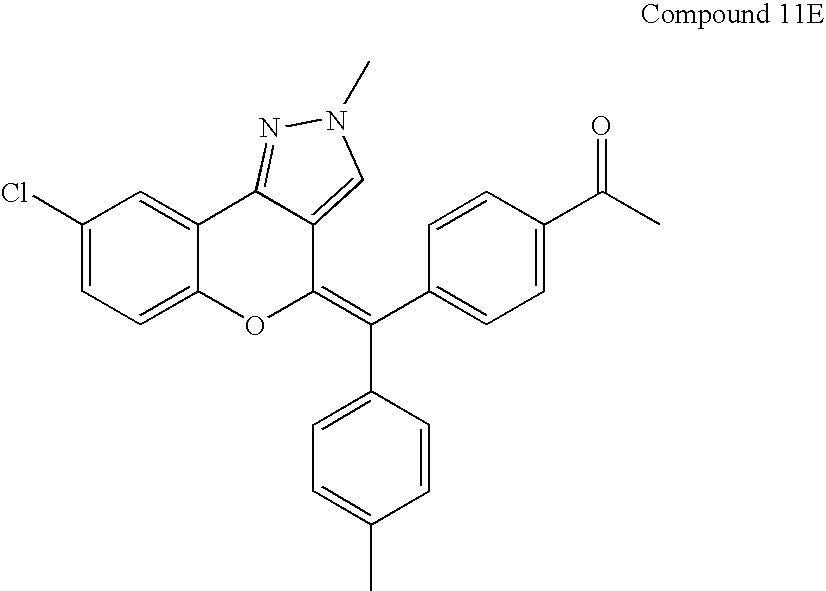


Procedure for Synthesis of 2.

General Procedure for Synthesis of 5.

Procedure for Synthesis of 7.

General Procedure for Synthesis of 8B.

Procedure for Synthesis of 9.

Procedure for Synthesis of 10.

General Procedure for Synthesis of 12.


Procedure for Synthesis of 13 and 14.

Procedure for Synthesis of 15.

General Procedure for Synthesis of 17.


General Procedure for Synthesis of 18 and 19.


General Procedure for Synthesis of 20.


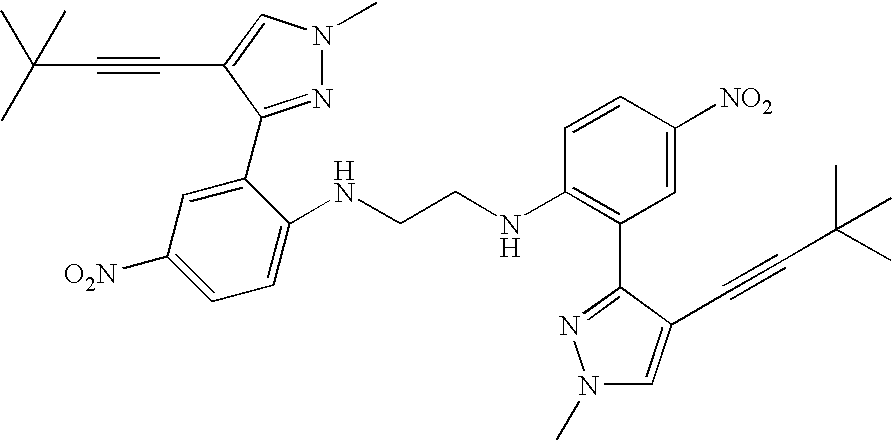


| TABLE 5 | |||||
| Toxicity | Toxicity | ||||
| Luciferase | % Inhibition at | TaqMan | % Inhibition at | ||
| Compound | Structure | IC50 | 100 μM (1 dose) | IC50 | 50 μM (2 doses) |
| VQ_23705 |
 |
6.47 | 26.4 | 1.1 | 14.7 |
| VQ_23708 |
 |
0.55 | 63.8 | 0.7 | 21.8 |
| VQ_23307 |
 |
7.25 | 44.8 | 8.1 | 14.8 |
| VQ_23317 |
 |
4.37 | 10.7 | 2.7 | 2.1 |
| VQ_23374 |
 |
3.92 | 19.1 | 5.7 | 13.0 |
| VQ_23714 |
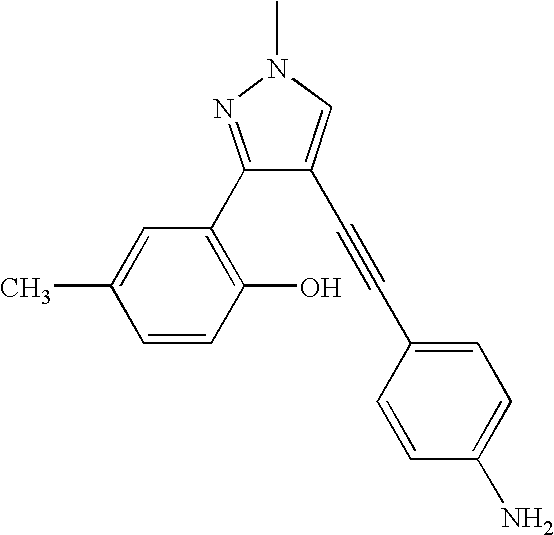 |
1.16 | 31.5 | 0.1 | 33.4 |
| VQ_23720 |
 |
1.28 | 49.2 | 0.3 | 32.6 |
| VQ_24691 |
 |
5.13 | 21.1 | 0.09 | 28.3 |
| VQ_23310 |
 |
7.21 | 33.3 | 1.15 | 7.1 |
| VQ_23382 |
 |
14.92 | 18.5 | 3.03 | 8.8 |
| VQ_34145 |
 |
1.87 | 19.8 | 0.82 | 13.1 |
| VQ_34298 |
 |
5.5 | 18.3 | 3.86 | 23.9 |
| VQ_34394 |
 |
4.8 | 31.8 | 1.07 | 24.5 |
| VQ_34395 |
 |
3.7 | 45.4 | 0.68 | 23.6 |
| VQ_34432 |
 |
11.5 | 45.5 | 0.82 | 8.2 |
| VQ_95538 |
 |
9.8 | 24.3 | 1.35 | 6.1 |
| VQ_35543 |
 |
10.1 | 25.3 | 2.16 | 8.2 |
| VQ_35556 |
 |
9.3 | 28.8 | 0.99 | 13.7 |
| VQ_35559 |
 |
9.5 | 24.2 | 1.98 | 15.8 |
| VQ_36658 |
 |
0.04 | 21.8 | 0.40 | 38.8 |
| VQ_36659 |
 |
0.04 | 13.0 | 0.30 | 21.9 |
| VQ_36660 |
 |
10.36 | 15.3 | 0.59 | 15.8 |
| VQ_36661 |
 |
0.63 | 9.5 | 0.55 | 14.4 |
| VQ_36663 |
 |
0.00 | 15.5 | 0.75 | 23.8 |
| VQ_36665 |
 |
0.03 | 12.8 | 0.72 | 25.6 |
| VQ_36666 |
 |
0.35 | 12.9 | 0.38 | 19.0 |
| VQ_36669 |
 |
0.01 | 23.2 | 0.90 | 26.7 |
| VQ_36673 |
 |
2.09 | 15.9 | 0.42 | 19.7 |
| VQ_36649 |
 |
9.70 | 7.3 | 0.40 | 12.1 |
| VQ_36877 |
 |
0.20 | 10.9 | ||
| VQ_36885 |
 |
0.03 | 35.7 | ||
| VQ_36886 |
 |
0.19 | 12.6 | ||
| VQ_36887 |
 |
0.06 | 18.7 | ||
| VQ_36893 |
 |
0.09 | 16.6 | ||
| VQ_36894 |
 |
0.12 | 12.5 | ||
| VQ_36895 |
 |
0.10 | 10.4 | ||
| VQ_36905 |
 |
1.63 | 10.9 | ||
| VQ_36906 |
 |
2.69 | 14.0 | ||
| VQ_36907 |
 |
0.20 | 34.7 | ||
| VQ_36908 |
 |
1.72 | 22.7 | ||
| VQ_23322 |
 |
2.00 | 21.5 | 2.47 | 1.5 |
| VQ_23324 |
 |
5.51 | 39.8 | 0.03 | 8.8 |
| VQ_23382 |
 |
6.47 | 16.2 | 2.26 | −1.6 |
| VQ_30716 |
 |
3.96 | 13.7 | 0.11 | 6.8 |
| VQ_33518 |
 |
1.85 | 40.4 | 0.42 | 22.8 |
| VQ_34072 |
 |
2.87 | 4.2 | 1.09 | 6.2 |
Claims (20)


Priority Applications (4)
| Application Number | Priority Date | Filing Date | Title |
|---|---|---|---|
| US11/058,852 US8329703B2 (en) | 2005-02-15 | 2005-02-15 | Pyrazole compounds |
| PCT/US2006/005236 WO2006088903A2 (en) | 2005-02-15 | 2006-02-14 | Pyrazole compounds |
| EP06720749A EP1853257A2 (en) | 2005-02-15 | 2006-02-14 | Pyrazole compounds |
| US13/678,449 US20130177529A1 (en) | 2005-02-15 | 2012-11-15 | Pyrazole Compounds |
Applications Claiming Priority (1)
| Application Number | Priority Date | Filing Date | Title |
|---|---|---|---|
| US11/058,852 US8329703B2 (en) | 2005-02-15 | 2005-02-15 | Pyrazole compounds |
Related Child Applications (1)
| Application Number | Title | Priority Date | Filing Date |
|---|---|---|---|
| US13/678,449 Continuation US20130177529A1 (en) | 2005-02-15 | 2012-11-15 | Pyrazole Compounds |
Publications (2)
| Publication Number | Publication Date |
|---|---|
| US20060183751A1 US20060183751A1 (en) | 2006-08-17 |
| US8329703B2 true US8329703B2 (en) | 2012-12-11 |
Family
ID=36816435
Family Applications (2)
| Application Number | Title | Priority Date | Filing Date |
|---|---|---|---|
| US11/058,852 Expired - Fee Related US8329703B2 (en) | 2005-02-15 | 2005-02-15 | Pyrazole compounds |
| US13/678,449 Abandoned US20130177529A1 (en) | 2005-02-15 | 2012-11-15 | Pyrazole Compounds |
Family Applications After (1)
| Application Number | Title | Priority Date | Filing Date |
|---|---|---|---|
| US13/678,449 Abandoned US20130177529A1 (en) | 2005-02-15 | 2012-11-15 | Pyrazole Compounds |
Country Status (3)
| Country | Link |
|---|---|
| US (2) | US8329703B2 (en) |
| EP (1) | EP1853257A2 (en) |
| WO (1) | WO2006088903A2 (en) |
Cited By (3)
| Publication number | Priority date | Publication date | Assignee | Title |
|---|---|---|---|---|
| US9126944B2 (en) | 2013-02-28 | 2015-09-08 | Bristol-Myers Squibb Company | Phenylpyrazole derivatives as potent ROCK1 and ROCK2 inhibitors |
| US9828345B2 (en) | 2013-02-28 | 2017-11-28 | Bristol-Myers Squibb Company | Phenylpyrazole derivatives as potent ROCK1 and ROCK2 inhibitors |
| US11760701B2 (en) | 2018-02-27 | 2023-09-19 | The Research Foundation For The State University Of New Yrok | Difluoromethoxylation and trifluoromethoxylation compositions and methods for synthesizing same |
Families Citing this family (8)
| Publication number | Priority date | Publication date | Assignee | Title |
|---|---|---|---|---|
| CA2680507A1 (en) * | 2006-10-13 | 2008-04-24 | Xtl Biopharmaceuticals Ltd. | Compounds and methods for treatment of hcv |
| MX2009011930A (en) | 2007-05-04 | 2009-11-18 | Vertex Pharma | Combination therapy for the treatment of hcv infection. |
| WO2008141731A2 (en) | 2007-05-18 | 2008-11-27 | Bayer Healthcare Ag | Inhibitors of hypoxia inducible factor (hif) useful for treating hyper-proliferative disorders and diseases associated with angiogenesis |
| US7776877B2 (en) | 2007-06-22 | 2010-08-17 | Chemocentryx, Inc. | N-(2-(hetaryl)aryl) arylsulfonamides and N-(2-(hetaryl) hetaryl arylsulfonamides |
| MY195177A (en) | 2015-06-23 | 2023-01-11 | Kissei Pharmaceutical | Pyrazole Derivative or Pharmaceutically Acceptable Salt Thereof |
| CN105061441A (en) * | 2015-07-10 | 2015-11-18 | 南京大学 | Coumarin pyrazole compounds containing nitrogen heterocycles such as piperazine and the like, preparation of coumarin pyrazole compounds and application of coumarin pyrazole compounds in tumor cell inhibition |
| CN105061440A (en) * | 2015-07-10 | 2015-11-18 | 南京大学 | Coumarin pyrazole compounds containing acetylamino nitrogen heterocycles, preparation of coumarin pyrazole compounds and application of coumarin pyrazole compounds in tumor cell inhibition |
| CN110818630B (en) * | 2019-08-12 | 2022-06-10 | 西南大学 | Synthesis method of conjugated (E) -3-cycloalkenyl acrylate derivative |
Citations (13)
| Publication number | Priority date | Publication date | Assignee | Title |
|---|---|---|---|---|
| US5091386A (en) | 1988-09-24 | 1992-02-25 | Hoechst Aktiengesellschaft | 7-substituted derivatives of 3,5-dihydroxyhept-6-ynoic acids and corresponding lactones and their use as hypercholeserolemics |
| US5300521A (en) | 1992-05-13 | 1994-04-05 | Sandoz Ltd. | Pyrazoles, fungicidal compositions and use |
| WO2001020993A1 (en) | 1999-09-24 | 2001-03-29 | Agro-Kanesho Co., Ltd. | Insecticidal and acaricidal agents |
| WO2002051810A2 (en) | 2000-12-22 | 2002-07-04 | Abbott Gmbh & Co. Kg | Integrin receptor ligands |
| US20020183366A1 (en) | 2001-03-23 | 2002-12-05 | Garvey David S. | Cyclooxygenase-2 inhibitors, compositions and methods of use |
| WO2004026839A1 (en) | 2002-09-19 | 2004-04-01 | Agro-Kanesho Co.,Ltd. | Process for producing arylethynylpyrazole compound |
| JP2004359619A (en) | 2003-06-05 | 2004-12-24 | Sds Biotech:Kk | Herbicidal composition |
| WO2005033100A1 (en) | 2003-10-07 | 2005-04-14 | Lipideon Biotechnology Ag | Novel hypocholesterolemic compounds |
| US6916839B2 (en) | 2003-01-07 | 2005-07-12 | Bayer Chemicals Aktiengesellschaft | Pyrazolylarylalkines |
| US20060030559A1 (en) | 2004-06-01 | 2006-02-09 | Bernd Buettelmann | Diazole derivatives |
| WO2006028524A2 (en) | 2004-04-29 | 2006-03-16 | Pharmix Corporation | Compositions and treatments for inhibiting kinase and/or hmg-coa reductase |
| US7238722B2 (en) | 2003-01-07 | 2007-07-03 | Lanxess Deutschland Gmbh | Pyrazolylalkines |
| US20090041723A1 (en) * | 2006-10-13 | 2009-02-12 | Guolin Li | Compounds and methods for treatment of HCV |
-
2005
- 2005-02-15 US US11/058,852 patent/US8329703B2/en not_active Expired - Fee Related
-
2006
- 2006-02-14 WO PCT/US2006/005236 patent/WO2006088903A2/en not_active Ceased
- 2006-02-14 EP EP06720749A patent/EP1853257A2/en not_active Withdrawn
-
2012
- 2012-11-15 US US13/678,449 patent/US20130177529A1/en not_active Abandoned
Patent Citations (17)
| Publication number | Priority date | Publication date | Assignee | Title |
|---|---|---|---|---|
| US5091386A (en) | 1988-09-24 | 1992-02-25 | Hoechst Aktiengesellschaft | 7-substituted derivatives of 3,5-dihydroxyhept-6-ynoic acids and corresponding lactones and their use as hypercholeserolemics |
| US5300521A (en) | 1992-05-13 | 1994-04-05 | Sandoz Ltd. | Pyrazoles, fungicidal compositions and use |
| WO2001020993A1 (en) | 1999-09-24 | 2001-03-29 | Agro-Kanesho Co., Ltd. | Insecticidal and acaricidal agents |
| EP1219173A1 (en) | 1999-09-24 | 2002-07-03 | Agro-Kanesho Co., Ltd. | Insecticidal and acaricidal agents |
| US20020156115A1 (en) | 1999-09-24 | 2002-10-24 | Agro-Kanesho Co., Ltd. | Insecticidal and acaricidal composition, and methods of using the same |
| US20030191171A1 (en) | 1999-09-24 | 2003-10-09 | Agro-Kanesho Co., Ltd. | Insecticidal and acaricidal agent |
| WO2002051810A2 (en) | 2000-12-22 | 2002-07-04 | Abbott Gmbh & Co. Kg | Integrin receptor ligands |
| US20020183366A1 (en) | 2001-03-23 | 2002-12-05 | Garvey David S. | Cyclooxygenase-2 inhibitors, compositions and methods of use |
| WO2004026839A1 (en) | 2002-09-19 | 2004-04-01 | Agro-Kanesho Co.,Ltd. | Process for producing arylethynylpyrazole compound |
| AU2003266548A1 (en) | 2002-09-19 | 2004-04-08 | Agro-Kanesho Co., Ltd. | Process for producing arylethynylpyrazole compound |
| US6916839B2 (en) | 2003-01-07 | 2005-07-12 | Bayer Chemicals Aktiengesellschaft | Pyrazolylarylalkines |
| US7238722B2 (en) | 2003-01-07 | 2007-07-03 | Lanxess Deutschland Gmbh | Pyrazolylalkines |
| JP2004359619A (en) | 2003-06-05 | 2004-12-24 | Sds Biotech:Kk | Herbicidal composition |
| WO2005033100A1 (en) | 2003-10-07 | 2005-04-14 | Lipideon Biotechnology Ag | Novel hypocholesterolemic compounds |
| WO2006028524A2 (en) | 2004-04-29 | 2006-03-16 | Pharmix Corporation | Compositions and treatments for inhibiting kinase and/or hmg-coa reductase |
| US20060030559A1 (en) | 2004-06-01 | 2006-02-09 | Bernd Buettelmann | Diazole derivatives |
| US20090041723A1 (en) * | 2006-10-13 | 2009-02-12 | Guolin Li | Compounds and methods for treatment of HCV |
Non-Patent Citations (14)
| Title |
|---|
| Chawla et al., "Challenges in Polymorphism of Pharmaceuticals", CRIPS vol. 5, No. 1, Jan.-Mar. 2004 (4 Pages). * |
| Chen et al., Bioorg. Med. Chem. Lett. 19 (2009) 1105-1109. * |
| Ford et al., caplus 1973:84481. * |
| Gough et al., caplus an 1933:35749. * |
| HCV, HepatitisC, 2012, http://en.wikipedia.org/wiki/Hepatitis-C. * |
| HCV-Replicon, 2012, http://www.southernresearch.org/life-sciences/infectious-diseases/virology/hepatitis/vitro-evaluations. * |
| Hepatitis, http://www.mayoclinic.comlhealthlhepatitis-cIDS000971DSECTION=8 (2007). * |
| http://www.apath.com/Directory/Licensing/Technology/HCV-Replicon.asp. * |
| http://www.mayoclinic.com/health/hepatitis-c/DS00097/DSECTION=8. * |
| International Search Report issued Feb. 12, 2007 in PCT/US2006/005236. |
| Newman et al., "Solid-state analysis of the active pharmaceutical ingredient in drug products", DDT vol. 8, No. 19, Oct. 2003, p. 898-905. * |
| Reimlinger et al., caplus an 1969:96697. * |
| Replicon, http://www.apath.com/Directory/Licensing/Technology/HCVReplicon.asp (2007). * |
| Stoermer et al., caplus an 1907:8801. * |
Cited By (4)
| Publication number | Priority date | Publication date | Assignee | Title |
|---|---|---|---|---|
| US9126944B2 (en) | 2013-02-28 | 2015-09-08 | Bristol-Myers Squibb Company | Phenylpyrazole derivatives as potent ROCK1 and ROCK2 inhibitors |
| US9458110B2 (en) | 2013-02-28 | 2016-10-04 | Bristol-Myers Squibb Company | Phenylpyrazole derivatives as potent ROCK1 and ROCK2 inhibitors |
| US9828345B2 (en) | 2013-02-28 | 2017-11-28 | Bristol-Myers Squibb Company | Phenylpyrazole derivatives as potent ROCK1 and ROCK2 inhibitors |
| US11760701B2 (en) | 2018-02-27 | 2023-09-19 | The Research Foundation For The State University Of New Yrok | Difluoromethoxylation and trifluoromethoxylation compositions and methods for synthesizing same |
Also Published As
| Publication number | Publication date |
|---|---|
| WO2006088903A3 (en) | 2007-05-10 |
| EP1853257A2 (en) | 2007-11-14 |
| US20060183751A1 (en) | 2006-08-17 |
| WO2006088903A2 (en) | 2006-08-24 |
| US20130177529A1 (en) | 2013-07-11 |
Similar Documents
| Publication | Publication Date | Title |
|---|---|---|
| US20130177529A1 (en) | Pyrazole Compounds | |
| JP7016809B2 (en) | Tetracyclic pyridone compound as an antiviral agent | |
| US7923004B2 (en) | 4-ethynyl pyrazole derivative compounds and methods for treatment of HCV | |
| US9156839B2 (en) | Fused bicyclic sulfamoyl derivatives and the use thereof as medicaments for the treatment of hepatitis B | |
| US10815208B2 (en) | Method for preparing 2-hydroxyl-4-(2, 3-disubstituted benzyloxy)-5-substituted benzaldehyde derivative | |
| US7994360B2 (en) | Benzofuran compounds | |
| KR101891933B1 (en) | Novel pyridazones and triazinones for the treatment and prophylaxis of hepatitis b virus infection | |
| CN107835813A (en) | Novel 6,7‑dihydropyrido[2,1‑a]phthalazin‑2‑one compounds for the treatment and prevention of hepatitis B virus infection | |
| JP4958974B2 (en) | Novel pyridazine compounds and their use | |
| JP2017538723A (en) | Benzazepine sulfonamide compound | |
| US6608058B2 (en) | 6-methylnicotinamide derivatives as antiviral agents | |
| US8048889B2 (en) | 3,4-disubstituted coumarin and quinolone compounds | |
| EP2028938A1 (en) | 3,4-disubstituted coumarin and quinolone compounds | |
| CN102971305B (en) | Heterocyclic antiviral compounds | |
| US8143276B2 (en) | 4-thio substituted quinoline and naphthyridine compounds | |
| CN115003383B (en) | Bicyclic agonist of the interferon gene stimulator STING | |
| EP2061466A2 (en) | 4-thio substituted quinoline and naphthyridine compounds | |
| HRP20050222A2 (en) | 4-(3,5-dicyanophenoxy) pyrazole derivatives for use as reverse transcriptase modulators in the treatment of i.a. hiv | |
| JP5617036B2 (en) | Heterocyclic antiviral compounds | |
| US20040132793A1 (en) | Pyrazole derivatives | |
| HK1251219B (en) | 6,7-dihydropyrido[2,1-a]phthalazin-2-ones for the treatment and prophylaxis of hepatitis b virus infection | |
| HK1172903A (en) | Heterocyclic antiviral compounds |
Legal Events
| Date | Code | Title | Description |
|---|---|---|---|
| AS | Assignment |
Owner name: VIVOQUEST, INC., NEW YORK Free format text: ASSIGNMENT OF ASSIGNORS INTEREST;ASSIGNORS:HU, YOUHONG;XU, BIN;LIAO, YUN;AND OTHERS;SIGNING DATES FROM 20050810 TO 20050813;REEL/FRAME:017107/0818 Owner name: VIVOQUEST, INC., NEW YORK Free format text: ASSIGNMENT OF ASSIGNORS INTEREST;ASSIGNORS:HU, YOUHONG;XU, BIN;LIAO, YUN;AND OTHERS;REEL/FRAME:017107/0818;SIGNING DATES FROM 20050810 TO 20050813 |
|
| AS | Assignment |
Owner name: XTL BIOPHARMACEUTICALS LTD., ISRAEL Free format text: ASSIGNMENT OF ASSIGNORS INTEREST;ASSIGNOR:VIVOQUEST, INC;REEL/FRAME:017636/0924 Effective date: 20060508 |
|
| AS | Assignment |
Owner name: PRESIDIO PHARMACEUTICALS, INC., CALIFORNIA Free format text: LICENSE;ASSIGNOR:XTL BIOPHARMACEUTICALS LTD.;REEL/FRAME:020762/0273 Effective date: 20080319 Owner name: PRESIDIO PHARMACEUTICALS, INC.,CALIFORNIA Free format text: LICENSE;ASSIGNOR:XTL BIOPHARMACEUTICALS LTD.;REEL/FRAME:020762/0273 Effective date: 20080319 |
|
| FEPP | Fee payment procedure |
Free format text: PAYOR NUMBER ASSIGNED (ORIGINAL EVENT CODE: ASPN); ENTITY STATUS OF PATENT OWNER: SMALL ENTITY |
|
| REMI | Maintenance fee reminder mailed | ||
| LAPS | Lapse for failure to pay maintenance fees | ||
| STCH | Information on status: patent discontinuation |
Free format text: PATENT EXPIRED DUE TO NONPAYMENT OF MAINTENANCE FEES UNDER 37 CFR 1.362 |
|
| STCH | Information on status: patent discontinuation |
Free format text: PATENT EXPIRED DUE TO NONPAYMENT OF MAINTENANCE FEES UNDER 37 CFR 1.362 |
|
| FP | Lapsed due to failure to pay maintenance fee |
Effective date: 20161211 |