US8252636B2 - Method of manufacturing nanowires parallel to the supporting substrate - Google Patents

Method of manufacturing nanowires parallel to the supporting substrate Download PDF

Info

Publication number
US8252636B2
US8252636B2 US12/267,431 US26743108A US8252636B2 US 8252636 B2 US8252636 B2 US 8252636B2 US 26743108 A US26743108 A US 26743108A US 8252636 B2 US8252636 B2 US 8252636B2
Authority
US
United States
Prior art keywords
nanowire
bar
necking
wire
regions
Prior art date
Legal status (The legal status is an assumption and is not a legal conclusion. Google has not performed a legal analysis and makes no representation as to the accuracy of the status listed.)
Expired - Fee Related
Application number
US12/267,431
Other versions
US20090124050A1 (en
Inventor
Erwan Dornel
Jean-Charles Barbe
Thomas Ernst
Current Assignee (The listed assignees may be inaccurate. Google has not performed a legal analysis and makes no representation or warranty as to the accuracy of the list.)
Commissariat a lEnergie Atomique et aux Energies Alternatives CEA
Original Assignee
Commissariat a lEnergie Atomique CEA
Priority date (The priority date is an assumption and is not a legal conclusion. Google has not performed a legal analysis and makes no representation as to the accuracy of the date listed.)
Filing date
Publication date
Application filed by Commissariat a lEnergie Atomique CEA filed Critical Commissariat a lEnergie Atomique CEA
Assigned to COMMISSARIAT A L'ENERGIE ATOMIQUE reassignment COMMISSARIAT A L'ENERGIE ATOMIQUE ASSIGNMENT OF ASSIGNORS INTEREST (SEE DOCUMENT FOR DETAILS). Assignors: BARBE, JEAN-CHARLES, DORNEL, ERWAN, ERNST, THOMAS HAMEAU CHECHAMAIN
Publication of US20090124050A1 publication Critical patent/US20090124050A1/en
Application granted granted Critical
Publication of US8252636B2 publication Critical patent/US8252636B2/en
Expired - Fee Related legal-status Critical Current
Anticipated expiration legal-status Critical

Links

Images

Classifications

    • HELECTRICITY
    • H10SEMICONDUCTOR DEVICES; ELECTRIC SOLID-STATE DEVICES NOT OTHERWISE PROVIDED FOR
    • H10DINORGANIC ELECTRIC SEMICONDUCTOR DEVICES
    • H10D30/00Field-effect transistors [FET]
    • H10D30/60Insulated-gate field-effect transistors [IGFET]
    • H10D30/67Thin-film transistors [TFT]
    • H10D30/6729Thin-film transistors [TFT] characterised by the electrodes
    • H10D30/673Thin-film transistors [TFT] characterised by the electrodes characterised by the shapes, relative sizes or dispositions of the gate electrodes
    • H10D30/6735Thin-film transistors [TFT] characterised by the electrodes characterised by the shapes, relative sizes or dispositions of the gate electrodes having gates fully surrounding the channels, e.g. gate-all-around
    • BPERFORMING OPERATIONS; TRANSPORTING
    • B82NANOTECHNOLOGY
    • B82YSPECIFIC USES OR APPLICATIONS OF NANOSTRUCTURES; MEASUREMENT OR ANALYSIS OF NANOSTRUCTURES; MANUFACTURE OR TREATMENT OF NANOSTRUCTURES
    • B82Y10/00Nanotechnology for information processing, storage or transmission, e.g. quantum computing or single electron logic
    • HELECTRICITY
    • H10SEMICONDUCTOR DEVICES; ELECTRIC SOLID-STATE DEVICES NOT OTHERWISE PROVIDED FOR
    • H10DINORGANIC ELECTRIC SEMICONDUCTOR DEVICES
    • H10D30/00Field-effect transistors [FET]
    • H10D30/01Manufacture or treatment
    • H10D30/014Manufacture or treatment of FETs having zero-dimensional [0D] or one-dimensional [1D] channels, e.g. quantum wire FETs, single-electron transistors [SET] or Coulomb blockade transistors
    • HELECTRICITY
    • H10SEMICONDUCTOR DEVICES; ELECTRIC SOLID-STATE DEVICES NOT OTHERWISE PROVIDED FOR
    • H10DINORGANIC ELECTRIC SEMICONDUCTOR DEVICES
    • H10D30/00Field-effect transistors [FET]
    • H10D30/40FETs having zero-dimensional [0D], one-dimensional [1D] or two-dimensional [2D] charge carrier gas channels
    • H10D30/402Single electron transistors; Coulomb blockade transistors
    • HELECTRICITY
    • H10SEMICONDUCTOR DEVICES; ELECTRIC SOLID-STATE DEVICES NOT OTHERWISE PROVIDED FOR
    • H10DINORGANIC ELECTRIC SEMICONDUCTOR DEVICES
    • H10D30/00Field-effect transistors [FET]
    • H10D30/40FETs having zero-dimensional [0D], one-dimensional [1D] or two-dimensional [2D] charge carrier gas channels
    • H10D30/43FETs having zero-dimensional [0D], one-dimensional [1D] or two-dimensional [2D] charge carrier gas channels having 1D charge carrier gas channels, e.g. quantum wire FETs or transistors having 1D quantum-confined channels
    • HELECTRICITY
    • H10SEMICONDUCTOR DEVICES; ELECTRIC SOLID-STATE DEVICES NOT OTHERWISE PROVIDED FOR
    • H10DINORGANIC ELECTRIC SEMICONDUCTOR DEVICES
    • H10D62/00Semiconductor bodies, or regions thereof, of devices having potential barriers
    • H10D62/10Shapes, relative sizes or dispositions of the regions of the semiconductor bodies; Shapes of the semiconductor bodies
    • H10D62/117Shapes of semiconductor bodies
    • H10D62/118Nanostructure semiconductor bodies
    • HELECTRICITY
    • H10SEMICONDUCTOR DEVICES; ELECTRIC SOLID-STATE DEVICES NOT OTHERWISE PROVIDED FOR
    • H10DINORGANIC ELECTRIC SEMICONDUCTOR DEVICES
    • H10D62/00Semiconductor bodies, or regions thereof, of devices having potential barriers
    • H10D62/10Shapes, relative sizes or dispositions of the regions of the semiconductor bodies; Shapes of the semiconductor bodies
    • H10D62/117Shapes of semiconductor bodies
    • H10D62/118Nanostructure semiconductor bodies
    • H10D62/119Nanowire, nanosheet or nanotube semiconductor bodies
    • H10D62/121Nanowire, nanosheet or nanotube semiconductor bodies oriented parallel to substrates
    • HELECTRICITY
    • H10SEMICONDUCTOR DEVICES; ELECTRIC SOLID-STATE DEVICES NOT OTHERWISE PROVIDED FOR
    • H10DINORGANIC ELECTRIC SEMICONDUCTOR DEVICES
    • H10D62/00Semiconductor bodies, or regions thereof, of devices having potential barriers
    • H10D62/80Semiconductor bodies, or regions thereof, of devices having potential barriers characterised by the materials
    • H10D62/81Semiconductor bodies, or regions thereof, of devices having potential barriers characterised by the materials of structures exhibiting quantum-confinement effects, e.g. single quantum wells; of structures having periodic or quasi-periodic potential variation
    • H10D62/812Single quantum well structures
    • H10D62/813Quantum wire structures
    • HELECTRICITY
    • H10SEMICONDUCTOR DEVICES; ELECTRIC SOLID-STATE DEVICES NOT OTHERWISE PROVIDED FOR
    • H10DINORGANIC ELECTRIC SEMICONDUCTOR DEVICES
    • H10D30/00Field-effect transistors [FET]
    • H10D30/60Insulated-gate field-effect transistors [IGFET]
    • H10D30/67Thin-film transistors [TFT]
    • H10D30/6729Thin-film transistors [TFT] characterised by the electrodes
    • H10D30/673Thin-film transistors [TFT] characterised by the electrodes characterised by the shapes, relative sizes or dispositions of the gate electrodes
    • H10D30/6733Multi-gate TFTs
    • HELECTRICITY
    • H10SEMICONDUCTOR DEVICES; ELECTRIC SOLID-STATE DEVICES NOT OTHERWISE PROVIDED FOR
    • H10DINORGANIC ELECTRIC SEMICONDUCTOR DEVICES
    • H10D30/00Field-effect transistors [FET]
    • H10D30/60Insulated-gate field-effect transistors [IGFET]
    • H10D30/67Thin-film transistors [TFT]
    • H10D30/6757Thin-film transistors [TFT] characterised by the structure of the channel, e.g. transverse or longitudinal shape or doping profile

Definitions

  • the invention relates to a method of manufacturing nanowires parallel to their supporting substrate. This method can in particular apply to the field of microelectronics, in particular for producing nanowire transistors.
  • Nanowires parallel to their supporting substrate have a certain interest in the manufacture of field effect transistors.
  • a nanowire is connected at its ends to contacts serving as electrodes (source and drain).
  • the wires can range from a few nanometers in diameter to a few hundreds of nanometers with an optimum at 20 nm.
  • the length of the wires may range from the same as the diameter to 10 times the diameter.
  • the dimensions of the contacts are greater than the width of the nanowires and may range from 10 nm to several micrometers.
  • the nanowire is in contact or not with the underlying substrate, through its bottom part.
  • a “nanowire on substrate” will be spoken of.
  • a “free nanowire” will be spoken of.
  • the material constituting the nanowire and the material constituting the contacts are mono-crystalline semiconductors, for example, made from Si, SiGe, Ge, GeAs, AlGaAs or amorphous.
  • the material constituting the nanowire is identical to the material of the contacts.
  • the substrate may consist of a monolayer or a multilayer.
  • the top layer of the substrate is a dielectric, for example SiO 2 or Al 2 O 3 .
  • the top layer for the substrate may be a dielectric (for example) SiO 2 or Al 2 O 3 or a conductor or a semiconductor (for example Si, SiGe, Ge, GeAs, AlGaAs or an amorphous material).
  • FIG. 1 shows a transistor structure in the course of manufacture. There can be recognised the silicon support 1 of the SOI substrate and the buried oxide layer 2 and, on this oxide layer, the structure of the transistor produced from the surface layer of silicon of the SOI substrate, the parts 3 , 4 and 5 of which remain.
  • the transistor structure comprises a source region 3 , a drain region 4 and a channel region 5 in the form of a bar of short length compared with the drain and source regions.
  • the references 6 and 7 designate silicon dioxide zones situated respectively on the source 3 and drain 4 regions. The zones 6 and 7 result from the manufacturing method and may lay completely on the surface of the parts 3 , 4 and 5 . The zones 6 and 7 will be eliminated subsequently.
  • FIG. 2 shows the transistor structure at a subsequent manufacturing stage.
  • This structure results from annealing at high temperature.
  • the annealing causes a rearrangement of the silicon atoms.
  • the rearrangement is caused by a surface migration of the silicon atoms due to the tendency to minimise the surface energy.
  • the rearrangement of the atoms at the narrow channel region has the consequence of rounding the corners of the bar forming the channel region. This channel region is then transformed into a nanowire 8 .
  • FIG. 3 shows the transistor structure completed by the formation of a gate 9 , interposed between the source 3 and drain 4 regions and enclosing the nanowire 8 .
  • the annealing smoothes and rounds the cross section of the nanowire and ensures reconstruction of the crystalline surface of the nanowire in order to optimise its electrical characteristics.
  • the smoothing reduces the roughness and therefore increases the mobility of the carriers for the electrical charges passing through the nanowire, which serves as a conduction channel.
  • the charge carriers interact with the roughness of the interface between the wire and the gate dielectric, which degrades their mobility.
  • Annealing therefore rounds the cross section of the nanowire by its surface migration of the silicon atoms. However, there also occurs a migration of the silicon atoms of the nanowire towards the source and drain regions, which are of the same material as the nanowire. There may result from this a phenomenon of pinching of the nanowire (referred to as “nanowire necking” in English terminology).
  • FIGS. 4A to 4C are plan views of a substrate 11 supporting a bar 12 , the ends of which are connected to drain 13 and source 14 regions.
  • FIG. 4A shows the structure before annealing. This structure is therefore similar to that of FIG. 1 .
  • necking 16 of the nanowire 15 may occur at its two ends, that is to say close to the source 13 and drain 14 contacts.
  • the necking of the nanowires is a problem since it creates additional access resistance. The necking thus degrades the performance of the transistors.
  • the necking may lead, if the annealing continues, to the rupture of the nanowire at the points referenced 17 (see FIG. 4C ). There is then no longer any electrical connection between the wire 15 and the source 13 and drain 14 contacts. The result is a total loss of the functionality of the transistor.
  • the document US 2005/0275010 recommends the insertion of a masked zone on at least one of the source and drain regions.
  • the mask comprises a material towards which the silicon atoms do not migrate, such as silicon nitride, silicon oxynitride or silicon dioxide. Since the silicon atoms do not have a tendency to migrate towards the masked regions, the quantity of atoms that actually migrate is limited and consequently the necking is also limited.
  • nanowires on several levels where the lower wire is free (with a matrix organisation), a state that also requires the use of a sacrificial material.
  • a wire on substrate will remain on the substrate, while a free wire will remain free.
  • the inventors of the present invention have discovered that it is possible to control the sizing of the necking caused on nanowires by an annealing. It is then possible to provide for the sizing of the necking according to the types of material used and the annealing conditions (annealing temperature, duration of annealing, nature and pressure of the gas present during the annealing).
  • An object of the invention is a method of manufacturing at least one nanowire, the nanowire being parallel to its supporting substrate, the method comprising:
  • the annealing is carried out under conditions allowing control of the sizing of at least one necking occurring on the nanowire during its formation, the radius of the nanowire at the necking then being determined by the graph in FIG. 6 , for which:
  • r neck radius of the nanowire at the necking
  • number of surface atoms of the nanowire per unit surface
  • atomic volume of the atoms of the nanowire
  • T annealing temperature
  • annealing is carried under conditions also allowing control of the location of the neck or necks during the formation of the nanowire, the location of the neck or necks then being determined by the graph in FIG. 8 , for which:
  • L neck is the distance between a neck and the region of the structure closest to the neck
  • L wire being the length of the nanowire
  • the formation on the supporting substrate of the structure comprising a bar and two regions causes the creation of a splay at each end of the bar in its connection with the two regions.
  • the splay can take place at an angle of 45° on each edge of the nanowire.
  • Another object of the invention is a method of manufacturing at least one nanowire transistor, comprising:
  • This method of manufacturing a nanowire transistor allows the manufacture of a transistor comprising a nanowire having a single neck and a single gate covering the single neck. It also allows the manufacture of a transistor comprising a nanowire having two necks and a single gate covering the two necks. It also allows the manufacture of a transistor comprising a nanowire having two necks and two gates, a first gate covering a first neck and a second gate covering a second neck.
  • FIG. 1 already described, shows a nanowire transistor structure according to the known art during manufacture
  • FIG. 2 already described, shows the nanowire transistor structure of FIG. 1 at a subsequent stage of manufacture, according to the known art
  • FIG. 3 already described, shows the nanowire transistor structure of FIG. 2 completed by the formation of a gate, according to the known art
  • FIGS. 4A to 4C are plan views of a substrate supporting a bar, intended for the formation of a nanowire, the ends of which are connected to drain and source regions, illustrating the phenomenon of migration of the nanowire atoms during formation,
  • FIG. 5A repeats the structure shown in FIG. 4A and FIG. 5B shows the necking effect due to the annealing on a detail of the FIG. 5A ,
  • FIG. 6 is a graph representing the quantification of the necking as a function of time
  • FIG. 7 depicts the algorithm of the MoveFilm numerical code applied to a free nanowire
  • FIG. 8 is a graph depicting the distance L neck between the neck and the contact as a function of the length of the nanowire and its initial radius r 0 ,
  • FIGS. 14A and 14B depict zones of attachment between nanowires and their corresponding contact, according to the known art ( FIG. 14A ) and according to the invention ( FIG. 14B ),
  • FIG. 15 is a graph depicting the minimum of the radius of the nanowire at the neck, r neck , as a function of the time t, the coefficient B and the initial radius of the nanowire r 0 for the geometries shown in FIGS. 14A and 14B .
  • This code has been modified in order to be able to simulate the effects of the annealing (rounding and necking) on free nanowires (having symmetry of rotation) and thus provide for the sizing of the neck according to the experimental conditions, namely the type of material and the annealing conditions (annealing temperature, annealing time, nature of the gas and pressure of the gas).
  • the effect of the necking simulated by “MoveFilm” is presented in FIG. 5B .
  • the radius of the wire at the neck (this is the point of the minimum radius of the nanowire) is denoted r neck and the distance between the neck and the closest contact is denoted L neck .
  • the quantification of the necking L neck as a function of time is presented in FIG. 6 .
  • the parameters D s , ⁇ , ⁇ and ⁇ take as their values the values of the corresponding composite material). For example, if the initial radius of the wire is multiplied by 2, the minimum radius of the wire r neck is multiplied by 2 and the timescale is multiplied by 2 4 , that is to say by 16.
  • the experimenter can calculate the coefficient B, which is entirely determined by the parameters of the material chosen by himself. For example, on the basis of the experimental work of K. Sudoh et al (“Numerical Study on Shape Transformation of Silicon Trenches by High-Temperature Hydrogen Annealing”. Jap. J. of Appl.
  • the temperature of the annealing can also be determined by means of the coefficient B; assuming that the surface diffusion coefficient can be written according to the Arrhenius law: D s -D 0 ⁇ exp( ⁇ E a /(K B /T)), if for example the activation energy E a of the material chosen by the user is 2.0 eV, the increase in the temperature from 850° C. to 880° C. causes a multiplication of the factor B by 2 and therefore the time is divided by a factor of 2.
  • the bar changes from a square or rectangular cross section to a circular cross section.
  • r 0 represents the radius of the cross section of the circular nanowire before necking.
  • the invention relates to the change in this circular cross section.
  • FIG. 5A repeats the structure shown in FIG. 4A . It shows a nanowire 22 in the course of formation, the ends of which are connected to drain 23 and source 24 regions, whereby the regions are uncovered during the annealing.
  • the reference 20 represents the zone whose change during the annealing is detailed in FIG. 5B .
  • the same necking phenomenon is manifested at the other end of the nanowire close to the contact or source region 24 .
  • FIG. 5B depicts the profile of the surface of the end of a free nanowire 22 , connected to the drain region 23 or contact in the case of a long free wire, obtained at different annealing times.
  • the continuous line 31 corresponds to the initial surface of the nanowire.
  • the characteristic quantities are: r 0 , which represents the initial radius of the wire, r neck , which represents the radius of the wire at the constriction zone (necking), and L neck , which represents the distance of the constriction zone with respect to the initial position of the edge of the closest contact zone.
  • FIG. 6 illustrates the minimum of the radius of the wire (at the neck) r neck , as a function of the time t, the coefficient B and the initial radius of the wire r 0 .
  • This graph relates to the nanowire simulated in FIG. 5A .
  • the experimenter may, through this graph and according to the material and the temperature of the annealing that determine the coefficient B, quantify r neck (that is to say the magnitude of the necking) and thus prevent rupture of the wire.
  • This graph is general for all materials with a known coefficient B.
  • the characteristic rupture time t r is obtained from the above results for 0.95 r 0 4 /B.
  • the algorithm of this numerical code consists of a succession of 5 steps: calculation of the potentials ⁇ i at each point, calculation of the flows of material J i between each point M i and M i+1 and calculation of the increments of material ⁇ N i attributed at each point M i , then the points are moved and finally the time is incremented by a time step dt (see FIG. 7 ).
  • the flow is proportional to the surface derivative of the potential, that is to says between the points M i and M i+1 :
  • J i - D s ⁇ v k B ⁇ T ⁇ ⁇ i + 1 ⁇ - ⁇ i l i
  • the increment of material ⁇ N i attributed to the point M i is determined by the conservation of the quantity of material, which amounts to all the flows passing through the circles of the surface of dimensions z i ⁇ 1 and z i+1 .
  • ⁇ N i ⁇ [( r i ⁇ 1 +r i ) J i ⁇ 1 ⁇ ( r i +r i+1 ) J i ]dt
  • the points M i are moved successively, so that this movement generates an increment of material equal to ⁇ N i .
  • the points are moved perpendicular to the iso-volume.
  • the points M i are therefore moved by the vector ( ⁇ r j , ⁇ z i ) so that:
  • the invention also allows control of the location of the neck along the axis of the nanowire, that is to say along the axis z.
  • the neck is created at a distance L neck equal to approximately 1.9 times the initial radius of the wire (r 0 ) corresponding to the plateau reached for the high values of L wire /r 0 in FIG. 8 .
  • This distance L neck can be adjusted by correctly sizing the ratio of the length of the wires L wire to the initial radius of the wires r 0 .
  • the neck is unique and is at equal distances from the contacts. This zone is interesting since it allows the alignment of the gate at equal distances from the contact, the place where the minimum radius of the wire is situated.
  • the invention also allows control of the location of the neck on the nanowire.
  • the cases where 3.5 r 0 ⁇ L wire ⁇ 6 r 0 and 6 r 0 ⁇ L wire ⁇ 8 r 0 will be detailed.
  • the neck is the only one and is distant from the contact compared with the case where L wire is very large compared with r 0 .
  • Having a single neck makes it possible to manufacture the gate of the transistor at the minimum of the width of the wires and always at equal distances from the contacts.
  • the fact that the neck is distant from the contacts makes it possible to manufacture a gate that is not flush with the contacts (and therefore not to add stray capacitances), without for all that degrading the access resistances since the neck is situated under the gate.
  • the initial radius is equal to 10 nm
  • a radius at the constriction zone that is to say the neck
  • the fine zone of the wire allows better sensitivity after functionalisation of this zone.
  • the optimal position of the gate is indicated by the reference 48 .
  • the gate is situated at the minimum of the width of the wires, which allows better control of the current by the gate.
  • the parts of the nanowire broadened and close to the contacts are not under the gate, which minimises the access resistances.
  • the neck is double and is distant from the contact compared with the case where L wire is very large compared with r 0 .
  • the advantage of having a large L neck has already been discussed.
  • the advantage of having in this case two necks while having L neck large is to be able to have two zones where the wire has a reduced radius, in order for example to manufacture two independent gates and to be able to control the quantity of current passing through the wire.
  • the reference 56 designates the locations of two gates disposed in an optimum positioning.
  • the reference 57 designates the location of a single gate disposed in an optimum position.
  • the gates disposed on the locations 56 and 57 enclose the zone where the nanowire has a minimum radius, which affords better control of the current by the gate.
  • the parts of the nanowire broadened and close to the contacts are not under the gate, which minimises the access resistances.
  • the advantage of having two necks close to each other is to be able to isolate a small quantity of material (the material between the two necks). Manufacturing a single gate covering the two neck zones would make it possible to obtain an effect of the transistor type with one or more electrons (see FIG. 13 ).
  • FIGS. 14A and 14B depict attachment zones between nanowires and their corresponding contact according to the known art ( FIG. 14A ) and according to the invention ( FIG. 14B ).
  • FIG. 14A shows nanowires 61 attached to their contact 62 at an angle ⁇ forming 90°.
  • FIG. 14B shows nanowires 71 attached to their contact 72 at an angle ⁇ forming 45°: the shape of the nanowires is therefore splayed in its connection with their contact. Under these conditions, the rupture time of a nanowire is pushed back by a factor greater than 2 as illustrated in FIG. 15 .
  • FIG. 15 is a graph showing the minimum of the radius of the nanowire at the neck, r neck , as a function of the time t, the coefficient B and the initial radius of the nanowire r 0 for the geometries shown in FIGS. 14A and 14B .
  • the modification of the geometry close to the contacts thus makes it possible to push back the rupture time and enables the experimenter to choose the time and temperature of the annealing within less constraining ranges for which rupture is not caused by the annealing.
  • Another advantage is a gain on the technological variability. For example, for a time 0.5 r 0 4 /B, a geometry at 90° according to FIG. 14A will cause a necking of 0.65 r 0 , whereas at this same time a geometry at 45° according to FIG. 14B will cause a necking of only 0.85 r 0 (see points A and B on the graph in FIG. 15 ).

Landscapes

  • Engineering & Computer Science (AREA)
  • Chemical & Material Sciences (AREA)
  • Nanotechnology (AREA)
  • Physics & Mathematics (AREA)
  • Mathematical Physics (AREA)
  • Theoretical Computer Science (AREA)
  • Crystallography & Structural Chemistry (AREA)
  • Thin Film Transistor (AREA)
  • Battery Electrode And Active Subsutance (AREA)

Abstract

A method of manufacturing at least one nanowire, the nanowire being parallel to its supporting substrate, the method including the formation on the supporting substrate of a structure comprising a bar and two regions, a first end of the bar being secured to one of the two regions and a second end of the bar being secured to the other region, the width of the bar being less than the width of the regions, the subjection of the bar to an annealing under gaseous atmosphere in order to transform the bar into a nanowire, the annealing being carried out under conditions allowing control of the sizing of the neck produced during the formation of the nanowire.

Description

CROSS REFERENCE TO RELATED APPLICATIONS OR PRIORITY CLAIM
This application claims priority to French Patent Application No. 07 58933, filed Nov. 9, 2007.
DESCRIPTION
1. Technical Field
The invention relates to a method of manufacturing nanowires parallel to their supporting substrate. This method can in particular apply to the field of microelectronics, in particular for producing nanowire transistors.
2. Prior Art
Nanowires parallel to their supporting substrate have a certain interest in the manufacture of field effect transistors. In this case, a nanowire is connected at its ends to contacts serving as electrodes (source and drain).
The wires can range from a few nanometers in diameter to a few hundreds of nanometers with an optimum at 20 nm. The length of the wires may range from the same as the diameter to 10 times the diameter. The dimensions of the contacts (length and width for a rectangular contact) are greater than the width of the nanowires and may range from 10 nm to several micrometers.
The nanowire is in contact or not with the underlying substrate, through its bottom part. In the case where the nanowire is in contact with the substrate, a “nanowire on substrate” will be spoken of. In the case where the nanowire is not in contact with the substrate, a “free nanowire” will be spoken of.
In the case of application to a transistor in particular, the material constituting the nanowire and the material constituting the contacts are mono-crystalline semiconductors, for example, made from Si, SiGe, Ge, GeAs, AlGaAs or amorphous. The material constituting the nanowire is identical to the material of the contacts. The substrate may consist of a monolayer or a multilayer. In the case of a nanowire on substrate, the top layer of the substrate is a dielectric, for example SiO2 or Al2O3. In the case of a free nanowire, the top layer for the substrate may be a dielectric (for example) SiO2 or Al2O3 or a conductor or a semiconductor (for example Si, SiGe, Ge, GeAs, AlGaAs or an amorphous material).
The document US 2005/0275010 discloses a method of manufacturing a nanowire transistor. This transistor is manufactured from an SOI substrate. FIG. 1 shows a transistor structure in the course of manufacture. There can be recognised the silicon support 1 of the SOI substrate and the buried oxide layer 2 and, on this oxide layer, the structure of the transistor produced from the surface layer of silicon of the SOI substrate, the parts 3, 4 and 5 of which remain. The transistor structure comprises a source region 3, a drain region 4 and a channel region 5 in the form of a bar of short length compared with the drain and source regions. The references 6 and 7 designate silicon dioxide zones situated respectively on the source 3 and drain 4 regions. The zones 6 and 7 result from the manufacturing method and may lay completely on the surface of the parts 3, 4 and 5. The zones 6 and 7 will be eliminated subsequently.
FIG. 2 shows the transistor structure at a subsequent manufacturing stage. This structure results from annealing at high temperature. The annealing causes a rearrangement of the silicon atoms. The rearrangement is caused by a surface migration of the silicon atoms due to the tendency to minimise the surface energy. During the annealing, the rearrangement of the atoms at the narrow channel region has the consequence of rounding the corners of the bar forming the channel region. This channel region is then transformed into a nanowire 8.
FIG. 3 shows the transistor structure completed by the formation of a gate 9, interposed between the source 3 and drain 4 regions and enclosing the nanowire 8.
The annealing smoothes and rounds the cross section of the nanowire and ensures reconstruction of the crystalline surface of the nanowire in order to optimise its electrical characteristics. The smoothing reduces the roughness and therefore increases the mobility of the carriers for the electrical charges passing through the nanowire, which serves as a conduction channel. At a strong transverse field (that is to say a field perpendicular to the axis of the nanowire), the charge carriers interact with the roughness of the interface between the wire and the gate dielectric, which degrades their mobility. The rounding of the cross section of the wires makes it possible to no longer have a corner on the wires and therefore to get rid of the phenomenon of multiple triggering of the transistor, the consequence of which is an improvement in the slope of the curve Id(Vg), referred to as the “slope under the threshold”, where Id is the current between the source and drain contacts (passing through the nanowire) and Vg is the gate voltage.
Annealing therefore rounds the cross section of the nanowire by its surface migration of the silicon atoms. However, there also occurs a migration of the silicon atoms of the nanowire towards the source and drain regions, which are of the same material as the nanowire. There may result from this a phenomenon of pinching of the nanowire (referred to as “nanowire necking” in English terminology).
This migration phenomenon is illustrate by FIGS. 4A to 4C, which are plan views of a substrate 11 supporting a bar 12, the ends of which are connected to drain 13 and source 14 regions. FIG. 4A shows the structure before annealing. This structure is therefore similar to that of FIG. 1.
During annealing, as shown by FIG. 4B, necking 16 of the nanowire 15 may occur at its two ends, that is to say close to the source 13 and drain 14 contacts. The necking of the nanowires is a problem since it creates additional access resistance. The necking thus degrades the performance of the transistors. The necking may lead, if the annealing continues, to the rupture of the nanowire at the points referenced 17 (see FIG. 4C). There is then no longer any electrical connection between the wire 15 and the source 13 and drain 14 contacts. The result is a total loss of the functionality of the transistor.
To remedy the phenomenon of necking of the nanowire, the document US 2005/0275010 recommends the insertion of a masked zone on at least one of the source and drain regions. The mask comprises a material towards which the silicon atoms do not migrate, such as silicon nitride, silicon oxynitride or silicon dioxide. Since the silicon atoms do not have a tendency to migrate towards the masked regions, the quantity of atoms that actually migrate is limited and consequently the necking is also limited.
The solution recommended by the document US 2005/0275010 does however have the drawback of having to produce masks on the source and drain regions, these masks being able to be multilayer, which involves additional steps in the manufacturing; method (deposition, etching, elimination).
To summarise the various states of the nanowire (or nanobar) before annealing, according to the prior art, there may be found:
a nanowire on a substrate of a single level,
a free nanowire of a single level, this state requiring the use of a sacrificial material,
nanowires on several levels where the lower wire is on the substrate (with a matrix organisation),
nanowires on several levels where the lower wire is free (with a matrix organisation), a state that also requires the use of a sacrificial material.
During an annealing, a wire on substrate will remain on the substrate, while a free wire will remain free.
DISCLOSURE OF THE INVENTION
The inventors of the present invention have discovered that it is possible to control the sizing of the necking caused on nanowires by an annealing. It is then possible to provide for the sizing of the necking according to the types of material used and the annealing conditions (annealing temperature, duration of annealing, nature and pressure of the gas present during the annealing).
An object of the invention is a method of manufacturing at least one nanowire, the nanowire being parallel to its supporting substrate, the method comprising:
the formation on the supporting substrate of a structure comprising a bar and two regions, a first end of the bar being secured to one of the two regions and a second end of the bar being secured to the other region, the width of the bar being less than the width of the regions,
the subjection of the bar to annealing under gaseous atmosphere in order to transform the bar into a nanowire,
characterised in that the annealing is carried out under conditions allowing control of the sizing of at least one necking occurring on the nanowire during its formation, the radius of the nanowire at the necking then being determined by the graph in FIG. 6, for which:
rneck=radius of the nanowire at the necking
r0=initial radius of the nanowire
t=annealing time
B=D s·ν·γ·Ω2 /k B ·T
with:
Ds=surface diffusion coefficient of the material of the nanowire
ν=number of surface atoms of the nanowire per unit surface,
γ=surface energy of the nanowire
Ω=atomic volume of the atoms of the nanowire
kB=Boltzman's constant
T=annealing temperature.
According to a particular embodiment, annealing is carried under conditions also allowing control of the location of the neck or necks during the formation of the nanowire, the location of the neck or necks then being determined by the graph in FIG. 8, for which:
Lneck is the distance between a neck and the region of the structure closest to the neck,
Lwire being the length of the nanowire,
by means of which there is formed either a single neck at the middle of the nanowire or a double neck.
According to another particular embodiment, the formation on the supporting substrate of the structure comprising a bar and two regions causes the creation of a splay at each end of the bar in its connection with the two regions. The splay can take place at an angle of 45° on each edge of the nanowire.
Another object of the invention is a method of manufacturing at least one nanowire transistor, comprising:
the implementation of the above method of manufacturing at least one nanowire, one of the regions of the structure being designed to constitute the drain of the transistor, the other region of the structure being designed to constitute the source of the transistor,
the formation of at least one gate for the transistor on the nanowire at the location of the said at least one neck.
This method of manufacturing a nanowire transistor allows the manufacture of a transistor comprising a nanowire having a single neck and a single gate covering the single neck. It also allows the manufacture of a transistor comprising a nanowire having two necks and a single gate covering the two necks. It also allows the manufacture of a transistor comprising a nanowire having two necks and two gates, a first gate covering a first neck and a second gate covering a second neck.
BRIEF DESCRIPTION OF THE DRAWINGS
The invention will be better understood and other advantages and particularities will emerge from a reading of the following description given by way of non-limiting example accompanied by the attached drawings, among which:
FIG. 1, already described, shows a nanowire transistor structure according to the known art during manufacture,
FIG. 2, already described, shows the nanowire transistor structure of FIG. 1 at a subsequent stage of manufacture, according to the known art,
FIG. 3, already described, shows the nanowire transistor structure of FIG. 2 completed by the formation of a gate, according to the known art,
FIGS. 4A to 4C, already described, are plan views of a substrate supporting a bar, intended for the formation of a nanowire, the ends of which are connected to drain and source regions, illustrating the phenomenon of migration of the nanowire atoms during formation,
FIG. 5A repeats the structure shown in FIG. 4A and FIG. 5B shows the necking effect due to the annealing on a detail of the FIG. 5A,
FIG. 6 is a graph representing the quantification of the necking as a function of time,
FIG. 7 depicts the algorithm of the MoveFilm numerical code applied to a free nanowire,
FIG. 8 is a graph depicting the distance Lneck between the neck and the contact as a function of the length of the nanowire and its initial radius r0,
FIG. 9 is a diagram depicting the change in the profile of the surface of a free nanowire during annealing, as a function of time t, or the initial radius of the nanowire r0 and the coefficient B, for Lwire=6 r0,
FIG. 10 is a diagram depicting the profile of the surface of a free nanowire of length Lwire=6 r0, before and after annealing during a time t=0.97 r0 4/B,
FIG. 11 is a diagram depicting the change in the profile of the surface of a free nanowire during annealing, as a function at the time t, the initial radius of the nanowire r0 and the coefficient B, for Lwire=7 r0,
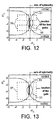
FIGS. 12 and 13 are diagrams depicting the profile of the surface of a free nanowire of length Lwire=7 r0, before and after annealing during a time t=1.4 r0 4/B,
FIGS. 14A and 14B depict zones of attachment between nanowires and their corresponding contact, according to the known art (FIG. 14A) and according to the invention (FIG. 14B),
FIG. 15 is a graph depicting the minimum of the radius of the nanowire at the neck, rneck, as a function of the time t, the coefficient B and the initial radius of the nanowire r0 for the geometries shown in FIGS. 14A and 14B.
DETAILED DISCLOSURE OF PARTICULAR EMBODIMENTS
The control of the sizing of the neck on the nanowire during annealing relies on simulations by the “MoveFilm” numerical tool developed at the Commnissariat à l'Energie Atomique (France). The bases of this numerical code applied to films are disclosed in the article “Surface diffusion dewetting of thin solid films: Numerical method and application to Si/SiO2” by E. Dornel et al, Physical Review B 73, 115 427 (2006).
This code has been modified in order to be able to simulate the effects of the annealing (rounding and necking) on free nanowires (having symmetry of rotation) and thus provide for the sizing of the neck according to the experimental conditions, namely the type of material and the annealing conditions (annealing temperature, annealing time, nature of the gas and pressure of the gas). The effect of the necking simulated by “MoveFilm” is presented in FIG. 5B. The radius of the wire at the neck (this is the point of the minimum radius of the nanowire) is denoted rneck and the distance between the neck and the closest contact is denoted Lneck. The quantification of the necking Lneck as a function of time is presented in FIG. 6.
The graphs in FIGS. 5B and 6 enable the experimenter to size the neck of the nanowire as a function of space and time: the space dimensions are found homothetically and the timescale is given by the factor B/r0 4, or B=Ds·ν·γ·Ω2/kBT, where D, is the surface diffusion coefficient of the element making up the wire, ν is the number of surface atoms per unit surface, γ is the surface energy of the nanowire, Ω is the atomic volume of the atoms making up the nanowire, kB is Boltzmann's constant and T is the temperature. (If the material of the nanowire is composed of several chemical elements (for example an alloy), the parameters Ds, ν, γ and Ω take as their values the values of the corresponding composite material). For example, if the initial radius of the wire is multiplied by 2, the minimum radius of the wire rneck is multiplied by 2 and the timescale is multiplied by 24, that is to say by 16. The experimenter can calculate the coefficient B, which is entirely determined by the parameters of the material chosen by himself. For example, on the basis of the experimental work of K. Sudoh et al (“Numerical Study on Shape Transformation of Silicon Trenches by High-Temperature Hydrogen Annealing”. Jap. J. of Appl. Phys., vol 43 No 9A, 2004, pages 5937 to 5941), it is possible to extract a coefficient B of 3.8×10⁻⁸ μm4·s−1 at 800° C. and around 4.3×10⁻² μm4·s−1 at 1100° C., for silicon, and a hydrogenated atmosphere with a pressure of 10 Torr. For example, if the experimenter chooses a material with a surface energy of 1 J·m−2 the timescale will be divided by 2 with respect to a material with a surface energy of 0.5 J·m−2 (since the coefficient B is multiplied by 2). The temperature of the annealing can also be determined by means of the coefficient B; assuming that the surface diffusion coefficient can be written according to the Arrhenius law: Ds-D0·exp(−Ea/(KB/T)), if for example the activation energy Ea of the material chosen by the user is 2.0 eV, the increase in the temperature from 850° C. to 880° C. causes a multiplication of the factor B by 2 and therefore the time is divided by a factor of 2.
At the first moment of the annealing, the bar changes from a square or rectangular cross section to a circular cross section. r0 represents the radius of the cross section of the circular nanowire before necking. The invention relates to the change in this circular cross section.
FIG. 5A repeats the structure shown in FIG. 4A. It shows a nanowire 22 in the course of formation, the ends of which are connected to drain 23 and source 24 regions, whereby the regions are uncovered during the annealing. The reference 20 represents the zone whose change during the annealing is detailed in FIG. 5B. The same necking phenomenon is manifested at the other end of the nanowire close to the contact or source region 24.
FIG. 5B depicts the profile of the surface of the end of a free nanowire 22, connected to the drain region 23 or contact in the case of a long free wire, obtained at different annealing times. The continuous line 31 corresponds to the initial surface of the nanowire. The broken line 32 corresponds to the time t=0.5 r0 4/B. The broken line 33 corresponds to time t=0.9 r0 4/B. The broken line 34 corresponds to the time t=0.955 r0 4/B. The broken line 35 corresponds to the time t=r0 4/B.
The characteristic quantities are: r0, which represents the initial radius of the wire, rneck, which represents the radius of the wire at the constriction zone (necking), and Lneck, which represents the distance of the constriction zone with respect to the initial position of the edge of the closest contact zone.
FIG. 6 illustrates the minimum of the radius of the wire (at the neck) rneck, as a function of the time t, the coefficient B and the initial radius of the wire r0. This graph relates to the nanowire simulated in FIG. 5A. tr represents the time where rneck=0, that is to say when the wire undergoes rupture. The experimenter may, through this graph and according to the material and the temperature of the annealing that determine the coefficient B, quantify rneck (that is to say the magnitude of the necking) and thus prevent rupture of the wire. This graph is general for all materials with a known coefficient B. The characteristic rupture time tr is obtained from the above results for 0.95 r0 4/B.
The details of the code applied to the simulation of the annealing effect of the nanowires will now be disclosed. This numerical tool simulates the changes in the surface of the nanowire and the contacts by surface diffusion. The details of the numerical code applied to films are described in the article by E. Dornel et al, cited above. The main steps of the MoveFilm numerical tool applied to the free nanowire having an axis of symmetry by rotation will be detailed. The surface is rendered discrete in points of coordinates (r,z), where r is the distance to the axis of symmetry z of the nanowire. The algorithm of this numerical code consists of a succession of 5 steps: calculation of the potentials μi at each point, calculation of the flows of material Ji between each point Mi and Mi+1 and calculation of the increments of material δNi attributed at each point Mi, then the points are moved and finally the time is incremented by a time step dt (see FIG. 7).
Let (ri−1,zi−1), (ri,zi) and (ri+1,zi+1) be the respective coordinates of the point Mi−1, Mi, and Mi+1 of the surface. The calculations of these quantities (that is to say potentials, flows, increments of material movement) have been reformulated compared with the teaching of the article by E. Dornel et al. cited above. The potential μi is calculated as the ratio of the variation in the surface to the variation in the volume, imagining an accretion of local material at the point Mi, that is to say:
K 2 , i [ r i + 1 2 - r i 2 l i - r i 2 - r i - 1 2 l i - 1 - l i - l i - 1 ] + μ i = 3 γΩ K 1 , i [ 1 l i ( r i + 1 + r i ) ( z i + 1 - z i ) - 1 l i - 1 ( r i + r i - 1 ) ( z i - z i - 1 ) ] K 2 , i [ ( z i + 1 - z i ) ( 2 r i + r i + 1 ) + ( z i - z i - 1 ) ( 2 r i + r i - 1 ) ] + K 1 , i [ ( r i - 1 - r i + 1 ) ( r i + 1 + r i + r i - 1 ) ]
where:
l i=√{square root over ((r i+1 −r i)2+(z i+1 −z 1)2)}{square root over ((r i+1 −r i)2+(z i+1 −z 1)2)}
K 1,i=(r i+1 −r i−1)(r i+1 +r i +r i−1)
K 2,i=−2r i(z i+1 −z i−1)+z i(r i+1 −r i−1)−z i+1 r i+1 +z i−1 r i−1
The flow is proportional to the surface derivative of the potential, that is to says between the points Mi and Mi+1:
J i = - D s v k B T · μ i + 1 - μ i l i
The increment of material δNi attributed to the point Mi is determined by the conservation of the quantity of material, which amounts to all the flows passing through the circles of the surface of dimensions zi−1 and zi+1.
δN i=π[(r i−1 +r i)J i−1−(r i +r i+1)J i ]dt
The points Mi are moved successively, so that this movement generates an increment of material equal to δNi. In addition, the points are moved perpendicular to the iso-volume. The points Mi are therefore moved by the vector (δrj, δzi) so that:
δ r i = 3 Ωδ N i π N r , i N z , i K 1 , i + N r , i K 2 , i δ z i = 3 Ωδ N i π N z , i N z , i K 1 , i + N r , i K 2 , i
where (Nr,i, Nz,i) are the coordinates of the vector normal to the iso-volume curve in Mi:
N r , i = - K 2 , i K 1 , i 2 + K 2 , i 2 and : N z , i = - K 1 , i K 1 , i 2 + K 2 , i 2
The invention also allows control of the location of the neck along the axis of the nanowire, that is to say along the axis z.
In the case of a long wire (that is to say such that Lwire>8 r0 (see FIG. 5B), the neck is created at a distance Lneck equal to approximately 1.9 times the initial radius of the wire (r0) corresponding to the plateau reached for the high values of Lwire/r0 in FIG. 8. This distance Lneck can be adjusted by correctly sizing the ratio of the length of the wires Lwire to the initial radius of the wires r0.
In the zone where Lwire is less than or equal to 6 r0, the neck is unique and is at equal distances from the contacts. This zone is interesting since it allows the alignment of the gate at equal distances from the contact, the place where the minimum radius of the wire is situated.
In the case were Lwire>6 r0, two necks are created, close to each contact.
The zone where 3.5 r0≦Lwire≦8 r0 is particularly interesting in so far as the neck or necks created are distant from the contacts (that is to say Lneck>1.9 r0) compared with the case where the wire is long (that is to say with a length greater than 9 r0).
The invention also allows control of the location of the neck on the nanowire. The cases where 3.5 r0≦Lwire≦6 r0 and 6 r0<Lwire≦8 r0 will be detailed.
Case where 3.5 r0≦Lwire≦6 r0
FIGS. 9 and 10 give an illustration for the case Lneck=6 r0. In the zone 3.5 r0≦Lwire≦6 r0 the neck is the only one and is distant from the contact compared with the case where Lwire is very large compared with r0. Having a single neck makes it possible to manufacture the gate of the transistor at the minimum of the width of the wires and always at equal distances from the contacts. In addition, the fact that the neck is distant from the contacts makes it possible to manufacture a gate that is not flush with the contacts (and therefore not to add stray capacitances), without for all that degrading the access resistances since the neck is situated under the gate. Typically, the stray capacitances change according to 1/d2 where d is the distance between the contact and the gate. It is therefore important to increase d and therefore increase Lneck. Finally, the centre of the wire, where the gate is manufactured, has, after annealing, a finer radius than initially, which allows better electrostatic control of the current passing through the nanowire through the gate. For example, for Lwire=6 r0 and an annealing time t=0.97×B*r0 4, the minimum of the radius of the nanowire is 0.22 r0 (the case in FIG. 8). For example, if the initial radius is equal to 10 nm, at the end of this annealing a radius at the constriction zone (that is to say the neck) of 2.2 nm would therefore be achieved. The fine zone of the wire allows better sensitivity after functionalisation of this zone.
In the end, a thinning of the wires at the centre of the space situated between the source and drain zones is obtained, using the known technique of annealing (see FIGS. 9 and 10). The advantages of the invention are therefore a reduction in the dimension of the wire and alignment of the gate at this minimum. In this way, the phenomenon of necking appears to be an advantage rather than a drawback.
In FIG. 9, the reference 41 designates the initial profile of the nanowire, and therefore for t·B/r0 4=0. The reference 42 designates the profile of the nanowire for t·B/r0 4=0.3. The reference 43 designates the profile of the nanowire for t·B/r0 4=0.6. The reference 44 designates the profile of the nanowire for t·B/r0 4=0.9. The reference 45 designates the profile of the nanowire for t·B/r0 4=0.97.
FIG. 10 is a diagram representing the profile of the surface of a free nanowire of length Lwire=6 r0, before and after annealing for a time t=0.97 B·r0 4. As for FIG. 9, the reference 41 designates the initial profile of the nanowire and the reference 45 designates the profile of the nanowire after annealing for a time t=0.97 B·r0 4. The optimal position of the gate is indicated by the reference 48. The gate is situated at the minimum of the width of the wires, which allows better control of the current by the gate. The parts of the nanowire broadened and close to the contacts are not under the gate, which minimises the access resistances.
The Case where 6 r0<Lwire≦8 r0
FIG. 11 is a diagram representing the change in the profile of the surface of a free nanowire during annealing, as a function of the time t, the initial radius of the nanowire r0 and the coefficient B, for Lwire=7 r0.
In FIG. 11, the reference 51 designates the initial profile, and therefore for t·B/r0 4=0. The reference 52 designates the profile of the nanowire for t·B/r0 4=0.1. The reference 53 designates the profile of the nanowire for t·B/r0 4=0.3. The reference 54 designates the profile of the nanowire for t·B/r0 4=1. The reference 55 designates the profile of the nanowire t·B/r0 4=1.4.
In the zone 6 r0<Lwire≦8 r0, the neck is double and is distant from the contact compared with the case where Lwire is very large compared with r0. The advantage of having a large Lneck has already been discussed. The advantage of having in this case two necks while having Lneck large is to be able to have two zones where the wire has a reduced radius, in order for example to manufacture two independent gates and to be able to control the quantity of current passing through the wire.
FIGS. 12 and 13 are diagrams depicting the profile of the surface of free nanowire of length Lwire=7 r0, and after an annealing for a time t=1.4×r0 4/B. In these figures, as for FIG. 11, the reference 51 designates the initial profile of the nanowire and the reference 55 designates the profile of the nanowire for t·B/r0 4=1.4. In FIG. 12, the reference 56 designates the locations of two gates disposed in an optimum positioning. In FIG. 13, the reference 57 designates the location of a single gate disposed in an optimum position. The gates disposed on the locations 56 and 57 enclose the zone where the nanowire has a minimum radius, which affords better control of the current by the gate. The parts of the nanowire broadened and close to the contacts are not under the gate, which minimises the access resistances.
The advantage of having two necks close to each other is to be able to isolate a small quantity of material (the material between the two necks). Manufacturing a single gate covering the two neck zones would make it possible to obtain an effect of the transistor type with one or more electrons (see FIG. 13).
Finally, a thinning of the nanowires at the centre of the space situated between the source and drain zones is obtained, using the known technique of annealing. The advantages of the invention are therefore a local reduction in the dimension of the nanowire at two places separated by a place where the nanowire has a larger radius. In this way, the pinching phenomena appear to be an advantage rather than a drawback.
From the above considerations and by virtue of the numerical tool used by the inventors, the latter have arrived at the conclusion that the modification of the curvature between the nanowire and its contacts makes it possible to push back the rupture time. This is illustrated by FIGS. 14A and 14B, which depict attachment zones between nanowires and their corresponding contact according to the known art (FIG. 14A) and according to the invention (FIG. 14B).
FIG. 14A shows nanowires 61 attached to their contact 62 at an angle α forming 90°. FIG. 14B shows nanowires 71 attached to their contact 72 at an angle α forming 45°: the shape of the nanowires is therefore splayed in its connection with their contact. Under these conditions, the rupture time of a nanowire is pushed back by a factor greater than 2 as illustrated in FIG. 15.
This FIG. 15 is a graph showing the minimum of the radius of the nanowire at the neck, rneck, as a function of the time t, the coefficient B and the initial radius of the nanowire r0 for the geometries shown in FIGS. 14A and 14B. The time tr represents a time where rneck=0, that is to say the time corresponding to the rupture of the nanowires. It will be noted that, for the geometry shown in FIG. 14A (α90°), the rupture time is 0.95 r0 4/B whereas for the geometry shown in FIG. 14B (α=45°), the rupture time is 2.10 r0 4/B.
The modification of the geometry close to the contacts thus makes it possible to push back the rupture time and enables the experimenter to choose the time and temperature of the annealing within less constraining ranges for which rupture is not caused by the annealing.
Another advantage is a gain on the technological variability. For example, for a time 0.5 r0 4/B, a geometry at 90° according to FIG. 14A will cause a necking of 0.65 r0, whereas at this same time a geometry at 45° according to FIG. 14B will cause a necking of only 0.85 r0 (see points A and B on the graph in FIG. 15).

Claims (9)

1. Method of manufacturing at least one nanowire on a supporting substrate, the nanowire being parallel to said supporting substrate, the method comprising:
a step of formation on the supporting substrate of a structure comprising a bar of length Lwire and two regions, a first end of the bar being secured to one of the two regions and a second end of the bar being secured to the other region, the width of the bar being less than the width of the regions,
a step of subjection of the bar to annealing under gaseous atmosphere in order to transform the bar into a nanowire of radius r0, the annealing being carried under conditions allowing formation of at least one necking occurring on the nanowire during the transformation of the bar into a nanowire, the two regions being uncovered during the step of subjection,
determining the dimensions of the bar prior to the bar being formed on the substrate from the ratio Lwire/r0, this ratio being less than 6 if a single necking is desired, this ratio being greater than 6 if a double necking is desired.
2. Method of manufacturing according to claim 1, wherein a single necking being desired, the ratio Lwire/r0 is comprised between 3.5 and 6.
3. Method of manufacturing according to claim 1, wherein a double necking being desired, the ratio Lwire/r0 is comprised between 6 and 8.
4. Method of manufacturing at least one nanowire according to claim 1, in which the formation on the supporting substrate of the structure comprising a bar and two regions causes the creation of a splay at each end of the bar in its connection with the two regions.
5. Method of manufacturing at least one nanowire according to claim 4, in which the splay takes place at an angle of 45° on each edge of the nanowire.
6. Method of manufacturing a nanowire transistor, further comprising:
designing one of the regions of the structure manufactured by the method of claim 1, to form the drain of the transistor, and designing the other region of the structure to form the source of the transistor, forming at least one gate for the transistor on the nanowire at the location of said at least one necking.
7. The manufacturing method of claim 6, wherein a nanowire transistor has a single necking and a single gate covering the single necking.
8. The manufacturing method of claim 6, wherein the nanowire transistor has two neckings and a single gate covering the two neckings.
9. The manufacturing method of claim 6, wherein the nanowire transistor has two neckings and two gates, a first gate covering a first necking and a second gate covering a second necking.
US12/267,431 2007-11-09 2008-11-07 Method of manufacturing nanowires parallel to the supporting substrate Expired - Fee Related US8252636B2 (en)

Applications Claiming Priority (2)

Application Number Priority Date Filing Date Title
FR0758933 2007-11-09
FR0758933A FR2923652B1 (en) 2007-11-09 2007-11-09 METHOD FOR MANUFACTURING PARALLEL NANOWILS WITH THEIR SUPPORT SUBSTRATE

Publications (2)

Publication Number Publication Date
US20090124050A1 US20090124050A1 (en) 2009-05-14
US8252636B2 true US8252636B2 (en) 2012-08-28

Family

ID=39144329

Family Applications (1)

Application Number Title Priority Date Filing Date
US12/267,431 Expired - Fee Related US8252636B2 (en) 2007-11-09 2008-11-07 Method of manufacturing nanowires parallel to the supporting substrate

Country Status (3)

Country Link
US (1) US8252636B2 (en)
EP (1) EP2058847A1 (en)
FR (1) FR2923652B1 (en)

Families Citing this family (4)

* Cited by examiner, † Cited by third party
Publication number Priority date Publication date Assignee Title
FR2910456B1 (en) * 2006-12-21 2018-02-09 Commissariat A L'energie Atomique METHOD FOR PRODUCING MICROFILS AND / OR NANOWIAS
FR2910455B1 (en) * 2006-12-21 2009-04-03 Commissariat Energie Atomique METHOD FOR PRODUCING NON-ALIGNED MICRO-CAVITIES AND DIFFERENT DEPTHS
FR2995450A1 (en) * 2012-09-11 2014-03-14 Centre Nat Rech Scient Logic gate e.g. NAND-type logic gate, for manufacturing part of locally constricted FET in digital electronic industry, has grid whose portion is positioned relative to zones so as to have field effect when channel is traversed by current
US9048301B2 (en) 2013-10-16 2015-06-02 Taiwan Semiconductor Manufacturing Company Limited Nanowire MOSFET with support structures for source and drain

Citations (5)

* Cited by examiner, † Cited by third party
Publication number Priority date Publication date Assignee Title
US20040166642A1 (en) * 2003-02-20 2004-08-26 Hao-Yu Chen Semiconductor nano-rod devices
US20050275010A1 (en) 2004-06-10 2005-12-15 Hung-Wei Chen Semiconductor nano-wire devices and methods of fabrication
US20060214212A1 (en) * 2005-03-23 2006-09-28 Renesas Technology Corp. Semiconductor device and method of manufacturing semiconductor device
DE102006012416A1 (en) 2005-03-24 2006-10-05 Samsung Electronics Co., Ltd., Suwon Field effect transistor fabrication involves etching and annealing nano-wire channel region extended between source and drain regions
US20070222353A1 (en) * 2004-07-16 2007-09-27 The Trustees Of Boston College Device and method for achieving enhanced field emission utilizing nanostructures grown on a conductive substrate

Patent Citations (5)

* Cited by examiner, † Cited by third party
Publication number Priority date Publication date Assignee Title
US20040166642A1 (en) * 2003-02-20 2004-08-26 Hao-Yu Chen Semiconductor nano-rod devices
US20050275010A1 (en) 2004-06-10 2005-12-15 Hung-Wei Chen Semiconductor nano-wire devices and methods of fabrication
US20070222353A1 (en) * 2004-07-16 2007-09-27 The Trustees Of Boston College Device and method for achieving enhanced field emission utilizing nanostructures grown on a conductive substrate
US20060214212A1 (en) * 2005-03-23 2006-09-28 Renesas Technology Corp. Semiconductor device and method of manufacturing semiconductor device
DE102006012416A1 (en) 2005-03-24 2006-10-05 Samsung Electronics Co., Ltd., Suwon Field effect transistor fabrication involves etching and annealing nano-wire channel region extended between source and drain regions

Non-Patent Citations (4)

* Cited by examiner, † Cited by third party
Title
Pennelli et al., "Silicon Single-electron Transistor Fabricated by Anisotropic Etch and Oxidation," Microelectronic Engineering 83:1710-13 (2006).
Preliminary Search Report for International Patent Application No. FR 0758933 (Mar. 10, 2008).
Takashi et al., "Multigate Single-electron Transistors and Their Application to an Exclusive-OR Gate," Applied Physics Letters 76(5):637-9 (2000).
Zhuang et al., "Silicon Single-electron Quantum-dot Transistor Switch Operating at Room Temperature," Applied Physics Letters 72(10):1205-7 (1998).

Also Published As

Publication number Publication date
EP2058847A1 (en) 2009-05-13
FR2923652B1 (en) 2010-06-11
US20090124050A1 (en) 2009-05-14
FR2923652A1 (en) 2009-05-15

Similar Documents

Publication Publication Date Title
US7685543B2 (en) Simulation apparatus and simulation method used to design characteristics and circuits of semiconductor device, and semiconductor device fabrication method
DE112013000360B4 (en) Method for producing a semiconductor unit with a low-k spacer
US8252636B2 (en) Method of manufacturing nanowires parallel to the supporting substrate
Molas et al. Single electron effects and structural effects in ultrascaled silicon nanocrystal floating-gate memories
Huckemann et al. Industrially fabricated single-electron quantum dots in si/si–ge heterostructures
Cordan et al. Electron transport in metallic dot arrays: Effect of a broad dispersion in the tunnel junction dimensions
Ionica et al. Field effect and Coulomb blockade in silicon on insulator nanostructures fabricated by atomic force microscope
Morgan et al. Evidence for activated conduction in a single electron transistor
Carrillo-Nunez et al. Impact of randomly distributed dopants on $\Omega $-gate junctionless silicon nanowire transistors
Asenov et al. Effect of oxide interface roughness on the threshold voltage fluctuations in decanano MOSFETs with ultrathin gate oxides
JP4253114B2 (en) Manufacturing method of SET element
Choi Modeling of nanoscale MOSFETs
Suñé et al. Temperature dependence of Fowler-Nordheim injection from accumulated n-type silicon into silicon dioxide
US7217946B2 (en) Method for making a wire nanostructure in a semiconductor film
US6285970B1 (en) Computer simulation method of silicon oxidation
Pourghaderi et al. Universal swing factor approach for performance analysis of logic nodes
Leroy et al. Variance analysis of the Coulomb blockade parameters in nanometer-size disordered arrays
Abramov et al. Analysis of the metal single-electron arrays based on different materials
Thorbeck et al. Simulating capacitances to silicon quantum dots: Breakdown of the parallel plate capacitor model
Garcıa-Garcıa et al. Simulation of multilayered resonant tunneling diodes using coupled Wigner and Boltzmann distribution function approaches
Abualnaja Room Temperature Quantum Dot Transistors in Silicon
Knobloch Characterization and physical modeling of degradation in MoS2 transistors
Hashemi Gate-all-around silicon nanowire MOSFETs: top-down fabrication and transport enhancement techniques
Bugliarelli Vertical Junctionless Nano Transistor TCAD modeling and performance evaluation
Oh et al. Dielectric Confinement Impact on Electrical Performance of Highly Scaled Saddle-Fin Cell Transistor for High Density DRAM

Legal Events

Date Code Title Description
AS Assignment

Owner name: COMMISSARIAT A L'ENERGIE ATOMIQUE, FRANCE

Free format text: ASSIGNMENT OF ASSIGNORS INTEREST;ASSIGNORS:DORNEL, ERWAN;BARBE, JEAN-CHARLES;ERNST, THOMAS HAMEAU CHECHAMAIN;REEL/FRAME:022157/0217

Effective date: 20081103

ZAAA Notice of allowance and fees due

Free format text: ORIGINAL CODE: NOA

ZAAB Notice of allowance mailed

Free format text: ORIGINAL CODE: MN/=.

STCF Information on status: patent grant

Free format text: PATENTED CASE

FPAY Fee payment

Year of fee payment: 4

MAFP Maintenance fee payment

Free format text: PAYMENT OF MAINTENANCE FEE, 8TH YEAR, LARGE ENTITY (ORIGINAL EVENT CODE: M1552); ENTITY STATUS OF PATENT OWNER: LARGE ENTITY

Year of fee payment: 8

FEPP Fee payment procedure

Free format text: MAINTENANCE FEE REMINDER MAILED (ORIGINAL EVENT CODE: REM.); ENTITY STATUS OF PATENT OWNER: LARGE ENTITY

LAPS Lapse for failure to pay maintenance fees

Free format text: PATENT EXPIRED FOR FAILURE TO PAY MAINTENANCE FEES (ORIGINAL EVENT CODE: EXP.); ENTITY STATUS OF PATENT OWNER: LARGE ENTITY

STCH Information on status: patent discontinuation

Free format text: PATENT EXPIRED DUE TO NONPAYMENT OF MAINTENANCE FEES UNDER 37 CFR 1.362

FP Lapsed due to failure to pay maintenance fee

Effective date: 20240828