US8105582B2 - Tumour vaccine comprising allogenic or xenogeneic tumour cells - Google Patents
Tumour vaccine comprising allogenic or xenogeneic tumour cells Download PDFInfo
- Publication number
- US8105582B2 US8105582B2 US12/161,418 US16141807A US8105582B2 US 8105582 B2 US8105582 B2 US 8105582B2 US 16141807 A US16141807 A US 16141807A US 8105582 B2 US8105582 B2 US 8105582B2
- Authority
- US
- United States
- Prior art keywords
- cells
- tumour
- allogeneic
- rats
- xenogeneic
- Prior art date
- Legal status (The legal status is an assumption and is not a legal conclusion. Google has not performed a legal analysis and makes no representation as to the accuracy of the status listed.)
- Active, expires
Links
- 206010028980 Neoplasm Diseases 0.000 title claims abstract description 114
- 210000004881 tumor cell Anatomy 0.000 title claims abstract description 26
- 229960005486 vaccine Drugs 0.000 title description 14
- 210000004027 cell Anatomy 0.000 claims abstract description 115
- 230000000735 allogeneic effect Effects 0.000 claims abstract description 59
- 238000011282 treatment Methods 0.000 claims abstract description 33
- 239000000203 mixture Substances 0.000 claims abstract description 18
- 239000000546 pharmaceutical excipient Substances 0.000 claims abstract description 12
- 239000006166 lysate Substances 0.000 claims description 32
- 238000000034 method Methods 0.000 claims description 11
- 239000003814 drug Substances 0.000 claims description 4
- 238000004519 manufacturing process Methods 0.000 claims description 3
- 210000004556 brain Anatomy 0.000 claims 4
- 201000011510 cancer Diseases 0.000 abstract description 13
- 210000000987 immune system Anatomy 0.000 abstract description 12
- 108090000765 processed proteins & peptides Proteins 0.000 abstract description 11
- 102000004196 processed proteins & peptides Human genes 0.000 abstract description 11
- 230000001900 immune effect Effects 0.000 abstract description 4
- 238000002054 transplantation Methods 0.000 abstract description 3
- 241000700159 Rattus Species 0.000 description 107
- 238000002347 injection Methods 0.000 description 21
- 239000007924 injection Substances 0.000 description 21
- 108700018351 Major Histocompatibility Complex Proteins 0.000 description 17
- 230000020382 suppression by virus of host antigen processing and presentation of peptide antigen via MHC class I Effects 0.000 description 17
- 238000012453 sprague-dawley rat model Methods 0.000 description 15
- 239000000427 antigen Substances 0.000 description 11
- 108091007433 antigens Proteins 0.000 description 11
- 102000036639 antigens Human genes 0.000 description 11
- 239000002671 adjuvant Substances 0.000 description 10
- 108091054437 MHC class I family Proteins 0.000 description 8
- 239000013592 cell lysate Substances 0.000 description 8
- 230000028993 immune response Effects 0.000 description 8
- 206010018338 Glioma Diseases 0.000 description 7
- 210000001519 tissue Anatomy 0.000 description 7
- 208000032612 Glial tumor Diseases 0.000 description 6
- 102000008949 Histocompatibility Antigens Class I Human genes 0.000 description 6
- 239000003550 marker Substances 0.000 description 6
- 108090000623 proteins and genes Proteins 0.000 description 6
- 108020003175 receptors Proteins 0.000 description 6
- 238000010186 staining Methods 0.000 description 6
- 230000004614 tumor growth Effects 0.000 description 6
- 102000043129 MHC class I family Human genes 0.000 description 5
- WNROFYMDJYEPJX-UHFFFAOYSA-K aluminium hydroxide Chemical compound [OH-].[OH-].[OH-].[Al+3] WNROFYMDJYEPJX-UHFFFAOYSA-K 0.000 description 5
- 238000002474 experimental method Methods 0.000 description 5
- 230000007246 mechanism Effects 0.000 description 5
- 239000002609 medium Substances 0.000 description 5
- 239000008194 pharmaceutical composition Substances 0.000 description 5
- 230000004044 response Effects 0.000 description 5
- 239000000243 solution Substances 0.000 description 5
- 241000894007 species Species 0.000 description 5
- XLYOFNOQVPJJNP-UHFFFAOYSA-N water Substances O XLYOFNOQVPJJNP-UHFFFAOYSA-N 0.000 description 5
- 241001465754 Metazoa Species 0.000 description 4
- 102100034922 T-cell surface glycoprotein CD8 alpha chain Human genes 0.000 description 4
- 210000001744 T-lymphocyte Anatomy 0.000 description 4
- 210000003719 b-lymphocyte Anatomy 0.000 description 4
- 230000002163 immunogen Effects 0.000 description 4
- 230000006054 immunological memory Effects 0.000 description 4
- 230000035772 mutation Effects 0.000 description 4
- 102000004169 proteins and genes Human genes 0.000 description 4
- 208000003174 Brain Neoplasms Diseases 0.000 description 3
- LFQSCWFLJHTTHZ-UHFFFAOYSA-N Ethanol Chemical compound CCO LFQSCWFLJHTTHZ-UHFFFAOYSA-N 0.000 description 3
- PEDCQBHIVMGVHV-UHFFFAOYSA-N Glycerine Chemical compound OCC(O)CO PEDCQBHIVMGVHV-UHFFFAOYSA-N 0.000 description 3
- 108010088652 Histocompatibility Antigens Class I Proteins 0.000 description 3
- 206010061309 Neoplasm progression Diseases 0.000 description 3
- 230000004721 adaptive immunity Effects 0.000 description 3
- NWMHDZMRVUOQGL-CZEIJOLGSA-N almurtide Chemical compound OC(=O)CC[C@H](C(N)=O)NC(=O)[C@H](C)NC(=O)CO[C@@H]([C@H](O)[C@H](O)CO)[C@@H](NC(C)=O)C=O NWMHDZMRVUOQGL-CZEIJOLGSA-N 0.000 description 3
- 210000001151 cytotoxic T lymphocyte Anatomy 0.000 description 3
- 230000006378 damage Effects 0.000 description 3
- 239000000839 emulsion Substances 0.000 description 3
- 210000002540 macrophage Anatomy 0.000 description 3
- 230000003211 malignant effect Effects 0.000 description 3
- 238000005259 measurement Methods 0.000 description 3
- 238000002360 preparation method Methods 0.000 description 3
- 239000000126 substance Substances 0.000 description 3
- FJKROLUGYXJWQN-UHFFFAOYSA-N 4-hydroxybenzoic acid Chemical compound OC(=O)C1=CC=C(O)C=C1 FJKROLUGYXJWQN-UHFFFAOYSA-N 0.000 description 2
- CSCPPACGZOOCGX-UHFFFAOYSA-N Acetone Chemical compound CC(C)=O CSCPPACGZOOCGX-UHFFFAOYSA-N 0.000 description 2
- 108091003079 Bovine Serum Albumin Proteins 0.000 description 2
- 108010041397 CD4 Antigens Proteins 0.000 description 2
- 108020005196 Mitochondrial DNA Proteins 0.000 description 2
- 108700015872 N-acetyl-nor-muramyl-L-alanyl-D-isoglutamine Proteins 0.000 description 2
- VYPSYNLAJGMNEJ-UHFFFAOYSA-N Silicium dioxide Chemical compound O=[Si]=O VYPSYNLAJGMNEJ-UHFFFAOYSA-N 0.000 description 2
- PXIPVTKHYLBLMZ-UHFFFAOYSA-N Sodium azide Chemical compound [Na+].[N-]=[N+]=[N-] PXIPVTKHYLBLMZ-UHFFFAOYSA-N 0.000 description 2
- 102100036011 T-cell surface glycoprotein CD4 Human genes 0.000 description 2
- 230000003213 activating effect Effects 0.000 description 2
- 239000004480 active ingredient Substances 0.000 description 2
- 238000004458 analytical method Methods 0.000 description 2
- 238000010171 animal model Methods 0.000 description 2
- 230000005784 autoimmunity Effects 0.000 description 2
- 230000008901 benefit Effects 0.000 description 2
- KQHXBDOEECKORE-UHFFFAOYSA-L beryllium sulfate Chemical compound [Be+2].[O-]S([O-])(=O)=O KQHXBDOEECKORE-UHFFFAOYSA-L 0.000 description 2
- 210000004369 blood Anatomy 0.000 description 2
- 239000008280 blood Substances 0.000 description 2
- 208000024055 brain glioblastoma Diseases 0.000 description 2
- 201000011609 brain glioblastoma multiforme Diseases 0.000 description 2
- 239000003795 chemical substances by application Substances 0.000 description 2
- 210000004443 dendritic cell Anatomy 0.000 description 2
- 230000000694 effects Effects 0.000 description 2
- 210000002889 endothelial cell Anatomy 0.000 description 2
- 238000013401 experimental design Methods 0.000 description 2
- 239000012894 fetal calf serum Substances 0.000 description 2
- 230000012010 growth Effects 0.000 description 2
- 210000002443 helper t lymphocyte Anatomy 0.000 description 2
- 230000036039 immunity Effects 0.000 description 2
- 238000003364 immunohistochemistry Methods 0.000 description 2
- 208000015181 infectious disease Diseases 0.000 description 2
- 210000005007 innate immune system Anatomy 0.000 description 2
- 230000002045 lasting effect Effects 0.000 description 2
- 239000002502 liposome Substances 0.000 description 2
- 230000015654 memory Effects 0.000 description 2
- 230000000813 microbial effect Effects 0.000 description 2
- 230000002438 mitochondrial effect Effects 0.000 description 2
- 210000000822 natural killer cell Anatomy 0.000 description 2
- 238000002559 palpation Methods 0.000 description 2
- WEXRUCMBJFQVBZ-UHFFFAOYSA-N pentobarbital Chemical compound CCCC(C)C1(CC)C(=O)NC(=O)NC1=O WEXRUCMBJFQVBZ-UHFFFAOYSA-N 0.000 description 2
- 239000003755 preservative agent Substances 0.000 description 2
- 230000009467 reduction Effects 0.000 description 2
- 230000001105 regulatory effect Effects 0.000 description 2
- 239000006228 supernatant Substances 0.000 description 2
- 239000000375 suspending agent Substances 0.000 description 2
- 230000000007 visual effect Effects 0.000 description 2
- ASWBNKHCZGQVJV-UHFFFAOYSA-N (3-hexadecanoyloxy-2-hydroxypropyl) 2-(trimethylazaniumyl)ethyl phosphate Chemical compound CCCCCCCCCCCCCCCC(=O)OCC(O)COP([O-])(=O)OCC[N+](C)(C)C ASWBNKHCZGQVJV-UHFFFAOYSA-N 0.000 description 1
- YHQZWWDVLJPRIF-JLHRHDQISA-N (4R)-4-[[(2S,3R)-2-[acetyl-[(3R,4R,5S,6R)-3-amino-4-[(1R)-1-carboxyethoxy]-5-hydroxy-6-(hydroxymethyl)oxan-2-yl]amino]-3-hydroxybutanoyl]amino]-5-amino-5-oxopentanoic acid Chemical compound C(C)(=O)N([C@@H]([C@H](O)C)C(=O)N[C@H](CCC(=O)O)C(N)=O)C1[C@H](N)[C@@H](O[C@@H](C(=O)O)C)[C@H](O)[C@H](O1)CO YHQZWWDVLJPRIF-JLHRHDQISA-N 0.000 description 1
- YYGNTYWPHWGJRM-UHFFFAOYSA-N (6E,10E,14E,18E)-2,6,10,15,19,23-hexamethyltetracosa-2,6,10,14,18,22-hexaene Chemical compound CC(C)=CCCC(C)=CCCC(C)=CCCC=C(C)CCC=C(C)CCC=C(C)C YYGNTYWPHWGJRM-UHFFFAOYSA-N 0.000 description 1
- IXPNQXFRVYWDDI-UHFFFAOYSA-N 1-methyl-2,4-dioxo-1,3-diazinane-5-carboximidamide Chemical compound CN1CC(C(N)=N)C(=O)NC1=O IXPNQXFRVYWDDI-UHFFFAOYSA-N 0.000 description 1
- FPIPGXGPPPQFEQ-UHFFFAOYSA-N 13-cis retinol Natural products OCC=C(C)C=CC=C(C)C=CC1=C(C)CCCC1(C)C FPIPGXGPPPQFEQ-UHFFFAOYSA-N 0.000 description 1
- JKMHFZQWWAIEOD-UHFFFAOYSA-N 2-[4-(2-hydroxyethyl)piperazin-1-yl]ethanesulfonic acid Chemical compound OCC[NH+]1CCN(CCS([O-])(=O)=O)CC1 JKMHFZQWWAIEOD-UHFFFAOYSA-N 0.000 description 1
- 229940090248 4-hydroxybenzoic acid Drugs 0.000 description 1
- 108010042708 Acetylmuramyl-Alanyl-Isoglutamine Proteins 0.000 description 1
- 208000020154 Acnes Diseases 0.000 description 1
- 108700028369 Alleles Proteins 0.000 description 1
- 201000004384 Alopecia Diseases 0.000 description 1
- 239000005995 Aluminium silicate Substances 0.000 description 1
- 208000023275 Autoimmune disease Diseases 0.000 description 1
- 241000894006 Bacteria Species 0.000 description 1
- 241000588832 Bordetella pertussis Species 0.000 description 1
- 108010032795 CD8 receptor Proteins 0.000 description 1
- OKTJSMMVPCPJKN-UHFFFAOYSA-N Carbon Chemical compound [C] OKTJSMMVPCPJKN-UHFFFAOYSA-N 0.000 description 1
- 241001092081 Carpenteria Species 0.000 description 1
- 108010039939 Cell Wall Skeleton Proteins 0.000 description 1
- 241000186216 Corynebacterium Species 0.000 description 1
- 102000004127 Cytokines Human genes 0.000 description 1
- 108090000695 Cytokines Proteins 0.000 description 1
- 108020004414 DNA Proteins 0.000 description 1
- 229920002307 Dextran Polymers 0.000 description 1
- 206010012735 Diarrhoea Diseases 0.000 description 1
- WQZGKKKJIJFFOK-GASJEMHNSA-N Glucose Natural products OC[C@H]1OC(O)[C@H](O)[C@@H](O)[C@@H]1O WQZGKKKJIJFFOK-GASJEMHNSA-N 0.000 description 1
- 102000011786 HLA-A Antigens Human genes 0.000 description 1
- 108010075704 HLA-A Antigens Proteins 0.000 description 1
- 241000282412 Homo Species 0.000 description 1
- 108090000144 Human Proteins Proteins 0.000 description 1
- 102000003839 Human Proteins Human genes 0.000 description 1
- 102000014150 Interferons Human genes 0.000 description 1
- 108010050904 Interferons Proteins 0.000 description 1
- 239000004166 Lanolin Substances 0.000 description 1
- HLFSDGLLUJUHTE-SNVBAGLBSA-N Levamisole Chemical compound C1([C@H]2CN3CCSC3=N2)=CC=CC=C1 HLFSDGLLUJUHTE-SNVBAGLBSA-N 0.000 description 1
- 102000043131 MHC class II family Human genes 0.000 description 1
- 108091054438 MHC class II family Proteins 0.000 description 1
- 102000012750 Membrane Glycoproteins Human genes 0.000 description 1
- 108010090054 Membrane Glycoproteins Proteins 0.000 description 1
- 102000018697 Membrane Proteins Human genes 0.000 description 1
- 108010052285 Membrane Proteins Proteins 0.000 description 1
- 102000007298 Mucin-1 Human genes 0.000 description 1
- 108010008707 Mucin-1 Proteins 0.000 description 1
- 108010063954 Mucins Proteins 0.000 description 1
- 102000015728 Mucins Human genes 0.000 description 1
- 108700020354 N-acetylmuramyl-threonyl-isoglutamine Proteins 0.000 description 1
- 206010028813 Nausea Diseases 0.000 description 1
- 206010034701 Peroneal nerve palsy Diseases 0.000 description 1
- 102000003992 Peroxidases Human genes 0.000 description 1
- FAPWRFPIFSIZLT-UHFFFAOYSA-M Sodium chloride Chemical compound [Na+].[Cl-] FAPWRFPIFSIZLT-UHFFFAOYSA-M 0.000 description 1
- BHEOSNUKNHRBNM-UHFFFAOYSA-N Tetramethylsqualene Natural products CC(=C)C(C)CCC(=C)C(C)CCC(C)=CCCC=C(C)CCC(C)C(=C)CCC(C)C(C)=C BHEOSNUKNHRBNM-UHFFFAOYSA-N 0.000 description 1
- 241000700605 Viruses Species 0.000 description 1
- FPIPGXGPPPQFEQ-BOOMUCAASA-N Vitamin A Natural products OC/C=C(/C)\C=C\C=C(\C)/C=C/C1=C(C)CCCC1(C)C FPIPGXGPPPQFEQ-BOOMUCAASA-N 0.000 description 1
- 230000002159 abnormal effect Effects 0.000 description 1
- 230000001154 acute effect Effects 0.000 description 1
- FPIPGXGPPPQFEQ-OVSJKPMPSA-N all-trans-retinol Chemical compound OC\C=C(/C)\C=C\C=C(/C)\C=C\C1=C(C)CCCC1(C)C FPIPGXGPPPQFEQ-OVSJKPMPSA-N 0.000 description 1
- 229940037003 alum Drugs 0.000 description 1
- ILRRQNADMUWWFW-UHFFFAOYSA-K aluminium phosphate Chemical compound O1[Al]2OP1(=O)O2 ILRRQNADMUWWFW-UHFFFAOYSA-K 0.000 description 1
- 235000012211 aluminium silicate Nutrition 0.000 description 1
- 229940103272 aluminum potassium sulfate Drugs 0.000 description 1
- 208000007502 anemia Diseases 0.000 description 1
- 230000002491 angiogenic effect Effects 0.000 description 1
- 230000030741 antigen processing and presentation Effects 0.000 description 1
- 230000000890 antigenic effect Effects 0.000 description 1
- 239000003963 antioxidant agent Substances 0.000 description 1
- 235000006708 antioxidants Nutrition 0.000 description 1
- 239000007864 aqueous solution Substances 0.000 description 1
- 239000012298 atmosphere Substances 0.000 description 1
- 230000001580 bacterial effect Effects 0.000 description 1
- 230000004888 barrier function Effects 0.000 description 1
- WQZGKKKJIJFFOK-VFUOTHLCSA-N beta-D-glucose Chemical compound OC[C@H]1O[C@@H](O)[C@H](O)[C@@H](O)[C@@H]1O WQZGKKKJIJFFOK-VFUOTHLCSA-N 0.000 description 1
- 239000011230 binding agent Substances 0.000 description 1
- 230000004071 biological effect Effects 0.000 description 1
- 230000015572 biosynthetic process Effects 0.000 description 1
- 230000000903 blocking effect Effects 0.000 description 1
- 210000000481 breast Anatomy 0.000 description 1
- 229910052799 carbon Inorganic materials 0.000 description 1
- 239000000969 carrier Substances 0.000 description 1
- 238000004113 cell culture Methods 0.000 description 1
- 239000002771 cell marker Substances 0.000 description 1
- 210000000170 cell membrane Anatomy 0.000 description 1
- 229940030156 cell vaccine Drugs 0.000 description 1
- 210000004520 cell wall skeleton Anatomy 0.000 description 1
- 230000001413 cellular effect Effects 0.000 description 1
- 230000008859 change Effects 0.000 description 1
- 238000002512 chemotherapy Methods 0.000 description 1
- 239000011248 coating agent Substances 0.000 description 1
- 230000000295 complement effect Effects 0.000 description 1
- 150000001875 compounds Chemical class 0.000 description 1
- 229920001577 copolymer Polymers 0.000 description 1
- 230000009260 cross reactivity Effects 0.000 description 1
- 230000007547 defect Effects 0.000 description 1
- 230000007123 defense Effects 0.000 description 1
- 230000001419 dependent effect Effects 0.000 description 1
- 238000011161 development Methods 0.000 description 1
- 239000008121 dextrose Substances 0.000 description 1
- 230000004069 differentiation Effects 0.000 description 1
- 239000003085 diluting agent Substances 0.000 description 1
- 239000012153 distilled water Substances 0.000 description 1
- PRAKJMSDJKAYCZ-UHFFFAOYSA-N dodecahydrosqualene Natural products CC(C)CCCC(C)CCCC(C)CCCCC(C)CCCC(C)CCCC(C)C PRAKJMSDJKAYCZ-UHFFFAOYSA-N 0.000 description 1
- 239000000975 dye Substances 0.000 description 1
- 230000008482 dysregulation Effects 0.000 description 1
- 239000012636 effector Substances 0.000 description 1
- 239000003995 emulsifying agent Substances 0.000 description 1
- 239000002158 endotoxin Substances 0.000 description 1
- 150000002148 esters Chemical class 0.000 description 1
- BEFDCLMNVWHSGT-UHFFFAOYSA-N ethenylcyclopentane Chemical compound C=CC1CCCC1 BEFDCLMNVWHSGT-UHFFFAOYSA-N 0.000 description 1
- 238000009472 formulation Methods 0.000 description 1
- 238000001415 gene therapy Methods 0.000 description 1
- 230000002068 genetic effect Effects 0.000 description 1
- 208000005017 glioblastoma Diseases 0.000 description 1
- 239000001963 growth medium Substances 0.000 description 1
- 230000003676 hair loss Effects 0.000 description 1
- 238000003306 harvesting Methods 0.000 description 1
- 230000028996 humoral immune response Effects 0.000 description 1
- 229910052739 hydrogen Inorganic materials 0.000 description 1
- 239000001257 hydrogen Substances 0.000 description 1
- 125000004435 hydrogen atom Chemical class [H]* 0.000 description 1
- 230000037451 immune surveillance Effects 0.000 description 1
- 230000006058 immune tolerance Effects 0.000 description 1
- 238000002513 implantation Methods 0.000 description 1
- 238000001727 in vivo Methods 0.000 description 1
- 239000004615 ingredient Substances 0.000 description 1
- 229940047124 interferons Drugs 0.000 description 1
- 238000007917 intracranial administration Methods 0.000 description 1
- NLYAJNPCOHFWQQ-UHFFFAOYSA-N kaolin Chemical compound O.O.O=[Al]O[Si](=O)O[Si](=O)O[Al]=O NLYAJNPCOHFWQQ-UHFFFAOYSA-N 0.000 description 1
- 235000019388 lanolin Nutrition 0.000 description 1
- 229940039717 lanolin Drugs 0.000 description 1
- 210000000265 leukocyte Anatomy 0.000 description 1
- 229960001614 levamisole Drugs 0.000 description 1
- HEHQDWUWJVPREQ-XQJZMFRCSA-N lipid X Chemical compound CCCCCCCCCCC[C@@H](O)CC(=O)N[C@H]1[C@@H](OP(O)(O)=O)O[C@H](CO)[C@@H](O)[C@@H]1OC(=O)C[C@H](O)CCCCCCCCCCC HEHQDWUWJVPREQ-XQJZMFRCSA-N 0.000 description 1
- 239000007788 liquid Substances 0.000 description 1
- 239000006193 liquid solution Substances 0.000 description 1
- 239000006194 liquid suspension Substances 0.000 description 1
- 230000007774 longterm Effects 0.000 description 1
- 239000000314 lubricant Substances 0.000 description 1
- 230000001404 mediated effect Effects 0.000 description 1
- 230000002906 microbiologic effect Effects 0.000 description 1
- 238000000386 microscopy Methods 0.000 description 1
- JMUHBNWAORSSBD-WKYWBUFDSA-N mifamurtide Chemical compound CCCCCCCCCCCCCCCC(=O)OC[C@@H](OC(=O)CCCCCCCCCCCCCCC)COP(O)(=O)OCCNC(=O)[C@H](C)NC(=O)CC[C@H](C(N)=O)NC(=O)[C@H](C)NC(=O)[C@@H](C)O[C@H]1[C@H](O)[C@@H](CO)OC(O)[C@@H]1NC(C)=O JMUHBNWAORSSBD-WKYWBUFDSA-N 0.000 description 1
- 229960005225 mifamurtide Drugs 0.000 description 1
- 210000001616 monocyte Anatomy 0.000 description 1
- 229940035032 monophosphoryl lipid a Drugs 0.000 description 1
- 150000002772 monosaccharides Chemical class 0.000 description 1
- BSOQXXWZTUDTEL-ZUYCGGNHSA-N muramyl dipeptide Chemical compound OC(=O)CC[C@H](C(N)=O)NC(=O)[C@H](C)NC(=O)[C@@H](C)O[C@H]1[C@H](O)[C@@H](CO)O[C@@H](O)[C@@H]1NC(C)=O BSOQXXWZTUDTEL-ZUYCGGNHSA-N 0.000 description 1
- 230000008693 nausea Effects 0.000 description 1
- 210000000440 neutrophil Anatomy 0.000 description 1
- 210000000056 organ Anatomy 0.000 description 1
- 239000006179 pH buffering agent Substances 0.000 description 1
- 206010033675 panniculitis Diseases 0.000 description 1
- 238000007911 parenteral administration Methods 0.000 description 1
- 244000052769 pathogen Species 0.000 description 1
- 230000001717 pathogenic effect Effects 0.000 description 1
- 229960001412 pentobarbital Drugs 0.000 description 1
- 108040007629 peroxidase activity proteins Proteins 0.000 description 1
- 229940124531 pharmaceutical excipient Drugs 0.000 description 1
- 102000054765 polymorphisms of proteins Human genes 0.000 description 1
- 235000010482 polyoxyethylene sorbitan monooleate Nutrition 0.000 description 1
- 229920000053 polysorbate 80 Polymers 0.000 description 1
- GRLPQNLYRHEGIJ-UHFFFAOYSA-J potassium aluminium sulfate Chemical compound [Al+3].[K+].[O-]S([O-])(=O)=O.[O-]S([O-])(=O)=O GRLPQNLYRHEGIJ-UHFFFAOYSA-J 0.000 description 1
- 230000002265 prevention Effects 0.000 description 1
- 239000000047 product Substances 0.000 description 1
- 238000004393 prognosis Methods 0.000 description 1
- 239000001397 quillaja saponaria molina bark Substances 0.000 description 1
- 238000005215 recombination Methods 0.000 description 1
- 210000004176 reticulum cell Anatomy 0.000 description 1
- 150000003839 salts Chemical class 0.000 description 1
- 229930182490 saponin Natural products 0.000 description 1
- 150000007949 saponins Chemical class 0.000 description 1
- 210000002966 serum Anatomy 0.000 description 1
- 239000000377 silicon dioxide Substances 0.000 description 1
- 235000010413 sodium alginate Nutrition 0.000 description 1
- 239000000661 sodium alginate Substances 0.000 description 1
- 229940005550 sodium alginate Drugs 0.000 description 1
- WXMKPNITSTVMEF-UHFFFAOYSA-M sodium benzoate Chemical compound [Na+].[O-]C(=O)C1=CC=CC=C1 WXMKPNITSTVMEF-UHFFFAOYSA-M 0.000 description 1
- 235000010234 sodium benzoate Nutrition 0.000 description 1
- 239000004299 sodium benzoate Substances 0.000 description 1
- 239000011780 sodium chloride Substances 0.000 description 1
- 239000007787 solid Substances 0.000 description 1
- 235000010199 sorbic acid Nutrition 0.000 description 1
- 239000004334 sorbic acid Substances 0.000 description 1
- 229940075582 sorbic acid Drugs 0.000 description 1
- 230000002269 spontaneous effect Effects 0.000 description 1
- 229940031439 squalene Drugs 0.000 description 1
- TUHBEKDERLKLEC-UHFFFAOYSA-N squalene Natural products CC(=CCCC(=CCCC(=CCCC=C(/C)CCC=C(/C)CC=C(C)C)C)C)C TUHBEKDERLKLEC-UHFFFAOYSA-N 0.000 description 1
- 239000003381 stabilizer Substances 0.000 description 1
- 229960005322 streptomycin Drugs 0.000 description 1
- 238000007920 subcutaneous administration Methods 0.000 description 1
- 238000010254 subcutaneous injection Methods 0.000 description 1
- 239000007929 subcutaneous injection Substances 0.000 description 1
- 210000004304 subcutaneous tissue Anatomy 0.000 description 1
- 230000004083 survival effect Effects 0.000 description 1
- 239000000725 suspension Substances 0.000 description 1
- 230000002195 synergetic effect Effects 0.000 description 1
- 230000001225 therapeutic effect Effects 0.000 description 1
- 238000002560 therapeutic procedure Methods 0.000 description 1
- XETCRXVKJHBPMK-MJSODCSWSA-N trehalose 6,6'-dimycolate Chemical compound C([C@@H]1[C@H]([C@H](O)[C@@H](O)[C@@H](O[C@@H]2[C@@H]([C@@H](O)[C@H](O)[C@@H](COC(=O)C(CCCCCCCCCCC3C(C3)CCCCCCCCCCCCCCCCCC)C(O)CCCCCCCCCCCCCCCCCCCCCCCCC)O2)O)O1)O)OC(=O)C(C(O)CCCCCCCCCCCCCCCCCCCCCCCCC)CCCCCCCCCCC1CC1CCCCCCCCCCCCCCCCCC XETCRXVKJHBPMK-MJSODCSWSA-N 0.000 description 1
- 238000002255 vaccination Methods 0.000 description 1
- 238000011179 visual inspection Methods 0.000 description 1
- 235000019155 vitamin A Nutrition 0.000 description 1
- 239000011719 vitamin A Substances 0.000 description 1
- 229940045997 vitamin a Drugs 0.000 description 1
- 238000009736 wetting Methods 0.000 description 1
- 239000000080 wetting agent Substances 0.000 description 1
Images




Classifications
-
- A—HUMAN NECESSITIES
- A61—MEDICAL OR VETERINARY SCIENCE; HYGIENE
- A61K—PREPARATIONS FOR MEDICAL, DENTAL OR TOILETRY PURPOSES
- A61K35/00—Medicinal preparations containing materials or reaction products thereof with undetermined constitution
- A61K35/12—Materials from mammals; Compositions comprising non-specified tissues or cells; Compositions comprising non-embryonic stem cells; Genetically modified cells
- A61K35/30—Nerves; Brain; Eyes; Corneal cells; Cerebrospinal fluid; Neuronal stem cells; Neuronal precursor cells; Glial cells; Oligodendrocytes; Schwann cells; Astroglia; Astrocytes; Choroid plexus; Spinal cord tissue
-
- A—HUMAN NECESSITIES
- A61—MEDICAL OR VETERINARY SCIENCE; HYGIENE
- A61K—PREPARATIONS FOR MEDICAL, DENTAL OR TOILETRY PURPOSES
- A61K39/00—Medicinal preparations containing antigens or antibodies
- A61K39/0005—Vertebrate antigens
- A61K39/0011—Cancer antigens
-
- A—HUMAN NECESSITIES
- A61—MEDICAL OR VETERINARY SCIENCE; HYGIENE
- A61P—SPECIFIC THERAPEUTIC ACTIVITY OF CHEMICAL COMPOUNDS OR MEDICINAL PREPARATIONS
- A61P35/00—Antineoplastic agents
-
- A—HUMAN NECESSITIES
- A61—MEDICAL OR VETERINARY SCIENCE; HYGIENE
- A61K—PREPARATIONS FOR MEDICAL, DENTAL OR TOILETRY PURPOSES
- A61K39/00—Medicinal preparations containing antigens or antibodies
- A61K2039/51—Medicinal preparations containing antigens or antibodies comprising whole cells, viruses or DNA/RNA
- A61K2039/515—Animal cells
- A61K2039/5152—Tumor cells
-
- A—HUMAN NECESSITIES
- A61—MEDICAL OR VETERINARY SCIENCE; HYGIENE
- A61K—PREPARATIONS FOR MEDICAL, DENTAL OR TOILETRY PURPOSES
- A61K39/00—Medicinal preparations containing antigens or antibodies
- A61K2039/55—Medicinal preparations containing antigens or antibodies characterised by the host/recipient, e.g. newborn with maternal antibodies
Definitions
- This invention relates to the treatment of tumours.
- this invention relates to the immune-mediated treatment of tumours.
- the immune system consists of two branches, that while separated by speed and specificity, are intricately linked, creating a rapid and directed response against both endogenous and exogenous insults 16,21 .
- the innate immune system provides immediate host defense against physical, chemical and microbiological insults 16,21 . It involves neutrophils, monocytes, macrophages, complement, cytokines and acute phase proteins 16,21 . Despite the lack of antigen specificity, the innate immune system is able to recognize self from non-self, foreign peptides 16,21 .
- Adaptive immunity involves B- and T-lymphocytes in a highly specific antigen directed response 16,21 .
- One advantage of adaptive immunity is the potential for immune memory, leading to stronger and more rapid response on further stimulation 8,9 .
- the defining feature of adaptive immunity is the use of T and B-lymphocytes bearing antigen-specific receptors in a targeted immune response 16,21 .
- the major T-cell effectors are the T-helper cells, bearing CD4 receptors and cytotoxic T-cells bearing CD8 receptors 16,21 .
- T-helper cells interact with MHC II, and are responsible for coordinating the immune response, recognizing foreign antigens, activating various parts of the immune system and activating B-cells. Cytotoxic T-cells interact with MHC I receptors and play a role in mounting an immune response against exogenous pathogens 16,21 .
- MHC Major Histocompatibility Complex
- MHC II The Major Histocompatibility Complex
- MHC II The Major Histocompatibility Complex
- MHC class I receptors are present on all nucleated cells 10,16 . They present endogenously-synthesized peptides and are intimately involved in self-self recognition. MHC class II receptors are only found on cells involved with immune responses and present exogenously-derived proteins such as those from bacterial production 10,16 .
- MHC I was thought to be involved in tumour rejection, but more recently MHC II has been found to play a role.
- MHC class I molecules have the ability to bind peptides with many different sequences 2,16 .
- MHC class 1 antigen complexes can be recognized by the cytotoxic T-lymphocytes (CDS), eventually leading to the destruction of any cell carrying a similar foreign protein 2,16 .
- CDS cytotoxic T-lymphocytes
- each organism expresses a number of different class I genes 2,16 .
- MHC exhibits polymorphisms with a number of alleles at each locus 2,16,23 .
- the MHC I is represented at more than one locus called the Human Leukocyte Antigen (HLA), the loci being HLA-A,-B and -C, the most polymorphic of which is HLA-B 16,23 .
- HLA Human Leukocyte Antigen
- MHC class I receptors are surface glycoproteins located on most cells that play a crucial role in immune response, These MHC class I bind to antigenic peptides and interact with NK cells and CD8 5,16,25 . These peptides are derived from degraded endogenous proteins from virus and tumour infected cells 5,16,25 .
- Antigen processing is a complex mechanism that involves numerous steps. A defect in any of these steps may lead to non-expression of the MHC class I: antigen complex, and escape from T-cell recognition and destruction 12 . The loss of or dysregulation on MHC I complexes is a frequent mechanism for evading destruction from CD8 12 .
- tumours Intuitively, one might assume that this “missing self” 17 marker might lead to increased recognition by NK cells, which are inhibited by interacting with the MHC I complex, and stimulated by cells with down-regulated HLA-2/HA expression 18 . Yet even with a fully functioning immune system, it is possible for tumours to evade recognition through the use of an elusive escape strategy 12 . Although the mechanism of escape is poorly understood, experiments have described several mechanisms allowing tumours to escape recognition by the immune system. These mechanisms range from loss or mutation of HLA halotypes to unresponsiveness to interferons 12 . So while a change of or loss of MHC class I receptors is associated with the genesis of various tumours, the presence of MHC class I molecules has been shown to participate in cancer resistance.
- MHC class I molecule An example of the anti-tumourogenic effects of MHC class I molecule is in the immune surveillance of mitochondrial DNA integrity.
- one of the roles of MHC I molecules was to eliminate cells carrying mitochondrial mutation 13 .
- Human glioma cells carry multiple mutations in both the mitochondrial DNA and in the mitochondrial complex 7 . From this data, it is possible to assume that gliomas of the same histological type/grade will carry similar mutations in their DNA and have similar abnormal surface proteins associated with both MHC class I molecules and the cell membrane. Conversely, an intact immune system can also allow for the development and progression of tumours.
- tumour-specific antigens and an associated immune response 15 . Therefore, effective tumour rejection and immunity cannot be achieved solely by self-vaccination.
- immune system can be used to combat cancer. While both a dysregulated and normally functioning immune system fight against immune rejection of cancer, there have been reported results of the spontaneous rejection of malignant tumoure 19,26 . Interestingly, it has also been suggested that autoimmune diseases may contribute to a better prognosis in patients with malignant tumours 6,19 . In these patients, the majority of the IgG specificities identified share considerable homology with both human and microbial peptides 14 .
- the present invention is based on the realisation that, if two or more heterozygous individuals have the same cancer/tumour of a similar or same histological grade, then transplantation of tumour/cancer tissues/cells from one individual (or more) to another (or others) will not only induce rejection of the transplanted tissue/cancer, but will also increase the immunological awareness of the immune system to peptides shared between the tumours/cancers and other tumours possessing similar peptides. Allogeneic tumours may therefore be used to vaccinate an established tumour, reduce its size or eliminate it and establish lasting memory. This technique will not only lead to eventual rejection of the primary tumour, but will also lead to a lasting immunologic memory, preventing the organism from developing the tumour again.
- a composition for the treatment or prevention of a tumour comprises
- the allogeneic or xenogeneic cells may be provided from one or more allogeneic or syngeneic individuals and presented either as whole cells or as a lysate.
- the composition may also comprise a lysate of a syngeneic cell.
- tumour cells in the manufacture of a medicament for the treatment of a tumour in a patient.
- the medicament may further comprise a lysate of a syngeneic cell.
- the allogeneic or xenogeneic tumour cell may be a whole cell or may be a lysate.
- the present invention not only treats tumours, but has the benefit that the immune system is able to effectively target the tumour, avoiding problems associated with delivery/targetting of conventional chemotherapeutics.
- chemotherapy has many undesirable side-effects, including baldness, nausea, diarrhea, anaemia and increased risk of infection, and these are avoided using the therapy of the invention.
- FIG. 1 is a schematic of experimental design in Sprague Dawley Rats. Rats were divided in two groups. Those receiving syngeneic cell line (C6; SD-A) and those receiving allogeneic cell line (9L; SD-B). The syngeneic arm of the study was divided into two groups: control (5 rats; SD-A1) and treatment (4 rats; SD-A2). On day 27, 4SD-A1 rats were sacrificed. At this time the remaining SD-A1 rat (Rat 9) entered the treatment protocol. All SD rats initially injected with the 9L allogeneic arm (SD-B) received flank injections with the syngeneic C6 cell line (100,000 cells), followed ten days later with an additional bolus of 500,000 C6 cells.
- C6 syngeneic cell line
- 9L allogeneic cell line
- FIG. 2 is a schematic of experimental design in Fisher 344 rats. Rats were divided in two groups. Those receiving syngeneic 9L cell line (Fisher A) and those receiving allogeneic C6 cell line (Fisher B). The rats in the syngeneic group (Fisher A) were divided into a control group (Fisher A-1) and a treated group (Fisher A-2). Fisher A-1 rats were challenged with syngeneic RG2, 9L, or medium only. Fisher A-2 rats were treated with allogeneic cells, allogeneic cells and cell lysate, syngeneic cell lysate and xenogeneic cells, or xenogeneic cells alone. Fisher B rats were initially injected with C6 allogeneic cells. They were subsequently challenged with flank injections of syngeneic 9L cells (100,000 cells) followed ten days later with an additional bolus of 500,000 cells.
- FIG. 3 is a graph charting tumour evolution/progression in 9 SD rats with subcutaneously implanted syngeneic tumour (C6). Rats were placed in either control or treatment groups as previously described. Tumour progression was determined through measurements of tumour volume (mm 3 ). Rat 1,2,3,4 received no treatment after C6 tumour implantation. Rat 5,6,7,8 received treatment with allogeneic 9L cells and lysates with syngeneic C6 lysate. Rat 9 was allowed to form a very large tumour before it was switched to the treatment group as in Rats 5-8.
- FIG. 4 is a graph charting tumour evolution/progression in Fisher 344 rats with subcutaneously implanted syngeneic tumour (9L).
- Control rats (Fisher A-1) were then injected with syngeneic RG2 cells (Rat 1), syngeneic 9L cells (Rat 2), or medium alone (Rat 3).
- Rat 1 had double the dosage of cells injected, and formed an extremely large tumour.
- Treated rats (Fisher A-2) were treated with allogeneic C6 cells alone (Rat 4), allogeneic C6 cells and lysate (Rat 5), syngeneic 9L lysate and xenogeneic U87 and LN229 cells (Rat 6), xenogeneic U87 and LN229 cells alone (Rat 7).
- Rat 8 was treated with syngeneic 9L cell lysate alone. Tumour progression was determined through measurements of tumour volume (mm 3 ).
- FIGS. 5A and 5B show tumour sections taken from FIG. 5A control and FIG. 5B treatment Fisher 344 rats. Sections were cut at a thickness of 7 ⁇ m and stained with an antibody directed against CD4 receptor according to the previously described protocol. Arrows indicate the location of cells staining positively for the CD4 surface marker. The magnification of both control FIG. 5A and treatment FIG. 5B sample is 40 ⁇ .
- FIGS. 6A and 6B show tumour sections taken from FIG. 6A control and FIG. 6B treatment Fisher 344 rats. Sections were cut at a thickness of 7 ⁇ m and stained with an antibody directed against CD8 receptor according to the previously described protocol. Arrows indicate the location of cells staining positively for the CD8 surface marker. The magnification of both control FIG. 6A and treatment FIG. 6B sample is 40 ⁇ .
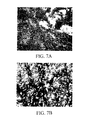
- FIGS. 7A and 7B show tumour sections taken from FIG. 7A control and FIG. 7B treatment Fisher 344 rats. Sections were cut at a thickness of 7 ⁇ m and stained with an antibody directed against B-lymphocytes (CD 20) according to the previously described protocol. Arrows indicate the location of cells staining positively for the CD 20 surface marker ( FIG. 5B ). The magnification of both control FIG. 7A and treatment FIG. 7B sample is 40 ⁇ .
- FIGS. 8A and 8B show tumour sections taken from FIG. 8A control and FIG. 8B treatment Fisher 344 rats. Sections were cut at a thickness of 7 ⁇ m and stained with an antibody directed against macrophages (CD 68) according to the previously described protocol. Arrows indicate the location of cells staining positively for the CD 68 surface marker. The magnification of both control FIG. 8A and treatment FIG. 8B sample is 40 ⁇ .
- FIGS. 9A and 9B tumour sections taken from FIG. 9A control and 9 B treatment Fisher 344 rats. Sections were cut at a thickness of 7 ⁇ m and stained with an antibody directed against Dendritic cell marker (DRC) according to the previously described protocol. Arrows indicate the location of cells staining positively for the DRC surface marker. The magnification of both control FIG. 9A and treatment FIG. 9B sample is 40 ⁇ .
- DRC Dendritic cell marker
- the present invention utilises allogeneic or xenogeneic tumour cells and syngeneic cells, to increase the awareness of a patient's immune system, to treat a tumour,
- the tumour cell vaccines of the present invention share similar peptides in the cancer/tumour with the same histological grade, with different MHC I molecules.
- the vaccines are prepared with whole allogeneic or xenogeneic tumour cells. or lysates of allogeneic or xenogeneic tumour cells.
- the vaccine may further comprise a lysate of one or more syngeneic cells.
- the allogeneic or xenogeneic cells will preferably be tumour cells of the same (or similar) histological grade as the tumour cells of the patient to be treated. Accordingly, if the patient has a brain glioblastoma, the vaccine will be prepared with allogeneic or xenogeneic brain glioblastoma cells. In this way, the peptides comprised in the cells will be similar and will increase the likelihood of the appropriate immune response being generated.
- the vaccine compositions will usually comprise allogeneic or xenogeneic cells/lysates from two or more heterozygous individuals.
- the vaccine compositions are prepared using allogeneic or xenogeneic cells/lysates from at least three heterozygous individuals.
- allogeneic refers to cells taken from different individuals of the same species.
- xenogeneic means that which is derived or obtained from an organism of a different species.
- syngeneic refers to genetically identical members of the same species. For example identical twins will have cells and tissues that are syngeneic.
- cancer and “tumour” are used interchangeably.
- the present invention provides a pharmaceutical composition
- a pharmaceutical composition comprising administering a therapeutically effective amount of allogeneic or xenogeneic tumour cells and optionally pharmaceutically acceptable excipients.
- the pharmaceutical compositions may be for human or animal usage in human and veterinary medicine and will typically comprise a pharmaceutically acceptable excipient.
- Acceptable excipients for therapeutic use are well known in the pharmaceutical art, and are described, for example, in Remington's Pharmaceutical Sciences, Mack Publishing Co. (A. R. Gennaro edit. 1985). The choice of pharmaceutical excipient can be selected with regard to the intended route of administration and standard pharmaceutical practice.
- the pharmaceutical compositions may comprise as—or in addition to—the excipient any suitable binder(s), lubricant(s), suspending agent(s), coating agent(s), solubilising agent(s).
- excipient includes diluents and carriers.
- Preservatives, stabilizers and dyes may be provided in the pharmaceutical composition.
- preservatives include sodium benzoate, sorbic acid and esters of p hydroxybenzoic acid.
- Antioxidants and suspending agents may be also used.
- composition/formulation requirements may be different composition/formulation requirements dependent on the different delivery systems.
- compositions can be administered by injection, parenterally, for example intravenously, intramuscularly or subcutaneously.
- parenteral administration the compositions may be best used in the form of a sterile aqueous solution which may contain other substances, for example enough salts or monosaccharides to make the solution isotonic with blood.
- Vaccines may be prepared from the compositions of the invention.
- vaccines which contain immunogenic cells as active ingredients
- injectables either as liquid solutions or suspensions; solid forms suitable for solution in, or suspension in, liquid prior to injection may also be prepared.
- the preparation may also be emulsified, or the cells encapsulated in liposomes.
- excipients are, for example, water, saline, dextrose, glycerol, ethanol, or the like and combinations thereof.
- the vaccine may contain minor amounts of auxiliary substances such as wetting or emulsifying agents, pH buffering agents, and/or adjuvants which enhance the effectiveness of the vaccine.
- auxiliary substances such as wetting or emulsifying agents, pH buffering agents, and/or adjuvants which enhance the effectiveness of the vaccine.
- adjuvants which may be effective include but are not limited to: aluminum hydroxide, N-acetyl-muramyl-L-threonyl-D-isoglutamine (thr-MDP), N-acetyl-nor-muramyl-L-alanyl-D-isoglutamine (CGP 11637, referred to as nor-MDP), N-acetylmuramyl-L-alanyl-D-isoglutaminyl-L-alanine-2-(1′-2′-dipalmitoyl-sn-glycero-3-hydroxyphosphoryloxy)-ethylamine (CGP I9835A,
- adjuvants and other agents include aluminum hydroxide, aluminum phosphate, aluminum potassium sulfate (alum), beryllium sulfate, silica, kaolin, carbon, water-in-oil emulsions, oil-in-water emulsions, muramyl dipeptide, bacterial endotoxin, lipid X, Corynebacterium parvum ( Propionobacterium acnes ), Bordetella pertussis , polyribonucleotides, sodium alginate, lanolin, lysolecithin, vitamin A, saponin, liposomes, levamisole, DEAB-dextran, blocked copolymers or other synthetic adjuvants.
- Such adjuvants are available commercially from various sources, for example, Merck Adjuvant 65 (Merck and Company, Inc., Rahway, N.J.) or Freund's Incomplete Adjuvant and Complete Adjuvant (Difco Laboratories, Detroit, Mich.).
- adjuvants such as Amphigen (oil-in-water), Alhydrogel (aluminum hydroxide), or a mixture of Amphigen and Alhydrogel are used. Only aluminum hydroxide is approved for human use.
- the proportion of immunogen and adjuvant can be varied over a broad range so long as both are present in effective amounts.
- aluminum hydroxide can be present in an amount of about 0.5% of the vaccine mixture (A12O3 basis).
- the vaccines are formulated to contain a final concentration of immunogen in the range of from 0.2 to 200 mg/ml, preferably 5 to 50 mg/ml, most preferably 15 mg/ml.
- the vaccines are conventionally administered parenterally, by injection, for example, either subcutaneously or intramuscularly.
- a physician will determine the actual dosage which will be most suitable for an individual subject and it will vary with the age, weight and response of the particular patient.
- the dosages below are exemplary of the average case. There can, of course, be individual instances where higher or lower dosage ranges are merited.
- the cell lines used in this experiment were the rat glioma cell lines (9L, C6, RG2), and the human glioma cell lines (U87, LN229). All lines were obtained from the American Type Tissue Collection (ATTC), and grown in Dulbecco's Modified Eagles Medium (DMEM) (GIBCO, Grand Island, N.Y.) supplemented with 10% heat-killed Fetal Calf Serum (FCS). 5% penicillin-streptomycin, and Hepes buffer in a humidified incubator at 37° C. in a 5% CO 2 atmosphere.
- DMEM Dulbecco's Modified Eagles Medium
- FCS Fetal Calf Serum
- 1.0 ⁇ 10 5 cells were placed in 5 ml tube in culture medium and centrifuged for 5 min at 2.5 ⁇ 10 3 rpm. The supernatant was discarded and 150 ⁇ l of sterile distilled water was added to the tube. The cell/water solution was mixed well and transferred to a 1.0 ml Eppendorf tube and centrifuged at 1.0 ⁇ 10 4 for 10 minutes. The supernatant was not discarded and this entire solution was used for cell lysate injections.
- Tumour samples taken from the Fisher 344 rats were frozen in Optimum Temperature Compound (OTC) and cut into 7 ⁇ m sections on a cryostat. These sections were dried, fixed with acetone, and washed well with PBS for 1-2 minutes. Blocking was done using the immune serum from the species the secondary antibody was taken from. Slides were washed thoroughly again and then stained with primary antibody against CD-4, CD-57 (Nora Castro Lab Ltd., Burlingame, Calif.). CD-8, dendritic reticulum cells (DRC) (Dako Corporation, Carpenteria, Calif.), CD-20, CD-68 (Ventana, Arlington, Ariz.). Slides were washed again and a secondary biotinylated antibody was added.
- OTC Optimum Temperature Compound
- tumour size was measured in millimeters using Vernier calipers. Measurements were taken in the cranial/caudal (length), superior/inferior (height), and medial/lateral (width) direction. Tumour volume was calculated by length ⁇ width ⁇ height ⁇ 0.5.
- SD-A 9 rats
- SD-B 3 rats
- SD-A1 control group-5 rats
- SD-A2 treatment group-4 rats
- SD-Al were injected with a combination of allogeneic 9L cells, allogeneic 9L lysate, and syngeneic C6 lysate.
- 4 of the 5 SD-Al were sacrificed.
- one of the control rats started receiving the same treatment protocol as the SD-A2 rats.
- SD-B rats which never formed tumours, were tested for immune memory by challenging them with syngeneic C6 cells (100,000 cells), and another boost of 500,000 C6 cells 10 days later, and checked for formation of a flank tumour.
- Fisher rats were also divided into two groups ( FIG. 2 ). Fisher-A (8 rats) were implanted with the syngeneic 9L cell line. Fisher-B (3 rats) were injected with the allogeneic C6 cell line. Once a palpable flank tumour developed in the Fisher-A rats, they were further subdivided into two groups. Fisher A-1 (control group-3 rats) received injections of syngeneic 9L cells, syngeneic RG2 cells, or medium only. Fisher A-2 (treatment group-5 rats) received a combination of allogeneic C6 cells, allogeneic C6 cell lysate, or xenogeneic U87 and LN229 cells (see FIG. 2 ). Fisher B rats, which initially formed tumours that were subsequently rejected, were tested for immune memory by challenging them with a combination cocktail of syngeneic 9L cells and lysate, and checked for tumour growth.
- C6 is a syngeneic-like cell line for the SD rats, while the 9L and RG2 cell lines are syngeneic for the Fisher 344 rats 1,11 .
- Rat 9 received injections every four days with allogeneic 9L lysates (50,000) plus C6 syngeneic lysates (50,000) and 9L allogeneic cells (50,000) and was sacrificed for histological analysis at day 55, when tumour size was 11% from the initial time of rescue.
- the “treated” SD rats with no measurable tumour were reinjected in the contralateral hind flank with the same syngeneic C6 tumour cell line that caused the original tumour, using 100,000 cells first and five times as many cells (500,000 cells) ten days after. The rats were monitored every three days for any sign of visual or palpable tumour growth. At 160 days, the SD rats remained tumour free.
- FIG. 4 shows tumour growth and response to the treatment of eight Fisher rats (Fisher-A) implanted with 9L cells.
- Rats 1, 2 and 3 (Fisher A-1) received contralateral flank injections at day 20 with syngeneic RG2 (100,000 cells; rat 1) and 9L (100,000 cells; rat 2), or medium alone (rat 3). There was no decrease in tumour size, and the RG2 even seemed to have a synergistic effect in rat 1.
- Rats 4-8 (Fisher A-2), injected with C6 allogeneic cells/C6 allogeneic lysate, 9L syngeneic lysate, or U87 and LN229 xenogeneic cells, all appeared to have a reduction in tumour size.
Landscapes
- Health & Medical Sciences (AREA)
- Life Sciences & Earth Sciences (AREA)
- General Health & Medical Sciences (AREA)
- Veterinary Medicine (AREA)
- Public Health (AREA)
- Pharmacology & Pharmacy (AREA)
- Animal Behavior & Ethology (AREA)
- Chemical & Material Sciences (AREA)
- Medicinal Chemistry (AREA)
- Biomedical Technology (AREA)
- Cell Biology (AREA)
- Developmental Biology & Embryology (AREA)
- Engineering & Computer Science (AREA)
- Immunology (AREA)
- Epidemiology (AREA)
- Ophthalmology & Optometry (AREA)
- Zoology (AREA)
- Virology (AREA)
- Biotechnology (AREA)
- Neurosurgery (AREA)
- Neurology (AREA)
- Mycology (AREA)
- Microbiology (AREA)
- Oncology (AREA)
- Organic Chemistry (AREA)
- Nuclear Medicine, Radiotherapy & Molecular Imaging (AREA)
- General Chemical & Material Sciences (AREA)
- Chemical Kinetics & Catalysis (AREA)
- Medicines Containing Material From Animals Or Micro-Organisms (AREA)
- Medicines Containing Antibodies Or Antigens For Use As Internal Diagnostic Agents (AREA)
- Semiconductor Lasers (AREA)
- Micro-Organisms Or Cultivation Processes Thereof (AREA)
Applications Claiming Priority (3)
| Application Number | Priority Date | Filing Date | Title |
|---|---|---|---|
| GB0601598.6 | 2006-01-26 | ||
| GBGB0601598.6A GB0601598D0 (en) | 2006-01-26 | 2006-01-26 | Method |
| PCT/EP2007/050807 WO2007085648A1 (en) | 2006-01-26 | 2007-01-26 | Tumour vaccine comprising allogeneic or xenogeneic tumour cells |
Publications (2)
| Publication Number | Publication Date |
|---|---|
| US20100055136A1 US20100055136A1 (en) | 2010-03-04 |
| US8105582B2 true US8105582B2 (en) | 2012-01-31 |
Family
ID=36060924
Family Applications (1)
| Application Number | Title | Priority Date | Filing Date |
|---|---|---|---|
| US12/161,418 Active 2027-07-27 US8105582B2 (en) | 2006-01-26 | 2007-01-26 | Tumour vaccine comprising allogenic or xenogeneic tumour cells |
Country Status (21)
| Country | Link |
|---|---|
| US (1) | US8105582B2 (de) |
| EP (1) | EP1993595B1 (de) |
| JP (2) | JP5635733B2 (de) |
| CN (1) | CN101405025B (de) |
| AT (1) | ATE492287T1 (de) |
| AU (1) | AU2007209301B9 (de) |
| BR (1) | BRPI0707247B8 (de) |
| CA (1) | CA2637690C (de) |
| CY (1) | CY1111813T1 (de) |
| DE (1) | DE602007011405D1 (de) |
| DK (1) | DK1993595T3 (de) |
| ES (1) | ES2358223T3 (de) |
| GB (1) | GB0601598D0 (de) |
| IL (1) | IL192964A (de) |
| NO (1) | NO338766B1 (de) |
| NZ (1) | NZ569942A (de) |
| PL (1) | PL1993595T3 (de) |
| PT (1) | PT1993595E (de) |
| RU (1) | RU2456997C2 (de) |
| SI (1) | SI1993595T1 (de) |
| WO (1) | WO2007085648A1 (de) |
Families Citing this family (5)
| Publication number | Priority date | Publication date | Assignee | Title |
|---|---|---|---|---|
| CN101855549A (zh) | 2007-09-12 | 2010-10-06 | 耶达研究及发展有限公司 | 在免疫豁免部位内治疗肿瘤的方法 |
| WO2009094387A1 (en) * | 2008-01-22 | 2009-07-30 | Ghc Research Development Corporation | Compositions and methods for inducing tumor resistance |
| AU2012257377B2 (en) | 2011-05-17 | 2017-09-07 | Hadasit Medical Research Services And Development Ltd. | Allogeneic tumor cell vaccination |
| TWI776276B (zh) * | 2019-11-13 | 2022-09-01 | 中國醫藥大學 | 異種組織細胞組合物治療癌症之用途 |
| WO2021113328A1 (en) | 2019-12-03 | 2021-06-10 | Neuvogen, Inc. | Tumor cell vaccines |
Citations (3)
| Publication number | Priority date | Publication date | Assignee | Title |
|---|---|---|---|---|
| WO1990003183A1 (en) | 1988-09-23 | 1990-04-05 | University Of Southern California | Immunotherapy vaccine for melanoma tumors |
| WO2000033870A2 (en) | 1998-12-10 | 2000-06-15 | Onyvax Limited | New cancer treatments |
| WO2004018659A1 (en) | 2002-08-16 | 2004-03-04 | Glycotope Gmbh | Process for the production of temperature-induced tumor cell lysates for use as immunogenic compounds |
Family Cites Families (2)
| Publication number | Priority date | Publication date | Assignee | Title |
|---|---|---|---|---|
| JPS6130520A (ja) * | 1984-07-19 | 1986-02-12 | Takeda Chem Ind Ltd | 抗腫瘍剤 |
| CN1006758B (zh) * | 1985-04-01 | 1990-02-14 | 哈达·克威斯 | 抗肿瘤药物组合物的制造方法 |
-
2006
- 2006-01-26 GB GBGB0601598.6A patent/GB0601598D0/en not_active Ceased
-
2007
- 2007-01-26 CN CN200780009893.4A patent/CN101405025B/zh not_active Expired - Fee Related
- 2007-01-26 PT PT07712123T patent/PT1993595E/pt unknown
- 2007-01-26 WO PCT/EP2007/050807 patent/WO2007085648A1/en not_active Ceased
- 2007-01-26 AT AT07712123T patent/ATE492287T1/de active
- 2007-01-26 ES ES07712123T patent/ES2358223T3/es active Active
- 2007-01-26 AU AU2007209301A patent/AU2007209301B9/en not_active Ceased
- 2007-01-26 RU RU2008130457/15A patent/RU2456997C2/ru active
- 2007-01-26 CA CA2637690A patent/CA2637690C/en active Active
- 2007-01-26 SI SI200730526T patent/SI1993595T1/sl unknown
- 2007-01-26 BR BRPI0707247A patent/BRPI0707247B8/pt not_active IP Right Cessation
- 2007-01-26 US US12/161,418 patent/US8105582B2/en active Active
- 2007-01-26 DK DK07712123.4T patent/DK1993595T3/da active
- 2007-01-26 EP EP07712123A patent/EP1993595B1/de active Active
- 2007-01-26 NZ NZ569942A patent/NZ569942A/en not_active IP Right Cessation
- 2007-01-26 DE DE602007011405T patent/DE602007011405D1/de active Active
- 2007-01-26 PL PL07712123T patent/PL1993595T3/pl unknown
- 2007-01-26 JP JP2008551800A patent/JP5635733B2/ja not_active Expired - Fee Related
-
2008
- 2008-07-22 IL IL192964A patent/IL192964A/en active IP Right Grant
- 2008-08-13 NO NO20083519A patent/NO338766B1/no unknown
-
2011
- 2011-03-17 CY CY20111100297T patent/CY1111813T1/el unknown
-
2012
- 2012-08-03 JP JP2012172672A patent/JP2012214499A/ja active Pending
Patent Citations (3)
| Publication number | Priority date | Publication date | Assignee | Title |
|---|---|---|---|---|
| WO1990003183A1 (en) | 1988-09-23 | 1990-04-05 | University Of Southern California | Immunotherapy vaccine for melanoma tumors |
| WO2000033870A2 (en) | 1998-12-10 | 2000-06-15 | Onyvax Limited | New cancer treatments |
| WO2004018659A1 (en) | 2002-08-16 | 2004-03-04 | Glycotope Gmbh | Process for the production of temperature-induced tumor cell lysates for use as immunogenic compounds |
Non-Patent Citations (18)
| Title |
|---|
| Abstract of Wheeler (Salud p'ublica de M'exico, (Jul.-Aug. 1997) 39 (4) 283-7). * |
| Blakeslee, J. R. et al., "Tumor Rejection and Immunotherapy Studies with Simian Virus 40-Induced Tumors," Journal of Medicine, 1973, pp. 233-247, vol. 4, No. 4, XP008077620. |
| Bystryn et al. "Double-blind trial of a polyvalent, shed-antigen, melanoma vaccine" Clinical Cancer Research, 2001, pp. 1882-1887, vol. 7, No. 7. |
| Chan, A. D. et al., "Active Immunotherapy With Allogeneic Tumor Cell Vaccines: Present Status," Seminars in Oncology, Dec. 1998, pp. 611-622, vol. 25, No. 6, XP008077525. |
| Disis, M. L. et al., "Cancer Vaccines for the Treatment and Prevention of Non-Small-Cell Lung Cancer," Clinical Lung Cancer, May 2000, pp. 294-301, vol. 1, No. 4, XP008077643. |
| Dols, A. et al., "Allogeneic Breast Cancer Cell Vaccines," Clinical Breast Cancer Supplement, Feb. 2003, pp. S173-S180, vol. 3, Supplement 4, XP009064465. |
| Henderson et al. "Cancer vaccines and immunotherapies; emerging perspectives" Vaccine, 2005, pp. 2359-2362, vol. 23, No. 17-18. |
| Hrouda et al. "Allogeneic whole-tumour cell vaccination in the rat model of prostate cancer" BJU International, 2000, pp. 742-748, vol. 86, No. 6. |
| Jiang, X. P. et al., "Vaccination with a Mixed Vaccine of Autogenous and Allogeneic Breast Cancer Cells and Tumor Associated Antigens CA15-3, CEA and CA125-Results in Immune and Clinical Responses in Breast Cancer Patients," Cancer Biotherapy and Radiopharmaceuticals, Nov. 5, 2000, pp. 495-505, vol. 15, No. 5, XP009064457. |
| Knight et al. "Allogeneic murine melanoma cell vaccine: A model for the development of human allogeneic cancer vaccine" Melanoma Research, 1996, pp. 299-306, vol. 6, No. 4. |
| Perlin, E. et al., "Carcinoma of the Lung: Immunotherapy with Intradermal BCG* and Allogeneic Tumor Cells," International Journal of Radiation Oncology Biology Physics, 1980, pp. 1033-1039, vol. 6. |
| Rieger et al (Glossary of Genetics and Cytogenetics, 1976, pp. 289-290, definition for "inbred line"). * |
| Sosman et al. "Adjuvant immunotherapy of resected, intermediate-thickness, node-negative melanoma with an allogeneic tumor vaccine: impact of HLA class I antigen expression on outcome" Journal of Clinical Oncology, 2002, pp. 2067-2075, vol. 20, No. 8. |
| Souberbielle et al. "Comparison of four strategies for tomour vaccination in the B16-F10 melanoma model" Gene Therapy, 1998, pp. 1447-1454, vol. 5, No. 11. |
| Todryk et al. "Efficacy of cytokine gene transfection may differ from autologous and allogeneic tumour cell vaccines" Immunology, 2001, pp. 190-198, vol. 102, No. 2. |
| Vaishampayan et al. "Active immunotherapy of metastatic melanoma with allogeneic melanoma lysates and interferon alpha" Clinical Cancer Research, 2002, pp. 3696-3701, vol. 8, No. 12. |
| Vaishampayan et al. "Active immunotherapy of metastatic melanoma with allogeneic melanoma lysates and interferon α" Clinical Cancer Research, 2002, pp. 3696-3701, vol. 8, No. 12. |
| Yoshikawa et al. "Vaccine efficacy of fusogenic liposomes containing tumor cell-lysate against murine B16BL6 melanoma" Biol. Pharm. Bull., 2006, pp. 100-104, vol. 29, No. 1. |
Also Published As
Similar Documents
| Publication | Publication Date | Title |
|---|---|---|
| Trefzer et al. | Hybrid cell vaccination for cancer immune therapy: first clinical trial with metastatic melanoma | |
| KR20190134765A (ko) | 자가면역 질환의 치료를 위한 rna | |
| EP2787005A1 (de) | Gezielte Krebs-Immuntherapie | |
| EP1993595B1 (de) | Tumor-vakzine mit allogenen oder xenogenen tumorzellen | |
| Veltman et al. | Low‐dose cyclophosphamide synergizes with dendritic cell‐based immunotherapy in antitumor activity | |
| Xu et al. | Vaccine‐induced gastric CD4+ tissue‐resident memory T cells proliferate in situ to amplify immune response against Helicobacter pylori insult | |
| Mahr et al. | Regulatory T cells promote natural killer cell education in mixed chimeras | |
| WO2002051986A2 (en) | Educated nk t cells and their uses in the treatment of immune-related disorders | |
| Gorczynski et al. | Long-term tolerance and skin allograft survival in CD200tg mice after autologous marrow transplantation | |
| US20170296642A1 (en) | Xenogenic normal tissue-derived vaccines for breaking the immune tolerance to tumor-associated, antigens | |
| HK1130693B (en) | Tumour vaccine comprising allogeneic or xenogeneic tumour cells | |
| EP2393505B1 (de) | Verwendung spezifischer peptide bei der herstellung eines arzneimittels zur behandlung von monoklonaler gammopathie unbestimmter signifikanz (mgus) oder schwelendem multiplem myelom (smm) | |
| WO2000056356A2 (en) | Induction of antigen-specific unresponsiveness by glioblastoma culture supernatants (gcs) | |
| Vondracek | Phosphatidylserine and apoptotic cell mediated immune suppression | |
| Hamilton | PERMISSION TO USE POSTGRADUATE THESIS | |
| Yerly | Local immunosuppression using self-assembled hydrogel drug delivery system in vascularized composite allotransplantation and its effect on rejection in a swine model. | |
| Chain | The role of dendritic cells in graft rejection | |
| Frleta | Regulation of dendritic cell biology in vitro and in vivo with biological response modifiers | |
| Orlando | A study of the relationship between immunological enhancement and inhibition of hepatoma growth in syngeneic rats | |
| Veltman et al. | Research Article Low-Dose Cyclophosphamide Synergizes with Dendritic Cell-Based Immunotherapy in Antitumor Activity | |
| Ali | CD4 T cell allorecognition pathways in acute and chronic allograft rejection | |
| Muhsin | The Interface of Metastatic Tumours and the Immune System | |
| AN et al. | THE genetic structure of the mammalian foetus developing |
Legal Events
| Date | Code | Title | Description |
|---|---|---|---|
| STCF | Information on status: patent grant |
Free format text: PATENTED CASE |
|
| FPAY | Fee payment |
Year of fee payment: 4 |
|
| MAFP | Maintenance fee payment |
Free format text: PAYMENT OF MAINTENANCE FEE, 8TH YR, SMALL ENTITY (ORIGINAL EVENT CODE: M2552); ENTITY STATUS OF PATENT OWNER: SMALL ENTITY Year of fee payment: 8 |
|
| MAFP | Maintenance fee payment |
Free format text: PAYMENT OF MAINTENANCE FEE, 12TH YR, SMALL ENTITY (ORIGINAL EVENT CODE: M2553); ENTITY STATUS OF PATENT OWNER: SMALL ENTITY Year of fee payment: 12 |