US8094822B2 - Broadcast encryption key distribution system - Google Patents
Broadcast encryption key distribution system Download PDFInfo
- Publication number
- US8094822B2 US8094822B2 US10/509,872 US50987205A US8094822B2 US 8094822 B2 US8094822 B2 US 8094822B2 US 50987205 A US50987205 A US 50987205A US 8094822 B2 US8094822 B2 US 8094822B2
- Authority
- US
- United States
- Prior art keywords
- terminal
- encryption
- key
- broadcast
- frame
- Prior art date
- Legal status (The legal status is an assumption and is not a legal conclusion. Google has not performed a legal analysis and makes no representation as to the accuracy of the status listed.)
- Expired - Fee Related, expires
Links
Images




Classifications
-
- H—ELECTRICITY
- H04—ELECTRIC COMMUNICATION TECHNIQUE
- H04W—WIRELESS COMMUNICATION NETWORKS
- H04W12/00—Security arrangements; Authentication; Protecting privacy or anonymity
- H04W12/04—Key management, e.g. using generic bootstrapping architecture [GBA]
-
- H—ELECTRICITY
- H04—ELECTRIC COMMUNICATION TECHNIQUE
- H04L—TRANSMISSION OF DIGITAL INFORMATION, e.g. TELEGRAPHIC COMMUNICATION
- H04L12/00—Data switching networks
- H04L12/02—Details
- H04L12/16—Arrangements for providing special services to substations
- H04L12/18—Arrangements for providing special services to substations for broadcast or conference, e.g. multicast
- H04L12/189—Arrangements for providing special services to substations for broadcast or conference, e.g. multicast in combination with wireless systems
-
- H—ELECTRICITY
- H04—ELECTRIC COMMUNICATION TECHNIQUE
- H04L—TRANSMISSION OF DIGITAL INFORMATION, e.g. TELEGRAPHIC COMMUNICATION
- H04L45/00—Routing or path finding of packets in data switching networks
- H04L45/54—Organization of routing tables
-
- H—ELECTRICITY
- H04—ELECTRIC COMMUNICATION TECHNIQUE
- H04L—TRANSMISSION OF DIGITAL INFORMATION, e.g. TELEGRAPHIC COMMUNICATION
- H04L63/00—Network architectures or network communication protocols for network security
- H04L63/06—Network architectures or network communication protocols for network security for supporting key management in a packet data network
- H04L63/061—Network architectures or network communication protocols for network security for supporting key management in a packet data network for key exchange, e.g. in peer-to-peer networks
-
- H—ELECTRICITY
- H04—ELECTRIC COMMUNICATION TECHNIQUE
- H04L—TRANSMISSION OF DIGITAL INFORMATION, e.g. TELEGRAPHIC COMMUNICATION
- H04L9/00—Cryptographic mechanisms or cryptographic arrangements for secret or secure communications; Network security protocols
- H04L9/08—Key distribution or management, e.g. generation, sharing or updating, of cryptographic keys or passwords
- H04L9/0816—Key establishment, i.e. cryptographic processes or cryptographic protocols whereby a shared secret becomes available to two or more parties, for subsequent use
- H04L9/0819—Key transport or distribution, i.e. key establishment techniques where one party creates or otherwise obtains a secret value, and securely transfers it to the other(s)
- H04L9/0825—Key transport or distribution, i.e. key establishment techniques where one party creates or otherwise obtains a secret value, and securely transfers it to the other(s) using asymmetric-key encryption or public key infrastructure [PKI], e.g. key signature or public key certificates
-
- H—ELECTRICITY
- H04—ELECTRIC COMMUNICATION TECHNIQUE
- H04L—TRANSMISSION OF DIGITAL INFORMATION, e.g. TELEGRAPHIC COMMUNICATION
- H04L9/00—Cryptographic mechanisms or cryptographic arrangements for secret or secure communications; Network security protocols
- H04L9/08—Key distribution or management, e.g. generation, sharing or updating, of cryptographic keys or passwords
- H04L9/0816—Key establishment, i.e. cryptographic processes or cryptographic protocols whereby a shared secret becomes available to two or more parties, for subsequent use
- H04L9/0819—Key transport or distribution, i.e. key establishment techniques where one party creates or otherwise obtains a secret value, and securely transfers it to the other(s)
- H04L9/083—Key transport or distribution, i.e. key establishment techniques where one party creates or otherwise obtains a secret value, and securely transfers it to the other(s) involving central third party, e.g. key distribution center [KDC] or trusted third party [TTP]
-
- H—ELECTRICITY
- H04—ELECTRIC COMMUNICATION TECHNIQUE
- H04L—TRANSMISSION OF DIGITAL INFORMATION, e.g. TELEGRAPHIC COMMUNICATION
- H04L9/00—Cryptographic mechanisms or cryptographic arrangements for secret or secure communications; Network security protocols
- H04L9/32—Cryptographic mechanisms or cryptographic arrangements for secret or secure communications; Network security protocols including means for verifying the identity or authority of a user of the system or for message authentication, e.g. authorization, entity authentication, data integrity or data verification, non-repudiation, key authentication or verification of credentials
- H04L9/3263—Cryptographic mechanisms or cryptographic arrangements for secret or secure communications; Network security protocols including means for verifying the identity or authority of a user of the system or for message authentication, e.g. authorization, entity authentication, data integrity or data verification, non-repudiation, key authentication or verification of credentials involving certificates, e.g. public key certificate [PKC] or attribute certificate [AC]; Public key infrastructure [PKI] arrangements
-
- H—ELECTRICITY
- H04—ELECTRIC COMMUNICATION TECHNIQUE
- H04W—WIRELESS COMMUNICATION NETWORKS
- H04W12/00—Security arrangements; Authentication; Protecting privacy or anonymity
- H04W12/03—Protecting confidentiality, e.g. by encryption
- H04W12/033—Protecting confidentiality, e.g. by encryption of the user plane, e.g. user's traffic
-
- H—ELECTRICITY
- H04—ELECTRIC COMMUNICATION TECHNIQUE
- H04L—TRANSMISSION OF DIGITAL INFORMATION, e.g. TELEGRAPHIC COMMUNICATION
- H04L2209/00—Additional information or applications relating to cryptographic mechanisms or cryptographic arrangements for secret or secure communication H04L9/00
- H04L2209/60—Digital content management, e.g. content distribution
- H04L2209/601—Broadcast encryption
-
- H—ELECTRICITY
- H04—ELECTRIC COMMUNICATION TECHNIQUE
- H04L—TRANSMISSION OF DIGITAL INFORMATION, e.g. TELEGRAPHIC COMMUNICATION
- H04L2209/00—Additional information or applications relating to cryptographic mechanisms or cryptographic arrangements for secret or secure communication H04L9/00
- H04L2209/80—Wireless
-
- H—ELECTRICITY
- H04—ELECTRIC COMMUNICATION TECHNIQUE
- H04W—WIRELESS COMMUNICATION NETWORKS
- H04W84/00—Network topologies
- H04W84/18—Self-organising networks, e.g. ad-hoc networks or sensor networks
Definitions
- the present invention relates to a wireless ad-hoc communication system. More particularly, the present invention relates to a wireless ad-hoc communication system in which a broadcast frame is encrypted using a broadcast encryption key unique to each terminal to maintain confidentiality, a terminal in this system, a processing method in them, and a program that causes a computer (or a terminal) to execute this method.
- terminals e.g., computers, personal digital assistances (PDAs), portable phones, etc.
- PDAs personal digital assistances
- Such a wireless ad-hoc communication system there also has been demanded confidentiality using encryption, etc., to perform transmission and reception of important information or private communication safely without interception of any third party.
- two encryption methods are employed for encrypting communication content, i.e., a common key encryption method in which the same common key is used by the encrypting and decoding parties, and a public key encryption method in which encryption is performed using a public key and decoding is performed using a secret key.
- the common key encryption method enables encryption and decoding at high speed; however, the communication parties must share a common key beforehand using a certain method.
- the public key encryption method has an advantage in that the communication parties need not share a key. Therefore, a hybrid encryption method combining the high-speed performance of the common key encryption method and the usability of the public key encryption method is widely used. More specifically, a common key is encrypted using the public key encryption method and is then transmitted, and the common key that is shared between the communication parties is used to encrypt actual communication data.
- the common key used for encrypting communication data is classified into a unicast encryption key and a broadcast encryption key depending upon the use.
- the unicast encryption key is a common key for use in unicast communication between two terminals, which is not known by terminals other than those two terminals.
- the broadcast encryption key is a common key used when each terminal decodes broadcast communication from a terminal, which is shared by all terminals involved with the broadcast communication. Therefore, the broadcast encryption key is generally more difficult to provide confidentiality than with unicast encryption key.
- broadcast encryption keys are managed solely by a specific device on a network in order to ensure the confidentiality of the broadcast encryption keys in a broadcast group.
- a technique for encrypting a broadcast message using a broadcast encryption key that is configured in advance by a wireless carrier, which is a network owner of mobile devices has been proposed (see, for example, PCT Japanese Patent Publication No. 2002-501334 (FIG. 1)).
- broadcast encryption keys are managed at one location in a traditional communication system
- terminals are always moving in a wireless ad-hoc communication system.
- the terminals frequently participate in or are disconnected from a network, and therefore, terminals constituting a broadcast group cannot be fixed. Due to the nature of wireless media, a communication path to such a sole management device is not always maintained. Therefore, the wireless ad-hoc communication system is not suitable for sole management.
- the present invention is particularly useful in a wireless network in which all wireless terminals setting up the network transmit management information (such as a beacon).
- a wireless ad-hoc communication system is a wireless ad-hoc communication system constituted by a plurality of terminals, including a first terminal that encrypts a payload of a broadcast frame and that transmits the broadcast frame, and a second terminal that receives the broadcast frame and that decodes the payload of the broadcast frame, wherein the first terminal encrypts the payload of the broadcast frame using a broadcast encryption key of the first terminal, and the second terminal decodes the payload of the broadcast frame using the broadcast encryption key of the first terminal.
- a broadcast encryption key can be configured for each terminal in an independent and distributed manner is achieved.
- the wireless ad-hoc communication system according to claim 2 of the present invention is such that in the wireless ad-hoc communication system according to claim 1 , the second terminal includes an encryption-key management list table having at least an encryption-key management list including a set of a terminal identifier of the first terminal and a broadcast encryption key of the first terminal, means for searching the encryption-key management list table based on the terminal identifier of the first terminal included in a start-terminal identifier of the received broadcast frame to extract the corresponding broadcast encryption key of the first terminal, and means for decoding the payload of the broadcast frame using the extracted broadcast encryption key of the first terminal.
- an advantage that a broadcast encryption key is selectable depending upon the start-terminal identifier of a broadcast frame is achieved.
- the wireless ad-hoc communication system according to claim 3 of the present invention is such that in the wireless ad-hoc communication system according to claim 8 , the first terminal includes a generated-key table that stores the broadcast encryption key of the first terminal, means for encrypting the payload of the broadcast frame using the broadcast encryption key of the first terminal stored in the generated-key table, and means for transmitting the encrypted broadcast frame.
- the first terminal includes a generated-key table that stores the broadcast encryption key of the first terminal, means for encrypting the payload of the broadcast frame using the broadcast encryption key of the first terminal stored in the generated-key table, and means for transmitting the encrypted broadcast frame.
- a terminal includes an encryption-key management list table having at least one encryption-key management list including a set of a terminal identifier of a different terminal and a broadcast encryption key of the different terminal, means for searching the encryption-key management list table for the encryption-key management list including a start-terminal identifier of a received broadcast frame to extract the corresponding broadcast encryption key, and means for decoding a payload of the broadcast frame using the extracted broadcast encryption key.
- a terminal includes an encryption-key management list table having at least one encryption-key management list that stores a unicast encryption key between this terminal and a different terminal and a broadcast encryption key of the different terminal in association with a terminal identifier of the different terminal, means for, when an end-terminal identifier of a received frame is a broadcast address, searching the encryption-key management list table for the encryption-key management list including a start-terminal identifier of the frame to extract the corresponding broadcast encryption key as an encryption key, and when the end-terminal identifier of the received frame is other than a broadcast address, searching the encryption-key management list table for the encryption-key management list including a start-terminal identifier of the frame to extract the corresponding unicast encryption key as the encryption key, and means for decoding a payload of the frame using the extracted encryption key.
- a terminal according to claim 6 of the present invention includes a generated-key table that stores a broadcast encryption key of this terminal, means for encrypting a payload of a broadcast frame using the broadcast encryption key, and means for transmitting the encrypted broadcast frame.
- a terminal includes a generated-key table that stores a broadcast encryption key of this terminal, an encryption-key management list table having at least one encryption-key management list that stores a unicast encryption key between this terminal and a different terminal in association with a terminal identifier of the different terminal, means for, when a frame to be transmitted is a broadcast frame, encrypting a payload of the broadcast frame using the broadcast encryption key of the generated-key table, and when the frame to be transmitted is a unicast frame, searching the encryption-key management list table for the encryption-key management list including an end-terminal identifier of the unicast frame to encrypt a payload of the unicast frame using the corresponding unicast encryption key, and means for transmitting the encrypted frame.
- a terminal according to claim 8 of the present invention includes means for encrypting a terminal identifier and a broadcast encryption key of this terminal using a unicast encryption key of a transmission-destination terminal, and means for transmitting the encrypted terminal identifier and broadcast encryption key of this terminal to the transmission-destination terminal.
- a terminal includes an encryption-key management list table having at least one encryption-key management list that stores a broadcast encryption key of a different terminal in association with a terminal identifier of the different terminal, means for encrypting the encryption-key management list using a unicast encryption key of a transmission-destination terminal, and means for transmitting the encrypted encryption-key management list to the transmission-destination terminal.
- a terminal according to claim 10 of the present invention includes means for receiving a terminal identifier and a broadcast encryption key of a different terminal from the different terminal, means for encrypting the terminal identifier and broadcast encryption key of the different terminal using a broadcast encryption key of the above-described terminal, and means for broadcasting the encrypted terminal identifier and broadcast encryption key of the different terminal.
- a method for decoding a broadcast frame according to claim 11 of the present invention is a method for decoding a broadcast frame in a terminal that includes an encryption-key management list table having at least one encryption-key management list including a set of a terminal identifier of a different terminal and a broadcast encryption key of the different terminal, including the steps of searching the encryption-key management list table for the encryption-key management list including a start-terminal identifier of a received broadcast frame to extract the corresponding broadcast encryption key, and decoding a payload of the broadcast frame using the extracted broadcast encryption key.
- a method for encrypting a broadcast frame according to claim 12 of the present invention is a method for encrypting a broadcast frame in a terminal that includes a generated-key table storing a broadcast encryption key of this terminal, including the steps of encrypting a payload of the broadcast frame using the broadcast encryption key stored in the generated-key table, and transmitting the encrypted broadcast frame.
- a method for distributing a broadcast encryption key according to claim 13 of the present invention includes the steps of receiving a terminal identifier and a broadcast encryption key of a first terminal that are encrypted using a unicast encryption key between the first terminal and a second terminal, decoding the encrypted terminal identifier and broadcast encryption key of the first terminal using the unicast encryption key, encrypting a terminal identifier and a broadcast encryption key of the second terminal using the unicast encryption key, and transmitting the encrypted terminal identifier and broadcast encryption key of the second terminal to the first terminal.
- a method for distributing a broadcast encryption key according to claim 14 of the present invention includes the steps of receiving a terminal identifier and a broadcast encryption key of a first terminal that are encrypted using a unicast encryption key between the first terminal and a second terminal, decoding the encrypted terminal identifier and broadcast encryption key of the first terminal using the unicast encryption key, encrypting a terminal identifier and a broadcast encryption key of the first terminal using a broadcast encryption key of the second terminal, and transmitting the encrypted terminal identifier and broadcast encryption key of the first terminal to a third terminal.
- a program according to claim 15 of the present invention causes a terminal that includes an encryption-key management list table having at least one encryption-key management list including a set of a terminal identifier of a different terminal and a broadcast encryption key of the different terminal to execute the steps of searching the encryption-key management list table for the encryption-key management list including a start-terminal identifier of a received broadcast frame to extract the corresponding broadcast encryption key, and decoding a payload of the broadcast frame using the extracted broadcast encryption key.
- a program according to claim 16 of the present invention executes a terminal that includes a generated-key table storing a broadcast encryption key of this terminal to execute the steps of encrypting a payload of a broadcast frame using the broadcast encryption key stored in the generated-key table, and transmitting the encrypted broadcast frame.
- a program according to claim 17 of the present invention causes a second terminal to execute the steps of receiving a terminal identifier and a broadcast encryption key of a first terminal that are encrypted using a unicast encryption key between the first terminal and the second terminal, decoding the encrypted terminal identifier and broadcast encryption key of the first terminal using the unicast encryption key, encrypting a terminal identifier and a broadcast encryption key of the second terminal using the unicast encryption key, and transmitting the encrypted terminal identifier and broadcast encryption key of the second terminal to the first terminal.
- a program according to claim 18 of the present invention causes a second terminal to execute the steps of receiving a terminal identifier and a broadcast encryption key of a first terminal that are encrypted using a unicast encryption key between the first terminal and the second terminal, decoding the encrypted terminal identifier and broadcast encryption key of the first terminal using the unicast encryption key, encrypting the terminal identifier and the broadcast encryption key of the first terminal using a broadcast encryption key of the second terminal, and transmitting the encrypted terminal identifier and broadcast encryption key of the first terminal to a third terminal.
- FIG. 1 is a block diagram of a wireless terminal 300 used in a wireless ad-hoc communication system according to an embodiment of the present invention.
- FIG. 2 is an illustration showing an example structure of an attribute-certificate-issuing-terminal list table 610 according to the embodiment of the present invention.
- FIG. 3 is a diagram showing a format 710 of a public key certificate 612 stored in the attribute-certificate-issuing-terminal list table 610 according to the embodiment of the present invention.
- FIG. 4 is a diagram showing a format 720 of an attribute certificate stored in an attribute certificate table 620 according to the embodiment of the present invention.
- FIG. 5 is an illustration showing an example structure of an encryption-key management list table 660 according to the embodiment of the present invention.
- FIGS. 6A and 6B are diagrams showing a function of a broadcast encryption key and a unicast encryption key according to the embodiment of the present invention.
- FIG. 7 is an illustration showing an example structure of a routing table 680 according to the embodiment of the present invention.
- FIG. 8 is an illustration showing the frame structure for use in broadcast communication and unicast communication according to the embodiment of the present invention.
- FIG. 9 is a chart showing a mutual authentication procedure according to the embodiment of the present invention.
- FIG. 10 is an illustration showing an example structure of a beacon frame 810 according to the embodiment of the present invention.
- FIG. 11 is an illustration showing an example structure of an authentication request frame 870 according to the embodiment of the present invention.
- FIG. 12 is an illustration showing an example structure of an authentication reply frame 880 according to the embodiment of the present invention.
- FIG. 13 is a chart showing an encryption key distribution procedure according to the embodiment of the present invention.
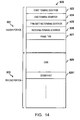
- FIG. 14 is an illustration showing an example structure of a session key distribution frame 820 according to the embodiment of the present invention.
- FIG. 15 is an illustration showing an example structure of a broadcast key distribution frame 830 according to the embodiment of the present invention.
- FIG. 16 is a chart showing an encryption key selecting algorithm for frame transmission according to the embodiment of the present invention.
- FIG. 17 is a chart showing an encryption key selecting algorithm for frame transmission according to the embodiment of the present invention.
- FIG. 1 is a block diagram of a wireless terminal 300 used in a wireless ad-hoc communication system according to an embodiment of the present invention.
- the wireless terminal 300 includes a communication processing unit 320 , a control unit 330 , a display unit 340 , an operating unit 350 , a speaker 360 , a microphone 370 , and a memory 600 , and these components are connected via a bus 380 .
- the communication processing unit 320 is connected with an antenna 310 .
- the communication processing unit 320 configures a network interface layer (data link layer) frame from a signal received via the antenna 310 .
- the communication processing unit 320 transmits the network interface layer frame via the antenna 310 .
- the control unit 330 controls the overall wireless terminal 300 .
- the control unit 330 refers to the frame configured by the communication processing unit 320 to perform predetermined processing.
- the control unit 330 includes a timer 335 for counting the time elapsed from a predetermined event.
- the display unit 340 displays predetermined information, and may be implemented by, for example, a liquid crystal display or the like.
- the operating unit 350 is operated to enter instructions to the wireless terminal 300 from outside, and may be implemented by, for example, a keyboard, a button switch, or the like.
- the speaker 360 is used for audio output, and is used to alert the user of the wireless terminal 300 or to exchange audio information with other terminals.
- the microphone 370 is used for audio input to the wireless terminal 300 from outside, and is used to exchange audio information with other terminals or to instruct operations.
- the memory 600 stores an attribute-certificate-issuing-terminal list table 610 including information about attribute certificate issuing terminals, an attribute-certificate table 620 including attribute certificates indicating access rights of the wireless terminal 300 , a generated-key table 650 including information about generated keys of the wireless terminal 300 , that is, a public key, a secret key, a public key certificate, and a broadcast encryption key of the wireless terminal 300 , and an encryption-key management list table 660 including a unicast encryption key shared with other terminals and broadcast encryption keys of other terminals.
- FIG. 2 shows an example structure of the attribute-certificate-issuing-terminal list table 610 according to the embodiment of the present invention.
- the attribute-certificate-issuing-terminal list table 610 stores information about terminals that have issued an attribute certificate, and includes a public key certificate 612 in association with a terminal identifier 611 of each attribute-certificate issuing terminal.
- the terminal identifier 611 may be an identifier that uniquely identifies a terminal in a network, and may be represented by, for example, a MAC (Media Access Control) address in the Ethernet®.
- the public key certificate 612 is a public key certificate of a terminal identified by the corresponding terminal identifier 611 .
- the public key certificate verifies the identity of the certificate owner (subject), and includes a public key of the certificate owner.
- the public key certificate is signed by a certificate authority (CA) serving as a certificate issuer.
- CA certificate authority
- FIG. 3 is a diagram showing a format 710 of the public key certificate 612 stored in the attribute-certificate-issuing-terminal list table 610 .
- the public key certificate format 710 is generally constituted by a pre-signature certificate 711 , a signature algorithm 718 , and a signature 719 .
- the pre-signature certificate 711 includes a serial number 712 , an issuer 714 , an expiration date 715 , an owner 716 , an owner 716 , and an owner public key 717 .
- the serial number 712 represents a serial number of the public key certificate, and is numbered by the certificate authority.
- the issuer 714 represents the name of the certificate authority serving as a public key certificate issuer.
- the public key certificate is uniquely identified by the issuer 714 and the serial number 712 .
- the expiration date 715 represents an expiration date of the public key certificate.
- the owner 716 represents the name of the owner of the public key certificate.
- the owner public key 717 represents a public key of the owner 716 .
- the signature 719 represents a signature added to the public key certificate by the certificate authority, and the signature algorithm 718 represents a signature algorithm used for the signature 719 .
- the signature algorithm is constituted by two algorithms, i.e., a message-digest algorithm and a public key encryption algorithm.
- the message-digest algorithm is one type of hash function (summary function), and is an algorithm by which a message digest of the pre-signature certificate 711 is generated.
- the message digest is obtained by compressing input data (the pre-signature certificate 711 ) into a fixed-length bit sequence, and is also referred to as thumbprint, fingerprint, or the like.
- Known message-digest algorithms include SHA-1 (Secure Hash Algorithm 1), MD2 (Message Digest #2), MD5 (Message Digest #5), and so forth.
- the public key encryption algorithm is an algorithm by which the message digest obtained by the message-digest algorithm is encrypted using a certificate-authority secret key.
- Known public key encryption algorithms include RSA based on the prime factorization problem, DSA based on the discrete logarithm problem, and so forth.
- the message digest of the pre-signature certificate 711 is encrypted using the certificate-authority secret key to produce the signature, 719 .
- the signature 719 of the public key certificate is decoded using a certificate-authority public key to obtain a message digest.
- the user of the public key certificate generates a message digest of the pre-signature certificate 711 , and compares the generated message digest with the message digest decoded by the certificate-authority public key to verify that the content of the pre-signature certificate 711 is not tampered with.
- FIG. 4 is a diagram showing a format 720 of the attribute certificate stored in the attribute-certificate table 620 .
- the attribute certificate is generally constituted by attribute certification information 721 , a signature algorithm 728 , and a signature 729 .
- the attribute certification information 721 includes an owner public key certificate identifier 723 , an issuer 724 , a serial number 722 , and an expiration date 725 .
- the owner public key certificate identifier 723 identifies a public key certificate of the owner of the attribute certificate. More specifically, the public key certificate is identified using the issuer 714 and the serial number 712 of the public key certificate 710 (see FIG. 3 ).
- the issuer 724 represents the number of an attribute certificate authority (AA) serving as an attribute certificate issuer.
- the serial number 722 represents a serial number of the attribute certificate, and is numbered by the attribute certificate authority serving as an attribute certificate issuer.
- the attribute certificate is uniquely identified by the serial number 722 and the issuer 724 .
- the expiration date 725 represents an expiration date of the attribute certificate.
- the signature 729 represents a signature added to the attribute certificate by the attribute certificate authority
- the signature algorithm 728 represents a signature algorithm used for the signature 729 .
- the details of the signature algorithm are similar to those of the signature algorithm 718 of the public key certificate described above, and the message digest of the attribute certification information 721 is encrypted using an attribute-certificate-authority secret key to produce the signature 729 .
- the signature 729 of the attribute certificate is decoded using an attribute-certificate-authority public key to obtain a message digest.
- the user of the attribute certificate generates a message digest of the attribute certification information 721 , and compares the generated message digest with the message digest decoded by the attribute-certificate-authority public key to verify that the content of the attribute certification information 721 is not tampered with.
- an attribute certificate is described as a privilege certificate that serves to authorize a terminal to access a network.
- terminal rights described in an XML language or the like, which are signed by an authorized authority may function as the privilege certificate according to the present invention.
- FIG. 5 illustrates an example structure of the encryption-key management list table 660 according to the embodiment of the present invention.
- the encryption-key management list table 660 stores a broadcast key for use in decoding and a unicast key for use in encryption and decoding.
- the encryption-key management list table 660 includes at least one encryption-key management list that stores a unicast encryption key 662 shared with a different terminal and a broadcast encryption key 663 of the different terminal in association with a terminal identifier 661 of the different terminal.
- the terminal identifier 661 uniquely identifies another terminal, and may be represented by, for example, a MAC address.
- the unicast encryption key 662 is a common key defined for unicast communication with a terminal having the corresponding terminal identifier 661 .
- the unicast encryption key 662 e.g., a unicast encryption key used between a terminal A and a terminal B, is represented by “UK_AB.”
- the broadcast encryption key 663 is a common key defined for a terminal having the corresponding terminal identifier 661 to perform broadcast communication.
- the broadcast encryption key 663 e.g., a broadcast encryption key for use in broadcast communication from a terminal B, is represented by “BK_B.”
- DES Data Encryption Standard
- AES Advanced Encryption Standard
- FIGS. 6A and 6B illustrate a function of a broadcast encryption key and a unicast encryption key according to the embodiment of the present invention.
- the broadcast encryption key is a common key defined for each terminal that performs broadcast communication, which is commonly used for encryption in a broadcast transmitting terminal and decoding in a broadcast receiving terminal.
- a broadcast encryption key (BK_A) of a terminal A is used for encryption when the terminal A transmits broadcast communication, and is used for decoding when terminals other than the terminal A receive the broadcast communication from the terminal A.
- the unicast encryption key is a common key defined for each terminal pair, which is commonly used for encrypting and decoding communication in the terminal pair.
- a unicast encryption key (UK_AB) between a terminal A and a terminal B is used not only for encryption when the terminal A transmits unicast communication to the terminal B and for decoding when the terminal B receives the unicast communication from the terminal A, but is also used for encryption when the terminal B transmits unicast communication to the terminal A and for decoding when the terminal A receives the unicast communication from the terminal B.
- FIG. 7 illustrates an example structure of a routing table 680 according to the embodiment of the present invention.
- the routing table 680 stores information about forwarding terminals through which a frame reaches an end terminal.
- the routing table 680 includes at least one route list that stores a terminal identifier 682 of a terminal to which the frame is forwarded and an expiration time 683 in association with a terminal identifier 681 of an end terminal.
- the end-terminal identifier 681 and the forwarding-terminal identifier 682 uniquely identify other terminals, as described above, and indicate the next terminal to which the frame is to be forwarded in order to finally deliver the frame to a given terminal.
- the network configuration can change over time.
- the information stored in the routing table 680 can therefore be out of date.
- the expiration time 683 is used to manage the freshness of the corresponding information. For example, the time when the information was updated or the elapsed time from the time when the information was updated may be recorded in the expiration time 683 , so that when the information has passed a predetermined time, it can be deleted or updated.
- the timer 335 of the control unit 330 is used to count the time.
- FIG. 8 shows the frame structure for use in broadcast communication and unicast communication according to the embodiment of the present invention.
- a frame 800 is constituted by a header portion 801 and a payload portion 802 .
- the header portion 801 includes a start-terminal identifier 803 , an end-terminal identifier 804 , a transmitting-terminal identifier 805 , a receiving-terminal identifier 806 , a frame type 807 , and the presence of attribute certificate 808 .
- the start-terminal identifier 803 represents a terminal identifier of a terminal that originates this frame.
- the terminal identifier may be any identifier that uniquely identifies a terminal in a network, and may be represented by, for example, a MAC address in the Ethernet®.
- the end-terminal identifier 804 represents a terminal identifier of a final destination terminal of this frame.
- the transmitting-terminal identifier 805 and the receiving-terminal identifier 806 are used for relaying the frame.
- all terminals within a network cannot directly communicate with one another, and a multi-hop communication path must be set up to transmit a frame to a terminal that is out of radio coverage via another terminal.
- the transmitting-terminal identifier 805 and the receiving-terminal identifier 806 are used by terminals that transmit and receive the frame.
- the frame type 807 represents the type of frame.
- the payload portion 802 stores data 809 that is communication content.
- the payload portion 802 is to be encrypted and decoded by the unicast encryption key and the broadcast encryption key.
- terminals perform mutual authentication using an attribute certificate when a terminal accesses a network resource (see FIG. 9 ), and after the mutual authentication succeeds, a session key is distributed, a unicast encryption key is generated, and a broadcast encryption key is distributed (see FIG. 13 ).
- the processes shown in FIGS. 9 and 13 are implemented by the control unit 330 ,of the wireless terminal 300 .
- the attribute certificate for use in the mutual authentication is appropriately issued in advance, and is stored in the attribute certificate table 620 (see FIG. 1 ,) of each terminal. It is also premised that a public key of an attribute-certificate issuing terminal required for verifying the attribute certificate is preset in the public key certificate 612 (see FIG. 2 ) in the attribute-certificate-issuing-terminal list table 610 of each terminal.
- FIG. 9 is a chart showing a mutual authentication procedure according to the embodiment of the present invention.
- each terminal constantly transmits a beacon to notify other terminals of the presence of this terminal.
- the beacon of a terminal B acts as a trigger for a terminal A to request authentication.
- the beacon of either terminal may act as a trigger.
- the terminal B transmits ( 211 ) a beacon 2111 .
- the frame structure of the beacon 2111 is shown in FIG. 10 .
- a beacon frame 810 is based on the structure of the frame 800 described above with reference to FIG. 8 , and is also constituted by a header portion 811 and a payload portion 812 .
- Terminal identifiers 813 to 816 are also similar to the terminal identifiers 803 to 806 shown in FIG. 8 , respectively.
- the end-terminal identifier 814 has a broadcast address (for example, all bits are set to 1).
- a frame type 817 indicates a beacon frame.
- the presence of attribute certificate 818 indicates whether or not a transmitting terminal of the beacon frame has an attribute certificate indicating access rights to the network resources. If the presence of attribute certificate 818 indicates that the attribute certificate is not present, mutual authentication is not continued, and an action, such as an action to prompt acquisition of the attribute certificate, may be taken.
- the terminal A Upon receiving ( 111 ) the beacon 2111 transmitted from the terminal B, the terminal A checks the presence of attribute certificate 818 of the beacon frame 810 . If it is determined that the terminal B has an attribute certificate, the terminal A transmits ( 112 ) an authentication request message 1122 for authenticating the terminal A to the terminal B.
- the frame structure of the authentication request message 1122 is shown in FIG. 11 .
- An authentication request frame 870 is based on the structure of the frame 800 described above with reference to FIG. 8 , and is also constituted by a header portion 871 and a payload portion 872 .
- Terminal identifiers 873 to 876 are also similar to the terminal identifiers 803 to 806 shown in FIG. 8 , respectively.
- a frame type 877 indicates an authentication request frame.
- data 879 in the payload portion 872 includes a public key certificate 8791 and an attribute certificate 8792 of the terminal A serving as a transmission source.
- the public key certificate 8791 of the terminal A is stored in advance in the generated-key table 650 of the terminal A, and the attribute certificate 8792 of the terminal A is stored in advance in the attribute certificate table 620 of the terminal A.
- the terminal B Upon receiving the authentication request message 1122 transmitted from the terminal A, the terminal B authenticates ( 212 ) the terminal A from the content. More specifically, the public key of the attribute certificate authority is extracted from the public key certificate 612 (see FIG. 2 ) of the attribute-certificate-issuing-terminal list table 610 , and the signature 729 (see FIG. 4 ) of the attribute certificate 8792 included in the authentication request message 1122 is decoded using the extracted public key to obtain a message digest at the signature time. Then, a message digest of the attribute certification information 721 (see FIG. 4 ) of the attribute certificate 8792 is newly generated. The newly generated message digest is checked for the conformity to the message digest at the signature time.
- the attribute certificate can be tampered with after the signature, and the attribute certificate verification fails. If a match is found, the owner public key certificate identifier 723 (see FIG. 4 ) of the attribute certificate 8792 included in the authentication request message 1122 is further checked for the conformity to the issuer 714 and the serial number 712 (see FIG. 3 ) of the public key certificate 8791 included in the authentication request message 1122 . If a match is found, it is verified that the terminal A, which is the owner of the public key certificate, is also the owner of the attribute certificate. If a match is not found, the terminal A is not the owner of the attribute certificate, and the attribute certificate verification fails.
- the terminal B transmits ( 213 ) an authentication-success message 2131 for notifying a success in the authentication of the terminal A to the terminal A.
- the authentication reply frame structure of the authentication-success message 2131 is shown in FIG. 12 .
- An authentication reply frame 880 is based on the structure of the frame 800 described above with reference to FIG. 8 , and is also constituted by a header portion 881 and a payload portion 882 .
- Terminal identifiers 883 to 886 are also similar to the terminal identifiers 803 to 806 shown in FIG. 8 , respectively.
- a frame type 887 indicates an authentication-success frame.
- the authentication reply frame 880 further includes a reply reason type 888 , which is not required when the authentication succeeds.
- the terminal B transmits an authentication-error message for notifying a success in the authentication of the terminal A to the terminal A.
- the authentication reply frame structure of the authentication-error message is described above with reference to FIG. 12 .
- the frame type 887 indicates an authentication-error frame
- the reply reason type 888 includes coded reasons of the authentication error, such as inconformity of the message digests of the attribute certificate and revocation of the attribute certificate.
- the authentication-success message 2131 or the authentication-error message is received and checked ( 113 ) by the terminal A.
- the terminal B further transmits ( 214 ) an authentication request message 2141 to the terminal A to authenticate the terminal B.
- the frame structure of the authentication request message 2141 is similar to that described above with reference to FIG. 11 , and the public key certificate 8791 and the attribute certificate 8792 of the terminal B serving as a transmission source are included.
- the terminal A Upon receiving the authentication request message 2141 transmitted from the terminal B, the terminal A authenticates ( 114 ) the terminal B from the content. Like the authentication ( 212 ) of the terminal A performed in the terminal B, described above, the authentication includes verification of the attribute certificate, confirmation of the attribute certificate owner, and so on.
- the terminal A transmits ( 115 ) an authentication-success message 1152 for notifying a success in the authentication of the terminal B to the terminal B.
- the authentication reply frame structure of the authentication-success message 1152 is similar to that described above with reference to FIG. 12 . If the attribute certificate verification ( 212 ) of the terminal B fails, the terminal A transmits an authentication-error message for notifying a success in the authentication of the terminal B to the terminal B.
- the authentication reply frame structure of the authentication-error message is also described above with reference to FIG. 12 .
- the authentication-success message 1152 or the authentication-error message is received and checked ( 215 ) by the terminal B.
- FIG. 13 is a chart showing an encryption key distribution procedure according to the embodiment of the present invention.
- a terminal A ( 100 ) is a new terminal that is to participate in a network
- a terminal B ( 200 ) is an attribute-certificate issuing terminal that has participated in the network.
- the terminal A generates ( 121 ) a session key for performing communication with the terminal B.
- the session key is a common key between the terminal A and the terminal B, and may be generated using random numbers.
- the terminal A encrypts the session key using a public key of the terminal B to produce a session key distribution message 1222 , and transmits ( 122 ) the session key distribution message 1222 to the terminal B.
- the session key distribution frame structure of the session key distribution message 1222 is shown in FIG. 14 .
- a session key distribution frame 820 is based on the structure of the frame 800 described above with reference to FIG. 8 , and is also constituted by a header portion 821 and a payload portion 822 .
- Terminal identifiers 823 to 826 are also similar to the terminal identifiers 803 to 806 shown in FIG. 8 , respectively.
- a frame type 827 indicates a session key distribution frame.
- Data 829 in the payload portion 822 includes a session key 8291 .
- the payload portion 822 of the session key distribution frame is not to be encrypted or decoded by a unicast encryption key or a broadcast encryption key.
- the payload portion 822 is encrypted by a public key of a receiving terminal, and is decoded by a secret key of the receiving terminal.
- the terminal A has received a public key certificate of the terminal B during mutual authentication, and can therefore obtain the public key of the terminal B based on the owner public key 717 (see FIG. 3 ).
- the terminal B Upon receiving the session key distribution message 1222 transmitted from the terminal A, the terminal B decodes ( 222 ) the session key 8291 using a secret key of the terminal B. Thus, the same session key is shared between the terminal A and the terminal B.
- the terminal A and the terminal B generate ( 123 and 223 ) a unicast encryption key (UK_AB) from the session key.
- the unicast encryption key may be obtained by using the session key as it is, or by using the session key as a seed to generate a new unicast encryption key by a hash function.
- the unicast encryption key (UK_AB) between the terminal A and the terminal B is stored in the corresponding unicast encryption key 662 in the encryption-key management list table 660 (see FIG. 5 ) of both terminals.
- the terminal A encrypts a set of a pre-generated broadcast encryption key (BK_A) of the terminal A and a terminal identifier of the terminal A using the unicast encryption key (UK_AB) shared with the terminal B to produce a broadcast key distribution message 1242 , and transmits the broadcast key distribution message 1242 to the terminal B ( 124 ).
- the broadcast key distribution frame structure of the broadcast key distribution message 1242 is shown in FIG. 15 .
- a broadcast key distribution frame 830 is based on the structure of the frame 800 described above with reference to FIG. 8 , and is also constituted by a header portion 831 and a payload portion 832 .
- Terminal identifiers 833 to 836 are also similar to the terminal identifiers 803 to 806 shown in FIG.
- a frame type 837 indicates a broadcast key distribution frame.
- Data 839 in the payload portion 832 includes a set of a terminal identifier 8391 and a broadcast encryption key 8392 .
- the terminal A stores the broadcast encryption key (BK_A) 8392 of the terminal A in the generated-key table 650 .
- the unicast encryption key (UK_AB) used for encrypting the payload portion 832 of the broadcast key distribution message 1242 is stored in the unicast encryption key 662 in the encryption-key management list table 660 (see FIG. 5 ).
- the terminal B Upon receiving the broadcast key distribution message 1242 from the terminal A, the terminal B decodes ( 224 ) the payload portion 832 of the broadcast key distribution message 1242 using the unicast encryption key (UK_AB) shared with the terminal A. Thus, the broadcast encryption key and the terminal identifier of the terminal A are obtained.
- the broadcast encryption key of the terminal A is stored in association with the terminal identifier of the terminal A into the broadcast encryption key 663 in the encryption-key management list table 660 (see FIG. 5 ).
- the terminal B encrypts the set of the broadcast encryption key (BK_A) of the terminal A and the terminal identifier of the terminal A using a broadcast encryption key (BK_B) of the terminal B to produce a broadcast key distribution message 2244 , and broadcasts the broadcast key distribution message 2244 to other terminals ( 225 ).
- the broadcast key distribution frame structure of the broadcast key distribution message 2244 is described above with reference to FIG. 15 , except that the end-terminal identifier 834 has a broadcast address (for example, all bits are set to 1).
- other terminals 400 Upon receiving the broadcast key distribution message 2244 from the terminal B, other terminals 400 (e.g., a terminal C and a terminal D) decode the payload portion 832 of the broadcast key distribution message 2244 using the broadcast encryption key (BK_B) of the terminal B ( 425 ). Thus, the broadcast encryption key and the terminal identifier of the terminal A are obtained.
- the broadcast encryption key of the terminal A is stored in association with the terminal identifier of the terminal A into the broadcast encryption key 663 in the encryption-key management list table 660 (see FIG. 5 ).
- the terminal B further encrypts sets of all broadcast encryption keys 663 contained in the encryption-key management list table 660 of the terminal B and the corresponding terminal identifiers 661 using the unicast encryption key (UK_AB) shared with the terminal A to produce a broadcast key distribution message 2261 , and transmits the broadcast key distribution message 2261 to the terminal A ( 226 ).
- the broadcast key distribution frame structure of the broadcast key distribution message 2261 is described above with reference to FIG. 15 , except that the payload portion 832 may include a plurality of sets of terminal identifiers 8391 and broadcast encryption keys 8392 .
- the terminal A Upon receiving the broadcast key distribution message 2261 from the terminal B, the terminal A decodes the payload portion 832 of the broadcast key distribution message 2261 using the unicast encryption key (UK_AB) shared with the terminal B ( 126 ). Thus, the sets of broadcast encryption keys and terminal identifiers of other terminals are obtained. The broadcast encryption keys of other terminals are stored in association with the terminal identifiers of the corresponding terminals into the broadcast encryption key 663 in the encryption-key management list table 660 (see FIG. 5 ).
- UKI_AB unicast encryption key
- FIG. 16 is a chart showing an encryption key selecting algorithm when a terminal transmits a frame according to the embodiment of the present invention.
- a broadcast frame indicates that the end-terminal identifier 804 is a broadcast address (step S 921 ), and the payload portion 802 is encrypted using the broadcast encryption key of this terminal (step S 922 ).
- the end-terminal identifier 804 is other than a broadcast address (step S 921 )
- the unicast encryption key 662 corresponding to the terminal identifier 661 matched to the end-terminal identifier 804 is extracted from the encryption-key management list table 660 shown in FIG. 5 , and the payload portion 802 is encrypted using this unicast encryption key (step S 923 ).
- the encrypted frame is sent to a low layer (step S 924 ).
- FIG. 17 is a chart showing an encryption key selecting algorithm when a terminal receives a frame according to the embodiment of the present invention.
- the end-terminal identifier 804 is a broadcast address (step S 911 )
- the broadcast encryption key 663 corresponding to the terminal identifier 661 matched to the start-terminal identifier 803 is extracted from the encryption-key management list table 660 shown in FIG. 5 , and the payload portion 802 is decoded using this broadcast encryption key (step S 912 ).
- step S 911 If the end-terminal identifier 804 is not a broadcast address (step S 911 ) but is the terminal identifier of this terminal (step S 913 ), the unicast encryption key 662 corresponding to the terminal identifier 661 matched to the start-terminal identifier 803 is extracted from the encryption-key management list table 660 shown in FIG. 5 , and the payload portion 802 is decoded using this unicast encryption key (step S 914 ).
- the frame decoded in step S 912 or S 914 is processed in a high layer (step S 915 ).
- the frame is forwarded to the terminal at the next point (step S 916 ).
- the terminal at the next point can be determined by extracting the end-terminal identifier 681 matched to the end-terminal identifier 804 of the frame 800 (see FIG. 8 ) from the routing table 680 (see FIG. 7 ) and by referring to the corresponding forwarding-terminal identifier 682 .
- the broadcast encryption key 663 is stored in association with the terminal identifier 661 into the encryption-key management list table 660 , thus allowing broadcast encryption keys different from one terminal to another to be used.
- These broadcast encryption keys are generated by terminals that perform broadcast communication and are distributed by the sequence shown in FIG. 13 or the like.
- the broadcast encryption keys can be managed by individual terminals in an independent and distributed manner.
- broadcast is not to be restrictively construed but is to be construed as broad concept to cover a “multicast.”
- the operation procedures described above may be regarded as a method having the series of procedures, or may be regarded as a program for causing a computer to execute the series of procedures or a recording medium that stores the program.
- the present invention can take an advantage that broadcast encryption keys are managed in an independent and distributed manner in a wireless ad-hoc communication system.
Landscapes
- Engineering & Computer Science (AREA)
- Computer Security & Cryptography (AREA)
- Computer Networks & Wireless Communication (AREA)
- Signal Processing (AREA)
- Computer Hardware Design (AREA)
- Computing Systems (AREA)
- General Engineering & Computer Science (AREA)
- Mobile Radio Communication Systems (AREA)
- Small-Scale Networks (AREA)
Applications Claiming Priority (3)
| Application Number | Priority Date | Filing Date | Title |
|---|---|---|---|
| JP2003026543A JP2004266342A (ja) | 2003-02-03 | 2003-02-03 | 無線アドホック通信システム、端末、その端末における復号方法、暗号化方法及びブロードキャスト暗号鍵配布方法並びにそれらの方法を端末に実行させるためのプログラム |
| JP2003-026543 | 2003-02-03 | ||
| PCT/JP2004/001076 WO2004071006A1 (ja) | 2003-02-03 | 2004-02-03 | ブロードキャスト暗号鍵配布システム |
Publications (2)
| Publication Number | Publication Date |
|---|---|
| US20050123141A1 US20050123141A1 (en) | 2005-06-09 |
| US8094822B2 true US8094822B2 (en) | 2012-01-10 |
Family
ID=32844146
Family Applications (1)
| Application Number | Title | Priority Date | Filing Date |
|---|---|---|---|
| US10/509,872 Expired - Fee Related US8094822B2 (en) | 2003-02-03 | 2004-02-03 | Broadcast encryption key distribution system |
Country Status (7)
| Country | Link |
|---|---|
| US (1) | US8094822B2 (pt) |
| EP (1) | EP1592166A4 (pt) |
| JP (1) | JP2004266342A (pt) |
| KR (1) | KR20050101110A (pt) |
| CN (1) | CN1698305A (pt) |
| BR (1) | BRPI0403934A (pt) |
| WO (1) | WO2004071006A1 (pt) |
Cited By (10)
| Publication number | Priority date | Publication date | Assignee | Title |
|---|---|---|---|---|
| US20120144197A1 (en) * | 2010-12-02 | 2012-06-07 | Jong-Moon Chung | Point-to-point communication method in a wireless sensor network and methods of driving coordinators and communication devices in the wireless sensor network |
| US20120284517A1 (en) * | 2011-05-04 | 2012-11-08 | Lambert Paul A | Wireless authentication using beacon messages |
| US20130283360A1 (en) * | 2012-04-20 | 2013-10-24 | Cisco Technology, Inc. | Distributed group temporal key (gtk) state management |
| US9575768B1 (en) | 2013-01-08 | 2017-02-21 | Marvell International Ltd. | Loading boot code from multiple memories |
| US9652249B1 (en) | 2008-09-18 | 2017-05-16 | Marvell World Trade Ltd. | Preloading an application while an operating system loads |
| US9736801B1 (en) | 2013-05-20 | 2017-08-15 | Marvell International Ltd. | Methods and apparatus for synchronizing devices in a wireless data communication system |
| US9769653B1 (en) | 2008-08-20 | 2017-09-19 | Marvell International Ltd. | Efficient key establishment for wireless networks |
| US9836306B2 (en) | 2013-07-31 | 2017-12-05 | Marvell World Trade Ltd. | Parallelizing boot operations |
| US9860862B1 (en) | 2013-05-21 | 2018-01-02 | Marvell International Ltd. | Methods and apparatus for selecting a device to perform shared functionality in a deterministic and fair manner in a wireless data communication system |
| US10979412B2 (en) | 2016-03-08 | 2021-04-13 | Nxp Usa, Inc. | Methods and apparatus for secure device authentication |
Families Citing this family (44)
| Publication number | Priority date | Publication date | Assignee | Title |
|---|---|---|---|---|
| JP4103611B2 (ja) * | 2003-02-03 | 2008-06-18 | ソニー株式会社 | 無線アドホック通信システム、端末、その端末における認証方法、暗号化方法及び端末管理方法並びにそれらの方法を端末に実行させるためのプログラム |
| JP4039277B2 (ja) * | 2003-03-06 | 2008-01-30 | ソニー株式会社 | 無線通信システム、端末、その端末における処理方法並びにその方法を端末に実行させるためのプログラム |
| US7567562B2 (en) * | 2005-03-02 | 2009-07-28 | Panasonic Corporation | Content based secure rendezvous chaotic routing system for ultra high speed mobile communications in ad hoc network environment |
| WO2006101299A1 (en) * | 2005-03-24 | 2006-09-28 | Ktfreetel Co., Ltd. | A conditional access system for each transmitter in single frequency network, and a method thereof |
| KR100717681B1 (ko) * | 2005-03-24 | 2007-05-11 | 주식회사 케이티프리텔 | 단일 주파수망에서의 암호화된 방송신호 송출 시스템 및 그방법 |
| WO2007042664A1 (fr) * | 2005-10-14 | 2007-04-19 | France Telecom | Vérification d'un message reçu en mode de multidiffusion dans un réseau de communications |
| US7900817B2 (en) | 2006-01-26 | 2011-03-08 | Ricoh Company, Ltd. | Techniques for introducing devices to device families with paper receipt |
| JP4597060B2 (ja) * | 2006-02-07 | 2010-12-15 | 日立オートモティブシステムズ株式会社 | 車両制御装置間ネットワーク |
| JP5013728B2 (ja) * | 2006-03-20 | 2012-08-29 | キヤノン株式会社 | システム及びその処理方法、並びに通信装置及び処理方法 |
| JP4315455B2 (ja) * | 2006-04-04 | 2009-08-19 | キヤノン株式会社 | 露光装置及びデバイス製造方法 |
| CA2941216C (en) * | 2006-04-13 | 2018-11-27 | Certicom Corp. | Method and apparatus for providing an adaptable security level in an electronic communication |
| US8171302B2 (en) * | 2006-05-30 | 2012-05-01 | Hewlett-Packard Development Company, L.P. | Method and system for creating a pre-shared key |
| US20070283003A1 (en) * | 2006-05-31 | 2007-12-06 | Broyles Paul J | System and method for provisioning a computer system |
| JP4989117B2 (ja) * | 2006-06-12 | 2012-08-01 | キヤノン株式会社 | 通信装置およびその方法 |
| KR100856408B1 (ko) * | 2006-07-19 | 2008-09-04 | 삼성전자주식회사 | 데이터 전송 방법 및 장치 |
| JP4847246B2 (ja) * | 2006-07-31 | 2011-12-28 | キヤノン株式会社 | 通信装置、通信装置の制御方法、及び当該制御方法をコンピュータに実行させるためのコンピュータプログラム |
| JP4281768B2 (ja) | 2006-08-15 | 2009-06-17 | ソニー株式会社 | 通信システム、無線通信装置およびその制御方法 |
| JP5018315B2 (ja) * | 2006-09-14 | 2012-09-05 | ソニー株式会社 | 無線通信システム、無線通信装置、無線通信装置の認証方法、および、プログラム |
| WO2008074534A1 (en) * | 2006-12-21 | 2008-06-26 | International Business Machines Corporation | Key distribution for securing broadcast transmission to groups of users in wireless networks |
| US7907735B2 (en) * | 2007-06-15 | 2011-03-15 | Koolspan, Inc. | System and method of creating and sending broadcast and multicast data |
| US8627079B2 (en) * | 2007-11-01 | 2014-01-07 | Infineon Technologies Ag | Method and system for controlling a device |
| US8908870B2 (en) * | 2007-11-01 | 2014-12-09 | Infineon Technologies Ag | Method and system for transferring information to a device |
| US8792646B2 (en) * | 2008-03-25 | 2014-07-29 | Qualcomm Incorporated | Systems and methods for group key distribution and management for wireless communications systems |
| US20090300346A1 (en) * | 2008-05-30 | 2009-12-03 | Kashyap Merchant | Device and Method for Identifying Certificates |
| US8990221B2 (en) * | 2008-05-30 | 2015-03-24 | Google Technology Holdings LLC | Device and method for updating a certificate |
| US20100034386A1 (en) * | 2008-08-06 | 2010-02-11 | Daintree Networks, Pty. Ltd. | Device manager repository |
| JP4692600B2 (ja) * | 2008-09-25 | 2011-06-01 | 富士ゼロックス株式会社 | 情報処理装置、通信システム、及びプログラム |
| JP5293284B2 (ja) * | 2009-03-09 | 2013-09-18 | 沖電気工業株式会社 | 通信方法、メッシュ型ネットワークシステム及び通信端末 |
| CN101540671B (zh) * | 2009-04-21 | 2011-05-25 | 中兴通讯股份有限公司 | 一种自组网络下wapi站点间安全关联的建立方法 |
| CN102694753A (zh) * | 2011-03-25 | 2012-09-26 | 国基电子(上海)有限公司 | 对数据进行加密传输的网关设备、系统及方法 |
| US9020008B2 (en) * | 2011-07-12 | 2015-04-28 | Cisco Technology, Inc. | Overlaying independent unicast frequency hopping schedules with a common broadcast schedule |
| EP2915354A4 (en) * | 2012-11-01 | 2016-06-29 | Lg Electronics Inc | METHOD AND DEVICE FOR PROVIDING AN INTEGRITY PROTECTION FOR NEARBY-DISCOVERED SERVICE COVERS WITH EXTENDED DISCOVERY AREA |
| WO2014083922A1 (ja) * | 2012-11-30 | 2014-06-05 | 日本電気株式会社 | 情報配信システム、情報配信方法、通信端末及びプログラム |
| JP5941556B2 (ja) * | 2012-12-28 | 2016-06-29 | 株式会社日立製作所 | パケット中継装置、パケット転送方法および通信システム |
| WO2015017983A1 (en) * | 2013-08-06 | 2015-02-12 | Panasonic Intellectual Property Corporation Of America | Wireless communication method for device to device communication and user equipment |
| US10430779B2 (en) * | 2014-04-08 | 2019-10-01 | Capital One Services Llc | Systems and methods for transacting at an ATM using a mobile device |
| US10462660B2 (en) | 2014-05-12 | 2019-10-29 | Nokia Technologies Oy | Method, network element, user equipment and system for securing device-to-device communication in a wireless network |
| CN104378801A (zh) * | 2014-09-19 | 2015-02-25 | 小米科技有限责任公司 | 接入无线网络的方法及装置 |
| US10374819B2 (en) | 2014-09-19 | 2019-08-06 | Xiaomi Inc. | Methods and devices of accessing wireless network |
| CN105763516B (zh) * | 2014-12-17 | 2019-11-29 | 深圳市腾讯计算机系统有限公司 | 从无线局域网内终端向网外设备发送数据的方法和装置 |
| CN105517103A (zh) * | 2015-12-03 | 2016-04-20 | 小米科技有限责任公司 | 基于智能终端设备的网络接入的方法和装置 |
| IT201900006242A1 (it) * | 2019-04-23 | 2020-10-23 | Italdesign Giugiaro Spa | Perfezionamenti nella trasmissione di dati o messaggi a bordo di un veicolo mediante un protocollo di comunicazione SOME/IP |
| CN112769778B (zh) * | 2020-12-28 | 2023-05-23 | 福建正孚软件有限公司 | 一种基于跨网跨境数据安全传输的加解密处理方法和系统 |
| US11704444B2 (en) | 2021-03-08 | 2023-07-18 | Micron Technology, Inc. | Managing encryption keys per logical block on a persistent memory device |
Citations (17)
| Publication number | Priority date | Publication date | Assignee | Title |
|---|---|---|---|---|
| JPH10107832A (ja) | 1996-09-25 | 1998-04-24 | Hitachi Software Eng Co Ltd | 暗号同報メールシステム |
| US6185680B1 (en) * | 1995-11-30 | 2001-02-06 | Kabushiki Kaisha Toshiba | Packet authentication and packet encryption/decryption scheme for security gateway |
| US6229806B1 (en) * | 1997-12-30 | 2001-05-08 | Motorola, Inc. | Authentication in a packet data system |
| JP2001136159A (ja) | 1999-11-01 | 2001-05-18 | Sony Corp | 情報伝送システム及び方法、送信装置及び受信装置 |
| US6295361B1 (en) * | 1998-06-30 | 2001-09-25 | Sun Microsystems, Inc. | Method and apparatus for multicast indication of group key change |
| JP2002111679A (ja) | 2000-09-28 | 2002-04-12 | Hitachi Ltd | 閉域グループ通信方法および通信端末装置 |
| US20020098830A1 (en) * | 1999-10-01 | 2002-07-25 | Lauper Karin Busch | Method for verifying in a mobile device the authenticity of electronic certificates issued by a certification authority and corresponding identification module |
| US20020132584A1 (en) * | 2001-03-13 | 2002-09-19 | Canon Kabushiki Kaisha | Communication apparatus and system, and control method |
| US20020143855A1 (en) * | 2001-01-22 | 2002-10-03 | Traversat Bernard A. | Relay peers for extending peer availability in a peer-to-peer networking environment |
| US6496928B1 (en) * | 1998-01-07 | 2002-12-17 | Microsoft Corporation | System for transmitting subscription information and content to a mobile device |
| US20020196764A1 (en) * | 2001-06-25 | 2002-12-26 | Nec Corporation | Method and system for authentication in wireless LAN system |
| US20030217289A1 (en) * | 2002-05-17 | 2003-11-20 | Ken Ammon | Method and system for wireless intrusion detection |
| US20040015689A1 (en) * | 2002-07-17 | 2004-01-22 | Harris Corporation | Mobile-ad-hoc network including node authentication features and related methods |
| US6912657B2 (en) * | 2000-02-22 | 2005-06-28 | Telefonaktiebolaget Lm Ericsson | Method and arrangement in a communication network |
| US7231664B2 (en) * | 2002-09-04 | 2007-06-12 | Secure Computing Corporation | System and method for transmitting and receiving secure data in a virtual private group |
| US7336790B1 (en) * | 1999-12-10 | 2008-02-26 | Sun Microsystems Inc. | Decoupling access control from key management in a network |
| US7386726B2 (en) * | 2001-11-02 | 2008-06-10 | Telefonaktiebolaget L M Ericsson (Publ) | Personal certification authority device |
-
2003
- 2003-02-03 JP JP2003026543A patent/JP2004266342A/ja active Pending
-
2004
- 2004-02-03 WO PCT/JP2004/001076 patent/WO2004071006A1/ja not_active Ceased
- 2004-02-03 KR KR1020047015760A patent/KR20050101110A/ko not_active Withdrawn
- 2004-02-03 CN CNA2004800002228A patent/CN1698305A/zh active Pending
- 2004-02-03 US US10/509,872 patent/US8094822B2/en not_active Expired - Fee Related
- 2004-02-03 EP EP20040707640 patent/EP1592166A4/en not_active Withdrawn
- 2004-02-03 BR BR0403934-3A patent/BRPI0403934A/pt not_active IP Right Cessation
Patent Citations (17)
| Publication number | Priority date | Publication date | Assignee | Title |
|---|---|---|---|---|
| US6185680B1 (en) * | 1995-11-30 | 2001-02-06 | Kabushiki Kaisha Toshiba | Packet authentication and packet encryption/decryption scheme for security gateway |
| JPH10107832A (ja) | 1996-09-25 | 1998-04-24 | Hitachi Software Eng Co Ltd | 暗号同報メールシステム |
| US6229806B1 (en) * | 1997-12-30 | 2001-05-08 | Motorola, Inc. | Authentication in a packet data system |
| US6496928B1 (en) * | 1998-01-07 | 2002-12-17 | Microsoft Corporation | System for transmitting subscription information and content to a mobile device |
| US6295361B1 (en) * | 1998-06-30 | 2001-09-25 | Sun Microsystems, Inc. | Method and apparatus for multicast indication of group key change |
| US20020098830A1 (en) * | 1999-10-01 | 2002-07-25 | Lauper Karin Busch | Method for verifying in a mobile device the authenticity of electronic certificates issued by a certification authority and corresponding identification module |
| JP2001136159A (ja) | 1999-11-01 | 2001-05-18 | Sony Corp | 情報伝送システム及び方法、送信装置及び受信装置 |
| US7336790B1 (en) * | 1999-12-10 | 2008-02-26 | Sun Microsystems Inc. | Decoupling access control from key management in a network |
| US6912657B2 (en) * | 2000-02-22 | 2005-06-28 | Telefonaktiebolaget Lm Ericsson | Method and arrangement in a communication network |
| JP2002111679A (ja) | 2000-09-28 | 2002-04-12 | Hitachi Ltd | 閉域グループ通信方法および通信端末装置 |
| US20020143855A1 (en) * | 2001-01-22 | 2002-10-03 | Traversat Bernard A. | Relay peers for extending peer availability in a peer-to-peer networking environment |
| US20020132584A1 (en) * | 2001-03-13 | 2002-09-19 | Canon Kabushiki Kaisha | Communication apparatus and system, and control method |
| US20020196764A1 (en) * | 2001-06-25 | 2002-12-26 | Nec Corporation | Method and system for authentication in wireless LAN system |
| US7386726B2 (en) * | 2001-11-02 | 2008-06-10 | Telefonaktiebolaget L M Ericsson (Publ) | Personal certification authority device |
| US20030217289A1 (en) * | 2002-05-17 | 2003-11-20 | Ken Ammon | Method and system for wireless intrusion detection |
| US20040015689A1 (en) * | 2002-07-17 | 2004-01-22 | Harris Corporation | Mobile-ad-hoc network including node authentication features and related methods |
| US7231664B2 (en) * | 2002-09-04 | 2007-06-12 | Secure Computing Corporation | System and method for transmitting and receiving secure data in a virtual private group |
Non-Patent Citations (5)
| Title |
|---|
| Stallings, "Cryptography and Network Security: Principles and Practice", 3rd edition, Pearson Education, pp. 388-389. * |
| U.S. Appl. No. 10/508,137, filed Sep. 17, 2004, Suzuki. |
| U.S. Appl. No. 10/784,271, filed Feb. 24, 2004, Suzuki, et al. |
| U.S. Appl. No. 11/567,067, filed Dec. 5, 2006, Suzuki. |
| U.S. Appl. No. 11/742,989, filed May 1, 2007, Suzuki, et al. |
Cited By (13)
| Publication number | Priority date | Publication date | Assignee | Title |
|---|---|---|---|---|
| US9769653B1 (en) | 2008-08-20 | 2017-09-19 | Marvell International Ltd. | Efficient key establishment for wireless networks |
| US9652249B1 (en) | 2008-09-18 | 2017-05-16 | Marvell World Trade Ltd. | Preloading an application while an operating system loads |
| US20120144197A1 (en) * | 2010-12-02 | 2012-06-07 | Jong-Moon Chung | Point-to-point communication method in a wireless sensor network and methods of driving coordinators and communication devices in the wireless sensor network |
| US8694782B2 (en) * | 2011-05-04 | 2014-04-08 | Marvell World Trade Ltd. | Wireless authentication using beacon messages |
| US9113330B2 (en) | 2011-05-04 | 2015-08-18 | Marvell World Trade Ltd. | Wireless authentication using beacon messages |
| US20120284517A1 (en) * | 2011-05-04 | 2012-11-08 | Lambert Paul A | Wireless authentication using beacon messages |
| US8800010B2 (en) * | 2012-04-20 | 2014-08-05 | Cisco Technology, Inc. | Distributed group temporal key (GTK) state management |
| US20130283360A1 (en) * | 2012-04-20 | 2013-10-24 | Cisco Technology, Inc. | Distributed group temporal key (gtk) state management |
| US9575768B1 (en) | 2013-01-08 | 2017-02-21 | Marvell International Ltd. | Loading boot code from multiple memories |
| US9736801B1 (en) | 2013-05-20 | 2017-08-15 | Marvell International Ltd. | Methods and apparatus for synchronizing devices in a wireless data communication system |
| US9860862B1 (en) | 2013-05-21 | 2018-01-02 | Marvell International Ltd. | Methods and apparatus for selecting a device to perform shared functionality in a deterministic and fair manner in a wireless data communication system |
| US9836306B2 (en) | 2013-07-31 | 2017-12-05 | Marvell World Trade Ltd. | Parallelizing boot operations |
| US10979412B2 (en) | 2016-03-08 | 2021-04-13 | Nxp Usa, Inc. | Methods and apparatus for secure device authentication |
Also Published As
| Publication number | Publication date |
|---|---|
| BRPI0403934A (pt) | 2005-01-04 |
| CN1698305A (zh) | 2005-11-16 |
| EP1592166A1 (en) | 2005-11-02 |
| KR20050101110A (ko) | 2005-10-20 |
| EP1592166A4 (en) | 2011-12-28 |
| JP2004266342A (ja) | 2004-09-24 |
| US20050123141A1 (en) | 2005-06-09 |
| WO2004071006A1 (ja) | 2004-08-19 |
Similar Documents
| Publication | Publication Date | Title |
|---|---|---|
| US20050123141A1 (en) | Broadcast encryption key distribution system | |
| CN112566119B (zh) | 终端认证方法、装置、计算机设备及存储介质 | |
| US8429404B2 (en) | Method and system for secure communications on a managed network | |
| US7835725B2 (en) | Wireless communication system, terminal, processing method for use in the terminal, and program for allowing the terminal to execute the method | |
| JP4634612B2 (ja) | 改良された加入者認証プロトコル | |
| CN106411525B (zh) | 消息认证方法和系统 | |
| US20090276629A1 (en) | Method for deriving traffic encryption key | |
| KR101706117B1 (ko) | 휴대용 단말기에서 다른 휴대용 단말기를 인증하는 장치 및 방법 | |
| CN105554747A (zh) | 无线网络连接方法、装置及系统 | |
| CN101420686B (zh) | 基于密钥的工业无线网络安全通信实现方法 | |
| KR20130111960A (ko) | 통신 네트워크에서 보안 노드 진입 | |
| US20060233376A1 (en) | Exchange of key material | |
| US9143321B2 (en) | Communication protocol for secure communications systems | |
| CN115885496B (zh) | 一种通信方法及相关装置 | |
| CN117729056B (zh) | 一种设备身份认证方法和系统 | |
| US20050086481A1 (en) | Naming of 802.11 group keys to allow support of multiple broadcast and multicast domains | |
| CN119071778A (zh) | 一种无线终端自组网模式下的密钥分发方法 | |
| CN117880805A (zh) | 智能设备的配网方法、装置和电子设备 | |
| CN112019553B (zh) | 一种基于ibe/ibbe数据共享方法 | |
| JP4631423B2 (ja) | メッセージの認証方法と該認証方法を用いたメッセージ認証装置およびメッセージ認証システム | |
| JP2007110487A (ja) | Lanシステムおよびその通信方法 | |
| CN113642018A (zh) | 一种基于区块链密钥管理方法 | |
| US20260074893A1 (en) | Trusted third party assisted public key distribution | |
| JPH09326789A (ja) | 携帯無線端末間通信における相手認証方法及びシステム | |
| WO2026086593A1 (zh) | 一种通信方法及相关装置 |
Legal Events
| Date | Code | Title | Description |
|---|---|---|---|
| AS | Assignment |
Owner name: SONY CORPORATION, JAPAN Free format text: ASSIGNMENT OF ASSIGNORS INTEREST;ASSIGNOR:SUZUKI, HIDEYUKI;REEL/FRAME:016231/0634 Effective date: 20041112 |
|
| ZAAA | Notice of allowance and fees due |
Free format text: ORIGINAL CODE: NOA |
|
| ZAAB | Notice of allowance mailed |
Free format text: ORIGINAL CODE: MN/=. |
|
| FEPP | Fee payment procedure |
Free format text: PAYOR NUMBER ASSIGNED (ORIGINAL EVENT CODE: ASPN); ENTITY STATUS OF PATENT OWNER: LARGE ENTITY |
|
| STCF | Information on status: patent grant |
Free format text: PATENTED CASE |
|
| FPAY | Fee payment |
Year of fee payment: 4 |
|
| MAFP | Maintenance fee payment |
Free format text: PAYMENT OF MAINTENANCE FEE, 8TH YEAR, LARGE ENTITY (ORIGINAL EVENT CODE: M1552); ENTITY STATUS OF PATENT OWNER: LARGE ENTITY Year of fee payment: 8 |
|
| FEPP | Fee payment procedure |
Free format text: MAINTENANCE FEE REMINDER MAILED (ORIGINAL EVENT CODE: REM.); ENTITY STATUS OF PATENT OWNER: LARGE ENTITY |
|
| LAPS | Lapse for failure to pay maintenance fees |
Free format text: PATENT EXPIRED FOR FAILURE TO PAY MAINTENANCE FEES (ORIGINAL EVENT CODE: EXP.); ENTITY STATUS OF PATENT OWNER: LARGE ENTITY |
|
| STCH | Information on status: patent discontinuation |
Free format text: PATENT EXPIRED DUE TO NONPAYMENT OF MAINTENANCE FEES UNDER 37 CFR 1.362 |
|
| FP | Lapsed due to failure to pay maintenance fee |
Effective date: 20240110 |