US8067486B1 - Low VOC water-based epoxy coatings - Google Patents
Low VOC water-based epoxy coatings Download PDFInfo
- Publication number
- US8067486B1 US8067486B1 US12/692,932 US69293210A US8067486B1 US 8067486 B1 US8067486 B1 US 8067486B1 US 69293210 A US69293210 A US 69293210A US 8067486 B1 US8067486 B1 US 8067486B1
- Authority
- US
- United States
- Prior art keywords
- epoxy
- weight
- composition
- surfactant
- component
- Prior art date
- Legal status (The legal status is an assumption and is not a legal conclusion. Google has not performed a legal analysis and makes no representation as to the accuracy of the status listed.)
- Active, expires
Links
- XLYOFNOQVPJJNP-UHFFFAOYSA-N water Substances O XLYOFNOQVPJJNP-UHFFFAOYSA-N 0.000 title claims abstract description 25
- 229920006334 epoxy coating Polymers 0.000 title claims abstract description 14
- 239000004593 Epoxy Substances 0.000 claims abstract description 38
- 239000002562 thickening agent Substances 0.000 claims abstract description 34
- 239000000203 mixture Substances 0.000 claims abstract description 30
- 229920000647 polyepoxide Polymers 0.000 claims abstract description 29
- 239000012855 volatile organic compound Substances 0.000 claims abstract description 24
- 239000003822 epoxy resin Substances 0.000 claims abstract description 22
- 239000002736 nonionic surfactant Substances 0.000 claims abstract description 20
- 239000006185 dispersion Substances 0.000 claims abstract description 18
- 239000004094 surface-active agent Substances 0.000 claims abstract description 14
- 229920000768 polyamine Polymers 0.000 claims abstract description 12
- 239000004927 clay Substances 0.000 claims abstract description 11
- 239000003945 anionic surfactant Substances 0.000 claims abstract description 9
- 239000008199 coating composition Substances 0.000 claims abstract description 9
- 230000009974 thixotropic effect Effects 0.000 claims abstract description 9
- 239000007787 solid Substances 0.000 claims description 14
- 150000001412 amines Chemical class 0.000 claims description 11
- UFHFLCQGNIYNRP-UHFFFAOYSA-N Hydrogen Chemical compound [H][H] UFHFLCQGNIYNRP-UHFFFAOYSA-N 0.000 claims description 5
- 229910052739 hydrogen Inorganic materials 0.000 claims description 5
- 239000001257 hydrogen Substances 0.000 claims description 5
- 239000000049 pigment Substances 0.000 claims description 5
- 238000000576 coating method Methods 0.000 description 16
- 125000003700 epoxy group Chemical group 0.000 description 7
- 239000002904 solvent Substances 0.000 description 6
- 239000011248 coating agent Substances 0.000 description 5
- 229920000642 polymer Polymers 0.000 description 5
- GWEVSGVZZGPLCZ-UHFFFAOYSA-N Titan oxide Chemical compound O=[Ti]=O GWEVSGVZZGPLCZ-UHFFFAOYSA-N 0.000 description 4
- 238000006243 chemical reaction Methods 0.000 description 4
- 239000003795 chemical substances by application Substances 0.000 description 4
- 239000000463 material Substances 0.000 description 4
- 239000002245 particle Substances 0.000 description 4
- 239000000126 substance Substances 0.000 description 4
- LYCAIKOWRPUZTN-UHFFFAOYSA-N Ethylene glycol Chemical group OCCO LYCAIKOWRPUZTN-UHFFFAOYSA-N 0.000 description 3
- 239000002253 acid Substances 0.000 description 3
- 125000003277 amino group Chemical group 0.000 description 3
- 238000004581 coalescence Methods 0.000 description 3
- 239000003085 diluting agent Substances 0.000 description 3
- 239000000839 emulsion Substances 0.000 description 3
- 229920013821 hydroxy alkyl cellulose Polymers 0.000 description 3
- 239000007788 liquid Substances 0.000 description 3
- 238000000034 method Methods 0.000 description 3
- 239000000758 substrate Substances 0.000 description 3
- 239000013008 thixotropic agent Substances 0.000 description 3
- RTZKZFJDLAIYFH-UHFFFAOYSA-N Diethyl ether Chemical compound CCOCC RTZKZFJDLAIYFH-UHFFFAOYSA-N 0.000 description 2
- 229920000663 Hydroxyethyl cellulose Polymers 0.000 description 2
- GLUUGHFHXGJENI-UHFFFAOYSA-N Piperazine Chemical compound C1CNCCN1 GLUUGHFHXGJENI-UHFFFAOYSA-N 0.000 description 2
- 239000004952 Polyamide Substances 0.000 description 2
- 238000005299 abrasion Methods 0.000 description 2
- 150000007513 acids Chemical class 0.000 description 2
- NIXOWILDQLNWCW-UHFFFAOYSA-N acrylic acid group Chemical group C(C=C)(=O)O NIXOWILDQLNWCW-UHFFFAOYSA-N 0.000 description 2
- -1 aliphatic polyol Chemical class 0.000 description 2
- 229920013820 alkyl cellulose Polymers 0.000 description 2
- 125000003118 aryl group Chemical group 0.000 description 2
- 230000008901 benefit Effects 0.000 description 2
- 230000033228 biological regulation Effects 0.000 description 2
- 125000004181 carboxyalkyl group Chemical group 0.000 description 2
- 239000013530 defoamer Substances 0.000 description 2
- 238000001035 drying Methods 0.000 description 2
- 238000009472 formulation Methods 0.000 description 2
- 235000019447 hydroxyethyl cellulose Nutrition 0.000 description 2
- 229910052751 metal Inorganic materials 0.000 description 2
- 239000002184 metal Substances 0.000 description 2
- 238000002156 mixing Methods 0.000 description 2
- 229920002647 polyamide Polymers 0.000 description 2
- 150000003141 primary amines Chemical class 0.000 description 2
- 150000003335 secondary amines Chemical group 0.000 description 2
- 239000000080 wetting agent Substances 0.000 description 2
- LNAZSHAWQACDHT-XIYTZBAFSA-N (2r,3r,4s,5r,6s)-4,5-dimethoxy-2-(methoxymethyl)-3-[(2s,3r,4s,5r,6r)-3,4,5-trimethoxy-6-(methoxymethyl)oxan-2-yl]oxy-6-[(2r,3r,4s,5r,6r)-4,5,6-trimethoxy-2-(methoxymethyl)oxan-3-yl]oxyoxane Chemical compound CO[C@@H]1[C@@H](OC)[C@H](OC)[C@@H](COC)O[C@H]1O[C@H]1[C@H](OC)[C@@H](OC)[C@H](O[C@H]2[C@@H]([C@@H](OC)[C@H](OC)O[C@@H]2COC)OC)O[C@@H]1COC LNAZSHAWQACDHT-XIYTZBAFSA-N 0.000 description 1
- SMZOUWXMTYCWNB-UHFFFAOYSA-N 2-(2-methoxy-5-methylphenyl)ethanamine Chemical compound COC1=CC=C(C)C=C1CCN SMZOUWXMTYCWNB-UHFFFAOYSA-N 0.000 description 1
- 229920002134 Carboxymethyl cellulose Polymers 0.000 description 1
- 239000004971 Cross linker Substances 0.000 description 1
- 229920000896 Ethulose Polymers 0.000 description 1
- 239000001856 Ethyl cellulose Substances 0.000 description 1
- ZZSNKZQZMQGXPY-UHFFFAOYSA-N Ethyl cellulose Chemical compound CCOCC1OC(OC)C(OCC)C(OCC)C1OC1C(O)C(O)C(OC)C(CO)O1 ZZSNKZQZMQGXPY-UHFFFAOYSA-N 0.000 description 1
- 239000001859 Ethyl hydroxyethyl cellulose Substances 0.000 description 1
- 239000004354 Hydroxyethyl cellulose Substances 0.000 description 1
- 229920002153 Hydroxypropyl cellulose Polymers 0.000 description 1
- ISWSIDIOOBJBQZ-UHFFFAOYSA-N Phenol Chemical compound OC1=CC=CC=C1 ISWSIDIOOBJBQZ-UHFFFAOYSA-N 0.000 description 1
- 239000004721 Polyphenylene oxide Substances 0.000 description 1
- 229910000831 Steel Inorganic materials 0.000 description 1
- HCHKCACWOHOZIP-UHFFFAOYSA-N Zinc Chemical compound [Zn] HCHKCACWOHOZIP-UHFFFAOYSA-N 0.000 description 1
- 229920006397 acrylic thermoplastic Polymers 0.000 description 1
- 239000000654 additive Substances 0.000 description 1
- 150000004705 aldimines Chemical class 0.000 description 1
- 125000001931 aliphatic group Chemical group 0.000 description 1
- 125000003545 alkoxy group Chemical group 0.000 description 1
- 125000005189 alkyl hydroxy group Chemical group 0.000 description 1
- 150000003868 ammonium compounds Chemical class 0.000 description 1
- 239000000440 bentonite Substances 0.000 description 1
- 229910000278 bentonite Inorganic materials 0.000 description 1
- SVPXDRXYRYOSEX-UHFFFAOYSA-N bentoquatam Chemical compound O.O=[Si]=O.O=[Al]O[Al]=O SVPXDRXYRYOSEX-UHFFFAOYSA-N 0.000 description 1
- IISBACLAFKSPIT-UHFFFAOYSA-N bisphenol A Chemical compound C=1C=C(O)C=CC=1C(C)(C)C1=CC=C(O)C=C1 IISBACLAFKSPIT-UHFFFAOYSA-N 0.000 description 1
- 230000001680 brushing effect Effects 0.000 description 1
- 239000006229 carbon black Substances 0.000 description 1
- 239000001768 carboxy methyl cellulose Substances 0.000 description 1
- 235000010948 carboxy methyl cellulose Nutrition 0.000 description 1
- 229920003090 carboxymethyl hydroxyethyl cellulose Polymers 0.000 description 1
- 239000008112 carboxymethyl-cellulose Substances 0.000 description 1
- 229940105329 carboxymethylcellulose Drugs 0.000 description 1
- 229920002678 cellulose Polymers 0.000 description 1
- 235000010980 cellulose Nutrition 0.000 description 1
- 238000005260 corrosion Methods 0.000 description 1
- 230000007797 corrosion Effects 0.000 description 1
- 239000006184 cosolvent Substances 0.000 description 1
- 238000004132 cross linking Methods 0.000 description 1
- CRPOUZQWHJYTMS-UHFFFAOYSA-N dialuminum;magnesium;disilicate Chemical compound [Mg+2].[Al+3].[Al+3].[O-][Si]([O-])([O-])[O-].[O-][Si]([O-])([O-])[O-] CRPOUZQWHJYTMS-UHFFFAOYSA-N 0.000 description 1
- 238000007865 diluting Methods 0.000 description 1
- 230000001804 emulsifying effect Effects 0.000 description 1
- 238000005516 engineering process Methods 0.000 description 1
- 150000002148 esters Chemical class 0.000 description 1
- PBJZAYSKNIIHMZ-UHFFFAOYSA-N ethyl carbamate;oxirane Chemical class C1CO1.CCOC(N)=O PBJZAYSKNIIHMZ-UHFFFAOYSA-N 0.000 description 1
- 229920001249 ethyl cellulose Polymers 0.000 description 1
- 235000019325 ethyl cellulose Nutrition 0.000 description 1
- 229960004667 ethyl cellulose Drugs 0.000 description 1
- 235000019326 ethyl hydroxyethyl cellulose Nutrition 0.000 description 1
- LNEPOXFFQSENCJ-UHFFFAOYSA-N haloperidol Chemical compound C1CC(O)(C=2C=CC(Cl)=CC=2)CCN1CCCC(=O)C1=CC=C(F)C=C1 LNEPOXFFQSENCJ-UHFFFAOYSA-N 0.000 description 1
- 230000002209 hydrophobic effect Effects 0.000 description 1
- 125000001165 hydrophobic group Chemical group 0.000 description 1
- WGCNASOHLSPBMP-UHFFFAOYSA-N hydroxyacetaldehyde Natural products OCC=O WGCNASOHLSPBMP-UHFFFAOYSA-N 0.000 description 1
- 229940071826 hydroxyethyl cellulose Drugs 0.000 description 1
- 239000001863 hydroxypropyl cellulose Substances 0.000 description 1
- 235000010977 hydroxypropyl cellulose Nutrition 0.000 description 1
- 239000001866 hydroxypropyl methyl cellulose Substances 0.000 description 1
- 229920003088 hydroxypropyl methyl cellulose Polymers 0.000 description 1
- 235000010979 hydroxypropyl methyl cellulose Nutrition 0.000 description 1
- UFVKGYZPFZQRLF-UHFFFAOYSA-N hydroxypropyl methyl cellulose Chemical compound OC1C(O)C(OC)OC(CO)C1OC1C(O)C(O)C(OC2C(C(O)C(OC3C(C(O)C(O)C(CO)O3)O)C(CO)O2)O)C(CO)O1 UFVKGYZPFZQRLF-UHFFFAOYSA-N 0.000 description 1
- 229940071676 hydroxypropylcellulose Drugs 0.000 description 1
- 239000001023 inorganic pigment Substances 0.000 description 1
- NLYAJNPCOHFWQQ-UHFFFAOYSA-N kaolin Chemical compound O.O.O=[Al]O[Si](=O)O[Si](=O)O[Al]=O NLYAJNPCOHFWQQ-UHFFFAOYSA-N 0.000 description 1
- 150000004658 ketimines Chemical class 0.000 description 1
- 235000015250 liver sausages Nutrition 0.000 description 1
- DMKSVUSAATWOCU-HROMYWEYSA-N loteprednol etabonate Chemical compound C1CC2=CC(=O)C=C[C@]2(C)[C@@H]2[C@@H]1[C@@H]1CC[C@@](C(=O)OCCl)(OC(=O)OCC)[C@@]1(C)C[C@@H]2O DMKSVUSAATWOCU-HROMYWEYSA-N 0.000 description 1
- 230000014759 maintenance of location Effects 0.000 description 1
- 238000004519 manufacturing process Methods 0.000 description 1
- 229920000609 methyl cellulose Polymers 0.000 description 1
- 239000001923 methylcellulose Substances 0.000 description 1
- 229960002900 methylcellulose Drugs 0.000 description 1
- 235000010981 methylcellulose Nutrition 0.000 description 1
- 238000012986 modification Methods 0.000 description 1
- 230000004048 modification Effects 0.000 description 1
- 239000000178 monomer Substances 0.000 description 1
- 239000012860 organic pigment Substances 0.000 description 1
- 239000003960 organic solvent Substances 0.000 description 1
- 150000002924 oxiranes Chemical class 0.000 description 1
- 229920003229 poly(methyl methacrylate) Polymers 0.000 description 1
- 229920002401 polyacrylamide Polymers 0.000 description 1
- 229920000058 polyacrylate Polymers 0.000 description 1
- 229920001281 polyalkylene Polymers 0.000 description 1
- 229920000570 polyether Polymers 0.000 description 1
- 229920005862 polyol Polymers 0.000 description 1
- 229920002635 polyurethane Polymers 0.000 description 1
- 239000004814 polyurethane Substances 0.000 description 1
- 239000002243 precursor Substances 0.000 description 1
- AOHJOMMDDJHIJH-UHFFFAOYSA-N propylenediamine Chemical compound CC(N)CN AOHJOMMDDJHIJH-UHFFFAOYSA-N 0.000 description 1
- 239000011253 protective coating Substances 0.000 description 1
- 238000010526 radical polymerization reaction Methods 0.000 description 1
- 239000002994 raw material Substances 0.000 description 1
- 230000001105 regulatory effect Effects 0.000 description 1
- 229920005989 resin Polymers 0.000 description 1
- 239000011347 resin Substances 0.000 description 1
- 239000006254 rheological additive Substances 0.000 description 1
- 238000000518 rheometry Methods 0.000 description 1
- 238000005096 rolling process Methods 0.000 description 1
- 238000000935 solvent evaporation Methods 0.000 description 1
- 238000005507 spraying Methods 0.000 description 1
- 230000000087 stabilizing effect Effects 0.000 description 1
- 239000010959 steel Substances 0.000 description 1
- 235000012222 talc Nutrition 0.000 description 1
- ISXSCDLOGDJUNJ-UHFFFAOYSA-N tert-butyl prop-2-enoate Chemical compound CC(C)(C)OC(=O)C=C ISXSCDLOGDJUNJ-UHFFFAOYSA-N 0.000 description 1
- FAGUFWYHJQFNRV-UHFFFAOYSA-N tetraethylenepentamine Chemical compound NCCNCCNCCNCCN FAGUFWYHJQFNRV-UHFFFAOYSA-N 0.000 description 1
- 229920002803 thermoplastic polyurethane Polymers 0.000 description 1
- 230000008719 thickening Effects 0.000 description 1
- 239000004408 titanium dioxide Substances 0.000 description 1
- JOYRKODLDBILNP-UHFFFAOYSA-N urethane group Chemical group NC(=O)OCC JOYRKODLDBILNP-UHFFFAOYSA-N 0.000 description 1
- 150000003673 urethanes Chemical class 0.000 description 1
- 239000011701 zinc Substances 0.000 description 1
- 229910052725 zinc Inorganic materials 0.000 description 1
Images

Classifications
-
- C—CHEMISTRY; METALLURGY
- C08—ORGANIC MACROMOLECULAR COMPOUNDS; THEIR PREPARATION OR CHEMICAL WORKING-UP; COMPOSITIONS BASED THEREON
- C08G—MACROMOLECULAR COMPOUNDS OBTAINED OTHERWISE THAN BY REACTIONS ONLY INVOLVING UNSATURATED CARBON-TO-CARBON BONDS
- C08G59/00—Polycondensates containing more than one epoxy group per molecule; Macromolecules obtained by polymerising compounds containing more than one epoxy group per molecule using curing agents or catalysts which react with the epoxy groups
- C08G59/18—Macromolecules obtained by polymerising compounds containing more than one epoxy group per molecule using curing agents or catalysts which react with the epoxy groups ; e.g. general methods of curing
- C08G59/40—Macromolecules obtained by polymerising compounds containing more than one epoxy group per molecule using curing agents or catalysts which react with the epoxy groups ; e.g. general methods of curing characterised by the curing agents used
- C08G59/50—Amines
- C08G59/5006—Amines aliphatic
-
- C—CHEMISTRY; METALLURGY
- C09—DYES; PAINTS; POLISHES; NATURAL RESINS; ADHESIVES; COMPOSITIONS NOT OTHERWISE PROVIDED FOR; APPLICATIONS OF MATERIALS NOT OTHERWISE PROVIDED FOR
- C09D—COATING COMPOSITIONS, e.g. PAINTS, VARNISHES OR LACQUERS; FILLING PASTES; CHEMICAL PAINT OR INK REMOVERS; INKS; CORRECTING FLUIDS; WOODSTAINS; PASTES OR SOLIDS FOR COLOURING OR PRINTING; USE OF MATERIALS THEREFOR
- C09D163/00—Coating compositions based on epoxy resins; Coating compositions based on derivatives of epoxy resins
-
- C—CHEMISTRY; METALLURGY
- C09—DYES; PAINTS; POLISHES; NATURAL RESINS; ADHESIVES; COMPOSITIONS NOT OTHERWISE PROVIDED FOR; APPLICATIONS OF MATERIALS NOT OTHERWISE PROVIDED FOR
- C09D—COATING COMPOSITIONS, e.g. PAINTS, VARNISHES OR LACQUERS; FILLING PASTES; CHEMICAL PAINT OR INK REMOVERS; INKS; CORRECTING FLUIDS; WOODSTAINS; PASTES OR SOLIDS FOR COLOURING OR PRINTING; USE OF MATERIALS THEREFOR
- C09D5/00—Coating compositions, e.g. paints, varnishes or lacquers, characterised by their physical nature or the effects produced; Filling pastes
- C09D5/02—Emulsion paints including aerosols
- C09D5/022—Emulsions, e.g. oil in water
-
- C—CHEMISTRY; METALLURGY
- C09—DYES; PAINTS; POLISHES; NATURAL RESINS; ADHESIVES; COMPOSITIONS NOT OTHERWISE PROVIDED FOR; APPLICATIONS OF MATERIALS NOT OTHERWISE PROVIDED FOR
- C09D—COATING COMPOSITIONS, e.g. PAINTS, VARNISHES OR LACQUERS; FILLING PASTES; CHEMICAL PAINT OR INK REMOVERS; INKS; CORRECTING FLUIDS; WOODSTAINS; PASTES OR SOLIDS FOR COLOURING OR PRINTING; USE OF MATERIALS THEREFOR
- C09D5/00—Coating compositions, e.g. paints, varnishes or lacquers, characterised by their physical nature or the effects produced; Filling pastes
- C09D5/02—Emulsion paints including aerosols
- C09D5/024—Emulsion paints including aerosols characterised by the additives
- C09D5/027—Dispersing agents
-
- C—CHEMISTRY; METALLURGY
- C09—DYES; PAINTS; POLISHES; NATURAL RESINS; ADHESIVES; COMPOSITIONS NOT OTHERWISE PROVIDED FOR; APPLICATIONS OF MATERIALS NOT OTHERWISE PROVIDED FOR
- C09D—COATING COMPOSITIONS, e.g. PAINTS, VARNISHES OR LACQUERS; FILLING PASTES; CHEMICAL PAINT OR INK REMOVERS; INKS; CORRECTING FLUIDS; WOODSTAINS; PASTES OR SOLIDS FOR COLOURING OR PRINTING; USE OF MATERIALS THEREFOR
- C09D7/00—Features of coating compositions, not provided for in group C09D5/00; Processes for incorporating ingredients in coating compositions
- C09D7/40—Additives
- C09D7/43—Thickening agents
- C09D7/44—Combinations of two or more thickening agents
-
- C—CHEMISTRY; METALLURGY
- C08—ORGANIC MACROMOLECULAR COMPOUNDS; THEIR PREPARATION OR CHEMICAL WORKING-UP; COMPOSITIONS BASED THEREON
- C08K—Use of inorganic or non-macromolecular organic substances as compounding ingredients
- C08K3/00—Use of inorganic substances as compounding ingredients
- C08K3/34—Silicon-containing compounds
- C08K3/346—Clay
-
- C—CHEMISTRY; METALLURGY
- C08—ORGANIC MACROMOLECULAR COMPOUNDS; THEIR PREPARATION OR CHEMICAL WORKING-UP; COMPOSITIONS BASED THEREON
- C08L—COMPOSITIONS OF MACROMOLECULAR COMPOUNDS
- C08L1/00—Compositions of cellulose, modified cellulose or cellulose derivatives
- C08L1/02—Cellulose; Modified cellulose
Definitions
- This application claims the benefit of U.S. Provisional Application No. 61/147,212, filed Jan. 26, 2009.
- This invention can provide water-based epoxy coatings having essentially zero VOC and without requiring the aid of additional solvents, acids, or diluents.
- This invention relates to two-component zero VOC water-based epoxy coatings based upon a solid epoxy resin dispersion cured with a polyamine.
- VOC volatile organic compound
- Regulatory requirements minimizing the use of VOC (volatile organic compound) containing coatings are becoming increasingly more stringent, with some regulations requiring a maximum permissible level of VOC for certain coatings of 100 g/L.
- One approach to minimizing the levels of VOC for epoxy coatings has been to utilize water-based epoxy systems. These products can provide desirable performance including fast dry times, good corrosion resistance, good pot-life and low odor, and have replaced traditional solvent-based epoxy/polyamide coatings in many high-performance industrial applications.
- the VOC content of these water-based epoxies is typically in excess of 100 g/L so even though water-based, the usage of these coatings is increasingly limited by VOC regulations.
- Typical epoxy self-emulsifying systems will have epoxy equivalent weights ranging from 175 to about 250 and are very rich in epoxy groups.
- the combination of concentrated epoxies and the amine hydrogens in the same emulsion particle provides coatings with high cross-link density and good chemical and abrasion resistance, but very short usable pot life, low flexibility and low impact resistance.
- These liquid epoxy systems can be formulated at very low VOC levels, but due to the dependence upon chemical reaction to increase the viscosity, the dry times are frequently very slow, often taking more than 6 hours to reach a tack free state.
- Water-based epoxy systems based upon solid epoxy dispersions offer faster dry times due to coalescence of the epoxy particles through water and co-solvent evaporation.
- these solid epoxy resins have had epoxy equivalent weights ranging from about 500 to about 800 and provide coatings with lower cross-link density films that are more flexible, adhere better and have better impact resistance than the liquid epoxy systems. Pot life is typically much longer due to the lower concentration of epoxy groups and amine hydrogens.
- This invention overcomes these problems of the prior art by utilizing a dispersion of a specially selected epoxide resin which uses internal surfactants incorporated into the epoxy resin.
- the epoxy resin is prepared in a manner which provides a very small particle size (typically less than about 2 microns and often less than about 0.5 microns), without adding solvents or reactive diluents.
- This epoxy resin when combined with polyamine cross-linkers and suitable thixotropic agents provides epoxy coatings having excellent stability, pot life, cure rates and overall performance.
- This invention relates to an aqueous multi-component epoxy coating composition curable upon admixing the components and comprising:
- composition also comprises a thickener package comprising an associative thickener and an additional thickener selected from the group consisting of a thixotropic clay and a cellulosic thickener and mixtures thereof, and wherein the multi-component composition has less than 3% by weight of a volatile organic compound.
- the curable composition will have less than 1% by weight of a volatile organic compound and in many cases will be substantially free of any VOC.
- substantially free is meant that no VOC materials, other than those that may be incidentally present in any raw materials incorporated into the coating, are intentionally added to solubilize or to reduce the viscosity of the coating composition.
- the composition will also have less than 1% by weight, of an added external flexibilizers.
- the coatings of this invention, even at very low VOC levels can be readily applied by any conventional means such as rolling, brushing or spraying.
- Polyepoxides potential usefully in preparing the stable epoxy dispersion portion of this invention have an average of at least two epoxy groups per molecule and include aliphatic and aromatic polyepoxides, such as those prepared by the reaction of an aliphatic polyol or polyhydric phenol and an epihalohydrin.
- a useful resin is a polyglycidyl ether of Bisphenol A.
- the stable epoxy dispersion useful as part of the first component of the curable composition of this invention comprises a mixture of an epoxy resin and a low temperature nonionic surfactant, a high temperature nonionic surfactant, and an anionic surfactant which, in combination with the low temperature surfactant and the high temperature surfactant, reduces the interfacial tension value of the epoxy resin as compared to the interfacial tension value of the epoxy resin in the absence of the anionic surfactant; wherein the low temperature nonionic surfactant is characterized by having a molecular weight of not less than 1,000 and not more than 7,000, the high temperature nonionic surfactant is characterized by having a molecular weight of greater than 7,000 and not more than 20,000, and at least one of the following criteria is met:
- the stable aqueous dispersion of the epoxy resin can be readily prepared by the steps of:
- the polyamines which are useful in this invention include those having an average of at least two reactive amine groups per molecule.
- Polyamines are well known in the art and can be prepared by a variety of methods such as by the free radical polymerization of acrylic or other unsaturated monomers having primary or secondary amine functionality, or by the reaction of amines having at least two amino groups per molecule with a polycarboxylic acid to form polyamide amines, or by the reaction of primary amines with epoxy materials to produce secondary amine and hydroxylic functionality.
- the polyamines can also be polymeric or lower molecular weight materials such as piperazine, tetraethylenepentamine, 1,2-diaminopropane, etc.
- the polyamines could also be amine precursors which convert to amine groups under curing conditions, such as ketimines or aldimines.
- Anquamine® 401 an alkylated polyalkylene polyamine polymer from Air Products and Chemicals, Inc. has been useful in some embodiments of this invention.
- the equivalent ratio of amine hydrogen to epoxy may vary widely depending on the desired extent of crosslinking, although it is frequently useful to provide at least about 0.4 equivalents of amine hydrogen for each equivalent of epoxy. For some applications at least about 0.6 equivalents of amine hydrogen will be present for each equivalent of epoxy and for some applications the ratio of amine hydrogen to epoxy will be in the range of 0.6 to 1.0.
- the two reactive components of the curable composition are normally kept separate and admixed immediately prior to application.
- an associative thickener and also to incorporate a second thixotropic agent selected from the group consisting of a thixotropic clay and a cellulosic thickener and mixtures thereof.
- the curable compositions of this invention utilize a combination of at least two thickening or thixotropic agents. These agents can be added to the epoxy component or to the amine component or to both. For some applications adding one or more of the thickeners into each component can be useful.
- An associative thickener will be one part of the thickener package. Associative thickeners are known in the art and are water-soluble or water swellable polymers that have regions of hydrophobic and hydrophilic character on the molecule.
- associate thickeners include acrylic polymers derived from acrylic acid or esters, hydrophobically modified polyether based polyurethanes, hydrophobically modified ethoxylated urethane resins generally comprising ethylene glycol units connected by urethane units and endcapped with hydrophobic groups, hydrophobically modified polyacrylamide and others.
- HEUR hydrophobically modified ethylene oxide urethane
- the associative thickener will be present at an amount to provide at least about 0.1% by weight, based upon the total weight solids of the curable composition.
- the associative thickener will be present at a level of at least about 0.5% based upon the total weight solids, and for many applications will be present at a level of about 0.5 to about 3.0% by weight of the total weight solids.
- At least one other thickener or thixotrope selected from the group consisting of thixotropic clays and cellulosic thickeners and mixtures thereof is also normally added to the coatings of this invention.
- Thixotropic clays such as the bentonite and attapulgite clays are well known in the art.
- Representative useful commercial thixotropic clays include those sold under the Bentone trademark by Elementis.
- Cellulosic thickeners can also be used to replace some or all of the thixotropic clay.
- Cellulosic thickeners are well known in the art and include alkyl celluloses, hydroxy alkyl celluloses, alkyl hydroxy alkyl celluloses, carboxy alkyl celluloses, carboxy alkyl hydroxy alkyl celluloses and alkoxy celluloses. If desired, the cellulosics can be made more organophillic such as by treating the clay with quarternary ammonium compounds as is known in the art.
- Representative cellulosics include methylcellulose, ethyl cellulose, hydroxy ethyl cellulose, hydroxy propyl cellulose, hydroxy propyl methylcellulose, carboxy methylcellulose, carboxy methyl hydroxyethyl cellulose and ethyl hydroxy ethyl cellulose.
- the clay and/or cellulosic thickener will be present at an amount to provide at least about 0.1% by weight, based upon the total weight solids of the curable composition.
- the clay and/or cellulosic will be present at a level of at least about 0.4% based upon the total weight solids, and for many applications will be present at a level of about 0.5 to about 2.5% by weight of the total weight solids.
- Representative useful commercially available cellulosics include those sold under the Natrosol trademark form Rohm and Haas.
- part means parts-by-weight and “percent” is percent-by-weight”.
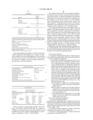
- a stable epoxy coating having essentially zero VOC was prepared by preparing the individual components A and B and then mixing 4 parts of Part A by volume with 1 part of Part B by volume.
- Example I The coating obtained in Example I is a stable water based curable composition substantially free of organic solvents, acids or diluents and can provide high gloss, fast cure, long pot life (5 hours or more @ 770 F/50% R.H.). Upon curing, the coating of Example I provided excellent resistance to moisture and to water and chemicals.
- Example 1 Drying Schedule Zero VOC W/B Epoxy Properties Topcoat of Example 1 Drying Time @ 4.0 mils 50° 77° F. 120° F. wet, 50% RH To Touch: 1 hour 45 minutes 25 minutes To Handle: 5 hours 4 hours 2 hours To Recoat: minimum 8 hours 6 hours 3 hours Maximum 30 days 30 days 30 days To Cure: 7 days 7 days 3 days Pot Life: 8 hours 5.5 hours 3.5 hours Sweat-in-time: 30 minutes None None None None None None None None None None None None None None None None None None None None None None None None None None None None None None None None None None None None None None None None None None None None None None None None None None None None None None None None None None None None None None None None None None None None None None None None None None None None None None None None None None None None None None None None None None None None None None None None None None None None None None None None None None None None None None None None None None None None None None None None None None None None None None None None None None None None None None None None None None None None None
- Example I When compared to a commercially available water-borne epoxy Tile Clad® B73W111/B73V100, the coating of Example I showed superior gloss and color retention at 250 and 500 hours of QUV exposure (ASTM D4587), as well as superior weathering (15 cycles—ASTM D5894).
- the coatings of this invention may typically be applied to any substrate such as concrete, and metal substrates, particularly ferrous metals.
- the substrates optionally may be coated with a primer prior to application of the coating as is well known in the art.
- useful primers would include acrylics, epoxies and zinc-rich primers.
- the primers may be solvent or water borne, although for some applications water borne primers may be especially useful to minimize VOC of the entire system.
- the coatings used in this invention may include at least one pigment.
- the pigments may be added to either the epoxy component or the amine component, for some embodiments of this invention, it is useful to add the pigments to the epoxy component.
- Pigments such as talcs, silicas, titanium dioxide, carbon black and other known organic or inorganic pigments can be incorporated.
- Additives such as wetting agents, defoamers, coalescing agents, etc. can also be incorporated. It is also possible to incorporate other water miscible polymers if desired. In order to minimize the VOC content as much as possible, however, it is often desirable to avoid incorporating VOC type solvents as much as practical.
Landscapes
- Chemical & Material Sciences (AREA)
- Organic Chemistry (AREA)
- Engineering & Computer Science (AREA)
- Materials Engineering (AREA)
- Wood Science & Technology (AREA)
- Life Sciences & Earth Sciences (AREA)
- Dispersion Chemistry (AREA)
- Health & Medical Sciences (AREA)
- Medicinal Chemistry (AREA)
- Polymers & Plastics (AREA)
- Chemical Kinetics & Catalysis (AREA)
- Oil, Petroleum & Natural Gas (AREA)
- Paints Or Removers (AREA)
Abstract
Description
-
- i) the weight-to-weight ratio of the high temperature nonionic surfactant to the anionic surfactant is greater than 3:1;
- ii) the weight-to-weight ratio of the sum of the low temperature nonionic surfactant and the high temperature nonionic surfactant to the anionic surfactant is greater than 4.5:1;
- iii) the total surfactant concentration is 5 to 20 weight percent, based on the weight of the total surfactants and the epoxy resin.
-
- i) continuously merging into a disperser, and in the presence of an emulsifying and stabilizing amount of a surfactant mixture, a flowing stream of water flowing at a rate r1, and a flowing stream containing an epoxy resin flowing at a rate r2;
- ii) mixing the streams with a sufficient amount of shear to form a high internal phase ratio emulsion; and
- iii) diluting the high internal phase ratio emulsion with water to form the stable aqueous dispersion;
wherein the surfactant mixture includes a low temperature nonionic surfactant and a high temperature nonionic surfactant, wherein the low temperature nonionic surfactant characterized by having a molecular weight of not less than 1,000 and not more than 7,000, the high temperature nonionic surfactant is characterized by having a molecular weight of greater than 7,000 and not more than 20,000; and where r2;r1 is in such a range that the volume average particle size of the dispersion is not greater than 2 microns.
| Parts by | |||
| Material | Weight | ||
| Part A |
| epoxy dispersion1 | 544.0 | |
| coalescing agent2 | 4.0 | |
| water | 96.3 | |
| defoamer3 | 1.2 | |
| flash rusting preventative | 0.8 | |
| rheology modifier4 | 1.2 | |
| wetting agent5 | 4.0 | |
| TiO2 | 160.0 | |
| deareator6 | 1.2 | |
| surfactant7 | 1.6 | |
| associative thickener8 | 10.4 | |
| 825.0 |
| Part B |
| cure agent9 | 76.0 | ||
| water | 89.2 | ||
| defoamer3 | 0.8 | ||
| deareator6 | 0.8 | ||
| associative thickener8 | 4.0 | ||
| 171.0 | |||
| 1Bisphenol A based epoxy resin dispersion from The Dow Chemical Company as taught in U.S. 6,271,287, and having an epoxide equivalent weight (on solids) of 475-500, 47% NVM in water | |||
| 2Pluracoat ® CA120 aromatic alkoxylate from BASF | |||
| 3Tego ® Foamex 810 | |||
| 4Bentone ® LT organically modified clay | |||
| 5Disperbyke ®-190 from Byk-Chemie GmbH | |||
| 6Tego ® Airex 901 | |||
| 7Surfynol ® 420 acetylenic glycol surfactant | |||
| 8Optiflo ® H3300VF hydrophobically modified nonionic polymer from Southern Clay Products (40% NVM in water) | |||
| 9Anquamine ® 401 water soluble polyamine polymer | |||
| Mechanical Properties |
| Gloss ASTM D523 | >90 @ 60° |
| Flexibility ASTM D522 | Pass ⅛″ in. mandrel |
| Direct Impact ASTM D2794 | 100 in. lbs. |
| Abrasion Resistance | 150 mg loss |
| ASTM D4060: 1000 cvcles, 1 kg load | |
| Pencil hardness; 7 day cure | H |
| Tape Adhesion | 5B |
| ASTM D3359; 7 day cure; 1 coat over steel | |
| Patti Adhesion | 550 psi |
| ASTM D4541; 7 day cure; 1 coat over concrete | |
| Drying Schedule |
| Zero VOC W/B Epoxy | |
| Properties | Topcoat of Example 1 |
| Drying Time @ 4.0 mils | 50° | 77° F. | 120° F. |
| wet, 50% RH | |||
| To Touch: | 1 hour | 45 minutes | 25 minutes |
| To Handle: | 5 hours | 4 hours | 2 hours |
| To Recoat: | minimum | 8 hours | 6 hours | 3 hours |
| Maximum | 30 days | 30 days | 30 days |
| To Cure: | 7 days | 7 days | 3 days |
| Pot Life: | 8 hours | 5.5 hours | 3.5 hours |
| Sweat-in-time: | 30 minutes | None | None |
Claims (10)
Priority Applications (1)
| Application Number | Priority Date | Filing Date | Title |
|---|---|---|---|
| US12/692,932 US8067486B1 (en) | 2009-01-26 | 2010-01-25 | Low VOC water-based epoxy coatings |
Applications Claiming Priority (2)
| Application Number | Priority Date | Filing Date | Title |
|---|---|---|---|
| US14721209P | 2009-01-26 | 2009-01-26 | |
| US12/692,932 US8067486B1 (en) | 2009-01-26 | 2010-01-25 | Low VOC water-based epoxy coatings |
Publications (1)
| Publication Number | Publication Date |
|---|---|
| US8067486B1 true US8067486B1 (en) | 2011-11-29 |
Family
ID=44994331
Family Applications (1)
| Application Number | Title | Priority Date | Filing Date |
|---|---|---|---|
| US12/692,932 Active 2030-04-24 US8067486B1 (en) | 2009-01-26 | 2010-01-25 | Low VOC water-based epoxy coatings |
Country Status (1)
| Country | Link |
|---|---|
| US (1) | US8067486B1 (en) |
Cited By (1)
| Publication number | Priority date | Publication date | Assignee | Title |
|---|---|---|---|---|
| CN103562328A (en) * | 2011-06-08 | 2014-02-05 | Sika技术股份公司 | Aqueous adhesion promoter composition based on epoxy resin |
Citations (3)
| Publication number | Priority date | Publication date | Assignee | Title |
|---|---|---|---|---|
| US6271287B1 (en) | 1998-10-02 | 2001-08-07 | The Dow Chemical Company | Epoxy resins and stable aqueous dispersions thereof |
| US6309757B1 (en) * | 2000-02-16 | 2001-10-30 | Ppg Industries Ohio, Inc. | Gas barrier coating of polyamine, polyepoxide and hydroxyaromatic compound |
| US7232479B2 (en) | 2002-03-18 | 2007-06-19 | Dacral | Coating composition for a metal substrate |
-
2010
- 2010-01-25 US US12/692,932 patent/US8067486B1/en active Active
Patent Citations (3)
| Publication number | Priority date | Publication date | Assignee | Title |
|---|---|---|---|---|
| US6271287B1 (en) | 1998-10-02 | 2001-08-07 | The Dow Chemical Company | Epoxy resins and stable aqueous dispersions thereof |
| US6309757B1 (en) * | 2000-02-16 | 2001-10-30 | Ppg Industries Ohio, Inc. | Gas barrier coating of polyamine, polyepoxide and hydroxyaromatic compound |
| US7232479B2 (en) | 2002-03-18 | 2007-06-19 | Dacral | Coating composition for a metal substrate |
Non-Patent Citations (5)
| Title |
|---|
| Air Products, Epoxy Curing Agents and Modifiers, Anquamine 721 Curing Agent, Technical Datasheet, pp. 1-8, 2010. |
| Air Products, Epoxy Curing Agents, Technical Bulletin, Anquamine 401 Curing Agent, pp. 1-14, 2010. |
| RHEOX, Inc., Bentone LT Rheological Additive, Jun. 1993. |
| Southern Clay Products, Product Bulletin/Optiflo TX-2164, (Optiflo H3300VF), 2010. |
| The Dow Chemical Company, Product Information, XZ 92533.00 Experimental Solid Epoxy Resin Dispersion, pp. 1-3, 2010. |
Cited By (2)
| Publication number | Priority date | Publication date | Assignee | Title |
|---|---|---|---|---|
| CN103562328A (en) * | 2011-06-08 | 2014-02-05 | Sika技术股份公司 | Aqueous adhesion promoter composition based on epoxy resin |
| US9340682B2 (en) * | 2011-06-08 | 2016-05-17 | Sika Technology Ag | Water based epoxy resin primer |
Similar Documents
| Publication | Publication Date | Title |
|---|---|---|
| EP2094759B1 (en) | Epoxy resins comprising a cycloaliphatic diamine curing agent | |
| US9249255B2 (en) | Modified epoxy resin composition used in high solids coating | |
| JP5587537B2 (en) | Two-component water-based anticorrosion paint and anticorrosion coating method | |
| JP5530634B2 (en) | Curing agents for epoxy functional compounds | |
| US20210348000A1 (en) | Zinc-rich waterborne epoxy coating composition and methods | |
| EP2943518A2 (en) | Hardeners for low-emission epoxy resin products | |
| CN102732131B (en) | Thick slurry floating coating of a kind of water-base epoxy and preparation method thereof | |
| KR102928572B1 (en) | Water-based epoxy resin composition and its cured product | |
| CN103468095A (en) | Silane coupling agent-modified epoxy resin, and preparation method and application thereof | |
| RU2533142C2 (en) | Stable in storage water-based epoxy-amine solidified systems | |
| JP2013199546A (en) | Water-soluble anticorrosive paint composition and corrosion protection method | |
| US20160002491A1 (en) | Epoxy resin composition, and its applications | |
| CN107858078B (en) | Epoxy woodware sealing agent and preparation method and application thereof | |
| EP2603565A2 (en) | Latex coating compositions including carboxy ester ketal coalescents, methods of manufacture, and uses thereof | |
| US10259970B2 (en) | Polyether compounds having epoxy hydroxyl urethane groups and waterborne epoxy resin composition | |
| WO2016197305A1 (en) | Coating composition | |
| EP2931781B1 (en) | Modified epoxy resins | |
| KR102339245B1 (en) | solvent-free epoxy type paint composition and offshore structure comprising coating film of thereof | |
| KR20150022721A (en) | Watersoluble hybrid coating composition with high performance | |
| KR101064250B1 (en) | PPF EPO resin coating composition for inner surface of steel pipe and steel pipe and release pipe coated on inner surface | |
| KR20230015591A (en) | Ecofriendly elastic epoxy resin composition | |
| CN101370846B (en) | Curing agents for epoxy-functional compounds | |
| KR101116841B1 (en) | Paint composition of bisphenol f epoxy | |
| CN102453361A (en) | Environment-friendly antirust coating | |
| EP4477716A1 (en) | Corrosion protection compositions based on poly-aza michael addition chemistry |
Legal Events
| Date | Code | Title | Description |
|---|---|---|---|
| AS | Assignment |
Owner name: SHERWIN-WILLIAMS COMPANY, OHIO Free format text: ASSIGNMENT OF ASSIGNORS INTEREST;ASSIGNOR:ZHAO, WENDY;REEL/FRAME:024172/0202 Effective date: 20100327 |
|
| STCF | Information on status: patent grant |
Free format text: PATENTED CASE |
|
| FPAY | Fee payment |
Year of fee payment: 4 |
|
| MAFP | Maintenance fee payment |
Free format text: PAYMENT OF MAINTENANCE FEE, 8TH YEAR, LARGE ENTITY (ORIGINAL EVENT CODE: M1552); ENTITY STATUS OF PATENT OWNER: LARGE ENTITY Year of fee payment: 8 |
|
| MAFP | Maintenance fee payment |
Free format text: PAYMENT OF MAINTENANCE FEE, 12TH YEAR, LARGE ENTITY (ORIGINAL EVENT CODE: M1553); ENTITY STATUS OF PATENT OWNER: LARGE ENTITY Year of fee payment: 12 |