US7972779B2 - Method for assessing predisposition to depression - Google Patents
Method for assessing predisposition to depression Download PDFInfo
- Publication number
- US7972779B2 US7972779B2 US10/889,450 US88945004A US7972779B2 US 7972779 B2 US7972779 B2 US 7972779B2 US 88945004 A US88945004 A US 88945004A US 7972779 B2 US7972779 B2 US 7972779B2
- Authority
- US
- United States
- Prior art keywords
- depression
- allele
- maoa
- maltreatment
- gene
- Prior art date
- Legal status (The legal status is an assumption and is not a legal conclusion. Google has not performed a legal analysis and makes no representation as to the accuracy of the status listed.)
- Expired - Fee Related, expires
Links
- 238000000034 method Methods 0.000 title claims abstract description 42
- 108700028369 Alleles Proteins 0.000 claims abstract description 122
- 101000631929 Homo sapiens Sodium-dependent serotonin transporter Proteins 0.000 claims description 40
- 241000282414 Homo sapiens Species 0.000 claims description 28
- 102100028874 Sodium-dependent serotonin transporter Human genes 0.000 claims description 18
- 238000002560 therapeutic procedure Methods 0.000 claims description 9
- 238000003205 genotyping method Methods 0.000 claims description 7
- 238000003556 assay Methods 0.000 claims description 6
- 238000009223 counseling Methods 0.000 claims description 5
- 108020004707 nucleic acids Proteins 0.000 claims description 5
- 102000039446 nucleic acids Human genes 0.000 claims description 5
- 150000007523 nucleic acids Chemical class 0.000 claims description 5
- 239000000935 antidepressant agent Substances 0.000 claims description 2
- 230000003321 amplification Effects 0.000 claims 2
- 238000003199 nucleic acid amplification method Methods 0.000 claims 2
- 239000012634 fragment Substances 0.000 claims 1
- 108090000623 proteins and genes Proteins 0.000 abstract description 66
- 230000007613 environmental effect Effects 0.000 abstract description 65
- 230000001717 pathogenic effect Effects 0.000 abstract description 32
- 238000002405 diagnostic procedure Methods 0.000 abstract description 14
- 208000020016 psychiatric disease Diseases 0.000 abstract description 14
- 230000001143 conditioned effect Effects 0.000 abstract description 9
- 230000000694 effects Effects 0.000 description 132
- 108010062431 Monoamine oxidase Proteins 0.000 description 70
- 230000003993 interaction Effects 0.000 description 70
- 102000010909 Monoamine Oxidase Human genes 0.000 description 69
- 208000024823 antisocial personality disease Diseases 0.000 description 52
- 206010002820 Antisocial behaviour Diseases 0.000 description 45
- 208000037265 diseases, disorders, signs and symptoms Diseases 0.000 description 38
- 238000004458 analytical method Methods 0.000 description 35
- 208000035475 disorder Diseases 0.000 description 34
- 230000002068 genetic effect Effects 0.000 description 30
- 208000024891 symptom Diseases 0.000 description 29
- 238000012360 testing method Methods 0.000 description 26
- 238000011160 research Methods 0.000 description 21
- QZAYGJVTTNCVMB-UHFFFAOYSA-N serotonin Chemical compound C1=C(O)C=C2C(CCN)=CNC2=C1 QZAYGJVTTNCVMB-UHFFFAOYSA-N 0.000 description 20
- 230000035882 stress Effects 0.000 description 20
- 208000024714 major depressive disease Diseases 0.000 description 18
- 208000027691 Conduct disease Diseases 0.000 description 17
- 230000006399 behavior Effects 0.000 description 14
- 210000004556 brain Anatomy 0.000 description 13
- 238000003745 diagnosis Methods 0.000 description 13
- 108020004414 DNA Proteins 0.000 description 12
- 230000014509 gene expression Effects 0.000 description 11
- 206010010144 Completed suicide Diseases 0.000 description 10
- 210000004027 cell Anatomy 0.000 description 10
- 238000011161 development Methods 0.000 description 10
- 230000018109 developmental process Effects 0.000 description 10
- 206010054089 Depressive symptom Diseases 0.000 description 9
- 230000016571 aggressive behavior Effects 0.000 description 9
- 230000003542 behavioural effect Effects 0.000 description 9
- 238000013488 ordinary least square regression Methods 0.000 description 9
- 241000282412 Homo Species 0.000 description 8
- 239000000969 carrier Substances 0.000 description 8
- 239000002131 composite material Substances 0.000 description 8
- VYFYYTLLBUKUHU-UHFFFAOYSA-N dopamine Chemical compound NCCC1=CC=C(O)C(O)=C1 VYFYYTLLBUKUHU-UHFFFAOYSA-N 0.000 description 8
- 229920001184 polypeptide Polymers 0.000 description 8
- 108090000765 processed proteins & peptides Proteins 0.000 description 8
- 102000004196 processed proteins & peptides Human genes 0.000 description 8
- 101150051213 MAOA gene Proteins 0.000 description 7
- 230000008901 benefit Effects 0.000 description 7
- 238000007477 logistic regression Methods 0.000 description 7
- 239000002858 neurotransmitter agent Substances 0.000 description 7
- 230000003938 response to stress Effects 0.000 description 7
- 101710114597 Sodium-dependent serotonin transporter Proteins 0.000 description 6
- 230000006378 damage Effects 0.000 description 6
- 230000000994 depressogenic effect Effects 0.000 description 6
- 230000036541 health Effects 0.000 description 6
- 208000014674 injury Diseases 0.000 description 6
- 230000001681 protective effect Effects 0.000 description 6
- 230000035945 sensitivity Effects 0.000 description 6
- SFLSHLFXELFNJZ-QMMMGPOBSA-N (-)-norepinephrine Chemical compound NC[C@H](O)C1=CC=C(O)C(O)=C1 SFLSHLFXELFNJZ-QMMMGPOBSA-N 0.000 description 5
- 108010012996 Serotonin Plasma Membrane Transport Proteins Proteins 0.000 description 5
- 210000001766 X chromosome Anatomy 0.000 description 5
- 230000001965 increasing effect Effects 0.000 description 5
- 229960002748 norepinephrine Drugs 0.000 description 5
- SFLSHLFXELFNJZ-UHFFFAOYSA-N norepinephrine Natural products NCC(O)C1=CC=C(O)C(O)=C1 SFLSHLFXELFNJZ-UHFFFAOYSA-N 0.000 description 5
- 238000000611 regression analysis Methods 0.000 description 5
- 229940076279 serotonin Drugs 0.000 description 5
- 230000001568 sexual effect Effects 0.000 description 5
- 238000013517 stratification Methods 0.000 description 5
- DUUGKQCEGZLZNO-UHFFFAOYSA-N 5-hydroxyindoleacetic acid Chemical compound C1=C(O)C=C2C(CC(=O)O)=CNC2=C1 DUUGKQCEGZLZNO-UHFFFAOYSA-N 0.000 description 4
- 206010001488 Aggression Diseases 0.000 description 4
- 241000282693 Cercopithecidae Species 0.000 description 4
- 101800000414 Corticotropin Proteins 0.000 description 4
- TWRXJAOTZQYOKJ-UHFFFAOYSA-L Magnesium chloride Chemical compound [Mg+2].[Cl-].[Cl-] TWRXJAOTZQYOKJ-UHFFFAOYSA-L 0.000 description 4
- 208000027418 Wounds and injury Diseases 0.000 description 4
- 238000013459 approach Methods 0.000 description 4
- 239000008280 blood Substances 0.000 description 4
- 210000004369 blood Anatomy 0.000 description 4
- 238000006243 chemical reaction Methods 0.000 description 4
- 230000001276 controlling effect Effects 0.000 description 4
- IDLFZVILOHSSID-OVLDLUHVSA-N corticotropin Chemical compound C([C@@H](C(=O)N[C@@H](CO)C(=O)N[C@@H](CCSC)C(=O)N[C@@H](CCC(O)=O)C(=O)N[C@@H](CC=1NC=NC=1)C(=O)N[C@@H](CC=1C=CC=CC=1)C(=O)N[C@@H](CCCNC(N)=N)C(=O)N[C@@H](CC=1C2=CC=CC=C2NC=1)C(=O)NCC(=O)N[C@@H](CCCCN)C(=O)N1[C@@H](CCC1)C(=O)N[C@@H](C(C)C)C(=O)NCC(=O)N[C@@H](CCCCN)C(=O)N[C@@H](CCCCN)C(=O)N[C@@H](CCCNC(N)=N)C(=O)N[C@@H](CCCNC(N)=N)C(=O)N1[C@@H](CCC1)C(=O)N[C@@H](C(C)C)C(=O)N[C@@H](CCCCN)C(=O)N[C@@H](C(C)C)C(=O)N[C@@H](CC=1C=CC(O)=CC=1)C(=O)N1[C@@H](CCC1)C(=O)N[C@@H](CC(N)=O)C(=O)NCC(=O)N[C@@H](C)C(=O)N[C@@H](CCC(O)=O)C(=O)N[C@@H](CC(O)=O)C(=O)N[C@@H](CCC(O)=O)C(=O)N[C@@H](CO)C(=O)N[C@@H](C)C(=O)N[C@@H](CCC(O)=O)C(=O)N[C@@H](C)C(=O)N[C@@H](CC=1C=CC=CC=1)C(=O)N1[C@@H](CCC1)C(=O)N[C@@H](CC(C)C)C(=O)N[C@@H](CCC(O)=O)C(=O)N[C@@H](CC=1C=CC=CC=1)C(O)=O)NC(=O)[C@@H](N)CO)C1=CC=C(O)C=C1 IDLFZVILOHSSID-OVLDLUHVSA-N 0.000 description 4
- 229960000258 corticotropin Drugs 0.000 description 4
- 230000007812 deficiency Effects 0.000 description 4
- 201000010099 disease Diseases 0.000 description 4
- 229960003638 dopamine Drugs 0.000 description 4
- 244000000015 environmental pathogen Species 0.000 description 4
- 210000004392 genitalia Anatomy 0.000 description 4
- 230000002045 lasting effect Effects 0.000 description 4
- 230000001537 neural effect Effects 0.000 description 4
- 238000002610 neuroimaging Methods 0.000 description 4
- 244000052769 pathogen Species 0.000 description 4
- 230000004044 response Effects 0.000 description 4
- 230000000862 serotonergic effect Effects 0.000 description 4
- 241000282560 Macaca mulatta Species 0.000 description 3
- 241000699670 Mus sp. Species 0.000 description 3
- 206010071368 Psychological trauma Diseases 0.000 description 3
- 102000019208 Serotonin Plasma Membrane Transport Proteins Human genes 0.000 description 3
- 208000012761 aggressive behavior Diseases 0.000 description 3
- 230000009850 completed effect Effects 0.000 description 3
- 230000003247 decreasing effect Effects 0.000 description 3
- 238000005259 measurement Methods 0.000 description 3
- 230000000306 recurrent effect Effects 0.000 description 3
- 230000001105 regulatory effect Effects 0.000 description 3
- 238000012216 screening Methods 0.000 description 3
- 230000001225 therapeutic effect Effects 0.000 description 3
- 230000002103 transcriptional effect Effects 0.000 description 3
- 102100030346 Antigen peptide transporter 1 Human genes 0.000 description 2
- 108050009514 Antigen peptide transporter 1 Proteins 0.000 description 2
- 108091026890 Coding region Proteins 0.000 description 2
- 208000034656 Contusions Diseases 0.000 description 2
- 239000000055 Corticotropin-Releasing Hormone Substances 0.000 description 2
- 238000007400 DNA extraction Methods 0.000 description 2
- 208000020401 Depressive disease Diseases 0.000 description 2
- 208000034826 Genetic Predisposition to Disease Diseases 0.000 description 2
- 108700039691 Genetic Promoter Regions Proteins 0.000 description 2
- GVGLGOZIDCSQPN-PVHGPHFFSA-N Heroin Chemical compound O([C@H]1[C@H](C=C[C@H]23)OC(C)=O)C4=C5[C@@]12CCN(C)[C@@H]3CC5=CC=C4OC(C)=O GVGLGOZIDCSQPN-PVHGPHFFSA-N 0.000 description 2
- 241001465754 Metazoa Species 0.000 description 2
- 241000219492 Quercus Species 0.000 description 2
- 206010042464 Suicide attempt Diseases 0.000 description 2
- 208000024780 Urticaria Diseases 0.000 description 2
- 210000004727 amygdala Anatomy 0.000 description 2
- 238000012512 characterization method Methods 0.000 description 2
- 210000000349 chromosome Anatomy 0.000 description 2
- 230000001186 cumulative effect Effects 0.000 description 2
- 230000001351 cycling effect Effects 0.000 description 2
- 238000013461 design Methods 0.000 description 2
- 239000003814 drug Substances 0.000 description 2
- 238000011156 evaluation Methods 0.000 description 2
- 230000012953 feeding on blood of other organism Effects 0.000 description 2
- 230000007614 genetic variation Effects 0.000 description 2
- 230000000366 juvenile effect Effects 0.000 description 2
- 238000011813 knockout mouse model Methods 0.000 description 2
- 238000011068 loading method Methods 0.000 description 2
- 230000007774 longterm Effects 0.000 description 2
- 229910001629 magnesium chloride Inorganic materials 0.000 description 2
- 230000001404 mediated effect Effects 0.000 description 2
- 238000002493 microarray Methods 0.000 description 2
- 230000008137 mother child interaction Effects 0.000 description 2
- 230000002085 persistent effect Effects 0.000 description 2
- 238000011458 pharmacological treatment Methods 0.000 description 2
- 108091033319 polynucleotide Proteins 0.000 description 2
- 102000040430 polynucleotide Human genes 0.000 description 2
- 239000002157 polynucleotide Substances 0.000 description 2
- 230000008569 process Effects 0.000 description 2
- 102000004169 proteins and genes Human genes 0.000 description 2
- 230000010346 psychosocial stress Effects 0.000 description 2
- 230000010076 replication Effects 0.000 description 2
- 230000009933 reproductive health Effects 0.000 description 2
- 235000002020 sage Nutrition 0.000 description 2
- 238000010561 standard procedure Methods 0.000 description 2
- 238000007619 statistical method Methods 0.000 description 2
- 239000002438 stress hormone Substances 0.000 description 2
- 238000013518 transcription Methods 0.000 description 2
- 230000035897 transcription Effects 0.000 description 2
- 230000008733 trauma Effects 0.000 description 2
- MJEREOGWNZGKRN-UHFFFAOYSA-N 1-(4-aminophenyl)-8-[4-(4-fluorophenyl)-4-oxobutyl]-1,3,8-triazaspiro[4.5]decan-4-one Chemical compound C1=CC(N)=CC=C1N1C2(CCN(CCCC(=O)C=3C=CC(F)=CC=3)CC2)C(=O)NC1 MJEREOGWNZGKRN-UHFFFAOYSA-N 0.000 description 1
- FWMNVWWHGCHHJJ-SKKKGAJSSA-N 4-amino-1-[(2r)-6-amino-2-[[(2r)-2-[[(2r)-2-[[(2r)-2-amino-3-phenylpropanoyl]amino]-3-phenylpropanoyl]amino]-4-methylpentanoyl]amino]hexanoyl]piperidine-4-carboxylic acid Chemical compound C([C@H](C(=O)N[C@H](CC(C)C)C(=O)N[C@H](CCCCN)C(=O)N1CCC(N)(CC1)C(O)=O)NC(=O)[C@H](N)CC=1C=CC=CC=1)C1=CC=CC=C1 FWMNVWWHGCHHJJ-SKKKGAJSSA-N 0.000 description 1
- 206010000117 Abnormal behaviour Diseases 0.000 description 1
- 102100028116 Amine oxidase [flavin-containing] B Human genes 0.000 description 1
- 208000019901 Anxiety disease Diseases 0.000 description 1
- 208000024172 Cardiovascular disease Diseases 0.000 description 1
- 206010011971 Decreased interest Diseases 0.000 description 1
- 206010012289 Dementia Diseases 0.000 description 1
- 206010012374 Depressed mood Diseases 0.000 description 1
- 208000027534 Emotional disease Diseases 0.000 description 1
- 206010016374 Feelings of worthlessness Diseases 0.000 description 1
- 101000694718 Homo sapiens Amine oxidase [flavin-containing] A Proteins 0.000 description 1
- 101000768078 Homo sapiens Amine oxidase [flavin-containing] B Proteins 0.000 description 1
- 241000282553 Macaca Species 0.000 description 1
- 241000124008 Mammalia Species 0.000 description 1
- 206010027374 Mental impairment Diseases 0.000 description 1
- 108091092878 Microsatellite Proteins 0.000 description 1
- 208000036769 Mild mental retardation Diseases 0.000 description 1
- 241000699666 Mus <mouse, genus> Species 0.000 description 1
- RMUCZJUITONUFY-UHFFFAOYSA-N Phenelzine Chemical compound NNCCC1=CC=CC=C1 RMUCZJUITONUFY-UHFFFAOYSA-N 0.000 description 1
- 208000028017 Psychotic disease Diseases 0.000 description 1
- 241000700159 Rattus Species 0.000 description 1
- 241000283984 Rodentia Species 0.000 description 1
- 238000000692 Student's t-test Methods 0.000 description 1
- 206010042458 Suicidal ideation Diseases 0.000 description 1
- 108700029631 X-Linked Genes Proteins 0.000 description 1
- 230000009471 action Effects 0.000 description 1
- 239000011543 agarose gel Substances 0.000 description 1
- 150000001412 amines Chemical class 0.000 description 1
- 230000036506 anxiety Effects 0.000 description 1
- 230000036528 appetite Effects 0.000 description 1
- 235000019789 appetite Nutrition 0.000 description 1
- 230000003190 augmentative effect Effects 0.000 description 1
- 238000012742 biochemical analysis Methods 0.000 description 1
- 230000031018 biological processes and functions Effects 0.000 description 1
- 210000004958 brain cell Anatomy 0.000 description 1
- 210000005013 brain tissue Anatomy 0.000 description 1
- 239000000872 buffer Substances 0.000 description 1
- 230000015556 catabolic process Effects 0.000 description 1
- 230000001364 causal effect Effects 0.000 description 1
- 230000008131 children development Effects 0.000 description 1
- 230000002759 chromosomal effect Effects 0.000 description 1
- 230000037326 chronic stress Effects 0.000 description 1
- 208000010877 cognitive disease Diseases 0.000 description 1
- 230000034994 death Effects 0.000 description 1
- 230000002950 deficient Effects 0.000 description 1
- 230000006735 deficit Effects 0.000 description 1
- 238000006731 degradation reaction Methods 0.000 description 1
- 230000001419 dependent effect Effects 0.000 description 1
- 230000037213 diet Effects 0.000 description 1
- 235000005911 diet Nutrition 0.000 description 1
- 230000003292 diminished effect Effects 0.000 description 1
- 230000009429 distress Effects 0.000 description 1
- 231100000673 dose–response relationship Toxicity 0.000 description 1
- 229940079593 drug Drugs 0.000 description 1
- 230000002996 emotional effect Effects 0.000 description 1
- 230000006353 environmental stress Effects 0.000 description 1
- 230000002255 enzymatic effect Effects 0.000 description 1
- ZMMJGEGLRURXTF-UHFFFAOYSA-N ethidium bromide Chemical compound [Br-].C12=CC(N)=CC=C2C2=CC=C(N)C=C2[N+](CC)=C1C1=CC=CC=C1 ZMMJGEGLRURXTF-UHFFFAOYSA-N 0.000 description 1
- 229960005542 ethidium bromide Drugs 0.000 description 1
- 230000000763 evoking effect Effects 0.000 description 1
- 230000007717 exclusion Effects 0.000 description 1
- 238000002474 experimental method Methods 0.000 description 1
- 238000000556 factor analysis Methods 0.000 description 1
- 230000002349 favourable effect Effects 0.000 description 1
- 238000002599 functional magnetic resonance imaging Methods 0.000 description 1
- 239000000499 gel Substances 0.000 description 1
- 230000005802 health problem Effects 0.000 description 1
- 102000055801 human SLC6A4 Human genes 0.000 description 1
- 230000035874 hyperreactivity Effects 0.000 description 1
- 238000003384 imaging method Methods 0.000 description 1
- 239000012678 infectious agent Substances 0.000 description 1
- 208000015181 infectious disease Diseases 0.000 description 1
- 230000002458 infectious effect Effects 0.000 description 1
- 230000002401 inhibitory effect Effects 0.000 description 1
- 239000007924 injection Substances 0.000 description 1
- 238000002347 injection Methods 0.000 description 1
- 230000000670 limiting effect Effects 0.000 description 1
- 238000002595 magnetic resonance imaging Methods 0.000 description 1
- 239000003550 marker Substances 0.000 description 1
- 239000000463 material Substances 0.000 description 1
- 230000029082 maternal behavior Effects 0.000 description 1
- 230000008774 maternal effect Effects 0.000 description 1
- 239000011159 matrix material Substances 0.000 description 1
- 230000004630 mental health Effects 0.000 description 1
- 108020004999 messenger RNA Proteins 0.000 description 1
- 238000012775 microarray technology Methods 0.000 description 1
- 239000000203 mixture Substances 0.000 description 1
- 238000012986 modification Methods 0.000 description 1
- 230000004048 modification Effects 0.000 description 1
- 238000012544 monitoring process Methods 0.000 description 1
- 230000035772 mutation Effects 0.000 description 1
- 230000001722 neurochemical effect Effects 0.000 description 1
- 210000002569 neuron Anatomy 0.000 description 1
- 208000022821 personality disease Diseases 0.000 description 1
- 239000002831 pharmacologic agent Substances 0.000 description 1
- 238000011422 pharmacological therapy Methods 0.000 description 1
- 229960000964 phenelzine Drugs 0.000 description 1
- 229920002401 polyacrylamide Polymers 0.000 description 1
- 230000008488 polyadenylation Effects 0.000 description 1
- 102000054765 polymorphisms of proteins Human genes 0.000 description 1
- ZRHANBBTXQZFSP-UHFFFAOYSA-M potassium;4-amino-3,5,6-trichloropyridine-2-carboxylate Chemical compound [K+].NC1=C(Cl)C(Cl)=NC(C([O-])=O)=C1Cl ZRHANBBTXQZFSP-UHFFFAOYSA-M 0.000 description 1
- 238000011321 prophylaxis Methods 0.000 description 1
- 230000008433 psychological processes and functions Effects 0.000 description 1
- 230000037047 psychomotor activity Effects 0.000 description 1
- 239000011535 reaction buffer Substances 0.000 description 1
- 230000000384 rearing effect Effects 0.000 description 1
- 230000002441 reversible effect Effects 0.000 description 1
- 229920006395 saturated elastomer Polymers 0.000 description 1
- 229940124834 selective serotonin reuptake inhibitor Drugs 0.000 description 1
- 230000007958 sleep Effects 0.000 description 1
- 238000000528 statistical test Methods 0.000 description 1
- 210000000225 synapse Anatomy 0.000 description 1
- 230000033772 system development Effects 0.000 description 1
- 230000009897 systematic effect Effects 0.000 description 1
- 231100000167 toxic agent Toxicity 0.000 description 1
- 239000003440 toxic substance Substances 0.000 description 1
- 230000009466 transformation Effects 0.000 description 1
- 238000011830 transgenic mouse model Methods 0.000 description 1
- 238000013519 translation Methods 0.000 description 1
- 230000000472 traumatic effect Effects 0.000 description 1
- 238000011269 treatment regimen Methods 0.000 description 1
- 238000011144 upstream manufacturing Methods 0.000 description 1
Images


Classifications
-
- C—CHEMISTRY; METALLURGY
- C12—BIOCHEMISTRY; BEER; SPIRITS; WINE; VINEGAR; MICROBIOLOGY; ENZYMOLOGY; MUTATION OR GENETIC ENGINEERING
- C12Q—MEASURING OR TESTING PROCESSES INVOLVING ENZYMES, NUCLEIC ACIDS OR MICROORGANISMS; COMPOSITIONS OR TEST PAPERS THEREFOR; PROCESSES OF PREPARING SUCH COMPOSITIONS; CONDITION-RESPONSIVE CONTROL IN MICROBIOLOGICAL OR ENZYMOLOGICAL PROCESSES
- C12Q1/00—Measuring or testing processes involving enzymes, nucleic acids or microorganisms; Compositions therefor; Processes of preparing such compositions
- C12Q1/68—Measuring or testing processes involving enzymes, nucleic acids or microorganisms; Compositions therefor; Processes of preparing such compositions involving nucleic acids
- C12Q1/6876—Nucleic acid products used in the analysis of nucleic acids, e.g. primers or probes
- C12Q1/6883—Nucleic acid products used in the analysis of nucleic acids, e.g. primers or probes for diseases caused by alterations of genetic material
-
- A—HUMAN NECESSITIES
- A61—MEDICAL OR VETERINARY SCIENCE; HYGIENE
- A61B—DIAGNOSIS; SURGERY; IDENTIFICATION
- A61B5/00—Measuring for diagnostic purposes; Identification of persons
- A61B5/16—Devices for psychotechnics; Testing reaction times ; Devices for evaluating the psychological state
- A61B5/167—Personality evaluation
-
- A—HUMAN NECESSITIES
- A61—MEDICAL OR VETERINARY SCIENCE; HYGIENE
- A61B—DIAGNOSIS; SURGERY; IDENTIFICATION
- A61B5/00—Measuring for diagnostic purposes; Identification of persons
- A61B5/72—Signal processing specially adapted for physiological signals or for diagnostic purposes
- A61B5/7271—Specific aspects of physiological measurement analysis
- A61B5/7275—Determining trends in physiological measurement data; Predicting development of a medical condition based on physiological measurements, e.g. determining a risk factor
-
- G—PHYSICS
- G16—INFORMATION AND COMMUNICATION TECHNOLOGY [ICT] SPECIALLY ADAPTED FOR SPECIFIC APPLICATION FIELDS
- G16B—BIOINFORMATICS, i.e. INFORMATION AND COMMUNICATION TECHNOLOGY [ICT] SPECIALLY ADAPTED FOR GENETIC OR PROTEIN-RELATED DATA PROCESSING IN COMPUTATIONAL MOLECULAR BIOLOGY
- G16B20/00—ICT specially adapted for functional genomics or proteomics, e.g. genotype-phenotype associations
- G16B20/20—Allele or variant detection, e.g. single nucleotide polymorphism [SNP] detection
-
- G—PHYSICS
- G16—INFORMATION AND COMMUNICATION TECHNOLOGY [ICT] SPECIALLY ADAPTED FOR SPECIFIC APPLICATION FIELDS
- G16B—BIOINFORMATICS, i.e. INFORMATION AND COMMUNICATION TECHNOLOGY [ICT] SPECIALLY ADAPTED FOR GENETIC OR PROTEIN-RELATED DATA PROCESSING IN COMPUTATIONAL MOLECULAR BIOLOGY
- G16B40/00—ICT specially adapted for biostatistics; ICT specially adapted for bioinformatics-related machine learning or data mining, e.g. knowledge discovery or pattern finding
-
- G—PHYSICS
- G16—INFORMATION AND COMMUNICATION TECHNOLOGY [ICT] SPECIALLY ADAPTED FOR SPECIFIC APPLICATION FIELDS
- G16H—HEALTHCARE INFORMATICS, i.e. INFORMATION AND COMMUNICATION TECHNOLOGY [ICT] SPECIALLY ADAPTED FOR THE HANDLING OR PROCESSING OF MEDICAL OR HEALTHCARE DATA
- G16H50/00—ICT specially adapted for medical diagnosis, medical simulation or medical data mining; ICT specially adapted for detecting, monitoring or modelling epidemics or pandemics
- G16H50/30—ICT specially adapted for medical diagnosis, medical simulation or medical data mining; ICT specially adapted for detecting, monitoring or modelling epidemics or pandemics for calculating health indices; for individual health risk assessment
-
- A—HUMAN NECESSITIES
- A61—MEDICAL OR VETERINARY SCIENCE; HYGIENE
- A61B—DIAGNOSIS; SURGERY; IDENTIFICATION
- A61B5/00—Measuring for diagnostic purposes; Identification of persons
- A61B5/40—Detecting, measuring or recording for evaluating the nervous system
- A61B5/4058—Detecting, measuring or recording for evaluating the nervous system for evaluating the central nervous system
- A61B5/4064—Evaluating the brain
-
- C—CHEMISTRY; METALLURGY
- C12—BIOCHEMISTRY; BEER; SPIRITS; WINE; VINEGAR; MICROBIOLOGY; ENZYMOLOGY; MUTATION OR GENETIC ENGINEERING
- C12Q—MEASURING OR TESTING PROCESSES INVOLVING ENZYMES, NUCLEIC ACIDS OR MICROORGANISMS; COMPOSITIONS OR TEST PAPERS THEREFOR; PROCESSES OF PREPARING SUCH COMPOSITIONS; CONDITION-RESPONSIVE CONTROL IN MICROBIOLOGICAL OR ENZYMOLOGICAL PROCESSES
- C12Q2600/00—Oligonucleotides characterized by their use
- C12Q2600/156—Polymorphic or mutational markers
Definitions
- the invention described in this application relates, in part, to an interaction between a pathogenic environmental risk factor (childhood maltreatment) and a genotype (allelic profile at a genetic locus that encodes monoamine oxidase A [MAOA]).
- Childhood maltreatment is a universal risk factor for antisocial behavior. Boys who experience abuse—and more generally, those exposed to erratic, coercive, and punitive parenting—are at risk of developing conduct disorder, evidencing antisocial personality symptoms, and of becoming violent offenders. The earlier children experience maltreatment, the more likely they are to develop these problems. But there are large differences among children in their response to maltreatment. Although maltreatment increases the risk of later criminality by about 50%, most maltreated children do not become delinquents or adult criminals. The reason for this variability in response is largely unknown, but it may be that vulnerability to adversities is conditional upon genetic susceptibility factors.
- the MAOA gene located on the X chromosome (Xp11.23-11.4), encodes the MAOA enzyme, which metabolizes, and renders inactive, neurotransmitters such as norepinephrine (NE), serotonin (5-HT) and dopamine (DA).
- NE norepinephrine
- 5-HT serotonin
- DA dopamine
- MAOA is an X-linked gene
- affected males with a single copy produced no MAOA enzyme—effectively, a human knockout.
- this mutation is extremely rare.
- Evidence for an association between MAOA and aggressive behavior in the human general population remains inconclusive.
- NE, 5-HT, and DA neurotransmitter systems in ways that can persist into adulthood and influence aggressive behaviors.
- maltreatment stress e.g., maternal deprivation, peer rearing
- altered NE and 5-HT activity are linked to aggressive behavior.
- Maltreatment has lasting neurochemical correlates in human children.
- Deficient MAOA activity may dispose the organism toward neural hyper-reactivity to threat, as evidenced by the inhibitory action of phenelzine injections which inhibit the action of monoamine oxidase and prevented rats from habituating to chronic stress.
- Low MAOA activity may be particularly problematic early in life, because there is insufficient MAOB (a homolog of MAOA with broad specificity to neurotransmitter amines) to compensate for an MAOA deficiency.
- the invention relates in part to an interaction between a second pathogenic environmental risk factor (life stress) and a second genotype (allelic profile at a genetic locus that encodes 5-HTT), where the second genotype is conditionally associated with depression and the second environmental risk factor conditionally moderates the association.
- a second pathogenic environmental risk factor life stress
- a second genotype allelic profile at a genetic locus that encodes 5-HTT
- Depression is among the top five leading causes of disability and disease burden throughout the world. Across the life span, stressful life events that involve threat, loss, humiliation, or defeat influence the onset and course of depression. But not all people who encounter a stressful life experience succumb to its depressogenic effect. Diathesis-stress theories of depression predict that individuals' sensitivity to stressful events depends on their genetic makeup. Behavioral genetics research supports this prediction, documenting that the risk of depression following a stressful event is elevated among people who are at high genetic risk and diminished among those at low genetic risk. But whether specific genes exacerbate or buffer the effect of stressful life events on depression is unknown.
- the serotonin system is the target of selective serotonin re-uptake inhibitor drugs that are effective in treating depression.
- the serotonin transporter has received particular attention because it is involved in the re-uptake of serotonin at brain synapses.
- the promoter activity of the 5-HTT gene located on 17q11.2, is modified by polymorphic sequence elements within the proximal 5′ regulatory region, designated the 5-HTT gene-linked polymorphic region (5-HTTLPR).
- a short (‘s’) allele in the 5-HTTLPR is associated with lower transcriptional efficiency of the promoter than is a long (‘l’) allele.
- the short allele is associated with decreased serotonergic function (lower CSF 5-HIAA concentrations) among monkeys reared in stressful conditions, but not among normally reared monkeys.
- human neuroimaging research suggests that the stress response is mediated by variations in the 5-HTTLPR. Humans with one or two copies of the short allele exhibit greater amygdala neuronal activity to fearful stimuli compared to individuals homozygous for the long allele.
- the present invention relates, in part, to diagnostic methods for assessing whether a human or a non-human subject is predisposed to a mental disorder phenotype associated with an allele of a brain-functional gene, where a pathogenic environmental risk factor moderates the association between the allele and the phenotype. It is important in the methods to ascertain whether a subject assessed for predisposition to the disorder phenotype has either or both of the contributing genetic and environmental risk factors, or is vulnerable to the environmental risk factor. Similarly, it is important to ascertain the likelihood that a disorder phenotype seen in a subject arises as a result of genetic or environmental influences or both.
- Results obtained from such a diagnostic method are advantageously employed in developing appropriate interventions for the subject, prior to or subsequent to the subject experiencing the pathogenic environmental risk factor, or both.
- the appropriate pre-emptive or therapeutic intervention can be adjusted in keeping with the findings of the diagnostic methods.
- Pre-emptive interventions designed to prevent or minimize exposure to the environmental pathogen can include counseling a subject to avoid the pathogen, or, if that is not possible, providing the subject with a pre-emptive treatment strategy when the pathogen is apparent.
- Therapeutic interventions after exposure to the pathogen can include pharmacological therapy and counseling therapy.
- One can also select one or more populations of individuals for participation in a pharmaceutical screening protocol on the basis of a combination of the genotype and experience with the pathogenic environmental risk factor by the individuals.
- the present invention is summarized in that in a first diagnostic method for assessing predisposition of a subject to a disorder phenotype having an association with an at-risk allele of a brain-functional gene, the association being conditioned by a pathogenic environmental risk factor status condition, where the subject that has experienced, or is at risk of experiencing, the environmental risk factor, the method includes the steps of determining whether the subject carries one or more copies of an at-risk allele, and concluding that the subject is predisposed to the phenotype if the subject carries the at-risk allele.
- the present invention is summarized in that in a second diagnostic method for assessing predisposition of a subject to a disorder phenotype having an association with an at-risk allele of a brain-functional gene, the association being conditioned by a pathogenic environmental risk factor status condition, where the subject carries the at-risk allele, the method includes the steps of determining whether the subject has experienced or is at risk of experiencing the environmental risk factor, and concluding that the subject is predisposed to the phenotype if the subject has experienced or is at risk of experiencing the environmental risk factor.
- the present invention is summarized in that in a third diagnostic method for assessing predisposition of a subject to a disorder phenotype having an association with an at-risk allele of a brain-functional gene, the association being conditioned by a pathogenic environmental risk factor status condition, the method includes the steps of determining whether the subject carries the at-risk allele and determining whether the subject has experienced or is at risk of experiencing the environmental risk factor, the subject being predisposed to the phenotype if the subject carries the at-risk allele and has experienced or is at risk of experiencing the environmental risk factor.
- the invention also relates to methods for discovering, in the first instance, a conditional association between an allele of a brain-functional gene and a mental disorder phenotype, where the association is conditioned upon a pathogenic environmental risk factor status, such a conditional association being suitable for evaluation in the diagnostic and preventative methods of the invention.
- such a discovery method includes the steps of identifying at least one a mental disorder phenotype having high or very high heritability coefficient, identifying a pathogenic environmental risk factor that operates on the at least one phenotype via non-genetic means and having at least higher and lower risk status conditions; ascertaining in a population of individuals an allelic profile for at least one brain-functional gene having an at-risk allele and at least one other allele, and selecting from the at least one disorder phenotype a disorder phenotype that correlates with statistical significance in the population with the at-risk allele only under the higher risk status condition, but which lacks statistically significant correlation with the at-risk allele under the lower risk status condition.
- Methods for identifying a conditional association between an allele and a disorder phenotype, where the association is conditioned by a pathogenic environmental risk factor status condition employ the well-characterized method of moderated multiple regression analysis to test for statistical interaction effects. See, Aiken, L. S. and S. G. West, Multiple regression: Testing and Interpreting Interactions , Thousand Oaks, Calif.: Sage (1991) and Long, S. J., Regression Models for Categorical and Limited Dependent Variables , Thousand Oaks, Calif.: Sage (1997), both incorporated by reference as if set forth herein in its entirety.
- a mental disorder phenotype suitable for evaluation in a diagnostic method of the invention is a behavioral disorder phenotype (e.g., antisocial behavior or psychosis), an emotional disorder phenotype (e.g., depression or anxiety), or a cognitive disorder phenotype (e.g., dementia or reading disability), as those terms are defined in the Diagnostic and Statistical Manual of Mental Disorders (“DSM”), in which genetic variation in a population accounts for a high or very high proportion of total phenotypic population variation.
- DSM Diagnostic and Statistical Manual of Mental Disorders
- This “heritability coefficient” (h-squared), a known measure of the likelihood that interactions between at least one gene and at least one environmental risk factor are affecting the phenotype, can be calculated by evaluating how much more similar the behavioral phenotype is for monozygotic (MZ) twin pairs than for dizygotic (DZ) twin pairs, using, e.g., newly collected data or data from prior published studies.
- MZ monozygotic
- DZ dizygotic twin pairs
- DSM-IV The fourth edition of the DSM (DSM-IV), the current version as of the application date, is incorporated by reference as if set forth herein in its entirety. It will be appreciated, however, that DSM is updated periodically and that the principles of the invention will apply with equal force to mental disorder phenotypes described and cataloged in subsequent editions, as well.
- An exemplary mental disorder phenotype of interest in the methods of the invention is antisocial behavior disorder, vis juvenile conduct disorder (CD, manifested by children) and antisocial personality disorder (ASPD, manifested by adults), as specified in the DSM.
- Measures of antisocial outcomes can include: (1) psychiatric diagnosis of juvenile conduct disorder as specified in the DSM (persistent fighting, bullying, lying, stealing, poison to people or animals, vandalism, and disobeying rules), (2) official court records of conviction for violent offenses (assault, robbery, rape, domestic violence, homicide), (3) aggressive personality traits (willingness to harm others for own advantage, interest in and enjoyment of violent material), and (4) symptoms of adult antisocial personality disorder as specified in the DSM (a long-term history of repeated law violations, deceitfulness, conning, impulsivity, physical aggression, and irresponsibility with respect to jobs, spouse, or children, plus lack of remorse).
- a pathogenic environmental risk factor is a non-genetic risk factor that is shown to increase risk of psychiatric disorder, and which is conditional on genotype.
- the environmental risk factor is a psychological trauma or psychosocial stress that operates on the disorder phenotype via non-genetic means.
- the pathogenic environmental risk factor is considered to be present in a subject if the subject has experienced the psychological trauma or psychosocial stress to an extent considered to be clinically significant in accord with the guidelines set forth in the DSM (e.g., in DSM-IV at pages 29-30 “Axis IV: Psychosocial and environmental problems”).
- the environmental risk factor need not be psychological, but can include, without limitation, such varied risk factors as a subject's unhealthy diet, exposure to an infectious or toxic agent, experience with a pharmacological agent (including a natural or a synthetic drug), medical trauma or injury, and the like.
- a pathogenic environmental risk factor can be a predictive risk factor for a plurality of disorders, some having a genetic component and others having no such component. Nevertheless, an important aspect of a pathogenic environmental risk factor suitable for consideration in the methods of the invention is that the risk factor be predictive of the disorder phenotype of interest for, at least in part, non-genetic reasons. Although one can identify candidate risk factors by combing the existing literature for environmental risk factors purported to statistically predict a disorder phenotype, the methods of the invention presuppose an exclusion of those risk factors in which an apparent environmental risk factor masks a genetic risk factor operating on the disorder phenotype.
- a pathogenic environmental risk factor is allowed to predict psychiatric outcome for genetic reasons in part if it also has proven environmental reasons. Some risk factors will involve both genetic and environmental reasons. However, a risk factor cannot be environmental if it predicts an outcome for only genetic reasons.
- suitable research designs are described in Rutter, M. et al., “Testing Hypotheses on Specific Environmental Causal Effects on Behavior,” Psychological Bulletin 127:291-324 (2001), incorporated by reference as if set forth herein in its entirety.
- a suitable allele of a gene that interacts with a pathogenic environmental risk factor operating upon a disorder phenotype having a high or very high heritability coefficient is an allele of a gene having brain functionality, as the term is understood in the art.
- genes having brain functionality are genes expressed in a cell type known to act in the brain, genes associated with variation in size of a brain structure, genes associated with concentration of a neurotransmitter in the brain, genes associated with brain responses to stimuli as assessed by an imaging method such as magnetic resonance imaging, and genes which when altered affect behavior of a human or non-human animal, such as a mammal or a rodent.
- brain-functionality can be documented by various research methods such as biochemical analysis of brain tissue or cells obtained from human and non-human animals, as well as research on living non-human animals.
- a plurality of alleles having distinct brain-functionality can arise from one or more polymorphisms in a region of a gene that encodes a polypeptide or can be in a regulatory control sequence that affects expression of the polypeptide, such as a promoter or polyadenylation sequence.
- relevant alleles can arise from one or more polymorphism at a locus distal to a gene having a direct effect in the identified behavior, wherein the product of that distal locus has an indirect effect on the behavior.
- a relevant allele can affect a polypeptide at a transcriptional or a translational level and can affect a polypeptide's transcription rate, translation rate, degradation rate, or activity. Differences between alleles at a brain-functional gene can be characterized in a sample from a subject or from a plurality of subjects by methods for assaying any of the foregoing that are well-known to the skilled artisan. Such methods can include, but are not limited to measuring an amount of an encoded polypeptide and measuring the potential for a polynucleotide sequence to be expressed. Assay methods can detect proteins or nucleic acids directly or indirectly.
- the assay methods are specifically contemplated to include screening for the presence of particular sequences or structures of nucleic acids or polypeptides using, e.g., any of various known microarray technologies.
- the allele need not have previously been shown to have had any link or association with the disorder phenotype. Instead, an allele and a pathogenic environmental risk factor can interact to predict a predisposition to a disorder phenotype even when neither the allele nor the risk factor bears any direct relation to the disorder phenotype.
- This aspect of the invention is depicted in the accompanying detailed description of a preferred embodiment, where hidden effects of alleles were revealed only when the environmental risk factor variable was included in the analysis.
- a brain-functional gene of interest is the gene for the neurotransmitter-metabolizing enzyme monoamine oxidase A (MAOA).
- MAOA neurotransmitter-metabolizing enzyme monoamine oxidase A
- the gene is known to have two alleles, characterized by a low level and a high level of MAOA protein in the brain, respectively.
- Genetic deficiencies in MAOA activity have been linked with aggression in mice and in humans, as was noted in the Background of the Invention. However, no conclusive association exists between a “low activity” MAOA allele and such behavior in the human population generally. Moreover, this genotype does not by itself predict violent or antisocial behavior. About 1 ⁇ 3 of human males carry a low-activity MAOA allele.
- the invention is summarized in that a particular embodiment of a diagnostic method of the invention is recognized when the higher risk pathogenic environmental risk factor status is experience of a childhood psychological trauma, the at-risk allele is a “low activity” allele of the human monoamine oxidase A gene that reduces expression of the monoamine oxidase A protein relative to normal level, and the conditional disorder phenotype is antisocial behavior disorder.
- a subject is predisposed to the disorder when the subject carries the “low activity” allele and has experienced or is at risk of experiencing the trauma.
- a “low activity” allele of MAOA gene is well known and has been characterized. See Detailed Description for characterization.
- the invention facilitates identifying in an individual a positive or negative trait or strength that could warrant counseling the subject to pursue or avoid a particular type of employment. For example, an individual having no identified predisposition toward antisocial behavior might be encouraged toward a career in law enforcement.
- the link appreciated by the inventors facilitates testing of individuals who have yet to experience (or may never experience) the relevant environmental risk factor, such that an individual determined to carry the subject genetic attribute can be counseled or directed to avoid the environmental risk factor. Additionally, the subject can receive therapy of a psychological or pharmaceutical nature. Prior to the invention by the applicants, the skilled person would not have appreciated the need for vigilant monitoring of such individuals in that regard.
- a brain functional gene of interest is the 5-HTT serotonin transporter gene, located on human chromosomal locus 17q11.2, which is responsible for preventing too much neurotransmitter in the space between nerve cells.
- the gene is known to have two polymorphic alleles (SLC6A4) in the promoter region of the gene (5′HTTLPR) that modifies expression of the gene.
- SLC6A4 polymorphic alleles
- the short (‘s’) allele in the 5-HTTLPR is associated with lower transcriptional efficiency of the promoter than is the long (‘l’) allele (11).
- the invention is summarized in that a particular embodiment of a diagnostic method of the invention is recognized when the higher risk pathogenic environmental risk factor status is experience of stressful life events, the at-risk allele is a short allele of the 5-HTT gene.
- the long allele confers protection against stressful life events, such that the capacity of stressful life events to cause an episode of clinical depression is conditional on which of the two versions of the gene are carried.
- a subject is predisposed to clinical depression when the subject carries the short 5-HTT allele and has experienced or is at risk of experiencing stressful life events.
- the short allele of 5-HTT gene is well known and has been characterized. See Detailed Description for characterization.
- the invention relates to therapeutic intervention for a subject determined by a method of the invention to be predisposed to depression.
- Such interventions can include counseling and pharmaceutical therapies, in particular, administration of at least one anti-depressive agent to the subject when at risk for experiencing a stressful life event, at the time of a stressful life event or after a stressful life event has occurred.
- kits for use with a preventative or diagnostic method of the invention comprises (1) a questionnaire that solicits input about a subject relevant to the subject's experience with at least one of (a) a pathogenic environmental risk factor and (b) a disorder phenotype, and (2) a system for obtaining from the subject a sample suitable for producing an allelic profile of at least one brain-functional gene.
- a kit of the present invention can further comprise an assay system for producing the allelic profile of at least one brain-functional gene.
- allelic profiling can be accomplished using a nucleic acid microarray, which can also be commercialized alone or in combination with one or more of the aforementioned kit components.
- the genetic diagnostic testing field is rapidly evolving and, as such, the skilled artisan will appreciate that a wide range of profiling tests exist, and will be developed, to determine the allelic profile of individuals in accord with the invention.
- an allele and a pathogenic environmental risk factor can interact to predict a predisposition to a disorder even when neither the allele nor the risk factor bears any direct relation to the disorder. Accordingly, even if the prior knowledge in the art does not show a relationship between an allele of a brain-functional gene and a disorder phenotype, one can still use the discovery methods of the invention to ascertain a previously hidden link between the allele and the disorder.
- the discovery methods determine whether a disorder phenotype correlates with the allele in a high risk environmental condition while not correlating with the allele in a low risk environmental condition. Accordingly, the effect of the allele is conditional upon the environment. In other words, the allele moderates the effect of the environment on the behavior disorder phenotype.
- FIG. 1 depicts the means on the composite index of antisocial behavior as a function of MAOA activity and a childhood history of maltreatment.
- MAOA activity is the gene expression level associated with allelic variants of the functional promoter polymorphism, grouped into low and high activity; childhood maltreatment is grouped into 3 categories of increasing severity.
- FIG. 2 depicts the association between childhood maltreatment and subsequent antisocial behavior as a function of MAOA activity.
- A Percentage of males (and standard errors) meeting diagnostic criteria for Conduct Disorder between ages 10-18.
- FIG. 3 depicts results of multiple regression analyses estimating the association between number of stressful life events (between ages 21-26 years) and depression outcomes at age 26, as a function of 5-HTT genotype.
- 146 s/s homozygotes 43 (29%), 37 (25%), 28 (19%), 15 (10%), and 23 (16%) Study members experienced 0, 1, 2, 3, and 4+stressful events, respectively.
- 435 s/l heterozygotes 141 (32%), 101 (23%), 76 (17%), 49 (11%), and 68 (16%) experienced 0, 1, 2, 3, and 4+stressful events.
- FIG. 4 depicts results of regression analysis estimating the association between childhood maltreatment (between ages 3 to 11 years) and adult depression (ages 18-26), as a function of 5-HTT genotype.
- 147 s/s homozygotes 92 (63%), 39 (27%), and 16 (11%) Study members were in the no maltreatment, probable maltreatment, and severe maltreatment groups, respectively.
- 435 s/l heterozygotes 286 (66%), 116 (27%), and 33 (8%) were in the no, probable, and severe maltreatment groups.
- 172 (65%), 69 (26%), and 24 (9%) were in the no, probable, and severe maltreatment groups.
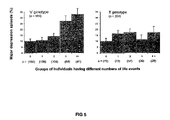
- FIG. 5 depicts the percentage of individuals meeting diagnostic criteria for depression at age 26, as a function of 5-HTT genotype and number of stressful life events between ages 21-26.
- the figure shows individuals with either one or two copies of the short allele (‘s’ group) and individuals homozygous for the long allele (‘l’ group).
- MAOA neurotransmitter metabolizing enzyme monoamine oxidase A
- MAOA monoamine oxidase A
- VNTR variable number tandem repeat
- DNA extraction and genotyping were obtained from 953 Study members (97% of those assessed at that age; 51% male); 93% of DNA samples were obtained via blood and 7% via buccal swabs for those not wishing to undergo phlebotomy. DNA was extracted from blood samples using standard procedures. A modified procedure was used to extract DNA from buccal cells. Primer sequences are described by Sabol et al., namely MAO APT1 (5′-ACAGCCTGACCGTGGAGAAG-3′; SEQ ID NO:1) and MAO APB1 (5′-GAACGGACGCTCCATTCGGA-3′; SEQ ID NO: 2), although here MAO APT1 was 5′-labelled with the TET fluorophore.
- PCR was carried out on a PTC-225 DNA engine (MJ Research), using the following cycling conditions: initial 2-min denaturing step at 95° C., followed by 35 cycles of 94° C. for 1 min, 58.2° C. for 1 min and 72° C. for 1 min 30 secs, and a final extension phase of 72° C. for 5 min. Reactions were performed in 25 ⁇ l GeneAmp PCR Buffer I (PE Applied Biosystems), 1.5 mM MgCl 2 , 50 ng of genomic DNA, 10 pmols of each primer, 0.33 mM dNTPs and 1.5 units of Native Taq (Promega).
- PCR products were assayed on an Applied Biosystems 377 Genetic Analyzer (PE Applied Biosystems), set up in genotyping mode, using 4.25% w/v polyacrylamide gel (Amresco) and TAMRA-labelled GS500 (PE Applied Biosystems) size standard. Results were analyzed using GeneScan v2.1 and Genotyper v1.1 software (Applied Biosystems).
- Table 1 shows the allele frequencies observed among non-Maori members of our Study. The genotypes were classified according to previous results showing that an optimum sequence length of 3.5 or 4 repeats results in high expression levels. In terms of expression, all studies agree on the functional classification of the two most common alleles, i.e. 3 repeats (low activity) and 4 repeats (high activity). These two alleles account for 95.7% of our sample. Of rare alleles, both Sabol et al. and Deckert et al. assayed the 3.5 repeat with the same result (high activity), whereas a discrepancy arises for the 5 repeat. We chose the classification of Sabol et al. as they assayed 3 cell lines as opposed to one. However, we carried out analyses using both classifications and observed the same effects. The rare 2 repeat, of which only 1 exists in our sample, was classified as low activity due to its short length.
- Childhood maltreatment Evidence of childhood maltreatment during the first decade of life (ages 3 to 11 years) was ascertained using behavioral observations, parental reports, and retrospective reports by Study members once they reached adulthood.
- mother-child interactions were observed during the child's age-3 assessment. The mother was rated by an observer on eight categories: mother's affect toward the child was consistently negative; harshness toward the child; rough, awkward handling of the child; no effort to help child; unaware or unresponsive to child's needs; indifferent to child's performance; demanding of child's attention; soiled, unkempt appearance of child).
- Mothers engaging in 2 or more such behaviors were classified as rejecting (16%), based on evidence that such maternal behavior is associated with increased risk of children's later antisocial behavior.
- Study members were classified as physically abused if they reported multiple episodes of severe physical punishment (e.g., strapping leaving welts; whipping with electric cords) resulting in lasting bruising or injury before age 11 (3%).
- severe physical punishment e.g., strapping leaving welts; whipping with electric cords
- Study members were classified as sexually abused if they reported having their genitals touched, touching another's genitals, or attempted/completed sexual intercourse before age 11 (5%). The percentages of males experiencing physical and sexual abuse are consistent with rates reported elsewhere. We examined these maltreatment experiences based on evidence that they too are linked to antisocial behavior.
- Conduct disorder was measured according to the criteria of the Diagnostic and Statistical Manual of Mental Disorders (DSM), which identify adolescents displaying a persistent pattern of behavior that violates the rights of others, including physical harm.
- DSM Diagnostic and Statistical Manual of Mental Disorders
- a diagnosis of conduct disorder was made in our longitudinal study when we assessed the research participants at each of four ages: ages 11, 13, 15, and 18.
- a ‘lifetime’ diagnosis was arrived at by establishing whether a Study member received the diagnosis at one or more of the four ages (according to the DSM, conduct disorder is not normally diagnosed after age 18).
- a disposition toward violence was ascertained at age 26 as part of the Multidimensional Personality Questionnaire (MPQ) Aggression scale (e.g., “When I get angry I am ready to hit someone,” “I admit that I sometimes enjoy hurting someone physically”).
- MPQ Multidimensional Personality Questionnaire
- Symptoms of antisocial personality disorder were ascertained at age 26, when informant reports about 95% of male Study members were collected by mailing a questionnaire to persons they nominated as “someone who knows you well”. Informants were friends, partners, or family members. Informants described the Study members on seven cardinal symptoms: “has problems controlling anger,” “blames others for own problems, “does not show guilt after doing something bad,” “impulsive, rushes into things without thinking,” “good citizen (reversed),” “does things against the law,” and “gets into fights.” Response options were “not a problem, “a bit of a problem,”, and “yes, a problem.” ⁇ reliability of the summed scale was 0.84.
- This summary index counts whether they (a) met diagnostic criteria for adolescent conduct disorder, (b) were convicted for a violent crime, (c) scored in the top quartile of the distribution on a self-reported disposition toward violence, and (d) scored in the top quartile of the distribution on informant-reported antisocial personality disorder symptoms.
- We created this composite because the most reliable way to measure antisocial behavior is to aggregate multiple sources of information.
- the Study offers three advantages for testing gene-environment (G ⁇ E) interactions.
- Antisocial behavior is a complicated phenotype, and each method and data source used to measure it (e.g., clinical diagnoses, personality checklists, official conviction records) is characterized by different strengths and limitations. Using information from independent sources appropriate to different stages of development, we examined four outcome measures.
- Adolescent conduct disorder was assessed according to criteria of the Diagnostic and Statistical Manual of Mental Disorders (DSM); convictions for violent crimes were identified via the Australian and New Zealand police; a personality disposition toward violence was measured as part of a psychological assessment at age 26; symptoms of antisocial personality disorder were ascertained at age 26 by collecting information about the Study members from people they nominated as “someone who knows you well.”
- DSM Diagnostic and Statistical Manual of Mental Disorders
- a common-factor model fit the four measures of antisocial behavior well, with factor loadings ranging from 0.64 to 0.74, showing that all four measures index liability to antisocial behavior.
- the search has focused on social experiences that may protect some children, overlooking a potential protective role of genes. Genes are assumed to create vulnerability to disease, but from an evolutionary perspective they are equally likely to protect against environmental insult. Maltreatment studies may benefit from ascertaining genotypes associated with sensitivity to stress, and the known functional properties of MAOA may point toward hypotheses, based on neurotransmitter system development, about how stressful experiences are converted into antisocial behavior toward others in some, but not all, victims of maltreatment.
- Serotonin transporter genetic variation was selected to study the 5-HTT gene based on two criteria. (a) Evidence of functionality and (b) evidence that it may moderate response to stress.
- the promoter activity of the 5-HTT gene located on 17q11.2, is modified by sequence elements within the proximal 5′ regulatory region, designated the serotonin transporter gene-linked polymorphic region (5-HTTLPR).
- a 20-23 base pair repeat motif within this region occurs as 2 prevalent alleles: One consisting of 14 repeats (the short allele ‘s’) and another of 16 repeats (the long allele ‘l’).
- This polymorphic region has functional significance; ‘l/l’ homozygote lymphoblast cells produce 1.4-1.7 times the concentration of 5-HTT mRNA than ‘s/l’ and ‘s/s’ cells, uptake of labeled serotonin in ‘l/l’ homozygote lymphoblast cells is 2 times greater than in ‘s/l’ or ‘s/s’ cells, and the protein produced from ‘l/l’ cells binds 30-40% more serotonin than cells with the short variant.
- DNA extraction and genotyping When the Study members were age 26 years, we obtained DNA from 953 participants (97% of those assessed at that age; 51% male); 93% of the DNA samples were obtained via blood and 7% via buccal swabs for those not wishing to undergo phlebotomy. DNA was extracted from blood samples using standard procedures. A modified procedure was used to extract DNA from buccal cells. Primer sequences for 5-HTTLPR are described by Geromter et al., the forward primer having the sequence (5′-ATGCCAGCACCTAACCCCTAATGT-3′, SEQ ID NO:3) and the reverse (5′-GGACCGCAAGGTGGGCGGGA-3′, SEQ ID NO:4).
- PCR was carried out on a PTC-225 DNA engine (MJ Research), using the following cycling conditions: initial 15-min denaturing step at 95° C., followed by 35 cycles of 94° C. for 30 sec, 66° C. for 30 sec and 72° C. for 40 sec, and a final extension phase of 72° C. for 15 min. Reactions were performed in 10 ⁇ reaction Buffer IV (ABgene), 1.5 mM MgCl 2 , 50 ng of genomic DNA, 5 pmols of each primer, 0.3 mM dNTPs and 1 unit of Native Taq (Promega). PCR products were separated on a 2.5% agarose gel (MultiABgarose, ABgene) supplemented with Ethidium bromide (0.03%, BDH) and visualised by ultraviolet transillumination.
- Childhood maltreatment To assess children's experience of stressful life events, we measured their experience of maltreatment between ages 3 to 11 years, as previously described by Caspi et al. Evidence of childhood maltreatment was ascertained using behavioral observations, parental reports, and retrospective reports by the Study members. First, mother-child interactions were observed during the child's age-3 assessment. The mother was rated by an observer on eight categories: mother's affect toward the child was consistently negative; harshness toward the child; rough, awkward handling of the child; no effort to help child; unaware or unresponsive to child's needs; indifferent to child's performance; demanding of child's attention; soiled, unkempt appearance of child. Mothers engaging in 2 or more such behaviors were classified as rejecting.
- Study members were classified as physically abused if they reported multiple episodes of severe physical punishment (e.g., strapping leaving welts; whipping with electric cords) resulting in lasting bruising or injury before age 11.
- Fifth, unwanted sexual contact was assessed retrospectively at age 26 as part of an interview about reproductive health.
- Study members were classified as sexually abused if they reported having their genitals touched, touching another's genitals, or attempted/completed sexual intercourse before age 11.
- the essential feature of a major depressive episode is a period of at least two weeks during which there is either depressed mood or the loss of interest or pleasure in all activities.
- b1 is the regression coefficient associated with the effect of sex, which is coded as:
- b2 is the regression coefficient associated with the effect of variations in the serotonin transporter gene promoter, which is here coded to reflect the number of long (‘l’) alleles, such that:
- b3 is the coefficient associated with the effect of stressful life events, coded to reflect the number of life events, such that:
- b4 is the coefficient associated with the interaction effect, which is the product of the two variables (5-HTTLPR and Stressful Life Events).
- OLS ordinary least squares
- Tables 3 through 5 The full results of these regression analyses are provided in Tables 3 through 5.
- the coefficients (labeled as b) in Tables 3-7 are the model parameters for each type of model (e.g., OLS, logistic) before any transformation (e.g., exponentiation to obtains odds ratios). Predicted values can be plotted using variable values.
- the model thus tests whether the 5-HTTLPR ⁇ Life events interaction predicts within-individual increases in depression symptoms over time. ⁇ This regression equation excludes from analysis Study members who met diagnostic criteria for depression prior to age 21 (27%). The model thus tests whether the 5-HTTLPR ⁇ Life events interaction predicts new cases of depression at age 26 years.
- the hypothesized G ⁇ E interaction was also significant when we predicted informant-reports of age-26 depression (P ⁇ 0.01); an analysis that ruled out the possibility of self-report bias ( FIG. 3D ).
- the interaction showed that the effect of life events on informant reports of depression was stronger among individuals carrying an ‘s’ allele than among l/l homozygotes.
- 5-HTT genotype moderates the depressogenic influence of stressful life events, it should moderate the effect of life events that occurred not just in adulthood, but also of stressful experiences that occurred in earlier developmental periods.
- MAOA neurotransmitter-metabolizing enzyme monoamine oxidase A
Landscapes
- Health & Medical Sciences (AREA)
- Life Sciences & Earth Sciences (AREA)
- Engineering & Computer Science (AREA)
- Physics & Mathematics (AREA)
- Medical Informatics (AREA)
- Chemical & Material Sciences (AREA)
- General Health & Medical Sciences (AREA)
- Biophysics (AREA)
- Public Health (AREA)
- Proteomics, Peptides & Aminoacids (AREA)
- Pathology (AREA)
- Molecular Biology (AREA)
- Bioinformatics & Cheminformatics (AREA)
- Analytical Chemistry (AREA)
- Biotechnology (AREA)
- Psychiatry (AREA)
- Organic Chemistry (AREA)
- Genetics & Genomics (AREA)
- Biomedical Technology (AREA)
- Heart & Thoracic Surgery (AREA)
- Surgery (AREA)
- Psychology (AREA)
- Data Mining & Analysis (AREA)
- Databases & Information Systems (AREA)
- Zoology (AREA)
- Wood Science & Technology (AREA)
- Epidemiology (AREA)
- Veterinary Medicine (AREA)
- Bioinformatics & Computational Biology (AREA)
- Evolutionary Biology (AREA)
- Spectroscopy & Molecular Physics (AREA)
- Theoretical Computer Science (AREA)
- Artificial Intelligence (AREA)
- Computer Vision & Pattern Recognition (AREA)
- Animal Behavior & Ethology (AREA)
- Primary Health Care (AREA)
- Child & Adolescent Psychology (AREA)
- Immunology (AREA)
- Microbiology (AREA)
- Physiology (AREA)
Priority Applications (1)
| Application Number | Priority Date | Filing Date | Title |
|---|---|---|---|
| US10/889,450 US7972779B2 (en) | 2003-07-11 | 2004-07-12 | Method for assessing predisposition to depression |
Applications Claiming Priority (2)
| Application Number | Priority Date | Filing Date | Title |
|---|---|---|---|
| US48664003P | 2003-07-11 | 2003-07-11 | |
| US10/889,450 US7972779B2 (en) | 2003-07-11 | 2004-07-12 | Method for assessing predisposition to depression |
Publications (2)
| Publication Number | Publication Date |
|---|---|
| US20050037405A1 US20050037405A1 (en) | 2005-02-17 |
| US7972779B2 true US7972779B2 (en) | 2011-07-05 |
Family
ID=34079265
Family Applications (1)
| Application Number | Title | Priority Date | Filing Date |
|---|---|---|---|
| US10/889,450 Expired - Fee Related US7972779B2 (en) | 2003-07-11 | 2004-07-12 | Method for assessing predisposition to depression |
Country Status (4)
| Country | Link |
|---|---|
| US (1) | US7972779B2 (de) |
| EP (1) | EP1644537A2 (de) |
| CA (1) | CA2531631A1 (de) |
| WO (1) | WO2005006971A2 (de) |
Cited By (5)
| Publication number | Priority date | Publication date | Assignee | Title |
|---|---|---|---|---|
| WO2017214397A1 (en) | 2016-06-08 | 2017-12-14 | University Of Iowa Research Foundation | Compositions and methods for detecting predisposition to cardiovascular disease |
| US20190125239A1 (en) * | 2017-11-02 | 2019-05-02 | Ewha University - Industry Collaboration Foundation | Method and apparatus for predicting posttraumatic behavior problem |
| US20190274632A1 (en) * | 2018-03-06 | 2019-09-12 | International Business Machines Corporation | Determining functional age indices based upon sensor data |
| US10981980B2 (en) | 2016-06-15 | 2021-04-20 | Counterpoint Biomedica Llc | Polypeptide targeting aptamers for characterization, capture, and clinical management of circulating tumor cells |
| WO2022051641A1 (en) | 2020-09-04 | 2022-03-10 | Cardio Diagnostics, Inc. | Methods and compositions for predicting and/or monitoring cardiovascular disease and treatments therefor |
Families Citing this family (19)
| Publication number | Priority date | Publication date | Assignee | Title |
|---|---|---|---|---|
| RU2320264C9 (ru) * | 2003-06-24 | 2008-06-10 | Лучин Марк | Способ прогнозирования поведения человека и/или вида его деятельности, а также идентификации его личности |
| US20070224599A1 (en) * | 2006-03-22 | 2007-09-27 | Kendler Kenneth S | Interaction of stressful life events and a serotonin transporter polymorphism in the prediction of episodes of major depression |
| WO2008085857A2 (en) | 2007-01-04 | 2008-07-17 | Children's Hospital Medical Center | Processing text with domain-specific spreading activation methods |
| US20080228699A1 (en) | 2007-03-16 | 2008-09-18 | Expanse Networks, Inc. | Creation of Attribute Combination Databases |
| US20090043752A1 (en) | 2007-08-08 | 2009-02-12 | Expanse Networks, Inc. | Predicting Side Effect Attributes |
| WO2009036513A1 (en) * | 2007-09-21 | 2009-03-26 | Murdoch Childrens Research Institute | Diagnostic and therapeutic protocols |
| US8200509B2 (en) | 2008-09-10 | 2012-06-12 | Expanse Networks, Inc. | Masked data record access |
| US20100063830A1 (en) * | 2008-09-10 | 2010-03-11 | Expanse Networks, Inc. | Masked Data Provider Selection |
| US7917438B2 (en) | 2008-09-10 | 2011-03-29 | Expanse Networks, Inc. | System for secure mobile healthcare selection |
| US20100076950A1 (en) * | 2008-09-10 | 2010-03-25 | Expanse Networks, Inc. | Masked Data Service Selection |
| US20100063835A1 (en) * | 2008-09-10 | 2010-03-11 | Expanse Networks, Inc. | Method for Secure Mobile Healthcare Selection |
| US20100076988A1 (en) * | 2008-09-10 | 2010-03-25 | Expanse Networks, Inc. | Masked Data Service Profiling |
| US20100063865A1 (en) * | 2008-09-10 | 2010-03-11 | Expanse Networks, Inc. | Masked Data Provider Profiling |
| US20100070292A1 (en) * | 2008-09-10 | 2010-03-18 | Expanse Networks, Inc. | Masked Data Transaction Database |
| US8108406B2 (en) | 2008-12-30 | 2012-01-31 | Expanse Networks, Inc. | Pangenetic web user behavior prediction system |
| US8386519B2 (en) | 2008-12-30 | 2013-02-26 | Expanse Networks, Inc. | Pangenetic web item recommendation system |
| EP2370929A4 (de) | 2008-12-31 | 2016-11-23 | 23Andme Inc | Suche nach verwandten in einer datenbank |
| EP2425356B1 (de) * | 2009-04-27 | 2019-03-13 | Cincinnati Children's Hospital Medical Center | Computerimplementiertes system und verfahren zur beurteilung eines neuropsychiatrischen zustandes einer person |
| CN113782188B (zh) * | 2021-09-16 | 2023-11-28 | 深圳大学 | Sjt情境式儿童心理测评系统的多维度测验数据处理方法 |
Citations (1)
| Publication number | Priority date | Publication date | Assignee | Title |
|---|---|---|---|---|
| CA2344093A1 (en) | 2001-02-16 | 2002-08-16 | Centre For Addiction And Mental Health | Detection of antidepressant induced mania |
-
2004
- 2004-07-12 EP EP04777947A patent/EP1644537A2/de not_active Withdrawn
- 2004-07-12 WO PCT/US2004/022172 patent/WO2005006971A2/en not_active Ceased
- 2004-07-12 US US10/889,450 patent/US7972779B2/en not_active Expired - Fee Related
- 2004-07-12 CA CA002531631A patent/CA2531631A1/en not_active Abandoned
Patent Citations (1)
| Publication number | Priority date | Publication date | Assignee | Title |
|---|---|---|---|---|
| CA2344093A1 (en) | 2001-02-16 | 2002-08-16 | Centre For Addiction And Mental Health | Detection of antidepressant induced mania |
Non-Patent Citations (142)
| Title |
|---|
| Aguilera M, Arias B, Wichers M, et al. Early adversity and 5-HTT/BDNF genes: new evidence of geneenvironment interactions on depressive symptoms in a general population [published online ahead of print Feb. 12, 2009]. Psychol. Med. 2009:1-8. doi: 10.1017/S0033291709005248. |
| Andrews G., Poulton R., Skoog I. (2005). Lifetime risk for depression: Restricted to a minority or waiting for most? Brit J. Psychiatr 187: 495-496. |
| Andrews, G., Antstey, K., Brodaty, H. et al. (1999). Recall of depressive episodes, 25 years previously. Psychol Med 29: 787-791. |
| Anguelova M, Benkelfat C, Turecki G. A systematic review of association studies investigating genes coding for serotonin receptors and the serotonin transporter, II: suicidal behavior. Mol. Psychiatry. 2003; 8(7):646-653. |
| Ansorge, M. S., Zhou, M., Lira, A., Hen, R., Gingrich, J. A. (2004). Early-life blockade of the 5-HT transporter alters emotional behavior in adult mice. Science, 306, 879-881. |
| Araya R, Hu X, Heron J, Enoch M-A, Evans J, Lewis G, Nutt D, Goldman D: Effects of stressful life events, maternal depression and 5-HTTLPR genotype on emotional symptoms in pre-adolescent children. Am J Med Genet. 2009; 150B:670-682. |
| Araya, Ricardo, Jon Heron, Mary-Anne Enoch, Jonathan Evans, Glyn Lewis, David Nutt, David Goldman, (2008). Effects of stressful life events, maternal depression and 5-HTTLPR genotype on emotional symptoms in pre-adolescent children. American Journal of Medical Genetics Part B: Neuropsychiatric Genetics, 9999(9999), n/a. |
| Aslund C, Leppert J, Comasco E, Nordquist N, Oreland L, Nilsson K: Impact of the interaction between the 5HTTLPR polymorphism and maltreatment on adolescent depression: A population-based study. Behav Genet. 2009; 39:524-531. |
| Barr, C. S., Newman, T. K., Shannon, C., Parker, C., Dvoskin, R. L., Becker, M. L., Schwandt, M., Champoux, M., Lesch, K. P., Goldman, D., Suomi, S. J., Higley, J. D. (2004). Rearing condition and rh5-HTTLPR interact to influence limbic-hypothalamic-pituitary-adrenal axis response to stress in infant macaques. Biological Psychiatry, 55, 733-738. |
| Barry, R. A., Kochanska, G., & Philibert, R. A. (2008). G x E interaction in the organization of attachment: mothers' responsiveness as a moderator of children's genotypes. Journal of Child Psychology and Psychiatry, 49(12), 1313-1320. |
| Barton, D.A. et al. (2008). Elevated brain serotonin turnover in patients with depression: Effect of genotype and therapy. Archives of General Psychiatry, 65, 38-46. |
| Battaglia, M., Ogliari, A., Zanoni, A., Citterio, A., Pozzoli, U., Giorda, R., Maffei, C., Marino, C. (2005). Influence of the serotonin transporter promoter gene and shyness on children's cerebral responses to facial expressions. Archives of General Psychiatry, 62, 85-94. |
| Beevers, C. G., Gibb, B. E., McGeary, J. E., Miller, I. W. (2007). Serotonin transporter genetic variation and biased attention for emotional word stimuli among psychiatric inpatients. Journal of Abnormal Psychiatry, 116, 208-212. |
| Benjet C, Thompson RJ, Gotlib IH: 5-HTTLPR moderates the effect of relational peer victimization on depressive symptoms in adolescent girls. J Child Psychol Psychiatry. 2009; E-Pub. |
| Bennett, A.J., et al. "Early Experience and Serotonin Transporter Gene Variation Interact to Influence Primate CNS Function," Molecular Psychiatry, vol. 7, No. 1, pp. 118-122 (2002). |
| Brody, GH, Beach, SRH, Philibart, RA, Chen, Y, Lei, M, Murry, VM, Brown, AC (2009). Parenting moderates a genetic vulnerability factor in longitudinal increase in youth's substance use. J of Consulting and Clinical Psychology, 77, 1-11. |
| Brown, G. W., & Harris, T. O. (2008). Depression and the serotonin transporter 5-HTTLPR polymorphism: A review and a hypothesis concerning gene-environment interaction. Journal of Affective Disorders, 111(1), 1-12. |
| Brugha T, Bebbington P, Tennant C, Hurry J. The List of Threatening Experiences: a subset of 12 life event categories with considerable long-term contextual threat. Psychol. Med. 1985; 15(1):189-194. |
| Brugha TS, Cragg D. The List of Threatening Experiences: the reliability and validity of a brief life events questionnaire. Acta Psychiatr. Scand. 1990; 82(1): 77-81. |
| Brummett BH, Boyle SH, Siegler IC, et al. Effects of environmental stress and gender on associations among symptoms of depression and the serotonin transporter gene linked polymorphic region (5-HTTLPR). Behay. Genet. 2008; 38(1):34-43. |
| Brummett BH, Muller CL, Collins AL, et al. 5-HTTLPR and gender moderate changes in negative affect responses to tryptophan infusion. Behay. Genet. 2008; 38(5):476-483. |
| Brummett, B. H., Krystal, A. D., Ashley-Koch, A., Kuhn, C. M., Zuchner, S., Siegler, I. C., Barefoot, J. C., Ballard, E. L., Gwyther, L. P., Williams, R. B. (2007). Sleep quality varies as a function of 5-HTTLPR genotype and stress. |
| Bukh JD, Bock C, Vinberg M, Werge T, Gether U, Vedel Kessing L: Interaction between genetic polymorphisms and stressful life events in first episode depression. J Affect Disord. 2009; E-Pub. |
| Canli, T. & Lesch, K-P. (2007). Long story short : The serotonin transporter in emotion regulation and social cognition. Nature Neuroscience, 10, 1103-1109. |
| Canli, T., Qiu, M., Omura, K., Congdon, E., Haas, B. W., Amin, Z., Herrmann, M. J., Constable, R. T., Lesch, K. P. (2006). Neural correlates of epigenesis. PNAS, 24, 16033-16038. |
| Carola V et al.: Identifying Molecular Substrates in a Mouse Model of the Serotonin Transporter x Environment Risk Factor for Anxiety and Depression. Biol Psychiatry 2008; 63:840-846. |
| Carola, V., Frazzetto, G., Pascucci, T., Audero, E., Puglisi-Allegra, S., Cabib, S., et al. (2007). Identifying molecular substrates in a mouse model of the serotonin transporter x environment risk factor for anxiety and depression. Biological psychiatry, 63(9), 840-846. |
| Caspi et al. Science. Aug. 2002. 297: 851-854. * |
| Caspi, A, Sugden K, Moffitt TE, et al. Influence of life stress on depression; moderation by a polymorphism in the 5-HTT gene. Science. 2003;301(5631): 386-389. |
| Cervilla J, et al., "The risk for depression conferred by stressful life events is modified by variation at the serotonin transporter 5HTTLPR genotype: evidence from the Spanish Predict-Gene cohort," Mol. Psychiatry 12:748-755 (2007). |
| Champoux, M., et al. "Serotonin Transporter GEne Polymorphism, Differential Early Rearing, and Behavior in Rhesus Monkey Neonates," Molecular Psychiatry, vol. 7, No. 10, pp. 1058-1063 (2002). |
| Chen M, Joormann J, Hallmayer J, Gotlib: Serotonin transporter polymorphism predicts waking cortisol in young girls. Psychoneuroendocrinology 2009; 34:681-686. |
| Chipman et al. American Journal of Medical Genetics. 2007. 144B: 561-565. * |
| Chorbov et al. American Journal of Medical Genetics. 2007. 144B. 830-833. * |
| Cicchetti, D., Rogosch, F. A., & Sturge-Apple, M. L. (2007). Interactions of child maltreatment and serotonin transporter and monoamine oxidase A polymorphisms: Depressive symptornatology among adolescents from low socioeconomic status backgrounds. Development and Psychopathology, 19(4), 1161-1180. |
| Covault J, et al., "Interactive effects of the serotonin transporter 5-HTTLPR polymorphism and stressful life events on college student drinking and drug use," Biol. Psychiatry 61:609-616 (2007). |
| Cyran, J. F. & Holmes, A. (2005). Model organisms: The ascent of mouse: advances in modeling human depression and anxiety. Nature Reviews Drug Discovery, 4, 775-790. |
| Dick D, et al., "Association analyses of the serotonin transporter gene with lifetime depression and alcohol dependence in the collaborative study on the genetics of alcoholism (COGA) sample," Psychiatr. Genet. 17:35-38 (2007). |
| Eaton WW. Life events, social supports, and psychiatric symptoms: a re-analysis of the New Haven data. J. Health. Soc. Behav. 1978; 19(2):230-234. |
| Eaves LJ. Genotype x environment interaction in psychopathology: fact or artifact? Twin. Res. Hum. Genet. 2006; 9 (1):1-8. |
| Eley T, et al., "Gene-environment interaction analysis of serotonin system markers with adolescent depression," Mol. Psychiatry 9:908-915 (2004). |
| Eley TC, Sugden K, Corsico A, Gregory AM, Sham P, McGuffin P, Plomin R, Craig IW: Gene-environment interaction analysis of serotonin system markers with adolescent depression. Mol Psychiatry. 2004; 9:908. |
| Fallgatter, A. J., Herrmann, M. J., Roemmler, J., Ehlis, A-C., Wagener, A., Heidrich, A., Ortega, G., Zeng, Y., Lesch, K-P. (2004). Allelic variation of serotonin transporter function modulates the brain electrical response for error processing. Neuropsychopharmacology, 29, 1506-1511. |
| Fox E, Ridgewell A, Ashwin C: Looking on the bright side: biased attention and the human serotonin transporter gene. Proc. R. Soc. B 2009; 276:1747-1751. |
| Fox N, et al., "Evidence for a gene-environment interaction in predicting behavioral inhibition in middle childhood," Psychol. Sci. 16:921-926 (2005). |
| Gelernter et al. Human Genetics. 1997. 101: 243-246. * |
| Gibb B, et al., "Serotonin transporter (5-HTTLPR) genotype, childhood abuse, and suicide attempts among adult psychiatric inpatients," Suicide Life Threat. Behav. 36:687-693 (2006). |
| Gillespie et al. Psychological Medicine. 2005. 35: 101-111. * |
| Gillespie NA, Whitfield JB, Williams B, Heath AC, Martin NG: The relationship between stressful life events, the serotonin transporter (5-HTTLPR) genotype and major depression. Psychol Med. 2005; 35:101-111. |
| Goldman N: The serotonin transporter polymorphism (5-HTTLPR): Allelic variation and links with depressive symptoms. Depress Anxiety. In Press. |
| Gotlib I et al.: HPA Axis Reactivity: A Mechanism Underlying the Associations Among 5-HTTLPR, Stress, and Depression. Biol Psychiatry 2008; 63:847-851. |
| Gotlib, I. H., Joormann, J., Minor, K. L., & Hallmayer, J. (2008). HPA Axis Reactivity: A Mechanism Underlying the Associations Among 5-HTTLPR, Stress, and Depression. Biological psychiatry, 63(9), 847-851. |
| Grabe H, et al., "Mental and physical distress is modulated by a polymorphism in the 5-HT transporter gene interacting with social stressors and chronic disease burden," Mol. Psychiatry 10:220-224 (2005). |
| Gunthert, K. C., Conner, T. S., Armeli, S., Tennen, H., Covault, J., Kranzler, H. R. (2007). Serotonin transporter gene polymorphism (5-HTTLPR) and anxiety reactivity in daily life: A daily process approach to gene-environment interaction. Psychosomatic Medicine, 69, 762-768. |
| Guo G, Roettger ME, Shih JC. Contributions of the DAT1 and DRD2 genes to serious and violent delinquency among adolescents and young adults. Hum. Genet. 2007; 121(1):125-136. |
| Guo G, Tong Y, Xie CW, Lange LA. Dopamine transporter, gender, and number of sexual partners among young adults. Eur. J. Hum. Genet. 2007; 15(3):279-287. |
| Hariri, A. R. & Holmes, A. (2006). Genetics of emotional regulation: the role of the serotonin transporter in neural function. Trends in Cognitive Sciences, 10, 182-191. |
| Hariri, A. R., Drabant, E. M., Munoz, K. E., Kolachana, B. S., Mattay, V. S., Egan, M. F., Weinberger, D. R. (2005). A susceptibility gene for affective disorders and the response of the human amygdala. Archives of General Psychiatry, 62, 146-152. |
| Hariri, A. R., Drabant, E. M., Weinberger, D. R. (2006). Imaging genetics: Perspectives from studies of genetically driven variation in serotonin function and corticolimbic affective processing. Biological Psychiatry, 59, 888-897. |
| Hariri, A. R., Mattay, V. S., Tessitore, A., Kolachana, B., Fera, F., Goldman, D., Egan, M. F., Weinberger, D. R. (2002). Serotonin transporter genetic variation and the response of the human amygdale. Science, 297, 400-403. |
| Heinz, A., Braus, D. F., Smolka, M. N., Wrase, J., Puls, I., Hermann, D., Klein, S., Grusser, S. M., Flor, H., Schumann, G., Mann, K., Buchel, C. (2005). Amygdala-prefrontal coupling depends on a genetic variation of the serotonin transporter. Nature Neuroscience, 8, 20-21. |
| Holmes, A., Murphy, D. L., Crawley, J. N. (2003). Abnormal behavioral phenotypes of serotonin transporter knockout mice: Parallels with human anxiety and depression. Biological Psychiatry, 54, 953-959. |
| Horwitz, A. V. (2005). Media portrayals and health inequalities: A case study of characterizations of Gene x Environment interactions. |
| Hu X., et al. "Genotyping of the HTTLPR Ins/Del by dHPLC followed by Association/Linkage Disequilibrium to Behavior in a Southwest American Indian Isolate," American Journal of Human Genetics, vol. 7, No. 2, pp. 213-216 (2002). |
| Jacobs N, et al., "Stress-related negative affectivity and genetically altered serotonin transporter function," Arch. Gen. Psychiatry 63:989-996 (2006). |
| Joober R, Sengupta S, Schmitz N. Serotonin transporter, stressful life events, and depression severity. Am. J. Psychiatry. 2007; 164(5):829-830, author reply830-831. |
| Kalin, N. H., Shelton, S. E., Fox, A. S., Rogers, J., Oakes, T. R., & Davidson, R. J. (2008). The serotonin transporter genotype is associated with intermediate brain phenotypes that depend on the context of eliciting stressor. Molecular Psychiatry, 13(11), 1021-1027. |
| Katsuyama H, Tomita M, Hidaka K, et al. Association between serotonin transporter gene polymorphisms and depressed mood caused by job stress in Japanese workers. Int. J. Mol. Med. 2008; 21(4): 499-505. |
| Kaufman J, et al., "Brain-Derived Neurotrophic Factor-5-HTTLPR Gene Interactions and Environmental Modifiers of Depression in children," Biol. Psychiatry 59:673-680 (2006). |
| Kaufman J, et al., "Social supports and serotonin transporter gene moderate depression in maltreated children," PNAS 101:17316-17321 (2004). |
| Kaufman J, Yang BZ, Douglas-Palumberi H, Houshyar S, Lipschitz D, Krystal JH, Gelernter J: Social supports and serotonin transporter gene moderate depression in maltreated children. Proc Natl Acad Sci U S A. 2004; 101:17316-17321. |
| Kaufman, J., Yang, B. Z., Douglas-Palumberi, H., Crouse-Artus, M., Lipshitz, D., Krystal, J. H., Gelernter, J. (2007). Genetic and environmental predictors of early alcohol use. Biological Psychiatry, 61, 1228-1234. |
| Kendler K, et al., "The interaction of stressful life events and a serotonin transporter polymorphism in the prediction of episodes of major depression: a replication," Arch. Gen. Psychiatry 62:529-535 (2005). |
| Kendler KS, Kuhn JW, Vittum J, Prescott CA, Riley B: The interaction of stressful life events and a serotonin transporter polymorphism in the prediction of episodes of major depression: A replication. Arch Gen Psychiatry. 2005; 62:529-535. |
| Kilpatrick, D. G., Koenen, K., Ruggiero, K. J., Acierno, R., Galea, S., Resnick, H., Roitzsch, J., Boyle, J., Gelernter, J. (2007). Do serotonin transporter gene and social support moderate posttraumatic stress disorder and depression in hurricane-exposed adults? American J of Psychiatry, 164, 1693-1699. |
| Kim J, et al., "Interactions between life stressors and susceptibility genes (5-HTTLPR and BDNF) on depression in Korean elders," Biol. Psychiatry 62:423-528 (2007). |
| Kohen, R., Cain, K. C., Mitchell, P. H., Becker, K., Buzaitis, A., Millard, S. P., et al. (2008). Association of Serotonin Transporter Gene Polymorphisms With Poststroke Depression. Archives of General Psychiatry, 65(11), 1296-1302. |
| Kruijshaar ME, Barendrecht J., Vos T., de Graaf R., Spijker J., Andrews G., (2005). Lifetime prevalence estimates of major depression: An indirect estimation method and a quantification of recall bias. Eur J Epidemiol, 20:103-111. |
| Kumsta R, Stevens S, Brookes K, Schlotz W, Castle J, Beckett C, Kreppner J, Rutter M, Sonuga-Barke E: 5HTT genotype moderates the influence of early institutional deprivation on emotional problems in adolescence: Evidence from the English and Romanian Adoptee (ERA) study. In Review. |
| Laucht M, Treutlein J, Blomeyer D, Buchmann AF, Schmid B, Becker K, Zimmermann US, Schmidt MH, Esser G, Rietschel M, Banaschewski T: Interaction between the 5-HTTLPR serotonin transporter polymorphism and environmental adversity for mood and anxiety psychopathology: Evidence from a high-risk community sample of young adults. Int J Neuropsychopharmacol. 2009; 12:737-747. |
| Laucht M, Treutlein J, Blomeyer D, et al. Interaction between the 5-HTTLPR serotonin transporter polymorphism and environmental adversity for mood and anxiety psychopathology: evidence from a high-risk community sample of young adults [published online ahead of print Jan. 20, 2009]. Int. J. Neuropsychopharmacol. 2009; 1-11. doi:10.1017/S1461145708009875. |
| Lazary, J., Aron, L., Xenia, G., Anita, B., Eszter, M., Gabriella, J., et al. (2008). New Evidence for the Association of the Serotonin Transporter Gene (SLC6A4) Haplotypes, Threatening Life Events, and Depressive Phenotype. Biological psychiatry, 64(6), 498-504. |
| Lenze E, et al., "Association of the serotonin transporter gene-linked polymorphic region (5-HTTLPR) genotype with depression in elderly persons after hip fracture," Am. J. Geriatr. Psychiatry 13:428-432 (2005). |
| Lenze E. et al.: Association of the Serotonin Transporter Gene-Linked Polymorphic Region (5-HTTLPR) Genotype with Depression in Elderly Persons After Hip Fracture: AM J Geriatr Psychiatry 2005; 13:428-432. |
| Leonardo, E. D. & Hen, R. (2006). Genetics of affective and anxiety disorders. Annual Review of Psychology, 57, 117-137. |
| Lesch, K.P. "Molecular Foundation of Anxiety Disorders," Journal of Neural Transmission, vol. 108, No. 6, pp. 717-746 (2001). |
| Lesch, K.P., et al. "The 5-HT Transporter Gene-Linked Polymorphic Region (5-HTTLPR) in Evolutionary Perspective: Alternative Biallelic Variation in Rhesus Monkeys" Journal of Neural Transmission vol. 104 No. 11-12 pp. 1259-1266 (1997). |
| Levinson DF. The genetics of depression: a review. Biol. Psychiatry. 2006; 60(2):84-92. |
| Lonsdorf, TB, Weuke, Al, Nikamo, P, Schalling, M, Hamm, AO, and Ohman, A. (2009). Genetic gating of human fear learning and extinction. Possible implications for gene-environment interaction in anxiety disorder. Psychological science, e-pub ahead of print. |
| Lotrich F et al.: Risk for Depression During Interferon-Alpha Treatment is Affected by the Serotonin Transporter Polymorphism. Biol Psychiatry 2009; 65:344-348. |
| Lucentini. The Scientist. Dec. 2004, p. 20. * |
| Mandelli L et al.: Interaction Between Serotonin Transporter Gene, Catechol-O-Methyltransferase Gene and Stressful Life Events in Mood Disorders. Int J Neuropsychopharmacol 2007; 10:437-447. |
| Mandelli L, et al., "Interaction between serotonin transporter gene, catechol-O-methyltransferase gene and stressful life events in mood disorders," Int. J. Neuropsychopharmacol. 10:437-447 (2007). |
| Mather K, Jinks J. Biometrical Genetics: The Study of Continuous Variation. London, England: Chapman & Hall; 1982. |
| McCaffery JM, Duan QL, Frasure-Smith N, Barhdadi A, Lesperance F, Theroux P, Rouleau GA, Dubé MP: Genetic predictors of depressive symptoms in cardiac patients. Am J Med Genet. 2009; 150B:381-388. |
| Mental Health: A Report of the Surgeon General, Chapter 4 "Stressful Life Events," available via url: , printed on Mar. 21, 2011. * |
| Mental Health: A Report of the Surgeon General, Chapter 4 "Stressful Life Events," available via url: <surgeongeneral.gov/library/mentalhealth/chapter4/sec1—1.html>, printed on Mar. 21, 2011. * |
| Middeldorp CM, Cath DC, Beem AL, Willemsen G, Boomsma DI. Life events, anxious depression and personality: a prospective and genetic study. Psychol. Med. 2008; 38(11):1557-1565. |
| Middeldorp CM, de Geus EJ, Beem AL, et al. Family based association analyses between the serotonin transporter gene polymorphism (5-HTTLPR) and neuroticism, anxiety and depression. Behav. Genet. 2007; 37(2):294-301. |
| Monroe, S. M., & Reid, M. W. (2008). Gene-Environment Interactions in Depression Research: Genetic Polymorphisms and Life-Stress Polyprocedures. Psychological Science, 19(10), 947-956. |
| Moreno, F.A. "Association Between a Serotonin Transporter Promoter REgion Ploymorphism and Mood Response During Tryptophan Depletion," Molecular Psychiatry, vol. 7, No. 2, pp. 213-216 (2002). |
| Mossner R, Henneberg A, Schmitt A, Syagailo YV, Grassle M, Hennig T, Simantov R, Gerlach M, Riederer P, Lesch KP: Allelic variation of serotonin transporter expression is associated with depression in Parkinson's disease. Mol Psychiatry. 2001; 6:350-352. |
| Munafo et al. Biol Pyschiatry. 2009. 65 : 211-219. * |
| Munafò, M. R., Durrant, C., Lewis, G., & Flint, J. (2009). Gene x Environment Interactions at the Serotonin Transporter Locus. Biological psychiatry, 65(3), 211-219. |
| Murphy, D. L., Li, Q., Engel, S., Wichems, C., Andrews, A., Lesch, K. P., Uhl, G. (2001). Genetic perspectives on the serotonin transporter. Brain Research Bulletin, 56, 487-494. |
| Nakatani D, et al., "Influence of serotonin transporter gene polymorphism on depressive symptoms and new cardiac events after acute myocardial infarction," Am. Heart J. 150:652-658 (2005). |
| Nelson, E. E., & Winslow, J. T. (2008). Non-Human Primates: Model Animals for Developmental Psychopathology. Neuropsychopharmacology, 34(1), 90-105. |
| Nobile, M. , Monica Bellina, Cecilia Marino, Roberto Giorda, Ombretta Carlet, Laura Vanzin, Massimo Molteni, Marco Battaglia, (2008). The influence of family structure, the TPH2; G-703T and the 5-HTTLPR serotonergic genes upon affective problems in children aged 10 &14 years. Journal of Child Psychology and Psychiatry, 9999(9999). |
| Otte, C., McCaffery, J., Ali, S., Whooley, M. A. (2007). Association of a serotonin transporter polymorphism (5-HTTLPR) with depression, perceived stress, and norepinephrine in patients with coronary disease: The heart and soul study. American Journal of Psychiatry, 164, 1379-1384. |
| Ottman R. Gene-environment interaction: definitions and study designs. Prey. Med. 1996; 25(6): 764-770. |
| Patten, SB., (2003). Recall bias and major depression lifetime prevalence. Soc Psychiatry Psychiatr Epidemiol, 38, 290-296. |
| Pezawas, L., Meyer-Lindenberg, A., Drabant, E. M., Verchinski, B. A., Munoz, K. E., Kolachana, B. S., Egan, M. F., Mattay, V. S., Hariri, A. R., Weinberger. (2005). 5-HTTLPR polymorphism impacts human cingulated-amygdala interactions: a genetic susceptibility mechanism for depression. Nature Neuroscience, 8, 828-834. |
| Power, T., Stewart, R., Ancelin, M.-L., Jaussent, I., Malafosse, A., & Ritchie, K. 5-HTTLPR genotype, stressful life events and late-life depression: No evidence of interaction in a French population. Neurobiology of Aging, In Press, Corrected Proof. |
| Ramasubbu R, Tobias R, Buchan AM, Bech-Hansen NT: Serotonin transporter gene promoter region polymorphism associated with poststroke major depression. J Neuropsychiatry Clin Neurosci. 2006; 18:96-99. |
| Risch et al. JAMA. Jun. 17, 2009. 301(23): 2462-2471. * |
| Rosenthal, N.E., et al. "Role of Serotonin Transporter Promoter Repeat Length Polymorphism (5-HTTLPR) in Seasonality and Seasonal Affective Disorder," Molecular Psychiatry vol 3 No. 2 pp. 175-177 (1998). |
| Roy A, et al., "Interaction between childhood trauma and serotonin transporter gene variation in suicide attempts," Neuropsychopharmacology 32:2046-2052 (2007). |
| Scheid J, et al., "Depressive symptoms in mid-pregnancy, lifetime stressors and the 5-HTTLPR genotype," Genes Brain Behav. 6:453-464 (2007). |
| Sjoberg, R. L., Nilsson, K. W., Nordquist, N., Ahrvik, J., Leppert, J., Lindstram, L., et al. (2006). Development of depression: Sex and the interaction between environment and a promoter polymorphism of the serotonin transporter gene. International Journal of Neuropsychopharmacology, 9(4), 443-449. |
| Steiger, H., Richardson, J., Joober, R., Gauvin, L., Israel, M., Bruce, K. P., Nmk, N. Y. K., Young, S. (2007). The 5HTTLPR polymorphism, prior maltreatment, and dramatic-erratic personality manifestations in women with bulimic syndromes. Journal of Psychiatry and Neuroscience, 32, 354-362. |
| Stein M, et al., "Gene-by-environment (serotonin transporter and childhood maltreatment) interaction for anxiety sensitivity, an intermediate phenotype for anxiety disorders," Neuropsychopharmacology [epub ahead of print on Apr. 25, 2007]. |
| Sudgen K, Arseneault L, Harrington H, Moffitt TE, Williams B, Caspi A: The serotonin transporter gene moderates the development of emotional problems among children following bullying victimization. In Review. |
| Surtees et al. Biological Psychiatry. 2006. 59: 224-229. * |
| Surtees, P. G., Wainwright, N. W., Willis-Owen, S. A., Luben, R., Day, N. E., Flint, J. (2006). Social adversity, the serotonin transporter (5-HTTLPR), polymorphism and major depressive disorder. Biological Psychiatry, 59, 224-229. |
| Taylor et al Biol Psychiatry. 2006. 60: 671-676. * |
| Taylor S, et al., "Early family environment, current adversity, the serotonin transporter promoter polymorphism, and depressive symptomatology," Biol. Psychiatry 60:671-676 (2006). |
| Uher R and McGuffin P: The Moderation by the Serotonin Transporter Gene of Environmental adversity in the Etiology of Depression: 2009 updated. Molecular Psychiatry 2010; 15: 18-22. |
| Uher, R. & McGuffin, P. (2007). The moderation by the serotonin transporter gene of environmental adversity in the aetiology of mental illness: Review and methodological analysis. Molecular Psychiatry [epub ahead of print]. |
| Uher, R. (2008). The implications of gene-environment interactions in depression: will cause inform cure? Molecular Psychiatry, 13(12), 1070-1078. |
| Veenstra-Vanderweele, J., et al. "Pharmacogenetics and the Serotonin System: Initial Studies and Future Directions," European Journal of Pharmacology, vol. 410, No. 2-3, pp. 165-181 (2000). |
| Veletza S, Samakouri M, Emmanouil G, Trypsianis G, Kourmouli N, Livaditis M. Psychological vulnerability differences in students-carriers or not of the serotonin transporter promoter allele S: effect of adverse experiences. Synapse. 2009; 63(3):193- 200. |
| Wang et al. PLoS biology. 2007. 5: 0335-0342. * |
| Watson, K. K., Ghodasra, J. H., & Platt, M. L. (2009). Serotonin Transporter Genotype Modulates Social Reward and Punishment in Rhesus Macaques. PLoS ONE, 4(1), e4156. |
| Wellman, C. L., Izquierdo, A., Garrett, J. E., Martin, K. P., Carroll, J., Millstein, R., Lesch, K-P., Murphy, D. L., Holmes, A. (2007). Impaired stress-coping and fear extinction and abnormal corticolimbic morphology in serotonin transporter knock-out mice. Journal of Neuroscience, 27, 684-691. |
| Wichers M, Kenis G, Jacobs N, et al. The BDNF Val(66)Met x 5-HTTLPR x child adversity interaction and depressive symptoms: an attempt at replication. Am. J. Med. Genet. B. Neuropsychiatr. Genet. 2008; 147B(1):120-123. |
| Wilhelm K, et al., "Life events, first depression onset and the serotonin transporter gene," Br. J. Psychiatry, 188:210-215 (2006). |
| Wilhelm, K., Siegel, J. E., Finch, A. W., Hadzi-Pavlovic, D., Mitchell, P. B., Parker, G., Schofield, P. R. (2007). The long and the short of it: Associations between 5-HTT genotypes and coping with stress. Psychosomatic Medicine, 69, 614-620. |
| Wray NR, Coventry WL, James MR, Montgomery GW, Eaves LJ, Martin NG. Use of monozygotictwins to investigate the relationship between 5HTTLPR genotype, depression and stressful life events: an application of Item Response Theory. Novartis Found. Symp. 2008; 293:48-59, discussion59-70. |
| Xie, P. et al. (in review) The Interactive Effect of Stressful Life Events and Serotonin Transporter 5-2 HTTLPR Genotype on PTSD Diagnosis In Two Independent Populations. |
| Zalsman G, et al., "Association of a triallelic serotonin transporter gene promoter region (5-HTTLPR) polymorphism with stressful life events and severity of depression," Am. J. Psychiatry, 163:1588-1593 (2006). |
| Zammit, S. & Owen, M. J. (2006). Stressful life events, 5-HTT genotype and risk of depression. British Journal of Psychiatry, 188, 199-201. |
| Zhang K, Xu Q, Xu Y, et al. The combined effects of the 5-HTTLPR and 5-HTR1A genes modulates the relationship between negative life events and major depressive disorder in a Chinese population. J. Affect. Disord. 2009; 114 (1-3):224-231. |
Cited By (9)
| Publication number | Priority date | Publication date | Assignee | Title |
|---|---|---|---|---|
| WO2017214397A1 (en) | 2016-06-08 | 2017-12-14 | University Of Iowa Research Foundation | Compositions and methods for detecting predisposition to cardiovascular disease |
| EP3907300A1 (de) | 2016-06-08 | 2021-11-10 | University Of Iowa Research Foundation | Zusammensetzungen zum nachweis der prädisposition für kardiovaskuläre erkrankungen |
| US11414704B2 (en) | 2016-06-08 | 2022-08-16 | University Of Iowa Research Foundation | Compositions and methods for detecting predisposition to cardiovascular disease |
| US12043869B2 (en) | 2016-06-08 | 2024-07-23 | University Of Iowa Research Foundation | Compositions and methods for detecting predisposition to cardiovascular disease |
| US10981980B2 (en) | 2016-06-15 | 2021-04-20 | Counterpoint Biomedica Llc | Polypeptide targeting aptamers for characterization, capture, and clinical management of circulating tumor cells |
| US20190125239A1 (en) * | 2017-11-02 | 2019-05-02 | Ewha University - Industry Collaboration Foundation | Method and apparatus for predicting posttraumatic behavior problem |
| US20190274632A1 (en) * | 2018-03-06 | 2019-09-12 | International Business Machines Corporation | Determining functional age indices based upon sensor data |
| US11484273B2 (en) * | 2018-03-06 | 2022-11-01 | International Business Machines Corporation | Determining functional age indices based upon sensor data |
| WO2022051641A1 (en) | 2020-09-04 | 2022-03-10 | Cardio Diagnostics, Inc. | Methods and compositions for predicting and/or monitoring cardiovascular disease and treatments therefor |
Also Published As
| Publication number | Publication date |
|---|---|
| US20050037405A1 (en) | 2005-02-17 |
| WO2005006971A3 (en) | 2005-07-07 |
| EP1644537A2 (de) | 2006-04-12 |
| WO2005006971A2 (en) | 2005-01-27 |
| CA2531631A1 (en) | 2005-01-27 |
Similar Documents
| Publication | Publication Date | Title |
|---|---|---|
| US7972779B2 (en) | Method for assessing predisposition to depression | |
| Guo et al. | Contributions of the DAT1 and DRD2 genes to serious and violent delinquency among adolescents and young adults | |
| Xie et al. | Interactive effect of stressful life events and the serotonin transporter 5-HTTLPR genotype on posttraumatic stress disorder diagnosis in 2 independent populations | |
| Vaughn et al. | DAT1 and 5HTT are associated with pathological criminal behavior in a nationally representative sample of youth | |
| Gunter et al. | Behavioral genetics in antisocial spectrum disorders and psychopathy: A review of the recent literature | |
| Smalley et al. | Familial clustering of symptoms and disruptive behaviors in multiplex families with attention-deficit/hyperactivity disorder | |
| Neves et al. | Epigenomic mediation after adverse childhood experiences: a systematic review and meta-analysis | |
| Huizinga et al. | Childhood maltreatment, subsequent antisocial behavior, and the role of monoamine oxidase A genotype | |
| Starr et al. | Sensitizing effect of early adversity on depressive reactions to later proximal stress: Moderation by polymorphisms in serotonin transporter and corticotropin releasing hormone receptor genes in a 20-year longitudinal study | |
| Li et al. | Differential susceptibility in longitudinal models of gene–environment interaction for adolescent depression | |
| Lyons-Ruth et al. | Serotonin transporter polymorphism and borderline or antisocial traits among low-income young adults | |
| Hirata et al. | Study of the Catechol‐O‐Methyltransferase (COMT) gene with high aggression in children | |
| Antypa et al. | MAOA and MAOB polymorphisms and anger-related traits in suicidal participants and controls | |
| Miranda et al. | Initial evidence of an association between OPRM1 and adolescent alcohol misuse | |
| Wei et al. | hTERT genetic variation in depression | |
| Conway et al. | Interaction of chronic stress with serotonin transporter and catechol‐O‐methyltransferase polymorphisms in predicting youth depression | |
| Hohmann et al. | Association of norepinephrine transporter (NET, SLC6A2) genotype with ADHD-related phenotypes: findings of a longitudinal study from birth to adolescence | |
| Vaske et al. | The interaction of DRD2 and violent victimization on depression: An analysis by gender and race | |
| Musci et al. | Testing gene× environment moderation of tobacco and marijuana use trajectories in adolescence and young adulthood. | |
| Wells et al. | Serotonin transporter and BDNF genetic variants interact to predict cognitive reactivity in healthy adults | |
| US7479380B2 (en) | Method for assessing behavioral predisposition | |
| Sakai et al. | Case–control and within-family tests for association between 5HTTLPR and conduct problems in a longitudinal adolescent sample | |
| Chen et al. | PCDH19-related epilepsy in mosaic males: the phenotypic implication of genotype and variant allele frequency | |
| May et al. | Association between serotonin transporter polymorphisms and problem behavior in adult males with intellectual disabilities | |
| Caspi et al. | Role of genotype in the cycle of violence in maltreated children. Fears of the future in children und young people |
Legal Events
| Date | Code | Title | Description |
|---|---|---|---|
| AS | Assignment |
Owner name: WISCONSIN ALUMNI RESEARCH FOUNDATION, WISCONSIN Free format text: ASSIGNMENT OF ASSIGNORS INTEREST;ASSIGNORS:CASPI, AVSHALOM;MOFFITT, TERRIE E.;REEL/FRAME:015270/0661;SIGNING DATES FROM 20041004 TO 20041006 Owner name: WISCONSIN ALUMNI RESEARCH FOUNDATION, WISCONSIN Free format text: ASSIGNMENT OF ASSIGNORS INTEREST;ASSIGNORS:CASPI, AVSHALOM;MOFFITT, TERRIE E.;SIGNING DATES FROM 20041004 TO 20041006;REEL/FRAME:015270/0661 |
|
| AS | Assignment |
Owner name: WISCONSIN ALUMNI RESEARCH FOUNDATION, WISCONSIN Free format text: CORRECTIVE ASSIGNMENT TO RE-RECORD ASSIGNMENT PREVIOUSLY RECORDED UNDER REEL AND FRAME 0152;ASSIGNORS:CASPI, AVSHALOM;MOFFITT, TERRIE E.;REEL/FRAME:015287/0885;SIGNING DATES FROM 20041004 TO 20041006 Owner name: WISCONSIN ALUMNI RESEARCH FOUNDATION, WISCONSIN Free format text: CORRECTIVE ASSIGNMENT TO RE-RECORD ASSIGNMENT PREVIOUSLY RECORDED UNDER REEL AND FRAME 015270/0661 TO CORRECT SERIAL NUMBER 10899450 TO10/889450;ASSIGNORS:CASPI, AVSHALOM;MOFFITT, TERRIE E.;SIGNING DATES FROM 20041004 TO 20041006;REEL/FRAME:015287/0885 |
|
| STCF | Information on status: patent grant |
Free format text: PATENTED CASE |
|
| CC | Certificate of correction | ||
| FPAY | Fee payment |
Year of fee payment: 4 |
|
| AS | Assignment |
Owner name: NATIONAL INSTITUTES OF HEALTH (NIH), U.S. DEPT. OF Free format text: CONFIRMATORY LICENSE;ASSIGNOR:UNIVERSITY OF WISCONSIN-MADISON;REEL/FRAME:048020/0487 Effective date: 20181217 |
|
| FEPP | Fee payment procedure |
Free format text: MAINTENANCE FEE REMINDER MAILED (ORIGINAL EVENT CODE: REM.); ENTITY STATUS OF PATENT OWNER: SMALL ENTITY |
|
| LAPS | Lapse for failure to pay maintenance fees |
Free format text: PATENT EXPIRED FOR FAILURE TO PAY MAINTENANCE FEES (ORIGINAL EVENT CODE: EXP.); ENTITY STATUS OF PATENT OWNER: SMALL ENTITY |
|
| STCH | Information on status: patent discontinuation |
Free format text: PATENT EXPIRED DUE TO NONPAYMENT OF MAINTENANCE FEES UNDER 37 CFR 1.362 |
|
| FP | Lapsed due to failure to pay maintenance fee |
Effective date: 20190705 |